|
|
| Somos
Primos
October 2005 Dedicated to
Hispanic Heritage and Diversity Issues |
|
|
|
Honoring contributions of Latino art to the American culture, the U.S. Postal Service is issuing four stamps in 2005 featuring dances that trace their roots to the Caribbean islands. Click |
|
| Content
Areas United States 3 Anti Spanish Legends 27 Surname Montoya 29 Galvez Patriots 30 Orange County, CA 39 Los Angeles, CA 46 California 52 Northwestern United States 68 Southwestern United States 71 Black 77 Indigenous 80 Sephardic 87 Texas 91 |
East of the Mississippi 107 East Coast 122 Mexico 126 Caribbean/Cuba 144 Spain 152 International 155 Dichos 160 History 162 Family History 168 Archaeology 174 Miscellaneous 176 Calendar/Meetings Networking END |
|
|
|
|
Letters to the Editor : |
|
Mr Inclan: Incredible research. Your research has been most helpful and a Godsend. I have many common ancestors with you and your family. My ancestors on both sides of my family are some of the original Camargo/Starr County settlers. Oscar Trevino, McAllen, Texas. (Click to the full letter) ~ Hi Mimi, I sent my thoughts to several papers across the country. I don't know if it will be printed, but my brother John encouraged me to send it to Somos Primos. Loved the last issue. I'm grateful for what you do. Affectionately, Bernadette Inclan |
Mimi,
I'm impressed of the information one can find at Somos Primos, it's an amazing tool to us. Thank you and congratulations, Luis G. Dessommes Zambrano Genealogia-Mexico@googlegroups.com ~ Bravo again Mimi! This is such pertinent and interesting information – I truly appreciate your sharing it with me. Marion Sheppard ~ Keep up the good work on Somos Primos, you are a great lady. Your Tejano primo, George de la Garza george.delagarza@gte.net ~ Thanks for helping me understand Hispanic heritage. Tabitha, 12 years old. rhavelow@cfl.rr.com |
|
Somos
Primos Staff: Mimi Lozano, Editor Luke Holtzman Assistant and lay-out designs John P. Schmal Johanna de Soto Howard Shorr Armando Montes Michael Stevens Perez Contributors: aseguin2@aol.com CAAGS@hotmail.com drtl@drtl.org eventos@genealogia.org.mx fellow@leagueofruralvoters.org IBell@trinitydowntown.org jenninform@aol.com Latinoheritage@mindspring.com ron@sfgenealogy.com stevedota@hotmail.com Tortelita@aol.com Jorge Alvarez. Maurice/Marcy Bandy Chuck Bobo Gilbert Burrola Jaime Cader Alfredo Valentin Cardona Bill Carmena Elizabeth Casas Ray |
Bonnie Chapa Luis Cisneros Jack Cowan Harry Crosby Bea Dever Edna Elizondo Gonzalez. George de la Garza George Gause Gloria Golden Johanna De Soto Ernest Euribe Jose Ignacio Galindo. Mery Glez Benita Gray Sara Guerrero Lila Guzman, Ph.D. Michael Hardwick Lorraine Hernandez Manuel Hernandez Bernadette Inclan John Inclan Benjamin Johnson Larry Kirkpatrick David Lewis Cindy LoBuglio Joseph Lombardo Alex Loya Kathie Lui Joe Martinez JV Martinez, Ph.D. Armando Montes Dorinda Moreno |
George Newnam Paul Newfield Yolanda Ochoa Rafael Ojeda Mercy Bautista Olvera Richard Ortiz Antonio Pascual Jose M. Pena Nacho Peña Roberto José Pérez Guadarrama Michael Perez Elvira Prieto Joseph Puentes Mike Quintana Angel Custodio Rebollo José León Robles de la Torre Steven Jay Rubin Luis G. Dessommes Zambrano Jo Russell John P. Schmal Wanda Seaman Marion Sheppard Howard Shorr Ed Silveira Oscar Trevino Marge Vallazza Ricardo J. Valverde Janete Vargas Ileana and Rodolfo Velarde Victor Villarreal Stewart Von Rathjen Arthur Walters |
| SHHAR Board: Laura Arechabala Shane, Bea Armenta Dever, Steven Hernandez, Mimi Lozano Holtzman, Pat Lozano, Henry Marquez, Yolanda Ochoa Hussey, Michael Perez, Crispin Rendon, Viola Rodriguez Sadler, John P. Schmal |
|
National History Day:
"Taking a Stand in History: People, Ideas, Events" Prepared Remarks of Attorney General Alberto R. Gonzales AOL Latino Tu Vida: Hispanic Heritage Month - Keeping Latino Roots Alive U.S. Census info for Hispanic Heritage Month talking points Four essays on educational concerns by Manuel Hernandez: Creating Tomorrows: Latino Education Latino Education: The Determining Factor in America’s Future Latino Education and The New SAT Beyond Sheer Trends: Latino Education Free book for ESL instructors New Orleans: a
Geopolitical Prize Announcing Nuestra
Familia Podcast Series |
|
Lead students on history trail through National History Day 2006! Theme - "Taking a Stand in History: People, Ideas, Events" |
||
Students produce dramatic performances, imaginative exhibits,
multimedia documentaries and research papers based on research related
to an annual theme. These projects are then evaluated
National History Day (NHD) is a nonprofit organization made up of a federation of state History Day programs. One of the unique aspects of the program is that it operates almost entirely with volunteers.
The national NHD office is located at the University of Maryland.
Each state has a state coordinator who is affiliated with a museum, a historical agency, or some other educational or humanities institution. Each state coordinator has district coordinators that serve as NHD coordinators in their region or
district. Thousands of people across the country also support the program by serving as workshop presenters, mentors, and advisers to students and teachers. So...GET ON BOARD. Get on the website today. |
||
| Prepared Remarks of
Attorney General Alberto R. Gonzales at the National Hispanic Foundation For The Arts "Noche de Gala" Washington, D.C., Tuesday, September 13th, 2005 – 8:00 PM Sent by JV Martinez, Ph.D. Good evening, Ladies and Gentlemen. It's a pleasure for me to be back with you on behalf of President Bush for this annual celebration. Three years ago, I had the privilege of addressing you in my role as Counsel to the President. In the time that's passed, I had the honor of beginning a new job as Attorney General of the United States. But Jimmy Smits is in close competition. He's gone from a beat cop to a potential nominee for President of the United States. Jimmy's fictional successes on the West Wing – and his real successes as an actor – are both great signs for Hispanics in our Nation. Of course, so are the real successes of countless other Hispanic entertainers such as Sonia Braga and Esai Morales, and those of some of my colleagues in the Bush Administration, including Commerce Secretary Carlos Gutierrez, SBA Administrator Hector Barreto, U.S. Treasurer Anna Cabral and Deputy Assistant to the President Ruben Barrales. I say these names out loud with pride because I want the American people, particularly Hispanic children, to hear as well as to see that no matter their background or heritage, they too can be successful actors and entertainers, that one day they too can be a Cabinet Secretary or a presidential advisor. One day in the not too distant future, there will be a Hispanic Secretary of State and a Hispanic Secretary of Defense charged with our Nation's protection. One day there will be a Hispanic deciding cases on the U.S. Supreme Court. And one day there will be a Hispanic leading this country as our President. It is inevitable that these events will come to pass. It will happen not because the Hispanic community is entitled so, but because qualified individuals will have earned these positions of trust with the tremendous help of many others. Every time a Hispanic child sees Mel Martinez or Richard Carmona make a decision on the national stage or watches Edward James Olmos or Jennifer Lopez perform in the movies, then the notion that they, too, could be a U.S. Senator, the Surgeon General of the United States, or a Hollywood actor does not seem so impossible to them. When I last spoke to you three years ago, I lamented the paucity of positive Hispanic characters appearing on movie screens and television sets. There has been some progress in the intervening years, but not enough. I know that you are working hard on this challenge, and I hope that we will continue to improve the opportunities available to talented Hispanic actors and actresses. I'd like to especially thank Jimmy Smits, Sonia Braga, Esai Morales, and Felix Sanchez for their efforts on behalf of the entire National Hispanic Foundation for the Arts. But while we might have to wait a few more months to find out if Jimmy's television character will move into the West Wing, we cannot waste a single moment in providing positive role models for the Hispanic youth of today. The American dream can quickly become a nightmare – especially when it appears that the only options are gang membership or violent crime. That's why role models, such as Elizabeth Vargas and Eva Longoria, are so important. Whether it is a conversation with a parent, the mentoring of an influential adult, or the example of a television star or movie character...we need role models to counteract the fear and false choices surrounding young Hispanics today. I'm sure that one young man here tonight would agree – and not just because he's a fellow Texan. Edward Valdez made the choice to avoid gangs in favor of an education. He's getting that and more as a midshipman at the U.S. Naval Academy. He's one of the future leaders of our Nation and we need more people to have the strength of character – and the positive influences – that Edward relied upon to get him where he is today. By the way, Edward is easy to spot tonight...he's the best-dressed person at my dinner table! As we gather tonight for this celebration, it's important to remember that the hard work of recovery continues along the Gulf Coast. I know that the thoughts and prayers of everyone here continue to be with all those affected and displaced by Hurricane Katrina. It is comforting to know that our Nation comes together in times of crisis. In this most recent tragedy, help has come in all forms and from all corners of the country. In moments of unity such as these, many say that Americans forget their differences and focus on the commonalities of our shared experience. This is true, but I also believe that we should remember that those differences – our diversity – make this country great. Our differences have as much to do with the content of our Nation's character as do the similarities of the American experience. And so it is appropriate that we gather across our country – especially during this trying month of September – to celebrate National Hispanic Heritage Month. Hispanics have contributed greatly to the fabric of this Nation; therefore, a celebration of our heritage is a celebration of America. Our beloved America is the greatest country in the world. We must not take her for granted. There is a reason that millions of people – many of them of Hispanic origin – risk their lives to fulfill the dream of coming here. The story of America is a story of constant renewal and reaffirmation of our founding ideals and our enduring values – of faith, family, and freedom. These are values that demand the best of every American. Whether you are a new citizen that just took the oath to protect and defend the Constitution, or you are a citizen who tracks her roots back to the first wave of immigrants to come to this New World, we must all treasure the opportunities that abound in this promised land. This is the fundamental underpinning of Hispanic Heritage Month: a commitment to respect, to treasure, and to take advantage of the opportunities in our great country. In addition, it's a commitment to do everything we can to ensure those same opportunities are available to others. That's why Hispanic Heritage Month is a good time not only for reflection, but also for action. Whether it's helping those in need in New Orleans...or sharing the inspiration of your work with a future Hispanic leader...let this celebration be a catalyst for success in our community. I urge you to continue carrying the pride associated with this month of special commemoration, into your work every day as a steward of the hope and opportunity with which every Hispanic American has been blessed. On behalf of the President, my thanks again to the work of the National Hispanic Foundation for the Arts. May God bless it members, may He guide your decisions, and may He continue to bless the United States of America. |
||
| AOL Latino Tu Vida: Hispanic Heritage Month - Keeping Latino Roots Alive http://tuvida.aol.com/familia Dedicated to supporting Hispanic heritage, variety of resources. http://deportes.aol.com/especiales/hhm/galleries/hallfame Sport's page of Latino super stars Sent by Bonnie Chapa BunsChapa@aol.com |
||
|
U.S. Census info for Hispanic Heritage Month talking points.
Dear Mimi, |
||
| Creating Tomorrows: Latino Education By Manuel Hernandez mannyh32@yahoo.com There has been a lot of talk within the two major political parties in America on how to win over, sustain and/or attract the ever-growing Latino vote for the up and coming Congressional and Presidential elections. Now that one of America’s most important cities has a Latino mayor, both political parties have realized that the projections are part of the past and a reality of today. The public relations campaign has already begun and will intensify as we get closer to the electoral race. Latino mega stars from sports, entertainment and the media are and will be lured to serve political interests by campaign directors from both ends of the track. The issues are the same: immigration, health, employment, home ownership and education. But the education of Latinos is without a doubt the front runner of all concerns for American Latinos. There has been so much said about the Latino high school dropout rate but very little actually done on how to systematically and strategically lower it. . In the United States, there is a twenty-seven percent Latino high-school dropout rate (U.S. Department of Education, February 23, 2005, Press Release). Statistics have not improved since 2001 and have made small progress in the last three decades. As the Latino school population surpasses the expected five million mark, what can be done to enhance academics in Latinos whose interest in school diminishes once they enter or are laced in American high schools? What will it take for the Department of Education to define a specific national proposal to be implemented in a nationally coordinated effort? As 2005 reaches its peak, there is still no visible concrete vision and/or improved academic results in the education of Latinos. When students develop an interest in education, they stay focused mentally and intellectually.
When they are turned off, they lag and fall behind in the marathon. Latinos are unique immigrants.
They are unified by language but diversified by cultural influxes and influences. Latinos teens are
different and their interests cannot be taken for granted. In the mainstream English classroom, many
Latino teens feel a lack of personal involvement, especially when reading stories, poetry, drama and
essays that are far away from their day-to-day experiences. The American
and British classics provide comfort and understanding for mainstream high school students. However, for
Latino teens whose language, culture and education is generally not portrayed in the writings of William
Shakespeare or Edgar Allan Poe, Latino/a Literature provides the context and establishes the bridge
between the so-called classics and connects students to ideas and themes portrayed in literature.
For Latino teens to demonstrate confidence, |
||
|
The numbers speak for themselves. According to U.S. Census Bureau statistics, Latinos are now about 14 percent of the Nation’s population. The total Latino population is approximately 41 million, an increase of close to three million just five years ago. Now that one of America’s most important cities has a Latino mayor, both political parties have realized that the projections are part of the past and a reality of today. The issues are the same: immigration, health, employment, security, home ownership and education. But the education of Latinos is without a doubt the determining factor in America’s future. |
Latino Education and The New SAT By Manuel Hernandez mannyh32@yahoo.com The key to a higher education is changing dramatically, and the education of Latinos needs to make concise and specific adjustments to enhance the academic opportunities of its teens. According to John Cloud’s essay “Inside The New SAT”, “an exhaustive revision” of the SAT’s is meant to “mold the U.S. secondary school system to its liking”(Time, October 27, 2003). These changes are being implemented for the SAT’s this year. The new SAT will have three sections: reading, writing and math. The changes will provoke spontaneous and widespread curriculum changes in the United States that will without a doubt affect the education of Latinos and other American teens as well. The changes aim to produce better writing skills in students, so the new SAT will require an essay. Of the three new sections, two are interrelated: reading and writing. Recent research (Noyce and Christie, 1989, Burkland and Peterson, 1986 and Uttero, 1989) sustains that there is a strong relationship between the two. But Latino teens that are recent arrivals (one to three years in the U.S.) are at an extreme disadvantage. Because Latino teens have had little or no exposure to the American and British classics, they will surely have difficulties answering the reading section, which will include a fiction passage. Latinos make up 3% of the profile of students taking the test and score lower than White and Asian American students. The SAT is the ticket to a college education, and the education of Latinos must undergo curriculum changes in reading and writing to meet the current SAT demands. If we are to improve the academic opportunities of our children, Latino leaders in education must set aside agendas, issues and goals and focus on strategies to help Latino teens prepare for the new SAT. As the American Latino population continues to grow in unprecedented numbers, the educational development of the largest minority cannot be taken for granted. Latino/a literature written in English by American Latino writers exposes students to issues such as education, family, values, self-esteem, self-acceptance, conflicts in identity, varied approaches to race, language, domestic violence and the preservation of culture and art which provoke students to make their own reactions and responses to literature. Reading Latino/a literature is an alternative to the teaching of literature and a tool that will prepare students for city, state and national testing requirements and will enhance their reading comprehension, literary appreciation and written communication skills in English. However, for Latino teens whose language, culture and education is generally not portrayed in the writings of William Faulkner or Ernest Hemingway, Latino/a literature provides the context and establishes the bridge between the so-called classics and connects students to ideas and themes portrayed in literature. The Department of Education is undoubtedly working towards the attainment of better academic objectives for all American children. But it is time to include the teaching of Latino/a literature as a “tool” and “bridge” in the English curriculum especially in districts where Latino teens are representative of a strong minority of the school population. Just like the new SAT, the integration of the literature as a “tool” will positively affect the educational outcome of Latinos and other American teens as well. |
|
Beyond Sheer Trends: Latino Education By Manuel Hernández mannyh32@yahoo.com There is no doubt about the Latino influence in the United States, but its presence is mostly visible in the world of music and entertainment. Latino actors, actresses and mega-star singers and entertainers have knocked on doors, entered the house and moved in to stay. With more Latino politicians in Office throughout U.S. cities and Congress than never before, the 21st century promises to open new gates of opportunity for the largest minority in the United States. But the social, financial, educational and even spiritual development of the Latino community depends on its vision and its ability to go beyond sheer trends. In the past, the educational system failed to meet the diversified demands and unique academic interests of American Latinos; this worked against those who wanted to follow the footsteps of a few megastars and politicians who became successful in a house closed to them before. These doors opened because of their commitment to hard work, perseverance and education. In the present, there has been a lot of commitment to information and planning but less commitment to action and results. How can these doors remain open if education serves a community that grows in number but diminishes in knowledge? Trends in music are sometimes sudden and unexpected, but changes in education and the core curriculum require much more than sheer trends. Research, scholarly study and scientifically supported evidence are all required to convince those who have the keys to go beyond sheer trends and make things happen. Let us be specific and spearheaded about strategies in which to improve academic standards for Latinos. The current educational standards need to be revised and enhanced with vision and knowledge on how to improve interest in reading, writing and math. The new SAT will have three sections: reading, writing and math. These changes will encourage educational influences in the core curriculum across the United States that will without a doubt affect the education of Latinos and other American teens as well. The five states with the largest Latino population deliver about two-thirds of the electoral votes to win the U.S. presidency. This influence has not been taken for granted by politicians on all blocks of the neighborhood. With that kind of influence, Latinos can and will rise above sheer trends and will devise a plan to improve the education of their children. The better educated a community is the more influence it will surely have in all rooms in the house. This week marks the forty-second anniversary of the “I Have a Dream Speech” by Martin Luther King. It all starts with a dream and develops into a vision which will undoubtedly produce a better quality of education for Latinos. |
|
| Free book for ESL instructors From: wandaseaman27@yahoo.com I am writing in the hopes that you would be willing to put my book on your website as a free resource for ESL teachers. I was an ESL teacher for many years and I wrote this book as part of learning about what my students were going through. It is a Young Adult book aimed at secondary students who are experiencing difficulties of changing cultures. Teachers can pay 79 cents (American) to download a PDF of 'summer of dolores' and then they can make as many copies of the book as they want. I have made up a web page to link to. http://home.nc.rr.com/rueda/freedolores.html If payment of the 79 cents is complicated contact Wanda directly. |
|
| NEW ORLEANS: A GEOPOLITICAL PRIZE Sent By: Johanna De Soto Source: dall26@inreach.com The American political system was founded in Philadelphia, but the American nation was built on the vast farmlands that stretch from the Alleghenies to the Rockies. That farmland produced the wealth that funded American industrialization: It permitted the formation of a class of small landholders who, amazingly, could produce more than they could consume. They could sell their excess crops in the east and in Europe and save that money, which eventually became the founding capital of American industry. But it was not the extraordinary land nor the farmers and ranchers who alone set the process in motion. Rather, it was geography -- the extraordinary system of rivers that flowed through the Midwest and allowed them to ship their surplus to the rest of the world. All of the rivers flowed into one -- the Mississippi -- and the Mississippi flowed to the ports in and around one city: New Orleans. It was in New Orleans that the barges from upstream were unloaded and their cargos stored, sold and reloaded on ocean-going vessels. Until last Sunday, New Orleans was, in many ways, the pivot of the American economy. For that reason, the Battle of New Orleans in January 1815 was a key moment in American history. Even though the battle occurred after the War of 1812 was over, had the British taken New Orleans, we suspect they wouldn't have given it back. Without New Orleans, the entire Louisiana Purchase would have been valueless to the United States. Or, to state it more precisely, the British would control the region because, at the end of the day, the value of the Purchase was the land and the rivers - which all converged on the Mississippi and the ultimate port of New Orleans. The hero of the battle was Andrew Jackson, and when he became president, his obsession with Texas had much to do with keeping the Mexicans away from New Orleans. During the Cold War, a macabre topic of discussion among bored graduate students who studied such things was this: If the Soviets could destroy one city with a large nuclear device, which would it be? The usual answers were Washington or New York. For me, the answer was simple: New Orleans. If the Mississippi River was shut to traffic, then the foundations of the economy would be shattered. The industrial minerals needed in the factories wouldn't come in, and the agricultural wealth wouldn't flow out. Alternative routes really weren't available. The Germans knew it too: A U-boat campaign occurred near the mouth of the Mississippi during World War II. Both the Germans and Stratfor have stood with Andy Jackson: New Orleans was the prize. Last Sunday, nature took out New Orleans almost as surely as a nuclear strike. Hurricane Katrina's geopolitical effect was not, in many ways, distinguishable from a mushroom cloud. The key exit from North America was closed. The petrochemical industry, which has become an added value to the region since Jackson's days, was at risk. The navigability of the Mississippi south of New Orleans was a question mark. New Orleans as a city and as a port complex had ceased to exist, and it was not clear that it could recover. The Ports of South Louisiana and New Orleans, which run north and south of the city, are as important today as at any point during the history of the republic. On its own merit, POSL is the largest port in the United States by tonnage and the fifth-largest in the world. It exports more than 52 million tons a year, of which more than half are agricultural products -- corn, soybeans and so on. A large proportion of U.S. agriculture flows out of the port. Almost as much cargo, nearly 17 million tons, comes in through the port -- including not only crude oil, but chemicals and fertilizers, coal, concrete and so on. A simple way to think about the New Orleans port complex is that it is where the bulk commodities of agriculture go out to the world and the bulk commodities of industrialism come in. The commodity chain of the global food industry starts here, as does that of American industrialism. If these facilities are gone, more than the price of goods shifts: The very physical structure of the global economy would have to be reshaped. Consider the impact to the U.S. auto industry if steel doesn't come up the river, or the effect on global food supplies if U.S. corn and soybeans don't get to the markets. The problem is that there are no good shipping alternatives. River transport is cheap, and most of the commodities we are discussing have low value-to-weight ratios. The U.S. transport system was built on the assumption that these commodities would travel to and from New Orleans by barge, where they would be loaded on ships or offloaded. Apart from port capacity elsewhere in the United States, there aren't enough trucks or rail cars to handle the long-distance hauling of these enormous quantities -- assuming for the moment that the economics could be managed, which they can't be. The focus in the media has been on the oil industry in Louisiana and Mississippi. This is not a trivial question, but in a certain sense, it is dwarfed by the shipping issue. First, Louisiana is the source of about 15 percent of U.S.-produced petroleum, much of it from the Gulf. The local refineries are critical to American infrastructure. Were all of these facilities to be lost, the effect on the price of oil worldwide would be extraordinarily painful. If the river itself became unnavigable or if the ports are no longer functioning, however, the impact to the wider economy would be significantly more severe. In a sense, there is more flexibility in oil than in the physical transport of these other commodities. There is clearly good news as information comes in. By all accounts, the Louisiana Offshore Oil Port, which services supertankers in the Gulf, is intact. Port Fourchon, which is the center of extraction operations in the Gulf, has sustained damage but is recoverable. The status of the oil platforms is unclear and it is not known what the underwater systems look like, but on the surface, the damage - though not trivial -- is manageable. The news on the river is also far better than would have been expected on Sunday. The river has not changed its course. No major levees containing the river have burst. The Mississippi apparently has not silted up to such an extent that massive dredging would be required to render it navigable. Even the port facilities, although apparently damaged in many places and destroyed in few, are still there. The river, as transport corridor, has not been lost. What has been lost is the city of New Orleans and many of the residential suburban areas around it. The population has fled, leaving behind a relatively small number of people in desperate straits. Some are dead, others are dying, and the magnitude of the situation dwarfs the resources required to ameliorate their condition. But it is not the population that is trapped in New Orleans that is of geopolitical significance: It is the population that has left and has nowhere to return to. The oil fields, pipelines and ports required a skilled workforce in order to operate. That workforce requires homes. They require stores to buy food and other supplies. Hospitals and doctors. Schools for their children. In other words, in order to operate the facilities critical to the United States, you need a workforce to do it -- and that workforce is gone. Unlike in other disasters, that workforce cannot return to the region because they have no place to live. New Orleans is gone, and the metropolitan area surrounding New Orleans is either gone or so badly damaged that it will not be inhabitable for a long time. It is possible to jury-rig around this problem for a short time. But the fact is that those who have left the area have gone to live with relatives and friends. Those who had the ability to leave also had networks of relationships and resources to manage their exile. But those resources are not infinite -- and as it becomes apparent that these people will not be returning to New Orleans any time soon, they will be enrolling their children in new schools, finding new jobs, finding new accommodations. If they have any insurance money coming, they will collect it. If they have none, then -- whatever emotional connections they may have to their home -- their economic connection to it has been severed. In a very short time, these people will be making decisions that will start to reshape population and workforce patterns in the region. A city is a complex and ongoing process - one that requires physical infrastructure to support the people who live in it and people to operate that physical infrastructure. We don't simply mean power plants or sewage treatment facilities, although they are critical. Someone has to be able to sell a bottle of milk or a new shirt. Someone has to be able to repair a car or do surgery. And the people who do those things, along with the infrastructure that supports them, are gone -- and they are not coming back anytime soon. It is in this sense, then, that it seems almost as if a nuclear weapon went off in New Orleans. The people mostly have fled rather than died, but they are gone. Not all of the facilities are destroyed, but most are. It appears to us that New Orleans and its environs have passed the point of recoverability. The area can recover, to be sure, but only with the commitment of massive resources from outside -- and those resources would always be at risk to another Katrina. The displacement of population is the crisis that New Orleans faces. It is also a national crisis, because the largest port in the United States cannot function without a city around it. The physical and business processes of a port cannot occur in a ghost town, and right now, that is what New Orleans is. It is not about the facilities, and it is not about the oil. It is about the loss of a city's population and the paralysis of the largest port in the United States. Let's go back to the beginning. The United States historically has depended on the Mississippi and its tributaries for transport. Barges navigate the river. Ships go on the ocean. The barges must offload to the ships and vice versa. There must be a facility to empower this exchange. It is also the facility where goods are stored in transit. Without this port, the river can't be used. Protecting that port has been, from the time of the Louisiana Purchase, a fundamental national security issue for the United States. Katrina has taken out the port -- not by destroying the facilities, but by rendering the area uninhabited and potentially uninhabitable. That means that even if the Mississippi remains navigable, the absence of a port near the mouth of the river makes the Mississippi enormously less useful than it was. For these reasons, the United States has lost not only its biggest port complex, but also the utility of its river transport system -- the foundation of the entire American transport system. There are some substitutes, but none with sufficient capacity to solve the problem. It follows from this that the port will have to be revived and, one would assume, the city as well. The ports around New Orleans are located as far north as they can be and still be accessed by ocean-going vessels. The need for ships to be able to pass each other in the waterways, which narrow to the north, adds to the problem. Besides, the Highway 190 bridge in Baton Rouge blocks the river going north. New Orleans is where it is for a reason: The United States needs a city right there. New Orleans is not optional for the United States' commercial infrastructure. It is a terrible place for a city to be located, but exactly the place where a city must exist. With that as a given, a city will return there because the alternatives are too devastating. The harvest is coming, and that means that the port will have to be opened soon. As in Iraq, premiums will be paid to people prepared to endure the hardships of working in New Orleans. But in the end, the city will return because it has to. Geopolitics is the stuff of permanent geographical realities and the way they interact with political life. Geopolitics created New Orleans. Geopolitics caused American presidents to obsess over its safety. And geopolitics will force the city's resurrection, even if it is in the worst imaginable place. |
|
|
Geopolitical
Intelligence Report New Orleans: A Geopolitical Prize By George Friedman 09-01-2005 Sent by Bill Carmena JCarm1724@aol.com The American political system was founded in Philadelphia, but the American nation was built on the vast farmlands that stretch from the Alleghenies to the Rockies. That farmland produced the wealth that funded American industrialization: It permitted the formation of a class of small landholders who, amazingly, could produce more than they could consume. They could sell their excess crops in the east and in Europe and save that money, which eventually became the founding capital of American industry. But it was not the extraordinary land nor the farmers and ranchers who alone set the process in motion. Rather, it was geography -- the extraordinary system of rivers that flowed through the Midwest and allowed them to ship their surplus to the rest of the world. All of the rivers flowed into one -- the Mississippi -- and the Mississippi flowed to the ports in and around one city: New Orleans. It was in New Orleans that the barges from upstream were unloaded and their cargos stored, sold and reloaded on ocean-going vessels. Until last Sunday, New Orleans was, in many ways, the pivot of the American economy. For that reason, the Battle of New Orleans in January 1815 was a key moment in American history. Even though the battle occurred after the War of 1812 was over, had the British taken New Orleans, we suspect they wouldn't have given it back. Without New Orleans, the entire Louisiana Purchase would have been valueless to the United States. Or, to state it more precisely, the British would control the region because, at the end of the day, the value of the Purchase was the land and the rivers - which all converged on the Mississippi and the ultimate port of New Orleans. The hero of the battle was Andrew Jackson, and when he became president, his obsession with Texas had much to do with keeping the Mexicans away from New Orleans. During the Cold War, a macabre topic of discussion among bored graduate students who studied such things was this: If the Soviets could destroy one city with a large nuclear device, which would it be? The usual answers were Washington or New York. For me, the answer was simple: New Orleans. If the Mississippi River was shut to traffic, then the foundations of the economy would be shattered. The industrial minerals needed in the factories wouldn't come in, and the agricultural wealth wouldn't flow out. Alternative routes really weren't available. The Germans knew it too: A U-boat campaign occurred near the mouth of the Mississippi during World War II. Both the Germans and Stratfor have stood with Andy Jackson: New Orleans was the prize. Last Sunday, nature took out New Orleans almost as surely as a nuclear strike. Hurricane Katrina's geopolitical effect was not, in many ways, distinguishable from a mushroom cloud. The key exit from North America was closed. The petrochemical industry, which has become an added value to the region since Jackson's days, was at risk. The navigability of the Mississippi south of New Orleans was a question mark. New Orleans as a city and as a port complex had ceased to exist, and it was not clear that it could recover. The Ports of South Louisiana and New Orleans, which run north and south of the city, are as important today as at any point during the history of the republic. On its own merit, POSL is the largest port in the United States by tonnage and the fifth-largest in the world. It exports more than 52 million tons a year, of which more than half are agricultural products -- corn, soybeans and so on. A large proportion of U.S. agriculture flows out of the port. Almost as much cargo, nearly 17 million tons, comes in through the port -- including not only crude oil, but chemicals and fertilizers, coal, concrete and so on. A simple way to think about the New Orleans port complex is that it is where the bulk commodities of agriculture go out to the world and the bulk commodities of industrialism come in. The commodity chain of the global food industry starts here, as does that of American industrialism. If these facilities are gone, more than the price of goods shifts: The very physical structure of the global economy would have to be reshaped. Consider the impact to the U.S. auto industry if steel doesn't come up the river, or the effect on global food supplies if U.S. corn and soybeans don't get to the markets. The problem is that there are no good shipping alternatives. River transport is cheap, and most of the commodities we are discussing have low value-to-weight ratios. The U.S. transport system was built on the assumption that these commodities would travel to and from New Orleans by barge, where they would be loaded on ships or offloaded. Apart from port capacity elsewhere in the United States, there aren't enough trucks or rail cars to handle the long-distance hauling of these enormous quantities -- assuming for the moment that the economics could be managed, which they can't be. The focus in the media has been on the oil industry in Louisiana and Mississippi. This is not a trivial question, but in a certain sense, it is dwarfed by the shipping issue. First, Louisiana is the source of about 15 percent of U.S.-produced petroleum, much of it from the Gulf. The local refineries are critical to American infrastructure. Were all of these facilities to be lost, the effect on the price of oil worldwide would be extraordinarily painful. If the river itself became unnavigable or if the ports are no longer functioning, however, the impact to the wider economy would be significantly more severe. In a sense, there is more flexibility in oil than in the physical transport of these other commodities. There is clearly good news as information comes in. By all accounts, the Louisiana Offshore Oil Port, which services supertankers in the Gulf, is intact. Port Fourchon, which is the center of extraction operations in the Gulf, has sustained damage but is recoverable. The status of the oil platforms is unclear and it is not known what the underwater systems look like, but on the surface, the damage - though not trivial -- is manageable. The news on the river is also far better than would have been expected on Sunday. The river has not changed its course. No major levees containing the river have burst. The Mississippi apparently has not silted up to such an extent that massive dredging would be required to render it navigable. Even the port facilities, although apparently damaged in many places and destroyed in few, are still there. The river, as transport corridor, has not been lost. What has been lost is the city of New Orleans and many of the residential suburban areas around it. The population has fled, leaving behind a relatively small number of people in desperate straits. Some are dead, others are dying, and the magnitude of the situation dwarfs the resources required to ameliorate their condition. But it is not the population that is trapped in New Orleans that is of geopolitical significance: It is the population that has left and has nowhere to return to. The oil fields, pipelines and ports required a skilled workforce in order to operate. That workforce requires homes. They require stores to buy food and other supplies. Hospitals and doctors. Schools for their children. In other words, in order to operate the facilities critical to the United States, you need a workforce to do it -- and that workforce is gone. Unlike in other disasters, that workforce cannot return to the region because they have no place to live. New Orleans is gone, and the metropolitan area surrounding New Orleans is either gone or so badly damaged that it will not be inhabitable for a long time. It is possible to jury-rig around this problem for a short time. But the fact is that those who have left the area have gone to live with relatives and friends. Those who had the ability to leave also had networks of relationships and resources to manage their exile. But those resources are not infinite -- and as it becomes apparent that these people will not be returning to New Orleans any time soon, they will be enrolling their children in new schools, finding new jobs, finding new accommodations. If they have any insurance money coming, they will collect it. If they have none, then -- whatever emotional connections they may have to their home -- their economic connection to it has been severed. In a very short time, these people will be making decisions that will start to reshape population and workforce patterns in the region. A city is a complex and ongoing process - one that requires physical infrastructure to support the people who live in it and people to operate that physical infrastructure. We don't simply mean power plants or sewage treatment facilities, although they are critical. Someone has to be able to sell a bottle of milk or a new shirt. Someone has to be able to repair a car or do surgery. And the people who do those things, along with the infrastructure that supports them, are gone -- and they are not coming back anytime soon. It is in this sense, then, that it seems almost as if a nuclear weapon went off in New Orleans. The people mostly have fled rather than died, but they are gone. Not all of the facilities are destroyed, but most are. It appears to us that New Orleans and its environs have passed the point of recoverability. The area can recover, to be sure, but only with the commitment of massive resources from outside -- and those resources would always be at risk to another Katrina. The displacement of population is the crisis that New Orleans faces. It is also a national crisis, because the largest port in the United States cannot function without a city around it. The physica and business processes of a port cannot occur in a ghost town, and right now, that is what New Orleans is. It is not about the facilities, and it is not about the oil. It is about the loss of a city's population and the paralysis of the largest port in the United States. Let's go back to the beginning. The United States historically has depended on the Mississippi and its tributaries for transport. Barges navigate the river. Ships go on the ocean. The barges must offload to the ships and vice versa. There must be a facility to empower this exchange. It is also the facility where goods are stored in transit. Without this port, the river can't be used. Protecting that port has been, from the time of the Louisiana Purchase, a fundamental national security issue for the United States. Katrina has taken out the port -- not by destroying the facilities, but by rendering the area uninhabited and potentially uninhabitable. That means that even if the Mississippi remains navigable, the absence of a port near the mouth of the river makes the Mississippi enormously less useful than it was. For these reasons, the United States has lost not only its biggest port complex, but also the utility of its river transport system -- the foundation of the entire American transport system. There are some substitutes, but none with sufficient capacity to solve the problem. It follows from this that the port will have to be revived and, one would assume, the city as well. The ports around New Orleans are located as far north as they can be and still be accessed by ocean-going vessels. The need for ships to be able to pass each ther in the waterways, which narrow to the north, adds to the problem. Besides, the Highway 190 bridge in Baton Rouge blocks the river going north. New Orleans is where it is for a reason: The United States needs a city right there. New Orleans is not optional for the United States' commercial infrastructure. It is a terrible place for a city to be located, but exactly the place where a city must exist. With that as a given, a city will return there because the alternatives are too devastating. The harvest is coming, and that means that the port will have to be opened soon. As in Iraq, premiums will be paid to people prepared to endure the hardships of working in New Orleans. But in the end, the city will return because it has to. Geopolitics is the stuff of permanent geographical realities and the way they interact with political life. Geopolitics created New Orleans. Geopolitics caused American presidents to obsess over its safety. And geopolitics will force the city's resurrection, even if it is in the worst imaginable place. |
|
|
|
|
|
|
|
|
"I'm back, it was certainly a quick trip, but I have to also say it was one of the most amazing experiences of my life. There is a lot to be said for growing up in a small town in Texas. The service itself was impressive with wonderful flowers and sprays, a portrait of James, his uniform and boots, his awards and ribbons. There was lots of military brass and an eloquent (though inappropriately longwinded) Baptist preacher. There were easily 1000 people at the service, filling the church sanctuary as well as the fellowship hall and spilling out into the parking lot. However, the most incredible thing was what happened following the service on the way to the cemetery. We went to our cars and drove to the cemetery escorted by at least 10 police cars with lights flashing and some other emergency vehicles, with Texas Rangers handling traffic. Everyone on the road who was not in the procession, pulled over, got out of their cars, and stood silently and respectfully, some put their hands over their hearts. When we turned off the highway suddenly there were teenage boys along both sides of the street about every 20 feet or so, all holding large American flags on long flag poles, and again with their hands on their hearts. We thought at first it was the Boy Scouts or 4H club or something, but it continued .... for two and a half miles. Hundreds of young people, standing silently on the side of the road with flags. At one point we passed an elementary school, and all the children were outside, shoulder to shoulder holding flags. kindergartners, handicapped, teachers, staff, everyone. Some held signs of love and support. Then came teenage girls and younger boys, all holding flags. Then adults. Then families. All standing silently on the side of the road. No one spoke, not even the very young children. The military presence _ at least two generals, a fist full of colonels, and representatives from every branch of the service, plus the color guard which attended James, and some who served with him ... was very impressive and respectful, but the love and pride from this community who had lost one of their own was the most amazing thing I've ever been privileged to witness. I've attached some pictures, some are blurry (we were moving), but you can get a small idea of what this was like. Thanks so much for all the prayers and support." |
|
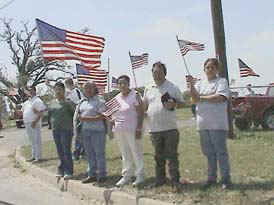
|
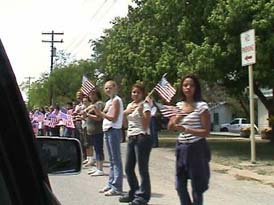
|
|
A feature-length documentary is in the final stages of
completion. It is about the extraordinary exploits of one of the last great living heroes of World War II - Guy Gabaldon - a U.S. Marine of Hispanic descent, who single-handedly captured 1100 Japanese soldiers during the bloody fighting on Saipan in 1944. |
|
|
Ted Williams
|
Reggie Jackson |
|
When Major League Baseball unveiled its ballot for the Latino Legends team Tuesday, the 60 nominees excluded two of the greatest Hispanic players ever: Ted Williams and Reggie Jackson. Associated Press, 1941 Ted Williams in 1941. Williams's mother was Mexican, but he never made a point of letting his heritage be known. Williams and Jackson's names seem out of place in a group with Roberto Clemente, Orlando Cepeda, Pedro Martínez and Rod Carew, but Williams's mother was Mexican and Jackson's father was half Puerto Rican and played in the Negro leagues. "I'm not surprised they're not on the list, because it sounds like it was done in a slipshod way" said Keith Hernandez, the former Mets first baseman, who is half-Spanish. "It wasn't well known about Ted, but Reggie Jackson's background was well documented to people involved in the game." Had baseball made an egregious historical error by omitting Williams and his career .344 batting average or Jackson and his 563 home runs? Not according to baseball. A spokesman, Carmine Tiso, said it was aware of the players' ethnic backgrounds but applied a litmus test that went beyond statistics: the nominees had to have a direct connection to their Latino heritage. A second spokesman, Richard Levin, said they should "represent the Latin community." Tiso said: "It's a gray area. It's not an exact science. There may be other players with Latino heritage who may not acknowledge it." He admitted that not all players on the ballot have publicly discussed their backgrounds. Baseball, which did not reveal its selection qualifications during its Latino Legends news conference, did it yesterday. And while it stated that mlb.com participated in the player selection, Jim Gallagher, a spokesman for mlb.com, said it only made a few suggestions after baseball presented a list of nominees. In the estimation of baseball's marketing department and its consultants on baseball history, Williams and Jackson never did anything like Alex Rodriguez, whom Tiso quoted as having said, "I consider myself a Dominican." Tiso said, "It's not that he was ashamed of his heritage, but we felt we didn't find enough connection from Ted to that Latino heritage." Levin added that Williams's name "would distort the ballot" and "cause havoc" because his ethnicity is not widely known. Fans will be able to vote online at mlb.com and on paper ballots at Chevrolet dealerships. Samuel O. Regalado, the author of "Viva Baseball" (University of Illinois Press), a history of Latino baseball, said he understood baseball's position, and said that Williams and Jackson were not pioneers for Hispanic players who came after them. "But I don't know where the qualifying line is, because most of the recent players aren't pathfinders," he said. "If the criteria were solely based on numbers and on-field achievements, then Williams and Jackson have to be considered." It is indisputable that Williams said little about being Mexican. He resembled his father, Sam, who was of Welsh-English heritage, not his mother, May. "He never made a point of letting it be known," said Williams's nephew, who is also named Ted Williams. "He didn't promote it. He was very friendly with our Mexican relatives on a private basis, but sometimes he shunned them in public because he didn't want it to be known. His mother led an Anglo life in San Diego." He added, "My father loved to repeat things that my uncle said, and one of them is that he called the family in Santa Barbara 'the Mexicans,' kind of lovingly." In his 1969 autobiography, "My Turn At Bat," written with John Underwood, Williams said, "If I had my mother's name, there is no doubt that I would have run into problems in those days, the prejudices people had in Southern California." Bill Nowlin, who researched Williams's early life for his new book, "The Kid: Ted Williams in San Diego" (Rounder), said Williams's uncle Saul Venzor, a Mexican, helped teach him baseball, and that Williams spent time in Santa Barbara visiting his Mexican grandmother, who barely spoke English. But he said Williams sometimes shunned relatives on his mother's side. "A lot of relatives felt he was told to turn his back on his background by Eddie Collins and not acknowledge that part of his family," Nowlin said, referring to the Red Sox general manager at the time. Nowlin and Williams's nephew said they thought he would not have been upset at being omitted from the Latino Legends ballot. But Nowlin said, "I find it interesting that people of Latino origin are fascinated that Ted Williams is one of theirs." Nowlin said Nomar Garciaparra told him that he and Williams once discussed their mutual Mexican backgrounds. Garciaparra, also omitted from the Legends list, told Nowlin that he told Williams, "God, Ted, I knew I liked you!" Jackson, whose grandmother was Puerto Rican, said he is "proud of my Latin blood," but not upset at being left off the ballot. But he is offended by any suggestion by baseball about his connection to those roots. "They have no right to pass judgment on what I claim about my Latin heritage," said Jackson, whose middle name is Martinez. "I just don't run my mouth off about it." |
|
Announcing Nuestra Familia Podcast Series The "Nuestros Ranchos" Podcast series is no more. . .I quickly saw that my thinking about this project was way too small so it has evolved into the
"Nuestra Familia" Podcast series. I along with the members of the planning committee
http://groups.yahoo.com/group/podhi/
are trying to recruit artists, actors, and public speakers to read collected Oral Histories and other written works representing our History and Genealogy. I am concentrating on collecting any audio files related to Latino and Native American Genealogy and History.
The "Nuestros Ranchos" Podcast series is no more. . .I quickly saw that my thinking about this project was way too small so it has evolved into the
"Nuestra Familia" Podcast series. I along with the members of the planning committee
http://groups.yahoo.com/group/podhi/
are trying to recruit artists, actors, and public speakers to read collected Oral Histories and other written works representing our History and Genealogy. I am concentrating on collecting any audio files related to Latino and Native American Genealogy and History. Like anything new I'm suffering from some growing pains and will soon, in the next month or two, have a permanent home for this podcast series. In the meantime I have part of the audio files on one site and the newest on another. . .my apologies. I have interviews with Mimi Lozano, Gary Felix and Rosalinda Ruiz at this site: http://nuestrosranchos.net/ My latest interview of Professor George Ryskamp and two short Oral Histories are found at: http://nuestrosranchos.libsyn.com/ Thank you, Joseph Puentes LaFamiliaNR@gmail.com
|
|
| Top 10 Companies for Workforce Diversity September 2005 http://www.hispanicbusiness.com/news/newsbyid.asp?fpa=0&id=25358 This comprehensive analysis measures and compares the percentages of minorities (Hispanics, African Americans, Asians, Native Americans, and Women) in the workforce with increased weighting for higher percentages in higher-level positions (Management and Officers). Rank Company 1. Washington Mutual, Inc. 2. Bank of America 3. American Express Company 4. Verizon Communications 5. Freddie Mac 6. Pacificare Health Systems 7. Denny's Restaurants 8. Wells Fargo 9. SBC Communications Inc. 10. Allstate Insurance Company Source: www.HispanicBusiness.com |
|
|
Dorinda
Moreno invited to be included in Pioneer Feminist Directory From: dorindamoreno@comcast.net VIRGINIASWATKINS@aol.com wrote: Dear Ms. Moreno: I am one of several people working on a reference work about activists in the women's movement before 1975. We invite you to be included. Of particular concern is reaching women of color who may not have been active in the predominately white feminist organizations, but none the less, accomplished much for women. I am referring to the Pioneer Feminist Directory, which will be stored on database in the Sophia Smith Collection at Smith College and next year will be published as a book. The Directory will be a research tool for historians, researchers, educators, journalists, women's studies classes, our sisters, our children and grandchildren, and others who follow us. While we do have information on you from "Separate Roads to Feminism" by Benita Roth, and other sources, we would like to use information in your own words. Following this email will be the questionaire that we use to obtain information. You may fill it out, or if you prefer to write your own story (of between one paragraph and 4 pages), feel free to do so. There are a few essential items that we need: birth date, your most important accomplishments in the movement, year you became involved, and archival information (if you have or intend to place your papers with an institution such as historical society, or library). In addition we need a street address for you. Thank you for your time. If you have any questions, don't hesitate to email me at virginiaswatkins@aol.com .. The questionnaire (which if necessary we would send you on paper) follows. Sincerely, Ginny Watkins PS A brochure can be sent at your request. |
|
|
The
Immigrant Policy Center Read the entire report at: http://www.ailf.org/ipc/policy_reports_2005_beyondborder.htm For more information contact Benjamin Johnson at (202) 742-5612. The Immigration Policy Center (IPC) is dedicated exclusively to the analysis of the economic, social, demographic, fiscal, and other impacts of immigration on the United States. The IPC is a division of the American Immigration Law Foundation, a nonprofit, tax-exempt educational foundation under Section 501(c)3 of the Internal Revenue Code. American Immigration Law Foundation 918 F Street, NW - Washington, DC 20004 202-742-5600 |
|
| Common-Place | Spanglocism |
|
Common-Place " We see emerging in Los Angeles what happened to so many Indians who did not die or whom Europeanization did not sweep into the dustbin of history. They became Mexican culture. Their children would be essentially Hispano-Americano, neither Indian nor Iberian in culture but a hybrid, a mestizo. This was the great idea that, out of the wreckage of Spanish imperialism to which the Catholic Church had attached itself, came from the variously sanctified and base mixings of the Americas: the stunning idea that people were not one thing or the other, nor even some cross between two civilizations, but some new mestizaje, some new way of being altogether. This mixture has been one of the great tensions–sometimes creative, sometimes confusing–in Los Angeles and the other great Latin American cities of the New World." One of the final paragraphs concludes the thesis that suggests that those of us whose blood is mixed with Mexican/Spanish blood and indigenous lines should be ashamed of the mixed blood inherited from the wreckage of our ancestors, as a base mixing resulting in great tensions and confusing status. I
submit that if any confusion exits it is based on a lack of
historical understanding. Most Mexican American who have traced their
family roots, have found and are proud of both bloodlines. |
|
Spanglocism
|
|
MONTOYA |
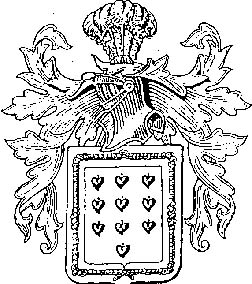 |
MONTOYA |
(Click for a Montoya
descendent) |
Las armas mas antiguas y generalizadas son: EN CAMPO DE AZUR, DIEZ PANELAS DE PLATA. PUESTAS EN PALO. 3, ' BORDURA DE SINOPLE CON EL CORDON DE FRANCISCO DE PLATA. Asi lo señalan conocidos autores de obras genealogicas. Albcrto y Arturo Garcia Carraffa, en el tomo LV1I1, página 208 de la "'Enciclopedia Heraldica y Genealogica": Juan Carlos de Guerra, en "Estudios de Heráldica Vasca", página 294: el Conde de Jeruco, en Historia de familias cubanas", tomo V, pagina 176; el licenciado Francisco de Cascales, en "Discursos heroicos de la muy noble y muy leal ciudad de Murcia", pagina 524, y el manuscrito de don Cristóbal de Montoya, del siglo XVII que con el numero 13804, se conserva en la Sala de Manuscritos de la Biblioteca Nacional de Madrid. Fueron Caballeros de la Orden de Santiago, los siguientes: Don Fernando Montoya y Caballero, Marqués de Caballero, Madrid, 1850; don Carlos de Montoya y Cardona de Pisa Osorio. Nápoles, 1654; don José Montoya y Hurtado de Corcuera, Armiñon, Alava, 1751; Juan de Montoya y Larraza, La Guardia, Alava, 1547; don Alonso de Montoya y Mujica. Palencia, 1645; don Francisco y don Manuel de Montoya y Ocampo y Diaz Crespo, ambos Capitanes de Caballeria, Villanueva del Fresno, Badajoz, 728; don Pedro de Montoya y Quesada, Maestre de Capo General, Baeza, Jaén, 1655; don Lorenzo Montoya Salazar y de Cerdena, Valladolid, 1704, y don Fernando de Montoya y Solis, Jerez de los Caballeros, Badajoz, 1817. A la de Calatrava, pertenecieron: don Juan de Montoya Cardona y Alezandro, Osorio y Bacardi, Nápoles, 1677; don Juan de Montoya y Magnes, Campos y Guerrero, Las Pedroñeras, Cuenca, 1688; don Baltasar y don Caspar de Montoya y Maldonado, Castellano 'o Rojas, Huete, Cuenca y Madrid, 1709, y don Diego de Montoya y Merino, Robles y Alfaro, Orán, 1705. En la de Alcántara, ingresó don Gaspar Ignacio de Montoya y Montúfar, Maldonado y Rojas, Procurador General de la Orden Madrid, 1752. En la Orden de Carlos III, hicieron probanzas de nobleza para ser admitidos en la misma, don Felipe Montoya y Diaz, Seco y Garcia, de Grijota, Palencia, en 1815, y don Antonio de Montoya y Diaz, Arriaga y Gregorio Justiniano, de Cadiz, el año 1840. Don Fernando VI, por Real Decreto de 4 de abril de 1747, concedido el titulo de Conde de Casa Fuerte, a don José de Montoya-Salazar y Orbaneja, Regidor Perpetuo de Lima. Don Carlos III, por otro Decreto de 10 dejunio de 1744, otorgó la dignidad de Conde de Villahermosa del Pinar a don Francisco de Montoya y Rangel, Ocampo y Aparicio, Caballero de la Orden de Santiago, recayendo en esta linea por alianza femenina, psteriormente, el Marquesado de Caballero. Ante la Sala de los Hijosdalgo de la Real Chancilleria de Valladolid, fueron numerosos los miembros de esta familia que acudieron alií a justificar su hidalguia, en diferentes epocas. A fines del siglo XVII y procedente de la villa de San Clemente, en la provincia de Cuenca, se estableció en La Habana el Capitán don Juan Jerónimo de Montoya, que casó en la Catedral de Santiago de Cuba, el año 1695 con dona Elvira Hemández de Támez y Carvajal, de cuyo matrimonio nacieron entre otros hijos, don José de Montoya y Hemández de Támez que hizo informacion de nobleza en aquella isia el 3 de enero de 1754, y el Alferez don Mateo de Montoya, que dejo extensa sucesion en aquel pais antillano. En Celaya, radicó desde muy antiguo una familia de este apellido, con descendencia en San Antonio de Texas, en cuyo presidio sus miembros tuvieron cargos militares. Don Benito Maximo y don Juan Antonio de Montoya Maldonado, fueron Canónigos de la catedral de Antequera de Oaxaca, en 1733 y 1743, y el mismo cargo desempeño en 1723, don Juan Antonio de Montoya; don Baltasar de Montoya Maldonado, fue nombrado Alcalde Mayor de Teozaquaico y Teozoquiico, en 1736; don Nicolas Mariano de Montoya Tesorero de la Real Hacienda de México, y don Benito de Montoya Maldonado Tesorero de tia Real Hacienda de Mexico, y don Benito de Montoya Maldonado, Tesorero de la Catedral ideAntequera, en 1 751. |
Extract from BLASONES Y APELLIDOS, 828-page book by Fernando Muñoz Altea In its second edition, the book can be ordered from blasones@mail.com or at P.O. Box 11232, El Paso, Texas 79995 or by contacting Armando Montes AMontes@Mail.com |
|
Galvez Patriots |
|
Bernardo de Galvez colonial uniform How do we promote an "Inclusive American History" to all Americans? Lorenzo's Secret Mission nominated for the Golden Spur in Texas |
|
|
| How do we promote an "Inclusive American History" to all Americans? The following are communications in answer to Paul Newfield's letter. Quoting Paul Newfield skip@thebrasscannon.com: I think that the scope of the Hispanic contribution to America in winning it's War of Independence against Great Britain depends on a person's view and perception of history. For someone from Concord or Lexington, there is probably no real need to look beyond the limits of his own neighborhood to find an abundance of heroes and events and places that shout out the glories of the winning of the American Revolution. For someone from South Carolina, adventuresome tales of the Swamp Fox will fill the imagination of the listener. New York... Virginia... For those citizen soldiers living in the British colonies, and INSIDE Britain's sphere of influence, the conflict was one of revolution against their sovereign ruler and insurrection against his entire form of government. The war and its consequences were very personal. The Eastern Seaboard Americans were ready to overturn the entire foundations of their society. Personal independence and liberty were strong motivations for those fighters. On the other hand, for someone participating in that War who was living OUTSIDE of Britain's sphere of influence, say, in Spanish Louisiana, that war was viewed only as following the Spanish king's orders. The war was not about personal liberties, not about fighting for independence. It was just another war of King "A" against King "B", with soldiers on each side dying for their respective kings. Independence and liberty were not significant motivating factors for these people living outside of Great Britain's sphere. British West Florida - a British possession only since the end of the Seven Years War - did not share the emotions and traditions and history of the other British "colonies". Spain was ready to snatch West Florida for its own at the first opportunity. And if the snatching were to help the cause of the American Revolutionaries in their fight against the British, all the better. (The very term "Seven Years War" speaks to a broader world view, while the narrower term "French and Indian War" regionalizes the conflict) Texas and California -- Whatever military contributions there might have been by Spanish soldiers at the time would only have been in the context of King "A" vs. King "B". At the time of the fighting, I suspect that the soldiers carrying the rifles thought little of Liberty and Independence as envisioned by people like George Washington and Thomas Payne. When the dust settled, the history books would be written in English, glorifying the newly formed nation with tales and stories close to home - from New York, Massachusetts, Pennsylvania, Virginia, etc. The only reason that the French received so much attention was because its troops and its leaders [i.e., Lafayette, et al] were on the ground, fighting INSIDE of the American / British zone of battle. By seeking a greater recognition of the Hispanic contributions to the founding of the country, aren't we really seeking to change the paradigm by trying to place all contributions at parridy? To ~equalize~ the importance of any contribution at the time of the American Revolution, regardless of where that contribution might have occurred? If we attempt to inflate the value of the Hispanic contribution, do we not also diminish the relative value of those who fought to actually establish the country? Perhaps we should be seeking a different way of posing the question, "Who are we as a nation?" "He drew a circle that shut me out, Heretic, rebel, a thing to flout, But love and I had the wit to win. I drew a circle that took him in." -- Unknown Paul Newfield
The people in Spanish Louisiana were not fighting for some abstract cause or for some king they had never seen. They were fighting for home, hearth, and family.
Lila wrote:
Hello, everyone.
Perdona me "dos centavos" (and my Spanish):
Hi everybody,
|
| Lorenzo's
Secret Mission lorenzo1776@yahoo.com writes: Hi, Mimi, I am in a state of shock. I just got the following email forwarded to me from Marina Tristan at Arte Publico Press. Lila, My publisher just forwarded this to me: LORENZO'S SECRET MISSION (2001) by Lila Guzman, has been nominated for the 2005-2006 Golden Spur Award for Texas Authors -Intermediate Children's Literature division. The Golden Spur Award for Texas Authors was created in 2004 by Texas State Reading Association to honor and recognize our state's talented writers -- and to encourage our "older young readers" to READ! We are honored to include Arte Publico Press, Lila Guzman, and LORENZO'S SECRET MISSION as one of this year's nominees. Winners will be announced at the State Conference on Literacy in Houston this November (go to www.tsra.us for more information). The next book in the Lorenzo series, LORENZO'S TURNCOAT, is due out May 31, 2006 and focuses on the Battle of Baton Rouge. A hurricane in New Orleans in 1779 sank all the ships in the harbor. Galvez was ready to attack the British (before they attacked him) and had to start war preparations from scratch. |
|
October is
designated Family History Month
October 23: Bower's Museum Dia
de Muertos Celebration
8th
annual El Dia de la Familia, Segler Park, Westminster, Sept 11 |
|
Dia
de los Muertos FREE family event Bowers Museum of Cultural Arts 2002 N. Main St. Santa Ana Sunday, October 23th, 12 noon to 4 Outdoors entertainment, exhibits, food (tamales) will make for a fun day. Face painting and poetry competition will help participants to participate in the festivities. Folkloric dancers and Saddleback High School Guitar Club will be featured performers. The community is invited to set up ofrendas for public display. Honor your deceased. Please bring your own set-up for exhibiting. Tables will not be provided. Special aspect of the day will be an An outstanding indoor display of full size calaveras fashioned by artist George Newnan will make this day an unforgettable experience. |
|
| This educational, multi-cultural walk-through attraction
is composed of *five individual scenes which bring to life Mexico's holiday
of Dia de Los Muertos, Day of the Dead The total exhibit features *19 life-size fully dressed skeleton figures in costumes from all over the world, including Japan, China, and Mexico. Viewers enter the exhibit in total darkness and become totally immersed into each scene aided by black lighting, props, and music. Filmmaker/Artist - George Newnam, BFA, a graduate from the School of Film & Television at Chapman University in Orange - California, was inspired by the drawings of Mexican artist Jose Guadalupe Posada, when planning and designing Casa De Calaveras - House of Skeletons. Also, his collection of small clay skeleton figures from Mexico played a big part in the development. He had always wanted to bring them to life, but wasn't sure how. The answer was this elaborate exhibition chronicling the spiritual journey of a deceased and fictional skeletal couple named Jose & Gloria Calavera. They were engaged to be married, but tragically, before their wedding day, they were both killed in a freak accident. So during the celebration of El Dia de Los Muertos, The Day of the Dead, their skeletal spirits return to the earth to enjoy the worldly experiences they couldnt' realize when they were alive. George and a small team of people put together everything utilizing such things as: recyclable objects, paper mache, fluorescent paper, paints and clothing, which includes vintage, new store bought and also newly designed costumes. George, currently working in Hollywood, has also directed short student films and his graduate work, a short film entitled, FEAST was an official selection screened at the 2003 A.K.A. Shriekfest Film Festival in Hollywood, California. Therefore, it is logical that Mr. Newnam use his story-telling skills in creating scenes for CASA DE CALAVERAS -HOUSE OF SKELETONS, bringing drama to re-create the life of Jose & Gloria Calavera. |
|
| CASA DE CALAVERAS
- HOUSE OF SKELETONS has been exhibited in whole or in part at the following venues: MOLAA, The Museum of Latin American Art - Long Beach, CA 2003 The Huntington Beach Art Center - Huntington Beach, CA 2003 The Boys & Girls Club of Santa Ana - Santa Ana, CA 2002 http://www.hometown.aol.com/casacalavera |
 |
History of Dia de los Muertos
Throughout October and into early November, ofrendas, or altars, are built to honor the memory of the dearly departed. They wear garlands of marigolds to parties thrown in their honor—colorful gatherings that feature stacks of sugar skulls, masses of candles, and gifts of food and drink. Each year, the start of November marks a playful celebration in Mexico and Central America called Dia de los Muertos, or Day of the Dead. The holiday is a rich and colorful outlet for grief and a way of treating lost loved ones to a celebration in their honor. Dia de los Muertos can be traced back to the pre-Hispanic Aztecs, who held feasts throughout the year in honor of the dead. According to the history books, native culture blended '' with Catholic tradition: the Spanish, seeking to Christianize the Aztec ritual upon conquering the New World, condensed and moved the tributes, especially two of the most widely ' celebrated—Miccailhuitonti (Feast of the Little Dead Ones) and Miccaihuitl (Feast of the Adult Dead)—to coincide with All Saints' and All Souls' days. Through the years, elements of ' both the Spanish Catholic and Aztec beliefs have survived, some virtually intact, others transformed by their coexistence. The merging of cultural expression blossomed into unique hybrid imagery, signs of which can be found in decorative sugar skulls, playful skeleton dioramas, and intricate paper craft called papal picado, all of which are prominent at this time of year. Throughout October and into early November,
ofrendas, or altars, are built to honor the memory of the dearly
departed, with trails of bright yellow cempasuchiles (marigolds)
to coax the dead back from the afterlife. Graves are decorated
with cross-adorned candles, skeleton dioramas, and mounds of pan
de muerto (bread of the dead) as well. The holiday has gained
popularity in the United States as immigrants import the
tradition and as second-, third-, and fourth-generation Latinos
discover it here. Gregorio Luke, director of the Museum of Latin
American Art in Long Beach, sees Day of the Dead as a way of
affirming life by confronting death. "When you make an
offering for somebody," says Luke, "you have to
remember his life. What did he like to drink? To eat? What were
his favorite colors? It forces you to bring that person back
because you are reenacting their deeds, their tastes, and their
thoughts," Researcher Jaime Cader sends information that traces the history back to an Egyptian origins/influences in the Day of the Dead customs of Mexico. " It is taken from the bilingual book "The Days of the Dead -Los Dias de Muertos" by Rosalind Rosoff Beimler (1991). It starts on page 19 saying: "With the Spanish conquest, a new set of mourning rituals was introduced into Mexico. The Catholic missionaries who fanned out across the land . . . brought a cosmology parallel in some ways to that of the Aztecs. Made familiar enough to be palatable, their ideas came to coexist with rather than supplant existing beliefs. Saints joined the hierarchy of gods; heaven and hell added (pg. 20) new dimensions to Mictlan; All Souls' and All Saints' days merged with the harvest rites of Mictlantecuhtli. The Catholic rites had grown out of Egyptian mourning practices commemorating the deceased god of Life, Death, and Grain -Osiris. By the Alexandrian calendar, Osiris was murdered on the seventeenth day of the month of Athyr, in our November - a time when the Nile is sinking, the nights are lengthening, and leaves are falling. On those nights the dead were thought to revisit their homes, and people received them with food and lamps to light the way. The Romans inherited the concept in turn; Bacchus, the Roman god of life and renewal, is Osiris in Roman dress. As Christianity replaced the gods of Rome, ancient rites were recast. All Saints's Day, November 1 was established as the time to pray for the souls of dead children; All Souls' Day, November 2, became the day to remember the adults. The night of October 31 became All Hallows Eve. Halloween evolved separately from the Days of the Dead, though it remains a close cousin..." So anyway, here is a start for anyone that
wants to do more research on this subject. Adios por ahora. Sincerely,
Jaime Cader jmcader@yahoo.com |
|
|
8th
annual El Dia de la Familia, Segler Park, Westminster, September 11 |
|
|
|
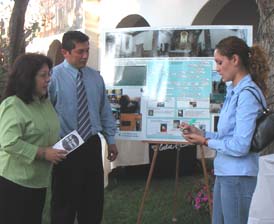 |
|
SHHAR participated in the Orange County's 2nd Annual Biggest Hispanic Professional Mixer was held at the Santa Ana Performing Arts & Events Center, September 29. SHHAR Board member Bea Dever on the left, Gil Flores, Executive
Director of the Orange County LULAC Foundation and your editor
|
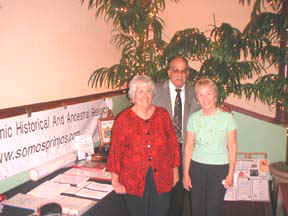 |
October is Family History Month The Genealogical Society of North Orange County California is sponsoring a series of beginning genealogy lectures open to the general public as a celebration of October as Family History Month. The lectures are free and all the presenters are members of the Southern California Chapter of the Association of Professional Genealogists. October 3rd at 7 pm at Fullerton Public Library: Speaker- Norma Keating "How to Start Your Family History" October 11th at 6 pm at Brea Public Library: Speaker- Wendy Elliott "Using the Internet for Genealogical Research" October 17th at 7 pm at Placentia Public Library: Speaker- Caroline Rober "Genealogy Research in Southern California" October 24th at 7pm at Yorba Linda Public Library: Speaker- Beth McCarty "Using the Family History Library" In addition, the society will provide a display of genealogical materials and resources at these libraries during the month of October. Info: 714-996-9511 or stevedota@hotmail.com Fullerton, Brea, Placentia, Yorba Linda |
| Hispanic Heritage Month
Activities at Santa Ana Library In summary: Oct. 1st at 2 p.m. Photo Preservation workshop and identify mystery studio photos. Oct. 8th at 2 p.m. Author Adam Collings book-talk on "California, West of the West". Oct. 15th at 2 p.m. House History workshop, unlocking the heritage of the Santa Ana barrios. Event will be held in the multipurpose room on the second floor of the main library in Santa Ana. Please do plan to participate and invite all your family and friends to this educational event. There is still plenty of room and pass the word to all. Ricardo J. Valverde RValverde@ochca.com (714) 834-8559 Senior Social Worker, Adolescent Family Life Program, Health Care Agency |
|
The
Light Impressions Archival workshop is coming to Orange County! The Light Impression archival workshop, now in its fifth
year, will be held in conjunction with the Orange County Historical
Commission at the Old Courthouse in in Santa Ana on Saturday, October 15.
The workshop is open to those who work with archival collections, in a
professional or volunteer capacity. A variety of topics related to
archival management and preservation will be presented in five
separate all-day classes. Attendance will be limited, so please make your
reservations soon.
• A City
Revived: Santa Ana (lunch) |
| GUADALUPE CLUB OF Blessed Sacrament
Church "FALL HARVEST DANCE" 14072 OLIVE ST. WESTMINSTER CA. 92683 "FALL HARVEST DANCE" SATURDAY OCTOBER 15,2005, 9:00 PM TO 1:00 AM MUSIC BY: EDDIE BANUELOS THE SEVEN LATINS PRE-SALE TICKETS: $14 PER PERSON AT THE DOOR: $17 PER PERSON FOR TICKET INFORMATION CALL: LUIS G. MATA 714 893-5757 NO ONE UNDER 21 ALLOWED |
Suggested Family History Month Activities: • Display library or other public building featuring research opportunities, society events, or Genealogy of Historical Families in the community. • Introduction to Genealogy Workshops • Family History Fair - classes and or discussion groups related to various topics related to genealogical research. • Library Lock in - This is a favorite event of a Texas Society. The genealogy department remains open after the library closes for those wishing to do research. No one is admitted after the library doors are locked but researchers may remain for the extended hours. The information I receive has not mentioned a time when everyone must leave. • Essay contest for school children. Essays are judged in age groups. A small community gave cash prizes and published winning essays in the local news paper, another group had prizes donated by local merchants. • Society members could volunteer to assist schools, Scout, 4-H, or other groups with student family history projects. A genealogist, who was an adopted child researched the genealogy of her adapted family. She worked with foster children and assisted them researching the history of their foster family or another family they admired. • Volunteer to provide genealogy related stories for local publications. Call the newspaper and other media organizations in your community offering to provide material for publication, if possible talk with someone who does reports on local organizations and events. • Develop a list of society members who are willing to speak to local community groups and notify the community that you have speakers available to address their group. • The genealogy community is filled with creative people and I am confident there are many more ideas will develop. The key is to celebrate Family History Month promoting research and the benefits of becoming a member of a genealogical organization. Sent by Jo Russell ljrussell@earthlink.net |
|
California Story Fund Project: The Mexican OC From: breathoffiretheater@yahoo.com |
|
|
|
Probable Location of the Original Pueblo de la Reina de los Ángeles on the River Porciúncula |
| History of Floods in Los Angeles http://www.lalc.k12.ca.us/target/units/river/tour/hist.html Sent by Johanna De Soto Gabrielino Era--The central village of the Gabrielino indians, Yangna, is established near the river and a large sycamore tree, or "council tree". Approximately 200 people live in Yangna, which was near present-day downtown Los Angeles. Recent excavations near Olvera Street have revealed Gabrielino artifacts over 3,000 years old. 24 1769--Portola Expedition and Juan Crespi document the Los Angeles River. 1777--Govenor DeNeve selects the sight for Los Angeles on the site of the current City Hall, a few blocks from the river. 1781--The Zanja Madre dam was built to supply water and irrigation for the young city. 1811-- Flooding 1815--The original Plaza is washed away as the river overflows and changes course at Alameda and Fourth Street to cut west across the low land and empty in Ballona Creek. The great "council tree", of the Gabrielino village of Yangna survives the flood. 1825--Govenor Pico recorded in his diary that the L.A. River changed its course back from the Ballona wetlands to San Pedro. Woodland between the pueblo and the ocean destoryed (woodland along the 110 FWY?). Marshland drained by the new channel. 1832--Heavy flooding 1845--Rancho Encino established at the head of the L.A. River. 1857--Los Angeles Water Works created under the direction of William Dryden. A water wheel was built at the Zanja Madre dam. The Great Fort Tejon earthquake also occurred, Southern California's last BIG earthquake. 1861-62--Heavy flooding. Fifty inches of rain falls during December and January. Much of San Fernando Valley is under water. City's embankment and Dryden's system are destroyed. 1867--Floods again spill over the old channel and create a large, temporary lake out to Ballona Creek. 1876--The Novician Deluge 1884--Heavy flooding causes the river to change course again, turning east to Vernon and then southward to San Pedro. The Downtown section of the river is channelized. 1888 to1891--Annual floods. 1896--Col. Griffith J. Griffith donates over five miles of riverfront property to the city with the expectation that Griffith Park would become a grand riverfront park. 1899--San Pedro is selected over Santa Monica and Redondo Beach as the official site for the L.A. deep water harbor. 1904--William Mulholland announces that L.A. will need new water sources. 1914--Heavy flooding. Great damage to the harbor. Public called for creation of the L.A. County Flood Control District and discussion of channelizing the river begins. 1921,27--Moderate flood. 1934--Moderate flood starting January 1. Fourty dead in La Canada. 1938--Great County-wide flood with 4 days of rain. Most rain on day 4. Red Cross said this was the 5th largest flood in history at that time with 113 lives lost, $40 million in damage ($360 million in 1994 dollars). Recorded as a 50 year storm. Public demands action. Army Corps of Engineers begins channelizing the river with 10,000 workers applying 3,000,000 barrels of concrete by hand. 1940--Sepulveda Flood Basin and dam is completed to catch excess water before it jumps the channel down stream. 1941 to 44--L.A. River floods five times. 1952--Moderate flooding 1969--One heavy flood after 9 day storm. One moderate flood. 1978--Two moderate floods 1980-Flood tops banks of river in Long Beach. Sepulveda Basin spillway almost opened. 1983--Flooding kills six people. 1991--Army Corps proposes to raise levees from Rio Hondo to Long Beach to protect against a 100 year flood. 1992--15 year flood. Motorists trapped in Sepulveda basin. Six people dead. 1994--Heavy flooding. Estimates range from a 15 to over a 100 year flood. The City of Los Angeles, Department of Public Works, has published a history of the city's flood control system. |
| GENEALOGY
INTRODUCTION, La Mirada Adult School Class La Mirada Adult School is offering a class on beginning genealogical research: WED. 8:45 a.m. to 12:00 p.m. ( no fee) 714-670-9279 for info. Fri. 8:45a.m. to 12:p.m. Excelsior Norwalk (no fee) 562- 868-9858 for info. Nacho Peña Ipena777@aol.com |
| Early California Wills, Los Angeles From: ron@sfgenealogy.com The TAG project has finished the first two volumes of Early California Wills. Volume 1. Los Angeles County Wills, 1850-1885 Volume 2. Los Angeles County Wills, 1885-1890 http://www.sfgenealogy.com/tag/9-calwills/index.htm I saw a few California-Spanish names in both volumes. There are indexes for both. http://www.sfgenealogy.com/spanish/ |
|
Southern California Genealogical Society
We are very pleased to announce that the complete LIBRARY CATALOG of books, manuscripts and family histories has been added to the SCGS website. The catalog holds information on over 30,000 genealogical reference items held in the library. The collection includes materials from every state in the US, as well as extensive special collections (e.g. French-Canadian, German, Hispanic, etc.). The catalog can be accessed at http://www.scgsgenealogy.com/catalogMain.htm. If you live in the neighborhood or are planning a trip to the library soon, use the catalog to organize your next visit from the comfort of home. Or if you're not able to visit the SCGS library in person, search online for materials that will help complete your family's history, and request lookups from our Research Team for a nominal fee. Other recent updates to the SCGS website include: 1. Free downloadable e-book addendum to Marie Northrop's Volume III. This supplement, written by noted Los Angeles historian William Mason, includes a fascinating account of the early history of Los Angeles, in addition to genealogical content. 2. New database additions - Fairfax High Graduation (Spring 1932) and LeConte Junior High Graduation (1929). 3. Details on the October 22 Family History Writing seminar conducted by Tom Underhill and Andy Pomeroy. You can register online, too! Southern California Genealogical Society 417 Irving Drive, Burbank, California 91504-2408 phone: 818-843-7247 email: scgs@scgsgenealogy.com |
| Los Angeles Under the Spanish Flag From: ron@sfgenealogy.com The Southern California Genealogical Society has a "Free downloadable e-book addendum to Marie Northrop's [Northrup] Volume III. This supplement, written by noted Los Angeles historian William Mason, includes a fascinating account of the early history of Los Angeles, in addition to genealogical content." The name of the supplement is "Los Angeles Under the Spanish Flag, Spain's New World." It is available in PDF format at: http://www.scgsgenealogy.com/storage/Northrup3.pdf Southern California Genealogical Society http://www.scgsgenealogy.com/ |
| October
15, 2005: 7th annual Latino History Parade & Jamaica This day of living history will provide an opportunity to experience the past in the present. This will be a celebration, taking place on the streets of Los Robles and Washington and culminating in a festival in Washington park, which will include entertainment food and exhibitors representing various types of organizations. For any questions or more information contact Exhibit Coordinator 626-683-0599 Latinoheritage@mindspring.com |
| October
28, 2005: National Center for the Preservation of Democracy The program of he National Center for the Preservation of Democracy will inspire educators and motivate middle and high school students to actively engage in the American democratic process. 111 North Central Ave., LA, CA 90012 Tel: 213-830-1880 Fax:213-830-5674 E-Mail info@ncdemocracy.org www.NCDEMOCRACY.org |
| Sunday,
October 30 Noon - 4:30 pm Free Admission Children's Fall Harvest Festival Come to the Rancho and enjoy activities and entertainment focused on the unique symbols and traditions celebrating harvest throughout the world. A passport of stories will guide you to craft experience throughout the Rancho. Rancho Los Alamitos Historic Ranch & Gardens 6400 bixby Hill Road, Long Beach, Ca 90815 (562) 431-3541 www.rancholosalamitos.com |
|
California Mission Horticulture LearnCalifornia.org Oct 8: The Second Annual Fiesta del Rio The Census of 1790 California De La Rosa and Hijar Padre Colony Missionhistory.com California State Census Monterey Peninsula History/Monterey Symposium Women's Experiences in the Age of Anza: Pregnancy, birth and infancy Chicano Representation In California (1985-1992) Catalan Volunteers Correction Sequoia Genealogical Society One last call on Yorba Villa De Branciforte Preservation Dorinda Moreno Profundo Amor by Joe Olvera
|
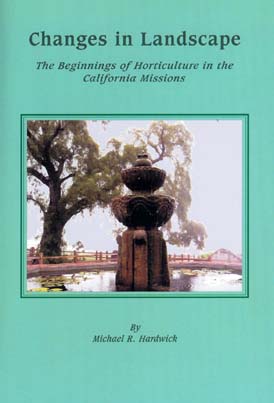
|
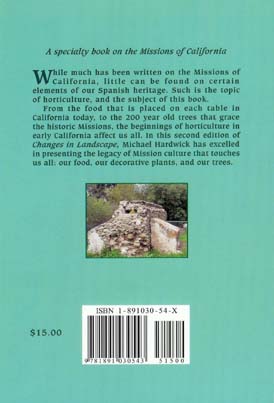
|
|
.
Regards, |
|
LearnCalifornia.org Welcome to LearnCalifornia.org, the electronic resource for students, teachers and everyone else interested in California history! This easy to use site combines the collections of the California State Archives with the power of the Internet to bring you reliable and entertaining information about the Golden State. Teacher lesson plans are provided and aligned with the California Department of Education's content standards for California public schools. Bookmark us to easily stay up to date on new materials! Get started by clicking one of the buttons below." LearnCalifornia.org http://www.learncalifornia.org/default.asp Sent by Johanna De Soto |
|
| October 8: The Second Annual
Fiesta del Rio
The Fiesta is a celebration of the peoples, cultures, history, and environment of the San Diego/Northern Baja region surrounding the Tijuana River Estuary. The Fiesta celebrates the heritage, pride, and cultures of the two countries, Mexico and the U.S., to which the estuary belongs. For more information contact |
|
| THE CENSUS OF 1790 CALIFORNIA http://www.sfgenealogy.com/sf/ca1790.htm Sent by Richard Ortiz ol_coach@cox.net Includes information on: Los Angeles; Missions; Monterey; San Diego; San Francisco; San Jose; Santa Barbara According to the compilers (William Marvin Mason, et. al.), this data was taken from the "Revillagigedo Census of 1793," and that the data was originally collected in 1790. The information in the brackets [] has been added by them from church records. Also, the meaning of the caste terms (español, española, india, indio, mestiza, mestizo, mulata, mulato) varied from one year to the next and may not be an accurate description; please refer to Mason's book for a full discussion regarding caste terms. The information in the braces {} have been added from Mutnick, Northrop, and Temple's Mission Abstracts. Birthdates have been added for some of the younger children to assist in determining the timeframe of the date of the census for the respective areas. |
|
| De
La Rosa and Hijar-Padres Colony From: ron@sfgenealogy.com I have a researcher looking for information on the De La Rosa family who was part of the Hijar-Padres Colony. Is anyone researching that line? Also, for your historical entertainment: In 1834, Mexican authorities, motivated by political considerations as well as the Russian presence above the San Francisco Bay at Fort Ross, organized a hapless enterprise called the "Hijar-Padres Colony". Recruited from Mexico City and the Valley of Mexico, among those that settled in Alta California permanently were Jose Abrego, Juan N. Ayala, Charles Baric, Mariano Bonilla, Jose Ygnacio Franco Coronel, Jose Maria Covarrubias, Nicanor Estrada, Zenon Fernandez, Gumesindo Flores, Francisco Guerrero, Auguste Janssens, Francisco Castillo Negrete, Jesus Noe, Francisco Ocampo, Simon O'Donoju, Agustin Olvera, Victor Prudon, Jose de la Rosa and Florencio Serrano. http://www.sfgenealogy.com/spanish/calfam.htm Padrés (José María), 1830, nat. of Puebla; in '25 lieutenant of engineers and secretary of the commanding general at Loreto; acting commander and sub-gefe político after Echeandía's departure for California. In '30, having been promoted to lieutenant-colonel, he came to California as ayudante inspector of the troop. ii. 607,674; iii.46,52,57,190. In '31 he acted also as inspector of customs; as fiscal in the Rubio case; was the instigator of Echandía's secularization decree; and was arbitrarily sent to Mexico by Governor Victoria. iii. 184-5, 192-3, 197, 304-5, 376; iv. 160. In Mexico he devised the H. and P. colonization scheme, and returned to California in '34 with the appointment of director of the colony in addition to his former position as inspector, which latter he soon resigned. In '35 with his associate Híjar he was sent to Mexico by Figueroa to be tried on a charge of revolutionary plots. iii. 259-69, 272-91, 383, 613, 652, 670. Nothing is known in his later career, though a man of the same name figures at Ures, Sonora, as a petty official in '44-8. Padrés was a man of remarkable energy, intelligence, and magnetism, a most radical republican in the Mexican sense of the term; and one whose influence was long felt in California, through his teachings to the young men who later controlled the country. So well did they learn their lesson, indeed, that in colony times they turned against their teacher when he seemed to have forgotten their claims to office. Source: Register of Pioneer Inhabitants of California 1542 to 1848 and Index to Information Concerning Them in Bancroft's History of California Volumes I-V, by Hubert Howe Bancroft. |
| Mission
History http://missionhistory.com/california_mission_links.asp Sent by Johanna De Soto Outstanding website . . . These links are only a small sample of what is available. The Archival Center: The Archival Center of the Diocese of Los Angeles is housed at Mission San Fernando under the care of Msgr. Francis J. Weber. This website is a guide to the Center and how to use it. Archives of SPANBORD@ASU.EDU : Spanish Borderlands message board (SPANBORD) archive, February 1995 to present, arranged by month and year, topics listed alphabetically within each month. California Central Coast Archaeology: The latest information on the activities of the San Luis Obispo County Archaeological Society (SLOCAS) plus links and information on various Central Coast archaeological projects. California History Online: Online survey of California history from the earliest times to the 1930s, by James J. Rawls in cooperation with the California Historical Society. The chapters are available in by clicking on icons on the annotated timeline which appears on the home page, or by clicking on the Text Only link. California Missions Foundation: Homepage of the California Missions Foundation California Faces: Selections from the Bancroft Library Portrait Collection More than 1200 portraits of Californians from the mid-19th century to the 1990s. In the left frame, click "Container Listing" and scroll down to find subjects from the Mexican period such as Juan Bautista Alvarado, Juan Bandini, Josefa Carrillo, Cave Johnson Couts, Richard Henry Dana, William Goodwin Dana, Jose Antonio Estudillo, Pablo de la Guerra, Manuel Micheltorena, Andres and Pio Pico, M.G. Vallejo and his son Platon, and many others. . Part of the Berkeley Digital Library "California Heritage" site. More from this site in Pictorial Resources listed below. |
| Portuguese Ancestry Vol. V No. 2 July 1995 California State Census, 1852 Lost an ancestor in 1850? . . . . Try checking the 1852 California State Census. Over 50,000 people traveled overland to the gold fields while more went by ship. Census gives the person's residence and most answered with the name of the state from which they came. (CSGA Newsltr Vol 12, #10 Oct 1994.) |
Monterey
Symposium Monterey Peninsula History Overview Native Americans lived here for millennia from 500 BC to 500 AD, before others from different parts of the world landed on Monterey's shores. We know very little about the First People who settled in the vicinity of what is now Monterey, but we do know what drew them here: an abundance offish and wildlife and other natural resources. The native people hunted and gathered food "eating salmon and steelhead, mussels and abalone, quail and geese, rabbit and bear, as well as a host of other mammals, birds, shellfish, reptiles, and plants." Several of their village sites have been identified and preserved. Historical records indicate that Monterey was "discovered" again by other peoples when Spanish explorer Juan Rodriquez Cabrillo first saw La Bahia de los Pinos (Bay of Pines) on November 17,1542. Many years later, in December, 1602, Sebastian Viscaino officially named the port "Monterey", in honor of the Viceroy of New Spain who had ordered his expedition. His band of 200 men gave thanks to God for their safe journey in a ceremony held under a large oak tree overlooking the bay. An expedition by land and sea brought Gaspar de Portola and Franciscan Father Junipero Serra to Monterey in 1770. There they established the Mission and Presidio of San Carlos de Borromeo de Monterey. Under the same oak tree where Viscaino had prayed, Father Serra said mass for his brave group. A year later, in 1771, Father Serra moved the mission to Carmel, which offered a better agricultural and political environment; the Presidio Church in Monterey, however, continued in use. In 1776, Spain named Monterey as the capital of Baja (lower) and Alta (upper) California. This same year, Captain Juan Bautista de Anza arrived from Sonora with the first settlers for Spanish California, most of them bound for San Jose. Monterey's soldiers and their wives lived at the Presidio for decades. In 1818, Argentinean revolutionary privateer Hippolyte Bouchard sacked the town in an effort to destroy Spain's presence in California. After this shocking event, residents began to expand outside the Presidio, building residences throughout Monterey. In April, 1822, the people of Monterey learned that Mexico had seceded from Spain; California pledged allegiance to the Mexican Government. While Spain had not allowed foreigners to trade with California, Mexico opened up the area to international trade, and Monterey was made California's sole port of entry. Traffic with English and American vessels for the hide and tallow trade became an important part of the economy. A dried steer hide valued at about a dollar was termed a "California Bank Note". The hides were shipped to New England, where they were used to make saddles, harnesses, and shoes. Tallow was melted down in large rendering pots and poured into bags of hides or bladders to be delivered to the trading ships, for ultimate conversion to candles and soap. In 1827, in response to the increasing importance of foreign trade, the Custom House was built in Monterey. The booming trade, especially with New England, brought a number of Americans—called "Yanquis"— to Monterey. Many of them married into Mexican families, and became Mexican citizens. In 1842 the United States established a consulate in Monterey and Thomas Larkin was appointed its first consul. Under Mexican rule, the missions were secularized in the mid-1830s, and many land grants were made to private citizens. An elite class of landed "Califomios" grew up in California. They became the basis for the romanticized vision of Mexican California that was reflected in such novels as Helen Hunt Jackson's Ramona.ln July, 1846, Commodore John Drake Sloat's flagship arrived in Monterey Bay and his troops raised the American flag, claiming the region for the United States. This began a period of American occupation that lasted until the Treaty of Guadalupe Hidalgo was signed in 1848, making all of Alta California part of the United States. This included the land now known as California, Utah, Nevada, and parts of Arizona, Colorado, New Mexico, and Wyoming. In Monterey, U.S. Naval Chaplain Walter Colton, was appointed to serve as Monterey's first American Alcalde, a position defined as Mayor and Judge. Colton, a graduate of Yale University and Andover Seminary, was well-known as a just and honorable man and thus was considered well qualified to hold this important position. In 1846, he and Robert Semple established California's first newspaper. The Californian. Colton designed and supervised the construction of the first public building constructed under the American flag, Colton Hall, built to serve as a public school and town meeting hall. In 1849, California's military governor called for a constitutional convention, to be held in Monterey's Colton Hall. The new bilingual constitution was signed on October 13, 1849. On September 9,1850, the U.S. Congress voted to adopt California as the thirty-first state of the Union. San Jose was chosen as the seat for the first Legislature. (The official definition of a State Capital is where the Legislature sits; therefore Monterey never was the State Capital.) After California gained its Statehood, the legislature formed counties. Monterey served as the Monterey County seat of government until 1873, when Salinas took over that role. From 1873 to 1896, Colton Hall was the Monterey Public School. Since then, the building has been used as city offices, police courts, and today, as a museum. Colton Hall is owned by the City of Monterey. Information courtesy of the Colton Hall Museum, City of Monterey
|
|
|
Spanish society was based upon the family and young wives hoped for a quick pregnancy. If not pregnant during the first year, a wife was pitied and could lose social status. Many traditions and superstitions were prevalent such as believing that "open kidneys" impeded pregnancy. Prayer and pilgrimage were common to ask for a child. Once a woman became pregnant, her antojos or cravings were supported, as they believed otherwise the baby would be born with a birthmark in the shape of the desired food. Other superstitions revolved around pregnancy as well. During childbirth the woman usually sat on a chair or on her husband's knees and would blow on bottles, or try to gag herself with her own hair to promote vomits and thus speed contractions. After childbirth, if the family could afford it, the mother would observe cuarentena* a forty-day resting period. The baby often was baptized early, before the mother had risen, because the Spanish believed that babies who died not baptized would remain in limbo. Baptisms were festive occasions. The selections of Godparents was important, as they were to be spiritual leaders of the godchild, as well as surrogate parents in the event anything happened to the parents. Godparents were usually friends of the parents and the bond between parents and godparents became stronger than that between the godparents and the child, (see note) Chumash and Ohione births were also important processes, marked by spiritual rituals. What most shocked the Spanish and other Europeans is that Chumash women went to great lengths to lose their first child. If the child were not aborted, it would die immediately after birth. Their superstition told them that if they did not lose the first child, they would never conceive again. The high infant mortality rate controlled the population. Women knew how to induce" abortions, and the curing shaman would help them. Chumash women gave birth by digging a hole whenever labor began, which was lined with straw. Husbands could not touch their wives until the child could stand alone. Ohione women would avoid fish, meat and salt while pregnant and would shape their newborn infant's head by pressing firmly into the child's forehead and pushing towards the sides. Chumash flattened the child's nose instead, to give them a mark of community. Ohione infants were bathed at least once a day by their mother and carried in a basketry cradle. Childhood and education In the Spanish side, the average number of children per family in Los Angeles during the 1830's was 4.4 children, though there is record of fertile families, such as Teresa Hartnell who gave birth to 18 children in Santa Barbara. The education of children in religion and social roles
began as soon as the child was active. They were taught social, cultural and
family values and responsibility so they could function in society. Children
in the New World were taught skills that were useful in frontier living, such
as horseback riding, use of the lasso, etc. as well as more social subjects
such as dancing, music, poetry and songs. |
|
|
|
|
| Thank you to
Maurice and Marcy Bandy for sending the following correction: Mandmbandy@aol.com
|
|
|
Sequoia Genealogical Society, Inc. Volume 32. Number 7, September 2005 SEQUOIA GENEALOGICAL SOCIETY Sequoia Genealogical Society is
devoted to the study and support of family history and genealogy. Meetings of the Sequoia Genealogical Society are held in the Centennial Room of the Tulare City Library on the first Thursday of all months except for December, January, and February. Meetings are at 7:00 p.m. One other exception is in Summer, when one meeting will be held at a member s home for a potluck dinner at 6:00 p.m.
|
|
|
One last call on Yorba
Dear Helper-in-all-thangs-Hispanogenealogico |
|
| Villa
De Branciforte Preservation Ed Silveira ed@villadebranciforte.org Founder, Villa de Branciforte Preservation Society www.villadebranciforte.org My name is Ed Silveira and I am the founder of the Villa de Branciforte Preservation Society. We are located in Santa Cruz, California, north of Monterey county. My Organization is attempting to gain historical preservation status for several adobe foundations and a historic Spanish well in our area . I was wondering if you were aware of any SEQAs or other historical preservation for protection of historic wells? Also their has been a recent archaeological report done on the property that the well has been found on. Do any of you have the capability or know someone that can review this report? Some of the finds were of Spanish and native American artifacts. There is a proposed development on this site. We feel this could be the holy grail of the Spanish settlements. There are also two other lots on our hill that have underground adobe foundations. The first findings are of the Cornelio Perez adobe. We also have a map of 1853, that shows the location of the adobes on our hill, including the Perez adobe that has been physically unearthed. We feel that this is a rare opportunity to study these sites before they become developed. I thank you for your consideration. Respectfully, Ed Silveira |
| Dorinda
Moreno dorindamoreno@comcast.net writes: Moreno, Dorinda (1939 – ) is a San Franciso raised “chicana/mescalero apache,” whose grandfather fought in the Mexican Revolution in 1910. Her consciousness of feminism grew out of work with other movements, particularly her as a civil rights activist in 1964 – 1965. In 1969, Moreno was at the center of a group of Spanish-speaking women at San Francisco College who formed Conclio Mujeres (CM). She was a single mother of three who had grown up in the Bay Area and returned to school after being in the workforce for a number of years. She had been active in high school in the Mission District of San Francisco. She saw CM as a place for Raza women with higher education to gain support. In 1973, CM opened an office in the Mission District, where Latinos live. In 1974 Moreno was the director of CM’s Library Collection. The Chicana Collection Project was a key focus of CM for a number of years. Moreno protested against the Vietnam War, boycotted grapes with the UFW, and helped develop ethic and women’s studies programs. She published the anthology, la mujer – en pie de lucha, directed a women’s theater, “las cucarachas,” and introduced Frida Kahlo to US and world audiences. Moreno was honored by the United Farm Workers with a Lifetime Achievement Award in 2003, and, in 2005 received "Veterano's Award" from "El Tecolote", a San Francisco based bilingual newspaper along with other community activists. Moreno graduated from San Francisco State in 1973 with a major in “advocacy journalism.” Her children are Rose Rodriguez Gabaldon, Cyn-d Rodriguez Williams, and Andre Moreno Gladden. Archives: Stanford University, Palo Alto, CA and UC-Berkeley, Berkeley, CA. (ABS), "El Tecolote", Accion Latina. |
|
Profundo Amor
by Joe Olvera From: dorindamoreno@comcast.net Subject: RE: Digest Number 147 Gente - ya que estamos escribiendo poesias, here's one of my older ones - writ in 1978. Maybe will read it on Sept. 16 at La Fe Cultural Center, where will read my stuff, along with other poetas. Come one, come all. So, here it is: Profundo Amor By Joe Olvera Mi abuelita era una mujer Graciosa - the matriarch of the Family tree. Obedient to her Husband, she felt, but only To a certain degree. Obedience is as obedience does, and So she demanded the same treatment From my grandfather, and he agreed Only because he knew the strength and The goodness of her soul. She wore black shawls on her Head and shoulders, with Mother Hubbard Styles of dress, and solid-practical Shoes on her calloused and sickly feet. She never much cared for Vogues, nor Fashions of dreamy delights. More at Home with dark colors, and simple chores Of the spirit. She was a deeply religious woman - so church Was the focus of her life. She never Learned to read nor write, so would dictate Letters for me to scribe. Which is Where I perfected my Spanish-writing skills, And learned to see love in the common factors. My grandmother's mother was in Colorado- La Junta es la gracia del calor. Colorado winters-snowy landscapes and The full brunt of nature's fears. Bless the silken sky-beladened with snow Clouds, pregnant with dust and cheery-eyed Rain, soon turns to snow in light of creation. But, my grandmother continued on her way, and Once, as she walked the streets, a Rusty nail awaited her diabetic arrival. As fate Would have it, she stepped on the nail and Her foot was infected so badly, due to lack Of medical care, that eventually it was Amputated. As the poison spread its death Rays - her leg was off chopped from below the knee. She took to a wheelchair immediately, since Gangrene had by now spread to her other leg, and Splotches of sickly purple greeted her warm gaze Every morning, as the sun streamed in through her Bedroom window, and the laughter of children guided A tear down her hollow cheeks. She took all this in stride, and would sit on her Chair, while unable to move about freely, and Threatened wayward children with swift kicks on the Butt. Phantom limbs caused her pain and misery, yet She never complained, nor blamed the living god. She took to religion in an even stronger way, But unable to attend religious services at the Neighborhood Catholic church, she joined Another sect. On the day of her death, as her Soul lifted to the sky, her friendly priest Refused to bless her bones - as they lay and Rotted in deep confines of grisly hole. And that, my friends, Is the end result of life. Thus, it was so for My grandmother. Mama Cuy - betwitching, slender Beauty, who turned to dust. |
|
The Huartede
Jauregui Spanish Civil War Archive in
Reno Conf. Hispana de Genealogia Oct. 15, 2005 - Lago Salado, Utah BYU-Idaho Family History web site |
| Center
for Basque Studies Newsletter Fall 2004 Number 70 Pg. 4-5 The Huartede Jauregui Spanish Civil War Archive in Reno By Jose Luis De La Granja At the end of the nineties, the Basque Studies Library at the University of Nevada, Reno acquired from a book dealer in Bilbao a large and important archive on the Spanish Civil War of 1936-1939, which had belonged to Jose Maria Huarte de Jauregui (1898-1969) of Navarre. Head archivist of the General Archive of Navarre and member of the Academy of History and the Academy of Fine Arts in Spain, Huarte de Jauregui was a Carlist who participated in the Civil War, achieving the rank of artillery lieutenant in the army of General Franco, and head of the Military Command of Zarautz (Gipuzkoa). The origin of the archive relates to this military post, which allowed him to collect abundant documentation on the new Francoist State that was created at that time in Gipuzkoa, and also numerous documents confiscated in Euskadi under the jurisdiction of the first Basque Government (Bizkaia) and in the rest of the northern zone of the Spanish Republic (Santander and Asturias). This archive focuses on the Civil War, but includes as well the historical periods just prior to and following it: the Second Republic (1931-1936) and the Franco Dictatorship (1939-1975). In 2003, the Basque Studies Library completed a catalog of the Huarte de Jauregui Archive, consisting of sixty-three pages that can be consulted on the Internet. These thousands of documents, most of them original and unpublished, along with clippings and pamphlets of the period, are kept in some thirty archive boxes that are classified in three categories: the first refers to the Republican area of the Civil War, the second— the most numerous—refers to the Francoist area, and the third—the smallest—includes various Basque nationalist magazines from the 1930s and many newsletters from the Franco faction, published in Paris during the Civil War. The most interesting documents concerning the Second Republic are political manifestos and electoral propaganda from the right, left, and nationalist parties, produced for the Spanish Parliament general elections of 1931, 1933, and 1936. There is also documentation from unions (mainly, the socialist General Workers' Union), as well as on the religious problem and the Basque Statute of Autonomy, two key questions in the political life of Euskadi during the Second Spanish Republic. The documentation preserved in this Spanish Civil War archive is immense and varied, though most of it is of a military or political nature. The most valuable part concerns Franco's army offensive in the northern Iberian Peninsula in 1937: first in Bizkaia in the spring, later in Santander in the summer and Asturias in autumn. The military conquest of this industrial and mining territory was very important for the final victory of the Franco faction in the war. What is most interesting about this archive is the abundant documentation on the armies that fought in the north: the Republican army, within which the Basque army was situated; and the Franco army, comprising the Brigades of Navarra along with the Carlist militiamen. Within the archive are diverse historical documents, such as reports of battalions; official reports on war actions, the Navy of the Basque Government, the Department of Military Information; communications between military commands—for example, many telegrams exchanged by the ministry of Defense, the socialist leader from Bilbao, Indalecio Prieto, and the head of the northern Republican Army, general Gamir Ulibarri, among others. Among the political documents are briefings, letters, peace proposals to the Basque nationalists encouraging them to abandon the Republican cause, calls to resistance or to surrender (subject of a proclamation of Franco to the Bilbainos asking that they surrender, on the eve of the taking of Bilbao in June 1937), Nazi propaganda against Communism, printed in Spanish in Hamburg, Germany, etc. The archive also contains quite a few pamphlets: those published by the Basque Government of Jose Antonio Aguirre, various on the controversial case of the Basque Catholics and on the international controversy created by the bombardment and destruction of Gernika by the German Legion Condor. The Prancoist version of this event can be read in the Bulletin d'Information Espagnole, published in French by its supporters. There are also many dossiers from the Spanish, French, English and Italian press on the course of the Spanish conflict and its repercussions in the Basque Country. In addition, this archive preserves some notebooks, maps, flags, and many photographs. The most documented zone of the Basque Country is the coast of Gipuzkoa from Zarautz to the border with Bizkaia, taken over by the army coup in September 1936 and controlled by the Military Command of Zarautz, headed by Huarte de Jauregui from March of 1937 until November of 1939. By studying the copious documents generated by this command, related to the ministers of Franco's government and high commands of his army, one can pinpoint the first introduction of Francoism into the region of Gipuzkoa. The firm political repression is apparent in numerous police reports and in long lists of exiled nationalists or leftists, prisoners, and those who were fined (the fines were camouflaged with the euphemism, "donations for the National Trea- sury"). In addition, the army, Carlists, and the Falange constmcted a new State with a Fascist character with the help of part of the Basque Church, at the same time that the nationalist clergy was retaliated against. The relations between the forces forming the Francoist group were not always cordial and there were conflicts between Carlists and Falangists or between the military and civil powers; for instance, the dispute that put Comandante Huarte himself in conflict with the mayor of Zumaya, who was removed from office and detained by him in 1937. This is a good example of the fact that in Franco's Spain the supreme power lay in the hands of the army. The archive informs us of the visit of Count Ciano, Minister of Exterior Affairs of Mussolini's fascist Italy, to Gipuzkoa in 1939, who was entertained in Zarautz by Huarte de Jauregui with a sumptuous lunch, as can be seen from the menu card written in Italian. The later part of the archive refers to the Franco dictatorship, centered in the years of World War II (1939-1945), and the several rival branches of the Cariist movement gathered around the aspirants to succeed Franco with title of King—Carios VIII, Javier de Borbon Parma with his sons Carios Hugo and Sixto, and don Juan de Borbon. It also focuses on an exiled and clandestine Basque nationalism with its manifestos, pamphlets, and periodicals. These documents end in the 1970s, although their principal compiler, Jose Maria Huarte de Jauregui, died in 1969 in Madrid. |
| Conf. Hispana de Genealogia Oct. 15, 2005 - Lago Salado, Utah From: Lorraine Hernandez Lmherdz@hotmail.com Hola Hermanos Para su información, Avinsenle aquellos que esten interesados Aqui esta el horario para la Conferencia Sabado 15 de Octubre 2005 Se llevara acabo en la Biblioteca de Historia Familiar en Lago Salado, Utah Estaran añadiendo mas info. en la pagina http://familyhistory.byu.edu/hg_conf.asp |
|
August 26, 2005 BYU-Idaho Family History web site receives national recognition REXBURG, Idaho- Writer: Melissa Wheeler http://abish.byui.edu/specialCollections/famhist/index.cfm. Twenty years and 370,987 marriages later, Blaine Bake’s work reaches a culmination. Bake, a religion faculty member at Brigham Young University-Idaho, has spent thousands of hours visiting county courthouses and viewing microfilms. With the help of several volunteers, he has compiled the most comprehensive index of marriage records for the western United States. This month, BYU-Idaho’s Western States Historical Marriage Records Index received national recognition from Family Tree Magazine, which recognized the site as an all-time favorite. The Western States Historical Marriage Records Index was one of 25 family history web sites recognized by the magazine for their consistency and availability of useful information. Also among the favorites list were several big names, such as FamilySearch.org, Ancestry.com and Cyndi’s List. “It’s the content and information that people are interested in,” Bake said. “There are no other indexes as comprehensive as we are.” Bake began visiting county courthouses and viewing microfilm more than 20 years ago to create the marriage records index. “It’s tedious work,” Bake said. Records must be transcribed from the original documents and then entered into the index. But his work has accumulated 370,987 marriages recorded from Arizona, California, Colorado, Idaho, Montana, Nevada, Oregon, Utah, Washington and Wyoming. They have indexed 130,000 marriages for the state of Idaho alone. And each month Bake and three student employees enter an average of 1,500 to 2,000 new marriages. “A marriage is the genesis of a family. You have to get a marriage date and place and then you can build your family,” Bake said. In the future, he hopes to expand the collection to include more states and counties. The marriage records index is the most visited library web site by off campus users, averaging as many as 5,000 hits a day. “So much information is compiled by people who do it out of the goodness of their hearts. We are happy to participate and reciprocate for all those nice people who work so hard,” said Martin Raish, David O. McKay Library Director. To visit the Western States Historical Marriage Records Index or another BYU-Idaho family history sites, please visit http://abish.byui.edu/specialCollections/famhist/index.cfm. |
|
Books by Edward Soza Remembering September 16th and Mexican Americans Beyond Origins of New Mexico Families Reies Lopez Tijerina Archive Opened In June at University of NM |
 . . Books by Edward Soza http://parentseyes.arizona.edu/booksbyedwardsoza/index.html Sent by Johanna De Soto Links to: Historic Past; Exhibits; Boxes; Addendum; Bibliography; Endnotes Recommended website Alfred Sosa's website Sent by Ricardo Valverde RValverde@ochca.com PART III: Finding The Progenitor The most important fact that we can know about a surname is its progenitor. So, exactly what is a progenitor? The word progenitor comes from the Latin pro which means before and gignere which means to beget. So the progenitor then, is the individual whose genes are responsible for the spread of a particular surname. It is important to note that the origin (meaning and geographical location where it was first used) of a surname will not necessarily lead you to the progenitor. Beginners always ask questions like "What does my surname mean?" or "Where does my surname come from?". Now, if your surname means "mountain lake", should you assume that your ancestors inhabited some mountain lake? If you do, chances are that you will be heading in the wrong direction. If in addition, the answer to the beginners second question were to be that the surname originated in the Navarre region and then spread throughout Spain and the new world. Should the beginner then start looking for a mountain lake in the Navarre region as the birthplace of his remotest ancestors? In all likelihood, this would prove to be a complete waste of time as your ancestor may not have had anything to do with or been anywhere near a Navaresse mountain lake. He may just as easily been born in Portugal and simply adopted the surname because he liked the sound of it. This may seem obvious now, but a lot of people make this mistake and can spend years barking up the wrong family tree. Remember that you are looking for your own ancestors and not into developing a history of the derivation of a word as a surname, or perhaps a general history of a surname. Now, that being said, it is still a good idea to check the derivation of a surname, its geographical spread and its heraldic history for some possible clues to your progenitor, but be prepared to discard this information if it should start to lead you astray. So what's to be gained by finding your progenitor? What you gain is a sense of direction, since you already have the end part of your family tree (yourself or your offspring), knowing who your progenitor was gives you the beginning of your family tree. Thus knowing the beginning and the end of your family tree (or branch) will make filling the rest of the information in between, a lot easier. Coming Soon: Ten Steps To Finding Your Progenitor It's a good idea to post a surname query in the Hispanic Genealogy Forum |
|
Remembering September 16th and Mexican Americans From: dorindamoreno@comcast.net |
| Beyond Origins of New Mexico Families http://pages.prodigy.net/bluemountain1/beyondorigins.htm A website maintained by José Antonio Esquibel Sent by Bill Carmena JCarm1724@aol.com
This series of pages is designed to provide additions and corrections to the great work of New Mexico genealogy compiled by the late Fray Angélico Chávez (1910-1996), Origins of New Mexico Families in the Spanish Colonial Period. |
|
Reies Lopez Tijerina Archive
Opened at UNM in June Sent by Lupe Dorinda Moreno dorindamoreno@comcast.net In June the University of New Mexico University Libraries and Center for Southwest Research Special Collections And the Center for Regional Studies celebrated the opening of the Tijerina Archive (featuring the Alianza Movement Papers) and The 38th Anniversary of the Tierra Amarilla Raid Cordially invites you to a reception honoring: Reies Lopez Tijerina was the special guest at the event. For information concerning the collection, call 277-7171 or 277-3570 or Rose Diaz rosediaz@unm.edu |
|
Out
Of The Shadows,
Philadelphia
architect Julian Abele
October 22, 2005, 5th Annual West Coast Summit |
|
|
|
Excerpt: Smithsonian February 2005
|
|
|
For Duke sophomore Susan Cook, the letter was a call to action. She had told only a couple other classmates that she was related to the man who had designed the Duke chapel—indeed, who had designed most of the original buildings on the school's neo-Gothic west campus and many on its Georgian east campus. She had never met him, but she felt certain that if he were still alive, he would sup-port the divestment rally as wholeheartedly as she did. So she penned an emotional rebuttal. Duke's beauty, she wrote, was an example of "what a black man can create given the opportunity." Her great-granduncle, Philadelphia
architect Julian Abele (pronounced "able"), was "a victim of apartheid in this country" who had conceived the Duke campus but had never seen it because of the Jim Crow laws then in force in the segregated South.
As a boy Abele attended the Institute for Colored Youth, a Quaker-founded teacher-training school. For his prowess in mathematics he was awarded a $15 prize. He was also chosen to deliver a
commencement address. His topic: the role of art in Negro life. After studying at Brown Preparatory School and the Pennsylvania Museum and School of Indus-trial Art, Abele enrolled in
architecture at the University of Pennsylvania. He studied architectural design at the
Pennsylvania Academy of Fine Arts from 1902 to 1903.
|
|
| Heritage Newsletter September 2005 October 22, 2005,
5th Annual West Coast Summit |
|
|
Aztec
Books and Calendar Information Aztecs in a genealogical tree Native American Traditions With Our Own Eyes Leather Men Native American Records Coming Soon Brazil's Indians turning to politics Mirando City, TX -- Peyote Capitol |

|

|
|
Aztec Books and Calendar Information website mounted by www.Amazon.com http://www.azteccalendar.com/calendar.html Sent by Bill Carmena [[Editor: A couple of fun things, the books that say Look Inside mean that you can look through the first part of the book , table of contents and illustrations. The Calendar Converter gives you the opportunity of enter your date of birth to find your Aztec name day.]] |
||
|
Aztecs in a genealogical tree Dear Mimi,
I hope that you are doing well. Are you familiar with this website? It belongs to a Spaniard in Spain,
and when you click to see the photographs on the maternal side, -you can see that there
are Aztec ancestors. |
||
| Native American
Traditions: First Weapons-the Art of Hunting Game Sponsored by the San Manuel band of Mission Indians. July 9- Nov. 6, 2005 San Bernardino County Museum (909) 307-2669 www.sbcountymuseum.org |
| California Council for the Humanities August 2005 With Our Own Eyes [[Editor's note: The following article describes one of five youth photography projects funded by the council as part of the California Stories Uncovered campaign. The other projects, in the West Hollywood, Santa Ana, Riverside and San Francisco, will be featured in future issues. For more information, visit www.californiastories.org.]] They're people form an ancient culture from a small town
in Michoacan, Mexico, called San Juan Nuevo Pangaricutiro. Today they live
in Paso Robles, in a thriving community of 150 families in the Oak Park
Housing complex and surrounding areas. Descendents of Purepecha people who
have lived in Michoacan for thousands of years, they have on foot in
California and the other squarely in San Juan Nuevo, where they typically
go every year, usually for weeks at a time to celebrate Christmas. When CCH announced the availability of $30,000 in grants for photography projects with immigrant and refugee youth — part of its California Stories Uncovered campaign — Arroyo immediately knew he wanted to apply, it would be an opportunity to have the young San Juanenses document their community and chronicle their own lives, and for outsiders to find out about this almost-hidden community. Arroyo's nine-month project, "With Our Own Eyes/Con Nuestros Propios Ojos," began in September 2004 with 15 young people, most of whom he recruited with the help of Cayetano Contreras and his wife, both active in the San Juan community. The project was one of five youth photography projects funded by the Council as part of its California Stories Uncovered campaign. The young people, most of whom were teenagers or young adults born and raised in Paso Robles, met with local professional photographer Steve Miller, Arroyo and project curator Catherine Trujillo every other Thursday night in the Oak Park Recreation Center in the complex where many of the young people lived. The youths were given Canon cameras and access to an unlimited supply of Kodak black-and-white film. None had previous photography experience beyond using point-and-shoot cameras. One of the first things Miller did was to have the young people bring in their favorite photo. That exercise was eye-opening to project participant Maria Campoverde. "Steve told us to look at the background, to pay attention to the whole frame," the 18-year old said. "He also taught us to take pictures without posing. Before when we used to take pictures with friends, we always posed and smiled for the camera. Now we don't say it's time for a picture, we just take one, and it always turns out more interesting." Every week. Miller met individually with each young person to go over the pictures they had shot the previous week. "Miller didn't tell the kids what to shoot because he wanted the work to belong to them," said Arroyo. "At first, it was slow going. All the kids got blurry images. But they soon got better. And Steve told them how important it was to shoot lots of film and to focus on things that were important to them. And because we were continually giving them feedback on their work, they were always learning." About three months into the project, Arroyo and Trujillo began helping the young people develop autobiographies to accompany a final exhibit of their work in April. The youths first drew a life map, showing people and events important to them, and later used the map as a guide for their writing. In addition to photographing their lives in Paso Robles, eight of the young people took their cameras to San Juan Nuevo Parangaricutiro in Mexico over the winter break. There they photographed everything from a landmark church and Posada celebrations to street scenes and family gatherings. The 1,400-mile journey to San Juan is one that most of the Paso Robles families make every year at Christmastime. For the young people, being in San Juan Nuevo means days of festivities, parties and a lot more freedom than what they're used to at home. "When we're in San Juan, our parents let us do whatever we want to because they know nothing bad can happen to us," Campoverde said. Project Director Arroyo joined the group In San Juan and kept the kids supplied with film. For Arroyo, the time he spent in San Juan Nuevo gave him a deeper appreciation for P'urepecha culture. |
|
Leather Men
similarly clad horses. Plains Indians like
the Comanche first obtained horses from the Spanish in the
mid-seventeenth century. Native Americans also probably got the idea for
protecting themselves and their mounts with leather "armor"
after seeing Spanish horse soldiers. Leather armor fell out of use as
firearms became available to American Indians . in
the mid-eighteenth century. Mitchell notes that while the existence of
leather-armored horsemen has been long known (a Jesuit
priest in present-day New Mexico showed leather-armored mounted warriors
battling Apache foot soldiers in a 1720 painting), these petroglyphs
are the first depictions thought to be crafted
by Plains Indians. "There is some recorded history but virtually no
archaeology of the Comanche, which makes
these rock-art depictions very valuable," says Mitchell. "They
should point us to additional places to look for Comanche sites
containing artifacts associated with horses." |
| The Clf Newsletter A Publication of Clayton Library Friends Volume XIX May 2005 Number 2
|
QA 1 Census and Enrollment. Letters and documents received December 10, 1877 to June 11, 1897. Census volumes and lists for the Cayuga, Miami, Modoc, New York, Nez Perce, Ottawa, Confederated Peoria, Potawatomi, Quapaw, Seneca, Eastern Shawnee and Wyandot. |
|
Extracts:
Brazil's Indians turning to politics By Axel Bugge, Reuters Initial results from last month's local elections show that four Indians were chosen as mayors and five as deputy mayors, while final results are expected to give Indians more than 100 posts. The numbers may seem small but they represent a jump from the one Indian mayor elected in 2000. The 1988 constitution, which restored democracy after more than two decades of military rule in 1985, gave Indians the right to vote for the first time in their history. Although Indian politicians do not yet have one group uniting them, the political aims of their various parties are similar - to get their lands marked off, to have health services and education, and to gain full access to the mineral riches on their lands. Sebastiao de Souza Konohum, joint coordinator for the defense of indigenous rights at the government's Indian agency, Funai, said the improving results for Indian candidates is largely thanks to better organization. "We started organizing in 1980 and boosted that; work after the 1988 constitution," said Konohum, himself an Indian from Matto Grosso state. "In the future, our aim is to create an Indian party to look after our interests."' Konohum expects that more than 100 Indians will be elected in these polls to office as mayors and local council members, up from 89 in the last vote. The full results are not yet ready. Nationwide there are nearly 5,600 municipalities in the country of 180 million. The latest census in 2000 put Brazil's Indian population at 734,000,
up from 400,000 at the end of the 1980s. Those numbers in themselves reflect the political
ambitions of
Indians as many more were willing to define themselves as Indians in the
2000 census, said a spokes-woman for the Catholic-run Indigenous
Missionary Council. Brazil lets individuals define their race. |
|
Mirando City, TX -- Peyote Capitol A Rare and Unusual Harvest Man Collects Peyote Buttons From Cactus for American Indian Rites By Sylvia Moreno, Washington Post Staff Writer www.washingtonpost.com Sunday, September 18, 2005; A03 Sent by: Ernest Euribe Euribe000@aol.com MIRANDO CITY, Tex. -- In the heart of Rio Grande brush country, Salvador Johnson works a patch of land just east of the Mexican border that is sacred to Native Americans. Spade in hand, eyes scanning the earth as he pushes through the spiny brush, Johnson searches the ground carefully. "This is good terrain for peyote," he says. "There's a low hill -- the rain starts on top and goes down to water this -- and there's a lot of brown ground." He stops, points the tip of his shovel at a three-inch spot of green that barely crests the soil under a clump of black brush and announces: " This is what you look for. You look for something that is not ordinary on the terrain. I saw that green." One of the last remaining peyoteros , Johnson, 58, has been harvesting the small, round plant in and around this tiny community for 47 years -- long before the hallucinogenic Lophophora williamsii cactus was classified as a narcotic and outlawed by federal and state governments. Then as now, it is for use by Native Americans as the main sacrament in their religious ceremonies. Johnson is part of a nearly extinct trade of licensed peyote harvesters and distributors, at a time when the supply of the cactus and access to it is dwindling. The plant grows wild only in portions of four South Texas counties and in the northern Mexico desert just across the Rio Grande. But some South Texas ranch owners have stopped leasing land to peyoteros and now offer their property to deer hunters or oil and gas companies for considerably higher profits. Others have plowed under peyote, and still others have never opened their land. On the ranchland that is worked by peyoteros , conservationists are concerned about the over harvesting of immature plants as the Native American population and demand for the cactus grow. "Will there be peyote for my children and my children's children?" asked Adam Nez, 35, a Navajo Indian who had just driven 26 hours with his father-in-law from their reservation in Page, Ariz., to stock up on peyote at Johnson's home. That question and possible solutions to the problem -- trying to legalize the importation of peyote from Mexico, where most of the plants grow, and creating legal cultivation centers in the United States -- are being studied by members of the Native American Church, Indian rights advocates and conservationists. There are an estimated 200,000 to 500,000 members of the church in the United States. Although 90 percent of the peyote in North America grows in Mexico, the number of ceremonial users there -- mostly Huichol Indians -- is a small fraction of the number in the United States and Canada. "In effect, you have a whole continent grazing on little pieces of South Texas," said Martin Terry, a botany professor at Sul Ross State University in Alpine, Tex., who specializes in the study of peyote. The church was incorporated in 1918 in Oklahoma to protect the religious use of peyote by indigenous Americans. Its charter was eventually expanded to other states, and in 1965, a federal regulation was approved to protect the ceremonial use of peyote by Indians. In 1978, Congress passed the American Indian Religious Freedom Act. But subsequent conflicts between federal policy and state drug laws precipitated the passage of a federal law in 1994 to guarantee the legal use, possession and transportation of peyote "by an Indian for bona fide traditional ceremonial purposes in connection with the practice of a traditional Indian religion." The law extends protection against prosecution for the possession and use of peyote only to members of federally recognized tribes. "Over the last 40 years, there have been lots of equal protection defenses to criminal prosecution thrown up, with people saying, 'My use of this controlled substance is religiously derived,' " said Steve Moore, a senior staff attorney with the Native American Rights Fund. One recent case in Utah is being watched closely by Moore's office and other legal advocates. Last year, the Utah Supreme Court threw out state charges against James "Flaming Eagle" Mooney, a self-described medicine man accused of giving peyote to non-American Indian visitors to the church he and his wife, Linda, founded in 1997. Mooney claims to be a member of a Florida tribe of Seminole Indians. But federal prosecutors are pursuing the Mooneys with charges of illegally distributing peyote and attempted possession of peyote with the intent to distribute. Prosecutors contend that the tribe of Seminole Indians in which Mooney claims membership is not federally recognized and does not use peyote in religious ceremonies. Prosecutors also contend that the tribe revoked Mooney's membership. "There's not a year that goes by that we don't see a handful of these cases come up," Moore said. "These are sham defenses in most cases, but it always puts the Native American Church and its legitimate use of peyote in the crossfire." Though not considered addictive, peyote is included in the Drug Enforcement Administration's list of Schedule I controlled substances along with heroin, lysergic acid diethylamide (LSD), marijuana and methaqualone. Although the DEA acknowledges the importance of the hallucinogenic cactus to the religious rites of Native American peyote users, the agency says the drug has a high potential for abuse and has no accepted medicinal purpose in the United States. The Texas Department of Public Safety has licensed peyote distributors since the mid-1970s, when the number in the state peaked at 27. It dwindled to nine in the 1990s and to four last year. State records show that only three distributors have harvested and sold peyote buttons so far this year. For the past five years, an average of almost 1.9 million peyote buttons have been sold annually, according to state records. Besides presenting a certificate that shows a peyote buyer to be a member in good standing of the Native American Church, Texas law also requires a purchaser to show documentation that he is at least one-quarter American Indian. Every buyer who appears at Johnson's house signs a visitor's log and presents the required paperwork. Nez and his father-in-law, Russell Martin, also brought with them ceremonial items -- a Navajo altar cloth, a dried peyote button, an eagle bone whistle and mountain tobacco wrapped in a corn husk for smoking -- that they use in a short prayer ceremony at the small peyote garden outside Johnson's home. Next to the garden is an open-air shed, surrounded by a locked double fence, as required by law, where thousands of cut plants dry atop wooden tables. "When you come here, you come to someplace that's sacred," Nez said about the prayer ceremony. "Peyote doesn't grow just everywhere." Martin, 57, a road man or minister in the Native American Church, purchased 4,000 freshly cut peyote buttons -- azee , he calls it, the Navajo word for medicine. He said his family will use the peyote -- dried, boiled into a tea or cooked into a porridge -- over the next year, starting with a ceremony to pray for his grandchildren as they start school on the reservation. The ceremonies, which usually last all night, according to Martin and Nez, involve hallucinations which, in combination with their religious beliefs, give them insight into problems they pray over or help heal illnesses or addictions. Francis Elsitty, 57, a Navajo from Greasewood, Ariz., said he overcame alcoholism in the mid-1970s the first time he used peyote in a religious ceremony on his reservation. "It showed me the path," said Elsitty, who drove to Johnson's home to buy 1,000 peyote buttons for $250 that he said his family will use in a special ceremony to offer thanks for the safe return of his 19-year-old son from a year-long tour of duty in Iraq. "I saw the burned-out shell of a bar I used to hang out at, and it [the peyote] told me if you want to drink, that's where you belong," he said. "I quit the partying. It's been over 30 years. That's the kind of power it's got. It's a holy medicine." © 2005 The Washington Post Company |
|
Gloria
Golden - Exhibits and Outreach Delores Nancy Ramona Montoya Montoya Esquibel De La Garza Society For Crypto Judaic Studies 2003 Conference Highlights |
|
Gloria Golden - Exhibits and Outreach BGDR529@aol.com Writing "Remnants of Crypto-Jews Among Hispanic Americans" was only the beginning. Reaching out to the greater Hispanic community provided a greater challenge. That goal would be accomplished by exhibiting my photographs and oral histories of descendants of Jews from the Iberian Peninaula, 500 years after their expulsion. What remnants of Judaism remain? How many within the Hispanic Catholic communities actually have this Sephardic heritage from Spain? I have been exhibiting the photographs and oral histories across the country in an attempt to answer these questions. Although there have been many exhibits, the latest one, ending September 23, was a step in the right direction. Todd Braman, program director at the Peninsula JCC in Foster City, CA, was instrumental in bringing my exhibit across the country, from New York to California. In addition to suggesting the interview for an article in the Jewish News Weekly of Northern California, he connected the PJCC website with the publisher's (Floricanto) website, thus creating greater exposure for my book and exposure for this important topic. The following comment, written in the guest registry of the Peninsula JCC, made the whole exhibit worthwhile: We enjoyed the exhibit. I brought my children. I wanted them to know more about our heritage. I'm Mexican (from Northern Mexico, Monterrey area). My mother always told us we were "de decendencia Judia." We were all raised Catholic. My children are Jews. Your exhibit was a nice connection. I would love to learn more. Early this summer, my work was exhibited in The Historic Stone Avenue Temple of Tucson, Arizona. This was the original Jewish Temple of the Southwest, built in 1910. According to Eileen Warshaw, Executive Director, the mission of this historic landmark is to "preserve and teach the history of the Jewish experience in the Southwest and to foster intercultural dialogue." She understood that my work was part of that Jewish experience and that there was a need to present this material. An important upcoming event will be "Voyages to Freedom (Viajes a la Libertad): The Jewish Diaspora from Iberia to the Americas 1492 -2000. This group presentation will include several of my photographs and excerpts from the oral histories. This exhibition has been created by Carlos Vasquez, Director of the National Hispanic Cultural Center in Albuquerque, New Mexico. The opening reception is September 17, 2pm - 4 pm, and the exhibit will be on view through December 10, 2005. Several exhibits and slide presentations are scheduled for the coming year, and the hope is that they encourage members of the Hispanic community to find similarities with stories presented in the oral histories and recognize a possible ancestry from Spain. |
|
|
|
The first Montoya is Dad's name from a place bordering Colorado and New Mexico. The second Montoya is Mom's name from New Mexico. Great-Grandfather Juan Casias, on Dad's side, married an Indian woman from Taos, New Mexico. I don't know how many children he had. Great-Grandfather had a child out of wedlock. Great-Grandmother raised this child. She inherited the ranch. The ranch was like a little community where people had names such as Trujillo, Duran, and Casias. All were related. Generally, cousins married cousins, up to the third cousin. Some married first cousins. Grandmother Molly, Mother's mother, raised me. Molly had some German Jewish heritage. Her father, Felix Martin, was a German Jew. During World War I, Felix Martin was called back to Germany. |
|
He wanted to take his family, but Grandmother Rita, Molly's mother, wouldn't go. He never came back. Rita was very secretive, and I was raised with the Spanish influence. Molly married Grandfather Ventura who was a Montoya. His great-grandfather was Agapito Montoya. Agapito and his wife lived in Santa Cruz, New Mexico. They raised two sons and two daughters. Agapito's sons were Martin and Ted Montoya. Mother is from Agapito's lineage. Almost everyone in this valley is related. Martin Montoya was my great-grandfather. The family goes back to Spain and may have been one of the first to settle here. They were told Agapito's grandfather came from Spain. The Queen of Spain sent him to New Mexico. He was not allowed to practice his religion and had to be Catholic. The family, Agapito's lineage, said they left Spain because they weren't wanted there. That's why I think most Spanish here are Jewish. They were made to change their last names. The ancestors came from Spain and were Basque. The real old homes had thick walls and they could put secret things between the walls. Agapito's home had three fireplaces. During the Pueblo revolt, Agapito hid in the fireplaces. That saved him. They hid objects in the walls. The family never said anything. Even now, some members of the family are secretive. They don't want others to know anything. The relatives looked European. Grandfather was the boss. Religious things were influenced by Grandfather. He was a Penitente. He told us we had to go to church. He was born in 1899 but never said where he was born. Agapito was born in the 1700s. Ventura, my grandfather, would go to the morada. I went with him. They went in the back. They had a little kitchen separate from the morada for the women to cook for the men. They did these things secretly. There weren't any windows. They prayed on Friday night in the morada and spent the night there. Ventura went into a back room to pray. As a child it was spooky to me. The windows were covered in the whole house. The windows were small. During Lent, all these men would go in the dark to the morada. They were from Santa Cruz. My son went in once, and they would do chanting and turn on candles in the dark. We ate pork on the ranch in Santa Cruz. I noticed my Spanish was different. I asked the priest. He said, "Don't worry. Your Spanish is right. I come from Spain and mine is right to me." My Grandmother Molly said you had to go to Catholic school no matter what. Most of the time, nuns were nice. I couldn't speak Spanish in Catholic schools. I light my important candles on Friday night. Ventura raised me. We didn't do anything on the weekend and rested on Saturday and Sunday. We didn't work on either day and cleaned the house on Friday. I knew Sabbath was Saturday from Grandfather Ventura and Mother, his daughter. The whole community knew this. Ventura said there is only one God who takes care of everyone. Ventura never talked and would visit his family alone. The family believed in circumcision, including Dad. Most Catholics here do. We'd baptize children a week after birth. Most of us did, and we had a celebration. If someone died, we brought the deceased home. Afterward people brought food. Coins were placed on the eyes to close them. During the burial, people threw handfuls of dirt into the grave. This is still done. The family used to fill up the grave, but now it's done by the cemetery workers. Mourning was for one year. Growing up, the villagers observed Sabbath on Saturday and Sunday. Grandmother said Saturday was the Sabbath because it was the day Jesus rested. Catholics celebrate Sunday. Grandmother and Grandfather stressed the Old Testament. They talked more about the Old Testament than the New Testament. I believe I have Jewish blood. I went to synagogue once and was not comfortable. None of my brothers and sisters are interested. I practiced the rituals with my grandparents. |
|
Este
apellido ha sido una constante de mis investigaciones, por mis artículos
en Odiel sobre la familia compuesta por Marcos Alonso y Constanza de
la Garza, de Lepe, que según mis datos marcharon a América, con sus
hijos Isabel, Luisa, Constanza, Melchor, Sebastián y Francisco.
Figuraban como criados el Licenciado Álvaro García de Navia y
partieron en 1566. En mis referencias Marcos Alonso había nacido en
1525 y Constanza en 1529. Los
diferentes artículos sobre esta familia publicados en Odiel Información,
que después reprodujo la revista de Internet “Somos Primos”, que
se edita en Florida, hizo que recibiese muchos correos electrónicos
solicitándome ampliación de los datos publicados y ofreciéndome a
su vez lo que los interlocutores poseían para ampliar mis
conocimientos sobre el tema. Los correos llegaban de Texas, Florida, México,
California, Monterrey, etc, ya que el apellido “de la Garza” ó
“Garza” simplemente, esta muy extendido por el sur de los Estados
Unidos y norte de México. Intenté
investigar en el Archivo Parroquial de Lepe, sin encontrar nada, ya
que según me dijeron, parte de este archivo fue expoliado en el siglo
XIX y también sufrió destrozos con la guerra civil de 1936. Pero hace pocos días, mi amigo tejano George de la Garza, me envió un e-mail informándome que en un libro sobre los conquistadores judío-cristianos de Monterrey se decía que Constanza de la Garza y su hermano Antonio, fueron quemados a muerte por la Inquisición en las Islas Canarias como resultado de un Auto de Fe celebrado en 1526. Aunque
mis referencias daban como fecha del
nacimiento de Constanza 1529, ya sabemos que en aquellos
tiempos los errores en los escritos eran muy frecuentes, pero si fue
quemada en la hoguera en 1526, no pudo marchar a América en 1566.
Surgen muchas dudas por saber si había mas de una Constanza de la
Garza He
consultado al Archivo de Canarias y me informan que el proceso
referente no se conserva en el archivo inquisitorial y que la
procesada fue relajada en 1526 cuando ya había fallecido. Seguiré
investigando porque el tema lo merece. Custodio Rebollo. |
Society For Crypto Judaic Studies 2003 San Antonio Conference Highlights http://www.cryptojews.com Report by Kitty Teltsch, this Review fist appeared in HaLapid: Fall 2003 Sent by Bill Carmena JCarm1724@aol.com The 2003 conference of SCJS in San Antonio, TX offered a rich mix of scholarly research and personal stories of Crypto-Judaic discovery. And for a few, it was also a time of reunion. |
|
Historic
Texas Cemeteries October 8: Wittliff Gallery of Southwestern & Mexican Photography Scotus College, A Jewel in the South Texas Brush Country October 15: Project M.A.S.A. October 21: Seventeenth Texas History Forum, The Alamo Book: San Antonio: The Story of an Enchanted City October 29: Seguin Celebration The Main Street Project The Study of the Spanish-Speaking People of Texas as Photo Essay November 20: 7th Annual Book Festival in Hidalgo, Texas White Hat, Black Tales Report on September Conference in Laredo SouthPark Mall Tejano Book Festival Texans in the Civil War |
|
|
|
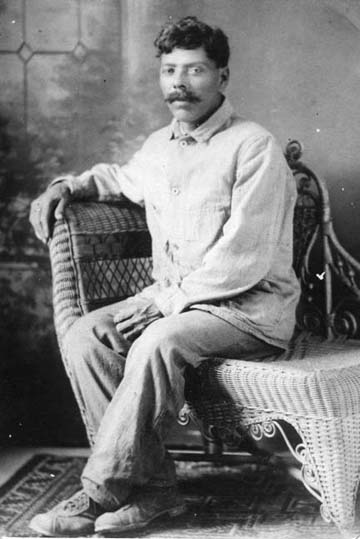 Gossett Cemetery 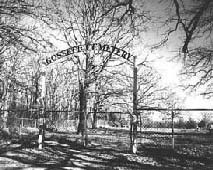 http://www.rootsweb.com/~ txkaufma/cemeteries/gossett.htm Mimi, I hope this will be of interest to some of your readers, it's a link to the Gossett Cemetery which is located in Kemp, Texas. I found my paternal grandfather Luis Cisneros here, this cemetery is mostly Hispanics. I have enjoyed your monthly publication, keep up the good work. Thank you, Luis Cisneros punch467@yahoo.com |
|
| Historic Texas Cemeteries http://freepages.genealogy.rootsweb.com/~txcemeteries/ Sent by Johanna De Soto Death Records Texas Death Records 1964-1998 SSDI - Social Security Death Index Ordering Death Certificates Obituary Daily Times at Rootsweb Texas Obituaries Texas Obituary Links |
What's New! includes items which haven't yet been added to the county pages of: McLennan County Texas Cemetery List Navarro County Texas Cemetery list Roscoe Cemetery, Nolan Co. inventory* White Hill, Clay County inventory* Denton County Texas Cemetery list Liberty County Texas Cemetery list Dawson County Texas Cemetery list Hidalgo County Texas Cemetery list Rock Church Cemetery Hood Co., History .....more new stuff |
| Wittliff Gallery of Southwestern & Mexican Photography presents Testigos de la historia / Witnesses to History, through February 12, 2006 Modern & Contemporary Documentary Photographers of Mexico October 8, 2005 Reception at 7:00 pm / Program at 8:00 pm Exhibit and event admission is FREE DEMONSTRATING THE DEPTH and vitality of the photojournalistic tradition in Mexico today, Testigos de la historia / Witnesses to History showcases the Wittliff Gallery's important permanent collection of modern and contemporary Mexican documentary photography. This new exhibition runs through February 12 at the Wittliff Gallery of Southwestern & Mexican Photography, located on the seventh floor of the Alkek Library at Texas State University in San Marcos. To coincide with Hispanic Heritage Month, the exhibit reception and a special program featuring a discussion of documentary photography by Estela Treviño and Alfonso Morales, two photo historians from the Centro de la Imagen in Mexico City, will be held the evening of Saturday, October 8. Among the almost 13,000 images now held in the Wittliff Gallery's permanent archives is a significant collection tracing the development of documentary photography--from early giants Manuel Álvarez Bravo, Héctor García, Nacho López, and Rodrigo Moya to the intrepid inheritors of this great artistic tradition: Yolanda Andrade, Marco Antonio Cruz, Maya Goded, Graciela Iturbide, Eniac Martínez Ulloa, Francisco Mata Rosas, Raúl Ortega, and Antonio Turok. Almost 60 images by these important artists are on display. Highlights of the show include Manuel Álvarez Bravo's "Obrero en huelga asesinado" ("Striking Worker Murdered"), "Subcomandante Marcos, La Realidad, Chiapas" taken by Raúl Ortega in 1995, and a large enigmatic portrait of Che Guevara by Rodrigo Moya entitled "Che melancólico, 1964, Ciudad de la Habana, Cuba" ("Melancholy Che"). For further information, interviews, or digital images, please contact: Michele M. Miller, Marketing & Media Relations m.miller@txstate.edu Alkek Library Special Collections TEXAS STATE UNIVERSITY-SAN MARCOS 512-245-2313 Sent Elvira Prieto, vira@mail.utexas.edu Academic Advisor Center for Mexican American Studies, University of Texas at Austin |
|
SouthPark Mall Tejano Book Festival From: Larry Kirkpatrick
elindio2@hotmail.com |
|
|
| Scotus College, A
Jewel in the South Texas Brush Country
By Joe Martinez Most South Texans have never heard of Scotus College, a landmark building in the Brush Country. Scotus College is located in Hebbronville and is the most prominent and historical structure in town. However, many Hebbronville residents, as well as other South Texans, do not know that Franciscan friars setup the seminary college in 1929, after fleeing Mexico to avoid persecution during the Cristero War.The Cristero War, 1927-29, was a bloody 30-month-long conflict brought about when Elías Plutarco Calles, newly elected president of Mexico, setout to exterminate Catholicism in Mexico. Basically, Calles sought to enforce five anti-Catholic articles in the 1917 Constitution, plus he added anti-Catholic legislation of his own. In response to Calles drastic measures, the Church instructed faithful followers to boycott certain governmental and private enterprises. In the meantime, the Mexican Episcopate voted to suspend all public worship in Mexico, effectively closing down all Catholic churches in Mexico. Not unexpectedly, the Church then resorted to armed retaliation against the government by means of all-out rebellion. This armed conflict is officially known as the Cristero War. The Cristero War quickly spread throughout Mexico and as a consequence thousands of lives were lost. The War came to an end after the inauguration of a new Mexican president, the former governor of Tamaulipas, Emilio Portes Gil, bringing about the ringing of church bells in Mexico again. In 1929, towards the end of the Cristero War, Franciscans sought refuge in the United States for fear of reprisals from the Mexican government. The Franciscans found sanctuary in three Texas locations, El Paso, Dumas (near Amarillo) and Hebbronville. Bernardino Madueño, a Franciscan friar, was among those seeking refuge. He was also seeking to establish his own parish in Texas. Madueño arrived in Laredo by train from Mexico, however, this first stop in Texas was a failure since the local priests turned him away. He then ventured to San Antonio, but once there the bishop informed him that he had to wait 8 days for a response. In desperation he traveled to El Paso, but found that Franciscan refugees were already established there and did not want to jeopardize their efforts there. So it was back to San Antonio, only to find out that they had not reached a decision as yet. Finally, he traveled to Corpus Christi where he struck luck. The Bishop of Corpus Christi graciously turned over to Friar Madueño the parish in Hebbronville - fellow friars Pasqual Ruiz and Jose Guadalupe Torres joined the parish soon afterward. Once in safe haven, the Hebbronville Franciscans setout to build a seminary, with jurisdiction out of Guadalajara, that ultimately would help replenish the priests lost during the Cristero War. Justo Alvarez, a local architect who learned his trade through correspondence courses, was hired to carry out the construction project - in spite of not having formal architectural schooling, he did an excellent job. Concrete blocks needed to wall the building were manufactured on site and the completion date went as scheduled. Once completed, the college was aptly named in honor of John Duns Scotus, (c.1266-November 8, 1308) a theologian and philosopher. He was one of the most important Franciscan theologians. Scotus taught at Oxford, Cambridge and lastly at Cologne France. He founded Scotism, a special form of Scholasticism, a medieval theological and philosophical works that sought to bridge the gap between religion and reason. It’s generally accepted that Scotus was born in Scotland, but Ireland and England are laying claim to him also. Pope John Paul II beatified Scotus in 1993. Scotus College at one time had as many as 50 students studying theology. The success of the college prompted certification by the State of Texas. Once seminary students finished theology instruction in Hebbronville, they were ordained by the bishop in Corpus Christi, and afterwards they departed Texas for church assignments in Mexico.. The college closed as a seminary in1957, but the magnificent building stands today as testimony to the turbulent times that engulfed Mexico for most of 1927 through 1929. Today the Scotus College Building is owned by the Guadalajara, Mexico Provisional of the Saints Francisco and Santiago under the direction of Antonio Porres. The Spanish style three floor structure recently received a $50,000 renovation grant from the Kenedy Foundation. Restoration work has begun and once renovation is complete, the college will be used for CCD classes (Confraternity of Christian Doctrine) confirmations and quinceañera (15th birthday) classes. The panoramic view from the upper level is magnificent. On the northeast corner, across from the college, is the oldest building in Hebbronville, a building that once housed the first nuns that came to Hebbronville in 1927. The complex, church and Scotus College Building are still run by the Franciscans with jurisdiction out of Guadalajara, Mexico. (This information was mostly furnished by Friar Oscar Villalobos, Franciscan priest at Our Lady of Guadalupe Church, that sits adjacent to Scotus College. Friar Oscar recently conducted a tour of Scotus College for the Texas Cactus Council. During this tour he provided much of the information for this article. Friar Oscar was recently transferred to Mexico City, and he is almost finished writing a book on Scotus College. For information about joining the Texas Cactus Council, contact J. T. Garcia at 361-256-3571) (Photos by William Foerster and Robert McAnear)
Joe Martinez jcm36@msn.com
Tel: (956) 781-9252
PO Box 4195,
McAllen, Texas 78502
|
| Project M.A.S.A.Invite vira@mail.utexas.edu Meso-American culture has always been deeply rooted in the observation and recording of cosmic events and cycles. This is evident both in the art and mythology of Meso-America. Familiarity of and use of outer space iconography (partially influenced by The Space Race) in the new millennium has provided yet another vehicle for Chicano artists to use for their purposes. Many young Chicanos were inspired to pursue the sciences because of this. Chicano artists have adopted and are using outer space iconography to convey issues of identity, immigration, racial prejudice, politics, etc. The styles and manners are varied, but the thread is universal. Project M.A.S.A. is a national collaboration of Chicano artists that reaches across time and space to represent yet anther side of "La Raza Cosmica". Project M.A.S.A Participating Artists: Arturo Almeida, Jesus Alvarado, Rolando Briseno, Enrique Fernandez Cervantes, Ruben C. Cordova, L.A. David, Viola Delgado, Jose Esquivel, Marie Garza, Xavier Garza, Angelica Gomez, Carlos Gomez, Quintin Gonzalez, Ray Gonzalez, Daniel Guerrero, Luis Guerrero, Serg Hernandez, Paul Karam, Joe Lopez, Los Antropolocos, Laura Molina, Mike Molina, Sandra A. Moreno, Cristina Nava, Cruz Ortiz, Jimmy Pena, Carlos Harrison-Pompa, Larry Portillo, Felipe Reyes, Alex Rubio, Shawn Saumell, Raul Servin, Victor Tello, Lawrence Trujillo, Luis Valderas, Vincent Valdez, Deborah Vasquez, Felipe Vasquez, Ramon Vasquez y Sanchez, Gabriel Velasquez, David Zamora-Casas Project:M.A.S.A.#1 Exhibit Dates: October 1st thru October 31st Reception: Saturday, October 15th, 6:00pm to 9:00pm Location: Gallista Gallery, 1913 So. Flores, San Antonio, Texas 78204 210.212.8606 Website: www.projectmasa.com Sent by Sent Elvira Prieto, vira@mail.utexas.edu Academic Advisor Center for Mexican American Studies, University of Texas at Austin |
| Seventeenth
Texas History Forum Preserving the History of the Alamo Friday, October 21, 2005 - Alamo Complex, Alamo Hall 9:00 - 9:30 Registration 9:30 - 9:45 Welcome: Mrs. Madge Thornall Roberts DRT Historian General Introductions: Laura T. Beavers, Chairman DRT Library Committee 9:45 - 10:25 Preserving the History of the Alamo through Art: The Alamo, An Illustrated History George Nelson 10:25 - 11:05 Preserving the History of the Alamo through Exhibits: The Long Barrack Renovation Drew Patterson 11:05 - 11:25 Break 11:30 - 12:10 Preserving the History of the Alamo through Archaeology: Discoveries in the Long Barrack Steve Tomka 12:10 - 12:50 Preserving the History of the Alamo through Volunteerism: 100 Years of DRT Custodianship Madge Thornall Roberts 12:50 Closing Remarks George Nelson George Nelson is a native Texan from Uvalde County, a University of Texas graduate in art and museum studies with thirty-five years of work in Texas archaeology. Mr. Nelson has been commissioned to create many paintings, dioramas, relief maps and models to interpret historical and prehistoric sites for various museums including: the National Park Service, Texas Parks and Wildlife Department., the Witte Museum and the University of Texas. Presently he is painting seven murals for the Alamo to go into the windows of the Long Barrack, representing Alamo Plaza through seven time periods. He is the author of the award-winning book The Alamo: An Illustrated History. Drew Patterson Drew Patterson is an artist and exhibit designer working in Austin, Texas for the past thirty-five years. His clients include Lady Bird Johnson, the Bob Bullock Texas State History Museum, the Center for American History, the LBJ Library and Museum, Texas Parks and Wildlife, and the City of San Antonio. He is currently working on the renovation of exhibits at the Alamo. The Long Barrack exhibit will open October 5, 2005. Steve Tomka Dr. Tomka received his Ph.D. from the University of Texas at Austin in 1994. Over the past 19 years his research interests have been split between the archaeology of South America and hunter-gatherer adaptations in Texas. More recently, he has become an enthusiastic student of historical archaeology, including the mission period in Texas. Dr. Tomka was named Interim Director of the Center for Archaeological Research in 2001, and he was named Director in June 2002. Since its founding in 1974, the Center and its staff have conducted the bulk of the archaeological investigations at the Alamo. Madge Thornall Roberts Madge Roberts, DRT Historian General, is a fourth-generation DRT member, a retired elementary teacher, and the author of several award-winning books on Texas history: Star of Destiny: The Private Life of Sam and Margaret Houston received wide acclaim, and the four-volume series which she edited, The Personal Correspondence of Sam Houston, was chosen as one of the twenty best books on Texas history of the last decade by the Austin American-Statesman. The first volume of this series received the T. R. Fehrenbach Award. Additionally, she published A Child's View Of Texas History From A To Z for fourth graders. Mrs. Roberts was chairman of the DRT committee that erected the Wall of History on the Alamo grounds and is currently serving on the Long Barrack Restoration Project. The Daughters of the Republic of Texas sponsor the Seventeenth Texas History Forum. Proceeds in excess of expenses will benefit the library's Herpich Conservation and Restoration Fund. Seating is limited and pre-registration is advisable. No luncheon is scheduled, but for those who wish to have lunch on their own and return in the afternoon, docent guided tours will be available in the Long Barrack. Registration is $12.50 per person. Forum reservations will remain open as long as seating is available. Please make your check payable to the DRT Library Committee and send to: The DRT Library, P. O. Box 1401, San Antonio, Texas 78295-1401. For more information, please call (210) 225-1071 or e-mail drtl@drtl.org. San Antonio: The Story of an Enchanted
City, I have a great deal about the Hispanics of San Antonio -- their history and cultural contributions to our city. The book is on Internet on Barnes &
Noble, 400-page book by Frank Jennings Sent by
From: jenninform@aol.com |
|
Seguin Invitation 16th Annual Celebration, Open to the public - no admission charge You, your Family and Friends are invited to attend What: The Juan N. Seguin Memorial Celebration When: Saturday October 29, 2005 @ 4:00 p.m. Where: Juan Seguin Burial Site - Seguin, Texas. Keynote Speaker and Honored Guest Ana Carolina Castillo Crimm, Associate Professor of History at Sam Houston State University e-mail: aseguin2@aol.com |
|
The Main Street Project The Main Street Project is a grassroots policy and organizing initiative that works to document the economic challenges facing people in rural communities, give voice to their hopes and aspirations and the tools to create change. The Main Street Project works with existing community-based organizations, agencies, and individuals to support innovative approaches to rural economic policy and sustainable development. Through education, training, and organizing, we support rural constituents to develop nonpartisan, civic engagement coalitions that encourage greater political participation. The Latino Leadership Project Sent by Elvira Prieto vira@mail.utexas.edu "Leaders are made, not born." The Latino Leadership Project is a project of the League of Rural Voter's Main Street Project and the Center for Civic Participation. This project is one portion of a comprehensive strategy to recruit and support emerging leaders, as we build and strengthen a broad-based movement for political participation/civic engagement in the Latino community. The Latino Leadership Project supports individuals and organizations as they develop civic engagement projects in their own communities. We are committed to working with community-based non-profit, social service, and advocacy organizations to increase their skills, and raise the level of awareness about the political process. The Main Street Project and the Center for Civic Participation advocate cross-sector collaboration that promotes empowerment through civic engagement-based on political education and leadership development, regardless of citizenship. We believe that all communities posses talents, skills and assets that can be used to create change. The Latino Leadership Project works with existing Latino and Latino-Serving Organizations to develop partnerships and collaborations that will ultimately strengthen skills and leadership development in communities with the aim of: · Bringing community groups together around issues that affect their community · Encouraging community dialogue and activism around these issues · Increasing voter registration, education, and mobilization Building on our work in the 2004 election cycle, the Main Street Project and the Center for Civic Participation will continue to work with the over 60 groups we supported across the country. Para obtener esta información en castellano, por favor abre el documento pegado a este email. Ana Nájera Mendoza, Research Fellow Main Street Project fellow@leagueofruralvoters.org |
| The Study of the Spanish-Speaking People of Texas as Photo Essay Current Exhibit at the Center for American History, University of Texas at Austin: "The Study of the Spanish-Speaking People of Texas series consists of more than 900 images taken by Russell Lee between April and July 1949 in Corpus Christi, San Angelo, San Antonio, and El Paso. The Study of the Spanish-Speaking People of Texas series consists of more than 900 images taken by Russell Lee between April and July 1949 in Corpus Christi, San Angelo, San Antonio, and El Paso. The photographs include images of the many poignant, proud, exasperating, joyful, and intimate moments in the lives of people in these Mexican-American communities at a very specific point in time. The images represent a unique visual record for that period, and are unparalleled in their variety, scope, and quality. Among the many subject areas are families, children, schools, churches, housing, migrant workers, professions, trades and vocations, businesses, community organization, health and homecare, politics, and leisure activities. The photographs were commissioned in 1948 by University of Texas professor George I. Sanchez to illustrate the Study of the Spanish-Speaking People of Texas. Directed by sociologist Lyle Saunders, the multi-year, socioeconomic study aimed to fill substantial gaps in the data then available about the expanding Spanish-speaking population of Texas. Sanchez and Saunders hoped to educate public officials, bureaucrats, and other powerful and influential Texans, as well as the general public." For more information please visit http://www.cah.utexas.edu/ssspot/ Sent Elvira Prieto, vira@mail.utexas.edu Academic Advisor Center for Mexican American Studies, University of Texas at Austin |
| Valley authors at
Seventh Annual Book Festival in Hidalgo, TX
Sent by George Gause ggause@panam.edu Hidalgo County Historical Society and Hidalgo County
Historical Commission will hosted the seventh annual HCHS/HCHC Book
Festival and open house on Sunday, November 20, 2005. This year’s theme is "Music and Memories." Music will be provided by Mario Alemán, guitarist. Some of the authors sharing their memories will be John Mora from Austin who wrote Through My Eyes - A Retrospective, a book about growing up in Donna, Texas; Mona Sizer from Harlingen whose book Border Bandits – Real to Reel is hot off the press, and Jan Seale who will give a slide presentation of photos of Valley flora and fauna from Valley Ark, which is due off the press just before Christmas. Twelve-year-old Kirsten Rawson is the youngest author. She and her grandmother Kathleen Carrizal-Frye recently self-published Dia de los Muertos, after three years of avid study of Mexican Day of the Dead traditions. Glenn Harding and Becky Lee, authors of Rails to the Rio, are from Raymondville. Their book studies the development of several Valley towns as the railroad came to the South Texas 100 years ago. Harding is an avid collector of books on South Texas history. John Hawthorne from Brownsville will round out the group of eight authors. He will have tee-shirts inspired by his two volumes of Brownsville Ghost Stories, as well as his books. Books on the history, genealogy, cooking, folklore,
literature, plants and wildlife of the Rio Grande Valley will be
available for sale. This includes books on South Texas and Northern
Mexico, in both English and Spanish. Refreshments will be served. For
more information contact Virginia Haynie Gause at 686-3914 or email vgause@panam.edu |
|
White Hat, Black Tales By Katherine S. Mangan, The Chronicle of Higher Education Research and Books, issue dated August 5, 2005 Sent by Lupe Dorinda Moreno dorindamoreno@comcast.net ~ A Texas scholar digs into the dark truths about the role of the Texas Rangers in early-20th-century border wars Whether he gallops across TV screens on a steed named Silver or kick boxes drug dealers and other contemporary miscreants, the Texas Ranger is an iconic figure in American culture. But it has fallen to a Texas-based scholar named Benjamin H. Johnson, a 33-year-old assistant professor of history at Southern Methodist University, to help turn the popular images of the Lone Ranger and of Walker, Texas Ranger, upside down. Mr. Johnson's 2003 book, Revolution in Texas: How a Forgotten Rebellion and Its Bloody Suppression Turned Mexicans Into Americans (Yale University Press), portrays the Texas Rangers as bad guys who terrorized and murdered hundreds -- and perhaps thousands -- of Mexican-born Texans living along the border nearly a century ago. The book -- and a 2004 documentary based on an incident in the same period -- has now led a Texas lawmaker to introduce legislation this year honoring the Tejano rebels who died at the hands of the Rangers and vigilante groups in the failed uprising in 1915. "Ben's book was a confirmation of what we've been talking about around barbecue pits and campfires for years," says Texas Sen. Aaron Peña, a Democrat from the border city of Edinburgh, Tex., who ordered a stack of the books and has handed them out to his colleagues and constituents. Specifically, the author examines a 1915 rebellion in South Texas called the Plan de San Diego, in which Tejanos, or Texans of Mexican descent, sought to forcibly reclaim the American Southwest for Mexico in a plot that included killing all Anglo males over age 16. The unsuccessful uprising, which included a series of raids on ranches and railroads, provoked a bloody counterinsurgency in which Texas Rangers, federal soldiers, and vigilante groups indiscriminately killed anywhere between 300 and 3,000 Tejanos, depending on whose estimates you believe. Hispanic scholars have written about the bloody border wars for decades, but it has taken a work written by a young Anglo historian writing for Yale University Press to bring the matter to mainstream audiences. Mr. Johnson has given standing-room-only talks in South Texas, and received dozens of calls and e-mail messages from Mexican-Americans who say his book confirmed accounts they had heard from their parents and grandparents, but never read about in their textbooks. Mr. Johnson says he did not set out to write a book about, much less trash, the image of the Texas Rangers, now an elite unit of 118 officers, along with nearly two-dozen crime analysts and other personnel, in the Texas Department of Public Safety. He was more interested in the effect that the violence that started in 1915 had on race relations along the border and on the development of a Mexican-American identity. But in a state whose unofficial motto is "Don't Mess With Texas," the book stirred up conflicting emotions. On the Paper Trail Mr. Johnson's fascination with this era of Texas history began when he was in the library at Yale University, trying to zero in on a topic for his doctoral dissertation that related to his interest in border studies. "I came across a mention of the rebellion and bloodshed, and it seemed really big," he says. "The language people were using was terribly similar to what I was hearing when I turned on the news and listened to reports about ethnic cleansing -- at that point in the Balkans. They were using words like 'evaporated'" to describe the widespread killings of Tejanos. "I thought 'why am I -- a 24-year-old lifelong Texan and historian -- just hearing about this?'" As he proceeded with his research, Mr. Johnson found that while he and many Texans -- Anglos in particular -- were learning about the Rangers' unsavory past for the first time, Hispanic authors had written about such abuses for years. In 1958, for instance, Américo Paredes, the noted Mexican-American author who taught at the University of Texas at Austin and died in 1999, wrote about the border's violent history in his book With His Pistol in His Hand: A Border Ballad and Its Hero (University of Texas Press). Mr. Johnson credits those authors, as well as contemporary historians who write about the border, and he is careful not to imply that he is the first historian to turn the image of the Texas Ranger on its head. Asked about the publicity his book has received, and the flurry of attention now being paid to racial tensions along the border, he says the huge growth in the nation's Hispanic population and the interest in immigration and globalization have made border studies a hot topic. For his own book, Mr. Johnson tracked down documents in Texas and Mexico City. The Mexican National Archives are housed in a former federal prison, which created a haunting setting for many long hours of reading. "They actually have the documents in the old prison cells, and the guy gets a ring of thick keys and walks to the cells and opens them," he says. "There's still graffiti in this place from people who were there under considerably less happy circumstances." He also listened to oral histories recorded over the past few decades by students at the University of Texas-Pan American and Texas A&M University at Kingsville. Chance encounters led to visits with the grandson of the sheriff who arrested a Tejano carrying a document outlining the Plan de San Diego, as well as the great-grandson of one of the leaders of the 1915 uprising, Luis de la Rosa. As the true history of the bloody border wars unfolded, the scholar also formed theories about why it had been largely forgotten. For one thing, Mr. Johnson contends, the State of Texas actively suppressed information about the violence. In 1919 the state legislature held hearings that revealed evidence of widespread killings by Texas Rangers, but lawmakers voted not to publish the transcript. (A copy was later unearthed by historians.) Families that were traumatized by the violence didn't want to talk about it. And until recently, academic historians generally regarded what happened along the Texas-Mexico border a regional matter of little interest to the rest of the nation. But Mr. Johnson believes the episode reverberated far beyond the disputed border. He argues that the rebellion and suppression that began in 1915, rather than turning Tejanos against Americans, prompted them to claim their rights as U.S. citizens and led to the creation, in 1929, of the League of United Latin American Citizens, or Lulac, the first nationwide Mexican-American civil-rights organization. At first, that idea seemed counterintuitive. "Why would a prolonged episode of savage racial violence prompt people to claim the same nationality as their victimizers?" He concludes that the Tejanos sought refuge in U.S. citizenship, having realized the futility of trying to achieve their goals through force, and the dangers of being without a state. "Mexican nationalism and the promise of the revolution had failed them," Mr. Johnson says. "The uprising had been a disastrous miscalculation, and the Mexican government wasn't interested in advancing the well-being of Mexican-descent people of Texas." Praise and Disdain Hector M. Flores, Lulac's current national president, agrees with that conclusion. "Dr. Johnson chronicles a period in history that a lot of Texans are still in denial about," he says. "A war was won, and the Mexicans were the conquered people. The hired guns were the Texas Rangers." Raised by his grandparents in the tiny South Texas town of Dilly, Mr. Flores recalls challenging his seventh-grade history teacher for her portrayal of events that his grandparents described differently. "All the teachers talked about were the murdering, thieving Mexicans who overran the heroes of the Alamo." His grandparents, on the other hand, warned him that the real bad guys were the Anglo law-enforcement officers who harassed and even killed Tejanos like themselves. "Books like Ben's shatter the myths and help us realize how much we've traveled in the last 100 years," Mr. Flores says. "It's better to know the truth, even if it makes you uncomfortable." Revolution in Texas is unlikely to be a featured title at the Texas Ranger Hall of Fame and Museum, in Waco, Tex. The museum's Web site describes the Rangers as "one of the most cherished symbols of the Lone Star State, a positive and enduring icon of Texas and America." Byron A. Johnson, director of the museum, acknowledges that some of the Texas Rangers participated in the killings nearly a century ago, but says Revolution in Texas overstates their involvement by failing to adequately distinguish between the official Texas Rangers and independent vigilante groups that sprang up around the same time. "For a while, anyone riding around with a horse and a gun was considered a Ranger," he says. "There were outstanding periods of [the Rangers'] history and those that were regrettable," the museum director adds. "We want to be sure that the history is accurate so lessons can be learned from the mistakes." Mr. Johnson is not alone in making Texans feel uncomfortable about their past these days. Last year, shortly after Mr. Johnson's book was published, the Dallas filmmaker Kirby F. Warnock released a documentary called Border Bandits, which told the story of two unarmed Tejano landowners who were shot in the back by Texas Rangers in 1915. The event, which was supposedly a retaliation for an earlier Mexican bandit raid, had been related to Mr. Warnock by his grandfather, a cowboy who witnessed the killings. While some Texans complained that these depictions unfairly malign the Rangers, others are angry that such abuses have been covered up for so long. "People find it particularly relevant that an arm of the state was centrally implicated in the violence, and that they continue to be so celebrated," says Mr. Johnson. Healing the Border Texans also worry that calling attention to the historical racial strife along the border could deepen divisions between Hispanics and Anglos in the state today. Newspapers have carried angry letters to the editor from readers like Ramon Estrada, a retired electrical engineer who grew up in El Paso and now lives outside of Denver, Colo. He says he is bitter about the way his ancestors were treated and sometimes questions whether he was right to serve the United States in the Vietnam War. In an interview, Mr. Estrada says that he read about Mr. Johnson's book in The Denver Post, and it brought back memories of stories his now-83-year-old mother told him when he was growing up. "She used to tell us how her father and his friend were killed by Texas Rangers in 1915 for no other reason than being of Mexican descent," said Mr. Estrada. "My cousins and I grew up hating the Rangers, and it used to really bother us when we'd see these TV shows where they were always the good guys." Even those intent on commemorating the past are moving carefully in doing so. Mr. Peña, the state senator, talked to both Mr. Johnson and Mr. Warnock at a screening of the documentary in South Texas last year. Afterward, he decided to introduce some sort of commemorative legislation. But he quickly concluded that his initial ideas -- naming a highway or erecting a monument for the victims, or requiring Texas educators to revise their history books -- would prove too divisive. "The powerful establishment interests need to keep certain mythologies about Texas pure and clean," he says. "They don't want to hear about abuses by the Texas Rangers." Instead, he settled on proposing that May 5 -- Cinco de Mayo -- also be designated as a day to reflect on the history and culture of the Tejanos. He plans to resurrect that bill, which died at the end of the session in May, next year and pursue private financing for a monument. "We need to do this slowly and carefully, and with sensitivity to everyone involved," the senator says. Aside from setting the record straight about a little-understood period of history, Mr. Johnson hopes his book will show that America "is flexible enough to offer people like [Mr. Estrada] the benefits of first-class citizenship. That's what the founders of Lulac concluded, and I think that the remarkable advances of Mexican-Americans in the last 70 years are testimony to the power of their vision." http://chronicle.com Section: Research & Publishing, Volume 51, Issue 48, Page A11 |
|
Report on September 1-4th Conference in Laredo
by Jose M. Pena Excellent!! A most interesting thing was that our friend, Joe Martinez, displayed a huge statue of Jose De Escandon. On the second day, people were taken to Rancho Los Ojuelos and also to San Ignacio. I am sorry that I did not go on this one, but I heard some nice comments about the trip. Some of the lecturers were Arnulfo Santos, Enrique Benavides, Jose de la Pena, Adrian Martinez, Maria Eva Ramirez, Acela and Rodolfo Martinez, and Victoria F. Uribe. That afternoon, we all attended different workshops that were held at the Church of Jesus Christ of Latter Day Saints (the Mormon Church). I went to a lecture by Jose de la Pena (excellent).and by Laura Gutierrez-Witt. The next two days were very busy. They started at 9:00 AM and we had many fine speakers. Jose Trevino and San Juanita Martinez-Hunter, from the Laredo Genealogy, guided the different phases of the program. They did a fine job. During the day, we had a number of speakers: Jose Antonio Esquibel, Guillermo Garmendia Lean Galen Greaser (exceptional), Dr. Ramon Dovalina, Dr. Beatriz de la Garza, Dr. Jose R. Juarez, Dr. Andres Tijerina (superb), Ricardo Palacios (excellent), and others. The speakers were great. Each of the speakers went into different parts of a historical event. The topics ranged the gamut of the establishment of Laredo, postcards of former Laredo, Guerrero Viejo, descendents of Tomas Sanchez, the General Visit of 1767, the border's action to secede from Mexico, and impact of the 1910 Mexican Revolution. I was very happily surprised to hear them confirm most of the conclusions that I draw in my book which I hope will be published in November. In some cases, the wording I use in the book seem to be those of the speakers. So, I am happy that I went to conference. The Laredo Genealogy Society seemed to spare no effort to keep us busy all the time. On two separate nights, we attended parties. They deserve a heartfelt congratulation. (Normita, will you please pass this information to others not listed on the cc list. Thanks) I was happy to see again and/or to meet a number of people: Jesse and Gloria Benavides, Norma Salinas, San Juanita Martinez Hunter, Jose Trevino, Galen Greaser, Jose De La Pena, George Gause, and a number of other people. Sorry that George Farias and Arturo Garza could not attend the conference, because of illness. Hope you two get better. You missed a great conference. Hope you can make the next one. Regards, Jose M. Pena JMPENA@aol.com A video tape was made of the entire conference. I assume that it will be available. Interested should contact San Juanita Hunter. For more information, go to: www.vsalgs.org |
|
Texans in the Civil War http://www.angelfire.com/tx/RandysTexas/ |
|
Descendants
of Anthony Mullins (Antonio Molino) Gathered Oct. 5: Johnson County Kansas, Searching for Your Hispanic Ancestors Our Hell in High Water Just how important is New Orleans? Documents From The New Orleans Notarial Archives Safekeeping of Sacramental Records Hurricane Katrina Mexican Workers in Jackson, MS Survive Katrina Inspection Tour of Arabi "Hurricane Help For Schools" Jazz Premiere honors labor leader Dolores Huerta, Michigan Artes Unidas de Michigan |
|
More Than 60 Descendants Attend Mullins Memorial Activities A TWO-DAY REUNION in Lincoln Co., TN, honored the memory of Anthony MULLINS (Antonio MOLINO), an Italian immigrant who was an ancestor to two lines of the BOBO family. He came to Virginia as a part of an attempt to establish grapes and olives in the colony and joined the regiment of Col. William WASHINGTON in the Revolutionary War. Our MULLINS cousins are preparing a book on Anthony MULLINS (Antonio MOLINO) who was born in about 1751 in Genoa, Italy, where he was a farmer, migrated to Virginia in 1773, fought for the colonies in the Revolutionary War and later migrated in 1817 to Lincoln, County, where he died on 3 Nov. 1836. The MULLINS descendants is collecting material for the book now. Since it will cover only the first four generations of the family, this Roots-Cellar will has information on later generations. Anthony MULLINS Remembered in TN Ceremony 1. Antonio MOLINO (Anthony MULLINS): b: 1751in Genoa, Italy d. 3 Nov. 1836 in Lincoln Co., TN; m: 20 Jan. 1809 in Albemarle Co., VA. +(2) Sarah REYNOLDS/RAMBLE: b. bet. 1783-1785, VA; d. aft. 1860 in Lincoln Co., TN, BOBO Roots-Cellar July 2005 Published Periodically for Persons Researching the BOBO Surname Charles H. (Chuck) BOBO, Editor-PublisherE-Mail: FamilyBOBO@aol.comPostal Mail: BOBO Family Assn.3101 Thurman Rd., H-22HUNTSVILLE, AL 35805Phone/FAX: 256-468-5059 |
|
Johnson County
Kansas Searching for Your Hispanic Ancestors Wednesday, Oct. 5, 2005 • 7-8:30 p.m. Central Resource Library Marge Vallazza (teacozygran@kc.rr.com) will discuss approaches to research, sources, and Web sites to assist beginners with Hispanic Genealogy. Registration is requested; call (913) 495-7514. Learn more about the Genealogy resources at the Library. |
| Our Hell in High Water By James Nolan www.washingtonpost.com Sunday, September 4, 2005; B01 BATON ROUGE The real nightmare began last Wednesday morning, when the city cut off the water supply two days after Hurricane Katrina devastated New Orleans. Until then, I hadn't regretted the decision not to evacuate my 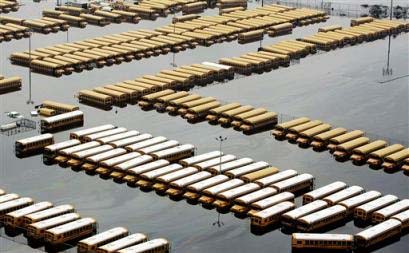 second-story French Quarter apartment, even when the
electricity flicked off in the middle of the storm,
plunging the city into darkness and ending most
outside communication. I still had hope.
second-story French Quarter apartment, even when the
electricity flicked off in the middle of the storm,
plunging the city into darkness and ending most
outside communication. I still had hope.School Busses AP Photo/Phil Coale I'm not particularly brave, but I am a fifth-generation New Orleans native raised in a culture that knows how to deal with hurricanes. As a matter of fact, the first light I ever saw streamed from a generator at Hôtel Dieu, the hospital the Daughters of Charity had founded in the 19th century. I was born there during the unnamed hurricane that wiped out New Orleans in September 1947, and was rowed home to the Faubourg Tremé along a flooded Canal Street. So as clouds darkened on Sunday afternoon, generations of storm folklore -- sheer instinct by now -- sprang into action. I filled the bathtub with water, cut the wick on the hurricane lamp, froze water in plastic jugs to keep the refrigerator cool, secured the dilapidated wooden shutters on the front gallery, stocked up on batteries, food and bottled drinking water, and got out the portable radio and the plug-in white Princess phone. Then I opened a bottle of wine. By the time my friends José and Claudia arrived to weather the storm with me, I'd cooked a three-course meal, which we topped off with a bottle of Spanish cognac. "Here's to Katrina," we toasted, "the Russian spy," even as the TV broadcast its unrelenting instructions to evacuate, evacuate, evacuate. After Katrina began to pound us at 7 a.m. Monday, the only moment of panic took hold when a storm shutter tore open and a buckling set of French doors threatened to usher the hurricane into my study. While José and Claudia wired the doors shut, I held them in place with a wooden cooking spoon wedged inside the handles. Then we retired to the back gallery to watch the howling wrath of the storm whip through the brick courtyard. My building dates back to 1810 and has survived two centuries of storms from the Gulf. It knew what to do. Or rather, the original architects of the city knew just what to expect, and designed houses on brick pilings, windows and doors with jalousied shutters, thick plaster walls and enclosed courtyards. Most of the buildings constructed before 1910 have been waiting during centuries for a storm of Katrina's magnitude, and survived her with iron-lace grace, as did my place. Houses with concrete slab foundations poured on reclaimed swampland, and towering plate-glass hotels and office buildings, were chewed up and spat out. As my mother complained after her suburban home was flooded several years ago, "Honey, things like this aren't supposed to happen anymore. These are modren times." Nature hasn't changed, but the city certainly has. Summer camp by kerosene lamp didn't last long. By Tuesday afternoon I was already beginning to hear about martial law, widespread looting and the city's mandate that everyone leave and nobody return. "You have nothing to come home to," the lone local radio station announced to the evacuated. "New Orleans as we know it has ended." Friends from both coasts called to inform me that the French Quarter was under water, even as I peered down from my balcony into a bone-dry street. When we took a walk around, the Quarter resembled a cross between the morning after Mardi Gras and a grade-B war movie. Choppers swooped overhead, sirens wailed and Army trucks rumbled through the streets. I began to notice groups of residents lugging water bottles and suitcases, heading for the convention center. Hours later they straggled back. At this point my chief means of communication was shouting from the balcony, and I learned that there were no evacuation buses. The city had ordered us to leave, but was allowing nobody in to rescue us and providing no transportation out. On Tuesday evening, my skeletal neighbor Kip, a kidney-transplant patient, waded home alone by flashlight from the convention center, where there were neither dialysis machines nor buses to get him to one. His last treatment had been four days earlier, and he was bloating. We had to get him out. By Wednesday morning, when the water was cut off, the city was already descending into mayhem. A looter had shot a policeman in the head, a car was hijacked by someone wielding a machete, gas was being siphoned from parked cars, mail trucks and school buses were being stolen, and gangs of kids from the projects were circling the streets on bikes. The social problems in this impoverished city had been simmering for decades; now the lid was off, and the pot was boiling over. Despite the orders to leave, roadblocks had been set up, and nobody was being permitted to enter or leave the city. Molly's, a local bar, opened by candlelight and the rumor spread like wildfire: They have ice. If evacuated residents and proprietors had been allowed to return, to take a stand, some public order would gradually have prevailed. Yet the only advice from the city was to head for the convention center. The city's heavy-handed tactics made me bristle. "We got too many chiefs and not enough Indians," the mayor complained. I knew what that meant: Nobody was in charge. The Homeland Security police state had collided with Caribbean inefficiency, and the result was disaster. I took action. I latched the shutters, kissed my deceased mother's rabbit-foot and cat's-tail ferns goodbye, and in five minutes had packed a bag. In a daze, I was acting out a recurring nightmare: The borders are closing, the Nazis are on their way, grab grandfather's gold watch and run. I'd heard that hotels might be busing their guests out, and the place to head was the Monteleone hotel on Royal Street, a Quarter institution. So at 5:30 p.m. José, Claudia, Kip and I arrived trailing luggage and low expectations. But it turned out the Monteleone had gotten together with several other hotels to charter 10 buses to the Houston airport for $25,000, to do privately what the authorities should have been doing publicly. We bought a few of the remaining tickets at $45 each. The sweltering lobby was littered with fainting bodies, grandmothers fanning themselves and children seated in shadowy stairways, a scene straight out of "Hotel Rwanda." The last bus out of New Orleans was set to leave at 6:05, the Austrian hotel clerk informed me. I had my doubts. We weren't the only locals in line. I spotted the legendary jazz musician Allen Toussaint. "Allen," I said, "where did you hear about this?" He shot me a broad grin and walked on, as if we shouldn't talk about such things. By 9:30 that evening the buses still hadn't arrived, much less left and about 500 people were milling around in front of the hotel, guarded by a hotel-hired security force of teenagers in "New Orleans Police" T-shirts with shotguns slung over their shoulders. An obscenely obese man was hauled in on a beeping forklift, and a row of passengers in wheelchairs formed at the corner. A run on the buses was expected, and we were warned that only those with tickets would be allowed to board. Anyone else would be dealt with by the kids with rifles. Bus headlights appeared at last. A cheer went up. And then a single yellow Jefferson Parish school bus rattled up, bearing the news that the 10 chartered buses had been confiscated by the state police. We heard on the sly that this bus was offering passage to the Baton Rouge airport for $100 a seat. Allen Toussaint was the first to jump on, and after negotiating the price down a bit with the driver, who I assumed was an evacuator trying to make some extra money, we crouched on the floor and held our breath. Ours was the only vehicle sailing along a dry, unlit highway. Why, we wondered, isn't the city providing hundreds of these vehicles to carry people out by the same route? The authorities may fix the electrical grid one day, but who is going to fix the authorities? Later a neighbor who stayed behind told me that the 10 chartered buses never did show up. "You mean you all escaped on that stolen school bus ?" she shrieked. The news, she said, was all over town. As in the Battle of New Orleans, the pirates were better organized than the soldiers, and saved our day. We're now luxuriating in a friend's air-conditioned house in Baton Rouge, taking hot showers and sucking on ice cubes. I'm safe and dry, but however comfortable, this isn't New Orleans. The minute the lights flash back on, I'll be back home, unlatching my shutters and staring down a French Quarter street that I hope stretches as far into the future as it does into the past. As Stella says to her sister Blanche in "A Streetcar Named Desire:" "I wish you'd stop taking it for granted that I'm in something I want to get out of." James Nolan, a poet and writer, teaches at the Loyola Writing Institute of Loyola University in New Orleans. |
|
Just how important is New Orleans? From: David Lewis dclewis@jps.net The American political system was founded in Philadelphia, but the American nation was built on the vast farmlands that stretch from the Alleghenies to the Rockies. That farmland produced the wealth that funded American industrialization: It permitted the formation of a class of small landholders who, amazingly, could produce more than they could consume. They could sell their excess crops in the east and in Europe and save that money, which eventually became the founding capital of American industry. But it was not the extraordinary land nor the farmers and ranchers who alone set the process in motion. Rather, it was geography -- the extraordinary system of rivers that flowed through the Midwest and allowed them to ship their surplus to the rest of the world. All of the rivers flowed into one -- the Mississippi-- and the Mississippi flowed to the ports in and around one city: New Orleans. It was in New Orleans that the barges from upstream were unloaded and their cargos stored, sold and reloaded on ocean-going vessels. Until last Sunday, New Orleans was, in many ways, the pivot of the American economy. For that reason, the Battle of New Orleans in January 1815 was a key moment in American history. Even though the battle occurred after the War of 1812 was over, had the British taken New Orleans, we suspect they wouldn't have given it back. Without New Orleans, the entire Louisiana Purchase would have been valueless to the United States. Or, to state it more precisely, the British would control the region because, at the end of the day, the value of the Purchase was the land and the rivers - which all converged on the Mississippi and the ultimate port of New Orleans. The hero of the battle was Andrew Jackson, and when he became president, his obsession with Texas had much to do with keeping the Mexicans away from New Orleans. During the Cold War, a macabre topic of discussion among bored graduate students who studied such things was this: If the Soviets could destroy one city with a large nuclear device, which would it be? The usual answers were Washington or New York. For me, the answer was simple: New Orleans. If the Mississippi River was shut to traffic, then the foundations of the economy would be shattered. The industrial minerals needed in the factories wouldn't come in, and the agricultural wealth wouldn't flow out. Alternative routes really weren't available. The Germans knew it too: A U-boat campaign occurred near the mouth of the Mississippi during World War II. Both the Germans and Stratford have stood with Andy Jackson: New Orleans was the prize. Last Sunday, nature took out New Orleans almost as surely as a nuclear strike. Hurricane Katrina's geopolitical effect was not, in many ways, distinguishable from a mushroom cloud. The key exit from North America was closed. The petrochemical industry, which has become an added value to the region since Jackson's days, was at risk. The navigability of the Mississippi south of New Orleans was a question mark. New Orleans as a city and as a port complex had ceased to exist, and it was not clear that it could recover. The Ports of South Louisiana and New Orleans, which run north and south of the city, are as important today as at any point during the history of the republic. On its own merit, POSL is the largest port in the United States by tonnage and the fifth-largest in the world. It exports more than 52 million tons a year, of which more than half are agricultural products -- corn, soybeans and so on. A large proportion of U.S. agriculture flows out of the port. Almost as much cargo, nearly 17 million tons, comes in through the port -- including not only crude oil, but chemicals and fertilizers, coal, concrete and so on. A simple way to think about the New Orleans port complex is that it is where the bulk commodities of agriculture go out to the world and the bulk commodities of industrialism come in. The commodity chain of the global food industry starts here, as does that of American industrialism. If these facilities are gone, more than the price of goods shifts: The very physical structure of the global economy would have to be reshaped. Consider the impact to the U.S. auto industry if steel doesn't come up the river, or the effect on global food supplies if U.S. corn and soybeans don't get to the markets. The problem is that there are no good shipping alternatives. River transport is cheap, and most of the commodities we are discussing have low value-to-weight ratios. The U.S. transport system was built on the assumption that these commodities would travel to and from New Orleans by barge, where they would be loaded on ships or offloaded. Apart from port capacity elsewhere in the United States, there aren't enough trucks or rail cars to handle the long-distance hauling of these enormous quantities -- assuming for the moment that the economics could be managed, which they can't be. The focus in the media has been on the oil industry in Louisiana and Mississippi. This is not a trivial question, but in a certain sense, it is dwarfed by the shipping issue. First, Louisiana is the source of about 15 percent of U.S.-produced petroleum, much of it from the Gulf. The local refineries are critical to American infrastructure. Were all of these facilities to be lost, the effect on the price of oil worldwide would be extraordinarily painful. If the river itself became unnavigable or if the ports are no longer functioning, however, the impact to the wider economy would be significantly more severe. In a sense, there is more flexibility in oil than in the physical transport of these other commodities. There is clearly good news as information comes in. By all accounts, the Louisiana Offshore Oil Port, which services supertankers in the Gulf, is intact. Port Fourchon, which is the center of extraction operations in the Gulf, has sustained damage but is recoverable. The status of the oil platforms is unclear and it is not known what the underwater systems look like, but on the surface, the damage - though not trivial -- is manageable. The news on the river is also far better than would have been expected on Sunday. The river has not changed its course. No major levees containing the river have burst. The Mississippi apparently has not silted up to such an extent that massive dredging would be required to render it navigable. Even the port facilities, although apparently damaged in many places and destroyed in few, are still there. The river, as transport corridor, has not been lost. What has been lost is the city of New Orleans and many of the residential suburban areas around it. The population has fled, leaving behind a relatively small number of people in desperate straits. Some are dead, others are dying, and the magnitude of the situation dwarfs the resources required to ameliorate their condition. But it is not the population that is trapped in New Orleans that is of geopolitical significance: It is the population that has left and has nowhere to return to. The oil fields, pipelines and ports required a skilled workforce in order to operate. That workforce requires homes. They require stores to buy food and other supplies. Hospitals and doctors. Schools for their children. In other words, in order to operate the facilities critical to the United States, you need a workforce to do it -- and that workforce is gone. Unlike in other disasters, that workforce cannot return to the region because they have no place to live. New Orleans is gone, and the metropolitan area surrounding New Orleans is either gone or so badly damaged that it will not be inhabitable for a long time. It is possible to jury-rig around this problem for a short time. But the fact is that those who have left the area have gone to live with relatives and friends. Those who had the ability to leave also had networks of relationships and resources to manage their exile. But those resources are not infinite -- and as it becomes apparent that these people will not be returning to New Orleans any time soon, they will be enrolling their children in new schools, finding new jobs, finding new accommodations. If they have any insurance money coming, they will collect it. If they have none, then -- whatever emotional connections they may have to their home -- their economic connection to it has been severed. In a very short time, these people will be making decisions that will start to reshape population and workforce patterns in the region. A city is a complex and ongoing process - one that requires physical infrastructure to support the people who live in it and people to operate that physical infrastructure. We don't simply mean power plants or sewage treatment facilities, although they are critical. Someone has to be able to sell a bottle of milk or a new shirt. Someone has to be able to repair a car or do surgery. And the people who do those things, along with the infrastructure that supports them, are gone -- and they are not coming back anytime soon. It is in this sense, then, that it seems almost as if a nuclear weapon went off in New Orleans. The people mostly have fled rather than died, but they are gone. Not all of the facilities are destroyed, but most are. It appears to us that New Orleans and its environs have passed the point of recoverability. The area can recover, to be sure, but only with the commitment of massive resources from outside -- and those resources would always be at risk to another Katrina. The displacement of population is the crisis that New Orleans faces. It is also a national crisis, because the largest port in the United States cannot function without a city around it. The physical and business processes of a port cannot occur in a ghost town, and right now, that is what New Orleans is. It is not about the facilities, and it is not about the oil. It is about the loss of a city's population and the paralysis of the largest port in the United States. Let's go back to the beginning. The United States historically has depended on the Mississippi and its tributaries for transport. Barges navigate the river. Ships go on the ocean. The barges must offload to the ships and vice versa. There must be a facility to empower this exchange. It is also the facility where goods are stored in transit. Without this port, the river can't be used. Protecting that port has been, from the time of the Louisiana Purchase, a fundamental national security issue for the United States. Katrina has taken out the port -- not by destroying the facilities, but by rendering the area uninhabited and potentially uninhabitable. That means that even if the Mississippi remains navigable, the absence of a port near the mouth of the river makes the Mississippi enormously less useful than it was. For these reasons, the United States has lost not only its biggest port complex, but also the utility of its river transport system -- the foundation of the entire American transport system. There are some substitutes, but none with sufficient capacity to solve the problem. It follows from this that the port will have to be revived and, one would assume, the city as well. The ports around New Orleans are located as far north as they can be and still be accessed by ocean-going vessels. The need for ships to be able to pass each other in the waterways, which narrow to the north, adds to the problem. Besides, the Highway 190 bridge in Baton Rouge blocks the river going north. New Orleans is where it is for a reason: The United States needs a city right there. New Orleans is not optional for the United States' commercial infrastructure. It is a terrible place for a city to be located, but exactly the place where a city must exist. With that as a given, a city will return there because the alternatives are too devastating. The harvest is coming, and that means that the port will have to be opened soon. As in Iraq, premiums will be paid to people prepared to endure the hardships of working in New Orleans. But in the end, the city will return because it has to. Geopolitics is the stuff of permanent geographical realities and the way they interact with political life. Geopolitics created New Orleans. Geopolitics caused American presidents to obsess over its safety. And geopolitics will force the city's resurrection, even if it is in the worst imaginable place. © Copyright 2005 Strategic Forecasting Inc. All rights reserved. |
Documents From The New Orleans Notarial Archives skip@thebrasscannon.com writes: Many of these ancient and irreplacable documents from the New Orleans Notarial Archives were housed in the BASEMENT of the Civil Courts Building in New Orleans. The BASEMENT !!!! Go figure. I shudder to think of what they might look like right now. Skip Newfield skip@thebrasscannon.com |
|
Safekeeping of Sacramental Records http://www.archdiocese-no.org/#5 Sent by Bill Carmen Archbishop Hughes asks all priests who took Sacramental Registers for safekeeping during the hurricane to deliver the registers to the Catholic Life Center, Diocese of Baton Rouge. The registers will be stored safely in an air-conditioned vault at the Center. The contact person is Ms. Lee Leumas, archivist for the Diocese of Baton Rouge, phone (225) 242-0224. This request applies only to those parishes that have sustained significant damage and won't be up and running any time soon. |
|
|
| Mexican Workers in Jackson, MS Survive Katrina By Ana Radelat Jackson (MS) Clarion-Ledger (September 4, 2005) Sent by Howard Shorr howardshorr@msn.com Mexican workers who don't speak English surviving HATTIESBURG - Francisca Lourdes Lopez is one of Hurricane Katrina's hidden victims. A member of south Mississippi's growing Hispanic population, spawned by the growth of the state's poultry industry and a pre-storm building boom on the Gulf Coast, Lopez said she and most of the people living in her apartment complex did not know Katrina was heading her way until it was too late. "By the time we realized what was happening, we didn't have time to buy extra food or go somewhere else," she said. She said a couple of city workers came by the James Street Apartments last Sunday, where she and about 350 other Hispanics live. They distributed fliers in Spanish, warning of the storm and advising of the precautions residents should take. "That was it, and we haven't seen anyone else come by since," she said. Since the storm hit, Lopez and thousands of other Hispanics with limited English skills have struggled to understand what is happening around them. Lopez can't understand the public service announcements and steady stream of advisories on the radio telling storm victims where to get ice, water, generators and other necessities. Since most are undocumented workers from Mexico, local Hispanics are loath to ask city officials or the police for help, even when the trash Dumpster in the apartment building is overflowing with reeking garbage and a band of youths threaten to siphon gasoline from their cars. "We don't want to buy anymore trouble," said Marco Antonio Alvarado. "We'd rather take care of things ourselves." Alvarado said James Street Apartment residents cleared fallen trees themselves and sawed them into pieces to burn in hibachis. "The only thing we need is help with more food for the children," he said. Adding to the desperation, most of the local Hispanics are out of work, with 10 of Mississippi's 14 poultry-processing centers shut down and construction at a standstill. "We send most of our money home to family members who depend on it, and now we don't know when we'll be able to do it again," Alvarado said. In Laurel, a houseful of about 18 Mexican immigrants watched in horror Monday as Katrina almost entirely destroyed a grove of trees across the street. "We didn't know anything about this until Sunday, when they told us a bad storm was coming, said Pedro Ramos. "And nobody told us it would be this bad." Ramos said Laurel's Hispanics have survived, thanks largely to a couple of "bodegas," or Hispanic stores, in town, La Veracruzana and Michoacan, which have supplied them with food. Sometimes they get tips where they can buy other needed supplies. Elvira Maldonado said she raced to the store to buy disposable diapers for her 3-month-old daughter after a friend told her the Wal-Mart in Hattiesburg was open. "It's really hurts not to know English," she said. U.S. Census figures from 2000 say about 40,000 Hispanics were living in Mississippi, but many believe there are many more here now. |
|
Inspection Tour of Arabi Tuesday, September 20, 2005 |
| "Hurricane Help For Schools" Dear Colleagues: The U.S. Department of Education has created a webpage entitled "Hurricane Help For Schools" which can be accessed at www.ed.gov/katrina. It will serve as a clearinghouse of resources for Americans who want to help students displaced by Hurricane Katrina. The webpage is a forum where schools, companies and organizations across the country can come together and work to help students displaced by the hurricane. Companies and organizations can respond to the needs of the students and send resources directly to them, and schools will be able to directly contact the companies and organizations offering assistance. Thank you, Elizabeth Casas Ray GLemus@LULAC.org Director of Hispanic Communication &Outreach U.S. Department of Education 400 Maryland Avenue, S.W. Washington, D.C. 20202 202-205-2644 |
|
Announcements from Michigan A jazz composition by MSU Jazz Studies instructor Diego Rivera
honoring national labor pioneer Dolores Huerta will premiere in a
special concert in East Lansing, Mich., Oct. 5.
ARTES UNIDAS DE MICHIGAN WEBSITE |
|
Coming
to America! Columbus Day Family Program National Domesticity in the Early Republic: Washington, D.C. |
|
Coming
to America! Columbus Day Family Program Monday,
October 10 from noon to 4 pm The
National Archives is proud to offer a day of fun family programs and
activities celebrating the theme Coming
to America!
Join us for performances, demonstrations and activities throughout the
National Archives Experience related to genealogy, immigration, and
preserving family history. Experience
the sights, sounds, and excitement of arriving in a new place by
attending Destination: America
in the McGowan Theater, learn how quilts can tell you the story of your
grandmother’s life, design a colorful fraktur, try your hand at
stitching a sampler, trace your family’s origin through maps, use
copies of original records to apply for naturalization, and create your
own family tree! Genealogy
Information Center (Constitution Ave. Lobby) Noon
to 4:00 pm Are
you curious about your family tree? The National Archives is the perfect
place to start! Stop by to pick up information on where to begin, what
to look for and what resources to use to discover your roots. Performance
(McGowan Theater) Destination:
America 1:00pm Destination:
America explores the immigrant experience endured by people
searching for a better life in America between 1900 and 1920. The
audience is packed into the theater lobby like immigrants packed onto a
steam ship heading for America. Once they "arrive," an
immigration official comes out and speaks to them in a language they do
not understand. Writer and actor Steve Kohrherr expresses the sights,
sounds, and feelings of these world travelers in a moving performance.
This program was created with support from The Chrysler Museum of Art.
(Limited to 100 participants)
Activity
(Public Vaults Entrance Lobby) Make
a Fraktur Noon
to 4:00 pm Frakturs,
a kind of Pennsylvania German folk-art, are beautifully illustrated
documents that recorded marriages, births and baptisms in the 18th
century. You can design your own birthday fraktur at the National
Archives Coming to America! family day. Demonstration
(Public Vaults Entrance Lobby) Fraktur
Artist 2:00
pm to 4:00 pm
Fraktur
artist Geraldine Knock-Paul will present "Decorative Arts in
Colonial Times” and will demonstrate with audience participation the
process of creating a beautiful fraktur. An original 18th century
fraktur from the holdings of the National Archives is on display in the
Public Vaults. Activity
(O’Brien Gallery Lobby) Make
a Family Chart Noon
to 4:00 pm A
family chart is a fun way to keep track of your relative’s names,
birthdays and birthplaces and is a perfect place to start exploring your
family tree. This is a great activity for children, parents and
grandparents to do together. Activity
Create
a Map (O’Brien Gallery Lobby) Noon
to 4:00 pm Show
everyone where your family originated on a map of the world and then
show where they immigrated to on a map of the United States. Find all
the places you, your parents and your grandparents have lived. Connect
those cities and you will see the path your family took in their journey
across the World to America. This activity is great to work on with the
whole family. Activity
(O’Brien Gallery Lobby) Apply
for a Naturalization, Land Grant or Pension Noon
to 4:00 pm Imagine
yourself an immigrant in a strange land. Use what you know about your
family history to fill out reproductions of original records to apply
for naturalization, a land grant or pension. Imagine what it would have
been like to fill out the information knowing little to no English,
having no documents to assist you and no family around to ask about your
history. Live the history that your ancestors experienced.
Activity
(Presidential Conference Room Lobby) Design
a Quilt Block Noon
to 4:00 pm Did
you know that the pictures on quilts are symbols that tell part of a
story? Or that quilts were used as maps on the Underground Railroad?
Choose to color in a traditional pattern such as a Picket Fence or a
Monkey Wrench, or design your own quilt square that tells part of your
family story! Demonstration
(Washington Room) Annapolis
Quilters Guild 2:00pm
to 4:00pm Members
of the Annapolis Quilters Guild will be at the National Archives to
discuss the historical, cultural and artistic significance of quilts in
America. They will also demonstrate some of the timeless skills used in
quilting, and examples of historic quilts will be available for viewing.
Demonstration
(Jefferson Room) Traditional
Sampler Stitching 1:00pm
to 3:00pm
Since
colonial times, samplers have been passed down through generations and
even today artists use the same patterns that their ancestors did.
Artist Alyce Schroth will discuss the history and demonstrate the
techniques used in creating samplers. Visitors will view some
traditional samplers from around the U.S. and have the opportunity to
stitch a row or two on a demonstration sampler. Genetic
Science Activities with the Marian Koshland Science Museum Noon
to 4pm in the Public Vault Exit Lobby Join
the Marian Koshland Science Museum of the National Academy of Sciences
for hands‑on science activities at the National
Archives' Coming to America! celebration. The Koshland museum
will offer activities for guests to learn more about DNA, genes, and
genetic traits through a series of hands‑on science programs.
Geared toward children and families, these activities will show how your
DNA and genes have helped you become who you are in a fun and
informative way. Programs include. See
Your DNA This
hands‑on Science activity gives you the opportunity to see and
keep your own DNA. Using a simple procedure, you will isolate visible
DNA from your own cheek cells and take it home with you in a
laboratory‑grade pendant. Take
Inventory of Your Genetic Traits
Ever
wonder how you "got" your mother's eyes or your father's chin?
Find out how genetic traits are passed on from generation to generation
as you take inventory of your own physical traits. From earlobes and
hair whorls, to "super taster" abilities, you will learn how
these genetic traits can be dominant or recessive, and find out which
versions you have. Create
Your DNA Alias
Interested in creating and breaking codes? Learn about the genetic code as you translate your name into a DNA alias. After determining your DNA alias, you can create a bracelet or key chain with your alias encoded on it to take home.
The
National Archives is located between 7th and 9th The
nearest Metro stop is Archives/Navy Memorial, serviced by the Yellow and
Green lines. Please use the Special Events Entrance off the corner of 7th and Constitution for all public programs. All events listed in the calendar are free; reservations are not required unless noted. For reservations, e-mail reservations.nwe@nara.gov or call 202-501-5000. For more information on public programs at the National Archives, please visit www.archives.gov National
Archives and Records Administration
|
| Florida Death Index 1936-1998 This index covers the death records in Florda from 1936 to 1998. Most records contain a name, race, death date, death place, gender, birth date, volume number, and certificate number. this collection of records was digitized form microfiche provided by the Florda Department of Health, Office of Vital Statistics, P.O. Box 210, Jacksonville, Florida 322310042. It is important to se the information gathered from this index to obtain a copy of the original record. as original records usually contain more information than do their indexes. |
| National Domesticity in the Early Republic: Washington, D.C. http://www.common-place.org/vol-03/no-04/washington/ Sent by Johanna De Soto Sarah Luria is an assistant professor in the English department at the College of the Holy Cross. She is currently completing a book manuscript entitled Capital Letters and Spaces: How Writers Helped Build Washington, D.C. "The fact that everyone in the city helped to build or run the new government led to a new kind of domesticity that was literally shaped by national politics, although in ways L’Enfant and Washington could not have foreseen." On November 20, 1791, Major Pierre L’Enfant, planner of the new capital city, ordered the demolition of a house against its owner’s will that stood in the way of what was to be New Jersey Avenue. The home’s owner, Daniel Carroll, belonged to one of the most prominent families who owned the land on which the capital was to be built. This showdown between private property and national government was not at all what the capital’s planners had envisioned. Indeed, L’Enfant and George Washington had hoped that the capital would help create the missing, personal relationship between the far-flung citizenry and the new nation. L’Enfant predicted that a beautiful capital would attract citizens to buy lots and settle there, making the nation’s capital their home. The capital would thus tie citizens emotionally and psychologically to the national government by giving them the chance to invest financially in its future.
|
|
Pancho's life was
inadvertently saved
by Boilerplate My Grandfather, Tlazocamati by Dorinda Moreno Mexican Army Brings Aid to Victims Our Neighbors to the South The History of Guanajuato Ing. Don Pedro Ruiz González, Gobernador de Zacatecas, 1968-1974. Family Pedigrees in Mexico and Texas by John Inclan Genealogia-Mexico@googlegroups.com 1) Documentos archivo general de la nacion 2) Argena 1, Argena 2, Argena 3 3) Archivo General de Indias - Listas de Pasajeros 4) Título Relacion de Pasajeros 5) Nivel de Descripción Unidad Documental Simple 6) De Elisondo 7) Hijos de Andres Lozano y Antonia de Gongora XVIII Ayuntamiento de Tijuana Raices Mexicanas - The Russian Molokans in Mexico The Hidden Magic of Baja California |
|
|
Pancho's life was inadvertently saved by Boilerplate Modesto Nevares, who was pressed into service with the Villistas, recounts the scene: "Suddenly there was a great commotion. Someone cried out that an American soldier had been captured just north of town. This soldier was being led to the hotel where Villa was headquartered. I went outside to see for myself, and a stranger sight I have never witnessed in my life. This American was not a man at all, nor did it seem possible this being could ever be held by any jail, for he was made entirely of metal and stood a head taller than anyone around him. A large blanket was fastened around his shoulders, so that from a distance he appeared as an ordinary peasant. I learned later that lookouts north of the town had tried to stop this metal figure with rifle fire as he approached. The bullets were like mosquitoes to this giant, who, instead of retaliating against the attackers, simply asked to see their leader. Thus he was led down the main street by the lookouts, accumulating spectators as they made their way to the hotel." Pancho's life was inadvertently saved by Boilerplate During one of Villa's charges on an enemy position, a machine gunner had a clear shot at Villa. Boilerplate positioned himself between the fusillade and its intended target. Out of a dozen rounds fired, only one hit Pancho in the leg. The mechanical man had prevented the death of General Villa. www.bigredhair.com/boilerplate/soldier/bp.pancho.jpg www.bigredhair.com/soldier/bp.pancho.html [[Editor: I don't know if
this is one of the many legends associated with Pancho Villa, but the
picture and the story of this robot was so unusual, it needed to be
shared.]]
|
My Grandfather, Tlazocamati by Dorinda Moreno Tlazocamati! my grandfather was born in Zacatecas. When 'la marcha de
Zacatecas' is played with sounds of booming trumpets and coronets-- it moves me in pride in the history of
Pancho Villa and the great Emiliano Zapata... |
Mexican
Army Brings Aid to Victims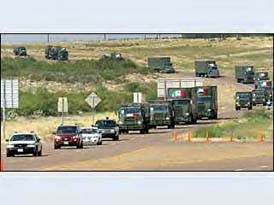 http://aolsvc.news.aol.com/news/article.adp?id= 20050908095809990005 Mexican Army Brings Aid to Victims By ABE LEVY, AP LAREDO, Texas (Sept. 8) - A Mexican army convoy began crossing into the United States on Thursday to bring aid to victims of Hurricane Katrina. Carrying water treatment plants and mobile kitchens that can feed 7,000 people daily, the convoy bound for San Antonio is the first Mexican military unit to operate on U.S. soil since 1846. Ricardo Santos, Laredo Morning Times/AP Texas state troopers and U.S. Army personnel escort a convoy of Mexican vehicles carrying supplies for Hurricane Katrina victims to San Antonio. Our Neighbors to the South |
|
|
[[Editor: This is a brief segment of fascinating history, a perspective on the conflicts in Mexico with the Spanish government.]] Sent by Richard Ortiz ol_coach@cox.net From around 1760 on, the inhabitants of the province of Guanajuato began to demonstrate their frustrations with the limitations of the colonial system. The first protests took place in 1766, when unhappiness about a number of reforms instituted by Judge Jose de Galvez was manifested in the cry "Long live the King! Death to the Government!", and six thousand people tried to storm the offices of the Crown. The protest had its origins in, among other things, the taxes on corn, flour, meat and firewood, as well as low quality tobacco and the organization of the militia. The following July, saw events take a turn for the worse with the expulsion of the Jesuits. During three days of unrest, the citizens of Guanajuato stoned the Crown offices, along with those of the tobacco and gunpowder monopolies and took control of the public highway. Jose de Galvez imprisoned 660 people, forbade the possession of firearms to miners and the wearing of Spanish clothes to the natives, as well as reinstituting a poll tax on miners, natives and mulattoes. In the face of the new
government orders, the dissenters adopted another strategy. Young men from
the towns of San Miguel el Grande, Guanajuato, San Felipe and Leon formed a
1700-strong "Prince's regiment", effectively forming their own
militia.
|
|
|
Personajes de la historia
|
Ing. Don Pedro Ruiz González, |
|
Una vez titulado, empezó a trabajar, a partir de 1960, como agente general de agricultura y ganadería en el Estado de Zacatecas, durando en ese cargo hasta 1964. De 1964 a 1967, fue electo diputado federal a la XLVI Legislatura Nacional y al terminar su gestión, figuró como candidato del PRI a la gubernatura de Zacatecas y habiendo resultado electo, desempeñó ese alto cargo en el período 1968-1974. Contrajo nupcias con la señorita Ma. Guadalupe Berumen, procreando a Salvador en 1957, a Mauro en 1959, a José Alberto en 1960 y a María del Rosario en 1963, todos Ruiz Berumen. Tuve la fortuna de cultivar una bonita amistad con el señor gobernador, hasta llegar a compartir el pan y la sal en la mesa de su residencia en Zacatecas, él, su esposa Lupita, mi esposa Ana y yo, solos los cuatro para platicar de sus realizaciones en bien del Estado y de otras muchas cosas. El 15 de enero de 1970, le escribí una carta que en parte dice: “a nombre del pueblo de Juanchorrey, de los organizadores de las fiestas del dos de febrero, y del mío propio, queremos darle nuestro agradecimiento por su gentileza al acordar que la Banda del Estado, tocara en aquel rinconcito del Estado”. El señor gobernador tenía la intención de acompañarnos en la fiesta, pero debido a que tuvo que ir a la toma de posesión del gobernador Loret de Mola, acordó que nos acompañara el secretario general de gobierno don Juan Antonio Castañeda Ruiz. El cinco de febrero, ya en Torreón, le escribí al señor gobernador y en parte le dije: “El señor licenciado Castañeda, de dotes personales y gentileza especiales, no obstante sus ocupaciones, que me apenó interrumpir, nos mostró algo de lo que se ha hecho y se está haciendo en esa ciudad. Las obras realizadas en la Bufa, esa Bufa que desde su altura parece cantarle al infinito, luce majestuosa su nueva estructura de cantera labrada, así como su flamante iluminación nocturna que en conjunto reflejan la grandeza de los corazones zacatecanos y la laboriosidad y dinamismo de sus autoridades”. Fuimos luego guiados por el señor Lic. Castañeda a visitar las obras de restauración del viejo templo y convento de San Agustín, joya arquitectónica que manos criminales y la acción del tiempo, y las luchas armadas habían destruido. La antigua Casa de Moneda, también se reestructura, y en Palacio de Gobierno se realizan murales dignos de encomio. Por todo, reciba la modesta felicitación de un zacatecano, que siempre está pendiente de lo que ocurre en mi hermosa tierra colorada. Su vida fue truncada muy joven, de apenas 47 años de edad y con un futuro brillante. El licenciado Filiberto Soto Solís, a nombre de la Comisión Permanente del Congreso de la Unión, dio la oración fúnebre y criticó: “el sistema político por el que la juventud pide a gritos un cambio; el sistema político que abre un vacío inmenso en torno a la vida de los hombres que tienen vocación de servicio, que estigmatiza para siempre al que sirvió a la colectividad, condena a los altos funcionarios del gobierno al ostracismo, al anonimato, a la inactividad como galardón del servicio...”.
|
|
Family
Pedigrees in Mexico and Texas |
|
Letters
and questions to John Inclan from Joseph
Lombardo Hello Mr. Inclan, My name is Joseph Lombardo and I found one entry on your site which immediately grabbed my attention. For some time I and some other distant relatives have been trying to determine who were the parents of my gggggg grandfather Jose Ignacio Salinas.I have seen him shown as the son of Bartola Pena and Jose Salinas but the fact that he wasn't listed on her will (which I have a copy of) made me doubtful of that relationship. There is an entry in the Seabury book (Escobar transcription) saying that he is tied into Bartola Pena's porcion so I was mystified. Recently I had a genealogist in Monterrey, Mexico check for me and he said that Ignacio was the son of Francisco Javier Salinas and Maria Rosa Longoria. He said he found records from Monterrey and Guadalajara and I asked him if he could send me a copy of the document proving this relationship, not because I didn't believe him, but because I wanted to be able to prove this to other persons who are also descended from Jose Ignacio Salinas. He said he would send me source copies but proof hasn't arrived yet. Then just yesterday I found an IGI on the Mormon site listing a record from 1743 Camargo, Tamaulipas, MX saying Jose Ignacio Salinas was christened on that date and his parents were Francisco Javier Salinas and Maria Rosa Longoria. Now, I just saw your site and it states the same thing. Could you possibly tell me the source for you of this information. I would really appreciate it and it would end a roadblock in my family tree which I have been stuck at for years. Thank you very much for your time, Joseph Lombardo
Since my last email several months ago, I have been working on adding to the family tree of descendants of Juan Galindo Morales. As I mentioned previously, we have significant research and I am presently going through a verification process on some of the lineages through Mexican records. Two questions arise. But first, let me acknowledge that I have seen
(Somos Primos) where you get very significant informational requests from individuals that identify ancestors in your published family trees. Many of these have no idea how much work is involved and the numerous brick walls that genealogists run into. I have actually contacted a few of these people
(Zertuche most recently) and answer their questions or direct them to sources that can answer their questions. I raise this issue in hope that you will take my questions as coming from a committed researcher. In any event, here are my questions: |
| Letters
and questions to John Inclan from Oscar
Trevino from McAllen, Texas. You wrote the following (from Descendents of Don Juan Cavazos del Campo): 217. MARIA-MANUELA6 DE-LA-GARZA-GARCIA (FRANCISCO-JAVIER5 DE-LA-GARZA-GUERRA, CLARA-GUERRA-CANAMAR-DE-LA-GARZA4, MARIA3 DE-LA-GARZA, JUAN2 CAVAZOS-DEL-CAMPO, GABRIEL1 CAVAZOS) was born October 27, 1748 in Sagrario Metropolitano, Monterrey, Nuevo Leon, Mexico. She married PEDRO-JOSE PEREZ-DE-LA-GARZA January 08, 1769 in Nuestra Sra de Santa Anna, Camargo, Tamaulipas, Mexico, son of JOSE PEREZ and MARIA DE-LA-GARZA. Notes for PEDRO-JOSE PEREZ-DE-LA-GARZA: Pedro Jose Perez purchased Porcion 74 in Camargo from the original grantee, Pedro Josef Lugo, by deed dated Dec. 26, 1787. Joseph Pedro or Jose Pedro Perez is a direct ancestor on my mother's side. I came to a dead end with him then I found your research. You list him as son of Jose Perez and Maria de la Garza. They were listed on the 2nd Camargo Census. However, Joseph Pedro was not listed. There is a Jospeh Polonia Perez. Is it possible the translator or transcriber made an error. Who would name there child a female's name? What are your sources of information? Do you have any further information on his father or mother? North of Porcion of 74 is another Perez who is the son said parents. I believe this owner and Pedro Joseph are brothers or very close relatives. |
| Correspondence
reflecting networking between Genealogia-Mexico a networking group in place that welcomes all researchers. Genealogia-Mexico@googlegroups.com eventos@genealogia.org.mx writes: |
|
1) Documentos archivo general de la nacion From: eventos@genealogia.org.mx El Archivo General de la Nacion de Mexico es el donde se conserva una copia de los microfilmes de la parroquias que la Academia Mexicana de Genealogia y Heraldica y la Sociedad Genealogica de Utah preservan. Como saben hay dos formatos 35mm y 16mm. La consulta previo registro en AGN es posible. La FHL permite la consulta a bajo costo en los CHF, en otras palabras la Family History Library y sus sucursales que son los Centros de Historia Familiar permiten la consulta de estos microfilmes pagando la renta del material. Entiendo que la mayor parte del material circula entre los CHF excepto aquellos que estan limitados por ciertas diocesis. Tambien es importante que sepan que cuando una genealogia alcanza el año 1500 ó antes un investigador debe enviar su investigacion a la Division de Familias Medievales. Como saben el IGI no muestra la informacion antes del 1500 DC Ahora la genealogia de Luis Dessommes le cambie el tipo de letra del pie de pagina que me parece que era lo que hace ruido. 2) ARGENA 1, ARGENA 11 Y ARGENA 111 Mexico y Genealogia Documentos archivo general de la nacion From: Aaron Andrade Hola que tal Soy nuevo en el grupo, ¿alguien sabe si es posible acceder por medio del internet a los microfilms de las Fes de: Bautismo, matrimonios etc. que se encuentran en el archivo general de la naciòn? Agradecere mucho cualquier ayuda que me puedan brindar Hola saludos a todos los del Grupo . En el Archivo General de la Nacion venden unos CD , que se llaman ARGENA 1, ARGENA 11 Y ARGENA 111, ya estan en la 3a version , al parecer hay bastante informacion yo tengo un CD, de ARGENA 11 , que me regalaron pero no lo he podido abrir , Benicio auxilios, que es lo que se tiene que bajar del internet para poderlo ver, que no tengo en mi disco duro, tampoco pude abrir el archivo de Luis Dessommes. no se que le esta pasando a mi DORITA, QUE ANDA MUY FLOJITA NO QUIERE TRABAJAR, me esta aceptando el Adobe, y el Acrobat. los tengo instalados en mi disco duro, pero no abre los archivos, que vienen en esos paquetes. Seguimos en comunicacion, suerte, que la pasen bonito y que DIOS LOS BENDIGA. Edna Yolanda Elizondo Gonzalez. |
|
|
3)
Archivo General de Indias - Listas de Pasajeros Genealogia-Mexico@googlegroups.com eventos@genealogia.org.mx writes: Salvador, Yo creo que muy pocos saben que tu tienes la capacidad de obtener las imagenes del los microfilmes del Archivo General de Indias - Listas de Pasajeros. Yo extravie unos documentos de los Zambrano que en los registros se llamaron Zambrana y de don Diego de Montemayor cuando viene a Mexico, si fueras tan amable de enviarme las imagenes de esos documentos te lo agradecere, y me dices cuanto $$ te envio o si aun es la misma tarifa de la ultima vez: Archivo General de Indias Código de Referencia ES.41091.AGI/16404.42.3.1//CONTRATACION,5217A,N.4,R.1 4) Título RELACION DE PASAJEROS Alcance y Contenido Relación de los siguientes pasajeros a Nueva España: - Benito Martín, vecino de Sevilla, hijo de Juan de Valderas y Ana Martín (véase Contratación 5217A,N.4,R.2) - Mayor Gómez, vecina de Sevilla, hija de Ruy Gómez de Herrera y Leonor Vázquez - Juan Rodríguez, vecino de Sevilla, hijo de Juan Rodríguez y Constanza Hernández, con su esposa Francisca Rodríguez, vecina de Sevilla, y sus hijos Diego, Ana, Jerónimo Pedro y Alonso - Francisco Altamirano, vecino de Villarroya, hijo de Juan Altamirano y Ana Jiménez (véase Contratación 5217A,N.4,R.3) - Diego Flores, vecino de Sevilla, hijo de Hernán Gómez y Catalina Hernández (véase Contratación 5217A,N.4,R.4) - Rodrigo de Herrera, vecino de Sevilla, hijo de Alonso Ortiz e Isabel Ortiz. Criado de Diego Flores (véase Contratación 5217A,N.4,R.4) - Francisco Díaz de la Rocha, clérigo presbítero, vecino de Alcázar de Consuegra (véase Contratación 5217A,N.4,R.5) - Manuel de Herrera, vecino de Sevilla, hijo de Pedro Hernández y Catalina Hernández (véase Contratación 5217A,N.4,R.6) - Jerónimo Gutiérrez, vecino de Sevilla, hijo de Francisco Gómez y Catalina Ramírez. Criado de Manuel de Herrera (véase Contratación 5217A,N.4,R.6) - Diego de Montemayor, vecino de Málaga, hijo de Juan de Montemayor y Mayor Hernández, con su esposa Inés Rodríguez Nivel de Descripción Unidad Documental Simple Fecha(s) [c] 1548-12-07 Signatura(s) CONTRATACION,5217A,N.4,R.1 Volumen 1 Documento(s) Productor(es) Información de Contexto Notas del Archivero Descripción elaborada por ARCHIVO GENERAL DE INDIAS |
|
|
Índice(s) Nueva España Villarroya Alcázar de San Juan (Ciudad Real) Málaga Altamirano, Francisco Altamirano, Juan Jiménez, Ana Díaz de la Rocha, Francisco Flores, Diego Gómez, Hernán Hernández, Catalina Gómez, Mayor Gómez de Herrera, Ruy Vázquez, Leonor Gutierrez, Jerónimo Gómez, Francisco Ramírez, Catalina Herrera, Manuel de Hernández, Pedro Sánchez, Catalina Herrera, Rodrigo de |
Ortiz, Alonso Ortiz, Isabel Martín, Benito Martín, Ana Valderas, Juan de Montemayor, Diego de Hernández, Mayor Montemayor, Juan de Rodriguez, Inés Rodríguez, Alonso Rodriguez, Francisca Rodríguez, Juan Rodríguez, Ana Rodríguez, Diego Rodríguez, Jerónimo Hernández, Constanza Rodríguez, Pedro Rodríguez, Juan Clérigo presbítero Sevilla Criado |
|
Archivo General de Indias Código de Referencia ES.41091.AGI/16404.42.3.44//CONTRATACION,5256,N.1,R.53 Título RELACION DE PASAJEROS Alcance y Contenido Relación de pobladores, a Santo Domingo (Isla Española): |
|
|
Paula Pacheco, natural de Sevilla Juan de la Cruz, natural de Sevilla Diego de Villegas, natural de Sasamón (Burgos) Ana de los Reyes, natural de Sevilla María de la Paz Francisco Mejía, natural de Carmona Alonso de Portes, natural de Yepes Mauricio Gil, natural de Yepes Andrés de la Barrera, natural de Sevilla Melchor de la Barrera, natural de Sevilla Francisco Muñoz, natural de Fregenal Francisco Ramírez de Tour, natural de Osma Antón García, natural de Sevilla María Castillana, natural de Sevilla Antón Rodríguez, natural de Sevilla Isabel de Vergara, natural de Sevilla Inés de Almansa Sebastián de Almansa Alonso de Almansa Francisco de Almansa Ana Zambrana, natural de Sanlúcar la Mayor María Zambrana Isabel Zambrana Faustina, natural de Santo Domingo (Isla Española) Ana Márquez, natural de Sevilla Francisca de Santiago, natural de Sevilla Mateo García, natural de Sevilla Hernando del Río, natural de Santo Domingo (Isla Española) Diego de Febo, natural de Santo Domingo (Isla Española) Luisa de Guzmán, natural de Sevilla Catalina de Guzmán, natural de Sevilla Dionisia de Guzmán Juan de Cogolludo, natural de Sevilla Beatriz de Olvera, natural de Sevilla Alonso Gómez, natural de Sevilla Quiteria Vázquez, natural de Sevilla Luis de Alcocer, natural de Santo Domingo (Isla Española) Elvira de Mendoza, natural de Granada Miguel Sánchez, natural de Sevilla María Jiménez, natural de Sevilla Bernardo Sánchez Sebastián Sánchez María Sánchez Isabel Sánchez Ana de Riquelme Juan de Galarza, natural de Sevilla María Hernández María del Pecho María Betanzo Espínola, natural de Sevilla Pedro Fernández Pozuelo, natural de Sanlucar de Barrameda María Fernández, natural de Sanlucar de Barrameda Pedro Pozuelo Juan de Rivamartín, natural de Rivamartín Juan del Castillo, natural de Cadiñanos Albino de Aureta, [sic por Urnieta] natural de Santo Domingo (Isla Española) Francisco Hurtado, natural de Sevilla Ana Feliz, natural de Cartagena de Indias Juana de Alanas, natural de Cartagena de Indias Pedro de Baldecia, natural de Santo Domingo (Isla Española) Cristóbal Vecino de Pernia, natural de Medina de Ríoseco Isabel Trezo, natural de Sevilla Beatriz de Cáceres de Castro, natural de Sevilla Juan de Castro, natural de Sevilla Santiago Ramírez, natural de Sevilla Diego Nieto de Aragón, natural de Salamanca Isabel Fonseca, natural de Avila Rafael Nieto de Aragón Francisco Nieto de Aragón Antón Clavijo, natural de Sevilla Isabel Sánchez Donaire, natural de Sevilla Pedro Sánchez Ballesteros, natural de Zafra Beatriz López, natural de Zafra Blas de Carvajal, natural de Zafra Bartolomé Fernández, natural de Zafra Beatriz Godines, natural de Zafra Diego Hernández Rodrigo Alonso, natural de Zafra Isabel Salgueros, natural de Zafra Isabel Sánchez Pedro Sánchez María Sánchez Inés García, natural de Burguillos Juan López de Luaces, natural de Peñaranda de Duero Juan Rodríguez de Valderrama, natural de Sevilla Isabel de los Reyes, natural de Sevilla Francisco Torrero Diego Martín, natural de Albaida Juana Bautista, natural de Sevilla Ana de Acosta, natural de Sevilla Diego Daza, natural de Sevilla Inés Hernández, natural de Sevilla Ana María, natural de Sevilla Pedro Martín Bermejo, natural de Llerena Elvira de Huerta, natural de Llerena Leonor López, natualde Sevilla Isabel Jiménez, natural de Sevilla Ana María, natural de Sevilla María de Tamayo, natural de Plasencia Luisa de Contreras María de la Cruz, natural de Sevilla Nicolás de Anón Isabel de los Reyes, natural de Sevilla García de Carvajal, natural de Santo Domingo (Isla Española) Saturnino Esqueda Alcocer, natural de Santo Domingo (Isla Española) Juan Antonio de Saavedra, natural de Madrid Luis López, natural de Sevilla Ana de Alfaro, natural de Sevilla Juana Bautista de Buenrostro, natural de Sevilla Catalina Bautista, natural de Sevilla Luisa de Reinoso, natural de Sevilla María Magdalena Juan Navarro Ana Zambrana, natural de Sevilla Mariana de Vargas Isabel de Vargas Pedro Vázquez, natural de Sevilla Pedro Gascón, natural de Carmona Juan Bautista de Aguilar, natural de Santo Domingo (Isla Española) Ambrosio Arias de Aguilera, natural de Santo Domingo (Isla Española) Francisco Vázquez, natural de Santo Domingo (Isla Española) Juan Alonso de Vega, natural de Cáceres María de Muces Luisa de Ledesma, natural de la Isla Española |
Juliana Cornejo, natural de Santo Domingo (Isla Española) José Agustín, natural de Santo Domingo (Isla Española) Gonzalo López, natural de Calzadilla Diego Hernández Cotrina, natural de Cáceres Beatriz de Ulloa, natural de Cáceres Beatriz de Ulloa Juana de Vera, natural de Sevilla Pedro de Vera Juan de Vera Juan Luiz, natural de Cazalla María Hernández, natural de Cazalla Hernando Alonso Hidalgo, natural de Zalamea Isabel Martínez, natural de Zalamea Bartolomé Núñez, natural de Zalamea Inés Hernández, natural de Zalamea Francisco Contreras, natural de la Isla Margarita Juan de Escobar, natural de Cumbres Mayores Ana Aguila, natural de Sevilla María del Aguila Bartolomé del Aguila Alonso Bermúdez, natural de Fuentes de León Inés de Godoy, natural de Sevilla Isabel Osorio, natural de Sevilla Juan Ochoa de Larrea, natural de Alegría Francisca Jiménez, natural de Sevilla Gregorio de Villela Marcela de Ochoa, natural de villa de Haro Sebastián de Najara, natural de Villoslada Francisco Pérez Herrera, natural de Sevilla Antonio de Pena María de Pozana, natural de Sevilla Ambrosio Arias Aguilera, natural de la Isla Española Juan de Ayala, natural de Trujillo Juan Calderón, natural de Trujillo Diego de Vargas, natural de Trujillo Francisco de Valenzuela, natural de Cabra Juan Ruiz Moreno, natural de Sanlucar de Barrameda María Pérez, natural de Sanlucar de Barrameda Francisco del Aguila, natural de Santo Domingo (Isla Española) Felipe Vázquez, natural de Sevilla Francisca de la Fuente, natural de Sevilla Mariana de la Fuente Francisco de Robledo, natural de Martos Mariana de Villamedina, natural de Martos Ana María Cristobalina de Robledo Francisco Martín Hincapie, natural de Aracena María González, natural de Aracena Bartolomé Jacinto Ana González Juan Ordoñez, natural de Santo Domingo (Isla Española) Juan de Saavedra, natural de Santo Domingo (Isla Española) Juan Bautista de Aguilar, natural de Santo Domingo (Isla Española) Andrés Fernández de Castro, natural de Santo Domingo (Isla Española) Luis de Brito, natural de Santo Domingo (Isla Española) Isabel de Bayona, natural de Madrid Juan Sánchez, natural de Sevilla María González, natural de Sevilla Adriano de Eraso, natural de Sevilla María de Rojas Josefa Eraso Tomasina Eraso José de Catro, natural de Lucena Bartolomé de Monasterio, natural de Molinar (en el Valle de Gordejuela) Juana de Medina, natural de Córdoba Blas de Linares, natural de Sevilla Francisco Pedralvarez, natural de Santo Domingo (Isla Española) Juan Alonso, natural de Sevilla Diego de Valdecia, natural de Santo Domingo (Isla Española) Juan de la Fuente, natural de Sevilla Isabel de Castilla, natural de Sevilla Magdalena de la Fuente Isabel de la Fuente María Gómez Antonio Ortiz, natural de Cebreros Catalina Millán, natural de Cebreros Miguel Ramos, natural de Zamora Potenciana Sánchez, natural de Zamora María de Astorga Juana de la Peña, natural de Sevilla Francisca de la Peña Jerónima de Rojas, natural de Sevilla María de Baumana Diego de Baumana María Arisméndez Bartolomé López, natural de Sevilla María de los Angeles, natural de Sevilla Lucas López Susana de Balcázar, natural de Sevilla Diego Isasaga, natural de Toledo Diego de Tóvar, natural de Toledo Antón García, natural de Sevilla Bartolomé Jiménez, natural de Sevilla Vibán Serrano, natural de Sevilla Miguel de Betuste, natural de Bilbao Gaspar de Toledo, natural de Alcazar de Consuegra Juan de Tapia Francisco de Torres Leonor del Castillo Juan de Torres Ana de Torres María de Torres Juan de Vargas Estefanía González Juan de Ayala Antonio de Encinas Rodrigo de Morales Juan de la Cueva Francisco de Medrano Nicolás de Salcedo Roque Fernández Ana María Antón Pérez Juan Rodríguez, natural de Zafra María del Jesús, natural de Málaga Leonor del Jesús Juan de Castillo Sebastián Gutiérrez, natural del Valle (Zalamea) Alonso Gutiérrez Juan Gutiérrez Joaquín Leibantes, natural de Santo Domingo (Isla Española). |
|
5) Nivel de Descripción Unidad Documental Simple Fecha(s) [c] 1597-01-10 Signatura(s) CONTRATACION,5256,N.1,R.53 Volumen 1 Documento(s) Productor(es) Información de Contexto Notas del Archivero Descripción elaborada por ARCHIVO GENERAL DE INDIAS: Índice(s) |
|
| Aguila, Bartolomé del Águila, María del Almansa, Alonso de Almansa, Francisco de Almansa, Inés de Almansa, Sebastián de Anón, Nicolás de Arisméndez, María Astorga, María de Baumana, Diego de Baumana, María de Castillo, Leonor de Contreras, Luisa de Cueva, Juan de la Encinas, Antonio de Eraso, Josefa Eraso, Tomasina Fernández, Roque Fuente, Isabel de la Fuente, Magdalena de la Fuente, Mariana de la Gómez, María González, Ana González, Estefanía Gutiérrez, Alonso Gutiérrez, Juan Guzmán, Dionisia de Hernández, Diego Jacinto, Bartolomé Jesús, Leonor del López, Lucas Magdalena, María Medrano, Francisco de Morales, Rodrigo de Muces, María de Navarro, Juan Nieto de Aragón, Francisco Nieto de Aragón, Rafael Paz, María de la Pecho, María del Pena, Antonio de Peña, Francisca de la Pérez, Antón Pozuelo, Pedro Riquelme, Ana de Robledo, Cristobalina Rojas, Maria de Salcedo, Nicolás de Sánchez, Bernardo Sánchez, Isabel Sánchez, María Sánchez, Pedro Sánchez, Sebastián Tapia, Juan de Torrero, Francisco Torres, Ana de Torres, Francisco de Torres, Juan de Torres, María de Vargas, Isabel de Vargas, Juan de vargas, Mariana de Vera, Juan de Vera, Pedro de Villela, Gregorio de Acosta, Ana de Aguila, Ana Aguila, Francisco de Aguilar, Juan Bautista de Agustín, José Alanal, Juana de Alcocer, Luis de Alfaro, Ana de Alonso de Vega, Juan Alonso Hidalgo, Hernando Alonso, Juan Alonso, Rodrigo Angeles, María de los Arias Aguilera, Ambrosio Arias de Aguilera, Ambrosio Ayala, Juan de Balcazar, Susana de Baldecia, Pedro de Barrera, Andrés de la Barrera, Melchor de la Bautista, Catalina Bautista, Juana Bayona, Isabel de Bermúdez, Alonso Betanzo Espínola, María Betuste, Miguel de Brito, Luis de Buenrostro, Juana Bautista de Cáceres de Castro, Beatriz de Calderón, Juan Carvajal, Blas de Carvajal, García de Castilla, Isabel de Castillana, María Castillo, Juan del Castro, José de Castro, Juan de Clavijo, Antón Cogolludo, Juan de Contreras, Francisco Cornejo, Juliana Cruz, Juan de la Cruz, María de la Villegas, Diego de Daza, Diego Eraso, Adriano de Escobar, Juan de Esqueda Alcocer, Saturnino Faustina Febo, Diego de Feliz, Ana Fernández, Bartolomé Fernández de Castro, Andrés Fernández, María Fernández Pozuelo, Pedro Fonseca, Isabel Fuente, Francisca de la Fuente, Juan de la Galarza, Juan de García, Antón García, Inés García, Mateo Gascón, Pedro Gil, Mauricio Godines, Beatriz Godoy, Inés de Gómez, Alonso González, Juan González, María Gutiérrez, Sebastián Guzmán, Catalina de Guzmán, Luisa de Hernández Cotrina, Diego Hernández, Inés Hernández, María Huerta, Elvira de |
Hurtado, Francisco Isasaga, Diego Jesús, María del Jiménez, Bartolomé Jiménez, Francisca Jiménez, Isabel Jiménez, María Ledesma, Luisa de Leibantes, Joaquín Linares, Blas de López, Bartolomé López, Beatriz López de Luaces, Juan López, Gonzalo López, Leonor López, Luis Luiz, Juan Urnieta, Albino de María, Ana Márquez, Ana Martín Bermejo, Pedro Martín, Diego Martín Hincapie, Francisco Martínez, Isabel Medina, Juana de Mejía, Francisco Mendoza, Elvira de Millán, Catalina Monasterio, Bartolomé de Muñoz, Francisco Nájara, Sebastián de Nieto de Aragón, Diego Núñez, Bartolomé Ochoa de Larrea, Juan Ochoa, Marcela de Olvera, Beatriz de Ortiz, Antonio Osorio, Isabel Pacheco, Paula Pedrálvarez, Francisco Peña, Juana de la Pérez Herrera, Francisco Pérez, María Portes, Alonso de Pozana, María de Ramírez de Tour, Francisco Ramírez, Santiago Ramos, Miguel Reinoso, Luisa de Reyes, Ana de los Reyes, Isabel de los Rio, Hernando del Rivamartín, Juan de Robledo, Francisco de Rodriguez, Antón Rodríguez de Valderrama, Juan Rodríguez, Juan Rojas, Jerónima de Ruiz Moreno, Juan Saavedra, Juan Antonio de Saavedra, Juan de Salgueros, Isabel Sánchez Ballesteros, Pedro Sánchez Donaire, Isabel Sánchez, Juan Sánchez, Miguel Sánchez, Potenciana Santiago, Francisca de Serrano, Vibán Tamayo, María de Toledo, Gaspar de Tovar, Diego de Trezo, Isabel Ulloa, Beatriz de Valdecia, Diego de Valenzuela, Francisco de Vargas, Diego de Vázquez, Felipe Vázquez, Francisco Vázquez, Pedro Vázquez, Quiteria Vecino de Pernia, Cristóbal Vera, Juana de Vergara, Isabel de Villamedina, Mariana de Zambrana, Ana Mestiza Mulato Negra Pobladores Zambrana, Isabel Zambrana, María Zamora Plasencia Sevilla Sevilla Cartagena de Indias Cáceres (España) Zalamea Zafra Isla de Santo Domingo Trujillo Madrid (España) Fuentes de León Bilbao Cadiñanos Lucena (Córdoba) Isla Margarita (Venezuela) Sasamón (Burgos) Cumbres Mayores Sanlúcar de Barrameda (Cádiz) Avila (España) Burguillos Carmona (Sevilla) Yepes Aracena Valle de la Serena Cazalla Llerena (Badajoz) Toledo Málaga Peñaranda de Duero Calzadilla Albaida Córdoba Granada Cebreros Molinar (Vizcaya) Fregenal de la Sierra Villoslada Salamanca Alegría Haro (Logroño) Osma Rivamartin Martos Alcázar de San Juan (Ciudad Real) Cabra Medina de Rioseco (Valladolid) Sanlúcar la Mayor |
6) DE ELISONDO vmge55@yahoo.com.mx 8/24/2005 Reply-to: Genealogia-Mexico@googlegroups.com To: Genealogia-Mexico@googlegroups.com Victor: Si seguimos siendo de la misma familia. Nada mas que te faltó una hija de ANDRES LOZANO Y ANTONIA DE GONGORA, MARIA EMERENCIA LOZANO Born About 1722 Of Nuevo Reyno De Leon, , Nuevo Leon, Mexico Father: ANDRES LOSANO Mother: ANTONIA DE GONGORA Batch Number: F079198 Sheet: 001 Source Call No.: 1396285 Type: Film Asi aparece aunque nosotros la tenemos registrada como: Maria Esmerenciana Casada con Nicolas de Elizondo de la Garza el 29 Jul 1742 en el Sagrario Metropolitano, Monterrey, Nuevo Donde tengo registrados a 4 hijos de ellos. Jose Ramon de Elizondo Lozano 19 Ene 1744, Sagrario Metropolitano, Monterrey, Nuevo Batch C601492 1731-1768 Source 0605148 Film Francisco Antonio de Elizondo Lozano 15 Mar 1745, Sagrario Metropolitano, Monterrey, Nuevo Batch C601492 1731-1768 Source 0605148 Film Maria Josefa Matilde de Elizondo Lozano 28 Mar 1754, Sagrario Metropolitano, Monterrey, Nuevo Batch C601492 1731 - 1768 Source 0605148 Film Jose Simon de Elizondo Lozano 10 Feb 1764, Sagrario Metropolitano, Monterrey, Nuevo Batch 8906760 Sheet 40 Source 1553336 Film Saludos a todos y tambien espero que les sea de utilidad Victor M. Gonzalez Elizondo, Mexico, D.F.
En nombre de Victor
Villarreal Enviado el: Miércoles, 24 de Agosto de 2005 12:48 p.m. |
| Raices Mexicanas - The Russian Molokans in Mexico http://www.folklorico.com/peoples/baja-norte/molokans.html Sent by Johanna De Soto REALLY INTERESTING GET SEGMENT The Missions of Baja California, 1697-1849 http://www.timsbaja.com/rjackson/index.htm Sent by Johanna De Soto MUST GET . . . PART OF A WHOLE WEBSITE WITH MORE ON MISSIONS http://www.timsbaja.com/rjackson.html ============================================================ XVIII Ayuntamiento de Tijuana http://www.tijuana.gob.mx/Ciudad/CiudadDelRancho.asp http://translate.google.com/translate?hl=en&sl=es&u=http://www.tijuana.gob.mx/ Ciudad/CiudadDelRancho.asp&prev=/search%3Fq%3Dyorba%2Bfelipe%2Bperalta%26sta rt%3D80%26hl%3Den%26lr%3D%26ie%3DUTF-8%26sa%3DN Tijuanense friend, thanks to visit your electronic page. In name of all those that we lived in this border I reiterate to them that it is a pleasure for us that you has the opportunity to consult, from any part of the world, a little which we offer. Here they will find the activities of this XVIII City council of Tijuana. They could be witnesses in the agreements at that it is arrived during the town hall sessions. Also, of all the services that offer the diverse dependencies that are for serving to them. Without leaving of side that will be able to establish direct bonding to dissipate any doubt that appears. I take leave, not without before thanking for the opportunity to show a Tijuana to them with a different face, a safe Tijuana for all those that in her we lived and who gives the welcome them with the open arms. Jorge Hank R. Presidente Municipal |
| The Hidden Magic of Baja California http://www.innerexplorations.com/baja.htm Sent by Johanna De Soto Much information. |
|
El Boricua RootsWeb's WorldConnect Project, Puerto Rico First female Cuban pilot Captain Teresina Del Rey honored in WNY Newly released US Postal Stamps, "Let's Dance" Passengers to Puerto Rico - 1567 - 1577 |
|
|
|
| RootsWeb's WorldConnect Project, Puerto
Rico: Cardona de Rincon and Valentin in Añasco, Rincon, or Mayaguez http://wc.rootsweb.com/cgi-bin/igm.cgi?db=alfredo152&I11.x=41&I11.y=7 If you have family lines with connections to towns of Añasco, Rincon, or Mayaguez in Puerto Rico, go to the site and seach by entering the names of your ancestors who lived in those areas. Contact Alfredo Valentin Cardona at AlfredoValentinCardona@yahoo.com |
|
First female Cuban pilot honored in WNY Jessica Rosero, Reporter staff writer 09/19/2004, CThe Hudson Reporter 2004 |
|
|
|
http://www.zwire.com/site/news.cfm?BRD =1291&dept_id=523590&newsid= 12946659&PAG=461&rfi=9 Sent by Lupe Dorinda Moreno dorindamoreno@comcast.net |
UNVEILING - A replica of Teresina Del Rey's statue, originated by the late sculptor Mario Santi. Pictured above patriotism and kind-hearted nature. Now, thanks o her friends and family, Del Rey's legacy and image will also be preserved at the West New York Public Library on 60th Street. On Tuesday, a statue of Captain Del Rey was unveiled and donated in her honor by er friends, the Garcia-Berry family. The ceremony was sponsored by the Palisades Medical Center in North Bergen and Mayor Albio Sires. "It was an easy decision to sponsor the event," said Eurice E. Rojas, director of marketing and corporate development of Palisades Medical Center. "We actively pursued participation because we are part of the community." The ceremony brought together old friends and family of Del Rey who had not seen each other for many ears. It was an emotional gathering for some, as well as a time of great pride. Among honored guests in attendance were Teresina Del Rey's son, Johnny Garcia, and her long-time best riend Julia Valdivia, who shared a few words about Del Rey during the ceremony. "It feels very good to see so many friends, and to bring this bust to the library," said Johnny Garcia. "Everything is beautiful," said Valdivia. "She was my mother's friend and mine. We worked for many years ogether for the Cuban cause, and I am thankful for having the opportunity to attend this beautiful event." Captain Teresina Del Rey Teresina Del Rey was born in Holguin, provincia de Oriente, Cuba in 1915. She was the daughter of Angel el Rey, an altruistic and honorable man, and Teresa Baxter, a refined woman of English descent. Del Rey had always described her parents as disagreeing only on the matters of her education despite their strong differences in character. Her mother wanted her to become a famous concert artist, while her father surely stressed being honorable with a profound conviction. On Del Rey's part, there was a fascination with aviation from the time she was a child. However, she also felt a pull toward journalism. This led her to collaborate on some of the most important daily newspapers nd magazines of Havana, where she mainly focused on aviation articles and became a member of the international Society of Aviation Writers. It was from Del Rey's illustrious career in journalism that she was able to fulfill her dreams and become the first female Cuban aviator. After having extensively covered aviation for the press and seeing her enthusiasm or it, one of the pilots she interviewed began giving her lessons. Later she graduated from la Escuela militar e Aviacion de Cuba (the Military School of Aviation in Cuba), the only woman from her era to do so. Fleeing the newly established Communist reign of Fidel Castro, Del Rey, among other patriots, left for the United States during the massive exile of the '60s and '70s. She spent her remaining years in West New York, here she continued her patriotic duty and her grand humanitarian labor. Del Rey was the founder of the Fraternity Fragua Martiana, which was responsible for erecting the Monument to theCuban patriot Jose Marti on 54th Street and Boulevard East with the help of local officials. he was also a member of Colegio Nacional de Periodistas de Cuba en el Exilo (CNP) since its inception, hich is similar to the League of Journalists in New York. She was named an honorary member by then- resident Ivan Karenoff. The ceremony After opening introductions by Estela Longo, the reference librarian, and West New York Deputy Mayor ose Miqueli, Del Rey's good friend and writer of her biography "Primera Aviatriz Cubana," Dr. Lucila Arcia, shared her memories and told the story of the woman she knew. "In this book is the story and work of our great friend Teresina Del Rey," said Garcia (who is not related to el Rey's son). Garcia, who was a journalist and a teacher for 45 years, met Del Rey in the home of a fellow and well- respected journalist. During that time Garcia was looking to establish the Spanish newspaper "La Voz," hich still runs today under the direction of her son and husband. The two women formed an almost instant friendship that lasted for years. "We loved each other very much," said Garcia. "We even discovered that we were born on the exact same ay at the exact same time, but with a difference of a few years." Garcia became one of Del Rey's closest confidants. As a matter of fact, it was by Del Rey's request that Arcia wrote the story of her life. "This woman was the one who opened "La Ruta de Colon" [The Colon Route] from Cuba to Madrid," said Arcia. "Once you read this book, you will see how extraordinary this woman was and how much she was worth." Two days before she died, Del Rey called for Garcia and gave her a box full of notes written by hand, which told the story of her life. She told Garcia that she was the only one capable of writing her story, and asked her to carry out that final request. Garcia willingly took on that mission, which she finally completed with the release of "Primera Aviatriz ubana" just last June. The book, which contained many of Del Rey's articles and other writings, took about three years to finish with the help of her family. Garcia refuses to take credit for the book; she said the writings were all done by Del Rey and that she simply put it together. "The credit is hers, and I feel very happy," said Garcia. However, the Garcia-Berry family felt that more should be done. On the day of Teresina Del Rey's funeral, arcia remembered a man crying. After she approached him, he identified himself as Mario Santi, the artist ho made the Mausoleum for Jose Marti which stands at the Santa Efigenia Cemetery in Santiago, Cuba. He ad known Del Rey for many years as she was growing up, and even saw her fly. The late Santi had taken it upon himself to create a statue of Del Rey. Garcia asked for one as well, which he molded out of iron. It still stands in her house. After the successful completion of the book, the Garcia-Berry family had two replicas of Santi's work commissioned. One would be donated to the West New York Public Library, and one is for Garcia to take tack to Cuba on the day that it is liberated. "I guarantee you that I will return to Cuba," said Garcia. "My last wish is to return to Cuba." After a few more words from old friends and officials, Del Rey's statue was unveiled in its permanent spot n the third floor children's department of the library. This was also a final testament to Del Rey's love of the written word. "Teresina, we have finished your work. May God
have you in his glory, my dear friend," Garcia said. CThe Hudson Reporter 2004 |
|
| Cuban Website
information http://www.cubagenweb.org/e-pass.htm Sent by Janete Vargas magnaguagno@gmail.com La base de datos incluye lo siguiente: 1,205 pasajeros que viajaron de Gijon, Asturias a La Habana y Matanzas en 1840-1871, contribuidos por Jorge Piñon Cervera y D. Eduardo Nunez Fernandez. 35 pasajeros que viajaron de las Islas Canarias a La Habana en 1686, contribuidos por Miriam Rivera y Dave Chudleigh. 706 pasajeros que llegaron o salieron de La Habana de o hacia puertos de origen en España, México y los Estados Unidos en 1842-1876, contribuidos por Lydia Reyes. 228 pasajeros que fueron autorizados por la Casa de Contratación a viajar a Cuba en 1567-1599. España a Cuba, Listas de Pasajeros Antes de 1600 Si algunos de sus antecesores emigró a Cuba de España antes de 1600, debe buscar sus nombres en las siguientes compilaciones de listas de pasajeros. [E] Catalogo de Pasajeros a Indias - Siglos XVI, XVII y XVIII, Volumen I (1509-1533), Volumen II (1535-1538), Volumen III (1539-1559), Volumen IV (1560-1566), Cristobal Bermudez Plata - Archivo General de la Indias, 1930-19??, Madrid, Espasa Calpe. ISBN: 8474831857 (set); LOC: CS944.R66.1980; Numero de llamada de la Biblioteca Publica de NY # ASM 89-3332; Signatura de la Biblioteca Nacional de España No. 5/13354. Dos copias de estos volúmenes han sido copiadas en microfilm por la Iglesia Mormón. Los numeros de microfilm, compilados por Martha Páramo, son los siguientes: |
|
September 17, 2005, Cha-cha-cha: A native of El Gabriel, Cuba, artist Edel Rodriguez left his homeland in 1980 packing memories from his childhood and making new ones in his Latino community in America. Rodriguez affectionately recalls the family gatherings and special occasions that always meant music and dancing, where revelers showed up with guitars and maracas and sang songs about life and love. Different dances were performed, but Rodriguez remembers that his father and sister were particularly adept at the shuffling 1-2, 1-2-3 beat of the cha-cha-cha. Perceived as more sophisticated and more like the European salon-style danzón, cha-cha-cha was slower and more constrained than the up-tempo moves of its sister, the mambo. Rodriguez has effectively juxtaposed the warmth emanating from suntanned skin and the sinuous line formed by the dancers’ bodies with the coolness suggested by their clothing and the waving palm fronds. Mambo: As a young child, artist Sergio Baradat left Cuba with his parents and immigrated to the United States. Growing up in Miami and New York, Baradat’s life was immersed in the Latino communities of these two cities, and in the cultural traditions his family and friends kept alive. Baradat’s image for the stamp evokes the 1950s mambo heyday, when Latin big bands performed for elegant patrons in elegant clubs. Baradat drew on his parents’ memories of starlight and moonlight filtering through the glass ceiling of a nightclub and down onto its polished dance floor—the splintered beams bouncing around the room and off the spinning dancers. The red of the woman’s dress offsets the nighttime purple and gold hues of the ambient light, while a drum-shaped moon seems to join the orchestra’s saxophone and timbales—key instruments to the mambo sound. Known for its up-tempo beat, fast footwork, and fluid body language, mambo laid the groundwork for its offshoots: cha-cha-cha and salsa. Salsa: Artist José Ortega was born in Ecuador, grew up in New York City, and now owns a salsa club in Toronto, Canada. His migration nicely parallels the itinerant nature of salsa, itself, which is rooted in Cuba, evolved in New York, and now makes its home around the world. Designing the salsa stamp was a dream come true for him, combining his love of art and salsa. As an artist, it is Ortega’s job to observe, something he has been doing every night in his salsa club. He watches the dancers’ bodies assume countless shapes that make for eye-pleasing symmetry, while the music concretizes into the colors, patterns, and flow he shows in his stamp design. Palm leaf shapes suggest salsa’s Caribbean roots; the cityscape refers to its birthplace: New York. To convey a sense of old-style dance hall elegance, Ortega uses art deco motifs. Although he concedes that most salseros dress in tight-fitting clothes, he gives his female dancer billowing skirts to better evoke a sense of movement and musical energy. He has captured his couple in one of the many pauses that anticipates the defining steps of their dance. They are momentarily apart, their arms poised and their bodies ready to reverse direction or execute a spin. And the stars? Well, Ortega maintains you don’t very often move to the salsa beat at high noon. Salsa is a nighttime pursuit, danced at the close of day, when cares are left behind, and it’s okay to live only in the moment. Merengue: Born in Mexico City, freelance illustrator Rafael Lopez is a committed dancer who spends his leisure time at salsa clubs where he and his wife perform a variety of dances, including the merengue. He has brought his expertise on the dance floor to bear in his design for the merengue stamp. Poised in characteristic attitude, Lopez’s dancers engage in the short sideways movements typical of merengue. Tension shows in their muscular bodies as they move in tight embrace, their shoulders shifting left while their hips shift right. Their heads face away from their shoulders, and their hands are clasped. A tambora drum, hallmark of merengue, peeks up from the lower right side of the stamp, opposed on the left by palm leaves. Brought to the Dominican Republic by French and Spanish colonists, merengue descends from a European style of dancing that appealed to the upper classes. Eventually it was adapted by the country’s peasant population, which, included both European settlers and Dominicans of African descent who incorporated the tambora drum and a more rhythmic approach. Losing favor with the elite as a result of this "Africanization," the dance went underground for years, re-emerging in the first half of the 20th century to become the national dance of the Dominican Republic—a seamless blend of European and African styles.
|
|
|
Following the initial voyages of Cristóbal Colón to the new world which he called, Las Indias, in the mistaken belief that he had come upon territories that were part of India, all persons wishing to travel to and/or to settle in these overseas territories( also known as Ultramar ) were required to apply for and be granted a license. The Archivo General de Indias (AGI) in Seville, Spain has custody of all surviving correspondence and records related to Las Indias including the licenses and the passenger lists called, Libros de Asientos -- literally the Books of Seats. In 1980 the AGI published a book called, "Catalago De Pasajeros a Indias: Siglos XVI, XVII, y XVIII, Volumen V." This volume is comprised of two books, Tomo I (1567-1574 and Tomo II 1575-1577. Luis Romera Iruela and Maria de Carmen Galbis Diez compiled the information in it. To date, this is the only published index of passengers. However, the LDS church has microfilmed the actual Libros de Asientos for the period of 1509-1701 and the microfilm numbers, are included, go to the site: |
|
Las
Navas de Tolosa by Stewart Von Rathjen Caballos Hernan Cortes En La Rabida Enigmático Colon |
|
Las Navas de Tolosa by Stewart Von Rathjen
|
|
La
llegada de los primeros caballos a América se inició en el segundo
viaje de Cristóbal Colón y sobre ellos hay una curiosa historia. Se
dice que cuando el Almirante escogió a los primeros caballos para
llevarlos al Nuevo Mundo, contactó con un mercader de Granada y
concertó la compra, pero cuando los embarcaron, aprovechando que Colón
estaba algo indispuesto, los cargaron sin que éste los viera y los
cambiaron por los caballos mas pencos que había en Sevilla y que no
valían ni la mitad que los otros. Cuando los vio Colon ya habían
partido y se conoce esta pequeña historia, porque en una carta del
Almirante a los Reyes les informó del cambio que había sufrido su
ganado. Desde
el principio, el caballo tuvo una excepcional importancia en la
conquista americana, por lo que se le cuidaba con mimo, y fue para los
españoles una gran alegría que se le aclimataran tan rápidamente y
empezara la reproducción. Cuando
llegaron los nativos creyeron que el hombre y el caballo formaban un
solo cuerpo, algo parecido a un centauro, pero cuando observaron que
alguna veces se separaban y marchaban cada uno por su lado, mostraban
no solo su asombro, sino un temor que los acongojaba. Ante
animales “tan terribles”, los indígenas idearon como defenderse
de las bestias e idearon cavar unos huecos grandes en el suelo y
cubrirlos de ramaje, para que al pasar se hundiera tanto el caballo
como el jinete. En la parte sur del continente, se defendían los
nativos de los caballos utilizando las boleadoras, que manejaban de
forma muy diestra y trababan las patas de los animales. Los conquistadores cuando observaron el respeto y temor que los indigenas le tenían a los caballos, lo aprovecharon para manifestar su poder y así tenemos que cuando Hernando de Soto y Pizarro fueron a Cajamarca a visitar al Inca, ellos tomaron unos caballos muy inquietos y furiosos y los enjaezaron empleando muchos cascabeles. Cuando en Inca estaba en los baños sulfurosos, se presentaron los españoles armando ruido con sus caballos al galope y Atahualpa despavorido al salir del baño sufrió una tremenda caída.
Custodio Rebollo
|
Publicado en Odiel Informacion el 22 agosto 2005. Hernan Cortes En La Rabida Convencido Hernán Cortés que para conseguir lo que quería tenía que pedírselo a Carlos V personalmente, pues aunque dueño de grandes haciendas , percibía que carecía de influencias, decidió emprender el viaje de regreso en marzo de 1528 y en el estuvo acompañado de sus dos mas íntimos amigos, Andrés de Tapia y Gonzalo de Sandoval.Le acompañaron un séquito; tres hijos de Moctezuma, un hijo del rey de Tacuba, y los señores de Cuitlahuac y Culhuacam, además de otros indios “nobles” y acróbatas y malabaristas, en un total de unas cincuenta personas. Llegaron a Palos en mayo de 1528 y la primera visita fue el Monasterio de La Rábida, donde fue recibido por los frailes franciscanos y cuenta la leyenda, que durante el tiempo que permaneció en el monasterio, se encontró con su primo Francisco Pizarro que se marchaba a Perú para realizar la misma labor que él hizo en Nueva España. De aquí siguió camino por la sierra de Huelva hasta Medellín, para ver a su padre y se encontró con la triste noticia que había muerto hacía año y medio. Después de estar con su madre, emprendió viaje a Guadalupe donde dió gracias a la virgen extremeña. Tras repartir regalos en oro y piedras preciosas, continuó viaje para ver al rey y en junio llegó a la corte, que estaba en la capital de verano, en Monzón. El rey, nada mas ver a Cortés, se levantó y le tomó de la mano para que no pusiera rodilla en tierra y lo sentó a su lado. Le nombró Marqués del Valle de Oaxaca y le concedió beneficios de todas sus conquistas y le encomendó 23.000 vasallos y lo confirmó como Capitán General, pero la tarea de gobernar Nueva España, se la encomendó a Nuño de Guzmán, enemigo de Cortés. Custodio Rebollo. |
|
El
pasado fin de semana estuve leyendo en la Revista de las Fiestas de
Montemayor de este año, un muy bien documentado articulo de Rocío Márquez
López sobre lo enigmático que siempre ha sido todo lo relacionado
con Cristóbal Colon. Los
muy difusos datos biográficos que se poseen sobre el insigne
Almirante, en lugar de facilitar nuevas aportaciones y una mayor
comprensión de los que tenemos, lo que consiguen es confundirnos y
alejarnos cada vez mas, logrando que, en la mayoría de los casos,
abandonemos la búsqueda y nos dediquemos a otras investigaciones o
lecturas. Rocío
Márquez en su articulo expone el criterio de Jorge Campos que
mantiene que Colon pudo ser un corsario llamado “Coullon” que
efectuaba sus sabotajes por las costas de Valencia. La
pregunta es obvia, ¿sería el apellido Colon una derivación del
nombre del corsario que hacía sus fechorías por el levante español?
Cristóbal
Colon hizo todo lo posible por ocultar su origen y su pasado, lo que
ha creado la leyenda de unos dicen que no era genovés, sino portugués,
otros gallego, mallorquín o maltés y hasta hay quien dice que turco. El
articulo de Rocío me recordó que hace tiempo leí que los hermanos
Pinzón, que también tenían patente de corso, hacían su trabajo por
el Mediterráneo, entre Cataluña y Valencia y que tenían muy
disgustada a la Reina porque a veces la habían comprometido excediéndose
en el mar y creando conflictos con otros estados. La pregunta que me hago ahora es; ¿se conocerían por aquellos lares Cristóbal Colon y los Pinzones ¿. Porque, de ser afirmativo, puede que fueran incluso compañeros en su “trabajo” y se puede sospechar que la llegada de Colón a La Rábida no fue fortuita, ya que la tesis de que en San Juan del Puerto vivía su cuñada, donde su marido era recaudador de Medinasidonia no se mantiene, porque lo lógico era que el Almirante dejase a su hijo con su tía y no con los frailes rabideños. Esto ultimo creo que lo ha dicho alguien, pero no recuerdo quien. Tengo
mi dudas que Colon y los Pinzones no se conocieran y hubiese alguna
trama premeditada entre ellos para conseguir los apoyos que
necesitaban. ¿Descubriremos
la verdad algún día?
Custodio Rebollo.
|
|
Pascual
World Wide Family Reunion Mundo Guanche, Revista digital de Prehistoria de Canarias Canary Islands Locales and their associated Louisiana Families Psajeros a Indias, Siglos XVI-XVII, Trabajo de Documentación Capitan Juan Silvestre Guadarrrama |
Pascual World Wide Family Reunion From: Antonio Pascual Anton1851@yahoo.com A grand family reunion in Ateneo de Manila University on Jan 7, 2006 will bring together primos and primas belonging to an old Philippine family with Eurasian roots and a strong Hispanic heritage. About a thousand descendants of Alejandro Pascual and his wife Marcelina Sengson who settled in the island town of Navotas along Manila Bay in the late 1780's will converge in Ateneo de Manila in Diliman, Quezon City, Philippines. There will be delegations from California, Georgia, and other parts of the world where sixth, seventh and eight generation family members can be found. A steering committee based in Manila has been meeting monthly since January 2005 to strategize the reunion. E-mails continue to generate interest from all over the world where the primos reside. An invitation designed to motivate relatives to join the reunion was created. It focuses on the family's rich history from the Spanish era (who we were) down to present descendants (who we are) with corresponding pictures of achievers which include high government officials, CEO's of top corporations in the pharmaceutical and food and beverage industries in Manila, leaders in banking, judiciary, medicine, the arts and beauty queens such as the 1973 Miss World 1st runner-up, and the country's candidates to the 1989 Miss Universe and 2003 Miss International pageants. The Pascual clan in the Philippines is composed of three major branches representing the oldest sons of Alejandro and Marcelina; namely, Doroteo, Alvaro and Mariano who lived in the seventeenth century when the Philippines was a colony of Spain. |
| Mundo
Guanche, Revista digital de Prehistoria de Canarias Gracias Mimi, Aquí te mando la dirección de la web Mundo Guanche, ES UN GRAN TRABAJO, MUY INTERESANTE Ojala que se interesen en difundirla entre los canarios en el exterior. Muchas gracias te mando un cariño Mery Glez meryart@msn.com
La Viceconsejería de Emigración informa del lanzamiento de una nueva revista digital, destinada sobre todo al público infantil, mundoguanche.com, que pretende acercar la prehistoria de Canarias y la vida de los guanches a los niños, mediante áreas lúdicas y divulgativas. |
|
Canary
Islands Locales and their associated Louisiana Families http://freepages.genealogy.rootsweb.com/~brasscannon/locales9.html This is an excellent tool for locating the "home town" of the early Canary Islanders from Paul Newfield . Information was extracted from the Catholic Church Records in Baton Rouge and New Orleans . Enjoy and pass it on to your Primos del Canarias. Bill Carmena Compiled by: Paul Newfield III 3016 45th Street Metairie, La. USA 70001pcn01@webdsi.com |
|
PASAJEROS A INDIAS,
SIGLOS XVI-XVII, TRABAJO DE DOCUMENTACIÓN http://es.geocities.com/almagacen/emigrantesfdc.htm Sent by Janete Vargas magnaguagno@gmail.com “LA VINCULACIÓN AMERICANA DE FUENTE DE CANTOS: PASAJEROS A INDIAS (SIGLOS XVI-XVII)”. II JORNADAS DE HISTORIA DE FUENTE DE CANTOS (9 DE NOVIEMBRE DE 2001) Francisco J. Gutiérrez Núñez, Ldo. Geografía e Historia, (Historia Moderna & Contemporánea) Este trabajo de documentación fue publicado, junto al artículo del mismo nombre, en las Actas de las II Jornadas de Historia de Fuentes de Cantos (2000), Asociación Cultural “Lucerna”, Ayto. de Fuente de Cantos, Diputación Provincial de Badajoz, 2002, pp. 53-85 (artículo) y 86-110 (documentación). PASAJEROS RELACIONADOS CON FUENTE DE CANTOS QUE EMIGRARON A INDIAS. SIGLO XVI. A = Catálogos de pasajeros // A. G. I. = Archivo General de Indias // B= Boyd-Bowman. // HURT = Publio Hurtado. // MIS = Andrés Martín, Melquiades (dir.): Misioneros extremeños en ..., 1993. // N = Navarro del Castillo // PNS = Protocolos Notariales de Sevilla. // RSR = Rocío Sánchez Rubio. EXAMPLES OF INFORMATION: MATEOS, ALONSO (Labrador). Natural de Fuente de Cantos. 1 Tierra Firme 1512 (1ª referencia en destino) RSR (1993), pag. 553 . MARTÍN, ALONSO. Hijo de Gonzalo Rodríguez de Luna y de Elvira López, vecinos de Fuente de Cantos, con Andrés de Vargas (hijo de Andrés López y de María López), vecinos de Vargas. 1 Sin datos 1512, Octubre, 5. A1. Catálogo Vol. I, nº 790 (Sign. I-184), (pag. 57). GARCÍA, FRANCISCO. Hijo de Gonzalo Mateo de la Plaza y de Catalina, vecinos de Fuente de Cantos. 1 Sin datos 1513, Mayo, 10. A1. Catálogo Vol. I, nº 1094 (Sign. I-237), (pag. 79 MOLINA, GIL DE (Conquistador y Encomendero). Natural de Fuente de Cantos, hijo de Juan de Calderón y Mari Sánchez de Molina. Marchó a México. Fue Conquistador, se asentó en la Huasteca, y era propietario en Ciudad de México en 1537 (Benítez, José R.: Historia Gráfica de la Nueva España, México 1929, pag. 230), así como encomendero en Tezayuca, aunque fue destituido. Ya viejo vivía al menos en 1547 en México, donde se reencontró con una hija y un hijo, para casarlos (Icaza, Francisco A. de: Diccionario autobiográfico de conquistadores y pobladores de la Nueva España, 2 vols., Madrid 1923, n° 1281). (Citado por BOYD-BOWMAN, Vol. II, pag. 35). En el Archivo General de Indias, encontramos referencias de un tal Gil de Molina, el cual debe ser el mismo, tanto por las fechas como por la zona geográfica donde se mueve. 1) 1539, Febrero, 21, Toledo. Real Cédula al Virrey de la Nueva España para que provea de un corregimiento a Gil de Molina, vecino de la ciudad de México. (A.G.I. México, 1088, L. 3, fol. 259 v. (Digitalizado). 2) 1541-1543. El fiscal contra Gil de Molina, vecino de México, sobre derecho a la encomienda de Teziuca. 1 pieza. (A.G.I. Justicia 194/1541).(Sin digitalizar). 1 Nueva España (México) 1523. B 1539, Febrero, 21 (Real Cédula).A.G.I. México, 1088, L. 3, fol. 259 v. 1541-1543A.G.I. Justicia 194/1541 |
| Capitan
Juan Silvestre Guadarrrama From: perezfru@telcel.net.ve Deseo Compartir la información encontrada del
Capitán Juan Silvestre Guadarrama. Esta hoja de Vida me la enviaron de
Los Archivos Españoles en la Red. BATALLÓN DE MILICIAS DISCIPLINADAS DE BLANCOS DE CARACAS. El Capitán don Juan Silvestre Guadarrama su edad cuarenta y cuatro años, su País Caracas su calidad noble su salud buena sus servicios, y circunstancias los que expresa. Tiempo en que empezó a servir los Empleos: Cadete 16
Mayo 1774. Provincia; fué comicionado por mar, y tierra a la costa de Barlovento con encargo de tres Buques en los que llevava 14 hombres de tropa y un Sargto. en cada uno, cuya comisión se le confió con motibo de la Sublevación descubierta en la Plaza de la Guayra, en persecución de los Reos primeros actores de ella, de la que resultó havér aprendido varios de los Sublevados, y personas sospechosas, en la que estubo desde 17 de Julio de 1797 hasta 15 de Agosto del mismo año; y condujo con la custodia correspondiente de la Plaza de la Guayra a la Ciudad de Caracas, uno de los prales. Reos de Estado. Firma: Pedro de la Rosa Estan conformes con mi consepto las notas puestas (Palabra Ilegible) Capitán Firma: Guevara Además también conseguí los Nombre e información
variada de los Bisabuelos, Abuelos, Padres, Cónyuge e Hijos del Capitan
Juan Silvestre de Guadarrama y Freires.. La cual también deseo
compartir con Usted: 1 Doña María Agustina de Guadarrama y Freites,
casada en la parroquia de Altagracia de Caracas el 01/07/1760 con Don
José Antonio de Anzola y Garmendia, natural de Azpeitia, hijo de Don
Simón Manuel y Doña Francisca Inés. (Don Ambrosio Pereira, Autor del Libro: Historial
Genealogico de familias Caroreñas) Y con respecto a la Sublevación descubierta en la Plaza de la Guayra, se refiere a la Sublevación de Gual y España, Patriotas Venezolanos. Como se confirma en Pagina Web de la Universidad de Los Andes en Mérida, Venezuela ( ">http://www.bolivar.ula.ve ) "Segunda Parte. La conspiración de Gual y España en La Guaira Capítulo Octavo. Fuga de Gual y España Los Comisionados de La Guaira tomaban todas las medidas tendientes a la captura de los fugitivos ya la seguridad del Puerto. De Caraballeda vino la noticia de que Aranzamendi andaba por la playa "paseándose con un anteojo de larga, vista, reconociendo el mar". Calculando que Gual y España estarían en su compañía, el Doctor Espejo despachó tres pelotones al mando del capitán Juan Silvestre Guadarrama para buscarlos a lo largo de la Costa, dirigiendo una por mar hasta Naiguatá y dos por tierra a Macuto y Caraballeda. Las comisiones llevaban orden de prohibir terminantemente en esos lugares la pesca, el embarco de personas yel envío de cartas a La Guaira, efectuar una revisión de los montes hasta la fila y vigilar la esclavitud. Se alertaba al Jefe de la expedición sobre el hecho de que "bajo la capa de hombre de color puede embarcarse alguno de los reos, teñido de negro", y le mandaba ofrecer, además de las recompensas ofrecidas por la Audiencia de Caracas: 500 pesos de premio al que aprehendiese o descubriese a los prófugos o sus cómplices. El Comandante Militar López Chávez hizo reforzar la guardia de Presidio y colocar otra en las Trincheras para custodiar el Parque. Se formaron cuatro patrullas para recorrer el pueblo y se colocaron cuatro cañones en la Batería de la Plataforma: uno delante de la Cárcel, dirigido hacia la Puerta de Caracas, y otro hacia el camino de Macuto. Se llamó a los oficiales francos de servicio para su acuartelamiento. Convencido el Doctor Espejo de las veleidades de Don Agustín García en su trato con los patriotas, insinuó al Gobernador llamarlo a Caracas y retenerlo allí hasta aclarar su comportamiento. Carbonell lo llamó y nombró Comandante Interino de La Guaira al Brigadier Matheo Pérez. Dos días anduvo José María España a salto de mata por los montes de Uria y Los Caracas en compañía de su hijo y del vasco Arrambide, ocultado y socorrido por sus negros. Aun cuando Antonio Ojeda tenía listo su bote para trasladarlo a Curazao, Don José María aguardó hasta el último momento, en la esperanza de que la llegada de Gual a La Guaira hiciera un milagro. El 18 por la noche recibió una carta de éste suplicándole esperarlo para huir juntos. España se trasladó a Camurí Chiquito en busca de Ojeda, despidiéndose de Arrambide, que no se atrevió a seguirlo"
|
|
|
|
 Gilbert Burrola and Jorge Alvarez |
Dicho's books. furniture. garden 370 South Thomas Street Pomona, CA 91766 909.623.4414 www.dichos.net dichospomona@aol.com Home and Garden books, whimsical children’s books and all your favorite reads. We also carry a wide selection of bath and body products including Burt’s Bees, No Crack Hand Lotion and Kirk’s Castile Soap. And for your sweet tooth we also carry olde-time candy of yesteryear including Mary Jane’s, Choward’s Violet Candy/Gum and Atkinson’s Peanut Butter Bars. We enjoy talking with our customers directly and enjoy fulfilling-even exceeding their expectations, whether it’s recommending a book we’ve just read or helping you discover new authors and fun titles. |
|
If we don’t have the book you’re
looking for we are more than happy to special order it for you at no
additional cost. We’re a very special and unique independent bookstore;
please stop in when you’re in the neighborhood! You'll find
our favorite dichos books: Dichos: Proverbs and Sayings from the Spanish by Charles Aranda, 32 pp. A goodly collection of dichos, adivinanzas, creencias y chiqillados de Nuevo |
|
|
A Dios rogando y con el mazo dando. |
|
|
Proclamation
by George Washington, New York, 3 October 1789 The Frigate South Carolina Lozanos in the US 1860-1870 and WW1 |
|
"Can it be, that Providence has not connected the permanent felicity of a Nation with its virtue? The experiment, at least, is recommended by every sentiment which ennobles human Nature." Proclamation,
New York, 3 October 1789 Whereas it is the duty of all Nations to acknowledge the providence of Almighty God, to obey his will, to be grateful for his benefits, and humbly to implore his protection and favor--and whereas both Houses of Congress have by their joint Committee requested me "to recommend to the People of the United States a day of public thanksgiving and prayer to be observed by acknowledging with grateful hearts the many signal favors of Almighty God especially by affording them an opportunity peaceably to establish a form of government for their safety and happiness." Now therefore I do recommend and assign Thursday the 26th day of November next to be devoted by the People of these States to the service of that great and glorious Being, who is the beneficent Author of all the good that was, that is, or that will be--That we may then all unite in rendering unto him our sincere and humble thanks--for his kind care and protection of the People of this Country previous to their becoming a Nation--for the signal and manifold mercies, and the favorable interpositions of his Providence which we experienced in the tranquility, union, and plenty, which we have since enjoyed--for the peaceable and rational manner, in which we have been enabled to establish constitutions of government for our safety and happiness, and particularly the national One now lately instituted--for the civil and religious liberty with which we are blessed; and the means we have of acquiring and diffusing useful knowledge; and in general for all the great and various favors which he hath been pleased to confer upon us. And also that we may then unite in most humbly offering our prayers and supplications to the great Lord and Ruler of Nations and beseech him to pardon our national and other transgressions--to enable us all, whether in public or private stations, to perform our several and relative duties properly and punctually--to render our national government a blessing to all the people, by constantly being a Government of wise, just, and constitutional laws, discreetly and faithfully executed and obeyed--to protect and guide all Sovereigns and Nations (especially such as have shewn kindness onto us) and to bless them with good government, peace, and concord--To promote the knowledge and practice of true religion and virtue, and the encrease of science among them and us--and generally to grant unto all Mankind such a degree of temporal prosperity as he alone knows to be best. Given under my hand at the City of New-York the third
day of October in the year of our Lord 1789. Go: Washington |
|
Perhaps the most bizarre story of the American Revolutionary War includes some of the country’s most notable figures. Men like George Washington, Benjamin Franklin, Thomas Jefferson, Benardo de Galvez, John Paul Jones, as well as the nations of France, Spain, Holland and, of course, Britain figure into the mix of this tale of political toe-stepping and international lawsuits that lasted years after the war was over. The ship: The South Carolina was the largest man-of war under American command. She carried 550 men and 40 cannon and could throw over five hundred pounds of shot in a single broadside. She rose over 100 feet in the air and stretched 168 feet while drafting 22 feet of water. All who viewed her wanted her, and yet she lay at anchor for three years before she tasted the salt of the Atlantic. The delivery: The colonies were almost totally dependent on foreign trade, and a war with Briton would make it necessary to have, at least, some semblance of a navy to escort trade ships in and out of American ports. Building such ships in America was very limited as such building yards would make easy targets for British warships. Obtaining the necessary cannon and other war material was even more remote. In January of 1777, the Continental Congress authorized Benjamin Franklin and Silas Deane, to contract with an experienced ship builder/designer named Jacques Boux to build a man-of-war for such sea duty. To keep French/American involvement obscure from prying British eyes, neutral Holland was selected for construction, Amsterdam to be exact. Straightaway the cost were far more than the Americans could spare, and ownership of the unfinished ship was transferred several times until it "officially" ended up in the hands of the Chevalier de Luxembourg. John Paul Jones, heavily sponsored by Benjamin Franklin, tried desperately to obtain the ship, but he was considered by the Dutch as too reckless to trust with such an expensive investment. It was not until May 1,1780, that the chevalier would sign a contract with Commodore Alexander Gillon of South Carolina to lease the ship for three years as a privateer. The contract called for one-quarter of the prizes and ransoms received to go to the chevalier, one-quarter to the colony of South Carolina, one-quarter to Gillon, and one-quarter to the crew. Gillon was not unknown politically, having served General Washington and the Congress in the purchase of military supplies, and was highly respected and politically involved in South Carolina as well. On his way to Amsterdam, Gillon traveled, first to Cuba where he exchanged letters of introduction and other correspondence from Juan de Miralles, Spain’s first envoy to America and the secret military intelligence go-between between George Washington and the Governor of Cuba. In Havana, he secured Spanish help in finding sea passage on Admiral Francois Joseph Paul de Grasse’s frigate Fortunee to Brest. Gillon was of Dutch heritage and spoke several languages including Dutch and French, and the fact that he was as good if not better a sailor as John Paul Jones, instilled the confidence needed to gain the trust of the chevalier and, in no less degree, the ire of Franklin. The challenge: Although both the South Carolina colony and Gillon had made a large investment in the venture, it soon turned muddy. To put the ship to sea, Gillon would have to cross seventy miles of the Bay of Pampus to get to Texel, on the North Sea. The rather unbelievable problem was that the Pampus had an average water dept of fifteen feet while the South Carolina required at least twenty-two. Gillon had to de-mast and off load the South Carolina, seal up the deck and one side of the ship, and laying it on its side, literally drag it to Texel. Once there, and made ready for sail, the marines who were to be provided by the chevalier to man the ship were away fighting in the Battle of Jersey (one of the British held Islands in the English Channel). Expenses from this delay were mounting so as to cause Gillon to contract to carry passengers and military supplies to America in order to raise necessary funds. Having misjudged the ship’s capacity, and burdened with additional military supplies purchased by Major Jackson and Col. James Searle, Gillon had to contract with merchant ships to carry the excess. He also agreed to escort to America. When Franklin learned that Jackson and Searle had used French money to buy military supplies in Holland and contracted with Gillon instead of delivering the money to America, he became enraged. Later, he made it very difficult for Gillon to acquire needed repairs and supplies for the South Carolina in Corunna, Spain and Philadelphia. For reasons unclear, the merchant ships loaded with military supplies, delayed leaving the dock until winter ice made it unsafe for the South Carolina to linger any longer, and she sailed without them. Finally at sea, Gillon took enemy ships as prizes and sent them to France to be sold as required under his contract with the chevalier. However, the British recaptured the prize ships before reaching France, and the prize money was not realized. The South Carolina soon developed problems of her own and had to put into port in Spain for repairs. Rot from all those years at anchor in the Amsterdam mud had begun to eat away at the hull and many of the crew had become ill. At this point, passengers Jackson and Searle became disgruntled with Gillon’s delay in sailing to America and left the ship to seek other transportation. Charles, the son of John Adams, was in their charge and he left as well. Spain, however, was eager to help the American and accepted guarantees for services rendered, even over the objections of Franklin. Leaving Spain, Gillon again experienced problems with shortages of supplies and put into port at Santa Cruz in the Azores where more guarantees were exchanged for goods and repairs. After "acquiring" replacement marines and sailors to take the place of those who jumped ship or were too ill to continue, Gillon set sail for his homeport at Charleston. With Charleston in sight, several British war ships anchored in the harbor were alerted, and immediately gave chase. The South Carolina outran the British and was soon looking for safe refuge. That refuge turned out to be the very busy port of Havana, Cuba. After a friendly "business" visit on board the South Carolina, General Bernardo de Galvez was off to Cap Francais to await the return of Admiral Francois Joseph Paul de Grasse from Yorktown to prepare for the invasion of Jamaica. But before he left, Galvez authorized Captain General Juan Manuel de Cagigal to take a military flotilla escorted by the South Carolina, and attack British held New Providence in the Bahamas. The financial arrangements became clouded as Gillon did not speak Spanish and Cagigal did not speak anything other than Spanish. Francisco Miranda, Cagigal’s aide de camp, became interpreter. Soon Gillon and Miranda were fighting over the soon-to-be spoils of war. The South Carolina, being a privateer and Gillon being required to share prizes of war with the Chevalier de Luxembourg, evidently thought he deserved more than Miranda wanted to give. This was probably manifested when the British, intimidated by the huge man-of-war sitting in their harbor, surrendered without a fight. The local merchants, many of whom owned several "enemy" privateers at anchor in the harbor, had been through this before and rather than lose their property to an invading force, persuaded the British commander to surrender. The terms of surrender would preserve private property, including the privateers in the harbor, from confiscation thus reducing the war prizes and with it the expected revenue of the South Carolina. The welcome home: Having participated in this final campaign of the American Revolution, the South Carolina set sail to Philadelphia as Charleston was still under British control. The ship was received with jubilation and a small but formidable group of disgruntled creditors. Also among the group were Major Jackson and Col. Searle, passengers who had chosen to go ashore in Spain and seek other transportation to America. Even though the three-year contract with the Chevalier de Luxembourg was not yet up, he too was demanding satisfaction as well as the immediate return of the ship due to the lack of expected prize money. To say that the Commodore had his hands full is a bit of an understatement as Franklin still had hopes of turning the ship over to John Paul Jones and felt that the colony of South Carolina had no business with a separate navy from that of the confederation. It appears "states rights" was very much an issue even at this early struggle toward democracy. The ship’s bell continues to ring: Eventually, Gillon was judged free of any wrongdoing, but he never returned to the South Carolina. Instead, he gave command to John Joyner, who had served as his second-in-command and instructed him to go forth and seize. However, the British had other plans and were lying in wait just outside the inlet. The South Carolina had been at sea only a short time but had attracted worldwide attention, and the British saw her as a huge propaganda prize. No sooner had the South Carolina hit blue water than three fast British ships closed on her in light winds. After a noble battle, the South Carolina was on her way to New York under a British flag. The war ended and the South Carolina was taken to England, and shortly after, disappeared from history. However, the money suits would continue for more than ten years. Even Thomas Jefferson got involved and shortstopped the colony of South Carolina’s suit against Spain for money due the South Carolina for the New Province campaign. During World War II, American Lieutenant William Corbine came upon an old ship’s bell at a jute mill on the Ganges River in India. Engraved on the bell was "South Carolina" and it now proudly rests in the War Memorial Building at the University of South Carolina. Credits: Neptune’s Militia by James A. Lewis |
| LOZANOs in the US 1860-1870 and WW1 Sent by Kathie Lui pcdirector@gmail.com ALL THE LOZANO'S WHO REGISTERED FOR WW1 IN BEXAR COUNTY, TEXAS Agapito Lozano 8 Aug 1880 White Not Stated, Bexar, TX Daniel Lozano 2 Jan 1894 Caucasian Mexico Not Stated, Bexar, TX Miguel Lozano 19 Aug 1899 White Not Stated, Bexar, TX Pedro Lozano 28 Dec 1897 Spanish;American Mexico Not Stated, Bexar, TX Arturo Lozano 17 Mar 1896 Caucasian Texas;United States of America San Antonio, Bexar, TX Aurelio Lozano 8 Apr 1883 White San Antonio, Bexar, TX Benito Lozano 21 Mar 1897 Caucasian Texas San Antonio, Bexar, TX Carlos Lozano 10 May 1892 Spanish;American Texas;United States of America San Antonio, Bexar, TX Cruz Lozano 29 Mar 1889 Spanish;American Mexico San Antonio, Bexar, TX Daniel Lozano 19 Mar 1873 White San Antonio, Bexar, TX Ermilo Lozano 4 Dec 1889 Caucasian Texas;United States of America San Antonio, Bexar, TX Eutimio Lozano 1882 White San Antonio, Bexar, TX Falcon Lozano 19 Jun 1888 Spanish;American Texas;United States of America San Antonio, Bexar, TX Faustino Lozano 15 Feb 1895 Spanish;American Mexico San Antonio, Bexar, TX Francisco Lozano 24 Aug 1888 White San Antonio, Bexar, TX Guadalupe Lozano 12 Jun 1883 Mexican San Antonio, Bexar, TX Ines Lozano 20 Apr 1892 Mexico San Antonio, Bexar, TX Jesus Lozano 11 Apr 1883 White San Antonio, Bexar, TX John R Lozano 15 Nov 1880 White San Antonio, Bexar, TX Jose Lozano 17 Mar 1894 Spanish;American Mexico San Antonio, Bexar, TX Jose F Lozano 15 Jul 1889 Spanish;American Mexico San Antonio, Bexar, TX Jose Maria Lozano 12 Aug 1892 Caucasian Mexico San Antonio, Bexar, TX Juan Jose Lozano 23 Apr 1881 White San Antonio, Bexar, TX Manuel Lozano 10 Sep 1895 Spanish;American Mexico San Antonio, Bexar, TX Manuel Lozano 5 Feb 1884 White San Antonio, Bexar, TX Martin Lozano Jan 1880 White San Antonio, Bexar, TX Pablo Lozano 6 Jul 1890 Spanish;American Mexico San Antonio, Bexar, TX Pedro Lozano 18 Jan 1884 White San Antonio, Bexar, TX Pedro J Lozano 29 Jun 1887 Spanish;American Mexico San Antonio, Bexar, TX Ramon Lozano 31 Aug 1985 Spanish;American Mexico San Antonio, Bexar, TX Refugio Lozano 4 Jul 1881 White San Antonio, Bexar, TX Ruben Randon Lozano 20 Mar 1893 Spanish;American Texas San Antonio, Bexar, TX Santiago Lozano 1 May 1893 Spanish;American Mexico San Antonio, Bexar, TX Tomas Lozano 21 Dec 1885 White San Antonio, Bexar, TX Valentin M Lozano 14 Feb 1899 White San Antonio, Bexar, TX Zaragosa Garcia Lozano 12 Oct 1895 Spanish;American Texas;United States of America San Antonio, Bexar, TX Antonio Lozano 3 Feb 1879 White San Antonio, Bexar, TX Bernardo Lozano 20 Aug 1876 White San Antonio, Bexar, TX Charles Lozano Mar 1900 White San Antonio, Bexar, TX Eusebio Lozano 16 Sep 1890 Caucasian Mexico San Antonio, Bexar, TX Francisco Lozano 13 Mar 1884 White San Antonio, Bexar, TX Gregorio Lozano 12 Mar 1892 Caucasian Mexico San Antonio, Bexar, TX Henry Lozano 19 Aug 1895 Spanish;American Texas;United States of America San Antonio, Bexar, TX Ignacio E Lozano 15 Nov 1886 Spanish;American Mexico San Antonio, Bexar, TX Joe Louis Lozano 4 May 1884 White San Antonio, Bexar, TX Jose Catarino Lozano 13 Apr 1883 White San Antonio, Bexar, TX Juan Lozano 1 Jan 1894 Spanish;American Texas;United States of America San Antonio, Bexar, TX Julian Francisco Lozano 4 Jun 1885 White San Antonio, Bexar, TX Steve Lozano 19 Dec 1878 White San Antonio, Bexar, TX Edelmiro Carmen Lozano 16 Jul 1874 White San Antonio, Bexar, TX Federico Lozano 17 Jul 1878 White San Antonio, Bexar, TX Gregorio Lozano 9 May 1897 White San Antonio, Bexar, TX Hilbert Domingo Lozano 4 Aug 1900 White San Antonio, Bexar, TX John Lozano 4 Dec 1895 Caucasian Texas;United States of America San Antonio, Bexar, TX Nicolas Lozano 10 Sep 1896 White San Antonio, Bexar, TX Raphael Rios Lozano 24 Oct 1893 Spanish Mexico San Antonio, Bexar, TX FROM THE 1860 CENSUS. THIS IS THE FIRST CENSUS WHERE LOZANO'S SHOW UP IN THE U.S. OUTSIDE OF LOUISIANA Dolores Lozano Mesilla, Dona Ana, NM 25 1834 Mexico Male Maria Lozano Mesilla, Dona Ana, NM 20 1839 Mexico Female Maria Lozano Mesilla, Dona Ana, NM 5 1854 Mexico Female Manuel Lozano Mesilla, Dona Ana, NM 42 1817 Mexico Male Simon Lozano Mesilla, Dona Ana, NM 14 1845 Mexico Male Francisco Lozano Mesilla, Dona Ana, NM 10 1849 Mexico Male Fermin Lozano Mesilla, Dona Ana, NM 8 1851 New Mexico Male Rebecca Lozano Mesilla, Dona Ana, NM 7 1852 New Mexico Female FROM THE 1870 CENSUS, STATE OF TEXAS Eugene Lozano El Paso, El Paso, TX abt 1843 Mexico White Male Guadalupe Lozano El Paso, El Paso, TX abt 1867 Texas White Female Joseph Lozano El Paso, El Paso, TX abt 1869 Texas White Male Luz Lozano El Paso, El Paso, TX abt 1849 Mexico White Female Maria Lozano El Paso, El Paso, TX abt 1866 Texas White Female Brano Lozano Precinct 3 Rancho San Pedro, Zapata, TX abt 1851 Mexico White Male Dolor Lozano Precinct 3 Rancho San Pedro, Zapata, TX abt 1825 Mexico White Female Francisca Lozano Precinct 3 Rancho San Pedro, Zapata, TX abt 1853 Mexico White Female Lorita Lozano Precinct 3 Rancho San Pedro, Zapata, TX abt 1855 Mexico White Female Merso Lozano Precinct 3 Rancho San Pedro, Zapata, TX abt 1816 Mexico White Male Thomasita Lozano Precinct 3 Rancho San Pedro, Zapata, TX abt 1848 Mexico White Female |
|
Online Military Indexes & Records WW II Memorial Site Catholic Culture : Home Page (formerly PetersNet.Net) Recommended Websites Finding Naturalization Records and Ethnic Origins Family History Projects in Fifteen Minutes or Less Family Tree Sourcebook Introducing Ancestry.com Learning Centers NARA announces 100% increase for microfilms |
|
Online Military Indexes & Records http://www.militaryindexes.com/ Sent by Janete Vargas magnaguagno@gmail.com A Genealogy Guide: This website is a directory of links to online military indexes and records for USA genealogy research. Included are rosters, databases of soldiers, and listings of military and war casualties. Also included are some links to sources for military records in other countries (for World War I & II). Select a Topic... Revolutionary War War of 1812 Mexican War Civil War Records Spanish American War World War One (World War I) World War Two (World War II) Korean War (Korean Conflict) Vietnam War |
| WW II Memorial Site .... From: Janete Vargas magnaguagno@gmail.com Megan's article "Memorial Day Is Everyday" brought to mind a website operated by a young man named Frank Everads in the Netherlands to honor WWII veterans. I came in contact with Frank through a WWII chat room that my cousin runs on AOL, WWII Vets and Friends. Frank was looking for the stories of WWII veterans to include on his website to honor them and to keep their memory alive. I sent in my dad's story as well as some of my cousins that served during WWII to be included on the site, and most of the veterans that participate in the chat room have sent in theirs as well. I would encourage any veteran, or veteran's family member that has their story, to send them to Frank to include on his site in honor of a fast disappearing generation of brave men. Frank C. Everards' website is at www.normandy1944.info. |
Check out Catholic Culture : Home Page (formerly PetersNet.Net) From: Bill Carmena JCarm1724@aol.com
Catholic Culture : Home Page (formerly PetersNet.Net) Thought this might interest you. |
|
Recommended
Websites: Rootsweb.com: Source for Vital Records Sent by Johanna De Soto http://ftp.rootsweb.com/pub/usgenweb/tx/reeves/vitals/births/reeveb http://ftp.rootsweb.com/pub/usgenweb/tx/reeves/vitals/births/reeveb17.txt?re=location Website for finding information about your family www.surnamenavigator.org Sent by Bill Carmena JCarm1724@aol.com |
|
HOW TO: THEY BECAME AMERICANS:
Finding Naturalization Records and Ethnic Origins by Loretto Dennis Szucs From the seventeenth century to the present, millions upon millions of people immigrated to the United States. The resultant naturalization process created a significant number of historical records about individuals and groups. Unfortunately, these records are anything but uniform in nature! An immigrant's desire to become a citizen of the United States might have been recorded on a formal document requiring detailed biographical information. Or it may have been handwritten on a piece of paper with nothing more than the immigrant's name and the date of the event! Immigrants made major contributions to the development of the United States, but many were never formally naturalized! Yet even in cases where naturalization documents are not available, there are plenty of fascinating alternatives that will help to determine an immigrant's Old World origins! Let author Loretto Szucs guide you to these varied and unusual sources in They Became Americans! Newsletter4@ancestorstuff.com: Retail Price $19.95 SALE PRICE $11.99 Save $7.96 (40%) |
| Heritage Newsletter July/August 2005 P.23-24 More Projects in Fifteen Minutes or Less by Juliana Smith Well, it's here. School is out and it's officially summer here in the Midwest, complete with temps in the 90s. So what does that mean for the family historian? Well for me, it means I have to go into hyper-efficiency mode if I want to sneak in any "genealogy time." So for those of you out there whose time may also be limited this summer (or winter for all of you "down under"), here we are with another 15 family history projects you can accomplish in 15 minutes or less: *1 Create a Master List of Surnames and Variations When we're searching databases for those hard to find ancestors, we often find ourselves rotating in any number of variations for that surname, and it's easy to lose track. Keep the list handy by your computer and then just go down the list to get a more complete search than just entering names at random. It serves as a reminder so you don't miss anything and also makes it easier to log what names and variations you've searched for. *2 Check Mailing List Archives Ancestry.com sister site, RootsWeb.com (www.rootsweb.com) currently hosts over 29,000 mailing lists and the archives for those lists are searchable online. To prevent missing anything that might be pertinent to our family history, I periodically go in and search the archives for items of interest. The easiest way I've found to search the archive is to go to the mailing list main page http://lists.rootsweb.com and select the list of your choice. Below the subscription information and links are links to either search or browse the archive. #3 Search a Message Board Similar to the tip above, the Ancestry.com and RootsWeb.com message boards can be searched (www.ancestry.com/share/) and here you can search all the boards simultaneously. #4 Build up Some Genealogical Karma We've all accumulated records that may be helpful to other researchers who are working on the same or similar family lines. Why not throw out a couple of posts on the message boards and mailing lists with some of these records. You may make some other researchers) very happy, and as a reward, you may find that they have collected the records of your ancestor that you've been seeking. #5 Create a Reading Stash Summer activities sometimes afford time for reading- #at the beach, in the car on road trips (preferably not while driving though), lounging in the yard or on the porch (or on hot days curled up in front of the air conditioner), etc. Assemble a tote bag with reading materials so that when the opportunity presents itself, you just have to grab your bag and go. #6 Search a Data base—Again Try re-searching databases where you have previously been unable to locate an ancestor. Ancestry.com is continually updating databases and correcting bugs that are found in databases. In addition, if you've found new information on that ancestor since your last search, you may be able to better refine your search, identify your ancestor or do a more localized search or browse and get better results. #7 Create a Visual Impression Seek out historical photos, postcards, and maps from the places and time in which your ancestors lived. The visual impression you get will enhance your family history and may even provide you with unexpected clues. #8 Update Your MyAncestry Profile Ancestry.com allows users to create a MyAncestry profile that lists the people you are researching. (Go to www.ancestry.com/myancestry/ or click the My Ancestry tab to get there from any Ancestry.com page.) As databases are added, Ancestry.com automatically searches the databases for you and notifies you via email if it finds a possible match. It is also important to watch the new databases, as those tricky ancestors with misspelled names may require some addition searching. A list of all the recently added/updated databases is available at www.ancestry.com/search/rectype/recent.aspx. #9 Put on Your Detective Hat Grab a magnifying glass and look closely at the background in an old photograph, searching for clues. Check out family heirlooms as well. Worn engravings and manufacturers' names may lead to locations and dates for your ancestors. #10 Learn About Research in a New Location Have you been holding off at researching a family's origins because you're not familiar with the resources for that country? Grab a book on the subject or check out how-to websites for more information. FamilySearch-org has research guides for many geographic locations available online. (Click the "Search" tab and then "Research Helps.") You don't have to learn it all in one day; start with a chapter or article on the subject and expand upon it 15 minutes at a time. #11 The Lost Art of Letter Writing When's the last time you received a letter? Not those pre-fab ones that come in Christmas cards, but a real, live letter. Wasn't it a great feeling? Why not make someone's day and send her a letter. Let a family member know what's going on in your life, and possibly slip in a few family history questions. (You know you will!) Then, don't just mail it off, make a copy first and keep it for yourself with your family history. It's a snapshot of your life and will be treasured by future family historians. #12 Plan Your Dream Research Trip Even if you can't take a long trip, or any trip for that matter, right now, start planning it. Pick a repository or some ancestrally related location and start making plans. What will you research? Set research goals, explore card catalogs, and prepare your research-Check prices for rooms and transportation—just for kicks. You may find that your preparations make your dream research trip a real possibility. And even if you have to put it on hold for a year or two, setting goals and reviewing your files may help you to make some breakthroughs in your research. #13 Back up Your Data When was the last time you backed up your family history files? If it's been a while, take a few minutes to do it now. If something happens to your computer files down the road, it may well be the best-spent 15 <-^minutes of your genealogical life. #14 Plot Your Ancestors on a Map Get a historical map of the area in which your ancestors) lived. Make a copy and using the records you have found, plot their various moves on the map. Seeing where they were at various points in time, may provide clues as to where to look for other records and other family members. #15 Take 15 Minutes to Pat Yourself on the Back You are preserving a piece of history. The present and future generations of your family will be able to better connect with their roots thanks to your hard work. Maybe some of these projects will take over 15 minutes, but they can be broken down into more manageable pieces, and you will be making significant progress with little effort. Copyright 2005, MyFamily.com.. |
|
Family Tree Sourcebook From 10 tips to get you started to hundreds of resources right at your fingertips, the Family Tree Sourcebook is your ultimate reference for finding your family's history. Inside, you'll discover page after page of exclusive resources to help you: * Cut through the confusion of census records * Discover vital records--online and off * Tap land records, court records, military records and more * Uncover volumes about your ancestors with genealogical publications * Locate essential family history organizations in your area * And much, much more! Plus, you'll even get a clip-and-save records checklist! Don't wait--visit http://www.familytreemagazine.com/specialoffers.asp?DMsource071905 to order your copy today for just $8 (includes shipping and handling). With help from the Family Tree Sourcebook, you'll be on your way to faster, more successful searches in no time! familytree-newsletter@fwpubs.com" familytree-newsletter@fwpubs.com (Family Tree Magazine) Introducing Learning Centers by Anastasia Sutherland Tyler Source: www.Ancestry.com Learning Centers are free areas on Ancestry.com where you can learn about various family history topics. Each of the ten learning centers focuses on a family history concept or an Ancestry.com record collection: Court, Land, and Probate records Reference and Finding Aids These topic-focused areas allow you to easily find basic information for each topic, search tips for using Ancestry.com and for finding records in other places, success stories from researchers, pointers on where to look for more information, interesting facts about the topic, and answers to frequently asked questions. You can read articles detailing the use and value of a collection, view sample images, see records for famous people, and get ideas for next steps in exploring Ancestry.com. For example, the Military Learning Center includes an overview of military records, a list of types of military records in the collection (with specific emphasis on World War I draft cards and Civil War Pension files), a short biography of General George Armstrong Custer (famous for his Last Stand) with links to his military and other records on Ancestry.com, and blank World War I draft card forms to aid my search for those great-grandfathers. Locating the Learning Centers Learning Centers are easy to find by clicking on the "Learning Center" tab from the Ancestry.com home page http://www.ancestry.com/learn.On the right-hand side of the main Learning Center page is the heading "Learn More About." This list gives the names of and links to all the Learning Centers, clicking on one of these links will take you to the welcome page for each center. From a specific Learning Center, you can access other centers by looking for the "More Learning Centers" text toward the top of the screen and selecting from the drop-down box to the right of the text, or through the search pages for main collections on Ancestry.com. Learning Centers and Your Family History Ancestry.com created these content areas so everyone could learn how to better search the website and how to research a specific topic in other locations. Learning Centers provide places where people can find out why they should search specific record types, who might be found in the records, and why the records are important sources of family history information. Rather than providing just a search box and a list of possible matches, as was usually the case on Ancestry.com previously, we wanted people to know the purpose of records and how those records relate to your personal history. The main idea behind these learning centers is simplicity: The Library on Ancestry.com is filled with great articles on family history by our favorite Ancestry Daily News and Ancestry Magazine authors, but finding all the articles on a specific topic can sometimes take a while. The military learning center includes links to articles focusing on major wars and conflicts that involved the United States. By bringing together the best content for a specific subject, Learning Centers can help you get the most out of your research time on Ancestry.com. Learning Centers provide information for family historians at all skill levels. Most of the centers cover basic family history topics, thus their content is fairly basic. Some centers, the Court, Land, Probate and the Reference; Finding Aids centers, for example, cover advanced topics and thus include more advanced content than other centers. The more advanced centers include tools to make the information accessible to all skill levels, for example a glossary of legal terms is provided in the Court, Land, and Probate Center for those of us without Juris Doctorates. The Future of Learning Centers The current Learning Centers will be expanded as new content is added to Ancestry.com and new articles about the topics are written. Additional Learning Centers will be created as new databases and collections are added to Ancestry.com. Other centers will be centered on specific holidays and hobbies related to family history. The Military Learning Center helped me get to know the types of records that exist for the various conflicts in which my ancestors were involved. I have a good idea which records to search for my third great-grandfather's Civil War service and even found articles from the Library that will help me find more information about the both World Wars and the Korean War. Anastasia Sutherland Tyler is an associate editor for MyFamily.com, Inc. Her heritage includes German, English, French, Irish, and Scottish ancestry, a fact that may explain why decision-making is always such an internal conflict for her. She can be contacted at mailto: adntech@myfamilyinc.com , but regrets that she is unable to assist with personal research. |
| LDS MICROFILM VAULTS ON WWW /FYI "LDS to put microfilm in vaults on Internet" http://deseretnews.com/dn/view/0,1249,605153189,00.html should be compared with previous information, way back in 2002: http://www.steamboatlibrary.org/SelbyPortfolio/theorygenealogy.html "online databases are slowly making the preservation and dissemination of original data obsolete." "When asked what would be one of the dissemination activities the Church would like to see happen in the future, Brent Thompson replied, 'To have every name that is currently in an index record be linked back to the original record to be viewed online.' . . . " "Brent Thompson also mentioned that he would like to see 'the work of individuals be instantly linked to one another so that the data one person is collecting is shared with others working on the same branch of a family tree.' . . . " Respectfully yours, Tom Tinney, Sr. http://www.academic-genealogy.com/ Visit NORCAL Genealogy Index: http://homepages.rootsweb.com/~yvonne/NORCAL%20index/ |
|
NARA
announces 100% increase for microfilms
From $34 to $65 per roll ( from $39 to $68 foreign) Color microfilm = from $51 to $82 ($85 foreign) [M1930 - color 1930 census ED maps] No increase for microfiche prices. http://www.archives.gov/research/order/microfilm-pubs.html Benicio Samuel Sanchez Garcia, Presidente La Sociedad Genealogica del Norte de Mexico Rancho San Javier 109, Nueva Aurora Guadalupe, Nuevo Leon, 67190 Mexico samuelsanchez@genealogia.org.mx tel: fax: (81) 1340-0000 (81) 1340-0000 ext. 117 eventos@genealogia.org.mx |
|
Mexican team to refurbish Egyptian tomb site Chris Kraul Mexico Latin America . . Remains point to rare child sacrifice |
| Mexican team to refurbish Egyptian tomb site Chris Kraul Los Angeles Times, Aug. 19, 2005 http://www.azcentral.com/arizonarepublic/centralphoenix/articles/0819ext-mextombs0819Z4.html Sent by John Inclan fromGalveston@yahoo.com: MEXICO CITY - Mexico and Egypt share a rare historical distinction: a superabundance of monumental pyramids and other relics of ancient civilizations. But although foreign experts have helped lead the exploration of Egypt's rich archaeology for more than a century, specialists from Mexico have never been invited. Until now. For the first time, a Mexican archaeological team has been selected by Egypt's top antiquities authorities to work in Egypt's Upper Nile Valley. The group was chosen to refurbish the so-called "Puimre Tomb," or TT39, one of the country's most important unrestored burial chambers. advertisement OAS_AD('BoxAd') In March, the team, selected by the Egyptian government's Supreme Council of Antiquities and composed mainly of Universidad del Valle de Mexico scientists, will begin a five-year renovation project with the goal of making the site suitable for public visits (it has been closed since the 1920s). They will apply techniques that Mexico's archaeologists have developed trying to preserve its 5,000 pre-Columbian sites, as well as the myriad Spanish colonial churches, convents and palaces. The benefit for Egypt is clear: The Mexican team will restore a tomb in the so-called Theban necropolis that is in danger of collapsing and being lost forever. The restoration of the extensive tomb could shed light on the reign of one of Egypt's few female pharaohs, Queen Hatshepsut. It was built for one of her top priests around 1450 B.C. For Mexican archaeology, the effect will be the intangible one of adding to its prestige on the global stage, said team leader Gabriela Arrache Vertiz, an Egyptology professor. "This project will show the relevance of Mexico's academic excellence, that it can be applied not only in our own country but beyond our borders," Arrache Vertiz said of her team, which visited the Luxor site in May. The invitation resulted from a professional friendship developed over the past decade between Arrache Vertiz and Zahi Hawass, now the director of the Egyptian government's antiquities council. Arrache Vertiz and her team discussed with Hawass the possibility of working in Egypt. Earlier this year, the council decided to ask the team to work on restoring the Puimre Tomb site. Mexican archaeologists believe that they can bring unique expertise to the restoration project. "The tomb has problems similar to those of our pyramids and churches in that it was made with limestone," said Manuel Villarruel Vazquez, an architect whose specialty is structural restoration. "That rock is strong like glass, but can break as easily, and several ceilings are cracked." Villarruel currently is restoring a Toltec pyramid that dates from 600 in Queretaro, about 100 miles north of Mexico City. |
|
Mexico Latin America . . Remains point to rare child sacrifice News 32 Orange County Register, Saturday July 23, 2005 Mexico City: Archeologist digging trough an Aztec temple say they've found a rare child sacrifice to the war god, a. deity normally honored with the. hearts or skulls of adult warriors. The child found at Mexico City's Templo Mayor ruins was apparently killed some time around 1450. In a sort of grim cornerstone ceremony intended to dedicate a new layer of building, according to archaeologist Ximena Chavez. Priests propped the child apparently already dead, since the sand around him showed -no sign of movement - in a sitting position and workers packed earth around his body, which was then covered beneath a flight of stone temple steps. Chavez said Friday that there was no reference to child sacrifices to the war god Huiteilopochtii in accounts written by the Spaniards the 1521 Conquest, showing the heed for exhaustive digs to discover more about the long-controversial subject. "We are finding things here that writers of the earliest accounts did not mention, possibly because they were writing about things they didn't personally witness," said Chavez, of the National Institute of History and Anthropology. . "This child is unique," said Chavez, "because it is the first child dedicated to Huitzilopochtli." Warriors captured during battles with opposing cities were often, sacrificed to the war god. Children have sometimes been found sacrificed to Tialoc, the rain god. The discovery announced Friday was also unusual because the child's body was found whole; and accompanied by whistles, collars, ankle bracelets of shells and copper bells - details normally reserved for honorific burials. Many sacrifice victims had body parts removed or were dumped willy-nilly into pits. Researchers are still, working to determine with certainty the sex, age and cause of death of the child whose remains were found. Chavez said the child's killing had to be understood in the context of Aztec beliefs. |
|
Texas Man Aims to Visit Every Starbucks How to stay young Burma Shave |
|
Texas Man Aims to Visit Every Starbucks For those of us criticized for our involvement in family history . . . read on. . . Excerpt: Texas Man Aims to Visit Every Starbucks By CHUCK BROWN, Associated Press Writer, Aug 8, 2005 Sent by Paul Newfield skip@thebrasscannon.com OMAHA, Nebraska - Documenting a caffeine-powered quest to visit every Starbucks in the world has become the mission of a Nebraska attorney. Bill Tangeman, 32, of Kearney, who was a journalist before going into law, is making a documentary film about a Houston native who goes by the name Winter, who set out in 1997 to get a caffeinated drink at every corporate-owned Starbucks store on the planet. On his Web site http://www.starbuckseverywhere.net Winter, who was born Rafael Antonio Lozano, said that as of Aug. 8, he had visited 4,775 Starbucks in North America and 213 in other parts of world. Outside of North America, Winter has gone to Starbucks in Spain, England, France and Japan. There are 5,715 corporate-owned Starbucks in the world, according to the Seattle-based company's August newsletter on it Web site. Winter said his trek has been satisfactory on many levels, not the least of which is that it has allowed him to be on a nearly constant road trip for eight years. But having the incessant goal of reaching the next Starbucks provided another benefit. "Every time I reach a Starbucks I feel like I've accomplished something," Winter said, "when actually I have accomplished nothing." |
|
How to stay young Source: Unknown
The grouches pull you down. 2. Keep learning. Learn more about the computer, crafts, crossword puzzles, gardening, selling on eBay, or something else that intrigues you. Never let your brain idle. 3. Enjoy the simple things. 4. Laugh often, long, and loud. Laugh until you gasp for breath. 5. Tears happen. Endure, grieve, and move on. The only person who is with you your entire life is yourself. Be ALIVE while you are alive. 6. Surround yourself with what you love, whether it's family, pets, keepsakes, music, plants, hobbies — whatever has become your passion. Your home is your refuge. 7. Cherish your health: If it is good, preserve it. If it is unstable, work to improve it. It if is beyond what you can improve, get help. 8. Don't take guilt trips. Take a trip to the mall, to the next county, to a foreign country, but NOT to where the guilt is. 9. Tell the people you love that you love them — at every opportunity. 10. Don't sweat the little things. 11. And remember, there's no way you can feel as bad as that person on your driver's license looks!
|
|
hiridr@sbcglobal.net writes: Burma Shave 
TRAINS DON'T WANDER ALL OVER THE MAP 'CAUSE NOBODY SITS IN THE ENGINEER'S LAP Burma Shave SHE KISSED THE HAIRBRUSH BY MISTAKE SHE THOUGHT IT WAS HER HUSBAND JAKE Burma Shave DON'T LOSE YOUR HEAD TO GAIN A MINUTE YOU NEED YOUR HEAD YOUR BRAINS ARE IN IT Burma Shave DROVE TOO LONG DRIVER SNOOZING WHAT HAPPENED NEXT IS NOT AMUSING Burma Shave BROTHER SPEEDER LET'S REHEARSE ALL TOGETHER GOOD MORNING, NURSE Burma Shave CAUTIOUS RIDER TO HER RECKLESS DEAR LET'S HAVE LESS BULL AND MORE STEER Burma Shave SPEED WAS HIGH WEATHER WAS NOT TIRES WERE THIN X MARKS THE SPOT Burma Shave |
THE MIDNIGHT RIDE OF PAUL FOR BEER LED TO A WARMER HEMISPHERE Burma Shave AROUND THE CURVE LICKETY-SPLIT BEAUTIFUL CAR WASN'T IT? Burma Shave NO MATTER THE PRICE NO MATTER HOW NEW THE BEST SAFETY DEVICE IN THE CAR IS YOU Burma Shave A GUY WHO DRIVES A CAR WIDE OPEN IS NOT THINKIN' HE'S JUST HOPIN' Burma Shave AT INTERSECTIONS LOOK EACH WAY A HARP SOUNDS NICE BUT IT'S HARD TO PLAY Burma Shave BOTH HANDS ON THE WHEEL EYES ON THE ROAD THAT'S THE SKILLFUL DRIVER'S CODE Burma Shave THE ONE WHO DRIVES WHEN HE'S BEEN DRINKING DEPENDS ON YOU TO DO HIS THINKING Burma Shave CAR IN DITCH DRIVER IN TREE THE MOON WAS FULL AND SO WAS HE. Burma Shave And my all time favorite: PASSING SCHOOL ZONE TAKE IT SLOW LET OUR LITTLE SHAVERS GROW Burma Shave Do these bring back any old memories? If not, you're merely a child. If they do - then you're old as dirt. |
12/30/2009 04:49 PM

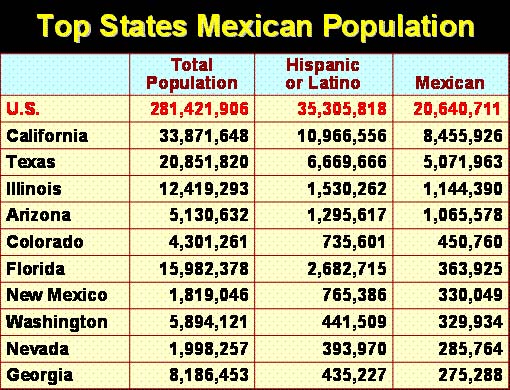
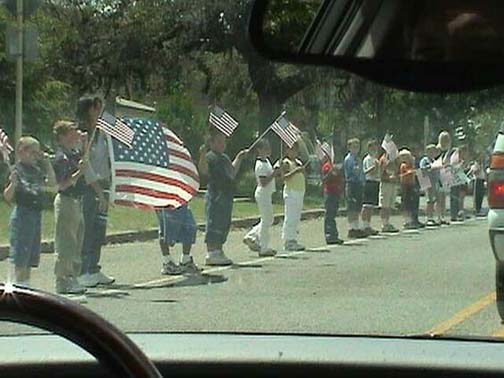
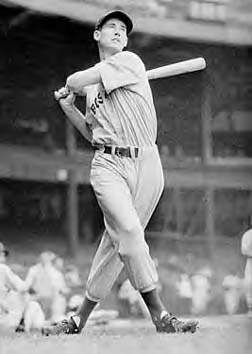
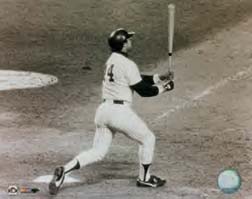
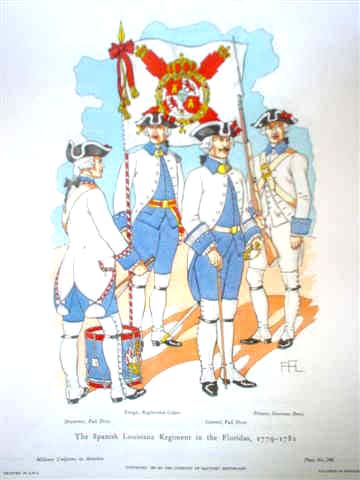
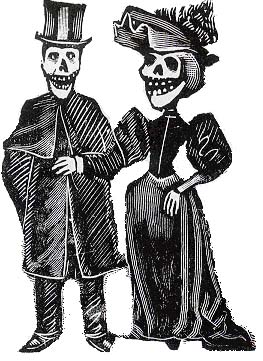
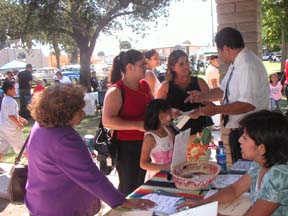
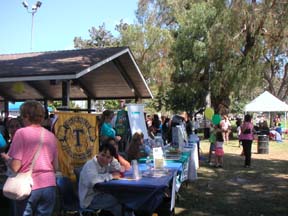
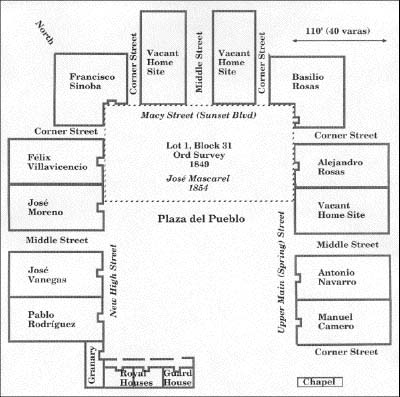
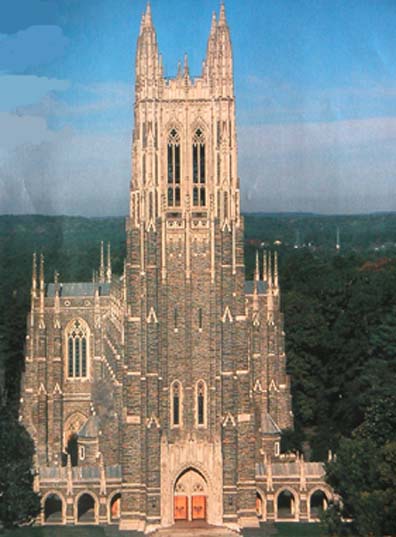
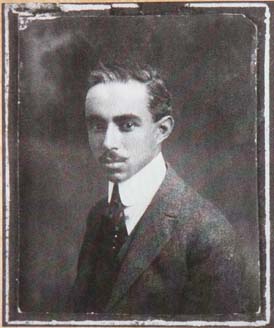 Julian Abele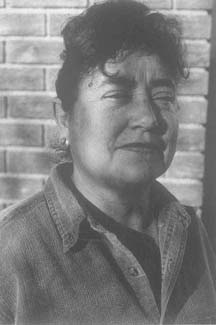

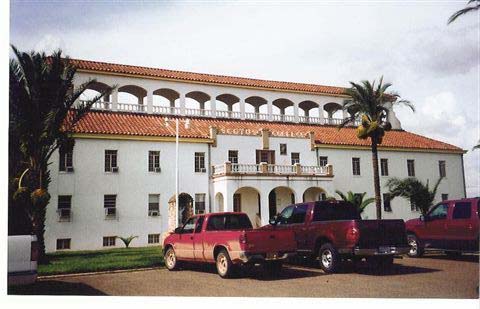
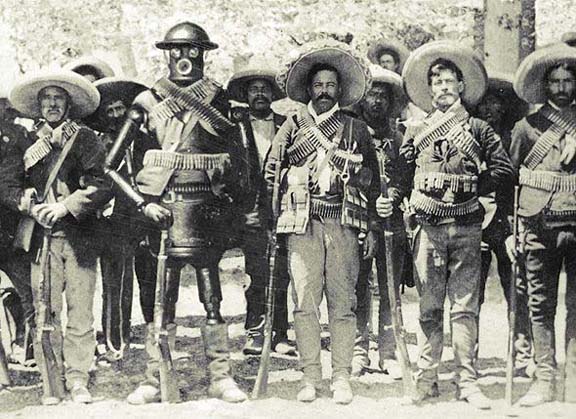

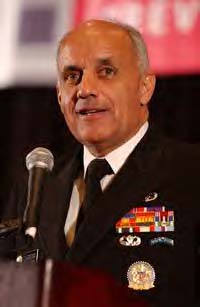 out of high
school, went on to become a military hero, continued his education, became a doctor and a community leader, and is now at the very top of the ladder. He is a true Puerto Rican role model!
out of high
school, went on to become a military hero, continued his education, became a doctor and a community leader, and is now at the very top of the ladder. He is a true Puerto Rican role model! 



 .
It's All In The Frijoles - A good daily read. Think of it as a "Don't Sweat the Small Stuff" type book, but with a Latino flavor. There's a lot in here that I can relate to, and can recall hearing many of the same
.
It's All In The Frijoles - A good daily read. Think of it as a "Don't Sweat the Small Stuff" type book, but with a Latino flavor. There's a lot in here that I can relate to, and can recall hearing many of the same 

