|
|
|
Somos Primos July
2007 Dedicated
to Hispanic Heritage and Diversity Issues |
|
|
|
Content
Areas United States . . 4 Action Item. . 9 National Issues. . 21 Celebrating Hispanic Heritage Month . . 35 Education. . 43 Bilingual Education. . 51 Culture. . 54 Business. . 61 Anti-Spanish Legends. . 62 Military & Law Enforcement Heroes. . 71 Cuentos. . 91 Literature . . 96 Surname . . 111 Patriots of American Revolution . . 112 Orange County,CA . . 118 Los Angeles,CA . . 121 California . . 124 Northwestern US . . 138 Southwestern US . . 140 African-American . 143
|
Indigenous . .
147 Texas . . 155 East of Mississippi . . 167 East Coast . . 168 Mexico . . 173 Caribbean/Cuba . . 183 Spain . . 157 International . . 191 Family History . . 196 Archaeology . . 198 Community Calendars Networking SHHAR Meetings Jan 27: Researching on the Internet and Spanish surnames Mar 17: Writing Family Histories Apr 29: Family History Conference, 5 classes on Hispanic Research May 26: Naturalization Records and Using Batch files Aug 25: Hispanic Political Pioneers End |
|
"Whoever controls the present, controls the past;
|
|
Letters to the Editor : |
|
Good morning, Mimi, Thank you for the wonderful archives and information you have compiled. Debra Perez Hagstrom thyme2be@yahoo.com
Gloria Candelaria thanks for shortening some of the pages of somos primos. In times
past my computer was not able to process the whole report. Thanks for
the good work with much appreciation. Dear Mimi: I have been engrossed reading each and every article and as usual it is riveting. Thank you so much as I love our history and totally agree with Mr. Ruben Salaz about our Native Americans and I might add our own Mexican Americans in the USA not knowing our history... But that said it is a joy to read this magazine every month and it is up to us,members of the Latino Community to make our history known. Thank you Mimi, Connie Vasquez
|
Mimi, I don’t know if you remember me, but I am now the chairperson of
the Department of Foreign Languages here at Cal State University
Dominguez Hills. Keep up the very good work that affects positively
the lives of thousands. Thank God he has a great father who told him from whence he comes. One reason the Spanish Sephardic names are
all over the world is that not all of the Jewish people came to the
New World. When the Spanish King Ferdinand and Queen Isabela
expelled them from Spain many of them were taken in by other
countries. When I was visiting in Turkey we were studying the
Sultans. One of the Sultans opened his country so the Sephardic Jews
could come and have a home. Many other countries did the same. I will be in Washington July 4th and
Thanks Many Times for your hard work on the magazine.
Thank YOU....For all the great work you do for all of us...!
Keep up the great Work…!!!
Mil Gracias! [[ In addition to the extensive pedigrees that Thanks for keeping me informed. You have yet another excellent
issue -- Rudy
|
| Somos Primos Staff: Mimi Lozano, Editor Mercy Bautista Olvera Bill Carmena Lila Guzman Granville Hough John Inclan Galal Kernahan J.V. Martinez Armando Montes Dorinda Moreno Rafael Ojeda Michael Perez Ángel Custodio Rebollo Tony Santiago John P. Schmal Howard Shorr Ted Vincent Contributors: Carmen Peña Abrego Armando Ayala, Ph.D. Mercy Bautista Olvera Warren Bratter Gloria Candelaria Ginetta E.B.Candelario Migdalia Cabran Jaime Cader Bill Carmena Kathleen Carrizal-Frye Ben Cartwright Ercheck Cartwright Sylvia Carvajal Sutton Angel R. Cervantes Jim Clapp Rick Collins, Ph.D. |
Arturo Cuellar Gonzalez Verle Cuellar-SalinasWenneker Gus Chavez, Ph.D. Jack Cowan Salvador del Valle Miguel Domínguez, Ph.D. Mike Dovalina Carl Lawrence Duaine Charlie Erickson Angel Falcon Cecilia Gallardo Vallejo Angelita Galvan Freeman Wanda Garcia Lorgia Garcia-Pena Michael W. Gates Jaime Gómez-González, M.D., Paul Gomez Carlos Ray Gonzalez Rafael Jesus Gonzalez Lolita Guevarra Lila Guzman, Ph.D. Elsa Herbeck Miguel Hernandez Ramona Hernandez, Ph.D. John D. Inclan Larry Kirpatrick spelling? Rick Leal Rudolph Lewis, Ph.D. Cindy LoBuglio Alfredo Lugo Michael May Juana Montgomery-Kleiman Alva Moore Stevenson Dionicio Morales Magdalena Morales Alex Moreno |
Dorinda Moreno Cecilia Mota Carlos Munoz, Ph.D. Elisa Oniel Jose M. Pena Debra Perez Hagstrom Jaime Perez Michael S. Perez Juan Ramos, Ph.D. Angel Custodio Rebollo Armando Rendon, Ph.D. Anita Rivas Medellin Maggie Rivas-Rodriguez, Ph.D. Petra Raquel Rivera Rudi R. Rodriguez Lorri Ruiz de Frain Tony Santiago John P. Schmal Louis P. Serna Dennis Sharp Barry Starr Judith Thomas Paul Trujillo Janete Vargas Val Valdez Gibbons Cathy Vargas Connie Vasquez Ofelia Vidaurri Plante Ted Vincent Katie Wilmes Mark Wolf Scott Wolfman Renee Zamora info@raginggrannies.com Isaiah@classicfamilytrees.com kec1952@sbcglobal.net lakshmir@si.edu Raulmax@aol.com
|
| SHHAR
Board: Bea
Armenta Dever, Gloria Cortinas Oliver, Steven Hernandez, Mimi Lozano
Holtzman, Pat
Lozano, Yolanda Magdaleno, Henry Marquez, Yolanda Ochoa Hussey,
Michael Perez, Crispin Rendon, Viola Rodriguez Sadler, John P. Schmal. |
|
The making of HISPANICS IN THE MILITARY By Eddie Martinez I began Hispanics in the Military as part of Somos Primos and the 2005 Hispanic Heritage Activities at the National Archives, and on October 12, 2005, I made the presentation to the National Archives in Washington, D.C. in the William G. McGowan Theater. Over the next two years I continued to do research on the subject. To the families of the patriotic Latino servicemen and women who are not mentioned, your loved ones are not forgotten. To all the researchers and historians of Latinos/Hispanics in America’s defense, I salute you, for without the unwavering dedication to your work much of the information would be lost. War brings horrendous tragedies, but it also brings out the best in human behavior towards its fellow man. The military had an impact on me during World War II since my dad was away serving overseas in the Army Air Corps. During that time I was busy shining shoes on Olvera Street. Most of my high-tipping customers were soldiers, sailors and Marines who were passing through the buzzing Los Angeles Union Train Station on Alameda Street. In 1954, I decided it was time to
join the Air Force and see the world. After two years of service at
Ellington AFB, Houston, Texas, I was transferred to Fairbanks, Alaska.
I was assigned to the 433rd Fighter Interceptor Squadron.
In 1957, our squadron was transferred further west to Galena, a small
remote airbase on the Yukon River. As dispatcher, I was responsible
for scrambling F-89 fighter jets whenever I received the alert of
incoming unidentified aircraft. I’m proud to say that our unit stood
as the first line of defense against Russia during the Cold War. Below
is a cartoon I drew of our officers and enlisted men between alerts.
I continued my research at the Smithsonian National Museum of American History, The Price of Freedom, Americans at War exhibition. It had incredible displays of United States military battles from the American Revolution to the Iraq war. From there, I went to the National Air and Space Museum, where I purchased Don Lopez’s book, "Into the Teeth of the Tiger." A Latino cashier commented to me that he knew Don Lopez and that they were flying friends. I said I would sure like to meet him and have him sign my book. After a much appreciated telephone call, I was invited into the executive office of retired Air Force Colonel Donald Lopez. He welcomed me and he shared some of his flying experiences as a fighter pilot with the Flying Tigers in China. I asked him about the P40 plane he flew of which he had a painting on the wall. I made notes of some of the plane’s details, such as the number 194 on the vertical stabilizer and "Lope’s Hope" lettered across the plane’s fuselage. He said Lopes was a nickname given to him by his pilot friends in China. After mentioning my admiration of The Space Mural – A Cosmic View by artist Robert McCall, Lopez took me to the conference room where a number of McCall’s paintings were displayed. That was really a treat. I thanked him for the pleasure I had in meeting him and he graciously signed my book.
After completing my military
research, Hispanics
in the Military © 2007 is available for PC or MAC at: For information on the Eugene A.
Obregon/Congressional Medal of Honor Memorial Monument and for
contributions, Go to www.obregoncmh.org
or E-mail the foundation at obregoncmh@earthlink.net
Phone (310) 823-1097.
|
| Action Items |
|
The David M. Gonzales - William Kouts Story |
|
|
|
David M.
Gonzales
William W. Kouts The David M. Gonzales - By: Tony (The Marine)
Santiago Memorial Day is a day set aside to honor the men and women who have made the ultimate sacrifice for our country. Not only should we honor those who are no longer with us, but we should also thank our veteran’s who have served and were willing to give their lives so that all of us can continue to enjoy the freedoms which we sometimes take for granted. It seems to me that most of our children are raised with the misconception as to what is the true meaning of the word hero. If you ask a child who their hero is, I’m sure that the child will name an entertainer, be it an athlete, singer, actor or even in some cases a some one who does not even deserve the publicity given such as a rich heiress. Some of these people are negative role models and have led lives with low moral standards. We must teach our children that true heroes are those who are willing to give their lives for others regardless of their race, religion and social standings. A true hero is a person who does not expect to gain fame nor fortune. The only satisfaction that they receive is the knowledge that they have made a positive difference in a another persons live. A true hero is willing give his life for his fellow men and we have many. Just look around you and when you see a those who serve in the police and fire departments or those who with pride wear the military uniforms of our country with pride. I ask myself how many of today’s entertainers are willing to give up everything that they have and serve their country? Pat Tillman, bless you wherever you are you are an exception. I want to share with you the amazing story of two World War II heroes whose lives have been linked forever. One of these men was a young Mexican-American who made the ultimate sacrifice and was awarded the Medal of Honor for saving three men, among them a young Anglo-American who never forgot the person who saved him. Please bear with me as I continue. PFC David M. Gonzales David Maldonado Gonzales was a quiet young man from California who loved to play the guitar. This humble man met a young and beautiful girl by the name of Steffanie and it wasn’t long before they were married. Upon the outbreak of World War II, Gonzales joined the Army because he believed that it was his patriotic duty to serve his country. He was soon sent with his unit to the Philippines to fight against the Japanese invaders. Not only did he leave behind his mother and his wife whom he loved so much, but his unborn child (Steffanie was pregnant) whom he would never meet, and who would be named after him. On December 8, 1945, on the Villa Verde Trail in the Philippines. Gonzales in face of fierce, relentless barrage of gunfire, succeeded valiantly in freeing two fellow soldiers buried alive by a bomb explosion by digging them out with his bare hands and was mortally wounded by an enemy sniper after freeing and saving the life of a third soldier. The third soldier saved by Gonzales' selfless heroics was Sgt. William W. Kouts. William Walter Kouts William W. Kouts known to all as "Bill" was born in Saint Cloud, Minnesota. In 1941, Kouts followed in his fathers footsteps (His father was a veteran of World War I) and joined the Army. When the United States declared war against the Japanese Empire, Kouts was among the thousands of Americans who without any hesitation was ready to bear arms and give his life in defense of our country. In 1945, Sgt. Kouts was in the Philippines and remembers the day that new troops had arrived to replace those who had already served their tour of duty. Among the new arrivals was PFC Gonzales. It was long before the action which occurred and the young PFC was killed, but not before saving the live of Kouts and two other men. Kouts, who was the senior NCO at the time of the incident, wrote the initial account citing the heroic efforts of David M. Gonzales on that December day. The report resulted in the posthumous awarding of the Congressional Medal of Honor by President Harry S. Truman to David M. Gonzales. A grateful hero Kouts was given a field commission and after the war he found a job at the Atlas Powder Co. In 1948, Kouts returned to the military and served as a Captain with the 187th Airborne Division in Korea during the Korean War. After the war, he meet and married Madeline King and together they had three children, Nanette, Maribeth and William. You would think that that was the end it, but it wasn’t, not for a man like Kouts. All of these years he has wondered about the family of the man who saved his life. He asked thought about them everyday and asked himself countless times, Why did I serve and Gonzales die? He knew that because of Gonzales’ sacrifice he was able to raise a wonderful family. Kouts is grateful for that and he and his family made it a personal quest to try to locate the Gonzales family to thank them. A brave son David M. Gonzales Jr. never met his father. He was born in California, after his father so gallantly gave his live for his fellow men and for the country did he loved. The only thing that he knew about his father was what his family told him and that he was hero who was awarded the nations highest military decoration the Medal of Honor. I can’t imagine how tough life must have been for young David, seeing other kids with their parents, but it was hard. David always thought about his father and always hoped that someday someone who knew his father in the Army would be able to tell him what he was like. Countless days he would wonder about those whom his father saved, he wondered whom they were and if they continued to remember his father. David married twice. His second wife Beatrice became aware of the heroic actions of her father-in-law and became the driving force behind David and encouraged him to participate in activities, which honored the memory of David M. Gonzales. Among the things that they accomplished was that they made the Pentagon replace the erroneous picture that they had on display that was supposed to be of Gonzales and which wasn’t with a real one of him. The search William W. Kouts, is now 85 years old and in ill health. One of his wishes has always been to make contact with the family to thank them and to tell them about Gonzales' heroic deed. I was totally unaware of all this when on November 24, 2006, I wrote an article about PFC David M. Gonzales in Wikipedia, as part of a project which I started called "List of Hispanic Medal of Honor recipients" and which is now a series run in "Somos Primos" On March 4, 2007, the daughter of William Kouts, Maribeth, who lives in Georgia, wrote to me via Wikipedia and told me about her dying fathers wish . I wrote back to her and promised to do everything within my power to make her fathers wish come true. Honestly, I had no idea of how I would be able to accomplish such a feat. I did know from the article that I wrote that David Gonzales Jr. attended a ceremony held in 1999 in Santa Ana, California in his father's honor. So, I started by writing e-mails to Los Angeles Mission College and to Congressman Howard Berman, but no response and no luck. Then I looked up the listed phone numbers of every David M. Gonzales in Berman's district and called everyone of them, but still no luck. On April 2007, I ran the story of Gonzales in Mimi Lozano's internet magazine "Somos Primos" with a plea that anyone who has any information on the where-about of the Gonzales family to please get in touch with me via e-mail On April 11, 2007, I received an e-mail from Ernestine Gonzales, whose uncle was the MoH recipient requesting my telephone number. On April 13, 2007, David M. Gonzales Jr. and his wife Beatrice called me and they were very excited about everything that I told them. I then gave them the phone number of Maribeth Kouts so that they could talk. Both families agreed to meet for the first time in Power Springs, Georgia for the Memorial Day weekend. Maribeth Kouts invited me to attend the historical meeting, she even offered to pay for my airfare and hotel. I was supposed to go to Puerto Rico as an invited guest of the Puerto Rican Senate on the same weekend, but I opted to go to Georgia with my son, Jose instead. The Gonzales and the Kouts finally meet
(L-R) Tony the Marine, W. Kouts and D. Gonzales Jr. On May 25, I arrived with my son at the house of Maribeth Kouts, beautiful house in Powder Springs. The day was beautiful and I felt the excitement building up in me. We were greeted by Maribeth, Nanette and her husband Jim. We then were taken to the backyard and finally I met William "Bill" Knouts and his wife Madeline, a handsome couple if I ever saw one. We also meet William Jr, or as we call him "Woody" and Bill’s granddaughters Katie and Taylor. After awhile the Gonzales’ David and Beatrice arrived and from then on there were tears of joy. Bill was finally able to thank the Gonzales
family, thank them for the ultimate sacrifice that their father had
made. He told David how his father died and that last thing that he
remembered was looking into Gonzales’ eyes before he was
killed. I realized that I was amongst heroes, both
physically and spiritually. I told David that I was sure that his
father's spirit was looking down at all of us from heaven and that he
was smiling. On May 28, we all gathered for the last time to say our
good byes. I was sad, but at the same time happy that I was able to
help Bill Kouts and the Gonzales family put a closure and an end to 62
years of searching and wondering. I now have a bond with these two
families until the day that I die.
|
| A medal, a debt, both of honor by John Faherty The Arizona Republic, May. 27, 2007 Sometimes the need to say thank you, the overwhelming desire to express sincere gratitude, can become a weight that needs to be lifted. Because of the dogged work of Tony Santiago of Phoenix, an 85-year- old Georgia man will be able to lift that burden before he dies. He has been carrying it around for more than 60 years. advertisement On April 25, 1945, U.S. Army Pfc. David M. Gonzales walked directly into heavy sniper fire in an attempt to save the lives of three men on the Villa Verde trail in the Philippines. He dug out three soldiers, all buried by a massive bomb blast before a sniper finally got him. Gonzales died and was posthumously awarded the Medal of Honor. It was a dramatic story of a World War II hero but Santiago, 57, decided it was so compelling that more people needed to know it. So he wrote about Gonzales for Wikipedia, an online encyclopedia. What Santiago did not know was that the last man Gonzales saved, a buck sergeant named William W. Kouts, was getting old and sick in Georgia and had spent a lifetime trying to find the Gonzales family so he could try to express his gratitude. "When I found out about Kouts, I was so touched about how thankful he was. His whole life he just wanted to say thank you," Santiago said from his west Phoenix home. Kouts was never able to locate the family of the man who saved his life because this uncommon man had the most common of names: David Gonzales. As Kouts grew older and his mental acuity diminished, his children resumed the search. When Maribeth Kouts, 49, saw the Wikipedia entry about Gonzales, she contacted Santiago right away. Santiago, a New York native with a thick Bronx accent, served in the Marines and saw combat in Vietnam. As he grew older and moved to Phoenix, he learned he loved history and writing. He was energized by the Kouts' family pleas to help them find the Gonzales family. Working with the Pentagon and using every resource available to him on the Internet, he set to work. He knew Gonzales was from an area just north of Los Angeles and started calling every person with the name David Gonzales. But no luck. Then he entered the story on a Web site called Somos Primos, which is dedicated to Hispanic history and heritage. A niece of David Gonzales saw it and eventually Santiago was able to bring the two families together. This weekend, they are all meeting in Georgia. "We owe so much to Mr. Santiago," said Maribeth Kouts, 49. Her family insisted on flying Santiago and his wife out to Georgia. She said it was the least she could do because she always knew about the sacrifice Gonzales had made. According to Kouts' father, the last moments of Gonzales' life were even more dramatic than the official Medal of Honor citation. "He told us many times the story about how in the middle of heavy sniper fire, this man with his Army-issue shovel was able to get two men out. "And then, as he was digging out my father, he stood up so he could finish. He knew it was dangerous but he stood up anyway. "Then he got hit, and before he died, he handed my father the shovel." Gonzales' son, David M. Gonzales Jr., was a baby when his father died. All he had to remember his father by was the Medal of Honor and stories. "My mother always told me what a good man he was," the junior Gonzales said by phone last week. He and his wife were already in Georgia and had met Kouts' children. "They are very, very nice," he said. "I can already tell that the man my father saved was a good man." Finding out that Kouts has lived a good life helped, according to David Jr.'s wife, Beatrice Gonzales. "We feel so much peace because David's father died to save a very good man who lived a good life," she said. Sent by Gus Chavez guschavez2000@yahoo.com |
 DEFEND THE
HONOR DEFEND THE
HONORhttp://www.defendthehonor.org Weekly Update on PBS THE WAR Documentary, update, activities, events, etc. What can you do? 1. Defend the Honor has put in place, both a fund raiser and the means to raise public awareness, by means of the distribution of Defend the Honor buttons which can be sold by individuals and groups. Beautifully designed 2.5" Defend the buttons are available. Suggested donation is $3 per button and all proceeds go to the Defend the Honor campaign, by way of the U.S. Latino & Latina WWII Oral History Project at the University of Texas at Austin. You may make donations online at the defendthehonor.org website [https://utdirect.utexas.edu/nlogon/vip/ogp.WBX?csu1=CO**&sub1=COWW ] or you may send a check, payable to UT-Austin, with a notation that it is intended for the U.S. Latino & Latina WWII Oral History Project, to: Defend the Honor c/o Dr. Maggie Rivas-Rodriguez University of Texas at Austin School of Journalism 1 University Station A1000 Austin, TX 78712 Call the Project office at (512) 471-1924 for more information 2. Defend the Honor is recruiting local representatives to
distribute flyers and create a greater awareness about the
contributions of Latinos & Latinas in WWII. The packet includes: REMEMBER |
|
Copy of letter from Major General Montano to Tom Brokaw author of the book "The Greatest Generation." 06-04-07 Mr. Brokaw, It is with regret that I return what could have been a great book, "The Greatest Generation". In light of the recent controversy over the Ken Burns Documentary "The War" excluding Hispanic and Native American participation in World War II, recalled similar exclusion of same in your book. I began to think why? In 1598, what is now present day America, a Conquistador named Don Juan de Onate colonized the territory of Nueva Espana (New Mexico) twenty three years before Jamestown, Virginia. The expedition included Spanish and Native peoples, settlers, and military personnel for the common defense and protection of the colony. (Which is today’s National Guard concept) We have been participants in virtually all military involvements since then to present. Yet we are excluded from historical recognition. In 1940 two National Guard units from New Mexico, the 200th and the 515th Coast Artillery Regiments were activated and deployed to the Philippine Islands. They were largely made up of Hispanics, both officers and enlisted men, from New Mexico, Arizona and Texas. After the surprise attack on Pearl Harbor, Japanese forces attached the American positions in the Philippines. General MacArthur moved these units to the Batman Peninsula. They were the first American forces to encounter the Japanese Army in the Pacific. After a heroic three-month engagement against large well equipped invading forces and with diminishing rations, medical supplies and ammunition they were ordered to surrender on April 9, 1942. After their capture they had to endure a 12 day, 85 mile "Death March" from Bataan to POW camps. They subsequently were shipped to Japan where they were liberated at the end of the war. Named the "Battling Bastards of Bataan", General Wainwright praised these men saying "they were the first to fire and the last to lay down their arms and only after being given order." Five hundred of the 1700 New Mexicans died in captivity or in combat. In the Pacific theater, the 158th Regimental Combat Team, known as the Bushmasters, an Arizona National Guard unit comprised of many Hispanic soldiers, saw heavy combat. Company E of the 141st Regiment of the Texas Infantry Division was made up of entirely Hispanic soldiers. The regiment sustained 1,226 killed, 5000 wounded and over 500 MIA’s. During World War II 12 Hispanics received the Congressional Medal of Honor. From 1940 to 1946 more than 65,000 Puerto Ricans served in the American military. The 295th and the 296th Infantry Regiments of the Puerto Rican National Guard participated in the Pacific Theater, while other Puerto Rican soldiers served in Europe. In the Pacific Theater, Native Americans of the Navajo nation served as code talkers in the U.S. Maries. And last but not least a Mexican Air Force Squadron 201 served with American forces against the Japanese ion the Pacific. Is there any doubt in your mind why we as the colonizing culture of America and the largest growing minority are just a little miffed about exclusion in our patriotic responsibility? Sincerely, (Signed)
|
|
Interested third
party: "Mexican Stand-off"
Recently, the Public Broadcasting System (PBS) has become embroiled in what might be called a "Mexican Stand-off" of sorts. Their well-intended efforts to fund and promote a project about Americans and WWII, has become the subject of heated debate fostered by the American Hispanic or Latino Community. The series, "The War" produced by Mr. Ken Burns appears to have forgotten, excluded, left out, put aside, etc. some 500,000 Hispanics who fought for the United States against the Axis Powers during that bloody five year conflict. One side feels that these 500,000 American servicemen should be included. The other suggests that such demands amount to media censorship, an interesting dilemma to say the least. This pits one sacred part of Americana, "artistic freedom" against that most recent sacred cow "freedom from racism". At this juncture, perhaps we should explore a few terms. The term "institutional racism" describes societal patterns that have the net effect of imposing oppressive or otherwise negative conditions against identifiable groups on the basis of race or ethnicity. And this would be? Oh let’s see, Hispanics maybe? Not just Hispanics but American war heroes, the honored dead, and the revered living testament to the defense of democracy and liberty against a German Nazi racist maniac and a Japanese Imperialist nation gone amuck. It was a black nationalist, in the late 1960s, who expanded the definition to include "the collective failure of an organization to provide an appropriate and professional service to people because of their color, culture or ethnic origin". This form of structural racism or systemic racism is a theoretical form of racism that occurs in institutions, such as public bodies and corporations, including universities. And who might that be? Oh let’s see, PBS, the one-time champion of liberty and good solid race relations. In the realm of racism even well-meaning people may be unaware of the effect of their behavior on people around them. This is called unintended racism. And who might that be in this case? Oh let’s see, Ken Burns maybe? You think? This more insidious form of racism is the kind that is more difficult to confront. Institutional racism is more easily distinguished from the bigotry or racial bias of individuals by the existence of systematic policies and practices that have the effect of disadvantaging certain racial or ethnic groups. An individual’s actions might appear honorable, even noteworthy. The idea that one is protecting freedom of artistic expression is a hard one not to defend but so is defeating unintended racism. The question is, how does one addressed this type of bigotry? So, what do two honorable groups do when knee deep in a Mexican stand-off? I would suggest a human approach. Think of yourself as one of those American servicemen in those foxholes being shot at for defending mankind’s freedom from evil, destructive, fascist maniacs. Put yourself in the place of the loved ones of an American soldier that gave his life for such things as, I don’t know, artistic freedom maybe! Then increase that number from the original 500,000 that served their country honorably to several million living relatives and descendents. Next, try walking a mile in their shoes. If that doesn’t work, let’s try something more in the now, today, right now. Let’s think about the many, many young Hispanic boys and girls in
uniform today in Afghanistan or Iraq being wounded and dying weekly.
What message are we sending to them? If the stand-off continues, the
message is simple and reads loud and clear. Hispanics need not apply.
But this isn’t about jobs. This is about Hispanics being good enough
to die for their country but not good enough to receive honorable
mention for it. Both parties have just told several million Hispanics
what they think about them and their damned honored dead. Interested third party
|
|
Sent by Sal Del Valle on the left assisting at a Air Show in Reading, Penn. Walter Schuck is
signing copies of a book published in Germany, authored by Joe
Peterburs, drinking coffee on the left side. sgdelvalle@surewest.net
|
|
|
| Hispanic military
museum is planned Guillermo Contreras Express-News They have been left out of documentaries, history books and movies, but if a grass-roots proposal gets off the ground, Latino veterans would be immortalized in San Antonio. Today, a committee of Hispanic veterans and others is set to announce plans for a proposed 21,500-square-foot facility that would highlight the accomplishments and contributions of Hispanics in the military. If it becomes reality, the National Hispanic Military Heroes Museum would honor 42 Hispanic Medal of Honor recipients, Latino admirals and generals, Hispanic astronauts, fighter pilots, Latino veterans who are female and the "Aztec Eagles," pilots and support personnel from Mexico who were in World War II, also known as El Escuadrn 201 (Mexican Expeditionary Force 201st Fighter Squadron), among other exhibits. The museum also would recognize "everyday" Latino veterans, according to a preliminary proposal. The projected cost for a new building is about $17 million, although the plans also call for finding an existing structure or land, said Virgil Fernandez, head of the committee. If all goes well, the museum could open in four to five years. The group has no money in hand, although some committee members will be approaching local, regional and national corporations and foundations for donations for the museum project, said Fernandez, a San Antonio Navy veteran who wrote a book in 2006 called "Hispanic Military Heroes." "Here we are in 2007, and if you look at different museums, we're mentioned as a footnote," said Fernandez, a disabled veterans outreach coordinator for the Texas Workforce Commission from 1987 to 1996, and a radio and television news reporter in San Antonio in the 1970s and early 1980s. "We're much more than footnotes." The committee will kick off its campaign to raise funds during a news conference today at the Veterans of Foreign Wars Post 76 at 10 10th St., near Broadway Boulevard . the oldest post in Texas. The committee also includes Delia Guajardo, president of the San Antonio Veterans Parade; Tony Alvarado, director of the Fiesta Flambeau parade; Sylvia Sanchez, commander of VFW District 20; Tony Vasquez, commander of VFW Post 76; Robert Larios, U.S. postmaster in San Antonio; accountant Luis Hernandez; Walter Herbeck, a volunteer with the League of United Latin American Citizens and the VFW; and museum architect Alfonzo Fernandez, according to Virgil Fernandez. The group is finalizing nonprofit status. Virgil Fernandez said he and retired Army Maj. Gen. Alfred Valenzuela, who also is on the committee, tossed around the idea for a museum last November with others as an expansion of Fernandez's book and other efforts to recognize Latino veterans. Valenzuela led the U.S. Army South, which moved from Puerto Rico to Fort Sam Houston, for three years. Some of the other efforts, Valenzuela said, include the work of Professor Maggie Rivas-Rodriguez, who runs the U.S. Latino & Latina World War II Oral History Project at the University of Texas at Austin, and the work of San Antonian Rudi Rodriguez, who runs TexasTejano.com a firm that focuses on historical research. The controversy surrounding Ken Burns' forthcoming PBS documentary on veterans of World War II, which initially made no mention of Latino veterans, brought the museum proposal to the forefront. "We've been instrumental in war and peace. We've had generals and admirals," Valenzuela said. "We've all contributed. The idea of a museum is very critical." Antonio Gil Morales, national commander of the American GI Forum, the country's largest Hispanic veterans organization, said San Antonio is a good fit for the museum. "We were discussing where was the best place to have this museum, and we agreed that San Antonio is Military Town USA, and we've had a lot of our Medal of Honor recipients from San Antonio," said Morales, of Fort Worth, who's on the museum's organizing committee. "San Antonio is a great place to have it." Fernandez met last week with Edward Benavides, executive assistant to City Manager Sheryl Sculley, to see if the city might be able to donate, or sell at low cost, surplus land or a building for the museum. "At this time, the city could not make any commitment towards the project, but asked him to keep us apprised as he moves forward with his capital campaign," Benavides said Thursday. Fernandez said the group will reach out to other organizations and private corporations and foundations to see if they have surplus buildings or land. The museum proposal is embraced by another prominent veteran, retired Lt. Gen. Ricardo Sanchez, who led the Iraq war for more than a year after Baghdad's fall. "I think it would be an understatement that we need something like that to recognize the contributions of our Hispanic men and women who, over the course of American history, contributed to the security of this nation," said Sanchez, a three-star general who retired in San Antonio. gcontreras@express-news.net Sent by rvazquez@LARED-LATINA.COM |
Editor: Free Ramos and Compean One of the most puzzling and unjust action taken recently by our court system against Latinos was the sentencing of Border Patrol officers, Ramos and Compean. They were each sentenced to 10 years of incarceration. . . because their report was slightly adjusted, and possibly not completely accurate. However, instead of questioning some of the other officers that
were in the area, the federal prosecutors made a deal with the Mexican
drug pusher that the officers were trying to apprehend. The
federal prosecutors accepted the drug pusher's account of the incident
rather than the two officers, or any other officers. Amazing. The day of the
incident, the drug pusher drove away with a carload of illegal drugs
and was only identified because he went to a clinic to have a bullet
removed from his buttock. Two weeks later he was hauling
another carload of drugs.
|
|
National
Issues |
|
American Only by Wanda Garcia, daughter of Dr. Hector P. Garcia |
|
Ambassador Dr. Hector Garcia and Domingo Pena in front of U.N. |
|
|
|
U.S. Senator Lloyd M. Bentsen Jr., said of my father, "My friend Hector is a man of very strong opinions. He’s never hesitated to speak out." Truer words could not be spoken about Dr. Hector when the topic came to the "English Only" movement. Papa believed that "We (Mexican Americans) live in a culture that suppresses us, and the English Only movement is a part of the greater plan to hold us back." This is the worst thing that has happened to this country since World War II." He labeled the movement "Neo Nazi, Un-American," among other things. "This is a neo-Nazi philosophy brought into Texas from outside the state." Papa never passed up an opportunity to speak against the movement. He felt the English Only movement gained national momentum under the guise of patriotism. But the true motive was to abolish bilingual ballots, bilingual education and advertisements in Spanish.
To illustrate his concept, Dr. Hector designed a pen and ink sketch. It depicted an American eagle clutching a snake that was injecting venom into a heart emblazoned with the words "Freedom of Speech" hovering over the U.S. Constitution. When I would visit my parents in Corpus Christi, TX, my Papa gave me to review articles and videotapes about the English Only Movement. He would comment on different points while I reviewed the material. Although I lived in another city, I could not avoid this educational process. The familiar packets from Corpus Christi would arrive in the mail filled with notes and newspaper articles marked by my father for me to read. After I read the material, we would discuss it by phone. Dr. Hector challenged the myth that Mexican Americans in the USA did not speak "Good Spanish." Papa contended the Spanish language spoken in the Americas was the same Castilian Spanish spoken when the settlers arrived in the 16th century. The language spoken by the settlers did not evolve because it was cut off from outside influences. In 1967, President Lyndon Johnson appointed my father as Ambassador to the United Nations. President Johnson said, "Hector, I want you to speak in Spanish to the assembly." So Papa joined the U.S. delegation to the United Nations. Papa’s role was to promote relations between the United States and Latin American countries. He was the first member of the U.S. mission to address the U.N. in a language other than English. His address was about the U.S. position on Nuclear weapons in Latin America. During his address Papa made reference to the Spanish language spoken in the Americas being the same Castilian Spanish spoken at the time of Cervantes. He asked the body to personally accept his presentation in Spanish, in the language of Cervantes, which is spoken not only in Spain but also in Latin America and in America in more than twenty states of our country. The assembly gave Papa a standing ovation after his speech. He remarked to me proudly that the Spanish Ambassador commented on what excellent Spanish he spoke. The Russians noticed that Papa, though an American, spoke in Spanish.4 One Russian delegate commented that the Soviets could find someone to speak for them in Spanish. This could have been done, "especially for a very short period of time," suggesting that Papa’s knowledge of Spanish was limited. Ambassador Arthur Goldberg, the head of the U.S. delegation, praised Papa as well. Goldberg wrote," there was universal pleasure among the Latin Americans over your speaking in Spanish in the First Committee." Several newspapers commented on the propriety of the United States addressing her Latin neighbors in their own language. In November of that year, the whole family joined my father in New York City to celebrate Thanksgiving. At the La Guardia Airport baggage claim area I saw Kitty Carlisle Hart and Henry Kissinger. Papa approached to Henry Kissinger and introduced himself. We had difficulties with the New York taxis though. The taxis in New York City were unionized and would not allow five people in the same taxi. The union representative insisted that we take two taxis. But the taxi driver argued with the union representative that we were a family and we should ride together. The union representative relented so we ended up riding in the same taxi. During the taxi ride, I was awestruck by New York City, the tremendous population, the massive roads and the massive buildings. We stayed in Papa’s suite at the Roosevelt Hotel during our visit. On Thanksgiving Day, we dined in the United Nations Dining room. We enjoyed the panoramic view of the Hudson River while we feasted on the traditional Thanksgiving meal. Afterwards, Papa took us on a tour of the U.N. Building. One of the main attractions was the Foucault pendulum that swings according to the rotation of the earth. But what was most memorable to me was the inscription on the statue given to the U.N. by the Soviets, "Let Us Beat Swords into Plowshares" I reflect on that quote to this day. Afterwards, we toured New York City in one of the U.N. limousines. New Yorkers would stop and stare every time we exited the U.N. limousine with the flags on the front. We did the "touristy" things such as a stroll along Fifth Avenue and visit the Empire State Building. I still remember the exquisite gems on display in the Harry Winston showroom. A small town girl had never seen such opulence. We shopped at Macy’s and Sak’s and other boutiques. Next, we toured Central Park and the zoo. The gorillas were impressive. They possessed human qualities such as behaviors and soulful eyes. I spent time trying to communicate with the gorillas. One evening we dined at "El Gallo" in Greenwich Village where we feasted on paella and drank Dubonnet wine, one of my father’s favorites. During our visit, Papa introduced us to Jack Valente, Ambassador Arthur Goldberg, and other international dignitaries. Among the dignitaries visiting my father in New York City was Domingo Pena, a popular coastal bend TV celebrity and Ed Harte, publisher of the Corpus Christi Caller Times, and Attorney James DeAnda. Papa showed us a good time while we were in New York City. Papa served a one-year term with the United States delegation to the U.N. My father was well regarded by his colleagues at the United Nations and stayed in touch with them long after his term had ended. The "melting pot" concept of everyone conforming to the Anglo American standard troubled my Papa. Papa was proud of his Mexican Heritage "I don’t want my culture and my pride and my language and everything melted down," he said. "You take me like I am because I think I’ve proved what I can do through my service to my country without having to be melted down."5 Today, I speculate how my father would react to Immigration Reform and some of the "excuses" used to justify reform. Using "Garcia Style," my father would analyze the situation, uncover who benefited and draw conclusions. He would ask, "Who benefits? Where is our heart?" My father taught me to question always, "What is the reason and what is the excuse." * Mexican Immigrants take jobs away from our
citizens and raise the crime rate. Corporations are cashing in on crime with the privatization of the prison systems. More criminals mean greater profit. Our country is creating new crimes. Being illegal is a crime now. Having debt is a crime in some states.6 Low interest home mortgages are available to low-income clients.7 But the collateral for the loan is the borrower not the property and a borrower who defaults could go to prison. An added benefit for some political parties is to diminish the number of low-income minorities who are eligible to vote. Constructing a wall between Mexico and the U.S. border speaks volumes about which immigrants our government feels are desirable. The recent incident about a known carrier of a virulent strain of tuberculosis, crossing the northern border twice suggests that the stringent scrutiny on our southern borders may have little to do with "homeland security." A carrier of a drug resistant disease is more of a threat to our country than all the illegal aliens in the United States. Perhaps one motive is fear. Fear about the changing demographics in this country and an attempt to control it. Knowing my father, he would not be a spectator. His conscience would not allow it. Our conscience should not allow it either. 1 American
English is regional American speech. |
1936: LULAC pressured the United States Bureau of the Census to reclassify persons of Mexican descent from "Mexican" to "White." 1940 census count reflected the change. |
|
Hernandez vs. Texas: Groundbreaking case for Latinos by Carlos Guerra: Groundbreaking, yet little-known case for Latinos subject of film. Web Posted: 04/27/2007 San Antonio Express-News Even though the U.S. Supreme Court answered the question in 1954, people still ask: "Aren't Mexican Americans 'white'?" And few realize that the answer forever changed Latinos' legal status everywhere. Yes, Hernandez vs. Texas: Remains little known as its importance is under appreciated. http://www.tsha.utexas.edu/handbook/online/articles/HH/jrh1.htmll "I didn't learn anything about this case in University of Chicago (Law School)," says Carlos Sandoval, an inactive attorney who began making a documentary about it in 2002, when he realized that it wasn't until the 1950s that Latinos were afforded equal rights protections. And by putting human faces on the case, he says, Latinos will finally start sharing their history with fellow Americans. After World War II, South Texas was in transition, and tensions were building. Mexican American veterans were coming home. But they were returning to dismal barrios and towns, where they were expected to don civilian clothes and remain docile; content to live in isolated poverty with limited opportunities and inequality from which they thought their service had freed them. Resentment was fueling a spreading activism. But the Texas of old was unyielding. The facts of the Hernandez case aren't pleasant. And the only veterans involved were among the defense attorneys. One evening, Joe Espinoza was murdered by another farm worker, Pete Hernandez, in Edna, Texas. He was quickly indicted, tried and c onvicted. But four young civil rights attorneys . Carlos Cadena and Gus Garca of San Antonio, and John J. Herrera and James de Anda of Houston . took on the case to challenge Mexican Americans' second-class legal status in the Lone Star State. Hernandez should have never been indicted since Jackson County grand and petit juries included no Latinos, they argued. But after state courts upheld the conviction, they appealed to the U.S. Supreme Court. As a Mexican American, Hernandez was denied his 14th Amendment right of equal protection, the lawyers argued. But that protection applies only to blacks and whites, the state responded, and being white, his conviction should stand. But no Latinos had sat on any Jackson County juries for at least 25 years, the young lawyers showed. That was a coincidence, the state's attorney replied. But in a 9-0 decision, the Supreme Court justices disagreed. "The evidence in this case was sufficient to prove that persons of Mexican descent constitute a separate class, distinct from whites," wrote Chief Justice Earl Warren, before adding that when "laws single out that class for different treatment, the guarantees of the Constitution have been violated." This monumental ruling knocked out an important linchpin in the notion that "separate" could still be "equal" . in treatment, facilities and opportunities . and it became an underpinning that helped broaden protections for other groups in a wide variety of areas. But this Latino story, and the story of these Latino lawyers, has gone virtually untold, Sandoval says. And because of it, and others like it. Latinos are misunderstood and remain invisible to many Americans. "Particularly after the Ken Burns controversy, it's very much up to us to reclaim our history," he says, before asking South Texans for help: "This is an opportunity for them to directly respond because people in South Texas were such a part of what civil rights were won." Sandoval hopes that people who knew those involved in the Hernandez case, or who have photos, film or other materials, will contact his Camino Bluff Productions by calling (917) 796-5431 or by e-mailing him at mail@caminobluff.com . "This isn't just about our (untold) history," he continues. "We're also being swept into the immigration debate; and all Latinos are now being seen as if they just arrived, even if many families have been here for many generations. Because of the Latino population explosion, there is a lot of fear, resentment, and let's face it, racism arising." See an actual a transcript of the Texas case at: http://caselaw.lp.findlaw.com/cgi-bin/getcase.pl?court=US&vol=347&invol=475 To contact Carlos Guerra, call (210) 250-3545 or e-mail cguerra@express-news.net . His column appears on Tuesdays, Thursdays and Saturdays. Rafael J. Magallan wrote: |
|
|
|
It is unfathomable that in this "Era of the Latino" truth and logic have been thrust aside to open a floodgate of vilification against Mexico and our people in the United States: the very words "immigrant" and especially "undocumented" have been branded with shame. I also forced to remind those who band around the work that people are not "illegal". To many of us, this present hysteria and fear amounts to wake of over-reaction, more expected from an angry mob, often seen in a western "B" movie than from a civil democratic "Good Neighbor". All too many complacent Americans act towards Mexico and her descendants here as thought they hope Mexican might somehow "go away". Many Mexican Americans wonder what the reaction would be if other major or vocal minority group in the United States were subjected to such a constantly historical blizzard of demeaning and contemptuous rhetoric. We continue waiting to see if more politicians will be as vocal in regards to other ports of entry, such as New York, Canada, the shores of Florida, or near a coast guard boat with a Chinese smuggler's ship in the background. Mexican Americans know how victims of racism on a rampage felt! Our memories recall the scapegoat and resultant mass forced "repatriations" of the Depression years. Crowds of tearful humanity waited to be loaded for deportation in the railroad yards of Los Angeles. Also lingering in our memories are the so-called "Zoot Suit" riots which brought wandering troublemakers in the U.S. Navy Uniforms into the barrios of East Los Angeles on a seemingly endless campaign of racial violence. As we look back in history, we must not forget how Mexico relieved hundreds of thousands of American troops for front line duty by deploying military forces to guard the thousands of miles of her coastline, in defense of our continent. Why is it not more widely known, that Mexico was our staunch and trusted ally in World War II. She declared war on both Germany and Japan, and sent Mexican Fighter Squadron 201 to the pacific to fight at our side. Surely the Mexican American display of patriotic valor on World War II battlefields should live in our memories and dispel recurrences of open insensitivity, hostility and racism. After all, Mexican Americans won more Congressional Medals for Valor percentage-wise than any other U.S. Ethnic Group. Today in Iraq, our Mexican American young men and women continue to fight and die valiantly for this country. At President Franklin Roosevelt's request, Mexico replaced the men and women who were among the 12,000,000 Americans called up in World War II with Mexican farm workers who came to the rescue gathering the crops to feed our fighting forces, country and allies. To this day, the United States depends on their hands to feed this great nation and the globalized world. Surely all this should earn 30,000,000 Mexican Americans immunity from the indignity of seeing incessant immigration bashing! Even former enemy countries of the United States have been accorded the highest dignity and respect going so far as to receive the status of economic co-partners. We rebuilt Japan and made her the bastion of influence in the Pacific. We helped rebuild Germany, and then made her one of our strongest allies in Europe. We are careful to send diplomatic delegations ahead to explain our every decision that could affect their interest before taking action. We would never think of bashing their respective people or countries. How could it be that we are so absorbed in immigrant bashing, militarizing the border, and creating walls of separation while the happy memory of the fall of the Berlin Wall was such an historical lesson for the world. If it was such an unnatural barricade that was universally condemned, why should it now be appropriate to build walls between Tijuana, Mexicali and Laredo? Why is that situating with Mexico so different? Even with grave economic issues at stake, we were able to meet in peace and negotiate with Japan and Germany, when, however, was the last serious border summit convened and attended by President Bush and Condoleezza Rice? When was the last real bi-lateral effort to meet and negotiate a package of practical remedies for our border crisis? It was only in the last century that this country still decreed total exclusion of all Asians, including all Japanese and Chinese! Adult Asians could not become citizens, but even then we had not sunk to depriving their children of citizenship...as has been proposed for Mexican children! Asian children received their full birthright of citizenship, and could buy property, even though real estate ownership was denied their parents. Japanese American felt the full impact of the "Yellow Peril" fixation. Bigoted Americans referred to them as "Japs". They were uprooted and entire families were moved under Army guard to special desert concentration camps. Since then, we have even apologized and compensated as much as humanly possible to right such wrongs. Only the survivors, of course, live to receive even that long delayed consolation! We Americans forget these things and then presume that there is no one among us who will recognize our old sins whey they crop out, thinly disguised! Today we are told that the United States will do everything in its power to set things right in far-off Iraq, but can we be assured that the United States is ready to make such a commitment to the critical issues regarding immigrating and the Mexican border. It is folly to try to wish away the dictates of political geography, but history and nature has made Mexico and the United Stated interdependent neighbors. In Los Angeles immigrant mariachis poignantly sing a prophetic refrain: " Aqui estamos y aqui nos quedamos" (We are here and here we will stay). We then reserve the right to proclaim at the same time, that the future of this continent, and its two neighboring nations, will be profoundly affected by the choices that are made between wisdom and hysteria. We must face up to the urgent issue of our common border with the Republic of Mexico! We are determined that the spirit of the good
neighbor must once more flourish among us, and penetrate our entire
national consciousness. This then will extend the same opportunities
especially to our good next door neighbor, the Republic of Mexico and
will allow for the bilateral consultation and peaceful negotiations on
critical border issues. |
|
|
||
|
||
| Latinos Nix Violence May 7, 2007 10:27 pm (PST) First-generation immigrants are more likely to be law-abiding than third-generation Americans of similar socioeconomic status, reports Robert Sampson, Ford professor of the social sciences. These new findings run counter to conventional wisdom, which holds that immigration creates chaos. The prevailing "social disorganization theory" first gained traction in the 1920s and ’30s, after the last big wave of European immigrants poured into the United States. Scholars have maintained that the resulting heterogeneity harmed society. "They weren’t saying that this was caused by any trait of a particular group," Sampson explains. "Rather, they were saying that lots of mixing would make communication across groups difficult, make it hard to achieve consensus, and create more crime." Yet in Sampson’s recent study, first-generation Latino immigrants offer a particularly vivid counterexample to this common assumption. "They come into the country with low resources and high poverty, so you would expect a high propensity to violence," Sampson says. But Latinos were less prone to such actions than either blacks or whites—providing the latest evidence that Latinos do better on a range of social indicators, a phenomenon sociologists call the "Latino paradox." With colleagues Jeffrey Morenoff of the University of Michigan and Stephen Raudenbush, now of the University of Chicago, Sampson followed 3,000 young people in 180 Chicago neighborhoods from 1995 to 2002. They ranged in age from eight to 25, and came from a full range of income levels and from neighborhoods with varying degrees of integration. Chicago was a deliberate choice: "We felt it was representative of where the country was going," Sampson explains. The number of Mexican immigrants in the city skyrocketed in the 1990s, and immigration from Poland and Russia also increased, creating an almost equal three-way split in Chicago’s general population among whites, blacks, and Latinos. During the course of their study, Sampson and his colleagues periodically interviewed the young people on a range of subjects, including asking whether they had been involved in such violent acts as fighting or robbery. The researchers supplemented this data with census, crime, and poverty statistics, and with a separate survey that asked 9,000 Chicago adults about the strength of social networks in their neighborhoods. The investigators then developed mathematical models to determine the probability that a given child would engage in a violent act, and to understand which factors raised or lowered his or her likelihood of violence. Sampson was surprised to discover that a person’s immigrant status emerged as a stronger indicator of a dispropensity to violence than any other factor, including poverty, ethnic background, and IQ. "It’s just a whopping effect," he says. Of people born in other countries, he notes, "First-generation immigrants are 45 percent less likely to commit violence than third-generation immigrants, and second-generation immigrants are about 22 percent less likely [to do so] than the third generation." Mexican Americans were the least violent among those studied, in large part because they were the most likely to be first-generation immigrants, Sampson adds. The study also revealed that neighborhoods matter. "Kids living in neighborhoods with a high concentration of first-generation immigrants have lower rates of violence," he explains, "even if they aren’t immigrants themselves." What makes new arrivals more law-abiding? Sampson theorizes that people who relocate here for the sake of greater opportunity come with a strong work ethic: "They may have a certain motivation to work and not get arrested," he says. The young Latinos in Sampson’s study were also more likely to live with married adults, which correlated with a lower risk of violence, and to hold conservative opinions regarding drug use and crime, all of which might deter them from breaking the law. Finally, living in a neighborhood with many first-generation immigrants—who appear to bond over their shared experience—generates a dense social network that may steer young people away from crime. It’s likely, Sampson adds, that many of these immigrants are in the country illegally, which may give them "extra incentive to keep a clean record and not commit crimes, in order to avoid deportation." After a few generations here, however, America’s tradition of "frontier justice" may prompt greater violence, he speculates. "It’s that notion of reacting to insults and taking the law into your own hands," he says. "You would expect more exposure to that over time." When immigration increases, "the culture of violence is diluted," Sampson suggests. Indeed, he wonders if the last decade’s spike in immigration nationwide might explain the drop in crime in American cities around the same time, an idea he explored in an op-ed piece for the New York Times ("Open Doors Don’t Invite Criminals," March 11, 2006) published as Congress began to debate immigration reform. The column prompted a flood of e-mails and letters, including angry rebuttals from groups favoring strict immigration controls and hate mail from individuals. Sampson says he wasn’t surprised: another portion of this research indicates that preconceived notions about foreigners and minorities are tremendously difficult to shake. He and his colleagues found that the presence of Latinos and blacks in a neighborhood creates a perception of disorder, even when levels of crime and disorder are actually low. "People make inferences about neighborhoods very quickly," he says. Still, Sampson believes that America’s history as a nation of immigrants means that those who have arrived in the most recent wave will ultimately be accepted into the fold. "At the end of the day, I’m optimistic that this debate will resolve itself in a way that’s consistent with the past," he says. "I think the data show that the country isn’t going to hell in a handbasket because of immigration." ~Erin O ’Donnell Robert Sampson e-mail address: rsampson@wjh.harvard.edu http://www.harvardmagazine.com/on-line/090605.html Sent by Dorinda Moreno orindamoreno@comcast.net
|
||
Increased Immigration Lowers Crime Rate: "Latino paradox": Hispanic Americans do better on a range of various social indicators Robert J. Sampson Henry Ford II Professor of the Social Sciences May 7, 2007 |
||
LAW enforcement officials, politicians and social scientists have put forward many explanations for the astonishing drop in crime rates in America over the last decade or so, and yet we remain mystified. Studies have shown that while each of the usual suspects — a decline in crack use, aggressive policing, increased prison populations, a relatively strong economy, increased availability of abortion — has probably played some role, none has proved to be as dominant a factor as initially suggested. Perhaps we have been overlooking something obvious — something that our implicit biases caused us not to notice. My unusual suspect is foreigners: evidence points to increased immigration as a major factor associated with the lower crime rate of the 1990's (and its recent leveling off). Consider what sociologists call the "Latino paradox": Hispanic Americans do better on a range of various social indicators — including propensity to violence — than one would expect given their socioeconomic disadvantages. My colleagues and I have completed a study in which we examined violent acts by almost 3,000 males and females, ranging in age from 8 to 25, from 1995 to 2003. The study selected whites, blacks and Hispanics (primarily Mexican-Americans) from 180 Chicago neighborhoods ranging from highly segregated to very integrated. We also analyzed data from police records, the Census and a separate survey of more than 8,000 Chicago residents who were asked about the characteristics of their neighborhoods. Surprisingly, we found a significantly lower rate of violence among Mexican-Americans than among blacks and whites. A major reason is that more than a quarter of all those of Mexican descent were born abroad and more than half lived in neighborhoods where the majority of residents were also Mexican. Indeed, the first-generation immigrants (those born outside the United States) in our study were 45 percent less likely to commit violence than were third-generation Americans, adjusting for family and neighborhood background. Second-generation immigrants were 22 percent less likely to commit violence than the third generation. This "protective" pattern among immigrants holds true for non-Hispanic whites and blacks as well. Our study further showed that living in a neighborhood of concentrated immigration is directly associated with lower violence (again, after taking into account a host of factors, including poverty and an individual's immigrant status). Now consider that immigration to the United States rose sharply in the 1990's, especially from Mexico and especially to immigrant enclaves in large cities. Overall, the foreign-born population increased by more than 50 percent in 10 years, to 31 million people in 2000. A report by the Pew Hispanic Center found that immigration grew most significantly in the middle of the 90's and hit its peak at the end of the decade, when the national homicide rate plunged to levels not seen since the 1960's. Immigrant flows have receded since 2001, while the national homicide rate leveled off and seems now to be creeping up. The emerging story goes against the grain of popular stereotypes. Among the public, policymakers and even academics, a common expectation is that a concentration of immigrants and an influx of foreigners drive up crime rates, because of the assumed propensities of these groups to commit crimes and settle in poor, presumably disorganized communities. This belief is so pervasive, studies show, that the concentration of Latinos in a neighborhood strongly predicts perceptions of disorder no matter what the actual amount of crime and disorder. Yet our study found that immigrants appear in general to be less violent than people born in America, particularly when they live in neighborhoods with high numbers of other immigrants. We are thus witnessing a different pattern from early 20th-century America, when growth in immigration from Europe was linked with increasing crime and formed a building block for what became known as "social disorganization" theory. In today's world, then, it is no longer tenable to assume that immigration automatically leads to chaos and crime. New York is a magnet for immigration, yet it has for a decade ranked as one of America's safest cities. Border cities like El Paso and San Diego have made similar gains against crime. Perhaps the lesson is that if we want to continue to crack down on crime, closing the nation's doors is not the answer. Robert J. Sampson is a professor of sociology at Harvard. http://www.nytimes.com/2006/03/11/opinion/11sampson.html?ex= 1299733200&en=be13bc1a15648c8d&ei=5090&partner=rssuserland&emc=rss http://listserv.cyberlatina.net , grupos de correo electronico gratuitos para la educacion y cultura latina. http://LISTSERV.CYBERLATINA.NET/ARCHIVES/LARED-L.HTML [[Editor:
Twenty years ago, in 1986, as a resource teacher with the Huntington Beach High School
District, I attended my last educational conference. The conference was held at Trinity University, outside
of Washington, D.C. The theme of the conference was Parental
Involvement in the education of their children. I was working primarily
with the Vietnamese influx into Orange County. I was able to clearly contrast the support
for the history, culture and heritage of the newly arrived Vietnamese,
Laotians, and Hmong (because that was what I was involved in
developing and several federal projects), with that of the Spanish speaking immigrants. Using English as a Second Language strategy (rather than Bilingual techniques) I had the opportunity of surveying the materials in the media centers in numerous school districts. Hispanic materials were greatly outdated, posters and information from the 1960s. Hispanic heritage activities focused on culture, not history . . . . the happy-cake approach. I graduated from UCLA in 1955 and 1957 at a time when very few
Mexican Americans were graduating from college, or completing advanced
degrees. One would think that my accomplishment would have
satisfied my sense of worth. However, it was when I started
researching my family history that I gained what I needed, a
foundation, a base, an understanding of my place in the United
States. I realized the important role that my ancestors had played in the development of the United States, that my roots both Spanish and Indigenous were crucial to the history of the United States. I was not an immigrant, my perception changed, I became even more an American. I am very proud of my Spanish/Mexican heritage, but feel a greater sense of ownership and a responsibility to keep our country secure. I believe that
the drop-out and criminal involvement PROBLEMS for
third-generation Latino youth is DETACHMENT
from their own
heritage
and DETACHMENT from the dominant society in which they find themselves. |
|
Resources and Ideas for Celebrating Hispanic
Heritage Month |
|
Websites |
|
WEBSITES: Somos Primos Website: Celebrating Hispanic Heritage http:www.somosprimos.com/heritage.htm I invite you to go to the website above created to share information and suggestions for youth leaders, to assist classroom teachers in celebrating Hispanic Heritage Month in the classroom. National Hispanic Historical Sites, listed by the government sent by Rafael Ojeda http://www.cr.nps.gov/nr/feature/hispanic/ http://h10025.www1.hp.com/ewfrf/wc/acCategory?lc=en&cc=us&dlc=
en&extcat= celebratinghispanicheritage. Aztecas, Toltecas, and Mayan Civilizations sent by Dorinda Moreno
|
| ANNENBERG
MEDIA Judith Thomas, jthomas@learner.org http://www.learner.orgMs . Judith Thomas of Annenberg Media kindly sent the following. "You might be interested in this list of resources from our email Update newsletter sent out last September for Hispanic Heritage Month:" On history, geography, and society: National Geographic standards "The Merrow Report" http://learner.org/redirect/september/mer72.html
Program 33, On art and literature: "The Expanding Canon: Teaching Multicultural Literature in High School" http://learner.org/redirect/september/canon74.html features authors Pat Mora http://learner.org/redirect/september/mora75.html
, "Teaching Multicultural Literature: A Workshop for the Middle Grades" http://learner.org/redirect/september/tml79.html http://learner.org/redirect/september/tml80.html introduces teachers to the writings of Julia Alvarez, Pam Muñoz Ryan, Judith Ortiz Cofer, and other distinguished writers. On the Web site for "Developing Writers: A Workshop for High
School Judith Ortiz Cofer's poem "Hispanic Barbie With Accessories" http://learner.org/redirect/september/dwrit82.html and this essay about race, culture, identity, and American academia http://learner.org/redirect/september/bstrp83.html by Professor Victor Villanueva of Washington State University. "American Passages: A Literary Survey" http://learner.org/redirect/september/ap84.html discusses the work and influences of many Latino and Chicano authors of past and present. Programs 1, 2, 12, and 16 may be of particular interest. Also visit the series Web site to find links to author biographies http://learner.org/redirect/september/ap85.html and artifacts related to Hispanic history and heritage http://learner.org/redirect/september/archv86.html . On language: "Teaching Foreign Languages K-12: A Library of Classroom Practices" http://learner.org/redirect/september/tfl88.html offers eight programs featuring the Spanish language and Latin American culture.
|
|
Hispanic Heritage
National Parks Cabrillo National Monument Castillo de San Marcos National Monument Chamizal National Memorial Coronado National Memorial De Soto National Memorial Dry Tortugas National Park El Malpais National Monument El Morro National Monument Fort Frederica National Monument Fort Matanzas National Monument Juan Bautista de Anza National Historic Trail Padre Island National Seashore Palo Alto Battlefield National Historic Site Pecos National Historical Park The Presidio Salinas Pueblo Missions National Monument Salt River Bay National Historical Park and Ecological Preserve San Antonio Missions National Historical Park San Juan National Historic Site Tumacacori National Historical Park Please check this web site for $10 "Lifetime pass" for
Seniors (62+) and free passes for Disable persons. The free pass and
the $10 will allow all passengers in free. What a great way for
Grandparents to treat their grandchildren or neighbors children to
National Parks. Children under 15 go in free
where parks charge an individual entry fee. |
|
|
|
|
In the same way that Cabrillo National Park is
revealing the history and contribution of the Portuguese and Spanish
in the history of the California seaside communities, I am hopeful
that the Heritage Discovery Center will become a living museum on the
West Coast, similar to Williamsburg, sharing the day to day life of
early California. Heritage Discovery
Center Paul Trujillo on the left is a reenactor, who rides his horse in parades and historical events. |
|
|
|
|
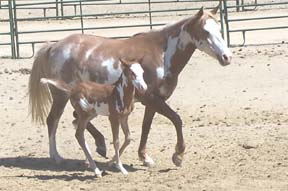
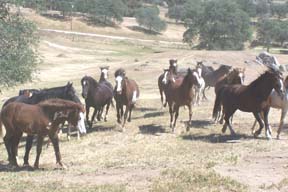
The most wondrous part of the experience were
the horses. I can fully understand why horse therapy is so
successful, and why our ancestors were such successful horsemen.
When a very pregnant mare, quite unexpectedly put her head on my
shoulder, and I felt her longing to be comforted, I was awed by the
moment. |
|
|
|
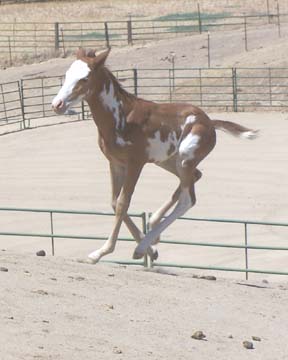
The most joyous experience was to watch this little 3-day-old filly who stepped out into the big corral for the first time. She and her mom had been confined giving them both the opportunity of strengthening themselves. The little filly almost stumbled stepping out, but recovered quickly, stopped and paused in wonder over her expanded world. Suddenly she took off running, with mom close at her side. This photo catches her ecstasy, her free spirit. Horses will be among the components of the Heritage Discovery Center, but all aspects of early California ranch life will be included. If you are interested in learning more, becoming involved, or visiting Rancho del Sueño, go to http://www.hdcinc. http://heritagediscoverycenter.com |
|
| Education |
|
Hispanic
Students Hungry for College Evaluating Instructional Materials for Social Content Minority Population Tops 100 Million Book: Journey to Latino Political Representation by John P. Schmal Book: 500 Years of Chicana Women’s History Book: I was a Really Good Mom Before I had Kids Book: The Power of Poetry |
|
CONGRATULATIONS TO ALL THE NEW GRADUATES |
|
|
|
Current
News: WASHINGTON,
D.C. Some 98 percent of Hispanic high school students say they want to attend college, according to a new study. But according to the 2004 U.S. Census Bureau report, only 25 percent of Hispanics are currently enrolled at the nation’s colleges and universities. Activists are now trying to bridge that gap by addressing the factors that impede Hispanic students from fulfilling their dream of pursing a higher education. The study, entitled the “College Preparation 2007,” was released this week in conjunction with a press conference and symposium to address college access issues. Activists and students at the symposium said the environment in which many Hispanics grow up in is simply not nurturing and fails to promote higher education as a viable option. The Hispanic Heritage Fund, Excelencia in Education and the Hispanic College Fund called on the federal government to fund more college access programs for Hispanics. “The environment that many Latino high school students experience is not as supportive as it needs to be in order to see college enrollment rates as high as their peers in other ethnicities,” said Ryan Munce, a researcher with the National Research Center for College and University Admissions, which conducted the study with the Hispanic Heritage Fund this year. The environment that Munce was referring to was described in greater detail in the second segment of the conference, entitled “Voices: Hearing from Latino Students About College.” The panel discussion featured six Hispanic College Fund scholarship recipients. “I was 16 years old when my father had a heart attack that pronounced him disabled and so I had to drop out of school to become the sole provider,” said Norma Rojas. “Now, at 27, I am not the traditional college student, but I am beginning my college career.” The Hispanic Heritage Fund and NRCCUA are hoping to change that reality by launching MyCollegeOptions.org, an online service dedicated to helping Hispanic students make their way from high school to college. Steven Galvan, the fourth of seven children, followed his grandfather’s footsteps, enlisting in the military as a route to college. “There are numerous jobs in Texas, especially in the automobile industries, and they suck people in by paying $12 an hour without having to be certified, and people think it’s a lot of money,” says Galvan. “But my grandfather told me that with education you only go up, and it can never be taken from you, and so I took his advice.” The study says that 62 percent of Hispanics report that neither of their parents went to college and that they are more likely to learn about higher education opportunities through non-personal advertising such as direct mail or billboards. The study was based on a survey of 2,820 high school students, half of whom were Hispanic.
|
|
Evaluating Instructional
Materials for Social Content
To all supporters of DEFEND THE HONOR Campaign,
Our national call for Latino inclusion in Ken Burns/PBS 14 hour WWII
"documentary" has received new and important support from
the California education community. Please read the attached
letter from Mr. Nick Aguilar, Trustee of the San Diego County Board
of Education to Jack O'Connell, State Superintendent of Public
Instruction.
The official letter raises many questions relative to the book
THE WAR by Ken Burns and associated education materials that may not
meet "California's adoption standards for evaluating
classroom materials: Criteria for Evaluating Instructional Materials
in History-Social Science and Standards for Evaluating Instructional
Materials for Social Content."
It also states: " These documents delineate clear
standards for evaluating history-social sciences materials used in
California's schools and those materials must:
* present accurate and a variety of perspectives based on the best
recent scholarship;
* include the contributions of different demographic groups with
emphasis on California's multiethnic heritage;
* project cultural diversity and instill in each child a sense of
pride in his/her heritage
Mr. Aguilar is of the opinion that " if this video
and accompanying text materials were submitted to the adoption
review process, I firmly believe that they would be disqualified
"due to gross inaccuracies" in light of the exclusion, from the subject video and related text materials, of Mexican-Americans and other Latinos in the mainstream of US life."
Please share with educators, Latino/non-Latino Board of Education
Trustees and concerned public. Thank you.
Gus Chavez
DEFEND THE HONOR Campaign
|
|
Minority
Population Tops 100 Million The nation’s minority population reached 100.7 million, according to the national and state estimates by race, Hispanic origin, sex and age released today by the U.S. Census Bureau. A year ago, the minority population totaled 98.3 million."About one in three U.S. residents is a minority," said Census Bureau Director Louis Kincannon. "To put this into perspective, there are more minorities in this country today than there were people in the United States in 1910. In fact, the minority population in the U.S. is larger than the total population of all but 11 countries." Book: The Journey to Latino Political RepresentationBy John P. Schmal The Journey to Latino Political Representation is a detailed, yet succinct, description of the struggle of Latino Americans to express their political voice from 1822 to the present day. There are essentially two parts to this story: the decline of Hispanic representation in the nineteenth century and the revival of their political voice in the second half of the twentieth century. To explain this, the author discusses Latino population demographics, anti-immigrant legislation and other political influences. In addition, short biographies throughout the book help to familiarize the reader with some of the politicians. The Journey is one of the few works that describes the step-by-step struggle of one cultural group to achieve political representation. In this respect, the book fills a niche that has been neglected for decades. In the preface, Dr. Edward E. Telles, the author of the award-winning, Race in Another America: The Significance of Skin Color in Brazil, states that this book is “an important educational service” that “will be useful in classrooms throughout the United States.” He adds that, “no longer can educators in any part of the United States deny or ignore the political importance of Latinos to their students, as this book makes apparent.” 2007, 5½x8½, paper, index, 228 pp. $24.00 S4114 ISBN: 0788441140 65 E. Main Street, Westminster, MD 21157-5026 Copyright © Heritage Books, Inc. 2007 (800) 876-6103 Orders@HeritageBooks.com.
|
|
Book: 500 Years of Chicana Women’s History Bilingual Edition, Edited by Elizabeth (Betita) Martínez The history of Mexican Americans spans more than five centuries and varies from region to region across the United States. Yet most of our history books devote at most a chapter to Chicano history, with even less attention to the story of Chicanas. 500 Years of Chicana Women’s History offers a powerful antidote to this omission with a vivid, pictorial account of struggle and survival, resilience and achievement, discrimination and identity. The bilingual text, along with hundreds of photos and other images, takes readers from female-centered stories of pre-Columbian Mexico to profiles of contemporary social justice activists, labor leaders, youth organizers, artists, and environmentalists, among others. With a distinguished, seventeen-member advisory board, the book presents a remarkable combination of scholarship and youthful appeal. In the section on jobs held by Mexicanas under U.S. rule in the 1800s, readers find they range from a flamboyant saloon owner in Santa Fe to a respected curandera near San Diego. Also covered are the “repatriation campaigns” of the Midwest during the Depression that deported both adults and children, 75 percent of whom were U.S.–born and knew nothing of Mexico. Other stories include those of the garment, laundry, and cannery worker struggles, told from the perspective of Chicanas on the ground. From the women who fought and died in the Mexican Revolution to those marching with their young children today for immigrant rights, every story draws inspiration. Like the editor’s previous book, 500 Years of Chicano History (still in print after 30 years), this thoroughly enriching view of Chicana women’s history promises to become a classic. Elizabeth (Betita) Martínez is a widely known Chicana writer, activist, and lecturer. In 2005, she was nominated for the Nobel Peace Prize, one of a thousand women from 150 countries. Now director of the Institute for Multiracial Justice in San Franciso, she has published six books, most recently De Colores Means All of Us: Latina Views for a Multi-Colored Century. 320 PAGES • 600 B&W ILLUSTRATIONS • PAPER $23.95 RUTGERS UNIVERSITY PRESS Phone: 800-848-6224 Check payable to: Longleaf Services, Inc., PO Box 8895, Chapel Hill, NC 27515-8895 http://rutgerspress.rutgers.edu/subscribe.html Sent by Dorinda Moreno |
REVIEW Postcards from the mommy track Regan McMahon, Chronicle Deputy Book Editor Friday, June 15, 2007 http://www.sfgate.com/cgi-bin/article.cgi?f=/c/a/2007/06/15 /DDGIPQF41O1.DTL&hw=postcards+from+the+mommy+track&sn=001&sc=1000 http://www.reallygoodmom.com/
|
The Power of PoetryBY MICHAEL MAYAustin Chronicle, Texas, June 1, 2007 http://www.austinchronicle.com/gyrobase/Issue/story?oid=oid%3A479765 Johnston English teacher Camille DePrang (l) and senior Saray Rosales Photo By Michael May The five Johnston High School seniors met twice a week after school in the room of English teacher Camille DePrang and wrote poetry. These are not kids who have grown up thumbing through their parents' bound copies of Whitman and Dickinson. These poets are struggling with the same obstacles that face urban immigrant students across the country: single-parent homes, families that don't speak English, teen pregnancy, relatives and friends divided by borders. The students' poetry provides an intimate look at the challenges these kids are facing and the way they cope. But there's more to be learned here. These seniors have spent their last four years in a school that has been rated "academically unacceptable" by the Texas accountability system, despite efforts to redesign and invest in the school. Those pervasive low Texas Assessment of Knowledge and Skills test scores mean the Texas Education Agency could shut the school down this summer. The poetry produced in DePrang's classroom, however, shows that it might be hasty to judge Johnston simply by the numbers. It provides hope that the school's efforts to till the soil will bear fruit. These students know how to write. Deprang began the poetry class in fall 2005, just as the district was implementing its "high school redesign" program at Johnston. She wanted to find poets who would inspire the kids to write about their lives, and she contacted Raúl Salinas, the poet and human-rights activist who founded Resistencia Bookstore. He and fellow activist Rene Valdez were already running writing clinics for juvenile offenders called Save Our Youth, or SOY, and they brought the project to Johnston. DePrang saw the workshop as a chance for students to write for fun – and work on the basics at the same time. "I'm not a teacher who sets the world on fire," she says. "I find my role is to get back to basics. These students often aren't taught the foundations of grammar and how to edit. It's a form of institutional racism, and it can hold them back later when they're trying to get into college. I hope to open doors for creative things to happen." Johnston senior Saray Rosales saw the open door and went running through it. The witty 17-year-old actually discovered her love for poetry through the TAKS test, but not in the way the test's designers intended. "I hate the TAKS, the writing prompts are so wack," says Rosales, referring to the directions given for the essay portion of the test. "The prompts would make you write something boring. Not cool. It puts you in a box. So I started just writing poetry in my tests instead." So Rosales was intrigued when she heard about the poetry group.
"I thought it was going to be hard, because I've never been one
to write when someone tells me to write," she said. "But
then they gave me a one-word prompt, like 'war' or 'family,' and I
just went off. I liked what came out. So I thought, 'Hey, this is
pretty cool. I should be a poet!'" He says I should pray My mom never tells me For others, the poetry group has provided a place to confront
painful experiences. When 17-year-old Mariama Konneh speaks,
it's a whisper, and her classmates rarely hear her voice unless she's
reading her poetry. She was born in Liberia in the midst of a
civil war where children were trained to maim and kill by the indicted
war criminal, Charles Taylor. Her family fled to Sierra Leone,
until fighting broke out there. An aid organization found them in a
refugee camp in Guinea, and she came to Johnston in 2005. One
of her poems is about a field near her house where a massacre took
place. The poem could be a metaphor for Mariama herself. I wonder why When Mariama reads her poems, you can hear the pride in her quiet voice. DePrang says she's seen a lot of these kids transform over the past two years. "It's a beautiful effect that I didn't anticipate," she says. "I've seen students who couldn't speak getting up and really delivering their words. It's given them a sense that their voice was important." And these poems are important in a broader social sense, as well. It's one thing to understand that students at Johnston are dealing with difficult situations outside of school, but these poems provide a glimpse into how the students cope. Oscar Valenzuela writes poignantly about his relationship with his mother, who works every weekday from 7am to 4pm at Comfort Suites and then from 5pm to 1:30am as a janitor at UT. Day by day, we have nothing to show, But the writing isn't just a form of therapy. These are all
motivated students who plan to go to college. And both the students
and their teacher feel the poor test scores and bad press don't tell
the full story about what's going on at Johnston. Senior Charlie
Ramirez says the school has improved dramatically in the past four
years. "There's a lot of good students here," he says.
"And when the media paints a negative picture, it hits me
personally." It's a theme that runs through his work.
|
| Bilingual Education |
|
Book: Power of Parents:
Bicultural Parent
Involvement in Public Schools
Latino Education: Beyond The Millenium
by Manuel Hernandez-Carmona
|
|
The Power of Parents: A Critical Perspective of Bicultural Parent Involvement in Public Schools by Edward M. Olivos Reviewed by Francisco X. Gaytán - June 04, 2007 In The Power of Parents: A Critical Perspective of Bicultural Parent Involvement in Public Schools Edward M. Olivos aims to offer an exploration of how parents from cultural backgrounds different than the dominant culture come to be excluded from the public school system. A major claim in the book is that the lack of parental involvement is not due to the conservative view that they lack interest or motivation or the liberal view that parents lack the cultural skills to be involved in school. Instead, Olivos argues that parents are motivated to be involved and have significant resources to draw upon to facilitate their involvement in the public school system. Using a critical perspective, Olivos clearly illustrates his contention that parental involvement in school or lack thereof is actually the result of subordination and exclusion by those in power (i.e. teachers, school administrators, and those representing the dominant culture), which mirrors their subordinated status in the larger society. According to Olivos, bicultural parents are involved in the paradox of being expected to participate in school on the one hand and on the other hand not being too involved such that they change the system or become part of the power structure. Parents who realize that there are limits to their power disengage. Olivos argues that bicultural parents thus express their power by resisting the policies that are imposed upon them by the dominant culture. This creates a vicious cycle because the dominant culture can point to their disengagement as representative of their lack of involvement. Not only does Olivos aim to illustrate how bicultural parents come to not be involved in public schools, but he also aims to offer an outline of how this situation can be changed. Olivos notes that despite the failure of the public school system to educate bicultural students, they are dependent upon it because it is still one of the few means for them to achieve upward mobility. This being the case, a transformation of bicultural parent involvement is what is necessary to ensure the education of bicultural youth. Olivos reveals that the way this change must come about is through exploring the contradictions of the public school system. A major strength of this book is the accessible and highly readable style in which it is written. Olivos identifies his target audience as educators, parents, and students. Reaching out to all of these parties is an ambitious task that Olivos carries off well. I could easily see a parent or student emboldened to act for change after reading this book. Throughout the book Olivos gives vivid examples, taken from his own experience as a researcher, parent advocate, and schoolteacher. These examples include instances where administrators exclude parents from meetings and decision-making after decrying their lack of involvement in their children's education. The contradiction of expecting parental involvement and then placing barriers to that involvement is something that Olivos highlights in several critical incidents. Olivos uses these critical incidents as opportunities to explore issues of power in the school and classroom as they interact with race, class, and gender. Each chapter ends with such an incident. For each chapter Olivos encourages critical thinking about its themes and the critical incident by posing questions for reflection. In so doing, Olivos implements his belief that, "the most effective way to 'combat' this [asymmetric] system is to become cognizant of the contradictions found within it" (p. 16). It is these critical incidents that serve as a springboard for Olivos's model of transformative parental involvement. He outlines different views of parental involvement ranging from an authoritarian perspective, where the administrators and school system dictate the nature and extent of involvement, to a fully democratic model, where parents are equals in the school system with a voice for their views and a role in making decisions. In giving this nuanced model Olivos reveals that all forms of parental involvement are not equal, a significant insight. A weakness of the book is Olivos's use of the term "bicultural" to describe the low income families of color that are the focus of this book. His decision to use this term was motivated by a desire to avoid characterizing these families as subordinate to other families. This is an important decision given the critical perspective that Olivos takes. Olivos explains his use of this term by stating that these are families that are participating in two cultures, their native culture and the dominant culture of society. However, the term bicultural and Olivos's explanation for its use invite several critiques. First, there is the question of whether participation in two cultures actually affords one bicultural status. This is an important question because a major contention of this book is that low-income parents of color are not allowed to fully participate in the institution of school because of their racial, linguistic, cultural, and economic differences with the school and larger society. If they are marginalized in this way, then they are only nominally participating in two cultures. Also, the linguistic and cultural differences between the parents Olivos describes and some of the schools at issue are at least partially the source of their lack of school involvement. If a person does not have the language skills to engage the school, then the appropriateness of identifying them as truly bicultural comes into question. Olivos and Quintana de Valladolid (2005) address the issue of language and cultural skills, acknowledging that the lack of these skills poses limitations to parental involvement. They make the argument, which in my opinion should be more developed in this book, that despite a real lack of language and cultural skills, an exclusive focus on these skills precludes a focus on larger issues of power, hegemony, and cultural and political reproduction. This book would be strengthened if Olivos directly addressed that the low-income parents need not only become critically conscious of the system of power and exclusion which they are subjected to, but also that these parents may need concrete skills and education about what Lisa Delpit calls the rules of the game. I think this approach would not undermine Olivos's goal to show that marginalized parents should be valued and allowed to participate fully in the educational system and other institutions; rather it would just illustrate one concrete step in the process to that end.
Overall,
this book is an excellent resource for educators working with
parents from cultural backgrounds that are different from that of
the dominant culture. It serves to bring to light some of the
exclusionary practices that educators employ, which they may not
always be aware of. More importantly this book is a resource for
the bicultural parents and students that are its subjects. The
book is an excellent example of the critical consciousness-raising
that it advocates. By showing that bicultural parents and
students can engage the school system and ensure that it serves
them well, it opens doors of opportunity and empowerment for these
families.
References Olivos, E.M. & Quintana de Valladolid, C. (2005). Entre la espada y la pared: Critical educators, bilingual education, and education reform. Journal of Latinos and Education. 4(4), 281-291. Cite This Article as: Teachers College Record, Date Published: June 04, 2007 http://www.tcrecord.org ID Number: 14509, Date Accessed: 6/17/2007 12:54:14 AM Publisher: Peter Lang Publishing, New York ISBN: 0820474789 , Pages: 133, Year: 2006 Sent by Gus Chavez guschavez2000@yahoo.com |
|
Essay:
Latino Education: Beyond The Millenium
by Manuel Hernandez-Carmona
The
Latino preschool, elementary, secondary and high school population
has grown and has now become an important factor in
education in America today. Much of the recent growth in enrollment
in elementary and secondary schools may be attributed to the rise in
the number of Latino students. Latinos continue to come into
the United States at unprecedented rates. Although it is a matter of
survival at the beginning of the immigration process, Education is
key to Latinos, who are less likely to receive a quality education
than most other Americans. The educational journey is rough and
bumpy, but Latinos have realized that their opportunities
are based in the educational empowerment of the people.
After
they numerically proved in the past two major elections that they
should not be taken for granted, the education of Latinos must be a
top priority for the President's administration and the newly
appointed Congress. While the War on Terror continues
to be the number one priority today in America, more and more Latino
children find themselves out of school and without the academic
support needed to survive in the American educational school
system. Census projections go as far as placing them over the 100
million mark by mid-century, but the numbers are meaningless unless high
school drop out rates, national testing scores and other educational
mishaps are addressed immediately by the Department of
Education. No Child Left Behind has proven useful and
instrumental, but it has left the educational without the
flexibility to create not only solutions but results.
However, despite the
fact that Latinos have recently made some academic gains,
differences still exist in academic performance between Latinos and
non- Latino White students. Very few Latino immigrants have the
ambition of aspiring for anything more than providing a decent
living for their families here in the United States or in their
native countries. Most of them are hard workers and they seem satisfied
just with living life with whatever they can get from their
labors. Latino education is in dire need of role models willing to
go back and visit these inner city neighborhoods and talk and speak
out on the power of education.
The journey in itself is
fast-paced, and technology is ever-changing; Latino education needs
a clear vision and steady direction. America's contemporary
educational heroes (Coach Carter, Jaime A. Escalante and many many
others) have had to fight tradtional mindsets and paradigms to
impart the vision. But it's not just the individuals. There will
always be super individuals willing to walk the extra mile, but
America needs a team with a vision and the willingness to reach and
go beyond the natural way of things. Although the journey is filled
with uncertainties, Latino education will cast away its traditional
mentality and will rise to its academic expectations. But we Latino
leaders must do it ourselves, now and today; our generations
will benefit from our passion and efforts, but we gotta act "ahora"...tomorrow
may be too late.
|
| Culture |
|
Loteria in San Juan,
Texas Luis Rodriguez and Tia Chucha - Casting A Giant Shadow For the Record: 2007 ALMA AWARD WINNERS Farid De la Ossa Mosto & Rojas Arte La Raza Galeria Posada Angel Cabrera Defeats Tiger to Win U.S. Open At home in the booth Book: Playing America's Game: Baseball, Latinos, and the Color Line |
|
Loteria in San Juan, Texas Mimi, please check out the work of artist Cristina Sosa Noriega. It is unbelievable. The Loteria is wonderful. I have bought all the "Skull" items to use for Dia de los Muertos. Pricilla Rodriguez at the Brownsville Historical Museum has booked the show for 2008. The "Friends of the San Juan Library" are buying up the items to decorate for the next "National Hispanic Month". This is a must have collection. Who hasn't played Loteria in their youth? It's being played at all the "Adult Day-Care Centers" here in South Texas. Right now H-E-B Plus has the most complete selection of My Lotería products, and they will be carrying t-shirts too beginning in September (though I am not sure the exact date, it may be towards the end of the month). At that same time new designs will be released, including Las Banderas, La Sirena, and a few others. The best place to see a complete list would be http://www.myloteria.biz
. |
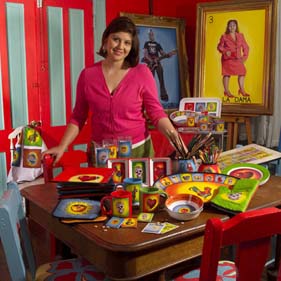 Note: The lady in the poster on the far right is and example of the modern La Dama Excellent article on Cristina: Dialogue and Culture: Mex-US Relations Source: QuePasa, Hispanic Issues http://www.matt.org/english/editorial/dialogue _&_culture_us-mex_relations/312_turning _the_tables_for_a_game_of_loteria.html |
|
Interview: Luis Rodriguez and Tia Chucha - Casting A Giant Shadow Written by Lisa Alvarado Published June 06, 2007
Luis is best known for his 1993 memoir of gang
life, Always Running: La Vida Loca, Gang Days in L.A. An
international best seller, with more than 20 printings, and around
250,000 copies sold, the memoir also garnered a Carl Sandburg Literary
Award, a Chicago Sun-Times Book Award, and was designated a New York
Times Notable Book. Written as a cautionary tale for Luis' then
15-year-old son Ramiro - who had joined a Chicago gang - the memoir is
popular among youth and teachers. Despite this, the American Library
Association in 1999 called Always Running one of the 100 most
censored books in the United States. Efforts to remove his books from
public school libraries and reading lists have occurred in Illinois,
Michigan, Texas, and more recently in California, where the battles were
quite heated. On top of this, Luis has spent some twenty five
years conducting workshops, readings, and talks in prisons, juvenile
facilities, homeless shelters, migrant camps, universities, public and
private schools, conferences, Native American reservations, and men's
retreats throughout the United States. He has also traveled to Canada,
Europe, Mexico, Central America, and Puerto Rico doing similar work
among disaffected populations. In addition, he's editor of the new
Chicano online magazine, Xispas.com. |
|
For the
Record: 2007 ALMA AWARD WINNERS OUTSTANDING MOTION PICTURE Babel OUTSTANDING ACTOR – MOTION PICTURE OUTSTANDING ACTRESS – MOTION PICTURE OUTSTANDING DIRECTOR – MOTION PICTURE OUTSTANDING SCREENPLAY – MOTION PICTURE OUTSTANDING TELEVISION SERIES, MINI-SERIES, OR TV MOVIE OUTSTANDING ACTOR – TELEVISION SERIES, MINI-SERIES, OR TV MOVIE OUTSTANDING ACTRESS – TELEVISION SERIES, MINI-SERIES, OR TV MOVIE OUTSTANDING SUPPORTING ACTOR – TELEVISION SERIES, MINI-SERIES, OR
TV MOVIE OUTSTANDING SUPPORTING ACTRESS – TELEVISION SERIES, MINI-SERIES, OR
TV MOVIE OUTSTANDING DIRECTOR – TELEVISION SERIES, MINI-SERIES, OR TV MOVIE OUTSTANDING WRITING – TELEVISION SERIES, MINI-SERIES, OR TV MOVIE OUTSTANDING MADE-FOR-TV DOCUMENTARY
|

FARID DE LA OSSA |
Website with a display of 51 pastels/ink works done by Farid de la Ossa on paper http://my.care2.com/fariddelaossa Tel: 773 426 1737 Weblinks in which his artwork appears. http://www.boheme-magazine.net/photos.boheme -magazine.net/thumbnails.php?album=11 Sent by Dorinda Moreno |
|
|
|
|
Mosto & Rojas Arte Buenos Aires y Markov & Company. NY. NY. USA Plataforma de comunicación para el arte argentino contemporáneo Muestra retrospectiva on-line desde 1964-2006 Arte Internacional, organización y promoción
|
 |
|
La Raza Galeria Posada
|
|
|
Extract:
Angel Cabrera Defeats Tiger to Win U.S. Open June 18, 2007, Andrew Carter -- The Orlando Sentinel, Fla. http://www.hispanicbusiness.com/news/newsbyid.asp?id=68056&cat= Today's+Most+Popular+Stories&more=/news/newspopular.asp 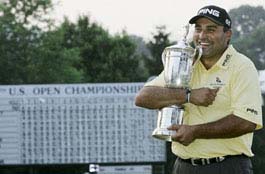 Angel Cabrera of Argentina hugs his championship trophy after winning the 107th U.S. Open Golf Championship at the Oakmont Country Club in Oakmont, Pa., Sunday, June 17, 2007. (Elise
Amendola, AP)
Angel Cabrera of Argentina hugs his championship trophy after winning the 107th U.S. Open Golf Championship at the Oakmont Country Club in Oakmont, Pa., Sunday, June 17, 2007. (Elise
Amendola, AP)OAKMONT, Pa. -- Angel Cabrera, a little-known 37-year-old from Cordorba, Argentina, a man who never finished elementary school and smokes cigarettes between golf shots, won the 107th U.S. Open on Sunday at Oakmont Country Club and beat the best player in the world at the same time. Cabrera grew up a caddie in his homeland and didn't play golf until he was 15. He had to help put food on the table when he was still a child. He tried three times and failed to qualify years ago for the European Tour. His career never would have begun were it not for the financial assistance he received from a friend back home. "I wasn't able to finish elementary school," he said. "I had to work as a caddie to put some food on the table, so that's why these moments are enjoyed even more than the common things." Source: HispanicBusiness.com |
|
Extract: At home in the booth By KEITH SHARON, The Orange County Register, Sunday, April 1, 2007 Jose Mota, a player and son of an all-star, will move up to play-by-play for 50 televised Angels games. TEMPE, Ariz.- The kid who learned how to speak English by watching "Batman," "The Munsters" and "Mr. Rogers" on TV is having his career take off before our eyes. Broadcasting was always in the background but never Mota's first choice as an occupation. He was going to be a ballplayer. Raised in the Dominican Republic, he is the son of a famous outfielder. Manny Mota was an all-star who played most of his career for the Pittsburgh Pirates and the Dodgers. During his playing days, Manny Mota did some Spanish-language broadcasting for winter league games in the Dominican Republic. Jose Mota remembers playing baseball in his back yard with his brother Andy, emulating professional ballplayers and mimicking his father and other broadcasters. "I was about 9 years old, and we'd re-created games on the tape recorder," Mota said. Mota had an outstanding career as a Titan at Cal State Fullerton, playing second base for the Fullerton team that won the 1984 College World Series. He got his degree in communications. He was drafted in the second round in 1985 and signed a professional contract with the Chicago White Sox. He bounced around the minor leagues with stops in Las Vegas and Omaha, Neb., among other places, while playing for seven organizations. His major league career consisted of 19 games, eight hits and two runs batted in. In Omaha, one local reporter stopped him in the locker room. "He told me I should consider this (broadcasting) as a career," he said. "I listened." In Omaha, Jose began hosting a show called "Mota Mondays," in which he gave fans an inside look at his team. In spring training of 1997, he was hitting well for the Montreal Expos, but he knew his baseball career was over because he had lost his passion for playing the game. He decided to retire." His first thought was not about broadcasting. He quickly got a job working for agent Chris Arnold, serving as a liaison with Spanish-speaking players. In May 1997, Manny Mota's cell phone rang. Fox Sports officials were looking for his son Jose. They needed a Spanish-speaking broadcaster. Suddenly, Jose Mota was an announcer. He worked on the Game of the Week, the playoffs and the World Series. "I was nervous," Mota said. "This wasn't taking ground balls anymore." He got a huge career boost in 2003 when the Angels TV analyst was suspended after his arrest on suspicion of marijuana possession. Mota served as the Angels color man for the rest of that season. "He's very popular with our fans," said Nancy Mazmanian, Angels director of communications. "People can tell when a person is sincere and genuine." One day he saw Vin Scully, the legendary Dodgers announcer, who had known Jose as a child. "There's one thing you can say that I'll never be able to say," Scully told him. "You played the game. I didn't. Use that." Mota has never forgotten. His style in the broadcast booth was formed as a player. He picks out tiny details of the game – the grip of the ball, the position of the hands on the bat – and explains them in his broadcasts.Angels manager Mike Scioscia has also known Mota since he was a child.
Book: Playing America's Game: Baseball, Latinos, and the Color Line by Adrian Burgos, Jr., Assistant Prof. University of Illinois, Urbana-Champaign. "Adrian Burgos is one of best young historians currently working the baseball beat. This is essential reading, not just for baseball aficionados, but anyone interested in the history of American race and ethnic relations."-Jules Tygiel, author of _Extra Bases: Reflections on Jackie Robinson, Race, and Baseball History_ Although largely ignored by historians of both baseball in general and the Negro leagues in particular, Latinos have been a significant presence in organized baseball from the beginning. In this benchmark study on Latinos and professional baseball from the 1880s to the present, Adrian Burgos tells a compelling story of the men who negotiated the color line at every turn-passing as "Spanish" in the major leagues or seeking respect and acceptance in the Negro leagues. Full information about the book is available online: http://go.ucpress.edu/BurgosPlaying Lolita Guevarra, Electronic Marketing Coordinator
|
| Business |
| Luis Ruiz 1918-2007, Co-founder of Ruiz Foods |
 The
co-founder of Ruiz Foods, Luis Ruiz, has died. The
co-founder of Ruiz Foods, Luis Ruiz, has died.
Louis Ruiz, co-founder of the largest Mexican food manufacturing company in the United States, Ruiz Foods, Inc, died Sunday (1 April 2007) at his home in Dinuba, California, according to a report by HispanincBusiness.com. Ruiz was 88. Ruiz and his son, Fred, emigrated from Chihuahua, Mexico in 1964. Ruiz began the business by selling frozen enchiladas, tamales and burritos to grocers throughout California's Central San Joaquin Valley. The Dinuba, California-based business has grown into a privately-held corporation that has earned the distinction as the second-largest Hispanic- owned manufacturing firm in the country, and the largest in California. Ruiz formally retired in 1990 but continued to work and visited the
company plant frequently. Web posted: April 6, 2007
|
|
Anti-Spanish Legends |
| Upside down American flag Why would the English use a Spaniard to set their behavior? Juan Gines de Sepulveda, the ''Father of Modern Racism''? Latino Fear and Loathing by Linda Chavez Erased from history by Ruben Navarrette Jr. Yonkers father questions anti-immigrant cartoons used in school |
| Mimi: I consider the email you received in May showing the upside down American flag as an Anti-Spanish Legend because it attempts to portray all Mexican immigrants as anti-American all of the time. In truth this incident occurred in May of 2006 during a round of immigrant protests. The students at Montebello High School were all in their classrooms when protestors came onto the school grounds and raised the flags inappropriately. (See Urban Legends at about.com for details.) If you remember, there was a storm of protest about all of the Mexican flags at immigrant marches in 2006. Within a few days protestors began displaying American flags and firmly stating that they wanted to become Americans. People do learn how to behave the longer they are in US. However, some people in our country (I call them racists) want to use those few extreme incidents to stigmatize all immigrants because they are worried about all of the Mexicans, Latinos, Hispanics, etc. they see beginning to have an impact in their country and they don't want things to change. Let us recognize these Internet messages for what they really are--attempts to inflame Americans against all Hispanics. The email I complain about is below. Alex Moreno Email: amoreno51@hotmail.com |
| Why would the English use a Spaniard to set
their behavior? Editor: With all due respect to Indian Country Today, I find the suggestion that modern racism goes back to Juan Gines de Sepulveda (article below) a rather surprising conclusion, especially since the English, at that time, despised anything Spanish. Why would the English use a Spaniard to set their behavior? I suggest that this conclusion, instead, goes back to the 500 year-old Black Legend, formulated by the English with the intent to identify anything evil during the European colonization of the Americas, as Spanish inspired. To rationalize that the actions of the English speaking
Anglo-Saxons, Within 100 years of English dominance in the United States native
American languages were almost wiped out. Intermarrying was
discouraged, best lands were taken and Native Americans were forced
onto reservations. Indian children were taken from their families to
hasten the adoption of English values and standards. |
| Sepulveda
- 'father of racism' - continues to haunt Supreme Court doctrine by: Editors Report / Indian Country Today © Indian Country Today August 18, 2006. All Rights Reserved http://www.indiancountry.com/http://www.indiancountry.com/ Juan Gines de Sepulveda, the ''Father of Modern Racism'' and
apologist for Spanish wars against Natives of ''the Indies,'' requires
more than one editorial, or book. So do his great antagonist Bartolome
de Las Casas, the passionate defender of American Indians, and the
great debate over the humanity of Indians at Valladolid in 1550.
Continuing discussion is necessary because the positions of that
500-year-old debate, not yet settled, continue to haunt Indian
nations.
|
|
Some people just don't like Mexicans — or anyone else from south of the border. They think Latinos are freeloaders and welfare cheats who are too lazy to learn English. They think Latinos have too many babies, and that Latino kids will dumb down our schools. They think Latinos are dirty, diseased, indolent and more prone to criminal behavior. They think Latinos are just too different from us ever to become real Americans. No amount of hard, empirical evidence to the contrary, and no amount of reasoned argument or appeals to decency and fairness, will convince this small group of Americans — fewer than 10 percent of the general population, at most — otherwise. Unfortunately, among this group is a fair number of Republican members of Congress, almost all influential conservative talk radio hosts, some cable news anchors — most prominently, Lou Dobbs — and a handful of public policy "experts" at organizations such as the Center for Immigration Studies, the Federation for American Immigration Reform, NumbersUSA, in addition to fringe groups like the Minuteman Project. Stripped bare, this is what the current debate on immigration reform is all about. Fear of "the other" — of those who look or sound different, who come from poor countries with unfamiliar customs — has been at the heart of every immigration debate this country has ever had, from the infamous Alien and Sedition Acts of 1798 to the floor of the U.S. Senate this week. What is said today of the Mexicans, Guatemalans, Salvadorans and others was once said of Germans, Swedes, the Irish, Italians, Poles, Jews and others. The only difference is that in the past, the xenophobes could speak freely, unconstrained by a veneer of political correctness. Today, they speak more cautiously, so they talk about the rule of law, national security, amnesty, whatever else they think might make their arguments less racially charged. Where once the xenophobes could advocate forced sterilization and eugenics coupled with virtually shutting off legal immigration from "undesirable" countries, now they must be content with building walls, putting troops on the border, rounding up illegal aliens on the job and deporting them, passing local ordinances to signal their distaste for immigrants' multi-family living arrangements, and doing whatever else they can to drive these people back where they came from. There is no chance this small group of xenophobes will succeed — ultimately. The victories of their predecessors have been short-lived and so obviously wrong-headed we've always finally abandoned them, from modifying and then repealing the Asian exclusion acts to scrapping the nationalities quotas. But we need to quit pretending that the "No Amnesty" crowd is anything other than what it is: a tiny group of angry, frightened and prejudiced loudmouths backed by political opportunists who exploit them. The status quo — largely turning a blind eye toward the 12 million illegal aliens who work, pay taxes and keep their noses clean, while stepping up border enforcement and selective internal enforcement — may not be the worst possible outcome in the current debate on immigration reform. It is the coward's way out of our current dilemma. But there are other problems with allowing the xenophobes to derail comprehensive immigration reform. We've struggled long and hard as a nation to overcome our prejudices, enduring a Civil War and countless dead for the right to be judged by the content of our character not the color of our skin or where we came from. Our country is the greatest, freest, most powerful and optimistic nation in the history of the world — and our people are good, decent, fair and the hardest working anywhere. That is why immigrants — even those who look and sound different, from nearby and far away — come here, often with only the clothes on their backs but a fire in their bellies to succeed. They make all of us richer, and by embracing and welcoming them, we make ourselves better. Linda Chavez is the author of "An Unlikely Conservative: The Transformation of an Ex-Liberal." To find out more about Linda Chavez, visit the Creators Syndicate web page at www.creators.com COPYRIGHT 2007 CREATORS SYNDICATE, INC.
It seems I've touched a raw nerve among my fellow conservatives. My column last week argued that "Some people just don't like Mexicans — or anyone else from south of the border," and that this sentiment was playing a pervasive and destructive role in the current immigration debate. I estimated the number of such persons in the general population at about 10 percent, a figure I extrapolated from several studies and polls of racial attitudes taken in the last 20 years, which generally show that about one-in-10 Americans harbors some animus based on race. Ten percent is not a very alarming number (Americans are among the least intolerant groups in all international studies of the issue), even though I think the group includes a disturbing number of influential voices on the right, who even if they don't personally share these views seem perfectly comfortable in the company of those who do. Those in positions of influence, whether elected leaders or talk show hosts, have a special responsibility not to inflame racial passions and animosities. So how is it that some of my fellow conservatives have demonstrated that I am wrong to think a small group of them might not want Mexicans to come to America — even legally? On Townhall.com, these delightful bon mots appeared (I've preserved the original spelling and punctuation): · "Mexicans are pigs" · "They can be referred to as: Human Locusts. " · "Latino girls are baby factories. They fornicate like animals with no regard for the welfare of the child. Babies having babies while the boy goes out and screws someone else. Most latinos are liars. True again. Look at the corruption at all levels of the mexican government and it carries on to all the people." · "Quickly, the fact is that we're being invaded by an inferior culture. Every person of low quality we import plants a family-tree that bears low-quality fruit. The rotten fruit of that tree will rot our own fruit." · "We don't want spanish speaking little retards befouling our great country. REMEMBER SAN HACINTO1" · "And YES ,Illegals are lazy, disease infested, freeloading moochers. · The fact they criminally enter the country automatically qualifies them as lazy freeloaders." · "Get a clue Chavez . . . we dont want wetbacks mooching our system and NO we dont need them. They are simply slave labor.nothing more." · "most Mexicans, especially men, are lazy good for nothing drunks who only care about sacking as many mujeres that they can." I could go on; there are more than 300 posts on Townhall and hundreds more on less mainstream sites, but you get the point. It's hard to imagine that anyone could get away with posting such foul comments about blacks, or Jews, or gay people on a mainstream website. But because I've exposed the nasty underbelly of the anti-immigrant crowd — and let's be clear here, this debate is about more than illegal immigration — I'm called a racist, as in this post: "Linda Chavez has revealed herself to be a racist who demonizes color-blind conservatives as racist. Special rights for Latino criminal invaders and mindless labeling to intimidate fair-minded Americans - that is what Linda stands for now." There are hundreds of similar posts, usually alleging that my views on immigration are linked to my ancestry and inviting me to go back to Mexico — from whence the last member of my family trekked north in 1701. I want more secure borders and an end to illegal immigration — but the only way that will ever happen is to adopt a market-based legal immigration system that allows sufficient numbers of workers to come here to fill jobs Americans shun. I've spent my entire professional career fighting against racial, ethnic and gender preferences; against bilingual education and multiculturalism; and for making English the official language of the country, for which I have suffered significant abuse, even physical attack. But I absolutely reject the view that our immigration policy should ever be premised on a racial or ethnic test, or that members of one group are somehow unfit to become Americans. Most conservatives claim to be color-blind, but remaining silent in the face of such naked bigotry evokes Edmund Burke's dictum: "It is necessary only for the good man to do nothing for evil to triumph." It's time for those who truly are color-blind to disavow those in our ranks who are not. Linda Chavez is the author of "An Unlikely Conservative: The Transformation of an Ex-Liberal." To find out more about Linda Chavez, visit the Creators Syndicate web page at www.creators.com. COPYRIGHT 2007 CREATORS SYNDICATE, INC.National Institute for Latino Policy http://en.wikipedia.org/wiki/National_Institute_for_Latino_Policy Angelo Falcón, President and Founder 212-334-5722 Fax:917-677-8593 afalcon@latinopolicy.org
|
| Erased from
history by Ruben Navarrette Jr. UNION-TRIBUNE, May 2, 2007 Discrimination takes many forms. It's not just the denying of opportunity, it can also be the denying of history. That is what's happening at the Public Broadcasting Service, which is preparing to release a lengthy documentary on World War II that ignores the contribution of Latinos to the war effort. PBS has acknowledged the omission but has also refused to take any meaningful steps to correct it. The same goes for respected filmmaker Ken Burns, producer of the 14 1/2-hour epic, "The War." Talk about a blind spot. Latinos take tremendous pride in their
military service to the United States, which dates back at least to
the Civil War and that has produced more Medal of Honor recipients as
a percentage of the population than any other ethnic group. Latinos
are especially proud of their stint in World War II, which helped
spark the Latino civil rights movement of the 1960s. That generation
fought in Europe and the Pacific, then returned home to fight for
fairness and respect. One person who hasn't missed it is Maggie Rivas-Rodriguez, a journalism professor at the University of Texas at Austin who has spent the last eight years attempting to document the Latino experience in World War II. As part of her U.S. Latino & Latina World War II Oral History Project, Rivas-Rodriguez and her colleagues have interviewed 550 Latino World War II veterans and put together a database of hundreds of individuals and thousands of photographs. Much of it is reported in the book "A Legacy Greater Than Words." For Rivas-Rodriguez, the dispute with PBS is not about political correctness. It's about keeping history honest. "The Latino experience was very important because of what was going on before World War II," she told me. "Throughout the Southwest and the Midwest, we had segregated schools and public institutions. We had Medal of Honor winners who came back home and were denied service in restaurants because they were Mexican. That is a very unique and important story that needs to be part of any historical account." The Burns film includes African-Americans and Japanese-Americans. But in addition to skipping the contributions of Latinos, it also bypasses Native Americans, which is shocking because one of the more compelling stories of World War II is that of the Navajo code talkers. According to Rivas-Rodriguez, other good stories include those of segregated units made up entirely of Puerto Ricans and "de facto Spanish-speaking units" of recruits from rural towns in New Mexico who were thrown together so they could communicate with one another and stand a better chance of surviving combat. Rivas-Rodriguez & Co. wrote a letter to PBS, but the concerns were dismissed. They wrote more letters, eventually getting invited to a meeting in Washington, where they were dismissed again. They then launched an e-mail campaign. Soon, PBS was hearing from the American GI Forum, the National Association of Hispanic Journalists, the Congressional Hispanic Caucus and others. This controversy wasn't going away, and neither were Rivas-Rodriguez and her growing army of supporters. Last month, PBS seemed to give in a nudge when officials announced they had hired a Latino documentary filmmaker to work with Burns to incorporate into the film new material that would highlight contributions by Latinos and Native Americans. However, a day later a panicked PBS tried to clarify that it never meant to suggest that the film would be re-cut, or re-edited, and new material "seamlessly" added to the film – as a PBS spokesman had told The Washington Post a day earlier. Instead, PBS programming chief John Wilson told the Post that the new footage would become part of "the same contiguous experience" of the documentary, but the film would not be re-cut. Translation: Whatever they come up with is going to be an addendum to the finished product. Not good enough, said Rivas-Rodriguez. "We're not asking for any favors," she said. "This is what we deserve as Americans because of what our people have given to this country." She's right. PBS has added insult to insult and bungled this whole affair, just as surely as Burns seems to have bungled the telling of an important story. Both parties should make it right, and there's only one way to do that. Re-edit this film, and tell this history the way it really happened. Sent by Rick Leal GGR1031@aol.com
|
| Yonkers father
questions anti-immigrant cartoons used in school By Ernie Garcia, The Journal News Original publication: June 9, 2007 http://www.nyjournalnews.com/apps/pbcs.dll/article?AID=/20070609/NEWS02/706090350
YONKERS - A fifth-grade lesson on political cartoons has an immigrant
father |
| Military and Law Enforcement Heroes |
| Family
Reunification, Filipino Veterans Puerto Rican Veterans Purple Heart Project Homeless Veterans Mexican fighter squadron to be honored with marker Hispanic Medal of Honor recipients, Part 5 by Tony Santiago Puerto Ricans in World War II by Tony Santiago |
|
|
|
Our Filipinos brothers are also winning some of their WWII veterans battles in Congress. I was so honored to meet many of these Filipino Scouts at their Tacoma Reunion. Our children need to know of the Philippines contributions in saving American Lives in the Pacific. Sent by Rafael Ojeda
|
Rafael also
sends photos of our Puerto Ricans veterans, found at the following
site
|
| Purple Heart Project
> http://groups.yahoo.com/group/latino_purple_heart/ Please sign up for the yahoo.com group, whose goal is to help identify and register Latino Veterans that are recipients fot the Purple Heart Medal. We are registering them in Hispanic America USA web site, the Purple Heart Medal Museum of Honor in NY and in the Library of Congress Veterans Project. More info on the group link. Thank you. Rafael Ojeda Retired USAF Viet Nam veterans. |
| Homeless
Veterans Reno-Gazette Journal carried two articles concerning critical housing needs of veterans. (The articles are unfortunately not on the internet, but two sites are referred to instead and listed below). The story is titled: "Need outstrips bed supply for homeless
veterans," pictured is Daniel Machado from Los Angeles and a
Vietnam era veteran, leaning against a bunk at a homeless shelter for
veterans in San Diego. The shelter is seasonal and will close soon,
sending the vets back into the streets. The Web sites listed are:
Veterans Village of San Diego: http:// www.vvsd.net and VA Homeless Program:
http://www1.va.gov/homeless |
|
Mexican fighter squadron to be honored with marker May 25, 2007 Two representatives of the Texas Historical Commission were in Victoria this week to begin plans for dedicating an official Texas Historical Marker in October for the Aztec Eagles. The Aztec Eagles was a Mexican fighter squadron that trained during World War II at Foster Field, now Victoria Regional Airport, and tentative plans are for the marker to be dedicated at 11 a.m. on Oct. 24 in front of the airport's terminal building. Meeting on Tuesday with Dan K. Utley, chief historian for the state agency, and William A. McWhorter, military history sites coordinator, were Larry Blackwell, manager of Victoria Regional Airport; Linda Wolff, chair of the Victoria County Historical Commission; and Diana Rhodes, chair of the VCHC marker committee. The Victoria marker is one of 21 "Vignettes of Wartime Texas" markers being placed around the state as part of THC's World War II initiative that began in 2005 during the 60th anniversary of the war's end. According to Utley and McWhorter, the markers and other parts of the initiative commemorate the pivotal role that Texas and Texans had in winning the war. The markers particularly recognize significant World War II topics that reflect the regional and cultural diversity of Texas. Funding for the markers has been provided by the Hoblitzelle Foundation and the Pineywoods Foundation, while numerous other individuals, businesses and agencies have contributed to the overall initiative that also includes the identification of wartime sites throughout the state, an oral history project on "Recollections of Texas in World War II," and additions to the THC Web site on the war years. The commission has also produced a 24-page "Texas in World War II" brochure. There were 65 Army airfields in Texas during the war years, including Foster and Aloe fields in Victoria, plus 35 Army forts and camps, seven naval stations and bases, and more than 60 base and branch prisoner of war camps. More than 750,000 Texans served during the war, and some 22,000 died. First known as Victoria Field before being named Foster Field for 1st Lt. Arthur L. Foster, an instructor killed in an air crash at Brooks Field in 1925, the local base was already training cadets in advanced flying before Pearl Harbor was bombed on Dec. 7, 1941. It would be on Aug. 6, 1944, that a squadron of 38 pilots from Mexico and their support personnel would arrive for a 10-week course that included flying AT-6 Texans and P-40 Warhawks. The 201st Fighter Squadron of the Mexican Expeditionary Air Force had been organized in response to an agreement with the United States to train the unit for combat. After training at Foster Field and other U.S. Army Air Corps bases, the Aztec Eagles would become the only Mexican military unit to participate in overseas combat during the war. In a manuscript prepared by Barry Hutcheson, chair of the Travis County Historical Commission, he notes that Mexican President Avila Camacho wanted to send the unit to the Pacific rather than Europe partly for his admiration of Gen. Douglas MacArthur, also that it "could help liberate a people with common idiom, history and traditions." Flying P-47D Thunderbolts, the Eagles are credited with numerous successful attacks on Japanese troops, buildings, vehicles and gun emplacements. They flew 96 combat missions with five pilots being killed during missions in the Southwest Pacific, another five having died in training accidents in the United States. There is a small monument in Manila that the Aztec Eagles built for their fallen comrades, according to Hutcheson. There is also a monument in the marble amphitheater below Chapultepec Castle in Mexico City with others at Santa Lucia Air Base near Mexico City, in Guadalajara, at El Cipres Air Base south of Ensenada in Baja California, and in the southeast suburb of Mexico City named "Colonia Esquadron 201." The new marker will recognize the time they spent preparing for combat in the skies over Victoria. Henry Wolff Jr. is a longtime Victoria Advocate columnist. He can be reached at wolfhaus@txcr.net . Sent by Gloria Candelaria |
|
Hispanic Medal of Honor recipients Part 5 By Tony (The Marine) Santiago |
|
In the fifth part of the Hispanic Medal of Honor series we will look at the short biographies of the last two (in the series) World War II recipients Jose F. Valdez and Ysmael R. Villegas and the first two Korean War recipients (in the series), Fernando Luis Garcia and Edward Gomez .Even as I write these articles I continue to fill my self with pride. I have always been proud of my Hispanic heritage, but my pride continues to grow when I write about these heroes. All of those mentioned in this article gave their lives for their fellow men. What greater show of love then that? Just look at Jose F. Valdez. He didn't think of himself when he covered his men from enemy fire. The Navy, not the Army, honored his memory by naming a ship in his honor. What about Staff Sergeant Ysmael R. Villegas? Villegas single-handedly cleared five enemy foxholes that had his squad pinned downed before he was killed. I mean just imagine, this man did not think about the comforts of home that would await him if he survived the war. His only thought was of saving his comrades. Then we have Fernando Luis Garcia who was born in the town of Utuado, Puerto Rico. Now, for those of you who do not know about Puerto Rico, Utuado is a small town with simple friendly people. Garcia could have stayed home, but instead he joined the Marines and was sent to Korea. Garcia covered with his body, sacrificing himself to save the lives of his fellow Marines from the deadly shrapnel of an enemy grenade. This hero's body was never recovered.Finally, we have Edward Gomez who absorbed the shattering violence of the explosion of a deadly missile, in his own body, saving the lives of his fellow Marines.The amazing thing about these men and all those who sacrificed their lives saving their fellow men is that they think about their comrades race or color, at that moment they were only one. They were members of the only true race, the human race. It is a shame that PBS, a federally funded educational network will air "The War" a documentary by Ken Burns" that has omitted the contributions and participation of Hispanics in World War II. Despite the fact that PBS Chief Executive Paula Kerger is aware of this serious injustice, the network considers the documentary a "Masterpiece". Here is another thought for our readers. Why don't we all unite and figure out a way to honor our Hispanic military heroes with a monument in Washington, DC? Wouldn't it be great if our Hispanic organizations, such as "La Raza" got together to create a donation fund towards this goal? I mean, isn't time that the Hispanic military contributions to this wonderful country finally be recognized in our capitol?
* N.B. An asterisk after the name indicates that the award was given posthumously. Jose F. Valdez* By Tony (The Marine) Santiago 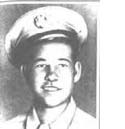
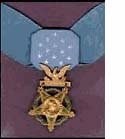
PFC Jose F. Valdez Medal of Honor (Army version) Valdez was a Mexican-American born in the born in Governador, New Mexico. He lived in Utah in the 1940s and upon the outbreak of World War II joined the United States Army at a recruiting station in the Pleasant Grove. After completing his basic training, he was assigned to the Army's 3rd Infantry Division. World War II The 3rd Infantry Division, which was under the command of Major General John W. O'Daniel, was stationed in North Africa. Gen. O'Daniel led the division in battles in North Africa, Sicily, Italy, and France. On January 23, 1945, the 3rd Infantry Division began its second offensive against Siegfried Line positions south of Zweibrucken. The Siegfried Line was a defense system stretching more than 630 km (392 miles) with more than 18,000 bunkers, tunnels and tank traps. It went from Kleve on the border with the Netherlands, along the western border of the old German Empire as far as the town of Weil am Rhein on the border to Switzerland.[1] On January 25, 1945, Valdez was on patrol with 5 of his fellow soldiers in the vicinity of Rosenkrantz, France, when unexpectedly they confronted an enemy counterattack. An enemy tank was headed towards the patrol and Valdez, upon his own inactive, opened fire against the tank with his automatic rifle, action which made the tank withdrawal. After Valdez killed 3 enemy soldiers in a firefight, the Germans ordered a full attack and sent in two companies of infantrymen. Valdez offered to cover the members of his patrol when the platoon leader ordered a withdrawal. He fired upon the approaching enemy and his patrol members were able to reach American lines. Valdez was wounded and was able to drag himself back to American lines, however, he soon died from his wounds. Medal of Honor citation: Jose F. Valdez Rank and organization: Private First Class, U.S. Army, Company B,
7th Infantry, 3rd Infantry Division. Citation: "He was on outpost duty with 5 others when the enemy
counterattacked with overwhelming strength. From his position near
some woods 500 yards beyond the American lines he observed a hostile
tank about 75 yards away, and raked it with automatic rifle fire until
it withdrew. Soon afterward he saw 3 Germans stealthily approaching
through the woods. Scorning cover as the enemy soldiers opened up with
heavy automatic weapons fire from a range of 30 yards, he engaged in a
fire fight with the attackers until he had killed all 3. The enemy
quickly launched an attack with 2 full companies of infantrymen,
blasting the patrol with murderous concentrations of automatic and
rifle fire and beginning an encircling movement which forced the
patrol leader to order a withdrawal. Despite the terrible odds, Pfc.
Valdez immediately volunteered to cover the maneuver, and as the
patrol 1 by 1 plunged through a hail of bullets toward the American
lines, he fired burst after burst into the swarming enemy. Three of
his companions were wounded in their dash for safety and he was struck
by a bullet that entered his stomach and, passing through his body,
emerged from his back. Overcoming agonizing pain, he regained control
of himself and resumed his firing position, delivering a protective
screen of bullets until all others of the patrol were safe. By field
telephone he called for artillery and mortar fire on the Germans and
corrected the range until he had shells falling within 50 yards of his
position. For 15 minutes he refused to be dislodged by more than 200
of the enemy; then, seeing that the barrage had broken the counter
attack, he dragged himself back to his own lines. He died later as a
result of his wounds. Through his valiant, intrepid stand and at the
cost of his own life, Pfc. Valdez made it possible for his comrades to
escape, and was directly responsible for repulsing an attack by vastly
superior enemy forces"
Awards and recognitions Notes Ysmael R. Villegas* By Tony (The Marine) Santiago
Staff Sergeant Ysmael R. Villegas Medal of Honor (Army version) Staff Sergeant Ysmael R. Villegas (March 21, 1924-March 20, 1945) born in Casa Blanca, California, was a United States Army soldier who was posthumously awarded the Medal of Honor - the United States' highest military decoration for his actions during World War II. On March 20, 1945, at age 21-, Staff Sergeant Ysmael R. Villegas was killed in action during the Battle of Luzon in the Philippines. Villegas single-handedly cleared five enemy foxholes that had his squad pinned downed. Early years Villegas was a Mexican-American born and raised in Casa Blanca, California. There he received his primary and secondary education and joined the United States Army upon the outbreak of World War II. After he finished his basic training, he was assigned to Company F, 127th Infantry, 32d Infantry Division which was involved in the invasion of the Philippines. World War II On March 1, 1945, Villegas' company found itself engaged in combat against Japanese forces at Villa Verde Trail on Luzon Island in the Philippines, in what if known as the Battle of Luzon. His squad was attacked by an enemy machinegun nest. Villegas took it upon himself to save his squad by destroying the nest and its occupants. For his actions he was awarded the Silver Star medal.[1] On March 20, 1945, Villegas was ordered to lead his squad in an advance which would result in the taking of a hill. They confronted an enemy which was entrenched and who attacked them with heavy machinegun and rifle fire. He led his men towards the crest of the hill and then upon his own initiative attacked five enemy foxholes, killing all of its occupants. Villegas was mortally wounded when he attacked the sixth foxhole. On October 19, 1945, President Harry S. Truman, posthumously awarded the Medal of Honor to Villegas, presenting the medal to his surviving family. Medal of Honor citation: Ysmael R. Villegas Rank and organization:Staff Sergeant, U.S. Army, Company F, 127th Infantry, 32d Infantry Division. Place and date: Villa Verde Trail, Luzon, Philippine Islands, 20
March 1945. Citation: "He was a squad leader when his unit, in a forward position, clashed with an enemy strongly entrenched in connected caves and foxholes on commanding ground. He moved boldly from man to man, in the face of bursting grenades and demolition charges, through heavy machinegun and rifle fire, to bolster the spirit of his comrades. Inspired by his gallantry, his men pressed forward to the crest of the hill. Numerous enemy riflemen, refusing to flee, continued firing from their foxholes. S/Sgt. Villegas, with complete disregard for his own safety and the bullets which kicked up the dirt at his feet, charged an enemy position, and, firing at point-blank range killed the Japanese in a foxhole. He rushed a second foxhole while bullets missed him by inches, and killed 1 more of the enemy. In rapid succession he charged a third, a fourth, a fifth foxhole, each time destroying the enemy within. The fire against him increased in intensity, but he pressed onward to attack a sixth position. As he neared his goal, he was hit and killed by enemy fire. Through his heroism and indomitable fighting spirit, S/Sgt. Villegas, at the cost of his life, inspired his men to a determined attack in which they swept the enemy from the field." Honors Villegas was buried with full military honors at the Riverside National Cemetery located in Riverside, California. The Veterans of Foreign Wars named one of its #184 post in Riverside the Ysmael R. Villegas Memorial Casa Blanca Post. A statue by sculpture Gary Coutrer, called Villegas Memorial was dedicated on May 27, 1995 and is located on Main St. Civic Center Courtyard in Riverside. The local government of Riverside named a middle school in his honor.[3] Awards and recognitions: Notes
Korean War By Tony (The Marine) Santiago
PFC Fernando Luis Garcia Medal of Honor (Navy & Marine version) Private First Class Fernando Luis Garcia (October 14, 1929 - September 5, 1952), born in Utuado, Puerto Rico, was a member of the United States Marines and the first Puerto Rican who was awarded the Medal of Honor.Contents [hide]Biography: Garcia attended grade and high school in his hometown of Utuado. He moved to San Juan where he started to work for the Texas Company as a file clerk. On September 19, 1951, Garcia was inducted into the Marines; he received his "boot" training at Paris Island, South Carolina and after he graduated from his basic training he was sent to Camp Lejuene in North Carolina where he underwent advanced training before being sent to Korea. Garcia was a Private First Class when he arrived in Korea. He was assigned to Company I, 3rd Battalion, 5th Marines, of the 1st Marine division. On the night of his death, he was posted about one mile from the enemy lines. The Korean enemies were attacking with grenades, bombs and other types of artillery. Garcia was critically wounded, but he led his team to a supply point to get hand-grenades. An enemy grenade landed nearby, and Garcia covered with his body, sacrificing himself to save the lives of his fellow Marines. Garcia died instantly. For this heroic action, he was posthumously awarded the Medal of Honor; on October 25, 1953, PFC Garcia's parents were presented his Medal of Honor at a ceremony held in the Utuado City Hall. Medal of Honor citation: PRIVATE FIRST CLASS FERNANDO L. GARCIAUNITED STATES MARINE CORPS Citation: "For conspicuous gallantry and intrepidity at the risk of his life above and beyond the call of duty while serving as a member of Company I, Third Battalion, Fifth Marines, First Marine Division (Reinforced), in action against enemy aggressor forces in Korea on September 5, 1952. While participating in the defense of a combat outpost located more than one mile forward of the main line of resistance during a savage night attack by a fanatical enemy force employing grenades, mortars and artillery, Private First Class Garcia, although suffering painful wounds, moved through the intense hall of hostile fire to a supply point to secure more hand grenades. Quick to act when a hostile grenade landed nearby, endangering the life of another Marine, as well as his own, he unhesitatingly chose to sacrifice himself and immediately threw his body upon the deadly missile, receiving the full impact of the explosion. His great personal valor and cool decision in the face of almost certain death sustain and enhance the finest traditions of the United States Naval Service. He gallantly gave his life for his country." Awards and decorations: In memory: On February 5, 1959 the United States Marines Corps named a
military camp in Vieques, Puerto Rico, "Camp Garcia" in his
honor. His name is inscribed in "El Monumento de la Recordacion"
(Monument of Remembrance), dedicated to Puerto Rico's fallen soldiers
and situated in front of the Capitol Building in San Juan, Puerto
Rico. His name is also inscribed in the "Wall of the
Missing" located in the National Memorial of the Pacific in
Honolulu, Hawaii, which honors the Medal of Honor recipients whose
bodies have never been recovered.[2] A monument commemorating his
actions stands in his hometown of Utuado, Puerto Rico.
Edward Gomez* By: ERcheck
PFC Edward Gomez Medal of Honor (Army version) Private First Class Edward Gomez (1932-1951) was a United States Marine who was posthumously awarded the Medal of Honor - the United States' highest decoration for valor - for gallantly sacrificing his life to save the lives of four fellow-Marines on his machine gun team. PFC Gomez was the 18th Marine to receive the Medal of Honor for heroism during the Korean conflict.Born on August 10, 1932, in Omaha, Nebraska, he attended Omaha High School before enlisting in the Marine Corps Reserve on August 11, 1949, at the age of 17. After recruit training at MCRD San Diego, California, he trained at Camp Pendleton, California, and went to Korea with the 7th Replacement Draft. The United States' highest decoration for valor was awarded to
Gomez for extraordinary heroism on September 14, 1951, at Kajon-ni,
when he smothered a hand grenade with his own body to prevent
destruction of his Marine machine gun team. In addition to the Medal
of Honor, PFC Gomez was awarded the Purple heart with a Gold Star in
lieu of a second award, the Korean Service Medal with bronze star, and
the United Nations Service Medal. PRIVATE FIRST CLASS EDWARD GOMEZ UNITED STATES MARINE CORPS CITATION: "For conspicuous gallantry and intrepidity at the risk of his life above and beyond the call of duty while serving as an Ammunition Bearer in Company E, Second Battalion, First Marines, First Marine Division (Reinforced), in action against enemy aggressor forces in Korea on 14 September 1951. Boldly advancing with his squad in support of a group of riflemen assaulting a series of strongly fortified and bitterly defended hostile positions on Hill 749, Private First Class Gomez consistently exposed himself to the withering barrage to keep his machine gun supplied with ammunition during the drive forward to seize the objective. As his squad deployed to meet an imminent counterattack, he voluntarily moved down an abandoned trench to search for a new location for the gun and, when a hostile grenade landed between himself and his weapon, shouted a warning to those around him as he grasped the activated charge in his hand. Determined to save his comrades, he unhesitatingly chose to sacrifice himself and, diving into the ditch with the deadly missile, absorbed the shattering violence of the explosion in his own body. By his stouthearted courage, incomparable valor and decisive spirit of self-sacrifice, Private First Class Gomez inspired the others to heroic efforts in subsequently repelling the outnumbering foe, and his valiant conduct throughout sustained and enhanced the finest traditions of the United States Naval Service. He gallantly gave his life for his country." References: This article incorporates text in the public domain from the United
States Marine Corps. _____________________________________________________________________ Do not miss next months issue of "Somos Primos", where I will write about Ambrosio Guillen*, Rodolfo P. Hernandez, Baldomero Lopez* and Benito Martinez*
|
|
By Tony (The Marine) Santiago The participation of Puerto Ricans in World War II as members of the Armed Forces of the United States included guarding American military installations in the Caribbean and active combat participation in both the European and Pacific theatres of the war. Puerto Ricans and people of Puerto Rican descent participated have participated as members of the U.S. Armed Forces in every conflict in which the United States has been involved in since World War I. Puerto Ricans who had obtained U.S. citizenship as a result of the signing of the Jones-Shafroth Act on March 2, 1917 were expected to serve in the military if they met the required qualifications. When a Japanese carrier fleet launched an unexpected air attack on Pearl Harbor on December 7, 1941, Puerto Ricans were required to bear arms in defense of the United States. During World War II, over 53,000 Puerto Ricans served within the U.S. military.[1] Soldiers from the island, serving in the 65th Infantry Regiment, participated in combat in the European Theater - in Germany and Central Europe. Those who resided in the mainland of the United States were assigned to regular units of the military and served either in the European or Pacific theaters of the war. In some cases they were subject to the racial discrimination which at that time was widespread in the United States.[1] For the first time, Puerto Rican women were permitted to become members of the military. Their options were restricted to either as nurses or in administrative positsions. It would also be the first time that some of the island's men would play an active role as commanders.The military did not keep statistics in regard to the total number of Hispanics who served in the regular units of the Armed Forces and therefore, it is impossible to determine the exact amount of Puerto Ricans who served in World War II. Leadup to World War II
Soldiers of the 65th Infantry training in Salinas, Puerto Rico. August 1941
During that period of time, Puerto Rico's economy was suffering from the consequences of the Great Depression and unemployment was widespread. Unemployment was one the reasons that some Puerto Ricans choose to join the Armed Forces. Most of these men were trained in Camp Las Casas in Santurce, Puerto Rico and were assigned to the 65th Infantry Regiment, a segregated unit made up mostly of Puerto Ricans. The rumors of war spread and the involvement of the United States was believed to be a question of time. The 65th Infantry was ordered to intensify its maneuvers, many of which were carried out at Punta Salinas near the town of Salinas in Puerto Rico.[3]Those who were assigned to the 295th and 296th regiments of the Puerto Rican National Guard received their training at Camp Tortuguero near the town of Vega Baja. World War II After the Japanese attack on Pearl Harbor, the United States declared war and Puerto Ricans living on the island and on the U.S. mainland began to fill the ranks of the four major branches of the Armed Forces. Some volunteered for patriotic reasons, some joined in need of employment, and others were drafted. In 1943, there were approximately 17,000 Puerto Ricans under arms, including the 65th Infantry Regiment and the Puerto Rico National Guard. The Puerto Rican units were stationed either in Puerto Rico or in the Virgin Islands. France's possessions in the Caribbean began to protest against the Vichy government in France, a government backed up by the Germans who invaded France. The island of Martinique was on the verge of civil war. The United States organized a joint Army-Marine Corps task force, which included the 295th Infantry (minus one battalion) and the 78th Engineer Battalion, both from Puerto Rico for the occupation of Martinique. The use of these infantry units were put on hold because Martinique's local government decided to turn over control of the colonies to the French Committee of National Liberation.[4] In 1943, the 65th Infantry was sent to Panama to protect the Pacific and the Atlantic sides of the isthmus. The 295th Infantry Regiment followed in 1944, departing from San Juan, Puerto Rico to the Panama Canal Zone. Among those who served with the 295th Regiment in the Panama Canal Zone was a young Second Lieutenant by the name of Carlos Betances Ramirez, who one day become the only Puerto Rican to command a Battalion in the Korean War.[5]That same year, the 65th Infantry was sent to North Africa, arriving at Casablanca, where they underwent further training. By April 29, 1944, the Regiment had landed in Italy and moved on to Corsica.[6] On September 22, 1944, the 65th Infantry landed in France and was committed to action on the Maritime Alps at Peira Cava. The 3rd Battalion, under the command of Lieutenant Colonel Juan Cesar Cordero Davila, fought against and defeated Germany's 34th Infantry Division's 107th Infantry Regiment.[7] There were 47 battle casualties, including Sergeant Angel Martinez from the town of Sabana Grande who became the first Puerto Rican to be killed in action from the 65th Infantry. On March 18, 1945, the regiment was sent to the District of Mannheim and assigned to military occupation duties. The regiment suffered a total of 23 soldiers killed in action.[8] [9] On January 12, 1944, the 296th Infantry Regiment departed from Puerto Rico to the Panama Canal Zone. On April 1945, the unit returned to Puerto Rico and soon after was sent to Honolulu, Hawaii. The 296th arrived on June 25, 1944 and was attached to the Central Pacific Base Command at Kahuku Air Base.[10] Puerto Ricans who were fluent in English or who resided in the mainland were assigned to regular Army units. Such was the case of Sgt. First Class Louis Ramirez who was assigned to the 102nd Cavalry Reconnaissance Squadron, Mechanized, which landed at Normandy on D Day (Battle of Normandy), June 6 and advanced into France during the Battle of Saint Malo, where they were met by enemy tanks, bombs and soldiers. PFC Fernando Pagan was also a Puerto Rican who resided in the mainland and who was assigned to unit Company A, 293 Combat Engineering Battalion which arrived in Normandy on June 10, four days after D-Day. Others, like Frank Bonilla, were assigned to the 290th Infantry Regiment, 75th Infantry Division, which later fought at the Battle of the Bulge. Bonilla was the recipient of the Silver Star and Purple Heart medals for his actions in combat. One Puerto Rican who earned a Bronze Star Medal in the Battle of the Bulge was PFC Joseph A. Unanue, whose father was the founder of Goya Foods. Unanue had trained for armored infantry and went to the European Theater as a gunner in A company, 63rd Armored Infantry Battalion, 11th Armored Division. His company landed in France in December of 1944, just before the Battle of the Bulge. [11][12]
PFC. Santos Deliz was assigned to Battery D, 216 AAA, a gun battalion, and sent to Africa in 1943 to join General George S. Patton's Third Army. According to Deliz, Patton demanded the best from all under him, including cooks and kitchen hands Deliz once recounted an experience which he had with General Patton: "[Patton] went in to inspect [and] he scolded me because I had rations over the amount I should've had. The rations were food the GIs didn't want, so instead of dumping it, I sometimes gave it to the people who were around there." Deliz was the recipient of a Bronze Star Medal.[14] Some Puerto Ricans served in the Army Air Corps. Among those who served in the Army Air Corps were Captain Mihiel "Mike" Gilormini and T/Sgt Clement Resto. Captain Mihiel "Mike" Gilormini served in the Royal Air Force and in Army Air Corps during World War II. He was a flight commander whose last combat mission was attacking the airfield at Milano, Italy. His last flight in Italy gave air cover for General George C. Marshall's visit to Pisa. He was the recipient of the Silver Star Medal, the Air Medal with four clusters and the Distinguished Flying Cross 5 times. Gilormini later became the Founder of the Puerto Rico Air National Guard and retired as Brigadier General. T/Sgt Clement Resto served with the 303rd Bomb Group and participated in numerous bombing raids over Germany. During a bombing mission over Duren, Germany, Resto's plane, a B-17, was shot down . He was captured by the Gestapo and sent to Stalag XVII-B where spent the rest of the war as a prisoner of war. Resto, who lost an eye during his last mission, was awarded a Purple Heart, a POW Medal and an Air Medal with one battle star after he was liberated from captivity.[15][16] Puerto Rican women Puerto Rican nurses in Camp Tortuguero
Not all the women served as nurses, some women served in administrative duties in the mainland or near combat zones. Such was the case of Tech4 Carmen Contreras-Bozak who belonged to the 149th Women's Army Auxiliary Corps. The 149th Women's Army Auxiliary Corps (WAAC) Post Headquarters Company was the first WAAC Company to go overseas, setting sail from New York Harbor for Europe on January 1943. The unit arrived in Northern Africa on January 27, 1943 and rendered overseas duties in Algiers within General Dwight D. Eisenhower’s theater headquarters. Tech4 Carmen Contreras-Bozak, a member of this unit, was the first Hispanic to serve in the U.S. Women's Army Corps as an interpreter and in numerous administrative positions. .[20] [21] Another was Lieutenant Maria Rodriguez Denton, who was the first known woman of Puerto Rican descent who became an officer in the United States Navy as member of the WAVES. The Navy assigned LTJG Denton as a library assistant at the Cable and Censorship Office in New York City. It was Lt. Denton who forwarded the news (through channels) to President Harry S. Truman that the war had ended. Puerto Rican commanders
Major General del Valle (second from left) is greeted by Colonel "Chesty" Puller while Major General Rupertus looks on. In addition to Lieutenant Colonel Juan Cesar Cordero Davila, eight Puerto Ricans who graduated from the United States Naval Academy served in command positions in the Navy and the Marine Corps.[22] They were Rear Admiral Frederick Lois Riefkohl USN, the first Puerto Rican to graduate from the Naval Academy and recipient of the Navy Cross; Rear Admiral Jose M. Cabanillas, USN, who was the Executive Officer of the USS Texas which participated in the invasions of North Africa and Normandy (D-Day); Rear Admiral Edmund Ernest Garcia, USN, commander of the destroyer USS Sloat who saw action in the invasions of Africa, Sicily, and France; Admiral Horacio Rivero, Jr., USN, who was the first Hispanic to become a four-star Admiral; Captain Marion Frederic Ramirez de Arellano, USN, submarine commander of the USS Balao (SS-285) credited with sinking two Japanese ships; Rear Admiral Rafael Celestino Benitez, USN, a highly decorated submarine commander who was the recipient of two Silver Star Medals; Colonel Jaime Sabater, USMC, Class of 1927 and Lieutenant General Pedro Augusto del Valle USMC, the first Hispanic to reach the rank of General in the Marine Corps.Rear Admiral Frederick Lois Riefkohl , who was the Captain of the USS Vincennes, was assigned to the Fire Support Group, LOVE (with Transport Group XRAY) under the command of Rear Admiral Richmond K. Turner's Task Force TARE (Amphibious Force) during the landing in the Solomon Islands on August 7, 1942..[23] Prior to World War II, Rear Admiral Jose M. Cabanillas served aboard various cruisers, destroyers and submarines. In 1942, upon the outbreak of World War II, he was assigned Executive Officer of the USS Texas (BB-35). The Texas Participated in the invasion of North Africa. by destroying ammunition dump near Port Lyautey. Cabanillas also participated in the invasion of Normandy on D-day. Rear Admiral Edmund Ernest Garcia was the commander of the Destroyer USS Sloat and saw action in the invasions of North Africa, Sicily and France. Admiral Horacio Rivero, Jr., served aboard the USS San Juan (CL-54) and was involved in providing artillery cover for Marines landing on Guadalcanal, Marshall Islands, Iwo Jima, and Okinawa. For his service he was awarded the Bronze Star Medal with Combat "V."[24] Captain Marion Frederic Ramirez de Arellano was a submarine commander in the Navy who was awarded two Silver Star Medals, the Legion of Merit, and a Bronze Star Medal for his actions against the Japanese Imperial Navy. Not only is he credited with the sinking of at least two Japanese ships, but he also led the rescue of the lives of numerous downed Navy pilots.[25] Rear Admiral Rafael Celestino Benitez, who was at the time a Lieutenant Commander, saw action aboard submarines and on various occasions weathered depth charge attacks. For his actions, he was awarded the Silver and Bronze Star Medals. Benitez would later play an important role in the first American undersea spy mission of the cold war as commander of the submarine USS Cochino in what became known as the "Cochino Incident".[26]
Colonel Jaime Sabater, during WWII, commanded the 1st Battalion, 9th Marines during the Bouganville amphibious operations. Lieutenant General Pedro Augusto del Valle , a highly decorated Marine, played a key role in the Guadalcanal Campaign and the Battle of Guam, became the Commanding General of the First Marine Division. Del Valle played an instrumental role in the defeat of the Japanese forces in Okinawa and was in charge of the reorganization of Okinawa[27][26][28].Discrimination During World War II, the United States Army was segregated. Puerto Ricans who resided in the mainland and who were fluent in English served alongside their "White" counterparts. "Black" Puerto Ricans were assigned to units made up mostly of African-Americans. The vast majority of the Puerto Ricans from the island served in Puerto Rico's segregated units, like the 65th Infantry and the Puerto Rico National Guard's 285th and 296th regiments. Racial discrimination practiced against Hispanic Americans, including Puerto Ricans in the United States East coast and Mexican-Americans in California and the Southwest was widespread. Some Puerto Ricans who served in regular Army units were witnesses to the racial discrimination of the day.[17] In an interview, PFC Raul Rios Rodriguez said that during his basic training at Fort Bragg in North Carolina, he had encountered a strict drill instructor who was particularly harsh on the Hispanic and black soldiers in his unit. He stated that he remains resentful of the discriminatory treatment that Latino and black soldiers received during basic training. "We were all soldiers; we were all risking our lives for the United States. That should have never been done, Never." Rios Rodriguez was shipped to Le Havre, France, assigned to guard bridges and supply depots in France and Germany with the 18th Infantry Regiment, 1st Infantry Division.[18] Another soldier, PFC Felix López-Santos was drafted into the Army and sent to Fort Dix in New Jersey for training. López -Santos went to Milne Bay and then to the small island of Woodlark, both in New Guinea, where he was in the communications department using telephone wires to communicate to the troop during the war. In an interview, López-Santos stated that in North Carolina he witnessed some forms of racial discrimination, but never experienced it for himself. He stated "I remember seeing some colored people refused service at a restaurant," López -Santos said. "I believe that I was not discriminated against because of my blue eyes and fair complexion."[19] Post World War II The American participation in the Second World War came to an end in Europe on May 8, 1945 when the western Allies celebrated "V-E Day" (Victory in Europe Day) upon Germany's surrender, and in the Asian theater on August 14, 1945 "V-J Day" (Victory over Japan Day) when the Japanese surrendered by signing the Japanese Instrument of Surrender. On October 27, 1945, the 65th Infantry who had participated in the battles of Naples-Fogis, Rome-Arno, central Europe and of the Rhineland sailed home from France. Arriving at Puerto Rico on November 9, 1945, they were received by the local population as National heroes and given a victorious reception at the Military Terminal of Camp Buchanan. The 295th Regiment returned on February 20, 1946 from the Panama Canal Zone and the 296th Regiment on March 6. Both regiments were awarded the American Theatre streamer (The 295th was also awarded the Pacific Theatre streamer) and were inactivated that same year.[29] Many of the men and women who were discharged after the war returned to their civilian jobs or made use of the educational benefits of the G.I. Bill. Others, such as Major General Juan Cesar Cordero Davila, Colonel Carlos Betances Ramirez, Sergeant First Class Agustin Ramos Calero and Master Sergeant Pedro Rodriguez continued in the military as career soldiers and went on to serve in the Korean War. Some of the Puerto Ricans from the mainland who had not completed their full active duty in the military service were reassigned to the 65th Infantry in Puerto Rico. According to remarks made by Frank Bonilla in an interview, he discovered that there was a divide among the soldiers. The Puerto Ricans who had emigrated to the mainland were seen as "American Joes." while Puerto Ricans from the island considered themselves "pure" Puerto Ricans. Bonilla is quoted as saying: "The Puerto Rican soldiers paid little, if any, attention to the playing of the 'Star Spangled Banner," Bonilla at first thought the soldiers were being disrespectful to the United States, especially since they stood at attention whenever "La Borinqueña," the Puerto Rican anthem, was played. "The soldiers in the regiment, although proud to be U.S. citizens, felt that they were a Puerto Rican army, not a US army," Mr. Bonilla said. "These men had a select unit pride because they had had more time overseas and in combat areas than the American units."[30] Bonilla eventually earned a Ph.D. from Harvard and held faculty appointments at Massachusetts Institute of Technology, Standford University and the City University of New York. He became a major leader in Puerto Rican studies.
El Monumento de la Recordación According to the 4th Report of the Director of Selective Service of 1948 a total of 51,438 Puerto Ricans served in the Armed Forces during World War II. These numbers only reflect those who served in Puerto Rican units. Unfortunately, the exact total amount of Puerto Ricans who served in World War II in other units, besides those of Puerto Rico, cannot be determined because the military categorized Hispanics under the same heading as whites. The only racial groups to have separate stats kept were Blacks and Asians.[31] [32] The names of the 37 men who are known to have perished in the conflict are engraved in "El Monumento de la Recordacion" (Memorial Monument) monument which honors the memory of those who fallen in the defense of the United States and which is located in San Juan, Puerto Rico.[33] ."References: Citations 1. a b Introduction: World War II (1941 -1945). Hispanics in the Defense of America. Retrieved on March 19, 2007. 2. Hector Marin. Puerto Rican Units (WWII). Hispanics in Americas Defense. Retrieved on March 18, 2007. 3. Bruce C. Ruiz (November 1, 2002). Major General Luis Raúl Esteves Völckers. Retrieved on March 18, 2007. 4. Stetson Conn, Rose C. Engelman, and Byron Fairchild (1961). The Caribbean in Wartime. U.S. Army in World War II: Guarding the United States and Its Outposts. Center of Military History, United States Army. Retrieved on March 18, 2007. 5. Carlos Betances Ramirez 6. Military History. American Veteran's Committee for Puerto Rico Self-Determination. Retrieved on March 18, 2007. 7. LTC Gilberto Villahermosa (September 2000). World War II. "Honor and Fidelity" - The 65th Infantry Regiment in Korea 1950 - 1954 (Official Army Report on the 65th Infantry Regiment). U.S. Army Center of Military History. Retrieved on March 18, 2007. 8. W.W. Harris (2001). Puerto Rico's Fighting 65th U.S. Infantry:From San Juan to Chowon. Presidio Press. ISBN 0-89141-056-2. 9. Juan Cesar Cordero-Davila. ZoomInfo (2000). Retrieved on March 18, 2007. 10. Shelby, Stanton (1984). World War II Order of Battle. New York: Galahad Books. 11. Juan De La Cruz. Combat engineer Fernando Pagan went from Normandy to Belgium and Germany, where a sniper nearly killed him. US Latinos and Latinas & World War II. Retrieved on March 18, 2007. 12. Jennifer Nalewicki. Louis Ramirez recalls brutality of war; but what still shines through is the camaraderie. U.S. Latinos and Latinas & World War II. Retrieved on March 18, 2007. 13. Who was Agustín Ramos Calero? (PDF). The Puerto Rican Soldier (August 17, 2005). Retrieved on November 19, 2006. 14. Chris Nay. Santos Deliz. US Latinos and Latinas & World War II. Retrieved on March 18, 2007. 15. Memories of a Jug Driver. World War II Pilots. Retrieved on March 18, 2007. 16. T/SGT. Clement Resto. Puerto Rico's 65th Infantry Regiment, U.S. Army. Retrieved on March 18, 2007. 17. Discrimination. History.com. Retrieved on March 18, 2007. 18. D’Arcy Kerschen. Despite war’s end and brother’s horror stories, man was intent on joining military. US Latinos and Latinas & World War II. Retrieved on March 18, 2007. 19. Juan de la Cruz. Man survived jungle fever, suicide attacks and kangaroos during service in Pacific. US Latinos and Latinas & World War II. Retrieved on March 18, 2007. 20. Judith Bellafaire. Puerto Rican Servicewomen in Defense of the Nation. Women In Military Service For America Memorial Foundation. Retrieved on October 10, 2006. 21. Katie Kennon. Young woman's life defined by service in Women's Army Corps. US Latinos and Latinas & World War II. Retrieved on October 10, 2006. 22. USNA graduates of Hispanic descent for the Class of 1911, 1915, 1924, 1927, 1931, 1935, 1939, 1943, 1947. Association of Naval Service Officers. Retrieved on March 18, 2007. 23. David H. Lippman. World War II Plus 55. Retrieved on March 18, 2007. 24. *Robert F. Dorr (January 26, 2004). Damn the Torpedoes! Former VCNO excelled in combat, technical roles. Navy Times. Archived from the original on January 21, 2004. Retrieved on October 21, 2006. 25. CAPT Marion Frederic Ramirez de Arellano. USNA graduates of Hispanic descent for the Class of 1911, 1915, 1924, 1927, 1931, 1935, 1939, 1943, 1947. Association of Naval Services Officers (February 27, 2007). Retrieved on March 15, 2007. 26. a b *Sontag, Sherry; and Christopher Drew, with Annette Lawrence Drew (1998). Blind Man's Bluff: The Untold Story of American Submarine Espionage. Public Affairs. ISBN:006097771X. 27. Puerto Rico Archives 28. Lieutenant General Pedro A. Del Valle, USMC. History Division. United States Marine Corps. Retrieved on October 10, 2006. 29. The Puerto Rican Soldier. El Pozo Productions (2001). Retrieved on March 18, 2007. 30. Anne Quach. Frank Bonilla became major figure in Puerto Rican studies. US Latinos and Latinas & World War II. Retrieved on March 18, 2007. 31. Minority Groups in World War II. U.S. Army Center of Military History. Retrieved on March 18, 2007. 32. World War II By The Numbers. The National World War II Museum (2006). Retrieved on March 18, 2007. 33. Monumento de la Recordacion. Searching For Our Roots (February 10, 2006). Retrieved on March 18, 2007. Sources US Latinos and Latinas & World War II. University of Texas at Austin (1990-2007). Retrieved on March 18, 2007. Further reading (1997) 65th Infantry Division. Turner Publishing. ISBN 1563111187. del Valle, Pedro (1976). Semper fidelis: An autobiography. Christian Book Club of America. ASIN B0006COTKO. Esteves, General Luis Raúl (1955). ¡Los Soldados Son Así!. San Juan, Puerto Rico: Star Publishing Co.. Retrieved on March 20, 2007. Gordy, Bill (1945). Right to be proud: History of the 65th infantry division's march across Germany. J. Wimmer. ASIN B0007J8K74. Lederer, Commander William J., USN (1950). The Last Cruise: The Story of the Sinking of the Submarine, U.S.S. Cochino. Sloane. ASIN B0007E631Y. Special Thanks to: My friends Ercheck and Ben Cartwright
who helped in the copyediting and to my friend Miguel Hernandez who
provided me with much needed information
|
| My
Dad, Catalino Lozano by Mimi Lozano Understanding Our Heritage By Anita Rivas Medellin Carmen Salazar by Elisa Oniel |
My Dad, Catalino Lozano by Mimi Lozano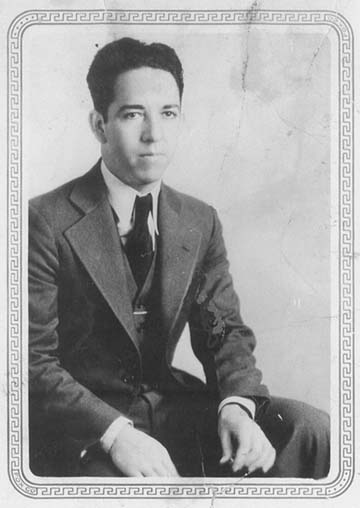 June
is always the month for thinking of our fathers. If it had not been
for doing my family history, I would not have been able to sit down
and write about my Dad. I would not have understood him, nor why he
drank himself to death at the age of 45. Nor, would I have this photo
to share. The photo, plus other family photos were was
given to me by a first cousin, Orlando Lozano, that I did not meet
until just recently through genealogical research. June
is always the month for thinking of our fathers. If it had not been
for doing my family history, I would not have been able to sit down
and write about my Dad. I would not have understood him, nor why he
drank himself to death at the age of 45. Nor, would I have this photo
to share. The photo, plus other family photos were was
given to me by a first cousin, Orlando Lozano, that I did not meet
until just recently through genealogical research.
Mom and Dad were divorced when I was 15. He
died when I was 18. Not very many years to understand him, to learn to
appreciate him. I have tried to put some pieces together, to
form the whole man. Maybe some day I will be able to discover some
more parts to what made him. He was a tailor by trade, but certainly was not restricted by his trade. Mom said that when she met Dad, he already had two businesses, and he was just a young 23 year old. He had a string of taxis and a dry-cleaning and tailoring shop in San Antonio, Texas. In both cases, he employed men older than himself. Mom and Dad bought a shell of a home on
Evergreen Street in East LA. across from Grandma and Grandpa. The home
was in grave need of repair, and Dad did it all. He even put in
a master bathroom and bath, second floor, and a laundry room. I
asked Mom how he learned to do that. She said that he would
visit building sites that were at the same state of construction as he
was in. He would watch and come home to implement what he just
learned. Dad was a self-made man. One of the younger
children in a large family. Dad's father died when he was quite young.
Dad quit school in the 3rd grade. He sold papers, shined shoes,
and found ways to earn money. He learned to read and picked up math
along the way. Self-reliance and self-confidence was gained along the
way. These experiences helped him throughout his life. In searching the reasons why such a bright, talented, exceptional man would drink himself to death, I have tried to put myself into the times, the social climate and racism that Dad was living in, first in San Antonio and then in Los Angeles. He had a very independent mind, in many ways. Politically he was a Republican in East L.A. in 1940. I can remember walking home from school in and the embarrassment to realize that it was Dad's voice coming out of the top of a big van, urging people to vote for Tomas E. Dewey. I was 7 at the time. Mom used to talk also about the Communist threat, that they were not our friends. She said he seemed to understand beyond what the newspapers said. Among the books that Dad left were clues to his varied and really multi-dimensional intelligence. It would seem that because of his limited education, those books should not have been on his bookshelf.. He was reading college text books on psychology and philosophy and writing quite astute comments in the margins. I was really amazed. For year, I have thought about those comments written in his very sharp, angular handwriting. My conclusion is that in addition to the heartbreak of a divorce, the rage and violence that many times accompanies drinking, Dad was totally and completely intellectually frustrated. He was so bright, so capable, but he was a Mexican-American. Little was expected of him, and he surely did not have any doors open. . . . a wasted life. The social structure that did not nurture my
Dad's abilities is somewhat improved, but we are far from offering our
young people the stars to reach for. I see many young people in
the streets. and I wonder what is hidden in their genes,
what talents and abilities will go unused, undeveloped.
|
| Understanding
Our Heritage
By Anita Rivas Medellin I began my genealogy research four years ago, but in ignorance, I failed to understand the beauty of my heritage. This innate sense of pride had nothing to do with my genealogy – but with the beauty of the Hispano American culture. I learned historic facts about the Hispano American culture that are not taught in public schools. Spain is The Iberian Peninsula – La Madre Patria of the Hispano American culture. She was continuously conquered and invaded by diverse groups of people – Celts, Greeks, Romans, Arabs and the Visigoth, with each culture leaving a lasting impression on the world we know today. Muslim Spain allowed religious freedom, and gave us algebra and the concept of zero. Roman law became the center of our Spanish attitudes – this being the reason there is a lawyer in every branch of my seventh great grandfather’s tree, and why my mother’s family held religion loosely – the only requirement was a belief in God. The Jews settled in Iberia during the Roman invasion – The creation and beauty of the Spanish language is owed to them- our Jewish ancestors. They are responsible for the circulation and modification of the Spanish language. The first Spanish grammar book was published in 1492 – Spanish is Latin based with ninety percent of all Spanish words being of Arabic origin. I heard as a child that Latin was the language of Kings. Spanish is the most beautiful language in the world - it is intense, passionate, and sensual. It is music to my senses, everything sounds better in Spanish – including unfortunate news. "I grew up speaking Portuguese and later I learned Spanish. I sang a duet in Spanish with Colombian superstar Juanes last year, since then I’ve had a love affair with Latin music. When I sing in Spanish, I feel it comes more from my heart. I sound more sensual, soulful, dramatic, and passionate. Pop music needs more theater". Nelly Furtado Spain became more sophisticated with the invasion of the Romans and Arabs – but crippled itself with the Spanish Inquisition. The majority of the Jews that became conversos/expulsed settled in New Spain. My family arrived from Antequera, Andalusia in 1674 – they settled in Northern Mexico – what was Nueva Galicia. My seventh great-grandfather, Don Jose Vasquez Borrego was a hacendado who amassed a Latifundio that consisted of nine haciendas/ ranchos that spanned Northern Mexico and what we know today as South Texas. Mexico was originally named NEW SPAIN, because it resembled La Madre Patria – in terms of climate and vegetation. The term naturale was used when describing the types of people discovered in the New World. The natruales found in Mexico were more advanced then other types of people found in the Caribbean. The first Mexicans were the Aztecs – they came from Aztlan. They were a nomadic tribe that settled in the Valley of Mexico, after much strife with their neighbors. Today historians are of opinion that Aztlan is the current state of Nayarit. The Conquistadores compared Tenochtitlan to the city of Venice – the Aztec male offspring were taught the art of war as the Spartans in schools that resembled Queen Victoria’s England. Nahuatl was the language of empires and the Mexica hierarchy married into the noble lines of their neighbors. In terms of religion, the Mexica held similar beliefs; they also baptized their children by sprinkling water on the foreheads of newborn infants. We are descendents of people who held honor – family name and tradition in high regard. There are many similarities with the Mexica/ Spanish culture and my upbringing. My mother raised my sisters and me to uphold family name and honor above all things, to never bring disgrace to them – my parents. We grew up with crosses hanging over our beds, with the Last Supper hanging above the dining room table. My mother taught us that faith in God was absolute and that honesty and hard work were necessary to the financial advancement of our family, but most importantly to never forget our familial ties with Mexico. Foundation for His Ministry www.ffhm.org Through elementary and middle school, there was a stigma that Spaniards were superior to Mexicans. My childhood friends described themselves as being of Spanish origin, although their parents came from Mexico. I remember asking my father if that meant my sisters and I were Spanish too and he replied, "No - those people are ashamed of being Mexican – and that’s why their parents don’t teach them Spanish." In retrospect, the denial of Mexican nationality was born from fear - of racial discrimination – the failure to teach new generations of Mexican - Americans Spanish was out of ignorance. The irony was these were the same kids that tormented me through out my adolescence by claiming I was not Mexican enough. The term Chicano was born in the 1930’s – 1940’s, when the U.S imported impoverished rural Mexicans for cheap agricultural labor – the word described the poor immigrant worker. My grandfather, Pedro Rivas Becinais was one of those fortunate few that received U.S citizenship – in return for racial discrimination. My father – H. Rivas Trevino realizing he would never be able to afford a family on wages earned in Mexico followed my grandfather and uncle (Pedro Rivas Trevino Jr.) into the United States – settling in California. The requirements for U.S citizenship changed from a photo ID and two dollars in my grandfather’s day to additional documentation. The additional requirements for U.S citizenship were a back round check, medical record, letter of recommendation and a minimum of two years service in the U.S military – on top of the photo ID and sixty dollars, a far cry from today’s current issue. In the 1960’s – 1970’s, The Mexican - American civil rights movement adopted the term Chicano as their slogan, it represented social justice and equality for all Mexican – Americans. The term Chicano served dual purpose – it was also a way to reclaim and educate the Latin public on its rich and cultural history. The Mexican- American civil rights movement was supposed to be positive, until my generation used the term Chicano as their slogan for juvenile delinquency. Growing up I was not aware of the struggle and discrimination my grandparents endured, of the countless humiliations my parents encountered – My parents never shared with my sisters and I the racial discrimination they endured in everyday life – their objective was not to poison our minds with negativity but to teach us the positive in being Mexican- American. My father is a very intelligent man- a man with wisdom and humanity. I recently mentioned to my father that I was thankful for being Mexican -American. His reply – "You know, the Mexicans that live in Coahuila are Mexican –American, we all live on the North American Continent." I smiled, "Yes daddy, I get it, I get it." We have much to be proud of, we have a rich and cultural history stemming before 700 B.C - ancient civilization needed to perish; moving forward past the mist of suffering we were born. Mexico has its own culture, that of Indian and European. We are all mixtures of Roman stoicism, Iberian individualism and brave and fearless hearts. We are all children of Conquistadores and the brave Jaguar and Eagle warriors. Bibliography
|
Carmen Salazar Below is some history of a Chicana who was involved in WW II, so, not only were men involved, there were women also. From ELISA ONIEL exlalady1@verizon.net to Lu Rey lureyinla@yahoo.com How was the art event Saturday night? I had a difficult weekend. I was called to the deathbed of a treasured aunt so I spent the weekend in Apple Valley with my mom & cousins. We all took turns staying with her. The priest came yesterday after mass, which was a comfort to us all. Mom & I had to return home last evening after saying our final goodbyes. As you know from experience, it is so hard to say that final goodbye. Thank God we have the promises of scripture that we will meet again. My aunt, Carmen Salazar, was really a pillar of our family. She was the first to graduate from college in 1944. She was a medical officer in the army during WW ll and a director of nursing at L.A. County Hospital for over 20 years. She was an accomplished Hispanic woman in a time when women in general were not expected to accomplish much. Like you, she never married but loved her many nieces and nephews. She was so good to me when I was a little girl and was always an influence on my life. She was on this planet for 90 years and in that time, she made a difference. I will miss her terribly. You sure hit the nail on the head when you said, " at my age I realize when I point the finger at someone else my thumb is pointing at me." That is the stage of life where I am at, currently. I am acutely aware of the fact that the sands in the hourglass of my life are rapidly dwindling and I have no time to waste. I am driven to work out as much Karma in this lifetime as I can before I exit. I'm to the point where I will not read a book unless I feel strongly that it is worth the time it will take. I have no time to fight, argue or render judgment. I have had two life span indicators that have told me that this is my last decade on this planet. I was 60 in March. I have much to accomplish before I exit this lifetime as Elisa Orozco. I wish you a blessed week, Lu. My heart is heavy but
I thank God for the presence of my aunt in my life. She was
truly a gift. |
| Zorro: Hero of
Hispanic America Poetry by Rafael Jesús González |
|
ZORRO: HERO OF HISPANIC AMERICA
The Los Angeles run of the "Zorro in Hell" play by the
comedy group Culture Clash, the "Zorro" telenovela, the 2005
"Zorro" novel by Isabel Allende and the string of Zorro films,
including in recent years "The Mask of Zorro," and "The
Legend of Zorro, " make this a time to present the proto-type for
the Zorro role. The first character with the name Zorro (the fox) was in a 1919 pulp
magazine story by Johnston McCulley. However, according to Robert Owen
in a 1999 "Times of London" article, the basic features of the
Zorro action-drama are from General Vicente Riva Palacio’s 1872 novel
of a real life revolutionary in Mexico, "Memorias de un Impostor:
Don Guillen de Lamport, King of Mexico." Also, professor Fabio
Troncarelli of Viterbo University in Italy, who has spent decades
searching for the original Zorro, concludes from a study of the Holy
Inquisition files on Lamport that the flamboyant actions of the rebel
dovetail with the character created "by a Mexican general who tried
his hand at a novel" thus producing the model for Zorro. McCulley’s Zorro is a Californian of wealth just returned from
Spain, who goes about disguised, marks his enemies with a Z, and helps
the oppressed Indigenous of colonial California, and in the climax of
the story uses his caballero supporters to overthrow the crooked
governor. Riva Palacio’s novel is but the first of two treatments he
gave to Lamport; the second was in his footnoted encyclopedic history
"Mexico a traves de los Siglos" . Real features of Lamport are
shown in both the novel and the history. For instance, Lamport began
agitating just after coming from many years in Spain - he was born in
Ireland. He went about in disguise and aided by an Indigenous artist he
became a master forger. A scheme to overthrow the Spanish rule in Mexico
hinged upon gathering supporters among the wealthy through well placed
fraudulent decrees allegedly from the the King of Spain, while foot
soldiers among the poor were collected by promising abolition of slavery
to blacks and liberation from serfdom for the Indigenous. Riva Palacio
adds in the novel that Lamport had a fascination with the letter Z, as
in twisting to that shape to escape prison. Also, Lamport is described
romancing an amazing number of women. In the scholarly history Riva
Palacio writes that the conspiracy "would appear to be crazy and
unrealizable, but in those years, to have cleverly... brought together
to his side the Indios, the blacks, the mestizos and the mulattos for
the purpose of elevating them to free men with capacity to live
honorable and dignified lives, the project might have been
realized." In the end, however, Lamport was betrayed and
imprisoned, where he remained for years as the Crown and the Holy
Inquisition sought to sift through his network of conspirators and his
fraudulent decrees. Concern over rebellion was intense, considering that
three months before Lamport’s planned uprising the irate Bishop
Palafox of the city of Puebla had launched his own revolt against the
Viceroy and had assumed that office. Palafox was soon removed. Lamport
was initially sentenced to only ten years, but angry officials decreed
death after his recapture from a prison escape that was worthy in its
complexity of McCulley’s fictional Zorro.
|
|
|
MEMORIAS DE UN IMPOSTOR by Vicente Riva Palacio February 1642 |
|
|
Don Guillen came out of the Mendez home into the wild
wind, blowing with a February chill., his cape wrapped to cover all but
his eyes.
Don Guillen headed for the windows at the house of Henriquez, avoiding going directly through the center of the city in his route. He was confident that Dona Juana was expecting him to pass by at this hour. Don Guillen came under the window, and after a brief but passionate welcome, he took leave of Dona Juana.
"I can’t. It is impossible." "Tomorrow morning at eleven, as is the custom. Goodby. Close your window," "No, I want to watch you till you are out of sight." Don Guillen disappeared into the shadows. Dona Juana peered into the dark. Suddenly she heard fresh steps in the street, and then he was again at the bars of her window. He handed Juana a letter saying in a rough voice.
And without leaving time for a response, he left rapidly in the same direction that he had come.... Don Guillen walked a grand part of the city until arriving at a house on Santo Domingo street. He called at the door then pushed it open, stepped into a large poorly lit patio and mounted the steps to the first floor. There he was received by Don Diego de Ocana. "Is that you, Don Guillen, " said a voice in a singular friendly tone. "It is I, and I imagine I have made you wait a good long time." answered Don Guillen, taking a seat at his side. "No, I just left the house of Ines."
"I was and I gave your apologies to Ines, that you should be
forgiven this night for not presenting yourself to her, and that you
pass on, as always your respect and love." "That is appears that you don’t want her anymore, and for all my effort to convince her otherwise she remained sad. Why do you not devote yourself entirely to her?" "Oh! And Dona Juana? And Guadalupe? And Carmen? ...
"But Don Guillen," interrupted Don Diego smiling, "It is
impossible for you to love all these women." "Concentrate your love on one alone." "Impossible, you know that for me it is impossible. You’ve heard: I had just been born and my father asked the my horoscope be read. The horoscope could not possibly have been more favorable for a new born. Then this very night my mother dreamed she heard the sound of the devil coming toward her on a horse of fiery red, and he said, "I am the monarch of the darkness and evil. All the blessings you give to your son will earn him gifts, and I have mine. I hear by give him the power of love over the hearts of all women. They will be happy with him and none other. But this will open other roads and it will bring him to my reign.’ At saying this the devil put his finger on my forehead, leaving in it a rose colored mark. My mother awoke screaming and crying and called to my father and to console her he brought a light close to my face. My mother gave a shout and my father jumped back trembling: the rose mark of the finger of the devil really was on my forehead."
"When my heart is calm it is not visible, but scarcely can I speak to a woman than there it is in its light, the mark appears as clear as the first day. Today, I made a new victim in Clara, the daughter of the man whose life I saved yesterday." Don Guillen lowered his head, and the two remained in silence.
Dona Fernanda was engaged in pleasant conversation with a multitude of persons, who gathered nightly in her house. Seeing her black in the doorway she rushed quickly across the salon, and taking her where no one could hear, the widow asked,
"He is awaiting your welcome, my master," the black woman replied. "Godson," said Dona Fernanda arriving at the where Felipe stood. "of those who live in your circle you can count Don Gaspar Henriquez and Dona Juana his daughter."
"Madam, you know that whatever you request I will give my all to do it. But I am presently in need of money. Coins are what rule all, it seems." "Nothing you need will be spared." "Then this will be easily accomplished, because the house where I live is in back of the house of Henriquez, and I can observe from my terrace." "Tomorrow then, I await the news." "Good enough Madam, but that is little time, it would be best if you" "You can count on me. Now I have many visitors and I ought to return soon to the living room. Take this for your expenses." Dona Fernanda took a bag of gold coins and handed it to Felipe, and without a farewell, she turned to look for her guests. Felipe examined the coins in the light of a candle and placing the bag in a pocket of his clothes he put on his hat, threw his cape around him and left. * * * While Dona Fernanda spoke with Felipe in her house, Don Guillen and Don Diego left the house wrapped in their capes and with swords dangling in the open below their left arm. This was a precaution in these times in which police were almost unknown and there were an abundance of robbers,... (who by day) blended among the men and women covered in rags, dirty and sinister, part of the scene of scrawny children, diseased, pallid and completely nude, women relying on prostitution with cynicism attached to their every move, and blacks and mulattos barely dressed in more than a sheet, around whom milled a multitude of skinny dogs...
Don Guillen said upon entering, "Count, we wanted to come before something came along to see if the preparations are in order for a certain event." "All is arranged, and tonight the mysteries of Uranius will be celebrated with the greatest splendor because you know we will have to tell our companions of the happy discovery in the box." "In effect, this night will be a pleasant one for the children of Uranius," said Don Diego. "And it will be good luck for Anahuac to see this night," agreed the Count.
At this moment the church bells rang.
On a sumptuous divan, cluttered with large pillows, rested a woman. She was of brown skin, with black eyes, two large pigtails of hair were curled around her head and tied in front, as if they were a crown.
"Always, except when you are here with me. And you come so few times! And you go so soon!" "Senora, if only I could spend my life in your company." "What an ingrate you are!" Said the woman continuing to talk at Don Guillen. "Carmen, you know that I have to complete a sacred mission in this country." "Yes, a mission full of dangers. Oh! I don’t know if your heart really beats for this thing you call glory." "Carmen, it is not only glory that concerns me, I want to liberate this country, these people who are your people." "It appears to me, Guillen, that your dreams are impossible. I know that all our men wish for the reign of a free and independent Anahuac with you proclaimed the monarch... But if they discover the plot you will be hauled in." And Carmen covered her face with her hands and began to cry softly.
"Within six months." "And if by then it has not been launched?"
"I promise you.," Don Guillen said solemnly. At this moment there came two soft knocks on the door. "They call me," said Don Guillen. Carmen took one of the hands of the young man, and kissed it with passion and fell back upon the divan. Don Guillen left quickly, struggling to hid his emotion. The Count met Don Guillen in Carmen’s door. "They await you," he said. And the two traveled past various rooms to one of the more spacious quarters of the house. In the anti-room two caballeros presented Don Guillen with a plate of silver adorned with precious jewels that was held by a dangling chain of gold.
"His Majesty." The room was not that spacious, but it was adorned in interesting if not magnificent manner. At the rear was the image of Uranius, the muse of astronomy. At the other extreme, on top of a seat was a brilliant sun surrounded by four figurines. Each of the thirty men who had come wore a pendent of the sun on their chest, hanging from a chain. Upon the entrance of Don Guillen all rose and saluted respectfully. He crossed the room and was seated on a ceremonial chair below the sun. The Conde stood at the foot of Don Guillen and began to speak.
The Count continued saying that Helios, which is to say the sun, was the magic word for them. "Helios, is life, freedom. We need freedom for Anahuac, and in science we have seen free thought in our native land, but there is no native land without independence. We ourselves know that we need independence in this realm. And we have chosen Don Guillen for our King.
"This box was the key, the guide for the ample expenses of our work. Three years the box has sought in vain. Finally, Don Guillen, at risk of his own life, has brought us our power." "I have it here!" The Count held a box above his head, and said, "Finally, there are no obstacles. The day has arrives. Viva our Majesty, the King of Anahuac!" "Viva!" all responded with enthusiasm, but without raising their voices. "Then Don Guillen gave the signal that he was about to speak and the reign of silence was profound. "You have confided in me," said Don Guillen, "you have chosen me to lead you. The moment has arrived to act, and for you to know my plans. Before all, it is necessary that you authorize me to be the Viceroy of New Spain." "I know an Indio quite adept at falsifying seals. He is willing to work for me to write decrees and letters of King Felipe IV that declare me the Viceroy and Capitaine General of New Spain." "These letters and decrees will come in a closed and sealed envelope. Thereby the principle gentlemen of this city will turn their loyalty from the Marquis de Villena, present Viceroy, and these people will come to the Palace and give me possession of the government. "The time of arrival at the Palace is preciously when all of you will be there, bringing at the least five hundred men well armed and determined to sustain us in case the Marquis de Villena attempts to resist. The majority will aid us, believing they are defenders of the rights of Spain. "Once in possession of the government, we will augment our troops. I will publish an edict that offers freedom to all blacks and mulattos who wish to assist us in our plan. And as we help these, so will Indios receive the rights to seek respectable and lucrative employment and public offices. "Then the freedom of this realm will be decreed, without deceit, and there will be my elevation to the thone. If I should be denounced and taken to the jail of the Inquisition, and my body put at their mercy, you can rest assured that the most horrible tortures will not part from my lips the name of a single one of you. "If such should happen to occur, I implore you to continue the work which we begin. I swear to you: There will be freedom for Anahuac and your thone for me, or death at the stake of the Holy Inquisition." Don Guillen was quiet and a terrible silence reigned in the room. (In the chapters which follow the success of Bishop Palafox’s rebellion does not deter Don Guillen, but his plans are exposed by Felipe, who seeks to win the hand of the woman to whom Don Guillen appears closest, Dona Inez. From his spying, Felipe had learned the run of Don Guillen’s lovers and arranges that they all gather together and learn of his amours and confront him. Subsequently, a distraught Don Guillen is turned into the Inquisition by Felipe, who secretly received a large reward, and then marries a despondent Inez. Of the other women, some enter convents, some die depressed, and the Jewish Juana suffers exposure of her faith and dies in prison. - a subplot of the novel is life in the secret Jewish community in which Juana is known as Rebecca.
( It is sixteen years before Guillen’s "auto de fe,." in part because he was first sentenced to only ten years. Then he escaped, - in the novel by use of his favorite letter z. Once free, Guillen seeks revenge on the Inquisition by plastering doorways with secrets of the institution that he learned in prison. Re-captured, his execution is delayed in Inquisition bureaucracy and by orders of the King of Spain who was not pleased at the church after its Bishop seized his Viceroy post. At the novel’s climax, Inez, much regretting her marriage to the cruel Felipe, learns of the reward he received for exposing Guillen. The revelation comes shortly before Don Guillen is to be paraded through the streets to burn at the stake, a parade of such victims being the custom. The parade passes below the window of Inez and she insists, over Felipe’s objection, upon watching him go by. At the sight of Don Guillen a love repressed for sixteen years wells to the front. ) * * * Don Guillen understood in the look of Dona Inez that here was a woman that had not forgotten him, and he recognized that he loved her and that she loved him, and he felt a pain in his heart that she would be at the side of his tomb. To be found and yet lost again was a worse horror than the coming death. He realized he had finally found one love on this earth, but it would last only a few instants. The eyes of Dona Inez and Don Guillen met, and a bolt of lightening crossed between them. "Dona Inez," exclaimed Don Guillen, with a voice filled with such sorrow as his body trembled. "Guillen," she murmured silently, having to hold herself to keep from fainting.
From this moment Don Guillen did not separate his eyes from those of Dona Inez, and both, in low voice, began to murmur goodbys, scarcely moving their lips but feeling it. "Adios, my angel," said Dona Inez, "Adios, heaven opens to receive you, poor and noble martyr. I am with you and your executioner. I burn with you on this pire, but if you could feel the hell that I feel in my heart, if you could see what is in my heart, you would easier expire on the pire, oh, that you feel and you know I feel... Goodby my dear love, soon I will follow you, but not before you are avenged.
"Adios," said Don Guillen, "Adios, noble woman who comes to give your life watching my agony and my death, but you do not abandon the horrible sight, how I love you, I know now real love, and I am going. Adios. I do not know if there is more after this earth, but if love guards memory of life, you will be always my love. Goodby, Goodby."
The people, tired and spent, had already retired and the place of execution was almost deserted. One could see only two people, standing in silence.
Dona Inez had kept a tenacious fixation in her gaze upon the spot. She had not again fainted, nor cried, nor sighed. Felipe, in contrast had become convulsive, his breathing uneven, and sweat had poured down his face. Dona Inez looked at him serenely and said in a horse voice, "Are you satisfied? Is your revenge satiated?" "This was too much, too much," he exclaimed his two hands in front of his face. "Then the hour is mine and I take it, you bastard!" And with the velocity of a light ray Dona Inez lept upon Felipe and buried a dagger in his heart.
"In death was are united," she exclaimed as she fell into the water. An official of the Inquisition walking by exclaimed, "Someone fell into the water."
|
Don Guillén salio de la casa de Méndez y como soplaba
el vientecillo frió y penetrante de febrero, se tapo hasta los ojos con
su capa.
México no tenía en aquellos tiempos alumbradas sus calles. Estaban por lo general oscuras, y los vecinos cerraban muy bien sus p0uertas al sonar el toque de las oraciones de la noche. Pocos salían a la calle después de esto, y esos pocos pertenecían a la clase acomodada, que eran los que podían llevar a sus lacayos armados y provistos de faroles.Don Guillén no se dirigió directamente al centro de la cuidad. Paso por delante de las ventanas de la casa Henríquez. Sin duda debía ser cosa sabida por doña Juana que el pasaría por allí a esa hora, puesto que ella estaba en espera. Don Guillén se acerco y después de un breve pero apasionado saludo se despidió de doña Juana.
"No puedo, es imposible. "Mañana a las once como de costumbre; adiós. Cierra tu ventana. "No; quiero mirarte hasta que te pierdan mis ojos.
Don Guillén desapareció entre las sombra. Doña Juana lo siguió con
la vista. Repentinamente oyó pasos en la calle, muy cerca de la ventana,
un embozado pasaba por la calle, y al estar enfrente de la reja, arrojo
una carta a Doña Juana diciéndole con voz ronca: Y sin darle tiempo de contestar, se alejo rápidamente por el mismo camino por el que había vendido... Don Guillén camino gran parte de la ciudad hasta llegar a una casa en la calle de Santo Domingo; llamo a la puerta que se abrió en el momento, atravesó un patio grande y mal alumbrado, y subió las escaleras hasta el piso principal. Allí lo recibió Don Diego de Ocaña. "¿Sois vos, Don Guillén? " dijo con un acento de singular cariño. "Yo soy, y quizás os habré hecho esperar mucho tiempo, " contesto Don Guillén tomando asiento a su lado. "No, que casi acabo de llegar de casa de Inés. "¿Estuvisteis allá? " preguntó Don Guillén con interés. " Estuve y di vuestras disculpas a Ines, diciéndole que os perdonase si esta noche no podíais ir a presentarle, como siempre, los respetos de vuestro amor. "¿Y o dijo?... "Que le parecía que ya no la querías tanto; a por mas que me esforcé en convencerla, quedo triste. ¿Por qué no os dedicáis enteramente a ella? "¡Oh! ¿Y Doña Juana? ¿Y Guadalupe? ¿Y Carmen?... "Pero, Don Guillén," le interrumpió Don diego sonriéndose, "es imposible que podáis amar a todas esas mujeres." "Pero decidme, ¿Qué debo hacer?" "Reconcentrar vuestro amor en una sola." "Imposible; os juro que para mi es imposible. Oid; siendo niño me contaron que mi padre pidió que me leyeran el horóscopo. Este horóscopo jamás había sido mas favorable para un recién nacido. Ese noche, mi madre sonó que el diablo llegaba junto a su lecho en la figura de un caballero vestido de color de fuego y le decía: "Yo soy el monarca de la tinieblas y del mal: el que todo lo puede ha bendecido a tu hijo y le ha dado sus dones; quiero darle yo también de los míos: yo le señalare para darle el poder del amor sobre los corazones de las mujeres; será feliz con ellas como ningún otro, pero esto le apartara de otros caminos y le traerá a mi reino." Y al decir esto, el diablo puso su dedo sobre mi frente, dejándome en ella una mancha rojiza. Mi madre se despertó espantada y, llorando, llamo a mi padre, y el para consolarla, trajo una luz y la acerco a mi rostro. Mi madre lanzo un grito y mi padre retrocedió temblando: realmente había aparecido en mi frente la mancha rojiza del dedo del diablo. "¿Y aun la tenéis?" "Cuando mi corazón esta en calma no se distingue; pero apenas hablo a una mujer y siento por ella la mas ligera ilusión, la mancha aparece tan clara como el primer día. Hoy mismo he visto una nueva victima en Clara, la jija del hombre que salvamos ayer. Don Guillén inclino la cabeza y los dos quedaron en silencio.
Doña Fernanda estaba en alegre conversación con la multitud de personas que concurrían todas las noches a su casa. Al ver a la negra, atravesó rápidamente el salón. Cuando ambas llegaron a un aposento en donde se encontraron a solas, la viuda pregunto:
"¿Ha llegado?" "Ahijado," decía Doña Fernanda al llegar a donde estaba Felipe, "entre las personas que viven en tu misma manzana, viven Don Gaspar Henríquez y Doña Juana, su hija."
"Nunca te he negado nada."
"Mañana quiero todas esas noticias. "Bueno madrina; es poco tiempo, pero haré lo que pueda. "Puedes retirarte; tengo muchas visitas y debo volver pronto a la sala. Tomar para tus gastos." Doña Fernanda saco de su bolso unas monedas de oro que entrego a Felipe, y sin despedirse el volvió a buscar a sus convidados. Felipe examino a la luz de una vela las monedas y guardándoselas en una bolsa de su traje, se puso el sombrero, se cubrió con la capa y salio.
* * * Caminaron silenciosamente mucho tiempo rumbo al sur hasta llegar casi al extremo de la ciudad. Se detuvieron frente a una gran edificación. Le dieron la vuelta hasta llegar al lado opuesto y entraron por una puerta pequeña. El lugar donde se encontraban debía haber sido un jardín delicioso, ahora abandonado. Subieron por una escalera ruidosa y penetraron en las habitaciones; pero todo estaba en la más profunda oscuridad.
Aquella era la casa de campo del conde de Rojas. Don Guillén y Don
Diego la conocían muy bien.
Encendieron una mecha y llegaron sin dificultad al aposento en el que
estaba el conde.
"En efecto, esta noche será de contento para los hijos de Urania," dijo Don Diego. "Y la suerte del Anahuac va a decidirse esta noche," agrego el conde. En ese momento sonó una campanilla. "Comienzan a llegar," dijo Don Diego. "Don Guillén," agrego el conde, "os dejamos y volveremos a buscaros cuando sea hora."
Don Guillén llamo a otra puerta, y se oyó una voz dulcisima que decía: "Adelante."
En un soberbio diván, formado de grandes almohadones, estaba recostada
una mujer.
Al ver a Don Guillén, aquella mujer hizo un movimiento para levantarse
pero el lo impidió, arrodillándose a sus pies y tomándole
apasionadamente as dos manos. "Siempre, menos cuando tu estas aquí. ¡Y vienes tan pocas veces! ¡Y te vas tan pronto!" "Señora, si pudiera pasaría mi vida a tus plantas." "¡Que ingrato eras!" continuo sin dejar hablar a Don Guillén. "Carmen, tu sabes que tengo que cumplir una misión sagrada en este país…" "Si, una misión llena de peligros. ¡Oh!, yo no se como tu corazón puede latir para eso que llamas gloria…" "Carmen, no es solo la gloria lo que me preocupa; quiero hacer libre este país, este pueblo que es tu pueblo…" "Me parece, Guillén, que suenas un imposible. Sé que todos esos hombres que pretenden hacer de Anahuac un reino independiente te han proclamado su monarca… Pero si llegan a descubrirte, te encarcelaran..." Y Carmen se cubrió el rostro con las manos y comenzó a llorar silenciosamente. Don Guillén la abrazo hasta que Carmen le pregunto: "¿Cuándo crees que estarán realizados tus planes?" "Dentro de seis meses" "¿Y si para entonces no se ha conseguido nada?" "Sabré que mi empresa es imposible."
"Te lo juro,"dijo solemnemente Don Guillén. En ese momento sonaron dos golpes suaves en la puerta. "Me llaman," exclamo Don Guillén. Carmen tomo una de las manos del joven, la beso con pasión y se dejo caer en el diván. Don Guillén salio precipitadamente, procurando ocultar su emoción. El conde esperaba a Don Guillén en la puerta de Carmen. "Os esperan," le dijo. Y los dos se dirigieron, pasando por varias habitaciones, a uno de los salones mas apartados de la casa. Al llegar a una antesala, dos caballeros le presentaron a Don Guillén, en una gran bandeja de plata, un sol formado de piedras preciosas pendiente de una cadena de oro. Don Guillén colgó en su cuello aquella alhaja, los dos caballeros abrieron una gran puerta y penetraron anunciando: "Su majestad." El salón no era muy grande pero estaba curiosa y magníficamente adorando. En el fondo se veía la imagen de Urania, la musa de la astronomía. En el otro extremo, encima de un sitial, había un sol resplandeciente rodeado de cuatro figuras. Los treinta hombres que había allí llevaban sobre su pecho un sol pendiente de una cadena. Al presentarse Don Guillen, todos se levantaron y saludaron respetuosamente. El atravesó el salón y fue a sentarse en el sitial que estaba debajo del sol. El conde se quedo de pie cerca de Don Guillén y comenzó a hablar:
"Hermanos, el día de la luz se aproxima."
"Una grave dificultad se presento; uno de nuestros mas ilustres
hermanos fue asesinado en la montana, el mismo día en que había
recibido la caja en que estaba la noticia del tesoro de Moctezuma, y que "Esa caja era la clave, puesto que nuestra empresa exige muchos gastos. Tres anos se ha buscado en vano. Por fin Don Guillén, a riesgo de su propia vida, la trae a nuestro poder. "Hela aquí. El conde levanto en sus manos la caja de encino y dijo: "Ya no hay obstáculos: el día ha llegado. ¡Viva su majestad el rey de Anahuac! "¡Viva!," contestaron todos con entusiasmo pero sin levantar la voz. Entonces Don Guillen hizo señal de que iba a hablar, y reino el silencio mas profundo. "Habéis confiado en mi," dijo Don Guillen; " me habéis elegido para que os conduzca. Ha llegado el momento de actuar y necesito que conozcáis mis planes. Ante todo, es necesario que yo me apodere del virreinato de la Nueva España.
"Al tiempo de llegar a Palacio, es preciso que todos vosotros estéis allí, llevando por lo menos quinientos hombres bien armados y decididos, para sostener en caso de que el marques de Villena pretendiese resisten. La majaría nos ayudara, creyéndonos defensores de los derechos de España.
"Entonces se publicaran ya sin engaño la libertad de este reino y de este reino y mi elevación al trono. "Si por una denuncia llegar la garra de la Inquisición a apoderarse de mi persona, podéis descansar tranquilos, que los tormentos mas espantosos no arrancaran de mis labios el nombre de uno solo de vosotros. "Si tal llegare a suceder, yo os amonesto para que continuéis la obra que hemos emprendido. "Yo he jurado: o la libertad para el Anahuac y su trono para mi, o la muerte en la hoguera del Santo Oficio." Don Guillén callo y un silencio terrible reino en el salón. ((En los siguiente capítulos, no impide a Don Guillen el éxito de la rebelión del Obispo Palaofox, pero revela sus planes Felipe, el cual quiere casarse con Doña Ines, la mujer con quien Don Guillen parece más íntimo. Espiando, el Felipe ha descubierto a todas las amantes de Don Guillen, y entonces organiza una reunión de ellas en que se informan de sus amores y enfrentan a él. Después, Felipe se lo entrega al turbado Don Guillen a la Inquisición, por lo cual recibe en secreto una recompensa muy grande, y se casa con la deprimida Ines. Entre las otras mujeres de Don Guillen, algunas se mueren desilusionadas, otras se ingresan en conventos, y la judía Juana sufre la exposición de su religión y se muere en prisión—una intriga secundaria de esta novela es la vida en la comunidad judía secreta en que la Juana se llama Rebeca. Pasan dieciseis años hasta el auto de fe de Guillen, en parte por que se lo condena primero a solo diez años en prisión. Después se escapa—en la novela por emplear su letra favorita, la z. Ya libre, Guillen se venga en la Inquisición cubriendo puertas con los secretos de la institución, los cuales ha aprendido en la prisión. Capturado otra vez, se demora su ejecución por la burocracia de la Inquisición y también por órdenes del Rey de España, enfadado con la Iglesia desde el Obispo se hizo Virrey. En el punto culminante de la novela, Ines, muy arrepentida de su matrimonio con el cruel Felipe, aprende que ha recibido recompensa por la entrega de Guillen. Lo descubre un poco antes de que se haga marchar a Guillen por las calles al auto de fe, según el costumbre. El desfile pasa abajo de la ventana de Ines, y insiste ella en mirarlo pasar, a pesar de la protesta de Felipe. Al ver a Don Guillen, surge un amor reprimido por dieciseis años. )) * * * Don Guillen comprendió en la mirada de Doña Inés que aquella mujer nunca le habia olvidado; conoció que le amaba aun, y sintió un dolor espantoso en el corazón; la volvió a ver ya al lado de su tumba. Iba a la muerte con resignación; mas desde aquel momento la muerte le causo horror. Había encontrado ya un ser que le amase sobre la tierra; pero aquel amor debía durar pocos instantes. Los ojos de Doña Inés y de Don Guillen se encontraron: cruzo entre ambos algo como un relámpago. "Doña Inés," exclamo Don Guillen, no pudiendo contenerse, y con voz tan doliente, que hizo estremecer a la dama. "Guillen," murmuro ella sordamente, teniendo que sujetarse de la reja para no caer desmayada. "¡Hereje!" Grito Felipe con el estertor del odio más reconcentrado, "¡Hereje!" Y todo aquello paso en menos de un minuto… ((Brota una discusión muy violenta entre Ines y Felipe. Insiste ella en que vayan al auto de fe. Él está furioso por la amor de ella a Guillen, y consiente acompañarla para ver su muerte. La Ines se abre camino por la multitud, y llega exactamente delante de Guillen al momento en que se enciende la leña.)) …Don Guillen no contaba ya sino con algunos minutos de vida, a ¡que vida!, los tormentos infernales de la hoguera: mas esos minutos de espantosa agonía los iba a pasar mirando siguiera el rostro de una mujer que le amaba, porque el leía en los ojos de Doña Inés que no había venido allí por gozar de sus tormentos, por divertirse con su agonía, sino por acompañarlo, aunque fuese de lejos, en tan terrible trance. Desde ese momento Don guillen no quiso separar sus ojos de los de Doña Inés y ambos, en voz baja, comenzaron a murmurar su despidida, moviendo apenas los labios, pero adivinándose. "Adiós, ángel mil – decía Doña Inés . Adiós: el cielo se abre para recibirte, pobre y noble mártir. Yo te entregue a tus verdugos; yo soy la que enciendo esa hoguera; pero si tu pudieras comprender el infierno que siento dentro de mi alma’ si tu pudieras ver lo que pasa en mi corazón, querrías mejor expirar en la hoguera que sentir lo que lo siento. ¡Oh!, si con mi sangre, con mi vida, con la salvación de mi alma pudiera libertarte de esa muerte, con cuanto gusto perdería mi existencia, condenaría mi alma .Adios, adios, mi bien, mi amor; pronto te seguiré; pero antes quedaras vengado. "Adiós," decía Don Guillen, "adiós, noble mujer, que vienes a despedazar tu alma mirando mi agonía y mi muerte, pero que no me abandonas en este horrible trance: cuanto te amo, único ser que me ama en el mundo; ya me voy, adiós. No sé que habrá mas allá de esta tierra; pero si el alma guarda memoria de la vida; tuya será siempre mi alma. Adiós, adiós."
Se alzo rápidamente la llama rodeada de un humo denso, y se escucho un alarido terrible, al que contesto otro en el momento. El primero lo había lanzado Guillen, al sentir las llamas que quemaban repentinamente su cuerpo; el otro era de Doña Inés, que cayo desmayada en los brazos de Felipe. El fuego se apodero de la ropa y de los cabellos de Don Guillen envolviéndole en un manto de humo y de llamas. Durante algún tiempo se vio a aquel cuerpo retorcerse con desesperación, y estremecerse de dolor, y lanzar gemidos ahogados y gritos estridentes. Y luego, después de esta espantosa agitación, quedo inmóvil y sostenido tan solo por las ligaduras que le ataban al poste. Don Guillén había muerto ya, y era solo un cadáver al que "iba a reducirse a cenizas" según lo disponía la sentencia del corregidor. Doña Inés volvió en si. Se puso de pie, y sus ojos buscaron a Don Guillen; pero ya no le vio; en el lugar en que pocos momentos antes le había contemplado por ultima vez, no existía mas que una masa negra, que ardía lanzando torrentes de negro y pestilente humo, crujiendo e hirviendo, y representando el mas repugnante de los espectáculos. Doña Inés no apartaba un momento sus ojos de aquel cuerpo que se consumía en la hoguera.
Al fin todo quedo reducido a un montón de cenizas humeantes que,
movidas y removidas de nuevo por los verdugos, arrojaban al aire un que
otra chispa. La noche había cerrado completamente, y soplaba un viento frió que parecía gemir entre las ramas de los árboles. Toda la gente, cansada, se había retirado ya, y el lugar de la ejecución estaba casi desierto. En aquel silencio y en aquella soledad podían, sin embargo, distinguirse dos personas: Eran… Felipe y Doña Inés. Doña Inés tubo una tenaz fijeza en su mirada hasta el último instante. No volvió a desmayarse, ni a llorar, ni a suspirar. Felipe, por el contrario, estaba convulso; sus respiración era desigual, y de cuando en cuando se secaba el sudor abundante y frió que llenaba su frente. Doña Inés se volvió a el serena y, con voz ronca le dijo: "¿Estas satisfecho? ¿Tu venganza esta saciada?" "¡Esto es demasiado, demasiado!," Exclamo el, como volviendo en sí y llevando sus dos manos a la frente. "Pues ahora a mi me toca, ¡infama!" Y con la velocidad de un rayo, Doña Inés se arrojo sobre Felipe y le hundió en el corazón una daga. "Está bien muerto," dijo levantándose, y se dirigió lentamente a la acequia en donde había visto arrojar las cenizas de Guillen. "¡La muerta nos une!" exclamo, y se arrojo al agua. "Alguien ha caído al agua," dijo uno de los del Santo Oficio, y corrió a ver. Pero apenas se movía ya la superficie de aquel cenagoso deposito. (In legend it is said the Lamport cheated the Inquisitors at the auto de fe by managing to strangle himself to death on his ropes before dying in the flames..)
|
|
|
|
|
Canto del Solsticio El Sol le canta a la Tierra (en voz alta al norte, en voz baja al sur) como una ballena de luz en el mar de los cielos pacíficos o turbulentos su aria de amor. Y ella, corazón encendido le canta también. Nosotros sus hijos apenas aprendemos a cantar. © Rafael Jesús González 2007 |
Solstice Song The Sun sings to the Earth (loudly in the north, softly in the south) like a whale of light in the sea of the skies, calm or turbulent, his aria of love. &she, heart aflame, sings to him, too. We, their children, are barely learning to sing. © Rafael Jesús González 2007 rjgonzalez@mindspring.com |
|
SURNAME SERNA |
|
Online newsletter: The Sernas of New MexicoFrom 1997 until 2006, I produced a family history newsletter about my family, the Sernas of New Mexico. I had previously done some 40 years of research on my Serna family, taking that history back from me, through the years back to 1626 when my first ancestor, Luis Diego de la Serna came to what is now New Mexico in 1625. I then went back through the family's history in Spain when we were the "De La Serna" family, to 1360 in the mountains in the north of Spain. I wrote a book titled: "The Sernas of New Mexico, a Family History" in which I documented that family history and included a genealogy of 20 generations, and much more. I wrote several other books about historical people, places and events that in many way affected the development of the state of New Mexico and even of the United States. In 2005 I wrote another book titled: "The Sernas of the World" in which I included much of our family history, but also added a great deal of new information regarding the family's origins before 1360, into the region of the Middle East..! I also included many conversations and newly discovered family history from distant cousins in Argentina, Cuba, France, Spain, and even the Ukraine..! In postings that will follow, I plan to share that history I mentioned, and a great deal more..! I hope you will enjoy and learn from the postings that follow. I also hope that as you did before, with the Serna Newsletter, that you will send me your questions, news items, pictures, and anything that you would like to share with my worldwide Serna family and others..! Louis Serna
|
| If you have a family website which you would like to share, please send it along with some background information, such as Louis has done. |
|
Patriots of the American Revolution |
|
Arizona Spanish Colonial
Blue Coats |
|
|
| From
Rick Collins to Rafael Ojeda "That is us, sir. We attended their event last November and proudly, I can say we stole the show. Our volley fire was exact, putting our American comrades to shame. We were the only ones who looked accurate, down to our barracks caps. We are mostly long time reenactors and use the military tradition." Rafael is forming a Spanish Blue Coat reenactor unit in the state of Washington. In answer to Rafael's questions about the costs of uniforms, the following information was shared: Not cheap, but about average, I believe the uniforming would cost you (w/o the arms and shooting equipments) about $600-$700. It is about average for the hobby. I make our shooting equipments since no one makes Spanish equipments. $350.00 for the coat 70.00 for the hat 110.00 for the breeches 10.00 for stockings 105.00 for the shoes 90.00 for the waistcoat 30.00 for the shirt 20.00 for neck stock (modern underwear) rcollins@biocom.arizona.edu |
|
Nuestra Familia Unida: Texas Connection to the American Revolution Posted by: "Joseph Puentes" makas@nc.rr.com makas_nc Date: Sat Jun 2, 2007 5:14 am ((PDT)) New audio on the Texas Connection to the American Revolution by Jack Cowan: http://nuestrafamiliaunida.com/podcast/revolution.html |
Spain's Involvement in the American Revolutionary WarPart 1by Judge Edward F. Butler, SR.
|
|
SPAIN SENDS SUPPLIES TO THE COLONIES UP THE MISSISSIPPI RIVER In August 1776, General Charles Henry Lee, second in command under George Washington sent Capt. George Gibson, a Virginian, with a group of 16 American colonists, from Ft. Pitt to New Orleans, to obtain supplies from Spain. Lee's request included guns, gun powder, blankets and medicine. New Orleans businessman, Oliver Pollock introduced Capt. Gibson to Spanish Governor Unzaga, who agreed to supply the colonists. The following month, Spain sent 9,000 pounds of gunpowder to the colonists up the Mississippi River, and an additional 1,000 pounds by ship to Philadelphia.
On 25 November 1776, Carlos, III ordered Bernardo Galvez to
collect information about the British colonies. Subsequently, he
was ordered to render secret help to the colonists. In 1777,
Governor Unzaga introduced Pollock to General Galvez. By July
1777, Spain sent another 2,000 barrels of gun powder, lead and
clothing up the Mississippi to assist the colonists in their
revolutionary cause. Carlos, III made secret loans to the
colonists of 1,000,000 livres. Additional arms, ammunition and
provisions were sent by the Spaniards to George Rogers Clark's
Mississippi River posts and to George Washington's continental
army. Nevertheless, Spain was still maintaining in 1777 the cloak
of secrecy over its operations, a secrecy believed to be vital
to the security of its (Spain's) American dominion. In the fall
of 1777, Washington, his army short of clothing and war
supplies, was facing the winter that might well decide the fate
of his country. Desperate agents of the colonies were becoming
more and more indiscreet, announcing openly the sources of aid
to America. By giving the strong impression that Spain and
France were actually their open allies, they hoped to weaken
England's will to continue the war. In October 1777, Patrick Henry wrote two letters to General Galvez, and another in January 1778. In each of those letters he requested more supplies. Henry also suggested in those letters that the two Floridas that Spain lost to England in 1763 should revert back to Spain. In March 1778, U.S. Captain James Willing left Ft. Pitt with an expedition of 30 men. They raided and plundered British forts and property along the Ohio and Mississippi Rivers. They captured boats, barges, an armed British ship, and slaves. When Willing arrived in New Orleans with his rag tag flotilla of boats, the expedition had grown to 150 men. Galvez welcomed Willing and his men. He provided them with quarters and gave them free reign of the city. They auctioned off their British plunder. With the proceeds, they purchased military supplies for the Continental army from Galvez for their return trip. George Rogers Clark received a considerable amount of his supplies which he used in his victories over the British at Kaskaskia, Cahokia and Vincennes in 1778-1779, up the Mississippi River from Galvez. Again, Oliver Pollock was instrumental in the transactions. Galvez knew that a formal declaration of war was soon to come. Under the guise of recruiting an army for the defense of New Orleans, he prepared for formal war. Up until 21 June 1779, all of Spain's support for the colonists was secret. Much of the support was funneled through the French government, which took credit for these gifts and loans. On 21 June 1779 Spain formally declared war upon Great Britain. Sent by Rafael Ojeda |
|
LORENZO AND THE TURNCOAT (Arte Publico Press, 2006) ****WINNER: 2006 Arizona Authors Literary Award**** Lila Guzman, Ph.D. www.lilaguzman.com http://flamingnet.com/bookreviews/reviewerchoices.cfm
|
|
The
Descendents of
Colonel
Gilbert Antonie de Saint Maxent
Compiled by John D. Inclan
Generation
No. 1
1.
COLONEL
GILBERT-ANTONIE2
DE SAINT-MAXENT
II (GILBERT-ANTONIE1)
was born 04 Apr 1727 in Longy, Muerthe-et-Moselle, Lorraine, France,
and died 08 Aug 1794 in New Orleans, Louisiana.
He married ELIZABETH
LA ROCHE
31 Aug 1749 in St Louis Cathedral, New Orleans, Louisiana1,
daughter of PIERRE-FRANCOIS
LA ROCHE
and FRACOISE
LUCE.
She was born 1734 in New Orleans, Louisiana, and died 09 Feb
1809 in New Orleans, Louisiana.
Children of
GILBERT-ANTONIE
DE SAINT-MAXENT
and ELIZABETH
LA ROCHE
are:
i.
MARIA-ELIZABETH-ISABEL3
SAINT-MAXENT-DE-LA-ROCHE,
b. 03 Feb 1751/52, New Orleans, Louisiana; m. GOVERNOR
OF LOUISIANA
LUIS
DE UNZAGA-Y-AMEZAGA,
Abt. 1770, New Orleans, Louisiana; b. 1721, Malaga, Spain; d. 21 Jul
1793.
2.
ii.
VISCOUNTESS OF GALVEZ
MARIE-FELICITE
SAINT-MAXENT-DE-LA-ROCHE,
b. 27 Dec 1755, New Orleans, Orleans, Louisiana; d. 1800, Madrid,
Spain.
iii.
CAPTAIN
GILBERT-ANTOINE
SAINT-MAXENT-DE-LA-ROCHE,
b. 01 Nov 1758, New Orleans, Louisiana; m. (1) MARIA
DE LIVAUDAIS;
m. (2) MARGUERITE
MOLLERE.
iv.
MAXIMILLIAN-FRANCOIS
SAINT-MAXENT-DE-LA-ROCHE,
b. 22 Apr 1761, New Orleans, Louisiana; d. 25 Nov 1825, Havana, Cuba;
m. MARIA-IRENE
FOLCH,
20 Mar 1805.
3.
v.
MARIA-VICTORIA
SAINT-MAXENT-DE-LA-ROCHE,
b. 30 May 1763, New Orleans, Louisiana; d. Mexico.
4.
vi.
ANTOINETTE-MARIE-ANN
SAINT-MAXENT-DE-LA-ROCHE,
b. 28 Jul 1765, New Orleans, Louisiana; d. 1833.
vii.
MARIE-ANNE-JOSEPH
SAINT-MAXENT-DE-LA-ROCHE,
b. 28 Jul 1767, New Orleans, Louisiana; d. 1833, New Orleans,
Louisiana; m. JOAQUIN
DE OSORNO,
25 May 1792, New Orleans, Louisiana.
viii.
MARIE-HELOISE-MERCEDES
SAINT-MAXENT-DE-LA-ROCHE,
b. 1771, New Orleans, Louisiana; d. 22 Mar 1831, New Orleans,
Louisiana; m. LOUIS
BARON
DE FERIET.
ix.
CAPTAIN
CELESTINO-HONRE
SAINT-MAXENT-DE-LA-ROCHE,
b. 1773, New Orleans, Louisiana; m. MARIA-TERESA-HENRIETA
CAVALIER.
Generation
No. 2
2.
VISCOUNTESS OF GALVEZ
MARIE-FELICITE3
SAINT-MAXENT-DE-LA-ROCHE
(GILBERT-ANTONIE2
DE SAINT-MAXENT
II, GILBERT-ANTONIE1)
was born 27 Dec 1755 in New Orleans, Orleans, Louisiana, and died 1800
in Madrid, Spain. She
married (1) JEAN-BAPTISTE-HONORE
D'ESTREHEN
Abt. 1772 in New Orleans, Louisiana.
She married (2) COUNT OF GALVEZ
BERNARDO
DE GALVEZ-Y-MADRID2
02 Nov 1777 in Saint Louis Cathedral, New Orleans, Orleans, Louisiana3,
son of MATIAS
DE GALVEZ-Y-GALLARDO
and MARIA-JOSEFA
DE MADRID.
He was born 23 Jul 1746 in Macharavialla, Malaga, Spain, and
died 30 Nov 1786 in Tabucbaya, Mexico City, D. F., Mexico.
Notes for VISCOUNTESS
OF GALVEZ
MARIE-FELICITE
SAINT-MAXENT-DE-LA-ROCHE:
A.K.A Marie
Felice de Saint Maxent de la Roche
Notes for COUNT
OF GALVEZ
BERNARDO
DE GALVEZ-Y-MADRID:
Captain
General of Louisiana and Florida, Viceroy of New Spain, Knight of
Carlos III and of Calatrava.
The City of
Galveston Texas is named in his honor.
Children of
MARIE-FELICITE
SAINT-MAXENT-DE-LA-ROCHE
and BERNARDO
DE GALVEZ-Y-MADRID
are:
i.
MIGUEL4
DE GALVEZ,
b. Haiti.
ii.
MATILDE
DE GALVEZ,
b. New Orleans, Orleans, Louisiana; m. RAYMOND
CAPECE-MINUTOLO,
New Orleans, Orleans, Louisiana; b. Madrid, Spain.
iii.
GUADALUPE
DE GALVEZ,
b. 12 Dec 1786, Mexico City, D. F., Mexico.
3.
MARIA-VICTORIA3
SAINT-MAXENT-DE-LA-ROCHE
(GILBERT-ANTONIE2
DE SAINT-MAXENT
II, GILBERT-ANTONIE1)
was born 30 May 1763 in New Orleans, Louisiana, and died in Mexico.
She married JUAN-ANTONIO
DE RIANO-Y-BARCENA
24 Oct 1784 in New Orleans, Louisiana, son of JUAN-MANUEL-NICOLAS
DE RIANO-MARTINEZ
and ROSA
DE-LA-BARCENA-Y-BELARDE.
He was born 16 May 1757 in Lierganes, Santander, Spain, and
died 28 Sep 1810 in Guanajuato, Guanajuato, Mexico.
Notes for MARIA-VICTORIA
SAINT-MAXENT-DE-LA-ROCHE:
A.K.A. Dona
Victoria Maxent y Roca.
Children of
MARIA-VICTORIA
SAINT-MAXENT-DE-LA-ROCHE
and JUAN-ANTONIO
DE RIANO-Y-BARCENA
are:
i.
GILBERTO-MANUEL4
DE RIANO-Y-SAINT-MAXENT,
b. 16 Mar 1782, New Orleans, Louisiana.
ii.
ROSA-VICTORIA
DE RIANO-Y-SAINT-MAXENT,
b. 27 Aug 1784, St Louis Cathedral, New Orleans, Louisiana.
1797
Nov. 18
Sedella,
O.M.Cap., Father Antonio de
New Orleans, (Louisiana)
In
compliance with the above decree, Sedella, pastor of the Cathedral,
certifies the following entry is found in the first book of baptisms
of whites: "In the church of St. Louis in New Orleans, on
September 21, 1783, (Cirilo), as Auxiliary Bishop of Cuba and Vicar
General of Louisiana, baptized a boy born March 16, 1782, naming him
Gilberto Manuel, son of Juan Antonio de Riano y Barceno, lieutenant in
the navy, and Victoria Maxent y Roca; the godparents being Juan Manuel
de Riano, governor of Montalto and Modica in Sicily, represented by
Francisco de Riano y Guemes, captain of the militia, and Isabel de la
Roca Maxent, his grandmother. Signed by Cirilo (Sieni) de Barcelona,
Bishop Elect, by Father Salvador de la Esperanza, (O. Merced.), and
Father Jose Maria Valdes (O.F.M.)." Sedella also certifies the
following entry: "In the church of St. Louis of New Orleans on
March 30, 1785, (Esperanza), chaplain of the Royal Hospital, with the
permission of Sedella, baptized a girl born August 27, 1784, naming
her Rosa Victoria, daughter of Juan Antonio de Riano, a native of
Lierganes, next to the diocese of Santander, and of Victoria Maxent, a
native of New Orleans; the godparents being Gilberto Antonio Maxent,
Colonel in the Royal Army, and Rosa de la Barcena y Belarde, her
grandparents, the latter being represented by Josefa Maxent. Signed by
Esperanza, Sedella and Juan Antonio de Riano."
A.D.S.
(Spanish)
Source - Internet
4.
ANTOINETTE-MARIE-ANN3
SAINT-MAXENT-DE-LA-ROCHE
(GILBERT-ANTONIE2
DE SAINT-MAXENT
II, GILBERT-ANTONIE1)
was born 28 Jul 1765 in New Orleans, Louisiana, and died 1833.
She married COUNT DE LA CADENA
MANUEL
FLON-Y-SESNA
01 Feb 1782 in New Orleans, Louisiana.
He was born 1746 in Pamplona, Navarra, Spain, and died 17 Jan
1811.
Notes for ANTOINETTE-MARIE-ANN
SAINT-MAXENT-DE-LA-ROCHE:
A.K.A.
Marie Antoinette Joseph Saint Maxent
On March
19, 1766, she was baptized at St Louis Cathedral, New Orleans,
Louisiana.
Her
godfather was Don Felix Martin Navarro, the Treasurer to Governor
Ulloa.
Children of
ANTOINETTE-MARIE-ANN
SAINT-MAXENT-DE-LA-ROCHE
and MANUEL
FLON-Y-SESNA
are:
i.
2ND COUNT
DE LA CADENA
ANTONIO4
FLON-SAINT-MAXENT,
b. New Orleans, Louisiana.
ii.
MARIA-DE-LA-CONCEPCION
FLON-SAINT-MAXENT,
b. 08 Feb 1786, El Sagrario Metropolitano, Victoria de Durango,
Durango, Mexico.
iii.
MIGUEL-CLETO-MARCELINO
FLON-SAINT-MAXENT,
b. 30 Apr 1787, Asuncion, Mexico City, D. F., Mexico.
iv.
JOSE
FLON-SAINT-MAXENT,
b. Dec 1788, Sagrario Metropolitano, Puebla de Zaragoza, Puebla,
Mexico.
v.
MARIA-DE-LA-CONCEPCION-RAFAELA
FLON-SAINT-MAXENT,
b. 27 Oct 1790, Sagrario Metropolitano, Puebla de Zaragoza, Puebla,
Mexico; m. FRANCISCO-ANTONIO
PALACIOS-DE-MIRANDA,
03 Mar 1816, Sagrario Metropolitano, Puebla de Zaragoza, Puebla,
Mexico.
5.
vi.
MANUEL-MATEO-EUSTACHO
FLON-SAINT-MAXENT,
b. 23 Sep 1792, Sagrario Metropolitano, Puebla de Zaragoza, Puebla,
Mexico.
vii.
ISABEL-NARCISA
FLON-SAINT-MAXENT,
b. 30 Nov 1794, Sagrario Metropolitano, Puebla de Zaragoza, Puebla,
Mexico.
viii.
MIGUEL-VICENTE
FLON-SAINT-MAXENT,
b. 12 Apr 1796, Sagrario Metropolitano, Puebla de Zaragoza, Puebla,
Mexico.
ix.
MARIA-ANA-JOSEFA
FLON-SAINT-MAXENT,
b. 26 Feb 1798, Sagrario Metropolitano, Puebla de Zaragoza, Puebla,
Mexico.
x.
MARIA-DE-LA-MERCED-VICTORIANA
FLON-SAINT-MAXENT,
b. 30 Mar 1802, Sagrario Metropolitano, Puebla de Zaragoza, Puebla,
Mexico.
Generation
No. 3
5.
MANUEL-MATEO-EUSTACHO4
FLON-SAINT-MAXENT
(ANTOINETTE-MARIE-ANN3
SAINT-MAXENT-DE-LA-ROCHE,
GILBERT-ANTONIE2
DE SAINT-MAXENT
II, GILBERT-ANTONIE1)
was born 23 Sep 1792 in Sagrario Metropolitano, Puebla de Zaragoza,
Puebla, Mexico. He
married MARIA-DEL-CARMEN
DEL CAMPO
14 Feb 1820 in Sagrario Metropolitano, Puebla de Zaragoza, Puebla,
Mexico.
Children of
MANUEL-MATEO-EUSTACHO
FLON-SAINT-MAXENT
and MARIA-DEL-CARMEN
DEL CAMPO
are:
i.
MANUEL-MARIANO-MAXSIMO5
FLON-DEL-CAMPO,
b. 12 May 1823, Sagrario Metropolitano, Puebla de Zaragoza, Puebla,
Mexico.
ii.
MIGUEL-MARIANO-ZACARIAS
FLON-DEL-CAMPO,
b. 06 Nov 1827, Sagrario Metropolitano, Puebla de Zaragoza, Puebla,
Mexico.
iii.
MANUEL-MARIANO-PEDRO
FLON-DEL-CAMPO,
b. 01 Jul 1839, Sagrario Metropolitano, Puebla de Zaragoza, Puebla,
Mexico.
iv.
MARIA-DE-JESUS-JOSEFA
FLON-DEL-CAMPO,
b. 30 Aug 1841, Sagrario Metropolitano, Puebla de Zaragoza, Puebla,
Mexico.
Endnotes
1.
Gilbert Antoine de Maxent, the Spanish-Frenchman of New
Orleans, by James Julius Coleman, Jr..
2.
Dictionary of Mexican Rulers, 1325-1997 by Juana Vazquez Gomez,
Page 45..
3.
Gilbert Antoine de Maxent, the Spanish-frenchman of New
Orleans, by James Julius Coleman, Jr..
|
|
SHHAR Quarterly meeting, August 25, Dr. Vicki Ruiz Latino Advocates for Education Seeking to contact Korean Veterans Residents of the Cypress Barrio in Orange reunite to remember "Arte LatinoAmericano: From the Figurative to the Fragmented" |
|
This year we will recognize our Latino veterans of the Korean War. We have discovered that of the 36,574 men who gave their lives in the Korean War, 1,816 have Spanish surnames. Therefore, more than 5% of our country’s casualties were Latinos. Moreover, of the 2,611 Californians killed in action, 518 were Mexican Americans, that is 20% were Latinos. Significantly, 17 out of the 55 men who were killed in action from Orange County were Latinos. Those numbers prove that we served at a higher number than our percentage of the population and that most of our soldiers, sailors, marines and airmen served in combat duty. We do not glorify war. However, the patriotism displayed by our Latino veterans must be documented and honored. Last year we printed a book profiling over 139 Vietnam War Latino veterans and the year before we published a book of 500 World War II Mexican American veterans and Rosie Riveters. We published their full color photograph and briefly detailed their military service. We want to acknowledge you in our third book this year. Enclosed is our veterans form. Please fill it out and return it with copies of your Korean War era service photographs. Please do not send us the originals of your photographs. We must have the form and photographs by September 1, 2007 in order to guarantee that you will be included in our book. If you have a relative or friend who also served or was killed in action, please advise us so that we can contact him/her of the family. Please call or write to us if you have any questions or want to assist in this event. Respectfully, Frederick P. Aguirre
|
|
Gathering to remember a neighborhood Residents of the Cypress Barrio in Orange reunite. By COURTNEY BACALSO, The Orange County Register, Sunday, June 24, 2007 ORANGE - A black and white photo of a young boy on a tricycle lay on a picnic table. The boy's identity in the photo went unknown – until now. Albert "Bobby" Martinez recognized himself in the picture that was taken at his home on Cypress Street. While the 77-year-old hasn't lived in Orange since 1956, he reunited with childhood friends at the 10th annual Orange Barrio Historical Society picnic Saturday in Hart Park. The society, which has been collecting the photos, aims to preserve the history of the former Mexican-American neighborhood known as the Cypress Street Barrio in Orange. Martinez's family was among the many Mexican-American families that settled there. "From our home, our escuelitawas a block away; our intermediate and high school was two blocks away," the Landers resident said. "Our world growing up was this neighborhood." Shortly after the Mexican Revolution, many families from the central part of Mexico immigrated to Orange for work or to join their families that already settled there. It was these immigrants that established the Cypress Barrio in 1920 on North Cypress Street – between Sycamore and Walnut avenues. Barrio residents thrived on the citrus industry. Men worked in the groves as the women worked as graders and packers in the plants. After the war broke out, Mexicans were able to get jobs in the manufacturing plants as well. Interaction between the residents in the barrio and the white residents in Orange were limited, more so in the public schools. In 1928, Cypress Street School was built for the Mexican-American children. "I had never tasted a peanut butter and jelly sandwich until the schools were desegregated," former Councilman Fred Barrera said laughing. He was in the fifth grade by the time the schools were integrated in the 1940s. "My white classmates never tasted a burrito until then too." Segregation even occurred at the local pool in Hart Park. The children at the barrio had to wait until the white children's open-swim time was done before they could use the pool. Maria Lavalle, an Orange resident, learned about segregation in her hometown when she was a student at UCLA. "At first, I felt angry at the situation and at my family for never telling me about it," she said. "But the more I learned about it, I discovered it was just a way of life back then. It helped preserve our culture and keep our community close." While some neighbors have moved away and others rent their homes out, society members have been working to preserve as much of its history as possible. The society, with the help of the Orange Public Library, launched "Shades of Orange," a database of historic photos, documents, taped interviews, articles and family narratives about the neighborhood. However, the society hopes that the Cypress school, now owned by Chapman University, will be converted into a cultural center depicting the history of Mexican-Americans in the county. However, Saturday for the society was solely a gathering of friends to share old pictures, yearbooks, stories and memories. Martinez caught up with Cirilo Gomez, now of Sun City, who joined the military with him after graduating from Orange High. "When I first came out, they said talk to the old guys so we can remember the history," Gomez said. "But now, here we are – we are the old guys." Contact the writer: cbacalso@yahoo.com or 714-704-3704Text from photo. . . PHOTOS: CINDY YAMANAKA, THE REGISTER
|
|
SolArt Presents "Arte LatinoAmericano: From the Figurative to the Fragmented" The works will be on display until July 31st. The works included in "Arte LatinoAmericano: From the Figurative to the Fragmented" were first exhibited at Chapman University's Leatherby Libraries in conjunction with the John Fowles Creative Writing Center's Spring Lecture Series. The distinguished collection of works was brought together as a part of the center's efforts to make international artists accessible and available to the Orange County community. ABOUT THE ARTISTS: Alejandro Boim - Born in Argentina in 1962, Boim holds a license in visual arts from the University of Paris and is a graduate of the National School of Fine Arts in Buenos Aires, where he also taught for more than 12 years. Winner of many prestigious prizes, his works have been included in exhibitions around the globe. He currently lives, works and teaches in Montreal. Carlos Martin Muslera - Argentine-born Muslera studied under Alejandro Boim in Buenos Aires and has exhibited his works in many prominent Argentine venues. His works have been exhibited in San Francisco's International Village Gallery and are part of many private collections throughout the U.S., Europe and Latin America. Camilo Ambrosio Utard was born in Santiago, Chile and earned his bachelor of fine arts degree from the Universidad Nacional Tucumán, Argentina. He has exhibited his drawings and paintings in Paris, Los Angeles, Buenos Aires, Valparaiso and Santiago, and one of his paintings is in the permanent collection of the Museo Nacional de Bellas Artes, Santiago. Marina Semino was born in Argentina, and studied painting in Buenos Aires with notable artists, Juan Lopez Tatzel and Migel Dévila. After completing courses in drawing and painting in the Regina Paccis Art Institute, she worked, as a set designer in the renowned concert hall Teatro Colén de Buenos Aires. She currently teaches art in Montreal, Canada. Adriana Alba-Sánchez, Community Developer SolArt Gallery Café, 511 E. Santa Ana Blvd. Santa Ana, CA (714) 319-8405 adriana@solartgallerycafe.com www.myspace.com/solartgallerycafe.com Source: LARED-L@LISTSERV.CYBERLATINA.NET |
|
Tamale Museum to open in 2008 Tamale Festival, November 9, 10, 11 Malibu Grandmothers Gathering Fire Damages 82-Year-Old East L.A. High School |
|
Not being satisfied with great tamales only once a year, I became obsessed. I ordered them whenever I saw them on the menu. I searched them out at family gatherings and hovered around the kitchen table as the tias and abuelita’s rolled, tucked, tied and folded the fragrant little packages. I chose my vacations to Mexico or South America based on the anticipation of eating a particularly famous regional tamale. In my restaurant, I started putting
tamales on the menu. People seemed to appreciate that, so I branched
out, offering, more and more different kinds—some not at all
traditional. In my last restaurant, in the early 90’s, I installed a
complete tamale bar that offered 30 different tamale flavors
(including sweet dessert tamales) at any one time and another 70
flavors that could be ordered in advance. |
|
Save the Date: 2007 Tamale Festival:
November 9, 10 & 11 "The tamales capital of the world" MacArthur Park - Mama's Hot Tamales Café, FREE ADMISSION
|
| Malibu Grandmothers Gathering
Ceremony w/GrandMothers: Sunday, August 26th, 10am
to 6pm
Traditional Medicine GrandMothers:
Bilawara Lee, Northern Territory, Australia Tonita Largo Glover, Tongva, California Monica Archuletta, Tongva, California Adelina Alva Padilla, Chumash, California Julie Tumamait, Chumash, California Jeanne Shanandoa, Onandaga, Canada Leona One Feather, Lakota, South Dakota.
Prosperity Exchange: $350.00 - August 23rd to
August 26th, 2007
$75.00 - Sunday August 26th ONLY - 10am to 6pm
Includes: 3 days lodging, 4 days/Meals, All GrandMother's
Workshops, Teachings and Ceremonies and Special Evening
Entertainment!
Shalom Institute, Malibu, California |
| Fire
Damages 82-Year-Old East L.A. High School Story by Margaret Foster / May 30, 2007 Preservation Online http://www.nationaltrust.org/rss/ http://www.nationaltrust.org/rss/ Fire broke out in an East Los Angeles high school last week, destroying its 1925 auditorium. No one was hurt in the May 20 fire at Garfield High, made famous by the 1988 film "Stand and Deliver." The blaze, which the county fire department calls suspicious, gutted Garfield's ornate auditorium, destroying its roof, seats, and all but one of its eight chandeliers. It caused $30 million in damages to the structure and $10 million to the contents, according to Ed Lozano, county fire department inspector. Insurance money will cover some of the damages, but the school may have to raise its own money, says Nadia Gonzales, spokeswoman for the Los Angeles Unified School District, which owns Garfield. "As you can imagine, it's going to take a long time [to work out the details]," she says. Yesterday the Los Angeles Unified School District announced a new partnership with a Hollywood talent agency that will generate money to repair eight school auditoriums (perhaps Garfield's). At a press conference yesterday, actor Martin Sheen, former Paramount Pictures chief Sherry Lansing, and the head of Sheen's agency, International Creative Management, said their effort will start with a $500,000 project at the city's Dorsey High School. The school district has set aside $60 million to start
public-private partnerships. Photo text: A suspicious fire gutted the 1925 auditorium of Garfield High School in East L.A. (LAUSD
|
|
"Roll Call" A Latino play by
film producer and writer Alfredo Lugo
San Joaquin
Valley Latino PopulationFamily Photographs of Everyday San Francisco Online Mexico Aviation History, San Diego Museum July 29th: 3rd Farias-Talamantes-Reunion dinner Juana Briones de Miranda home, California Registered Historical Landmark, No. 524 plaque Los Californianos Alert: Castro Adobe Brick Making Years of searching lead to pioneer's grave site "Will the Real Founder of San Diego Please Stand Up" The San Gabriel Mission Matrimonial Investigation Records |
|
"Roll Call"
First public announcement to the
Chicano/Latino community in San Diego and the rest of the country.
See attached "Roll Call" poster.
"Roll Call"
A Latino play by film producer and
writer Alfredo Lugo about the Latino Vietnam war experience
and how it affected a group of high school friends from East Los
Angeles will open in Los Angeles August 29 - September 22,
2007. The opening day is historically significant because it
celebrates the 37Th Anniversary of the Chicano Moratorium.
Alfredo Lugo's play, directed by Ricardo Lopez, ("The Silver
Dollar" & "Soldado Razo" plays) will be
performed at the El Gallo Plaza Theater located at: 4545 E. Cesar
Chavez Avenue, East Los Angeles, California.
Opening and closing nights will honor Vietnam veterans in
attendance. It is being sponsored by El Camino Real Chapter of the
American GI Forum and the Latino Museum of History, Art and
Culture. Alfredo Lugo is a Vietnam war veteran and long time
Chicano writer and producer.
Interest in the play is growing beyond
East Los Angeles. USC is interested in having a performance on
campus on September 16Th and Su Teatro in Denver Colorado is also
interested. Raul Izaguirre, former founder and CEO of NCLR, is
interested in bringing "Roll Call" to Phoenix, Arizona.
Hopefully other Latino & Latina leaders in cities across
the country will bring "Roll Call" to their communities.
We, the Latino community, must not
forget our Vietnam veteranos, otherwise our participation in
all wars will continue to be excluded from films, theater,
books, cultural centers and the national memory of our
country.
More information to come. alfredo.lugo@verizon.net
|
| Counties in the San Joaquin
Valley consists of the following eight counties. Their Latino
population, as reported by the 2005 American Community Survey, is as
follows: Sent by John P. Schmal
|
A Selection of Our Online Exhibitions http://sfpl.lib.ca.us/news/onlineexhibits/shades *Picture This: Family Photographs of Everyday San Francisco - This exhibition draws from a collection of photographs shared with the San Francisco Public Library by community members from the Western Addition, Ocean View/Merced/Ingleside (OMI), Mission and Sunset neighborhoods. On Shades of San Francisco Photo Days, library staff, volunteers, and professional photographers copied photos from the family collections of local residents which recorded their daily lives as well as the cultural, historical, and political contributions of these neighborhoods. In this Online Exhibition we share approximately 150 of the photographs from the Shades of San Francisco project. Online Exhibition
|
| Mexico Aviation
History, San Diego Museum
For those of you so lucky to live in Southern Cal or visiting San Diego you may want to visit this event on Mexico Aviation History.If you have such museum in your local area try to display our own military Latino contribution duirng our Hisanic Hertiage Month Sept 15-Oct 15 or do it at your Library and schools for your children. If you need photos or ideas please write to me, Rafael Ojeda rsnojeda@aol.com.http://www.aerospacemuseum.org/upcoming/mexican.html
|
|
| 3rd
Farias-Talamantes-Reunion
dinner Saturday, July 28, 2007, at 5 PM, El Torito Restaurant. (Ocean Park Bl. and Centinella.) Buffet dinner, $22.00 per person. Does not include drinks. Must receive by July 20th. Looking forward to being with you
|
|
Site on Juana Briones de Miranda home on Rancho La Purisima Concepcion in 1844, Juana de Briones de Miranda, a pioneer Latina property owner businesswoman and humanitarian, purchased the 4,439 acre rancho La Purisima Concepcion from Indian Grantee Jose Gorgornio. The grant extended two miles south, encompassing Foothill College and most of Los Altos Hills. The site of the home that was constructed of earth inside a wooden crib is located up this street at 155 Old Adobe Road. In addition to raising her seven children,Juana managed a large cattle ranch and was a noted curandera. California Registered Historical Landmark, No. 524
plaque placed by California State Parks in cooperation with the Juana
Briones Heritage Foundation and the city of Palo alto, march 12, 2007. Dear Ruth, Thank you for sending out the article regarding Mr. Neil Gonzales' story on Juana Briones Gravesite (below). The article is well written and gives details that are truly historical in nature, thanks to Mr. Deke Sonnichsen and the frateranl group E Clampus Vitus. Now I can put away my "Where is Juana" T-shirt! The T-shirts were provided by BANELA (Bay Area Network of Latinas). Mystery is solved! Years ago, 9/12/1995, my daughter and I searched for Juana's gravesite at the Holy Cross Cemetery in Menlo Park, according to directions probably from a write-up by Jeanne McDonnell. The woman at the cemetery at the time was Gail Lynch (I still have her business card), and she helped us in the search, but to no avail. Ms. Lynch had stacks of records but none dating back to Juana's time. My family and I extend our heartfelt thanks to everyone in the community and the media who have worked tirelessly and with such passion, the Champions who are helping to preserve the Legacy of Juana Briones de Miranda, a California Pioneer. Sincerely and forever grateful, Lorri Ruiz de Frain
Hi, Everyone, This is really a neat way to help out this summer. Thanks to Boyd de Larios for the following information: The reconstruction of the Jose Joaquin Castro (Rancho San Andreas) Adobe in Watsonville is now proceeding. 2500 adobe bricks are needed. Brick making is scheduled from July 30 to August 4 and Aug 6 to Aug 10. Jim Toney stated they anticipate all 2500 bricks will be completed in that time. Interested individuals may participate on any day. Timothy Aguilar of the Santa Barbara Trust for Historic Preservation will select the soil, discuss the science, and superintend the effort. Toney suggested that Los Californianos might like to select a particular day for a dozen members, 18 yrs and older, able to lift at least 25 lbs, to build bricks. Teenagers could participate on a more limited basis. Younger children could be present, but Los Californianos members would have to take most of the responsibility for them. There could be a press release about Californio descendants helping to rebuild the house. For details and arrangements contact Jim Toney at carjimton@aol.com
|
|
|
"Will the Real Founder
of San Diego Please Stand Up" |
|
Warren: Let's see...what's today's date? Dennis: July 10th, [2001]. Warren: July 10th and this is an interview with Dennis Sharp. He's the assistant archivist with the San Diego Historical Society at Balboa Park, and my name's Warren Gates, I am with the SDSU Foundation with the division of S.E.R.G., and we're researching an article, the working title of which is "Will the real founder of San Diego please stand up?" Warren: Who's the founder of San Diego, Dennis? Dennis: Well, you know they always say "father" Horton is the founder of San Diego. 1 Warren: Maybe the question was specific for when because Horton - didn't come here until, 1867 something like that is that right? Dennis: Right. Warren: I think the other day when we were talking you said that...if I gave you a specific time then we'd end up with a specific founder, but... Dennis: So you might say that Cabrillo was the founder of San Diego because he was the first European to supposedly discover the area. Warren: But what did he call it? Dennis: Well, he did not call it San Diego, he called it San Miguel. Warren: Oh. I see, okay. And he never lived here? Dennis: No. He moved on... Warren: So who finally called it San Diego? Dennis: That was [Sebastiano] Vizcaino. Warren: Oh, I see... Dennis: Sixty-some years later... Warren: But he never stayed here either? Dennis: No, he didn't - Warren: So he didn't stay here, he really couldn't be the founder, right? Dennis: Well, if that's your criteria, no I guess not. Warren: All right, well I looked "founder" up in the dictionary and I didn't get any closer to finding out what it meant either. San Diego's kind of unique, say, if you say Seattle, there's only one "town." 2 But here in San Diego we have this kind of unique situation where it's almost like, well, "Who's the founder?" Which towns are we talking about because there's a new town and an old town, and that's something that you had mentioned the other day, too? Dennis: So I if you were talking about old town, then I guess you would be talking about Portola [and Serra]. Warren: Well, I don't know. I thought that they started a mission. I'd think a mission wasn't a town - you know. Dennis: They started a mission and a presidio. Warren: Well, a presidio's a fort, right? And a fort is not necessarily a town, either. I read that in 1884 that San Diego lost its fort status because there was no presidio anymore. They sold one of the other forts - Fort Guijarros - to somebody [Juan Machado in 1840] for forty dollars. Then there was no fort at all and the place was only a Pueblo without a Presidio. But, let's get back to the project. I would agree with you that if it was new town we were talking about then yeah, it's Horton; he's the "founder"... Dennis: Or at least Davis, not Horton... Warren: Yeah, he bought it [indirectly] from Heath Davis -he paid something like $0.27 an acre. Dennis: Well, Davis couldn't make it, [the town], happen. Warren: Right, but going on back to old town, um, I have a theory on who I think it [the founder] was, and I think it had to do with the Presidio. But I think it had to do with the first person who moved down from the Presidio down into what was to become old town. Most people don't know who he is. And I don't see that he got much recognition for what he did. I was kind of shocked - well I have found out about this - Dennis: And so that gentleman was Francisco? Warren: Yeah, Francisco Maria Ruiz who was the Commander or the Commandant, or the Captain of the guard in the Presidio. I think that he was the founder for basically three reasons: 1) He built the first adobe, well actually he planted the first orchard, okay, which he probably his got training from orchards up in Santa Barbara when he lived up there. 2) He built the first adobe because he wanted to be near his plants or his trees; I would want to, too. I mean if you're growing trees - good things to eat for all the little creatures on the ground. 3) He got the first rancho in Alto, California, which was Rancho Los Penasquitos. Did you know that it doesn't have a state landmark? Dennis: No, I did not. Warren: That's amazing to me. Dennis: That is surprising. Warren: Some of this stuff never ceases to amaze me... Dennis: So your criteria, then, is that the person who built the first permanent structure in the pueblo of San Diego? Warren: Yeah, the person that got the other persons to build structures. I mean, if everybody's living up on a hill and they're all in a fort, that's a Presidio. I think Ruiz deserves recognition because he did these three things. There's not a plaque anywhere specifically about Ruiz. You were asking me when it [the first adobe] was built, and the closest reference I could get to the time, this is from the San Diego Historical Journals of 1923, and he said that it was built some between 1810 and 1820. [The direct quote is listed below]. That means that they all lived up in the Presidio on the hill, the families and everybody until that time until he built that. That house has on it 'Casa de Carrillo', and it landmark #74, and it's still there - part of a little golf course that they built. Dennis: I guess they thought that the Carrillo family was more important than the Ruiz family. Warren: I think the Carrillo family "plays" better, because if you will remember, Josefa was, uh - ended up marrying Henry Fitch. That was the one. [story] when they eloped to Peru and got married... Dennis: It does play very well... Warren: The truth is that the governor of California, during that time, wanted to marry her, and when they came back Henry was put in prison, because he kidnapped her supposedly. But, that all worked out in the end. You'll, [the people reading this article will], have to read the history book Dennis: Father [Alfonso] Horton's a good story, too... Warren: Yeah. Dennis: I guess [that] maybe Ruiz's story is just kind of, uh... Warren: Well it's earlier and it's different. Dennis: He went down the hill, and planted an orchard, and built an adobe, and - Warren: I like Ruiz's story better because there's less greed involved, y'know? I'm not saying that Horton was greedy - Dennis: Although he actually was, he had a master plan. Warren: It's like San Clemente or Seattle. The founders of both those places, they're only outcome was 'profit' (spelled with an 'f', not with a 'p'...) Dennis: That's why he made the blocks so small, so he would have more corner blocks. Warren: Sure - that's the way that entire works. Y'know, earlier you were asking me about his garden and I was mentioning how many different names that they had attached to it, and like I said, there's no landmark on the garden, either. It was originally done by Ruiz, and went to Carrillo, which we've got a [translated] deed in the Historical Society. It's called the Rose Garden. I thought I could make the story, "When does a rose garden have no roses? Something likes that. Dennis: (suppressed laughter) Warren: And then there's Soto, and then there's Hollister the judge? and then I don't know what happened to it from there - but by 1915...I think that is when the Presidio was bought by Dennis: Marston. Warren: Marston, right. It was Marston, it wasn't Spreckels. Um, he got that land and that was part of the city, and that's when they built the golf course. Then in 1915 - no, that was in 1929. Dennis: You mean the Serra Museum? Warren: Yeah, right. Exactly, exactly, well, anyway, I guess that's all I had to say about this. Um, you know I'm a native of San Diego and I've always been interested in local history. But during the course of researching this article I thought it was pretty strange that he was never listed as the founder. I also thought it was a way to get to right this wrong, the real goal of this article is to have people think about it because it's not as clear-cut as it is in other cities, would you agree? Dennis: Yeah, I definitely agree. You could definitely add him to the list of founders, depending on what your category of founder is, right? Warren: You have anything else to add to this, Dennis? Dennis: No. Warren: Okay that's about it. ******************************** As I mentioned above Francisco Maria Ruiz has received little credit for what he accomplished above; however, the State Historical Landmark #74 does give him more credit than the one listed in the San Diego Historical Society's web site. Please see the photograph of the actual shown below. The following is a direct quote from SDHS journal no. XIX:2:3 "The Carrillo family must have lived in or around the garrison area until sometime after 1820 when they took up residence in the adobe house of Commandant Francisco Ruiz. He had built the first dwelling on the flat land between the presidio and the bay sometime between 1810 and 1820." We are not sure as to why Richard F. Pourade, Commissioned by James S. Copley, in their 1963 book The Silver Dons chose to write the account this way: "There is nothing in the records to show when the first person moved down from the Presidio but it was sometime in the 1820's and even before that Capt. Francisco Maria Ruiz, a frontier soldier born in Loreto, the capital of the peninsula of Lower California, had a garden and small structure on the 'bench as they called it." It would seem to me that the Mr. Pourade could have said that Ruiz had the first structure as some others have said. 3 Perhaps the reason why he fell short of these exact words is because of his next statement: talking about the character of Ruiz. "As his father had been killed by a mountain lion, he had been educated by a Jesuit missionary. He enlisted in the army in 1780 and though a man of strong opinions and violent temper, and at times irregular in conduct, he rose rapidly in the military service and in 1816 he was recommended to the last Spanish governor of California by an officer of the Department of San Blas. With the following words: "This is an old American, one of the few true men met with in America or the world. He may have some faults as all men have, but all are outweighed in the balance against his natural honesty; by the justice that in the midst of his great popularity with his soldiers he deals out so as to make himself respected by; and by his unbounded love for Fernando VII, our monarch, in whose honor he often assemblies his soldiers, ordering them to play, dance, drink and shout Vi-va! Viva Fernando VII! Long Live the Governor! Viva! Viva! Viva! Viva-a-a-a!" I could not find any other "historical" reference, except for the above, as to the nature of the "Captain's" disposition. However, we do believe that the Carrillo story has more intrigue. A story of an American sea captain/trader and a young Spanish woman eloping is much more interesting than that of an aging officer. This maybe part of the reason that the Ruiz's name is not of the prominence. The garden (or orchard) was named the Ruiz, Carrillo, Rose, Soto, and Hollister "pear garden". Finally in 1932 it changed from a garden to the Presidio Hills Golf Course. This was three years after Marston, and the city, built the Serra Museum above where the original Presidio. All of the name changes, listed above, bring to mind Shakespeare's line "A rose is still a rose by any other name." Perhaps better stated for this case is: When is a (Louis) Rose garden not a rose garden when it is really a Ruiz' garden. It is this writer's opinion that the three Ruiz locations mentioned above, including all of the adobes in Rancho Los Penasquitos, should receive State of California Landmark status. On each of these locations it should be stated on the plaques that it was Francisco Maria Ruiz that built the first orchard, built the first building (which was an adobe), and received the first land grant for the first Rancho. This may make up for some of what is due to Francisco Maria Ruiz Certainly San Diego has grown into the city that it is today, because of his efforts, and the efforts of all of the other "Founders". Interviewee: Dennis Sharp, Assistant
Archivist, and San Diego Historical Society.
|
|
The San Gabriel Mission Matrimonial Investigation
Records
The McPherson Collection is on the Net with access to downloadable information. The matrimonial investigation records, or diligencias matrimoniales, are part of the McPherson Collection. The McPherson Collection was a gift to Special Collections, Honnold/Mudd Library, of California materials collected by William F. McPherson, an Orange County rancher, scholar and collector; the gift was received in 1964. Predominantly though not exclusively the records of Mission San Gabriel (other California missions are also represented), these investigations of the period 1788-1861 consist of notarized interviews with couples requesting marriage in the Roman Catholic Church. The purpose of marriage investigations was to prove that the parties were free to marry. The San Gabriel Mission Matrimonial Investigation Records are significant because they offer a unique insight into the pre-statehood activities of the Mission. Also, they establish many facts concerning the individuals married at the Mission and provide much genealogical detail for descendants. There are 165 investigations in all, with 173 men and 170 women being interviewed. The Matrimonial Investigation Records are fragile and can no longer be photocopied. Please use this online surrogate for the collection to view its contents and print the documents that interest you. If you still wish to use the collection firsthand at Special Collections, please use this online version to assist you in focusing your search to only those items you really need. In this way we can limit the handling of these delicate historical documents. For further information please call Special Collections at (909) 607-3977. To read these documents, first click on the name you wish to research. Second, view the thumbnail images to see how many pages your document is. Next, click on any thumbnail page to read the document. A new browser window will open; close the window when you are finished reading the document to return to marriage investigation page you just left. The images have been sized so that most of the width of each line of text will be visible with a monitor setting of 800 x 600 pixels. A monitor setting of 1024 x 768 or higher should allow each image to be viewed with little or no lateral scrolling. To print, select the B/W version provided and use your browser's Print function. The San Gabriel Mission Matrimonial Investigation Records are available by selecting the name of either individual. The names are listed alphabetically below by gender.
|
|
| MEN | |
|
Acevedo, Antonio Acosta, José de la Luz Aguilar, Casildo Aguilar, Macedonio Altamirano, José Alvarado, Francisco Javier Alvarez, Pedro Alvitre, Jacinto Alvitre, Juan María Araiza, Francisco Armijo, Salvador Antonio Ávila, José Francisco Ávila, José Santa Ana Barton, James R. Bauchet, Luis [Louis Bauchete] Bell, Alexander Bermudez, José de la Cruz Botiller, José Antonio Cariaga, Guadalupe Carlón, José Carrillo, Domingo Chávez, Julián Cole, Daniel Córdova, José Jesús Cota, Guillermo Courtner, Andrew J. Domingo, Juan Domínguez, José Duarte, Cristóbal Duarte, Juan José (son of José María Duarte) Duarte, Juan José (son of José Francisco Leandro Duarte) Espinosa, José Gabriel Espinosa, José Martín Félix (surname) see Féliz Féliz, José Féliz, José Domingo Ferguson, Jesse Galindo, Leandro Gallardo, José Féliz Gallegos, José León García, Francisco María García, Juan José García, Lauriano García, Pascual Antonio Garfias, Manuel Germán, Manuel Gómez, Enrique Gonninger, Hans (see Domingo, Juan) Groningen, Johann (see Domingo, Juan) Guevara, José Ignacio Ladrón de (see Ladrónde Guevara, José...) Higuera, Ignacio Higuera, Salvador Horchaga (see Machado) Ibarra, Agustín Zeferino Ibarra, Andrés Ibarra, Gil Ibarra, José Albino Ladrón de Guevara, José Ignacio Lambaren, Juan Lancio?, Felipe José Leiva, Bautista Leiva, Teodoro Leyba (surname) see Leiva Linares, José de la Luz Lira?, Ramón Liveira, Manoel de Lobo, Cecilio (see Villalobo, Cecilio) López, Antonio (son of José María) López, Antonio (son of Juan) López, Benito López, Bernardino López, Esteban López, Francisco (son of Esteban) López, Francisco (son of Antonio) López, Joaquín López, José María López, José María Claudio López, Pedro (son of Juan) López y Uribes, Pedro (son of Francisco) Lorenzana, José Vicente Lorenzo, José Vicente Lugo, Antonio María Lugo, Felipe Lugo, José Antonio Lugo, José María Lugo, Juan María Machado, Hilario |
Machado, José Ignacio Márquez y Guerra, Francisco Martín, Juan Andrés Martínez, Juan José Monroy, José Maria Montalbán, Laureano Moreno, Juan Moreno, Manuel Olivares, Francisco Olivas, Arculano Olivas, Cosme Olivera, Desiderio Olivera, Manuel de (see Liveira, Manoel de) Ontiveros, Juan Pacifico Ontiveros, Patricio Orduño, Ramon de la Trinidad Oribe, Tomás Ortega, Francisco Palacios, Lino Palomares, Ignacio María Peralta, Genaro Eustaquio Peralta, Juan Pablo Pérez, Irineo Pico, José Miguel Piet, Alexandre Rangel, Jesús Rayales, Julián Reyes, Isidro Reyes, Jacinto Ríos, Eusebio Ríos, Santiago Ríos y Ruiz, Joaquín de los Robidoux, Louis F. Romero, José Romero, José Antonio Rosas, José Daniel Rosas, José Daniel Rubio, Rafael Ruiz, Carlos Ruiz, Ignacio María Ruiz, José Joaquín Ruiz, Martín Ruiz, Santiago Sánchez, Esteban Sánchez, Joaquín Sánchez, Pedro Sandoval, Luciano Sepúlveda, José Loreto Silvas, José María Sotelo, Ramón Soto, Francisco Soto, José María Soulac, Pierre Sulat, Pedro (see Soulac, Pierre) Talamantes, Pablo Talamantes, Tomás Tapia, Tiburcio Trujillo, Teodoro Uribe, José (see Oribe, José) Valenzuela, Antonio Gracia Valenzuela, Gaspar Valenzuela, José Antonio (son of Pedro) Valenzuela, José Antonio (son of Manuel) Valenzuela, Luis Valenzuela, Máximo Valenzuela, Miguel Segundo Valenzuela, Secundino Valle, Santos Velarde, José León Verdugo, José Francisco Verdugo, Leonardo Verdugo, Mariano de la Luz Vigil, Bernardo Villa, Antonio Matías Villa, Francisco (native of L.A.) Villa, Francisco (native of Sonora) Villa, Mariano Villa, Vicente Ferrer Villalba, Onofre Villalobo, Cecilio Villalobos, Juan José Williams, Isaac Yorba, Bernardo Yorba, José Antonio Yorba, Teodosio (marriage to Inocencia Reyes) Yorba, Teodosio (marriage to Maria Antonia Lugo) Zúñiga, Guillermo Polonio |
| WOMEN | |
| Acevedo, Ana María.......................................... Aguirre, María del Refugio Alanis, María Dorotea Almenares, María del Rosario Alvarado, María de Jesús Alvarado, María Tomasa Alvarado, Narcisa Álvarez, María Antonia Alvitre, María Alvitre, María Domingo Josefa Ávila, María Antonia Avila, María Asunción Ávila, María Josefa Ávila, María Luisa Azubsabit, María de Jesús Barrera, María Asunción Bermúdez, María Antonia Blanco, Juana (see White, Juana) Botiller, María Celia (Cota) Botiller, María Rita Cañedo, Dolores Cañedo, María Antonia Cañedo, María Rita (see Vásquez, María Rita [Cañedo]) Cota, Luisa María Cota, María Celia Cota, María Loreta Cota, María Magdalena Cota, María Marcela Cruz, María Soledad Dominguez, María Antonia Balbina Duarte, María Antonia Duarte, María Francisca Duarte, María Joaquina Duarte, María Soledad Elisalde (surname) see also Lisalde Elisalde, María Agustina Elisalde [Elizalde?], Mariana de Jesús Lara Espinosa, María Gregoria Espinosa, María Josefa (Osuna) (see also Osuna, María Josefa) Estrada, María del Carmen Féliz, Gertrudis Féliz, María Anselma Féliz, María Antonia Féliz, María de la Ascención Féliz, María Concepción Féliz, María de Gracia Féliz, María Saturnina Féliz, Raymunda Ferguson, María (Rendón) Figueroa, María Josefa Flores, María Concepción García, Cayetana García, Cresencia García, María Bruna García, María Guadalupe García, María de Jesús García, María Lorenza Germán, María Florencia Guirado, María Nieves Gutiérrez, Susana Higuera, María Antonia Higuera, María Fermina Ignacia Higuera, María Juliana Higuera, Victoria Ibarra, María. Ibarra, María Quirina Lara, Mariana de Jesús Lisalde (surname) see also Elisalde Lisalde, Felipa Lisalde, María Catarina Lisalde, María Manuela Lisalde, María Marcela López, María Concepción López, María de las Nieves López, María del Pilar López, María Ignacia López, María Ramona Lugo, María Antonia Lugo, María de Jesús Lugo, María Vicenta Machado, María Antonia................................... Manríquez, María Apolonia Martínez, Eligia Martínez, Encarnación Martínez, Margarita |
Monroy, María Victoria Morales, María Francisca Moreno, Juana Moreno, Luganda Moreno, María Agueda Margara Moreno, María Gertrudis Morillo, María Prudencia Ochoa, Trinidad Olivas, María Petronila Oribe, María Isabel (see Uribe, María Isabel) Osuna, Francisca Osuna, María Josefa (see also Espinosa, María Josefa [Osuna]) Osuna, María Martina Palomares, María Concepción Eulogia (marriage to Ignacio Higuera) Palomares, María Concepción Eulogia (marriage to Antonio Lopez) Palomares, María Estéfana Pantoja, Juana Cesaria Pérez, María Francisca Pérez, María Rafaela Crisanto Pico, María Concepción Pinto, Ana (see Varela, Ana [Pinto]) Pollorena, Magdalena Pollorena, María Antonia Pollorena, María Gabriela Pollorena, Micaela Rayales, María Concepción Rendón, María (marriage to Jess Ferguson) Rendón, María (marriage to José Felix Gallardo) Reyes, Inocencia Reyes, Luisa Robidoux, Catarina Rocha, Josefa Rodríguez, María Visitación Romero, María Dorotea Romero, María Isabel Rowland, Margarita Rubio, María Josefa Ruiz, Felipá Ruiz, María Arcadia Ruiz, María Natividad Salazar, María Teodora Sepúlveda, Casilda Sepúlveda, María Encarnacion Serrano, María de los Angeles Silvas, María Benvenuta Sinova, María Casilda de la Cruz Sinova, María Josefa Sotelo, María de los Santos Soto, Casilda Soto, María de Jesús Soto, María Eulalia Soto, María Juliana Uribe, María Isabel Urquídez, Juliana Valdés, Maria Tomasa Valencia, María Benedicta Valenzuela, María Antonia Valenzuela, María Balbina Valenzuela, María Barbara Salome Valenzuela, María Luisa Valenzuela, María Roca Valenzuela, Rafaela Varela, Ana (Pinto) Varela, Petra (marriage to Rafael Rubio) Varela, María Petra (marriage to Esteban López) Vásquez, María Rita (Cañedo) Velázquez, María de los Angeles Verdugo, María Ana Verdugo, María Antonia Verdugo, María Catalina Verdugo, María Josefa Villa, María Antonia Villa, María de la Merced Villa, María del Pilar Villa, María del Rosario Villa, María Estéfana Villa, María Ignacia Villa, Teresa de Jesús Villalobos, María Rita Villavicencio, María de los Ángeles White, Juana Zúñiga, María Anastacia
|
| No Surname (Native American Women) | |
|
María
de Jesús (daughter, Gordiano Azubsabit)
|
María
de Jesús (daughter of Pacífico)
|
| Sent
by John Inclan fromgalveston@yahoo.com |
|
|
NORTHWEST UNITED STATES |
|
Fort Nunez Goana Invitation to join this Re-enactor Group of the Spanish Bluecoats Colonial Era. Alaska Natives and ACLU Sue Over Voting Rights Violations in Bethel Developer proposes Latino market |
|
|
1) Ozette Archaeological Site 2) Makah Museum 3) Neah Bay 4) Koitiah Viewpoint 5) Cape Flattery Viewpoint 6) Hobuck Beach Campground 7) Hobuck Beach 8) Makah Nation Fish Hatchery The Fort and Fortificacion de Nunez Goana was named after Nunez Goana, a Commodore of the Spanish Fortilla. |
|
| Book
on what was going on between England and Spain during their
exploration of the Pacific Northwest Coast.
http://books.google.com/books?id=WuwNAAAAIAAJ&pg=RA1-PA283&lpg=RA1-PA283&dq =fortification+de+nunez+gaona&source=web&ots=TN40jonpo A Nunez surname website: http://freepages.genealogy.rootsweb.com/~asensio/nunez.htm |
|
|
An invitation to join a Reenactor Group of the Spanish Bluecoats Colonial Era. Our first Reenactment will be held the end of August for the Fort Nunez Goana (Neah Bay,WA) Monument dedication. We will be planning to participate in other events being held throughout the USA. For more information on mentoring re-enactors, and the purpose of our group, please go to http://groups.yahoo.com/group/spanish_bluecoats_colonial_america/Thank you. RafaelOjeda |
|
Alaska Natives and ACLU Sue Over Voting Rights Violations
in Bethel
ANCHORAGE — The Native American Rights Fund and the American Civil Liberties Union, acting on behalf of four Bethel-area Alaska Natives, filed a federal lawsuit today charging state and local elections officials with ongoing violations of the federal Voting Rights Act. The groups charge that state and local officials have denied voter assistance and failed to provide oral language assistance and voting materials to citizens who primarily speak Yup’ik, the first language of many Alaska Natives in the Bethel region…Click here to access a copy of the complaint: http://www.aclu.org/votingrights/minority/30081prs20070611.html Daniel Levitas Sent by Dorinda Moreno
|
|
Developer proposes Latino
market Zack Hall (ZHALL@RGJ.COM) RENO GAZETTE-JOURNAL June 21, 2007 A little bit of Old Los Angeles might be coming to the Truckee Meadows if developer James Clark and the Nevada Hispanic Services have their way. The general manager for Incline Village-based Sierra Bouquet VII and the nonprofit want to build a Latino marketplace, named Mariposa Village, at 3860 Neil Road, with a Latino-owned bank, restaurants and about 36 booths selling Latin American wares. The principals go before the Washoe County Planning Commission Monday for a slight modification to the existing mixed-use zoning, Clark said. Clark's concept is similar to Los Angeles's Olvera Street, which has been an institution in Southern California since the 1920s, in that the aim is to become a center for Latino commerce. "There is nothing like this in the whole state of Nevada," said Jesse Gutierrez, executive director for NHS, whose organization partners with both private and public entities for such programs as a youth outreach program or immigration help. Gutierrez is hoping the Mariposa Village will become a major funding source for Nevada Hispanic Services. Still, Gutierrez said the project will help the entire Latino business community. "There is only, I believe, eight (Latino-owned banks) in the nation, so we would have one here that would help with the growth of the Hispanic community and the need for financial education," Gutierrez said. "Secondly, the whole project will help business development for entrepreneurs who might want to start their business in a project like this." If the project comes to fruition, which Clark said could take six to eight months to complete once permitting is complete, NHS will get its own building on the grounds. And the first phase of the project, the Mariposa Academy of Language and Learning, which already exists, will be expanded. Also, senior housing, which will cost at most 30 percent of the tenant's income, is planned for the second and third floors above the market. "It appeals to me to work this growing population, and that is what we are going to do," said Clark, who is of Scottish heritage. "If everything works perfectly we will have it done a year from today." Once done, the development will have about 25,000 square feet of commercial space. Twelve thousand square feet will go to the bank with another 6,000 going to NHS. The rest will go to restaurant and market space, Clark said.The final plans for the project have not been drawn up, Clark said, and if the senior housing makes the final cut, it will have about 100 units. "(The available space) could be conceivably all be gone already," he said. "The interest has been high." http://news.rgj.com/apps/pbcs.dll/article?AID=2007706200449&template=printartSent by Cindy Lobuglio
|
|
Denise Chavez Joseph Sanchez |
|
|
|
Denise Chavez was born in Las Cruces, NM on the 15th of October, 1948. Only a little after she was born, her parents divorced and she was raised by the three women of her family, her mother and two sisters. From the time she was a little girl she had a great inspiration to write. Her home was always filled with tales, stories, and anecdotes of all types. Because it was Las Cruces, a city where the Anglo and Hispanic cultures had been conjugating for over two-hundred years, the influences in her were determinant and became another motive for her to write about what she say and heard in her surroundings. Chavez has written plays since 1970. She studied drama at New Mexico State University, receiving her undergraduate degree in 1971. She later received her master’s degree from Trinity University in 1974, and later received an additional graduate degree in creative writing from the University of New Mexico in Albuquerque. In 1989, Chavez was a delegate for the Organization of International Arts, a part of a U.S.-Soviet relations group, traveling to and acting in Russia. The themes of her plays come from the experiences and problems that Chicanos face, and can be contributed to personal events concerning the people around her. In her plays, she incorporates bilingualism, using words in Spanish without translation or changing the text into cursives or italics, as many authors do. She respects the importance of knowing her own tongue and the benefits of speaking two languages. Hispanic Heritage is something that Chavez feels deeply proud of, and she transmits this feeling in every line of her plays just as much as in every phrase that she speaks in an auditorium, classroom, and even in table conversation. I have the fortune of having been able to experience this personally last Monday, March 19th. Chavez is the author of the novels, "Loving Pedro Infante," "Face of An Angel," and a short story collection, "The Last of the Menu Girls," and most recently, "A Taco Testimony: Meditations on Family, Food and Culture, a memoir in food." She has also published a children’s book, "La Mujer Que Sabia el Idioma de Los Animales/The Woman Who Knew the Language of the Animals." Her plays include "The Flying Tortilla Man," among many others. Denise Chavez considers herself to be a performance writer.Chavez was the 2003 Hispanic Heritage Foundation Award Honoree in Literature. The award is given to Hispanic role models whose professional achievements and contributions have touched national life and culture, as well as given back to their community. The award ceremony took place September 4, 2003 at the Kennedy Center and was televised September 13, 2004 on NBC. Something that impressed me very much during her presentation at the Brazos Galleria in Richland College was the simplicity of Chavez and her easy interaction with any type of public. You can tell that she is used to interacting during her presentations. She spoke about the importance of education in the entire world, "Education is very important to make the difference," she said, "Write about your own experiences, not just the college assignments, make the writing fun." She also spoke about the importance of analyzing everything that occurs in our surroundings and writing about our own perceptions of what happens in the world. Chavez gave a particular importance to family stories, spoken history, which is transmitted from one generation to the next, family history and genealogy. Write about it, even those details or anecdotes that seem insignificant. It is our duty. To bring her point home, she read an excerpt from her most recent book, "A Taco Testimony." She read "Manteca Vieja," or "Old Grease," in which Silvia Bejarano lets us know the authentic secret to the great flavor of tacos. Standing before an audience of mostly young students of different nations such as Russia, Korea, Arabia, Africa, Vietnam, India, El Salvador, the U.S., and of course, Mexico, Chavez asked her public about the content of those little metal tubs that some of our mothers and grandmothers still use in the kitchens of our homes. "Do you know what these little tubs contain?" she asked, "Raise your hand if you have seen these little metal tubs in your kitchen." Some hands were raised. "Manteca Vieja," she said in the purest of Spanish, letting each letter of these two words resound. This is the secret that gives the taste to authentic Mexican Tacos, as well as menudo, biscochos, gorditas, flautas, and every other dish. If old grease is not used, the taste will never be equal, according to Silvia Bejarano. After that, Chavez got laughter and happiness from the public in reading and interpreting, improvising at the podium without needing a microphone, walking among an audience that was as surprised as it was entertained. She interpreted each of her characters from her book "Face of an Angel and a short story collection." She asked young men and señoritas their opinions on hair, even asking those who didn’t have any. She even unmade her own hair style to give life to one of the waitresses that worked at that restaurant where the protagonist (Chavez herself) held interviews in order to write a story about hair and personality.To bring everything to an end, Chavez answered questions from the attendees. Among them, there was a young woman who asked her what her inspiration to write was, to which she immediately responded, "Wherever you go you see stories that can inspire you, everything inspires you. Your work, your troubles, the suffering of others, a dead man in the desert trying to cross the border, animals that suffer because they are disabled, sick, or just abandoned, a beautiful landscape like the gardens of Richland College or dried land as "The Dompe"(sanitary landfill) in Ciudad Juarez, Mexico where hundreds of impoverished people actually live. Your family history, your own genealogy, your experiences of any kind, your beliefs and values, everything can inspire you to write," she said. She also encourages us to love ourselves, love others, love our own language and write in our own languages. A great applause ended the presentation of one of the greatest Mexican-American writers.
|
|
Joseph P. Sanchez Joseph P. Sanchez is superintendent of the Spanish Colonial Research Center, a partnership between the National Park Service and the University of New Mexico in Albuquerque. Prior to his career with the Park Service, Dr. Sanchez was a professor of Colonial Latin American history at the University of Arizona, Tucson. He has also taught at the University of New Mexico, Santa Ana College in Southern California and at the Universidad Autonoma de Guadalajara in Mexico. During his career, Dr. Sanchez has conducted research in 28 different archives in Spain, Mexico and England, and has published several studies on the Spanish frontiers of California, Arizona, New Mexico, Texas and Alaska. Dr. Sanchez is the author or editor of seven books and the founder and editor of the Colonial Latin American Historical Review. In May 2000 he was awarded the Captain Alonso de Leon medal for historical merit by the Historical and Geographical Society of Monterrey, Mexico for his many years of work in Colonial Mexican history. http://www.nps.gov/history/spca/Index.htm
|
|
The Human Race Machine A Rising Voice: Afro-Latin Americans Black Denial Letters to the Miami Herald Black Indians Questionnaire |
|
There is no gene for race The Human Race Machine is an entirely unique diversity experience. The Human Race Machine gives viewers the opportunity to envision themselves as a different race. Modern science tells us that the DNA of any two humans is 99.97 percent identical and that there is no gene for race. A powerful, yet subtle diversity tool, The Human Race Machine allows us to move beyond our appearance, and contemplate a deeper human connection. To book The Human Race
Machine, please contact Scott Wolfman @ 800-735-4933 or e-mail: info@humanracemachine.com.
|
|
|
|
|
|
http://www.miamiherald.com/multimedia/news/afrolatin/index.html |
|
|
In this series, the black experience is unveiled through a journey to Nicaragua, where a quiet but
powerful civil and cultural rights movement flickers while in neighboring Honduras, the black Garifuna community fights for
cultural survival; the to Dominican Republic where African lineage is not always embraced, to Brazil, home ot the world's second largest
population of African descent; to Cuba, where a revolution that promise equality
has failed on it commitment to erase racism, and to Colombia, where the first black general
serves as an example of Afro-Latin American achievements. |
|
|
See below regarding the piece, "Black Denial" part of the "A Rising Voice: Afro-Latin Americans" series in the Miami Herald. http://www.miamiherald.com/multimedia/news/afrolatin/index.html Alva Moore Stevenson Interviewer & Program Representative UCLA Library's Center for Oral History Research Room A253 Bunche Hall Box 951575 Los Angeles, CA 90095-1575 310.825.4932 - phone 310.206.2796 - fax astevens@library.ucla.edu Hi Everyone, These things have been circulating on many list serves so my apologies if you get it more than once. There has been a lot of debate about the Miami Herald article that Ryan forwarded to us, especially concerning the Dominican article. The two profesoras who were quoted, Ramona Hernandez and Ginetta Candelario, have written letters to the editor regarding their critiques and correcting their quotes that were in the article (see below). I thought some of you might think this was interesting. Hope everyone is enjoying their summers! Petra Raquel Rivera Ph.D. Candidate African Diaspora Studies Afro-Latino Working Group University of California, Berkeley From: "Lorgia Garcia-Pena" lorgiag@UMICH.EDU Date: Mon, June 25, 2007 10:52 am To: FFF@LISTSERV.UNCC.EDU Dear Ford Fellows I just got this email from Prof. Ginetta Candelario who was "quoted" in the Herald article. I hope you this information is helpful to all of you interested in this topic. Lorgia Hola Lorgia, Your reaction to the Miami Herald article came to me via one of the ubiquitous email chains. As you correctly note, the piece is rife w/distortion, misinformation, etc. I really appreciate your drawing on your knowledge of our work to question the veracity of the article. In the end, that's all we have to stand on, as we are disadvantaged in terms of access to public opinion compared with the Herald. I'm attaching the letters to the editor that both Ramona Hernandez and I wrote, but which the Herald didn't publish. PLEASE circulate them as we are trying really hard to get our word out. Warmly, Ginetta Ginetta Candelario GCANDELA@email.smith.edu To the editor: The comments attributed to me in your article of June 13, ?Black Denial,? are a shockingly simplistic and distorted misrepresentation both of the research I presented at the Dominican Studies Institute in the fall of 2006, for which Ms. Robles was present, and of the interview I granted her afterwards. I explained at length to Ms. Robles the argument in my forthcoming book, Black Behind the Ears: Dominican Identity from Museums to Beauty Shops (Duke University Press, 2007) -- that racial formations in the Dominican Republic and among Dominicans in New York and Washington, D.C. are the product the of the country's' historic relationships to Spain, Haiti, and the United States, and of its peoples' persistently disadvantaged and vulnerable position in the hemisphere's economic order. In lieu of engaging any of that research, the article resorts to facile attributions of self-hatred, denial or social pathology to Dominicans as whole. The reality - historic and contemporary - is far more complex than that. It is sadly troubling that Ms. Robles? piece failed to convey that complexity and instead repeated sensationalist and tired stereotypes. Ginetta E.B. Candelario Associate Professor Sociology and Director Latin American & Latina/o Studies and Program for the Study of Women and Gender Committee Member and American Studies Committee Member Smith College Northampton, MA 01063 Tel: (413) 585-3454 Fax: (413) 585-3554 "Dr. Ramona Hernandez" rahernandez@ccny.cuny.edu 6/14/2007 To the Editor: The portrayal of the views attributed to me in your article of June 13, ?Black Denial,? is utterly false, and absolutely opposed not only to what I believe, but also to what I have dedicated my professional life to changing. In fact, the interview ?quoted? in this article took place immediately after a lecture by Professor Ginetta Candelario on ?Black Behind the Ears: Blackness in Dominican Identity from Museums to Beauty Shops? at the Dominican Studies Institute (cosponsored by the CUNY Institute for Research on the African Diaspora in the Americas and the Caribbean), designed to address the issue of Dominican identity. The most charitable interpretation of the attribution of these completely offensive and inexcusable remarks to me is that the reporter conflated my characterization of racist attitudes that unfortunately still exist among some Dominicans with my own opinions. They are not -- and I very much regret and resent that they were credited to me. Ramona Hernández, Ph.D. Director, CUNY Dominican Studies Institute & Professor of Sociology The City College of New York Convent Avenue at 138th Street New York, NY 10031 Tel. (212) 650-7496 Fax (212) 650-7489 |
|
|
Black Indians Questionnaire
Wed Jun 20, 2007 12:29 am (PST) I am posting this on behalf of NMAI. Please complete the survey and send lakshmir@si.edu Greetings. The Smithsonian National Museum of the American Indian (NMAI) in Washington D.C, is planning an exhibition on the subject of "Black Indians" - the shared history between African Americans and Native Americans. We would like to conduct a qualitative survey that will help us understand people's insights, opinions and thoughts on this subject, so that our exhibition is informed by community perspectives. Thank you for your help. 1. Have you heard anything about the Black Indians (shared history between African Americans and Native Americans)? What does this subject mean to you? 2. How would you define the phrase, "Black Indians"? Are you comfortable with this phrase or do you have any other suggestions? 3. Have you heard family and community stories that might relate to this subject? 4. How does this history play out in different cultural expressions - now and in the past? 5. If a child has one parent who identifies herself/himself as African American and another as Native American, how would you categorize that child in terms of race? 6. What is your age, gender and how do you categorize yourself racially? 7. The Smithsonian is planning an exhibition on the subject? What would you like to see in such an exhibition? Where do you think this exhibition needs to be presented? MWALIM *7) Performing Artist, Writer, Filmmaker http://www.mwalim.com http://www.myspace.com/mwalim7 |
|
US Border barrier 'desecrated burial sites |
|
US border barrier 'desecrated burial sites' Reuters, June 24, 2007 CONSTRUCTION work to secure the US border with Mexico has desecrated an ancient American Indian burial ground, members of a local tribe claim. The US Border Patrol is building a 120km barrier along the border of Arizona and Mexico in a bid to stop drug and human traffickers driving between countries. The barrier, which crosses lands belonging to the small sovereign American-Indian nation of Tohono O'odham, is being built in consultation with the tribal government. But members of the tribe claim that sacred burial sites have been desecrated to pave way for the new barrier, made of closely-set steel posts sunk in concrete. The tribal government said on Friday that "human burials" dating from the 12th century had been found during preparatory work and dealt with according to protocol. Members of five families who say they are directly descended from the dead, complained that their removal is a desecration of a site they hold sacred. "It is a place where our ancestors have slept for many, many years, and someone just dug them out of their graves and put them in little bags in storage," said Ofelia Rivas, a traditionalist who lives in the tiny, cactus-ringed village of Ali Jegk in Arizona. The Tohono O'odham nation, whose name means "Desert People", reaches up to Casa Grande in the north and stretches across the international line into Mexico, where some members live in nine scattered communities. The tribal government said in a news release that the areas in which the human remains were found were among 11 archeological sites identified by the tribe that lie in the path of the barrier. Ms Rivas said the remains were discovered in May. Ms Rivas said she expected further discoveries of hallowed remains in coming months. "This is just the beginning. There will be many more sites," she said. The Tohono O'odham are one of only a few American Indian tribes that have never been relocated from their ancestral lands. Members share traditional beliefs centred on the natural world and many speak the tribal language. Tribal authorities support the vehicle barrier, which they say is needed to stop smugglers from Mexico, who frequently duel with the Border Patrol in high-speed chases on back roads and dump tonnes of trash including clothing and water bottles. The tribal government said the excavation at the burial sites had been carried out in full compliance with arrangements set out in a memorandum of understanding with US authorities. "A detailed investigation into the handling of the remains has been completed and it has been determined that the US Border Patrol, tribal monitors, and the archeological team all followed set procedures." The remains have been placed in safe storage on the Tohono O'odham nation, and will be reburied at a ceremony later this year, the government said. http://www.theaustralian.news.com.au/story/0,20867,21961409-1702,00.html Sent by Dorinda Moreno dorindamoreno@comcast.net Para quienes se interesan en el origen ancestral de los pueblos Amerindios, un interesante artículo: http://laboratoriogene.info/Cientificos/Origem_Amerindios.pdf Saludos, vic.villarreal@gmail.com |
|
A history lesson on the Aztec "Cuauhtemoc". Info both of the
Museum in Santa Fe and the Monument
in Mexico City.
Rafael Ojeda http://www.klinegallery.com/Norena01.html
|
| Missing from
the Circle New Site for Missing and Unidentified American Indians Company creates Web site to find missing loved ones... Jun 4 2007 10:03AM Associated Press BILLINGS, Mont. (AP) A new Internet site seeks to reunite American Indians with missing and unidentified loved ones.Called "Missing from the Circle," the site is offered as a public service by Lamar Associates, a national firm that specializes in consulting for law enforcement and security in Indian Country. President Walter Lamar says the hope is that, through Missing from the Circle, people will be able to complete their spiritual journey by reconnecting families. The site has information about the person and includes photos and drawings of missing and unidentified people. There are some unidentified post-mortem pictures, that the site warns are disturbing and should not be viewed by children. The repository is broken down with folders of juveniles and adult, males and females who are missing or unidentified. On the Net: http://missingfromthecircle.webexone.com (Copyright 2007 by The Associated Press. All Rights Reserved.) APNP 06-04-07 0959CDT Sent by Dorinda Moreno
|
| THE END OF THE
HOLLYWOOD TRAIL In the wake of HBO's disappointing and history-deranging adaptation of Bury MyMoreno Heart At Wounded Knee, American Indian actors, writers, aspiring directors and producers arrive at the end of the trail for their decades-long struggle to gain a footing in Hollywood: our cause is lost in the American film and television industry. It is now time for us to abandon our stake in the Hollywood camp, this distressed outpost, now time for us to gather on the open beach at Santa Monica and there bury in the sand our hopes for participation and inclusion, then head out of town with our heads held a high as we can hold them. We will be better off re-locating our work back to the reservations, to the tribal communities and scattered remnants of land allotments that were given to us in treaties with the United States government over a hundred years ago in the epic tragedy which Dee Brown described so vividly and thoroughly in his iconic history. And there, hopefully safe from the misbegotten creative and economic forces of the industry, we must knuckle down and produce our own films, our own television dramas, write our own accounts of our history, and present them in images that we create and that we will control. We have an audience of two million American Indians waiting. With Bury My Heart At Wounded Knee, the power brokers of the industry have demonstrated that their entertainment values and demands prevail over anything we say or do, write or create, that our history is for them to tell, to fictionalize, to distort with false love stories and character portrayals, and to trivialize all that is complex and tragic. HBO did not ask for or seek the help and guidance of any of the experienced American Indian creative professionals who might have helped steer them away from this debacle. Yes, Indian actors played the Indians, but that was all. With breathtaking arrogance, Bury My Heart's narrative forcibly inducts American Indians into the brotherhood of savagery as a way of universalizing them and making them like all other people. Genocide is dramatized as just as much the result of the mean-spirited and physically cruel behavior of American Indians, who were fighting for their very survival, as it was of the inhumanity of the American armies. The last shreds of Indian nobility are eliminated once and for all. A feature article on the making of Bury My Heart titled "The Last Stand" in the May 27 Los Angeles Times gives a brief, perplexing account of how Hollywood came to the view that American Indians can now be justly and fairly seen as co-agents of their own destruction. As a two-hour condensation of the book, "The film didn't have time to dwell on the spiritual, Earth-friendly image of Native Americans," says the article's author, Graham Fuller. "Nor does it offer a politically correct perspective," he adds. The Sioux, we're told, were "as rapacious as their white conquerors." This view is scaldingly laid out with the portrayal of Sitting Bull as a baby killer, as a coward who hid in his tipi at the height of the Battle of Little Bighorn, and as a greedy buffoon who lusts for the white man's money and approval. The scriptwriter, Daniel Giat, confidently tells The Times, "My primary objective was to fully dimensionalize these people. Sitting Bull was vain. He was desperate to hold onto the esteem of his people and win the esteem of the whites. But I think in depicting his desperation and the measures he took in acting on it, it makes it all the more sad and tragic, and I think we identify with him all the more for it." To complete this grim, determined view, the film presents every Indian cliche imaginable in graphic, full-bodied images without context or explanation: brutal scalpings; stoic, saddened faces of Indian elders; sick, dying babies; herds of wild horses surging across open prairies; vast armies of Indian warriors mounted along high vistas; war ponies being ceremonially painted; desperate ghost dancers, and heartless Indian agents and schoolteachers. We've seen them all far too many times. And to all of this, unbelievably, the article tells us, "The passel of Lakota and other Indian consultants hired for the project obviously didn't object too strenuously." No credible American Indian historians, scholars or film makers are quoted in The Times article. I was astonished to see the names of two highly respected scholars and historians listed in the film's credit crawl and was grateful that this embarrassment for them would not be seen by many. As students in the early 1970s, members of my generation of American Indians carried paperback copies of Bury My Heart in our backpacks as talismans of hope. Thirty-seven years later, we must sadly accept that HBO, the avatar of original television programming and creative innovation, has failed to deliver a truthful, even recognizable telling of Dee Brown's history. The more cynical among us back then forecast that this would happen, and, alas.... By letting go of our Hollywood dreams, we American Indians can take control of our stories and images and establish creative sovereignty. Affordable digital cameras and production equipment and scripts written by the Indian writers whom Hollywood rejected and left blowing in the wind will help us to become free and independent tellers our our own stories. The failure of Bury My Heart At Wounded Knee urgently tells us that we must, must do this. Aho, thank you. Hanay Geiogamah Professor of Theater, UCLA School of Theater, Film and Television Director, UCLA American Indian Studies Center 323/463-1914 hgeiog@ucla.edu
|
|
|
Tiny Sonoma County reservation makes list of endangered sites 06/14/07 http://www.fresnobe A pair of deteriorating redwood buildings on a tiny American Indian reservation have made the National Trust for Historic Preservation's list of the most endangered historic places in the United States. The Round House is "our capitol, our church, our community center," said Reno Franklin, the tribe's historic preservation officer. In recent years, the Kashia say, looters have carried away parts of the buildings and stolen some of the symbols, charms and representations of various spirits. On Wednesday, the National Trust included Stewarts Point Rancheria on its list of the 11 most endangered historic sites, which also include the 1925 Hialeah Park race course in Florida, the Brooklyn waterfront and hotels along Route 66. "Everybody can agree on Mount Vernon," said Richard Moe, president of the National Trust, "but we're saving all kinds of different places. They represent important places, or people, or events, or even a way of life that is worth remembering. The designation means the National Trust will lobby for federal funding to help the Kashia preserve their heritage. But the Round House will not be restored, rather it will remain in a state of what Franklin called "managed deterioration" until it disintegrates back to the earth.
|
|
Tribe's buildings on list of endangered historic sites 7806869.story?pag\e=1&coll=la-home-local Map CAZADERO, CALIF. Kneeling in a remote stretch of Sonoma County forest, Reno Franklin used his fingers and an archeologist' trowel to sift through the rich, brown soil where he believes an ancient Indian village once stood. He was looking for clues to the laborious life his ancestors had once carved out of this land, and he dusted off a tiny obsidian arrowhead, gently and reverently holding the well-chiseled stone up to the sunlight. The owner of the forestland wants to harvest its redwoods. Franklin said he worried such fragile artifacts would be trampled in the process. "It's so beautiful, it doesn't even look real," he said of the stretch of woods known as Bohan Dillon Ridge that slopes away to the ocean a few miles away. "How could you not want to protect this?" Franklin is historic preservation officer for the Kashia band of Pomo Indians, whose history stretches back for thousands of years in this region 100 miles north of San Francisco. Today his fight to protect the tribe's past from developers, looters and vandals received a critical moment in the spotlight. The nonprofit National Trust for Historic Preservation released its annual list of America's most endangered historic places, and two Kashia sites — the Regalia House and the sacred Old Round House on the reservation at Stewarts Point Rancheria — were on the list of 11 locations. National Trust officials say the Kashia sites highlight a common problem: Tribal sites from Connecticut to California are being bulldozed and pillaged as frustrated tribes, most without casino revenue, lack the funds to protect their heritage. When it comes to sacred Native American sites, cultural misperceptions abound, tribal officials say. For years, for instance, youth groups in the United States encouraged the collection of arrowheads. Trust officials want Congress to increase the amount tribes receive under the 1966 National Historic Preservation Act. Without the means to boost preservation and public education, said National Trust President Richard Moe, "the Kashia and many other tribes will lose everything that's sacred and important." Since 1996, the number of reservations seeking federal preservation funds has soared from 12 to 66, and tribes have scrambled to hire preservation officers like Franklin. But funding levels in the 41-year-old federal program have not kept up with demand, and the average amount a tribe receives will soon be cut in half, to $45,000, according to statistics provided by the trust. "It's a long-standing embarrassment for the federal government's preservation program," said Elizabeth Merritt, general counsel for the National Trust. "Here they are encouraging more tribes to participate in protecting their own culture. But each additional tribe gets a smaller slice of the funding pie." Not counting Alaska, 300 tribes inhabit more than 53 million acres nationwide. Alan Downer, a preservation officer for the Navajo nation, said because of the low funding levels in Western states many enforcement officers who might catch looters must cover areas of 1,000 square miles or more, leaving most tribal sites unguarded. "The money the federal government offers to help tribes is just enough to make you realize what you can't do," he said. Tribal officials say many Americans are unaware that the ruins of ancient Indian cultures exist in their communities. "Our people have been living here for thousands of years, not hundreds. People in America find it difficult to grasp that amount of time," said Bambi Kraus, president of the National Assn. of Tribal Historic Preservation Officers. "Indian Country is full of sites with secrets and stories. All we ask is for respect." Tribes battle a black market of pilfered Native American sacred objects, which are routinely sold on Internet auction sites. "There are tribal burial grounds being looted as we speak, all across the Western United States," said Martin McAllister, an archeologist who specializes in recovering Native American artifacts. "It's a huge industry." John Fryar, a retired investigator for the Bureau of Indian Affairs and a member of the Acoma Pueblo tribe in New Mexico, said he has seen numerous Native American skulls for sale, some for $10,000. "I have a video of looters talking about how they scattered bones so their crime wouldn't be so obvious," he said. "One guy bragged about taking a toy out of the skeletal hand of a child." The Yurok tribe in Northern California has prosecuted numerous looters. One was a local jewelry maker caught digging on tribal burial grounds in Humboldt County. Another admitted to excavating 60 Native American sites, and told tribal officials it was research for a book. Still, even with direct threats, it's hard to earmark money for security on reservations where most residents live below the poverty line, said Tom Gates, the Yurok historic preservation officer. "We have 85% unemployment, one of the highest meth use rates and an astronomical high school dropout rate," he said. "People are overwhelmed." Franklin is convinced many looters are scholars with advanced degrees who steal artifacts in the name of science. "It's like me going into some religious chapel and chipping shards of stained glass window, or prying off some mosaic. It's robbery." Franklin, 33, became active in tribal preservation in 2004 when a local winery bulldozed an ancient Kashia round house to create a vineyard. "It made you feel like sitting down and crying," said Walter Antone, a tribal elder who has mentored Franklin. "They stripped the land is what they did." The Kashia convinced winery owners to return hundreds of artifacts, which were later given a ritual burial. "Here were a few Indian boys facing lawyers the winery brought in from New York City," Franklin said. Wearing his long hair in a thin braid, Franklin patrols a 220-square mile area and often gets calls from state officials to scout for artifacts on land where owners want to build or log. Along Bohan Dillon Ridge, he and two tribal colleagues walked silently through woods that could soon be overtaken by rumbling bulldozers. Along the way, they spotted arrowheads, smooth milling stones and bits of pottery. They asked a state archeologist and four others to replace artifacts exactly where they found them. "We believe the spirits still exist here. It's theirs," said Antone, gently replacing an arrowhead in the dirt. "To take it would be stealing. It's taboo." Franklin's expertise comes from his archeology studies and the knowledge handed down by tribal elders. "The only way to protect these sites to our standards is to be here and see things with our own eyes," he said. "But we don't assume that everything we encounter is a tribal artifact. You find so much cool mysterious stuff in these woods. But sometimes a rock is just a rock." What the Kashia are sure about is the significance of the round house noted by the National Trust officials. The structure was the site of religious ceremonies, where elders passed on the techniques of ancient tribal dances. "The dances we learned here are our scripture," said Violet Parish Chappell, a 77-year-old village elder. "This is the place we learned about who we are." The 80-year-old round house sits on a tribal reservation established in 1916, about 20 miles north of Bohan Dillon Ridge. The structure and adjacent regalia house, used to store religious costumes, were built to the specifications of a tribal visionary, who saw them in a dream. According to custom, once a tribal visionary dies, the round house is abandoned and allowed to decay, a process the Kashia call "managed deterioration." After his excursion with state officials, Franklin returned to the reservation, driving on back roads his ancestors once trod by foot. In the late afternoon, he motioned to the dilapidated Old Round House, which has not been used since 1979. The roof has collapsed, the walls are rickety and the old padlock on the door is rusted. Assuming the site was merely neglected, he said, tourists have broken off pieces of the structure. Some area teenagers recently tried to burn it down. "We want to spread the word: This is the way we do things," he said. "We let this sacred structure settle back to earth. That doesn't mean people can poach it for trophies or firewood." Added Chappell: "This is our culture. We're not savages." Source: National Trust for Historic Preservation bayarea_uk@yahoo.com http://profiles.yahoo.com/bayarea_uk
|
|
Alamo Plaza - A Star is Born and
TCARA Abel Vidaurri Sr. Memorial Arena Ceremony at the Garcia Ranch Texas State Conference Information Los Bexarenos July 7, Warren Stricker: Genealogical Holdings at DRT Alamo Library With All Arms El Diario Newspaper Tejanos in Action: The Battle of Medina A Tejano Son of Texas in Brownsville Events at Presidio San Saba Robert runyon Photographic Collection Old Spanish Trail |
|
|
|
Gary Forman producer of numerous award winning TV production on the History and A&E channels made a presentation to TCARA concerning his plans to revamp the Old Post Office, located right new to the Alamo. Mr. Forman's plans are to use the building as a living history museum. The emphasis would be on Colonial Texas to illustrate the period of time when Texas evolved from a province of New Spain to independence. The Texas Connection to the American Revolution Association TCARA will be working very closely with Mr. Forman on the project. Jack Cowan, President of TCARA, explained the scope of the vision. Unlike any museum in the country, it will have three theaters and a grand ballroom all devoted to Texas and American history. Through satellite technology, schools and colleges all over the globe will be able to connect to a vast database of history and participate live, in ongoing history classes and lectures. Next month we will have a TCARA report on their trail-marking project which will seek out and mark the famous cattle drive trail which was a vital contribution to the American Revolution. |
|
Memorial Arena Ceremony Mimi, thought you might enjoy this. My sister Selinda and her family built an arena and last Saturday, they had a beautiful tribute to my father. It was also a Vidaurri family reunion. My nephews did the ceremony of retiring his saddle. As my nephew Abel Vidaurri III, walked the horse around, a George Strait song was played, and of course, we all had tears in our eyes. Sent by Ofelia oplante@gvtc.com
ABEL
VIDAURRI SR.
Memorial Arena Ceremony at the Garcia Ranch on
June
16, 2007
A treasure so precious and rare -- A lifetime of love, the retirement of a saddle and the Legacy lives on... 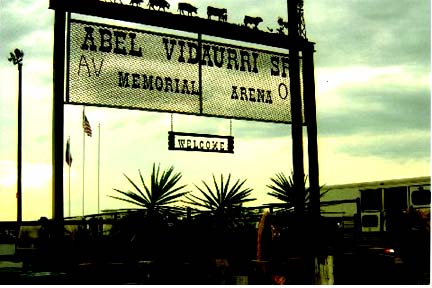
The
Vision, the Dedication...The Abel Vidaurri Memorial Arena...
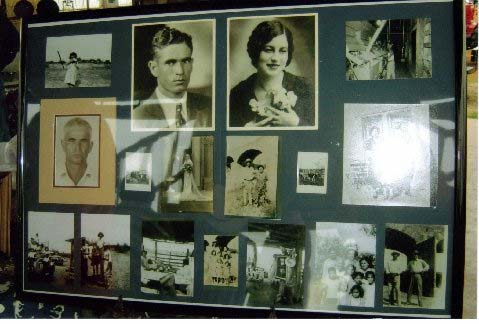
A
treasure so precious and rare --
The
Retirement of a saddle...
The
Honor and Remembrance...
The
Love of the daughter...and the vision lives on...
A
lifetime of love,..
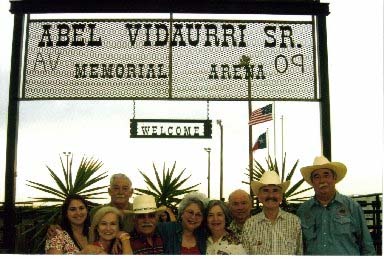
The
Legacy continues...
My
beloved Grand-father, My Mentor...
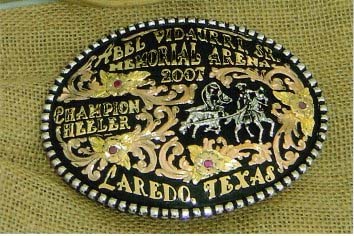
The
honor, the prize...
The
Legacy lives on...
The
Legacy of Don Abel Vidaurri, Sr.
We
want to let you know that,
Persistence
is a sign of greatness...
What
a privilege and an honor,
Thank
you Lord for the privilege...
Cecilia"CeeCee"
Gallardo Vallejo
C3REGALOS@aol.com
1443 W. Hollywood St. San Antonio, Texas 78201 Cell: (210)639-2102 Hm Ph: (210) 735-2103
More information sent by Ofelia vidaurri Plante:
Selinda Vidaurri Garcia, and her husband, Hugo Garcia, and their family hosted the event. Their email is selgarcia13@yahoo.com Phone: 956-724-4566 John Mayers Vidaurri, was selected Rancher of the Year. He is the one who kept my father's saddle until he gave it to my sister, Selinda, who has it now. For more information or if I can assist you in any way, please don't hesitate to ask me. Phone: 830-755-4725 Ofelia
|
|
Registration Form For 28th Annual Texas Genealogy
Conference nosotrostejanos@yahoo.com Hi All: Have received some e-mails offering to help and asking how to register for the 28th Annual Genealogy Conference to be held in Austin, Texas on September 13 to 15. We appreciate this outpouring of participation and contribution. You can help by registering early and passing this e-mail and attachment to members of your distribution list. As all of you are beginning to hear, the conference will be a most exciting and thoroughly learning experience. Expect to go on tours and to meet, in a number of workshops, known authors, historians, and genealogy experts like John Schmal, Lynn Turner, John Wheat , Adan Benavides, Galen Greaser, Diana Houston and others. See their credentials in our web site. To review the emerging full program and to register, visit us at www.freewebs.com/nosotroslostejanosYou can also use the attached Registration Form. Try to register and send your check by August 6. Registration Fees change after this date. Don't forget, please pass this information to members of your distribution list. Thanks. Regards, Jose M. Pena http://www.freewebs.com/nosotroslostejanos/
conference infor
|
|
Los Bexarenos
July 7 , 2007 Meeting Speaker: Warren Stricker Topic: Genealogical Holdings at the DRT Library at the Alamo Warren Stricker holds a Masters in Library and Information Science from the University of Texas at Austin. He has been archivist at the Daughters of the Republic of Texas Library since 1990, responsible for the arrangement and description of the library's 300+ manuscript collections. He has also served as an archival consultant at the McNay Art Museum, and has worked on special archives and manuscripts processing projects at the University of the Incarnate Word and Pioneer Flour Mills. He is a member of the Academy of Certified Archivists, Society of American Archivists, and the Society of Southwest Archivists, and is past president of the Library Association. Meetings are normally held at 9:30 a.m. every first Saturday of the month on the first floor, Main Auditorium, of the San Antonio Public Library, 600 Soledad Street, San Antonio, Texas. Visitors are always welcome to attend. Membership is not required. Speakers at the meetings are people with a passion for history, professional historians, genealogists, archaeologists and researchers. Larry Kirpatrick elindio2@hotmail.com
|
|
ORDER
THE BOOK
9x11 –
404 pages – Hard
Cover Price: $65.00 plus shipping Institutional
Pricing: |
|
With All Arms is a unique offering: at once history, sociological survey and genealogical goldmine. In telling how Spaniard and Indian met, mixed history and marched across nearly five centuries of North America, this work combines church and civil document research, extensive site surveys, bi-lingual networking, and the cultural immersion of a lifetime among its subjects, including the author’s own people. In his colorful language, Carl Duaine addresses questions familiar to us all: who are we, where did we come from, and how did we get here? Beginning with Cortes at Vera Cruz, Duaine takes us on to the triumph of the mestizo in the South Texas of today. It is a forceful, affecting tale, as human as it is to be curious about one's self. In no other single source is there to
be found so much about those who share this amazing past. To absorb this
large volume is to further appreciate the role of Hispanic culture in
the development of North America, past and present.
|
|
El Diario de El Paso - Official Newspaper Online http://www.diariousa.com Reprinted with permission, http://www.borderobserver.com Border Crossings On The U.S.-Mexican border between El Paso, Texas, and Juarez, Chihuahua, there are three major ports of entry and one commercial bridge at Santa Teresa, New Mexico. The Bridge of the Americas, or Cordova Bridge, is the only entrance where there is no fee for crossing. This is commonly call the "the Free Bridge," and it is the most heavily traveled international crossing. The Downtown El Paso crossing, or Stanton Street Bridge, is southbound into Juarez, while the Juarez Avenue Bridge, or Paso del Norte Bridge, crosses in to El Paso. In Mexico, these bridges are called the Laredo and Juarez bridges respectively. These are mainly used by pedestrians. The third major port of entry is approximately 12 miles east of downtown El Paso at Zaragosa. The fourth bridge is west of El Paso at Santa Teresa, New Mexico. These two international bridges are primarily used for commercial traffic. At the Stanton Street Port of Entry, there is a dedicated commuter lane that uses SENTRI (Secure Electronic Network for Travelers Rapid Inspection) that enables motorists to complete the inspection process and enter the United States in approximately three minutes. This is the only fast-track commuter lane along the Texas border. Most affluent residents of Juarez have the DCL sticker. El Diario de El Paso - Official Newspaper Online On Fridays, El Diario publishes Looking at El Paso-a colorful lifestyle and entertainment newspaper, published in English and targeted to the Hispanic ... www.diariousa.com El Diario de El Paso - Wikipedia, the free encyclopedia The El Diario de El Paso is the primary Spanish-language newspaper for the U.S. city of El Paso, Texas. The paper was founded on May 16, 2005 by El Diario ... en.wikipedia.org/wiki/El_Diario_de_El_Paso Dear Mimi: Jaime Perez is the editor of the Spanish Edition of El Diario here in El Paso, he thought you might be interested in his site. Blessings, Connie Vasquez jperez@diariousa.com wrote: Date: 3 Jun 2007 o El Diario is the dominant newspaper group in the state of Chihuahua with the largest and best-read newspapers in Ciudad Juarez and in Chihuahua City. o El Diario covers the entire state of Chihuahua. The Juarez edition publishes a daily section for Nuevo Casas Grandes, and the Chihuahua edition publishes daily sections for Delicias, Cuauhtemoc and Parral. o Sixty-two percent (62%) of our readers consider EL DIARIO the best source of shopping information, while thirty-two percent (32%) regard our newspaper as a good source of information. o El Diario is the Hispanic newspaper for El Paso which is published 7 days a week. o On Fridays, El Diario publishes Looking at El Paso-a colorful lifestyle and entertainment newspaper, published in English and targeted to the Hispanic market in El Paso. ---------------- Click here to visit www.borderobserver.com It is projected that shoppers from Juarez and Chihuahua will spend an estimated $2.6 billion in retail stores in El Paso this year. Are you getting your share of the sales? Are you effectively advertising to your potential customers in Juarez and Chihuahua? o EL DIARIO readers value your advertising message. o Research shows that 94% of our readers use EL DIARIO for shopping decisions. o Sixty-two percent (62%) of our readers consider EL DIARIO the best source of shopping information, while thirty-two percent (32%) regard our newspaper as a good source of information |
|
|
|
A Tejano Son of Texas in Brownsville Texas Tejano.com teams with the U.S. Army to bring Tejano history to Brownsville (San Antonio, Texas) June 6, 2007 - Texas Tejano.com, a San Antonio-based research and publishing company and their partners and supporters announce today a first-ever partnership with the U.S. Army to bring a world-class Exhibit on Tejano history to the University of Texas at Brownsville. To kickoff this one of a kind event, a special ribbon-cutting ceremony will be held at 10:00am on June 15, 2007 at the Arnulfo L. Oliveira Memorial Library. "Since Texas Tejano.com's inception, one of our chief goals was to bring our message to the Rio Grande Valley. This is an area of the state that is centrally important to Tejano history and to Texas' history," says Texas Tejano.com President and Founder Rudi R. Rodriguez. "Thanks to the U.S. Army and University of Texas at Brownsville, we can now fulfill this part of our mission." CONTACT: RUDI R. RODRIGUEZ at 210.673.3584 rudi@TexasTejano.com |
|
Hi
everyone I
am sorry for the very late notice but I wanted you to know The
main events begin in a big way on Saturday morning, June 9, Archdiocese
of West Texas Bishop Pfeifer will lead the dedication
ceremonies at On
Sunday, June 10, the festivities continue with the Santa Fe The
Texas Archeological Society is also participating in the The
focus this year is the southeast bastion and other
architecturally check
in. It's worth it just to see how the presidio could
accommodate For
more info, check out the Texas Archeological Society's
|
|
Robert Runyon Photographic Collection You may wish to add the "Robert Runyon Photographic Collection" at the Library of Congress to your "Links" page. Robert Runyon was THE most successful and comprehensive photographer of Brownsville, Texas and of the Mexican State of Tamaulipas at the turn of the 19th Century. There are more than 2,500 photograph's in the collection, most from Brownsville in Cameron County and, too, from Matamoras, Tamaulipas. Go to Library of Congress. Then to "Collection's or "Photography Collections." Then type in "Robert Runyon" Collection. You and we shall be endlessly fascinated. I found two of my direct ancestor's there, circa 1897. A Cuellar and a Salinas. Thank you. I remain, Very sincerely yours, Verle E. Cuellar-Salinas-Wenneker VEWenneker@aol.com www.VEWenneker@AOL.com
|
|
Old
Spanish Trail Stone walls and caretaker's house remain on
site
|
|
Honoring: Antonio Salazar Raul Aguilera |
A Memorial Mass will be held for Antonio (Tony) Salazar, President of Salazar Communications, and Publisher and Editor of Teleguia Spanish language magazine. Friday, July 6, 2007, at 5:30 pm, at St. Augustine Catholic Cathedral, 543- West Michigan Avenue, Kalamazoo, Michigan (269) 345-5147. All are welcome to attend the Memorial Service. Mr. Salazar passed away on Monday, May 28 in San Francisco, California. Mr. Salazar will be remembered by many for his honesty, integrity, brilliance, and vision. He was passionate about family, community, and about improving the quality of life for all. His numerous contributions to the Latino community include serving as Chair of MECHA at the University of California, Los Angeles (UCLA) in 1969, publishing the first magazine devoted to Latino media and music (Latin Quarter), hosting a Los Angeles based radio program on KPFK that combined music and discussion of issues facing the Latino Community, publishing Teleguia Spanish language Magazine, and participating on many business advisory boards that welcomed a better understanding of the economic influences of the Hispanic consumer. His legacy will live on. Juana Montgomery-Kleiman E-Mail: juana.montgomery@frb.gov (202) 452-3385 (O) (202) 728-5876 (fax) (202) 247-7474 (cell)
|
| Raul
Aguilera Southwest Detroit will have a void that cannot be filled for Raul who was an Amigo to so many of us, taking care of our community’s electrical needs, sharing his skills, teaching and training others, being extremely generous with his time for those with limited or no means and one who would light up a room with his loving spirit and smile. Sent by Dorinda Moreno
|
|
Cemi Underground July 4th: Patriotism, Sacrifice, Freedom Colonial Reenactments on the East Coast Babies and Bicycles - The Conversion of a Long Island Town San Juan Del Puerto, La Florida |
|
Books, T-shirts, Music, Art & Events If you visit New York City, El Barrio to be specific, you will now find a new cultural venue to visit. Galeria Cemi takes pride in launching Cemi Underground, a cultural outlet that brings to you the tools you need to culturally enrich your life. Here you will find books about Julia de Burgos, Tainos, Orlando Cepeda, Che Guevara, and other illustrious Latinos as well as a collectible books section with impossible to find books about the history and culture of Puerto Rico among others. Cemi Underground also features music CD's by New York's own Boricua Roots Music sensation Tato Torres y Yerbabuena as well as the protest music compilation La Nueva Escuela which features Roy Brown and Silvio Rodriguez.
Celebrating our culture in El Barrio - Celebrando
nuestra cultura en El Barrio http://www.2000greetings.com/showerr.htm?err=1
|
July 4th: Patriotism, Sacrifice, Freedom Wednesday, July 4 10-11 a.m. * Presentation of colors by the Continental Color Guard Family Activities Under the Tent *Meet Benjamin Franklin, Thomas Jefferson, Rosie the Riveter, and other historical figures from the Revolutionary and World War II eras. *Air your grievances in Revolutionary manner with a quill pen and
ink. [[ Charlie Erikson (Hispanic Link) received the following
information for Katie Wilmes, NARA program coordinator: There will be
some diversity elements within the day's events. One of the WWII
veterans in the reading ceremony is Henry Cervantes, who was an Air
Force pilot. General Bernardo de Galvez (aidedcolonial forces in US
Revolutionary War) will be portrayed by Hector Diaz and will mingle
with guests during the family activities. Lastly, a reenactor will
portray Doris Miller, the first African American to be awarded the
Navy Cross, and mingle with the crowd during the family activities.]] "July 4th: Patriotism, Sacrifice, Freedom" at the
National Archives is made possible in part by the generous support of
John Hancock Financial Services. National Archives and Records Administration Center for the National Archives Experience Operations and Public Programs Division public.program@nara.gov 700 Pennsylvania Avenue, NW Rm G-9 Washington, D.C. 20408 (202) 357-5000
|
| Colonial
Reenactments on the East Coast My Dear Friends, Here is a great web site and an invitation to those of you living in the East coast, that may want to visit or learn more about these organizations that do Reenactments. http://groups.yahoo.com/group/soldados If you click the second item,"Louisianna Reenactment in Maryland on June 24" you can view some of the Spanish Soldiers. Rafael Ojeda
|
|
BABIES AND BICYCLES — THE CONVERSION OF A LONG ISLAND TOWN I have lived in the pre-combustion engine era Village of Sea Cliff, New York, for more than 35 years. During this time, it has remained physically and demographically virtually the same. Glen Cove, our neighbor to the north, from which we are separated by invisible boundaries, however, has undergone a sea change, one that is the direct consequence of immigration. In the late ’70s and ’80s of the 20TH century, as
civil unrest in Central America forced hundreds of thousands to flee al
norte, Glen Cove, along with other cities in New York’s Nassau
and Suffolk counties, became improbable, almost mythical places in the
immigrant underground railroad, more norte on the compass of
Guatemalans, Hondurans, and Salvadorans than their neighbor Mexico. As I shed my Andean skin and resumed my Long Island routines, I
would learn that they were walking from Glen Cove to jobs in towns —
Albertson, Mineola, Hempstead and Williston Park — that for most of
us were impossibly far on foot, but for them were not much farther
than the distance traveled in their early morning walks from their
villages to the milpas — cornfields — they tended in their
native countries. However, more common than collective public transportation is travel by bicycle. An outsider cannot help but notice the number of bicycles that circulate on the city’s streets. For Glen Cove’s Central American immigrants of all ages, owning a bicycle is a status symbol, a declaration by its owner that he has moved from being a peasant in North America who still travels by foot to a city-dwelling North American who has the material wealth to purchase social mobility. Bicycles are still used primarily by men. Few Central American immigrant females ride them. However, for women there is another mode of transportation that once again catches the eye of a visitor to Glen Cove. Like the bicycle, it too has helped transform the city streets into avenues of people, not asphalt and concrete corridors. It is the baby carriage. At almost any hour during the workday, there are women pushing baby carriages. Unlike most other North Shore Long Island villages where the presence of baby carriages is uncommon, in Glen Cove they are omnipresent. For a Central American woman, having children is still an essential
part of a female’s identity. The long years of separation and
subsequent reunification with men who had traveled alone al norte only
intensified this essential cultural value. The Napoli Soccer Club and the Italian Loggia, two important social organizations for a previous generation of Italian immigrants, continue to function. However, they are clubs whose members are indoors and closed off from outside street life. For the almost 20 percent of Glen Cove’s population which is now Hispanic and mostly Central American, there are restaurants, bakeries, food stores and service stores where the bicicletistas and mothers can stop to eat, talk and relax. Atol de elote, a sweet corn beverage, baleadas (Honduran burritos) and pupusas (Salvadoran corn tortillas) have been added now to local menus in Glen Cove along with calzoni, pizza, and pollo alla Marsala. These immigrants have breathed life back into Glen Cove. They have
returned a sense of the possible to the city, added new foods, a new
social ambience, another language, a relentless work ethic, and most
of all, human vitality. © 2007 |
|
SAN JUAN DEL PUERTO, LA FLORIDA
Publicado en la Revista de Fiestas de San Juan del Puerto 2007 24 de junio de este año Las investigaciones históricas son siempre muy problemáticas y más, cuando la época que estudiamos es un tiempo del que se conservan pocos documentos, y algunos en pésimo estado por su antigüedad, lo que dificulta su lectura, de por sí con una caligrafía también difícil. Un año mas y hasta ahora no me ha sido posible culminar mi deseo de conocer quien fue el fundador de San Juan del Puerto en La Florida, pero como si me han llegado algunos datos, quiero detallar lo que he investigado y sus resultados y conclusiones. A mis pesquisas se ha unido la valiosa colaboración del Dr. Jaime Gómez González, Historiador y Médico Jubilado residente en La Florida, y que ha seguido la pista a los datos que conseguíamos sobre aquella zona y contactado con entidades y asociaciones americanas. Fruto de todo ello hemos sabido que el 14 de septiembre de 1566 los jesuitas Pedro Martines Aragonés, Juan Rogel y el hermano Francisco Villamizar, llegaron a la desembocadura del Rió San Juan y cuando el Padre Martínez desembarcó fue asesinado por los indios Timacuas, convirtiéndolo en el primer mártir de La Florida. Trece fueron los frailes franciscanos que llegaron con Pedro Menéndez de Avilés y fundaron la ciudad de San Agustín, entre los que lógicamente iba el creador de San Juan del Puerto. A poco se dispersaron y cinco de ellos, Fray Pedro de Corpa, Fray Blas Rodríguez, Fray Miguel de Auñon, Fray Antonio de Badajoz y Fray Francisco de Verascola, continuaron mas hacia el norte, a lo que hoy es el Estado de Georgia en los Estados Unidos. A estos cinco frailes, que fueron asesinados por los indios, se les sigue actualmente una causa de beatificación, siendo el Postulador, el Padre Conrad Harkins, de la Universidad Franciscana de Steubenville. El Poema de La Florida, siempre me ha tenido intrigado porque pensaba que me podía facilitar alguna pista que me llevara al buen fin de mi gestión. Dicho Poema, que consta de mas de 400 páginas manuscritas, que fue escrito a finales del siglo XVI o quizás en el XVII, nunca ha sido publicado y el único ejemplar que conozco del manuscrito esta depositado en la Biblioteca Nacional de Madrid. Hice gestiones en la Biblioteca Nacional y conseguí fotocopia del libro completo. El libro no lleva fecha alguna, pero los expertos dicen que tiene letra definales del siglo XVI y con una caligrafía muy buena El autor de los más de 21.000 versos es Fray Alonso Gregorio de Escobedo, confesor de la Orden de San Francisco, de la provincia de Andalucía. Al leer lo de Andalucía me puse en contacto con el Padre que lleva el Archivo Franciscano de la Betica, quien manifestó no me podía facilitar datos porque me explicó que durante nuestra Guerra Civil, el Archivo fue quemado y se perdieron casi todos los libros. En un escrito de J. Riis Owre, de la Universidad de Miami, dice que, según el historiador Gallardo, el Padre Alonso de Escobedo era de Moguer, por lo que ya nos íbamos acercando a San Juan del Puerto, lo que nos causaba cierta esperanza, pues entre estas dos poblaciones no hay mas de cinco kilómetros. Pero lo que más me llamó la atención del Poema de La Florida es que en sus primeras páginas, el Padre Escobedo dedica varios sonetos a otros franciscanos o personas muy conocidas de esta zona y dos de ellos están dedicados a moguereños, al dramaturgo Felipe Godinez y al escribano publico de Moguer, Francisco Anrriquez ó Enríquez. ¿Quién era Fray Alonso Gregorio de Escobedo?. Poco se sabe de este Fraile, solo se le menciona por haber escrito el Poema de La Florida. Nadie conoce con exactitud su procedencia y el asignarle Moguer como su lugar de nacimiento es pura hipótesis, aunque si debemos tener en cuenta que dos de los sonetos del principio del libro los dedica a dos personajes muy importantes en la vida cultural moguereña, lo que demuestra que se codeaba con los representantes de la elite cultural, orque tanto Felipe Godinez, como el escribano Anrriquez, tenían muy buena fama y al parecer formaba parte de su circulo de amistades.Después de analizar estos puntos, tengo varias hipótesis de lo que pudo ocurrir y que ofrezco al lector para, entre todos, intentar esclarecer lo que desconocemos; A).- El Padre Escobedo podía ser natural de San Juan del Puerto, en la provincia de Huelva y pertenecer al Convento de San Francisco en Moguer, además de muy respetado entre sus compañeros por su gran nivel intelectual, por lo que le otorgó el nombre de su pueblo natal al que estaba a la orilla del Río San Juan. Aunque no sabemos si el nombre del río se puso antes o después de haber fundado la población. B).- A Fray Alonso Gregorio de Escobedo, que pudo ser natural de Moguer le recordó el paisaje o algún dato, a la zona de San Juan del Puerto, que él conocía muy bien y por eso le designó este nombre a la Misión de La Florida. C).- Influido por el nombre del río, San Juan, el Padre Escobedo u otro fraile, dio la idea de ponerle el nombre de San Juan del Puerto, por lo que pudo ser fruto de una casualidad. He barajado otras hipótesis, pero no las expongo porque "a priori" resultan descabelladas. Creo que con la teoría de la fundación de San Juan del Puerto, en La Florida, la tesis que mas prevalece es que fue iniciada por Fray Alonso Gregorio de Escobedo, que era de Moguer o de San Juan del Puerto, en Castilla. Por mi parte seguiré investigando para ver si conseguimos un buen fin de nuestra labor. Ángel Custodio Rebollo
|
|
Cuilapan,
Oaxaca |
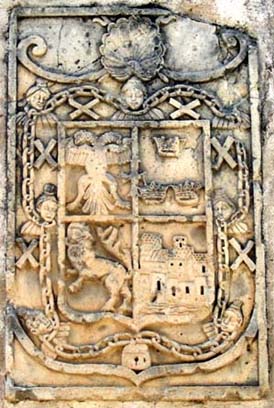 Cuilapan,
Oaxaca Cuilapan,
OaxacaHernán Cortés, the Spanish conqueror of Mexico has many monuments. As Lord of the Marquesado, the estate granted to him by the Spanish Crown, he established señorial residences across this vast tract that stretched from Mexico City to Oaxaca. The palace in the heart of Cuernavaca is probably his best known. Powerful though he was, however, Cortés was unable to extend his domain into present day city of Oaxaca, although a mansion there bears his name. The town of Cuilapan, located just beyond the eastern city limits and famous for its rambling Dominican priory, became one of his favorite outposts. Sections remain of an imposing early colonial structure facing the main plaza there. Still known locally as the Casa de Cortés, it is reliably believed to be an authentic residence of the conquistador.
ESPADANA PRESS |
JEREZANOS RADICADOS EN LA REGIÓN LAGUNERA Por: José León Robles De La Torre - 26 de jun de 2007. First Published from El Siglo
de Torreon newspaper Dr. Don Luis Maeda Villalobos, nacido en Matamoros, Coahuila, el dia 18, de enero de 1925. escritor, periodista, pintor y fundó un Museo de Historia Natural que donó a la Universidad Autónoma de la Laguna, UAL. DURANTE EL CENTENARIO DE LA CIUDAD DE TORREÓN 1907-2007 Continuando con el árbol genealógico "De la Torre" que aparece en mi libro Fundaciones, Filigranas y Genealogías de Jerez, Susticacán y Monte Escobedo, Zacs., vemos que el matrimonio formado por el señor Luis (Yuntaro) Maeda Maeda y doña Concepción Villalobos Gutiérrez, radicados en Matamoros, Coah., procrearon ocho hijos. Veamos: Alfonso, Luis, Héctor, Othón, Sonia, Horacio, Arnoldo y Dr. Luis, todos Maeda Villalobos y nacidos en Matamoros, Coah. El Dr. Luis Maeda Villalobos contrajo nupcias con la señorita Tomasa Martínez Flores y curiosamente también procrearon ocho hijos igual que el matrimonio de doña Concepción. Ellos son: Lic. Sonia Maeda Martínez que contrajo matrimonio con el señor Carlos René Iruegas; Lic. Ma. Cecilia del Socorro Maeda Martínez, casada con don Jaime Ramírez Villalobos; Dr. Luis Patricio Maeda Martínez, casado con Reyna Núñez Pedroza; Dr. Alfonso Nivardo Maeda Martínez, casado con Aída Núñez Pedroza; biólogo Alejandro Manuel Maeda Martínez; Dr. José Antonio Maeda Martínez, casado con Sonia Aguilar Zavala; biólogo César Arturo Maeda Martínez y Lic. Martha Graciela Maeda Martínez. El Dr. Luis Maeda Villalobos se especializó en oncología y ejerció la profesión por más de 50 años. Ha escrito varios libros y cientos de artículos periodísticos especialmente de ecología y antropología. En fines de semana, tiempos libres o vacaciones, se convirtió en un experto explorador recorriendo sierras y valles de la Región Lagunera, el resto del Estado de Coahuila y parte de Chihuahua y Zacatecas y lugares de Durango con un grupo de amigos como don Víctor Serna, don Eduardo Guzmán Lozano, Profr. Rafael Padilla Guerrero, Ing. Napoleón Otero Sanvicente, Dr. Manuel Medina, Dr. Ernesto Alatorre, el Ing. químico Augusto Harry de la Peña (f), descubridor de la Zona del Silencio, Ing. físico y químico Harlesto Jr., Ing. Óscar Sánchez López y otros más, recolectando rocas geológicas, fragmentos de dinosaurios, de mamuts, de moluscos prehispánicos, de maderas petrificadas, de flechas guerreras, etc., y formó un Museo de Historia Natural, que luego donó a la Universidad Autónoma de La Laguna, UAL, cuyo fundador y rector es el Dr. maestro y Lic. don Pedro Héctor Rivas Figueroa, y que lleva el nombre de Museo Universitario de Historia Natural, UAL, que está dirigiendo el Lic. Luis Salvador Ramírez Padilla, junto con la Lic. Yonora Gabriela Fabela Granados y Arsenio Campa García. Durante algún tiempo también prestó sus servicios al museo el Ing. geólogo Rodolfo Hernández Batista, quien realizó diversos viajes a las sierras del Estado, recolectando nuevas piezas para enriquecer dicho Museo, que estaba abierto al público en el segundo piso del Palacio Federal de esta ciudad, y temporalmente, se establece en el corredor comercial Galerías. También el que esto escribe, estuve adscrito a
dicho museo durante unos tres años, por acuerdo del Rector de la
Universidad don Pedro H. Rivas Figueroa. |
|
TRANSLATION by Mercy Bautista-OlveraScarlett_mbo@yahoo.com Dr. Luis Maeda Villalobos was born in Matamoros, Coahuila on January 18, 1925; Writer, Journalist, Painter, and founder of Museo de Historia Natural, which he donated to La Universidad Autónoma de la Laguna, UAL. DURING THE CITY OF TORREÓN CENTENNIAL Dr. Luis Maeda Villalobos married Tomasa Martínez Flores, their children: Lawyer Sonia married Carlos René Iruegas; Lawyer Maria Cecilia del Socorro married Jaime Ramírez Villalobos; Dr. Luis Patricio married Reyna Núñez Pedroza; Dr. Alfonso Nivardo married Aída Núñez Pedroza; Biologist Alejandro Manuel; Dr. José Antonio married Sonia Aguilar Zavala; Biologist César Arturo; and Martha Graciela, all the children Maeda Martínez. Dr. Luis Maeda Villalobos specialized in Oncology, exercising the profession for more than 50 years he also wrote many books and many newspaper articles specially Iconology and Anthropology. With a group of friends as Víctor Serna, Eduardo Guzmán Lozano, professor Ragael Padilla Guerrero, Engineer Napoleón Otero San Vicente, Dr. Manuel Medina, Dr. Ernesto Alatorre, Engineer Chemist Augusto Harry de la Peña (deceased) La Zona del Silencio founder, Enginer, Physic and Chemist Harlesto Jr., Engineer Óscar Sánchez López as well as with other friends. He enjoyed exploring mountains and Valleys from Lagunara region, and the rest of the Coahuila state, parts of Chihuahua, Zacatecas and Durango. Dr. Luis Maeda Villalobos enjoyed Collecting genealogical rocks, dinosaur fragments, marmots, prehistoric mollusks petrified wood, warrior arrows etc., creating Natural History Museum (Museo de Historia Natural) later he donated the museum to Universidad Autónoma de la Laguna, UAL. The Museo Universitario de Historia, Founder, directed by Lawyer and Rector, Dr. Pedro Héctor Rivas Figueroa, Lawyer Luis Salvador Ramírez Padilla, as well as Lawyer Yonora Gabriela Favila Granados and Arsenio Campa García. Engineer, Geologic Rodolfo Hernández Batista also collaborated by traveling thought the mountains collecting new pieces to enrich the museum, which was open to the public on Palacio Federal on the second floor. "I also worked at the museum for three years." José León Robles de la Torre the author of this article recalls. * Mercy Bautista-Olvera Notes: Dr. Luis Maeda Villalobos parents: Father Yuntaro Maeda Maeda originated from Kyushu, Kumamoto, Japan, he emigrated to Torreón, Coahuila, Mexico in search of a better life, some friends advised him to change his first name, and Yuntaro chose his first name as Luis. Yuntaro then Luis fell in love with Concepción Villalobos Gutíerrez and married in 1924 making their home in Matamoros, Coahuila, Mexico. Their eight children became professionals, including Dr. Luis Maeda Villalobos. Dr. Luis Maeda Villalobos maternal grandparents: Jose Gutíerrez and María Tirsa Severa del Refugio de la Torre y Valdes, originated from Tepetongo, Zacatecas, Mexico (8th Generation from Diego Pérez) de la Torre 1482-1536),Translation from El Siglo de Torreon newspaper: www.elsiglodetorreon.com.mx/*The notes about the parents and grandparents were from El Siglo de Torreon Newspaper previous article.
|
|
Notas de interés sobre historia, patrimonio histórico, usos (y abusos) sociales de la historia de México aparecidas en diversas publicaciones virtuales entre el 11 y el 17 de junio de 2007 Vea la nota completa utilizando los "vínculos" indicados. Distribución gratuita, sólo para fines académicos Compilación de Roberto David Reyes Avellaneda (FFyL-UNAM) En esta entrega: * Halla INAH objetos prehispánicos en Texcoco * Dueños de Chichén Itzá optan por la donación * Aún no hay fecha de reapertura de la zona arqueológica de Cacaxtla * Rechaza INAH amenaza en cuatro monumentos de México * Suspende INAH construcción de libramiento vehicular en Teotihuacan * San Luis Potosí en la ruta del mercurio y la plata * El lienzo Santa Teresa Peregrina, pieza del mes que exhibe el Museo de El Carmen <en Morelia. Mich> * Positivo, revisar el legado de las luchas de independencia: Florescano * Reestructuración integral del Museo Nacional de las Intervenciones. * Completarán en noviembre catalogación de muebles de Museo Franz Mayer . . . . . . . . . . . . . . . . . . . . . . . . . . . . . . . . . . * Halla INAH objetos prehispánicos en Texcoco Cinco ofrendas prehispánicas del periodo Azteca III, dos de las cuales están intactas, fueron halladas por arqueólogos del Instituto Nacional de Antropología e Historia (INAH) en un predio en donde se realizaba la Feria del Caballo, en Texcoco. Los especialistas informaron que el hallazgo forma parte de la plataforma de un Palacio Acolhua. El descubrimiento es considerado como el más importante en su tipo en el municipio. Javier Salinas Cesáreo, La Jornada, 17/06/2007 http://www.jornada.unam.mx/ultimas/2007/06/17/halla-inah-objetos- prehispanicos-en-texcoco * Dueños de Chichén Itzá optan por la donación En medio de la certeza de que los terrenos en los que se ubica Chichén Itzá incrementarán su precio al formar parte de las Siete Nuevas Maravillas del Mundo, sus propietarios anunciaron que los donarán a la Federación. . .En una rueda de prensa, Carolina Cárdenas Sosa, subsecretaria de Planeación Turística de la Secretaría de Turismo dijo que ya trabajan con el INAH para establecer los mecanismos de negociación con los propietarios de la zona arqueológica de Chichén Itzá a fin de concretar este procedimiento. Leticia Sánchez y Jesús Alejo, Milenio, 11 de junio http://www.milenio.com/mexico/milenio/nota.asp?id=518528 * Aún no hay fecha de reapertura de la zona arqueológica de Cacaxtla A más de 20 días de la granizada que afectó la estructura que protege la zona arqueológica de Cacaxtla en Tlaxcala, "no se ha superado la etapa de emergencia", por lo que aún no existe una fecha para su reapertura, informó hoy aquí el Instituto Nacional de Antropología e Historia (INAH). En entrevista, Gilberto Meza, director de medios de la dependencia, señaló a Notimex que será en los próximos días cuando el Instituto reciba cuatro dictamenes sobre las afectaciones que sufrió la zona, elaborados por la Universidad Nacional Autonóma de México (UNAM) y la empresa Colinas de Buen e Ingenieros Civiles Asociados (ICA). Notimex, Milenio, 13 de junio http://www.milenio.com/index.php/2007/06/12/79820/ * Rechaza INAH amenaza en cuatro monumentos de México Luego de que el World Monuments Fund (WMF), conocido en español como Fondo para los Monumentos en el Mundo presentara su listado de 100 monumentos en peligro, en el que se incluye a cuatro sitios históricos de nuestro país, el Instituto Nacional de Antropología e Historia afirmó que estos lugares "no corren riesgos graves, ni hay motivos para alarmarse". La fundación enlistó cuatro sitios: Monte Albán en Oaxaca; las misiones de Chihuahua; el vecindario histórico de Huaca, en Veracruz, y la zona arqueológica de Teuchtitlán-Guachimontones, en Jalisco. SUN, El Diario de Cd. Juárez, 12 de junio http://www.diario.com.mx/nota.php?notaid=8f6731259a0f62f716ebb9e067ad348d Ver también http://www.worldmonumentswatch.org/ * Suspende INAH construcción de libramiento vehicular en Teotihuacan El Instituto Nacional de Antropología e Historia suspendió los trabajos del libramiento vehicular de este municipio, debido a que en su construcción fueron destruidos monumentos históricos. El director de la zona arqueológica de Teotihuacan, Alejandro Sarabia, informó lo anterior e indicó que aún no se cuantifica el daño al patrimonio cultural por las obras de construcción del libramiento. . .La conexión que tendría el libramiento a la carretera México-Pirámides en la comunidad de Maquixco destruyó un puente antiguo, que de acuerdo a los pobladores existía desde hace varias generaciones. Notimex, Milenio, 13 de junio http://www.milenio.com/index.php/2007/06/12/79580/ * San Luis Potosí en la ruta del mercurio y la plata Para lograr que San Luis Potosí sea declarada Patrimonio de la Humanidad, esta ciudad se ha unido a otras urbes del mundo en una candidatura llamada la Ruta del mercurio y la plata.Desde fines del año pasado, en la Universidad Politécnica de Madrid, se dio a conocer el proyecto "Camino real intercontinental: La ruta del mercurio", nombre de la declaratoria que reúne a San Luis Potosí, Almadén, en España; y Huancavelica, en Perú, concebida como "la primera y única declaratoria intercontinental de la historia de la UNESCO." Jesús Alejo, Milenio, 11 de junio http://www.milenio.com/mexico/milenio/nota.asp?id=518275 * El lienzo Santa Teresa Peregrina, pieza del mes que exhibe el Museo de El Carmen <en Morelia. Mich> El lienzo Santa Teresa Peregrina es la pieza del mes que exhibe el Museo de El Carmen, de la autoría del prolífico pintor Juan Correa (1646-1716), nacido en la ciudad de México. El artista que firmara algunos documentos como "mulato libre, maestro pintor", fue contemporáneo de la escritora Sor Juana Inés de la Cruz, del historiador y científico Carlos de Sigüenza y Góngora y del pintor Cristóbal de Villalpando. Agencia Cuasar, Mi Morelia.com, Viernes 15 de Junio http://www.mimorelia.com/verminuto.php?id=3402 * Positivo, revisar el legado de las luchas de independencia: Florescano El prestigioso historiador mexicano Enrique Florescano señaló que a dos siglos del comienzo de las guerras de independencia en América Latina, "la imagen de relámpago que desde su aparición marcó el fenómeno revolucionario sigue viva en el siglo XXI". Así, en el contexto de un coloquio internacional sobre el bicentenario de las luchas de emancipación de la corona española, Florescano destacó los análisis más recientes sobre aquellas rebeliones populares, en los que se desmitifican sus logros e, incluso, sus propios orígenes. Armando G. Tejeda, La Jornada, 11 de junio http://www.jornada.unam.mx/2007/06/11/index.php?section=cultura&article=a06n1cul * Reestructuración integral del Museo Nacional de las Intervenciones. El Museo Nacional de las Intervenciones (MNI) será objeto de una reestructuración integral que lo lleve, con el apoyo de la sociedad, a alcanzar "un grado de excelencia", anunció Alfonso de María y Campos, director general del Instituto Nacional de Antropología e Historia (INAH). De Maria y Campos firmó un convenio de colaboración con la Asociación de Amigos del MNI, que preside Ignacio Guzmán Garduño, para que coadyuve con el INAH en la protección, conservación, restauración y difusión de este recinto museístico. Notimex, Mundo Hispano de KSL, 13 de junio http://www.munhispano.com/?nid=255&sid=1347431 * Completarán en noviembre catalogación de muebles de Museo Franz Mayer La catalogación completa de los más de 850 muebles que forman parte de la colección del Museo Franz Mayer, de esta ciudad, quedará completada en noviembre próximo a través de una beca de 80 mil dólares otorgada por la Fundación Getty, señaló la víspera Tere Calero, coordinadora de los trabajos. Notimex, Milenio, 12 de junio http://www.milenio.com/index.php/2007/06/11/79141/ |
|
Descendents of Jose Froylan de Mier
Compiled by John D. Inclan
Generation No. 1
1. JOSE-FROYLAN1
DE MIER
He married MARIA-YRENE
RODRIGUEZ
03 Jun 1845 in San Juan Bautista Catholic Church, Cadereyta Jimenez,
Nuevo Leon, Mexico.
Children of JOSE-FROYLAN
DE MIER
and MARIA-YRENE
RODRIGUEZ
are:
i. MARIA-DE-LOS-ANGELES2
MIER-RODRIGUEZ, b. 19 Mar 1846, San Juan Bautista, Cadereyta
Jimenez, Nuevo Leon, Mexico.
ii. MARIA-JUANA-DE-LA-SOLEDAD MIER-RODRIGUEZ, b. 03 Apr 1847, San
Juan Bautista, Cadereyta Jimenez, Nuevo Leon, Mexico.
iii. MARIA-TECLA MIER-RODRIGUEZ, b. 03 Sep 1848, San Juan
Bautista, Cadereyta Jimenez, Nuevo Leon, Mexico.
iv. JOSE-FROYLAN MIER-RODRIGUEZ, b. 26 Mar 1850, San Juan
Bautista, Cadereyta Jimenez, Nuevo Leon, Mexico.
v. MARIA-LEANDRA MIER-RODRIGUEZ, b. 04 Feb 1854, San Juan
Bautista, Cadereyta Jimenez, Nuevo Leon, Mexico.
vi. JOSE-LEONIDES MIER-RODRIGUEZ, b. 21 Nov 1856, San Juan
Bautista, Cadereyta Jimenez, Nuevo Leon, Mexico.
vii. MARIA-JOSEFA MIER-RODRIGUEZ, b. 14 Sep 1860, San Juan
Bautista, Cadereyta Jimenez, Nuevo Leon, Mexico.
|
|
The Descendents of Don Nicolas de Cardenas Pinillas
Compiled by John D. Inclan
fromgalveston@yahoo.com
Generation No. 1
1. NICOLAS4
DE CARDENAS-PINILLAS
(ALONSO3
PINILLAS-DE-CARDENAS,
ALONSO2
DE CARDENAS-PINILLAS,
ALONSO1
DE CARDENAS)
He married GERTRUDIS
FLORES-DE-ABREGO
27 Jan 1711/12 in Sagrario Metropolitano, Saltillo,
Coahuila,
Mexico, daughter of MIGUEL
FLORES-DE-ABREGO
and MICHAELA
DE-LA-GARZA-RENTERIA.
Marriage Notes for NICOLAS
DE CARDENAS-PINILLAS
and GERTRUDIS
FLORES-DE-ABREGO:
Index to the Marriage Investigations of the Diocese of Guadalajara,
by Raul J. Guerra., Nadine M. Vasquez, Baldomero Vela, Jr. Page 215.
Children of NICOLAS
DE CARDENAS-PINILLAS
and GERTRUDIS
FLORES-DE-ABREGO
are:
2. i. PABLO-JOSEPH5
DE CARDENAS-ABREGO.
3. ii. JOSEPH-JOAQUIN DE CARDENAS-ABREGO, b. 25 Oct 1712, Sagrario
Metropolitano, Saltillo,
Coahuila,
Mexico.
4. iii. JUANA-MICHAELA DE CARDENAS-ABREGO, b. 30 Dec 1713,
Sagrario Metropolitano, Saltillo,
Coahuila,
Mexico.
iv. JOSEPH DE CARDENAS-FLORES, b. 05 Mar 1716, Sagrario
Metropolitano, Saltillo,
Coahuila,
Mexico.
Generation No. 2
2. PABLO-JOSEPH5
DE CARDENAS-ABREGO
(NICOLAS4
DE CARDENAS-PINILLAS,
ALONSO3
PINILLAS-DE-CARDENAS,
ALONSO2
DE CARDENAS-PINILLAS,
ALONSO1
DE CARDENAS)
He married ISABEL
DE TIJERINA-GARCIA
11 Jun 1745 in Santiago Apostol, Monclova, Coahuila, Mexico1,
daughter of FERNANDO
DE TIJERINA
and MARIA
GARCIA-HOYOS.
Child of PABLO-JOSEPH DE
CARDENAS-ABREGO
and ISABEL
DE TIJERINA-GARCIA
is:
i. JOSEPH6
DE CARDENAS-TIJERINA, m. MARIA-ANTONIA-DE-LOS-SANTOS
JIMENEZ-DEL-TORO, 25 Sep 1771, Santiago Apostol, Monclova, Coahuila,
Mexico2.
3. JOSEPH-JOAQUIN5
DE CARDENAS-ABREGO
(NICOLAS4
DE CARDENAS-PINILLAS,
ALONSO3 PINILLAS-DE-CARDENAS, ALONSO2
DE CARDENAS-PINILLAS,
ALONSO1
DE CARDENAS)
was born 25 Oct 1712 in Sagrario Metropolitano, Saltillo,
Coahuila,
Mexico. He married MARIS-ROSA
DE CASTILLA
31 Jul 1740 in Santiago Apostol, Monclova, Coahuila, Mexico3.
Children of JOSEPH-JOAQUIN
DE CARDENAS-ABREGO
and MARIS-ROSA DE CASTILLA
are:
5. i. NICOLAS-ANTONIO6
CARDENAS-CASTILLA.
6. ii. BLAS-JOSEPH CARDENAS-CASTILLA, b. 22 Mar 1747, Santiago
Apostol, Monclova, Coahuila,
Mexico.
iii. JOSEPH-DOMINGO CARDENAS-CASTILLA, b. 02 Jul 1757, Santiago
Apostol, Monclova, Coahuila,
Mexico.
4. JUANA-MICHAELA5
DE CARDENAS-ABREGO
(NICOLAS4
DE CARDENAS-PINILLAS,
ALONSO3
PINILLAS-DE-CARDENAS,
ALONSO2
DE CARDENAS-PINILLAS,
ALONSO1
DE CARDENAS)
was born 30 Dec 1713 in Sagrario Metropolitano, Saltillo,
Coahuila,
Mexico. She married JAVIER
DE-LA-BARRERA-VALDEZ
23 Apr 1735 in Santiago Apostol, Monclova, Coahuila, Mexico4,
son of JUAN
DE-LA-BARRERA
and ANTONIA
FLORES-DE-VALDEZ.
Marriage Notes for JUANA-MICHAELA
DE CARDENAS-ABREGO
and JAVIER
DE-LA-BARRERA-VALDEZ:
Index to the Marriage Investigations of the Diocese of Guadalajara,
by Raul J. Guerra, Jr., Nadine M. Vasquez, and Baldomero Vela, Jr.
Page 158 [36-6].
Children of JUANA-MICHAELA
DE CARDENAS-ABREGO
and JAVIER
DE-LA-BARRERA-VALDEZ
are:
i. MARIA-CLARA6
DE-LA-BARRERA-CARDENAS, b. 29 Sep 1742, Santiago Apostol, Monclova, Coahuila,
Mexico.
7. ii. JOSEPH-LUIS DE-LA-BARRERA-CARDENAS, b. 25 Nov 1743,
Santiago Apostol, Monclova, Coahuila,
Mexico.
Generation No. 3
5. NICOLAS-ANTONIO6
CARDENAS-CASTILLA
(JOSEPH-JOAQUIN5
DE CARDENAS-ABREGO,
NICOLAS4
DE CARDENAS-PINILLAS,
ALONSO3
PINILLAS-DE-CARDENAS,
ALONSO2 DE CARDENAS-PINILLAS,
ALONSO1
DE CARDENAS)
He married MARIA-ZAPOPA-GREGORIA
CASTRO-VALDEZ 29 Nov 1773 in Santiago Apostol, Monclova, Coahuila, Mexico5,
daughter of JOSEPH
DE CASTRO
and JOSEFA
VALDEZ.
She was born 11 May 1748 in Santiago Apostol, Monclova, Coahuila,
Mexico.
Children of NICOLAS-ANTONIO
CARDENAS-CASTILLA
and MARIA-ZAPOPA-GREGORIA
CASTRO-VALDEZ
are:
i. MARIA-JOSEFA7
CARDENAS-CASTRO, d. 11 Jun 1849, Monclova, Coahuila,
Mexico.
ii. MARIA-MARCELA CARDENAS-CASTRO, b. 25 Feb 1784, Santiago
Apostol, Monclova, Coahuila,
Mexico.
6. BLAS-JOSEPH6
CARDENAS-CASTILLA
(JOSEPH-JOAQUIN5
DE CARDENAS-ABREGO,
NICOLAS4
DE CARDENAS-PINILLAS,
ALONSO3
PINILLAS-DE-CARDENAS,
ALONSO2
DE CARDENAS-PINILLAS, ALONSO1
DE CARDENAS)
was born 22 Mar 1746/47 in Santiago Apostol, Monclova, Coahuila,
Mexico. He married MARIA-JOSEFA-ZAPOPAN
FALCON-GUTIERREZ
03 Feb 1766 in Santiago Apostol, Monclova, Coahuila, Mexico6,
daughter of CARLOS
FALCON
and JAVIERA
GUTIERREZ. She was born 12 Jul 1749 in Santiago Apostol, Monclova, Coahuila,
Mexico.
Children of BLAS-JOSEPH
CARDENAS-CASTILLA
and MARIA-JOSEFA-ZAPOPAN
FALCON-GUTIERREZ
are:
i. MARIA7
CARDENAS-FALCON, b. 20 Oct 1770, Santiago Apostol, Monclova, Coahuila,
Mexico.
ii. MARIA
CARDENAS-FALCON, b. 08 Dec 1774, Santiago Apostol, Monclova, Coahuila,
Mexico.
iii. MARIA CARDENAS-FALCON, b. 16 Jul 1778, Santiago Apostol,
Monclova, Coahuila,
Mexico.
7. JOSEPH-LUIS6
DE-LA-BARRERA-CARDENAS
(JUANA-MICHAELA5
DE CARDENAS-ABREGO,
NICOLAS4
DE CARDENAS-PINILLAS,
ALONSO3
PINILLAS-DE-CARDENAS,
ALONSO2 DE CARDENAS-PINILLAS,
ALONSO1
DE CARDENAS)
was born 25 Nov 1743 in Santiago Apostol, Monclova, Coahuila,
Mexico. He married MARIA-LUISA
ALDERETE-RIVERA
26 Jul 1775 in Santiago Apostol, Monclova, Coahulia, Mexico,
daughter of Captain VICENTE
DE ALDERETE
and MARIA-JOSEPHA
GARCIA-DE-RIVERA-CAMACHO.
She was born 27 Dec 1750 in Santiago Apostol, Monclova, Coahuila,
Mexico.
Children of JOSEPH-LUIS
DE-LA-BARRERA-CARDENAS
and MARIA-LUISA
ALDERETE-RIVERA
are:
i. MARIA-IGNACIA7
DE-LA-BARRERA-ALDERETE, b. 18 Apr 1777, Santiago Apostol, Monclova, Coahuila,
Mexico.
ii. JOSE-ANTONIO DE-LA-BARRERA-ALDERETE, b. 25 May
1780, Santiago Apostol, Monclova, Coahuila,
Mexico.
iii. MARIA-PAULA DE-LA-BARRERA-ALDERETE, b. 30 Mar 1782, Santiago
Apostol, Monclova, Coahuila,
Mexico.
8. iv. MARIA-ROSADIA DE-LA-BARRERA-ALDERETE, b. 08 Sep 1783,
Santiago Apostol, Monclova, Coahuila,
Mexico.
Generation No. 4
8. MARIA-ROSADIA7
DE-LA-BARRERA-ALDERETE
(JOSEPH-LUIS6
DE-LA-BARRERA-CARDENAS,
JUANA-MICHAELA5
DE CARDENAS-ABREGO,
NICOLAS4
DE CARDENAS-PINILLAS,
ALONSO3
PINILLAS-DE-CARDENAS,
ALONSO2
DE CARDENAS-PINILLAS, ALONSO1
DE CARDENAS)
was born 08 Sep 1783 in Santiago Apostol, Monclova, Coahuila,
Mexico. She married JOSE-IGNACIO
DE-LOS-SANTOS-COY-Y-GALINDO 21 Jan 1799 in Santiago Apostol, Monclova, Coahuila,
Mexico, son of PEDRO-JOSEPH
DE-LOS-SANTOS-COY-VILLARREAL
and ANASTACIA
GALINDO-CEPEDA.
He was born 27 Sep 1773 in Sagrario Metropolitano, Saltillo,
Coahuila. Mexico.
Children of MARIA-ROSADIA
DE-LA-BARRERA-ALDERETE
and JOSE-IGNACIO
DE-LOS-SANTOS-COY-Y-GALINDO
are:
i. MARIA-ANTONIA-ANARISTA8
DE-LOS-SANTOS-COY, b. 26 Oct 1800, Santiago Apostol, Monclova, Coahuila,
Mexico.
ii. JOSE-MARIA-DE-JESUS
DE-LOS-SANTOS-DE-LA-BARRERA, b. 05 Nov 1800, Santiago Apostol,
Monclova, Coahuila,
Mexico.
Endnotes
1. Marriages of Monclova Coahuila,
Mexico During the Spanish Colonial Era 1686 - 1822, Transcribed
and translated by Mickey Margot Garcia, Page 25..
2. Marriages of Monclova Coahuila,
Mexico During the Spanish Colonial Era 1686 - 1822, Transcribed
and translated by Mickey Margot Garcia, Page 119, #954..
3. Marriages of Monclova Coahuila,
Mexico During the Spanish Colonial Era 1686 - 1822, Transcribed
and translated by Mickey Margot Garcia, Page 22, #238..
4. Marriages of Monclova Coahuila,
Mexico During the Spanish Colonial Era 1686 - 1822, Transcribed
and translated by Mickey Margot Garcia, Page 17, #186..
5. Marriages of Monclova Coahuila,
Mexico During the Spanish Colonial Era 1686 - 1822, Transcribed
and translated by Mickey Margot Garcia, Page 133, #1066..
6. Marriages of Monclova Coahuila,
Mexico During the Spanish Colonial Era 1686 - 1822, Transcribed
and translated by Mickey Margot Garcia, Page 91, #741..
|
|
The art of Migdalia Cabán
El uso de los soldados puertorriqueños en la segunda guerra mundial Voz del Centro - Puerto Rican Cultural Website |

|
The art of Migdalia Cabán Tienes la T-Shirt y el bumper sticker, |
|
¿Qué estas haciendo para hacer la diferencia? El que se diga estar orgulloso de ser puertorriqueño ¿Que no eres puertorriqueño? La pregunta que te enfrenta es la misma, ¿Qué estas haciendo tú, por tu patria, tu cultura y tu bandera? Autora: Migdalia Cabán
|
|
| Voz del Centro - Puerto Rican Cultural Website If you don't have time to read then we highly recommend that you visit the best educational website about Puerto Rico on this planet: vozdelcentro.org. La Voz del Centro is a public service radio program that educates and entertains. This radio program examines, by way of interviews, interesting themes about the history, culture and society of Puerto Rico and the Caribbean. The interviews are in Spanish and conducted by the host, Angel Collado Schwarz, president of the Voz del Centro foundation. Visit their website and download the programs that interest you, there are more than 200 to choose from and they are free to download! |
El uso de los soldados puertorriqueños en la segunda guerra mundial Una historia que a Estados Unidos no le conviene contar 27 de mayo de 2007 Cuando a finales del mes de febrero, ejecutivos de la televisora
estadounidense Public Broadcasting
Service (PBS) mencionaron en
conferencia de prensa que su documental "The War" no incluye
la historia de veteranos latinoamericanos en la Segunda Guerra Mundial,
grupos de activistas pro derecho de los latinos en los Estados Unidos,
el Gobierno de Puerto Ric La protesta tuvo su efecto y el pasado 9 de mayo de 2007, el productor Ken Burns se comprometió a incorporar historias de hispanos en su documental que será transmitido en el mes de septiembre por PBS. "Por fin Burns entendió que los hispanos tienen una historia tremenda en esa guerra y que sus historias ampliarán el trabajo principal que ya ha hecho", dijo Manuel Mirabal, presidente de la Asociación Hispana de Responsabilidad Empresarial, en entrevista con José A. Delgado, corresponsal de El Nuevo Día en la ciudad de Washington. "Se ha dado cuenta de su error y los veteranos latinos van a ser parte del documental". Pero Ken Burns, quien además de director de películas dice ser historiador, pudiera pasar mucho trabajo e incluso provocar la censura de los ejecutivos de PBS, si cuenta la verdadera historia de los puertorriqueños en esa guerra. Porque el uso de los soldados puertorriqueños en la Segunda Guerra Mundial es una historia que a Estados Unidos no le conviene contar. Documentos desclasificados revelan que e n 1944, mientras los Nazis exterminaban con gas a los judíos en sus campos de concentración, cientos de soldados puertorriqueños en Panamá fueron obligados a ofrecerse como voluntarios para experimentos con gases similares con el único propósito de estudiar los efectos de estos agentes químicos en la piel humana. Los soldados puertorriqueños pertenecían al Puerto Rico Department que fue enviado a Panamá en enero de 1943 para sustituir en el Caribbean Defense Command a los soldados estadounidenses que fueron trasladados a la guerra en el Pacífico. El diseño, supervisión y posterior análisis del resultado de los experimentos con gases tóxicos estuvo a cargo de Cornelius P. Rhoads el mismo médico que en la década de 1930 realizó en el Hospital Presbiteriano de Puerto Rico experimentos financiados por la Fundación Rockefeller y que según sus propias palabras durante su estadía en la Isla, " hizo lo mejor que pudo para acelerar el proceso de exterminio (de los puertorriqueños) matando a ocho y transplantandoles cáncer a varios más". En 1943, Rhoads, entonces Jefe de la División Médica del Servicio de Guerra Química, (CWS por sus siglas en inglés) y su asistente, George W. Perkins, Teniente Coronel del Servicio de Guerra Química, eran los responsables del estudio y determinación de los efectos de los gases, el modo de detectarlos y el desarrollo de métodos prácticos de protección. "Con respecto a determinar el valor protector de la ropa y los unguentos, será necesario contar con voluntarios que estén dispuestos a someterse a ciertas pruebas", decía Perkins en un memorándum con fecha de julio 21 de 1943 a Alden H. Waitt, Director General del Servicio de Guerra Química. "La expectativa es que las pruebas no resulten en heridas graves, aunque se anticipa que en las mismas se utilizarán agentes activos". Para Perkins, la probabilidad de que los hombres quedaran incapacitados y requirieran hospitalización por un período de dos a tres semanas eran altas. Por esta razón señalaba que, "contando el tiempo de desplazamiento, la preparación para las pruebas y la posible hospitalización se necesitaría a los hombres por cinco o seis semanas". "El poder obtener hombres en adiestramiento por un período tan extenso es difícil", añadía Perkins, "ya que no meramente se perjudica su preparación individual, sino que en el caso de aquellos que son miembros de una Unidad, se interfiere con la Unidad entera". También en el memorandum, Perkins descarta la participación de soldados estadounidenses en los experimentos y menciona que sería deseable la adquisición de voluntarios de organizaciones permanentes apostadas en los Estados Unidos o de las filas de los objetores por conciencia. "Le sugiero que discuta este asunto con el oficial de personal militar pertinente y que incluya al Coronel Rhoads y quizás a mí tambien", decía Perkins a Waitt. "El Coronel Rhoads se encuentra preparando los detalles de las pruebas que ya se están considerando". Y poco tiempo le tomó a Cornelius P. Rhoads preparar los detalles de los experimentos. Diez meses más tarde, en una carta con fecha de mayo 17 de 1944, Alden H. Waitt le solicita al Oficial de Operaciones de Campo en San José Panamá, "que se esfuerce en procurar del Comandante General del Caribbean Defense Command el personal que sea necesario para las pruebas tropicales con gases". "Los investigadores que estudian los gases vesicantes", decía Waitt, "se topan con el obstáculo fundamental de que la piel de los humanos es tan anatomicamente diferente a la de los animales de laboratorio, que los últimos son relativamente inservibles como sujetos para la experimentación. El personal voluntario hará posible la adquisición de conocimiento en lo que respecta a la prevención y el tratamiento de quemaduras y ayudarán en el desarrollo de una familiaridad con los gases vesicantes y la consiguiente disminución del miedo a sus propiedades desconocidas". Waitt concluye la carta informándole al Comandante General que ya se estaban realizando proyectos piloto con tropas estadounidenses en el arsenal Edgewood, Maryland y Bushnell, Florida para comparar los resultados con los que se llevarían a cabo en Panamá. Según un estudio realizado en 1998 por la organización "Fellowship of Reconciliation", Test Tube Republic: Chemical Weapons Test in Panama and U.S. Responsibility, el Servicio de Guerra Química realizó 130 experimentos con gases tóxicos en la isla de San José, Panamá, entre los años 1944 y 1947. John Lindsay-Poland, autor del informe, señala que uno de esos experimentos, Relative sensitivity to liquid mustard gas of continental U.S. Troops and Puerto Rican troops in a tropical climate -San Jose Project Report, No. 24, se realizó entre agosto 9 y agosto 15 de 1944 con el propósito de comparar los efectos del gas mostaza en la piel de los puertorriqueños y en la de los estadounidenses. Este experimento en específico produjo dos resultados. En primer lugar, los efectos del gas mostaza a corto y a largo plazo son devastadores en el ser humano. En segundo lugar, el gas mostaza - contrario a Rhoads - no discrimina por origen nacional. Sobre el gas mostaza, dice el Centro para el Control y la Prevención de Enfermedades (CDC):
Por sus experimentos crueles y degradantes con seres humanos, en particular soldados puertorriqueños, el Departamento de Guerra de los Estados Unidos le otorgó a Cornelius P. Rhoads el premio de la Legión de Mérito. Así lo reseña el New York Times en su edición del 6 de mayo de 1945:El Departamento de Guerra anunció ayer que se le otorgó el premio de la Legión de Mérito al Coronel Cornelius Packard Rhoads, residente en el 345 de la calle sesenta y ocho Este, director del Memorial Hospital para el tratamiento del cáncer y enfermedades aliadas y por casi dos años Jefe de la División Médica del Servicio de Guerra Química. Al mismo se le cita por el desarrollo de métodos para combatir los gases venenosos y otros avances en la guerra química. El Coronel Rhoads, de 46 años, fue el encargado de la División Médica del Servicio de Guerra Química desde junio de 1943 hasta el mes pasado y fue quien fundó el Laboratorio de Investigación Toxicológica en el Arsenal Edgewood en Maryland y el Laboratorio de Investigación Médica en el Campo de Pruebas Dugway en Tooele, Utah. "El (Coronel Rhoads) desarrolló métodos nuevos para el diagnóstico y tratamiento en la curación de heridas provocadas por químicos tóxicos y perfeccionó un compuesto para contrarrestar los efectos del gas vesicante", dice la cita. "Creó estaciones de experimentación médica en Bushnell, Florida y en la Isla de San José en la Zona del Canal. También desarrolló equipos para detectar la presencia de gases de guerra en el aire, la comida y el agua". El documental "The War", del cineasta Ken Burns que PBS tiene previsto presentar en septiembre, será una historia incompleta si no incluye la aportación de los puertorriqueños en la Segunda Guerra Mundial. Porque los soldados puertorriqueños en la Segunda Guerra Mundial, tienen una "historia tremenda" de valor y de horror que debe ser contada. Porque los soldados puertorriqueños en la Segunda Guerra Mundial, esos soldados que Rhoads y sus colegas consideraban un poco mejor que los animales como sujetos de experimentación, contribuyeron más que muchos otros para el éxito de esa nación en esa guerra. Porque el soldado puertorriqueño en la Segunda Guerra Mundial luchó en dos frentes: uno contra el enemigo y otro contra el aliado. Marta Villaizán Montalvo martavi@onelinkpr.net
|
|
Spain's Tall Ships Built by
Spain History on Spain time line since 1372 Man of Honor Cáceres, Extremadura, Spain Polynesians beat Spaniards to South America |
|
Photo courtesy of Rick Bonter. ( 2005 ) The B.E.Cuauhtemoc Tall Ship at rest in Port Alberni, BC This ship has three sister ships in Latin and South America, all used for goodwill and training purposes for their respective navies. All 4 ships were built in Spain. http://www.lilliputmodel.com/alabarda/lilliput/articulo4.htm Second of four Tall Ships built by Spain.
"Gloria" owned by Columbia Navy on this URL. If anybody know the names of the other two, please let me know or the countries. that owns them. Thanks. Rafael Ojeda
|
|
Another History on Spain time line since 1372
by Don Perez, a
Spanish Cabellero/Knight under the Order of Isabella La Catolica. Great
resource for our
Hispanic Heritage Month celebration. We should encourage
our Latino Historians to submit their findings to the Library of
Congress
for future researchers or just
for our Hispano/Latino history. http://coloquio.com/coloquioonline/2005/0510hispanicrole.htm Sent by Rafael Ojedo |
|
"A
man of honor |
| REVISTA DE
GENEALOGIA HISPAGEN, la Asociación de Genealogía Hispánica, con sede en Madrid, ha puesto en circulación una revista digital titulada "Cuadernos de Genealogía", que en su primer editorial dice "…Pretendemos ser una plataforma para el intercambio de ideas y de conocimientos, una casa común, donde todos nos sintamos cómodos, pero donde también sintamos que es necesaria nuestra colaboración.." La revista es gratuita y se puede descargar de la página Web de HISPAGEN, www.hispagen.es Nuestra más sincera felicitación al Grupo de Publicaciones de esta Asociación que hace un buen trabajo con estos Cuadernos de Genealogía, fomentando su divulgación. Ángel Custodio Rebollo custodiorebollo@gmail.com
|
New World Wealth left its mark in the walled area of Cáceres, Extremadura, Spain.  A fine example can be found in Moctezuma Palace, built by Don Juan de Toledo y de
Moctezuma, a Grandson of the Aztec princess, Tecuichpo Ixcaxochitzin, known as Dona Isabel de
Moctezuma..
A fine example can be found in Moctezuma Palace, built by Don Juan de Toledo y de
Moctezuma, a Grandson of the Aztec princess, Tecuichpo Ixcaxochitzin, known as Dona Isabel de
Moctezuma..El Palacio de Toledo-Moctezuma ( Toledo -Moctezuma Palace ) was built during the 16th century on top of an ancient structure, and is Renaissance in style. On top of the square tower, there is a dome, which houses a second smaller dome. Inside this dome, one can find a blacksmith's style attic that is detailed with Roman and Aztec styled frescos. The name of this palace comes from the marriage between Don Juan Cano de Saavedra and Dona Isabel de Moctezuma, daughter of King Moctezuma II. Their grand-son, Don Juan Toledo Moctezuma married Dona Mariana de Carvajal y Toledo and ordered the construction of this palace. Today it houses, Archivo Historico Provincial de Caceres, Caceres County Historical Archive . Photograph from the Caceres Tourist website |
| Polynesians beat
Spaniards to South America, study shows Analysis of chicken bones found in Chile shows Polynesians reached the continent no later than 1407. By Thomas H. Maugh II, Times Staff Writer, June 5, 2007 http://www.latimes.com/news/nationworld/nation/la-060507-sci-chicken-g,1,1121205. graphic?coll=la-headlines-nationhttp://www.latimes.com Sent by John Inclan Which came first–the chicken or the European? /chickenbonessuggestpolynesiansfoundamericasbeforecolumbus Sent by Jaime Cader jmcader@yahoo.com
But chicken bones recently unearthed on the coast of Chile—dating prior to Columbus’ "discovery" of America and resembling the DNA of a fowl species native to Polynesia—may challenge that notion, researchers say. "Chickens could not have gotten to South America on their own—they had to be taken by humans," said anthropologist Lisa Matisoo-Smith from the University of Auckland, New Zealand. Polynesians made contact with the west coast of South America as much as a century before any Spanish conquistadors, her findings imply. DNA in bone The chicken bones were discovered at an archaeological site called El Arenal, on the south coast of Chile, alongside other materials belonging to the indigenous population. While chickens aren’t native to the region, it was believed the local Araucana species found there now was brought to the Americas by Spanish settlers around 1500. Tests on the bones, however, now indicate the birds arrived well before any European made landfall in South America, Matisoo-Smith and her colleague Alice Storey found. "We had the chicken bone directly dated by radio carbon. The calibrated date was clearly prior to 1492," Matisoo-Smith told LiveScience, noting that it could have ranged anywhere from 1304 to 1424. "This also fits with the other dates obtained from the site (on other materials), and it fits with the cultural period of the site." Did Polynesians continue eastwards? DNA extracted from the bones also matched closely with a Polynesian breed of chicken, rather than any chickens found in Europe. Polynesia was settled by sailors who migrated from mainland Southeast Asia, beginning about 3,000 years ago. They continued gradually eastwards, but were never thought to have journeyed further than Easter Island, about 2,000 miles off the coast of continental Chile. The chicken DNA suggests at least one group did make the harrowing journey across the remaining stretch of Pacific, Matisoo-Smith said. "We cannot say exactly which island the voyage came from. The DNA sequence is found in chickens from Tonga, Samoa, Niue, Easter Island and Hawaii," Matisoo-Smith said. "If we had to guess, we would say it was unlikely to have come from West Polynesia and most likely to have come from Easter Island or some other East Polynesian source that we have not yet sampled." The results are detailed in the latest issue of the journal Proceedings of the National Academy of Sciences. Kon-Tiki trip in reverse It might be the most tangible, but this isn’t the first evidence that pre-Columbian voyages from the Pacific to South America were possible. In 1947, Thor Heyerdahl, the famous Norwegian anthropologist, made the voyage from Peru to Polynesia aboard his Kon-Tiki raft to prove the trip was doable with a rudimentary vessel. There are more scientific arguments, too, said Matisoo-Smith. "There is increasing evidence of multiple contacts with the Americas," she said, "based on linguistic evidence and similarities in fish hook styles." Physical evidence of human DNA from Polynesia has yet to be found in South America, she added.
|
|
Trephinated Skulls |
|
Diccionario Biografico Medico Hispanoamericano Estimado Dr. Jaime Gomez, Deseo que todo este bien con usted. Le felicito por el libro Diccionario Biografico Medico Hispanoamericano. A alguien con quien me escribo le dije lo que dice su libro sobre el Dr. Rogelio Urizar (del Paraguay). Ella me contesto lo que puede leer abajo. Si usted quiere yo le puedo pedir a ella si esta bien darle su direccion electronica. Sinceramente, Jaime Cader Maria Elena Urizar escribio: Jaime, !!!Que emoción, el Dr.Rogelio Urizar que aparece alli es mi abuelo, solo que se equivocaron, él nació en Asunción, la capital del Paraguay. y el nombre de su padre era Diego Urizar Corvera y Uribe, descendiente de los Corvera Contreras, chilenos. Donde puedo comprar el diccionario y cuanto cuesta ?. Un abrazo Kitty |
|
Dear Mimi:
Anthropological studies including C14 evaluation of three skulls found
at museum in Caracas and La Plata Argentina are needed. Probably
some of your readers in Venezuela and Argentina would know how to have
this studies done or obtain a grant to pay for these services.
Trephinated skulls has been found in many countries in America,
Masters of this practice were the pre-Inca and Inca cultures of
Peru and Bolivia. Specimens have been found and
reported in Colombia, Mexico, USA, Canada. These are the
first evidence of surgical procedures performed by pre-Columbian
civilizations.
Feel free to contact me for further information,
|
|
Captain Alexandro Malaspina http://www.mala.bc.ca/www/discover/capt/capt.htm Alexandro Malaspina was born on November 5, 1754 to an aristocratic and distinguished Italian family in Mulazzo, in northern Tuscany. After studying at the Clementine College in Rome, he learned navigation as a Knight of the Order of Malta, and worked his way up to the rank of Captain in the Spanish Navy. After examining the political situation of the Spanish colonies in the Pacific, he concluded that instead of plundering them economically, Spain should develop a confederation of states whose members would conduct international trade. He suggested that Spain should abandon the military domination of far-off lands and establish a Pacific Rim trading bloc, managed by the Spaniards from Acapulco. Upon his return to Spain, Malaspina became enmeshed in political intrigues in an attempt to have these ideas recognized by the King, and was imprisoned for seven years. Eventually released through the intercession of Napoleon Bonaparte, he retired to Pontremoli, a few miles from his birthplace, where he died at the age of 55 on April 9, 1810. More information about Captain Alexandro Malaspina can be found at the website of the Alexandro Malaspina Research Centre.
|
|
UNCONTACTED TRIBE EMERGES FROM AMAZON FOREST survival-international.org, June 6, 2007 http://www.survival-international.org/lib/audio/mp3/uncontacted_brazil.mp3 In an extraordinary encounter, a group of 89 un-contacted Indians suddenly appeared in an Indian community in the Brazilian state of Pará last week. The Indians had traveled though the forest for five days, probably fleeing from attacks by loggers or miners. The area has been sealed off to protect the isolated group from diseases which could be fatal to them. The first contact was reportedly made by two men who made noises outside a house and were spotted by two young people. The men were appealing for help. Later the rest of the group came out of the forest and camped near the village, where one of the women gave birth. The uncontacted group, like the villagers, are Metyktire Indians. The Metyktire are a sub-group of the Kayapó tribe. They made first contact with Brazilians in 1950, but the group which has just appeared chose to remain in isolation. Many Metyktire believed that over the years the isolated group had all died. After the initial shock of meeting their kin after fifty years, the group of un-contacted Metyktire began to sing and dance with emotion. Their songs were recorded and played over two-way radio to other Kayapó communities: http://www.survival-international.org/lib/audio/mp3/uncontacted_brazil.mp3 One Kayapó Indian reports, ŒTheir language is much more original than ours. When I heard them talking on the radio I didn't understand much of what they said, but my uncle understands them much better.¹ Survival¹s director Stephen Corry said today, More than 100 uncontacted tribes exist in the world today, and many of them are being pushed to the brink by those who want their land. Over the coming weeks we will no doubt learn what led the Metyktire to make contact.¹ Sent by Dorinda Moreno |
|
Book Review: Children of Cain -Violence and the Violent in Latin America
by
Jaime Cader
It was around October of last year, as I was going through
television channels that I came upon a program where Tina Rosenberg, a
journalist and author was being interviewed. It caught my
interest because the two individuals on the program were talking about
El Salvador, the country where my parents are from. It was
stated that some of the names of people in her book
"Children of Cain" had been changed to protect their
identity.
The interviewer asked Rosenberg what the real name of an individual
was in her book. Rosenberg responded with a real name, but then
she obviously looked uncomfortable and corrected herself by saying
that no, that that person was actually someone in Peru and not in El
Salvador. At that point my curiosity was really going
because I recognized the name that she had mentioned as the name
of one of my relatives. I also thought that it was unlikely that
someone had that name in Peru. So I decided to find a copy
of Rosenberg's book to see what was actually stated in it.
"Children of Cain" was published in 1991. A statement
in the Washington Post Book World says the following about the book:
"There is perhaps no more succinct and authoritative account
of... pivotal events in recent Latin American history. There is
certainly no better-written and more riveting account." The
New York Times Book Review states: "Rosenberg presents vivid
portraits of the people 'who made cruelty possible' in Colombia,
Argentina, Chile, El Salvador, Nicaragua, and Peru. Through them
she succeeds in making the grisly and fleeting headlines from those
places understandable."
In the television program that I referred to earlier, Rosenberg stated
that she felt no sympathy for the rich individuals that she met in El
Salvador. I compare this to what an acquaintance of mine
once told me years ago. Her name is Emily Shihadeh (a performing
artist with a degree in psychology) and she basically said that
she didn't believe in criticizing people... that the rich should not
be criticized because they are people too.
Straying off the main subject somewhat, mention should be made that in discussing
El Salvador's recent history many make reference to the
so-called "14 Families" that are said to control that
country. According to the book "Archbishop Romero -Martyr
of Salvador" by Placido Erdozain, "Here are the names of the
famous fourteen families, the rulers of the destiny of El Salvador: Llach, De Sola, Hill, Dueñas,
Regalado, Wright, Salaverria, Garcia Prieto, Quiñones, Guirola, Borja,
Sol, Daglio, and Meza Ayau." I would like to state
that the number 14 is an arbitrary number and that among the list of
wealthy families I will add the following ones: Samayoa, Duke,
Schwartz, Soloman, and Poma. This group of families have
never included the wealthy families of Palestinian descent. The
Palestinians were initially discriminated against when they emigrated
to the area mostly in the early 1900s. Several from
those families however are now in government positions as is
the present president of El Salvador -Tony Saca.
I want to add also that individuals having these surnames do not
necessarily mean that they are wealthy. Just by coincidence for
example, someone may have the surnames Garcia Prieto and that
individual may be of humble origins. Personally I want to state
that my family does not belong the the 14 families group, however
I consider myself to be a descendant of very old prominent
families and these are not mentioned in Rosenberg's book.
My relative who is described, quoted and presented as an example of a
wealthy person in El Salvador, happens to be half Palestinian.
On page 221 of Rosenberg's book, he is quoted as saying, "My
father was so poor he left his house when he was sixteen because his
parents couldn't feed him... He worked as a bartender and a waiter,
and then he started a factory." This author knows that a
part of these statements is not true. Palestinian families
may not have been among the most wealthy of families approximately seventy
years ago, however they always had enough to eat. It was
customary among them to have plenty of goats around, and that was the
exact situation with my relative's family. They definitely were
not going hungry.
I want to mention that of Rosenberg's "Children of Cain," I
have only read the chapters on El Salvador, Nicaragua and Chile. I
agree with some of the things that she states in her book, but I
believe that her book needs to be critiqued further -and some of
her assumptions could be analyzed more. Surely I will get
more insight into her thinking when I eventually finish reading her chapters
on Peru, Argentina and Colombia. In any case, this is a must
read for those interested in history and human dynamics.
|
|
My Heritage
Thought this might be of interest to you. http://www.myheritage.com/FP/Company/family-tree-builder.php?gclid=CJy_5rfz4owCFSCTWAodJFQV8A
Sent by Bill Carmena JCarm1724@aol.com |
|
Guanches-Canary Islands DNA Project Project Background: The Guanches are the mysterious natives of the Canary slands. They were conquered by the Spaniards during the turn of the 15th century. Tall, blond and blue-eyed, the Guanches have long intrigued the anthropologists, for blond natives are rarity. According to the reliable Encyclopedia Britannica, the Guanches "are thought to have been of Cro-Magnon origin... and had a brown complexion, blue or gray eyes, and blondish hair." Indeed, the Guanches are deemed to be related to the Berbers of neighboring Morocco, who are, likewise, tall, blond and blue-eyed when unmixed with the Arab majority. Other specialists, however, believe that the Guanches are related to the Celts of Western Europe, the early realm of these races. No matter what, the Guanches represent a unique opportunity of studying the early peoples of this region. Isolated in their islands, the Guanches were prevented, until the advent of the Spanish, from sexually mingling with other races. So, they preserved their pristine Cro-Magnon genetic traits in a more or less pure fashion until that date. But, as we said, the Guanches were conquered by the Spaniards, and many if not all mingled heavily with the Spanish invaders. The blond, blue-eyed, tall stock has been preserved in part, and can still be seen in many individuals. As is known, blond traits are dominated by dark ones, and tend to disappear from the population. But they survive unseen, and may return in certain individuals called "recessives", who combine the proper genes. Furthermore, the Guanches mummified their dead, and this material can be studied by the researchers, particularly concerning traits such as blood type and racial characteristics. This strange mode of disposing of the dead — which the Guanches shared with the Polynesians, the Egyptians and the Mayas — has been mooted out by several authorities as indicating a close affinity among these distant nations. The Guanches also left some sort of alphabetic inscriptions which have yet to be studied, along with their pottery and peculiar ruins. All in all, the archeology of this most remarkable people is far fromsatisfactorily researched. Many researchers have pointed out the resemblance of the Guanche natives with the Cro-Magnons and, particularly, with Cro-Magnoid types of regions such as those of Muges (Portugal) dating from the Mesolithic (c. 8,000 BC). Similar groups have been noted and studied Portugal, Spain, France, England, Sweden and Northwest Africa, precisely the realm of the Celto-Germanic and the Berber races. Project Goals: To find the ancient origins of the Guanches, whatever they may be. To discover previously unknown living relatives. To determine migration patterns of different families. To see if similar sounding surnames are related. To discover how closely related all of us really are. To share this information with others so that we can learn more about where we came from. In order to join the "Guanches-Canary Islands DNA Project" and just go to this link: http://www.familytreedna.com/surname_join.asp?code=G93359&special= True&projecttype=G or contact Angel R. Cervantes at angelrcervantes@yahoo.com Just decide on the 12 marker test or the 25, 37, or 67 Y-dna marker test. The 37 or 67 marker tests are more economical in the long run. All tests show the group discount of $99 for the 12 marker test, $148 for the 25 marker test, $189 for the 37 marker test, and $269 for the 67 marker test. The test results take about 4 to 6 weeks from the time FamilyTreeDNA gets your sample. To see project results go to this website: www.familytreedna.com/public/Guanches-CanaryIslandsDNA Disclaimer: Only Family Tree DNA benefits monetarily from those who sign up to the Guanches-Canary Islands DNA Project Sent by Bill Carmena
|
|
FAMILY HISTORY |
|
Beautiful Family Tree Display Academic Libraries Internet Subject Directories Free utility programs are a must have to do genealogy..... |
 BEAUTIFUL FAMILY TREE DISPLAY BEAUTIFUL FAMILY TREE DISPLAY From: isaiah@classicfamilytrees.com Dear Fellow Genealogists—This email is to make your society aware of a new way to display your family tree. Your members will be very interested in seeing this framed, hang-on-the-wall, family heirloom work of art. Please visit our website http:www.ClassicFamilyTrees.com to see some examples. � Our product is a hand-drawn, pen & ink classic Family Tree � Totally unique, one of a kind, designed to fit all family pedigrees � Branches and roots follow lineage lines to each direct family member � Displays people with or without photos. Marriage photos are great and photo restoration is available � Professional artwork makes each Classic Family Tree a unique quality family heirloom http://www.ClassicFamilyTrees.com customerservice@classicfamilytrees.com 877.609.5839 |
|
Academic Libraries Internet Subject Directories are regularly compiled by librarians at higher education institutions. They are current and reliable Internet directories. Compare and review the current FamilySearch.org Browse Web Sites: Census and Lists, Court and Legal Records, Cultural and Religious Groups, Family Histories and Genealogies, Key Genealogical Sites, Land and Property, Libraries, Migration, Military, Places, Record Keepers, Research Support, Royalty and Nobility, Services and Tools, Surname and Family Organizations, Vital Records http://www.familysearch.org/Eng/Search/WebSites/frameset_websites.asp?PAGE=search _websites.asp Internet Subject Directories from major public libraries, as well as from top rated international academic libraries, are regularly being included into the following sites: Family Genealogy &History Internet Education Directory http://www.academic-genealogy.com Professional worldwide humanities and social sciences mega portal, connected directly to thousands of related sub-sets, with billions of primary or secondary database family history and genealogy records. It encompasses all other key worldwide genealogy sites. Mankind's A to Z of Regional Genealogy and Local History Research http://www.academic-genealogy.com/regionalgenealogy.htm This Internet site demographically catalogs the people of the world, who live upon and share this planet Earth. Total ethnic group populations are combined with regions having significant ethnic populations, thus allowing global consideration of migration patterns over generations of time. Respectfully yours, Tom Tinney, Sr. Who's Who in America, Millennium Edition [54th] through 2004 Who's Who In Genealogy and Heraldry, [both editions] Family Genealogy &History Internet Education Directory http://www.academic-genealogy.com Sent by Janete Vargas magnaguagno@gmail.com |
| These free
utility programs are a must have to do genealogy..... 1. FastStone Capture - Captures full website pages so I can refer to them later and in case they change, move or are deleted later. 2. Yankee Clipper III - clipboard organizer 3. PrimoPDF - when printing you can use this option to create a PDF instead. 4. Mozy - online backup service. Never have an excuse to not have your genealogy data backed up. Recommended by Renee Zamora Sent by Janete Vargas jamagna@yahoo.com
|
|
Yes, a Bonaparte feasted
here Spain sues over shipwreck bonanza |
Yes, a Bonaparte feasted here
Monmouth U class unearths lifestyle of
the exiled and famous
Sunday, June 10, 2007,
BY LESLIE KWOH
Star-Ledger Staff, New Jerseyhttp://www.nj.com/printer/printer.ssf?/base/news-7/118145070361490.xml&coll=1 Bordentown hardly seems like the setting for a lavish European palace, but the sleepy Burlington County community was once fit for a king. Joseph Bonaparte, who had abandoned the throne of Spain while younger brother Napoleon was losing his grip on Europe, noshed on generous servings of oyster, chicken and wine while living on soil probably inhabited by Native American fishermen thousands of years before, a Monmouth University archaeology class has found. About 60 students have been digging since late last month to pinpoint the exact location of Bonaparte's palatial 19th-century home, built at Point Breeze where the Delaware River and Crosswicks Creek converge. "We believe we have found his house, and it's at about the right location," Richard Veit, an archeology professor and the excavation organizer, said. "It's kind of neat, because Joseph was known to have an excellent wine cellar, and we found these pieces of wine bottle glass, so it fits with the lifestyle he was known to have." On Saturday, the students also unearthed a Native American arrowhead used by earlier inhabitants of the shoreline to fish or hunt. The excavation project began after Veit received the go-ahead from the owner of the site, the Divine Word Missionaries. Fellow archeology professor Bill Schindler said the approval came just in time. Erosion along the banks of Crosswicks Creek has been worsening in recent years, and important artifacts may be disappearing into the creek's strong-flowing waters, he said. Though Bonaparte fled Europe in haste, the former king of Spain, Naples and Sicily was known to have enjoyed a lavish lifestyle in exile. He initially lived mainly between New York and Philadelphia but soon decided he wanted to build a peaceful country home where he could entertain guests. A woman bartender alerted the former king to a property for sale in Bordentown. Upon seeing the 300 acres, Bonaparte fell in love with it, purchased it and expanded it into a 1,900-acre estate where he housed his extensive art and jewelry collections. He hired landscapers to decorate the areas around the main compound with European-style gardens, bridges and rustic gazebos. A private guesthouse nearby housed his two daughters. The estate -- actually the replacement for Bonaparte's first Point Breeze home, which was destroyed by fire -- was demolished in the 1840s by a man who purchased the property from Bonaparte's descendants, Veit said. During a dig last month, the professor stumbled upon an extensive tunnel system running underneath the property -- a well-documented feature of the Bonaparte estate and the topic of much speculation among historians. The 14-foot-wide tunnels are said to have been used by Bonaparte's mistress, a Philadelphia woman named Ann Savage. "It's still a mystery. According to folklore, Joseph created the tunnels to smuggle in his girlfriend, or to escape in case he was attacked by the British," said Veit, who spent the past three years researching Bonaparte's life. "It could also be for more practical reasons, like rolling in barrels of wine or food." His students' growing collection of over 2,000 artifacts that are proof of Bonaparte's estate includes chicken bones, oyster shells, wine bottles, ornate drawer pulls and chunks of white marble flooring. Yesterday, one student majoring in archaeology added a prize discovery: a Native American arrowhead, intact and more than 3,500 years old. Schindler, an expert on prehistoric artifacts, said the arrowhead most likely had been pushed up through the soil when Bonaparte built his estate. "Anytime you build a house, you mix up the soil. So you can find a piece of brick right next to a 4,000-year-old arrowhead," Schindler said. Jonathan Dunn, who made the discovery, said he almost discarded the artifact. "I'm glad I double-checked. I didn't know it would be that important," he said. The excavation project is a requirement for the university's Field Methods and Archaeology summer class, which has grown steadily in popularity since Veit came on board and started the summer excavations 11 years ago. Students devote their summer Saturdays to digging, sifting sand and documenting any artifacts they find. "I don't know what I'd rather be doing on a Saturday if I wasn't here," said senior Krystal Strada as she sifted through the sand in one of the six holes the students are excavating at the site. "I wish it went on for longer." Leslie Kwoh may be reached at lkwoh@starledger.com or (973) 539-7910. © 2007 NJ.com All Rights Reserved.
|
| Spain sues over
shipwreck bonanza Spain has launched legal action against US marine explorers over a wreck they have found laden with treasure. http://www.bbc.co.uk/mediaselector/check/player/nol/newsid_6670000/newsid_ 6671900?redirect=6671949.stm&news=1&nbram=1&bbram=1&bbwm=1&nbwm=1The The wreck has been described, speculatively, as a 17th Century vessel, found off the coast of England, containing $500m (£253m) in coins. However, there have also been rumours that it was found off Spain. Odyssey Marine Exploration would only say it was found in the Atlantic Ocean. A lawyer said if the vessel was Spanish any treasure would belong to Spain. Jim Goold, of the law firm Covington & Burling, representing the Spanish government, told the BBC: "The lawsuit will challenge Odyssey Marine Explorers' right to recover or possess any property of the Kingdom of Spain recovered from sunken ships. "Odyssey has been requested to provide information concerning the identity of the ship and the material recovered, and has failed to respond." Odyssey would not make any further comment when contacted by BBC News. It has so far sent 17 tons of coins recovered from the wreck back to the US for examination. It says the discovery is the biggest of its kind. Mr Goold has represented the Kingdom of Spain over shipwreck cases before, involving the recovery of material from two ships, Juno and La Galga, in a 2000 court case. The Spanish government won the case. Mr Goold said the Spanish government had never abandoned its sunken ships. "Salvage operations without Spanish permission are not acceptable," he said. 'Contraband dealing' Spanish Culture Minister Carmen Calvo said on Tuesday the Spanish government was monitoring the case, AFP said. "If the discovery were made in Spanish waters, the firm would be guilty of plundering and undertaking contraband dealing in cultural goods," she was quoted as saying. Earlier reports suggested the wreck was found 40 miles from Land's End, in Cornwall, England. Shipwreck expert and historian Richard Larn said a Dartmouth-based ship called the Merchant Royal sank in that area in 1641. It was laden with bullion from Mexico and there had been speculation that this was the wreck salvaged by Odyssey. Odyssey said it had kept the location secret for security and legal reasons. "The gold coins are almost all dazzling mint state specimens," Odyssey co-founder Greg Stemm said. The artefacts, including more than 17 tons of silver coins plus a few hundred gold coins, have been shipped to the US and are being examined by experts at an undisclosed location. The mammoth haul was salvaged using a tethered underwater robot. Odyssey, which used the code name Black Swan for its operation, said it expected the wreck to become one of the "most publicized in history". Sent by John Inclan |
12/30/2009 04:49 PM
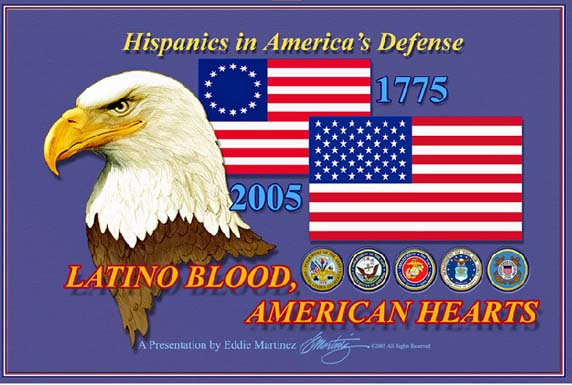

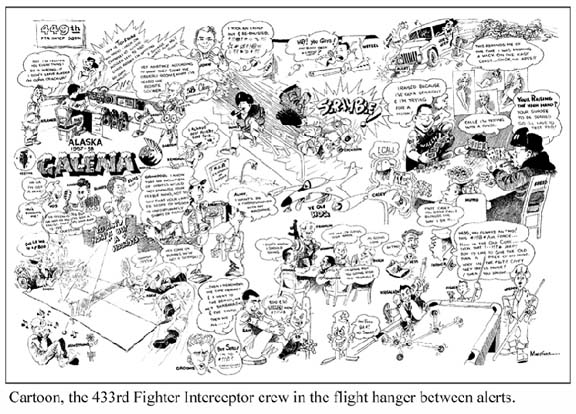
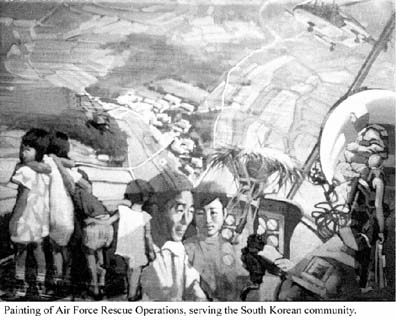

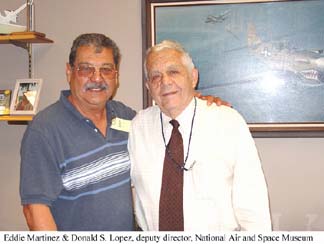 Eddie Martinez & Donald S.
Lopez, deputy director, National Air and Space Museum
Eddie Martinez & Donald S.
Lopez, deputy director, National Air and Space Museum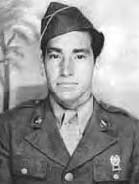
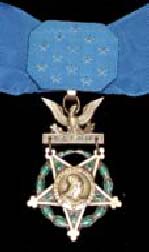
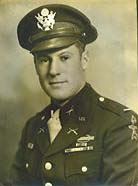
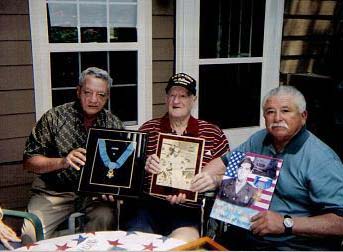
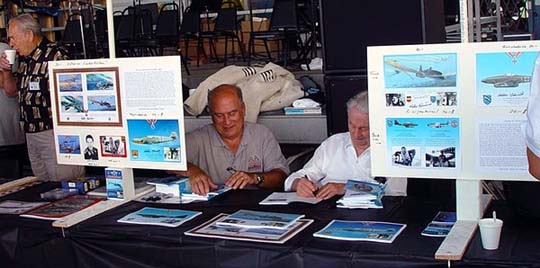
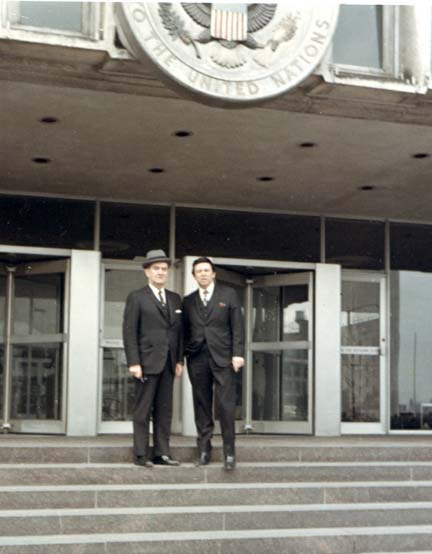
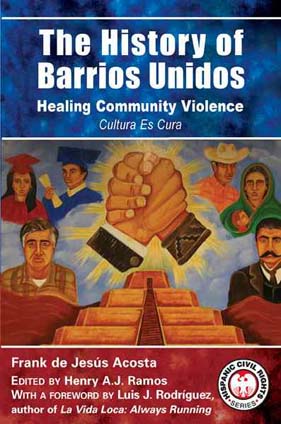 The
History of Barrios Unidos: Healing Community Violence
The
History of Barrios Unidos: Healing Community Violence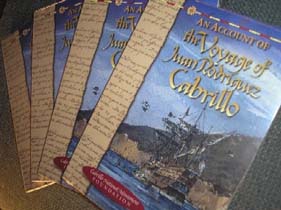 As
the park’s namesake, Juan Rodriguez Cabrillo led the first
European expedition to explore what is now the west coast of the
United States. Cabrillo departed from the port of Navidad,
Mexico, on June 27, 1542. Three months later he arrived at
"a very good enclosed port," which is known today as
San Diego Bay. Historians believe he anchored his flagship, the
San Salvador, on Point Loma's east shore near Cabrillo National
Monument. Cabrillo later died during the expedition, but his
crew pushed on, possibly as far north as Oregon, before
thrashing winter storms forced them to back to Mexico.
As
the park’s namesake, Juan Rodriguez Cabrillo led the first
European expedition to explore what is now the west coast of the
United States. Cabrillo departed from the port of Navidad,
Mexico, on June 27, 1542. Three months later he arrived at
"a very good enclosed port," which is known today as
San Diego Bay. Historians believe he anchored his flagship, the
San Salvador, on Point Loma's east shore near Cabrillo National
Monument. Cabrillo later died during the expedition, but his
crew pushed on, possibly as far north as Oregon, before
thrashing winter storms forced them to back to Mexico. I
left profoundly affected by a deeper appreciation of the intelligence
and emotions that these horses experience and express. Even though my
ancestors were among the ranchers in South Texas in the 1700s, I had
never felt an affinity to horses. My experience with Robin, the
Spanish Colonial horses, and the meeting with other Board Members of
the Heritage Discover Center changed that. They were all horse
lovers!!
I
left profoundly affected by a deeper appreciation of the intelligence
and emotions that these horses experience and express. Even though my
ancestors were among the ranchers in South Texas in the 1700s, I had
never felt an affinity to horses. My experience with Robin, the
Spanish Colonial horses, and the meeting with other Board Members of
the Heritage Discover Center changed that. They were all horse
lovers!!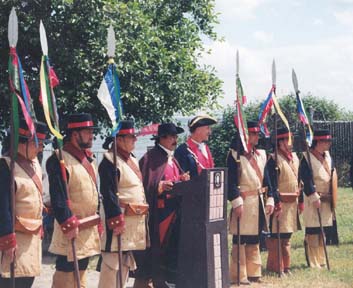
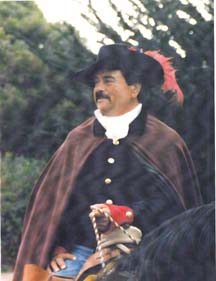
 Luis
J. Rodriguez has emerged as one of the leading Chicano writers in the
country with ten nationally published books in memoir, fiction,
nonfiction, children's literature, and poetry. Luis' poetry has won a
Poetry Center Book Award, a PEN Josephine Miles Literary Award, and
"Foreword" magazine's Silver Book Award, among others. His two
books for children have won a Patterson Young Adult Book Award, two
"Skipping Stones" Honor Awards, and a Parent's Choice Book
Award, among others. A novel, Music of the Mill, was published in
Spring 2005 by Rayo/HarperCollins; a poetry collection, My Nature is
Hunger: New & Selected Poems, 1989-2004, came out in Fall 2005
from Curbstone Press/Rattle Edition.
Luis
J. Rodriguez has emerged as one of the leading Chicano writers in the
country with ten nationally published books in memoir, fiction,
nonfiction, children's literature, and poetry. Luis' poetry has won a
Poetry Center Book Award, a PEN Josephine Miles Literary Award, and
"Foreword" magazine's Silver Book Award, among others. His two
books for children have won a Patterson Young Adult Book Award, two
"Skipping Stones" Honor Awards, and a Parent's Choice Book
Award, among others. A novel, Music of the Mill, was published in
Spring 2005 by Rayo/HarperCollins; a poetry collection, My Nature is
Hunger: New & Selected Poems, 1989-2004, came out in Fall 2005
from Curbstone Press/Rattle Edition.
 "You could always see he had the love for baseball,"
Scioscia said. He said Mota's intelligence is a product of good parenting by Manny
and Margarita Mota. "He's accomplished so much," Scioscia said. "To have
him share his love of the game – that's exciting. He's a great
guy."
"You could always see he had the love for baseball,"
Scioscia said. He said Mota's intelligence is a product of good parenting by Manny
and Margarita Mota. "He's accomplished so much," Scioscia said. "To have
him share his love of the game – that's exciting. He's a great
guy."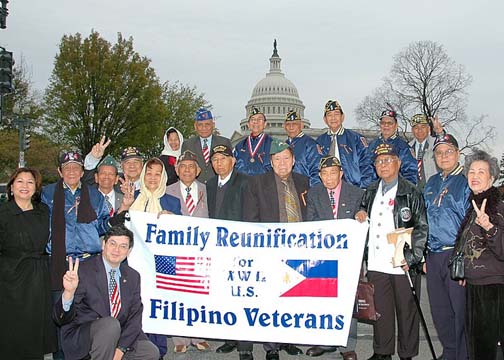
 Valdez
was buried with full military honors in the Santa Fe National Cemetery
located in Santa Fe, New Mexico. The government honored the memory of
Valdez by naming a technical research ship the USNS Pvt Jose F Valdez
(T-AG-169). The local government of New Mexico also honored his memory
by designating a section of U.S. Hwy. 64 in San Juan County as PFC
Jose F. Valdez Memorial Highway.[3]
Valdez
was buried with full military honors in the Santa Fe National Cemetery
located in Santa Fe, New Mexico. The government honored the memory of
Valdez by naming a technical research ship the USNS Pvt Jose F Valdez
(T-AG-169). The local government of New Mexico also honored his memory
by designating a section of U.S. Hwy. 64 in San Juan County as PFC
Jose F. Valdez Memorial Highway.[3]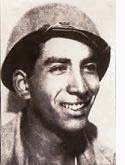
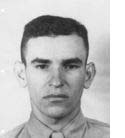
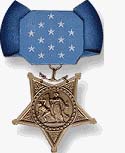
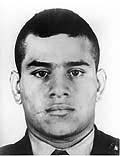
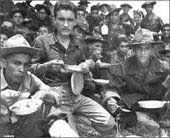 The
seeds of a full scale World War were planted in Asia in 1937 when
Japan invaded China and in 1939 in Europe when Germany invaded Poland.
In October 1940, the 295th and 296th Infantry Regiments of the Puerto
Rican National Guard, founded by Major General Luis R. Esteves,
were called into Federal Active Service and assigned to the Puerto
Rican Department in accordance with the existing War Plan Orange.[2]
The
seeds of a full scale World War were planted in Asia in 1937 when
Japan invaded China and in 1939 in Europe when Germany invaded Poland.
In October 1940, the 295th and 296th Infantry Regiments of the Puerto
Rican National Guard, founded by Major General Luis R. Esteves,
were called into Federal Active Service and assigned to the Puerto
Rican Department in accordance with the existing War Plan Orange.[2]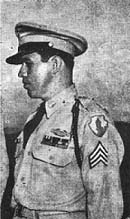 Sergeant
First Class Agustín Ramos Calero was one of many Puerto
Ricans who distinguished themselves in combat. Calero's company was in
the vicinity of Colmar , France and engaged in combat against a squad
of German soldiers in what is known as the Battle of Colmar Pocket .
Calero attacked the squad, killing ten of them and capturing 21
shortly before being wounded himself. Following these events, he was
nicknamed "One-Man Army" by his comrades. A Silver Star
Medal was among the 22 decorations and medals which he was awarded
from the US Army for his actions during World War II, thus becoming
the second most decorated soldier (the most decorated US soldier was
Audie Murphy) in the United States Military during that war.[13]
Sergeant
First Class Agustín Ramos Calero was one of many Puerto
Ricans who distinguished themselves in combat. Calero's company was in
the vicinity of Colmar , France and engaged in combat against a squad
of German soldiers in what is known as the Battle of Colmar Pocket .
Calero attacked the squad, killing ten of them and capturing 21
shortly before being wounded himself. Following these events, he was
nicknamed "One-Man Army" by his comrades. A Silver Star
Medal was among the 22 decorations and medals which he was awarded
from the US Army for his actions during World War II, thus becoming
the second most decorated soldier (the most decorated US soldier was
Audie Murphy) in the United States Military during that war.[13]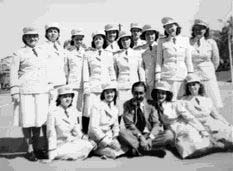 When
the United States entered World War II, Puerto Rican nurses
volunteered for service but were not accepted into the Army or Navy
Nurse Corps. In 1944, the Army Nurse Corps decided to actively recruit
Puerto Rican nurses so that Army hospitals would not have to deal with
the language barriers. Among them was Second Lieutenant Carmen
Dumler, who became one of the first Puerto Rican female military
officers. A total of 200 women from Puerto Rico served as nurses.
When
the United States entered World War II, Puerto Rican nurses
volunteered for service but were not accepted into the Army or Navy
Nurse Corps. In 1944, the Army Nurse Corps decided to actively recruit
Puerto Rican nurses so that Army hospitals would not have to deal with
the language barriers. Among them was Second Lieutenant Carmen
Dumler, who became one of the first Puerto Rican female military
officers. A total of 200 women from Puerto Rico served as nurses.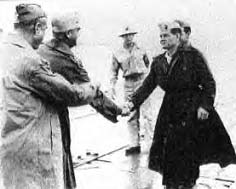
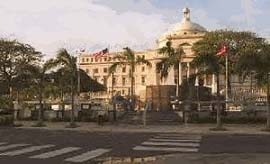
 In the latest issue, at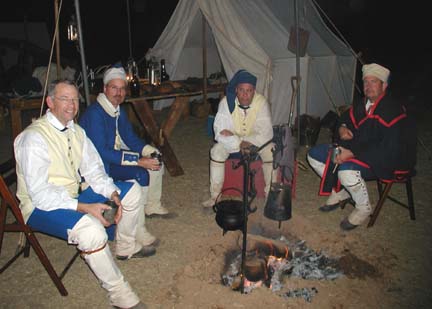
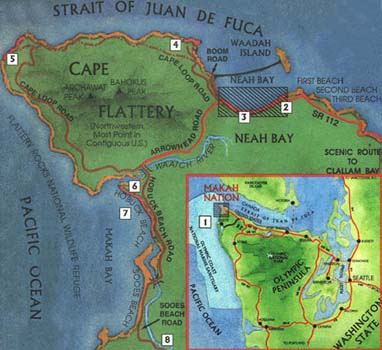

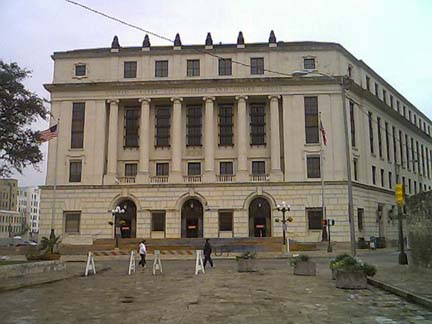
 WITH
ALL ARMS
WITH
ALL ARMS Sunday June 10, 7am