Image result for world religions symbols  


FEBRUARY 2019

Editor: Mimi Lozano ©2000-2019
mimilozano@aol.com

Table of Contents

United States
Spanish Presence in the Americas Roots
Heritage Projects
Historical Tidbits
Hispanic Leaders
Latino America Patriots
Surnames 
DNA
Family History
Religion
Education 
Culture
Health
Books and Print Media
Films, TV, Radio, Internet

Orange County, CA
Los Angeles County, CA

California
 
Northwestern US

Southwestern US
Texas
Middle America
East Coast
African-American
Indigenous
Sephardic
Archaeology
Mexico
Caribbean Region
Central/South America
Pan-Pacific Rim

Philippines
Spain
International
 

February Submitters, contributors, or attibuted to:  

Somos Primos Advisors   
Mimi Lozano, Editor
Mercy Bautista Olvera
Roberto Calderon, Ph,D.
Dr. Carlos Campos y Escalante
Bill Carmena
Lila Guzman, Ph.D
John Inclan
Galal Kernahan
Juan Marinez
J.V. Martinez, Ph.D.
Dorinda Moreno
Rafael Ojeda
J.Gilberto Quezada
Oscar Ramirez y Sanchez, Ph.D. 
Ángel Custodio Rebollo
Tony Santiago
John P. Schmal


Mike Acosta
Terry Alarcón Ontiveros
Dr. Félix D. Almaráz, Jr.
Jon Lee Anderson,
Paul Appelbaum
Dan Arellano 
Maria Azios
Dennis Bixler-Márquez
Gilda Bloom
Mike Borrelli 
C. Campos y Escalante
Bill Carmena
Denise Chávez
Amy Chozick
Nicole Cruz
Rob Garcia
María Cortés González
Sandra Dibble
Christine Engla Eber
Neil Genzlinger  
Trinidad Gonzales
Yvonne Gonzalez Duncan 
Alan Grabinsky
R. Bruce Harley
Alvaro Huerta
Alveda King
Rosemary LaBonte
Charles F. Lummis
Ruben Martinez
Lindsay McKenzie
José Medina
Fanny Miller
Dorinda Moreno
Michael Morris
Enrique Murillo Jr.
Dr. Michael Ortiz
Raul Ortiz
William Pack
Rudy Padilla
Ricardo R. Palmerín Cordero
Doug Pappas
Joe Perez
Richard Perry
Ron Querry
J. Gilberto Quezada
Rosalinda Quintanar, Ph. D.
Jan Rader
Oscar Ramirez y Sanchez , Ph.D.

Enriqueta Ramos, Ph.D.
Robert Robinson
Jaime E. Rodriguez O. 
Viola Rodriguez Sadler  
Gilbert Sanchez, Ph.D.
Joe Sanchez Picon
Loretta Sanchez
Linda Serna
Sister Mary Sevilla, CSJ
Nicholas Scurich
Nicola Smith
Robert Smith
Anthony Sobotik
Anthony Startz
C. P. Thompson
Jesús S. Treviño
Charley Trujillo
Linda Vallejo
Albert V Vela, PhD
Yomar Villarreal Cleary
Jaime Viteri
Ed Whelan
Minnie Wilson


Quotes or Thoughts to Consider Sent by J. Gilberto Quezada
"A happy family is but an earlier heaven."   ~ John Bowring

"The family is one of nature's masterpieces."   ~ George Santayana

"None but a mule denies his family."   ~ Anonymous

"The family you come from isn't as important as the family you're going to have."   ~ Ring Lardner 

"Rank and riches are chains of gold, but still chains."   ~ Giovanni Ruffini

"I divide all readers into two classes:  those who read to remember and those who read to forget."  ~ William Lyon Phelps

"Reading is to the mind what exercise is to the body."   ~ Joseph Addison

"We should be as careful of the books we read, as of the company we keep.  The dead very often have more power than the living."   ~ Tryon Edwards

"No entertainment is so cheap as reading, nor any pleasure so lasting."   ~ Mary Wortley Montagu

"Reading is a basic tool in the living of a good life."  ~ Mortimer J. Adler 

"Read the best books first, or you may not have a chance to read them all."  ~ Henry David Thoreau

"Facts are facts and will not disappear on account of your likes."  ~  Jawaharlal Nehru

"You are today where your thoughts have brought you; you will be tomorrow where your thoughts take you."    ~ James Allen
 
"The soul of God is poured into the world through the thoughts of men."   ~ Ralph Waldo Emerson

"Learning without thought is labor lost."   ~ Confucius

"The more we study the more we discover our ignorance."   ~ Percy Bysshe Shelley
 
"Language is the blood of the soul into which thoughts run and out of which they grow."  ~  Oliver Wendell Holmes

"Language is the dress of thought."   ~ Samuel Johnson
 
"Language is only the instrument of science, and words are but the signs of ideas."    ~ Samuel Johnson

"Think like a wise man but communicate in the language of the people."  ~ William Butler Yeats


UNITED STATES

Identity: Who Do They Say You Are? Who Do You Say You Are? by Albert V. Vela, Ph.D. 
New president of Mexico creates 'free zone' along U.S. border in hopes of boosting economy, reducing migration
U.S. unauthorized Immigrant population continues to decline slowly, from peak in 2008
Cambio de Colores 2019 Conference
The fortune 500 Just Lost Its first and Only Latina CEO By Claire Zillman
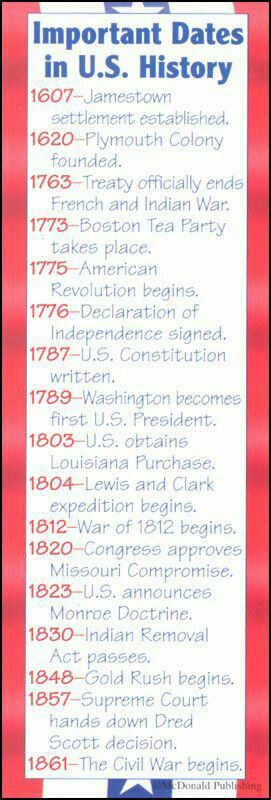
History of Amendments to the U.S. Constitution
Ulysses Grant’s Failed Attempt to Grant Native Americans Citizenship
German Government-Backed Brochure Aims To Brainwash Children
Ken Marries Ken? Mattel Under Fire Over Same-Sex Wedding Set
  
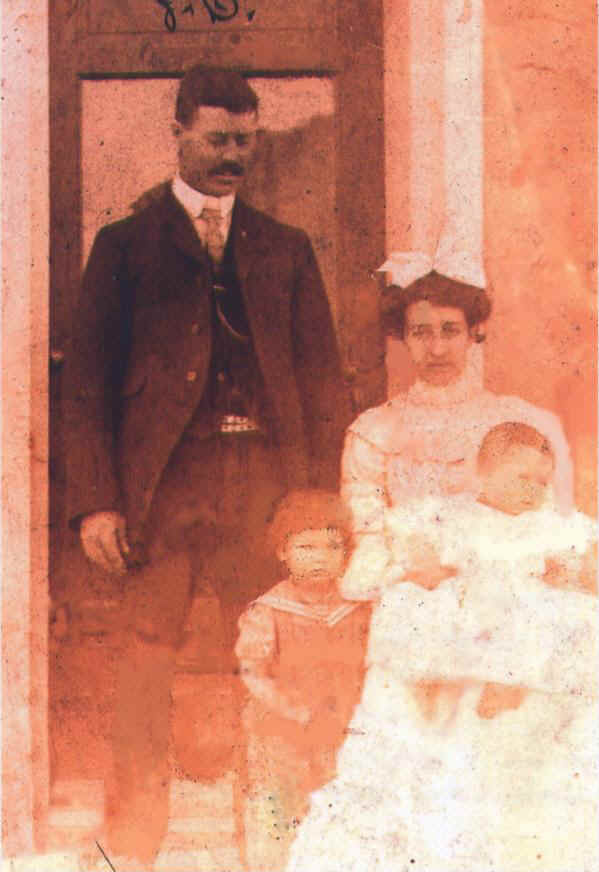
Our Grandparents by Rosemary LaBonte
Government constructed Sound Walls
Alveda King: African American Leaders Unite to Support Trump's Wall
by Michael Morris
Central American Countries Are Helping Middle Easterners Illegally Enter The United States
Texas Requests another 120 miles of border fencing
Border Massacre Reveals Truth About Crisis
Texas Hispanic activist Muniz free after 24 years in prison by Terry Wallace


M


Identity: 
Who Do They Say You Are? 
Who Do You Say You Are?

© Albert V Vela, PhD

February 1, 2019  


The Editor of SomosPrimos, states that the mission of the on-line magazine is two-fold: for persons to discover for themselves who they are, and for them to learn who their ancestors were.  

In her introduction to the January 2019 issue of SomosPrimos, Mimi relates how in junior high she saw how badly Mexicans were depicted in US History….which was not how she saw her grandfather and uncles as “fine, upstanding, caring, honest men.” She also found that the Mexican presence in US history books was scarce and negative.  

She comments how important researching her family history was because it “totally changed me. It grounded me. I was no longer an immigrant, a foreigner. I learned some of my ancestors were already here, and others came from Europe. I was born in San Antonio Texas, and learned I was a descendant of the original families that settled San Antonio in the 1730s, before there was a United States of America.”  

Later, in the early 1950s, she attended UCLA. She writes, “Rather than accepting information whose point of view I questioned, I substituted Economic classes for US History. My historic knowledge gives me peace and reinforces my patriotism as an American.”  

Obviously there is much more to Mimi’s observations of how badly US historians and schoolteachers distorted Mexicans and Mexican Americans in the Southwest. And like her, something inside makes us question things when we sense they are not right.  

I recall telling my high school US history teacher that my dad (1898-1973) strongly believed the United States stole the California from Mexico. When she candidly said that England or Russia would have taken it if the United States hadn’t, this struck me as wrong. Now we know that the desire to acquire California actually started with Thomas Jefferson (1801) and ended with James K. Polk who provoked the Mexican-American War (1846-1848).  

Today academics say that identity has two components: Who we think we are and who others think we are. Scholars explain that because so little of Mexican American culture was presented in history books and stereotyped in movies, we experienced ourselves as invisible. This feeling of invisibility resonated with me for a long time--the feeling I lived with a phantom.  

Dr George I Sánchez, New Mexican writer and statesman, was most likely the first to refer to Mexican Americans as an invisible minority. In his book, Forgotten People (1940), he reflected the view of Anglos that we did not exist because we had no culture or history—we had no identity.  

In the writing of the book Tracks to the Westminster Barrio: 1902-1960s, I came across Chicana/o academics like Martha Menchaca, Lisbeth Haas, Vicki Ruiz, Matt García, Gilbert G González, Albert Camarillo, Marío García, and Rudy Acuña, to name a few, who one way or another pointed to racism to explain why we became a subordinate minority in the Southwest. These authors also acknowledge how much they owe to others for their God-given talents and scholastic successes: parents, siblings, teachers, professors, spouses, and friends of all colors, creeds, political persuasions, ethnicities. . .  

Like in the story of It’s a Wonderful Life discussed by Professor Esolen in the following paragraph, good people mysteriously enter our lives uplifting our spirits with words of encouragement and guidance. With their support we are able to gain insights about our strengths and weakness to the point that we discover our personal power and voice.   

Professor Anthony Esolen and Identity

Anthony Esolen is professor and writer-in-residence at Thomas More College in New Hampshire. He wrote a literary piece for the December 2018 Magnificat magazine whose title is The Ordinary Man.  

I present it here because what Esolen writes is loaded with attributes of Identity. It’s a short bio of the famous movie director/producer Frank Capra best known for the Christmas favorite movie, It’s a Wonderful Life.  

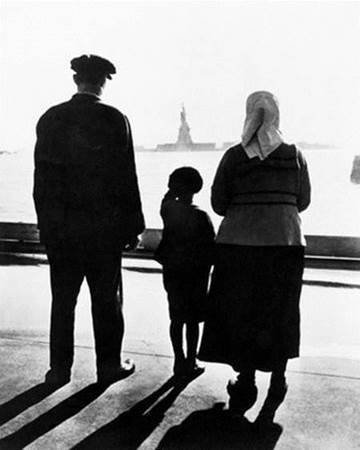
Capra immigrated with his Sicilian parents as a young boy. When they got to the New York Harbor, his father Salvatore pointed to the Statue of Liberty saying, "Its light was the greatest the world had seen since the Star of Bethlehem," (p 208). His dad died in a horrible accident while working in a factory when Frank was in his teens.  

Frank knew what it was like to be dirt poor in the twenties and thirties, to be black with machine oil, to scramble from one job to another, to sing with tramps around a fire, and to bend the knee with your neighbor in worship.  

He was not a pious young man. He knew divorce also; but his second wife brought him back to the faith he never quite lost.  

He was first in his class at Caltech. Had he not been a director he would have been an astrophysicist. He opposed "mass entertainment, mass production, mass education, mass everything, “I was fighting," he said, for "the preservation of the liberty of the individual against the mass."  

It's a Wonderful Life also tells much about Capra’s values and his fundamental belief in the importance of being generous with our talents. In the movie, George Bailey is the good guy who gives his heart to the community of Bedford Falls. At a critical juncture, we see how Bailey is shattered and desperate. It's Christmas Eve night; it's snowing. Bailey is resolved to jump off a bridge into the frigid river to end his life.   

Clarence, an angel, appears to Bailey to save his life. He tells the angel, "I wish I'd never been born." Clarence gives Bailey his wish and shows him horrible scenes of how his town, family, and friends would have turned out if he had never been born.   

At the cemetery Clarence points out the grave of his younger brother, Harry, saying, "Your brother Bailey broke through the ice and was drowned at the age of nine."   

Bailey protests, "That's a lie! Harry Bailey went to war. He got the Congressional Medal of Honor. He saved the lives of every man on that transport.”   

Clarence interjects,

            "Every man on that transport died. Harry wasn't there to save them,  because you weren't there to save Harry. You see, George, you really had a  wonderful life. Don't you see what a mistake it would be to throw it away?"   

After more scenes of what might have been, Bailey comes back to his senses, runs to the bridge where he was ready to jump. He pleads with Clarence to help him. "Please! I want to live again!" And he pitifully implores God to bring him back.  

With his prayer answered, George runs home to save the Savings and Loan from the evil hands of the unscrupulous scrooge Henry Potter. In the final scene we hear the town singing Hark the Herald Angels Sing and Auld Lang Syn.

Capra, like Charles Dickens, was in love with goodness. Not with sweetness or political correctness, but goodness. He saw that people who follow their dreams of the modern world, make the world a nightmare; but people who hold true to God, their family, the place of their birth, and their neighbors are the means God uses to make this crazy world worth living in (p 212).  


M


New president of Mexico creates 'free zone' along U.S. border in hopes of boosting economy, reducing migration

Rob Nikolewski Rob NikolewskiContact Reporter
The San Diego Union-Tribune, December 31, 2018


Andres Manuel Lopez Obrador delivers a speech during a campaign rally in Mexico City on May 24, 2018. Known by his initials, AMLO is making good on his promises to make dramatic changes to the Mexican government. (OMAR TORRES / AFP/Getty Images)

Mexico’s new, left-wing populist president is ringing in the new year with a dramatic economic plan for border communities aimed at attracting new investments and creating jobs that could potentially curb the influx of migrants into the United States.

Andrés Manuel López Obrador announced last Saturday what is called the Tax Incentive Decree for the Northern Border Region that will create a “free zone” along the border with the U.S that is 15.5 miles (25 kilometers) wide. It encompasses nearly 2,000 miles, all the way from the Gulf of Mexico to the Pacific coast.

For communities within the border strip, such as Tijuana, the Mexican government will:

  • reduce income taxes from 30 percent to 20 percent
  • slash the Value Added Tax for goods coming into the country from 16 percent to 8 percent
  • boost the minimum wage 100 percent to 176 pesos ($8.80) per day, and
  • make fuel prices the same as those in the the U.S.

“It’s going to be the biggest free zone in the world,” López Obrador — who is also known by his initials, AMLO — said. “It is a very important project for winning investment, creating jobs and taking advantage of the economic strength of the United States.”

The new government believes the effects of the free zone will improve the economic conditions of people along the border, which in turn will reduce the incentive for Mexicans to migrate north in search of better jobs.

“Migration should be a choice, not forced,” López Obrador said.

The decree represents a return to the past for the Baja California peninsula.

For decades, the area was known as Zona Libre, a duty-free zone for everything from perfumes to electronics to high-end clothing. But with the implementation in 1994 of the North American Free Trade Agreement, or NAFTA, the Mexican government declared residents of border regions should be subject to the same import duties as other areas of the country.

Border residents eventually saw their sales taxes raised, leading to complaints from Baja California businesses who said higher taxes put them at a competitive disadvantage with businesses across the border in San Diego.

“The border is different from the rest of the country,” Pedro Romero Torres-Torija, a Baja California business leader who has advocated for a free zone, told the Union-Tribune in May. “We are a binational region, with different systems, different economies.”

Duncan Wood, director of the Mexico Institute at the Washington D.C.-based Wilson Center, said cutting the Value Added Tax in half is aimed at making stores in Mexico more competitive.

“Maybe you’ll get a lot more American tourists coming across to buy things,” Wood said. “But one of the great fears is that a lot of Mexican companies will move their headquarters there (within the free zone) so they don’t have to pay 16 percent value added tax on their products.”

While that could be very good news for the border region, it could lead to an overall loss of tax revenue for the country as a whole — a scenario Wood said Mexico’s treasury ministry has raised.

“If a lot of companies relocated to the border,” Wood said, “then the Mexican government loses a fortune.”

Najla Wehbe Dipp, who served on the Tijuana city council from 2010 to 2013 and now lives in San Diego as a Realtor, said doubling the minimum wage should help workers, “especially everyone who works in sectors like agriculture because that’s where people get paid the least.”

But on the other hand, “it means that business owners won’t be able to afford (to hire) as many employees,” Wehbe Dipp said. “There’s two sides to everything.”

There’s also concern that the hoped-for effects of the free zone decree could be muted by the fact that the Value Added Tax will not initially be seen immediately once a consumer purchases an item.

“What’s going to happen is that you can keep your (receipt) and at the end of the year when you declare your taxes, you can make (the purchase) tax deductible,” Wehbe Dipp said. “It’s not going to be reflected at the moment you pay.”

Wehbe Dipp said she expects the free zone will have its biggest impact on businesses and factories because they buy in larger volumes.

“They should be able to reduce the price of their products and that should cause people to afford to buy more,” she said.But taken together, would the decree eventually lead to a reduction in migration to the U.S.?

“I think it could,” Wehbe Dipp said, “but we’re not going to see it in the first year. I think it’s going to take a long time to see a real economic impact.”

The free zone is part of a larger push by López Obrador, who has promised to create 400,000 jobs across Mexico.

In the southeastern part of the country, about 2 million acres of fruit trees and timberland are being planted and in the new president’s home state of Tabasco, construction of the Dos Bocas refinery is underway.

“It actually makes a lot more sense to import refined products but (López Obrador) believes it’s much better to have (an energy resource) product that is produced in Mexico,” Wood said. “This is where his resource nationalism comes into play. He really is an economic nationalist … He’s following through on his campaign promises.”

Staff writer Sandra Dibble contributed to this story.


MU

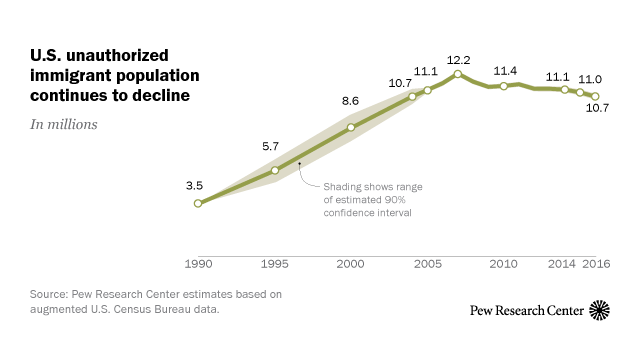
U.S. unauthorized Immigrant population continues to decline slowly, from peak in 2008


Source:  Hispanic Marketing 101, Vol 17, Issue 1, January 4, 2019

Editor Mimi:  Wow. .   No wonder Americans are beginning to notice the unauthorized Immigrant population.  
Look at the numbers:  from 1990 to the peak years of 2008-9.    It was almost
4 times the number entering since 1990.  Plus unauthorized (illegal) immigrants  has continued since the peak high between 2008-2009.  

These PEW figures are in the millions AND they are the figures for only the unauthorized immigrant population, not the legal immigrants.
  Legal immigrants are not included in those numbers.  Remember too,  the 1986 Amnesty facilitated many living in the United States illegally, were now able to apply for welfare and free medical services.  They were no longer in hiding.  


M


Cambio de Colores 2019 Conference


Cambio de Colores is a multistate conference about integration of immigrants in new destinations. People who work with Latinos and immigrant communities come together to share research and best practices that facilitate the integration of newcomers. Click here to learn more about the conference mission.

Save the Date: The 2019 Cambio Conference will be held in Columbia, MO, from June 5-7, 2019. Stay informed about the conference activities by signing up for monthly email updates.
URL: https://cambioconference.wordpress.com/

Source: Ruben Martinez, mailto:mart1097@msu.edu
Sent: Robert6o Calderon, Roberto.Calderon@unt.edu 


The fortune 500 Just Lost Its first and Only Latina CEO

By Claire Zillman January 14, 2019


If you can believe it, the way-too-small pool of Fortune 500 female CEOs just got even less diverse.

PG&E Corp. on Sunday announced that CEO Geisha Williams was stepping down. Her departure comes as the utility company—California’s largest—confronts political and financial upheaval from its role in sparking California wildfires. The company said that John Simon, its general counsel, will serve as interim CEO as its board of directors searches for a permanent replacement.

Williams’s departure marks the first exit of a female CEO from the Fortune 500 this year—bringing the total down to a measly 27 or 5%. What’s more, her resignation means the U.S.’s top 500 companies by revenue has lost its first and only Latina chief executive, according to Fortune data.

Fortune’s 2017 profile of Williams digs into her unique background. As a 5-year-old in 1967, she immigrated with her family to St. Paul, Minnesota from Cuba, where her parents had been political dissidents. By age 7, she’d become her family’s main translator, conducting conversations with accountants, lawyers, and property managers. After earning an engineering degree from the University of Miami and completing a lengthy stint at Florida Power & Light, she joined PG&E in 2007. There, she worked on upgrading the utility’s electricity grid, pushed it into clean energy, and decided to decommission California’s last nuclear plant. She was named PG&E CEO in 2017.

But since then, PG&E has been dogged by liability for wildfires that have devastated its home state, with investigators tying 17 major blazes to PG&E equipment in the year Williams became chief executive. Investigators are still trying to determine if the utility’s gear was the cause of November’s Camp Fire, the deadliest in California history, but PG&E has reported an equipment malfunction in the area before the fire erupted.

In announcing Williams’s departure on Sunday, PG&E chair Richard Kelly cited the “tremendous challenges PG&E continues to face.” Indeed, hours after Williams exited the company, it said it would file for Chapter 11 bankruptcy protection amid the financial strain of the wildfire fallout. Its shares plunged on Monday.

Williams was one of the 32 female CEOs in the Fortune 500 in 2017—the highest total ever. Since then, the number has fluctuated to 24 last year, then up to 28 before Sunday’s news. The share of female CEOs in the Fortune 500 is often cited as a stark illustration of men’s lasting grip on corporate power, even as the #MeToo movement prompts a reexamination of women’s marginalization in the workplace.

But the group of female Fortune 500 CEOs is also a nod to corporate America’s utter failure to diversify its leadership ranks. As the club loses its only Latina member, it should be noted that it also has zero African-American women.

http://fortune.com/2019/01/14/geisha-williams-pge-bankruptcy-fortune-500-latina-ceo/?utm_source=
Chicago+Latino+Network+List&utm_campaign=823d22dc42-EMAIL_CAMPAIGN_2019_01_16_
08_00&utm_medium=email&utm_term=0_52bf0e15cb-823d22dc42-261193301


Forwarded by 
Chicago Latino Network
1212 N. LaSalle St.
Chicago, IL 60610


M

Amendments to the U.S. Constitution 

================================= =============================

The United States Constitution was signed on September 17, 1787 in Independence Hall in Philadelphia, Pennsylvania. On May 29, 1790, Rhode Island was the last of the original 13 colonies signed the document and  joined the United States.    https://www.pinterest.com/pin/850406342106591278/  

Sent by Robert Smith  pleiku196970@yahoo.com.

M
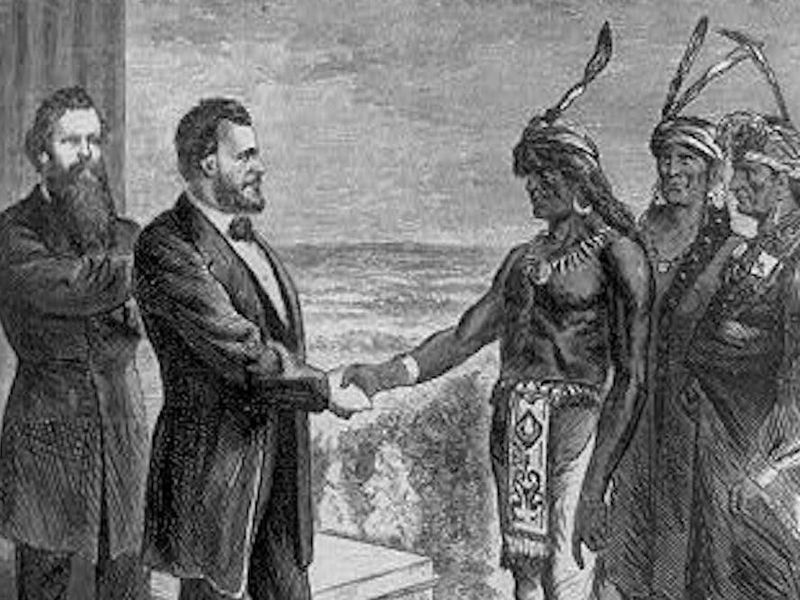
Ulysses Grant’s Failed Attempt to Grant Native Americans Citizenship


In a forgotten chapter of history, the president and his Seneca Commissioner of Indian Affairs, 
Ely Parker, fought for Native American rights

=================================== ===================================
The man elected president in 1868—Ulysses S. Grant—was determined to change the way many of his fellow Americans understood citizenship. As he saw it, anyone could become an American, not just people like himself who could trace their ancestry back eight generations to Puritan New England. Grant maintained that the millions of Catholic and Jewish immigrants pouring into the country should be welcomed as American citizens, as should the men, women, and children just set free from slavery during the Civil War. And, at a time when many in the press and public alike called for the extermination of the Indians, he believed every Indian from every tribe should be made a citizen of the United States, too.

Grant was sworn into office as president in 1869, and set forth his vision in his first inaugural address. Calling American Indians the “original occupants of the land,” he promised to pursue any course of action that would lead to their “ultimate citizenship.” It was not an idle promise. In the spring of 1865, he had been appointed the nation’s first General of the Army, a post that involved overseeing all the armies of the United States—including in the West, where conflicts with native tribes had raged throughout the Civil War. In this position, Grant had relied on his good friend and military secretary, Ely S. Parker, a member of the Seneca tribe, for advice. Now, as the newly inaugurated president of the United States, he was ready to implement his plans for the Indians, with Parker at his side as his Commissioner of Indian Affairs.

Parker and Grant’s friendship began in 1860, when Parker was working at the time as an engineer for the Treasury Department in Galena, Illinois, and often visited a leather goods store, where the proprietor’s son, Ulysses, worked as a clerk. Ulysses Grant had developed a deep sympathy for the Indians while serving in the army during the Mexican War. Later, on active duty in California and the Columbia River Valley, he saw firsthand the misery that Indians endured in his own nation. Grant never bought into the popular notion that Americans wanted to improve the lives of the native peoples, noting that civilization had brought only two things to the Indians: whiskey and smallpox.

By the time he met Parker, though, Grant was considered a failure. His heavy drinking had helped to end his military career, and now, as a grown man with a wife and four children to support, he was reduced to working for his father. But Parker recognized a kindred spirit. Unlike most white men, who prided themselves on being outgoing, even boisterous, Grant was quiet—so reserved that he usually headed for the store’s back room to avoid talking to customers. Only after Grant got to know a person well did he reveal his kindness and his intelligence. This was just how Parker had been taught to behave when growing up on his people’s reserve in Tonawanda, New York. Men were to remain stoic in public, and to open their hearts to friends only in private.


That President Grant chose Ely Parker as his Commissioner of Indian Affairs was no surprise to anyone who knew Parker. A descendant of the renowned Seneca chiefs Red Jacket and Handsome Lake, he had been marked for greatness even before birth, when his pregnant mother had dreamt of a rainbow stretching from Tonawanda to the farm of the tribe’s Indian agent, which, according to the tribe’s dream interpreters, meant that her child would be a peacemaker between his people and the whites.

Parker mastered English in local academies, both on and off the Tonawanda Reserve, and became an avid reader. In 1846, when just 18 years old, he became the official spokesman of his people, who were fighting the U.S. government’s efforts to remove them from Tonawanda. He soon traveled with the tribe’s leaders to Washington, where he impressed the nation’s top politicians, including President James K. Polk. It would take 11 more years of negotiating with the government for Parker to win the right of his people to stay in their ancestral home. During those years, he studied law and even helped argue a case in the Supreme Court on behalf of his tribe, but he was unable to take the bar exam because he was an Indian, so he became an engineer instead. He was overseeing the construction of a customhouse and marine hospital in Galena when he met Ulysses Grant.

When the Civil War broke out, Parker returned to New York and tried unsuccessfully to enlist in the Union Army. Finally, with the help of his friend Grant, who was no longer a failure, but instead a renowned general on the brink of defeating the Confederates at Vicksburg, Parker won an appointment as a military secretary. He first served General John Smith and later Grant himself. From Chattanooga to Appomattox, Parker always could be seen at Grant’s side, usually carrying a stack of papers and with an ink bottle tied to a button on his coat. 


When Lee finally surrendered, it was Ely Parker who wrote down the terms.

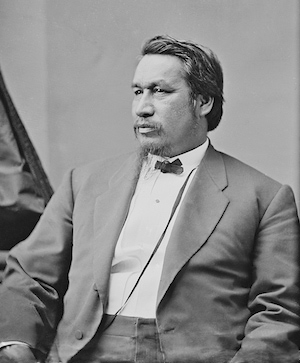
Ely S. Parker, the Seneca attorney, engineer, and tribal diplomat, as photographed by Civil War photographer Mathew Brady (National Archives)

The friendship between Grant and Parker strengthened after Grant was appointed General of the Army, a position he held from 1865 to 1869. During these years, Grant often sent Parker, now an adjutant general, to meet with tribes in the Indian Territory and farther west in Montana and Wyoming. Parker listened as tribal leaders described how their country was being overrun by miners, cattlemen, railroad workers, farmers, immigrants from Europe, and freedmen from the South.

Parker reported everything back to Grant and together they worked out the details of a policy with the main goal of citizenship for the Indians. The army would protect Indians on their reservations as they transitioned from their old ways and entered the mainstream of American life, learning how to support themselves through new livelihoods like farming or ranching. It might take a generation or two, but eventually Indians would be able to vote, own businesses, and rely on the protections guaranteed to them in the Constitution.

As president, Grant made Parker his Commissioner of Indian Affairs, and Parker began working to implement the president’s plans, appointing dozens of army officers to oversee the superintendencies, agencies, and reservations in the West. Grant and Parker were so certain of the wisdom of their policy that they failed to see how many people opposed it. Congressmen, who had previously rewarded their supporters with jobs in the Indian service, resented the fact that Grant had taken away these plum positions. Many Americans, especially in the West, complained that the president sided with the Indians rather than with his own countrymen. Reformers, who wanted the government to impose radical changes on the Indians, doing away with tribal identity and dividing reservations among individual property owners, criticized Grant and Parker for allowing the Indians to make changes at their own pace. Tribes that had not yet been brought onto reservations vowed to fight any attempt by the army to do so. Tribes in the Indian Territory, especially the Cherokee, wanted to remain independent nations.
=============================================== ==== ===========================================
But no one opposed Grant’s policy as strongly as the Board of Indian Commissioners, a 10-man committee of wealthy Americans that Grant had appointed as part of his new Indian policy. Grant had expected the board to audit the Indian service, but the board demanded instead to run it.

The board wholeheartedly supported the efforts of Congress to overturn Grant’s Indian policy. The first step came in the summer of 1870 when Congress banned active duty military personnel from serving in government posts—primarily, Grant believed, so that Congressmen could appoint their supporters instead. To counteract this move and prevent the Indian service from sliding back into the corruption of political patronage, the president appointed missionaries to run the reservations. Grant was still determined to win American citizenship for every Indian, and he hoped that the missionaries would guide them along the path toward it. But the Board of Indian Commissioners remained just as determined to oppose Grant. William Welsh, the board’s first chairman, believed the president’s policy could be overturned by toppling the “savage” who stood at its center, Ely Parker. Welsh was infuriated that a man like Parker could hold such a high position. He was also appalled that Parker had married a young white woman, Minnie Sackett, and that the couple was the toast of Washington society.

To take down Parker, Welsh accused him of negotiating a bloated million-dollar contract to supply the Sioux in the summer of 1870 and pocketing most of the money himself. Welsh demanded that Congress investigate Parker and hand over the management of the Indian service to the Board of Indian Commissioners. Congress obliged, forcing Parker to submit to a public trial before a committee of the House of Representatives. 

Although Parker was ultimately exonerated, Congress passed legislation recognizing the members of the Board of Indian Commissioners as the supervisors of the Indian service. Humiliated and with no real power, Parker resigned his position as the Commissioner of Indian Affairs in 1871.

Without an ally like Parker at his side, Grant watched his plans for the Indians come undone. A succession of Commissioners of Indian Affairs replaced Parker, but none had his vision. Before long, Grant ordered the army, which he had once hoped would protect the Indians, to fight against the tribes in a series of bloody wars, including the Modoc War in 1873, the Red River War in 1874, and the Great Sioux War in 1876. By the time Grant left office in 1877, his “peace policy,” as the press had nicknamed it, was judged a failure by all.


Since then, Grant has been remembered as a “circumstantial” reformer, at best, or as the clueless tool of wealthy men like Welsh, at worst. His accomplished friend Ely Parker has been wrongly dismissed as little more than a token. Americans would not realize until the 20th century that the vision of the two friends had been correct. In 1924, Congress granted citizenship to all American Indians who had not already achieved it.
In 1924, Congress granted citizenship to all American Indians who had not already achieved it.

Sadly, the friendship between Parker and the president came undone along with Grant’s Indian policy. After resigning his post in 1871 and moving away from Washington, Parker saw Grant only twice more. When the former president lay dying in the summer of 1885, Parker came to visit him, but Grant’s oldest son Fred always turned him away. While Grant never reflected on the failure of his policy, Parker always regretted that the plans he had made with his quiet friend from the leather goods store in Galena had ended so badly.

Mary Stockwell is a writer in Ohio. She is the author of Interrupted Odyssey: Ulysses S. Grant and the American Indians.

Source:  Smithsonian 


M


German Government-Backed Brochure Aims To Brainwash Children


As the progressive agenda manifests itself in every facet of our society, parents are on the frontlines in the battle to preserve traditional values.

For raising our children the way we see fit, and for not accepting the progressive agenda, we are accused of discrimination, intolerance – even racism.

This problem is not unique to the United States, and one country is pushing back against traditional families in an absurd way.

Germany is a democratic nation with a parliamentary system similar to that of the U.K.

But like the rest of Western Europe, the government of Germany has increasingly forced progressive propaganda on its citizens.

Most German families still follow the norms of traditional gender roles when it comes to their children – and that does not sit well with the German government.

Like other nations, including the U.S., German children are being indoctrinated in homosexual and transgender lifestyles in school and the media.

Now, to further root this propaganda in the hearts of future generations, the German Federal Ministry for Family Affairs has helped to produce a brochure for teachers – aimed at beginning the indoctrination process in preschool.

And what does this brochure think of traditional parents who oppose these teachings?

The brochure was published by the Amadeu Antonio Foundation, whose website makes comparisons between traditional parents and neo-Nazis and anti-Semites for promoting “hate and intolerance.”

The Minister of Family herself, Dr. Franziska Giffey, wrote a foreword for the brochure stating their aim is to “change the behavior of preschool children” whose families oppose “gender” theory, “sexual diversity,” the “sexualization” of children, and “immigration,” according to LifeSite News.

In fact, the German government donated the equivalent of over five thousand U.S. dollars to the Foundation that created the brochure.

The brochure calls the “intolerance” of traditional parents a “children’s rights issue” and states that acceptance of alternative lifestyles and mass immigration creates a “civil, welcoming society.”

The authors of the brochure include their thought that, “part of the educational task to teach children gender equality and the diversity of gender identities and ways of life,” and to accept these ways of life is “part of a democratic attitude…crucial in order to avoid discrimination because of the sex or sexual orientation and in order to empower inter- and transsexual children,” as reported by LifeSite News.

They write that many children are growing up in so-called “rainbow” families and that reality should be reflected in the nation’s preschools.  So what do they propose German children be subjected to in preschool?  Well, they go so far as to give examples to assist educators who meet with resistance from conservative parents.

One such example relayed how two siblings who were quiet and obedient in class were being raised by “racist parents” because they displayed “traditional gender roles.”

“The girl wears dresses and braids; at home she is being instructed in house-and-needlework; the boy is physically being strongly challenged and drilled,” stated two professors with the Foundation’s Gender and Racism group.

The government-funded brochure claims that these “issues” with conservative parents “must be addressed.”

Another example is the story of a mother who complains to a preschool teacher because her son is being encouraged to play “makeup and dress-up games” that are traditionally female.

In this case, the brochure’s advice is that the teacher state that “gender diversity and tolerance are welcomed at the preschool,” and that children should be allowed to “experiment.”

The brochure says that this issue should be perceived as one of infringing on the child’s rights to determine his or her own identity and that the “teacher must tell the mother that her own “[gender] assumptions” should not be pushed on her child.

It continues by saying that, “Children are thus being ‘deprived of possibilities for an individual development,’” and that children deprived of adopting the progressive agenda are going to be improperly socialized.

Needless to say, many churches and Christian leaders are appalled by the brochure, with authors and columnists stating that the government has no business telling parents how they should raise their children.

“It is not the duty of the state and of pre-schools to check and correct the way of life of the parents,” wrote one columnist, and that if the government “get[s] access to the private life of families” in this manner, then “a principal line is crossed,” as reported by LifeSite.

Critics of the brochure – of which there are many in both public and private roles – say the brochure is not unlike Nazi propaganda against Jewish people and issue a warning about the dangerous content.

One commented that “One can clearly see here a new form of social engineering.”  In fact, the head of the Amadeu Antonio Foundation who produced the brochure has admitted to being a spy for the GDR, Communist Germany party, in the past – spying on German citizens.

This brochure – and the ideology behind it – should send shivers down the spines of all American parents. We are not far behind in receiving this type of brochure in our own country as the progressive agenda takes over and our schools increasingly adopt curriculum designed to brainwash our children.

It can certainly be likened to propaganda throughout history in which the state worked to control the minds and private lives of its citizens.

If this type of propaganda is not stopped, anyone who raises their children with traditional, conservative values may be labeled as “racist,” “promoting hatred,” or worse…

Perhaps even government intervention into our private family lives because we disagree with the propaganda.

It is a nightmare scenario straight out of the history books – and we should all pray that history does not repeat itself.

Source: Online newsletter,  Mommy Underground 
https://mommyunderground.com/government-backed-brochure-aims-to-brainwash-children/


M

Ken Marries Ken? 
Mattel Under Fire 
Over 
Same-Sex Wedding Set


Barbie creator and Mattel co-founder Ruth Handler had a vision in 1959 to create a doll that embodied the philosophy that “through the doll, the little girl could be anything she wanted.”

Since that time, Mattel has created groundbreaking “careers” and storylines for Barbie. Today, it seems Mattel is thinking of foregoing Barbie altogether and instead creating a Ken only wedding set.

Matt Jacobi and Nick Caprio, a gay couple from Arizona who plan to get married next May, brought to Mattel’s attention the fact that they currently lacked a “wedding set” featuring two grooms that they could gift their small niece who will be acting as their flower girl in their upcoming nuptial event.

“We thought it would be special to give her (small niece) something with a little meaning behind it,” Jacobi said. “What a bummer you don’t have one (wedding set) with two grooms.”

According to a Lifesite News report, Mattel quickly responded to Jacobi’s complaint and extended an invitation to the gay couple to attend a meeting where a pitch for a same sex, Ken-marries-Ken doll set design would be discussed.

“Mattel has been wonderful and we are meeting with the head of Barbie design, their design team and marketing. We are just sorting out travel details and schedules,” Jacobi explained.

Capiro went on to make his case why a children’s toy franchise needed to embrace the same-sex agenda.

“We just want every family to be reflected within the toys,” he said. “They’re a big part of our culture, and it’s something that if kids are always exposed to this and they can see their own family, it gets rid of the question ‘what is this’ and this explanation and long story you have to go through, because it’s something that will just be what it is, and it’s just people that are in love.”

Although there are many ongoing controversies involving the LGBT message, Caprio and Jacobi believe that since homosexuality is now so prevalent in society that toymakers shouldn’t question embracing the lifestyle as a viable alternative.

“As more same-sex couples are having kids, your kids are going to have kids in class that have gay parents. Love is love and it’s that simple,” Jacobi said.

Of course, not everyone agrees with this gay couple.

“Lefty types seem to have an obsession with molding the kiddos to do their bidding. It’s kind of disturbing, really,” Corey Sallings said on the conservative program Louder with Crowder.

“I will never purchase Mattel again,” an online commenter opined on social media. “Why push this adult decision on children? The world is confusing enough. God is not pleased with us. I pray your revenues show this.”

If Mattel does make a move to introduce a Ken-marries-Ken or even Barbie-weds-Barbie wedding set, it won’t be the doll maker’s first dip into controversy. In 2017, Mattel put out a pro-LGBT message when they had Barbie post on her official Instagram account. Barbie posted a photo of herself proudly donning a “Love Wins” t-shirt with the comment “proud to wear.” This, of course, is the slogan that has been used by the LGBT community to represent their community since 2015.

It might be tempting for believers who live in this society to become almost immune to the sin that is homosexuality. However, the Bible is extraordinarily clear on the issue.  For example, Leviticus 18:22 says, “Do not have sexual relations with a man as one does with a woman; that is detestable.” Another example is found in 1 Timothy 1:10 “for the sexually immoral, for those practicing homosexuality.” The Bible in essence compares homosexuality with murderers and the vilest of sinners.  Jesus Christ told us to love our neighbors — but he said nothing about accommodating sinful lifestyles.

Source:  ~ 1776 Christian

https://1776christian.com/ken-marries-ken-mattel-under-fire-over-same-sex-wedding-set/ 


M


Our Grandparents 
by Rosemary LaBonte


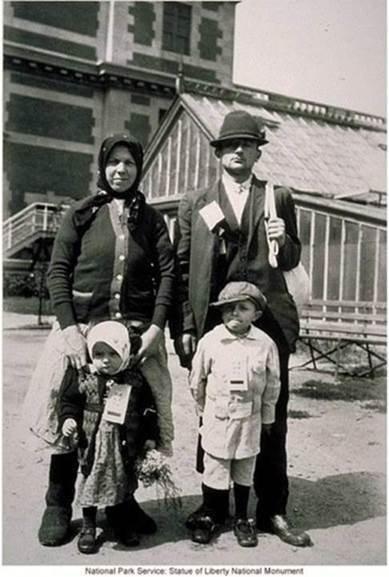
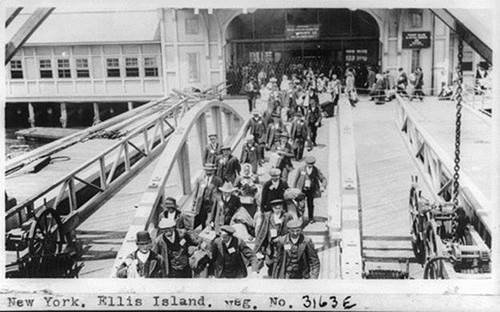
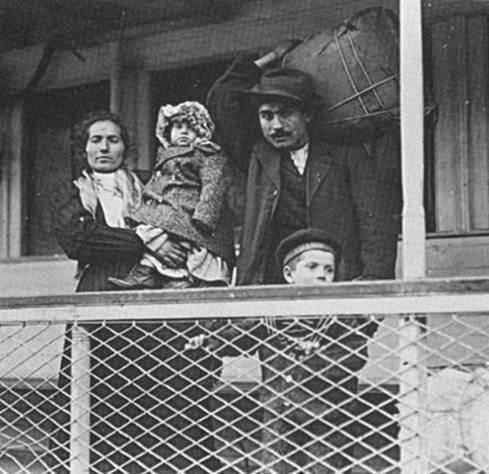
This was written by Rosemary LaBonte to the editors of a California newspaper in response to an article written by Ernie Lujan who suggests we should tear down the Statue of Liberty because the immigrants of today aren’t being treated the same as those who passed through Ellis Island and other ports of entry. The paper never printed this response, so her husband sent it out via internet.

Maybe we should turn to our history books and point out to people like Mr. Lujan why today's American is not willing to accept this new kind of immigrant any longer. Back in 1900 when there was a rush from all areas of Europe to come to the United States, people had to get off a ship and stand in a long line in New York and be documented.

                           Some would even get down on their hands and knees and kissed the ground. 

Editor Mimi:  "It was very strange.  About 30 years ago, my husband and I traveled throughout Europe, on our own, using public transportation, shopping in grocery stores, finding our own hotels, talking to the people, etc. It was a wonderful experience, but when we got off the plane in Los Angeles.  I unexpectedly,  did that very same thing.   It surprised my husband and me too.  I could not help myself, I was so grateful to be home in my country, the United States of America. It was an involuntary action. I am sure My grandfather Alberto Chapa, looking down on me, was smiling. He brought his family into the United States, legally, from Mexico in the 1920s. Abuelito learned English and became a naturalized citizen, as did my Mom." 

The new immigrants made a pledge to uphold the laws and support their new country in good and bad times. They made learning English a primary rule in their new American households and some even changed their names to blend in with their new home.  

They had waved goodbye to their birth place to give their children a new life and did everything in their power to help their children assimilate into one culture. Nothing was handed to them. No free lunches, no welfare, no labor laws to protect them. All they had were the skills and craftsmanship they had brought with them to trade for a future of prosperity.

Most of their children came of age when World War II broke out. My father fought alongside men whose parents had come straight over from Germany , Italy , France and Japan None of these 1st generation Americans ever gave any thought about what country their parents had come from. 

They were Americans fighting Hitler, Mussolini and the Emperor of Japan . They were defending the United States of America as one people.

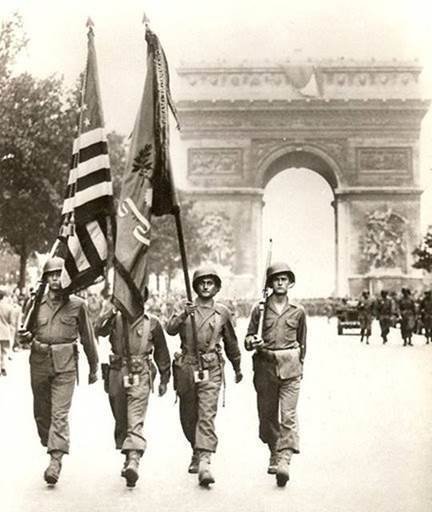
When we liberated France , no one in those villages were looking for the French American, the German American or the Irish American. The people of France saw only Americans. And we carried one flag that represented one country. Not one of those immigrant sons would have thought about picking up another country's flag and waving it to represent who they were. It would have been a disgrace to their parents who had sacrificed so much to be here. These immigrants truly knew what it meant to be an American. They stirred the melting pot into one red, white and blue bowl.


And here we are with a new kind of immigrant who wants the same rights and privileges. 

Only they want to achieve it by playing with a different set of rules, one that includes the entitlement card and a guarantee of being faithful to their mother country.

And . .  not standing in line, waiting their turn and following the rules.

I'm sorry, that's not what being an American is all about. I believe that the immigrants who landed on Ellis Island in the early 1900's deserve better than that for all the toil, hard work and sacrifice in raising future generations to create a land that has become a beacon for those legally searching for a better life. I think they would be appalled
that they are being used as an example by those waving foreign country flags.

And for that suggestion about taking down the Statue of Liberty , it happens to mean a lot to the citizens who are voting on the immigration bill.  I wouldn't start talking about dismantling the United States just yet.

Sent by Yomar Cleary ycleary@charter.net 


Alveda King: 
African American Leaders Unite to Support Trump's Wall 

Written by Michael Morris, January 10 2019

Some claim that building a wall is a “medieval solution” to a modern problem. The wheel is an ancient solution too. Nobody’s complaining about that. POTUS is on target. Walls do work; as in the days of Ezra and Nehemiah, walls are still viable solutions.

Why now? Just days away are the March for Life and the Martin Luther King, Jr. Holiday, yet America is in crisis at the southern border.

As an African American voice for justice, a defender of the sanctity of life, and perhaps most importantly, a Christian evangelist, I stand with President Trump as he labors to build a wall. From my perspective, compassion trumps terror. Our prayers are needed more than ever. We must rally around the wall to avert crisis.

Having survived, and in many cases overcome tyranny, oppression and racism in America, we as African Americans are close to the heartbeat of justice and compassion. We are not color blind. Our hearts are touched by the plight of all children and their families – not just at the border, but here at home as well.

Children in the womb, in cribs, in school, in jail, with parents behind bars, on the streets, at our borders – many are in danger. We must have responsible compassion for them all.

My goddaughter, Angela Stanton King, cofounder of the American King Foundation writes: “The process of draining the swamp, is a process of seeking genuine true justice, jubilee, pardon, and forgiveness. We’re going to continue to discover that there are some very thin lines between right, wrong, justice, and injustice. Meanwhile, we live in a world where security is necessary. The Wall plan is viable.”

Rev. Bill and Dr. Deborah Owens, Founders of CAAP write: “Christians have a responsibility to help those in need, including the undocumented immigrants at our southern border. At the same time, we must also respect the need to secure our borders and ensure the safety of all U.S. citizens. The African-American community has been gravely injured by unfettered illegal immigration, which has resulted in loss of jobs, loss of housing, and other economic hardship.”

Collectively, we stand with President Trump in the battle for the soul of America. I'm praying that POTUS builds the wall in the manner that Ezra and Nehemiah did in days of old.

As Commander and Chief of America, POTUS is fighting for the soul of our nation. In his address to the nation on January 8, 2019, President Donald J. Trump speaks to the people of America: There is a growing humanitarian and security crisis at our southern border.Customs and Border Patrol agents continue to encounter thousands of illegal immigrants at our southern border.

Meanwhile, Americans are continually at risk from uncontrolled, illegal migration. This climate strains public resources and drives down jobs and wages for the American people as well as the legal immigrants who are here. Among those ethnic communities hardest hit are African Americans and Hispanic Americans.

Sadly, our southern border is a pipeline for vast quantities of illegal drugs, including meth, heroin, cocaine, and fentanyl.As a result, every week, 300 of our citizens are killed by heroin alone, 90 percent of which floods across from our southern border. If something isn’t done, and soon, more Americans could die from drugs this year than were killed in the entire Vietnam War.

Last month, 20,000 migrant children were illegally brought into the United States — a dramatic increase. These children are used as human pawns by vicious coyotes and ruthless gangs. One in three women are sexually assaulted on the dangerous trek up through Mexico. Women and children are the biggest victims, by far, of our broken system.

“This is a humanitarian crisis — a crisis of the heart and a crisis of the soul,” he asserted.

Thankfully, the President is not alone in his efforts to serve the people of America as well as the immigrant families who are flooding our border. The president further appeals to the soul of the American people with a call to heart:

America works hard to welcome millions of lawful immigrants who enrich our society and contribute to our nation.

In the last two years, ICE officers made 266,000 arrests of aliens with criminal records, including those charged or convicted of 100,000 assaults, 30,000 sex crimes, and 4,000 violent killings.This is the tragic reality of illegal immigration on our southern border. This is the cycle of human suffering that POTUS is determined to end.We must fall to our knees and then rise and rally to the call.

The president’s proposal includes requests from Homeland Security for cutting-edge technology for detecting drugs, weapons, illegal contraband, and many other things. Also included in his proposal are requests for more agents, immigration judges, and bed space to process the sharp rise in unlawful migration fueled by our very strong economy.

The plan also contains an urgent request for humanitarian assistance and medical support.There is also an urgent request that Congress will close border security loopholes so that illegal immigrant children can be safely and humanely returned back home.In addition, as an overall approach to border security, law enforcement professionals have requested $5.7 billion for a physical barrier.

At the request of Democrats, it will be a steel barrier rather than a concrete wall. This barrier is absolutely critical to border security. It’s also what our professionals at the border want and need.

Today, I join my colleagues in the faith in a cry for prayer and compassion as we face this present danger.

Speaking from a platform in support of diversity and compassion, Bruce LeVell, Executive Director of NDC Trump writes: “As a follower of Christ, my convictions are to set up processes to aid those subjected to evil. Meanwhile we must protect our citizens. Mr. President, build that wall!”

Bishop Leon Benjamin, Coalition of Leaders United makes an urgent appeal: “This is a Humanitarian Effort. A Crisis of the Soul and Heart! Time to Stop It and Keep America Safe! Secure Our Borders and Build the Wall!”

Day Gardner, Founder of National Black Prolife Union speaks in support: “President Trump is presenting brilliant and compassionate solutions to the crisis. I pray that the masses unite in prayer and action to avoid disaster.”

Rev. Dean Nelson, Chairman of the board for the Frederick Douglass Foundation agrees: “The proper role of our government is to protect its citizens before it doles out benefits to others. Securing our boarder is a necessity to protect American workers and crack down on Human trafficking."

In conclusion, we urge all Americans to pray for a speedy reconciliation among our leaders for the sake of the children, and the soul of America.

Alveda King, niece of Dr. Martin Luther King, Jr., is the founder of King for America, Inc., consultant to the Africa Humanitarian Christian Fellowship and Pastoral Associate and Director of African-American Outreach for Priests for Life and Gospel of Life Ministries.

Back in December - Alveda King lobbies for wall, praises Trump on prison reform bill. Niece of Martin Luther King Jr. remains staunch supporter of president and his policies

In President Trump’s nearly two years in office, despite his issues with African-American voters, Alveda King has remained at his side.

On Friday, while Congress debated the merits of funding a 2,000-mile wall along the U.S. southern border, King stood beside the president as he signed into law the First Step Act, a bipartisan overhaul of the criminal justice system that will give judges more sentencing flexibility, especially for nonviolent drug crimes.

“Do y’all remember when this gentleman said, ‘We will say Merry Christmas again?’” she said pointing at the president. “And so what a Christmas present.” King, a stalwart Christian anti-abortion conservative, is a long-time Trump supporter and is often seen at his side when he is specifically trying to reach out to African-Americans.

She, along with HUD Secretary Ben Carson, visited the Smithsonian’s National Museum of African American History and Culture with Trump in 2017.

She was onboard Air Force One earlier this year when Trump signed a measure granting Georgia its first national historic park at the Martin Luther King Jr. National Historic Site near downtown Atlanta. This past February, Trump nominated her to to serve on the Frederick Douglass Bicentennial Commission.

“I do not believe President Donald John Trump is a racist. The economy’s up. Jobs are up in the black community,” she told the Atlanta Journal-Constitution last January, predicting the crime bill. “There is great promise to get a lot of people who have been unfairly incarcerated out.”

On Friday, according to White House pool reports, the Atlanta resident and niece of the Rev. Martin Luther King Jr. also used the signing as an opportunity to lobby for the wall, using Biblical references as a guide.

“A long time ago there were two leaders – Ezra and Nehemiah – and they had to build a wall,” King said. She said there were “some guys,” including Tobiah, “who were just all kinds of talking trash” about it. “And so the leaders said, ‘We’re not coming down off this wall.’ So please: do-not-come-down-off-the-wall!” she said, emphasizing each syllable with a hand clap.

Attendees laughed and applauded King. In her remarks, she also recalled a “long hot summer” when some “bad words” were said about President Trump as he pursued prison reform.

“So we want to say thank you, for caring about all Americans,” she stated. “And one more point: They asked this man when he was a candidate, ‘What are you going to do about race? And racism?’ ”

She said that Trump replied, “We need for people to be safe, secure, blessed, working if they need to.” “And so I just want to say, thank you, you keep your promises. So keep going, sir!”  Read more at CNSNews Read more at AJC


M


Central American Countries Are Helping Middle Easterners 
Illegally Enter The United States

Source: The Federalist


American, Panamanian, and Costa Rican law enforcement and intelligence officials are engaged in actual programs here to hunt, investigate, and deport real terrorist suspects who are, in fact, discovered among the thousands of migrants from the Middle East, Horn of Africa, and South Asia funneling through Latin America.

“Islamic Refugee” With Gas Pipeline Plans Arrested in New Mexico Border County

UPDATE 7/1/16—Despite official denials from authorities Judicial Watch stands by its reporting, which was subsequently corroborated by National Association of Former Border Patrol Officers Chairman Zack Taylor.

Police in a U.S. town bordering Mexico have apprehended an undocumented, Middle Eastern woman in possession of the region’s gas pipeline plans, law enforcement sources tell Judicial Watch. Authorities describe the woman as an “Islamic refugee” pulled over during a traffic stop by a deputy sheriff in Luna County, New Mexico which shares a 54-mile border with Mexico. County authorities alerted the U.S. Border Patrol and the Federal Bureau of Investigation’s (FBI) Joint Terrorism Task Forces (JTTF) has been deployed to the area to investigate, sources with firsthand knowledge of the probe confirm.

The gas pipeline plans in the woman’s possession include the Deming region, law enforcement sources say. Deming is a Luna County city situated about 35 miles north of the Mexican border and 60 miles west of Las Cruces. It has a population of about 15,000. Last year one local publication listed Deming No. 1 on a list of the “ten worst places” to live in New Mexico due to high unemployment, poverty, crime and a horrible public education system. The entire region is a High Intensity Drug Trafficking Area (HIDTA), according to the Justice Department’s National Drug Intelligence Center due to the large amounts of methamphetamines, heroin, cocaine and marijuana smuggled through the state by Mexican traffickers. Specifically, the renowned Juárez and Sinaloa cartels operate in the area, the feds affirm in a report.

Judicial Watch has broken a number of stories in the last few years about Mexican drug traffickers smuggling Islamic terrorists into the United States through the porous southern border. Last summer high-level sources on both sides of the Mexico-U.S. border offered alarming details about an operation in which cartels smuggle foreigners from countries with terrorist links into a small Texas rural town near El Paso. Classified as Special Interest Aliens (SIA) by the U.S. government, the foreigners get transported to stash areas in Acala, a rural crossroads located around 54 miles from El Paso on a state road – Highway 20. Once in the U.S., the SIAs wait for pick-up in the area’s sand hills just across Highway 20.

A few months ago Judicial Watch reported that members of a cell of Islamic terrorists stationed in Mexico cross into the U.S. to explore targets for future attacks with the help of Mexican drug traffickers. Among the jihadists that travel back and forth through the porous southern border is a Kuwaiti named Shaykh Mahmood Omar Khabir, an ISIS operative who lives in the Mexican state of Chihuahua not far from El Paso, Texas. Khabir trained hundreds of Al Qaeda fighters in Pakistan, Afghanistan and Yemen and has lived in Mexico for more than a year, according to Judicial Watch’s high-level Homeland Security sources. Now Khabir trains thousands of men—mostly Syrians and Yemenis—to fight in an ISIS base situated in the Mexico-U.S. border region near Ciudad Juárez. Khabir actually brags in a European newspaper article about how easy it is to stake out American targets because the border region is wide open. In the same story Foreign Affairs Secretary Claudia Ruiz, Mexico’s top diplomat, says she doesn’t understand why the Obama administration and the U.S. media are “culpably neglecting this phenomenon,” adding that “this new wave of fundamentalism could have nasty surprises in store for the United States.”

This recent New Mexico incident brings to mind a story Judicial Watch broke less than a year ago involving five young Middle Eastern men apprehended by Border Patrol in an Arizona town (Amado) situated about 30 miles from the Mexican border. Two of the Middle Eastern men were carrying stainless steel cylinders in backpacks, alarming Border Patrol officials enough to call the Department of Homeland Security (DHS) for backup. A multitude of federal agents descended on the property and the two men carrying the cylinders were believed to be taken into custody by the FBI. Only three of the men’s names were entered in the Border Patrol’s E3 reporting system, which is used by the agency to track apprehensions, detention hearings and removals of illegal immigrants. E3 also collects and transmits biographic and biometric data including fingerprints for identification and verification of individuals encountered at the border. The other two men were listed as “unknown subjects,” which is unheard of. “In all my years I’ve never seen that before,” a veteran federal law enforcement agent told Judicial Watch.

Judicial Watch, Inc.
425 3rd St Sw Ste 800
Washington, DC 20024
202.646.5172
press@pr.judicialwatch.org
 

https://www.judicialwatch.org/blog/2016/06/islamic-refugee-gas-pipeline-plans-arrested-new-mexico-border-county/
?utm_source=deployer&utm_medium=email&utm_campaign=newslink&utm_term=members&utm_content=20190109032907


M


Texas 
Border Patrol Requests 
another 
120 miles 
of 
border fencing.


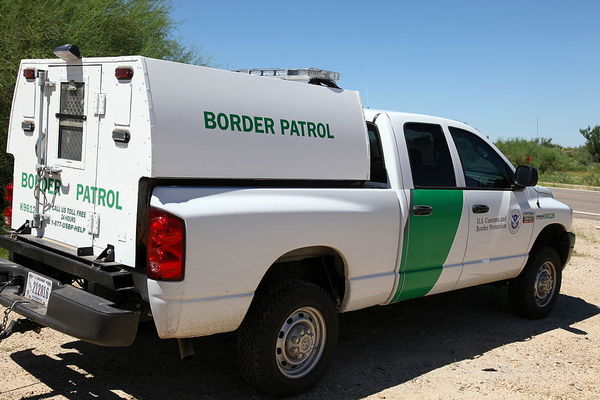
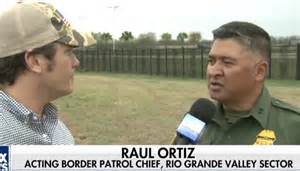
Raul Ortiz, the acting border patrol chief for the Rio Grande Valley told Fox News he wants to see another 120 miles of border fencing in his Texas sector and an increase in the number of agents.

“Right now we would like to see about another 120 miles of fencing in this sector alone. We’ve got 277 miles of river country. It winds an awful lot,” Raul Ortiz said.

“But if we were able to get the infrastructure, a few more agents and certainly the technology, I like our chances against the transnational criminal organizations out there,” he continued. “What I say to anybody who says we don’t need those things, come walk in my shoes.” 

Ortiz appreciates President Donald Trump’s hands-on approach to the border crisis and said anyone who knows border security will stipulate that a wall is absolutely necessary.  The chief also said that he is happy the president is taking initiative on the issue and he is actually visiting the border to learn what is needed to improve the conditions there.  Source: TTN staff  - Daily Caller: 1/11/2019

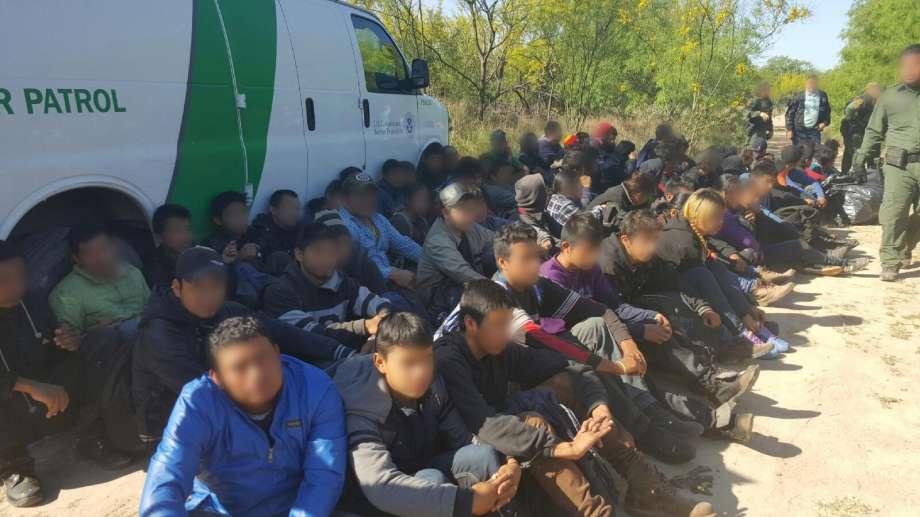
Border Patrol Chief Ortiz said that in 2018, illegal attempting to enter were from 41 (forty-one) countries.  

Ortiz said, "Just yesterday, we apprehended 133 illegals who were not coming from Mexico or South America."  He emphasized that illegals are coming from all over the world.  The first three countries mentioned were:   India, Pakistan, China.  Percentage of  world population. 

CHINA

1,417,625,004

   18.41%  

INDIA

1,370,048,541

                                    18.00% 

UNITED STATES

331,195,364

                                       4.4% 

PAKISTAN 

210.134,574

2.3%

Pakistan is 96.4%.  Christian have no rights.  A Christian Pakistani  woman, with 4 children, was sent to prison for 10 years because she dared drink water from a community fountain and had "offended, insulted" Allah by the act.
No news on what horrors the children experienced during those years.  Recently, she escaped to another country.


Click for a segment of the interview with Raul Ortiz. 
https://www.westernjournal.com/ct/bp-officer-defends-president-goes-lying-media/?utm_source
=Email&utm_medium=rightalertsbreaking&utm_campaign=ct-breaking&utm_content=ttp
 

Border Patrol finds rocket launchers, grenade launchers, and explosives near Rio Granade.


Most illegal immigrants are young men.

Border Patrol seize 500 lbs of pot in one bust.|

Editor Mimi:  If you want to see more of what the President and his group saw, do a google image search with 
 raul ortiz border patrol agent rio grande
.  Lots of photo.   Make up your own mind in accessing the situation.


State by state detailed infographics on how much illegals burden you and your state:
Amazing data assembled.  You will understand that we have problems, saying they don't exist is not working. The order of the listing is as a received them.  

http://www.fairus.org/sites/default/files/2017-08/California2014.pdf

Alabama

Kentucky

North Dakota

Alaska

Louisiana

Ohio

Arizona

Maine

Oklahoma

Arkansas

Maryland

Oregon

California

Massachusetts

Pennsylvania

Colorado

Michigan

Rhode Island

Connecticut

Minnesota

South Carolina

Delaware

Mississippi

South Dakota

District of Columbia

Missouri

Tennessee

Florida

Montana

Texas

Georgia

Nebraska

Utah

Hawaii

Nevada

Vermont

Idaho

New Hampshire

Virginia

Illinois

New Jersey

Washington

Indiana

New Mexico

West Virginia

Iowa

New York

Wisconsin

Kansas

North Carolina

Wyoming

Sent by Yomar Villarreal Cleary


M


Border Massacre Reveals Truth About Crisis


January 11, 2019

While some sections of the borders are highly secured, such as where Jim Acosta went over the week, others are total warzones. The Daily Wire reports:

On the same day that CNN Chief White House Correspondent Jim Acosta posted his report from McAllen, Texas assuring Americans that there wasn’t “anything resembling a national emergency situation,” at least not there, very different reports were coming out of a Mexican border town just a few hours northwest: Authorities found 21 bodies, some burned, after what appears to be yet another clash between rival drug cartel gangs.

“Mexican authorities said Thursday that 21 bodies, some burned, have been found in the northern Mexico border state of Tamaulipas in what appears to have been a clash between drug gangs. The bodies were found near the remains of seven burned-out vehicles near the border town of Miguel Aleman,” CBS News reports.

The city of Miguel Aleman is located in the northwestern border state of Tamaulipas, Mexico. The city is about three hours northwest of McAllen and borders the southern edge of Texas. […]

While Acosta made sure to note that he saw no evidence of a crisis “at least in McAllen,” the reality, of course, is that multiple towns on both the north and south edge of the border are seeing not only the humanitarian crises that necessarily result from illegal immigration, but the additional, often deadly violence of the drug cartels.


Texas Hispanic activist Muniz free after 24 years in prison

By TERRY WALLACE, 
January 9, 2019


DALLAS (AP) — Hispanic rights activist and political pioneer Ramsey Muniz, who was sentenced to life without parole in 1994 on a drug conviction, has been released from prison after years of intense efforts by family and supporters to free him.

The Federal Bureau of Prisons says Muniz was released from the Federal Medical Center in Lexington, Kentucky, on Dec. 10. His trial attorney, Dick DeGuerin of Houston, says the 75-year-old former La Raza Unida Party candidate for governor is in poor health and spends his days in bed or a wheelchair.

DeGuerin said the life sentence was mandatory under federal law because the 1994 felony drug conviction was his third. His release was on compassionate grounds under federal supervision.

“Of course, he’ll be at home with his wife, but it also means the prison system was tired of losing money” on his care, DeGuerin said.

Muniz was a lawyer and administrator with the Waco Model Cities Program when the fledgling La Raza Unida Party reached out to him to run in 1972 and 1974 against Democratic incumbent Dolph Briscoe. La Raza Unida sought greater economic, social, and political self-determination to Mexican Americans in the state.

Briscoe was re-elected with 55 percent of the vote, but Muniz took a little over 6 percent of the vote. Even though Muniz polled under 6 percent of the vote to Briscoe’s 61 percent in 1974, it was seen as enough to decide future close elections.

“It kind of awakened the sleeping giant in Texas of the potential strength Hispanic voters had,” DeGuerin said. He said he believed that strength made Muniz a perceived threat to the established order.

He was arrested and accused in 1976 of conspiring to smuggle 6,500 pounds of marijuana from Mexico. After fleeing to Mexico and being recaptured, he served five years in a federal penitentiary, crushing the La Raza Unida Party as a political force in Texas.

He worked as a paralegal after his release, only to serve two more years in prison after pleading no contest in 1982 to possessing cocaine. He had returned to paralegal work when he was arrested again in 1994 near Dallas.

Editor Mimi:  This was so sad.   A Latino attorney,  positioned to have done so much good for the Latino community,  instead a life wasted.  Intelligence, leadership talent, and an education thrown aside for involvement with drugs, three times,   

.

https://apnews.com/fc95c6a43d6f4cfd8acd82217a0497c9     


 A beautiful painting of a Grey Stallion in a Stable by Jose Manuel Gomez. The BAPSH would like to thank Sr Gomez for the kind use of his painting


SPANISH PRESENCE in the AMERICAS ROOTS 

Trailer for a Bernardo de Gálvez documentary
Did U.S. Soldiers Fight Under a Foreign Command? by Joe Perez

Update To Our Website  ~  granaderos.org  > Video Archives

The Spanish Horse (Andalusian) is believed to be the most ancient riding horse in the world. Although the origins of the breed are not clear, Spanish experts adamantly maintain that it is in fact a native of Spain and does not owe one single feature of its makeup to any other breed.

M

Trailer for a Bernardo de Gálvez documentary: 

Soon to be a feature documentary. The amazing story of Spanish Governor Bernardo de Gálvez and his brilliant military record during the American Revolution, cinematically captured with authenticity, skill, and passion. The quest of this production is to ensure that this courageous man, who embraced the many risks and dangers against the greatest military power at the time, will always be remembered as an American hero. This presentation made possible through the support of Texas A&M University - San Antonio. ©Native Sun Productions

https://www.youtube.com/watch?v=hgSIPQeql50&feature=youtu.be 


M


Did U.S. Soldiers Fight

Under a Foreign Command?

By Joe Perez


Any serious student of the American Revolution knows that the United States won its independence from England only with the help of foreign countries, most notably Spain and France.  While several countries contributed to the American’s cause of freedom through donations of money and war materiel, the foreign assistance most commonly known is the service of foreign commanders.  This has raised the question throughout our country’s history, “Did U.S. soldiers fight under a foreign command?”

To address this question, one must delineate the difference between the two terms “foreign commander” and “foreign command.”  U.S. troops can fight under a foreign commander but if that commander is serving as an officer in the U.S. military, it is not a foreign command.  However, if U.S. troops fight under an officer of a foreign military, they are fighting under a foreign command.  Let us take a look at a few of the more commonly recognized foreign commanders during our War of Independence and study the question at hand.  The terms Continental Army and U.S. Army are used here interchangeably since the thirteen colonies had already declared themselves the United States of America when the Continental Army was active.

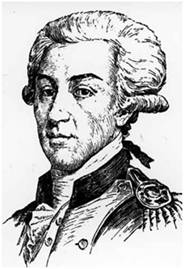
Marquis de Lafayette

Probably the most famous foreign commander during the American Revolution is the Marquis de Lafayette.  Born into French wealth and nobility, Lafayette was inspired by the Americans’ fight for freedom.  He volunteered in the American army and was commissioned a Major General in 1777.  Lafayette led American troops in four battles.  When he returned to France, he petitioned his government to support the American cause with money and troops.  “This lobbying in Versailles may have been his greatest service to the United States as it helped tip the balance in favor of sending a French army in 1780 under the command of General Rochambeau.”1


As a result of Lafayette’s lobbying, Jean-Baptiste Donatien de Vimeur compte de Rochambeau was sent by the French government to aid the American army.  Given the rank of Lieutenant General, he was responsible for commanding around 7,000 French troops and was present during Cornwallis’ surrender at Yorktown.

Prussian officer Friedrich Wilhelm von Steuben, known as Baron von Steuben, arrived in the United States in 1778 armed with letters of introduction from Benjamin Franklin and Silas Deane.  Von Steuben was given the ranks of Major General and Inspector General in the U.S. army.  Using a drill manual that he developed, he transformed the Continental Army from haphazard to disciplined and well trained.

Lieutenant Colonel Johann de Kalb was given the noble title of Baron while serving in the French army.  Baron de Kalb came to the United States in 1777 with Lafayette and was given the rank of Major General in the U.S. army.  He led several U.S. troops in various battles, dying from wounds he received at the Battle of Camden.

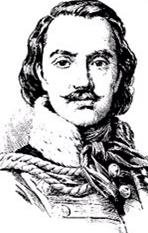
       Casimir Pulaski

Image result for casimir pulaskiAnother foreign commander during our War of Independence was Casimir Pulaski, an outstanding Polish cavalry officer and considered a father of the American cavalry.  George Washington recommended that Pulaski be commissioned as a Brigadier General in the U.S. Army.  Since Washington could not grant him rank, they had to wait until Congress made that appointment.  In the one month’s time between Pulaski meeting Washington and Pulaski’s appointment as Brigadier General, he actually led a few U.S. military forces, albeit impromptu.  He was with Washington at the Battle of Brandywine.  During the battle, when U.S. forces began to fall back, Pulaski observed the British trying to cut off their path of retreat.  Washington ordered Pulaski to garner as many of the retreating men that he could and hold off the British, which he did successfully.2  Pulaski commanded those American soldiers during that successful retreat and since his commission in the U.S. army had not yet been approved by Congress, one could argue that those U.S. troops were fighting under a foreign command.  However, the reason he was on the battlefield was because his commission as a Brigadier General had already been submitted.  Since he was following a direct order from General Washington, he was acting as a subordinate to a higher-level U.S. officer in the chain of command and therefore, the troops were not under a foreign command.

It must be noted that all of the aforementioned military men served as officers in the Continental Army.  They were foreign officers but since they served in the U.S. army, their troops were not under a foreign command

                                                                                                                                                              Bernardo de Gálvez

Image result for bernardo de galvezHowever, there is one instance where U.S. troops did fight under a foreign command during the American Revolution.  In 1780, U.S. Navy Captain William Pickles was ordered to use his ship, the West Florida, and join the Spanish fleet.3  Captain Pickles, along with Continental Marines on his ship, were ordered to take part in the Battle of Mobile “for the space of twenty days or longer, if necessary, or as requested by the Spanish Commander-In-Chief.”4  That Spanish Commander was General Bernardo de Gálvez.


      All of the officers mentioned above served in the U.S. military under the ultimate chain of command of General George Washington with the exception of Gálvez, who commanded his own forces as a General in the Spanish army.  The Continental Marines who participated in the Battle of Mobile served under the chain of command of General Gálvez, thus being the first U.S. troops to serve under a foreign command.  That it happened under Gálvez reinforces his special connection with the United States of America and its war for independence.     

References:

1 Chartrand, René, American War of Independence Commanders, p.14, Osprey Publishing Ltd., 2003

2 Wilson, James Grant & Fiske, John, Appleton’s Cyclopaedia of American Biography, p.33, Pickering-Sumter, 1898,    google.com/books, accessed October 10, 2018.

3 Smith, Charles R., Marines in the American Revolution, p.193, History and Museums Division, Headquarters, U.S.    Marine Corps, 1975

4 James, James Alton, Oliver Pollock, The Life and Times of an Unknown Patriot, p.202, D.Appleton-Century Co. Inc., 1937

Recommended online articles:

The Little-Remembered Ally Who Helped America Win the Revolution

This is an interesting article that appeared on the Smithsonian Online website. file:///C:/Users/SuperUser1/Downloads/The%20Little-Remembered%20Ally%20Who%20Helped%20
America%20Win%20the%20Revolution%20_%20History%20_%20Smithsonian%20(1).pdf

On the Trail of Spain in the United States   
This is an article about how Juan Ponce de Leòn, Friar Junipero Serra and Bernardo de Gàlvez helped shape the United States of America.  Thank you, Roland Cantu for sending the link shown below. https://marcaespana.es/en/current-news/society/trail-spain-united-states

This article, from ABC Cultura, is in Spanish and includes a video and nice painting.  
The link was sent to us from our friend in Spain, Dr. Evaristo Martinez-Radio Garrido.

https://www.abc.es/cultura/arte/abci-marcha-olvidada-imperio-espanol-arraso-ejercito-ingles-misisipi-
201803260219_noticia.html?fbclid=IwAR2O83df9K0jfbsg-UOuscKCWDyoPuxIccsKxp9ssK6AjeYUhlZ4A4iK0HI


M

Update To Our Website  ~  granaderos.org

=================================== ===================================

 Granadero Roland Cantu created our fantastic website and continues to update it and keep it fresh.  

His latest modification to the site is the addition of a link, called Video Archives, that takes you to the various videos of us by videographer Rafael Cavazos.  The page it directs you to also has a link that takes you to Rafael’s page on YouTube.com, which contains several more videos of various topics by Rafael.

Visit www.granaderos.org and see our wonderful website by Roland.  Scroll through the site and click on the myriad of links that take you to photos, videos and articles.

Thank you, Roland, for building the site that represents us in a professional manner.    ~  Joe Perez


HERITAGE PROJECTS

Mt. Saint Mary's University, Los Angeles, CSJ Oral History Project


M


CSJ Oral History Project 

A collaboration between the CSJ Institute, Film & Television, 
and the Sisters of St. Joseph of Carondelet, Los Angeles province.


Video Playlist

Our founders, the Sisters of St. Joseph of Carondelet, continue to show us what it means to serve the dear neighbor and respond to the needs of the times. In an effort to preserve their history, lift up their achievements and inspire the future, Mount Saint Mary’s University is capturing the spirit and contributions of our sisters on film. Nearly 30 sisters have been interviewed thus far.

Film footage is used to produce short educational and inspirational videos for use by the Mount community and our partners. If you would like to obtain footage of the interviews for qualitative research purposes, please contact Shannon Green at the CSJ Institute.

We are grateful to the Sisters for their generosity in sharing their wisdom and joy with us.  Archival support is received from the Library, Archives of the CSJs of Los Angeles, and individual sisters.

Directed by Kelby Thwaits, director, MFA, MSMU faculty
Produced by Shannon Green, director, CSJ Institute
Co-produced by Mary Trunk, MFA, MSMU faculty
Edited by M. Caren McCaleb
Transcriptions by Nancy Steinmann
Artwork by Julie Lonneman and Sr. Mary Elizabeth Nelson, CSJ, Orange

Editor Mimi:  Do watch the three videos posted on the site, on the history of the Order, their mission, examples of responding to diverse community needs.  Emphasis seems to be on education, especially for promoting women in the sciences.   https://www.msmu.edu/about-the-mount/our-founders/csj-institute/csj-oral-history-project/ 


HISTORICAL TIDBITS

How Israel Won a Major War in Just 6 Hours


How Israel Won a Major War in Just 6 Hours


It was June 5, 1967, and the Six-Day War was about to begin. The conflict, which would shape the Middle East as we know it today, had been simmering for months between Israel and its neighbors. Outnumbered by the combined Arab armies, and surrounded by enemies on three sides and the deep blue Mediterranean on the fourth, Israel had resolved to strike first and win quickly.

Six hours or so after the first IAF aircraft had soared into the morning sky, Israel had won the Six-Day War. Not that the tank crews and paratroopers on the ground wouldn’t face some hard fighting in the Sinai, the Golan and Jerusalem. But destroying the Arab air forces didn’t just mean that Israeli troops could operate without air attack; it also meant that Israeli aircraft could relentlessly bomb and strafe Arab ground troops, which turned the Egyptian retreat from Sinai into a rout.

At 7:10 a.m. Israeli time, sixteen Israeli Air Force Fouga Magister training jets took off and pretended to be what they were not. Flying routine flight paths and using routine radio frequencies, they looked to Arab radar operators like the normal morning Israeli combat air patrol.

At 7:15 a.m., another 183 aircraft—almost the entire Israeli combat fleet—roared into the air. They headed west over the Mediterranean before diving low, which dropped them from Arab radar screens. This was also nothing new: for two years, Egyptian, Syrian and Jordanian radar had tracked Israeli aircraft—though never this many Israeli aircraft—taking off every morning on this same flight path, and then disappearing from their scopes before they returned to base. But that morning, instead of going home, the Israeli armada of French-made Mirage and Super Mystere jets turned south toward Egypt, flying under strict radio silence and just sixty feet above the waves.

It was June 5, 1967, and the Six-Day War was about to begin. The conflict, which would shape the Middle East as we know it today, had been simmering for months between Israel and its neighbors. Outnumbered by the combined Arab armies, and surrounded by enemies on three sides and the deep blue Mediterranean on the fourth, Israel had resolved to strike first and win quickly.

That meant controlling the skies. But the Israeli Air Force could pit only two hundred aircraft, almost all French models (the United States wouldn’t sell aircraft to the IAF until 1968), against six hundred Arab planes, including many Soviet-supplied MiG fighters. Israeli leaders also worried over Egypt’s thirty Soviet-made Tu-16 Badger bombers, each of which could drop ten tons of bombs on Israeli cities.

Thus was born Operation Moked (“Focus”), a preemptive strike aimed at destroying the Arab air forces on the ground—and one of the most brilliant aerial operations in history. The plan had been worked out and practiced for several years. IAF pilots flew repeated practice missions against mock Egyptian airfields in the Negev Desert, while Israeli intelligence collected information on Egyptian dispositions and defenses.

Would all the effort pay off? The answer would become clear minutes after the Israeli aerial armada banked over the Mediterranean and arrived over Egypt.

Jordanian radar operators, troubled by the unusual number of Israeli aircraft in the air that day, sent a coded warning to the Egyptians. But the Egyptians had changed their codes the day before without bothering to inform the Jordanians.

Not that the warning would have made a huge difference. “Rather than attacking at dawn, the IAF decided to wait for a couple of hours until 0745hrs, 0845hrs Egyptian time,” writes author Simon Dunstan . “By this time, the morning mists over the Nile Delta had dispersed and the Egyptian dawn patrols had returned to base where the pilots were now having their breakfast, while many pilots and ground crew were still making their way to work.”

Meanwhile, the commanders of the Egyptian armed forces and air force were away from their posts on an inspection tour, flying aboard a transport as the Israeli aircraft came in (scared that their own antiaircraft gunners would mistake them for Israelis and blast them out of the skies, the commanders had ordered that Egyptian air defenses not fire on any aircraft while the transport plane was in the air).

The Israeli aircraft climbed to nine thousand feet as they approached their targets: ten Egyptian airfields where the aircraft were neatly parked in rows, wingtip to wingtip. Almost totally unhindered by Egyptian interceptors and flak, the Israeli aircraft, in flights of four, made three to four passes each with bombs and cannon. First hit were the runways so planes couldn’t take off, followed by Egyptian bombers, and then other aircraft.

It was here that the Israelis deployed a secret weapon: the “concrete dibber” bombs, the first specialized anti-runway weapons. Based on a French design, the bombs were braked by parachute, and then a rocket motor slammed them into the runway, creating a crater that made it impossible for Egyptian aircraft to take off.

The first wave lasted just eighty minutes. Then there was a respite, but only for ten minutes. Then second wave came in to strike an additional fourteen airfields. The Egyptians could have been forgiven for thinking Israel had secretly managed to amass a huge air force.

The truth was that Israeli ground crews had practiced the rearming and refueling of returning aircraft in less than eight minutes, which allowed the strike aircraft of the first wave to fly in the second. After 170 minutes—just under three hours—Egypt had lost 293 of its nearly five hundred aircraft, including all of its Soviet-made Tu-16 and Il-28 bombers that had threatened Israeli cities, as well as 185 MiG fighters. The Israelis lost nineteen aircraft, mostly to ground fire.

The day still wasn’t over for the Israeli Air Force. At 12:45 p.m. on June 5, the IAF turned its attention to the other Arab air forces. Syrian and Jordanian airfields were hit, as was the Iraqi H3 airbase. The Syrian lost two-thirds of their air force, with fifty-seven planes destroyed on the ground, while Jordan lost all of its twenty-eight aircraft. By the end of the 1967 war, the Arabs had lost 450 aircraft, compared to forty-six of Israel’s.

Six hours or so after the first IAF aircraft had soared into the morning sky, Israel had won the Six-Day War. Not that the tank crews and paratroopers on the ground wouldn’t face some hard fighting in the Sinai, the Golan and Jerusalem. But destroying the Arab air forces didn’t just mean that Israeli troops could operate without air attack; it also meant that Israeli aircraft could relentlessly bomb and strafe Arab ground troops, which turned the Egyptian retreat from Sinai into a rout.

To say that Operation Moked is unique is incorrect. On June 22, 1941, the Luftwaffe pounded Soviet airfields during Operation Barbarossa, Hitler’s surprise invasion of the Soviet Union. The Soviets may have lost almost four thousand aircraft in the first three days of the offensive—many destroyed on the ground—at a cost of less than eighty German aircraft.

But Operation Moked stands out for its meticulous preparation and split-second timing. It is a mark of respect that Israel’s air offensive has become the gold standard for preemptive air strikes to destroy an enemy air force.

Saddam Hussein began Iraq’s 1980 invasion of Iran with an Israeli-style strike on Iranian airfields. It failed miserably.

Had Israel attempted this against North Vietnam in 1967, the outcome would also have been very different. For that matter, had Operation Moked failed to achieve surprise, or if the Israeli pilots had missed their targets, Israel would have gone down in history as reckless and foolish. That’s exactly what happened to the IAF six years later, in the 1973 October War.

But the gamble paid off. Yet there was nothing magical about the Israeli triumph. Careful preparation, abetted by Arab carelessness and a bit of good luck, had been rewarded.

Operation Moked changed the course of the 1967 war—and of history.

https://nationalinterest.org/blog/buzz/how-israel-won-major-war-just-6-hours-41192 (1/10/19)


HONORING HISPANIC LEADERSHIP

Dr. Felipe de Ortego y Gasca, English/Literature/Chicano Studies Historian
Dr. Frank Talamantes, Molecular Biologist 
Dr. Leo Estrada, Urban Planning Specialist                   
Richard G. Santos, South West Historian, Author 


"Don Felipe-A Remembrance" :  5-minute filmed tribute/homenaje prepared by Jesús S. Treviño, writer/director dedicated to the memory of Don Felipe de Ortego y Gasca.  It is available on Latinopia. 


https://na01.safelinks.protection.outlook.com/?url=https%3A%2F%2Fvimeo.com%2F310395274&data=02%7
C01%7CRoberto.Calderon%40unt.edu%7Ce0086a2321a047ff70ca08d6767c9353%7C70de199207c6480 fa318a1afcba03983%7C0%7C0%7C636826674753201431&sdata=i6UC6B7JkMhZcB12E9EQWPF1w 1QjG8GDvhJAkPaWkU%3D&reserved=0


Forwarded
by Roberto R. Calderón


M

Founder, First Director of UTEP Chicano Studies Program Dies in Silver City, NM

Nota: Se nos fue Felipe, QEPD. He died in Silver City, New Mexico, on Saturday, December 29, 2018. He was 92 by our count, not 93, at the time of his death. He was born in 1926 in Blue Island, Illinois, to Anita Campos Gasca and Luis Ortego. He was orphaned at the age of 10, in the midst of the Great Depression. He was clearly part of the great Mexican diaspora, part of what Américo Paredes once called Greater Mexico. During the 1940s and 1950s, he became a soldier and served respectively in the Marines and Air Force. We do not know his date of birth at the present time in terms of day and month but anyone reading this note could help us obtain those facts. This would be much appreciated. He went on to earn degrees ending in the doctorate in literature. Felipe spent about 60 years as a maestro, profesor, a teacher, de los buenos y comprometidos. Eso nunca se olvida.

Those who are active in Chicana/o Studies in Texas and those who have long inhabited the space that is Historia Chicana [Historia] will miss the presence of our colega, friend, camarada, and fellow traveler—Dr. Felipe de Ortego y Gasca. He will be missed but through his writings and long actions on behalf of Raza, Felipe’s work will continue to have an impact far beyond into the future.  We were privileged to have last seen Felipe and his wife, Dr. Gilda Baeza, in February 2018 at the 12th Annual NACCS Tejas Conference held at Texas Lutheran University in Seguin, Texas. We were able to recognize his contributions to Chicana/o Studies and presented him with our Premio Estrella de Aztlán, our lifetime achievement award. 

There are three obituaries included in this post and these are listed according to their order of appearance:

 “Dr. Felipe de Ortego y Gasca Passes Away at 93,” La Voz Newspaper, Austin, Texas, January 2019; María Cortés González, “Founder, First Director of UTEP Chicano Studies Program Dies in Silver City, NM,” El Paso Times, Monday, December 31, 2018; and, C. P. Thompson, “A Legacy Left: WNMU Scholar-in-Residence, Chicano Studies Pioneer Dies at 92,” Silver City Daily Press, Saturday, January 5, 2019. 

¡Felipe de Ortego y Gasca, presente!—Roberto R. Calderón, Historia Chicana [Historia]

 Dr. Felipe de Ortego y Gasca Passes Away at 93
La Voz Newspaper
– Austin, Texas – January 2019

Felipe de Ortego y Gasca, the founding director of the Chicano Studies program at UTEP, died December 29th, 2018 in Silver City, New Mexico. 

Since 2007, he had been the scholar-in-residence at Western New Mexico University in Silver City, where he focused on cultural studies, critical theory and public policy. 

"He has left a legacy of greatness for the Borderland community, not only locally but also regionally and nationally. He was the founder, with his students, of the Chicano/a Studies Program at UTEP," New Mexico author Denise Chávez said. 

Ortego y Gasca was the son of migrant farm workers and never graduated from high school, but did go on to earn a Ph.D in English from the University of New Mexico in Albuquerque in 1971. Ortego served as a Marine during World War II, then spent time as an Air Force officer during the Korean conflict and the early Vietnam War era. 

Dennis Bixler-Márquez, director of the Chicano Studies Program at UTEP, said Ortego was a pre-eminent scholar of the Chicano literary renaissance in the 1960s and '70s. "He consistently made important contributions to the field of Chicano Studies in several of its facets," Bixler-Márquez said. "His personal warmth, scholarship and unwavering support for the Chicano Studies program and the movimiento will be missed by his colleagues, former students and members of the community." 

José Medina, who was a chair of MEChA around 1971-72, said there was a lot of pressure for the University of Texas at El Paso administration to create the program about a year or two before. "When Dr. Ortego was hired, it was a really important step to get things going and he gave the border region a well-planned instruction," he said. Medina said he believes the UTEP program was the first in a Texas university to offer a major and minor in Chicano studies. 

In 2018, Ortego was honored with the 2018 Premio Estrella de Aztlán — a lifetime achievement award from the National Association for Chicana and Chicano Studies Texas Chapter. The Western New Mexico University also honored him by naming a campus cultural center — formerly the MEChA Building — the Felipe de Ortego y Gasca Cultural Center. He is survived by his wife, Gilda Baeza, librarian at Western New Mexico University, and their children.

                    v
v v  
==============================================================================
"Don Felipe-A Remembrance" :  5-minute filmed tribute/homenaje prepared by Jesús S. Treviño, writer/director, dedicated to the memory of Don Felipe de Ortego y Gasca.  It is available on Latinopia. 


https://na01.safelinks.protection.outlook.com/?url=https%3A%2F%2Fvimeo.com%2F310395274&data=02%7
C01%7CRoberto.Calderon%40unt.edu%7Ce0086a2321a047ff70ca08d6767c9353%7C70de199207c6480 fa318a1afcba03983%7C0%7C0%7C636826674753201431&sdata=i6UC6B7JkMhZcB12E9EQWPF1w 1QjG8GDvhJAkPaWkU%3D&reserved=0

==============================================================================

“Founder, First Director of UTEP Chicano Studies Program Dies in Silver City, NM,” 
by
María Cortés González, 
El Paso Times, Monday, December 31, 2018;


Felipe de Ortego y Gasca, the founding director of the Chicano Studies program at UTEP, died Saturday 5, 2019    in Silver City, New Mexico.

Since 2007, he had been the scholar-in-residence at Western New Mexico University in Silver City, where he focused on cultural studies, critical theory and public policy.

Many former students and colleagues expressed their sadness and appreciation for the professor as a mentor and inspirational guide.

"He has left a legacy of greatness for the Borderland community, not only locally but also regionally and nationally. He was the founder, with his students, of the Chicano/a Studies Program at UTEP," New Mexico author Denise Chávez said.

"The son of migrant farmers, a man who never graduated from high school but went on to get a Ph.D. in English, he was a kind mentor, an exemplary role model and inspiration to all who knew him, worked with him, studied with him and learned from him the power of the spirit and will to advance all people to greatness," Chávez said.

Ortego served as a Marine during World War II, then spent time as an Air Force officer during the Korean conflict and the early Vietnam War era, according to Western New Mexico University.

After majoring in comparative studies at the University of Pittsburgh, he earned both a bachelor’s and a master’s in English from Texas Western College, now UTEP. He received his doctorate in English from the University of New Mexico in Albuquerque in 1971.

Dennis Bixler-Márquez, director of the Chicano Studies Program at UTEP, said Ortego was a pre-eminent scholar of the Chicano literary renaissance in the 1960s and '70s.

"(He) consistently made important contributions to the field of Chicano Studies in several of its facets," Bixler-Márquez said. "His personal warmth, scholarship and unwavering support for the Chicano Studies program and the movimiento will be missed by his colleagues, former students and members of the community."

José Medina, who was a chair of MEChA  around 1971-72, said there was a lot of pressure for the University of Texas at El Paso administration to create the program about a year or two before.

"When Dr. Ortego was hired, it was a really important step to get things going and he gave the border region a well-planned instruction," he said.

Medina said he believes the UTEP program was the first in a Texas university to offer a major and minor in Chicano studies.

Students in the Western New Mexico University organization MEChA, or Movimiento Estudiantil Chicano de Aztlan, called him a positive force for Chicano students on the group's Facebook page.

"He had more than just academic knowledge; he knew how to appreciate art, theater, music, comedy, and most importantly friendship. Having had many opportunities to sit down and talk with Dr. Ortego, he never made us, as students, feel inferior but rather held us as peers that needed a little guidance," the organization posted.

Earlier in 2018, Ortego was honored with the 2018 Premio Estrella de Aztlán — a lifetime achievement award from the National Association for Chicana and Chicano Studies Texas Chapter.

The Western New Mexico University also honored him by naming a campus cultural center — formerly the MEChA Building — the Felipe de Ortego y Gasca Cultural Center.

He is survived by his wife, Gilda Baeza, librarian at Western New Mexico University, and their children.

María Cortés González may be reached at 546-6150; mcortes@elpasotimes.com; @EPTMaria on Twitter.


v v v  
==============================================================================
==============================================================================

A Legacy Left: WNMU Scholar-in-Residence, Chicano Studies Pioneer Dies at 92

By C.P. Thompson  
Silver City Daily Press  
January 5, 2019

All odds for success were against Felipe de Ortego y Gasca when he was young — an orphan and a high school dropout. In the end, however, he led a full life, as a Marine, professor, scholar-in-residence and an inspiration for students.

Felipe, 92, passed away last Saturday, and had served as Western New Mexico University’s scholar-in-residence since 2007. 

Born in Blue Island, Ill., to Anita Campos Gasca and Luis Ortego, Felipe was an orphan at age 10. He was held back in first and fourth grades for the lack of his English. After dropping out of high school, he enlisted in the Marines during World War II. He eventually joined the Air Force in the ’50s.                    

Felipe went on to earn bachelor’s, master’s and doctor of philosophy degrees, all in English. He became the first Mexican-American to earn a Ph.D. at the University of New Mexico, and the fifth nationally, said his wife, Gilda Baeza-Ortego. 

“Because he was a high school dropout and not labeled as college material, he understood he was the underdog and believed in everyone’s potential,” she said. 


Gilda Baeza Ortego next to a picture of her and Felipe de Ortego y Gasca inside his office at Western New Mexico University.  Felipe was the scholar-in- residence for WNMU since 2007. Press Staff Photo by C.P. Thompson

While he was a professor for 60 years, Felipe is most known for his contribution to Chicano studies. He was the founder and first director of the University of Texas-El Paso Chicano Studies program. A WNMU release said he was a founder of Chicano literary history, writing “Background of Mexican American Literature” in 1971, the first study in the field. For his study and contributions in the area, he received the 2018 Premio Estrella de Aztlán – Lifetime Achievement Award from the National Association for Chicana and Chicano Studies Texas Chapter.

 “He recognized that our [Mexican-American] story wasn’t told,” Gilda said. “It was left out, and he wanted to connect that.” 

Felipe and Gilda, who have been married for 32 years, both landed jobs at WNMU in 2007 — Gilda as Miller Library’s director and Felipe as scholar-in-residence. Working with each other had its benefits.

“We had meals together at lunch,” Gilda said. “We came to campus together and left together.”

As a professor at WNMU, Felipe taught English 101 to Cobre Schools students, both through the dual enrollment program and on campus, as well as Chicano and Latin American studies and bilingual and multicultural education. 

“He inspired a lot of students who were told that wouldn’t make it,” Gilda said. “They launched into successful careers. His passion was to have everyone attain their education achievement despite the obstacles in the way.” 


Previous student Luis Figueroa took Latin American literature with Felipe in 2013 and said, “Textbooks taught certain things, but he took it outside the textbook and gave information about poems and Chicano/Chicana writers.” 

He remembers walking into Felipe’s office and seeing books about Chicano literature and Latin American history.

“He knew his stuff,” Figueroa said. “I shared thoughts and ideas with him. He was very knowledgeable. He sparked curiosity and made you want to learn more. If you listen to the struggles in his life, coming out on top, it gives me motivation to do things I wanted to do. He looked at the younger generation like the next leaders.”

Figueroa graduated with a bachelor’s of social work and is currently working toward a master’s in educational leadership. 

Felipe not only inspired students but also spiritually touched faculty members. Abe Villarreal, assistant dean of student activities at WNMU, said Felipe would send an email to the university family every holiday. 

“He wrote one on the Fourth [of July] and it touched my heart,” Villarreal said. “He described how he was a Mexican and American. He talked about being an ethnic minority in America, celebrating America’s independence but remembering who you were. He had such a cool way of talking to people in a personal way. For me, he was an inspiration.”

When Joseph Shepard was being interviewed for WNMU’s presidency, Felipe was there.
“He wanted a Hispanic, not an Anglo,” Shepard said. “I was sitting in the auditorium with faculty. They were asking me questions and Felipe — in Spanish — asked where I was from and what city I was born in. I answered in Spanish, and we formed a friendship.”

Felipe was a founding member of WNMU’s Department of Chicano/Chicana and Hemispheric Studies. WNMU also honored Felipe by naming the MEChA Building as the Felipe de Ortego y Gasca Cultural Center.

“Dr. Ortego was a tremendously influential scholar in the field of Chicano literature,” said Magdaleno Manzanarez, vice president for External Affairs wrote. “I had the honor of reading his work [before] I even met him personally. When he came to Western New Mexico University, he and I became good friends and colleagues. At this point, I can say that he was one of my best friends and a great mentor in all matters pertaining to Latino letters. He will be greatly missed by those of us who appreciate the wide world of literature, literature criticism and overall advocacy for social justice.” 

A few things folks might have not known about Felipe was that he was a gardener, landscaper, jazz musician and songwriter, who loved acting and starred in movies like “Dancer, Texas Pop. 81” and “Nadine.” At his death, he still received $8 checks for his roles in the movies. 

“He lived life to the fullest,” Gilda said. “He never knew a stranger, and didn’t want an experience to escape him. He loved to laugh, and there was a sparkle in his eye which attracted me.”

As Felipe’s health declined between Christmas Eve and last Saturday, messages were sent through Facebook from friends around the world, while others called Felipe. Gilda read each one to him.

“He hung on because he didn’t want to miss the last message,” Gilda said. 

There will be a rosary at 6 p.m. Tuesday at Terrazas Funeral Chapels and a funeral Mass at 10 a.m. Wednesday at St. Francis Newman Center. Outside Felipe’s office in Miller Library on campus, tables have been set up to showcase his achievements, and include photos, information and a condolence book for people to share memories or write a message. 

Those memories of the inspirational teacher live on, even after his passing. A Facebook message to Gilda from Matt Lara summed it up: “Shakespeare and Chaucer are getting an earful about the merits of Chicano literature.” 

C.P. Thompson may be reached at cp@scdailypress.com.
http://scdailypress.com/site/2019/01/05/a-legacy-left-wnmu-scholar-in-residence-chicano-studies-pioneer-dies-at-92/


&&&&&&&&&&&&&&  
Sent by Roberto Calderon,  Roberto.Calderon@unt.edu
Historia Chicana
 
Mexican American Studies
 
University of North Texas,
Denton, Texas


Frank Talamantes (1943–2018)


In Memoriam: 


Dr. Frank Talamantes, professor emeritus of molecular, cell, and developmental biology at UC Santa Cruz, died October 8 in El Paso, Texas. He was 75.

A leading endocrinologist, Talamantes joined the UCSC faculty in 1974 and served as vice provost and dean of graduate studies from 2000 to 2004. After retiring from UC Santa Cruz in 2004, Talamantes moved to his hometown of El Paso, where he joined the faculty of Texas Tech El Paso School of Medicine as a professor and assistant dean for research in 2005.


Talamantes received numerous awards and honors for his pioneering research on reproductive hormones and hormone receptors, and he was also recognized for his leadership on issues of minority education. A founding member of the Society for the Advancement of Chicanos and Native Americans in Science (SACNAS), he served as president of SACNAS from 1987 to 1990. The American Association for Higher Education honored him for "outstanding leadership and contributions to education in the Hispanic community," and in 1998 he was named as one of the "100 Most Influential Hispanics" by Hispanic Business magazine.

In his research, Talamantes studied a family of hormones called placental lactogens and the growth hormone receptor, which play crucial roles during pregnancy. His lab elucidated the structures of these proteins and their genes, and investigated the factors controlling their expression during pregnancy. He also studied the effects of placental lactogens on target organs such as the mammary glands and investigated their role in breast cancer susceptibility.

Talamantes received his B.A. in biology from the University of St. Thomas in Houston, and his M.A. in biology from Sam Houston State University in Huntsville, Texas. He earned his Ph.D. in endocrinology from UC Berkeley in 1974.

Talamantes is survived by two daughters, Margaret and Laura Talamantes, and three grandchildren. A celebration of his life will be held in El Paso on Saturday, December 1. For additional information, see the obituary prepared his family.

Source: Public Affairs Office
UC Santa Cruz Community
November 09, 2018 
https://news.ucsc.edu/2018/11/talamantes-in-memoriam.html


"Que perdida tan grande.  El Dr. Talamantes ayudo muchisimo a nuestra comunidad." 
~Rosalinda Quintanar, Ph. D.
Professor, Teacher Education & Masters Programs
Chair, International Teacher Education Council

"He was a great guy ,and dedicated himself to posting well researched articles that offered insights and solutions to our health challenges. I will miss him."
~ Mike Acosta

"Thank you for sending the news of Dr. Talamantes untimely death. I always appreciated the medical articles that he sent on the listserv...the articles were always very informative and interesting. I am truly saddened by his passing. Abrazos," 
~ Gilda Bloom

"Very sad News;  The articles he wrote were always enlightening.  I'll miss his articles.  Con un gran sentimiento."
~  Enriqueta Ramos


Obituary l Frank Talamantes (July 8, 1943 - October 8, 2018)

Frank Talamantes, professor emeritus of molecular, cell, and developmental biology at UC Santa Cruz, died October 8 [2018] in El Paso, Texas. He was 75.

A leading endocrinologist, Talamantes joined the UCSC faculty in 1974 and served as vice provost and dean of graduate studies from 2000 to 2004. After retiring from UC Santa Cruz in 2004, Talamantes moved to his hometown of El Paso, where he joined the faculty of Texas Tech El Paso School of Medicine as a professor and assistant dean for research in 2005.

Talamantes received numerous awards and honors for his pioneering research on reproductive hormones and hormone receptors, and he was also recognized for his leadership on issues of minority education. A founding member of the Society for the Advancement of Chicanos and Native Americans in Science (SACNAS), he served as president of SACNAS from 1987 to 1990. The American Association for Higher Education honored him for "outstanding leadership and contributions to education in the Hispanic community," and in 1998 he was named as one of the "100 Most Influential Hispanics" by Hispanic Business magazine.

In his research, Talamantes studied a family of hormones called placental lactogens and the growth hormone receptor, which play crucial roles during pregnancy. His lab elucidated the structures of these proteins and their genes, and investigated the factors controlling their expression during pregnancy. He also studied the effects of placental lactogens on target organs such as the mammary glands and investigated their role in breast cancer susceptibility.

Talamantes received his B.A. in biology from the University of St. Thomas in Houston, and his M.A. in biology from Sam Houston State University in Huntsville, Texas. He earned his Ph.D. in endocrinology from UC Berkeley in 1974.

Talamantes is survived by two daughters, Margaret and Laura Talamantes, and three grandchildren. A celebration of his life will be held in El Paso on Saturday, December 1. For additional information, see the obituary prepared his family.

Sunset Funeral Home:  https://www.sunsetfuneralhomes.net/obituaries/Frank-Talamantes/#!/Obituary


Obituary for Dr. Frank Talamantes PhD

When Dr. Frank Talamantes was born on July 8, 1943, in Los Angeles, California, there were still laws in place throughout the country to restrict where non-white people should sit, eat, drink, learn, play, and marry. The educational and promotional opportunities for people of color were dismal and limited. To be the first in his family to graduate from high school and attend college during these times was an extremely proud achievement and the first milestone in his long and successful career. In an interview with the Santa Cruz Sentinel in 1989, Dr. Talamantes shared that he was luckier than most because he had the “fortune to have a mentor and great role model, professor Dr. Henry Browning…who picked me off the streets and gave me an opportunity to work in a laboratory”. He was also mentored personally and professionally by Satyabrata Nandi, who was his Professor and close friend whom he met in subsequent years at UC Berkeley. The mentorship of these individuals made a huge influence on the scientist Dr. Talamantes would later become.


Dr. Frank Talamantes PhD

July 8, 1943 - October 8, 2018

He was raised in El Paso, Texas and was a graduate of Cathedral High School (1960). Upon completing his BA in Biology from the University of St. Thomas, Houston, Texas in 1966 and his MA in Biology from Sam Houston State University, Huntsville, Texas in 1970, Dr. Talamantes pursued and earned a Ph.D. in Endocrinology from the University of California, Berkeley in 1974. That same year, Dr. Talamantes accepted a position as assistant professor in the Department of Biology at the University of California, Santa Cruz. He was eventually promoted to Associate Professor (1980) and then full Professor (1984). In 2000, Dr. Talamantes was appointed Vice Provost and Dean of Graduate Studies.

During his 30-year affiliation with UC Santa Cruz, Dr. Talamantes' research and contributions to the field of biochemical endocrinology would earn him countless awards including the prestigious National Institute of Health Merit Award Research Grant, the Endocrine Society's Sidney H. Ingbar Distinguished Service Award for 2000, and the Berson Lectureship, the highest award given by the American Physiological Society for his pioneering work on growth hormone receptors. Dr. Talamantes received the "Transatlantic Medal Lecturer" from the British Society for Endocrinology in 1991. His laboratory also received numerous grants from the National Institute of Health and the National Science Foundation. In 2005, Dr. Talamantes joined the Texas Tech University, Medical School staff in El Paso as Professor and Assistant Dean for Research Development. This position afforded him the opportunity to return back to his hometown to help establish El Paso’s first medical school.

Dr. Talamantes received numerous awards and honors for his pioneering research on hormones and their receptors. Talamantes and his laboratory studied a family of hormones called placental lactogens and the growth hormone receptor, which play crucial roles during pregnancy. His lab elucidated the structures of these proteins and their genes, and investigated the factors controlling their expression during pregnancy. He also studied the effects of placental lactogens on target organs such as the mammary glands and investigated their role in breast cancer susceptiblity. During his academic career, Dr. Talamantes authored 171 papers and 13 book chapters.

In addition to being a professor, Dr. Talamantes was a mentor to many students, particularly underrepresented, first generation college students. He served as President of the Society for the Advancement of Chicanos and Native Americans in Science (SACNAS) from 1987-1990. Dr. Talamantes successfully obtained a grant from the National Institutes of Health to sponsor annual conferences that facilitated minority students meeting with prominent scientists and learning about education and career options available to them. In 1989, Dr. Talamantes received a national award for Outstanding Leadership and Contributions to Education in the Hispanic Community from the American Association of Higher Education. He was recognized alongside Jaime Escalante, the famous Garfield High School math teacher, who gained national attention for his dedication and success in helping a group of Latino East Los Angeles students excel on the national advanced placement math test chronicled in the hit movie “Stand and Deliver”.

Dr. Talamantes was a member of several distinguished scientific societies and panels including the Council for the National Institute of Environmental Health, the Society for Biochemical and Molecular Biology, the Endocrine Society and the American Physiological Society and also served in various capacities including the United States Editor for The Journal of Endocrinology, a Fellow of the American Association for the Advancement of Science and a Fellow of the California Academy of Sciences. In 2002, he was appointed to the Graduate Record Exam Board (GRE) and the Minority Graduate Education (MGE) Committee Member. He also served as chair of the Minority Access to Research Careers (MARC) Review Committee of the National Institute of General Medical Sciences.

To his family, Frank will always be fondly remembered as the larger than life father and Abuelo. He was generous, caring, funny, jovial, colorful, gentle and fiercely loving. His charisma allowed him to make strangers into lifelong friends. He listened intently to those who came to seek advice or just needed someone to talk to. One could often find him chit-chatting with friends or colleagues, smiling, with a cup of coffee in his hand. He loved the Bagelry (garlic bagel toasted with albacore tuna), sushi, pan dulce, tamales, Indian food and caldo de pollo. Dr. Talamantes passed away on October 8, 2018 with loved ones by his side. He is reunited with his parents, Margarita and Francisco Talamantes, who preceded him in death. He is survived by his two daughters from his marriage to Frances Talamantes, Laura Talamantes and Margaret Talamantes (and their spouses Ricardo Pardo and Esau Berumen); three grandchildren, Eliana, Santiago, and Nayeli; three sisters, Norma Talamantes, Mary Ellen Cobb (Steve Cobb), Martha Acosta (Rudy Acosta, Deceased), and nephew Richard Pineda (Victoria Pineda). During his retirement, Frank enjoyed reading, traveling, emailing, attending concerts, UTEP games, nature watching outside his home in the El Paso Mountains and spending time with his children and grandchildren.

Dr. Talamantes was a trailblazer of his era. He will be remembered as one who encouraged, supported and motivated others through their educational and professional struggles. He fought injustices and inequalities that he saw around him. He used his success and personal hardships to inspire others, with the encouraging words of “you can fall on your butt several times and still pick yourself up again and again”. We can all honor the legacy of Dr. Talamantes by living and acting on the ethos of doing good for one another. He will always be remembered for his contributions to the scientific community and his commitment to encouraging underrepresented minorities to pursue higher education. His family celebrates his contributions to family and community by encouraging donations be sent to Society for the Advancement of Chicanos and Native Americans in Science (SACNAS), www.sacnas.org , in honor of Dr. Frank Talamantes.


Dr. Leo Estrada

Alvaro Huerta honors a deceased Latino professor, a pioneer and mentor in his field. 
and highlights the need for more like him.  December 21, 2018


In November, the urban planning community in general and Latina/o community in particular experienced a devastating blow with the death of Leo Estrada. As one of the few Latina/o urban planning faculty members in the nation, Dr. Estrada (or Leo, which he preferred) was a pioneer for others in the discipline. Originally from Texas, he obtained a tenure-track faculty position at the University of California, Los Angeles’s Department of Urban Planning in 1977. He held this faculty position, securing tenure, until his retirement in June of this year.

Leo represented the best academe and humanity have to offer. He was brilliant, articulate, confident, open-minded, humorous, kind, approachable, generous, community focused, family oriented, visionary and strategic. He was a mentor and guide, a trailblazer and pioneer, a creator and producer of leaders, and an overall amazing human being.

While I’m not sure if he’s the first Latina/o to secure a tenure-track faculty position in urban planning, I can say that, during the past 40-plus years, few Latinas/os have become tenure-track or tenured faculty members in urban planning departments throughout this country. I should know, because I am one of them. I’m most concerned that Latina/o students and faculty members, especially Chicanas/os (Mexican Americans) from historically marginalized communities, have been excluded from institutions of higher education, particularly elite universities.

In a country where more than 57.5 million residents are Latinas/os, not including the over three million Puerto Ricans on the island who are U.S. citizens, it’s a shame that an important field like urban planning has so few Latina/o faculty members. We need many more like Leo, who can teach and mentor the next generation of Latina/o planners in all sectors of society -- including the government, private industry, nonprofit organizations and others.

During the early 2000s, when I first applied to the master’s program at UCLA’s Department of Urban Planning, I didn’t know much about the field. Having spent 13 years as a community organizer, I was out of the loop in terms of graduate school, despite earning my B.A. in history from the university.

“Talk to Leo before you apply,” my old undergraduate contacts encouraged me. Actually, it was more like a collective mandate: “If you want to get accepted, go see Leo!”

I kept saying to myself, “Who is this Leo guy?” I started to visit UCLA and wandered around the public affairs building, where Leo’s office was located, hoping to “accidentally” bump into him. On second thought, I acted more like a groupie of a famous singer. After my master plan failed, I finally mustered up the courage to email him, asking to meet to learn more about the program. Five minutes later, he responded, “Absolutely. I’ve been waiting for you.” The rest is history.

To me, he represented the Latino version of the Oracle -- the wise African American woman with the power of foresight -- from the movie The Matrix, starring Keanu Reeves as Neo. (I guess that makes me the Chicano version of Neo?)

Once I was accepted into the program, I quickly learned the importance of having a faculty member at the graduate level who looked like me. (Actually, he was better-looking than me.) As one of the few Latina/o graduate students at an elite university from a working-class background and violent barrio, I especially appreciated having someone who was sympathetic to my experiences.

I was born to Mexican immigrant parents without formal education and grew up in one of the most impoverished and dangerous public housing projects on the West Coast: the Ramona Gardens housing project, or Big Hazard project. That put me at a disadvantage when I originally entered UCLA as a 17-year-old freshman. Even among the few Latina/o students on the campus, I was an outlier. Consequently, as an undergraduate, I relied on the prominent historian Juan Gómez-Quiñones -- one of the few Chicana/o faculty members at the university -- to succeed.

During graduate school, Leo played a similar role. While he wasn’t my assigned adviser, he never closed his door to me or other students who sought his guidance. Whenever I ran into an obstacle with another faculty member or grappled with a complex research question, I could always count on him. As we would say on the mean streets of East Los Angeles, “My homeboy Leo always had my back.”

Because of Leo -- and my wise wife, Antonia, and late mother, Carmen -- I was one of the few Chicanas/os to obtain my M.A. from UCLA and Ph.D. from the University of California, Berkeley’s Department of City and Regional Planning. That allowed me to secure a joint tenure-track faculty position at Cal Poly Pomona’s Department of Urban and Regional Planning and its Ethnic and Women’s Studies Department.

As a faculty member, like Leo’s tenure at UCLA, I’m in a privileged position to teach, advise and mentor the next generation of Latinas/os in the planning field and beyond, where these amazing students assume leadership roles not only in academe but in the government, the private sector and the nonprofit arena. While many professors disdain service-related duties, like advising and mentoring, that take them away from their research projects and goals, I embrace such duties as part of my academic obligations. When asked about my commitment to service, which applies to my brilliant colleague and good friend Leo, I usually cite Lady Gaga: “Baby, I was born this way.”

Following in the footsteps of Leo, I have a moral obligation to teach, advise and mentor students, particularly those with similar traits and experiences to mine: first-generation Latinas/os students raised in the barrio, children of immigrants and working-class parents. Such efforts are vital so that they, too, can secure advanced degrees from elite universities and become leaders in society who serve those on the bottom (los de abajo).

That brings me to my persistent call for more urban planning departments -- and, in fact, many more academic departments in general -- to recruit, train and hire more tenure-track Latina/o faculty members. And they should place a particular emphasis on Chicanas/os, given that Chicanas/os represent the largest subgroup of Latinas/os in this country.

I end my humble tribute to Leo with a few words: ¡Viva el gran maestro y ser humano Leo Estrada! Higher education definitely needs a lot more like him.

Alvaro Huerta is an assistant professor of urban and regional planning and ethnic and women’s studies at California State Polytechnic University, Pomona. He is the author of Reframing the Latino Immigration Debate: Towards a Humanistic Paradigm (San Diego State University Press, 2013) .

© 2019 Oath Inc. All Rights Reserved

Sent by Gilbert Sanchez gilsanche01@gmail.comHide


M


Richard G. Santos
A Dear Friend--6th Anniversary

J. gilberto Quezada jgilbertoquezada@yahoo.com 


I would be remiss if I did not remember the sixth anniversary of the passing of my dear friend, fellow Laredoan, brother historian, and former colleague, Richard G. Santos, this February 22, 2019. 

He went to his eternal reward at his home in Pearsall, Texas, at the young age of just 73. And, to reminisce about our friendship, I went to my personal home library and searched for a book (spiral bound) that was personally given to me and inscribed by him. 

The title of his book, which he edited and translated, Autos De 
Fe of the Portuguese Conspiracy 
held by the Holy Office Of The Inquisition of Mexico City, 1646-1648, was published in March 1998.
=============================== ===========================


The inscription by 
Richard G. Santos reads 
as follows:

Obsequiado a mi amigo
historiador, educador y colega,
Gilberto Quesada

Con Sumo aprecio de
Richard Santos
23 March 98


I checked Amazon Books and this book is still available, plus two of his other books, Silent Heritage: The Sephardim and the Colonization of the Spanish North American Frontier, 1492-1600, in paperback (2000), and Sephardic Jews and the Mexican Americans of Texas (1973). In the spring of 2001, he was one of the keynote speakers at the 22nd annual conference of the Texas Jewish Historical Society, held in Austin, Texas.

The first I met Richard G. Santos was in the fall of 1967 at St. Mary's University in San Antonio, when we were both students of Latin American history. He graduated in May of 1968, and I received my B.A. degree the following year. We were both students of our mentor and muse Dr. Félix D. Almaráz, Jr. Richard became the first archivist for the Bexar County Archives, and he later became the Director of Ethnic Studies at Our Lady of the Lake University. Upon receiving the good news about his new appointment at the university, he invited me to lunch. He wanted to find out if I was interested in his former job as the archivist for the Bexar County Archives. I answered in the affirmative and with a smile on his face, he told me that he would set up an interview with his former boss. He was that type of friend, always looking for ways to help others. The interview with the County Judge went very well, but the decision to replace Richard was taking too long that I looked for gainful employment with the South San Antonio Independent School District.

Richard and I stayed in touch over the years and got together for lunch quite frequently. I knew that he had done a lot of research on the Sephardic Jews in Texas and the Southwest. He was a wonderful speaker and historian of Hispanic culture. And, he spoke extensively about the Jewish influence on Texas Hispanic culture, and particularly the cuisine. I remember that he said that the Spanish Jews cultivated so many bitter herbs that they grow wild in South Texas! This is very interesting!

In the late 1990s, during one of our lunch get-togethers, he confided in me that he needed a job. And, without hesitation, I highly recommended him to the South San Antonio High School principal to teach United States History. Richard was hired immediately and was teaching at the high school when his book cited above was published. We kept in touch after he left South San. I would like to share with you the following article about Richard G. Santos that appeared in the San Antonio Express-News.

Gilberto


******************************************************************

Santos a historian who promoted inclusion

By William Pack
Sunday, March 3, 2013

Inline image

Richard Glafiro Santos' first book overturned long-held assumptions regarding the Battle of the Alamo, and his succeeding works continued rattling historic cages through a career spanning more than 40 years.

“He tried to champion as best he could a story that wasn't being told of Tejanos and to bring more inclusion into the debate,” said Rudi Rodriguez, a San Antonio businessman and founder of the Hispanic Heritage Center of Texas. “At the end of the day, he said some things that needed to be said.”

Santos wrote or co-wrote more than 30 books, was a columnist for the San Antonio Express-News in the 1980s and '90s, produced 12 documentaries on Hispanic history and taught at several colleges with a flair that won him many supporters and some detractors.

“Mostly, he stood up for what he believed in, and he wasn't afraid to tell the truth,” said his wife, Sally Santos. “He enjoyed stirring up people and making them think.”

Santos graduated from Lanier High School and St. Mary's University, where, as a senior in 1968, he got his first book published: “Santa Anna's Campaign Against Texas.”

It made the case that fewer Mexican soldiers and more Alamo defenders were engaged in 1836 than previous accounts had maintained and that Davy Crockett, rather than dying in battle, had been captured with six other defenders and executed.

Santos, who earned a master's degree from Trinity University, wrote 25 years after the book was published that he remained “persona non grata in certain circles” though the details had “not been challenged or disproved by any qualified scholar.”

He wrote about topics as varied as the origins of Spanish names to the movement of Sephardic Jews from Spain and Portugal into the Southwest. He was Bexar County's first archivist, taught at Trinity and Palo Alto College, directed ethnic studies at Our Lady of the Lake University, was chairman of the Bexar County Historical Commission and was an educational consultant.

Santos was talented but had a rushed writing process and “enjoyed skating on thin ice,” said Félix Almaráz Jr., professor emeritus of history at the University of Texas at San Antonio, who taught him at St. Mary's.

Longtime friend Joe Dunwoody, a retired San Antonio College professor, called Santos a tireless researcher who documented his claims thoroughly and “was never one to condone unsubstantiated opinions or faulty logic.” Robert Benavides, who is chairman of the San Antonio Living History Association board, said some might not have welcomed his conclusions but they have survived the test of time.


Latino soldiers
 Cebu, Phillipines, WW II

  LATINO AMERICAN PATRIOTS

World War II POWs :    
Luis J. Franco    Leon Leura    Luis J. Franco    Augustine Martinez    Pasqual Reyes    Anthony C. Acevedo
Anthony C. Acevedo
kept a secret diary that showed daily life in a concentration camp.   
Voices from the Midwest:  Carmen Gonzalez
M

M

World War II POWs  

Source:   "A Tribute to Mexican-American POWs and Iraq War Veterans" 
LATINO ADVOCATES FOR EDUCATION, INC.    
 P.O. BOX 5846     ORANGE,    CA
92863
    www.latinoadvocates.org

=================================== ===================================

Luis J. Franco


Luis J. Franco was born in El Paso, Texas and enlisted in the U.S. Army Air Corps in 1942. He trained as a flight engineer for the B-17 Flying Fortress and was assigned to the 751st Bomb Squadron, 457th Bomb Group, 8th Air Force, Royal Air Force Glatton, England.

He was on his seventh mission, a 1,000-plane raid on Berlin on May 19, 1944, when German ME-109 fighters attacked the bombers. The German fighter planes shot down some 100 American and British bombers and 1,000 crew members that day.

Franco and nine of his crew parachuted out of the burning bomber. They were captured, interrogated, beaten by their German captors and sent to a prison in Berlin. Several days later, they were taken to Stalag Luft #4, a POW camp for America and British airmen near Danzig, Poland. They were beaten and starved, forced to undergo psychological torture and given long stints of solitary confinement. They was no medicine. The Russians and General Patton’s 3rd Army pushed the Germans back and Franco and the other POWS were moved to Berlin, then to a POW camp, Germany. On May 19th, 1945, he was liberated by General Patton’s troops. Franco dropped from 175 pounds to 95 in one year of captivity.

Leon Leura

Leon Leura was born and raised in Duarte, California and was forced to attend segregated public schools. He served in the 36th divison, Company A, 111th Combat Engineers and made the landing at Anzio, Italy on January 22, 1944. The 36th Infantry Division battled the Germans at Rapido River, Casino, Naples and Rome, Italy.

On August 25, 1944, in the small French town of Bon-Lou, Leura was shot in the shoulder, His outfit was pinned down by enemy tanks and they were forced to surrender.

He was held as a prisoner of war by the Germans for several months at different camps. He barely survived on a single bowl of soup a day, a slice of bread and cup of coffee.

At the end of January, 1945, allied troops began bombarding the POW camp area and the German guards left. Leura and the other Americans escaped from the camp and were met by Russian soldiers. The Russians moved them to Poland where British troops took them to Poland where British troops took them and returned them to American forces in February of 1945.  


=================================== ===================================

Luis J. Franco

Luis J. Franco was born in El Paso, Texas and enlisted in the U.S. Army Air Corps in 1942. He trained as a flight engineer for the B-17 Flying Fortress and was assigned to the 751st Bomb Squadron, 457th Bomb Group, 8th Air Force, Royal Air Force Glatton, England.

He was on his seventh mission, a 1,000-plane raid on Berlin on May 19, 1944, when German ME-109 fighters attacked the bombers. The German fighter planes shot down some 100 American and British bombers and 1,000 crew members that day.

Franco and nine of his crew parachuted out of the burning bomber. They were captured, interrogated, beaten by their German captors and sent to a prison in Berlin. Several days later, they were taken to Stalag Luft #4, a POW camp for America and British airmen near Danzig, Poland. They were beaten and starved, forced to undergo psychological torture and given long stints of solitary confinement. They was no medicine. The Russians and General Patton’s 3rd Army pushed the Germans back and Franco and the other POWS were moved to Berlin, then to a POW camp, Germany. On May 19th, 1945, he was liberated by General Patton’s troops. Franco dropped from 175 pounds to 95 in one year of captivity..  


Augustine Martinez

Augustine G. Martinez, of Santa Ana, California, at age 19, enlisted in the U.S. Army. He was assigned to the 35th Division and landed at Normandy, France in July, 1944. He fought in the hedgerows of Normandy, in the breakout and spearhead that liberated France. In September, 1944, his division crossed the Moselle River south of the city of Nancy, in eastern France near the Siegfried line in Germany.

On September 16, 1944, Martinez and his platoon attacked a German strong point and took the enemy position after an all-day battle. However, the enemy responded with a fierce counter attack with tanks and infantry forcing the Americans to withdraw. German tanks firing at point blank range hit Martinez and shattered his left foot.

For 48 hours, Martinez lay unattended in no man’s land while the battle raged around him. Finally, on the second day, Martinez was captured, taken to a German Hospital and his foot was amputated.

Martinez spent 4 months in a Stalag 5B, a German POW camp. He was liberated in a prisoner exchange on January 16, 1945.


Pasqual Reyes

Pasqual Reyes was born and raised in Los Angeles, California. He enlisted in the U.S. Army and was assigned to the 36th Division.

In 1943, Reyes landed in North Africa, then on January 22, 1944 invaded Anzio, Italy. For 9 months , the 36th Division fought all the way up Italy and through France.  In September, 1944. Reyes was captured and over the next 9 months he was incarcerated in various German POW camps. He remained at Stalag 7A camp the longest.

He was liberated by General George Patton’s 3rd Army in May, 1945. Reyes’ brother Florencio Reyes was in the 25th Division and landed on Normandy on D-Day, June 6, 1944.


Reyes’ son Ronald Reyes was with the 9th Marines, 1st Battalion and was killed in Vietnam on March 30, 1968. 
Reyes’ grandson, Timmy Reyes, was a Navy Seal and fought in Desert Storm.


   Anthony C. Acevedo
Anthony C. Acevedo was born in San Bernardino, California. During WWII he was a Medic assigned to B/275 in France. On January 6, 1945 while Acevedo’s military unit was heading back towards Philipsburg, German Forces overran his unit at Falkenburg Heights. After experiencing the terror of stifling, cramped, filthy boxcars, Acevedo and other American POWs were taken to Stalag 9B, better known as “Bad Orb.” Acevedo was thus designated as prisoner #27016. The regimen of German coercion consisted of making the POWs stand in the snow without shoes for a full day, interrogations that included the insertions of needles under Acevedo’s fingernails in order to make him talk. (It didn’t work!).

Tony Acevedo as an army medic. Photo undated. 
Credit: Courtesy of The United States Holocaust Museum

On February 8, 1945, Acevedo and 350 American Jews were ordered to move out to another camp, called Berga an der Elster. Berga was a slave labor camp, replete with excavated tunnels and caves. Prisoners were repeatedly tortured and murdered by Nazis. Their diet consisted of 100 grams of bread per week, made of saw dust with redwood bark. This continued until the Germans forced the prisoners to march out of camp on April 6, 1945 because American and Russian troops were not far away. This march became a death march for many of the prisoners, weakened from disease and malnutrition. Finally, General Patton’s tanks moved in, and German soldiers ran away or pleaded for mercy, as they gave their weapons to infirmed POWs. Acevedo was down to 85 pounds. Originally, there were 352 prisoners from Berga and only 170 survived.


Anthony C. Acevedo
kept a secret diary that showed daily life in a concentration camp. 

Tony Acevedo's diary that he kept during his time in Berga concentration camp.

Anthony Acevedo wearing a POW hat


Tony Acevedo at the United States Holocaust Memorial Museum's 20th Anniversary Tribute event in Los Angeles, February 2013. 
Acevedo died on Feb. 11, 2018. He was 93.

On the night of March 20, 1945, a 20-year-old Mexican American soldier named Tony Acevedo lay in the cold barracks of a Nazi concentration camp.   He pulled out a diary he kept hidden even from his comrades and began to write. 

"Goldstein's body was returned here today for burial — he was shot while attempting to re-escape. So they say, but actually was recaptured and shot through the [fore]head." It was Private Morton Goldstein of Egg Harbor, New Jersey. Acevedo, an army medic, later said he examined the body himself. 

It's largely thanks to the diary kept by the late Anthony "Tony" Acevedo, that the world knows the fate of many American prisoners of the Nazis, like Goldstein.  

Tony Acevedo's diary that he kept during his time in Berga concentration camp. Credit: Courtesy of The United States Holocaust Museum

"His list was really one of the primary resources for our knowledge and the army's knowledge of what the fate was for many of these men,” said Kyra Schuster of the US Holocaust Memorial Museum. “And when I asked Tony, 'why did you keep the diary? Why did you keep the list?' Because certainly if he had been caught, he would have been severely punished or beaten or possibly even killed for it. And he just looked at me and said 'It was my moral obligation to do so.'"

Acevedo's 'moral obligation' chronicled daily life at Berga, a sub-camp of the Buchenwald concentration camp, and a death march in the final weeks of World War II in Europe.

He's also "the first Mexican American, Catholic, Holocaust survivor who registered with the museum," Schuster said. The Nazis saw him as "undesirable."

He was captured at the Battle of the Bulge, in January 1945. A month later, he was one of 350 American GIs selected to be slave laborers at Berga.

"It was hell," he said in a 2013 oral history interview with the Holocaust museum. “It was just one thought after another thought, of praying that there wouldn't be another day like this."

'Kill them with kindness'

Acevedo was born in San Bernardino, California, in 1924 to undocumented parents with Mexican citizenship. His mother died when he was a toddler and his father, an engineer, remarried. But in 1937, his family was deported to Mexico and settled in Durango. 

Acevedo dealt with cruelty, hardship and violence from a young age.

It helped him find the words he would live his life by: “If they treat you wrong, kill them with kindness."  

According to his son, Fernando, this mantra developed in response to growing up with an abusive father.

"My grandfather would pistol-whip my father,” said Fernando. “Call him many names, wish that he had not been born. And he would point to the neighbor down the street, and say … 'I wish you could be like him.'"

Despite that, Fernando said Tony's response was always patience and compassion.

"What I remember about my dad is that he had this penetrating smile," Fernando said. "[So] that, you know, you wanted to get to know him. I know it sounds magical and far-fetched, but that's always how he was. And it used to irritate me, because I was like a snot-nosed kid that was wondering why I couldn't get my way about something or why things didn't happen the way I wanted them to, but my Dad would always say, 'Just have patience.'"

But there was something else Fernando remembers about his father. 

"He would just walk away, go to the porch, or some part of the house where he would be able to be by himself, and he would just start crying," Fernando recounts. 

When Acevedo was a teenager in Durango during the beginning of WWII, he and a friend intercepted and deciphered a suspicious morse code message. The two boys informed the authorities and two German agents, who had allegedly been communicating with German submarines, were arrested.

Despite living in Mexico, Acevedo, a US citizen, received a draft notice from the US Army soon after Pearl Harbor. He went willingly, partly to escape his abusive father.

Acevedo, who wanted to be a doctor, was trained as a combat medic. His unit arrived in France in December 1944, and was immediately rushed to the front to try to turn back the final German offensive of the war: what became known as the Battle of the Bulge.

After 10 days in combat, his company was surrounded and forced to surrender, early in January 1945. 

'Take two steps forward'

Acevedo was captured and sent to a prisoner of war camp in Bavaria. About a week after he arrived, according to his interview with the Holocaust museum, the Gestapo, or the German secret police, pulled him in for a special interrogation. Somehow, they knew who he was; where he was born and where he grew up. They taunted him about being deported because his parents were undocumented.

According to Acevedo, they believed he was a spy. Back in Mexico in 1940 or 1941, Acevedo said he was involved in getting two Germans in trouble with the authorities over a morse code communication. Incredible as it seems, the Gestapo knew about this. 

They spent a night torturing him to try to get the truth.

“And I kept denying, and everything I denied, he [the Gestapo] slapped my face," Acevedo told the Holocaust museum in 2013. "Then he started to put needles in my fingernails."

Life in the POW camp was tough, but not in comparison to what was to come after about a month. 

"We were forced to come out of the barracks and line up,” recalled Acevedo. There were about 4,00 Gis in the camp at that time. “And then the commander said 'All American Jews! Take two steps forward!’”

A selection was being made. At the time, the GIs had no idea what for, but according to the USHMM, an order had arrived for 350 GIs who were to be used as slave laborers.

Acevedo recalled how Jewish GIs reacted to the line up in different ways. Some tried to etch out the letter H (for Hebrew) on their dog-tags or to bury them. Others, like his friend Norm Fellman, refused to bury their identity and stepped forward. Tony was impressed with how many men “held on to their faith.”

The Germans started with the known Jewish soldiers, then those with "Jewish" names, or who looked Jewish. But there weren't 350. “Then the commander came by,” recalled Tony, “and he poked at me, pulled me ... put me up front as an undesirable."

What followed is a familiar story to those who've studied the Holocaust, but few know this happened to American POWs. Acevedo remembered how the Germans put them on train, crammed into a boxcar "like sardines ... You couldn't kneel, you couldn't squat — for six days."

There was no food and no water. The men scavenged snow from the sides of the car. There was nowhere to relieve themselves. All of this continued for six days, until they reached the concentration camp at Berga.

"When we got to Berga, well, they took us to the cremation center to bathe us,” Acevedo said. “We didn't know that that was for bathing. We thought they were going to cremate us.”

The US soldiers passed corpses of gassed prisoners. 

“They took us to the gas chambers. They took us there and we saw the tubings, the pipes, up ahead. One was for gas. The other one was for water."  The soldiers were lucky, and only got showers.  But Acevedo said that incident alone broke some of the men.

A picture of a Nazi guard beating a prisoner in Berga, drawn by Tony Acevedo.

Then began a brutal life of slave labor, digging tunnels of hard rock, and all on starvation rations. Within a week, the soldiers started dying. Any caught trying to escape — like Goldstein — were executed.

Acevedo started his diary, slipping it inside his pants to hide it from the Germans. It included a list of those who perished.

In early April 1945, with the allies closing in and snow still on the ground, the Germans ordered the emaciated prisoners out of the camp. They were forced to march for more than 200 miles — a death march. Men were dropping all the time. They used a cart to carry those who couldn’t move and those who died were simply left where they fell.

On several occasions, the GIs saw groups of massacred civilians and even witnessed a massacre taking place.

“Up ahead we noticed that the Germans were slaughtering political prisoners," said Acevedo. "We called them political prisoners, but turned out to be they were Jewish fellows and families: children, mothers and older fellows."

After more than two weeks, very suddenly most of the guards fled. US tanks soon appeared.  'All the fellows cried'

"God! God liberated us,” recalled Acevedo. “And all the fellows cried, and some kneeled down and cried and kissed the ground because [of] the liberation."

Their rescuers refused to believe they were Americans at first. Acevedo was 5'10" but he was down to just 87 lbs. He remembers how he was pulled up onto the American tank “like a rag doll.” His buddy Norm also made it. He was 6’4” and down to 86 lbs.

They were lucky to survive. According to the Holocaust museum, only about half of the 350 US POWs sent to Berga returned home.

Decades later, the memory of liberation could still bring Tony Acevedo to tears. The excitement, he said,  literally killed some of his friends just at the moment of liberation. Others died in the following days, their bodies too weakened to survive.

Acevedo did not become a doctor. His artistic skill led him to a successful career in aerospace design.

He had his troubles, yet his son Fernando remembers how Tony was almost always smiling.

"He was this dancing person," Fernando said. "He loved to dance. Whether it was the cumbia, you know, from Cuba, or any kind of Latin music, he would just get into this dancing. And he used to do this around the house with my mother, you know, that he was married to for 40 years. He was just jovial. He was happy. He was laughing. He liked to play jokes. He never walked around with a frown."

Acevedo proudly flew the American flag and the POW flag on his lawn. He was a conservative Republican but according to Fernando, he had recently become concerned that politicians here in the US were pitting people against each other.

"He had a hard time with what he saw going on, especially this last year,” said Fernando. “We would watch the news, and switch it from different stations. He just did not like what he saw."

Later in life, Tony Acevedo was a frequent guest speaker at schools and colleges across southern California. He wanted to raise awareness, to help prevent anything like the horror he experienced from happening again. He warned students who scoffed that "it could happen."

He told the students that that there is only one way to fight hate. "They must learn to be able to love more, to understand, and to be to get along with each other, and respect each other, and respect others."

"Kill them with kindness," he said. "If they treat you wrong, kill them with kindness."

https://www.pri.org/stories/2018-03-29/pow-kept-secret-diary-showed-daily-life-concentration-camp

March 29, 2018 · 7:30 AM EDT

By Christopher Woolf


Voices from the Midwest:  Carmen Gonzalez

=================================== ===================================


VOICES FROM THE MIDWEST – 
Shared by Rudy Padilla. 

The following taken from 
Voces Oral History Project
vocesoralhistoryproject.org – With Permission.


Collection: World War II Military Branch: Army


Date of Birth: July 16, 1920     
Place of Birth: Newton KS  United States 
Interviewed By: Nicole Cruz 
Date of Interview: August 1, 2003 
Place of Interview: Newton KS

 Written by Anthony Sobotik


Carmen Gonzalez has shouldered his responsibilities with grace

Gonzalez was milking cows at a neighbor's farm to help support his family by the time he was 12. And during World War II, he did his duty on the battlefield. Last but not least, when the mother of his eight children left the country after they divorced, he did his best to raise them.

Gonzalez was one of 19 children born to José Gonzalez, a foreman for the Santa Fe Railroad Company, and Ylaria Rincon. Both of his parents were natives of Mexico. Jose’s job with the railroad brought them to the United States.

The Gonzalez family lived in a small house in Newton, Kan., in an area called "ranchito," which was populated by Mexicans and Mexican Americans working for the railroad. Discrimination against them was commonplace, Gonzalez says.

As a youth, he can remember going to the movies and being placed in the "non-white" section; some restaurants refused service to Latinos.

"We couldn't even go to a restaurant to get a hamburger," he said.

Nevertheless, Gonzalez made his own way. At age 12, he began working on a farm, making 75 cents a week. By the time he was 17, he had a job working with his father for the Santa Fe Railroad. He says he worked because he wanted to help out his family.

"It helped, you know," he said. "That money could buy some meat, milk; something."

During this time, Gonzalez also managed to make his way through Newton High School. He even attended Hutchinson Community College in Hutchinson, Kan., for three months, but had to leave because the commute was too far.

He found out the U.S. was going to war one day after he came out of a theater with his brother.

"We heard these guys yelling 'Extra! Extra!'" he said. "I thought, 'Oh my God; we're gonna get drafted.'"

Gonzalez was right. He was drafted just weeks later and sent to Camp Chaffee in Arkansas for training, at which point his knowledge of the Spanish language came in handy: He taught many of the other white soldiers to speak the language, gaining their respect in the process.

Gonzalez was then sent to Camp Butner in North Carolina, where he learned to use the 81-mm mortar. Shortly thereafter, he was asked to train 100 men to use the same weapon. Before he knew it, he was promoted to Sergeant.

Gonzalez was next asked to become a sniper for the Army, but declined the offer for one main reason:

"I was scared," said Gonzalez with a laugh.

He was sent overseas to France in November of 1944. Gonzalez and the members of his 78th Infantry Division were immediately sent to the front line to fight the Germans. He still remembers the first time he lost one of his men.

"I thought I would be next," he said. "But I was never wounded."

In all, Gonzalez was in Europe for a little more than 18 months. While there, he managed to a have a bit of fun as well, taking a short trip with his men to Belgium.

"I rented a house to fit us all," he said.

Although he’d experienced discrimination at home in Kansas, Gonzalez says he encountered almost no prejudice while in the Army.

"We were all together," he said. "A group."

After the war ended, Gonzalez was asked to go to Berlin to train more men, but there weren't enough soldiers to train once he arrived. He remained in Europe for six months before returning to the U.S. When he was discharged as a Technical Sergeant in 1946, he received several commendations, including a Good Conduct Medal, EAME Theater Ribbon with three Bronze Service Stars, Bronze Star, Distinguished Unit Badge by the 78th Division, WWII Victory Medal and American Theater Ribbon.

Gonzalez returned to the States in January of 1946 and relocated to Chicago, Ill. He made a living by working at various jobs. While he was living in Chicago, he met Norma Maldonado, a friend of his buddy's girlfriend, at a club. He asked her to dance and she declined, so he decided to try a different strategy: He pretended to be interested in her friend, in the hopes of making Norma jealous.

It worked. The two were soon married after a brief courtship.

The couple took up residence in Newton and had eight children: three boys and five girls. Gonzalez continued to work for the railroad and Norma stayed at home to care for the children.

According to Gonzalez, after the couple had been married for 17 years, however, she wanted to return to her native Puerto Rico, and she wanted Gonzalez and the children to come with her. Gonzalez refused and the two were divorced. Norma returned to Puerto Rico, while Gonzalez remained in Newton and became a single parent.

Gonzalez never remarried because he says he didn't want to take away from the love he had for his children.

"I got burned once," Gonzalez said. "And I wanted all my love for my kids."

Mr. Gonzalez was interviewed in Newton, Kansas, on August 1, 2003, by Nicole Cruz.

VOCES Oral History Project


Spanish SURNAMES

Garcia, Spanish and Portuguese name, meaning bear.
Vincent (Tony) Garcia, traced his lineage back to 1714

M

M

García, whose origins might mean

Garcia
Spanish and Portuguese name found in medieval records, in the Latin form Garsea, meaning bear.

=================================== ===================================

According to the Instituto Nacional de Estadistica, it's the most popular surname in the country of Spain and is popular in Spanish-speaking areas; it's the most common name in California and Texas. 

In 2010, it was the sixth most popular name in the US, up from 18th in 1990, according (according to Vice).


It is reported that 25% of Hispanics share the top 26 surnames of the most common 1,000 surnames. 

In comparison, the most common 26 surnames cover less than 1% of the white population."

Note below, in 1992, Garcia was the 3rd most frequent Spanish surname in the United States.


M
=================================== ===================================


VINCENT GARCIA 

Wednesday, December 30, 1992  EXCELSIOR
Volviendo a Nuestas Raices
HERALDICA, 
Conozca El Origen Del Apellido


This article was  published in a weekly column prepared by members of the Society of Hispanic Historical and Ancestral Research as part of a series for the Spanish language Excelsior  published by the Orange County Register,  Santa Ana, CA. 

The first article was published November 4, 1992. 
The last article February 24, 1995 


Garcia is the third most frequent Spanish surname in the United States, carried by over 660,000 individuals.        Spain, it is the most popular and widespread surname, boundaries then simply also in every Latin American country.

The original spelling of the name was Garces, from our Argonese  name for the ancient kings of Sabarbe and Navarre. Used as a first name, Garces was the Spanish form of Gerald which means “speak and firm”.”  The name in Basque signifies  ”fox” and “prince of gracious appearance”  in Spanish. Early history in Spain finds Sancho Garcia, the Count of Castile. He acquired this surname Garcia as a tribute to his abilities and appearance.

There were 15 Garcias who served with Cortez during the 1519 expedition.  By the 1680, there were at least 25 Garcia families living in Mexico City.

Vincent (Tony) Garcia, a resident of Thousand Oaks traces his direct line back to Antonio Garcia who married Beatrice Del Rio on 29 October 1714 in Lagos de Moreno, Jalisco.   Lagos de Moreno  was founded in
1563 by 63 families. The town was given the title of Villa, identifying  it as a Spanish settlement.

Mr. Garcia’s  Great-Grandfather,  Pedro Garcia was the Great, Great Grandson of his original ancestor.
His Grandfather, also named Pedro, Pedro Garcia de Anda  married Maria Reynoso Franco on  the 15th of February 1890 in a town to the north of Lagos de Moreno, the town of Teocaltiche. Grandfather Pedro major occupation was as a tailor who specialize in the fancy men’s style Chabrol. To this day popularized Western cowboy shirts, at large are borrowed versions from the Chado look which it originated in the honeysuckle area. Mr. Garcia said, “ I can remember visiting my grandfather in Mexico and watching him do the fine detail, thread designs and silver work.”

In 1917, Mr. Garcia’s father, Juan Garcia, then 17 traveled to Globe, Arizona. Fleeing to the United States was expedient.  In trying to protect the chastity of their wives and daughters some Garcia men had shot and killed revolutionary soldiers. Juan Garcia found a job working in the mines. However, because he was the only one that could read and write, he was quickly elevated to timekeeper.  In 1919 he moved to San Bernardino.  Juan Garcia working in the Santa Fe Round house as a boilermaker   for the Santa Fe company,  welding and riveting as needed.  While still working as a boilermaker,  Juan  again used his writing and math skills. He started a grocery store,  first part-time and then full-time. Two years later he married   Mr. Garcia’s mother, Esperanza Gonzales  on 31 October, 1921 in San Bernardino.  The family remained.

Mr. Vincent (Tony Garcia) is married to Mary Marquez. “The funny thing, “ Mr. Garcia said, ” is that Mary’s mother is also from Teocaltiche.  We know that. The same little town, a small town in Mexico. One of  the things that surprised  surprised me during my research,  was that I thought I just came from an unknown insignificant little town. I found out instead my ancestors were among the original conquerors and colonizers. Kind of makes me feel good.” He and his wife Mary have two sons. Both young men have graduated from the University of California campus. Mr. Garcia’s interests is reflected in their educational pursuits. The older son graduated in history and the younger one in anthropology.

Like the bus driver that Mr. Garcia has been for 18 years, he said he started researching out of curiosity when he found his father’s birth certificate listed both father and grandfather. Then he laughed”,” I just decided to keep on going.” And he has all the way back to 1714.

Interviewed and written by Mimi Lozano


DNA

Crime and Genetics: Do genes absolve you of murder? by Nicholas Scurich and Paul Appelbaum
When it Comes to Who You Really Are, Don't rely on Family Folktales

Sister Mary Sevilla shares her DNA and Ethnicity Estimate


M

CRIME AND GENETICS

Do genes absolve you of murder?
By 
Nicholas Scurich and Paul Appelbaum

=================================== ===================================
Anthony Yepez beat to death the stepfather of his girlfriend, burned the body to get rid of evidence and then took the victim’s car and fled.
If you were a juror in this case, would you find Yepez guilty of first-degree murder (“willful, deliberate, premediated killing”), second-degree murder (“a strong probability that death or bodily harm would result”) or manslaughter (“unintentional killing”)?
Genetic testing revealed that Yepez has a low-activity monoamine oxidase A (MAOA) gene — the so-called warrior gene, which when coupled with Yepez’s “horrific childhood,” predisposes individuals such as Yepez to engage in violent behavior. Does this information cause you to change the verdict you would select?
The New Mexico Supreme Court is going to consider precisely this question in the near future: Whether testimony on the MAOA gene could have had an effect on the verdict in the Yepez case. What the court decides for Yepez may have implications for criminal trials and genetic evidence that reach far beyond the state of New Mexico.
At trial, the judge did not allow experts to testify about Yepez’s genetic makeup. Yepez was subsequently convicted of second-degree murder and sentenced to 22 years in prison. He appealed his conviction on the grounds that the trial court judge erred in prohibiting his experts from testifying about his genes.
The intermediate appellate court found that in fact it was an error for the trial court to exclude the genetic evidence, but that the error was harmless since the jury returned a conviction for second-degree murder rather than first-degree murder. In other words, the appellate court believed the genetic evidence could have been persuasive to jurors, but only to reduce the verdict from first- to second-degree murder, for which premeditation is not required. Yepez is appealing this decision, and the New Mexico Supreme Court recently agreed to review the case.
What’s especially unusual about the Yepez case is that the state Supreme Court is not expected to weigh in on the underlying science of the MAOA gene and its correlation with violent behavior. Rather, the court will have to make a prediction about the likely impact this evidence would have had on jurors.
We have conducted a series of studies examining how members of the lay public react to genetic testimony in criminal cases. We have studied this in a variety of legal and non-legal contexts. Our data, and the findings of similar studies, consistently reveal that members of the public are not persuaded by evidence of a genetic predisposition to violent or impulsive behavior. Neither their views on culpability nor their choices of an appropriate punishment change when genetic evidence is presented. The public appears to understand that genes may have some impact on behavior. At the same time most people appear to believe that genes are not a major determinant of behavior and do not render a person incapable of conforming to the law — even if they make it more difficult for some people to do so.

If the New Mexico Supreme Court were to make an empirically informed decision, it would reject Yepez’s claim that introducing evidence of his MAOA gene would have resulted in a conviction for manslaughter rather than seconddegree murder. The court may decide otherwise, based 
on other considerations, such as fairness to Yepez to present a comprehensive defense of his choosing.

However the court comes out on this issue, courts and attorneys in other jurisdictions will take notice. If the court rejects Yepez’s claim that the genetic evidence would have resulted in a manslaughter verdict, genetic evidence is likely to remain an infrequent visitor in criminal courts. However, if the court agrees that evidence could have had a mitigating effect on the seriousness of Yepez’s criminal offense and orders a new trial, we are likely to see a dam-burst of genetic evidence in criminal courts. This can have significant financial implications, as courts may be obliged to fund genetic testing for indigent defendants and appellate courts may consider granting new trials for defendants who were not permitted to present genetic evidence prior to their original convictions.

Only time will tell what the New Mexico Supreme Court decides. But the impact of its decision could go far beyond Yepez and New Mexico. Nicholas Scurich is a professor at UC Irvine. Paul Appelbaum is a professor at Columbia University.
Copyright (c)2018 Orange County Register, Edition 12/30/2018. 


M
          When it Comes to Who You Really Are, Don't rely on Family Folktales

At a recent Iowa political meeting, Elizabeth Warren was asked why she decided to take a DNA test. The Massachusetts Senator had claimed her parents had to elope because her father’s parents were racist and didn’t approve of their son’s Cherokee girlfriend.

Warren's reliance was on family folktales and assumptions.  In claiming a reality, which were not true, she achieved considerable benefit from this misinformation,.  It is flatly wrong.  

In 1996 the Harvard Crimson identified Elizabeth Warren as a woman of color and a Native American.
A 1997 article in the Fordham Law Review described Warren as a Harvard law school’s “first woman of color.”
In 1998 Harvard bragged Elizabeth Warren, “who is Native American”, was their only minority tenured woman on staff. 

Elizabeth Warren’s DNA test showed she’s 1/1024th, > 1.1% Peruvian, not Cherokee, Native American. Warren has conceded:  “I’m not a person of color. I’m not a citizen of a tribe.  

I am really amazed that the DNA tests can be so exacting, 1/1024%.   

According to My 23 and Me, my indigenous blood DNA is 19.5% East Asian and Native American.

When my husband and I were in Mexico in the 1970s, one of the native guides among the ruins of Palenque,  mentioned numerous times that I looked just like one of his Tias.  He could not seem to get over it.  I look forward to finding out the tribal locations of my indigenous ancestors.  


MSis

Sister Mary Sevilla shares her DNA and Ethnicity Estimate


Do look at the history project in which Sister Mary's order is involved:

St. Mary's University, 
Los Angeles 

CSJ Oral History Project 

A collaboration between the CSJ Institute, Film & Television, 
and the Sisters of St. Joseph of Carondelet, Los Angeles province.


The information is  included under Heritage Projects.


FAMILY HISTORY RESEARCH

What's Coming from FamilySearch in 2019 


M

M

What's Coming from FamilySearch in 2019 

======================================================= ===================================
SALT LAKE CITY, UTAH (7 January 2019), 

The popular, free genealogy website, FamilySearch.org, announced its 2019 plans to enhance its record search and Family Tree search capabilities and introduce new interactive discovery experiences. FamilySearch is a global leader in the growing Family History market segment, serving 12 million users worldwide.

In addition to over 300 million additional historical records and images for family history discoveries, look for the following new offerings in 2019.


FamilySearch creates free services to promote family fun and family history discoveries.

1. Online Interactive Discovery Experiences 

For the first time, fun discovery experiences that have been available only at life-sized, interactive kiosks in select FamilySearch venues will also be available on FamilySearch.org in 2019. Making these three discovery experiences available online will expand the reach of the activities to more patrons globally.

  • All about Me

Have you ever wondered about the origin and meaning of your name or what events happened in the year you were born? The All about Meexperience will allow you to discover these fun things about yourself and also about your ancestors.

  • Picture My Heritage

This simple and fun experience lets you insert yourself digitally into traditional clothing related to your heritage. On Picture My Heritage, you can save your custom photos or share them with friends and family.

  • Record My Story

Priceless stories and memories from you or family members can be recorded on Record My Storyand added—by text or audio—to FamilySearch.org or downloaded to another source.

2. Family Tree and Friends, Associates, and Neighbor (FAN) Relationships

The free FamilySearch Family Tree will give users the ability to record other relationships to an ancestor beyond immediate family members, when applicable, such as friends, associates, and neighbors (FAN). This function will aid research by allowing users to record information about other people living in an ancestor’s household as noted in a historical record, such as boarders or staff.

FamilySearch will continue to develop site experiences that enable families to connect with their ancestral homelands near and far. FamilySearch.org will also provide more help throughout the site to make it easier for visitors to accomplish key tasks in a few simple steps.

3. Updated Find Capability

The FamilySearch Family Tree search capacity will be significantly updated to provide faster and better results. Another innovation will allow search engines such as Google to present names and limited facts from the Family Tree to online search queries without the searcher being signed into FamilySearch.org. This feature will enable millions of people searching for their ancestors online to discover the vast, free services FamilySearch offers them.

4. Memories

Millions of people use FamilySearch Memories to record, preserve, and share their family photos, historical documents, and stories. In 2019, users will be able to record audio remembrances related to a photo they have uploaded. Memories will also give users the capability to organize items in an album according to their interests or needs.

5. RootsTech London 2019

RootsTech will hold an additional conference in 2019 in London, England.The first international version of the highly successful RootsTech family history conference will be held in London on October 24–26, 2019, at the ExCel London Convention Center.

The RootsTech London 2019 convention will not replace the annual conference in Salt Lake City (held on February 27–March 2, 2019) but will be an additional RootsTech event. Registration for RootsTech London opens in February 2019.

###


About FamilySearch

FamilySearch International is the largest genealogy organization in the world. FamilySearch is a nonprofit, volunteer-driven organization sponsored by The Church of Jesus Christ of Latter-day Saints. Millions of people use FamilySearch records, resources, and services to learn more about their family history. To help in this great pursuit, FamilySearch and its predecessors have been actively gathering, preserving, and sharing genealogical records worldwide for over 100 years. Patrons may access FamilySearch services and resources free online at FamilySearch.org or through over 5,000 family history centers in 129 countries, including the main Family History Library in Salt Lake City, Utah.


Image result for world religions symbols

RELIGION

Grave That Heals:  Soil from Priest’s Grave Shows Key to Fighting Drug-Resistant Bacteria by Ed Whelan
9 NFL Quarterbacks Who Boldly Share Their Faith in Christ  
Christian Persecution Expected to Increase in the New Year
M

M


The graveyard at the Sacred Heart Church at Boho where the grave of Reverend James McGirr contains ‘healing soil’ ( public domain )

The Grave That Heals: 
Irish Folktale Proven True as Soil from Priest’s Grave Shows Key to Fighting Drug-Resistant Bacteria
by Ed Whelan

=================================== ===================================
Traditionally ancient folk remedies are not treated seriously by medical researchers and professionals. However, some scientists are taking a new look at these remedies because some are believed to hold the key to fighting deadly diseases and infections. In Fermanagh, Northern Ireland, there are real hopes that an ancient folk remedy may help in the battle against drug-resistant bacterium and viruses.

The discovery was made in Boho (County of Fermanagh), a sleepy village near the border with the Irish Republic. In the old churchyard there is the grave of the ‘’Reverend James McGirr, the parish priest in 1803’’ reports the BBC. He was a respected figure in the community and on his deathbed he claimed that the earth from his grave had healing powers. There is a long-standing belief in the locality and beyond that the earth from Father McGirr’s grave can heal and is very effective against infections.

The graveyard at the Sacred Heart Church at Boho where the grave of Reverend James McGirr contains ‘healing soil’ (public domain)

The graveyard at the Sacred Heart Church at Boho where the grave of Reverend James McGirr contains ‘healing soil’ ( public domain )

The Grave That Heals?

The origin of the belief in the healing earth may pre-date the 19th century. Boho is located in an archaeologically rich area and it has been settled since at least the Iron Age. It is probable that the church was located on or near an ancient site such as a Celtic shrine or sanctuary. Some have speculated that the folk remedy ‘’can be traced back to the Druids who once occupied the land’’ reports the Mothernaturenetwork.

The cure involves taking some soil from the grave and bringing it to the home of a sick person. The BBC quotes Frank McHugh, a local historian as stating that ‘’people would lie with the soil placed under a pillow wrapped in cloth’’. Then they would say a prayer and the soil would eventually be returned to the grave of the parish priest. There have been numerous claims that the soil has healed many down the centuries, even though it is not been approved by the Catholic Church.

Medieval Medical Books Could Hold the Recipe for New Antibiotics


=================================== ===================================
The testing of the ‘healing soil’ from the graveyard was carried out by Dr Gerry Quinn, a senior microbiologist and a member of an international team of researchers, looking for new antibiotics to treat the growing problem of drug-resistant bacteria. He became interested in the folk remedy and he decided to take a sample of the healing earth. Dr Quinn wanted to test the earth to see if there was a scientific basis to the claims that it could cure illnesses. He suspected that there was a scientific reason for the widespread belief in the folk cure. What he discovered in his laboratory amazed him and the wider research community.

Dr Gerry Quinn at the grave of Reverend James McGirr (Credit: BBC)

In the sample, Dr Quinn found a previously unknown species of streptomyces bacteria. This new bacteria was then tested, and it was found to contain new antibodies. These are used by the body’s immune system to fight pathogens that cause disease. The microbiologist found that three particularly dangerous pathogens could be killed by the antibodies. These pathogens have been deemed to be a major threat to public health around the globe by the World Health Organization.


A Medical Breakthrough

It is hoped by Dr Quinn that up to twenty antibiotics can be produced from the newly discovered bacteria. However, these will need to be tested in exhaustive clinical trials, that could take years. Nevertheless, the new antibiotics could prove to be crucial in the fight against drug resistant pathogens.

There are fears that because of the overuse of antibiotics that even relatively treatable conditions and infections could become resistant to treatment. 

If people use too many antibiotics they can become less effective over time and this is expected to be one of the major public health problems in the coming decades. Quite simply if there are no new antibiotics found, patients could die from what should be highly treatable infections. This is why the bacteria found in the soil of the grave of the Irish priest, is of immense importance. Dr Quinn believes that the bacteria was responsible for the popularity of the folk cure and even explains why the location has been of great religious importance for centuries.

Source:  Ancient Origins  https://www.ancient-origins.net/news-history-archaeology/irish-folktale-proven-0011255 


M


NINE NFL Quarterbacks Who Boldly Share Their Faith in Christ


https://1776christian.com/wp-content/uploads/2018/11/quarterback-nick-foles-e1541603931685.jpg

Sadly, in today’s America, people are often ridiculed, belittled, and even punished for their Christian faith. For instance, believers have lost their jobs due to their support of traditional marriage. In this divisive environment, high profile athletes might understandably feel keeping their faith private is in their best interests. Thankfully, numerous successful athletes haven’t chosen to do so.

The following nine NFL quarterbacks boldly share their faith in Christ:  


#1: Drew Brees

After he stops throwing a football on Sundays for the New Orleans Saints, Drew Brees will be remembered as one of the greatest quarterbacks of all time. The humble athlete accepted Christ on his 17th birthday after undergoing knee surgery. Brees once commented to CBN News, “I live for God, for the faith that I have in Him, and knowing the sacrifices that Jesus Christ made on the cross for me, and just feeling like it’s in God’s hands and all I have to do is just give it my best, commit the rest to Him, and everything else is taken care of.”

#2: Kirk Cousins

Minnesota Vikings quarterback Kirk Cousins held an offseason youth football camp this past summer. When asked about the event, Cousins said, “If I’m going to put my name on a football camp, it’s got to communicate what I’m about. And the foundation of my life is the Bible and is the Gospel, so it’d be hard for me to put a camp on, whether it’s football or anything else, and not talk about the foundation of my life.” At the camp, the quarterback encouraged kids to use the Bible as their “playbook for life.”

#3: Carson Wentz

Last year, Philadelphia Eagles starting quarterback Carson Wentz suffered a season-ending knee injury. On the day the serious injury occurred, Wentz said, “Obviously, It’s been a rough day for me personally, I am not going to lie. I have a ton of faith in the Lord and in his plan.” The inspiring signal caller went on to add, “As I reflect tonight, I just know the Lord’s working through it, and I know Jesus has a plan through it. I know he’s trying to grow me in something, teach me something, use me somehow, some way, this will just be a great testimony as I go forward.”

#4: Nick Foles

While Carson Wentz sat on the sidelines last season, his fellow Christian teammate Nick Foles led the Philadelphia Eagles to a Super Bowl victory. Foles told CBN, “Life is meant to be lived in fellowship, with one another. To me, relationship in Christ is a relationship, not a religion, and I’m just grateful for it. God always has a plan, you just got to trust it.”

#5: Andy Dalton

Andy Dalton, quarterback for the Cincinnati Bengals made the decision to follow Christ in the third grade. Regarding his faith, Dalton said, “One thing I have realized when growing in my faith is that I can’t be passive in my relationship with God. It is truly a relationship and I need to keep up with it.”

#6: Russell Wilson

Russell Wilson won a Super Bowl with the Seattle Seahawks at a young age. Talking about playing football in the Emerald City, Wilson stated, “In terms of my faith I believe I’m here for a reason. I believe God placed me in this city for a reason. That never wavers for me, I’m going to trust that the Lord’s put me here.”

#7: Case Keenum

Case Keenum’s 2017 season ended when the Nick Foles-led Philadelphia Eagles beat the Minnesota Vikings in the NFL’s NFC Championship Game. Now a quarterback with the Denver Broncos, Keenum commented to CBN, “Those things that we have in this world that are of the world, man, they don’t last. You know, they’re over. And if you count on those things to be everything for you, they’re just going to let you down.”

#8: Derek Carr

Derek Carr is the signal caller for the Oakland Raiders. On his website, the football player remarked, “Being a Quarterback is what I do but it does not define who I am. I am first and foremost a follower of the Lord Jesus Christ.”

#9: Philip Rivers

Phillip Rivers has been the starting quarterback for the Los Angeles Charges for more than a decade. A married father of eight children, Rivers told Pastor Miles McPherson of Rock Church in San Diego, “My faith has always been very important to me. I think that the center of our marriage and the foundation of our relationship was on Jesus. That is why it’s worked to this point.”

~ 1776 Christian

 https://1776christian.com/9-nfl-quarterbacks-who-boldly-share-their-faith-in-christ/


M


Christian Persecution Expected to Increase in the New Year


Although the subject of Christian persecution isn’t pleasant, knowing the amount of persecution others face worldwide is important information for everyone. Unfortunately, according to Release International, 2019 is expected to see an increase in persecution for Christians around the world.

According to Release International, some 215 million believers currently face persecution in the form of violence and discrimination for their faith worldwide. These numbers are only expected to increase, with particular concern for believers in India, China and Nigeria.

Nigeria was described as being particularly dangerous for Christians.

“In Nigeria, Fulani militants look set to continue devastating attacks against Christians in the north and central Nigeria,” Release International said in a press release. “In the first six months of 2018 alone, they killed up to 6,000 and drove 50,000 from their homes…There was a deliberate plan to destroy and take over the predominately Christian communities in the region. A strategic modern-day jihad.”

Moving on, Christian persecution in China has been widely reported on for years. A partner with release warned “The government wants to reduce Christianity to just a minor activity by unimportant older people.” This disgust for believers by a militantly secular government is being felt as the state cracks down on churches, congregations and pastors throughout the nation.

In India, Christians face persecution in the form of violent mobs. Release International is trying to alleviate the damage.

“Release is providing Bibles in local languages to replace those militants destroy and is giving vital aid and support to pastors who have been arrested,” the organization said.

Unfortunately, the projected outlook by Release paints a wide picture of persecution becoming more widespread throughout many countries, not just the ones mentioned. They also listed Pakistan, Eritrea and North Korea as being hostile environments for believers.

Sitting in the safety of America, believers might wonder what they can do to help the persecuted noted all over the world. Obviously, prayer is one way to help as is getting involved with organizations that are working to combat the problem. Of course, bringing the darkness into light in the form of sharing information is sometimes one of the most helpful ways a believer can make a difference. Many times other believers are simply unaware of the scope their fellow believers face daily as part of their everyday lives. It is a foreign concept to most Americans, thankfully.

U.K. Foreign Secretary Jeremy Hunt recently announced his desire to complete a review of the persecution facing Christians around the world. Hunt appointed Bishop of Truro, the RT. Rev. Philip Mounstep to lead the review.

“With Christianity on the verge of extinction in its birthplace, it is time for concerted action that begins to turn the tide,” he said, referring to Christians living in the Middle East.

“It is not in our national character to turn a blind eye to suffering. All religious minorities must be protected and the evidence demonstrates that in some countries, Christians face the greatest risk,” he added.

This additional study into where persecution is happening and what can be done to counteract its efforts is at least a good start. It’s also important to remember that the Christian life will also come with some form of persecution. As it says in 2 Timothy 3:12, “Indeed, all who desire to live a godly life in Christ Jesus will be persecuted.” Thankfully, believers can look forward to their ultimate reward one day for enduring persecution here on earth. That’s not to say; however, believers should turn a blind eye to fellow Christians as preventative and protective action is most certainly appropriate when possible.

~ 1776 Christian


EDUCATION

Retirees to Embrace Campus Life by Lindsay McKenzie, January 9, 2019 
March 20-23, 2019: CABE, California Association for Bilingual Education, Long Beach, CA
March 28, 2019: LEAD Conference, Su Voto es su Voz 
Graduate Student Paper Competition: “Latina/os and the Renewal of U.S. Democracy” 
Border College: The Past, Its Present, Our Future by Michael Ortiz
4-Year Colleges With the Biggest Increases in Percentages of Underrepresented Minorities

M

M


Retirees to Embrace Campus Life 
by
Lindsay McKenzie, January 9, 2019

 Future residents and guests watch the groundbreaking ceremony of ASU 
Mirabella in February 2018.

Photo credit: Charlie Leight/ASU NOW

A sold-out housing complex for senior citizens on Arizona State University’s Tempe campus sparks a conversation about whether universities are doing enough to engage with older people.

New housing under construction at Arizona State University isn't slated to be completed until 2020, but the university president has nonetheless dubbed it "the world's coolest dorm," and future residents have already secured their spots.

The residents won’t be typical college students, however -- they’ll be people in their 60s, 70s and up. The housing complex on the university’s Tempe campus will be a retirement community with a twist -- the residents will be able to take classes, make use of campus facilities such as the library with university-issued ID cards and immerse themselves in university life as much, or as little, as they like. They'll also be encouraged to mentor and build relationships with younger students.

“There’s no reason everyone can’t be a college student and engaged in what this community has to offer for the entirety of their lives,” ASU president Michael Crow said at a groundbreaking ceremony for the complex, called ASU Mirabella, in February 2018. “We’re excited that we’ll have on our campus several hundred new learners, new teachers and new experts,” he said.

Crow said he wants to reconceptualize "lifelong learning," a popular talking point among university leaders who promote the important role of higher education in helping adults prepare for new career opportunities. Retirees are often left out of the equation and have not been a significant part of those efforts, said Todd Hardy, managing director of innovation zones at ASU. While they don’t need degrees or certificates to show to future employers, many retirees do want to keep learning and feel engaged, he said.

“We want these residents to be part of our community and to be fully integrated into everything we do,” Hardy said “We’d like them to be guest lecturers, advise us on start-up companies, be docents at our art gallery and performance hall. We’d love them to engage in ways that appeal to them.”

Mirabella residents could even help shape academic programs and research at ASU, he said. Areas of collaboration might include art therapy, Alzheimer’s treatment, nursing and online education. ASU is even considering whether students could work with Mirabella residents as part of their coursework.

ASU is part of a growing trend of privately owned retirement communities being built on or near college campuses.

Ramona Meraz Lewis, a faculty coordinator at the College of Education and Human Development at Western Michigan University who has conducted research on older learners, said ASU Mirabella is an “innovative take on a somewhat established idea.”

While some of these retirement communities may lease or buy college-owned land, such as Kendal at Oberlin, which has close ties to Oberlin College in northern Ohio, and Vi at Palo Alto near Stanford University, very few are actually situated on a campus, she said. Some communities, such as Oak Hammock at the University of Florida or University Commons at the University of Michigan, have deep connections to the universities and were even founded by former faculty. But neither community is directly managed by the universities.

Lasell College, a private institution in Auburndale, Mass., shares a 13-acre site with a retirement community called Lasell Village. To be a resident at Lasell Village, residents must commit to taking at least 450 hours of learning and fitness classes each year, including attending lectures with regular students pursuing degrees.

“With the U.S. on the brink of an ‘elderly boom,’ finding ways to engage older learners in the life of campus is a smart idea,” said Lewis.

“Demographic changes have led many retirees and senior citizens to rethink the postretirement life phase. The new trends suggest older learners have a great interest in staying active, intergenerational opportunities and lifelong learning.

“The human resource in terms of energy, experience and time that older adults are often willing to contribute is a win-win for the individual, the campus and the students,” she said.

Still, Lewis said higher education leaders could do a lot more to promote “age as a function of diversity.”

“One of the most important factors in quality of life as we age is avoiding social isolation. If our campuses can be a part of this in ways that enrich the lives of our students, our alumni, our retirees and our larger communities -- then we should be open to those opportunities,” she said.

According to the National Center for Education Statistics, just 0.3 percent of students pursuing a degree are aged 65 and over. And education programs targeting those aged 55 and older rarely generate significant long-term revenues, according to Jim Fong, founding director of the University Professional and Continuing Education Association’s Center for Research and Strategy.

“The target market is conditioned to not want to pay for much in terms of educational programming,” he said.

However, demand for educational programs from older learners is increasing, said Rovy Branon, vice provost for the University of Washington's Continuum College in Seattle.

Many universities provide enrichment opportunities for older learners, such as free lectures, but Branon said he's seeing “a trend towards more serious academic pursuits."

"Older people aren’t necessarily interested in getting a degree or diploma, but they are interested in doing serious study as part of their retirement, and some are even retooling for a third or fourth-act career," he said.

As Americans' life spans increase and people stay healthier longer, universities need to adapt, said Branon, who described the challenges and opportunities of the “60-year curriculum” -- a concept coined by Gary Matkin, dean of the Division of Continuing Education at the University of California, Irvine, which describes a continuous learning program from high school to retirement -- in an op-ed column he wrote for Inside Higher Ed in November.

Seth Meisel, associate dean of academic affairs at Northwestern University, said although many university administrators are starting to talk more about the 60-year curriculum, they will need to carefully consider the specific needs of older learners -- an area of pedagogy known as gerogogy. Classes "need to be in a location that is accessible and flexible," he said. Older learners also often have a lot of experience and want that to be acknowledged. "They want a learning environment that builds upon their experience," he said.

The National Resource Center for Osher Lifelong Learning Institutes -- a network offering lifelong learning opportunities to senior citizens -- is based at Northwestern. The 122, soon to be 123, college and university-based institutes offer noncredit courses for affordable prices. These courses "are not generally cash cows," said Meisel. But the network is growing and is popular with older learners. "There is an influx of retired people looking for meaning and purpose and engagement in their lives," he said.

"They're not looking for the validation of a degree -- in many cases, they're interested in areas they feel were neglected in their education," said Meisel. "There are engineers who want to learn about the humanities and arts, or vice versa."

Back to College, Again

Tom and Pat Gagen, a married couple in their 60s and future residents of ASU Mirabella, said they became interested in living on a university campus after seeing an ad for ASU Mirabella in a newspaper.

“We wanted a style of living that would provide for continued learning, for social encounters, worry-free living arrangements, and access to several levels of health care should we need it,” the Gagens said in a joint email.

The Gagens retired in 2012 and currently live in Scottsdale, Ariz. They don’t have any formal connection to ASU but are women’s softball season ticket holders and enjoy attending other events on campus.

Tom, a former health-care executive who was CEO of the Sutter Medical Center in Sacramento, and Pat, a former geriatric social worker who later worked in the insurance industry, both said they don't want to earn any more degrees, but they are interested in auditing classes and mentoring students.

“We are very excited about being in a learning environment with access to the university and its many resources. We want to take full use of the arts, the sports, the lectures and special events, and the whole campus environment,” they wrote. “We want to experience others our age and learn from their lives as well as from students.”

Activities that mix students and seniors “strengthen us as a community and help to minimize some of the wrong impressions that both the young and seniors may have,” they wrote. They would like to see other universities make more effort to engage with seniors.

“First, we still have a lot to offer. Second, we still have a lot to learn,” they said.

Living at ASU Mirabella doesn’t come cheap. Residents pay a “buy-in” fee starting at $378,500 for a one-bedroom unit and up to $810,200 for a two-bedroom penthouse. Residents also pay a monthly fee of between $4,195 and $5,570. When residents die, 85 percent of the buy-in fee is refunded to their heirs.

Despite the high cost, ASU Mirabella has already sold out. Residents like the idea of being part of a university community, even if they don’t have any connection to the institution, said Paul Riepma, senior vice president of sales and marketing for Pacific Retirement Services, an Oregon-based nonprofit that is leading the development of the complex.

The 20-story building will contain 304 apartments and cater to residents with varying health needs -- from independent living to round-the-clock care. In addition to fine and casual dining rooms, the complex will have a cocktail lounge, a fitness and aquatic center, an art studio, an art gallery, a beauty salon and spa, a library, an auditorium, several game rooms, a woodworking shop, and classroom space.

Riepma noted that “10,000 people turn 65 every day -- the graying of America is upon us.” Baby boomers have “higher expectations of what life can be like” in retirement than the generation before them, and “not everyone wants to live on a golf course surrounded by people just like them,” he said. Universities don’t have to cater only to people aged 18 to 22, and Riepma is hopeful that the model will expand to more universities. “People of all ages can benefit from an environment of lifelong learning,” he said.

Although ASU will receive some money from Pacific Retirement Services for the lease of its land, the incentive for the project is not financial and the university has not invested in the $270 million building, said Hardy, ASU's managing director of innovation zones. He did not say how much money the university would receive for the land. The East Valley Tribune reported that ASU would receive an up-front rent payment of $7 million from Pacific Retirement Services.

“We want to build an intergenerational experience and benefit from each other,” he said. “That’s the main reason we’re doing it.”

Space on campus is at a premium, and there were many other things that could have been done with the land -- but Hardy said ASU wanted to do something different.

“I don’t think it’s occurred to many people that they could do this,” he said. “In fact, when they first hear that we’re going to have this project right on campus, they’re more than curious about it. They ask, ‘Why would you do that?’”


M


M


March 28, 2019: LEAD Conference, Su Voto es su Voz

You are cordially invited to attend LEAD Summit X - ¡
No Cost to Register and Attend! - http://events.constantcontact.com/register/event?llr=ywih55cab&oeidk=a07efvr4gjra946f9cc

For questions about your registration, please contact 
Rob Garcia rgarcia@csusb.edu   

Town Hall Viewing Events need not register, as this is 
for on-site attendance only. contact us if your institution does not appear, or you wish to pledge your institution to watch via webcast. 
Conference Location: SMSU Event Center - Cal State University, San Bernardino, and more than 1600 Town Hall Viewing Events across the nation and globe.  Reaching 300 million+ with Global Webcasts and On-Demand Replay / FB & YouTube LIVE / Print Media / TV, Cable & Radio Broadcasts, Segments & Interviews

See here for viewing sites: https://coe.csusb.edu/lead-summit/summit-program/townhall-viewing-events


Su Voto es Su Voz: Everyone Counts

Over the past decades, Latinos have emerged as the largest minority in the nation, with majority populations in many states and regions, and in some cases, the majority demographic among school-age children. In many ways, this is our moment as a major cultural influence on art, music, food, and so forth. Our workers, too, are the backbone of many sectors of the intertwining local, regional, state, national and global economies. Yet, the strength of our schools and communities, basically, “our place in the world”, is impossible to evaluate without focusing on the educational outcomes of Latino students.

Latinos continue to have some of the highest drop-out/push-out rates, score among the lowest on achievement tests, and have low college enrollment and graduation rates. Both Latino students and teachers have a high mobility rate, are located in racially segregated communities with high poverty rates, and attend schools with fewer resources, staffing, and programs.

Education is of economic imperative, and the Civil Rights issue of our generation; it’s a right not a privilege. For the U.S. to create a positive future it will require a Latino citizenry that more greatly participates in the American democratic process, and that is poised to shape the U.S. political landscape through voting and civic engagement.

As we represent a significant portion of this country's future strength, we must achieve a dramatic and powerful change in our communities, one that necessitates civic courage, social action, public service, and the creation of leadership opportunities.

Latinos have also been frustrated with decennial Census projections that historically underestimate the Latino population growth. The push to be accurately counted has always been high stakes because the size of ethnic minority populations directly affects the ability to allocate federal funding for public services and to influence the way Congressional and other voting districts are drawn.

Join us this coming March 2019 as we commit to enhance the intellectual, cultural and personal development of our community's educators, administrators, leaders, parents and students. Current and up-and-coming minority and social movements, and leaders will be highlighted, so as to broaden our right to think critically and participate in civil debate, i.e., to sustain democracy.

Join Us: California State University, San Bernardino is pleased to announce the Annual LEAD Week (Latino Education and Advocacy Days).

Are you ready to make a difference in the Latino community? 
Are you ready to connect with and be part of Latino educational leadership?
Are you ready to find cross-sector solutions to improve the education and lives of all students?
Raise Your Hand, Step In, and Get Involved!!!

Latino Education is the economic imperative of our time, and the civil rights issue of our generation.  Latino students disproportionately bear the crux of the educational crisis, and is where the greatest improvements and most fundamental changes must be fared.

Please join us for a week-long assembly, as we convene key stakeholders: teaching professionals and educators, researchers, academics, scholars, administrators, independent writers and artists, policy and program specialists, students, parents, families, civic leaders, activists, and advocates. In short, those sharing a common interest and commitment to educational issues that impact Latinos.

Conference Location: Santos Manuel Student Union Event Center (unless otherwise noted).  (Complimentary Parking Lot D Only)

Follow Latino Education and Advocacy Days (LEAD) on any or all of our social media networks, and help promote a broad-based awareness of the crisis in Latino Education and enhance the intellectual, cultural and personal development of our community's educators, administrators, leaders, parents and students. Share our links and show your online community that Latino education is the economic imperative of our time, and the civil rights issue of our generation.

https://www.facebook.com/LEADProjects https://twitter.com/LEADProjects http://instagram.com/LEADProjects http://www.youtube.com/user/LEADCSUSB http://www.linkedin.com/groups?home=&gid=2306496 https://www.snapchat.com/add/leadprojects

Official Social Media Ambassadors for LEAD Summit X: Puente Project - Please use the hashtag #LEAD2019 when participating via social media.

-- Join or learn more about LEAD activities, events or programs on any of our social networks, partnerships or education projects -- Video - LEAD "About Us" Corrido de Enrique Murillo
LEAD - Latino Education Projects

Sent by Enrique Murillo Jr EMurillo@CSUSB.EDU 

Event Website: http://leadsummit.csusb.edu/ Program: https://coe.csusb.edu/lead-summit/summit-program 


M


GRADUATE STUDENT PAPER COMPETITION

“Latina/os and the Renewal of U.S. Democracy”
October 31 – November 2, 2019 
Marriott East Lansing, MI


The Julian Samora Research Institute (JSRI) (jsri.msu.edu) at Michigan State University is holding a Graduate Student Paper Competition as part of its 30th Anniversary Conference Celebration on Oct 31 – Nov 2, 2019. The winner of the competition will receive an award of $2,000 and will be expected to present it at the conference. Submissions are solicited on a broad range of topics focusing on Latina/o communities in the Midwest.

The Julian Samora Research Institute (JSRI) (jsri.msu.edu) is proud to announce a call for papers and panels for a conference celebrating its 30th anniversary as a Latino-focused research institute. The conference theme is “Latina/os and the Renewal of U.S. Democracy."

The major topic areas for the conference are: health disparities, business ownership and entrepreneurship, and service delivery gaps.

Submissions by researchers, practitioners, and graduate students are invited on these topics but are not limited to them. Other topics of interest are:

Submissions must be original student papers reporting formal research results, theoretical developments or analyses, case studies, innovative practical applications, evaluations of interventions, policies or programs, and analyses of emergent issues and trends which contribute to our understanding of Latina/o communities in the U.S. Preference will be given to authors addressing the conference theme of “Latina/os and the Renewal of U.S. Democracy" or that fall within one of the following categories: health disparities, business ownership and entrepreneurship, and service delivery gaps, but all Latina/o topics are welcome.

Authors must submit a completed manuscript with a cover letter that points out the significance of the work, title page that includes the title, author’s name and affiliation, E-mail address, and phone number(s), and an abstract. The manuscript must be on 8.5” x 11” (letter) pages (with one inch margins), 12 point Times New Roman font, and double-spaced; each page, other than the title page, should be numbered. The work must conform to an acceptable writing and documentation style (Chicago, APA, MLA, etc.). A panel of faculty judges will review each submission for content, clarity, elegance, organization, overall quality and format. Charts, tables, diagrams, and other graphics that support the work are acceptable, but must conform to the writing and documentation style used.

The winning student author will receive a $2,000 award and will be expected to present the work at the conference in East Lansing, Michigan on October 31 – November 2, 2019. The award winner must attend the JSRI conference and be present to receive their award. Students who wish to present at the conference should also consider submitting an abstract through the general Call for Papers.

Submission Deadline: August 2, 2019

All submissions must be made electronically and in a Word file. Please submit papers to jsamorai@msu.edu. For questions call (517) 432-1317. Additional information regarding the JSRI 30th Anniversary Conference and related events are available at jsri.msu.edu.

Sent by Roberto Calderon, Calderon@unt.edu 


M


Border College: The Past, Its Present, Our Future

by Michael Ortiz
Latinx Talk l 30 Oct 2018


=================================== ===================================
Nota: Here’s another version of an article by Michael Ortiz that we just finished publishing on the Historia Chicana [Historia] and NACCS-Tejas listserv lists. This version adds some details that are not present in either of the two previous essays we’ve already shared with you, our readers. 

The citation: Michael Ortiz, “Border College: The Past, Its Present, Our Future,” Latinx Talk, October 30, 2018. Read on.|

—Roberto R. Calderón, Historia Chicana [Historia]
“In short, our future has already been written. Of the several hundred thousand people in the binational region where our students reside, not a word has been said. But this idea of a university as a brick-and-mortar tower on a hill, waiting for people to come, goes against everything that RGC is and has ever been. RGC exists in the community, for the community. The community deserves to have a say in its future. Its destiny isn’t something to be written by administrators in West Texas or Austin. The right of our region to educational self-determination must be recognized, facilitated, and, more importantly, funded.”—Michael Ortiz, 2018

URL: https://latinxtalk.org/2018/10/30/border-college-the-past-its-present-our-future/

Two Latino students smiling as they read something on laptop screen in library

I little thought as a graduate student that my academic future lay in driving a truck around Texas brush country. But so it turned out. I’ve been a professor at Rio Grande College (RGC) since I received my doctorate in 2009. I had planned on a career in research, but my experiences in graduate school led me to pursue a teaching career instead, and it seemed to me that there was no better place to teach than where I grew up.

In one way, the distance isn’t great. It’s only a few hours from the University of Texas at Austin, where I went to graduate school, to the middle Rio Grande border region, where I now work. In another, the distance is immense. My colleagues might be surprised at conditions here, but for me it’s home. This is where I’m from.
             Dr. Michael Ortiz

RGC has a student body of about 1,000, with 23 full-time professors. I teach five courses per semester, in a variety of formats–traditional, teleconference, and online–in the afternoon and evening, in addition to performing administrative duties.

Most faculty who come to RGC are here to stay. That’s partly because the workload and logistical challenges make it difficult to build a competitive vita. But it’s also true that, like me, many faculty come here because they have some connection or attraction to the region. And the job itself has rewards that exceed the compensation and scarcity of resources.

This summer a former student stopped in to see me with his young daughter. He recently took a sequence of graduate courses with us. Located in another city, he interacted with me mainly through technology, although we also met face-to-face when I traveled to his area. Most of our interactions took place outside the traditional classroom. The reason he made the seventy-mile trip to see me that day was to give me some pan de pulque to thank me for the time I’d given him.

That’s the kind of reward I’m talking about.

RGC is part of Sul Ross State University, which is a member of the Texas State University System. RGC comprises three separate campuses, but operates as one, distinct from the main university campus,which is several hundred miles away. Faculty travel among the three sites every day.

The campuses, located in Uvalde, Eagle Pass, and Del Rio, are separated from one another by an hour’s drive. Del Rio and Eagle Pass lie on the border, opposite the rapidly growing cities of Ciudad Acuña and Piedras Negras, Mexico. RGC also serves the Winter Garden region, a leading producer of vegetables.

The main university campus is located in West Texas, which is a vastly different part of the state. It lies well north of the longest stretch of border without ports of entry, hundreds of miles from population centers in either country, but surrounded by tourist destinations like Big Bend National Park, and artists’ colonies like Marfa, Texas. Brewster County, where the campus is located, is the largest in Texas (it’s three times the size of Delaware), but is sparsely populated, with a minority Hispanic population. The university administration is increasingly centralized, however, with executive cabinet members visiting RGC perhaps once or twice a semester, if that often.

The main campus follows the four-year residential model. Situated on a beautiful mountainside overlooking the charming town of Alpine, it boasts historic red brick academic buildings, a student union with post office and café, a library, dormitories, sports facilities, a childcare center, and a presidential mansion. The main campus attracts students from all over the state.

By contrast, RGC offers only upper-level coursework, partnering with Southwest Texas Junior College, from which almost all its students transfer, renting its buildings and holding its graduations in community centers. Its nontraditional student body is overwhelmingly Hispanic, female, first-generation, and low-income. Students pursue careers in practical fields like education, business, or criminal justice. They typically have their own families and often they may be helping to support siblings or parents or extended families as well. RGC accounts for around a third of the university’s enrollment. Despite having no freshmen or sophomores, it graduates about as many students as the main campus.

The Uvalde Study Center that became Rio Grande College was established in response to a grassroots campaign in 1973. It was created during a time of transition in Southwest Texas. The Bracero Program had changed the face of the Winter Garden region. Crystal City, where many RGC students reside, had seen the rise of La Raza Unida. The Mexican American Youth Organization (MAYO) had instigated school walkouts. A major civil rights lawsuit had been under way in Uvalde since 1970.

The Study Center held its first graduation at a bank in 1976. Campuses in Del Rio and Eagle Pass were subsequently opened. In 1987, the League of United Latin American Citizens (LULAC) sued the state, citing inequities in higher education along the border, an action that prompted the legislature to provide additional funds to border-serving institutions. This led to expanded opportunities through bachelor’s, master’s, and doctoral degree programs offered at numerous border universities. Under this impetus, Rio Grande College was named by the state legislature in 1995. It receives its own state funding, but its budget is controlled by the administration in Alpine, which it supports financially.

The creation of the Uvalde Study Center was part of a movement to serve underrepresented populations through regional colleges. Texas saw the opening of Texas A&I University at Laredo (now Texas A&M International University) as an upper-level institution in 1970. This paralleled a largely unsuccessful endeavor to establish private ethnic colleges like Colegio Jacinto Treviño and Juárez-Lincoln University. These colleges may have had little long-term effect on the region, but the attempt shows how desperate the people they served were for education on their own terms. Broadly speaking, both public and private colleges were characterized by community engagement, long-distance administration, and reliance on makeshift arrangements. Higher education in Texas has evolved since then. RGC alone remains a fly in amber, a throwback to the 1970s in its long-distance administration, which seemingly reflects a disbelief that it could ever manage its own affairs.

In 2000, President Vic Morgan formed a strategic planning committee at RGC. In consultation with community leaders, the committee called for the independence of RGC, citing inaccessibility of resources and an untenable administrative structure. President Morgan refused on account of RGC’s small size. Instead, RGC was granted its own vice president in 2001. Rented facilities were improved. $1 million was allocated to improve library access as well, but that ultimately went toward improvements on the Alpine campus instead.

The next strategic plan for RGC, drafted in 2008, repeated the call for independence. The steps it outlined were never implemented, and RGC was denied its own plan in 2016. RGC no longer has local administrative oversight, as its vice president position was eliminated in 2017. Enrollment has declined over the past year.This summer, RGC’s degree programs were “aligned” with those in Alpine, over the protest of faculty, despite the fact that they reflect our partnership with Southwest Texas Junior College.Without its own programs or a catalog tailored to its students’ needs, RGC has effectively regressed.

It’s not surprising that the administration isn’t eager to discuss independence. With the main campus fighting its own enrollment and budget battles, under mounting pressure to exhibit growth rather than shrinkage, Sul Ross State University needs Rio Grande College now more than ever. But the question remains, does Rio Grande College need Sul Ross State University?

Unlike some counties in West Texas, where the population has declined, the counties served by RGC have grown significantly in recent decades. This is especially true of the border counties. Significantly, RGC has not grown proportionally. In fact, despite forty-five years of existence, it remains unknown to much of the population. I believe that it could grow. But its growth would require local leadership possessing an understanding of the region and an ability to react to local issues and needs. The only way to accomplish this is the separation of Rio Grande College from Sul Ross State University.

Several years ago, I took a group of students on a goodwill visit to the main campus. Tellingly, most of the people we encountered had never even heard of RGC. One worker referred to us as “a group of Mexicans” after we passed, an occurrence for which I obtained an apology on my students’ behalf.

I’d reached out to the president’s office to inform them of our visit and request a tour, but when our assigned guide insisted on following his memorized “prospective freshman” script at every stop, I politely informed him that we could explore on our own. My students were a bit envious of their peers in Alpine. I was a little envious, too. My own “campus” is a single rented building in the center of a parking lot between a welding shop and rodeo grounds on the edge of town.

It was then that I began to ask, what do we need? At RGC we know how to work with limited resources. Our “peripatetic” approach, harking back to the borrowed spaces of Plato’s Academy and the Lyceum of Aristotle, makes us affordable, adaptable, and flexible. Our “weakness” is our strength. Imagine how much more we could do with what we have, were we given the tools to do it!

What we need is our own path to independence. Not a five-year plan facilitated by a distant university with a record of disengagement and conflict of interest. Not a sequence of goals set under an administrative structure that hinders our ability to meet them. What we need is a state-supported, locally-driven effort in which RGC will be given its head to engage with the community in pursuit of the opportunities that it knows are there, under the umbrella of our university or another, with the publicized goal of independence at a later date.

The idea of independence is not a mere fantasy. In 1987, when Laredo State University became independent, its enrollment fluctuated around 1,000 students. Yet Texas A&M International now has an enrollment of over 7,000 and a high school STEM Academy. Southwest Texas Junior College is a stable local institution with an enrollment of over 6,000 students. Why can’t Rio Grande State University be a standalone upper-level partner?

In a recent memo to the faculty, President Bill Kibler stated that RGC’s becoming an independent university or even a branch campus would have dramatic financial and operational implications, and that the Chancellor, the Board of Regents, the Texas Higher Education Coordinating Board, and the Texas State Legislature have no plans for and would not support a change to the structure of Sul Ross State University.

In short, our future has already been written. Of the several hundred thousand people in the binational region where our students reside, not a word has been said. But this idea of a university as a brick-and-mortar tower on a hill, waiting for people to come, goes against everything that RGC is and has ever been. RGC exists in the community, for the community. The community deserves to have a say in its future. Its destiny isn’t something to be written by administrators in West Texas or Austin. The right of our region to educational self-determination must be recognized, facilitated, and, more importantly, funded.

It’s true that resources are scarce. Some might argue that nothing can be done, and that RGC simply needs to endure as the stepchild it is. I disagree. I say: Sí, Se Puede!

The views the author expresses are his own, and do not represent Sul Ross State University or the Texas State University System.

&&&&&&&&&&&&&&
Historia Chicana
Mexican American Studies
University of North Texas
Denton, Texas

source: Roberto Calderon, Roberto.Calderon@unt.edu
Sent by: Dorinda Moreno pueblosenmovimientonorte@gmail.com


M

4-Year Colleges With the Biggest Increases in Percentages of Underrepresented Minorities

The Chronicle List November 11, 2018  

Doctoral, master's, and liberal-arts colleges increased their representation of students who were American Indian, black, or Hispanic faster than the population of those three groups together grew in the United States from 2010 to 2016. Nevertheless, all categories of institutions below except public master's institutions continued to collectively underrepresent those three groups. The growth in their representation over six years can be attributed predominantly to an increase in Hispanic students. American Indians lost ground in enrollment, and the number of African-Americans grew at a slower rate than did enrollment over all. Only 14 of the 75 institutions on this list ̶ among them New England College and Texas State University ̶̶ had higher increases in the number of black students than in the number of Hispanics.

Public doctoral institutions

Rank

Institution

Fall 2016 enrollment

Underrepresented minorities, fall 2016

Underrepresented minorities, fall 2010

Percentage-point difference, 2010 to 2016

1.

City U. of New York Graduate Center and other CUNY entities*

7,378

63.1%

28.4%

34.6

2.

U. of California at Merced

7,336

58.7%

43.7%

15.0

3.

U. of California at Irvine

32,754

32.3%

18.6%

13.8

4.

Texas State U.

38,808

45.1%

32.2%

12.9

5.

California State U. at Fresno

24,405

57.5%

45.2%

12.3

6.

U. at Albany

17,373

31.9%

20.5%

11.4

7.

San Francisco State U.

29,045

38.8%

27.8%

10.9

8.

U. of Central Florida

64,088

36.7%

26.8%

9.9

9.

U. of West Georgia

13,308

42.8%

33.2%

9.6

10.

Texas Tech U.

36,551

31.5%

22.0%

9.5

11.

U. of Massachusetts at Dartmouth

8,647

24.2%

14.7%

9.5

12.

Montclair State U.

20,987

40.1%

30.8%

9.3

13.

California State U. at Fullerton

40,235

47.1%

37.8%

9.3

14.

Sam Houston State U.

20,477

41.0%

31.7%

9.3

15.

Georgia State U.

32,237

50.2%

41.1%

9.2

16.

U. of North Carolina at Greensboro

19,647

35.3%

26.3%

9.0

17.

U. of Nevada at Las Vegas

29,702

35.1%

26.2%

8.9

18.

U. of North Texas

38,145

36.2%

27.5%

8.7

19.

U. of Illinois at Chicago

29,120

34.8%

26.3%

8.5

20.

U. of Nevada at Reno

21,353

23.6%

15.1%

8.5


Over all for 189 institutions

4,716,493

25.4%

21.6%

3.7

Showing 1 to 21 of 21 entries

Private nonprofit doctoral institutions

Rank

Institution

Fall 2016 enrollment

Underrepresented minorities, fall 2016

Underrepresented minorities, fall 2010

Percentage-point difference, 2010 to 2016

1.

National-Louis U.

4,515

49.9%

31.7%

18.2

2.

Trevecca Nazarene U.

3,221

32.0%

15.7%

16.4

3.

U. of La Verne

8,369

65.3%

53.8%

11.5

4.

Azusa Pacific U.

10,020

38.8%

27.6%

11.1

5.

Illinois Institute of Technology

7,730

26.5%

17.2%

9.4

6.

Cardinal Stritch U.

2,464

33.9%

24.5%

9.3

7.

Suffolk U.

7,461

22.4%

14.0%

8.3

8.

U. of San Francisco

11,003

30.5%

22.9%

7.7

9.

U. of Hartford

6,714

28.4%

21.5%

6.9

10.

Fielding Graduate U.

1,046

31.4%

24.5%

6.9

11.

New School

10,301

27.5%

20.7%

6.9

12.

U. of San Diego

8,508

27.0%

20.4%

6.6

13.

U. of the Pacific

6,128

22.4%

15.8%

6.6

14.

New York U.

50,550

22.7%

16.3%

6.4

15.

Union Institute & U.

1,133

49.9%

43.8%

6.1

16.

Union U.

3,466

26.3%

20.2%

6.0

17.

Loyola U. Chicago

16,422

22.3%

16.3%

6.0

18.

Shenandoah U.

3,918

19.5%

13.6%

5.9

19.

Teachers College, Columbia U.

4,985

27.0%

21.3%

5.7

20.

Regent U.

8,389

40.2%

34.5%

5.7


Over all for 117 institutions

1,377,859

22.8%

20.2%

2.6

Showing 1 to 21 of 21 entries

Public master's institutions

Rank

Institution

Fall 2016 enrollment

Underrepresented minorities, fall 2016

Underrepresented minorities, fall 2010

Percentage-point difference, 2010 to 2016

1.

Buffalo State College

9,475

42.4%

23.1%

19.3

2.

State U. of New York College at Potsdam

3,696

27.7%

10.1%

17.6

3.

California State U. at Chico

17,557

37.5%

20.4%

17.1

4.

Humboldt State U.

8,503

41.3%

25.6%

15.7

5.

Sonoma State U.

9,323

35.3%

19.7%

15.6

6.

California State U.-Channel Islands

6,611

55.6%

40.0%

15.6

7.

Western Connecticut State U.

5,721

28.9%

13.5%

15.4

8.

California State U. at San Marcos

13,144

50.1%

34.8%

15.3

9.

California State U.-Monterey Bay

7,274

56.1%

41.1%

15.0

10.

California State U. at San Bernardino

20,767

74.8%

60.2%

14.7


Over all for 261 institutions

2,398,673

30.1%

25.9%

4.2

Showing 1 to 11 of 11 entries

Private nonprofit master's institutions

Rank

Institution

Fall 2016 enrollment

Underrepresented minorities, fall 2016

Underrepresented minorities, fall 2010

Percentage-point difference, 2010 to 2016

1.

Touro U. Worldwide

1,069

38.3%

3.8%

34.5

2.

Harrisburg U. of Science and Technology

2,992

50.0%

21.5%

28.5

3.

New England College

2,781

32.1%

7.2%

24.9

4.

Albertus Magnus College

1,555

56.5%

34.0%

22.5

5.

Southern New Hampshire U.

73,177

28.0%

5.7%

22.3

6.

Judson U. (Ill.)

1,298

31.3%

11.4%

20.0

7.

College of Saint Elizabeth

1,200

51.5%

31.5%

20.0

8.

Dominican U.

3,522

47.5%

29.6%

17.9

9.

Felician U.

2,014

56.3%

40.7%

15.6

10.

Medaille College

2,053

27.9%

12.8%

15.1


Over all for 402 institutions

1,559,371

26.0%

23.0%

3.0

Showing 1 to 11 of 11 entries

Public bachelor's: arts and sciences institutions

Rank

Institution

Fall 2016 enrollment

Underrepresented minorities, fall 2016

Underrepresented minorities, fall 2010

Percentage-point difference, 2010 to 2016

1.

Fort Lewis College

3,600

39.1%

29.2%

9.9

2.

Pennsylvania State U.-Berks

2,888

23.1%

14.5%

8.6

3.

Charter Oak State College

1,583

34.5%

27.3%

7.2

4.

St. Mary's College of Maryland

1,629

18.3%

11.5%

6.8

5.

State U. of New York College at Purchase

4,156

32.4%

25.7%

6.7


Over all for 23 institutions

49,511

21.6%

18.1%

3.5

Showing 1 to 6 of 6 entries

Private nonprofit bachelor's: arts and sciences institutions

Rank

Institution

Fall 2016 enrollment

Underrepresented minorities, fall 2016

Underrepresented minorities, fall 2010

Percentage-point difference, 2010 to 2016

1.

Bethany College (W.Va.)

680

31.3%

14.8%

16.6

2.

Albright College

2,318

36.6%

20.2%

16.4

3.

Schreiner U.

1,308

44.0%

28.3%

15.7

4.

Lycoming College

1,263

21.2%

6.7%

14.5

5.

Knox College

1,359

26.9%

13.3%

13.7

6.

Harvey Mudd College

842

22.7%

9.0%

13.7

7.

Whittier College

2,072

51.3%

38.0%

13.3

8.

William Peace U.

1,034

45.3%

32.2%

13.1

9.

Wells College

510

29.1%

16.2%

12.9

10.

Warren Wilson College

716

16.5%

3.8%

12.8


Over all for 211 institutions

332,381

21.6%

18.3%

3.3

Showing 1 to 11 of 11 entries

* The figure for the City University of New York Graduate Center includes enrollment at four administratively linked programs: the CUNY Baccalaureate for Unique and Interdisciplinary Studies, the CUNY School of Professional Studies (including the Joseph S. Murphy Institute for Worker Education and Labor Studies), the CUNY Graduate School of Journalism, and Macaulay Honors College.

Note: "Underrepresented minorities" are defined as American Indians and Alaska Natives, blacks, and Hispanics, all of whom have been traditionally underrepresented in higher education. The percentage of underrepresented minorities for each year was calculated by dividing the total number of students from those three groups into the total number of students, minus those whose race or ethnicity was unknown or who were nonresident aliens. Institutions are ranked from highest to lowest percentage-point increases in representation of the three underrepresented groups. Data are for four-year public and private-nonprofit degree-granting institutions in the United States that are eligible to participate in federal Title IV financial-aid programs. Only four-year institutions that are classified as doctoral, master's, or "baccalaureate colleges: arts and sciences focus" by the 2015 Carnegie Classification of Institutions of Higher Education and that had reported enrollment figures for both the fall of 2010 and 2016 were included. Colleges with fewer than 500 students were excluded from the rankings, but their data were considered in overall figures for each category. Enrollment figures include all full- and part-time graduate and undergraduate students. Percentages and percentage-point differences are rounded, but institutions were ranked before rounding. Questions or comments on the Chronicle List should be sent to Ruth Hammond.

Source: Chronicle analysis of U.S. Department of Education data


Sent by Gilbert Sanchez gilsanche01@gmail.com 


CULTURE

4000 años después . . . volvemos a la misma lenguaM
M

M

 
Sent by Carl Campos 
campce@gmail.com


HEALTH


The Opioid Epidemic
We Will Never Give Up by Jan Rader
 

M


The United States is the largest consumer of opioid use in the world.
142 Americans die daily from an overdose.
560,000 Americans die yearly from opioid misuse.
More die through opioid misuse than by both car crashes and gun violence.
40% of opioid related deaths were by people with mental problems.


 Fire Chief Jan Rader Hope in the Fight Against Opioid Addiction
Guideposts February 2018

Faith Fuels This Fire Chief's Fight Against the Opioid Epidemic.  The fire chief in the West Virginia town known as the "Overdose Capital of America" on why she remains hopeful in the face of her city's—and the country's—health crisis.

" I’m the fire chief in the city of Huntington, West Virginia. I command a department of nearly 100 firefighters. I grew up in this area, just across the river in Ironton, Ohio. I’ve been a firefighter in Huntington for 24 years. I love this city, and I’m fiercely loyal to it.

It pains me deeply that these days Huntington is known to the rest of the world mostly for the people who die here. “Overdose capital of America,” the national media calls my city. It’s true, the rate of drug overdose here is tragically high. We had close to 2,000 overdoses in 2017 in Cabell County, which includes Huntington. The county’s population is just 96,000 people. The overdose rate more than quadrupled in the past two years. One in 10 residents of Cabell County suffers from a substance use disorder. One hundred thirty-two of those users died in 2016. The medical cost of this crisis in our county is estimated to be about $100 million annually.

The cost for us firefighters is high too. More than a quarter of all emergency calls we respond to today are drug overdoses. By comparison, just eight percent are for actual fires. Every day, my firefighters encounter people with substance use disorders at their worst—strung out, passed out, dead or near death, sometimes sprawled in front of their own children. We revive those people with Naloxone, a medicine that rapidly blocks or reverses the effects of opioids. Often we revive the same user a few days later. And again a few days later.

Firefighters are tough and stoical by nature. The men and women in my department do their jobs with commitment and professionalism. Still, the work takes a toll. We all mourn for our city. We are baffled and frightened by the destructive power of drugs. We grow frustrated at helping the same people over and over. We feel helpless when we arrive at a house and find children in diapers crying over the bodies of their incapacitated parents.

And yet I have hope. I believe Huntington will come to grips with this crisis. I believe even the most addicted individual can recover. I do not face the future with fear.

Why? My answer to that question starts in an unlikely place—a filthy apartment above a bar in downtown Huntington. That’s where three firefighters and I responded to an overdose call a few years ago. There we found a man named Mickey Watson lying fully clothed in a tub filled with water and ice. Mickey had overdosed on heroin. His friends put him in the tub in a misguided effort to revive him.

My firefighters and I were on our guard. We’d revived Mickey from drug overdoses four times in the past six weeks. He was a hard-core addict. He’d been using drugs since he was a child—his mom, also an addict, gave him his first taste of alcohol when he was eight years old. Now 30, Mickey could become enraged as he crashed from a high, even if his life was being saved.

His lips were blue, his body gray. The drugs had stopped his breathing. Were we too late? Two firefighters heaved him from the tub while a third kept an eye on his drug-addled friends. Mickey’s hair was plastered down his shoulders. A paramedic put a breathing mask on his face and handed me a canister of Naloxone nasal spray. I administered the medicine. An anxious pause. Mickey heaved a breath.

He was alive!

There are some people in Huntington—anyplace, really, dealing with drug abuse—who wonder why so many resources are expended on people like Mickey. I think that’s the wrong question. All people were created by God. It’s not up to me or anyone else to judge the worth of a human life. Substance use disorders do not discriminate by race, economic background or spiritual background. I can drive through any neighborhood in this city, rich or poor, point to houses and say, “Someone overdosed there.”

Many addicts in Huntington were prescribed powerful opioid painkillers after an injury. They got hooked without knowing it, then needed more drugs to avoid becoming what we call “dope sick”—nauseous, in pain, freaked out, unable to sleep. The classic symptoms of opioid withdrawal. Heroin is the next step, cheaper and stronger than pills. Before you know it, a once upstanding member of our community is a heroin addict or hooked on fentanyl. Then that person overdoses and my firefighters are called to save another life. It’s the lifesaving that gives me hope.

Lifesaving is what drew me to firefighting. In my twenties, I was happily employed as a gemologist at a mall jewelry store near Washington, D.C. One day I saw a woman collapse in the mall outside the store. I didn’t even know CPR then. I called 911 and waited helplessly until the paramedics arrived.

To my surprise, one of the paramedics was a woman. I’d always assumed firefighting was a guy’s job. They revived the woman and took her to the hospital. At that moment, I knew I wanted to do that kind of lifesaving work.

My brother, then a pastor in Huntington, told me the city was hiring firefighters. “You’re in great shape,” he said. (I was a runner.) “You should apply.”

I took the test and scored high enough to be hired. There was one other woman in the department. The next year she retired. For the rest of my time in Huntington, I’ve been the sole woman in the department.

I fought lots of fires. But my passion was always for saving lives. I even went back to school, got a nursing degree and worked on my days off in a hospital emergency room. I wanted to know more about medicine, what happened to the people we rescued after they left the ambulance.

The overdose calls started coming in the early 2000s, around the time I got promoted to lieutenant and then captain. Suddenly firefighters under my command were reviving people strung out on prescription pain pills. We never imagined we were on the cusp of an epidemic. Drugs, we thought, were a big-city problem, not an issue here in the Bible Belt.

The calls kept coming. We had to learn how to respond. I helped write our standard operating procedure for using Naloxone. We also had to develop safety measures to protect ourselves from violent addicts and to help bystanders, especially kids. The drugs we deal with are always changing—different formulations, strengths and mixtures with other drugs, such as methamphetamines. Every addict behaves differently. When a call involves a shooting or a stabbing, we wait for police to give us the all-clear before we go in.

That doesn’t sound very hopeful, does it? Well, I was raised in the First Baptist Church in Ironton. And one of the principles of my faith is that God is present even in the midst of tragedy. My mom was active with the American Cancer Society. Dad built houses with Habitat for Humanity. My parents did not let the size of a problem stop them from contributing to the solution.

I do not view the work my firefighters do as a hopeless rearguard action against an unbeatable epidemic. Every life we save is another opportunity for an addict to bottom out and turn around. You never know when God is going to change someone’s life. Remember Mickey Watson? The heroin addict in the bathtub? That day, my firefighters and I were accompanied by a film crew making a documentary about drug addiction in the heartland—a sad by-product of Huntington’s reputation as an overdose capital is the steady stream of reporters and film crews documenting life in our city.

After we revived Mickey with Naloxone, the filmmakers needed him to sign a release form so they could show the episode in their documentary. Before he signed the form, he demanded to see footage of his overdose. He watched himself getting hauled from the tub, his skin blue, his face contorted. The sight shocked and disgusted him. That moment, he made a decision to get sober.

Today Mickey is off drugs, married and working as a cook at a local restaurant beloved for its barbecued ribs. He’s a loving father to the four kids he had during his years of addiction. He helps others suffering from substance use disorders. None of that would have happened if we’d given up on him.

That’s why I have hope. Addiction is not a sign of irredeemable moral failure. It’s a disease, a physical, mental and spiritual condition. And like every other disease, it can be treated. One reason Huntington is in the news so much is because our mayor believes in being open about the problem, not fudging or downplaying the numbers. Our city’s transparency has enabled us to come together to work on solutions. Doctors and nurses do ride-alongs with my firefighters. Churches are partnering with the local medical school to share wisdom about how to help the addicted. Once a month, pastors, community leaders and I meet to confer and pray for our city.

Not long ago, I was at one of those prayer breakfasts, sitting with the police chief and other community leaders. My phone buzzed with a Facebook message. It was from someone in long-term recovery.

“I know this is random, but God put it in my heart to let you know the difference you’ve made in my life,” he wrote. He recalled the many times we’d revived him from an overdose. He described his treatment for addiction, his marriage, his job and his newfound joy raising his kids. “None of this would have happened if not for you all doing what you do so selflessly,” he concluded.

Hopeful? You bet. Every day, we firefighters see addiction’s destructive effects on our community. We persevere, knowing that God and good people working together can overcome any challenge. We will never give up."

For more inspiring stories, subscribe to Guideposts magazine.


BOOKS & PRINT MEDIA

Founder of Negocios Now, Clemente Nicado, named "Latino Publisher of the Year"
2019 America Paredes Book Award Call for Nominations

Fifth Wednesday Journal
  . . Call for Submissions for Issue Fall 2018
An Anthology of Contemporary and Emerging Xicana and Indigenous Women Writers,  Deadline: March 4, 2019 
When a Woman Rises by Christine Engla Eber
The Death of Bernadette Lefthand by Ron Querry

M
================================= == =========================================

 Newspapers & magazines 
  meet in Las Vegas
 

https://ecp.yusercontent.com/mail?url=https%3A%2F%2Ffiles.constantcontact.com%2Ff121ba7c601%2F01bf7bde-2ce7-44fe-b6df-4040465b8cd1.jpg&t=1546387745&ymreqid=58416a5d-cc21-0138-2f9a-d7006b010000&sig=S9tWd2H80aDTc4s.MuRHSg--~COn October through the 27th, the 37th National Association of Hispanic Publications (NAHP) was held at the Golden Nugget Hotel in Las Vegas, with the participation of important speakers such as Dr. Benjamin Chavis, of the African-American newspapers organization, NNPA; the national president of LULAC Domingo Garcia; film producer Moctesuma Espaza; Congresswoman Dina Titus and Cid Wilson, president of HACR, were some of the participants.  

Fanny Miller, current President of the NAHP, Director of El Latino and Founder of Celebrando Latinas Magazine brought a message to her members,  “improving our publications through mutual support, we can learn a lot from one another,” Miller said.  


Founder of Negocios Now named 
“Latino Publisher of the Year”

Chicago (HINA) – Negocios Now founder Clemente Nicado received the “Latino Publisher of the Year” award during the National Association of Hispanic Publications (NAHP) convention, held October 24-26 in Las Vegas, Nevada.

The four days were full of activities with the same objective, to assert the strength of the Spanish-language media and to provide tools for success.

Rewarding newspapers

The José Martí awards for journalism, the most important awards in Spanish-language in the United States, were given during the conference.

“The Jose Martí awards are the largest and oldest Latin awards in the country, given to the best of the Hispanic media in its different categories,” said Kirk Whisler, Founder of the NAHP and the José Martí awards.

During the conference the life of different publications was recognized: 
105 years since the founding of El Diario La Prensa in New York; 65 years of Diario Las Americas in Miami; 40 years of La Oferta in San Jose; 35 years of El Popular in Bakersfield; 30 years of El Aviso, El Clasificado and El Latino, three of the largest publications in Southern California. The history of newspapers such as El Nuevo Georgia, Al Día Dallas, and others were also recognized.

Among the publications that received the José Martí awards are El Diario La Prensa in New York, La Opinión in Los Angeles, Hola Noticias in Charlotte, El Aviso Magazine, Mundo Hispánico, and El Tiempo Latino among others.

The Publisher of the Year was given to Clemente Nicado for his work and vision in Negocios Now; 

The NAHP 2018 Latina Publisher of the Year award was handed over to Jackie Letelier of Revista Mujer.

Among sponsors for this year’s NAHP were Toyota, American Petroleum Institute, Macy's, Coca-Cola, Nexus Services,  Monster, Ford, Comunicad, JUUL, and Maya Cinemas. 


The judging panel, which included renowned editors and journalists and a Pulitzer prize-winner, considered Nicado’s three-decade-long journalistic career and his work as publisher of Negocios Now, an award-winning publication founded in 2007.
“This award is much more than an award, it’s a dream. I feel very fortunate to have received an award for my passion. My passion for good journalism, for making Negocios Now a publication that has a real impact in our community,” Nicado said.
The NAHP also gave Negocios Now two other honors: A Gold award for Outstanding Business Section and for Outstanding Video Promoting a Publication, solidifying Negocios Now’s reputation as the most highly decorated Latino business publication in the country over the last decade.
Negocios Now is a B2B Hispanic publication based in Chicago with digital national distribution. Through its Custom Division, its parent company Nicado Publishing is expanding Negocios Now to other markets, including Los Angeles, Houston, Miami, New York, and Philadephia.
“The success of Negocios Now is not just due to my experience in the industry, but to the support that I have in the community and from a group of sponsors who believe in what we do. 

This award has been given to a small business that tries to help other small businesses with useful content that supports their growth and success. This rich interaction has made Negocios Now a unique and highly decorated publication,” Nicado said.


The NAHP also gave Negocios Now two other honors: A Gold award for Outstanding Business Section and for Outstanding Video Promoting a Publication, solidifying Negocios Now’s reputation as the most highly decorated Latino business publication in the country over the last decade.

Negocios Now is a B2B Hispanic publication based in Chicago with digital national distribution. Through its Custom Division, its parent company Nicado Publishing is expanding Negocios Now to other markets, including Los Angeles, Houston, Miami, New York, and Philadephia.
“The success of Negocios Now is not just due to my experience in the industry, but to the support that I have in the community and from a group of sponsors who believe in what we do. This award has been given to a small business that tries to help other small businesses with useful content that supports their growth and success. This rich interaction has made Negocios Now a unique and highly decorated publication,” Nicado said.

Source: Fanny Miller  fannymiller.nahp@gmail.com 


M

The 2019 Américo Paredes Book Award

Center for Mexican American Studies at South Texas College


The Center for Mexican American Studies at South Texas College is accepting nominations for its 2019 Américo Paredes Book Award. Scholarly monographs published in 2018 must address a subject or topic within Chicana/o and Latina/o Studies. For the first time the committee will consider edited scholarly works and essay collections, but all contributions to either must be original publications. The committee will consider nominations from the following fields of study within Chicana/o and Latina/o Studies: Anthropology, History, Religion, Interdisciplinary Studies, Literary Analysis, Philosophy, Political Science, and Sociology. Original works in Spanish are acceptable. Submissions not eligible include: reprints, updated editions, and translations.

 The Américo Paredes Book Award will be presented to the winning author during the Center for Mexican American Studies’ Annual Hispanic Heritage Month Lecture Series.  The award is accompanied by a $500 prize, along with travel expenses for the winning author to participate in the lecture series and personally receive the award at South Texas College. 

Procedure for Nominations

Award Committee welcomes self-nominations and places no restrictions on the number of nominations individual presses would like to submit. Please mail one copy of the book to each of the four Award Committee members at the addresses below before or by the nomination deadline of January 31, 2019.  

Nominations will be reviewed by Affiliated Faculty for the Center for Mexican American Studies.

Thank you for your consideration. 
Trinidad Gonzales
History Instructor 
APBA, Chair

Editor Mimi:  Sorry received this information after the January issue of Somos Primos had been posted. Please contact Trinidad Gonzales for additional information, comments or questions to tgonzale@southtexascollege.edu.


M


Ana Castillo

Fifth Wednesday Journal

Call for Submissions to Our Special Issue Fall 2018 of Fifth Wednesday Journal 

We are seeking poetry, fiction, and literary essays that reinforce the truth about the contributions to art and culture in this country by Mexicans and Americans of Mexican heritage to be published in a special issue of Fifth Wednesday Journal focused on writing by Mexican and Mexican-heritage writers living in the United States and in Mexico.

Ana Castillo has graciously agreed to serve as co-editor for this special issue to be published in fall 2018.


We believe that immigration has always contributed to the prosperity and cultural strength of this nation – immigration from a great many countries enriching the meaning and experience of democracy, diversity, and freedom. Mexican people have always been a major part of this pattern of beneficial immigration. I am convinced that keeping the DACA youth in our country as citizens will continue and enhance a long tradition. We want to focus on the many benefits of immigration rather than the many false arguments of the detractors.

Ana and I are looking for literature – not political rants and lectures – poetry, fiction, and creative nonfiction. We are also looking for quality photography that will complement the written word. We are asking you to contribute your own work and to help us solicit other established writers. New voices are also welcome, as are the voices of other Latina/o writers whose literary work reflects the history of immigration in this country.

We are looking for an established writer of fiction with a recent book (novel or collection of short stories) who will agree to an interview in our Taking the Fifth feature. We will also do book reviews of recently published books of poetry, fiction, or essays. We appreciate any recommendations of authors and books for these reviews.

I will answer your questions anytime.

Contributions may be sent to:
miller@fifthwednesdayjournal.org
or through our online submissions manager


M
OPEN CALL . . .  Deadline: March 4, 2019


An Anthology of Contemporary and Emerging Xicana and Indigenous Women Writers

Chusma House Publications is currently seeking Xicana and Indigenous women writers for an anthology of short stories, essays, and creative nonfiction. The entries should reflect the everyday challenges, adversities and triumphs women encounter in contemporary society. Topics may include, but not limited to, writings of gender or ethnic identity, familial relations, and institutional experiences. It is our purpose to share, educate and recognize the accomplishments and struggles of Xicana and Indigenous women.

$50.00 plus 2 books will be awarded for each piece selected for publication.

Submissions must be double-spaced using 12 point Courier font. Writings need to be from 750 words (3 pages) to 2,000 words (8 pages).

Fee: $10.00 (U.S. Dollars). The reading and entry fee is nonrefundable - only one entry per writer.

Electronic submissions preferred. Include a short biography for use in the anthology.


FOLLOW THESE STEPS TO MAKE YOUR SUBMISSION

STEP 1:
Prepare your file for submission.

The file should be a Microsoft Word document or Rich Text Format (RTF) document.

Page 1 is your submission form and must include (a) your name, (b) contact number, (c) email address, and (d) your short biography of up to 1/2 page using 12 point courier font.

Label the file with your name.

Submit to the address: chusmahouse@earthlink.net and include "Anthology 2019 Submission" in the subject line.

STEP 2

Your submission is complete once your reading fee is received.

Send funds via PayPal to chusmahouse@earthlink.net 
To send a check, state your preference in the submission email and mailing information will be provided.  

Chusma House: a Charley Trujillo Production & Publication Company
For any questions contact chusmahouse@earthlink.net .
http://www.chusmahouse.com/anthology_submissions.html


M
=================================== ===================================

"[Christine] Eber writers compellingly, and fans of contemporary fiction investigating conflicts between traditional and modern mores, men and women, and political factions should enjoy this one." —Library Journal

When A Woman Rises

By Christine Engla Eber

Two Zapatista women, bound by cultural expectations, struggle to express the truth of their lives in the highlands of Chiapas.

When a woman rises—no man is left behind and a community is nourished. In the Maya township of Chenalhó in Chiapas, Veronica, a teenage girl, is recovering from a disastrous early marriage. Spurred on by a community program of women telling their stories, she asks her mother Magdalena to record the story of her growing up and that of best friend, Lucia. Magdalena, step by step, day by day, summons the soul of her comadre who has disappeared. She tells how, as young girls, they yearned to be teachers. How poverty, cultural beliefs, and gender roles stole away their dreams.

Magdalena married and bore children, finding expression as a community organizer. Lucia’s path diverged radically. Her gift was to be a healing woman, but without knowing how or why, she fell in love with a nun. Distraught, she joined the Zapatistas in the wilderness and struggled with alcoholism. Through it all, Magdalena and Lucia maintained their deep friendship. Then Lucia went north to work in the fields and disappeared. Veronica, with her mother’s help, will carry this understanding into the future.

“This powerful, sad, but ultimately beautiful story deserves to be back on the bookshelves of American readers with its innovative, organic use of Indigenous prose form and strong, lovely personalities." —Kirkus Reviews


M


The Death of Bernadette Lefthand 
By Ron Querry

The twenty-fifth anniversary edition of Ron Querry’s haunting first novel about the mysterious death of a young Indian dancer is a stunning portrayal of the spirit and struggles of the Southwest’s native peoples.

Ron Querry’s debut novel, originally published in 1993 by Red Crane, is a foundational novel in contemporary Native American writing. Querry uses the alternating viewpoints of Gracie, Bernadette’s younger sister, and Starr Stubbs, the wealthy New Yorker who lives just outside of Dulce, New Mexico—to detail the tragic end of Bernadette’s life. The conflicting accounts create a compelling novel about heritage, family, and the dark magic of the twisted soul. This twenty-fifth anniversary edition of Ron Querry’s debut novel features a new afterword in which the author offers insight into the writing of this American classic.

“The Death of Bernadette Lefthand should rank among the classics of American fiction.” —Tony Hillerman

Connect with Cinco Puntos Facebook | Twitter | Blog | YouTube 
Cinco Puntos Press 701 Texas Avenue El Paso, TX 79901 (915) 838-1625 Fax (915) 838-1635


M

FILMS, TV, RADIO, INTERNET


Why John Leguizamo Is So Invested in Telling the Country About Latino History by  Neil Genzlinger  
1920 Book: The Spanish Pioneers by Charles F. Lummis online by Google

M

M

Why John Leguizamo Is So Invested in Telling the Country About Latino History.
By Neil Genzlinger  
Smithsonian Magazine | Subscribe
December 2018 

His uproariously inventive one-man show, soon to be shown on Netflix, puts the story of a neglected culture center stage In his 90-minute performance, Leguizamo hurtles through 50 characters—from an Incan emperor to a female Confederate soldier. (Erin Patrice O’Brien)


His uproariously inventive one-man show, soon to be shown on Netflix, puts the story of a neglected culture center stage In his 90-minute performance, Leguizamo hurtles through 50 characters—
from an Incan emperor to a female Confederate soldier. (Erin Patrice O’Brien)

================================= == =========================================

Forgive John Leguizamo if he checks his cellphone while dining with you. It’s not the usual celebrity self-importance thing. It’s that he has so much history crammed into his head that he can’t always recall every factoid he’s after. 

He might have to do a quick internet search to pin down the name of, for instance, Josefa Segovia, a Mexican who in 1851 became the first woman lynched in California, after killing a man who tried to attack her.

Leguizamo’s brain wasn’t always so overcrowded with the triumphs and tragedies of his forebears. For most of his life, he admits, he didn’t know all that much about his heritage. But then he put together Latin History for Morons, a solo performance piece with all his usual outlandish humor but also crammed with enough real history to make a good start on a textbook.


In the show, which opened at the Public Theater in New York before a five-month run on Broadway, he conducts a saucy tour of 3,000 years of Latin American history, introducing individuals and cultural contributions that probably didn’t come up in whatever history classes you took. Latin History for Morons won a Special Tony (an accolade not voted on but bestowed directly by a Tony Awards Committee) for Leguizamo’s solo performance (the show also was nominated for best play). On November 5, Netflix will premiere a version of Latin History that was filmed at the New Jersey Performing Arts Center in Newark.

From the very start, the response to his material was passionate engagement. “A lot of audience members came up to me and said, ‘What three books can I read? Where can I find this information?’” he recalled over breakfast at a restaurant near his home in Manhattan’s West Village. “Lots of people were curious. Even 13-year-old kids were going, ‘Why isn’t this taught in the school?’ What 13-year-old kid do you know wants to be forced to read more?”

Leguizamo, who is 54 and was born in Bogotá, Colombia, and grew up in Queens, exploded onto the American entertainment scene with Spic-O-Rama and Freak and other brash solo shows that drew on his experiences as a Latino. His fledgling TV and film career began to take off (130 roles so far), and now he is fully in the mainstream. His work in the miniseries “Waco” earned him an Emmy nomination this year.

Leguizamo got the idea for Latin History about six years ago, when his son, Lucas, then in middle school, was being bullied by classmates because he was Latino. Hoping to make Lucas proud of his heritage, Leguizamo found out that his knowledge of Latino history was incomplete. He even mixed up the name of the South American tribe he is descended from, the Muisca, with the language of that tribe, Chibcha—a mistake his son’s teacher caught when the boy repeated it.

“I had to win his trust back,” Leguizamo said. “So I started doing a lot of research to be accurate for my son.” That quest became an obsession. “Considering all the things that I found out that were not in any history textbooks, in any Ken Burns Civil War documentary, in any Band of Brothers by Spielberg, in any Discovery Channel show—the huge numbers, and the participation, and the blood we shed in the making of this country—it’s wild to me,” he said with a combination of perplexity and anger.

But turning his obsession—“I love the history!”—into a show was a trial. The show combines the personal story of his efforts to help his son with a ribald romp through the Latino past. Complete with costumes. (You should see him as Frida Kahlo.) Workshopping the piece at the Berkeley Repertory Theatre in California, he kept hearing the same thing: less history, more of the father-son tale.

“Everybody said, ‘What we love is the personal side,’” he said. “I go, ‘Nooooo. I really don’t want to go into that, because it’s my son’s life, and I don’t really want to put that out there.’”

By now, though, he was on a mission, and thus willing to brave a more personal approach. “With all the things happening to Latin children in this country—high school dropout rate!—I know it’s a lack of history and representation in schools that makes us vulnerable. It’s a damaging dynamic and I experienced it. So I was hoping that my show was going to be an antidote. The Incas had the largest empire of the time, bigger than the Ming dynasty, czarist Russia or any European country.”

Leguizamo’s efforts to reach a vastly wider audience takes a leap forward with the Netflix premiere, and a PBS documentary is in the works on the making of the show.

He feels strongly that teaching Latin history is the first step toward conquering prejudice, and he dreams of using his research to create a history textbook. And many of the historical figures he encountered—war heroes, activists, victims of injustice—lived lives that seem made for Hollywood. “I’d like to make those movies,” he said. “Even if I’m not in them.”

On December 6th, at the National Museum of American History Smithsonan Ingenuity Festival,  Leguizamo discussed his groundbreaking one-man show, Latin History for Morons, that traces the marginalization of Latinos in U.S. history and celebrates the unsung contributions of Latinos to the American narrative.

 https://www.smithsonianmag.com/innovation/john-leguizamo-invested-telling-latino-history-180970680/ 


1920 Book: The Spanish Pioneers by Charles F. Lummis online by Google


=================================== ===================================

Many of the earliest books, particularly those dating back to the 1900s and before, are now extremely scarce and increasingly expensive. Google is  republishing these classic works in affordable, high quality, modern editions, using the original text and artwork. Google Books


The Spanish pioneers : Lummis, Charles Fletcher, 1859-1928 : 
Free Download, Borrow, and Streaming : Internet Archive


ORANGE COUNTY, CA

February 9th, 2019:  SHHAR Monthly, "Native American Research" by Linda Serna
Story of Garden Grove's POWs Gathers Dust
First Communion, Blessed Sacrament Church, Westminster, California
Loretta Sanchez for Orange County Supervisor
M

=================================== --- ===================================


For more Information, go to:  shhar.org

February 9, 2019

"Native American Research" 
by Linda Serna

This presentation addresses looking at your Native American ancestors, including DNA’s role, identifying tribes and finding records. Examples of record groups and what is available online will be given.

SHHAR monthly meetings and presentations are held at the 
Orange Family History Center
674 S. Yorba St., Orange, CA, 92863

9:00 a.m. to 10:00 a.m. Hands-on Computer Assistance for Genealogical Research.
10:00 a.m. to 10:15 a.m. Welcome/Introductions
10:15 a.m. to 11:30 a.m. Speaker and/or Special Workshop 

M


Story of Garden Grove's POWs Gathers Dust

=================================== ===================================

There are no remnants of the prisoner of war camp in Garden Grove that once housed more than 1,100 German soldiers near the end of World War II.

The 15 acres near the intersection of Garden Grove Boulevard and Palm Street are now home to a strip mall and tract homes.

There's not even a plaque marking the spot.  

Local history books haven't been much better in preserving the stories of these prisoners of war, among the nearly 400,000 German soldiers brought to the United States to harvest crops and perform other labor with American men fighting overseas.

"The general public would be very surprised to find out about the German POWs," said Betsy Vigus, a volunteer with the Orange County Historical Society. 

"If you look at a lot of history books on Orange County, you don't find it mentioned it all."
http://articles.latimes.com/images/pixel.gif

But Dennis Leslie, a 76-year-old history buff, is trying to drum up interest in the German POWs before their story disappears.

He's developed a free, hourlong presentation about the prison camp to give at schools, historical societies, service clubs -- anyone who will listen. But so far, he's received little interest.


"I sent out letters to all Orange County school districts, but no one has called," said Leslie, adding that he hasn't had much response from local historical societies, either. "There's nothing about this in their history books."

Leslie, who lives in Garden Grove with his wife, has a personal interest in the German POWs. As a teenager, he worked for the Pullman Co. and traveled on trains with the prisoners, still in their uniforms, from Chicago to Southern California.

Germans were sent to work in 46 states, although of the 500 or so camps, most were in rural areas of the south and southwest. Ten thousand POWs were sent to California to work on farms.

The German POWs in California represented 10% of the wartime workforce that included 75,000 Mexican guest workers, 1,600 Jamaicans and an undetermined number of Chinese students, Filipinos and Navajo, according to an official with Citrus Growers Inc. The worker shortage got so bad that Orange County farmers bused in housewives from the Pasadena area to help with the harvest.  "Fruit here was just spoiling," Leslie said.

Leslie, who had relatives fighting in the war, said it was intimidating riding with German soldiers in the packed trains. And he vividly remembers a meal at a diner outside Omaha, Neb., where the kitchen-less train had stopped.

It was a bitter cold winter day. The restaurateur agreed to serve the German POWs soup, apple pie and coffee, but the African American soldiers were forced to eat K-rations on the sidewalk.

"I said, 'These are the guys who are killing our guys in the Battle of the Bulge!' " Leslie recalled. "But the owner wouldn't serve our guys."

The Garden Grove camp was set up in 1945 by Citrus Growers Inc. About 600 POWs arrived in 1945 and 500 came in 1946. http://articles.latimes.com/images/pixel.gif

They lived in five-man tents at the low-security camp, policed by military guards and dogs. The rural setting, filled with citrus groves -- 75,000 producing acres -- made escape difficult. 

They also wore easily identifiable prison uniforms, with a "P" on one leg and an "W" on the other. The initials were also on the backs of their shirts.

"The farmers would have turned them in or shot them," said Leslie. No successful escapes were reported, but Leslie said that one German escapee hid for three weeks in the home of a willing local woman.

Not wanting to rile the locals, the U.S. military discouraged most news stories about the prisoners, and they were largely left out of books about World War II.

"They didn't want to get the neighbors up in arms," Leslie said. "People protest now about a Wal-Mart going in. Imagine if it were enemy soldiers."

But there were a few short articles in the local newspapers, including an item that appeared in the Garden Grove News on March 16, 1945:

"Residents of the district need have no fear of the prisoners. They ... are not of a dangerous type but rather are men who were farmworkers at home and who would rather be working here than idle behind barbed wire."

Compared to German soldiers captured by Russian forces, the prisoners in Orange County had a relatively easy life. They needed to pick 36 boxes of oranges each day, a task the fastest among them could complete by noon.

The Germans spent the rest of day smoking cigarettes and spending the 90 cents they made each day at the military store.

Some POWs built gardens and put a fountain outside their tents. Another made a violin out of a scrap of wood. He used horse-tail hair caught in barbed wire fences for strings, according to an oral history of a citrus farmer, George A. Graham, given in 1972 for Cal State Fullerton's Oral History Program.

At night, they were taught English, watched movies and gave performances on a makeshift stage.

"They'd laugh and talk and we'd associate with them to the extent that the Army would allow us to," said Graham, who estimated the average age of the prisoners at 18.

On many Sundays, Protestant and Catholic church services were performed in German. They also received packages from the Red Cross.


After the war, the German POWs were taken to the Santa Ana Army Air Base, the present-day site of the Orange County Fairgrounds and Orange Coast College.

They worked as cooks, mechanics and janitors, according to Edrick J. Miller's "The SAAAB Story: The History of the Santa Ana Army Air Base." The military's first priority was getting American GIs home, leaving some Germans here until 1947, according to local accounts.

Interest in the German POWs in America has flared in recent years, spawning the occasional book, including "Hitler's Soldiers in the Sunshine State: German POWs in Florida," published in 2000.

http://articles.latimes.com/images/pixel.gif

Though no one has tracked their numbers, some of the German POWs stayed in the U.S. after the war, sponsored by relatives living here or by farm owners impressed by their work.


Others sent back to Germany soon returned.

In another interview that is part of the Cal State Fullerton collection, Josef Biela in 1972 talked about working the groves in Orange County as a German POW and vowing to return someday and buy a house overlooking those same fields. Seven years later, he did.

"If somebody would have told me in 1946 that seven years later I would come back and be the owner of these three orange trees in my backyard, I would have felt this impossible," he said.

LA TIMES 
William Lobdell
April 12, 2004

http://articles.latimes.com/2004/apr/12/local/me-peeled12/2


M

M

First Communion, Blessed Sacrament Church, Westminster, California


ca 1946

=================================== ===================================

Blessed Sacrament Church started as a mission in the Westminster barrio around 1939 served  the Columban Missionary Fathers. The earliest priests were the Reverends John McFadden (el padre Juanito), Robert Ross, Kevin McNally, Joe Murrin, Ernest Speckhart, and Thomas  McCormack. 

In 1947 the mission status of the Catholic community was officially changed to parish with Fr John McFadden as the first pastor. Fathers McFadden and Ross were living at St. Isidore's barrio mission  church in nearby Los Alamitos and moved into Westminster upon completion of the rectory in 1946. 


The St Columban Missionary Sisters arrived in 1947 the year their convent was erected. They staffed  the newly completed Blessed Sacrament School when it opened in 1952. 

First Communion photo (ca 1946) are L-R: 
L-R: #1 Unk; #2 Peter Hernández; #3 Unk;  
#4 Unk; #5 Fr John McFadden; #6 Felix Bermúdez; 
#7 Herman Alarcón; #7 Unk; #8 Bennie Rosales.

Photo courtesy of Terry Alarcón Ontiveros
Sent by Al. V. Veta  cristorey38@comcast.net

M

Loretta Sánchez for Orange County Supervisor
Vote for Loretta Sanchez
LORETTA SANCHEZ - THE VOICE OF THE PEOPLE
www.sanchezforocsupervisor.com


United States Congresswoman Loretta Sanchez is a fearless advocate who has made her life's work fighting for the people. Help us elect Loretta Sanchez for Orange County Supervisor.

Elected Officials who endorse Loretta Sanchez

Congressmembers
Linda T. Sanchez
Alan Lowentha
‎Lou Correa

Congressmember-elect
Gil Cisneros
Katie Porter
Harley Rouda

State Assembly Member
Tom Daly
Sharon Quirk-Silva

State Assembly member-elect
Cottie Petri-Norris   

Orange County Supervisor-elect 
OC Supervisor Doug Chaffee  

City of Anaheim
Councilmember Jordon Brandman
Councilmember Lorri Galloway   

City of Buena Park
Councilmember Connor Trau

City of Costa Mesa
Mayor-elect Katrina Foley    

City of Fullerton
Councilmember Jesus Silva 

City of Irvine
Mayor Beth Krom
Councilmember Melissa Fox
Councilmember-elect Farrah Khan 

City of Santa Ana
Councilmember Michelle Martinez
Councilmember Vince Sarmiento
Councilmember Sal Tinajero 

City of Tustin
Councilmember Becky Gomez 

City of Westminster
‎Councilmember Sergio Contreras 

Anaheim Union High School District Trustee
Al Jabbar
Anne Marie Randle-Trejo 

‎Anaheim City School District Trustee
Ryan A. Ruelas

Santa Ana Unified School District Trustee
Valerie Amuezca
John Palacios

Labor Union Organizations
United Food and Commercial Workers Local 324
International Brotherhood of Electrical Workers Local 441
American Federation of Teachers Local 1794
Roofers Local 220
Ray Cordoba, South County Labor
Communication Workers of America Local 1490

Sent by Yvonne Gonzales Duncan 
LULAC California State Director


LOS ANGELES, CA

February 8-24, 2019, WACO Theater: No Place to be Somebody
Re-enactments 1846-7 battles and Fremont and Pico Signing of  peace treaty of January 1847
M

M
=================================== ===================================


Charles Gordone: Playwright, Actor, Director, Educator


 FEBRUARY 8-24, 2019 - 
 NO PLACE TO BE SOMEBODY 


1969 play written by American playwright Charles Gordone, 
for which he received the 1970 Pulitzer Prize for Drama.


Gordone's Pulitzer signified two "firsts": he was the first African-American playwright to receive a Pulitzer, and No Place to be Somebody was the first off-Broadway play to receive the award. Written over the course of seven years, the play explores racial tensions in a Civil Rights-era story about a black bar owner who tries to outsmart a white mobster syndicate. Join us for this exciting story about country folk who migrated to the big city seeking the urban myth of success, only to find disappointment, despair, and death.

“Gordone is too honest to lie about a bright tomorrow, 
but in thunder and in laughter he tells the racial truth about today.”
-TIME

=================================== ===============================

"This is the 50th anniversary of the Pulitzer Prize-winning play, No Place To Be Somebody. It was the very first professional production I ever did. Charles Gordone cast and directed Ben Vereen, Phillip Michael Thomas and myself along with a stellar cast in the San Francisco production In 1970. It was the first non-musical black production to play in 1000+ seat houses across the country. We played to sold-out houses as this play had a huge impact on moving the culture forward at that time. Some 50 years later, this play is just as relevant as it was when it was born at the Public Theater in New York."

From Director, Richard Lawson

M

WACO Theater Center
5144 Lankershim Blvd
North Hollywood, CA 91601


January 4, 2019 

Fremont and Pico Re-enactments of the 1846-7 Battles in  Los Angeles, 
which took place in San Gabriel and La Mesa, 
and the signing of the peace treaty January 1847.


The Battle of Rio San Gabriel, fought on 8 January 1847, was a decisive action of the California campaign of the Mexican–American War and occurred at a ford of the San Gabriel River, at what are today parts of the cities of Whittier, Pico Rivera and Montebello, about ten miles south-east of downtown Los Angeles.

General Kearny's official report of the battle:  "Headquarters Army of the West, Ciudad de Los Angeles, Upper California, January 12, 1847.

SIR, -- I have the honor to report, that at the request of Commodore R. F. Stockton (who in September last assumed the titled of Governor of California), I consented to take command of an expedition to this place – capital of the country – and that on the 29th of December, I left San Diego with about five hundred men, consisting of sixty dismounted dragoons, under Captain Turner ; fifty California volunteers, and the remainder of marines and sailors, with a battery of artillery. Lieutenant Emory, topographical engineers, acted as assistant adjutant-general. Commodore Stockton accompanied us. We proceeded on our route without seeing the enemy till the 8th instant, when they showed themselves in full force of six hundred mounted men, with four pieces of artillery, under their Governor Flores, occupying the heights in front of us, which commanded the crossing of the river San Gabriel, and they ready to oppose our further progress. The necessary disposition of our troops was immediately made, by covering our front with a strong party of skirmishers, placing our wagons and baggage train in rear of them, and protecting the flanks and rear with the remainder of the command. We then proceeded, forded the river, carried the heights, and drove the enemy from them after an action of about one and a half hours, during which they made a charge upon our left flank, which was repulsed ; soon after which, they retreated and left us in possession of the field, on which we encamped that night.
The next day, the 9th instant, we proceeded on our march at the usual hour, the enemy in front and on our flanks, and when we reached the plains of the Mesa, their artillery again opened upon us, when their fire was returned by our guns as we advanced ; and after hovering around and near us for about two hours, occasionally skirmishing with us during that time, they concentrated their force and made another charge on our left flank, which was quickly repulsed ; shortly after which they retired, we continuing our march ; and in the afternoon encamped on the bank of the San Fernando, three miles below this city, which we entered the following morning without molestation.

Our loss in the actions of the 8th and 9th instant was small, being one private killed and two officers (Lieutenant Renshaw of the navy and Captain Gillespie of the volunteers) and eleven privates wounded. The enemy mounted on fine horses and being the best riders in the world, carried off their killed and wounded, and we know not the number of them, though it must have been considerable."[3]  Source:
tps://en.wikipedia.org/wiki/Battle_of_Rio_San_Gabriel 


Many re-enactors are descendents of 
Early California families and take great care and pride in being historically accurate in their period clothing.


Shared by Robert Smith
 pleiku196970@yahoo.com 


CALIFORNIA 

Major 2019 events in California   
February 9: "See Something, Say Something": Opening Reception 
California Hispanic Chambers of Commerce 
Spanish and Mexican Heritage Sites
Drop-In volunteer opportunities, five days a week at San Francisco Presido 
Mimi's Life Story,
Chapter 14:  Weaverville California, July 1956 to June 1957  


Major 2019 events in California:   

  • February 26-March 2 American Association of Hispanics in Higher Education in Costa Mesa
  • March 20-23 California Association for Bilingual Education in Long Beach (Largest convention of Latino educators in the USA)
  • March 28 Latino Education & Advocacy Days at CSUSB
  • June 21-24 National Association of Latino Independent Producers in Hollywood
  • August 3-6 UnidosUS Convention in San Diego
  • September 26-29 Nat'l Association of Hispanic Real Estate Professionals in San Diego
  • September 30-October 2 U.S. Hispanic Chamber of Commerce in Los Angeles

Hispanic Marketing 101, Vol 17, Issue 1, January 4, 2019


"See Something, Say Something"

Museum of Sonoma County 
505 B. Street
, Santa Rosa, California 95401

EXHIBITION DATES: February 10 – April 20, 2019
OPENING RECEPTION: February 9, 4 - 6 pm. 


"See Something, Say Something" is an exhibition featuring David Huffman, Linda Vallejo, and Evri Kwong, three artists who address important issues of our time from diverse cultural perspectives, with intelligence and wit. The warning, “See Something, Say Something,” on posters and in announcements at bus depots, train stations and airports, encourages citizens to stay alert and speak up if they notice something amiss. While the phrase originated to convey the threat posed by terrorism after the 9/11 attacks, in this exhibition the meaning is expanded to encourage individuals to call out additional threats to society such racism, sexism, economic disparity, and climate change.

Light appetizers and cash bar.  Sponsor receives 2 tickets and recognition in the Museum's marketing materials. Sponsorships are fully tax-deductible.  General admission applies. Not a member? Join now and get free admission.  

Vallejo will be presenting 30 works from "Make 'Em All Mexican" and "The Brown Dot Project”.

For more information CLICK ON https://museumsc.org/see-something-say-something/
Sent by Linda Vallejo vallejo@EARTHLINK.NET


California Hispanic Chambers of Commerce 
Advocacy, Empowerment &  Education for California’s Hispanic Businesses

California Hispanic Chambers of Commerce


CHCC “Creating A Path to Success” (C.A.P.S.) Program

CHCC Foundation
› CAPS Program

http://www.cahcc.com/portals/0/assets/images/IMG_2937_mini_mini.JPG

In 2004, as part of the California Hispanic Chambers of Commerce (CHCC) 25th Anniversary and the 50th Anniversary of the landmark decision of Brown v. Board of Education, the CHCC launched the first C.A.P.S Program. This program is an intensive 6 month training that provides real-world skills for young professionals, such as interview skills, etiquette for professional gatherings,networking and learning about optimizing personal strengths.

The C.A.P.S. program celebrated its 10th anniversary in 2014, and from its inception continues to empower Hispanic college students to become the next generation of successful Hispanic civic and business leaders through training, network-building, and ongoing engagement with leaders in business development.

Click here to view the 2014 10th Anniversary C.A.P.S. video.

To empower and train the next generation of successful Hispanic civic and business leaders, the 2018 CAPS workshop curriculum includes:

  • Etiquette for the 21st Century Protocol
  • Self and Group Awareness
  • Strengths Finder - Maximize Your Potential
  • The Art of Networking 
  • Your Elevator Speech
  • Public Speaking
  • Negotiations and Conflict Management
  • Budget and Financial Planning
  • Leadership Skills
  • Mock Interview

Applicant basic criteria:

  • Must have at least a 3.0 GPA. 
  • Junior or senior in college or university preferred; other experience levels are welcomed to apply if focused on preparing for a career
  • Demonstrate financial need
  • Must be a California resident; may be attending school elsewhere
  • Be available without restrictions during the time frame of the CHCC Annual Convention: TBD
  • Complete and submit the C.A.P.S. application by the deadline

Acceptance to the C.A.P.S. Program includes full scholarship to the 2018 CHCC Annual Convention in Southern California, including:

  • hotel room
  • meals 
  • convention registration
  • enrollment in C.A.P.S. workshops
  • program supplies 
  • travel to the Convention (if needed)

How to Apply: C.A.P.S. Student Application is now OPEN - APPLICATIONS MUST BE RECEIVED BY MONDAY, JANUARY 7, 2019 - (Editor Mimi, Sorry,  I got the information after January was uploaded and distributed. )   Questions? Please contact the CHCC office at 916.444.2221 or via email: caps@cahcc.com
Click here to download the C.A.P.S. APPLICATION  


1510 J Street, Suite 110 I Sacramento, CA 95814 I Phone: (916) 444-2221 I Fax: (916) 669-2870  info@cahcc.com


"Being a CAPS Scholar in 2012 was a life changing experience for me. The rigorous and extensive professional development sessions that scholars undergo during that week is crucial for their success in the professional world. CAPS doesn’t only focus on polishing one’s interpersonal skills, but also on owning your story and being the most authentic version of yourself."

Erika Lopez
Assistant Vice President - Operations Manager
U.S. Bank


M


Spanish and Mexican Heritage Sites


=================================== ===================================

The following are historic properties located in California State Park System units that are related to the Spanish Colonial and Mexican Republic eras of California history, or have other associations that may be of interest to people concerned with the Hispanic/Mexican heritage of California. At present, we are simply providing a list of these properties, in alphabetical order by park unit name.

State park unit classifications abbreviated as follows: 
SB = State Beach
SHP = State Historic Park
SP = State Park
SR = State Reserve
SRA = State Recreation Area
SVRA = State Vehicular Recreation Area
=================================== ===================================
Andrew Molera SP https://www.parks.ca.gov/portal/images/square.gif Rancho El Sur
J.B.R. Cooper, a Yankee married to Encarnacion Vallejo, played a major role in pre-statehood California political, social, and commercial affairs. The cabin on his Mexican-era rancho El Sur was central to the early day occupation of the rancho.

Ano Nuevo SR https://www.parks.ca.gov/portal/images/square.gif Mission Santa Cruz Rancho Site
Mission Santa Cruz built a rancho outpost here with a corral and threshing floor. This rancho located at the northern most extent of the Mission's influence. Trusted Native American neophytes occupied the rancho tending the herds and crops.

Anza-Borrego Desert SP https://www.parks.ca.gov/portal/images/square.gif Fages/DeAnza Trail
Colonel Pedro Fages crossed the Colorado Desert in 1772, ultimately reaching the San Joaquin Valley and Mission San Luis Obispo. This route was later used by Anza's colonizing expedition of 1775, and is also known as the Old Emigrant Trail.

Atascadero SB https://www.parks.ca.gov/portal/images/square.gif Moro y Cayucos Rancho
Beach of Moro y Cayucos Rancho, granted to Martin Olivera and Vicente Feliz in 1842.

Auburn SRA https://www.parks.ca.gov/portal/images/square.gif Fandango House Cellar
Name, location suggests Spanish/Mexican historic associations with gold mining, but more research is needed to verify this assumption.

Bean Hollow SB https://www.parks.ca.gov/portal/images/square.gif Arroyo de Los Frijoles
This beach, originally known as Arroyo de Los Frijoles, marked the southern extent of Rancho Butano, which was granted in 1838 to Ramona Sanchez and patented to Manuel Rodriguez in 1866.

Big Basin Redwoods SP https://www.parks.ca.gov/portal/images/square.gif Canada de la Salud
Portola's land exploration of 1769 to settle the Monterey Bay area named the Waddell Creek valley "Canada de la Salud." Costanso, engineer for the party, noted that Ano Nuevo was near their campsite.

Big Basin Redwoods SP https://www.parks.ca.gov/portal/images/square.gif Fremonts' Campsite
Fremont and his men camped in Big Basin during his marauding on behalf of the US government in the Mexican War. A tree in the park was named for him.

Bodie SHP https://www.parks.ca.gov/portal/images/square.gif Gold Mining
Portions of one adobe building and remains of several stone "arrastras" (gold milling devices) at this famous gold mining ghost town suggest Spanish/Mexican influence, although historic associations with these features have not been researched.

Border Field SP https://www.parks.ca.gov/portal/images/square.gif US/Mexico Boundary
This is the western-most point of the US/Mexican border. The border was defined by the Treaty of Guadalupe Hidalgo, which ended the Mexican War in 1848. Prior to the war, the border divided the Mexican provinces of Alta and Baja California.

Carlsbad SB https://www.parks.ca.gov/portal/images/square.gif La Playa del Rancho Agua Hedionada
This section of coast was part of Rancho Agua Hedionada, which included 13,311 acres granted to Juan Mana Marron in 1842. There was apparently an adobe building associated with this rancho within park boundaries.

Carnegie SVRA https://www.parks.ca.gov/portal/images/square.gif Corral Hollow; El Arroyo de Los Buenos Aires
"El Arroyo de Los Buenos Aires" (now Corral Hollow) was traversed by an old Spanish trail, "El Camino Veijo," which was used by the Anza expedition in 1776. Later in the Mexican Republic era, it was used by vaqueros driving cattle.

Carpenteria SB https://www.parks.ca.gov/portal/images/square.gif Tarpit
This may have been a source of tar for "brea" roofs of early adobes. Friar Crespi, with the Portola Expedition, named it San Roque, but noted that the soldiers called it "Carpenteria" because Indians seen building a wooden canoe used the tar to caulk it.

Columbia SHP https://www.parks.ca.gov/portal/images/square.gif Tamale House
Apparently this was a Mexican restaurant in gold mining town of Columbia in Sierra foothills (more research needed to establish historic context).

Corona del Mar SB https://www.parks.ca.gov/portal/images/square.gif La Playa del Rancho San Joaquin
This beach was part of Rancho San Joaquin, granted to Jose Sepulveda in 1842.

Crystal Cove SP https://www.parks.ca.gov/portal/images/square.gif Rancho Niguel
This area appears to be part of Rancho Niguel, granted to Juan Avila and others in 1842; the grant included 13,316 acres.

Cuyamaca Rancho SP https://www.parks.ca.gov/portal/images/square.gif Cuyamaco Rancho Lands
Explorer Fages passed through this area in 1782, on his way to San Gabriel Mission. During the Mexican Republic era, it was part of the rancho that Don Augustin Olvera obtained in 1845.

Dockweiler SB https://www.parks.ca.gov/portal/images/square.gif Rancho La Ballona
This was the beach (playa) of Rancho La Ballona, granted to Machador Talamantes in 1839. It was also known as Paso de Las Carretas, and included 13,920 acres.

Doheny SB https://www.parks.ca.gov/portal/images/square.gif Rancho Niguel
This beach may be part of Rancho Niguel, which included 13,316 granted Juan Avila and others in 1842. Apparently there was an adobe building associated with this rancho in the park.

El Presidio de Santa Barbara SHP https://www.parks.ca.gov/portal/images/square.gif El Presidio de Santa Barbara
This is the site of the Spanish Presidio of Santa Barbara, now being reconstructed. Established in 1782, it was the last of four Spanish colonial military bases in Alta California. Surviving buildings include El Quartel and the Canedo Adobe

Emma Wood SB https://www.parks.ca.gov/portal/images/square.gif Ranch San Miguel/Mission Buenaventura
These beaches on the Ventura Coast may have been used by residents of Mission Buenaventura or Ranch San Miguel.

Forest of Nisene Marks SP https://www.parks.ca.gov/portal/images/square.gif El Bosque (Forest) del Rancho Soquel Augmentation
This park includes a small part of Rancho Aptos, 6,686 acres that were granted to Rafael Castro in 1833. Most is part of Rancho Soquel Augmentation, which was granted to Rafael Castro's sister, Martina Castro Lodge.

Fort Ross SHP https://www.parks.ca.gov/portal/images/square.gif Fort Ross
Fort Ross was settled by Russians from Alaska in 1812. The Russian presence in Alaska was a key factor encouraging the Spanish to colonize Alta California in 1769. There was much commercial and social interaction between the Russians and Mexicans.

Fort Tejon SHP https://www.parks.ca.gov/portal/images/square.gif Fort Tejon
Athough established by US military, the buildings of Fort Tejon (1854-1864) are constructed of adobe, a traditional Hispanic construction method. Acting Spanish Governor Fages first went through the Tejon

Gaviota SP https://www.parks.ca.gov/portal/images/square.gif Las Cruces Adobe
This was a residence of Miguel Cordero family members, probably constructed in the 1850s or earlier. Cordero was the former majordomo of La Purisima Mission, and grantee of Rancho Las Cruces. The adobe was later used as a stage stop/inn.

Gazos Creek Angling Access https://www.parks.ca.gov/portal/images/square.gif Portola Expedition Campsite
Portola's expedition camped near the mouth of Gazos Creek on October 23, 1769. The objective of the expedition was to relocate the harbor of Monterey, which had been observed and described by Viscaino during an earlier expedition in 1602.

Gray Whale Cove SB https://www.parks.ca.gov/portal/images/square.gif El Corral de Terra Rancho
This property may be part of El Corral de Terra Rancho north of Montara. The rancho of 7,766 acres was granted to Francisco Guerrero y Palomares in 1839.

Half Moon Bay SB https://www.parks.ca.gov/portal/images/square.gif Portola Expedition Camp
The Portola Expedition camped near Pilarcitos Creek on Oct. 28 and 29, 1769. Portola was sick at the time.

Henry Coe SP https://www.parks.ca.gov/portal/images/square.gif Canada de San Felipe Ranch
Part of this park was formerly Charles Weber's Canada de San Felipe Ranch.

John Marsh Home https://www.parks.ca.gov/portal/images/square.gif John Marsh Home
This 1850s building is located on property that was part of Rancho Los Medanos, granted to Jose Noriega in 1835 and sold to John Marsh in 1837. Marsh, a "doctor" who became a naturalized Mexican citizen in 1844, was murdered by 3 Californios in 1856.

La Purisima Mission SHP https://www.parks.ca.gov/portal/images/square.gif La Purisima Mission (second site)
La Purisima Mission was moved to this location after the devastating earthquake of 1812 destroyed the original establishment. One building survived into the 20th century, and the complex was largely reconstructed by the CCC during the 1930s.

Lake del Valle SRA https://www.parks.ca.gov/portal/images/square.gif Del Valle Family?
Del Valle is an early Californio family name. More research is needed to establish origin of park's name and to determine if it has associations with the Del Valle family.

Las Tunas SB https://www.parks.ca.gov/portal/images/square.gif San Vicente y Santa Monica Concession
Park name refers to "tunas," the fruit of the nopal cactus. Property was part of Spanish-era San Vicente y Santa Monica concession, and may be part of Boca de Santa Monica, 6,657 acres that were granted to Isidro Reyes in 1839.

Leo Carrillo SB https://www.parks.ca.gov/portal/images/square.gif Leo Carrillo (movie star)
Beach is named for Mexican-American movie star, Leo Carrillo. His grandparents Josefa Bandini and Pedro Carrillo were members of prominent families from Old Town San Diego. He is commemorated at the Carrillo Ranch, owned by the City of Carlsbad.

Los Encinos SHP https://www.parks.ca.gov/portal/images/square.gif De La Osa Adobe; Rancho Los Encinos
This park was the center of Rancho Los Encinos. It features the Mexican era adobe home of the De La Osa family, built ca.1849 by Don Vicente de Osa. The Portola expedition reportedly camped at the warm springs here on Aug. 5, 1769.

Los Osos Oaks SR https://www.parks.ca.gov/portal/images/square.gif Canado de los Osos
Canada de los Osos, at the lower end of Los Osos Creek, was named by Portola's men in September 1769. In the Mexican era, the canada was part of Rancho Canada de los Osos y Peche y Islay.

Malibu Creek SP https://www.parks.ca.gov/portal/images/square.gif Sepulveda Adobe
Adobe home of a member of the Sepulveda family who made part of his living making charcoal. Charcoal was a traditional form of fuel in Mexico; Sepulveda sold his product in El Pueblo de los Angeles.

Mandalay SB https://www.parks.ca.gov/portal/images/square.gif La Playa del Rancho Rio de Santa Clara
This beach appears be part of Rancho Rio de Santa Clara, which consisted of 44,883 acres granted to Valentine Cota in 1837.

Manhattan SB https://www.parks.ca.gov/portal/images/square.gif La Playa del Rancho Sausal Redondo
Appears to be beach of Rancho Sausal Redondo, granted to Antonio Ignacio Avila in 1822, 1837, and 1849 (22,459 acres).

Manresa SB https://www.parks.ca.gov/portal/images/square.gif La Playa del Rancho San Andres
Part of Rancho San Andres, which was granted to Jose Joaquin Castro by Governor Arguello in 1833. This was also a Mexican era embarcadero (port) for shipping lumber.

McGrath SB https://www.parks.ca.gov/portal/images/square.gif La Playa
This property appears to have been part of either Rancho El Rio de Santa Clara (granted to Valentine Cota in 1837) or Rancho San Miguel (granted to Olivas and Lorenzana, date unknown).

Montana de Oro SP https://www.parks.ca.gov/portal/images/square.gif Rancho Canada de los Osos
Appears to be part of Rancho Canada de los Osos, which was granted to Victor Linares in 1842, 1843, and 1845.

Montara SB https://www.parks.ca.gov/portal/images/square.gif Portola Expedition Campsite; El Rincon de las Almejas
The Portola Expedition camped here in October 30,1769, on its journey to relocate Monterey Bay.

Monterey SB https://www.parks.ca.gov/portal/images/square.gif La Playa del Pueblo de Monterey
This was the public beach of the Pueblo of Monterey, the capital of Spanish and Mexican Alta California. It was the site of much commercial and political activity; all landings were made at the beach, as the pueblo had no wharf.

Monterey SHP https://www.parks.ca.gov/portal/images/square.gif Alvarado Adobe
Governor Alvarado owned this adobe home. It was occupied by his mistress, Raimunda Castillo, who bore several of his children before she married Mariano de Jesus Soberanes and moved to Rancho Los Ojitos in South Monterey County.

Monterey SHP https://www.parks.ca.gov/portal/images/square.gif Boston Store; Casa del Oro
This adobe building was built on land owned by Thomas Larkin in the 1840's, undoubtedly using Native American labor. It was used as a store by Joseph Boston in the 1850's.

Monterey SHP https://www.parks.ca.gov/portal/images/square.gif Casa Gutierrez
Two adjoining adobe buildings are believed to have been built by Nicolas Gutierrez, who served as governor of Alta California in 1836.

Monterey SHP https://www.parks.ca.gov/portal/images/square.gif Casa Soberanes
This adobe residence was built by Rafael Estrada in the 1840s, and was later occupied by the Soberanes and Serrano families.

Monterey SHP https://www.parks.ca.gov/portal/images/square.gif Cooper-Molera Adobe
The oldest part of this adobe may have been built by the Vallejo family in the 1820s. J.B.R. Cooper, Yankee ship captain, married Encarnacion Vallejo, acquired the property, and played a significant role in pre-statehood political and business affairs.

Monterey SHP https://www.parks.ca.gov/portal/images/square.gif Customs House
This is purportedly the oldest public building in California; portions were built as early as 1814. It was here in 1846 that Commodore Sloat officially took possession of Alta California for the United States as part of the spoils of the Mexican War.

Monterey SHP https://www.parks.ca.gov/portal/images/square.gif Diaz Adobe
This portion of the Cooper-Molera complex was built in the 1830s and sold to Manuel Diaz in the 1840s. Diaz was a prominent Mexican merchant and alcalde (mayor) of Monterey at the time of the American takeover in 1846. He was bankrupt by 1855.

Monterey SHP https://www.parks.ca.gov/portal/images/square.gif Larkin House
Thomas Larkin (later US Consul to California) had this house built in 1834. It is often cited as reflecting major Yankee influences on traditional Mexican architecture, but new studies suggest many similar early buildings exist throughout Latin America.

Monterey SHP https://www.parks.ca.gov/portal/images/square.gif Pacific House
This traditional Californio adobe was built in 1835 for Thomas O. Larkin, probably by Hispanic and Indian labor. It was intended for use as a hotel, and was later sold to Jas. McKende and David Jacks.

Monterey SHP https://www.parks.ca.gov/portal/images/square.gif Stevenson House
Portions of this building are of traditional adobe construction; the rear section was the residence of Rafael Gonzales, an official during the Mexican Republic era. It was renamed for Robert Louis Stevenson, who stayed there briefly in 1879.

Monterey SHP https://www.parks.ca.gov/portal/images/square.gif Swan Adobe; California's First (American) Theatre
This traditional adobe, owned by Jack Swan, was originally built as a boardinghouse and saloon in 1843, probably by Hispanic and Indian labor. It was later used by Stevenson's Regiment during the Mexican War for theatrical productions.

Monterey SHP https://www.parks.ca.gov/portal/images/square.gif Viscaino-Serra Landing Place
This site commemorates discovery of Monterey Bay by Viscaino in 1602, the landing of missionary Junipero Serra in 1770, and founding of Mission San Carlos (Carmel) and the Presidio of Monterey at what became the Spanish capital of Alta California.

Monterey SHP https://www.parks.ca.gov/portal/images/square.gif Whaling Station
Constructed in 1855, this building was used as a boarding house for Portuguese whalers. While its primary historical associations are not Spanish or Mexican, it attests to the longevity of the older building traditions well into the American period.

Morro Bay SP https://www.parks.ca.gov/portal/images/square.gif Portola Expedition Campsite
Portola expedition camped in the valley of Morro Creek September 8, 1769.

Moss Landing SB https://www.parks.ca.gov/portal/images/square.gif Rancho Bolsa Nueva y Moro Cojo
This appears to be the beach of the Mexican rancho Bolsa Nueva y Moro Cojo, granted to Francisco Soto in 1829 and 1836.

Mount Diablo SP https://www.parks.ca.gov/portal/images/square.gif Mount Diablo
The name "Monte del Diablo" first appeared on a map of the Mission San Jose ca. 1824, although the mountain apparently had earlier Spanish names. The name appears again in the Monte del Diablo land grant petitioned by Salvio Pacheco in 1827.

Mount San Jacinto SP https://www.parks.ca.gov/portal/images/square.gif Mount San Jacinto
May be in the San Jacinto Viejo-Estudillo Rancho, although there are a number of ranchos with San Jacinto in their names. Further study is needed to resolve relationship of park land to early ranchos.

Natural Bridges SB https://www.parks.ca.gov/portal/images/square.gif La Playa de la Mission Santa Cruz
This property was not part of a known Spanish/Mexican rancho, but was near Mission Santa Cruz. The beach may have been used for shipping access, or by Native American neophytes who continued traditional gathering activities while living in the mission.

Old Town San Diego SHP https://www.parks.ca.gov/portal/images/square.gif Casa de Cota (site)
Site of the adobe residence of Juan or Ramon Cota, built ca. 1835 in the Mexican Period. The site is now a parking lot.

Old Town San Diego SHP https://www.parks.ca.gov/portal/images/square.gif Casa de Juan Bandini
Adobe residence of Juan Bandini, prominent Californio merchant from Peru. The original house was built ca. 1827, with the 2nd floor (wood) added in the American era. The building was heavily remodeled in the 20th century, and is now used as a restaurant.

Old Town San Diego SHP https://www.parks.ca.gov/portal/images/square.gif Casa de Juana Machado y Silvas
Adobe residence of Jose Nicasio Silvas and Maria Antonia Machado, built between 1830 and 1843. The building is now used for park interpretation.

Old Town San Diego SHP https://www.parks.ca.gov/portal/images/square.gif Casa de Machado-Stewart
Adobe residence built by Jose Manuel Machado in 1830s for his daughter, who married John C. Steward, an American. The building is now used for park interpretation.

Old Town San Diego SHP https://www.parks.ca.gov/portal/images/square.gif Casa Estudillo
Adobe residence of Captain Jose Maria de Estudillo (presidio commandant), built ca.1827. Restored about 1910 by architect Hazel Waterman, this building was influential in increasing popularity of Mission Revival architecture and the "Ramona" legend.

Old Town San Diego SHP https://www.parks.ca.gov/portal/images/square.gif Old Town San Diego
Settlement that developed on the terrace below Presidio de San Diego after ca. 1821. While a few Mexican-Republic era buildings survive (listed separately), many others are reconstructed or present only as archeological remains beneath modern features.

Old Town San Diego SHP https://www.parks.ca.gov/portal/images/square.gif Pedrorena Adobe
This adobe was constructed in 1869 for Miguel de Pedrorena, attorney whose father was a member of the Constitutional Convention of 1849. Although it has earthen walls, in design terms it was a Greek Revival cottage, not a traditional vernacular adobe.

Old Town San Diego SHP https://www.parks.ca.gov/portal/images/square.gif Plaza de Pueblo San Diego Viejo
The plaza was the center of the pueblo in 1846, when the American flag was raised there during the Mexican War. Prior to ca. 1835, the layout of the pueblo was probably more informal, with buildings oriented to the nearby river rather than the plaza.

Old Town San Diego SHP https://www.parks.ca.gov/portal/images/square.gif Silvas-McCoy Property
Maria E. Silvas owned 3 adobe buildings here prior to 1851. Plans to reconstruct the later McCoy House rather than older adobes recently caused a public controversy regarding treatment of Mexican Republic era interpretation and resources at the park.

Old Town San Diego SHP https://www.parks.ca.gov/portal/images/square.gif Wrightington Adobe
> Home of Thomas and Juana Machado Wrightington, reportedly built ca. 1830 by Juana's first husband, Damasio Alipas. Building has been reconstructed based on extensive archeological work, and is now used as a retail concession.

Olompali SHP https://www.parks.ca.gov/portal/images/square.gif Camilo Ynitia Adobe
Ruins of an adobe built ca. 1837 stand in the burned ruins of a later mansion. It belonged to Miwok leader Camilo Ynitia, who traded with Russians and Mexicans, and received a Mexican land grant. A skirmish took place here during the Bear Flag Revolt.

Oxnard SB https://www.parks.ca.gov/portal/images/square.gif La Playa del Rancho Rio de Santa Clara
Beach of Rancho Rio de Santa Clara, granted to Valentine Cota in 1837 (44,883 acres).

Pacifica SB https://www.parks.ca.gov/portal/images/square.gif La Playa del Rancho San Pedro
Beach of Mexican period Rancho San Pedro, granted to Francisco Sanchez in 1839. This was also the site of a rancho outpost of Mission Dolores, where a large number of Native American neophytes lived and worked as farmers.

Pescadero SB https://www.parks.ca.gov/portal/images/square.gif La Playa del Rancho Pescadero
Beach of Mexican era Rancho Pescadero, granted to Juan Gonzales, former majordomo of Mission Santa Cruz, in 1833.

Petaluma Adobe SHP https://www.parks.ca.gov/portal/images/square.gif Petaluma Adobe
This was the headquarters (hacienda) of M. G. Vallejo's Rancho Petaluma (granted 1842), and was probably the largest such complex in the state. Hundreds of Indians live there after secularization, working at trades they had learned in the missions.

Picacho SRA https://www.parks.ca.gov/portal/images/square.gif Picacho Peak
Padre Font saw this peak and called it "La Campana" on Dec. 4, 1775. Friar Garces called it "Penon de la Campana." Gold was discovered there by an Indian in 1860, and Mexican miners prospected there in 1862.

Pigeon Point Light Station https://www.parks.ca.gov/portal/images/square.gif Pigeon Point
Spanish name for the Point was "Punta de las Ballnas, " but it was also referred to as Punta Falsa de Ano Nuevo on a map of 1785. It was part of Rancho Punta de Ano Nuevo.

Pio Pico SHP https://www.parks.ca.gov/portal/images/square.gif Pio Pico Mansion
Adobe rancho residence of Pio Pico, referred to by the last Mexican governor as "El Ranchito". He built the house in 1852 and lived there until 1892, when he lost the property to foreclosure. The actual name of the 8,891 acre rancho was Paso de Bartolo.

Pismo Dunes SVRA https://www.parks.ca.gov/portal/images/square.gif La Playa del Rancho Pismo
Beach at Rancho Pismo, granted to Jose Ortega in 1840.

Pismo SB https://www.parks.ca.gov/portal/images/square.gif La Playa del Rancho Pismo
Beach of Mexican Rancho Pismo, granted Nov. 18, 1840 to Jose Ortega. According to Fages, "Pismo" was the Indian word for tar or brea.

Placerita Canyon SP https://www.parks.ca.gov/portal/images/square.gif Gold Discovery Site
Site of Francisco Lopez' discovery of gold while gathering onions in the mountains near Mission San Fernando in 1842. It created a short-lived local prospecting boom, and yielded the first California gold sent to the US mint.

Point Dume SB https://www.parks.ca.gov/portal/images/square.gif Point Dume
Point was named by Vancouver on November 24, 1793, after Fr. Francisco Dumetz of San Buenaventura Mission. It was a navigational landmark of long standing. Point Lobos SR Point Lobos
This was part of Rancho San Jose y Sur Chiquito, granted to Marcelino Escobar in 1839. No Mexican Republic era buildings survive, although there may be archaeological remains of mission or rancho period tanning vats or other structures.

Point Montara Light Station https://www.parks.ca.gov/portal/images/square.gif Point Montara
Part of Rancho El Corral de Terra, formerly El Pilar or Los Pilares. It was a horse and oxen ranch of Mission Dolores as early as 1790's. It was later granted to Francisco Guerrero y Palomares.

Point Sal SB https://www.parks.ca.gov/portal/images/square.gif Point Sal
Point Sal was part of Rancho Guadalupe, granted to Diego Olivera and Teodoro Arellanes in 1840 (43,682 acres).

Point Sur SHP  https://www.parks.ca.gov/portal/images/square.gif Point Sur
Point of Rancho El Sur, sold to J.B.R. Cooper during the Mexican era. It was originally granted to Juan Bautista Alvarado, who later served as governor of Alta California, in 1834.

Pomponio SB https://www.parks.ca.gov/portal/images/square.gif Pomponio Creek
The creek and park were named for former mission Indian Chief Pomponio. He was a famed rebel against the mission system who hid out in this vicinity and was captured in 1824.

Pomponio SB https://www.parks.ca.gov/portal/images/square.gifPomponio Creek
The creek and park were named for former mission Indian Chief Pomponio. He was a famed rebel against the mission system who hid out in this vicinity and was captured in 1824.

Portola SP https://www.parks.ca.gov/portal/images/square.gifGaspar de Portola
Named for Gaspar de Portola, Governor of Baja California who was sent to Alta California in 1769 to rediscover and occupy the Port of Monterey, thereby creating a bastion against threatening encroachment on Nueva Espana by Russians and British.

Redondo SB https://www.parks.ca.gov/portal/images/square.gifOld Salt Lake (salt source)
This beach is located at the boundary between Rancho San Pedro and Rancho Sausal Redondo. Old Salt Lake at the north end of the beach is a prehistoric and historic salt source.

Refugio SB https://www.parks.ca.gov/portal/images/square.gifEmbarcadero del Rancho El Refugio
The embarcadero (landing) at Rancho El Refugio was occupied by Jose Francisco Ortega as early as 1794. It was the site of smuggling while trade was restricted in the early 19th century. The pirate Bouchard landed there in 1818 and burned Ortega's adobe.

Rincon Point https://www.parks.ca.gov/portal/images/square.gif Rincon Point
Portola camped at Rincon Point on August 16, 1769 at an Indian village near the creek before going on to Carpenteria. Cabrillo anchored off this point in October 1542.

Royal Palms SB https://www.parks.ca.gov/portal/images/square.gifLa Playa del rancho Palos Verdes
This beach was part of the 31,629 acre Palos Verdes Rancho, granted to Jose L. Sepulveda in 1827 and 1846. It was formerly part of the Spanish land concession of San Pedro to Dominguez in 1784.

Salinas River SB https://www.parks.ca.gov/portal/images/square.gifLa Playa del Rancho El Rincon de las Salinas
Rancho El Rincon de las Salinas was granted to a Native American woman, Christine Delgado, in 1833 and later confirmed to Rafael Estrada. It was a profitable source of salt used in the Spanish and Mexican eras for livestock.

San Buenaventura SB https://www.parks.ca.gov/portal/images/square.gifLa Playa
Southern portion appears to be the beach of Rancho San Miguel (4,694 acres granted to Olivas and Lorenzana in the Mexican era). This portion was also known as Los Cerritos. The northern part may be the mission beach.

San Clemente SB https://www.parks.ca.gov/portal/images/square.gifBoca de la Playa Beach
Beach of Boca de la Playa Rancho, which was granted to Emigidio Vejar in 1846. Apparently there was an adobe building associated with this property.

San Elijo SB https://www.parks.ca.gov/portal/images/square.gifSan Elijo Lagoon
Portola passed San Elijo Lagoon on July 16 or 17, 1769, on his way north to relocate Monterey Bay.

San Gregorio SB https://www.parks.ca.gov/portal/images/square.gif La Playa del Rancho San Gregorio
The Native American village on San Gregorio Creek was the Portola Expedition campsite from October 24 to 26, 1769. Rancho San Gregorio was granted to Antonio Buelna in 1839.

San Gregorio SB https://www.parks.ca.gov/portal/images/square.gifPortola Expedition Campsite
Portola expedition camped near the creek at San Gregorio on Oct. 26 and 27, 1769. Fr. Crespi proposed it for a mission site because of the large number of Native Americans there.

San Juan Bautista SHP https://www.parks.ca.gov/portal/images/square.gifCastro-Breen Adobe
Home of interim military commandant Jose Castro during the 1846 Fremont stand at Hawk (Fremont) Peak in the nearby Gabilan Mountains. It is possible that some portions of the structure were originally mission buildings.

San Juan Bautista SHP https://www.parks.ca.gov/portal/images/square.gifPlaza
San Juan Bautista Mission Plaza is central to the mission complex and the town that later grew up there. It has buildings around three sides, with the fourth side open to the adjacent valley.

San Juan Bautista SHP https://www.parks.ca.gov/portal/images/square.gifPlaza Hotel
Much of the lower story of this building was part of the mission quartel, quarters built in the early 19th century for Spanish soldiers assigned to the mission. A second floor was added and the building converted to a hotel during the American period.

San Juan Bautista SHP https://www.parks.ca.gov/portal/images/square.gifPlaza Stable
This was probably the site of the Ursua family facing the San Juan Bautista Mission plaza. The stable was later erected by Zanetta, who had another adobe residence nearby.

San Juan Bautista SHP https://www.parks.ca.gov/portal/images/square.gifZanetta House; Plaza Hall
This building was built from materials and is on the site of the San Juan Bautista Mission convento, where young Indian women and widows were housed during the mission era.

San Luis Reservoir SRA https://www.parks.ca.gov/portal/images/square.gifRancho San Luis Gonzaga
This is the site of Rancho San Luis Gonzaga, granted to Juan Perez Pacheco y Jose Maria Mejia in 1843.

San Onofre SB https://www.parks.ca.gov/portal/images/square.gifLa playa del Rancho Santa Margarita y Las Flores; San Onofre, village
Portola camped at an Indian village north of San Onofre on July 22, 1769 on his way north to Monterey Bay. This area was part of Rancho Santa margarita y Las Flores, which was granted to Pio Andres Pico in 1841. The grant consisted of 133,441 acres.

San Pasqual Battlefield SHP https://www.parks.ca.gov/portal/images/square.gifSan Pasqual Battlefield
Site of December 6, 1846 Mexican War battle between US forces under General Kearny and Californios under General Andres Pico. The later won the battle, killing 22 Americans. Apparently there was an adobe building associated with this site.

San Simeon SB https://www.parks.ca.gov/portal/images/square.gifRancho Piedra Blanca
Rancho Piedra Blanca (48,806 acres) was granted Jose de Jesus Pico in 1840. He was a former Monterey soldier, was Administrator of San Miguel Mission, and played a role in 1845 Treaty of Cahuenga. There were several adobe buildings on the property.

Santa Cruz Mission SHP https://www.parks.ca.gov/portal/images/square.gifSanta Cruz Mission Adobe
Part of a row house for Native American neophytes, built 1822-24. This restored building is the best preserved Native American residence at any of the Alta California missions. It was later occupied by Roman Rodriguez and Felipe Armas families.

Santa Monica SB  https://www.parks.ca.gov/portal/images/square.gif Rancho La Ballona
Scouts with the Portola expedition visited here August 4, 1769. It was probably later part of Rancho La Ballona, granted to Machado and Talanantes in 1839.

Santa Susana Mountains https://www.parks.ca.gov/portal/images/square.gifDe la Ossa Stage Way Station
The family of Vincente de la Ossa owned and lived at what is now Los Encinos SHP. Their home may have been a wayside station for stages in the late 1850's. In 1861 (or 1867), probably after Vincente's death, the family moved to present day Chatsworth.

Seacliff SB https://www.parks.ca.gov/portal/images/square.gifLa Playa del Rancho Aptos
This was the beach of Ranch Aptos. Rafael Castro received Rancho Aptos in 1833.

Seccombe Lake SVRA https://www.parks.ca.gov/portal/images/square.gifMartin Adobe
Although built of adobe, this building was constructed by Mormons who immigrated here in the 1850s. The property was probably once part of the San Bernardino Rancho, which was granted to the Lugo brothers in 1842.

Silver Strand SB https://www.parks.ca.gov/portal/images/square.gifSan Diego Bay
Beach on San Diego Bay. Spanish passed this area to enter the bay in 1769 to establish Alta California's first presidio and mission. May have been part of Rancho de la Nacion, granted to John Forster in 1845 (26,632) acres.

Sonoma Coast SB https://www.parks.ca.gov/portal/images/square.gifRancho Bodega
Park appears to be part of Rancho Bodega, originally granted to Victor Prudon in 1841 and later re-granted to Stephen Smith in 1844 (35,487 acres). Rancho Bodega's northern limit was the Russian River.

Sonoma SHP https://www.parks.ca.gov/portal/images/square.gifBlue Wing Inn (Sonoma House)
Two-story adobe building used as a hotel called the "Sonoma House." Seems to represent 1840s-1850s expansion of an earlier mission mayordomo's house. It was owned by Englishmen Jas. Cooper and Thomas Spriggs in the Gold Rush era.

Sonoma SHP https://www.parks.ca.gov/portal/images/square.gifSonoma Barracks
Adobe building erected ca. 1837 by Mariano G. Vallejo, Mexican general of Alta California. It housed his troops, and was the occupied by Americans insurgents in the 1846 Bear Flag Revolt, just prior to American military takeover during the Mexican War.

Sonoma SHP https://www.parks.ca.gov/portal/images/square.gifSonoma Mission (Archeological Site)
Only the priests' quarters survive from the original Mission San Francisco Solano (founded 1823). There are, however, extensive archeological remains of buildings and other structures that once formed the original mission settlement.

Sonoma SHP https://www.parks.ca.gov/portal/images/square.gifSonoma Mission (Parish Church)
Adobe parish church dating from ca. 1840, believed built by Mariano G. Vallejo on the site of the first mission church. It was restored/reconstructed during the 20th century. The main mission church, which collapsed in 18__, was located to the east.

Sonoma SHP https://www.parks.ca.gov/portal/images/square.gifSonoma Mission (Priests' Quarters)
This is a portion of the priests' quarters of Sonoma Mission (Mission San Francisco Solano), built ca. 1825 and restored in the 1940s. The original mission church was at the west end of this building, with the 2nd larger church to the east.

Sonoma SHP https://www.parks.ca.gov/portal/images/square.gifVallejo's Casa Grande (Archeological Site)
Gen. M.G. Vallejo built a large 2-story adobe home on the plaza after he took control of Sonoma in the 1830s. After the Mexican War, he moved to his estate on the edge of town. Casa Grande was used as a girls' school after 1854, and burned in 1867.

Sonoma SHP https://www.parks.ca.gov/portal/images/square.gifVallejo's Casa Grande (Servants' Quarters)
Long, narrow 2-story adobe building said to have been the kitchen and servants quarters at Vallejo's Casa Grande in downtown Sonoma. This is the only surviving building of the complex, which originally included extensive courtyard walls and outbuildings.

Sonoma SHP https://www.parks.ca.gov/portal/images/square.gifVallejo's Estate
M. G. Vallejo moved from his Casa Grande to this estate on the edge of Sonoma in the early 1850s. He named it "Lachryma Montis" (weeping mountain) after a spring on the property. It was part of Rancho Agua Caliente, granted to Lazaro Pina in 1840.

Sonoma SHP https://www.parks.ca.gov/portal/images/square.gifVallejo's Estate (El Delirio)
El Delirio is a small, ornate wooden building in the garden next to the main Vallejo home. It is decorated in the same Gothic Revival style as the main house, and served as a retreat for the Vallejo family members and guests.

Sonoma SHP https://www.parks.ca.gov/portal/images/square.gifVallejo's Estate (Napoleon's Cottage)
M.G. Vallejo built this small, simple cottage on the grounds of Lachryma Montis in 1865 for his youngest son, Napoleon, who moved into his new quarters at the age of 15.

Sonoma SHP https://www.parks.ca.gov/portal/images/square.gifVallejo's Estate (Swiss Chalet)
Half-timbered building of fired brick and wood on the grounds of the Vallejo estate. The timbers were reportedly cut and numbered in Europe and shipped to California, where the building was erected in 1852 for use as a warehouse (almacen).

Sonoma SHP https://www.parks.ca.gov/portal/images/square.gifVallejo's Estate (Vallejo Residence)
After the Mexican War, M.G. Vallejo and his family lived in an ornate "Carpenter's Gothic" Victorian house, prefabricated in the eastern US, shipped around the Horn, and assembled in 1851-52. Adobe was placed inside the wood frame walls for insulation.

South Carlsbad SB https://www.parks.ca.gov/portal/images/square.gifLa Playa del Rancho Agua Hedionda
Part of Rancho Agua Hedionda, granted to Juan Marron in 1842 (13,311 acres).

Sunset SB https://www.parks.ca.gov/portal/images/square.gifLa Playa
May be part of Rancho Bolsa del Pajaro, granted Sebastian Rodriguez in 1837 (5,497 acres). One survey suggests beach was public and not included in the grant, however. Portola's men found a large stufffed bird (pajaro) in this vicinity in 1769.

Sutter's Fort SHP https://www.parks.ca.gov/portal/images/square.gifSutter's Fort
Headquarters of John A. Sutter's 1841 New Helvetia settlement. The central building, completed in 1844 using Indian labor, is a traditional adobe. Sutter played a prominent role in the business and politics of Mexican California in the 1840s.

Tomales Bay SP https://www.parks.ca.gov/portal/images/square.gifRancho Punta de los Reyes
Discovered by Spanish lieutenant Juan Francisco de la Bodega y Cuadro, commander of the schooner "Sonora," in 1775. He was greeted by Indians and exchanged gifts with them. It was probably later part of Rancho Punta de los Reyes.

Twin Lakes SB https://www.parks.ca.gov/portal/images/square.gifLa Playa
This beach may have been part of grants to Miguel Villagrana or Francisco Rodriguez, although more research is needed.

Wilder Ranch SP https://www.parks.ca.gov/portal/images/square.gifBolcoff Adobe
Adobe and rammed earth building, roofed with tiles taken from Santa Cruz Mission by mission administrator Jose Bolcoff ca. 1839. He may have used part of the building as a creamery or cool house. There was an earlier mission outpost here as well.

Will Rogers SHP https://www.parks.ca.gov/portal/images/square.gifRancho Boca de Santa Monica
Appears to be part of the Rancho Boca de Santa Monica, granted to Isidro Reyes et al. in 1839 (6,657 acres). It was part of the Spanish era land concession of San Vicente y Santa Monica.

William B. Ide Adobe SHP https://www.parks.ca.gov/portal/images/square.gifIde Adobe
The adobe building attributed to William B. Ide uses Hispanic style building materials.

William Randolph Hearst Memorial SB https://www.parks.ca.gov/portal/images/square.gifRancho San Simeon
This beach was probably part of Rancho San Simeon, granted to Jose Ramon Estrada, son of Jose Mariano Estrada, in 1842 (4,469 acres).

Zmudowski SB https://www.parks.ca.gov/portal/images/square.gifPotrero de Moro Cojo
This beach may be part of Potrero de Moro Cojo grant.


Drop-In volunteer opportunities are happening five days a week!
San Francisco Presido 

======================================================== ===================================

Presidio Gardens + Sustainability Stewards 

Presidio Forest + Trail Stewards
Presidio Habitat Stewards

Presidio Nursery

San Francisco Presidio Trust
P.O. Box 29052
103 Montgomery Street
San Francisco, CA 94129


Mimi's story . . Chapter 14 Weaverville California, July 1956 to June 1957

It was a short year but filled with many adventures, and unusual life-impacting experiences.  

Both Win and I had minimal experiences in the mountains, especially living in the snow.  Win had experienced some snow in the streets of Brooklyn, but snow was a new experience for me, an L.A. girl. 

In preparation for living in the mountains, Win decided it would be good to get a dog.  We went to the  Santa Monica Dog Pound .  I saw a darling little puppy,  6-8 weeks old.  I loved him.  He appeared to be part German Shepherd and Airedale.  I said “That’s him, that’s my dog .”  But, the attended  explained, they had just brought him in, and could not let me take him.  They suggested we take another dog, or come back in four days, and see if he was unclaimed. 

On the fourth day, we were there when they opened their doors.  I rushed over to the kennel  where I had seen him,  and was heart-broken.  He was not there.    Fortunately, one of the men  recognized us.    We were about to leave, he rushed up to me with a big smiling, he said, “We saved him for you.”  

They brought out my Rama who rushed towards me, as if he recognized me too.  He was definitely my dog.  Before leaving Venice to go to Weaverville,  I took Rama to the beach to  play.  Rama never left my side.  He  would dig in the sand around the blanket, but even playful children could not tease him enough to leave.  He gladly accepted their attention and played but when they walked away,  he would just watch them leave.     

Finally the day was here.  With had completed a needed  Driver’s Education class for his teaching assignment.  We piled all our belongings, everything we owned: clothing, books, bedding, toiletries and kitchenware into a 4 x 6  trailer.  Pulling the trailer behind a two door coupe Studebaker, we left our little, studio apartment in Venice.

In the heat of summer,  traveling through central California, no air conditioning,  the little car did well.  Win did well too;  however ,  mountain driving was new to him, especially pulling a trailer on the winding roads.  He had never  pulled a trailer before.  

Weaverville is on the southern tip of the Shasta Trinity national Forest. We traveled   north on Highway 5.  We passed Fresno,  Sacramento , and Red Bluff.  We turned west at Redding.   We had just passed Whiskeytown and French Gulch when the car did not have the power to make the steepness of the mountain. The drag on the car was just too much, and the car  started sliding  backwards.  Win maneuvered the car to the side of the road, but the dirt made it more slippery, than the road.  As he tried to stop the car with the hand brake, the trailer slid over to the cliff side.   

“Get out of the car,” he yelled.”Now, get out now. “  Grabbing Rama, I open the door and jumped out.  Then I realized Win was still in the car, holding onto the wheel.  He wasn’t planning to get out.  I started yelling at him.   “Win, Let it go. Let it go.  Forget  . .  everything .   Get out!”  

Just then a small gray truck pulled up in front of our car.  The driver parked and without saying a word,  quickly hooked a chain to the front of our car, motioned for Win to release the brake, and pulled the car onto the highway.  He then motioned for me to get back in the car.   He pulled both the car and the trailer over the mountain.  Then just as quietly,  again without a word, he unhooked the chain, got in his truck and drove away.  

I believe in angels.  I believe in Guardian Angels.  I believe on that day, we were helped by an Angelic being.  The circumstances, and the timing, were just too strange not to acknowledge Divine Grace.
We saw no other cars. 

 I often wondered what would happen if help had not arrived at that exact moment.  Win said he could feel one of the wheels on the trailer was already slipping going over the loose gravel edge. 

We drove into Weaverville feeling very fortunate to have made it there.   Weaverville is a logging town in the center of a national Forest.  I was absolutely charmed by all of  it.

The one grocery store and a County Library were across the street  from each other. The post office was  a few doors down, separated  by small offices for government city, county, and federal agencies. There was a Catholic Church and a Congregational Church.   There was also the tourist attraction of a Chinese Josh  House,  a house of worship for the Chinese workers.


We had been instructed to get the keys to the house which we would be renting from the high school secretary.   Sally Gidero, the high school secretary  and her husband Nick were like us fairly newlywed and from the city, Sacramento.   They had been up there a year.  We became immediate best friends and have stayed that way all through the years.  

Sally had located a little mountain cabin, on the north side of the mountain which was usually a summer rental.  It was a summer cabin and did not have any heat, or a fireplace.   The first few months it was comfortable.  The high school was down the hill.  We could actually view the football field from the cabin.   


Win's back in the middle of photo.

When the school year started, Rama and I would usually watch the football practice, or take a walk to the County library.  Rama was very welcomed.  

He seemed to know exactly what to do.   At the County library he would sit under the table by my feet.  If he wanted to go out, he would scratch my leg or foot and put his head on my thigh.  I would let him outside and he would just sit and watch the people, until I was ready to leave.   

I really enjoyed the County library. It was quite small but I had accessed to any of the books  available from the California State library.  Many I had to read at the library.  Thus Rama's patience grew.

I had just started exploring the invisible world.  One of the last books that I read at UCLA, just off the stacks, for fun, was “30 Years Among the Dead” written by Carl August Wickland.  (February 14, 1861 - November 13, 1945) 

Wickland was a psychiatrist, in paranormal research.  Originally published in 1924, The book recounts Dr. Wickland's efforts to cure his psychiatric patients by spiritualist methods. His wife Anna was a powerful medium, and Wickland became convinced that some of the incurable patients institutionalized at his facility were suffering from spirit obsession.

The book is full of examples and verifications of spirit obsession convincingly enough to me which started me on investigating further the whole concept.   The physical body contains a spiritual body which apparently can act on its own.  
Happenstance, I met the wife of the Congregational Church.  Helen D. was very well read in this area and acted as a coach or mentor, recommending books which I could order from the State Library.  Most of the State books had to be read in the County library and some I could check out for a very limited period.  

Helen and I had met briefly In the grocery store.  As  I left, it  was apparent that I had overestimated my strength to carry two full bags of  groceries up the hill to our cabin.   Leaving the grocery story a few steps behind me, Helen asked me if I wanted a ride.  I gladly accepted her offer.  Rama and I jumped in the car. Helen invited me to her church and told me about some of the women's activities.   I started attending the Congregational Church and  volunteering on projects.  I remember the joy and camaraderie of preparing  luncheons for the Weaverville Chamber of Commerce, as a fun raisers.  I enjoyed being with the women and learning cooking skills. 

I also made friends with some of the wives of the teachers.  One experience was picking wild blackberries.  Some of the ladies asked me if I wanted to join them.   The weather was warm. Bring a bucket.   I dressed with short sleeves, and quickly found out that was not a good choice. It was a blackberry field of bushes, an abundance of juicy berries  hanging down from the trees.

I came home with a bucket of blackberries, but with arms pretty scratched up.  At least I made it home.  You know the feeling when you feel somebody's watching you? You look around, because you can't get over the feeling.

Rama and I had moved away from the ladies. I was trying to get the berries on the edges of the bushes, so as not get scratched. Suddenly I had that feeling of being watched.  Rama was alert and looking towards the deeper forest.  We were not on the edge.  We had entered a little bit into a darker section.

I could see the ladies, they were not looking towards me, but I still had the feeling that someone was looking at me.
I looked down to grab the handle of the bucket and realized I was standing on the footprints of a big, very big bear.  I was actually forging in a bear's patch.  That was who  was looking at me.   

Very slowly, with no quick movements,  I started backing away from the bush.   I called to Rama in a low, calm voice.  There was a field between me and the ladies.   I thought if I started running, it might excite the bear to attack.   Instead controlling every step, I walked slowly towards the ladies.     

Warning them about the presence of the bear, they did not seem too alarmed.  They explained  they pick berries in the sunlight, out in the open field, which bears don’t like.  Hum m . .  Win thoroughly enjoyed the berries right out of the bucket and the pie that I made too.  
Our cabin was quite rustic.  It was one-bedroom and a living room, ½ bath and kitchen area.  During the warmer months it was quite comfortable.   Rama pointed out that maybe I was being a little bit casual.  In spite of this photo of him chewing on a huge bone. 

One day I gave him a bone which had a little grease and meat still on it.  I handed it to him and he gave me a curious look.   He put the bone down carefully, went over to the kitchen area and grabbed a tea towel.  He dropped the tea towel on the  floor, put his bone on top of  the tea towel , got down on his haunches and only then did he start to chew.  I never made that mistake again. In the house, even scraps were put on a plate.  


The big lesson was how to live in a summer mountain cabin on the north side of the mountain, in the winter with no fireplace, or heater.  It was cold.  During the two-week Christmas vacation, we warmed up by visiting family in Los Angeles.  Returning home we found the water pipes had frozen solid and broken.   Water in the kitchen sink or bathroom would not flow and the toilet could not be used.   We had to rough it outside.


View from the cabin, looking down, and looking up. My sister who drove up with us, expecting a fun mountain experience.  She stayed overnight.  We put her on a Greyhound bus the next morning, and faced our frozen cabin condition.   

We called the owners of the cabin, who were not too happy about having to repair broken pipes.  No one had warned us about leaving the water running so it would not freeze. We would have done it, if we had been told to do it, but really, who goes on vacation for two weeks and leaves the water running?  

In the process of melting the frozen pipes, the plumbers allowed the water to drain down the mountainside, which included the gravel driveway. Unfortunately the road froze, slick as glass, a condition which lasted for a quite while. 

The cabin itself was cold.  As a kid, I remember starting many campfires in our backyard in East LA.  All we needed was a metal container.  We found a large discarded oil can, set it on top of some rocks on the floor, gathered wood and kindling and I confidently started a fire in the house.  Soon, we had a nice fire going, a very nice fire.  Unfortunately, we had not counted on the smoke.  The cabin was filling up with smoke.  We could not open the windows up of fast enough.  Nor could we drag the oil container out fast enough.  Smoke penetrated our clothes and everything else in the cabin.  I had built fires outside, never gave a thought to the smoke.  I had never lived in a house with a fireplace and chimney, neither had Win.
I am sure that the owners regretted renting their summer cabin out for winter. When the lady owner recommended we shower with the bathroom window open, I was sure they had never spent anytime in the cabin during the winter. 

No one would shower next to an open window when it was 50-60 degrees outside. Her reason was to keep the moisture down.  When my husband’s blue-suede shoes turned green, we knew we had to make a change.  

In the background, you can see the steepness of the last mountain we had to get over.

Win and I both really love the area, the trees, rushing waters, clean air, little traffic, and nice people.  

Ice cream made from newly fallen snow is a sweet memory.  The  “home-boy shop teacher” and his wife invited us to dinner one night and served homemade ice cream from snow for desert.   What a treat. The secret was knowing where to find and what texture and condition the snow should be in for "snow ice-cream".   They knew all about flora and fauna,  wildflowers and wild life.  He and his wife and family were both brought up in these Trinity-Shasta mountains.  This was home.  They were very gracious.  

We looked at the possibility of homesteading, but found it was a rather closed community.  Clerks would disappear from their desks.  No one seemed to know anything, regardless of the title of the office.  If we had been looking now, with the resources of the computer, we probably could have found our answers.  

The weeks and months rolled bye. Rama was wonderful company.   As a football and basketball coach, Win frequently was out of town.  Rama would sleep at the foot of my bed, ears straight up, like telescopes, rotating to the sounds.  He was still a puppy, but he took his responsibilities seriously.   He would stay on duty until Win got home, then flop off the bed  in the most exhausted manner imaginable.  

Win got Rama a wooden doghouse, which sat on the porch, that way Rama could sit on the porch during the day and watch  the animals.  He never strayed.  He had a little friend, Trixie who used to visit Rama. We knew where Trixie she lived, but they always seem to prefer to play around our cabin.  They played just like children, tag, can’t catch me, keep away, hide and seek, and tug of war with branches.  I loved to watch them through the window.  I did not want to disturb their joyful play.     

Rama also had another friend that came to visit, but he only stayed about a week, and I never learned his name.  One evening we came back from a walk, Win, me, and Rama.   It had gotten colder and Win hung  a little blanket over the doghouse door.  Rama was ahead of us, stuck his head past the blanket curtain and started wagging his tail.  My husband and I were really puzzled.   What was in there and why didn’t Rama care that someone was in his house? 

With tail wagging, Rama backed up.  

Out came a huge Hound dog, just as peaceful as could be. He even seemed to have a smile.   It was like he was reporting for duty.   Rama seemed to be very happy with the Hound’s company.  He did not seem to be a stray. His coat was clean, and he looked healthy.  He hung around for a few days, accepted water but did not seem interested in any food.   He would come and go, and was always greeted warmly by Rama when he returned.  

Although Rama knew where Trixie lived, he never went over there by himself.  Trixie had been a little lax in coming over. I wondered about it.    One morning after Win had gone to school, I looked out the window to a sight that still astounds me. It is an indelible image in my mind.  

Little Trixie was sitting outside on the dirt drive-way, between Rama on one side, and the Hound on the other side.   They were facing a circle of dogs, maybe a dozen or more, looking at the three of them.  They were still, all like statues.  I knew immediately Trixie was in heat. Clearly, the Hound and Rama were protecting Trixie.

The size of the circle of dogs indicated  the three of them were in danger.  I know puppy Rama would have died protecting his little friend.  He could not have done it by himself. The presence of the big Hound changed the scenario.  Neither Rama nor the Hound had tried to mount Trixie.   

I did not know what to do. All I could was pray.  I was afraid if I went out there, it could ignite a reaction, unpredictable by all accounts.   Since that incident I have read many stories of animals, who appear in time of need and perform angelically.  

After awhile, the dogs quietly dispersed.   Rama, the Hound and I took Trixie home. I explained to the owner, what had almost happened. As we walked back to our cabin, the Hound walked away from us.  He never returned to visit. The angel dog warrior had fulfilled his assignment. A babysitting-duty, but he did a good job.

Rama and Trixie continued their daily play times.  Sadly, I began to see that something was wrong with Trixie.  She did not seem to have the energy to play.  She did not want to play.  She would visit, but would  just sit.  Rama would drop a bit of food in front of her, or a piece of rope or stick to entice her and play tug-of-war with him.  Once I heard a bit of noise, like a trash can rattling in the drive-way.  Rama had a pie tin in his mouth and was dragging it noisily back and forth in front of Trixie to get her to play.  It was obvious that she was not feeling well.  I carried her home.

Sadly the owner had not given Trixie her distemper shots, and sadly little Trixie died.  I tried to keep Rama occupied and made a point of going someplace every day.  I’m sure he missed her.  Sometimes he would just lay on the porch with his nose resting on the ledge looking towards their play area.

Changes were ahead for both of us, sadly for both us.  The ground was still frozen but the snow had melted.  Rama and I were returning home from one of our walking excursions along a stream. 

Strangely, Rama did not want to follow me.  He kept pulling back, sometimes disappearing and then suddenly showing himself, at a distance.   He had never done that before.  He also started pulling at my sleeve, pulling me back, standing firm.  I was confused. I stopped, then started walking. Again, he grabbed my sleeve and pulled me back.  We were going home to make dinner.   He knew we were going home.  He knew the pattern, just a little short cut over a stream. A third time Rama grabbed my sleeve and pulled me back. 

Then suddenly, Rama stopped pulling and looked passed me, as if he were looking at someone. He changed immediately, quietly followed me over the stream, and walked obediently, close to me.   

As we walked up the road to the cabin, Rama ran ahead, maybe 10-15 feet. We were both on the left side of the road. An isolated truck surprisingly was coming down that road.  It was dusk and his lights were on.  Rama had stopped running looked up expectantly towards the lights, and then just as suddenly ran directly into the truck.  I thought maybe he had been blinded by the lights, but he was running towards the lights on purpose, and then stopped, almost as if he were waiting to be hit. He went between the front wheels, and died instantly,  hit by one of the back tires.  

I couldn’t believe what had happened.  I rushed over to comfort him, hoping, he was still alive.   As  I wrapped my arms around him, even though his body was still warm, I could feel his heart was not beating..  Nothing was broken.  There was no blood, but he was dead.

I realize now, Rama knew he was going to die. He knew and he was afraid.  That was why he did not want to go home. Reviewing all of the circumstances.  The driver said that he would have to use dynamite to bury Rama where I wanted, but the ground to his great surprise was as soft as sand.  Win arrived as the decision was being made. 

I am comforted realizing that an angelic being was with him, directing him by the stream and also the exact moment to run into the truck, not to experience pain in passing to the spirit world.  We buried Rama by the cabin where we shared many happy moments.  I look forward to seeing Rama on the other side.  He was a joy, a sweetheart.  

The next morning, my friend Sally rushed to tell Win, the horrible dream that she had.  She said, it woke her up. She dreamed that Rama had been hit by a truck and killed.  She described where it had taken place, and that I was crying and crying. My husband had to tell her, it was not a dream.  That was exactly what I had happened, and that I was heart-broken. 
 
Very soon after that, we moved down the hill into a duplex with heat and, close to our friends Sally and Nick.  Sally and I were both happily, newly pregnant.  Here we are on a mini-vacation attending a teacher's conference in Eureka, California, along the coast.  You can see that Rama attended with us. He was still really a puppy.

The school year was coming to a close, and Win’s contract was not being renewed.  It turned out that a homeboy was completing his California teaching certificate and they had only needed Win to fill in that one year slot as basketball and football coach.    

The timing was good.  Win had read about the aerospace industry and the great need there was for engineers.  He had the G.I. Bill available to him and decided to go for it. He applied at UCLA and was accepted into the Physics department.  Quite a jump from Physical Education to Physics.   

We packed up our 4x6 and left the beautiful Trinity mountains, filled with lots of memories, a deeper respect for the spiritual, and a life time friendship. Nick has since passed away.  My daughter, Tawn and Sally's daughter Valerie were college room mates, and still stay in touch, as Sally and I do. 

It was much easier going down the mountain.


NORTHWESTERN UNITED STATES 

Don Jose Dolores Cordova 
Jarales Philanthropist, Educator, Businessman
By 
Oscar Ramirez y Sanchez

M


Don Jose Dolores Cordova 

Jarales Philanthropist, Educator, Businessman
by 

Oscar Ramirez y Sanchez  

Don Jose Dolores Cordova (1877-1970) was born in Jarales, New Mexico to Jose Francisco Beltran Cordova and Francisquita Ulibarri. Tibo Chavez, former Lieutenant Governor of the State of New Mexico, quoted Don Dolores Cordova, as we addressed him, as follows, “I first saw the light of day in the little town of Jarales where I make my home. My father Francisco was from Tome.  My mother Francisquita was born in Tome. I was one of ten children.”

Don Dolores Cordova who married Dona Josefita Lopez earned the title of “Don” for his exemplary contributions to the community, conduct and respect others held for him. As a young man he attended two elementary school terms in Jarales, additional terms in Pueblitos, the Don Lucas School in Belen and two terms in Las Nutrias where he learned his first English. He studied reading, writing and arithmetic. He obtained a Spanish reading book by bartering two chickens at the John Becker Store in Belen. His elementary school tuition was one dollar per month. 

                                     Dona Josefa Cordova Lopez 

In 1898 he attended the University of New Mexico in Albuquerque where he studied language, history and mathematics.  He was enrolled for two terms.  His first tuition payment was a crate of eggs.  He got a job in Albuquerque and worked for his board and room while saving to pay for his university tuition. Upon leaving the university, he became a teacher in Jarales and Las Nutrias. Those were the days when children used chalk to write on slate boards; when each brought a piece of firewood for the school’s pot-bellied stove and the school term often only lasted a couple of months.


Don Jose Dolores was also the founder of the “Jarales Trading Company Inc.;” was a farmer in Jarales, a cattle rancher in the Rio Puerco area; the owner of the Jarales Roller Mill Company; the owner of a Jarales Mercantile Store; an independent freight transporter between Independence, Missouri and Belen, New Mexico and the first U. S. Post Master in Jarales where he served until about 1933 when my mother Lucia Ramirez y Sanchez, became the first female post master in the area. She held that position for eleven years and retired. Effie Crawford then assumed the post master’s position until she retired.  Effie’s tenure was followed by Willi Lovato who also retired. Then, Marie Griego Ulibarri became the post master.  

Don Dolores, a teacher, Notary Public and Justice-of-the Peace, lobbied Valencia County Government to erect the first elementary school in Jarales and then became the first School Superintendent for the Jarales School.  He and his wife Dona Josefita Cordova y Lopez donated the property for the first Jarales community owned elementary school which stood along and just north of what is now called Mill Road.  The couple later donated a different parcel of land for the new elementary school that was established by Valencia County.  It faced Jarales Road and the Manzano Mountains that lie twenty mills to the East. Valencia County later built the “Gil Sanchez Elementary School” on a different campus site and the previous school building was refurbished into the “Don Jose Dolores Cordova Cultural Center.”  Sadly, the new school campus was not named after the most notable citizen of Jarales, Don Jose Dolores Cordova, but instead was named after a politician who by chance had distant childhood roots to the area. 

The Jose Dolores Cultural Center project was spear-headed by Ruperto Baldonado, Samuel Cordova, Reina Baldonado.  Many other local citizens contributed money and donated labor in refurbishing the old school building. The Center stands as a true testament of the love the community still has for the man whose effort brought academic learning to the area; its concern for recording the local history and its commitment to having a place where folks can meet to rejoice about the past and dream about the future. When it came to naming the Center, there was no question in the minds of the community as to who had ever served Jarales. It selected the one whose eternal concern had ever been to deal with the community’s needs and how in his own humble way had served the community best.  It found that Don Dolores Cordova’s mission had always been to work for the betterment of local conditions.  In doing so, he captured their imagination through his compassion and humility, that in the end became his defining legacy.  In the true sense, he was “A Man of All Seasons” that is, he was a man of high caliber who no matter what circumstance faced him, he rose to the challenge of being the man God created him to be.  But unlike, “A Man for All Seasons”, he never struggled with ideas of identity and conscience. He pulled his boots up with his own straps!

Don Dolores was truly a man for all times.  He understood the difficult, delicate and puzzling balance needed in order to bring citizens to that fine edge of moral, ethical and educational conviction. He also realized the community’s economic condition depended on the quality of learning provided by the school. He realized and understood the human potential of the community and what it needed to thrive. In his thinking, citizens were dependent every hour of the day upon their capacity to read, write and make complex decisions. He knew if such comprehension was not fully developed then the interlocking mechanisms for growth and development of the village folks would grind to a halt.

I visited with Don Dolores, an avid reader, in 1969, shortly before his passing.  There was no evidence of any loss of his mental faculties.  He was sharp as a tack, relishing life and with good humor!  I reminded him that he read the daily Albuquerque Journal, Albuquerque Tribune and weekly Nuevo Mexicano and that once read he would save them for me. He reminded me, he and I would meet on occasion to discuss what I had read because he wanted to make sure I understood what I had read.  I had no better tutor!

I still relish that lovely afternoon when Don Dolores and I, tutor and student, spent time in that screened porch of his house as he refueled his pipe and we reminisced about our lives; the boundless horizon of the soul and how good it was to think and breathe freely.  His untroubled and passionate love of friend and foe were heart-felt and never lost because he like other good men understood the restless pacings of humankind.  I found him still voicing a fierce independence and need for self-sufficiency.  He was still the same self-made man I had known!

Don Dolores said before I left, “Naci en Marzo 27, 1877, yo era el segundo Jose Dolores en mi familia porque se murió el primero.  I have lived a happy life, had a wonderful wife en Josefita and have had a wonderful family!  What-else could one ask for!”  Then he smiled and said, “I have one regret.  I gave up riding a horse and all I can now do is ride a buggy.  Oscar, never give up riding a horse, reading a book and dreaming in the day. Never fear life or the burdens thrown in front of you.”  I reached for his aging hands, gazed into his blue eyes and saw the crowning of his mortal life and hope for a greater one to come.  He no longer held a dream this side of death.  However, the joy of my visit was met by a sad silence as I left his house as I knew in my heart this had been our last farewell.  I never saw him again but have visited his gravesite in the old Campo Santo of Our Lady of Belen Catholic Church.  He rests beside the love of his life Dona Josefita as the rosy tints of the New Mexico sun warms their beds and the wind sweeps, as if, with angel’s wings.


Behold this humble man for he arose from poverty to offer the people of Jarales new insights, understanding and prospects for a better future!  He grew by his own wits owing nothing to patronage and so stands alone amongst the enlightened.  He was blessed for he felt the needs and soul of mankind and cord of God.

It is men like him who dream those of ours, nurse our sweet tones of life and summon our will so as not to drain our hearts and let our souls die.  He knew the spells of time; the lives that we all seek and the wisdom needed in our race on earth.  He left for us a mirror for self-reflection as he knew that we often see the world not clear.

Oscar Ramirez y Sanchez

31 Dec. 2018  


SOUTHWESTERN UNITED STATES


A General History of Southern New Mexico, Part 1 
by R. Bruce Harley

M

M

A General History of Southern New Mexico

Part 1 
by R. Bruce Harley


Anyone undertaking genealogical research at repositories in Santa Fe/Albuquerque for New Mexico connections south of the Gila River-Gadsden Purchase Line quickly finds that the state’s northerners know little about what occurred “down south”. The same response also holds true for other documentary evidence. This conundrum which faces neophyte researchers, particularly for church records, can be explained by a statement that historically the area in question has been treated as almost a separate province.
=================================== ===================================

In colonial times, there was a wide gap between the northern reaches of the Chihuahua Trail at El Paso (1598) and Santa Fe (1610). This situation continued into the mid-1800s. The psychology of this separation between north and south continues at the present time after four centuries. Certain important events and dates must be borne in mind to find the present location of needed information.

In 1850, after the Mexican- American War, New Mexico and its sidekick Arizona north of the referenced line were made into one territory. At that time, also, the Diocese of Santa Fe was formed with the same boundaries as the political ones. However, southern New Mexico remained under the Diocese of Durango (1620) whole southern Arizona was still under the Diocese of Sonora (1779).


The Gadsden Purchase of 1853 added New Mexico and Arizona south of the historical line, a strip which stretched west from the Rio Grande River to the Colorado River at approximately the 33rd parallel. Although the strip became American territory, it was still Mexican from the standpoint of the church jurisdiction exercised by Durango and Sonora.

Ten years later, the Territory of Arizona was created as separate from New Mexico. This in turn led to the formation of the Diocese of Tucson and the withdrawal of Sonora. The new jurisdiction included not only now all of Arizona but also southern New Mexico south of the line pus El Paso County, Texas, an arrangement which endured for nearly half a century


M


TEXAS

Dallas in the Time of MLK
Dan Arellano appointed to Bexar County Historical Commission
300 Years of San Antonio & Bexar County by Dr. Félix D. Almaráz, Jr
San Antonio's Founder's Day 
New Spanish American Patriot for NSDAR : Jose Santiago Seguin by Mary Anthony Startz 
Is America’s Political Future in San Antonio? by Amy Chozick
Early Texan DNA Project 
2018 Tejano Book Award

The Discovery of the Spindletop oilfield.
M

MM
=================================== ===================================

EXHIBITS AT HALL OF STATE

Currently on Display until February 17, 2019

The Civil Rights Movement was a defining moment in the United States. During the 1960s Dr. Martin Luther King, Jr. made two important visits to speak in Dallas. The exhibit focuses on King’s 1963 speech in Fair Park and his 1966 speech at Southern Methodist University. Additionally, we look at a number of Dallas civil rights leaders who were active during this critical decade as Dallas transitioned away from being a segregated city.

Hall of State in Fair Park
3939 Grand Avenue Dallas, TX 75210
FREE and open to the public
214-421-4500 

Sponsored by the Dallas Historical Society 
and
in part by the Dallas Tourism Public Improvement District :


Commissioner Appointment

Dan Arellano 

Dear Friends, Your humble servant, Dan Arellano has been officially appointed to the Bexar County Historical Commission and today I attended my first meeting. 

Commissioner Paul Elizondo had asked me if I would accept a position on this very prestigious committee and I responded "absolutely." His untimely death was a shock to everyone and may he rest in peace. Our Society now has an important task at hand and that is to continue to promote Tejano History.

Our Motto: To Preserve, Protect and Promote Tejano History. 

If we don't do it, don't expect the State Board of Education to do it for us.  It is our history.  It is our responsibility. 

danarellano47@ATT.NET 

M

M

Hello Mimi,

Recently my good friend, mentor, and brother historian, Dr. Félix D. Almaráz, Jr., and I got together for lunch. We try and meet at least once every two months for lunch at our favorite restaurant--The Olive Garden. The interesting and elucidating discourse was, as usual, much more enjoyable than the food. Well, this time he surprised me with an advanced copy of a book that was published by Trinity University Press for the Tricentennial Celebration of the Founding of San Antonio, and is titled, 300 Years of San Antonio & Bexar County.

Dr. Almaráz inscribed the book for me by writing the following note:  "For my good Friend of a half-century, J. Gilberto Quezada, with fondest regards for continuous scholarly research and composition,"

This coffee-table tome is the ideal literary and pictorial memento to commemorate the Tricentennial Celebration of the founding of San Antonio. Forty-six illustrious contributors provided insightful and informative short essays that cover three hundred years of history. Claudia R. Guerra, as the Editor, has done an outstanding job of putting together, in a coherent and meaningful manner, the story of San Antonio, using a thematic approach rather than in chronological sequence.

In setting the historical tone for the reader, Char Miller uses a map of San Antonio de Béxar, ca. 1764, as the centerpiece for the Foreword, which appropriately has a subtitle of “A Valuable Terrain.” Miller describes the topography of the city as it relates to historical events. The Editor follows with the Introduction, which is subtitled, “Finding San Antonio,” and she provides a brief synopsis of what the reader should expect to find or not find. The Prelude, subtitled, “The Saga Begins,” by Dr. Félix D. Almaraz, Jr., presents a descriptive narrative of the first Spanish settlers, both military and missionary, and uses a 1717 map to highlight the events that led to the settlement of San Antonio de Béjar.

The book is appropriately divided into four parts and each one is replete with black & white and color photographs, maps, and illustrations. Part One—We Are All Visitors Here, contains sixteen essays; Part Two—Becoming San Antonio, has twenty one essays; Part Three—The Soul of San Antonio, comprises thirteen essays; and Part Four—Global City, includes fourteen essays. A sample of the smorgasbord of topics include, “Saloons, Cockfights, and Gunslingers,” “Conjunto Music and San Antonio,” “San Antonio Lindo y Querido.” and “Birth of Latino Rights Organizations.” A short but interesting bibliography provides the reader with additional reading material. 

Moreover, the reader will find enough informative and elucidating reading material in all the sixty-four essays about San Antonio and Bexar County’s history to have a much better understanding of the diversity of the social, cultural, and historical heritage that makes the Alamo City a unique and a great city.

Mimi, Take care and may God continue to bless the great work you are doing with Somos Primos.

~ Gilberto

J.
Gilberto Quezada jgilbertoquezada@yahoo.com 

The book is now available to the public and may be purchased online at the following places:
Trinity University Press, $32.50
Amazon Books, $20.99; kindle edition $19.94
Barnes and Noble, $29.25; nook book $18.49


M

San Antonio Founders Day

The  Granaderos y Damas de Galvez Founding Chapter of San Antonio participated in the 2018 San Antonio Founder’s Day Christmas event on Sunday, December 16th.  We marched in the opening procession and staffed a living history booth where we spoke with several visitors to our table about the history we represent.

At noon, we took the stage with Drum Major Ricardo Rodriguez, Drummers Alex Zamora and Luis Martinez as well as Granaderos Joe Perez and Tim Thatcher.  We performed Spanish Colonial musket firing drills to the audience’s applause.

We provided the pageantry of drums, colorful uniforms and booming muskets in a memorable performance on stage.  
We made a big impression with just a few people.  Thanks also go out to Tammy Molskness for helping staff our booth while we  performed.
~ Joe Perez 
jperez329@satx.rr.com


M


New Spanish American Patriot for NSDAR

Jose Santiago Seguin

By Anthony Startz – Spanish Task Force Member – NSDAR


In December of last year, a new National Society Daughters of the American Revolution patriot for Spanish America was proven. Jose Santiago Seguin, (number A213707), a Texas rancher, rendered aid by providing cattle to Bernardo de Gálvez. Spanish records for the period contain the names of the many cattlemen in the Béxar-La Bahia region that provided such aid. To mount his campaign against the British and take back West Florida, Gálvez needed supplies to feed his troops.

Robert H. Thonhoff’s excellent research on this subject includes many additional names of cattlemen that provided this aid. In his book, The Texas Connection With The American Revolution, Thonhoff’s list of Béxar ranchers was compiled from a number of sources cited including the Petition of Cibolo Ranchers, October 5, 1778 from the Spanish Archives of the General Land Office. 1

1 The Texas Connection With the American Revolution, Robert H Thonhoff, Eakin Press, p. 17

2 A Revolution Remembered – The Memoirs and Selected Correspondence of Juan N. Seguin, edited by Jesus F. de la Teja p. 13

The new patriot, Santiago Seguin was born on the 4th of June 1754 in San Antonio de Bexar and died after the 17th of August 1796. He married Maria Guadalupe Fuentes y Fernandez on the 28th of July 1778. They had seven children. Santiago Seguin’s son, Juan Jose Maria Erasmo Seguin, was born May 27, 1782. Generally called Erasmo, he would befriend Stephen F. Austin and begin the family’s connection to Texas Independence.2 He would also

become the father of the well-known Juan Nepomuceno Seguin, champion of Texas independence who the Texas city just east of San Antonio is named for.

Many thanks to Tyler Hancock, the NSDAR National Chair of the Spanish Task Force, for her diligence in gathering the proofs for each generation for the prospective member’s application. Through Jose Santiago Seguin’s seven children, many people are now eligible to join this volunteer organization. For more information about NSDAR go to www.dar.org.

For more information about Spanish Patriots in the American Revolution go to https://www.dar.org/national-society/genealogy/minority-research or contact the author of this article at malstartz@outlook.com.


Mary Anthony Startz
First Vice Regent
Lady Washington Chapter, NSDAR
State Vice Chair Spanish Task Force
National Vice Chair Units Overseas Luncheon
malstartz@outlook.com
713-203-1931

www.dar.org

‘Moving Forward in Service to America’


M


Is America’s Political Future in San Antonio?
By Amy Chozick

Ms. Chozick is a writer at large for The New York Times, Jan. 5, 2019

Julián Castro wants to make that case.
“At this time when the nation feels so polarized, I saw exactly the opposite” in San Antonio", said Julián Castro


Photo Credit Richard W. Rodriguez/Associated Press

Last month, when Julián Castro filed the requisite paperwork to run for president, he had to add an accent over the a in Julián by hand. The Federal Election Commission apparently hadn’t planned for a candidate with a Spanish name.

It’s one of the many ways his candidacy as the only (so far) Latino in the Democratic 2020 field will make the country contemplate its future. Mr. Castro knows that he is the longest of long shots, but he is nothing if not a product of his hometown, San Antonio — an often underestimated, predominantly Hispanic, American microcosm.

In recent years, some commentators on the right have expressed fear about what a “majority minority” country would look like. The answer is that it would most likely look a lot like San Antonio, where 64 percent of the city’s 1.4 million residents are Hispanic and unemployment is below the national average.

After serving as mayor of San Antonio from 2009 to 2014, Mr. Castro, 44, became the secretary of housing and urban development under Barack Obama. But his strongest selling point as an antidote to President Trump and his immigrant bashing might be his runty, but wildly successful, experiment of a hometown.

“At this time when the nation feels so polarized, I saw exactly the opposite in my community,” Mr. Castro told me. “A place where people of different backgrounds generally got along very well together.”

San Antonio, 150 miles north of the Mexican border and 80 miles south of Austin, is a petri dish of the country’s future. It’s a place where wage growth has surpassed the national average, housing is 13 percent cheaper than the national average and those who earn the median household income of $56,774 can get a single-family home, access to a good public education and tickets to the occasional Spurs game.

The low cost of living and the healthy economy, bolstered by jobs in tech and cybersecurity, have made San Antonio the fastest-growing city in the country for the past several years, and given it the nation’s second-fastest-growing population of millennials, according to the Brookings Institution. The number of residents is expected to double in the next 20 years, with 66 people added daily, according to census data.

Julián and his twin brother, Joaquin, who is a Democratic congressman representing the 20th District of Texas, graduated from San Antonio’s public schools several years before I did. Tales of the overachieving twins were local folklore. Their images are painted on the walls of the Pico de Gallo Tex-Mex restaurant and in a mural at Mi Tierra Cafe y Panaderia, along with that of the slain Tejano singer Selena.

We share the same scrappy underdog attitude that comes with being from San Antonio, a working-class city flanked by military bases and overshadowed by Austin, its ritzier and (in my unpopular opinion) insufferable neighbor. The seventh-largest city in the country by population, San Antonio sprawls across 465 square miles of craggy terrain of mesquite trees and cactuses, giving it an unpretentious, small-town feel.

New Yorkers mostly know it as being the home of the Alamo. Sometimes they’ll say to me, “Oh, isn’t there a river there?” To which, I usually joke that, yes, as a matter of fact, it is the Venice of Texas. (It is nothing like Venice.) Even when the Spurs racked up national N.B.A. championships, the coastal sports media dismissed them as boring. (Luckily, another local hero, Coach Gregg Popovich, is around to belittle said national media.)

“We’re not Houston or Dallas, we don’t boast,” said Leticia Van de Putte, a San Antonio native and former state senator who ran for lieutenant governor of Texas in 2014. “We never give ourselves the ‘atta boys’ or ‘atta girls,’ it’s not in our nature.”

If you spend enough time in San Antonio, it’s hard not to run into one of the Castro brothers. (“Half the time they think I’m my brother,” Julián Castro said). When we were both back home, Mr. Castro and I usually caught up over tacos, so, just before Christmas, when he was in New York, I met him at La Esquina, a taqueria in Midtown.

“Not as good as Texas, but not bad,” Mr. Castro said, a cautious politician’s verdict on the $4.99 barbacoa tacos that we both knew would have been fluffier and cost 99 cents in San Antonio.

We spent the first few minutes catching up on local gossip — a mutual friend; The San Antonio Express-News holding a grudge because he didn’t give it an exclusive about his plans to run. (“They put my story in the Metro section!”)

When asked by reporters why he was running, given that he hardly registers in the national polls, Mr. Castro talked about his hometown. “I said, ‘Go to my neighborhood that I grew up in — nobody was the front-runner there,’” he recalled. Mr. Castro will base his campaign in San Antonio, starting with a kickoff rally next Saturday.

Until recently, San Antonio was reliably red, but like much of the Southwest, it has been transformed into a battleground by its young and Latino population, bad news for Republicans fearing an increasingly purple Texas. In the midterms, every major statewide candidate, including Senator Ted Cruz and his Democratic opponent, Beto O’Rourke, poured resources into winning San Antonio.

“Julián’s rising to the national stage is really symbolic of San Antonio’s trajectory” — and, by extension, the country’s, said Jenna Saucedo-Herrera, president and chief executive of the San Antonio Economic Development Foundation.

Part of Mr. Castro’s candidacy will be educating voters about what it means to be an acculturated Mexican-American, identifying not with Mexico or “los gringos,” but as a uniquely American, comfortably hyphenated blend of the two.

After writing in the accent on his F.E.C. paperwork, Mr. Castro talked briefly with local reporters in the little yellow living room of his house on San Antonio’s Northwest Side. The political press jumped on the painting of the Virgin of Guadalupe that hung behind Mr. Castro — a sign he would be appealing to Latino voters! — but Mr. Castro just calls that his living room.

It infuriates Mr. Castro that Republicans knock him for not speaking fluent Spanish. “There’s a stinging irony in that these people were saying you weren’t good enough before because you didn’t speak English well enough, and today, somehow you’re not good enough because you don’t speak Spanish well enough?” he said.

In 1922, Mr. Castro’s maternal grandmother emigrated from Coahuila, Mexico, to Eagle Pass, Tex., and worked as a maid. Like many children of immigrants, his mother, Rosie Castro, a civil rights activist and single mom, raised her own children to speak English.

For all its growth, San Antonio remains starkly divided by income. Mr. Castro’s wife, Erica Lira Castro, works in the Harlandale Independent School District on the city’s South Side, where one in five people live below the poverty line and where she grew up.

Mr. Castro went from Jefferson High School, with a 95 percent Hispanic student body, to degrees from Stanford and Harvard Law. But we both are sometimes snubbed back home for not having attended Alamo Heights High School, the public school on the city’s wealthier side of town. It’s become this running joke.

In December, I asked Mr. Castro if he thought the joke would stick, now that he is preparing to run for president, and ready to make the case that San Antonio should be this country’s future. He has accomplished so much already, we both laughed, without Alamo Heights.

“Oh, well,” he said. “Imagine what I could’ve been.”

Correction: January 4, 2019: A previous version of this article misstated the school district where Erica Lira Castro teaches. It is the Harlandale Independent School District, not the Harlingen Consolidated Independent School District.  Amy Chozick is a New York-based writer at large for The Times. @amychozick 

A version of this article appears in print on Jan. 5, 2019 , on Page SR5 of the New York edition with the headline: 
Is San Antonio Our Political Future?. 

Sent by Gilbert Sanchez gilsanche01@gmail.com 


M


Join the Early Texans DNA Project!

The Early Texans DNA database is now live! Those who join the Early Texans DNA project can compare their DNA to other Early Texans descendants and collaboratively work to solve early Texas genealogical mysteries.

The project helps participants study the DNA of descendants of early settlers to discover information that can contribute to Texas history including:

Determine which admixtures are found in living Texans today.
Link those admixture results to early colonies or settlements.
Learn which segments of DNA are shared with other descendants of early settlers of Texas.

Assist those applying for TxSGS Heritage Certificates. DNA matches support claims of descent from a common ancestor and can provide clues as to where to locate documentary evidence.

Watch for many more exciting projects in the future!

Who can participate?

Membership in the project is open to everyone who has an ancestor that came to Texas by 31 December 1900. Those whose ancestors did not arrive while Texas was a Republic still have DNA that can help us make discoveries about our ancestors!

How do I join?

If you tested your DNA at Family Tree DNA, join the Early Texans DNA project. Instructions are found at http://www.txsgs.org/programs/dna-project/early-texans/.

If you tested at a company other than Family Tree DNA, download your raw DNA data from that company and upload this DNA data file to Family Tree DNA. A small fee allows you to unlock FamilyTreeDNA's DNA analysis tools. Once your DNA data file is uploaded, join the Early Texans DNA project as described above.

After joining the Early Texans DNA project, submit the project application form found here (.PDF). This will allow us to link the Family Tree DNA kit number with your lineage. The lineages are uploaded to the Early Texans DNA database, building an early Texan family tree that may help researchers solve early Texan brick walls.

Provide a completed project application form by January 15 to be entered in a drawing for a free DNA Kit!!!

Great news for procrastinators! TxSGS leaders have extended the deadline to January 15th for eligibility to win a DNA kit after submitting your application forms to the Early Texans DNA Project.

The database is online at http://txsgs.org/TXSGS_DNA/.

Project information is available at http://www.txsgs.org/programs/dna-project/early-texans/.

The application form, which must be completed to be eligible to win free DNA test, is online at http://www.txsgs.org/TSGS/wp-content/uploads/2016/11/TxSGS_DNA_application.pdf.

The December 2018 issue of Stirpes includes a detailed article on the Early Texans DNA Database. See that issue, once it is published, for more information. The database is now live and can be explored by current and potential project members. Simply use the login "guest" and password "guest".

Copyright © 2019 Texas State Genealogical Society, All rights reserved.

You are receiving this email because you opted in at our website.

Our mailing address is:
Texas State Genealogical Society
2028 E. Ben White Blvd. #240-2700
Austin, TX 78741

Good afternoon,
 
I wanted to share the information below with you.  Many of you meet the requirements for this project.  Please let us know if you join the project.  We would love to hear about the process and more about the project.

Maria Azios
Hispanic Genealogical Society
ms.azios713@gmail.com


M


 2018 Tejano Book Award  


The Tejano Genealogy Society of Austin was proud to present the 2018 Tejano Book Award winner and the 2018 Members' Choice winner at the 39th Annual Texas Hispanic Genealogical and Historical Conference hosted by the Los Bexarenos Genealogical and Historical Society in San Antonio, Texas on September. 27-29.  The awards were presented at the conference banquet.  

Since 2007, a Tejano Book Award winner has been recognized at the annual State Hispanic Genealogical Conference.  The winning author is awarded a sum of $1,000.00; is given a book-signing session at the conference, a free one night stay at the host hotel and two free tickets to the State Conference banquet.  

The Tejano Book Award  judges were Dr. Marie Theresa Hernandez from the University of Houston, where she serves as Undergraduate Director-World Cultures and Literature and Director of Jewish Studies;  Dr. Omar Valerio-Jimenez a past Tejano book award winner and Associate Professor of history at UTSA  and Dr. Douglas Murphy, another past Tejano book award winner who is Chief of Operations and Historian at the Palo Alto Battlefield National Historical Park.  They had the challenging task of reviewing all the books submitted and  then selecting  a winner.  We are grateful for their time and commitment to this project.  

TGSA was proud to present their selection for the 2018 Tejano Book Award winner---From Santa Anna to Selena:  Notable Mexicanos and Tejanos in Texas History Since 1821  by Dr. Harriet Denise Joseph.  The author used such sources as letters, memoirs, reports, oral histories and photographs in her book.  Some notable Tejano names mentioned in the book are Flores de Abrego, Benavides, Mireles Gonzales, Goseascochea, Seguin, some Garzas and many more.  

Inspired by her high school Spanish teacher, Marilyn Payne, Harriet Denise Joseph studied Spanish and history at SMU and then did her graduate work in Latin American history at UNT.  Currently a professor of history at the University of Texas Rio Grande Valley, she has taught in higher education for more than forty years in Brownsville.  Dr. Joseph is co-author of three books on Spanish Texas, co-editor of three other books and author of several articles.                                    

Following list of winners exemplifies the quality of books that have been honored with the Tejano Book Award:  

2018------Dr. Harriet D. Joseph, 
               From Santa Anna to Selena:  Notable Mexicanos and Tejanos in Texas History Since 1821
2017------Dr. Jerry D. Thompson, Tejano Tiger
2016------Dr. Arnoldo de Leon, Tejano West Texas
2015------Dr. Douglas Murphy, Two Armies on the Rio Grande: First Campaign of the US- Mexican War.
2014------Dr. Emilio Zamora, WWI Diary of Jose de la Luz Saenz 
2013------Dr. Omar Valerio-Jimenez, River of Hope Forging Identity & Nation in the Rio Grande Borderlands
2012------Dr. Thomas Kreneck, Del Pueblo: A History of Houston's Hispanic Community
2011------Dr. Jerry D. Thompson, Tejanos In Grey
2010------Dr. Emilio Zamora, Claiming Rights and Righting Wrongs
2009------W. Eugene George, Lost Architecture of the Rio Grande Borderlands
2008------Malcolm McLean, Voices from the Goliad Frontier
2007------Dr. Jerry D. Thompson, Cortina---Defending the Mexican Name in Texas  

Members' Choice Award  

The Members' Choice Award honors self-published works such as books and journals  This contest has it's own set of  criteria and members of the Tejano Genealogy Society of Austin serve as judges. The winner is awarded $250, a one night stay at the conference hotel and two banquet tickets.   After reading and discussing the several entries, the committee made its selection.  At the conference banquet the committee announced  their  selection, HOGAR DE DALLAS 2017 Journal, Volume XX as the winner of the 2018 Members' Choice Award.  The committee gave this entry high marks because it was well organized, had descriptive genealogies and family trees; made good use of visuals to support documentation and their articles focused on a thematic approach.

HOGAR ( Hispanic Organization for Genealogy and Research) was founded in 1998 for the purpose of stimulating interest in Hispanic genealogy, assisting in the research of Hispanic lineages, promoting an understanding of Hispanic heritage within the community, and supporting the genealogy section of the Erik Jonsson Public Library and others in Dallas.   Since 1998 HOGAR has published several journals.  Susanne Vega , HOGAR  President, accepted the check for $250 and the framed certificate on behalf of her society.

 Members' Choice  Award Winners:

2018--------HOGAR DE DALLAS 2017 Journal, Volume XX

2017--------Rio Grande Valley Hispanic Genealogical Society, Journal, Vol. VI, 2016

2016--------Villa de San Agustine Genealogical Society 2015 Journal XVII

2015--------Jesse O. Villarreal, Rosters of Tejano Patriots of the American Revolution 1776-1783

Submitted by:  Minnie Wilson
Tejano Genealogy Society of Austin 
Book Award Chair


M


The Discovery of the Spindletop oilfield


The discovery of oil at the Spindletop oilfield was a milestone in the development of the oil industry in Texas. Continue reading to find out how Spindletop forever changed the way of life for the residents of Beaumont and the people of Texas.

The Spindletop oilfield, discovered on a salt dome formation south of Beaumont in eastern Jefferson County on January 10, 1901, marked the birth of the modern petroleum industry. The Gladys City Oil, Gas, and Manufacturing Company, formed in August 1892 by George W. O'Brien, George W. Carroll, Pattillo Higgins, Emma E. John, and J. F. Lanier, was the first company to drill on Spindletop Hill. Three shallow attempts, beginning in 1893 and using cable-tool drilling equipment were unsuccessful.

Anthony F. Lucas, the leading United States expert on salt dome formations, made a lease with the Gladys City Company in 1899. Higgins and Lucas made a separate agreement a month later. With Lucas in charge of the drilling operation, another attempt was made on the John Allen Veatch survey on Gladys City Company lands. Lucas was able to drill to a depth of 575 feet before running out of money. He was also having great difficulty with the tricky sands of the salt dome. Despite the negative reports from contemporary geologists, Lucas remained convinced that oil was in the salt domes of the Gulf Coast. He finally secured the assistance of John H. Galeyqv and James M. Guffey of Pittsburg.

Guffey and Galey's terms excluded Higgins and left Lucas with only a small share of the potential profits. Nonetheless, Lucas pressed ahead in his effort to vindicate his theories. Galey and Guffey played a crucial role by bringing in Al and Curt Hamill, an experienced drilling team from Corsicana.

Lucas spudded in a well on October 27, 1900, on McFaddin-Wiess and Kyle land that adjoined the Gladys City Company lands. From October to January 1901, Lucas and the Hamills struggled to overcome the difficult oil sands, which had stymied previous drilling efforts. On January 10 mud began bubbling from the hole. The startled roughnecks fled as six tons of four-inch drilling pipe came shooting up out of the ground. After several minutes of quiet, mud, then gas, then oil spurted out.

The Lucas geyser, found at a depth of 1,139 feet, blew a stream of oil over 100 feet high until it was capped nine days later and flowed an estimated 100,000 barrels a day. Lucas and the Hamills finally controlled the geyser on January 19, when a huge pool of oil surrounded it, and throngs of oilmen, speculators, and onlookers had transformed the city of Beaumont. A new age was born. The world had never seen such a gusher before.

By September 1901 there were at least six successful wells on Gladys City Company lands. Wild speculation drove land prices around Spindletop to incredible heights. One man who had been trying to sell his tract there for $150 for three years sold his land for $20,000; the buyer promptly sold to another investor within fifteen minutes for $50,000. One well, representing an initial investment of under $10,000, was sold for $1,250,000. Beaumont's population rose from 10,000 to 50,000. Legal entanglements and multimillion-dollar deals became almost commonplace. An estimated $235 million had been invested in oil that year in Texas; while some had made fortunes, others lost everything.

Enjoy the Especially Texas series and want to support the source of it's content? Contribute to the Handbook of Texas today to ensure more more entries like this one are available. Click here to donate today.

The Texas State Historical Association's normal book auctions will return soon. In the meantime, shop our fixed-priced listings on the eBay store. All proceeds from the sale of these books will benefit the programs and publications of TSHA.

The overabundance of wells at Spindletop led to a rapid decline in production. After yielding 17,500,000 barrels of oil in 1902, the Spindletop wells were down to 10,000 barrels a day in February 1904. Deposits from the shallow Miocene caprock seemed to diminish, but the Spindletop oilfield had not yet dried out. A second boom came when Marrs McLean speculated that production could be found on the flanks of the dome. Miles F. Yount also believed more oil was present at deeper depths. Their convictions proved correct; on November 13, 1925, the Yount-Lee Oil Company brought in a flank well drilled to 5,400 feet. This and other discoveries on the flanks of the salt dome set off another speculative boom.

Although this second wave was more controlled than the first, competition was keen; one particular one-acre tract sold for $200,000. By 1927 Spindletop production reached its all-time annual high of 21,000,000 barrels. Within five years 60,000,000 barrels had been produced, largely from the new-found deeper Marginulin sands of the flank wells. Additional deposits were found in the Midway (Eocene) formations in 1951. Over 153,000,000 barrels of oil had been produced from the Spindletop fields by 1985.

The discovery of the Spindletop oilfield had an almost incalculable effect on world history, as well as Texas history. Eager to find similar deposits, investors spent billions of dollars throughout the Lone Star state in search of oil and natural gas. The cheap fuel they found helped to revolutionize American transportation and industry. Storage facilities, pipelines, and major refining units were built in the Beaumont, Port Arthur, Sabine Pass, and Orange areas around Spindletop.

By 1902 there were more than 500 Texas corporations doing business in Beaumont. Many of the major oil companies were born at Spindletop or grew to major corporate size as a result of their involvement at Spindletop. The Texas Company (later Texaco), Gulf Oil Corporation, Sun Oil Company, Magnolia Petroleum Company, and Humble (later Exxon Company, U.S.A.) were a few of the major corporations.

The Spindletop oilfield again boomed in the 1950s, with the production of sulphur by Texas Gulf Sulphur Company (later Texasgulf ), until about 1975. Salt-brine extraction became a lucrative operation in the 1950s. In 1963–66 even deeper oil production was achieved with an average depth of 9,000 feet. The old field continued in the 1990s to yield very limited oil production in the form of stripper wells and salt brine production. Some parts of the salt dome cavities were being developed as storage facilities for petroleum products.

In commemoration of the importance of the development of Spindletop oilfield, a Texas pink granite monument was erected in 1941 near the site of the Lucas gusher. The withdrawal of oil, sulphur, and brine from beneath the surface, however, caused the Spindletop dome to subside, and the monument was moved to the recreated Spindletop/Gladys City Boomtown Museum across the highway on the Lamar University campus at Beaumont. The Gladys City Company, as well as many major oil companies, continued to reap the benefit of their involvement in the discovery of the Spindletop oilfield.

Legacy of Texas
3001 Lake Austin Blvd.
Suite 3.116
Austin, TX 78703

Sent by Viola Rodriguez Sadler  


MIDDLE AMERICA

The Learning Years – Dealing with the loss of loved ones by Rudy Padilla
All New Mississippi License Plates Will Now Include “In God We Trust”|


M


The Learning Years – Dealing with the loss of loved ones.
Memories from delivering newspapers . . .
by Rudy Padilla

From the Kansas City Star (Microfilm): JANUARY SET RECORD, AND MORE DRYNESS IS FORCAST. January (1954) was the driest month ever recorded for the weather bureau in Kansas City, and the month drew to an end yesterday, on a note in keeping with the record—more dry weather is predicted.

Washington, Jan 31 (AP) – The Defense department said tonight that the Eisenhower administration has worked out a plan that will bring an end to segregated schools on the nation’s military posts by September 3, 1955.

Kansas City, Kansas Superintendent has been in system Since 1912, the Business Manager since 1924: F.L. Schlagle superintendent of schools in Kansas City, Kansas, and Lewis H. Brotherson, business manager for the Board of Education, were re-elected at a board meeting last night.

I would walk south on 7th street until I arrived and turned right on Riverview Avenue, then walk up a very high hill where my first customer was on the right. At the top of the hill the street turned south and was named Broadview Avenue. On the west side was a rest home for women which I really enjoyed stopping by – except on Sunday’s when I delivered in the morning.  During the week for the first 5 months I would visit with the elderly women – and most of them really enjoyed our discussions.  But after a while, I began to realize that this place was making me sad.

I recalled visiting mi abuela, Secundina Ramos Padilla when she lived in a house behind our home on Nettleton Avenue in Bonner Springs, Kansas. I would visit mi abuela everyday – and I could converse in Spanish then at 5 years of age. Mi abuela lost her vision between the ages 30 – 40 so she loved to ask me if the sun was out, any clouds, the color of the trees, the position of the moon… etc. I always received a nice hug and she usually gave me an orange or a cookie. I loved mi abuela, and then one day she was gone. I was not told she was being moved to live with her daughter – mi tía Marcelina Sanchez in Dodge City. My parents probably knew I would have created a scene – making the situation worse.

The women in the rest home liked me because I was young. It was not because of my looks – I was sweaty and had a bad haircut when I arrived there. Since I was not in a hurry, I would answer all of their questions about me. They really loved to hear that I had lived on a farm before we moved to KCK. Almost all of them had also lived on farms in their youth. They always wanted me to repeat my stories of life on the farm such as the cute baby calves, baby chicks, growing vegetables, sweet smell of ripe grown corn in the field. For Christmas, I thought I had hit the jackpot. I received many gifts and the manager wanted to give me 2 dollars – but I turned him down. Don’t know why I did that.  I just loved going to that home until one day I noticed my best friend was not there. When the manager told me that she had passed away suddenly, tears came to my eyes and I couldn’t speak. The manager was a kindly older gentleman realized that I was taking this harder than he expected, so he then sat us both down. He told me he was sorry that I felt bad for the loss of my friend, but she had led a good life and it was her time. Things had changed, so then I visited less often. I then stopped visiting. It was just too much for me. I would just drop the paper off at the front door.

I really did like delivering my newspapers and visiting with my customers on Friday’s when I would collect the twenty-five-cent weekly charge. I took pride in delivering good service. My newspaper throwing skills had gotten to the point that I would throw the paper and it would land within three feet of their front door. The older customers told me they appreciated they way I delivered their Kansan newspaper. I had always been shorter and weighed less than the other boys in my class.  But with the exercise I was now getting by delivering the newspaper, I felt myself getting stronger. Holy Family grade school did not have a playground, so we had recess on Ohio Avenue, in front of the school.  I missed not being able to play on the football team, but I chose to deliver newspapers instead. Now we played non-contact football on the street during recess.  This was when I noticed that I
could run faster and jump higher.

It was about this time, I noticed that a classmate had a light blue jacket that I really liked. It was made of a new lightweight material. I didn’t want to ask my parents for the money to buy a new jacket at this time, especially since winter was coming to a close. I checked my cash box, then I asked my older sister Frances about the cost of a new jacket. Frances seemed proud and sad at this news. I told her I would pay for the jacket and that I had the money saved. She offered to go with me to buy the jacket, but I told her I wanted to do it myself. She recommended that I go downtown to the Montgomery Ward store. I was starting to feel more independent as I experienced learning the newspaper business and making my own money. But I felt the need to let my mother know I was going to buy a jacket. Mama knew this was something I wanted to do, so in Spanish she told me it was fine, to go ahead. She knew that changes were coming for me as a fourteen-year-old.


I walked to the store by myself. I didn’t want anyone to know, if anything went wrong. But all went well at Montgomery Ward’s as I found the light jacket I really wanted. I didn’t know what size that I needed and appeared to be awkward about asking for help. The salesman seemed a bit amused as he helped me try on jackets until we found the correct fit. Then I had to decide whether to wear the old or new jacket home. I had worn my old jacket for the last two years and it was handed down to me before that; 
but I decided to wear the old jacket home. I walked home and then 
showed my new buy to mama. I was bursting with pride. It was a special day. It just seemed this was a definite connection between work and the rewards that followed. I had a glass piggy bank that I placed in my bedroom that I shared with my brothers. I had that bank for years, and now I had a small wooden box, where I kept my dollar bills.  


The Lent season had arrived. When we lived on a small farm west of Bonner Springs, Kansas during the Lenten season, my older sister Frances had us kneel on the hard floor every evening during lent and pray the Holy Rosary. Now that we were part of a Catholic grade school, there were many times spent in church during lent. Every school day we started by walking to 8 a.m. Mass as a group. On our own we were expected to be part of activities on Wednesday and Friday evenings. I was always ready to go to the church during lent.  I loved the tradition and the solemnity of the services. Father Mejak looked like a celebrity as he smoothly did the task of being a priest, although his sermons, I thought were a bit too boring. I had only been an altar boy for a year, so I did not have the experience or confidence to be on the altar for the services that were a bit more involved. Sister Beatrice was the person who decided, and made up the altar boy schedule.  

It has been said that in the cooler parts of the world, the winter months are a good time for personal reflection. As a fourteen-year-old in February, I was feeling much better about my life. Being in the classroom at Holy Family grade school could be so stressful and negative. I used to love school, but now after we moved to the city, school was very hard for me. After school, I would go home for a few minutes and then I walked to the corner to wait for the Kansan newspaper to be delivered. In the warmer weather I would go into Mr. Duy’s grocery store and buy a cold soda pop. There was always a large variety to choose from. It was now too cold to be drinking soda pop, but Mr. Duy would invite me to go inside the store to get out of the cold. He had a heavy accent, so he was not comfortable talking with other people – outside of his family. For those who did not know him he appeared to be very stern, but he liked to ask me questions about myself. I don’t think he knew any other Mexicans, and he probably wondered what made me want to be outside working? At times, my friend from school John Palcher and I would walk by his store with a basketball all the while talking and laughing. So, he knew I could be having fun with my friends. When I saw the newspapers were ready for pickup, I would tell Mr. Duy good-by and off I went. I felt good walking up the hill with a heavy bag of newspapers on my right side. It felt good to be outside, whether it was a cool day or a snow-filled day. As soon as I had the rolled-up newspaper in my hand ready to throw on a customer’s porch, I felt the challenge to make it the perfect delivery. If I saw the customer waiting inside the door for their newspaper, I many times would walkup the sidewalk and hand the newspaper to them. They always appreciated the extra effort. I guess it could be considered a teaching moment.


Rudy Padilla can be contacted at opkansas@swbell.net


===================================


M

All New Mississippi License Plates Will Now Include
 “In God We Trust”|

=================================== ===================================
Mississippi motorists who require new car tags this year will receive a license plate consisting of the state seal and the national motto: “In God We Trust.” While other states, such as Georgia, Florida, South Carolina, Alaska, and Tennessee, offer drivers specialty tags that include “In God We Trust,” Mississippi’s version is standard and will be issued to every motorist.

In May of 2018, Republican Governor Phil Bryant revealed the new license plate in a twitter message. He stated, “I was proud to sign legislation in 2014 that added the United States National Motto, ‘In God We Trust,’ to the Mississippi State Seal. Today, I am equally delighted to announce that it will adorn our new Mississippi license plates.”

The new license plate was issued for the first time in January of 2019. The middle of the tag contains a depiction of an eagle. The top of the license plate consists of the phrase, “The Great Seal Of The State Of Mississippi” while the bottom of it showcases “In God We Trust.” The tag will take the place of the version that featured famed blues legend B.B. King.

Unsurprisingly, not everyone is thrilled with Mississippi’s new license plate. The American Humanist Organization maintained the tags are unconstitutional. The group contended, “Unlike the use of ‘In God We Trust’ on money, which is only visible if one makes an affirmative effort to read it, the larger public display of ‘In God We Trust’ on motor vehicles, alongside bumper stickers and other signage, more clearly makes a statement endorsing the theistic assumptions underlying the phrase.”


The American Humanist Organization also argued, “The problem, obviously, is that many individuals do not believe in a God, let alone trust in him, her, or it.”

The president of the Mississippi Center for Public Policy, Jon Pritchett, vehemently disagreed with opponents of the new tag. He wrote, “We have been misinformed and misled by generations of public policy, education, and media leaders on the so-called ‘separation of church and state.” Pritchett went on to say, “The concept has been so pervasive that we generally accept the idea that it is inappropriate to bring any faith-based ideas to the public square. The idea that we should separate religion — of any faith or denomination — from politics is not only false, it is virtually impossible.”

Governor Bryant is no stranger to controversy regarding religious freedom issues. In 2016, the conservative politician signed House Bill 1523, also referred to as the Protecting Freedom of Conscience from Government Discrimination Act, into law. The law “protects the beliefs that marriage is the union of one man and one woman, sex outside such a marriage is improper and gender is determined by anatomy and genetics at birth and cannot change.” 

House Bill 1523 permits businesses to decline to provide marriage-affiliated services to same-sex couples and lets judges, justices of the peace, and magistrates refuse to perform same-sex wedding ceremonies.


After Governor Bryant signed the bill into law in 2106, a Mississippi-based federal judge blocked it. The judge concluded the measure unconstitutionally permitted “arbitrary discrimination” against unmarried individuals and LGBT people. However, the federal judge’s ruling was overturned by the Fifth Circuit Court of Appeals. In January of 2018, the United States Supreme Court refused to listen to an appeal of the case upholding the Fifth Circuit Court of Appeals’ decision.

At the time, Kevin Theriot, a senior lawyer for Alliance Defending Freedom, said, “Good laws like Mississippi’s protect freedom and harm no one.” The attorney, who helped draft the original bill and represented Governor Bryant’s appeal pro bono, went on to state, “The 5th Circuit was right to find that those opposing this law haven’t been harmed and, therefore, can’t try to take it down. Because of that, we are pleased that the Supreme Court declined to take up these baseless challenges, which misrepresented the law’s sole purpose of ensuring that Mississippians don’t live in fear of losing their careers or their businesses simply for affirming marriage as a husband-wife union.”

Regarding the highest court in the land’s decision, Governor Bryant remarked, “As I have said from the beginning, this law was democratically enacted and is perfectly constitutional. The people of Mississippi have the right to ensure that all of our citizens are free to peacefully live and work without fear of being punished for their sincerely held religious beliefs.”

~ 1776 Christian


EAST COAST 

Injustice system KOs Supercop by Doug Pappa
Film: Once Upon a Crime by Mike Borrelli 
M

M
=================================== === ==================================================
 

He was called a “supercop” and an “arrest machine” by the New York City media in the 1980s. Some cops called him a rat and a “field associate,” a term used to describe a cop who was working for Internal Affairs.

His story is nothing short of compelling yet  tragic at the same time.  A Hollywood scriptwriter could not make up a story such as his and it could very easily be a big screen movie in the fashion of one of Philip 

He committed professional suicide while a member of the NYPD when he exposed criminal activity by high ranking NYPD officers. Breaking the Blue Wall of Silence would have serious consequences that eventually led to the demise of his police career.

Super Cop: Badge 3712, NYPD
Officer Joe Sanchez’ tragic days
By Doug Poppa · April 27, 2016 


Jose Manuel Sanchez Picon was born in Santurce, Puerto Rico in January 1947. His family moved to New York City in the 1950’s to find a better life.  Joe Sanchez grew up in the South Bronx.  Sanchez was drafted into the United States Army in 1965 at the age of 18.  Joe Sanchez went from boy to man quickly.  On January 16, 1967 at the age of 20 while with the 1st Air Cavalry Division he was deployed near the village of Phan Thiet in South Vietnam. While in a firefight with the Viet Cong, Sanchez and three of his comrades were seriously wounded.

The 1st Air Cavalry Division deploying under enemy fire in Vietnam. (Wikipedia) 

Joe Sanchez was awarded the Army Commendation Medal and the Purple Heart. After recovering from his wounds Sanchez returned to New York City and in 1971 was accepted onto the Port Authority Police of New York and New Jersey.  In 1973 Joe Sanchez became a police officer with the New York City Police Department.

During his tenure with the NYPD Sanchez received 31 commendations, made hundreds of arrests and was known as a police officer who went after violent criminals and drug dealers with a passion.

This may sound like a good thing but when juxtaposed with the fact that in New York City at the time many crooked cops were providing protection for drug dealers, bookies, bodega owners and the like, it may not have been such a good idea for Joe Sanchez.

For an honest cop just doing what he was getting paid to do and what is demanded by the public that all cops do, Sanchez was becoming an annoyance for some of his superiors at the time.

Reading from a New York Daily News article from 1982, Joe Sanchez was one of the Top Ten NYPD cops in 1981 for overtime resulting from arrests made.  

Daily News Artice


http://baltimorepostexaminer.com/super-cop-badge-3712-nypd-officer-joe-sanchez-tragic-days/2016/04/27
 
 VIDEO CLIP OF MIKE'S STORY: https://www.youtube.com/watch?v=XnuBLkod9iw

Sanchez earned $11, 553 in overtime while assigned to a radio patrol car in Harlem in 1981, logged 60 arrests, including 10 for drug possession, 10 for burglary, eight for robbery and one for attempted murder of a police officer. The article stated just last week Sanchez and his partner were involved in a shootout with a man who fired at them.

Sanchez was by all means a cops cop. He made off-duty arrests many times.

Criminals feared him.

His bosses told him to knock it off.

Sanchez had a reputation on the street of a cop who was all business.

Sanchez once walked into a shop at 158th Street and Broadway to get some coffee. A local man took one look at Sanchez, put his hands on the counter, and yelled, “OK, don’t shoot!” The man was wanted for robbery and had a gun.

In northern Manhattan Sanchez was known as an “arrest machine.”

So how did a highly decorated police officer become a marked man in the NYPD, double-crossed by the Internal Affairs Division, and later framed and arrested on false charges, then exonerated of all charges and fired?

Joe Sanchez did the unthinkable.

He broke the Blue Wall of Silence, the police omerta, by going after a corrupt lieutenant and a captain.

In the eyes of many cops Sanchez betrayed them.

And some in the NYPD were going to get back at him by any means they could.

It all started around March 1983 when Sanchez found out that one of his lieutenants and a captain were receiving payments from a local businessman in exchange for “protection”. Sanchez reported this to the Internal Affairs Division who wired him up with a recording device to obtain the evidence against the lieutenant and captain.

Sanchez obtained enough information to implicate both of them.

What Sanchez did not know was that some of those who wired him up were personal friends of the lieutenant who had leaked what was going on. The captain transferred Sanchez to another division and the IAD investigation was over.

Sanchez was pegged as an informer who ratted out other cops.

Not good for any police officer especially someone like Joe Sanchez who was an active go-getter when it came to criminals.

Sanchez because of his many arrests specifically against drug dealers would be an easy mark to set up and retaliate against for doing the right thing, or in the eyes of corrupt cops, the wrong thing.

So the NYPD went back to arrests made by Joe Sanchez and his partner from April 1982, almost a year prior, when Joe Sanchez and his partner arrested six suspects on drug and weapons charges. One of the suspects later stated that Sanchez had stolen $1,500 from him.

An Internal Affairs Field Unit investigated the complaint at the time and found no corroborating evidence. The same suspect later told investigators that Sanchez had slapped him, a charge he did not make the day of the arrest.

In October 1983, almost a year and a half after the arrests and six months after Sanchez was wired up to obtain evidence of corruption against an NYPD lieutenant and captain, Joe Sanchez was framed and indicted on burglary, larceny and assault charges, based on the allegations from the drug dealer.

The witnesses against him were the drug dealers he and his partner had arrested back in 1982.

The dealers were promised that their charges would be dropped if they testified against Sanchez.

And who arrested Sanchez?

The same Internal Affairs sergeant who wired him up back in March 1982.

Joe Sanchez found out the hard way that payback in the NYPD was a real bitch.

Sanchez was then suspended without pay.

In court Sanchez was exonerated of all charges except for an assault charge, which was later dropped.

Nonetheless Sanchez who the press once called a supercop and an arrest machine and who had numerous commendations and made hundreds of arrests found himself out of a job.

Fired after twelve years in the NYPD, Sanchez found himself out in the cold with no means to support his wife and children.

The New York Daily News ran an article titled, Injustice system KO’s ‘supercop’. He loses his job over disproved charges.

Sanchez did whatever job he could to support his family.

For three years Sanchez states he found himself cleaning toilets, working private security jobs and later as a postal carrier, all the while trying to get reinstated to the NYPD to no avail.

Benjamin Ward who was police commissioner at the time had the authority to reinstate Sanchez but refused to do so.

Ward may have felt that it was better to leave things the way they were with Sanchez rather than opening up a can of worms by exposing further police corruption.

In 1989 Sanchez was back wearing a badge when he was hired by the New York State Department of Corrections. Obviously the State didn’t think much of the NYPD’s frame-up of Sanchez.

Sanchez served as a corrections officer at the famed Sing Sing Correctional Facility, a maximum security prison. For Sanchez he found himself for all accounts in prison with some of the same criminals he had put in prison. While there Sanchez was assaulted. He later transferred to Coxsakie State Prison where one day he was almost killed while trying to help an inmate who was being stabbed by another inmate.

Sanchez decided he had had enough and ended his career as a corrections officer.

How much more could society have asked from Sanchez?

And what happened to the lieutenant and captain that Sanchez obtained evidence against in 1983?

They got what Sanchez never did. The lieutenant retired. The captain retired at the rank of deputy chief.

So much for exposing corruption in the NYPD. Another great message sent to all police officers. Keep your mouth shut or else!

Sanchez now lives in Florida.

In 2007 his autobiography was published, “True Blue, a tale of the enemy within.”

Sanchez said that behind every good man is a good woman. “I’ve been married only one time and it’s been to the same woman for 48 years. When things were going bad for me my wife kept me strong as did my children.”

Sanchez quotes Proverbs 31:12, “She brings him good not harm, all the days of her life.”

Perhaps no man could ask for more.


About the author

Doug Poppa

Doug Poppa is a US Army Military Police Veteran, former law enforcement officer, criminal investigator and private sector security and investigations management professional with 40 years of experience. In 1986 Mr. Poppa was awarded “Criminal Investigator of the Year” by the Loudoun County Sheriff’s Office in Virginia for his undercover work in narcotics enforcement. He was also re-assigned to the Northern Virginia Regional Narcotics Enforcement Task Force for 18 months. In 1991 and again in 1992 Mr. Poppa’s testimony under oath in court led to the discovery that exculpatory evidence was withheld from the defense by the prosecutor and sheriff’s office officials during the 1988 trial of a man accused of attempted murder of his wife that led to his conviction. As a result of his testimony the man was ordered released from prison, given a new trial in 1992 and found not guilty. Mr. Poppa became the subject of local and national news media attention as a result of his testimony which led to the demise of his 12-year police career. After losing his job, at the request of the FBI, Mr. Poppa infiltrated in an undercover capacity a group of men who were plotting the kidnapping of a Dupont Chemical fortune heir and his wife in 1992. His stories have been featured on Inside Edition, A Current Affair, and CBS News’ Street Stories with Ed Bradley. Contact the author.


ONCE UPON A CRIME by Mike Borrelli 

Communication between Joe Sanchez and Mike Borrelli


T
hank you Mike, for viewing my two video clips on the Pom Pom Bandit, who I shot committing a robbery, and the Clubman vs Aviles Gang/ the murders of NYPD Police Officer Andrew Glover and Sgt. Frederick Reddy.  I am trying to see about getting on Bo Dietl's One Tough Podcast Show in New York, so that Bo can interview me on all the sit I've been involved in as a kid, the NAM, PA Cop, NYPD, as well as being arrested as a cop for a crime I did not commit, and then being exonerated.  I was also working at Sing Sing when the killer of Glover and Reddy came back to life.  It might take more than an hour interview, but as ,many who have seen me talk, I can talk fast.  I am no actor.  I've never played in front of a camera as an actor.  Like you Bo, and so many other good cops, I'm for real.

I hope your Once Upon a Crime: the Borrelli -Davis Conspiracy (2014) film keeps doing well.  I am glad that I went to the premiere in Orlando and spent some time with you and your family for lunch.  Here is a photo of you, Bob Davis, me and retired NYPD Sgt. Ray Reynolds.  Ray worked in a special IAD Unit, that believe it or not, investigated cops for IAD.  Yes, IAD had it own problem investigating their own.

Any cop or former cops who tells me I should not be writing nor talking about bad cops, especially bad bosses, whom I I knew onthe Job, should be ashamed of themselves, especially what I know about the murders of Police Officer Andrew Glover and Sgt. Frederick Reddy from the 9th PCT., on September 16, 1975. I am sending this email out to others to help promote your great story of  ONCE UPON A CRIME.

 
The very best for the coming New Year.

God bless, Joe Sanchez 3712
 
 http://baltimorepostexaminer.com/super-cop-badge-3712-nypd-officer-joe-sanchez-tragic-days/2016/04/27
 
VIDEO CLIP OF MIKE'S STORY: https://www.youtube.com/watch?v=XnuBLkod9iw

Watch:    Once Upon A Crime: The Borrelli - Davis Conspiracy ...

Mike Borrelli, an Italian-American NYPD detective and his partner Bob Davis, one of the first African-American detectives in New York, are convicted of first-degree murder. But Borrelli and Davis are innocent. 
www.facebook.com/onceuponacrimedoc/posts

www.themoviedb.org/movie/299440-once-upon-a-crime-the...

But Borrelli and Davis are innocent. Law enforcement agents know it too, but they are hell bent to connect the murder to the mafia. Incredibly, they give the real killer immunity and place him into witness protection in exchange for his false testimony against the two officers.

det717@aol.com 


AFRICAN-AMERICAN

Warrick Dunn, NFL running-back supports many projects with his own money
Kelvin Cochran,
First African American firefighters in Louisiana
The Underground Kitchen That Funded the Civil Rights Movement
M

M


Warrick Dunn is a former American football running back who played in the National Football League for twelve seasons. He is engaged in many community enriching projects.  en.wikipedia.org


M


Kelvin Cochran, First African American firefighters in Louisiana

Kelvin Cochran had a childhood dream: to one day become a firefighter and save lives.  He achieved that dream and served faithfully for over 30 years eventually becoming the Fire Chief for the city of Atlanta.

But in January 2015, after the anti-Christian left found out about his faith in Christ, Chief Cochran was fired from his dream job.

“The growns asked us all the time: What do you want to be when you grow up?” Chief Cochran explained.  “My answer was always the same. I told them that I wanted to be a firefighter.”

As one of the first African American firefighters in Louisiana, Chief Cochran faced terrible discrimination as he fought to change the department’s history of racism.

“At that time there was a designated bed for black firefighters, as well as designated forks, spoons, and plates so no one would have to share with the black firefighters.”

“I also faced a steady stream of racial slurs and negative attitudes because of the color of my skin,” said Chief Cochran.

“That gave me a conviction that should I ever be in a position of leadership I would never allow someone to have the same experience of discrimination as I did as a minority.”

And God would indeed lift Chief Cochran to a position of leadership where he would be instrumental in making the changes needed to reform an ugly past.

In 1999, he became the first African American Fire Chief of the Shreveport Fire Department, and then, in 2008, he was appointed Fire Chief for the city of Atlanta. One year later, President Barack Obama appointed him to the position of U.S. Fire Administrator and he was unanimously confirmed by a bipartisan Congressional Committee.

In 2010, at the personal request of the Mayor of Atlanta, he returned to reassume his position as Fire Chief of the city. By all accounts, Chief Kelvin Cochran is a hero.  He not only fought to save countless lives from burning buildings, but he fought to end the evils of racism and discrimination.

But despite all that, Chief Cochran committed an unforgivable sin in the eyes of those who hate God and hate His Church. You see, Chief Cochran had the nerve to turn notes he had written leading a men’s Bible study at his church into a book designed to teach men how to live the Christian life.

One page in his 162-page book explained God’s plan for sex and marriage and that marriage was defined by God as the union of one man and one woman. This sent the anti-Christian left into a frenzy and they were out for blood.

According to the Daily Signal, “in late 2014, retired Atlanta Fire Department Capt. Cindy Thompson contacted GA Voice, a Georgian LGBT group, to protest Cochran’s book and its mention of homosexuality.”

“Thompson then brought the book to the Mayor’s LGBT liaison, Robin Shahar. Soon afterward, LGBT activist groups began to rally for the Fire Chief to be fired.”

The story went viral as headlines on homosexual-themed websites reached a fever pitch of hysteria: “Atlanta fire chief goes on anti-gay crusade in self-published book”.  “LGBT group calls for immediate dismissal of Atlanta Fire Chief”

The Mayor of Atlanta, under pressure from gay activists, launched an official investigation on Chief Cochran for discrimination. And even though the investigation found no evidence of any such discrimination, Chief Cochran was fired anyway.  But as is always the case in God’s plan for our lives, that wasn’t the end of the story.

A religious freedom non-profit advocacy organization called Alliance Defending Freedom took up the Chief’s case and fought it all the way up to the federal court which just ruled in his favor and ordered the City of Atlanta to pay $1.2 million dollars in damages to Chief Cochran.

“The government can’t force its employees to get its permission before they engage in free speech. It also can’t fire them for exercising that First Amendment freedom, causing them to lose both their freedom and their livelihoods,” said Kevin Theriot, senior counsel for Alliance Defending Freedom.

“We are very pleased that the city is compensating Chief Cochran as it should, and we hope this will serve as a deterrent to any government that would trample upon the constitutionally protected freedoms of its public servants,” Theriot added.

Chief Cochran said in a statement: “No one should have to choose between keeping his job and speaking about his faith on his own time, but that’s the situation I faced as fire chief of the City of Atlanta.

“All my life, I dreamed of being a firefighter, and I had to overcome many instances of discrimination because of the color of my skin.

“Those challenges and my faith taught me the value of creating an inclusive, diverse, and tolerant environment in the workplace. Regardless of any characteristic or belief of my fellow firefighters, I was honored to serve alongside them.

“Every day of my 34-year career, I would have gladly laid down my life to protect anyone in Atlanta or in Shreveport [in Louisiana], where I served before that—no matter who they were or what they believed.

“But in serving the public as a firefighter, I did not forfeit my constitutional right to speak freely on my own time.”  “If we want to have freedom for ourselves, we have to extend it to others—even people with whom we disagree about important issues like marriage.”

Please praise God for this victory and lift our nation up in prayer as it drifts further and further from His light.  Purchase a copy of Chief Cochran’s book here:

Source: https://christianlifedaily.com/christian-fire-chief-lawsuit/  


M

The Underground Kitchen That Funded the Civil Rights Movement

Georgia Gilmore’s cooking fueled the Montgomery bus boycott.

by Jessica Gingrich

December 31, 2018

Georgia Gilmore poses for photographers after testifying as a defense witness in the bus boycott trial of Rev. Martin Luther King Jr., March 21, 1956, in Montgomery. ASSOCIATED PRESS 

=================================== ===================================

On December 5, 1955, four days after Rosa Parks was arrested for refusing to give up her seat on a segregated city bus, a community meeting was held at the Holt Street Baptist Church in Montgomery, Alabama. Thousands of black citizens gathered to hear about the proposed bus boycott, filling every inch of the church’s sanctuary, balcony, and basement auditorium. Loudspeakers were set up to accommodate the overflow, which extended for three blocks in each direction.

“There comes a time when people get tired of being trampled over by the iron feet of oppression,” Dr. Martin Luther King Jr. called out from the podium. “There comes a time, my friends, when people get tired of being flung across the abyss of humiliation.” Dr. King’s speech—his first as a civil rights leader—electrified the crowd. The proposition to hold a bus boycott was met with thunderous applause and cheers of support.

Georgia Teresa Gilmore, a cafeteria cook, midwife, and single mother of six, was one of the thousands of people crammed into the church that night. “I never cared too much for preachers,” Gilmore later recalled, “but I listened to him preach that night. And the things he said were things I believed in.”

Gilmore was a large, gutsy woman who had little tolerance for racial bigotry. “Everybody could tell you Georgia Gilmore didn’t take no junk,” said Reverend Al Dixon. “If you pushed her too far, she’d say a few bad words, and if you pushed her any further, she would hit you.”

At the time, Gilmore was already in the midst of her own personal bus boycott. Two months before Parks’s arrest, a white bus driver had accepted Gilmore’s fare and then berated her for entering through the front door. He forced her off the bus and drove away, leaving her stranded. “I decided right then and there I wasn’t going to ride the busses anymore,” Gilmore said.

Gilmore played a pivotal role in the Montgomery bus boycott. In between parenting her six children and juggling two jobs, she single-handedly operated a grassroots fundraising campaign to support the Montgomery Improvement Association (MIA), the organization coordinating the protest. “Georgia is an unsung heroine of the Civil Rights Movement,” says Thomas E. Jordan, pastor of the Lilly Baptist Church in Montgomery. “She worked behind the scenes to support, and see the reality of, desegregation in Montgomery.”

In order to raise money for the MIA, Gilmore organized an underground network of black women who sold pound cakes, sweet potato pies, and plates of fried fish and stewed greens door-to-door. More than half of the city’s black female workers were employed by white families, so Gilmore’s group provided an opportunity for them to contribute without jeopardizing their jobs. “Some colored folks or Negroes could afford to stick out their necks more than others because they had independent incomes,” Gilmore told the Chicago Tribune in 1975, “but some just couldn’t afford to be called ‘ring leaders’ and have the white folks fire them.”

To protect the participants from any backlash, Gilmore named the group the Club from Nowhere. That way, if the MIA was ever asked where their money came from, they could honestly say “nowhere.” Only Gilmore knew who cooked and purchased the food.

To sustain the community’s enthusiasm, the MIA held biweekly rallies on Monday and Thursday nights. Gilmore’s fundraising updates were one of the highlights. Twice a week for over a year, the tall, voluptuous woman sauntered down the aisle singing “Shine on Me” or “I Dreamt of a City Called Heaven.” Gilmore emptied hundreds of dollars worth of coins and small bills into the collection plate and then announced how much money the club had collected that week. In response, the crowded church erupted into a jubilant din of applause, stomping feet, and a chorus of voices shouting “Amen” and “That’s right.”

The MIA organized a massive carpool network to put pressure on the city bus company. For 381 straight days, hundreds of cars, trucks, and wagons transported protestors between 42 pick-up and drop-off locations across the city. Even though all the vehicles were donated, the carpool was still expensive to run and maintain. The money Gilmore’s club raised helped pay for the gas, insurance, and repairs that kept the alternative transportation system running.


A driver guides an empty bus through downtown Montgomery, Ala., April 26, 1956. Horace Cort/Associated Press


“Martin Luther King often talked about the ground crew, the unknown people who work to keep the plane in the air,” Pastor Jordan reflected in an oral history. “She was not really recognized for who she was, but had it not for been people like Georgia Gilmore, Martin Luther King Jr. wouldn’t have been who he was.” The Club from Nowhere typically raised $125 to $200 each week (the equivalent of $1,100 to $1,800 today), and Georgia Gilmore is believed to have raised more money for the boycott than any other person in Montgomery.

Gilmore’s role in the movement came at a personal cost—she lost her cafeteria job. But she rebounded quickly. Dr. King lived a couple of blocks away from Gilmore and was a fan of her fortitude and fried chicken. When Gilmore was fired, Dr. King encouraged her to open her own business. With his financial backing, Gilmore transformed her dining room into an unofficial restaurant, which served as a clubhouse for civil rights leaders.

Every morning, Gilmore woke up around 3 or 4 a.m. to prepare lunch. Her menu changed day-to-day, but always included an assortment of ham hocks, stuffed pork chops, potato salad, collard greens, candied yams, bread pudding, and black eye peas. By noon, her house was crowded with customers, who often waited an hour or more for their turn to order. About a dozen people could squeeze around her dining room table, so everyone else ate standing up in her living room or kitchen.

Dr. King was a regular customer at Gilmore’s house, which doubled as his office and social club. Throughout the Civil Rights Movement, Dr. King held clandestine meetings around her dining room table, fueled by fried fish and butter beans. “Her home was a haven for Dr. King and other civil rights leaders,” says Pastor Jordan. “It was a safe place to meet and discuss strategies.” 

Even after the white-owned restaurants were desegregated, Dr. King always headed straight to Gilmore’s place whenever he was back in town. According to Reverend Al Dixon, “Dr. Martin Luther King, he needed a place where he could go, where he could not only trust the people around him but trust the food.”

For many diners, Gilmore was as much of an attraction as her food. She had a no-nonsense attitude and a feisty sense of humor. Gilmore often greeted her guests with a “call from the kitchen,” John T. Edge writes in The Pottliker Papers: A Food History of the Modern South. In a growling voice, she’d say, “Come here you little whore and get your food! I don’t want to hear any of your mess. I got a big bowl of buttermilk and some corn bread for you to crumble in it, just like you want.”

No one was protected from Gilmore’s signature sass. In her house, Reverend Al Dixon was a “whore” and Dr. King a “heifer.” In response, Dr. King affectionately called the large woman “Tiny.”


"Gilmore was also known for being a warm and welcoming host. “She was sort of seen as a mother figure,” recalls Pastor Jordan, who ate at Gilmore’s house regularly. “She had a concern and maternal care for the individuals coming in and out of her home. The atmosphere of her home allowed people to come in and relax, even if they were strangers.

Everyone was welcome at Gilmore’s table. “Her living room and kitchen were a microcosm of what integration should look like,” explains Pastor Jordan. “It was crowded all the time with college students, government workers, military, professionals, and non-professionals.” Even Governor Wallace, the man who had previously proclaimed “segregation now, segregation tomorrow, segregation forever,” later ate at Gilmore’s. She called him “Guvs.”

Gilmore remained active in the Civil Rights Movement for the rest of her life, using her food to fuel social change. She died on March 7, 1990, the 25th anniversary of the Selma to Montgomery March. Despite being advised by her doctor to stop cooking, she woke up early to prepare chicken and potato salad for the people marching in commemoration. Instead, her family served the food to people who came to mourn her. Years later, Gilmore’s sister Betty told Edge that, “Lots of people brought food to the house, too, but everybody ate Georgia’s chicken and potato salad first. Nobody could fix it better.”

Gastro Obscura covers the world’s most wondrous food and drink.
Sign up for our email, delivered twice a week.


INDIGENOUS

Native American speaker affirms ‘We are still here’ at Cal State Fullerton event
Native American people’s historical foundation
Cal State Fullerton’s Inter-Tribal Student Council  

January 8th, 1865 -- Kickapoos rout Confederates in battle of Dove Creek
M

M

Native American speaker affirms ‘We are still here’ at Cal State Fullerton event

https://www.ocregister.com/wp-content/uploads/2017/11/1116_nws_csf-l-native011.jpg?w=795


If it were up to Paul Apodaca, Native American history would be at the core of liberal arts studies departments in universities. Students would learn that the corn and cotton we use today are courtesy of the hemisphere’s first inhabitants. And they would know that the Native American population is not disappearing, but is growing.
=================================== ===============================================

Paul Apodaca, associate professor of sociology and American studies at Chapman University, delivers his keynote address at the Native American Heritage Month reception on Nov. 8 at the Fullerton Marriott. (Photo courtesy of Cal State Fullerton)

Apodaca, an associate professor of sociology and American studies at Chapman University and a specialist in folklore, mythology and American Indian studies, presented his vision Nov. 8 to a reception celebrating Cal State Fullerton’s Native American Heritage Month at the Fullerton Marriott.

Paul Apodaca, associate professor of sociology and American studies at Chapman University, delivers his keynote address at the Native American Heritage Month reception on Nov. 8 at the Fullerton Marriott. (Photo courtesy of Cal State Fullerton)

The celebration’s theme, “We Are Still Here,” was reflected in Apodaca’s talk as well as in a blessing and opening prayer by Jacque Tahuka-Nunez of the local Acjachemen Nation and an appearance by the Eagle Spirit Dancers, led by Ben Hale, whose daughter Leya, a CSUF alum, won her second Emmy as a producer this year.

“We’re not just something in the history books. We are living history,” said Ben Hale before performing with several of his other children.

California has more Native Americans than any other state, Apodaca pointed out – more than 200 indigenous cultures and 104 Indian reservations, 32 in Southern California alone.


Jacque Tahuka-Nunez offers a blessing and opening prayer at the Native American Heritage Month reception on Nov. 8 at the Fullerton Marriott. (Photo courtesy of Cal State Fullerton)

Orange County has a larger American Indian population than 25 states, Apodaca said — more than 18,000, according to the 2010 census.

Jacque Tahuka-Nunez offers a blessing and opening prayer at the Native American Heritage Month reception on Nov. 8 at the Fullerton Marriott. (Photo courtesy of Cal State Fullerton)

“The idea that native people are here in these numbers and yet not seen and not the center of the attention of education is a great mystery still,” Apodaca told the group. “The greatest mystery is that Californians go to Arizona to see Indians on vacation. It doesn’t make any sense whatsoever.”

The state doesn’t promote American Indian tourism, he said. There’s no basketry trail, like New Mexico’s turquoise trail, to take visitors from one reservation to another.

Apodaca, who previously served as curator of the folk art, American Indian, California and Orange County history collections at the Bowers Museum, told how the Spaniards thought they were hallucinating when they first beheld Mexico City, which was the size of London or Rome.

And yet American history is taught as the history of Europeans once they arrived here, he said, while the history of Native Americans is referred to as prehistoric. “That gives it a pall all by itself,” he said, “rather than seeing it as akin to the Greeks, the Chinese, the Egyptians.”


The indigenous peoples had hybridized grass to create corn, a food now ubiquitous around the world, and hybridized cotton into long-fiber strands that could be made into cloth.

“Do we celebrate the genius of American Indian biological engineering that has actually saved the planet from famine for the last 500 years?” Apodaca asked. “The presence of native genius is still here in all the food we eat and everything we do.”

The new world is half the planet, he said, and shouldn’t be taught as though it’s an extension of European history.

“The idea that this is not a small group of people on inconsequential land is more than obvious,” said Apodaca, who was a founding consultant for the Smithsonian Institution’s National Museum of the American Indian and part of the team that earned an Academy Award for the 1985 documentary “Broken Rainbow.”

The first interaction American Indians had with Europeans was teaching, he said, starting with Columbus’ first camp.

“We had to tell them, ‘Don’t eat that, don’t step on that.’ We’ve been teaching Europeans for 500  years – teaching them where the food was, where the gold was (though they kind of took off with that), how animals lived, how seasons worked, how families lived in these areas. Teaching, that’s our oldest role.”


Those things were taught person to person, he said, which is still how many things are passed down in Native American cultures. Apodaca said that as a young man in the 1960s he learned from 80-year-olds who could tell him what life was like in the late 1900s.

“I got to meet those people, hear how they feared their gods. I learned how they respected their medicine,” he said.
“I heard from them the power in their own lives,” Apodaca said. “They had a different view of themselves, not the Hollywood view – an old, powerful view. I was fortunate to hear from them.”
That tradition of oral history can be enhanced with formal education, he said.
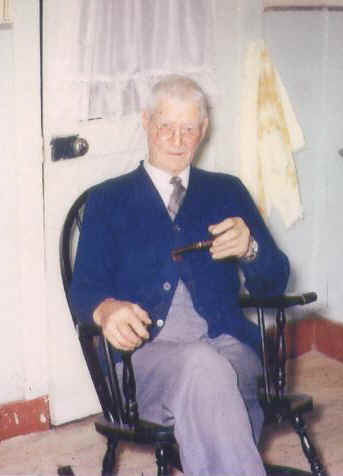
“My invitation to you is to learn. Learn more about this rich history that we all share. So we can move forward to creating a better America than we’ve ever had, one that will justify all the sacrifices all of us have made and one that will enrich all of our children.”
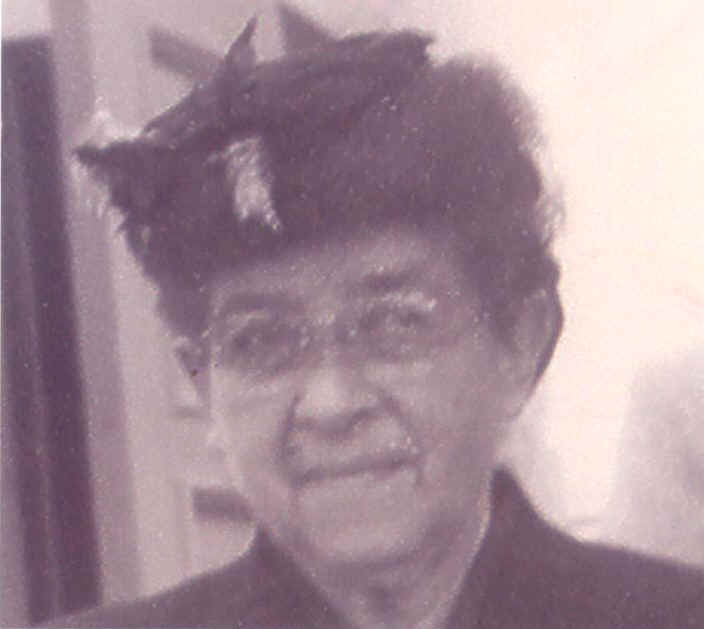
Native Americans are not the “Vanishing American” depicted in Zane Grey’s 1925 novel and the subsequent silent film, he said. Populations have been increasing in the Americas since a low point in 1913, he said.

“Native people never gave up on themselves. They never said, ‘We’re doomed and we’re going to disappear,’” he said. “Native people have always had faith — in the power of their culture and the virtue of what they were doing, in the needfulness of their knowledge. And so native culture continues.”


https://www.ocregister.com/2017/11/15/native-american-speaker-affirms-we-are-still-here-at-cal-state-fullerton-event/ 

M

Cal State Fullerton’s Inter-Tribal Student Council

The Native American Heritage Month reception was a testament to positive change in the university’s commitment in supporting the campus’s indigenous students, Raven Bennett-Burns, president of the Inter-Tribal Student Council, told the gathering.

“It’s because of those who came before us that we are able to say ‘We are still here,’” Bennett-Burns said. “Without them and their belief that our culture and community is something worth fighting for and celebrating, none of us would have ever known that Inter-Tribal even existed.” The early club had to fight for office space, fight to keep the office space and fight for money to put on events, she said.

Vicki Vasques accepts the Native American Alumni Recognition Award at the Native American Heritage Month reception on Nov. 8 at the Fullerton Marriott. Raven Bennett-Burns, president of the Inter-Tribal Student Council, stands in the background. (Photo courtesy of Cal State Fullerton)

Vicki Vasques accepts the Native American Alumni Recognition Award at the Native American Heritage Month reception on Nov. 8 at the Fullerton Marriott. Raven Bennett-Burns, president of the Inter-Tribal Student Council, stands in the background. (Photo courtesy of Cal State Fullerton)

The club was started in 1971 but went dormant before being revived two years ago with the help of University Advancement and alum Vicki Vasques, ’76. Vasques, CEO of Tribal Tech LLC in Alexandria, Va., was honored during the event with the Native American Alumni Recognition Award.

Allison Wilson, president of the Titan Archaeology Club and vice president of the Inter-Tribal Student Council, won the Native American Essay Recognition Award. She has helped preserve her culture by learning the Cherokee language and practicing native artistry.

Chase Sheriff, ITSC treasure and a member of the Associated Students Inc. board of directors said the board is working on a resolution to officially recognize Indigenous Peoples Day instead of Columbus Day.

For the 2017 spring semester, 54 CSUF students identified themselves as American Indian, according to the university.


https://www.ocregister.com/2017/11/15/native-american-speaker-affirms-we-are-still-here-at-cal-state-fullerton-event/ 

M

Native American people’s historical foundation

Preserving the Historical and Cultural Heritage of All Native Americans

=================================== ===================================

Objectives of the Foundation

When fully developed, it is intended that the Avikan development will accomplish the following:

1.     Provide a secure and controlled repository to preserve records, historical documents, family and tribal histories, and other materials associated with the heritage of Native American peoples. Such materials are the rapidly-disappearing tangible evidences of Native American culture in North America, and would include, but not limited to, the following:

·        Genealogical records and family history materials. ·        Journals, documents, manuscripts, and other historical materials.
·        Oral history materials, including tapes and transcripts.
·        Artifacts and memorabilia.

·        Photographs, artwork and visual images- Some of these materials would be subject to access restrictions, as mandated by tribal or family donors, but, where possible, the archival materials would be made available to accredited scholars and others for research and interpretation.    


PPProvide facilities for accredited individuals and organizations to have access to the archival materials for the purpose of preparing scholarly reports or other communication media that interpret their meaning and significance.

3.     Preserve and protect ancient ruins and archeological remains on the Foundation’s property at Avikan, near Blanding, Utah.

4.     Increase public awareness of Native American cultural heritage through interpretive and educational programs including:

·        Exhibits, displays and interpretive signage in the Records Center and on the property.

·        Multi-Image or film/video presentations.

·        Books, scholarly reports, and other publications.

·        Living history programs and demonstrations.

·        Community outreach programs, taking exhibits and presentations into schools and other organizations.

·        Working with the media in the preparation of educational television programs, films, etc.

5.     Provide a visitor experience that is authentic in its representation of Native American culture and heritage, an experience that will attract visitors to the facility and its programs.

6.     Provide visitors with an overview and orientation to the Native American cultures (both prehistoric and historic)

For more information, contact:  
Native American People’s Historical Foundation
3 East Center (75-8)
Blanding, Utah 84511
(801) 678-2805


M

January 8th, 1865 -- Kickapoos rout Confederates in battle of Dove Creek

=================================== ===================================
On this day in 1865, about 160 Confederates and 325 state militiamen lost a battle against the Kickapoo Indians about twenty miles southwest of present San Angelo. A month earlier a scouting party had discovered an abandoned Indian camp and, assuming the group was hostile, dispatched forces to pursue them. A militia force under Capt. S. S. Totten and state Confederate troops under Capt. Henry Fossett set out, but the two forces lacked a unified command and full communication. When the troops and militiamen finally rendezvoused near the timbered encampment of the Kickapoos along Dove Creek, the forces concocted a hasty battle plan. 


The militia waded the creek to launch a frontal attack from the north, while Confederate troops circled southwestward to capture the Indians’ horses and prevent a retreat. A well-armed Indian fighting force, possibly several hundred strong, easily defended their higher, heavily-wooded position as the militiamen slogged through the creek. The Confederate force was splintered into three groups caught in a heavy crossfire. Three days later the battered Texans retreated eastward, while the embittered Kickapoos, once peaceful, escaped to the Mexican border. Thus began a violent period of border raids on settlers along the Rio Grande.
M

SEPHARDIC

Jewish Presence in Texas
Congregation Beth Israel, December 28th, 1859 -- 
     Oldest Jewish house of worship in Texas chartered

M

M

Jewish Presence in Texas

=================================== ===================================
Introduction to an article by Rabbi James L. Kessler
about the history of Jews in Spanish Texas.

Jews have been a part of the warp and woof of the Lone Star State since the period of Spanish Texas. To the untamed future state came Jewish seekers of fortune and freedom. Heirs to the Spanish and European forms of Jewish ritual practice, the Jews of Texas adapted their seminal faith to the new ambience without damaging the integrity of a 5,000-year-old tradition. Though some abandoned their roots, most were tenacious in the nurturing of their heritage. Before 1821, Jews who openly practiced their religion could not legally live in Texas, a Spanish colony where only Catholics could take up residence. Samuel Isaacks had settled on the Brazos River by December 1821, however, N. Adolphus Sterne moved to East Texas in 1826, and by 1838 Jews were living in Velasco, Bolivar, Nacogdoches, Goliad, San Antonio, and Galveston. Their settlement pattern was repeated numerous times: first the formation of a cemetery-benevolent society, followed by a synagogue, formal or informal. Jewish cemeteries were established in Galveston in 1852, Houston in 1854, San Antonio in 1856, Victoria in 1858 and Jefferson in 1862. 

The first chartered Jewish congregation in Texas was Congregation Beth Israel, Houston, founded in 1859. It began as an Orthodox synagogue, but became a Reform congregation some fifteen years later. The oldest Reform congregation, Temple B'nai Israel, Galveston, was established in 1868. By the turn of the century, numerous congregations had been organized: Hebrew Sinai Congregation of Jefferson in 1873, Beth El of San Antonio in 1874, Temple Emanu-El of Dallas in 1875, Beth Israel of Austin in 1876, Rodef Shalom of Waco in 1879, United Hebrew Congregation of Gainesville in 1881, Shearith Israel of Dallas in 1884, B'nai Abraham of Brenham in 1885, Beth El of Tyler in 1887, Temple Moses Montefiore Adath Israel of Marshall in 1887, Tiferet Israel of Dallas in 1890, Mount Sinai Congregation of Texarkana in 1890, Ahavath Sholom of Fort Worth in 1892, and Beth El of Corsicana in 1898. Beth El of Fort Worth followed in 1902 and Ahavath Achim of Tyler in 1903.


Congregation Beth Israel
December 28th, 1859 -- Oldest Jewish house of worship in Texas chartered

On this day in 1859, Congregation Beth Israel, the oldest Jewish house of worship in Texas, was chartered as the Hebrew Congregation of the City of Houston. The congregation, which consisted of twenty-two members, many of western European origin, had been organized as an orthodox synagogue five years earlier. The institution started a religious school in 1864 and incorporated as the Hebrew Congregation Beth Israel in 1873. By 1943 it had completed the transformation from an Orthodox to an American Reform Jewish congregation. The Franklin Avenue Temple Beth Israel was completed in 1874, and funds donated in memory of Abraham M. Levy helped pay for a new temple at Austin Street and Holman Avenue in 1925. Among the congregation's chief rabbis was Hyman Judah Schachtel, who arrived in 1943. The Hebrew Congregation Beth Israel was renamed Congregation Beth Israel in 1945.

Richard G. Santos, whose obituary is included in this month's issue was the historian who I first heard speak on the subject.  

His friend Gilberto Quezada wrotes
"  "He wrote about topics as varied as the origins of Spanish names to the movement of Sephardic Jews from Spain and Portugal into the Southwest. He was Bexar County's first archivist, taught at Trinity and Palo Alto College, directed ethnic studies at Our Lady of the Lake University, was chairman of the Bexar County Historical Commission and was an educational consultant.

M


ARCHAEOLOGY

Mexican Archaeologists Discover Pres-Hispanic Temple of the 'Flayed Lord' by Richard Gonzales
The Exodus Case, Evidence of the Jews fleeing across the Red Sea, chariot wheels and other parts.
e
 

Mexican Archaeologists Discover Pre-Hispanic Temple of 'The Flayed Lord'

Richard Gonzales, January 2, 2019

The  Ndachjian–Tehuacan archaeological site in Puebla, Mexico, the first known temple to the Flayed Lord, a pre-Hispanic fertility god.  Meliton Tapia Davila/AP

Mexican archaeologists have discovered what they say is the first temple of a pre-Hispanic fertility god known as the Flayed Lord who is depicted as a skinned human corpse. The discovery is being hailed as significant by authorities at Mexico's National Institute of Anthropology and History because it is a whole temple, not merely depictions of the deity, which have been found in other cultures.

Experts found two skull-like stone carvings and a stone trunk depicting the god Xipe Totec.
"It had an extra hand dangling off one arm, suggesting the god was wearing the skin of a sacrificial victim," the Associated Press reports.

A skull-like stone carving and a stone trunk depicting the Flayed Lord, a pre-Hispanic fertility god depicted as a skinned human corpse.  Meliton Tapia Davila/AP

"Priests worshipped Xipe Totec by skinning human victims and then donning their skins. The ritual was seen as a way to ensure fertility and regeneration," according to the AP.


The temple was recently uncovered in excavated ruins of the Popoloca Indians in the state of Puebla in central Mexico.

The temple was built by the Popolocas between A.D. 1000 and 1260 at a complex known as Ndachjian-Tehuacan. Authorities believe the victims who lost their skin were involved in gladiator-style combat and were later flayed.  


Moses crossing the Red Sea on dry ground is not a myth!


The Bible records that a huge number of Hebrew slaves escaped the wrath of Egypt through the parted waters of the Red Sea.  The Bible details the destruction of Pharaoh’s army as walls of sea water crashed down upon them. Is there any real proof that the Biblical account of the Exodus actually happened? How can we know that this is more than a child’s story?  Yes, new discoveries confirm the historical exodus.

An excellent book and DVD are available detailing recent scientific research that has verified Mr. Wyatt’s discoveries. “The Exodus Case” is available at Amazon.DVD “The Exodus Revealed” is available at Amazon.

=================================== ===================================


Chariot Wheels litter the bottom of the Red Sea.
Neweiba Beach


Horse bones discovered in the Red Sea off Neweiba Beach. Many human and horse bones have been recovered from the bottom of the Red Sea. What other evidence is there that an army was destroyed by water?


The story began in 1978 when a man by the name of Ron Wyatt chartered a small air-plane and was flying over the Sea of Aqaba south of Israel. Wyatt was a part-time Bible explorer who was in the area on some archeological research at the sites of Sodom and Gomorrah along side of the Dead Sea.

As he flew over Neweiba Beach he commented to the pilot — “That looks like the area the Bible describes where Moses was trapped between the Red Sea and Pharaoh’s army. I need to go down there and take a closer look.”
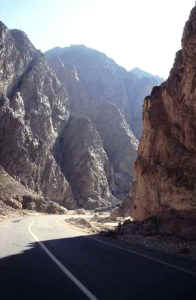
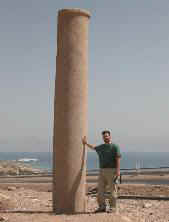
Wadi Watir Neweiba Beach, Egypt, is now a resort area along the coast 
of the Sea of Aqaba (Red Sea).

When Wyatt drove to Neweiba Beach, he had to go through a long 
winding canyon called the Wadi Watir. He recalled how that Pharaoh had said — “They are entangled in the land, the wilderness has shut them in.” (Exodus 14:3)

Once Moses and the Hebrews entered into the canyon there was no escape. Soon the million or so escaping slaves were crowded onto a sandy beach. Before them lay the Red Sea. Behind them came one of the most powerful armies in the world. They were trapped between the mountains and the Red Sea.

The steep canyon sides of the Wadi Watir leading to Neweiba Beach, Egypt.

Pharaoh’s army pursued thinking that an easy massacre was just hours away. They were right! But Pharaoh and his commanders had no way of knowing that they would be the ones destroyed by walls of water that loomed up nearly 900 feet on either side of them.


Pillar marking the crossing site of the Exodus.

When Mr. Wyatt arrived at Neweiba Beach he soon found evidence that this was, in fact, the very spot where Moses and his followers crossed the Red Sea. A huge stone column was found lying in the water and the inscription had long been washed away. But an identical column found across the Red Sea had Hebrew writing giving glory to the God of Israel who delivered His people through the Red Sea. It is believed that King Solomon erected those columns as a permanent memorial of the Exodus!

An identical column was found on the opposite side of the Red Sea along the coast of the ancient land of Midian which is now Saudi Arabia.

Chariot Wheels in the Red Sea have been discovered.Mr. Wyatt reasoned that if this were truly the site of the Red Sea Exodus, there could be evidence in the waters. What he was about to find was truly remarkable!


Wyatt began investigating underwater off the coast of Neweiba Beach. One of the first things he found was a beautiful gold plated chariot wheel, very fragile but clearly visible in the clear waters of the Red Sea!

Later, Wyatt and his sons found numerous other man-made artifacts and chariot wheels. The shapes of the battle debris were still intact because coral had attached themselves to the wood, preserving evidence of the historical accuracy of the Biblical account of the Exodus and the destruction of Pharaoh’s army, estimated to be as many as 250,000 soldiers and horse drawn chariots.

Coral encrusted chariot wheel found in the water of the Red Sea.

Four, six and eight-spoked wheels were found in the Red Sea. These wheels were typical of the wheels used in the 18th Dynasty at the time of Moses and the Red Sea Exodus.

Man-made axle and wheel found in the waters of the Red Sea. Artists rendering of the wooden spokes and axle, now gone but the shape has been preserved by coral!

4 and 6 Spoked Wheels From The 5th Dynasty of Egypt:  Typical chariot wheel from the 18th Dynasty of Egypt, the time of Moses and the Exodus.


Wyatt recovered the hub of a wheel with the remains of eight spokes and gave this significant find to Nassif Mohammed Hassan, Director of Antiquities in Cairo. Mr. Hassan immediately identified the artifact as a chariot wheel dating over 3500 years ago during the 18th Dynasty, the only time the ancient Egyptians used an eight-spoked wheel. The hub and spokes are on display in Cairo, Egypt.

Coral attached themselves to the remains of the chariots and preserved them for 3500 years!


Under water land bride stretching across the Red Sea. This remarkable excape route provided by God is nearly 200 yards wide!Wyatt also discovered that there was an under-water causeway or land bridge stretching from the shores of Neweiba Beach, across the deep waters of the Red Sea to Saudi Arabia, the ancient land of Midian where Moses and his people gathered at Mount Sinai. The land bridge provided by the Lord for His people, slopes gently down to almost 900 feet before going back up to the other side! Imagine walls of water 900 feet high . . . little wonder that Pharaoh’s army was totally destroyed!

Under water land bride through the Red Sea!

Finding the crossing site was the key in locating the real Mount Sinai in the land of Midian.

For hundreds of years, people thought that Mount Sinai was located in the southern tip of the of the Sinai Peninsula (see red “X” above. But after many archaeological digs in the area, it has been concluded that there was never an encampment there.


The Bible clearly teaches that the real Mount Sinai is in the land of Midian. Galatians 4:25 even declares that Mount Sinai is in Arabia, on the opposite side of the Gulf of Aqaba which is part of the Red Sea. But crossing the Red Sea presented a problem: the Red Sea is very similar to the Grand Canyon in that it is extremely deep and the sides are extremely steep!

Like the GRAND CANYON

The LORD provided an underwater land bridge across the Red Sea to liberate the Hebrews and destroy the army of Pharoah!

Some people claim that the Hebrews crossed a shallow lake called the Sea of Reeds. The fact is: If the people passed safely through the shallow waters of the Sea of Reeds, an even greater miracle took place . . . God drowned an army estimated to be over 250,000 soldiers and horse drawn war chariots!

If God had not prepared the underwater land bridge from Neweiba Beach across the Red Sea to the land of Midian, Moses and the people would have perished at the hand of Pharaoh’s soldiers.

Perhaps it would be good to remember that just as God cared for His ancient people, He cares for us today! David, the Shepherd King of Israel once declared — “This I know, that God is FOR me.” Psalm 56:9


MEXICO


Así era el mapa de Mexico en 1794 . . . Que Ocurrió?
Escuadrón 201
New Jewish Documentation Center, 100 Years of Jewish Life in Mexico City
Arts of Colonial Mexico
Defunción del Soldado Presidial Estevan García
MMmmmmm


The United States Constitution was signed on September 17, 1787 in Independence Hall in Philadelphia, Pennsylvania.  On May 29, 1790, Rhode Island, the last of the original 13 colonies, signed the document and joined the United States. 


Escuadrón 201


Escuadrón 201

El Escuadrón 201 fue la única fuerza aérea expedicionaria mexicana que combatió 
en el extranjero durante la Segunda Guerra Mundial. 


https://www.youtube.com/watch?v=MEimT4PsQ_8

https://www.youtube.com/watch?v=69rZ4L0N_3s

https://www.youtube.com/watch?v=BDO0XRJ81jA
https://www.youtube.com/watch?v=bcD9OhU03oI

https://www.youtube.com/watch?v=KkePF8h651Y
https://www.youtube.com/watch?v=l2ajnyvBjP8
https://www.youtube.com/watch?v=T2yrq7kNQfM

https://www.youtube.com/watch?v=xYqXZwMiWlk
https://www.youtube.com/watch?v=on3yEftuSO4
https://www.youtube.com/watch?v=-ETvm5gKexc

Editor Mimi:  If the history of
Escuadrón 201 is new to you, I highly recommend that you watch some of these youtube films.  It is evidence of the positive historic connections between the United States and Mexico.  With thanks to Carlos Campos for compiling the list.  

Germany had its eye on Mexico, as an ally and as a base for expansion.  Between WW I and WW II, many Nazi Germans fled Germany and settled in South America and Mexico.   

Germans in the Americas, in league with Germany, were moving politically to influence the Mexican government to form an alliance with Germany.  During WW II, well trained Ex-Germany military served in the Mexican military, in many cases serving as officers.  Collaboration efforts intensified.  

However, the Mexican government blocked that move, and instead Mexico flew with the United States.  This was a strong message to Germany.  Expansion by the Germans was not going to be with the cooperation and support of Mexico.


M

M


Largeimage


New Jewish Documentation Center, 
Containing 100 Years of Jewish Life in Mexico City, Opens This Week

The paper legacies of separate immigrant communities return under one roof after earthquake-induced exile

By Alan Grabinsky


A catastrophic 1985 earthquake that killed thousands of people in Mexico City and destroyed the (back-then) Jewish neighborhoods of Roma and Condesa also left the archives of the Ashkenazi community in a state of complete disarray, stashed away in makeshift boxes in the damp and dark basement of the Nidje Israel synagogue, colloquially known as Acapulco 70 for its street address. In the early 1990s, Alicia Gojman de Backal, a history professor at the National University of Mexico, decided to make sense of this archival nightmare. The result was Generations of Jews in Mexico a seven-tome encyclopedic history of the Ashkenazi community in Mexico published in 1993 and the birth of Mexico City’s Jewish Documentation Center, which will reopen this week in its new home in the historical Rodfe Sedek synagogue.

The JDC archive includes Mexican anti-Semitic and anti-fascist posters of the 1930s, original manuscripts by the Yiddish poet Jacobo Glanz, and the first edition of The City of Palaces, one of the first Yiddish books published in Mexico, with poems by Isaac Berliner and original drawings by Diego Rivera (the communist artist was close to many left-wing Jewish émigrés). The reopened collection also celebrates more than 100 years of Jewish immigration from Syria, Turkey, the Balkans, Morocco, Iraq, and many more countries, which will be added to a collection that was awarded Memory of the World status by UNESCO, placing it in the same level as the nations’ top collections of pre-Hispanic codices.

According to those involved in the project, the idea of the JDC was to find a final resting place for the community’s archives—which, in the case of the Ashkenazi documents, needed to be relocated yet again last year, after a magnitude 7.1 earthquake struck the city on the exact same date as the mythic 1985 quake. In order to preserve the documents, Enrique Chmelnik, director of the new center, had to design an impromptu exit strategy to save them from the collapsing building.

I recently met Chmelnik in his temporary headquarters, provided by the Syrian Jewish community in the suburban neighborhood of Tecamachalco, where most Jews now live. In a small room outside his office were cardboard boxes about to burst with papers, hundreds of newspapers stacked in makeshift Ikea-style closets, and many more documents lying, randomly, on a large table. (Later, I found that most of the archives had been stored temporarily in a warehouse in the outskirts of the city.) On top of a cupboard was collection of Yiddish-script typewriters, including a Remington Portable produced in the 1940s in New York.

The staff members were busy with these treasures, getting ready to move out. Raquel Castro, who writes the center’s newsletter, showed me a photo album donated by one of the community members: “Just like vets sometimes receive a box full of kittens that no one knows where they came from, or what to do with them, people sometimes drop boxes of documents and personal material on our doorsteps … and we have no idea where they came from or who the people in the pictures are.”

One of the most important documents in the new center was donated by the Monte Sinai community, which represents the Jews who immigrated from Damascus. The paper documents the first Jewish organization, established in 1912, when a group of Jews from the Balkans, Eastern Europe, Libya, and Syria, decided to join forces in order to buy a plot of land for use as a cemetery. “It’s ironic,” Chmelnik told me, smiling, “100 years ago, all these Jews from diverse backgrounds got together with a common goal in mind.”

Since then, the century-old community has branched out into many subcommunities divided by place of origin. Today there are synagogues, community centers, and schools for Jews from the ex-Ottoman Empire or Syria, Eastern Europe, or the United States. Place of origin is so important in the Maguen David (Aleppo) and Monte Sinai (Damascus) communities that there are special genealogy programs in order to prove that each member has Jewish-Syrian descendants going back four or five generations.This sense of separation and hyperfragmentation within the community has generated its own microidentity politics: Different histories are being told according to separate archives. Separation is such that Chmelnik, himself an Ashkenazi Jew, did not meet a Jew from another background until he was in high school. “In a sense, there’s a type of historic justice,” he told me, when talking about the Jewish Documentation Center, “everyone is coming back under the same roof.”

The new center will have a library with 16,000 books in Spanish, Arabic, French, Hebrew, Hungarian, Yiddish, Ladino, English, Lithuanian, Polish, and Russian, many of them rescued by the Allies during World War II. It will also house 1,500 newspapers coming from as far away as Istanbul, a collection of pictures documenting everyday life for Jews in Mexico, and original copies of the first Yiddish newspapers published in the city.

I went to visit the new center recently; the modern cement-and-glass building, with its sharp edges and open rooms, contrasts with the adjacent synagogue, with its brick walls and beautiful colored-plated glass windows. The first floor of the restored synagogue already has a sizable collection of books; newspapers will be kept on the second floor.

As for the archives, they will be stored in fireproof, secure, and movable metal shelves in the basement, where there is a beautiful mikvah, the first one in Mexico City. The documents will be organized according to community of origin. The room they are stored in is also said to be earthquake proof.

Like this article? Sign up for the Daily Digest to get Tablet magazine’s new content in your inbox each morning.


=================================== ===================================

Arts of Colonial Mexico 

Thank you for your readership and comments over the past year. In 2019 we plan to start with more posts on "drowned" churches and some Hidden Gems, as well as some more reports from Oaxaca.
 

We wish you all the best for the New Year and hope you will continue to follow our posts on the arts and architecture of colonial Mexico.

Feliz Año Nuevo,  Richard Perry
rperry@west.net  

http://colonialmexico.blogspot.com
 
http://mexicosmurals.blogspot.com


La Verdadera Historia de Hernán Cortés 
Hay muchos videos y referencias sobre Hernán Cortés.

Por varios histiadores:

Salvador de Madariaga
José Luis Martinez
Juan Miralles
Bartholome de Nasar
Esteban Mira Caballos   

Hugh Thomas "La Conquista de México"

Y Mas recientes tenemos a J. M. Zunzunegui en YouTube

https://www.youtube.com/watch?v=jyqJgoFXp7A

Sent by Carl Camp campce@gmail.com


Doña Gertrudis  Survives a Storm
(Credit to Mario Yair TS, Atlas Obsura User for photos of Votos)


Mexico City, Mexico

The Ex-Votos of Churubusco

 A room of the Museo Nacional de las Intervenciones displays unusual 19th and early-20th century paintings which give thanks to the saints and deities who granted people favors and miracles. 


During the 19th and early-20th centuries, people who obtained some miracle or heavenly favor traditionally expressed their gratitude in a painting. Today, a room of the Museo Nacional de las Intervenciones shows the most curious of these paintings from the Instituto Nacional de Antropología e Historia (INAH) collection.

=================================== ===================================

Although the museum is actually dedicated to telling the story of foreign interventions throughout the history of Mexico, this particular exhibition aims to educate visitors about Mexican religious life, which is fitting, as the museum is located in what was once a convent.

The paintings displayed are called “ex-votos” because they were offered to the heavenly deities in gratitude for a favor or miracle granted. The artwork illustrates the moment in which the miracle occurred, the divinity or saint to whom it is offered, and a small text that tells what happened.

This type of painting was hung in the churches throughout the country, though the tradition waned after the beginning of the 20th century. It wasn’t the Mexican nationalism movement of the 1940s, when people stopped making ex-votos and many were chucked in the trash, that the tradition became seen as a form of Mexican folk art and the surviving collections were sent to museums.


The ones in this museum are memorable. There’s one of a man who survived a fall through two floors, and another showing a group of women who survived when a lightning bolt struck beside them. One depicts a man who got out of prison after accidentally running over two girls with a tram, and even one showing a man who survived a battle of the Mexican Revolution because his mother entrusted him to a saint. The artistic technique and spelling mistakes make the paintings unusual and quite amusing.

Not for nothing, at present, there are those who make parodies of these interesting artwork, creating images that thank the saints for rescuing them from a UFO abduction or for not being discovered with a lover. Many of these parodies are sold in craft markets.

The museum is open to the public Tuesday through Sunday from 9 a.m. to 6 p.m. Admission is free on Sundays.


Visenta Garia Goes Crazy


Roman Survives His Execution 

Street Fight   
(Credit to Mario Yair TS, Atlas Obsura User for photos of Votos)

https://www.atlasobscura.com/places/the-ex-votos-of-churubusco?utm_source=Atlas+Obscura+Daily+Newsletter&utm_campaign=df3b0dfee2-EMAIL_CAMPAIGN_2019_01_03&utm_
medium=email&utm_term=0_f36db9c480-df3b0dfee2-65936441&ct=t(EMAIL_CAMPAIGN_1_3_2019)&mc_cid=df3b0dfee2&mc_eid=48deecacd6


Defunción del Soldado Presidial Estevan García

=================================== ===================================
Estimados amigos Genealogistas e Historiadores.
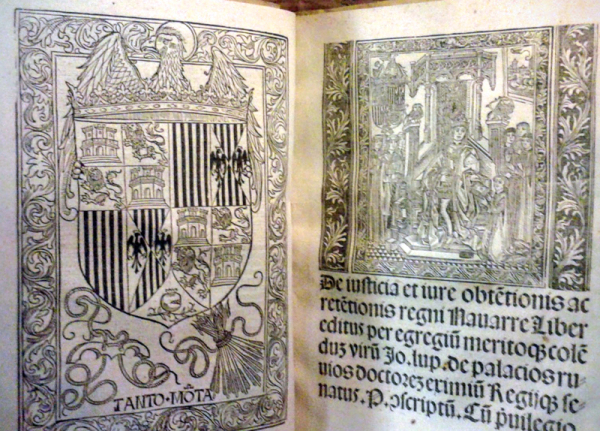
Envío a Uds. la imagen de la defunción del Soldado Presidial Estevan García, perteneciente a la Compañía de Banderas alias Álamo de Parras, así lo escribió el Br. don  José Cipriano de la Garza, Capellán de la Villa de la Punta de Lampazos, hoy Lampazos, N.L. 

1818-2018. 200 años de la muerte de un Soldado Presidial olvidado.  Estevan García. Adulto.

Fuentes. Family Search. Iglesia de Jesucristo de los Santos de los últimos Días. 


En 18 de 7 bre de 1818. En esta Parroquia de la Punta de Lampazos, Yo el infrascripto Capellan dí sepultura eclesiástica de limosna al cuerpo de Estevan García soldado de la Compañía de Vanderas alias del Alamo de Parras, casado con María del Refugio Perez. Murió a manos de los yndios barbaros ------------ por cuyo motivo no recibió los santos sacramentos de penitencia, eucaristia y extrema unción y por que conste lo firmé. Br.  José Cipriano de la Garza.

 Investigó.  Tte. Corl. Intdte. Ret. Ricardo R. Palmerín Cordero. M.H. Sociedad Genealógica y de Historia Familiar de México, Sociedad de Genealogía de Nuevo León, Asociación Estatal de Cronistas e Historiadores de Coahuila de Zaragoza.


Mexican historian writes about Spanish America 

The independence of Spanish America
by Jaime E. Rodriguez O. 
Rodríguez O., Jaime E.

=================================== ====La===============================

The independence of Spanish America was not an anti-colonial movement; It was part of both the revolution of the Hispanic world and the disintegration of the monarchy as a result of the French invasion of the Peninsula. In America, the political revolution of the Hispanic world was accompanied by a struggle over who should govern. The liberal tradition of constitutional and representative government that had emerged in the Cortes of Cadiz and in rival regimes in America, together with the achievement of nationhood, constitutes the most important inheritance of the independence processes of Spanish America.

  • ISBN: 9789681675561
  • Editorial: Fondo de Cultura Económica
  • Date of edition: 2005
  • Place of the edition: Mexico DF. Mexico
  • Edition number: 2nd ed
  • Collection: Trust history of the Americas. essays
  • Binding: Rustic
  • Measures: 21 cm
  • Nº Pág .: 472
  • Languages: Spanish
=================================== ===================================

Image result for La independencia de la America espanola by Jaime E. Rodriquez O.

The Independence Of Spanish America 

We are now the real Spaniards

We are now the real Spaniards

=================================== ===================================
The political revolution during the time of independence

The political revolution during the time of independence

The birth of Latin America  

Sent by Carl Campos 


CARIBBEAN/CUBA

Cuba’s Next Transformation

By 
Jon Lee Anderson, Jan. 5, 2019

Sixty years after the revolution, a Communist stalwart may be moving closer to democracy.  

M

=================================== =========================
https://static01.nyt.com/images/2019/01/06/opinion/sunday/06Anderson1/merlin_148633170_540a0407-3411-43c1-8212-c85ffe0cfbd5-articleLarge.jpg?quality=75&auto=webp&disable=upscale


A banner in Santiago de Cuba marking the 60th anniversary of the Cuban revolution and vowing to uphold its spirit. Credit Yamil Lage/Agence France-Presse — Getty Images

On the 60th anniversary of the Cuban revolution, which the ruling Communist Party celebrated on Tuesday, the island nation is stable, having overcome such existential threats as the Bay of Pigs invasion in 1961, the Cuban missile crisis in 1962 and a half-century of diplomatic isolation and withering economic sanctions imposed by the United States.

Cuba has also weathered the collapse of the Soviet Union, its main Cold War benefactor, and a slew of traumatic internal ructions including the Mariel boatlift in 1980 and the Cuban raft exodus in 1994. Last but not least, Cuba has managed its first major political transitions, following the death in 2016 of its defining leader, Fidel Castro; the presidential retirement, last year, of his younger brother, Raúl Castro; and Raúl’s succession in office by Miguel Díaz-Canel Bermúdez, a 58-year-old Communist Party loyalist.

For the first time since 1959, in other words, Cuba is ruled by someone other than a Castro, and it has handled the transition without the drama or bloodshed that many other revolutionary states have experienced after the death of their patriarchs.

=================================== ===================================

https://static01.nyt.com/images/2019/01/06/opinion/sunday/06Anderson2/merlin_14824714_c53f5934-c7bd-4a36-8c1c-f16bc67ad844-articleLarge.jpg?quality=75&auto=webp&disable=upscale
Fidel Castro in 1964.
CreditJack Manning/The New York Times


The Cuban Communist system shows no sign of collapse. But the internal struggle over whether to have more democracy or continued dictatorship is well underway in Cuba, although it is not couched in those terms.

How that struggle is resolved will determine the nation’s future. Although most of the debate is conducted in a rhetoric that is almost liturgical in its strictures, there is a growing space for differing points of view. It is increasingly clear that Cuban society is no longer — if it ever was — a homogeneous bloc of revolutionary workers willing to simply applaud or fall silent at the decisions of their leaders.

In a possible sign of change, Cubans will vote next month on a new Constitution to replace the country’s Cold War-era charter. Several hundred changes were made to the draft to incorporate the views of Cubans who were consulted on proposed reforms. Not all of the changes are progressive: In response to apparent widespread public demand, a clause was dropped that would have explicitly allowed same-sex marriage; another alteration reinstated language that describes Cuba’s ultimate political goal as “advancing toward communism.”


Souvenirs for sale to foreign tourists at Morro Castle, a fort built in 1589 to guard Havana's harbor against invasions. 
Credit Tomas Munita for The New York Times

=================================== ===================================

There was also public pushback against a draft law prohibiting the accumulation of private property. In response, the government agreed to a compromise in which state regulators will decide what property can be owned case by case. 

Another recent decree that has generated resistance seeks to impose a system of prior official approval for cultural performances and of censorship of art determined to have “immoral or vulgar” content or which “misuses patriotic symbols.” The government has agreed to step back aspects of the law.


This wrangling underscores the evolving struggle over the nature of the Cuban state. Some of the concerns raised about the draft Constitution clearly reflect the will of older Cubans, many of whom are socially conservative, have spent most of their lives living under Communism and constitute a growing percentage of the population. Other concerns point to the emerging self-confidence and clout of younger Cubans, increasing numbers of whom are involved in the country’s new economy, known as cuentapropismo — or self-employed work, which was authorized and significantly expanded during Raúl Castro’s presidency.


A private storefront in Havana. “Cuentapropistas” and their employees represent nearly 600,000 
of the country’s work force. Credit Yamil Lage/Agence France-Presse — Getty Images

=================================== ===================================

Nowadays, cuentapropismo accounts for the work of nearly 600,000 people (about 13 percent of Cuba’s work force) and arguably constitutes the most vibrant, innovative and lucrative part of the nation’s economy. 

The tendency of the government, though, has been to try to slow down its growth. Recently, private taxi drivers went on an informal strike, an almost unheard-of action, after the government announced nettlesome new regulations for such drivers as well as plans for more public transportation.

.


A main concern of the government is how to sustain an economy that had a dismal 1.4 percent growth rate last year and how to maintain its free education and health systems as well as its food security and housing and job programs while balancing the budget.

But though most of the news coming out of Cuba nowadays is about economics, it is peppered with items that have an out-of-time quality. In December, for instance, there were headlines about how Cubans were going to get 3G on their mobile phones, an event prosaic in most Western countries but huge for Cubans, who were not allowed even to own cellphones until 2008, when Raúl Castro decreed that they could


The government allowed Cubans to own cellphones in 2008.
CreditYamil Lage/Agence France-Presse — Getty Images

=================================== ===================================

Another notable bit of news at year’s end was that Cuba reached a new high in tourist visitors: 4.75 million. That figure is nearly double that of just four years ago, when President Barack Obama and Raúl Castro announced their diplomatic breakthrough, which restored relations between the United States and Cuba after a half-century’s rupture.

In contrast to the Obama administration, the Trump administration has adopted a posture of hostility toward Cuba, imposing sanctions intended to deny financial investment in or assistance to Cuban businesses and institutions, including some tourist hotels and resorts, in which the Cuban military or intelligence services have a stake. 


Relations between Washington and Havana have also deteriorated as a result of mysterious “sonic attacks” that have affected several dozen American and Canadian diplomats on the island since late 2016, bringing about a virtual shutdown of the United States diplomatic presence in Cuba. The State Department has moved its consular services for Cubans to its embassy in Guyana, 2,000 miles away. In the fall, the national security adviser, John Bolton, castigated Cuba, Nicaragua and Venezuela as a “troika of tyranny” and vowed to enact polices that would help bring down their governments.

Fidel Castro being interviewed by a New York Times reporter in 1964.
CreditJack Manning/The New York Times

=================================== ===================================

While Cuba’s official relationship with the United States remains precarious, the contacts between ordinary Cubans and Americans have generally deepened and improved. That Cubans are now able to own their own businesses and to travel — something that required official permission just a decade ago — means that they are less isolated and freer than they used to be.


All of this bodes well for the future of Cuba, although its rulers still need to be convinced that freedom of speech, assembly, art, literature and media is not to be feared. They will also need to continue to be shrewd in their dealings with the United States to avoid a repetition of the sort of containment polices that isolated them during the Cold War, and which are being used again today to isolate Nicolás Maduro’s regime in Venezuela.


Fidel Castro, arm raised, entering Havana in January 1959.
CreditRolls Press/Popperfoto, via Getty Images

=================================== ===================================

At a time when the United States can no longer lay claim to being the democratic bastion it once was, Cuba has an opportunity to compete, albeit on a much smaller scale. In much of the world, and for all its faults, Cuba is respected for its pluck in standing up to the American behemoth over the last half-century. Cuba is also beloved and admired for its international medical assistance program, for its prowess in music and dance, in art and in athletics. But such achievements are not enough to keep the island going.

To exist in a way that is not only about survival, Cuba needs to find a new role for itself. It can begin by seeking to avoid taking sides in a newly polarized world order.

Most immediately, that means rethinking its relationship with Venezuela and Nicaragua. Both are countries with which Cuba has longstanding ties and much shared history, but which have become increasingly repressive and are no longer friends to be proud of. Cuba need not betray its friends in order to do the right thing:


It could deploy its considerable political and diplomatic resources to take a leadership role in ensuring that the political transitions necessary in Venezuela and Nicaragua be peaceful ones. 

Cuba’s rulers also need to continue to open up. Just as it did 60 years ago with a revolution that, for better or worse, helped reshape the modern world, Cuba can once again choose its own path, and once again be a leader among nations. It can choose to be more democratic. Now that would be truly revolutionary.

Jon Lee Anderson is a staff writer at The New Yorker and the author of “Che Guevara: A Revolutionary Life.”

Follow The New York Times Opinion section on Facebook, Twitter (@NYTopinion) and Instagram. 
A version of this article appears in print on Jan. 5, 2019, on Page SR8 of the New York edition with the headline: Cuba’s Next Transformation. Order Reprints | Today’s Paper | Subscribe


https://www.nytimes.com/2019/01/05/opinion/sunday/cubas-next-transformation.html?rref=collection%2Fsectioncollection%2Fopinion&action
=click&contentCollection=opinion&region=stream&module=stream_unit&version=latest&contentPlacement=2&pgtype=sectionfront
 
Sent by Robert Robinson robertrobinson453@gmail.com 


CENTRAL AND SOUTH AMERICA

Scientists discover ancient Mayan city 
hidden under Guatemalan jungle


M

M


Aerial laser mapping detects thousands of hidden structures in Peten region, 
suggesting its population was millions more than previously thought.
Associated Press

=================================== ===================================
This digital 3D image provided by Guatemala’s Mayan Heritage and Nature Foundation shows a depiction of the Mayan archaeological site at Tikal in Guatemala created using LiDAR aerial mapping technology.

A high-tech aerial mapping technique uncovered previously undetected Mayan buildings in the jungle of Guatemala. Photograph: Canuto and Auld-Thomas/AP

Researchers using a high-tech aerial mapping technique have found tens of thousands of previously undetected Mayan houses, buildings, defence works and pyramids in the dense jungle of Guatemala’s Peten region, suggesting that millions more people lived there than previously thought.

The discoveries, which included industrial-sized agricultural fields and irrigation canals, were announced on Thursday by an alliance of US, European and Guatemalan archaeologists working with Guatemala’s Mayan Heritage and Nature Foundation.

The study estimates that roughly 10 million people may have lived within the Maya Lowlands, meaning that kind of massive food production might have been needed.

“That is two to three times more [inhabitants] than people were saying there were,” said Marcello A Canuto, a professor of anthropology at Tulane University.

Researchers used a mapping technique called Lidar, which stands for light detection and ranging. It bounces pulsed laser light off the ground, revealing contours hidden by dense foliage.

The images revealed that the Mayans altered the landscape in a much broader way than previously thought; in some areas, 95% of available land was cultivated.

“Their agriculture is much more intensive and therefore sustainable than we thought, and they were cultivating every inch of the land,” said Francisco Estrada-Belli, a research assistant professor at Tulane University, noting the ancient Mayas partly drained swampy areas that haven’t been considered worth farming since.

The extensive defensive fences, ditch-and-rampart systems and irrigation canals suggest a highly organised workforce.

“There’s state involvement here, because we see large canals being dug that are re-directing natural water flows,” said Thomas Garrison, assistant professor of anthropology at Ithaca College in New York.

The 810 square miles (2,100 square kilometers) of mapping done vastly expands the area that was intensively occupied by the Maya, whose culture flourished between roughly 1,000 BC and 900 AD. Their descendants still live in the region.


The mapping detected about 60,000 individual structures, including four major Mayan ceremonial centres with plazas and pyramids.
=================================== ===================================
Garrison said that this year he went to the field with the Lidar data to look for one of the roads revealed. “I found it, but if I had not had the Lidar and known that that’s what it was, I would have walked right over it, because of how dense the jungle is.”

He noted that unlike some other ancient cultures, whose fields, roads and outbuildings have been destroyed by subsequent generations of farming, the jungle grew over abandoned Maya fields and structures, both hiding and preserving them.

“The jungle, which has hindered us in our discovery efforts for so long, has actually worked as this great preservative tool of the impact the culture had across the landscape,” noted Garrison, who worked on the project and specialises in the city of El Zotz, near Tikal.

Lidar revealed a previously undetected structure between the two sites that Garrison says “can’t be called anything other than a Maya fortress”.

“It’s this hilltop citadel that has these ditch and rampart systems ... when I went there, one of these things [was] nine meters tall,” he noted.  In a way, the structures were hiding in plain sight.

“As soon as we saw this we all felt a little sheepish,” said Canuto said of the Lidar images, “because these were things that we had been walking over all the time.”


As 2019 begins…… we’re asking readers to make a new year contribution in support of The Guardian’s independent journalism.

Three years ago we set out to make The Guardian sustainable by deepening our relationship with our readers. The same technologies that connected us with a global audience had also shifted advertising revenues away from news publishers. We decided to seek an approach that would allow us to keep our journalism open and accessible to everyone, regardless of where they live or what they can afford.

More than one million readers have now supported our independent, investigative journalism through contributions, membership or subscriptions, which has played such an important part in helping The Guardian overcome a perilous financial situation globally. We want to thank you for all of your support. But we have to maintain and build on that support for every year to come.

Sustained support from our readers enables us to continue pursuing difficult stories in challenging times of political upheaval, when factual reporting has never been more critical. The Guardian is editorially independent – our journalism is free from commercial bias and not influenced by billionaire owners, politicians or shareholders. No one edits our editor. No one steers our opinion. This is important because it enables us to give a voice to those less heard, challenge the powerful and hold them to account. 

Readers’ support means we can continue bringing The Guardian’s independent journalism to the world.

Please make a new year contribution today to help us deliver the independent journalism the world needs for 2019 and beyond. Support The Guardian from as little as $1 – and it only takes a minute. Thank you.

Support The Guardian
https://www.theguardian.com/science/2018/feb/03/scientists-discover-ancient-mayan-city-hidden-under-guatemalan-jungle


PAN-PACIFIC RIM

Indonesian teenager survives for 49 days adrift at sea in a flimsy hut
Nicola Smith, Asia Correspondent
24 September 2018 


M

Aldi Novel Adilang, 19, was working lonely shifts as a lamp keeper for a floating fish trap 
when strong winds broke the mooring Credit: Indonesian Consulate General, Osaka

In a tale of extraordinary human survival, an Indonesian teenager has managed to keep himself alive for 49 days while floating adrift in a flimsy hut for thousands of miles across the Pacific Ocean.

Aldi Novel Adilang, 19, was working lonely shifts as a lamp keeper for a floating fish trap, 80 miles off the coast of Indonesia’s North Sulawesi in July when strong winds broke the mooring and pushed him far out to sea.

He was eventually rescued in late August by a ship sailing under a Panama flag that picked him up in the waters near Guam and then dropped him off in Japan, reported the Jakarta Post.

Mr Aldi, who was finally reunited with his family in early September, had struggled to keep his spirits up when 10 passing ships failed to spot his plight, revealed an Indonesian consular official in the southern Japanese city of Osaka.

“Aldi said he had been scared and often cried when adrift. Every time he saw a large ship, he said he was hopeful, but more than ten ships had passed him, none of them stopped,” said Fajar Firdaus, a diplomat.

Mr Aldi’s ordeal finally ended on August 31 
Photo Credit: Indonesian Consulate General, Osaka /Indonesian Consulate General, Osaka

Mirza Nurhidayat, the Indonesian consul general in Osaka, explained that Mr Aldi’s hut, known as a Rompong, did not have a paddle or an engine. After his meagre food supplies ran out, he had to catch fish and drink sea water to survive.

“After he ran out of cooking gas, he burned the rompong’s wooden fences to make fire for cooking. He drank by sipping water from his clothes,” he said.

Mr Aldi’s ordeal finally ended on August 31 when he saw the tanker ‘Arpeggio’ sailing nearby. After failing to attract attention by waving a cloth, he switched his radio to an emergency frequency and the ship’s captain picked it up.

The rescue was complicated by high waves and crew members threw a rope to help him as the ship circled his tiny craft. In desperation, Mr Aldi jumped into the water to reach it and was eventually pulled to safety.

Mr Aldi's ordeal has highlighted the perils faced by lamp keepers who take on the isolated job of looking after fish traps

Mr Aldi's ordeal has highlighted the perils faced by lamp keepers who take on the isolated job of looking after fish traps Credit: Indonesian Consulate General, Osaka

The captain contacted the coastguard of Guam, a tiny US territory, but was told to carry on his planned route to Japan, where Mr Aldi could be helped by his embassy.

Although his journey had a happy ending and Mr Aldi is now in good health, his story has also highlighted the perils faced by lamp keepers who take on the isolated job of looking after fish traps.

Mr Aldi's journey had a happy ending and he is now in good health.  Credit: Indonesian Consulate General, Osaka

Mr Aldi had been contracted to light lamps around the Rompong to attract and trap fish, and only had a walkie-talkie for company.

His only contact with another human being was once a week when someone would come to harvest the caught fish and give him a fresh batch of food, fuel and water.


M

 PHILIPPINES

Timeline of Marcos family’s political comeback in Philippines 
Agence France-Presse,  November 08, 2016


M
T


Dictator Ferdinand Marcos, flanked by wife Imelda and children Imee, Irene and Bongbong, addresses 
his supporters from a balcony in Malacañang on Feb. 25, 1986, after taking his oath of office. 


The family of late Philippine dictator Ferdinand Marcos has enjoyed a remarkable political comeback since the “People Power” revolution ended his rule in 1986.

That revival received another big boost on Tuesday after the Supreme Court granted his family’s long-running request for the former President to be buried at the national heroes’ cemetery in Manila.

The following is a timeline of key dates in the family’s political resurrection: 

=================================== ===================================
1991: The return

Then-President Corazon Aquino, Marcos’ political rival, allows former first lady Imelda Marcos to return to the Philippines from exile in the United States to face charges of graft and tax evasion. Taking advantage of a corrupt and often dysfunctional judicial system, she will go on to defeat or evade all charges against her.

1992: ‘Great again’

Imelda Marcos runs for president calling for the nation to be “great again.” She finishes in fifth place in an election won by retired general Fidel Ramos. But the dictator’s son and namesake Ferdinand Marcos Jnr, known as Bongbong, wins a congressional seat representing Ilocos Norte, the dictator’s home province and family’s enduring political stronghold.

1993: Body flown home

Ramos lifts the ban on the return of the body of the dictator, who died in exile in Hawaii in 1989. But, like Aquino, Ramos objects to giving Marcos a state burial in the capital Manila and the remains are flown to Ilocos Norte.


1995: ‘Congresswoman’ Imelda

Imelda Marcos becomes a congresswoman after a landslide victory in her home province of Leyte in the central Philippines. A remarkably few political clans dominate Philippine politics and her relatives had long held power there, so the win is not surprising. Also, the Marcoses treated Leyte and Ilocos Norte better than other provinces during the dictatorship.

1998: Cementing control

Imelda Marcos again runs for president. She later withdraws from the race after lagging behind in the polls but her children cement control over Ilocos Norte. Bongbong is elected provincial governor while elder sister Imee takes over as a congresswoman representing Ilocos Norte.

2010: Highest post

Bongbong Marcos is elected senator, winning the highest national post for the family since returning from exile. He campaigns on a platform as a progressive politician with a strong track record in Ilocos Norte, while denying his parents ever committed crimes during the dictatorship. That message is well received by a young generation of voters with no experience of his father’s authoritarian rule. Imee is elected Ilocos Norte governor while Imelda gets a fresh taste of power as congresswoman of her husband’s province.


2013: Re-elections

Imelda and Imee Marcos are re-elected for another three years.

2016: Bitter-sweet elections

Bongbong Marcos runs for vice president, narrowly losing the race and frustrating his mother’s wish for the family to reclaim the presidential palace. However, Imelda and Imee win a third term as Ilocos Norte congresswoman and governor, and Bongbong continues to maintain a high national profile. Meanwhile, longtime family ally and provincial mayor Rodrigo Duterte wins the presidency. He thanks the Marcoses for their financial support during his campaign and announces he will allow the late dictator to be buried at the national heroes’ cemetery in Manila./rga

Read more: https://newsinfo.inquirer.net/842183/timeline-of-marcos-familys-comeback-in-philippines#ixzz5cno4sT3K

Follow us: @inquirerdotnet on Twitter | inquirerdotnet on Facebook


SPAIN

Medieval Walls of Ávila
List of saints of the Canary Islands
El Nuevo Mundo nunca fue colonia de España; los
Leyes de Burgos de 1512  
Sobrevivientes de la Primera Vuelta al Mundo 
Alfonso I, EL Batallador 

M

Medieval Walls of Ávila

The great fortified walls that surround the medieval city of Ávila date back to the end of the 11th century, built to defend the town’s population against the threat of the Moorish armies. Stretching for 1.5 miles with over 80 towers and 9 gates, these stone walls have been incredibly well-preserved over the centuries, and are considered among the finest medieval walls in all Europe.

The 11th and 12th centuries were turbulent times in Spain, marked by an escalation in the war of attrition between the Almohad Islamic Caliphate of southern Spain and the northern Christian Kingdom of Asturias. Peace treaties were drawn and territories demarcated, but tensions between the two regional powers would inevitably heighten across the Iberian Peninsula and explode into violence.  

For centuries the province of Ávila was something of a buffer zone and no man’s land between the two regions, called the “Desierto del Duero” (“Desert of the Duero”), and whenever conflict sparked between the two powers the area would become a battlefield. But by the 11th century, the no man’s land was becoming repopulated as the Christian kingdoms pushed farther south and began to resettle areas that had been long abandoned due to conflict. This burgeoning population faced a constant threat of attack and siege, and so giant fortifications were built up enclosing the city within.

Some 900 years later, these magnificent walls look much as they did during the Middle Ages, and they continue to define the city of Ávila.


https://www.atlasobscura.com/places/medieval-walls-of-avila?utm_source=Atlas+Obscura+Daily+Newsletter&utm_campaign=df3b0dfee2- 


M

List of saints of the Canary Islands

From Wikipedia, the free encyclopedia

====================================================== =====================================================

Peter of Saint Joseph de Betancur (popularly known as the Hermano Pedro) was the first canary to be canonized by the Roman Catholic Church. This happened in 2002 by Pope John Paul II.

José de Anchieta (also called Padre Anchieta) was canonized 
in 2014 by Pope Francis. It is therefore the second saint native 
of the Canary Islands.
Peter of Saint Joseph de Betancur (popularly known as the Hermano Pedro) was the first canary to be canonized by the Roman Catholic Church. This happened in 2002 by Pope John Paul II.

José de Anchieta (also called Padre Anchieta) was canonized in 2014 by Pope Francis. It is therefore the second saint native of the Canary Islands.

This is a list of saints and blesseds of the Canary Islands (Spain). In addition, the list includes the venerable and servants of God born or linked to the archipelago.[1]

Saints

Peter of Saint Joseph de Betancur. Vilaflor (Tenerife) – (1626–1667). Franciscan missionary in Guatemala, founder of the Order of Bethlehemites and first saint of the Canary Islands. Canonized in 2002 by Pope John Paul II.

José de Anchieta. San Cristóbal de La Laguna (Tenerife) – (1534–1597). Jesuit priest and missionary in Brazil. Canonized in 2014 by Pope Francis.

Blesseds

Martyrs of Tazacorte. In various parts of Portugal and Spain – (deceased in 1570). Monks and missionaries martyred off the coast of La Palma where they enjoy great veneration especially in Tazacorte, although none of them were themselves born in the Canary Islands it has included among the blessed of the archipelago. Beatified in 1954 by Pope Pius IX.

Sister Lorenza Díaz Bolaños. Santa María de Guía (Gran Canaria) – (1896–1939). Religious and martyr belonging to the Daughters of Charity of Saint Vincent de Paul. Beatified in 2013 by Pope Francis with nearly 500 martyrs of the Spanish Civil War.

Venerable and Servants of God

Sister Mary of Jesus de León y Delgado. El Sauzal (Tenerife) – (1643–1731). Dominican and mystic nun.

Sister Catalina de San Mateo de La Concepción. Santa María de Guía (Gran Canaria) – (1648–1695). Franciscan religious and mystical.

Fray Juan de Jesús. Icod de los Vinos (Tenerife) – (1615–1687). Franciscan friar and mystic.

Sister Petronila de San Esteban Montgruí y Covos. Las Palmas de Gran Canaria (Gran Canaria). Religious and mystical.

Sister María de San Antonio Lorenzo y Fuentes. Garachico (Tenerife) – (1665–1741). Dominican nun.

Buenaventura Codina y Augerolas. Hostalric (Gerona) – (1785–1857). Although he was not born in the Canary Islands, he was bishop of the Diocese Canariense.

Sister María Justa de Jesús. La Victoria de Acentejo (Tenerife) – (1667–1723). Franciscan nun and mystic.

Andrés Filomeno García Acosta. La Ampuyenta (Fuerteventura) – (1800–1853). Franciscan friar.

Antonio Vicente González Suárez. Agüimes (Gran Canaria) – (1817–1851). Religious.

José María Cueto y Díez de la Maza. Riocorvo (Cantabria) – (1839–1908). Although he was not born in the Canary Islands, he was bishop of the Diocese Canariense.

José Marcos Figueroa. Tinajo (Lanzarote) – (1865–1942). Religious.

José María Suárez. Teror (Gran Canaria) – (1890–1936). Religious.

Tomás Morales Morales. Carrizal de Ingenio (Gran Canaria) – (1907–1936). Dominican martyr.


https://en.wikipedia.org/wiki/List_of_saints_of_the_Canary_Islands
 
Sent by Bill Carmena jcarm1724@gmail.com 


M

El Nuevo Mundo nunca fue colonia de España fue una provincia mas
promulgadas 100 años antes de que llegara el primer colono inglés a Norteamérica.

América nunca fue colonia de España. La Junta de Burgos recopila la legislación sobre las Indias dictadas para la defensa y el buen regimiento y tratamiento de los indios, más conocidas como Leyes de Burgos (27 de diciembre de 1512)

El estatuto jurídico de América tras su conquista por España (Las Indias) era la de unión real a la Corona de Castilla, es decir que eran territorios estaduales independientes de Castilla, que acceden a este Reino por la persona del Rey y por otros órganos gubernamentales comunes, como el Consejo de Estado creado por Carlos I en 1520 (común para Castilla e Indias) encargado de dirigir la política general y exterior, el Consejo de Hacienda creado en 1523, el Consejo de Guerra y el Consejo de la Inquisición. 

Por tanto, jurídicamente hablando, las Indias nunca fueron colonias de España. De hecho, la expresión “Colonia” no apareció hasta fines del siglo XVIII por influencia francesa. Nunca se habló de las Indias como colonias, ni en el período de los Reyes Católicos ni durante los reinados de la dinastía Habsburgo. Se hablaba de los “Reinos de Ultramar”, “de aquellos y estos Reinos”, etc., dando a las Indias idéntica calidad, jerarquía, cultura y personalidad que el Reino de Castilla. Tanto es así que los Reyes crearon un órgano de la misma importancia que el Gran Consejo de Castilla, que es el Real y Supremo Consejo de Indias.

La importancia de la determinación de este estatuto jurídico estriba en la argumentación jurídica utilizada en el proceso de emancipación americana: esto es porque al ser apresado Fernando VII, el titular de la Corona Castellana y de las Indias, desaparece el factor de unión entre la Península y las Indias.

Tras el descubrimiento de América se va perfeccionando el estatuto jurídico de los indígenas americanos. Desde el primer momento se hace presente a la corona de Castilla que son vasallos libres de ésta.

Desde el primer viaje de Cristóbal Colón, cuando llevó a los indios en presencia de los Reyes Católicos, estos ordenaron que una junta de teólogos dijese si eran esclavos o no y esta junta determinó que eran libres. En el testamento de Isabel I de Castilla, entre muchas otras cosas, le encarga encarecidamente a Fernando de Aragón y a Juana I de Castilla, que los indios sean protegidos.

Esta protección que solicitaba Isabel la Católica, se aplica a los indígenas comunes (los caciques eran asimilados a nobles) aplicando por analogía el estatuto de los “rústicos y miserables” de Castilla que recogen las Siete Partidas.

En suma, los indígenas de Indias eran a su vez considerados “vasallos libres de la Corona” y a la vez “rústicos y miserables”, considerando que la generalidad de las veces que los indígenas no entendían el andamiaje jurídico español.

En ese tenor, en España, la Junta de Burgos recopila la legislación sobre las Indias dictadas para la defensa y el buen regimiento y tratamiento de los indios, más conocidas como Leyes de Burgos, solventando el problema jurídico creado en el Nuevo Mundo donde el derecho común castellano no podía ser aplicado.

Las Leyes de Burgos recogieron en ordenanzas las conclusiones adoptadas por una reunión de teólogos y juristas, que había sido convocada por el rey Fernando el Católico como respuesta al famoso sermón pronunciado por el fraile dominico Antonio de Montesinos, quien en 1511 denunció las condiciones sociales y los abusos a que eran sometidos los indígenas del Nuevo Mundo por parte de numerosos encomenderos de La Española. Estas leyes establecieron una serie de principios que fueron el basamento del derecho indiano:

Los indios son hombres libres.

·         Los Reyes Católicos son señores de los indios por su compromiso evangelizador.

·         Se podía obligar a los indios a trabajar con tal de que el trabajo fuese tolerable y el salario justo, aunque se permitía el pago en especie, en lugar de en dinero.

·         
La Ordenanza XVIII prohíbe el trabajo, a partir del cuarto mes de gravidez, en minas y labranzas y, en atención a la crianza subsiguiente, se amplía el plazo hasta que el nacido haya cumplido tres años. La mujer embarazada y posteriormente lactante sólo se ocuparía en tareas caseras.

·       
 
Exime igualmente del trabajo a los menores de catorce años, de ambos sexos, ocupándose tan sólo en tareas apropiadas a su edad.

·         Las indias casadas sólo podían trabajar en la mina por propia voluntad u orden de sus maridos, aunque habitualmente se ocupaban de las labores domésticas de las haciendas que habitaban.

·         Dedican varios de sus preceptos a los indios caciques y a sus descendientes, ya que su situación social era respetada, por lo que la Ordenanza XXII les autoriza a tener cierto número de indios servidores proporcionalmente a la tribu que señoreaban, por lo que el cacique debía permanecer en la colectividad donde estuviera el mayor número.

Las Leyes de Burgos y su aplicación

El ámbito de implantación de las Leyes de Burgos comenzó por la isla de La Española, para extenderse más tarde a las islas de Puerto Rico y Jamaica. Posteriormente se aplicarían en tierra firme (actual Venezuela) por iniciativa de Fray Pedro de Córdoba.

Si bien las ordenanzas autorizaron y legalizaron la práctica de los repartimientos de indios en encomienda a los colonizadores españoles a razón de un mínimo de 40 y un máximo de 150 individuos, se esforzaron en establecer una minuciosa regulación del régimen de trabajo, jornal, alimentación, vivienda, higiene y cuidado de los indios con un sentido tuitivo, altamente protector y humanitario.

Las leyes prohibieron terminantemente a los encomenderos la aplicación de todo castigo a los indios, el cual se reservaba a los visitadores establecidos en cada pueblo y encargados del minucioso cumplimiento de las leyes. Las mujeres embarazadas de más de cuatro meses eran eximidas del trabajo.

Este conjunto de leyes tuitivas que la corona de España dictó hacia los naturales fue un importante adelanto y también precedente para el derecho del trabajo.

Las ordenanzas, imbuidas del catolicismo imperante en la corte española, impulsaron la evangelización de los indios y ordenaron su catequesis, condenaron la bigamia y les obligó a que construyeran sus bohíos o cabañas junto a las casas de los españoles. Los indios debían trabajar 9 meses al año para los españoles y los 3 restantes en sus propios terrenos.

A pesar de las ordenanzas la población indígena de las Antillas siguió disminuyendo principalmente a causa de las enfermedades; sin embargo, algunos sacerdotes -como Bartolomé de Las Casas- hicieron creer que ello se debió a las condiciones de trabajo a las que eran sometidos los indios, teoría que utilizaron para lograr el respaldo de sus tesis protectoras. La situación resaltó aún más la polémica en la época, mantenida especialmente por los componentes de la Escuela de Salamanca, especialmente fray Francisco de Vitoria, en su obra De indis, quien en 1532, expresó los Justos Títulos de la conquista y que más adelante fueron precisados en la Junta de Valladolid.

Consecuencias

Las Leyes de Burgos fueron las primeras ordenanzas de la corona castellana que normaron el status jurídico de los indios, debate que fue continuado en una siguiente generación que profundizó sobre la misma cuestión y que fue conocido con el nombre de polémica de los naturales o justos títulos, que la Junta de Valladolid materializó a través del dictado de las Leyes Nuevas, en 1542.

SOurce:    

https://stanzadellasegnatura.wordpress.com/2018/12/27/america-nunca-fue-colonia-de-espana-la-junta-
de-burgos-recopila-la-legislacion-sobre-las-indias-dictadas-para-la-defensa-y-el-buen-regimiento-y-
tratamiento-de-los-indios-mas-conocidas-como-leyes-de/?fbclid=IwAR23XtA9iHf-8un3ubvxmwFfNv18pY
voCVSr8NZ5KMHh60ZAIrK9iwOUdxc

Sent by C. Campos y Escalante (campce@gmail.com)

La lectura cura la peor de las enfermedades humanas, "la ignorancia".


M

M

SOBREVIVIENTES DE LA PRIMERA VUELTA AL MUNDO


=================================== == =========================================================

18 fueron los supervivientes que llegaron a Sevilla. Trece españoles, tres italianos, un alemán y un portugués. 4 eran vascos: Juan Sebastián de Elcano, de Getaria, capitán; Juan de Acurio, de Bermeo, piloto; Juan de Arratia, de Bilbao, grumete; y Juan de Zubileta, de Baracaldo, paje.  El emperador llenó de honores a los héroes de tal hazaña. Elcano recibió una cuantiosa renta anual y un escudo de armas, un globo terráqueo, lleva la leyenda .. (El primero que me diste la vuelta).


Un viejo dicho de Pompeyo :  
"Navigare necesse este, vivere non est necesse."
"Navegar es necesario, vivir no es necesario."


Image may contain: 1 person, standing
Regreso de Juan Sebastian Elcano a Sevilla 
Por Inchaurrandieta, 1919


https://www.historiadelnuevomundo.com/index.php/2018/01/la-primera-vuelta-al-mundo-la-expedicion-fernando-
magallanes-juan-sebastian-elcano/magallanes_placa_elcano/

Found by: C. Campos y Escalante (campce@gmail.com)


Alfonso I, EL Batallador 
UNA FIGURA CLAVE DE LA HISTORIA DE ARAGÓN

Un rey de leyenda

El martes se cumplen 900 años de la reconquista de Zaragoza de la mano de Alfonso I el Batallador    

El monumento al Batallador fue promovido en 1918 por la Junta encargada de los actos del 800 aniversario de la reconquista de Zaragoza. - ÁNGEL DE CASTRO

El monumento al Batallador fue promovido en 1918 por la Junta encargada de los actos del 800 aniversario de la reconquista de Zaragoza. - ÁNGEL DE CASTRO

 Alfonso I, hijo segundo de Sancho Ramírez y Felicia de Roucy, sucedió en el trono a su hermano Pedro I de Aragón en 1104. Cinco años después, seguramente en septiembre de 1109 («por el tiempo de las vendimias», según la Crónica de Sahagún) Alfonso I contrajo matrimonio con doña Urraca (1081-1126), hija y heredera de Alfonso VI de Castilla. A la muerte de este, el mismo año de la boda de su hija, parecía que la unión de los reinos de España iba a ser –en palabras del historiador Ramón Menéndez Pidal– «gloriosa y definitiva tres siglos antes de los Reyes Católicos». Y de hecho, tanto la reina Urraca de Castilla, como Alfonso I el Batallador tomaron los títulos de Totius Hispaniae Imperatrix y Totius Hispaniae Rex.

Sin embargo, aquella unión de los reinos de España no pudo hacerse realidad debido a la falta de la concordia conyugal. De manera que a diferencia de Isabel y Fernando, el lema de «tanto monta, monta tanto» no acompañó, ni mucho menos, a los diferentes propósitos de Urraca y Alfonso. Así las cosas, la ruptura y separación definitivas de los cónyuges ocurrió cuando el Batallador, en 1114, entregó en Soria a los castellanos a la reina, diciendo que no quería vivir en pecado con ella (nolebat vivere in peccato), una vez que Bernardo, abad de Sahagún y arzobispo de Toledo, se había pronunciado en contra de la viabilidad del matrimonio, alegando que eran los contrayentes primos segundos, pues compartían el mismo bisabuelo: Sancho III Garcés de Pamplona.

NOTICIAS RELACIONADAS

https://ecp.yusercontent.com/mail?url=https%3A%2F%2Fest.zetaestaticos.com%2Faragon%2Fimg%2Fnoticias%2F1%2F330%2F1330670_1.jpg&t=1546053374&ymreqid=58416a5d-cc21-0138-2fc4-8800b3010000&sig=OnO_ifbBWs7HY5kH95QRyA--~C

Alfonso I El Batallador y el león del Parque Grande lucen ya restaurados

https://ecp.yusercontent.com/mail?url=https%3A%2F%2Fest.zetaestaticos.com%2Faragon%2Fimg%2Fnoticias%2F1%2F330%2F1330629_1.jpg&t=1546053374&ymreqid=58416a5d-cc21-0138-2fc4-8800b3010000&sig=3wuD5hc.nSWkbIqg71_euQ--~C

El consistorio invierte 45.200 € para reparar nueve monumentos

Finalmente, el papa Pascual II declaró nulo el matrimonio, si bien solamente se oficializó la separación matrimonial. No obstante, incluso después de su separación de Doña Urraca, Alfonso I siguió tomando los títulos de «Alfonso, rey y emperador –por la gracia de Dios– de Castilla, Toledo, Aragón, Pamplona, Sobrarbe y Ribagorza». Y la propia reina Doña Urraca, el 24 de marzo de 1110, en un documento real, se había dirigido a él como: «Adefonsus, Imperator de Leone et rex totius Hispanie».

Mas, habiéndole sido tan hostil el reino de Castilla, Alfonso I se centró en Aragón y el noreste peninsular, y tras la toma de Zaragoza, el 18 de diciembre de 1118 (este martes se cumplen 900 años), logró la conquista de otras importantes ciudades de la cuenca del Ebro, tales como Tudela, Tarazona, Borja, y Épila, entre otras.

Al mismo tiempo, los almorávides trataron de recuperar Zaragoza, pero el aragonés los derrotó en la batalla de Cutanda (17 de junio de 1120), y animado con esta extraordinaria victoria, logró la conquista de Calatayud y Daroca, avanzando por los valles del Jalón y del Jiloca hasta Cella, en 1128, a tan solo una docena de kilómetros de Teruel. Y de allí continuó su avance hacia Valencia, Murcia y Andalucía, llamado por los mozárabes (cristianos en tierras de moros) de aquellos lares, a quienes el rey eximió de tributos y les otorgó jueces propios.

Muerto en 1134

Alfonso I murió el 7 de septiembre de 1134, en la localidad oscense de Poleñino, a causa de las heridas que había sufrido pocos días antes, en su infructuoso intento por conquistar la ciudad de Fraga. En su sorprendente testamento, quien a sí mismo se había considerado emperador, renunciaba a tal idea, e inspirado por el espíritu de cruzada que le había acompañado en todas sus batallas, legó su reino a las Órdenes Militares del Santo Sepulcro, que combatían en Tierra Santa. Pero ante tan insólito deseo, los nobles aragoneses se reunieron de urgencia en Jaca, tomando la decisión de no cumplir con la última voluntad del rey de Aragón, y coronar a su hermano, quien unció la corona real con el nombre de Ramiro II el Monje.

Los treinta años de reinado del Batallador habían sido un continuo combate, pero por su labor reconquistadora y repobladora, así como por su visión unificadora con los otros reinos peninsulares de Castilla, León e incluso la Galicia del arzobispo compostelano Diego Gelmírez, bien podría ser considerado como un rey avanzado en la unificación de los reinos hispanos, y el pilar fundamental del reino de Aragón en su futura expansión por el Mediterráneo.

Y también en el lado de la leyenda Alfonso I combatió, ya que las extraordinarias hazañas del Batallador dieron origen a una serie de sagas que le suponían cruzado en Palestina, ganando numerosas batallas a los infieles.

Previamente a la conquista de Zaragoza, Alfonso I ya había obtenido una importante victoria en Valtierra –Navarra– el 24 de enero de 1110, sobre las tropas del rey de la taifa de Saraqusta, Al-Mostain, quien murió en el transcurso de aquella contienda. Deceso que aprovecharon los belicosos almorávides (gentes de los morabitos) llegados del norte de África, bajo el mando del emir Alí Ibn Yusuf, para ocupar la ciudad de La Aljafería.

De manera que, desde aquel momento, la conquista de Madina Albaida Saraqusta se convirtió en objetivo principal del rey aragonés, procurando los recursos y tropas que le permitieron iniciar los primeros asedios a la ciudad en 1116.

Dos años después, en febrero de 1118 la ciudad francesa de Toulouse acogía un concilio convocado por el papa Gelasio II, que contó con la presencia –entre otros prelados– de los arzobispos de Arlés y Auch y los obispos de Pamplona, Bayona y Barbastro. Dicho concilio elevó a la categoría de cruzada la empresa de la reconquista de Zaragoza, que se hallaba bajo dominio musulmán. Una decisión que fue muy bien recibida en el Mediodía francés, por cuanto buena parte de su nobleza había estado presente en la Primera Cruzada (1096-1099) a Tierra Santa.

Señores de Francia

La bula de santa cruzada, fue por tanto un hecho decisivo para la movilización de los caballeros y señores de los condados más importantes del sur de Francia, en apoyo de la empresa de Alfonso I. Fue el caso de Gastón IV de Bearne, de Céntulo II de Bigorre, de Bernard Aton IV, vizconde de Carcasona, o de Auger III, vizconde de Miramont. Personajes, muchos de ellos, que ya habían estado en Tierra Santa como cruzados y que ahora se preparaban para la conquista de Zaragoza junto a otros destacados personajes del clero, como Guy de Lons, obispo de la ciudad francesa de Lescar (personaje éste que también estaría presente, junto al Batallador y sus tropas aragonesas, en la fallida conquista de Fraga, en 1134), o Guillermo Gastón, obispo de Pamplona, quien participó en la reconquista de Zaragoza como jefe de las huestes de Navarra.

Por otro lado, Deus lo vult, el grito de ánimo y aclamación –en latín vulgar– de la Primera Cruzada, declarada por el Papa Urbano II en 1095, dio origen al nombre de Juslibol, actual barrio rural de Zaragoza, cuyo castillo, junto al próximo de Miranda, fueron algunos de los emplazamientos más importantes de las tropas cristianas en la conquista de Saraqusta.

Las tropas franceses (los cronistas musulmanes elevaron hasta 50.000 el número de soldados francos que sitiaron Saraqusta) es muy probable que se presentaran ante las murallas de la ciudad incluso antes que las propias huestes de Alfonso I, desempeñando un papel fundamental en su conquista, hasta el punto de que el Batallador habría confiado a Gastón de Bearne (1090-1131) –debido a su anterior experiencia con las máquinas de asedio en Jerusalén– la construcción y dirección de las torres de madera y de las catapultas que habrían de ser utilizadas en el asalto a la ciudad.

Finalmente, en el último momento, la hambruna obligó a los musulmanes a rendir Zaragoza el 18 de diciembre de 1118.

Cristiana

Tras la victoria cristiana, y según el cronista Ibn- al-Kardabus, 50.000 musulmanes se vieron obligados a abandonar Saraqusta, entonces una de las grandes ciudades de Al-Ándalus, quizás solamente superada por Toledo, Sevilla y Córdoba. Zaragoza volvía a ser cristiana, y en agradecimiento a la ayuda que había recibido de los francos, Alfonso I concedió el señorío de la ciudad a Gastón de Bearne, cuyo cuerpo decapitado habría sido enterrado siglos después en la Basílica del Pilar de Zaragoza, figurando como leyenda que lo estuvo donde los fieles pisan ahora para venerar la columna del Pilar. Asimismo el museo pilarista conserva el que fue su olifante de caza, bellamente labrado en marfil, y en el que entre otras figuras de animales fantásticos y reales, aparece también el león, símbolo de la ciudad de Zaragoza.

El comportamiento del monarca aragonés tras la capitulación de la ciudad, el 18 de diciembre de 1118, fue generoso para los musulmanes, prevaleciendo, como reconoció el cronista Ibn-al-Kardabus, «la caballerosidad del rey para con los vencidos».

La Seo

Una de las primeras medidas del monarca fue favorecer al estado eclesiástico que tanto le había ayudado en la conquista de la ciudad. De manera que el 4 de octubre de 1121 la mezquita principal de la ciudad pasaba oficialmente a ser Iglesia Episcopal, bajo la advocación de San Salvador, actual catedral de La Seo.

En cuanto al palacio de La Aljafería, a partir de 1118 pasó a convertirse en residencia oficial de los reyes de Aragón, quienes a lo largo de siglos realizaron en el conjunto arquitectónico numerosas reformas y ampliaciones.

Por otro lado, con la finalidad de atraer gentes venidas de fuera, Alfonso I otorgó grandes libertades y privilegios a la ciudad de Zaragoza; entre ellos el del derecho de Justicia propia, extraordinariamente novedoso en aquellos tiempos, por el cual el Consejo de la ciudad gozaba del derecho a elegir a un determinado número de síndicos, cuya finalidad era proteger a la población de posibles abusos de las autoridades. Asimismo se contemplaba la existencia de un magistrado (anterior a la figura del Justicia de Aragón, que nació a finales del siglo XII e inicios del XIII), acreditado de dignidad y autoridad para actuar ante el rey en defensa de las leyes, cargo que en aquella época correspondió a Pedro Jiménez, quien lo desempeñó hasta el año 1123.

Found by: C. Campos y Escalante (campce@gmail.com)

Source: https://www.elperiodicodearagon.com/noticias/aragon/rey-leyenda_1330627.html?
fbclid=IwAR2Zb7EJ7402UrJ6hk4Iont7_2n8Ie2dlS4KHoAsh1qAc6MkHTUi0mvPhcc


INTERNATIONAL

The History of Mankind, Foundation of Christianity and Expansion of Islam
Frescos en las catacumbas de Domitila en Roma
Provincias del Imperio Romano
Youtubes: 
Historia del Imperio Romano, en 10 minutos and  El antiguo Egipto, en 13 minutos  

M

 
The History of Mankind
Foundation of Christianity and Expansion of Islam
https://noticiasbiblia.wordpress.com/

There are 100 chapters in this huge collection of histories.   The first posting was January 2016 and the latest December 2018.  
The text is in Portuguese.  The art, graphics, and maps are outstanding. 


Frescos en las catacumbas de Domitila en Roma

En los 14 kilómetros de pasillos que forman las inmensas catacumbas de Santa Domitila, las más extensas de Roma, se encuentra la historia de la pintura funeraria de los primeros cristianos, desde sus orígenes hasta los siglos IV y V, cuando dejaron de ser perseguidos por el emperador Constantino.  


https://www.abc.es/cultura/arte/abci-salen-frescos-catacumbas-domitila-204057597817-20170601080146
_galeria.html?fbclid=IwAR25SrkHdWwaOag1UlUxhrehWcUZrsLTnMM37qnBWQhODPXGyDX2XDwQ68M#ns_
campaign=rrss-inducido&ns_mchannel=abc-es&ns_source=fb&ns_linkname=fotogaleria&ns_fee=0

Sent by Carl Campos  campce@gmail.com 


MProvincias del Imperio Romano


=================================== ===================================

 Las provincias romanas eran unidades territoriales y administrativas del Imperio Romano. Los gobernadores de las provincias eran los máximos mandatarios en ellas y solían ser antiguos cónsules que se habían retirado de Roma. Pretores y prefectos también podían optar a ser gobernador de provincia. Las provincias permitían mejorar la eficacia de control del Imperio sobre sus territorios y con sus impuestos generaban riqueza para Roma.

Las provincias fueron cambiando a lo largo de los años, en el periodo final del Imperio Romano de Occidente, las provincias se dividieron en unidades administrativas aún más pequeñas.

Con la llegada de César Augusto al poder, se estableció una diferenciación entre provincia senatorial e imperial. Todas las provincias creadas desde el año 27 a.C. (César Augusto Emperador) son imperiales.  

 Si A continuación se expone una lista de las principales provincias senatoriales del Imperio Romano que son las constituidas hasta antes de la Batalla de Actium, acompañadas del año de creación, adquisición o conquista de la provincia en cuestión.


Sicilia (227 a.C.)
Córcega y Cerdeña (227 a.C.)
Hispania Baética (205 a.C.)
Macedonia (146 a.C.)
África (146 a.C.)
Asia (133 a.C.)
Achaia (146 a.C.)
Galia Citerior (80 a.C.)
Galia Narbonensis (118 a.C.)
Bitinia y Pontos (63 a.C.)
Chipre (55 a.C.)
Cirenaica y Creta (63 a.C.)
Numidia (46 a.C.)

En las provincias imperiales, el gobernador era nombrado por el Emperador, se situaban por lo general en las fronteras del imperio y eran importantes para garantizar la seguridad del imperio. Las siguientes fueron provincias imperiales:

Ae Agyptus
Alpes Cottiae
Alpes Maritimae
Alpes Poenninae
Aquitania
Arabia
Armenia
   

BélAssyria
Belgica
Britannia
Cappadocia
Cilicia
Dacia
Dalmatia


GaGalatia
Gallia Aquitania 
Gallia Belgica
Gallia Lugdunensis
Germania Inferior
Germania Superior
Hispania

Lu Tarraconensis
Judaea 
Lu Lusitania
Lugdunensis
Mauritania
Mesopotamia
Moesia

NoNoricum
Panonia
Raetia
Corsica et Sardinia
Syria
Tracia


Found by: C. Campos y Escalante (campce@gmail.com)

https://www.romaimperial.com/provincias-del-imperio-romano/?fbclid=IwAR1ajhGzRqkSXWK3ujQ2nGxILzFh0PJ21xHrhrXO2IJ4nvi9zjZHkYDuxfk


Documentaries: 

=================================== ===================================
Historia del Imperio Romano (en 10 minutos) https://academiaplay.es/el-imperio-romano-10-minutos/


El antiguo Egipto en 13 minutos..!
https://www.youtube.com/watch?v=6a_gIpv_XD4


M

February 2019
TABLE OF CONTENTS
http://www.somosprimos.com/sp2019/spfeb19/spfeb19.htm  


Dear Family, Primos, and Friends . . . 

I was so happy to receive this message from Domingo Garcia, National President of the League of United Latin American Citizens, LULAC.   From the news, it seemed to me that Executive compromises were being suggested, but not even being considered by the House.  Refusing to meet, reflected to me, an absence of leadership.  

Hooray for Domingo, courageously taking a stand for common sense.  National solutions need cooperation, and the leadership of both the Republicans and Democrats together with unity in purpose . . . a strong secure nation. 
Si se puede.   

As soon as I got Domingo's email, I rushed to get this issue out.  
Mimi    

"January 19, 2019

Domingo Garcia writes . . . ,

LULAC calls upon all its members nationwide and all citizens 
to contact your Representative in the House and your Senators.   

Urge them to come to an amicable compromise to end the government shutdown now. LULAC strongly believes an acceptable plan must contain the following essential elements.

Permanent resident status for DACA recipients with a pathway to citizenship. TPS holders should also be included. Funding for increased border security but with an emphasis on a virtual barrier that focuses on intercepting the flow of illegal drugs and human trafficking.

Passage of bipartisan comprehensive immigration reform that provides legalization for undocumented immigrants if they pass a criminal background check, pay a reasonable fine and apply under a new legal process. Develop a new aid package for Honduras, Guatemala and El Salvador to help in the economic rebuilding of those countries and assist its citizens by improving security at home rather than fleeing violence and seeking refugee asylum in the United States.

LULAC stands ready to work with both Republicans and Democrats to move this process forward with urgency and to call for its endorsement by millions of Latinos throughout the United States.”    info@lulac.org 


Remember, your call will make a difference.  All citizen calls are recorded, numbered, and tabulated.
HOUSE: 202-225-3121       SENATE  202-224-3121

God bless America, Mimi


UNITED STATES
Identity: Who Do They Say You Are? Who Do You Say You Are? by Albert V. Vela, Ph.D. 
New president of Mexico creates 'free zone' along U.S. border in hopes of boosting economy, reducing migration
U.S. unauthorized Immigrant population continues to decline slowly, from peak in 2008
Cambio de Colores 2019 Conference
The fortune 500 Just Lost Its first and Only Latina CEO By Claire Zillman
History of Amendments to the U.S. Constitution
Ulysses Grant’s Failed Attempt to Grant Native Americans Citizenship
German Government-Backed Brochure Aims To Brainwash Children
Ken Marries Ken? Mattel Under Fire Over Same-Sex Wedding Set
Our Grandparents by Rosemary LaBonte
Government constructed Sound Walls
Alveda King: African American Leaders Unite to Support Trump's Wall
by Michael Morris
Central American Countries Are Helping Middle Easterners Illegally Enter The United States
Texas Requests another 120 miles of border fencing
Border Massacre Reveals Truth About Crisis
Texas Hispanic activist Muniz free after 24 years in prison by Terry Wallace

SPANISH PRESENCE in the AMERICAS ROOTS
Trailer for a Bernardo de Gálvez documentary
Did U.S. Soldiers Fight Under a Foreign Command? by Joe Perez

Update To Our Website  ~  granaderos.org  > Video Archives

HERITAGE PROJECTS
Mt. Saint Mary's University, Los Angeles, CSJ Oral History Project

HISTORIC TIDBITS
How Israel Won a Major War in Just 6 Hours

HISPANIC LEADERS
Dr. Felipe de Ortego y Gasca, English/Literature/Chicano Studies Historian
Dr. Frank Talamantes, Molecular Biologist 
Dr. Leo Estrada, Urban Planning Specialist                   
Richard G. Santos, South West Historian, Author 

LATINO PATRIOTS
World War II POWs :    
Luis J. Franco    Leon Leura    Luis J. Franco    Augustine Martinez    Pasqual Reyes    Anthony C. Acevedo
Anthony C. Acevedo
kept a secret diary that showed daily life in a concentration camp.   
Voices from the Midwest:  Carmen Gonzalez

SURNAMES
Garcia, Spanish and Portuguese name, meaning bear.
Vincent (Tony) Garcia, traced his lineage back to 1714

DNA
Crime and Genetics: Do genes absolve you of murder? by Nicholas Scurich and Paul Appelbaum
When it Comes to Who You Really Are, Don't rely on Family Folktales
Sister Mary Sevilla shares her DNA and Ethnicity Estimate

FAMILY HISTORY
What's Coming from FamilySearch in 2019 

RELIGION
Grave That Heals:  Soil from Priest’s Grave Shows Key to Fighting Drug-Resistant Bacteria by Ed Whelan
9 NFL Quarterbacks Who Boldly Share Their Faith in Christ  
Christian Persecution Expected to Increase in the New Year

EDUCATION
Retirees to Embrace Campus Life by Lindsay McKenzie, January 9, 2019 
March 20-23, 2019: CABE, California Association for Bilingual Education, Long Beach, CA
March 28, 2019: LEAD Conference, Su Voto es su Voz 
Graduate Student Paper Competition: “Latina/os and the Renewal of U.S. Democracy” 
Border College: The Past, Its Present, Our Future by Michael Ortiz
4-Year Colleges With the Biggest Increases in Percentages of Underrepresented Minorities

CULTURE
4000 años después . . . volvemos a la misma lenguaM


HEALTH
The Opioid Epidemic
We Will Never Give Up by Jan Rader


BOOKS AND PRINT MEDIA
Founder of Negocios Now, Clemente Nicado, named "Latino Publisher of the Year"
2019 America Paredes Book Award Call for Nominations
Fifth Wednesday Journal  . . Call for Submissions for Issue Fall 2018
An Anthology of Contemporary and Emerging Xicana and Indigenous Women Writers,  Deadline: March 4, 2019 
When a Woman Rises by Christine Engla Eber
The Death of Bernadette Lefthand by Ron Querry


FILMS, TV, RADIO, INTERNET
Why John Leguizamo Is So Invested in Telling the Country About Latino History by  Neil Genzlinger  
1920 Book: The Spanish Pioneers by Charles F. Lummis online by Google

ORANGE COUNTY, CA
February 9th, 2019:  SHHAR Monthly, "Native American Research" by Linda Serna
Story of Garden Grove's POWs Gathers Dust
First Communion, Blessed Sacrament Church, Westminster, California
Loretta Sanchez for Orange County Supervisor

LOS ANGELES COUNTY
February 8-24, 2019, WACO Theater: No Place to be Somebody
Re-enactments 1846-7 battles and Fremont and Pico Signing of  peace treaty of January 1847


CALIFORNIA
Major 2019 events in California   
February 9: "See Something, Say Something": Opening Reception 
California Hispanic Chambers of Commerce 
Spanish and Mexican Heritage Sites
Drop-In volunteer opportunities, five days a week at San Francisco Presido 
Mimi Life Story, Chapter 14:  Weaverville California, July 1956 to June 1957  

NORTHWESTERN, US
Don Jose Dolores Cordova, Jarales Philanthropist, Educator, Businessman by Oscar Ramirez y Sanchez

SOUTHWESTERN, US
A General History of Southern New Mexico, Part 1 by R. Bruce Harley

TEXAS
Dallas in the Time of MLK
Dan Arellano appointed to Bexar County Historical Commission
300 Years of San Antonio & Bexar County by Dr. Félix D. Almaráz, Jr
San Antonio's Founder's Day 
New Spanish American Patriot for NSDAR : Jose Santiago Seguin by Mary Anthony Startz 
Is America’s Political Future in San Antonio? by Amy Chozick
Early Texan DNA Project 
2018 Tejano Book Award

The Discovery of the Spindletop oilfield.

MIDDLE AMERICA
All New Mississippi License Plates Will Now Include “In God We Trust”|

EAST COAST
Injustice system KOs Supercop by Doug Pappa
Film: Once Upon a Crime
by Mike Borrelli 

AFRICAN-AMERICAN
Warrick Dunn, NFL running-back supports many projects with his own money
Kelvin Cochran,
First African American firefighters in Louisiana
The Underground Kitchen That Funded the Civil Rights Movement  

INDIGENOUS
Native American speaker affirms ‘We are still here’ at Cal State Fullerton event
Native American people’s historical foundation
Cal State Fullerton’s Inter-Tribal Student Council  

January 8th, 1865 -- Kickapoos rout Confederates in battle of Dove Creek
Ulysses Grant’s Failed Attempt to Grant Native Americans Citizenship


SEPHARDIC
Jewish Presence in Texas
Congregation Beth Israel,
December 28th, 1859 -- Oldest Jewish house of worship in Texas chartered

ARCHAEOLOGY
The Exodus Case, Evidence of the Jews fleeing across the Red Sea, chariot wheels and other parts.
Mexican Archaeologists Discover Pres-Hispanic Temple of the 'Flayed Lord' by Richard Gonzales

MEXICO
Así era el mapa de Mexico en 1794 . . . Que Ocurrió?
Escuadrón 201
New Jewish Documentation Center, 100 Years of Jewish Life in Mexico City
Arts of Colonial Mexico
Defunción del Soldado Presidial Estevan García

CARIBBEAN REGION 

Cuba’s Next Transformation
By  Jon Lee Anderson

CENTRAL & SOUTH AMERICA
Scientists discover ancient Mayan city hidden under Guatemalan jungle

PAN-PACIFIC RIM 
Indonesian teenager survives for 49 days adrift at sea in a flimsy hut by Nicola Smith

PHILIPPINES
Timeline of Marcos family’s political comeback in Philippines 

SPAIN
Medieval Walls of Ávila
List of saints of the Canary Islands
El Nuevo Mundo nunca fue colonia de España; los Leyes de Burgos de 1512  
Sobrevivientes de la Primera Vuelta al Mundo 

Alfonso I, EL Batallador
 

INTERNATIONAL
The History of Mankind, Foundation of Christianity and Expansion of Islam
Frescos en las catacumbas de Domitila en Roma
Provincias del Imperio Romano
Youtubes: 
Historia del Imperio Romano, en 10 minutos and  El antiguo Egipto, en 13 minutos  


01/21/2019 03:46 PM