Somos Primos

JANUARY 2009

Editor: Mimi Lozano ©2000-9
109th Issue Online

Dedicated to Hispanic Heritage and Diversity Issues
 
Society of Hispanic Historical and Ancestral Research


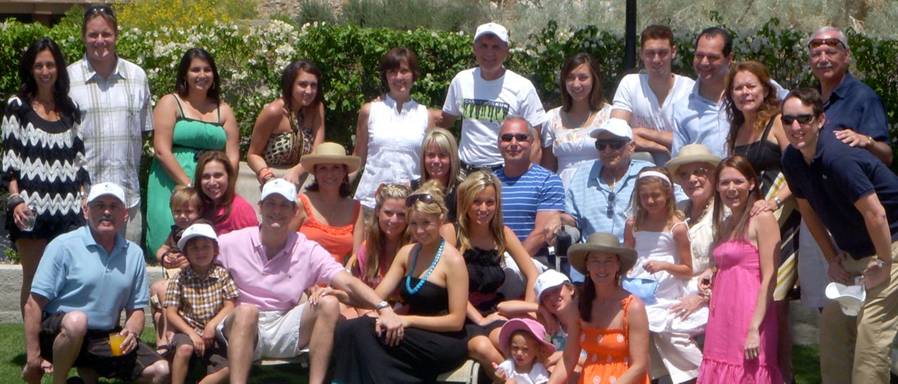
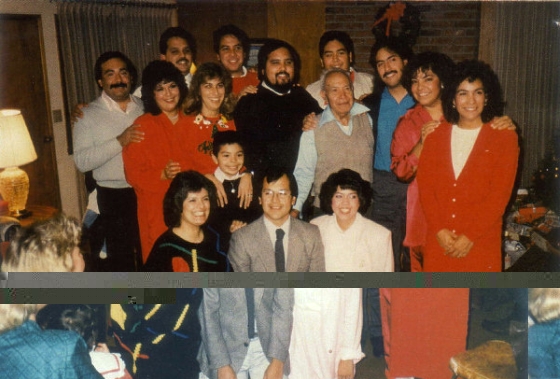
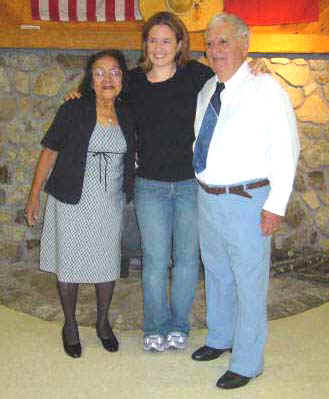
famshot.jpg

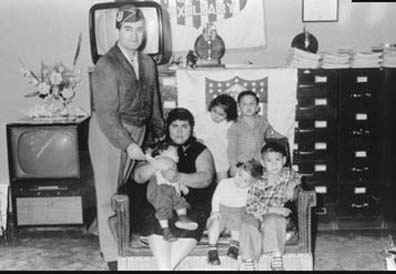
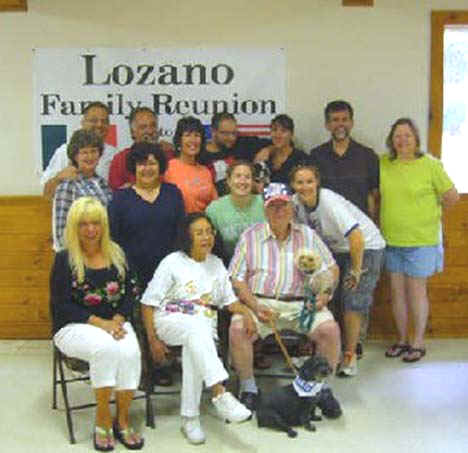
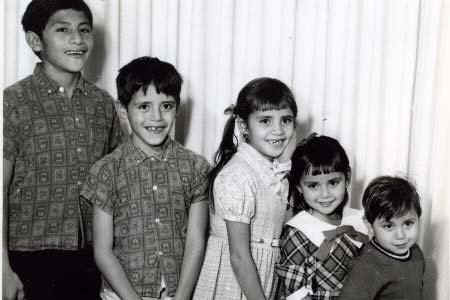
The families of  the five sons of Jesús Navarro 
Los Angeles County and Orange County, California.
Click for an article by son, Ronald Navarro, M.D. 


Content Areas
United States
 

FEATURE: COMPILATION 
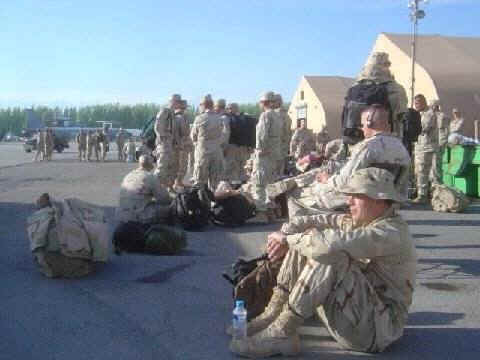
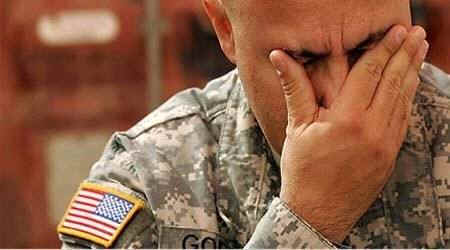
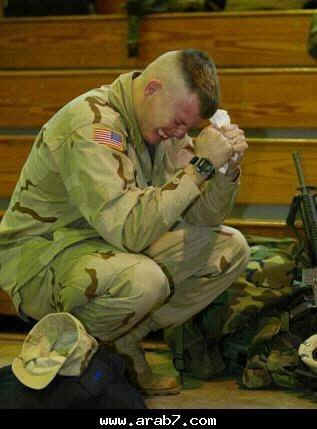
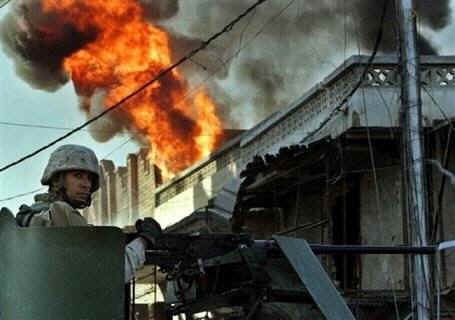
of the names of Hispanic recipients of the SILVER CROSS and other Medals 

National Issues
FEATURE: National Parks 

Action Item
Education
Bilingual Education
Books 


Culture
Business

Anti-Spanish Legends
Military/ Law Enforcement 
Patriots Amer Revolution 

Cuentos

Literature
Surname
Orange County, CA

Los Angeles,CA

California 
 
Southwestern US 

African-American 
Indigenous


Archaeology 
Sephardic

Texas

East of Mississippi

East Coast

Mexico
 
Spain International  
History

Family History
Miscellaneous 
Calendars
Networking 
                           End


 . . the past is parent to the present.
Lillian B. Rubin

Winter Solstice

And when the darkness is,
we trust upon the gods
that light might be -
but still
we must sing
the light into being.

Solsticio invernal

Y cuando es la oscuridad
confiamos en los dioses
que la luz sea -
pero aun
tendremos que cantar
la luz a ser.

© Rafael Jesús González 2008


  Letters to the Editor : 

Hello,
I just read "My Ancestors" by Victoria Carrillo Norton in the December 2007 issue of Somos Primos.  I am a descendent of Emilia Vega and have been conducting research on the Vega family and Emilia Vega's first husband, Carlos Cruz Fuentes.  Can you pass my email  (dempseygt@hotmail.com) to Ms. Norton and let her know I appreciated her article and would like to discuss my research with her if possible. 
Thank you,  Gary Dempsey

Dear Mimi,
A quick note from Pais Vasco, we are in Bilbao now having returned from Arrasate. When I logged on here for the first time in 8 days I received Somos Primos. I introduced the several of the Basque people that are interested in history to Somos Primos.God has blessed us with us with spectacular results! Great anthropological, ethnological, familial, genealogical, and historical discoveries resulted from this journey to the Iberian peninsula. I´ll have several articles for your International section soon. We´ll fly back tommorrow.
God Bless You!
Lauro Garza Arzamendi  larrygarza@comcast.net
 

Dear Mimi,
The December issue of Somos Primos is filled with wonderful, new and newsworthy stories that really inspire and teach us many lessons about life and about our primos and primas who reside in other parts of the country.  I am so thankful to you and your staff for continuing to publish this journal--there is no other one like it!
All best wishes for a Joyous and Happy Holiday Season.
With Love and Gratitude,
Lorri Ruiz Frain  lorrilocks@sbcglobal.net 


Dear Mimi,
This will undoubtedly be the most home-made Seasons Greetings uou will receive this year.   Well, it does provide the opportunity for some words of appreciation and admiration for our remarkable accomplishment, SOMOS PRIMOS.   When I count up the years and guesstimate the endless hours, I am amazed at what you have done.   Recognizing PRIMOS is not just understanding more aobut who they are.  It is a kind of self-discovery.  This is the kindness you have done many.  
May the New Year be rewarding and kind to you.
Galal Kernahan  galal@kernahan.org 


  Somos Primos Staff:   
Mimi Lozano, Editor
Mercy Bautista Olvera
Bill Carmena
Lila Guzman
Granville Hough
John Inclan
Galal Kernahan
J.V. Martinez
Dorinda Moreno
Michael Perez
Rafael Ojeda
Felipe de Ortego y Gasca
Ángel Custodio Rebollo
Tony Santiago
John P. Schmal
Howard Shorr 
Ted Vincent

  Contributors
to issue:  
Dr. Rudolfo Acuña 
Hector Alvarez Cavazos
Mercy Bautista-Olvera
Bill Betzen
Eva Booher
Roberto Calderon, Ph.D.
Mary Castillo
Bill Carmena 
Juana Bordas
Jaime Cader
Peter Carr
Israel Cavazos Garza, Lic.
Gus Chavez
Pamella Daniel
Sal Del Valle
Gary Dempsey
Joan De Soto
Monica Dunbar Smith
Carlos Ericksen-Mendoza
Socorro Garza
Lauro Garza Arzamendi 
Alfonso González
Rafael Jesús González 
Rudy Gonzales
Odell Harwell,
George F. Haskins
Granville Hough, Ph.D.
John Inclan
Galal Kernahan
Ted Vincent
Rick Leal
Gladys Limon
Mike Lozano
Juan Marinez
Ann Minter
Angela Maldonado
Emma Montemayon
Dorinda Moreno
Paul Nauta
Ronald A. Navarro, M.D.

Rafael Ojeda
Michael A Olivas
Guillermo Padilla Origel
Felipe de Ortego y Gasca
Roberto Perez Guadarrama
Ruben M. Perez
Joseph Puentes
Sam Quinones
Luciano Ramirez
Juan Ramos, Ph.D. 
Angel Custodio Rebollo
Armando Rendon, Ph.D.
Diana Rivera
Jose Leon Robles de la Torre
Patricia Rodriguez
Viola Rodriguez Sadler
Ben Romero
Lorri Ruiz Frain
Samuel Sanchez
Tony Santiago
Louis Serna
Howard Shorr
Frank (Moreno) Sifuentes
Gustavo Toaquiza
Ricardo Valverde
Ted Vincent
Christina Walters

alejandrogg@gmail.com
DOCRUIZ@aol.com
companys@stanford.edu
rmtz@latinobooks.com


SHHAR Board: BBea Armenta Dever, Gloria Cortinas Oliver, Mimi Lozano Holtzman
Pat Lozano, Michael Perez, Viola Rodriguez Sadler, Tom Saenz, John P. Schmal


UNITED STATES

Wisdom of Thomas Jefferson, 1802
Hispanic Breaking Barriers, Part I by Mercy Bautista Olvera
    Bill Richardson
    Congresswoman Hilda Solis 
    Louis Caldera, Esq.
    Cecilia Muñoz
    Dr. Juliet Villarreal-Garcia 
Lauro Fred Cavazos, first Hispanic President of a U.S. University
Dr. Hector P. Garcia
Hispanic Link Weekly Report enters its 27th year of publication
Mexican Mother in a Whirling World 
The Farmworker Movement Documentation Project 
Race & Gender in Politics


In light of the present financial crisis, 
it's interesting to read what Thomas Jefferson said in 1802:

"I believe that banking institutions are more dangerous to our liberties than standing armies. If the American people ever allow private banks to control the issue of their currency, first by inflation, then by deflation, the banks and corporations that will grow up around the banks will deprive the people of all property until their children wake-up homeless 
on the continent their fathers conquered."

Sent by Sal Delvalle  sgdelvalle@msn.com


HISPANICS BREAKING
BARRIERS

Part I


By

Mercy Bautista-Olvera


In the coming months this series “Hispanics Breaking Barriers” will present the   contributions of Hispanics in United States government and leadership. Their contributions have improved not only the local community but the country as well.   Sadly, they have not always received their due recognition. Their struggles, stories, and accomplishments will by example, illustrate to our youth and to future generations that everything and anything is possible.  

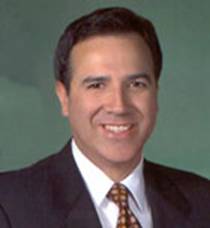
Bill Richardson
Bill Richardson

Governor of New Mexico Bill Richardson has been selected to be Secretary of Commerce by President-elect Barack Obama. Being optimistic despite the recession, he called Richardson a leading “economic Diplomat for America, during his time in state government and Congress, and in two tours of duty in the Cabinet, Bill has seen from just about every angle of what makes our economy work and what keeps it from working better.”  

William Blaine “Bill” Richardson III was born on November 15, 1947 in Pasadena , California , the son of Maria Luisa Lopez-Collada Marquez and William Blaine Richardson Jr., Richardson’s mother was born in Villaviciosa, Spain, and his father William Blaine Richardson Jr., born in Nicaragua , (1891-1972). The family lived in Mexico City . Just before Bill was born his mother was sent to California , where her husband’s sister lived, as Richardson explained, “My father had a complex about not having been born in the United States .” He has one sister Vesta. His 95-year-old mother and sister live in Cuernavaca , Mexico . Three of his four grandparents, were Mexican citizens, he identifies himself as Hispanic. In 1961, a young Bill Richardson left his family in Mexico City to attend high school in Massachusetts . It was tough for teenage Bill to be the new different looking kid at his school; he was the only Hispanic student there. However, with the help of a coveted slot on the Varsity baseball team, and a few good friends, he began to bridge the divide between these two worlds.

Bill entered Tufts University in Boston in 1966. Senator Hubert Humphrey gave a speech at the University and stopped to talk to Bill and his classmates about American values and the power of public service, this inspired his interest in politics. He earned a Bachelor’s degree at Tufts in 1970, majoring in French and Political Science. He went on to earn a Master’s degree in International Affairs from Tufts University Fletcher School of Law and Diplomacy in 1971. He married his high school sweetheart Barbara Flavin in 1972.

In 1997, Bill Richardson served in the Bill Clinton Administration as United States Ambassador to the United Nations, the first Hispanic to hold that position. While he was Ambassador, he traveled to North Korea , Iraq , Cuba and Sudan , where he successfully negotiated the release of American hostages. He has been nominated four times for the Nobel Peace Prize. As first Energy Secretary, he created a plan to dispose of nuclear waste. He became Director for Native American Affairs position in the Department in 1998, and in January of 2000 oversaw the largest return of federal lands, 84,000 acres to (the Northern Ute Tribe of Utah). 

As a governor Bill Richardson has made New Mexico a national leader in job growth and economic momentum – with more than 80,000 more New Mexico ’s working class since Governor Bill Richardson took office, and unemployment rate that is the lowest in state history. He was successful in meeting his campaign promises to improve education, cut taxes, build a high-wage economy, develop a statewide water plan and makes New Mexico safe from violence.  


Hilda Solis   
Congresswoman Hilda Solis

Hilda Solis, D-CA Congresswoman from the 32nd District of California has been selected to be Secretary of Labor by President-elect Obama. Sen. Edward Kennedy, D-Mass., will be in charge of Solis’ confirmation as chairperson of the Senate Health, Education, Labor and Pensions Committee. He said Hilda Solis will be “an invaluable asset to President Obama in protecting workers’ rights and restoring economic opportunity.”  

Hilda Solis was born on October 20, 1957 in Los Angeles , California . Solis, the daughter of Mexican and Nicaraguan immigrants, Raul Solis and Juana Barela-Solis, her father, a Mexican union shop steward and her mother a Nicaraguan assembly line worker, her parents and six siblings continue to be a great source of inspiration to Congresswoman Solis. Hilda Solis is married to Sam Sayyad, a small business owner.

In 1979, Solis earned a Bachelor Degree from California State Polytechnic University , Pomona . In 1981, Hilda Solis earned a Master of Public Administration from the University of Southern California . During President Jimmy Carter Administration, Solis worked in the White House Office of Hispanic Affairs as an intern. Solis was later appointed as a Management Analyst with the Office of Management and Budget in the Civil Rights Division.    

Solis served in the California State Assembly from 1992 to 1994 and made history by becoming the first Hispanic woman elected to the California State Senate (1994-2000). In August of 2000 Hilda Solis was the first woman to receive the John F. Kennedy Profile in Courage Award, for her pioneering work on environmental justice issues, she served as the Ranking Democratic Member of the EHM Subcommittee. In 2003 Solis became the first Hispanic woman to serve on the powerful House Committee on Energy and Commerce; she serves as Vice Chair of the Environment and Hazardous Materials (EHM) Subcommittee and a member of the Health and Telecommunications subcommittees. Solis also serves on the House Committee on Natural Resources.  

Congresswoman Hilda Solis is a nationally recognized leader on the environment. Solis is serving her fourth term in Congress representing California ’s 32nd Congressional District in California , which includes the San Gabriel Valley and portions of East Los Angeles . In 2007, Solis was appointed to the Commission on Security and Cooperation in Europe (the Helsinki Commission) as well as Mexico . On the same year, Solis was elected to be Vice Chair of the Helsinki Commission’s General Committee on Democracy, Human Rights and Humanitarian Questions. She is the only U.S. elected official to serve on this committee. Solis’ priorities in congress include expanding access to affordable health care, protecting the environment, education and improving the lives of working families.  

In Congress, Solis has won legislative victories to provide workforce training for “green collar” jobs, (Public Law 110-140). To authorize a federal study, of how the San Gabriel River Watershed’s recreational and environmental opportunities can be improved (Public Law No. 108-042). To remove barriers to U.S. citizenship for non-U.S. citizens serving in the U.S. military and reserves (Public Law 108-136), ban pesticide testing on pregnant women and children; help ensure health care access for Latinos suffering from HIV/AIDS; and promote domestic violence awareness.   


Louis Caldera

Louis Caldera will be serving in President-elect Obama’s administration, as Director of the White House Military Office; he will be responsible for all the military support for the White House operations. “Louis has served his country with distinction in uniform and in government, and his pedigree is second-to-none.” “I know he’ll bring to the White House the same dedication and integrity that have earned him the highest praise in every post, from Army Secretary to University President,” Obama said in a news release.  

Louis Caldera was born in El Paso,Texas April 1,1956, the son of Mexican immigrants Soledad and Benjamin Caldera. The family moved to California when Louis was four years old, growing up in the Boyle Heights neighborhood of Los Angeles before moving to the suburb of Whittier. Louis Caldera earned a Bachelor of Science degree in 1978 from the United States Military Academy at West Point . He earned both Masters in Business Administration and Juris Doctorate Degrees from Harvard University. While at Harvard, he met his future wife, Eva Orlebeke, they have three daughters, Allegra Christine, Sophia Marie, and Camille Grace.  

Louis Caldera practiced law from 1987 to 1990 at the firm of O’Melveny & Myers; he also worked as a Deputy Counsel for Los Angeles County .  Caldera served as California State Assemblyman from 1992 to 1997 representing near 400,000 residents of the 46th District, near downtown Los Angeles, California. As an Assemblyman, Calera served as chairperson of the following committees, Banking and Finance Committee, the Revenue and Taxation Committee, and the Budget Committee. Calera served as United States Secretary of the Army from July 2, 1998 to January 20, 2001. He than served as Managing Director and Chief Operating Officer for President Bill Clinton’s Corporation for National and Community Service. Less than a year later Louis Caldera served as Army Secretary. Later he served as Vice Chancellor for University Advancement in the California State University system, In August 2003 to January 2006 Caldera served as president of the University Of New Mexico School Of Law. The University granted him as a tenured member of the University where he currently serves.  


LCCR Board Meeting by Civil Rights.  
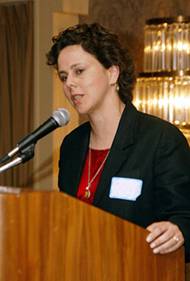
Cecilia Muñoz

Cecilia Muñoz, Senior Vice president at the National Council of la Raza, has been appointed by President-elect Obama as the White House Director of Intergovernmental Affairs.  

Cecilia Muñoz was born in Detroit, Michigan, on July 27, 1962, the youngest of four children. Her parents  Eduardo and Cristina Perou Munoz immigrated to the United States from La Paz, Bolivia. In 1965 the family moved to Livonia, a growing, middle-class, white Detroit suburb. Muñoz attended the University of Michigan in Ann Arbor and completed her undergraduate degrees in English and Latin Studies in 1984. Her time at the University reminded her of her youth in Livonia, where Hispanics were in the minority. Following graduation, Cecilia Muñoz continued her education at the University of California at Berkeley, where she obtained her Master's Degree. She eventually moved from California to Chicago and worked for the Roman Catholic Archdiocese of Chicago as head of the Legalization Outreach Program for Catholic Charities. The program allowed undocumented immigrants who met certain criteria such as having lived continuously in the United States to become legal U.S. residents. Muñoz helped more that five thousand immigrants obtain legal citizenship in the United States.

In 1988, Cecilia Munoz began her work at NCLR Center (National Council of La Raza) as the Senior Immigration Policy Analyst, an institution that focused on Hispanic Americans. Formed in 1968, the National Council of la Raza is “the largest constituency-based national Hispanic organization, serving all Hispanic nationality groups in all regions of the country.” Cecilia’s husband Amit Muñoz-Pandya, is a Human Rights lawyer, Amit and Cecilia have two daughters Cristina and Meera.


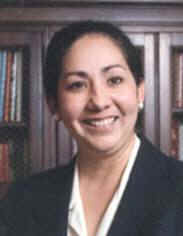
Dr. Juliet Villarreal-Garcia

South Texan Juliet V. Garcia has been selected by President-elect Obama to be part of his Transition Team; she will serve as one of the Advisors. Garcia is Chair of the Advisory Committee on Student Financial Assistance and president of the University of Texas-Brownsville. In the fall of 2000, Dr. Garcia was inducted into the Texas Women’s Hall of Fame for lifetime achievement in education. Garcia’s Postdoctoral studies include work at the Institute for Education Management, John F. Kennedy School of Government at Harvard University , the Massachusetts Institute of Technology and the Society of International Business Fellows at the London School of Business.

Ms. Garcia was president of Texas Southmost College , a community college in Brownsville , for six years. She was the first Mexican-American in the nation to become president of a college or university. She was adviser to President Clinton on his education transition team, including issues that affected students in south Texas . Garcia stated “I consider public service to our highest calling, so I am greatly honored to have been invited to take part in the historic transition, our young democracy,” Ms. Garcia has a PhD degree in communications and linguistics from the University of Texas at Austin. Dr. García is responsible for leading the development of the unique partnership in the University of Texas , at Brownsville , then an upper-level university. The Partnership designed to consolidate resources, increase efficiency, eliminate transfer barriers for students and provide improved higher education and opportunities for students. Dr. García is married to Oscar Enrique Garcia. Juliet and Oscar have two grown children and four grandchildren.   


Lauro Fred Cavazos, first Hispanic President of a U.S. University 


Mimi,

I hope you do not mind, but I would like to correct an error made by Emma Perez Trevino, the reporter from the Brownsville Herald who wrote the article pertaining to Juliet V. Garcia, University of Texas at Brownsville President who was recently  named to Obama's team.  In her article, “Garcia on Obama’s team” Trevino stated, “…And now Garcia, the first Mexican-American to head a four-year U.S. university, will be one of the president-elect’s advisers as the presidency transitions from President George W. Bush to Obama….” 

Lauro Fred Cavazos, who was born January 4, 1927 in Kingsville, TX became the nation’s first Hispanic appointed Cabinet member when President Ronald Reagan appointed him Secretary of Education.  He served as Education Secretary from 1988 to 1990, continuing as President George H. W. Bush’s Education Secretary for about a year.  Prior to his appointments as Secretary of Education, he was the first Hispanic President of Texas Tech University, a four -year U.S. university, serving as President from 1980 to 1988.  

Since I am also a Cavazos from Brownsville, I just had to let you know the facts.  Lauro has visited Brownsville several times and articles were written about him in the Brownsville Herald.  His Cavazos grandparents lived in Brownsville.  If you get a chance, read Lauro's book, "A Kineño Remembers, From The King Ranch To The White House." 

By the way, Lauro's brother, Richard Cavazos, I believe also had a distinction of being the first and only Hispanic Four Star General in the US Army.  However, since he retired in the 80's, he may no longer be the only Hispanic attaining that rank.

Respectfully, Hector Alvarez Cavazos
ggfcheno@att.net  

CONTACT INFORMATION TO WRITE, EMAIL or CALL the White House

The White House
1600 Pennsylvania Avenue NW
Washington, DC 20500 
comments@whitehouse.gov
Phone Numbers 
Comments:   202-456-1111
Switchboard: 202-456-1414 
FAX:             202-456-2461


Special thank you to Ann Minter, Juan Marinez, and Juan Ramos, Ph.D. for forwarding information concerning Obama appointments.  I forwarded them to Mercy to extract any data which she did not have.


BOTICA GARCIA  
By 
Daughter Daisy Wanda Garcia  
 
Photos, courtesy of:
Dr. Hector P. Garcia Papers, Special Collections
Texas A&M University, Corpus Christi


In the good old days, discrimination against Mexican Americans in Texas existed at all levels including medicine. The University of Galveston Medical Branch (UTMB) accepted only one Mexican American a year. Once graduated, more problems greeted graduates 
of medical schools.  Texas Hospitals would not accept them into residency programs. Once a Mexican American completed his residency and became a practicing physician, discrimination continued. Hospitals had segregated wards; pharmacies would not honor prescriptions written by Mexican      Dr. Garcia Medical School graduation, June 1945
American physicians.   

My father graduated summa cum laude from UTMB. Yet when the time came to practice his residency, no Texas hospital would take him.  Finally, Creighton Hospital in Omaha, Nebraska accepted him into a residency program.   

In 1945, Dr. Hector wrote to his family, “These three long weary years of suffering and pain, and hardships and heartaches have taught me how to be tolerant and how to be patient.  I have seen poverty and cruelty, and I want to place myself above both of them, I do not seek to fight until it is completely right.”*[1]  


Practicing medicine in a poor Corpus Christi barrio in the 1940’s with no air-conditioning, no modern technology and antibiotics was a challenge.  Dr. Hector took the bus to visit his patients because he had no automobile. He performed home surgeries and home deliveries.  

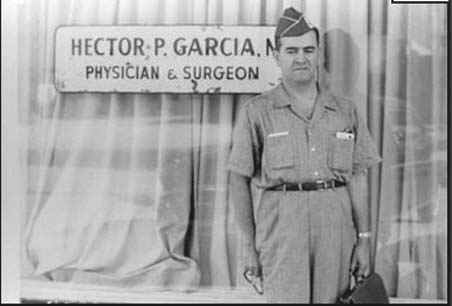
Dr.  Garcia standing in front of his office, late 1940s.


Dr. Garcia’s care for his patients was in part good medical practice, part personal empathy. He too had known poverty.  Medical facilities were non-existent, condemning Dr. Garcia’s four-year-old sister Dalia to die of burns when she fell into a pit of builders’ lime.  Each evening Jose Garcia would tell each of his children to become medical doctors. “You can help other people and you’ll be independent.  No one can take a doctor’s job away.”  [2]  

Dr. Hector Garcia when confronted by the insurmountable obstacle of pharmacies declining to fill his prescriptions, found a solution around the obstacle. For a physician to purchase a pharmacy was a conflict. Therefore, my mother purchased a pharmacy under her maiden name, Fusillo.  They named the pharmacy Botica Garcia. The pharmacy enabled my father to have his prescriptions filled without questions.  He also maintained an account that he used to pay for medicines for his poor clients.  The pharmacy located on Morgan Avenue next to his medical practice was basic old style with many wooden shelves and drawers. In addition to medicine, soaps and toiletries, the pharmacy also sold herbs.   

Four pharmacists worked in Botica Garcia, Mr. Lerma, Dr. Xico Garcia, Mr. George Borrego and Mr. Josue Quintanilla.  Dr. Xico filled in between vacancies. Once my father built his clinic on Bright Street, my mother sold the pharmacy to Mr. Rufino Garcia.  I was fortunate to contact two of the pharmacists who worked in Botica Garcia, Mr. Borrego and Mr. Quintanilla.  The following is an account of what they told me.


GEORGE BORREGO

Mr. George Borrego began to work in the Botica Garcia in the 1950ies.  My uncle, Xico Garcia who filled in as pharmacist after Mr. Lerma had left, recruited him. George Borrego worked at Botica Garcia until 1962 when he moved to Colorado.  Mr. Borrego worked long hours, sometimes until 7pm or 8 pm except Sundays, because my father saw patients until the late hours. He remembers the many patients and their poverty. Dr. Hector would give them free medical care and medicines. George Borrego also remembered the neighborhood children, such as Tomas Ramirez, Riggs, and Maria Rosales whose families were too poor to feed them. Dr. Hector would have the children run errands for him as an excuse to treat them to Whataburgers.  Mr. Borrego recalls the number of important people who stopped by to visit Dr. Hector and felt that he was very effective in handling them. On one occasion, Dr. Hector was visiting with the Corpus Christi ISD superintendent. Mr. Borrego commented on my father’s firm tone of voice with the superintendent.  

Mr. Borrego left me with this thought: Dr. Hector did work that was unpopular but very important for the Mexican American people. 


JOSUE QUINTANILLA

Mr. Josue Quintanilla was a graduate of pharmacy at UTA.  Once he graduated, he could not find work in Austin, TX. Therefore, he moved to Corpus Christi, TX and found employment with Dale’s Drugs.  Later, Mr. Quintanilla worked for the Botica Garcia.  Like Borrego, Mr. Quintanilla recalls going home for supper about 6pm and then returned to work until 7pm or 8pm every day except Sundays.  

Mr. Quintanilla recalled the many poor people and the neighborhood children that my father healed and gave medicines to.  He said that the Botica Garcia lost money because of my father’s charity work.  Finally, my father met Arturo Vasquez, a CPA who showed my father how to deduct the losses from their joint income tax returns.  Mr. Quintanilla put in cosmetics and soda water machine and expanded the dry goods to include toilet paper and Kleenex.  Quintanilla said that the addition of these goods turned a profit for the Botica Garcia.     
Dr. Hector treating his patients in his office, 1950s.      

Mr. Quintanilla would travel with Dr. Hector Garcia during his organization efforts throughout Texas.  Like Mr. Borrego, Josue Quintanilla remembered the dangers and unpopularity of Doctor Hector’s work.  But Quintanilla felt that the work was necessary.  

EPILOGUE

As I drive along Lake Austin Blvd, in Austin, TX, far removed in time from the dramas of the past, I reflect on my Papa’s life and on the tremendous contribution, his work brought to everyone.   Many of this generation of Mexican American would not be here if it were not for the selfless love of Papa and the understanding of my mother.  Their grandparents would have not survived without the free medical care and medicines provided by Papa.  Thus, their children and the present generation would not be here.  I am so proud of both parents that money was never their ultimate goal; but human consideration came first.  My father would not have stood by while people starved or died from lack of medical care because of money.  

Dr. Hector did not see all the fruits of his labor.  However, here it is.  Mexican Americans are holding high offices, are presidents of corporations and society is embracing our heritage. What a change from the past. I am so proud of my father for making a difference!  Bless all of those who sacrificed and worked for us. 

Que Dios los bendiga.


[1] Justice for My People, Pamela J. Edwards, Coastal Bend Medicine, June/July 1998. 
[2]
Ibid.


HISPANIC LINKS WEEKLY REPORT

Vol 26 No 49, December 22, 2008

From Left to Right: Hector, Danny, Elena, Elsa, Carlos Erickson-Mendoza

Weekly Report enters its 27th year of publication next month. We’ve been pushed and pulled to this point by a total of 300 staff reporters and 700 other writers who have contributed anywhere from a single commentary to dozens of the 4,667 columns we have run in Weekly Report and syndication to date. 

Lots of very talented Latinas and Latinos got their first boost of confidence to explore journalism careers by having their words published by the Link.

This week, to acknowledge all of those who have kept the Link going and educated thousands, more likely millions, about the Hispanic contribution to this country, we’re running pieces by nine of our ex-staffers and two of our pioneer columnists who helped frame our role as communicators. Here are their pieces, written for us over the past quarter-century — some playful, some profound, and a couple composed with controlled rage.

Their common denominator is respect and love for the Hispanic community and a willingness to guard its progress from interference by agitators. As you read each contribution in this special edition you will savor the writer’s skill and commitment to the Hispanic community. Feel free to email any of the articles or send your friends the whole edition.

To all of those who kept the flame of our candle burning bright, my gratitude. Charlie Ericksen, founding publisher with his late wife Sebastiana Mendoza and their eldest son, Héctor Ericksen-Mendoza.

A FEW OF THE LINK’S CREW AND WHAT THEY SAID
Ray Rodríguez A Retired Professor’s Letter to Santa
Héctor Ericksen-Mendoza Mexican Mother in a Whirling World
Olivia Muñoz My Love Affair with Mi Gente
José Antonio Burciaga The Inside and Outside of the Tortilla
Antonio Mejías-Rentas A.K.A. Pablo – The Joke’s on Us
Félix Pérez The Politically Incorrect Campus Candidate
Patricia Guadalupe Good Spanish Carries a Good Price Tag
Carlos Morales How Some Policemen & I Spent My Summer Vacation
Steve Padilla Care and Feeding of the Triceratops Piñata
Joe Torres An Encore March for Bert Corona
Kay Bárbaro Ma, They’re Calling Me Names


Héctor Ericksen-Mendoza
Mexican Mother in a Whirling World

THIS COLUMN WAS FIRST PUBLISHED MAY 5, 1980
Héctor Ericksen-Mendoza, our son, wrote this piece as a composition about his mother Sebastiana while attending George Washington University. At my urging in 1980, he reworked it for Hispanic Link as a Mother’s Day piece, with his four brothers and sisters
chipping in with a few observations of their own. I had persuaded Héctor to abandon his California job with Dionicio Morales’ Mexican American Opportunity Foundation
to help launch the Link. He said he’d stay in D.C. for two years to get me started and then “go home to Califas.” He remained as publisher for nearly thee decades, finally heading back this past summer.  I miss him, too. —Charlie Ericksen


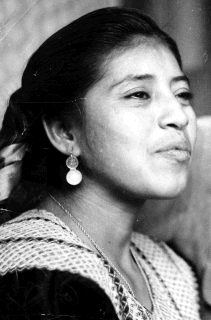
We’re writing this as a committee. It’s about Sebastiana, a Mexican mother whose parents communicated in Zapoteco, who herself speaks Spanish, too, and whose children do best in English.  Her world, since coming to the United States 23 years ago, has been as chaotic as a strange language, foreign culture, telephones, doorbells and five children could make it.
She arrived as the bride of an early-day American hippie. In one quick Jeep trip, she swapped barefoot existence on the beaches of a South Mexico village for the broken sidewalks of East Los Angeles.  

The same transition later killed our uncle, her only brother, when he was still in his 20s. They found his body on one of those sidewalks, a block from our house.
          SEBASTIANA

But Sebastiana survived and thrived.

Our father often confessed that when he met and married her, he had visions of spending the rest of his life on the village beach, writing and fishing. More probably, fishing and writing. But Héctor’s birth, a few visits by Mexico’s immigration authorities, and no money coming
in convinced him to head north.

Barely 20, Sebastiana arrived in her first pair of shoes and a dress that hid the toes. She came with no schooling at all, and no acquaintance with the conveniences we consider necessities: plumbing, running water, electricity.  Now she tells jokes on herself: how, the second day she was here, she scoured her Lincoln Heights neighborhood for leña, kindling, to put in the gas stove. And how she’d let the radio play and the telephone ring forever because she was afraid to touch them.

As we came along — Danny, Elena, Elsa and finally Carlos — we added to her responsibilities by falling off walls, catching measles, bringing failure notices from school, and demanding excessive amounts of food and love.  

Our father traveled a lot. He seemed to time his trips so crises would occur when he was away. Our mom would have to rise way above her 4-foot, 9-inch height and resolve them alone. 

To our Mexican relatives, we were the rich “norteamericano” side of the family. When someone asked Sebastiana whether she had room for one more — a bright cousin who ran out of schools to attend in South Mexico — the answer was an automatic yes. When we vacationed in Mexico, we usually brought back an extra passenger or two.

They competed for space with the friends my father brought home, buddies whose wives kicked them out or had lost their jobs. Their “overnight” stays on the couch or, if space was limited, on the living room floor, sometimes stretched to weeks. 

Whether they were drinking or sober, Sebastiana would always treat them with the greatest respect. Only after they left would she sort them out for us, telling us emphatically which of their qualities were to be emulated and which were to be scorned.

After 10 years in Los Angeles, we moved a lot, city to city, state to state. Inevitably, our
father would go first — to start a new job; our mother would do the rest, packing, cleaning,
selling the house, calming our anxieties and convincing us that the only reason we
were moving was because an even better life awaited us ahead.

When we reached wherever we were going, she would make certain that her promise became reality. If tortillas or tamales weren’t in supply, she’d make them by hand.

One spring morning, as she marched us through achilly new city to expose us to its wonders, we followed her right-flank command into a vacant lot littered with broken bottles, old newspapers and garbage, straight to a big pile of trash. 

Her short arms flew over her head. “¡Miran, miran! ¡Qúe bonita!” Look, look. How pretty!

She bent over the pile and pushed a tin can aside, exposing a small yellow flower.

A year ago, as is our father’s habit, he found a new job in Washington, D.C., 3,000 miles from Sacramento, where we had finally re-established some roots in college, working or in
Carlos’ case, finishing high school. This time we refused to budge. So he offered us a deal. “You get the house and I get your mother.”

With her usual wisdom, Sebastiana came up with a better solution. To make certain that none of us miss any little yellow flowers, she commutes. And on this Mother’s Day, she’s ours. (Postscript: Sebastiana died of cancer during Christmas week 1996.)

Hispanic Link News Service, 1420 ‘N’ St. NW, Washington,
D.C. 20005-2895
Phone (202) 234-0280; Fax (202) 234-4090
E-mail: editor@hispaniclink.org
Publisher: Carlos Ericksen-Mendoza
Editor: José de la Isla
National representative: Héctor Ericksen-Mendoza
Capitol Hill editor: Patricia Guadalupe
Reporting: Ariana Ceballos, Jackie Guzmán, Meghan Sweeney, Aaron Sheperd, Jamie Lazaro, Antonio Mejías-Rentas, Maxwell Torney, Charlie Ericksen
Graphics: Armando Manzanares
Translation services: Maribeth Bandas
ELECTRONIC SUBSCRIPTIONS  Annual (50 issues):
Institutions $140 Personal $118  Students $59 Trial (13 issues) $40
CLASSIFIEDS: $1.30 per word. Display ads $45 per column inch. Placed by Wednesday, ad will run the following Monday.


The Farmworker Movement Documentation Project

The Farmworker Movement Documentation Project has published a new Website: "Cesar Chavez: The Farmworker Movement 1962-1993: Primary Source Accounts By The Volunteers Who Built The Movement." The address of the Website is: www.farmworkermovement.org  

Primary source accounts include: essays, music, online discussion, art, photos, video, cartoons, glossary, etc. The publication of the Website marks the 40th Anniversary of the Delano Grape Strike.  LeRoy Chatfield, Director of the Documentation Project, was a farmworker movement volunteer from 1963-1973. 

Diana Rivera  dianar@mail.lib.msu.edu 
Chicano/Ethnic Studies Bibliographer
Michigan State University Libraries
100 Library
East Lansing, MI 48824-1048
517-432-6123 ext. 252


Race & Gender in Politics

By Lillian B. Rubin
Source: Dissent magazine
http://www.dissentmagazine.org/article/?article=1299


Race and gender—hot topics, even without the recent primary election that pitted a black man against a white woman. With it, they're incendiary. But even a brief look at the historical record tells us how much the past is parent to the present. The conflicting claims of race and gender, the arguments about who has been this society's greatest victim, whose issues are most immediately in need of redress, have been going on for a long time, most notably dating back to the post–Civil War era when the Suffragists confronted this question: Should they support passage of the Fifteenth Amendment to the U.S. Constitution that would give black men the right to vote while leaving women out?

In language that reflected the heat of the issue, Elizabeth Cady Stanton, who had been a strong and consistent voice for the abolition of slavery, told her followers that it was "a serious question whether we had better stand aside and see 'Sambo' walk into the kingdom first." Further, she argued, women voters of "wealth, education, and refinement" were needed to counteract the effect of former slaves whose "pauperism, ignorance, and degradation" could prove a danger to the American political system.

A century later, when President Lyndon Johnson expanded an earlier  affirmative action order to include women as well as men of color, women and blacks once again found themselves in competition for the jobs that were newly open to them. And now again, we've seen race and
gender cross swords in the most passionately contested political primary campaign in history. For those of us for whom the causes of gender and racial equality are inextricably linked, it has meant
difficult and often painful choices. No matter who won, we lost something.

Yet even as I write those words, a "Yes, but . . ." springs to mind as I recall some of the struggles of the early years—what we felt then, how it looks now. I remember the outrage when the famous Virginia Slims cigarette ad appeared in the late 1960s. It featured a smiling—and, of course, beautiful—young woman smoking a cigarette, with a tagline reading, "You've come a long way, baby."

Never mind that we who had been struggling for gender equality didn't think the right to kill ourselves with cigarette smoke was great progress; we weren't in the mood to celebrate because we didn't think we'd come nearly far enough. Now, looking back, I can see that there was a certain truth to the line. We had come a long way from where we started, just as the civil rights struggle brought important, if not fully realized, gains for black Americans. And it's even more true now than it was then.

It was only a little more than forty years ago—well within the living memory of many of us—that the U.S. Supreme Court declared the statutes banning mixed-race marriage (laws that had been on the books since 1661) unconstitutional. In that same decade, federal law, for the first time in history, prohibited discrimination in employment based on race and sex.

The gains in the courts and the legislatures notwithstanding, racism and sexism were rampant. Civil rights workers were murdered, black Americans were still being denied the right to vote (still are in some places), a married woman couldn't get a credit card in her own name,and even for the young male revolutionaries of the time, equality and justice didn't mean the women with whom they worked, studied, and slept. In one of the most shameful incidents of that period, women were jeered off the stage at the national convention of Students for a Democratic Society with catcalls designed to keep them in their place, which, for the men, was on their backs, at the coffee machines, or
ironing their shirts.

Four decades later, we witnessed the extraordinary, exhilarating—and, yes, sometimes aggravating—spectacle of a black man and a white woman competing to carry the Democratic Party banner into the next presidential election. Yes, four decades is a long time to wait, and
for Hillary Clinton's supporters who dreamed of a woman in the White House next year, it has been maddening to find that the wait will be even longer.

We'll argue into eternity about just how much of a part misogyny played in Clinton's defeat—how much the irrational hatred she generates in some quarters is related to sexism, how much to what I
think of as "Hillaryism," and how much the product of an early misguided campaign strategy that leaned so heavily on the past. At the very moment when Americans—their economic, social, and cultural nerves rubbed raw by a half-century of identity politics and nearly eight years of a failed and divisive administration—were yearning for a different future, the Clinton campaign kept asking them to look back.

Into that longing for something new, something that would bring back some sense of hope, of unity, something that would call to us to end the angry divisiveness and forge another way, stepped Barack Obama—a young, charismatic, biracial, post–baby boomer newcomer who spoke the
language of change and sang a song that told us we were all one, and that together we could reach the mountaintop. In offering a vision of a people united by a shared identity and the common bonds that are our heritage, he mesmerized a nation.

HOWEVER DIFFERENTLY others may see and analyze the trajectory of these two campaigns, it seems undeniable that the role of race and gender in politics today is a far cry from the simple and brutal sexism and racism we knew in the past. So it's worth stepping back from the fray and widening the lens to ask, What impact have these two difficult and contentious areas of our social life had in this political season?

The answer, I think, is a lot and a little. Clinton's gender both helped and hindered her, just as race played a role in Obama's campaign for good and ill. It was gender that brought to Clinton large
numbers of women who might well have been Obama supporters had he been in a contest against a man. Race led equal numbers of blacks and many whites to Obama who surely would have been Clinton supporters against almost any white man. And it was both gender and race—the historic
nature of this election and these candidates—that fostered the media attention (some might say "frenzy") that helped give both candidacies such immediacy.

This simple calculation is itself a big statement about how far we've come on the issues of race and gender. Certainly, gender and racial stereotypes are still with us and create real problems for those who would try to climb past the barriers put before them. But it also may not be too far off to suggest, as Geraldine Ferraro did rather clumsily about Barack Obama, that neither he nor Hillary Clinton would have been contenders if it weren't for their race and gender.

Would the progressive politics of John Edwards have gotten so little attention from Democrats if he hadn't been up against a white woman and a black man? We can blame the media for turning them into superstars and drowning out other voices, but that could only happen because of the electrifying reality that one of these two was the likely candidate of the Democratic Party.

It takes nothing from Obama's or Clinton's talents, or their qualifications to wear the mantle of the presidency well, to suggest that it wasn't just a contest between two people that drove worldwide
interest in this election and brought to the polls the largest number of voters in the history of American primary campaigns. It was race and gender as embodied in these two particular people that generated the excitement. For they represented something new in American politics, something earlier generations never believed could happen—if, that is, they ever even thought about it—and they are, therefore, symbols who stand for something much larger than themselves.

Clinton and her supporters complained that the media were tougher on her than on Obama because the overt expression of sexism is more socially acceptable than racism—a charge that has some merit. The silence was deafening when someone from a right-wing, Clinton-hating organization asked John McCain, "How do we beat the bitch?" and he answered, "Excellent question!" It's safe to say that he wouldn't have dared reply so cavalierly to a similar question about Obama that used
the "n-word." Indeed, it's likely that no matter what the questioner's feelings about the possibility of a black man as president, he wouldn't have spoken them with such ease and assurance that he would
give no offense.

Such sexist episodes and comments are infuriating, and there's no excusing them. But it's also true that gender cut both ways in this election. Clinton herself brought gender front and center into her
campaign, and neither she nor her staff or surrogates were shy about playing the gender card, whether in presenting herself as the gutsy, take-no-prisoners trailblazer fighting the cause of all women against great odds or as a victim with complaints about sexist bias, whether in the media, on the debate stage, or about "the boys" who were "piling it on." We can argue about whether her complaints were valid, were pumped up to suit the politics of the moment, or both. But there's not much doubt that together these images served to stir the passions and outrage that brought women to her side.

IN CONTRAST, from the beginning Obama, mindful of the racial tensions awaiting a black man reaching for the presidency, emphasized his biracial background and quite consciously presented himself as a person who transcends racial categories. And it seemed momentarily possible that he could pull it off, that America was ready to make peace with its agonizing racial history. His race was rarely mentioned openly in the national media, not even after his surprise win in Iowa—one of the whitest states in the union.

But the subtext of race lay just below the surface, waiting to explode. As he piled up victory after victory, scurrilous racist sniping appeared all over the Web; the Clintons vented their anxiety
about the unexpected threat he posed with subtle and not-so-subtle racial references; and a video of words taken from various sermons given by Obama's former pastor, Jeremiah Wright, burst on the scene.

Suddenly, white racial anxieties rose from the ashes of hope. Never mind his white mother and grandparents, never mind his charismatic appeal or his own more complex biracial sense of identity. Barack Obama became a black man who tapped responses ranging from wariness to
outright racial hostility—an effect that holds steady months later, with polls showing that somewhere around three in ten whites say that his skin color makes a difference in whether they can vote for him. And as it became increasingly clear that Obama would be the nominee, campaign staffers and surrogates began to report a rising rate of ugly racist incidents in the field, the word assassination was spoken aloud, and what was background became foreground, as many Americans, white and black, found themselves living with the fear that a white bullet would stop him.

But the influence of race and racial definitions isn't limited to white sensibilities. In his book Shadows of Race and Class, Raymond S. Franklin argues that the respectable, educated, black middle class are forever "shadowed" by the dominant images of the behavior and stereotypes that define the black poor and underclass. That shadow, Franklin argues, follows blacks wherever they go as they're caught between their own black identity and their anxieties not to be seen as "them," those "others" who cast a shadow of discomfort, if not actual shame.

It's in this shadow, I believe, that we find some deeper understanding of Barack Obama's public presentation of self. For it's not only white racism that accounts for some of the difficulty he has had with white working-class voters, but his own internalized "shadow," his anxieties, not about who he is but about how he will be seen. After a lifetime of creating a public presence and identity that defies the stereotypic images of black men, he's caught between competing demands—the internal need to maintain the distance between himself and the shadow and the political need to present himself as "everyman." The bind, then, is this: If he sticks with that public persona, as he has, he's characterized as an elitist, one who can't relate to ordinary people. If he softens the image, leaves behind his contained manner (Some call it uptight or arrogant, but would it look like that if he were white?), and exchanges his $2,000 suit, crisp white shirt, and perfectly knotted tie for a more casual look, he risks becoming a reminder of those other black men, those guys who speak black English and before whom women clutch their purses more tightly to their sides.

THIS ISN'T just a problem for American blacks. It's the cost of wearing a stigmatized identity. The educated German Jews who immigrated in the mid-nineteenth century and assimilated fully into
American culture found themselves shadowed and shamed by the presence later of the alien culture and behavior of large and visible numbers of Jewish immigrants from Eastern Europe. For it's nearly inevitable that, when those of different race, ethnic, or religious backgrounds are stereotyped, it's the most visible that defines the entire group. So, if some young black men commit crimes, or the 9/11 terrorists were Muslim, all blacks and all Muslims are tarred with the brush.

The same is true for women. None of us is wholly free from the shadows of the stereotypical images that have defined women for so long. It's at least partly why Hillary Clinton has such a hard time finding the balance between intellect and emotion, between the tough, hard-hitting fighter and the compassionate woman. She's stuck with women's classic double bind that, despite the gains of the last few decades, remains very much in force. If she fights like a man for what she wants, she's
too fueled by raw ambition; if she doesn't, she's not strong enough to be commander-in-chief.

This, then, is one snapshot of our times and the complications andcontradictions that infuse the issues of race and gender in politics today. Others may interpret it differently, but one thing is certain: Barack Obama and Hillary Clinton are the living embodiment of our success in conquering some of the worst aspects of gender and racial bias, while their campaigns—the fears, the biases, the anger, the prejudices they have evoked—remind us of what has yet to be done. Each side has some legitimate complaints, but together they have blazed a trail that will make it easier for those who will surely come after them.

Lillian B. Rubin is with the Institute for the Study of Social Change,
University of California, Berkeley. She is a sociologist, psychologist, and author of numerous books, the latest of which is 60 on Up: The Truth about Aging in America (Beacon Press, 2007).

Sent by Dorinda Moreno fuerzamundial@gmail.com


SPECIAL COMPILATION OF MEDALS RECEIVED BY HISPANICS
Extracted by Rafael Ojeda (Tacoma, WA) Lists follow: 

U.S. DISTINGUISHED SERVICE CROSS Hispanic Recipients
U.S. WW II ARMY SILVER STAR Hispanic Recipients
U.S.  WW II ARMY AIR FORCE SILVER STAR Hispanic Recipients 
U.S. WW II NAVY CROSS Hispanic Recipients

U.S. ARMY KOREA SILVER STAR Hispanic Recipients
U.S. MARINES (USMC) KOREA SILVER STAR Hispanic Recipients
U.S. ARMY VIET NAM SILVER STAR Hispanic Recipients
U.S. MARINES (USMC) VIET NAM SILVER STAR Hispanic Recipients

GLOBAL WAR ON TERRORISM (GWOT) MEDALS AWARD


THE DISTINGUISHED SERVICE CROSS RECIPIENTS 

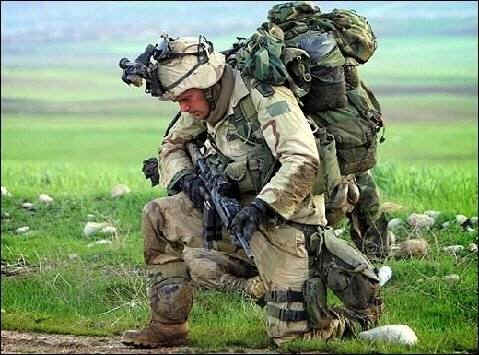
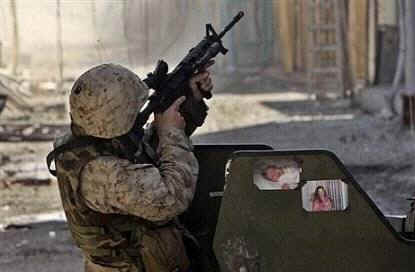
Army, Navy Cross and Air Force Cross are the second highest Military Combat medals, just below the Medal of Honor. Hispanic recipients: 

This list was compiled by Rafael Ojeda (Tacoma,WA) (rsnojeda@aol.com)

Complied from: www.homeofheroes.com members web site. (Index list and citations are in three different sections.) I added the Rank, War, hometowns and other medals awarded to the names. Please join and support the great work of "Home of Heroes". I hope that this list will encourage other to add more names, citations and photos to these lists. Thank you.

Distinguished Service Cross Recipients:

Aguirre, Jimmy Army SP5thC Viet Nam (VN)
Allen, Terry De La Mesa Army LTC VN El Paso, TX
Alvarado, Leonard L. Army SP4thC Bakerfield, CA
Anaya, Fred (KIA) Army PFC
Barela, Felix Army SP4thC
Barrios, James Army SP4thC Lemoorse, CA
Blaz, Juan Army Sgt Major Korea 
Bustamente, Manuel C. Army PFC Broderick, CA
Camacho, Issac (POW) Army SFC VN Fabens, TX
Cano, Pedro Army PVT WW II
Cardenas, Ricardo Army _____ Korea El Paso, TX
Cardenas, Richard Army Capt Korea Puerto Rico (PR)
Cartagena, Modesto Army Sgt Korea PR
Castro, Ignacio H. Army SSGT WW II
Castro, Luis F. Army PFC WW II
Chavez, Gabriel Army ___ WW II Porter County, TX
Cisnereros, Luz Army PFC (Silver Star and Purple Heart)
Colon, Hector E. Army 2nd Lt VN Chicago, IL
Conde-Flacon, Felix M. Army SSGT VN Chicago, IL
Conejo, Lino T. Civilian, Capt WW II
Conteras, Albert Donisio, Jr Army Sgt ______ NY, NY
Cordova, Lawerence Army Sgt Korea
Cruz, Emigdio Army Major WW II
Cruz, Enrique C. Army SSGT VN
DeAnda, Alfred P. Army 2nd Lt Marquette, MI
DeHerrera, Willie B Army PFC WW II
Delgado, Francisco G. Army PFC _____ Conejos, CO
Delgado, Manuel Army PFC WW II
Diaz, Victor F. Army 1st Lt Korea NY, NY
Dominguez, Francisco L. Army PFC WW II
Duran, Jesus S. Army SP4thC VN
Espinoza, Victor H. Army Cpl Korea
Estrada, Bernadino Y. Army PVT WW II Tucson, AZ
Estrada, Esteban D. Army PFC VN Poteet, TX
Estrada, Gilberto C. Army PVT WW II Santa Cruz, CA
Estrada, Willie N. Army SGT Korea Alamogordo, NM
Fabrega, Salvador Army Technical 5th Class WW II
Page 1 of 4 DSC

Page 2
Fernandez, Henry Army PFC WW II Santa Cruz, CA
Fernandez, Manuel, Jr USAF Lt Col Korea Keywest, FL
Fergueroa-Melendez, Efrain Army ___ VN
Florez, Manuel H. (KIA) Army CPL Korea Los Angeles, CA
Gallardo, Macario, Jr Army PVT WW II El Paso, TX
Gallardo, Robaert Army Capt Korea NY, NY
Gandara, Joe Army PVT WW II Los Angeles, CA
Garcia, Amado, Army ____ WW II Acomita, NM
Garcia, Candelario Army SGT VN
Garcia, Eliseo Army SGT Korea Benalillo, NM
Garcia, Fortunato (POW) Army SGT WW II Denver, CO
Garcia, Grabiel Army PVT WW II Sommerville, TX
Garcia, Gregorio Army MSGT VN Los Angeles, CA
Garcia, Joseph Andrew (MIA) Army SP4thC WW II Ely, NV
Garcia, Julio P. Army SFC WW II
Garza, Andres Army SFC VN
Gataino, Issac Army CPL WW I Chicago, IL
Gevara, Albert Jose Army CPL Korea Denver, CO
Gombas, Nicholas (MIA) Army Capt Korea Kern, CA
Gomez, Joe P. Army PFC WW II
Gomez, Eduardo Army SGT Korea
Gonzalez, Florentino (POW) Army PFC Korea Albany, NY
Gonzalez, Benjamin Army ____ WW II Watrous, NM
Gonzalez, Julian Army PFC WW II Edinburg, AZ
Gonzalez, Manuel S. Army SGT WW II Born: Corpus Christi, TX Hometown:Wayne,MI
Gonzalez, Ray B. Army CPL WW II Korea Wayne County, MI
Gozar, Jose P. Army A. Army Air Corps ____ WW II
Granado, John Army CPL WW II Richmond, CA
Griego, Simon N. (MIA) Army SGT Korea Mariposa, AZ
Guermero, Epifanio Army PVT WW II Ventura, CA (2-Bronze Stars & 4- Purple Hearts)
Guerrero, Juan F. Army CPL Korea
Guevara, Jesus J. Army SP4thC VN
Guitierrez, Andres Army 1st LT VN
Hernandez, Frank Army SGT WW II Los Angeles, CA
Hernandez, Guzman M. Army PVT Korea PR
Hernandez, Pauline E. (KIA) Army PVT Korea
Hernandez, William M. Army Lt. Colonel WW II Westmont, NJ
Herrera, Fernando Q. Army SP4thC _____
Lara, Salvador J. Army PFC WW II Riverside, CA (Bronze Star & 2-Purple Hearts)
Lechuga, Martin Army SP4thC VN San Antonio,TX
Lerma, Rosadrio Valencia Army PFC WW II Pasadena, CA
Lopez, David Army SSGT WW II
Lopez, Erasmo E. Army CPL Korea
Lopez, Gabriel R. Army 1st LT WW II
Lopez, John Edward, Jr (MIA) Army SFC WW II
Page 2 of 4 DSC

Page 3 DSC
Lopez, Manuel T. Army SFC VN Oshkosh, WI
Lopez, Marganito G. Army PFC WW II
Malave-Rios, Abelaedo Army First SGT VN NY, NY
Manuel, Herman Army PFC WW II
Manuel, John R. Army SGT Korea Evaneline, LA
Manuel, Thomas Army PFC WW II
Martinez, Albert V. Army SSGT WW II
Martinez, Augustin Army CPL WW I Aztec, NM
Martinez, Domingo Army PFC WW II
Martinez, Gabriel R. Army 1st LT WW II
Martinez, Joseph R. Army PFC WW II
Martinez, Lauriano Army PVT WW I Colmar, NM
Medina, Rumaldo Amry PVT WW II
Medina, Severo Army First SGT WW II
Mendez, Louis Gonzaga, Jr. Army Lt Colonel WW II Fall Church, VI
Mendoza, Henry R. Army PFC WW II
Mendoza, Manuel Verdugo Army SSGT WW II Miami, AZ
Mendoza, Samuel S. Army PFC WW II
Montez, Benito, Jr. Army PVT Korea Travis Co. TX
Moralez, Edward Army PVT WW II Alameda, CA
Moralez, Frank (KIA) Army PFC WW II Polk County, MN
Negron, Juan E. Army MSGT Korea PR
Nieves-Laguera, Fabien Army CPL Korea PR
Noriega, Belisario Army _____ Korea PR
Orosco, Earnest D. Army 1st LT WW II
Ortiz, Concepcion Army PVT WW I Eagle Pass, TX
Ortiz, Raymond Army SP4thC VN
Pacheco, Roberto, Jr. Army MSGT Korea Los Angeles, CA
Padilla, Alfred B. Army SGT WW II
Pagan-Lozada, Wildredo Army SFC VN NY, NY
Pena, Ambrosio Army 1st LT WW II
Pena, Mike C. Army MSGT Korea El Paso TX
Perdomo, Oscar F. Army Air Corps 1st LT Korea Born:El Paso, TX Hometown:L.A., CA
Perez, Danel Flores, Jr. SP4thC VN Marthis, TX
Perez, Gines Army Lt Colonel Korea
Perez, Jack R. Army Air Force 2nd LT WW II Los Angeles, CA
Perez, Jessie F. Army SGT Korea Harris County, TX
Perez, Joseph M. Army SP4thC VN
Pina, Frank Davis Army Capt VN Monclair, CA
Ramirez, Edwardo T. Army PFC WW II
Ramirez, Lorenzo, Jr. Army PFC WW II
Ramirez, Ramiro Army First SGT VN PR
Ramirez, Romero M. Army TSGT WW II Ventura, CA
Renteria, Jess T. Army Technical SP4th C WW II
Renteria, Rudolph Sotelo Army SP4thC ______ San Jose, CA
Page 3 of 4 DDC

Page 4 DSC
Reyna, Frank F. Army Technical 5th Class WW II
Rios, Ricardo L. Army SP4thC VN
Rios, Alfred R. Army SSGT ______
Rocha, Frank Carpa Army CPL Korea PR
Rodela, Jose Army SFC VN
Rodriguez, Clifford R. Army MSGT Korea Santa Clara, CA
Rodriguez. Enrique P. Army Capt VN
Rodriguez, Francisco Army SSGT WW II
Rodriguez, Johnny C. Army PFC WW II
Rodriguez, Reinaldo Army PFC VN Guanica, PR 
Romero, Artencio Amry SFC VN
Romero, Max J. Army PFC WW II
Rosas, Guillermo Army PVT WW II
Salas, Raimundo Army PVT WW II
Sanchez, Thomas Josheph H. Army MSGT VN Pasadena, CA
Santa Cruz, Jose Angel Army PFC VN Glendale, CA
Santos, Alferdo M. Army Capt WW II
Saracino, Frank DePaul M. Army SGT VN Collin, Co
Serrano, Conrad N. Army PVT WW II Harris County, TX
Silva, Augustine Army PVT WW II
Solis, Marcelo Army PVT WW II
Sosa, Aristides Army CPL VN
Sosa, Roberto Army CPL Korea Stanton, KS
Soto, Eugene Army PFC WW II NY, NY
Torres, Joseph R. Army PFC WW II
Urbano, Isidro D. Army 1st Lt Korea San Francisco, CA
Urenda, Manuel Army CPL WW II
Valencia, Armando Army CPL WW II
Vera, Miguel A. Army PVT Korea PR
Villa Rosa, Paul Herman (MIA) Army SFC VN Lake Tahoe, CA
Villareal, Raul Army SSGT VN
Villasenor, Gonzalo (KIA) Army SP4thC VN Ft Worth, TX
Zabala, Manuel R. Army PFC WW II Monebello, CA

Page 4 of 4 DSC


U.S. ARMY WW II SILVER STAR  Hispanic Recipients:
We need the Citations to identify their ranks and hometowns. 
This list of 17 pages was compiled by Rafael Ojeda (rsnojeda@aol.com
from "Home of Heroes" web site.

 
Page 1
Abrego, Manel B 
Acompora, Joseph P
Acededo, Robert E
Acosta, Gabriel E
Acosta, Miguel Q
Acosta, Robert J
Acosta, Robert M
Acuna, Raymond
Adamec, Luis J
Adamo, Andrew R
Adamo, Arturo
Aguilar, Abel
Aguilar, Edward J
Aguilar, Jesus
Agustin Marcon V
Alaniz, Leandro
Aluno, Heracleo
Alargon, Amador
Alcantara, Candido, Jr
Aluaraz, Romon
Alejandro, Harry
Alfonso, Alfred
Alfonso, de Mello
Alfreda, Nicholas
Almarz, Jose R
Almedia, Louis R
Almedia, Henry
Almendras, Alejandro
Almocera, Pedro
Alonso, Fernando J
Alonzo, John J
Alvanos, Anthony
Alvarado, Joseph F
Alvardo, Matilde
Alvarez, Daniel V
Alvarez, Frank
Alvarez, Guillemo
Alvarez, Oscar J
Alvizo, Alejandro L
Amador, Monico C
Amanna, Angelo
Amaro, Frank
Amato, Joseph C
Page 1 of 17 WW II Army Silver Star


Page 2
Amato, Ralph, Jr
Amato, Vincent S
Ancira, Florentino
Anselmo, Joseph R
Aponte, Victor D
Aquilino, Frank
Aquino, Frank
Aragon, Andres A
Aranzaso, Alberto B
Arrujo, Alfred S
Araujo, Luis H
Aravia, Robert
Archuleta, Jose T
Arciga, Alejandro
Arevalo, Raul
Argente, Silvio
Armendariz, Victor E
Armentano, Frank
Arruda, William T
Aspiras, Mariano
Aurechio, David
Auseto, Placido
Avalos, Anthony V
Avila, Albento
Avila, Jesus E
Avila, John H
Avila, Manuel B
Avila, Urban P Army SSGT WW II Clearwater KS
Azcona, Fidel P
Azemar, Leon
Azzoto, Victor R
Baca, Ignacio 
Baca, Pete J
Bacazos, Joseph J
Banta, Antonio
Barcelo, William D
Bardelas, Eugenio, Jr
Barrenengoa, Jorge
Rarrera, Catarino
Bentancourt, Raymond
Boaz, Thomas M
Bordalba, Basilio
Caballero, Antonio
Calderon, Jose H
Calderon Arnulfo S
Camina, Armando
Compos, Arthur, Jr
Page 2 of 17 WW II Army Silver Star


Page 3
Compos, Francis T
Compos, Herman D
Canale, Luis M
Canale, Mario
Canalez, Armando
Cano, Candelario R
Cano, Marvin l
Cardenas, Pedro M
Cardenas, Raul T
Carrillo, Joseph
Carrillo, Angel
Carrillo, Eligio C
Carrillo, Meregildo
Castaneda, Avelvino
Castaneda, Edward v
Castaneda, Francisco
Castaneda, Gilbert S
Castano, Frank F
Castellano, Joseph J
Castellano, Peter P
Castillo, Faustino
Castillo, Ines G
Castillo, Jesus
Castillo, Porfirio
Castro, Alfonso A
Castro, August J
Castro, Dominic
Castro, Eugenio
Castro, Ignacio H
Castro, Joe S
Castro, John R
Castro, Leland
Castro, Max
Castro, Ralph G
Castro, Robert R
Catalano, Louis
Catalano, Sam
Cervantes, Lawrence
Cervantes, Manuel V
Cervantes, Robert L
Cervantez, Jose G
Charcon, Ezequiel, Jr
Charcon, Phillip N
Chapa, Juan B
Chapas. Louis G Army CPL WW II Brooklyn, NY
Chavez, Alfonso E
Chavez, Alfonso L
Page 3 of 17 WW II Army Silver Star


Page 4
Chavez, Daniel (2 SS)
Chavez, Ernest L (2 SS)
Chavez, Fred R
Chavez, Jesus
Chavez, Joseph V
Chavez, Mariano R
Chavez, Procopio G
Chavez, Raymond C
Chavez, Rodolfo
Ciro, Sebastiano
Cisnero, Luz A (2 SS)
Conterras, Manuel M
Conterras, Miguel
Conterras, Willie
Cordero, Virgil
Cordova, Jose P
Cordova, Louis
Cornez, Noel L
Cortez, Clyde A
Cortez, James W
Cortez, Jesus A
Cortez, Monico J
Cortez, Salvardore
Cruz, Anthony 
Cruz, Jose R
Cruz, Manuel J
Cruz, Maltilde
Cruz, Presiliano
Cruz, Raymond
Cruz, Vicente S
Cuellar, Eusebio
Dias, Antonio Goncalves
Diaz, Domingo
Diaz, Frank
Diaz, Jorge A
Diaz, Manuel
Diaz, Robert T
Diaz, Roman A (2 SS)
Diaz, Vitiano V
Enriquez, Jesse B
Enriquez, Ramon J
Esperon, Candido
Espinosa, Fred N Army CPL Colorado
Esponilla, Alejandaro C (2 SS)
Esposito, Eugene
Esposito, Frank R
Esposito, Joseph 
Page 4 of 17 WW II Army Silver Star


Page 5
Esposito, Mario A
Esposito, Michael T
Esposito, Robert M
Esqueda, Alberto
Esquivel, Ezequiel
Esquivel, Michael A
Estrada, Lorenzo
Estrada, Louis H
Estrada, Louis R
Estrada, Trinidad G
Estrada, Ynalcio P
Estrella, Edmund
Evangelista, Maurice C
Evangelista, Phillip A
Eziooro, Altivo Antonio
Fechenda, Enrico C
Federico, Frank B
Fernandes, Joseph R
Fernandez, Felix V
Fernandez, Louis
Fernandez, Manuel B
Figueriedo, Antonio
Figueroa, Joseph J (2 SS)
Figueroa, Ross
Flores, Candelario
Flores, Hipolito
Flores, Isable M
Flores, Jesus C
Flores, Joseph C
Flores, Marcelino
Flores, Mickey L
Flores, Simon
Flores, Manuel C
Florez, Manuel C
Fonseco, Pedro
Gaceta, Andres
Gallegos, Fred F
Gallegos, Telesforo
Galvan, Eusebio Army PFC WW II Santa Ana CA (2 SS)
Galvan, Louis
Galvan, Norris C
Garcia, Alejo
Garcia, Alfonso
Garcia, Amarante
Garcia, Anthony E
Garcia, Condeloro B
Garcia, Carlos 
Page 5 of 17 WW II Army Silver Star


Page 6
Garcia, Daniel
Garcia, Eluterio
Garcia, Enrique L (2 SS)
Garcia, Ernesto 
Garcia, Fernando C
Garcia, Francisco G
Garcia, Frank
Garcia, Genaro
Garcia, George
Garcia, John J
Garcia, Jose J
Garcia, Joseph
Garcia, Juan
Garcia, Juan E
Garcia, Louis, Jr
Garcia, Manuel P
Garcia, Martin
Garcia, Mike J
Garcia, Natividad
Garcia, Nicholas M
Garcia, Ramiro D
Garcia, Raymond D
Garcia, Raymond P
Garcia, Reynaldo
Garcia, Robert E
Garcia, Roberto S
Garcia, Santiago
Garcia, Sergio
Garcia, Willie
Garza, Alvar G
Garza, Bonnie C
Garza, Carlos
Garza, Justo
Garza, Robert R
Garza, Sam
Garza, Saragoza
Garza, Willie
Gatano, Joseph A
Gambos, Alex
Gomez, Felix J
Gomez, Glynn C
Gomez, Joe
Gomez, Joseph N
Gomez, Manuel
Gomez, Mariano M
Gomez, Oscar J
Gomez, Raul 
Page 6 of 17 WW II Army Silver Star


Page 7
Goncalves, Joseph M
Gonsalvez, Joseph
Gonzales, Albertino V
Gonzales,Alfred C
Gonzales, Anseimo, Jr Army PFC WW II Pueblo, CO
Gonzales, Augustine, Jr
Gonzales, Bernardo
Gonzales, Doroteor H
Gonzales, Edubigen L
Gonzales, Emiliano
Gonzales, Epifino
Gonzales, Frank A
Gonzales, Gonzalo J
Gonzales, Henry G
Gonzales, Ignacio E
Gonzales, Joe I
Gonzales, Louis G
Gonzales, Pablo F
Gonzales, Raymond
Gonzales, Salvador
Gonzales, Thomas
Gonzales, Vincent G
Gonzales, Walter R
Gonzalez, Arnoldo
Gonzalez, Felipe N
Gonzalez, Gilberto (2 SS)
Guerra, Armado N
Guerra, Pedro
Guerrera, Alfred N
Guerrero, Rafael M
Guevarra, Jose
Guevarra, Jose C
Guillermo, Leopoldo
Guitierrez, Edward O
Guitierrez, Ernest P
Guitierrez, Hilario M
Guitierrez, Oudon P
Guitierrez, Ramon Y
Guitierrez, Raymond G
Guitierrez, Sixto F
Hernandez, Alfonso
Hernandez, Antonio F
Hernandez, Arthur A
Hernandez, Enrique C (2 SS)
Hernandez, Gregorio D
Hernandez, Ignacio
Hernandez, Jesus
Page 7 of 17 WW II Army Silver Star

Page 8
Hernandez, Joe M
Hernandez, Manuel P
Hernandez, Pedro
Hernandez, Rafael T
Hernandez, Ralph
Hernandez, Ricardo A
Hernandez, Thomas E
Herrena, Arturo
Herrera, Francisco J
Herrera, Jimmie L
Herrera, John
Herrera, John R
Herrera, Juan L
Herrera, Trinidad C
Herrera, William P
Hurtado, Emhermenio L (POW) Army Tech 4th Class, WW II Pueblo, CO
Laquinta, John A
LaQuinta, John A
Lara, Elias H
Lara, Ernest R
Lara, Estaban R (2 SS)
Lara, Guadalupe
Lara, Julian M
Lara, Leandaro, Jr
Leal, Elmer E
Leal, Raul G
Leija, Carlos Army PFC WW II Weslaco, TX
Lemos, Robert G
Lemos, Salvardor T
Lengoza, Walter A
Lopez, Andrew P
Lopez, Antonio M
Lopez, Billy
Lopez, Conrado M
Lopez, David V
Lopez, Douglas
Lopez, Edwardo
Lopez, Encarnacion B
Lopez, Guadalupe L
Lopez, Joe
Lopez, John A
Lopez, Juan R
Lopez, Leo F
Lopez, Lionel A
Lopez, Manuel G
Lopez, Margarito G
Lopez, Maurice R
Page 8 of 17 WW II Army Silver Star


Page 9
Lopez, Rafael L
Lopez, Ramon V
Lopez, Robert J
Lopez, Roberto L
Lopez, Salvardor R
Lopez, William A
Lovato, Dan J
Lovato, Theodore
Lozano, Harold J
Lozano, Ollie J
Lucero, Adam
Lucero, Bias J
Lucero, Carlos G
Lucero, Celestino E
Lucero, Gaspar
Lucero, Maximiliano C
Lucero, Orlando T
Lucio, Francisco O
Lucio, Jesus M
Lujan, Juan A
Lujan, Pete
Maestas, Ernest M
Maldonado, Lupe F
Maldonado, Manuel
Manjarez, Dolores
Martinez, Albert
Martinez, Albert V
Martinez, Alfonso C
Martinez, Alfred G
Martinez, Alfredo L
Martinez, Andrew J
Martinez, Angel G
Martinez, Antonio J
Martinez, Arthur E
Martinez, Benjamin, Jr
Martinez, Clarence F
Martinez, Eddie
Martinez, Edward
Martinez, Emilio
Martinez, Felix R
Martinez, Florial M
Martinez, Fred T
Martinez, Gabriel R
Martinez, Jean
Martinez, Joe
Martinez, Joe A
Martinez, Joe S
Page 9 of 17 WW II Army Silver Star

Page 10
Martinez, John H
Martinez, Jose A
Martinez, Jose V
Martinez, Luther
Martinez, Manuel
Martinez, Max
Martinez, Max R
Martinez, Mike A
Martinez, Mike M
Martinez, Nicolas D
Martinez, Ramiro
Martinez, Raul H
Martinez, Raul M
Martinez, Raymond
Martinez, Roberto M
Martinez, Trinidad (2 SS)
Medina, Jesus Luis
Medina, Jose D
Medina, Manuel H
Medina, Salvador N
Mendes, Jose Egidio
Mendez, Antonio A
Mendez, Warren
Mendoza, Felix M
Mendoza, John F
Mendoza, Joseph
Mendoza, Ralph
Mendoza, Simon C
Mercado, Felix V
Misa, Antonio, Jr
Molinar, Gilberto
Molino, Gene V
Montoyo, Carlos
Montoyo, Leandro S
Morales, Agapito B
Morales, Arthur S
Morales, Dionicio C
Morales, Edward (2 SS)
Morales, Jesus H (2 SS)
Morales, Leo P
Morales, Manuel S
Morales, Marcel S
Morales, Miguel B
Morales, Mike M
Morales, Octavio G
Morales, Oscar M
Morales, Reymundo
Page 10 of 17 WW II Army Silver Star

Page 11
Moreno, Antonio
Moreno, Candelario
Moreno, Eddie R (3 SS)
Moreno, Jessie M
Moreno, Raymond
Moreno, Ricardo R
Moreno, Santiago B (2 SS)
Munoz, Amador D
Munoz, Apolonie F
Munoz, Thomas
Navarrette, Gabreil (2 SS)
Navarro, Arcardio
Nieto, Ramon L
Nieves, Antonio
Nobrega, Herbert A
Nunez, Joseph
Nunez, Abraham
Nunez, Jonas
Nunez, Raymond
Nunez, Raymond M
Obera, Hector R
Ochoa, Arnoldo B
Ochoa, Ernesto R
Ochoa, Louis
Ochotorena, Enrique
Orona, Jose C
Oroseo, Baldemar
Orozco, Emil M
Ortiz, Joe G
Ortiz, Porfiro
Ortiz, Joe G
Ortiz, Rudy
Ozuna, Elias G
Pacera, Alfred (2 SS)
Pacera, Fred
Pacheco, Jacabo E
Pachella, Albert
Pagano, Anthony M
Pagano, Stephen C
Palacio, Patrick L (2 SS)
Palermo, Albert A
Palermo, Nicholas L
Palma, Rodolfo
Palo, Angelo
Palo, Jalmer
Pascual, Nicolas
Paz, Henry
Page 11 of 17 WW II Army Silver Star

Page 12
Paz, John Army PFC WW II Los Angeles, CA
Pena, John T
Pena, Pedro
Perelez, Alberto
Perelez, George
Perelez, John C
Perelez, Macario
Perelez, Rudolph B
Perdomo, Louis O
Perea, Preciliano B
Pereira, Teobaldo
Perera, Cyril R
Perez, Alexander
Perez, Alfonso J
Perez, Alfredo F
Perez, Augustine
Perez, Edward
Perez, Gonzalo A
Perez, Henry
Perez, Jesus
Perez, Julio
Perez, Leonardo
Perez, Omar J
Perez, Pedro
Perez, Ralph
Perez, Ralph R
Perez, Rodrigo
Peron, Albert A
Perosa, Anthony
Perra, Francis J
Picaso, Jose H
Pico, Anthony
Pineda, Orlando F
Pinto, Maacilio Luiz
Portero, Bartholomew
Portillo, Rosendo V
Prado, Benito
Puente, Raymond L
Puerta, Frank J
Quintana, Jose
Quintana, Joseph
Quintero, Benny
Rael, Augutin
Rael, Henry J
Rael, Zacarias
Ramirez, Aristo
Ramirez, Caesar G
Page 12 of 17 WW II Army Silver Star

Page 13
Ramirez, Joseph D
Ramirez, Manuel G
Ramirez, Melquradez
Ramirez, Machael A (2 SS)
Ramos, Agripino V
Ramos, Domingo (2 SS)
Ramos, Juan H
Razon, Jose
Requeina, Celso
Requeina, Joseph
Renteiria, Antonio
Reyes, Antonio V
Reyes, Manuel F
Reyes, Reynolds R
Reyes, Vivian
Riojas, Eugenio S
Rivera, Aristides
Rivera, Edward A
Rivera, Jeromino A
Rivera, Manuel R
Rivera, Thomas
Rivera, Vicente
Rivera, Zoilo F
Robles, Jose M L
Robles, Marcelino
Robles, Roberto B
Rodrigues, De Aguirre Onofre
Rodrigues, Charles J
Rodrigues, Edmund P
Rodrigues, George
Rodrigues, John C
Rodriguez, Cleto l
Rodriguez, Frank
Rodriguez, Frank
Rodriguez, Gregorio R
Rodriguez, Jose
Rodriguez, Joseph
Rodriguez, Juan M
Rodriguez, Phillip
Rodriguez, Ramon E
Rodriguez, Telesforo T
Rodriguez, Thomas E
Rodriguez, Tom F
Rodriguez, Ignacio
Rodriguez, Roque
Rojas, Frank Z
Page 13 of 17 WW II Army Silver Star

Page 14
Rojas, Quirino R
Rojero, Julian R
Romano, Francisco A
Romano, Joseph
Romano, Peter
Romeo, Angelo G
Romeo, Tony L
Romer, De Los L
Romero, Albert
Romero, Alvin
Romero, Damacio C
Romero, Jose C
Romero, Manuel
Romero, Marcelino
Romero, Paul S
Romero, Walter L
Romero, William H
Romo, Jacinto
Romualdez, Miguel
Romulo, Carlos P
Roncalio, Teno
Rosa, Ralph
Rosales, Crispin
Rosales, Everett
Rosanio, Victor
Roscon, Roberto G
Rubino, Mario
Rubino, Peter J
Rueda, Jose P
Ruelas, Domingo
Ruiz, Deodato S
Ruiz, Ernest C
Ruiz, Gabriel
Saenz, Frank
Saenz, Muricio
Saenz, Thomas
Salaz, Onecimo
Salazar, George L
Salazar, Juan L
Salazar, Louis
Salazar, Mersed S
Salazar, Pete S
Sale, Alejandro
Sanchez, David
Sanchez, David I
Sanchez, Enrique E
Sanchez, Joe
Page 14 of 17 WW II Army Silver Star 

Page 15
Sanchez, Leonardo
Sanchez, Marcus, P
Sanchez, Mariano
Sanchez, Raymond
Sanchez, Ricardo Z
Sanchez, Rodolpho V
Sanchez, Roman
Sandoval, Porfirio M
Sandoval, Ramon
Sandoval, Santos A
Sandoval, Transito E
Santa Cross, Marco
Santero, Peter J
Santos, Fermino
Santos, Jacinto
Santos, James J
Santos, Serafin
Santos, Terry R
Sarabia, Gilbert C
Sarabia, Jose A
Serafin, Benjamin E
Serafin, Floyd A (2 SS)
Sauseda, Charle A (2 SS)
Serna, Alejandro R
Serna, Philip J
Sevilla, Leon
Servilla, Victor J
Silva, Anthony J
Silva, Antonio
Silva, Elwood
Silva, Evaristo
Silva, Francis (2 SS)
Silva, Gilberto
Silva, Jain Andrade
Silva, Lawrence
Silva, Louis J
Silva, Manuel
Silva, Manuel V
Silva, Raymond A
Silva, Ruben Z
Silva, Walter J
Solis, Henry D
Solis, Florencio
Solis, Olegario C
Soto, Frank E
Soto, Gomeindo
Soto, Robert
Page 15 of 17 WW II Army Silver Star

Page 16 
Sousa, Alfred A
Sousa, Edward J
Teja, Henry J
Tejada, John M
Tejada, Thomas
Telinda, Benjamin E (2 SS)
Tijerina, Charlie T
Tijerina, Eusebio P
Tijerina, Manuel Z
Torres, Edward B
Torres, Flavio R
Torres, Henry
Torres, Pete
Torres, Radames
Torres, Rafael
Torres, Rosendo R
Torrez, Almundo R
Torrillo, Alfonso
Trejo, Jesus
Trejo, Jose R
Trevino, Alfredo
Trevino, Joseph H
Trevino, Raul
Trujillo, Antenio
Trujillo Clifford
Trujillo, Eusebio
Trujillo, Jesus
Trujillo, Juan P
Trujillo, Simplicio
Trujillo, Tony
Trujillo, Ysabel
Uribe, Afonso A
Vaca, Frank
Vaca, John C
Valcazar, :Lupe
Valdespino, Emilio J
Valdez, Fernando B
Valdez, Joe
Valdez, Jose
Valdez, Lando
Valdez, Maximo T
Valdez, Thomas P
Valencio, Henry U
Valentino, Anthony
Valentino, Joseph R
Valenzuela, Jose
Valenzuela, Olegario 
Page 16 of 17 WW II Army Silver Star

Page 17
Vallez, Manuel L
Vallez, Salvardor
Vargas, Alex
Vargas, William L
Vargas, Fidencio
Vargas, Jose, Jr
Vargas, Sipriano R
Vasquez, Enrique
Vasquez, Frank C
Vasquez, George S
Vasquez, Gilbert E
Vasquez, Gilbert G
Vasquez, Thomas M
Vega, Albert
Vega, Albert M
Vega, Gordon P
Vega, Jose
Velasco, Constancio
Velasco, Julian R
Velasquez, Edward
Velasquez, Joe M
Ventura, James j
Villafranca, Fredrick j
Villalobos, Antonio M
Villaamo, Fernando M
Villamore, Jose
Villareal, Pete, Jr
Villogaz, Ysmael
Xavier, Anthony F
Ybarra, Luis G
Ybarra, Tony P (2 SS)
Zamora, Ezequiel C
Zamora, Ishmael A
Zamora, Tony P
Zapata, Genovevo G
Zapata, Marshall P
Zapata, Reynaldo C
Zupancio, Rudolph P
Zurzola, Nicholas

Page 17 of 17 WW II Army Silver Star Recipients.


U.S. ARMY AIR FORCE: HISPANIC SILVER STAR RECIPIENTS IN WW II
 
List compiled by Rafael Ojeda
(rsnojeda@aol.com). 
(Please see "Home of Heroes" web site for credits).


Avera, Benjamim W, Jr USAAF PVT 9th AF Los Angeles CA 1945
Cortez, John C USAAF PVT Contra Costa, CA 1944
Garcia, Jesse USAAF
Garcia, Robert USAAF
Gomez, Manuel US Army Air Corps PVT Fresno, CA 
Gomez, Manuel A. USAAF Aviation Cadet NY, NY
Gonzales, Francisco USAAF 15th AF 1945
Gonzales, Fred E USAAF 
Gonzales, Raymond USAAF
Gonzales, Roberto USAAF
Gonzales, Sus J USAAF
Gonzales, Julio R USAAF
Gonzalez, Manuel E USAAF 5th AF 1943
Lopez, Donald S USAAF 1st LT 14th India,Burma,China (Flying Tigers) Hillsborough, FL 
Oliveto, James USAAF India,Burma,China 1944
Ortega, John USAAF 9th AF
Pacheco, Joe B USAAF 5th AF 1943
Paz, Michael B USAAF 5th AF 1943
Perdomo, Oscar F USAAF 1st LT Bron: El Paso, TX Hometown:Los Angeles, CA 
Rodriquez, Alexander G USAAF 9th AF 1943
Sanchez, Joseph F USAAF 9th AF 1945
Sanchez, Manuel R USAAF 15th AF 1945
Sanchez, Santor S USAAF 8th AF 1944
Silva, Frank L USAAF 15th AF Santa Barbara, CA 1944
Silva, Jesse USAAF PVT 15ht AF Detroit, MI 1944 
Silva, Luis (MIA-KIA) USAAF SGT Marin, CA
Tejada, Alexandra M USAAF 15th AF 1943
Vicente, Manuel E USAAF 9th AF 1944
Villanueva, Jenaro USAAF 5th AF 1943 NY, NY


WW II NAVY CROSS Medal Hispanics Recipients:
This list was compiled by Rafael Ojeda (rsnojeda@aol.com) from the Home of Heroes web site. www.homeofheroes.com

Many of these recipients need their citations. If any of you know any of these WW veterans,
Please sent info to Homes of Heroes and Maggie Rivas "Oral History" at the U of TX, Austin.

Abel, Rondo G. USMC CPL WW II
Aragon, Abel Bidal USMC PFC WW II
Benavides, Adofo USMC PFC Korea Born:Valley Tello,TX Htwn:Ault, CO
Cardillo, Mario Joseph H. USMC PFC Korea NY, NY
Esquibel, Dominic USMC LCPL Iraq Freedom NM
Estrada Manuel A USMC CPL Viet Nam (VN) Phonix, AZ
Fajardo, Theodore USMC 2nd LT WW II Ridgewood, NJ
Fernandez, George E. Navy _____ WW II
Gabaldon, Guy L USMC PFC WW II Los Angeles, CA
Gomez, Ernesto USMC LCPL VN Pasadena, CA
Gonzalez, Daniel G USMC CPL VN Corpus Cristi, TX 
Guerra, Victor J USMC SSGT VN 
Hernandez, Nicholas USMC CPL WW II El Paso, TX
Herrera, Felipe USMC LCPL VN San Antonio, TX
Leal, Armando Garza Navy Hospital Tech 3rd Class VN San Antonio, TX
Lopez, Jose G USMC SGT VN Ft Douglas, UT
Lopez, Steven D USMC PFC VN Spring, MA
Marquez, Equterio J Navy Phamacist Mate 3rd Class VN San Antonio, TX
Marquis, Joseph T.O. (KIA) Navy Chief Aviation Machinist Mate WW II Los Angeles, CA
Martinez, Marco A USMC CPL Operation Iraq Freedom
Martinez, Angel (KIA) USMC PFC VN NY, NY
Montoya, Scott A USMC SGT Operation Iraq Freedom 
Nunez-Juarez, Ramon (MIA) USMC PFC Korea San Sebastian, PR
Ortiz, Pierce (Peter) J USMC Major WW II born: NY, NY (2-Navy Crosses)
Ortiz, Robert Manuel USMC PFC WW II born: La Jollaca, AZ Hometown: Tucson AZ
Perez, Joseph B USMC LCPL Ops Iraq Freedom Houston, TX (Silver Star & Purple Heart)
Pichon, Luis Alfonso, Jr USMC ____ VN
Rivera, Jose L USMC LCPL VN Waukegen, IL
Rivera_Soto, Mayora USMC CPL VN Philadelphia, PA
Rodrigues, Joe G, Jr (KIA) USMC SGT VN Dallas, TX
Romero-Nieves, Enrique (MIA) USMC PFC Ferderiksted, PR
Serrano, Robert Navy ____ Korea El Paso, TX
Solis, Thomas USMC CPL VN Pasadena,CA
Toro, Rafael USMC PVT 2nd Nicaraguan Campaign Humacao, PR
Valdez, Phil Isadore (KIA) Navy Hosp.man 3rd Class Dixon, NM
Valencia, Eugene Anthony Navy Capt WW II )[pilot] San Francisco,CA 
Vargas, Salvador USMC PVT WW II Born:Rancho Santa Fe, CA Htwn: Cardiff by the Sea,CA
Vasquez, Jesus Roberto (KIA) USMC SGT VN El Paso, TX
Viale, Angelo Army ___ WW II San Francisco, CA
Villa, Albert M USMC SGT WW II Born:Pinos Altos,NM Htwn: Los Angeles, CA
Page 1 of 1 Navy Cross Recipients


U.S. ARMY KOREA SILVER STAR Hispanics Recipients:
This list of 10 pages was compiled by Rafael Ojeda (rsnojeda@aol.com
from "Home of Heroes" web site (www.homeofheroes.com). 
Please submit corrections or additional info or names to Home of Heroes 
and Maggie Rivas at the U of TX at Austin "Oral History Project".


Abego, Manuel Army ___ Korea
Acevedo, Manuel J Army MSGT Korea Puerto Rico (PR)
Acevedo, Olivio Francisco Korea PFC PR 2 Silver Stars (2 SS)
Acota, Felix R Army MSGT Korea PR (2 SS)
Acosta, Renaldo E Army CPL Korea PR (2 SS)
Acosta, Roy Army ___ Korea
Acosta-Garcia, Jaime Army ___ Korea
Alarcon, Daniel Army ___ Korea
Aldrete, Joseph Army ____ Korea
Alfonso, Albert F Army ___ Korea
Almanza, Daneil R Army ___ Korea
Almeida, Ramond Army ___ Korea
Alonzo, Francisco, Jr Army ___ Korea
Alonzo, Nichie Army ___ Korea
Alvarado, Timoteo M Army ___ Korea
Alvarez, Raymond L Army ____ Korea
Alves, Manuel A Army ___ Korea
Alves, Vasco J Army ____ Korea
Amaro, Vidal Rodriguez Army 2nd LT Korea PR (2 SS) (Photo in Educator website)
Amy, Armando Henry Army 1st LT PR
Ancheta, Carlos F Army 1st LT Korea PR (2 SS)
Ancheta, Enrique C Army CPL Korea Anctil Geral, PR (2 SS)
Angel, Rivera Army ___ Korea
Aponte_Escribano, Angel Army 1st LT PR
Aragon, William Army ___ Korea
Archuelta, Jose L Army ___ Korea
Arenda, Vernell Army ___ Korea
Aruz-Perez, Catalino Army CPL Korea PR
Atencio, John R Army ____ Korea
Ayala, Issac Paz Army MSGT Korea PR
Baca, Joseph B Army Capt Korea (2 SS)
Bacarro, Florentino Army ___ Korea
Balajadia,Maval P Army ___ Korea
Balinas, Antoino Rodriguez Army 2nd LT Korea PR
Balzac, Rafael E Army MSGT PR
Baptista, D L S Army ____ Korea
Barata, Ventura Army CPL ___ (2 SS)
Bardo, Freddie V Army ____ Korea
Becerrial-Saaveara, Miguel Korea PFC PR
Beitencourt, Ernest D Army SGT (2 SS)
Bonett-Moralez, Carlos (KIA) Army SGT Korea PR
Bueno, Cayetano Army CPL Korea Colorado
Burciaga, Robert C Army SFC (2 SS)
Page 1 of 10 Army Korea Silver Star


Page 2
Caballero, Albino Army CPL (2 SS)
Calbes, Frank J Army ___ Korea
Cabral, Peter Army ___ Korea
Cadena, Robert Army ____ Korea
Calderon, Gilberto Army CPL Korea PR
Caldino, Luiz P Army ___ Korea
Camacho, Jesus A Army ___ Korea
Camacho-Santana, Pedro Army PFC PR
Camoesas, Alfonso J Army _____ Korea
Canada, Charles C Army ____ Korea
Canales, Rudolph M. Army _____ Korea
Caraion-Rivera, Jose A Army PFC
Carillo, Manuel R Army ____ Korea
Carreras, Roberto Army PFC Korea
Cartagena, Victor Army MSGT Korea PR
Casias, Nemencio L Army Capt Korea 
Castellano, Frank V Army ____ Korea (2 SS)
Castillo, Agustine Army PFC Korea (2 SS)
Castorena, Julian Army ____ Korea
Castro, Charles H Army _____ Korea
Castro, Laruro G Army CPL Korea (2 SS)
Cavazos, Ricahrd E Army, 1st LT Korea Kingville, TX
Cena, Librado Army ____ Korea (2 SS)
Centeno, Manuel C Army CPL Korea (2 SS)
Cerro, Nicola Army ___ Korea
Chalupa, Eldon J Army ____ Korea
Chavez, George E Army ____ Korea
Cirino-Rivera, Arthur D Army PFC Korea PR
Claudio, Thomas Rosa Army PFC Korea PR
Coldren, Robert H Army 2nd LT Korea PR (2 SS)
Colon-Fonseco, Candido Army SFC Korea PR (2 SS)
Colon-Maldonado, Pedro J Army ____ Korea
Conti, Pasqueaga, Jr Army 1st LT Korea
Conterras, Liandro Army ___ Korea (2 SS)
Cordero, Juan C Army Colonel Korea PR
Cordova, Daniel P Army ____ Korea
Cortez, Clyde Army _____ Korea
Costa, Albert J Army ___ Korea
Costa, James M Army ____ Korea
Costa, William A Army ___ Korea
Cutillo, Emanuel P Army ____ Korea
Davila, Gilbert V Army ____ Korea
Davila, Juan Corero Army ___ Korea
DeJesus, Gilbert Army ____ Korea
De La Garza, Jose G Army ____ Korea
De La Rocha, Daniel Army ____ Korea
Delgado, Rudolph, Jr Army ____ Korea
Page 2 of 10 Army Korea Silver Star


Page 3
Delgado-Gonzalez, Ramon Army ____ Korea
Della, Mele M Army MSGT Korea (2 SS)
De Maria, Anthony Army MSGT Korea (2-SS)
Dena, Librado Army SGT Korea (2-SS)
Dias, Manuel P, Jr Army ___ Korea
Diaz, David Rivera Army ___ Korea
Diaz, Donald D Army ____ Korea 
Diaz, Fernando Army SFC Korea PR (2-SS)
Diaz, Jose M Army ____ Korea
Diaz, Phillip R Army ____ Korea
Diaz, Victor F Army ____ Korea
Diaz-Diaz, Raul A Army _____ Korea
Domingues, Henry Army PFC Korea (2-SS)
Escobar, George L Army ____ Korea
Escribano-Aponte, Angel Army 1st Lt Korea PR
Espinosa, Jose Army _____ Korea
Estavillo, Peter A Army ____ Korea
Estrada, Mario Army 1st LT Korea CA
Evangelista, Raymond Army ____ Korea
Feliciano, Herberto Army MSGT Korea PR
Fernandes, Pedro P Army ____ Korea
Fernandez, Alberto R Army ____ Korea
Fernandez-Casiano, James R Army ____ Korea
Fernandez, Robert C Army ____ Korea
Figueroa, Felix Army CPL Korea PR (2-SS)
Figueroa, Felix Perez Army PFC NY
Filberto, Rivera Army ______ Korea
Flora, Frank G, Jr Army ____ Korea
Flores, Ramiro G Army _____ Korea
Fonseca-Candido, Colon Army SFC Korea PR
Forty, Juan F Rodrigues, Army PFC Korea PR
Fox, Alonzo P Army ____ Korea 
Funaro, Nicholas M Army _____ Korea
Galindo, Joe Army CPL Korea (2-SS)
Gallando, Robert Army 2nd LT Korea (2-SS)
Galuan, Esuebio Army PFC Korea Santa Ana, CA (2-SS(
Gamboa, Ruben Army ____ Korea
Garbade, Albert Martin, Jr Army 1st LT Korea NY
Garcia, Cayetano Army SFC Korea (2-SS)
Garcia, Cipiano C Army ____ Korea
Garcia, Eliseo Army _____ Korea
Garcia, Ganlos Army ____ Korea
Garcia, George Army ____ Korea
Garcia, Jose Vicente Army CPL Korea NY
Garcia, Raul G Army ____ Korea
Garcia_Perez, Santiago Army PFC Korea
Garcia, Sefferino Army PFC Korea
Page 3 of 10 Army Korea Silver Star


Page 4
Garcia, Steven M Army ____ Korea
Garcia-Torres, Arturo Army _____ Korea
Garza, Adam R Army _____ Korea
Gaspard, Geroge W, Jr Army _____ Korea
Gaspard, Steven Army SFC Korea (2-SS)
Gavilan, Melquiades Army 1st LT Korea FL 
Gelabert, Joseph L Army PFC Korea PR
Gombos, Nicholas Army 1st LT Korea (2-SS)
Gomez, Abraham Army ____ Korea
Gomez, Jesus H Army ____ Korea
Gomez, John Army PFC Korea (2-SS)
Gomez, Paul R Army ____ Korea
Gonzales, Alfonso Army PFC Korea (2-SS)
Gonzales, Angel L Army ______ Korea
Gonzales, Feavio R Army ____ Korea
Gonzales, Fred B Army _____ Korea
Gonzales, Jesus Army _____ Korea
Gonzales, Joe P Army ______ Korea
Gonzales, Louis M Army MSGT Korea NY (Purple Heart)
Gonzalez, Rafael Leon Army 1st LT Korea PR (2-SS)
Gonzalez Ray B Army CPL Korea NY (DSC)
Gonzalez, Ramon Delgado Army PFC Korea PR (could be: Ramon Gonzalez-Delgado)
Gotay, Jose Ramon Army SFC Korea PR
Granados, Nicanor J Army _____ Korea
Guerra, John Army _____ Korea
Guerrero, Toney T Army ____ Korea
Guffain, Thomas H Army Capt Korea PR
Guzman, Salbador, Army ____ Korea
Hernandez, Arier S Army ____ Korea
Hernandez, Derry P Army 1st LT Korea (2-SS)
Hernandez, Ismael Jimenez (KIA) Army SGT PR
Hernandez, Joe B Army _____ Korea
Hernandez, Manuel B Army ____ Korea (2-SS)
Hernandez, Mercedes Army _____ Korea
Hernandez, Pedro N Army _____ Korea
Hernandez, Raymond Army ____ Korea
Hernandez, William Army PFC Korea PR
Hernandez-Guzman, Badel Army ____ Korea
Herrera, Roberto Army _____ Korea (2-SS)
Herrera, Rudolfo P Army ____ Korea
Iglesia, Victor Manuel (KIA) Army MSGT Korea PR
Ignacio, Paul Army _____ Korea
Isidro-Lopez, Rios Army ____ Korea (could be: Lopez-Rios, Isidro)
Janca, Louis E Army ______ Korea
Jarvela, Wallace N Army ____ Korea
Jimenez, Felix Army SFC Korea PR
Jimenez-Hernandez, Ismael (KIA) Army SGT Korea PR (2-SS)
Page 4 of 10 Army Korea Silver Star


Page 5
Juarez, Roger V Army ____ Korea
Julio, Rivera Army ____ Korea (could be: Rivera, Julio)
Lagarimas, Fernando, Jr Army ____ Korea
LaQuatra, Santo J Army _____ Korea
Lara, Steve C Army SGT Korea TX
Lavergne, Paul Army 1st LT Korea PR
Leal, Albaco, SR Army ____ Korea
Leal, Augusto G Army ____ Korea
Lee, Ramiro Army _____ Korea
Lemos, Angel T Army ____ Korea
Leon, Estanisledo Army _____ Korea
Leon-Gonzalez, Rafael Army 1st LT Korea PR (2-SS)
Leos, Felix P Army ____ Korea
Lizardi, Victor Army PFC Korea PR
Lobello, Louis V Army ____ Korea
Lohelo, Reino M Army ____ Korea
Lopez. Baltazzar M Army ____ Korea
Lopez, Carlos Army ____ Korea
Lopez, Conrad Army ____ Korea
Lopez, Conrad F Army ____ Korea
Lopez, Eli Army ____ Korea
Lopez, Elias Army _____ Korea
Lopez, Gilbert L Army ____ Korea
Lopez, Jose C Army ____ Korea
Lopez, Jose D Army MSGT Korea PR
Lopez, Manuel A Army _____ Korea
Lopez. Philip Army ____ Korea
Lopez, Raymond A Army ____ Korea
Lopez-Ruiz, Diego Army ____ Korea
Loquiao, Moises G Army _____ Korea
Lovato, Climaco L Army ____ Korea
Lucero, Ralph L Army ____ Korea
Lucero, Seferino Army ____ Korea
Lucia, Eugene F Army ____ Korea
Lugo, Enrique Vega Army CPL PR (Photo with Gen. J.C. Correro)
Lugo, Oscar Roman Army PFC PR
Lugo-Ortiz, Fred Army ____ Korea
Lujan, Alex M Army ____ Korea
Lujan, Benjamin Army ____ Korea
Lujan, Tim M Army ____ Korea
Macedo, Angelo O Army ____ Korea
Marada, Charles V Army _____ Korea
Maira, Angelo J Army _____ Korea
Maisonet-Zeno, Edwardo Army ____ Korea PR
Maldonado-Matos, Luis M Army CPL Korea PR
Mangas, Cloye L Army _____ Korea
Marquis, Leo H Army _____ Korea
Page 5 of 10 Army Korea Silver Star


Page 6
Marrero, Luis M Army SGT Korea PR
Martinez, Alexander O Army _____ Korea
Martinez, Alfonso Rodriguez Army CPL Korea PR
Martinez, Cuillaula B Army _____ Korea
Martinez, Ernest L Army ____ Korea
Martinez, Fredrico Army MSGT Korea PR
Martinez, Fernando Army ____ Korea 
Martinez, Herbert Army ____ Korea
Martinez, Jose R Army 1st Lt Korea PR
Martinez, Julio Army SFC Korea PR
Martinez, Manuel O Army ____ Korea
Martinez, Ramon P Army ____ Korea
Mata, George Army ____ Korea
Matos, Luis E. Maldonado Army CPL Korea PR (L. E. Matos-Maldonado)
Maricio, Paul F Army _____ Korea
Medeiros, Edmond B Army ____ Korea
Medina, Joy S Army ____ Korea
Medina, Loy L Army ____ Korea
Medina-Olivera Heriberto Army SGT Korea PR (H. Olivera-Medina)
Medina-Pineiro, Pedro Army SGT Korea PR
Mena, Ambrose Army ____ Korea
Mendez, Albert M Army ____ Korea
Melia, Carmelo P Army ____ Korea
Miranda-Rosado, Domingo Army CCL Korea PR
Mireles, Lee O Army CPL Korea TX
Mojica, Antonio Pizarro Army CPL Korea PR (A. Mojica-Pizarro)
Molina, Demetrio R Army ____ Korea
Molina, Val T Army ____ Korea
Montalvo-Marine, Narvaez (KIA) Army PFC Korea PR (N. Montalvo-Narvaez)
Montes-Claros, Melicio Army ____ Korea
Montesinos, Jose Army _____ Korea
Montoya, Enriques Army ____ Korea
Morales, Carlos Bonet Army SGT Korea PR (C. Morales-Bonet)
Morales, Golbert Army ____ Korea
Morales, Pedro Army ____ Korea
Morales, Valente Army ____ Korea
Morales, Albert P Army ____ Korea
Navaro, Guadalupe Army _____ Korea
Navarre, Vincent J Army ____ Korea
Navarro-Rodriguez, Jose E Army PFC Korea PR
Nieves, Felix G Army PFC PR (2 SS)
Nieves-Laguer, Fabian Army ____ Korea
Nocita, John W Army ____ Korea
Ocasio, Angel Luis (KIA) Army SFC Korea PR
Olivio, Francisco Acevedo Army PFC Korea (F. Acevedo-Olivio)
Olmeda, Hipolito Army MSGT Korea PR
Orama, Guillermo L Army _____ Korea
Page 6 of 10 Army Korea Silver Star


Page 7
Orana, Albert F Army ____ Korea
Ortega, Raul, Army _____ Korea
Ortegon, David D Army ____ Korea
Ortez, Ferdinand Lugo Army ___ Korea (F. Lugo_Artez)
Ortiz, Guadalupe Army ____ Korea
Ortiz, Jose N Army 1st LT Korea PR
Ortiz-Cosme, Juan Army ____ Korea
Ortiz-Perez, Domingo Army MSGT Korea PR
Ortogaro, Antonio Army ____ Korea
Oyolo, German (KIA) Army SGT Korea PR
Pabalan, Carlito R Army ____ Korea
Pacheco, Rafael Rodriguez Army PFC PR (R. Rodriguez-Pacheco)
Padello, Alfred Army ____ Korea
Pagan, Benjamin Army 1st LT Korea NY
Pagan, Federico, Jr Army MSGT Korea PR
Pagan, Pedro Army CPL Korea PR
Palermo, Eugene B Army ____ Korea
Panaro, Joe M Army _____ Korea
Pascua, Vicente Army _____ Korea
Paz-Ayala, Isaac Army MSGT Korea PR
Perelta, Manuel R Army ____ Korea
Perdomo, Jose L Army ____ Korea
Perez, Camerino Army ____ Korea
Perez, Gines Army Lt Colonel Korea (DSC)
Perez, Jofrey Army ____ Korea
Perez-Garcia Santiago Army PFC Korea PR
Pina, Ramon B Army ____ Korea
Pineiro, Hector E Army 1st LT Korea PR
Plata, Frank J, Jr Army ____ Korea
Prado, Fidensio S Army ____ Korea
Prado, Lorenzo L Army ____ Korea
Rameriz, Alejandro Army ____ Korea
Ramirez, Frank Army ____ Korea
Ramirez, Lucio, Jr Army ____ Korea
Ramirez, Orland, Jr Army ____ Korea
Ramirez, Pablo Army 2nd LT Korea PR
Ramirez, Rosendo Army ____ Korea
Ramon, Alicea Reyes Army ____ Korea (A. Reyes-Ramon)
Ramos, Fred M Army ____ Korea
Ramos, Ralph Army ___ Korea
Ramos-Cruz, Luis M Army ____ Korea
Reichard, Donato Roman (KIA) Army SFC PR (D. Roman-Reichard)
Reyes, Jesus S Army ___ Korea
Reyes, Vidal Army SGT Korea PR
Reyna, Andrew E Army ____ Korea
Rivera, Fermin G Army ____ Korea
Rivera, Feliberto Army ____ Korea
Page 7 of 10 Army Korea Silver Star


Page 8
Rivera, Julio Army ____ Korea
Rivera, Manuel C Army ____ Korea
Rivera, Norberto Army ____ Korea
Rivera, Noreto Army PFC Korea PR
Rivera-Carrion, Jose A Army PFC Korea PR
Robles De Jesus, Ismael (KIA) Army PFC Korea PR
Rodriguez, Arcadio Santiago Army PFC Korea PR (A.Santiago-Rodriguez)
Rodriguez, Bonifacio Army ___ Korea
Rodriguez, Carlos Army PFC Korea
Rodriguez, Clifford R Army MSGT Korea Santa Clara, CA (DSC)
Rodriguez, Jesus Army ____ Korea
Rodriguez, Jose E Navarro Army PFC Korea PR (J. E. Navarro-Rodriguez)
Rodriguez, Luis R Army 1st LT Korea PR
Rodriguez, Pablo S Army ____ Korea
Rodriguez, Pedro Army MSGT Korea PR (2 SS)
Rodriguez, Robert S Army ____ Korea
Rodriguez-Amaro, Vidal Army 2nd LT Korea PR (2 SS)
Rodriguez-Balinas, Antonio Army 2nd LT (2 SS)
Rodriguez-Forty, Juan F Army PFC Korea PR
Rodriguez-Mantinex, Alfredo Army PFC Korea PR
Rodriguez-Rodriguez, Guillermo Army PFC Korea PR
Rodriguez-Sepulveda, Dario Army SFC Korea PR (D. Sepulveda-Rodriguez)
Rojas, Trinidad Army ____ Korea
Romano, Florentino V Army ____ Korea
Romero, Aristeo Army ____ Korea
Romero, Joseph D Army ____ Korea
Romero, Manuel J Army ____ Korea
Rosa, Armando Army CPL Korea PR
Rosa, Valerio Army ____ Korea
Rosa-Claudio, Thomas Army PFC Korea PR
Rosa-Cordero, Marcelino Army ____ Korea
Rosa-Diaz, Hector Army ____ Korea
Rosado, Domingo Miranda Army CPL Korea PR (D. Miranda-Rosado)
Rosario-Lorenzana, Jose Army 2nd LT Korea PR
Rufus, Roy L Army ____ Korea
Ruggiero, Louis A Army ____ Korea
Ruggiero, Orlando Army ____ Korea
Ruiz, Armando Army ___ Korea
Ruiz, Diego Lopez Army ____ Korea (D. Lopez-Ruiz)
Ruiz, Jose T Army ____ Korea
Salas, Frank S Army ____ Korea
Salas, Jose Army ____ Korea
Salcido, Robert Army ____ Korea
Salgado, Frank, Jr Army ____ Korea
Salinas, Jose A Army ____ Korea
Salinas, Reynaldo A Army ____ Korea
Sanada, Aaron M Army ___ Korea
Page 8 of 10 Army Korea Silver Star


Page 9
Sanchez, Jesus A Army ____ Korea
Sanchez, Marcelino F Army ____ Korea
Sanchez, Paul L Army ___ Korea
Sanchez, Ralph J Army ____ Korea
Sanchez, Steve Army ____ Korea
Sandoval, Leo R Army ____ Korea
Santana-Camacho, Pedro A Army PFC Korea PR
Santacroce, Frank A Army ____ Korea
Santiago, Juan H Army ____ Korea
Santiago-Roque, Ramon Army SFC Korea PR
Santos, Antonio Army CPL Korea PR
Sariano, Fred D Army ____ Korea
Serra, Pablo Army SGT Korea NY
Serrato, Jose M Army ____ Korea
Sierra, Eugene A (KIA) Army SGT NY
Sifuentes, Daniel T Army ____ Korea
Silva, Manuel J Army ____ Korea
Silva, Stanley D Army ____ Korea
Sosa, Cayciano Army ____ Korea
Sotelo, John N Army ____ Korea
Soto, Juan C Army ____ Korea
Souza, Manuel C Army ____ Korea
Tadena, Sinffronio H Army ____ Korea
Talon, Prudencio Army ____ Korea
Tedesco, Joseph E Army ____ Korea
Tejeda, Arthur E Army ____ Korea
Todisco, Laawrence S Army ____ Korea
Torres, Angel L Army Capt Korea PR
Turqueza, Arsencio A Army ____ Korea
Urrette, Samuel Army _____ Korea
Uyeado, Isamu Army ____ Korea
Vaca, Marcello Army ____ Korea
Vacarao, James A Army ____ Korea
Valazques, Lorenzo E Army ___ Korea
Valdez, Ernest O Army ____ Korea
Valdez, Isidro S, Jr Army ____ Korea
Valdez, Solomon, Jr Army ____ Korea
Valencia, Henry B Army ____ Korea
Valente, George K Army ____ Korea
Valenzuela, Conuto Army ____ Korea
Valle, Carmelo Army ____ Korea
Vallez, Charlie H Army ____ Korea
Valvo, Francisco A Army ____ Korea
Vanieperen, John, Jr Army ____ Korea
Varela, Rivera A Army ____ Korea
Vasquez, Jose N Army ____ Korea
Vasquez, Malcom A Army ____ Korea
Page 9 of 10 Army Korea Silver Star


Page 10
Vasquez, Noel Army MSGT Korea PR
Vega-Lugo, Enrique Army ____ Korea
Vega-Vega, Monserrate Army PFC Korea PR
Velez, Alfred M Army ___ Korea
Vera, Jose Army 1st LT Korea PR
Virren, Thomas Army ____ Korea
Vidal, Victor Army ____ Korea
Villareal, Jesus, Jr Army ___ Korea
Ybarra, Albert M Army ____ Korea
Ybarra, Mike Army ____ Korea
Zapico, Emilio S Army ___ Korea
Zaragosa, Ignacio Army ____ Korea
Zayas, Pedro J Army MSGT Korea PR
Zeno, Edwardo Maisnet Army ____ Korea (E. Maisnet-Zeno)
Zuniga, Frank P Army ___ Korea

Page 10 of 10 Army Korea Silver Star Hispanic Recipients.


MARINES (USMC) KOREA SILVER STAR Hispanic Recipients

 
Marines (USMC) Korea Silver Star Hispanic Recipients. List compiled by Rafael Ojeda (rsnojeda@aol.com). Please see the "Home of Heroes" web sites for Citations.
Their citation web site is under construction, we need to encourage relatives and friends to submit citations to help them complete these files.

Aguirre, Magdaleno SN: 1179883
Ahumada, Lusio C 1292575
Afleo, Aurelio 1160545
Ambrosia, Eugene J O-48426 (Please note: SN with "O" in front if to identify an Officer)
Canzona, Nicholas A O-488558
Carlo-Perez, Vicente O-8067
Conteras, Andrew
Conterras, Narcisco 667186
Cordero-Cantino Felipe 1210569
Cordorva, Enest J 1095693
Del Toro, Isaac 1226847
Diaz, Robert 652150
Garcia, Rudy G 659652 PFC Missouri
Garcia-Moralez, Ruben 1259946 PFC
Gomez, Robert R 1122474
Gonzalez, Jose 1192989
Guitierrez, Manuel F 446508
Lopez, Thomas 1054994
Lopez, Trinidad M 1115746
Luiz, Carl G 63077
Martinez, David 1107585
Martinez, Jacabo L 611696
Martinez, Oliver G 1202806
Narvaez, Montalvo (2-Silver Stars)
Orozco, Joe S 1171060
Orozco, Pete PFC
Pereles, Pedro J 1259612
Perez, Manuel 316137
Perez-Sosa, Ivan J 1287264
Quadros, Frank A 522472
Quiroz, Arturo 633117
Ramirez, Alvaro, Jr 1084040
Ramos, Joe 665716
Rodriguez Gozalez Rafael 1240178 PFC
Rubio, Juan C, Jr 573071
Salazar, Augustine E 1208286 PFC
Sanchez, Aurelio C 6175447 (2-Silver Stars)
Sanchez, Guadalupe L 659868
Trujillo, Enrique C 1076142
Varela, Joe R 625211 CPL 


ARMY: VIET NAM HISPANIC SILVER STAR RECIPIENTS
List compiled by Rafael Ojeda (rsnojeda@ aol.com). 
Please see "Home of Heroes" web sites for Citations.


Aguirre, Santiago Army PFC Viet Nam (VN)
Camacho, Isaac (POW) Army SFC VN Faens, TX (DSC,2-Purple Hearts & POW medal)
Diaz, Gary Michael (KIA) Army CPL VN Redondo, CA 
Gomez, Luis G (KIA) Army SGT VN
Gonzalez, Ramon (KIA) Army SGT VN
Gonzalez, William Army PFC VN
Marquez, Carlos E Army Sp4th Class VN
Martinez, Alvaro M Army SGT VN
Ortiz, Angel j Army Sp4th Class VN
Ortiz, John (KIA) Army SSGT VN Chicago, IL
Oviedo, Carl M Army PFC VN
Pacheco, Jaime (KIA) Army Sp4th Class VN Hobbs, NM
Reyes, Angel L (KIA) Army PFC VN
Romero, Artencio, Jr Army SFC VN


MARINES (USMC) VIET NAM SILVER STAR
Hispanic Recipients


Marines (USMC) Viet Nam Silver Star Hispanic Recipients. This list was compiled by Rafael Ojeda (rsnojeda@aol.com). Please visit the "Home of Heroes" web sites for the Citations.   (I hope that our readers will help in completing these lists in time for the opening of our Hispanic Military Museum in San Antonio,TX)

Aguilar, Vicente, Jr PFC Viet Nam (VN) Hometown: Tulia, TX
Alvarado, Jose J SSGT VN San Juan, PR
Alvarez, Enrique CPL VN El Paso, TX
Alvarez, Robert (KIA) PFC Clint, TX
Anzaldua, Alberto (KIA) SGT VN Santa Rosa, TX
Apodaca, Ramon Lance CLP (LCPL) VN 
Araujo, Espiridion, Jr LCPL VN Harlingen, TX
Arenas, Lorenzo T CPL VN El Paso, TX
Arizmenden, Daniel M CPL VN Holland, MI
Avallos, Manuel, Jr CPL VN Tracy, CA
Baez, Jose M LCPL VN Adjuntas, PR
Cabrera, Alfredo SGT VN NY, NY
Caceres, Edgardo (KIA) LCPL VN Tacoma, WA
Candelario, Rafael A SGT San Juan, PR
Cantu, Andres, Jr CPL VN San Antonio, TX
Castanada, Robert L SGT VN
Castania, Donace W LCPL VN Fresno, CA
Castillo, Alfredo R LCPL VN
Castillo, Charles Richard LCPL VN Detroit, MI
Cerde, Rene CPL VN Fresno, CA
Cerna, Narcisco R , Jr (KIA) CPL VN San Antonio,TX
Chacon, David Andrew (KIA) LCPL Gilcrest, CO
Chacon, Richard S, Jr SGT VN Houston,TX
Chapa, Richard E 1st LT VN San Antonio, TX
Chavarria, Manuel T SSGT VN San Antonio, TX
Chavez, Allen F (KIA) PFC VN Winslow, AZ
Cisneros, Tony A PFC VN Oakland, CA
Conteras, Anselmo CPL VN San Antonio, TX
Cruz, Luis A (KIA) LCPL VN NY, NY
Figuearoa, Dennis C LCPL VN Concord, CA
Flores, Librado SSGT VN San Antonio,TX
Galindo, Benjamin L CPL VN Acampo, CA
Galindo, Herman CPL VN Leadville, CO
Garcia, Richard (KIA) CPL VN Galveston, TX
Gomez, Harold (KIA) CPL VN : East Chicago, IL
Gonzalez, David CPL VN Ventura, CA
Gonzalez, Edwardo J LCPL VN Sinton, TX
Griego, Cresenciano, Jr PFC VN Albuguerque, NM
Hernandez, Jose F CPL VN 
Hernandez, Leonardo SGT VN Midland, TX
Herrera, Manuel (KIA) PFC VN Pueblo, CO
Herrera, Phil A (KIA) LCPL VN Selma, CA
Hinojosa, Juan N, Jr LCPL VN San Antonio, TX
Horcanjo, Robert Albert (KIA) PFC VN Milpitas, CA
Hurtado, Albert Steven (KIA) LCPL VN National City, CA
Limones, Jesus M (KIA) PVT VN Del Rio, TX
Page 1 of 3 Marine Viet Nam Silver Star


Page 2
Lopez, Adrian Salome (KIA) PFC VN San Martin, cA
Lopez, David L CPL VN Austin, TX
Lopez, Felix R SGT VN Denver, CO
Lopez, Joseph PFC VN NY, NY
Lopez, Joseph Paul (KIA) CPL VN Denver, CO
Maldonado, Robert PFC VN Los Angeles, CA
Mangual, Jose M (KIA) PFC VN NY, NY
Martinez, Donacano F Gunnery SGT VN Dallas, TX
Martienez, Jorge (KIA) PFC VN San Antonio, TX
Martinez, Manuel O. MAJOR VN Corpus Christi, TX
Martinez, Robert LCPL VN Garden City, TX
Mascarenas, Alcadio Norber (KIA) LCPL VN Sapello, NM
Mendoza, Albert R CPL VN Fresno, CA
Mondragon, James W PVT VN Houston, TX
Montague, Paul J (POW) VN Anthony, KS (2-SS, POW medal & Purple Heart)
Montez, Frank James (KIA) CPL VN Salinas, CA
Negron, William P CAPT VN Edison, NJ
Navarez,-Oliveras, Jose A SGT VN Fort Brooke, PR
Nunez, Larry B CPL VN
Ortiz, Jose A (KIA) LCPL VN Corpus Christi, TX 
Ortiz, Melecio (KIA) CPL VN Crystal City, TX
Pacheco, Eugenio CPL VN San Antonio, TX
Padilla, Jose M Gunnery SGT VN Los Angeles, CA
Padilla, Rodney J.A. LCPL VN Albuquerque, NM
Palacios, Benjamin, Jr SSGT VN San Francisco,CA
Perez, Ernesto (KIA) PFC VN Rake, Iowa
Perez, Jesus R (KIA) PFC VN Kingville, TX
Perez-Padin, Juan R (KIA) LCPL VN Quebradillas, PR
Perriguey, Charles D, Jr 1st LT VN San Gabriel, CA
Pineiro, Ismael LCPL VN Newark, NJ
Ramirez, Efrain A LCPL VN Bronx, NY
Ramos, Roberto (KIA) LCPL VN Hartford, CT
Rangel, Roberto (KIA) SSGT VN Gonzales, TX
Rayo, Joseph A SGT VN Houston, TX
Rebelo, Joaquin Vaz (KIA) LCPL VN Newark, NU
Renteria, Joe M LCLP VN Brawley,CA
Rios, Domingo, Jr CPL VN Midland,TX
Rios, Henry A LCPL VN Woodland,CA
Rivera, Antonio G CPL VN Denver, CA
Rivera, Virgilion LCPL VN
Rodrigues, David E CPL VN
Romero, Robert (KIA) CAPT VN San Diego, CA
Ruiz, Jose (KIA) CPL VN NY,NY
Sanchez, Jimmy P (KIA) CPL VN Los Angeles, CA
Sanchez, Manuel CPL VN San Antonio, TX
Santos, Ruben SSGT VN Ponce, PR
Serrano, Francisco C LCPL San Jose, CA
Page 2 of 3 Marine Viet Nam Silver Star


Page 3
Serrano, John Rexito (KIA) CPL VN NY, NY
Saurez, John PFC VN
Telles, Jose A SSGT VN El Paso, TX
Torres, Felipe CPL VN Bronx, NY
Trevino, Elias SGT VN Mercedes, TX
Trujillo, Gilardo, Jr SGT VN Albuquerque, NM
Valdez, Roberts PFC VN San Antonio,TX
Valdez, John B (KIA) SGT VN Rocky FT, CO
Valle, Guillermo (KIA) CPL VN NY,NY
Varelas, Alfred Robert CPL VN Springfield, Maryland (Purple Heart)
Vargas, Manuel S, Jr CAPT VN Winslow, AZ (Congressional Medal of Honor)
Vargas, Pedro R LCPL VN Albuquerque, NM
Vasquez, Jesus Robert (KIA) ___ VN El Paso,TX (Navy Cross & Purple Heart)
Vega, Michael C LCPL VN San Francisco, CA
Villabobos, Arthur Garcia (KIA) LCPL VN Compton, CA
Vivilacqua, Theodore R 2nd LT VN Long Beach, CA
Ynda, Benjamin, Jr CPL VN Los Angeles, CA

Page 3 of 3 Marines Viet Nam Silver Star


GLOBAL WAR ON TERRORISM (GWOT) MEDALS AWARD 
This list was compiled by Rafael Ojeda (rsnojeda@aol.com). 
Please visit the "Home of Heroes" web sites for Citations.


U. S. Army (Silver Star medal)
Alvarez, Jose SPC Hometown: West Orange, NJ
Camacho, Eddie SPC Hometown: Bronx, NY
Camacho, Javier SFC Newport Richey, FL
Cebecro, Gildarho SPC 
DeJesus, Angel CWO2 Ponce, PR
Diaz, Jason SSGT NY, NY
Espino, Erasmo, Jr SSGT Eagle Pass, TX
Felix, Bradley M SFC Corpus Cristi, TX (Purple Heart)
Fernandez, Chirstopher PFC Tucson, AZ
Franco, Kenneth R SSGT Queen, NY
Hernandez, Abram SFC Hidalgo, TX (Purple Heart)
Lara, Peter SFC (Purple Heart)
Molino, Christopher A Capt
Morales, Francisco SFC Palm Desert, CA
Nunez, Octavio SSGT 
Rivas, Jose M SGT 
Rodriguez, Jose R SFC
Velez, Jose (Freddy) (KIA) Lubbock TX (Purple Heart)
Villlalobos, Gary SFC Santa Maria, CA

NAVY: (Silver Star)
Fonseca, Luis E Hospital Apprentice Fayetteville, NC (DSC medal)
Rubio, Juan M. Hospital Corp 3rd Class San Angelo, TX

USMC (Silver Star)
Atrain, Mario Lance CPL El Serreno, CA (Purple Heart)
Baptista, Leandro F SGT Miami, FL
Cardenas, Moses LCPL Fullerton, CA (Purple Heart)
Gomez-Prez, Carlos LCPL born: Mexico City, MX Hometown: El Cajon, CA
Gonzalez, Benjamin LCPL El Paso, TX (Purple Heart)
Lopez, Mathew A LT Colonel Chicago, IL
Martinez, Marco CLP Las Cruces, NM
Mendoza, Michael A SGT Tinley Park, IL
Montoya, Scott C SGT Montclair, CA
Navarrette, Jason L SSGT (Purple Heart)
Perez, Joseph B LCPL Houston, TX (Purple Heart)
Reynoso, Yadir G (KIA) SGT Wapato, WA (Purple Heart)
Sagredo, Ismael SSGT Lansing, MI
Tejada, Riayna A (KIA) SSGT NY, NY (Purple Heart)


NATIONAL ISSUES

National Museum of the American Latino
National Hispanic Veterans Museum
The Latino Warrior Foundation
Mutts Like Me by Patricia J. Williams 


National Museum of the American Latino


Dear Friends and Supporters,  
 
We would like to thank you for your continued support and enthusiasm for the creation of the National Museum of the American Latino! We are very excited to inform you that President Bush has publicly announced his seven appointees to the National Museum of the American Latino Commission. Below you will find the link to the release issued yesterday and a list of the designated appointees.  
 
The federal legislation signed into law in May 2008 will ultimately form a 23-member Commission to explore the viability of creating a national museum displaying the important contributions of American Latinos to this country in our nation’s capital. House and Senate leadership are working diligently to appoint the remaining 16 Commissioners. We are hopeful the entire Commission will be named soon and we will be sure to communicate any future advancements.  
 
We are very excited about the progress being made that takes us one step closer to making this dream a reality for all of us. 
 
Thank you!  
 
 
The President intends to appoint the following individuals to be Members of the Commission to Study the Potential Creation of a National Museum of the American Latino:
 
Anna Regula Haug de Cablik, of Georgia;
 Gilberto Cárdenas, of Indiana;
 Doreen M. Colon Camacho, of Puerto Rico;
 Dorene C. Dominguez, of California;
 José B. Fernández, of Florida;
 Patrick Alexander López Negrete, of Texas;
 Ricardo Romo, of Texas.


National Hispanic Veterans Museum
http://www.charityadvantage.com/hispanic_military_museumjgblgb/Home.asp

 
The purpose of the National Hispanic Veterans Museum, to be built in San Antonio, Texas, is to educate and inform the public of the existence of the many heroic Hispanics who have proudly served, and continue to serve the United States in its military endeavors during our country's history.

This museum will recognize the sacrifice, valor and patriotism of the hundreds of thousands of Hispanic military veterans who have fought and died for this country and continue to make it the greatest place on earth.

Our mission is to create a lasting tribute to those Hispanic men and women who unselfishly gave of themselves while serving this country.
 
America's wars and the valiant efforts of the Hispanic military personnel who fought them, have profoundly affected the lives of both the service personnel and their families and friends.

It is our vision to promote the understanding and appreciation of the accomplishments and sacrifices of these Hispanic servicemen and women and their community.
 
We will create a greater public awareness of the significance of these Hispanic military heroes via exhibits in the museum, public outreach, and educational programs. 
 
We are losing dozens of our veterans on a daily basis, and most of them leave very little, if any, of their stories behind. Therefore, the National Hispanic Veterans Museum will strive to be a repository of the history of past, present, and future Hispanic veterans.

We will house audio and video documentation of our Hispanic veterans for current and future generations to review for general interest and academic research. 
 
Besides archived collections of military memorabilia, personal letters and photos, the National Hispanic Veterans Museum will provide presentations, photo exhibits, create publications and posters, design a website and produce a video which will promote strong and positive Hispanic role models for our community, but especially for our Hispanic youth. 
 
This museum is based on the research by author Virgil Fernandez, for his book, Hispanic Military Heroes, and the collections identified by its contributors, focusing on the 42 Hispanic Medal of Honor recipients, Hispanic Astronauts, Admirals and Generals, as well as Hispanic service-women and future Hispanic military heroes.


The Latino Warrior Foundation
Latino Warrior Foundation is about glorifying the warrior, not the war.
http://www.latinowarrior.com/home.html

Alert, Alert - Uncle Santos needs you! The Latino Warrior Foundation is looking for a few good stories and pictures. We prefer them typed or even on tape. Tell us about how things were back in the day for you, your parents, grandparents, and ancestors and their experience good and bad in the U.S. military. Latino Warrior will begin to post them on our website sometime around November of 2007. We will let you know when yours will be up. Please send two pictures and copies only.

Do not send original pictures, as we cannot return them to you.
The two ways to get them to us are (1) by e-mail at gwnevarez@earthlink.net or (2) by regular mail to:
Latino Warrior
310 S. Twin Oaks Valley Road
Suite 107, #220
San Marcos, CA
92078 (760) 510-9472

Editor: The Latino Warrior has lots of information, strongly suggest that you check it out.


'Mutts Like Me' by Patricia J. Williams 

Obama's wry joke about his heritage sparked a new conversation on Americans' muddled notions of race. Patricia J. Williams explains why we're all 'mutts.'

It was surely meant as a wry aside when, speaking about his daughters’ search for a puppy, Barack Obama observed that most shelter dogs are E2mutts like me.” My first thought, however, was: “Ain’t I a mutt, too?”

In fact, of course, we’re all mutts. As humans, we’re all descended from a common Afric an ancestor, and have been mixing it up ever since. And as Americans, we’ve been mixing it up faster and more thoroughly than anyplace on earth. At the same time, we live in a state of tremendous denial about the rambunctiousness of our recent lineage. The language by which we assign racial category narrows or expands our perception of who is more like whom, tells us who can20be considered marriageable or untouchable.

The habit of burying the relentlessly polyglot nature of our American identity renders us blind to how intimately we are tied as kin, as family, and as intimates.

In the United States’ vexed history of color-consciousness, anti-miscegenation laws (the last of which were struck down only i n 1967) enshrined the notion of hypodescent. Hypodescent is a cultural phenomenon whereby the child of parents who come from differing social classes will be assigned the status of the parent wi th the lower standing. There are many forms—most parts of the Deep South adhered to it with great rigidity, in what is commonly called the “one drop and you’re black” rule. Take for example, New York Times editor Anatole Broyard, who denied any relat ion to his darker-skinned siblings and “passed” for most of his adult life: There were many who expressed shock when it was uncovered that he was “really” black. Some states, like Louisiana, practiced a more gradated form of hypodescent, indicating hierarchies of status with vocabulary like “mulatto,” “quadroon,” and “octaroon.” And even today, and despite our diasporic, fragmented, postmodern cosmopolitanism, there is a thoughtless or unconscious tendency to preserve these taxonomies, no matter how incoherent. Consider Essie Mae Washington-Williams, the daughter Senator Strom Thurmond had by his family’s black maid. She lived her life as a “Negro,” then as an “African American,” and attended an “all-black” college. But in her 70s, when Thurmond’s paternity became publicized, she was suddenly redesignated “biracial.” Tiger Woods and Kimora Lee Simmons are alternatively thought of as African-American or “biracial,” but rarely as “Asian-Ameri can.”

In contrast, many parts of Latin America, like Brazil or Mexico, assign race by the opposite process, hyperdescent. That’s when th ose with any ancestry of the dominant social group, such as European, identify themselves as European or white, when they may also have African or Indian parents. As more Latinos have become citizens of the United States, we have interesting examples of this cultural cognitive dissonance: Just think about Beyoncé Knowles and Jennifer Lopez. Phenotypically they look very, very similar. Yet Knowles is generally referred to as black or African American; Lopez is generally thought of as white (particularly among her Latino fan base) or Latina (among the rest of us), but she is never called black or even biracial.

Among Native Americans in the United States there is a combination of both hypo- and hyperdescent, encouraged by the interventionist history of the Bureau of Indian Affairs. Anita Hill, for example, is part Creek, but the narrative about her is entirely about African-American origin. And membership in many tribes remains closed to those who have any discernable mixture of African ancestry, but not to those with European ancestry.

All these designations mask the degree to which at least a third of so-called white people in the United States have “secret” or “passed slave ancestors, and the degree to which almost all blacks in the United States have white slave-masters among their grand-parentage. The habit of burying the relentlessly polyglot nature of our American—and human —identity renders us blind to how intimately we are tied as kin, as family, and as intimates.

Patricia J. Williams has been published widely in the areas of race, gender, and law, and on other issues of legal theory and legal writing. Her books include The Alchemy of Race and Rights; The Rooster's Egg; and Seeing a ColorBlind Future: The Paradox of Race. She is a also a columnist for The Nation. 

Sent by Dorinda Moreno
fuerzamundial@gmail.com


The National Parks: America's Best Idea

Focus: Individuals that helped Promote National Parks
Hispanics Presence is Minor
January 22, Sneak Preview, Salt Lake, Utah Outdoor Industry Association Conference
Western Reserve PBS and Cuyahoga Valley National Park to produce a documentary
PBS History Detectives seek questions to research 

Click to National Parks Articles 

1513 Ponce De Leon and Dry Tortugas National Park
1541 Hernando De Soto, St Petersburg Florida National Park & De Soto National Memorial
George Melendez Wright, National Park Advocate


Editor:  Thanks to Armando Rendon for alerting us to the fact that Burns has produced another documentary.  Considering the exclusion of Hispanics in all of Burns previous efforts, it suggests diligence in preparing for the airing of  “National Parks: American’s Best Idea.” 

Extract of information from PBS Press Release 8/1/2008 Los Angeles, CA
PBS to Air Ken Burns' Documentary About National Parks

Public Broadcasting Service announced today that it will air the National Parks: America's Best Idea, in fall 2009. The 12-hour, six-part documentary series.  Filmed over the course of more than six years in some of nature's most spectacular locales — from Acadia to Yosemite, Yellowstone to the Grand Canyon, the Everglades of Florida to the Gates of the Arctic in Alaska the documentary is nonetheless a story of people from every conceivable background — rich and poor; famous and unknown; soldiers and scientists; natives and newcomers; idealists, artists and entrepreneurs; people who were willing to devote themselves to saving some precious portion of the land they loved, and in doing so reminded their fellow citizens of the full meaning of democracy.

The narrative traces the birth of the national park idea in the mid-1800s and follows its evolution for nearly 150 years. Using archival photographs, first-person accounts of historical characters, personal memories and analysis from more than 40 interviews.  The series chronicles the steady addition of new parks through the stories of the people who
helped create them and save them from destruction.

Among the lengthy cast of characters profiled in the series is James Mason Hutchings, a magazine publisher who was one of the first people to promote Yosemite and who sought to develop a resort hotel on the land; John Muir, a deeply religious mountain prophet who found inspiration in Yosemite and then inspired generations of parks enthusiasts; George Masa, a Japanese immigrant whose photographs of the Great Smoky Mountains in North Carolina and Tennessee served in the fight to protect the region as a national park; Marjory Stoneman Douglas, who persuaded Congress that a swamp in southern Florida, the Everglades, should be set aside as a national park; George Melendez Wright, a park ranger from San Francisco who recognized the need to preserve the parks' wildlife in its natural state; Adolph Murie, a young biologist and protégé of Wright who was instrumental in reforming park policy so that wildlife — even predators — would have the same protections as the land itself; and Stephen Mather, a wealthy businessman who used his
personal fortune and genius for promotion to create a National Park Service.

These historical accounts are paralleled with contemporary stories of people who continue to be transformed and inspired by the parks today. They include Shelton Johnson, who grew up in Detroit, where the national parks seemed distant, unreachable places until he later became a park ranger; Gerard Baker, a Native-American park superintendent whose tribe has long considered the land sacred; Tuan Luong, a Paris-born Vietnamese rock climber and photographer who fell in love with the parks and dedicated himself to photographing all 58 national parks with a large format camera; and Juan Lujan, who grew up in west Texas during the Depression and joined the Civilian Conservation Corps, with which he would help develop Big Bend National Park in Texas. Also included in the film are interviews with best-selling author Nevada Barr, a former park ranger; writer and
environmentalist Terry Tempest Williams; historians William Cronon, Paul Schullery and Alfred Runte; and many others.

In addition to Peter Coyote's narration, The National Parks features first-person voices read by some of America's greatest actors. Tom Hanks reads the voices of several characters in the film, including Congressman John F. Lacey, who helped push a bill through Congress to protect Yellowstone's last wild buffalo herd. Other voices include Andy Garcia, Josh Lucas, Eli Wallach, Campbell Scott, Sam Waterston, John Lithgow,
George Takei, Philip Bosco, Carolyn McCormick, Adam Arkin and Kevin Conway.

Editor:  It appears that in the 40 interviews, two Hispanic stories will be included, George Melendez Wright and Juan Lujan.   

Two other Hispanic names appear in the press release,  Andy Garcia and Peter Coyote.  However  Peter Coyote appears to be a professional name: “On October 10, 1941, Peter Coyote was born Rachmil Pinchus Ben Mosha Cohon in New York City to Ruth (Fidler) and Morris Cohon, an investment banker. ...www.petercoyote.com/biography.html   


Sneak Preview, at Outdoor Industry Assn Winter Market Trade Show

On January 22, a sneak preview of the documentary will be aired for the Outdoor Industry Association's industry breakfast, kicking off the Outdoor Retailer Winter Market trade show. The 7 a.m. event is not open to the public.  OIA officials are requiring participants to pre-register at www.outdoorindustry.org for the limiting seating available at the breakfast.  http://www.sltrib.com/business/ci_11179073

There is no indication that the colonial histories of the National Parks areas will be included.  This is unfortunate because most areas in the United States were explored by the Spanish in the 1500s and 1600s. 

[
There are 391 units (58 national parks, plus 333 national monuments, historic sites and other units), the National Park Service has a presence in 49 of the 50 states (Delaware is the sole exception Somos Primos will be sharing information on the early Spanish presence in our National Parks throughout this year. Please be sure and check the Table of Contents for each issue. ]

PBS has 356 member stations across the nation.  Filming was done in 51 of the 58 National Parks.  It is possible that a site included will be about a National Park with which you might have stories to share, or, perhaps, your National Park will not even be included.  In either case, it may be that your local PBS station is considering support activities tying in with the fall 2009 airing of  “National Parks: American’s Best Idea.”   


Extract:  Western Reserve PBS and Cuyahoga Valley National Park

Reserve PBS is producing a local documentary  featuring Cuyahoga Valley National Park because of its importance to northeast Ohioans, and the fact that the ”Cuyahoga Valley National Park and many others will not be featured prominently in the national parks documentary”

"This is the first full-length broadcast documentary about Cuyahoga Valley National Park," said Duilio Mariola, Western Reserve PBS production/local programming manager. "It will celebrate the past, present and future of this invaluable Northeast Ohio resource."

The station will hold oral history collection events on three Sundays: Jan. 25, April 26, and May 17 from 1 p.m. to 5 p.m. each day at the park's Happy Days Lodge, 500 W. Streetsboro Road (Route 303) in Peninsula. Participants are invited to share memories, home movies, photos and memorabilia.  Western Reserve PBS will record the interviews and scan the photos on site. Home movies offered will be converted to DVD format at the station and returned with a complimentary DVD copy.

A limited number of interviews will be used in the one-hour documentary. The interviews are by appointment only and can be scheduled by calling Western Reserve PBS at 800-554-4549 during regular business hours. The documentary will air in the fall of 2009 in conjunction with the national premiere of the 10-hour series, "America's Best Idea: Our National Parks."

Sent by Armando Rendon
armandorendon@sbcglobal.net

510-219-9139


History Detectives PBS, Might be the Answer

Picked up the news item below off the web this morning, and it struck me that this might be a way to preempt Kenny and show how the national parks system owes a debt to early explorers and settlers in the Americas. The History Detectives is a neat show that takes inquiries from anyone with an interesting historical artifact or connection with history but either there's some question about its authenticity or scope of the relationship, etc. Check out the link for more info. Anyone have an idea to submit to the show? I was thinking maybe just to ask for them to confirm the underlying connection of the parks to early explorers and the like--Can anyone help here?
'Detectives' need help

PBS' "History Detectives" is looking for items related to national parks for next summer's season, as part of the promotion for next fall's Ken Burns documentary series, "The National Parks: America's Best Idea." For information on submitting items to the "detectives," who include Tukufu Zuberi, head of the sociology department at the University of Pennsylvania, go to www.pbs.org/historydetectives. .

Armando Rendon 
armandorendon@sbcglobal.net  510-219-9139


ACTION ITEMS

BORDER Documentary by Chris Burgard
The Desperation of Life for Many in Mexico

Understanding RACE
Killing of a third Latino Victim of a Hate Crime in Five Months
Eradicating the sexual assault and harassment of female farm workers.
A Class Apart - -  Hernandez v. Texas film
Isabel Garcia: Compassion and courage earn reward
Veterans group plans to fly flag upside down  
Julian Samora Research Institute Website Links


A message from Steven Rubin, producer of  "East L.A. Marine: the Untold True Story of Guy Gabaldon"

Dear Friends, 

Now that Chris Burgard's film BORDER is finally getting some decent distribution opportunities through Netflix and Amazon and others, he's suddenly being attacked by organizations that are unfairly portraying him as a hatemonger and "nativist." (See below). This movie has opened dialogue more than any other film on the immigration issue and these people obviously have no idea where Chris is coming from - they just find it convenient to label him as a racist and hatemonger. 

Editor:  In addition Steve wrote to me and said that . . .   

I would like to include you in a press release that simply states that you recommend that people see Chris's film. You don't have to endorse Chris or the film, I was just hoping that you would encourage people who know nothing about the border issue to see the film and get educated. You may have done this before, but I need to formalize your encouragement at a time when Chris needs friends. 

Anyone who gets to know Chris knows that he's the last person anyone could claim is a racist or "nativist." We need more Chris Burgards in this world!!! 

Best, Steve Rubin
steven@fastcarrier.com
 

I responded Hi Steve . . 
"I surely do encourage people to see the film to better grasp what is happening on our southwest border with Mexico.  December 17th, Gunmen opened fire in the state attorney general's office in Tijuana, wounding three.  In Ciudad Juarez, a senior police commander was murdered, the 6th killed just this week.  Across Mexico, more than 5,300 people have died in gangland-style killings in 2008, more than double the number last year. (AP Dec. 19)  Usually this information is hidden in small articles on the back pages of most daily newspapers.  Burgard's film explores the historical development of Mexican control of the drugs entering into the United States.  No matter what your political views, BORDER gives needed insight.  There is a MAJOR problem impacting our nation, our youth, our safety, and sadly, it is lawlessness right across the border."

Since I wrote this response, a horrible slaughter took place in Mexico.  December 22, Reuter reported that Mexican police on Sunday found nine decapitated bodies and the army identified eight soldiers who had died fighting powerful drug gangs.  The bodies showed signs of torture. They were left on the side of a highway about an hour north of the tourist resort of Acapulco in the southern state of Guerrero, state police said. Their heads were stuffed in a plastic bag and left outside a shopping centre.
http://www.iht.com/articles/reuters/2008/12/22/america/OUKWD-UK-MEXICO-CRIME.php
  

Today (December 29)  in the Orange County Register, a small mention was made of a Salim Boughader Mucharrafille, a Mexican  of Lebanese descent . He was given a 60-year prison term as a human smuggler who helped about 200 people sneak into the U.S. including Hezbollah supporters, a terrorist group.

Chris Burgard's film BORDER touches on the impact the border problem has different groups, the immigrants crossing into the U.S., the human smugglers, the border police, the residents and families on both sides of the border, the police, and the drug dealers.  You many not agree with the concept of a border between the U.S. and Mexico, but BORDER certainly yells out . . .  something has to be done.


The Desperation of Life for Many in Mexico


Dear Sam:
 
Dr. Calderon (a primo) sent me your email with the information about the robbery video and your personal video on the victims. . .  very, very powerful.  You covered  the lives, history, and economic situation of the victims with kind insight, compassion and tenderness. Their desperate attempts to improve life for family and self, brick by brick, shovel by shovel, moved me both to tears and admiration.
 
The spirit to cling to hope, against overwhelming conditions, to not give-up. . . .surely there is nobility in that spirit.  Thank you so much for capturing it.
 
One question, what was the message of the murders in the jewelry story since nothing was stolen?  Was protection money not paid?

Mimi Lozano
www.SomosPrimos.com
714-894-8161


Prof. Calderon

I spent a lot of time on this very brutal story about Mexico's drug war, which is just up now on the Los Angeles Times website….

I’m hoping you’ll take some time to check it out, while keeping in mind that it’s a tough topic:

http://www.latimes.com/news/nationworld/world/la-fg-
monterrey7-2008dec07,0,5447755.story

Here’s a link to a video I made about one of the victims in the shooting:

http://www.latimes.com/video/?slug=la-fg-shootingmonterrey
-vid.mov

Let me know what you think. Feel free to send the links on to members of your listserv.

Cheers,Sam Quinones
323-428-0540
www.samquinones.com
Sam.Quinones@latimes.com


RACE: ARE We So Different? 
Educational Exhibit Doubles in Size and Reach 
www.understandingRACE.org

RACE: ARE We So Different? Educational Exhibit Doubles in Size and Reach
American Anthropological Association to Tour Replica of Successful Exhibit Explaining Race

The American Anthropological Association (AAA) has finalized an agreement with Science Museum of Minnesota (SMM) to develop a clone of its award-winning RACE: Are We So Different? traveling exhibit. The exhibits are a part of the larger public education program developed by AAA. 

The clone of the 5000-square-foot exhibit is being produced as a direct result of overwhelming success and popularity of the original exhibit. Currently on display at the Cleveland Museum of Natural History, the original RACE exhibit is touring nationally, with stops scheduled at such renowned institutions as California Science Center in Los Angeles, The Franklin Institute in Philadelphia, and the Museum of Science in Boston.

The tour, which launched in 2007 at the SMM, was set to conclude at the Smithsonian Museum of Natural History in 2011; with this new arrangement the tour will be extended through 2014.

The exhibit , part of AAA's far-reaching public educational program, also includes an interactive website: www.understandingRACE.org and an educational DVD-CD set developed to promote informed conversations and a new understanding of race in the US. The exhibit was co-developed with SMM, which will build the clone.

"'RACE' generated a groundswell of passion and engagement here in St. Paul that veteran staff had rarely seen," said Robert Garfinkle, Program Director of Science and Social Change at SMM. "The exhibit touched a nerve in people hungry for a chance to learn and talk about this hugely important topic in our country" explained Garfinkle.

To date, over 1.5 million people have visited the RACE exhibit and website. The addition of the clone exhibit, which will begin touring in early 2010, enables the messages of the RACE project to impact an even broader audience.

Exploring the origins and manifestations of race and racism in everyday life in America, the exhibit inspires dialogue about race and educates the public on a topic not always easy to talk about.

"Our intention through this project has been to challenge the many popularly held assumptions and beliefs about race that have been the source of divisions among us. Our hope has been to build a bridge based on a true understanding of what 'race' is and what it isn't," AAA Executive Director Bill Davis noted.

AAA received grants from the Ford Foundation and National Science Foundation totaling nearly $4.5 million to develop and produce the traveling museum exhibit, a website, and other educational materials.

In addition to the 5,000-square-foot clone exhibit, the RACE Project will produce a smaller 1,500-square-foot exhibit specifically designed to tour universities, smaller museums, and other specialized venues.

For a complete listing of the original exhibit tour dates, please visit: http://www.understandingrace.com/about/tour.html .

To learn more about The RACE Project please visit our website: www.understandingRACE.org   or contact Joseph Jones at jjones@aaanet.org
  or (703) 528-1902, ext. 1171.

For press kits including an exhibit description please contact Lauren Schwartz at lschwartz@aaanet.org  or (703) 528-1902, ext. 1164.

###

Founded in 1902, the American Anthropological Association is the world's largest professional organization of anthropologists and others interested in anthropology, with an average annual membership of more than 10,000. The Arlington, Va.-based association represents all specialties within anthropology — cultural anthropology, biological (or physical) anthropology, archaeology, linguistics and applied anthropology.
Sent by Dorinda Moreno fuerzamundial@gmail.com

Interactive website: www.understandingRACE.org and an educational DVD-CD set developed to promote informed conversations and a new understanding of race in the US.


MALDEF CALLS FOR NATIONAL ACTION IN WAKE OF KILLING OF THIRD LATINO VICTIM OF A HATE CRIME IN FIVE MONTHS


634 S. Spring Street, Los Angeles , CA 90014                                                          213-629-2512
Press Release for immediate distribution
December 10, 2008
Contact:       
Estuardo Rodriguez: 202-631-2892
 
Laura Rodriguez: 310-956-2425
 

LOS ANGELES, CA - Today, Mexican American Legal Defense and Educational Fund (MALDEF) President & General Counsel John Trasviña called upon leaders across all communities to unite and speak out against hate violence: 

“We mourn and are outraged by the murder in Brooklyn , New York of Jose Osvaldo Sucuzhañay, whose life was violently taken by a group of people, and whose crime, according to witnesses, was motivated by hate-filled bigotry.  Only one month ago, 37-year old Marcello Lucero was ferociously beaten and fatally stabbed in Long Island , New York by a group of teenagers who hunted him down simply for being Latino.  In July, 25-year old Luis Ramirez lost his life after he was knocked unconscious and kicked in the head by a group of Shenandoah, Pennsylvania teenagers who yelled racial epithets before and during the brutal beating.  We extend our sympathies to their families and loved ones.   

In the past several years, hate crimes against Latinos have risen 40 percent.  This is a national epidemic whose growth is spurred each day by hate speech and anti-immigrant sentiment expressed on cable shows, local radio shows and across the airwaves.   

National legislation, such as the Local Law Enforcement Hate Crime Prevention Act, must be a top priority for Congress and the new Administration, but it is not sufficient to reach the hate that threatens to pervade local communities.  This drastic rise of hate crimes against Latinos, not coincidentally, has occurred during the same years in which there has been an explosive rebirth of extremist anti-immigrant rhetoric and measures.  The serious topic of immigration has been contaminated by hatred and racism, and has created a toxic climate which fosters and condones violence and civil rights violations motivated by bigotry.  In seeking to enact unconstitutional anti-immigrant ordinances, irresponsible elected officials spew inflammatory rhetoric that depicts undocumented immigrants as parasites and the root cause of the nation’s fallen economy. Television and radio personalities spread misinformation and stereotypes that criminalize and dehumanize Latino immigrants.  Meanwhile, white supremacist groups are using this anti-immigrant wave to promote their racist groups and promote violent acts against Latinos.  Collectively, the messages and norms they seek to establish are that immigrants are less human and less worthy, and do not merit basic human rights protections our Constitution demands.  These messages have begun to infect too many Americans, and they are being manifested through violence.  Unfortunately, our elected leaders have failed to recognize and condemn this national crisis, the media has largely remained silent, and families have not acted to protect their children from being infected from this hatred.     

As proven by this year’s historic election, the great majority of Americans have defeated artificial barriers of racism and ushered us into a new era.  After over a century of struggle for freedom and democracy irrespective of race, Americans have abolished the disease of racial hatred; however, a virus continues to linger with some, and we must not allow it to proliferate.   There are those that may believe that racism and xenophobia will always exist, but it must not exist in our country, in our democratic institutions, in our schools, and in our homes.  We must be ever-vigilant, and stamp it out where we see it.   

MALDEF calls upon our national representatives, faith leaders, educators, and parents to stand up and take immediate action against this national wave of hatred.  We again call on Congress and the next President to fix our broken, archaic immigration system to establish national immigration priorities, including community integration that serves the nation’s interests, allows newcomers to work with legal status and protections against exploitation, and safeguards the nation’s communities.  Local and federal authorities must prosecute hate crimes to the fullest extent under law.  Local officials and media personalities must take responsibility for the consequences of their extremist rhetoric and should spread messages of respect and tolerance.  Most importantly, we call on all Americans to unite against this wave of hatred and defeat the hate and violence.  It is unacceptable and we must stop it now.”
   

Founded in 1968, MALDEF, the nation’s leading Latino legal civil rights organization, promotes and protects the rights of Latinos through litigation, advocacy, community education and outreach, leadership development, and higher education scholarships. For more information on MALDEF, please visit: www.maldef.org.  
Sent by Gladys Limon


Field of Panties: Immigrant Workers

Eradicating the sexual assault and harassment of female farm workers.

 
The next time you sit down to a fresh, healthy salad, consider this: The contents may have been picked by one of the 400,000 women toiling in U.S. fields, nurseries, and packing plants. Attracted to the U.S. by jobs that pay about $11,000 a year — three times what they can make in Mexico or Central America — these women are frequent victims of sexual harassment and rape. Though official stats are hard to come by, given that undocumented workers risk scrutiny and deportation if they report a rape, advocacy groups say the problem is systemic, affecting thousands of women (who are outnumbered by men 20 to 1 in the fields) each year. Workers in Salinas, CA, refer to one company’s land as the field de calzón, or “field of panties,” because so many supervisors rape women there; in Florida, some workers call the farm where they work “the Green Motel,” because they are expected to lie down between rows of plantings. One worker from a group in Iowa, who settled a class-action suit against an employer, told her lawyer, “We thought it was normal in the U.S. that you had to have sex to keep your job.”

Now, a 30-year-old lawyer named Mónica Ramírez is leading an effort to weed out the fear in the fields. She founded Esperanza, the country’s first nonprofit dedicated to eradicating sexual assault and harassment of female farm workers, which has joined forces with the Southern Poverty Law Center to create a network of lawyers, law-enforcement officials, social workers, and religious leaders, serving women in 24 states. As a young girl in Florida, Ramírez, the granddaughter of Mexican immigrants, watched several men sexually assault a member of her family and threaten that if this person didn’t do what they wanted, they’d come after Ramírez, too. Says Ramírez, “I want to see the day when I’ve worked myself out of a job.” To learn more about Esperanza, visit splcenter.org.

Sent by Howard Shorr howardshorr@msn.com


A CLASS APART- -  Hernandez v. Texas film

Colleagues,

In today’s mail, I received a copy of the advance DVD of A CLASS APART, the documentary film about Hernandez v. Texas, directed by Carlos Sandoval, who attended the conference and who has spoken and interviewed many of you. It will be broadcast on the February 23, 2009 PBS American Experience, so watch your local listings and look for it in fine video stores and on tv everywhere.  There will be sponsored showings by Camino Bluffs Productions, so if you wish to discuss a possible showing, feel free to contact Carlos at carlossandoval@mindspring.com  or at 212-666-3266.

Best wishes to all of you, Michael Olivas
Email: molivas@uh.edu
http://www.law.uh.edu/ihelg/homepage.html


Isabel Garcia: Compassion and courage earn reward

Congratulations to Isabel Garcia, whose  determined and compassionate service to
 indigenous and immigrant communities finally has  won positive national recognition.
 
Garcia this week was given the Lannan  Foundation's $150,000 Cultural Freedom Award.
  We would like to supplement that award with 1 million thanks.
 
Garcia co-founded the local Coalición Derechos   Humanos (Coalition of Human Rights),
 which defends immigrants' rights and publicizes conditions on our border with Mexico.
 
She also fearlessly puts herself front and  center at every opportunity to raise  awareness about the hostility and maltreatment doled out to indigenous peoples,including illegal immigrants.
 
Controversy erupted in July, for example, when  she and other activists picketed  outside a book-signing by Maricopa County Sheriff Joe Arpaio, who is accused in lawsuits of targeting Latinos specifically for harassment and arrests. After young activists decapitated a piñata  resembling Arpaio, Garcia carried the
 sheriff's faux head out of the parking lot.
 
The mere visual incited shrill calls for her to be fired from her job as a deputy  public defender for Pima County. But the  county's review of the incident showed no wrongdoing, and common sense prevailed.
 
 Garcia even stirred controversy in Mexico when its Commission of Human Rights wanted to give her an award in November 2006.  She would not accept unless Mexico would let her speak on that nation's "silence  and complicity in the deaths of over 5,000 migrants on the border."  Officials agreed but reneged once she was there. So Garcia refused to attend the ceremony and instead held her own news conference.
 
 Now she has the Lannan Foundation's Cultural Freedom Award, for "people whose extraordinary and courageous work celebrates the human right to freedom of imagination, inquiry, and expression."
 
 Past recipients include Mahmoud Darwish, Palestinian poet and human rights
 advocate; Helen Caldicott, physician and activist; and Robert Fisk, British
 journalist and author.
 
 Clearly Garcia, who is investing most of her award back into Derechos Humanos, is in good company. And with her in our community, we're in good company, too.  
Congratulations.  . . . From Arnold Garcia...

http://www.tucsoncitizen.com/daily/frontpage/105058.php 
Sent by Dr. Carlos Muñoz, Jr.  Professor 
cmjr@berkeley.edu


Julian Samora Research Institute Website Links


Site is devoted to the dissemination of public policy oriented research on issues affecting Latinos in both the United States as a whole, and the Midwest, in particular. 
http://www.jsri.msu.edu/

Sent by Ricardo Valverde West13rifa@aol.com


EDUCATION

Carlos Muñoz, Jr., Ph.D. 
Christine Ortiz, Ph.D.  
Dolores Huerta Labor Institute co-sponsoring Student Leadership Academy 
Free Harvard Education for Students from Low-Income Families

Carlos Muñoz, Jr.
Dr. Carlos Muñoz, Jr. 
Professor Emeritus, Chicano Studies
E-mail: cmjr@berkeley.edu
Office Location: 536 Barrows Hall
Office phone number: (510) 642-9134

Dr. Carlos Muñoz, Jr. was born in the "segundo barrio" in El Paso, Texas, and raised in the barrios of East Los Angeles, California. He is the son of poor working class Mexican immigrants. He earned his AA from Los Angeles City Community College, his BA with honors in Political Science from California State University at Los Angeles and his PhD in Government from the Claremont Graduate School.  He is Professor Emeritus in the Department of Ethnic Studies, University of California, Berkeley. After 40 years of teaching in higher education, he has gained international prominence as political scientist, historian, journalist, and public intellectual.

Dr. Muñoz was the founding chair of the first Chicano Studies department in the nation in 1968 at the California State University at Los Angeles and the founding chair of the National Association of Chicana & Chicano Studies (NACCS). He is a pioneer in the creation of undergraduate and graduate curricula in the disciplines of Ethnic Studies. He is the author of numerous pioneering works on the Mexican American political experience and on African American and Latino political coalitions. His book, Youth, Identity, Power: The Chicano Movement won the Gustavus Myers Book Award for "outstanding scholarship in the study of human rights in the Untied States" and has become the classic study of the origins of the Movement.    The 1st edition of the book underwent 12 printings and was a major resource for the PBS television series Chicano! History of the Mexican American Civil Rights Movement. Dr. Muñoz was the senior consultant for the project and was also featured in the series.  A revised and expanded 2nd edition of the book was published in 2007.

Dr. Muñoz is currently working on several new books: Diversity and The Challenge for a Multiracial Democracy In America, a biographical novel on The Life & Times of Dr. Ernesto Galarza (the first Mexican American nominated for the Nobel Prize in Literature), and his autobiography Victory is in the Struggle.

Dr. Muñoz is an acknowledged expert on the issues of ethnic and racial politics, multiculturalism and diversity, immigration, civil and human rights, and affirmative action. He has appeared on PBS, NBC, CNN, ABC, CBS, and the Spanish-speaking UNIVISION and Tele Mundo. He has also been interviewed numerous times on Pacifica Radio and National Public Radio stations. He is a syndicated columnist with the Progressive Media Project. His newspaper columns are distributed nationally by the Knight-Ridder news wire service and have appeared online on Latino.com and on the British Broadcasting Corporation (BBC) World Service (Europe & Latin America).

As a scholar-activist, Dr. Muñoz has been a central figure in the struggles for civil and human rights, social and economic justice, and peace in the United States and abroad since he was a student activist in the 1960s. He played a prominent leadership role as a founder of the Chicano Civil Rights Movement. Since then he has served as a leading organizer of various multiracial coalitions, including the Faculty for Human Rights in Central America, Faculty Against Apartheid in South Africa, and The Rainbow Coalition. In 1988, he was a key advisor to the Jesse Jackson Presidential campaign. He served on the Board of Directors of the American Civil Liberties Union of Northern California and is a co-founder of the Institute for Multiracial Justice in San Francisco, California. He also co-founded Latinos Unidos, a grassroots community organization in Berkeley, California. Dr. Muñoz is a Vietnam War Era Veteran and is a member of the Veterans for Peace and is active in the Anti-Iraq War Movement.  He is also active in the Immigrant Rights Movement.

In addition to the numerous academic honors he has been awarded during his academic career, Dr. Muñoz is also listed in Who's Who in the West, Who's Who Among Hispanic Americans, Who's Who of Editors, Writers, and Poets, and in the Latino Encyclopedia. In 1996, he received the University of Michigan's Dr. Martin Luther King, Jr., Cesar Chavez, and Rosa Parks Award. In 1999, Dr. Muñoz received the Scholar of the Year Award from the National Association of Chicana & Chicano Studies. In 2001, the American Political Science Association honored Dr. Muñoz for his "Seminal scholarly contributions to the study of Mexican American and Latino Politics."  In 2005, Dr. Muñoz was honored by the Harvard Graduate School of Education for "Educating others and inspiring them in the Pursuit of their Goals."  The National Black Student Conference honored him with their "Pioneer Visionary Award" in 2007.

In 2003 he was honored in a traveling national exhibition tour as one of 12 "civil rights activists who accomplished extraordinary deeds that changed the face of the nation and gave birth to the Modern Civil Rights Movement." The exhibition is entitled "The Long Walk to Freedom."  It includes a video, historical and contemporary photographs, and a graphic timeline developed by the Schomburg Center for Research and Black Culture. It was organized by Community Works and funded by The National Endowment for the Arts, The California Arts Council, and the Friends and Foundation of the San Francisco Public Library.  In 2008 he was honored as one of the "Americans Who Tell the Truth".

Dr. Muñoz has lectured at most of the prestigious universities, including Harvard, Yale, Stanford, Michigan, Texas, and numerous less known state and community colleges throughout the nation. He has also been a keynote speaker for non-academic institutions including non-profit community agencies, public schools, and professional associations and groups. He has a well-known reputation as a dynamic and inspirational speaker.

Sent by Dorinda Moreno fuerzamundial@gmail.com


Christine Ortiz, Ph.D.  

Associate Professor of Materials Science 
and Engineering

Massachusetts Institute  of Technology
77 Massachusetts Avenue , RM13-4022
Cambridge MA 02139
Email :
cortiz@mit.edu
 http://web.mit.edu/cortiz/www/


Professor Christine Ortiz is currently Associate Professor of Materials Science and Engineering at the Massachusetts Institute of Technology and Director of the MIT International Science and Technology Initiatives (MISTI) MIT-Israel Program. Professor Ortiz obtained her B.S. from Rensselaer Polytechnic Institute in Troy, NY and her M.S. and Ph.D. from Cornell University in Ithaca , NY , all in the field of materials science and engineering. 

After graduation, she was granted a NSF-NATO post-doctoral fellowship which she used to carry out research in the Department of Polymer Chemistry, University of Groningen, in the Netherlands. Professor Ortiz joined the faculty in the Department of Materials Science and Engineering at MIT as an Assistant Professor in 1999 and was tenured in 2006. Her research group focuses on the high resolution imaging and nanomechanics of structural biological materials such as cartilage, bone, seashells, and armored fish.  

In 2002, Dr. Ortiz was awarded a National Science Foundation Presidential Early Career Award for Scientists and Engineers (NSF-PECASE) which was presented to her by President George W. Bush at the White House in Washington DC

Dr. Ortiz has served as a review panelist for NSF (SBIR, NSEC, CAREER, MDSE), NIH, and NASA (NBEI). Her articles have been published in most recently in the journals; Science, Biophysical Journal, Physical Review Letters, Nano Letters, and Nature Materials and also has been featured in Physics Today, Science News, USA Today, the Discovery Channel and on the covers of the Journal of Structural Biology and the Journal of Material Science

She has given 90+ invited lectures including 20+ international in 12 countries and 8 different Gordon Research Conferences.
Professor Ortiz was recently nominated and selected to participate in the 2008-2009 Defense Science Study Group

Professor Ortiz has a strong commitment to teaching, mentoring, and increasing diversity at all educational levels. She has developed and taught a popular new undergraduate course annually each spring semester “Nanomechanics of Materials and Biomaterials” and is a frequent participant in MITES (MIT Minority Introduction to Engineering and Science), MSRP (MIT Minority Summer Research Program), SACNAS (Society for Advancement of Chicanos and Native Americans in Science), Institute Diversity Committees, and SHPE (Society of Hispanic Professional Engineers). Professor Ortiz’ full curriculum vitae is located here.

S
ent by Rafael Ojeda


Dolores Huerta Labor Institute 
co-sponsoring Student Leadership Academy   

  2009 Training Session:  Friday, April 3 - Sunday, April 5
  Internship: June 22 - August 14, 2009
  Application Deadline is February 27, 2009
  Selected applicants will be invited to participate in a group interview.
  Decisions will be announced by March 16.
 
Information: The Leadership Academy is a training and summer internship program that connects university and college students as well as recent graduates to career opportunities within Los
Angeles labor organizations. Participants gain hands-on experience and develop leadership skills that will be valuable training for a career in civil rights work, social justice, labor, or community organizing.
 
Students will develop leadership skills and learn more about how the labor movement is leading the struggle for social justice.  a Meet leaders who are driving some of the most dynamic campaigns to empower workers in Los Angeles and apply for an eight-week paid summer internship. Interns will work full time and earn a $450 stipend per week. a Work directly with organization staff and members on campaigns.
 
For more information please contact: Lanita Morris at  213-480-4155 x212 or lmorris@irle.ucla.edu
   Applications are available online at
http://www.labor.ucla.edu/pdfs/2009SLAApplicationFILLABLEFORM2.pdf
  
 
  John Delloro, Executive Director
  Dolores Huerta Labor Institute
  Los Angeles Community College District
  c/o LATTC, LRC 220
  400 West Washington Blvd
  Los Angeles, CA 90015
  Office (213) 763-7070
  wdelloro@email.laccd.edu
  www.dhlaborinstitute.org 
 
"Education functions as an instrument which is used to   facilitate integration of the younger generation into the   logic of the present system and bring about conformity or it becomes the practice of freedom, the means by which men and women deal critically and creatively with reality and discover how to participate in the transformation of their world."  Paulo Freire

Sent by companys@stanford.edu


FREE HARVARD EDUCATION 
FOR STUDENTS FROM LOW-INCOME FAMILIES!!! 
Harvard Financial Aid Initiative (HFAI)


If you know of a family earning less than $60,000 a year with an honor student graduating from high school soon, Harvard University wants to pay the tuition. The prestigious university recently announced that from now on, undergraduate students from low-income
families can go to Harvard for free! No tuition and no student loans!

To find out more about Harvard offering free tuition for families making less than $60,000 a year, visit Harvard's financial aid website at:  http://www.fao. fas.harvard. edu

Sent by Armando Rendon  Email: armandorendon@sbcglobal.net  510-219-9139
and Juan Marinez marinezj@anr.msu.edu


BILINGUAL EDUCATION

Una Perla Para Chavez

The efforts to remember César Chávez continue. Pearl St. appears to be one of the best possible alternatives. You may find the 'Una perla para César Chávez" article from the Al Dia front page this past weekend interesting.  
It is linked from http://www.studentmotivation.org/CesarChavezAve/ .  
That scanned copy of the article is at http://www.studentmotivation.org/CesarChavezAve/UnaPerlaparaChavez.htm .  
An English translation is at http://www.studentmotivation.org/CesarChavezAve/UnaPerlaparaChavezEnglish.htm .
 
Bill Betzen  BBetzen@aol.com  
The School Archive Project - A Dropout Cure
www.studentmotivation.org
Quintanilla Middle School
2700 Remond Dr.
Dallas, Texas 75211
972-502-3200
214-957-9739 (cell)


BOOKS

500 Years of Chicana History
New Mexico Colcha Club: Spanish Colonial Embroidery
Federico Villalba's Texas: A Mexican Pioneer's Life in the Big Bend 
The Jews and New Mexico, Centuries of Contact
Salsa, Soul, and Spirit: Leadership for a Multicultural Age
SwitchCraft
MEChA Leadership Manual: History, Philosophy, & Organizational Strategy
The Latino Education Crisis. The Consequences of Failed Social Policies 
Soccer's Story & A Futbol Fable by Gil Sperry 
The Last Supper of Chicano Heroes: Selected Works of José Antonio Burciaga

500 Years of Chicana History
by Elizabeth Martinez

 
Elizabeth "Betita" Martinez signs her new book, "500 Years of Chicana History," for Julia Barba, a junior nursing major and MEChA club member, at the Cultural Heritage Center in the Dr. Martin Luther King Jr. Library on Monday night.

Activist-author tells untold stories of Chicanas By: Jason Le Miere Posted: 12/2/08

On Aug. 29, 1970, in Los Angeles, Elizabeth "Betita" Martinez stepped up to the lectern to address 30,000 Chicanos protesting the Vietnam War when she saw a hundred police officers running toward her firing tear gas. She ran.

Martinez survived the police backlash that day, but three other Chicanos were not so lucky.

This protest was just one of the many involving Chicanas that Martinez discussed at a talk about her new book, "500 Years of Chicana Women's History," at the Cultural Heritage Center in the Dr. Martin Luther King Jr. Library on Monday night.

Martinez, who has previously written books on Chicano history, said there was a gap in the coverage of the females involved.  "I felt there should be more about the women," Martinez said, adding that she feels the role of women has been neglected in reproductions of Chicano history.

The talk was hosted by SJSU's branch of MEChA, the Chicano student movement of those of Aztec descent.  "San Jose State has a history of activism and it kind of went away for a while," said Victor Guendulain, a member of M.E.Ch.A. and co-organizer of the event. "And it was time to bring it back, but bring it back with a whole different perspective: to actually bring in women who have been involved with the movement for a long time."

Martinez talked through a slideshow that was a sampling of the 700-plus images that she presents in her book to about 50 students in attendance.

In addition to discussing her knowledge of Chicana history, Martinez also divulged to students her lifelong affiliation with protest movements.  "She is the quintessential activist," said Julia Curry Rodriguez, an SJSU Mexican-American studies assistant professor.

Martinez talked about how she went to work for the United Nations after college, desiring to bring peace to the world. Then she joined the Civil Rights movement when it exploded in the 1960s.

"She's been involved with so many movements," said Loreana Camarema, a senior sociology major, "not just as she's a Chicana, Chicana movements, but the Civil Rights movement and others. So she's kind of universal. She's more for humankind, rather than differences and just individual struggles."

Martinez said that although her apartment is full of images of Mexican revolutionary Emiliano Zapata, her true motivation to join protest movements comes from a larger source.

"It's not any individual person," Martinez said. "In a way, it's the struggle of a whole people and that's really where the inspiration comes from."

Martinez also fielded questions from students, particularly on the role of women in community activism.  "More Chicana women are aware of what they can be and what they can do than 25 years ago, or 20 years ago," she said. "Seeing examples of other active women is important."

Guendulain, a senior behavioral science and anthropology double major, concurred with this point. "The role of women gets minimized a lot in a lot of the movements that we have," he said. "So I think it's time for women to see that there's a voice out there. There's women that have been organizing and been doing work for a long time."

Martinez also reflected on how the methods of protest among Chicanas have changed. "It's not as hot at the moment as it has been in the past," she said. "I don't think anybody would disagree with that, but we just have to kind of heat it up a little."
 
© Copyright 2008 Spartan Daily
Sent by Dorinda Moreno  fuerzamundial@gmail.com


New Mexico Colcha Club: Spanish Colonial Embroidery 
and the Women Who Saved It 
by Nancy C. Benson

New Mexico Colcha Club: Spanish Colonial Embroidery & the Women Who Saved It by Nancy C. Benson is about how the history of settlement, craft, knowledge and tradition combine with Native American traditions and produce a practical art. “Colcha” is the term
for bedspread and the art is how design and textile pattern and craft, patch quilt, and needlepoint embroidering developed into an art form.

The tradition began roughly in the 1700s when Spanish colonial women wanted to add beauty and warmth to their homes and bedding. The bedspreads they sewed were made from yarn they obtained from the Spanish churro sheep grazing in New Mexico. The production animal helped sustain the colonial enterprise of New Spain’s far northern provinces for centuries. New Mexicans used hand spindles to spin raw fleece into yarn.

By the 18th century the women of New Mexico became inspired by their work and made embroidered shawls, shoes, cotton blankets, boots and woolen stockings from their handiwork. New Mexico’s artwork is there to be seen in the embroidery forms, nicely illustrated in this book. It is a way to see the traditions as they were then and as they have come down to our time.

That is clearly seen by the story that unfolds. In 1928, 12 women formed the Arte Antiguo Colcha Club. They specifically intended to rescue and reconstruct the colcha embroidering
traditions. Nancy Benson searched for and was thrilled to find the last living member of the club, who helped her gather and organize much of the information for her book.

Benson talks about how distinct this tradition has been from others in the region and how the culture around the art form was lost in the United States. The uniqueness of the traditions and design were transported to distant lands through their crafts.

With 96 black-and-white and color illustrations, the reader can take an imaginary tour and enjoy a unique kind of art that has been passed down through generations. The book is a biography of New Mexico’s Spanish colonial life through embroidery. The tradition was
dying. It was continued only in Northern New Mexico, where a few families still practiced the craft. “They consider themselves very rich with this tradition,” says Benson, who further relates that after the book appeared, she heard from three groups of women who
want to keep the embroidery traditions alive.

The reader will find through New Mexico Colcha Club’s pages the beginning, the thriving and the decline of embroidery colcha tradition. Perhaps by virtue of the book there is a renaissance coming. 

(Museum of New Mexico Press: jacketed paper bound  $34.95. 156 pages)
Source: HispanicLinks  Vol 26, No.46.pdf  December 1, 2008
Carlos Erickson, Editor


Federico Villalba's Texas: 
A Mexican Pioneer's Life in the Big Bend 
by 

Juan Manuel Casas

In a lively and engaging style, Juan Manuel Casas gives us this narrative history of his great-grandfather, Federico Villalba and his family. Villalba’s life was filled with excitement, challenge, and victory. The Big Bend country was a dangerous place in those days, especially for those of Mexican descent. Men carried guns and were not reluctant to use them.

Sent by Martinez bookstore  rmtz@latinobooks.com


"The Jews and New Mexico, Centuries of Contact"
by Lou Serna

I don't know if I mentioned earlier, my latest book is titled, "The Jews and New Mexico, Centuries of Contact"....  The book, (and my lecture), covers the earliest "association" Hebrew / Jews have had with the Spanish culture that developed in earliest Spain..., in fact, back to biblical times... I carry that history forward through the period that the Phoenician / Hebrews founded the city / nation of Tartesus in the south of Spain to produce metals such as tin, silver, copper, etc., thus making them, (and the Basques), one of the earlist "cultures" in Spain... AND..., one of the earliest ancestors of the Spanish people today....!  I then take the Phoenician / Hebrew history into the new world, long before Columbus.... and cite several "settlements" and evidence they left behind.... one place just 26 miles outside Albuquerque..!  I then go into the exploration / colonization period of the Spanish in the New World in the 1500's, the Inquisition, and the "Crypto Jew" period. The Hebrew / Jews have been an integral part of New Mexico's history since the beginning..! 
 
The book is 290 pages and is loaded with references where the reader can go to pursue more information about all these subjects and more. Due to the high cost to produce, the price is $20.00 + $5.00 postage. I also have it on my website as an E-Book for $10.00. Go to www.cimarronpublishing.net for more info on the book.
 
Lou Serna


 Salsa, Soul, and Spirit:  Leadership for a Multicultural Age
by Juana Bordas

JBordas333@aol.com


Hello, Congrats on your website!
We need more Latino connections especially about our heritage!
 
My book, Salsa, Soul, and Spirit: Leadership for a Multicultural Age won the 2008 International Latino Book Award for best business/leadership book in English.  The book highlights 8 principles of leadership that are found in Latino, Black and American Indian communities.  
 
I am attaching a short article - can info on my book be included on Somos Primos
Muchisimas Gracias, Juana Bordas 


Salsa, Soul, and Spirit identifies eight leadership principles that spring from Latino, Black, and American Indian communities.  Using a lively blend of personal reflections, interviews with leaders from these communities, historical background, and insightful analysis, the author invites today’s leaders to shift to a multicultural approach that resonates with many cultures and encourages diverse people to actively engage, contribute, and realize their potential.  Leadership in communities of color emerged during Civil Rights and is socially responsible, community-based and people-centered.  This type of leadership is needed today to heal our fragmented world and to tap the power of our growing diversity. 


SwitchCraft by Mary Castillo

To My Family and Friends ~  

Several months ago during a conference, I met a lovely young woman, Mary Castillo, an author and entrepreneur.  We exchanged experiences and books.  One of her works is titled “SwitchCraft” which was fun to read and kept me wondering how the main characters would solve their dilemma.  (A “Guru” had helped them switch bodies and live each other’s lives for a month...).  Mary has also co-authored other books with Latina/women writers.  

Recently, Mary asked if we could do a Question & Answer interview on my book which she posted on her Blog.  It’s titled Between the Pages with Gloria DeLaTorre~Wycoff.

You can read the interview on Mary’s blog at: http://marycastillo.blogspot.com/.  After you read it, if you are interested, you can write and post your own comments; just click on Post a Comment.  

You can visit Mary’s website by clicking on the top of the page to search her Blog. Please pass on the Blog information.  It’s a great way to support and promote Latina writers.   

Thanks!  Mom ~ Gramma ~ Gloria  
Gloria DeLaTorre-Wycoff  
DeLaTorre Publishing  
25422 Trabuco Road, #105 - 538  
Lake Forest
, CA 92630-2797  
949-768-6105  
Email: gloria@delatorrepublishing.com  
Website: www.redeemedbylove.com


MEChA Leadership Manual: 
History, Philosophy, & Organizational Strategy
by Roberto Tijerina Cantu

 
There's a new book out.  It is accompanied by a CD.  I am referring to Roberto Tijerina Cantu, _MEChA Leadership Manual: History, Philosophy, & Organizational Strategy_.  Riverside, California: Coatzacoalco Publications, 2007.  689pp.  Price: $40.00 (Paperback) ISBN-10 0-9793520-0-2 / First Printing - June 2007 / (Hardback) ISBN-13 978-0-9793520-0-3
 
Table of Contents:
Chapter 1: Who Am I?
Chapter 2:  What Is My Role?
Chapter 3:  When Do I Organize?
Chapter 4:  Where Do I Start?
Chapter 5:  Why a Conference?
Chapter 6:  How to Convey a Message
Chapter 7:  A MEChista Alumni's Perspective
Chapter 8:  How Do I Teach Experience?
Appendix
Los Planes: The Philosophy of MEChA
Event Worksheet
Tijerina's Terminology
MEChA Mailing List
 
You can order your copy of the book and CD by contacting the author directly at:
Roberto Tijerina Cantu
Coatzacoalco Publications
PO Box 51236
Riverside, California 92517-2236
The CD is titled: "Brown Pride: Chicano Self Identity."
 
Website: www.robertotijerina.com  E-mail: mechamanual@hotmail.com or (951)369-8182
 
From the Website: "This book is the culmination of a social, cultural, historical, political, and spiritual journey of a MEChista. The wealth of knowledge goes beyond the value on the front cover of this book. The experience of this book will teach the reader tactical methods to organize and strategize. A simple step-by-step organizing tool in the fundamental understanding of the MEChA structure and its daily functions."
 
"Throughout the book it is impossible not to see Tijerina's life-long commitment to Raza; the Chicano Movimiento; MEChA as a vanguard for promoting Chicano Leadership; activism; preservation of cultura; educational advancement for the Chicano Community; the mission of service and sacrifice for Raza in the University and the Community".--Richard Lowy, Ph.D., Lecturer, Ethnic Studies, UC Riverside
 
Sent by Roberto Calderon, Ph.D. beto@unt.edu


The Latino Education Crisis. The Consequences of Failed Social Policies 
by Patricia Gándara and Frances Contreras
The Civil Rights Project/Proyecto Derechos Civiles announces the publication of a new book by CRP Co-Director, Prof. Patricia Gándara and Frances Contreras:  The Latino Education Crisis. The Consequences of Failed Social Policies, from Harvard University Press. 

Latinos are the largest and fastest growing minority group in the nation. By 2050 there will be more Latino than white students if existing trends continue. Yet Latinos drop out of high school at alarming rates and have made virtually no progress in level of college completion over more than two decades. The group with the lowest academic achievement will soon become the majority in significant parts of the country. Some economists have predicted a serious downturn in the economies of those states with high Latino populations by 2020 if something is not done immediately to reverse these trends.

The causes of this educational stagnation have been attributed to various factors –immigration, language differences, and a culture that places a low value on education. The first book to take a comprehensive look at the social and educational landscape for Latinos
in the US, The Latino Education Crisis analyzes existing data and finds support for none of these explanations. Instead, it argues that social policies that have failed to support Latino families as the country has undergone a dramatic reduction in opportunities for low income and working class people appear to be the greatest cause. It highlights programs that show promise and offers policy recommendations that can set the nation on a more hopeful path.
"Gándara and Contreras delineate the Latino education crisis with empirical rigor, conceptual clarity, and humane concern" (Carola and Marcelo Suárez-Orozco).

The Latino Education Crisis can be ordered at
http://www.hup.harvard.edu/catalog/GANLAT.html

Sent by Hispanic Research SIG HISPANICRESEARCHSIG-L@unm.edu


Soccer's Story & A Futbol Fable by Gil Sperry 

"Soccer's Story & A Futbol Fable,"  is the first (and only) book written about the
Chula Vista Elementary School District CVESD and its outstanding soccer league.  Published by: Amigo del Mar Press

An easy-to-read combination of the 2,500 year history of the most beloved sport on the planet and the exciting real-life adventure of how a bunch of mostly "mexicanos" amd their "muy anciano gringo" coach bridged their cultural divide to play for an impossible champioinship.

Can be order from the author or Target at $15 each. http://www.target.com/Soccers-Futbol-Fable-Beautiful-Season/dp/1607253690 

Other books by Gil Sperry: 
"Fishing Mexico With Both Feet On The Ground"
"Mariachi for Gringos"
www.mariachiforgringos.com


The Last Supper of Chicano Heroes: 
Selected Works of José Antonio Burciaga
Review by Jackie Guzman in the New Reads Column of Hispanic Links

The Last Supper of Chicano Heroes: Selected Works of José Antonio Burciaga, edited by Mimi R. Gladstein and Daniel Chacón, is one of the best books I have read in a long, long time. The entries
into this retrospective deserve a reading between the lines.

José Antonio Burciaga is one of the important voices of Chicano literature. Burciaga was also a muralist and creator of memorable pictorial commentary. He was a poet, a humorist, a satirist, a cartoonist and mostly a humanist. An early and frequent contributor to Hispanic Link, Burciaga died of cancer on Oct. 7, 1996.

He was unique in how he treated cultural differences and difficulties, including the inequities he revealed through humor, art, and deceptively simple prose. In this book Burciaga tells us through anecdotes his Chicano heritage and how it ripples in from Mexico. He tells about growing up
between the proverbial two cultures and languages.

Gladstein and Chacon address Burciaga’s importance to Chicano letters. That alone puts this book on a collector’s shelf, to visit and revisit some of his original thought in Latino literature.
Burciaga stretches that rubber band, also. With the turn of a phrase, he takes us into those creative and spiritual depths that get a rise or a laugh from us.

In his essay, “What’s in a Spanish Name?” he describes the pronunciation mistakes that we would
like to pretend aren’t common. How about polamas when trying to say palomas or numberos for – you get the picture. It isn’t beyond him to make fun of our everyday foibles. Very little, if anything, is so sacrosanct we ought not joke about it. There too is a quality of Burciaga. His humor and truths may sting. But they don’t injure.

The Last Supper book can make the reader laugh from beginning to end as it delves into reality and fantasy. The cartoon collection is evidence of Burciaga’s imaginative ways to characterize Chicano
culture. Included is a picture of the book’s namesake mural, “Last Supper of Chicano Heroes,” a DaVinci impression, with Diego Rivera- or José Clemente Orozco-like insertions of the iconic heroes from Latino history.

Pachuco stories aren’t left out. In “Pachucos and the Taxicab Brigade,” Burciaga talks about Mexicans and Mexican-Americans targeted as gangsters. His poetry and art give the reader an unquenching look into what his work was like and why it is remembered. Left to the next generation of writers who discover Burciaga is to place his life in relation to what else was going on in the nation’s culture and the arts. What used to be Chicano morphed into Latino later, and then
becomes mainstream. Transnational. Transcultural. Transcendantal, even. (University of Arizona Press: paperback, 38 illustrations, $16.95. 208 pages.) Explore the latest books
on Latino subjects New Reads

 
Source: Review in New Reads or New Sounds, Hispanic Link,
1420 N St. NW, Washington, D.C. 20005. (202) 234-0280.
E-mail:editor@hispaniclink.org  Vol 26 No 48


Dance, Nana, Dance / Baila, Nana, Baila

 
If you travel to Cuba, the people will greet you with a smile. Right away they’ll want you to come to their home and eat a meal. In the meal, you’ll find a mixture of food and flavors from Spain and Africa—and from many Caribbean cultures as well. In Cuban folktales, you will taste the same delicious mixture of flavors.

Dance, Nana, Dance / Baila, Nana, Baila. Folklorist and storyteller Joe Hayes first visited Cuba in 2001. He fell in love with the island and its people and began to look for opportunities to meet and listen to Cuban storytellers and to share the stories he knew from the American Southwest. He has returned every year, establishing a rich cultural exchange between U.S. and Cuban storytellers. Out of that collaboration came this savory collection of Cuban folktales, which Joe frames with an Introduction and an all-important Note to Storytellers.

Joe Hayes is one of America’s premier storytellers. His bilingual Spanish-English tellings have earned him a distinctive place among America’s storytellers. Joe has published over 20 books. He lives in Santa Fe, New Mexico and travels extensively throughout Texas, New Mexico, Arizona and California.

Cinco Puntos  701 Texas Ave.  El Paso, Texas 79901
Phone: (915) 838-1625  Fax: (915) 838-1635  www.cincopuntos.com  
Distributed to the trade by Consortium Book Sales & Distribution, Inc.
www.cbsd.com  1-800-283-3572 


CULTURE

Indigenous artist Gustavo Rodrigo Toaquiza Ugsha
Future Landscapes Designed by Women
Proposal for contemporary/conceptual art by local Latino Artists
Latino USA  The Radio Journal of News and Culture
Teatro Chicana: A Collective Memoir and Selected Plays
Rudy Gonzales "Idaho Cowboy Poet  &  Western Humorist"
Suddenly Realized I Have Finally Joined la Gente


Indigenous artist Gustavo Rodrigo Toaquiza Ugsha 


The indigenous artist Gustavo Rodrigo Toaquiza Ugsha is the second son of Julio Toaquiza. He was born in the community of Tigua Chimbacucho, in the Yanacachi region, on March 7, 1971.

There, he grew up with his siblings Alfredo, Alfonso, Targelia, Luzmila, Magdalena, and Wilson. His main occupation as a child was to go to school and to help his parents with their daily chores in the home and in the countryside, such as taking care of the crops, shepherding, etc.

Gustavo began painting from a very young age. He was taught by his father, who is one of the most important Indigenous Painters in the country, and the manager of a vigorous movement of artists who have come out of a small community to create art that is recognized around the world.

Gustavo Toaquiza
gustavotoaquiza@hotmail.com

www.gustavotoaquiza.com  

Sent by Dorinda Moreno  fuerzamundial@gmail.com


Future Landscapes Designed by Women
Call for Submissions
Deadline: January 9, 2009

Solo Mujeres 22nd Annual Juried Exhibition 
"Future Landscapes Designed by Women"
"Paisajes del Futuro Diseñados por Mujeres"
Exhibition Dates: February 20 - March 27, 2009
Juried by MCCLA gallery curator

Solo Mujeres Exhibition titled: "Future landscapes Designed by Women", "Paisajes del Futuro Diseñados por Mujeres" is requesting women artists to submit artwork that some how expresses "How do you as a woman and a creator envision our times yet to come, what landscapes are you designing and how do you see yourself in these times of change? All media will be considered for jurying including but not limited to paintings, drawings, photography, printmaking, sculpture, mixed media, fiber art, new media, conceptual art, video and artists' books. 

More Info: 15 821 1155 www.missionculturalcenter.org 

Mission Cultural Center for Latino Arts (MCCLA) was established in 1977 by artists and community activists with a shared vision to promote, preserve and develop the Latino cultural arts that reflect the living tradition and experiences of the Chicano, Mexican, Central and South American, and the Caribbean people. 
Sent by events@missionculturalcenter.org 


Proposal for contemporary/conceptual art by local Latino Artists.
Deadline for Proposal: February 6, 2009.
 
Call for Curators: Exhibition Dates April 24-May 30, 2009

MCCLA is looking for a curator for an upcoming exhibition scheduled April 24-May 30, 2009, in the Inti-Raymi gallery, located at MCCLA 2nd floor (1,200. sq. ft.). This exhibit will be parallel to an exhibition called "5 x 5 Pluralism" (www.5x5web.com), curator Luis Cancel, San Francisco Arts Commission Director. 

The gallery is open for curatorial proposals for an exhibition on contemporary/conceptual art by local Latino Artists (Bay Area). The curator selects the theme and media. Please submit a cover letter explaining your project plus your curatorial resume or CD of previous curatorial work. You are also welcome to make an appointment with gallery staff to see the Inti-Raymi gallery before proposing your art project or exhibition. There will be a curatorial stipend of $1000 for this project.

For more information please contact Patricia Rodriguez at (415) 643-2775 


 Latino USA  The Radio Journal of News and Culture
http://www.latinousa.org/index.html 


What is Latino USA?
Latino USA, the radio journal of news and culture, is the only national, English-language radio program produced from a Latino perspective. It is a production partnership of KUT Radio and the Center for Mexican American Studies at The University of Texas at Austin.

Latino USA was launched in 1993 with the following mission:
Provide diverse audiences with multiple perspectives on issues affecting Latinos.
Foster cross-cultural understanding.
Enhance relationships among Latino communities.
Illuminate the richness of Latino cultural and artistic expression.

In its first five years, Latino USA has made significant strides toward these goals. Our weekly, half-hour broadcast of news, cultural programs, and public affairs features has generated a loyal audience and won 15 prestigious national awards from the communications industry for journalistic and production excellence.

Latino USA is distributed by National Public Radio and the Longhorn Radio Network to 172 stations in 31 states, the District of Columbia, and Puerto Rico. Latino USA’s distribution by Radio Bilingüe and the Armed Forces Radio service, expand the program’s reach to other listeners and worldwide audiences.

Where can I hear Latino USA?
Visit our Hear Us page to find the station that airs Latino USA nearest you. If Latino USA is not aired in your city or town, call your local public radio station and request that they add Latino USA to their programming schedule.

Can I hear Latino USA on the web?
Latino USA does publish the entire program, and program segments each week, and the files are available for download or web streaming. Opening the "Listen" link in a new window or tab will play the entire program and its segments in your browser's player. 

How can I order a CD or transcript of Latino USA?
Unfortunately, printed transcripts of Latino USA are not available at this time. We do, however, provide CD copies of the show. To receive a copy of the program, send us a note with the number of the program you are requesting and a $9 check for one program ($9.74 for TX residents) to cover the costs of dubbing, handling & postage. Make your check payable to "University of Texas/Latino USA"  and mail it to: 

Latino USA
1 University Station A0704
2609 University Avenue
Suite 3.108
Austin, TX 78712


How can I contact Latino USA?
Main: 512.471.1817
Production: 512.471.6178
Toll free listener line: 1-800-535-5533
Fax: 512.475.6873
Email: lusa@npr.org
How do I submit work or propose story ideas to Latino USA?
Call us at 1-800-445-4005. If we are not available leave us a brief summary of your story idea, why we should be interested, and your phone number, message line, or fax number. As an alternative, or when our small staff is busy, please fax us at 512-475-6873 or e-mail us at lusa@npr.org a story description including the story's key points, whom you will interview, how long you need to do the piece, what time-line you propose for producing the piece, when the piece would need to air, and any other pertinant information.

One of our editors will get back to you. Again, we are a small staff, so please be patient. Check out our contributors guidelines for additional information on submitting work to Latino USA.

How can I get information on how to air Latino USA on my station?
If you'd like more information on airing Latino USA, contact Angela Maldonado at 512-471-1817 or via email: amaldonado@kut.org

"Teatro Chicana: A Collective Memoir and Selected Plays"  
Chicana Activist Authors, Virginia Balanoff, Guadalupe Beltran, Sandra Gutierrez and Felicitas Nunez did a book reading and book signing in November in Palm Springs.

One scholar wrote, “These memoirs are the personal, honest and riveting testimonials of 17 Chicanas who performed Chicano theater during the 1970s.”  Another scholar wrote, “Their work in teatro is an important contribution to the preservation of the spirit and energy that made the Chicano Movement.”

The 1970s and 1980s saw the awakening of social awareness and political activism in Mexican American communities. In San Diego, a group of Chicanas participated in a political teatro that addressed social, gender and political issues of the working class. Their experiences are distilled into this book.

For more information please contact Luciano Ramirez at 760 323-3778. Please pass this information to other people who might be interested.


Rudy Gonzales "Idaho Cowboy Poet  &  Western Humorist" 

Rudy Gonzales Entertains and shares the education of cowboy life in poetry and music. He also has taught Farrier Science and clinics for horse trainers. Problem solving courses for trainers begins with Honest Horse Savvy. Rudy also publishes the American Cowboy Poet Magazine. In addition to his entertainment programs, he has served on many boards and panels instructing poets and writers. He has also served on panels to demonstrate the hispanic influence on the cowboy.

Publications: Please check out "Some of Rudy's Past Appearances" http://www.cyberhighway.net/rudy/appearances.htm
http://clnet.ucla.edu/people/gonzalez.r.html
Contact:
http://www.cyberhighway.net/~rudy
(208)888-9838  rudy@cyberhighway.net


SUDDENLY REALIZED I HAVE FINALLY JOINED LA GENTE


By

Richard G. Santos


            Having had a houseguest for the four and half day Thanksgiving break, I surprising realized I have finally joined “la gente”. First I need to explain that my parents like many of English-Spanish bilingual, bicultural Hispanics did not use dictionary translations of specific words. In this case gente translated as “people” actually means “visitors”. However, when you are kid and not fully developed in the bicultural, bilingual sense you may have problems understanding that although you are a human, you are not people (gente).  

            I am sure you recall your mother cleaning the house the day before the cleaning lady was to come and do her job. Also having to make sure you wore clean and not torn undies just in case you were involved in an accident and had to be taken to a hospital. I mean like what would the cleaning lady think if she found a messy house to clean? The same applied to doctors, nurses and even the special hospital section where people with torn and unclean undies are tended to! Mothers made sure we did not embarrass ourselves and the family with such important issues.

            The same applied to certain items and rooms about the house reserved for la gente. I mean like did you ever reach for a cup, dish or glass and have your mother scream to leave it alone because it was for la gente? Brand new towels, sheets, pillow cases and blankets (if they were spending the night) were reserved for la gente and therefore untouchable and unusable by me because I was not a member of “the people”.

            There were also special dishes or plates prepared only for la gente. These varied from one gente to another. Honey ham with slice pineapple with a red cherry at the center of the pineapple hole, peas, honey yams, Monterrey cheese and grapes was at the same level as the Thanksgiving Dinner. Moreover, it frequently replaced the traditional tamales and buñuelos at Christmas and New Year’s Eve as at home when no gente was around we usually had pork and/or bean with hot chilipiquin tamales. I should mention at this point that when we were visiting and therefore la gente at someone else’s home, we were all reminded not to eat everything on the plate. This was to indicate that we were not dying of hunger and were well fed at home. I still do this. There is always a tidbit of food or desert left and it matters not if it is at someone else home or at a public luncheon or meal serving event. As my parents used to say, we do not want “them” to think we are not well fed or that we are so hungry we will eat everything and leave a plate so clean that it need not be washed!

            Most noticeable to me growing up was the fact we always ate pork in Fridays. That was one bit of information I kept to myself growing up as all my peers avoided meat and ate seafood. To this day I eat pork on Fridays and do not eat seafood at all!  So Friday breakfast usually included bacon, sausage or chorizo. Supper was usually pork chops smothered in a super hot salsa or ham steaks. Also I still remember elementary school in Beaumont , Texas where we were quizzed about our daily breakfast. Those kids who had the proper diet (milk, orange juice, toast or one of two slices of bread) received a gold star posted by their name on the diet chart. You can well imagine I never got a gold star by my name as flour tortilla tacos of fried beans with bacon or chorizo, potato and eggs all with a super hot salsa and of course the pork every Friday never got me a gold star! I should say that by the fourth grade I was taking extra tacos to school and selling them to many of my non-Hispanic friends. Many were the time they could not afford the dollar a taco I was charging so I accepted fifty cents and their home-made sandwiches. Incidentally, by the time I was in high school I was selling bananas at five cents a pound and three pounds for a quarter. That is a different story I might write about later, much later.

            Today, living alone in a three bedroom, two bathroom home I suddenly realized this Thanksgiving break that I might have finally joined “la gente.” Or maybe I have not and like my parents am merely prepared for those rare occasions when gente visit my humble abode. For instance, the full bath by the master bedroom (mine) is the only one I use. The other bathroom is spanking clean, has brand new (unused) towels and always fully equipped with everything in place. Mine is disorganized but I know where everything is.

            Having three dinner guests for turkey dinner with all the trimmings meant we used the special brand new china set aside for la gente instead of my mismatched coffee mugs with logos ranging from Senator Judith Zaffirini and Alamo Area Council of Government (AACOG), colleges and universities where I have taught to different area businesses. The plastic throwaway spoon for stirring my coffee and paper plates I commonly use for snacking were replaced (temporarily) with honest to goodness silverware and gold rimmed china! I even cleaned out my refrigerator making space for all the must-refrigerate ingredients (before preparing the turkey dinner) and for storing the leftovers. In fact I even brought out honest-to-goodness sugar and milk and set aside my packaged creamer and fake sugar that I prefer as neither attracts insects. Of course the three gente who visited never realized they were getting the full “para la gente” treatment and at least two of them left erroneously thinking such is my way of live at home. One of my guests got demoted and is no longer a gente but that is a different story. She is now in a special category. Hmmmmmmmmmmm.

            Moving right along, many non-Hispanic have the same private familial practices regarding visitors. Being mono-lingual (English only) they use the term “visitor” instead of gente (people). Nonetheless, the habitual practices are the same. Certain china, silverware, towels, sheets and pillow cases are not used and kept aside for visitors. Those families with weekly or periodic hired house cleaners frequently see the mother cleaning the home the day before. And special plates and dishes not commonly eaten and enjoyed by the family are prepared for “the visitors”.  Bottom line is that certain family traditions are strong enough to pass from one generation to the other regardless of one’s ethnic, racial, linguistic or cultural background.

            I am interested in hearing from my readers to document what other family practices you might have kept or rejected as you moved from one generation to another. So email me at richardgsantos@yahoo.com. Bueno bye and hope you did not eat too much and when you say you were watching your waist it does not mean you were watching it expand to the next upper size.


End ……………….. end ………………… end ………………… end ……. End


Zavala County Sentinel – 3-4 December 2008

Sent by Juan Marinez  marinez@anr.msu.edu


BUSINESS

BALDO by Cantu and Castellanos
Estimating the Contribution of Immigrant Business Owners to the U.S. Economy
Hispanic Business Magazine launches Digital Edition
Grupo Salinas


BALDO by Cantu and Castellanos

I have frequently made reference to my favorite daily cartoon series, BALDO.  Recently Cantu and Castellanos have been running a theme of teen-age Baldo's work experience in an auto parts shop.  Another young teenager, a non-Hispanic has many strategies for getting out of work.  Co-worker Joey's attitude is to perform the least he can do and get away with the most he can get away with.  His antics include hiding under the counter, behind boxes, bathroom or where ever.  Baldo is usually left to complete the unfilled. task.  This is a pattern, observed by Baldo, but not his supervisor.

In the December 6 cartoon, Baldo's supervisor, Mr Rod, informs Baldo that Joey is being promoted.  There apparently might be a racial undercurrent. Baldo's response is not what Mr. Rod expected.  Please look at my comments at the end.


I think Baldo's work experience is a message that our youth have to grasp.  Life is not fair. Racism exits.  Finally, the Mexican hard-working work-ethic is being recognized and admired.  It is an attitude that all work is of worth, noble in many ways.  My concern is that that the Mexican work-ethic is not lost in the process of assimilation into the current work standards of the USA.  

The American worker used to be one of the best in the world, but he is losing in world-wide competitiveness.  We can blame the sift on a myriad of social attitudes, the hippies of the 60s, labor/management relations and/or the growing multitudes of social give-away programs which have produced diverse expressions of attitudes of entitlements. 

Whatever the cause we need to once again share positive, realistic values with our youth.  Using clever means of getting out of work is unfortunately acceptable and  applauded by a many groups in the U.S..  The identity issues with which our youth are dealing is made even more complicated by life and work situations, such as Baldo experienced.

Dr. Maulana Karenga, Professor and Academic Advisor, Department of Africana Studies, California State University, Long Beach developed and promoted a return to values in the promotion and development of the very Kwanzaa celebration.  Kwanzaa is focused on seven principles: Unity, Self-Determination, Collective Work and Responsibility, Cooperative Economics, Purpose, Creativity, and Faith. 

Dr. Henry J. Casso, Educator and Director of Project-Uplift believes Latinos should also identify and promote traditional values to help guide our young people.  It is a combination of heritage and traditional values which form the foundation for understanding who you are.

I am working with Dr. Casso on the concept and developing strategies to share a sense of our values and principles.  Please feel invited to contact Dr. Casso or me.
Dr. Henry J. Casso  505 294-4157  projectuplift02@msn.com
Mimi Lozano 714-894-8161  mimilozano@aol.com 

Please read the article in this issue by Ronald A. Navarro, M.D. honoring his father, Jesus Navarro.  Dr. Navarro is the Chief of the Orthopaedic Surgery Department, Kaiser Permanente, South Bay Medical Center.

The series on Dr. Hector P. Garcia, founder of the GI Forum demonstrates a life lived in sacrifice for the benefit of the Latino community.  Medical physicians, Dr. Navarro and Dr. Garcia were each shaped by the values of their parents, particularly their father.  We need to acknowledge the role of the Latino father in the home. The strong leadership and guidance of Latino fathers will benefit, not only their own children, but the nation.  Our African-American neighbors and friends have already focused on that great need. Let us follow their lead. Fathers . .   please stand forth, love and guide your sons and daughters to a future worth living.  

. . . .    Mimi


Estimating the Contribution of Immigrant Business Owners 
to the U.S. Economy
by Robert W. Fairlie, Ph.D.
Santa Cruz, CA 95060
http://www.sba.gov/advo/research/rs334tot.pdf

Overall Findings
According to Census 2000, immigrants constitute 12.2 percent of the total U.S. work force, and 12.5 percent of the total population of U.S. business owners. The total business income generated by immigrant business owners is $67 billion, representing 11.6 percent of all business income in the United States. Immigrant business ownership is geographically
concentrated in a few states.

Highlights:

• Immigrants are nearly 30 percent more likely to start a business than are non-immigrants, and they represent 16.7 percent of all new business owners in the United States.

• Immigrant business owners make significant contributions to business income, generating
$67 billion of the $577 billion in U.S. business income, as estimated from 2000 U.S. Census Immigrant business ownership is geographically concentrated in a few states. Nearly 30 percent of all business owners in California are immigrants, compared with about 12.5 percent of the population of U.S. business owners. Twenty-five percent of business owners in New York and more than 20 percent in New Jersey, Florida, and
Hawaii are foreign-born.

• In California, immigrants are 34.2 percent of the new business owners each month. Nearly 30 percent of all new business owners per month in New York, Florida, and Tex as are immigrants. 

• Immigrants own 11.2 percent of businesses with $100,000 or more in sales and 10.8 percent of businesses with employees.

• Immigrants' contributions differ across sectors of the economy. They own a large share—more than one-fifth—of businesses in the arts, entertainment, and recreation industry. They also contribute significantly to other services, transportation, and wholesale and retail trade.

• Immigrants also own a large share of businesses in the lowest and highest skill sectors and in several industries.

• Although business owners from Mexico constitute the largest share of immigrant business
owners, total immigrant business ownership, formation, and income originate with immigrant business owners from around the world.

Data. They generate nearly one-quarter of all business income in California—nearly $20 billion— and nearly one-fifth of business income in New York, Florida, and New Jersey.

Dorinda Moreno
fuerzamundial@gmail.com


Hispanic Business Magazine launches Digital Edition


Dear Hispanic Business Subscriber,

Hispanic Business magazine would like to announce the launch of its digital edition. This convenient new format will benefit business professionals, entrepreneurs, business owners, students, and those interested in the Hispanic economy. We are requesting that you take a look at our complimentary digital edition and subscribe today.

There are good reasons to do so –
FAST – Get the most comprehensive and authoritative news on the Hispanic market weeks before the printed edition arrives.
Environmental – Save resources and reduce energy consumption. By lowering the number of printed copies delivered, you help save energy from the printing process to the time magazines arrive in your mailbox.
Linked inDigital editions allow direct access to people, organizations, companies, products, and additional content via live URL links throughout the magazine.
Plus -- Downloadable issues, searchable content, share issues with friends instantly.

Take a look at our current issue, and enjoy this complimentary offer from Hispanic Business.
See it today: here 

Thank you!
Hispanic Business Inc.
425 Pine Ave, Santa Barbara, CA 93117
You may unsubscribe at http://email.hbinc.com/email/
 Hispanic Business magazine
Circulation@hbinc.com
805-964-4554, Ex. 206
 With December issue, full text online: Features stories: Annual Media Report// Why Mainstream Media Doesn't 'Get' White Collar Hispanics// Three Web Entrepreneurs Make Cyber Waves// Top 50 Advertisers 


Grupo Salinas 

Anexo encontrarás nuestra edición de noviembre de GS Update.  Te invitamos a compartir el documento con tus compañeros y amigos.  Esperamos lo disfrutes.
https://www.gruposalinas.com/news/gsupdate.aspx?lang=es

Esta es una publicación mensual. Si recibes este correo por error o deseas que retiremos tu nombre de nuestra lista de distribución, favor de enviar tu petición a la siguiente cuenta: gruposalinasupdate@gruposalinas.com.mx

Attached you will find our November issue of the Grupo Salinas Update. We invite you to share the entire document, or any portion of it, with a friend.  We hope that you enjoy it: 
https://www.gruposalinas.com/news/gsupdate.aspx?lang=en

This is a recurring monthly distribution. If you are receiving this document in error or would like to be removed from our distribution list, please reply to this e-mail address: gruposalinasupdate@gruposalinas.com.mx

Anti-Spanish Legends

LA LEYENDA NEGRA/THE BLACK LEGEND

HISTORICAL DISTORTION, DEFAMATION, SLANDER, LIBEL, AND STEREOTYPING OF HISPANICS  

By Felipe de Ortego y Gasca

Scholar in Residence, Western New Mexico University; Professor Emeritus, 
Texas State University System—Sul Ross

     The Lamp and the Golden Door--Number 6 in a series on La Leyenda Negra


On a tablet within the pedestal on which the Statue of Liberty stands is engraved the poem The New Colossus by Emma Lazarus written in 1883 . Most Americans don’t know the entire poem but are familiar with the stirring lines that end the poem: “Give me your tired, your poor, / Your huddled masses yearning to breathe free, / The wretched refuse of your teeming shore. / Send these, the homeless, tempest-tost to me, / I lift my lamp beside the golden door!”  

To commemorate the centennial of the United States and to cement the friendship between France and the United States, a group of leading French admirers of American liberty commissioned Frédéric-Auguste Bartholdi, a successful, 31-year-old French sculptor to construct a lasting monument to Franco-American friendship. On October 28, 1886 the 305 foot statue was raised in New York harbor. And in 1903, cast as part of the bronze tablet fastened to an interior wall of the pedestal was the poem by Emma Lazarus that has become the credo for thousands of immigrants to America (Wikipedia).  

Arguably the most impressive global monument to the freedom of immigration, the Statue of Liberty and her poetic message have become tarnished by American xenophobia directed mostly at non-white supplicants of American freedom. An incident that stirred the tentacles of The Black Legend occurred in 1915 in San Diego, Texas, where one Basilio Ramos and others were arrested for fomenting a revolution to free the dismembered territory of the Mexican Cession from American control and organizing it as an independent republic.  

During the hysteria of the Plan de San Diego, more than 300 Mexicans and Mexican Americans were killed in retaliatory actions by hyped-up Anglo Americans (including the Texas Rangers) who saw the plotters of the Plan de San Diego as terrorists and German infiltrators penetrating the soft under-belly of the United States during the bellicose times of World War I (1914-1918) in Europe (The Handbook of Texas Online, Plan of San Diego). According to Arturo Rosales, “Anglo retaliation to the Texas-based Plan de San Diego in 1915 is unparalleled in its degree of anti-Mexican violence by Anglos” (History of the Mexican American Civil Rights Movement, 30-31)  

To defend themselves from the hysterical wrath of El Plan of San Diego, Mexican Americans redoubled their efforts to create organizations which would protect their civil rights. In 1929 the efforts of a decade long struggle culminated with the formation in Corpus Christi, Texas, of the League of United Latin American Citizens, one of the oldest surviving Mexican American civil rights groups.  

Of the million and a half Mexicans who came to the United States between 1910 and 1930 in pursuit of the American dream, more than 500,000 of them were repatriated during the years 1930-1939. Like today’s ICE (Immigration and Customs Enforcement) raids, immigration authorities in the 1930 rounded up “Mexicans” in major American cities and told them to “git” escorting them to the border regardless of their citizenship. Consequently, according to one source, “60% of the people deported were children born in the U.S. and others who, while of Mexican descent, were legal citizens” (http://en.wikipedia. org/ wiki/Mexican_Repatriation).

Another account of the repatriation reports that the campaign “resulted in widespread violation of civil and human rights, including illegally imprisoning immigrants, deporting United States-born children, not permitting returnees to dispose of their property or to collect their wages, deporting many no legally subject o deportation because of their length of . . . residence, separating families, and deporting the infirm” (“Mexican Repatriation in 1930 is Little Known Story” http://www.epcc.edu/nwlibrary/borderlands/ 24/mex%20repat.htm). Alfonso Lara born in the United States tells the story that when his father died in 1932 when he was 7, immigration officials came to his house and told his mother to go back to Mexico since there was nothing for her to do in the United States. Years later after growing up in Mexico he learned during a sojourn in the United States as a bracer that he was an American citizen. All this seems like preamble to the roundup of Japanese Americans in the early days of World War II.  

Indeed, immigration officials made no distinctions in rounding up “Mexicans” during the repatriation raids of the 1930s—a Mexican was a Mexican. There were no raids of these sorts along the U.S.—Canadian border. There are, of course, exigencies to bear in mind when one considers the impetus for the raids. The Great Depression of the 1930s created uncertainty and anxieties for the millions of Americans affected by hard times. Unemployment was at an all-time high, financial institutions were in wreckage, inflation was amok, and, in general, the United States was in shambles. Consequently making scapegoats of “Mexicans” helped assuage the public temper which fanned the flames of the Black Legend.  

Since 2005, however, public expressions of guilt  over the forced repatriation of American citizens during the 1930s has spurred a clamor from Mexican Americans for public apologies for those actions, apologies much like the ones expressed publicly over slavery and the roundup of Japanese Americans during World War II. California Senate Bill 670 in 2005 signed by Governor Schwarzenegger was among the first of those public apologies.  

The 1930s were not the most propitious times for Mexican Americans. However, in April of 1939 American Hispanics convened El Congreso de Pueblos de Habla Española, a national civil rights assembly. Most of the delegates were from California and the Southwest but many were from Montana, Illinois, New York, and Florida. The outcome was a manifesto that “called for an end to segregation in public facilities, housing, education, employment and endorsed the rights of immigrants to live and work in the United States without fear of deportation” (Vicki L. Ruiz, “Nuestra América: Latino History as United States History,” The Journal of American History, December 2006).  

While the vocabulary of America incorporated Spanish words as part of its geography (Nevada) and ranching lexicon (lariat) urban streetscapes (Mesa) and into its architecture as “Taco Deco” and “Mariachi Modern” (David Weber, The Spanish Frontier in North America, Yale, 1994, 353), the Black Legend continued to churn out its propaganda like the little salt machine that spilled into the ocean.  

Copyright © 2008 by the author. All rights reserved.


Military and Law Enforcement Heroes
2LT Francis Ildefonso Cervantes
Lt. William Carrillo
Lt Richard Gomez Candelaria: WW II Fighter ACE
Lt Oscar Francis Perdomo: Last WW II Ace in a Day
Lt Francisco “David” Mercado, Jr. B-24 Bombardier
Sgt.1st Class Luis Morales Receives Silver Star for Valor
Petty Officer 3rd Class Alfonso Chavarrias Receives Navy Cross 
Dr. Luis Walter Alvarez, American Physicist and Inventor
U.S. Military Academy at West Point Launches 'Center for Oral History
Medal of Honor Information

2LT Francis Ildefonso Cervantes
859th BS, 15th Special Group (Provisional),
15th AF, Brindisi, Italy.
Killed in Action 9 February, 1945
near Jablanac, Yugoslavia
My father was born on November 6, 1922, in New Orleans. He was the first-born child of Mexican immigrants and had two younger sisters. His father, Francisco, was a veteran of the Mexican Revolution who had come to this country seeking a better life.
 
My father's dream was to become an aeronautical engineer. He was a sophomore at Tulane University when Pearl Harbor was attacked. He wanted he to immediately join the service but his parents pleaded with him to stay in school. He reluctantly agreed to postpone his enlistment, but only until the completion of the school year. He eventually enlisted in the USAAF on June 12, 1942.
 
He met my mother, Paula Andrade while stationed in San Antonio, Texas. He was assigned to Navigator School and she was serving as a volunteer hostess at the downtown USO. They fell in love and were married on Christmas Eve in the base chapel on Brook Army Air Force Base. She followed him throughout the West as he underwent flight training as a B-24 Liberator crew member. She still remembers the dust at Wendover, Utah, the mosquitoes at Mountain Home, Idaho, and the beauty around Casper, Wyoming. They last saw each other in Wichita, Kansas just before he flew off to England in the spring of 1944. Their aircraft was named "Back to the Sack" and featured a painting of Donald Duck in a nightshirt and nightcap, holding a candle and yawning.
 
Upon arrival in England, this crew was asked to volunteer for the elite 492nd Bombardment Group (Provisional), the now famous Carpetbaggers. This was a unit under the command of the Office of Strategic Services (O.S.S.), not the USAAF. The OSS was the forerunner of today's CIA. All crews were volunteers, and were under strict orders to maintain secrecy about their missions, under penalty of death. Their mission was to fly into the occupied countries and drop spies and supplies to the resistance fighters. They would also, when possible, land behind enemy lines and extract downed Allied airmen. Most of their missions were flown at night, alone, and at low level to avoid German radar. Casualty rates, as expected, were very high. Some crews simply disappeared, probably crashing at sea. They were under strict orders to maintain radio silence, even when in trouble. If captured and identified, they were treated as spies and executed by the nazis.
 
Several excellent books have been written about the exploits of the Carpetbaggers. Among these are: "They Flew by Night, Memoirs of the Carpetbaggers" as told to Col. Robert W. Fish, "Carpetbaggers-America's Secret War in Europe," by Ben Parnell, and "The Bedford Triangle, US Undercover Operations in Europe in W.W.II", by Martin W. Bowman.
 
After the liberation of France in December, 1945, my father and his crew again volunteered to fly similar missions in Eastern Europe, this time out of Italy. On February 9, 1945, while on a mission to drop supplies to the partisans fighting the nazis in Yugoslavia, their aircraft exploded in midair as they crossed the Adriatic coast over present day Croatia. There were no survivors and the cause of the explosion was never determined. Their remains were initially interred in the American Cemetery in Belgrade, and eventually re-interred in Jefferson Barracks National Cemetery near St. Louis, Missouri. The individual remains could not be identified and they were buried in a group as comrades-in-arms.
 
They are:
 
1st Lt. Robert W. Maxwell, pilot
2nd Lt. Frank E. Marcus, copilot
2nd Lt. Francis I. Cervantes, navigator
2nd Lt. Robert C. Jackson. bombardier
S/Sgt. Lionel A. Tetzloff
S/Sgt. William P. Kavanaugh
S/Sgt. Kyle B. Jones
Pvt. William W. Elliott
 
I was born three weeks before my father died, and he knew of my birth. Although I never felt his touch or heard his voice, a day seldom passes that I don't think of him in some way. Like many war orphans, I would often dream that he would someday walk back into our lives and tell us it had all been a mistake- that he had been lost, or taken prisoner, or on a secret assignment. I was about ten when I finally realized he really wasn't coming home. Once I dreamt I was standing by his grave, and I remember I awoke in tears. I don't think my mother ever got over losing him. She never remarried.
 
I am extremely proud of my father. He was and is my hero. He was loved, admired and respected by those who knew him. He was somewhat serious, hard working and quiet, but fun loving and gregarious at the right moments. He once went to pick my mom up for a date, but got too involved in a baseball game with her younger brothers and sisters in the street in front of her home and they never got to go out. He loved making things and was an award-winning model builder. I have a newspaper clipping of him receiving an award for a scale model of the Queen Mary that he built. That model is still in our family.
 
Dad, I've always loved you and missed you. I have tried very hard to live my life in a way that would have made you proud of me. You have a beautiful daughter-in-law and granddaughter who I both love deeply. Thank you for your sacrifice.
 
-- Frank Cervantes --

As published in American World War II Orphans Networkhttp://www.awon.org/awmain.shtml

Sent by Gus Chavez  guschavez2000@yahoo.com


Lt. William Carrillo
By Mario Barrera
U.S. Latino and Latina World War II Oral History Project


William Carrillo knew he wanted to go into the Army Air Corps when he enlisted in 1942, but there was a problem. He did not have the required college degree for the Air Corps Cadet program. So on the application form the resourceful Carrillo entered "College of Hard Knox." By the time anybody noticed that Hard Knox was not an accredited institution, Carrillo was on his way to the cadet program. If he had known how many hard knocks were in store for him in Europe, he might have had second thoughts.

After pilot training at various U.S. locations, Lt. Carrillo flew a B-17 bomber to England, where he was assigned to the 100th Bomb Group of the 3rd Division, 8th Air Force. While stationed at a British air base that was sometimes bombed by the Luftwaffe (German Air Force), Lt. Carrillo flew 24 and a half missions, initially over France and then into Germany, usually encountering heavy anti-aircraft fire and attacks by German fighters.

On his 55th mission, May 24, 1944, he was shot down over Berlin. Carrillo still doesn't know how many of his 10-member crew survived that day, but he does know his co-pilot and radio operator were killed by anti-aircraft fire. After bailing out, Carrillo found himself crashing through the slate roof of a Berlin house, ending up with his legs in the attic and the rest of him sticking out of the roof. He was pulled down into the house by an elderly man, a member of the Volkssturm (People's Army), a kind of home guard consisting of those too old or too infirm for the regular army.

The man, who spoke no English, kept poking Carrillo with the bayonet of an old rifle until a gas cartridge went off on his Mae West life preserver, suddenly inflating and startling them both. At that point, Carrillo was sure he was going to die.

Instead, the Volkssturmer turned him over to two members of the Gestapo, who proceeded to interrogate him for the next two weeks, hoping to learn something about the impending invasion of Europe. After beatings and other atrocious tortures that left Carrillo with a set of broken toes and other injuries, the Gestapo concluded that they would get nothing out of him and turned him over to the Luftwaffe.

From then until the end of the war, Carrillo was kept in a Luftwaffe-run prisoner of war camp in Poland and subjected to extended, but less brutal questioning. His chief interrogator turned out to be the notorious "Gold Tooth Major," an American of German descent who had decided that Germany was going to win the war and had gone to join the "Master Race." During this time Carrillo was flabbergasted to learn that the Germans already knew almost as much about him as he knew about himself. The Gold Tooth Major produced a large, thick notebook corresponding to the 100th Bomb group, turned to the William Carrillo section and read out Carrillo's birthdate and birthplace, the names of his parents and siblings, the date of his enlistment, the location of his barracks in England, and numerous other facts about him, all accurate. They had information on him up to a few days before he was shot down.

While in captivity, Carrillo and other captured airmen were offered the choice of joining the Luftwaffe in order to fight the Russians, an offer which he "respectfully" declined, despite being offered inducements that included the promise of free sex with attractive young women.

In 1945, as the Soviet army advanced through Poland, Carrillo and his fellow prisoners were moved to another prisoner of war camp, close to Munich, Germany. There, they were liberated by Patton's Third Army, with General Patton personally driving the tank that smashed through the gates of the camp. Gen Patton returned several times to talk to the prisoners, and to curse General Eisenhower for allowing other military units to enter Berlin before Patton. According to Carrillo's recollections, the only way that Ike was able to keep Gen. Patton from disregarding that order was to restrict gasoline supplies to Gen. Patton's tanks.

Although Carrillo had been promoted to the rank of captain while in captivity, he never received the army wages that were accumulating for him while he was held prisoner, supposedly because of lost paperwork.

Upon his return to California, Carrillo went back to work for his former employer, MJB Coffee of San Francisco. Prior to the war, he had worked at MJB as a janitor, since, according to Carrillo, Mexicans were considered too dumb for other jobs. When it was found out that he had been an officer, however, he was moved to a management position, eventually serving as general manager until his retirement in 1995.

Carrillo married his wife, Veronica, in 1948, and the couple had five children. Today they live in Daly City, south of San Francisco, where they keep busy with various projects and their 12 grandchildren.

Date of Birth: 02-11-1919 
Interviewed by: Mario Barrera 
WWII Military Unit: Air Force 

U.S. Latino and Latina World War II Oral History Project
http://www.lib.utexas.edu/ww2latinos

Sent by R afael Ojeda


Lt Richard Gomez Candelaria: WW II Fighter ACE
Written by Santiago A. Flores


Lt. Candelaria was born on July 14,1922 in Pasadena,CA. He joined the USAAF as an aviation

Cadet and earned his wings on Feb 8,1944 at Williams Field, AZ. He was assigned to the 479th Fighter Group and sent to England. He flew a P-51H, named, “My Pride and Joy”. He downed Two FW-190s on Dec 5,1944 and four ME-109s on April 7,1945. On his 75th mission over Tarnewitz, Germany, he was shot down by ground fire on April 13,1945. He evaded for 10 days, then captured as a POW. After WW II, joined the Air National Guard: commanded the 8195th FS, flying the F-86 Sabres jet.  He retired as a Colonel. He was the co-founder of Taco Bell and Several electronic companies. Colonel Candelaria was featured on the History Channel Dogfights Series.

Please see photos and credits on the web sites below:
1.    
http://www.elknet.pl/acestory/candelaria/candelaria.htm
2.    
http://aerofiles.com/Aces.ww2.html
3.    
http://www.neta.com/~1Books/floresRGC.htm|
4.     http://www.goldengatewing.org/proptalk/speaker.cfm?ID=127


Lt Oscar Francis Perdomo: Last WW II Ace in a Day.
Written by Santiago A. Flores


Lt Perdomo was born in El Paso Texas on July 14,1919 Died on March 2, 1976.

He enlisted in the Army Air Force Pilot School in Chandler AZ on Feb 1943. He earned his wings on Jan 7, 1944 and was assigned to the AAF Basic Flight School at Chico, CA, flying the P-47 Thunderbolt. He was transferred to the 464th  Fighter Squadron, 507th Fighter Group and sent overseas to the Pacific Theater at LeShima, Okinawa. The primary mission was to provide Escort cover for the 8th Air Force Boeing B-29. Lt Perdomo was a P-47N-2 RE (#146) which he Named “Lil Meaties Meat chopper for his son namesake. On August 9,1945 Lt Perdomo had 10 combat missions and the U.S, had just dropped the Atomic Bomb over Nagasaki, Japan. 

While waiting for Japan to surrender, the war continued, then on August 13,1945 Lt Perdomo shot down four Nakajima (Oscars) fighters and one Yokosuka (Willow) type 93 bi-plane near Keijo, Seoul Korea. Thus earning him the distinction of being the last WW II Ace in a day.  

Lt Perdomo  was recalled back to duty when the Korean War started and remained in the service Until 1958 and separated as a Major in the USAF.

Please view the web sites below for credits and photos:

1.     http://www.elknet.pl/acestory/perdomo/perdomo

2.     http://aces.safarikovi.org/victories-ww2.html

3.     http://en.wikipedia.org/wiki/Oscar_Francis_Perdomo


    In WW I and WW II the Army Air Corps (AAC) and the Army Air Force (AAF) both had Enlisted Pilots (non-commission officers). Aviation cadets were promoted to Staff Sergeants (SSGT) upon graduation from their Flight Schools. I have only been able to find two Latinos:

Names: SSGT Manuel S. Martinez and SSGT Paul N. Perez. The websites below have only the Names of the Flying Sergeant Pilots. Please let us know if anyone has more info about these and other Flying Sergeant names.

1.     http://scribd.com/doc/1420669/us-air-force-wwii%20SSGTPilot.pdf 
2.     http://afehri.maxwell.af.mil

 (Rafael Ojeda  rsnojeda@aol.com)  Page 12


Lt Francisco “David” Mercado, Jr. B-24 Bombardier.


Lt Mercado was born in East Los Angles on January 17,1920-Sep 23,2005. With the outbreak of WW II, he volunteered as an Air Corps Aviation Cadet in 1942. His initial flight training was in The Ryan PT-22 and the Vultee BT-13 and later the B-26. He was transferred to the B-24 at Kirkland Airfield, NM where he received his Bombardier wing and commissioned as a 2nd LT.

He was assigned to the 491st Bomb Group and deployed to the 853 Bomb Squadron, 491st Bomb wing, 8th Air Force. Lt Mercardo flew 35 combat missions.He earned the exclusive “Caterpillar Club” when he had to parachute on July 21, 1944 over England while returning with a crippled

B-24.Please see web site below for his Medal awards and credits.
1.    
http://en.wikipedia.org/wiki/Francisco_Mercardo%2C_Jr.    

page 14  (Rafael Ojeda rsnojeda@aol.com


Sgt. First Class Luis Morales Receives silver Star for Valor

Fredericksburg native awarded Silver Star for valor during harrowing April battle in Afghanistan
Date published: 12/13/2008
By Rusty Dennen
 
Luis Morales will always remember April 6, 2008--a terrifying and bloody day that forever changed his life, and the lives of some of his buddies.
 
Morales, a Green Beret and sergeant first class in Special Forces Operational Detachment Alpha 3336, who grew up in the Fredericksburg area, yesterday received a Silver Star for valor at Fort Bragg, N.C., for his actions that morning. Nine others involved in the battle also received the decoration--the most ever for a unit in Afghanistan.
 
Just after dawn that day, the 31-year-old Morales said, his unit of 12 men and several Afghan interpreters headed into the Shok Valley, an insurgent stronghold in Afghanistan's Nuristan Province.
 
The objective of Operation Commando Wrath was to kill or capture members of the Hezeb Islami al Gulbadin terrorist group.  Helicopters dropped three teams with the 3rd Special Forces Group, and Afghan commandos, below a village. The men--each carrying 30 to 60 pounds of gear--spread out and started making their way up a rocky, steep ridge.
 
"I saw four guys with weapons running on the elevation above us," Morales said in a telephone interview this week from the apartment at Fort Bragg where he now lives with his wife, Kathryne.
 
He opened fire, killing one of them. Then a large group of insurgents in the village shot back with rifles, machine guns and rocket-propelled grenades.
 
Next to Morales was Staff Sgt. Dillon Behr, who fell to the ground. Behr was hit in the leg and the arm.
 
As bullets whizzed past, "The captain [Kyle Walton] and I dragged him back about 30 feet" to a more sheltered area, Morales said.
 
"I did buddy aid on Sgt. Behr," Morales recalled, trying to focus on the crisis at hand. "The bullet had shattered the head of his femur. He was in a lot of pain." Morales kneeled on Behr's wound to stanch the bleeding.
 
As he was talking to Behr about the other wound, Morales was hit in his left thigh.
 
"I grabbed my leg and thought, 'This is what it feels like to get shot.' It was like a 10-pound sledgehammer hitting me, and it hurt," Morales said. Two other soldiers ran up to help get him and Behr to a more protected spot.

Then, in a moment observed by a combat camera man, Morales got hit again, in the ankle. The cameraman, who later visited him in the hospital, told Morales that he exclaimed, "Are you [expletive] kidding me?"

The whole time, Morales said, "I thought about trying to find a better position, and how to get the team out of the situation." Though he was losing blood, "It was no time to lose composure or for freaking out." A medic came to their aid and, still under fire, they made it down the hill and were evacuated.

During the 61/2-hour battle, four men in his group--Morales, Behr of Rock Island, Ill., Staff Sgt. John Walding of Groesbeck, Texas, and Master Sgt. Scott Ford of Athens, Ohio--were wounded. Walding lost his leg. An Afghan interpreter was killed.  The Army estimated there were about 200 enemy fighters.

Morales spent three months recuperating at Walter Reed Army Medical Center, and only two weeks ago finished outpatient treatment. "I had a big hole in my ankle. They took skin and an artery from the back of my calf. I had a lot of cartilage damage, and there's bone on bone with my ankle. I'm in pain all day," Morales said.

"I give the example of House on TV," he said of the doctor on the Fox medical drama. "He can walk with a cane, but he's in pain. That's what it feels like for me."

Morales plans to stay in the military, continuing his work with Special Forces. "As the war in Afghanistan and Iraq has continued, more jobs are being created for wounded warriors, so that they can stay in the military if they want to," he said.

As for receiving the Silver Star, "It's a humbling experience and honor. I am just one guy doing my duty."

Rusty Dennen: 540/374-5431
Email: rdennen@freelancestar.com

http://fredericksburg.com/News/FLS/2008/122008/12132008/431769/index_html?page=1


Petty Officer 3rd Class Alfonso Chavarrias Receives Navy Cross

http://www.geocities.com/dco700/USNavyCross.htm
Orders, Decorations and Medals - Medals by country - United States - Navy Cross
 
Bush awards posthumous Navy Cross President Bush has awarded the Navy Cross posthumously to Alfonso Chavarrias for heroic action as a Navy gunners mate on the aircraft carrier Intrepid during a key World War II battle off the Philippines. Petty officer 3rd Class, Chavarrias was gun captain of a 20mm anti-aircraft gun on the Intrepid when a Japanese plane dove at the aircraft carrier during the Battle of Leyte Gulf. May 02


Dr. Luis Walter Alvarez, American Physicist and Inventor


Photograph:Luis AlvarezI would like to conclude our WW II era by including the Grand-daddy of Hispanic scientists: Dr. Luis Walter Alvarez. Dr Alvarez was of Spanish and Cuban descent.  (Born on  June 13,1911 died on Sep 1,1988). Dr. Alvarez was educated at the University of Chicago, where he received his bachelor’s degree in 1932, his master degree in 1934,and his PhD in 1936 in Physics.

During WW II while at M.I.T he was responsible for three important radar system inventions: the microwave early warning system, the Eagle high altitude bombing system and a blind landing system of civilian as well as military value, theGround-Controlled Approach, (GSA). During the war, he worked on the highest classified military technology. He was a key participant in the Manhattan project, including Project Alberta, the actual dropping of the atom bombs. He was on board The Great Artiste, the observation plane for the atomic bombing  of Hiroshima, as a scientific observer.

Dr. Alvarez and his student Lawrence Johnston, designed the exploding-bridgewire detonators for the spherical implosives used on the Trinity and Nagasaki  bombs. For his Inventions on radar and navigation technologies he received the Collier Trophy in 1946, which is the highest American government award honor in aviation. 

Other medals include: the Medal of Merit, 1948, the John Scott Medal in 1953, the Einstein Medal in 1961,  the National Meal of Science in 1964, the Michelson Award in 1965, the Nobel Prize in Physics in 1968 and the Dudley Wright Prize (Interdisciplinary Science) in 1981.

After the war, he invented the synchroton.  During his lifetime, he was granted more than 
40 patents. Among some of these patent were the stabilized opticial system for binoculars or cameras (later the variable-power lens he invented for the Polaroid Spectrum camera.

Among other accomplishments  he begun his long involvement with aviation in 1934, after just three hours of dual instruction, he flew for over 50 years until the age of 73.

Along with his son, Walter Alvarez, a Geologist presented the “Asteroid-Impact Theory” for the Extinction of dinosaur in 1980

His famous Quote: “ The most”, “the best”, “the first”, were important to Dr. Alvarez, in others as well in himself. Quote:, “Valuing honors myself, I’ve worked hard to see to it that my favorite candidates win them as well” and he could point to successes in that field. (Quotes from “Memorial Tribute for Luis W. Alvarez, by Richard L. Graham).

For credits and further reading see web site links below:  
 
1.   http://www.fas.org/rlg/alvarez.htm

  1. http://nobelprize.org/nobel_prizes/physics/laureates/1968/alvarez-bio.html
  2. http://en.wikipedia.org/wiki/luis_walter_alvarez

(Rafael Ojeda  rsnojeda@aol.com)  Page 13


Abstract: U.S. Military Academy at West Point Launches 
'Center for Oral History,' an Archive of Soldier Experiences, 
from Oldest Living


Center to include interviews from Secretaries of State and Defense on wartime planning strategy; Among advisory board are documentarian Ken Burns and former presidential advisor Brent Scowcroft, as well as Pulitzer Prize war correspondents; Early segments capture vivid sense of being tested in heat of combat

WEST POINT, N.Y., Dec. 5 /PRNewswire/ -- The United States Military Academy at West Point, whose graduates are commissioned 2nd Lieutenants in the U.S. Army, has launched an ambitious Center for Oral History to serve as a living archive on the experiences of American soldiers in war and peace. The Center aims to be a powerful learning tool for West Point cadets and an important research center for historians, as well as a destination for the public to gain greater understanding of the essential and unique calling of the U.S. soldier.

The Center for Oral History, which is supported entirely by donated funds, will exist largely online, with high-definition video and digital audio files, easing access for everyone from campus cadets to scholars, journalists and interested students half a world away. A preview of the site -- including a 12-minute video with excerpts of soldier interviews -- can be seen by linking here: http://www.westpointcoh.org/.

One of the Center's first projects has been to interview members of West Point's Class of 1967, who, upon graduation, were sent almost immediately to the war in Vietnam . Another has been to interview soldiers who have served in Iraq and Afghanistan as part of a comprehensive, anecdotal account of those current campaigns. Researchers are also gathering material from veterans of World War II, Vietnam and the so-called "forgotten war" in Korea. By definition, the Center will be a work in perpetual progress, continuously updated as history unfolds. 

General Petraeus Comments

Among those welcoming the new Center is General David Petraeus , a 1974 graduate of the Academy who recently assumed his new post as Commander of the U.S. Central Command (CENTCOM) after having served as Commanding General of the Multi-National Force in Iraq .

"Our Army has a proud history, one that is chronicled in innumerable books and films. This Center aims to record our Army's history in a different way, through the personal oral histories of our soldiers captured by thorough, thoughtful interviews," General Petraeus said.

"It is exciting to think what will be preserved for posterity by this endeavor. It will capture moments of introspection by our soldiers, personal recollections of the tragedies and triumphs of combat. I applaud the Center for Oral History's effort to expand our nation's repository of spoken history by recording the experiences of American soldiers from World War II to Operations Enduring Freedom and Iraqi Freedom. This is an exciting prospect."

Bridging the Gap between Soldier and Civilian

"In the best West Point tradition, we hope our recorded interviews will speak directly to the soldiers of tomorrow, preparing them for battlefields they might find themselves on," said the Center's director, Todd Brewster . "They will be a primary source archive for historians -- and just as important, for the general public. Ever since the U.S. instituted a volunteer Army, there has been a growing gap in perspective between soldiers and the public whom they defend and represent. An easily accessible archive of soldiers' stories will go a long way toward reconciling the cultural and occupational divide between soldier and civilian."

Mr. Brewster, a veteran journalist who has written for Time, The New York Times , Vanity Fair, Life and The New Republic, has also taught journalism, documentary film and constitutional law at Yale and Wesleyan. He co-wrote, along with the late ABC News anchor Peter Jennings , the best-selling books In Search of America and The Century, the latter a look at the 20th century through oral histories of Americans both prominent and unsung. He also served as an ABC News senior producer for two award-winning documentary series based upon the books he wrote with Mr. Jennings.

"Imagine if we had had an oral history center in 1802, when West Point was founded and the first class of cadets arrived," Mr. Brewster suggested. "Or if we had one during the Civil War, with stories from the armies of Grant and Lee; or from Pershing in World War I; or Eisenhower and MacArthur."

"Eyewitness accounts are among the most riveting and telling parts of any history, but especially those surrounding armed conflict," he added. "Very few non-soldiers have been through the heat of battle. Soldiers' personal stories are a largely untapped mine of military insight and historical testimony."

Serving as the Center's deputy director is Dr. Patrick Jennings , a military historian and former U.S. Marine who as an Army National Guardsman was deployed as a combat historian on three separate tours to both Iraq and Afghanistan , conducting interviews with hundreds of combat soldiers and officers. Dr. Jennings also served as a field historian for the Army at Ground Zero after the 9/11 attacks on the World Trade Center.

Noted Advisory Board Includes Military Scholars, Journalists

The Center has the benefit of a Board of Advisors composed of military scholars, journalists, government officials and filmmakers to help set its agenda, develop new projects and content, and assist with fund-raising. 

Board of Advisors  for The Center for Oral History, USMA West Point
http://www.westpointcoh.org/press/coh_press_kit.pdf

Rick Atkinson is an historian and journalist who has been awarded the Pulitzer Prize for his work at the Kansas City Times and the Washington Post. He is the author of The Long Gray
Line, (1989), Crusade: The Untold Story of the Persian Gulf War (1993), An Army at Dawn: The War in North Africa, 1942-1943 (2003), In the Company of Soldiers: A Chronicle of Combat (2005) and, most recently, The Day of Battle: The War in Sicily and Italy, 1943-1944.

COL(R) Andrew Bacevich, PhD is a professor of International Relations at Boston University. A 1969 graduate of USMA, he served in Vietnam. He is the author of several books, including American Empire: The Realities and Consequences of U.S. Diplomacy (2002) and The New American Militarism: How Americans are Seduced by War (2005).
 
Ken Burns is a director and producer of documentary films. Among his most memorable productions are The Civil War (1990), Baseball (1994), Jazz (2001) and The War (2007).

LTC(R) James Carafano, PhD is on the staff of the Heritage Foundation, where he is Assistant Director of the Kathryn and Shelby Cullom Davis Institute for International Studies and Senior Research Fellow for the Douglas and Sarah Allison Center for
Foreign Policy Studies. A member of the USMA class of 1977, he is coauthor of Winning the Long War: Lessons from the Cold War for Defeating Terrorism and Preserving Freedom (2005).

COL David Gray, PhD is Professor of Officership in the USMA Simon Center for the Professional Military Ethic. His most recent assignment was as Executive Officer to the Chief of Staff, Army. A former assistant professor in the Department of History, USMA, COL Gray holds a doctorate in history from the Ohio State University.

COL(R) Jack Jacobs is on the USMA faculty. He has also been a member of the faculty of the National War College in Washington, DC. He is among the most highly decorated
soldiers from the Vietnam era, having earned three Bronze Stars, two Silver Stars and the Medal of Honor, the nation’s highest combat decoration.

COL(R) Pete Mansoor, PhD is the new Raymond E. Mason Jr. Chair in Military History at Ohio State University. A highly decorated officer with more than 26 years of distinguished
military service, Mansoor served as Executive Officer to GEN David Petraeus, Commander of the Multinational Forces in Iraq. He graduated first in his class from the U.S. Military Academy at West Point in 1982, and received an MA and PhD in military
history from Ohio State University.

COL Michael Meese, PhD, USMA Class of 1981, is head of the Department of Social Sciences at West Point. He has worked as a senior advisor to the Commander of Multinational Force-Iraq and written extensively on defense economics, terrorism, and national security. He is a graduate of the National War College, Command and General Staff College, and holds a PhD, MPA and an MA from Princeton University.

Prof. John Morrow, PhD is a member of the faculty of the University of Georgia, where he teaches undergraduate and graduate courses in the History of Modern Europe and War
and Society. Morrow’s book The Great War in the Air (1993) is considered the definitive study of airpower in the First World War. He is currently writing a history of the First World War.

Martha Raddatz is the ABC News Chief White House Correspondent. She has also served as the network’s State Department Correspondent, as its Senior National Security
Correspondent and as the Chief Pentagon Correspondent for National Public Radio (1993-1998). She is the author of The Long Road Home (2007) about a surprise attack on soldiers of the army’s 1st Cavalry Division in Iraq.
 
Prof. Carol Reardon, PhD is Professor of Military History at Pennsylvania State University, where she teaches various aspects of American military and naval history and the way that memory shapes our understanding of historical events. An expert on the Civil War, she has led many USMA “staff rides” to Civil War battlefields. She is president of the Society for Military History and author, most recently, of Launch the Intruders: A Naval Attack Squadron in the Vietnam War, 1972 (2005).

COL Maritza Ryan, PhD is the head of the USMA Department of Law. A member of the USMA Class of 1981 and a veteran of Operation Desert Storm, she received her law degree from Vanderbilt University before joining the Judge Advocate General’s Corps.

LTG(R) Brent Scowcroft, USMA Class of 1947, is president and founder of The Scowcroft Group, an international consulting firm. He served as the National Security Advisor to Presidents Gerald Ford and George H.W. Bush. Scowcroft has been Professor of Russian History at West Point; Assistant Air Attaché in Belgrade, Yugoslavia; Head of the Political Science Department at the Air Force Academy; and Military Assistant to President Nixon. He is the coauthor, with President George H. W. Bush, of “A World Transformed” (1999).

Prof. Roger Spiller, PhD is a former Ewing Visiting Professor in History at USMA (2007-2008). He has taught at the Army’s Command and General Staff College in Fort Leavenworth, Kansas, and is the author of several books, including An Instinct for War: Scenes from the Battlefields of History, (2005).

Sent by Armando Rendon

More information: http://in.sys-con.com/node/769379


Medal of Honor

The President, in the name of Congress, has awarded more than 3,400 Medals of Honor to our nation's bravest Soldiers, Sailors, Airmen, Marines, and Coast Guardsmen since the decoration's creation in 1861. For years, the citations highlighting these acts of bravery and heroism resided in dusty archives and only sporadically were printed. In 1973, the U.S. Senate ordered the citations be compiled and printed as a Committee on Veterans' Affairs report. This book was later updated and a reprint published in 1979.

The citations provided here are taken from the U.S. Senate Committee on Veterans' Affairs Report, Medal of Honor Recipients: 1863-1978 (Washington, D.C.: Government Printing Office, 1979).

For awards made after 1978, the citations are taken either from the CRS Report for Congress: Medal of Honor Recipients: 1979-2008 dated 4 June 2008, or in some cases, from the citations officially released and published at the time of award by the White House.

N.B.Some minor misspelling and other errors unfortunately, may be duplicated from the 1979 government publication. These were likely the result of the original transcriptions and reflect the nature of the published compilation. Other errors, however, may have crept into the citations during the course of digitizing the original report for website posting, every effort will be made to identify and correct those conversion errors.

The following is an index of the full-text citations by war.

Additional Information


Sent by Rafael Ojeda RSNOJEDA@aol.com


Patriots of the American Revolution

Herrera, 9th generation descendents of Spanish Colonial soldiers in Tucson Presidio 
DAR Event, March 15, Austin, Texas
Mexico Society of the Sons of the American Revolution, MXSSAR
Patriots of Peru During American Revolution, by Granville Hough, Ph.D.  #15 R


Chris Herrera (left) & Jeff Herrera (right) in Clan Dunbar kilts - June, 2008
Tumacacori Mission, National Park Service


My sons Jeff Herrera (San Diego) & Chris Herrera (Anaheim Hills) are 9th generation descendents of Spanish Colonial soldiers who served in "El Presido Real de San Agustin del Tucson"', aka: the Tucson Presidio from 1775. Their 9th gr-grandfather, Sargento Cristobal de Francisco Ortega  is listed in the Royal Presidio of Tubac prior to 1767 under Juan Bautista de Anza; his son, Brevet 2nd Lieutenant don Juan Manuel Ortega was the recipient of his 20 year award in 1800 and served until his death in 1817.  He is buried in the church at Tubac, AZ.  

These ancestors are in our maternal line with continuous ties to Arizona from the Spanish period, the Mexican period, & US Territorial period to the present.  The above was taken from Mission 2000 Database, Tumacacori Mission, National Park Service, US Dept of the Interior.

 
All the best to you, Monica Dunbar Smith Tortelita@aol.com


Sent by Ruben M. Perez 


Mexico Society of the Sons of the American Revolution, MXSSAR
Archivo General de Indias
by Judge Edward Butler, 2002 Jun 20 

The entire record collection of Spain's activities in Louisiana and Florida covering the period of the American Revolution (1776-1783), is housed in a building in Seville Spain. But there are microfilm copies of various files, including sets in New Orleans and Baton Rouge, LA. These records include military records, info about marriages, and land grants. Apparently, Louisiana and Florida until 1801 were governed from Cuba and those records were then sent to Spain. They kept very detailed records so there is a wealth of knowledge. 

Background: 
· Founding · Documentary Holdings · Organization of Holdings · Finding Aids    · The AGI Building   · Consultation of Holdings  · Restoration Laboratory 
· Microfilm Service 

5. Founding
In 1781, King Carlos III decided to found the AGI at the urging of his Secretary of the Indies, José de Gálvez. The goal was to gather at one site all the documents concerning Spanish administration in the Americas and Philippines. The original documents were to be used as source material for writing a new history of the Spanish presence in the Americas. The new history would respond to some of the histories being published abroad that Spanish officials and intellectuals feared were auguring a new episode of the anti-Spanish "black legend." 

6. The move would also free up space at the Simancas Archivo, the central archive of the Crown since the sixteenth century, which was then so overwhelmed it could not offer proper service. 

Documentary Holdings
The first shipments of papers from Simancas arrived in October 1785, forming the initial core of the AGI. They would later be supplemented by new transfers, especially from Madrid and Cáádiz. Today, the AGI holds about eight kilometers of shelving containing more than 43,000 bundles of original papers. 
These documentary holdings are drawn from the metropolitan agencies responsible for colonial administration, primarily the Consejo de Indias (Council of the Indies), Casa de la Contratación (House of Trade), State Secretariats responsible for Indies affairs, and the Consulados (Boards of Trade) of Seville and Cádiz, as well as other agencies. 

Organization of Holdings
The AGI was provided with an excellent series of Ordenanzas (ordinances) promulgated by King Carlos IV in 1790. 

7. Among other functions, these Ordenanzas established what eventually came to be known as the "principle of provenance." This principle obligated the Archives to keep together all the documents generated by each agency, 

8. without mixing them with the documents of other agencies. 

9. Article V of the Ordenanzas reads: "The first division of papers should be into collections corresponding to the remitting offices. Thus, those from Simancas, Víía Reservada, and each of the offices of the Consejo should remain together and be maintained separately from the others." 

10. Although this obligation was observed for the most part, trends in the history of the AGI eventually led to the current organization of documents into 15 sections that usually, but not always, hold all the documents of a unique generating agency. More detail on this organization is given on p. 12. 

Finding Aids
During the first few years of its history, the AGI made a great effort to organize and describe its holdings in order to create a "general inventory." 

11. Although this general inventory was never completed, the AGI today has many guides, inventories, catalogs, and indices that make it possible to control the holdings and facilitate access to the information. Some of the old inventories, painstakingly drawn up at the end of the eighteenth century, have continued to be useful in their manuscript format. 

The AGI Building
The AGI is located in the old building of the Casa Lonja de Mercaderes (Commodity Exchange) of Seville, constructed between 1583 and 1646 as a meeting place for dealers who traded between the metropolis and its colonies. The building was renovated to serve as the headquarters of the AGI at the time it was founded. Besides being a Spanish historical monument, 
12 the site has been declared part of the World Heritage by UNESCO. 

Consultation of Holdings
The AGI is visited daily by an average of 50 researchers. More than 900 different researchers visit each year. Half come from outside Spain; almost 40 percent of all researchers come from the Americas. The AGI fills requests for 300,000 to 400,000 copies on paper and microfilm each year and responds to almost a thousand written requests annually. 

Restoration Laboratory
The AGI has a restoration laboratory to handle its conservation problems. All papers are more than a century old, and some are 500 years old, with a concentration in the sixteenth and seventeenth centuries. The documents have been affected by different storage conditions. Many have also undergone the vicissitudes of a long Atlantic crossing, although great effort was made to ensure optimal packing for shipment. In some cases, the papers and ink themselves have caused degradation. For example, the Philippines Audiencia often used fragile rice paper for documents. In recent years, documents have been excessively handled in the Reading Room. 

Microfilm Service
The AGI also contains a small microfilm laboratory which, because of staffing limitations, generally only fulfills researchers' requests for copies. However, a policy of backup microfilming and microfilm editions has gradually been adopted over the years, so that about two million frames in unperforated 35 mm rolls are currently available. 

13. References

5 The General Bibliography lists useful titles about the AGI's history and holdings. 

6 According to Juan Bautista Muñoz, founder of the Archivo: "In order to fulfill these worthy purposes, to silence once and for all our many fiery defamers and rivals and to show their ignorance to be inexcusable, it was necessary to go to the root of the matter, to the sources, and study irrefutable documents, as if nothing [else] had been written and published." Juan Bautista Muñoz to the Secretary of State of the Indies, José de Galvez, 28 November 1783. Archivo Históórico Nacional, Diversos 29, Doc. 16 

7 Ordenanzas para el Archivo General de Indias [Ordinances for the AGI] Article V (Madrid, 1990). See bibliography on the 1790 Archivo Ordinances in the General Bibliography. 

8 This principle identifies the "fonds", an archival concept widely used in Europe. The ISAD(G) standard defines the term as the "whole of the documents, regardless of form or medium, organically created and/or accumulated and used by a particular person, family, or corporate body in the course of that creator's activities and functions." 

9 The "principle of provenance" is understood today to include not only the separation of documents generated by each agency but also the conservation of their original order. French archivist Natalis de Wailly first enunciated the principle in 1841 as "respect de fonds." The Germans then developed the Strukturprinzip, which later became part of the "principle of provenance." The Ordenanzas clearly expressed this principle in 1790, even though the terms had not yet been developed. 

10 Ordenanzas, Article V. 

11 Ordenanzas, Article XXVII. 

12 The site was declared a national monument by Royal Decree on April 20, 1983, and a World Heritage site by UNESCO in 1987. 

13 The list of AGI documents available on microfilm through the Document Reproduction Service of the Ministry of Education and Culture is contained in the Boletíín de Informacióón del CIDA (Centro de Información Documental de Archivos), n. 1 (1993). 

Go to following site for further description from the Council on Library and Information Resources: http://www.clir.org/pubs/reports/gonzalez/background.html#founding


Patriots of Peru During American Revolution
by Granville Hough, Ph.D.

 # 15 in Series,  R-Ru


SPANISH PATRIOTS OF PERU DURING THE AMERICAN REVOLUTIONARY WAR (surnames of R)

Francisco Racines. Lt, Mil Dragones Prov de las Fronteras de Tarma. 1800. Leg 7288:XXIX:21.
Gregorio Ramirez. Sgt, Mil Dragones de Acari y Chala, 1796. Leg 7286:I:27.
Gregorio Ramirez. Sgt, Mil Discip Inf Española de Lima, 1800. Leg 7288:XXIII:56.
Manuel Ramirez. Capt, Mil Discip de Dragones de Caraveli, 1796. Leg 7287:VIII:6.
José Ramos. Sgt, Mil Discip de Cab de Arnero de Chancay, 1796. Leg 7286:III:25.
Manuel Ramos. SubLt de Bandera, Inf Real de Lima, 1800. Leg 7288:XXII:73.
Ramón Ramos Delgado. SubLt, Mil Prov Urbanas de Inf de Calca, 1797. Leg 7287:V:15.
Fernando de Ramos y Rivas. Lt, Escuadrón de Dragones de Pacamayo, 1800. Leg 7288:XXVIII:3.
Atanasio Rata y Pinedo. Sgt, Mil Discip Cab de Ica, 1797. Leg 7287:XX:43.
Antonio Raverto. Capt, Mil Prov Urbanas de Cab de Huanta, 1798. Leg 7286:XVII:4.
Manuel del Real. Comandante del 4th Escuadrón, Mil Prov Urbanas de Cab de Huamalies, 1800. Leg 7288:XVII:4.
Marqués Real Confianza. Col, Mil Dragones Prov de las Fronteras de Tarma, 1800. Leg 7288:XXIX:5.
Baltasar Reaña. Lt, Mil Discip Cab de Ferreñefe, 1797. Leg 7287:XIV:20.
Mariano Reaño. Sgt, Mil Discip Cab de Ferreñafe, 1797. Leg 7287:XIV:40.
Bonifacio Reategui. SubLt, 6th Comp Urbana Inf de Moyobamba, 1797. Leg 7287:XXIX:23.
Manuel Reategui. Sgt, 1st, de 6th Comp Mil Urbanas Inf de Moyobamba, 1797. Leg 7287:XXIX:32.
José Mariano Reategui Gaviria. Capt, 6th Comp, Mil Urbanas Inf de Moyobamba, 1797. Leg 7287:XXIX:7.
Severino Recavarren. Lt, Mil Prov Discip de Cab de Arequipa, 1797. Leg 7287:II:20.
José Recuenco. Alf, Mil Discip Cab de Ferreñafe, 1797. Leg 7287:XIV:30.
Rafael Reina. SubLt, Mil Discip Inf Española de Lima, 1796. Leg 7286:X:42.
Ventura Reina. Lt, Mil Inf Española San Juan de la Frontera de Chachapoyas, 1792. Leg 7284:VI:21.
Dionisio Reina Maria. Lt, Mil Españolas de Cab de Luya y Chillaos, Prov de Chachapoyas, 1792. Leg 7284:XX:8.
Pedro Reinoso. Sgt, Mil Discip Cab de Arequippa, 1792. Leg 7284:XIII:47.
Julián de Rementeria. Alf, Mil Prov Dragones de las Fronteras de Tarma, 1800. Leg 7288:XXIX:29
Lorenzo José Remolina. Alf, Mil Prov Discip Cab de Cuzco, 1797. Leg 7287:X:31.
Juan Manuel Renteria. Sgt, Bn Mil Prov Discip Inf de San Miguel de Piura, 1797. Leg 7287:XXXII:29.
Francisco Renteros. Lt, Mil Discip Cab de Ferreñafe, 1797. Leg 7287:XIV:24.
Juan de Dios Repeso. Lt, Mil Prov Discip Dragones de Caraveli, 1796. Leg 7287:VIII:10.
Pío Respaldizar. Alf, Mil Discip Cab de Huara, 1797. Leg 7287:XIX:15.
Manuel Rey de Castro. Cadet, Mil Prov Discip de Cab de Arequipa, 1797. Leg 7287:II:63.
Anastasio de los Reyes. Alf, Mil Discip de Cab de Huara, 1797. Leg 7287:XIX:17.
Domingo de los Reyes. Sgt, Mil Discip Cab de Trujillo, Perú, 1797. Leg 7287:XXXVI:23.
Francisco de los Reyes. Capt, Mil Discip Cab de Ica, 1800. Leg 7288:XX:11.
Manuel Reyes. Sgt, Comp Sueltas Mil Discip de Inf del Partido de Chacao, Chiloe, 1800. Leg 7288:XII:4.
Aniceto Ribera. Sgt 1st, Mil Discip de Dragones de Lima, 1796. Leg 7286:XI:63.
Francisco Rioja. Lt de la 3rd Comp, Mil Prov Discip Inf de Lambayeque, 1797. Leg 7287:XXII:12.
Narciso Rioja. SubLt, Mil Prov Discip Inf de Lambayeque, 1797. Leg 7287:XXII:18.
Atanasio de los Rios. SubLt, Mil Prov Urbanas Dragones de Carabayllo, 1800. Leg 7288:IV:21.
Dionisio de los Rios. SubLt, Mil Prov Urbanas Inf de San Antonio de Cajamarca, 1797. Leg 7287:III:26.
José Rios. Sgt 1st , Mil Urbanas de Dragones de Palma, Partido de Jauja, 1800. Leg 7288:XXI:35.
Melchor de los Rios. Lt, Escuadrón Dragones de Pacasmayo, 1797. Leg 7287:XXX:4.
Nicolás Rios. Capt, Comp sueltas de Milicias Discip Inf de Ica, 1800. Leg 7288:XIX:5.
Tomás Rios. Sgt 1st, Mil Urbanas de Dragones de Palma, Partido de Jauja, 1800. Leg 7288:XXI:36.
Ramón Riquelme. Sgt Mayor, Mil Prov Urbanas de Inf de Abancay, 1793. Leg 7284:II:1.
Juan José Risco. Capt, Mil Prov Urbanas Inf de San Antonio de Cajamarca, 1792. Leg 7284:IV:8.
Vicente del Risco. Sgt, Mil lDiscip de Cab de Trujillo, Perú. 1800. Leg 7288:XXXI:24.
José Rivadineira. Lt, Bn Prov de Mil de Pardos Libres de lima, 1796. Leg 7286:XII:60.
Francisco Rivas. Cadet, Mil Prov Discip Inf de Lambayeque, 1797. Leg 7287:XXII:37.
José Rivas. Abanderado, Mil de Inf Española de San Juan de la Frontera de Chachapoyas, 1792. Leg 7284:VI:5.
Juan Rivas. Cadet, Mil Prov Discip Inf de Lambayeque, 1797. Leg 7287:XXII:36.
Julián Rivas. Sgt, Mil Discip Cab de Ferreñafe, 1797. Leg 7287:XIV:41.
Sebestián de Rivas. Alf, Mil Discip Cab de Ferreñafe, 1797. Leg 7287:XIV:26.
Andrés de Rivas y Lupianes. Capt, Mil Discip Cab de Ferreñafe, 1797. Leg 7287:XIV:15.
Felipe Rivas Mateos. Capt de 4th Comp, Mil Prov Discip Inf de Lambayeque, 1797. Leg 7287:XXII:4.
Justo Rivera. Sgt, Mil Prov Discip Cab del Valle de Chincha, 1795. Leg 7285:XIV:28.
Mariano Rivera. Sgt, Mil Discip Dragones de Arica, 1800. Leg 7288:II:60.
Norberto Rivera. Sgt, Comp Sueltas Mil Discip Inf de Ica, 1800. Leg 7288:XIX:19.
Toribio Rivera. Sgt, Comp Sueltas Mil Discip Inf de Ica, 1800. Leg 7288:XIX:16.
Victor de Rivera. Alf de Bandera, Mil Discip Cab de Trujillo, 1800. Leg 7288:XXXI:17.
Francisco Rivera y Santa Cruz. SubLt, Bn Prov Mil Pardos Libres de Lima, 1796. Leg 7286:XII:43.
José del Rivero. Sgt, Mil Prov Discip Cab de Cuzco, 1792. Leg 7284:XVII:49.
José Rivero. Lt, Mil Discip Cab Arnero de Chancay, 1800. Leg 7288:III:16.
José Rivero. Sgt, Mil Urbanas Inf de Huancavelica, 1800. Leg 7288:XVI:24.
Luis de Rivero. Alf, Mil Discip Cab de Camaná, 1798. Leg 7286:XIV:24.
Antonio de Rivero y Aranivar. Lt, Mil Prov Discip Inf de Arequipa, 1800. Leg 7288:I:23.
Francisco José Rivero y Benavente. Lt Col, Mil Prov Discip Inf de Arequipa, 1800. Leg 7288:I:20.
Lorenzo Riveros. Sgt, Mil Prov Urbanas Inf de Huanta, 1800. Leg 7288:XVIII:70.
José Rivilla. Sgt, Mil Discip Cab de Camaná, 1798. Leg 7286:XIV:28.
José de Roa y Montenegro. Lt, Mil Urbanas Inf de Moquegua, 1797. Leg 7287:XXVI:15.
Manuel Roas. Alf, Mil Prov Dragones de Caraveli, 1796. Leg 7287:VIII:20.
Esteban Robles. Portaguión, Dragones Prov de las Fronteras de Tarma, 1800. Leg 7288:XXIX:27.
Fermin Robles. Alf, Mil Prov Discip Cab Valle de Chincha, 1797. Leg 7287:XII:31.
Francisco Robles. Capt, Grad Lt Col, Inf Real de Lima, 1800. Leg 7288:XXII:9.
Francisco María Robles. SubLt, Inf Real de Lima, 1800. Leg 7288:XXII:77.
Gregorio Robles. Sgt, Mil Urbanas Inf de Huamanga, 1800. Leg 7288:XV:33.
Juan de Robles. Capt, Mil Prov Discip Cab del Valle de Chincha, 1797. Leg 7287:XII:6.
Santiago Robles. Alf, Mil Discip Cab de los Valles de Palpa y Nasca, 1797. Leg 7287:XXXI:28.
José Robles y Torres. Lt, Mil Prov Discip Cab del Valle de Chincha, 1797. Leg 7287:XII:20.
Manuel Antonio de la Rocha. Sgt, Mil Urbanas Dragones de Palma, Partido de Jauja, 1800. Leg 7288:XXI:31.
Pedro Rocha. Sgt, Mil Prov Dragones de Celendin Partido de Cajamarca, 1797. Leg 7287:IX:38.
José Rodamonte. Sgt, Bn Prov Mil Discip Inf Española de Lima, 1794.. Leg 7285:VIII:47.
José María Rodamonte. Ayudante Mayor, Comp sueltas Mil Discip Inf de Ica, 1800. Leg 7288:XIX:6.
Juan Rodamonte. Lt, Bn Prov Mil Discip Inf Española de Lima, 1800, 7288:XXIII:32.
Agustin Rodriguez. Capt, Mil Dragones Prov de las Fronteras de Tarma, 1800. Leg 7288:XXIX:8.
Antonio Rodriguez. Cadet, Mil Prov. , Discip Inf de Lambayeque, 1797.l Leg 7287:XXII:40. 
Cornelio Rodriguez. Sgt, Mil Prov Urbanas Inf de San Antonio de Cajamarca, 1792. Leg 7284:IV:35.
Cristóbal Rodriguez. Capt, Mil Discip Dragones de Acari y Chala, 1796. Leg 7286:I:2.
Domingo Antonio Rodriguez. Capt, Mil Prov Urbanas Dragones de Huambos, Partido de Cajamarca, 1797. Leg 7287:XVII:7
Fernando Rodriguez. Sgt, Mil Prov Urbanas Inf de Abancay, 1793. Leg 7284:II:66.
Francisco Rodriguez. Sgt, Mil Discip Cab de Trujillo, 1800. Leg 7288:XXXI:23.
Gregorio Rodriguez. Sgt, Mil Prov Urbanas de Inf de Urubamba, 1797. Leg 7287:XXXVIII:37.
Hilario Rodriguez. Sgt, Mil Urbanas Dragones de Palma, Partido de Juaja, 1800. Leg 7288:XXI:37.
Hipólito Rodriguez. Alf, Mil Urbanas Cab San Pablo de Chalaquez, 1798. Leg 7287:XI:30.
Isidro Rodriguez. Lt, grad Capt, Mil Discip Dragones de Lima, 1794. Leg 7285:VII:6.
Jacinto Rodriguez. Sgt, Bn Prov Mil Discip Inf Española de Lima, 1800. Leg 7288:XXIII:53.
José Rodriguez. Capt, Comp Cab de Mil del partido de Santa, 1799. Leg 7286:XXIII:5.
Juan Bautista Rodriguez. Alf, Mil Prov Urbanas Cab de Huanta, 1798. Leg 7286:XVII:23.
Juan Ignacio Rodriguez. Cadet, Mil prov Discip Inf de Lambayeque, 1797. Leg 7287:XXII:41.
Leandro Rodriguez. Lt, Mil Prov Discip Cab de Cuzco, 1792. Leg 7284:XVII:18.
Manuel Rodriguez. Ayudante Mayor veterano Bn Prov Mil Discip Inf Española de Lima, 1800. Leg 7288:XXIII:9.
Manuel Rodriguez. Alf, Mil Urbanas Cab de San Pablo de Chalaquez, 1798. Leg 7287:XI:27.
Manuel Rodriguez. SubLt, Plana Mayor de la Plaza del Callao, 1798. Leg 7286:XXI:2.
Martín Rodriguez. Lt, 5th Comp, Mil Españolas Cab de Luya y Chillaos, Prov de Chachapoyas, 1792. Leg 7284:XX:9.
Matías Rodriguez. Sgt, Mil Prov Discip de Dratgones del Valle de Majes, 1797. Leg 7287:XXV:34.
Pedro Rodriguez. Sgt, Mil Discip Cab de Cuzco, 1797. Leg 7287:X:34.
Pedro Rodriguez. Sgt Mayor, Mil Discip de Inf de Cuzco, 1800. Leg 7286:XXIV:3.
Rafael Antonio Rodriguez. Alf de la 6th Comp, Mil Discip de Cab prov de Cañete, 1797. Leg 7287:VI:18.
Juan Rodriguez Ballester. Cadet, Inf Real de Lima, 1795. Leg 7285:XVIII:2.
José Rodrigues Ballesteros. Cadet, Inf Real de Lima, 1800. Leg 7288:XXII:112.
Juan Rodriguez Ballesteros. SubLt, grad, Inf Real de Lima, 1800. Leg 7288:XXII:84.
José Rodriguez Cornejo de Echavarria. Lt, Mil Prov Discip de Arequipa, 1800. Leg 7288:I:24.
Manuel Rodriguez y Palacios. Sgt, Escuadrón Cab, Mil de los territorios de Huanchbamba, Piura y Chalaco, 1800. Leg 7286:XXVI:10.
José Rodriguez Vigil. Lt, Mil Dragones Prov de las Fronteras de Tarma, 1800. Leg 7288:XXIX:16.
José Roig. Lt, Mil Discip Inf Española de Lima, 1788. Leg 7283:I:34.
José Miguel Roig. Sgt, Mil Discip Inf Española de Lima, 1800. Leg 7288:XXIII:54.
Pascual Roig. Capt, Inf Real de Lima, 1790. Leg 7283:XI:11.
Manuel Roiz del Barrio. Alf, Mil Prov Discip Cab de Arequipa, 1797. Leg 7287:II:45.
Félix de Rojas. Sgt, Mil Prov Urbanas de Inf de San Antonio de Cajamarca, 1797. Leg 7287:III:34.
Fernando Rojas. Lt Col, Mil Discip Dragones de Lima, 1788. Leg 7283:III:64.
Joaquin Rojas. Lt, Mil Prov Urbanas Dragones de Huambos, Partido de Cajamarca, 1797. Leg 7287:XVII:13.
José Marcelino Rojas. Lt, Mil Inf Española de San Juan de la Frontera de Chachapoyas, 1792. Leg 7284:VI:20.
Juan Rojas. Sgt 1st de la 8th Comp Mil Españolas Cab de Luya y Chillaos, Prov de Chachapoyas, 1792. Leg 7284:XX:17.
Manuel Rojas. Lt, Bn Prov Mil de Pardos Libres de Lima, 1796. Leg 7286:XII:29.
Nicolás Rojas. Sgt, Mil Prov Urbanas Cab de Huanuco, 1797. Leg 7286:VI:31.
Pedro Rolando. SubLt, Mil Prov Inf de San Miguel de Piura, 1800. Leg 7286:XXV:27.
Eugenio Roman. Capt, Mil Discip Dragones de Acari y Chala, 1796. Leg 7286:I:5. 
Hermenegildo Roman. Lt, Mil Discip Dragones de Acari y Chila, 1796. Leg 7286:I:10.
José Manuel Roman. Portaestandarte, Mil Discip Cab de Ica, 1800. Leg 7288:XX:30.
Juan Roman. Cadet, Mil Discip de Cab de Ica, 1800. Leg 7288:XX:43.
Manuel Roman. Alf, Mil Prov Dragones de Caraveli, 1796. Leg 7287:VIII:27.
Manuel Roman. Alf, Mil Discip Cab de Ica, 1797. Leg 7287:XX:25.
Mariano Roman. Lt, Mil Discip de Dragones de Acari y Chala, 1796. Leg 7286:I:15.
Toribio Roman. Capt, Mil Discip Dragones de Acari y Chala, 1796. Leg 7286:I:4.
Tomás Romani. Sgt, Mil Prov Urbanas Inf de Huanta, 1800. Leg 7288:XVIII:56.
Manuel Martín de Romaña. Lt, Mil Prov Discip Cab de Arequipa, 1797. Leg 7287:II:21.
Agustín Romero. Alf, Mil Discip Dragones de Querocotillo, Piura, 1795. Leg 7285:XXIII:19.
Agustín Romero. Alf, Mil Urbanas Cab San Pablo de Chalaquez, 1798. Leg 7287:XI:26.
Alejandro Romero. Lt, Mil Discip Dragones de Lima, 1792. Leg 7284:XIX:49.
Alonso Romero. Lt Col, Mil Prov Urbanas Dragones de Chota, 1797. Leg 7287:XIII:2.
Esteban de los Angeles Romero. SubLt, Mil Discip Inf Española de Lima, 1800. Leg 7288:XXIII:39.
Felipe Romero. Cadet, Mil Prov Urbanas Dragones de Celendín, partido de Cajamarca, 1792. Leg 7284:XV:43.
Hilario Romero. Alf, Mil Discip Cab de Arnero de Chancay, 1800. Leg 7288:III:17.
José Romero. Cadet, Mil Prov Discip Inf de Arequipa, 1800. Leg 7288:I:79.
Juan Antonio Romero. SubLt, Mil prov Discip Inf de Arequipa, 1800. Leg 7288:I:55.
Luis Romero. Alf, Mil Prov Urbanas Dragones de Celendín, Partido de Cajamarca, 1797. Leg 7287:IX:29.
Francisco Romero de Villanueva. Sgt 1st de Fusileros, Mil Prov Urbanas Inf de Cajamarca, 1797. Leg 7287:IV:32.
Francisco Romo. Sgt, Mil Discip Cab de los Valles de Palpa y Nasca, 1797. Leg 7287:31:35. (This seems incorrect, but it was the way it was recorded.)
Juan Rondon. Sgt, Mil Prov Urbanas de Dragones de Carabayllo, 1800. Leg 7288:IV:30.
Juan José del Rosal. SubLt, Mil Discip Cab de la prov de Cañete, 1795. Leg 7285:XIII:1.
José Rosales. Sgt, Mil Prov Di8scip Inf de Lambayeque, 1797. Leg 7287:XXII:30.
Simón Rosales. Sgt, Bn Inf Mil Pardos Libres de Lima, 1792. Leg 7284:XII:7.
Inocente Sosas. Sgt, Comp Sueltas Inf Española Mil Discip Inmemorial del Rey, 1796. Leg 7286:VII:5.
Manuel Rosas. Lt, Mil Discip Cab de los Valles de Palpa y Nasca, 1797. Leg 7287:XXXI:18.
Nicolás Rosas. Capt, grad Col, Mil Prov Urbanas de Abancay, 1793. Leg 7284:II:75.
Tadeo Rosas. Alf, Mil Prov Urbanas Cab de Huánuco, 1797. Leg 7286:VI:20.
Manuel Mariano Rosel. SubLt, Mil Prov Urbanas Inf de Huanta, 1800. Leg 7288:XVIII:48.
Francisco Julio Rospigliazi. Cadet, Mil Urbanas Inf de Moquegua, 1797. Leg 7287:XXVI:39.
Bartolomé Julio Rospillosi. Capt, Comandante, Mil Discip Dragones de Arica, 1800. Leg 7288:II:3.
Gabino Rospillosi. Capt, Mil Prov Discip de Dragones de Caraveli, 1796. Leg 7287:VIII:5.
José Eusebio Rospillosi. Lt, Mil Prov Discip Dragones de Caraveli, 1796. Leg 7287:VIII:18.
Juan de Dios Rospillosi. Sgt 1st de la 5th Comp Mil Urbanas Inf de Moquegua, 1792. Leg 7284:XXIV:34.
Pablo José Rospillosi. Capt, Mil Prov Discip Dragones de Caraveli, 1797. Leg 7287:VIII:4.
Miguel Rospillosi y Salamanca. Sgt, 1st de Granaderos, Mil Discip Dragones de Arica, 1800. Leg 7288:II:56.
Bartolomé Rubin de Celis. Capt, Mil Discip Cab de Ferreñafe, 1797. Leg 7287:XIV:12.
Manuel Rubio. Ayudante Mayor, grad Lt Col, Mil Discip Dragones de Lima, 1800. Leg 7288:XXIV:23.
Toribio Rubio. Alf, Mil Discip Cab de los Valled de Palpa y Nasca, 1797. Leg 7287:XXXI:26.
Pablo Rucoba. Sgt, Mil Urbanas Inf Moyobamba, 1797. Leg 7287:XXIX:26.
Domingo Rueda. SubLt de Granaderos, Mil Discip Inf Española de Lima, 1800. Leg 7288:XXIII:43.
Martín Rueda. Sgt, Bn Prov de Mil Pardos Libres de Lima, 1800. Leg 7288:XXV:17.
Agustín Ruiz. Capt, Mil Prov Urbanas Inf de Huánuco, 1796. Leg 7286:V:4.
Domingo Ruiz. SubLt, Mil Prov Discip Inf de Castro Ciloe, 1800. Leg 7288:IX:52.
Félix Ruiz. LubLt, Mil Discip Pardos y Morenos de Inf de Lambayeque, 1797. Leg 7287:XXIII:16.
Francisco Ruiz. Alf de la 9th Comp, Mil Españolas Cab de Luya y Chillaos, Prov de Chachapoyas, 1792. Leg 7284:XX:11.
Isidoro Ruiz. Sgt, Mil Discip Pardos y Morenos de Inf de Lambayeque, 1797. Leg 7287:XXIII:21.
Joaquin Ruiz. Sgt, Mil Prov Urbanas Inf de San Sntonio de Cajamarca, 1797. Leg 7287:III:35.
José Ruiz. Sgt, Mil Discip Inf Española de Lima, 1800. Leg 7288:XXIII:59.
Juan Ruiz. Sgt, Mil Prov urbanas Inf de San Antonio de Cajamarca, 1792. Leg 7284:IV:37.
Juan Bautista Ruiz. Sgt 1st de Granaderos, Inf Real de Lima, 1800. Leg 7288:XXII:100.
Juan José Ruiz. Lt, Mil Prov Urbanas de Inf de Huánuco, 1796. Leg 7286:V:19.
Laureano Ruiz. Sgt, Mil Prov Urbanas Dragones de Carabayllo, 1800. Leg 7288:IV:29.
Mateo Ruiz. SubLt de Granaderos, Mil Prov Discip de Inf de Castro, Chiloe, 1800. Leg 7288:IX:51.
Vicente Ruiz. Lt, Inf del Real Asiento de Paucartambo, 1798. Leg 7286:XIX:24.
José Manuel Ruiz de Aranda. Lt, Mil Discip de Tumbez, Piura, 1795. Leg 7285:XXIII:13.
Ignacio Ruiz Caro. Ayudante Mayor, Mil Prov Urbanas Dragones de Quispicanchi, Cuzco, 1798. Leg 7286:XX:11.
Juan de Dios Ruiz Conyo. Alf, Mil Dragones Prov de las Fronteras de Tarma, 1800. Leg 7288:XXIX:26.
Juan Ruiz Davila. Capt, Mil Discip de Dragones de Lima, 1800. Leg 7288:XXIV:17.
José Ruiz de Lara. Lt, Mil Prov Discip Inf de Arequipa, 1792. Leg 7284:III:44.
Carlos Ruiz de Montes. Sgt, Mil Urbanas Inf de Huamanga, 1800. Leg 7288:XV:28.
Francisco Antonio Ruiz Ochoa. Lt Col, Mil Urbanas de Inf de Huamanga, 1800. Leg 7288:XV:2.
José Ruiz Ochoa. Sgt, Mil Urbanas Inf de Huamanga, 1800. Leg 7288:XV:27.
Manuel Ruiz Ochoa. Col Mil urbanas de Inf de Huamanga, 1800. Leg 7288:XV:1.
José Ruiz de Somocurzo. Capt, Mil prov Discip de Cab de Arequipa, 1797. Leg 7287:II:16.
(to be continued)

Cuentos

My blog: memoriasymemories.blogspot.com by Viola Rodriguez Sadler
Roaches and Rats: A Nativity Reflection by Miguel A. De La Torre
A Work of Art by Ben Romero
Los Cuentos de Kiko
</


My blog: memoriasymemories.blogspot.com
By Viola Rodriguez Sadler