|
|
Somos Primos
AUGUST 2008
104th Online Issue
Mimi Lozano ©2000-8
Dedicated
to Hispanic Heritage and Diversity Issues
Society of Hispanic
Historical and Ancestral Research
|
|
|
|
|
Sent by Frank Sifuentes |
|
Letters to the Editor: Ms. Mimi Lozano, Keep up the great work that you do to preserve our Hispanic Heritage. Muy estimada Mimi: |
|
|
|
Mimi Lozano, Editor Mercy Bautista Olvera Bill Carmena Lila Guzman Granville Hough, Ph.D. |
John Inclan Galal Kernahan J.V. Martinez Armando Montes Dorinda Moreno Michael Perez |
Rafael Ojeda Ángel Custodio Rebollo Tony Santiago John P. Schmal Howard Shorr Ted Vincent |
|
|
|
Dan Arellano José Armas, Ph.D. Richard Avolio Armando Ayala, Ph.D. Marcus C. Barrera Mercy Bautista Olvera Jerry & Gloria H. Benavides Fred Blanco Bill Carmena Alberto Casas Henry J. Casso, Ph.D. Anne Cervantes Gus Chavez Robin Collins Jack Cowan Loris Crawford Tim Crump Steve Delgadillo Sal Del Valle Joel Escamilla Juan Farias James E. Garcia Jose M. Garcia Leonel Garza Raul Garza |
Val Gibbons Ron Gonzales Walter Herbeck Lorraine Hernandez Michael Hernandez Miguel Hernández Torres John Inclan Walter Kenna Larry Kirkpatrick Jerome Kocher Rick Leal Larry Luera Juan Marinez JV Martinez, Ph.D. Eric Moreno Dorinda Moreno Carlos Munoz, Jr. Ph.D. Paul Nauta Rafael Ojeda Willis Papillion Ignacio Pena Jose M. Pena Jim Perman Alfonso Rodriguez Ramos Juan Ramos |
Catherine Robles Shaw Norman Rozeff Rafael Jesús González Benicio Samuel Sanchez Garcia Tom Saenz Richard G. Santos John P. Schmal Howard Shorr Frank Sifuentes Cynthia Smith Robert Smith Gil Sperry Ricardo Valverde Janete Vargas Ted Vincent, Ph.D. Carlos von Son Barbara L. Voss V E Wenneker Celeste Yantis amp@satx.rr.com hernandezs@oxy.edu latejana@comcast.net lazos@lazos.tralcom.com toby@dallashistory.org saga_corpuschristi@yahoo.com |
|
SHHAR Board: |
| Bea
Armenta Dever, Gloria Cortinas Oliver, Mimi Lozano
Holtzman, Pat
Lozano, Yolanda Magdaleno, Michael Perez, Crispin Rendon, Viola Rodriguez Sadler, John P. Schmal,
Tomas Saenz |
| Hispanic Medal of Honor Society Think Piece: Should Latinos Vote Independent? What Latinos want from their president The American G.I. Forum: 1980 through 1990 the Glory Years Hector P. Garcia Jr., a Tribute to My Brother Hispanic Military Enlistees Increase Dr. David Hayes-Bautista: the end of California as we know it |
|
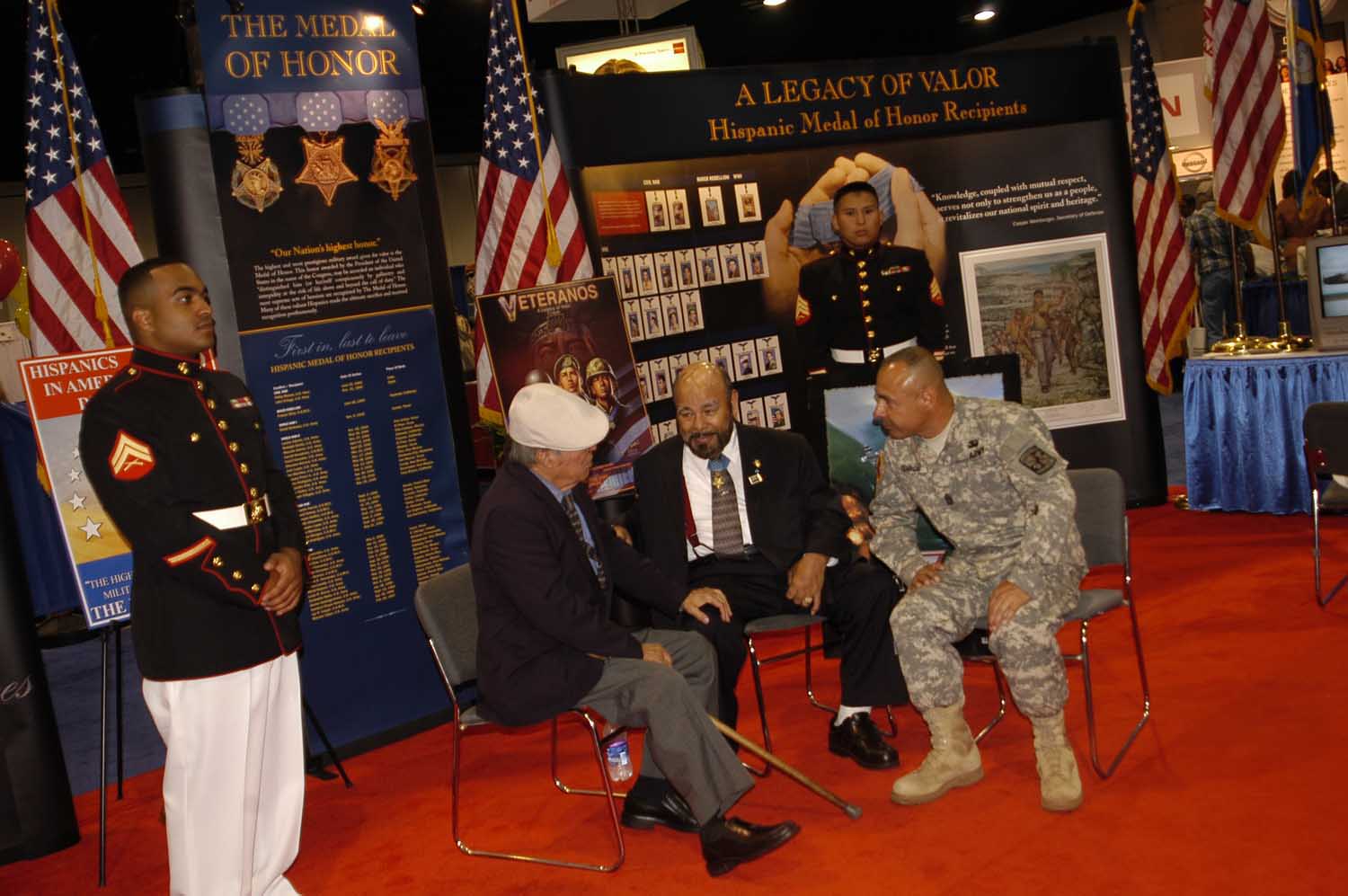
Hispanic Medal of Honor Society at the NCLR national conference Photos by Richard Avolio |
|
|
|
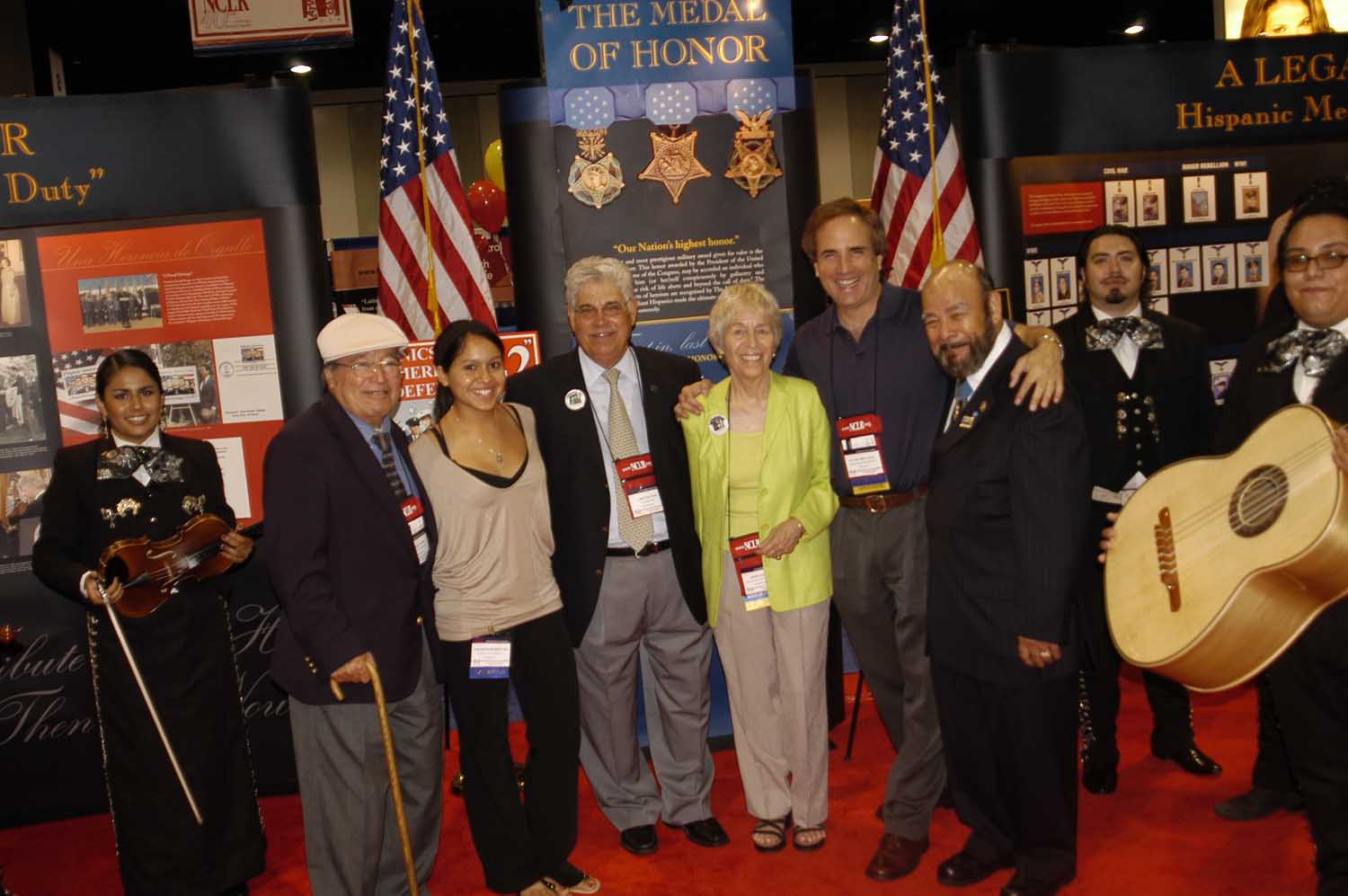
The booth was favored by Mariachi musicians, and many visitors. In this grouping, from Lft. to Rt. musician, Dr. Henry J. Casso, Student volunteer, Jorge Hayes, California State University, Mimi Lozano, Steve Rubin, media documentarian, and Rudy Hernandez, and two other mariachi musicians. The enthusiasm and diversity of interests in recognizing our history lead to the firming of a Witness to Heritage effort, a collaboration of groups dedicated to the same mission. Click for more. |
|
THINK PIECE |
|
|
Should Latinos vote Republican again? Just kidding. It’s
just not
going to happen, at least not in the numbers of the last presidential
election. Without question, today’s Latino voter has become a much
more
sophisticated constituent. Having been disillusioned with the Democrats for a long time, in the 2004 presidential election a record 40% of Latinos voted Republican. That’s an increase from the 35% in the 2000 elections (another record). Without Latino’s 5% additional numbers, Bush might still be riding ponies in Texas. Latinos proved they could make a difference at the polls and we waited, patiently, to see if our Latino agenda would finally get action and we’d finally stop being the “Invisible Minority”. After all, Latinos are a vibrant, growing community on the move. We contribute to society, demonstrate an unsurpassed work ethic, are patriotic, and have great family values... But despite our contributions, we also face major challenges. We suffer the largest percentage of working poor; schools are failing to educate 50% of our children and our health disparities are growing while everyone else is getting healthier. If whites suffered the magnitude of our problems, politicos from both parties, long ago, would’ve battled to see who’d be the first to call for a state of national emergency. Surely the Bush administration would take action on our behalf after Latinos voted Republican in unprecedented numbers. Alas, it was not to be. Nearly, eight years later our problems are worse and with the demonizing of the undocumented all Latinos are being victimized with the increase of hate crimes and job discrimination. No politico is confronting this surge in racism against us. We used to be the "Invisible Minority". No more. Since we’ve surpassed Blacks as the largest minority we now have the dubious distinction of being this country’s “Largest Invisible Minority”. ‘Course, every president since Kennedy --Democrat and Republican-- brags about appointing more Latinos to top positions than the pervious administration. But to paraphrase Stanford professor Debra Rhode: Giving a Latino of position of power is not the same as empowering Latinos. So, what’s the big deal about this being a history making election? This is not about a white woman or black man or even another white man becoming president; this is about us. And no one is really seeing us. Sen. Clinton has not addressed a Latino agenda except in general terms, which means she really doesn’t see us. Sen. Obama manifests the Latino/black divide as a major chasm. The Latino / Black divide is real. Blacks either don't see us or treat us with disdain. Example: they control nearly 30% of Dept. of Education while making up about 13% of the population; Latinos on the other hand are 15% of the population and hold less than 5% of those jobs. Does it look like Blacks are helping lift their “brothern” up? No, in fact there is a sense of black entitlement to government jobs, which is also disproportionately reflected in the national health department. And Sen. Obama contributes to this divide when he says after a recent primary: "I saw crumbling schools that are stealing the future of black children and white children alike.” Later, in his “race” speech he modified the crumbling schools statement to include black children, white children, American Indian, Asian -–and Hispanic children. If Obama can only see us as an afterthought, think he’ll see us behind the doors of his Oval Office? Latinos aren’t going to vote Republican anywhere near the numbers of the last election, but that doesn’t mean we’re returning to the Democrats hat-in-hand. A December a poll by ImpreMedia sounds an alert for all politicos. And, it provides a ray of hope for Latinos. The poll revealed that in the top five Latino states, 58% are registered Democrats and 20% are registered Republican. But, then they show that a record number (15%) have now registered as Independents or members of another party. But even more revealing is that 37% do not report a preference for either a Democrat or Republican candidate. This is big time! Our sophisticated voter today is becoming more pragmatic. We’ve fed up with voting for the lesser of the two evils. The record number of Latino Independents brings us to Ralph Nader and his VP mate, Matt Gonzalez. Yes, Nader’s hated –by the Democrats—but no one pats him on the head and gives him platitudes. Believe me, Democrats may sound dismissive, but they’re terrified of him. That gives Latinos a place for leverage. Nader is a player. What about Gonzalez? The South Texan is a lawyer, a former public defender and was a long time member of the San Francisco Board of Supervisors and a key leader in raising the minimum wage. Gonzalez is a heavyweight also. It will certainly take “cojones” for the 37% undecided Latinos to vote for them. But we also know that Nader is an uncompromising champion of the disenfranchised and isn’t controlled by big special interests. Some will retort: Yeah but, you’re throwing away your vote going for Nader. I’d respond, No more than we have on the last 43 presidents. Isn’t time to talk to Nader and Gonzalez and see if they see us? Dr. Armas is an award winning writer/publisher living in New Mexico. He can be reached at armas@swcp.com
|
|
|
|
|
| Any candidate who wants to attract this crucial voting bloc must address racial equality. Sen. Barack Obama's presidential campaign has reignited an examination of race relations in America. It has led some to question how deep the divide is between black and white Americans. From my perspective, the question ignores the reality of our diverse society. We must also consider the divide between the majority from another group, one that I happen to belong to: Latinos. According to the Pew Research Center, Latinos are the nation's largest minority group, at 42 million people and 14% of the population. By 2050, that population will triple, to 128 million, which will be 29% of the American population. Those numbers are already having a political impact. Just how strong it may be could become clear in November. In a close presidential election, the Latino vote could decide the outcome. For example, in the closely contested strategic states of New Mexico, Florida and Colorado, Latinos make up, respectively, 37%, 14% and 12% of eligible voters. The conventional wisdom is that Latinos vote Democratic. But not necessarily. In 1999, according to a Pew Hispanic Center report published in 2007, Democrats enjoyed a 33% advantage over Republicans in partisan allegiance among Latino registered voters. However, in 2003, a sufficient number of Latinos voted for Republican Arnold Schwarzenegger (over a respected Latino Democrat) to make Schwarzenegger the governor of California. In 2004, President Bush won a historic percentage of the Latino vote (more than 40%). By 2006, again according to the Pew Hispanic Center, the Democrats' edge in partisan allegiance had dropped to 21%. Pew's numbers now show that Latino voters are heading back into the Democratic fold, but the message in these voting patterns and in the demographic projections is that neither party can afford to take the Latino vote for granted. The great diversity within the Latino population presents a challenge for both parties. Mexican Americans in Texas, Cuban Americans in Florida and Puerto Rican Americans in New York do not agree on every issue. But -- while I can't speak for all Latinos -- I believe there are issues that resonate for us all. Among them, of course, is immigration. Latino support will swing to the political party that has the courage and fortitude to put forward a specific immigration solution that is effective and efficient in securing our borders, that supports the economic interests of the nation and that is compassionate in a way that is consistent with the character of a nation of immigrants. Beyond immigration, both parties need to forge closer relationships with Latino voters. They need to connect with and make use of surrogates, as the Democrats have done with L.A. Mayor Antonio Villaraigosa. They need to make more contact, an effort both parties launched last weekend, when they spoke to a conference of Latino elected and appointed officials in Washington. More important, they need to embrace policies from the Latino point of view. What is that point of view? For starters, we may now wear suits on Wall Street or Main Street, but we know the experience -- personally or from our parents and grandparents -- of working in the fields, on the docks and in the kitchen. We want a job, not a handout. We value opportunity over more government. We are risk takers, willing to bet on ourselves and start a business. We want a society that recognizes and rewards us based on our hard work and ingenuity, not our skin color. We are unabashedly proud of America, and we are prepared to enlist, fight and die for this country, sometimes even without the right to vote for its leaders. We believe an education represents freedom in America, and we are willing to work multiple jobs so our children can go to college. Finally, although we know that America strives to be a fair country, the harsh reality is we are not one nation with liberty and justice for all. And yet equal opportunity -- to a job, to capital and to credit -- is a cornerstone of American success. The promise of equal opportunity is what drew our parents and grandparents and what still draws immigrants to the U.S., and it is what firmly knits them into the country once they are citizens. As we move to the next phase of the presidential campaign, some people may try to discourage discussion about race relations in favor of issues they say are of greater importance: the war against Al Qaeda, the cost of energy, the sub-prime mortgage crisis. However, we need leaders who appreciate -- and who choose to confront -- the crucial elements of racial inequality within these so-called bigger issues. Those are the leaders who are likely to be successful in finding effective solutions to our most important challenges. I have said often that Latinos share a common prayer: "Just give me a chance to succeed." I believe that the candidate who will win Latino votes is the one who understands that desire and who will engage the issue of racial equality for Americans of all colors. It's politically wise. More important, it is the right thing to do for our nation. Sent by Juan Ramos jramos.swkr@comcast.net
|
|
|
The American G.I. Forum:
1980 through 1990 the Glory Years |
|
|
The decade of the 1980s was an exciting decade for Dr. Hector P. Garcia and his family. During this decade, the nation recognized and bestowed him with honors for his work. He received many awards during this period, but the most significant to him was the Presidential Medal of Freedom. On March 25, 1986, President Ronald Reagan awarded my father the Presidential Medal of Freedom. The Presidential Medal of Freedom gave my father visibility and a needed boost to continue his work. The Medal was the catalyst for other organizations to recognize my father as well. Dr. Hector earned the nation's respect and elder statesman status. Dr. Hector now was in his seventies. His health began a decline that lasted about 16 years. In many of the columns, Dr. Hector refers to his health problems. In the 1981 convention booklet, he writes, "I have asked the good Lord to make me well enough so I can be with you at the National Convention." Dr. Hector understood that his time was limited and worked on preserving his legacy. On May 1978, Dr, Garcia established the AGIF National Archives and Historical Foundation. The purpose of the foundation was a depository for historical information and official papers of the AGIF and so that scholars could research for education purposes. In 1981, Papa began his efforts to gather the memorabilia from the AGIF chapters, "Please don't forget to send me your state convention magazines for my archives. " In addition, Papa wanted the AGIF Archives to purchase his clinic from his estate to house the AGIF memorabilia. "I am working on the archives and historical work of the American G.I. Forum. I have had two exhibits in Corpus Christi and one in Fort Worth. I still have hopes that I can write the pictorial history of the forum." However, events were not all glorious during the eighties. Young Mexican American leaders with radical alternatives criticized Dr. Hector. They were not content to work with the system but demanded change "yesterday". They referred to my Papa as Tio Taco and other derogatory names. Yet Papa persisted in his mission. It is clear from the writings my father was a visionary. Sometimes it seemed that he was crying out in the wilderness. However, the relevance of his messages at the time and today confirm this. The Message from the Founder in 1981 reflected the new direction that Dr. Hector wished the AGIF to take. Papa broadened the mission of the AGIF to include the uneducated, the elderly and the poor besides the veteran. This was because many Mexican Americans fell into this disadvantaged socio-economic group. MESSAGE FROM YOUR FOUNDER 33RD AGIF Annual Convention, August, 1981 Dallas, Texas I hope the organization continues to work for the poor the uneducated, the elderly and the suffering. During this year and other years to come the programs for the poor will be cut more and more. I foresee more suffering, more hunger and less education for our people. I foresee efforts to complete eliminate bi-lingual education. Don't give up; do not despair, after 33 years we are not giving up. After 36 years, the problem of education was not resolved. Dr. Hector felt vindicated about his views on education by the blue ribbon committee findings that the educational system in this country was a failure. Dr. Hector was pleased that the AGIF was one of the first to question the standards of public school education. MESSAGE FROM THE FOUNDER American GI Forum of Texas Amarillo Convention July 4-8, 1984 Amarillo, Texas The Motto of the American G.I. Forum is "Education is our freedom and Freedom should be everybody's business." Dr. Hector wrote: "36 years ago, many of you and many of your fathers and mothers assembled together in Corpus Christi and adopted our motto. We chose this motto because we then realized that the standards of education in our public schools were very bad for our children. We had no choice. Our education level was less than four (4) years of schooling. We had 110,759 children (or 43%) who were not attending any school, anywhere, at any time. Among those attending, as many as 50% were not passing their grade. You, the American GI Forum, protested this type of education for our children. We stated then and we can state today, that whenever a school district gives poor education to our children, everyone will suffer. This action will also affect the Anglo child. We fought and won the Hernandez school case, the Cisneros school case and many others. Still many school districts did not give our children that "Golden Opportunity". A few weeks ago, a blue ribbon committee denounced the education system of the U.S. as being a failure as far as the education of the American schoolchild. Not the Hispanic, not the Black, but the American schoolchild. It is a sad state that we never learned the lesson, "Deprive one child of education and you can deprive them all. My Message is, get back into the fight and fight for education of all our children." Give us equal education. We need bilingual education. We need Head start. We need bi-lingual teachers. Dr. Hector never passed judgment on the validity of the Vietnam War; however, was a presence in honoring the veteran by providing color guards for casualties and helping the veteran adjust to returning from War. His column written in 1985 said it all: "The poor, needy, hungry, and suffering have "The American GI Forum" and that is sufficient." MESSAGE TO OUR MEMBERS Laredo, Texas July 4, 1985 Your Founder expects to be with you in Laredo, Texas to join you in the observation of our Texas Convention The American GI Forum of which you are a member is the most respected organization in the U.S. The history of the American GI Forum is a history of service and dedication to the poor and the needy. It is a history of service to the uneducated and the Veterans. We are proud of our contributions in the recognition of the Vietnam Veterans and their families. While other groups were ignoring the Vietnam Veterans, we were setting up Vietnam Veterans Outreach Programs and Educational services. We were serving them through "SER" and we were burying them with full Military Honors. This is a great tribute to our American GI Forum. Laredo, Texas, has always been close to my heart, and indeed the monument at the park to the memory of the Vietnam Fallen Heroes is a masterpiece of love and compassion. I am proud of the "Women" of the American GI Forum for this monument. "Yet today, in 1985, we must not forget that the fight must continue because our poor, and our sick and our children need the advise, guidance and love of the American GI Forum. We have been challenged in the past and today, we are challenged again, and we must not fail. We must produce." We have to continue our support of "Bilingualism" of Medicare and Medicaid, of scholarships, of free school lunches, for better Social Security, People say private interest and big business and corporations have their lobbyist, but the poor, needy, hungry, and suffering have "The American GI Forum" and that is sufficient. Que Dios Los Bendiga. Su Fundador. The next issue, The Last Message 1990 |
|
|
Hector P. Garcia Jr. A TRIBUTE to
my Brother
|
|
|
For most, July is the month for taking vacation and
spending time with family. For
me the month of July marks the time to remember passages.
I have so many memories of Sonny. I was the
first-born and he was two years younger than I was. Therefore, we
experienced the usual childhood events together. I
remember playing with Sonny and growing up with him. A typical younger
brother, Sonny loved to tease me. I
remember his growing into a young man. Then he was gone. Sonny died in an
accident in One always questions God’s wisdom in cutting short
the life of a young person. Sonny’s passing was especially hard to
understand and accept. Usually
the young outlive their elders. My father grieved over the loss for many
years. I feel that he never got over the grief.
Our family was so grief-stricken that we seldom mentioned Sonny
because of the pain. Sonny’s life was brief.
He lived only 13 years. Life has taught me that the measure of an
individual's life is not in its length but in the quality of their life.
Sonny was able to accomplish in those brief 13 years his mission on
earth. In this case, Sonny’s
brief life clearly taught us to treasure each moment of our lives. He
showed this to us by his example. If that is all we have learned from him,
then Sonny accomplished his work on this earth. It has been forty-six years since I spoke to my brother Sonny. Do I miss him? Yes! Yet my spiritual beliefs tell me that individuals never perish and their spirits live on. Sometimes I feel Sonny’s presence in the wind, or in the whispers of the shadows. Sonny is not gone but lives on in spirit and in our memories of him. Let us thank God for giving us Sonny.
|
|
| Hispanic Military Enlistees Increase | |
|
FOR THE FIRST TIME IN THE HISTORY OF THE UNITED STATES MILITARY, HISPANICS MAKE UP A GREATER share of the newly enlisted soldiers than African Americans, according to data recently released by the Department of Defense. This rise in Hispanic enlistees reflects, in part, the steadily increasing Hispanic share of the U.S. young male population. In addition, says Professor Pedro A. Noguera, executive director of New York University's Metropolitan Center for Urban Education, there are two other reasons why Hispanics are joining the military. "Hispanics tend to be patriotic," he says. "And, at a time when our right to be in the U.S. is being questioned by those leading the backlash against immigrants, our presence in the military serves as the ultimate proof that we are loyal to the nation and have a right to be here." More practically, Mr. Noguera observes, "Like other poor and working youth with limited options, Hispanics are attracted by the many benefits that the military offers." In 2006, Hispanic Americans comprised 13.26 percent of new recruits, compared to African Americans at 13.02 percent. The numbers are the result of a slow, but steady, increase in Hispanic enlistees since 1985, coupled with a precipitous decline in the number of African Americans volunteering to serve. Hispanic Business, Jun |
|
Dr. David Hayes-Bautista: the end of California as we know it |
|
| Extract: Latino Leaders: The National Magazine
of the Successful American Latino, April-May, 2003 by Jorge Ferraez http://findarticles.com/p/articles/mi_m0PCH/is_2_4/ai_113053458 Q. How did the demographic data pan out? On February 5, 2003, we released a report that analyzed a master birth file, which lists every birth in California--about half a million every year. As it turns out, beginning in the third quarter of 2001 over 50 percent of all babies born in California are Latino. The Latino majority has emerged. That Latino majority is now 18 months old. What this means is that in the fall of 2006, the majority of all children entering the state's kindergartens will be Latino. In the fall of 2013, the majority of children entering the state's high schools will be Latino. In the fall of 2016, the majority of new workers entering the labor force will he Latino. By 2019, the majority of young people who have turned 18 and are eligible to register and vote will be Latino. The Latino majority is here. I saw this happening in 1975. Sent by Dorinda Moreno fuerzamundial@gmail.com |
|
|
"Wait a Minute, Men!" Immigrant widows can sue DHS for green cards Controversial Bill Aims to Help Minority Nonprofits Save the date: Nov 14-16, La Cultura Cura Healing Traditions & Models |
| "Wait a Minute, Men!" | |
|
Palomar plans play on immigration debate |
|
During the past few years, Palomar College professor Carlos von Son has written and staged several plays that deal with immigration issues along the U.S.-Mexico border, but Palomar theater professor Michael Mufson saw one big problem with von Son's work ---- most of his plays were written in Spanish and didn't appeal to the mainstream, English-only population. So this summer, the two professors have collaborated on a new play that will tackle the immigration issue head-on and will be accessible to both English- and Spanish-speaking audiences. Playing off the name of the self-styled border patrol group the Minutemen, the new play "Wait a Minute, Men!" deals with a confrontation between members of the Patriot Patrol and immigration activists in front of a local church. From there, the play splinters into a series of flashbacks telling the stories of the characters onstage. The production features a split stage, Web postings and live ballet folklorico performances. "This play does depict two opposing ideologies," Mufson said. "It would have been easy for us to write a one-sided rant, a piece of political agitation. What Carlos and I discovered in developing the story and characters of the play is another conflict that is common to both sides ---- the conflict between those who advocate for violent action and those who insist on peaceful methods. In many ways, that is the central conflict of the play." Von Son, who was born in Mexico and has spent most of his adult life in the United States, said he's eager for the opportunity to present his play to a new audience. "My wish is that this play will inspire people to take the time to think at a deeper level about the border situation in the Southern California/Baja California area," von Son said. "I hope the audience will question their beliefs and be more open to see the dilemma from both sides." Mufson said that the play has adult language and content and may not be suitable for small children. Info: (760) 744-1150, Ext. 2453, or palomarperforms.com Carlos von Son CVonson@palomar.edu |
|
Immigrant widows can sue DHS for green cards |
|
|
Immigrant widows who were denied legal residency because their U.S. spouses died before they got their green card scored a small victory against the Department of the Homeland Security. On Monday, a federal court allowed their lawsuit against Homeland Security and the U.S. Citizenship and Immigration Services to move forward. The case of Hootkins v. Chertoff challenges the agency's practice of automatically denying spousal status to the husbands and wives of U.S. citizens when the spouse dies during the processing of a green card application. The practice-called the "widow's penalty"-c alls for the green card to be automatically rejected once the American spouse dies, according to U.S. immigration Law. The widows' attorney Brent Renison says a few of the plaintiffs are from Orange County but wouldn't say whom because he said they're fearful of getting deported. There are more than 150 of these cases nationwide and some of these widows are already facing deportation hearings. The U.S. District Court for the Central District of California allowed the class action suit to include all illegal immigrant husbands and wives whose U.S. citizen spouses died before the couples' two-year anniversary after meeting a couple of requirements. The court ordered that the plaintiffs named in the lawsuit be able to represent anyone who has a similar case in the Ninth Circuit. The court, however, has not yet ruled on the legality of the Citizenship and Immigration Services procedures. Also, the court only approved those cases that were filed within the Ninth Circuit. This includes: Alaska, Arizona, California, Guam, Hawaii, Idaho, Montana, Nevada, Northern Marianas Islands, Oregon, and Washington. It seems as though everyone else is pretty much out of luck. Citizenship and Immigration Services has 10 days from the order to appeal the court's decision. It's unclear whether they will. For more information about the widows' go to: www.ssad.org - Cindy Carcamo Sent by Ricardo Valverde RValverde@ochca.com |
|
|
|
|
|
THE CALIFORNIA STATE ASSEMBLY RECENTLY PASSED legislation requiring large foundations to disclose the race and gender of their staff and board members, in an effort to increase the flow of grant money to minority-led nonprofits. The measure, AB 624, will apply to every private, corporate and public foundation with assets of more than $250 million. It will require each to post the information on its Web site, the San Jose Mercury Press reported. The State Senate must pass the bill, and Governor Arnold Schwarzenegger must sign it before it becomes law. Hundreds of millions of dollars are awarded to nonprofit groups, but little of it goes to organizations led by Hispanics and other minority groups, according to State Assemblyman, Joe Coto (D-23rd District), who proposed the legislation. Mr. Coto's assertion is backed by a 2006 study from the Greenlining Institute, which found that 3.6 percent of the total grant money given out that year was awarded to minority-led organizations. The study also found that 10 percent of California foundations' executive directors and board members belonged to minority groups. Furthermore, as Hispanic Business magazine reported in May 2008 ("Top Hispanic Nonprofits Understand the Business of Giving"), less than 1.2 percent of grants by foundations that assist minorities went to Hispanic nonprofits. The measure
is being met with opposition from foundation leaders in California and
nationwide, who fear the measure could spread to other states. Critics say
the measure is a violation of privacy. They also argue there is a high
likelihood that minorities are benefiting from grant money from nonprofits
that are not minority led.
|
|
|
|
|
|
Over 80 Educational Sessions
♦ Use of spirituality in Counseling/Psychotherapy with Latina/o individuals ♦ Community intervention with mentally ill ♦ Coping and Resilience with Low-Income Latina/o families ♦ Healing and Counseling with Mexican American College Students Pre-Conference Workshops ♦ A Hundred Ways to Keep One's Soul Alive: Exercises in Self-Care for Latina/o Professionals ♦ Psychotherapeutic Principles of Healing for Latina/o Professionals: A Shaman Perspective ♦ La Cultura Cura: Psychospiritual Guide Lines in Counseling with Latina/Families ♦ Developing Models of Healing in Research ♦ Developing Transpersonal Vision and Leadership with Mental Health Organizations and Agencies November 15-16, 2008 Pre-Conference Workshops: November 14, 2008 Westin South Coast Plaza, Costa Mesa, California For more information or to register online: WWW.NLPA.WS Sponsors are being sought. For sponsorship material and additional material, please contact Julie Gonzalez at (909) 319-3825 or via email at almajulissa@hotmail.com. Sent by Steve Delgadillo erdelgadillo@yahoo.com
|
|
|
Action Item Burns Developing US National Parks Documentary Reacting to Luis Ramirez Murder in Shenandoah, Pennsylvania Clipping Away for Military Families GI Bill Educational Benefits Carry Over to Spouse and Children |
|
BURNS DEVELOPING US National Parks DOCUMENTARY |
|
| Filmmaker Ken Burns' six-part series on US national parks to air in fall 2009 The Associated Press Published: July 12, 2008 BEVERLY HILLS, California: Documentary filmmaker Ken Burns' new series celebrating America's national parks and detailing their history will air in fall 2009, the Public Broadcasting Service said Saturday. "The National Parks: America's Best Idea," is a 12-hour, six-part film that traces the origins and growth of the national parks system over 150 years. Tom Hanks, Andy Garcia and John Lithgow are among the actors who lend their voices to historical figures in the series. The narrator is actor Peter Coyote. Editor: Let me suggest that NOW IS THE TIME to write PBS, the National Park Service, Ken Burns and your Congressman/woman asking if a Latino presence is going to be included in the documentary on the National Park Service.
This is an email that I sent PBS omsbudsman Michael Getler
Hi . . I am a bit concerned about Burns newest project on the
history of the National Park Service. Apparently he will be
focusing on the the last 150 years. Why . . ? I would
think that the history of the parks would include the history of the
explorations of those wonders, going back to the 1600 and 1700s when
Europeans first had the privilege of viewing the beauty of our country.
It sounds like Burns is focusing on civil rights issues. Was the
funding given for that purpose? Why are the histories of the parks
themselves not being given proper historical presence. My
understanding was that the purpose of his grant was to write about our
National Parks.
If issues and events took place in some sites and they then became
national parks, that is one thing; but that does not cover the
facts and history concerning the first and earlier national Parks.
Michael Getler 703-739-5290.
http://www.pbs.org/ombudsman http://www.pbs.org/ombudsman/feedback.html
|
|
| Reacting to Luis Ramirez Murder in Shenandoah, Pennsylvania | |
|
In July, a fatal beating by an estimated six high school football players
resulted in the death of a Mexican farm laborer in the small town of
Shenandoah, Pennsylvania. Two articles on the case are included under
Anti-Spanish Legends, Hate Crime in Pennsylvania. Please
read and act.
The MALDEF (Mexican American Legal Defense and Education Fund), and PRLDEF (Puerto Rican Legal Defense and Education Fund) joined forces with community leaders and held a Candle Light Memorial on July 29th at the Our Lady of Mt. Carmel Church in Shenandoah. For more information, please contact: Please send a letter of support to both MALDEF and PRLDEF, thanking them for taking action. Also contact our other major Latino organizations in the U.S. to come forth and demand a national wide investigation of Luis Ramirez death. We need to react strongly to bring to an end in the upward spiral of hate crimes against Mexicans, farm workers, and all Latinos. www.maldef.org headquarters@maldef.org |
|
|
Clipping
Away for Military Families |
|
|
It's an ambitious goal:
Clip thousands of dollars' worth of coupons in one year and give them
away. But Kay MacVey is cut out for the challenge—particularly for
National Military Appreciation Month in May. • MacVey, 82, is a member
of the American Legion Auxiliary, Unit 37, in Ames, Iowa, where she and
other members have adopted a coupon program for military families
stationed overseas. The coupons are redeemed at commissaries. •
"The families really enjoy using them, and it saves them a lot of
money, especially on diapers and baby food," says the
great-grandmother. • MacVey heard about the program through the legion's
national office and got involved. In 2007, she and 30 volunteers helped to
clip more than $349,000 worth of coupons from newspapers. This year's
goal: $500,000. • Surprisingly, that number won't set a record. In the
nearby city of Nevada, Iowa, another American Legion auxiliary topped the
million-dollar mark last year. • Clipping, organizing and mailing the
coupons can take several hours each week, but MacVey doesn't mind.
"There are a lot of things
I can't do, but I can do this." —Angela Bryant Starke
|
|
GI Bill Educational Benefits Carry Over to Spouse/Children |
|
Some good news for our Post 9/11 veterans and their families. Please add this link to your list servers and pass the word to our Post 9/11 veterans to learn more about their G.I. Bill benifits. For those veterans that qualify, but are not planning to attend college, they can let their spouse or children take advantage of these educational benefits. Many State also are giving education assistance to spouses and children when the military members are considered "out-of-state" residence. It might be a year before Veterans Administration gets all of the details completed for these benefits: http://www.gibill.va.gov or call: 1-888-GIBILL1 Sent by Rafael Ojeda RSNOJEDA@aol.com Tacoma,WA |
|
|
Gen. Joe Robles Honored as Corporate Executive of the Year Hilda Zacarias Hired to Lead Family Care Center Hispanic Fans Critical to Major League Baseball LULAC Receives $1 Million Grant from AT&T Denver Post |
|
Gen. Joe Robles Honored as Corporate Executive of the Year |
|
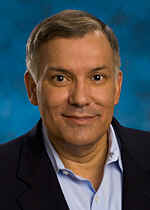 USAA President and CEO Joe Robles has been recognized by the San Antonio Hispanic Chamber of Commerce as the 2008 "Corporate Executive of the Year." He received the recognition during a special ceremony on July 8 honoring the achievements of Hispanic leaders in the Alamo City. An introductory video highlighted Gen. Robles' commitment to core values as a quality that has contributed to his success noting the consistency of USAA's core values of service, loyalty, honesty and integrity with those of the U.S. Military. "Occasions like these really make a person humble," said Gen. Robles during his acceptance speech, "because when someone talks about you as a person of accomplishment, you know deep down that whatever you have achieved in life is only partly due to your own efforts. So much of the credit goes to those who helped you and mentored you along the way." Gen. Robles called on local leaders to increase their support of education and mentoring programs to prepare today's youth for tomorrow's workforce. "My wish for our community is that every child has access to the opportunities you and I have had." Others honored at the event include: Special Award (posthumous): Viola Barrios, co-owner of the Los Barrios Restaurant and La Hacienda De Los Barrios in San Antonio Lifetime Achievement Award: Vikki Carr, singer Rising Star of the Year: Eliot Garza, NSIDE Publications Business Owners of the Year: Al Aguilar & Gisela Girard, Creative Civilization Community Service Award: Dr. Julian Trevino, senior lecturer The University of Texas San Antonio Joe Castillo joecastillo7421@yahoo.com
|
|
Hilda Zacarias Hired to Lead Family Care Center |
|
| Zacarias Hired to Lead Santa Barbara
Family Care
Center as Executive Director By Latino Today Staff Writer City leader and local businesswoman Hilda Zacarias has been hired to lead the Santa Barbara Family Care Center as its executive director. She will take the post effective July 1. The local nonprofit organization provides a wide range of child care and education services to low-income families throughout the county. Zacarias has served as as a board member for many local nonprofits and foundations including the Santa Barbara Foundation, the Fund for Santa Barbara, Planned Parenthood, Future Leaders of America, and the McCune Foundations Grant Making Committee. A longtime local resident, Zacarias is a Santa Maria City Councilwoman and former accountant with over 20 years of public sector experience including auditing, grant writing, managing, consulting, and leading non-profit organizations. More recently, she completed an accelerated program from the Harvard Kennedy School of Government where she received her master is in public administration. "I am excited to be working directly with the children and families of Santa Barbara County. SBFCC has a history of fostering excellence in family child care and support of parents, Zacarias said. I look forward to leading the organization in partnership with the board, the amazing staff, child care providers, and the community-at-large." Source: Jesse Chavarria jesse@latinotoday.us www.latinotoday.net Sent by Dorinda Moreno fuerzamundial@gmail.com
|
|
Hispanic Fans Critical to Major League Baseball |
|
| Hispanic baseball fans are driving attendance numbers to record heights. Aggressive marketing plans and an increased number of Hispanic ballplayers and managers have made Hispanic attendance a critical element to the bottom lines of many major league teams. If that sounds like hyperbole, consider this. More than half of all fans who watched Los Angeles Dodger games at Chavez Ravine in 2007 were Hispanic. That represents nearly two million baseball lovers. Hispanic Business, Inc. news@hbinc.com 425 Pine Avenue, Santa Barbara, CA 93117 July 8, 2008 • Volume 4, Issue #299 |
|
|
LULAC RECEIVES $1 MILLION GRANT FROM AT&T / DENVER POST |
|
| The League of United Latin American Citizens (LULAC) and the AT&T Foundation, the corporate philanthropy organization of AT&T Inc. (NYSE: T) announced today that LULAC will receive a $1 million gran from the AT&T Foundation's Aspire initiative, to implement LULAC's Adelante America program, which will provide academic classes, mentoring and student leadership development for underserved, at-risk Latino teens in grades eight through 10. "This important educational initiative in our community will help ensure that our nation's rich high-tech future and digital empowerment is within reach of our Latino youth," said LULAC president
Rosales. Full text at Sintesis Informativa, 11/07/08 lazos@lazos.tralcom.com |
|
|
Fund Raiser: "Dream Act Radiothon" and Broadcast of Play AT&T Kicks Off $100 Million Education Initiative Students' success begins in the belief system Culture-based Educational Approach and Accountability New way of tracking high school students |
| Two-thirds of doctoral candidates in science and engineering in U.S.
universities are foreign-born.
|
|
|
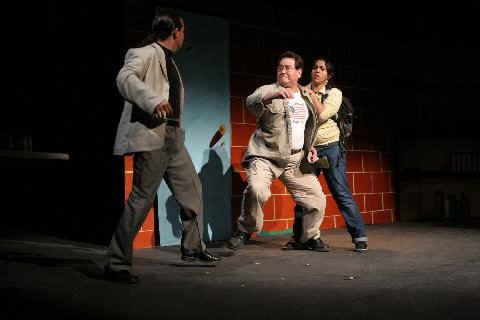 PHOENIX -Chicanos Por La Causa, KNUV 1190 AM and New Carpa Theater joined forces to produce a radiothon on KNUV-1190 AM from noon to 9:00 p.m., Thursday, June 26.
 The radiothon featured the premiere broadcast of a radio-play version of "Dream Act." Written by James E. Garcia and produced by the New Carpa Theater. The play tells the story of Victoria, an undocumented and homeless university student and her struggle to achieve the American Dream. "Dream Act" aired from 4 p.m. to 5 p.m. and was followed by a two-hour talk show featuring experts and community leaders who'll discuss efforts to pass a proposed federal bill known as the Dream Act, as well as efforts to provide scholarships for undocumented immigrant children. Over the course of the afternoon, listeners were encouraged to donate to the American Dream Fund. The fund was established by Chicanos Por La Causa on behalf of the American Dream Fund (ADF) Coalition. CPLC is one of the state's largest nonprofit social service agencies. The ADF Coalition was formed by a group of concerned community representatives in order to support high achieving Arizona students impacted by proposition 300. New Carpa Theater actors and production staff have donated the radio-play production of "Dream Act". The play was presented in English and in Spanish in April at Playhouse on the Park. KNUV-1190AM and its staff has donated production time, air time and on-air talent. |
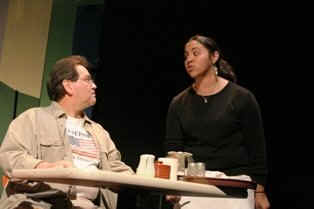 "The inspiration for Dream Act, as well as this radio-thon are the thousands of students nationwide who wake up in the morning determined to pursue their education, despite what to most of us would seem like insurmountable barriers," said playwright James Garcia, who also teaches writing at Arizona State University. "The students who receive scholarships from the fund are high achievers, men and women who want to contribute the betterment of our society. Sadly, the fund is only able to assist a fraction of the young people out there who need this assistance. It's my hope that the radio-thon will at least provide a portion of the direly needed financial assistance needed by these students."
New Carpa Theater is dedicated to staging and developing Latino/Multicultural theater. The company (formerly Colores Actors-Writers Workshop) was founded by James E. Garcia in 2002. New Carpa Theater was formally incorporated as a non-profit in 2006. Playwright, journalist and university professor James E. Garcia is the troupe's producing artistic director. KNUV-1190AM is the only 24-hour, Spanish-language news/talk radio station in Arizona. For information please contact: KNUV 1190 AM-La Buena Onda, Mayra Nieves, 602-433-6245, mayra.nieves@nrvcorp.biz . New Carpa Theater, James. E. Garcia, 602-460-1374, jgarcia@americanlatino.net or www.americanlatino.net/caww . Chicanos por la Causa, Jose Martinez, 602-257-0700 Jose.Martinez@cplc.org Sent by James E. Garcia
|
|
By Karin Chenoweth, Guest Columnist |
|
|
An extraordinary thing happened last month in Granger, a small, impoverished town in the Yakima Valley where most adults and many children work in the fields cutting asparagus, picking cherries and sorting apples. More than 90 percent of the Class of 2008 -- almost all of whom are low-income -- graduated from high school on time. Another couple of students will be graduating this summer. That's not all -- a whopping 90 percent of the 62 graduates are going on to some kind of post-secondary education. Thirty-seven percent are going directly to four-year colleges, 14 percent to technical schools and more than a third to two-year colleges. Those statistics are normally associated with much wealthier schools. Schools like Granger, where 90 percent of the students are low-income, 80 percent Latino and 10 percent American Indian, often graduate fewer than half of their students. Granger provides an important example of the kinds of things schools can do to change the trajectory of children's lives. To those who think that poverty is too great a barrier for schools to overcome, it provides lessons in what can be done. Just eight years ago, Granger High School was in many ways a typical high-poverty school. Little was expected of the students, and they delivered -- only 20 percent met state reading standards, gang activity and graffiti were pervasive, and fewer than half the students graduated. "Things were very different," said English teacher Joyce Golob. That was when Richard Esparza became principal. He refused to accept that his students could not meet the same standards as middle-class students. "I come from poverty. I come from where the students come from," he said. "To me, if I can make it, these students can make it." The list of things Esparza and the faculty of Granger have done in the past eight years to improve instruction and student achievement is long, but all their efforts stem from the belief that students are capable of being successful. "It all starts with the belief system," Esparza said. That doesn't mean it's easy. For the most part, Granger students enter ninth grade well below standards in reading, writing, math and science. "I call them academic refugees," Esparza said, adding that the students often arrive discouraged and beaten down from previous experiences in school. "How often have they been told, 'You are as dumb as a box of rocks'?" To make sure students connect with teachers, Granger has an advisory system in which every professional in the building meets four days a week with 18 or 20 students, making sure that they keep up with their class work and graduation requirements. Twice a year students, advisers and parents or guardians confer together to do the same thing. To ensure that those conferences happen, teachers call, badger and even go to students' homes. To tackle the students' low reading skills, Granger uses a locally grown program that begins by providing students with very short passages posing an ethical dilemma, allowing students to grapple with serious topics while learning new vocabulary and gaining fluency. Eventually students graduate to longer passages and, after a while, serious literature that allows them to enter the life of the mind -- "Huckleberry Finn," "To Kill a Mockingbird" and "Their Eyes Were Watching God." Even students who enter reading at fifth-grade level or below are meeting state reading standards by 10th grade. Unlike at most schools, failure is not a final outcome. Students who fail quizzes and tests are given the opportunity to retake them after tutoring, allowing them to develop an academic work ethic. Teachers know that their students will make mistakes and even flirt with the gangs that plague the rest of the Yakima Valley. But, says longtime English teacher Jesus Maldonado, "I try to look beyond where they are now and see them for who they will be." He is not alone -- teachers at Granger know that their students can be successful, and try not to let adolescent goofiness distract them. "Passionate," is how new graduate Miguel Garcia describes the teachers. "Here the teachers will stay after school until we understand it." Garcia, who will attend Central Washington University after spending the summer picking cherries and hops, spoke for many students when he said, "Our parents -- they're Latino and they work in the fields, and most of us don't really want that life. So we strive to get out." Although the state backed down on a long-planned requirement that students pass a math test in order to graduate, it held onto its requirement that students must pass a reading and writing test. Because of that, Esparza said, his students can boast that "not only did they graduate, but they graduated to a standard -- they have the skills to take them on to other things." This was Esparza's last graduation as principal. He is enrolling in a doctoral program and plans to be a superintendent in a high-poverty district. "Now that I've demonstrated this can be done, I need to do it on a bigger scale," he said. "People have to understand that these students can be just as successful as anyone else." But, he said again for emphasis, "It begins with the belief system." We as a nation owe it to Miguel Garcia and all his fellow students to develop the same belief system. They can be successful if we believe in them, hold them to high standards and give them the help they need. Karin Chenoweth is a writer with The Education Trust and author of "It's Being Done: Academic Success in Unexpected Schools." Sent by Willis Papillion Source: seattlepi.com |
|
AT&T Kicks Off $100 Million Education Initiative |
|
|
AN ALARMING 1.2 MILLION STUDENTS DROP OUT OF HIGH SCHOOL every year. That's the equivalent of 7,000 students a day, more than half of whom are Hispanic, African-American, and Native American children. "The high dropout rate has implications for individuals and for our nation's global economic leadership," says AT&T Inc. Chairman and CEO Randall Stephenson, who recently announced that the telecommunications giant is hoping to decrease that number through a new, $100 million program called the Aspire Initiative. "AT&T Aspire is about supporting the great work already underway to help our kids succeed in school and helping students see the connection between education and their best future," says Mr. Stephenson. The ambitious project will feature several key elements. First, the phone company plans to provide grants to schools and nonprofit organizations that help students not only graduate from high school, but become better prepared for college and the workforce. Second, a student job shadowing initiative, involving 400,000 AT&T employee hours, will be created to give about 100,000 students a firsthand look at skills they will need to succeed in today's workplace. In addition, the program calls for the underwriting of national research that will explore the perspective of school officials on the high school dropout issue. HISPANIC BUSINESS JUNE, 2008,
pg 86
|
|
|
From Diverse Online-July 10, 2008 Current News LULAC Calls for Culture-based Educational Approach and Accountability To Stem Dropout Rate Among Minorities By Michelle J. Nealy Jul 11, 2008, 23:28 |
|
| WASHINGTON - Reforming the No Child Left Behind Act to promote higher accountability standards for the nation's high schools, inclusive and equitable testing and culture-based curricula may help stem the wave of minority high school student dropouts and shrink the achievement gap, a panel of educators and activists said at a LULAC meeting here this week. Every year, approximately 1.2 million students drop out of high school. The dropout rate for Hispanic students is more than 40 percent, and for Blacks it hovers at 50 percent. Underrepresented minorities, in general, have less than a 58 percent chance of graduating high school with a regular diploma. This inequality can be reversed by reforming No Child Left Behind (NCLB), education advocates say. Policymakers, educators, civil rights leaders and activists convened this week for a town hall-styled meeting hosted by the League of United Latin Citizens (LULAC) to address NCLB policies that shortchange minority students and fail to hold high schools accountable for poor graduation rates. LULAC, a founding member of the Campaign for High School Equity, a diverse coalition of civil rights organizations committed education equality, is pressing for visible reform in the reauthorization of the No Child Left Behind Act slated to pass sometime next year. Currently NCLB neither ensures that graduation rates are calculated consistently or accurately nor requires the data collected to be disaggregated by race. Panelist Holly Kuzmich, deputy chief of staff for policy and programs at the Department of Education, insisted that standardized test scores in mathematics and reading have risen since the passage of NCLB in 2002, particularly among minority and special education children, but admitted the program is flawed. "In 2002, focus on accountability was really put on elementary schools. High schools are our new focus, [especially] better reporting of graduation rates and dropout rates. There is no uniform definition of dropouts. States get to define that for themselves," said Kuzmich. "We have proposed a set of regulations to get all states reporting on the same scale by 2013." Nearly 5.5 million English Language Learner students are enrolled in America's public school system. According to LULAC officials, this student population is being left behind. ELL students - 80 percent of whom are Hispanic - are among the country's lowest-performing students. In 2007, only 4 percent of eighth-grade students scored above "proficient" in reading for the National Assessment of Educational Progress, compared with 31 percent of ELL students. In addition, only 49 percent of ELL students graduate from high school on time. Peter Zamora, the Mexican American Legal Defense and Educational Fund's Washington, D.C., regional counsel, favors testing in native language to level the playing field. Zamora, a credentialed bilingual educator, says that in teaching 12th-grade English at a California high school he learned that, "most English-language learners are not going to be able to perform well on an English assessment test." LULAC is also petitioning for implementing culture-based curricula, an educational approach which is not supported by NCLB. Data from the Nation Indian Education Association reveal that learning in an environment that incorporates native language, culture and traditions increases students' mastery of math and science. Federal education policy that promotes culturally based teaching is critical in shrinking the achievement gap, advocates say. "School climate is tied to academic achievement," said Dr. Joel Gomez, associate professor of educational leadership at The George Washington University. "Research shows that when kids feel good about going to school they do better." Sent by Juan Ramos jramos.swkr@comcast.net |
|
|
Extract: 1 in 4 California high school students drop out, state says By Mitchell Landsberg and Howard Blume Los Angeles Times Staff Writers July 17, 2008 |
|
|
Using a new system for tracking dropouts, California discloses a rate considerably higher than previously reported. About 1 in 3 students in Los Angeles Unified left school. Deploying a long-promised tool to track high school dropouts, the state released numbers Wednesday estimating that 1 in 4 California students -- and 1 in 3 in Los Angeles -- quit school. The rates are considerably higher than previously acknowledged but lower than some independent estimates. The figures are based on a new statewide tracking system that relies on identification numbers that were issued to California public school students beginning in fall 2006. The ID numbers allow the state Department of Education to track students who leave one school and enroll in another in California, even if it is in a different district or city. In the past, the inability to accurately track such students gave schools a loophole, allowing them to say that departing students had transferred to another school when, in some cases, they had dropped out. The new system -- which will cost $33 million over the next three years, in addition to the millions spent for the initial development -- promises to eventually provide a far better way to understand where students go, and why. But state and school district officials acknowledged that the data initially available Wednesday, after a final one-day delay, were limited in usefulness. "I think as the system stabilizes, you will get better data," said Esther Wong, assistant superintendent for planning, assessment and research in the Los Angeles Unified School District. For now, she said, the numbers tell only part of the story, albeit more accurately than in the past. Jack O'Connell, state superintendent of public instruction, presented the new data, based on the 2006-07 school year, as a quantum leap forward in understanding the nature of the dropout problem. But, he said, "no one will argue that the number of dropouts is good news. . . . It represents an enormous loss of potential." For the state overall, it was 24.2%, up substantially from the 13.9% calculated for the previous school year using an older, discredited method. Statewide, 67.6% of students graduated and 8.2% were neither graduates nor dropouts. The last category included those who transferred to private schools or left the state. School districts have until the end of August to correct data, so figures could change. The statistics highlight a problem that is getting worse in California, said Russell Rumberger, a professor of education at UC Santa Barbara who directs the California Dropout Research Project. Even using the old system of measurement, he said, the number of dropouts has grown by 83% over five years while the number of high school graduates has gone up only 9%. Rumberger attributed the trend to three primary factors: an increase in Latino immigrants, who are among the most likely to drop out; the raising of academic standards; and insufficient funding for public education. Among large, comprehensive L.A. high schools, the highest dropout rates were recorded at Jefferson, 58%; Belmont, 56%; Locke, 50.9%; Crenshaw, 50%; and Roosevelt, 49.6%. Those with the lowest rates were Palisades Charter High, 2.5%; Granada Hills Charter, 6.4%; Canoga Park, 11%; Cleveland, 12.8%; El Camino, 13%; Taft, 13.1%; Chatsworth, 14.5%; and Fairfax, 14.9%. mitchell.landsberg@latimes.com howard.blume@latimes.com Sent by Ricardo Valverde RValverde@ochca.com
|
|
|
The Parent Institute for Quality Education (PIQE) Role of Schools in English Language Learner Achievement Gap |
The Parent Institute for Quality Education (PIQE) |
|
Education either... is used to facilitate integration of the younger generation into the logic of the present system and bring about conformity, or it becomes the practice of freedom, the means by which men and women deal critically and creatively with reality and discover how to participate in the transformation of their world." --Paulo Freire Parent
Institute for Quality Education (PIQE)
|
|
|
On Thursday, November 15, 2007 Parents of Alvin Dunn Elementary School in San Marcos, California graduated from the PIQE Program. One of the mothers, Felipa Gaytan presented us with an unsolicited personal letter thanking PIQE for helping her help her children. Below is her note exactly how she presented it to us: |
|
Cuando
mi hijo enpeso la escuela medi cuenta que nesesitaba saber mas sobre
como funsionaba el distrito escolar pero el temor de
el idioma no me permitia tener la confiansa para buscar alluda fue entonses que nos inbitaron a partisipar en instituto de padres mi esposo y yo Pudimos entender que importante es trabajar con los maestros pero sobre todo lainportansia de apollar a nuestros Hijos y el gran balor de el tiempo y la disiplina. Cuando tubimos la conferencia con la maestro de mi hijo A ella le sor prendio que llebaramos con nosotros una libreta y que le preguntaramos que nibel tenia en las materias en ves de preguntar como iba en la escuela. Desde ese momento las visitas a la escuela se hicieron mas continuas y los grados de mi hijo mas altos. uma frase que tengo grabada en mi mente es (el trabojo de la casa nose ba y los hijos cresen y dejan de nesesitar nuestra allude) Por estas rasones quiero darle las crasias a instituto de padres por en scenarnos la responsabilida de ser lideres, El pribilegio de ser los primeros maestro de nuestros hijos Y el orgullo de formar excelentes ciudadanos para un futuro mejor
Felipa
Gaytan
11-8-07
|
When
my son started school, I became aware that I needed to know more on how
the school system functions but my fear of not speaking the language
would not allow me to have the confidence to look or ask for help.
It was then that we were invited to participate in the Parent Institute
for Quality Education. My husband and I were able to understand
how important it is to work with the teachers and above all the
importance of supporting our children's education and the value of our
time and discipline. When we had the conference with my son's
teacher, she was very surprised that we had a note book with us and that
we asked at what level was our son performing in his studies instead of
asking how he was doing in school. From that moment on our visits
to the school were made often and our sons grades went up. One
phrase that I have etched in my mind is (the house work doesn't end but
our children grow-up and won't always need our help). For these
reasons, I want to give thanks to the Parent Institute for teaching us
the responsibility to be leaders, the privilege we have to be the first
teachers of our children and the pride to form excellent citizens for a
better future.
Felipa
Gaytan
11-8-07
|
| Extract: The Role of Schools in the English Language Learner Achievement Gap by Rick Fry http://pewhispanic.org/files/reports/89.pdf 6.26.2008 |
|
Students designated as English language learners (ELL) tend to go to public schools with low standardized test scores. However, these low levels of assessed proficiency are not solely attributable to poor achievement by ELL students. These same schools report poor achievement by other major student groups as well, and have a set of characteristics associated generally with poor standardized test performance--such as high student-teacher ratios, high student enrollments and high levels of students who live in poverty or near poverty. When ELL students are not isolated in these low-achieving schools, their gap in test score results is considerably narrower. Other Resources Fry, Richard. 2007. How Far Behind in Math and Reading are English Language Learners? June. Washington, DC: Pew Hispanic Center. Batalova, Jeanne, Michael Fix, and Julie Murray. 2007. Measures of Change: The Demography and Literacy of Adolescent English Learners. Washington, DC: Migration Policy Institute. Cosentino de Cohen, Clemencia, Nicole Deterding, and Beatriz Chu Clewell. 2005. Who's Left Behind? Immigrant Children in High and Low LEP Schools. Washington, DC: The Urban Institute. Zehler, Annette M. and others. 2003. Policy Report: Summary of Findings Related to LEP and SPED-LEP Students. Report prepared by Development Associates, Inc. for the U.S. Department of Education, Office of English Language Acquistion, Language Enhancement, and Academic Achievement for Limited English Proficient Students (OLEA), under Contract No. ED-00-CO-0089 Jepsen, Christopher and Shelley de Alth. 2005. English Learners in California Schools. San Francisco, CA: Public Policy Institute of California Sent by Juan Marinez marinezj@anr.msu.edu |
|
|
Historia
de Juanchorrey y Tepetongo, Zacatecas |
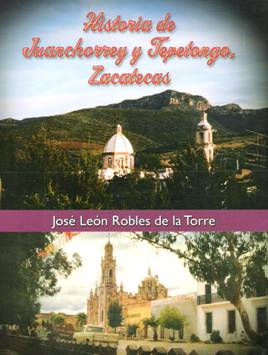
|
Juanchorrey Zacatecas By José
León Robles de la Torre Spanish
|
|
|
Historia
de Juanchorrey y Tepetongo is a genealogical book written by José León
Robles de la Torre. The author writes about the history of Juanchorrey and
Tepetongo history back to the early 1500’s. The
history based on genealogy information, conversations with family and
friends. The book contains
histories, biographies and genealogies of Juanchorrey and Tepetongo. The
genealogy charts are hand written by the author in a way he developed and
easy to read. The author includes the books titles that the author
previously written and has been published, the book is well written and
illustrated Included are some of his poems and personal data, photos of
families from Juanchorrey and Tepetongo towns and United States. Families
who immigrated to It
is the history of two towns Juanchorrey and Tepetongo, IMPORT
FROM MEXICO 8 1/2 X 11, softcover, collectively documents thru the years,
biographies, several black & white pictures and family trees. It sells
for $65.00 price and handling included, 549 Pgs. Los Talleres de Carmona
Impresores Torreón,
|
||
|
Professor Alfred Arteaga Berkeley Chicano/Ethnic Studies |
|
| A funeral for Professor Alfred Arteaga was held
Saturday July 12 in Santa Cruz, CA at Holy Cross Church. A
fall memorial is expected to be held in the fall. Click to this link for
information on his work and photos of his travels, etc. http://alfredarteaga.com/ |
|
|
BOOKS and other works by alfred arteaga
http://alfredarteaga.com/listbooksx.html
Video Poesis To view on PC get QuickTime: www.apple.com/quicktime/
The Present 4:57 Eine Frau 1:11 Manuscripts/Manuscritos Ineditos Flesh and Verse Language, Discourse, Sign Essays Red and Black Poetics of Resistance A Tired Aesthetic Locating Poetry/Cantos Primeros Lacunae Chicano Mexican Corrido Aesthetics of Sex and Race Poems/Hojas Sueltas Inspiración The Story of Water Balance Xochitepec Illumination Mine En lugar de la nada Collections/Series Catalog of Human Emotions Amor Nonato Drama Mechas Collaborations Respuesta Xicana: 15 Xicano Poets Respond to 187 Epistles 1-6 Information sent by Anne Cervantes IXMALI@aol.com
|
|
 |
Laguna Hills, California woman writes book about her
Mexican American roots.
|
|
Age : 34 Residence: Laguna Hills Q.
What is your book about? My sisters and my mother have their own chapter. Something that's also significant is introducing the idea of learning English in the American school system. I would get sent to English classes because Spanish was my first language. Our parents would actually have to go to the school and tell them not to enroll us in ESL classes. My parents at one point had to convince me and lie to the school saying that English was my primary language. Some stories are funny, like realizing that not everyone eats tortillas every day. My dad also used to work in the print room for the O.C. Register. He started up as janitor and worked himself up and became a supervisor. He would come home with these crazy ideas from reading some articles. He grilled frog legs like he would grill carne asada - whatever ran that day in the paper. Q.
How did the idea of writing this book come about? Q. What kind of an upbringing did you
have? At the same time, my parents exposed us to the idea that not only were we Mexican but we were also American - we were Mexican American. My father made a great effort to expose us to different cultures. Even at times when my parents faced different prejudices, they would remind us of this. To them it was very important that we identity in both cultures, because they wanted us to exceed in our family's new country. They wanted us to have the opportunity of going to college and getting an education. Q. Whom do you hope to
touch with your book? Whether you are just arriving in America or are here for four generations, everybody has the same opportunity. My father always said they came to this county to have a better life, and it's up to us to create that better life for ourselves. I try to compile memories that have had an impact not only in my childhood but as an adult. Because of those childhood
memories, it gave me a foundation to help me get through experiences as
an adult. I got to share those stories with my sisters, who are my best
friends.
|
New Book: Annotated Baptisms 1789 to 1823 of San Agustin de Laredo, (Present-day Laredo, Texas) |
|
|
Los
Bexarenos Genealogical Society is most pleased to be offering this new
book, Annotated Baptisms 1789
to 1823 of San Agustin de Laredo, (Present-day Laredo, Texas), for
sale for $34.00 each plus $3.00 postage. Make
check to: Los Bexarenos The
book, by Gloria Villa Cadena and Angel Sepulveda Brown, is 8½ by 11, soft
cover, tape binding. The book
contains the early baptisms of the Catholic Church in Laredo, Texas.
This first edition is published in 2008 and contains
234 pages including index. This
book has been in process for many years and the accuracy has been checked
and rechecked and is as near perfect as is humanly possible.
There are 2116 baptisms extracted in this book.
Los
Bexarenos, P.O. Box 1935,
San Antonio, TX 78297 Send
orders by E-mail to: fmtejanorey@aol.com
|
|
|
“Por Amor/For Love: An Operachi in One Act”
Calavera Highwa Magdalena Carmen Frida Kahlo Calderón A la Guerra ya me llevan Despedida El Soldado Razo La Peña Presents Poetry Schedule |
“Por Amor/For Love: An Operachi in One Act” by James E. Garcia and Raul Yzaguirre |
|
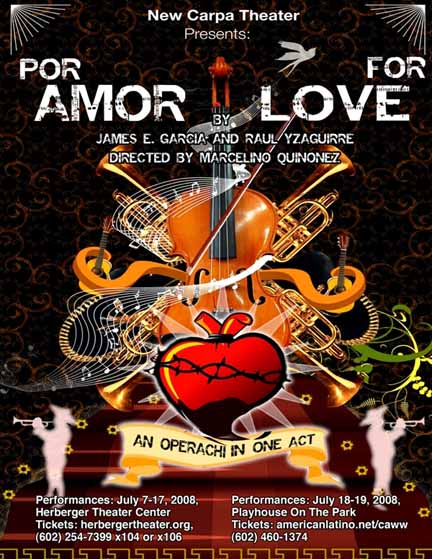 A sneak preview performance of “Por Amor/For Love: An Operachi in One Act”, written by James Garcia and Raul Yzaguirre. Directed by Marcelino Quinonez. It’s Romeo and Juliet meets All that Jazz in a story about love, fame, greed and the behind-the-scenes travails of touring theater. A romantic comedy inspired by the classic music of the Golden Age Mexican and Latin American cinema. July 8-17, 2008, Herberger Theater Center (Lunchtime Theater), 222 Monroe in downtown Phoenix. Tickets available at the door. Doors open at 11:40 a.m.. Show starts at noon and ends by 1 p.m. July 18-19 at Playhouse on the Park, 1850 N. Central Ave. (Palm & Central), Tickets available immediately at americanlatino.net/caww or by calling 602-254-2151, then press 4.
|
|
|
Calavera Highway Film by Renee Tajima-Peña & Evangeline Griego edited by Johanna Demetrakas |
|
| Best Television Documentary, San Francisco International Film Festival v Best Documentary Feature at the San Diego Latino Film Festival v National PBS broadcast on “P.O.V.,” Sept 16, 2008 v THE STORY: Armando Peña, a veteran of the 1968 Chicano student walkouts, and his brother CARLOS carry their mother's ashes back to South Texas and reunite their far-flung brothers. But the road reveals more than they bargained for. Calavera Highway traces the odyssey of two brothers as they uncover a complex story. Why their mother was an outcast, and what happened to their father who disappeared during “Operation Wetback,” the 1954 U.S. government program that deported over a million Mexican and Mexican Americans. A sweeping story of seven brothers grappling with the meaning of masculinity and fatherhood, and the nature of family ties. ABOUT THE FILMMAKERS: Calavera Highway is a new production by the filmmaking team of Renee Tajima-Peña (Who Killed Vincent Chin?, My America…or Honk if You Love Buddha.) Evangeline Griego (Sir! No Sir!, Chevolution) and editor Johanna Demetrakas (Amandla!). Executive produced by Jeff Bieber, cinematographer Jonathan Schell, sound recordist Sara Chin, composers Brian Kirk & Sharon Smith and Rene Gasca & Los Frijoles Romanticos, music performances by Ry Cooder, Joaquin Cooder, and Hugo Arroyo. Produced in association with The American Documentary/P.O.V. (Simon Kilmurry, Executive Producer). A co-presentation of Latino Public Broadcasting (Patricia Boero, Executive Producer). Funded in part by the Center for Asian American Media with funds provided by the Corporation for Public Broadcasting. www.pbs.org/pov/pov2008/calaverahighway/ Sent by Walter Herbeck wlherbeck@sbcglobal.net |
|
|
|
| ------------------------------------------------ I first knew Frida the summer of 1950; I was fifteen years old and on a trip to México my father took the family to the National Museum of Art. There I met Frida in double, a large canvas (the largest one I believe she ever painted) in which two Fridas, one dressed in white in the style of the end of the 19th century and the other in the dress of Tehuantepec, seated before a tormented sky, held each others hand, their hearts exposed and bleeding, their gazes locked onto mine. I stood there absorbed and fascinated. My mother had to pull me away dragging me by the hand. I believe it was then that I fell in love with Magdalena Carmen Frida Kahlo Calderón. I sought her everywhere; then, her paintings were not as easy to find as her husband Diego's. Whenever I found them, there she was, always looking at me with fixed and stoic gaze even though in many of them the pain she displayed like a malignant flower or poisonous jewel, was palpable - necklaces of thorns; corsets like medieval instruments of torture; the exposed vertebral spine, a column of steel; a few tears like pearl ornaments, drops of blood like ornaments of ruby. Each of these small paintings was like a precious reliquary of suffering, a delicacy of pain, offerings for some perverse miracle, ex votos to a cruel god. What amazed me were the colors, the sensuality, the beauty with which they celebrated her pain. Among the fifty some odd self-portraits, even in the ones in which there appear no images of pain, never, that I know of, did she paint herself smiling. Little by little, I came to know her history - her precocious rebellion, the polio that attacked her as a child, the terrible trolley accident that left her in pieces young, her obsessive love of Diego (though not so obsessive that it prevented other loves with man or woman), her courage that lent strength to her determination for joy (which at times she must have feigned), her cult of vanity, she zeal for regional costumes, archaeological jewels so heavy that they must have hurt her to wear them, her boasts of being indigenous. Now I find her everywhere, even in films, and at costume balls she seems to multiply herself more and more; I find her in the salons, the dining rooms, the kitchens, the bedrooms, the bathrooms. She sometimes makes me jealous, my promiscuous, ubiquitous Frida. © Rafael Jesús González 2008 |
------------------------------------------------- Conocí a Frida por primera vez en el verano de 1950, tenía yo quince años de edad y en un viaje a México mi padre nos llevó a la familia al museo de pintura nacional. Allí conocí a Frida en doble, un lienzo grande (el más grande que creo jamás haya pintado) en que dos Fridas, una vestido de blanco en el estilo de fines del siglo XIX y la otra en traje tehuano, sentadas ante un cielo atormentado, se cogían de la mano, los corazones expuestos y sangrando, las miradas clavadas en la mía. Quedé absorto y fascinado. Mi madre tuvo que desprenderme jalándome de la mano. Creo que entonces me enamoré de Magdalena Carmen Frida Kahlo Calderón. La buscaba por dondequiera; entonces sus cuadros no eran tan fácil de encontrar como los de su esposo Diego. Cuando los encontraba, allí estaba ella, siempre mirándome con mirada fija y estoica aunque en muchos de ellos el dolor que ostentaba como una flor maligna o un joya venenosa era palpable - collares de espinas; corsés como instrumentos de tortura medievales; la espina vertebral expuesta, una columna de acero; una que otra lágrima como adorno de perla, gotas de sangre como alhajas de rubí. Cada uno de estos pequeños cuadros era como una reliquia preciosa del sufrir o una golosina de dolor, retablos como mandas por algún milagro perverso, exvotos a un dios cruel. Lo que me asombraba eran los colores, la sensualidad, la belleza con que celebraban su dolor. Entre los cincuenta y tanto autorretratos que pintó, aun en los que no aparecen imágenes del dolor, jamás, de que yo sepa, se pintó sonriente. Poco a poco me enteré de su historia - su rebeldía precoz, el polio que de niña le atacó, el accidente de tranvía atroz que de joven la dejó en pedazos, su amor obsesivo por Diego (aunque no tan obsesivo que le impidiera otros amores con hombre o mujer), su valor que prestaba fuerza a su empeño por la alegría (que a veces ha de haber fingido), su culto a la vanidad, su afán por prendas regionales, joyas arqueológicas tan pesadas que le han de haber costado llevar, su alarde de indígena. Ahora la encuentro por dondequiera, aun en las películas, y en los bailes de disfraz parece que se multiplica cada vez más; la encuentro en las salas, los comedores, las cocinas, las recámaras, los baños. A veces me causa celos, mi Frida promiscua y ubicua. © Rafael Jesús González 2008 |
| Rafael Jesús González P. O. Box 5638 Berkeley, CA 94705 U. S. A. http://www.rjgonzalez.blogspot.com (English) http://www.rjgonzalezg.blogspot.com (español) rjgonzalez@mindspring.com |
|
|
|
|
During WWII, these were the musical echoes that were heard among our Chicano soldiers and our people from 1940 to 1945 instilling in them a sense of pride and courage while fighting for their honor and their country the United States of America and being proud of being Americans of Mexican descent I Am Off to War The Farwell The Buck Private I was drafted yesterday I'm saying goodbye I am joining up and if I don't die in battle because I'm off to war soon with the brave boys to your arms mother dear I'll return. although I'm far away leaving mothers behind I am going to defend leaving girlfriends crying Unknown Chicano composer 1943 My country and my crying their farewell. Honor. I Sing Instead of Crying My Virgen Guadalupana Pedro Flores will protect my flag Listen carefully my friends Puerto Rico. 1943 and when I am in battle what I am about to sing far from my country that nobody knows I will prove that my people when your time will come. are ready to die anywhere. My sweetheart that I was going to marry I am departing early tomorrow was very beautiful with a new day but after the war and here goes another Mexican I didn't see her anymore that is giving up his life and sings and shouts Unknown Chicano composer long live my country! My Virgin of Guadalupe take care of my mother for she is very loving . take care of her till I return Holy Virgin send her my love never allow the heavens to take her from me.
Estos eran los ecos melódicos que se oían durante La Segunda Guerra Mundial entre nuestros soldados Chicanos y nuestra gente desde 1940 hasta 1945 demostrando su orgullo y su valentía mientras defendían su honor y su patria Los Estados Unidos de América y sintiéndose orgullosos de ser americanos de ascendencia
mexicana. |
|
|
La Peña Presents
Arte Poetica, Poetry Schedule Sunday, August 10, 2008. 7pm $5. At La Peña Cultural Center, 3105 Shattuck Ave. in Berkeley. 510-849-2568 http://www.lapena.org |
|
| FOR IMMEDIATE RELEASE. La Peña Presents: Arte Poetica, The Dream Poetry Team The Dream Poetry Team descends on La Peña for a powerful evening of poetry. Francisco x Alarcón, Jack Hirschman, Jose Montoya, and Nina Serrano. MC by La Peña's Fernando A. Torres. Arte Poetica. The Dream Poetry Team. La Peña celebrates California's full-fledged voices of poetry, the ripened voices that have taught up & coming new generations and upheld resolutely the arte poética for the people. With Francisco x Alarcón, Jack Hirschman, Jose Montoya, and Nina Serrano. MC by La Peña's Fernando A. Torres. 7pm $5 Francisco x Alarcón, Chicano poet and educator, was born in Wilmington, California, in 1954. Raised in Guadalajara, Mexico, and he came to California when he was 18 years old. He is the author of a number of bilingual poetry books for children and ten volumes of poetry, including From the Other Side of Night / Del otro lado de la noche: New and Selected Poems; Sonnets to Madness and Other / Sonetos a la locura y otras penas; Snake Poems: An Aztec Invocation and Of Dark Love / De amor oscuro. More information about Francisco can be found here: http://www.yrmusic.com/v2/artists/bios/artist.php?ID=122 Jack Hirschman is San Francisco's Poet Laureate and social activist. He has written more than 60 volumes of poetry, translated more than 45 poems from at least 6 different languages, edited anthologies and journals. Dismissed from teaching at UCLA for anti-war activities in 1966, he moved to San Francisco in 1973. He is the city's present poet laureate. The Before Columbus Foundation presented Hirschman with an American Book Award for Lifetime Achievement in 2002. The citation, written by David Meltzer, reads in part: "Jack Hirschman is an immensely present yet hidden figure in the cultural politics and life of American poetry. Amazingly prolific - on the highest levels of committed artistic and activist involvement - his work is generous, open, and penetratingly critical." More information about Jack can be found here: http://www.sfcall.com/issues%202002/5.24.02/hirschman_bio_5_24_02.htm Jose Montoya was named Poet Laureate of the City of Sacramento in 2002. As a painter, poet, and activist, Montoya is recognized as a legendary figure who has played a leading role in the Chicano cultural movement. He founded the Royal Chicano Air Force, a California arts collective renowned for its political murals and community projects. His poetry is widely anthologized and has promoted new interest in Chicano literature. Among his most famous poems is "El Louie," about a man with whom Montoya grew up. The poem described Louie's military service in Korea and his later entanglement with drugs, which led to his death. Many critics consider "El Louie" to be a classic depiction of a pachuco. "A Chicano cannot be born. No, the individual becomes a Chicano. The difficulty is not to understand what Chicanismo is but to become and to be a Chicano. What is Chicanismo? Simple: to be like Jose Montoya." (Javier Huerta) More information on Jose can be found here: http://biography.jrank.org/pages/3946/Montoya-Jos-1932-Artist-Educator-Writer- Poems-Published-in-Anthology.html Nina Serrano is a poet, writer, storyteller, and independent media producer. Her poems are widely anthologized, most recently in the literary anthology, Under the Fifth Sun: Latino Writers from California and the three anthologies of peace poems Farewell to Armaments. She has won international film awards and served as an Alameda County Arts Commissioner. Serrano, former director of the San Francisco Poetry in the Schools program, is a co-founder of the Mission Cultural Center for Latino and produces regular radio programming on KPFA 94.1 FM in Berkeley. "She has lived a relatively long time compared to a butterfly and a relatively short time compared to a rock. There is much she still does not know about the two basic issues: life and death." More information about Nina can be found here: http://en.wikipedia.org/wiki/Nina_Serrano La Peña Cultural Center is a favorite stop for activist pundits, imaginative artists, late-night poets, avid tourists, and South American gastronomy connoisseurs. Founded in 1975, La Peña is a multicultural community arts center that presents cultural and educational programs that increase understanding of different cultures and support efforts to build a more just society. La Peña presents about 250 music, dance, theater, spoken word, film, visual art and multi-disciplinary events each year. The Center presents emerging as well as nationally and internationally renowned artists, commissions new work, and organizes special artist residencies. La Peña also offers free and low cost classes available to youth and adults. La Peña is located at 3105 Shattuck Ave. in Berkeley. For more information call For more information please contact Fernando at 510 849 -2568 ext. 15 or fena@lapena.org or visit http://www.lapena.org |
|
|
Dirty Little Secrets from Otherwise Perfect Moms |
|
| Second book on motherhood co-authored by a
second cousin., Trisha Ashworth and her collaborator, Amy Noble. You're not the
only mom who's forgotten to brush her kids' teeth or cursed in front of her toddler. Confessions such as these have been compiled into their new book, Dirty Little Secrets From Otherwise Perfect Moms
|
|
|
Anti-Spanish Legends |
| July 2008 Shenandoah, Pennsylvania Hate Crime |
|
Editor: Below are two articles on this case: a young Mexican worker
was beaten to death by Anglo teenage boys. The dates of the articles
are July 19 and July 25. I've bolded some important statements.
In contrasting the two articles, there seems to be considerable effort by
the defendant's legal defense and Shenandoah officials to negate that this
was a racially motivated death. This is a tragic story that the whole nation should know about. I
fear that when Police Chief Nestor say, “From what we understand right now, it wasn't racially motivated,”
or Schuylkill County District Attorney James Goodman says, "Now that the criminal charges have been filed, we must let this case be handled in the criminal justice system,"
|
|
Immigrant's death exposes tensions Mexican worker beaten by teens Michael Rubinkam, ASSOCIATED PRESS Saturday, July 19, 2008 http://www.washingtontimes.com/themes/people/luis-ramirez |
|
|
SHENANDOAH, Pa. | Luis Ramirez came to the United States from Mexico six
years ago to look for work, landing in this town in Pennsylvania's coal
region. Here, he found steady employment, fathered two children and, his fiancée
said, occasionally endured harassment by white residents. Now he is headed back to Mexico in a coffin. The 25-year-old illegal immigrant was beaten over the weekend after an argument with a group of youths, including at least some players on the town's beloved high school football team, police said. And despite witness reports that the attackers yelled ethnic slurs, authorities say the beating wasn't racially motivated. Hate crime or not, the killing has exposed long-simmering tensions in Shenandoah, a blue-collar town of 5,000 about 80 miles northwest of Philadelphia that has a growing number of Hispanic residents drawn by jobs in factories and farm fields. An investigation continues, and no charges have yet been filed, but police say as many as six teens were involved in the fight, which ended with Mr. Ramirez in convulsions and foaming at the mouth. He died early Monday of head injuries. Luis Ramirez Crystal Dillman, the victim's 24-year-old fiancee, who is white and grew up here, said Mr. Ramirez was often called derogatory names, including “dirty Mexican,” and told to return to his homeland. “People in this town are very racist toward Hispanic people. They think right away if you're Mexican, you're illegal, and you're no good,” said Ms. Dillman, who has two young children by Mr. Ramirez and a 3-year-old who thought of him as her father. On Ms. Dillman's fireplace mantel hangs a medallion of Jesus that Mr. Ramirez was wearing the night he was beaten. Mr. Ramirez had an imprint on the medallion on his chest, marking where an assailant stomped on him, she said. Police Chief Matthew Nestor acknowledged there have been problems as the community - the birthplace of big band musicians Tommy and Jimmy Dorsey and home of Mrs. T's Pierogies - has tried to adjust to an influx of Hispanics, who now comprise as much as 10 percent of the population. Teenagers have sprayed racially tinged graffiti and yelled racial slurs at the newcomers, he said. “Things are definitely not the way they used to be even 10 years ago. Things have changed here radically,” Chief Nestor said. “Some people could adapt to the changes and some just have a difficult time doing it. ... Yeah, there is tension at times. You can't deny that.” ASSOCIATED PRESS PHOTOGRAPHS Crystal Dillman (left), 24 sits with her children Kiara, 2, (second left) and Anjelina, 3, and sister Lita Rector at home in Shenandoah, Pa., Miss Dillman blames the beating death of her Mexican-immigrant fiance, Luis Ramirez, on racism. Police are interviewing suspects and witnesses. Preliminarily, though, they have determined that Mr. Ramirez, who worked in a factory and picked strawberries and cherries, got into an argument with a group of youths that escalated into a fight in which he was badly outnumbered. “From what we understand right now, it wasn't racially motivated,” Chief Nestor said. “This looks like a street fight that went wrong.” Retired Philadelphia Police Officer Eileen Burke, who lives on the street where the fight occurred, told the Associated Press she heard a youth scream at one of Mr. Ramirez's friends after the beating to tell his Mexican friends to get out of Shenandoah, “or you're going to be laying next to him.” Shenandoah Valley High School Principal Phillip Andras said he knew little about the purported involvement of any football players. A call by the AP to the athletic director was referred back to the principal. But the players' possible involvement has added to interest in the case. Football, along with the town's many block parties and festivals, is a major attraction. Home games typically draw thousands of fans. Arielle Garcia and her husband, who were with Mr. Ramirez when he was beaten late Saturday, said they had dropped their friend off at a park but returned when he called to say he had gotten into a fight. (Editor: this statement is puzzling. It seems to imply that there were two fights in which Ramirez was involved.) She saw someone kick Mr. Ramirez in the head, she said, and “that's when he started shaking and foaming out of the mouth.” Despite the witness statements, Borough Manager Joseph Palubinsky said he doesn't believe Mr. Ramirez's ethnicity was what prompted the fight: “I have reason to know the kids who were involved, the families who were involved, and I've never known them to harbor this type of feeling.” |
|
|
Pa. teens charged in fatal beating of immigrant By Michael Rubinkam, Associated Press Writer July 25, 2008 http://news.yahoo.com/s/ap/20080725/ap_on_re_us/immigrant_killing_students |
|
|
Three white teens were charged Friday in what officials said was an epithet-filled fatal beating of an illegal Mexican immigrant in a small northeast Pennsylvania coal town. Brandon J. Piekarsky, 16, and Colin J. Walsh, 17, were charged as adults with homicide and ethnic intimidation in the July 12 attack on Luis Ramirez. A third teen, Derrick M. Donchak, 18, was charged with aggravated assault, ethnic intimidation and other offenses. All are from Shenandoah, where the attack occurred. Additional charges are expected in the case that has roiled Shenandoah, a small, economically depressed town where police have reported friction between whites and a growing Hispanic population. The suspects played football at Shenandoah Valley High School; Donchak, now enrolled at Bloomsburg University, was the quarterback last season. "As a result of this crime, a young man has lost his life. Many other lives have been devastated, and the borough of Shenandoah has been filled with tensions between many ethnic groups," Schuylkill County District Attorney James Goodman said. "Now that the criminal charges have been filed, we must let this case be handled in the criminal justice system," he said. According to a police affidavit, the defendants and three 17-year-olds encountered Ramirez, 25, and a teenage girl in a park the night of July 12. The youths goaded Ramirez and the girl, saying, "You should get out of this neighborhood" and "Get your Mexican boyfriend out of here," documents said. After Ramirez and the girl began walking away, someone yelled an ethnic slur at him, court documents said. He responded, "What's your problem?" A fight ensued, during which police said Walsh punched Ramirez in the face. The victim fell and hit his head on the street, leaving him unconscious, after which Piekarsky kicked him in the head, police said. All three suspects used ethnic slurs during the fight, which ended with Ramirez in convulsions and foaming at the mouth, authorities said. The attackers fled the scene; Ramirez underwent surgery but died July 14 of head injuries. Piekarsky and Walsh were being held without bail, while Donchak was held on $75,000 bail. Lawyers for Piekarsky and Walsh said their clients are not guilty and that there was no evidence to support the homicide charges. They also said they would try to have the case removed to juvenile court. Roger Laguna, Walsh's lawyer, said the police affidavit "pretty much describes chaos, and what you have then after the fact is somebody trying to sort through that and attribute certain acts to certain individuals." He said that although slurs might have been used, the fight was not motivated by ethnicity. "I think any time there's a fight and any time you have one ethnic group fighting another, there's going to be racial slurs," he said. "I've seen that since I was a kid on a playground 20 years ago, but they never called it ethnic intimidation until very recently." Frederick Fanelli, Piekarsky's lawyer, said he is "surprised and disappointed" that his client faces a homicide charge, attributing Ramirez's death to a "street fight that ended tragically." Donchak declined to comment. Ramirez, who entered the U.S. illegally about six years ago, worked in a factory and picked strawberries and cherries. Crystal Dillman, the victim's 24-year-old fiancee, who is white and grew up in Shenandoah, has said Ramirez was often called derogatory names and told to return to his homeland. The couple had two children together, and Dillman also has a 3-year-old who thought of Ramirez as her father. "I plan on moving out of this town as fast as I can. Not because I'm scared. I just don't want to see my children have to deal with what their father dealt with," Dillman said. Preliminary hearings for all three suspects were set for Aug. 4. Goodman said a fourth teen will be charged as a juvenile with aggravated assault and ethnic intimidation and that charges also will be filed against a man who provided alcohol to the defendants hours before the attack. Click for supportive action underway.
|
|
|
BIRTH OF A COLLABORATION |
|
Dr.
Henry J. Casso on the left speaks with Clara Padilla Andrews, Pres.
of the National Assn of Hispanic Publications and Victor Mancilla, Victor Mancilla,
media documentarian. BIRTH OF A COLLABORATION Greetings, the NCLR 2008 Conference's 40th anniversary was the opportunity for the Co-creators of Witness to Heritage to finally meet face to face. After many months of discussing the concept of collaboration and cooperative, via conference calls and emails, the group finally met during the NCLR conference and settled on a loose structure and dedicated support, one to another. Happenstance brought the group together, each focusing on promoting Hispanic historical contributions through a different avenue or media. Good intent will carry the work forward. Witness
to Heritage is an organization dedicated to promoting an awareness of
positive Hispanic contributions to world history, with an emphasis on the
vital role played by Hispanics in the development of the United States with
the objective of developing more positive self image for younger
generations. Are
you engaged in promoting history and heritage. We
welcome your involvement as Witnesses to Heritage
in your city, neighborhood, or state. Let us know what you or a group
that you are associated with are doing to affirm our historical presence. We
would like to promote and assist you. We
invite and welcome you all to be Witnesses to our Heritage.
|
|
HISPANIC HERITAGE MONTH |
|
2008 Theme: "Getting Involved: Our Families, Our Community, Our
Nation" Sample Proclamation for Hispanic Heritage Month Latino Leaders websites Celebrating Hispanic Heritage, Teacher Materials |
|
Sample Proclamation for Hispanic Heritage Month Posted April 23, 2008: National Council of Hispanic Employment Program Managers. Winning theme was submitted by Amy Shalom, Environmental Service, USDA, APHIS PPD in Riverdale, MD. |
|
|
As we celebrate National Hispanic Heritage Month, we
applaud the accomplishments of Hispanic Americans and recognize the
contributions they make to our great land. To honor the achieve of
Hispanic Americans, the Congress, by Public Law 100-402, as amended, has
authorized and requested the President to issue annually a proclamation
designating September 15 through October 15 as "National Hispanic
Heritage Month." We encourage
all citizens to recognize the the strength and vitality
that Hispanics have contributed historically to
our Nation. WHEREAS, Hispanic
Americans are now the largest minority in the United States .
. NOW, THEREFORE, BE IT RESOLVED,
that the Oranage County Board of Supervisors in Santa Ana,
California proclaim
September 15th through October 15th
|
|
|
Latino Leaders websites |
|
| WEB RESULTS Latino Leaders Leadership can be thought of as a capacity to define oneself to others in a way © Latino Leaders is a publication of Ferraez http://www.latinoleaders.com National Community for Latino Leadership, Inc. Latino Leaders Network " Mickey Ibarra, Founder and Chairman
|
|
|
Celebrating Hispanic Heritage, Teacher Materials
|
|
|
Editor: Celebrating Hispanic Heritage is a companion website to Somos
Primos. The historical tidbits which were the first items included on the website could also lead to further research in history, social studies, Spanish, English, and ESL classes. Best wishes
to all classroom teachers and youth leaders who sense the urgency of
helping our youth . . . God bless, Mimi
|
|
|
Military and Law Enforcement Heroes |
|
Hispanics in the Navy,
with non-Hispanic surnames Latinos/Latinas – Ultimate – Sacrifice Part VII U.S. Latino and Latina World War II Oral History Project Luis Fenollosa Emilio: A Brave Hispanic Soldier In Memoriam: S1/c Sijifredo Salinas, 1922 - 1945. The Col. Juan Ayala Story, Department of Defense Heroes Elwood Richard Quesada, Lieutenant General, US Air Force China Burma India Theatre 2LT Francis Ildefonso Cervantes Honoring Forgotten Heroes Veterans History Project Air Force Memorial Foundation |
|
|
|
|
Rear Admiral George E. Mayer Rear Admiral George
E. "Rico" Mayer (born
c. 1950) is a United States Naval officer who is the Commander of the
Naval Safety Center. On June 3, 2003, Mayer commanded the Carrier Group
Eight from his flagship USS Vella Gulf (CG-72) during the 31st annual
maritime exercise Baltic operations (BALTOPS). It was the first time in
BALTOPS history that included combined ground troops from Russia, Poland,
Denmark and the United States. Early years As an aviator, he was
first qualified in the A-7 Corsair aircraft and later qualified in the
F-18 Hornet, the United States first strike-fighter. 
A7 Corsair - type of aircraft Mayer flew Naval career:
Mayer served in the
following shore duty assignments: Executive Assistant to the Chief of
Legislative Affairs and as the Light Attack/Strike Fighter Junior Officer
Detailer in Washington, D.C.; Deputy Director of Operations, United States
Central Command at MacDill Air Force Base in Florida; Spanish Command and
Staff College in Madrid, Spain. He also attended the U.S. Naval War
College in Newport, Rhode Island, where he obtained a Master’s degree in
National Security and Stratigic Studies. He was serving as Deputy Director
of Operations, J3, at the U.S. Central Command at MacDill Air Force Base
when on February 15, 2002 Secretary of Defense Donald H. Rumsfeld
announced that President George W. Bush had promoted him to the grade of
rear admiral (Upper half). Mayer flew the A-7
Corsairs with the “Dambusters ” of VA-195 (Strike Fighter
Squadron-195), the VFA-25 “Fist of the Fleet”, the “Flying Eagles
” of VA-122 as an instructor pilot and the “Gunslingers” of VA-105
as a department head in support of Operation Enduring Freedom in 2001,
striking targets deep in Afghanistan. He was later assigned to the F/A-18
Hornet for his command tour with the “Rampagers” of VFA-83. His other
command tours included the VFA-106, the East Coast F/A-18 fleet
replacement squadron, Carrier Air Wing Seven, and Carrier Group Eight. BALTOPS
2003
USS Vella Gulf (CG-72) Mayer, Commanded the Carrier Group Eight, whose base of operations
is located in Norfolk, Virginia, in an international naval exercise known
as Baltic operations (BALTOPS) 2003 from his flagship USS Vella Gulf
(CG-72). Thirteen nations participated in the exercise, which included
more than 3,600 personnel, 36 ships, 3 submarines, over 40 aircraft, and 6
different ground forces from Allied and Partnership for Peace (PfP)
nations which included Denmark, Estonia, Finland, France, Germany, Latvia,
Lithuania, Norway, Poland, Russia, Sweden, the United Kingdom and the
United States. For the first time in
the history of the exercise, BALTOPS 03 included ground force elements
that trained in interoperability exercises, which included a combined
Russian, Polish, Danish and American amphibious landings in Poland and an
evacuation of role-playing non-combatants by both sea and air from
Bornholm, Denmark.[4] Other Commands In August 2005, Mayer
was assigned as commander, Naval Safety Center in Norfolk, Virginia. As
commander, he is his responsibility that the center complies with its
mission which is providing safety, assistance and advice to the CNO, CMC,
and the Deputy Assistant SECNAV for Safety in order to enhance the war
fighting capability of the Navy and Marine Corps, preserve resources and
improve combat readiness by preventing mishaps and saving lives. Mayer is an advocate
of Hispanic recruitment and active participation in the Armed Forces and
has been quoted as saying: "One of the
biggest strengths of the Hispanic community is its ability to produce
leaders in all facets of society and industry" Rear Adm. Mayer has
accumulated over 4,000 flight hours and has logged more than 1,000
carrier-arrested landings. Recognition Among Rear Admiral Mayer's military decoration are the following: Defense Superior Service Medal Legion of Merit with a Gold Star Bronze Star Medal
Rear Admiral Patrick H. Brady
By: Tony (The Marine) Santiago
Rear Admiral Patrick H. Brady Rear Admiral
Patrick H. Brady (born 1959) is
an American submarine commander who in July 2007 became the first person
of Hispanic descent to be named Commander of the Naval Undersea Warfare
Center. He is one of four Admirals of Hispanic descent who are currently
serving in the United States Navy.
Military career In 1995, Brady was on
the staff of Commander Submarine Force, of the U.S. Pacific Fleet as a
member of the Tactical Readiness Evaluation Team. During this period he
under took courses from the Air Force Command and Staff College via
correspondence.
USS Portsmouth In 1997, Brady was
promoted to the rank of Commander and he served as the commanding officer
of the USS Portsmouth (SSN-707), a Los Angeles-class nuclear attack
submarine. Under his command, the Portsmouth under his leadership received
various recognitions. Among the recognition's received after completing a
Western Pacific Deployment were the COMSUBPAC (Commander, Submarine
(forces), Pacific (Ocean)) Silver Anchor Award and the Squadron Battle
Efficiency, Engineering, Navigation, Communications and Damage Control
Awards. Brady served aboard the USS Portsmouth until August 2000 when he
became a member of the Acquisition Professional Corps. As a member of the
Acquisition Professional Corps, he served in various positions, among them
Deputy Design Manager and Warfare Requirements Manager; Program Manager
for the Virginia Class Submarine Program Office; Major Program Manager for
Submarine Combat and Weapons Control Program Office; Executive Assistant
to the Commander, Naval Sea Systems Command; and the Major Program Manager
for Advanced Undersea Systems. During this period of time Brady received
Level Three acquisition training and in 2002 a promotion to Captain. In April 27, 2007,
Secretary of Defense Robert M. Gates announced that President George W.
Bush had nominated Brady for the rank of Rear Admiral. Upon his promotion
to Rear Admiral (lower half), Brady joined Rear Admiral's Albert Garcia,
Will Rodriguez and George E. Mayer as one of the four Admirals of Hispanic
descent who are currently serving in the United States Navy. In July of
that same year he beca Motivational speaker Among Rear Admiral
Brady's military awards are the following: * Legion of Merit with
one gold star (2 awards) Badges:
Rear Admiral Jay A. DeLoach
By: Tony (The Marine) Santiago
Rear Admiral Jay A. DeLoach Rear Admiral Jay A.
DeLoach born in 1955 was a American submarine commander who played an
instrumental role in implementing a visionary "Memorandum of
Understanding" between the Submarine Force Active component and the
Reserve component. He helped pioneer many key initiatives that have since
been adopted Navy-wide. DeLoach was the Assistant Deputy Chief of Naval
Operations for Resources, Requirements and Assessments. Early years: DeLoach was born in San Diego, California to Jesse Howell DeLoach and Berta Peña, a young woman from Texas of Hispanic-American descent. DeLoach's father was a Chief Yeoman when he met Ms Peña, who at that time (early 1950s) worked building F-102 fighters at the Convair plant in San Diego. DeLoach's father received a commission in 1960 through the Limited Duty Officer program and as a result, the family was in a constant state of relocation, with DeLoach attending schools in various states. DeLoach's family had a strong tradition of Naval Service. His grandfather was a Chief Machinist's Mate in the Navy and served for 23 years from 1922 to 1945. DeLoach received his first taste of what Navy life when he was a teenager and his father took him out on his minesweeper for two weeks. This experience plus, the fact that it was his family's tradition to serve in the Navy were influential factors when in 1974 he choose to attend the United States Naval Academy upon his graduation from First Colonial High in Virginia Beach, Virginia. Because of a permanent injury to his right shoulder from birth, DeLoach barely passed the entrance physical exam and medical screening to get into the Naval Academy. The type of shoulder injury suffered by DeLoach is known as Brachial Plexus Injury. The brachial plexus is an arrangement of nerve fibers (a plexus) running from the spine (vertebrae C5-T1), through the neck, the axilla (armpit region), and into the arm. DeLoach passed the physical as a result of his parent's early intervention and persistent exercising of his arm. He was able to make good use of his right arm even though it only had one-third of the strength of his left arm.
Military
career
USS Patrick Henry DeLoach graduated with
a Bachelor of Science degree in Marine Engineering from the Naval Academy
in 1978 and commissioned an Ensign. He entered training and service in
submarines and made ten deterrent patrols on the USS Kamehameha in the
Mediterranean, USS Patrick Henry in
the South China Sea, and USS Lewis and Clark in northern Atlantic.
He served as Engineer Officer in the latter two and was awarded
three Battle Efficiency 'E' awards. In 1980, he was promoted to Lieutenant
Junior Grade and in 1983 to Lieutenant.
DeLoach, who received a spot promotion to Lieutenant Commander in
1984, was the Sonar Transducer Branch Chief at Naval Sea Systems Command
from 1987 to 1989. During this period of time DeLoach earned a Masters of
Arts in Management & Supervision degree from Central Michigan
University in 1987 and in 1988 was permanently promoted to Lieutenant
Commander. DeLoach played an
instrumental role in furthering the integration of the Submarine Force’s
Reserve Component with the Active component into a surge-ready force.
Under DeLoach's direction, the Submarine Force’s Reserve Component has
continued to lead this transformation to the new model of war fighting
wholeness. DeLoach's role in implementing a visionary Memorandum of
Understanding between the Submarine Force Active component and the Reserve
component is considered to have pioneered many key initiatives that have
since been adopted Navy-wide. On February 25, 2003,
then Captain Deloach was nominated
for appointment to the rank of rear admiral (lower half) while serving as
commanding officer, Naval Reserve, commander, Seventh Fleet Detachment
111, Fort Worth, Texas. That same year he earned a Masters of Arts in
National Security and Strategic Studies form the Naval War College. On
September 3, Deloach was promoted to Rear Admiral in a ceremony held at
the Navy Memorial in Washington, D.C.
Search for the USS Alligator
USS ''Alligator'' Last assignment Currently DeLoach is a Senior
Executive Service equivalent with the Defense Nuclear Facilities Safety
Board in Washington, D.C.. He is also an adjunct professor teaching one
night a week for the Naval War College. He has been the
motivational keynote speaker in various Hispanic related conferences.
Among them the recently held Society of Mexican American Engineers and
Scientists, Inc. 18th Annual National Leadership Conference held at the
University of Texas in El Paso, Texas. Deloach retired from
the Navy on August 25, 2007, after 33 years of service. He resides in
[Herndon, Virginia with his wife Jodi whom he met in 1978 at a dance at
the Naval Academy. They have two grown daughters, Jessica and Jaclyn. Military awards and
decorations Badges:
|
|
|
Latinos/Latinas – Ultimate – Sacrifice Part
VII By Mercy Bautista-Olvera
|
|
|
In the coming months this series
“Latinos/Latinas Ultimate Sacrifice” will present the stories and
contributions of heroes who have sacrificed their lives for
Francisco
family immigrated to
Erik Silva was the youngest of four children, he
graduated from
Osbaldo Orozco was a star linebacker at
Jose
Gonzalez Rodriguez was a Mexican immigrant with a
large and supportive family. He attended
Atanacio
Haro Marin was born in
Pablo Manzano Jr., graduated from
Pfc.
Army Pfc. Analaura Esparza Gutierrez, engaged to be married to Army Sgt.
Jose Gomez of
(Army
Sgt. Jose Gomez 23, of Jose Gomez’ mother brought him to married the following year after Army Pfc. Analaura Gutierrez
returned from Jose Gomez joined the Army for college benefits; He met and fell in
love with Army Pfc. Analaura Esparza Gutierrez, and asked her to marry him
during his first tour in
Jose
Casanova graduated from Special thanks to Alan Lessig, Director of Photography, for the website,
“Military Times, Honor
the Fallen” (www.militarycity.com) for granting permission to reproduce
photos for this article. |
|
 |
|
|
Mike C Gomez
|
|
|
|
|
| Luis F. Emilio was born in Salem MA, on the 22nd of December of 1844, the son of Spanish immigrants from Malaga, His father, Manuel Emilio, taught music there and his mother, Ysobel Fenollosa, was a homemaker. His grandfather served against the French in Spain with credit and wounds, and his own father fought against the first Don Carlos, receiving the Cross of Maria Isabella Luisa, one of the orders of chivalry. Apparently young Luis’ military heritage and the abolitionist and patriotic fervor that swept Massachusetts at the outbreak of the Civil war led him to enlist in the Union Army. Accordingly on October 19, 1861, just before his seventeenth birthday, he joined Company F, Twenty-third Massachusetts Infantry, from his native city of Salem, Massachusetts, Captain Emilio's ardor and activity placed him among the first of his regiment to penetrate the swamps of Roanoke Island and enter the enemy's entrenchment, and at New Berne to advance beyond the line with a comrade, where they acted as sharp-shooters. Thus early on he distinguished himself and was placed on the color-guard, and promoted to sergeant. He took part, under General John G. Foster, in the engagements at Southwest Creek, Kinston, Whitehall, and Goldsborough. After the severe losses of the 23d, at Whitehall, he volunteered to command the rescuing party in an effort to bring the wounded from under the enemy's fire, but was not permitted. Such services, combined with intelligent performance of every duty, pointed him out, despite his youth, as worthy of higher rank. The Secretary of War selected him to report for assignment and promotion; Governor Andrew, of Massachusetts, tendered him a commission in the first colored regiment raised in the North, under Colonel Robert G. Shaw, and his own regimental commander assured him of higher rank if he would but remain. However a personal letter from Colonel Shaw decided his choice. He reported at Boston, and was made a captain in the Fifty-fourth Massachusetts Infantry commanding Company E. Present at the maiden fight of his regiment at James Island, July 16, 1863, he also took a prominent part in the sanguinary night assault on Fort Wagner two days later, when the Fifty-fourth led the storming column. When most of the regiments senior officer were killed or wounded in that action he became the 54th Acting Regimental Commander, gallantly rallying the fragments of his regiment, and of many white soldiers from other units. Amid the chaos of defeat he advanced with this sole remnant of the leading brigades to the support of the only unbroken one, and held an important position until relieved. For his conduct that night he received the thanks of General Thomas G. Stevenson on the field. Soon after the battle he frequently command several elements of the Fifty-fourth, in General Gilmore’s expedition to Florida. He was in charge of the exposed outpost of Black Island with several companies; commanding Fort Greene against the James Island batteries; throughout General Foster's attack upon James Island in 1864; at Boyd's Landing, Devaux's Neck, and the Tullifinny, and during the march to Charleston, His last engagement was on February 7, 1865, when, with three companies, he drove the enemy's force of cavalry and artillery from before our advancing column all day. He accompanied his regiment to Savannah in March, 1865, and was mustered out after three and one-half years' honorable service. He was not yet 21 years old. His other assignments were: Acting judge-advocate, First Division, Tenth Corps; acting judge-advocate, Southern District; and acting provost-marshal, Coast Division, Department of the South. After the war Captain Emilio went to San Francisco in 1867, where he became prominently identified with real estate and building operations. In 1876 he married Mary Elizabeth Belden, of San Jose, California, Thee had three children but two of them died in infancy and the oldest, Luis Victor, died at age 15 in 1894 in New York City where his parents had relocated in 1881. Mary, died in 1903 while visiting in Atlantic City, NJ’ Captain Emilio was a member of the Military Order of the Loyal Legion; Lafayette Post, Grand Army of the Republic; the United Service and Seventh Regiment Veteran clubs; the New York Real Estate Exchange, and other social and business organizations. Well known as a military authority, his writings include "A Brave Black Regiment, History of the Fifty-fourth Massachusetts Infantry;" besides many published and unpublished papers and articles, among which are "The Occupation, Defense, and Fall of Roanoke Island," " Organization of the Fifty-fourth Massachusetts Infantry," "The Fifty-fourth Massachusetts in the Assault of Fort Wagner," "Siege of Fort Wagner," and "The Expedition to Florida." When A Brave Black Regiment was first published in 1891 the many literary critics refused to review it doubting military prowess of black soldiers. One notable exception was The Nation which lauded it. He was also a collector of military buttons and was a cofounder a group called "The American Buttonist”. In this regard, he wrote a book The Emilio Collection of Military Buttons that was originally published in 1911 by The Essex Institute (Salem, MA). This catalogue was considered, to be “the best authority on military buttons, and the collection itself the best of its kind in America.” Luis Fenollosa Emilio died in New York City at age 70 on September 16, 1918. His four brothers and sisters brought his body back for burial in Salem. His grave is at Harmony Grove Cemetery and the inscription on his tombstone reads: A Gallant Soldier LUIS FENELLOSA EMILIO Volunteered - October 15, 1861, 23rd Mass. Vol. Inf. Capt. May 22, 1863, 54th Mass. Volunteer Infantry THE BRAVE BLACK REGIMENT Mustered out March 27, 1865 Life's Battles Fought. The Victory Won VALE Sources: Officers of the Volunteer Army and Navy who served in the Civil War, published by L.R. Hamersley & Co., 1893, 419 pgs. Professor Gregory J. W. Urwin, Historian, University of Central Arkansas. (He portrayed Luis F. Emilio in the film Glory leading a recreated Company E in the film, Glory) Miguel Hernández Torres miguel.hdz@verizon.net |
|
Memoriam: S1/c Sijifredo Salinas 1922- 9 January 1945 |
|
Sijifredo Salinas was born to Eliseo Salinas and Maria de la Luz Cuellar-Salinas in 1922. He was born, lived and graduated high school (1940) in Pharr, Hidalgo County, Texas, in the Lower Rio Grande Valley. Due to the improvised state of his family due to the effects of the Great Depression of the 1930's he immediately joined the Civilian Conservation Corp's (CCC) and was placed on a road and parks crew in the Colorado Rockies. In 1942 he resigned in order to join the U.S. Navy. After Boot Camp in San Diego, California he was transferred to Bremerton, Washington to join the crew off the USS COLORADO (BB-45). He was assigned to and trained in medium-sized gunnery. On his 7th campaign of the "island hopping" Pacific War he was badly burned by a Kamikaze that hit the gunnery mount next to his. This was 22 September 1944. There was no where to evacuate him too so he stayed aboard. On 8 January 1945 the ship's Commanding Officer asked for all volunteer's to man unoccupied gun mounts. He volunteered out of sick bay and took a lighter gun just under the bridge. As dawn was breaking on the 9th, another Kamikaze broke through the massive deployment of defensive gunnery surrounding the COLORADO and struck just below the bridge in the Lingayen Gulf in the opening hours of the second (northern) invasion of the Philippines. Sijifredo and 45 other men, including the ship's commanding officer, were killed instantly. Herein, he won his second Purple Heart. He was 22 and a Tribute to the Naval Services. He was buried at sea that evening. His memory continues on below a tombstone in an empty grave in the "Salinas Family Plot" of the Guadalupe Cemetery of Saint Margaret's Church in Pharr, Texas.
Mimi, Sijifredo was my uncle. We have alway's acted, and still
do, as
if he were still alive.
|
|
 |
The Col. Juan Ayala Story Hometown: El Paso, Texas Awarded: Legion of Merit Interviewed: Dec 26, 2007 Links to: Sent by Rafael Ojeda |
|
| A secure Iraq requires competent local police
and national army. In Iraq, U.S. commanders have helped achieve stability in former hotbeds of violence by building up Iraqi Security Forces, thanks to the creative efforts of soldiers and Marines, such as Marine Corps Col. Juan Ayala. During his third tour in Iraq, from January 2006 to January 2007, Col. Ayala served as the Senior Advisor to the 1st Iraqi Army Division, based at Camp Habbaniyah. Numerous challenges faced Ayala and his 29-man team, as they operated daily in tandem with the Iraqis. The Division lacked soldiers, trained officers and equipment. The surrounding terrain proved hostile as well. In early 2006, Anbar province remained volatile, and the Iraqi Army often found itself engaged in battles with civilians allied with insurgents. Over time, under Ayala’s guidance, the Iraqis increased their areas of responsibility and gained credibility among the population. Specifically, Col. Ayala revamped the staff functions of the Division, drawing up missions that fit its skill set. He collaborated with local imams and sheiks to obtain approval for operations. As a result of the built-up trust, the flow of actionable intelligence to the Division increased, as did the number of formerly hostile Sunnis to the Division’s ranks. So many ended up joining the Iraqi forces that they eventually gained a title: the “sons of Al Anbar.” Ayala helped plan and execute 52 direct action patrols in the area, which yielded 25 captured insurgents. Ayala’s input resulted in the creation of a 24-hour joint Iraqi/Advisor Combat Operations Center, which helped obtain situational awareness on the ground. Other positive developments under Ayala’s tenure included equipment improvements and the purging of hundreds of bogus soldiers from the Division’s ranks. Under Ayala, the implementation of a Unit Tracking Program (UTP) was influential in maintaining accountability among the Iraqi soldiers in the Division. Ayala often went on patrols, serving as a vehicle and convoy commander. He was hit twice by IEDs, but kept going out on missions to assess the Division’s ability in the field. He led 17 teams and 225 advisors at different levels of command, to improve the capabilities of the Division. Today, two of the Division’s Brigades, the 3rd and the 4th, function without coalition assistance. For his efforts in building up the 1st Iraqi Army Division, Col. Ayala earned the Legion of Merit with Combat Distinguishing Device. |
||
|
|
 |
General Quesada became commanding general of the 9th Command and the 9th Tactical Air Command in Europe in November 1943. In April 1944 he became a major general. Quesada returned to the United States in June 1945 as assistant chief of air staff for intelligence at Headquarters Army Air Forces. General Quesada went to Tampa, Fla., as commanding general of the Third Air Force on March 1, 1946. This group soon became Tactical Air Command. As head of TAC he was promoted to lieutenant general in October 1947 and in November 1948 became special assistant for reserve forces at Headquarters U.S. Air Force. |
|
|
|
|
Americans were in combat in China, Burma, or India. CBI was important however to the overall Allied war effort because of early plans to base air and naval forces in China for an eventual assault on Japan. Allied forces, mostly British, Chinese, and Indian, also engaged large numbers of Japanese troops that might have otherwise been used elsewhere. America's major contribution in CBI was war materials and the manpower to get it to where it was needed. Army Air Forces flew supplies to China while Army Engineers built the Ledo Road to open up a land supply route. Except for stories of "Vinegar Joe" Stilwell, Merrill's Marauders, and a few others, CBI did not often make headlines in the newspapers back home. The early importance of CBI quickly faded as the war progressed. Thus the Forgotten Theater label that remains to this day. My name is Elmer Bukey and I was a member of the 396th Air Service Squadron with the 12th Air Service Group attached to Gen. Chennault's 14th Air Force In China during 1944 and 1945. This page was created to allow easy access to sites related to the C.B.I. Theatre Of Operation during the years of 1942 thru 1945 in World War 11. I take no credit for any of the great sites on this page with the exception of my Home Page China Days and my Tribute To The 14th Air Force Site. These sites are included on this page strictly for your enjoyment and information. If anyone objects to my having his site on my page please advise me of such and I will take steps to correct the problem. Enjoy your visit to the C.B.I. Theatre: The CBI Shoulder Patches And The 14th Air Force Emblem My Home Page China Days 1944-1945 A Tribute To The 14th Air Force The Home Page Of The 308th Bomb Group The Home Page Of The 341st Bomb Group New Web Site "Remembering Shared Honor" By Pat Lucas And His Crew With Lots Of CBI Photos And Other Materials The Official Home Page Of The China National Aviation Corporation (CNAC) A Memorial Site To Donald Kiefer And The 21st Photo Recon Squadron Combat Cargo Group Of The C.B.I Theatre Steven Porath's Tribute To His Dad Ben Porath And The 308th Bomb Group Home Page Of The 23rd Fighter Group Web Site Of The 69th Depot Repair Sq.~14th Air Force~CBI Chris Kelly's Tribute To His Grandfather In The C.B.I. Carl Weidenburner's Tribute To His Dad Warren In The CBI USAAF 27th Troup Carrier Squadron Robert Holtz Pictorial Tribute To His Dad R.C.Holtz In The C.B.I. Theatre Pics Of Calcutta & More By Glenn Hensley Of The 40th PRS CBI Order Of Battle~Units History And Lineages John Mongel's Tribute To His Dad And The Flying Tigers The 25th Fighter Sq.-51st Fighter Group-China 42-45 The Saga Of The Yamamoto Shoot-Down A.V.G Flying Tigers Annals Of The Flying Tigers 374th Airdrome Squadron In The C.B.I. A Tribute To The 10th Air Force Chinese~American 1st Provisional Tank Group In The C.B.I. Theatre Michael Hernendez Tribute To His Grandfather Dad's C.B.I. Page Neil Gardner's Tribute To His Dad The Sino- American Aviation Heritage Foundation Must See Web Site Carl Weidenburner's Tribute To The Builders Of The Ledo Road ~ CBI Theatre~ Carl Weidenburner's Remembering The Forgotten Theatre~China~Burma~India ~World War 11 Official Home Page Of The 14th Air Service Group And The 987 Signal Company Sent by Rafael Ojeda |
|

|
Alfonso
Bernard Perez War: World War II, 1939-1946 Branch: Air Force Unit: 9th Bomb Squadron, 7th Bomb Group Service: China-Burma-India (CBI) Theater Highest Rank: Lieutenant Colonel Place of Birth: El Paso, TX |
|
|
Sharing his experiences with a classroom of special education students, Air Force Lieutenant Colonel Alfonso Perez, who served throughout the China-Burma-India Theater in WWII, recalls his most difficult take-off: “We were all lined up. The first plane went to take off. He didn’t have the speed and exploded. On the next plane, apparently the pilot was nervous. He started putting on the brakes, and he exploded.” Perez recalls losing twenty of his friends while waiting to depart. “And then we were next to take off. And the pilot just decided we were going to make it all the way -- we were going to have full power. I remember that. Thanksgiving Day, 1943.” http://lcweb2.loc.gov/diglib/vhp-stories/loc.natlib.afc2001001.34427/
|
||
|
|
|
|
My father was born on November 6, 1922, in New Orleans. He was the first-born child of Mexican immigrants and had two younger sisters. His father, Francisco, was a veteran of the Mexican Revolution who had come to this country seeking a better life. My father's dream was to become an aeronautical engineer. He was a sophomore at Tulane University when Pearl Harbor was attacked. He wanted he to immediately join the service but his parents pleaded with him to stay in school. He reluctantly agreed to postpone his enlistment, but only until the completion of the school year. He eventually enlisted in the USAAF on June 12, 1942. He met my mother, Paula Andrade while stationed in San Antonio, Texas. He was assigned to Navigator School and she was serving as a volunteer hostess at the downtown USO. They fell in love and were married on Christmas Eve in the base chapel on Brook Army Air Force Base. She followed him throughout the West as he underwent flight training as a B-24 Liberator crew member. She still remembers the dust at Wendover, Utah, the mosquitoes at Mountain Home, Idaho, and the beauty around Casper, Wyoming. They last saw each other in Wichita, Kansas just before he flew off to England in the spring of 1944. Their aircraft was named "Back to the Sack" and featured a painting of Donald Duck in a nightshirt and nightcap, holding a candle and yawning. Upon arrival in England, this crew was asked to volunteer for the elite 492nd Bombardment Group (Provisional), the now famous Carpetbaggers. This was a unit under the command of the Office of Strategic Services (O.S.S.), not the USAAF. The OSS was the forerunner of today's CIA. All crews were volunteers, and were under strict orders to maintain secrecy about their missions, under penalty of death. Their mission was to fly into the occupied countries and drop spies and supplies to the resistance fighters. They would also, when possible, land behind enemy lines and extract downed Allied airmen. Most of their missions were flown at night, alone, and at low level to avoid German radar. Casualty rates, as expected, were very high. Some crews simply disappeared, probably crashing at sea. They were under strict orders to maintain radio silence, even when in trouble. If captured and identified, they were treated as spies and executed by the nazis. Several excellent books have been written about the exploits of the Carpetbaggers. Among these are: "They Flew by Night, Memoirs of the Carpetbaggers" as told to Col. Robert W. Fish, "Carpetbaggers-America's Secret War in Europe," by Ben Parnell, and "The Bedford Triangle, US Undercover Operations in Europe in W.W.II", by Martin W. Bowman. After the liberation of France in December, 1945, my father and his crew again volunteered to fly similar missions in Eastern Europe, this time out of Italy. On February 9, 1945, while on a mission to drop supplies to the partisans fighting the nazis in Yugoslavia, their aircraft exploded in midair as they crossed the Adriatic coast over present day Croatia. There were no survivors and the cause of the explosion was never determined. Their remains were initially interred in the American Cemetery in Belgrade, and eventually re-interred in Jefferson Barracks National Cemetery near St. Louis, Missouri. The individual remains could not be identified and they were buried in a group as comrades-in-arms. They are: 1st Lt. Robert W. Maxwell, pilot 2nd Lt. Frank E. Marcus, copilot 2nd Lt. Francis I. Cervantes, navigator 2nd Lt. Robert C. Jackson. bombardier S/Sgt. Lionel A. Tetzloff S/Sgt. William P. Kavanaugh S/Sgt. Kyle B. Jones Pvt. William W. Elliott I was born three weeks before my father died, and he knew of my birth. Although I never felt his touch or heard his voice, a day seldom passes that I don't think of him in some way. Like many war orphans, I would often dream that he would someday walk back into our lives and tell us it had all been a mistake- that he had been lost, or taken prisoner, or on a secret assignment. I was about ten when I finally realized he really wasn't coming home. Once I dreamt I was standing by his grave, and I remember I awoke in tears. I don't think my mother ever got over losing him. She never remarried. I am extremely proud of my father. He was and is my hero. He was loved, admired and respected by those who knew him. He was somewhat serious, hard working and quiet, but fun loving and gregarious at the right moments. He once went to pick my mom up for a date, but got too involved in a baseball game with her younger brothers and sisters in the street in front of her home and they never got to go out. He loved making things and was an award-winning model builder. I have a newspaper clipping of him receiving an award for a scale model of the Queen Mary that he built. That model is still in our family. Dad, I've always loved you and missed you. I have tried very hard to live my life in a way that would have made you proud of me. You have a beautiful daughter-in-law and granddaughter who I both love deeply. Thank you for your sacrifice. -- Frank Cervantes -- Sent by Rafael Ojeda RSNOJEDA@aol.com Rafael & Mimi, Rafael, |
||
|
VETERANS HISTORY PROJECT 435 NASM, Hispanic Military http://lcweb2.loc.gov/diglib/vhp/html/search/browse-race.html |
|
|
Military Heroes in their classrooms are in their local libraaries and
City Halls when they request their local city,county and state "Proclamations"
Please remind people that if they want a Presidential Proclamation they
must write and request a copy at least by the first of August or
throught their U.S. Senators or Congressional Reps.
|
|
|
Air Force Memorial Foundation http://www.airforcememorial.org/registry/index.asp |
|
|
The Air Force Memorial Foundation was incorporated in
January 1992 to pursue the development of a Memorial that would honor the men and women of the United States Air Force and its heritage organizations. After almost 15 years of project development the Memorial was dedicated and accepted on behalf of the American people by President George W. Bush on October 14, 2006.
Browse the database alphabetically: |
|
|
Patriots of the American Revolution |
| Granaderos
de Gálvez Celebrate Independence Day Spanish Patriots of Peru During American Revolution, Part 10: (L-Ll) |
|
|
|
|
The
Order of Granaderos y Damas de Gálvez celebrated the 232nd
anniversary of our country’s independence on July 4, 2008 at the The
Granaderos believe Independence Day is a special day of the year to thank
our Creator for the precious gift of freedom we enjoy.
They also believe Independence Day is a most appropriate time to
honor our founding fathers, and our more recent patriots: the soldiers who
have defended our country through the years, that we may continue living as
a free nation. These tenets form
the foundation of the Independence Day celebrations sponsored by the
Granaderos every year.
This
year’s ceremony began with a symbolic “shot heard round the world”
representing the incident in The
procession was led by members of the Granaderos Color Guard and Distinguished
visitors in the audience included: Maj. Gen. Russell Czerw, commanding
general Ft. Sam Houston; Bexar County Commissioner Tommy Adkisson; Robert
Thonhoff, Historian, author and Past President of the Texas State Historical
Association; Lt. Col. Robert Culp, US Army North Executive Officer; Command
Sgts. Maj. George Nieves, US Army North, and Howard Riles, Ft. Sam Houston. The
invocation was inspiringly delivered by Rev. Dr. J. Knox Duncan of the
Bourne, Texas Chapter of the Sons of the American Revolution.
Phillicia Lopez, incoming freshman at Incarnate Word High School aptly led
the audience in reciting the Pledge of Allegiance, and a beautiful rendition
of the Nation Anthem was sung by Ms. Danielle King, of the Renaissance Guild
of San Antonio. Mitchell
Cruz and Staphany Lopez, upcoming seniors and top achievers at A
“Roll Call of the 13 Colonies” followed.
In this segment, the name of the thirteen colonies was announced over
the public address system in the order that each had ratified the
constitution, and a musket was fired after each colony was called.
Joel Escamilla, Master of Ceremonies and Governor of the Granaderos
Founding Chapter, called the roll of the colonies.
Granaderos participating in the Firing Party were Joe Perez, Gus
Martinez, and Peter Baron. They
were flanked by Larry Kirkpatrick carrying the Betsy Ross flag, and Antonio
Perez carrying the Burgundian Flag.
He added, “It is right that we highlight the
contributions of our Spanish allies today on this sacred ground where the
Soldiers, Lft.
to Rt. Front row: Staphany Lopez, Phillicia Lopez;
Lft.to Rt. Military Services
Detachment (MSD) Michael P.Hoffman (MSD
Joel Escamilla
Governor, Founding Chapter Granaderos y Damas de Gálvez San Antonio, Texas 210.364.2391 www.granaderos.org Photos courtesy of:
First Item:
In Picture 6, the names of the members of the Military Services Detachment
(MSD) are as follows (from left to right): Michael P. Hoffman (MSD
Commander), Santiago G. Tello, Robert T. Doyle, Joaquin R. Faz, Gilbert
Najera, Rudy G. Munoz, Fermin Gutierrez, and Richard T. Francis.
|
|
|
|
|
|
Francisco Labado. Capt, Mil Urbanas Cab de Huamalies, 1800. Leg 7288:XVII:10. José Labarra. SubLt, Inf Real de Lima, 1796. Leg 7287:XXIV:58. José Ladaga. Cadet, Inf Real de Lima, 178 8. Leg 7283:II:150. Isidro Ladron de Guevara. Lt, Mil Prov Urbanas de Dragones de Huambos, partido de Cajamarca, 1792. Leg 7284:XIV:20. Juan Nepomucino Ladron de Guevara. Lt, Mil de Ind Española de San Juan de la Frontera de Chachapoya, 1792. Leg 7284:VI:19. Vicente Lafona y Tudela. Capt, Escuadrón de Dragones de Pacasmayo, 1800. Leg 7288:XXVIII:2. Juan José Lagos. SubLt, Mil Discip Inf Española de Lima, 1800. Leg 7288:XXIII:47. Casimiro Lainez. SubLt, Mil Discip de Pardos y Morenos de Inf de Lambayeque, 1797. Leg 7287:XXIII:14. Miguel Lainez. SubLt, Mil Discip Inf Española de Lima, 1800. Leg 7288:XXIII:45. Joaquin Lamadrid. SubLt, Mil Prov Discip Inf de San Miguel de Piura, 1800. Leg 7286:XXV:18. Domingo Lamasuade. Col, Mil Urbanas de Inf de Huancavelica, 1800. Leg 7288:XVI:4. José Lanao. Adjutant Major, Inf, Real de Lima, 1800. Leg 7288:XXII:46. Basilio Landa. Sgt, Mil Urbanas de Dragones de Palma, Partido de Juaja, 1800. Leg 7288:XXI:33. Agustin Landaburu. Sgt Major, Mil Prov Urbanas de Dragones de Carabayllo, 1800. Leg 7288:IV:4. Domingo Landazuri. Cadet, Inf Real de Lima, 1794. Leg 7285:IX:110. Fermin Landazuri. Ayudante Mayor, graduate Capt, Inf Real de Lima, 1800. Leg 7288:XXII:32. José Landazuri. Cadet, Inf Real de Lima, 1796. Leg 7287:XXIV:131. Salvador Landeira. Capt, Mil Prov Urbanas de Cab de Huanta, 1794. Leg 7285:III:6. Francisco Larra. Alf, Mil Discip de Dragones de Lima, 1800. Leg 7288:XXIV:44. Jean de Larramendi. Capt, Agregado, Mil Discip Inf Española de Lima, 1794: Leg 7285:VIII:20. Juan Miguel de Larraondo. Capt de Granaderos, Mil Prov Discip Inf de San Miguel de Piura, 1800. Leg 7286:XXV:7. Domingo Larrea. Capt, Mil Prov Urbanas de Dragones de Carabayllo, 1797. Leg 7287:VII:11. José Larrea. Capt, Mil Discip de Cab de Huaura, 1797. Leg 7287:XIX:4 Faustino Larreamendi. Lt, Mil Discip Inf Española de Lima, 1800. Leg 7288:XXIII:28. Valentin Larreamendi. Lt, Inf, Real de Lima, 1788. Leg 7283:II:56. José Francisco Larreta. Capt de Granaderos, Mil Prov Urbanas Dragones de Celendin, Partido de lCajamarca, 1797. Leg 7287:IX:7. Matías Larreta. Lt, Mil Prov Urbanas de Dragones de Carabayllo, 1797. Leg 7287:VII:23. Francisco Larrua. Capt, grad, Comp sueltas de Inf y Cab, Morenos Libres de Lima, 1788. Leg 7283:V:2. Manuel Lasarte. Cadet, Inf Real de Lima, 1793. Leg 7284:IX:121. Juan Lascurin. Abanderado, Mil Prov Urbanas de Inf de San Antonio de Cajamarca, 1797. Leg 7287:III:23. Juan Ignacio Laso. Portaguión, Mil Prov Discip de Dragones del Valle de Majes, 1797. Leg 7287:XXV:20. Lorenzo Laso de la Vega. Sgt, Mil Prov Discip de Cab, Ccuzco, 1792. Leg 7284:XVII:48. Melchor Laso de la Vega. Capt, Mil Prov Urbanas de Inf de Urubamba, 1797. Leg 7287:XXXVIII:12. (It is possible this is the same person as the one listed next.) Melchor Laso de la Vega. Capt, Inf del Real Asiento de Paucartambo, 1798. Leg 7286:XIX:16. Manuel Lastra. Capt, Mil Prov Urbanas de Cab de Huánuco, 1797. Leg 7286:VI:4. Faustino Laurrunaga. Sgt, Mil Prov Discip Cab del Valle de Chincha, 1797. Leg 7287:XII:35. José Antonio Lavalle. Capt, Mil Discip Inf Española de Lima, 1794. Leg 7285:VIII:26. Simóon Antonio Lavalle. Capt de Granaderos, Mil Discip Inf Española de Lima, 1800. Leg 7288:XXIII:16. José Casimiro Lavalle y Zugasti. SubLt, Mil Discip Inf Española de Lima, 1794, Leg 7285:VIII:43. Juan Lavalle y Zugasti. Lt, Mil Discip Inf Española de Lima, 1800.. Leg 7288:XXIII:33. Mariano Lavalle y Zugasti. SubLt, Mil Discip Inf Española de Lima, 1800. Leg 7288:XXIII:41. Baltasar de Laya. Lt, Mil Prov Urbanas Dragones de Carabayllo, 1800. Leg 7288:IV:17. Ambrosio Lazo de la Cruz. Mil Prov Urbanas Inf de Calca, 1797. Leg 7287:V:13, (no rank listed.) José Patricio Lazon. SubLt, Mil Prov Urbanas Inf de Huanta, 1800. Leg 7288:XVIII:49. Pedro José Lazon. Capt de Granaderos, Mil Prov Urbanas Inf de Huanta, 1800. Leg 7288:XVIII:5. Tadeo Lazon. Capt, Mil Prov Urbanas Inf de Huanta, 1800. Leg 7288:XVIII:12. Felipe Leaño. Lt, Mil Discip Dragones de Acari y Chala, 1796. Leg 7286:I:11. Nicolás Lecaroz. Sgt, Mil Urbanas Inf Miquegua, 1797. Leg 7287:XXVI:32. José Ledesma. Alf, Mil Discip Cab Ferreñafe, 1797. Leg 7287:XIV:31. Lorenzo Ledesma. Sgt, Mil Discip Dragones de Lima, 1800. Leg 7288:XXIV:66. Antonio Lefdal. Lt de Granaderos, Inf Real de Lima, 1800. Leg 7288:XXII:31. Carlos Leguia. Sgt, Mil Urbanas Inf de Andahuaylas, 1801. Leg 7286:XXII:24. José Leiva. Alf, Mil Discip Dragones de Acari y Chala, 1796. Leg 7286:I:25. Miguel Leiva. Sgt, Mil Pardos Libres de Lima, 1800. Leg 7288:XXV:11. Tiburcio Leiva. Sgt, Mil Urbanas CabnlSan Pablo de Chalaquez, 1798. Leg 7287:XI:45. Salvador Lentisclan. Capt, Inf Real de Lima, 1797. Leg 7287:XXIV:26. Cipriano Leon. Sgt, Mil Pardos Libres de Lima, 1796. Leg 7286:XII:47. Diego de Leon. Sgt, Inf Fijo Cartagena de Indias, 1800. Leg 7282:III:73. Ignacio Leon. Sgt, Mil Prov Discip Cab de Cuzco, 1792. Leg 7284:XVII:40. Mateo Leon. Capt, Mil Prov Urbanas Inf de Abancay, 1793. Leg 7284:II:9. Mateo Leon. Sgt, Mil Prov Urbanas Inf de Abancay, 1793. Leg 7284:II:74. Miguel de Leon. Lt, Mil Pardos Libres d3e Lima, 1800. Leg 7288:XXV:5. Salvador de Leon. Sgt, Mil Cab Pardos Libres de Lima, 1796. Leg 7286:XII:64. Tomás de Leon. Capt, Mil Urbanas Cab, San Pablo de Chalaquez, 1798. Leg 7287:XI:6. Pedro Leon Valdes. Cadet, Mil Prov Discip Inf de San Miguel de Piura, 1800. Leg 7286:XXV:35. Pedro Leon de Villanueva. Lt, Mil Prov Urbanas de Inf de San Antonio de Cajamarca, 1797. Leg 7287:III:13. José Lersundi. Alf, Mil Discip de Dragones de Lima, 1800. Leg 7288:XXIV:47. Juan Matías Lesaca. Ayudante Mayor, grad Capt, Mil Discip de Dragones de Lima, 1800. Leg 7288:XXIV:24. Francisco Liendo. Capt, Mil Discip de Dragones de Arica, 1800. Leg 7288:II:7. Domingo Ligarda. Lt, Mil Prov Urbanas Inf de Abancay, 1793. Leg 7284:II:18. Juan Ligero. Sgt, Mil Prov Discip de Cab del Valle de Chincha, 1797. Leg 7287:XII:33. José Linares. Sgt, Mil Prov Discip de Arequipa, 1797. Leg 7287:II:62. Eduardo Linche. Alf de Granaderos, Comp sueltas de Mil Discip de Inf de Trujullo, Peru, 1800. Leg 7288:XXX:8. José Liñan. Sgt, Mil de Pardos libres de Lima, 1796. Leg 7286:XII:44. Antonio Lira. Capt, Mil Prov Discip de Dragones de cCCaraveli, 1797. Leg 7287:VIII:9. Francisco Lira. Sgt, Mil Dragones de Acari y Chala, 1796. Leg 7286:I:34. José Lizardi. Capt, Escuadrón de Cab Mil Urbanas de Moquegua, 1797. Leg 7287:XXVIII:4. Santiago Lizarve. Alf, Mil prov Urbanas de Cab de Huanta, 1798. Leg 7286:XVII:19. Manuel Lizarzaburu. Sgt, Mil Prov Discip de Cab del Valle de Chincha, 1797. Leg 7287:XII:32. Francisco Lizarraga. Lt, Mil Prov Urbanas de Inf de Calca, 1797. Leg 7287:V:9. Jerónimo Loaisa. Lt, Mil Prov Urbanas Inf de Huanta, 1800. Leg 7288:XVIII:19. Mariano Loaisa. Lt, Mil Prov Discip de Cab de Cuzco, 1797. Leg 7287:X:21. Pedro Loaisa. Capt, Mil Prov Urbanas de Dragones de Quispicanchi, Cuzco, 1798. Leg 7286:XX:4. Agustin Lobaton. Capt, Mil Discip de Cab de Huaura, 1797. Leg 7287:XIX:6. Antonio Lopez. Capt, Mil Discip de Pardos y Morenos de Inf de Lambayeque, 1797. Leg 7287:XXIII:1. Gregorio Lopez. Sgt, Mil Prov Urbanas Inf de Abancay, 1793. Leg 7284:II:31. José Lopez. SubLt, Inf Real de Lima, 1800. Leg 7288:XXII:57. José Antonio Lopez. Lt, Mil Prov Discip Inf de San Miguel de Piura, 1800 Leg 7286:XXV:14. Juan José Lopez. Lt, Mil Urbanas, Inf de Moyobamba, 1797. Leg 7287:XXIX:14. Juan José Lopez. Alf, Mil Prov Urbanas de Dragones de Carabayllo, 1800. Leg 7288:IV:22. Julian Lopez. SubLt, Mil de Inf Española de San Juan de la Frontera de Chachapoya, 1792. Leg 7284:VI:27. Pedro Lopez. Sgt, Escuadrones Mil Urbanas Dragones de Moquegua, 1797. Leg 7287:XXVII:13. Pedro Lopez. Lt, Inf Real de Lima, 1800. Leg 7288:XXII:38. Ramon Marcos Lopez. Ayudante Mayor, grad Capt, Inf Real de Lima, 1794. Leg 7285:IX:80. Tiburcio Lopez. Lt, Comp de Cab de Mil del partido de Santa, 1799. Leg 7286:XXIII:10. Victorino Lopez. Lt, Mil Discip Inf Española de Lima, 1792. Leg 7284:VIII:30. Silvestre Lopez de Alvarado. SubLt, 1st Comp, Mil Urbanas Inf de Moyobamba, 1797. Leg 7287:XXIX:22. Martin Lopez Barrena. Capt, Mil Prov de Inf de Cajamarca, 1797. Leg 7287:IV:5. Francisco Lopez Bustamante. Lt de carabineros, Mil Discip de Cab de Trujillo, Perú, 1800. Leg 7288:XXXI:12. Antonio Lopez del Campo. Lt Col, Mil Prov Urbanas de Inf de Cajamarca, 1797. Leg 7287:IV:2. Juan Lopez del Campo. Sgt Major, Mil Prov Urbanas de Inf de Cajamarca, 1797. Leg 7287:IV:3. Manuel Lopez Geri. SubLt, Mil Prov Urbanas Inf de Huanta, 1800. Leg 7288:XVIII:32. Baltasar Lopez de la Huerta. Lt, Mil Discip de Dragones de Arica, 1800. Leg 7288:II:30. Manuel Lopez Romaña. Cadet, Mil Prov Discip Inf de Arequipa, 1800. Leg 7288:I:93. Francisco Lopez del Romar. Sgt, Mil Urbanas Inf de Huamanga, 1797. Leg 7286:IV:37. José Antonio del Romar. Sgt, Mil Urbanas Inf de Huamanga, 1800. Leg 7286:XV:31. José Segundo Lopez Saavedra. Capt, 4th Comp, Mil Urbanas Moyobamba, 1797. Leg 7287:XXIX:9. Pedro Lopez Velasco. Lt, Mil Prov Discip de Dragones del Valle de Majes, 1797. Leg 7287:XXV:13. Fernando Loredo. SubLt de Bandera, Mil Prov Urbanas Inf de Cajamarca, 1797. Leg 7287:IV:26. José Loredo. Alf, Mil Urbanas Cab San Pablo de Chalaquez, 1798. Leg 7287:XI:37. Juan Pascual Losa y Mais. Sgt, Mil Prov Discip Cab de Cuzco, 1797. Leg 7287:X:41. Dionisio Losada. Sgt, Mil Discip de la 8th Comp Cab dee Pardos Libres de Trujillo, 1797. Leg 7287:XXXVII:5. Francisco Losada. Alf, Mil Prov Urbanas Dragones de Chota, 1797. Leg 7287:XIII:26. Juan Pedro Lostaunao. Cadet, Inf Real de Lima, 1789. Leg 7283:II:98. José Lostaunao. Cadet, Inf Real de Lima, 1788. Leg 7283:II:147. Juan Pedro Lostanau. Lt, grad Capt, Mil Discip de Dragones de Lima, 1800. Leg 7288:XXIV:26. Juan Pedro Lostaurian. Lt, grad Capt y Ayudante Mayor, Estate Mayor de la Plaza de Lima, 1792.. Leg 7284:X:2. Juan Lovera. Capt, Mil Prov Discip Cab de Ica, 1795. Leg 7285:XV:6. Juan de Dios Lovera. Alf, Mil Discip Cab de Ica, 1800. Leg 7288:XX:29. Toribio Lovera. Sgt, Mil Discip Cab de Ica, 1797. Leg 7287:XX:37. Ventura Lovera, Sgt, Mil Discip Cab de Ica, 1800. Leg 7288:XX:32. Mateo Loyola. Sgt, Partida Asamblea Inf de la dotación de Chiloe, 1798. Leg 7286:XVI:4. Antonio Lozano. Ayudante Mayor, Mil Prov Discip Inf de Arequipa, 1800. Leg 7288:I:25. José Lucero de Villacorta. Capt, Mil Inf Española San Juan de la Frontera de Chachapoyas, 1792. Leg 7284:VI:12. Jacinto Ludeña. Capt, Mil Urbanas Inf de Andahuaylas, 1799. Leg 7286:XXII:6. José Manuel Ludeña. Sgt, Mil Prov Urbanas Inf de Huanta, 1800. Leg 7288:XVIII:57. Pascual Lueque. Lt, Mil Discip Inf Española de Lima, 1800. Leg 7288:XXIII:31. Juan Lujan. Sgt, Mil Discip Cab de los Valles de Palpa y Nasca, 1797. Leg 7287:XXXI:37. Agustin de Luna. Capt, Mil Pardos Libres de Lima, 1796. Leg 7286:XII:26. Jacinto Roque de Luna. Sgt, Mil Prov Urbanas Dragones de Quispicanchi, Cuzco, 1798. Leg 7286:XX:36. Valentin Luna. Capt, Mil Pardos Libres de Lima, 1796. Leg 7286:XII:24. Joaquin Luna Victoria. Comandante, Comp sueltas Milicias Discip inf de Trujillo, Perú, 1800. Leg 7288:XXX:1. Cristobal Luque. Sgt, Mil Prov Urbanas Inf de Huanta, 1800. Leg 7288:XVIII;63. Gregorio Llanos. Sgt, Mil Urbanas Inf de Moquegua, 1792. Leg 7284:XXIV:26. Juan Llanos Guevara. Alf Mil Prov Urbanas Dragones de Chota, 1797. Leg 7287:XIII:29. Julian de la Llave. SubLt, Mil Discip Inf de Ccuzco, 1800. Leg 7286:XXIV:33. José Antonio Llerena. Sgt, Mil Prov Discip Inf de Arequipa, 1800. Leg 7288:I:76. Bruno de la Llosa. SubLt, Mil Discip Cab de Aredquipa, 1792. Leg 7284:XXIII:31. Francisco de la Llosa. Lt Col, Mil Urbanas Cab de Moquegua, 1800. Leg 7288:XXVII:2. Juan José Llosa. Capt, Mil Discip Cab de Arequipa, 1792. Leg 7284:XIII:14. Pedro de la Llosa. Capt, Mil Urbanas Cab de Moquegua, 1800. Leg 7288:XXVII:5. Bruno de la Llosa y Segarra. Lt, Mil Prov Discip Cab de Arequipa, 1797. Leg 7287:II:33. Manuel Llovet. Cadet, Inf Real de Lima, 1788. Leg 7283:II:149. (to be continued.) |
|
| Memoir Writing Tips Tim Crump and Family Remembering Guy Gabaldon La Familia De Alvaro |
|
|
| Put pen to paper and write something down, anything at all. Start small. Describe a small scene, a single memory, an ex-change between two people or a feeling. Write the stories that occur to you, as they occur to you. You can organize and edit them later. Keep a journal and a small notebook with you. The entries and notes become archives of thoughts from which you can later draw to develop stories. Join a class Source: Beverly Gandall, adjunct instructor, Irvine Valley College Emeritus Program Orange County Register, 3/11/07 |
Tim Crump and Family, a Special Memory |
|
|
|
|
|
Memories of Guy Gabaldon by Walter Kenna Documentary: East L.A. Marine: The Untold True Story of Guy Gabaldon can be purchased through www.artsallianceamerica.com The Hollywood film, "Hell to Eternity" DVD may be purchased from: http://www.moviesunlimited.com/musite/product.asp?sku=D97660 |
|
|
I worked for the Maritime Prepositioning Ships out on Saipan from 1988-1989 and 1994-1999. I left the ships in 1995 to work for Pacific Island Aviation as an aircraft mechanic. I met Guy Gabaldon while working for
PIA. He would come in the hanger to get his airplane worked on. He was a pilot and owned a couple of aircraft on island. I got to know Guy pretty well. We talked about his days in Saipan during the war. I mentioned to him that I came from a Marine Corps background as well and served a hitch in the Marines. We even celebrated our first Marine Corps Birthday on island with former Marines as he was the OLDEST Marine that had the honor of cutting the cake.
|
|
LA FAMILIA
De ALVARO (El Pollo) HERNANDEZ By: Raul G. Garza. A Friend November 2000 |
|
|
We lived in the barrios of la calle Lee (Lee Street) There were sub-barrios on Lee Street depending on certain landmarks in the area. For example, those who lived in the east 200 block, lived near the Creamery (La Cremeria) thus they were from the barrio de la Cremerio. Those in the 600-700 block lived near S.F. Austin School thus they were from the barrio de la Austin. The Hernandez's and I lived in the 400-500 blocks of East Lee and we came from the Barrio de la Garra. It was not unusual not to
remember someones's given name right away, especially if he or she had a
nickname. Thus when Alvaro "El Pollo" passed away recently it
did not dawn on me who he was until some one from the barrio told me it
was "El Pollo." The Hernandez Family lived in the middle of the 500 block of East Lee. The House in front belonged to Mr. Luis Mendez. who was a "Lenero," an insurance agent for the Woodmen of the World Insurance Company. This was sort of a Fraternal Organization. To the left lived the Mata's who were plumbers. Across the street lived the Lozano's, the Barbours, and Napoleon Saldivar and Gumecinda who were raising another of the Palomilla, Eloy Buitron. El Pollo came from a one parent family. The father. Atanacio Hernandez worked for the Missouri Pacific Railroad as did about 80% of the "Mejicanos" in Kingsville. He had a very distinctive characteristic. His nickname was "El Sancudo" (the mosquito). Where the name came from I do not recall. I do know that everyone knew El Sancudo because every afternoon after work he would put on his white shirt and white pants, black Fedora Hat. and his cigar. He owned a bicycle and rode it every where. He, I understand, was a respected billiard player. Most good billiard (pool) players gathered on Richard Street next to B Royal Cafe at El Manzano's Pool Hall. I knew the oldest boy.
Alejandro. the youngest son. Angel, and Alicia. As for Alejandro, he moved
away from Kingsville in the late 40's or early 50's to the Chicago area.
Alejandro never forgot where he came from. Everytime he visited Kingsville
he would look up La Palomilla he grew up with. He always visited Marcela
Castro, the aunt that raised me. He was a good friend of my cousins,
Manuel and Fred Castro. On one visit to Kingsville, and after a long conversation and visit, Pollo took off his Seaman's Union Pin from his belt. He gave it to me and said. Here C-----! This is to remember me, El Pollo, if something ever happens to me. I have no one else to give it to. This was over 30+ years ago. I still have it saved in one of my jewelry boxes. I was also especially connected to another member of the Hernandez family. Alica H. Rios married Natividad Rios. They settled on East Richard Street across 14th Street. His Children Ooroteo and Mary went to T. M. Colston Elementary School where I came to teach after 1955. Both Alicia and Mr. Rios, as we always called him, were very much involved in the school activities. The best thing I remember about Alicia was that she. like my Aunt Marcela. baked cakes from scratch, a lost art. She could bake the best cakes ever. I always managed to get a cake for one reason or another. Mary was studious and quiet.
Her personality, respect for all people has not changed over the years.
Doroteo was an outstanding athlete for me in elementary school sports,
then at Gillett Junior High School, finishing his athletic career at H.M.
King High School where he was All District in football. He played all
sports. Olga
Lozano lives in the Corner, Tonche Lozano lives next door, then the
Barbours, and Elda & Eppi Calderon. Rebecca Montalvo moved
away, but lives in Kingsville. She is in her late 80's. Jose Angel 6arcia
still lives in the same corner. I live on the next corner; Rudy Longoria,
A Korean wounded vet and an "alky" still lives like a hermit.
The only old lady left in the barrio is Chahuita Perez. Everyone else is
gone or has passed away.
|
|
| The Plagues of Colonial Mexico Cervantes y America The Sun Is Gracious . . Bondadoso es el sol Meditations in Preparation for the Summer Solstice |
|
|
|
|
Between the arrival of the Spaniards in 1519 and the first years of
the 1600s Native Mexicans were hit by a series of diseases brought
from Europe and Africa. The Indigenous lacked immunities and
succumbed at fearful rates. Whereas a census in 1646 counted
1,200,000 Natives, there had been 25,000,000 at Spanish arrival by one
demographer’s count, 20,000,000 by another and 9,000,000 by another.
Whichever figure one chooses one has to consider what happened in
Mexico was a holocaust. In his short story, "La Peste,"
Vicente Riva Palacio described the wave of plague that hit in the year
1576.
First published in his 1870 anthology “El Libro Rojo,” the story
tells of authorities responding to a social disaster with great acts
of charity, and Riva Palacio mentions that this story is unusual for
that book, which features acts of oppression by the rulers.
Positive or negative, the tales are gripping enough to earn “El
Libro Rojo” fifteen known reprints This series for
“Somos Primos” has so far included from the book “Pedro de
Alvarado,” “Xicotencatl,” and “Los 33 Negros”(story of
Yanga).
|
|
| ------------------------------------------------
LA PESTE
By Vicente Riva Palacio
By this all men will know that you are my disciples, if you have love
for one another.
Gospel of John XIII
The year of our lord 1575 passed uneventful.
New Spain, governed with care by Don Martin Enriquez de Almansa,
fourth viceroy, was the picture of a contented nation.
The inhabitants appeared to forget their pains and their desires for
independence, and they suffered, without murmur, the yoke of the
conquistadors. Commerce was active, the mines announced even
greater bonanzas, and the arts and the sciences began their rise in
the capital of the colony. Already founded was the college of
the Jesuits, that later would be called San Gregorio: the Seminario
of
San Pedro y San Pablo, that later had the name of San Ildefonso. And the learned Franciscans had established the training college of Santos on Acequia street that is celebrated for more than a title, above all for its unusual construction and because of the many illustrious individuals of the sciences in Mexico who have lived in it..
Nothing, then, appeared to disturb the peace of the colony, and Don
Martin Enriquez wrote with satisfaction to his King depicting a
happiness and contentment through all of New Spain.
One night, over a dark yet clear Mexican sky dotted with stars, there
suddenly appeared a comet.
To the descendants of Moctezuma such a sighting was a terrible signal of great misfortune. Who could not forget that a comet had also announced to their parents the arrival of the Spaniards, the fall of the powerful Empire of the Aztecs, and the enslavement of the race.
A disturbed outlook consumed the people. Black and
sinister worries were voiced by the more forceful men, while a cloud
of sadness enveloped all from the first moment.
Everyone agreed that a comet was a messenger of great calamity, the only question being over what it would be. Some believed it announced bloody wars, others thought it indicated starvation, and others imagined it would bring the pestilence.
From that moment no one had a tranquil heart, nor a calm spirit.
The premonition of a fall was unanimous.
The comet remained on the horizon three days before disappearing, and
after it disappeared life remained undisturbed.
One morning, around eight, through the foggy sunlight their appeared
three suns.
Three suns, but equal, three suns that walked through the sky, causing
the most terrible terror among the Mexicanos, until at one in the
afternoon the light went out for two of them.
The shock and terror had no limits, such phenomena had already been
forecast to announce a universal cataclysm, a celestial announcement
of the coming end of the world.
Thus, in the midst of anguish and terror the year 1575 concluded.
The Spring of 1576 had scarcely begun when, without the slightest
warning, the natives of New Spain were hit with the most terrible and
destructive pestilence of all those registered in the annals of
history.
The symptoms of this dreadful infirmity did not appear among
foreigners, while on the other hand, not a one of those inflicted
could save one’s self, and neither medicine, nor other remedies
alleviated the effects.
The vile event announced itself with a strong headache, and
immediately added a fever, not ordinary but voracious, one that drove
the agitated unhappy victims to throw off all but the lightest of
clothing.
Some unfortunates, as if fleeing the fire in their bodies that
devoured them, ran with horror from their homes, and others, nude and
like crazies, wandered the patios of their houses, or through the
streets, and there exposed to the weather, and without help of any
kind, and carrying a constant an inexplicable misery, expired, after
nine days of suffering, in the last of which they had great
hemorrhaging from their noses.
The calamity spread in a frightening manner without anything containing it. “It had,” said Padre Cabo, “a malignant character, that no one could explain...having the singular contagiousness to almost all the natives, while the Spaniards and their children enjoyed good health.”
With the peste there came the starvation; the contagion had
penetrated all the houses of the Mexicanos; those that remained free
fled with horror of the infected: a profound sadness, terror and panic
filled their hearts, and they neither attended to the sick, nor
bothered to carry with them food, so that although not succumbing from
the disease they died victim of hunger and abandonment, while fear
brought death to many other unhappy souls.
The residents out the outskirts of the capital, the barrios that were outside the boundary that was the city center, that was destined exclusively for the Spanish inhabitants of the colony, presented a picture of death and desolation impossible to describe.
In the doors of the houses and in the streets, mounds of cadavers;
cadavers in the patios, cadavers in the canales, in the canoes, in the
fields, in the roads, cadavers in which ever and all places.
Entire families died together, children passing in the embrace of the bodies of their parents, mothers dying that had on their lap the lifeless heads of three or four of their children, innocent babies who sought comfort and food passing while clutching the bodies of their parents. Such was the horror that there was confusion over the corpses as to their sex and age; their nudity exposed to the light of the sun, their bodies twisted and rotted, covered with blood, disfigured, sickly pale, and wasted. Alone before death, after death the race stayed unhonored with burial, and all was dismay and terror. Sometimes the dying made a supernatural efforts to drive off the dogs, wolves and birds that gathered expectantly at the body of the child in the presence of the dying mother, or the husband by the remains of his wife, or the young man over his fiancee. Viceroy Don Martin Enriquez and the archbishop Don Pedro Moya de Contreas thought at first to establish hospitals, but quite quickly the peste had become so general that it was impossible to use this method of aide, both because of the number of the effected and for the absence of a remedy.
In vain the help of science was enlisted: in vain did the doctor Don
Juan de la Fuente, one of the medical experts most celebrated in those
times gather in the royal hospital corpses of the infected for study.
The origins and cause of the plague were not revealed. Diagnosis
was impossible, but the prognosis was certain, death.
When a sick one momentarily got better, that caused the later death to be more violent: and temptation to give assistance to the inflicted was rejected. Scarcely had those who constantly dug graves filled them than fresh cadavers appeared in the streets and fields, and many to become food for animals. The Mexicans believed that already their race had disappeared from the earth, and the Spaniards looked on with fear that they were along in the middle of an immense desert. In the extensive territory of Mexico one finds all climates, all temperatures and one finds people living at almost the elevation of perpetual snows, and people who live below the ardent sun of the tropics. And the peste fed implacably the same on the inhabitants of the Atlantic and Pacific coasts, as on those who lived in the cold valleys of Toluca and Puebla, or on the slopes of Tancitaro, Ixtazihuatl or Citlaltepetl. But where the destruction was most horrifying was in the capital, in part because of its visibility among the great number of inhabitants, and in part for the sad condition in which the people there had remained after the conquest.
Finally, there came a day in which no one was looking after the
afflicted.
Then, the archbishop Pedro Moya de Contreras called to the leaders of the church and religious orders and they went out in mass to care for the sick and hungry.
Dominicans, Jesuits, Augustines and Franciscans spread themselves out
through the streets, the barrios, carrying medicines, food, clothing,
the advice of religion, and above all, saintly and sublime
charity.
From this moment a bright pure sun illuminated the city and the earth, over which God had made to pass such a horrendous calamity; and the history of the weeping and tribulation for the unfortunate Indigenous became a page of glory for the clergy of Mexico, who earned the halo of light for those saints and apostles who present themselves at the gates of eternity to reclaim their positions among the chosen of the Man God. A few of the sick they cured with their own hand, others listened to confessions and administered the viaticum and the extreme unction, others collected corpses from the houses and the streets and buried them, and all, full of an admirable spirit of love and brotherhood, that would be hard to comprehend in the normal world without Christ coming to explain it. They lavished counsel and hopes and assuaged the thousands of victims who succumbed daily. The black night of the desolation had lit the pure star of charity that was carried into the terrible battle. A triumph of care was owed, then, to the religious communities. The example of the clerics and the friars of the capital was followed with enthusiasm by the clerics of the provinces and by the families of the Spaniards.
The principal women came out to stroll through the shacks of the ill,
caring for sickness and bringing clothing and food.
The priests of the villages did not rest an instant in their evangelical labors. For one who has written a work such as “El Libro Rojo” in which each step taken trips over a crime or upon an action originated in the evil passions of men, it brings an inexplicable feeling of well being to encounter noble actions delineated in eternal memory, because one has a true pleasure to describe certain characteristics of humanity that reveal themselves to our eyes, not so much as life is, but as it ought to be, full of abnegation, love and charity.
The year 1577 began and the peste still ravaging New Spain; but
against it were tireless, invincible gladiators, the friars and
priests working arm and arm.
On top of the problems for the Indigenous the rains appeared to
conspire against them in this year. At the beginning of
April the rainy season entered with a force never before seen.
Somehow, it was little problem for those who cared for the sick. During the stormy nights when the tempest threw its fury upon the city, when the waters fell in torrents and gave fantastic illumination to the valley and ridges with the bright light of lightening, and the thunder echoed through the canyons and forests, from distant and inundated and dangerous corners there shown continuously, as if a little lighthouse that advanced and retreated, that lost itself in one house only to return to brighten another, and traveling low to the ground, then stopping to light something with sparks of clarity certain black shadows on the walls of the houses. They were the friars that searched for the sick to cure them, for
the near dead to sooth them, for the corpses to provide them burial,
for the orphaned children and the abandoned to collect them so that
they not die of hunger and cold.
The canals of the city were terrible and pathetic scenes.
The canoes crossed back and forth and friars rowed most of them.
Some brought hope for the living, others were piled with piles of
cadavers.
Such an effort should have had its martyrs among the soldiers of charity, and there were. The rector of the Jesuits and a large number of Dominicanos, Augustinos and Franciscanos succumbed, not from the peste, of which they were not contagious, but the results of terrible fatigue and of the emotional effects caused by continuous presence in sad and overwhelming scenes. History has passed down none of the names of these heroes and martyrs who deserve acknowledgment of their deeds. We are left only to repeat the sublime words of the Crucified. "By this all men will know that you are my disciples, if you have love for one another.
Such a horrifying pestilence, which some called matlatzahuatl, that
left great sad deserted and florid country sides, ceased almost
immediately at the end of 1577. The Viceroy, through the conduct
of his regional governors and corregadores scrupulously gathered
data on the event, that guarded in the archives of the city,
testified to the number of deaths, and they were more than two
million.
|
------------------------------------------------- LA
PESTE
Vicente Riva Palacio
En
esto conocerán todos que Sois
mis discípulos, si tuviereis amor los unos con los otros Evangelio, Pasaba
tranquilamente el ano del Señor de 1575 La
Nueva España, gobernada a la sazón por don Martín Enríquez de
Almansa, cuarto virrey, presentaba un cuadro en verdad halagüeño para
su metrópoli. Los
habitantes parecían olvidar sus penas y sus deseos de independencia, y
comenzaban a sufrir, sin murmurar, el yugo de sus conquistadores; el
comercio era activo, las minas anunciaban ya grandes bonanzas, y las
artes y las ciencias empezaban a tener su asiento en la capital de la
colonia. Estaba ya fundado
el colegio de los jesuitas, que después se llamó de San Gregorio, se
abrió el Seminario de San Pedro y San Pablo, que luego tuvo el nombre
de San Ildefonso, y el canónigo tesorero den Francisco Santos estableció
un colegio de pasantes nobles, que fue el conocido por colegio de
Santos, y estuvo situado en la calle de la Acequia, célebre por mas de
un título, y sobre todo, por lo extraño de sus construcciones y porque
en él vivieron muchas personas ilustres en Mexico por su ciencia. Nada,
pues, parecía turbar la paz de la colonia, y don Martín Enríquez
escribía satisfecho al rey, pintándole la felicidad de que se
disfrutaba en toda la Nueva España. Una
noche, sobre el oscuro cielo de Mexico, puro y tachonando de estrellas,
apareció repentinamente una cometa. Aquella
era una terrible señal de grandes males para los sencillos
descendientes de Moctezuma, que no podían aun olvidar que un cometa había
también anunciado a sus padres la llegada de los españoles, la caída
del poderoso imperio de los aztecas y la esclavitud de su raza. Los
ánimos comenzaron a turbarse, negras y siniestras preocupaciones se
apoderaron de los hombres más audaces, y una nube de tristeza y
desconsuelo pareció envolverlo todo desde aquel momento. El
cometa era para todos el mensajero de grandes calamidades; sólo que
todos se perdían en conjeturas, creyendo unos que anunciaba guerras
sangrientas, otros pensando que indicaba hambres, y otros suponiendo que
traía la peste. No
hubo desde entonces un corazón tranquilo ni un espíritu sosegado; el
presentimiento de la desgracia era unánime. Duró
el cometa algunos días sobre el horizonte, y luego desapareció, pero
no con esto tornó la calma. Una
mañana, a cosa de las ocho, brillaron repentinamente también en el
firmamento tres soles. Tres
soles, pero iguales’tres soles que caminaron por el cielo, causando el
más terrible espanto a los mexicanos, hasta la una de la tarde, en que
dos de ellos se apagaron. El
terror y el sobresalto no tuvieron entonces limites, y aquellos fenómenos
se interpretaban ya, como el anuncio de un cataclismo universal, y como
el aviso celestre del próximo fin del mundo. Así,
en medio de angustias y de temores, concluyó el ano de 1575. Los
síntomas de aquella espantosa enfermedad nada tenían de extraños, y
sin embargo, ninguna de los atacados llegaba a salvarse, ni había médico
ni remedio alguno que pudiera darles alivio. Anunciábase
el mal por un fuerte dolor en la cabeza, e inmediatamente sobrevenía la
fiebre; pero una fiebre voraz, que agitaba de tal manera a los infelices
epidemiados, que lo les permitía cubrirse no con el vestido más ligero. Aquellos
desgraciados, como huyendo del fuego interior que los devoraba, salían
con horror de sus habitaciones, y así desnudos y como locos, vagaban
por los patios de sus casas o por las calles, y allí expuestos a la
inclemencia, y sin auxilios de ninguna clase, y en medio de una
constante e inexplicable inquietud, expiraban, después de nueve días
de padecimientos, en el último de los cuales trían una gran hemorragia
por las narices. Aquella
calamidad cundía de una manera espantosa, sin que nada bastara a
contenerla, y “tenía – dice el padre Cabo – tan maligno carácter,
que no se puede explicar… teniendo la singularidad de que contagiándose
casi todos los naturales, los españoles e hijos de ellos gozaban de
salud.” Con
la peste llegó también el hambre; el contagio había penetrado en
todas las casas de los de los mexicanos; los que quedaban libres huían
con horror de los apestados; una
tristeza profunda y un terror pánico se apoderaron de todos los
corazones; ni había quién atendiese a los enfermos, ni quién
procurase llevarles algunas alimentos; el que no sucumbía por la fuerza
de la enfermedad, moría víctima
del hambre y del abandono, y el miedo hizo también morir a muchos
infelices. Los
alrededores de la capital, los barrios que estaban fuera de la traza,
que era el centro de la ciudad, destinado exclusivamente para las
habitaciones de la colonial española, presentaban un cuadro de muerte y
desolación imposible de describir. En
las puertas de las casas y en las calles, montones de cadáveres; cadáveres
en los patios, cadáveres en los canales, en las canoas, en los campos,
en los caminos, cadáveres por donde quiera y en todas partes. Familias
enteras morían agrupadas, hijos expirante que se abrazaban con el
inanimado cuerpo de sus padres, madres moribundas que tenían en sus
regazo las cabezas yertas de tres o cuatro de sus hijos, niños
inocentes que se arrastraban entre los cadáveres de sus padres buscando
el abrigo y el alimento. Aquello
era horrible’aquella confusión de sexos y de edades en los cadáveres;
aquella desnudez expuesta a la luz del sol; aquel hacinamiento de
cuerpos en repugnantes posturas, cubiertos de sangre, pero demacrados, pálidos,
contraídos, aquella soledad ante la muerte; aquella raza que moría
toda y quedaba insepulta, todo, todo era sombrío y espantoso. Algunas
veces los moribundos tenían que hacer un esfuerzo sobrenatural para
ahuyentar a los perros, a los lobos y a las aves que se arrojaban
ansiosos sobre el cadáver del hijo, en presencia de la expirante madre,
y sobre los restos de la esposa, al lado mismo de su agonizante
prometido. El virrey don Martín Enríquez y el arzobispo don Pedro Moya de Contreras pensaron al principio en establecer hospitales; pero muyt pronto la peste se hizo tan general, que fue imposible usar de este arbitrio, tanto por el número de los enfermos como porque no había ya quien los asistiese. En
el extenso territorio de México se encuentran todos los climas, todas
las temperaturas, y se hallan pueblos situados casi a la altura de las
eternas nieves, y pueblos que viven bajo el ardiente sol de los trópicos. Y
sin embargo, las peste se cebaba implacablemente lo mismo en los
habitantes de los costas del Atlántico y del Pacifico que en los que
vivían en los fríos valles de Toluca y d Puebla, o en las faldas del
Tancita roo, del Ixtazíhuatl o del
Citlaltépetl. Pero
donde aquellos estragos se hacían más espantosos era en la capital,
tanto por el mayor número de habitantes, como por la triste condición
a que habían quedado reducidos después de la conquista.
Domicanos,
jesuitas, aguistinos y franciscanos se distribuyeron por las calles y
los barrios, llevando las medicinas, los alimentos, las ropas, los
auxilios de la religión, y sobre todo, el santo y sublime consuelo de
la caridad. Unos
curaban con sus mismas manos a los enfermos, otros escuchaban sus
confesiones y los administraban el viatico y la extremaunción, otros
sacaban de las casas y recogían de las calles los cadáveres para
darles sepultura, y todos, llenos de ese admirable espíritu de amor a
sus hermanos, que no pudo ser comprendido en el mundo hasta que el
Cristo mismo vino explicarlo, todos prodigaban consuelos y esperanzas, e
inspiraban la resignación entre aquellos millares de victimas que
sucumbían diariamente. La
noche negro de la desolación hizo brillar la estrella pura de la
caridad; aquella era una terrible batalla que se daban la desgracia y la
reina de las virtudes. El
ejemplo de los clérigos y de los frailes de la capital fue seguido con
entusiasmo por el clero de las provincias y por las familias de los españoles. Las
damas más principales andaban en las chozas de los infelices, curando a
los enfermos y llevándoles ropa y alimentos. Los
curas de los pueblos no descansaban tampoco un instante en sus evangélicas
tareas. Cuando
se escribe una obra como “El libro rojo,” en que a cada paso se
tropieza con un crimen o con un acontecimiento originado por las malas
pasiones de los hombres, se tiene un inexplicable sentimiento de
bienestar al encontrarse con acciones nobles y con hechos dignos de
memoria eterna, porque hay un verdadero placer en describir ciertos
rasgos en que la humanidad se muestra a nuestros ojos, no tal como es,
sino como debiera ser, llena de abnegación, de amor, de caridad. El
año de 1577 comenzó, y la peste seguía asolando a la Nueva España;
pero como incansables, como invencibles gladiadores, los frailes y los
clérigos seguían luchando con la desgracia brazo a brazo. En
aquel año las estaciones parecían haberse conjurado también contra
los desgraciados indígenas, porque aconteció que desde principios de
abril, cosa hasta entonces nunca vista, la estación de las aguas comenzó
con toda su fuerza. Pero
esto no era un obstáculo para los que velaban por los apestados.
Durante aquellas noches tempestuosas, cuando la tormenta
descargaba su furia sobre la ciudad, cuando el agua caía a torrentes, y
se iluminaba fantásticamente el valle y las serranías con la roja luz
de los relámpagos, y el trueno se repercutía en las cañadas y entre
las selvas, por los lejanos y oscuros callejones, inundados y peligrosos,
se podía continuamente distinguir la incierta luz de un farolillo que
ya avanzaba, ya retrocedía, ya se perdía en una casa para volver a
brillar de nuevo, ya bajaba hasta el nivel de la tierra, deteniéndose
allí como para alumbrar algo, dibujando con su indecisa claridad
algunas sombras en las negras paredes de las casas. Eran
los frailes que buscaban a los enfermos para curarlos, a los moribundos
para auxiliarlos, a los cadáveres para darles sepultura, a los niños
huérfanos y abandonados para recogerlos, para evitar que muriesen de
hambre y de frío. Misión
heroica, que debió hacer llorar de ternura a los mismos ángeles. En
los canales de la ciudad se representaban escenas terribles y patéticas. Pero
aquella lucha debía tener también sus mártires entre los soldados de
la caridad, y los tuvo. El
rector de los jesuitas y un gran número de dominicanos, de agustinos y
de franciscanos, sucumbieron, no por la peste – con la cual no se
contagiaron – sino de resultas de la terrible fatiga y de la afección
moral causada por la continua presencia de escenas tristes y
conmovedoras. La
historia no nos ha transmitido ninguno de los nombres de aquellos héroes
y de aquellos mártires al referirnos sus hazañas, y nosotros al
recordarlas sólo podemos repetir las sublimes palabras del Crucificado:
“En
esto conocerán todos que sois mis discípulos, si tuviereis amor los
unos con los otros.” Aquella
horrible peste, a la cual algunos llaman el matlatzáhuatl, que dejo
desiertas y tristes grandes ciudades y floridas campiñas, cesó casi
tan repentinamente a fines de 1577.
El virrey, que por conducto de los gobernadores y corregidores se
había informado escrupulosamente de cuanto acaecía, hizo que se
guardara en el archivo de la ciudad el testimonio del numero de muertos,
y eran… más de dos millones. |
|
|
|
|
Cervantes, hastiado de su labor como comisionado real, primero en
las sacas de trigo, cebada y aceite para el abastecimiento de la que
pomposamente se bautizó Armada
Invencible, y después con el encargo de cobrar pechos y alcabalas en
diversos pueblos y ciudades de Andalucía, decide dejar estas misiones que
sólo sinsabores le han ocasionado, con excomuniones, prisión y riesgo de
perder la vida, como ya le había ocurrido a sus compañeros, Francisco
Benito de Mena, Iñigo de Lezana, Pedro de Gárate y Pedro López de León,
que en 1592 fueron ahorcados en la cárcel del Puerto de Santa María,
acusados y convictos de estafar a
No sólo teme verse, como ya se ha visto, involucrado en los casos
de abuso y rapiña, robo y extorsión, o falsificación de documentos que
a cada momento se denuncian e investigan, sino que, además, los
beneficios económicos no aparecen por ninguna parte , dejándolo tan
pobre como estaba y encima cargado de deudas.
Ante tan lamentable situación, se le ocurre que la solución se
encuentra en las Indias, en América, siguiendo el ejemplo de Felipe
Carrizales - El celoso extremeño
– que, «viéndose, pues, tan falto de dineros, y aun no con muchos
amigos,, se acogió al remedio a que otros muchos perdidos en aquella gran
ciudad (Sevilla) se acogen, que es el pasarse a las Indias, refugio y
amparo de los desesperados de España, iglesia de los alzados,
salvoconducto de los homicidas, pala y cubierta de los jugadores a quien
llaman “ciertos” los peritos en el arte, añagaza general de mujeres
libres, engaño común de muchos y remedio particular de pocos».
Sin duda, en la novela
Cervantes se disfraza de Carrizales para expresar el desesperado estado de
ánimo que en aquellos cruciales instantes le embargaba; además, cuenta
con un pariente, Juan de Cervantes que ostenta el cargo de Tesorero mayor
de
Decidido a atravesar el
charco, es informado de que existen plazas vacantes en diversos
territorios de *
«Señor: Miguel de
Cervantes Saavedra dice que ha servido a S.M. muchos años en las jornadas
de mar y tierra que se han ofrecido de veintidós años a esta parte.
Particularmente en
La
incomprensible respuesta del Consejo de Indias fue la siguiente: «Reunido
el Consejo, se acordó denegar la petición, añadiendo, busque
por acá en que se haga merced».
Humillante tratamiento a un historial de servicios y sacrificios
extraordinarios que, al menos en la forma, son menospreciados de manera
vergonzosa; desde entonces, los nombres de los consejeros están
esculpidos en el oscuro bronce de Alberto
Casas (albertocasasr@yahoo.es)
|
|
|
The Sun Is Gracious (blessing in case of doubt)
|
Bondadoso es el sol |
|
So may it be with you, unutterably sure, knowing that gracious is the sun, in flower, until they, full grown, burst into seeds, feathered envoys flung afar,
each a token that you are loved.
© Rafael Jesús González 2008
|
La hierba veraniega crece
creándose así mismo en ti, en flor, hasta que
mensajeros emplumados esparcidos,
cada una recuerdo de que eres amada. © Rafael Jesús González 2008 |
|
Meditations in Preparation for the
Summer Solstice
An unusually hot day, having done sacrament, I
come to César Chávez Park to prepare for the Ecology Center's Summer
Solstice Celebration tomorrow at which I have been asked to read my
poetry. (As did my ancestors before me, I hold Speaking in public to be
a sacred act.) I walk the long way by the water's edge, encircling the
little peninsula, to the summit of the hill where the beginnings of the
Solar Clock to honor César Chávez are in place. It is here that I
await the Summer Solstice.
I make my offering of water instead of burning the usual copal or sage; the grasses are tall and dry and the danger of fire is great. First to the East, direction of knowledge, wisdom, illumination, direction of the men. Then to the South, direction of love and growth and trust, direction of the children. Then to the West, direction of strength, maturity, introspection, direction of the women. And Then to the North, direction of cleansing, healing, purification, direction of the elders. I walk to the center, offer water up to our Father Sun, source of our all, down to our Mother Earth, life of us all. All our relations, the other animals, the plants, the minerals. Sacred space is created. I look around me across the jade bay, the silhouette of the city of San Francisco, the spider web of the Golden Gate Bridge, due almost North, blue in the distance, holy Mt. Tamalpais where for a decade I led the Wakwa Society's Medicine Wheels to celebrate all the Equinoxes, almost all the Solstices, and, once, a bit more than twenty years ago, the Harmonic Convergence (a time of both hope and warning, a time for celebrating the Earth, the Sun, the Cosmos - human consciousness.) Often I would lead a Solstice Medicine Wheel here on this spot where I now stand to consecrate this land which then was the site of the city dump. Here my friend John and I would take evening walks to see what life this place bore, sometimes hearing, seeing a great horned owl, gray in the dusk. I like to think that I helped to heal this land in my work with the Friends of the North Waterfront Park, a group made up of members of Urban Ecology intent on turning the dump into a public park. (The opposition from yacht clubs, wind-surfing clubs, restaurants, developers was great.) One of our strongest recommendations was for a permanent Medicine Wheel to which people could come to meditate and celebrate the sacred stations of the year. This Solar Clock to honor César Chávez is a good fulfillment of our recommendation.
I remember beginning the Wheels with a reminder that there is no place
on Earth, no matter how blasphemed, that is not sacred. No matter, or
perhaps because of, the dump beneath us which held the shards of
generations, their histories, undelivered letters perhaps, letters full
of pain or joy, perhaps a lost wedding ring, surely the fragments of
broken heirlooms, the remains of what was once useful, the waste of our
living. I look down about me now, grasses turned golden by the sun and
yellow lupine. The shadow of the Sun Clock has drawn nearer to marking
the exact moment of the Summer Solstice on this holy spot.
It was forty years ago, the summer of 1968, that I came to live by holy San Francisco Bay. It was the Summer following the Summer of Love and the great celebration of my generation, my generation not by birth, but by affinity of spirit. It was then that I came to teach at Laney College in Oakland for the next thirty years. From that summer on, San Francisco Bay would be my home. Ten years before that, Summer 1958, stationed on Treasure Island awaiting to be discharged from the U. S. Navy after four years serving in the Hospital Corps, two of them with the Marine Corps, I fell in love with San Francisco Bay and knew in my heart, without words, that someday it would be here that I would live. That it was often foggy did not make it less beautiful, indeed it was made more beautiful by the haunting sound of the fog-horns like mythic sea-serpents courting each other with their lonely calls echoing through the swirling mists. San Francisco was a more beautiful city then, a white city whose highest point was Coit Tower on Telegraph Hill. Approaching from Yerba Buena Island by the Oakland bay bridge, the view of the streets fanning from the Ferry Building and its clock tower was unobstructed and one could clearly see that San Francisco, like Rome, was built upon seven hills - a cityscape as beautiful as that of Toledo seen through the eyes of El Greco. I remember visiting the De Young Museum in Golden Gate Park, and upon entering, seeing from across the large court, beyond a Spanish plateresque façade (brought by Hearst from some 16th century church in Spain), El Greco's painting of St. Francis for whom the bay is named. Saint of the birds and every living thing who would call the Sun brother and sister the Moon. Fit patron of this holy place. Fifty years later, Earth priest that I have become, I sit here in contemplation of the bay, preparing for the Solstice, invoking the spirit of Saint Francis and all the healers that ever lived that what I speak tomorrow in the few minutes allotted me will not offend the gods, honor the Sun, the Earth, and celebrate all that is (and perhaps is not.) This Summer Solstice 2008, 222nd year of the States, for the very first time, a man of African descent (as in fact are we all, immigrants or descendents of immigrants from that place of our origins), a man of vision and of heart, is candidate for the Presidency of the nation. There is much to celebrate - and work for. But too, the salmon diminish in our oceans, our rivers and our streams. The four sacred elements, Air, Fire, Water, Earth are poisoned by our lack of care, our lust for power and for wealth. The Earth is wounded. And the nation wages another cruel, unwarranted, illegal, immoral war in the Middle East. There is much to lament - and work for. How to speak to celebrate and to exhort? Every blesséd spot upon the Earth is sacred. The Sun is resplendent in the heavens and the glorious Earth bears us still. What we speak must celebrate life, honor it, heal ourselves, invoke the protection of the Earth, and heal her wounds. What we speak must be kind and healing - even our anger must be rooted in our love and our joy. What we speak must be for justice and peace. To bless us all and all that is. For truly, If we do not speak in celebration of life, it is best we keep silent. © Rafael Jesús González 2008 |
Meditaciones en Preparación para el Solsticio
Veraniego
Un día inusualmente calurosa, habiendo tomado sacramento, vengo al Parque César Chávez para prepararme para la Celebración del Solsticio Veraniego del Centro de Ecología mañana en la cual se me ha invitado leer mi poesía. (Como mis ancestros, tengo el hablar en público por acto sagrado.) Emprendo el camino largo por la orilla del agua que rodea la pequeña península, a la cumbre de la loma donde los principios del Reloj Solar en honor de César Chávez están puestos. Es aquí donde esperaré el Solsticio Veraniego. Hago mis ofenda de agua en vez de quemar el copal o salvia tradicional; la hierba está alta y seca y el peligro de incendio es grande. Primero al Este, dirección del saber, sabiduría, iluminación, dirección de los hombres. Luego al Sur, dirección del amar, el crecer, el confiar, dirección de l@s niñ@s. Luego al Oeste, dirección de la fuerza, madurez, introspección, dirección de las mujeres. Y luego al Norte, dirección de la limpia, el sanar, la purificación, dirección de l@s ancian@s. Camino al centro, ofrezco agua hacia al Padre Sol, principio de todo nuestro, hacia a la Madre Tierra, vida de todos nosotros. Toda nuestra parentela, los otros animales, las plantas, los minerales. Se crea el espacio sagrado. Miro a mi alrededor a través de la bahía de jade, el silueta de la Ciudad de San Francisco, la telaraña del Puente del Portal de Oro, casi hacia al norte, azul en la distancia, el sagrado Monte Tamalpais donde por una década conduje las Ruedas Sagradas de la Sociedad Wakwa para celebrar todos los Equinoccios, casi todos los Solsticios, y una vez, poco más de veinte años, la Convergencia Harmónica (un tiempo de ambos esperanza y advertencia, un tiempo para la celebración de la Tierra, el Sol, el Cosmos - la consciencia humana.) Muchas veces he conducido Ruedas Sagradas del Solsticio aquí en este lugar donde ahora paro para consagrar esta tierra que en aquel entonces era sitio del basurero municipal. Aquí mi amigo John y yo tomábamos paseos por el atardecer para ver que vida este lugar sostenía, a veces oyendo, viendo un gran buho cornudo gris en el crepúsculo. Me gusta pensar que he ayudado a sanar esta tierra con mi labor con los Amigos del Parque North Waterfront, grupo compuesto de miembros de Urban Ecology (Ecología Urbana) dedicados a hacer un parque público del escorial. (La oposición de los clubs de yates, clubs de surf vela, restaurantes, urbanizadores era grande.) Una de nuestras recomendaciones más firmes era de una Rueda Sagrada permanente a la cual la gente pudiera venir a meditar y celebrar las estaciones sagradas del año. Este Reloj Solar en honor de César Chávez es buena realización de nuestra recomendación. Recuerdo haber comenzando las Ruedas con un recordar que no hay lugar en la Tierra, no importa que tan violado, que no sea sagrado. No importa el basureo, o tal vez por él, bajo nuestros pies que contenía los tepalcates de generaciones, sus historias, cartas no entregadas tal vez, cartas llenas de dolor o de alegría, tal vez un anillo de matrimonio perdido, seguramente los fragmentos de reliquias rotas, los restos de lo que una vez fue útil, los desperdicios de nuestro vivir. Ahora miro hacia abajo a mi alrededor, hierbas hechas doradas por el sol, lupina amarilla. La sombra del Reloj de Sol se ha acercado más hacia marcar el momento exacto del Solsticio Veraniego en este bendito lugar. Hace cuarenta años, el verano de 1968, que vine a vivir a orillas de la bendita Bahía de San Francisco. Fue el verano después del Verano de Amor y la gran celebración de mi generación, mi generación no por nacimiento sino por afinidad de espíritu. Fue entonces que vine a enseñar en el Colegio Laney en Oakland por los siguiente treinta años. Desde ese verano, la Bahía de San Francisco sería mi patria chica. Diez años antes, el verano de 1958, estacionado en Treasure Island esperando ser licenciado de la Marina del los EE. UU. después de cuatro años de haber servido en el Cuerpo Médico, dos de ellos con la Infantería de Marina, me enamoré de la Bahía de San Francisco y sabía en mi corazón, sin ponerle palabras, que un día sería aquí donde viviría. Que a menudo fuera llena de neblina no la hacía menos bella; de hecho, se hacía más bella por el sonido inolvidable de las bocinas de niebla como míticas serpientes marinas cortejándose con sus llamadas solitarias haciendo ecos por la neblina turbulenta. San Francisco era un ciudad más bella entonces, una ciudad blanca cuyo punto más alto era la Torre Coit en la Colina de la Telegrafía. Llegando de la Isla de Yerba Buena, por el puente de Oakland, la vista de las calles abanicando de la Torre del Edificio de la Barca (Ferry Building) no era obstruida y uno podía ver claramente que San Francisco, como Roma, fue construido sobre siete colinas - una vista de ciudad tan hermosa como la de Toledo vista por los ojos de El Greco. Recuerdo visitar el Museo De Young en el Parque Golden Gate, y al entrar ver a través de la gran corte, más allá de una fachada española plateresca (traída por Hearst de España de alguna iglesia del sigo XVI), la pintura de El Greco de San Francisco por quien la bahía fue nombrada. Santo de las aves y todo lo que vive que llamaría al Sol hermano y hermana a la Luna. Digno patrón a este bendito lugar. Cincuenta años después, sacerdote de la Tierra que me he vuelto, me siento aquí en contemplación de la bahía, preparándome para el Solsticio, invocando el espíritu de San Francisco y todo sanador que jamás haya vivido que cuando hable mañana en los cuantos minutos que se me han otorgado no ofenda a los dioses, honre al Sol, a la Tierra y celebre todo lo que es (y tal vez lo que no.) Este Solsticio Veraniego de 2008, el 222º año de los Estados, por la primera vez, un hombre de descendencia africana (como de hecho somos todos, emigrantes o descendientes de emigrantes de ese lugar de nuestro origen), un hombre de visión y corazón, es candidato para la presidencia de la nación. Hay mucho que celebrar - y por cual trabajar. Pero también, el salmón desminuye en los océanos, los ríos y los arroyos. Los cuatro elementos sagrados, el Aire, el Fuego, el Agua, la Tierra son envenenados por nuestra falta de cuidado, nuestra hambre por el poder y la riqueza. La Tierra está herida. Y la nación hace otra guerra cruel, injustificada, ilegal, inmoral en el Medio Oriente. Hay mucho que lamentar - y por cual trabajar. ¿Cómo hablar para celebrar y exhortar? Cada bendito lugar de la Tierra es sagrado. El Sol es resplandeciente en los cielos y la gloriosa Tierra aun nos sostiene. Lo que digamos debe celebrar a la vida, honrarla, sanarnos, invocar la protección de la Tierra, sanar sus heridas. Lo que digamos debe ser bondadoso y sanador - aun nuestra ira debe ser arraigada en nuestro amor y regocijo. Lo que digamos deber ser por la justicia y la paz. Para bendecirnos todos y todo lo que es. Verdaderamente, si no hablamos en celebración de la vida, es mejor que guardemos silencio. © Rafael Jesús González 2008
|
|
© Rafael Jesús González 2008
Solsticio Veraniego, Berkeley, Alta California, 2008 Rafael Jesús González
P. O. Box 5638
Berkeley, CA 94705 U. S. A
rjgonzalez@mindspring.com
|
|
Excelsior Surname Column Series Rodriguez/Rodrigues Peter Carr, Cuban Genealogical Researcher The Mendez Family |
|
EXCELSIOR |
| Editor: In 1992, a friend, Teresa Maldonado
Parker, advised me to contact a new Spanish language newspaper that the
Orange County Register was in the process of starting up, the
Excelsior. Teresa, a friend of the publisher was sure that he would
be very interested in running a weekly Spanish surname column.
I met with Miguel Jimenez, the editor/publisher. He was delighted with my offer to produce a weekly Hispanic surname column. Mr. Jimenez requested that I write on Spanish surnames which were the most popular with the goal of appealing to the largest number of readers, plus to include the appropriate shield for that surname. My personal mission was to educate and emphasize our historical
presence in a personal way. My outline was to give a general history
of the surname, the first time that surname appeared in the Americas, and
find locals carrying that surname, and/or who had traced a family lines
back to the 1600 or 1700s that included that
surname. |
| 1992 Lyman D. Platt, Ph.D. research data 1 Rodriguez 2 Gonzalez 3 Garcia Martinez Hernandez Lopez Perez Sanchez Ramirez Diaz |
Place Position in current US Population 8 Garcia 9 Rodriguez 11 Martinez 15 Hernandez 21 Lopez 23 Gonzalez 29 Perez 33 Sanchez 42 Ramirez 50 Torres |
| This book published in 1996 includes the position and differences between Spanish speaking countries. Excellent source: Hispanic Surnames and Family History by Lyman D. Platt, Ph.D. (c) 1996 Genealogical Publishing Co., Inc. Baltimore, MD | |
|
RODRIGUEZ/RODRIGUES |
|
|
As with other patronymics, RODRIGUEZ means the son of Rodrigo. Rodrigo itself is a very ancient surname from the areas of Aragon, Huesca, Zaragoza and Navarra, Spain. Originally, it may have been derived from the German Roderic. Its English equivalent is Rudolph. Rodriguez is the most common surname in the United States and the seventh-most common in Spain. The Portuguse version is spelled with an "s" at the end. Since it has always been a common surname, many of the early explorers of the Americas carried it. One of the more famous ones was Juan RODRIGUEZ BERMEJO better known as Rodrigo DE TRIANA. He was a seaman aboard the Pinta in Columbus' small fleet. He was the one who first sighted land on the 12th of October 1492. Gonzalo RODRIGUES DE LA MAGDALENA, who was from Seville, Spain, was in Cuba by 1519. The following year he joined Panfilo de Narvaez in his expedition. Gonzalo RODRIGUEZ later became an encomendero in the area of Puebia, Mexico. A coat of arms was granted to him in 1538. Another early explorer was Pedro RODRIGUEZ DE ESCOBAR. He was from Valladolid, Spain and by 1517 was in Cuba. In 1519, he became a member of Heman Cortes' expedition to Mexico. He was a resident of Guatemala even though he had received an encomienda in Mexico from CORTES. Peter E. Carr, a resident of Highland, California traces his earliest Rodriguez ancestor to Juan RODRIGUEZ bom circa 1775 in the Canary Islands. His granddaughter, Maria Dolores RODRIGUEZ Gonzalez married Francisco RODRIGUEZ RODRIGUEZ on the 9th of December 1852 in Moya on the island of Gran Canaria. On the 6th of March 1868, their daughter, Maria Dolores RODRIGUEZ RODRIGUEZ, was bom. She emigrated to La Habana, Cuba sometime about 1888 with two of her sisters. She gave birth to Debora, Mr. Carr's grandmother. After the Cuban Revolution of 1959, Mr. Carr and his younger sister Carmen, immigrated to the United States as part of a larger exodus of children which became known as the "Peter Pan Operation". Their escape became necessary when the Cuban regime began sending Cuban children to Eastern Europe and Russia for indoctrination in Communism. For a year and a half both children lived in an orphanage in Saginaw, Michigan until their mother was finally able to leave Cuba. Two and a half years later their father finally joined them. As Mr. Carr says, "only recently have I felt the full emotional impact of "our exodus". Though historically nondescript, Mr. Carr is very proud of his RODRIGUEZ ancestry and in 1990 visited the town of Moya which is perched on one of many volcanic peaks present on Gran Canaria, As he says, "you can't know where you're going, if you don't know where you came from". Other surnames in this line: Gonzalez, De La Fe, Luaces, Pita, Mederos, Sarmiento, Rencurrel and Ramos. Compiled by Peter Carr.
|
|
| Peter Carr passed away January 9th of this year. It is an honor to start this Excelsior series with his article; the first of the series. He was a friend and supporter of SHHAR, a frequent presenter and submitter. |
|
| Aside from been an author, teacher, historian
and professional genealogist, Mr. Carr was also an archeologist and
anthropologist, obtaining his degree in Anthropology from California State
University, Long Beach. Confronted with the difficulties of securing Cuban
genealogical documentation, Peter Carr charged himself with writing the
definitive "how to" book on genealogical research in Cuba: Guide
to Cuban Genealogical Research, published in 1991 and winner of the
American Society of Genealogists' Scholar Award for 1997. His second book, Censos, Padrones y Matriculas de la Poblacion de Cuba, Siglos 16, 17 y 18, published in 1993, contains a wealth of names and information on the population centers of Cuba during these centuries. From 1993 to 1998, he was publisher and editor of the quarterly "Caribbean Historical & Genealogical Journal", offering clues and genealogical data from the many islands of the Caribbean. In 1992, he compiled THE CUBAN INDEX, a database of Cuban records abstracted from newspapers, city directories, and other data covering the period from 1840 to 1939. Mr. Carr helped to edit Spanish translations at the Colonial Spanish Quarter Museum, in St. Augustine, Florida, and has been featured in Who's Who in Genealogy & Heraldry, and Who's Who in Writers, Editors, and Poets. In addition to contributing articles to a variety encyclopedic projects, magazines and newspapers, Peter has also lectured at many conferences and seminars such as the 20th International Congress of Genealogical & Heraldic Sciences, 1992; NGS Conference, 1994; Hispanic Genealogical & Historical Society Conference 1995, 1996, 2001; Federation of Genealogical Societies, 2002, 2003, and many, many others. Source: Cuban Genealogy Club of Miami, Florida Raices de la Perla Winter/Spring 2005 For an article by Peter: Using the Printed Official Government Records of Cuba, click. |
|
The Mendez Family |
|
| This web page is a work in progress. Please send any additions, corrections, or additional information to me at:
mike@mikemendez.org
The origin of the Mendez family can be traced back to the Visigoth people, who were a Germanic tribe that eventually settled in what is now Spain. As far as I can ascertain, the Mendez line started in the principality of Asturias, in the far North-Western part of Spain. The Visigoths were one of the two major branches of the Goths, the other being the Ostrogoths. The origin of the Goths is disputed, but the ancient Roman maps show them located, along with the other Germanic tribes, on the Russian Steppes. This vast "sea of grass" is most probably where they formed into a coherent and distinct tribe. Spain was the very first Empire with global reach. In the 1500s and 1600s, Spain had colonies all over the globe, from the Philippine Islands in the Pacific ocean, to the "New World" in the Western Hemisphere. The Mendez family was very involved in the exploration and colonization of these new lands. Our branch of the family settled on the Western side of Puerto Rico very early in the colonization of this island by the Spaniards. So far, we have not been able to determine exactly who and when was the Patriarch of our line. The best efforts of family members have determined that there were at least four different Mendez families that immigrated to Puerto Rico. Hurricanes, Fires, and disasters have destroyed records which might have given us solid answers. I can go back by name for the previous five generations. If you are a member of this branch of our family and are not listed in the family tree, please contact me so that we can include you. Very soon, a contact page will be established here. If you would like your contact information listed, please let me know. I will not list your contact information without specific authorization from you, so if you prefer not to be listed for the entire world to see, I will keep it off of the web page.
|
|
|
August 23, Mariachi for Gringos, SHHAR quarterly meeting. New: Summer Mariachi Kinder Program Accredited Mariachi Program at Southwestern College The Orange County Register's Latino Life Serving his country on horseback Anaheim group honors 8 for community contributions |
 Sent by Jerome Kocher geronimo80@hotmail.com |
Mariachi for Gringos |
|
The workshop at the SHHAR quarterly meeting on August 23rd will feature "Mariachi for Gringos" and its author, Gil Sperry. The fast paced educational, informative, and entertaining interactive presentation will utilize Power Point, CDs, archival DVD footage, live music, audience participation, and pertinent handouts. Areas to be discussed include, but are not limited to is why the author is so passionate about mariachi and why the music is being hailed as 'the bridge between the cultures" Gil's expertise is being well recognized. On June 28th, Gil served as the MC at the Queen Mary Mariachi Festival,
held adjacent to the classic ship in Long Beach. It was a huge success.
Gil sent the following notes received from two of the performers.
They illustrate that we are all related...whether we are black (and a classically trained Haitian violinist with a B.F.A. degree in Music from the prestigious California Institute of the Arts), brown (and a self taught singing 'cachinilla' from TJ who resides in Stockton and was recently voted 'Best Mariachi Voice' of Northern California) or white (and the author of 'Mariachi for Gringos").The music is definitely, as my late son so accurately described, "...a bridge between cultures."
First, letter from Michelle Anglade of 'Mariachi Nuevo Generacion":
Letter from Ricardo Simenthal of Stockton, manager of Berta Olivia:
|
|
|
New: Summer Mariachi Kinder Program |
|
 Age
Range: 3 to 5
years old. Age
Range: 3 to 5
years old.Duration: 4 weeks course. Class Length: 1 hour and 30 minutes. Instructor: Gabriel B. Zavala Rhythmo Mariachi Kids ocmariachi@pacbell.net 714-778-4356 Sent by Larry Luera luckylarry77@earthlink.net What they’ll
Experience in Class:
|
|
|
Accredited Mariachi Program at Southwestern College
|
|
|
Dr. Jeff Nevin, author of "Virtuoso Mariachi" seeing the emergence of mariachi programs around the United States, frequently led by people without mariachi experience, Nevin is at work on a method book that will give both instructors and students insights into mariachi history, traditions and style. He's created an accredited program at Southwestern College to give band and orchestra teachers background and experience in the mariachi. "It's not a substitute for experience but it's the best I can do." On the performance front, Nevin is blazing new trails in the mariachi world, writing mariachi arrangements of classical fare and merging the two worlds. He has several recordings out, including "La Forza Del Destino" with Mariachi Champaña Nevín and "Romances Mundiales" with singer Florencia and Mariachi Champaña Nevín. You can purchase his recordings, the book, and learn more at his Web site, www.virtuosomariachi.com . http://www.tucsoncitizen.com/projects/mariachi03/festival/4_24_03nevin.html |
|
|
|
|
| From our reader stories: The flood of 1938 in south Placentia as recalled by Eddie Castro, flood survivor Who's blogging in our Latino communities? Leadership Meet softball's Yoda: Coach - philosopher teaches how to hit National champ works out of Huntington Beach warehouse, shaping pupils into players. Culture & arts Cuban masters on display at Museum of Latin American Art in Long Beach Works by Wifredo Lam and Carlos Luna illustrate cross-cultural aesthetics. Father-son gallery opens A banner year for an O.C. woman The Chicano movement carries on through art Laguna Hills woman pens book about her Mexican American roots A voice for the afflicted: Play gives voice to women with AIDS Steeped in tradition O.C.'s Eden Espinosa tackles 'Flora, the Red Menace' with mixed results in L.A. O.C.'s Eden Espinosa goes from 'Wicked' green to 'Flora' red Flores part of a long Hispanic tradition in popular-music industry Mexican day laborers as comedy? Just ask Culture Clash Athletes Fastest man in O.C.? David Whiting: Santa Ana man runs as a personal journey of self-discovery, but then finds himself in a unique place. David Whiting: Novice runner proves we all can be marathoners Youth High school student-scholars learn, grow over year 2 Simon Scholars from Santa Ana tell their stories. CSUF art student inspires others School's Mendez Family Bookshelf tells story of inclusion Sharing the dream Simon scholarships help turn adversity into opportunity Heroes Remembering Normandy: Augustine Martinez's story Military: A former soldier and his family from Santa Ana retrace his steps from Normandy to the forest where he fell prisoner. (Originally published June 6, 1998) Korean War hero shares story Artwork portrays war memories Serving his country on horseback Veteran looks ahead to Colonia Indepencia reunion Frank Mejia's service in World War II took him from the Philippines to the occupation of Japan. La Habra man fought in island danger zone Reader anecdotes and comments about this series Communities Laguna Hills school embraces growing Latino population San Joaquin Elementary helps Spanish-speakers master English. English-at-home program aims to increase adults' skill DNA test reveals neither parent is hers A quest and a test redefine family ties Tiny Peña's Restaurant serves up huge flavor Study: Vietnamese, Mexicans – O.C.'s largest immigrant groups – assimilate in different ways Mariachis battle for #1 in Capistrano Cinco de my, oh my! Four days of fun for Cinco de Mayo Landmark Santa Ana bookstore fights to stay open Pepper spray and endless pushups is what it took Coffee with a Cuban flair served in Anaheim Latino Notebook: Latina bloggers in online tour Commentary: Helping the homeless over the gaps Yvette Cabrera: A new nonprofit foundation launches its first effort to raise funds that will pay for basics like bus passes and motel vouchers to help the homeless in crisis. Yvette Cabrera: Hospital workers want their voices heard Yvette Cabrera: Tackling Costa Mesa's 'terror' problem Yvette Cabrera: Stamp honors journalist who fought racial injustice Yvette Cabrera: War not over for protesting veterans From our past Plaques for the pioneers Cities Santa Ana's Delhi neighborhood has ties that stretch back almost a century, and residents plan an honor. |
|
Serving his country on horseback For James Ortega Perez, enduring basic training kept him prepared for the worst. By Laura Bucio, The Orange County Register http://www.ocregister.com/slideshow/
|
 T T
James Ortega Perez rode 18 hours on an injured horse. That was his last ride in Fort Reilly, Kan., on the same horse he had trained with and kept throughout his stay there. The ride would write the final chapter of his life as a military man and leave an indelible mark that forever etched the memory of the war.
Embracing opportunities:
While in Chabua, Perez corresponded with a former Santa Ana High School teacher, Robert
Ferrar, who knew Perez was interested in attending USC. Ferrar had sent Perez' paperwork to the university, where he was accepted and later graduated with a law school bachelor of laws.
"Don't ask me why I wanted to go to USC," he said. "They just had one hell of a football team."
|
|
 |
|
|
|
|
Contributions recognized: Anaheim Council 2848 of the League of United Latin American
Citizens will honor eight Orange County leaders at its 2008 Orange County
Citizens of the Year dinner. Honorees are Amin David, President, Los Amigos; Jess Araujo,
Santa Ana-based lawyer; Jessica De Nova, Dream Team member; Frank Garcia, of
Anaheim's Casa Garcia and We Give Thanks; Michele Martinez, Santa Ana City
Council; Dr. Jose F. Moreno, educator; Julio Perez, community organizer; and
Sandra Robbie, who produced the Mendez v. Westminster documentary "For
the Children." The event takes place July 26 at the Embassy Suites Hotel South
in Garden Grove. Cost is $65 a person; RSVP by July 21. For information, call Iola
Gallardo at 714-558-3261 or email iolasmutt@yahoo.com. |
|
|
|
|
Donation:
The Assistance League of Huntington Beach has committed to providing more
than $100,000 for El Viento Foundation. The organization will provide an
annual gift of $15,000 for eight years starting this year. The gift will cover most program costs for the sixth-grade
students El Viento works with. The league has also committed to providing
college scholarships for graduating El Viento high school seniors. El Viento serves youth in the heavily Latino Oak View community,
helping teach students and young adults how to make sound choices. Visit www.elviento.org.
— Ron Gonzales — rgonzales@ocregister.com
|
| Tribute to my Grandfather: Frederic N.
Hernandez
Reginaldo del Valle: UCLA's Forgotten Mexican American Forefather Aug 9 to Sept 5: David Flury and Miguel Felipe Exhibition Aug 10: The Stories of Cesar Chavez, One man show Sept 1st, The Walk of “Los Pobladores” Nov 6th & 7th: 14th Annual East LA Chicano Film Festival |
|
|
|
| My name is Michael Hernandez. I submit this website in honor of my late grandfather, Frederic N. "Bambino" Hernandez. He served his country in the China - Burma - India theatre of war from February 1944 until February 1945. As a 2nd Lieutenant, AAF, he flew with the 10th Air Force /7th Bomb Group/492nd Bomb Squadron and with the 14th Air Force/308th Bomb Group/375th Bomb Squadron and flew 48 combat missions. He and thousands like him served heroically, selflessly, and humbly to secure the freedom that we are able to live under today. They did not ask "why?" as they fulfilled their duties in service to our great country, but forged ahead in the face of tremendous adversity and sacrificed their lives for those left at home. A mission sadly, that goes almost unnoticed by the generations that have followed. My grandfather, and others like him, never considered himself a hero, and thus, hesitated to speak about his wartime exploits. I was able to glean a few stories from him before he passed away, and they instilled, in me, a great pride. After he passed, I was left a scrapbook from his days in the service. I am now attempting to piece together a history of his service from this data. It is difficult, and I now wish that I had more interest when I was younger and my grandfather more able to recollect his past. Many veterans that served our country in World War II are still with us, and I have contacted a few that flew or trained with my grandfather. Since I began working on this website, I have contacted Mr. John (Jack) Conrad, Mr. Hugh Courtney and Mr. Norman Long. They have furnished me with priceless insight into their pasts. Their recollection of missions, battles and "down time" have been both educational and amusing. Fifty years have passed and these memories still bring on emotions that survive to this day. I hear them laugh and hear them cry and I am grateful and honored to be able to get to know these humble, yet very proud men. They are full of fascinating information, and I have found that they seem to enjoy the chance to speak with someone that is interested in the history. I recommend to anyone that has a relative or friend that served in WWII, to take the time to sit and listen to the stories. Write them down, or videotape an interview with them. Like my friend, Lt. Walter Kaestner tells me: "I'm 81, and we (WWII Veterans) are not getting any younger". Time is no longer an ally, and it would be a pity if the pictures and stories that these men can tell fade into the past without a chance to be heard by future generations. MY GRANDFATHER'S STORY April 1941 - December 1942 - Presidio of San Francisco January 1943 - August 1943 - Ellington Field & San Angelo, TX August 1943 - February 1944 - Casper, WY & Topeka, KS February 1944 - February 1945 - Combat February 1945 - October 1945 - San Antonio, TX & Lancaster, CA Frederic N. "Bambino" Hernandez was born on Oct. 29, 1918 in Whittier, CA. My grandfather lived in what was the "country" back then. He had four sisters and was one of five boys - four of who went on to serve our country during WWII. He often spoke with fondness of the times spent hunting, exploring and hiking in the hills that surrounded his home. He attended Old Mill School which was nearby, but would like to relate how he had to later hike several miles a day "over the hills" to get to Whittier High School! He grew to become quite an athlete. He lettered in football, track and wrestling. He attended Fullerton College and was the Far Western & Pacific Coast AAU wrestling champion in 1939-40. He enlisted in 1941. He received pre-flight and advanced training at Ellington Field and went to Bombardier School at San Angelo Army Air Field. His Aviation Cadet Class 43-11 graduated on August 5, 1943 and he was classified as an "Aircraft Observer" (Bombardier). He was then assigned to the 29th Bomb Group at Gowen Field in Boise, Idaho. He later was assigned to the 7th Bomb Group and completed "phase training" at airfields in Casper, WY and Topeka, KS. On February 20, 1944 his crew recieved their orders to report for combat duty and they left for India on the 22nd. After stops in Miami and Brazil (among other places), they arrived in Pandaveswar, India on March 1, 1944. His original crew consisted of: 2nd Lt. Donald H. Tennent - Pilot; F/O John M. Conrad - Co-pilot; 2nd Lt. Harold A. West - Navigator; Staff Sgt. Tony R. Johns - Flight Engineer; Staff Sgt. Roy C. Schroeder - Gunner; Sgt. Norman P. Long - Gunner; Sgt. Charles F. Motley, Jr. - Gunner; Sgt. Edward L. Moss - Gunner; Sgt. Hugh Courtney - Radioman. My father, Frederic J. Hernandez was born on July 4, 1944, while my grandfather was "flying the Hump" into China. My grandfather had the waist gun on this mission and the crew had to bail out on the way back! That must have been one exciting day in his life! On July 11, 1944 he was "loaned" to the 14th AF, during the monsoon season. He flew with Walter Kaestner on the Tough Titti. This plane would later be the subject of a "ABC 20/20" news program when it was found on the side of a mountain in China some fifty years after its crash. Fortunately, for my grandfather, he was no longer a member of that crew. A few Diary Segments: http://www.geocities.com/hernz98/diary.html July 4 - flew the Hump into China - cold as hell - had waist gun - My son born while over Hump - Crew bailed out on way back. 4 hrs. 20 min. July 5 - Hit down drafts and got hell scared out of us! July 11 - Canton (China) Turned back with engine trouble - 1st mission with 14th AF. Lost 2 engines. 1 hr. 30 min. July 14 - Yochow (China) Paluchi Airdrome - night - got lost - No. 1 engine blew cylinder. Salvoed bombs - threw out ammo. Nearly bailed out. 9 hrs. 30 min. July 15 - raining and black as hell! July 16 - Changsha (China) Japs just moved in and we were told
to level city - Overran lead Sqdrn. - Glover lead bombardier - Good job.
9 hrs. 45 min. After his return, my grandfather aspired to achieve pilot training and volunteered for assignment to bases in San Antonio, TX and Lancaster. He served in the Air Force Reserves until his Honorable Discharge in 1955. |
|
|
|
|
|
This photo taken at either Casper, WY or Topeka, KS. This is my grandfather's original crew - "Crew 67" of the 10thAF / 7th BG / 492nd BS consisting of: (Back row L. to R.) "Bam" Hernandez (Bombardier); Harold West (Navigator); John Conrad (Co-Pilot); Donald Tennent (Pilot) & (Front row L. to R.) Ed Moss; Norman Long (Asst. Engineer/Waist Gunner); Tony Johns(Engineer); Charles Motley, Jr.; Hugh Courtney (Top Turret Gunner); Roy Schroeder (Ball Turret Gunner) |
|
|
THE BOMBARDIER'S OATH |
|
| Mindful of the secret trust about to be placed in me by my Commander in Chief, the President of the United States, by whose direction I have been chosen for bombardier training...and mindful of the fact that I am to become guardian of one of my country's most priceless military assets, the American bombsight...I do here, in the presence of Almighty God, swear by the Bombardier's Code of Honor to keep inviolate the secrecy of any and all confidential information revealed to me, and further to uphold the honor and integrity of the Army Air Forces, if need be, with my life itself. |
|
|
|
|
The forefather father of the University of California Los Angeles (UCLA) was a Mexican American politician by the name of Reginaldo del Valle, according to recent research. Although his contributions to the institution’s founding have been largely forgotten, UCLA Professor David Hayes-Bautista is seeking to resurrect del Valle’s memory. Reginaldo Francisco del Valle, who served in both chambers of the California Legislature, was the force behind the creation of the Los Angeles Normal School, a predecessor institution of UCLA, according to Hayes-Bautista author of “Reginaldo Francisco del Valle: UCLA’s Forgotten Forefather,” and director of UCLA’s Center for the Study of Latino Health. Del Valle spent years in the state legislature securing the establishment, funding and winning of independent governance for the Los Angeles State Normal School, Hayes-Bautista says. “It is commendable for a legislator to be so dedicated to such an important cause and succeed.” Hayes-Bautista stumbled upon del Valle’s name while casually perusing through a book at a Long Beach, Calif., bookstore “There was a very brief mention of del Valle in the book,” says Hayes-Bautista, “but I’ve been at this long enough to know that if you see one mention of a minority doing something, there is more to the story. I started digging.” Hayes-Bautista discovered that the creation of the Los Angeles Normal School with autonomous governance was a struggle for del Valle, involving several bills over a number of years. Del Valle first introduced a bill during the 1880 legislative session, but was unable to win approval as five other cities introduced competing legislation to establish their own normal schools. In the 1881 session, del Valle successfully introduced and negotiated the passage of the bill that then-Gov. George C. Perkins signed into law to establish the branch state normal school. Later, del Valle’s initiative ensured sufficient funding for the construction and operation of the school. Del Valle developed a legislative scheme in 1885 to allow those in Los Angeles to make their own decisions, rather than have decisions made by people at the normal school in San Jose. His first attempt at passage was not successful. He retired after the 1886 session, and in the following year, his proposal finally was enacted, carried by Assemblyman John Brierly. The normal school provided the only access to publicly financed postsecondary education in the southern region but was limited by being only a teacher's training college. As the population in Southern California grew after 1886, with Los Angeles County surpassing San Francisco County in population by 1910, public pressure grew on the University of California to establish a campus in the southern part of the state. To accommodate a growing student body, the normal school moved to a larger site on Vermont Avenue in 1914 — now the site of Los Angeles City College. But demand for education continued to grow. An agreement was reached in 1919 in which legislation abolished the state normal school and, in its place at the Vermont Avenue site, a southern branch of the University of California was established. So, why was del Valle’s contribution omitted from the history books? Hayes-Bautista suspects racism. “I don’t have any data,” says Hayes-Bautista, “but I can easily imagine that it may have been a little bit uncomfortable for [the powers that be] to admit that a Mexican was the founding father of UCLA during the 1920s.” UCLA will celebrate its 100th anniversary in 2019. Hayes–Bautista and his coalition of students and teachers feel that homage should be paid to del Valle for his hard work and “heavy lifting.” “If it were not for del Valle, there would not have been the Los Angeles State Normal School to serve the institutional platform from which the UCLA campus grew and developed,” Hayes-Bautista says. At the UC-Berkeley, there are a number of halls, roads and statues named for Henry Durant, founder of the institution that preceded UC-Berkeley, the Private College of California. In 1868, the University of California’s Board of Regents absorbed the Private College of California to create UC-Berkeley. The regents elected Durant as the institution’s first president. During UC-Berkeley’s centennial celebration in 1968, Durant’s legacy was honored. For del Valle, there are no roads, buildings or statues. The most recent mention of del Valle’s name in an official capacity came last month during the inauguration of UCLA Chancellor Gene Block who prominently mentioned del Valle, the Los Angeles Times reported. During the program, a brief history of UCLA explained that the second UC campus was created when Southern Californians clamored for public higher education to match that of UC-Berkeley and triumphed. The historical mention declared, “Thanks largely to the skilled efforts of a Latino State Assemblyman, Reginaldo Francisco del Valle.” Sent by Howard Shorr howardshorr@msn.com
|
|
|
David Flury and Miguel Felipe Exhibition August 9 to September 5 at José Vera Fine Art & Antiques Opening Reception: Saturday, August 9th, 6:00 p.m. to 9:00 p.m. |
|
|
About David Flury: Chicano artist David Flury enjoys the
distinction of being a second-generation member of the legendary "Los
Four" collective, whose original members were Frank Romero, Gilbert
"Magu" Lujan, Roberto de la Rocha, and Carlos Almaraz. Flury
studied fine art at college, and then apprenticed under famed artists
Margaret Garcia and Frank Romero. Flury's work is currently showing in the
"Los Angelenos" exhibit at Los Angeles County Museum. His artwork
has been part of many galleries and museum exhibitions, including, Strangers
in Our Own Land at the Latino Museum, Claremont and Day of the Dead
at the Los Angeles County Museum of Art. He has also exhibited at Patricia
Correia Gallery in Santa Monica. Flury traveled in 2007 with other
top-tier Los Angeles artists to participate in Pintores de Aztlan at
La Casa Encendida in Madrid, Spain. Flury blends representational forms with
abstract compositions. He creates a stunning build up of lines, forms, and
layers using strong, expressionistic colors. His subject matter focuses on
his surroundings and the human social condition. He brilliantly depicts
pathos and humor in scenes from everyday life. Much in his works suggest the
absurdly fast pace and chaos associated with everyday city living. About Miguel Felipe: Miguel
Felipe was raised in Mexico, his mother's country of origin; Spain, his
father's home country; and in the United States. The themes in Felipe's
works reflect his life experience, including the varied cultures within
which he has lived and his ongoing search for wisdom and balance. He is a
precise colorist who produces well-formed and balanced compositions. For
example, Felipe deftly depicts the high spirit of flamenco in some works. In
"Un Flamenco," we are treated to the vision of a sole flamenco
dancer whose dress extends into massive, voluptuous crimson flowers.
The light is brilliant. Suggestions of spirituality appear in the
background. In his self portrait, Felipe employs soothing pastels to depict
a beckoning composition that includes wine, flowers, guitar music, and
fascinating shapes. In brief, Felipe presents a diverse visual feast. Felipe has exhibited at the Vincent
Price Gallery, the Soka Gakkai International Festival, Bohemia Books, the
Office of the City Attorney of Los Angeles, Sabor Y Cultura Café, the
Academy of Technology and Entertainment, El Portal, Barnsdall Art Center,
Teatro Frida Kahlo, and the Friendship Center, all in greater Los Angeles.
He has also exhibited at galleries in Albuquerque, NM and San Antonio, TX. Free Children's Hands On Art Event,
Saturday, 8/23: From 11:00 a.m. to 1:00 p.m. Gallery hours: Wednesdays to Sundays, 11:00 a.m. to 6:00 p.m.
|
|
|
A one man show
developed and performed by Fred Blanco
|
|
|
In the middle
of his first fast in 1968, Cesar prays to the Virgen de Guadalupe for
strength and guidance. Only to be taken on a spiritual journey by the
blessed mother to revisit his past. We meet not
only Cesar, but the influential, delightful, and sometimes
provocative characters from his past. Blending fact and fiction this
dramatic play offers a compelling look of the famed civil rights
leader and his struggle for equality. 3 pm; $20 admission or donation. Fundraiser with all proceeds going to the MEND foundation ESL
program.
|
|
|
|
|
A City is Born — During the first week in September 1781, 44 people in 11 families, plus four soldiers left Mission San Gabriel and proceeded nine miles down the trail to the river. There, on September 4, 1781, they established El Pueblo de la Reina de Los Angeles (The Town of the Queen of Angels) — today, the great City of Los Angeles — one of the world’s greatest metropolitan cities! Celebrating the contributions of generations of people who settled the region.
Participants will follow in the footsteps of the original settlers whose walk 227 years ago
from San Gabriel Mission, along what is now known as Mission Road, led to the establishment of El Pueblo de la Reina de Los Angeles
(The Town of the Queen of Angels). The complete walk is 9 miles, but
there are stops along the way and public transportation for those that
prefer to participate in that way. Sent by Cynthia Smith |
|
|
CINE SIN FIN: 14th ANNUAL EAST LA CHICANO FILM FEST |
|
| CINE SIN FIN: 14th ANNUAL EAST LA CHICANO FILM FEST Announcing the 2008 Film Fest Dates Los Angeles, CA- A La Brava Producciones Revolucionarias, Inc. announces the 14th Annual East LA Chicano Film Fest dates. This year, CINE SIN FIN will feature a week of ground breaking, revolutionary Chicana/o cinema from November 6th & 7th. This year's venues include the historic Barnsdall Gallery Theatre. Film festival organizers are currently accepting film entries. The entry deadline is August 30th. Interested parties should send their film projects to: Cine Sin Fin c/o A La Brava P.R., Inc. 673 South Fickett Street Los Angeles, California 90023 About the Festival CINE SIN FIN is part of the cultural landscape in Los Angeles and increasingly through out California and the United States. Each year, the film fest screens 50-60 films, which include feature length documentaries, narratives, shorts and experimental cinema. Recently, the City of Los Angeles recognized CINE SIN FIN the oldest and longest running film festival in the country. "What make the festival unique is that it has remained a grassroots event. CINE SIN FIN continues to be a venue for up-and-coming, talented filmmakers to feature their projects. Knowing that most filmmakers who submit their film projects function on a minimal budget, our policy has been to dismiss the submission fee. The continuing policy also keeps the entrance fee at an affordable price: with discounts available for students, teachers, union members, youth, veterans, and elderly and special group rates," commented Ernesto Espinoza, one of the founders of the festival. In 2007 the festival presented the ground braking film "Father G and the Homeboys" at the historic Pico House Galley in Placita Olvera. The event drew hundreds. The house, which included standing room only festival tickets, was ecstatic about the film's screening. The audience also had an opportunity to ask the filmmakers questions during a panel discussion, which took place after the screening. "Throughout the years, CINE SIN FIN has consistently played to a full house, having screened over 550 films and shown to an audience of over 40,000 for the past 13 years. Our audience has consistently drawn in families, artists, producers, directors and youth," said Jaime Segall-Gutierrez, another founder of the festival. Last years venues also included full-houses at: East Los Angeles Community College, the Echo Park Film Center and Antigua Cultural Café. The group closed the festival with their Firme Award. "The ceremony was especially exiting in 2007; we had the honor of introducing two new award categories: the Lalo Guerrero Award for Best Soundtrack and the Corky Gonzales Social Justice Award," informed Eduardo Espinoza, another festival founder. CINE SIN FIN has also had screenings in San, CA; San Francisco, CA; Coachella, CA; Albuquerque, New Mexico; Fort Lauderdale, Florida; Canada and Cuba. Screening partnerships have included the LA Film Festival, Southeast Student Film Festival, Reel Rasquache Film Festival, Cinemas Film Festival and Sin Fronteras Film Festival. About A La Brava Producciones Revolucionarias, Inc. A 501 c3 registered non-profit, A La Brava Producciones Revolucionarias was founded in 1994 as collaboration with its roots in Boyle Heights by brothers Ernesto and Eduardo Espinoza and brothers Jaime and Marcos Gutierrez. The CINE SIN FIN: East LA Chicano Film Festival was launched to support the organization's two-fold mission: to promote positive images of the Chicano experience, and provide a permanent venue to aspiring Chicano filmmakers so that they can share their stories. PRESS RELEASE: July 10, 2008 Contact: Ernesto Espinoza cinesinfin@gmail.com 323-265-2344 Sent by hernandezs@oxy.edu |
|
| Report from the Heritage Discovery Center Presidio of San Francisco, Historic & Archaeological Preservation Santa Barbara Presidio"Buy-A-Brick Campaign" and be in a Parade La Historia Historical Society Museum presents El Monte Art Festival The Family of California Hispanic Businessman On the Trail of California’s Mexican Past A Nostalgic View of the Spanish Frontier, Part II |
REPORT FROM THE HERITAGE DISCOVERY CENTER
|
|
In 2007 we were blessed with the opportunity to share our passion of living history by participating in the Founder's Day Celebration at
the Carmel Mission Basilica in Carmel, California. We were asked to return for this year's event on June 28th. Once again we brought with us a few of our equine
ambassadors from the historic Wilbur-Cruce herd, Frangueza, Tesoro and Estrella, so that the people could witness the past wonder of the horse-human
relationship with just one 'touch'. Together with many other exhibitors, we were fortunate to impart our knowledge and receive the gifts of gratitude by many.  For the first time in one hundred years, horses were allowed to be ridden on the mission grounds.
Our equine ambassadors, along with their human partners, led the public into the church courtyard
in period tack and costume for the official opening of the celebration. Everyone's reaction, from the
public to the choir leading in song inside of the church, was overwhelming, as Tesoro, Frangueza and
Estrella marched into the courtyard with humility and reverence. With the falling of each hoof-step,
it was as if they For the first time in one hundred years, horses were allowed to be ridden on the mission grounds.
Our equine ambassadors, along with their human partners, led the public into the church courtyard
in period tack and costume for the official opening of the celebration. Everyone's reaction, from the
public to the choir leading in song inside of the church, was overwhelming, as Tesoro, Frangueza and
Estrella marched into the courtyard with humility and reverence. With the falling of each hoof-step,
it was as if they created and crossed a bridge from our time back to the 18th century, emerging into the strength that their ancestors brought to the missions, bringing them, and our history, honor. Here is a beautiful and much appreciated letter written by Founders Day committee member for the Carmel Mission Basilica and dear friend, Kathy Anderson: |
 On Saturday, June 28th, 2008, the Carmel Mission Basilica, located in Carmel, Ca. celebrated Founder's Day, a day devoted to honoring its founder, Padre Junipero Serra and the history of California during the mid to late 18th Century. The Carmel Mission is one of the twenty-one Catholic communities founded by Fr. Serra and the Franciscan friars as they traveled the California coast on a mission of conversion and colonization. The majority of
these communities continue today as both active Catholic parishes and
historical monuments. On Saturday, June 28th, 2008, the Carmel Mission Basilica, located in Carmel, Ca. celebrated Founder's Day, a day devoted to honoring its founder, Padre Junipero Serra and the history of California during the mid to late 18th Century. The Carmel Mission is one of the twenty-one Catholic communities founded by Fr. Serra and the Franciscan friars as they traveled the California coast on a mission of conversion and colonization. The majority of
these communities continue today as both active Catholic parishes and
historical monuments. |
 This Founder's Day was the third annual celebration under the direction of the Carmel Mission's pastor, Rev. John Griffin. Historical and cultural exhibits were available free of charge to the public in the Mission's courtyards throughout the day. In addition, there were a number of 'hands-on' exhibits. One of the most unique and popular of these interactive events was a trio of horses from the Heritage Discovery Center. These horses trace their ancestry back directly to horses introduced to California by Spanish colonials. Three equine ambassadors, Estrella, Tesoro and Frangueza, represented their colleagues at the Founder's Day event; leading the public into the church courtyard in period costume for the official opening of the celebration and remaining throughout the day s living and very touchable historical monuments. This Founder's Day was the third annual celebration under the direction of the Carmel Mission's pastor, Rev. John Griffin. Historical and cultural exhibits were available free of charge to the public in the Mission's courtyards throughout the day. In addition, there were a number of 'hands-on' exhibits. One of the most unique and popular of these interactive events was a trio of horses from the Heritage Discovery Center. These horses trace their ancestry back directly to horses introduced to California by Spanish colonials. Three equine ambassadors, Estrella, Tesoro and Frangueza, represented their colleagues at the Founder's Day event; leading the public into the church courtyard in period costume for the official opening of the celebration and remaining throughout the day s living and very touchable historical monuments.
|
 These horses are certainly unique in their genetic historical
significance. They serve as a very real reminder of the time when the horse was man's and often woman's, principal partner in work, comfort in hardship, and companion in celebration. However, the horses from Heritage Discovery Center are much more than representatives of the past; they are active participants in the present and future. These horses are certainly unique in their genetic historical
significance. They serve as a very real reminder of the time when the horse was man's and often woman's, principal partner in work, comfort in hardship, and companion in celebration. However, the horses from Heritage Discovery Center are much more than representatives of the past; they are active participants in the present and future. |
 Horse lovers throughout time up to the present day recognize the special power of the horse-human bond. Frangueza, Tesoro and Estrella provided a first taste of this connection of the many at the Founder's Day celebration. From the ninety year old woman who touched a horse for the first time in her life, to the small child that ran in between Estrella's legs as the mare took care not to move, every generation was touched in some way by the generosity of these animals. Even when they were too full of carrots to eat even one more… they remained genuinely interested in greeting each new visitor and sharing their special part of California's past, present and future. Horse lovers throughout time up to the present day recognize the special power of the horse-human bond. Frangueza, Tesoro and Estrella provided a first taste of this connection of the many at the Founder's Day celebration. From the ninety year old woman who touched a horse for the first time in her life, to the small child that ran in between Estrella's legs as the mare took care not to move, every generation was touched in some way by the generosity of these animals. Even when they were too full of carrots to eat even one more… they remained genuinely interested in greeting each new visitor and sharing their special part of California's past, present and future.Carmel Mission thanks the Heritage Discovery Center for sharing their special treasures with us on this festive day. Kathy Anderson Carmel Mission Basilica Founder's Day Committee Member. |
|
In
memory –
Losing Barry brings a feeling that words simply cannot, nor will ever
express. It’s so hard to imagine the
This last week, through our heart break and grievance, we received a
gift.
A beautiful filly, the second foal this year,
was born on July 22. She’s a wonderful addition to our growing herd of Wilbur-Cruce
horses and we are overjoyed by her healthy and safe
delivery.
I’m
so happy,
I could fly!!!
|
Presidio of San Francisco Historic and Archaeological Preservation Alert |
|
|
|
|
|
Santa Barbara Trust for Historic Preservation |
|
|
eNews is an e-mail publication from the Santa Barbara Trust for Historic
Preservation and is an exclusive benefit for Trust members and friends.
It is one of many ways we try to show you how much your contribution to
the Trust helps us in everything we do. With so much going on, there has
never been a better time to be a member of the Trust. Thanks again for
your support! Please feel free to share this e-mail with your family and
friends.
El Presidio de Santa Barbara State Historic Park 123 East Canon Perdido Street, Santa Barbara, CA FREE Admission For more information on upcoming activities (805) 965-0093 Join the Trust in the Fiesta parade on Friday, August 1, 2008. We will meet at El Presidio de Santa Barbara SHP at 10:30 am for refreshments before being shuttled to the parade starting point (corner of Cabrillo Blvd and Castillo Street); the parade moves up State Street and concludes near Alameda Park. Participants are encouraged to wear 18th century-style attire. The Trust has costumes available for loan, please inquire before Wednesday, July 30 at Noon. All participants MUST sign the "Parade Hold Harmless Waiver Form" before he or she can particpate. For more information or to sign-up contact Karen Anderson at 805/962-9504 or karen@sbhtp.org or Jeff Krisko at 805/730-1466 or jeff@sbthp.org. All participants in the parade are invited to Casa de la Guerra for refreshments at the Casa Cantina following the parade. See you there! The parade is part of the annual Old Spanish Days Fiesta celebration,which runs from Wednesday, July 30 to Saturday, August 2. The newest addition to El Presidio de Santa Barbara State Historic Park - two additional adobe rooms. Once the outer defense wall is reconstructed these buildings will help complete the reconstructed NW Corner of the Presidio (see rendering above).
The work's not done yet. While the most recent reconstruction effort is
coming to a close the final phase still remains. The Trust has just
embarked on a "Buy-A-Brick Campaign" to make and lay 14,000
adobe bricks for the reconstruction of a large section of the fort’s
original 18th century defense wall. When complete, this project will
allow visitors to experience an entire wing of the Presidio, from corner
to corner, creating a sense of the size and scale of the original adobe
quadrangle which marks Santa Barbara’s birthplace, and provides
inspiration for the city’s world famous architecture. Trust supporters
now have the opportunity to be a part of this wonderful project.
Purchase a brick(s) for the reconstruction of Santa Barbara’s
birthplace—and you or a person you designate will be honored with an
official certificate of recognition and acknowledged in a record on
display in the Presidio Visitors’ Center. Join the Buy-A-Brick
Campaign today and buy a brick(s) for yourself, family and friends, or
anyone who has had a hand in making Santa Barbara the place we know and
love.
To be a part of the "Buy-A-Brick Campaign" or for more information visit http://sbthp.org/brick.htm or call the Trust's Development Office at (805) 966-1279. Sent by Robert Smith Rsmith1022@aol.com
|
|
|
La Historia Historical Society Museum |
|
| *
Free and Admission and Parking * Free Arts/Crafts Workshops * * Free Artist Workshops for children Come celebrate Fine Arts and Crafts by local artists! Artist & Vendors booths, Fee is $60 for 10x10 space. Artists must provide their own canopy, table & chairs. For more information please call: La Historia Historical Society Museum 3240 Tyler Ave., El Monte, CA 91731, (626) 279-1954 www.lahistoriasociety.com Rosa Peña (626) 246-4631, e-mail rosa_russ@hotmail.com Dolores González Haro (626) 448-0691, for application visit www.expresionesdearte.com/Artistinfo.html Sent by Dorinda Moreno fuerzamundial@gmail.com
|
|
|
It may be used with the cite: Sally Congdon Leete, Annals of
Genealogy Research Vol. 1 No. 1 (2005).
|
|
|
|
2 Antonio Amelio Diaz Peña, son of Antonio Francisco Diaz Peña and Harriet Amelia Kearsing, was born on 9 Sep 1846 in New York,1 died on 30 Oct 1925 in Palo Alto, CA2 at age 79, and is buried in Oakwood Cemetery in Santa Cruz, CA. Antonio came as a small child to California with his family and those of his uncles during the Gold Rush, arriving about 1850. The family eventually settled in Jackson, in Amador Co., in the Gold Country. As a young adult, Antonio lived at times in San Francisco, CA as well as in Jackson. Antonio married Angeline Arenda Barrocluff on 11 May 1878 at the Church of the Advent in San Francisco.11, 13 Angeline was daughter of (first name unknown) Barrocluff and Eliza Dunn, born on 7 Aug 1855 in Magnolia, Stark Co., OH.1, 7 She died on 14 Dec 1915 in Santa Cruz12 at age 60, and is buried in Oakwood Cemetery in Santa Cruz.12 The cause of her death was heart disease.12 Their first two children were born in San Francisco, where Antonio was a manufacturer of clothing.6 By 1882 they had moved to New York, where they lived for about five years. The family returned to California, settling in Santa Cruz, where their last child was born in 1887. They built a house at 81 Walnut Ave. where the family lived for many years.2 (The house may have been renumbered to 83 Walnut about 1916.4) A. D. Peña (as Antonio was publicly known) opened a store at 90 Pacific Ave. selling men's clothing and hats.4 He continued operating this store until about 1913, then selling it to S. Leask. 2, 5, 7, 8 A. D. also served as an officer in one of the town's banks.1 Antonio was an avid amateur photographer when such a thing was uncommon.2 In Santa Cruz, he was among those who set up a series of lectures and "entertainments of an educational character."3 He was registered as a Republican. In November of 1901 he was a delegate to the Exclusion Convention in San Francisco, which was called to express support for reinstituting laws to exclude Chinese from the U.S. 9 Angeline was active in various groups such as the Improvement Society and the Women's Aid Society. 14 They probably attended Calvary Episcopal Church, as that was where many family weddings and funerals took place. 2, 25, 26 After Angeline's death in 1915, A. D. continued to live in Santa Cruz for a few years. He spent his remaining years living with his children. In 1920 he was with his son George at 327 Waverly in Palo Alto.10 At the time of his death in 1925, he was living with his daughter Violet, also in Palo Alto.2 Antonio and Angeline had six children: Pansy, George, Violet, Lily, Emma, and Marguerite. Pansy Diaz Peña was born on 14 Mar 1879 in San Francisco.11, 16 She died on 22 May 1883 in
NY 11 at age 4. |
|
Sent by Norm Rozeff nrozeff@sbcglobal.net
|
| Sources: 1 Robert Treat Smith, "Peña - Kearsing Chart" (Researched 1947, from material held by Violet, Marguerite, and Lily Peña, drawn and distributed 1961. Copy in possession of author.) 2 Santa Cruz Sentinel (Santa Cruz, CA), 31 Oct 1925. 3 Santa Cruz Surf (Santa Cruz, CA), 28 Aug 1891. 4 Santa Cruz City Directory, 1902, 1906-7, 1914-5, 1916-7. 5 Thurston's Directory, 1912, p125. 6 U.S. Census Bureau, 1880 U.S. Federal Census (Microfilm), California E.D. 172, roll 77, p. 19, family 114. 7 U.S. Census Bureau, 1900 U.S. Federal Census, California, vol. 42, roll 112, E.D. 90, p. 22, family 375. 8 U.S. Census Bureau, 1910 U.S. Federal Census, California, vol. 113, roll 106, E.D. 0128, p. 10A, family 238. 9 Santa Cruz Surf (Santa Cruz, CA), 25 Nov 1901, p1. 10 U.S. Census Bureau, 1920 U.S. Federal Census, Calif, T625 roll 147, E.D. 138, p55, family 251. 11 Antonio Amelio Diaz Peña, "New York, July 11th 1884" (Note in hand of A. D. Peña, headed as shown. A second, fairer, version also exists, and has additional family data added at later times. Copy in possession of author.) 12 "Death certificate for Angeline D. Pena, 14 Dec 1915" (Santa Cruz County Recorder, Santa Cruz, CA; informant: A. D. Peña). 13 Lily Diaz Peña, "Peña-Barrocluff Marriage License" (Extract from license or certificate, in hand of Lily Peña. Copy in possession of author.) 14 Santa Cruz Surf (Santa Cruz, CA), 14 Dec 1915, p4. 15 "Oakwood Cemetery interment records" (Oakwood Cemetery, Santa Cruz, CA). 16 U.S. Census Bureau, 1880 U.S. Federal Census (Microfilm). 17 Santa Clara News (Santa Clara, CA), 3 Nov 1927, p27:1. 18 Santa Clara Journal (Santa Clara, CA), 14 June 1929, p29:1. 19 San Francisco Chronicle (San Francisco, CA), 5 Jan 1915, p13. 20 California Department of Health Services, California Death Records (at http://vitals.rootsweb.com/ca/death/search.cgi). 21 Santa Cruz Surf (Santa Cruz, CA), 18 May 1917. 22 Antonio Amelio Diaz Peña et al., "N. Y., July 11th 1884" (Note in hand of A. D. Peña and others, headed as shown. Similar to first draft, but has additional family data added at later times, probably by Antonio and others. Copy in possession of author.) 23 Santa Cruz Surf (Santa Cruz, CA), 7 Jul 1891. 24 Ibid, 3 Jan 1918, p.4. 25 Ibid, 13 Jun 1912, p3. 26 Santa Cruz Sentinel (Santa Cruz, CA), 18 Dec 1915. 27 U.S. Census Bureau, 1920 U.S. Federal Census, Calif, T625 roll 147, p33, family 615. 28 U.S. Census Bureau, 1920 U.S. Federal Census, Calif, T625 roll 142, p99, family 133. 29 Sacramento Bee (Sacramento, CA), 10 Jun 1949, p8. |
On the Trail of California’s Mexican Past By Christopher Reynolds Los Angeles Times, June 29, 2008 http://www.latimes.com/la-tr-mexicalifornia29-2008jun29,0,301152.story
|
|
| MONTEREY, CA — Welcome to Mexicalifornia. And no, I’m not talking about immigration policy or demographic trends or domestic hiring habits. I’m talking about that spell from the early 1820s to the late 1840s, when California, Alta y Baja, was Mexican. All it takes to bring those years back, touristically speaking, is three or four days on the road, roaming between the rolling, wine-rich Sonoma hills and the cool, foggy coastline of the Central Coast. Even without the historical underpinning, the route makes for a classic California road trip. But this way, you end up with an inkling of what went on after Padre Junípero Serra retired and before that guy found gold at Sutter’s Mill. Depending on how you count, California’s Mexican era lasted 24 to 27 years. Longer than the Pony Express did business, longer than Billy the Kid lived, longer than Walter Alston managed the Dodgers. It was enough time for Mexico’s leaders to banish Spanish Franciscans from control of the mission system they began in the late 18th century; time for cattle-ranching to create a new economy from 8 million acres of [Spanish] land grants. It was time enough for some of the state’s most influential buildings to rise, brick by adobe brick; time enough for a new wave of immigrants bearing goods and ideas from all over; and time enough for the state’s first ruling class — the ranchers — to viciously exploit Indian labor even as Mexico’s leaders banned slavery. This itinerary is full of options — add on a day in wine country near Sonoma or in gold country near Sacramento, or in Carmel near Monterey. Or just head south for a single night in old San Diego. Not every history lesson comes with jaunty music and tall margaritas, but this one does. Day 1: Sonoma & Petaluma We start where the missionaries stopped. The rustic frontier never looked as good — or as comfortable. Sonoma is where, in 1823, Spanish Franciscans founded [Mission] San Francisco Solano, their last California mission. Here it is on the town plaza, full of historical displays and cool, dark rooms sheltered from the heat by adobe walls 2 to 3 feet thick. By the time the mission was up and running, this territory had already passed into Mexico’s control. No shots were fired. Many Spanish soldiers simply went to work for Mexico. Before long, a town grew up around the mission and military barracks, complete with a leafy central plaza and a lavish home for Commandant Gen. Mariano Guadalupe Vallejo. Vallejo, a California native with Spanish blood, in 1834 became the top Mexican military official in the north. Over time, the Mexican governor granted him 66,000 acres, making him one of the state’s wealthiest ranchers. Vallejo’s fortunes dwindled after the U.S. took over. But there’s plenty here to remind you of his heydays. Six buildings from the Mexican days remain near Sonoma’s prosperous plaza, and together they make up Sonoma State Historic Park. It’s best to dip in and out of the Mexican 19th century between bites and browsing at the Sonoma Wine Shop or Maya Restaurant or Ben & Jerry’s or Artifax Gallery or A Taste of Italy. Then, for a reminder of how rustic and empty the country was when Vallejo ran his cattle, head out to Petaluma Adobe State Historic Park. It may be lonely. This was headquarters of the ranching empire, but hours can pass between visitors to the stark, wood-trimmed, two-story adobe. Standing upstairs on the redwood balcony floor, you can scan thousands of acres and imagine they’re all yours, with 600 or more workers queuing up for hot meals from the big, round outdoor ovens and three-legged caldrons. Downstairs, peek at the period furniture and imagine the stench of cowhides drying on the fence. Day 2: Sacramento In 1839, German-born Swiss entrepreneur Johann “John” Sutter got off a ship at San Francisco and persuaded the governor to grant him 48,000 acres along the American and Sacramento rivers. He called his place New Helvetia and built a fort, with a mill to follow in Colona, 40 miles east. Sutter’s fort was the first non-Indian settlement in California’s Great Valley. It also became the prime destination for westward overland travelers that began in the wake of trapper Jedediah Smith’s first successful journey in 1826. In 1849, gold was found at the mill, the California Gold Rush began, and in the middle of this burgeoning wealth, Sutter somehow found a way to lose his fortune. But when you visit Sutter’s Fort State Historic Park, that’s all still in the future. The state parks people, working with a site that was overrun and dismantled in the late 19th century, have rebuilt and outfitted the fort with 1846 in mind. The fort flies a U.S. flag out front but a Mexican flag inside the walls because, remember, it’s 1846 and we’re in Mexico. I happened to reach the fort just as a gaggle of fourth-graders from Noralto School in Sacramento was rolling up in a horse-drawn wagon. Each had a historic character to portray. “I built the fort in 1839 for people like you who are weary travelers,” said Mr. Sutter, who was played by Carlos Barrera. Nearby stood Mariano Vallejo, played by Diego Ramirez. Sutter’s friend John Bidwell, played by Vincent Xiong, occasionally turned to whisper with a friend in Hmong. Scampering from one station to another around the fort, they heard about the travails of covered wagon travelers, the economics of the hide trade, the mechanics of turning cattle fat into candles and soap. I’ve never seen California’s 19th and 21st centuries as productively entangled. But I could only spend so much time in Sacramento, because I was due in the capital, 190 miles away. Day 3: Monterey The Spanish made Monterey capital of their California, and by the time Mexico took over (the news took several months in arriving) it was the largest non-indigenous community in California, with about 400 residents. Monterey still held on to its starring role. But other things changed. The Spanish had scorned immigration and visits from foreign ships. The Mexicans welcomed both. “It was the Mexican period that opened up the country,” says Jim Conway, museum and cultural arts manager for the city of Monterey. The town held on to enough clout to host California’s first constitutional convention in Colton Hall — which the city keeps open for visitors — but once the Gold Rush was on, everything slowed. Nobody had much reason to “improve” or knock down the old adobes, so many survived, and the state runs nearly a dozen of them as Monterey State Historic Park. As in Sonoma, the buildings are scattered around the old part of town, so you can meander between old and new. My hotel, the Hotel Pacific, was neighbored on one side by the state’s first theater, on the other by an 1840s home. Heading into town from the northeast, I paused to prowl around San Juan Bautista, a 1797 mission and a sleepy, artsy main drag . But the Monterey waterfront was key to everything in the old days, and to a degree it still is. With museums, marina views and cloud-cloaked hills all around, it’s a fascinating exercise to confront the 1827 Custom House, where every arriving ship’s captain needed to report. This is where California met the world. It’s also where I started my tour of the adobes. If you show up on a Wednesday, as I did, you can follow a state park guide through three in a row. Guide John Klein led us first into the Casa Soberanes, a two-story relic that stands behind a blue gate. Next came the Larkin House, another two-story structure, this one built by the merchant who became the only man to serve as U.S. consul to Mexican California. (Many consider the Larkin place the prototype for the Monterey colonial architectural style.) Finally, we prowled the Cooper Molera Adobe, built by a man from New England who married into a Mexican family. It’s not quite like time travel to poke through these buildings, because the parks people have left in furniture from various decades, up through the 1970s. (Many of the homes were in private hands until a few decades ago.) But just as in Sonoma, Petaluma and Sacramento, if you tread those groaning floorboards between thick adobe walls, you get a whiff of what this state used to be. The Asian art and furniture remind you how much easier it was to reach Asia than it was to reach Europe. The art reminds you how Catholicism endured, even as the missions crumbled. The harps and fiddles remind you that if you wanted a tune, you had to pluck it out yourself. And if those drawing-room recitals sound rather more sophisticated than the thumping sounds emanating from CDs and MP3s today, keep in mind that these same Californians turned out in droves to bet and cheer fights-to-the-death between bears and bulls. The past, as some foreigner once said, is a different country. And ours really is. |
|
|
|
|
|
The Indian mothers were frequently told about the proper care of
children, and cleanliness of the person was strongly inculcated. In
fact, the Mission Indians, large and small, were wonderfull clean,
their faces and hair fairly shining with soap and water. In several
cases where an Indian woman was so slovenly and neglectful of her
infa nt that it died she was punished by being compelled to carry in
her arms in church, and at all meals and public assemblies, a log of
wood about the size of a nine-months'-old child. This was a very
effectual punishment, for the Indian women are naturally most
affectionate creatures, and in every case they soon began to suffer
greatly, and others with them, so that once a whole Indian village
begged the father in charge to forgive the poor woman. The padres
always had a school for the Indian boys. My mother has a novena, or ‘nine-days' devotion book’, copied for her by one of the
Indian pupils of the school at the Mission San Jose, early in the
century. The handwriting is very neat and plain, and would be a
credit to any one. Many young Indians had good voices, and these
were selected with great care to be trained in singing for the
church choir. It was thought such an honor to sing in church that
the Indian families were all very anxious to be represented. Some
were taught to play on the violin and other stringed instruments.
When Father Narciso Duran, who was the president of the Franciscans
in California, was at the Mission San Jose, he had a church choir of
about thirty well-trained boys to sing the mass. He was himself a
cultivated musician, having studied under some of the best masters
in Spain, and so sensitive was his ear that if one string was out of
tune he could not continue his service, but would at once turn to
the choir, call the name of the player, and the string that was out
of order, and wait until the matter was corrected. As there were
often more than a dozen players on instruments, this showed high
musical ability. Every prominent Mission had fathers who paid great
attention to training the Indians in music. A Spanish
lady of high social standing tells the following story, which will
illustrate the honor in which the Mission fathers were held: Father Majin
Catala, one of the missionaries early in the century, was held to
possess propheti c gifts, and many of the Spanish settlers, the
Castros, Peraltas, Estudillos, and others, have reason to remember
his gift. When any priest issued from the sacristy to celebrate mass
all hearts were stirred, but with this holy father the feeling
became one of absolute awe. On more than one occasion before his
sermon he asked the congregation to join him in prayers for the soul
of one about to die, naming the hour. In every case this was
fulfilled to the very letter, and that in cases where the one who
died could not have known of the father's words. This saint spent
his days in labor among the people, and he was loved as well as
feared. But on one occasion, in later life, when the Mission rule
was broken, he offended an Indian chief, and shortly after several
Indians called at his home in the night to ask him to go and see a
dying woman. The father rose and dressed, but his chamber door
remained fast, so that he could not open it, and he was on the point
of ordering them to break it open from without, when he felt a
warning, to the effect that they were going to murder him. Then he
said, ‘To-morrow I will visit your sick: you are forgiven; go in
peace’. Then they fled in dismay, knowing that his person was
protected by an especial providence, and soon after confessed their
plans to the father. Father Real
was one of the most genial and kindly men of the missionaries, and
he surprised all those who had thought that every one of the fathers
was severe. He saw no harm in walking out among the young people,
and saying friendly things to them all. He was often known to go
with young men on moonlight rides, lassoing grizzly bears, or
chasing deer on the plain. His own horse, one of the best ever seen
in the valley, was richly caparisoned, and the father wore a scarlet
silk sash around his waist under the Franciscan habit. When older
and graver priests reproached him, he used to say with a smile that
he was only a Mexican Franciscan, and that he was brought up in a
saddle. He was certainly a superb rider. It is said of Father Amoros of San Rafael that his noon meal consisted of an ear of dry corn, roasted over the coals. This he carried in his sleeve and partook of at his leisure while overseeing the Indian laborers. Some persons who were in the habit of reaching a priest's house at noontime, as to be asked to dinner, once called on the father, and were told that he had gone to the field with his corn in his manguilla, but they rode away without seeing him, which was considered a breach of good manners, and much fun was made over their haste. The principal
sources of revenue which the Missions enjoyed were the sales of
hides and tallow, fresh beef, fruits, wheat, and other things to
ships, and in occasional sales of horses to trappers or traders. The
Russians at Fort Ross, north of San Francisco, on Bodega Bay, bought
a good deal from the Missions. Then too the Indians were sent out to
trade with other Indians, and so the Missions often secured many
valuable furs, such as otter and beaver, together with skins of
bears and deer killed by their own hunters. The embarcadero, or ‘landing’, for the Mission
San Jose was at the mouth of a salt-water creek four or five miles
away. When a ship sailed into San Francisco Bay, and the captain
sent a large boat up this creek and arranged to buy hides, they were
usually hauled there on an ox-cart with solid wooden wheels, called
a carreta. But often in winter, there being no roads across the valley,
each separate hide was doubled across the middle and placed on the
head of an Indian. Long files of Indians, each carrying a hide in
this manner, could be seen trotting over the unfenced level land
through the wild mustard to the embarcadero, and in a few weeks the whole cargo
would thus be delivered. For such work the Indians always received
additional gifts for themselves and families. A very
important feature was the wheat harvest. Wheat was grown more or
less at all the Missions. If those Americans who came to California
in 1849 and said that wheat would not grow here had only visited the
Missions they would have seen beautiful large wheat fields. When wheat
was sown it was merely ‘scratched in’ with a wooden plow, but
the ground was so new and rich that the yield was great. The old
Mission field is now occupied by some of the best farms of the
valley, showing how excellent was the fathers' judgment of good land
. The old ditches which fenced it have been plowed in for more than
forty years by American farmers, but their course can still be
distinctly traced. A special
ceremony was connected with the close of the wheat harvest. The last
four sheaves taken from this large field were tied to poles in the
form of a cross, and were then brought by the reapers in the
‘harvest procession’ to the church, while the bells were rung,
and the father, dressed in his robes, carrying the cross and
accompanied by boys with tapers and censers, chanting the Te Deum as
they marched, went forth to meet the sheaves. This was a season of
Indian festival also, and one-fifth of the whole number of the
Indians were sometimes allowed to leave the Mission for a certain
number of days, to gather acorns, dig roots, hunt, fish, and enjoy a
change of occupation. It was a privilege that they seldom, or never,
abused by failing to return, and the fact shows how well they were
treated in the Missions. Governor Neve
proposed sowing wheat, I have heard, in 1776, and none had been sown
in California before that time. At the pueblo of San Jose, which was
established in 1777, they planted wheat for the use of the
presidios, and the first sowing was at the wrong season and failed,
but the other half of their seed did better. The fathers at San
Diego Mission sowed grain on the bottom lands in the willows the
first year, and it was washed away; then they put it on the mesa
above the Mission, and it died; the third year they found a good
piece of land, and it yielded one hundred and ninety-five fold. As soon as
the Missions had wheat fields they wanted flour, and mortars were
made. Some of them were holes cut in the rock, with a heavy pestle,
lifted by a long pole. When La Perouse, the French navigator,
visited Monterey in 1786, he gave the fathers in San Carlos an iron
hand-mill, so that the neophyte women could more easily grind their
wheat. He also gave the fathers seed-potatoes from Chili, the first
that were known in California . La Perouse and his officers were
received with much hospitality at San Carlos. The Indians were told
that the Frenchmen were true Catholics, and Father Palou had them
all assembled at the reception. Mrs. Ord, a daughter of the De la
Guerra family, had a drawing of this occasion, made by an officer,
but it was stolen about the time of the American conquest, like so
many of the precious relics of Spanish California. La Perouse wrote:
‘It is with the sweetest satisfaction that I shall make known the
pious and wise conduct of these friars, who fulfill so perfectly the
object of their institution. The greatest anchorites have never led
a more edifying life’. Early in the
century flour-mills by water were built at Santa Cruz, San Luis
Obispo, San Jose, and San Gabriel. The ruins of some of these now
remain; the one at Santa Cruz is very picturesque. Horse-power mills
were in use at many places. About the time that the Americans began
to arrive in numbers the Spanish people were just commencing to
project larger mill enterprises and irrigation ditches for their own
needs. The difficulties with land titles put an end to most of these
plans, and some of them were afterward carried out by Americans when
the ranches were broken up. One of the
greatest of the early irrigation projects was that of my
grandfather, Don Ygnacio Vallejo, who spent much labor and money in
supplying San Luis Obispo Mission with water. This was begun in
1776, and completed the following year. He also planned to carry the
water of the Carmel River to Monterey; this has since been done by
the Southern Pacific Railway Company. My father, Don J. J. Vallejo,
about fifty years ago made a stone aqueduct and several irrigation
and mill ditches from the Alameda Creek, on which stream he built an
adobe flour-mill, whose millstones were brought from Spain. I have often
been asked about the old Mission and ranch gardens. They were, I
think, more extensive, and contained a greater variety of trees and
plants, than most persons ima gine. The Jesuits had gardens in Baja
California as early as 1699, and vineyards and orchards a few years
later. The Franciscans in Alta California began to cultivate the
soil as soon as they landed. The first grapevines were brought from
Lower California in 1769, and were soon planted at all the Missions
except Dolores, where the climate was not suitable. Before the year
1800 the orchards at the Missions contained apples, pears, peaches,
apricots, plums, cherries, figs, olives, oranges, pomegranates. At
San Diego and San Buenaventura Missions there were also sugar canes,
date palms, plantains, bananas, and citrons. There were orchards and
vineyards in California sufficient to supply all the wants of the
people. I remember that at the Mission San Jose we had many
varieties of seedling fruits which have now been lost to
cultivation. Of pears we had four sorts, one ripening in early
summer, one in late summer, and two in autumn and winter. The
Spanish names of these pears were the Presidenta, the Bergamota, the Pana, and the Lechera. One of them was as large as a Barreled, but there are no trees
of it left now. The apples, grown from seed, ripened at different
seasons, and there were seeding peaches, both early and late. An
interesting and popular fruit was that of the Nopal, or prickly
pear. This fruit, called tuna, grew on the
great hedges which protected part of the Mission orchards and were
twenty feet high and ten or twelve feet thick. Those who know how to
eat a tuna, peeling it so as to escape the tiny
thorns on the skin, find it delicious. The Missions had avenues of
fig, olive, and other trees about the buildings, besides the
orchards. In later times American squatters and campers often cut
down these trees for firewood, or built fires against the trunks,
which killed them. Several hundred large and valuable olive trees at
the San Diego Mission were killed in this way. The old orchards were
pruned and cultivated with much care, and the paths were swept by
the Indians, but after the sequestration of the Mission property
they were neglected and ran wild. The olive-mills and wine-presses
were destroyed, and cattle were pastured in the once fruitful
groves. The flower
gardens were gay with roses, chiefly a pink and very fragrant sort
from Mexico, called by us the Castilian rose, and still seen in a
few old gardens. Besides roses, we had pinks, sweet-peas,
hollyhocks, nasturtiums which had been brought from Mexico, and
white lilies. The vegetable gardens contained peas, beans, beets,
lentils, onions, carrots, red peppers, corn, potatoes, squashes.
cucumbers, and melons. A fine quality of tobacco was cultivat and
cured by the Indians. Hemp and flax were grown to some extent. A
fine large a native of Mexico, was planted, and the joints found
useful as spools in the blanket factory, and for many domestic
purposes. The young shoots of this cane were sometimes cooked for
food. Other kinds of plants were grown in the old gardens, but these
are all that I can remember. In the old
days every one seemed to live out-doors. There was much gaiety and
social life, even though people were widely scattered. We traveled
as much as possible on horseback. Only old people or invalids cared
to use the slow cart, or carreta. Young men would ride from one ranch
to another for parties, and whoever found his horse tired would let
him go and catch another. In 1806 there were so many horses in the
valleys about San Jose that seven or eight thousand were killed.
Nearly as many were driven into the sea at Santa Barbara in 1807,
and the same thing was done at Monterey in 1810. Horses were given
to the runaway sailors, and to trappers and hunters who came over
the mountains, for common horses were very plenty, but fast and
beautiful horses were never more prized in any country than in
California, and each young man had hi s favorites. A kind of
mustang, that is now seldom or never seen on the Pacific coast, was
a peculiar light cream-colored horse, with silver-white mane and
tail. Such an animal, of speed and bottom, often sold for more than
a horse of any other color. Other much admired colors were
dapple-gray and chestnut. The fathers of the Mission sometimes rode
on horseback, but they generally had a somewhat modern carriage
called a volante. It was
always drawn by mules, of which there were hundreds in the Mission
pastures, and white was the color often preferred. Nothing was
more attractive than the wedding cavalcade on its way from the
bride's house to the Mission church. The horses were more richly
caparisoned than for any other ceremony, and the bride's nearest
relative or family representative carried her before him, she
sitting on the saddle with her white satin shoe in a loop of golden
or silver braid, while he sat on the bear-skin covered anquera behind. The groom and his friends
mingled with the bride's party, all on the best horses that could be
obtained, and they rode gaily from the ranch house to the Mission,
sometimes fifteen or twenty miles away. In April and May, when the
land was covered with wild-flowers, the light-hearted troop rode
along the edge of the uplands, between hill and valley, crossing the
streams, and some of the young horsemen, anxious to show their
skill, would perform all the feats for which the
Spanish-Californians were famous. After the wedding, when they
returned to lead in the festing, the bride was carried on the horse
of the groomsman. One of the customs which was always observed at
the wedding was to wind a silken tasseled string or a silken sash,
fringed with gold, about the necks of the bride and groom, binding
them together as they knelt before the altar for the blessing of the
priest. A charming custom among the middle and lower classes was the
making of the satin shoes by the groom for the bride. A few weeks
before the we dding he asked his betrothed for the measurement of
her foot, and made the shoes with his own hands; the groomsman
brought them to her on the wedding-day. But few
foreigners ever visited any of the Missions, and they naturally
caused quite a stir. At the Mission San Jose, about 1820, late one
night in the vintage season a man came to the village for food and
shelter, which were gladly given. But the next day it was whispered
that he was a Jew, and the poor Indians, who had been told that the
Jews had crucified Christ, ran to their huts and hid. Even the
Spanish children, and many of the grown people, were frightened.
Only the missionary father had ever before seen a Jew, and when he
found that it was impossible to check the excitement he sent two
soldiers to ride with the man a portion of the way to Santa Clara. A number of
trappers and hunters came into Southern California and settled down
in various towns. There was a party of Kentuckians, beaver-trappers,
who went along the Gila and Colorado rivers about 1827, and then
south into Baja California to the Mission of Santa Catalina. Then
they came to San Diego, where the whole country was much excited
over their hunter clothes, their rifles, their traps, and the
strange stories they told of the deserts, and fierce Indians, and
things that no one in California had ever seen. Captain Paty was the
oldest man of the party, and he was ill and worn out. All the San
Diego people were very kind to the Americans. It is said that the
other Missions, such as San Gabriel, sent and desired the privilege
of caring for some of them. Captain Paty grew worse, so he sent for
one of the fathers and said he wished to become a Catholic, because,
he added, it must be a good religion, for it made everybody so good
to him. Don Pio Pico and Dona Victoria Dominguez de Estudillo were
his sponsors. After Captain Paty's death the Americans went to Los
Angeles, where they all married Spanish ladies, were given lands,
built houses, planted vineyards, and became important people. Pr yor
repaired the church silver, and was called ‘Miguel el Platero’.
Laughlin was always so merry that he was named ‘Richardo el Buen
Mozo’. They all had Spanish names given them besides their own.
One of them was a blacksmith, and as iron was very scarce he made
pruning shears for the vineyards out of the old beaver traps. On Christmas
night, 1828, a ship was wrecked near Los Angeles, and twenty-eight
men escaped. Everybody wanted to care for them, and they were given
a great Christmas dinner, and offered money and lands. Some of them
staid, and some went to other Missions and towns. One of them who
staid was a German, John Gronigen, and he was named ‘Juan
Domingo’, or, because he was lame, ‘Juan Cojo’, Another, named
Prentice, came from Connecticut, and he was a famous fisherman and
otter hunter. After 1828 a good many other Americans came in and
settled down quietly to cultivate the soil, and some of them became
very rich. They had grants from the governor, just the same as the
Spanish people. It is
necessary, for the truth of the account, to mention the evil
behavior of many Americans before, as well as after, the conquest.
At the Mission San Jose there is a small creek, and two very large
sycamores once grew at the Spanish ford, so that it was called la aliso. A squatter
named Fallon, who lived near the crossing, cut down these for
firewood, though there were many trees in the canon. The Spanish
people begged him to leave them, for the shade and beauty, but he
did not care for that. This was a little thing, but much that
happened was after such pattern, or far worse. In those
times one of the leading American squatters came to my father, Don
J. J. Vallejo, and said: ‘There is a large piece of your land
where the cattle run loose, and your vaqueros have gone to the gold
mines. I will fence the field for you at my expense if you will give
me half’. He liked the idea, and assented, but when the tract was
inc losed the American had it entered as government land in his own
name, and kept all of it. In many similar cases American settlers in
their dealings with the rancheros took advantage of laws which they
understood, but which were new to the Spaniards, and so robbed the
latter of their lands. Notes and bonds were considered unnecessary
by a Spanish gentleman in a business transaction, as his word was
always sufficient security. Perhaps the
most exasperating feature of the coming-in of the Americans was
owing to the mines, which drew away most of the servants, so that
our cattle were stolen by thousands. Men who are now prosperous
farmers and merchants were guilty of shooting and selling Spanish
beef ‘without looking at the brand’, as the phrase went. My
father had about ten thousand head of cattle, and some he was able
to send back into the hills until there were better laws and
officers, but he lost the larger part. On one occasion I remember
some vigilantes caught two cattle-thieves and sent for my father to
appear against them, but he said that although he wanted them
punished he did not wish to have them hanged, and so he would not
testify, and they were set free. One of them afterward sent
conscience money to us from New York, where he is living in good
circumstances. The Vallejos have on several occasions received
conscience money from different parts of the country. The latest
case occurred last year (1889), when a woman wrote that her husband,
since dead, had taken a steer worth twenty-five dollars, and she
sent the money. Every Mission
and ranch in old times had its calaveras, its
‘place of skulls’, its slaughter-corral, where cattle and sheep
were killed by the Indian butchers. Every Saturday morning the
fattest animals were chosen and driven there, and by night the hides
were all stretched on the hillside to dry. At one time a hundred
cattle and two hundred sheep were killed weekly at the Mission San
Jose, and the meat was distributed to all, without money and without
price. The grizzly bears, which were very abundant in the country, -
for no one ever poisoned them, as the American stock raisers did
after 1849, - used to come by night to the ravines near the
slaughter-corral where the refuse was thrown by the butchers. The
young Spanish gentlemen often rode out on moon-light nights to lasso
these bears, and then they would drag them through the village
street, and past the houses of their friends. Two men with their
strong rawhide reatas could hold any bear, and when they were tired
of this sport they could kill him. But sometimes the bears would
walk through the village on their way to or from the corral of the
butchers, and so scatter the people. Several times a serenade party,
singing and playing by moonlight, was suddenly broken up by two or
three grizzlies trotting down the hill into the street, and the gay caballeros with their guitars would spring over the adobe walls and run for
their horses, which always stood saddled, with a reata coiled, ready
for use, at the saddle bow. It was the custom in every family to
keep saddled horses in easy reach, day and night. Innumerable
stories about grizzlies are traditional in the old Spanish families,
not only in the Santa Clara Valley, but also through the Coast Range
from San Diego to Sonoma and Santa Rosa. Some of the bravest of the
young men would go out alone to kill grizzlies. When they had
lassoed one they would drag him to a tree, and the well-trained
horse would hold the bear against it while the hunter slipped out of
the saddle, ran up, and killed the grizzly with one stroke of his
broad-bladed machete, or Mexican
hunting knife. One Spanish gentlemen riding after a large grizzly
lassoed it and was dragged into a deep barranca. Horse and
man fell on the bear, and astonished him so much that he scrambled
up the bank, and the hunter cut the reata and gladly enough let him
go. There were many cases of herdsmen an d hunters being killed by
grizzlies, and one could fill a volume with stories of feats of
courage and of mastery of the reata. The governor of California
appointed expert bear hunters in different parts of the country, who
spent their time in destroying them, by pits, or shooting, or with
the reata. Don Rafael Soto, one of the most famous of these men,
used to conceal himself in a pit, covered with heavy logs and
leaves, with a quarter of freshly killed beef above. When the
grizzly bear walked on the logs he was shot from beneath. Before the
feast-days the hunters sometimes went to the foothills and brought
several bears to turn into the bull-fighting corral. The principal
bull-fights were held at Easter and on the day of the patron saint
of the Mission, which at the Mission San Jose was March 19. Young
gentlemen who had trained for the contest entered the ring on foot
and on horseback, after the Mexican manner. In the bull and bear
fights a hindfoot of the bear was often tied to the forefoot of the
bull, to equalize the struggle, for a large grizzly was more than a
match for the fiercest bull in California, or indeed, of any other
country. Bull and bear fights continued as late as 1855. The Indians
were the most ardent supporters of this cruel sport. The days of
the rodeos, when cattle were driven in from the
surrounding pastures, and the herds of the different ranches were
separated, were notable episodes. The ranch owners elected three or
five juezes. del
campo to govern the proceedings and decide
disputes. After the rodeo there was a feast. The great feast-days,
however, were December 12 (the day of our Lady Guadalupe),
Christmas, Easter, and St. Joseph's Day, or the day of the patron
saint of the Mission. Family life
among the old Spanish pioneers was an affair of dignity and
ceremony, but it did not lack in affection. Children were brought up
with great respect for their elders. It was the privilege of any
elderly person to correct you ng people by words, or even by
whipping them; and it was never told that any one thus chastised
made a complaint. Each one of the old families taught their children
the history of the family, and reverence towards religion. A few
books, some in manuscript, were treasured in the household, but
children were not allowed to read novels until they were grown. They
saw little of other children, except their near relatives, but they
had many enjoyments unknown to children now, and they grew up with
remarkable strength and healthfulness. In these days
of trade, bustle, and confusion, when many thousands of people live
in the California valleys, which formerly were occupied by only a
few Spanish families, the quiet and happy domestic life of the past
seems like a dream. We, who loved it, often speak of those days, and
especially of the duties of the large Spanish households, where so
many dependents were to be cared for, and everything was done in a
simple and primitive way. There was a
group of warm springs a few miles distant from the old adobe house
in which we lived. It made us children happy to be waked before
sunrise to prepare for the ‘wash-day expedition’ to the Agua Caliente.
The night before the Indians had soaped the clumsy carreta's great
wheels. Lunch was placed in baskets, and the gentle oxen were yoked
to the pole. We climbed in, under the green cloth of an old Mexican
flag which was used as an awning, and the white-haired Indian ganan, who had driven the carreta since his boyhood, plodded beside
with his long garrocha, or ox-goad.
The great piles of soiled linen were fastened on the backs of
horses, led by other servants, while the girls and women who were to
do the washing trooped along by the side of the carreta. All in all,
it made an imposing cavalcade, though our progress was slow, and it
was generally sunrise before we had fairly reached the spring. The
oxen pulled us up the slope of the ravine, where it was so steep
that we often cried, ‘Mother, let us dismount and walk, so as to
make it easier.’ The steps of the carreta were so low that we
could climb in or out without stopping the oxen. The watchful mother
guided the whole party, seeing that none strayed too far after
flowers, or loitered too long talking with the others. Sometimes we
heard the howl of coyotes, and the noise of other wild animals in
the dim dawn, and then none of the children were allowed to leave
the carreta. A great dark
mountain rose behind the hot spring, and the broad, beautiful
valley, unfenced, and dotted with browsing herds, sloped down to the
bay as we climbed the canon to where columns of white steam rose
among the oaks, and the precious waters, which were strong with
sulphur, were seen flowing over the crusted basin, and falling down
a worn rock channel to the brook. Now on these mountain slopes for
miles are the vineyards of Josiah Stanford, the brother of Senator
Le-land Stanford, and the valley below is filled with towns and
orchards. We watched
the women unload the linen and carry it to the upper spring of the
group, where the water was best. Then they loosened the horses, and
let them pasture on the wild oats, while the women put home-made
soap on the clothes, dipped them in the spring, and rubbed them on
the smooth rocks until they were white as snow. Then they were
spread out to dry on the tops of the low bushes growing on the warm,
windless, southern slopes of the mountain. There was sometimes a
great deal of linen to be washed, for it was the pride of every
Spanish family to own much linen, and the mother and daughters
almost always wore white. I have heard strangers speak of the
wonderful way in which Spanish ladies of the upper classes in
California always appeared in snow-white dresses, and certainly to
do so was one of the chief anxieties of every household. Where there
were no warm springs the servants of the family repaired to the
nearest arroyo, or creek, and stood knee-deep in
it, dipping and rubbing the linen, and enjoying the sport. In the
rainy season the soiled linen sometimes accumulated for several
weeks before the weather permitted the house mistress to have a
wash-day. Then, when at last it came, it seemed as if half the
village, with dozens of babies and youngsters, wanted to go along
too and make a spring picnic. The group of
hot sulphur-springs, so useful on wash-days, was a famed resort for
sick people, who drank the water, and also buried themselves up to
the neck in the soft mud of the slope below the spring, where the
waste waters ran. Their friends brought them in litters and scooped
out a hole for them, then put boughs overhead to shelter them from
the hot sun, and placed food and fresh water within reach, leaving
them sometimes thus from sunrise to sunset. The Paso Robles and
Gilroy Springs were among the most famous on the coast in those
days, and after the annual rodeos people often
went there to camp and to use the waters. But many writers have told
about the medicinal virtues of the various California springs, and I
need not enlarge upon the subject. To me, at least, one of the
dearest of my childish memories is the family expedition from the
great thick-walled adobe, under the olive and fig trees of the
Mission, to the Agua Caliente in early dawn, and the late return at twilight, when the younger
children were all asleep in the slow carreta, and the Indians were
singing hymns as they drove the linen-laden horses down the dusky
ravines. Citing this entry: |
|
57th Annual Traditional Spanish Market, July 26 & 27 Who Owns the Southwest? |
|
57th Annual Traditional Spanish Market, July 26 & 27, 2008 on the Santa Fe Plaza. |
|
|
Dear Friends,.
Santa Fe, NM -- The Museum of Spanish
Colonial Arts presents the 57th Annual Traditional Spanish Market,
Saturday and Sunday, July 26 & 27, 2008 on the Santa Fe Plaza.
A destination event for residents and visitors alike, Spanish Market
features handcrafted traditional arts by 250 local Hispanic artists,
continuous music, art demonstrations and regional foods, and provides a
unique opportunity for visitors to enjoy a taste of New Mexico's vibrant
Spanish culture, both past and present. Admission is free to the
public. The
Museum of Spanish Colonial Art: Santa Fe, New Mexico
Award winning Artists Roxanne Shaw Galindo
(booth 56) and Catherine Robles Shaw (booth 61) have been working
all year on new and exciting Retablos and Bultos for this annual event.
Remember to come early and stay all day to enjoy this great event.
The Larry Frank Collection newly acquired by the
State of New Mexico will also be on display at the Palace of the
Governors on the plaza. New
Mexico Office of the State Historian : Calendar
Hope to see you at market!
|
|
|
By Allan
Wall
|
|
|
The Second Annual "National March for Immigrant Rights" , on the U.S.-Mexico border, began on February 2. Last year, the march was also held on February 2. What’s going on here? Why February 2? Answer: February 2nd is the anniversary of the signing of the Treaty of Guadalupe Hidalgo. That 1848 treaty officially ended the Mexican War and legally turned over most of the Southwest to the United States. The average American doesn’t know much about the Mexican War and thinks about it less. But here in Mexico they do think about it—a lot. In Mexico, everybody knows that "the U.S. took half our national territory." "La Intervención Norteamericana" has been described—by Mexican writer and Nobel laureate Octavio Paz—as "one of the most unjust wars of conquest in history." Not only that, but the loss of Mexico’s northern territories has been used as a reason—an excuse, really—for the economic failures of Mexico compared to the economic success of the United States. According to at least one poll, conducted in 2002 by Zogby in Mexico, 58% of respondents agreed with the statement that "the territory of the United States’ Southwest rightfully belongs to Mexico." [MS Word] Now that’s definitely a different perspective. In a lighter vein, some Mexicans jokingly quip that, when the U.S. took half of Mexico’s territory, we took the half with the paved roads. Some Americans are shocked to learn that Mexicans actually have a different historical perspective than we do. How dare Mexicans say the U.S. took the Southwest from Mexico? How dare they have a different perspective than us? It’s time for a reality check. Different nations have different historical perspectives on the same historical events. That’s one reason they are different nations. Of course Mexicans say that the U.S. took (or even "stole") the Southwest! Why wouldn’t they? We’ve got to get over this naïve belief that everybody in the world has the same values, and that everybody wants to be just like us. Maybe we should have thought twice about importing millions of people from the only country on earth with an irredentist claim against us—and then encouraging them not to assimilate! It’s not that the facts of the war are in dispute. A Mexican historical text and an American historical text provide the same facts about the war. It’s just that the "spin" is different. (And nowadays, some of the American treatments of the war are more critical of the war than the Mexican ones.) Even some of the arguments used on our side are a little lame. Some try to prove the territory wasn’t conquered. After all, we did pay $15 million dollars for it. True, but that makes it sound like a garden variety real estate deal. Mexico was soundly defeated, and as defeated nations throughout history, had to abide by the terms of defeat. It was a conquest. And historically there’s nothing unique about that. Just about every country in the world was formed by some type of conquest and just about all the real estate in the world has been conquered and re-conquered, some of it quite a few times. That includes Mexico. The contemporary conventional Mexican view is that the evil Spaniards conquered Mexico. But when Hernan Cortes arrived in 1519, the present-day country of Mexico did not exist. The Aztec Empire (itself a product of conquest) only covered about a quarter of present-day Mexico. After the Spaniards conquered that empire, they went on conquering numerous other indigenous entities, including the Tarascan Empire, enemy of the Aztec Empire, thus assembling the enormous colony of “Nueva España,” which was renamed Mexico after independence. Furthermore, throughout the history of independent Mexico, the government has repeatedly used force to subdue rebellious tribes and areas and keep them in Mexico. So yes, Mexico was formed by conquest as well. Nor is invading a neighbor country at all rare. In fact, it’s the most common form of international invasion there is. And supposing the Mexican War hadn’t started in 1846, it’s quite probable Mexico would have lost the territories anyway. The region in question was far from the heartland of Mexico, and sparsely settled. Neither the Spanish Empire nor the independent Mexico which succeeded it did much to develop the area, which was prone to frequent anti-government uprisings. In the 1840s, there was speculation that the British, the French or the Russians might take try to take it. But the most likely possibility would have been that growing communities of unassimilated American settlers would have revolted, seceded from Mexico, and joined the U.S. It was the Texas dispute that provoked the Mexican War. Americans had settled in Texas, they didn’t assimilate, they became the majority, and seceded from Mexico in 1836. That was not the first time that Mexico lost territory. Upon independence in 1821, Central America had been part of Mexico, but Mexico lost that territory in the 1820s. Funny, I never hear about a Mexican "reconquista" of Central America. The Republic of Texas was independent from 1836 to 1845, during which time it was diplomatically recognized by the U.S., France, Britain, Holland and Belgium, and Mexico was unable to get it back. After Texas joined the Union in 1845, the dispute erupted again. Both countries sent troops into the disputed territory between the Rio Grande (which Texas said was the border) and the Nueces River (which Mexico said was the border). In April 1846, the two armies clashed in the Thornton Skirmish, followed by several battles in May of 1846, after which President Polk asked for and received a declaration of war from Congress. Three months later the Mexican Congress reciprocated. Nowadays, of course, the war is seen as the attack of a strong U.S.A. upon a weak and peaceful Mexico. But at the time, both countries were about equally hawkish and ready for war. Mexico had a larger full-time military (27,000 Mexican men under arms vs. a U.S. Army of about 7,000 soldiers—a number which soon swelled when volunteers flocked to join). Nowadays, the idea of conquest is very unPC. But in 1846, neither the U.S. nor Mexico was against the idea of conquest in principle. It’s just that each country wanted to be the conqueror and not the conquered. Mexico’s government planned an invasion of the U.S., predicting that as Mexico invaded, the slaves would revolt and the Mexican flag would fly over the U.S. capitol in Washington. The Mexican government planned to annex parts of the United States, in the Louisiana/Alabama region. What a plan! But they didn’t have the chance to do all that, because the U.S. Army invaded Mexico first. (Maps are available here and here.) Brigadier General Zachary Taylor ("Old Rough and Ready") invaded and occupied part of northeastern Mexico, including the city of Monterrey, which fell after a fierce battle involving house-to-house combat, in September of 1846. After the battle of Buena Vista (February of 1847), conventional war in that theater was over, though there were guerrilla attacks against U.S. forces. In another prong of the invasion, Colonel Stephen Kearny marched west from Fort Leavenworth, Kansas, taking Santa Fe and arriving in California. There Kearney linked up with Captain John C. Fremont and some of those unassimilated American settlers who had already declared independence from Mexico. On July 7, 1846, the Navy landed and did its part. By February of 1847 fighting in this theater was over. Mexico had still refused to surrender. So, President Polk sent an invasion force to take Mexico City. This expeditionary force, under the command of General Winfield Scott ("Old Fuss and Feathers") landed at Veracruz, on Mexico’s Gulf Coast, and carried out the largest American amphibious landing up to that time. Veracruz was taken in March 1847. Then the U.S. Army fought its way inland to Mexico City, taking the same route [Map] as Hernan Cortes in 1519. Among the soldiers who fought under General Scott was a member of the Indiana Volunteers by the name of Robert Wall—my first cousin 4 times removed, the first member of my family to go to Mexico. After returning to Indiana, for the rest of his life my kinsman was known as "Mexican Bob." Mexican Bob had two cousins also named Robert Wall—a funny cousin known as "Monkey Bob" and a feisty one known as "Spunky Bob." Spunky Bob was my great-great-grandfather. With the fall of Mexico City in September of 1847, major combat operations were over, although in both Taylor’s and Scott’s occupation zones, there were continued enemy attacks on U.S. supply convoys—just as in Iraq today. Why did the American army defeat the Mexican army? The American army, composed 100% of men who had volunteered, was better trained and better equipped, had its own supply convoys and medical personnel to care for the wounded. The U.S. Army’s artillery was a decisive factor—each cannon's crew was overseen by a seasoned NCO known as "chief of the piece." (See illustration here.)The Mexican army was mostly composed of draftees, had Napoleonic-era weapons, and sometimes left its wounded behind, not a great morale inducer. The classic Mexican history work México Á Través De Los Siglos points out that, though the Mexican soldiers in the rank and file were brave: "[T]he mutual confidence between the leaders and officers did not exist, the weaponry was old and defective, the artillery was small and of short range, the cavalry was mostly useless, the movements were slow and heavy, and finally, ambulances and supplies of provisions and everything necessary for the good service of an army on campaign were lacking."(México Á Través De Los Siglos Vicente Riva Palacio, 1880). Mexico’s loss was also due to internal disunity. In the face of the American invasion, Mexico’s leaders did not form a government of national unity and work together to defend their country. Instead, Mexican leaders often seemed more concerned with maneuvering against each other than against the enemy. In December of 1845, with war imminent, General Mariano Paredes was sent north with an army to face off against the Americans. But on the way, he changed his mind and decided instead to return to Mexico City and overthrow the government. That’s how the more hawkish Paredes became president, replacing Jose Joaquin de Herrera, who was willing to compromise on the Texas issue. In August of 1846, Paredes himself was deposed by Mariano Salas. The presidency actually changed hands four times that year and by March of 1847, Antonio Lopez de Santa Anna was in charge of both the government and the military. He resigned after the Mexico City defeat of 1847. Also during the war, the Mexicans had an internecine dispute about church property, an attempt to install a Spanish monarch, and about 35 uprisings throughout the country. Some Mexican communities didn’t support the war effort, and many had no qualms about trading with the American enemy. Others were simply indifferent and stayed out of it. The Yucatan Peninsula, which had been independent from 1841-1843, declared independence again on January 1, 1846, and announced its neutrality during the Mexican War. But the indigenous Maya revolted against Yucatan’s white elite in the “Caste War,” which broke out in 1847. The whites were forced to retreat into the walled cities of Merida and Campeche in 1848. After the U.S. withdrew from Mexico, Yucatan's leaders rejoined Mexico. It began a long drawn out reconquest of the Maya territory which didn't end until 1901. The Mexican War had its contemporary American critics, mostly among the Whig party. Critics of the war included former president John Quincy Adams, John C. Calhoun, Ralph Waldo Emerson and Henry David Thoreau who spent a night in jail because he refused to pay a $1 tax in protest. Abraham Lincoln opposed the use of the Thornton Skirmish as justification for the war, although he still voted for funds to supply the U.S. Army in Mexico, and later supported Zachary Taylor’s presidential campaign. Among the 200 junior officers in the war who wound up being generals (Union and Confederate) in the Civil War, was future president Ulysses S. Grant, who at some point in his life decided that the war was evil. But whatever Lincoln and Grant thought about the Mexican War, as president, neither man offered to give the conquered territories back to Mexico. When Mexican leaders signed the Treaty of Guadalupe Hidalgo in 1848, they were almost out of money and the country was on the verge of a revolution. American troops had defeated the Mexican army, were occupying strategic parts of the country, and negotiator Nicholas Trist made clear that without a transfer of the territories, there would be no treaty. So, the Mexican leaders decided to sign the treaty to avoid greater losses. It was signed on February 2, 1848, and ratified by both congresses several months later. The U.S. Army withdrew from all the territory it was occupying except the newly-annexed territories.In the treaty of Guadalupe Hidalgo, the U.S. gained nearly all the Southwest,—all of California, Nevada and Utah, and parts of Colorado, Arizona, New Mexico and Wyoming. (The area south of the Gila River in the present-day states of Arizona and New Mexico, was purchased from Mexico in the Gadsden Treaty of 1853.) So the Southwest is part of the U.S. and has been for over 150 years, longer than most present-day national states have been in existence. Even the Mexican Constitution doesn’t claim the Southwest! That’s right. The Mexican Constitution, in articles 42—48 [Word Document] spells out the extent of Mexican territory. It mentions Mexican islands, continental shelf, and airspace, Mexico’s 31 states and federal district, but it never mentions California, Texas or Arizona. So take that, you reconquistas! When reflecting upon the Mexican War, some Americans ask why we didn’t just annex the whole country. And there were actually people in favor of that—the "All Mexico" movement. But there were several reasons that didn’t happen. One was America’s North-South divide, especially the congressional balance between free states and slave states, with northerners fearing that Mexico would be divided into slave states and thus upset the balance. But John C. Calhoun and others opposed annexing Mexico for National Question reasons. In 1848, the U.S. population was about 21 million, and the population of Mexico about 7 million, a third of ours. How well could we have assimilated 7 million Mexicans, with all the racial, cultural, social, nationalistic differences that would have been involved? Annexing Mexico would have changed the character of our nation. Ironically, today’s leaders
have no such qualms. |
|
|
BLACK GERMAN HOLOCAUST VICTIMS |
| Lest we not
forget, what meanest this stone!! BLACK GERMAN HOLOCAUST VICTIMS So much
of our history is lost to us because we often don't write the history
books, don't film the documentaries, or don't pass the accounts down from
generation to generation. One documentary now touring the film festival
circuit, telling us to 'Always Remember' is 'Black Survivors of the
Holocaust' (1997). Outside the U.S., the film is entitled 'Hitler's
Forgotten Victims' &n bsp; (Afro-Wisdom Productions). It codifies
another dimension to the 'Never Forget ' Holocaust story--our dimension. Did you know that in the 1920's, there were 24,000 Blacks living in Germany? Neither did I. Here's how it happened, and how many of them were eventually caught unawares by the events of the Holocaust. Like most West European nations, Germany established colonies in Africa in the late 1800's in what later became Togo, Cameroon, SPAN Namibia, and Tanzania. German genetic experiments began there, most notably involving prisoners taken from the 1904 Heroro Massacre that left 60,000 Africans dead, following a 4-year revolt against German colonization. After the shellacking Germany received in World War I, it was stripped of its African colonies in 1918. As a spoil of war, the French were allowed to occupy Germany in the Rhineland--a bitter piece of real estate that has gone back and forth between the two nations for centuries. The French willfully deployed their own colonized Africa n soldiers as the occupying force. Germans viewed this as the final insult of World War I, and, soon thereafter, 92% of them voted in the Nazi party. Hundreds of the African Rhineland-based soldiers intermarried with German women and raised their children as Black Germans. In Mein Kampf, Hitler wrote about his plans for these 'Rhineland Bastards'. When he came to power, one of his first directives was aimed at these mixed-race children. Underscoring Hitler's obsession with racial purity, by 1937, every identified mixed-race child in the Rhineland had been forcibly sterilized, in order to prevent further 'race polluting', as Hitler termed it. Hans Hauck, a Black Holocaust survivor and a victim of Hitler's mandatory sterilization program, explained in the film 'Hitler's Forgotten Victims' that, when he was forced to undergo sterilization as a teenager, he was given no anesthetic. Once he received his sterilization certificate, he was 'free to go', so long as he agreed to have no sexual relations whatsoever with Germans. Although most Black Germans attempted to escape their fatherland, heading for France where people like Josephine Baker were steadily aiding and supporting the French Underground, many still encountered problems elsewhere. Nations shut their doors to Germans, including the Black ones. Some Black Germans were able to eke out a
living during Hitler 's reign of terror by performing in Vaudeville shows,
but many Blacks, steadfast in their belief that they were German first,
Black second, opted to remain in Germany. Some fought with the Nazis (a
few even became Lutwaffe pilots)! Unfortunately, many Black Germans were
arrested, charged with treason, and shipped in cattle cars to
concentration camps. Often these trains were so packed with people and
(equipped with no bathroom facilities or food), that, after the four-day
journey, box car doors were opened to piles of the dead and dying. Little information remains about the numbers of Black Germans held in the camps or killed under the Nazi regime. Some victims of the Nazi sterilization project and Black survivors of the Holocaust are still alive and telling their story in films such as 'Black Survivors of the Nazi Holocaust', but they must also speak out for justice, not just history. Unlike Jews (in Israel and in Germany), Black
Germans receive no war reparations because their German citizenship was
revoked (even though they were German-born). The only pension they get is
from those of us who are willing to tell the world their stories and
continue their battle for recognition and compensation. |
|
Essays and Research on Indigenous Mexico, a John P. Schmal Archive An Indian Sacrament Behind Prison Walls Siskiyou County woman hopes to revive Shasta Indian language Photo of Amazon Tribe Not a Hoax The Great Inca Rebellion . . Rise of the Inca The Indigenous People of Zacatecas by John P. Schmal |
|
|
|
|
Editor: The abundance of wonderful research on indigenous Mexico
necessitated a website be mounted to share John Schmal's work. Below
is the Table of Contents and URL. Enjoy and click to: http://www.somosprimos.com/schmal/schmal.htm John has also prepared a Power Point Presentation, click to view a a PDF 48-page file, IndigenousMexico.pdf . To contact John directly, please email johnnypj@aol.com THE MEXICAN CENSUS The Indigenous Languages of Mexico: A Present-Day Overview Mexico's 1921 Census: A Unique Perspective Indigenous Mexico Statistics: The 2005 Conteo Extranjeros in Mexico (1895-2000) Mexico and Its Religions ZACATECAS HISTORY AND RESEARCH The History of Zacatecas The Indigenous People of Zacatecas The Mexicanization of the Zacatecas Indians Genealogical Research in Zacatecas Indigenous Roots: Zacatecas, Guanajuato and Jalisco (the Chichimeca Story) JALISCO HISTORY AND RESEARCH Los Tapatiós de California: Returning to Their Jalisco Roots The History of Jalisco THE AZTEC EMPIRE The Mexica: From Obscurity to Dominance The Defeat of the Aztecs SOUTHERN MEXICO Campeche: On the Edge of the Mayan World |
|
 An Indian Sacrament Behind Prison Walls Nancy Mullane, June 28, 2008 Spiritual leader Robin Guillen exits sweat lodge |
|
| MULTIMEDIA SLIDESHOW: | Sights and sounds of a sweat lodge ceremony behind prison walls http://weekendamerica.publicradio.org/display/web/2008/06/26/sweat_prison/ The U.S. has the largest prison population in the world -- 2.3 million Americans are currently behind bars. But that doesn't mean they don't get weekends. Their weekends are just a little different. At San Quentin State Prison in California, there's a place of worship for everyone -- a Protestant chapel, a Jewish synagogue, a Catholic church and a mosque. In fact, half of the prison's population regularly attends some form of worship -- that's actually a higher percentage than the free population outside. Reporter Nancy Mullane recently visited what's called the San Quentin Indian Reservation, where many of the American Indian inmates go every Saturday for a traditional sweat ceremony. -------------------------------------------------------------------------------- One in every 31 adults in this country is currently locked up behind bars, and the fastest-growing prison population are men and women serving life sentences. Many of these inmates qualify for a parole hearing and may get out and return to civil society. While they're serving time, in some cases decades, many "lifers" try to reform themselves. Just about every weekend, 50 percent of the prisoners incarcerated inside California's San Quentin State Prison attend services at the Protestant chapel, the Jewish synagogue and the mosque. That's a higher percentage than the free population outside. It wasn't until 1977 that American Indians locked up in San Quentin got a church of their own -- in the form of a "reservation" inside the walls. Now, on Saturday mornings, Indians representing a number of Native American tribes gather on the reservation for a ceremonial sweat. The reservation is a 2,500-square-foot fenced-in oasis located out on the edge of the prison yard. It's filled with fruit trees, flowers and herbs, all planted and cared for by the Indians. Robin Guillen is an inmate and one of the reservation's caretakers. He says all of the plants are important to the Indians at San Quentin. "You have the roses and the different trees and the grass," he says. "And everything has meaning." Before slipping between two gates separating the reservation from the prison population out on the yard, Guillen, a Chippewa and Camanche Indian, lights a bundle of sage at the bottom of a conch shell. He holds it up to the sky and bathes himself in the smoke. Guillen says this is called smudging. "When you smudge off, what you're doing is getting rid of those negative things that you may bring into this sacred area that should not be here," he explains. Guillen was convicted of first-degree murder 35 years ago. Today he's the spiritual leader of the Indian religious ceremony at the prison, called a sweat. Before the sweat can begin, rocks representing ancestors have to be fired so they can be used to heat the sweat lodge. Guillen carefully chooses 28 rocks from a pile inside the reservation and places them in a fire pit to be heated. The rocks represent their ancestors: "This first ancestor that I will lay here represents our Earth mother, so mother is everything that we're standing upon." After placing the rocks in the pit, he starts a fire over the rocks using scraps of wood from the prison's furniture factory. For two hours, while they wait for the rocks to heat up, Indians sit under the reservation's trees on the cool grass. The Indian reservation has a tenuous relationship with the prison that surrounds it. Guards can enter at any time and the warden decides whether or not the Indians can still use tobacco, a traditional part of their sacred ceremonies. For now, tobacco is seen as a violation of the prison's new anti-smoking policy and it is forbidden. Jasper Alford, a Karok Indian, is serving 25 years to life after violating California's tough "three strikes" law. He says prison officials stopped selling tobacco to the prisoners and they stopped letting it come in from the outside. "And when it run out, it run out," he says. "Now, if you get caught with it, they write you up." Even without tobacco, Alford says participating in sweats and other spiritual ceremonies on the reservation helps him transition from feeling like a criminal to feeling like a human being. "This is one of the few places that we can come in San Quentin where they have enough respect for our religion and our culture to allow us to practice our ways to sing, to dance to drum, to sweat." When the rocks have turned fire white, the inmates take off their prison blues. Wearing only white boxer shorts, they get down on their hands and knees and crawl into the sweat lodge. Two fire-tenders then bring the first three burning rocks to lodge. After pushing the rocks into the lodge, the opening flap is then closed. Inside the lodge, mint-infused water is poured on top of the rocks, causing billowing steam. The steam causes the temperature inside the lodge to jump to more than 150 degrees. Alford says the Indians have a name for the steam -- "they call that 'grandfather's breath' because he's taking your strength, all the impurities out of your body and offering them up to mother Earth so that mother Earth can put them somewhere where they won't hurt no one." One of this day's fire tenders is Dwayne Garcia. Standing outside the lodge, the White Mountain Apache says the first time he met his father was inside this sweat lodge. He says he was sitting inside and got up the courage to ask the other Indians to pray for the father he'd never met. "I was inside and I was praying and I said 'I'd like to pray for my father, he's ailing,'" he says. "And my dad, first time I ever met him, sitting right across from me, he said 'Thank you.' Not a good thing -- but hey, I met my dad." After two hours of the sweat ceremony, the Indians begin to crawl back out of the lodge. Slowly, each man stands and looks up to the sky. Their bodies drip with sweat. Their white boxer shorts are covered in reddish brown mud. But their eyes are sharp. One of the first inmates to leave the sweat is Frank Gomes. He's a Yurok and Pomo Indian. He stumbles over to a cold water hose and uses it to wash the mud off his body. Gomes says the cold water feels like he's jumping into a cold river. "It's like being reborn, literally. The songs, the prayer, the stages of life that we tend -- it's a beautiful ceremony." Now clean, the men put their prison blues back on. The fire is put out. Then Robin Guillen picks up a flute he carved and plays for his mother, who recently passed away. Then the prison's bells ring out. It's time for all inmates to return to their cells for the day's head count. The Indians leave the reservation, and walk back across the yard. Sent by Dorinda Moreno fuerzamundial@gmail.com
|
|
|
|
|
|
Athena Bagwell of the Shasta Indian tribe in Siskiyou County recently took a trip to UC Berkeley for a week-long conference addressing
language revival. Bagwell said that there were about 70 people representing different tribes at the conference, which is called "The Breath of Life," where they learned tips on how to bring their native languages back for future generations. "It was awesome," Bagwell said, explaining that the focus was on reviving the individual tribes' languages. The last fluent Shasta speaker, a man by the name of Sergeant Sambo, passed away in the 1960s. Bagwell added that there was an "amazing" amount of information presented at the conference, including field notes and recordings of Sambo speaking the language, which were made by Dr. Shirley Silver, whose dissertation was written on the Shasta language. Bagwell, who has been attending the conference for years, said that in previous years there has been an effort to teach Shasta children how to say numbers, how to count and how to say names of colors. She explained that part of the success for parents has been that as they teach their children, they themselves learn more about the language of their cultural history. The next step will be getting grants to fund a project to revive the Shasta language, and according to Bagwell, it will more than likely be a five-year undertaking that will include building a Shasta dictionary as well as getting help from a mentor with phonetics. "This will be a long process," Bagwell said. The project will also possibly have older members of the tribe tell their cultures' stories and myths on video so that the stories are preserved. Ultimately though, Bagwell stated that the project "will be a really powerful tool" for the Shasta people, helping to bring back dances, songs and a real part of their ancestors' way of life. She added that she feels that a people's language is an important part of its cultural history that is passed down for generations. Bagwell was excited about the project, saying, "I believe we will be able to raise the number of fluent speakers." http://www.siskiyoudaily.com/news/x390616198/Siskiyou-County-woman-hope\ s-to-revive-Shasta-Indian-language Sent by Dorinda Moreno |
|
Photo of Amazon Tribe Not a Hoax By Robin Lloyd, Senior Editor, Life Scienceposted: 24 June 2008 |
|
|
Recent photos of an "uncontacted tribe" of Indians near the Brazil-Peru border have sparked media reports of a hoax, but the organization that released the images defends its claims and actions. Some of the media published the images at the time with stories saying the tribe previously had been "lost." In fact, a LiveScience column stated that the tribe had "escaped discovery" until the new photos came out. Survival International, a London-based organization that advocates
for tribal people worldwide. never claimed that the tribe was lost. The story got out of
control, says Fiona Watson, Survival's Brazil expert, as a result of
irresponsible reporting. "It's about respecting their rights to live their lives as they want to, letting them get on with their lives," she said. "In 20 years, they may decide they do want to come out of the forest, but that's for them to decide. It's about protecting the land and letting them live as they wish to." The photos were taken to prove to the Peruvian government that the Brazilian tribe exists because there have been challenges controlling illegal logging near the border and the logging might be pushing Peruvian tribes into Brazil and into conflict over resources with Brazilian tribes, Watson said. The photos have had a positive effect already, she said. The Peruvian government has since "formed a commission of experts to look into the illegal logging and into the status of the uncontacted groups on the Peru side," Watson said. And would Survival International do anything differently with the recent photo campaign, if they had it to do over? "Nope," said Survival's Miriam Ross. Sent by Gus Chavez
|
|
|
NOVA: The Great Inca Rebellion . . Rise of the Inca |
|
|
How did the Incas rise so quickly? In this interview, Terence D'Altroy,
a professor of anthropology at Columbia University and author of The
Incas, describes the diverse and innovative strategies that helped
secure the Incas a domain almost as vast as the Roman Empire.
Sent by Juan Marinez marinezj@anr.msu.edu
|
|
THE INDIGENOUS PEOPLE OF ZACATECAS By John P. Schmal |
|
|
Millions of Americans today look to the Mexican state
of Zacatecas as their ancestral homeland. But it is very difficult to
locate historical information on Zacatecas in the English language media.
As a result, many Zacatecanos
know little or nothing about the region in which their ancestors lived for
thousands of years. Sources: John Schmal was born and raised in Mr. Schmal specializes in Mexican, German, John also provides lectures on Indigenous Mexico to
libraries and classes. He is the coauthor of Mexican-American
Genealogical Research: Following the Paper Trail to Mexico (Heritage
Books, 2002). He has also coauthored six other books on Mexican-American
themes, all of them published by Heritage Books in Recently, John Schmal published The Journey to
Latino Political Representation, about the struggle for Hispanic
representation in
|
|
| Jewish War Veterans Select Jose M. Garcia to Represent Them |
|
Jose M. Garcia National Executive Director Catholic War Veterans, USA josegarcia4@sbcglobal.net Dear Jose; Editor: The JWV's
Allied Veterans Mission provides an Allied Veteran the opportunity for a
direct, personal experience of Israel, and furthers the process of
fostering a real understanding of Israel's needs and status in the world.
Only by countering negative stereotypes and impressions, will we
effectively change people's negative perception towards Israel and the
Jewish people. |
| 29th Hispanic Genealogy Conference
August 13: Dallas Historical Society: Outlaws and Lawmen August 16: 195th anniversary ceremony for Battle of Medina Finding a Home for a Tribute Letter to the Editor by Dan Arellano August 28-31: Texas Conference on Hispanic Genealogy & History The Hispanic Heritage Center of Texas Finding a home for a tribute Harlingen City Cemetery Pre-Industrial Sugarcane in the Valley HOGAR'S New 2008 Journal Ready |
|
29th Hispanic Genealogy Conference |
|
|
This is a reminder that the 29th Hispanic Genealogy Conference is
approaching fast. It will take place in Nacogdoches, Texas on August
28, 29, 30, and 31. Click on the following web site and see all the
details. Regards, JMPena
|
|
Dallas Historical Society's Brown Bag Lecture Series August 13th: Outlaws and Lawmen - with Ken Holmes |
|
| Join us for lunch the second Wednesday of every month from noon to 1:00pm as the DHS shows off parts of its collection at the Hall of State. Guest speakers and staff speak on a variety of topics relevant to the museum's holdings, including art, conflict, characters and commerce. Don't forget to bring your lunch! Groups should RSVP by calling us at 214.421.4500 x 104 or send an email
Dealey@dallashistory.org.
Sent by toby@dallashistory.org
|
|
|
|
|
|
MEDIA ADVISORY CONTACT: DAN ARELLANO 512-826-7569 Austin, July 24, 2008 “THE TEJANO BATTLE OF MEDINA” The public is invited to attend the Battle of Medina Memorial Service at the Longhorn Museum 1959 E. Hi 97, Pleasanton, Texas on Saturday August 16, 2008 from 2-4 P.M. Maclovio Perez WOAI TV personality will be the Master of Ceremony. Scheduled to speak will be Andres Tijerina, Ph. D. History Professor from Austin and Author of several books, Jose Antonio Lopez, Author of “The Last Knight,” the story of Jose Bernardo Gutierrez de Lara, Dr. Gregg J. Dimmick , Author of “Sea of Mud.” Dan Arellano, Author of “Tejano Roots,” with special guest, Author and Historian, Mr. Robert Thonhoff. Many Mexican-Americans have sacrificed their lives defending freedom and democracy. Over a thousand Tejanos were killed in one battle alone in defense of these causes, but this conflict was not on foreign soil. Not on the beaches in Normandy, not in Korea or Viet Nam, although Tejanos were there, but much closer to home, in South Texas, less than twenty miles from San Antonio. The “Battle of Medina,” …the forgotten history of the Tejanos, these first sons and daughters of Texas, unknown and unrecognized for their ultimate sacrifice. This battle was between the Republican Army of the North consisting of nine hundred Tejanos, three hundred Americans, and three hundred Native Americans against a Spanish Army led by Juaquin de Arredondo. A little known fact is that the Tejano leader Colonel Miguel Menchaca, in the heat of battle, had been ordered to withdraw his men, whereas it is said that he responded “Tejanos do not withdraw,” and plunged back into the foray. Out of the 1500 that set out to fight only 100 would survive. After the battle another 327 Tejanos would be executed in San Antonio and another 100 would be slain as they fled towards Louisiana, making it the bloodiest struggle for freedom ever fought on Texas soil. Artifacts (swords, cannon and musket balls) will be displayed by local land owners found in recent Archeological digs. The event is free and open to the public. And know it is time to honor those who fought and died for freedom, 195 years ago. The Longhorn Museum is located 2 ½ miles from IH 37 on Hi 97 to Pleasanton, Texas. Fore more information contact Dan Arellano 512-826-7569, darellano@austin.rr.com www.tejanoroots.org
|
|
|
|
|
| After working for years to secure the bulk of money needed to build a Tejano monument, organizers don't want to see the 12-piece sculpture relegated to what they claim is an obscure corner on the grounds of the Texas Capitol in Austin. Instead, members of nonprofit group Tejano Monument Inc. are asking the State Preservation Board, which is in charge of maintaining the Capitol, to amend its rules and place the tribute to Texas' earliest pioneers in a more prominent location in front of the building where lawmakers meet. McAllen physician Cayetano Barrera said the board's administrators have told him the only spot on the Capitol's lawn where the 400-square-foot monument could be placed is on its North Side, considered the rear. “It's kind of away from where people would drive or walk by,” Barrera said. “It doesn't give it the visibility we think it deserves. It's going to be a really nice and beautiful monument.” Permission to place the monument on the Capitol grounds was given in 2001 after Barrera pointed out that none of the then-17 monuments that surrounded the domed building honored the contributions of the early Spanish and Mexican settlers of Texas. “The problem is that there is no mention of our chapter in the state's history,” he said, referring to a period dating to the 1500s. More coverage • EN Video: Watch Armando Hinojosa build a life-size monument depicting 12 scenes from throughout Tejano history. • Learn more about the Tejano monument. • The Texas State Preservation Board “Tours of the Capitol barely mention the first 300-plus years — twice as long as Texas has been Texas — of the state's history.” But when lawmakers unanimously adopted a bill in favor of the Tejano monument seven years ago, they didn't specify where the tribute should go. State Preservation Board officials said an administrative rule adopted in 1991 prohibits any more statues or monuments from being placed on the historic South Grounds of the Capitol. And, because of the size of the Tejano monument, only one area remains as a suitable site — on the North Side. Board administrators said that if the group wants to have that changed, it could appeal to either the Texas Legislature or the preservation agency's six-member board of directors, whose chairman is Gov. Rick Perry. (Billy Calzada/gcalzada@express-news.net) Armando Hinojosa of Laredo is building the life-size Tejano monument. Hinojosa and his grandson Nicolas Garcia round up goats. The response has been frustrating for Andres Tijerina, history professor at Austin Community College and vice president of Tejano Monument Inc. Tijerina said the directors of the State Preservation Board don't meet regularly. The last meeting was in February 2007, according to the board's staff. “We have tried to communicate with them and run into a complete stone wall,” Tijerina said. “What I'm saying is that we have not made any progress at all in the normal channels in trying to reach the governor.” Perry spokeswoman Krista Piferrer said the governor has not indicated whether the directors will be meeting soon. Piferrer said Perry supports the Tejano monument, but she stopped short of saying if the governor would back the effort to have it placed in front of the Capitol. “It is a great honor to have a monument placed on the Capitol grounds, and there are entrances on the north, south, east and west that are visited by Texans and by travelers, and there are lots of opportunities for this monument to be seen and admired,” she said. Benny C. Martinez of the Goliad County chapter of the League of United Latin American Citizens said he's hopeful the governor and the other board members will side with their cause. “We explain look, my God, we've been in the rear for years and we want to be in the front now,” said Martinez, who in 2003 rode his horse 130 miles to Austin from his hometown of Goliad to help raise money for the monument. “Give us a chance.” Tejano Monument Inc. held other events to raise the $1.6 million needed for the project. It also received help from Houston students who collected change in milk jugs. But it wasn't until lawmakers last year approved a proposal to give the Tejano monument $1.1 million from the Texas Historical Commission that funding for the project catapulted toward its goal. Tijerina said the delay in getting board approval is worrisome to his group because of the amount of money it is spending to maintain the clay models being used to cast the bronze monument. The preservation board must approve the monument's location before it releases the Texas Historical Commission funding. “That is the frustration and that is the pressure that we're feeling,” Tijerina said. “We've worked so hard for so many years to raise the money needed. ... And yet we have absolutely no way of knowing if and when the preservation board is going to meet and pass this very, very simple resolution.” Sent by latejana@comcast.net |
|
|
Letter to the Editor sent by Dan Arellano |
|
| Back of the Bus: The Ken Burns Documentary
and the exclusion of Hispanics in his WWII Documentary, the State Board of
Education and the exclusion of Tejano History on the curriculum and now
the Tejano Monument. If we allow this current trend of exclusion to continue we will forever be as Historian David J. Weber says in his book “Foreigners in Their Native Lands.” We are the descendants of the original inhabitants; our ancestors brought Christianity to this territory. After neglecting Tejano heritage for over 150 years and after raising funds for the installation of the much anticipated Tejano Monument we are now expected to accept a hidden location on the back corner of the capitol grounds. Call or write to the Governor and other elected officials and tell them this is an outrage. We will no longer go to the back of the bus. Dan Arellano PO Box 43012 Austin, Tx 78704 512-826-7569 darellano@austin.rr.com
Finding a Proper Home For Tejano Monument
I have found that, although people are well intentioned, they fail in
their commitments. For example, when we had the SE Austin school named
after Nicolas Perez, and the US Post Office on Congress named after
Henry Ybarra, both casualties of the war in Iraq, we had to have
community involvement, so when ever I asked for a letter of support,I
always carried blank sheets of paper and a copy of my own letter and I
would say OK, please start writing and use mine as a guide. They do
not have to be typed. On a letterhead would be best, but there is a
chance that you would lose them. I will be doing the same at the
convention. See you all there.
Dan Arellano
512-826-7569
Dan,
In addition to a form letter
sent - it is my view that a personal letter from each individual and
more importantly, a personal visit with the decision makers my the
board or committee is also effective. So I hope.
Best wishes y Adelante
Alonso amp@satx.rr.com
SAMPLE LETTER Sent by Marcus C. Barrera |
|
|
|
|
|
"Cursed are we who forget the past, but pray and don’t despair. Rise
up all you ancestors, and dance upon your graves. We’ve come to hear
your voices, maybe we’ll be saved...” T. Russell, The Man from God
Knows Where Inside: Conference Registration Form &WorkShop Schedule
pg. 8
Hotel Information pg. 12 and so much more...
“The story of the Hispanic and Tejano culture has been a silent one. It is a story of a life and culture rarely portrayed in standard historical accounts, but kept alive through literary works, historical records and documented accounts, and in the ballads of 19th century ranchers left behind and it is the legacy that we propose to make available for the purpose of educating the new generations of not only Hispanics and Tejanos, but an entire nation.” Dr. Andres Tijerina, Phd., Author At The Fredonia Hotel and Convention Center August 28-31, 2008 Hosted by: East Texas Hispanic Genealogy Society E-mail: ethgs@hotmail.com Web-site: http://www.hispanicgs.org/nacogdoches/index.html Tel. #: 832-266-2154 “Conference Speakers will Help Discover Hispanic Past” The 29th Annual Texas State Conference on Hispanic Genealogy and History in Nacogdoches, Texas, on August 28th -31st, 2008 promises to be the best ever this year. The workshop presenters are all credentialed authors and historians who raise pensive questions about our heritage and substantiate them with first-rate documentation. The list of presenters and lecturers is a veritable “who’s who” of authors, historians, and educators at the top of their fields. SAGA News is honored to be a supporter and contributor of this historic event. We know that certain traits and characteristics can often times skip generations. It should come as no surprise that our lives mirror those of our ancestors. Their blood flows through our bodies as we share their DNA. Our ancestors could never possibly have imagined what our lives would some day be like, but their lives are responsible for our lives today. Genealogy is the study of family lineage, but those of us who have delved into it can tell you that it is much more than a dictionary definition! Since the 18th century it has developed into subsidiary disciplines and list amongst them, history. Some would argue that Family History is far more interesting than Genealogy. It is here that we place people in their time period and find out how they lived. SAGA, the Spanish American Genealogical Association of Corpus Christi, believes there is a great need to document the Spanish American / Mexican and Tejano history of south Texas, its people and their contributions to the great state of Texas and to the United States of America. There are millions of Hispanics in south Texas and many of which can trace their family’s history to ancestors with Spanish and/or Mexican roots. Tejanos founded the ranching frontier on their land grants and thus were not only leaders of their south Texas communities but also founders of the state of Texas. The five million cattle that were driven on the famous cattle drives to feed the northern states originated in south Texas and yet we only hear about cities like St. Louis and Dodge City. To date, the history of south Texas has been greatly ignored in the history books, in the public schools and in the media. The need for our children and other cultures to learn about their roots is extremely important. As future leaders, It is important that they grow up learning and knowing about their ancestors. SAGA does not seek to replace or change the history of Texas but to enhance it and in many cases complete the history of our nation. It is our intention at SAGA to publish a newspaper for the purpose of featuring the accomplishments and history of our ancestors yesterday and today and bring to light the fruits of their labor and the impact they have had on our nation. SAGA invites you to join us at the 29th Annual Texas State Conference on Genealogy and History for this historic event and learn for yourself about your extraordinary past, present and future. Antonio Gil Y’barbo Statue E-Mail: saga_corpuschristi@yahoo.com Website: sagacorpuschristi.com
SAGA News is Published in Corpus Christi, Texas by SAGA Corpus Christi
(Spanish American Genealogical Association) August 2008 |
|
|
The
Hispanic Heritage Center of Texas |
|
(San Antonio, Texas) June 27, 2008 -- On April 30, 2008, led by Sen. Leticia Van de Putte and a crowd of over 150 key stakeholders from across the state, the creation of the first-ever Hispanic Heritage Center of Texas overwhelmingly and wholeheartedly approved and endorsed. Spurred on by this demand, history was made
on the evening of June 25, 2008, as the inaugural Board of Directors of
The Hispanic Heritage Center of Texas was unanimously approved and
installed. The newly elected and history-making interim
Board of Directors are: Mr. Rudi R. Rodriguez, Chairman (Texas
Tejano.com), Mr. Ramiro A. Cavazos, Vice-Chairman (Univ. of
TX Health Science Center at San Antonio), Mr. Frank X. Laborde,
Treasurer (Laborde & Associates), Mr. Eric Moreno,
Secretary (Texas Tejano.com), Maj. Gen. Alfred Valenzuela,
Executive Board Member (U.S. Army, Ret.), Dr. Felix D. Almaraz,
Jr. (University of Texas at San Antonio), Mr. Dan Naranjo
(Attorney-at-Law), Ms. Laura Narvaez (Laborde &
Associates), Dr. Raul (Rudy) A. Reyna (University of Texas
at San Antonio), Mr. Leonard Rodriguez (Corporate Political
Strategies) and Dr. Rose Zambrano (Palo Alto College). “This is one of the most important
endeavors I’ve ever been apart of in all my years of community
service,” explains Rudi R. Rodriguez. “With the incredible group that
has joined the cause at the outset, I have no doubt we will more than
achieve our goals and we will make history.” Things will be moving steadily as we move
forward on this ambitious undertaking. We believe the time is right to
strike while the proverbial iron is hot and capitalize on the momentum we
have built up and opportunities to participate are available to all
interested parties. “Everyone we’ve come into contact with
agrees and understands that this Center will belong to all of us,” says
Rodriguez. “This is not a Texas Tejano.com project. It’s not even a
San Antonio-only project. This is for everyone from the smallest child in
the Rio Grande Valley to the CEO of the biggest corporation in the
Panhandle. This Center will belong to all of us.” Those interested in serving as a committee member, volunteer, financial contributor or in an advisory capacity should contact Mr. Eric Moreno at (210) 673-3584 or by E-mail at publications@texastejano.com. Information is also available online at www.texastejano.com.
|
|
|
|
Just wanted to report to this list, now & archived, that the transcription of the Harlingen City Cemetery is moving along very well. A major database of this cemetery, with photos of headstones and other info, is being prepared.. This cemetery officially opened in 1917, the old Sexton records go till 1957, and then most record keeping just stopped.. ?? It is still an active cemetery, with about 8-9,000 graves. Many headstones are unreadable, and many were moved around or broken during hurricane Beulah in 1967. If you have ANY ties (family) to this cemetery, or know of ANYONE buried there, PLEASE contact me. We have established location markers, and are trying to identify the current location of headstones, and any that WERE there but have disappeared with time.... Thanks - Art Art Cohan, MGySgt, USMC Ret. 1202 Rio Hondo Road Harlingen, TX 78550 artcohan1@earthlink.net please visit me at: http://www.SOYsite.com/art.html Sent by Juan Farias jnbfarias@sbcglobal.net
|
|
| Pre-Industrial Sugarcane in the
Valley Chapter 1 Sugarcane and the Development of the Lower Rio Grande Valley, 1875-1922. 
Norman Rozeff has worked his whole career with Hawaii and Texas sugarcane companies. Since retirement he become involved in history endeavors. He s secretary of the Board of the Weslaco Museum, Weslaco Texas, secretary of the Cameron County Historical Commission, and researcher with the Harlingen Historical Preservation Society. nrozeff@sbcglobal.net |
|
Agriculture in the Lower Rio Grande Valley of Texas
started with the exploration and colonization of the region in 1747.
Outside of modest plot-sized agriculture the land was used
primarily for ranching, since wide-scale irrigation wasn’t practiced.
Since the region was sparsely populated and transportation was
difficult, the demand for agricultural products was light.
As poetically put by Frank H. Dugan:
In
the beginning the primeros pobladores or first settlers did the hard work
of the frontier. Beginning
about 1800 they began to settle in little villages at Las Cuevas, Peñitas,
San Luis, and Relampago on the river.
They lived in grass or tule-thatched houses (jacales) whose walls
were of pole frame-wood with mud or adobe plaster.
They raised small plots of beans, corns and cane, which they sold
as indispensable food to the ranches, dug the salt at Sal del Rey, cut the
wood for the steam boats of the Rio Grande, loaded the boats, with hoe and
ax cleaned the brush for cultivation, cut roads in the chaparral, herded
the sheep, horses, goats and cattle, and did it all with a song in their
hearts.[1]
At some
unknown point in time it is likely that sugarcane was grown in garden
plots for home consumption. It
was sold by the stalk in the markets by enterprising individuals.
Still later, primitive 2-roll mills extracted the juice to be
concentrated by a series of open pan boilings then drained in cone-shaped
forms to make loaves called piloncillo.
[In Latin America this type of sugar is called panela.]
This production method is still being practiced in many parts of
the world including Mexico, Colombia, and India.
In the region of the Lower Rio Grande Valley, Sgt. Major Carlos
Cantu with his activities in 1692 in Nuevo Leon is given credit for the
first documented sugar mill or trapiche.
A trapiche is a human or animal
powered cane grinding wheel or roll. Since, however, sugarcane had been
introduced into Nuevo Leon about 1616 it is very likely small mills
existed prior to 1692.[2]
One unusual piece of history tells of Whitfield Chalk, one of the
survivors of the ill-fated Mier Expedition, a retaliatory raid by Texans
into Mexico in 1842. Chalk was
one of only two survivors. After
managing to escape, he avoided recapture by hiding under a pile of
sugarcane which was awaiting milling.[3]
From LeRoy P. Graf we learn more of cane activities in the region:
Early in the Mexican War, the American
Flag [An English language newspaper being published by expatriates
in Matamoros in the years 1846-48] drew the attention of its readers to
the excellence of the cane being displayed in the Matamoros Market.
The editors asserted that two Louisiana
planters thought
it the equal to the cane grown in their home state.
Moreover, the cultivation of cane in the Valley yielded a crop
greater per acre with less attention than in Louisiana. Sugar plantations
were begun as part of the enthusiasm of the boom of 1848 but were probably
abandoned soon after, for toward the end of the fifties two hundred
hogsheads [A hogshead varied from 63 to 140 gallons, so production at
minimum may have been about 126 tons.] of sugar on John Young’s
plantation were mentioned as the product of the only sugar plantation on
the river. Some other cane was
grown, but it was of a poor variety and only indifferently cared for.[4]
Graf went on to relate that “the annual value of this export in
the region of Linares and Morelos was estimated around the year 1830 to be
about four or five thousand piastres [At the time there were five piastres
to the English pound.].
Graf’s description of the crude manufacture of sugar was typical
of the small cottage industries of the time.
In his thesis Graf quotes one ungrammatical description of the
process as follows:
When the time for grinding comes the cane arrives, the whole family
leave their house, and go to the sugar shed and take up their quarters.
There for a mill, you see a plain cylinder, with cogs; a regular
old-fashioned cider-mill, with a long arm turned by a yoke of oxen.
A man stands by and feeds the mill with strips of cane two feet
long. The juice runs from a
gutter into a trough. A
furnace is obtained by digging a hole in the ground, into which is placed,
leaving room for the fire below, an immense copper kettle for a boiler.
When that and the trough are filled, the operation of grinding
ceases until that amount of juice is boiled down… The juice when
sufficiently boiled is run into molds in the shape of truncated cones.
In this shape, wrapped around with strips of cane from which the
juice is expressed, it is exposed for sale, and is called pillonci.
The taste of their sugar is anything but pleasant – too much of
the cane.[5]
Cane culture had spread from south to north of the river over time.
Pedro Bustamante’s grandson, Dionicio, was raising sugarcane at
the Bustamante Ranch northeast of Zapata in the late 1800s.[6]
William H. Emory in compiling his epic 1850 survey of the Rio
Grande boundary pointed out that the area around Brownsville “would no
doubt produce the sugar-cane in great luxuriance” and later “Up as
high as Reynosa, the belt of alluvial soil subject to the influence of the
moisture from the river is considerable in width, and in addition to corn,
the sugar-cane has been planted with success.
The foliage on this portion of the river indicates a richer soil,
and the trees assume very much the dimensions of those alluvial bottoms of
the Mississippi.”[7]
Paula Losoya Taylor, one of the founders of what was to become Del
Rio, together with her husband James, initiated the first major irrigation
canal in their area and raised sugarcane.
They prospered and added not only a sugarcane mill to their
hacienda, but also a flour mill and gin.
This occurred in the early 1870s.
With the addition of a Mexican candy factory, she became rich and
carried out many social and philanthropic endeavors after she was widowed
in 1876.[8]
The first organized commercial attempt to grow sugarcane in the
lower Valley was made by John McAllen on land owned by Scotsman John
Young. At the age of twenty-six in 1828, Young had taken passage to
America. Over time he
established mercantile stores in Matamoros, Brownsville and the old
Edinburgh (now the city of Hidalgo). Young married Salomé Ballí de
Garza, a native of Reynosa, in November 1853; he was fifty-one years old
and she twenty-five. Over a twelve year period he had amassed considerable
real estate throughout the Lower Rio Grande Valley, elsewhere in Texas,
and even out of the state. With his wife now an active partner he
continued to accumulate land only to die prematurely at age fifty-seven in
Brownsville on May 11, 1859.[9]
John McAllen, a Scots-Irish native of Londonderry, Ireland in 1826,
had immigrated to America in 1845, having made at least one earlier voyage
to the U.S. After several
years of hardship adventures in the U.S. and Mexico, McAllen took
employment with John Young about 1851.
He worked as bookkeeper and salesman.
On his own he began to acquire land starting in 1855.[10]
After two years as a widow, thirty-two year old Salomé Ballí de
Young married the thirty-five year old John McAllen on July 19, 1861. In
this same year he purchased 2 ½ leagues of La Blanca Grant land from
Peter Doud. It was adjacent to
La Hacienda lands in Agostadero del Gato already owned by his wife.[11]
John Young had been growing sugarcane on some of his property, but
it was John McAllen who, in 1858, made the first commercial attempt to
produce sugar in the Valley. He did so on La Hacienda, also later called
Hacienda de McAllen and the McAllen Plantation, while the property was
still in John and Salomé Young’s names.
Its location was along the river nearly directly south of the
present day city of San Juan. Bordering it on the east was Webber’s
Ranch. As indicated by the inventory of assets upon Young’s death, the
implements and equipment were also Young’s.
Among the sugar-related articles were one cast iron mill, with
cylinders for six mules, four sizes of sugar kettles, and four piloncillo
kettles along with two new ox carts and three old ones. Likely the carts
were used to haul sugarcane stalks from the fields to the mill. Young’s
papers also indicate that on the 14,000 acres he owned in the Llano Grande
Grant there was a brick sugar house, a one-story brick dwelling house, 21
feet by 27 feet, and one brick kitchen, all valued at $4,910.
Obviously Young had a small sugarcane operation at this location as
well as at La Hacienda.[12]
In addition to the sugarcane, McAllen raised cotton on the several
hundred cultivated acres and erected a cotton gin to process it. According
to the testimony of Louis Rutledge, a longtime area resident, both cotton
and cane mills then serviced McAllen and also small farmers up and down
the river.[13]
The very first year McAllen is said to have produced 280 hogsheads
of brown piloncillo sugar. The
sale of the piloncillo form of
sugar was a profitable business locally at this time. The milling ceased
after several years. Although
cotton may have been shipped overseas, it is unlikely that any of the
low-quality sugar would have been worth the effort.
In fact, McAllen himself advertised the arrival of goods on a
schooner and included “choice Louisiana sugar”, indicative that even
the locals wanted the option of buying better grade sugar.[14]
Mary M. M. Amberson notes that McAllen dismantled the mill and gin
and moved to the Santa Anita Ranch located about 45 miles north of the
plantation upon which he left tenants. She also relates that in 1866
McAllen and his wife Salomé developed some land which she had inherited
about 1 ½ miles upriver from Brownsville.
It was known as the Ramireño. On 90 acres of cleared land watered
by a windmill’s pump, eight employees grew cotton, corn and sugarcane.
McAllen was also a pioneer in experimenting with various truck
crops new to the Valley. He continued to raise these crops for about ten
years. In November 1869 McAllen apparently planted some cotton and
sugarcane on his La Blanca land though his milling operations had been
closed after the 1865-66 winter. When,
in May 1870, McAllen was queried about drought-resistant crops by the
editors of the Daily Ranchero, they noted “He promptly said broom corn and sugar
cane. This is the experience
of the planter of the longest experience with the lands of our valley.”
The editors then recommended that these crops be planted more
extensively.[15]
In 1877, 7,030 pounds of sugar worth $283 had been exported to the
U.S. from Matamoros, but none changed hands in 1875, 1878, or 1879.[16]
The Texas census of 1885-87 indicates that Hidalgo County by that
time had only eleven acres of sugarcane.
From them, five barrels of sugar had been obtained.
With a value of $11.50 a barrel, this was worth a total of $115.[17]
Another indication of cane being grown on a small scale comes from
a lengthy legal deposition in a book of abstract compilations.
Florencio Saenz [then 48 years old], grandfather and
great-grandfather of modern day cane growers James and Michael Fernandez,
was noted to be growing corn, cotton, sugarcane, beans, and other crops
after 1885 at the Toluca Ranch [now south of the town of Progreso] on 400
cleared acres. Undoubtedly he
sold cane stalks and made panela sugar
for sale in his mercantile store on the ranch.[18]
Adela Villareal Ramirez, in a reminiscence, confirms the activity
at the Toluca Ranch. She
recounts how her grandfather, Antonio Navarro and grand-uncle, Leonardo
Navarro, emigrated from Spain to Matamoros in the 1880s.
Crossing over to Brownsville in search of work, they learned that
Toluca was seeking laborers for sugarcane work.
They were soon employed and, later in the harvest season, enjoyed
the three to five day wagon trips to transport cane for sale in Corpus
Christi.[19]
Recognition of the first solid and
ongoing success for the commercialization of sugarcane goes to George
Brulay of Brownsville. He grew
his first crop southeast of the city in 1875. Federal sugar policy later entered the picture. In 7/1891 a sugar bounty was initiated. It provided for a payment of 2 cents per pound on sugar produced in the United States. This alone resulted in a greatly increase acreage of sugarcane in the South. However, after the Texas legislature passed a bill to comply with certain conditions made by the U.S. Government in order to accept the bounty, Governor James Stephen Hogg, claiming that the federal government had no right to grant bounties, vetoed the measure.[20] Progressive farmers Emilio C. Forto and the Longoria brothers by 1890 used a 6" centrifugal pump to irrigate 150 acres of sugarcane in the Santa Maria area. Later they expanded into other crops too.[21]
John Closner’s San Juan Plantation grew from a small farm in 1893
to a major enterprise over a period of a decade.
His heralding of its success promoted interest in the building of
additional mills.
It was to be followed by the Ohio and Texas Sugar Company mill
north of Brownsville in 1909, Lon C. Hill’s 1911 Harlingen factory, Sam
Robertson’s San Benito Sugar Manufacturing Company mill at San Benito in
1912, and the Donna Plantation Company’s mill also in 1912, the efforts
of the Louisiana-Rio Grande Sugar Company
south of Pharr after 1910, and finally a large ribbon cane/sweet
sorghum syrup mill south of Las Milpas in 1918.
The story of these mills and sugarcane culture in the Valley, as is
pieced together from obscure and diverse sources, follows, as does a
supplemental history of the region at this time and an overview.
If the facts and statistics of the early mills are hard to come by,
even more history has been lost concerning the character, business ethics,
and myriad dealings of the entrepreneurial promoters of Valley
agriculture. “Speak no evil
of the dead” seems to be the applicable cliché to apply to the spotty
biographical material in the archives.
Financial matters, with the exception of land sale prices, are
difficult to tie down. This is
likely how the developers would have wanted it for these facets of their
businesses. The ups and downs
of speculative enterprises were not exactly the stuff to build faith in
prospective investors. The
complicated machinations and interwoven business ties, especially of the
sugar mill builders, would make interesting reading for some, but it is
unlikely that any such history will be compiled. The operational status for the six major mills
functioning between 1876 and 1922 is given in Appendix 1. The sugar
processing season in the Lower Rio Grande Valley runs from late fall until
late winter or early spring. The "grinding" season then is
denoted for the two calendar years it straddles. An example would be
"1914-15." [1] Frank H. Dugan, “Hidalgo County Grows Up”, Hidalgo County Centennial 1852-1952 Official Program, December 7-13, 1952, 8. [2] Armando C. Alonzo, Tejano Legacy: Rancheros and Settlers in South Texas 1734-1900: Albuquerque, New Mexico, University of New Mexico Press, 1998, 34. [3] Thomas W. Cutrer. "Whitfield Chalk." The Handbook of Texas Online. 23 Jul 2001. 13 Feb 2002. <http://www.tsha.utexas.edu/handbook/online/> [4] LeRoy P. Graf, "The Economic History of the Lower Rio Grande Valley, 1820-1875", (PhD diss., Harvard University, 1942) Vol.3, 443. [5] Ibid., 442. [6] The Handbook of Texas Online, Alicia A. Garza, Bustamante Ranch. [7] William H. Emory, Report on the United States and Mexico Boundary Survey, Austin: Texas State Historical Association, original 1857-59, 59, 61. [8] Teresa Palomo Acosta. " Losoya Taylor, Paula." The Handbook of Texas Online. 23 Jul 2001. 25 Jan 2002. <http.www.tsha.utexas.edu/handbook/online/>. [9] Mary Margaret McAllen Amberson, James A. McAllen, and Margaret H. McAllen, I Would Rather Sleep in Texas: Austin, Texas State Historical Association, 2003, 126-129. [10] Ibid., 149-150. [11] Ibid., 201. [12] Ibid., 175. [13] Ibid., 203. [14] Ibid., 204. [15] Ibid., 352. [16] Graf, "The Economic History of the Lower Rio Grande Valley, 1820-1875", Vol. 4 Table X (after p. 648). [17] L.L. Forster, Commissioner, Forgotten Texas Census 1885-87, Austin: Texas State Historical Associa tion, 2001, 105. [18] Rentfro and Cole, Abstract of Title of Lands of Llano Grande Plantation Company in the Llano Grande Grant, Hidalgo County, Brownsville, 1926, 77-79. [19] Mercedes – Yesterday and Today – A Commemorative Historical Booklet on Mercedes’ 90th Anniversary, 1997. [20]
Oran M. Roberts, Political, Legislative and Judicial, Ed. Dudley G.
Wooten, A Comprehensive History
of Texas 1685-1897, Austin: Texas State Historical Association,
1986, 289-290. [21] J. Lee Stambaugh and Lillian J. Stambaugh, The Lower Rio Grande Valley of Texas, San Antonio: Naylor Company, 1954, 184.
|
|
HOGAR'S New 2008 Journal Ready |
|
|
HOGAR Members, Primos and Friends:
On behalf of HOGAR, we thank you for the continued support of HOGAR’S goals, and especially, its published Annual Journal.
A
great Philosopher once said, “Nobody
treasures an unwritten story”. This year's 300-page Journal will have about thirty-six articles/stories and three pages of photographs, including photos of over twenty authors who have shared their work with our members and friends..
This year's Journal contributors include: Gloria H. Benavides, José Luis Castillo Castro, Araceli Gpe. Cerda Chavana, Bill Figueroa, Pedro Garcia, Tony García, Alejandro Gómez, Antonio Guerrero Aguilar, Henry Guzmán Villalobos, John D. Inclán, Janet Paulos Khashab, José Antonio López, Ma, Dolores Méndez Rodríguez, Dahlia Guajardo Palacios, Gloria Martha Pérez Tijerina de Palmerín, Antonio Rangel, Ruby Rivers Reed, Crispín Rendón, Dorina Alaniz Thomas, Jesse Thomas, Mario Francisco Treviño, Raúl Mitre Valle, Irma Saldívar Vela, Roberto Vela & J. M. Benavides. These primos and friends reside in Muzquiz, Santa Catarina and Monterrey, Mexico; California, Arizona, and in San Antonio, Laredo, Allen, Mesquite, Harlingen, Plano and Dallas, Texas.
Soon, I will be sending a copy of the two-page Table of Contents. I hope it can be downloaded successfully. Items do get out of alignment sometimes.
Cariñosamente,
Jerry
& Gloria H. Benavides
|
|
|
Celebration of "El Día de la Cruz" Chicago art museum "A Declaration of Immigration" Cathedral dig yields finds from 1700s New Orleans |
|
|
|
|
Friends
with ancestral roots in Spain's Canary Islands prepare the cross for
celebration of "El Día
de la Cruz", a Spanish tradition that features crosses decorated with
spring flowers. |
|
|
|
|
| A group of friends from South Louisiana who trace their ancestral roots to Spain's Canary Islands attended a luncheon on May 24 hosted by Joan Aleman in Brusly. The group celebrated El Día de la Cruz (The Day of the Cross), a Spanish tradition of decorating a cross with spring flowers. The luncheon featured foods traditional to the Canary Islands prepared by the hosts and attendees. | |
|
|
|
| First row, kneeling: Roland Diez. Second row, from left: Carol Fernandez, Joan Aleman Landry, Jean Nauman, Lynette Leonard Diez, William Carmena. Third row, from left: Janelle and John Hickey, Mac Domingue, Taylor Fernandez, Nancy and Paul Newfield, Hazel Bello, and Dorothy Diez Schapaton Note: Any questions about this article may be directed to me, Joan Aleman, at 225-938-1154
|
|
| Chicago art museum "A Declaration of Immigration" | |
A Declaration of Immigration http://www.nationalmuseumofmexicanart.org/ Opening on the 4th of July, 2008 10 am to 5 pm A Declaration of Immigration is an exhibition that depicts many of the experiences and viewpoints within U.S. immigrant communities. The works of over 70 artists will help visitors increase their understanding of this complex issue by providing immigrant perspectives that are seldom included in the national debate. By SOPHIA TAREEN AP - (Published July 06, 2008) CHICAGO — A window washer dressed as Spiderman scales a building. A nanny clad as Cat Woman attends to children. A pizza delivery man wearing Superman garb rides a bike with pies in the basket. The humorous photographs by Mexican artist Dulce Pinzon depict real immigrant workers in their everyday jobs. But the images also proclaim them as super heroes who work grueling hours to make a better life for their families. It's an idea inextricably linked to the immigrant experience in America and one that echoes throughout a new exhibit at the National Museum of Mexican Art in Chicago. The collection, called "A Declaration of Immigration," is designed to challenge U.S. immigration policies and call attention to unsuccessful attempts at reform, according to the museum's president Carlos Tortolero. "Immigration affects the whole world," he said. "Immigrants are human beings who live in this country and contribute to this country. To be pro-America, you have to be pro-immigrant." The approximately 100 pieces - paintings, photographs, sculptures, quilts and artifacts - run the gambit of the immigrant experience. Sent by Dorinda Moreno fuerzamundial@gmail.com
|
|
|
Cathedral dig yields finds from 1700s New Orleans By Janet McConnaughey |
|
| The first archaeological dig at one of the nation's oldest cathedrals has turned up a mix of new finds in the heart of the French Quarter. Discoveries behind St. Louis Cathedral include a small silver crucifix from the 1770s or 1780s and traces of previously unknown buildings dating back to around the city's founding in 1718. The crucifix might have belonged to Pere Antoine, a Capuchin monk who was rector of the cathedral which dominates Jackson Square, lead archaeologist Shannon Lee Dawdy told The Associated Press on Tuesday. Pere Antoine came to New Orleans under the Spanish Inquisition as the Rev. Antonio de Sedella and lived in a hut behind the cathedral, where he was rector from the late 1700s until his death in 1829. The crucifix "was found in a corner of the garden, near where Pere Antoine's hut was said to have been and dates to the period near the beginning of his time in New Orleans (1770s-1780s)," Dawdy wrote in an e-mail. The artifact will be sent to experts for evaluation. Dawdy, an assistant professor at the University of Chicago, and eight students spent a month excavating St. Anthony's Garden, a fenced area behind the cathedral. They concluded their work earlier this week. The cathedral was completed in 1851 to replace one that burned down, along with most of the city, in 1788. Until now there has never been an archaeological excavation anywhere on its property, said cathedral spokeswoman Nancy Averett. After Hurricane Katrina toppled the garden's live oaks and sycamores in August 2005, the cathedral secured a Getty Foundation grant to restore the garden and dig into its history. Finds have included clay pipes, children's marbles, remains of china dolls and bits of what may be some of the first Indian trade goods in Louisiana. The crucifix is about 1 3/4 inches high; the face of Christ might fit on half of a grain of rice. The right arm of the cross and the right side and chest of the figure of Christ are badly corroded. The figure's right arm and much of the minuscule face are gone. Dawdy said the most significant find is probably the foundation of a hut where archaeologists uncovered a mixture of French artifacts from the early 1700s and fragments of Native American pottery, some painted red and others tempered with crushed shells. A thin L of dark soil in a layer several feet below the surface showed where wood walls had rotted — probably from a temporary hut where settlers may have lived while clearing trees for the first settlement, Dawdy said. In the corner of the L was a square post-hole — a sign of French axes. The walls don't line up with the street grid set in 1724, so the hut probably was built before that and may be from the settlement's very start, Dawdy said in an interview. In another pit, Dawdy and her crew found sloping bricks from a colonial sidewalk and — below that — cypress timbers from another building not on any city map. Unlike the hut, those timbers align with the 1724 street grid, Dawdy said Tuesday. She said the building probably dates from the 1720s or '30s. "There are at least six timbers in place — three upright and three running lengthwise," she said. "We just caught a piece of it." She hopes to return for further excavation. "This site is by far the richest and most interesting one I have worked on yet in New Orleans and the excellent preservation of the frontier phase of the city's founding makes it the `Jamestown' of the Lower Mississippi Valley," she wrote in her e-mail. Copyright © 2008 The Associated Press. Copyright © 2008 Yahoo! Inc. http://news.yahoo.com/s/ap/20080716/ap_on_re_us/cathedral_dig&printer=1;_ ylt=AsPSNpk_ZEFXU8v_gABlm65H2ocA Sent by John Inclan fromgalveston@yahoo.com |
|
|
“Art Off the Main": Bringing the Outside In |
|
Art Off the Main is a fine art exposition showcasing paintings, drawings, photography and sculpture created in Africa, the Caribbean, South and Central America as well as works by artists of such ancestry who live and work in the United States. This groundbreaking exposition was launched in October 2004 and features 40 exhibitors representing over 300 artists from 20 countries. Art Off the Main includes benefit receptions, a juried competition as well as a lecture series. Date: Thursday, October 2nd to Sunday October 5th Location: Metropolitan Pavilion North 110 west 19th Street, New York, NY Website: www.artoffthemain.com Phone:646-438-9958 Email: Info@artoffthemain.com Cost $17 General Admission Hours: 11-7pm New York, NY, May 16, 2008… For four exciting days, October 2-5, Art Off The Main: The African, Caribbean and Latin American Art Fair returns to New York City’s landmark Metropolitan Pavilion, 110 West 19th Street. Now in its 5th year, this acclaimed annual exposition provides curators, seasoned collectors and novices the opportunity to view and collect paintings, sculpture, photography and original prints by established and emerging artists from over 20 countries. Despite New York City being one of the world’s major art centers and home to numerous art fairs each year, until Art Off the Main, fine art from these regions was difficult to find at a New York art fair. According to Loris Crawford, the show’s executive producer, “Art Off the Main fills an important niche in the art fair market. While there has been a recent surge in gallery and museum shows featuring contemporary African, Caribbean and Latin American art, and record auction values in the world's art capitals, the works of art produced by these artists are still underrepresented in the United States; Art Off The Main provides a much-needed annual platform for exposure”. Art Off the Main opens with Paint It Pink , a benefit reception, on Thursday, October 2, 6pm -10pm. Paint It Pink raises awareness of the issue of breast cancer and young women of color-a major public health issue in the United States; ticket sales benefit the diversity program of Young Survival Coalition, a community of young breast cancer survivors seeking to educate the public, and the medical, research and legislative communities on the issue of breast cancer in women 40 years old and under. Friday, October 2nd to Sunday, October 5th are general admission days. The cost of admission to the Opening Night Gala is $100 and $15 for general admission. For additional information, contact Crawford Billings Associates, Inc., P.O. Box 1659, New York, NY 10276; 646-438-9958 or visit artoffthemain.com Loris Crawford, Executive Producer Art Off The Main: African Caribbean and Latin American Art 212-473-6904 917-699-0402 www.artoffthemain.com |
| Sociedad Genealogica del Norte de Mexico
Personajes de la historia/Presidentes Municipales de Torreón, Coah. Archives in Mexico More Mexican family Pedigrees by John Inclan Consanguinidad |
|
|
Personajes
de la historia / PRESIDENTES MUNICIPALES DE TORREÓN, COAH.
|
|
|
Un hermano de don Nazario S. Ortiz Garza, don Francisco de los mismos apellidos, jugó en la campaña para Presidente Municipal de Torreón, para el periodo 1931-1932, quien tomó posesión el día uno de enero de 1931 con los siguientes miembros de Cabildo: |
|
|
|
Don Francisco Ortiz Garza, Presidente Municipal de Torreón, Coah., 1931-1932. don Filemón Garza, como primer regidor; don Arnulfo M. Siller, segundo regidor; don Aurelio Anaya, tercer regidor; don Santos Castañeda, cuarto regidor; don Joaquín Martínez Chavarría, síndico primero y don Moisés Díaz, como síndico segundo. Don Francisco Ortiz Garza, nació en la ciudad de Saltillo, Coah., el día nueve de julio de 1890, siendo hijo de don Nazario Ortiz González y de su esposa doña Guadalupe de la Garza. Realizó sus estudios en escuelas particulares de su natal Saltillo, y durante un año la secundaria en el famoso Ateneo Fuente retirándose a las actividades comerciales. Contrajo matrimonio con la señorita Sara Coronado, quienes procrearon a Nazario y Sara Elia Ortiz Coronado. |
|
En
su administración municipal, se terminaron las obras que estaban
inconclusas, como el nuevo Mercado Juárez y la Escuela Álvaro Obregón.
En ese año de 1932, celebró con esplendidez el 25 aniversario, bodas de
plata, de Torreón como ciudad. |
|
|
A
finales de 1938 se efectuaron elecciones para Presidente Municipal de
Torreón, Coah., para el bienio de 1939-1940, resultando electo don
Francisco Rivera Morales, quien tomó posesión de su cargo el uno de
enero de 1939 con el siguiente Cabildo: |
|
 |
Don
Francisco Rivera Morales, Presidente Municipal de Torreón, Coah., durante
el bienio de 1939-1940. don
Arturo Humphrey como primer regidor; don Fabián Contreras, como segundo
regidor; don Francisco Rosales, como tercer regidor; don Estanislao Monsiváis,
como cuarto regidor; don Dagoberto Martínez, como primer síndico yel señor
Zambrano Correa, como segundo síndico. El nuevo Presidente Municipal (mi libro Cien Años de Presidentes Municipales de Torreón, Coah., 1893-1993) de cepa lagunera, nacido en Hacienda del Coyote que en esas fechas pertenecía al Municipio de Matamoros, Coah., en el año de 1881. Recibió alguna educación en escuelas particulares y tan pronto como creció, se dedicó a las labores agrícolas y al pequeño comercio y posteriormente trabajó en la Cía. Jabonera de la Unión como químico de los laboratorios de la empresa, actividad que aprendió con la práctica. |
|
Ingresó
a la política por la amistad que tenía con el general don Pedro V. Rodríguez
Triana, que era Gobernador del Estado, siguiendo la línea que marcaba el
gobernador, o sea que le diera preferencia a la atención de los pobres, a
los obreros y empleados y a los campesinos, siguiendo la línea del
Presidente de la República general don Lázaro Cárdenas del Río. “Hay
un hecho que resulta política y lo narra el Profr. Pablo C. Moreno Vivero
en su libro Los Presidentes Municipales de Torreón y es que durante la
administración de don Francisco Ortiz Garza, se mandaron hacer los
retratos de los presidentes municipales, colocándolos en el salón de
cabildos, y al recibirlos don Francisco Rivera los mandó retirar y luego
‘quemar por reaccionarios’. Estaba en pleno auge la labor nacional
obrerista de México con Cárdenas”. En
su periodo de alcalde le tocó recibir algunos de los refugiados españoles
que vinieron a radicar en México y especialmente a la Comarca Lagunera
entre los que figuraban maestros que dejaron una huella como ocurrió con
los fundadores del Colegio Cervantes y el Hispano-Mexicano.También fue
don Francisco Rivera senador suplente y por algunos días fue gobernador
suplente en 1941 con su amigo el gobernador Rodríguez Triana, que ostentó
el cargo en el cuatrienio del uno de diciembre de 1937 al 30 de noviembre
de 1941.Años después murió en Torreón, y sus restos fueron en el Panteón
Torreón, junto con los de su hermano Fernando que le antecedió en el
viaje definitivo. Sent
by Mercy Bautista-Olvera
|
|
|
More Tex/ Mexican Family Pedigrees by John Inclan |
|
|
John continues adding pedigrees to the collection. If you have not reviewed his research you are missing out on a treasure. These four have just be made available. Descendents of Comment
by Leonel Garza: John, your work in genealogy is fantastic!!! My
congratulations.
|
|
| Consanguinidad | |
| Parentesco existente entre dos individuos que afirman descender de un antepasado común. El siguiente cuadro indica los términos más usados en las relaciones de
consanguinidad: Padre: Abuelo: antepasado de 2ª generación Bisabuelo o Segundo abuelo: antepasado de 3ª generación Tatarabuelo o Tercerabuelo o Trasbisabuelo o Transbisabuelo o Rebisabuelo o Trasabuelo o Tresabuelo antepasado de 4ª generación Trastatarabuelo o Cuadriabuelo o Cuatriabuelo: antepasado de 5ª generación Pentabuelo: antepasado de 6ª generación Hexabuelo: antepasado de 7ª generación Heptabuelo: antepasado de 8ª generación Octabuelo: antepasado de 9ª generación Eneabuelo o Nonabuelo(?): antepasado de 10ª generación Decabuelo: antepasado de 11ª generación Primos hermanos o Primos carnales Primos que comparten una pareja de abuelos Primos hermanos de padre y madrePrimos hermanos dobles: Primos hermanos que comparten las dos parejas de abuelos Sobrinos segundos: Hijos de primos hermanos Primos segundos: Individuos que comparten al menos una pareja de bisabuelos Primos terceros: Individuos que comparten al menos una pareja de tatarabuelos Tiastro: Hermanastro del padre o de la madre Primastro: Primo hijo de un tiastro Nieto: Descendiente de 2ª generación Bisnieto: Descendiente de 3ª generación Rebisnieto o Tercer_nieto o Tataranieto o Transbisnieto o Trasnieto (de tres) o Tresnieto Descendiente de 4ª generación Benicio Samuel Sanchez Garcia Presidente de la Sociedad Genealogica del Norte de Mexico http://www.genealogia.org.mx http://www.genealogiamolecular.com Cel: 04481-1667-2480 |
|
| I want a “Piragua” please Vietnam Memorial Wall names from Puerto Rico, sorted by town William Cepeda's Puerto Rican Music Roots & Beyond |
|
(Puerto
Rico’s frozen treat) By:
Tony (The Marine) Santiago
|
|
|
O.K., so this time I am
not writing about a military related subject, but it is so hot this July the
I want to write about a frozen treat very popular in Puerto Rico, the Piragua.
What? How can that be, you ask? Well I guess I’ll have to tell you from
the beginning. When I was invited to
Puerto Rico by the Government of the island last Memorial Day, I went with
my family. Yes, I went with my wife, two sons, daughter, two granddaughters,
plus my children were accompanied by their respective spouses and a couple
of friends. I moved from the island to Arizona with my family 18 years ago
when my children were 6, 10 and 18 years old. When we arrived, we were
all like little children, visiting old friends and sightseeing
both new and old things. For us Puerto Ricans, there is no place like
the island. Sure, you can find and prepare the same dishes which are typical
in Puerto Rico over here in the states, but I don’t know, for me they do
not taste the same as they do over there. One of the first things
that I wanted to have was a “Piragua” (no, I’m not taking about a
canoe). I’m talking about a treat made of ice and covered with delicious
fruit flavored syrup. Sure, we’ve all had Snow Cones, Hawaiian Ices,
Italian Ices and Raspados and so on, but a Piragua is something special for
us Boricuas who live elsewhere (especially my family who lives in Phoenix
where the temp. reaches 100+ most of the time). My children, who
were too young to remember what they tasted like, my granddaughters,
who never had one and the
Gringos who accompanied us, were able to enjoy the pleasures of having, in
some cases, their first Piragua. Enough of my blabbing, let me start by
telling you what a “Piragua”
is.
Nina Skrdla-Santiago enjoying her first “Piragua” A '''Piragua'''
(pronounced pi rä'gwə) is a Puerto Rican frozen treat made of shaved
ice and unlike the American
"snow cone", which is round and resembles a snow ball, is shaped
like a pyramid, and covered with fruit flavored syrup.
The word Piragua in most Spanish-speaking countries, means Pirogue, a
small, flat-bottomed boat, but not in Puerto Rico. The Puerto Rican Piragua
is a word derived from a combination of the Spanish
words "Piramide" (pyramid) and "Agua" (water).
The Piraguas are sold by venders in small colorful pushcarts. Piraguas are
not only sold in Puerto Rico, they can be found in the United States in
areas such as New York, where there is a large community of Puerto Rican
migrants.
The Piragua and the Piragüeros
Nilda Santiago-Skrdla poses in front of a Piragua pushcart in Puerto
Rico The Piragua vendor is
known as the "Piragüero". Most Piragüeros sell their product
from a colorful wooden pushcart that carries an umbrella, instead of selling
them in fixed stands or kiosks. The Piragüero buys a block of solid ice,
which he places inside the cart. He then prepares the mixture of the
fruit-flavored syrups for his Piraguas. The tropical syrup flavors vary from
lemon and strawberry to passion fruit and guava. Once the syrups are ready,
the Piragüero will go to his place of business, which in Puerto Rico is
usually close to the town plaza, while in the United States it is usually
close to the public parks near Hispanic neighborhoods, to sell his product.
Type of Hand Ice Shaver used by the Piragüero In the process of
preparing a Piragua, the Piragüero shaves the ice from the block of ice
with a ''Hand Ice Shaver''. He then pours the shaved ice into a cup and uses
a funnel shaped object to give it its unique pyramid shape. The Piragüero
finishes making the Piragua after he pours the desired flavored syrup.
Unlike the typical American snow cone, which is often eaten with a spoon,
the Piragua is eaten directly by the customer or is sipped through a straw.
The more common flavored syrups used in the "Piraguas" are the
following: *Ajonjoli (Sesame seed),
*Anis (Anise), *Cereza (Cherry), *China (Orange ), *Coco (Coconut),
*Crema (Cream), *Frambuesa (Red Raspberry), *Fresa (Strawberry),
*Limon (Lemon), *Melao (syrup from the Sugar Cane), *Melon (Watermelon), *Parcha
(Passion Fruit), *Piña (Pineapple), *Tamarindo (Tamarind) and *Uva (Grape)
Isabel Santiago with her first “Parcha” flavored Piragua Note: There are certain
terms used in Puerto Rico that are not common in other Spanish speaking
countries. Among those terms used are the flavors ''China'', which in most
Spanish speaking countries is
referred to as ''Naranja'' and ''Melon''
which is referred to as ''Sandia''.
Piraguas in the United States "For me, as a
Puerto Rican born and raised in New York, a Piragua pushcart vender is a
very special person. He represents an important part of our culture. Those
shaved-ice cones filled with Caribbean tropical syrups, not only ease the
body during the hot summers, their sweet goodness reminds of us of who we
are and where we come from, without words." The following newspaper
articles have also made references to the Piragua: *"There are also
pushcarts serving "Piragua" (shaved ice with your choice of syrup
poured over it), and others selling balloons." - 2 September 1968,
Bridgeport (CT) Telegram, "‘La Marqueta’ Offers a Slice of Puerto
Rico in New York" by Amei Wallach (UPI) pg. 34, col. 1. *"Piraguas and
Knishes, It’s the season for the 25-cent hot dog, the 20-cent sundae, the
15-cent pretzel (two for a quarter) and an assortment of ethnic delicacies
that range from Piraguas (scraped ice with syrup) to potato knishes." -
30 July 1969, New York (NY) Times, "Venders Profits From Universal
Taste" by Bernard Weinraub, pg. 41. *"Piraguas (snow
cones) are shaved from blocks of ice inside colorful carts, and offered with
sweet syrups poured over them for 30 cents a scoop." - 13 November
1977, New York (NY) Times, "Old San Juan: Vibrant City Life With a
Style That’s High and Low" by Robert Friedman, pg. XX14. The Piragua has even
been referred to in a report by the United States Environmental Protection
Agency (EPA) which deals with the quality of water. The agency's reference
to the Piragua is in a report titled "What is in your Piragua?" of
August 2007, and states the following: " As this
commitment (new water treatment plant) is fulfilled, the water will just get
cleaner and cleaner whether it is coming out of a tap or is served in a
piragua (no, not a canoe, but a Puerto Rican snow cone) - regardless of the
weather". Piragua vending is not
limited to Puerto Rico and New York, Piragüeros with their Piragua
pushcarts can be found in Hispanic neighborhoods in Bridgeport, Chicago,
Jersey City, Miami, Newark, Philadelphia and elsewhere.
Facts * Piragüeros, or snow
cone vendors, are found in parks near Hispanic neighborhoods. * Piragüeros are only
out on hot, sunny days, because those are the only days when they can expect
good business.
Cultural influence The Puerto Rican Piragua
has been the subject of a painting and a book. The painting "Carrito de
Piraguas" ("Piragua Cart") is a mixed media piece by an
unknown artist, on exhibit at El Museo del Barrio in New York. In the book "Luisito
and the Piragua", the author tells the story of Luisito, a little
Puerto Rican boy who has recently moved to the United States, and who misses
his friends and his afternoon treat, a Piragua. The happy ending is that one
day, while on an errand for his mother, Luisito sees a Piragüeros making
Piraguas, and is happy to find that he can buy Piraguas once more. Excerpts about the
Puerto Rican Piragua and its influence in Puerto Rican culture are also
mentioned in various books, such as following: *"Lonely Planet
Puerto Rico"; by Randall Peffer; page 93
*"Puerto Rico arte
e identidad / Puerto Rico Art & Identity"; by Hermandad de artistas
graficos de Puerto Rico; page 355 *"America's Colony:
The Political and Cultural Conflict between the United States and Puerto
Rico (Critical America)"; by Pedro Malavet; page 108 *"Los Santos de
Puerto Rico. Estudio de la imaginería popular"; by Doreen Colon; page
125 *"When I Was Puerto
Rican"; by Esmeralda Santiago; page 38 *"The Near
Northwest Side Story: Migration, Displacement, and Puerto Rican
Families"; by Gina Perez; page 131 *"Rafi and Rosi (I
Can Read Book 3)"; by Lulu Delacre
|
|
|
|
|
|
A little-known and seldom-used resource for Cuban historical and genealogical research is the printed official government records. These records comprise those made by government actions such as the legislature, supreme court, provincial courts, court of first instance, registry of property, registry of mines, and justice of the peace courts to name a few. While many neglect these records or are not aware of them, they contain a gold mine of information for the well-known and little-known Cuban. Though most of these printed records deal with judicial matters, they contain many references to licenses, permits, administrations of estates, wills, criminal matters, trademark lists and their owners, merchandise left at various customhouses throughout the island, lists of undeliverable mail, ecclesiastical matters, divorces, though certainly not all of them and much, much more! After the inception of the republic, lists of registered voters were published by places of residence, lists of those taking various types of exams for teachers and judgeships, and lists of those seeking payment for time served in the Army of Liberation during the War of Revolution of 1895-98. These records are arranged chronologically and divided by province, municipality, and court. The courts, in turn, are divided into Courts of First Instance (civil cases), Correctional or Instructional Courts (criminal cases) and Municipal Courts (for local civil cases). Additionally, the various 'audiencias' acted as courts of appeal in both criminal and civil matters. Also, these volumes also contain the various edicts and decrees issued by either the Crown, Captains General, and later, the President, Senate, and Assembly. Although these volumes are not indexed, they are not difficult to use and search as long as one knows the approximate time period and place. The only difficulty in their use is that the volumes are very thick and heavy. Often two, three or even four volumes comprise one year. Known by various names, the majority contain either the word gaceta' or 'boletin' as the start of its title. For example, The Gaceta de La Habana is the one of the earliest publications of this type. It began on February 3, 1848 and lasted until the republican era began on May 20, 1902. It is of note that although it made reference to La Habana, it actually contained many island-wide records. The other was the Gaceta de Puerto Principe was also published ever since the Audiencia de Santo Domingo was transferred there in 1800. In 1878 when Cuba was officially divided into six provinces, each provincial government began to publish its own official publication. These are the ones known mostly as 'Boletin de', with the name of the province following. The first 'boletines' appeared in 1879 and those for La Habana and Oriente provinces continued until at least 1959. The others stopped publication earlier, namely, Pinar del Rio in 1909, Matanzas in 1896, Santa Clara in 1899 with Camaguey's last date being unavailable. Although gaps exist in the collections of the various libraries in the United States, the ones with the most complete collections are: The Library of Congress (which has it on microfilm, too), the University of Miami, Yale University (for the very early years), and the Boston Public Library to name a few. The Biblioteca Nacional de Cuba has a complete run of all the volumes. The New York Public Library has the Gaceta de Puerto Principe for the years 1838-1843 along with other loose numbers With the advent of the worldwide web, one can easily check across the United States and the world for the existence of these invaluable records. Remember that though one may live far from a library housing these volumes, with interlibrary loan they can be brought to your local library. If not the actual volumes, then certainly a microfilm. Published in C.G.C Journal, Raices de la Perla Cuban Genealogy Club of Miami, FL
|
|
|
|
|
|
Heckscher Theater at El Museo del Barrio 1230 Fifth Avenue, New York, New York 10029 (104th Street Entrance, between Fifth & Madison avenues) General Admission: $15.00; Seniors/Students $10.00 Tickets & information: La Casa, 212. 722.2600 or 212.400.8874 La Casa de la Herencia Cultural Puertorriqueña invites you to "La Danza en Dos Tiempos" a concert of traditional and contemporary Danza music. A vision of William Cepeda, the project is an innovative, wide reaching, multi-faceted endeavor that will span 18 months from September 2007 to March 2009. Puerto Rican Music Roots and Beyond will document these four genres (Bomba, Plena, Danza and Música Jíbara) by professionally recording the concerts, workshops and other project activities to be used in the creation of DVDs and CDs for educational and commercial release. These materials will include extensive historical and contextual bilingual essays and curriculum guides. The materials will be disseminated to K-12 schools, non-profit organizations and libraries. For additional information, contact La Casa at (212) 722 - 2600 or (212) 400 - 8874. |
|
|
La
Inquisición en América Juan Mathe de Luna Aventureros Coloquio.com |
|
|
|
|
Aunque
la Inquisición nació en el siglo XII en Francia, para combatir la herejía
por parte de la iglesia católica, en Castilla se inició a propuesta de los
Reyes Católicos y con aprobación papal en 1478. Con
el descubrimiento de Colón en 1492, y con el revuelo que se formó en toda
Europa para ir a las nuevas tierras, a los reyes les preocupaba que se
establecieran por allí representantes de otras religiones, que podían
actuar en política, y consiguieron del Papa una bula que les autorizaba
excluir a los extranjeros de ir a las Indias Occidentales, sin
autorización de los monarcas. Por
eso, la Inquisición que se implantó en América fue de baja intensidad. En
principio el Papa otorgó a algunos clérigos autorización para que
actuando en ausencia de los obispos ejercieran los deberes episcopales y a
este periodo se le llamó “Inquisición Monástica”, ocasionándose
muchos enfrentamientos entre clérigos y militares. A
partir de 1525, las funciones la
llevaron los Dominicos, hasta que el Obispo
Zumárraga fue Inquisidor Apostólico, y entonces se inició la que
se llamó “Inquisición Episcopal”. Fue
Felipe II, quien en 1569 firmó una Cedula Real implantando en América dos
tribunales, uno en Perú y otro en Nueva España y en 1571 quedó
establecido en aquellas tierras el Tribunal del Santo Oficio. La
Inquisición en América contribuyó mucho a la leyenda negra que aun
pervive de que fue excesiva, pero en realidad no todos los procesos
terminaban en la hoguera como se decía y había una tolerancia con los
indios, gracias a la intervención de los misioneros de las distintas
ordenes que fueron llegando para ejercer su labor. La
Inquisición en América quedó abolida
por un decreto de las Cortes de Cádiz de enero de 1813.
Ángel Custodio Rebollo. Articulo
publicado en “Odiel
Información” de Huelva, el 2 de julio de 2008 |
|
|
JUAN
MATHE DE LUNA |
|
|
Por
un colega de una Asociación Genealógica a la que pertenezco, he sabido que
en América, concretamente en los Estados Unidos, existen descendientes de
JUAN MATHE DE LUNA, y como creo que mi articulo publicado en Odiel Información,
de Huelva en el año 2005, puede ser de interés para algún lector de SOMOS
PRIMOS, lo reproduzco a continuación. JUAN
MATHE DE LUNA De
los muchos señores que ha tenido la propiedad de Huelva, para mi ha sido
Juan Mathe de Luna, del que menos información poseía, porque incluso en el
Espasa, que es a quien recurrimos cuando nos vemos faltos de datos, no
encontré nada. Pero revisando otras fuentes que poseo he encontrado algunos
datos que me han ayudado para dar forma a su biografía. Juan
Mathe de Luna, era hijo de Fernán Mateos, de la gran casa de Luna de Aragón,
Alcalde Mayor y de su mujer legitima Doña Barela. Desde
el principio del reinado de Sancho IV, Juan Mathe de Luna estuvo al lado del
Rey, quien le nombró su Camarero Mayor y era el autentico hombre de
confianza del soberano, ya que le encargaba todo lo que, por razones de la
ocupaciones reales, no podía hacer personalmente, incluso firmando
documentos por orden real. Donde
primero encontramos el nombre de Juan Mathe de Luna es en un pergamino de 18
de agosto de 1286 confirmando el ordenamiento de la ciudad de Pontevedra y
en el que se menciona a los “Veinticuatro Caballeros y Hombres Buenos de
Sevilla”, y el Rey dispone que, entre otros, se incluya a su Camarero
Mayor, Juan Mathe. En
14 de diciembre de 1291 estaba Sancho IV en Soria y entregó privilegio de
facultad para que se hiciese mayorazgo de muchos vasallos, otorgando también
uno a Juan Mathe de Luna, entre ellos varias casas y heredamientos en
Sevilla y castillos en Villalba, Nogales, Peñaflor y Lapizar. Fue revocado
el 25 de diciembre por haberse otorgado sin el consentimiento de su mujer,
Estefanía Rodríguez de Cevallos, ya que se incluyeron bienes de su dote
personal. En
1203, el Rey autorizó fabricar fortalezas en Cumbres, Santa Olalla, Lebrija,
Aroche y Fregenal y todos estos documentos fueron firmados por Juan Mathe, a
quien el Rey como prueba de su estima le hizo Armero Mayor y le otorgó la
villa de Huelva. Enfermo
Sancho IV, mandó a Juan Mathe y Fernán Pérez a liberar Tarifa del asedio
de los musulmanes, lo que lograron y por eso el Rey a su muerte, el 9 de
agosto de 1336 hizo que en su lápida se grabara
“… muy bien sirvió a los reyes e muy bueno fue en descercar
Tarifa, mucho bien fizo, dele Dios paraíso”.
Ángel Custodio Rebollo
|
|
| AVENTUREROS | |
|
Cuando
me refiero a la gente que salió de Huelva y su entorno para la conquista de
América, prefiero utilizar la palabra “aventurero” y no la de
“conquistador”, ya que creo, y es mi opinión personal,
que todos estos hombres y mujeres emprendieron el viaje a un lugar
desconocido, como eran las tierras del Nuevo Mundo; unos porque necesitaban
dinero para comer él y su familia, otros, porque con las noticias que
llegaron al principio que debajo de cada piedra había una pepita de oro,
quiso enriquecerse rápidamente. También existió el que huía de la
justicia o de algún problema familiar y la única forma de solucionar su
problema era saltar a la otra orilla del Atlántico y poner agua por medio. Todos
iniciaban su viaje con una incertidumbre total sobre los resultados y a unos
pocos les fue muy bien y se llenaron en poco tiempo los bolsillos, a otros ,
aunque les fue bien no pudieron disfrutarlo, porque las enfermedades
diezmaron a muchos de los que allí fueron y hubo a quien le fue peor,
porque murieron en las salvajes batallas que se cruzaron con los indígenas,
Algunos cambiaron de vida, se casaron en aquellas tierras y formaron nuevas
familias. Pero
la mayoría, se quedaron por allí, vivieron de la forma que pudieron y
aguantaron hasta su muerte, beneficiando en gran parte de los casos a la
Iglesia católica, ya que gracias a la labor de los misioneros, al morir, lo
mucho o poco que tenían, lo dejaban para la Iglesia, para salvar sus almas. Una
de las acepciones que tiene la palabra “aventura” en el diccionario de
la Real Academia Española es: “Empresa de resultado incierto o que
presenta riesgos” y es lo que creo mejor define mi criterio de llamar
aventureros y no conquistadores a los hombres y mujeres que salieron de la
provincia de Huelva camino de tierras americanas. El
primero fue Cristóbal Colon, que con la base de lo que escuchó en las
Islas Madeira, en sus conversaciones con Alonso Sánchez de Huelva, que la
hablaba de unas tierras que había al otro lado del Océano donde se
encontraban enormes riquezas, creyó que iba a la tierra de las especias,
por un camino mas corto.
Ángel Custodio
Rebollo
|
|
Coloquio.com |
|
|
Here is a great web site by Don Manuel Perez, another gentleman who
was Knighted by
the King of Spain under the Order of Isabella La Catolica.
What a great link between Spain and the Americas to continue our Past
and our Present
History and Cultural. Thank you Don Manuel Perez.
Rafael Ojeda
Tacoma,WA
|
|
|
Postularán a Ingrid para Premio Nobel de la Paz Jose Toribio Medina Hawaiian group demands restoration of the monarchy |
|
Postularán a Ingrid para Premio Nobel de la Paz Por: EFE/Santiago De Chile. El Siglo de Torreon 7 de jul de 2008
|
|
 Chile enviará una carta al comité encargado de elegir al Premio Nobel de la Paz para postular oficialmente a ese galardón a la ex candidata presidencial colombiana Ingrid Betancourt, informó el canciller chileno, Alejandro Foxley, en declaraciones desde Uruguay. Chile enviará una carta al comité encargado de elegir al Premio Nobel de la Paz para postular oficialmente a ese galardón a la ex candidata presidencial colombiana Ingrid Betancourt, informó el canciller chileno, Alejandro Foxley, en declaraciones desde Uruguay. Betancourt, dijo hoy desde París que no se siente merecedora del Premio Nobel de la Paz. (AP) La idea será sondeada a través de rondas de consultas en la región, para ver el apoyo que tiene la propuesta de la presidenta Michelle Bachelet, precisó Foxley, quien acompaña a la mandataria en una visita oficial que comenzó hoy en Uruguay. El apoyo de la iniciativa "sería un mensaje de creencia en la fortaleza del espíritu humano, un mensaje de paz y un repudio definitivo a toda forma de terrorismo en el mundo", agregó el ministro. Betancourt, liberada la semana pasada por el Ejército colombiano después de más de seis años en poder de las Fuerzas Armadas Revolucionarias de Colombia (FARC), dijo hoy desde París que no se siente merecedora del Premio Nobel de la Paz. "El Premio Nobel es algo que está muy lejos. No me lo merezco, no creo que me lo merezca", subrayó. http://www.elsiglodetorreon.com.mx/noticia/363057.
|
|
| JOSE TORIBIO MEDINA | |
|
Nació
en Santiago de Chile en octubre de 1852
y donde murió con 78 años. Era hijo de, José Medina Valderrama,
abogado de gran prestigio, lo que hizo que la familia residiese en varias
poblaciones chilenas y como su padre, estudió
también la carrera de leyes recibiendo la titulación en marzo de 1873 En
1875, ingresó en la carrera diplomática y fue nombrado secretario de De
nuevo, a final de 1884 fue nombrado secretario de la legación en España,
pero con la misión de obtener copias de los documentos existentes
relacionados con la historia de Chile. Estuvo dos años indagando en los
archivos españoles (Simancas, Indias y otros) y cuando volvió a Chile tenía
más de 18.000 páginas copiadas y listas para imprimir. Adquirió
una pequeña imprenta y dedicó el resto de su vida a imprimir sus obras,
aunque algunas en tiradas muy pequeñas Su biblioteca personal, manuscritos,
grabados y mapas, fueron entregados a
Ángel Custodio Rebollo Articulo
publicado en Odiel Información, de Huelva, el 15 de julio de 2008 |
|
|
|
|
|
Surrounded by royal guards and the occasional tourist, Her Majesty Mahealani Kahau and her government ministers hold court every day under a tent outside the palace of Hawaii's last monarch, passing laws and discussing how to secure reparations for the Native Hawaiian people. Kahau and her followers are members of the self-proclaimed Hawaiian Kingdom Government, which is devoted to restoring the Hawaiian monarchy overthrown in 1893. Nearly two months ago, they stormed the gates of the old Iolani Palace, and they have politely occupied the grounds ever since, operating like a government-in-exile. "We're here to assume and resume what is already ours and what has always been ours," said Kahau, who is a descendant of Hawaii's last king and was elected "head of state" by the group. The Hawaiian Kingdom Government, which was founded seven years ago and claims 1,000 followers, uses its own license plates and maintains its own judicial system. In recent years, members have voted to dissolve the state of Hawaii, its land titles, welfare programs and public schools. They also claim the right to confiscate all bank assets in Hawaii. The organization's actions do not carry the force of law, and the state has mostly taken a hands-off approach. It has not confiscated any of the license plates, for example, or arrested anyone for using them. Hawaii has about 200,000 Native Hawaiians out of a population of 1.3 million. The Hawaiian Kingdom Government is just one of several native organizations that claim sovereignty over the islands, tapping into a strong sense among Native Hawaiians that they were wronged by history. More than a century ago, a group of sugar planters and other businessmen, most of them Americans, overthrew the Hawaiian monarchy with the support of U.S. military forces. Queen Liliuokalani was imprisoned at the ornate Iolani Palace, built in 1882 by her brother, King Kalakaua. Hawaii was annexed by the United States in 1898 and became a state in 1959. "We are definitely trying to correct a wrong that we feel has been done to us as a people," said Hawaiian Kingdom Government spokesman Orrin Kupau. On April 30, members of the Hawaiian Kingdom Government trooped onto the palace grounds in the heart of Honolulu and shut the gates behind them, leading to a few tense hours before they finally reopened the entrance. Every day, Kahau and about a dozen of her government officials meet in the tent. Every evening they fold up their tent and go home, returning in the morning. State officials have largely ignored them, and police have made no arrests. The Hawaiian Kingdom Government has said it has no intention of resorting to violence. Every week, the Hawaiian Kingdom Government obtains a public-assembly permit that allows it to occupy the grounds of the palace, a museum and popular tourist attraction next door to the state Capitol. As far as the state is concerned, the Hawaiian Kingdom Government is treated the same as any other group that wants to conduct activities on public ground, said Deborah Ward, spokeswoman for the Department of Land and Natural Resources. "As long as they comply with the permit conditions, they may continue to request permits to meet," she said. Those conditions prohibit the Hawaiian Kingdom Government from interfering with access to the palace, harassing pedestrians, collecting money, posting banners or entering several government buildings. State authorities gave Kahau a warning when she went inside one of the buildings to collect her mail. It is unclear how the organization's members intend to oust the state government. They also want reparations in the form of housing, low-cost health care and cash. The kingdom slapped a $7 trillion fine on the Hawaii state government in 2007. A professor of international law who favors Hawaiian independence, Francis Boyle, said he believes the Hawaiian Kingdom Government has a valid claim. "The essence of sovereignty under international law is people living on their land and asserting their rights, and that's what the Native Hawaiians are doing. They've made a lot of progress," said Boyle, a professor at the University of Illinois. "This is the way to go." A state agency, the Office of Hawaiian Affairs, is pursuing something far short of a restoration of the monarchy. It is pressing for federal legislation that would give Native Hawaiians a degree of self-government similar to what many American Indian tribes have. The hope is that Native Hawaiians will also regain some of their ancestral land. The legislation has passed the U.S. House and is pending in the Senate. "There's got to be a legal way in which to try to get these issues resolved," said OHA Administrator Clyde Namuo. On the Net: Hawaiian Kingdom Government: http://www.higovt.org http://news.yahoo.com/s/ap/20080619/ap_on_re_us/palace_takeover Sent by John Inclan fromgalveston@yahoo.com
|
|
|
By |
|
Many years ago one of my students asked why we should celebrate or observe
the Fourth of July since Texas was not a part of the United States in
1776. The student was correct as the Spanish Crown first claimed Texas in 1519. That was done by Captain Alonso de Piñeda who christened the area Amichel. He described his claim as being located between La Gran Pascual Florida on the east and the Rio Pánuco on the west. The western boundary was opposite the river from the recently established port of Santiesteban del Panuco, now called Tampico. Up the coast, the eastern boundary was at some unknown point east of the Rio Empalizado (now called Mississippi). Just seven years later Captain Francisco de Garay claimed the same geographic area for Spain and called it Victoria Garayana. Neither captain was able to establish a township, fortress or port, and the land area now called Texas remained an un-colonized Spanish possession. Alvar Nuñez Cabeza de Vaca crissed-crossed the land between 1528 and 1534. He was followed in 1542 by Francisco Vasquez de Coronado and his expedition who explored the area now known as the Pacific states of northwest Mexico, Arizona, New Mexico, Oklahoma, Nebraska, Kansas and north central Texas. A couple of years later, South Texas was crissed-crossed by Portuguese Andres do’Campo as he made his way to the port of Santiesteban del Panuco. Do’Campo was a survivor of the men left in Cibola by Vasquez de Coronado. Thirty years later Portuguese Jewish Captain Alberto del Canto entered the area he named Valle de la Extremadura. Thus in 1575 he settled a site he called Santiago del Saltillo as his home base. From there he began to explore in all directions and soon crossed the Rio Grande y Bravo del Norte going as far as the Sabinal Canyon in South Central Texas before heading back to Saltillo. Along the way he established mining camps in 1576 at San Gregorio (now Cerralvo, Nuevo Leon), La Santisima Trinidad (now Monclova, Coahuila) and Santa Lucia (now Monterrey). Del Canto was followed by Portuguese Sephardic Jew Luis de Carvajal y de la Cueva who founded the Nuevo Reyno de Leon in 1580. Two years later accompanied by soldier-colonists he entered the area and claimed the townships of del Canto and with the exception of Saltillo renamed them all. Carvajal y de la Cueva was arrested and tried by both the Spanish Government and the Inquisition and removed from office in 1596. The Viceroy in Mexico City wrote the King noting the families of Carvajal y de la Cueva in Nuevo Leon recognized neither God nor King and should be dispersed as they were in rebellion and could establish a republic. Portuguese Jewish Captain Gaspar Castaño de Sosa did not wait. He took the settlers of Monclova across the Rio Grande and up the Pecos River into New Mexico. Castaño de Sosa was arrested and the families returned to Saltillo. Meanwhile, Alberto del Canto stayed at Saltillo and Diego de Montemayor returned to Santa Lucia-Leon-Santa Catalina and renamed the township Monterrey. In 1598, Juan Perez Nariahonda de Oñate led the officially sanctioned colonization of New Mexico. Thus long before the arrival of the Pilgrims on the Atlantic Seaboard, the geographic area now known as Texas and the U. S. Southwest was composed of Spanish provinces of the Vice-regency of New Spain. The Spanish colonization of Texas started in 1689 with settlements and missions in the present East Texas-Louisiana border area. As a half way point, the Royal Fortress of San Antonio de Bexar was founded in 1718 along with Mission San Antonio de Valero (better known as the Alamo). It was followed by Goliad in 1726. The townships on both sides of the lower Rio Grande came next under colonizer Josef de Escandon. Hence by 1750, the land area from the Rio Grande to Louisiana border, Gulf of Mexico to El Paso, New Mexico and Arizona was populated by Spanish citizens and both mission and non-mission Native Americans considered citizens of the Spanish Empire. This historical chronology is important to consider for as has been said in this column many times, many of our direct ancestors have been in Texas, New Mexico, Colorado, Arizona and California long before there was a United States in 1776 or a Mexico in 1821. So why should we celebrate or observe the Fourth of July? Granted, to many it is a day off, a parade, a fiesta or party. To others it is the first fireworks day of the year having to wait until New Year’s Eve for another round of fireworks. So why celebrate the Fourth of July? The fact remains the date and signing of the U. S. Declaration of Independence was a monumental event in the history of humanity. The words, phrases and concepts written by Thomas Jefferson and signed by the delegates of the North American British colonies were destined to change politics and society worldwide. Consider the impact of the novel idea in 1776 that “all men are created equal”. That society (meaning people) had freedom of speech, of the press (multi-media today) and religious belief. Equally important for men who had seen the negative impact of the Anglican Church from which the Pilgrims and other religious groups had escaped, and the Inquisition which existed in all European countries, the Free Thinkers insisted in the separation of Church and State. The importance of this stand can be seen today in Muslim countries where religious intolerance is the norm. Some concepts did not work and had to be amended and to this date, constitutional amendments and Supreme Court interpretations have altered some of the original ideas. For example, the new country without a formal name known commonly as “United States” was originally meant to be composed of “free, sovereign and independent states”. It was supposed to be a federation of equal states each developing and asserting its own laws. Ironically, Jefferson was among the first to see the fault of federalism and by strengthening the national government created a centralist nation. The rebellions, local uprisings and eventually the Civil War document the struggle of federalism versus centralism which the nation experienced. Whereas historians and the public emphasize slavery as the main issue of the Civil War, it was not. It was federalism versus centralism. Did the national (centralist) government have the right to over ride state rights? In reality, the idea of a federation composed of “free, sovereign and independent states” died at Appomattox when the Confederates States of North America ceased to exist. There were many then and many still today who disagree with national law considered an infringement on state law and a Supreme Court whose rulings seem to reflect the social-religious opinion of the political party that appointed the Justices. Notwithstanding the nation’s growing pains, the constant struggle between federalism and centralism, national law and states’ rights, it is still the best political system ever created. There will always be those who for their own benefit abuse the law, misinterpret issues and try their best to impose their social-religious beliefs on others. In this author’s opinion, they pose a greater danger to the U. S. Constitution and nation than the Muslim terrorists. So on this Fourth of July, let us consider the importance of the event, the ideas, the concepts that we have freedom of religious expression, free speech, a free press and that all people are created equal. And while we are at it, let us not forget that on this continent and nation, we are all descendants of immigrants. From the Native Americans to the most recently arrived, we all came from somewhere else speaking may different languages with different religious beliefs and practices. Zavala County Sentinel – 2-3 July 2008 Sent by Juan Marinez |
|
FAMILY HISTORY |
| Volunteers Needed 72 Million Names Added to Mexico Baptism Records Collection The Amazing new . . . Record Search Pilot Web Site Examples of FamilySearch Record Search Computer Program Reveals Anyone's Ancestry Grupo de Genealogía del Valle de México |
|
Editor: VOLUNTEERS NEEDED The articles below will amaze you. FamilySearch, a
program of the LDS Church continues gathering, indexing and making available for
FREE massive amount of information. This monumental task is
accomplished primarily by volunteers, both members of the LDS Church and
non-members. There is still a world of information that needs to be identified and
indexed. The LDS Church is asking for volunteers to help further
the work. They have set up a system by which volunteers can help from
their home. This is possible through the use of the internet and
at home computers. You can donate as little or as much time as you
wish, in your home, in your robe and slippers. Please carefully read the information below and seriously consider helping in this world wide project. You can even select the location/area you want to volunteer your time to . . maybe your ancestral home town still has not been done. YOU could even find the names and records of your own antepasados. Wouldn't that be fun. God bless, Mimi
|
|
FamilySearch Update: |
|
| The Record Search pilot has added 72 million new names to its Mexico Baptism collection online. The collection was transcribed from Mexico parish records dating from 1659 to 1905, and is not necessarily complete for any particular place or region. It also includes records from the Middle America Vital Records Index--Mexico that was published in 1999 on CD only. The newly expanded database can be searched for free at http://pilot.familysearch.org. The data was transcribed by FamilySearch's impressive force of volunteer indexers worldwide (see www.familysearchindexing.org). Volunteers donate a little time each week or month transcribing select information from digital images of original source documents using FamilySearch's online indexing utility. Anyone interested in joining the global, community-based indexing initiative, or wanting to see what projects are currently being indexed, can do so at www.familysearchindexing.org. http://blog.eogn.com Sent by Lorraine Hernandez magnaguagno@gmail.com
|
|
|
|
|
| Record Search is a new pilot Web site that can help people find their ancestors. The site, at
http://pilot.familysearch.org, provides access to millions of original source documents from many areas of the world, and more records are being added all the time. For example, among the growing collection of records in Record Search, you can search Ellis Island New York passenger arrival lists, 1892-1924; US Civil War Pension index cards; and the 1895 Argentina Census. The Search section of the Web site includes a number of record collections you can search to find a specific ancestor. You can then read a summary of the information found in records about the ancestor and view digital images of the records. The Browse section of the Web site includes collections you can browse to see digital images of records from a specific city, town, or church parish. The data available through Record Search is transcribed by thousands of volunteers worldwide who participate in FamilySearch indexing. These volunteers donate a little time each week or month transcribing select information from digital images of original source documents using FamilySearch’s online indexing program. Anyone interested in volunteering, or wanting to see what projects are currently being indexed, can do so at www.familysearchindexing.org . Become familiar with the Record Search pilot Web site. Check it frequently to see what additional records are available for searching or browsing. Record Search can be a wonderful resource for you and the members you are helping. To view or print this e-mail in PDF format, please go to: https://help.familysearch.org/kb/Local_Support/en/Consultants/memos/ consultantmemos.htm |
|
|
Examples of FamilySearch Record Search |
||||||||||||||||||
| The following collections were posted on the FamilySearch Record Search pilot. Users can access them for free at
http://pilot.familysearch.org
. Appreciation is extended to the many great FamilySearch online volunteer indexers for the wonderful work they are doing in transcribing these records for the general public to use. To see the current and upcoming projects being indexed or to help volunteer as an indexer online, go to www.familysearchindexing.org. We’ve recently added the Spanish interface to the indexing tool (see www.familysearchindexing.org upper right hand corner for the option). It should make it much easier for native Spanish reading/speaking indexers to help. The more volunteers we can get the more Spanish or Latin language projects we can initiate and post. Any help or ideas you can provide from your circles of influence would be appreciated. Sent by Paul Nauta NautaPG@familysearch.org |
||||||||||||||||||
|
||||||||||||||||||
| 46.3 million new records | |||||||||||||||||||||||||||||||||
|
Approximately
46.3 million new records and 1.2 million new images are now available on the
Record Search pilot at http://pilot.familysearch.org.
This brings the total number of names available on the test site to 467,180,871.
Two new Records Access projects (1841 & 1861 England Census collections)
were published with links to images on findmypast.com. This is
important because it tests the pilot search engine’s capacity to ingest
third party indexes and link to images hosted on affiliates’ sites. Such
functionality enables FamilySearch to better fulfill its goal to increase
access to more genealogical records faster for its users and members. Recent
Records Access news announcements can be found at FamilySearch.org.
|
|||||||||||||||||||||||||||||||||
| Discovery Computer Program Reveals Anyone's Ancestry 
Researchers develop computer algorithm that can trace the
genetic ancestry of thousands of individuals in minutes |
|
| Imagine being adopted, with no understanding of
your cultural or genetic background. You don't know your heritage or what
diseases you are genetically predisposed to. Most of us have some idea
about the roots of our family tree, but little understanding of what those
lower branches mean in terms of our predisposition to a host of diseases
and ailments.
Now, a group of computer scientists, mathematicians and biologists from around the world have developed a computer algorithm that can quickly trace an individual's genetic ancestry with only a small sample of their DNA. In fact, the program can trace the genetic ancestry of thousands of individuals in minutes, without any prior knowledge of their background. The multi-disciplinary approach, published in the September 2007 edition of the journal PLoS Genetics, allowed the research team to address this type of research in a novel way. Unlike previous computer programs that required prior knowledge of an individual's ancestry and background, the new algorithm looks for specific DNA markers known as single nucleotide polymorphisms, or SNPs (pronounced snips), and needs nothing more than a DNA sample in the form of a simple cheek swab. The researchers used genetic data from previous studies to perform and confirm their research, including the new HapMap database, which is being developed by an international partnership of scientists and others to uncover and map variations in the human genome. This recent "work was an exciting opportunity to form an interdisciplinary team of computer scientists, mathematicians and human geneticists," said Petros Drineas, the senior author of the study and assistant professor of computer science at Rensselaer Polytechnic Institute."Now that we have found that the program works well, we hope to implement it on a much larger scale, using hundreds of thousands of SNPs and thousands of individuals," said Drineas, who was funded by a National Science Foundation (NSF) Faculty Early Career Development Program (CAREER) award. The teams' program "will be a valuable tool for understanding our genetic ancestry and targeting drugs and other medical treatments because it might be possible that these can affect people of different ancestry in very different ways." Understanding our unique genetic makeup is a crucial step to unraveling the genetic basis for complex diseases. Although the human genome is 99 percent the same from human to human, it is that one percent that can have a major impact on our response to diseases, viruses, medications and toxins. If researchers can uncover the minute genetic details that set each of us apart, biomedical research and treatments can be better customized for each individual, Drineas said. This program will help people understand their unique backgrounds, and aid historians and anthropologists in their studies of where different populations originated and how humans became such a hugely diverse, global society. The program was more than 99 percent accurate in trials and correctly identified the ancestry of hundreds of individuals. This included people from genetically similar populations (such as Chinese and Japanese) and complex genetic populations, like Puerto Ricans who can come from a variety of backgrounds including Native American, European and African ancestries. "When we compared our findings to the existing datasets, only one individual was incorrectly identified and his background was almost equally close between Chinese and Japanese," Drineas said. He went on to explain that the results are preliminary, but extremely promising. The team is now working to test its program on a much larger data set. In addition to Drineas, the algorithm was developed by scientists from California, Puerto Rico and Greece. The researchers involved include lead author Peristera Paschou from the Democritus University of Thrace in Greece; Elad Ziv, Esteban G. Burchard and Shweta Choudhry from the University of California, San Francisco; William Rodriguez-Cintron from the University of Puerto Rico School of Medicine in San Juan, Puerto Rico; and Michael W. Mahoney from Yahoo! Research in California. -- Gabrielle DeMarco, Rensselaer Polytechnic University DEMARG@rpi.edu This Behind the Scenes article was provided to LiveScience
in partnership with the National Science Foundation |
|
| Grupo de Genealogía del Valle de México | |
|
genealogiavalledemexico@hotmail.com
te ha invitado a formar parte del grupo El acceso al grupo a través de la web requiere una cuenta de Google. Si todavía no tienes ninguna configurada, deberás crearla antes de acceder al
grupo. Puedes crear una cuenta en: ttp://www.google.com/accounts/NewAccount?service=groups2&reqemail
|
|
| Evidence May Back Human Sacrifice Claims |
By Mark Stevenson, Associated Press Imaginova, Life Science. 23 January 2005 http://www.livescience.com/history/human_sacrifice_050123.html |
|
| MEXICO CITY (AP) -- It has long been a matter of contention: Was the Aztec and Mayan practice of human sacrifice as widespread and horrifying as the history books say? Or did the Spanish conquerors overstate it to make the Indians look primitive? In recent years archaeologists have been uncovering mounting physical evidence that corroborates the Spanish accounts in substance, if not number. Using high-tech forensic tools, archaeologists are proving that pre-Hispanic sacrifices often involved children and a broad array of intentionally brutal killing methods. For decades, many researchers believed Spanish accounts from the 16th and 17th centuries were biased to denigrate Indian cultures, others argued that sacrifices were largely confined to captured warriors, while still others conceded the Aztecs were bloody, but believed the Maya were less so. "We now have the physical evidence to corroborate the written and pictorial record,'' said archaeologist Leonardo Lopez Lujan. He said, "some 'pro-Indian' currents had always denied this had happened. They said the texts must be lying.'' The Spaniards probably did exaggerate the sheer numbers of victims to justify a supposedly righteous war against idolatry, said David Carrasco, a Harvard Divinity School expert on Meso-American religion. But there is no longer as much doubt about the nature of the killings. Indian pictorial texts known as "codices,'' as well as Spanish accounts from the time, quote Indians as describing multiple forms of human sacrifice. Victims had their hearts cut out or were decapitated, shot full of arrows, clawed, sliced to death, stoned, crushed, skinned, buried alive or tossed from the tops of temples. Children were said to be frequent victims, in part because they were considered pure and unspoiled. "Many people said, 'We can't trust these codices because the Spaniards were describing all these horrible things,' which in the long run we are confirming,'' said Carmen Pijoan, a forensic anthropologist who found some of the first direct evidence of cannibalism in a pre-Aztec culture over a decade ago: bones with butcher-like cut marks. In December, at an excavation in an Aztec-era community in Ecatepec, just north of Mexico City, archaeologist Nadia Velez Saldana described finding evidence of human sacrifice associated with the god of death. "The sacrifice involved burning or partially burning victims,'' Velez Saldana said. "We found a burial pit with the skeletal remains of four children who were partially burned, and the remains of four other children that were completely carbonized.'' While the remains don't show whether the victims were burned alive, there are depictions of people -- apparently alive -- being held down as they were burned. The dig turned up other clues to support descriptions of sacrifices in the Magliabecchi codex, a pictorial account painted between 1600 and 1650 that includes human body parts stuffed into cooking dishes, and people sitting around eating, as the god of death looks on. "We have found cooking dishes just like that,'' said archaeologist Luis Manuel Gamboa. "And, next to some full skeletons, we found some incomplete, segmented human bones.'' However, researchers don't know whether those remains were cannibalized. In 2002, government archaeologist Juan Alberto Roman Berrelleza announced the results of forensic testing on the bones of 42 children, mostly boys around age 6, sacrificed at Mexico City's Templo Mayor, the Aztec's main religious site, during a drought. All shared one feature: serious cavities, abscesses or bone infections painful enough to make them cry. "It was considered a good omen if they cried a lot at the time of sacrifice,'' which was probably done by slitting their throats, Roman Berrelleza said. The Maya, whose culture peaked farther east about 400 years before the Aztecs founded Mexico City in 1325, had a similar taste for sacrifice, Harvard University anthropologist David Stuart wrote in a 2003 article. In the late 19th and early 20th century, "The first researchers tried to make a distinction between the 'peaceful' Maya and the 'brutal' cultures of central Mexico,'' Stuart wrote. "They even tried to say human sacrifice was rare among the Maya.'' But in carvings and mural paintings, he said, "we have now found more and greater similarities between the Aztecs and Mayas,'' including a Maya ceremony in which a grotesquely costumed priest is shown pulling the entrails from a bound and apparently living sacrificial victim. Some Spanish-era texts have yet to be corroborated with physical remains. They describe Aztec priests sacrificing children and adults by sealing them in caves or drowning them. But the assumption now is that the texts appear trustworthy, said Lopez Lujan, who also works at the Templo Mayor site. For Lopez Lujan, confirmation has come in the form of advanced chemical tests on the stucco floors of Aztec temples, which were found to have been soaked with iron, albumen and genetic material consistent with human blood. "It's now a question of quantity,'' said Lopez Lujan, who thinks the Spaniards -- and Indian picture-book scribes working under their control -- exaggerated the number of sacrifice victims, claiming in one case that 80,400 people were sacrificed at a temple inauguration in 1487. "We're not finding anywhere near that ... even if we added some zeros,'' Lopez Lujan said. Researchers have largely discarded the old theory that sacrifice and cannibalism were motivated by a protein shortage in the Aztec diet, though some still believe it may have been a method of population control. Pre-Hispanic cultures believed the world would end if the sacrifices were not performed. Sacrificial victims, meanwhile, were often treated as gods themselves before being killed. "It is really very difficult for us to conceive,'' Pijoan said of the sacrifices. "It was almost an honor for them.'' Sent by John Inclan fromgalveston@yahoo.com |
|
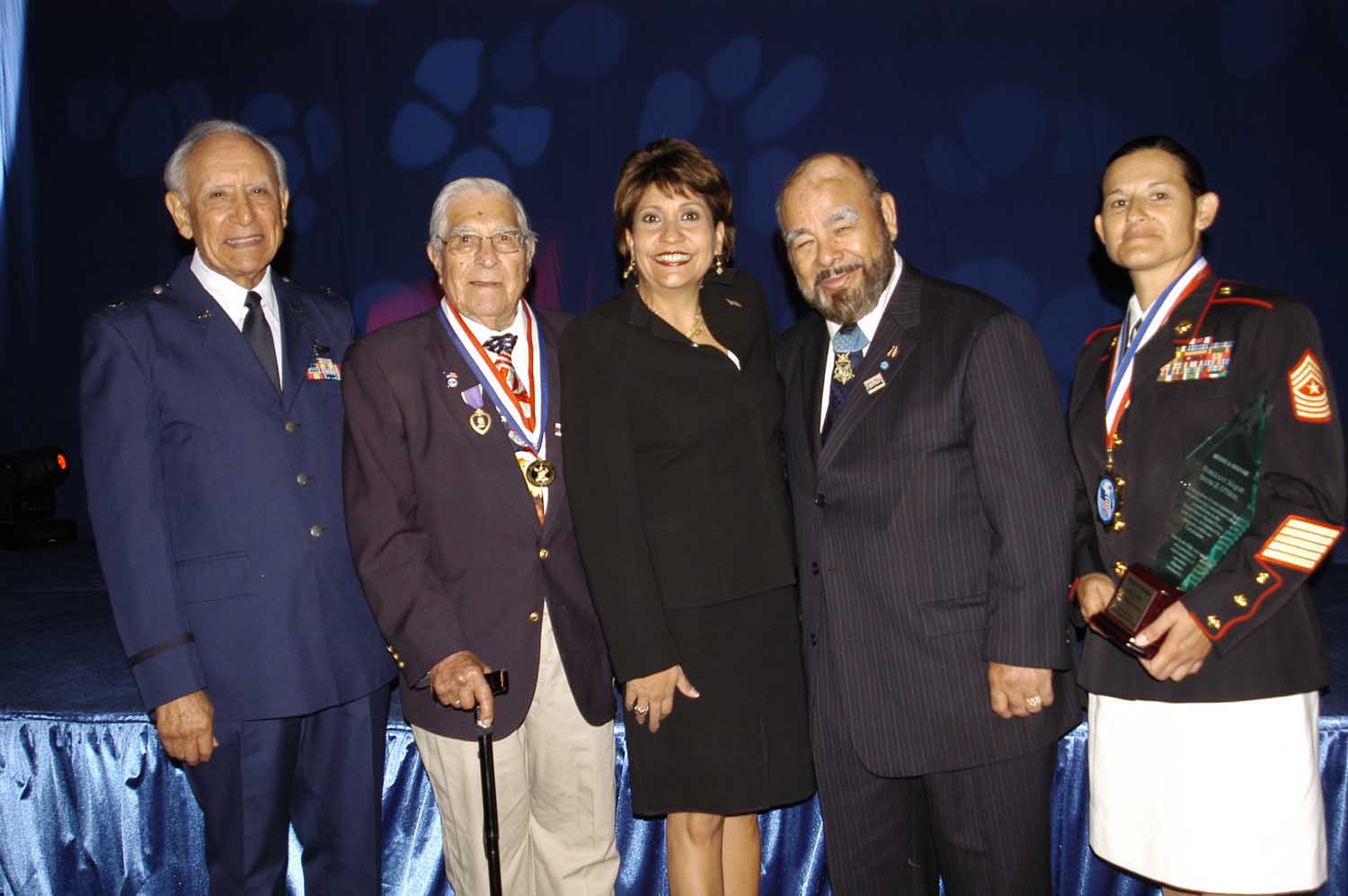
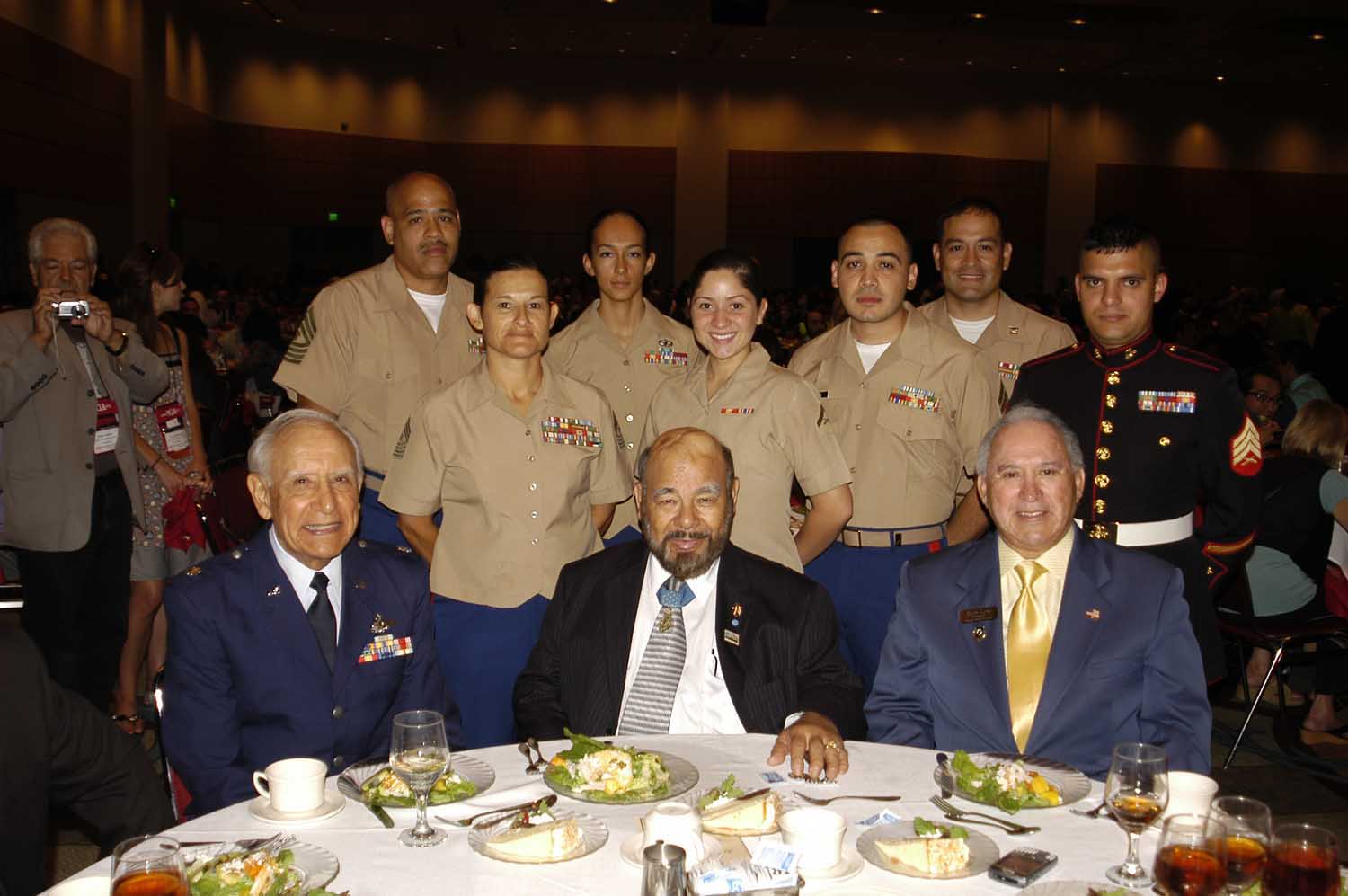
 On July 25, 1996 my father Hector P. Garcia died.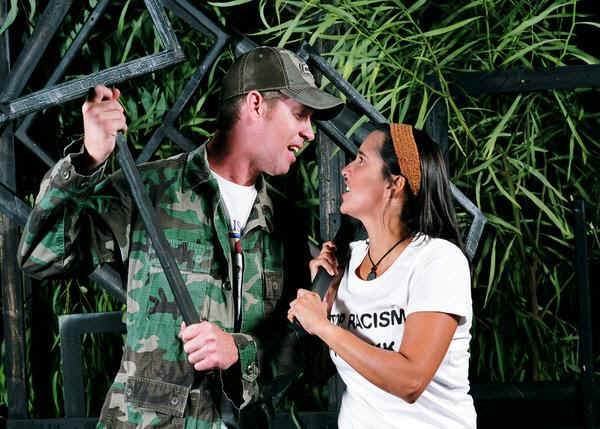
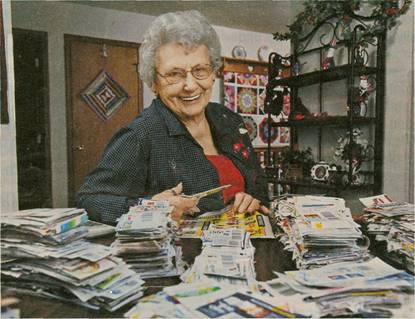

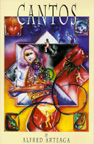





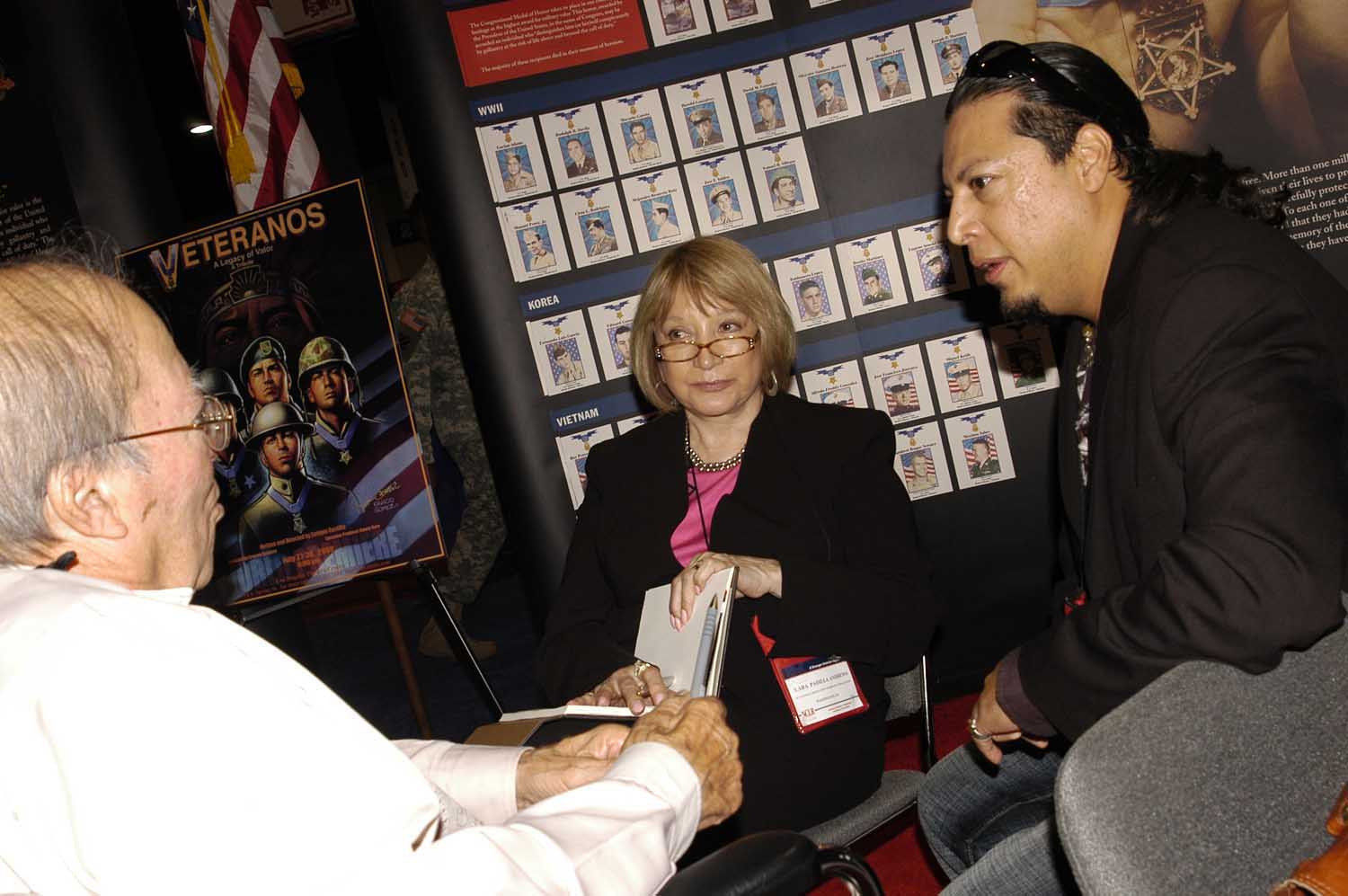
 For information, contact:


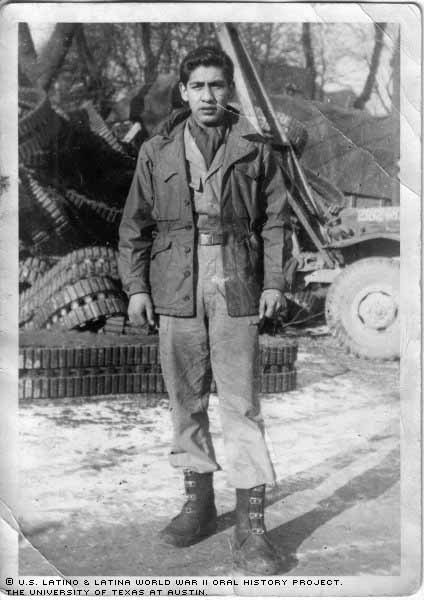 Date of Birth:
01-09-1925
Date of Birth:
01-09-1925 
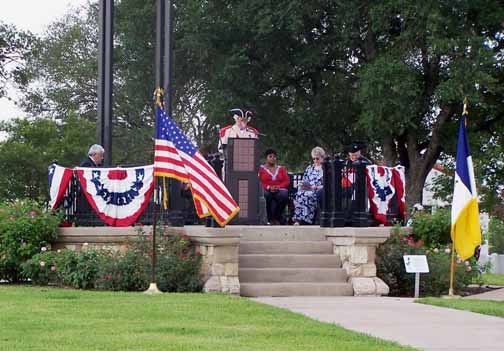
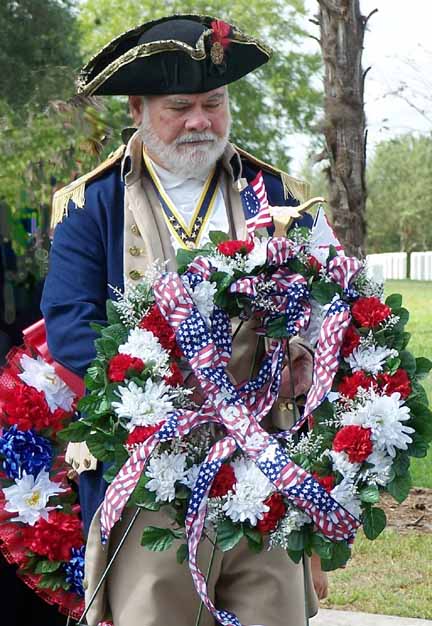 The
mission of the organization is to help inform the public about
The
mission of the organization is to help inform the public about 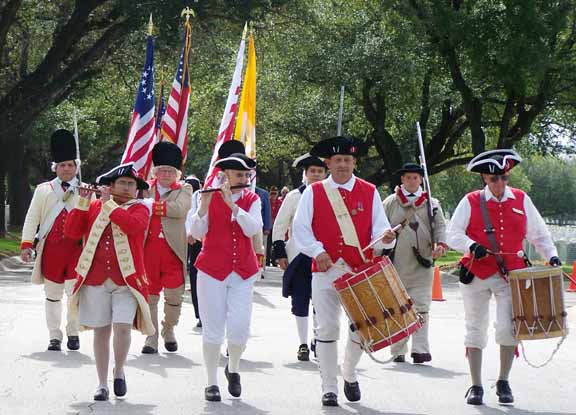
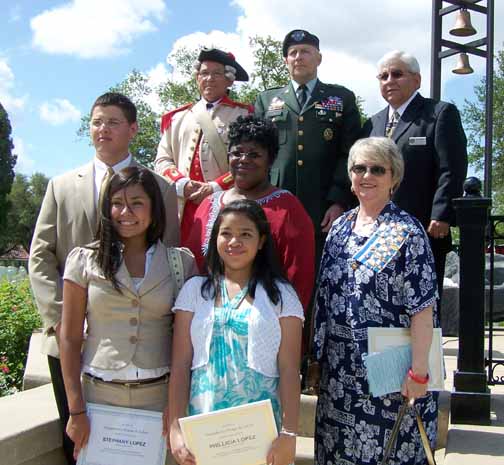 In the ceremony’s keynote speech, Lieutenant
General Thomas R. Turner, Commanding General US Army North, noted that,
“In February 1776, John Adams had written two tasks to accomplish in his
march to freedom: to form alliances with France and Spain, and to work on a
Declaration of Independence.”
In the ceremony’s keynote speech, Lieutenant
General Thomas R. Turner, Commanding General US Army North, noted that,
“In February 1776, John Adams had written two tasks to accomplish in his
march to freedom: to form alliances with France and Spain, and to work on a
Declaration of Independence.”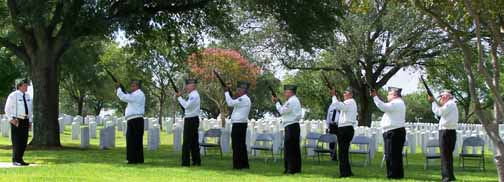 The
Ft. Sam Houston Military Services Detachment then fired three volleys to
salute our nation, our founding patriots, and all military men and women who
have served in defense of our nation.
The
Ft. Sam Houston Military Services Detachment then fired three volleys to
salute our nation, our founding patriots, and all military men and women who
have served in defense of our nation.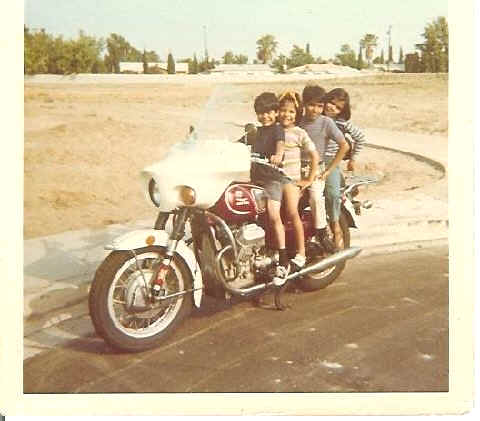 The
children here in 1973 in order of age, youngest in the front on my motorcycle, in Anaheim,
California. Their mom, Rosa and I had just barely gotten married at that time.
The
children here in 1973 in order of age, youngest in the front on my motorcycle, in Anaheim,
California. Their mom, Rosa and I had just barely gotten married at that time.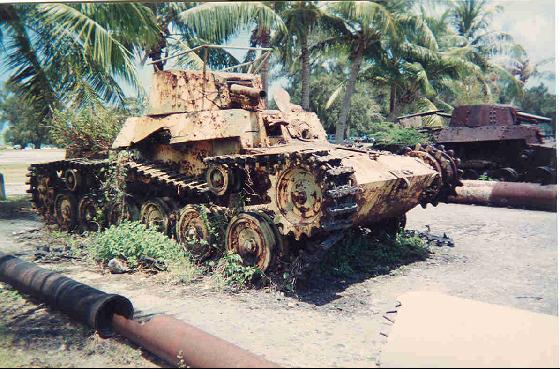
 Guy gave me his book titled SAIPAN SUICIDE ISLAND and he autographed it for me for my father when I saw him in the Saipan Airport working on his airplane. I send the book to my father to read.
 A
special thanks to our Vice-President
A
special thanks to our Vice-President 

 195th anniversary ceremony for Battle of Medina