|
|
|
|
|
Dedicated to Hispanic Heritage and Diversity Issues |
|
Content Areas United States- - 3 Orange Co, CA- -15 Los Angeles, CA- -16 California - -19 Northwestern US- -25 Southwestern US- -25 Texas- -31 East of Mississippi 53 Mexico- -56 Caribbean/Cuba- -78 International 79 History- -81 Miscellaneous- -88 2002 Index Community Calendars Networking SHHAR Meeting Jan26 |
|
| Migrantes
Mexicanos por el Cambio MimeXca Centers are being established across the nation to serve Mexican migrants by offering programs and services to help in adjusting to living in the United States. The newest center is at 1615 Broadway, Santa Ana, California. |
| By
paying a $29 annual fee, MimeXca members will have access to
diverse services, including: Immigration> Low-cost lawyer consultation Financial>Bank debit card, money wiring, life insurance Health> Reduced costs, 20-60% for medical, eye-care dental services, and prescriptions drugs through affiliation with service providers. 24-hour medical consultation with a certified nurse. Classes> Citizenship classes, focusing on what it means - the responsibilities , how to obtain a driver's license, survival English skills, public education, laws and how to open a business.
|
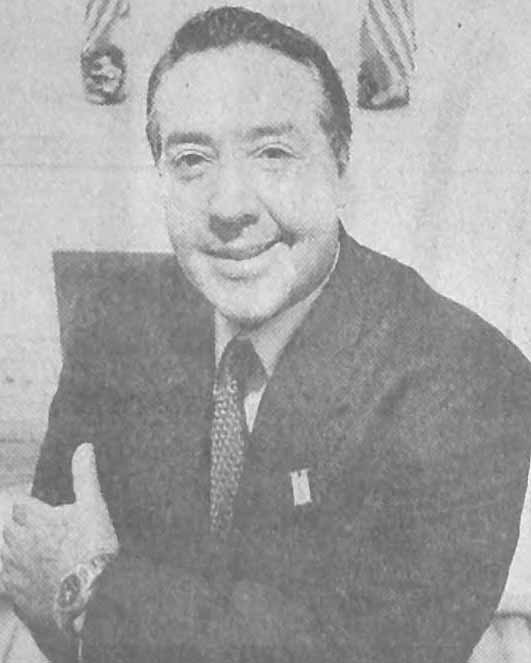 |
Carlos Olamendi, is one
of three businessmen investing in the Santa Ana MimeXca.
Olamendi, a Mexican
native and successful Laguna Niguel restaurateur, has been active in politics in
the United States and Mexico for many years. MimeXca was founded in 1999 and lobbied for changes on both
sides of the border. The group, which has more than 300,000
members in California, made headlines for supporting Vicente Fox in his
successful bid for Mexico's presidency. Members are also in
Arizona, Texas, and Illinois. Source: Minerva Canto, O.C. Register, 12-1-01 and phone interview with Carlos Olamendi. Extract of photo by Daniel A. Anderson |
|
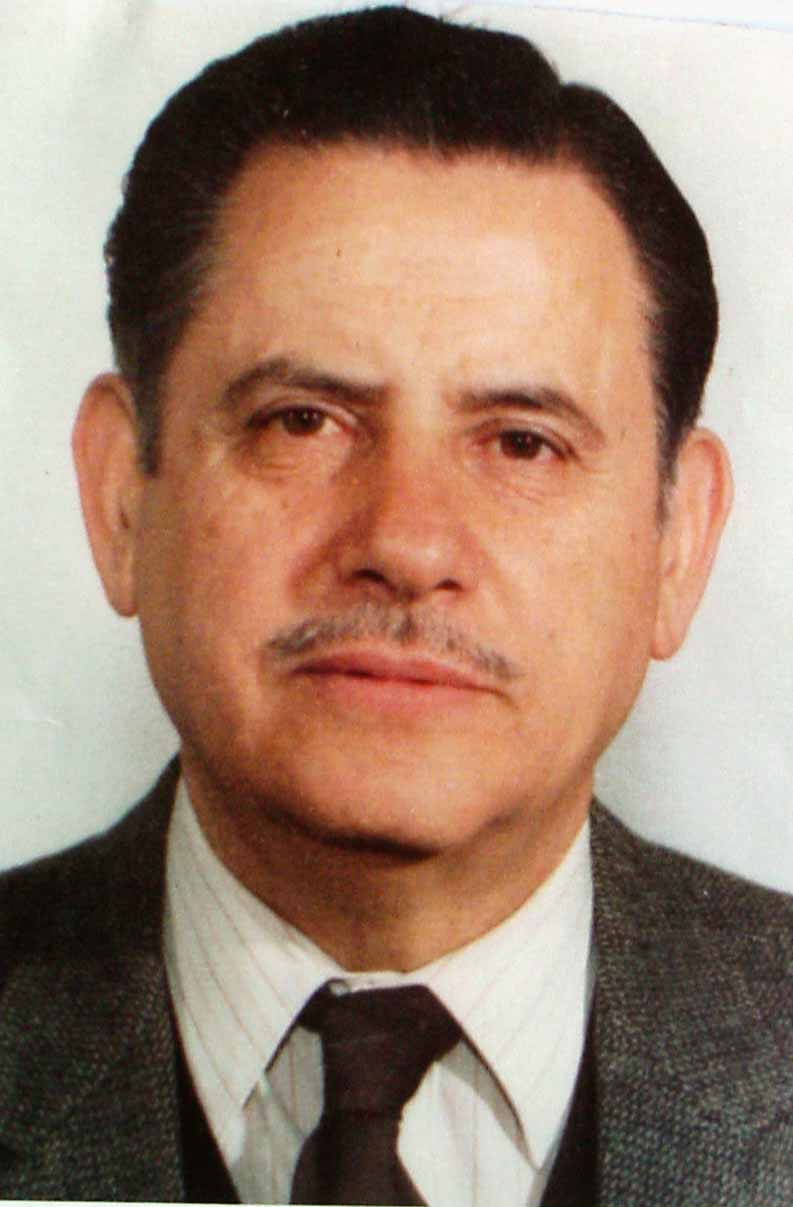
Carlos Olamendi |
|
|
|
Somos
Primos Staff |
George R. Gause Mary Garcia Eddie Grijalva Jim Hardy Walter Herbeck Bertha Hernandez Lorraine Hernandez Zeke Hernandez Dr. Granville & N.C. Hough Alex King Adriana Lopez Dr. S. Raymond Mireles Opheliz Marquez Mary Lou Montagna |
Maria de la Luz Montejano Hilton Lic. Jose Luis Moreno Martinez Daniel A. Olivas Jo Pacheco Guillermo Padilla Origel Alfredo Pavon Art Pedroza Don Pusch Erasmus Riojas Benicio Samuel Sanchez Garcia Maricela Shayegan Howard Shorr Lic. Augusto Vallejo de Villa Lic. Alfredo Villegas Galvan |
| Mother Theresa Statistics Glaucoma Leading Cause of Blindness Television News Coverage Reduced American Family, TV series Latino cast Hispanic Magazine Patriots Contest Winners American Latino magazine Matricula Consulare, or Mexican ID card Mexican Flower Growers |
Antique Historical Documents Availability of Birth Records U.S. Library of Congress NARA Suitland Records Damaged Dawes Roll Franklin Delano Roosevelt, a Hispanic? Bilingual Toys National Genealogical Society Your Guide to the Family History Library |
| A Poem by Mother
Theresa to bring in the New Year
People are often unreasonable, illogical, and self centered; Forgive them anyway. If you are kind, people may accuse you of selfish, ulterior motives. Be kind anyway. If you are successful, you will win some false friends and some true enemies; Succeed anyway. If you are honest and frank, people may cheat you; Be honest and frank anyway. What you spend years building, someone could destroy overnight; Build anyway. If you find serenity and happiness, they may be jealous; Be happy anyway. The good you do today, people will often forget tomorrow; Do good anyway. Give the world the best you have, and it may never be enough; Give the world the best you have anyway. You see in the final analysis, it is between you and God; It was never between you and them. |
|
| Women-owned firms,
by
2002, more than a third of all women-owned firms in California will be
owned by women of color, nearly twice the national average. California has
the greatest number of both Latino and Asian and Pacific Islander
women-owned firms. L.A. Times, 12-18-01 |
|
| Fifth largest Spanish speaking
country in the world is the United States, only behind Mexico, Colombia, Spain, and Argentina, with
28 million Spanish speakers, according to data from the U.S. 2000 Census
published last week. Source: Emily Robinson LatinoLibrary.comeNews |
|
| Glaucoma
is the Leading Cause of Blindness Among Hispanics Undetected cases of glaucoma are so prevalent among Hispanics that the disease has become the leading cause of blindness among people of Mexican descent, a university study released Monday found. READ MORE: http://www.hispaniconline.com |
|
| Television News Coverage
Shortchanges Latinos "Network Brownout 2001" is a shocker. The recently released report found stories about Latinos on evening network newscasts declined from 1.3 percent to 0.53 percent of the stories aired. READ MORE: http://www.hispaniconline.com/a&e/index.html |
|
| PBS PRESENTS “AMERICAN
FAMILY,”
FIRST DRAMA SERIES ON TELEVISION FEATURING A LATINO CAST,
PREMIERING JANUARY 23, 2002 AT 8 PM AMERICAN FAMILY, the first drama series ever to air on broadcast television featuring a Latino cast, and the first original primetime American episodic drama on PBS in decades, will premiere on Wednesday, January 23, 2002 at 8 p.m., with the first episode entitled “American Family,” followed by another episode on Thursday, January 24, at 8 p.m. (Check local listings.)
AMERICAN FAMILY reveals the enduring strength of family in America today as it chronicles the lives of the Gonzalez’s, residents of East Los Angeles. Jess Gonzalez (Edward James Olmos), the conservative patriarch, and his daughter Nina Gonzalez (Constance Marie), a feminist attorney, are constantly at odds with each other. Nina has moved back home following a family tragedy. She must make the difficult choice between her dreams of a career in Washington, D.C., or staying home to help raise Pablito, her brother Esteban’s son. Esteban (Esai Morales) struggles to rebuild his life after serving time in prison. Flamboyant Aunt Dora (Raquel Welch) lives next door and adds some spice to everyone’s life. All the while, Cisco Gonzalez (A.J. Lamas), the youngest sibling, secretly videotapes the family’s antics and posts the “family drama” on his Web site. |
|
|
"History
isn't just about the past. |
A suggestion for saving a DNA sample for everyone in the family: Store the nail clippings and hair strand samples, for each person, in separate sealed containers. Store in a safe place. |
| Hispanic Magazine Hispanic
American Patriot Contest Winner Retired
Command Sergeant Major Roberto S. Rivera |
|
| From The Editor of
American Latino Dear Readers, In the coming days and weeks, the people who brought you PoliticoMagazine.com will be transforming this website to feature a wider variety of Latino news coverage. While we still intend to closely track the critically important developments in U.S. Latino politics, AmericanLatino.net will also become your source for news about trends in business, education, arts and entertainment, sports, culture, style and more. And in 2002 we will be developing a national, monthly magazine, also called American Latino. We have chosen the name American Latino because we believe it helps defines a milestone in the advancement and status of Latinos in the United States. The Latino communities in this nation are vibrant and diverse. Yet despite our diversity we also share a common cultural insight that has been shaped in large part by the blending of our Latin and indigenous origins and the influences on our lives as Americans. The flaws of our society notwithstanding, there is something uniquely venerable about being an American. Explaining the essence of our national spirit is not always easy, but few can deny that we have seen it in action in the wake of the Sept. 11 terrorist attacks. Over the centuries, a vast array of people and cultures have helped shape the verve and resiliency of American society. And within that array have been our nation's Latino communities. What is new today is not only the growing sense of empowerment among the nation's Latinos, but a force of spirit that is uniting us -- Mexican Americans, Cuban Americans, Puerto Ricans, and a multitude of native and immigrant Latino communities -- into a distinctly American subculture. This publication will document this unifying spirit and help articulate the vision of the "American Latino" community. Respectfully, James E. Garcia, Editor and Publisher www.AmericanLatino.net |
|
| Críticas
Críticas is the authoritative one-stop source for identifying the best new adult and children's titles from the entire Spanish-language publishing world. Written in English, Críticas gives librarians and booksellers the information they need to stock their shelves and build their collections. Teachers will find it a useful resource for identifying materials for their students. Rights agents and authors will find Críticas a key source for learning about trends and discovering properties in Spanish-language publishing. Adriana Lopez adlopez@cahners.com |
|
| Matricula Consulare, or Mexican ID
card
In an effort to ease the hassle of being a Mexican immigrant in The City, San Francisco became the first city Tuesday to issue the matricula consulare, or Mexican ID card. Mexican immigrants who have been here for at least six months are eligible for the cards, which will allow them to apply for bank loans and open checking accounts, as well as provide identification when asked to by local law enforcement agencies. Sharon Rummery, Immigration and Naturalization Service spokeswoman, said the Mexican identity card will not immunize anyone from being kicked out of the country. "If a person is out of status holding a matricula consulare, it wouldn't prevent them from being removed by the INS." Extracts from article by Nina Wu nwu@sfexaminer.com December 5, 2001 Sent by Zeke Hernandez ************** Hundreds of immigrants braved a rainy five-hour line outside the Mexican Consulate yesterday to take advantage of San Francisco's new policy of requiring all city agencies to accept consular ID cards as legal identification. The ID card is issued by the consulate to any Mexican who produces a birth certificate and proof of local residence. The consular ID cards have long been available at Mexican consulates throughout the United States, but . .now the San Francisco police, hospitals, schools and other public agencies must recognize them as valid ID. With the consular card, which carries a photograph, legal address, birthplace and signature, individuals card carriers will help him open a bank account, get a driver's license, and medical insurance. Extracts from article by Carol Ness, San Francisco Chronicle Staff Writer Thursday, December 6, 2001 E-mail Carol Ness at cness@sfchronicle.com
Governor Davis has not signed the
bill that would allow about 1 million immigrants to obtain a driver's
license while they wait out an Immigration and Naturalization Service
backlog that is holding up their green cards. Gov. Davis says $8 million
is needed for the technology to better secure the licensing system. |
|
| Latino
Legends in Sports New York, NY (Dec. 2001) -- Latino Legends in Sports, publisher of the award-winning on-line magazine www.latinosportslegends.com, , announced its launch of the official website of former Major League pitcher and Hall of Fame candidate, Luis Tiant www.eltiante.com named after Luis Tiant’s nickname, “El Tiante”, will not only feature his illustrious 19-year Major League career, but will showcase his new line of cigars, the “El Tiante” cigars. Cuban-born Luis Tiant was an icon when he pitched for the Boston Red Sox in the 1970s. In his 19-year career in the Major Leagues, Tiant won 229 games, struck out 2,416 batters and was a three-time All-Star for the American League. Known for his unorthodox pitching delivery and his love for cigars, Tiant is still considered a fan favorite and pitching idol to many. To find out more on Luis Tiant and other great Latino sports players, www.latinosportslegends.com. |
|
|
HISPANIC BUSINESS® magazine, Dec. 2001 How will growing U.S. Hispanic affluence change the political landscape? by Jonathan J. Higuera,
As U.S. Hispanics, collectively, have begun to join the middle class,
their political agenda has broadened and their political activism has
grown. But Hispanic political biases defy easy characterization. |
|
| Mexican Village Raises Flowers to
Stem Migration
With the help of Mexican and U.S. academics and foundations, 41 village families in El Trapiche, Mexico have tried for two years to earn at least part of their living. The association of El Trapiche Migrants in San Diego gave a portion of the $5,000 initial investment in the greenhouse. In the past, few of these club have tried to build profit-driven enterprises back home. Raul Hinojosa, who runs UCLA's North American Integration and Development Center monitors 30 such projects in the states of Zacatecas, Jalisco and Oaxaca. He is trying to identify pitfalls and develop workable models. Members of the cooperatives tend to be older than 50, nearly all are women whose husbands are working in the United States. Part of the financing for the greenhouse projects comes from the Mexican government's community development fund. The vision is to create varied industries, with jobs so that the men will not migrate to the United States. Extract from article by James F. Smith, L.A. Times, 12-3-01 |
|
| A Travel Guide to Basque
America, Families, Feasts & Festivals by Nancy Zubiri Guide to America's little-known but thriving Basque-American communities. From California to Florida, Basque communities dot the map, Zubiri provides a brief history of each community as well as a discussion of the historically prominent Basque families in each area. |
|
| Antique
Historical Documents are collected by David and Marsha Karpeles.
Their collection is believed
to be the nation's largest private holding of historical
documents. The couple say they have amassed more than a million
pages, which they store in a climate-controlled vault in Santa Barbara
and showcase in a network of small museums they have established in
cities around the country, especially "culturally starved"
cities. The Karpeles first major purchase in 1978, was a copy of the
Emancipation Proclamation. L.A. Times, 12-2-01 . |
|
Davis Halts Release of Birth and Death DataAccess: Two Web sites posted personal details on California natives for all to see. One has since removed the information.By Bettina Boxall, Times Staff Writer, December 9 2001For the last couple of years, anyone with $900 could purchase state-issued CD-ROMs listing every California birth between 1905 and 1995. Customers included government agencies, attorneys and genealogy services, groups that regularly need the information for accepted business or legal purposes. But at least two genealogy operations posted the information on the Internet. And that made it possible for anyone--free of charge--to access personal information about more than 24 million California natives: full name, county, date of birth and mother's maiden name. All someone needed was a computer and Web site browser. That has recently stirred privacy concerns and last week prompted Gov. Gray Davis to suspend the state release of birth and death indices. He acted after a recent legislative hearing highlighted the instant availability of the birth data. "Twenty-four million-plus records and it took seconds; that's all. It pops it right up," said Richard Steffen, staff director for state Sen. Jackie Speier (D-Hillsborough), who chaired the hearing. The matter touches on a question that has received increased attention since the Sept. 11 terrorist attacks: How public should certain public documents be? The birth index offers key information that would be useful to anyone interested in committing identity fraud--whether it be a petty thief or a determined terrorist. The state Department of Health Services started providing the birth and death index CD-ROMs when it transferred the information from microfiche to electronic storage in 1999. State Registrar Michael L. Rodrian said the department was then advised that under the California Public Records Act, the data had to be available to citizens in the form in which they were maintained. The fee reflected the cost of creating the CD-ROM: $900 for a complete birth index and $600 for the index of California deaths from 1940 through 1999. http://www.latimes.com/templates/misc/printstory.jsp?slug=la%2D000097865dec09 Sent by Alex King |
|
Genealogy Web site removes California birth records
SACRAMENTO, Calif. (AP) - A genealogy Web site removed an index of
California's birth records Friday after a state lawmaker raised
questions about whether the online database could lead to identity
theft. www.RootsWeb.com
officials said they were removing the database while
they discussed if there was a better way to allow people to research
their family trees and protect the privacy of those on t
|
|
|
You can order a birth or death record for any state from his site..
The Vitalsearch Company Worldwide, Inc. http://www.vitalsearch-worldwide.com/ |
|
|
United States
Library of Congress Inquiries: Head Reference and Reader Service, Mary M. Wolfskill. Email: lcweb@loc.gov Collections: The Manuscript Division holds approximately 10,000 collections ranging in size from a single item to thousands of containers. More than forty million individual items are in the division's custody. Although holdings of original manuscripts relating to the Spanish colonial empire in America are limited, the division's resources include a large number of reproductions of documents in Spain's repositories. Most of these reproductions were obtained through the Library of Congress' Foreign Copying Program started in 1905. In the early years of the program, documents were transcribed primarily by hand, but these transcripts are not included in this entry. In 1927, under a grant from Mr. John D. Rockefeller, Jr., a more comprehensive project of copying was undertaken. During the years 1927 to 1938, under the Rockefeller grant, and subsequently supported from the Wilbur Fund and the Library of Congress appropriations, 330,836 pages were received from Spain and 66,671 from México. At the commencement of the Rockefeller project, or Project A, a change in the form of copying was made: transcripts were discontinued and photostats or photofilm enlargements were substituted. Since 1935, virtually all reproductions have been made on 35mm microfilm. Overall, approximately 350,000 reproductions have been obtained
from Spain's repositories. These holdings do not represent an
entire Spanish archival series but are simply documents selected
from legajos from various secciones. In addition to
archival reproductions obtained under the auspices of the Foreign
Copying Program, the Manuscript Division also received
photographic reproductions of Spanish archival material through
the acquisition of the personal papers of individuals engaged in
various scholarly pursuits. Such collections include, among
others, the papers of: |
|
|
Fire at NARA Suitland
Facility Damages Records
On December 4, 2001 a fire of undetermined origin broke out in stack 12 at
the Washington National Records Center, a National Archives and Records
Administration (NARA) storage facility located in Suitland, Maryland. A
sprinkler system contained the fire which was brought under control within a
few minutes but not before damaging some 500 boxes of State Department and |
|
|
Dawes Rolls of Native Americans Between 1898 and 1914, the Dawes Commission had officials in Oklahoma (Indian territory) accept applications from Native Aemri9can to be include on the rolls of "the five civilized tribes" which comprised the Cherokee, Seminole, Creek, Choctaw and Chickasaw tribes. Each applicant was required to prove his or her ancestry and tribal affiliation. Documents submitted as proof are contained in the application files. Fro those with ancestors from the five tribes, these files are a rich source of genealogy data. Albout 50,000 individuals who submitted applications are now listed on the internet. They are from the Cherokee, Creek and Seminole tribes. The records of the Choctaw and Chickasaw tribes have not been entered, but will be added to the website. To search these rolls, go to the National Archives website at http://www.nara.gov./nara/nail.html Nuggets from Paradise Newsletter via The Family Tree, October/November |
|
|
Did Franklin Delano Roosevelt have Early California Hispanic Roots? President Roosevelt was the great-great-grandson of Maria Antonia Natalia Elija Carrillo. Maria Antonia, who was known as Josefa, was the daughter of the influential San Diego family of Joaquin and Maria Ignacio Carrillo. Although the governor, Jose Maria Echeandia, was interested in the 16 year old beauty, Josefa fell in love with a young American sea captain, Henry Delano Fitch. Fitch sailed into San Diego as part of a fleet of American-owned merchant ships that entered California ports. The ships carried smuggled sugar, liquor and other exotic merchandise to trade for cowhides which traders called "leather dollars." The politically powerful Echeandia was able to keep the young couple
from getting married in California. However with the help of her
cousin, Pio Pico (who would eventually become governor) Almost a year later, the couple returned to California, carrying their infant son. The governor attempted to prove that the marriage was illegal, and arrested Fitch in Monterey for abduction and other "heinous crimes." Eventually the young couple were pardoned. The couple were ordered to attend high Mass for three feast days while holding lighted candles, and to recite part of the rosary for 30 consecutive days. Fitch was also ordered to donate a 50-pound bell to the plaza church in Los Angeles. In 1840 Fitch was granted 48,000 acres of Rancho Sotoyome, at the center of what would become the town of Healdsburg in Northern California wine country. However, the couple settled in San Diego and had 10 more children. President Roosevelt was the great-great grandson of one of those children. Abstract from "A Love That Even the Governor Couldn't
Crush" by Cecilia Rasmussen Sent by Ophelia Marquez |
|
|
Defense Prisoner of War/Missing Personnel
Office DPMO United States Department of Defense This information is current as of 7/16/2000 and additional information may be available on the DPMO Internet Web Site, or war specific as follows: Cold War: http://www.dtic.mil/dpmo/pmcold/
Database contains 11848 records: (6916 distinct surnames) Sent by Johanna de Soto |
|
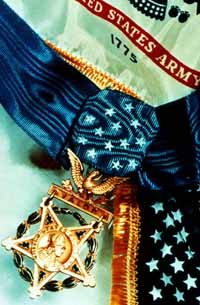
http://www.army.mil/cmh-pg/moh1.htm |
|
|
Fisher-Price Making Several of Its Toys Bilingual Because Hispanics are the fastest growing ethnic group in America, East Aurora toy maker Fisher-Price is permanently making several of its toys bilingual and plans to make more bilingual toys, such as its Sesame Street characters and Elmo. "Given the growing size of the Hispanic market, it makes sense to us to do this group of toys automatically in both languages," said Laurie Oravec, Fisher-Price spokeswoman. "What differentiates this line is that these aren't Spanish-language versions of existing toys. The toys are permanently going to be bilingual." The Hispanic population skyrocketed between 1990 and 2000 by 57.9 percent to 35.3 million, compared with an increase of 13.2 percent for the entire population. An increasing diverse pool of consumers was also why Fisher-Price made its Web site, www.fisher-price.com, bilingual last year.
Extracts from Buffalo News.
December 9, 2001
via ProQuest Information and
Learning Company
|
|
|
Other toys of color
being produced are: GC Toys released Spanish-speaking, as well as African-American, Baby Go Boom dolls. Hasbro created a Hispanic G.I. Joe, modeled after Roy Benavidez, a real-life Vietnam hero Mattel offered a Quinceanera Hispanic-themed Barbie doll. "We live in a multi-race country and there needs to be more diversity in the products that we produce," said Rick Goodwin, Chief executive officer of GC Toys. "No one is focusing on the fact that this a melting pot. It's about the kinds, and the kids are very diverse today." O.C. Register, 12-22-01 |
|
| National Genealogical
Society
Peter Carr, Ethnic Chairman for the California State Genealogical Alliance is concerned with the lack of Hispanic presence in the national conference of the National Genealogical Society, particularly because of their size and influence. tcigen@worldnet.att.net The National Genealogical Society, headquartered in Arlington, Virginia had
its beginning in 1903. With a membership over 20,000, they hold a yearly
national conference at different places throughout the United States.
Attendance is anywhere from 1,000 to 2,000 genealogists and family history |
|
| Irish - 7 Canadian - 5 German - 5 African/American or Black - 2 French/Canadian - 2 Norwegian - 2 Sweden - 2 Czech/Slovak - 1 |
English - 1 Finland/Denmark - 1 French - 1 Italian - 1 Polish - 1 Scots/Irish - 1 Scottish - 1 NO- Spain, Mexico, Central or South America |
Book: Your Guide to the Family History Library Paula Stuart Warren and James W. Warren have just released a new book entitled, "Your Guide to the Family History Library" and subtitled "How to Access the World's Largest Genealogy Resource - In Salt Lake City, In Family History Centers [and] At Home." I had a chance to read this new "how to" book this week and must say that is an excellent guide. The authors do not live in Salt Lake City. In fact, they live in Minnesota. They have written this book for the 99% of Americans who do not live within convenient driving distance of Salt Lake City. They tell how to use some of the resources of this huge library from the convenience of your own home. Then they tell how to use many more resources by driving to a local Family History Center near your home. Finally, they tell how to plan a visit to Salt Lake City, with advice for making the most of your time at the Family History Library. They even give advice on hotels, restaurants, and sightseeing attractions in the area. The following is the Table of Contents of this new book: Part One: Starting Points and Basic Information What Is The Family History Library? Basics of Family History Research Part Two: Access to the Library Collection FamilySearch Internet Genealogy Service Other Sources for Family History Library Information The Family History Library Catalog Family History Centers Going to Salt Lake City Part Three: The Records in the Family History Library Major U.S. Collections Resources for U.S. Localities Records of the World Part Four: Researching On-Site at the Family History Library The Family History Library Building Joseph Smith Memorial Building Working In The Library I Only Have A Few Hours! Group Research Trips Working With A Professional Researcher Part Five: Making the Most of Your Trip to the Beautiful Salt Lake City Area Salt Lake City Basics, A to Z Accommodations Restaurants Attractions and Services Temple Square Other Area Repositories Now What? After Your Trip The book ends with a lengthy Appendix that lists other sources of information, several pages of blank forms that you can photocopy, and a full index. "Your Guide to the Family History Library" is an easy read. The authors wrote this as a reference manual, not as a book that you read from start to finish. You can jump in at any place to learn about a particular topic of interest. One thing that I liked was a two-page checklist near the back of the book entitled, "Give Yourself A Tour." The idea is that you enter the Family History Library in Salt Lake City armed with this checklist and then seek out everything listed. Once completed, you will be very familiar with the facility. The checklist mentions such obvious things as computer workstations, locations of microfilm and microfiche cabinets and viewers, photocopy machines, the snack room area, water fountains and the restrooms. However, this checklist includes other things I never thought about. I have visited the Family History Library many times, and yet I still do not know the locations of the staplers, paper cutters and three hole punches. Anyone who follows this checklist will find them quickly. Of course, it is easy to focus on the services available in Salt Lake City. However, the authors devote a lot of space in this book to telling how to use the resources available there without ever traveling to Utah. The online databases are constantly growing, even though they do not yet contain more than a fraction of all the records available. A lot more information is available at a local Family History Center near your home. There are more than 3,400 Family History Centers worldwide. These Centers provide microfilm and microfiche access to most of the resources in Salt Lake City although certainly those resources are not as easy to obtain remotely. The Warrens describe the remote services available in some detail. "Your Guide to the Family History Library" is an excellent book for anyone beginning his or her family tree research. In fact, some of us old-timers can learn a lot from this 258-page paperback as well. "Your Guide to the Family History Library" by Paula Stuart Warren & James W. Warren is published by Betterway Books, the parent company of FamilyTree Magazine. It has a list price of $19.99 (U.S. funds) and is available from most any bookstore if you specify ISBN 1-55870-578-3. You can also safely order it online from FamilyTree Magazine's secure online Web site at: http://www.familytreemagazine.com/store/display.asp?id=70513 Sent by Lorraine Hernandez lmherdz@aol.com |
|
| Alfredo
Pavon, Mexican Artist Bayadera |
SHHAR Quarterly Meeting, Jan 26
|
|
Alfredo Pavon |
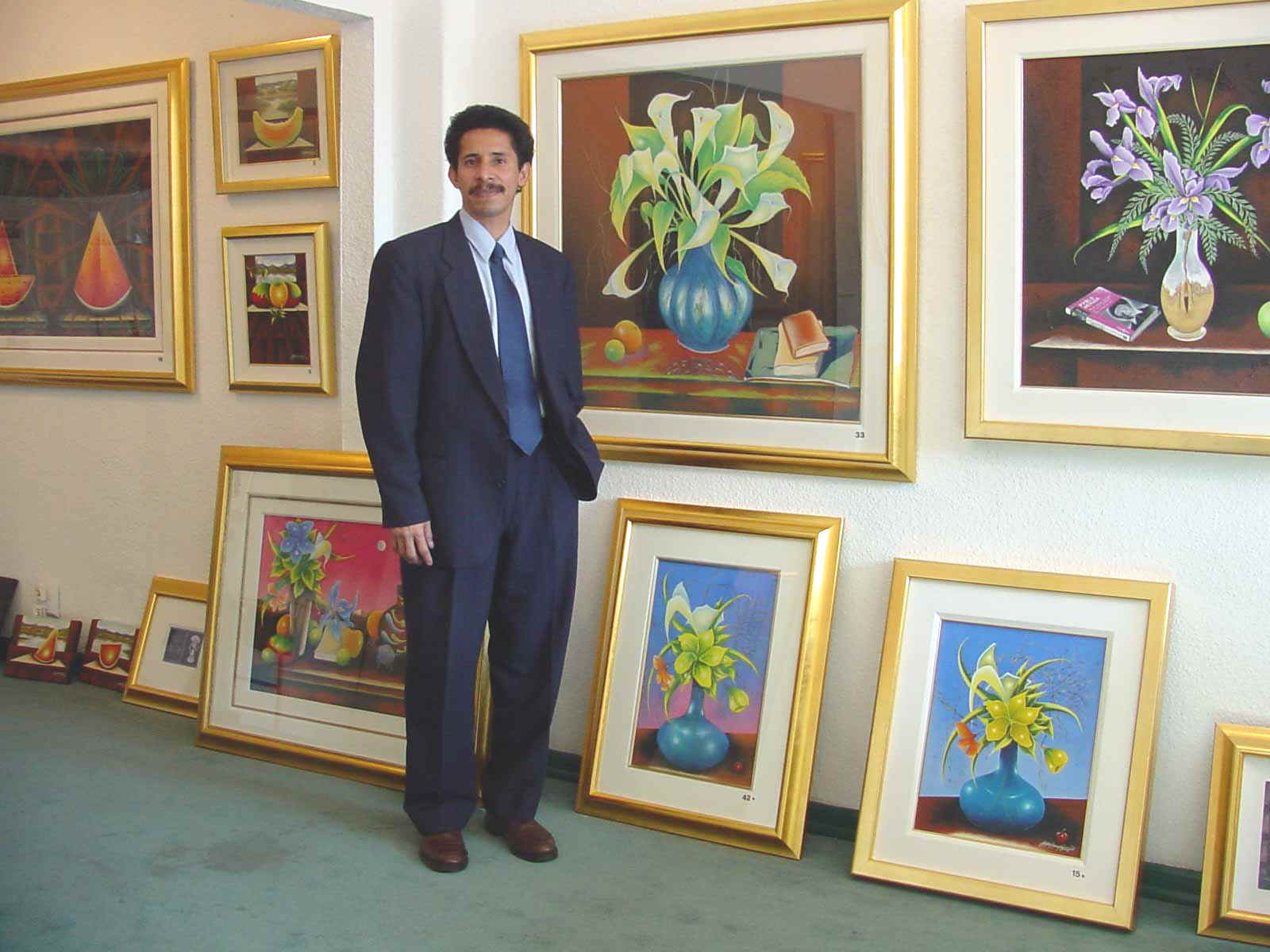 |
| Mexican artist, Jose Alfredo
Pavon Hipolito stands among some of his works in his Santa Ana,
California studio. Born in the city of Coatzacoalcos, Veracruz, Mexico,
December 14, 1961, the young Pavon's work has been compared to
Diego Rivera, Rufino Tamayo, David Alfaro Siqueiros, and other great
Latino artists.
Bernard Lewin, known worldwide for donating the biggest collection of Latino paintings to the Los Angeles Museum of Art, commenting on one of Alfredo Pavon's mural stated, it was "a master work in color, texture, and definitely one of the most beautiful paintings I have seen during my period of an art dealer. Alfredo Pavon favors oil pastels, and has experimented using particles of sand, volcanic sand and water-oil paints with the pastels. Flowers are his favorite subject, and although the compositions have a loose, airy quality, they reflect a solid underpinning based on Pavon's degree in Civil Engineering from the National University of Mexico in Mexico city. Editor's note: |
|
SOCIETY OF
HISPANIC HISTORICAL AND ANCESTRAL RESEARCH |
|
|
| Bayadera
is an Orange County band that plays flamenco Latin jazz. Its
members reflecting the multi-ethnic character of Orange County
include two Vietnamese-Americans along with musicians from Mexico and
Iran. The music is a fusion of sounds and culture, well-received. O.C. Register, 12-23-01 |
| LOS ANGELES, CA | |
| Latino
Museum of History, Art and Culture Los Angeles County Archives All-Hispanic Community College Board 1968 Project Usted Students Discovering Roots with Mariachi |
Tataviam Huts
Cabazon Band Cabazon and Temecula Tribes Help Sioux Tía Chucha Book Store. |
| Latino
Museum of History, Art and Culture sits on property assessed in 2000 at $2
million. The Bank of America donated the property to the
Museum in 1999. The property sits in a prime downtown
location, across the street from City Hall. The city wants to purchase
the property. Dr. Juan Gomez-Quiñones, U.C.L.A. professor
and president of the museum's board of directors, expressed
reluctance to move out of the facility. Severe financial problems
have plagued the Museum. It hasn't staged any shows, employed an
staffers or maintained any regular business hours at its downtown Los
Angeles exhibition space for more than a year. L.A. Times, 12-4-01 |
| Los
Angeles County Archives More than 7 million documents are housed
in 82,000 square feet of storage space. On one floor alone, there
are 110,000 boxes of files. About 18 million pages of court
documents are copied onto 6,000 reels of microfilm each year.
Every month, clerks make as many 80.000 copies - at 57 cents a page. L.A. Times, 12-21-01 |
| All-Hispanic
Community College Board December 12, Michelle Yanez and Andre Quintero were swore in on the Rio
Hondo Community College Board. This was a historical event - first
all-Hispanic
Community College Board in the state of California. Sent by Anthony Garcia |
| 1968
Project Usted, Educational
Revolution, Title III Are Barrio students retarded or disadvantaged if they can't comprehend what the system has to teach them? Or is the system itself at fault? asked Diane Lucero. According to S. Raymond Mireles, professor of zoology and director of Project Usted, whoever is at fault, it is the students who suffers. Mireles, through the use of federal funds issued under Title III of the Higher Education Act, Public Law 89-329, 1965, initiated an innovative student-help program for Spanish-speaking Barrio student. The project begun in 1968. According to Mireles, Project Usted was the only program of its kind in the United States, and was designed not only to cure learning difficulties, but to find their causes, especially among Chicano students. Project Usted had a two-part focus: Learning styles, Culture attitudes related to the learning situation Specifically, a tape-reinforcement program was developed. The tapes included actual class lectures on one side as given by the instructor, and an outline of the lecture in English and Spanish, with emphasis on the Spanish, on the other side. Accompanying each tape was a film strip, usually in cartoon-type drawings, visually illustrating the lecture on the tape cassettes. Students were able to check the tapes out of the library and share them with their family. Although the tape-reinforcement system was an important tool in helping Spanish-speaking Barrio students, attitude was considered of equal importance. "Some Chicano students lack confidence in themselves in a learning situation. They have been involved in too many failures to be easily convinced that they are going to succeed now," explained Mireles. Psychology 24 (Mexican-American Studies) was offered as a self-confidence and self-image developing course. "Before we can accomplish anything in life we must learn to like ourselves and each other," Mireles emphasized. Extract
from January 1974 article written by Diane Lucero in the Evening Elan,
the official publication of the East Los Angeles College associated student
body. Shared by S. Raymond Mireles. |
| Students
Discovering Roots with Mariachi
Two years ago the Oxnard Union High School District what has become a thriving mariachi program, joining a growing list of school-based ensembles that have sprung up around the state in recent years. More than 100 students are enrolled in mariachi classes available at Hueneme, Channel Islands and Oxnard high schools. They say youngsters learn more than a collection of Mexican folk songs. They learn who they are and where they come from. And Often where they are going. "I didn't know much about my culture and I wanted to find out more about my roots," said Oxford-born teenager, Jasmine Andrade. "Every time I hear the music, it's like it's calling me," she said. School board trustee Bob Valles proposed
the school mariachi program after watching groups from other areas
perform at a school conference. "I think mariachi is a way of
cultivating some of the talent we have on campus." . .
"The program helps connect Spanish-speaking students to
school and helps English-Speaking Latinos find their roots." |
| Tataviam Huts Student have turned back time in a corner of North Hollywood High School by building three Native American huts, replicas of those found in Tataviam villages that dotted the San Fernando and Santa Clairta valleys more than 1,500 years ago. "Something like this keeps the tribe's heritage alive and known," said Rudy Ortega, 26, vice president of the tribal board. "A lot of people think the Tataviam have vanished. This shows we're still around." The Tataviam settled in the area in A.D. 450, coexisting with neighboring Chumash and Tongva tribes. About 6,000 descendants lived in Southern California today, Ortega said. L.A. Times, 12-1-01 |
| Cabazon
Band: brother of tribe's chief executive indicted on embezzling charges By LOUINN LOTA Associated Press Writer, Nov. 30, 2001 LOS ANGELES (AP) - A federal grand jury indicted the brother of the Cabazon Band of Mission Indians chief executive officer Friday for allegedly embezzling more than $500,000 from the Coachella Valley tribe. Although reservations are considered sovereign nations, the United States. government may prosecute crimes on reservation property, said U.S. attorney spokesman Thom Mrozek.
http://www.sacbee.com/state_wire/story/1247013p-1315495c.html
The Sacramento Bee |
| Cabazon
and Temecula Tribes are leading an effort to collect donations
for the Santee Sioux tribe in Nebraska, which had it s assets seized by
the government in a fight over gambling. The 2,500-membert Santee Sioux
opened a casino in 1996 despite failure to reach a federally mandated
gambling compact with Nebraska. The tribe was found in contempt of
court in February 1999 and ordered to pay a $3,000 daily fines, later
raised to $6,000. Associated Press via O.C. Register 12-18-01 |
| Tía
Chucha Book Store. Author of the award-winning memoir, "Always Running," and latest book, "Heart and Hands," Luis Rodriguez is ready stand still and "get smart with heart". With a $30,000 grant from the Liberty Hill Foundation, as well as private donations and proceeds from a benefit auction at the Border Book Festival in New Mexico, Luis and his wife Trina, a former newspaper editor, have opened a bookstore in Sylmar, California. Named after a creative aunt, Tía Chucha will mainly serve as a creative outlet for local artists as well as a learning lab for young people who want to develop their talents. Tía Chucha will be a combination
bookstore, art gallery, performance space, computer center and café
(where patrons can drink coffees and refreshments with a Latin twist. |
| CALIFORNIA | |
| Hispanic
Births An 1800 Comment on Education in California Educational Order 13230 Martinez History Center California Pioneer Spanish-Mexican Families of Early California |
Golden Land of Promise First Expedition into California, 1769-1770 What's New in California Pages California Stagecoach Driver Women and Power in Alta California: 1790-1835 Hispanic Soldiers in California |
|
|
|
Study finds Hispanic births make up about half in state Exttacts of article by Robert Jablon Associated Press via San Jose Mercury News, 12-19-01 LOS ANGELES -- In another sign that Hispanics will dominate California's future, a university study has found that the ethnic group accounted for nearly half of all births in the state by the end of the last decade. Hispanic mothers had 247,796 of the 521,265 children born in California in 1998, or 47.5 percent, according to the University of California-Los Angeles study scheduled to be formally released today. The center's study, based on state health department statistics, confirms the ethnic shift that made 2001 the year that California officially lost its white majority. The U.S. Census showed Hispanics made up nearly a third while non-Hispanic whites slipped to less than half of the state's total population of 33.9 million. ``There's a Latinization of America, but there's also an Americanization of Latinos,'' he said. ``By third generation, a lot of them are losing their Spanish; they prefer American NFL to soccer.'' The babies generally were as healthy as others, based on birth weight and mortality statistics, even though Hispanic mothers are less likely than others to receive prenatal care in the first trimester. ``In spite of low income, low education and low access to care, Latino babies have a healthy profile,'' Hayes-Bautista said. It is unclear why, he said, but other studies have shown that ``in general, Latinas tend to smoke less, drink less, do drugs less -- immigrants, especially.'' The babies tend to grow up healthy as well. Studies have shown that at virtually all stages of life, Hispanics -- at least in California, Arizona and Texas -- tended to suffer fewer major health problems such as heart attacks, cancer and strokes than other ethnic groups, Hayes- Bautista noted. Sent by Art Pedroza, Jr. apedroza@earthlink.net |
Stilled
Voices in America's Education System by Clara
Mercedes Piloto
|
| President Bush's new
Educational Order (13230) focuses on parent and
community involvement in the education of Hispanic American children. The President Executive Order 13230 of October 12, 2001. President's Advisory Commission on Educational Excellence for Hispanic Americans. By the authority vested in me as President by the Constitution and the laws of the United States of America, and in order to advance the development of human potential, strengthen the Nation's capacity to provide high quality education, and increase opportunities for Hispanic Americans to participate in and benefit from Federal education programs, it is hereby ordered as follows: For more information please contact, zekeher@juno.com
or LULAC147InfoNet@yahoogroups.com |
| THE
MARTINEZ HISTORY CENTER
The History Center, 610 Main Street, Martinez, California now has the Naturalization Records for people who became naturalized citizens while living in Contra Costa County between 1852 and 1988. If your ancestor came here and became a citizen we will almost certainly have the records. [Only a tiny percentage may be missing!] The charge to copy everything pertaining to a single name is $10 if you e-mail the request and we mail you the copies[postage included]. If you come into the center and do your own record retrieval the cost will only be $7.50. The copied records will include having any pretty 'framable' pages copied on pretty 'framable' special paper. The pages will be mailed flat to you. To our knowledge these are not available anywhere else. Drop us an e-mail with your request, give us a week or two to get them off to you. If for some rare reason we don't have the record we'll let you know before you send any $. The records begin in 1852 and end in 1988. After 1988 all Naturalizations were confirmed in the Federal district court. e-mail to: cchistry@ix.netcom.com We have thousands of original primary source documents, plan to spend a day in the archives digging up a few ancestors. No charge to members for research time and membership is only $20 for a whole year! The archives are open Tues - Wed - Thurs of each week 9 am to 4 pm and the 1st Sat of each month, 9 am to 3 pm. Phone ahead to make sure our volunteers aren't malingering with the flu or something, [925] 229-1042. |
| California
Pioneers http://www.ancestry.com/search/rectype/inddbs/1040.htm This compilation was extracted from the monumental seven-volume History of California by Hubert Bancroft. The information extracted was done with the genealogist in mind and includes lists of inhabitants, lists of pioneers, and a pioneer register. The first section is a list of all male inhabitants from 1769 through 1800 and the number following the name refers to the following dates (1) 1769-1773, (2) 1774-1780, (3) 1781-1790, and (4) 1791-1800. The second section is a list of pioneers with the date they arrived in the territory following the name. In the last section, biographies are given of selected settlers to the area. With such a wealth of information, this database is a must see for researching a California ancestor. Source Information: |
| Spanish-Mexican Families of Early California
1769-1850 I have just recently purchased a pair of books that I think are an invaluable tool to anyone who is doing research into their early California Heritage, they are "Marie Northrop's Vol 1&2 of 'Spanish-Mexican Families of Early California 1769-1850", I have found that they can be purchased from the publisher, the particulars for such is; Southern California Genealogical Society and Family Research Library, 417 Irving Drive, Burbank CA. 91504, phone# 818-843-7247, e-mail scgs@earthlink.net , the books are sold only as a pair and cost $55 +s&h+tax. they have a web site at www.scgsgenealogy.com . As I mentioned earlier I think these books are an INVALUABLE TOOL for anyone doing early California family research, there is no stories in the books, only facts, names, places of birth and baptisms, children of the most prominent names, and spousal information. Sent by Jim Hardy |
|
California: This Golden
Land of Promise, a new book by Joan Irvine Smith and Jean
Stern An exploration of the history of California from 1453, including the largest collection of pictures on this topic every published. For information: (949) 824-4651 or email fletcher@uci.edu |
| First Expedition
into California, 1769-1770, A
Description of Distant roads: Original Journals by Juan Crespi., Edited and translated by
Alan K. Brown. San Diego State University Press, 2002
This work makes available fort the first
time the complete journals of Juan Crespi, the Franciscan friar who
accompanied the first expeditions that esta blished Spanish presence in
Alta California. Beginning at the northern edge of the mission
frontier of Baja California, the 12769 expedition trekked overland some
three hundred miles to establish San Diego. From there, Crespi and
the contingent of military personnel and Indian auxiliaries traveled northward
on to Monterey and back again. Crespi's journals provide the first
detailed observations about the new land of Alta California and its
peoples. This book is an essential source for the history of
Spanish occupation of Alta California and the native American inhabiting
the land. |
| What's New in California
Pages http://www.vitalsearch-ca.com/ http://www.vitalsearch-ca.com/gen/ca/whatsnew.htm This is just a very small sampling, do look at it.:
http://www.vitalsearch-ca.com/ Sent by Johanna de Soto |
| California
Stagecoach Driver, Charlie Parkhurst Stagecoach drivers were colorful men, and the fame of many of them has persisted through the years. Three of these "knights of the reign" who handled four or six horses at breakneck speed from the box of a careening top-heavy vehicle over mountains and deserts and calmly chewed tobacco and told stories at the same time were: "Hank" Monk, "Baldy Hamilton, and "Uncle" Billy Mayhew. These men were employed mostly by Wells, Fargo and Company and their exploits were mostly in the High Sierra region. But the Royal Highway had a stage driver to rank with any of them, who, like any specialist in the field, considered his employment, not a job, but a fine art. His name was Charlie Parkhurst. There are accounts in print that call this driver "Cockeyed" Charlie and insist that he wore a black patch over his bad eye. Some say the eye was missing entirely. Regardless of his ocular limitations, Charlie Parkhurst was admittedly the finest and fastest stagecoach driver along the Royal Highway. His section of the road was the Salinas Valley and the area as far north of the valley as Santa Cruz on the Bay of Monterey and San Jose farther inland. Still. unquestionably at times he must have visited San Francisco and probably Los Angeles. Besides the character of the faulty or missing eye, Charlie was known for his unceasing stream of profanity and a similar, but periodic, stream of tobacco juice. He could put away quantities of whiskey with the heaviest of drinkers, and apart from admitting that he had come to California from the East in 1848, he refused to talk of his past. Finally Charlie slowed down, not only in his stagecoach pace but in his reactions and reflexes. He retired from driving and opened a little bar and halfway house where he could watch the other drivers come and go. In 1879 Charlie went to bed one night and never woke up. And only then, after his death, was it discovered that Charlie was a woman! She was born Charlotte Parkhurst, in about 1810, in New Hampshire, and as "Charlie" she had voted in an election in Santa Cruz, California in 1866- being the first female to cast a ballot along the Royal Highway some fifty years before woman suffrage went into effect. There are a lot of people in Santa Cruz who do not know this claim to distinction on the part of their city. Quoted by Jim Hardy from: " The ROYAL HIGHWAY " |
Women and Power in Alta California: 1790-1835 By Kathy Hugharthttp://history.acusd.edu/gen/projects/women/1Title.html |
|
Hispanic Soldiers in California
http://freepages.history.rootsweb.com/~havnar/ca-hispanic.html
This is a great resource, the names of the soldiers and the source of
the information. Having lived in California most of my life , it
is fun to read through the surnames and recall people that are carrying
those names, descendants of the Hispanic families in California as early
as the 1770. |
| U.S.
Basque Oral History Project - Oroitzapenak (Memories) The Basque oral history project can be seen on the web at http://basque.unr.edu/oralhistory/ The site now contains seventeen interviews highlighting the life stories of Mary Micheo Abbott, Mary Aguirre, Irene Arbeloa, Mary Arla, Vicente Bilbao, Elvira Cenoz, Mary Erramouspe, Marian Etchart, Bernard Etchemendy, Richard Gabica, Ethel Hornbarger, Mary-Jean Labarry, Mary Labourde, Marie and Amelia Laca, Mary Latirigoyen, Isadore Sara, and Adelaida Viscarret. The center invites Basque researchers to share tapes or photographs with the Project - to be archived for future generations. Costs of copying the cassettes or photographs will be covered by the Center. |
| SOUTHWESTERN UNITED STATES | |
| Arizona
calendar Arizona's Electronic Atlas Arizona's Parents of the Year Mexican residents with U.S. Post Office Boxes Epidemics: Tubac Through Four Centuries |
Los
Cerrillos Mining Area San Felipe de Neri Church Tucson Presidio Colorado Family Certificates Society of American Indians |
Arizona Calendar of events > http://www.vivatucson.com/ |
ARIZONA’S ELECTRONIC ATLAS Arizona is developing a unique map-making Web site for the public that combines state and federal geographic and census data. http://www.arizonarepublic.com/arizona/articles/1207azweb07.html Mary Garcia maryr_garcia@hotmail.com |
|
Arizona's Parents of the Year Ezekiel and Pauline Sanchez have spent the last 26 years teaching their seven children - as well as thousands of others - about life, the Native American culture and Christianity. There were named as the Arizona's Parents of the Year by the American Family Coalition this fall: they are the first Native Americans to receive the honor. Ezekiel Sanchez is a Totonac Indian from Mexico. He was one of 16 children in a family of migrant workers. He started high school when he was 19 and earned an art scholarship to BYU. Sanchez has served on the American Indian Service Board and was an active member of the President's Council on Children and Youth. In 1988 Sanchez helped form the ANASAZI, a non-profit foundation best known for its treatment program for youth at risk. He continues to serve as chairman and his wife is on the advisory board. Extract from article by Jill B. Adair, Church News, week ending December 1, 2001 |
| Mexican residents with U.S. Post
Office Boxes Thousands of Tijuana residents cross the international border to check their mail. They prefer the U.S. Postal Service to the Mexican postal system, which they complain is slow and unreliable. The mail market is one sign of how border residents thread lives between the two countries. Some box holders are elderly parents awaiting checks from grown children living elsewhere in the United states. Others are Baja California businesses, from hotels to medical clinics, with U.S. customers. Still others are America retirees living in Mexico. San Ysidro, California, the working-class community of 30,000 is home to more than two dozen private mailbox services. About 26,000 postal boxes cater almost exclusively to Mexican customers. Besides the San Ysidro services, five Mexican-based firms collect mail north of the border for delivery in Baja California. Extract from an article by Ken Ellingwood, L.A. Times, 12-10-01 |
| Epidemics: Tubac Through
Four Centuries: An Historical Resume and Analysis by
Henry F. Dobyns http://www.library.arizona.edu/images/dobyns/welcome.html This is a very comprehensive site. Includes a detailed table of
contents, with easy links. |
History of the Los Cerrillos Mining Area by Homer E. MilfordThis material was originally published by the New Mexico Abandoned Mine Land BureauReports 1994 - 2 and 1996 - 1 Notes for History Section or Real de Los Cerrillos NOTE 1: Leagues . . . http://www.nazor.net/cerrillos/mines/real25.htm Cristóbal de Oñate is not on the lists of New Mexico governors published by the State of New Mexico agencies. However, for a long time there has been little doubt about his being governor from the time of his election by the Cabildo in 1608 until Governor Peralta arrived in 1610, and he has been recognized by some historians. He is entitled to a number of distinctions besides being our second governor. He was the first New Mexico governor of Native American decent. Though all colonial governors are referred to as "Royal Governors", Cristóbal was our only truly "Royal Governor". Cristóbal de Oñate is the only one that was of Royal decent and in a truly American way. He was the great-grandson of Montezuma, the last ruler of the Aztec Empire, and thus of "Royal American" decent. He was also the great-great-grandson of Cortéz. He also was New Mexico's first elected governor. Thus, if one does not consider Popé (1680-168?, 1688-168?) and Luís Tupatu (168?-1688, 168?-1693) as elected governors, then Cristóbal beats his closest rival for the title of "First Elected Governor of New Mexico" by 304 years. An argument can be made that the Viceroy did not have the right to
appoint a governor to New Mexico in 1608 when Juan resigned as even the
amended colonization agreement gave the governorship to the Oñates for
two generations. The Cabildo, citizens of New Mexico, and even the
governor the Viceroy appointed, Juan Martínez de Montoya, recognized
Cristóbal de Oñate as governor and thus he deserves to be recognized
as such by the State of New Mexico. |
San Felipe de Neri Church in Albuquerque Deaths- 1726 TO 1776http://home.earthlink.net/%7Ecarnuel/deathrec.html Taken from LDS reel number 0016645 Extracted by Jackie Garcia-Luna. Only the name of the person who is buried or died, identifying information such as age, whether child or adult, residency, ethnicity, and spouse or parents were extracted verbatim as the information appeared in the record. These are not complete records, however, but rather a combination of the information written in the margin and within each record entry. What was excluded in most entries was information such as the cause of death (unless at the hands of enemy Indians, these were included) and whether and which sacraments were received, e.g. penance, extreme unction, beatification, etc. If place of death and/or burial was in Albuquerque, this was not noted, (so assume Albuquerque if not noted) but if it took place elsewhere, e.g. Tome or la Alameda, this was noted. Please verify record by checking original entry on microfilm reel. 1726, 1727, 1728, 1729, 1730, 1731, 1732, 1733, 1734, 1735, 1736, 1737, 1738, 1739, 1740, 1741, 1742, 1743, 1744, 1745, 1746, 1747, 1748, 1749,1750, 1751, 1752, 1753, 1754, 1755, 1756, 1757, 1758, 1759, 1760, 1761, 1762, 1763, 1764, 1765, 1766, 1767, 1768, 1769, 1770, 1771, 1772, 1773, 1774, 1775, 1776 For records beyond those listed on this page, look up the name in the index of death records on LDS microfilm reel 016634 before consulting LDS 016645. The LDS microfilm reel 016645 contains death records from 1726 to 1854. The LDS microfilm reel 016634 contains an Index of Baptisms, Marriages, and Death records at the San Felipe de Neri Church in Albuquerque, but the index for the death records only covers the dates 1776 to 1854. Sent by Johanna de Soto |
| PRESIDIO OF
TUCSON,
1793 Filiation Records Juan Jose Valencia, son of Francisco [Valencia] and Loreta Hernandez, was born in Arizpe, government of Sonora. He was resident at the Real de la Cieneguilla, (corresponding to that same government,) where he worked as a miner. He was 5 feet, 3 inches and 2 lines tall, his religion Roman Catholic. He had dark chestnut hair, brown eyes, black eyebrows with to scars over the right one, aquiline nose and light beard, being of rosy tan complexion. He was 20 years old when he enlisted for eight years on June 25th 1782 in this Real. He was read the punishments stated in the ordinance, being admonished that it would be considered (his) recognized (signature) and would not be excused, he made the sign of the cross, not knowing how to sign. His enlistment was witnessed by corporal Jose Garcia and soldier Juan Barvariz, both from the same regiment. He declared to be single. This was (a) copy to the letter of his original (file) which was in the record book of this company under my command, which was certified (in the) Presidio de San Agustin del Tucson, on September 22nd 1793, (signed) Mariano de Urrea. Cosme Ogeda [Ojeda], son of Salvador [Ojeda] and Filiciana [Feliciana], was born in the Real of Batopilas, corresponding to the capital of Arizpe, where he worked as a miner. He was 5 feet, 2 inches and 5 lines tall, his religion Roman Catholic. He was of white complexion with black eyes and a fair face. He was 21 years old when he enlisted for ten years on March 4th 1788. He was read the punishments stated in the ordinance, being admonished that it would be considered (his) recognized (signature) and would not be excused, (he signed). His enlistment was witnessed by corporal Granillo and Manuel Ortega, both soldiers from this same company. This was (a) copy of his original (file) which was in the archive of this company under my command, which was certified (in the) Presidio de San Agustin del Tucson, on September 22nd 1793, (signed) Mariano de Urrea. Jose Maria Sosa, son of Manuel [Sosa] and Juana Acedo, was born in Tecori dependent of the government of Sonora and was living in this Presidio. He had no employment corresponding to this same government. He was 5 feet, 4 inches and 3 lines tall, his religion Roman Catholic. He had black hair, brown eyes, black eyebrows and sharp nose, being of light tan complexion. He was 21 years old when he enlisted without a time limit on August 13th 1770. Not knowing how to sign, he made the sign of the cross, being admonished that it would be considered (his) recognized (signature) and would not be excused. His enlistment was witnessed by Mr. Juan Maria de Oliva, lieutenant in this same company. He was promoted to second corporal of the company, to continue his service with the ??? Troup on January 31st 1779. This was (a) copy to the letter of his original (file), that was in the record book of this company under my command, which was certified (in the) Presidio de San Agustin del Tucson on September 22nd 1793, (signed) Mariano de Urrea. Jose Domingo Granillo, son of Salvador (Granillo) and Maria Manuela Sosa, born in Soporidependent from the government of Sonora, and was living in this Presidio. He worked as a peasant, (corresponding to) in this same government. He was 5 feet 4 inches tall, his religion Roman Catholic. He had black hair, brown eyes, black eyebrows, being beardless and of tan complexion. He was 20 years old when he enlisted as a soldier without a time limit at this Presidio on April 5th 1773. Not knowing how to sign, he made the sign of the cross, being admonished that it would be considered (his) recognized (signature) and would not be excused. His enlistment was witnessed by Mr. Juan Maria de Oliva, lieutenant in this same company. This was (a) copy to the letter of his original (file), that was in the record book of this company under my command, which was certified (in the) Presidio de San Agustin del Tucson on September 22nd 1793, (signed) Mariano de Urrea. Juan Antonio Oliva, son of Mr. Juan Maria de Oliva and Maria Michaela [Micaela] Morales,born in the Presidio of Tubac. He was 5 feet 1 inch tall, his religion Roman Catholic. He was of tan complexion, had black hair, black gray eyes, and a thick nose, being beardless. He was 20 years old when he enlisted at this Presidio on June 4th 1775. Not knowing how to sign, he made the sign of the cross, he was read the Penal Laws stated in the ordinance, being admonished that it would be considered (his) recognized (signature) and would not be excused. His enlistment was witnessed by (an) ensign and sergeant. He was promoted to carabineer on January 28th 1783. (Signed) Pedro de Allande. He was promoted to corporal on August 25th 1784, and to sergeant on May 10th 1789. This was (a) copy to the letter of his original (file), that was in the record book of this company under my command, which was certified (in the) Presidio de San Agustin del Tucson on September 22nd 1793, (signed) Mariano de Urrea. Salvador Miranda, son of Juan (Miranda) and Antonia, was born in the village of Oposuradependent from the government of Sonora. He worked as a peasant. He was 5 feet 2 inches tall, his religion Roman Catholic. He was of tan complexion, had brown eyes and black eyebrows, being beardless. He was 24 years old when he enlisted as a soldier for ten years at this Presidio on December 10th 1774. Not knowing how to sign, he made the sign of the cross, and he was read the penalties stated in the ordinance, being admonished that it would be considered (his) recognized (signature) and would not be excused. His enlistment was witnessed by corporal Domingo Granillo and the soldier Manuel Morales, both in this same company. (Signed) Pedro de Allande. He was promoted to carabineer on January 23rd 1791. On April 28th 1791 he was promoted to corporal. This was (a) copy to the letter of his original (file), that was in the record book of this company under my command, which was certified (in the) Presidio de San Agustin del Tucson on September 22nd 1793, (signed) Mariano de Urrea. Juan Bautista Romero, born in Rancho de Buenavista dependent from the government of Sonora, son of Nicolas (Romero) and Maria Figenia [Ifigenia] Grijalva, and resident in the old Presidio of Tuvac [Tubac]. He was 5 feet, his religion Roman Catholic. He had big black eyes, hair of the same color, a sharp nose, and thick lips, being beardless. He was 22 years old when he enlisted at this Presidio on January 25th 1777 for a period of 10 years. He was read the Penal Laws stated in the ordinance, and not knowing how to sign, he made the sign of the Holy Cross, being admonished that it would be considered (his) recognized (signature) and would not be excused. His enlistment was witnessed by the sergeant in this same company. He was promoted to carabineer on August 25th 1784, and to corporal on December 20th 1786. (Signed) Pablo Romero. This was (a) copy of his original (file), that was in the Archive of this company under my command, which was certified (in) Tucson on September 22nd 1793, (signed) Mariano de Urrea. Javier de la Cruz, son of Manuel (de la Cruz) and Rita de la Peña, born in the old Presidioof Tuvac [Tubac] dependent from the government of Sonora, and resident in said Tuvac [Tubac]. He worked as a peasant. He was 5 feet 2 inches, his religion Roman Catholic. He had light brown hair, brown eyes, black eyebrows, a sharp nose, with a scar underneath the beard on the left side, being of tan complexion. He was 18 years old when he enlisted for 10 years at San Agustin del Tucson on January 14th 1778 as a militia man without enlistment bonus. He was read the penalties stated in the ordinance, and not knowing how to sign, he made the sign of the cross, being admonished that it would be considered (his) recognized (signature) and would not be excused. His enlistment was witnessed by Andres Salazar and Juan de Mesa, soldiers in this same company. He deserted the horse guard on May 12th 1786. (Signed) Pedro de Allande. This was (a) copy to the letter of his original (file), that was in the record book of this company under my command, which was certified (in the) Presidio de San Agustin del Tucson on September 22nd 1793, (signed) Mariano de Urrea. J. Homer Thiel, Desert Archaeology 3975 N. Tucson Blvd, Tucson AZ 85716-1037 homer@desert.com Phone (520)881-2244 Fax (520) 881-0325 Visit the Center for Desert Archaeology's website at http://www.cdarc.org/ Sent by Eddie Grijalva |
| Colorado Family
Certificates The Colorado council of Genealogical Societies (CCGS) will issue a certificate signed by the Governor if you can fulfill the requirements for the following (must be a direct line): First Family, born or settled in Colorado before February 28, 1861. Territorial Family, born or settled in Colorado between February 28, 1861 to August 1, 1876. Centennial Family, born or settled in Colorado at least 100 years prior to date of the application. This process is basically filling out the genealogical data and
submitting proof. The CCGS is currently working to try and
issue as many of as possible. The process for this
application also applies for the Pioneer License Plate, so if you will
one out you can also use the same paperwork for the other. Those
interested in applying should contact Henrietta M. Christmas,
303-499-7146 NSHS Newsletter, November 2001 |
|
The Papers of the Society of American Indians This comprehensive edition of approximately 5,600 items from 45 collections records the work of the Society, the first pan-Indian reform organization in the U.S. During the Progressive Era, the Society publicized Native Americans' aspirations and urged their assimilation into society. This publication includes correspondence, organizational papers, articles, newspaper accounts, and government documents.
(Microfilm Edition): S 1879, 10 reels, 74-page guide (1987), ISBN
0-8420-4005-6 |
| TEXAS | |
|
Texas State Vital Records Lower Rio Grande Valley Historical Collection Texas First Families Catholic Archives of Texas The Evolution of the Alamo |
Hugh O'Connor A History of Laredo Resources for Texas Colonial Period Index to Texas Probate Records Robert Bruce Blake Collection, 1528-1941 |
Texas State Vital Records http://www.vitalsearch-ca.com/gen/tx/tx_.htm |
|
THIS IS A TREASURE
- A MUST LOOK RESOURCES FOR TEX/MEX RESEARCHERS NORTHEAST MEXICO GENEALOGICAL RESEARCH/LOWER RIO GRANDE VALLEY http://www.lib.panam.edu/~sc/guides/lrgvgen.html by
George R. Gause, Jr., and Maricela Shayegan |
| Texas First Families
Certificate Eligibility: If you directly or collaterally descend from an ancestor who settled in Texas prior to February 19, 1846 and submit proof that you are a descendant of that ancestor, you will be issued a First Families of Texas Certificate. Requirements: Application and $25 fee Texas State Genealogical Society Contact: Wanda L. Donaldson, 3219 Meadow Oaks Dr, Temple, TX 76502; (254)778-2073 Source: Mary Anne Curry |
| CATHOLIC ARCHIVES OF TEXAS |
The Evolution of The Alamo View historical views of the Alamo depicting its evolution, painted by George S. Nelson. The paintings are part of his award-winning book, The Alamo, An Illustrated History. In 1997, the Daughters of the Republic of Texas requested the use of the paintings of the evolution of the Alamo and placed the works on the interpretive Wall of History on the grounds of the Alamo. Mr. Nelson is a painter, sculptor, writer, illustrator, archaeologist, historian, and historical consultant whose main subject matter is Texas. His work recreates and interprets historic and archaeological sites throughout Texas. Recognized as a specialist in museum exhibits in the state of Texas, his work is included in the collections of the Alamo, the City of San Antonio, the National Park Service, the Institute of Texan Cultures, the Texas Memorial Museum, the Texas Parks and Wildlife Department, the Witte Museum, and the private collection of King Juan Carlos of Spain. http://www.gnelsonstudio.com/Alampics_frame.html |
| HUGH O'CONNOR
http://users.ev1.net/~gpmoran/ch1.htm Are you aware the first large scale invasion of Texas to make it independent was led by an Irishman under an emerald green flag? After several victories, declaring Texas independent, and adopting a constitution, his army controlled Texas for more than a year. But for his untimely death, the history of Texas would echo his name more vibrantly. Did you know an Irishman received an empresario land grant to settle a part of Texas before Stephen F. Austin? Would you be surprised to learn it was an Irishman who signed the document that ended the Spanish reign over Texas in 1821? The contribution the Irish and other Celts made to Texas is little known and under appreciated. The purpose of this book is to correct that, to tell you a story deserving to be told, known and appreciated. For those of you with a Celtic heritage, it will give you a sense of pride; for those of you from a different ancestry, it will give you an aspect of Texas history not generally realized, but worth appreciating. Though there were probably earlier Celts in Texas, unrecorded in history, we do know the first, on record, was an Irishman in Spanish service. He was a military man sent to Texas on a mission. Within months this Irishman was Governor of Texas. |
| A
Brief History of a Laredoan shared by Erasmo Riojas Erasmo Riojas was raised in the barrio "la ladrillera" in Laredo TX. our barrio was bordered by the Fort. There was one section of the solid rock wall torn during WWII because the Border Patrol was operating out of the Fort and they needed to build an airplane runway. The widest Ave. was ANNA Ave. that was for the longest time barb wired fenced and the runway was oil blacktop for single engine aircraft. After the war, they took down the fence so that the people who lived along SANCHEZ St could cross where as before they had to detour to Park St. "Los Votos de la Ladrillera used that large street (Anna Ave.) to play baseball and football. Please visit my homepage to see some pictures of Anna Ave. Today, there is an elementary school inside the Fort and whose entrance is via Anna Ave. The remainder of the fence that was built by the WPA during WWII still stands all the way down to the Rio Grande. Our home was on the corner of Sanchez and Camp Ave and was one house from the "barranco" and down to the river bottom land to the river which is about 300 to 400 yards. The Rio Grande was our swimming pool but when we could afford the ten cents, we rode our bikes to Buenos Aires Swimming Pool. FORT MCINTOSH 1849 – 1946 Laredo Texas Renderings: Jesus Carrizalez Text: Dr. Nora R. Garza Historical Advisor: Dr. Jerry Thompson As you drive up the overpass on Washington Street heading west toward Laredo Community College, you step back into a different time in Laredo’s history. The present college site is the location of Fort McIntosh established in 1849. It is also near the point of an old Spanish and Indian river crossing. It is appropriate that Washington Street becomes Lamar Road
named after Mirabeau B. Lamar, President of the Republic of Texas. After
the Mexican War, Lamar warned of the precarious, but also important,
position the city of Laredo was in and conveyed the urgency of insuring
protection for citizens and territory. Accordingly, on March 3, 1849,
Camp Crawford, named after George W. Crawford, Secretary of War under
President Zachary Taylor, was established on the orders of Captain George
Dias, Assistant Adjutant General requested by Major-General William
Worth. Lieutenant Egbert L Viele, the fort’s first commander, had been
commander of Company G of the 1st Infantry at Ringgold Barracks located
near the town of Rio Grande City about 100 miles down river from Laredo. Today, Fort McIntosh is marked by four distinct
architectural eras: At their arrival, the soldiers found Fort McIntosh devoid of structures. Through 1896, many
renovation and construction projects were undertaken. Many of these
structures remain on the fort today. Among these buildings were a new
hospital, a storehouse, a guardhouse, and a bakery. During this time, the
African –American soldiers were still living in tents, guarding the city,
and giving chase to Indians and bandits. The city was a bustling one with
saloons, gambling, cockfighting, and dances. Colonel Nathan Prime (Prime
Road) tried to bring order to the town by curtailing those activities. By the turn of the century, the newest buildings of brick construction were built: a large barracks, the post exchange, the commander’s home. One of the four two-story brick barracks, now renamed Arechiga Hall, has become a centerpiece of the college campus. The Commander’s Home which today has been renovated to serve as the private home of the college president gives an elegant flavor to the property. The Chapel is currently being used as a museum. Special Event: March 3, 1911, At the turn of the century,
Laredo was a bustling city with many of the latest technologies. Several
railroads served the city. The first streetcars west of the Mississippi, The pair in a Wright-B borrowed from the owner of Collier’s Weekly took off from the fort and in record time reached Eagle Pass. Flying for two hours and ten minutes at an altitude of 1,200 feet and carrying 1,400 pounds, they established an American record. During test flights a few days before, James H. Hare, a photographer with Colliers, shot the first aerial photos in history. Unfortunately, the plane crashed on the return flight, but this episode marked the beginning of the era of military aviation in the United States. Phil Parmalle died the next year in an airplane crash; Foulois went on to become a Major General and one of the Army’s leaders in aviation that same day Congress approved the purchase of additional flyers for the Army. World War I Many soldiers came to the fort for training during this time with the biggest build-up as a result of the Mexican Revolution. As many as 30,000 troops were trained and the fort had 1500 regular troops. During this time, many wooden structures were built. Some of these remain as a reminder of these times. Work Progess Administration: Under the provisions of the Surplus Property Act of 1944, the Fort McIntosh Military Reservation was deeded to the Laredo Independent School District for use as a junior college. The remains of those interred in the cemetery were transferred to San Antonio’s Fort Sam Houston. Fort McIntosh is listed on the National Register of Historic Places. The Star Fort, which is still on the campus, has the added protection of being listed as a State Archaeological Landmark. More stories and adventures are worthy of more time and space
than can be given here, but several books by Dr. Jerry Thompson, Dr.Stanley Green, Martin Binkin and Marvin M. Smith, Major General Benjamin
Foulois, and others can provide additional information and insights into
the history of Fort McIntosh and other forts that literally guarded the
safety of this region. Other buildings on the site were built during the
days of Fort McIntosh. Walk, softly, remember, and Cherish. They are a Typed by: Erasmo “Doc” Riojas from Laredo Visitors Handout
Sent by Walter Herbeck Jr. wherbeck@juno.com
|
Texas Before the Republic:
|
|
http://www.cah.utexas.edu/guides/texascolonial.html Archivo General de las Indias - Audiencia de Guadalajara, 1592-1821, Audiencia de México, 1590-1819The Center owns copies of large sections of the Archivo General de las Indias (AGI), the archives that contain all official information pertaining to Spanish colonial rule in the Americas. During the colonial period, Texas fell under the jurisdiction of the Audiencia de Guadalajara. The Audiencia de Guadalajara and Audiencia de México collections contain official reports, decrees, orders, correspondence, and inspection results associated with civil, military, economic, political, and religious life in Texas and Coahuila. They are particularly rich resources for the study of missions, early settlements, and relations with Indians. Among the documents found in the collection are partial censuses and lists of citizens of communities in the area. Most documents are photostat copies of the original manuscripts. These collections do include detailed calendars that briefly describe most documents in the collection. Archivo General de México - Archivo General de la Nación, 1560-1844Along with portions of the Spanish Archivo General de las Indias, the Center also owns copies of portions of México's Archivo General de México, or Archivo General de la Nación (AGM or AGN). This collection contains a wide variety of material dating from the early colonial period through the Texas independence and annexation periods. Early material includes mission and Inquisition reports from the area. Later material deals much more specifically with the Spanish and Mexican attempts to settle Texas, reports on conditions in the area, reports on military operations during the Mexican and Texas Independence wars, and relations between Mexican and United States officials during the annexation period. The collection contains a combination of photostat copies of original documents and transcriptions of original documents in Spanish. Austin Papers, 1676-1889The Austin papers consist of primarily the personal and official records of Moses Austin (1761-1821) and his son Stephen F. Austin (1793-1836) who carried out his father's plan for the Anglo-Saxon colonization of Mexican Texas. Documents pertaining to the establishment and management of the colony in Texas comprise a significant portion of the collection. Items in the collection also describe the Texas Revolution and the early Republic period. The collection also includes Stephen F. Austin's original plat maps of Mexican Texas, showing land granted to Anglo colonizers. Bexar Archives, 1717-1836Comprising 41 feet of documents, this collection is particularly useful for the investigation of the San Antonio, Nacogdoches, and La Bahia areas. Although documents date back to 1717, much of the archive is dedicated to the post 1800 time period. All aspects of Spanish and Mexican colonial life (military, civil, and ecclesiastical) receive attention in this collection. Documents discuss the foundation and maintenance of missions, presidios, San Antonio and Espiritu Santo, the settlement of Canary Islanders in the area, relationships with Native Americans, slavery, commerce, agriculture, Anglo-American settlement, the Mexican empire, the Texas Revolution, and the Republic of Texas. The collection includes various types of official reports, correspondence, diaries, legal proceedings, powers of attorney, contracts, depositions, affidavits, writs, wills, censuses, briefs, registers, summonses, testimonies, passports, and questionnaires. To aid research, there is a calendar available in the CAH reading room on the reference shelves. The archive is also available on microfilm. A three volume guide titled Guide to the Microfilm Edition of the Bexar Archives aids researchers using the archives in this form. The Bexar Archives (1717-1836): A Name Guide compiled by Adán Benavides Jr. is a valuable tool for locating individuals mentioned in the collection. The guides to the microfilm and the Benavides guide are located on the reference shelves. Camargo Archives, 1764-1909The Camargo Archives includes genealogical resources particularly useful for patrons interested in the Camargo area. The collection includes birth registers that date from 1764 through 1888, marriage registers dating from 1764 to 1913, and death registers dating from 1798 to 1831. All records are associated with the San Agustín Mission and Convent and St. Anne's Parish Church and Vicarage in Camargo. The collection also includes monthly reports of the mission and parish as well as account books. Documentation associated with land title and land claim legal proceedings for the area surrounding Camargo date from the late 19th and early 20th century. Most records are photostat copies of the original Spanish manuscripts and have not been translated. Carlos Eduardo Castañeda Papers, 1600-1843The collection includes records transcribed by historian Carlos Castañeda, called "Documents for the Early History of Coahuila and Texas and the Approaches Thereto." The papers relate to "The Corregidor in Spanish Colonial Administration," and include information on the assessment and collection of tithes, Maria de Jesus de Agreda, Indians, missions, early expeditions to Texas, Reales Cédulas, and other documents concerned with the population of Coahuila and the opening of Texas. Places associated with the collection include Coahuila, Jalisco, Nueva Viscaya, Nuevo Reyno de Galicia, Nuevo Reyno de Leon, and Nuevo Santander, México. Adina De Zavala Papers, 1766, 1831-1955The majority of the papers in this collection relate to Adina De Zavala's activities as founder of the De Zavala chapter of the Daughters of the Republic of Texas, founder of the Texas Historical and Landmarks Association, and charter member of the Texas State Historical Association. Also included are papers relating to the De Zavala family land holdings and family history. The collection contains several photo albums in which most of the individuals and places are identified. Lorenzo De Zavala Papers, 1818-1936This collection consists of the papers of Lorenzo De Zavala, a public person influential in Mexican and Texan independence movements. The collection includes correspondence with various famous figures such as Antonio Lopez de Santa Anna and Jose Antonio Mexia. Carlos Maria de Bustamante, Vicente Guerrero, and Guadalupe Victoria are also mentioned in the papers. Specifically of interest for family history researchers are papers relating to the Galveston Bay and Texas Land Company, Zavala's colony, and genealogical information on the Zavala family. Eberstadt Collection, 1699-1959This is perhaps the most diverse collection in the archives, including documents associated with colonial mission and presidio records, Texas Revolution and Republic period records, documents associated with the Civil War and Reconstruction, as well as oil industry records. The collection includes a wide variety of civil, ecclesiastical, military, and legal documents. Of particular use to the researcher is an extensive name index in the finding aid that lists all of the people, places, and subjects mentioned in the collection. Juan B. Elguezabal Papers, 1799-1805Items in this collection date from 1799 to 1805 and are official reports of Juan Bautista de Flguezabal, interim governor of Texas. These are photostat copies of the original Spanish manuscripts that are a part of the Bexar Archives. Census material is in both archives. The Flguezabal papers describe activities in what is now Bexar county and also the Nacogdoches area. They contain much information on early Anglo-American activity in the area. Laredo (Texas) Records, 1749-1866Material in this collection dates from 1749 to 1866. It includes records, business and legal documents concerning the official, municipal, church and social affairs of Laredo during the Spanish and Mexican periods. Land allotments, boundary surveys, tax renditions, wills, estate records, post office records, criminal litigation, decrees, laws, ordinances, census reports, statistics, and official correspondence are all included in the collection. Mier Archives, 1767-1864This collection contains records from Mier, México dating from 1767 to 1864. Included are marriage registers, baptism registers, and death registers. All items in this collection are photostat typescript copies of the original Spanish manuscripts. Natchez Trace Collection, 1759-1865This important collection details all facets of civil, social, cultural, and economic life in the Natchez areas of Mississippi, Louisiana, and Texas under U.S., Mexican, French, and Spanish rule. The collection contains numerous plantation records and family records. It is an excellent resource for the study of slavery. The collection also includes wills, lawsuits, estate inventories, property transfers, marriage records, and contracts. Because of its size and complexity, the collection is broken down into smaller collections, including the "Natchez Trace Civil War Collection", "Natchez Trace Collection Provincial and Territorial Records", "Natchez Trace Collection Sheet Music", "Natchez Trace Crime and Punishment Collection", "Natchez Trace Railroad Collection", "Natchez Trace Slaves and Slavery Collection", and "Natchez Trace Steamboat Collection". Plantation records are found in the "Natchez Trace Collection" inventories by individual family or plantation name. Stephen F. Powers Papers, 1777-1885The Powers Papers consist primarily of legal documents associated with land sales and grants in Reynosa, México, and Hidalgo and Laredo counties, Texas. Reynosa Archives, 1820-1892Material in this collection is especially useful for research relating to the Camargo, Reynosa, and Brownsville areas between 1820 and 1892. The collection contains birth registers that date from 1820 through 1892 and marriage registers from 1829 through 1837. Family records include information on parents and place of birth. These are available in Spanish. However, the material in the English translations is easier to access. The translations include family information for people with last names starting with the letters B, C, F, G, L, M, 0, P, R, S, and V. Francis William Seabury Papers, 1714-1956This collection includes material that dates from 1714 to 1956. Along with a great deal of information on the Seabury family business affairs, the collection contains correspondence, wills, funeral notices, power of attorney notices, marriage licenses, surveys, and family trees. An index for the family trees is located in the manuscript portion of the collection. The trees themselves are available on microfilm. Places associated with the collection include Camargo, Mier, and Reynosa, México; Brownsville, Duval County, Rio Grande City, the Rio Grande Valley, Starr County and Zapata County, Texas. Two guides to the Seabury family tree and genealogical records, Family Tree Book and Index to Family Tree Book, are located in the Reading Room. Spanish Material from Various Source Collections, 1600-1890This is a large collection that encompasses a wide variety of material that dates from the 17th through the 19th century. Materials are in English and Spanish. Some records are typescript copies, others are photostat copies of the original manuscripts. There are numerous documents associated with legal transactions involving land, including deeds, titles, claims, and wills. Surveys and distribution plans associated with royal visitations are also found in the collection. Most volumes in the collection are preceded by calendars that list documents found in each volume. Of interest to researchers interested in mission history are the records of numerous missions in Texas, New México, and California. While some of these records describe mundane details of daily mission life and interactions with mission Indians, other records report violent conflicts with Indians that remained hostile to the Spanish presence. The collection includes archival records associated with several sites in Texas and México. Subcollections of the Spanish Materials from Various Sources Collection include: San Antonio Archives, 1805-1890This material dates from 1805 through 1890 and is associated with the governance of the city of San Antonio. Records from 1805 to 1837 are photostat copies of the original Spanish manuscripts. Included are city council election results, the minutes of city council meetings, rosters of mayors and aldermen, and summaries of ordinances implemented. San Francisco el Grande Archives , 1673-1800These are photostat copies of original manuscripts in Spanish pertaining to the early settlement and mission process in Texas and Coahuila. Volumes that cover the 17th and 18th century describe the establishment and maintenance of presidios in the area. Some of these documents include lists of soldiers stationed in the presidios during this period. Reports relating to the settlement of the San Antonio area bear the signatures of the principal settlers in San Antonio dating from 1745. These archives also contain numerous descriptions of mission life through correspondence, official reports, and diary entries. The evolution of the relationship between missionaries and local Indians and between mission Indians and non-mission settlers figures prominently in these papers. Some mission reports include brief baptismal records for Indian converts. This subcollection includes a calendar that lists all items in the collection. Documents for the Early History of Coahuila and Texas and the Approaches Thereto, 1600-1843These are photostat copies of original manuscripts associated with the early colonial history of Texas. Many of the volumes of documents describe early missions and the process of Spanish colonization in Texas and Coahuila. The documents also discuss the establishment and maintenance of presidios in the area. This subcollection includes a calendar that lists all items in the collection. Matamoros Archives, 1811-1859Documents dating from 1811 to 1822 relate to royal administration of México during the Independence period. Included are decrees and orders from viceroys and other officials in México and Spain. Documents dating from 1823 deal with administrative issues in México. Refugio, Matamoros, and Ciudad Victoria figure prominently in these papers. Included are numerous types of lists of citizens of each of these locations. These archives also contain incomplete runs of several different newspapers, including El Mercurio de Matamoros (1836), Atalaya (1836), El Restaurador de Tamaulipas (1833), La Columna de la Constitucion (1833), El Argos (1833), El Telegrafo (1833), and La Democrata (1833). This subcollection includes a calendar that lists all items in the collection. Laredo Archives, 1749-1836Documents in this archive provide useful information for the study of the Laredo area in the late colonial period. Documents include official correspondence between secular and religious officials in Laredo and other colonial officials, wills of residents of the area, reports on relations with Indians, and reports on economic issues. This collection does not have a calendar. Nacogdoches Archives, 1731-1836This large archive contains a great deal of useful genealogical information on the Nacogdoches area. The collection contains much correspondence directed to Mexican political officials in the Nacogdoches area. It also contains various types of legal documents as well as official decrees. Numerous lists are provided, including lists of eligible voters and election results for Nacogdoches, as well as the names of individuals serving on juries, and muster rolls of the Texas Revolution. Vital statistics reporting the number of births, marriages, and deaths are particularly interesting. These lists do not provide the names of individuals, but they do report whether the individual was free (white) or slave, the month that the birth, death, or marriage occurred, and the age at which the event occurred. Statistical census information is broken down according to marital status (single, married, widowed), gender, and age. Included are the number of individuals engaged in different occupations, the number of schools in the area, and the number of students. These documents also provide lists of prisons and prisoners (by gender), hospitals and patients (by gender), cemeteries, factories, public areas, springs, ranches, plantations, and farms. Censuses of this type are included for several towns in the State of Coahuila and Texas. Complete censuses, including names, civil status, occupation, religion, and age are available for a number of years for several communities in the Nacogdoches area. Some of these censuses include the number of slaves owned by an individual, although they do not list the slaves' names, civil status, or ages. Finally, this collection includes the certificates of admission giving non-Mexican citizens permission to settle in Texas. The calendar for the collection only covers the 1729 to 1819 time period. Most documents are transcribed, typewritten copies of the original manuscripts. English translations are available for the 1825 to 1833 time period. Saltillo Archives, 1689-1876These documents provide much useful information on the early mission and presidio history of Texas and Coahuila. They report relationships with civil, military, and religious officials, Native Americans and Hispanic settlers. Nineteenth century documents detail early non-Hispanic settlement in Texas. This subcollection includes a calendar that lists all documents in the collection dating from 1689 to 1876. It also includes translations of documents dating from 1824 to 1832. James B. Wells Papers, 1837-1926This extensive collection contains papers pertaining to the career of James B. Wells, attorney and administrator of the King Ranch. Places associated with the collection include Matamoros, México, Austin, Beeville, Brownsville, Cameron County, Corpus Christi, Edinburg, Fort Brown, Galveston, Hidalgo, Laredo, Ringgold Barracks, Rio Grande City, Rockport, and San Diego. The papers address commercial, cultural, governmental, military, industrial, political, and social issues in the areas discussed. Of particular use to the genealogist are the numerous wills, abstracts, and other legal documents included in the collection. Although the material in this collection details events and transactions after the colonial period, land transaction records do contain information pertinent to researchers focusing on the earlier time periods. Selected Resources Available at the Center for American HistoryAlessio Robles, Vito. Coahuila y Texas en la epoca colonial. México City: Editorial Cultura, 1938. Almaraz, Felix D. Crossroad of Empire: The Church and State on the Rio Grande Frontier of Coahuila and Texas, 1700-1821. San Antonio: University of Texas at San Antonio, Center for Archaeological Research, 1979. Ashford, Gerald. Spanish Texas: Yesterday and Today. Austin: Jenkins Publishing Co., 1971. Bancroft, Hubert H.. History of North Mexican States and Texas. 2 vols. San Francisco: History Co., 1886-1889. Bannon, John Francis. The Spanish Borderlands Frontier, 1513-1821. New York: Holt, Rinehart, and Winston, 1970. Barker, Eugene Campbell. Notes on the Colonization of Texas. Austin: Texas State Historical Quarterly, 1924. Beers, Henry Putney. Spanish and Mexican Records of the American Southwest. Tuscon: University of Arizona Press, 1979. Bolton, Herbert F. Athanase de Mezieres and the Louisiana-Texas Frontier, 1768-1780. Cleveland: The Arthur H. Clark Co., 1914. _____. Bolton and the Spanish Borderlands. Norman: University of Oklahoma Press, 1964. _____. The Colonization of North America, 1492-1783. New York: Mac Millan, 1923. _____. Coronado, Knight of the Pueblos and Plains. Albuquerque: University of New México Press, 1949. _____. The Spanish Abandonment and Reoccupation of East Texas, 1773-1779. Austin: s.n., 1906. _____. Spanish Exploration in the Southwest, 1542-1706. New York: Barnes and Noble, 1959. _____. Guide to Materials for the History of the United States in the Principal Archives of México. New York: Kraus Reprint Corp., 1965. _____. Texas in the Middle Eighteenth Century: Studies in Spanish Colonial History and Administration. Austin: University of Texas Press, 1970. Bowden, Jocelyn J. Spanish and Mexican Land Grants in the Chihuahuan Acquisition. El Paso, TX: Texas Western Press, University of Texas at El Paso, 1971. Bugbee, Lester Gladstone. Some Difficulties of a Texas Empresario. Harrisburg, PA: Harrisburg Publishing Co., 1899. _____. The Texas Frontier., 1820-1825. Harrisburg, PA: Harrisburg Publishing Co, 1900. Castaneda, Carlos E. Our Catholic Heritage in Texas, 1519-1936. 7 vols. Austin: Von Boeckmann-Jones Co., 1936 _____. A Report on the Spanish Archives in San Antonio, Texas. San Antonio: Yanaguana Society, 1937. Céliz, Fray Francisco. Diary of the Alarcón Expedition into Texas, 1718-1719. Translated by Fritz L. Hoffman. 2 vols. Los Angeles: Quivera Society, 1935. Chapa, Juan Bautista. Texas and Northeastern México, 1630-1690. Austin: University of Texas Press, 1997. Chipman, Donald F. Spanish Texas, 1519-1821. Austin: University of Texas Press, 1992. Clark, Robert Carlton. The Beginnings of Texas, 1684-1718. Philadelphia: Porcupine Press, 1976. De La Teja, Jesús F. San Antonio de Béxar: A Community on New Spain's Northern Frontier. University of Texas at Austin, 1988. De Leon, Arnoldo. Apuntes tejanos. Ann Arbor: University of Michigan Press, 1978. _____. Mexican Americans in Texas: A Brief History. Arlington Heights, IL: H. Davidson, 1993. _____. They Called them Greasers: Anglo Attitudes towards Mexicans in Texas, 1821-1900. Austin: University of Texas Press, 1981. Edwards, Charles. Texas and Coahuila. New York: Osborn and Buckingham Printers, 1834. Ericson, Carolyn Reeves. Citizens and Foreigners of the Nacogdoches District, 1809-1836. Nacogdoches, Texas, 1981. _____. Nacogdoches County Cemetery Records Collected by Joel Barham Burk. Nacogdoches, Texas, 1974. _____. Nacogdoches - Gateway to Texas: a Biographical Directory, 1773-1849. Fort Worth: Arrow-Curtis Printing Co., 1974. Gomez Canedo, Lino. Primeras exploraciones y poblaciones de Texas, 1686-1694. Monterrey, México: Publicaciones del Instituto Technol6gico y de Estudios Superiores, 1968. Habig, Marion Alphonse. Spanish Texas Pilgrimage: The Old Franciscan Missions and other Spanish Settlements of Texas, 1632-1821. Chicago: Franciscan Herald Press, 1990. Hatcher, Mattie Austin. Captain Francisco Amangual Diary, 1808 Expedition from San Antonio to Santa Fe. S.l.: s.n., 1934. _____. The Expedition of Don Domingo Teran de los Rios into Texas. Austin, 1934. _____. Letters of an Early American Traveler, Mary Austin Holley; Her Life and Her Works, 1784-1846. Dallas: Southwest Press, 1933. _____. The Opening of Texas to Foreign Settlement, 1801-1821. Austin: University of Texas Press, 1927. Hinojosa, Gilberto Miguel. A Borderlands Town in Transition: Laredo, 1755-1870. College Station, TX: Texas A&M Press, 1983. Hughes, Arin E. The Beginnings of Spanish Settlement in the El Paso District. Berkeley: University of California Press, 1914. Jones, Oakah L. Los Paisanos, Spanish Settlers on the Northern Frontier of New Spain. Norman: University of Oklahoma Press, 1979. Institute of Texan Cultures. The Spanish Texans. San Antonio: Institute of Texan Cultures, 1972. Martinez, Antonio. The Letters of Antonio Martinez, Last Spanish Governor of Texas. Austin: Texas State Library, 1957. Matovina, Timothy M. Tejano Religion and Ethnicity: San Antonio, 1821-1860. Austin: University of Texas Press, 1995. McWilliams, Carey. North from México: The Spanish Speaking People of the United States. Philadelphia: J.B. Lippincott Co., 1949. Montejano, David. Anglos and Mexicans in the Making of Texas, 1836-1986. Austin: University of Texas Press, 1987. Morfi, Juan Agustin. History of Texas, 1673-1779. Albuquerque: The Quivira Society, 1935. Morrison, Richard. Eyewitness Texana: A Bibliography of Firsthand Accounts of Texas Before 1860. Austin: W. M. Morrison Books, 1992. Mullins, Marion D. The First Census of Texas, 1829-1836. Washington, D.C.: National Genealogical Society, 1962. Mundo Lo, Sara de. Bibliography of Hispanic American Collective Biography. Boston: G.K. Hall and Co., 1980. Nine Grants in Fee Simple of Eleven Leagues ... Located on the Rio Nueces. Texas: n.p., 1935. O'Rourke, Thomas P. The Franciscan Missions in Texas, 1690-1793. Washington, D.C.: Catholic University of America, 1927. Poyo, Gerald F., ed. Tejano Journey, 1770-1850. Austin: University of Texas Press, 1996. Richardson, Rupert N. Texas: The Lone Star State. Englewood Cliffs, NJ: Prentice Hall, 1988. Rosenbaum, Robert J. The History of Mexican Americans in Texas: A Preliminary Survey. Boston: American Press, 1980. Rubio, Abel G. Stolen Heritage: A Mexican American's Rediscovery of his Family's Lost Land Grant. Austin: Eakin Press, 1986. Sanchez, Ramiro. Frontier Odyssey: Early Life in a Texas Spanish Town. Austin: Jenkins Publishing Co., 1981. Scott, Florence, J. Historical Heritage of the Lower Rio Grande. 3rd ed. Rio Grande City, Texas: La Retama Press, 1972. Sonnichsen, C.L. Pass of the North: Four Centuries on the Rio Grande. El Paso, Texas: Texas Western Press, 1968. Syers, William Edward. Texas, the Beginning, 1519-1834. Waco, TX: Texian Press, 1978. Texas General Land Office. An Abstract of the Original Titles of Records in the General Land Office of Texas. Austin: Pemberton Press, 1964. _____. Guide to Spanish and Mexican Land Grants in South Texas. Austin: General Land Office, 1988. Timmons, Wilbert H. The Anglo-Americans Advance into Texas, 1810-1830. Boston: American Press, 1981. _____. "The El Paso Area in the Mexican Period, 1821-1848." Southwestern Historical Quarterly 84 (July,1980). _____. "The Population of the El Paso Area - A Census of 1784." New México Historical Review 52 (October, 1977). Tinch, Helen Pearl. Days of Colonial Texas. Houston: American Museum Society of Houston Baptist College, n.d. Twitchell, Ralph F. The Spanish Archives of New México. Cedar Rapids, IA: Torch Press, 1914. Weber, David J. The Mexican Frontier, 1821-1846: The American Southwest under México. Albuquerque: University of New México Press, 1982. _____. New Spain's Northern Frontier: Essays on Spain in the American West, 1540-1821. Albuquerque: University of New México Press, 1979. _____. The Spanish Frontier in North America. New Haven: Yale University Press, 1992. Weber, David J., ed. Troubles in Texas, 1832: A Tejano Viewpoint from San Antonio. Dallas: Wind River Press, 1983, Weddle, Robert S. San Juan Bautista: Gateway to Spanish Texas. Austin: University of Texas Press, 1968. Rubjo, Abel G. Stolen Heritage: A Mexican American's Rediscovery of his Family's Lost Land Grant. Austin: Eakin Press, 1986. Sanchez, Ramiro. Frontier Odyssey: Early Life in a Texas Spanish Town. Austin: Jenkins Publishing Co., 1981. Scott, Florence, J. Historical Heritage of the Lower Rio Grande. 3rd ed. Rio Grande City, Texas: La Retama Press, 1972. Sonnichsen, C.L. Pass of the North: Four Centuries on the Rio Grande. El Paso, Texas: Texas Western Press, 1968. Syers, William Edward. Texas, the Beginning, 1519-1834. Waco, TX: Texian Press, 1978. Texas General Land Office. An Abstract of the Original Titles of Records in the General Land Office of Texas. Austin: Pemberton Press, 1964. _____. Guide to Spanish and Mexican Land Grants in South Texas. Austin: General Land Office, 1988. Timmons, Wilbert H. The Anglo-Americans Advance into Texas, 1810-1830. Boston: American Press, 1981. _____. "The El Paso Area in the Mexican Period, 1821-1848." Southwestern Historical Quarterly 84 (July,1980). _____. "The Population of the El Paso Area - A Census of 1784." New México Historical Review 52 (October, 1977). Tinch, Helen Pearl. Days of Colonial Texas. Houston: American Museum Society of Houston Baptist College, n.d. Twitchell, Ralph F. The Spanish Archives of New México. Cedar Rapids, IA: Torch Press, 1914. Weber, David J. The Mexican Frontier, 1821-1846: The American Southwest under México. Albuquerque: University of New México Press, 1982. _____. New Spain's Northern Frontier: Essays on Spain in the American West, 1540-1821. Albuquerque: University of New México Press, 1979. _____. The Spanish Frontier in North America. New Haven: Yale University Press, 1992. Weber, David J., ed. Troubles in Texas, 1832: A Tejano Viewpoint from San Antonio. Dallas: Wind River Press, 1983, Weddle, Robert S. San Juan Bautista: Gateway to Spanish Texas. Austin: University of Texas Press, 1968. _____. The San Saba Mission: Spanish Pivot in Texas. Austin: University of Texas Press, 1964. Welsh, Agatha Maverick. The First Explorers of Texas: 1527-1537. S.1.: s.n., n.d. White, Gifford E. The 1840 Census of the Republic of Texas. Austin: Pemberton Press, 1966. Yoakum, Henderson K. History of Texas from its First Settlement in
1685 to its Annexation to the United States in 1846. Austin: Steck,
1953.
Other Resources Available at the Benson Latin American CenterAlmaraz, Felix D. Empty Echoes in a Howling Wind: Myths and Realities in the Tejano Community, from Cabeza de Vaca to Santa Anna. El Paso, TX: University of Texas El Paso Press, 1986. Benson, Nettie Lee. Texas as Viewed from México, 1820-1834. S.l.: s.n., 1987. Bolton, Herbert E. The Beginnings of Mission Nuestra Senora del Refugio. S.1.: s.n., n.d. Christian, Jane MacNab. Spanish in the Southwest: An Historical Survey. 1963. De La Garza, Rodolfo 0. Texas Land Grants and Chicano Mexican Relations: A Case Study. Austin: University of Texas Press, 1986. De Leon, Arnoldo. La cominidad tejana. México City: Fondo de Cultura Econ6mica, 1988. Gamio, Manuel. The Mexican Immigrant. New York: New York Times/ Arno Press, 1969. Garcia, Genero, ed. Historia de Nuevo Leon: Con noticias sobre Coahuila, Texas, y Nuevo México. México City: Libreria de la Vda. de Ch. Bouret, 1909. Garcia, Richard A., comp. and ed. The Chicanos in America, 1540-1974: A Chronology and Fact Book. Dobbs Ferry, NY: Oceana Publications, 1977. Gomez, Mardonio. Compendio de historia antigua completa de Coahuila y Texas. Saltillo: n.p., 1990, 1927. (microfilm of original edition) Gutierrez Ibarra, Celia. Como México perdió Texas: analisis y transcripción del informe secreto de Juan Nepomuceno Almonte. México City: Instituto Nacional de Antropologia e Historia, 1987. Knowlton, Clark S. Spanish and Mexican Land Grants in the Southwest: A Symposium. Fort Collins, CO: The Social Science Journal, 1976. The Los Bexareños Genealogical Newsletter. San Antonio: The Society, 1986. Los Bexareños Genealogical Register. San Antonio: Los Bexareños Genealogical Society, 1987. Lund, Harry. Harry Lund Collection, 1594-1967. (manuscripts) Mechan, J.L. "Northern Expansion of New Spain, 1522-1822: A Selective Descriptive Bibliographical List." Hispanic American Historical Review 1 (1927). Meier, Matt S. and Feliciano Ribera. Mexican Americans, American Mexicans: From Conquistadors to Chicanos. New York: Hill and Wang, 1993. Mundo Lo, Sara de. Index to Spanish American Collective Biography. Boston: G.K. Hall, 1981. Nogales, Luis G. The Mexican Americans: A Selected and Annotated Bibliography. Stanford: Stanford University Press, k1971. O'Gorman, Edmundo. Historia de las divisiones territoriales de México. 4th ed. México City: Editorial Porrua, 1968. Platt, Lyman De. Genealogical-Historical Guide to Latin America. Detroit: Gale Publishing Co., 1978. _____. Hispanic Surnames and Family History. Baltimore: Genealogical Publishing Co., 1996. _____. Latin American Census Records. Salt Lake City: Instituto Genealogico e Historico Latinoamericano, 1989. Robles, Vito Alessio. Acapulco, Saltillo, y Monterrey en la historia y en la leyenda. México City: Editoral Porida, 1978. ______. Coahuila y Texas, desde la consumación de la independencia hasta el trato de paz de Guadalupe Hidalgo. México: n.p., 1945-1946. Secretaria de Gobernacion Indice del ramo de provincias internas. 2 vols. México City: Archivo General de la Nación, 1967. Weber, David J. Foreigners in their Native Land: Historical Roots of the Mexican Americans. Albuquerque: University of New México, 1973. Woods, Richard D. Reference Materials on Mexican Americans: An Annotated Bibliography. Metuchen, NJ: Scarecrow Press, 1976. _____, and Grace Alvarez-Altman. Spanish Surnames in Southwestern United States: A Dictionary. Boston: G.K. Hall and Co., 1978. |
|
The Index to Texas Probate Records A W.P.A. project of the 1940's generated indexes
for probate records housed in at least 30 Texas counties. The
purpose of this project is to bring the data from all 30 county indexes
together into one alphabetical listing. Over 26,000 probate cases
from eleven Texas counties are now
available at this web site; these records represent about 45% of the total
project. I expect the entire project to be online by May 2002. http://three-legged-willie.org/texas.htm The addresses and telephones for each of the county offices are
included. |
Robert Bruce Blake Collection 1528-1941 at the Stephen F. Austin State University
http://libweb.sfasu.edu/etrc/COLLECT/MANSCRPT/PERSONAL/BlakeRobertB/blakmain.htm
BEXAR Archives also compiled with a full description
Sent by Johanna de Soto |
| EAST OF THE MISSISSIPPI | |
| Bus Depot
Mural Spotlights Mexico Message from the Canary Islands Are you Melugeon? |
Genealogy Search
in Cemeteries Newly Arrived into North Carolina |
|
Bus depot Mural Spotlights Mexico
Travelers in the downtown Chicago Greyhound station don't have to
board a bus to take a trip through Mexico. All they have to do is look
up. A mural unveiled last week above a seating area in the terminal at 630
W. Harrison St. showcases Mexican artwork, culture and famous
personalities. The 30 brightly painted panels were completed by 22
students under the direction of Walter Ornelas, of the
Yollocalli Youth Museum, a division of the Mexican Fine Arts Center
Museum in Chicago. Extracts from
article by Marla Donato
in the Chicago Tribune,
11-12-01 |
| Message from the
Canary Islands I received this from my friend Alfonso Falcon. He is from Las Palmas and visited with us in Baton Rouge earlier in the year. I still have to get this translated but it looks like the people in St. Bernard ( the "B" Group ) is establishing a "Brother City " relationship with Aguimes/Ingenio on Gran Canaria. This is nice of them to do this. I guess it is because the Ingenio Dance group preformed at the Isleno Festival in St. Bernard last March. I hope we can get all the details and make a point of recognizing this during our visit there. Bill Carmeno This is from the local paper, CANARIAS, 7th December 2001 San Bernardo, en Louisiana, acepta el hermanamiento con la villa de Agüimes y con Ingenio. Su Consejo estima como un gran paso adelante el acto propuesto por los canarios El Consejo de la localidad de San Bernardo, en Louisiana, Estados Unidos, aceptó el pasado Lunes la propuesta de hermanamiento con los municipios de Agüimes e Ingenio, propuesta que fue ratificada por la Corporación municipal de la villa en el pleno ordinario el día 26 de noviembre de este año, ratificando el mismo acuerdo de Ingenio tres días más tarde. Según manifestó la secretaria de la Sociedad de la Herencia y la Cultura de los Isleños de San Bernardo, Joan Núñez Phillips, el Consejo de esa localidad acordó promover el hermanamiento entre esa comunidad isleña con las dos villas grancanarias. En su anuncio, hecho al salir de la sesión plenaria, la señora Phillips reiteró que "el Consejo ha dado un gran pasohacia adelante promoviendo una más estrecha relación entre nosotros y nuestros primos isleños en las villas grancanarias de Agüimes e Ingenio". Los isleños de San Bernardo son desecendientes de los primeros colonos en llegar y luego fundar la parroquia civil de San Bernardo. Arribaron a la Louisiana española en 1778. Saludos, Alfonso Falcón Hernández alfalher@hotmail.com Sent by Bill Carmeno jcarm1724@aol.com |
| Are you Melugeon?
As early as 1654, English and French explorers in the southern
Appalachians reported seeing dark-skinned, brown- and blue-eyed, and
European-featured people speaking broken Elizabethan English, living in
cabins, tilling the land, smelting silver, practicing Christianity, and
most perplexing of all claiming to be "Portyghee." The Family Tree, October/November 2001 |
| Catholic
Cemetery Website Database http://www.cemeteries.org/genealogy/genealogy01.asp This is a one of a kind website. The Catholic Archdiocese went to a lot of trouble. I highly recommend its use in your research. You just need the name and date. You can even search who occupies the gravesites neighbor.
Minimally, the Archdiocese of Milwaukee - Catholic Cemetery
Website Database is updated once a month. For information
not provided by this search engine, please email search
criteria to genealogy@cemeteries.org, or send search
requests to Archdiocese of Milwaukee - Catholic Cemeteries,
7301 West Nash Street, Milwaukee, WI 53216. A research fee may apply. |
|
Editor's Note: Three paragraphs from
an article "Feeling a Chill Wind in N.C."
by Anne Hull, which discusses the post September 11th changes experienced
by both Arabs and Mexicans. Washington Post Staff Writer, 11-24-01
Of Guilford County's 420,000 residents, between 30,000 and 40,000 are first-generation immigrants or their children, according to the UNCG Center for New North Carolinians. A flourishing economy and Greensboro's progressive streak – with five colleges in the area and a Quaker mayor – helped light a fire under the melting pot. |
| MEXICO | |
| Spain's
Patriots of Northwestern New Spain Vatican Recognizes Juan Diego's Sainthood Actas Sacamentales del Siglo XVI Relacion de Michoacan El Registro Agrario Nacional Zacatecas Indios, Mineros, Peones y Maestros Mexican Vendors Libaneses en Mexico Money and the Mexican Revolution |
Catholic Missions and Military Presidios Tlaxcala Indians Researching Latin American Women's History Contreras and Cavazos Families José León Robles de la Torre New Area Codes in Mexico Baja California Santa Gertrudis, Baja California Catalogo del Archivo de La Villa de Leon |
| Spain's
Patriots of Northwestern New Spain in it's 1779-1783 War with
England We proudly announce the 8th and final full-length study completed by Dr. Granville W. and N.C. Hough. The Society of Hispanic Historical and Ancestral Research has published each of the volumes and made them available to the public. What follows is the Preface explaining the history of the Hough Spanish Borderlands Studies: In 1996, the authors became aware that neither the NSDAR (National Society for the Daughters of the American Revolution) nor the NSSAR (National Society for the Sons of the American Revolution would accept descendants of Spanish citizens of California who contributed funds to defray expenses of the 1770-1783 war with England. As the patriots being turned down as suitable ancestors were also soldiers, the obvious question became: "Why base your membership application on a monetary contribution when the ancestor soldier had put his life a stake?" This led to a study of how the Spanish Army and Navy had worked during the war to defeat a the English and thereby support the fledgling English colonies in their War for Independence. After a year of that study, the results were presented to the NSSAR: and that organization in March, 1998, began accepting descendants of Spanish soldiers who had served in California. The acceptance was based simply on service during the time period of 1779-1783 while Spain was at war with England. Because of the growing recognition of the role Spain played in our Revolutionary War, SAR at Washington, DC. His son, the Prince of Asturias, became a member at Albuquerque, NM, in August 2000. Their cousin, the Duke of Seville, Francisco Enrique de Boron y Escasny, joined in Chicago, IL, in May, 2001. We had not by March, 1998, studied
the organization of the Spanish Army in Northwestern New Spain, but we
have since learned how the forces were deployed to unify the frontier
and counter the influence of English or any other foreign forces.
We know that orders going to California also went to Texas, new Mexico,
Sonora, Nueva Vizcaya, Coahuila, Nuevo Leon, and Nuevo Santander.
The Northwestern realm, with its unmarked border with English colonies,
was a continuing concern to the highest Spanish authorities, particularly
to José de Gálvez, Minister of the Interior. During 1776 while
the English Colonies were declaring Independence, he reorganized the
border provinces into the military structure of the Provincias Internas,
reporting directly to him. He authorized his nephew, Governor
Bernardo de Gálvez of Louisiana, to begin clandestine help to the
English Colonies. He supervised the Anza Expedition to settle San Francisco
Bay. He visualized that he could regain the Floridas, lost to
Britain in 1763; unify the whole northern frontier from the Mississippi
River to the Pacific, and counter the British wherever they appeared. What have been missing for any prospective member are listings of soldier ancestors. We undertook to provide those listings. Our first two books covered California and the third Arizona, or at least the southern frontier. It was also the oldest and most self-sufficient of the Spanish frontier provinces. Our fifth book covered Texas, including the territory along the Rio Grande from El Paso to the Gulf of Mexico. Out sixth book covered Louisiana and West Florida. Our seventh book covered the West Indies, along with the shore areas of New Spain and New Grendada. We now present our eighth book, covering some of the patriots of Northwestern New Spain- South of the Border - the two states of Baja California, Sinaloa, Sonora, Nueva Vizcaya (Chihuahua and Durango), Nueva Estremadura (Coahuila), Nuevo Leon, and Nuevo Santander, (Tamaulipas). We also include naval units and other supporting units and institutions from other parts of New Spain. Our effort is to identify four groups of 1779-1783 patriots: soldiers and sailors in Spanish service; members of militia called up fro service; citizens who contributed funds to defray war expenses; and priests who led public prayers for Spain's success in war. In our listings we have designated
with an asterisk those patriots who definitely served in some suitable
capacity during Spain's 1779-1783 War with England. In a few
cases, we have also designated with an asterisk patriots who helped
provide clandestine support to the fledgling United States before Spain
declared war on England. Those in our listings who have no
asterisk were old enough to serve or contribute and lived in an area
affected by the war; however, the documentation we found does not
include any specific patriotic activity by those individuals. We
consider them to be "near patriots." Descendants of
these persons may be able to find and provide suitable proof from their
ancestor's patriotic service.
|
|
|
To
order the 180-page softbound book: |
|
The Vatican officially recognizes Juan Diego's sainthood. On December 20th Pope John Paul II approved Juan Diego's elevation to sainthood after the Vatican certified that he had performed a miracle for a believer in 1990. Many in Mexico already believed that he was a saint. The date for his canonization has not yet been set. On December 12, 1531 Juan Diego saw a
vision of an olive-skinned Virgin Mary. Miraculously, the vision
of a woman in a blue mantle trimmed with gold became emblazoned on his
clock. The vision took place on a hill that was the site of an old Aztec
shrine. O.C. Register, 12-21-01 |
|
Actas Sacamentales del Siglo XVI Lic. Augusto Vallejo de Villa, Consejo de la Cronica December 1, 2001 There is a major project in Mexico City that promises to benefit many genealogists who are researching their early lines. My understanding of the work in progress is that we will be able to purchase a CD-Rom with transcribed marriages and baptisms of three churches on Mexico City: Sta. Catarina, Vera Cruz, and the Cathedral. The entries will be complete, including padrinos, and the work will have 3,200 pages (780 for the index of 50,000 people). Dará información sobre los diferentes oficios como alarifews, pintores, plateros, zurradores, silleros, freneros, comerciantes y escribano entre otros. Se podrá conocer los diferentes estratos sociales, sus relaciones de parentesco y compadrazgo, tanto de españoles, como de indios, mestizos, negros, mulatos, etc. I and others have heard of this through Leon Hernandez, a fellow genealogist who is persistently pursuing his Hernandez Gamiño line. Leon lives in Puerto Vallarta and we generally communicate via e-mail. Leon would like to present to the project director, Lic. Augusto Vallejo de Villa, e-mail from all of us who would like to see this project completed and made available to the public. As always, funding is a problem and if strong support for the work is shown, perhaps we can soon buy the CD. Leon asked that we please send an e-mail addressed to Lic. Vallejo, expressing our enthusiasm for the anticipated work. The e-mail can be sent to Leon at: cobrapv@usa.net .You can write in English or Spanish. Leon will see that the messages get delivered. Sent by Mary Lou Montagna Nandin@att.net |
|
| Presentacion
de Libro: Relacion de Michoacan Escrito hacía el año de 1538 por Fray Jerónimo de Alcalá El Archivo General de la Nacion el H. Ayuntamiento de Morelia y editorial testimonio. Tienen el agrado de invitarle, a la Inauguración de la Exposición Internacional Empeño de la Memoria, donde se exhiben entre otros documentos, El Libro de Horas de Isabel la Católica, su Acta de Matrimonio y su Testamento; El Capitulario y Testamento de Felípe II, El Diario de Navegación, Testamento y gran cuerpo documental sobre Cristóbal Colón; Las Leyes de Burgos, los Tratados de Tordesillas, La Biblia Hebrea, El Corán de Muley Zaidán, El Códice Maya Matritense; Dibujos de Francisco de Goya y de Diego de Velázquez; y dentro de este marco la presentación del libro "RELACION DE MICHOACAN ", escrito hacía el año de 1538 por Fray Jerónimo de Alcalá; en este se presenta la relación de las ceremonias, ritos, poblaciones y gobernación de los Indios de la Provincia de Michoacán, siendo una de las fuentes más importantes para conocer los limites territoriales de lo que fue el Imperio Purépecha. Participan él Dr. Silvio Zavala, Dr. Ernesto de la Torre, el Maestro Salvador Galván Infante y el Ing. Augusto Caire, comentando la obra, como moderadora la Dra. Stella Ma. González Cicero, Directora General del AGN. Contando con la honorable asistencia de él Lic. Victor Manuel Tinoco Rubí, Gobernador Constitucional del Estado de Michoacán, el Ing. Augusto Caire Arriaga, Presidente Municipal de Morelia, que inaugara dicha exposición. Morelia. Este evento se llevará a cabo el próximo jueves 22 de Noviembre a las 12 hrs., en el Auditorio del Archivo General de la Nación, ubicado en Eduardo Molina y Albañiles s/n, Colonia Penitenciaría Ampliación. Editor's Note: Though the event took place in November, I thought you'd all like to hear about it Sent by Lic. José Luis Moreno Martínez, Director de Difusión y Publicaciones, Archivo General de la Nación http://www.agn.gob.mx/indice.html |
|
|
Coleccion
Agraria del Archivo General Agrario de Mexico http://www. Ancestros.com.mx El Registro Agrario Nacional y el Centro de Investigaciones y Estudios Superiores en Antropología Social tienen el agrado de invitar a usted a la presentación de publicaciones recientes, participan: Teresa Rojas Rabiela (CIESAS) Hector Rene Garcia Quinnones (SRA) Juan Manuel Herrera Huerta (AGN) Leticia Reina Aoyama (INAH) Ariel Arnal Lorenzo (BUAP) Publicaciones recientes: - Catalogo de planos, mapas, croquis e ilustraciones históricos de Dotacion y Restitucion de tierras y Ampliacion de ejidos del Archivo General Agrario. - Guía de expropiación de bienes ejidales y comunales del Archivo General Agrario - Catalogo de documentos históricos del Archivo General Agrario, Vol. 2 - Imágenes de la Memoria Agraria. Catalogo electrónico de fotografías del Archivo General Agrario |
|
| Zacatecas
http://www. Ancestros.com.mx La Universidad Autónoma de Zacatecas, a través del Centro de Estudios Multidisciplinarios, y la Fundación Histórica Tavera, invitan al público en general a la exposición "Historia y Memoria del Semidesierto Zacatecano: Los acervos de la Hacienda de Majoma" La inauguración del evento se llevará a cabo en el Foyer del Teatro Calderón, Av. Hidalgo s/n, Centro, en la ciudad de Zacatecas, el próximo 19 de diciembre 2001, a las 19 hrs., permaneciendo la exposición hasta el 19 de enero de 2002. El semidesierto zacatecano es una realidad a la que muy pocas veces nos acercamos. Sus condiciones tan distintas a las habituales de nuestra vida, así como el añejo desconocimiento que existe de esa región, no sólo han provocado la indiferencia, sino también el rechazo a un sorprendente y complejo espacio donde la historia y la naturaleza siguen un curso propio. Las dilatadas llanuras del noreste zacatecano fueron habitadas y recorridas desde una antigüedad milenaria por indios Zacatecas y guachichiles. Luego, desde mediados del siglo XVI, por soldados y mineros españoles, por indios tarascos, tlaxcaltecas y mexicas; por negros, mulatos y mestizos. Al mismo tiempo, por esas llanuras transitó una cultura material que comenzó a transformar la vegetación, las especies animales, la superficie y entrañas de la tierra, con la ganadería y la minería procedentes de Europa. Gracias al donativo de manuscritos, libros, fotografías y discos que hizo el Lic. Mauro Garza González al Centro de Estudios Multidisciplinarios, de la UAZ, será posible conocer una parte importante de la historia y el medio ambiente del noreste de Zacatecas. Estos acervos depositados hasta hace poco tiempo en la hacienda de Majoma, son memoria de la cultura, la ganadería, la silvicultura, la minería, el comercio, la propiedad de la tierra y la vida cotidiana de quienes vivieron adaptándose y transformando esta realidad. Entre los manuscritos que hay en el Archivo de la hacienda de Majoma, se encuentran los libros de cuentas de la ganadería, los salarios de los peones, la compra y venta de animales, los recibos de adquisición del guayule que se cortaba en la región y se destinaba para la industria del hule. Destacan dos recetarios que en alguna medida nos acercan a los hábitos alimenticios y la capacidad adquisitiva de los antiguos dueños de esta hacienda. Entre los libros de la biblioteca de la hacienda hay desde una edición del siglo XVII de la Mística Ciudad de Dios, de sor María de Jesús Agreda, hasta colecciones de revistas científicas de universidades norteamericanas y francesas, fechadas a comienzos del siglo XX, donde se tratan temas relacionados con la agricultura, la ganadería, el mejoramiento de especies bovinas y caprinas, la elaboración de productos lácteos y temas relacionados a la vida agropecuaria. La diversidad del Archivo de la hacienda de Majoma, constituye un valioso acervo para conocer la identidad, la historia y las formas de vida del semidesierto y hoy, en esta exposición, encontramos una muestra de las relaciones que este tipo de unidades económicas y sociales tuvieron en su momento. Con este rescate y la reproducción en soporte magnético de todos los documentos, pronto será posible poner este acervo a disposición de investigadores y estudiosos de la historia del noreste de México. |
|
|
Indios,
Mineros, Peones y Maestros
Con mucho gusto . . |
|
|
Centro de Estudios Multidisciplinarios, UAZ Insurgentes 108-A 98000 Zacatecas, Zac., México Tel y fax: (492) 4-3418 If need Genealogical Data in Zacatecas, please send me: 1. A Copy of your pedigree chart or Gedcom file 2. Details on those lines that need work 3. Details on research that has already been done on those lines that need work. (Send only copies of your documents. DO NOT SEND ORIGINALS.) 4. Self addressed, stamped return envelope, or one with international reply coupon(s) if you do not live in Mexico. Send your request to: Benicio Samuel Sánchez García Presidente de la Sociedad Genealógica del Norte de México y de www.ancestros.com.mx Treviño Norte 355, Moderna Torreón, Coahuila, 27170 México |
|
| Mexican
Vendors are Being Registered
The Mexican program to register
vendors in Mexico is a small victory in the battle against poverty. |
|
| Libaneses
En Mexico
Mensaje de Maria de la Luz Montejano Hilton luzmontejano@hilton.com.mx luzmontejano@hotmail.com Nuevo CD con el titulo de LIBANESES EN MEXICO, contiene digitalizadas las formas migratorias de los emigrantes a México del actual territorio de Líbano. Son mas de 5000 formas y en su mayoría hay fotografías. Se los recomiendo a todos los interesados o descendientes de familias libanesas. Su costo es de
$250.00 pesos (doscientos cincuenta pesos) comprándolo personalmente y
entra como recuperación, no dan factura. Se vende en el Archivo General
de la Nación en la Ciudad de México, directamente con el Lic. Jorge
Nacif Mina, actual Director del Archivo del Gobierno Federal y lo
pueden pedir directamente a su dirección de correo electrónico jnacif@segob.gob.mx
o a los teléfonos del Archivo que son el (55) 51-33-99-71 y 51-33-99-00
Los requisitos del sistema son: Procesador Pentium o superior, 32 MB RAM
(64 MB deseables), Windows 95, 98 ME y 2000, Monitor VGA, Resolución 800
X 600 a 16 bits de color. |
|
Nota: Si este primer disco de emigrantes libaneses tiene éxito en su venta, seguramente el Archivo General de la Nación hará todo lo posible por sacar las formas de otras nacionalidades, tales como españoles, franceses, polacos, alemanes, etc. Si podemos adquirirlo, sería la mejor manera de apoyar al Archivo General de la Nación y por supuesto a futuro a nosotros mismos.
|
|
|
The
Money of the Mexican Revolution http://www.jdwjme.com/mexrev/index.html |
|
|
Catholic Missions and Military Presidios
As
Catholic missions and military presidios advanced the frontier of Spanish
dominion in North America, Spanish military officers, http://www.history.uiuc.edu/Collecta/Radding/radding01.html |
|
|
Tlaxcala indians in
Mexico Editor's Note: This is whole different perspective on the relationship between the Spanish and the Tlaxcala indians in Mexico. This is only one paragraph from one page, but fascinating. Please look at this site. The dates go back to1545. http://www.history.ucsb.edu/syllabi/cline/3-11.html |
|
Primary Sources for Researching,
Latin American Women's History
|
|
| Contreras
and the Cavazos Families At this site, I have highlighted selected portions of a longer completed book printed in 1996 on the history of two families (the Contreras family and the Cavazos family) who came to the United States from Mexico over a hundred years ago. Although much of the content deals directly with my own Mexican ancestors, I feel it is of interest to many individuals:
http://www.esl-lab.com/history/intro.html
Randell Davis |
|
|
|
José León Robles de la Torre
|
|
José León Robles de la Torre |
|
|
En este tiempo ayudaba a su padre en la agricultura, sembrando
frijol y maíz. A los
doce años ya labraba la tierra. En el año de 1939, al visitar la ciudad de
Zacatecas con su familia,
con sus ahorros de ocho pesos se compró un método de mecanografía. Tenía
muchos deseos de
escribir en máquina, pero como no la tenía, ni con que adquirirla, en una
tablita bien cepillada,
pintó las letras del teclado y ahí realizaba los ejercicios señalados en su método
adquirido. El
quería aprender tantas cosas más, cómo historia, ciencia, de las artes y la
literatura y con los
consejos del profesor Don Juan Carlos Rodríguez se fue a estudiar a Jerez,
Zacatecas. En 1940
continuo sus estudios en la ciudad de Jerez, Zacatecas y en 1942-1943 en la
escuela particular,
siendo su maestro Don Vicente Biramontes quien lo preparó para las aulas del
Seminario de
Zacatecas estudiando gramáticas latina, griega, española, historia patria,
historia sagrada, música,
matemáticas y otras materias. |
|
|
New Area
Codes in Mexico As of Nov. 17, all international calls to Mexico that lack the new area codes and enter the country on Telmex's network will be routed to allow the caller to hear a message in Spanish and English advising of the changes. The recorded message will also suggest that clients consult those they are calling about the new area codes. Callers to Mexico will not incur additional charges during the recording. Once the message is over, the call will automatically go through. AT&T
has produced a brochure. A complete list of the new
dialing formats for regions in Mexico have been compiled and can be found at the
AT&T website at www.att.com/global |
|
|
Baja California Guia Familiar de Baja California, 1700-1900: Vital Statistics of Lower California Author: Martinez, Pablo L. Call number: 972-2 V2m A History of Lower California (the only complete and reliable one) |
|
|
Santa Gertrudis
(established 1752) http://www.timsbaja.com/rjackson/santagertrudis.htm |
|
|
|
|
|
SECCION : MERCEDES 1585.-Reg. 4348.-Vol.13.-Fojas 185 V. Una venta , recibe : Juan Gordillo 1591.-Reg.5446.-V.16-F.202 Una estancia , recibe: Alvaro Sánchez 1592.-Reg.6092.-V. 18.-F.117 Una estancia, recibe: Diego Frausto 1597.-Reg.7254.-V.21.-F.298 Una estancia y dos caballerias, recibe: Andrés Fernández 1602.-Reg. 8079.-V.24.-F. 99 Un solar y tierras, recibe : Diego González 1602.-Reg. 8080.-V.24.-F.100 Un solar y tierra, recibe : Diego Adame 1606.-Reg.8309.-V.25.-F. 128 Tres caballerias, solar y huerta, recibe: Juan Alonso 1607.-Reg.8485.-V.25.-F.425 Una estancia y caballeria. recibe: Juan Velásquez 1608.-Reg.8617.-V.26.-F.82 Dos y media caballerias, recibe : Francisco Fuentes 1609.-Reg. 8713.-V.26.-F.163 Un solar y huerta, recibe : Juan Xeréz 1613.-Reg.9102.-V.28.-F.166 Dos estancias y una caballeria, recibe: Diego de la Rosa 1613.-Reg.9134.-V.28.-F.213 Tres caballerias, recibe : Juan Bustos 1614.-Reg.9336.-V.29.-F.74 Cinco estancias, recibe : Francisco Salgado 1614.-Reg.9372.-V.29.-F.-127 Tres estancias, recibe : Tomás Castro 1615.-Reg.9484.-V.30.-F.74 Un solar, recibe : Alonso Belmonte 1615.-Reg.9485.-V.30.-F.75 Tres caballerias, recibe : Juan Muñoz 1617.-Reg. 9870.-V.31.-F.225 Tierras, solar y huertas, recibe : Pedro Medel 1617.-Reg.10303.-V.32.-F.280 Tres caballerias, recibe : Diego Juarez 1618.-Reg.10547.-V.34.-F.11 Tierras, solar y huerta, recibe : Juan Quiróz 1619.-Reg.10659.-V.34.-F.126 Tierras, solar y huerta, recibe: Juan Toledo 1633.-Reg.11038.-V.39.-F.18 Tierras, solar y huerta, recibe : Juan Gallegos 1644.-Reg.11399.-V.47.-F.73 Tierras, solar y huerta, recibe : Alonso Aguilar 1646.-Reg.11432.-V. 47.-F.214 Tres caballerias y un solar, recibe : Alonso Bustos 1655.-Reg.11574.-V.50.-F.32 Medida de tierras, recibe : Manuel Guzmán 1671.-Reg.11711.-V.55.-F.112 Deslinde de tierras, recibe : Juan Moreno 1684.-Reg.12317.-V.60.-F.85 Un Molino, recibe : Francisco Bernal 1715.-Reg.12927.-V.70.-F.32 Composiciones de tierras, recibe : Antonio Arias 1720.-Reg.-12962.-V.-70.-F.76 Remate de Tierras, recibe : Cristóbal Moreno 1720.-Reg.12973.-V.70.-F.89 Composicion de tierras, recibe : Antonio Guardado 1743.-Reg.13579.-V.-75.-F.7 Un sitio , recibe : Manuel Sardaneta 1744.-Reg.13593.-V.75.-F.23 Un solar, recibe : José Pro 1746.-Reg.13619.-V.75.-F.54 Amparo de posesión, recibe : Agustin de Urquieta 1746.-Reg.13620.-V.75.-F.-55 Composicion de tierras, recibe ; Pedro Ponce 1748.-Reg.13642.-V.75.-F.78 Caballeria y media , recibe : Antonio de la Fuente 1752.-Reg.13680.-V.75.-F. 142 Composición de tierras, recibe : Agustín Septién 1753.-Reg.13686.-V.-75.-F.146 Una presa , recibe : Marquéz de Altamira 1759.-Reg.13742.-V.75.-F.213 Un portal , recibe : Pedro de Obregón 1768.-Reg.14229.-V.-81.-F.15 Acordado sobre construir un Molino, recibe : Diego Marín 1772.-Reg.14272.-V.81.-F.57 Restitución de tierras, recibe : Luis Carmona
1686.-Reg.724.-V.174-E.1.-F.91 1700.-Reg.847.-V.192.-E.1.-F.-198 1704.-Reg.906.-V.217.-E.3.-F.97 1703.-Reg.907.-V.217.-E.1.-F.56 1704.-Reg.994.-V.241.-E.4.-F.33 1712.-Reg.1014.-V.245.-E.V.-F.41 1710.-Reg.1039.-V.249.-E.5.-F.28 1711.-Reg.1118.-V.285.-E.3.-F.42 1712.-Reg. 1128.-V.289.-E.291.-F.1 1714.-Reg.1155.-V.302-304.-E.1.-F.-1 1697.-Reg.1248.-V.346.-E.3.-F.58 1717.-Reg.1260.-V.349.-E.5.-F.79 1719.-Reg.1315.-V.369.-E.-2.-F.166 1714.-Reg.1358.-V.387.-E.3.-F.19 1695.-Reg.1434.-V.409 y 410.-E.1.-F.899 1728.-Reg.1575.-V.471.-E.4.-F.233 1723.-Reg.1604.-V.486.-E.2.-F.148 1731.-Reg.1684.-V.511.-E.1.-F.173 1719.-Reg. 1704.-V.517.-E.6.-F.51 1733.-Reg.1768.-V.537.-1ª y 2ª parte, E.1.-F.690 1735.-Reg.1787.-V.544.-E.3.-F.29 1734.-Reg.1807.-V.553 1ª parte.-E.1.-F.-103 1735.-Reg.1810.-V.553 2ª parte.-E.1.-F.198 1738.-Reg.1893.-V.587.-E.-1.-F.95 1743.-Reg. 1965.-V.619.-E4.-F.144 1718.-Reg.2019.-V.638.-E.6.-F.95 1745.-Reg.2096.-V.671.-E.5.-F.128 1741.-Reg.2136.-V.686.-E.-6.-F.41 1752.-Reg.2266.-V.761.-E.3.-F.68 1752.-Reg.2284.-V.771.-E.1.-F.437 1733.-Reg. 2353.-V.811.-E.1.-F.471 1760.-Reg.2477.-V.863.-E.2.-F.-76 1715.-Reg.2564.-V.896.-E.2.-F.151 1765.-Reg.2601.-V.910.-V.910.-E.4.-F.78 1648.-Reg.2643.-V.925.-E.1.-F.351 1770.-Reg.2745.-V.955.-E.9.-F.73 1771.-Reg.2750.-V.956.-E.4.-F.41 1772.-Reg.2768.-V.963.-E.2.-F.188 1776.-Reg.2896.-V.1001.-E.1.-F-4 1754.-Reg.3061.-V.1081.-E.1.-F.269 1786.-Reg.3385.-V.1206.-E.2.-F.217 1693.-Reg.3520.-V.1232.-E.4.-F.111 1802.-Reg.3854.-V.1331.-E.4.-F.75 1806.-Reg.4150.-V.1376.-E.15.-F.17 1743.-Reg.4748.-V.1461.-E.13.-F.1 1688.-Reg.10519.-V.2690.-E.4.-F.87 1606.-Reg.11443.-V.2735.-E.6.-F.35 1758.-Reg.13688.-V.2929.-E-2-F.7 1610.-Reg-14428.-V.2942.-E.54.-F.134-36 1611.-Reg.14549.-V.2943.-E.15.-F-1 1653.-Reg.-14638.-V.2943.-E.104.-F.1 1718.-Reg.14719.-V.2943.-E.183.-F.1 1754.-Reg.15316.-V.2947.-E.120.-F.2 1610.-Reg.16548.-V.2955.-E.-150.-F.-3 1706.-Reg.16787.-V.2956.-E.202.-F.-2 1662.-Reg.17316.-V.2959.-E.-102.-F.-1 1662.-Reg.17335.-V.2959.-E.121.-F.1 1610.-Reg.17604.-V.-2961.-E.-113.-F.1 1667.-Reg.17660.-V.-2962.-E.-8.-F.-8 1794.-Reg.17957.-V.2963.-E.140.-F.1 1658.-Reg.-18242.-V.-2965.-E.109.-F.2 1788.-Reg.18277.-V.2966.-E.20.-F.2 1788.-Reg.18344.-V.2966.-E.87.-F.1 1653.-Reg.18980.-V.2971.-E.-41.-F.2 1655.-Reg.22393.-V.2992.-E.-100.-F.263 LEON, GTO. 25 DE NOVIEMBRE DE 2001 |
|
Lost City Found Explorers using an underwater robot to probe the sea floor off the coast of Cuba confirmed the discovery of stone structures deep below the ocean surface that may have been built by an unknown human civilization thousands of years ago. The explorers said they believed the mysterious structures, discovered at the astounding depth of around 2,100 feet and laid out like an urban area, could have been built at least 6,000 years ago. That would be about 1,500 years earlier than the great Giza pyramids of Egypt. The intriguing discovery provided evidence that Cuba at one time was joined to mainland Latin America via a strip of land from the Yucatan Peninsula, the researcher said. Extracts from article by Andrew Cawthorne, OC Register, 12-7-01 |
| INTERNATIONAL | |
| Spanish
Lottery Spreads Wealth Spanish Website Archivo Biografico de España |
Sources for
Latin American Studies ProQuest Digital Dissertations Basque Emigration to the Americas |
| Spanish
Lottery Spreads Wealth Spain's sweepstakes of $1.26 billion is known as El Gordo. Under a complex system, the most any single ticket can win is $160,000, and there are up to 1,700 winners. To buy an El Gordo ticket, players had to wager $16 and choose a number between 00001 and 65,999. According to 189-year-old tradition, the wooden balls were plucked from a golden tumbler and the winning numbers were sung out in high-pitched tones by the children at the San Idelfonso elementary school in Madrid. This year, this nation of 42 million people
bought more than 100 million tickets spending $1.7 billion on El Gordo -
an average of $41 per inhabitant, the State Lottery and Betting
Association said. |
||
|
Invitation to view Spanish
Website |
||
|
|
||
A guide to
Representative Sources for
Latin American Studies
|
||
http://wwwlib.umi.com/dissertations/about_pqdd |
||
| Possible Paradises: Basque
Emigration to the Americas, Expanded Edition by José Manuel Azcona Pastor Covering more than five centuries of history, Azcona examines the roles and fates of the Basques who came to the New World and studies the impact of the New World on the Basque Country. He considers the role of Basques in the Spanish Imperial expeditions of exploration and conquest and their participation in transatlantic commerce and communication. Enhanced by numerous tables, graphs, maps, name lists, and photographs, Azcona's pioneering study views the Basque presence in the New World through the broadest possible lens, linking Basque communities and activities from Argentina to the North American West. January 2002, 536 pages, cloth, photos, maps, 0-87417-444-9, $60.
plus $4.50 shipping. |
|
LEYENDAS DE MI PUEBLO Lic. José Alfredo
Villegas Galván |
|
|
Arista 400 Esqu. Independencia, C.P. 78000 San Luis Potosí, S.L.P., México |
|
| EL
NIÑO DEL POZO UN PASAJERO DIFERENTE |
LA VIRGEN DE LA CUEVA |
| Algunos
de los géneros literarios más cultivados en el pueblo mexicano, son
sin duda las leyendas. Es la narración de sus moradores, la que por
muchos años, ha venido trasmitiéndose de generación en generación.
Este artículo, tiene por finalidad, hacer una pequeña recopilación de
esas leyendas que encierran parte de verdad, parte de mentira, pero que,
después de todo, son las características de una cultura como la
nuestra.
Son leyendas que en el Municipio de Cerritos, San Luis Potosí, han sido escuchadas por varias generaciones. De boca en boca se han trasmitido durante ya muchos años y que hoy narramos, deseando que perduren aun por muchos años más. |
|
EL NIÑO DEL POZO Ya por la noche, los
hombres, amigos de la familia, habían buscado por todos lados; alguno
de ellos, apoyado por los demás, había bajado a las aguas del pozo,
pero hasta entonces todo había sido inútil, el menor no se encontraba
por ningún lado. El pozo fue clausurado, los
vecinos no quisieron otra desgracia, pues ya había sucedido. Tampoco del menor perdido, se supo nada, aunque por muchos años, en Cerritos, se ha dicho que por las tardes y las noches, en las cercanías de ese pozo, se escucha el llanto de un niño, un llanto de hambre, de frío, por la falta de su madre, un niño perdido, o tal vez ahogado.
|
|
UN PASAJERO DIFERENTE Esa noche, se dice, hace muchos años, el tren llegó dos horas tarde, debido tal vez a un problema de vía, o de lluvia, como en otras ocasiones. La estación de Cerritos, apenas si tenía iluminación, un foco fuera de la oficina que a esas horas ya estaba vacía, había otro en la bodega de carga, pero ambos, no eran suficientes para iluminar la banqueta del frente. Serían pasadas las doce de la noche, cuando el silbido despertó a los pasajeros, que aguardaban en las bancas de madera. El rechinido de los frenos y el humo de la maquina, anunciaron la parada en la estación. Sólo tres personas bajaron, del vagón de segunda clase; dos hombres y una mujer, esta última con un largo vestido color gris y un rebozo blanco, cargaba una pequeña maleta; Al bajar de inmediato procedió a buscar un taxi, para abordarlo. Desde el día anterior, se dice, no había dejado de llover, las calles de la ciudad se encontraban encharcadas, y algunas sin empedrar, o mejor dicho, la mayoría, llenas de lodo. En la estación, se formaban grandes lagunas debido a lo disparejo del terreno. Las otras dos personas, subieron al camión de "cheto", que aún esperaba la llegada del pasaje, para regresar al centro de la ciudad. Apenas subieron, el camión emprendía su regreso. La pasajera, encontró el ansiado carro de sitio. Subió al asiento trasero y pidió que la llevaran a la comunidad del Tepetate, distante, aproximadamente cuatro kilómetros de la estación. Para un taxista, no es fácil negar un servicio, sobre todo cuando por la lluvia y la hora, se puede cobrar un poco más. Don Nacho, que se había iniciado como chofer de sitio, ya muchos años atrás, abordó su automóvil, y presto a dar buen servicio, tomó el camino del Tepetate, cuando el tren ya iniciaba su partida. Poca platica en el trayecto, el pasajero se concretó a tapar su rostro y pedir rapidez en el viaje. Pasaron primero frente al
panteón, el camino seguía de frente; habrían recorrido poco más de
la mitad, pero debido a la lluvia, tenía que ir adivinando los hoyos y
cuidar el no atascarse en esa tierra chiclosa; no existía aún el bordo
de terracería como ahora, eran caminos que en época de lluvia, se
dificultaba el trayecto. Se veían los árboles brillar por las gotas de
lluvia. El verde del maíz, sobre las milpas, se perdía con la débil
luz de la luna, escondida en esos nubarrones, que descargaban su
preciado liquido sobre el camino. Uno de los limpiadores del automóvil
no funcionaba, pero el del lado del chofer, aunque gastado, ayudaba a
aclarar la visibilidad del camino. La luz prendida, el motor encendido, la portezuela del chofer abierta, así encontraron cerca de las cuatro de la mañana el carro de sitio de don Nacho, él no aparecía. Fue hasta cerca de las nueve de la mañana, cuando alguien de la comunidad lo descubrió, se encontraba sentado en el tronco de un gran mezquite, cubriéndose el rostro con las manos y bañado por la lluvia. Lo llevaron de regreso a Cerritos, su familia preocupada por que no regresaba, lo recibió y de inmediato llamaron al médico para que lo atendiera. Pasaron los días, don Nacho no mejoraba, por el contrario, las personas que lo visitaron, decían que se encontraba más enfermo. Así transcurrieron casi dos meses. Un día, la novedad en el pueblo, fue que don Nacho había fallecido; el velorio, la misa, el sepelio, todo fue concurrido. Se dice que fue del susto, otros que la mojada de ese día, el médico no aclaró las dudas de la familia; con certeza, no se sabe cuál fue el motivo de su muerte. El ya no quiso hablar del asunto, solamente se le oía decir que porque le había tocado a él, pero nunca volvió a comentar el tema con nadie. Si acaso a su esposa, algo le dijo. |
|
LA VIRGEN DE LA CUEVA Dentro del municipio, distante aproximadamente ocho kilómetros de la cabecera, se encuentra la Rinconada, es una de las comunidades más antiguas de Cerritos, puesto que desde el siglo XVII ya se hablaba de ella. En este lugar, por los años de 1923, se cuenta, fue encontrada la imagen de la Virgen de Guadalupe, en una Cueva ubicada en un cerro. Comunidad dedicada a la siembra del maíz, de fríjol, de calabaza y de sorgo. Pero también se dedican sus moradores a la cría de ganado, sobre todo menor. Por ese año de 1923, dice la tradición, andaban dos jóvenes, Roberto Guerrero y Valentín Turrubiartes, en el cerro que se encuentra frente al caserío; un cerro que ya los lugareños llamaban "Las Torres", tal vez por su gran altura y la semejanza que tiene con las torres de una iglesia. Buscaban en su recorrido, un panal de abejas, del que días antes habían tenido noticia. Juan el chivero, contaba que cuando bajaba de "Las Torres" había visto un enjambre que pasaba cerca de él, pero que no alcanzó a ver donde tenía su panal. Roberto y Valentín ese día, habían caminado desde temprana hora con la idea de encontrar el panal, cosa que cerca del medio día habían logrado. Era grande, y se encontraba lleno de miel. Lo encontraron en un lugar lleno de rocas, grandes, como todas las del lugar. Una abertura era suficiente para dar cabida a ese gran panal. Cuando por fin lograron apoderarse de él, fue cuando por esa abertura de la roca, alcanzaron a descubrir, con mucha dificultad, por la oscuridad de la cueva, la imagen de la Virgen de Guadalupe, grabada en la pared de una roca, al fondo, se alcanzaba a distinguir la silueta. Aún cuando quisieron introducirse al interior del espacio, para poder apreciar mejor la imagen, no lo lograron, ya que la abertura tan estrecha, no se los permitió. Al día siguiente
regresaron al lugar, acompañados de una joven de nombre "Pola"
Reyes; ella, nativa también de La Rinconada, se introdujo por la
abertura de la roca. Con la cera del panal, habían hecho ya una vela,
misma que prendieron a los pies de la imagen de la Virgen. Pasados los días,
comenzaron a descubrir la entrada, usaron cartuchos de dinamita, lo que
permitió que se pudiera entrar libremente al interior de la cueva y
rendir culto a la Guadalupana. También el trabajo comunitario de los
habitantes de la Rinconada, logró que poco a poco, en las alturas de
"Las Torres" se fueran construyendo escalones con las mismas
rocas, para tener fácil acceso y poder visitar a la recién descubierta
imagen. Desde entonces, año tras año, la virgen tiene en su día muchos visitantes; llegan de la región a verla. No le faltan ofrendas: Flores, velas, veladoras, cohetes etc. En la actualidad existe a la entrada una capilla, que ha sido edificada con el trabajo de los habitantes del municipio, y principalmente de los vecinos de La Rinconada, para ellos es su Patrona, su tesoro, su hallazgo. Por eso, la siguen cuidando como el primer día de su descubrimiento, como algo sagrado que vive en cada uno de los hogares de esa comunidad. |
|
LA CARRETA SIN BUEYES Una de las leyendas que en este pueblo han venido contándose desde hace ya muchos años, y que la sabemos por nuestros antepasados; es la que se cuenta que sucede todavía durante algunas noches de mucha oscuridad. El relato data de la época en que en Cerritos, no había como ahora, alumbrado público. Durante las horas de la noche, cuando más negra es la oscuridad, camina por la calle de Lerdo de Tejada, pasando por un costado de la plaza principal, una carreta sin bueyes; el rechinido de las ruedas con el empedrado, hacen que quien la escucha sienta de pronto un escalofrío en todo su cuerpo. Esta carreta sale, dicen, desde el cerro de "Las Peñas", y baja hasta el jardín principal, sigue luego por la calle de Ocampo, para subir a continuación al "Cerro de la Cruz". Hay quienes se han arriesgado a señalar, que la carreta, lleva un pasajero; un hombre vestido de negro cuyo sombrero de anchas alas, no permite ver su rostro, el que además casi cubre por completo con un paliacate. Otra versión, nos dice que efectivamente, la carreta lleva un pasajero, pero en su féretro, que es un difunto y que el recorrido, si bien sale del "Cerro de las Peñas", en la esquina del jardín principal, entre Ocampo y Juárez, toma esta última calle, pasando por la gasolinera y encaminándose sobre la de Manuel José Othón, hasta llegar al Panteón municipal, donde se supone deja su misteriosa carga. Quienes aseguran haber visto la carreta y a su pasajero, o el féretro, prefieren no contarlo a desconocidos, por temor a ser juzgados. Sin embargo, en este pueblo, mucho se ha hablado, durante años de "La Carreta sin Bueyes". Verdad o no, es un relato popular que recogemos y del que aquí dejamos constancia.
|
| El Archivo General de Simancas The Mendoza Family |
150
Pueblos de Tierra de Campos Little-Known Latin American Manuscripts |
Sent by Johanna de Soto |
||||
|
The Mendoza Family in the Spanish Renaissance 1350-1550 by Helen Nader THE
LIBRARY OF IBERIAN RESOURCES ONLINE: http://libro.uca.edu/mendoza/preface.htm Sent by Johanna de Soto |
||||
| 150
Pueblos de Tierra de Campos El II Congreso Internacional sobre la lengua Española (Valladolid,octubre 2001) se presento un CD-ROM, "Campos y tierras en 'Tierra de Campos'. Manuscritos de los siglos XVI-XVIII", que contiene una aplicacion de lectura interactiva de paleografia utilizando una variada gama de textos manuscritos (letra gotica, procesal, encadenada, humanistica, bastardilla...). En total se reunen mas de 300 paginas de texto y de las 45000 palabras numeros y abreviaturas usadas se pueden buscar, comparar, ampliar, etc. con un simple click del raton sobre la imagen del texto. Cuando la palabra coincide con un nombre propio de un pueblo o villa o ciudad (Granada, Madrid, Valladolid, etc. - aunque en su mayor parte son 150 pueblos de Tierra de Campos -) se pueden visualizar imagenes de iglesias, retablos, pinturas, edificios o paisajes de esos pueblos. Asimismo muestra la forma de generar una base de datos a partir de los datos contenidos en los documentos - uno de los documentos es un expediente de venta de tierras baldias por Felipe II a una villa de Valladolid - y finalmente se complementa con un estudio historico de 80 paginas sobre este fenomeno historico, la venta de bienes baldios y comunales. Funciona sobre PC y Windows 98, tiene su sistema de ayuda (F1), instalacion, etc. Benicio Samuel Sanchez Garcia Presidente de La Sociedad Genelogical del Norte de Mexico http://www.Ancestros.com.mx |
||||
|
LITTLE-KNOWN LATIN AMERICAN MANUSCRIPTS AT THE UNIVERSITY OF TEXAS Donald L. Gibbs, University of Texas at Austin This collection of documents has grown steadily since 1940, having doubled in size in the last quarter- century. Few researchers are aware of this expansion, however, partially due to the lack of printed guides. In a few years, it may be possible to compile a more complete indexed guide to these materials. The purpose of the present list is to describe a broad selection of the more recent acquisitions and to inform interested researchers of their availability. Some of the more recently received and newly opened collections are described here publicly for the first time. The pre-1940 collections totaled about half a million pages of manuscripts, maps, photographs, and associated materials ranging from a 1524 letter by Hernán Cortés to revolutionary broadsides of the Victoriano Huerta period. Most of this material arrived in five collections: the Joaquín García Icazbalceta Collection (50,000 pages on early colonial Mexico), the Genaro García Collection (300,000 pages on colonial and nineteenth-century Mexico), the W. B. Stephens Collection (20,000 pages on northern Mexico and the southwestern United States), the Justin Smith Collection (10,000 pages on the U.S. war with Mexico), and the Manuel Gondra Collection (20,000 pages on colonial and nineteenth-century Paraguay). The first four collections document early Mexican history in almost every aspect from exploration, Indians, missions, land holdings, mining, commerce, and education to government and church administration, foreign relations, and even a small section of plays and poetry. The material varies widely in nature and source, but perhaps the richest files for research are the sixteenth-century "Relaciones geográficas" for central and southern Mexico and Guatemala and the correspondence of nineteenth-century political leaders including Vicente Guerrero, José María Luis Mora, José Servando Teresa de Mier, Antonio López de Santa Anna, Ignacio Comonfort, Lucas Alamán, Vicente and Mariano Riva Palacio, and Valentín Gómez Farías. The Manuel Gondra Manuscript Collection (mostly typed copies of archival documents but with some originals) includes detailed reports of economic, political, and social conditions, military campaigns, Indians, Spanish settlements, missions, governmental and ecclesiastical administration, commerce, and international relations in the Río de la Plata region. Sent by Joanna de Soto |
||||
| MISCELLANEOUS | |
| Juan J. Arreola | Fantasmas Serenading in Old Monterrey |
| Juan J. Arreola, Nationalist
Mexican author has died at 83. Arreola , who never finished
elementary school, taught himself to read and was known for his vivid
short stories that used fantasy to tell tales of self-discovery. He
published 16 books of short stories and won Mexico's National Linguistics
and Literature Prize in 1976. His work was called as "Diverse
Inventions," in which he used a collage of poetry and prose to weave
a single story.
Born in Ciudad Guzman, Jalisco, Arreola became friends with writer Juan
Rulfo, today one of Mexico's most celebrated authors. Rulfo's
stories used fantasy worlds to chronicle the frustration many Mexicans
felt after the revolution of 1910 failed to break up much of the country's
ruling class. |
| Fantasmas
Award-winning Bilingual Press (Arizona State University) has just published Fantasmas: Supernatural Stories by Mexican American Writers, edited by Rob Johnson with an introduction from Kathleen Alcala. My short story, "The Plumed Serpent of Los Angeles," is included along side 18 others. The book has received a very nice review from Booklist: Combining elements of folktales, traditional and urban legend, and pop culture, the 19 tales in this unique anthology illustrate the attraction of Mexican American writers to the fantastic and supernatural. The range of the stories themselves--in length, tone, setting, style, and the relative goodness or evilness of the spirits involved--adds to the richness of the collection. Among the most chilling is the shortest, "Cantinflas," by Stephen D. Gutierrez, in which in barely three pages a boy's puppet attacks and devours its young owner in a dream. Its horror is exceeded, however, by "Lilith's Dance," by Gary Hernandez, with a possessed NYU English professor on a killing spree. In a lighter tone, a serendipitous coexistence of the human and spirit worlds leads to middle-aged romance in "Beyond Eternity," by Elva Trevino Hart. And benevolence extends to the miraculous in "Michelle's Miracle," by Kelley Jacquez, in which women share stories of lives being saved by unexplained means. With something to haunt everyone, this could find a place in both literary and popular collections. Michele Leber (Copyright © American Library Association. All rights reserved) Sent by Daniel A. Olivas olivasdan@aol.com http://www.homestead.com/DanielOlivas/olivas.html |
| Serenading
in old Monterrey As was the custom of serenading the senoritas of old Monterrey, gentlemen had to pay a tax of $ 2.00 for the privilege. The serenade was sometimes perverted from it's proper use, as is illustrated in a humorous story from the records of the courts: A wife once summoned her husband before the alcalde for having serenaded another woman. " Bring us the culprit," said the judge, "and let him play to us as he played before the woman he wished to captivate." When this was done the judge asked: "Is that the tune you played?" "Si, Senor." "Is that the best you can play it?" "Si, Senor." "Then I fine you two dollars for disturbing the peace." " Submitted by: Jim Hardy flyingrocks@mcsi.net A story found in the book "SPANISH ARCADIA" by Nellie Van de Grift Sanches; |
12/30/09 04:48 PM

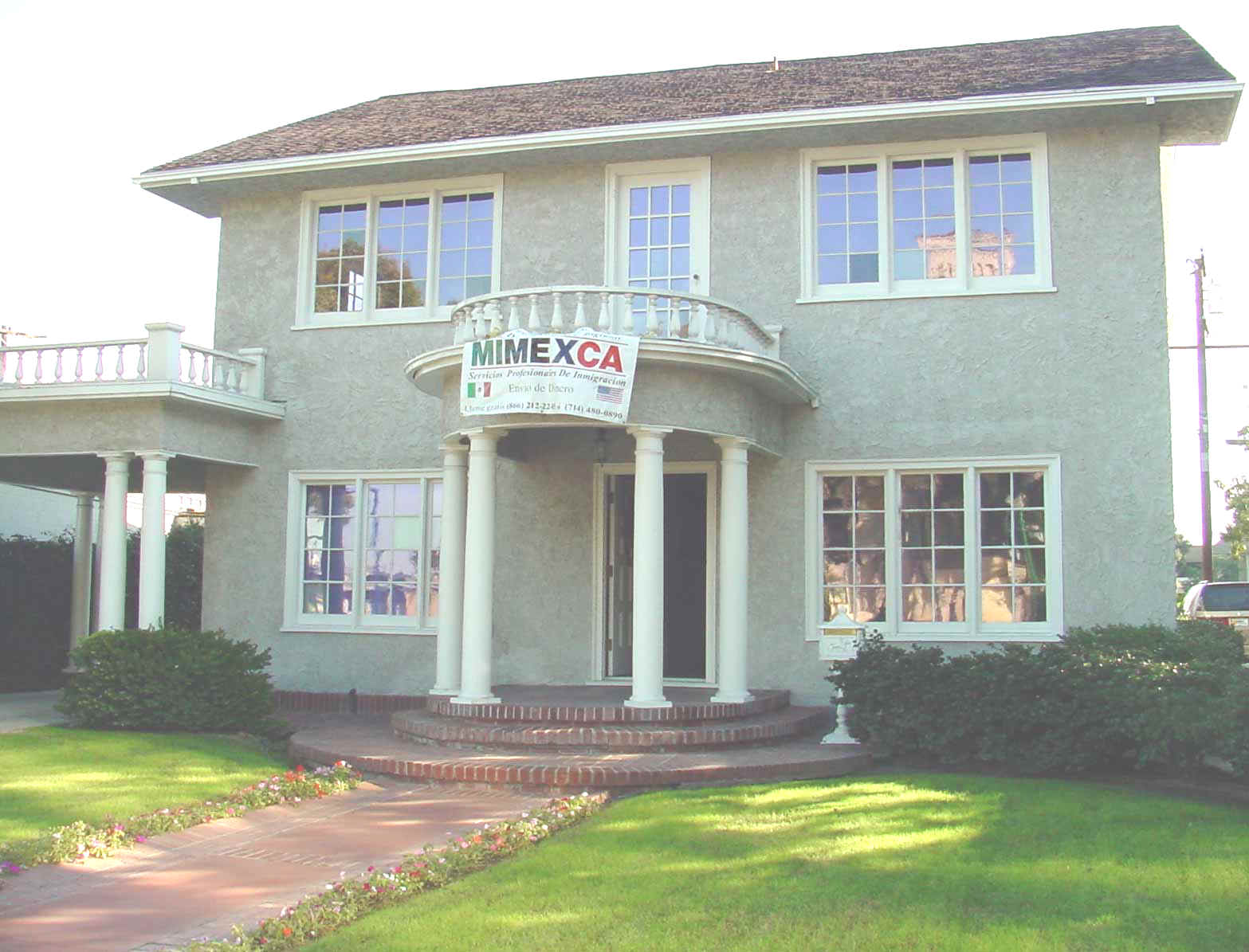

 missionaries,
and cartographers developed a spatial vision of the provinces that would
become northwestern Mexico. The following maps dating from the eighteenth
century show major topographic features like rivers and mountain ranges as
well as the communities that were forged by Indians and Spaniards on the
northern frontier of the Spanish American Empire.
missionaries,
and cartographers developed a spatial vision of the provinces that would
become northwestern Mexico. The following maps dating from the eighteenth
century show major topographic features like rivers and mountain ranges as
well as the communities that were forged by Indians and Spaniards on the
northern frontier of the Spanish American Empire.