Somos Primos

MAY 2009
113th Issue Online

Editor: Mimi Lozano ©2000-9

Dedicated to Hispanic Heritage and Diversity Issues
 Society of Hispanic Historical and Ancestral Research

America in Action
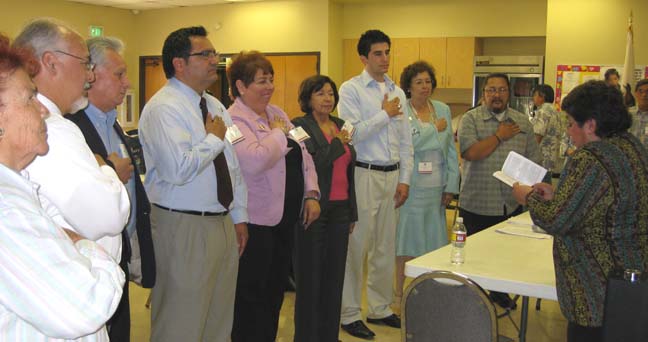
Orange County, California LULAC District 1. . . 59th Annual Convention
Swearing in of new officers, April 25, 2009.
Click to the article.


United States 
New: Witness to Heritage
National Issues
Action Item
Special Feature:
Journey of the Plumed Serpent
Business
Education
Bilingual/Bicultural Education
Books  
Culture


Literature
Anti-Spanish Legends
Military/Law Enforcement 
Patriots, Amer-Revolution
Surnames
Cuentos
Orange County,CA  
Los Angeles,CA

California   
Southwestern US   
African-American
Indigenous
Archaeology 
Sephardic
Texas
East of Mississippi

Mexico 
Caribbean/Cuba 
Spain  
International
 
History
Family History


SHHAR
Meetings 


"There are a thousand hacking at the branches of evil 
to one who is striking at the root."

 Henry David Thoreau


  Letters to the Editor : 

Mimi, Your Somos Primos always gives us new insight into our lives.  This issue (April 2009) especially shows a different perspective on our life in San Antonio.  Thank you for bringing that to us.
 
Charlotte Kahl
Chair
OST100
Old Spanish Mission Trail Assn
(210)735-3503

Hello Mimi!!
First let me reiterate my gratitude for all 
the selfless work and  time you have put into Somos Primos in order to make it the historically accurate and culturally sensitive Emagazine it has become. You should be distinctly proud for the fruit of your unceasing labors. 

Congratulations!! And congrats are also in order for the serendipidous  surprise to find out that you are related to the great  Dr. Garcia.  Finally, I want to wish you all the best to you and your familia for  Easter.

George.Aguirre@SAUSD.US
 

Mimi, 
Thank you  for publishing the article on the San Fernando Church event circa 1940/41.  I shared it with all my family members, and it drew many of them to tears, remembering the days they lived long ago in San Antonio.  Although far away, San Antonio Texas is in our hearts forever!

Thanks again, Jaime Rendon Hernandez
Sangerjaime@aim.com
Hi Mimi:
 
I just opened the SomosPrimos  newsletter for the April issue. My pride grows more and more with each issue of SomosPrimos I read, and Proud to say, I’m Proud of our Hispanic/Latino  Heritage. You have put together a prestigious SomosPrimos staff of dedicated  people. Each and everyone of us . .Thank You!

Eddie  
e.martinez1512@gmail.com

Querida Mimi,
Acabo de dar el primer repaso a SOMOS PRIMOS de abril y me ha encantado.  Especialmente  observo que cada vez tiene la pagina mas textos en español y eso creo que es interesante, conociendo la extensión que tiene el idioma en los Estados Unidos. Me gusta cada vez mas SOMOS PRIMOS y creo que estas dándole un inmpulso considerable. Ya sabes me tienes a tu disposición para colaborar incondicionalmente en todo cuanto pueda.

Esta tarde le daré una nueva lectura, ya que ahora tengo que salir para hacer algunas gestiones. Lástima que estemos a tantos kilometros de distancia, porque las ideas irian mejor de palabra, como nuestro refrán dice "hablando se entiende la gente".

Hasta pronto,   Angel Custodio Rebollo


 Somos Primos Staff:   .
Mimi Lozano, Editor
Mercy Bautista Olvera
Bill Carmena
Lila Guzman
Granville Hough
John Inclan
Galal Kernahan
J.V. Martinez
Armando Montes
Dorinda Moreno
Michael Perez
Rafael Ojeda
Ángel Custodio Rebollo
Tony Santiago
John P. Schmal
Howard Shorr 
Ted Vincent

Contributors May Issue:
Hon. Fredrick Aguirre
George Aguirre
Linda Aguirre
Margie Aguirre
Dan Arellano
Armando A. Ayala, Ph.D.
Mercy Bautista Olvera
Teresa Botelho
Luis Brandtner
Henry J. Casso, Ph.D.
Jaime Cader
Roberto Calderon, Ph.D.
Bill Carmena
Sylvia Caravajal-Sutton
Gus Chavez
Katherine Cloer
Jim Estrada
Lorri Frain
James E. Garcia
Lino Garcia, Ph.D.
Tim Giago
Ron Godinez, Ph.D.
David E. Hayes-Bautista
Walter Herbeck
Sergio Hernandez
Monica Herrera Smith
Jean Hodgeson Nauman
Stanley Hordes, Ph.D.
Granville Hough, Ph.D.
John Inclan
Charlotte Kahl
Walter Karp
Cristina Kirklighter
Ignacio Koblischek
Susan Laura Lugo
Kayna Lyons
Juan Marinez
Eddie Martinez
Henrietta Martinez Christmas
JV Martinez, Ph.D.
Ramiro R.J. Molina
Dorinda Moreno
Jose Luis Morin
Miquel Mula Martinez
Paul Nauta
Paul Newfield III 


Roland Nunez Salazar
Rafael Ojeda
Felipe de Ortego y Gasca,Ph.D 
Yolanda Patino
Ruben M. Perez
Roberto Perez Guadarrama 
Robin Pogriben
Joseph Puentes
Sam Quito
Angel Custodio Rebollo
Jaime Rendon Hernandez
Susan Richards
Rudi R. Rodriguez
Rudy Rodriguez
Viola Rodriguez Sadler

Ben Romero
Robert Smith
Benicio Samuel Sanchez Garcia
Tom Saenz
Richard G. Santos
Tony Santiago
Vilma Santiago-Irizarry
Louis Serna
Frank Sifuentes 
Teresa Sitz
Gil Sperry
Ricardo Valverde
Connie Vasquez
Sylvia Villarreal Bisnar
Ted Vincent
Kirk Whisler
Liz/Larry Yaskiel


SHHAR Board:  Bea Armenta Dever, *Cathy Trejo Luijt, Gloria Cortinas Oliver, Mimi Lozano Holtzman, Pat Lozano, Michael Perez, Viola Rodriguez Sadler, John P. Schmal, Tomas Saenz.      * New Board member.


UNITED STATES

UCLA Professor Chon A. Noriega to Co-Host Latino Images in Film on TCM
Hispanics Breaking Barriers, Part V By Mercy Bautista-Olvera
The StoryCorps Mobile Booth 
5th Annual Texas Diversity & Leadership Conference & Exposition
Education is Our Freedom by Wanda Garcia
LULAC:  Emerging Paths to Partnerships in Science and Technology; 
Data to share in Celebrating el Cinco de Mayo


UCLA Professor Chon A. Noriega to Co-Host LATINO IMAGES IN FILM on TCM


This May, UCLA professor Chon Noriega, author of Shot in America: Television, the State, and the Rise of Chicano Cinema, will host RACE AND HOLLYWOOD: LATINO IMAGES IN FILM, a month-long showcase of 40 films airing on cable network Turner Classic Movies (TCM). He will join TCM's Robert Osborne in exploring how Hollywood has depicted Latino characters and culture in film.

Noriega is extremely proud to be participating in RACE AND HOLLYWOOD: LATINO IMAGES IN FILM, saying, "For the first time, viewers can see a significant part of the historical record for how Hollywood has portrayed Latinos as the focus of a feature film, not just as incidental stereotypes."

Noriega's personal interest in Latinos in film began when he was in college. "I was a graduate student in 1987-88 when a series of Latino-themed and produced films were released by studios: La Bamba, Born in East L.A., The Milagro Beanfield War and Stand and Deliver. There had never been anything like it. I started studying the press coverage as well as interviewing some of the producers. That led to my dissertation, which looked at the 20 years before, during which Chicano and other Latino filmmakers were trying to gain access to the industry."

TCM's Latino festival will take place Tuesday and Thursday nights throughout May. Each night's collection of films will be centered on a particular theme. Among the more contemporary films included are La Bamba (1987), The Milagro Beanfield War (1988), Stand and Deliver (1988), The Mambo Kings (1992) and Lone Star (1996).

Noriega considers La Bamba to be especially important. "It was the first box-office hit directed by a Latino filmmaker and starring most Latino actors," he says. "But the film also marked a shift in Hollywood portrayals, away from social problems and toward a depiction of families as part of the American way of life."

As the most influential Latino stars, Noriega cites such legendary performers as Carmen Miranda, Lupe Velez, Ricardo Montalban, Rita Moreno and Anthony Quinn, as well as such recent stars as Jimmy Smits, Edward James Olmos and Jennifer Lopez. "It is rare for any actor to break through," he points out, "but Latino actors have been much more limited in terms of the roles they have been able to play." 

Part of the issue has been Hollywood's reluctance to make films that accurately depict Latino experiences. "There are so few Hollywood films about Latinos," Noriega says. "Certainly Latino factor into action genres as what one scholar calls 'convenient villains,' but there have been relatively few films that focus on the Latino community as a setting for the story."

Noriega notes that Hollywood is feeling pressure to be more inclusive. "Interestingly, electoral politics and consumer power have led the way," he says. "These have had some impact on how Hollywood has broadened the portrayals of Latino characters in films. But there is still a lot of work to be done."


Sent by Kirk Whisler
kirk@whisler.com
Hispanic Marketing 101
Latino Print Network | 2777 Jefferson St. | Suite 200 | Carlsbad | CA | 92008 


HISPANICS BREAKING BARRIERS

Part V

By

Mercy Bautista-Olvera


  In the coming months this series “Hispanics Breaking Barriers” will present the   contributions of Hispanics in United States government and leadership. Their contributions have improved not only the local community but the country as well.   Sadly, they have not always received their due recognition. Their struggles, stories, and accomplishments will by example, illustrate to our youth and to future generations that everything and anything is possible.

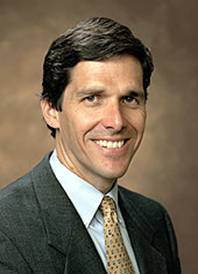
Jeffrey Morales: Assistant Secretary of Transportation in Clinton Administration

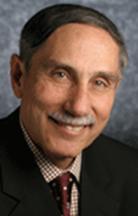
Dr. Eugene E. Garcia: Vice President for Education Partnerships    

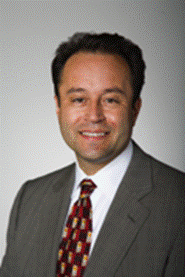
Kenneth Trujillo: Assistant U.S. Attorney   

Thomas Soto:
Managing Partner and co-founder of Craton Equity Partners  

Xavier de Souza Briggs:
Associate Director for General Government Programs  


     Jeffrey Morales
 

Jeffrey Morales has been selected to work for the Department of Transportation President Obama’s Transition Team.   

Jeffrey Morales is married and has two children.

Morales spent nearly 15 years serving in various capacities in the nation’s capital prior to his two years in Chicago . Morales started his career as a legislative assistant to the chair of the Senate Transportation Appropriation Subcommittee. During this time, he helped draft the landmark Intermodal Surface Transportation Efficiency Act of 1991. (Public Law 102-240; ISTEA) A U.S. federal law that posed a major change to transportation planning and policy). It presented an overall intemodal approach to highway and transit funding with collaborative planning requirements, giving additional powers to metropolitan planning organizations.  

In 1996/97, Morales served as Director of the White House Commission on Aviation Safety and Security, this gave out a blueprint for national aviation policy in the 21st century.  

In 2000, Governor Gray Davis appointed Jeff Morales as Director of the California Department of Transportation (Caltrans), He managed a $10 billion program and over 20,000 employees working to build, maintain and operate the largest state transportation system in the country. He helped with the expansion of the largest transportation program in the California ’s history, and through the development of new policies, greater efficiencies and innovative practices has helped re-establish the Department as a national leader.  

Morales served as Assistant Secretary of Transportation in the Clinton Administration. He served as senior staff member with Vice President Al Gore’s National Performance Review; the task force reinvented the federal government; saving taxpayers billions and produced dramatic improvements in the management of federal programs.


 Dr. Eugene E. Garcia

Dr. Eugene E. Garcia, Vice President for Education Partnerships has been selected to work for the Department of Education Team on President Obama’s Transition Team.  

Dr. Garcia earned a Bachelors Association degree in Psychology at the University of Utah , a Masters’ Degree in Child Development from the University of Kansas , a Post-Doctorate Psycholinguistics from the Harvard University and a PhD in Human Development from the University of Kansas .  

In 1993-1995, Dr. Garcia served as a Senior Officer and Director of the Office of Bilingual Education and Minority Languages Affairs in the U.S. Department of Education.   

In 1995-2001, Dr. Garcia served as Dean and Professor of the Graduate School of Education at the University of California , Berkeley .  

Dr. Garcia served as vice president for education partnerships at Arizona State University 's Mary Lou Fulton College of Education. He held the position of Dean at Arizona State University ’s College of Education . In May 2003, Dr. Garcia became Vice President for the University-School Partnerships by the President of Arizona State University (ASU) Dr. Michael Crow.  This role was to strengthen K-12 education in the state of Arizona by linking together the University and private sector for distribution of fiscal and human resources.     

Dr. Eugene Garcia has published books and articles on language teaching and bilingual development. He has also recently chaired the National Task Force on Early Childhood Education for Hispanics. In May 2003, he was given the additional role as Vice President for University-School Partnerships.  

Dr. Garcia was chairperson for the National Task Force on Early Childhood Education for Hispanics funded by the Foundation for Childe Development and the Mailman Family foundation. Dr. Garcia conducted research in the areas of effective schooling for linguistically and culturally diverse student populations funded by the National Science Foundation.  

Dr. Garcia has written extensively in the area of language teaching and bilingual development. His writings include “Hispanic Education in the United States .” “Raices y Alas,” (Roots and Wings) and Understanding and Meeting the Challenge of Student Diversity,” both published in 2001, and “Teaching and Learning in two Languages: Bilingualism and Schooling in the United States . (2005).  

Dr. Garcia was chairperson for the National Task Force on Early Childhood Education for Hispanics funded by the Foundation for Child Development and the Mailman Family Foundation. Dr. Garcia conducted research in the areas of effective schooling for linguistically and culturally diverse student populations funded by the National Science Foundation.  

Dr. Garcia has written books, “Hispanic Education in the United States ,”  ”Raíces y Alas,” (Roots and Wings) and “Understanding and Meeting the Challenge of Student Diversity,” both published in 2001. Another book,” Teaching and Learning in two Languages: Bilingualism and Schooling in the United States , ( New York , NY : Teachers’ College Press, 2005).


Kenneth I. Trujillo

Kenneth Trujillo has been selected to work with Security and Exchange commission Team for President Obama’s Presidential Transition Team, where he serves on the agency review team for the Securities and Exchange Commission.  

Ken and his wife, Laura Luna-Trujillo, have one daughter, Maya.  

Ken Trujillo received a Jurist Degree from the University of Pennsylvania Law School in 1986. He served as a board member of the city of Philadelphia Board of Pensions and the Philadelphia Industrial Development Corporation, and the Board of Trustees of the University of the Arts.  

In 1997, Trujillo was named by Mayor Ed Rendell to serve as a member of the City of Philadelphia Police Corruption Task Force .  

His volunteer activities include serving on the boards of Community Legal Services Inc., Philadelphia Volunteers for the Indigent Program, and Big Brothers/Big Sisters of Philadelphia Inc. His most recent appointment was to Mayor John F. Street ’s Ethics Committee for his transition team.  

Trujillo is the former City Solicitor of Philadelphia and a former federal prosecutor. As City Solicitor, he represented the mayor, city council and all departments, agencies and commissions of the City of Philadelphia . Significant actions included implementation of the Neighborhood Transformation Initiative and the development of the Eagles new professional football stadium and the Phillies new Major League baseball stadium. Trujillo played a major role in the planning of the Republican National Convention in 2000.  

In 2003, Trujillo served on the Executive Committee of Governor Ed Rendell's Transition Team as counsel and shortly thereafter, Governor Rendell appointed Mr. Trujillo to the Board of Directors of the Pennsylvania Intergovernmental Cooperation.

In 2004, Mayor John F. Street appointed Trujillo to serve on the Ethics Committee of his transition team. In 2005, Governor Rendell appointed Mr. Trujillo Commissioner of the Delaware River Port Authority where he serves on the Finance Committee. Mr. Trujillo is an adjunct lecturer at the University of Pennsylvania Law School. Also in 2005, the Mexican government presented Trujillo with the Ohtli Award, one of the highest awards given to non-Mexican citizens by the Mexican government.  

Trujillo served as the First vice Chair, Secretary, and Treasurer of the National Council of La Raza Board of Directors as well as on its Audit Committee.  Trujillo served on the Strategic Investment Fund for La Raza, Inc. board and   a member of the New American Alliance and its Finance Committee.   

A founding member of Trujillo , Rodriguez & Richards, LLC, his practice is now primarily in the areas of complex litigation and government relations. Trujillo represented U.S. business in Mexico , as well as Mexican companies doing business in the United States . He is president of the Board of Congreso de Latinos Unidos Inc. (Congress of United Latinos Inc) and past president of the Hispanic Bar Association of Pennsylvania.  

In May 2006, he Trujillo was appointed to the board of Philadelphia 2016, the organization seeking to bring the Olympics to Philadelphia .


 Thomas Soto  

Thomas Soto Managing Partner of Craton Equity Partners, one of southern California ’s largest clean technology investment funds has been selected to work with the Executive office of President Obama.  

Thomas Soto is 45 years old; he was born in Pomona , California , the son of Philip Soto (1926-1997) and Nell Soto (1927-2009) Thomas’ father Philip Soto served two terms in the State Assembly from 1962-1966. Thomas Soto’s father was one of the first two Latinos elected to the California State Legislature. In 1998, his mother Nell Soto was first elected to the Assembly and from 2000-2006 in the California Senate).  He has one sister Ana, and three brothers, Michael, Patrick, Philip, and another brother Robert, died in 2004.  

Thomas Soto has over 20 years experience in California working for and leading environmental groups such as the Coalition for Clean Air and the Mono Lake Committee. Thomas Soto promoted sound environmental and energy policies in response to climate change.   

President Clinton appointed Thomas Soto to the Border environment Cooperation Commission. This panel was established under the North American Free Trade Agreement (NAFTA) and oversaw the implementation of billions of dollars of environmental infrastructure to insure that the environmental impacts, of the NAFTA, could be managed.  

Soto is well known and is one of the leading environmental activists in the area of air quality and promoting more sound environmental policy. Especially for low income and overlooked communities. Soto also served for seven years as vice chairperson of the California State Board of Corrections and four years as a California State Coastal Commissioner, both as and appointee of former Democrat Governor Gray Davis.


 Xavier de Souza Briggs

Xavier N. de Souza Briggs, Associate Director for General Government Programs has been selected to work as Associate Director of the White House Office of Management and Budget for President Obama.  

Xavier Nevin de Souza Briggs was born in 1968 in Miami , Florida . He spent early part of his life in Nassau Bahamas , with roots in Brazil and Europe . His mother, Angela Aranha-Briggs, raised him. He is married to Cynthia Lowe-Briggs and lives in Massachusetts .  

Souza Briggs attended Belen Jesuit Preparatory Catholic School , earned a Rotary scholarship to study and community development in Brazil , Souza Briggs holds a Ph.D. from Columbia University , a Master's in Public Administration from the John F. Kennedy School of Government at Harvard and a B.S. in engineering from Stanford. 

From 1998-1999, Souza Briggs served as senior policy official at the U.S. Department of Housing and Urban development.  

Souza Briggs’ work has received national awards: President’s Award of the American Planning Association for community development work in the south Bronx, the 2000 Best Article of the Year from the Journal of American  Planning Association for “In the Wake of Desegregation”, and the 1997 Dissertation Prize of the Association for Public Policy analysis and management. Souza Briggs is an American sociologist and planner, his work is known on Social Capital, and community building, and his concept of the “Geography of opportunity,” it addresses the consequences of race and class segregation for the well-being and life prospects of the disadvantaged.  

Souza Briggs was an Associate Professor of Sociology and Urban Planning in the Department of Urban studies and Planning at the Massachusetts Institute of Technology (MIT).  Souza Briggs is a former faculty member of Harvard University ’s Kennedy School of Government. He has designed and led major leadership development, strategy, and other training programs for those in the public, private, and nonprofit/nongovernmental sectors. He has also consulted on urban strategy to leading national and international organizations, such as the Ford Foundation, the Rockefeller Foundation, the Center for American Progress, and the World Bank.  

Souza Briggs is the editor of the Geography of Opportunity: Race and Housing Choice in Metropolitan America (Brookings, 2005), which won the highest book award in planning. Another book “Democracy as Problem-Solving: Civic Capacity in Communities across the Globe”, It examines local policy innovation, and democratic governance in cities in Brazil , India , South Africa , and the U.S. A third book, Moving to Opportunity : The Story of an American Experiment to Fight Ghetto Poverty, is forthcoming summer 2009 (Oxford University Press). It presents a rethinking of anti-poverty policy, the role of housing in a larger opportunity agenda, and the lived experience and outlook of very low-income people in a major federal demonstration program. Souza Briggs is founder and director of The Community Problem-Solving Project @ MIT and Working Smarter in Community Development, two popular and innovative online resources for people and institutions worldwide.  

The community Problem-Solving Project @ MIT
Problem-Solving Project @ MIT

Working Smarter in Community Development
web.mit.edu
/workingsmarter


The StoryCorps MobileBooth 

StoryCorps , a national initiative to document everyday history and the unique stories of Americans, is in Salt Lake during the month of April as part of its cross-country tour.

The StoryCorps MobileBooth -- an Airstream trailer outfitted with a recording studio. 

StoryCorps is the largest multi-year oral history project ever undertaken. Since its launch in October 2003, StoryCorps has collected interviews in 100 towns in all 50 states -- over 23,000 stories in all. At the MobileBooth, interviews are conducted between two people who know and care about each other. A trained facilitator guides the participants through the interview process and handles the technical aspects of the recording. At the end of a 40-minute session, the participants walk away with a CD of their interview. With their permission, a second copy becomes part of an archive at the American Folklife Center at the Library of Congress for future generations to hear. Selected segments may air nationally on NPR's Morning Edition.

StoryCorps is an independent nonprofit project in partnership with NPR and the American Folklife Center (AFC) at the Library of Congress. 


The Fifth Annual Texas Diversity & Leadership Conference & Exposition
Report by Wanda Garcia


The Fifth Annual Texas Diversity & Leadership Conference & Exposition was held on April 22-24, 2009, at the Westin Galleria Hotel in Houston. The theme for the conference is “Wind of Change.” The expected attendance for the three day event is over 600 attendees. I was on a panel entitled Education and More Education.  
Other panelists were:  Veronica Ordaz Collazo, PH.D, Social Services Manager City of San Antonio Richard Farias, Superintendent Raul Yzaguirre School for Business.
Angeles M. Valenciano, Vicer President Business Development, Texas Diversity Council.


History: The National Diversity Council is a non-profit organization that champions diversity as a business necessity.  It began with the inception of the Texas Diversity Council in November 2004.  Eighteen months later, the National Diversity Council has established five state councils:  California, Colorado, Florida, Illinois and Texas.  Each state council has its own respective regional advisory councils.  Dennis Kennedy is the Chairman of the Board of the National Diversity Council.
 
Mission: The National Diversity Council strives to establish a corporate environment that utilizes the full potentials of each employee.

Vision: The National Diversity Council seeks to transform our diverse community into a truly inclusive environment where individuals are valued for their talent and able to reach their full potential.

Wanda

Editor:  Below is the paper that Wanda delivered.


EDUCATION IS OUR FREEDOM
By Daisy Wanda Garcia


Before I begin, I would like to relay a story that was an epiphany in my life.  Texas Land Commissioner Garry Mauro brought in at risk kids so that we could mentor them.  I was working for the Texas General Land Office as a database administrator. Santos Moreno was assigned to me.  I had Santos by my side as I worked on the databases.  He stayed very quiet during this time. Finally, after 3 weeks, he commented, “So there are other jobs besides slinging hamburgers at McDonald.”

Hispanic students are falling behind educationally. At 21 percent, the national Latino high school dropout rate is more than twice the national average at 10 percent according to the PEW Hispanic Center. Only 68 percent graduate from high school within four years, and just 42.5 percent of those who graduated in 2007 enrolled in college or technical training.  The bulk of Hispanic youth is of Mexican origin. About 25 percent of Mexican-origin 16 to 19 year-olds have not finished high school and are not enrolled in any school.   What will be their future?
Many attribute the Mexican American high dropout rate to the Spanish language factor.  However, the high dropout rate continues today even when third generation Hispanics speak English and have lost the use of Spanish.
When we eliminate language as a cause, then other factors are contributing to these statistics. Before we can close the achievement gap, we must identify these causes.

My father, Dr. Hector P. Garcia felt he had a good self-identity because he was born in Mexico and not subjected to the suppression that Mexican Americans born in the USA receive.  Dr. Hector said, "We (Mexican Americans) live in a culture that suppresses us, and the English Only movement is a part of the greater plan to hold us back." He attributed the low academic performance of Latino children to this suppression.

The "melting pot" concept of everyone conforming to the Anglo American standard troubled my Papa. Papa was proud of his Mexican Heritage "I don’t want my culture and my pride and my language and everything melted down," he said. "You take me like I am because I think I’ve proved what I can do through my service to my country without having to be melted down."

On one occasion in 1989 when my Papa addressed the Hispanic Alumni at University of Texas Alumnus, he said, “We are a lost people. “We do not know who we are, where we are going.  We do not know our history and a people without history have nothing.”

Dr. Carlos Munoz realized the need for self-identity among Latinos in 1968, and decided to create Chicano Studies. He produced many books aimed at documenting our missing chapter in U.S. history.

Dr. Clotilde Garcia, my Aunt understood this need and was one of the first Latina activist to start researching family history.  She started the Spanish American Genealogical Association in the 60s and encouraged Hispanic youth to research their personal family history. Since then many groups have formed.

What are the causes of “suppression”? History books omit Hispanic contributions. Recently our valor and contributions were omitted from the documentary the “War”.  Some other causes of “suppression” are the “Wall between Texas and Mexico”, “Immigration issues”, and the “English Only” movement.   The Black Legend the presumed negative stereotype of Spaniards affects present day attitudes. The Black Legend instills the attitude among some activists to be anti Spanish and only take pride in Native American roots.

Mainstream cultures discount our language, our culture and our appearance. Many times I heard the comment from my peers, “I wished I was not born Mexican American.”

It is clear that our role is to help the generations of young Hispanics understand who they are as they strive to accomplish their education goals.  We need to understand and embrace our multi-cultural heritage with pride and grasp that we of all racial groups have the blood of the old world and the new world within our veins.

Some measures we as adults can take is to become more involved in ensuring that our history is included in the school text books. In addition, we should ensure educational materials about our Mexican American heroes are included in libraries and schools. It is important to mentor our youth about the importance of preparing for the future.

My father, Dr. Hector Garcia believed that education was the key to the advancement of our group. Therefore, he made the official motto of the AGIF    “Education is our Freedom and Freedom Should be Everybody’s Business.” The American GI Forum (AGIF) through their scholarship programs encourages education. The American AGIF scholarship programs help students financially.  Each AGIF chapter raises money for scholarships and the National AGIF matches the money. Then the scholarships are presented to deserving students. Ms. Alicia Rodriguez, National Chairwoman tells how the AGIF scholarship program helped her family.

   I received women's re-entry scholarships from the AGIF that helped me continue my education. I received my BA in education and MA in Education Administration. I currently work as the coordinator for the Community Learning Center in Ulysses helping adult students achieve their high school diploma.

  I have found this organization to be helpful in promoting education for our youth and women through scholarships and leadership trainings. The AGIF has been extremely instrumental in molding what I am today and serving as a positive role model for my family.

There are many success stories of AGIF youth who received scholarships.  Some of the AGIF youth success stories are:

x    Raul Yzaguirre, founder and President Emeritus of NCLR learned as a youth from Dr. Garcia the importance of education, leadership and accountability.  Raul is recognized across the country for his advocacy for Hispanics.
x    Antonio Morales, Jr.  was enrolled in AGIF when he was born.  He was head of the AGIF Youth. He is now the VP for Human Resources for SER the nation's largest on-stop employment trainer and provider in the nation.
x    Delia Garcia was involved as a youth and became the Chair of the AGIF youth while in High School.  Delia became the first Latina elected to the Kansas legislature, at the age of 26.  She is now serving her second term.
x    Dr. Susanna Garcia, Dr. Hector’s daughter got her doctorate and is a tenured professor at LSU. She was a recipient of AGIF scholarships.
x    Tony Canales, Dr. Hector’s nephew and Dr. Cleo’s son, is now considered one of the best lawyers in the USA. He was involved with the AGIF youth.
x    Carlos Truan, former Dean of the Texas Senate, received scholarships from the AGIF.

My role is to ensure that my father’s legacy and lessons are not forgotten.  I will continue his work that involves restoring pride in our heritage and culture and improving the status of Hispanics in this country.  This is the reason I am associated with the great online Emagazine SomosPrimos.com which is dedicated to Hispanic Heritage.  I have been writing a monthly column since January 2007 for Somos Primos. I am sharing my father’s biography, his history, goals, and personal mission.  I invite you all to get online, absorb his dedication.  Let his life inspire and encourage all of us to go forward and lift our community through education and a promotion of our history.    

Wanda


Emerging Paths to Partnerships in Science and Technology;
Life sustaining products, services and employment opportunities for Latinos
59th Annual Convention
LULAC, California District 1, Council No. 147 
Held at Abrazar Community Services and Education Center
7101 Wyoming St.  Westminster, CA 92683


Editor:  I was able to attend the afternoon session of the Convention.  I was touched by the wide range of ages of those involved, and especially because it appears that many of the participants, are the children and grandchildren of individuals who pioneered starting LULAC Councils.  

The theme was focused on exploring and collaborating on environmental issues which impact the Latino community because of the large number of Latinos that are employed in agriculture.  
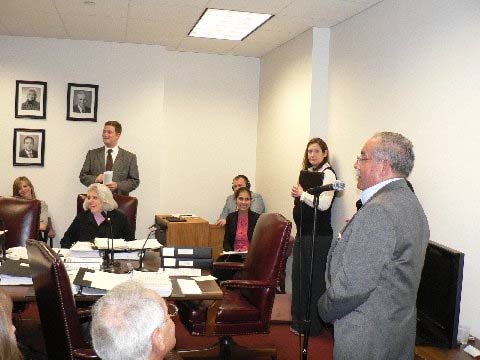
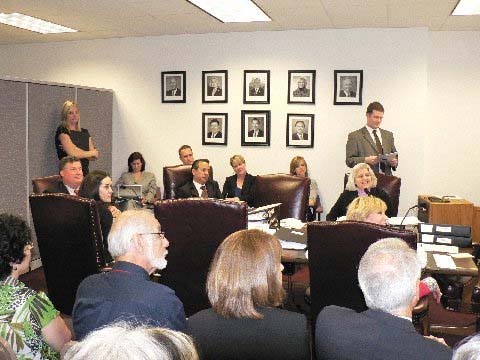
Swearing in of new officers, left to right: Lupe Boyd Orange County Council, Cory Aguirre Placentia Council, Zeke Hernandez Santa Ana Council, George Casillas member of Placentia Council No. 174 voted in as Treasurer for District 1, Yvonne Duncan Gonzalez, president of Anaheim Council No. 2848, Lupe Gutierrez Anaheim Council, Robbie G. Munoz, the grandson of Hector Godinez, a new member of Placentia Council No. 174 and voted in as Deputy District 1. Director for Youth, Charlotte DeVaul Anaheim Council, Ricardo Mendoza Orange County Council. The oath was administered by Argentina Luevano, on the far right.
 

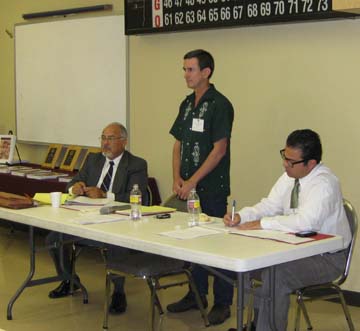
Guest speakers were Michael Marsh (standing in photo), Director of the Agricultural Worker Health Project (AWHP) of California rural Legal Assistance (CRLA).  Michael works from the Salinas office of CRLA, which has twenty-two offices through-out rural California.   Dr. Erualdo Romero Gonzalez, Assistant Professor in the Chicana and Chicano Studies Department at California State University, Fullerton.  His expertise is in the area of environmental health, special focus on Latino needs.  The discussion was centered on both the health problems associated with farm work, and employment opportunities for Latinos in alternate energy industries.
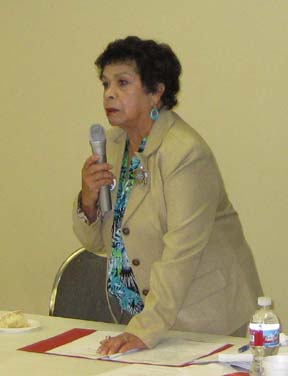


The meeting was conducted by District Director, Lola Gallardo, long time member.
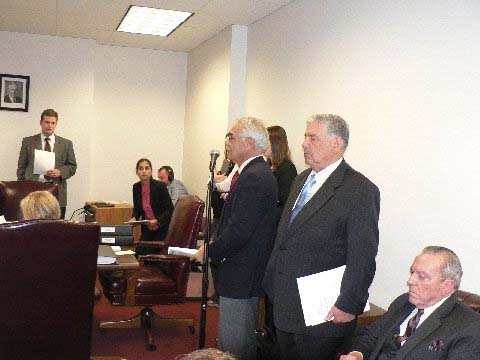
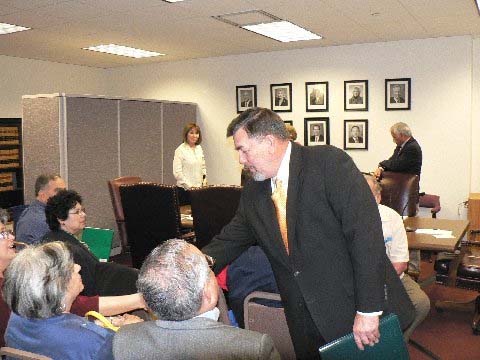
Cory Anthony Aguirre and his wife Margie de la Torre Aguirre co-chaired the convention. The Host Council was Placentia, No. 174. I met them both many years ago. Cory, an Attorney, and his brother, Fredrick, a Superior Court Judge were taught service to their community, as children. Their father Alfred V. and mother Julia were dedicated members.

Judge Aguirre shared with me a memory, "I used to stand on a box and lead the pledge of allegiance to the American flag. I was eight."  


This meeting was of particular interest to me because Margie de la Torre Aguirre had completed a ten year historical project which was on display for the first time. As Chair of the California LULAC Heritage Committee, Margie had documented the growth of LULAC in California.  Using newspaper articles, minutes, reports, events, etc. Margie validated the historical facts of Latino activism and leadership.   Copies of this huge, 363 pages, spiral-bound work will soon be available. Margie's email is: maeflections@aol.com

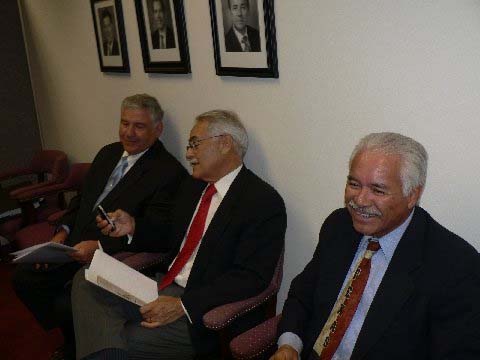
Thank you to Dr. Hector Ron Godinez (on the right) for sharing these photos.
Mel Jurado  Anaheim Council, on the left.  


Data to share in Celebrating el Cinco de Mayo


Cinco de Mayo celebrates the legendary Battle of Puebla on May 5, 1862, in which a Mexican force of 4,500 men faced 6,000 well-trained French soldiers. The battle lasted four hours and ended in a victory for the Mexican army under Gen. Ignacio Zaragoza. Along with Mexican Independence
Day on Sept. 16, Cinco de Mayo has become a time to celebrate Mexican heritage and culture.

29.2 million: Number of U.S. residents of Mexican origin in 2007. These residents constituted 10 percent of the nation's total population and 64 percent of the Hispanic population.

18.25 million: Number of people of Mexican origin who lived either in California (10.97 million) or Texas (7.28 million). People of Mexican origin made up more than one-quarter of the residents of these two states.

25.8: Median age of people in the United States of Mexican descent. This compares with 36.7 years for the population as a whole.

609,000: Number of Mexican-Americans who are U.S. military veterans.

1.3 million: Number of people of Mexican descent 25 and older with a bachelor's degree or higher. This includes about 362,000 who have a graduate degree.

37%: Among households where a householder was of Mexican origin, the percentage of married-couple families with own children younger than 18. For all households, the corresponding percentage was 21 percent.

4.1: Average size for families with a householder of Mexican origin. This compares to 3.2 people in all families.

14%: Percentage of employed civilians 16 and older of Mexican heritage who worked in managerial, professional or related occupations. In addition, 24 percent worked in service occupations; 20 percent in sales and office occupations; 18 percent in construction, extraction, maintenance and
repair occupations; and 19 percent in production, transportation and material moving occupations.

$39,742: Median household income in 2007 for households with a householder of Mexican origin.

22%: Poverty rate in 2007 for people of Mexican heritage.

68%: Percentage of civilians 16 and older of Mexican origin in the labor force. The percentage was 65 percent for the population as a whole. There were 13 million people of Mexican heritage in the labor force, comprising 9 percent of the total.

51%: Percentage of householders of Mexican origin who owned the home in which they lived.

Source for the preceding statements: 2007 American Community Survey http://factfinder.census.gov


                             Trade With Mexico
$367.5 billion : The value of goods traded between the United States and Mexico in 2008. Mexico was our nation's third-leading trading partner, after Canada and China.
Source: Foreign Trade Statistics  http://www.census.gov/foreign-trade/www 

                              Businesses
701,078:
Number of firms owned by people of Mexican origin in 2002. They accounted for more than 44 percent of all Hispanic-owned firms. Among these Mexican-owned firms, 275,896 were in California and 235,735 in Texas. The Los Angeles-Long Beach-Riverside, Calif., combined statistical area had174,292.

$96.7 billion: Sales and receipts for firms owned by people of Mexican origin in 2002.

116,290: Number of firms owned by people of Mexican origin in the construction sector in 2002, which led all sectors.

Source for statements in this section: Hispanic-Owned Firms: 
2002 http://www.census.gov/prod/ec02/sb0200cshisp.pdf 

                               Mexican Food
$100.4 million: Product shipment value of tamales and other Mexican food specialties (not frozen or canned) produced in the United States in 2002.
Source: 2002 Economic Census  http://www.census.gov/econ/census02/guide/INDRPT31.HTM

$48.9 million: Product shipment value of frozen enchiladas produced in the United States in 2002. Frozen tortilla shipments were valued even higher, at $156 million.
Source: 2002 Economic Census  http://www.census.gov/econ/census02/guide/INDRPT31.HTM

347: Number of U.S. tortilla manufacturing establishments in 2006. The establishments that produce this unleavened flat bread employed about 14,500 people. Tortillas, the principal food of the Aztecs, are known as the “bread of Mexico.” About one in three of these establishments was in Texas.
Source: County Business Patterns: 2006 
http://www.census.gov/Press-Release/www/releases/archives/county_business_patterns/012181.html .
The preceding data were collected from a variety of sources and may be subject to sampling variability and other sources of error. Facts for Features are customarily released about two months before an observance in order to accommodate magazine production timelines. Questions or comments should be directed to the Census Bureau’s Public Information Office: telephone: 301-763-3030; fax: 301-763-3762; or e-mail:  pio@census.gov

Sent by Roberto Calderon, Ph.D.

.


WITNESS TO HERITAGE

Witness to Heritage Hero
NCLR 2009 Conference in Chicago

Special Announcement: May 16: THE LAS VEGAS HISPANIC HISTORIC FORUM 

 
WITNESS TO HERITAGE
 
We believe that president Obama's recent speech on education is a perfect time to  promote more awareness of the contributions of Spanish-heritage-Latinos to the founding and development of the United States.
 
WITNESS TO HERITAGE would like the youth to recognize the historic sacrifices of Latino leaders, in many fields, who have fought for them to be part of the system, to get an education, to succeed in life, to achieve the American dream.

If you or your organization would like to recommend someone to be honored by being nominated a Witness to Heritage Hero, please contact me.  

Our July Witnesses to Heritage Heroes are Dr. Rita Hernandez and Bill Luna.  Dr. Hernandez and Bill Luna will be honored at the 2009 NCLR Conference in Chicago.  A special event will be held at the LEGACY OF VALOR booth.   The LEGACY OF VALOR booth is mounted by the Hispanic Medal of Honor Society, and includes an outstanding panel on Dr. Hector P. Garcia.

After five years of effort, Rita and Bill were able to get a Chicago Board of Education to name a Chicago High School after Dr. Hector P. Garcia, the very first school outside of Texas named after Dr. Garcia.  

If you, or your organization would like to sponsor a Medal of Honor recipient or nominee to attend the NCLR conference, we would welcome financial support for their flight and room accommodations.   The whole cost for flight and accommodation need not be hosted by one organization.  The arrangements would be made directly, between your organization and the individual. 

We would post your sponsorship in the booth and include the information in any press releases.

As an educator and mentor of our youth for over 50 years, let me suggest that the opportunity to honor a living Medal of Honor recipient or nominee would be a memorable project for a youth group. 

 
Please send an email concerning your interest in supporting the LEGACY OF VALOR display by sponsoring outstanding individuals to be present in the booth to:
 
Dr. Henry J. Casso, 
ProjectUplift02@msn.com

Editor: I am working with Dr. Casso, Project Uplift and Rick Leal, Hispanic Medal of Honor Society in the promotion of Witness to Heritage.  


SPECIAL ANNOUNCEMENT
May 16: THE LAS VEGAS HISPANIC HISTORIC FORUM

The third of a series of five special public forums will be held in Las Vegas New Mexico co-hosted by the City of Las Vegas, Luna Community College and Highlands University.

The Forums are follow up to the Albuquerque Ruben Salaz presentation on his recent publication THE SANTA FE RING, self-published, 2009.

The First Forum was held in Sante Fe, New Mexico with presentations on the republished UNM 2009 work, THE TREE OF HATE.   The foreword to the new edition is by New Mexico's retired UNM Professor of History, Col. Robert Hemmerick y Valencia.  The second presentation by author Ruben Salaz, THE SANTA FE RING, How New Mexico land Grants changed ownership.

Attendees from throughout Northern New Mexico received the information well.  Interest was so high about land grants, it was decided to hold a Forum in Espanola, New Mexico, the end of the Camino Real.

The forum in Espanola was called THE HISPANOLA HISPANIC HISTORIC FORUM.  It was co-hosted by the City of Espanola and the Northern New Mexico College.  Attendance was excellent and one attendee wrote . . .  "I have been attending conferences, institutes and meetings for ten years, this was the finest, thanks" . . . 

May 16 the LAS VEGAS HISPANIC HISTORIC FORUM will be held at the Laveo Sanchez Lecture Hall, Highlands University, from 1-3:30.  Admission is free.

Dr. Robert Hemmerick will give an overview of the TREE OF HATE.  A special Land Grant Panel will be available with a major specially Power Point presentation being prepared by retired attorney Mike Scarborough addressing the U.S. Congree Treaty of Guadalupe GAO Report on New Mexico Land Grants and the Attorney General David King rebuttal to that Report, in which facts were left out. 

To attend, or for more information, contact:  
Dr. Henry J. Casso
Project Uplift
P.O. Box Drawer 30246
Albuquerque, New Mexico, 87110
505-294-4157
projectiuplift02@msn.com


NATIONAL ISSUES

Octomom Cartoon
Interactive Map Showing Immigration Data Since 1890 
Growth of Spanish language driving social evolution in U.S.
Number of illegal immigrants' children soars
Arrests of illegal immigrants trying to cross U.S.-Mexico border
El Mosquito Zumbador, new newspaper dealing with day labor problems
Study Shows Sharp Rise in Latino Federal Convicts
Health Information    www.wellzone.org


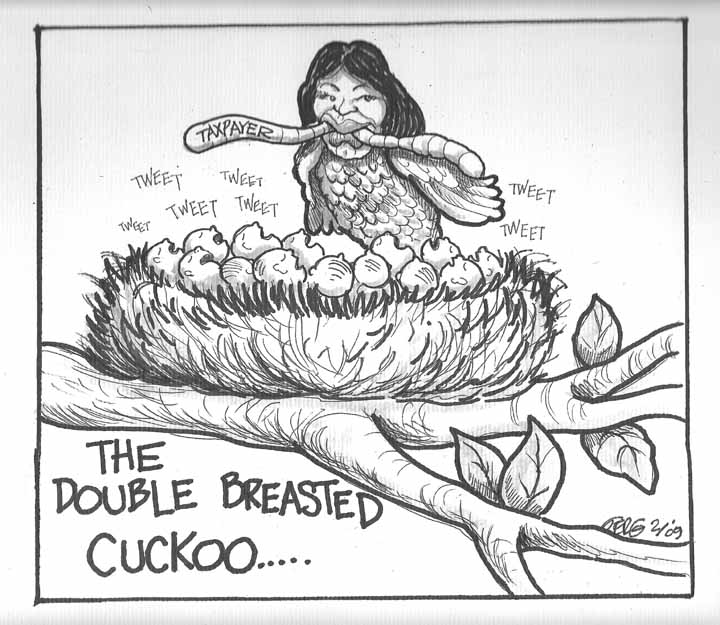
Editor:  Thanks to Sergio Hernandez for sharing this great cartoon on a social issue that should challenge all of our moral and social attitudes.  The story attracted my interest, not only because Nadya lives in my county of Orange County, but also because she was married to Marcos Gutierrez between (1996-2008).  She has four daughters and ten sons.  By the ages of the children, although born with medical intervention and assistance, the first six children were born while married to Marcos Gutierrez.

Nadya Denise Doud-Suleman Gutierrez, also known as Octomom in the media, is an American woman who came to international attention when she gave birth to octuplets in January 2009.[1][2] The Suleman octuplets are only the second full set of octuplets to be born alive in the United States and, one week after their birth, surpassed the previous worldwide survival rate for a complete set of octuplets set by the Chukwu octuplets in 1998. The circumstances of their high order multiple birth have led to controversy in the field of assisted reproductive technology as well as an investigation by the Medical Board of California of the fertility specialist involved.[3] Public reaction turned negative when it was discovered that the single mother already had six other young children at home at the time and was not financially independent.

 
Suleman, who was unemployed and on public assistance programs at the time, conceived the octuplets and her six older children via in-vitro fertilization (IVF).[4]
Source: Wikipedia


Interactive Map Showing Immigration Data Since 1890


Interactive Map Showing Immigration Data Since 1890
Sent by Roberto Calderon   beto@unt.edu


Growth of Spanish language driving social evolution in U.S.
By Fabiola Santiago
fsantiago@MiamiHerald.com
http://www.miamiherald.com/living/story/903179.html


The United States is the world's second-largest Spanish-speaking country, surpassed in the number of Spanish speakers only by Mexico, and to measure the influence of Spanish in contemporary mainstream America one need only to channel-surf.

On public television, there's Gwyneth Paltrow on a ride through the Catalonian countryside in a convertible, showing off her considerable Spanish vocabulary to chef Mario Batali, who's not bad himself. Paltrow says she's made learning Spanish a priority for daughter Apple. She buys DVDs in Spanish, and ''Dora, la exploradora'' is Apple's favorite cartoon character. ''Per-r-r-r-fecto,'' Paltrow says, demonstrating her deftness at rolling her r.

On another channel, the preteen generation is also speaking Spanish in a joint movie production between Disney and a Spanish company. The American Cheetah Girls are in Barcelona and they're singing about ''a world united by music'' and speaking sporadic Spanish without any translation or subtitles for viewers. Ditto for the toddlers watching Handy Manny help his Spanish-speaking neighbors fix stuff with the help of his talking tools.

Is speaking Spanish, once vigorously shunned by English-only movements, becoming trendy in the United States?

''Something profound and historically significant is happening with the momentum of Spanish, and it's having an impact on the social and cultural fabric of the United States,'' says Eduardo Lago, executive director of the New York outpost of Instituto Cervantes, one of the most important cultural organizations in Spain.

Spanish is ''a fact of life,'' says Ana Roca, a Florida International University linguistics professor and a coordinator of next week's national ''Spanish in the United States Conference'' at the Biltmore Hotel in Coral Gables.

''You'll find a tremendous variety of Spanish being used in the United States today,'' Roca says. ``We used to never think of Spanish speakers in Georgia, North Carolina, but the demographics have changed, and the profile today is a lot more complicated than it used to be 25 years ago.''

A HUGE PHENOMENON

At close to 40 million people, the tremendous growth of the Hispanic population -- the country's fastest-growing linguistic minority -- and the widespread use of their native tongue isn't lost on the Spanish Motherland.

Not only are the king and queen of Spain on an official visit to South Florida -- a region hailed by linguists as a showcase of the powerful presence of Spanish -- but the prestigious Instituto Cervantes has devoted a weighty 1,200-page book to the analysis of Spanish in the United States.
In the three months since Enciclopedia del español en los Estados Unidos was published by Santillana USA, the Doral-based division of the Spanish giant, the book has sold 9,000 copies, and a second printing is under way.

The reference book offers more than 80 articles on issues such as the vast literary and theatrical productions of Miami and New York, the regional linguistic differences between Cubans, Mexicans, Puerto Ricans and Dominicans, and the future of bilingual education and Spanglish. The book dissects speech patterns, gathers copious statistics on language, culture and economics, and lists the most important players in language and culture -- including Instituto Cervantes, established by the Spanish government in 1991 to promote Spanish with outposts in Albuquerque, Seattle and Chicago.

Gathering vast amounts of historical and statistical data involved some 70 collaborators across the country and in Spain, said coordinator Humberto López Morales, secretary general of Asociación de Academias de la Lengua Española in Madrid.

''Our motivation was clear,'' López said. ``There was a lot of widespread information that was being published here and there in individual articles, but we wanted to both corroborate the facts through research and to collate it all in a tome where it could be easily accessed through the indexes.''
Certainly, Hollywood's embrace of Spanish fluency -- Woody Allen's Oscar-nominated Vicky Cristina Barcelona featured fast-paced Spanish dialogues between Penélope Cruz and Javier Bardem -- has had an impact on the mainstream acceptance of Spanish. But some of the most significant recognition of the last decade has come from the publishing industry.

Spain's major publishers have outposts in Doral, and most major U.S. publishers now also publish books in Spanish. A hard sell many years ago, many prominent daily newspapers in Florida, Texas, New York and California publish Spanish-language editions in print and online. Add to this dozens of independent magazines and literary supplements published in Spanish all over the United States, with their print and online versions available worldwide.

''The literary production is tremendous,'' says Gerardo Piña Rosales, the New York-based director of Academia Norteamericana de la Lengua Española (ANLE), the American arm of the Spanish Academy, and author of various essays in the book.

The official recognition by Spain of U.S. Spanish speakers is quite meaningful in the academic world.

''It's an acknowledgement not only of what has been happening demographically, but of the cultural contributions U.S. Hispanics have been making for many, many years in literature, the media, film, documentary, dance, theater,'' says Uva de Aragón, a Miami poet, essayist and novelist who's also associate director of the Cuban Research Institute at FIU.

ACROSS THE COUNTRY
South Florida's vast Spanish-language culture is featured prominently in the enciclopedia. But consider these telling snippets about the prevalence of Spanish elsewhere: New York Mayor Michael R. Bloomberg takes weekly lessons in conversational Spanish from a Colombian tutor who comes to City Hall. More than 50 years after its Broadway premiere, West Side Story is returning in a bilingual production. Much of the singing and speaking is in Spanish. The musical was performed last December in Washington, D.C., to good reviews. One critic called Arthur Laurent's decision to translate dialogue and songs to Spanish ``a stroke of genius.''

Are the Spanish reconquering America?
''I wouldn't go so far,'' says Piña, and his colleagues agree.
The shortcomings are still many: Hispanics are worried that the new generation is not speaking Spanish well, or not speaking it at all. Americans don't consider speaking a second language important enough to devote funding to quality bilingual education.

''I don't subscribe to the view that English is overwhelming and that it will overpower Spanish and make people forget the mother tongue,'' Lago says. ``The momentum of Spanish is unstoppable, the numbers tell the story -- but I don't think a triumphant posture is appropriate.''

But what's certain, linguists says, is that a significant social evolution is taking place.
''The public needs to realize that Spanish was the first European language used in what is now the United States,'' Roca says. ``It was used in the 1500s, preceding the English-speaking colonizers who went to New England.. Before them, we had Spanish-speaking colonizers in Florida.''
As for the king and queen of Spain, they're reigning over the ''¡Viva España!'' theme of The Food Network's South Beach Wine & Food Festival, described by organizers as ``an unprecedented tribute to the wines and foods of Spain.''

The Enciclopedia del español en los Estados Unidos was presented to the king and queen last fall at the annual dinner the monarchy hosts to celebrate the Oct. 12 discovery of the Americas.
The queen, who spent a great deal of time looking through her copy during the dinner, asked who was responsible for the project. (It was Lago's idea after he received a copy of a similar encyclopedia about Spanish in the world, and the United States got ''a measly'' 10 pages -- but he wasn't at the dinner.)

Someone pointed at López, project coordinator. The queen applauded.  ''She dedicated an applause to me!'' López says. ``I couldn't have been a happier.'' But, he added, ``más le vale.''
Serves her well.

Spain may be the Motherland, but it's only the fourth-largest Spanish-speaking country in the world, he noted. ''The future of the language is in the United States,'' López said. ``It's No. 2 now, but without a doubt, in 10 to 15 years, it will be No. 1.'' 
 
Sent by Jaime Cader jmcader@yahoo.com


Number of illegal immigrants' children soars, 
Pew Hispanic Center study finds
By Dianne Solis, The Dallas Morning News, April 15, 2009
dsolis@dallasnews.com
 

http://www.dallasnews.com/sharedcontent/dws/news/localnews/stories/041509
dnmetpewstudy.3ab7bd4.html#


The number of children born in the U.S. into families with at least one parent here illegally is growing, posing thorny policy questions for U.S. and Mexican officials. 

Texas is home to an estimated 1.4 million illegal immigrants. And the Dallas region has the nation's third-highest population of those born in Mexico. Mexicans represent nearly 60 percent of illegal immigr ants nationwide, according to the Pew study. 

A study released Tuesday by the Pew Hispanic Center showed that there were 4 million such children in 2008, up from 2.7 million five years earlier. All children born in this country are U.S. citizens, even if their parents are not. 

One of those 4 million children is Jorge Barraza, who lives in Mesquite with his mother. His father has been barred from re-entry into the U.S. because he came here illegally more than a decade ago. Jorge's parents have lived apart for more than a year. 

"We were people who took the initiative to do the right thing," said Jorge's mother, Yvette Medrano, in referring to her attempt to legalize her husband's immigration status. 
"We should have priority in any legalization," she said. "Anyone separated from a parent is in extreme hardship." 

The federal government maintains a different view. 
At Immigration and Customs Enforcement, an agency within the Department of Homeland Security, spokesman Carl Rusnok said, "We recognize that children are impacted by enforcement of the law. However, ultimately parents, who are in violation of the law, are responsible for the negative impact to their families." 

In January, at the request of a congressional committee, Homeland Security's inspector general found that more than 108,000 parents of U.S. citizens were deported over the decade ending in 2007. 

Changes to immigration law made in 1996 reduced defenses against removals for those who had substantial ties to the U.S., including spouses and children, the inspector general's report noted. 

Legalizing illegal immigrants still here could be among the topics discussed th is week as President Barack Obama visits Mexico for talks with Mexican President Felipe Calderón. 
The Pew study showed stabilization, rather than growth, in the size of what it terms "unauthorized immigrants" at about 11.9 million. In Texas, it estimates the population at 1.4 million – or 6 percent of the overall Texas population. 

That follows a March report by the Mexican census agency that net migration from Mexico had dropped by more than 50 percent in late 2008 from a year earlier. The Mexican government attributed the plunge to tough economic conditions worldwide. 

Sent by Roberto Calderon, Ph.D. 
beto@unt.edu


Arrests of illegal immigrants trying to cross U.S.-Mexico border

Arrests of illegal immigrants trying to cross the U.S.-Mexico border have dropped to numbers last seen in the 1970s. Poor economic prospects and increased law enforcement in the United States both seem to be dissuading Mexicans from attempting covert border crossings.


El Mosquito Zumbador


New Spanish language day laborers' newspaper, El Mosquito Zumbador will be distributed to more than 40 day labor sites in San Diego County.  The newsletter is focused on the problems and activities related to day laborers. For more information, contact:

Juan A. Gallegos & Associates
Community & Public Relations
t 619.246.7550 f 858.750.6648

Sent by Gus Chavez
guschavez2000@yahoo.com


Study Shows Sharp Rise in Latino Federal Convicts
By Solomon Moore 
http://www.nytimes, February 19, 2009

 
LOS ANGELES - The sharp growth in illegal immigration and increased enforcement of immigration laws have dramatically altered the ethnic composition of offenders sentenced in federal courts. In 2007, Latinos accounted for 40 percent of all those convicted of federal crimes and one third of all federal prison inmates, according to a new study by the Pew Research Center, a non-partisan think tank.
 
Nearly half of all Latino offenders, or about 48 percent, were convicted of immigration crimes. Drug offenses were the second-most prevalent charge among Latino federal convicts, according to the
report, which was made public on Wednesday.
 
As the annual number of federal offenders more than doubled between 1991 and 2007, the number of Latino offenders sentenced in a given year nearly quadrupled, growing to 29,281 from 7,924. Latino convicts now represent the largest ethnic population in the federal prison system, although they make up only 13 percent of the United States population.
 
Of Latino federal offenders, 72 percent are not United States citizens and most were sentenced in courts from one of five states bordering Mexico. Undocumented federal prisoners are usually deported to their home countries after serving their sentences.
 
"The immigration system has essentially become criminalized at a huge cost to the criminal justice system, to courts, to judges, to prisons, and prosecutors, " said Lucas Guttentag, a lawyer for the American Civil Liberties Union. "And the government has diverted the resources of the criminal justice system from violent crimes, financial skullduggery and other areas that have been the traditional area of the Justice Department."
 
Last month The New York Times reported that federal immigration prosecutions have increased over the last five years, doubling in the last fiscal year to reach more than 70,000 cases. Meanwhile other categories of federal prosecutions including gun trafficking, public corruption, organized crime and white-collar crime have declined over the past five years.
 
The federal justice system accounts for 200,000 or 8.6 percent of the total 2.3 million inmates in federal and state prisons and city and county jails. Nineteen percent of state prisoners and 16 percent of jail inmates were Latinos. African-Americans make up 39 percent of state prisoners and jail inmates while representing about 12 percent of the total national population.
 
Deborah Williams, an assistant federal defender in Phoenix, said that the large number of Latinos in the federal system, particularly those who are not citizens and have limited English proficiency, have dramatically changed federal prison culture.
 
"I have Anglo and Native American clients who tell me about being the only non-Spanish speaker in their pod," Ms. Williams said. "Ten years ago, it just wasn't that way. Everything is changing in there, including the language, the television shows they watch and a lot of times the guards don't speak the language. How do you safely guard people who may not understand your orders?"
 
A spokeswoman for the Bureau of Prisons, Tracy Billingsley, declined immediate comment on the Pew report.
 
"It's hard to understand whether we're seeing a policy change or just a growth in the total number of immigrants coming to this country," said Mark Hugo Lopez, a co-author of the study, who relied on United States Sentencing Commission statistics. The number of undocumented immigrants in the U.S. increased from 3.9 million in 1992 to 11.9 million in 2008.
 
Under federal anti-illegal immigration programs like Operation Gatekeeper, which hired thousands of immigration enforcement officials along the southwest border, and Operation Streamline, which instituted a "zero tolerance policy" for illegal border crossings in the same region, immigration crimes have skyrocketed.
 
The large number of immigration crimes and low-level drug offenses account for the relatively light sentences that Latinos typically receive - about 46 months compared with 62 months for white inmates and 91 months for African-American prisoners.
 
Copyright 2009 The New York Times Company
Sent by Dr. Carlos Muñoz, Jr.


 HEALTH INFORMATION
www.wellzone.org 
 

Last week we launched www.wellzone.org in Spanish.  This portal links to 56 sites with basic health information in Spanish.  Hispanic talking video guides will be added next month to provide a brief tour of the home page.

The Spanish version of www.wellzone.org is a work in progress.  Two links on the home page ("Fun for Kids" and "For Seniors") direct the user to inner pages that are empty of content.  
 
Charles Jackson cjackson@humana.com
Sent by Roberto Calderon, Ph.D.
beto@unt.edu


ACTION ITEMS

This is a Stand Down Call:  There will be no Rally!!!
Hello Tejano Monument Friends
Victory finally in sight for supporters of Tejano Monument on Capitol grounds 
Dr. Lino Garcia Corrects an article on David Crockett
Hispanic Affairs Delay Draws Fire
Report: Moraga Adobe threatened with development


THIS IS A STAND DOWN CALL

There will be no rally!!!!!!  

Dr Andres Tijerina and I had a four hour meeting this morning and during the meeting he received a call from Renato Ramirez and Dr Cayetano Barrera. They informed us that the Tejano Monument bill has passed the House and last night it also passed in the Senate.  

                                             VICTORY IS AT HAND!!!  

Victory for our children and grandchildren who now will have a monument honoring their ancestors. Now when children visit the capital grounds there will be something else to be proud of. This victory is for everyone, and especially for this great State of Texas .

Congratulations to the Tejano Monument Committee For Never Giving Up

Y Que Vivan Los Tejanos

Dan Arellano


Hello Tejano Monument Friends,
 
We all had a long and joyous time Monday (04-20-09) at the Senate Hearing room E1.714.  All Tejano speakers were fantastic and the legislators seem to grasp our American Tejano memorial cause.  
 
QUE VIVA Los Valientes Tejano Vaqureos como Bernardo Guitierrez  de
Lara, JuanSeguin, Jose Antonio Navarro,  Jose F. Ruiz, Joseph Menchaca, Lorenzo de Zavala, Jose Carvajal and all other 
Tejanos
04-06-1813 and Texas Revolutionary war heroes. 

Long Live all American veterans of foreign wars including Tejano war veterans and heroes who proudly earned the American Congressional Medal of Honor and Distinguish Service Cross such as Jose Lopez, David Barkley, Lucian Adams, Rudolph Davila, Miguel Keith, Roy Benavides, Pedro Cano (check his story on Rio Grande Gaurdian web site) and all other TEJANO VALIENTES!

Photos from the Senate hearing pictures. If I missed any emails, please forward them.  Thank you all.
 
Sincerely American Tejano, 
 
Ramiro "R.J." Molina
512-789-0554
Austin-Hebbronville, Texas

Comment by Walter Herbeck:

The hearing was scheduled for 3pm Monday,  The Senate was in session till about 6pm or so, it was worth the waiting.  Our speakers were impressive to say the least.  You could see that Senators in the room were very attentive and impressed all the way by how all our speaker expressed themselves.  
They knew that this Tejano Monument is past due.  
mas later,
Walter Herbeck
wlherbeck@sbcglobal.net

HISTORY OF THE EFFORT 

Victory finally in sight for supporters of Tejano Monument on Capitol grounds 

20 April 2009, by Julian Aguilar

AUSTIN, April 15 – The dream held by many Texans of Mexican descent to honor their legendary ancestors with a monument on the grounds of the State Capitol is closer to becoming a reality, lawmakers said Thursday.

“Without a doubt, this is it. The (State Preservation) board is having a meeting and I fully anticipate it will be the recommendation of the board (to approve the monument),” said Rep. Ismael “Kino” Flores, D-Palmview.


Cayetano Barrera of McAllen 
Chairs Tejano Monument, Inc. 
(Photo: RGG/Steve Taylor)

Flores has spearheaded an effort to honor the state’s Tejanos for almost 10 years. Since then, the issue has been the focus of several heated discussions concerning where the monument should be placed on the Capitol grounds.

Flores filed House Concurrent Resolution 139 this session that would instruct the preservation board to amend its rules and allow placement of the monument on the south lawn of the Capitol, where supporters of the project say it should be.

John Snead with the State Preservation Board told the House Committee on Culture, Recreation and Tourism on Wednesday that legislation would be needed to allow for the move following a restoration project the state undertook 
in the mid-1990s.

“It was determined (in 1995) that the grounds should be reverted back to their historic nature and as a consequence four different monuments and features that had been added to the Capitol grounds were removed,” he said. “At that point the preservation board members amended their rules in the 1990s to say that there would be no further monuments placed on the historic grounds.”

In 2001 the legislature passed a resolution authored by Flores and state Sen. Mario Gallegos, D-Houston, that authorized the monument at the Capitol. Because of the State Preservation Board’s amended rules, however, 
the monument was slated to be placed on the northwest grounds of the complex. 

On Wednesday historian Dan Arellano (photo, far right >) told the committee that agreeing to have the statue placed on the lesser traversed, northern Capitol grounds would be the equivalent of willingly “sitting at the back of the bus.”

The concern, some say, stems from the fact that the southern grounds are still considered the main entrance to the Capitol and is the area where most tourists and visitors enter the historic complex.

“The south side, that’s the state Capitol, those are the historical grounds,” said Flores. “The south side is what is recognized as the State Capitol of Texas.”

The monument is a series of sculptures designed by Laredo sculpture-artist Armando Hinojosa that represent historical events involving Texas’ Tejanos, according to the McAllen-based non-profit group, The Tejano Monument, Inc.


The group’s chairman, Cayetano Barrera, a physician from McAllen, said after Wednesday’s hearing there was a greater sense that the wishes of Hispanic historians would come to fruition.

“I never lost hope. I think this is such a worthy monument and such an omission in our state’s history that it had to be placed in there,” he said. “I don’t think Texas can survive as a viable historical state without admitting that there were Tejanos here.”

And though Flores said the relationship between lawmakers and the State Preservation Board was always amicable, Barrera instead laid the blame for the delay squarely on the board’s shoulders.

“There were too many restrictions. They kept saying what they did not like about it but they would never say what we needed to do,” he said. “We kept having to revise it and revise it and revise it.”

Flores did agree, however, that any sort of recognition for the state’s Tejanos, more than 1,000 of which fought alongside the more commonly recognized Texas heroes at the Battle of the Alamo, was long overdue.

“You see (symbols of) a ranger, you see a fireman, you see children (at the Capitol), but we didn’t have anything that signified those Tejanos,” he said.

That said, however, Flores appeared confident that by next Spring the long-standing but unintentional policy of ignoring some of the state’s oldest and bravest pioneers would be a thing of the past.

“The money is raised, the perpetual care money is set aside and the funding is in place,” he said. “I would say that within the next year they will start moving stuff in.”

Barrera said the achievement would mark the end of a cultural fight no one anticipated would be so consuming.

“I did not plan to make this my life’s work but that is what it seems like,” he said. “It’s a situation whose time has come. There is no denying it anymore.”

© Copyright of the Rio Grande Guardian, www.riograndeguardian.com
Melinda Barrera, Publisher. All rights reserved. 


Correcting an article on David Crockett


To: Evan Smith
"ESmith Texasmonthly" esmith@texasmontly.com
February 28, 2009

Dear Mr. Smith:

I just finished reading the latest Texas Monthly magazine and found that the person who wrote the short introduction on David Crockett again has misinterpreted the true history of Texas. Allow me to point out some discrepancies in this short narrative:

1.) Crockett had ONLY been on Texas soil a mere few months before the Battle of the Alamo--hardly enough time to " found a new republic" as the narrative states.
Tejanos had been fighting for justice and to separate themselves, first from Spain in 1809 ( the De Las Casa Revolt to oust then Spanish Governor of Texas Manuel Salcedo in San Antonio, Texas) ; and again ( in 1813 at the Battle of Medina where close to 1,000 Tejanos perished in their attempts to separate from Spain and found a new republic); and then from Mexico in 1821.

So you see the attempts to find a new republic originated with the early settlers of Tejas- The Tejanos and certainly NOT with David Crockett.

2.) In addition to many other brave Texans, eleven Tejanos also died at the Battle of the Alamo. How about Juan Seguín who helped look after the dead at this battle and who buried many of them? Now , that is a true Texas Heroe. He was born in Texas with genealogy on Texas soil dating back many generations before 1836, and certainly not David Crockett, a recent arrival to Texas , who for all we know probably came to this state undocumented ( remember that it was Mexico and the Tejanos who ALLOWED northerners to come into Texas in 1824) : and the Tejanos had been living on Texas soil since 1528 when Pánfilo Narváez and Alvar Núñez Cabeza de Vaca arrived on Texas soil on November 6, 1528, near Galveston Bay.

3.) Surely, surely your distinguished magazine can find some early Tejano or Tejanos to mentioned as being prominent in early Texas.

How about a.) Lorenzo de Zavala--patriot, statesman, first Vice President of the Republic of Texas, signer of the Declaration of Texas Independence, and early advocate of establishing a new republic, and the designer of the Lone Star Flag ( YES--Zavala designed our Texas flag). or b.) Antonio de Navarro, prominent Tejano from San Antonio, in whose " hacienda" Sam Houston stayed and both planned the rebellion leading to the Battle of the Alamo; and it was Navarro who introduced a bill to established the FIRST university in Texas offering to donate some of his vast holdings of land to do so? or c.) Juan Seguín- Colonel in the Texas Army of Volunteers whose efforts and that of hundreds of Tejanos helped defeat General Antonio de Santa Ana at the Battle of San Jacinto?
or d.) Blas Herrera, heroe of the Alamo and the Paul Revere of this battle?
or e.) Francisco Ruiz, from a prominent early Tejano family in San Antonio, and who served as Senator from his district in the newly created republic? or f.) hundreds of other Tejanos who fought for Texas Independence.

Sir, the world has changed, the demographics of Texas has changed dramatically, and we still have to contend with centuries old myths, old historical data, that only continues to misinformed the general public. In addition, the David Crockett story belongs in Hollywood, and is based on a certain cultural group's desire to bathe in some heroes, in some accomplishments that elevates them as a cultural group with the idea of creating a sub class of individuals whose role in the making of Texas is minimized. However, historical data tells a different story. With the emergence of a vocal and dynamic Tejano community, the Tejano story will be told. 

May I suggest the following scholarly books:

a.) Spanish Texas - 1519-present- Donald Chipman-UT-Austin Press- 1992- ISBN: 0-292-77659-4 .

b.) A History of Texas and The Texans-( From Pre-Historic to the Present) by:
T.R. Fehrenback - Da Capo Press- 2000 - ISBN: 0-306-80942-7

c.) Tejano Empire- by Andrés Tijerina- Texas A&M University-College Station- 1998- ISBN: 0-89096-834-9 

I can also provide you with names and phone numbers of scholarly individuals whose research on Tejanos have gained them prominence. 

Cordially yours,

Lino García,Jr., Ph.D
Professor Emeritus of Spanish Literature
University of Texas-Pan American
Edinburg, Texas 78541
( 956) 381-3441 office
drlinogarcia@sbcglobal.net


Editor:  Dr. Garcia reports that Mr. Evan Smith responded positively, and has acted to be inclusive in articles dealing with Tejano History.


Hispanic Affairs Delay Draws Fire


By Jeff Jones
, Journal Staff Writer, Thursday, April 09, 2009
http://www.abqjournal.com/news/state/091055162882newsstate04-09-09.htm

   
       Gov. Bill Richardson is catching serious heat from Hispanic activists as he considers whether to sign into law a bill to create a state Hispanic Affairs Department.
    Richardson has until Friday to act on the legislation. His spokesman, Gilbert Gallegos, said Wednesday the governor was undecided about the measure and had several reservations.
    "The governor is not going to be bullied into taking a position (on) signing or vetoing a bill," Gallegos said of the sometimes-scathing dispute over the bill. "The governor wants to rise above that kind of personal attack."
    One vocal critic is vowing to make it a national issue for the Democratic governor and former presidential candidate, who is Hispanic himself and runs a state with a Hispanic population of about 45 percent.
    "It is beyond ridiculous, and beyond comprehension, how this is even considered being vetoed," said state Hispano Round Table Chairman Ralph Arellanes, who earlier this week sent out a mass e-mail challenging the "credibility and loyalty" of the nation's lone Hispanic governor.
    Gallegos said the governor's top concern over Senate Bill 21 is that it contains no funding to start up the new agency.
    The Governor's Office also believes wording in the bill would allow the new agency unparalleled access to records from other state offices.
    He said Richardson has offered to meet with Hispanic leaders today to discuss the bill.
    The bill, sponsored by Senate Majority Leader Michael Sanchez, D-Belen, would establish a Cabinet-level department focusing on Hispanic affairs.
    The state already has an Office of African American Affairs and a Cabinet-level Indian Affairs Department.
    Sanchez's bill originally contained a $700,000 state appropriation to pay for the startup of the Hispanic agency, but the money was cut by the cash-strapped state Legislature that adopted a no-growth state budget. Richardson dubbed 2009 "The Year of Fiscal Restraint" as he opened the annual state legislative session in January.
    Backers of the measure say they hope funding would come during better fiscal times, adding that Richardson's signing of the measure would be an important gesture of support to Hispanics across the state.
    Arellanes in an e-mail Tuesday to dozens of fellow activists, members of other Hispanic groups and media members notified them that Richardson was "leaning toward" a veto and promised to push criticism of the possible move into the national media.
    "So, what we have here at this point is the only sitting Hispanic governor in the nation, in the only Hispanic majority state in the country, strongly considering vetoing SB 21," wrote Arellanes, who also is northern New Mexico district director for the League of United Latin American Citizens.
    "Our collective voice must and shall be heard regarding the credibility and loyalty of Governor Richardson and whether he should continue to speak for the Hispano community on national affairs," Arellanes added. "This is a breaking point matter that we will latch onto with every (resource)."
    Gallegos said Richardson "agrees philosophically" with the goals behind the proposed Hispanic Affairs Department, such as addressing pay, education and health care disparities. But he said those are already among Richardson's top priorities.
    "I wouldn't say he's for or opposed, but he's raised the question: 'What would a Hispanic Department do differently than what we're already doing?' " Gallegos said.
    "(As for) the hope he would sign it and look for funding in the future, the governor questions whether that's responsible to do," Gallegos said.
    The bill says the new agency would have access to "all records, data and information of other state departments that are not specifically held confidential by law," which Gallegos said raises concerns.
    It also specifies which Hispanic groups would be represented on the agency's 10-member commission and would require the governor to choose commission members from lists provided by those groups — language that Gallegos called "overreaching."
   
Pablo Martinez, director of the state chapter of LULAC, credited Richardson with building ties with his group, but he agreed that Richardson could face significant backlash among Hispanics if he decides on a veto.
    "I deal with things a little more differently than Mr. Arellanes. But we do vehemently agree: There needs to be an Office of Hispanic Affairs," Martinez said.
   
"If it doesn't get passed, it could very well be interpreted as a slap in the face to the community."

 Juan Marinez  marinezj@anr.msu.edu


Report: Moraga Adobe threatened with development


Hello All:
Just as we have watched Boyd and others pour their life energy into a seemingly insurmountable fight over the Presidio, it looks like it's my (and perhaps your) turn.
The Moraga Adobe and surrounding 20 acres, which has stood as a discrete piece of property since the last of my Moraga family were forced out in 1885, has quietly been sold to developers who propose building 16 homes to encircle it. It's been for sale for three years; I never even knew about it.
As you may know, it was built in 1841 by Joaquin Moraga and supposed Indian laborers from the Presidio in 1841 on the grant he shared with his first cousin Juan Bernal. His son (and my GGGGrandpa  Jose de Jesus Moraga added two more rooms in 1848 and a few more were added for servants within the period of occupation by the Moragas.The Bernals constructed a place on the opposite end of the total grant.
It is the oldest intact adobe in Contra Costa, I believe, (the Alvarado Adobe is a reconstruction) and is on the National and State Historic sites registers.
My GGGrandmother Gomecinda was born there and her "x" was on the final forced sale in 1885 to that scoundrel of all time, Horace Carpentier. At age 12, she had the distinction of being whipped with a rifle butt by an Anglo-American squatter , so badly, that the neighboring communities were outraged and she won a civil suit award, though I doubt she saw a penny of it. The Adobe is also where the family was besieged by the squatters rifleros, and a ranch  hand was shot dead at the site during the attempted forced eviction.
This is the adobe where Joseph Lamson, who squatted in the nearby redwoods (that Joaquin basically gave up trying to protect and sold to Elam Brown), visited a fandango and left a detailed description of the evening, including physical and personal descriptions of my GGGGmother and father, Jose de Jesus and Maria de la Cruz Sibrian. My GGGrandmother was a toddler during that visit. So much has happened there, and IS documented. It's a truly valuable site of historic relevance to the period and beyond..
The adobe is in incredibly good condition compared to many missions and other sites, mostly because it was sheathed in wood, some   inside and all out. An outside staircase leads to attic and you can see the adobe walls and the original roofing brackets, and hand  cut wooden pegs that hold them in place. There is some cracking, and some ground collapse near the front door, but this has been an historic problem since a basement was excavated nearby to keep milk cool when it was operated as a dairy, ironically, by my GGGrandfather John Avila's family (he married Gomecinda). It currently has a shake roof, rather than tile.
The  house was basically saved and turned into an estate by the SoCal Irvine family. I always thought the place was safe as an estate, but I was wrong.
The adobe has a beautiful, nay commanding view of the valley. The surrounding 20 acres, thought mostly hilly, afford a glimpse of a working ranch and garden site. There is a golf course above, houses to the north, and the bulk of the open space is to the south, leading downhill toward Miramonte High School.
Behind the house is a courtyard or perhaps garden area of later times, build of adobe bricks but using concrete mortar. It's somewhat intact but the developer intends to demolish  it (pending historical review), as well as  a nearby barn that is 20th century vintage.
It is an ideal site for small events, living history, community garden, dog walks, nature walks, art exhibits, etc. It would be perfect for 4th grade history events, even overnighters, like the Petaluma Adobe. It's similar in situation as the Alviso Adobe but not quite as encircled by housing. The ad hoc group liked the idea of the field trip usage because it's during the week, rather than all weekend usage, but there is room for everything.
Nothing has been decided. A group of concerned locals, the Friends of the Moraga Adobe (which met last night), has quickly formed to try and get some kind of input going during the process. The site has yet to have a historic evaluation, but I am concerned about the integrity of the process because the developers represent big bucks no doubt. The fact that they even think they can do this to such a historic site is really troubling. A similar proposal was shot down in the 1970s. Because of the ancient spring nearby that caused the family to even construct the adobe there, there is a deep and similarly ancient landslide zone, apparently 90 feet deep underfoot, according to a neighbor who attended the meeting.
For the first time in my life, I was allowed to visit the Adobe last Thursday (with the group and the developer). Teenagers had broken through the windows and partied there, including spray painting graffiti on a few of the inside walls. The developer, seeking to protect it, put plywood over all the windows, which was promptly covered by new graffiti demanding access to the place by the cheeky juveniles! The house was dank and smelled of rats, in fact , a dead rat was in the bathtub.
Personally, I was so distressed by the sight I could barely contain my anger and sadness. I always thought I'd never see it. Instead, I saw what was presented SOMEWHAT as a rotting corpse of a house, that actually is in good condition if you strip away the added materials of the last 124 years. . Not only has the place been vandalized, but when I questioned the developer of his plans, I saw little inkling of respect for the integrity of the site beyond the single building itself. He was a friendly and accomodating man, but I don't think history is on his mind. I asked his where the nearest homes would be, and you could toss a softball and hit them from the front porch.

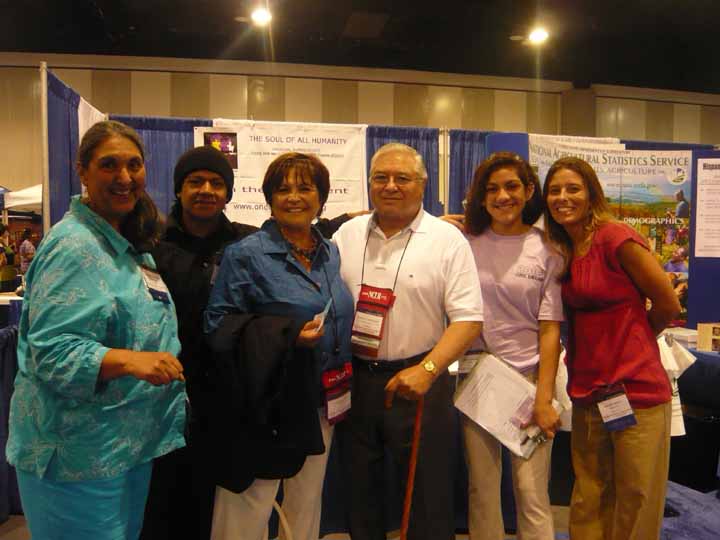
Any support, inquiries, etc. that you wish to offer at this time may be directed to the President of the Friends of the Moraga Adobe, Kent Long 
It is early in the process and Kent can't provide a detailed action plan, but I will keep you posted. At this time, the group is pursuing definitive info about the title and ownership. Of course, we are trying to figure out a pathway of preservation, via city, county, regional or other jurisdictional possession. this letter is just a part of the effort. Please forward this to others in LC; as you know we don't have a group email capacity until it has gone through procedural review, which is fine with me.
As there is an ancient spring, it's likely that there were animals and hunters at the site. And because there were Indian servants on the premises, it's likely that there is a burial spot somewhere on the property. Most of the Moraga family, including my direct kin, are buried over the hill at St. Mary's Cemetery in Oakland. I can't believe that there isn't archaeological heritage involved beyond the obvious.

Thanks, Primo Lance
Lance Beeson lbeeson56@sbcglobal.net 
Sent by Lorri Frain  lorrilocks@sbcglobal.net


Journey of the Plumed Serpent 
by Eddie Martinez


Editor:
  It is with great joy that I share the introduction to a marvelous work by artist Eddie Martinez. Eddie has applied his artistic talents to presenting the story of Mexico's earliest greatness with accuracy and respect in Journey of the Plumed Serpent, ©.  Eddie decided to mount the entire work of  Journey of the Plumed Serpent on his website.  

"I want to make the historic information available to everyone, as quickly and smoothly as possible.  We need to tell our own stories. We can't count on non-Hispanic. It is our history and we should be the ones that share it."  

We are blessed that Eddie is an artist with a passion for history.  


For more on “Journey of the Plumed Serpent” click on:
http://www.eddiemartinezart.com/quetzalcoatl/plumedserp/plumedserpent.htm

José-Luis (Joe) Gonzalez, painter, muralist, sculptor, restorer, and art administrator: http://www.goezart.com/default.htm
Mexico Pavilion: http://www.eddiemartinezart.com/archives/mexpav.html
 
“Return of Quetzalcóatl”:
http://www.eddiemartinezart.com/quetzalcoatl/retrn_qutz/Quetzal.htm
 
William Douglas Lansford: http://www.williamdouglaslansford.com/
 
Eddie welcomes comments, write to: 
e.martinez1512@gmail.com


BUSINESS

Hispanic Online Activity Skyrockets
San Ildefonso Pueblo purchases trading post


Study: Hispanic Online Activity Skyrockets
By Rob Kuznia
HispanicBusiness.com, April 17, 2009


The number of Hispanic people using the Internet skyrocketed last year, growing at nearly four times the rate of the rest of the American population. That is the conclusion of a study released Thursday by comScore, Inc., a leader in measuring the digital world.

The Hispanic online population reached a record 20.3 million visitors in February 2009,
representing 11 percent of the total U.S. online market, according to the study.

The total amount of time Latinos spent online increased 6.9 percent in 2009, or nearly 3.9 times faster than the total U.S. online population. The total pages consumed grew 6 percent, or 3.6 times faster than the total U.S. population.

However, evidence suggests Latinos on the whole are spending less time online than other users.Although they represent 11 percent of the total U.S. online audience, they account for just 9 percent of total time spent online.

This might have something to do with how the most frequent users seem to be teens.
Eighteen percent of the Latino visits went to sites categorized by the researchers as “communityteens.” This was followed by “Gaming Information” at 13 percent. Other entertainment- and leisure-related categories were heavily represented on the list, including Radio (13 percent), Multimedia (12 percent), Discussion/Chat (11 percent), Instant Messengers (11 percent) and Music (11 percent).

“It’s well known that the Hispanic Consumer Market is a growing and increasingly important segment to advertisers and marketers,” said Jack Flanagan, executive vice president of comScore Media Metrix, in a statement.

“Though U.S. Hispanics are less engaged Internet users on average, they do show a predilection for communication and entertainment online — high engagement activities that offer a potentially strong marketing opportunity.”

Received from Clips 4.20.09
Estrada Communications Group, Inc.
13729 Research Boulevard, Suite 610
Austin, TX  78750
Tel: 512.335.7776 / Fax: 512.335.2226
Website:
www.estradausa.com


San Ildefonso Pueblo purchases trading post
Trading post gets face-lift


http://www.indianz.com/News/2009/013139.asp
 
San Ildefonso Pueblo purchases trading post
Monday, February 16, 2009
Filed Under: Business 

San Ildefonso Pueblo in New Mexico has reopened and renovated an old trading post on the reservation. Cottonwood Trading Post began as Mr. Crow's about 30 years ago. It was sold to the late brother of former Interior secretary Bruce Babbitt before landing in the tribe's hands a couple of years ago.

The tribe cleaned up the interior and the post continues to offer traditional arts and crafts and ceremonial regalia. "We are trying to use the positive things that we have to create economic value," manager Cavan Gonzales told The Santa Fe New Mexican.

The tribe hopes to reconnect with some of the trading post's customers. We've been working our tails off to let people know this place is still here," said Leanna Martinez.
 
http://www.santafenewmexican.com/Local%20News/16-COTTONWOOD

Trading post gets face-lift

Phaedra Haywood | The New Mexican  2/15/2009 - 2/16/09

Cottonwood Trading Post, once an enclave of Anglo ownership in the middle of San Ildefonso Pueblo, is back in the hands of the pueblo.

The Trading Post was opened about 30 years ago by Bill Crow. It sold Native American-made arts and crafts to tourists, and groceries to the people who live at the pueblo.

"Back then it used to be called Mr. Crow's," said Leanna Martinez, a young San Ildefonso Pueblo woman who works at the Trading Post. Martinez said she used to come to the trading post with her parents to buy sacks of candy from Crow. "I just remember he used to tease," she said. "It used to be a dark, old, wooden trading post."

Cavan Gonzales, 38, who manages the Trading Post, said his grandfather and Crow (both veterans of World War II) were friends. "It was a homestead to begin with," Gonzales said.

"We've been trying to find stories from people who remember how Mr. Crow came to be here," Martinez said.  About 15 or 20 years ago Crow sold the property to Joseph Babbitt (brother of former Secretary of the Interior Bruce Babbitt) and his wife, Judith. Joseph Babbitt died about five years ago. His wife kept the trading post open for a few years, but later sold it to the pueblo and moved away.

The trading post was closed for about a year before the pueblo reopened it in August. It's still housed in the same adobe building, but most everything else has changed.

Cottonwood is no longer a dark rustic looking place, where groceries shared shelf space with pots and blankets.  What used to be the Crow's living room looks like something one would find a block off the Plaza in Santa Fe: all polished wood and high-end pottery and jewelry.

One of the former bedrooms has become the Maria Martinez room, an homage to the world-famous San Ildefonso Pueblo potter credited with reviving the distinctive black-on-black pottery the pueblo is known for today. A chart on the wall diagrams the late potter's family tree. Gonzales is her great-grandson. A glass case houses a Maria Martinez plate, on loan from a collector from Laguna Beach, Calif.

Gonzales said other pueblo residents own pieces of the coveted black pottery, "but those are their own." Cottonwood does sell pottery created by Maria Martinez's granddaughter and other family members.

The highly polished black pots etched with spiders and inlaid with turquoise and coral share shelf space with pots made by more than 30 other potters from San Ildefonso and other New Mexico Pueblos.

The trading post also sells jewelry, paintings, etchings, fetishes and kachina dolls, all made by Native Americans, all handpicked by Gonzales and Martinez.

The Cottonwood Trading Post also carries the ceremonial regalia used in the pueblo's dances and rituals.

"We are trying to use the positive things that we have to create economic value," said Gonzales. "The artists appreciate the attention that their work gets from tourists. And it keeps our culture alive. They are all beautiful and individual pieces, and they all need good homes. That's what I believe. You go with your heart, and you hope for the best."

The only thing the shop carries that isn't Native made is Pendleton blankets.

There isn't much drive-by traffic at the end of the dirt road where the trading post is located. But Leanna Martinez — who is 24 and has worked for the tribe in some capacity since she was 14 — said she's trying change that. "We've been working our tails off to let people know this place is still here," she said. She's working on a brochure that will be placed at other tourist destinations in Santa Fe and surrounding areas.

Gonzales said about 50 percent of the people who come into the trading post have been there before.

"It's totally different now," said Dick Keeffe, 79, a Santa Fe resident who stopped in last week with his wife and a friend visiting from New York City. "It's bigger and airier. More like a gallery. It used to be a real trading post. Well, it looked like one anyway."

Contact Phaedra Haywood at phaywood@sfnewmexican.com.

Dorinda Moreno
fuerzamundial@gmail.net


EDUCATION

Dream Act
Data of Importance to Parents
13-Year-Old Pilot Flies 3,671 Nautical Miles
Dropouts Cost CA Cities Millions
Hispanics Become More Prevalent on College Campuses


DREAM ACT

 
The Development, Relief and Education for Alien Minors Act (The "DREAM Act") is a piece of proposed federal legislation that was introduced in the US Senate, and the US House of Representatives in March 26, 2009. This bill would provide certain immigrant students who graduate from US high schools, are of good moral character, arrived in the US as children, and have been in the country continuously for at least five years prior to the bill's enactment, the opportunity to earn conditional permanent residency. The students will obtain temporary residency for a lapse of six years. Within the six year period, a qualified student must attend college, and earn a two year degree, or serve in the military for two years in order to earn citizenship after the six years period. If student does not comply with either his/her college requirement or military service requirement, temporary residency will be taken away and student will be subjected to deportation.

Text Source: Wikipedia, the free encyclopedia
Photo: 2008 National Council of La Raza, sent by Dorinda Moreno shown with OneDream students in 2008.
'School the Youth On Truth', Barrio Station and FuerzaMundial (Concilio Mujeres) Comadre y Compadre circle.
fuerzamundial@gmail.com


DATA OF IMPORTANCE TO PARENTS

 
     --   Workers with a high school degree earned an average of $31,286 in 2007, 
while those with a bachelor's degree earned an average of $57,181.

       --   The race and Hispanic origin data show that 53 percent of Asians in the U.S. had a bachelor's degree or more education. For non-Hispanic whites, it was 33 percent; for blacks; it was 20 percent; and for Hispanics, it was 13 percent.
 
Current Population Survey (CPS) from 2008 Statistics
Sent by Roberto Calderon, Ph.D. 
beto@unt.edu


Breean and the Flying Farfans
13-Year-Old Pilot Flies 3,671 Nautical Miles


Breean Farfan isn't old enough to drive to the Compton airport from her home in Bellflower, but the flying Farfan piloted 31hours to Oshkosh, Wis. and back. She reached her lofty goal of flying to Wisconsin and attending the Experimental Aircraft Association's (EAA) Young Eagles Camp with some hard work and support from her family. 
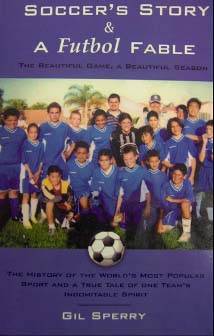
The Bellflower teenager needed $7,000 to cover round-trip expenses. So three months earlier she started a fund raising campaign that included sending out hundreds of letters and press releases.


Dennis Lord, of the L.A.County Aviation Commission, says Breean Farfan “is well on her way” to attending the Air Force Academy.

"I would have never been able to do this flight without my family," said Breean, a member of the local EAA chapter. "My little brother did the envelope sealing and he got lots of paper cuts, but he never complained. He was happy to help. And my sister was the main one who gave me the courage and hope to keep going. She's my best friend."

The family raised over $5,000 and the camp waived her tuition. All she had to do now was fly the small Cessna 172 across seven states. "The hardest part of the flight was going over the Rocky Mountains because it's so bumpy and the air is not steady," said the young pilot. 

"At one point I would be flying straight and level, then I would have a cross wind and my plane would be turning to the right, but inside the cockpit I'm turning hard left… So that was a little challenging, but I had fun the whole time."

Breean has "extraordinary poise and a willingness to learn," said Dennis Lord, a  commissioner with the County of Los Angeles Aviation Commission and a member of the local EAA chapter. "She understands the techniques and concepts, which all translates to a very poised and confident person in the cockpit."

One of Breean's goals is to attend the U.S. Air Force Academy and one day pilot the stealth aircraft F-22 Raptor. Lord says he can help her achieve her goals, but he may have an entire
flock of flying Farfans under his wing. Breean's sister and two brothers want to follow in their big sister's footsteps, or should we say flight pattern.

One brother already has eight hours of flight time logged. Breean does have some advice for her siblings and all youngsters. "If you work hard on what you want, and stay
focused, and stay in school, you can do whatever you want," concluded the first flying Farfan. 

Dennis Lord, of the L.A. County Aviation Commission, says Breean Farfan “is well
on her way” to attending the Air Force Academy. Breean Farfan (at top) isn’t the only Flying Farfan. Just about the entire family flies, and one of her brothers has logged eight hours

Sent by Rafael Ojeda


Dropouts Cost CA Cities Millions
By Maureen Magee
Union-Tribune, April 12, 2009


SAN DIEGO, CA — Dropping out of school might seem like the easy way out for teenagers
who feel buried by bad grades and personal problems. But ditching out on school without a diploma passes along a multibillion-dollar burden to taxpayers, according to a report issued last week.

The California Dropout Research Project estimates that the teenagers who drop out of school in San Diego during an average year cost city taxpayers a total of more than $534 million over their lifetimes. Dropouts in Chula Vista cost nearly $137 million.

Compared with high school graduates, dropouts have higher rates of unemployment, lower
earnings, poorer health and higher mortality rates. They are also more likely to commit crimes, spend time in jail and rely on public assistance.

Based at the University of California Santa Barbara (UCSB), the dropout project studied 17
cities. Statewide, 123,651 dropouts from 2006-07 will cost California $24 billion, the report estimates. Some 3,115 students dropped out of middle and high schools in the city of San Diego in 2006-07. San Diego’s high schools awarded diplomas to 10,763 students, which is more than three graduates for every dropout.

In Chula Vista, 797 students dropped out of middle and high schools during the 2006-07 school year. The city’s high schools graduated 3,331 students.

Received from Clips 4.20.09
Estrada Communications Group, Inc.
13729 Research Boulevard, Suite 610
Austin, TX  78750
Tel: 512.335.7776 / Fax: 512.335.2226
Website:
www.estradausa.com


Hispanics Become More
Prevalent on College Campuses


Hispanic students comprised 12 percent of full-time college students (both undergraduate and graduate students) in 2007, up from 10 percent in 2006, according to U.S. Census Bureau tables released today. Hispanics comprise 15 percent of the nation's total population.
 
School Enrollment in the United States: 2007 contains eight detailed tables based on statistics collected in the October School Enrollment Supplement to the Current Population Survey. The national-level data are shown by characteristics such as age, sex, race, Hispanic origin, family income, type of college, employment status and vocational course enrollment.
 
Women continue their majority status, comprising 55 percent of undergraduates and 60 percent of graduate students. Other highlights:
 
In 2007, 53 percent of Hispanic 4-year-olds were enrolled in nursery school, up from 43 percent in 1997 and 21 percent in 1987.

In 2007, 27 percent of the population 3 or older were enrolled in classes from nursery school to graduate studies.

More than half (59 percent) of all 4-year-olds and 39 percent of 3-year-olds were enrolled in nursery school.

Students in grades one through 12 made up 64 percent of people 3 and older enrolled in school.

Students 35 or older comprised 15 percent of people enrolled in college. They made up 7 percent of the full-time college students and 36 percent of those attending part time.
 
Kirk Whisler
Hispanic Marketing 101

email: kirk@whisler.com
voice: (760) 434-1223
Latino Print Network overall: 760-434-7474
web: www.hm101.com
Podcast: www.mylatinonetwork.com


BILINGUAL/BICULTURAL EDUCATION


Let us Remember the Histories of those who have Preceded us
by Cristina Kirklighter


Recently, this essay was presented at the Conference on College Composition and Communication (a college affiliate of the National Council of Teachers of English). 
Cristina KirklighterI interviewed Felipe, Carlota Cardenas Dwyer, and Roseann Dueña Gonzalez who were early Chicano/a leaders of NCTE/CCCCs.   Dr. Felipe Ortego suggested that Somos Primos readers would enjoy reading it.


The year is 1967.  I am in 2nd grade at an all white, but not really all white, elementary school in Alexandria, Virginia, a school named after the confederate soldier, Stonewall Jackson, whose photograph hung in the front entranceway.  Alexandria is too close to D.C., so its rich Southern heritage needed to remain steadfast in the face of elementary school children with the last names of Schwartz, Martino, Martinez, or the growing number of biracial and bicultural children.  Like many children in the 2nd grade, I read Scott Foresman's Dick and Jane's friends' workbook entitled "More Friends Old and New," a workbook that I have kept to this day.  Dick and Jane were white and so were their friends and relatives.  I saw plenty of children and parents who resembled my Southern white father and his relatives, but none that resembled my brown-skinned immigrant mother and her relatives from Honduras.  Even in my class, many of my friends didn't look like Dick and Jane and the ones that did sometimes made disparaging remarks to the immigrant and ethnic children.  I also remember an immigrant child crying because she couldn't understand English, and the teacher angrily telling us that she didn't know what to do with her.

In the mid to late 60's while I was reading and answering questions about Dick and Jane's white friends in my workbooks, National Council of Teachers of English (NCTE) African American, Chicano, Native American, and Asian American members understood that what I was reading did not speak to the experiences of many children like me.  A year after Dr. Nancy Larrick published her famous article in 1965 entitled, "The All-White World of Children's Books" in the Saturday Review of Literature, a small group of Chicano NCTE members formed the Chicano Teachers of English headed up by Felipe (Phillip) de Ortego y Gasca with Carlota Cárdenas Dwyer and Jose Carrasco joining him shortly afterwards in the late 60s.  If we go to the NCTE Centennial Celebration website which I would encourage all of you to visit and provide historical input on your own groups, you will see letters from Ernece Kelly to Nancy Pritchard (then NCTE Asst. Executive Secretary) stating that she would form a group of members to do the following:

" Assess the nature and breadth of the phenomenon of the continuing development of texts and tests which discriminate against cultural and racial groups

" Chart short- and long- range plans for acting on this two pronged problem of bias

" Involve themselves actively in the implementation of these plans on their local levels; this does not rule out members forming satellite groups to operate on  a national level

The NCTE Task Force on Racism and Bias in the Teaching of English and Textbook Review Committee subsequently published in November 1970 a report entitled "Searching for America." This important document is not on the NCTE Centennial Celebration website and should be, especially given its close alignment with the 1978 Guideline on Non-White Minorities in English and Language Arts Materials.  Let me read you some of the co-authors of this document to demonstrate how NCTE members of all races were working together for "Change":  Ernece Kelly, Jose Carrasco, Carlota Cárdenas Dwyer, James Lee Hill, Adolfo McGovert, Felipe Ortego, Montana Rickards, Alexander Boyd, Jeffery Chan, Frank Chin, Charles Evans, Sophia Nelson, and Antonio Valcarcel.  In November 1970, I was in an integrated DoD school in Germany.  These NCTE members made up of many races and cultures wanted me to open up new books.  They wanted me to see illustrations that represented my classmates and learn through these readings about their backgrounds.  They wanted to make me whole by bringing in the other half of my family. They wanted inclusion and fairness at many levels for children, young adults, and non-white academics. 

Today, I'm going to share with you my version of an NCTE Centennial Celebration that celebrates three early NCTE/CCCC Chicano and Chicana leaders who were and still are bravely committed to Latino/a education: Felipe de Ortego y Gasca, Carlotta Cárdenas Dwyer, and Roseann Dueña Gonzalez.  Certainly, there were others, such as Jose Carrasco, Kris Gutierrez, Tino Villanueva, Donald Castro, and Ralph Castillo.  Unfortunately, I was unable to interview these other individuals for this paper. 

Felipe Ortego, now 83 and still actively involved with his research and teaching at Western New Mexico University in Silver City, is originally from San Antonio, but traveled extensively in his early years since his father was a railroader.  His father was a Mexican immigrant, but his mother's family had deep roots in San Antonio that began in 1731.  He remembers some good natured ribbing from his Mexican relatives who claimed he wasn't really Mexican when he visited them in the summers.  At the University of New Mexico during the late 60's, where he was writing his dissertation in Chicano literature, none of his dissertation advisors knew anything about his topic. His first book, Backgrounds in Mexican American Literature (Univ of New Mexico 1971) was the first study in the field.  Felipe remembers the 1968 CCCCs when MLK was shot and Ernece Kelly rallied the Black Caucus and others to make changes at CCCCs and NCTE.  Shortly thereafter, Felipe along with Ernece Kelly and others, founded The Task Force of Racism and Bias.  In the April 1970 issue of College English, Richard Ohmann, the editor, published a Mexican American literature piece by a non-Chicano author named Gerald Haslam.  Ortego's article was rejected, and he wrote an eloquent letter to Ohmann in May 1970 that he later published entitled "Huevos con Chorizos: A Letter to Richard Ohmann."  This was during the time the Task Force was working on "Searching for America." Here are some quotes from his letter: "However, what really rankles is your comment that my piece on Chicano poetry is more than you want to publish on Chicano literature at this time since you've already accepted and plan to publish a piece on Mexican American Literature.  That's distressing since you wouldn't obviously, turn away, say, a piece on teaching Shakespeare because you already published a piece on that topic." Felipe says further down "Not to publish our expressions or to publish something about us by a non-Chicano is simply to perpetrate the worst features of racism and the colonial mentality that continues to permeate the country."  As Felipe pointed out in 1970 "there were only three Chicanos with Ph.D.'s in English teaching at the college level, and only a handful of M.A's teaching at both junior colleges and four year universities." 

Carlota Cárdenas Dwyer, also part of "Searching for America," joined NCTE,  in 1961 when she was an undergraduate junior.  Retired in San Antonio, she is heavily involved in her community.  She was asked to speak about the development of Chicano activism in literature and education (mainly textbooks) at San Antonio College.  Carlota grew up as a first generation Mexican American, and her family immigrated from Northern Mexico.  Her grandfather lived in Chicago, where he married his Mexican wife and started a family.   Carlota received her M.A. and Ph.D. from SUNY Stonybrook, and she also pursued a dissertation on Chicano literature situating it in American literature regionalism.  In the mid 70s, her dissertation committee knew nothing about Chicano literature, even Ruth Miller, one of her dissertation advisors and renown scholar in African American literature. While completing her dissertation, she also edited a collection with Tino Villanueva (now at Boston University) entitled Chicano Voices (Houghton Mifflin 1975).  Carlota worked closely with Roseann Dueña Gonzalez during the 70s on several initiatives, so I'll provide her biographical background and discuss some of their collaborations with Felipe.  Roseann was born in Phoenix, the last of four children, to Mexican immigrant parents.  Roseann's older siblings experienced the Americanization classes of the 1C program, where 60% of Latino/a children dropped out of school between 1919 and 1967.  Her mother immersed Roseann in English from an early age, so she wouldn't have to attend the 1C programs, and told Roseann she would be an English teacher one day.  Roseann received her M.A. from Arizona State and was recruited to the University of Arizona in 1973, where she received her Ph.D. in an interdisciplinary linguistics program.  During her Ph.D. studies and the heyday of Civil Rights, Spanish speakers, Navahos, and Asians felt their due process was denied in courts because they could not understand the legal proceedings.  A Tucson judge requested that she  study his courts, and, subsequently, her dissertation focused on assessing the oral/aural English proficiency of Spanish speakers in court settings.  Her research played a significant role in the signing by President Jimmy Carter of the Court Interpreter's Act, that mandated a certified court interpreter if language barriers were present.

The year is 1971.  Felipe, Carlota, and Roseann are at NCTE in Las Vegas experiencing an incredible renaissance right after "Searching for America" came out.  They were smart, educated, articulate Chicanos/as fully prepared along with Kris Gutierrez and others to educate teachers about Chicano/a literature and students through workshops, seminars, and presentations. It was the conference, where the Task Force had created the "Criteria on Teaching Materials in Reading and Literature" and newspapers were covering it.  Paul B. Dietrick's "Project Access: What Sort of Tests are We Looking For?" had just come out and testing biases became a part of the NCTE conversations. Testing organizations were taking notice, and Carlota in subsequent years served on the boards of the Educational Testing Service, College Board, ACT, and National Board for Professional Teaching Standards. Felipe remembers toting hotel luggage carts full of books with the Totinem Books' publisher.  As he recalls, Chicano/a books were coming out of garage presses.  NCTE had given them book space, so they could sell their books. Later in San Francisco, members of the Task Force of Racism and Bias took top publishers to a closed room and angrily told them of their cultural deficiencies in their textbooks and anthologies.  Some publishers and editors, such as Ed Farrell of Scott Foresman, began the process of inclusion.  Eventually, Carlota served as editor of the America Reads series of Scott Foresman, for the 1979 integrated editions grade 7 - 12.   Roseann put together a NCTE regional conference in Arizona, and Carlota remembers feeling that her Chicana and English teacher identities came together.  Not only did Felipe, Carlota, and Roseann experience validation through their work with NCTE and CCCC, but they knew that Latino/a children, young adults, and college students would find validation in the literature, textbooks, and tests that represented them. They wanted them to succeed in education through positive identities, and empower others through the sharing of knowledge. As we convene in this room, let us remember the histories of those who have preceded us.  They have made us who we are today.

Cristina Kirklighter
(361) 825-2263

BOOKS

The Inaugural Américo Paredes Literature and Letters Award
World War II and Mexican American Civil Rights by Richard Griswold Del Castillo 
     Book review of Griswold book: “Ok, We Fought, Now What?” by Katherine Cloer
Latinas in the United States: A Historical Encyclopedia, Three-volume encyclopedia 
     Edited by Vicki L. Ruiz and Virginia Sánchez Korrol, 

Soccer's Story and a Futbol Fable: The Beautiful Game, A Beautiful Season 
     by Gil Sperry
Latino/a Rights and Justice in the United States: Perspectives and Approaches
     by Jose Luis Morin
JUNE 1st Deadline: 2009 ALLA Book Award


The Inaugural Américo Paredes Literature and Letters Award
 
HONORING: Ana Castillo
Poet, Novelist, Short Story Writer, and Essayist
 
Tuesday, May 5, 2009 - 5:00 p.m. - 8:00 p.m.
AT&T Executive Education, Conference Center, Amphitheatre (Rm 204) 

For more information regarding this event, please call (512) 471-4557 or visit the CMAS web site at  www.utexas.edu/depts/cmas
 
Center for Mexican American Studies, The University of Texas at Austin
West Mall Building 5.102  1 University Station F9200  Austin, TX 78712
 (512) 471-4557  (512) 471-9639 Fax cmas@uts.cc.utexas.edu


“Ok, We Fought, Now What?”
Book Review of:  
Richard Griswold Del Castillo's 
World War II and Mexican American Civil Rights. 
2008  Austin: University of Texas Press.

by Katherine Cloer 
KatherineCloer@my.unt.edu

Dr. Roberto R. Calderón, 5110 seminar 
February 19, 2009 
 

In the book entitled World War II and Mexican American Civil Rights, Richard Griswold Del Castillo writes about the effect World War II had on the Mexican American community. Griswold Del Castillo asserts that World War II was a watershed event for Mexican Americans. Following World War II, Mexican Americans were no longer content with second class citizenship. Mexican Americans served and died in the military disproportionately to their numbers. The military offered young men a chance at a better life, at the same time it opened their eyes to the injustices they were subject to at home. Griswold Del Castillo writes this book to illustrate how the United States government, and indeed society in general, dealt with Mexican Americans during and following the war and how Mexican Americans themselves began to forge their own identities and carve a socio political and economic identity; one that would not tolerate second-class citizenship. 

Griswold Del Castillo begins by providing background before the start of World War I. He describes how Mexicans (meaning all people of Mexican descent) were “assumed by white Americans to be members of a ragged race of inferiors provided by providence to do the region’s most unpleasant work.” (7) He maintains there was a caste system that existed that held people of Mexican heritage in a constant state of dependency and inferiority. Griswold Del Castillo argues that it was this point, around 1940-1941 that Mexicans born on American soil deduced they would have to decide their own fate. “Recognizing that life in the United States was what they would have to make of it, a growing minority were more interested than their parents had been in challenging the status quo through politics.” (18) 

Further on, Griswold Del Castillo illustrates how the Federal Government was forced to take notice of this growing segment of the population. “Three-and-one-half million people were suddenly ‘discovered’ and their wants made part of the national security agenda.” (19) World War II saw more Mexican Americans than any other ethnic groups serving in the military. He explains that though the war created opportunities, these were not distributed equally among the ethnic groups. The government’s weak attempt at intervention is illustrated through Executive Order 8802, which established the Committee on Fair Employment Practices, later dubbed the Fair Employment Practices Committee (FEPC). The FEPC was only able to expose unfair practices, not really make any pertinent changes. Politics saturated the FEPC, and only groups with strong economic or political power could bring any improvements to fruition. Finally, Griswold Del Castillo maintains that “The plight of the Mexican Americans (and any other minorities) was seen as a threat to wartime unity and efficiency, not as an issue of human rights. The war effort, not the group’s welfare was the ultimate justification for any policy initiatives.” (Griswold Del Castillo 32-33) The war created opportunities that tended not to filter down to the Mexican American, and outright racism that did. 

Griswold Del Castillo highlights this racism and the growing discontent within the Mexican American community. He presents the cases of Sleepy Lagoon and the Los Angeles Zoot Suit Riots to illustrate the hostility and unrest evident at this time. It is especially significant to note that Griswold Del Castillo emphasizes the role the media and Washington D.C. played in these affairs. The newspapers as well as Washington de-emphasized the racial aspect of these incidents, and instead portrayed the events as isolated “youth gone wrong” incidents. ”Those more familiar with the Mexican American situation did not accept the official explanation.” (47) The League of Latin American Citizens (LULAC) and George I. Sánchez, viewed these as racially centered attacks and began to gather forces to combat perceived injustices and unequal treatment. 

In chapter four, Griswold Del Castillo tackles the main thesis of the book, which is the manner in which Mexican Americans formed their identity coming out of World War II. America could no longer defend racism at home, while fighting it abroad. “”For all Americans, it became increasingly evident that this war, fought to eliminate racism abroad, also meant that discrimination at home was morally wrong.” (49) Mexican Americans came back from the war and were treated as badly as they had been prior. This was something they could no longer tolerate. Griswold Del Castillo raises the issue of a double consciousness here. The chapter concludes with a description of the how the various factions of Mexican Americans from Texas to California to New Mexico began to band together to form a more cohesive unit. Mexican Americans from all over began to see that they were in similar situations. “..after 1945, along with the belief in patriotism, formed a strong memory that could unite people who previously thought they had little in common. This became a core strength of the Mexican American civil rights struggle.” (73) 

Griswold Del Castillo also discusses the various leaders of the Mexican American civil rights movement. Political efficacy became a high priority for this new “Mexican American Generation”, following World War II. Leaders such as Luisa Moreno, George I. Sanchez, and LULAC began attacking labor practices as well as segregation in schools. “Thousands of Mexican Americans gained experience in demanding civil rights within the labor movement.” (94) This experience extended to other groups like LULAC and the GI Forum. Groups like the American Council for Spanish-speaking People, the Alianza Hispano-Americana, the Mexican Civic Committee, and various labor unions sprang up in defense of Mexican Americans. These groups demanded equal treatment and first-class citizenship rights. “But what was new, after 1945, was a recently solidified confidence in their right to equal treatment, especially since Mexican Americans had sacrificed for their country.” (105) Mexican Americans were taking leadership roles and changing the status of Mexican Americans. 

In the epilogue, Griswold Del Castillo and Steele both assert that there was a strong base for struggle within the labor movement, which extended to society in general. Following World War II, Mexican Americans asserted themselves and demanded social equality as well as political efficacy. They conclude by stating that it was these Mexican Americans who came of age in World War II that created the base to affect change in the 1960’s Chicano Movement. 

Griswold Del Castillo writes this book in tribute to and in order to finish the work begun by Richard Steele. The book is arranged chronologically and utilizes both primary and secondary sources. The appendix is especially helpful in providing primary documents to illustrate the Mexican American struggle for identity. The appendix provides first-hand accounts by Carlos Castañeda regarding the FEPC, as well as affidavits of accounts of discrimination in Texas during World War II. Through personal accounts as well as government initiatives and documents, Griswold Del Castillo successfully argues that although World War II was a watershed event for Mexican Americans, the struggle for civil rights did not begin there. He illustrates that struggle took place first through labor; ”The struggle for economic civil rights was expressed through countless strikes, conflicts with the police, deaths, slowdowns, formal complaints, and lawsuits.” (106) then through social and political groups, which formed to play an active role in deciding what a Mexican American would be defined as. “The emergence of the term ‘Mexican American’ in official discourse signaled a heightened expectation of inclusion in the American project, and this, in turn, would lead to more coordinated actions to achieve civil rights in the postwar era.” (ibid.) Following World War II, the notion of dual consciousness would not allow a Mexican American to accept second-class treatment any longer. 


A Look at Soccer's Story & A Futbol Fable:

The Beautiful Game, A Beautiful Season.  
by
Gil Sperry

 
San Diego Sports: Author Gil Sperry, Turns Chula Vista Kids Into Heroes
A Look at Soccer's Story & A Futbol Fable By Dan McLellan
http://www.sandiego.com/index.php?option=com_sdca&target=26fedea5-7f16-48a8-84b9-
d9b3493b746b
     Feb 19th, 2009


A group of students at Valle Lindo Elementary in the Chula Vista’s Elementary School District may not be a likely source of inspiration for two Hollywood screenwriters. However that is exactly what has happened for 15 boys and 5 girls in grades 4 through 6, thanks to author Gil Sperry’s newest book Soccer’s Story & Futbol Fable: The Beautiful Game, A Beautiful Season.

Sperry’s new book is really three for the price of one in an easily read 105 pages. The first segment of his book gives a brief history of the game of soccer by quickly teaching how the game evolved around the globe in its various forms through the ages. The third segment serves as a valuable resource guide for those who are interested in coaching soccer. 


The guts of the book lie in the second segment, the inspiring true story of the Valle Lindo Eagles. The Eagles are a co-ed soccer team whose tale may become the subject of a major motion picture.

Sperry introduces this story with its conclusion: the Eagles playing in the championship game at the Olympic Training Center in Chula Vista. Therefore, the story of Sperry’s Eagles is far less about the outcome of any one game than it is about a journey that Sperry and his team went on together.

A glimpse of Sperry’s own history will better illuminate the story. In the fall of 1960, Sperry was exposed to organized soccer for the first time as a basketball player for Kenyon College in Ohio. Kenyon hired Bob Harrison as the new basketball head coach, a former NBA player who had won four championships with the then Minneapolis Lakers. The Kenyon team quickly learned that he had also been hired to coach a new sport, soccer. Harrison informed them that to continue to play basketball in the spring, they must first get conditioned by playing soccer in the fall.

Thanks to Coach Harrison, Sperry developed a love for soccer that has lasted a lifetime. In 1977, the California Interscholastic Federation (CIF) added women’s soccer as an official sport. Sperry received the position of “walk-on” coach for Miraleste High School of Rancho Palos Verdes School District. Sperry coached this new women’s soccer team to the first two (CIF) state titles. Sperry also coached championship-caliber teams at the college level and for the newly formed American Youth Soccer Organization (AYSO). 

Eventually the responsibilities of life took Sperry away from soccer. In 2006, nearly a decade into his retirement from the business world, Sperry was looking for something positive to do with his time in retirement. Going back to his educational roots, he decided to take on a part-time job working in Chula Vista’s Elementary School District as a Physical Educational Specialist. This was a job that basically involved running exercises for students for two 25-minute periods per week.

In September 2006, Sperry was approached by Valle Lindo teacher Marissa Umpstead who had coached the Eagles co-ed soccer team the previous spring for their inaugural season. Sperry told her that he really was not interested in coaching again, but by December no other candidates had stepped forward. Reluctantly, Sperry accepted the position as an unpaid volunteer soccer coach.

In his role of Physical Educational Specialist, Sperry noticed that Valle Lindo did not offer a large talent pool to field a competitive soccer team. Many of the children were out of shape, lacked fundamental skills, and had no concept of team play. Umpstead and Principal Sabala tried to take the pressure off Sperry informing him there were no expectations for this second season.

Undeterred by the gloomy forecast, Sperry’s desire to win immediately took over and he set out to produce a competitive team. Shocked to discover that the previous championship “co-ed” team had no girls on it, Sperry introduced a new rule into the league that each team must have four girls on the roster and at least two on the field at all times.

With only a few short exercise periods, Sperry evaluated students on their soccer skills. Only three students’ skills showed potential and two of them were not even interested in trying out for the team. Sperry went ahead with tryouts and comprised a twenty member team including thirteen fourth and fifth graders and five girls.
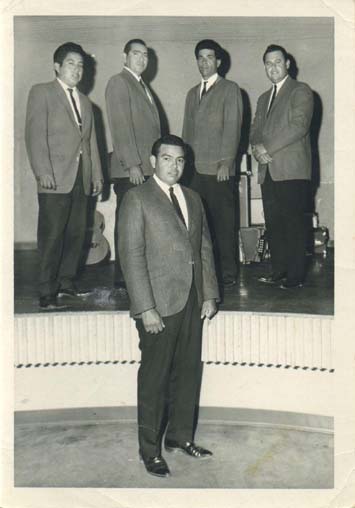
This is where the real story begins. The beauty of Sperry’s writing lies in the story of his team struggling to overcome obstacles. Sperry treated the kids that comprised the Valle Lindo Eagles soccer team as true Olympic Heroes. The kids responded to that respect and in the process they did a lot more than win soccer games, they learned valuable life lessons.

Eagles Goalie Jenny Rodrigues
Copyright©2009 sandiego.com, Inc.


Sperry’s book is so compelling that it has already sparked the interest of screenwriters Robert Conder and Steve Gehrke (Script Supervisor for The Dark Knight). Together they are collaborating on a screenplay which is currently titled The Beautiful Game, A Beautiful Season.

Soon Sperry’s book will be available through traditional sources. However, the first $10,000 in profits from direct purchases will fund the Chula Vista Youth Soccer League where the Valle Lindo Eagles compete. 

You can contact Sperry directly by e-mail at gilsperry@yahho.com This e-mail address is being protected from spam bots, you need JavaScript enabled to view it or by phone at (619) 887-9288.


Sports Subject : Soccer  
About the author: Dan McLellan is a San Diego native and Charger season ticket holder since 1993. He also has a weekly Charger podcast at www.DanMcLellan.com.
More by this author.


Latinas in the United States: A Historical Encyclopedia
 
Three-volume encyclopedia 
Edited by historians Vicki L. Ruiz and Virginia Sánchez Korrol 


Nota:
Here's an exciting new website posted to the Puerto Rican Studies Association listserv list.  The website as is stated below is based on the award-winning three-volume encyclopedia edited by historians Vicki L. Ruiz and Virginia Sánchez Korrol, Latinas in the United States: A Historical Encyclopedia (Bloomington: University of Indiana Press, 2006).  We congratulate all involved in this virtual scholarly project including website designer and producer Carlos A. Cruz.  Please be sure to circulate this notice far and wide as the material may be used in all kinds of educational settings including the "pre-collegiate and college audience," as stated in Virginia’s brief introduction cited in the original post.  Vicki has been a longtime subscriber to the Historia Chicana [Historia] listserv list.  Many others subscribed to this listserv list as we know also contributed multiple entries to the encyclopedia.  And as we’ve said before, if your campus or public libraries do not yet own a set of the three-volume printed encyclopedia be sure to direct them to purchase one promptly.  

This now virtual historical material (essays, photographs, etc.) may be accessed at:

http://depthome.brooklyn.cuny.edu/latinashistory  
http://depthome.brooklyn.cuny.edu/latinashistory/latinashistory.html


Adelante, Roberto R. Calderón

beto@unt.edu


Latino/a Rights and Justice in the United States: 
Perspectives and Approaches
By José Luis Morín
jmorin@jjay.cuny.edu

Second edition 

From the Foreword by Richard Delgado, University Professor, University of Seattle School of Law:  “Latino Rights and Justice in the United States brings history, theory, and case analysis to bear on the story of Latinos’ efforts to obtain fair treatment from the American judicial system.”

Praise for the previous edition:   “ . .. . a fine overview of a major phenomenon in contemporary American society.”  —D.O. Friedrichs, CHOICE 

“Latino/a Rights and Justice is an excellent primer on who Latino/as are in the United States, the discrimination they have faced, and some of the legal issues that they must address.”  —Kevin R. Johnson, Latino Studies

“ . .. . the book contributes to a better discourse and understanding of how Latinos have asserted their civil, constitutional, and human rights.”
—Juan Cartagena, CENTRO: Journal of the Center for Puerto Rican Studies

José Luis Morín is Interim Dean of Undergraduate Studies and Professor in the Latin American Latina/o Studies Department at John Jay College of Criminal Justice.
2009/ 376 pages / $40.00 paper / ISBN: 978-1-59460-406-5
Carolina Academic Press 1-800-489-7486
700 Kent Street, Durham, NC 27701
Order on line and save 10%: orders@cap-press.com 


ANNOUNCING

2009 ALLA BOOK AWARD

Association of Latina and Latino Anthropologists

American Anthropological Association

Nominations must be received by 1 June 2009.


Description of Prize

The Association of Latina and Latino Anthropologists (ALLA) invites nominations and submissions for the 2009 ALLA Book Award. The award will be for the best book published in 2008 that addresses an important anthropological concern related to US Latinas/os and their communities. The prize will be presented at the American Anthropological Association meeting to be held in Philadelphia, PA, 2-6 December 2009. There are no restrictions on the number of nominations per press. We will not consider translations, reprints, re-editions of previously published works, edited volumes, or multi-author collections of essays.

Nominations will be reviewed by a committee of ALLA members.

Procedure for Nominations

Publishers or authors wishing to submit books for consideration should send four copies of the book, one to each of the four committee members at the addresses below. All nominations must be received by 1 June 2009. For additional information, you may contact committee chair, Vilma Santiago-Irizarry, vs23@cornell.edu.

Pablo González
2005 Alfreda Blvd
San Pablo, CA, 94806-4745 USA

Gilberto Rosas
Center for the Study of Race, Politics, and Culture
and Department of Anthropology
University of Chicago
5733 S. University Ave.
Chicago, IL 60637

Lynn Stephens
Dept of Anthropology
1218 University of Oregon
Eugene, OR, 97403-1215 USA

Vilma Santiago-Irizarry (chair)
Cornell University
265 McGraw Hall
Ithaca, NY 14853 USA

**********************************************************
Vilma Santiago-Irizarry               Associate Professor
   265 McGraw Hall                        Anthropology
   Cornell University
   Ithaca, NY 14853               vs23@cornell.edu
   (607)255-6773
   fax: (607)255-3747

Director,  Latino Studies Program|
434 Rockefeller Hall 607/255-3197
fax: 607/255-2433
http://latino.lsp.cornell.edu
       
Secretary and Section Co-Editor, AAA Society for Humanistic Anthropology Convenor-elect, AAA Section Assembly
http://falcon.arts.cornell.edu/anthro/faculty/faculty_VSantiago-Irizarry.php


CULTURE

Donaciano (Chano) Cadena Y su Conjunto by Tom Saenz
Who is Alex Ramon?
UCLA Launches world's top online archive of Mexican, Mexican-American recordings
Another Elder has fallen: Herminia "Tecihtzin" Acosta Enrique, presente!


DONACIANO (CHANO) CADENA Y SU CONJUNTO
By Tom Saenz
 

Chano Cadena was born in the rural town of Palito Blanco, Duval County, Texas in 1937.  Shortly thereafter his family moved to nearby Alice, Texas where he lived most of his life.  Alice is also my hometown and most likely we crossed paths at one time or another as we were growing up.    Later, in the mid 1950's when I was in my teens,  I do recall hearing the music of El Conjunto Cadena  on our home radio.  Our family having been migrant workers eventually settled in Grand Rapids, Michigan and in so doing we contributed in exporting  the music of El Conjunto de Chano Cadena to that area.
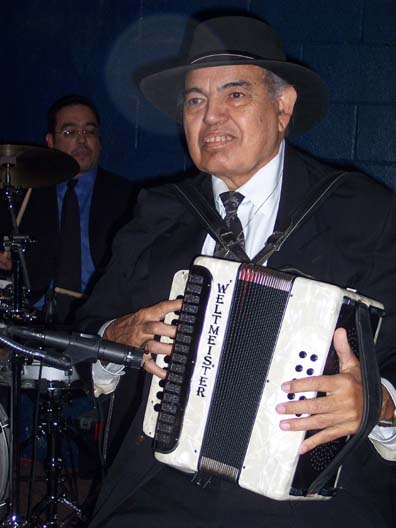
In recent years when I started researching my family genealogy and history, I traveled to Alice and surrounding areas and on one occasion I attended the annual Feria de Concepcion ( La Chona) held in Concepcion, Duval County,  Texas.  The Feria is generally a Friday-Sunday weekend event and it is attend by thousands of Primos who go there to meet and share with other Primos who have their roots in the Concepcion area.  The event serves well in bringing families together to share food, drinks, music and family stories.  Most of all, I think people go there to re-energize themselves for it is there where their ancestors first settled in the mid and late 1800's.  I guess one can say that Concepcion is the place where the "Mother Plant" is situated!

At night the Feria offers dances and on this Saturday night  the music was by non-other than El Conjunto de Chano Cadena.    Chano is a native of the area and he has the pulse of the people and community.  Chano's music is about the people of South Texas and while it is entertaining, it also tells the story of the Tejano Community.   I recently spoke with Chano Cadena and he told me that his music was in large part about "Los Piscadores" (farm workers who picked the crops).   Chano and his Conjunto played locally in the Alice and surrounding towns but he is well known throughout Texas.  When the farm workers ventured out of the area to follow the crops, Chano Cadena followed them to West Texas, and other states such as Florida, New Mexico, Colorado, California, Michigan, etc.  The piscadores were poor and suffering people and they looked up to Chano and his music to entertain them and at the same time bring them hope and comfort during struggling times.

In the year 2006 our Gonzalez family (maternal line) held their second Tomas Gonzalez Reunion in Alice,  Texas.  As chairman of the reunion Coordinating Committee, I recommend El Conjunto de Chano Cadena for the evening entertainment and dance.  Many of us at the Reunion had our origins in Concepcion and Alice areas and could well identify with Chano's music.  It was great listening  and dancing to the old rancheras, corridos, boleros, redobas, and  polkas that  were popular when we were growing up!  Chano felt right at home with folks at the Reunion and so were those present!  Chano was so honored to be with us and at the end of the event he gave me two of his popular CD's: "La Pajarera" and "Mi Mariquita Linda" -I will forever cherish them!

In my recent conversation with Chano Cadena he also related that he had formed his first Conjunto Cadena in 1954.  He went on to tell me that music talent has always been a family tradition.   He mentioned his son Omar who plays the drums and his brother Ernesto and his son Ernesto Jr.  At least  two other nephews have been a part of Chano's  Conjunto.  A popular addition to the conjunto has been Ruby Franco, vocalist.  While the composition of the Conjunto Cadena has gone through some changes over the years, the name has remained the same with Chano Cadena as the leader. 

Through the years many Conjuntos have come and gone but in the case of Chano Cadena, he has been persistent and loyal to his fans, having played his music for an estimated 55 years.  During these years he has recorded numerous songs including   rancheras, corridos, rodeobas, polkas, boleros, guapangos, valses, etc..  To this day, Chano and his Conjunto remain active and are still performing for the Tejano Community. 
 
I invite you to browse the official Conjunto Cadena website where you will find a wealth of information on Chano Cadena and his music:  www.puroalice.com.

Below please find a biography of Chano Cadena by his son, Omar Cadena.
Tom Saenz
 
Biography Of Chano Cadena
By Omar Cadena

Donaciano "Chano" Cadena was born on October 31, 1937, in Palito Blanco, TX on a ranch, a community 'muy chiquito' (very small), 14 miles south of  Alice.  The family would listen to phonograph records-78's of Narcisco Martinez and Lydia Mendoza, as well as tune in to Mexican radio stations from across the border. 

He began playing a toy accordion at about 10 years old. Immediately recognizing his son's talent, his father, Don Ignacio Cadena, sacrificed and bought him a real accordion and began taking him around the ranches to play for his neighbors.  They would walk miles to the ranches with his accordion in a pillow case.  Soon after, he was being taken around to the cantinas to play for the patrons who would pay him nickels and quarters. 

It was not until Chano  started going to school in Alice that he began to form a conjunto.  His first recordings were advertising jingles for a department store recorded with the Tejano music pioneer Armando Marroquin.  From then on, Chano recorded many times with Marroquin and his Ideal Record label as a session musicians. 

Shortly after Chano formed his own conjunto and his subsequent conjunto lineups, many other successful musicians such as Juan Sifuentes and Ruben Naranjo appeared on the Tejano Music arena.  In the late 1960's and early 70's, the conjunto reached its zenith in popularity and talent with a line-up featuring the vocal duo Tonio Vasquez and Fidel Cavazos. 

Over the years, Chano recorded for many regional labels like Nopal, Zarape, Sombrero, Lyra,
Norteño, ZAZ, Discolanda, Copa, Bego and El Pato.  The 80's and 90's brought another successful era as the conjunto recorded many successful albums with Beltran Garcia's Canasta label out of Kingsville, TX.
 
In 2001,  Chano was inducted into the Tejano R.O.O.T.S. Hall of Fame in Alice, TX, along with other contemporaries such as El Conjunto Bernal, Isidro Lopez and Ruben Vela.  In 2007, Chano was inducted into the Texas Conjunto Hall of Fame in San Benito, TX.   Chano continues to record and play to this day in and around South Texas. 
 
For more information on Chano Cadena and his Conjunto music, you can browse our website at: www.puroalice.com
 
Omar Cadena,
Chano's son


Who is Alex Ramon?

 
Alex Ramon is the star "Magical Zingmaster" in Ringling Bros. and Barnum and Bailey presents Zing Zang Zoom. Alex has performed for millions of people in 14 countries around the world. He toured the globe for 2 1/2 years starring in Disney LIVE! Mickey's Magic Show as a principal Illusionist. By age 18 Alex had already received National Recognition for his talents and was a recipient of the coveted Lance Burton Award. He has been named "San Francisco Bay Area's Best Stage Magician." Currently, Alex Ramon performs hundreds of shows each year in "The Greatest Show on Earth" and is the only magician to ever be the featured performer in a Ringling Bros. Circus.

Find him on Facebook and MySpace, and go to www.alexramonmagic.com


UCLA launches world's top online archive of Mexican, 
and Mexican-American recordings


The UCLA Chicano Studies Research Center announced today that the public can now access the Arhoolie Foundation's Strachwitz Frontera Collection of Mexican and Mexican American Recordings (http://frontera.library.ucla.edu) — the largest online digital archive of its kind.    

The archive includes more than 41,000 recordings and is a treasure trove of historical Spanish-language songs dating from the early 1900s to the 1950s.    

Joining UCLA in making the announcement were Los Tigres del Norte, the multiple Grammy Award–winning norteño group and major funders of the digitization of the Frontera Collection's 78 rpm recordings; the Arhoolie Foundation, whose president, Chris Strachwitz, collected the recordings; and the UCLA Library, which created and manages the online archive.    

"The Frontera Collection will be an invaluable resource for students, scholars and the public seeking to learn more about the Spanish-language musical heritage of North America," said Chon Noriega, director of the Chicano Studies Research Center and a film and television professor.    

Full-length versions of each song can be accessed from computers on the UCLA campus or by those accessing the campus network through its proxy server. However, due to copyright restrictions, only the first 50 seconds of each song will be accessible from computers off campus.  

In 2000, the Los Tigres del Norte Foundation donated $500,000 to UCLA to establish the Los Tigres del Norte Fund at the Chicano Studies Research Center . This fund provided major support to digitize about 30,000 78 rpm recordings made between approximately 1905 to 1955.  

"Los Tigres del Norte have not only made their own lasting contribution to popular culture, they have ensured that future generations will be able to appreciate and study the Spanish-language recordings made in the first half of the 20th century," Noriega said.    

Los Tigres del Norte bandleader Jorge Hernández said, "Los Tigres del Norte is very proud to have been a part of the preservation of so many historic recordings from our musical forebears.    

"This collection will provide the next generation of Mexican and Mexican American music artists with previously unimaginable access to our rich cultural history, and in doing so, will help them expand the appreciation of Spanish-language music even further in the future."    

Also in the archive are 45 rpm recordings dating from about 1955 to the 1990s, which the Arhoolie Foundation continues to digitize.    

The digitization process protects these rare and fragile recordings from being lost or damaged. It also allows the public easy access for the first time to the most popular and influential Spanish-language digital recordings of the 20th century.    

The Frontera Collection encompasses a vast array of musical and performance styles, including early corridos, boleros, sones, patriotic speeches and comedy skits.    

Among the collection's many gems are the first known recordings, in 1908, of the mariachi group Cuarteto Coculense in Mexico City ; the first recordings, in 1928, by Tejano music legend Lydia Mendoza and her family; and the first recordings, in 1937, by accordion pioneer Narciso Martinez.    

The singers and musicians who made these records helped popularize and preserve a number of traditions that constitute the roots of current Mexican and Mexican American music. Many of these records are one of a kind and were originally recorded by companies that no longer exist.    

Starting in the 1960s, Chris Strachwitz, president of the Arhoolie Foundation, scoured record stores, jukebox companies, radio stations and people's homes, largely in South Texas , to find records for the collection. Along the way, he also convinced record companies to sell him their 78 rpm records, which were no longer being recorded and were stored away in warehouses.  

"When I first heard Mexican ranchera music, I was just fascinated by these accordion players and their wonderful polkas," said Strachwitz, who initially ran across the music on a Santa Paula , Calif. , radio station in the late 1940s. "I couldn't understand the lyrics, but it had the same soulful feeling as other vernacular music."  

The collection includes records from such major labels as Victor, Columbia and Vocalion, as well as smaller, regional labels like Rio , Discos Universal, Ideal, Falcon and Orfeo.  Strachwitz and the late Guillermo Hernandez, a UCLA Spanish professor and noted corrido expert, introduced the vast collection to Los Tigres del Norte.    

Scholars throughout the nation are already using the archive for their research.   At UCLA, brothers Jorge and Luis Herrera, who also are pursuing musical careers, have used the archive both in their research and for their creative endeavors.    

Jorge, who is working on a doctorate in ethnomusicology, is writing his dissertation on how norteño and other traditional Mexican music styles changed when Mexican musicians crossed into the United States .    

Luis, who used the archive to complete his master's degree in Latin American studies at UCLA, said the brothers also have used the songs as a source of inspiration.    

"If it wasn't for the Frontera Collection, there's no way a common person could get their hands on this kind of music," said Luis, who belongs to the norteño band Los Hermanos Herrera. "It’s a little treasure chest of music that very few people know about."    

The Fund for Folk Culture, the National Endowment for the Humanities, the National Endowment for the Arts, the Grammy Foundation, the Lucasfilm Foundation and others also provided funding for digitizing the Frontera Collection.  

To view a video on the Frontera Collection, visit www.newsroom.ucla.edu/portal/ucla/electronicplay.aspx?id=66588&id=E0C5478

The UCLA Chicano Studies Research Center (CSRC), founded in 1969, supports faculty and students across the university and provides access to the community as well as scholars from around the world. Its research addresses the growing Chicano and Latino population, which now constitutes nearly one-third of California and one-half of Los Angeles but continues to have disproportionately low access to higher education. The CSRC houses a library and special collections archive, an academic press, research projects, community partnerships, two competitive grant/fellowship programs and the Los Tigres del Norte Fund. It is also the host of a new book series on Latino artists titled "A Ver: Revisioning Art History." For more information, visit www.chicano.ucla.edu.

UCLA: Letisia Marquez, lmarquez@support.ucla.edu  
310-206-3986  

Rogers & Cowan: John Reilly, jreilly@rogersandcowan.com

212-445-8440  
Fonovisa: Iris Corral, iris.coral@umusic.com

818-577-4718
 

Sent by JV Martinez  jvmart@verizon.net  
and Juan Marinez  marinezj@anr.msu.edu
March 26, 2009  


Another Elder has fallen: Herminia "Tecihtzin" 
Acosta Enrique, presente!


Sra. Herminia Acosta Enrique also known as Tecihtzin passed away March 9, 2009. Among many things Sra. Enrique was the founder of Ballet Folklorico and a co-founder of the Centro Cultural de la Raza.  A memorial service was held March 14 at Chicano Park in San Diego.

Herminia Acosta Enrique, presente!

From the San Diego Women's History Museum & Education Center website: Herminia Acosta Enrique (Tecihtzin), is best known as the founder of the Ballet Folklorico en Aztlan (1967), and co-founder of San Diego’s Centro Cultural de la Raza (1969). In reality, she is a life-long art and social justice activist, preserving and teaching dance and the arts while promoting dialogue among indigenous tribes of the Americas.

Since childhood in the 1920s, Enrique has designed costumes, composed plays, produced local musical theatre productions, and taught folklore. In 1978, she participated in the Smithsonian’s Folklife Program in storytelling sessions on Mexican folktales, myths, legends, superstitions, and was a facilitator of Mexican games. She has been a volunteer working as a Chicano Federation Board member, the National Health Systems Agency, the National Council on Aging, and numerous local and international theatrical, dance, and storytelling organizations.

Enrique is the author of Chia A Powerful Recuerdo, several pieces about Folkloric Dance, and numerous short plays, songs, and performance art works. She has been a frequent speaker in San Diego and San Antonio, Texas about Southwest folktales, traditional morality tales, and the history and symbolism of rituals. She has also been featured in videos (1980s) and taught Folkloric Dance at San Diego State’s Chicano Studies program (1970s). In libraries, schools, Old Town, theatres, the Sundance and the Centro, Herminia Enrique has been a role model. She has not only passed on cultural treasures to generations, but she has helped create a proud identity for thousands of children and adult Chicanas and Chicanos in San Diego for 35 years.

Sent by Dorinda Moreno


LITERATURE


LA BENDICION de ABRAHAM


Vicente Riva Palacio series,  

Translation by Ted Vincent


Introduction:  In a case of one-upmanship, Vicente Riva Palacio, creates a fable that pre-dates the events of a fable passed off as factual in an official document in the archives of early colonial Mexico .

--------------------------------------------------
THE BENEDICTION OF ABRAHAM

----------------------------------------------------
LA BENDICION DE ABRAHAM 

As even the best hunter may see the prey get away, despite much care and diligence, so it was that one summer morning the housekeeper of the Priest forgot to close the little door to the cage that kept prisoner a happy little sparrow whose singing was one of the delights for the humble inhabitants of the house of the Padre.

The little sparrow cautiously approached the door of the cage in bouncy steps, peeped softly and tilted its head to examine the exit, and reflected upon the probabilities for success should an attempt be made to flee.

The cage was in a sunny spot and it was a serene and beautiful day. It was a neighborhood of few streets, and a short distance away one could see a field covered with golden wheat that gently waved in the light puff of the morning breeze.

The circumstances were tempting, and the love of freedom overcame the prisoner, who sprung from his cage, yet just at the moment of flight the housekeeper appeared on the scene.

Since it had been a long time since the sparrow had exercised his wings in flight, he barely split the air and flailing about with ever less success he bumped into a roof shaking with terror at hearing the shouts of the housekeeper, announcing to the neighbors the clumsy flight path taken by the fugitive.

Finally, tired and without strength to continue, he landed in a wheat field, more from a fall than by plan. There, he remained a long time, he could not tell how long, because he wasn't carrying a watch. But one can assume it was more than two hours. 

He had saved himself, recovered his freedom, but he had a devouring hunger, because the labor had been extraordinary and he had launched the flight before taking his lunch.

While in truth he was in a wheat field, the ears were still tough and had spread not one grain to the ground, and the little sparrow, battered from the fall, could not began a new effort.

In vane he looked for some insect, for some miniscule seed dispensed from the plant, but he found nothing and the hunger pressed upon him more with each minute.

He began to sadly mutter to himself as he rested in the shade of a pretty thicket of wheat, perhaps the ripest one of the field, and such were the words of the little bird, 
and so intense her lament, that one of the ears of wheat said to her sisters.

The pain of this little animal moves me to compassion, and I want to assure you that if a light breeze should just shake my house, I am going to let drop, at the least, half of the grains that I guard, and in a way that such of these that I give will pass by the beak of this sparrow as if they were already stoned at the mill.


The air, as if it had heard these words with satisfaction, began to agitate, and a light breeze swept the field and came to crash into the caring ear, that inclined itself, and 
opening the doors of its granary it showered grains of rosy fresh wheat down upon the hungry little bird.


Later, after those that had fallen had passed to the belly of the animal, and he having been satisfied, he felt gratitude toward his benefactor and tried to remember something he had heard the Padre say, hoping to repeat 
it to his benefactor. 

The sparrow was young and had a good memory, and with a little work managed to find what he was after. 

He rose up on his feet, and taking an aire of solemnity, said to the ear a certain phrase from Genesis that the Lord had addressed 
to Abraham.

You are blessed. Go forth and multiply your seed as the stars in the heaven, as the sands on the coasts of the sea, and you will possess the promised land.

But, how could I do this? asked the ear. Because I have only one grain of wheat left, after those I have given you.


You will multiply your seed, repeated the bird, you will multiply your seed as the stars in the heavens as the sands on the coasts of the sea.

All the rest of the ears shook with the wind, laughing at the benedictions of the sparrow.

* * * 

In as much as all this happened in Spain in the year of our Lord of 1520, we can give one of the conquistadors of Mexico the last word, to terminate our story. 

In an account of the conquest of Mexico, made by Andres de Tapia, and titled An Account of Certain Things that Involved the Most Illustrious Senor D. Hernando Cortes, Marquis del Valle, who was Determined to Make Discovery from Land to Ocean Sea..., and which account was published by Don Joaquin Garcia Icazbalceta in the Collection of Documents for the History of Mexico, in the year 1866, in Volume II, page 592, one reads the following paragraph, with which I can close this narration.


The Marquis, having just taken Mexico (1521), was in Coyoacan, and he carried out the door a small amount of rice, within which were three grains of wheat, and he ordered a free black to plant them. The man took out 
one of the three but not the other two, as they were rotten. He went forth and brought forth forty-seven ears of wheat, of this there produced such an abundance that in the year 1539 I counted good wheat that I found in such an extreme amount that it compared to a whole Royal measure, and although the Marquis later brought wheat it was damp and did not produce. All that has come, though differentiated by the regions in which it was planted and appeared in each province, they are all from this grain.

Needless to say, this grain was the one that received the benedictions of the little bird, and I know that to this day it continues to fulfill the prophesy.. 

Como al mejor cazador se le va la liebre, a pesar de tan diligente y cuidadosa como era el ama del señor cura, una mañana de verano se olvidó de cerrar la puertecilla de la jaulita en que estaba prisionero un gorrioncito alegre y cantador, que hacía más de un ano formaba las delicias de los humildes habitantes de la casa cural.

El gorrioncillo se acercó cautelosamente hasta la puerta de la jaula, y dando saltitos y volviendo la cabeza y pianto suavemente, examinó la salida y se puso a reflexionar en las probabilidades de éxito que podía tener la fuga.

La jaula estaba en una solana: el día se presentaba sereno y hermoso; había en derredor de la casa pocas calles, y a corta distancia se veía el campo cubierto de dorados trigales, que ondulaban, mansamente al ligero soplo del vientecillo de la mañana.

Tentadoras eran las circunstancias, y el amor a la libertad decidió al prisíonero; salió fuera de la jaula y emprendió el vuelo en el momento mismo en que el ama aprecia en escena.

Como hacía tiempo que el pobre gorrión no ejercitaba sus alas en el vuelo, pensadamente hendía el aire, desfallecía a cada instante, tropezaba con los tejados y se estremecía de terror oyendo los gritos del ama, que decía a los vecinos el rumbo que seguía el fugitivo y la torpeza con que volaba. 

Por fin, cansado y sin poder ya continuar, cayó más bien que deteniéndose, de golpe en medio de un campo de trigo. Allí’ permaneció largo rato, que el no pudo saber cuanto tiempo fue, porque no llevaba reloj, pero es de suponer fueran mas de dos horas.

Se había salvado; había recobrado la libertad, pero tenia un hambre devoradora, porque el trabajo había sido extraordinario y emprendida la fuga antes de tomar el almuerzo.

Es verdad que estaba en un campo de trigo; pero las espigas, todavía recias, no se dejaban arrebatar ni un grano, y el gorrioncillo, maltrecho de la caída, no podía entrar todavía en lucha.

En vano buscó algún insectillo, alguna semillita desprendida de su planta; nada, no encontró nada, y el hambre le apretaba mas a cada momento.

Comenzó a quejarse tristemente, descansado a la sombra de una hermosa mata de trigo, quizás la mas sazonada de todo aquel campo; y tanto dijo el pajarito y tanto se lamento, que una de las espigas dijo a sus hermanas:

“Muéveme a compasión el dolor de este pobre animalito, y os aseguro que si un ligero vientecillo me ayuda a sacudir mi casa, voy a dejarle caer, por lo menos, la mitad de los granos que guardo; que tanto les dará a ellos pasar por el pico de este gorrión como por las piedras del molino.”


Como si el aire hubiese escuchado aquellas palabras con satisfacción, comenzó a agitarse, y una ráfaga más ligera que las otras vino a chocar en la espiga caritativa, que, inclinándose, abrió las puertas de sus trojes y regó en derredor del hambriento pajarillo granos de trigo sonrosados y frescos.

Más tardan ellos en caer que en pasar al buche del animal, que, una vez satisfecho, sintió la gratitud por aquel beneficio, y procuró recordar algo de los que había oído decir al señor cura, para repetírselo a su benefactor.

El gorrioncillo era joven, tenia buena memoria, y poco trabajo le costó hallar lo que buscaba.

Se alzo sobre sus patitas, y tomando un aire solemne, dijo a la espiga aquel palabra que el GENESIS refiere que el Señor dirigió a Abraham:

“Tu serás bendita; se multiplicará tu semilla como las estrellas del cielo, como las arenas en las costas del mar, y tu posteridad poseerá la tierra de promisión.”

“Pero, ¿Cómo podrá ser eso?” decía la espiga. “Porque no me ha quedado más que un solo grano de trigo, pues todos te los ha dado a ti.

“Se multiplicará tu semilla,” repetía el pajarito; “se multiplicara tu semilla como las estrellas del cielo, como las arenas en las costas de los mares.”


Y toda las demás espigas se mecían con el viento, riéndose de las bendiciones del gorrión.

* * *

Como todo esto pasaba en España el ano del Señor de 1520, le daremos la palabra, para terminar este cuento, a uno de los conquistadores de México.

En un relación sobre la conquista de México, hecha por Andrés de Tapia, y que titula “Relación de algunas cosas de las que acaecieron al mus ilustre señor D. Hernando Cortés, Marques del Valle, desde que se determinó a ir a descubrir en la tierra firma del mar Océano,”y cual relación fue publicada por don Joaquin Garcia Icazbalceta en la Colección de documentos para la Historia de México, el ano de 1866, en le tomo II, pagina 592, se lee el siguiente párrafo, con el que puedo cerrarse este narración.

“Al Marqués, acabando de ganar México (1521), estado en Coyoacán, le llevaron del puerto un poco de arroz; iban entre ellos tres granos de trigo; mandó a un negro horro que los sembrase; salió el uno, y comos los dos no salían, buscároslos y estaban podridos. El que salió llevó’cuarenta y siete espigas de trigo. De esto hay tanta abundancia, que el ano 1539 yo merqué buen trigo, digo extremado, a menos de real la hanega; y aunque después al Marqués le llevaron trigo, iba mareado y no nació. De este grano es todo, y has diferenciado por las tierras do se iba sembrando, y uno parece lo de cada provincia siendo todo deste grano.”


Inútil es decir que ese grano era el que había alcanzado las bendiciones del pajarito, y sé que hasta hoy sigue cumpliéndose la profecía.


(Joaquin Garcia Icazbalceta, 1824-1894, was a Mexican born historian of wealthy Spanish parents who collected and published works that supported the church against charges by reformers and protestants that during the conquest the role of priests toward the Indigenous was negative.


ANTI-SPANISH LEGENDS


LA LEYENDA NEGRA/THE BLACK LEGEND

HISTORICAL DISTORTION, DEFAMATION, SLANDER, LIBEL, AND STEREOTYPING OF HISPANICS  

By Felipe de Ortego y Gasca

Scholar in Residence/Chair, Department of Chicana/Chicano & Hemispheric Studies, Western New Mexico University; Professor Emeritus, Texas State University System—Sul Ross  

[The Towers and the Wall--Number 10 in a series on La Leyenda Negra]


As a consequence of the catastrophic events of 9/11, American Hispanics have come into the firing line of Nativist suspicions and aspersions that have equated Mexican narco-trafficking with terrorism and by extension have created a web that has ensnared Mexican Americans. The upshot has been that Mexican Americans specifically have fallen into the orbit of racial profiling along the U.S.—Mexico border. That the planes that demolished the twin towers of New York on 9/11 were all Saudi Arabians has been transmogrified into “Mexicans” including Mexican Americans.  

This nativist animosity towards Hispanics in the Southwest has resulted in the construction of an 1800 mile-long wall between Mexico and the United States justified in the name of national security when no such wall is being constructed between Canada and the United States (Felipe de Ortego y Gasca, “Bridges Not Walls: The ‘Great Wall of China’ in the United States,” The National Hispanic Forum, July 14, 2007). The growing number of Hispanics in the Southwest has raised the anxiety levels of nativists to the point of slanderous defamations of Mexicans and Mexican Americans in the continuing fashion of the Black Legend.  

In a piece on “Fences and Neighbors,” Rick Toone characterized the U.S.—Mexico wall as “a shining symbol of American economic and environmental arrogance.” And in a washingtonpost.com article (Sunday, May 27, 2007; B01), Luis Alberto Urrea, Pulitzer Prize finalist, quotes the Mexican consul in Tucson calling the U.S.—Mexico wall “the politics of stupidity.” In the National Geographic (May 2007), Charles Bowden concludes that “Fences may make good neighbors, but the barriers dividing U.S. and Mexico are proving much more complicated.” One wonders: Why a wall between the United States and Mexico?  

In his poem “Mending Wall,” Robert Frost was not advocating that “Good fences make good neighbors.”  The reference is to a statement by his neighbor who believes in keeping the fence between his property and the persona in the poem in good repair. We assume the persona in the poem is Robert Frost whose opinion is: “Something there is that doesn’t love a wall.”  

In the current flap over building a wall between Mexico and the United States, it would be well to keep in mind Robert Frost’s injunction “something there is that doesn’t love a wall.” That “something” is that a wall is a barrier. Frost says:  

There where it is we do not need the wall:

He is all pine and I am apple orchard.

My apple trees will never get across

And eat the cones under his pines . . . .


While Mexican apple trees will never get across the border to eat the cones under American pines, a wall between the United States and Mexico is intended to keep Mongol hordes of Mexicans at bay, a consummation devoutly to be wished by Xenophobic Americans as Hamlet would have put it.  

In the case of a “wall” between the United States and Mexico, a wall is a manifestation of conflict, just as the Berlin Wall was a manifestation of conflict. Essentially, conflict is an interactive process or behavior. That’s why the Berlin Wall escalated the Cold War. And why a wall between the United States and Mexico will only escalate the enmity between the two countries.  

Ronald Reagan’s plea to Gorbachev to “tear down this wall”—referring to the Berlin Wall—is not what brought down the wall. On the contrary, it was Mikhail Gorbachev’s response that brought down the wall. Instead of escalating the cycle of conflict, the Soviet leader chose to ignore the rhetoric of conflict and for whatever reasons take the first step in repairing U.S.—Soviet relations. There is no doubt that the U.S.—Soviet conflict had developed mutually destructive patterns of interactive behavior, the consequences of which heralded Armageddon.  

When asked about the U.S.—Mexico wall in a 2006 visit to the United States, Mikhail Gorbachev responded that the United States seemed to be building the Great Wall of China between itself and Mexico (Midland Reporter-Telegram, 10/18/2006).  

In the current American rhetoric about controlling the nation’s borders the question looms large: Why on the one hand did the U.S. want the Berlin Wall torn down and on the other hand does it want to build a wall between the U.S. and Mexico? There is no evading the possibility of racism and selective amnesia about the history of walls emanating from the Black Legend.  

The history and philosophy of walls takes us back to antiquity. Between the 8th and 5th centuries BC, the northern states of China began to build a wall along their northern border with Mongolia in an effort to stave off Mongol penetration. Over centuries and dynasties, “the great wall of China” came into being as a 4,000 mile fortification in defense of Chinese borders. In places, the wall was 25 feet high and 30 feet wide.  

In 122 AD the Roman emperor Hadrian built a wall across Britain to keep Romans safe from the hostile Picts. The wall stretched from the North Sea to the Irish Sea, 80 Roman miles long, 10 feet wide and 15 feet high. The wall is still there (N.S. Gill, Your Guide to Ancient/Classical History).  

In like fashion, in the 20th century the French built the “Maginot Line” as a walled fortification against German incursions. With the use of aeroplanes, the Germans simply flew over the Maginot Line. General George Patton called the Maginot Line a monument to man’s stupidity. Even the Berlin Wall was not impenetrable.  

While the Berlin Wall did function as the perimeter of a "prison" state, its principal objective was to keep out extra-territorial influences that were anathema to the state dictum of the Soviet Union. A U.S. wall on its border with Mexico has the same objectives--to keep out extra-territorial influences (the uninvited, the unwelcome, and the unwanted--Mexicans) that are deemed anathema to the apodictic values of the United States.  

Will a wall between the United States and Mexico help the United States in controlling its border with Mexico? The Harvard philosopher George Santayana put it well when he opined that those who do not learn the lessons of history are condemned to repeat it. 

What is that lesson here? 
That walls are no substitute for diplomacy.  

Those barriers are indeed complicated despite the facile rhetoric of Lou Dobbs and Jim Gilchrist, founder of the Minuteman Project (Felipe de Ortego y Gasca, “CNN and Lou Dobbs: Journalism or Jingoism,” posted on The Latino American Experience, Greenwood Press, January 18, 2008). Those barriers have their genesis in the historical conflict between Spain and England giving rise to the Black Legend, venomous defamation of the Spaniards by the English, perpetuated by the venomous defamation of Mexicans by Anglo Americans.  

American manifest destiny was fueled in part by the Black Legend. The vision of a United States from sea to shining sea was at the expense of Spain and its Hispanic progeny in the Hispanic Southwest. Manifestations of the Black Legend abound.  

A little known manifestation of the Black Legend occurred in the 1920’s in El Paso, Texas, where Zyklon-B (hydrocyanic acid used later in Hitler’s gas chambers) was used regularly as a vermin-control delousing agent on hundreds of thousands of “dirty, lousy people coming into this country from Mexico” (David Dorado Romo, Ringside Seat to a Revolution: An Underground Cultural History of El Paso and Juarez: 1893-1923, pp 240-243,Cinco Puntos Press, 2005). Eight decades later, the toll of that episode is still immeasurable. 


MILITARY AND LAW ENFORCEMENT HEROES

Nov 7: 13th Annual A Tribute to Mexican American Veterans, Fullerton, CA
Remains of a Hero Finally Return Home
Old Vet Takes Old Jeep on One last Mission
Voices of Valor
From Voices of Valor
New eMagazine Keeps Service members, Families in the Know


13th ANNUAL VETERANS DAY CELEBRATION

A TRIBUTE TO MEXICAN AMERICAN VETERANS


 Saturday, November 7, 2009

K
eynote Address by: 

Lt. General Ricardo S. Sanchez, (Ret.)

Posting of Colors – 10:00 a.m
California State University, Fullerton  
Titan Student Union
800 N. State College Blvd.


Sponsored by  Latino Advocates for Education, Inc. and California State University, Fullerton


Latino Advocates for Education, Inc.
P.O. Box 5846
Orange, CA 92863
(714) 225-2499
www.latinoadvocates.org

February 21, 2009

Dear Veteran,

On Saturday, November 7, 2009 our organization, Latino Advocates for Education, Inc. and California State University at Fullerton will host the 13th Annual Veterans Day Celebration: A Tribute to Mexican American Veterans. Colors will be posted at 10:00 a.m. It will be held inside the Pavilion of the Titan Student Union on the Fullerton campus. You and your family are cordially invited to attend. Admission and parking is free and the public is also invited to attend. Attached is our flyer.

The keynote will be delivered by Lt. General Richard S. Sanchez (born 1951), retired United States Army General who served as the V Corps Commander of Coalition Forces in Iraq from June 2003 to June 2004. He was the highest-ranking Hispanic in the United States Army when he retired on November 1, 2006. 

This year we will honor our Mexican American veterans of all of our wars, conflicts and peace time service since 1975. Therefore, we will recognize those men and women who served in the conflicts in Panama, Grenada, Kosovo, Bosnia, Somalia, Desert Storm, Desert Shield, and in our present wars in Iraq and Afghanistan. We will also honor those who served in peace time since 1975 and all active duty service men and women.

We have published 3 books: Undaunted Courage- Mexican American Patriots of World War II, a full color book profiling over 500 veterans and several Rosie the Riveters; Freedom is not Free-Mexican Americans in the Korean War, a full color book profiling 225 Korean War and 62 World War II veterans; and Strength and Honor-Mexican Americans in the Vietnam War, a full color book profiling 139 veterans.

This year we will produce a CD to document the patriotic service of our men and women who have served since 1975. Enclosed is the form which must be filled out and returned. Please also send us a service-related photograph. Everyone who provides the information and photograph will be given a free CD at the event. We will not use the information for private gain, but will only distribute it to schools, libraries, museums and other not for profit agencies. If you have a loved one or friend who should be recognized, please send this letter and form to that veteran. We need the completed form and photograph by September 1, 2009. Please contact us if you need additional information.

We look forward to honoring our patriots on November 7, 2009.

Very truly yours, Frederick P. Aguirre
President


LATINO ADVOCATES for EDUCATION, INC.
P.O. BOX 5846
ORANGE, CA 92863
(714) 225-2499


FULL NAME OF VETERAN OR ACTIVE DUTY PERSONNEL
_____________________________________________________________________
ADDRESS____________________________________________________________
HOME PHONE_______________________ CELL PHONE____________________
DATE OF BIRTH ___________________ PLACE OF BIRTH__________________
BRANCH OF SERVICE_________________________________________________
DATE DRAFTED OR ENLISTED_________________________________________
CURRENT RANK OR RANK AT DISCHARGE_____________________________
_____________________________________________________________________
CURRENT DEPLOYMENT______________________________________________
_____________________________________________________________________
DATE OF DISCHARGE ________________________________________________
NAME OF YOUR UNIT_________________________________________________
_____________________________________________________________________
CAMPAIGNS YOU FOUGHT IN OR AREA STATIONED AT ________________
_____________________________________________________________________
_____________________________________________________________________
MEDALS EARNED ____________________________________________________
_____________________________________________________________________
WORK HISTORY______________________________________________________
_____________________________________________________________________
SPOUSE'S NAME _____________________________________________________

CONTACT PERSON ___________________________________________________
ADDRESS ___________________________________________________________
CITY _______________________________ ZIP CODE _______________________
HOME PHONE _________________________ CELL PHONE _________________


 Art Garcia

 By

 Mercy Bautista-Olvera


Arthur Garcia in 1943  

Arthur (Art) Garcia turned 85 years old. He was born on April 6, 1924 in El Paso Texas; his father Jose Maria Garcia, was born in Durango, Mexico and his mother, Guadalupe Arrieta was born in Chihuahua, Mexico. Their families immigrated to El Paso in the early 1920’s. Here Jose Maria and Guadalupe met, fell in love and married. They had nine children, Art, Dolores, Jose, Carmen, Jesus, Irene, Alfonso and Jose, sadly to say Jose died at the age of 12 years old, eventually they named a later son Jose.  The six older children were born in El Paso , Texas . Eventually the Garcia family moved to Los Angeles , California . The younger children Alfonso and Jose were born in Los Angeles , California .  

Art attended Hollenbeck Junior High School , than Lincoln High School in the Lincoln Heights ' area of Los Angeles , leaving the school in 1941; His father Jose Maria was a good man, worked as a mechanic, provided for his family the best way he could, however, with the Depression at that time and a large family it was difficult for him. Art being the eldest decided to quit school and help his family.  Art was also a father figure for his brothers and sisters. He took a course at the Acetylene Welding Metropolitan Evening School .

In 1942, Art worked for the Super Cold Company in Los Angeles , California , coated tin cups. He also worked for the Richard Lowry Company in Los Angeles , California as a Shipping Clerk II Retail, sales and maintaining sales service files. Art also worked for a singing telegram for birthdays and anniversaries.  

Art joined the Army on March 6, 1943 Fort McArthur in California . He was assigned to AAF Basic Training, Military Policeman and Truck Driver. As PFC, Art Garcia served as a Military Policeman, served with the 1383rd. Military Policemen Company (Aviation) in the Asiatic-Pacific Theater of Operations in United States . He was deployed to Honolulu , Hawaii from December 31 1943 to January 14, 1946.  He assisted in the enforcement of military laws and regulations. Guarded enemy prisoners-of-war and performed duties as a Gate Guard. He also assisted civilian police in maintaining law and order while performing town patrol duty.  He earned the Asiatic Pacific Campaign Medal, Good Conduct Medal, World War II Victory Medal and Lapel Button. Art Garcia was honorary discharged on January 18, 1946.  

Art Garcia received letters of Appreciation from President Harry Truman, Commanding General Army Air Forces and Cyril H. McGuire, Major Coast Artillery Corps.  

Art Garcia first met Teresa Carrillo in El Paso , Texas when they were children, her parents owned a bakery there, and Art usually saw her. Eventually both the Garcia’s’ and Carrillo’s migrated to California .  

After Art was discharged from the Army, once again he saw Teresa in February of 1946 in California after so many years. Art’s friend Manuel, who was also stationed in Hawaii and discharged from the Army, invited Art to go see “his girlfriend.” Teresa recognized Art right away; he asked her out after finding out that she was not his friend’s girlfriend after all. They dated for about a year, than married.  

Art worked for several years as a Carpenter, after his retirement he worked as a School Crossing Guard in Orange County .  


Art Garcia and Teresa had a double wedding ceremony; her sister Zenaida married Joseph Barrios Olvera and Art Garcia married Teresa Carrillo on June 8, 1947 in Los Angeles, California .    

Art and Teresa have two children Xavier, and Yolanda, Xavier married Cindy Gagne and Yolanda married Paul Lewanski. Art has four grandchildren Jan Paul, Greg, Derek and    Shannon. Art lost his wife Teresa on March 5, 1994 to cancer.  

Art is a favorite uncle to many nephews and nieces, he was always there for them, and he is kind and generous. Art is great communicator and storyteller. Art has a great sense of humor and makes both adults and children feel happy and comfortable. For many years Art and Teresa were frequent guests at Disneyland , dancing to live music was their true passion throughout their married years. Art loved dancing especially 1940’s dances as the Chattanooga Choo Choo, Pennsylvania 6-500 and many others. Art and Teresa favorite song was “At Last” by Glenn Miller.  


Art and Teresa (Terry) Garcia at a wedding             Son Xavier, grandson Derek and Art Garcia (1995) Reception (1980) 

Art is the kind of person that everyone admires; his honesty, integrity, gives us the sense of Art’s character. He is the kind of person who listens to conversations and makes the person talking to him feel like what they say is important.  He is a family man, with family values, who loves his family dearly.


Remains of Hero finally return home


The story of PFC Jose Ramon Sanchez
by
Tony (The Marine) Santiago


PFC. Jose Ramon Sanchez


One of the most dreaded moments in the life of every parent who has a son or daughter serving in combat is that one day an officer will show up to your door to inform you that your loved one has perished, but even more dreadful is to be informed that your loved one is MIA (Missing in Action) because you will live the anguish of having countless unanswered questions. Is he/she as still alive, captured, tortured? Did he/she suffer and will he/she return home someday. I just can’t imagine the suffering throughout the years that parents and loved ones have to endure under these circumstances. That was the case of Virginia and Peter Sanchez, mother and brother respectively of Marine PFC Jose Ramon Sanchez whose family waited for 41 years.

Early years

Joe Ramon Sanchez was born in Brooklyn on March 15, 1949. His parents had moved to New York City in the 1940s from Puerto Rico in search of a better life as did many other Puerto Rican families during what became known as the "Great Puerto Rican Migration". His family struggled and lived in the Gowanus Public Houses . In 1959, his mother had another child whom she named Peter, to whom Jose would become a father figure after the death of their father in 1961.

Jose was an exceptional teenager and role model to follow. He was a religious Catholic whose voice was loudest when it came to praying as an altar boy. Instead of becoming a gang member like many of the youth at the time, Jose was a member of the Boy Scouts. He also spent his time swimming, playing football, baseball, basketball, you name it at the local YMCA, he was an all around athlete and role model to his brother Peter.

If you think that things are tough for Hispanics now, in the 1960s it was even tougher. In New York there were restaurants with signs on their windows which read "No Dogs, No Puerto Ricans allowed". Yet, despite the fact that discrimination was rampant, Puerto Ricans, descendants of the great Taino Chief Agüeybaná, have never hesitated to serve their country and where among the first to fight in Vietnam in defense of democracy. On December 1967, Jose left his school and joined the United States Marine Corps.

Vietnam War

Jose received his basic training in Paris Island, S.C. and advanced training in Camp Lajuene in North Carolina. Jose, whose MOS was that of an 81 MM Motarman was sent to the Republic of Vietnam and he was assigned to Company D, 1st Battalion,
4th Marines, 3rd Marine Division.

On 6 June 1968, he was among a group of fellow Marines who comprised a patrol operating in the rugged jungle covered mountains southwest of Khe Sanh, Quang Tri Province, South Vietnam. Their mission was to block NVA troops and supplies from infiltrating toward Khe Sanh. The Marines engaged a communist force of unknown size in heavy combat. As the fierce firefight raged around them, the Marines, who were out numbered and rapidly running low on ammunition, requested an emergency extraction. A CH46A Sea Knight helicopter was sent for Sanchez and the rest of the patrol who were on Hill 672. As the helicopter gained altitude, it was immediately struck by intense and accurate enemy ground fire causing it to enter into a nose-low attitude and crash onto an east/west mountain ridgeline, roll down to the bottom of the hill and burst into flames. Within an hour and a half, a search and recovery (SAR) team was inserted into the crash site. The team members pulled the charred bodies of the aircrew and passengers from what was left of the burned out helicopter and placed them in body bags. Of the 12 of the 23 Marines aboard who were killed, 4 were reported as MIA/KIA, besides Sanchez the other three were L/Cpl. LaPlant, L/Cpl. Palacios and L/Cpl. Harper. Various attempts to recover the bodies of the four were made to no avail.

Heartbreaking News

Unaware of the events which occurred on June 6, the same day that Senator Robert Kennedy was assassinated, the Sanchez family received the dreaded knock on their door by a military representative with the delivery of the bad news and were notified that not only was Jose dead, but worse, that he was Missing and therefore wasn't coming home. The military decorations which were handed to his mother Virginia and brother Peter could not fill the void in the family which Jose had left. As a mother, Virginia suffered greatly and began a decades-long vigil for her lost boy. His named was inscribed in panel 59W 013 of the Vietnam War Veterans Memorial in Washington, D.C.

In 2006, a team began excavating the site and recovered human remains and non-biological material evidence including La Plant's identification tag. While at the site, a Vietnamese citizen turned over to the team human remains the he claimed to have found amid the wreckage. In 2007, another team completed the excavation and recovered additional human remains, life support material and aircraft wreckage. On November 05, 2008, The Department of Defense POW/Missing Personnel Office (DPMO) announced that the remains of four U.S. servicemen, missing from the Vietnam War, were identified. The unexpected news reached the families just hours after President Obama’s election. The Sanchez family, who had been waiting to know any news in regard to Jose for 40 painful years, wept. Jose’s mother died five weeks later, almost as if she had been waiting for this moment in order to die in peace with her mind at ease.

The four men will share a single casket, side by side again, much as they were on Hill 672. It will hold a pressed Marines Corps dress uniform, along with a box engraved with their names and filled with their commingled remains. They will be buried this May at Arlington National Cemetery with full military honors. To PFC Jose Ramon Sanchez and his comrades - God Bless You - Rest in Peace.


Mimi,
 
I want to tell you how I found out about PFC. Jose Ramon Sanchez. A fellow Marine editor in Wikipedia sent me a copy of the New York Daily News with the news of the recovery of the remains. It took me about three weeks before I could gather the nerve to read it because I normally become emotionally involved when I read about the deaths of our youth, especially if they were Marines and in Vietnam.  While I was reading his story, there were some things that really struck a familiar tone with me. 1. He was born in March - the same month I was born (he was a year older then I), 2. His parents were from Puerto Rico and he was born in New York City - same as me, 3. His first name is Jose and his surname begins in "S" - My first name is really Jose (Jose Antonio) and my surname begins in "S", 4. He joined the United States Marine Corps _ I Joined the United States Marine Corps, 5. His MOS was 81 MM Mortarman - My MOS was 81 MM Mortarman, 6. He served in Vietnam War as a member of the 3rd Marine Division - I served in Veitman as a member of the 3rd Marine Division. We sure had a lot in common.
 
I then wrote to Larry Mcshane, the Daily News reporter who wrote the article, and asked him to provide me with a way to contact Peter Sanchez because I want to help in getting the government to honor Jose's memory by having his name inscribed in Puerto Rico's "El Monumento de la Recordacion", where the names of every Puerto Rican soldier, including those of Puerto Rican who have fallen in combat is inscribed. Mcshane provided me with Peter's phone number and I called him and we spoke for over an hour. I checked with the Government of Puerto Rico and as Suspected, they did not know about him. I then proceeded to inform the about Jose and provided them with the information. I expect to hear from them this week with the news that his name will inscribed and that Peter Sanchez will be invited to the inscription ceremonies.
 
Just want to share this with you,      
 
Tony Santiago
a.k.a.  Tony The Marine


Old vet takes old Jeep on one last mission

Sam Castillo drives 1948 Jeep cross country to say, 'Thanks.'

By TOM BERG
Article and photos, Orange County Register
Thursday, April 23, 2009


LAGUNA HILLS He crept over the Cajon Pass. Survived the Mojave Desert. And somehow, Sam Castillo, 69, has nursed, nudged and willed his 1948 Jeep half-way across America on a trip that might be called inspired madness or just plain inspired.

Whichever – he's on a mission. And not to be denied. Not yet anyway.

"If I don't do this, I'll always wonder why," the old veteran said Wednesday from Colorado after waving goodbye to family, friends and even the Laguna Hills mayor four days earlier.

To understand this trip, you must know two things:

One, these early flatfender Jeeps were designed by the Army to replace mules – not cruise America's superhighways. Sam's got no power steering; no power brakes; no heat; no air conditioning; no radio; little suspension and even less get-up-and-go. He's got a pillow for a seat cushion and a top speed of about 45 mph. And that's without the trailer.

"Are you a betting man?" Jeeps R Us owner Larie Tales, of Laguna Beach, said of Sam's plan to meet his son-in-law in Columbus, Ohio, en route to the nation's Capitol. "I'd bet any kind of money his son-in-law will never see him."

Tales says Sam did a nice job restoring his Jeep, but it's still a primitive vehicle – with vacuum windshield wipers that quit when going uphill; an engine that leaks oil; and a transmission transfer case that's pitted and rusted.
"I don't think the wheel bearings can take it," Tales said of the 5,000-mile round trip. "And if he breaks a differential, he's up the creek."

Told that Sam is also hauling a military trailer, Tales paused: "Amazing. He should get some kind of medal for nerve."

Now, the second thing you should know is this: Sam's got a history of taking on the improbable. And this time, he's inspired – like never before.


WAITING TO DIE

The idea for this trip was born five years ago.

Castillo was 64 and enjoying retirement. In the morning, he'd tend to his roses and fruit trees. At noon, he'd eat with Gypsy, his mixed Shih-Tzu and Chihuahua, and Lucas, his Maltese, and in the afternoon, he'd watch "The People's Court." A good life.

One day he heard about some younger veterans bicycling cross-country to launch a "Vietnam Veterans Day," and that's all he needed to hear. A week before the trip, he bought a bike and bike shorts. It was a few days before anyone had the heart to tell him his bike shorts were actually bike underwear. He didn't care.

"After the second or third day, I was able to touch my toes," he says. "I felt absolutely perfect."

See, there's a special place in Sam's heart for the military. He never saw action – he served in the Army from '57 to '61, between wars – but he's as patriotic as they come.

If you've ever watched a Veterans Day parade in Orange County, you've likely seen Sam chauffeuring some pilot or general in his old Willys Jeep.

Sam and his fellow cyclists were in Indiana when President Ronald Reagan died. Their plans fell through, but not before they'd visited several veterans' hospitals.

One Kansas veteran told Sam he was living on $25 a month – too little to visit relatives. A Denver veteran told him: "I'm sitting here, waiting to die. And the only thing I can tell you, son, is it's taking too damn long."

Sam never forgot.

"Someday," he vowed, "somehow, I'm going to do something to help them."

He began telling his wife, Marie, about his plans. "Sure, sure," she said.
And he kept fiddling with this old, steel nut he found on the Washington Mall that trip. First he kept it on his desk. Then his pocket.

"If I lost it, it would drive me crazy," he says.

So he put it on his key chain. It became a constant reminder of his promise to help – if only he knew how.

NO BREAKABLE PARTS

Sam knows a thing or two about helping others.

He's the guy who empties the trash after church functions. The guy who fills a neighbor's tire when it's flat. The guy who used to drive to the Tustin Marine base each Thanksgiving and bring home a few Marines for turkey dinner with the family. That's the way he was raised.

His father, Ray Castillo, of Placentia, often took food and clothes to the poor in Mexico. After Ray died, Sam carried on the tradition. One truckload turned to five, which turned into 10, sometimes 20 – every Christmas and every Easter.

For 30 years.


"He'll do the work nobody else wants to do," says Gwen Wieser, confirmation coordinator at St. Nicholas Catholic Church in Laguna Woods. "His sincerity comes out in his actions."

For four years after his bike trip, Sam toyed with the idea of bringing portable CD players to the veterans he'd met. But parts break. Batteries die. CDs get lost. He didn't know what to do.

Then last year, while visiting his daughter Annescia Hite and her husband Jeff in Ohio, they came upon another idea over dinner. It was so simple, Sam practically kicked himself for not thinking of it before.

"I'm starting a pen pal program," he says, "where the American public can pick out a veteran and write them a note to thank them for serving our country."

That's it. That's why at age 69, he's driving a 1948 Jeep across America using a pillow for a seat cushion and a cot for a bed. He's stopping at veterans' hospitals along the way, starting a registry of veterans' names and asking everyday citizens to pitch in.

"People will help if you ask them," he said Wednesday after visiting a Trinidad, Colo., nursing home.

He's started a Web site, www.americans4americans.org , where people can sign up to send a letter, a birthday card or even a box of cookies to a vet.

When Sam reaches the Capitol he'll knock on doors and see who answers. In his pocket will be that small steel nut he found outside the Capitol stairs – a reminder of the promise he made five years ago. And a reminder of his Uncle Danny, who was buried with shrapnel in his arm but never heard anyone say, "Thank you for your service."
What if no Congressional doors open? What if no one signs up to be a pen pal? What if his old Jeep doesn't even reach Ohio?

"I'll have the satisfaction of doing everything I knew how to do," he says. "I'll know I did my best."

Contact the writer: 714-796-6979 or tberg@ocregister.com
Sent by Ricardo Valverde West13rifa@aol.com


“Voices of Valor” 
Play Written by James E. Garcia, Directed by Pamela Sterling 
Presented in April by the New Carpa Theater Co. in Arizona
 

Inspired by the oral histories of Hispanic WWII veterans, their families and friends, as collected by the U.S. Latinos and Latinas World War II Oral History Project" created by Maggie Rivas-Rodriguez, UT Austin and our American Latino veterans. 

The play recounts how American Latinos lived, fought and died during the global struggle for democracy, despite a legacy of discrimination in the United States. "Voices of Valor" recalls in vivid detail how the war served as a catalyst for the Hispanic community’s struggle for civil rights and social recognition in our nation. Inspired by the "U.S. Latinos and Latinas World War II Oral History Project" created by Maggie Rivas-Rodriguez at UT Austin and our American Latino veterans.  For information about the WWII project at UT Austin visit: http://www.lib.utexas.edu/ww2latinos/index.html 

Below is an excerpt from the play, Voices of Valor, about Arizona native Hector Santa Ana (a descendent of Gen. Antonio de Santa Ana (the guy who won at the Alamo).
Hector Santa Ana, Miami, AZ, pilot, U.S. Army Corps

Published in the Austin Chronicle.
http://www.austinchronicle.com/gyrobase/Issue/story?oid=oid%3A347977 

From 'Voices of Valor,' a Play by James E. Garcia

http://www.austinchronicle.com/gyrobase/Issue/story?oid=oid%3A347977


Hector Santa Anna, Miami, Ariz., pilot, U.S. Army Corps

My great, great uncle was (in Spanish) General Antonio Lopez de Santa Anna. (a quick beat, a wry smile) I'm not kidding. The one from the Alamo. (offhanded) And he also was president of Mexico three or four times, I lose track. So our family's "been in the history business" a long time.
Me? I was raised right here in Arizona. My father, Jose Maria Santa Anna, worked in the mines in the days of the great strikes. He was bilingual, so, of course, it was a natural thing for him to be a leader in the union. He could talk to the workers. He could talk to the gabachos

I was in high school when the war began. I was 17. My father didn't want me to go. At first, I listened. I decided to go to California to work the mines. One day, a friend of mine asked me to visit the local air base with him. That's when I knew, "This is what I'd like to do." That day, I joined the Army Air Corps, and right away the first thing they did was send me to Brooks Air Base in San Antonio, Texas. (quick beat) San Antonio – not the best place to be if you're a Santa Anna, I tell you right now. They must have thought I was returning to the scene of the crime. But there I am in the shadow of the Alamo, learning to fly B-17 bombers. I'm thinking to myself, maybe "if General Santa Anna had B-17s, history might have turned out differently."

After the war, I even worked for NASA. (chuckles) Can you imagine a Mexican on the moon? A Santa Anna on the moon. Let me tell you something, (in confidence, and smiling) if I had gone up there and walked around with those other guys, I'd like to think I would have figured out a way to sneak off, and with a big magic marker… I would have written on a moon rock, "Remember The Alamo."

Read pervious news articles about the play “Voices of Valor”:
Who They Are and What They Deserve By Belinda Acosta of the Austin Chronicle
http://www.austinchronicle.com/gyrobase/Issue/story?oid=oid%3A347975 

Play Give Voice to Latino WWII Vets By Juan Castillo of the Austin American-Statesman
http://www.lib.utexas.edu/ww2latinos/press/articles/AAS-3-24-06.pdf

Latino WWII Vets Share Their Stories by Yvonne Wingett of the Arizona Republic
http://azbilingualed.org/News_2006/latino_vets_of_wwii_share_stories.htm 

Read a review of “Voices of Valor” by Kyle Lawson
Premier of “Voices of Valor” puts end to myths By Kyle Lawson of the Arizona Republic
http://hispanic6.com/premiere_of_%27valor%27_puts_end_to_myths.htm 

*NOTE: This play is funded in part by the Phoenix Office of Arts and Culture and the Arizona Commission on the Arts

Information sent by James E. Garcia 
newcarpatheater@gmail.com


New 'eMagazine' Keeps Servicemembers, Families in the Know
By Samantha L. Quigley
American Forces Press Service
 

 WASHINGTON, April 10, 2009 - All the support programs in the world won't do any good if no one knows about them, so the Defense Department's principal director for military community and family policy started the office's new "eMagazine."
 
"What I found when I came up here was they have great programs and so forth, but they didn't tell people what was available," said Arthur Myers, who assumed his post in January. "So we started with a weekly activity report. That had such great response I said, 'Let's do a magazine where we can show all of our activities.'"
 
The eMagazine made its debut April 1. Originally slated to be a quarterly publication, the new magazine got such a great response, Myers said, that he already has decided to adjust the production schedule. The next edition will publish June 1.
 
The content for each eMagazine will largely depend on the time of the year, he added.
 
"This is the Month of the Military Child, so you want to focus on that," Myers said. "As issues come up, that's what we decide to put on there."
 
With links to the office's programs and activities, the eMagazine will focus on different issues, including a new campaign for exceptional family members. It also will focus on areas of continuous interest to military members and their families.
 
For instance, this issue features a story on a new YMCA benefit for military personnel and their families who don't have convenient access to a military installation and the support systems they provide. In fact, that benefit spurred a reader to e-mail Myers and tell him of her experience. She said her husband won't recognize her when he returns from deployment. She's lost 25 pounds thanks to the free YMCA membership.
 
The publication also will feature articles that servicemembers and their families will find helpful in planning moves to new duty assignments.
 
Other content will come from reader feedback. For example, Myers said, the staff will consider what kinds of information servicemembers and their families are seeking from Military OneSource, a resource for overall life assistance, or what they're looking at on the military community and family policy office's Military Homefront Web page.
 
Each military departments will have a page, Myers said, with the hope that they'll help to ensure the right people receive the eMagazine. The potential distribution list includes all members of the military, including National Guardsmen and reservists, family, friends, retirees, and other interested parties.
 
The military community and family policy staff were skeptical about the original weekly updates, Myers said, but the staff is enthused about the eMagazine. In fact, he said, he occasionally has to figure out which pieces he's going to cut from one eMagazine and try to work into another. Myers said he doesn't want the eMagazine to be so big that people won't want to read it. But if it's readable, and if people ask for it to grow just a little, he said, he'd be perfectly happy.  "That way, you know you're successful," he said.
 
 From: American Forces Press Service afps@subscriptions.dod.mil  
Update your subscriptions, modify your password or e-mail address, or stop subscriptions at any time by clicking on your 'User Profile' page at https://service.govdelivery.com/service/user.html?code=USDOD. You will need to use your e-mail address to log in. If you have questions or problems with the subscription service, please e-mail support@govdelivery.com.
 
Have another inquiry? Visit the online FAQ at www.defenselink.mil/faq/comment.aspx for up-to-date information.
 
Get the help you, your family, and fellow servicemembers need, when you need it. Visit www.WarriorCare.mil to learn more.

Homeloans information:
http://www.homeloans.va.gov/docs/delinquent_veteran_borrowers_in_delinquency.pdf
http://www.homeloans.va.gov/rlcweb.htm
 
Check out the National Resource Directory at www.nationalresourcedirectory.org, a new web-based resource for wounded, ill and injured service members, veterans, their families, families of the fallen and those who support them from the Departments of Defense, Labor, and Veterans Affairs.
 
This service is provided to you at no charge by U.S. Department of Defense. Visit us on the web at http://www.defenselink.mil/.
 
GovDelivery, Inc. sending on behalf of the U.S. Department of Defense · 380 Jackson Street, Suite 550 · St. Paul , MN 55101 · 1-800-439-1420

Sent by Rudy Rodriguez
rudysgt@verizon.net


PATRIOTS OF THE AMERICAN REVOLUTION

Macharaviaya - Sede de los Galvez
Introducing Sylvia Ann Caravajal-Sutton
Spain's Patriots of Peru During the American Revolutionary War, #19, Final Segment


Macharaviaya - Sede de los Galvez
Sent by Paul Newfield III    skip@thebrasscannon.com 


Introducing Sylvia Ann Carvajal-Sutton
ssutton5@satx.rr.com


Editor:  It gives me much pleasure to introduce Sylvia Carvajal Sutton.  She was born and raised in San Antonio, Texas and is a descendant of the founding families of San Antonio and Texas, and the Americas.  We are primas on many lines, which is really fun because Sylvia is a skilled genealogist and historian.  She has taken her early Spanish family lines in Texas back to the American Revolution, and is a Certified Genealogy Consultant National Society Daughters of The American Revolution.  She is the mother of two sons and three Grandchildren. 

Sylvia Ann Carvajal-Sutton received her B.S. and M.Ed degrees from Our Lady of the Lake University. She is a retired Educator and Principal from the San Antonio Independent School District. She is currently involved in researching the Spanish support of the American Revolution throughout the Spanish Borderlands. Mrs. Carvajal-Sutton holds the following positions and membership associations:

* Certified Genealogy Consultant National Society Daughters of The American Revolution; 
* Member, NSDAR Spanish Task Force in Washington D.C. 
* 12th Generation in the land now known as Texas 
* Member of the San Antonio de Bexar Chapter, National Society Daughters of the
      American Revolution (NSDAR), San Antonio, Texas 
* Board Member, National Archives representing the Texas Connection to the American  
      Revolution Association (TCARA) 
* Daughters of the Republic of Texas, Alamo Mission Chapter
* Member, Los Bexarenos 
* The Order of Granaderos y Damas de Galvez 
* Member of The Equestrian Order of The Holy Sephculre (order since 1099);
* Member of the San Antonio Conservation Society;
* Member of the San Antonio Genealogy and Historical Society;
* Assistance League of San Antonio.

Sylvia organizes world tours, including Spain at least 12 times.  Her traveling skill and experience started in 1968.  She was selected to be one of the tour guides for the San Antonio Convention Center for the 1968 Hemisfair. She gave tours in English and Spanish, and since then has taken at least two tour groups a year out of the Country.  Sylvia will be taking a group to Spain this year in November.  The June issue will have complete information.

Sylvia is also a very busy and frequent presenter.  She has presented to many DAR chapters in Texas including the, 100 year Celebration of the town of Edinburgh,Texas, She also spoke at the San Antonio de Bexar Chapter when they had a big event at the San Antonio Conservation Society Steaves Homestead. Recently, she spoke in Washington, D.C. to a committee of 20 who had been selected to become Certified Genealogy Consultants.     

Below in the outline of her presentation Outline.  Her topic is:
The NSDAR Spanish Task Force and the connection to The American Revolution.

A. History of the NSDAR Spanish Task Force
B. Objectives of the NSDAR Spanish Task Force
C. Map Study
D. Points in History
E. List of Approved Spanish Patriots
F. How your ancestral Spanish Patriot might be Approved
    1) Identification
     2) Documents: which ones and what to do with them
G. Sample of Mexico City files
H. Updates 
I. Reference Sources
J. NSDAR Spanish Task Force: Present and Future

If you would to like to invite Sylvia to speak to your group about acceptance into the NSDAR through your Spanish family heritage, she welcomes your contact.
Sylvia C. Sutton
9803 Carolwood
San Antonio,Texas, 78213
ssutton5@satx.rr.com 


SPAIN'S PATRIOTS OF PERU DURING THE AMERICAN REVOLUTIONARY WAR (surnames Velazquez through Z.)  No. 19 

by Granville Hough, Ph.D.

Final segment for the Patriots of the Viceroyalty of Peru 
During the American Revolutionary War

With special thanks to Dr. Hough who has shared his research generously.


Asensio Velazquez. Sgt, Mil Discip Cab Arequipa, 1792. Leg 7284:XIII:36.
Cayetano Velazquez. Lt, Mil Prov Urbanas Dragones de Celendín, Partido de Cajamarca, 1797. Leg 7287:IX:17.
Enrique Velazquez. Sgt, Comp Vet de la Dotación de Chiloe, 1794. Leg 7285:II:14.
Felipe Velazquez. Sgt, 1st de la Comp de Tiabaya, Mil Discip Cab de Arequippa, 1792. Leg 7284:XIII:44.
Fermin Velazquez. Sgt, Comp Sueltas Inf partido de Calbuco, Chiloe, 1800. Leg 7288:V:14.
Francisco Velazquez. Sgt de la 4th Comp, Mil Prov Urbanas Dragones de Celendín Partido de Cajamarca, 1797. Leg 7287:IX:34.
Francisco Velazquez. Lt, Mil Prov Discip Inf de Castro,Chiloe, 1800. Leg 7288:IX:34.
Francisco Javier Velazquez. Lt, 1st Comp suelta Inf Discip San Carlos de Guapilacuy, Chiloe, 1800. Leg 7288:VIII:2.
Francisco Javier Velazquez. Sgt, Comp Vets de la Dotación de Chiloe, 1800. Leg 7288:XI:11.
José Velazquez. Lt, Mil Discip Dragones de Amotape, Piura, 1795. Leg 7285:XXIII:14.
José Velazquez. Cadet, Comp Vets de la dotación de Chiloe, 1800. Leg 7288:XI:12.
José María Mercedes Velazquez. Capt, Mil Prov Discip Cab del Valle de Chincha, 1797. Leg 7287:XII:7.
Juan Velazquez. Sgt, Mil Urbanas Inf de Moquegua, 1797. Leg 7287:XXVI:28. 
Juan Antonio Velazquez. Cadet, Comp Vets de la dotación de Chiloe, 1800. Leg 7288:XI:14.
Juan Bautista Velazquez. Lt, Mil Prov Urbanas de Dragones de Celendín, Partido de Cajamarca, 1797. Leg 7287:IX:12.
Juan José Velazquez. Sgt, Comp Sueltas Inf, Partido de Calbuco, Chiloe, 1800. Leg 7288:V:11.
Antonio Velazquez y Loyola. Cadet, Bn Prov Mil Discip Inf Española de Lima, 1800. Leg 7288:XXIII:81.
JoséVelazquez y Loyola. Cadet, Inf Real de Lima, 1800. Leg 7288:XXII:132.
Nicolás Velez. Cadet, Mil Urbanas Inf de Moquegua, 1797. Leg 7287:XXVI:44.
Andrés Velez de Cordoba. Cadet, Mil Urbanas Inf de Moquegua, 1797. Leg 7287:XXVI:43.
Alfonso Velezmoro. Capt, grad Comandante, Mil Urbanas Cab San Pablo de Chalaquez, 1798. Leg 7287:XI:10.
Tomás Velezmoro. Capt, grad de Comandante, Mil Urbanas Cab San Pablo de Chalaquez, 1798. Leg 7287:XI:3.
José Velezmoro y Mieses. Dadet, Mil Prov Urbanas Inf de Cajamarca, 1797. Leg 7287:IV:38.
Juan Velezmoro y Mieses. Cadet, Mil Prov Urbanas Inf de Cajamarca, 1791. Leg 7284:I:44.
Matías Velis. Sgt, Mil Discip Cab de los valles de Palpa y Nasca, 1797. Leg 7287:XXXI:34.
Antonio Vera. Alf, Mil Prov Discip Dragones de Caraveli, 1796. Leg 7287:VIII:26.
Clemente Vera. Alf, Mil Prov Discip Cab del Cuzco, 1797. Leg 7287:X:28.
Federico Vera. Cadet, Momp Vet de la dotación de Chiloe, 1800. Leg 7288:XI:12.
Francisco Urbano Vera. Sgt, 1st, de Granaderos, Mil Prov Discip Inf de Castro, Chiloe, 1800. Leg 7288:IX:106.
Mariano Vera. Sgt, Mil Prov Discip Cab del Valle deChincha, 1797. Leg 7287:XII:34.
Pascual Vera. Sgt, Mil Prov Discip Inf de Castro Chiloe, 1800. Leg 7288:IX:82.
Pedro de Vera. Capt, Mil Prov Urbanas Dragones de Huambos Partido de Cajamarca, 1797. Leg 7287:XVII:9.
Gregorio Vera y Soto. Alf, Escuadrón Dragones de Pacasmayo, 1800. Leg 7288:XXVIII:5.
Manuel Verano. Lt, Mil Discip Cab de Hjaura, 1797. Leg 7287:XIX:10.
Manuel Verastegui. Sgt, Mil Prov Urbanas Inf de Cajamarca, 1792. Leg 7284:IV:40.
Manuel Leon de Verastegui. Capt, Comp Mil Discip Pardos de Cab del Regimiento de Ferreñafe, 1797. Leg 7287:XV:1.
Pablo Verdeguer y Ramos. Col, Comp sueltas, Mil Urbanas Inf de Anco, 1797. Leg 7287:I:1.
José Vergara. SubLt de Granaderos, Bn Prov Mil de Pardos Libes de Lima, 1796. Leg 7286:XII:37.
José Eusebio Vergara. Cadet, Inf Real de Lima, 1800. Leg 7288:XXII:120.
Lucas de Vergara. Lt Col, Bn Prov Mil Discip Inf Española de Lima, 1800. Leg 7288:XXIII:6.
Juan José Verger. Capt, Mil Prov Urbanas Inf de Cajamarca, 1797. Leg 7287:IV:4.
Luis Veyan. Cadet, Inf Real de Lima, 1790. Leg 7283:VIII:127.
Antonio Viana y Picoaga. Lt, Mil Prov Urbanas Dragones de Quispicanchi, Cuzco, 1798. Leg 7286:XX:13.
Bernardo Vicuña. Portaguión, Mil Dragones Prov de las Fronteras de Tarma, 1800. Leg 7288:XXIX:34.
Manuel Vicuña. Sgt, Mil Discip Cab de los Valles de Palpa y Nasca, 1797. Leg 7287:XXXI:36.
Alberto Vidal. Lt, Mil Prov Discip Inf de Castro, Chiloe, 1800. Leg 7288:IX:30.
Francisco Vidal. SubLt, Mil Prov Discip Inf de Castro, Chiloe, 1800. Leg 7288:IX:56.
Juan de Dios Vidal. Lt, Mil Prov Discip Inf de Castro, Chiloe, 1800. Leg 7288:IX:36.
Juan Vidalon. Capt, Mil Urbanas Inf de Huancavelica, 1801. Leg 7286:XVI:6.
Gregorio José Vidaurre. Lt Col, Mil Discip Cab de Ferreñafe, 1797. Leg 7287:XIV:2.
Romualdo Vidaurre. Col, Mil Discip Cab de Ferreñafe, 1797. Leg 7287:XIV:1.
José Vidurrezaga. Col, Mil Prov Inf de Huánuco, 1796. Leg 7286:V:2.
Dionisio Vilches. Lt, Mil Discip Cab de Arequipa, 1792. Leg 7284:XIII:19.
José Vilches. Sgt, Mil Discip Cab de Ferreñafe, 1797. Leg 7287:XIV:42.
Juan Vilches. Sgt, 1st de Granaderos, Inf Real de Lima, 1790. Leg 7283:VIII:98.
Pedro Vilela. Sgt, Mil Discip Dragones de la ciudad de Piura, 1795. Leg 7285:XXIII:23.
Vicencio Vilela. Alf, Escuadrones Cab Mil de los territorios de Huancabamba y Chalaco, Piura, 1797. Leg 7287:XXXIV:10.
Lorenzo Villa. Alf, Mil Discip Cab Arnero de Chancay, 1800. Leg 7288:III:20.
Santiago Villacorta. SubLt, Mil Inf Española de San Juan de la Frontera de Chachapoya, 1792. Leg 7284:VI:30.
Antonio Villaespesa. Sgt Mayor, Mil Urbanas de Inf de Huancavelica, 1800. Leg 7288:XVI:3.
José Antonio de Villaespesa. Cadet, Mil Urbanas de Inf de Huancavelica, 1800. Leg 7288:XVI:28.
Juan VillaFuerte. Sgt, Mil Prov Urbanas de Dragones de Quispicanchi, Cuzco, 1798. Leg 7286:XX:38.
Mariano de Villafuerte. Lt, Mil Discip de Inf de Cuzco, 1800. Leg7286:XXIV:29.
Marqués de Villafuerte. Col, Cab Mil Discip de Arnero, Chancay, 1800. Leg 7288:III:1.
Martin Mariano Villafuerte. Sgt, Mil Prov Urbanas de Dragones de Quispicanchi, Cuzzco, 1798. Leg 7286:XX:33.
José Villagomez. SubLt, Inf Real de Lima, 1796. Leg 7287:XXIV:9.
Mariano Villalba. Lt, Mil Urbanas Inf de Andahuaylas, 1799. Leg 7286:XXII:12.
José Hermenegildo Villalobos. Portaestandarte, Mil Discib Cab de Ferreñafe, 1797. Leg 7287:XIV:6.
Luis Villalobos. Alf, Mil Prov Urbanas Dragones de Huambos, Partido de Cajamarca, 1797. Leg 7287:XVII:18.
Manuel Villalobos. Sgt, Mil Discip Cab Arnero de Chancay, 1800. Leg 7288:III:31.
Juan Antonio de Villalobos y Burga. Lt, Mil Prov Urbanas Dragones de Huambos, Partido de Cajamarca, 1797. Leg 7287:XVII:15.
Domingo de Villanueva. Lt, Mil Prov Discip de Cab de Arequipa, 1797. Leg 7287:II:27.
José Villanueva. Sgt de Granaderos, Mil Prov Urbanas de Dragones de Chota, 1797. Leg 7287:XIII:42.
Marcelo Villanueva. Capt, Mil Prov urbanas de Inf de San Antonio de Cajamarca, 1797. Leg 7287:III:5.
Francisco Villar. SubLt, Mil Prov Urbanas Inf de Abancay, 1793. Leg 7284:II:58.
Francisco del Villar. Lt Col, Mil Discip Cab de Ica, 1797. Leg 7287:XX:2.
Juan del Villar. Sgt, Mil Prov Urbanas Dragones de Celendín, Partido de Cajamarca, 1792. Leg 7284:XV:39.
Juan Bautista Villasaso. Lt, Mil Discip Dragones de Arica, 1795. Leg 7285:XI:32.
José Antonio Villavicencio. Cadet, Mil Prov Urbanas Cab de Huanta, 1794. Leg 7285:III:46.
Julián Ville. SubLt, Inf Real de Lima, 1793. Leg 7284:IX:70.
Alonso Villegas. Capt, Mil Urbanas Inf de Huancavelica, 1800. Leg 7288:XVI:5.
José Villegas. Capt, Mil Prov Discip Dragones del Valle de Majes, 1797. Leg 7287:XXV:9.
Julián Villegas. SubLt, Inf Real de Lima, 1800. Leg 7288:XXII:59.
Justo Villegas. SubLt, Comp sueltas de Milicias Discip Cab de Calbuco, Chiloe, 1800. Leg 7288:VI:3.
Nicolás Villegas. SubLt, Comp sueltas Inf, Partido de Calbuco, Chiloe, 1800. Leg 7288:V:10.
Rafael Villegas. Lt, Mil Prov Discip If de Castro, Chiloe, 1800. Leg 7288:IX:46.
Ignacio Villena. Sgt, Mil Urbanas Cab San Pablo de Chalaquez, 1798. Leg 7287:XI:41.
Rafael Vitoria. Sgt, Mil Prov Urb Cab de Huanta, 1798. Leg 7286:XVII:26.
Alejo Vivanco. SubLt, Mil Prov Urbanas Inf de Huanta, 1800. Leg 7288:XVIII:51.
Antonio Vivanco. SubLt, Mil Prov Urbanas Inf de Huanta, 1800. Leg 7288:XVIII:50.
Silverio Vivanco. Lt, Mil Urbanas Inf de Huancavelica, 1800. Leg 7288:XVI:11.
Agustín Vivancos. Alf, Mil Discip Dragones de Lima, 1800. Leg 7288:XXIV:55.
José Vivancos. Sgt, Mil prov Urbanas Cab de Huanta, 1798. Leg 7286:XVII:28.
Juan Vives Echevarria. Capt, grad Lt Col, Bn Prov Mil Discip Inf Española de Lima, 1800. Leg 7288:XXIII:21.

Matías Yabar. Capt, Inf Real Asiento de Paucartambo, 1798; Leg 7286:XIX:8
Narciso Yabar. SubLt de Granaderos, Inf del Real Asiento de Paucartambo, 1798k Leg 7286:XIX:25.
Manuel Yanse. Cadet, Mil Prov Urbanas Cab de Huanta, 1798. Leg 7286:XVII:33.
Antonio Yañez. Portaestandarte, Mil Discip Cab de Camaná, 1798. Leg 7286:XIV:23.
José Félix Yañez. Cadet, Mil Discip Dragones de Arica, 1800. Leg 7288:II:64.
Manuel Yañez. Portaguión, Mil Discip Dragones de Arica, 1800. Leg 7288:II:39.
Cristóbal Yarza. Lt de granaderos Comp sueltas Mil Discip Inf de Trujillo, 1794. Leg 7286:X:8.
Ildefonso de Yepes. Capt, Mil Prov Urbanas Dragones de Quispicanchi, Cuzco, 1798. Leg 7286:XX:8.

Gabriel Zabala. Sgt, Mil Discip Dragones de Arica, 1800. Leg 7288:II:55.
Juan José Zabala. Portaguión, Mil Discip Dragones de Arica, 1800. Leg 7286:II:38.
Manuel Zabala. Alf, Mil Prov Discip Cab del Valle de Chincha, 1797. Leg 7287:XII:23.
Pedro Zabala. Sgt, Mil Discip Dragones de Arica, 1800. Leg 7288:II:58.
Pedro José Zabala, Marqués de Valle Umbroso. Lt, Mil Discip Dragones de Lima, 1800. Leg 7288:XXIV:43.
Juan Bautista Zafra. Sgt, 1st de Granaderos, Comp Sueltas Mil Discip Inf de Trujillo, Perú, 1800. Leg 7288:XXX:12.
Francisco Valdivia. Capt, Mil Prov Discip Inf de Casro, Chiloe, 1800. Leg 7288:IX:4.
José Valdivia. Lt, Mil Prov Discip Inf de Castro, Chiloe, 1800. Leg 7288:IX:43.
Pedro Valdivia. Lt, 2d Comp Ind Discip de San Carlos de Quetalmahue, Chiloe, 1800. Leg 7288:VII:2.
Francisco de Zaldua. Lt, Comp sueltas Mil Discip Inf de Ica, 1800. Leg 7288:XIX:9.
Carlos Zamalloa. Capt, Inf del Real Asiento de Paucartambo, 1798, Leg 7286:XIX:15.
Diego Zamalloa. Capt, Inf del Rea Asiento de Paucartambo, 1798. Leg 7286:XIX:13.
Manuel Zamalloa. Lt, Inf del Real Asiento de Paucartambo, 1798. Leg 7286:XIX:19.
Santiago Zamalloa. Lt, Inf del Real Asiento de Paucartambo, 1798. Leg 7286:XIX:21.
Manuel Zambrano. Cadet, Bn Prov Mil Discip Inf Española de Lima, 1794. Leg 7285:VIII:56.
José Antonio Zamora. Sgt, Escuadrón de Dragones de Pacasmayo, 1800. Leg 7288:XXVIII:7.
Manuel Samudio. Capt, Mil Discip de Pardos y Morenos de Inf de Lambayeque, 1797. Leg 7287:XXIII:4.
Antonio Zañartu. Capt, Mil Prov Urbanas de Cab de Huamalies, 1797. Leg 7287:XVI:9.
Buenaventura Zañartu del Fierro. Capt, Mil Prov Discip Inf de Arequipa, 1800. Leg 7288:I:19.
Agustín Zapata. SubLt, Escuadrón de Cab de Mil Urbanas de Moquegua, 1800. Leg 7288:XXVII:9.
José Zapata. Lt, Inf Real de Lima, 1800. Leg 7288:XXII:39.
Santiago Zapata. SubLt, Escuadrón de Cab de Mil Urbanas de Moquegua, 1800. Leg 7288:XXVII:10.
Francisco de Zarate. Comandante, Mil Discip de Dragones de Lima, 1800. Leg 7288:XXIV:4.
Jacinto Zarate. Sgt, Inf del Lreal Asiento de Paucartambo, 1798. Leg 7286:XIX:30.
José de Zarate, Marqués de Montemira. Col, Brigadier, Mil Discip de Dragones de Lima, 1800. Leg 7288:XXIV:1.
Lorenzo de Zarate. Alf, Mil Discip Dragones de Lima, 1792. Leg 7284:XIX:63.
Vicente Zarate. Sgt, Inf Real de Lima, 1800. Leg 7288:XXII:104.
Lorenzo de Zarate Manrique de Lara. Cat, Mil Discip de Dragones de Lima, 1800. Leg 7288:XXIV:18.
Cristóbal de Zavala. Col, Mil Prov Urbanas Cab de Huánuco, 1797. Leg 7286:VI:1.
Jorge Zavala. Alf, Mil Discip Cab de Camaná, 1795. Leg 7285:XII:25.
José Agustín Zavala. Cadet, Inf Real de Lima, 1800. Leg 7288:XXII:134.
Miguel Zavala. Sgt, Comp Sueltas de Mil Discip de Inf de Trujillo, Perú, 1800. Leg 7288:XXX:11.
Nicolás Zavala. Lt, Mil Prov Urbanas de Inf de Cajamarca, 1797. Leg 7287:IV:8.
Nicolás Zavaleta. Capt, Mil Prov Urbanas de Dragones de Celendín, Partido de Cajamarca, 1797. Leg 7287:IX:6.
Manuel de Zendagorta. Lt, Mil Urbanas de Dragones de Palma, Partido de Jauja, 1800. Leg 7288:XXI:17.
Pedro Zoilo. Cadet, Inf Real de Lima, 1793. Leg 7284:IX:109.
Basilio Antonio Zorrilla. SubLt, Mil Prov Discip Inf de Arequipa, 1800. Leg 7288:I:57.
Eugenio Zorrilla. Lt, Mil Discip de Cab de Ica, 1800. Leg 7288:XX:15.
Francisco Zorrilla. Lt, Mil Urbanas de Inf de Huancavelica, 1800. Leg 7288:XVI:9.
Pedro Zorrilla. Lt, Mil Urbanas de Inf de Huancavelica, 1800. Leg 7288:XVI:10.
Andrés Zuaznabar. Sgt, Mil Prov Urbanas de Cab de Huanta, 1798. Leg 7286:XVII:32.
Anselmo Zuaznabar. Lt, Mil Prov Urbanas de Cab de Huanta, 1798. Leg 7286:XVII:11. 
Faustino Zuazo. Sgt, Comp Inf y Cab de Morenos Libres de Lima, 1800:Leg 7288:XXVI:3.
Mauricio Zuazo. Lt Col, Mil Discip Cab de Arnero de Chancay, 1800. Leg 7288:III:2.
Juan José Zubiate. Capt, Mil Inf Española de San Juan de la Frontera de Chachapoyas, 1792. Leg 7284:VI:6.
Bartolomé Zubiri. Alf, Mil Prov Discip de Cab de Arequipa, 1797. Leg 7287:II:47.
Bartolomé Zulueta. Sgt, Mil Prov Urbanas Dragones de Huambos, Partido Cajamarca, 1797. Leg 7287:XVII:35.
José Martín Zulueta. Alf, Mil Prov Discip Cab d Arequipa, 1797. Leg 7287:II:40. 
Francisco Zumaran. Lt, Mil Prov Urbanas de Dragones de Carabayllo, 1797. Leg 7287:VII:18.
Gregorio Zuñiga. Capt, Mil Prov Urbanas de Inf de Calca, 1797. Leg 7287:V:7.
Juan Isidro Zuñiga. Lt Col, Mil Prov Discip de Dragones del Valle de Majes, 1797. Leg 7287:XXV:1 bis.
Manuel Zuñiga. Sgt 1st Granaderos Mil Prov Discip de Dragones del Valle de Majes, 1797. Leg 7287:XXV:31. 
Miguel de Zuñiga. Capt de Granaderos, Mil Prov Urbanas de Dragones de Quispicanchi, Cuzco, 1798. Leg 7286:XX:6.
Miguel Zuñiga. Capt, Comp Sueltas Inf, Partido de Calbuco, Chiloe, 1800. Leg 7288:V:3.
Tomás Zuñiga. Sgt, Mil Prov Urbanas de Inf de Calca, 1797. Leg 7287:V:24.
Manuel José Zuñiga y Cea. Alf, Mil Prov Discip de Cab de Arequipa, 1797. Leg 7287:II:36.
Pedro Mariano de Zuzunaga. SubLt, Mil Prov Discip Inf de Arequipa, 1792. Leg 7284:III:58.

(end of patriots of the Viceroyalty of Peru during the American Revolutionary War.)


SURNAMES

GARZA/de la GARZA


Wednesday, June 9, 1993 *EXCELSIOR*

Volviendo a Nuestras Raices

HERALDICA
CONOZCA EL ORIGEN DEL APELLIDO


GARZA is the 21st most prevalent Hispanic surname in the United States, but very rare in Spain.  It appears that many GARZAS in the southwest rrace their roots to one Marcos Alonso GARZA who entered Nueva Espana from Spain in the late 1500's.  He married twice, first to Catalina martinez Guajardo, secondly to Juana de Trevino.

The GARZAS survived the harsh frontier and increased in great numbers.  Their success seemed to be attributed to two factors.  The women bore many children who survived to adulthood.  For example, Blas, son of Marcos Alonso married Beatriz Gonzalez Hidalgo.  She bore 17 children and managed to rear them all to adulthood.  In addition, histoiran Carl L. Duaine states, the GARZA men wounded in battle, did not die,  "No one seemed to be able to kill a de la GARZA.   Many were wounded but had a perfect survival rate . . . "

ALEJANDRO (Alex) GARZA of Sacramento, California suggests the knowledge of herbal remedies used by their native Indian ancestors contributed to the phenomenal GARZA'S frontier survival.

ALEX and his brother LES GARZA of Friendswood, Texas are researching together and have fully documented their line to great-great grandparents, AMBROCIO GARZA and Barbarita Garcia, married in Monterrey, Mexico, 1830.  Alex and Les were both born in Monterrey, as were their great grandparents, Sostenes Garza and Francisca Saenz, married 1850, and grandparents, Alonso GARZA and Andrea Morin.

Alex and Les' father, Aquiles GARZA and mother Aurora Gutierrez married in Monterrey, Mexico, February 1942.   Aquiles enlisted in the United States Army in 1944.  After the second World War, Aquiles found work through the Rio Grande Valley in the citrus industry.  Aurora remained in Monterrey with their four children.  By 1946, Aquiles was traveling back and forth to Mexico, learning English and taking college courses.  A job as traveling salesman for a Tennessee cosmetic company opened many door in the southwest.  Ultimately Aquiles brought Aurora and their 4 children to Corpus Christi.  Foure more children were born in Texas.  Aquiles became quite involved with community work.  he helped draft by-laws in the late 1940's for the League of United Latin American Citizens (LULAC) and was one of the first broadcasters for a Spanish radio station in the United States, KCCT in Corpus Christi.

Fourth son, Alejandro (Alex) GARZA, born in Monterrey, Mexico, but raised in the Rio Grande Valley was attracted by the inexpensive Junior College systems in California. He migrated in the early 1970's, attended Santa Ana College, then University of California, Irvine, graduating with a B.A. in Comparative Cultures.  Alex, father of four sons, is an editor with the Office of Statewide Health Planning and Development in Sacramento, California.  he is also family editor for "Los Garzas", distributed in California, Colorado, Oregon, South Dakota, Texas, Nuevo Leon.  Other surnames: Saenz, Gutierrez, Cedeno, Morin, Villarreal, Garcia, Cavazos, and Gonzalez.

Compiled by Mimi Lozano, Society of the Hispanic Historical and Ancestral Research, 6-9-93.


CUENTOS

Staying Awake
Tim Giago: An older brother who paved the way
Los Cuentos de Kiko


STAYING AWAKE
by Ben Romero

I recently started reading obituaries on a regular basis. It must be age-related. In the past few years I’ve attended more funerals than I’d like, and accepted the fact that we’re here for only a short time. Cemeteries and mortuaries in the Fresno, Madera, and Clovis area are beautiful and peaceful. But I did not always have a fondness for them.
 
At the age of ten, I hadn’t attended a wake since my grandfather’s death, three years earlier. Although I tried to act brave in front of my older brother, I was a bit scared walking into the funeral chapel. I knew that if Louie noted fear, he’d later have fun at my expense.
 
I was tired and it was past dark when we arrived. I dreaded the lengthy rosary that would keep us there longer than most kids can tolerate. The sadness was overwhelming and I wondered how I would cope if I lost a parent or sibling.
 
As we neared the casket, I felt a chill run down my spine. The young man looked very much alive. It was impolite to stare, but my eyes fixated on his chest. I imagined I saw it rising and falling. Could it be that he was asleep and not dead after-all?
 
“There’s nothing to fear,” my mother had said more than once. “We’re going to pray for him and his family.” But I had watched horror movies and late television programs where dead people came back to life and chased down anyone who did not run fast. What if I tripped or ran too slow?
 
As the rosary started, I glanced at my father. Surely, he would protect me from all harm. My sister, Marcella sat on the other side of Mom. She shot me a sideways glance that made me feel as if she was scared, too. I felt  more at ease. Then somewhere between the fourth and fifth string of Hail Mary’s, I dozed off. My sister poked my arm and I noticed my parents and Louie were shaking hands with people on the front pew. I quickly stood up and made my way up front, followed by my sister. I knew it was polite to express condolences. In Spanish it was called el pesame.
 
I hustled my way to the front row and started shaking hands with the bereaved, saying, “Peso mucho, peso mucho”, which translates to ‘I weigh a lot‘. What I should have said was, “Siento mucho”, which means ‘I am very sorry‘.
 
On the way home, Marcella got a big kick out of telling everybody what I had said in error. It must have been especially amusing because I was skinny as a rail. My brother teased me about falling asleep. “What would you have done if we’d left you there sleeping and gone home without you?” he asked.
 
“If I woke up and everybody was gone, I would have screamed!”
 
“But if you did that,” teased Marcella, “you might have woken up the dead.”
 
That sentence alone caused me to have an untold number of nightmares for weeks to come. And a lot of staying awake!
 

Ben Romero
Author of Chicken Beaks Book Series
www.benromero.com
559-301-1545


Tim Giago: An older brother who paved the way


Tim Giago: An older brother who paved the way
http://www.indianz.com/News/2009/013821.asp, March 30, 2009

My older brother Tony should have been the writer in our family. Tony died in 1991 from complications of a defective heart valve. He always blamed his heart condition on the rheumatic fever he had as a boy at Kyle on the Pine Ridge Reservation.

At the Holy Rosary Indian Mission Boarding School his best pal was "Snazzy" Trimble. Trimble and the Boy Scout Troupe nicknamed him "Batman," from the DC Comics. I was darned lucky they didn't name me "Robin." Later in life my cousin "Sonny" Torres named him "Tuna the Bass." It was the nickname he carried to his grave.

During the summer when all of the kids in the family were home from the boarding school at our house in Kyle we couldn't wait for nightfall because Tony would carefully blow out the kerosene lamps sit back on the bed and start telling us stories about faraway places, of
spooky monsters, and of heroes that came to rescue the maidens in distress. He told us stories about a great Lakota warrior astride a magnificent painted stallion, a warrior that could fell a mighty buffalo with a single arrow. My sisters and I would fall asleep with
the tales he created for our nighttime enjoyment nagging at the back of our minds.

When Tony was a baby he was riding in the car with my father, my mom and my mom's sister, my aunt Mary Tapio. He was sitting on Aunt Mary's lap when a gravel truck with an intoxicated driver smashed into the car. A sliver of glass wedged into his temple and he was rushed to the Indian hospital at Pine Ridge. A Catholic priest gave him the Last
Rites, but he survived. My father's left arm was shattered so badly that he could no longer play the violin, or fiddle as he called it, because he could not turn the arm far enough to run his fingers on neck of the violin. My father used to say, "The good Lord kept all of us from getting killed."

One year, I believe it was 1951; my brother and my cousins, "Red Tapio" and Sonny Torres were cast in a movie that was shooting up in the Black Hills. The movie was called "Tomahawk," and it starred Van Heflin, Rock Hudson, and Susan Ball. Of course Tony, Red and Sonny were the Indians.

Sonny said that the director told all of the Indian actors that they had to be sprayed with chocolate colored paint because it would make them more photogenic. "One morning they rushed me into a tent and told me to take my shirt off and they started to spray me with the
chocolate paint and we heard a shriek and some terrible cussing and discovered that we were in Susan Ball's tent and she was hysterical that they would have the nerve to paint me in her tent," Sonny said.

Sonny and Red were expert horsemen, but poor "Tuna" hadn't sat on a horse since he was about five. And that is where the troubles began. As Sonny tells it, "One day Tuna climbed off the horse to have a cigarette. He took the reins, laid them on the ground and then stood
on them to keep the horse from moving. He took a deep puff and just then the horse through its head back and it flipped Tuna up in the air and on to his back. The director and all of the other actors let out a roar."

"At the end of the day we would race our horses back to the actor's camp and when we got there we would wonder what happened to Tuna. Red and I would ride back up the trail and there he would be lying in a heap on the ground and this happened about three times," Sonny said with a chuckle.

Of course, all of the things that happened in this movie became fodder for Tony's memory banks and by the time he finished telling us stories about his great adventure in the movie, he was the star. We all knew what really happened, but it didn't really matter because we knew that this was his way of doing what he had always done; entertain and educate us.

Tony never had the opportunity to develop the background to be a writer. We were very poor and since he was the oldest son, he was expected to work and work he did. Although he was tiny and very frail, he worked side by side with my father baling hay, picking potatoes, topping beets, and one summer they even picked oranges in Arizona. His
chance at an education passed him by and in his own way I think he paved the way for me to get the opportunities that should have been his.

Tim Giago, an Oglala Lakota, was born, raised and educated on the Pine Ridge Reservation in South Dakota. He was the founder and publisher of Indian Country Today, the Lakota Times, and the Lakota Journal. He is now the publisher of the Native Sun News and can be reached at editor@nsweekly.com.
Monday, March 30, 2009


Los Cuentos de Kiko

 
Our resident Oral History Master Frank Moreno Sifuentes has another great grouping of Cuentos. Have a listen and spread the word: 
 
Los Cuentos de Kiko
===> "Aurora Of Golden Years" by Frank Moreno Sifuentes
===> "Eating" by Frank Moreno Sifuentes
===> "La Chaqueta" by Frank Moreno Sifuentes
===> "Letter To Tootsie" by Frank Moreno Sifuentes
===> "Me And The Law 1" by Frank Moreno Sifuentes
===> "Me And The Law 2" by Frank Moreno Sifuentes
===> "Michael Sedano" by Frank Moreno Sifuentes
===> "New Lottery Vigil 01" by Frank Moreno Sifuentes
===> "New Lottery Vigil 02" by Frank Moreno Sifuentes
===> "Se Trata De Dinero 01" by Frank Moreno Sifuentes
===> "Se Trata De Dinero 02" by Frank Moreno Sifuentes
===> "Se Trata De Dinero 03" by Frank Moreno Sifuentes
===> "Se Trata De La Lotteria" by Frank Moreno Sifuentes
===> "Smoking Cessation" by Frank Moreno Sifuentes
===> "Story Within A Story" by Frank Moreno Sifuentes
===> "Un Viejito Y Su Esposa" by Frank Moreno Sifuentes
===> "Letter to Betolin 01" by Frank Moreno Sifuentes
===> "Letter to Betolin 02" by Frank Moreno Sifuentes
===> "Se Trata De La Llanta" by Frank Moreno Sifuentes

Sent by Joseph Puentes makas@nc.rr.com


ORANGE COUNTY, CA

May 2: Society of Hispanic Historical and Ancestral Research Workshop
United Mexican American Veterans Association (UMAVA)  

The History of the City of Fountain Valley


SOCIETY OF HISPANIC HISTORICAL AND ANCESTRAL RESEARCH

SATURDAY MAY 2, WORKSHOP, 9:30-11:30 a.m.

Free Workshop on: 
SEARCHING SPANISH LANGUAGE MARRIAGE RECORDS

BY VIOLA RODRIGUEZ SADLER


674 S. YORBA, Orange, CA
Orange Multi-Regional Family History Center
Located in the back, northwest corner of the building

Viola has done hands on research in the records of Mexico and Texas.  She is a volunteer at the Anaheim Family History Center, and a very active data extractor in the world-wide digitizing project of the LDS Church.  

More about Viola research and traveling adventures can be found at her blog: http://memoriasymemories.blogspot.com

Friday, August 1, 2008: The Tarahumara of Chihuahua

I had read about this wonderful train ride that originated in Chihuahua, Chihuahua probably about fifteen or twenty years ago. I knew that was a trip I had to take, but other things in my life were going on, and that trip was placed in the backburner of my mind. Even in retirement, it seems other events took precedence, but early in 2007 I decided that if I didn't do that trip, I might not get to do it at all.
Excitedly, I searched for different tours, but the safest one for me was going with Elderhostel. They cater to able, active senior citizens. So, even though it was not the cheapest one of the tours, I signed on for the Copper Canyon trip in May 2007. I was really happy with the program from the very first night at the Davis Mountain Education Center in West Texas.

The train ride was nice, the scenery impressive, but I was especially intrigued by the Tarahumara Indians. The women weave these wonderful baskets using pine tree needles. The children sell trinkets to the tourists. Many of the men still wear their native dress even though the Mexicans in town wear modern dress.
I would love to make the trip again, but would like to have hubby and son accompany me next time. There are so many places yet to see and do. Reminds me of the Jack Nicholson/Morgan Freeman movie, The Bucket List. Thankfully, neither of us have gotten the medical news that we have only a short time to live.


United Mexican American Veterans Association 

UMAVA is a non-profit 501c(19) organization dedicated to providing valuable resources to veterans and their communities. Cordially invites members of all US Armed Forces.

UMAVA s committed to promoting understanding, appreciation and respect for the sacrifice and commitment given to the United States of America by the Mexican American Veteran by Honoring yesterday by collecting and preserving the past through photographs, stories and artifacts; appreciating today by making a positive difference in the lives of surviving veterans through recognition, camaraderie and solidarity; inspiring tomorrow through education and advocacy. read more

Price: $20.00 Individual and $30.00 YEARLY dues  
Phone:
(714) 973-4771 or (714) 720-7940  
Age Suitability:
18 and up  
Tags:
community, non-profit, military, veterans, family-oriented

UMAVA is a non-profit 501c(19) organization dedicated to providing valuable resources to veterans and their communities. Cordially invites members of all US Armed Forces.

UMAVA s committed to promoting understanding, appreciation and respect for the sacrifice and commitment given to the United States of America by the Mexican American Veteran by Honoring yesterday by collecting and preserving the past through photographs, stories and artifacts; appreciating today by making a positive difference in the lives of surviving veterans through recognition, camaraderie and solidarity; inspiring tomorrow through education and advocacy. Cordially invites all members of any branch of the US Armed Forces: Women/Men of any ethnic background, in Active Service, Reserves, National Guard or Honorably Discharged. Spouses and family members are welcomed. Tax-deductible contributions (ID #27-0143834) are greatly appreciated and may be mailed to: UMAVA, PO Box 1849, Santa Ana, CA 92702.

Event Website 
Sent by Ricardo Valverde
West13rifa@aol.com


The History of the City of Fountain Valley


Fountain Valley at one time was mostly a big swamp. The abundance of wild game, which roamed the entire area due to the lush growth and plentiful water, made the area a sportsman's paradise.

Itinerant preachers found it a good place for tent revival meetings, and the area came to be nicknamed Gospel Swamp.

In the late 1700s, the area of Fountain Valley was part of the Rancho Las Bolsas Spanish land grant. The lower portion was in the Santa Ana River valley, filled with willows and tule pads. In the 1850s, Abel Stearns bought land including parts of present-day Huntington Beach, Westminster, Garden Grove and all of Fountain Valley. Stearns later sold off portions to other farmers.

In 1878, Roch Courreges arrived from San Francisco and leased the area of Fountain Valley, later purchasing the land. In the late 1870s, a severe drought caused the water level to lower to the point where rich farm land became available. Occasionally the area flooded from the natural springs, free-flowing artesian wells and the overflowing Santa Ana River. So city fathers decided to drain the flood plain. In 1903, the Talbert Drainage District, organized by Sam Talbert, was formed and $24,000 in bonds were voted to drain 15,000 acres. Huge ditches, some 15 feet deep, were cut on the east side of each half mile road from north to south.

One of the first men to clear the bottom lands of willows and tules was Bruce Wardlow of Long Beach. In 1896, he became one of the area's largest land owners. At the time, land sold for $5 an acre and land taxes were 50 cents and $1 an acre. Shortly after Wardlow and Mexican workers cleared the swampy area, other families followed, leaving their names emblazoned on the city's streets and schools.

While the farmers cleared the land, John Corbett opened a grocery store near the corner of present-day Talbert Road and Bushard Street. Fertile land allowed farmers to produce wheat, sugar beets, barley, beans, chili peppers, tomatoes and strawberries.

One of the most frustrating problems for turn-of-the-century residents was getting their mail delivered.

Bandits roamed the area, robbing and murdering those who carried the mail from the Santa Ana Post Office to the outlying communities. At one point, the Post Office refused to deliver the mail to Talbert, Fountain Valley's name at the time. But one petite woman refused to be intimidated. Mary Swift took it upon herself to deliver the mail. She declared to the postmaster, "I have the Lord in Heaven and a cat-o'-nine-tails in my hand.''

Because of its artesian wells and beautiful valley, Corbett in 1899 requested that the city be named Fountain Valley. However, when he sold his grocery store a few months later to Tom Talbert, Talbert reapplied with his own name. So until 1957 when the city was incorporated, it was called Talbert, California.

The post office, however, in 1907, reclassified the rural branch of the Santa Ana Post Office, which is why the city to this day has a Santa Ana ZIP Code.

Fountain Valley's first school opened in 1913. Previously, children attended a school with one teacher in Huntington Beach. Fountain Valley Elementary School consisted of one principal, who was also the superintendent, two teachers and 45 pupils. The school had an annual budget of $2,771.46. Overcrowding led to the building of a new school in 1920. In 1921, the city graduated its first senior class.

During this period, a few families of Japanese descent moved into the area, including the Masuda and Oka families. In the 1920s, two settlements were established: Colonia Juarez, near the corner of Ward Street and Warner Avenue, was settled by Mexican farm workers; and the Helm Tract, near the intersection of Talbert Road and Magnolia Street, was primarily made up of Caucasian families who worked on the nearby farms.

In the 1950s, the town had grown to a population of 1,200, so local leaders formed an incorporation committee, first headed by Tim Talbert and later by Robert Wardlow. When incorporation reached the ballot on June 4, 1957, 91 of 160 voters voted "yes,"' putting a new city on the map. The first City Council meeting was held June 13, 1957, at the home of Ed Hoffman on Slater Avenue. Jim Kanno, a 31-year-old agricultural engineer of Japanese descent, was elected the city's first mayor and was the first Japanese-American mayor in the United States. After the city was incorporated, the 9 square miles was renamed Fountain Valley.

In the 1960s real estate agents and developers came into the area and purchased the valuable land from the farmers. By the 1970s, the city's population had grown from 10,000 to 40,000. Fountain Valley was planned community and became a model for other cities.

For several years, the city's motto was, "A city where progress shows." But in the 1980s city leaders decided the community needed some marketing materials produced for distribution and wanted a new motto. Ray Kromer, now the city's manager, went out on the street, in parks and stores and asked the residents what it meant to them to live in the city. "I heard it over and over, 'well, it's such a nice place to live' " he said.

So in 1996, council members changed the motto to "A nice place to live.''

Sent by Ricardo Valverde
West13Rifa@aol.com


LOS ANGELES, CA

May 2: Frank Martinez - His Legacy and Influence
Report of the Southwest Oral History Association (SOHA) by Dr. Roberto Calderon
Eastside high schoolers get a lesson in oral history
"A Toda Madre" Group Exhibit 


Frank Martinez - His Legacy and Influence

Saturday, May 2, 2009
6:00 - 9:00 p.m.
San Fernando Museum of Art and History
519 So. Brand Blvd.
San Fernando, CA

Admission to the Museum is free.
Entrada al Museo es Gratis.

Refreshments will be served.

This exhibit features paintings and other art works by Frank Martinez and other artists who have been influenced by Frank Martinez's artistic style: including Lalo Garcia, Sergio Hernandez, Gilbert Lujan and many more.

This was a museum and cultural arts center that was created to promote two cultural arts in the historic San Fernando area: visual art, music, dance, drama, poetry.  Information, Wed-Sun, 11-3 p.m. 818-838-6360.

Sent by Frank Sifuentes conzafos@msn.com
and Armando A. Ayala, Ph.D. , chiliverde@earthlink.net


Report of the Southwest Oral History Association (SOHA) 
in Los Angeles, California, March 26-29, 2009 
by Roberto Calderon, Ph.D.


Nota:
  I had the opportunity to present at the most recent conference held by the Southwest Oral History Association (SOHA) in Los Angeles, California, March 26-29, 2009.  The conference was titled “New Destinations in Oral History.”  Most of the sessions were held at the Doheny Memorial Library at the University of Southern California and the California African American Museum (CAAM), which is adjacent to the campus.  I was greatly pleased to have met younger Chican@ historians including Virginia R. Espino who recently completed her doctorate at the Arizona State University (having worked with Vicki L. Ruiz), and Miguel M. Chávez and Leonardo Melchor-Ruesga, both of whom are near to completing their dissertations at UCLA (and are working with Juan Gómez-Quiñones).  The program’s credits indicated that Virginia is currently affiliated with the UCLA Center for Oral History Research.  Leonardo Melchor-Ruesga teaches at East Los Angeles College and Cal State LA in Chicano Studies and is a filmmaker documenting the history of Mexicans in West Los Angeles.  Miguel M. Chávez is a Social Justice Educator at UCLA and is documenting the Chicano movement in West Los Angeles.


In my session I had the privilege and honor of having been a co-presenter with Kenneth C. Burt, Political Director at the California Federation of Teachers (and a former student of Carlos Muñoz's at UC Berkeley) as well as Francisco E. Balderrama, Professor of Chicano Studies and History at California State University at Los Angeles.  It was the first time I’d had the chance to meet them and better still share the same forum.  They delivered excellent presentations.  Chairing our session was Kaye Briegel, Co-Director, Virtual Oral-Aural History Archives, at the California State University at Long Beach.  Kaye was a great chair and it was a real treat to have finally met her and share a wonderful lunch and conversation.  Apparently, not many SOHA conference participants hail from Texas and have Texas topics to present, or at least they’ve not done so in the past.  Your participation is encouraged in the future if you fit the description.  The next SOHA conference will again take place in Los Angeles during spring 2011.


According to Miguel Juárez, who acted as the conference's Program Chair, this was the most racially diverse or inclusive SOHA Conference so far as he knew, both in terms of its participants and its programmatic content.  Others who attended seemed to agree.  Miguel added that he is scheduled to begin his doctorate in history at the UT El Paso History Department this next fall 2009.  Joining him in that effort will be another future Chicano Ph.D. and historian, David Dorado Romo.  Both Miguel and David have published books in Chicano history and are seasoned scholars and activists.  Both are native Paseños and are based there now.  Present too was Dionne Espinoza, a young scholar and colleague at the California State University at Los Angeles.  The Los Angeles Times carried an article on the conference that focused on a project that Dionne and others have been conducting on the oral history of five distinguished Chicanas from East L.A.  (See, Esmeralda Bermudez, “Students Get a Lesson in Oral History.  High schoolers film a documentary about five influential women on the Eastside,” Los Angeles Times, Sunday, March 29, 2009, A35.  The link to the article’s text and photos are provided below.)


Many others were in attendance of course; these are simply some brief notes. 


We wish our friends and colleagues that we met at the SOHA in Los Angeles all the best in their current and future endeavors.  As a result of this conference SOHA succeeded in expanding its paid membership.


Finally, we came across a new book in Chicano oral history.  I thank Robert Johnson of the Cal State Fullerton Center for Oral and Public History for making me aware of this new title.  See, Charlene Riggins and Miguel A. García, eds., Forgotten Patriots: Voices of World War II Mexican American Veterans of Southern California. Preface by Judge Frederick Aguirre.  Fullerton, CA: Center for Oral and Public History, 2007.  318pp.  Paperback: ISBN 978-0-930046-23-1.  Have your campus and public libraries purchase a copy.  The publication is part of the Multicultural Publication Series edited by Michi Nishimura and Walter Weglyn.  To order copies write to: Center for Oral and Public History, Cal State Fullerton, PO Box 6846, Fullerton, CA 92834-6846. 


The last time I was in southern California was 9 ½ years ago.  At one point I spent 20 years in California, for it offered me untold opportunities that weren’t as easily found then in my native Texas.  I will always consider California my second home after Tejas, on an equal basis that is. Going back after so long and engaging some significant part of it, to me at least, was every bit better than expected.  Adelante.


Roberto R. Calderón

Historia Chicana [Historia]


_


Eastside high schoolers get a lesson in oral history


Genaro Molina / Los Angeles Times

Ofelia Esparza, 77, a renowned artist and altar-maker, is one of the five filmed for the project. An unedited version of the documentary was showcased at the Southwest Oral History Assn. conference at USC.

A small group from Roosevelt High volunteers in a 10-month program organized by Cal State L.A. to film a documentary about five influential women in the community.

Steve Barrios knows all about passing along stories. The kind of fleeting tales that zoom through cyberspace via MySpace and e-mail recounting the latest gossip on campus.

But not until recently did the 16-year-old discover a new kind of storytelling, the ancient form of oral history. The Roosevelt High School sophomore took part in a 10-month project organized by Cal State Los Angeles that pulled students off computers and put them face to face with five female activists from across the Eastside to conduct interviews and document their histories.

Their work will be part of a 20-minute video documentary that will be archived at the university and other institutions. It is also slated to debut at the college's film festival in May. On Saturday, Barrios and others for the first time showcased an unedited version of "Las Grandes de East Los Angeles and Boyle Heights: Women as Community Builders" at the Southwest Oral History Assn. conference at USC.

The event offered a four-day series of panels highlighting community groups often overlooked in history books.

Topics included Mexican surfers in Venice, Chicano activists on the Westside, Japanese Americans in the San Fernando Valley, and gays in Oceanside and Camp Pendleton.

Baby-faced with a head full of tight curls, Barrios stood out in a room full of librarians and historians, men and women armed with PhDs and master's degrees in the art of storytelling. He is one of three remaining members of about a dozen students originally recruited from Roosevelt in July to participate in the project. Most of the teenagers were distracted by social lives, sports schedules and "other things that seemed cooler than oral history," Barrios said.

He had always wanted to know more about his Boyle Heights neighborhood but didn't know where to start until he volunteered for the video project.

"I learned a lot about the legacy of a person," Barrios said. "About stuff I'm not gonna find in books or the computer, and that I want to tell my kids about one day."

The project, paid for by the California Council for the Humanities, was led by Dionne Espinoza, an associate professor of Chicano studies and liberal studies at Cal State L.A., and Claudia Rodriguez, a writer and performer. The two chose five influential women from the Eastside, an area that has gained national attention in the past for powerful grass-roots movements organized by women.

The list includes Juana Gutierrez with Mothers of East Los Angeles Santa Isabel, a decades-old group that fights for social and environmental justice in the area; Theresa Soriano, president of Casa del Mexicano, a Boyle Heights center that reaches out to immigrants; Ofelia Esparza, a renowned artist and altar-maker; Josefina Lopez, an acclaimed playwright and founder of a community theater house; and Susana Reynoso, an influential teacher at Roosevelt High School for 15 years.

"We really wanted to draw out how women are contributing to this community," said Espinoza, who hopes that, once the project wraps up in May, the idea will be picked up and continued by a community organization.

In a separate project, the Chicano Resource Center at the county's East Los Angeles Library is launching its own oral history program with a $10,000 media grant. It will recruit high school students from across the Eastside to interview more than 100 community elders about their lives and the area's history.

Students will be taught video skills and their work will be archived at the center.

Persuading students to participate in the Cal State-organized project, sans school credit, was no easy task. Espinoza and Rodriguez launched a MySpace page promoting the idea, did presentations on campus and incorporated video into the project, rather than using an old-fashioned voice recorder.

In the interviews, the students' bashful voices can be heard asking the influential women how they reached their goals, what obstacles they faced and why they chose to continue living on the Eastside after all these years.

"People take from the community, but you also have to give back," Lopez, the playwright, explains to the teenagers.

The experience made Frances Pacheco, 17, more curious about the past and, in a way, about her future.

"If I ever get to be someone important, I want to be like that," she said. "To go back to Boyle Heights and live there, give back and enjoy the memories."


"A TODA MADRE" GROUP EXHIBIT:  200 PAINTINGS - 20 ARTISTS
THROUGH THURSDAY, MAY 21ST, 2008
ARTISTS: GEORGE YEPES, MARIA KILCHA KANE, YOLANDA GONZALEZ, EMILIA GARCIA, BARBARA CARRASCO, VICTOR AMOR, RICARDO ORTEGA, HECTOR SILVA, LINDA VALLEJO, JULIE ZARATE, RICHARD VALDES, GILBERT REYES, IXCHEL AMOR, EILLE DES ROSIERS, ABEL ALEJANDRE, IVAN GODINEZ, GENE ORTEGA, SAUL AGUILERA, & HELENA AMOR.

Location:
ChimMaya Gallery
5283 East Beverly Boulevard
Los Angeles, California 90022  USA
(60 Fwy exit Atlantic south 2 Blks)
(323) 869-8881

info@chimmaya.com
www.georgeyepes.com
Image: "Madonna Series" c2008-9 Maria Kilcha Kane

Sent by Dorinda Moreno 
fuerzamundial@gmail.com


CALIFORNIA

Reader from Spain desires to connect with Jose Antonio Yorba descendants
Santa Barbara's 227th Birthday Celebration, April 18, 2009


Editor: Reader from Spain desires to connect with Jose Antonio Yorba descendants.

Igualada,Catalonia (Spain) 25 de abril de 2009

Hola¡
Soy Miquel Mula, estoy casado con una mujer (Mª Teresa)que por parte materna es descendiente de los Jorba/Yorba, tronco del que también es Jose Antonio Yorba que debido a este parentesco común hace cerca de 4 años que estoy investigando los ancestros comunes de ambos, con el resultado sorprendente y ansiado del mismo.

Puedo y quiero adelantaros algo sobre dicho estudio:
Los padres de Jose Antonio Yorba eran, Pau/Pablo Jorba Brugués nacido en la casa familiar(Uds. dirian Rancho) de los Jorba del Valle de Sant Feliu, termino municipal de Castellolí, muy cerca del pueblo homónimo de Jorba , Cataluña , cuya capital de la comarca (county) és Igualada, lugar donde resido y desde donde os escribo.

Su madre fué Doña Rosa Ferran Carbó , nacida en San Sadurní de Subirats, zonz vinícola por exelencia, y dicho pueblo está a unos 20 kms. aprox. del anterior. 

Espero que nos pongamos en contacto, porque yo estoy terminando con todo el arbol de los ancestros de Jose Antonio y me gustaría que por fín se pusiera en claro
los origenes de nuestro hombre común.

Hasta pronto.
Miquel Mula Martinez -Avenida de Barcelona, 17, 
atico-Telf. 938035467-08700-Igualada(Barcelona)
mickmula@gmail.com


Santa Barbara's 227th Birthday Celebration
Santa Barbara Mission, April 18, 2009


The Mission in Santa Barbara is one of the original 21 missions in California. It was founded in 1786 and still functions as a church today.

Juan Bautista Alvarado was  governor of California from 1836 till 1842. He was the leader of the Californian revolt against Mexican authority. Figueroa, the legitimate governor of the province, died in September, 1835, and Chico, a very obnoxious person in the eyes of Californians, was appointed in his stead by the Mexican government, his rule was so unpopular that he was forced to retire, upon which Alvarado in November 1836, rallied a force, including sundry adventurers from the United States, and other foreigners, seized Monterey, and sent the deputy, whom Chico had left, to Mexico. Independence was formally declared, and the legislature elected Alvarado governor ad interim. Southern California remained loyal for a time; but Alvarado, partly by a show of force, and partly through shrewd diplomacy, won over Santa Barbara and Los Angelos, and in January 1837, proclaimed the whole of California free and united. In June of the same year a Mexican commissioner was sent to negotiate with the revolted provinces, but the self-made governor, with characteristic address, won him over and sent him back to plead his (Alvarado's) cause. In the meantime the Mexican government had appointed a new and somewhat warlike governor for California, without consulting Alvarado, and hostilities forthwith began. A single " battle" took place at San Buena-ventura, in which one man was killed, the Mexican forces were routed, and Alvarado was soon recognized by the central government as governor of what was then designated as the "Department of California." For two years his jurisdiction was not seriously disputed, but in 1842 the Mexican government sent a new military representative, and Alvarado was deposed. He appeared subsequently as an intriguer of some ability, but never came to the front again in the character of a successful leader. The conquest by the United States followed in time to prevent further instances of the local tendency to revolution.

Source of information: http://www.famousamericans.net/juanbautistaalvarado/
Reenactor of Governor Alvarado,  portrayed by Louis Lopez 

The Queen of Santa Barbara with her mother, Margarita Villa, cousins, aunt, her uncle.  

Photos sent by Bob Smith, descendant of many Early California families.


SOUTHWESTERN UNITED STATES

New Mexico youtube video entitled Somos Primos
Lineage Society for Descendants of Early Settlers of Spanish and Mexican Land Grants
Western Paintings
Migrations of Jewish People Through History - Including the New World by Louis Serna
Trementina, New Mexico website by Henrietta Martinez Christmas
190th Anniversary Postmark of the La Joya Land Grant
Letter to New Mexico from Walt Whitman, The Spanish element in our Nationality
Diversity will be celebrated: Annual First Thanksgiving re-enactment a highlight
Thomas Gilcrease and His Western Museum
New Spain, the Frontiers of Faith by Stanley Hordes, Ph.D.
Southwest's Mexican Roots, Untold Stores by David E. Hayes-Bautista
Spanish Cordillera was Forerunner of the Pony Express by Richard G. Santos
 
Editor: The City of Santa Fe, New Mexico in its celebration of its 400 year history has produced a youtube video.  In emphasizing their family connections to Mexico, they have borrowed from Somos Primos with its title and its theme of  Somos Primos . .   Congratulations to Santa Fe leadership for spreading our mission message, we are cousins.

http://www.youtube.com/watch?v=c-75aaGnq_w&feature=player_embedded


Lineage Society for Descendants of Early Settlers 
of Spanish and Mexican Land Grants
 
August 20, 2008
The following announcement was written by the Early Settlers of Spanish and Mexican Land Grants:

HOUSTON, TEXAS - Organizers announced today the formation of a lineage society for Early Settlers of Spanish and Mexican Land Grants (ESSMLG). This is the first national lineage society that recognizes and preserves the contributions of the Spanish / Latino culture in the early settlement of the United States. Even before Jamestown was founded and the Pilgrims landed, Texas and the southwestern U.S. were being explored. By the 1600s there was a rich Spanish culture in place. The early settlers of the southwestern U.S. included such diverse groups as Spaniards, Canary Islanders, French, Irish, English, Scots, Jewish, German, Dutch, Portuguese, and Native Americans from both sides of the present day U.S.-Mexico border. Much of the early history of this area is barely taught in schools where the curriculum emphasizes the early English settlement of the eastern U.S.

The mission of ESSMLG is to research, preserve, and promote the lost history, heritage, and culture of the early settlers on Spanish and Mexican grants in land now part of the United States of America. It is the first national lineage society formed:

- to recognize the important contributions of those early settlers from whom our Spanish-speaking culture evolved,
- with a board-certified genealogist confirming all member applications meet accepted genealogical standards,
- with a DNA component for ground-breaking scholarly research and to link family groups,
- and with an all-digital research library.

The official launch of ESSMLG will be at the 29th Annual Texas State Hispanic Genealogical and Historical Conference in Nacogdoches, Texas on 28-31 August 2008 (see http://www.hispanicgs.org/nacogdoches/index.html  for more information).

Membership in ESSMLG is open to all who have established their lineage to a person who received or was associated with a Spanish or Mexican land grant in an area that is now part of the United States of America, prior to the Treaty of Guadalupe Hidalgo in 1848. Descendant and Junior Descendant (under age 18) membership categories are available. Supporting members are limited, non-voting individuals, businesses, or companies who wish to invest in the success and future of the ESSMLG.

Lineages Verified By Board-Certified Genealogist
ESSMLG is the first lineage society formed with a board-certified genealogist verifying the lineages of member applications before approval.

Database And Digital Library
The society administers a database of fully-substantiated lineages of early settlers to assist people in locating their ancestors and documenting their family history. The database includes traditional genealogical records as well as DNA profiles of selected members to confirm and support family links.

In addition to preserving family historical documents in our all-digital research library, the society supports the preservation of historical records from Mexico and in American counties where land grants were made by the Spanish and Mexican governments. This digital library will be available online to members in the future.

All documents used as proof in lineage society applications are digitized and available through our digital library. The society actively seeks documents related to the early settlers from both sides of the present day U.S.-Mexico border and supports the preservation of historical records from Mexico and in American counties where land grants were made by the Spanish and Mexican governments.

DNA Project
The goal of the DNA project is to investigate the roots of the original settlers on lands granted by the Spanish and Mexican governments in Texas and other parts of the U.S. The DNA signatures will be compared to others to confirm ethnic origins suggested by traditional genealogical research.

As the DNA database grows it will be used to help determine a person's probable ancestry by finding matches within the database when a documented genealogy is difficult to confirm with a paper trail. This DNA project is not limited to any particular surname, all descendants of ESSMLG are invited to participate.

ESSMLG offers a group rate for DNA testing at Family Tree DNA. We accept results from other testing companies and add them to our database for members who may have tested at other laboratories. The society provides DNA scholarships for key lineage links. The DNA Director approves scholarships based on current project needs.

About ESSMLG
Early Settlers of Spanish and Mexican Land Grants is a Domestic Nonprofit Corporation organized under the laws of the State of Texas. The organizing board consists of members of well-known Hispanic families who are descendants of early settlers of Spanish and Mexican land grants in the southwest Texas area.

Carolyn Ybarra is the President of the Board of Directors. Ybarra holds a Ph.D. in anthropology from Stanford University. She is a professional genealogist and principal of Family Research Services, who conducts historical research on movement across the United States by land and sea. Dr. Ybarra is a member of the Association of Professional Genealogists, and teaches memoir writing and family history. She has attended the Samford Institute of Genealogy and Historical Research. She is active in several nonprofits supporting individuals with developmental disabilities, and has lectured on genetically-inherited conditions. Her Ybarra and Garza ancestors settled in the Rio Grande Valley by the mid-19th century.

Dee Dee King, Certified Genealogist, is the Executive Director and Registrar for the society. King is a professional researcher, publisher, and lecturer specializing in forensic genealogy services and kinship determination in heirship matters. She has edited and published 86 genealogical products on CD-ROM. She is a member of the Association of Professional Genealogists (APG) and was founding president of the Lone Star Chapter APG. She has completed Samford's Institute of Genealogy and Historical Research Advanced Methodology and Analysis Course.

Debbie Parker Wayne is the DNA Director and Webmaster for the society. Wayne is a professional genealogist who spent over 25 years in the computer industry and has been doing genealogical research for more than eighteen years. She has been interested in DNA research since the beginning of the Human Genome Project and has closely studied the use of DNA in genealogical research. She is a member of the Association of Professional Genealogists and an officer in the Lone Star Chapter APG. She has completed several courses at Samford's Institute of Genealogy and Historical Research, including the Advanced Methodology and Analysis course and the Advanced Library Research: Law Libraries and Government Documents course.

http://spanishgrants.com  is the Web address for the ESSMLG Web site.
http://spanishgrants.com/contacts.htm  contains contact information for the society and directors.

About Other Entities

Board for Certification of Genealogists® is a registered service mark, and the following are service marks for the Board for Certification of Genealogists (http://www.BCGcertification.org/): Certified Genealogist, CG, and Certified Genealogical Lecturer, CGL. These service marks are used under license by associates who meet prescribed genealogical competency standards.

The Association of Professional Genealogists (http://www.apgen.org), established in 1979, represents over 1,800 genealogists and others involved in genealogy-related businesses. The organization also supports the preservation and accessibility of records useful to the fields of genealogy, local, and social history. Its members represent all fifty states, Canada, and twenty-six other countries.

The Samford Institute of Genealogy and Historical Research (IGHR) (http://www.samford.edu/schools/ighr/) provides an educational forum for the discovery, critical evaluation, and use of genealogical sources and methodology through intensive study led by nationally prominent genealogical educators. The institute is academically and professionally oriented and is cosponsored by the Board for Certification of Genealogists.

Family Tree DNA (http://www.familytreedna.com/) and other cooperative ventures, including the National Geographic Society's Genographic Project and AfricanDNA.com, now comprise the largest non-medical DNA testing program in the world. Family Tree DNA was founded in 2000 by Mr. Bennett Greenspan, an entrepreneur and life-long genealogy enthusiast, turning a hobby into a full-time vocation. His effort and innovation created the burgeoning field now known as genetic genealogy. With over 200,000 records, Family Tree DNA has the largest database of its kind in the world.

Sent by Lorri Frain lorrilocks@sbcglobal.net


Western Paintings


"Migrations of Jewish People Through History - 
Including the New World"
Louis Serna

 
Just a reminder that I will be doing another lecture / PowerPoint presentation on the subject of "Migrations of Jewish People Through History - Including the New World".

Dr. Otero of the Olive Tree Sephardic Center at 2621 Cagua NE, Albuquerque, NM, has kindly invited me to speak to the congregation at 7:00 PM on Friday, May 1st. (Cross streets are one block west of San Pedro & Menaul)  The public is invited and the presentation is free. 
 
I will cover the period of the earliest migrations of the Jews from the Fertile Crescent in the Middle East, in the period of Pre-4000 BC and how, over the next 2000 years, they populated Spain and other European countries. During the period of King Solomon's reign in 1200 BC, he built a huge navy known in the Bible as the "Navy of Tharshish"... during this time he and the Phoenician King Hiram joined forces and their navies sailed out of the Mediterranean to great distances, including to the New World, the southwest, and New Mexico..! I cover all the evidence of the sailings and why there are so many artifacts found in the United States, clearly indicating, that those Middle Easterner visitors were here long before Columbus or the Spanish in 1492 and 1519..! There is much more to show the obvious connection of the Jews to the Spanish of New Mexico.  
 
This is the third in a series of presentations on this subject that I have done in Albuquerque over the past several months. I will be doing a fourth presentation for the Israeli Independence Day Celebration, Sephardic Awareness Conference on May 16, at 2:00 PM. More information to follow on this presentation.
 
I hope to see you on May 1st.  
 
Louis Serna        
sernabook@comcast.net         
www.CimarronPublishing.net


Trementina, New Mexico

by 
Henrietta Martinez Christmas


Editor: Recommended website: Trementina.com
Wonderful resource for New Mexico researchers in the late period.
The evolution of Trementina is somewhat complex in that various obstacles kept stepping in the way to the folks who eventually settled here.  The water was being contaminated by the wool-washing and the pickling of railroad ties in the Las Vegas area. Water was unfit to drink and scum was left on plants which were affected after irrigation.  The usage of communal land was being fenced off and the land grants were being sold to outsiders.  Making a living became quite difficult as they could not grow enough crops nor raise their sheep and cattle on such little land.   Their conversion to Presbyterianism was also a roadblock to their happiness at Los Valles. 
 
Trementina sits on what would be considered public domain. So when these settlers from Los Valles couldn’t make a living there, they drove their sheep east following the river and started grazing in this area.  As this practice continued year after year, the men started bringing their families, and soon a village emerged. 
 
In the meantime, in the village of La Aguila, a Miss Blake and Evangelist Teofilo Tafaya would come during Christmas.  Miss Blake taught at La Aguila, but that would soon end. In July 1901, she opened the first Trementina school.  She was not alone as these pioneers had come from Los Valles de San Agustin and had built a school there.  Four of the founding members had been ordained in Los Valles in 1887; they were Pablo Madrid, Noberto Jaramillo, Abran Salzar and Romulo Blea.   All four lived long lives and were the mainstays of their families.  Miss Blake felt they strengthened the Protestant movement.  Later a younger member, Cecilio Valverde made a difference in this community. 
 
La Aguila:  the Francis Ray Mission was opened in 1889.  This small town was situated on the Antonio Ortiz Grant. Due to the sale of land, La Aguila became deserted rather quickly after the turn of the century.  Miss Blake came to La Aguila in 1887, the school was closed in 1902.  She was asked to divide her time between here and Trementina; never returning to La Aguila. 
 
Homes and buildings: Flagstone is so plentiful in Trementina that you are never without building material.  All the homes are flagstone with plastered mud inside and out. The corrals, outhouses, dispensas, churches, etc are all built the same. Wood is plentiful on the mesas and were used for vigas, latillas, and poles around corrals.  A bell for the church was a gift and from the crate they made a desk for Miss Blake.   The Jaramillos were excellent stonemasons and could put a home up in three days.
 
Church: The church was built by Reverend Jose Emiterio Cruz, he was a master carpenter and builder. He had previous dealing with Miss Blake in Buena Vista.  The church seated 150 and was started with $300.  The church was also the schoolhouse.  In 1916 the church/schoolhouse burned down. Because it was built from flagstone, large portions were reusable.   This second reconstruction was done and soon the church was dedicated to Santiago and Juana Blea. 
 
Medical care: In those days, medical care most heavily relied on the mother or curandera of the day to remedy the ailments.  Miss Blake taught the Trementina folks about sanitation and hygiene, basic first aid and mid-wife duties.  Malaria and tuberculosis were constant scourges. In October 1905 the small town was hit by diphtheria.  A doctor was sent for in Las Vegas and he came and administered anti-toxin to 36 persons; Miss Blake would also catch this dreaded disease, but recovered. 
 
In 1910 typhoid fever broke out, the folks began boiling their water.  Later a community well would be constructed with a windmill.  They understood why this was important and kept the well under good repair.  
 
Infirmary: A two-bed hospital was erected across from the church.  Now folks were more readily treated and communicable diseases were isolated. Doctor’s traveled here to treat the seriously ill. 
 
Mission house:  This is where Miss Blake eventually lived.  It consisted of a fellowship hall, audience or parlor room, 2 classrooms and a kitchen. Again Reverend Jose Emiterio Cruz was asked to return and help with the construction. 
 
Laundry: Trementina can boast that at one time there was a community laundry.  
 
Schooling:  Almost all the children of Trementina attended school at one time or another. The class room was one roomed and taught by Miss Blake.  By March 1902, 40 kids were enrolled. Very early in their childhoods, these kids learned English and maintained their native language of Spanish.  Around 1919, a community school had been built about 4 miles from town.  Here the upper classes were maintained to 8th grade.  The school children would graduate from here and then move on to high school in Albuquerque or Santa Fe, respectively, Menaul or Allison-James. 
 
Gym and saloon:  Although some records mention a gym, it was never built.  As for the saloon, none was ever built in the town, b