|
CONMEMORATING
CEREMONY
114
years after his death-PRESENTE!
October
30, 2008/10:30 AM
Brownsville
,
Texas
MEXICAN
HERO AND PATRIOT!
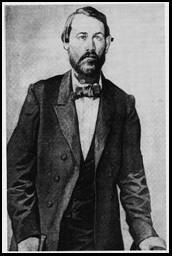
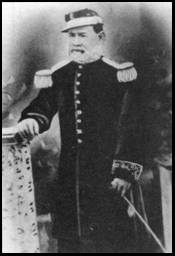
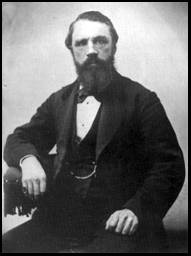
Juan
Cortina that was born on May
16, in
Camargo,
Tamaulipas,
the son of the
son of Estéfana
and Trinidad Cortina,
wealthy
cattle-ranching family and 1824 it was three years since the
independence of Mexico from Spain.
(For family lineage, go to
Jose Manuel de Goseascochea
and Dona Maria Francisca Xaviera de la Garza y de la Garza, John
Inclan research, fromgalveston@yahoo.com)
Following
the Texas
War of Independence (Slave Republic of Texas) in 1836 The Cortina
family used their ranches as frontier strongholds to resist
Texas
exercising its sovereignty in accordance with the Treaty of Velasco.
Cortina never recognized
Texas
independence, remained a citizen of
Mexico
and a patriot of his homeland. As
a young man, Cortina was at the battles of
Palo Alto
and Resaca de la Palma in Mariano Arista's army fighting Z. Taylor’s
military invasion of
Mexico
.
In 1846,
at age 22, he joined the Mexican Army under the orders of Gen. Mariano
Arista, who had arrived at
Matamoros
in an attempt to stop the advancing forces of Gen. Zachary
Taylor. Arista asked Cortina to form a force from the local Vaqueros
(Mexican version of Cowboys) that worked for him and the nearby
ranches. This irregular cavalry
regiment (called the "Tamaulipas") was placed under his
command, and as the Mexican-American
War began, it took part in the battles of Palo
Alto and Resaca
de la Palma.
With
the end of the War and the signing of the Treaty
of Guadalupe Hidalgo on February
2, 1848,
the Cortina family estates were divided by the new frontier, leaving a
vast portion of their lands inside the United
States territory. However, ownership of that land was jeopardized by
the legal reasoning of common law which allowed by squatter
rights, discouraged vast concentrations of land wealth, and put
alien ownership at a disadvantage. Therefore, Cortina became an
important political boss for the South Texas Democratic Party, paid off
the Mexican government to keep his lands as a
US
citizens, succeeded in defending his rights in a number of cases and
thereby remained a large ranch owner albeit substantially reduced.
However, Cortina never forgot his allegiance and love of
Mexico
, remained bitter about the loss of his land and continually resisted
inroads to his caudillo
power in
South Texas
. Since many large landowners last land as well under the new common law
system, they and Cortina used their substantial retinues of vaqueros, peons,
servants, and allied Mexican small farmers to form a political union
which resisted and discriminated against Texans thereby keeping many
settlers away. Eventually Cortina came in conflict with an influential
group of lawyers and judges of
Brownsville
, who were united in opposing the political bossism of Cortina. In turn,
Cortina agitated the Mexican population when he accused his opponents of
expropriating land from Mexican Texans or "Tejanos",
who were unfamiliar with the American legal system. Unflappable in his
propaganda Cortina spread hate pamphlets against Texans: "Flocks
of vampires, in the guise of men, Gringos" he wrote, robbed
Mexicans "of their property, incarcerated, chased, murdered, and
hunted them like wild beasts". Continuing his pre-annexation
partisan warfare, Cortina managed a carefully constructed insurgency of
intimidation, assassination, propaganda, agitation, legalism, and
political mass action to eliminate Texan ranchers, store owners, and
other Tejanos who collaborated with the authorities. Eventually,
Cortina's clandestine activities and he was finally indicted twice on
charges of cattle theft. However, because of the threat of wide spread
insurgency and his own large private army he was not arrested. With the
self-appointed purpose of defending the rights of Mexicans and Tejanos
Cortina gathered, trained and armed a private army which interfered with
the law, evicted or killed Texan ranchers and farmers, and stopped the
enforcement of common law rulings against dividing his and other
caudillo's large properties. Through his superb political maneuvering
and his hatred of Americans, he became a popular leader among the poorer
local population, who viewed him as a hero against the Gringos.
With
outright flouting of the law, the tension between Cortina and the
Brownsville
authorities finally broke into violence, and on 13
July 1859,
the First Cortina War started. That day, Brownsville Marshall Robert
Shears was arresting Cortina's former employee, Tomás Cabrera who was
brutalizing a prostitute for disturbing the peace, disorderly conduct,
and public drunkenness. Cortina happened to pass by, and asked the
Marshall
to let him handle the situation, who is said to have then yelled at him "What
is it to you, you damned Mexican?". Cortina pulled his sidearms
and shot the
marshall
wounding him critically. This flouting of the law in broad daylight on
the public streets caused consternation among the Texans when the
authorities refused to bring Cortina to court out of fear. Realizing the
weakness of the opposition to his rule, Cortina on 28
September raided, occupied, and looted the town with 40 to 80
Mexican bandidos. As the stores were pillaged and burned and the Texan
men captured and brutalized and the women raped, and the authorities
fled, Texans were effectively removed from
Brownsville
. Cortina then issued a famous proclamation to reveal his intentions to
the Mexican population. "(...) There is no need of fear. Orderly
people and honest citizens are inviolable to us in their persons and
interests. Our object, as you have seen, has been to chastise the
villainy of our enemies, which heretofore has gone unpunished. These
have connived with each other, and form, so to speak, a perfidious
inquisitorial lodge to persecute and rob us, without any cause, and for
no other crime on our part than that of being of Mexican origin,
considering us, doubtless, destitute of those gifts which they
themselves do not possess. (...) Mexicans! Peace be with you! Good
inhabitants of the State of
Texas
, look on them as brothers, and keep in mind that which the Holy Spirit
saith: "Thou shalt not be the friend of the passionate man; nor
join thyself to the madman, lest thou learn his mode of work and
scandalize thy soul."
Cortina
retained control over
Brownsville
until 30
September 1859,
when he evacuated the town at the urging of influential residents of
Matamoros
. The following days, the surviving Texans formed a 20 man group in
order to fight Cortina, called "the
Brownsville
Tigers". In November, the Brownsville Tigers learned that
Cortina was at his mother's ranch in the nearby town of
Santa Rita
, five miles west of
Brownsville
. Although outnumbered they immediately launched an attack, only to be
sent into retreat in disarray by Cortina's forces.
Later
the same month, the Brownsville Tigers were joined by a unit of Texas
Rangers, and Cortina decided to attack them. The offensive was
unsuccessful, and on December, a second group of Rangers led by Capt. John
"Rip" Ford arrived, larger and better organized. Because
of appeals from
Brownsville
citizens, the U.S. Army sent troops from San
Antonio to the nearby Fort
Brown, which had been abandoned due to Cortina's incessant raids a
few years previously. The fort's new commander, Maj. Samuel
Heintzelman, united and coordinated all armed groups to put an end
to the Cortina threat. Cortina retreated up the Rio
Grande, until on December
27, 1859
Heintzelman and Ford engaged him in the battle of Rio
Grande City. Cortina put up resistance but eventually fled with
bodyguards leaving his partisans decisively defeated, with over sixty
men killed and their arms confiscated. Cortina and his gang were pursued
by Ford who eventually caught up to Cortina. In the ensuring firefight,
more of Cortina's men were killed but Cortina managed to escape into the
Burgos
Mountains
. The First Cortina War had finished, Cortina was a declared outlaw, his
citizenship stripped, and following increasing pressure from both the
United States
without support from the Mexican Government. Cortina remained in hiding
for the remainder of the year only to emerge with the beginning of the American
Civil War.
In
May 1861,
the much shorter Second Cortina War took place. The Civil War had just
began, and Cortina who despised
Texas
and Texans quickly aligned himself with the Federal
Government of the
United States
. In
1861, during the Civil War he became an agent of the
Union
and against the Confederacy because he opposed slavery where ever it
showed itself. Having used the proceeding year to rebuild his partisans, and newly supplied
by the Union government, Cortina invaded Zapata
County, pillaging and looting the surrounding communities. However,
he was defeated by Confederate
Capt. Santos
Benavides at the battle of Carrizo and retreated back into
Mexico
, after losing eighteen men. Although he would no longer conduct large
scale military incursions within the territory of the
United States
, Cortina continued a program of assassinating individual Texan ranchers
and farmers, stealing their cattle and burning their farms, for the
remainder of the war. In contrast, due to events in
Mexico
, Cortina focused most of his attentions and resources to the south.
When
the French
intervention in Mexico began in 1862,
Cortina sided with Juárez at first, and took part at the Battle
of Puebla on May
5. However, as the French eventually defeated the Mexican forces led
by the Gen. Ignacio
Zaragoza and succeeded to establish Archduke
Maximilian
of Habsburg as sovereign of Mexico, Cortina sensed the opportunity
to consolidate his power in the Tamaulipas region and switched sides by
joining the invaders. However, this move proved costly politically.
Always keen to the masses of the Mexican population, Cortina realized
that despite his substantial power, a majority of the populace opposed
to him would end his power. Consequently, his alliance with the
Franco-Mexicans was short-lived, and soon Cortina rose against the
Hapsburg ruler. Commanding a large army that he had personally gathered
and equipped, he engaged the French forces who arrived to intervene at Tampico
and defeated them. His further military actions along
Central Mexico
helped in the effort against the invasion. Along with other Mexican
caudillos who sat in judgement, Cortina ordered the execution of the
captured Maximilian in Querétaro.
During this time, in keeping with his caudillo sensibilities, he
appointed himself Governor of Tamaulipas twice in 1864
and 1865.
He resignated the charge in 1866
in favor of Generals José María Carvajal and Santiago Tapia.
The
attitude of the Federal government towards Cortina changed completely
with his support in attacking the Confederacy
and his important role in the defense of the Mexican Government.
Additionally, in the wake of Reconstruction and the brief occupation of
Texas
, substantial numbers of wealth Americans from the northern states
arrived in
South Texas
and bought property in the area. Thus, after returning to his estates in
Matamoros
in 1870,
the Union forces formally him invited on several occasions as guest of
honor of the city of
Brownsville
. His support to the Union
motivated many former northerners who were now notable residents of the
Rio Grande Valley (including a former mayor of Brownsville) to endorse a
petition to the Texas
Legislature, asking for a formal pardon for his crimes during the Cortina
Troubles. However, the majority of native Texans, particularly those
who were present during the Cortina Troubles and those who supported the
Confederacy still viewed Cortina with hostility. Consequently, this
motion didn't prosper and was eventually rejected. Nonetheless, Cortina
still had the lasting sympathy of the Mexican-Texan population who
viewed Cortina as the hammer of the Gringos. Indeed, the Mexican
authorities in
Mexico
also honored him: he was appointed Brigadier
General, and the largest battalion of the state of Tamaulipas was
renamed "el Batallón Cortina" (the "Cortina
Battalion").
Also,
with diplomatic pressure coming from the United States Government, which
was concerned about Cortina's ambitions in Cameron
County and his behavior in the past, the President decreed the
arrest and execution of his former ally.
Gen.
José Canales, a long time enemy of Cortina who was sent to carry out
the order, decided to bring him to
Mexico City
instead, fearing the popular reprisals from the people of Tamaulipas. He
was kept at the military prison of Santiago Tlaltelolco, without being
tried or sentenced. He remained there until 1890,
when he was pensioned to a big hacienda below
Mexico City
. Cortina never again regained power in
Mexico
. He died in Azcapotzalco,
Mexico
City on October
30, 1894.
He
died of pneumonia in 1894.
PROCLAMATION
Juan
Nepomuceno Cortina to the inhabitants of the State of
Texas
,
and especially to those of the city of
Brownsville
.
An
event of grave importance, in which it has fallen to my lot to figure as
the principal actor since the morning of the 28th instant; doubtless
keeps you in suspense with regard to the progress of its consequences.
There is no need of fear. Orderly people and honest citizens are
inviolable to us in their persons and interests. Our object, as you have
seen, has been to chastise the villainy of our enemies, which heretofore
has gone unpunished. These have connived with each other, and form, so
to speak, a perfidious inquisitorial lodge to persecute and rob us,
without any cause, and for no other crime on our part than that of being
of Mexican origin, considering us, doubtless, destitute of those gifts
which they themselves do not possess.
To
defend ourselves, and making use of the sacred right of
self-preservation, we have assembled in a popular meeting with a view of
discussing a means by which to put an end to our misfortunes.
Our
identity of origin, our relationship, and the community of our
sufferings, has been, as it appears, the cause of our embracing,
directly, the proposed object which led us to enter your beautiful city,
clothes with the imposing aspect of our exasperation.
The
assembly organized, and headed by your humble servant, (thanks to the
confidence which he inspired as one of the most aggrieved,) we have
careered over the streets of the city in search of our adversaries,
inasmuch as justice, being administered by their own hands, the
supremacy of the law has failed to accomplish its object.
Some
of them, rashly remiss in complying with our demand, have perished for
having sought to carry their animosity beyond the limits allowed by
their precarious position. Three of them have died - all criminal,
wicked men, notorious among the people for their misdeeds. The others,
still more unworthy and wretched, dragged themselves through the mire to
escape our anger, and now, perhaps, with their usual bravado, pretend to
be the cause of an infinity of evils, which might have been avoided but
for their cowardice.
They
concealed themselves, and we were loth to attack them within the
dwellings of others, fearing that their cause might be confounded with
that of respectable persons, as at last, to our sorrow, did happen. On
the other hand, it behooves us to maintain that it was unjust to give
the affair such a terrible aspect, and to represent it as of a character
foreboding evil; some having carried their blindness so far as to
implore the aid of Mexico, alleging as a reason that their persons and
property were exposed to vandalism. Were any outrages committed by us
during the time we had possession of the city, when we had it in our
power to become the arbiters of its fate? Will our enemies be so blind,
base, or unthinking, as to deny the evidence of facts? Will there be one
to say the he was molested, or that is house was robbed or burned down.
The
unfortunate Viviano Garcia fell a victim to his generous behavior; and
with such a lamentable occurrence before us on our very outset, we
abstained from our purpose, horrified at the thought of having to shed
innocent blood without even the assurance that the vile men whom we
sought would put aside their cowardice to accept our defiance.
These,
as we have said, form, with a multitude of lawyers, a secret conclave,
with all its ramifications, for the sole purpose of despoiling the
Mexicans of the lands and usurp them afterwards. This is clearly proven
by the conduct of one Adolph Glavecke, who, invested with the character
of deputy sheriff, and in collusion with the said lawyers, has spread
terror among the unwary, making them believe that he will hang the
Mexicans and burn their ranches, &c., that by this means he might
compel them to abandon the country, and thus accomplish their object.
This is not a supposition - it is a reality; and notwithstanding the
want of better proof, if this threat were not publicly known, all would
feel persuaded that of this, and even more, are capable such criminal
men as the one last mentioned, the marshal, the jailer, Morris, Neal,
&c.
The
first of these, in his history and behavior, has ever been infamous and
traitorous. He is the assassin of the ill-starred Colonel Cross, Captain
Woolsey, and Antonia Mireles, murdered by him at the rancho de las
Prietas, the theatre of all his assassinations. It is he who instigated
some, and aiding others, has been the author of a thousand misdeeds; and
to put down the finger of scorn that ever points at him, and do away
with the witnesses of his crimes, he has been foremost in persecuting us
to death. The others are more or less stamped with ignominy, and we will
tolerate them no longer in our midst, because they are obnoxious to
tranquillity and to our own welfare.
All
truce between them and us is at an end, from the fact alone of our
holding upon this soil our interests and property. And how can it be
otherwise, when the ills that weigh upon the unfortunate republic of
Mexico have obliged us for many heart-touching causes to abandon it and
our possessions in it, or else become the victims of our principles or
of the indigence to which its intestine disturbances had reduced us
since the treaty of Guadalupe? When, every diligent and industrious, and
desirous of enjoying the longed-for boon of liberty within the classic
country of its origin, we were induced to naturalize ourselves in it and
form a part of the confederacy, flattered by the bright and peaceful
prospect of living therein and inculcating in the bosoms of our children
a feeling of gratitude towards a country beneath whose aegis we would
have wrought their felicity and contributed with our conduct to give
evidence to the whole world that all the aspirations of the Mexicans are
confined to one only, that of being freemen; and that having secured
this ourselves, those of the old country, notwithstanding their
misfortunes, might have nothing to regret save the loss of a section of
territory, but with the sweet satisfaction that their old fellow
citizens lived therein, enjoying tranquillity, as if Providence had so
ordained to set them an example of the advantages to be derived from
public peace and quietude; when, in fine, all has been but the baseless
fabric of a dream, and our hopes having been defrauded in the most cruel
manner in which disappointment can strike, there can be found no other
solution to our problem than to make one effort, and at one blow destroy
the obstacles to our prosperity.
It
is necessary. The hour has arrived. Our oppressors number but six or
eight. Hospitality and other noble sentiments shield them at present
from our wrath, and such, as you have seen, are inviolable to us.
Innocent
persons shall not suffer - no. But, if necessary, we will lead a
wandering life, awaiting our opportunity to purge society of men so base
that they degrade it with their opprobrium. Our families have returned
as strangers to their old country to beg for an asylum. Our lands, if
they are to be sacrificed to the avaricious covetousness of our enemies,
will be rather so on account of our own vicissitudes. As to land, Nature
will always grant us sufficient to support our frames, and we accept the
consequences that may arise. Further, our personal enemies shall not
possess our lands until they have fattened it with their own gore.
It
remains for me to say that, separated as we are, by accident alone, from
the other citizens of the city, and not having renounced our rights as
North American citizens, we disapprove and energetically protest against
the act of having caused a force of the national guards from Mexico to
cross unto this side to ingraft themselves in a question so foreign to
their country that there is no excusing such weakness on the part of
those who implored their aid.
JUAN
NEPOMUCENO CORTINA
Rancho
Del
Carmen, County
of
Cameron
, September 30, 1859
II.
[This
text appeared in the
Brownsville
newspaper, where it was introduced by this letter from the editor:]
To
the Mexican inhabitants of the State of
Texas
:
The
arch murderer and robber has been induced by some inflated coxcomb to
allow his name to be put to the following collection of balderdash and
impudence. We shall not inquire now who wrote it, but is certainly was
no one who has the least acquaintance with American laws or character.
We invite the attention of the people abroad to his pretension that the
Mexicans of this region (we suppose he means from the Nueces to the
Rio Grande
) "claim the right to expel all Americans within the same."
He
professes to be at the head of a secret society, organized for this
object. He claims modestly for his co-villains all the virtues,
especially those of gentleness, purity, and liveliness of disposition.
This he says of himself and his followers who, after stabbing and
shooting into and beating the dead bodies of Mallett and Greer and
McCoy, slain in the fight between a portion of his forces and thirty
rangers at Palo Alto, on Sunday last, and after having in like cowardly
manner treated his prisoner, young Fox, after he had surrendered his
arms when surrounded, descended to such depth of degradation as to
dismember the bodies of the slain in a manner so disgusting as to be too
horrible to tell, and then, as does the world but far more Christian
Comanche, ornamented their saddle bows with the beastly trophies of
their victory.
And
these men are the graduates of the presidios of
Mexico
and the penitentiaries of
Texas
, he himself for years under indictment for murder, for cattle stealing,
and other crimes, and his whole clan now engaged in wholesale robbery,
horse stealing, and murder. A river frontier and the absence of a treaty
of extradition renders it an easy thing in a country not closely settled
and full if impenetrable chaparral for the outlaw to escape trial at
law. So these people have defied justice on either side of the river,
and now, banded together in an imposing army, nought but the heavy arm
of the
Union
can put a stop to their villainy. He has heavily recruited from the
outlaws of
Mexico
despite the vigilance of the constitutional authorities, who detest his
crimes and fear his complicity with the party of Miramon and Woll.
None
of them have any legal title to citizenship. The United States Supreme
Court, in the case of McKinney vs. Savriego, decided that the 8th
article of the treaty of Guadalupe Hidalgo had no reference to Texas,
and this is the only one in that treaty which confers citizenship. They
could not have been citizens of
Texas
when annexed, because they were "adhering to the common
enemy," and thus excluded from citizenship by its fundamental laws.
None of them have ever been formally naturalized, and so they remain
without the pale of American citizenship. A very large proportion, many
think a majority, are residents of
Mexico
, if anywhere, having in this country neither properties nor homes, nor
anything but their own crimes to entitle them to any recognition under
our laws. All the complaints insinuated in this production are utterly
with foundation. These men live usually by horse stealing -- by industry
never. They have never been robbed of any property, but many times have
imposed on honest men with stolen animals. They have escaped from the
conviction due to their crimes by "false witnesses," of whom
he complains as employed against him! His appeal to General Houston to
sustain him in jail-breaking, in murder, in mail robbery, and waging war
on the authorities of the State, is the most stupendous piece of
impudence of all. Yet he has now under him quite an army, entrenched in
a well-constructed fort, defended by cannon, with experienced
reactionary officers to direct his military operations, while his will
is obeyed by his hundreds implicitly and unreservedly. Is this so to
remain? He is a foreigner, levying war against the State and
Union
within their borders, and flying a foreign flag above his fortress of
American soil, and yet fifty men are all the solders that within two
months have been vouchsafed by our government to put down this
rebellion, or repel this invasion - call it by what name you will.
November
23, 1859
PROCLAMATION
by Juan
N. Cortina
County
of
Cameron
, Camp in the Rancho
del
Carmen
Compatriots:
A sentiment of profound indignation, the love and esteem which I profess
for you, the desire which you have for that tranquillity and those
guarantees which are denied you, thus violating the most sacred laws, is
that which moves me to address you these words, hoping that they may
prove some consolation in the midst of your adversity, which heretofore
has borne the appearance of predestination.
The
history of great human actions teaches us that in certain instances the
principal motive which gives them impulse is the natural right to resist
and conquer our enemies with a firm spirit and lively will; to persist
in and to reach the consummation of this object, opening a path through
the obstacles which step by step are encountered, however imposing or
terrible they may be.
In
the series of such actions, events present themselves which public
opinion, influenced by popular sentiment, calls for deliberation upon
their effects, to form an exact and just conception of the interests
which they promote; and this same public opinion should be considered as
the best judge, which, with coolness and impartiality, does not fail to
recognize some principle as the cause for the existence of open force
and immutable firmness, which impart the noble desire of cooperating
with true philanthropy to remedy the state of despair of him who, in his
turn, becomes the victim of ambition, satisfied at the cost of justice.
There
are, doubtless, persons so overcome by strange prejudices, men without
confidence or courage to face danger in an undertaking in sisterhood
with the love of liberty, who, examining the merit of acts by a false
light, and preferring that of the same opinion contrary to their own,
prepare no other reward than that pronounced for the "bandit,"
for him who, with complete abnegation of self, dedicates himself to
constant labor for the happiness of those who suffering under the weight
of misfortunes, eat their bread, mingled with tears, on the earth which
they rated.
If,
my dear compatriots, I am honored with that name, I am ready for the
combat.
The
Mexicans who inhabit this wide region, some because they were born
therein, others because since the treaty Guadalupe Hidalgo, they have
been attracted to its soil by the soft influence of wise laws and the
advantages of a free government, paying little attention to the
reasoning of politics, are honorably and exclusively dedicated to the
exercise of industry, guided by that instinct which leads the good man
to comprehend, as uncontradictory truth, that only in the reign of peace
can he enjoy, without inquietude, the fruit of his labor. These, under
an unjust imputation of selfishness and churlishness, which do not
exist, are not devoid of those sincere and expressive evidences of such
friendliness and tenderness as should gain for them that confidence with
which they have inspired those who have met them in social intercourse.
This genial affability seems as the foundation of that proverbial
prudence which, as an oracle, is consulted in all their actions and
undertakings. Their humility, simplicity, and doility, directed with
dignity, it may be that with excess of goodness, can, if it be desired,
lead them beyond the common class of men, but causes them to excel in an
irresistible inclination towards ideas of equality, a proof of their
simple manners, so well adapted to that which is styled the classic land
of liberty. A man, a family, and a people, possessed of qualities so
eminent, with their heart in their hand and purity on their lips,
encounter every day renewed reasons to know that they are surrounded by
malicious and crafty monsters, who rob them in the tranquil interior of
home, or with open hatred and pursuit; it necessarily follows, however
great may be their pain, if not abased by humiliation and ignominy,
their groans suffocated and hushed by a pain which renders them
insensible, they become resigned to suffering before an abyss of
misfortunes.
Mexicans!
When the State of
Texas
began to receive the new organization which its sovereignty required as
an integrate part of the
Union
, flocks of vampires, in the guise of men came and scattered themselves
in the settlements, without any capital except the corrupt heart and the
most perverse intentions. Some, brimful of laws, pledged to us their
protection against the attacks of the rest; others assembled in shadowy
councils, attempted and excited the robbery and burning of the houses of
our relatives on the other side of the river Bravo; while others, to the
abusing of our unlimited confidence, when we intrusted them with our
titles, which secured the future of our families, refused to return them
under false and frivolous pretexts; all, in short, with a smile on their
faces, giving the lie to that which their black entrails were
meditating. Many of you have been robbed of your property, incarcerated,
chased, murdered, and hunted like wild beasts, because your labor was
fruitful, and because your industry excited the vile avarice which led
them. A voice infernal said, from the bottom of their soul, "kill
them; the greater will be our gain!" Ah! This does not finish the
sketch of your situation. It would appear that justice had fled from
this world, leaving you to the caprice of your oppressors, who become
each day more furious towards you; that, through witnesses and false
charges, although the grounds may be insufficient, you may be interred
in the penitentiaries, if you are not previously deprived of life by
some keeper who covers himself from responsibility by the pretense of
your flight. There are to be found criminals covered with frightful
crimes, but they appear to have impunity until opportunity furnish them
a victim; to these monsters indulgence is shown, because they are not of
our race, which is unworthy, as they say, to belong to the human
species. But this race, which the Anglo-American, so ostentatious of its
own qualities, tries so much to blacken depreciate, and load with
insults, in a spirit of blindness, which goes to the full extent of such
things so common on this frontier, does not fear, placed even in the
midst of its very faults, those subtle inquisitions which are so
frequently made as to its manners, habits, and sentiments; nor that its
deeds should be put to the test of examination in the land of reason, of
justice, and of honor. This race has never humbled itself before the
conqueror, though the reverse has happened, and can be established; for
his is not humbled who uses among his fellow-men those courtesies which
humanity prescribes; charity being the root whence springs the rule of
his actions. But this race, which you see filled with gentleness and
inward sweetness, gives now the cry of alarm throughout the entire
extend of the land which it occupies, against all the artifice
interposed by those who have become chargeable with their division and
discord. This race, adorned with the most lovely disposition towards all
that is good and useful in the line of progress, omits no act of
diligence which might correct its many imperfections, and lift its grand
edifice among the ruins of the past, respecting the ancient traditions
and the maxims bequeathed by their ancestors, without being dazzled by
brilliant and false appearances, nor crawling to that exaggeration of
institution which, like a sublime statue, is offered for their worship
and adoration.
Mexicans!
Is there no remedy for you? Inviolable laws, yet useless, serve, it is
true, certain judges and hypocritical authorities, cemented in evil and
injustice, to do whatever suits them, and to satisfy their vile avarice
at the cot of your patience and suffering; rising in their frenzy, even
to the taking of life, through the treacherous hands of their bailiffs.
The wicket way in which many of you have been often-times involved in
persecution, accompanied by circumstances making it the more bitter, is
now well known; these crimes being hid from society under the shadow of
a horrid night, those implacable people, with the haughty spirit which
suggests impunity for a life of criminality, have pronounced, doubt ye
not, your sentence, which is, with accustomed insensibility, as you have
seen, on the point of execution.
Mexicans!
My part is taken; the voice of revelation whispers to me that to me is
entrusted the work of breaking the chains of your slavery, and that the
Lord will enable me, with powerful arm, to fight against our enemies, in
compliance with the requirements of that Sovereign Majesty, who, from
this day forward, will hold us under His protection. On my part, I am
ready to offer myself as a sacrifice for your happiness; and counting
upon the means necessary for the discharge of my ministry, you may count
upon my cooperation, should no cowardly attempt put an end to my days.
This undertaking will be sustained on the following bases:
First.
A society is organized in the State of Texas, which devotes itself
sleeplessly until the work is crowned with success, to the improvement
of the unhappy condition of those Mexicans resident therein;
extermination their tyrants, to which end those which compose it are
ready to shed their blood and suffer the death of martyrs.
Second.
As this society contains within itself the elements necessary to
accomplish the great end of its labors, the veil of impenetrable secrecy
covers "The Great Book" in which the articles of its
constitution are written; while so delicate are the difficulties which
must be overcome that no honorable man can have cause for alarm, if
imperious exigencies require them to act without reserve.
Third.
The Mexicans of Texas repose their lot under the good sentiments of the
governor elect of the State, General Houston, and trust that upon his
elevation to power he will begin with care to give us legal protection
within the limits of his powers.
Mexicans!
Peace be with you! Good inhabitants of the State of
Texas
, look on them as brothers, and keep in mind that which the Holy Spirit
saith: "Thou shalt not be the friend of the passionate man; nor
join thyself to the madman, lest thou learn his mode of work and
scandalize thy soul."
Juan
N. Cortina
[TEXT:
U. S.
Congress, House, Difficulties on the Southwestern Frontier, 36th
Congress; 1t Session, 1860, H. Exec. Doc. 52, pp.70-82.]
References,
additional readings and external links
- Juan
Nepomuceno Cortina Goceoscochea,
by Ing. Manuel Humberto González Ramos, Universidad Autónoma de
Tamaulipas, 2001.
- Juan
Cortina and the Texas-Mexico frontier (1859-1877), by Jerry D. Thompson, Southwestern Studies, 1994 (ISBN
0-87404-195-3).
- "Cheno
Cortina", the Tamaulipas man who invaded Texas, by Adrián
Cerda, Editorial Contenido, 2001.
- Juan
Cortina and the Struggle for Justice in
Texas
, by Carlos
Larralde and Jose R. Jacobo, Kendall Hunt, 2000.
- Juan
N. Cortina Bandit or Patriot? An Address by J.T. Canales to the
Lower
Rio Grande
Valley
Historical Association. 22 Oct 1951.
- U.
S. Congress, House, Difficulties on the Southwestern Frontier, 36th
Congress, 1st Session, 1860, H. Exec. Doc. 52, pp. 70-82.
-
Texas
Politics & the
Legends of the Fall,
by Robert H. Angell, McGraw Custom Publishing. 2003. pp. 23-36.
- Juan
Nepomuceno Cortina from the Handbook
of Texas Online. Accessed on September 7th, 2005.
- Juan
Nepomuceno Cortina, el Chino.
Accessed on
September 7th, 2205.
|
 Cristián Samper
(sahm-PAIR), a biologist and international authority on environmental policy, is the director of the Smithsonian’s National Museum of Natural History. As director
Cristián Samper
(sahm-PAIR), a biologist and international authority on environmental policy, is the director of the Smithsonian’s National Museum of Natural History. As director 





 What
was a sacred crop to the Incas has been classified as a "super
crop" by the United Nations because of its high protein content. It
is a complete protein, which means it has all nine essential amino
acids. It also contains the amino acid lysine, which is essential for
tissue growth and repair, and is a good source of manganese, magnesium,
iron, copper and phosphorous.
What
was a sacred crop to the Incas has been classified as a "super
crop" by the United Nations because of its high protein content. It
is a complete protein, which means it has all nine essential amino
acids. It also contains the amino acid lysine, which is essential for
tissue growth and repair, and is a good source of manganese, magnesium,
iron, copper and phosphorous.
 By
Leslie Berestein, Union-Tribune Staff Writer
By
Leslie Berestein, Union-Tribune Staff Writer 



 A Perfect Season for Dreaming /
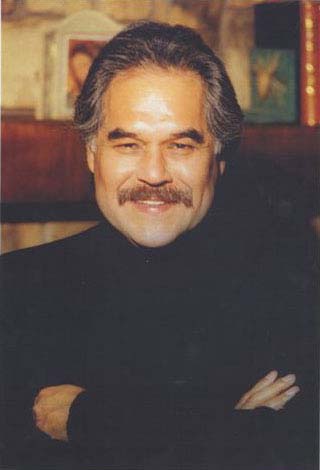 Luis Valdez, writer and director of La Bamba, founder of Teatro
Campesino, and the author of numerous plays, including Zoot Suit and
We Don't Need No Stinkin' Badges.
Luis Valdez, writer and director of La Bamba, founder of Teatro
Campesino, and the author of numerous plays, including Zoot Suit and
We Don't Need No Stinkin' Badges. 



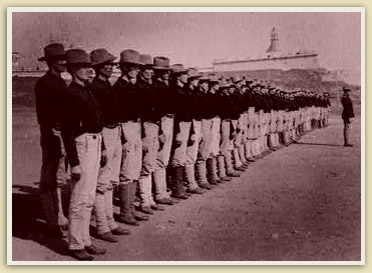

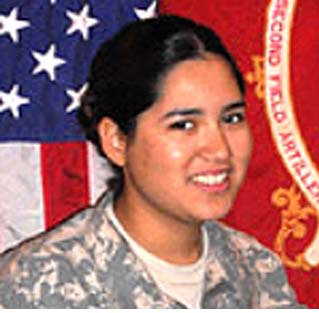
 Post
Office, located at 11151 Valley Blvd, on Saturday, October 11 at
10:00 a.m. after U.S. Army Specialist Marisol Heredia, the first
servicewoman from the San Gabriel Valley to die in the Iraq war.
Post
Office, located at 11151 Valley Blvd, on Saturday, October 11 at
10:00 a.m. after U.S. Army Specialist Marisol Heredia, the first
servicewoman from the San Gabriel Valley to die in the Iraq war. 










 Holtom put a circle around the
two signals creating the ubiquitous symbol. (Historian of the peace
symbol, Arnold Passman, provided the details on Holtom).
Holtom put a circle around the
two signals creating the ubiquitous symbol. (Historian of the peace
symbol, Arnold Passman, provided the details on Holtom).












)
