|
|
|
Somos Primos June 2007 Dedicated
to Hispanic Heritage and Diversity Issues |
|
|
|
Heirlooms in the Sand, recovered in the Arizona Desert, article. |
|
Content
Areas United States . . 4 Action Items . .4 National Issues . . 11 Bilingual Education . . 22 Education . . 33 Culture . . 43 Business . . 47 Anti-Spanish Legends . . 51 Military & Law Enforcement Heroes . . 55 Cuentos . . 76 Literature . . 85 Surname: Ramon . . 93 Patriots of American Revolution . . 99 Orange County,CA . . 102 Los Angeles,CA . . 106 California . . 110 Southwestern US . . 123 African-American . . 137 Indigenous . . 142 Sephardic . . 152 Texas . . 159
|
East of Mississippi . .
170 East Coast . . 174 Mexico . . 178 Caribbean/Cuba . . 200 Spain . . 213 International . . 220 History . . 226 Family History. . 230 Archaeology . . 241 Miscellaneous . . 242 Community Calendars Networking SHHAR 2007 Meetings Jan 27: Researching on the Internet and Spanish surnames Mar 17: Writing Family Histories Apr 29: Family History Conference, 5 classes on Hispanic Research May 26: Naturalization Reco Aug 25: Hispanic Political Pioneers SHHAR information: www.SHHAR.org End |
|
|
|
Hello MIMI, I'm really enjoying the history you have
available in Somos Primos. Its so interesting..... Thank you !!!!!!! From, Gerald Frost & Family Telger6@aol.com Thank you for your work in assembling and distributing the Somos Primos newsletter. It address such a wide variety of topics it is always a pleasure to scroll through the table of contents to see what will appear. Below, I have a small response to one of the articles in this month's Somos Primos. Do with it as you see fit, I just felt the article was making too many assumptions. Thanks again, (To read Patrick's response, click) Thanks again, Patrick German patrickgerman209@hotmail.com |
| Somos Primos Staff: Mimi Lozano, Editor Mercy Bautista Olvera Bill Carmena Lila Guzman Granville Hough John Inclan Galal Kernahan J.V. Martinez Armando Montes Dorinda Moreno Michael Perez Ángel Custodio Rebollo Tony Santiago John P. Schmal Howard Shorr Ted Vincent Contributors: Hector Alvarez Irene Andrews Dan Arellano John Arvizu Tom Ascencio Dr. Armando A. Ayala Mary Triplett Ayers, Frank Baker Yeda Baker Simon ben Zaken Mario Barrera, Ph.D Mercy Bautista Olvera Kathy Bence Gustavo Bujanda Jaime Cader Gloria Candelaria Bill Carmena Eugeni Casanova Gus Chavez Jack Cowan Jose Antonio Crespo Jose A. Cruz Brianne A. Dávila William S. Dean |
Gina DeBaca
Richard Esquivel William D. Estrada Johanna Eubank Angelo Falcon Irene Fisher Andrew Marissa Frayer Gerald Frost Carlos A. Garcia Cristina H. Garcia Wanda Garcia Patrick German Carlos Ray Gonzalez Rafael Jesús González Robert Gonzalez Arthur J. Graham Lolita Guevarra Mike Hardwick Manny Hernandez Sergio Herdandez Monte Hodge Dan Hogan John Inclan Valarie James Nellie Caudillo Kaniski GALAL Kernahan Ruth Kilday Susan A. Kitchens Juan Fidel Larrañaga Fernando Llama Alatorre Robert Lopez Colin Lorenzo Luera Micaela Madrigal Angela Mauro Alejandro Mayagoitia y Hagelstein Dorinda Moreno Magdalena Morales Eddie Morin Carlos Munoz, Jr., Ph.D. Paul Newfield Rafael Ojeda Gloria Oliver |
Rudy Padilla Holly Payne Jose M. Pena Addy Perez-Mau Richard Perry Marcelo Podesta Elvira Prieto Darren Ramon Roger Ramsden Custodio Rebollo Cris Rendon José León Robles De La Torre Melissa Rodriguez Rudi R. Rodriguez Ben Romero Marcela Sandoval Tony Santiago Howard Shorr Tawn Skousen Katie Thompson Paul Trejo Kay Trumbull Janete Vargas Ricardo Valverde R.Vasquez David Valladolid Cheryl Vawdewy Margarita Velez Victor Villarreal Ted Vincent George Windes Arturo Ynclan Joe Yracheta beto@unt.edu eduardo@hisi.org garciadtx@aol.com Iolmisha@cs.com jonathan@mexicanfhr.com La Tejadora nurse1cac@yahoo.com pstack@sltrib.com yanez4council@sbcglobal.net
|
| SHHAR Board: Bea Armenta Dever, Gloria Cortinas Oliver, Steven Hernandez, Mimi Lozano Holtzman, Pat Lozano, Yolanda Magdaleno, Henry Marquez, Yolanda Ochoa Hussey, Michael Perez, Crispin Rendon, Viola Rodriguez Sadler, John P. Schmal. |
 |
| Action Items |
|
Damnatio memorie Defend the Honor Campaign Expanding Documentaries Los Veteranos of World War II Latino Stories of World War II Colors of Courage: Sons of New Mexico, Prisoners of Japan (2002) The Short Life of Jose Antonio Gutierrez |
"Damnatio memories" The issue of PBS and "THE WAR" appears to be going up and down, and sideways in terms of agreements for the inclusion of Latinos. PBS calls it misunderstandings due to semantics. I would call it something else, Damnatio Memoriae. Among artifacts found around the world are stones and writings with evidence of changes being made to the text. Historians explain that the life and history of an individual was damned by removing all traces of the individual's life and accomplishments. It amounted to a curse. In the four major documentaries that Burns has produced for PBS, he
has, whether knowingly or not, been practicing a strategy well known
among the ancients, "Damnatio Memoriae,"
a damnation of memories. Interestingly this push for public invisibility or insulting inclusion*is forging ahead as we create monuments, research and explore our own histories, publish books, make presentations, speak out in support of our historical presence and contributions. *See Anti-Spanish Legends Let us now with increased energy continue our gift to history. Bless and honor our history for the benefit of increased understanding and the unity of our nation.
The introduction to the Defend the Honor update is below.
Please go to the site to link to a series of 9 articles that reflects
the opinions of many. Each of you, dear reader, can decide what you
can do to help. |
|
Defend the Honor May 27th Update Activities and Events Surrounding the Ken Burns PBS WWII Documentary Quote of the Week: Austin American-Statesman Editorial Page Editor, Arnold Garcia, the son of a WWII veteran: "For Latinos, World War II was
Birmingham, Selma SUMMARY: The Defend the Honor campaign's Gus Chavez and Maggie Rivas-Rodriguez packed 8 events into a short two-day visit to San Diego. They made presentations to high school students, conducted newspaper, television and radio interviews (including Morones Por La Tarde Spanish language radio interviews), visited the Centro Cultural de La Raza, a breakfast at the San Diego landmark Chuy's restaurant of the Latino/Latina Indigenous Peoples Unity Coalition, took part in an open community discussion sponsored by our local PBS station, KPBS at San Diego State University. The final event held at the San Diego Veterans Museum and Memorial Center - a full house, and more than 40 copies of Dr. Rivas-Rodriguez book "A Legacy Greater Than Words" were sold. Attendees included Latino veterans who fought in WWII, Korea, Vietnam and Desert Storm from San Diego and southern California. We were honored to have a number of California American G.I. Forum members, including former National Commander Tony Gallegos, attend our program. It was a great event. Rivas-Rodriguez and Chavez were invited to a discussion with the Editorial Board of The San Diego Union Tribune. It was a spirited discussion, during which Chavez shared a print-out of the last frame of ABC TV's Jimmy Kimmel's "cartoon" mocking our Latino WWII veterans. (ABC Jimmy Kimmel show a week and a half ago featured a short spoof of the Ken Burns The War documentary's inclusion of Latinos. It shows Speedy Gonzalez dodging bullets -- and at the end, a photo-shopped photo of the raising of the flag at Iwo Jima has the men wearing sombreros, and rather than a flag, they are hoisting a pinata. ) The issue was very much in the news, as newspaper writers saw the
fitting Memorial Day angle: articles and columns appeared in the San
Antonio Express-News, the San Diego Union-Tribune, the Austin
American-Statesman, the North County Times, the St. Paul Post-Dispatch.
See details below, and on the www.defendthehonor.org website. BACKGROUND: THE WAR, a 14-hour documentary on WWII, is scheduled to air in
September on PBS. Director Ken Burns and associates took six years to
interview more than 40 individuals in four communities (Waterbury,
Connecticut; Mobile, Alabama; Sacramento, California; and Luverne,
Minnesota). The documentary features individuals in those communities,
with two ethnic/racial groups given special consideration: Japanese
Americans and African Americans. The film has no reference to the Latino
contribution. The documentary also has an accompanying book and
educational materials. PBS officials say, in a news release:
"Serving our mission to educate and inform, PBS’s goal for THE
WAR is to reach into every home and classroom -- so together we can
better understand what we as a nation experienced in those difficult
years and what we as a nation accomplished." Concerned individuals
,have contacted PBS officials and Burns’ production company
(Florentine Films) and told them that THE WAR is incomplete without the
Latino experience.
|
| We can be supportive to the Defend
the Honor campaign by contacting local PBS stations and
arranging for a scheduling of documentaries that focus on the Latino
contributions. Below are three documentaries, concerning Latinos in World War II, and a film about a young Latino who did not return from Iraq. Hopefully groups can join forces and arrange for local PBS stations to schedule documentaries or taped interviews with Latino veterans of World War II. If you know of any documentaries that concerning Latino
contributions, please do send the
information. |
|
The Braun - Sacred Heart Center Presents: PRODUCT INFORMATION:
|
"Latino Stories of World War II" For those of you who may not be aware of it, I should mention my own film on Latinos in World War II and where it stands. It's a one hour documentary entitled "Latino Stories of World War II," and it grew out of oral history interviews conducted initially for the oral history project at the University of Texas. Unlike the Ken Burns series, which I saw previewed in Los Angeles, it is not mediated by a narrator. Instead, four Latino veterans (three Mexican Americans and one Cuban American) tell their own stories in their own words. The film incorporates historical film footage, photographs, and music. It is not intended as an overview of the Latino experience in the war, just as the compelling stories of these four individuals: one army man, one Marine, a bomber pilot and a fighter pilot. This film was finished last year, made entirely with a small grant from the University of California's MEXUS research institute. On the advice of several people, I sent a copy to national PBS but they have declined to distribute it to their member stations. However, another supplier, American Public Television, has said that they would make it available to PBS stations this summer. Admittedly, that may be late for some stations in terms of their scheduling. Two PBS stations that I contacted have indicated that they will show my film in conjunction with the Burns series: KCET in southern California, and WEDU in the Tampa, Florida area. I plan to contact other PBS stations located in areas with major Latino populations. I would be glad to send a DVD copy to anyone who may be interested. As things stand now I plan to distribute it myself, although that may change. I am also available to show the film to groups and talk about it. I have already shown it to several community and campus groups. So there is an alternative to Ken Burns, and it is a film made about Latinos by Latinos. There still needs to be a longer and more comprehensive film that will provide an overview of the Latino experience in WWII, but perhaps that will grow out of the current controversy. Mario Barrera mbarrera8@yahoo.com Director/Producer Professor Emeritus, Department of Ethnic Studies University of California, Berkeley |
|
|
Documentary Documentary tells the story of the 200th and 515th Coast Artillery
Regiments, who achieved ethnic diversity, fought with great
distinction in the Philippines, endured the Bataan Death March and
became two of the most decorated military units in World War II. The
film includes interviews with survivors, a return visit to the
Philippines, and a meeting with one of the Japanese guards.
|
|
"THE SHORT LIFE OF JOSE ANTONIO GUTIERREZ" OPENS (SAN FRANCISCO) A film by Heidi Specogna
Marine Lance Cpl. José Antonio Gutierrez was one of the 300,000 soldiers the U.S. military sent to war in Iraq in March 2003. A few hours after the war began, his picture was broadcast all over the world: he was the first American soldier to be killed in Iraq. He was also a so- called 'green-card soldier' - one of approximately 32,000 non-U.S. citizens fighting in the ranks of the U.S. armed forces who would receive U.S. citizenship as compensation for their sacrifice. The Short Life of José Antonio Gutierrez tells the moving story of a one-time street kid from Guatemala, who, full of hopes for a better future, immigrated to the U.S, ultimately to die an American hero in the deserts of Iraq. Director Heidi Specogna retraces José Antonio's path - from Guatemala through Mexico to the United States - and meets the people who accompanied him on his journey: his friends from the street, the social workers at a Guatemala orphanage, his sister, his foster family in Los Angeles, and, at Camp Pendleton in San Diego, the marines who were with him at the end. Chilling, thought-provoking, and profound, José Antonio's story is
no adventurer's tale. |
|
| "A well
researched, graceful film" - Lisa Schwarzbaum, Entertainment Weekly |
"An illuminating story" - David Ansen, Newsweek |
|
STAND FOR DIGNITY May 7, 2007 Mr. Ken Burns Mr. Burns: Like thousands of other Latinos and Native Americans in our nation, I have been closely observing and following the efforts of those who are calling, writing, drafting resolutions and meeting with you and PBS to advocate the inclusion of Latinos and Native Americans in your World War II documentary. We have all been very hopeful that you and PBS would see the "poetic" justice, morality and ethics of these arguments and gladly add these missing components to your important effort. Therefore, I was taken back when I read the New York Times article that asserted that PBS executives were defending your right "…to tell your World War II story as you see fit." The article concluded with the statement that "Mr. Burns said there was no chance that the film would be re-edited. It would be destructive, like trying to graft an arm onto your child, he said. It would destroy the film." Your assertion that any addition would be destructive and would destroy the film could not be further from the truth. Your analogy that any change to your documentary would be equivalent to "grafting an arm to a child" struck a chord and hit a powerful nerve in my body and spirit. I am a Vietnam veteran, class of 1968-69. I was wounded twice in that war and spent nearly six months in an Army hospital in Okinawa, Japan, where I underwent 2-3 surgeries to regain my eye sight. When I was able to see again, I witnessed the true "remnants" of war - thousands of young men without arms, legs and body parts. These soldiers, like most others wounded in war, are always hidden and forgotten. I recall the first time I was able to attend Mass at the hospital chapel. I did so in spite of the fact that my faith had been badly shaken from my experiences in war - I decided to stand at the back of the church. A young man in a wheel chair was brought in and placed right next to me. He was missing one arm, both legs and half of his face was disfigured. When it was time for communion, he motioned for me to push him up the aisle. With a lump in my throat, I gladly agreed to help him. During our brief trip up the aisle the young man expressed to me how wonderful it was to be alive. In those few words, he taught me the "sacred and supreme value of life" and removed forever all of my own self pity. During those six months in the hospital, I spoke with hundreds of young men who were coming to terms with their loss of body parts. To a person, they celebrated the news that they would be getting the addition of a new arm, foot or leg. They saw the new limb as a constructive rather than destructive factor in giving them the chance to build a more fulfilling life. I trust you have gotten my point that an "amputation" of Latinos and Native Americans from this documentary would make it incomplete and ultimately false. What you and PBS are being asked is simply to do what is right. Include the experiences of the groups that actually fought in the war, that made a recognizable impact on American history and culture and that has too often been systematically excluded from efforts to document this reality. You are not the first, nor will you likely be the last to face this challenge. But the more we learn about what actually happened in American history, the greater our responsibility becomes to speak this truth and to try to understand how it has affected our lives and our culture. I’m adding my humble voice to the growing list of Americans who are asking you and PBS to include in your documentary the experiences, contributions and the ultimate price paid by many Latinos and Native Americans who fought in World War II. As is scripted on the Vietnam Memorial in Washington DC, "All Gave Some; Some Gave All!" By recognizing and adding them or "grafting" as you put it, you enlighten your poetry and hopefully even advance the effort to stop the next war! I close my appeal to you and PBS with a quote from author Karen Armstrong, "Our differences define us but our common humanity can redeem us. We just have to open our hearts." The Truth Matters! David Valladolid Cc: Paula Kerger, PBS President & Chief
Executive Officer Adelante a la luz,
|
|
|
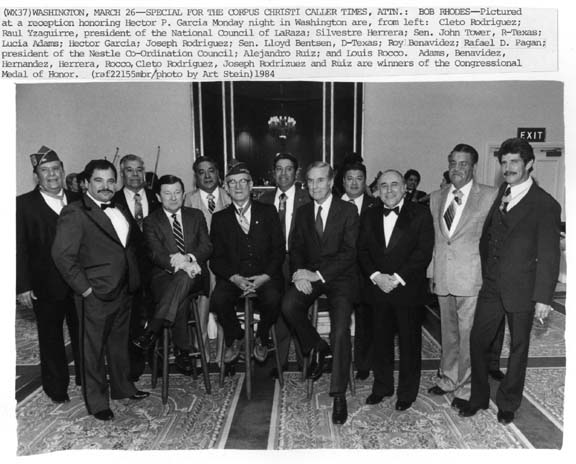
Dr. Hector P.
Garcia, The Medal by daughter Wanda
Garcia Dionicio Morales, Another leader in the Civil Rights Movement Among the Valiant, Son Morin carries on the fight for recognition Only 3.6% of federal employees at senior levels in 2006 were Hispanic Book: The Journey to Latino Political Representation Importance of |
 |
|
THE MEDAL One January afternoon, my papa phoned me. He very excitedly told me
that he was going to receive "the medal." I was so used to
his receiving awards that it did not immediately occur to me what
medal it was. I asked, "Who is giving you the medal." I already knew what it was for.
Immediately Papa arranged for all of us to go to Washington D.C. The ceremony was to be held March 26, 1984 in the East Room at the White House. The White House had mailed me my invitation in March 1984. Rupert, the postman was so impressed by the invitation that he knocked on my front to deliver it into my hands. On March 24, 1984, my parents flew to Austin where Susie, my sister and I would join them on the airplane trip to D.C. the next day. They stayed at the Villa Capri on Red River and I-Hwy 35 (now the site of the UT intramural field). By chance, the hotel gave my parents the UT room. The room was filled with memorabilia and photographs of all the UT games. Personally, I felt it was a good omen. So the Garcia family flew to Washington, D.C., to visit the country’s Halls of Power. The National Officers of the American G.I. Forum (AGIF), Jake Alarid, AGIF National Commander, Dominga Coronado, AGIF National Women’s Chair, Rosa Ena Gutierrez, and Special Assistant to my father greeted us at Dulles Airport. Following a brief press conference they escorted us to our hotel. We were wined and dined by the AGIF. After all the celebrations we retired to our hotel suites to wait for the next day. My Papa was very excited and would call several times to admonish us not to leave the hotel. So my sisters and I occupied our time by looking up scripture in the hotel’s Gideon’s bible. Susie opened the bible and by chance it opened to a verse describing what to do when you dine with an important man. When Susie read the verse, we marveled at the coincidence. The next afternoon Kathy Villapando, Special Assistant to the President and a fellow Texan arrived with a limousine to escort all of us to the White House. We arrived at the White House and had to enter through the Southeast gate. A marine in full dress uniform was assigned to each guest. Shortly after the honor guard escorted us to the East Room on the second floor, I had to use the bathroom. So a marine escorted me to the bathroom on the first floor. This had been my first visit to the White House and I wanted to see everything. I got to explore the room with the Wedgwood china and all the antiques. And that was the extent of my tour of the White House. The guests were seated at round tables and a dignitary was assigned to each. Vice President Bush, James McFarland, several members of the cabinet and secretaries of administrations were among the dignitaries assigned to the tables. I was seated next to James McFarland. My father sat with the President.
When my Papa’s turn came, he walked up to the President. Before the President handed him the medal, he announced: Dr. Hector Garcia's patriotism and community concern exemplify the meaning of good citizenship. His many community-building endeavors included his work as a founder and first National Chairman of the American G.I. Forum, a veteran’s organization which has done much to improve the lot of Americans of Mexican descent. Over the years, he has faithfully represented our government on numerous occasions, overseas and domestically. Dr. Hector Garcia is a credit to his family and community, and to all Americans. Through his efforts, based on a deep belief in traditional American ideals, he has made this a better country.
I could see the tears well in my father’s eyes. I was so proud of my Papa and so moved by emotion. My Papa remarked to the President, "Mr. President, Well, I feel like I have finally arrived as an American." The luncheon menu was simple, Bay Scallops and Lobster salad, Tenderloin of veal, Seashell pasta Florentine, fresh berries in pastry. Susie had trouble cutting the dessert pastry because it was thick and offered to send the white house an electric knife. Eunice Shriver was honored at this ceremony. Senator Teddy Kennedy was present with the two Shriver children. My father spoke to the Senator who remembered my father’s work to elect his brother John F. Kennedy by forming the Viva Kennedy Clubs. James Cagney was in a wheel chair. I did not realize that a stroke had left him immobile and unable to speak. I told him that I was a big fan of his and he grabbed my hand and squeezed it. His eyes spoke volumes. I got to meet Dr. Denton Cooley and the other recipients of the Medal of Freedom. After the ceremony, Kathy Villapando took us to the executive offices located on the White House grounds to visit with James Baker. Mr. Baker congratulated my father and said some kind words to him. Then, we left the White House and the limo took us to the Senate Office Building to visit Senator Lloyd Bentsen, my employer. He wanted to personally congratulate my father. That evening the Senators Lloyd Bentsen Jr. and John Tower and the Texas Congressional delegation threw a reception for my father at the Mayflower hotel. All the D.C. power people attended and many of my relatives flew in from different parts of Texas for the event. All of the Hispanic delegation and many of my colleagues in the U.S. Senate attended. Still I cherish the memories and photographs of the event. President Reagan had a great liking for my father. An observer would notice this while the President conversed with my father during the luncheon at the White House. President Reagan and my Papa had much in common. Both were children of the depression and understood hardship. Years later President Ronald Reagan invited my father to join him on a tour of South Texas. His was the American dream. Dr. Hector P. Garcia, founder of the
American G.I. Forum, received the Presidential Medal of Freedom. He
was the first Mexican He achieved the respect and validation that had eluded him during
the early years. Of all the awards he received in his lifetime, the
medal was the most precious and meaningful to him. He wore it
everywhere. This honor encouraged my Papa to continue his efforts All photos by permission of Dr. Hector P. Garcia Papers, Special Collections & Archives, Texas A&M University-Corpus Christi, Bell Library.
|
| Dionicio
Morales Another leader in the Civil Rights Movement whose daughter, Magdalena, is bringing forth the history of the dedication and sacrifices of her father, Dionicio Morales. Magdalena has been instrumental in setting up a very beautiful, informative website, with photos arranged by decades. I strongly urge a visit to the website:
http://www.dioniciomorales.com |
Dear Mimi,
 I
have been following this story of the PBS special on "The
War" and its corporate decision to exclude Latinos. As I
understand they have been so deluged with e-mails that they can't
possibly answer them all. And of course there are the letters to their
station affiliates and their corporate sponsors along with several
notables from within and without the veteran community speaking out on
the issue. A great deal of attention has been drawn on a serious issue
but the matter is still unresolved! I
have been following this story of the PBS special on "The
War" and its corporate decision to exclude Latinos. As I
understand they have been so deluged with e-mails that they can't
possibly answer them all. And of course there are the letters to their
station affiliates and their corporate sponsors along with several
notables from within and without the veteran community speaking out on
the issue. A great deal of attention has been drawn on a serious issue
but the matter is still unresolved!
I was there along with perhaps a dozen other Latinos at the Museum
of Radio and Television on April 23rd, when the premiere of "The
War" was screened and I was disappointed that more people weren't
involved. We're vocal but we need to be more visible. I held up a
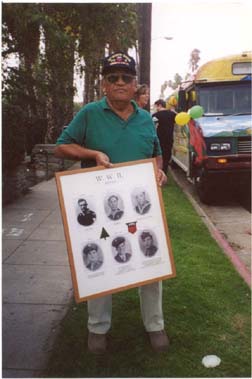
poster of the Mexican-American recipients of the Medal of Honor and a
friend, Ray Andrade helped me by handing out flyers for Valiant Press
which features the stories of these heroes in book form. More
information about Valiant Press can be found at my website, www.valiantpress.com Frequently, I address groups at veterans organizations, school
campuses and bookstores. The feedback from the public is indicative
that the issue with PBS is a live one. There is still a lot of pride
attached to the Hispanic communities involvement in this nation's war
and the common sentiment is expressed that we definitely are
underrepresented in media coverage. All of which underscores the fact
that we should continue to clamor for fair representation from PBS and
other media sources until our stories are handled in a respectful
manner. PBS has not paid attention to complaints from the Latino
community and has made only a very feeble attempt to mollify matters.
Our basic premise is this: we want to be treated as equals and this
has been the issue which PBS has stonewalled on. Our response has to
be more pressure, more exposure and no rest we are properly
recognized. |
|
|
|
New statistics from the U.S. Office of
Personnel Management show that gains in Hispanic representation in the
federal workforce were minimal in 2006. Hispanic presence increased by
two tenths of a percentage point, from 7.4% in FY 2005 to 7.6% in
FY2006, still far from reflecting the Latino civilian workforce of
12.8%. Testifying before a House subcommittee May 10, Gilbert Sandate, past president of the National Association of Hispanic Federal Executives, recommended that Congress strengthen its accountability systems by penalizing agencies that fail to meet certain diversity standards. He explained this could be done by tying in accountability to appropriations, the penalties being lesser appropriations for agencies failing to meet standards. The hearing, by the Subcommittee on Federal Workforce, Postal Service and the District of Columbia, focused on diversity at the top levels of the federal government. Sandate, who now serves as senior policy advisor for NAHFE’s current president José Osegueda, also called for funding for organizations such as as NAHFE so these can partner with federal agencies in developing outreach strategies to prepare talented Hispanics for senor-level positions. "With an average annual hiring rate of 0.13% over the past 40 years, Hispanics will never reach parity with their numbers in the national civilian labor force unless dramatic measure as taken to fix the broken federal personnel hiring systems," stated Sandate. He said the under representation costs Hispanics 120,000 lost jobs and $5.5 billion in salaries every year. Hispanic Link Weekly Report, May 14, 2007
|
New Book: The
Journey to Latino Political Representation - John P. Schmal
The Journey to Latino Political Representation is a detailed, yet
succinct, description of the struggle of Latino Americans to express
their political voice from 1822 to the present day. There are
essentially two parts to this story: the decline of Hispanic
representation in the nineteenth century and the revival of their
political voice in the second half of the twentieth century. To
explain this, the author discusses Latino population demographics,
anti-immigrant legislation and other political influences. In
addition, short biographies throughout the book help to familiarize
the reader with some of the politicians. The Journey is one of the few
works that describes the step-by-step struggle of one cultural group
to achieve political representation. In this respect, the book fills a
niche that has been neglected for decades. In the preface, Dr. Edward
E. Telles, the author of the award-winning, Race in Another America:
The Significance of Skin Color in Brazil, states that this book is
"an important educational service" that "will be useful
in classrooms throughout the United States." He adds that,
"no longer can educators in any part of the United States deny or
ignore the political importance of Latinos to their students, as this
book makes apparent." 2007, 5½x8½, paper, index, 228 pp. |
|
The Importance of September 19, 1947
|
|
It is difficult now to imagine the poisonous atmosphere
wafting round California's racial and ethnic communities at the onset
of World War II. Two years earlier, newspapers from coast to coast had
been urging the U.S. to punish "perfidious" Mexicans for
nationalization of foreign oil properties (later repaid in full).
Standard Oil Company of New Jersey was so pleased with its propaganda
blitz; it reprinted hundreds of choice bits in a 1939 book, MEXICO AT
THE BAR OF PUBLIC OPINION by Burt McConnell. Hardly ten years after
California Mexican American families were scooped up, taken by train
into Northern Mexico and dumped, the Anaheim BULLETIN urged punitive
deportations. Others like Long Beach PRESS-TELEGRAM, Fullerton
NEWS-TRIBUNE, San Bernardino SUN and Pasadena STAR-NEWS carried
threatening editorials and nasty cartoons.
Yet, in World War II, Mexican Americans distinguished themselves. Seventeen won Congressional Medals of Honor. The gallantry of Japanese Americans who fought in Europe is legendary. Soon after the December 7, 1941, Japanese Imperial attack on Pearl Harbor, Japanese American families in California (but not in Hawaii) were rounded up, hauled off to remote camps, and penned behind barbed wire for the duration. Making things right in California after the war would begin with stopping school segregation and erasing state law that provided for it. By September 19, 1947, that part of the mission had been accomplished. TWO SCHOOLS from the 1988 California Parks and Recreation FIVE VIEWS, An Ethnic Sites Survey for California. Cited sections were first published in 1980. http://www.cr.nps.gov/history/online_books/5views/5views0.htm Pages 237-238 Westminster "Mexican" School Dedicated on September 6, 1935, the Westminster School in Orange County is a one-story complex designed by J. E. Allison and constructed of stucco with a composition tile roof . . .a landmark in the historic case of Mends v. Westminster, which ended de jure school segregation of Mexicans in California ’s public schools. Separation of school children on the basis of race and nationality dated to an 1855 legislative decision that apportioned school funds on the basis of the number of White children, ages four to 18 in each county. As a result of this legislation, Blacks, Asians and Indians were specifically denied admission to White schools by the 1860s. Although Blacks obtained the right to a "separate but equal" education during Reconstruction, and 20 years later, the right to send their children to mixed schools, Chinese and Indian children continued as late as 1945 (according to Section 8003 of the Education Code) to be specifically denied the right to attend mixed schools, as long as separate schools were provided for their education. . . Page 196 Walnut Grove "Oriental" School Segregated schools in Walnut Grove continued until 1942, when all Japanese Americans in California were interned, leaving Filipino and Chinese students in the Oriental School. Financial considerations were apparently the deciding factor in desegregating the schools in 1943. . . After World War II internment, a Japanese family challenged the constitutionality of California ’s separate school provision. The Los Angeles County Superior Court agreed that segregation on the basis of race or ancestry violated the 14th Amendment. In 1947, the California legislature repealed the amendment that provided for separate schools for Chinese, Indians and Japanese. Page 238 . . .Ironically, however, the code did not mention the group most commonly segregated by 1945: children of Mexican descent. . .Segregation of Mexican children in public schools had kept pace with Mexican migration. . .between 1920 and 1930, California’s Mexican and Mexican American population tripled, making these people the state’s largest minority group, a ranking they still maintain. . . While Mexican and Chicano parents were acutely aware of the discrimination suffered during these years, economic conditions during the Depression, including forced repatriation of both Mexicans and Mexican Americans, prevented cohesive opposition to the state’s educational policy. . . In Westminster, Orange County, Gonzalo Mendez and several other Mexican American parents persuaded the school board to propose a bond issue for the construction of a new, integrated school. After the bond issue was defeated, however, the school board refused to consider the matter. Having failed to convince the local voters to abolish segregated schools, Mendez and six other plaintiffs sought legal redress. . .although the defense argued that a federal court had no jurisdiction in the cases since educational policies were determined by individual states . . .Judge McCormick ruled in favor of Mendez and his co-plaintiffs on February 18, 1946. . The defense immediately announced it would appeal the decision, which attracted national attention. The American Civil Liberties Union, the National Association for the Advancement of Colored People, the American Jewish Congress, and the Japanese American Citizens League filed briefs in support of McCormick’s position. . .the Court of Appeals. . .did uphold McCormick’s decision that segregation of Mexican and Mexican American children violated the Fourteenth Amendment. . .In Orange County, school officials decided not to pursue their opposition to the case, and in September, 1947, integrated schools opened in Westminster, Garden Grove, El Modena and Santa Ana. . .The Mendez decision established "precedent for important cases in other states. In 1948 and 1950, important federal district courts ruled that de jure segregation of Mexican-American school children was unconstitutional in Texas and Arizona . . .If Mendez v. Westminster could not be cited as direct precedent for the Brown v. Board of Education decision of 1954, in which the Supreme Court did finally reverse the "separate but equal" doctrine. . .the social and educational theory expressed by Judge McCormick anticipated Earl Warren’s historic opinion. . ." Wollenberg, ALL DELIBERATE SPEED, 1976, pp 131-132.
|
| Bilingual Education |
|
An Early Blow for Equality Spanglish When Spanish borrows words from English Support for Immigrant ESL Programs Spanish Language GED Practice Exams Inspired by Judge A.D. Azios article by Dr. Armado A. Ayala Perspective on Latino Education by Manny Hernandez |
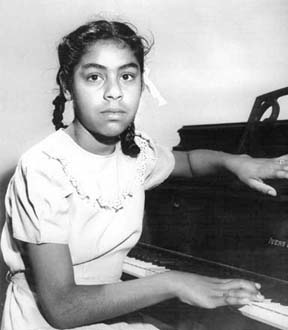
Sylvia, shown as a child, |
AN EARLY BLOW FOR
EQUALITY Tyche Hendricks, San Francisco Chronicle Staff Writer, 5/9/2007 FOR ALL CHILDREN: A family's fight 60 years ago against a California school that turned away their kids because they were Mexican helped end segregation in public education Sylvia Mendez was honored Tuesday at the San Francisco federal courthouse where her elementary school -- one reserved for "Mexicans" -- was outlawed 60 years ago in a decision that led California to desegregate all its schools and public facilities. Mendez's parents and four other Latino families in Orange County had sued four school districts, in Mendez vs. Westminster, and the Ninth U.S. Circuit Court of Appeals ruled that the decades-old federal doctrine of "separate but equal" violated the U.S. Constitution. |
Sylvia Mendez (right) and Sandra Robbie are touring the U.S. Chronicle photo by Liz Mangelsdorf It was in their case that NAACP lawyer Thurgood Marshall tried out the winning arguments he was to make in Brown vs. Board of Education before the U.S. Supreme Court, which outlawed segregation nationwide in its decision on the case in 1954. Mendez, a 70-year-old retired nurse who lives in Fullerton, was feted at the Ninth Circuit's Seventh Street courthouse by the San Francisco La Raza Lawyers Association at a screening of an Emmy-winning documentary about her family's precedent-setting but little-known lawsuit, "Mendez vs. Westminster: For All the Children/Para Todos Los Niños." She and the film's director, Sandra Robbie, plan to tour the country to raise awareness of the decision. The U.S. Postal Service plans to release a boldly colored stamp in September honoring the ruling's 60th anniversary. The day in 1943 when 8-year-old Sylvia and her younger brothers were turned away from Westminster Elementary because of their dark skin and Spanish last name remains vivid to her. She had been excited to start school in their new town after they moved from Santa Ana. Instead, dressed in her best with her hair neatly braided, she was sent away along with her brothers, even though their light-skinned cousins were allowed to enroll. Her parents, Gonzalo and Felicitas Mendez, who owned a cantina and had moved to Westminster to manage a farm, were appalled. They had thought all the students in the Santa Ana school were Mexican American because they lived in a Mexican American neighborhood. They had no idea state law allowed segregation against Mexican Americans, Sylvia Mendez said. The couple found Los Angeles civil rights lawyer David Marcus and sued on behalf of the estimated 5,000 Mexican American families in Orange County. "After the school district saw that my father had gotten a lawyer, they said we could go to the school," Mendez said. "But he said, 'Forget it. I'm going to do this for everybody.' He decided to keep fighting." When a federal district court ruled in the family's favor, civil rights groups across the country took notice. Attorneys had begun a campaign in the 1930s to challenge official segregation in the United States, and the NAACP had taken on segregated universities. But the district court's 1946 decision in Mendez tackled "separate but equal" more directly and gave credence to the notion that segregated schools hampered the education of minority students. After the Mendez ruling, the NAACP filed lawsuits against five segregated school districts in Kansas and across the south, and the U.S. Supreme Court eventually addressed those cases simultaneously in its 1954 decision in Brown vs. Board of Education. When the school district appealed, the NAACP, the ACLU, the Japanese American Citizens League, the American Jewish Congress and other groups filed briefs to support the ruling that segregated schools were inherently unequal. And the Ninth Circuit, on April 14, 1947, agreed that segregating schools on the basis of national origin violated the equal protection clause of the 14th Amendment. "It desegregated schools for all ethnic minorities in California seven years before the Brown decision," said Santa Clara County Deputy District Attorney Christopher Arriola, an authority on the Mendez case. "And it has the legacy leading up to Brown because Thurgood Marshall for the first time argued outright for the overturning of Plessy vs. Ferguson, which allowed for segregation." Earl Warren, then governor of California, within two months pushed through a state law invalidating all segregated facilities in California -- swimming pools, movie theaters, public parks and schools. In 1954, as chief justice of the United States, he wrote the Brown decision. Robbie, the filmmaker, who grew up in Westminster many years after Mendez did, said she didn't know segregation had been part of California's history until she heard of the Mendez case. "I thought that only happened in the American South," she said. "I knew this was a story my children -- every child -- had to know. It brought home the idea that the civil rights struggle didn't just happen in the American South but across the country and that it was about everybody of every color." She hopes to see the case taught in schools as part of the history of the civil rights movement. The "Mexican" schools had dirt yards instead of grassy lawns and taught vocational skills instead of literature and science, Mendez said. But she said she fully understood discrimination for the first time when her family moved back to Santa Ana -- after the Ninth Circuit ruling -- and she enrolled as the first Latino student at a former "white" school and was beaten up and called a "dirty Mexican." "I realized then what my father was fighting for," she said. She is still inspired by her parents' fortitude. "My father was really strong," she said. "He didn't want us to grow up thinking we're not equal." When Mendez told her mother a few years later that she wanted to be a telephone operator, her mother insisted she sign up for microbiology and become a registered nurse instead. This year also marks the 25th anniversary of the U.S. Supreme Court decision in Plyler vs. Doe, which overturned a Texas law denying illegal immigrant children access to public schools. The court ruled that children are entitled to an education regardless of immigration status, said Maria Blanco, director of the San Francisco Lawyers' Committee for Civil Rights. And that decision, in turn, was the federal district court's basis for overruling California's Proposition 187, which voters passed in 1994 and would have denied illegal immigrants access to public services. Sent by: |
|
|
As Americans we all know that the is the largest melting pot in the entire world, that we have every language spoken through out the globe right here in our own . Now the thing is this, if we have so many diverse cultures and languages being spoken why do we have a problem in allowing them on the Air? Young Latin Americans speak predominantly a broken language we have all come to know as Spanglish. Which is a combination of Spanish and English and used more as slang than a real language. But we all have used it at one point or another. We are faced with our youth not always learning Spanish completely and having to substitute words in English to make up for not being able to carry out a full Spanish conversation. What I am seeing is a big transition over to the same use of Spanglish not only in our every day lives but now a lot of our New young Artists are also using more in their music. If you listen to a lot of our Artists they are really bringing out some HOT music and not only doing it in Spanish & English but Spanglish as well. I have always felt that we can grow this Genre if we use this to our advantage. Our generation of Latinos are all pretty much in the same boat, we each partake in this use of our language and do it pretty well and a lot of the times it’s so customary for us we don’t even notice were doing it. It’s a normality to our lives and in bringing together this one key feature into our Music we add a special tone that can bring out some unique and Hot music that can not be overlooked when marketed properly. I have heard a lot of music coming out of the Latin Hip Hop community and many are doing this and some have had huge success in doing so. Just to name one big name we would have to look at Pitbull, this young man has taken the Spanglish use to a new level in music by always kicking in some Spanish in all his songs or at the least a lot of his songs. If you look at his success you will see there is a market for it and that success can come out of it! Now lets take it back to 1990 and we can see that even back then we had an opportunity to move on this particular style of music and although Gerardo had a big hit with his album Mo’ Ritmo and although many do not see him a key artist in the game you can not deny that in 1990 you weren’t saying "Rico Suave". We didn’t see this movement coming but it has been there for many years and it is now truly evolutioning. The underground has T-Weaponz, a Hip Hop outfit of young Latinos in Brooklyn which has had huge underground success in doing the same thing. They had "Mira Mira" which went on to gain national accolades and accumulated over 26,000 National Radio Spins. It featured Pitbull & Notch and was in English, Spanish & Spanglish. If you listen to this song not only will you hear a fierce group of rappers but a song that was done exactly what so many before it have, been successful. Catchy hook that combined English and Spanish to a perfect blend. Many don’t feel that this is something plausible, I disagree only because I have seen the success of it and see that there is a huge potential in taking this to another level and really making something happen. Now we can actually have songs played regularly on all Radio supporting Hip Hop and not just those that we decide to change over because of some little success that were allowed to have. If we actually make music that is enjoyable for everyone, guess what they will accept, listen and buy! So is there a market for this? YES! But is it
feasible? That’s the main question, which is one that has due
justice to be asked, because can we really expect something out of the
ordinary to work? I honestly feel that we can, because if Dora the
Explorer can be a cartoon show targeted to our kids in English and
Spanish why can't our Music? TV knows there is a market out there, so
when are Radio and Music Labels going to realize the same thing? Written by: Hector "Heist" Alvarez
|
|
Registrar tu nick es muy fácil. Other Spanish words which are used a bit differently from English are: un holding hacerse un lifting
una empresa de alto standing And if you want to do some jogging in Spanish-speaking countries, the normal word is footing:
tiquet, noun Here’s one of the several words that Spanish has borrowed from English - from ticket in this case - and adapted. You may find it spelled as tique or tíquet, and the -que- is pronounced in the same way as in, for instance, aquel. Usually it means a ticket on a bus or train, though it can also be used for tickets to museums and so forth. un conjunto de 50 edificios que pueden visitarse con un tiquet único de 1.200 pesos a group of 50 buildings which can be visited with a single ticket costing 1,200 pesos It’s also more loosely used to mean a voucher of some kind: un tíquet para aprender inglés gratis durante un mes a voucher to learn English free for a month It’s useful to know this word if you want to change something you’ve bought, since the sales assistant may need your sales slip: No se admiten devoluciones sin tiquet. Goods may not be returned except with a sales slip.
|
|
Support
for Immigrant ESL Programs Sent by Howard Shorr howardshorr@msn.com
|
|
Spanish Language GED Practice Exams Now Available from SpanishGED.org (Redondo Beach, CA, April 30, 2007) - SpanishGED.org announced today the release of its newly revised collection of Spanish language GED Practice Tests. The tests, which are closely correlated with the new Spanish language GED exams, are available in hardcopy and electronic formats, for $19.95 each. "Over half of the Hispanic population in this country does not have a high school diploma, which means they suffer chronic unemployment and under-employment, are living without proper healthcare coverage, and are more likely to be welfare recipients," says Jack Bernstein, President of SpanishGED.org. "The Practice Tests are an excellent way for Spanish-speaking adults to prepare to take the exam in all five subject areas." The GED Practice Tests are available as follows: Practice Test - Science / Examene de Práctica - Ciencias Practice Test - Language Arts / Examene de Práctica - Lenguajes Practice Test - Mathematics / Examene de Práctica - Matemáticas Practice Test - Social Studies / Examene de Práctica - Estudios Sociales Recently, the highly regarded Midwest Book Review declared SpanishGED.org's Spanish language GED prep materials, "simply outstanding," and awarded it a "strongly recommended" rating. (The Midwest Book Review is one of two publications that school and public librarians nationwide use to decide which books and CD's should be purchased for their collections.) "According to the Joint Economic Committee, high school dropouts earn about $260,000 less over their lifetimes, which means they pay about $60,000 less in taxes; when totaled, lost revenue to state and federal governments is in the tens of billions of dollars annually. Nearly 80% of those in prison do not have high school degrees or the equivalent. Now that the GED exam is being given in Spanish, the GED certificate is truly a way for many to get their lives back on track and become part of mainstream America," says Bernstein. The Spanish Language GED Practice Tests are available from: www.SpanishGED.org; Amazon.com; or Baker & Taylor. SpanishGED.org is part of InterLingua Educational Publishing, a Southern California-based publisher founded in 1992. The company's mission is to make educational materials available to K-12 English Language Learner (ELL) students nationwide. For more information contact: Marcelo Podesta Ph: 310-792-3635 Fax: 310-792-3642 Marcelo@SpanishGED.org
|
|
Judge A.D. Azios article Estimado Colega, I don’t know if you have even heard my name, much less remember me. However, your "Inspirational" article about Judge Azios' view on "EDUCATORS" compelled me to write the following: The Azioz family lived right behind our house @ 1312 Salinas Ave. exactly 4 blocks from the "Hamilton Hotel". Judge Azios was just a few years older than I. He was one of the G.I.'s who first were called to serve in the Military. Jesus & Juan Meza were two other young guys called in from our "Tex-Mex (R.R) Barrio.. they fit into this story because Their father was Chief-Chef at the Hamilton Hotel; My education Sub-One (English learners) to M.H.S. were the educational routs which ALL of us followed. The only Chicano MALE teacher, I had was Mr.. George Garza, who taught Mechanical Drawing @ M.H.S. ( era 1943-'50). He became MY ROLE MODEL, when he organized us into the "Jr. LULAC Council #1 under the auspices of "Laredo LULAC Council #12. Among our group were: Vidal Trevino (RIP) Laredo ISD Supt., ATT. Roberto Ornelas Fire Chief Flores, Col. Andres Cuellar &many others for whom "The Senior LULACS became OUR "Parentis Absensia". One other "limitation" we ENJOYED was the LACK of "English CARRIERS" into our homes. The English we learned was not "RELEVANT to our NEIGHBORHOOD CULTURE". Our "Reading Series was "Dick &Jane"; FATHER, MOTHER did not look or dressed like "Mama y Papa'. Dick had a "PONY", an animal, which made a noise "Clipity-Clop" as he walked down the "Bridal Path". Please tell me, how could we as 8 year old Laredo Children "Relate" to these "IMAGES"? The closest "IMAGE" to this animal to which we were exposed would have to be the "Lone Ranger series" on Sat. afternoons@ "El Teatro Mejico". As for the sound "EFFECTS" of the "Pony's walk", it was more like "Tikitan-tikitan, Tickitan tan tan sang to the tune of "William Tell's Overture" as we ran our "Mora-Branch Stick Horse" into the sunset of "The Streets of Laredo". Many years later, I became an Elementary School (East Tx. State Teachers Collage 1969) and was recruited to teach 5th grade in California. Why California? you ask? The salary offered was $4,600.00 a year; Tx. best offer was $2,800.00. However, I was received by a communities of 95% Raza ! They had NEVER seen a Chicano Teacher. Mr.. Garza's mentoring lessons came back to me. I taught from 8:00 a.m. 'til 3:00 p.m., then I would supervise after school play ground, then I would make home-visits. I asked permission from the communities if it was O.K. for me to wear a shirt & tie or did they think that it made me think that I was better then "They"? ("(Dick & Jane FATHER image came to mind) The parents saw me out in the playground in "T" shirt, sweaty & dirty, so they said, "Mr.. Ayala, our kids LOVE to see someone "Como nosotros" wearing a shirt & tie to work. BINGO ! I had a "Parents meeting in my room every night prior to "P.T.A.". I wound go over the "AGENDA" with them, so they would know what would be happening.. From the "Pledge of Allegiance" ritual, Previous meeting minutes, treasury Report, etc. Needless to say, my room always "WON" the "Cookie Jar" for having the most Parents in attendance. In 1969 I received a "Fellowship for Experienced Mex-American Teachers" to be trained as "Change Agents in the school system for Mexican-American students. WOW ! I had not even applied,; one of the recruiters had been a teacher in Bakersfield, Ca., where I had been teaching. He & I were 2 of the 5 Mexican American (M/A) teachers employed by a district of 1200 teachers; with a 33% M/A student population. For my thesis I chose " Bilingual- Bicultural Early Childhood Education"; The Ayala Dual Language instructional Method, Strong Parent Participation, Staff Development & Material Development. As a result of all the "ERRORS" I saw in my educational career I tried to include into this program. The Program lasted 23 years in 5 northern Ca. counties, 10 school districts and was extended to served the Asian Refugees as they started to arrive. Then came the "Slav" Refugees i.e. Russian, Ukraine, Romanians plus others. Gracias a Dios, mi familia Mr.. Garza, LULACS & the support of my friends, The Laredo Times for letting me sell it at the corner of "Kress". Ms. Edna Deats, who allowed me to run her "News Stand" for 3 years while I finished MHS, she also introduced me to the ins & outs of he ""Anglo High Society of Laredo. Every school we served had an objective which required every K-1st grader's home to be visited by the end of the second month of school. The teachers & Assistants were paid salary & mileage. Sorry I made this so long , however YOU inspired me. Como siempre, con RESPETO y CARINO, se firma, su seguro servidor, "Ora es cuando EL CHILE le da savor al caldo"! Dr. Armando A. Ayala
|
|
|
Perspective
on Latino Education |
|
| Born and raised in Sleepy Hollow, New York. At eleven years of age, Manuel Hernandez' family moved to Puerto Rico. He finished grade school in Puerto Rico. He received his B.A. in English; secondary education at the University of Puerto Rico, Rio Piedras Campus in 1986 and completed his M. A. in English at Herbert H. Lehman College in the Bronx, New York in 1994. His papers-in-lieu of thesis are on the English writers George Bernard Shaw and John Milton. | |
| Hernandez
has presented workshops, coordinated symposiums, conducted television
interviews and moderated panels on the literature written by United
States based Latino writers in Puerto Rico, the United States and
Mexico. He also writes commentary essays on Latino education for
several websites and newspapers in Puerto Rico and The United States.
He published a textbook titled, Latino/a Literature in The English
Classroom (Editorial Plaza Mayor, 2003). He currently teaches
English at a public high school in Puerto Rico.
His educational vision is to
integrate Latino Literature to encourage young adult students to read
and write. He believes that having an encounter with Latino literature
will help teens (especially Latinos) to improve scores on city,
national and statewide exams and will prepare them for further
literary analysis. Hernandez lives in Luquillo, Puerto Rico and enjoys
spending his free time with his wife, Maria, his eighteen-year old
son, Joey, and his newborn baby boy, Josue Esteban. He is a disciple
at Iglesia Vida Abundante in Fajardo, Puerto Rico. Essay I 75-Latino Education:
Improving Literacy
|
|
|
Essay 12 Latino Education: Beyond
The Millenium
|
|
|
The Latino preschool, elementary, secondary and high
school population has grown and become an important factor of the
education in America today. Much of the recent growth in enrollment in
elementary and secondary schools may be attributed to the rise in the
number of Latino students. Latinos continue to come into the United
States at unprecedented rates. Although it is a matter of survival at
the beginning of the immigration process, Education is key value
cherished by Latinos, but at the same time, are many times less likely
to receive a quality education than other American ethnic groups. The
educational journey is rough and bumpy, but Latinos have realized that
their opportunities are based in the educational empowerment of the
people. After numerically proving in the past two major elections that they should not be taken for granted; the education of Latinos must be a top priority for the President's administration and the newly appointed Congress. While the War on Terror continues to be the number one priority today in America, more and more Latino children find themselves out of school and without the academic support needed to walk within the American educational school system. Census projections go as far as placing them over the 100 million mark by mid-century, but the numbers are meaningless unless high school drop out rates, national testing scores and other educational mishaps are addressed immediately by the Department of Education. However, despite the fact that Latinos have recently made some
academic gains, disparities still exist in academic performance
between Latinos and non- Latino White students. Very few Latino
immigrants have the ambitions and aspirations for anything more than
providing a decent living for their families here in the United States
or in their native countries. Most of them are hard workers, and they
seem satisfied just with living life with whatever they can get from
their labors. Latino education is in dire need of role models willing
to go back and visit these inner city neighborhoods and talk and speak
out on the power of education, it being the key to success.
|
|
| Education |
|
The American Flag Comes
in Second Theodore Roosevelt's 1907ideas on Immigrants and being an American Teacher Aguirre helps student win two Scholarships, $30.000 & $80,000. San Antonio high achiever wins four-year merit-based scholarship Voices in Urban Education Heroes & Heritage Victory of the Mexican people over the French Latin Scientists of World War II The Heart of "Los San Patricios" - Rudy Padilla Resources for classroom Teachers Latinos in the Industry, Network launches programming for preschoolers Uruguay children try low-cost laptops |
|
|
|
 |
 |
|
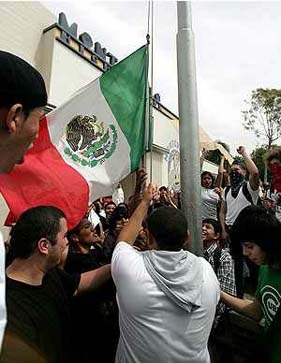
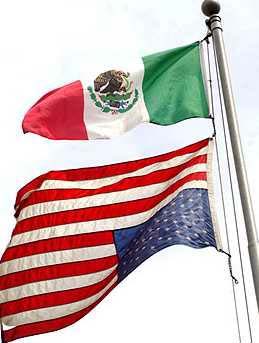
An upside down flag, is a sign of distress. If that was their message. I felt it. This took place in a
California High School, but I received the photos from a concerned
friend, Margaret Velez, from El Paso, Texas. It is already
spreading on Internet forums and via e-mail. One hundred years ago, President
Theodore Roosevelt expressed the views still held by many Americans,
immigrants should assimilative and hold their allegiance to the United
States. |
|
|
|
|
We should make every effort to maintain our Spanish speaking and literacy, so that our youth will respect and maintain their Spanish skills. Our children are the future, they will form the economic bridge to Mexico, Central and South American, Spain and the Philippines. President Roosevelt views on one language, English, is not a negative. English is considered the language of business, but to be comfortably bilingual should be treasured, it is gold. |
Theodore Roosevelt's |
|
"In the first place, we should insist that if the immigrant who comes here in good faith becomes an American and assimilates himself to us, he shall be treated on an exact equality with everyone else, for it is an outrage to discriminate against any such man because of creed, or birthplace, or origin" |
|
|
" But this is predicated upon the person's
becoming
in every facet an American, and nothing but an American...There can be
no divided allegiance here. Any man who says he is an American, but
something else also, isn't an American at all. We have room for but
one
flag, the American flag.... We have room for but one language here,
and
that is the English language... and we have room for but one sole
loyalty and that is a loyalty to the American people." |
|
|
|
Chef/Teacher Zhee
Zhee Aguirre |
|
Shaigalea Simmons is a low income senior at Mira Mesa High School, comes from a broken home life, has had academic and learning development struggles, and is bussed in from South East San Diego to Mira Mesa High School….. Chef Zhee Zhee, her teacher at Mira Mesa High School, noticed (as everyone who knows Zhee, she is very aware of "all") Shaigalea and her personal situations- she also noticed Shaigalea had talents and dreams, she just needed some assistance and opportunities to help them bloom.A few months ago Zhee Zhee researched several University/College scholarships for her students. She has been spending numerous long hours during and after school since early January helping her students prepare for cooking competitions (advising/coaching them, taking them shopping for their menus, etc.)— these competitions if won could provide them with scholarships to their dreams. About a month ago Shaigalea won a $30,000 scholarship to Johnson & Wales University in North Carolina! This was so extraordinary! The winning position she attained entitled her to a free trip for herself, her teacher, and her mom to Johnson &Wales for their National Chef of the Year competition that took place this past weekend in Charlotte, North Carolina- grand prize $80,000 scholarship. Shaigalea won 1st place on Sat., $80,000 scholarship!!!! Sent by IANDRECC |
|
| San Antonio West Side high achiever
wins four-year merit-based scholarship Jeanne Russell, Express-News, 3/29/2007 Anjelica Collins navigated the socially turbulent world of middle school with care. She forged two tight friendships and became the first girl president of the technology club at her West Side middle school, but lost a bid for student council president. She honed her ability as a flutist and public speaker. Her mother, Rosario Colunga-Collins, said she was always a bit reserved, and the academic gifts now earning her honors seldom are the stuff of adolescent popularity contests. The 14-year-old recently won a four-year, merit-based Batten scholarship to Culver Academy, a boarding school in Culver, Ind., where she plans to enroll in the fall. Last year she won a chance to study at the University of Kansas during the summer, and this fall she won a national Jack Kent Cooke award for young scholars, what her mentor calls "the Nobel Prize for seventh-graders." Not bad for a kid who attends the Rhodes Middle School technology magnet program on the West Side, where the San Antonio and Edgewood independent school districts come together. So many honors for one so young Anjelica Collins, 14, is in the technology magnet program at Rhodes Middle School. Batten scholarship: A four-year scholarship to Culver Academy, a college-prep boarding school in Culver, Ind. In addition to covering room and board, the scholarship pays for a sophomore social service mission and a junior year abroad. Jack Kent Cooke Young Scholars: The national honor from the Jack Kent Cooke Foundation, which was founded by donations by the late owner of the Washington Redskins, provides an educational adviser and about $15,000 a year in financial assistance for a scholar through high school. Young scholars also are eligible for college scholarships. Duke Talent Identification Program: Seventh-graders who perform well on the SAT or ACT qualify to spend three weeks during the summer studying ata college campus through a program for high-achieving seventh-graders sponsored by Duke University. Anjelica studied medical science at the University of Kansas last summer. In her Batten scholarship essay, Anjelica described the neighborhood as "synonymous with dropouts, gangs, drugs and leads the city in teen pregnancies." Anjelica was among 63 students selected in 2006 by the Virginia-based Jack Kent Cooke Foundation from more than 800 low-income, high-achieving seventh-graders. The scholarships, which reach students with an average family income of $25,000, provide financial support and an academic adviser who stays with the student from eighth grade through high school. Named for the late owner of the Washington Redskins football team, the foundation has research showing that smart low-income kids . those in the top quartile on aptitude tests and in the bottom half economically . make up about 7 percent of American schoolchildren, said Joshua Wyner, vice president for programs. These students are being lost at every grade level, and only about half graduate from college, he said. The middle school years are fraught for virtually all kids. But they're tougher on low-income kids, who face particular challenges throughout their school years. The scholars program seeks to catch high-achieving, low-income kids early enough to nurture them through adolescence, at an age when opportunities for magnet and summer programs as well as selective high schools open up. "There are some developmental things going on that inform how one works with middle school students," Wyner said. "That said, I think it's dangerous to pick any period of time and say this is the most important time to work with students. We lose high-achieving, low-income kids throughout the education pipeline." For her recent string of achievements, Anjelica credits the influence of her mother, three favorite teachers at Maverick Elementary School and especially Teresa Van Hoy, a professor who teaches SAT preparatory classes after school to San Antonio Independent School District middle school students. Van Hoy started the San Antonio Stand and Deliver program in 2002 because she felt her boys, Rhodes students, and their magnet school classmates weren't being exposed to academic opportunities such as a Duke University-sponsored summer program for brainy adolescents. Anjelica was one of two participating seventh-graders who scored high enough on her SAT to study medical science for three weeks last summer at the University of Kansas. "Just to spend a half hour debating the newest medical discovery. ... If I started talking about that at Rhodes, I'd get some pretty weird looks. I was never once called 'nerd.' I used some pretty big words. We discussed books. It was wonderful being with people who were at my level or above," Anjelica said. Though it pains her to leave her mother and two closest friends, on avisit to Culver she took comfort in the dorm room of another Batten scholar, decorated with photographs of friends from home. "At a boarding school, everyone is starting over. The uniform thing helps. If you accomplish something, it's because of what you do," Anjelica said. The Batten scholarship also pays for Anjelica to participate in a mission that could take her anywhere from Louisiana to Croatia to do social service work during the spring of her sophomore year, and an international educational experience her junior summer, said Larry Bess, Culver's associate director of admissions. Bess said Anjelica impressed him from the moment she showed up for an interview at a San Antonio hotel. "She was just extraordinarily confident, but it was a quiet, steadfast sort of confidence. She asked such strong, sound questions," he said. Anjelica hopes Culver will provide another springboard. She recently asked Van Hoy to hand-deliver a letter to Sorin Istrail, a Brown University computational molecular biologist with whom she'd like to study one day. "We come from a very, very traditional Hispanic family. You didn't leave the house until you were married and made your own home," Colunga-Collins said. "Having to work as a mother and now as a single mom, you have to evolve. Our girls have to ... stand up for themselves. If she wants to be a wife and mother, that's great, but if she doesn't want to, then (she has her) education." Source: rvazquez@LARED-LATINA.COM
|
|
Voices in Urban Education As the immigration debate heats up in Congress, the latest issue of Voices in Urban Education, from the Annenberg Institute for School Reform, looks at what various proposals might mean for the 8 million U.S. students who are immigrants or children of immigrants. The articles examine issues ranging from English language acquisition, high-stakes testing, and funding to building on students' assets and working with children from war-torn areas. <http://www.annenberginstitute.org/VUE/index.html> Ricardo
J. Valverde
|
Heroes & Heritage Heroes & Heritage, a veterans and outreach non-profit organization, held their first event on May 22 in San Antonio, Texas, on Tuesday at the Henry B. Gonzalez Convention Center. The Office of Diversity Management and Equal Opportunity, Department of Defense, participated with Heroes & Heritage in the student symposium, student luncheon, and an evening awards dinner. Additional information can be found at: www.heroesandheritage.org. The student symposium included 300 university, college, and high school students from San Antonio and south Texas. Student influencers--career counselors and parents attended. Most of the students have high GPAs. The objective of the symposium is to provide the students with information what will help them make good career choices. Through various presenters, the students will become knowledgeable of career positions and internships with Federal agencies and corporations. Heroes & Heritage aims to introduce government agencies and private sector corporations to a pool of high achieving students in the San Antonio area. Mary Alice Cisneros has been invited to be the keynote speaker at the student luncheon. The master/mistress of ceremonies was Joe Reinagel, sports director, and Sarah Lucero, an anchor, KENS Channel 5. Melissa Rodriguez National HEPM U.S. Environmental Protection Agency 1200 Pennsylvania Avenue, NW Mailcode 1201A Washington, DC 20460 (202) 564-7293 (202) 501-1836 Fax Rodriguez.Melissa@epamail.epa.gov Sent by Yeda Baker athomewylb@hotmail.com
|
Victory of the Mexican people over the French Estimada Gente: When we don't know about our history or are not taught about our contributions to this country, then we are led to believe that we do not have significance or that we have not contributed to its development since the before the Revolutionary War (and of course before), which is a misrepresentation of history. Here is something for all of us to learn about nuestra historia being released by Dr. David Hayes Bautista (UCLA) today, May 4th. Saludos, Richard Esquivel CEO/ President http://www.westerntradinginc.com resquivel@westerntradinginc.com Wsterntr@aol.com
|
Latino Scientists during WWII. Latino civilians that contributed to the War cause. Dr Luis W. Alvarez, the physicist and his son, Dr Walter Alvarez, the geologist. Dr. Luis W. Alvarez invented three things that help in WWII, the aircraft radar, the zoom camera lens and the microwaves used on the aircraft Ground Control Approach (GCA) use for night and bad weather landings. Both father and son came up with the idea of what cause the extinction
of the dinosaurs. http://www.fas.org/rlg/alvarez.htm Whenever this dinosaur theory is taught in school, I always ask her teachers, who came up with that theory. They usually say, oh some scientist. I reply No! No! No!. Dr Luis Alvarez and his son Dr Walter Alvarez. Rafael Ojeda RSNOJEDA@aol.com |
The Heart of "Los San Patricios" - Rudy Padilla Since the Spring of 2006, "Caminos" is growing more concerned about the restlessness among Hispanic youth amid reports which I receive from schools, that they feel like outsiders and are not respected in Kansas City. The reports for the most part are about teenager's who were bought to this area when they were younger, from Mexico or other Spanish-speaking countries. In the summer of 2006, the Fordham Foundation zeroed in on the lack of history taught in schools. Specifically these are comments which pointed out the lack of history studies about Spanish-speaking countries, as Mexico, Central and South America. Could this uneducated part of individuals lead to racism and intolerance on the part of the majority? In several discussions among Hispanic military veterans, they appreciated the opportunity to defend this country and to being treated as equals. But, there was also quite a bit of explaining about one's own background. For example, when I spent "boot camp" in Great Lakes, Illinois several years ago, I was the only Mexican-American in my company at boot camp. I must say that I got along very well with the other 99 members, but I was approached several times to explain myself. Most of the other members of the company were from New York City, Boston, New Jersey and the South. Most of them had seen Puerto Ricans on the East Coast. They had observed, but not really spoken with any of them. The questions to me were - what is the difference between a Puerto Rican and a Mexican? You speak English well - how did you learn English? What kind of foods do Mexican-Americans eat in Kansas City? And of course, "Don't they have a lot of cows and horses walking the streets of Kansas City?" These were very serious questions they asked. I have heard of several Mexican-Americans who experienced the same questions when they were in the military. Rudy Padilla can be contacted at opkansas@swbell.net
|
| Resources for
classroom Teachers Quarterly Newsletter for Classroom Teachers http://brownvboard.org/brwnqurt/brwnqurt.htm wonderful assortment of topics on diversity issues |
| Latinos in the
Industry, Network launches programming for preschoolers By Anna Marie de la Fuente National Geographic makes play for kids http://www.variety.com/article/VR1117963001.html?categoryid=14&cs=1 In a bid to attract the predominantly young population in the region, National Geographic Channel will launch on April 16 its first branded block aimed at preschoolers.Dubbed "Nat Geo & Me," the block will air daily from 6 a.m. to noon across Latin America, with Mexico airing it between 6 and10 a.m. Programming initially consists of pickups, but original productions will air in the coming months. Main programming block includes "The Zula Patrol," which targets kids ages 3-8 and aims to teach them about Earth and other planets through the exploits of its wacky alien characters. Other skeins include "New MacDonald's Farm" and "Crawford's Corner." These are dubbed into Spanish and, for Brazil, Portuguese.
Developed with child psychologists and infant development experts,
"Nat Geo & Me" also includes educational interstitials
with riddles, puzzles and information on a variety of subjects such as
food, the elements, the environment, numbers and colors. |
Uruguay children try low-cost laptops By ALFONSO CASTIGLIA, Associated Press Writer Fri May 18, VILLA CARDAL, Uruguay - Big smiles spread across the faces of the 160 pupils at a public elementary school in this rural South American hamlet: Each sat gawking at a brightly blinking laptop computer given them days earlier. "This is like an early visit from Santa Claus," beamed
11-year old Eduardo de los Santos, clutching his computer with its
shiny white case and bright green trim. The ambitious nonprofit project was launched in 2005 by Nicholas
Negroponte, then-director of the media lab at the Massachusetts
Institute of Technology. And while the first computers to Uruguay were donated, the rest are to be bought by the government, which has budgeted $15 million for the program. A final agreement, however, is still pending. The portable computers have already transformed the classroom in Villa Cardal. "The power of these machines is impressive," said the school's principal, Marcelo Galain, noting their promised 12-hour battery life. He said students got their computers a day ahead of a national holiday, but went on their day off to school to start using them. There were a few technical glitches getting the computers up and running: Though none of the teachers had much experience with computing, they quickly realized that children with a tilde in their names were having the problem of logging on. The bug was quickly fixed. Some children began warming to the computers by playing "Tetris," a popular falling-blocks puzzle video game. Later they will explore the Linux operating system. |
Maria Fojo, mother of 10-year-old twins Lucas and Franco, said her family couldn't afford a computer. Now they have two. "Lucas took his computer to his grandmother's house and then went to see his godmother with it," she said, adding Franco got hooked on playing with a small video camera installed with the unit. The computers are designed for children, boast extremely low electricity consumption, a pulley for hand-generated power, 1 gigabyte of flash memory, built-in wireless networking and a screen with indoor and outdoor reading modes. "The laptops all talk to each other automatically, have voice chat, file sharing and all that can be done between laptops without Internet," Bender said of the design. "If any laptop has access to the Internet all can share it." Bender said the machines come loaded with children's books in local languages, along with encyclopedias and more. Uruguay, a small South American country, is one of
about a dozen developing nations that signaled interest in
participating. The first laptops, along with a wireless Internet
connection, were the gift of the One Laptop Per Child project, a
nonprofit foundation that has received funding from several companies,
including Red Hat Inc., Google Inc. and News Corp. Uruguay has fully embraced the laptop project amid high hopes to have laptop computers in the hands of all elementary school students before 2009.The Villa Cardal students' enthusiasm is something program supporters hope to see repeated in schools worldwide: Other countries that have expressed interest include Argentina, Brazil, Cambodia, Costa Rica, the Dominican Republic, Egypt, Ethiopia, Libya, Nigeria, Pakistan, Russia, Rwanda and Thailand. Galain said he now sees some students engaged in learning who weren't before."Some children who didn't like to even write are now getting used to working with a word processing program," he said. Still he warned his pupils the newfangled computers wouldn't mean escape from the basics of reading, writing and arithmetic: "Nobody believes the children will stop using pencils and notebooks."
|
| Culture |
|
Heirlooms in the Sand Low-rider car in Japan Camino Mágico, New Latino Diet does not discount Cultural Roots |

|
Spools of thread, each with a lone needle, hand sewn clothing and drawings in pencil depicting home and family…these are some of the items migrants are forced to leave behind in the desert. Over time, we have found over 35 hand embroidered “bordado” cloths with inscriptions such as “Yo e Tu Rec. Felicida de Ma Ma” You and I remember the happiness of our Mother, “Pienso En ti” I think of you and “Somos Dos Enamorados” We are two lovers. Some of the cloths are of heirloom quality with relleno crewel work, others are everyday tortilla wraps. All are edged with lacy “tejido de gancho” crochet. We wash the cloths and display them with care.
|
|
http://www.lasmadresproject.org/heirlooms.asp
|
|
| “The
American Folk Art Museum has shown that it is functional folk art
through the years, much of created by immigrants, that best tells the
story of our country. This homespun art recovered from our deserts
illustrates in the most personal manner, the story of our times." The Heirlooms in the Sand Collection includes Greeting Cards and 11 x 17 prints that depict 12 different cloths. Look for Heirlooms in the Sand Collection Cards and Prints in local Museum Shops and bookstores or request them from your favorite retailer. |
|
|
|
Valarie
James writes: I am an artist doing research on tortilla cloths crafted by Mexican and South American women. Over the last three years, my friends and I have recovered over 35 beautiful cloths from the desert near my ranch in southern Arizona. These are cloths embroidered by many (nameless) women. Migrants have been forced to leave them behind in the desert and if not recovered, they would have been lost forever. They are impeccable examples of bordado, rellano crewel work and tejido de gancho crochet. . When visitors to my studio see these cloths, they are moved to tears. |
|
|
|
|
|
 The
photo of this fancy looking low-rider was taken at a Car Show in Japan
by father of the teenager, Robert Gonzalez stationed in
Japan. gonzalesr@cg63.navy.mil The
photo of this fancy looking low-rider was taken at a Car Show in Japan
by father of the teenager, Robert Gonzalez stationed in
Japan. gonzalesr@cg63.navy.milIf the Japanese fascination with low-rider cars is new to the reader, let me just say that this interest has been going on for years. One of my grandsons sold his jazzed-up low-riders to an Australian, so the interest in low-riders seems to spreading. Mimi |
| Camino
Mágico
New Latino Diet Guide Doesn't Discount Cultural Roots to Eating
Healthy Among all the crisis that plague the well-being of Latinos, diet,
or lack of it, is at the top. What's remarkable about this guide is that it doesn't discount
Latino cultural roots when it comes to creating healthy food choices -
but builds on them. Sent by Howard Shorr howardshorr@msn.com
|
| Business |
|
City of Oakland seeks a
Chief Curator of History for employment Addy Perez-Mau, "California Small Business of the Year" for District #68 Hispanic Ad Spending Rose 14% Univ of Calif Press announces publication: The Farmworkers' Journey |
Chief Curator of History
The Position The City of Oakland is currently recruiting to fill one Chief Curator of History vacancy at the Oakland Museum of California. Under the direction of the Executive Director of the Museum, the incumbent provides California-focused history expertise through planning, organization, management and direction of the work of the Oakland Museum’s History Division; provides leadership in the development and implementation of all aspects of history exhibitions, programs, and publications; coordinates special projects including collaborations with other history-related institutions; provides oversight of the Museum’s collection of historic artifacts, objects, and documents; trains and supervises assigned staff; and performs related duties as assigned. Minimum Requirements for Application Any combination of education and experience that is equivalent to the following minimum qualifications is acceptable. Education: Master's degree from an accredited college or university in the field of history, American studies, anthropology or a related field. Experience: Three years of responsible museum administration and history collection management experience at a supervisory level, comparable to that of a Senior Curator of History in the Oakland Museum. City of Oakland application documents may be obtained in person or by sending a self-addressed stamped envelope and request to the Office of Personnel, 150 Frank H. Ogawa Plaza, 2nd Floor, Oakland, CA 94612-2019. You may also call (510) 238-3112 for information. You may access a copy of the City’s announcement and a Microsoft Word or PDF version of the employment application at the following Internet address: www.oaklandnet.com. Click on "City Jobs" to view current openings or access the employment application.
|
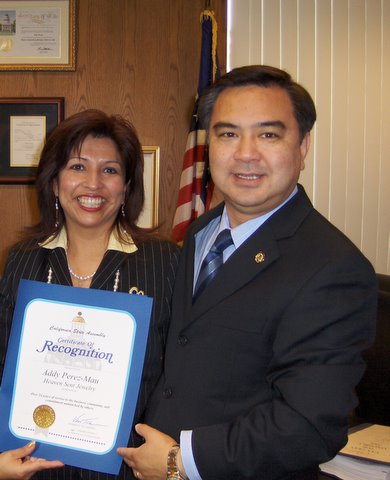
|
Small Business Day Honored at Formal State Recognition Celebration Addy Perez-Mau selected from among 3.7 million companies in California
|
|
The award was announced on May 2nd at the annual California Small Business Day in Sacramento, and Heaven Sent Jewelry joined small businesses of the year identified in each of 80 state legislative districts. Scores of legislators joined in chorus to salute the spirit of Entrepreneurship among California's small business owners and operators throughout the day-long event. Mrs. Perez-Mau also received a Certificate of Recognition by Assemblymember Van Tran for "Over 24 years of service to the business community, and commitment unmatched by others. " "We were humbled to have been selected for this award and it is a tribute to our customers and community," said Addy Perez-Mau. "This is a special event when government, businesses, associations and community come together to honor the small business contributions of innovation, job creation and economic growth to the State of California," said Betty Jo Toccoli, President of the California Small Business Association, on behalf of the two-dozen small business organizations hosting the event. Small businesses serve as the primary economic engine that drives the state's economy. Over one-half of Californians employed in the private sector work for small business. The state's small firms produce more new jobs, more inventions, and more patents, than any other size company in California or any other state in the nation. Heaven Sent Jewelry has become a nationwide inspiration. Established in December 2003, Addy Perez-Mau has been recognized and received various awards. She also received the SBA Region IX Home-Based Business Champion on May 17, 2007. Website:
http://www.heavensentjewelry.com
|
|
HISPANIC AD SPENDING ROSE 14% May 3, 2007 - NEW YORK (Mediaweek) - Advertising spending across
Spanish-language media continues to outpace general market media,
increasing 14.4 percent last year to nearly $5.6 billion, according to
a Nielsen Monitor-Plus analysis of spending across six media
segments.
|
| University of
California Press announces publication of:
The Farmworkers' Journey Ann Aurelia López received a Ph.D. from the University of California, Santa Cruz. She recently completed a President's Postdoctoral fellowship at the University of California, Berkeley. She has a long history of teaching Environmental Science, Ecology and Botany courses in the Department of Biology at San Jose City College. She is currently a Research Associate at the Center for Agroecology and Sustainable Food Systems at the University of California, Santa Cruz, and is in the process of establishing a non-profit organization designed to improve the lives of California farmworkers and their families in Mexico. http://go.ucpress.edu/LopezFarmworkers "This book tells a powerful and moving story of lives affected by agricultural and trade policies, migration, and the dehumanization of farm workers. The text is an eye-opening blend of academic research and testimonials of the people directly touched by the powerful market forces that have been unleashed by trade liberalization. Lopez brings together different analytical dimensions that are normally treated separately, moving through these dimensions with an ease indicative of her extraordinary talent and expertise."-Alejandro Nadal, Science, Technology and Development Program, El Colegio de México Illuminating the dark side of economic globalization, this book gives a rare insider's view of the migrant farmworkers' binational circuit that stretches from the west central Mexico countryside to central California. Over the course of ten years, Ann Aurelia López conducted a series of intimate interviews with farmworkers and their families along the migrant circuit. She deftly weaves their voices together with up-to-date research to portray a world hidden from most Americans-a world of inescapable poverty that has worsened considerably since NAFTA was implemented in 1994. In fact, today it has become nearly impossible for rural communities in Mexico to continue to farm the land sustainably, leaving few survival options except the perilous border crossing to the United States. _The Farmworkers' Journey _brings together for the first time the many facets of this issue into a comprehensive and accessible narrative: how corporate agribusiness operates, how binational institutions and laws promote the subjugation of Mexican farmworkers, how migration affects family life, how genetically modified corn strains pouring into Mexico from the United States are affecting farmers, how migrants face exploitation from employers, and more. A must-read for all Americans, _The Farmworkers' Journey _traces the human consequences of our policy decisions. Full information about the book, including the table of contents, is available online: http://go.ucpress.edu/LopezFarmworkers Lolita Guevarra Electronic Marketing Coordinator University of California Press Tel. 510.643.4738 | Fax 510.643.7127 lolita.guevarra@ucpress.edu Source: http://LISTSERV.CYBERLATINA.NET/ARCHIVES/LARED-L.HTML |
|
The Big Juan |
|
|
 |
|
| CINCINNATI - Hispanic leaders are demanding a public apology from a radio station that put up billboards showing a Mexican flag, a donkey, and a mustachioed man in a sombrero with the headline "The Big Juan." | |
| The
Hispanic Chamber Cincinnati USA complained that the advertising by WLW-AM
stereotyped Hispanics. The community leaders said at a news conference
Tuesday that they plan to meet with station executives to talk about
sensitivity training and creating a multicultural community advisory
board.
WLW, which calls itself "The Big One," is the Cincinnati area's radio ratings leader. The Hispanic Chamber and the League of United Latin American Citizens last week called on WLW to take down the billboards and said Tuesday that all were being taken down. It wasn't clear when the billboards, apparently timed around the Cinco de Mayo (Fifth of May) holiday, had been scheduled to come down. WLW-AM General Manager Chuck Frederick didn't return two phone messages Tuesday. A call to WLW's owner, Clear Channel Communications Inc. in San Antonio, was referred to the station. Billboards with a "crudely
depicted ethnic stereotype of a Mexican-American ... do nothing to
help our city or its people," Hispanic Chamber Cincinnati USA
said in a letter delivered to the station last week. "On the
contrary, they serve as a daily reminder of the offensive mindsets
that cause the disgraceful acts that divide our community."
|
|
| the
ABC Jimmy Kimmel show this past week featured a short spoof of the Ken
Burns The War documentary's inclusion of Latinos. It shows Speedy
Gonzalez dodging bullets -- and at the end, a photo shopped photo
of the raising of the flag at Iwo Jima has the men wearing sombreros,
and rather than a flag, they are hoisting a pinata. Some may interpret
this as comedy; Defend the Honor interprets it as a profound
lack of respect and appreciation for our veteranos. See the http://www.defendthehonor.org
website to see what you think. The National Hispanic Media Coalition
agreed to take up the Kimmel matter, as Defend the Honor continues to
focus on the Ken Burns/PBS issue. |
|
|
Subliminal Racism “Subliminal Racism” was coined by Arthur Graham in 1972 and first made public by his colleague, Serita Coffee, at a NAACP Press Conference in Los Angeles, California, where Ms. Coffee served as Communication Committee Chairperson. The use of the term “subliminal racism” is fast becoming widespread; however, most adherents are unaware of the term’s sources and origins. As a result, like counterfeit currency, quick fixers—in the “institutional racism” ranting mode—have misapplied the metaphor “subliminal racism” to “label” and to wrongly accuse others of “racism.” We are pleased to establish this website to ensure the proper credit for and recognition of our intellectual property, research and professional practice that produced the metaphor “subliminal racism,” its significance and relevance. Furthermore, this site allows us to disseminate media literacy information of vital interest to all Americans, to deliver the reliable scholarship behind the term “subliminal racism,” and to conduct an ongoing, unified struggle to combat negative images in the media. Unfortunately, equal attention must be given to defamers and detractors, especially those under cover of double-speak propaganda and strife. As to this endeavor, we will muster all available energies to preserve the legacy of “subliminal racism” and to keep vigilance so that this terminology is not maligned by malicious ignoramuses and castrated by pathological liars and plagiarists. Most of all, we have established methodologies such as the Image Coverage™ and the Tetranalysis™ to enhance cultural diversity and tolerance. These inspiring methodologies allow us to produce and render insightful and rewarding critical analyses and interpretations of African American characters, icon, signs, symbols, and identification and recognition of our genuine “literary ancestors.” Our
central focus is on “positive and negative” imagery depicted in
literature, the movies, paintings, broadcast and print journalism,
advertising, and other forms of popular media presentations.
|
|
| Native
Americans Protest statue of Juan de Onate Native Americans protested the unveiling of the statue of Juan de Oñate as THE EQUESTRIAN in El Paso last month. This despite the fact that the Hispanic Southwest preserved its Amerindian groups, which is why they are still living in New Mexico to this day. Contrast the situation in Virginia, founded in 1607 and now celebrating its 400th anniversary. Are the Indians of Virginia protesting the arrival of English "settlers"? No, because all Indians along the east coast were virtually exterminated. Not a single Indian settlement exists in Virginia, in Massachusetts, indeed, in the entire area east of the Mississippi, that was there when the English landed in Jamestown in 1607. What happened to the Indians living there? The English exterminated them, then the USA deported them to Oklahoma under threat of extermination. (That's why there are so many Indian groups in Oklahoma to this day.) So why is it that no one is it that no one is discussing the English extermination of Indians during Virginia's 400th anniversary? It's alright to focus on that in Spanish lands but not in the English east coast? Why? The only place with a working Indian presence in the Southwest today is New Mexico. Yet some New Mexico Indians promote the idea that they have been exterminated. This is faulty history but Spain and Mexico continue to be picked on while ignoring England and the USA. All Hispanic people need to publicize their history where Indians are concerned. The Hispanic civil rights record is second to none. Might the main problem be that Hispanics don't know their own history? Ruben Salaz M. saljustin@msn.com
|
| What
an outrage. Carlos Guerra: WWII had no lack of Latinos — but Burns has short memory San Antonio Express-News, Web Posted: 04/20/2007 Ken Burns' "The War" will still include no Latinos, never mind that 500,000 to 700,000 were involved in that conflict, 13 of whom were awarded Medals of Honor and an untold number of whom were bestowed medals for bravery. How could this happen? History has never been a recollection
or a retelling of the past. A national uprising of Latinos who were angered by the exclusion of their heroes in the 14 hours prompted PBS to announce, first, that Burns' documentary would include Latinos. But then, it was announced that Latinos would be included only in extra footage that would be played during station breaks and after the documentary. It has to be painful to all Americans, I am sure, who gladly served this nation's military needs, who paid higher war taxes and who put in the extra effort to live out their patriotism. Burns' film project — funded with tax dollars, by the way — was six years in the making, and it is inexcusable that among its 40-plus interviews, only Caucasians, Japanese Americans and African Americans were included. Americans of all kinds paid the dear price to defeat the Axis powers. But how could it happen that a 14-hour documentary was made that didn't include a single Latino? What this is really about is that in 2007, too many Americans — like Ken Burns — still see Latinos as recent immigrants, history notwithstanding Robert Lopez Colin
|
| Military and Law Enforcement Heroes |
Pray
and wear Red on Fridays |
|
Show Support for our Troops |
After many letters of protest
and petitions from not only Hispanics but from the public in general,
filmmaker Ken Burns is still adamant. He will not re-edit THE WAR,
documentary on World War II. This is not the first time
Ken Burns has ignored the contributions of Hispanic veterans. In his
1990 book the "Civil War an Illustrated History" co-authored
with Geoffrey C. Ward and Ric Burns, only one Hispanic is mentioned in
the 423 page book, Navy Admiral David Glasgow Farragut. Farragut was
the son of Jorge Farragut, a Spaniard born in Spain and an Elizabeth
Shine, an American pioneer. And yet, why the omission of Hispanic
Civil War veterans? There is in fact an abundance of information on
Hispanic veterans in all of America’s wars and specifically
Hispanics in the Civil War. Hispanic Confederate Soldiers
 Although
less well known than the "Confederate Battle Flags’, this flag
was used as the official flag of the Confederacy from March 1861 to
May of 1863 The seven stars represent the original Confederate states,
Alabama, Louisiana, Florida, Mississippi, Georgia, South Carolina and
Texas. Although
less well known than the "Confederate Battle Flags’, this flag
was used as the official flag of the Confederacy from March 1861 to
May of 1863 The seven stars represent the original Confederate states,
Alabama, Louisiana, Florida, Mississippi, Georgia, South Carolina and
Texas.
Confederate Civil War Flag Hispanics served in Confederate units such as the Benavidez Regiments commanded by Santos Benavidez and the 10th Texas Cavalry, commanded by Major Leonides M. Martin. According to historian Jerry Don Thompson, significant numbers of Hispanics also served in the 55th Alabama Infantry, Manigault’s Battalion of South Carolina artillery, 6th Missouri Infantry, the Chalmette Regiment of Louisiana Infantry, and the second Texas Mounted Rifles. Other Confederate units which contained large numbers of Hispanics included; Vigils Independent Cavalry, the Louisiana Zouaves 1st Florida Cavalry, the Spanish Legion of the European Brigade, the Spanish Guard (part of the Home Guard of Mobile, Alabama), and four independent New Mexico militia companies known by their commander’s names (Gonzales, Martinez, Tafolla, and Perea). The conflict in Texas deeply divided the Mexican-Texans, An estimated 2, 550 fought in the ranks of the Confederacy, while 950, including some Mexican nationals fought for the Union. In many ways, by 1863, the Civil War in South Texas had become a civil war within a civil war. It was now Texan against Texan, Mexican-Texan against Mexican-Texan. After the hasty retreat of the bulk of the Confederate forces from the lower Rio Grande Valley, the only sizable Rebel force remaining to defend the area around Laredo, Texas was commanded by Colonel Santos Benavidez, This unit was better known as the "Benavidez Regiment."
Colonel Santos Benavidez was the highest ranking Mexican American in the Confederate Army, born in Laredo, Texas. He commanded his own regiment that included his two brothers Capt. Refugio and Capt. Cristobal Benavidez. Santos Benavidez’ regiment was "the first to fight and the last to surrender." Although General Hamilton Lee and other generals recommended promotions for Colonel Santos Benavidez, Colonel Jon "Rip" Ford was against the decision and felt this would diminish his own role in the Rio Grande exploits.
33rd Texas Calvary Left to right, Refugio
Benavidez, Atanacio Vidaurri, 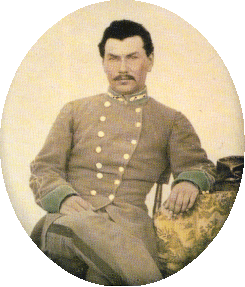
Capt. Joseph de la Garza Confederate States Army Capt. Joseph de la Garza was born in San Antonio, Texas. He served three years as a Lieutenant and then re-enlisted as a Captain. His unit was sent north to resist the Union’s attempt to invade Texas in the Red River campaign. He was later killed in the Battle of Mansfield in Louisiana.
Rafael Chacón was born in Chihuahua, Mexico, as a young boy his family moved to Santa Fe, New Mexico. He served in the Civil War with a group of Volunteers. Chacón ultimately earned the rank of Major, he repeatedly distinguished himself, even thought he never mastered English. He commanded volunteer companies, including one at the battle of Valverde; he served with Manuel Armijo at Glorieta Pass when Stephen Kearny’s army marched on Santa Fe. Chacón escorted the first officials to the newly established territory of Arizona, and he was one of the few Hispanics to attain the rank of Major. He Commanded Fort Stanton at the end of the war. Following discharge Rafael Chacón served several terms in the territorial legislature before homesteading near Trinidad, Colorado. While in his seventies he began writing his memoirs as a gift for his family.
was born in Los Padillas, Mexico, what is now Bernalillo, near Albuquerque, New Mexico. In 1861 José Francisco Cháves received a Presidential Commission with the rank of Major. He served in the First New Mexico Infantry and later was promoted to Lieutenant-Colonel for "Gallant and meritorious service." In later years, he became a Republican Delegate of New Mexico. Other
Notable Confederate Hispanic Veterans
José Agustin Quintero was born in Havana, Cuba. He was assigned to Mexico, as a spy for the Union; however, in meeting Jefferson Davis in Richmond, Virginia, he took the side of the south and became a Confederate. He enlisted in the Quitman Rifles guard of Austin, where he secured and delivered critical Confederate supplies from Europe through Mexican ports. Quintero had a large role in opening up trade at Matamoros, Mexico and helped smuggle Southern cotton to Europe for war material. Ambrosio González a Cuban, he was a Confederate Colonel and artillery officer under confederate General P.G.T. Beauregard. Loretta Janeta Velázquez a Cuban born woman, whom, after the death of her Confederate soldier husband, was said to have fought against the Union disguised as a man. Hispanic Union Soldiers

The 33 Star Garrison Flag that flew over Fort Sumter has been called "the Flag that started a war." President Abraham Lincoln refused to remove the stars representing 33 states which seceded from the Union. Union Civil War Flag
David Glasgow Farragut was born James Glasgow Farragut, in Tennessee. He was the son of Jorge Farragut, a Spaniard born in Monorca, Spain, and Elizabeth Shine of North Carolina, a Scottish-Irish pioneer. After his parents died, he assumed his adoptive father’s first name, David. Farragut became the United State’s first Admiral in the U.S. Navy. During the Civil War, David Farragut fought on the side of the Union and played a decisive role in the final outcome of the Civil War. David Farragut won fame as a Union hero, when in 1862 he forced New Orleans to surrender to the Union. This Victory as well as his performance during the Battles of Port Hudson and Vicksburg, earned him President Lincoln’s praise and promotion to Rear Admiral, a rank never before used in the Navy. In 1864, during the Battle of Mobile Bay, one of Farragut’s lead ships struck a mine and sank; this caused confusion among the Union sailors and it was then that he shouted the order that made him famous, "damn the torpedoes! Full speed ahead!" Soon after he was appointed Vice Admiral and given a hero’s welcome in New York City. After the war, in 1866 Congress decided to create the title of Admiral of the Navy, to honor Farragut.
Photo left to right, brothers; Capt. Adolfo Fernández Cavada and Lieutenant-Colonel Federico Fernández Cavada. The brothers, born in Cuba, grew up Philadelphia, Pennsylvania, both fought for the Union. Federico fought bravely in the Battle of Gettysburg; however, he was captured and taken prisoner. He was finally released from Libby Prison in 1864.
Philip Bazaar Ordinary Seaman, U.S. Navy; was born in Chile, South America. While serving on board the U.S.S. Santiago de Cuba during the assault on Fort Fisher in January 1865, he was assigned to a small boat crew detailed to one of the generals on shore. Bazaar bravely entered the fort in the assault and accompanied his party in carrying dispatches at the height of the battle. He was 1 of 6 men who entered the fort in the assault from the fleet.
RESOURCES: Ward, Geoffrey C., Burns, Ric, and
Burns, Ken "The Civil War An Illustrated History," Hispanic Heritage Plaza: www.hispanconline.com
|


Wednesday, May 9, 2007 NEWS RELEASE Contact: Chris Schaefer, BATAAN SURVIVORS TO MEET IN TACOMA Survivors of the Battles of Bataan and Corregidor, and the Bataan Death March, will gather in Tacoma, Washington on Friday and Saturday, May 18 – 19, at the annual meeting and reunion of the Philippine Scouts Heritage Society. These are the soldiers who fought America’s first ground battles of World War II. Ultimately, all 80,000 American and Filipino servicemen in the Philippine Islands became Prisoners of War, and more than half of them died in Japanese custody. The Philippine Scouts were a unique and special organization consisting of highly-trained Filipino soldiers and American officers, who formed the backbone of General Douglas MacArthur’s United States Army Forces in the Far East (USAFFE). In 1941, on Bataan Peninsula and Corregidor Island, they were joined by U.S. Army National Guard units and by Philippine Army infantry divisions, and ordered to hold back the Japanese advance. They were surrounded and starved out by the Japanese Army and Navy, but managed to fight on for more than four months while every other country in Southeast Asia and the Western Pacific succumbed to the Japanese. They bought America time to repair Pearl Harbor and throw a cordon of defense around Australia at the beginning of World War II.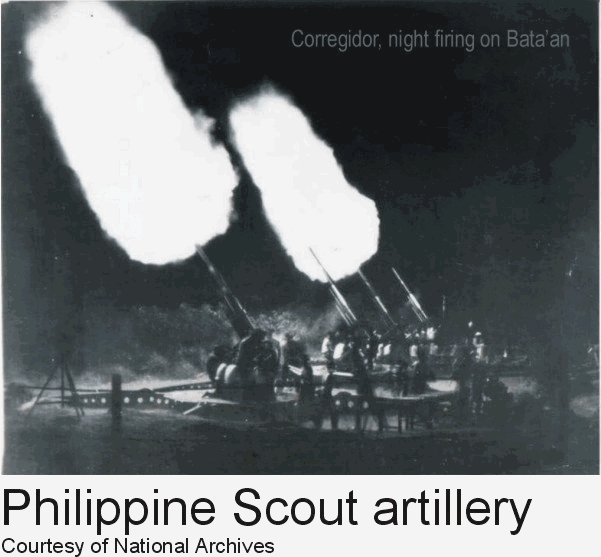
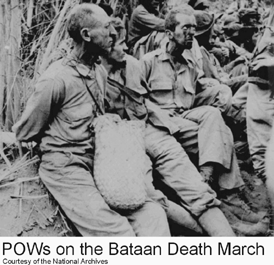
Today, less that 100 of the original 10,000 Philippine Scouts are still with us, scattered around the U.S. and the Philippine Islands. At their annual reunions those who can make it are joined by family and admirers for two days of business meetings, discussions, and celebration. As their numbers grow smaller, the Philippine Scouts Heritage Society seeks to preserve their memory and raise public awareness of the role these men played in the early stages of World War II, and the horrible treatment they received as prisoners of the Japanese Army. 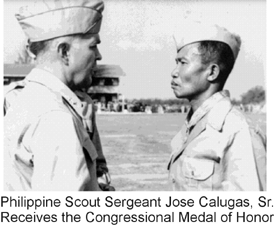
The Society’s Jose Calugas Chapter in Tacoma, Washington, is hosting the 2007 reunion. Local hero Sergeant Jose Calugas was a Philippine Scout whose daring actions near Culis, Bataan were the first to be honored by a U.S. Army Congressional Medal of Honor during World War II. The Tacoma chapter president is Jose Calugas, Jr., his son. *** For additional information, photographs, and interview opportunities with surviving Philippine Scouts, contact: 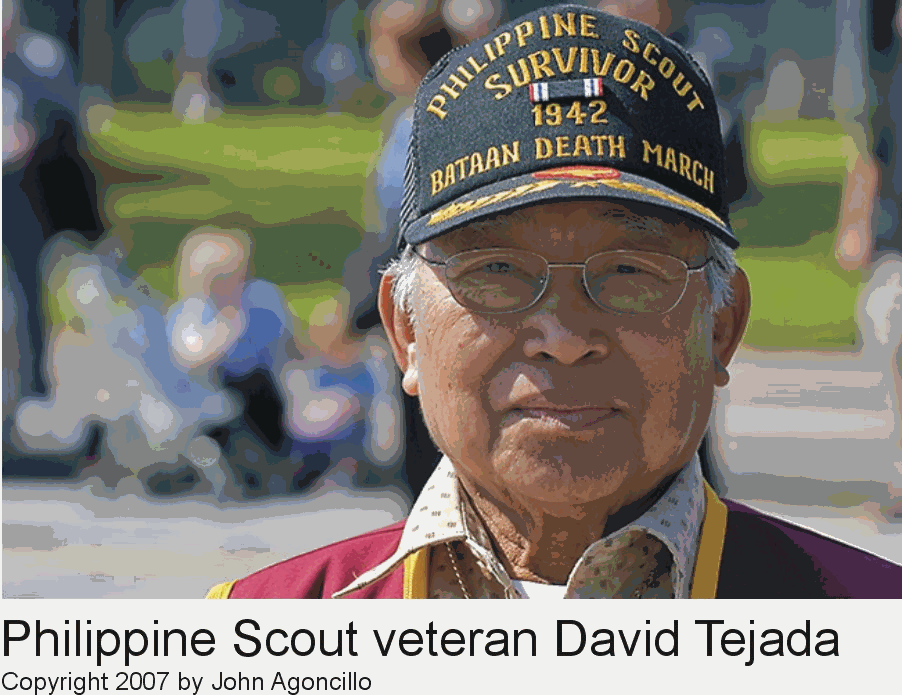
Joe Calugas, Tacoma Chapter President, 253-752-2573, calugasjr@aol.com. Chris Schaefer, Public Relations Officer, 832-428-1977, chris_schaefer@philippine-scouts.org.
Rafael Ojeda RSNOJEDA@aol.com |
|
Unsung heroes, Filipino vets gather in Tacoma Michael Gilbert; The News Tribune, May 18th, 2007 Like all the old soldiers who fought in World War II, the Philippine Scouts are fading away. Members of a group dedicated to preserving their story say they know of 93 veterans still alive from an original group of 10,000 at the beginning of the war. As many as 30 or so of the surviving scouts – men in their 80s and 90s – are expected to gather in Tacoma today and Saturday for the Philippine Scouts Heritage Society’s annual reunion. Their part in the war has never received the same widespread telling as those who took part in other, more acclaimed battles. But they fought as bravely, and endured as much hardship, as any others, historians say. "These guys fought our first ground battle of World War II, and nobody knows who they were or remembers anything about them," Chris Schaefer, author of "Bataan Diary," a history of the war in the Philippines, said this week. "These guys went through more horror than any other American soldiers in any other theater of the war." The Filipino soldiers and their mostly American officers formed the core of the Allied fight against the Japanese onslaught that swept the Pacific in late 1941 and early ’42. When they finally surrendered in April, worn down by hunger and illness because the crippled U.S. Navy couldn’t resupply them, they had to endure the Bataan Death March and captivity in wretched prisoner of war camps. More than half died. Many escaped and fought as guerrillas in advance of Gen. Douglas MacArthur’s return to the Philippines in 1944. The U.S. Army’s first three men to be awarded the Medal of Honor in World War II were Philippine Scouts. All were decorated with the nation’s highest award for valor for their actions in the defense of Bataan and Corregidor, which bought valuable time for U.S. forces recovering from Pearl Harbor. Among them was Jose Calugas Sr., a mess sergeant who ran 1,000 yards under fire to put an artillery piece back into the fight against the Japanese. Though wounded, he survived the Bataan Death March and prison and guerrilla fighting and served a postwar career in the Army, retiring in Tacoma as a captain. He died in 1998 at age 90. His son, Joe Jr., is the host for the weekend’s gathering. The local chapter of the society bears his father’s name. "They’re amazing guys," Calugas said of the veterans he expects to attend Saturday night’s banquet at the La Quinta Hotel. Calugas said he became active in the society after it formed in 1989 as a way to hear the stories about the war that his father would never tell him. "It was how I learned about my dad," Calugas said. "My dad didn’t want to talk about it." Born in 1940, Calugas didn’t see his father until he was 7 years old. But through the society, others have told him the stories. Friends who died in combat. Prison. Beatings. Malnutrition. Malaria. "There’s a lot of history there, and a lot of people don’t know about the Philippine Scouts because they say, ‘They are only Filipinos,’" Calugas said. "But they were elite forces. … When I see these guys, I really have a lot of respect for them. They’re warriors." These days Calugas recruits the sons and daughters of the Philippine Scouts and anyone else with an interest in their history. "This is what our mission is: Somebody has to remember," he said. "Somebody has to carry the torch. I’m recruiting the second and third generation, because if you don’t they will forget. … This is their heritage. We need to remember." Michael Gilbert: 253-597-8921 Some great coments and photos of Tony's meeting with the Latino
Baatan POW. Sent by Rafael Ojeda RSNOJEDA@aol.com
|
|
|
By Tony (The Marine) Santiago
|
|
| The participation of Puerto Ricans in World War II as
members of the Armed Forces of the United States included guarding
American military installations in the Caribbean and active combat participation in both the European and Pacific theatres of the war.
Puerto Ricans and people of Puerto Rican descent participated have
participated as members of the U.S. Armed Forces in every conflict in
which the United States has been involved in since World War I.
Puerto Ricans who had obtained U.S. citizenship as a result of the signing of the Jones-Shafroth Act on March 2, 1917 were expected to serve in the military if they met the required qualifications. When a Japanese carrier fleet launched an unexpected air attack on Pearl Harbor on December 7, 1941, Puerto Ricans were required to bear arms in defense of the United States. During World War II, over 53,000 Puerto Ricans served within the U.S. military.[1] Soldiers from the island, serving in the 65th Infantry Regiment, participated in combat in the European Theater - in Germany and Central Europe. Those who resided in the mainland of the United States were assigned to regular units of the military and served either in the European or Pacific theaters of the war. In some cases they were subject to the racial discrimination which at that time was widespread in the United States.[1] For the first time, Puerto Rican women were permitted to become members of the military. Their options were restricted to either as nurses or in administrative positsions. It would also be the first time that some of the island's men would play an active role as commanders.The military did not keep statistics in regard to the total number of Hispanics who served in the regular units of the Armed Forces and therefore, it is impossible to determine the exact amount of Puerto Ricans who served in World War II. Lead up to World War II |
|
|
Soldiers of the 65th Infantry training in Salinas, Puerto Rico. August 1941
|
|
|
Most of these men were trained in Camp Las Casas in Santurce, Puerto Rico and were assigned to the 65th Infantry Regiment, a segregated unit made up mostly of Puerto Ricans. The rumors of war spread and the involvement of the United States was believed to be a question of time. The 65th Infantry was ordered to intensify its maneuvers, many of which were carried out at Punta Salinas near the town of Salinas in Puerto Rico.[3]Those who were assigned to the 295th and 296th regiments of the Puerto Rican National Guard received their training at Camp Tortuguero near the town of Vega Baja. World War II After the Japanese attack on Pearl Harbor, the United States declared war and Puerto Ricans living on the island and on the U.S. mainland began to fill the ranks of the four major branches of the Armed Forces. Some volunteered for patriotic reasons, some joined in need of employment, and others were drafted. In 1943, there were approximately 17,000 Puerto Ricans under arms, including the 65th Infantry Regiment and the Puerto Rico National Guard. The Puerto Rican units were stationed either in Puerto Rico or in the Virgin Islands. France's possessions in the Caribbean began to protest against the Vichy government in France, a government backed up by the Germans who invaded France. The island of Martinique was on the verge of civil war. The United States organized a joint Army-Marine Corps task force, which included the 295th Infantry (minus one battalion) and the 78th Engineer Battalion, both from Puerto Rico for the occupation of Martinique. The use of these infantry units were put on hold because Martinique's local government decided to turn over control of the colonies to the French Committee of National Liberation.[4] In 1943, the 65th Infantry was sent to Panama to protect the Pacific and the Atlantic sides of the isthmus. The 295th Infantry Regiment followed in 1944, departing from San Juan, Puerto Rico to the Panama Canal Zone. Among those who served with the 295th Regiment in the Panama Canal Zone was a young Second Lieutenant by the name of Carlos Betances Ramirez, who one day become the only Puerto Rican to command a Battalion in the Korean War.[5]That same year, the 65th Infantry was sent to North Africa, arriving at Casablanca, where they underwent further training. By April 29, 1944, the Regiment had landed in Italy and moved on to Corsica.[6] On September 22, 1944, the 65th Infantry landed in France and was committed to action on the Maritime Alps at Peira Cava. The 3rd Battalion, under the command of Lieutenant Colonel Juan Cesar Cordero Davila, fought against and defeated Germany's 34th Infantry Division's 107th Infantry Regiment.[7] There were 47 battle casualties, including Sergeant Angel Martinez from the town of Sabana Grande who became the first Puerto Rican to be killed in action from the 65th Infantry. On March 18, 1945, the regiment was sent to the District of Mannheim and assigned to military occupation duties. The regiment suffered a total of 23 soldiers killed in action.[8] [9] On January 12, 1944, the 296th Infantry Regiment departed from Puerto Rico to the Panama Canal Zone. On April 1945, the unit returned to Puerto Rico and soon after was sent to Honolulu, Hawaii. The 296th arrived on June 25, 1944 and was attached to the Central Pacific Base Command at Kahuku Air Base.[10] Puerto Ricans who were fluent in English or who resided in the mainland were assigned to regular Army units. Such was the case of Sgt. First Class Louis Ramirez who was assigned to the 102nd Cavalry Reconnaissance Squadron, Mechanized, which landed at Normandy on D Day (Battle of Normandy), June 6 and advanced into France during the Battle of Saint Malo, where they were met by enemy tanks, bombs and soldiers. PFC Fernando Pagan was also a Puerto Rican who resided in the mainland and who was assigned to unit Company A, 293 Combat Engineering Battalion which arrived in Normandy on June 10, four days after D-Day. Others, like Frank Bonilla, were assigned to the 290th Infantry Regiment, 75th Infantry Division, which later fought at the Battle of the Bulge. Bonilla was the recipient of the Silver Star and Purple Heart medals for his actions in combat. One Puerto Rican who earned a Bronze Star Medal in the Battle of the Bulge was PFC Joseph A. Unanue, whose father was the founder of Goya Foods. Unanue had trained for armored infantry and went to the European Theater as a gunner in A company, 63rd Armored Infantry Battalion, 11th Armored Division. His company landed in France in December of 1944, just before the Battle of the Bulge. [11][12]
|
|
| Sergeant First Class Agustin Ramos Calero was one of many Puerto Ricans who distinguished themselves in combat. Calero's company was in the vicinity of Colmar , France and engaged in combat against a squad of German soldiers in what is known as the Battle of Colmar Pocket . Calero attacked the squad, killing ten of them and capturing 21 shortly before being wounded himself. Following these events, he was nicknamed "One-Man Army" by his comrades. A Silver Star Medal was among the 22 decorations and medals which he was awarded from the US Army for his actions during World War II, thus becoming the second most decorated soldier (the most decorated US soldier was Audie Murphy) in the United States Military during that war.[13] |
|
|
PFC. Santos Deliz was assigned to Battery D, 216 AAA, a gun battalion, and sent to Africa in 1943 to join General George S. Patton's Third Army. According to Deliz, Patton demanded the best from all under him, including cooks and kitchen hands Deliz once recounted an experience which he had with General Patton: "[Patton] went in to inspect [and] he scolded me because I had rations over the amount I should've had. The rations were food the GIs didn't want, so instead of dumping it, I sometimes gave it to the people who were around there." Deliz was the recipient of a Bronze Star Medal.[14] Some Puerto Ricans served in the Army Air Corps. Among those who served in the Army Air Corps were Captain Mihiel "Mike" Gilormini and T/Sgt Clement Resto. Captain Mihiel "Mike" Gilormini served in the Royal Air Force and in Army Air Corps during World War II. He was a flight commander whose last combat mission was attacking the airfield at Milano, Italy. His last flight in Italy gave air cover for General George C. Marshall's visit to Pisa. He was the recipient of the Silver Star Medal, the Air Medal with four clusters and the Distinguished Flying Cross 5 times. Gilormini later became the Founder of the Puerto Rico Air National Guard and retired as Brigadier General. T/Sgt Clement Resto served with the 303rd Bomb Group and participated in numerous bombing raids over Germany. During a bombing mission over Duren, Germany, Resto's plane, a B-17, was shot down . He was captured by the Gestapo and sent to Stalag XVII-B where spent the rest of the war as a prisoner of war. Resto, who lost an eye during his last mission, was awarded a Purple Heart, a POW Medal and an Air Medal with one battle star after he was liberated from captivity.[15][16]
Puerto Rican women
|
|
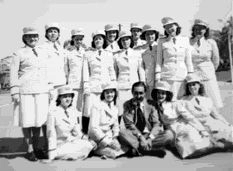 Puerto Rican nurses in Camp Tortuguero
|
|
|
Not all the women served as nurses, some women served in administrative duties in the mainland or near combat zones. Such was the case of Tech4 Carmen Contreras-Bozak who belonged to the 149th Women's Army Auxiliary Corps. The 149th Women's Army Auxiliary Corps (WAAC) Post Headquarters Company was the first WAAC Company to go overseas, setting sail from New York Harbor for Europe on January 1943. The unit arrived in Northern Africa on January 27, 1943 and rendered overseas duties in Algiers within General Dwight D. Eisenhower’s theater headquarters. Tech4 Carmen Contreras-Bozak, a member of this unit, was the first Hispanic to serve in the U.S. Women's Army Corps as an interpreter and in numerous administrative positions. .[20] [21] Another was Lieutenant Maria Rodriguez Denton, who was the first known woman of Puerto Rican descent who became an officer in the United States Navy as member of the WAVES. The Navy assigned LTJG Denton as a library assistant at the Cable and Censorship Office in New York City. It was Lt. Denton who forwarded the news (through channels) to President Harry S. Truman that the war had ended. Puerto Rican commanders
|
|
|
Major General del Valle (second from left) is greeted by Colonel "Chesty" Puller while Major General Rupertus looks on. |
|
|
In addition to Lieutenant Colonel Juan Cesar Cordero Davila, eight Puerto Ricans who graduated from the United States Naval Academy served in command positions in the Navy and the Marine Corps.[22] They were Rear Admiral Frederick Lois Riefkohl USN, the first Puerto Rican to graduate from the Naval Academy and recipient of the Navy Cross; Rear Admiral Jose M. Cabanillas, USN, who was the Executive Officer of the USS Texas which participated in the invasions of North Africa and Normandy (D-Day); Rear Admiral Edmund Ernest Garcia, USN, commander of the destroyer USS Sloat who saw action in the invasions of Africa, Sicily, and France; Admiral Horacio Rivero, Jr., USN, who was the first Hispanic to become a four-star Admiral; Captain Marion Frederic Ramirez de Arellano, USN, submarine commander of the USS Balao (SS-285) credited with sinking two Japanese ships; Rear Admiral Rafael Celestino Benitez, USN, a highly decorated submarine commander who was the recipient of two Silver Star Medals; Colonel Jaime Sabater, USMC, Class of 1927 and Lieutenant General Pedro Augusto del Valle USMC, the first Hispanic to reach the rank of General in the Marine Corps.Rear Admiral Frederick Lois Riefkohl , who was the Captain of the USS Vincennes, was assigned to the Fire Support Group, LOVE (with Transport Group XRAY) under the command of Rear Admiral Richmond K. Turner's Task Force TARE (Amphibious Force) during the landing in the Solomon Islands on August 7, 1942..[23] Prior to World War II, Rear Admiral Jose M. Cabanillas served aboard various cruisers, destroyers and submarines. In 1942, upon the outbreak of World War II, he was assigned Executive Officer of the USS Texas (BB-35). The Texas Participated in the invasion of North Africa. by destroying ammunition dump near Port Lyautey. Cabanillas also participated in the invasion of Normandy on D-day. Rear Admiral Edmund Ernest Garcia was the commander of the Destroyer USS Sloat and saw action in the invasions of North Africa, Sicily and France. Admiral Horacio Rivero, Jr., served aboard the USS San Juan (CL-54) and was involved in providing artillery cover for Marines landing on Guadalcanal, Marshall Islands, Iwo Jima, and Okinawa. For his service he was awarded the Bronze Star Medal with Combat "V."[24] Captain Marion Frederic Ramirez de Arellano was a submarine commander in the Navy who was awarded two Silver Star Medals, the Legion of Merit, and a Bronze Star Medal for his actions against the Japanese Imperial Navy. Not only is he credited with the sinking of at least two Japanese ships, but he also led the rescue of the lives of numerous downed Navy pilots.[25] Rear Admiral Rafael Celestino Benitez, who was at the time a Lieutenant Commander, saw action aboard submarines and on various occasions weathered depth charge attacks. For his actions, he was awarded the Silver and Bronze Star Medals. Benitez would later play an important role in the first American undersea spy mission of the cold war as commander of the submarine USS Cochino in what became known as the "Cochino Incident".[26] Colonel Jaime Sabater, during WWII, commanded the 1st Battalion, 9th Marines during the Bouganville amphibious operations. Lieutenant General Pedro Augusto del Valle , a highly decorated Marine, played a key role in the Guadalcanal Campaign and the Battle of Guam, became the Commanding General of the First Marine Division. Del Valle played an instrumental role in the defeat of the Japanese forces in Okinawa and was in charge of the reorganization of Okinawa[27][26][28].Discrimination During World War II, the United States Army was segregated. Puerto Ricans who resided in the mainland and who were fluent in English served alongside their "White" counterparts. "Black" Puerto Ricans were assigned to units made up mostly of African-Americans. The vast majority of the Puerto Ricans from the island served in Puerto Rico's segregated units, like the 65th Infantry and the Puerto Rico National Guard's 285th and 296th regiments. Racial discrimination practiced against Hispanic Americans, including Puerto Ricans in the United States East coast and Mexican-Americans in California and the Southwest was widespread. Some Puerto Ricans who served in regular Army units were witnesses to the racial discrimination of the day.[17] In an interview, PFC Raul Rios Rodriguez said that during his basic training at Fort Bragg in North Carolina, he had encountered a strict drill instructor who was particularly harsh on the Hispanic and black soldiers in his unit. He stated that he remains resentful of the discriminatory treatment that Latino and black soldiers received during basic training. "We were all soldiers; we were all risking our lives for the United States. That should have never been done, Never." Rios Rodriguez was shipped to Le Havre, France, assigned to guard bridges and supply depots in France and Germany with the 18th Infantry Regiment, 1st Infantry Division.[18] Another soldier, PFC Felix López-Santos was drafted into the Army and sent to Fort Dix in New Jersey for training. López -Santos went to Milne Bay and then to the small island of Woodlark, both in New Guinea, where he was in the communications department using telephone wires to communicate to the troop during the war. In an interview, López-Santos stated that in North Carolina he witnessed some forms of racial discrimination, but never experienced it for himself. He stated "I remember seeing some colored people refused service at a restaurant," López -Santos said. "I believe that I was not discriminated against because of my blue eyes and fair complexion."[19] Post World War II The American participation in the Second World War came to an end in Europe on May 8, 1945 when the western Allies celebrated "V-E Day" (Victory in Europe Day) upon Germany's surrender, and in the Asian theater on August 14, 1945 "V-J Day" (Victory over Japan Day) when the Japanese surrendered by signing the Japanese Instrument of Surrender. On October 27, 1945, the 65th Infantry who had participated in the battles of Naples-Fogis, Rome-Arno, central Europe and of the Rhineland sailed home from France. Arriving at Puerto Rico on November 9, 1945, they were received by the local population as National heroes and given a victorious reception at the Military Terminal of Camp Buchanan. The 295th Regiment returned on February 20, 1946 from the Panama Canal Zone and the 296th Regiment on March 6. Both regiments were awarded the American Theatre streamer (The 295th was also awarded the Pacific Theatre streamer) and were inactivated that same year.[29] Many of the men and women who were discharged after the war returned to their civilian jobs or made use of the educational benefits of the G.I. Bill. Others, such as Major General Juan Cesar Cordero Davila, Colonel Carlos Betances Ramirez, Sergeant First Class Agustin Ramos Calero and Master Sergeant Pedro Rodriguez continued in the military as career soldiers and went on to serve in the Korean War. Some of the Puerto Ricans from the mainland who had not completed their full active duty in the military service were reassigned to the 65th Infantry in Puerto Rico. According to remarks made by Frank Bonilla in an interview, he discovered that there was a divide among the soldiers. The Puerto Ricans who had emigrated to the mainland were seen as "American Joes." while Puerto Ricans from the island considered themselves "pure" Puerto Ricans. Bonilla is quoted as saying: "The Puerto Rican soldiers paid little, if any, attention to the playing of the 'Star Spangled Banner," Bonilla at first thought the soldiers were being disrespectful to the United States, especially since they stood at attention whenever "La Borinqueña," the Puerto Rican anthem, was played. "The soldiers in the regiment, although proud to be U.S. citizens, felt that they were a Puerto Rican army, not a US army," Mr. Bonilla said. "These men had a select unit pride because they had had more time overseas and in combat areas than the American units."[30] Bonilla eventually earned a Ph.D. from Harvard and held faculty appointments at Massachusetts Institute of Technology, Standford University and the City University of New York. He became a major leader in Puerto Rican studies.
El Monumento de la Recordación According to the 4th Report of the Director of Selective Service of 1948 a total of 51,438 Puerto Ricans served in the Armed Forces during World War II. These numbers only reflect those who served in Puerto Rican units. Unfortunately, the exact total amount of Puerto Ricans who served in World War II in other units, besides those of Puerto Rico, cannot be determined because the military categorized Hispanics under the same heading as whites. The only racial groups to have separate stats kept were Blacks and Asians.[31] [32] The names of the 37 men who are known to have perished in the conflict are engraved in "El Monumento de la Recordacion" (Memorial Monument) monument which honors the memory of those who fallen in the defense of the United States and which is located in San Juan, Puerto Rico.[33] ."References: Citations 1. a b Introduction: World War II (1941 -1945). Hispanics in the Defense of America. Retrieved on March 19, 2007. 2. Hector Marin. Puerto Rican Units (WWII). Hispanics in Americas Defense. Retrieved on March 18, 2007. 3. Bruce C. Ruiz (November 1, 2002). Major General Luis Raúl Esteves Völckers. Retrieved on March 18, 2007. 4. Stetson Conn, Rose C. Engelman, and Byron Fairchild (1961). The Caribbean in Wartime. U.S. Army in World War II: Guarding the United States and Its Outposts. Center of Military History, United States Army. Retrieved on March 18, 2007. 5. Carlos Betances Ramirez 6. Military History. American Veteran's Committee for Puerto Rico Self-Determination. Retrieved on March 18, 2007. 7. LTC Gilberto Villahermosa (September 2000). World War II. "Honor and Fidelity" - The 65th Infantry Regiment in Korea 1950 - 1954 (Official Army Report on the 65th Infantry Regiment). U.S. Army Center of Military History. Retrieved on March 18, 2007. 8. W.W. Harris (2001). Puerto Rico's Fighting 65th U.S. Infantry:From San Juan to Chowon. Presidio Press. ISBN 0-89141-056-2. 9. Juan Cesar Cordero-Davila. ZoomInfo (2000). Retrieved on March 18, 2007. 10. Shelby, Stanton (1984). World War II Order of Battle. New York: Galahad Books. 11. Juan De La Cruz. Combat engineer Fernando Pagan went from Normandy to Belgium and Germany, where a sniper nearly killed him. US Latinos and Latinas & World War II. Retrieved on March 18, 2007. 12. Jennifer Nalewicki. Louis Ramirez recalls brutality of war; but what still shines through is the camaraderie. U.S. Latinos and Latinas & World War II. Retrieved on March 18, 2007. 13. Who was Agustín Ramos Calero? (PDF). The Puerto Rican Soldier (August 17, 2005). Retrieved on November 19, 2006. 14. Chris Nay. Santos Deliz. US Latinos and Latinas & World War II. Retrieved on March 18, 2007. 15. Memories of a Jug Driver. World War II Pilots. Retrieved on March 18, 2007. 16. T/SGT. Clement Resto. Puerto Rico's 65th Infantry Regiment, U.S. Army. Retrieved on March 18, 2007. 17. Discrimination. History.com. Retrieved on March 18, 2007. 18. D’Arcy Kerschen. Despite war’s end and brother’s horror stories, man was intent on joining military. US Latinos and Latinas & World War II. Retrieved on March 18, 2007. 19. Juan de la Cruz. Man survived jungle fever, suicide attacks and kangaroos during service in Pacific. US Latinos and Latinas & World War II. Retrieved on March 18, 2007. 20. Judith Bellafaire. Puerto Rican Servicewomen in Defense of the Nation. Women In Military Service For America Memorial Foundation. Retrieved on October 10, 2006. 21. Katie Kennon. Young woman's life defined by service in Women's Army Corps. US Latinos and Latinas & World War II. Retrieved on October 10, 2006. 22. USNA graduates of Hispanic descent for the Class of 1911, 1915, 1924, 1927, 1931, 1935, 1939, 1943, 1947. Association of Naval Service Officers. Retrieved on March 18, 2007. 23. David H. Lippman. World War II Plus 55. Retrieved on March 18, 2007. 24. *Robert F. Dorr (January 26, 2004). Damn the Torpedoes! Former VCNO excelled in combat, technical roles. Navy Times. Archived from the original on January 21, 2004. Retrieved on October 21, 2006. 25. CAPT Marion Frederic Ramirez de Arellano. USNA graduates of Hispanic descent for the Class of 1911, 1915, 1924, 1927, 1931, 1935, 1939, 1943, 1947. Association of Naval Services Officers (February 27, 2007). Retrieved on March 15, 2007. 26. a b *Sontag, Sherry; and Christopher Drew, with Annette Lawrence Drew (1998). Blind Man's Bluff: The Untold Story of American Submarine Espionage. Public Affairs. ISBN:006097771X. 27. Puerto Rico Archives 28. Lieutenant General Pedro A. Del Valle, USMC. History Division. United States Marine Corps. Retrieved on October 10, 2006. 29. The Puerto Rican Soldier. El Pozo Productions (2001). Retrieved on March 18, 2007. 30. Anne Quach. Frank Bonilla became major figure in Puerto Rican studies. US Latinos and Latinas & World War II. Retrieved on March 18, 2007. 31. Minority Groups in World War II. U.S. Army Center of Military History. Retrieved on March 18, 2007. 32. World War II By The Numbers. The National World War II Museum (2006). Retrieved on March 18, 2007. 33. Monumento de la Recordacion. Searching For Our Roots (February 10, 2006). Retrieved on March 18, 2007. Sources Hispanics in the Defense of America. America USA (1996-2007). Retrieved on March 19, 2007. Stetson Conn, Rose C. Engelman, and Byron Fairchild (1961). U.S. Army in World War II: Guarding the United States and Its Outposts. Center of Military History, United States Army. Retrieved on March 18, 2007. US Latinos and Latinas & World War II. University of Texas at Austin (1990-2007). Retrieved on March 18, 2007. Further reading (1997) 65th Infantry Division. Turner Publishing. ISBN 1563111187. del Valle, Pedro (1976). Semper fidelis: An autobiography. Christian Book Club of America. ASIN B0006COTKO. Esteves, General Luis Raúl (1955). ¡Los Soldados Son Así!. San Juan, Puerto Rico: Star Publishing Co.. Retrieved on March 20, 2007. Gordy, Bill (1945). Right to be proud: History of the 65th infantry division's march across Germany. J. Wimmer. ASIN B0007J8K74. Lederer, Commander William J., USN (1950). The Last Cruise: The Story of the Sinking of the Submarine, U.S.S. Cochino. Sloane. ASIN B0007E631Y. Special Thanks to: My friends Ercheck and Ben Cartwright who helped in the copyediting and to my friend Miguel Hernandez who provided me with much needed information
|
|
| WEBSITES
FOR RESEARCHING MILITARY RECORDS, COMPILED BY RAFAEL OJEDA WWII records destroyed in fire. http://www.ussubvetsofworldwarii.org My Dear Friends, |
| Navy and Coast
Guard Information. http://www.archives.gov/research/arc/ww2/navy-casualties Please remember that prior to the mid fifty, the military had a
"Serial Number" for servicemen/women. Where now they
use SSN. So there is no problem with "Identity Theft" on
these military records. |
| WWII Gov
archives. http://www.archives.gov/research/arc/ww2/army-casualties/ Many of the government archives records can be found under NARA. The one below list all the KIA and MIA from every state. The names continue from one city to the next, that is why you see like Sacramento three times in order to list all the names. WWII veterans. Photos and re-editing of names
submitted is possible.
|
| More names of
WWII Latino pilots aces. http://aces.safarikovi.org/victories/mexico-ww2.html Texas WWII web site http://www.thc.state.tx.us/militarysites/Word/WWIIoralhistory.doc Rafael Ojeda RSNOJEDA@aol.com
|
| A
Sea story by Paul Trejo The Veterans History Project Seeking Veteran's stories Encyclopedia of Latino Folklore, edited by Maria Herrera-Sobek, Ph.D. Herbs, papaya and the Milk Devil, and mi abuelita Curandera Chicken Fluff by Ben Romero It Must be a Generation Thing by Ben Romero |
|
Bashaw at Fox Island Summer 1953 |
Brad and Dave, I am forwarding a picture of Bashaw taken in September of 1953, at Fox Island, on Puget Sound, Washington. The boat is making a landing on the "Sound Barge" moored on the Carr Inlet side of Fox Island, which is across the narrows from Tacoma, Washington. We submerged the boat near the barge, operating various pumps and machinery, so that the barge could record our sonar signature. We also recorded various noise sources originating from the barge on the BQR-4, while submerged at various locations. All of this was to obtain data to measure our quietness (sound signature), and to evaluate the effectiveness of the BQR-4. The barge was operated by civilian scientist from the Naval Electronics Laboratory (NEL), Point Loma, San Diego. It was two weeks of liberty in Tacoma, with their strict "Blue Laws" on drinking. On the bridge is the Skipper, Harold "Tut" Fry in the baseball cap, "Hap" Perry the EXO and Navigator immediately above Fry, and me as OOD with black tie. The Chief Petty Officer helping with the bow line is the Chief of the Boat, Norman "Porky" Lamer. The officer who's head appears above above Porky is LTJG Zeke Zabinius. Fox Island was chosen for the site of these tests required quiet water. Because of the brackish salt water, diluted by all the fresh water being dumped into the sea by all the fresh water Washington streams, sea life noises such as that caused by snapping shrimp, whistling dolphins, croaker, whistling whales and the like were none existent. However, Mullet fish were numerous, and when they broke water while rising to the surface for food they could be heard jumping for miles. More on this caper later. Very Best, Paul May you have fair winds and following seas along life's stormy
path.
|
| The Veterans
History Project American Folk life Center Library of Congress 101 Independence Ave., SE Washington DC 20540-4615 |
http://www.loc.gov/vets/ http://www.loc.gov/vets/vets-contact.html (202) 707-4916 Toll-Free:(888) 371-5848 FAX:(202) 252-2046 Email: vohp@loc.gov |
Call for Entries, Encyclopedia of Latino Folklore Deadline, September 15, 2007 Edited by Maria Herrera-Sobek, Ph.D. Greenwood Press 4 page double-spaced entries,$25 stipend upon publication. 20 page double-spaced entries, $100 stipend upon publication. If you are interested in writing an entry or multiple entries for the Encyclopedia of Latino Folklore, please email Brianne Dávila at bdavila@umail.ucsb.edu for a list of entries available and entry guidelines. Include:"Encyclopedia of Latino Folklore" in the subject line. Once you choose the entry/entries you would like to write, send Brianne a second email and include your name, contact information and theentry/entries you would like to submit. If you would like to include photo(s) with your entry/entries (publication of photos not guaranteed), please include citation(s) and who to contact for copyright information. Brianne A. Dávila bdavila@umail.ucsb.edu Graduate Student, Department of Sociology University of California, Santa Barbara Forwarded by Elvira Prieto |
|
| I
THINK ABOUT ME Website seeking submittals. http://www.americanchronicle.com/articles/viewArticle.asp?articleID=6880
|
|
Herbs, papaya and the Milk Devil, and mi abuelita Curandera Correspondence shared by Dorinda Moreno Dear Sister Michelle |
|
| Subj:
Re: herbs, papaya and the Milk Devil Date: 5/17/2007 2:12:01 PM Pacific Daylight Time From: nurse1cac@yahoo.com To: Iolmisha@cs.com Wow. Mesha your grandmother was a very wise doctor. What is flannel? I am interested in knowing more about that and curing the gallstones. You are self equipped. I know about the tea. We have exactly the same recipe. Remember too that anise is good bronchodialator for asthmatics if they every run out of their inhaler they can often substitute with the anise fumes from the tea and drink the tea as well. funny it has the same side affects as would inhaler, like the racing heart. However it is natural and does not beat up the kidney and does not cause bedwetting. I ate some good old papaya yesterday bought it from Walmart and once it ripened, boy was it good. You know the seeds are good for your colon. Peace and Love Sister Michelle Sent by Dorinda Moreno |
|
| My
Abuelita too, had many remedies for illnesses. Reading
these emails reminded me of some of my Abuelita's home remedies .A
teaspoon of honey with fresh lemon squeezed on it, swallowed
slowly for sore throats, plus flannel wrapped around the
neck.. The herb ruda for toothache. Chew on the fresh
leaves and pack it around the tooth. Works great. We have rue in
our garden. And don't forget Té de Manzanilla (chamomile)
for upset stomach. However the incident that meant the most to me, concerned my son. Although he appeared to be very healthy, he didn't sleep well. My husband and I were living in the GI housing units at UCLA. The UCLA doctors, where our son was born, did not seem to have any suggestions. He would winced when he was asleep, thrashing about. I think the UCLA doctors didn't believe me when I said that Aury (my mom's name was Aurora)would wake up 10-12 times a night crying. When Aury was about 6 months, my Mom brought Abuelita to visit. Grandma studied Aury while he took a short afternoon nap. She just stood there quietly for a while and then told me to gather lemon leaves. A bit of a challenge since we were living in a campus housing situation. I did find a tree however; but, I don't remember where or how, nor if I had to talk someone into letting me gather the leaves from their tree, or just took them. I know I brought home a bagful of lemon leaves, and Abuelita was satisfied with what I brought. After washing the leaves carefully, Abuelita boiled them for a few hours. That evening we bathed Aury in the tepid greenish-yellowish water. Then Abuelita wrapped him firmly in a warm blanket, tightly like a papoose and put him to bed. That was the first time since Aury was born that he slept through the night. You can well understand why that was one remedy that I remember vividly. Mimi
|
|
|
By Ben Romero Dedicated to Teniah, Mackyla and Noah |
|
As a child, I loved the Easter season with a passion. Not only because of the spring flowers and greenery, but because of all the goodies in the stores. I always wanted tiny little fake chicks, but was embarrassed to ask my mom to buy them. It was silly, since we often had live chicks at home. But something about those little, yellow, fluffy critters with tiny stick feet and red beaks appealed to me. As my wife and I made preparations for Easter a few years ago, I decided to buy a piñata. I hadn’t planned on it. The kids all had baskets filled with goodies and there was really nothing left to buy, except food. That was when it caught my eye. Pushing my cart, I turned the corner of the grocery store aisle and saw a big, yellow, fluffy chicken piñata hanging right above me. With a stretch of the imagination, it resembled the tiny fluffy chicks I’d always wanted. The next thing I knew, we had a heavy, candy-filled, chicken piñata hanging from the backyard gazebo. “Isn’t that a bit much?” asked my wife. Breaking a piñata on Easter Sunday was unheard of in our family. We always went to church, then hid plastic and colored, boiled eggs for the kids. The plastic eggs usually had money inside, anywhere from one penny to one dollar. This time, one special egg held a note that said, FIRST TO HIT PIÑATA. I couldn’t wait to get back home from church so I could hide the eggs. My granddaughter, Teniah, was the first to walk into the backyard. “Grampee, why is there a piñata?” “We’re going to break it open after you guys find all the eggs.”
We had more eggs to hide than usual. Four dozen colored eggs and two dozen plastic ones is a lot for four children. Our front yard is not very big, so many eggs ended up in plain sight. “Let’s see what you’ve got,” I said to five-year-old, Mackyla. She drew back her basket. “No, Grampee. You have to find your own.” Olivia, my youngest daughter, had at least two dozen eggs in her basket. At age eleven, I knew she’d be hiding eggs by next Easter, instead of finding them. I glanced quickly at her basket to see if she held the plastic egg with the note. I didn’t see it. My nephew, Noah, was having trouble balancing his basket. Every time he ran for an egg, another would roll out of his basket and Mackyla would put it in her own. “Okay, Grampee, all done,” announced Teniah. “Now can we break the piñata?” “Wait. Follow me to the backyard. We have to see who gets the first turn. First, everybody count your eggs to see who gets a prize. Then open your plastic eggs to see how much money you have. One of you has a special plastic egg and you get to take first swing at the piñata.” Olivia had the most eggs, but she did not have the special plastic egg. Teniah had the most plastic eggs, but not the special one. Mackyla had the eggs with the most money, but not the special egg. Noah was sitting down eating a marshmallow egg, and pointing at several eggs in his basket. But the special one had not been accounted for. “Hey,” I said. “Nobody found the right egg. Go back to the front yard and let’s see who finds it.” “Do we have to?” asked Teniah. All the kids were hot, and none of them looked like they wanted to keep searching. “Okay,” I sighed. “Let’s just break the chicken open.” I handed a broom handle to Noah and tied a bandana around his head, covering his eyes. “You’re the smallest, so you get to go first. Don’t swing until I get out of the way.” After a few hits and several misses, the chicken was still intact. “Okay, Mackyla. You’re next.” She didn’t wait for me to move and whacked me in the rib. The next few swings knocked a wing off the chicken. “Now Teniah,” I said. Whack! Whack! Whack! Chicken parts flew as far as the swimming pool. The legs were gone, and the remaining wing dangled. But the base remained intact. “Leave it to the pro,” said Olivia, as I tied the bandana around her head. Seconds later, there was chicken fluff flying everywhere. This time the beak, tail, and remaining wing ended up on the ground. But once again, the base remained strong. By this time, the adults wanted to eat and the kids were anxious for candy. “Just break it open,” said my wife. My grown daughter, Victoria, hit is several times, and a few chocolate candies fell to the ground. The kids pounced on them like roaches. “They’re melted,” said Teniah, holding an open Hershey bar. After all that work, we ended up with melted chocolate on the ground, splinters in Mackyla’s hand, and chicken fluff in the pool. I didn’t find the special egg until I mowed the lawn a week later.
|
|
|
Dedicated to Mackyla and Teniah Delsid
|
|
|
On Memorial Day weekend, while waiting for the coals to get hot in the barbeque pit, I went inside to invite my grandchildren out to the pool. My seven year-old granddaughter sat in front of the television set watching a commercial. The announcement was: On June 14th, the Tachi Palace in Lemoore rolls out the red carpet for Pop Icon, David Cassidy…. “Grampee, I wanna go to that,” she said, wiggling with excitement. “Why would you want to go see David Cassidy?” I asked. “He’s an old guy, now.” “No, Grampee, I just want to see the cartoon.” “What cartoon, Silly?” “The Popeye con,” she answered. I tried to explain a pop icon to her, but gave up when she changed the subject and ran in the next room to put on her bathing suit. During dinner the adult conversation turned to David Cassidy and the old TV hit series, The Partridge Family. The kids didn’t appear to be listening to us, since they were involved in conversations of their own. As I mentioned to her parents what Mackyla had said about wanting to go see David Cassidy, the pop icon, eleven year-old Teniah said, “Isn’t a pop icon something from your computer?” Late in the afternoon we settled in to watch television and as I got up from my seat, I instinctively made a cross on my chair and said, “This is my place. My place is saved.” “Why do you always say that?” asked Teniah. I hadn’t realized I had done it, but decided to tell the girls the story of where the ritual originated. “When I was a little boy living in Nambé, our family was one of the first in the area to buy a television set. It got three channels, thanks to the large antenna my dad put on our roof. “The neighborhood boys would come to our house every afternoon after they’d finished their chores and ask if they could watch T.V. My mom was very generous and always said as long as they behaved, they could sit in our living room and watch. We enjoyed such programs as The Mickey Mouse Club, Roy Rogers and Gene Autry movies, Jungle Jim, and Texas Rangers. “While we watched television, Mom would be making dinner. After a while, she’d have a large pile of fresh tortillas ready and would say we could each have one. “A soft seat was a prime spot. Five or six boys would squeeze in the sofa and the rest sat on the floor. When tortilla time came, nobody wanted to lose their spot. So the boys started saying their place was saved. Even so, many lost their seat. To keep from fighting, the boys developed the perfect ritual. If you got up from your seat, you had to make a cross on it and clearly state, ‘This is my place. My place is saved.’” “So why you still do it?” asked Mackyla. “Habit. The ritual carried on even after the neighbors bought their own televisions. At night, our whole family would sit in front of the television and sometimes we lost our spots, too. The only difference is that my brothers and sisters and I would argue and fight for our places. So we started using those words and making the cross on our chairs. All I know is that it always worked.” When they were leaving for home, MacKyla took a bag of chips with her and sat in the back seat. She looked at her sister, made a cross on the bag of chips and said, “These are my chips. My chips are saved.”
Only in our memories does time stand
still.
Ben Romero Author of Chicken Beaks books www.benromero.com 559-301-1545
|
|
|
B: Full Moon Over the House of the Avocado by Rafael
Jesús González |
|
Full Moon Over the House of the Avocado At the little house of the avocado the fruit falls on the roof with a poom on striking; they are more like green hearts on the skylights that project their round shadows on the kitchen walls. The full moon picks them out black on a background of silver, their shadows blessings on someone who sleeps tender as a god enchanted by the light of the moon. © Rafael Jesús González 2007 |
Luna plena sobre La Casa del Aguacate En la casita del aguacate la fruta cae en el techo con un pum al golpear; parecen mas bien corazones verdes en los tragaluces que proyectan sus sombras rotundas en las paredes de la cocina. La luna plena los destaca negros en un fondo de plata, sus sombras bendiciones sobre alguien que duerme tierno como un dios encantado por la luz de la luna. © Rafael Jesús González 2007 rjgonzalez@mindspring.com |
|
Professor, 100, still leading classrooms By Victor A. Patton VPATTON@MERCEDSUN-STAR.COM MercedSunStar.com Esteemed Chicano Literature professor Luis Leal has been alive for 100 years -- but that hasn't dulled his memory or his sense of humor. He recalls with clarity how a Japanese bomb once fell on the Navy ship he served on in the Philippines during World War II -- and miraculously did not explode. And he still laughs about a book he wrote decades ago that sold more than a million copies, although it was anything but a lucrative affair. "But they only sold it for 35 cents each, so I didn't become a millionaire," he joked. Leal shared those stories and others with a classroom of students at UC Merced on Monday, where he appeared along with Victor Fuentes, UC Santa Barbara Spanish and Latin American literature emeritus professor. Leal and Fuentes shared their thoughts on Chicano and Latino literature during a joint presentation Monday morning, in addition to giving separate presentations on the topic during the afternoon. Born in Mexico City in 1907, Leal has penned more than 30 books and 300 articles during his career, including his book "A Brief History of the Mexican Short Story," which is considered an important work in Latin American literature. He immigrated to Chicago as a student at age 19, becoming an American citizen in 1937. Although he has traced the roots of Chicano literature back to the day of 16th Century Spanish explorer Cabeza De Vaca, Leal said the study of Chicano literature was not taken seriously by the academic establishment many years ago. "No one even considered this literature worthy enough to be taught in the university," Leal said. "Who would have thought that you could now get a Ph.D. in Chicano literature?" Manuel Martin-Rodriguez, a U.S.-Latino literature professor at UC Merced, said the university invited Leal to speak because of his impact on Chicano literature. "Dr. Leal is probably the most important living critic of Latin American and Latino literature," Martin-Rodriguez said. "He has this encyclopedic knowledge about literature and a very nurturing attitude, so he's not one of these dogmatic critics that require that you agree 100 percent with what they say. He would rather let you find your own approach." Leal's talents have resulted in him accumulating an impressive list of honors such as the National Humanities Medal of Honor, which was awarded to him by President Bill Clinton and the Mexican Order of the Aztec Eagle, which is the highest honor granted to foreign citizens by the Mexican government. Leal also entertained several questions from his student audience. One of the students asked Leal about the future of Chicano literature. He acknowledged there may come a day when the number of Chicano writers decreases, due to the effects of cultural assimilation -- although he doubts that he will live to see that day. "Chicano literature is so strong and there are so many works, I think it will be a long time before anything like that happens," Leal said. "As long as there are immigrants coming to the U.S. there will be a Chicano culture and a Chicano literature." Reporter Victor A. Patton can be reached at 385-2431 or vpatton@mercedsun-star.com. Posted 05/08/07 http://www.mercedsun-star.com/local/story/13562023p-14163800c.html Sent by Dorinda Moreno
|
|
|
THE SEWING MACHINE by Vicente Riva Palacio - translation by Ted Vincent The following story from Vicente Riva Palacio is one
that he wrote
|
|
| Everything had
been pawned or sold. In this poor home nothing remained except the
beds of Dona Juana and her daughter Martha, a few chairs so befallen
that nobody would have bought them, a rickety little table and a sewing machine. It was, indeed, a beautiful machine that Martha’s father had given his daughter in the family’s better times. But now it was an arm in the terrible struggle for survival for the two poor women, who fought with heroic energy, it being the raft after the shipwreck, nothing else to pawn but the machine, clean, brilliant, adorning the room, for them it was as the most luxurious of wedding gifts. When Dona Juana became a widow she commenced to dedicate herself to
work, sewing and sewing with her daughter, without rest, without
wasting a breath, but such labor brought little remuneration, and each
week it was necessary to sell a piece The mother and daughter were the admiration of their neighbors. In their poor little domicile they appeared to have discovered perpetual motion, because there wasn’t an hour when one didn’t hear the monotonous hum of the sewing machine. Don Bruno, who played the piano in a café, and returned home at two in the morning, had to pass by the little home of Martha, and he always saw the light and heard the noise of the machine. The same was recounted by Mariano an accompanist at the Apollo theater, and Pepita the cleaning lady, a servant of certain attractiveness, who said that in the summer, when the sun bathed the room, and the heat of mid-day was insupportable, she would rise at three in the morning to iron in the fresh air and always she heard her neighbors sewing. When did these poor women sleep? None of their neighbors knew. When one felt worn out she threw herself dressed upon the bed, while the other continued the work. But, at last, there came a day that shook loose the worthy determined woman. The landlord came to collect for three months, Dona Juana didn’t have even enough to one. It was summer and the women clients who could save them couldn’t be found in Madrid, a few were in Biarritz, others in San Sebastian, others in Sardinero de Santander, and the landlord remained inflexible. There was no other option: pawn the machine or leave with her daughter to beg in the middle of the street. When Martha saw Don Pablo the doorman carrying it, taking hope and her youth with it, she felt like a member of the family had expired. The doorman left, and Martha turned her eyes to the place where the sewing machine had been. She looked at the dust on the floor and saw a drawing of the spot where it had rested, and she felt at this moment that she was left an orphan. In the dust all of it came to appear before her eyes. Bread and lodging for one month. And after that?... She covered her face and threw her body upon the bed and began to silently cry, as do children before they fall asleep. * * * "Such are the curious doings of my sister," he said to those at the table. "It would not even occur to the devil to ask an old soldier and bachelor to buy a sewing machine." "The Marquesa is going to dedicate herself to sewing?" one of the friends asked with a smile. "It would be good if she did, but I have never seen it," said the General. "But she wants to make a gift of a machine to a young woman in Segovia who is a good worker, and she wants me to find her one. Susan invents a new military decree: Attention, save the poor and the ranch! "Zapata, I order Pedrosa to obtain one at once." Zapata was the scribe and Pedrosa the butler, and the two knew that the General had the sweetest disposition in the world, so long as one did not contradict him one followed his thoughts. The other servants began to serve breakfast, and in a few moments Pedrosa presented himself. "Listen, you," said the General at seeing him. "You look over this letter from my sister. And you need to look over the items at the pawn shop for a sewing machine. You are to go buy it immediately." "My General, I don’t know if today the selection includes a sewing machine." "Don’t complicate matters. You go for this knickknack to send to the Marquesa. One like you should be ready for service. Do you understand machines?" "Yes, my General." "Then get going." It was time for coffee when Pedrosa returned dripping from sweat and red from fatigue. "Here is the machine." "Good. Prepare yourself to take it by train this afternoon. But no. You can carry it here. I want to inspect one of these machines, I am not familiar with them." "But my General," said on in the congregation,
"Would you want to make us believe that you have never seen one
with "Yes, that I have, on various occasions. But to you, I give my word of honor, as a military man, that if I saw a sewing machine, the apparatus was not functioning during my visit." They brought the machine to the dining room and all gathered around it, and each of them gave an opinion about the wheels and levers and wished to move them from one mode to the other, all with the most perfect ignorance. "This good citizen," said the General, "who knows what drove this woman to pawn it. Poor woman! Perhaps what it cost was a sacrifice that drove this woman to the pawn shop, obliged by necessity." "Or, perhaps she made a fortune and didn’t want to work anymore," offered one of those gathered. ""Doctor," said the General, "Nobody pawns when one has a fortune. I would give something to know who owned this machine." "And for what?" "In order to take it. And why? To return it to her, because if she didn’t have to pawn it she was free to sell it. It will be because she does not have it now, and I can purchase another for my sister. If she wants to give away a machine, why can’t I give away another?" Pedrosa, who well knew that when the General decided something one had better carry it forward, seized the moment to say, "If my General wants, I can go to the pawn shop and from its papers find out who was the owner." "Then do it now. Get yourself a carrier and take the machine to the poor woman who pawned it." "My General, if they ask me who sent me?" "Well, say you come in behalf of a caballero, in behalf of a Senora. Invent a story. However, whatever you fancy you dream up, at all cost be sure my name is not mentioned to anybody." Pedrosa left in a hurry, and all the others returned to their respective cups of coffee. * * * On the pleasant first floor up of Barquillo street, an animated crowd was having lunch. It was the house of Celeste, that was the nom de guerre of the beautiful proprietor of this nest of love. Two or three of her women friends were with her, along with others and some friends of the young Marquis who covered the rent on this house. The after dinner conversation was dragging on. One heard loud laughs and noise of cups, and Celeste’s mother came and went arranging the things which, although lacking in grandeur, had served in houses where grandeur was the normal state. Suddenly the bell sounded. Someone called on the stairs, there was a rustle by the door and a few moments later the maidservant entered, she was a little French girl with airs of a gypsy and she came to Celeste and said, "Senora, there is a man who brings a sewing machine as a present for the Senora." "For me?" said Celeste with grand admiration. "One must have mistaken the address." "That is what I told him. But he insists it is for the Senora." "Bring this curious thing. I want to see it." The maidservant left and spicy jokes crossed between the guests over the meaning of this present. The mother of Celeste, at the side of the door, waited also with curiosity. The porter entered carrying the machine, and placed it in the middle of the dining room and retired immediately. Celeste went to it smiling, and walked around the piece. Suddenly a cloud of sadness covered her face. With a trembling hand she opened the little doors and exclaimed with a moan that she directed toward the woman in the doorway. "Mother, our machine." All were silent, respecting the mystery. A Pedrosa entered the room. He understood what had happened and
overcome with sentiment for the woman, he explained all, without
hiding the name of the General. Celeste listened until the end, and after gathering herself she
said to Pedrosa, "You can tell the General that with all my heart
I thank him for this gift. But I can not except it. Because it is too
late, very late, unfortunately. You should take this machine. I do not
want in my house. I do not wish to see it, because it brings me
remorse. This is a gift that should be given to an honorable woman, a
gift that should be given, for many times the lack of a sewing machine
drives a young woman onto the road of vice... But no, wait here a
moment." Celeste, as if she was alone, left the dining room quickly and when
to her sitting room, opened a prized little chest and took out a spool
of slightly worked thread. She returned to the dining room, moved the
springs on the machine, and placed in the spool, as if it was ready to
run, and looking at Pedrosa she said, "I tell you that I have placed this spool, the last one that this machine had, and it is placed as a gift, this is the gift of an honorable young woman for the young lady in Segova."
|
Todo se había empeñado o vendido. En aquella pobre casa no quedaban más que las camas de doña Juana y de su hija Marta; algunas sillas tan desvencijadas que nadie las habría comprado; una mesita, coja por cierto, y la máquina de coser. Eso sí; una hermosa máquina que el padre de Marta había regalado a su hija en los tiempos bonancibles de la familia. Pero aquella era el arma de combate de las dos pobres mujeres en la terrible lucha por la existencia que sostenían con un valor y una energía heroicos; era como la tabla en un naufragio; de todo se habían desprendido; nada les quedaba que empeñar; pero la máquina, limpia, brillante, adornaba aquel cuarto, para ellas, como el más lujoso de los ajuares. Cuando quedó viuda doña Juana, comenzó a dedicarse al trabajo; cosía, y cosía con su hija, sin descanso, sin desalentarse jamás; pero aquel trabajo era poco productivo: cada semana había que vender algún mueble, alguna prenda de ropa. La madre y la hija eran la admiración de las vecinas. En su pobre guardilla parecía haberse descubierto el movimiento perpetuo, porque a ninguna hora dejaba de oírse el zumbido monótono de la máquina de coser. Don Bruno, que tocaba el piano en un café y volvía a casa a las dos de la mañana, al pasar por la puerta de la guardilla de Marta veía siempre la luz y oía el ruido de la máquina; lo mismo contaba Mariano, que era acomodador del teatro de Apolo; y Pepita la lavandera, una moza por cierto guapísima, decía que en verano, cuando el sol bañaba su cuarto y el calor era insoportable a mediodía, se levantaba a las tres a planchar, para aprovechar el fresco de la mañana, y siempre sentía que sus vecinas estaban cosiendo. ¿A qué hora dormían aquellas pobres mujeres? Ni ellas lo sabían. Cuando una se sentía rendida se echaba vestida sobre la cama, y mientras, la otra seguía en el trabajo. Pero al fin llegó un día en que fue preciso desprenderse de aquella fiel amiga: el casero cobraba tres meses: doña Juana no tenía ni para pagar uno; era el verano, y las señoras que podían protegerla no se hallaban en Madrid; estaban unas en Biarritz, otras en San Sebastián, otras en el Sardinero de Santander, y el administrador se mostraba inflexible. No había medio; empeñar la máquina, o salir con ella a pedir limosna en mitad de la calle. Cuando Marta vio que don Pablo el portero cargaba con aquel mueble, esperanza y compañía de su juventud, sintió como’ si fuera a ver expirar una persona de su familia. Salió el portero: Marta volvió los ojos al lugar que había ocupado la máquina; miró el polvo en el piso, dibujando la base de la pequeña cómoda, y le pareció como si se hubiera quedado huérfana en ese momento. Todo lo por venir apareció ante sus ojos. Pan y habitación para un mes. ¿Y luego?... Se cubrió la cabeza, se arrojó sobre su cama y comenzó a llorar silenciosamente; y como les pasa a los niños, se quedó dormida. * * * -Son ocurrencias curiosas las de mi hermana -dijo a sus invitados; -ni al demonio se le ocurre encargar a un soldado viejo y solterón le compra de una máquina de coser. -¿La Marquesa va a dedicarse a la costura? -preguntó sonriendo uno de los amigos. -Buena está ella para eso, que ya ni ve -dije el General; -pero quiere regalar una máquina a una chica muy trabajadora de Segovia, y quiere que yo se la busque. Esta Susana un día inventa un nuevo toque de ordenanza: ¡llamada de pobres y rancho! - Zapata, ¡di a Pedrosa que venga en seguida!" Zapata era el camarista, y Pedrosa el mayordomo, y los dos sabían que el General tenía el genio más dulce de la tierra con tal de que no le contradijeran y que le sirviesen al pensamiento. Los otros criados comenzaron a servir el almuerzo, y pocos momentos después se presentó Pedrosa. -Oiga usted -dijo el General al verle; -vea usted esta carta de mi hermana: que se le compre de los lotes del Monte de Piedad una máquina de coser; va usted a comprarla en seguida. -Mi General, no sé si habrá hoy un lote de máquina. -Yo no entiendo de eso. Va usted por ese chisme para enviarlo a la Marquesa. Que esté listo para todo servicio; ¿entiende usted de máquinas? -Si, mi General. -Pues en marcha. Aún tomaban café cuando volvió Pedrosa sudando y rojo de fatiga. -Ahí está ya la máquina. -Bien: arréglela usted para que pueda ir esta tarde por el tren; pero no, tráigala usted aquí; quiero ver cómo es una de esas máquinas, que no las conozco. -Pero, mi General- dijo uno de los convidados,-¿querrá usted hacernos creer que nunca ha tenido que ver con una modista ? -Sí que he tenido, y con varias; pero doy a ustedes mi palabra de honor, como militar, que si han tenido máquina de coser, era el aparato que menos funcionaba durante mi visita. Entraron la máquina al comedor; rodeándola todos, y cada uno de ellos daba su opinión sobre ruedas y palancas, y querían moverla de un modo y de otro, todo con la más perfecta ignorancia. -Está bien cuidada -dijo el General; -se conoce que trabajaba la mujer que la mandó empeñar... ¡pobre mujer! Quizá le costó un sacrificio desprenderse de este mueble, obligada por la necesidad. -O quizá le sopló la fortuna y no quiso trabajar más -replicó uno de los comensales. -Doctor -dijo el General, - nadie empeña cuando sopla la fortuna. Algo daría yo por saber de quién era esta máquina. -¿Y para qué? -Toma, ¿y para qué? Para devolvérsela; que si no la ha desempeñado y ha dejado venderla, será porque no tiene todavía; yo compraría otra para mi hermana: si ella regala una máquina, ¿por qué no he de regalar yo otra? Pedrosa, que ya sabía que cuando el General inventaba algo lo había de llevar adelante, se apresuró a decir: -Si mi General quiere, por los papeles que dan en el Monte de Piedad puedo yo saber quién era la dueña. -Pues en seguida tome usted un mozo de cuerda, y va usted con la máquina hasta entregarla a la pobre mujer que la empeñó. -Mi General, ¿y si me preguntan de parte de quién voy? -Bueno: diga usted que de parte de un caballero, de parte de una señora; invente usted un cuento; en fin, lo que a usted se le antoje; no más que no suene mi nombre para nada. Pedrosa salió apresuradamente, y todos volvieron a tomar sus respectivas tazas de café. * * * En un alegre piso primero de la calle del Barquillo había habido un almuerzo animadísimo: era la casa de Celeste, que era el nombre de guerra de la hermosa propietaria de aquel nido de amores. Dos o tres amigas suyas estaban allí, y con ellas otros tantos amigos del joven Marqués que cubría los gastos de aquella casa. La sobremesa se había prolongado; sonaban carcajadas y ruido de copas y la madre de Celeste entraba y salía disponiéndolo todo; que aunque nunca había tenido grandeza, había servido en casas en donde la grandeza era el estado normal. Repentinamente sonó la campanilla: alguien llamaba en la escalera crujió la puerta, y pocos momentos después entró la doncella, que era una francesita con humos de gitana, y dirigiéndose a Celeste le dijo: -Señora, un hombre que trae regalada una máquina de coser para la señora. -¿Para mí? -dijo con gran admiración Celeste-. Se habrán equivocado de cuarto. -Ya se lo dije; pero insiste en que es para la señora. -¡ Vaya una cosa curiosa!, a ver esa máquina; que la traigan aquí. La doncella salió, y los chistes más picantes se cruzaron entre los convidados a propósito de aquel regalo. La madre de Celeste, al lado de la puerta, esperaba también con curiosidad. El mozo de cuerda entró con la máquina, la colocó en medio del comedor y se retiró inmediatamente. Celeste se levantó sonriendo; se acercó al mueble, y repentinamente una nube de tristeza cubrió su rostro; abrió con mano trémula las puertecillas, y exclamó como una especie de gemido, dirigiéndose a la mujer que estaba en la puerta: -¡Madre, nuestra máquina! Y se inclinó sobre el mueble silenciosamente. Todos callaban, respetando aquel misterio; algunas lágrimas desprendidas de los ojos de Celeste caían sobre los acerados resortes del aparato. -¿Quién ha traído esto? -dijo de repente. -Que entre, que me diga quién manda esto. Pedrosa penetró en la habitación; comprendió lo que pasaba, y subyugado por el sentimiento de aquella mujer, contó todo, todo, sin ocultar el nombre del General. Celeste escuchó hasta el final, y después, irguiéndose, le dijo a Pedrosa: -Dígale usted al General que con toda mi alma le agradezco este regalo; pero que no lo acepto porque ya es tarde, muy tarde, por desgracia; llévese usted esa máquina, que no la quiero en mi casa, que no la quiero ver, porque sería para mí como un remordimiento. Que se la regalen a esa muchacha honrada; que se la regalen, que muchas veces la falta de una máquina de coser precipita a una joven en el camino del vicio...; pero no, espere usted un momento. Celeste, como si estuviera sola, salió precipitadamente del comedor, llegó a su gabinete, abrió una preciosa gaveta, y sacó de allí un carrete de hilo, ya comenzado; volvió al comedor, hizo mover los resortes de la máquina, colocó allí el carrete como si ya fuera a trabajar y dirigiéndose a Pedrosa, le dijo: -Dígale que yo misma he colocado ese carrete, el
último que tuvo la máquina, y que lo guardaba como un recuerdo: ese es
el regalo de la muchacha honrada para la joven de Segovia.
|
|
Bisabuelos Surname: Ramon Relative frequency of various family names in Spain Name Origin Research: Gonzalez |
| Bisabuelos
es una página de microhistoria familiar. http://www.bisabuelos.com/index.html
|
| Juan
Bernardo Domínguez y Gálvez
(1783-1847) es uno de nuestros tatarabuelos (ver biografía).
Nació en La Habana, Cuba, el 13 de diciembre de 1783. Sus padres
fueron el Capitán Juan Domínguez, nacido en Cañete la Real (Málaga)
y doña Gertrudis de Otero y Roso, nacida en Puerto Real (Cádiz) e
hija del Contador General del Ejército y Real Hacienda de la
Provincia de la Luisiana, don Bernardo de Otero. Al cumplir los doce años
de edad, Juan Bernardo ingresó como Cadete en el Regimiento de
Infantería Fijo de la Luisiana, con sede en la Ciudad de Nueva
Orleans, bajo dominio español. Durante dieciocho años, es decir,
hasta 1813, fue ascendiendo grados en su carrera militar. Siendo
subteniente fue destinado a la Nueva España. Llegó al Puerto de
Veracruz en octubre de 1813. Después de intervenir, con el Ejército
Realista, en las luchas contra los primeros insurgentes, se unió a
don Agustín de Iturbide en 1821, que lo nombró Mayor General del Ejército
Trigarante. Ese mismo año casó con nuestra tatarabuela, doña María
Ignacia de Quintanar. La última de sus diez hijos fue nuestra
bisabuela, Paz
Domínguez Quintanar (1838-1898). Juan Bernardo Domínguez y Gálvez
alcanzó el grado de General del Ejército Mexicano en 1841. Murió en
San Juan del Río, Querétaro, en mayo de 1847, poco antes de que
iniciara la Guerra contra Estados Unidos. Ver libro: "De
la Luisiana a la Nueva España". Sent by John Inclan fromgalveston@yahoo.com |
|
Correspondence between Darren Ramon and Mimi Lozano From: drnomar@msn.com To: mimilozano@aol.com 12 May 2007 4:15 PM Subject: The surname Ramon (For more surname click Ramon) Your article on "We are cousins" was interesting. However, I do not agree that the surname Ramon is of Spanish origin. It is a Hebrew name, pronounced very similar to the Spanish pronunciation except with out the accent mark. ILan took his surname name from a famous crater in Negev region of Israel. I am a Ramon from Texas too and my ancestors are from Israel. The problem with the surname of Ramon is that it is found throughout the world, from England, Russia, Italy and Denmark just to name a few. In most cases it is the first name in Spain as is the majority of cases in Latin America. Jewish Names such as Mayer, Sachs, Begin or Ramon
can only be speculated. The name Ramon means wise protector or
counselor which I think fits well with genetics because it is similar
to those who are viewed as part of the priestly class of the ancient
tribe of From: MIMILOZANO@aol.com Regards, Mimi Re: The surname Ramon I think you are joking with me. That's OK. Keep up
the good work with your magazine, at least people are reading it, like
myself. There's nothing wrong with a respectful discussion when it
comes to certain subjects even if we feel we are experts. Thank you for your response. Darren Ramon From: MIMILOZANO@aol.com
Subj: Re: The surname Ramon From: MIMILOZANO@aol.com
|
| Re: The surname Ramon Date: 5/18/2007 7:08:51 AM Pacific Standard Time From: drnomar@msn.com To: MIMILOZANO@aol.com Yes, what a roller coaster ride, full of emotional confusion that went from denial to sorrow and finally concluding with acceptance of who we are and where we are going. I know that America has many Jews as well as Latinos where in the past community meant the ones I was raised with but now including those who have been persecuted for such a long time. Yet what is exciting is that my children as with any SEPHARDIC Jewish parent will be able to put the pieces together so that future generations will know who they are and where they come from. I thank you for your consideration and encouragement. I would like to share this information with you. I have in my possession two coins minted in the 10th century by the last of 7 counts who were from Southern France in a region called Occitan. This particular Individual was called "Count Ramon the 7th." The name "Ramon" was more of a title pertaining to a position of protection and yes they ruled to protect those vassals that lived in their domains which included Jews, foreigners and honored women's rights. The first Christian against Christian crusade was against the 6th and 7th Count Ramon. They lost and resulted in the death by inquisition of many people surnamed Ramon. I also have a document or a plea for compensation from Captain Diego Ramon to the king for his services to the crown. I believe it explains some of his most exciting adventures. What is surprising was discovering how he was hated by certain officials and how jealous they were because of his association with the French. But what I have tried to research are not the individuals or the players with that name but the true source of that name. It is found in many European countries and in fact towns with that name exist such as in Russia, Italy and modern day Israel. Is it Spanish, Catalan, France, German, Occitan, Jewish or even Polish. I just found out recently the number of people with that surname that died in the concentration camps during WWII at the hands of the Nazis. I truly believe that the name is Hebrew. It is spelled the same as the Jewish word "Narum" meaning "Higher". Thus the name is biblical and would be the source of where ever it traveled. I am working on another theory which I may share with you later. Again I thank you for your time and consideration. Until later cousin, have a very pleasant day. Sincerely Darren Roman From: MIMILOZANO@aol.com From: drnomar@msn.com Hello Mimi;
|
Relative frequency of various family names in Spain. Very linkable site. It permits a person to discover the relative http://apellido.enfemenino.com/w/apellidos/apellido-carmena.html#reparto-por-provincia Sent by Skip Newfield skip@thebrasscannon.com |
|
This famous surname recorded in the spellings of Gonzales, Gonzalez, Gonzalvo, Gozalo, Gonzalvez, Gosalvez, Goncaves, and Gonzalo, is usually accepted as being of Spanish or Portuguese origin. However in truth like so many Iberian surnames, its origins are Germanic. In the 5th century the Visigoths from Eastern Germany conquered the whole region, sweeping down from the Baltic and across the Pyrenean mountains into the Spanish Peninsula. Their legacy today is often found in the surnames, and these surnames themselves have crossed the ocean to the American continent. In this case the development is from the early German baptismal name 'Gundisalvus', which loosely translates as 'the battle field or battle place', a typical example of a warlike name so popular in the period. Examples of the surname recordings taken from early church registers include Maria Gonzales who married Alonzo Moreno at Villapalcio, San Sebastian, Spain, on October 3rd 1568, and Catharina Martin Gonzalo, christened at Agusal, Valladolid, Spain, on May 7th 1618.An early recording in Mexico was Francisco Goncalo, at Puebla de Zaragoza, Puebla, on June 12th 1590. The coat of arms most associated with the name is probably that granted to Gonzales de Castille, which has the blazon of a triple towered castle on a red field.The first recorded spelling of the family name is shown to be that of Marcos Gonzales de Junguito, which was dated July 1st 1556, christened at Segovia, Spain, during the reign of King Philip 11 of Spain, 1554 - 1590. Surnames became necessary when governments introduced personal taxation. In England this was known as Poll Tax. Throughout the centuries, surnames in every country have continued to
"develop" often leading to astonishing variants of the original spelling. |
|
Patriots of the American Revolution |
|
Presidio
Ceremony Honors
Original Soldiers of the Garrison in 225th |
|
|
|
Michael R. Hardwick as Phelipe de Neve (1st governor of the Californias
1777-1782 ) |
|
Presidio Honors Original Soldiers of the Garrison in 225th Founding Ceremony Real Presidio de Santa Bárbara Founding Garrison* April 21, 1782 Teniente José Francisco Ortega
José Carmen Arana
Escolta of Mission San Buenaventura** March 31, 1782 Sargento Pablo Antonio Cota Justo
Hernández Compiled by Mary Triplett Ayers, m3ayers@aol.com 4-21-2004, revised 4-19-2007
|
| American
Prisoners of the Revolution: Names of 8,000 Men Find the names of American naval prisoners kept on ships at Wallabout Bay--later the Brooklyn Navy Yard--during the Revolutionary War. The list was first compiled by the Society of Old Brooklynites in 1888; it was put online by the U.S. Maritime Service Veterans. http://www.usmm.net/revdead.html Dan Hogan hogan-4@sbcglobal.net
|
|
Haitian volunteers Two centuries ago, the United States, Latin America and Haiti were joined in the struggle for dignity and freedom. In 1779, when a fledgling United States was fighting for its independence, a unit of Haitian volunteers answered the call and fought alongside George Washington in the Battle of Savannah. When Haiti threw off imperial domination, it helped Latin America to become free. In fact, Simon Bolivar received supplies from Haiti for his victorious war over Spanish imperialism while Venezuela's first tri-color flag was unfurled on Haitian soil. Enslaved Africans in the United States fled to freedom in Haiti—and also to Mexico. Black people and the diverse peoples of Latin America share a bond of blood and the struggle for freedom. Whether we are children of Bolivar or the children of la negra Hipolita , we are one. Dr. Carlos Munoz, Jr. http://ethnicstudies.berkeley.edu/faculty Professor Emeritus, Department of Ethnic Studies 510-642-9134 FAX 510-642-6456 |
|
Volunteers
sought for Orange County Fair, July 13th to August 5th |
|
Breath of Fire
Latina Theater Ensemble 9ine Digits Away From My Dream examines and exposes the plight of undocumented students seeking higher education in the United States. Based on true stories collected from students whose lives have been affected tremendously because of their legal status in the United States, it is a synthesis of success, failure, hard - work and disappointments. Packed with useful information that can be used to help undocumented students. WHERE:
El Centro Cultural De Mexico (above the El Curtido Restaurant)
|
|
|
|
|
| The Adelante Girls Conference empowers middle and high school students to trust that anything is possible with respect, education, leadership, self-esteem and getting along with others. Thanks to collaborative efforts from various organizations and educational institutions throughout Orange County, the girls have positive role models to mentor them into believing in themselves and the power to overcome obstacles and struggles. | |
|
Contributions can be sent to: More information: 714-564-6451 E-mail: Sandoval_maricela@sac.edu |
SAC Foundation for Adelante Girls Santa Ana College Foundation 1530 W. 17th St. Santa Ana, CA 92706 |
|
RUTH ALMANZA BARRIOS 1914-2007 |
|
|
It is with heartfelt sorrow that I share the passing of Ruth Almanza Barrios to a better life, on Sunday, May 6th. It is not often that we can identify a person who lived a model life as a community leader—leaving our community a better place. Ruth was born on December 26, 1914, in Los Angeles California, spending her early childhood on the Pelletier Dairy Farm in Whittier, where her father, Sebastian, worked. These were happy days with plentiful food and open farm land to roam. However, Ruth’s sociable mother Elena, tired of the quiet farm life insisted that Sebastian move the family closer to El Monte (the end of the Santa Fe Trail), where many of her relatives lived. Elena Almanza was a strict disciplinarian, especially with her daughters and their male admirers. Elena did not approve of Cruz Barrios, she thought of him as a laggard, for spending his time in school, when he should be in the fields working like a "real man." In fact, Ruth was punished severely whenever she was seen with Cruz. Cruz graduated from Woodbury College with a degree in Business Administration. When Cruz and Ruth decided to elope, he went to the police chief and alerted him of their plans; informing him that Ruth was 21 years of age and that Elena should not be able to stop the marriage. The couple opened their first grocery store in El Monte and eventually moved to Orange County where they became successful business and community leaders. In the late 1940’s and early 1950’s, the movie theaters in Santa Ana were segregated. Cruz and Ruth hired a movie projectionist to show Laurel and Hardy, Hopalong Cassidy and Buster Keaton type movies in the parking lot of Barrios Market. In the days before TV, this was the entertainment highlight of the neighborhood surrounding 5th and Harbor. In these early years, Cruz and Ruth Barrios were quick to help families in need --among those struggling and benefiting by free groceries, was a young minister with no church, who gave his sermons at the nearby drive-in theater. Today, Rev. Schuller preaches at the Crystal Cathedral. It was also during this period, that a lima bean farmer named Mr. Segerstrom, Sr. would call Barrios Market on Saturday mornings to ask Ruth or Cruz to please come to pick-up his farm workers so that they could do their weekly grocery shopping. Ruth was able to express her artistic talents by creating beautiful arrangements at the flower shop that she owned during the 1950’s. After Cruz died, in 1964, she tried to maintain the store but finally sold it. Ruth adored her grandchildren. She continued to be active, finding may ways to volunteer in our community. She became a familiar figure at the Orange International Street Fair. Her handmade tortillas raised thousands of dollars for cultural groups and youth soccer teams. In her later years, Ruth’s greatest loves, besides her family, was Spike, her little white poodle, and her garden. She was one of those gardeners that could grow trees from seeds, and her garden is full of them. Ruth Almanza Barrios is survived by her children: Ronald, Russell and Genevieve Southgate. Son-in-law William Southgate and daughter-in-law Patricia. Grandchildren: Gabrielle, Veronica, Aaron, Brett, Arianna, Sara Paloma, Matthew, and Daniella. Great grand children: Laura, Brandon, Damian, Mattie Lynn, Andrew, Joseph, Maxwell and Baby Clara. Her family loves her and will miss
her dearly…. A Memorial Mass was celebrated May 18th. Nellie Caudillo Kaniski
|
|
|
Report on the September events of "Mendez v. Westminster" Numerous events are underway for the Mendez stamp's release in September. It appears that events will take place at both CSUF and the Mendez School. The CSUF September 19 event is being organized by a the Orange County Asian and Pacific Islander Community Alliance (OCAPICA) in partnership with LOS AMIGOS to representing the off-campus community support. The actual on-campus observance and program will be coordinated by Director of Community Partnerships Mark Kamimura-Jimenez (a Okinawan Latino). There couldn't be a better person for that role. Two years ago, he organized the University of Michigan 50th "Brown v. Board of Education" Anniversary together with African-American student participation and support. Aware of pioneers and precedents, he brought Sylvia Mendez back to Michigan to share "Mendez v. Westminster" memories. This the inter-ethnic/multi-racial spirit we want to encourage as the CSUF event develops.
GALAL Kernahan
|
|
Remembering
Scenes from The "Mexican" OC Although, I could not capture the photos, I am sharing the text describing some images from the 2006 performance of The "Mexican" OC . The first image is of Modesta Avila played by Analy Garcia and Sheriff Harris played by Keith Bennet. The title of the scene is The not so Modest Modesta. It is the story of Modesta Avila, 22, who in 1889 protested the Santa Fe Railroad for laying tracks on her land 15 feet from her home. She hung her clothesline with a sign demanding compensation across the tracks. She died in Jail while serving her 3 year sentence. The second image foreground is Debi, the pocha real estate agent played by Elsa Martinez-Phillips, and Yolanda, The Chicana crossing gaurd played by Maricela Lazcano. In the background Cal-Trans workers played by Ronnie Allvarez and Anthony Lucero remove the Modesta Avila's body. The third image is of a scene titled Welcome Home Boys. Here a young injured soldier Paul, played by Pedro Lopez, tells his comrades about proposing to his girlfriend, in shadow played by Jami McCoy, and being rejected because he was leaving to Fight in WWII and how the girl married another man, in shadow played by Keith Bennet soon after he deployed. The final image is of a scene titled The Yost. Louie Olivos, played by Anthony Lucero, shares stories about the hey days of The Yost Theater with his grandson, played by Ronnie Alvarez. Thank you, Angela Mauro
|
|
ANNUAL
YOUNG FATHERHOOD EVENT…
Planned Parenthood of
|
|
Natural History Museum of Los Angeles County Meeting of North East Veterans Association for Guy Gabaldon Memorial The 6th Annual "Honor Thy Father" Awards Dinner Ceremony The Church of the Epiphany and the Chicano Movement |
|
NATURAL HISTORY MUSEUM OF LOS ANGELES COUNTY Seeks CURATOR OF HISTORY The Natural History Museum of Los Angeles County is seeking an accomplished curator for its History Department. This is an excellent opportunity for an energetic and flexible person with a strong commitment to and experience working in a museum environment with special collections, artifacts, exhibition content development, public history programs and research. JOB DESCRIPTION Major responsibilities include:
QUALIFICATIONS THE COLLECTION SALARY & POSITION LEVEL TO APPLY
|
|
|
|
Rogelio Navar, Capital Projects &
Transportation (Council Member Jose Huirzar staff) Tomas Osinki, Architect Carlos A. Garcia, Sr., Interim President of NEVA (North East Veterans Association) Cynthia M. Ruiz, President Board Of Public Works (standing behind Carlos A. Garcia, Sr.) Cristina H. Garcia, Interim Sec. of NEVA (North East Veterans Association) Lemuel Paco, P.E. District Engineer Principal Civil Engineer Results and assignments made during meeting: Lemuel Paco: Will check on the property if there is any owner, etc. Rogelio Navar: Will send letter to NEVA stating that Councilmember Jose Huizar is in support of memoria, all permits, bonds fees waived, will be given to us next week. Cristina & Carlos: Once the letter is given to NEVA, we will gather up work donation. Tomas Osinski: 3 D model of the memorial. Cynthia M. Ruiz: Cynthia will speak with Public Works's council about the Liability insurance for the project. ALL THE WAY, Carlos A. Garcia, Sr. Cristina H. Garcia For more information, neva2006@gmail.com |
|
The 6th Annual "Honor Thy Father"Awards Dinner CeremonyA Salute to Outstanding Fathers and Male Mentors in Our Community You have the opportunity to honor your father, husband, brother, uncle or male mentor on Father's Day June 17, 2007. We are currently looking for good men to honor. You and your family can participate in this event. Email: estelleforhumanity@ yahoo.com Website www.HonorThyFather.orgSome quotes from last years event: "I was humbled, extremely moved and brought to tears. It was one of the best day's in my entire life." Ricardo Paul "All in attendance are the benefactors of this Beautiful Program. The overall aspect of the program increases the longevity of the father." George B. Park, Esquire L.A. County Council "My husband came home after the Honor Thy Father Awards Dinner Ceremony and cleaned up the whole kitchen, he's never done that before." Mrs. K.H. Hammond My son showed little interest in his wife and child. But soon after the Honor Thy Father Program, he begin to spend more time with his family." Sylvia Thompson "I was in the Honor Thy Father article that was in The Los Angeles Sentinel. I was in the newspaper and I didn't do anything wrong!" Bobby Crews After the Honor Thy Father Awards Ceremony, my dad said that he was "pleasantly surprised, grateful for the unexpected honor and appreciated the show of kindness and love." Ron Gray "The Honor Thy Father Awards Celebration was a very special night that I will always remember. I was extremely surprised and I felt a lot a love from my wife, kids." Mark A. Baker "This was the best Father's Day I ever had." Torre Brannon Reese |
|
The Church of the Epiphany and the Chicano Movement On May 24, 2007Father John Luce opened the doors of the Church of the Epiphany in the Lincoln Heights area of East L.A. and let the revolutionary spirit of the Chicano movement catch fire. From the " Walkouts" from East L.A. high schools, to the publishing of La Raza newspaper in the basement, to the founding of the Brown Berets, to the housing of Cesra Chavez and the farmworkers for the Bobby Kennedy Presidential Campaign-the Church was home the creative energy of the young leaders who sought to change the unjust conditions oppressing La Raza in the 1960's. This project funded by the California Humanities Council has collected Oral Histories from 13 of those early leaders who reflect on their roles in the momentous events of those days and their relationships with Epiphany and its courageous clergy. The presentation on May 24th at 7 Pm at the Church Of the Epiphany included a multimedia presentation and a discussion by some of the contributors to this project. Presented by Will Wauters, CCH-funded Project Church of the Epiphany The Church of the Epiphany 2808 Altura St. Los Angeles CA, 90031 Sent by Gina DeBaca debacaclan@yahoo.com and Dorinda Moreno dorindamoreno@comcast.net Source: movimiento_con-safos-y-que@yahoogroups.com |
|
The Forgotten Cities Las Misiones Antiguas Persons with no memory Book: Married to a Daughter of the Land: Spanish-Mexican Women and Interethnic Marriage in California, 1820-1880 California Mission Cultural Center Antioch, California Monument Teen Filmmakers screen 2 Latino Leaderships documentaries Rededication of the Juan Bautista de Anza National Historic Trail Building California - 200 Years of Arvizu History |
|
|
| Hello, Mimi I See you are keeping up the grand work with Somos Primos. I've recently been doing more family research and discovered my ancestor Efigenio Ruiz who escorted los pobladores to found Los Angeles and later the founding of Santa Barbara, too. So I've just joined Los Pobladores. Anyway, the research turned up the fascinating stories and history of the "forgotten cities" of our ancestors and I thought I'd write it up and send it along to you. I hope it might be of interest to readers of Somos Primos. Let me know back. Gracias! best wishes William S. Dean wsdean@verizon.net |
|
|
|
|
|
You know how easily we come to strange misconceptions? Consider that
in just about every Western movie you see where the cowboys ride down
into Mexico, there's nothing but quaint little villages of
white-washed adobe and tumble-down shacks, one cantina of dubious
reputation, and people standing outside with nothing to do but stare
at the "gringos" riding in. That is what people think of
when they think of early Mexico, but it's a huge misconception. In fact, from the time just after the conquest of the Aztecs, cities were being built in Mexico and populated by industrious, civic-minded colonists raising families and developing businesses and trades. For example, in the district called Sinaloa, in March 1531, Nuño Beltrán de Guzmán and his expedition of 300 Spaniards and more than 6,000 Indian allies reached the current-day site of Culiacán, now the capital city of Sinaloa. In September of the same year, the Villa San Miguel de Culiacán was built as a strategic center for the continuing northern expeditions and later used as a way-point in the journey from Álamos, Sonora to Guadalajara. Another important city in Sinaloa is El Fuerte (The Fort). The city was founded in 1563 by the Spanish conquistador Francisco de Ibarra, the first explorer of the lofty Sierra Madre Occidental mountains. In 1610 a fort was built to ward off the fierce Zuaque and Tehueco Native Americans, who constantly harassed the Spaniards. For years, El Fuerte served as the gateway to the vast frontiers of the northern native-held territories of Sonora, Arizona and California. For three centuries El Fuerte was the most important commercial and agricultural center of the vast northwestern region of Mexico, a chief trading post for silver miners and gold seekers from the Urique and Batopilas mines in the nearby mountains. Still another city is Alamos in the foothills of the Sierra Madre. This old colonial town was recently legislated as a National Historic Monument of Mexico. The region was first inhabited by Mayo Indians and some neighboring Yaquis. The first Spanish came soon after the conquest of Mexico City in 1521. The explorer Diego de Guzman came through the location where Alamos was eventually to be settled in 1533. He came in search of slaves and to find more out about this little known territory. He eventually encountered Yaqui Indians somewhere between the Rio Yaqui and the Rio Mayo, and took them captive, but not without suffering many casualties on both sides. Finding the Yaquis to be a force to contend with, he headed back to Culiacan, but spent some time exploring the Rio Mayo valley and the Alamos area. |
|
|
|
|
|
Francisco Vazquez de Coronado, explorer extraordinaire, and the future
governor of Nueva Galicia (Western Mexico) camped in Alamos in 1540
during one of his warring campaigns with the Yaquis. he did not know
about the vast deposits of silver and gold that lay beneath him.
Another famous name associated with Alamos is Alvaro Nuñez Cabeza de
Vaca who passed by the site of Alamos and the distinctive Los Frailes
peaks of the Sierra de Alamos on Mayo Indian trails. |
|
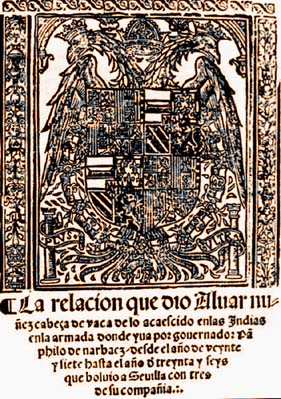 |
Between the mid 1500s and 1680, the key reasons for all exploration
into southern Sonora was for the establishment of missions, and to
suppress and subjugate the Mayo and Yaqui Indians. In 1630, Jesuit missionaries built an adobe church on the spot where the Iglesia de Alamos now stands, essentially founding Real de los Frailes, New Spain, later to become Alamos, Sonora, Mexico. After the 1683 discovery of fabulously rich silver and gold deposits, Alamos thrived as a mining and religious center. Many of the expeditions that established missions in Pimería Alta (northern Sonora and southern Arizona) and such distant places as Los Angeles, San Francisco, and Monterrey were funded with silver from the Alamos mines.like the well known Europa mine. First printed in 1542, The Travels of Cabeza de Vaca mentions his rescue by a small group of Spaniards near Culiacan. |
|
Other mines soon followed and Alamos became a boom town of more than 30,000 people, and one of Mexico's principle 18th century mining centers. By the 18th century, the town was producing so much silver, that it had its own mint. One visitor to Alamos during that time wrote that he "had passed a drove of one-thousand mules, laden with silver bars that were coming from the fortress of the Immaculate Conception of Alamos, and headed for Mexico City". This well trodden path was the Camino Real. At the time, this path connected Alamos to the Spanish occupied centers of El Fuerte and Culiacan. Later this path was extended to the north as the expansion route for the mission system. The expansion of colonies which became California and Arizona would not have been possible except for the great wealth discovered in the mines in Alamos. Alamos played one of the most important roles in the colonization of upper California. In 1781, a colonizing expedition left from Alamos to settle Los Angeles, California. They would have left earlier, but it took quite a long time to convince enough people to leave the safety of Alamos for the vast Sonoran Desert and the dangerous unknown territory of El Norte. The actual construction of Alamos was supervised by General Domingo Teran de los Rios, from Sinaloa. Padre Kino met Teran in the region of Alamos in 1687, and wrote that Teran and the wealthiest miners and merchants were building a chapel from wood, and constructing houses around a beautiful plaza. Records show that the parochial authority was in full swing by 1697, but the church in Alamos has other records on register that date back to 1685. King Carlos III ordered Teran (also his personal architect) to lay out the streets of the town, and to utilize the Moorish style, adopted from the Andalusia region of southern Spain. During the first 25 years of the 18th century, the Spaniards of Sonora lived in relative plenty. Shipments of imported and expensive goods were brought into Alamos to furnish the ever expanding Moorish and Baroque mansions that were being built around the central plaza. Let's read that again "Moorish and baroque mansions." Quite different from the little one room stucco houses of Hollywood's Mexican villages, isn't it? In 1737, the Yaquis and the Mayos rose against the Spanish colonists.. They burned the towns of Baroyeca and Camoa, and a band of 6000 marched to the edge of Alamos, where they destroyed many houses and farms. The local miners did well in holding back the Yaquis and Mayos until Spanish troops finally arrived. |
|
|
These cities, Alamos (then in Sonora, but now incorporated into
Sinaloa) and El Fuerte, are important in their own right, but they are
especially significant to those of us who are descendents of the
Primos, the first families of California. The people who became known
as "Los Pobladores," the founders of the cities of Los
Angeles, Santa Barbara, San Diego, and many others originated here, in
thriving, busy municipal centers, not in the "quaint little adobe
villages" portrayed in Hollywood's idea of Mexico. Most of the soldiers who explored early California and escorted los pobladores were from these cities, too, stationed at forts and presidios in Sinaloa. My fifth great grandfather, Efigenio Ruiz was born in 1745 in El Fuerte. In 1769, at Alamos, he married Maria Rosa Lopez y Sanchez Monreal, who was born in Alamos in 1753. In 1781, Efigenio was recruited by Capitan Don Fernando Xavier de Rivera y Moncada. |
Mission San Xavier in Loreto was
begun |
|
The Rivera y Moncada Expedition was sent to Alta California with four distinct goals: the founding of the pueblo at Los Angeles; the founding of the ninth mission at San Buenaventura at the southern end of the Santa Barbara Channel; the founding of the fifth presidio in the middle of the Santa Barbara Channel; and the expedition was also to found two other missions in the Santa Barbara Channel, Mission Santa Barbara near the Presidio in the middle of the Channel and Mission La Purisima Concepcion at the northern end of the Santa Barbara Channel. The members of the expedition were recruited in Sonora and Sinaloa by Rivera y Moncado from December 1779 to November 1780. He went from Loreto, Baja California, to Guaymas, Arizpe, San Miguel de Horcasitas, and Real de Los Alamos in Sonora and La Villa del Fuerte, La Villa de Sinaloa, Culiacan, Matzatlan, and Rosario in Sinaloa. He was authorized to recruit as far south as Guadalajara if necessary. He was able to recruit almost as many as he needed in Sonora and Sinaloa. The expedition members assembled at the Real de los Alamos, Sonora, on February 2, 1781. The expedition split into two groups. In one group were the settlers and their families accompanied by seventeen soldiers and their wives and children. It was required that all the soldiers and most of the pobladores be married. Some of the members of the expedition were married in the Alamos parish of La Purisima just eleven days before the expedition left. This group was under the leadership of Teniente (Lieutenant) Jose Zuniga. They crossed the Sea of Cortez or Gulf of California to Loreto, Baja California. They traveled by lancha, small boats with two sails, north to the Bahia de San Luis Gonzaga. There, they left their lanchas and walked up the Baja California peninsula to arrive at Mission San Gabriel. In the First Book of Baptisms of Mission San Gabriel, it is recorded that, "On 18 August 1781, Teniente Jose de Zuniga and Ramon Lasso de la Vega arrived here with eleven pobladores with their families and seventeen soldados de cuera from Lower California via San Diego." Seventeen days later, los pobladores, accompanied by priests from San Gabriel Mission and an escort of soldiers, including Efigenio Ruiz, my 5th Great Grandfather, walked the now historic eight miles to the site for the founding of the second pueblo in Alta California, El Pueblo de Nuestra Senora la Reina de los Angeles del Rio Porciuncula. The pobladores were given land for houses and fields to farm. Los Angeles, now the largest city in California and the second-largest urban area in the nation, had become a reality. In the next spring, Father Junipero Serra and Governor Felipe de Neve accompanied by soldiers of the Rivera y Moncado expedition left San Gabriel to complete the second and third purposes of the expedition, the founding of Mission San Buenaventura and the Presidio of Santa Barbara. Capitan Jose Francisco de Ortega had been called from the San Diego Presidio to be Comandante of the new Presidio at Santa Barbara. Governor Neve asked for two Franciscans for San Buenaventura and Santa Barbara. Serra himself came to San Gabriel from Monterey, and summoned Father Pedro Benito Cambon, O.F.M. from San Diego. They did not wish to delay the founding of the new missions, and they agreed to serve the spiritual needs of the new establishments until six new missionary recruits arrived. |
|
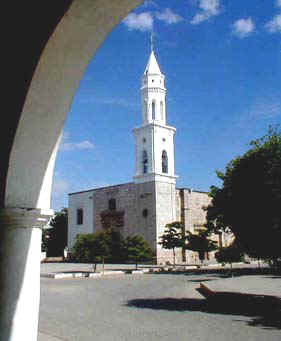 |
The group left for San Buenaventura on March 25, 1782. They traveled
north of San Gabriel and probably turned west through the Santa Clara
River Valley and not over the Conejo Grade as the El Camino Real bells
along Highway 101 would lead you to believe. On March 31, 1782,
Mission San Buenaventura, the ninth mission, was founded by Father
Junipero Serra. This was to be the last mission Serra founded. He died
in August of 1784, and the tenth mission, Mission Santa Barbara, was
not founded until 1786 by Father Fermin Francisco de Lasuen. Again for
the founding of the mission and the Presidio, my ancestor Efigenio
Ruiz was present. The Church of the Sacred Heart in El Fuerte, built in the 18th century. |
I go frequently up to Santa Barbara and even more so to Los Angeles. As I stand looking around me there, I always think "It was my people that started all this. They built these cities. I'm also reminded that they came from other cities -- cities forgotten by the history books of California, forgotten by the producers and directors and writers of Hollywood, forgotten even by too many of us whose ancestors came from Alamos, El Fuerte, Sinaloa, and Culiacán. We owe it to our Primos and our own descendents to remember... |
|
|
Las Misiones Antiguas
This handsome new English language volume is the result. Featuring more than 300 previously unpublished photographs - many in color, and 80 historical pictures, numerous old and new maps, mission plans as well as unique computer reconstructions of earlier buildings, Ed Vernon's beautifully produced work breaks new ground in presenting the colonial missions of Baja California. With its detailed description and historical background of every Baja mission, this comprehensive, fully indexed handbook is an indispensable resource for the traveler and researcher alike.Available through UNM
PRess and Amazon.
|
|
| Persons
with no memory by Galal Kernahan galal@comline.com Persons with no memory have no idea who they are. Our history--individual and collective--is a large part of who we understand ourselves to be and even how we got that way. Take Californians, for example. By and large, most don't have a clue. Ten years ago next year, a special team of appointees--mentored by the State Librarian--was in the final run-up to an Oregon-to-the-Mexican border teaching exercise: the Great California Sesquicentennial, 1998-2000. The Commission was truly representative. It didn't have a clue either. What follows here is an internet stroll, We will turn over an old website here, a piece of a newspaper there, mind-numbing California Board of Education mandates for ten-year-olds, and a chunk of Wikipedia along the way. First, a little cyber-archeology. Welcome to the following dig: http://www.georgecoates.org/BlindMessengers/index.html Here was a Sesquicentennial kickoff extravaganza of lights, kid choirs and mega-metaphorical acting staged in front of the surreally painted backside of the State Archives in Sacramento. One performance and it was itself history, but the title--"Blind Messengers"--lingered. The Commission soldiered on. It became besotted with Tall Ships and the Gold Rush. After consulting Scottish Tall Ships-R-Us and skippers elsewhere, it finally lit on inviting Tall (naval cadet training) Ships from countries like Indonesia and Ecuador. In a revision of popular memory, these handsome vessels were not to rush through the Golden Gate. Instead, they would parade down the coast from San Francisco to San Diego. As things turned out, before anyone could spot sails and shout "Ship Ahoy," the Sesquicentennial Commission itself sank half way through its delusions of grand pageantry. You can read an obituary of sorts in
the San Francisco CHRONICLE: Less than a month after the funeral,
he made a startling declaration at the University of California, Santa
Barbara. His remarks were titled: "Confessions of a Recovering
Mythoholic." http://www.ia.uscb.edu/pa/print.aspx?pkey=309 How could this be? The State Board
of Education (SBE) had just again (in 1998 and still) insisted on what
we must learn. It is organized into five categories sudivided into 32
major areas of what should be our standard shared state memory. http://www.cde.ca.gov/be/st/so/histgrade4.asp Shame on us! Shame on them! Ask any post-Fourth Grade California school youngster--busy trying not to be a-child-left-behind in reading and math--what they learned of the California story. Nine times out of ten they answer now (and have so answered for years):: "We built a little mission out of sugar cubes." (Period). Doesn't anyone notice what is going on? Yes. Here and there. If you wish to listen to (even participate in) such discussion, find the Wikipedia entries on "California Missions" and scroll down to the section that begins: There is controversy over California Department of Education treatment of the missions in the Department's elementary curriculum. . . Meanwhile, have a care down there.
You may have to dodge an occasional rambunctious mythoholic. |
|
| Book:
Married to a Daughter of the Land:
Spanish-Mexican Women and Interethnic Marriage in California,
1820-1880, by Maria Raquel Casas, University of Nevada Press, 2007 "Here we discover the actions of real women of all classes as they shaped their own identities." Ruth Kilday
|
|
|
|
|
A unique one night event that brings together artists of varied disciplines into a creative cosmos in which everything and anything is possible in community. A special night in which the gallery becomes the white canvas for an artist, a white music sheet for a musicians, or just a blank page in which poetry will come alive as the result of the exchanges and collaboration that arises from creating in community. Music, poetry, dance, live painting, body painting, puppets, photo installations, video installations, sound installations, food and more. |
|
|
|
|
| This
year the public is encouraged to wear ONE SOLID COLOR, all yellow, all
blue maybe all purple. What takes place over the course of the evening
is the optical illusion of vibration, a moment of energetic public
happening. A procession kicks off the event at 6pm to then come back into the gallery where the community and artist interact creating a spectacular, interactive art piece and performance. Mission Cultural Center for Latino Arts presents: "Illusion 6" a one night event, curator, Adrian Arias. Friday, June 1, 2007, 6-10pm Admission $5 http://rs6.net/tn.jsp?t=vzuzo4bab.0.d7odlnbab.6tjxyun6.4262&ts=S0237&p=http%3A% 2F%2Fwww.missionculturalcenter.org%2F&&&&http://rs6.net/tn.jsp?t=vzuzo4bab.0.d7odln bab.6tjxyun6.4262&ts=S0237&p=http%3A%2F%2Fwww.missionculturalcenter.org%2F For Further information please visit video@missionculturalcenter.org www.illusionshow.blogspot.com www.missionculturalcenter.org
|
|
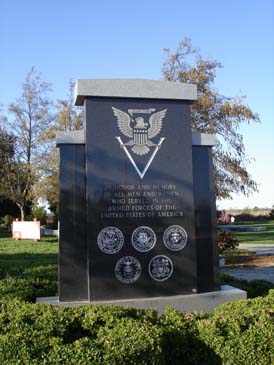 |
 |
|
Antioch,
California Monument Sincerely, Jaime Cader
|
|
| TEEN FILMMAKERS
SCREEN TWO SHORT DOCUMENTARIES ABOUT LATINO LEADERSHIP IN ESCONDIDO
Media Arts Center San Diego’s Teen Producers Project in partnership with San Diego County Office of Education’s Migrant Education Program (Region IX), is screening Poder Escondido: Stories of Latino Civic Engagement in Escondido, a two-part documentary series produced by local youth from Escondido. Students from Orange Glen High School participated in the Teen Producers Project, an after-school video production, education and training program, to produce two short documentaries that focus on Latino civic engagement in North County, San Diego. Carmen Miranda, former candidate for Escondido City Council, Consuelo Martinez, student and grassroots activist, and Bill de la Fuente, businessman turned community organizer, are spotlighted in these two films for their leadership and commitment to social change. The films will be screened Thursday, June 7th at 6:30 PM at the Performing Arts Center at Orange Glen High School. Orange Glen High school is located at 2200 Glenridge Road in Escondido. Youth producers and video interviewees will participate in a Q & A after the screening. The screening is free and open to the public. Descriptions of the films: Poder Escondido/ Hidden Power Two Latina women make a difference in the city of Escondido, empowering their community. Carmen Miranda and Consuelo Martinez embark on a grassroots campaign to better Escondido for all. The Story of Bill de la Fuente After a terrible shooting in his neighborhood in the 90s, Bill de la Fuente was moved to action. The businessman turned community organizer has become an influential community leader in North County, advocating on behalf of Latino communities, youth, and local businesses. Funding for the project comes from Las Patronas, Stuart Foundation, California Arts Council - Youth Education in the Arts, and the Community Technology Foundation of California. For more information about Poder Escondido: Stories of Latino Civic Engagement in Escondido, contact Kate Trumbull, MACSD Education Coordinator for the Teen Producers Project at 619-230-1938 x 102/ ktrumbull@mediaartscenter.org
|
|
Rededication of the Juan Bautista de Anza National Historic Trail Come to San Juan Bautista in San Benito County and see the
rededication of the Juan Bautista de Anza National Historic Trail
scheduled for June 16th, 2007. Sent by LaTejedora
|
|
| BUILDING
CALIFORNIA-200 YEARS OF ARVIZU HISTORY Hello Everyone: All books have been mailed out. Please let me know when you receive it and any comments that you have about it. Allow two to three weeks for USPS and 3 days if by UPS. The book will also appear in the Santa Clara County Library, Sutro Library of San Francisco, Gilroy Museum, Los Fundadores Museum Library of Santa Clara County, Azusa City Library, and the LDS Genealogy Library of Provo Utah. I am working on including it in the Bancroft Library and the Bakersfield and Arvin Libraries as well. The book is for sale at Lulu.com and through Borderland Books in Texas. If the $55 seems steep, it is available as a download.. Just go to Lulu.com where my book is published and you can download it. Of course it won't have the nice hardcover but the pages are all there. It has been fun. I'll let you know of my next project. John Arvizu hot_ss@yahoo.com |
|
|
Tucson Graveyard, Blas and
Juana Valdez Antonio Candelaria and Teresita de Jesus Veracruz Family Spanish - Mexican Land Grants: A Brief Introduction Mission 2000 National Hispanic Cultural Center in New Mexico The Presidio, 1775-1800 Consultas en línea de Ancestry.com (en Inglés) Border Journalism Loses Leading Voices S:Nombres de quienes cruzaron de México a EU, 1903-57 S: Memorial of the Southwest by José Antonio Crespo-Francés y Valero |
|
|
|
The photo is of my NEW MEXICO ancestors: The family is my great-grandfather's
family, ANTONIO CANDELARIA, SR. He was born in Albuquerque in 1846; his youngest son is ANTONIO
CANDELARIA, JR. my grandfather (born in Reedville, Texas in 1891).
My grandfather, Antonio Cadelaria, Jr. is the youngest boy in the photo. He is the boy on the right side of the photo, Antonio Candelaria, III, 9 years He stands beside his mother. My CANDELARIA families, two brothers were among the 12 founders of Albuquerque in 1706. I am so proud of my CANDELARIA ancestors.
From left to right, Virginia CANDELARIA (11), Antonio CANDELARIA, SR., 54; Leonardo
CANDELARIA, 16; Mama Teresita de
Jesus VERACRUZ, 32; son Pedro CANDELARIA, 13; on the bottom, Teresita
CANDELARIA, 5, Juanita CANDELARIA, 7 and Antonio, 9.
This photo was taken at San Marcos, Texas in November, 1900;
ANTONIO SR. was on his way to see his sister, Miquela CANDELARIA in
Albuquerque to obtain his family inheritance from his sister who was
very ill and not expected to live much longer and also to see members
of his family whom he had not seen in almost 30 years.
 The
family photo was taken so that ANTONIO could show it to his
sister and other living relatives. Mama Teresita was 8 months pregnant
in this photo - taken in November 1900. But a heavy freeze and rain
fell in the San Marcos area and things got so bad that ANTONIO SR
postponed his trip day after day, week after week, and finally, Mama
Teresa had her baby on December 22, 1900. The
family photo was taken so that ANTONIO could show it to his
sister and other living relatives. Mama Teresita was 8 months pregnant
in this photo - taken in November 1900. But a heavy freeze and rain
fell in the San Marcos area and things got so bad that ANTONIO SR
postponed his trip day after day, week after week, and finally, Mama
Teresa had her baby on December 22, 1900. The child was named for her paternal aunt, Miquela, in Albuquerque. Still, things continued to get worse and by Jan 21, 1901, Mama Teresa began to hemorrage and died. ANTONIO SR never returned to Albuquerque but remained in Texas to care for his six children. Likewise, his sister died and no other information is known about the family members. (ANTONIO SR. died in 1909 in Texas).
Thanks! Gloria Candelaria |
|
Mimi: A niece of mine who lives in New
Mexico sent this note about the following center;
The National Hispanic Cultural Center in New Mexico located in Albuquerque. It is my understanding that it is the first of it's kind in the nation. It is located at 1701 Fourth Street SW 87102 tel: 505-246-2261 web address: http://www.nhccnm.org.Regards, Jose M. Pena
|
|
Links & Bibliography - Map - CSA Holdings Spanish - Mexican Land Grants: A Brief Introduction Sangre de Cristo/Lee & Beaubien Grant Nolan Grant Las Animas/Vigil & St. Vrain Grant Maxwell Grant/Beaubien & Miranda Grant Conejos/Guadalupe Grant Tierra Amarilla Grant Luis Maria Baca No. 4/Vegas Grandes Grant The evolution of America's westward expansion is expressly tied to the development of Mexico and it's people. Prior to 1821 Southern Colorado was part of Spain's New Mexico Territory. In order to foster the development of these Northern hinterlands Spain rewarded its officials with large land grants. The differences between the Spanish-Mexican land grant system and that of the New World-American method would later cause many land disputes to arise. Firstly, Spanish-Mexican land grants did not use a mathematical grid system to plot land claims and instead used a system that featured geographical points such as rivers, mounds, and mountains. For example the Vigil & St. Vrain Grant was written "Commencing on the line at one league east of the Animas (Purgatory) river a mound was erected; thence following in a direct line to the Arkansas River, one league below the junction of the Animas and the Arkansas…" The second major difference was that these grants were provided to the owner who was then expected to improve the land and develop it. Land owners were expected to ride along the property borders to show ownership, commit to improvements, and promise to defend the land against foreign attacks as the Spanish and Mexican Governments did not have the military forces capable of defending their outermost territories. These grants often were intended not for just the initial individuals for whom they are now named, but were also designed to foster communities which had communal resources, to create self-sustaining farming settlements, and also to promote what was considered the Spanish way of life. Finally, land ownership in the Spanish-Mexican culture was often reflective of one's social status and a family's relationships with the surrounding community. As such, many of the land grants were arranged informally and in some cases only verbally. The Republic of Mexico gained its independence from Spain in 1821 and inherited the administration of Spain's New Mexico Territory. Mexico continued with a policy of promoting the settlement of its unoccupied northern territories but was not as isolationistic as Spain. Mexico allowed for French, British, and American born men to own land so that these "foreigners" eventually became the major landowners in Mexico. All these land recipients had to do was to pledge to defend Mexico against American westward expansion. While Mexico was willing to sell its lands to many such buyers, Mexican Governor Manuel Armijo was especially eager to sell land. He sold a total of 9,700,000 acres in his two years of office, more than half of which was sold within a six-week period. After a quarter century of Mexican rule, Governor Armijo later chose not to resist General Stephen Kearny's American military forces in 1846. After the Mexican-American war ended in 1848 the land grants were administered and reviewed by the region's newest conquers, the United States of America. The Treaty of Guadalupe Hidalgo was supposed to guarantee ex-Mexican citizens their private property rights. Large legal and surveying fees and endless legal quarrels, however, caused many independent land owners to lose much of their land. Furthermore, many people couldn’t identify what lands were rightfully theirs since they lived in communal farming and resource areas. On July 22, 1854 the United States Congress appointed William Pelham as Surveyor General of New Mexico to review the validity of the various claims and to advise Congress as to how to decide these matters. These land disputes continued to plague the region until 1891 when Congress created the Court of Private Land Claims. After thirteen years of work this court was finally able to settle over three hundred pending claims with the exception of the Conejos Grant. Sangre de Cristo / Lee & Beaubien GrantThis 1,038,195.55 acre land grant was created on December 27, 1843 by Stephen Luis Lee and Narciso Beaubien of Taos. Their petition to Governor Don Manuel Armijo stated that the San Luis Valley's geography had "fertile lands for cultivation, and abundance of pasture and water, and all that is required for its settlement and the raising of horned and wollen cattle." For three years after the official acquisition, Lee and Beaubien did not create any settlements or make any improvements, which was against the original intention of the land grant. In a tragic turn of events both land grant owners were killed on January 19, 1847 in the Taos Pueblo Uprising. As Lee's estate was in debt, his administrator was forced to sell his half of the grant property to Narciso Beaubein's father for only one hundred dollars. Charles Beaubein was a more effective landowner than his son and fostered a variety of agricultural settlements on the Costilla River and Culebra River between 1849 and 1851. He also leased the land to the United State Army in 1852 for the creation of Fort Massachusetts, known today at Fort Garland. By 1856 the United States Surveyor General William Pelham began to investigate the authenticity of the grant, but after only two days of investigation the court came to the conclusion "that the land has been occupied from the time the grant was made up to the present day." With the court upholding the legitimacy of the Beaubein family's claim to the Sangre de Cristo land grant, the matter was recorded as an act of Congress on June 21, 1860. Beaubin agreed to sell his land holdings to United States Territorial Governor William Gilpin in 1863 for approximately four cents an acre ($41,000). Gilpin, along with several foreign financiers, divided the Sangre de Cristo grant into two halves, the northern Trinchera and the southern Costilla. Capitalist ventures spearheaded by the Gilpin syndicate proceeded to treat the land's pioneering hispanic settlers as trespassing squatters, despite their efforts to improve the land and introduce livestock. The resulting land battle created such a legacy of bad blood that the Congress began to vote against ratifying Mexican land grants. These grants are still the subject of litigation between the heirs of the original settlers and various speculators such as Malcolm S. Forbes. Nolan GrantGervacio Nolan, a French fur trapper and resident of Taos, applied for his half million acre land grant on the St. Charles River Valley on November 14, 1843 on the basis of his military service. While Nolan's plans to develop any type of colony seemed ill-fated due to Indian attacks, he was blessed with a large family that lived peacefully and cultivated his land steadily. After Nolan's death in 1857, his family was forced to prove their claim to United States Surveyor General William Pelham. With testimony from Ceran St. Vrain and Kit Carson the surveyor general recommended that Congress uphold the Nolan family claim. Unfortunately for the Nolan heirs, the United States Congress chose to honor the original laws and traditions of the 1824 Mexico National Congress which stated that an individual land owner could not receive a grant any larger than eleven square leagues (48,695.48 acres). Las Animas / Vigil &St.Vrain GrantPetitioning Governor Armijo on December 8, 1843, Cornelio Vigil and Ceran St. Vrain were poised to become two of the largest landowners in the history of the United States. With over four million acres at stake, Vigil and St. Vrain told the Mexican government that they had big plans for the development of the land by agriculture and raising livestock . The land was used primarily for cattle grazing by William Bransford, William Bent, and Ceran St. Vrain. St. Vrain was unable to lure colonists onto the land until ten years after the grant agreement, and even then most of them were his own employees and their families. Furthermore, there were no claims or settlements on the Las Animas Grant until the early 1860's which painted a picture to the courts of a deserted land with absentee landlords. As such Vigil and St. Vrain were seen as breaking the original land grant agreement. Like the Nolan Grant the Vigil heirs (Vigil was murdered during the 1847 Taos Pueblo Uprising) and Ceran St. Vrain were stripped of their original land grants and provided with a much smaller 97,000 acres by the United States Congress. This situation was complicated by Vigil & St. Vrain overselling the original land grant. By 1846 they technically didn't even have stake in their original claim as they had sold several one-sixth shares to fort owner and trader Charles Bent, New Mexico Governor Manuel Armijo, New Mexico Secretary Donaciano Vigil, and Trinidad townsite promoter Eugene Leitensdorfer. The subsequent owners assumed that the Congressional Act would eventually be overturned by the Treaty of Guadalupe Hidalgo or a Supreme Court decision, and continued to sell as many parcels of land to speculators as possible before the land could be officially surveyed. In one case settlers on the land grant claimed by both Leitensdorfer and his rival Captain William Craig created the Settlers' Purgatorie Relief Association in order to protect themselves from the ensuing attacks on their property. In another case, David Moffat and Jerome Chaffee were both accused of obtaining fraudulent land patents for fictitious property owners so that they could assert their claims to the West Las Animas townsite. The land grant had quickly become a dangerously out-of control land grab. It soon became obvious that the federal government had to settle this land dispute which resulted in Congress ordering an official survey of the awarded 97,000 acres. The land was split up with the Vigil and St. Vrain heirs getting first priority, pioneers who had interests deeded to them secondly, and settlers third. After half a century of court proceedings twenty three land owners had their claims rejected, thirteen had their land claims approved, with not one of the original land grantee heirs benefiting at all. Maxwell Grant / Beaubien & Miranda GrantWhile the majority of this grant's land mass is in present day New Mexico, the Maxwell grant does include many Southern Colorado landowners. Guadalupe Miranda and Charles Beaubien, administrator of his deceased son's Sangre de Cristo Grant, petitioned Governor Armiijo for this over 1,700,000 acre property on January 8, 1841. "Most Excellent Sir: The undersigned, Mexican citizens and residents of this place, in the most approved manner required by law, state: That of all the departments in the republic, with the exception of the Californias, New Mexico is one of the most backward in intelligence, industries, manufactories, etc., and surely few others present the natural advantages to be found therein, not only on account of its abundance of water, forests, wood and useful timber, but also on account of the fertility of soil,…The welfare of a nation consists in the possession of lands which produce all the necessaries of life without requiring those of other nations; and it cannot be denied that New Mexico possesses this great advantage, and only requires industrious hands to make it a happy residence. This is the age of progress and the march of intellect, and they are so rapid that we may expect, at a day not far distant, that they will reach even us. Under the above conviction we both request your excellency to be pleased to grant us a tract of land for the purpose of improving it, without injury to any third party, and raising sugar beets, which we believe will grow well and produce an abundant crop, and in time to establish manufactories of cotton and wool, and raising stock of every description." It is interesting to note that this may be the first recorded document that proposes the development of Colorado's sugar beet resources, a crop that still is a mainstay of Colorado's agricultural development. Like the aforementioned grants, the United States Surveyor General Pelham reviewed the Maxwell Grant in 1857, and by an act of the United States Congress on June 21, 1860 the claim was upheld in its entirety. The purchase of the Miranda family's half of the grant, the disallowing of the Bent family claims, and by marrying into the Beubien Family, Lucien B. Maxwell had become the sole grant owner by 1858. Maxwell's business acumen was rewarded when he sold the entire estate in 1870 for $650,0000, a property that reportedly cost him only $50,000 to acquire. Conejos / Guadalupe GrantOne of the earliest Mexican land grants in Colorado was the 1833 Conejos / Guadalupe land grant. While up to eighty people may have at one time occupied the land before 1842, it was abandoned once Mexico started a war with the indigenous Indians. When the war ended Jose Martinez, Antonio Martinez, Julian Gallegos, and Seledon Valdez petitioned to reassert their claim for over 2,500,000 acres. While the claim was upheld by the Mexico's Prefect Archuleta it stipulated: "That the tract aforesaid shall be cultivated and never abandoned; and he that shall not cultivate his land within twelve year or that shall not reside upon it will forfeit his right, and the land that had been assigned to him will be given to another person - that the pastures and watering places shall be in common for all the inhabitants - that said land is donated to the grantees to be well cultivated and for the pasturing of all kinds of livestock and therefore owing to the exposed frontier situation of the place, grantees must keep themselves equipped with firearms and bows and arrows…that the towns they may build shall be walled around and fortified - and in the meantime the settlers must move upon said tract and build their shanties there for the protection of their families." Within a year communal farms and settlements began to sprout up within the fork of the Antonio and Conejos Rivers, as their renewed agreement mandated. In 1846 Julian Gallegos realized that he needed to once again reaffirm his ownership of the land grant with his new neighbors the United States. He petitioned Governor Charles Bent who chose not to act on the request, and later the United States Surveyor General's Office, but no recommendation was sent to Congress. During the years that the Conjeos / Guadalupe Grant controversy simmered, towns were incorporated, the State of Colorado was added to the Union, and many competing land claims were initiated. The Court of Private Land Claims heard the arguments in 1900, and believing the original grantees had not complied with the tenets of the Conejos Grant in its entirety, the court chose not to honor the claim. Tierra Amarilla GrantThe earliest of all Mexican Land grants that had its boundaries within present day Colorado, the Tierra Amarilla Grant was awarded to Manuel Martinez and his family on July 20, 1832. This 594,515 acre grant encompassing the Chama River Valley was confirmed by an Act of the United States Congress on June 21, 1860 in its entirety. By 1883 the Martinez family and the other original land grantees had given almost all their original titles to Thomas Burns and Thomas B. Catron. Luis Maria Baca No. 4 / Vegas Grandes GrantThe earliest of all land grants in Colorado, this 100,000 acre
Spanish land grant at the western base of the Sangre de Cristo Mountain Range
was established when Luis Maria Caveza de Baca petitioned for it in 1821. De
Baca moved his livestock and horses to this property within the year, but
Indians forced him to move off of his granted property. After his death a
group of land speculators petitioned for the Baca grant, but were denied as de
Baca's heirs chose to fight for their ancestral lands. Antonio de Baca won not
only fights with competing land speculators, but also had his land confirmed
by Surveyor General Pelham. Despite western political support the United
States Congress chose to give the original lands to the Town of Las Vegas,
while the de Baca heirs were provided with five other 100,000 acre land
grants. Governor William Gilpin, also owner of the Sangre de Cristo Grant,
purchased the remaining 100,000 de Baca grant lands in Colorado and later sold
them to an out-of-state company for $1,400,000. |
|
Mission 2000 Hi All, Just want to send a link I found, Some info from the site... Mission 2000 is a searchable database of Spanish mission records of the Pimería Alta (southern Arizona and northern Sonora, Mexico) containing baptisms, marriages, and burials from the late seventeenth century to the mid-nineteenth century. Names of persons associated with each event (i.e., priest, baptized, parents, godparents, husband, wife, witnesses, deceased, etc.) and personal information about each person are included. The ethnicity of names include O’odham, Yaqui, Apache, Seri, Opata, Yuma, Mexican, Spanish, Basque, Catalán, Gallego, Andalusian, Valencian, German, Swiss, Austrian, Bohemian, Italian, and others. http://www.nps.gov/applications/tuma/search.cfm Lisa lafuelgara@yahoo.com Visit the California-Spanish website at http://www.sfgenealogy.com/spanish/
|
|
www.tucsoncitizen.com ® Published: 05.14.2007 The Presidio, 1775-1800 Tucson Citizen news@tucsoncitizen.com When the first cottonwood log was driven upright into the ground in 1776, it's likely no one imagined a public celebration at the same site 231 years later. All thoughts at the 18th-century Presidio San Agustín del Tucson went to fending off the Apaches. "Apaches kept us pretty busy," said Hector Soza, a modern-day Tucsonan speaking as his great-great-great-grandfather José Maria Sosa, who served at the presidio at its inception. "They'd attack every day." The presidio started with palisades, walls made with upright logs sharpened at the ends. Adobe walls followed, and in 1783 the Spanish completed their northernmost presidio in North America. Sosa had come up from Presidio San Ignacio de Tubac with a troop of soldiers to establish another fort. Sosa enlisted in the Spanish army in 1770 and in Tucson rose in rank to corporal in 1779, to sergeant in 1783 and to alférez (ensign) in 1793 before dying at the presidio on April 2, 1800, after serving the crown for 29 years, seven months and 29 days. "I'm figuring he died of ill health or old age," said Soza, who explained the spelling of the family name changed in the late 1800s when a deed for his great-grandfather's ranch mistakenly spelled the name Soza. Researching documents, Soza pieced together his predecessor's 18th-century life based on fact and assumption, such as the morning of May 1, 1782, which came to be known as the Battle of the Entryway. The Apaches split their force. One group attacked the presidio, and one attacked the bridge leading to the Indian village on the west side. Two Spanish soldiers held off the Apaches at the bridge, and 18 soldiers defended the presidio, but Soza surmises that Sosa was guarding the horses roaming south of the presidio. "Sosa was not mentioned (in documents regarding the battle), but he was here, so that's why I say he was guarding the horses," Soza said. A 1797 census counted 395 people living in the presidio, including José Maria, his wife, one son, three daughters, one maid and three manservants. About 100 soldiers were listed, and it is unknown how many women lived there. "Women would walk down to the river and get water, although a well was drilled, 16 feet deep," said Sybil Needham, co-founder of the Tucson Presidio Trust for Historic Preservation. "They probably had a military escort to protect them at the wash." In 1810, Mexicans revolted against the Spanish and gained independence in 1821. Mexico took over the presidio in Tucson, but its military establishment was deteriorating. "When Mexico took over, everything went downhill," Soza said. The U.S. Mormon Battalion came to town in 1848, by which time the presidio was more a civilian complex. "They dismantled the presidio brick by brick to build houses," Needham said. "1856-57 I would say it was gone." The last known section of wall was torn down in 1918. www.tucsoncitizen.com ® Published: 05.14.2007 The Presidio, 1987-2007 Tucson Citizen news@tucsoncitizen.com The tiny, half-acre sliver of rebuilt presidio started as a much grander dream in 1986. The late architect Lewis Hall that year floated the idea of rebuilding all four presidio walls at their original locations along Washington Street, Church Avenue, Pennington Street and Main Avenue. He would augment that with a series of plazas, covered sidewalks and balconies to evoke early 18th-century Tucson. "He wanted to tear down the whole City Hall and rebuild the whole presidio," said Sybil Needham, co-founder with Hall of the Tucson Presidio Trust for Historic Preservation. The Presidio Trust carried the torch through the remainder of the 20th century. Its dream was nearly as radical as Hall's but on a smaller scale: rebuild a presidio with four walls, a chapel, stable, living quarters and a parade ground on the block bounded by Washington, Church, Alameda Street and Court Avenue. "We would have torn down the Transamerica building," said Hector Soza, a vice president of the trust. What took 20 years to get the adobe structure up? "Money," Soza said. "Interest," added Mickie Soza, his wife and a trust vice president. The Sozas and Needham are among a dozen trust members who have done living history re-enactments from October to March each of the past three years at Casa Cordoba at the Tucson Museum of Art. They will move their 1800-era show-and-tell to the presidio grounds in September. Rio Nuevo incorporated the presidio in its 2004 master plan, and design work started in 2005. "They were the driving force behind the project," said Bill O'Malley, Rio Nuevo's construction manager. "They've been heavily involved in the design." www.tucsoncitizen.com | Copyright © 2007 Tucson Citizen www.tucsoncitizen.com ® Published: 05.14.2007 Behold, a presidio grows in Tucson Downtown of 18th century re-created in adobe will be dedicated Saturday TEYA VITU Tucson Citizen The history of downtown comes full circle this weekend with the dedication of the $2.8 million Presidio San Agustin del Tucson, the first finished artifact for Tucson Origins Heritage Park. The rebuilt half-acre of adobe-brick presidio at Washington Street and Church Avenue is an homage to the presidio that emerged on that spot from 1776 to 1783. This version telescopes several features spanning different eras onto a half-acre patch. The 1780s torreon (tower) stands a few feet from an 1830s Mexican-era streetscape. In between is a small hole in the ground evincing a 2,000-year-old pit house. The adobe bricks come as close to authentic as modern building codes allow. "We matched the adobe as much as we could for texture, color and size," said Eric Means, president at Means Design and Building Corp., which rebuilt the presidio. "Mexico still has 1700s buildings. We copied those." The Means team also studied the remains of presidio wall foundations. It learned that the Spanish used two methods to craft the 22-by-11-inch bricks. One had a brick made in a form on the ground, and then the brick was lifted into place; the other had the mud poured into a form in place on the wall. The adobe composition matched the 18th-century brick (except that cement was added to stabilize the adobe): 50 percent sand, 25 percent clay and the rest silt and straw. Tucson Adobe in Marana crafted the bricks, which re-create the whimsy of different colors used in the original walls. Beyond that, presidio proponents and designers had to draw on imagination because no records exist regarding what the presidio looked like. Artist Bill Singleton translated all that imagination into a 53-by-13-foot mural that gives a snapshot of presidio life. Means cut six embrasures (gun slots) at the top of the torreon walls. "We have no idea if they had embrasures or not," Means said. The torre¨®n is 20 feet high. Means rebuilt the torreon a few feet east of the original tower, for which foundations for the 44-inch-thick walls still exist. Across a presidio entryway, Means built a 15-by-30-foot barracks that would have housed about a dozen soldiers. Boards are built into the wall to create little shelves. The ceiling is river hardwood with saguaro ribs, topped with 4 to 12 inches of mud. Outside the adobe walls along Church Avenue is an example of the first-generation wall - a palisade made with cottonwood and willow logs whose tops were sharpened to points. Deeper within the structure, an 1830s house from the Mexican era was rebuilt with a covered carriage way splitting the house in two. The presidio complex also includes an existing 1870s triplex on Court that was restored by replacing the bottom three feet of adobe. The triplex will house exhibits and a gift shop. Each Saturday in the cooler months, members of the Tucson Presidio Trust for Historic Preservation will inhabit the presidio in period attire and perform 18th-century chores. The presidio's programs are a joint venture between the trust and the city Parks & Recreation Department. IF YOU GO What: Dedication of Presidio San Agustin del Tucson Where: Corner of Church Avenue and Washington Street When: Saturday 8:30 a.m.: Ted Ramirez's band plays. 8:55: Bell at St. Augustine Cathedral tolls to announce a public gathering. 9: Ceremony begins with cannon fire from the presidio torreon. A street fair will continue until 3 p.m. Published: 05.14.2007 Two Millennia at Court and Washington Tucson Citizen news@tucsoncitizen.com Not many American big cities, especially in the West, can show off stuff in the ground from the 1770s right in the middle of downtown. What sets Tucson apart even more is that history from 2,400 years keeps getting found in the ground in the shadows of skyscrapers. "There aren't many places I can think of where you can see archaeology in the ground right in the spot of where the town was founded," said Homer Thiel, project director at Desert Archaeology. He offered his short list: Fort Michilimackinac in Michigan and Pointe-à-Calliere in old-town Montreal. At the half-acre site where the rebuilt presidio now stands, Thiel's team found traces of three early agricultural-period pit houses - small circles with postholes around the edges dating back 2,000 to 2,400 years. The team retrieved two spear points and grinding stones from that era, dug up about 18 inches to 3 feet below street level. Archaeology then fast-forwards 750 years to the Hohokam period, which revealed six rectangular pit houses with plastered floors about 2 feet down. "We found a lot of pottery," Thiel said. Thiel said archaeologists found hundreds of thousands of items on the half-acre site at Washington Street and Church Avenue, and much of downtown would reveal similar finds with a little digging. The Hohokam period ran from 750 to 1150, and then archaeology fast-forwards again, about 600 years this time, to the arrival of the Spanish in 1775 and the presidio. "In the park location, we have the tower foundation and a portion of the east wall," Thiel said. They found majolica shards from the "dishes they would eat meals on." Musket balls and gun flints were unearthed, as were Native American pottery and a double-sided, fine-tooth comb from Europe. "It was so finely toothed, you could remove lice eggs from someone's head," Thiel said. Next comes the first above-ground history - the Siqueiros-Jacomé row house from 1866, the triplex facing Court Avenue. Four pits dug for adobe were filled with trash, mostly needles, safety pins and buttons stemming from Soledad Jacomé's seamstress trade. The Dodge family in the 1890s built a boarding house facing Washington Street that stood until 1959. www.tucsoncitizen.com | Copyright © 2007 Tucson Citizen www.tucsoncitizen.com ® Presidio slates ceremony, fair Presidio San Agustín del Tucson will be dedicated at 9 a.m. Saturday with a public ceremony and all-day street fair at the southwest corner of North Church Avenue and West Washington Street downtown. The dedication ceremony will include tours of the Presidio, live music and living history demonstrations. Music, historic re-enactments, American Indian culture and food will continue throughout the day as part of the street festival. The Presidio is a replica of the northeast corner of the original walled fortress, and includes a 20-foot-tall torreón (battlement), 10-foot-high adjoining walls, barracks, and other buildings. Interpretive information, displays and artifacts will provide insight into daily life inside the walled compound. The attraction is part of Tucson Origins Heritage Park, one of Tucson's major Downtown redevelopment projects. The Presidio's programs are a joint venture of the Tucson Parks and Recreation Department and the Tucson Presidio Trust for Historic Preservation. ? Compiled by Johanna Eubank. Call 573-4160 or e-mail jeubank@azstarnet.com. |
Sent by Victor Villarreal vic.villarreal@gmail.com
|
| Border Journalism Loses Leading Voices Tamaulipas News, May 19, 2007 Journalists and community members in the northern Mexican border state of Tamaulipas are mourning the loss of two prominent voices this week. Carlos Benjamin Galvan Maytorena passed away on Friday, May 18, in a Nuevo Laredo hospital. The 66-year-old newspaper publisher, whose death was attributed to heart problems, was the owner and editor of the Nuevo Laredo dailies Ultima Hora and Primera Hora. Galvan, who was survived by his wife and two sons, also served as treasurer of the Nuevo Laredo city government, a post he also occupied during the municipal administration of Arturo Cortes Villada from 1990 to 1992. Galvan was preceded in death two days earlier by Arturo Solis Gomez, the founder of the Reynosa-based Internet portal Enlineadirecta.info. A longtime journalist, left activist, human rights advocate and columnist, the 61-year Solis was also the president of the Center for Border Studies and the Promotion of Human Rights (Cefprodhac), an organization which enjoys a reputation as one of Mexico's leading independent human rights groups. The organization has tackled a host of issues that range from migrant abuses to the shooting deaths of four young men in Reynosa by the Federal Preventive Police two years ago. Among other topics, Cefprodhac's Internet site contains reports about narco-violence and femicides in Tamaulipas state. Launched by Solis in May 2002, Enlineadirecta features original news reports as well as links to other border and Mexican news sites. The Spanish-language website is a good place to view videos related to border and Mexican issues. Diagnosed with cancer in November 2005, Solis was admitted to a Reynosa hospital last week before passing away. Delving into the literary world before his premature death, Solis left behind an unfinished memoir. In one of his last public statements, Solis warned about the impact of criminal violence on freedom of speech and the ability to report the news in the border region. Warnings against reporting certain events are resulting in self-censorship, Solis told a reporter from the Mexico City- based Proceso magazine. "When events like murders happen, a prohibition exists that prevents journalists from getting close to the scene," Solis said. "Many crimes on the northern border don't get out in the media." Solis was survived by his wife and four children. Sources: Enlineadirecta.info, May 17 and 18, 2007. Articles by Hugo Reyna and editoral staff. Lapolaka.com, April 21, 2007. Article by Antonio Gonzalez Diaz. Frontera NorteSur (FNS): on-line, U.S.-Mexico border news Center for Latin American and Border Studies New Mexico State University Las Cruces, New Mexico For a free electronic subscription email fnsnews@nmsu.edu Sent by dorindamoreno@comcast.net |
| Nombres de
quienes cruzaron de México a EU, 1903-57 WEB l www.ancestry.com EN LA RED, NOMBRES DE QUIENES CRUZARON DE MÉXICO A EU/ LA CRÓNICA Ancestry.com, un sitio en internet de información genealógica, anunció ayer la colocación en línea de los datos de las personas que cruzaron la frontera de México a Estados Unidos entre 1903 y 1957, recabados por autoridades estadunidenses. La base de datos, que por primera vez estará a la mano de los usuarios de internet, contiene más de 3.5 millones de nombres de personas que cruzaron a Estados Unidos desde México durante ese periodo. De esta forma, las generaciones actuales de mexicanos pueden investigar cuándo sus antepasados cruzaron la frontera y por dónde lo hicieron.Los datos están contenidos en una forma o manifiesto migratorio que contiene el nombre de quién cruzó, el día que lo hizo, la ocupación de la persona, su fecha de nacimiento, edad, su lugar de origen y sus características físicas. Ver nota completa http://www.cronica.com.mx/nota.php?id_nota=298900 En la red, nombres de quienes cruzaron de México a EU Notimex en Dallas 3 de Mayo de 2007 Ancestry.com, un sitio en internet de información genealógica, anunció ayer la colocación en línea de los datos de las personas que cruzaron la frontera de México a Estados Unidos entre 1903 y 1957, recabados por autoridades estadunidenses. La base de datos, que por primera vez estará a la mano de los usuarios de internet, contiene más de 3.5 millones de nombres de personas que cruzaron a Estados Unidos desde México durante ese periodo. De esta forma, las generaciones actuales de mexicanos pueden investigar cuándo sus antepasados cruzaron la frontera y por dónde lo hicieron. Los datos están contenidos en una forma o manifiesto migratorio que contiene el nombre de quién cruzó, el día que lo hizo, la ocupación de la persona, su fecha de nacimiento, edad, su lugar de origen y sus características físicas. En el caso de los menores de edad la forma cuya copia original puede ser observada en internet contiene también los nombres de los padres o personas mayores que los acompañaban. En algunos casos los manifiestos migratorios muestran incluso la fotografía y la huella digital y las firmas de la persona que cruzó. Asimismo se incluye, en ocasiones, los nombres de las familias o amigos en Estados Unidos con quienes se hospedaría. La base de datos abarca el periodo de la Revolución Mexicana, y los registros que fueron llenados cuando miles de familias mexicanas huyeron a Estados Unidos ante la violencia registrada a principios del siglo XX. Se estima que entre 1900 y 1930, más de un millón de mexicanos emigraron a Estados Unidos, como resultado de la Revolución y sus consecuencias. "Existen ahí historias únicas esperando a ser descubiertas y contadas sobre el suroeste de Estados Unidos y México", dijo Megan Smolenyak, directora de Historia Familiar de Ancestry.com. "Esta colección representa una importante oportunidad para los mexicanos y los méxico-americanos de descubrir los pasos de sus familias hacia Estados Unidos", indicó. Ancestry.com transcribió los nombres de la colección de más de tres millones de documentos para colocarlos en una base de datos de fácil acceso a través de apellidos, fechas y puntos de cruce. Los documentos fueron llenados en 24 puntos de entrada a Estados Unidos, desde California hasta Texas. Entre los cruces más transitados y con más archivos en la base de datos se ubican: Laredo, Brownsville y El Paso, Texas; Nogales, Arizona; y San Ysidro, California. beto@unt.edu naccs-tejas@lmri.ucsb.edu, HISTORIA-l@mail.cas.unt.edu, REDLatinaDFW@yahoogroups.com
|
|
DE: JOSÉ ANTONIO CRESPO-FRANCÉS Y VALERO MEMORIAL OF THE SOUTHWEST PARA: XII TRAVELLERS rio_grande@telefonica.net P.O. BOX 220243 El Paso - Texas 79913 USA Muy señores míos: Como participante y colaborador en los eventos que se celebraron en El Paso y Santa Fé en 1998, he tenido conocimiento detallado a través de mi gran y admirado amigo Manuel Gullón de Oñate, Conde de Tepa, de todo el proceso tanto artístico como de gestión para que esta magnífica escultura vea la luz y les felicito por el excelnte trabajo realizado en cantidad y calidad. Es un honor haber sido invitado a la inauguración y el motivo de este correo es agradecerles profundamente el que se hayan acordado de mi, no soy nadie, sólo un soldado orgulloso de ser español y de tener amigos en los Estados Unidos la mayor defensora y propagadora de Occidente y de la Democracia en estos momentos. Lamentablemente no podré estar físicamente con ustedes pero parte de mi corazón, desde 1998, siempre estará en el Suroeste de las EEUU de América, en aquellas tierras por las que caminé y en las que pude conocer la grandeza tanto de la tierra como de sus hombres y mujeres. Les admiro por este excelente trabajo, al escultor Sr Houser y al Sr. Sheldon Hall y a tantos anónimos colaboradores. Solamente les pido me permitan transmitir el dolor porque la escultura se llame "El Caballero", y no "Juan de Oñate Primer Gobernador y Capitán General en el Suroeste de los Estados Unidos de América". Esta actitud me recuerda en un paralelismo actual a ver cómo se silencia, en libros y reportajes, de forma sistemática la participación heroica de la sangre hispana en la II Guerra Mundial bajo la gloriosa bandera de los Estados Unidos de América. Denominar a esta grandiosa escultura "El Caballero" es como si no se quisiera poner en un magnífico álbum fotográfico familiar el nombre de un abuelo, del patriarca del clan, por el motivo que sea. Es lamentable, como historiador y como español me duele, siento amor por los EEUU de América por su búsqueda permanente de la libertad y su defensa de la democracia pero no se puede poner Tipp-Ex sobre un nombre en las páginas de la historia cuando es muy discutible por otra parte el motivo, es querer borrar de la historia la memoria de muchos originarios de España como si tuvieran que avergonzarse de la trayectoria de sus antepasados. Si Acoma hubiera estado en la costa este de los Estados Unidos hoy no habría ni rastro de su organización como pueblo ni de su sangre, habrían desaparecido mucho antes de la Senda de las Lágrimas o "Trails of Tears". Los indios Pueblos han pervivido hasta hoy y su símbolo de poder son los bastones de mando que recibían como si de generales españoles se tratase. Como historiador, soldado y como antropólogo admiro los valores indígenas y la transmisión e intercambio mutuo de valores pero permítanme también que les diga de forma rotunda que creo únicamente en un futuro pensado, diseñado y desarrollado en común. No creo que ningún norteamericano desee borrar el nombre del Mayflower y de los Peregrinos, ni de tanto norteamericanos constructores de la Historia de ese gran país, hay que mirar con perspectiva los hechos y si se compara creo que la actitud del Capitán General y Primer Gobernador Oñate con otros hechos su actividad negativa es sólo anecdótica. Sus peores jueces fueron él mismo y la propia Corona de España, hasta que fue absuelto, Creo que después de más de 400 años bien puede aparecer el nombre de este español bajo su escultura para orgullo de los propios Estados Unidos El peor golpe para las tribus surorientales lo propinó el presidente Andrew Jackson cuando dictó el Indian Removal Act de 1830 prohibiendo que los aborígenes permanecieran al este del Mississippí. La medida estuvo dirigida básicamente a los pueblos que más hicieron por entender y asimilar al hombre blanco, las cinco tribus civilizadas, choctaw, chicasaw, seminolas, creek y cherokees. La mayoría fueron deportados al oeste, mediante marchas forzadas que les provocaron la muerte por agotamiento, Los cherokees fueron quienes bautizaron este trasiego forzoso en masa como la marcha de las lágrimas. Deseo recordar algo que nos honra a los españoles y es la Real Expedición Filantrópica de la Vacuna, de 1803 a 1806, que llevó la Corona de España a América y Filipinas, a pesar de estar próxima la emancipación e independencia de de las provincias americanas, cuando se conoció en España la vacuna de la viruela, el Rey de España ordenó llevarla a América y Filipinas, inoculada en los brazos de 40 niños huérfanos de un colegio español y que sirvió para salvar miles y miles de vidas en América. Algo que todavía en 1870 y casi en el siglo XX no ocurría en los territorios de América del Norte donde la viruela acabó con miles y miles de indios y no indios. Es lamentable pero hay que recordar que en 1763, el jefe militar británico de Pennsylvania ordenó que se enviaran mantas infectadas de manera deliberada con viruela. Creo que la comparación no tiene comentarios En cualquier caso reciban mi saludo, mi admiración por su trabajo y mis mejores deseos para seguir adelante. Un abrazo para todos mis hermanos de los EEUU de América y de México, anglosajones, hispanos, mestizos e indígenas, EL FUTURO ES UN LUGAR COMÚN QUE SÓLO PUEDE SER PENSADO, DISEÑADO Y DESARROLLADO POR TODOS, los miembros de la "raza cósmica" de la que ya habló José de Vasconcelos (1882-1959). JOSE ANTONIO CRESPO-FRANCÉS Y VALERO
|
|
History of Mexican-Black solidarity Military Anthology Seeks Submissions By What Process? |
|
History of Mexican-Black solidarity Source: http://www.workers.org (from Bronzecomm) Following are excerpts from a talk given by Debbie Johnson at a meeting in Detroit during Black History Month this year. There is a long history of Mexicans welcoming and assisting Blacks fleeing American slavery. The fact of the matter is that when white "slave-hunting" militias would come into Mexico demanding that their "property"—the enslaved workers—be returned, many Mexicans rejected these pleas and were angered at the fact that these slave hunters would have the audacity to enter Mexico and attempt to impose their laws in a nation that had already banned slavery for moral and religious reasons. As early as 1811, the Rev. Jose Morelos—a Mexican of African descent—led an all-Black army brigade to help fight for Mexican independence. In 1855 more than 4,000 runaway slaves were helped by Mexicans in Texas to escape and find freedom in Mexico. The Underground Railroad was not just into Canada. It went south as well. Indeed, throughout three centuries, African slaves were joined by Mexicans in opposition to the exploitation of Africans by European "immigrants—settlers —on the North American continent. Just a few examples of this long and rich history of solidarity are: • In 1546, Mexico recorded the first conspiracy against slavery, which occurred in Mexico City among a coalition of enslaved Africans and indigenous insurgents. • In 1609 in Vera Cruz, Mexico, Yanga established the first free pueblo of formerly enslaved Africans in the Western Hemisphere. • In 1693 within the area of the "United States," which was in fact Mexican territory, an alliance between African runaways and rebellious indigenous tribes developed and resulted in considerable cooperation and intermarriages between them. It was much like that which developed between African people and the American Indian communities. • In 1820, in Mexico, the pro-independence army commanded by Black Gen. Vicente Ramon Guerrero was joined and saved by the courageous Mexican/Indigenous leader Pedro Ascensio. This army won many battles in resisting French and American colonial wars of occupation. Guerrero went on to become the 2nd president of Mexico • In 1836, during the battle of the Alamo, Mexican troops fought not only to keep the U.S. from annexing Texas, but also to abolish the dreaded practice of slavery carried out by pro-slavery white settlers. While the Mexican people did not have to join in this fight, they believed slavery was wrong, and they helped fight to stop it. Mexicans consistently took in and helped Black slaves who would run away from the U.S. Another "underground railroad"—this one south of the border—saved the lives and allowed the freedom of thousands of African people fleeing enslavement by European settlers. • During the period before the Civil War, Mexican authorities refused to return enslaved runaways to the U.S. slave holders. Aided by Mexicans in Texas, thousands of runaways escaped to freedom in Mexico. The U.S. government had to send 20 percent of its whole army to the Mexican border to try to stop this and intimidate the Mexican people, but the people continued to aid escaping slaves. • In 1862, during the Civil War, at the same time French colonialists had invaded Mexico seeking to take over. However, at the battle of Puebla on May 5, the Mexican defenders, with the help of freed African slaves—this army was considered the complete underdog— defeated and turned back the French invasion. It was a great victory, now celebrated as Cinco de Mayo. This victory was also a blow to the slave holders of the United States. • One historical event, organized through the solidarity of Mexican, Blacks, Indigenous and Asian people, was the "Plan de San Diego." This was intended as a general uprising by these peoples joined in the Southwest, initiated in an effort to regain the lands stolen in the U.S.’s aggression in the 1840s, which include California, Texas, New Mexico, Arizona and other states of what is now the U.S. Southwest. The plan actually addressed and recognized the contributions of Blacks, Asians and Indigenous people by granting them freedom and autonomy. Although the plan was not successful, it revealed the long history of solidarity of peoples of color in struggle against those who would enslave them. • In 1866, Mexican President Benito Juarez confirmed an 1851 land grant giving Black people in Mexico a sizeable place of refuge at Nascimiento. • More recently, in 1960, the Latin American communities were excited by the hosting of the Cuban delegation, led by Fidel Castro in their historic visit to Harlem and the United Nations. This pride and joy was shared and celebrated equally by the African American community. • In 1964 that joint celebration and welcome was laid out by the African American and Latino community to the heroic revolutionary leader Che Guevara. The pride and joy of each of these communities with the presence of Che would be remembered and celebrated for years. • In that year, Che Guevara also met with the revered Malcolm X, as Malcolm offered his solidarity and appreciation for the work Che had done with freedom fighters in the Congo as they fought against the neocolonial "immigrants" [settlers] there. • In 1968, solidarity was developed in Southern California and the Southwest among the Brown Berets, Black Panthers, the Student Nonviolent Coordinating Committee and other progressive youth organizations. • In 1992, during the April 29 rebellion in Los Angeles, Latino and African American neighbors recognized their common plight, and demonstrated their collective rage against continuing acts of injustice, oppression and exploitation. • Then came the magnificent immigrant-rights demonstrations of last spring. What glorious events they were, across the country, in wave after wave of white and brown—the white clothing of the millions of demonstrators and the brown faces of the Latino/ Mexican peoples who were joined by Central America and South American workers, which were also joined by Caribbean, Asian, African, and African American allies. Make no mistake about it, this class solidarity shook the ruling class to its very toes. It frightened and deeply worried them. It gave a glimpse, even in the midst of periods of reaction, of the crucial struggles that are on the agenda. The current attacks against immigrants must be seen as attacks on all workers. This current assault on Latinos/Mexicans is just another tactic—like racism, homophobia and sexism, that the ruling class uses to pit workers against each other. The only winners when this happens are always the bosses. Articles copyright 1995-2007 Workers World. Verbatim copying and distribution of this entire article is permitted in any medium without royalty provided this notice is preserved. Sent by Dorinda Moreno dorindamoreno@comcast.net |
|
Military Anthology Seeks Submissions "Red, White, Blue and Black: African-Americans in the Military" is a collection of stories, poetry, creative non-fiction or memoir by African-American veterans and active-duty service members. We are looking for stories of who served in all conflicts, those who enlisted or continued to serve after September 11, 2001 and those who served in Operation Iraqi Freedom and Afghanistan. Work is especially welcome from new and emerging writers. Essays and short stories should be no longer than 3,000 words. Contributions should have the contributor’s name on each page. Deadline: September 30, 2007. Send your work to unsnghros@gmail.com. Attachments should be titled with your name and e-mail subject should read "Red, White, Blue and Black: African-Americans in the Military" Snail Mail: Lisa Daniels Unsung Heroes Living History Project P.O. Box 614, Elk Grove, CA 95759-0614 Please include a brief bio, a headshot (if available) and mailing address. Contributors will receive a copy of the book. (916)821-7017 www.unsungheroeslhp.org http://www.myspace.com/unsungheroeslivinghistory Sent by Dorinda Moreno dorindamoreno@comcast.net |
|
By
What Process?
At St. Aloysius Boys School in Kingston, Jamaica, for weeks on end all attention was turned to teaching us a new "coronation" song; all students were herded together into a gigantic symphonic choir and our uninspired voices rang out from under "whip our azzez into submission" compulsion: "Elizabeth of England I sat among peddlers of toys and Christmas "hats" around the perimeter of Park where a giant marble statue of Queen Victoria and of other nobilities of England towered above us in various sections of the flower-garden park, a park in the middle of King Street, running north and south, and East and West Queen Streets, running east and west. The newly crown queen was on a visit to the colony, riding north in a motorcade from the foot of King Street, circling the Victoria statue, swinging around while khaki-clad, spit-shined booted, British soldiers stood tall at attention, holding cocks stiff in hands--we mocked. Queen Victoria Park was also home to two giant Bunyan trees, one of which housed hundreds of John-Crow Buzzards whose collective, piled on high shit smelled obnoxiously horrendous to all passers-by. Roped-off barricades were erected along the sidewalks and the entire island in de sun was invited to come see de queen and share in her splendor and glory. "Wha queen?" And we heaped our scorn at the colonial power and its pomp. But as show time drew near we all came closer to the ropes along King Street and the corner of East Queen Street next to "Clock" at the merging street corners and brick-walled, "Mad House" nearby. Soon Elizabeth II passed by waving her hand as we gazed on respectfully at the motorcade heading north on King Street. That was a slice of history we had come to devour: "Dat dey de queen?" As my eyes lingered on Elizabeth of England, the resentment and anger of my compeers at St. Aloysius Boys School rode heavily with me; and I felt a sundry kind of death and humiliation as the words of the coronation song echoed in my mind, branded therein as a pious history of white supremacy. I knew then more than ever I would leave Jamaica no matter what, even if I had to stowaway or die. Then the apparition came again in her motorcade to America to celebrate 350 years of the founding of Jamestown in Virginia, a memorable neck of the woods in my newly adopted country. Back then I heard the news and saw on TV Elizabeth of England with President Ike. And a miserable kind of leitmotif death's-head gripped me for a second time. "Goweh from me!" Today, with my computer and the magic of being online, I behold the triune Elizabeth of England here in my home for 400 years of celebration of the founding of Jamestown. And digital video images bring forth Vice President Dick Cheney leading us on to the queen seated on her Jamestown, museum "thrown" and Justice O'Conner telling us of "blacks" who were brought into the game to be slaves and sufferers for 380 plus years. "Ali Button wok fe nuthin'." And white folks talk shit and say nothing of their collective and individual sins for enslaving my people, down to this "mentacidial" and "subliminal," racist day. And de white folks in power put on re-enactments of their pious selves wearing armors to disseminate the native animals; and some evolutionary fools dressed up as misnomer "Indians" creep up before Elizabeth of England with no bows or arrows but in Wal-Mart clothing for a Boston Tea Party in Halloween costumes. And Elizabeth of England sat silently and watched them. No tomahawk came flying at her head for theft of land and crimes of genocide. And the lady justice of the supreme court narrated accounts of how it started and what transpired via the reactionary control of courts, cabinets and universities---telling us of their history and bringing Hollywood on with several bleached-out negroes, as in a Tarzan movie, to steer at Elizabeth of England, atavistic negroes carrying hoes and sickles and rakes and expressing obedient but fake comeliness ... all dressed up "un-naked" and "prettier" to behold one noble, kind, and true. Engulfed in gifts of flowers, she observed the procession in discrete silence, so noble kind and true that a movie glorified her existence and the Best Actress of the event was invited to the Palace to meet her. And "The Last King of Scotland" Best Actor is never heard of because we all know that's about Amin, the bad rebel nigger who wore a Scottish man's skirt and pushed around descendants of white folks who had come to his native land as conquering colonizers. Besides, the queen is currently having political problems with break-away Scotland; and, perhaps, she needs to be enveloped in her own self-importance and majesty. Ah, Noblesse oblige! How black-skinned were the first "blacks" at Jamestown who were brought on "legally" to do the dirty work? Where is the one among them who taught Cotton Mather how to inoculate the population for the prevention of a small pox epidemic? Whose history is it? Reparations. By what process?
|
|
A response to an article
in the May issue of Somos Primos |
A response to an article in the May issue of Somos Primos Thank you for your work in assembling and distributing the Somos Primos newsletter. It address such a wide variety of topics it is always a pleasure to scroll through the table of contents to see what will appear. Below, I have a small response to one of the articles in this month's Somos Primos. Do with it as you see fit, I just felt the article was making too many assumptions. Thanks again, Patrick German patrickgerman209@hotmail.com For me there are huge problems with the evidentiary jumps made by the author of "The Real First Americans were from Iberia." For example, concluding that Iberians were first in America based on a technology is a very weak hypothesis (but then again unlike the author of the Somos Primos article the original BBC article notes that this is extremely circumstantial). It is certainly interesting to find that different, more advanced technology was being used in the Clovis area. However, it doesn’t seem a far stretch to have fairly simultaneous inventions of a Stone Age technology in far flung parts of the world. We have seen these types of fairly simultaneous inventions before. The development of agriculture and the resultant urban life for example took place across the world all within a relatively short period of time. However, no one suggests that one people spread this idea around the world. We have seen this logic before and this is the large "jump" in logic. It is suggested that Solutrean-like point found in North America point is a superior technology (believable). "Europeans" were using this tool as well. Therefore, the people in the Americas 30,000 year ago couldn’t have developed it independently as the "Europeans" did, so Europeans must have brought it to America. The article that this author seems to quote: http://www.bbc.co.uk/science/horizon/2002/columbus.shtml and the author himself admit that this is only circumstantial. The use mitochondrial DNA evidence found in one tribe, Ichigua, to back this claim that along with the DNA the "European" must have brought the tools. This in itself is a huge, second, jump. The third jump is the sensationalist title of the original article and the position of the author that "Europeans" some how were first. The mDNA strain found in the Ichigua tribe identified as Neolithic European is about 30,000 years old. This is older certainly than the original Clovis points dated at around 16,000 previously used to date Native American arrival. However, the same article by the BBC says that the Asian origin DNA is also about 30,000 years old. So how did we jump to "Europeans first." They are both dated to around the same time? The fourth jump is that the author of the Somos Primos article says that Native Americans are descended from European origin and Asian origin people. The evidence for the European mDNA is for one tribe. This tribe might have indeed met with Neolithic Europeans hunting into North America. But this mDNA is not found in 99.9% of the other tribes in the Americas, so it is quite a jump to say that Native Americans are all descended from this mixture. But my biggest issue is not with the evidence. I am not a biologist or an archaeologist. So if respected scientists say that these pieces of evidence are true I am inclined to believe them. The problem I have is with the placement of more or less politically charged modern words used to describe Stone Age human migrations. We are applying and for all intents and purposes equating Solutrean-culture people with the modern term "European." First, Solutrean represents a technological advance used by many people from ancient England to Spain to the eastern European steppes. It in no way corresponds to a particular ethnic group. In this Neolithic time period the people living in what we now call Europe were African-origin hunters (seen genetically in the modern Basques and western Irish for example). The people we now think of as European are actually Indo-Europeans and were still living in the steppes of central Asia waiting to push out the proto-Europeans. So the concept that "Spaniards may have been among the first Americans" is a huge jump-Solutrean culture was not just in Spain and "Spaniards" simply didn’t exist in the Neolithic period. The big problem I have is that Solutrean stone age people are constantly identified as Europeans in the same way that we can identify Europeans today. As stated above, the Europeans of today are mostly of genetic Indo-European stock from Asia. The Solutreans were pre-Indo Europeans of African stock. In addition, when talking about Native Americans we always want to say they came from somewhere else and are obsessed with showing how the modern people we identify as Native Americans were not here first (Kennewick man etc). So we call Native Americans "Asian" or we say that "Europeans" were here first. But we are talking about large swaths of time (30,000 plus years). If that is the case, why don’t we talk about Europeans in the same way. Why don’t we say that the first Europeans are actually Africans since it is a genetic reality (looking at around 70,000 years ago)? Or better yet, why don’t we call say that Europeans are actually Asians since the Indo-European came out of Asia maybe 7,000-10,000 years ago? No, somehow, European identity becomes original and static while Native American identity is somehow always shown to be neither native nor American. My point is that if you can call Native Americans Asians then you can call Europeans either African or Asian. The typical response to this will be, "Well based on the evidence Native Americans did originate in either Asia or Europe" (depending on your tastes). My point here is that given similar large swaths of time, Europeans did originate in Africa and/or Asia. Accepting all of this evidence as true (which is not a forgone conclusion)the best conclusions one came come to are these: 1. Solutrean-culture is not a synonym for Iberian people. Iberian people in the stone age are not synonymous with Spaniards or Portuguese (unless you are a conservative ethnic Basque!). Spaniards cannot be the first Americans bringing Solutrean culture to the Americas. 2. Humans have always migrated great distances and routes to the Americas may have been through both an Asian ice-land bridge and an Atlantic ice-bridge during the many ice-ages. 3. The people who came over these ice bridges were not "Asian" or "European" in the way we think of these two modern peoples. In fact, at this time human genetic diversity and distance was a lot less than it is now. Using the word Asian or European can only be used in a geographic sense. 4. If Native Americans are "Asian" or "European" then Europeans must be either "Asian" or "African" given genetic origins. 5. Humans have always migrated and there were probably multiple entries into the Americas over the course of 30,000 years. It is probably within these 30,000 years that the Neolithic people in the Americas began to differentiate and become modern Native Americans due to genetic isolation and local adaptations. 6. Finally agreeing with the author on getting rid of the "us" vs "them" mentality: humans are a lot more genetically similar than the labels insist on using let us see. In the end race whether European or Asian or Native American becomes less a genetically defined race (certainly no clear lines of demarcation) but instead become visual, if sometimes useful, descriptions of phenotypes and wider cultural families.
|
|
| City,
Temple, Stage (The
University of Notre Dame Press. November 2004.) is a new
study by Jaime Lara of Yale, that reinterprets the art,
architecture, and liturgy created for the conversion of Aztecs and
other native peoples of central Mexico by European Franciscan
missionaries in the mid-sixteenth century.
Lara contends that the design of missionary centers, or so-called "fortress monasteries," can only be understood against the backdrop of the eschatological concerns of the age and the missionary techniques of the mendicant friars. Lara argues that these architectural constructions are quasi-theatrical sets for elaborate educational and liturgical events that served as rehearsals for the last age of world. Exploring Colonial Mexico©
|
|
|
Ghost Stories Every once in a while I am astounded by my own ignorance in regards to thehistory of our country. This month is Native American Month. A friend sent the following article shortly after the shootings at Virginia Tech. I thought to share it with you to offer a different perspective on American history: Opinion: Worst shooting in history? Ask Natives THURSDAY, APRIL 19, 2007 www.indianz.com/opinion "The worst shooting rampage in American history..." "Massacre and Mourning, 33 die in worst shooting in U.S. History," "Rampage called worst mass shooting in U.S. history." "What first appeared to be a single shooting death unfolded into the worst gun massacre in the nation's history." "You've seen and heard these headlines and reports as the media provided non-stop coverage of the tragic shooting of 33 people at Virginia Tech University several weeks ago" "The worst in U.S. history..." Really? It is certainly the worst shooting on a college campus in modern U.S. history. But if Americans think it is the worst shooting rampage in U.S. history, then we are a singularly uneducated nation, "I can't take one more of these headlines," said Joan Redfern, a member of the Lakota Sioux tribe who lives in Hollister. "Haven't any of these people ever heard of the Massacre at Sand Creek in Colorado, where a Colonel Chivington, massacred between 200 and 400 Cheyenne and Arapaho Indians, most of them women, children, and elderly men?" "At Wounded Knee Creek in South Dakota, the U.S. 7th Cavalry attacked 350 unarmed Lakota Sioux on December 29, 1890. While engaged in a spiritual practice known as the "Ghost Dance," approximately 90 warriors and 200 women and children were killed. Although the attack was officially reported as an "unjustifiable massacre" by Field Commander General Nelson A. Miles, 23 soldiers were awarded the Medal of Honor for the slaughter. The unarmed Lakota men fought back with bare hands. The elderly men and women stood and sang their death songs while falling under the hail of bullets. Soldiers stripped the bodies of the dead Lakota, keeping their ceremonial religious clothing as souvenirs." "To say the Virginia shooting is the worst in all of U.S. history is to pour salt on old wounds-it means erasing and forgetting all of our ancestors who were killed in the past," Redfern said." History, they say is written by the victor, but the reader must commit to research the history itself. I made a commitment last month to be more aware of the history of all Americans. What do you think? Jules Laing, Diversity Program Director Sent by Monte Hodge Monte.Hodge@CO.RAMSEY.MN.US |
|
Young filmmakers shine at Native American Film and Video Festival by: Gale Courey Toensing / Indian Country Today © Indian Country Today December 27, 2006. All Rights Reserved NEW YORK - The recent Native American Film and Video Festival confirmed it: There is a spectacular growth under way in the number of Native filmmakers and the quality of their productions. Organized by the Film and Video Center of the National Museum of the American Indian, the 13th Native American Film and Video Festival took place in New York Nov. 30 - Dec. 3. The festival screened 130 films and shorts by Native directors, producers, writers, actors, musicians and technicians. More than 10,000 people attended the screenings, which were free. ''It was really good,'' said Elizabeth
Weatherford, the festival's founding director.
|
|
|
|
|
| Mexico (EFE). -
Authorities of the government of Mexico City, capitol of the republic, which also served as the historic foundation of the Azteca Culture, will regenerate the Nahuatl indigenous language through the educative systems at the preparatory and university levels, according to an official source. The person in charge of the Council of the Original Pueblos and Barrios of the Federal District of Mexico, Fabiola Poblano, affirmed that the study of Nahuatl will engage up to two hours daily in 16 preparatory schools and also as area of special study in the University of the City of Mexico, beginning in 2008. The intention is to respond to the necessity to preserve, vindicate and to develop all aspects of the indigenous cultures of Mexico. The language of Nahuatl was chosen as material for advanced study due to being one of the main indigenous languages in this country, said the civil employee. He commented that in this educational program, the instruction Nahuatl would be supported by "a knowledge set of concepts in medicine, architecture, philosophy and mathematics originating from the ancient societies of Mexico ". Poblano indicated that also there are plans to introduce the educational program of the study of these indigenous cultures in public and private schools at the primary and secondary levels. Mexico is home to 62 living indigenous languages, among which the Nahuatl, Mayan and Mixteco are most numerous. According to the National Commission for the Development of the Indigenous Pueblos, in the period 2000-2005 number of indigenous language speakers diminished significantly. A study conducted by this commission indicated that in 2000 there were 2.4 million Nahuatl speakers, 1.4 million Mayan speakers and the 423,000 Mixteco. Five years later the numbers were reduced the number to 1.3 million in Nahuatl, 759,000 in Mayan and 410,000 in Mixteco. Mexico City is home to 200,000 indigenous peoples who preserve their languages, traditions and customs. |
México (EFE).-
Autoridades del gobierno de la capital mexicana, que fue asentamiento
de los aztecas, rescatarán la lengua indígena náhuatl a través de
su sistema educativo a nivel medio superior y universitario, informo
una fuente oficial. La responsable del Consejo de los pueblos y barrios originarios del Distrito Federal, Fabiola Poblano, aseguró que el náhuatl se estudiará como materia hasta dos horas diarias en sus 16 preparatorias y como especialidad en la Universidad de la ciudad de México, a partir de 2008. La intención es responder a la necesidad de preservar, reivindicar y desarrollar todo lo que tiene que ver con las culturas originales de México. El náhuatl se escogió por ser una de las principales lenguas indígenas en este país, dijo la funcionaria.
|
| Sent
by Dorinda Moreno dorindamoreno@comcast.net Posted Chantlaca@aol.com http://es.noticias.yahoo.com/efe/20070505/ten- la-capital-mexicana-rescatara-la-len-3ea8f53.html |
|
Dennis
Banks visits Fresno
|
|
| From:
jyracheta15946@olc.edu
writes: To: mimilozano@aol.com Subj: Somos Primos and Chihuahua Date: 5/15/2007 Hello Mimi, I am Joe Yracheta and have cousins with the name Lozano. That is not why I am writing though. I am looking for proof (documentation like birth or baptismal certificates) of my Indigenous heritage. My Grandparents and Great grandparents came from Jalisco, Michoacan, Durango, Chihuahua and Guanajuato. I was hoping to contact John Schmal since he wrote the Houston culture.org articles for the state of Chihuahua. My grandfather said we were part Tarahumara and part Apache. He said that some Apache stayed in Chihuahua when Cochise and Geronimo were warring with the USA and Mexico. I wanted to know if John Schmal had any evidence of this? Thanks Joe Yracheta jyracheta15946@olc.edu Math/Science Outreach Cheyenne River Eagle Butte 605-964-8011
5/15/2007 From: JohnnyPJ mailto:MIMILOZANO, jyracheta15946@olc.edu Hi Joe: The best way to trace your ancestors back and find out about your indigenous background is to just go back from yourself, your parents, grandparents, great-grandparents, dates of birth, marriage, death, places, whatever you know. If you put that all together I will happy to advise you on what your possibilities are. In many cases, you really have to go back two generations before your find your ancestors classified as Indians or mestizos, althought in some communities, people were classified as "indigena" during the late 1800s. I've seen quite a few Chihuahua records where baptisms and marriages referred to people as "indio de apache" or "indio de Tarahumara" or "indio de Yaqui," but I've seen even more where people were just called indio or inda without reference to a kind of Indian. So each person's own lineage is unique and you never quite know what you are going to find until you start. If you are familiar with the resources of the Family History Center, which I utilize, you will find that you can have access to the church and civil records right here in the U.S. without having to go to Mexico to do the research. Here are a few articles I wrote about indigenous roots and indigenous identity: http://www.latinola.com/story.php?story=3441 Anyway, if you have all your information and organize it and send it to me, I'll be happy to take a look at it and make recommendations on a course of action. John |
|
|
Celebrating 40 Years Jerusalem United First Non-Jewish Faith Hosts Event at Israeli Consulate Jewish World Review CD: Limpieza de Sangre del Ilustre y Real Colegio de Abogados de México S: Judíos españoles secretos durante 400 años S: El venerable rabino Boaron [For a list of Spanish Jewish Surnames, go to Mexico.] |
|
http://www.aish.com/movies/YomYerushalayim.asp
|
|
FIRST NON-JEWISH FAITH HOSTS EVENT AT ISRAELI CONSULATE Celebrating the re-opening of the BYU Jerusalem center, the Israeli Consulate in Los Angeles held a reception May 8 sponsored by the Church’s Southern California Public Affairs Council. "This was the first time that a non-Jewish faith hosted an event at the Consulate," said Mark Parades, the Church’s Director of Jewish Relations in Southern California. "This well-attended event, with many leaders from both faiths, was a reflection of the positive, long-established relationship between the Church and the Jewish community." Speaking at the reception were Keith
Atkinson, the Church’s International Director of Public Affairs
West; Elder John Dalton, Area Seventy for "In January, for the first time in six years, the BYU Jerusalem Center opened its doors to 44 students," said Consul General Danoch. "We are grateful to have the Mormon students back to learn about Israel and to become ambassadors to the State of Israel." Mark Paredes, center
of the photo, the organizer of the event speaks to Elsa and Fr.
Pedro Contreras, Directors of the American Hispanic School in
Westminster. Mark
is the National
Director of Latino Outreach for the American Jewish Congress.
His Church calling as LDS
Church's Director of Jewish Relations in Southern
California was a perfect fit for bringing this very multiethnic group
together. The 38-year old Consul General entertained the audience as he reflected on a trip to Utah three years ago when he met President Gordon B. Hinckley. "This Consulate covers seven states, including the state of Utah, so when I became the Consul General I had the pleasure of meeting President Hinckley when I traveled to Utah." he said. "I remember the President commented on the significance of the State of Israel, the importance of my responsibilities, and then he said with a smile, ‘and you’re only 35.’" Elder Dalton told about the long connection of support and friendship between the Jewish and LDS communities. He remarked on the history and purpose of the BYU Jerusalem Center. "We send our students to study the truths of our common prophets such as Abraham and Isaac," he said. Having attended the Jerusalem Center in the fall of 1999, a year before it closed, Sister Newell said that the most important part of the BYU Jerusalem Center is not the Center itself, but the city of Jerusalem that surrounds it. She spoke of her experiences at the Western Wall. "Every time I went to the Western Wall I was touched by the people who came to worship--many that had sacrificed and traveled great distances," she said. "I realized that I needed to be as committed to loving and worshipping my Creator as I knew they were." Brother Atkinson presented the Consul General with a plaque expressing appreciation for the long-standing friendship, support and loyalty between the Israeli Consulate and the Church. Kathy Bence
|
|
Jewish
World Review http://www.jewishworldreview.com This publication has been an "INSPIRATION" to me in my research of "The Crypto-Jews". Their contributions to the "Development of Present day Northern Mejico (Monterrey) and Present-Day Tejas" has been an "EYE_POPER" to me!. Other publications:" Silent Heritage" ; The Sephardim & the Colonization of the Spanish North American Frontier; 1492-1600; by Richard G. Santos; pp321.." i. Mission and/or Pueblo assimilated cultures commonly referred to during the colonial period as "Gente de Razon". Nomadic tribes & Clans of South-Central Texas particularly the Cuaguiltecan, Karankawa, Lipan Apache, Yampatrica Comanche, Tonkawa, Tonkawa, and Tamaulipecos of the lower Rio Grande south of LAREDO, TEXAS] were assembled in the Franciscan Missions taught the Spanish Language, converted to Catholicism, given Spanish names at Baptism, taught labor intensive jobs such as farming, construction, and became the cow hands for the Tejano Cattle Barons. In due time they were assimilated into the Spanish Speaking Tejano population. There are many more books to list; if interested look up "Crypto-Jews"; "Conversos" web sites. Other findings: "SEMItas" are "C.J." kosher bread made ONLY in Monterrey, N.L. Laredo & San Antonio ! NOTICE the spelling "SEMI" (Jewish) Other places may try to imitate the "Pan Dulce" but they fail to capture the "SMELL & TASTE of the "m.L.S.A." CORRIDOR ! La "Tortilla de Harina" es Judia porque se usa "Shortening" not "Manteca de PUERCO. Capirotada is a dish made by "Semi's" during "PASSOVER" which falls pretty close to Catholic Lent".
|
|
CD: Limpieza
de Sangre del Ilustre y Real Colegio de Abogados de México Estimada señora: Hace unos años se publicaron los extractos de las informaciones de limpieza de sangre del Ilustre y Real Colegio de Abogados de México en la revista Ars Iuris de la Facultad de Derecho de la Universidad Panamericana, Cd. de México. Ahora están agotados los números en que aparecieron. Sin embargo, la Universidad prepara una edición en cd de estos y otros números de la revista. Creo que el dato puede interesar a sus lectores. La Univerisdad está en Augusto Rodin 498, Colonia Insurgentes Mixcoac, cp. 03910 México, D. F. Pueden dirigirse al encargado de Ars Iuris, Dr. Saúl Ramírez. Reciba un saludo de Alejandro Mayagoitia y Hagelstein nuni16@cablevision.net.mx
Judíos
españoles secretos durante 400 años http://espanol.geocities.com/preciado_mexico/apellidos_sefarditas.html |
|
Publicado el 13 Septiembre, 2006 en Cultura, Contenido Libre por Ricardo La expulsión de los judíos Sefarditas de la Península Ibérica alrededor del 1490, por lo Reyes Católicos, (Real decreto de 1492) a sido una de las fechas mas negras de la historia Española y Portuguesa, con el ingrediente del drama humano que esto significo, España y mas tarde Portugal perdieron a una de sus comunidades mas industriosas, y llenas de sabiduría (1). La repercusión de esto, retraso el desarrollo social Ibérico por varias centurias. Desde el 1390, en la medida que avanzaba la reconquista de los últimos reductos musulmanes, en las regiones ya cristianizadas, lo judíos españoles se vieron obligados a abrazar la fe cristiana, llamados así conversos o "Cristianos nuevos". En el resto de Europa así como en las regiones Islámicas también los llamaron "marranos" si eran conversos, o sefarditas si conservaban la fe de Moisés (1). Ya la carabelas colombinas llevaron judíos al Nuevo Mundo. Quizá el primer judío que hizo la travesía, fue Luis de Torres (2). Como era de esperarse estas primeras oleadas de judíos se dieron técnicamente en la clandestinidad. Isabel la Católica y después Carlos V prohibieron el paso al Nuevo mundo a todo aquel que no fuera "Español y Cristiano Antiguo" (hidalgo). Pero, a pesar de todas estas medidas es evidente que los conversos cruzaron el océano desde el primer momento, de tal manera que la diaspora Hebrea en el Nuevo Mundo se inicio el día que este apareció ante los Europeos. Por desgracia casi no existe constancia escrita de este Hecho. Los primeros Hebreos que pisaron tierras Mexicanas fueron Gonzalo de Morales y Hernando Alonso quienes acompañaron en 1521 a las huestes de Hernán Cortez (3). A pesar de que en 1523 se publica el primer edicto contra los judíos en la Nueva España, es un Hecho que para 1570, la comunidad Hebrea de México era ya numerosa pues formaban el 25% de la población peninsular, inclusive la comunidad, estaba encabezada por un Gran Rabino. De hecho, entre 1540 y 1571 los judíos gozaron en la Nueva España de los beneficios de la tolerancia gubernamental y eclesiástica, que se les negaba en la península (4). El implacable movimiento antisemítico del siglo XVI Mexicano solo se puso de manifiesto en un momento tardío de la contrarreforma, básicamente con la implantación del Tribunal del Santo Oficio de la Inquisición, en 1571 presidido por Moya de Contreras (4). Dadas las circunstancias adeversas del momento los "conversos" en la medida que podian se alejaban de la capital de la Nueva España, a los lugares mas recónditos posibles ...mientras mas lejos mejor. Era una diaspora sin clero, sin cabeza visible, sin ciudad santa, sin escuela teológica organizada, sin embargo quedaron identificados entre ellos mismos solo mas que por la Thora y practicas religiosas comunes. La constancia de esto solo quedo registrada por los procesos inquisitoriales legados en archivo, ademas la Santa Inquisición no solo trato asuntos "judaizantes", tambien con protestantes, asi como todo tipo de actos sospechosos de herejía, exentos de esto eran los naturales de estas tierras (indígenas) (4). Habría que agregar a esto, que una gran cantidad de "conversos" realmente eran cristianos puesto que descendían de mas de tres generaciones de conversos cristianizados (1), ya que en América no ejercían ninguna practica judaizante, sin embargo eran vulnerables a las denuncias hechas por "cristianos antiguos" cuando por alguna circunstancia mediaban intereses encontrados. En algunas ocasiones tenían que conseguir documentos falsos que los acreditaran como cristianos antiguos (hidalgos), para obtener algún cargo publico. Es aquí donde la leyenda y la realidad se entremezclan, ya que un manto nebuloso cubre toda la época colonial, y la única constancia escrita de esto sucesos fueron los procesos del Santo Tribunal de la Inquisición (4). Las observancias comunes sobre su cuerpo de normas teológicas se hacían en la mas completa clandestinidad, prefirieron conservar su vida, ocultando y disimulando para no ser expuestos a la condena y martirio. En algunos casos de llegar al extremo de tratar de aparentar practicas contrarias a su fe, como cocer carne de cerdo en la calle, de este ejemplo y de muchos mas es que en muchas regiones de México presuponen su ascendencia judía. Sin embargo la larga lucha estaba a favor de las instituciones que defendían la ortodoxia religiosa y la comunidad Judía no pudo evitar asimilarse poco a poco a la sociedad cristiana que la cobijaba, ya que al final de la colonia, termino por diluirse completamente en ella. Sin embargo existe la conciencia colectiva de muchos Mexicanos mestizos o criollos, que algún linaje judío corre por sus venas, y esto se acentúa mas en estados como Nuevo León, Jalisco, Zacatecas, Aguascalientes, Coahuila, Durango Etc. Que no solo lo ven como una Leyenda sino que aparte de asegurarlo, están orgullosos de su ascendencia judía. Esta aseveración contundente lo natural es que viene de consejas heredadas de sus antiguos, escuchadas y repetidas hasta el cansancio por ellos desde su infancia. Para el caso mi bisabuela me comentaba a sus 90 años casi a hurtadillas cuando era niño por ahi a finales de los sesentas, que a su ves su abuela le había contado haber visto estas practicas de niña por parte de sus mayores, esto a de ver sido como en los mil ochocientos veintitantos, aunque aseguraba que su abuela había sido sacramentada en el cristianismo como era debido ...leyenda, realidad ¿¿o ambas. Lo que si es que debemos de añadir, el orgullo de casta, que caracterizo al sefardita Español. Su aporte a las ciencias, a la letras y a las artes hispanas apenas pueden ser sobrestimados, así como su participación de la configuración de la nacionalidad española y por extensión de la Novohispana (4). Este ultimo aspecto de la influencia de esta minoría Hebrea asimilada a la sociedad colonial criolla o mestiza, es sin duda una de las facetas mas interesantes del México actual. (1) Dov Stuczynski (2) P. las Casas (3) Elias Trabulst (4) Alfonso Toro scabral@genealogia.org.mx Genealogia-Mexico@googlegroups.com
|
|
|
|
With ALL ARMS by Carl Laurence Duaine Jesus de la Teja, Texas' First State Historian Texas Postcards June 2 , Los Bexareños Meeting, Speaker: Dan Arellano, Battle of Medina June 2, Brownsville Historical Association June 3, Hidalgo County Historical Society The Great Spanish American Cattle Drive Road Marking Project First-ever Tejano Hill Country Celebration! Libraries join efforts Richard Sambrano Retires Tejanos Memories of the Texas Rangers Mexico to the rescue in Eagle Pass |
|
With ALL ARMS by Carl Laurence Duaine A Study of Kindred Group Online over 450 pages Great reading for Tex/Mex researchers http://www.withallarms.com/With%20All%20Arms%208.5x11.pdf Sent by Tom Asensio Tom Asnsio@aol.com |
|
Jesus de la Teja, Texas' First State Historian Jesus de la Teja -- THE de la Teja -- has been appointed as Texas' first State Historian by Gov. Rick Perry, which is a 2-year term. Dr. de la Teja began a one-year term as president of the Texas State Historical Association [go to their website at Texas State Historical Association/ Riding Line newsletter of Spring 2007 for more information]. Dr. Jesus De la Teja's was a special guest May 17th at the Museum of the Coastal Bend , located on the campus of the Victoria College, Victoria, Texas. Dr. De la Teja spoke on " Early Texas Ranches." The Museum is currently exhibiting "Before the Cowboy: The Origins of Ranching in the Coastal Bend." Gloria Candelaria Gloria's Tejano Research Web
Site: http://freepages.genealogy.rootsweb.com/~abel2479/
|
|
Texas Postcards Over 4,000 Postcards Online! |
|
Special thanks to the past TXGenWeb Postcard Project Coordinators;
Elaine Martin (2003-2004) and Jan Cortez (2004-2005); Joshua Taylor,
Co-Coordinator (2005-2006). Please feel free to send
comments, questions, suggestions, or submissions to the TXGenWeb
Postcard Coordinator txpostcards@gmail.com.
Sent by Jose M. Pena JMPENA@aol.com Bill Carmena JCarm1724 sent postcards online for all states: http://www.rootsweb.com/~usgenweb/special/ppcs/ppcs.html |
|
Topic: Battle of Medina and its significance in Texas history Dan Arellano was born in San Antonio, Texas to Seferino (Benny) Arellanoand Gregoria (Goya) Sendejo. Born to a migrant family he is the middle child of a family of seven siblings. His parents moved to Austin when he was three weeks old. He joined the Navy in 1965 and served as a Hospital Corpsman. He received an honorable discharge in 1971. A family man he has two daughters and five grandchildren that keep him busy with dance recitals and baseball games. He is a 7th generation Tejano and his book,Tejano Roots, a publication that took ten years to research and to write.The story in his book began with a family legend told to him by his Tio Paez over twenty three years ago. "I never intended to write a book, but the historical significance of the story was too important not to". Dan Arellano is also a past member of the Ben Hur Scottish Rite Masons, a member of San Jose Catholic Church where he is a member of the Knights of Columbus. In addition, he is also a member of Tejanos in Action, LULAC, and the Greater Southwest Optimist Club. He is the owner of Dare.Co. Realtors and has been selling Real Estate for 29 years.
|
|
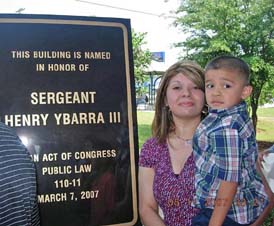
|
|
|
Hi Friends:
Please find below an invitation prepared by George Gause of the Pan American Special Library. I will be giving a book reading in two places. At the invitation of the Brownsville Historical Association, the first reading will be on June 2, 2007, at 2:00 PM, at the Brownsville Heritage Complex, 1325 E. Washington St. The second one will be the following, which is self-explanatory. Both are free; all are invited.
Program:
Guerrero
Viejo “Inherit the Dust from the Four Winds of Revilla” The
Hidalgo County Historical Society invites the public to a presentation
by José
M. Peña,
author of “Inherit the Dust from the Four Winds of Revilla.” Mr.
Peña
will speak about the fascinating story of the ancient Mexican town of
Villa del Señor de San Ignacio de Loyola de Revilla (now known as
Guerrero Viejo) on Sunday, June 3 at Peña’s
book represents a historical perspective of the old colonial town that
was once one of the principal cultural and trade centers of northern José
M. Peña was born and raised in Founded
on Guerrero
Viejo's influence began to wane after the railroad bypassed it in
favor of Source:
|
|
|
"THE GREAT
SPANISH AMERICAN CATTLE DRIVE" |
|
|
The Texas Connection to the American Revolution, TCARA, has acquired old maps and information on the various routes used to trail drive Texas longhorns to Louisiana in support of the American Revolution. Additional information is being compiled in conjunction with the Daughters of the American Revolution, for the purpose of marking this historical trail drive route. For more information, Please contact President Jack Cowan TCARAHQ@aol.com |
|
|
Tejano Hill Country Celebration! (San Antonio, Texas) March 12, 2007 – Texas Tejano.com, a San Antonio-based research and publishing company and their partners and supporters announce today the first-ever Tejano Hill Country Celebration to be held this coming May thanks to a partnership with the Blanco Library and the Johnson City Library. Emphasizing the contributions of the first settlers of the state, the centerpiece of the celebration is the hosting of the A Tejano Son of Texas Traveling Exhibit at the historic Old Blanco Courthouse from May 5-17. The Exhibit chronicles the life of legendary Tejano pioneer Jose Policarpio "Polly" Rodriguez in Texas. Accompanied by a collection of artifacts and screenings of the accompanying A Tejano Son of Texas Documentary. "We are very pleased and excited to be bringing our message to the historic and beautiful Texas Hill Country," says Texas Tejano.com President and Founder Rudi R. Rodriguez. "Texas Tejano.com, since its inception, has made it a goal to tell about the true lives and legacies of Tejano Pioneers to as many people across the state as possible. With this event, we will be fulfilling one of these goals." In conjunction with the Exhibit’s display, an opening ceremony will be held on the evening of May 4 that will help kick off a series of coordinating activities in both Blanco and Johnson City. Students from area schools are being invited to make field trips to Blanco to tour the Old Courthouse and view the Exhibit and Documentary and this year’s One Book, One Community project will center on Rodriguez’s Autobiography, A Tejano Son of Texas. Student essay, art and coloring contests for students will be offered and Rodriguez, great-great nephew of the legendary Tejano, will speak at the Library April 23 about the project and his famous Tejano ancestor. "We think this exhibit will be a great opportunity to explore our roots as Texans, thanks to the intensive research and innovative work done by Rudi Rodriguez and Texas Tejano.com," says Blanco Library Director Jan Redmond. "The exhibit not only pays tribute to Jose Policarpio Rodriguez, but also to other pioneers whose contributions deserve to be recognized for their part in Texas history." Coming off an engagement at the Sam Houston Memorial Museum in Huntsville, the Exhibit has also been displayed at the State Capitol in Austin, the Institute of Texan Cultures in San Antonio and the Conner Museum in Kingsville. "We think this exhibit will be a great educational opportunity for all Texans," says Redmond. "The enthusiasm of the Johnson City Library, under the leadership of Chris Voron will greatly enhance the greater community’s experience." This project is being made possible in part with a grant from the Tocker Foundation, Humanities Texas – the state partner of the National Endowment for the Humanities, the Blanco Library, Inc., Friends of the Library and Texas Tejano.com. For more information, please visit www.TexasTejano.com
or contact them at (210) 673-3584.Rudi R. Rodriguez at 210.673.3584 publications@texastejano.com
|
|
|
Richard Sambrano Retires After over 50 years of continuous successful public service Richard Sambrano has decided it is time to smell the roses, travel the world, spend more time with his family including his wife Grace, sons David and Richard Jr., daughter Norma, their spouses and their gorgeous families including eight grand children and one great granddaughter. But do not count Richard out yet, he says he is looking forward to doing things that he has never been able to do the last twenty five years of his career with the Community Relations Service, U.S. Department of Justice where he has served as a mediator - resolving conflicts between minority groups vs. police and sheriff departments, public school districts, universities, cities, counties, state and federal government agencies, and in some instances, Corporate America. As a mediator Richard has been limited in what he can do because of neutrality and confidentiality requirements. On May 4th Richard will be free at
last to speak out on issues and advocate for minorities, including
Hispanics. He, however, in addition to speaking out wants to continue to
assist in forming partnerships between minorities and those institutions
that exist to serve all people regardless of race of national origin.
|
|
|
Tejanos Memories of the Texas Rangers Texas Rangers? To Raul My great grandfather hometown was destroyed by the rangers and 15 US
citizens between the ages of 12 and 81 were shot in cold blood. The
following is a historical review. My great uncle Chico Cano did get a
measure of justice when he killed two of the rangers involved in the
massacre. But I agree this name is stained with the blood of thousands
of innocent victims. Tiburcio Jáquez, was killed in the incident, wrote a different
version of the event in an undated manuscript written after June 1918.
He sought to explain what he called a "massacre" and the
"wholesale destruction of these Mexicans." He blamed the
rangers. According to him, the investigating party searched the homes
for arms that might have been used in the Brite Ranch Raid and found one
pistol that belonged to an Anglo male. Subsequently, after the army
troops departed, rangers arrested and killed fifteen men. Several
elderly Mexican men were spared, as were all women and children. John J.
Bailey, an Anglo living in the village on the ranch, was also
spared. From Texas Ranger Dispatch magazine-note how Tejanos fighting for justice for a massacre are called bandits. No one wrote our version of events- Dealing with political bosses was only one problem of the decade, however. More deadly was the responsibility of protecting Texas ranchers from not only Texas rustlers but also raiding parties and smugglers from across the Rio Grande. From Brownsville to El Paso was a huge area of wild and rugged land, and it was a physical impossibility for a mere handful of even the most dedicated law officers to defend realistically. The Rangers fought rustlers and sometimes lost. A prime example is bandit Chico Cano's successful ambush of Customs Inspector and ex-Ranger Joe Sitter, Ranger Eugene Hulen, ex-Ranger Charles Craighead, and three of Captain Fox's Rangers of Company B. Sitter and Hulen were killed, and their bodies were badly mutilated. In spite of their best efforts, neither the Rangers nor any other arm of the law ever caught up with Chico Cano. The old bandit died in 1943.
Texas Rangers? To Raul. From -BIBLIOGRAPHY: Justice, Revolution on the Rio Grande Webb based his assessment of the incident on the testimony of Anglos, however, ignoring the affidavits by Mexican-descent women in Canales's investigation. Henry Warren, whose father-in-law, Tiburcio Jáquez, was killed in the incident, wrote a different version of the event in an undated manuscript written after June 1918. He sought to explain what he called a "massacre" and the "wholesale destruction of these Mexicans." He blamed the rangers. According to him, the investigating party searched the homes for arms
that might have been used in the Brite Ranch Raid and found one pistol
that belonged to an Anglo male. Subsequently, after the army troops
departed, rangers arrested and killed fifteen men. Several elderly
Mexican men were spared, as were all women and children. John J. Bailey,
an Anglo living in the village on the ranch, was also spared. Warren
claimed he saw the bodies on January 29. He made a list of the deceased,
including their names, ages, spouses, and children, and noted that the
rangers' actions had orphaned forty-two children. The role of the United States Cavalry is unclear. Press reports
stated that the army had nothing to do with the affair and that "a
number of Mexicans sought and received protection from the
military." Anderson said he sent twelve men with the rangers. But
they waited below the ranch, Anderson said, "not knowing that the
Rangers and ranchmen were going to murder the men." Apparently, the
cavalry's role and requests by officials of the Mexican government led
to a federal investigation. The father of Felipa Mendez Castañeda,
whose husband was killed, owned a newspaper in Pilares, Chihuahua; he
asked the Mexican government for assistance, and Mexican ambassador
Ygnacio Bonilla asked for an investigation. Of nine Porvenir widows who
filed affidavits, five claimed that the civilians had masks on their
faces. BIBLIOGRAPHY: Glenn Justice, Revolution on the Rio Grande Texas Rangers? to Raul My grandfather's brother was killed by Pancho Villa, and many women in my grandmother's ranch in Chihuahua were abducted and raped by Villa's "Dorados del Norte". My great uncle Lorenzo Terrazas Pacheco, forced to sign away his entire property under the gun of Pancho Villa himself. Do I stand in front of all monuments erected in Mexico and elsewhere that honor a character who, not only from the perspective of my family but that of many other Mexicans, was nothing more than a butcher with a gun? No. That his name is "stained with the blood" of many, many innocents, is incontrovertible. But it gives more of a rhetorical platform, used by many to attempt to gather masses around retro-looking, rather than forward-looking, initiatives. We keep fighting these generational battles and we become stalled in useless grief and rancor: Look at the generational cycle of violence in Palestine, the Catholic-Protestant bloodshed in Northern Ireland (happily now ended) and the grievances of the older generation Cuban Diaspora, who, 50 years separated from the so-called "Revolution," still act and fight, in a void, even though the vast majority of the new generations of Cuban Americans ( I lived in Miami through the Elian Gonzalez saga, I saw this first-hand) hardly agree with their fathers and grandfathers. Your 'abuelo' did this to my 'abuelo,' therefore I have to do this or that to you. Telling that the vision of 'justice' in Garcia's posting is someone gunning down another in vengeance. Yes, this was the Wild West in the US and the Mexico in Pancho Villa's days. I think we now have new generations of Hispanics. We are proud of our heritage; we know who we are and do not want to participate in battles which are not ours. We also embrace this country and hey, we love baseball. That we should take this kind of battle to a sport, normally seen as devoid of politics, seems to me to be not only pointless, but as detrimental and limiting to our community as the reparationist movement or Confederate Flag abolition call is to the vast majority of new generation African Americans. There is going to be a tipping point when all the calls from sectors in our Hispanic community who insist on looking at the past, not to learn, but keep fighting pointless battles, will be drowned out by an even greater number of young, educated, entrepreneurial and forward-looking generations who will say 'I'm a proud Hispanic, and, you know, that one is not my battle. Let's move forward and solve our problems." As Ghandi once paraphrased, ' An Eye for and Eye, ultimately leaves the whole world blind.' Best regards to all, Gustavo A. Bujanda
|
|
|
Mexico to the
rescue in Eagle Pass Instituto de los Mexicanos en el Exterior Source: Sintesis informativa 05/03/07 MySA.com Posted: 05/02/2007 John MacCormack, Express-News http://xads.zedo.com/ads2/r?n=305;c=36/1;s=37;x=2304;u=j;z=130860251 EAGLE PASS — As Manuel Dominguez stood in front of the ruins of his small Rosita Valley home on Wednesday, the sturdy workmen carting away the debris wore uniforms identifying them as yet another class of good Samaritan. The coal miners from Planta Rosita were among about 130 Mexicans and a dozen pieces of heavy equipment sent by Coahuila Gov. Humberto Moreira to help a week after a tornado spinning 150-mph winds ripped through here, killing seven people and destroying 100 houses. "The destruction on our side was four times as great, but we got it cleaned up in a week, and then we came over here," said Jorge Gonzalez, an employee of the mayor's office in Piedras Negras. "We're all volunteers. We'll be over here as long as they want us to be." Another Mexican worker, straight-faced and to the great amusement of his compadres, cracked, "Whatever you say, don't tell the migra (Border Patrol). They'll throw us back." And while Dominguez, 32, was touched by the unexpected help, he found a bit of uncomfortable irony in the presence of the Mexican workers. "I think it's a shame that these people have to come from a smaller, poorer nation to help us out," he said. "I'm truly grateful, not only because they are my race, but because they are here helping us." Since the storm, the Rosita Valley colonia has become a beehive of recovery efforts from across the state. Government agencies and private groups from the American Red Cross to the Small Business Administration to the Seventh-day Adventists have come riding to the rescue. "We've gotten help from throughout Texas, from neighboring counties and from as far away as Austin," Maverick County Judge Pepe Aranda said. On Tuesday, President Bush declared Maverick County a disaster area, making residents there eligible for more aid. Besides the Mexican miners, teachers and state and local workers, a
virtual all-star list of public figures heeded Gov. Moreira's call to
help, including a federal representative, the state directors of public
works and economic development and even the governor's own brother, the
head of a teachers union. Aranda and others from both sides of the river said the neighborly cross-border gesture of help is not as unusual as it might appear to outsiders. Among the examples cited were the quick response last year by Eagle Pass firefighters to a blaze at a furniture factory in Piedras Negras, and aid that included U.S. Border Patrol rescue helicopters when a flood hit the Mexican side in 2004. "Our governor is very sincere. He knows how it is to have these kinds of problems, so he wants to help his brothers in Texas," said Luis Gerardo Garcia, the Coahuila director of public works. "Still, it's the first time, that I know of, that our state or any Mexican state has come to Texas to offer help," he added with pride. Long the recipient of aid from Americans when natural disasters strike, the Mexicans are lately assuming the role of benefactor. In 2005, the Mexican federal government won praise in the wake of Hurricane Katrina when it sent a convoy of 47 trucks and 183 unarmed soldiers — including doctors, dentists and nurses — to aide evacuees in San Antonio. After receiving the call from Moreira on Tuesday, Aranda said it took less than 10 minutes to clear the political hurdles and say yes. "I checked with Gov. (Rick) Perry's office and in about five to seven minutes the governor said we welcome the help," Aranda said. "It was very special because it was unexpected." jmaccormack@express-news.net Sent by Yeda Baker athomewylb@hotmail.com
|
|
|
Finding Levitia's Headstone
by George Windes Habla usted español? Diocesan stage of Georgia Martyrs cause completed |
|
Finding Levitia's Headstone
|
Habla usted español? By Marissa Frayer, Tuesday, May 8, 2007 If local CPA Elio Ramos didn’t speak Spanish, he’d lose 98% of his income-tax clients. Then again, if he didn’t speak English, he wouldn’t have the job. When Ramos came to Louisiana in 1991, he was armed with a bachelor’s degree in accounting from Universidad Central de Venezuela and not a drop of English. He spent a semester at LSU learning basic English before passing the Test of English as a Foreign Language (TOEFL). Then he completed courses in accounting and taxation before he was allowed to take the CPA exam, which was another mountain itself. "I took the test two times before I passed," he says, attributing the failures to his less-than-honed English. "There were maybe 300 people taking the test, and I was the last person to finish." But English was a necessity then for Ramos, just as it is now. For example, any CPA classes and renewal certifications are in English. "Basically if I could not speak English, there’s no way I could be a CPA," he says. Whatever struggles he first endured or continues to endure have paid off for Ramos, who employs his bilingual tongue to stir up business for his company, E&R Accounting Services. He estimates all but 2% of his income tax-related revenue comes from Spanish speakers and 50% of his accounting and bookkeeping revenue comes from Spanish speakers. Though Ramos may have doubled his market possibilities because of the "sink-or-swim" mentality, he’s onto something. According to 2000 Census data, 13.8 million people in the United States who spoke Spanish at home reported they spoke English less than "very well." Another 14.3 million reported they spoke English "very well." That’s not even counting the some 19 million non-Spanish speakers who reported speaking English less than "very well." However you want to slice the data, Spanish isn’t going away anytime soon. And even though Louisiana isn’t on the same bilingual level as Texas, California or Florida, we’re slowly shedding "Parlez-vous Français" for "Habla usted español." From the dining area at New York Bagel Co. on Lee Drive, the kitchen sign is visible, dictating sandwich-making instructions in Spanish and English. Owner Jay Gomez says the sign was put up a long time ago, and the business has had Cuban kitchen workers for more than a decade. Of his 10 employees at that location, four speak Spanish—two older Cubans who speak Spanish only and two who are bilingual. Gomez says he speaks "caveman Spanish" out of necessity and doesn’t know what his employees are discussing when they speak in Spanish about non-kitchen-related topics. "I wouldn’t want to get dropped off in Mexico and have to rely on my Spanish, but for here it’s fine," he says. The business runs pretty smoothly, though Gomez occasionally has to translate for his employees like when a dentist calls to confirm an appointment—or a bilingual employee has to translate for him when they chat about soccer. Despite learning bits of Spanish out of necessity, Gomez says his employees should learn English out of necessity as well. But he says they tell him they’re too old—he estimates they’re in their 50s and 60s—to learn. "It would definitely make life easier for me if they spoke English in an English-speaking country," he says. For those who want to speak Spanish and those who want to speak English, more and more resources are becoming available. Louisiana Community and Technical College System recently started offering Command Spanish classes designed to educate businesses and employees in Spanish tailored to their needs. Designed by two college instructors from Mississippi, the comprehensive program covers more than 50 areas like real estate, hospitality, health care, construction, banking and industry. Locally, the classes are offered through Baton Rouge Community College, last about eight hours and cost roughly $98 per student. "It’s a very quick type of learning, and it’s not like college," says Celyn Christophe, BRCC’s executive director for continuing education. "It’s not an intensive course where you have to learn subject and verb agreements." Conversely, the program also offers minimal English for Spanish speakers. Conquering the divide, it seems, goes both ways.
|
|
Diocesan stage of Georgia Martyrs cause completed http://southerncross.diosav.org/node/365 Features A simple ceremony at the Catholic Pastoral Center in Savannah on March 16 marked a significant step in the process that may lead to the beatification of the five Franciscan friars who bore witness to their Christian faith with their blood on the Georgia coast in September 1597. Bishop J. Kevin Boland officially closed the Diocesan Process, ordering the sealing of the records for preservation in the archives, and the transmission of notarized and authenticated copies to the Congregation of the Causes of Saints in Rome. The five friars, Pedro de Corpa, Blas Rodríguez, Antonio de Badajoz, Miguel de Añon, and Francisco de Veráscola, all Spanish missionaries among the Guale nation, died because they would not sanction bigamous marriages among baptized Christians. The final decision concerning the genuineness of their martyrdom and beatification is reserved to Pope Benedict XVI. In the March 16 ceremony, Bishop Boland officially closed the diocesan investigation of the circumstances of their death and the reputation for martyrdom which has endured for 510 years. Although continually mentioned in lists of martyrs and in histories, the movement asking the Holy See to proclaim them blessed and eventually saints began only in the last century. In 1936 the Franciscans in the United States urged such recognition for a large group of missionary martyrs from the period of discovery and exploration. The Franciscans have appointed Vice Postulators for the Georgia Martyrs since 1950. Pope John Paul II established new norms governing causes of canonization in 1983, and accordingly, the cause of the Georgia Martyrs was officially opened in the Savannah Diocese on February 22, 1984 by Bishop Raymond W. Lessard. Years of historical research and canonical investigation preceded the decision of the diocese to forward the cause to Rome. An historical commission headed by Father Francisco Morales, ofm, of Mexico City, and Georgia historians Edward J.Cashin and F. Lamar Pearson, completed its investigations in 2002. Monsignor Francis J. Nelson, vg, as Episcopal Delegate and Father Jeremiah J. McCarthy, jcl, as Promoter of Justice supervised the canonical aspects of the process. Contemporary witnesses concerning the endurance of the reputation for martyrdom gave testimony in the Savannah Diocese, as well as in the Dioceses of Saint Augustine and Steubenville, Ohio, where there has been considerable interest in the cause. For Father Conrad Harkins, ofm, the most recent Vice Postulator,
Friday’s closing session marked the end of many years of involvement
in the cause. He had first become involved in 1985 while working as a
volunteer on the archeological project of David Hurst Thomas of the
American Museum of Natural History. Dr. Thomas uncovered the mission
on Saint Catherines Island where Antonio de Badajoz and Miguel de
Añon died. For the past eleven years Father Harkins has represented
the Franciscans’ interest in the cause.
|
|
Reminiscences of Life in Camp with the 33D Unived
States Genealogy Collections and Topics: New York State Library National Archives Events |
|
COLORED TROOPS LATE 1ST S. C. VOLUNTEERS Sent by Carlos Ray Gonzalez clearwaterr@comcast.net |
Genealogy
Collections and Topics: New York State Library The listing describes in greater detail some of the State Library's collections and resources that may be of interest to genealogists. Many of these pages were originally developed as information sheets for onsite researchers, so they focus on materials available at the New York State Library. www.nysl.nysed.gov
|
| National
Archives Events The following is a list of events taking place at the National Archives for the month of June 2007. For more information, reply to this email. Wednesday, June 6, at 7 p.m. William G. McGowan Theater The Reagan Diaries Ronald Reagan's personal diaries from his eight years as President have been brought together for the first time in one volume and edited by historian Douglas Brinkley. The Reagan Diaries reveal insights into the extraordinary, the historic, and the routine day-to-day events of Reagan's Presidency. Allen Weinstein, Archivist of the United States, will moderate a panel consisting of Brinkley and Reagan aides and staffers who were eyewitnesses to this history: Edwin Meese, counselor to the President, cabinet member, and later Attorney General; Fred Ryan, former chief of staff to the President; Gary Walters, former head usher in the private residence; and Jim Kuhn, Reagan's former personal assistant. Also joining the panel will be veteran reporter Sam Donaldson, who was chief White House correspondent for ABC News during the Reagan Presidency. Thursday, June 7, at 7 p.m. William G. McGowan Theater LBJ: Architect of American Ambition Pulitzer Prize*winning reporter and author Nick Kotz will engage historian and author Randal Woods in a discussion on Woods's latest work, LBJ: Architect of American Ambition. Thanks to the release of thousands of hours of LBJ's White House tapes, along with the declassification of tens of thousands of documents and interviews with key Johnson aides, Woods's LBJ brings crucial new evidence to bear on many key aspects of the man and the politician. Randall Woods is professor of history at the University of Arkansas and author of Fulbright: A Biography. Nick Kotz is the author of five books on American public policy including Judgment Days: Lyndon Baines Johns, Martin Luther King, Jr., and the Laws that Changed America. Friday, June 8, at 7 p.m. William G. McGowan Theater An American Conversation with Harry Reid Archivist Allen Weinstein welcomes Senate Majority Leader Harry Reid to the National Archives. Senator Reid has been an elected official for the state of Nevada for over 30 years. After serving two terms in the U.S. House of Representatives, Reid was elected to the U.S. Senate in 1986 and reelected in three successive elections. He is the author of Searchlight: The Camp That Didn't Fail, a detailed history of his hometown, Searchlight, NV. Wednesday, June 13, at 3 P.M. William G. McGowan Theater "The History Behind National History Day" Dr. Cathy Gorn, executive director of National History Day, joins Archivist Allen Weinstein in an American Conversation about this annual competition, which inspires the teaching and learning of U.S. history. The annual national competition of history projects for students in grades 6*12 is held in Washington, DC, where cash prizes and college scholarships are awarded to the winners. The National Archives provides active support to National History Day, especially the Washington, DC, contest. Friday, June 15, at 11 a.m. William G. McGowan Theater Repeat Screening: Saturday, June 16, at noon G Presidential Film Favorites*Stagecoach John Wayne, a favorite actor of President Lyndon Johnson's, stars in Stagecoach. Nominated for seven Academy Awards, this film charts the dramatic stagecoach journey of nine diverse passengers as they travel through Apache territory. While trying to avoid a run-in with Geronimo and his men, the occupants encounter plenty of thrills and excitement*riding into film history in the process. Directed by John Ford. (1939, 96 minutes) Friday, June 15, at 7 p.m. William G. McGowan Theater G Why Democracy? Documentary Film Selections and Panel Discussion In October 2007, 10 one-hour films focused on contemporary democracy will be broadcast in the world's biggest factual media event. Currently 25 broadcasters on all continents are participating, with an estimated audience of over 150 million viewers. The films are being made by independent award-winning filmmakers from around the world. Tonight's program will include selected highlights from several of the feature films in the series, including Please Vote for Me from China, Iron Ladies of Liberia from Liberia, Dinner with the President from Pakistan, and The Patriots from Russia. Following the screening, a panel including several of the filmmakers will discuss this groundbreaking project. Saturday, June 16, at 1:30 p.m. AFI Silver Theatre and Cultural Center 8633 Colesville Road Silver Spring, MD Please Vote For Me (2007) Wuhan is a city in middle China about the size of London, and it is here that director Weijun Chen has conducted an experiment in democracy. At Evergreen Primary School, a third-grade class has its first encounter with this idea by holding an election to select a class monitor. The purpose of Weijun Chen's experiment is to determine how, if democracy came to China, it would be received. Is democracy a universal value? And do politicians all over the world behave in the same way? (55 minutes.) Wednesday, June 20, at noon Jefferson Room Reading the Man: A Portrait of Robert E. Lee Through His Letters To commemorate the 200th birthday of Robert E. Lee, Elizabeth Brown Pryor discusses her new book, Reading the Man: A Portrait of Robert E. Lee Through His Letters. Using recently uncovered documents and letters, Pryor sheds new light on aspects of Lee's life that are more complex and contradictory*and far more fascinating*than the familiar icon. Pryor contends that "Lee's letters and papers reveal a man who is frequently as confused, passive, and vulnerable as he is conscientious and brave." Wednesday, June 27, at 7 p.m. William G. McGowan Theater I Wish I'd Been There What is the scene or incident in American history that you would like to have witnessed*and why? This is the thought-provoking question that author Byron Hollinshead posed to 20 American historians with the invitation to write a personal essay in return. The result is the book I Wish I'd Been There. Tonight, Hollinshead is joined by three of the historians who contributed to the book: Robert Remini, Historian of the U.S. House of Representatives; Jay Winik, senior scholar at the University of Maryland's School of Public Affairs; and Robert Dallek, professor of history emeritus at UCLA*each of whom responded by describing significant events in American Presidential history. Thursday, June 28, at 7 P.M. William G. McGowan Theater A New Foreign Policy? Rep. Tom Lantos (D-CA) will join Archivist of the United States Allen Weinstein for a discussion of the issues shaping U.S. foreign policy today and the challenges facing future generations. Rep. Lantos is serving his 13th term in the House of Representatives and is chairman of the House Committee on Foreign Affairs. Born in Budapest, Hungary, he is the only Holocaust survivor ever to serve in the U.S. Congress. ========================================== The National Archives Experience Constitution Avenue between 7th and 9th Streets, NW, Washington, DC All events listed in the calendar are free unless otherwise noted. Seating is on a first-come, first-served basis. Use the Special Events entrance on the corner of 7th Street and Constitution Avenue. The National Archives is fully accessible. If you need to request an accommodation (for example, a sign language interpreter) for a public program, please e-mail public.program@nara.gov or call 202-357-5000 at least two weeks prior to the event to ensure proper arrangements are secured. For information or to be placed on the mailing list, call 202-357-5000 or e-mail public.program@nara.gov. National Archives and Records Administration Center for the National Archives Experience Operations and Public Programs Division 700 Pennsylvania Avenue, NW Rm G-9 Washington, D.C. 20408 (202) 357-5000
|
|
San Pablo de las Tunas Los primeros colonizadores de Coahuila y la Laguna Jerezanos en Torreón, Coah., tres generaciónes Project, Seeking Diego Treviño & Beatriz Quintanilla Descendants The Descendents of Don Juan Jose Ramon de Burgos Don Christobal Gomez de la Vara Judios de México Archivos de México |
|
|
Por Fernando Llama Alatorre Primera de 3 partes
|
| Para ubicar a
Torreón y a La Laguna dentro del contexto del tiempo y el espacio ,
debemos trasladarnos a la llegada de los primeros españoles a estas
tierras.
Fue en 1554 cuando el capitán Don Francisco de Ibarra y sus compañeros descubrieron las minas de Mazapil en Zacatecas . Y a partir de 1567 - más al norte- se inició la explotación de las minas de Indé y Santa Bárbara En 1557 se lleva a cabo la fundación de Zacatecas y de ahí avanzaron en caravanas de conquista hacia el norte, siempre buscando minas de oro y plata... "nunca tierras de cultivo". En 1563 fundaron Durango, desde donde salen en todas direcciones en expediciones, capitaneadas por Francisco de Ibarra, llegando a los parajes de Peñón Blanco donde establecen un convento Franciscano en el año de 1566. Desde ahí salían a catequizar a los indios de los alrededores. El padre franciscano Fray Pedro de Espinareda <1566-1567> cuenta en sus escritos, que unos indios le habían dicho -y era de todos sabido- que donde el río Nazas moría, había una gran laguna a cuyas orillas habitaban muchas gentes. Y aunque algunos autores citan que Fray Pedro, éste sacerdote nunca refiere el haber llegado hasta acá, otros afirman que en 1566, Fray Pedro recorrió las márgenes del Río Nazas hasta la Laguna de Mayrán por las cercanías de Parras, dándose cuenta de que era un lugar hermoso, lleno de árboles y plantas silvestres de vid, y que estaba poblado por grupos de naturales. Para ubicar como fue que Jesuitas y Franciscanos fueron siguiendo los caminos para llegar a esa famosa "Región Lagunera", poblada toda en sus alrededores por los indios Laguneros, debemos hablar antes, de que en Durango, el Gobernador Martín López de Ibarra, concedió en el año de 1569 una merced - donación de tierras- a Pedro Morcillo, en premio por haber sido uno de los fundadores de Durango. Tierras cuyos dominios llegaban desde Cuencamé hasta los rumbos de Parras. Es por esta razón, que Vito Alessio Robles, en los documentos estudiados por él, refiere que debió ser por esos años de 1578, cuando se hizo la primera fundación de Parras. Y se refiere que en ese año el citado López de Ibarra concedió varias mercedes a Juan de Zubía, Mateo de Barraza, Diego de Borruel y a Bernardo de Luna. En 1577 Alberto del Canto fundó la villa de Santiago del Saltillo inicio de lo que luego sería la ciudad de Saltillo, situada al oriente de la laguna de Patos (hoy General Cepeda). El 16 de octubre de 1583, el conquistador Francisco de Urdiñola que ya tenia por merced las propiedades de Aviño , Peñón Blanco y Mazapil , compró a don Juan Alonso la estancia de San Francisco de los Patos, en pleno corazón de la laguna del mismo nombre, adquiriendo después la hacienda del Rosario de Parras, Castañuela y otras mas, hasta formar lo que sería parte del gran Latifundio al norte de Mazapil, y que se extendía al norte hasta lo que hoy es Cuatro Ciénegas y Monclova. Los entonces pobladores del área de La Laguna eran los indios laguneros de quienes las primeras "anuas jesuitas" -informes que estos sacerdotes rendían anualmente a sus superiores - , mencionaban en su anua de 1595 que no habían hecho fundaciones fijas y permanentes con los indios laguneros por la barbarie de estos , que ni tenían casas, ni eran capaces de política alguna .Agregaban que esos indios andaban desnudos , no sembraban y vivían de lo que la tierra voluntariamente les diera, como tunas , maguey, mezquite y otras yerbas , a mas de algún pescado de la laguna ó del río al que llaman.... "de las Nazas". Y aunque los ministros del Evangelio quisieran vivir entre ellos pese a la incomodidad reinante, sentían el constante peligro -cierto ó no-de que por algún enojo ó solo por satisfacer su hambre los naturales los pudieran matar y hasta ser comidos.Al año siguiente en el anua de 1596 refieren los jesuitas que en ese mismo año se fundó una misión en La Laguna para evangelizar a los indios infieles, pero dado que los españoles no habían encontrado minas de plata en el área , no habían querido poblarla . Y como en estos tiempos la codicia por la plata era mucha, por donde la plata abría el camino, por allí mismo entraba el Evangelio, y donde no había plata...apenas si se oía la palabra de Dios. Para los años de 1589 se habla de la fundación de un convento en Cuencamé al que se le llamó de La Purísima Concepción; otros historiadores lo citan para el año de 1593, año en que se descubrieron en ese lugar unas minas de plata por el padre Fray Jerónimo de Pangua. De hecho estos llamados conventos, no eran otra cosa que un modesto puesto de avanzada hacia las tierras inhóspitas de La Laguna, mismo que servía de capilla. Esto se confirma años después, cuando en 1594 llegó el padre jesuita Gerónimo Ramírez a Cuencamé y dijo que lo único que había en todo el pueblo era... "una casa de adobes" |
| Personajes
de la historia JEREZANOS EN TORREÓN, COAH., tres generaciónes Por: José León Robles De La Torre 
Don Ernesto Alatorre Contreras y su esposa Doña Refugio Escobedo Zulueta. Don Ernesto Impartía clases a Ramón Lopez Velarde en 1895, en Jerez, Zacatecas Don Ernesto Alatorre Contreras, nacido en Guadalajara, Jal., pero casado con una jerezana doña Refugio Soledad Escobedo Zulueta, que vino a la ciudad de Jerez, Zacs., invitado por el Lic. don José Guadalupe López Velarde, para que impartiera clases a su pequeño hijo Ramón, en 1893, en la escuela "De la Torre". En Jerez, nacieron sus hijos y algunos se vinieron a radicar a Torreón, Coah.Una de las hijas de don Ernesto Alatorre Contreras, fue doña Ma. Soledad Alatorre Escobedo, nacida en Jerez, Zacs., el 30 de junio de 1894 y que contrajo matrimonio con el señor don Gustavo Llama Escobedo, nacido en la Hacienda del Cuidado de Tepetongo, Zacs., el 28 de mayo de 1889 y se casaron el 28 de octubre de 1926. Él falleció en Torreón, Coah., el 14 de mayo de 1949. En el árbol genealógico de los Alatorre figuran muchas familias en Torreón como la de don Ernesto Alatorre Escobedo, padre de don Samuel Alatorre Morones de los que hablaré próximamente. Del matrimonio de don Gustavo Llamas Escobedo y doña Soledad Alatorre Escobedo, nacieron: Gustavo Llamas Alatorre (Gen. 8=A), que contrajo nupcias con la señorita Guadalupe Galaz y procrearon a Gustavo Llamas Galaz y a Juan Pablo Llamas Galaz. A Rosario Llamas Alatorre que casó con el doctor Jorge Mario Silva Pedroso, hijo del zacatecano Dr. Samuel Silva y nacido en Torreón, Coah., el 24 de mayo de 1918, y procrearon a Rosario Silva Llamas, casada con Guillermo Urrutia del Ángel. A Jorge Silva Llamas. A Concepción Silva Llamas, casada con Ernesto González Bustamante. A Jesús Silva Llamas, casado con Nancy Torres. A Samuel Silva Llamas, casado con Mónica Geraldine Otero. A Gabriel Silva Llamas, casado con Lourdes Salinas. A Luz Ma. Silva Llamas, casada con Andrés Ramírez Limón. A Margarita Silva Llamas, casada con Jorge Aguirre Balza. A Felipe Silva Llamas, casado con Ava Quiñones. A Ignacio Silva Llamas, casado con Blanca González. Y Ana Ma. Teresa Silva Llamas, casada con Jesús Ramírez Andrade. A José Luis Llamas Alatorre (Gen. 8=C), casado con Lilia Sotomayor y procrearon a: Lilia Ma. Llamas Sotomayor. A José Luis Llamas Sotomayor. A Ernesto Llamas Sotomayor. A Juan Carlos Llamas Sotomayor. A Bernardo Llamas Sotomayor y Ma. Consuelo Llamas Sotomayor. A Soledad Llamas Alatorre, nacida en Torreón, Coah., y casada con don Ricardo Anaya Pinocelly y procrearon a Soledad Anaya Llamas (Gen. 9=A), casada con Alejandro Martínez. A Sofía Antonia Anaya Llamas (G.9), casada con Jaime Antonio Méndez Vigatá. A José Agustín Anaya Llamas (G.9=C), casado con Socorro Córdova. A J. Ricardo Anaya Llamas (G.9=D), casado con Sonia Villarreal. A Ma. Eugenia Anaya Llamas (9=E), casada con Noborw Izagawa. A Ana Rosa Anaya casada con Fernando Macías. A José Andrés Anaya Llamas (G.9=G), casado con Gabriela Aranda. A Elsa Ma. Anaya Llamas (G.9=H), casada con Adolfo Villarreal. A José Gustavo Anaya Llamas, (9=1) fallecido. A José Guillermo Anaya Llamas (G=9), casado con Mayté Aguirre Gaytán. Lo anterior fue un fragmento de los árboles genealógicos Llamas-Alatorre Escobedo y figuran en mi libro Jerez, Susticacan y Monte Escobedo, Zacs., Filigranas, Fundaciones y Genealogías 
Don Ernesto Alatorre Escobedo y su esposa doña Consuelo Morones Alba, que contrajeron matrimonio en Torreón, Coahuila, México en 1929 Uno de los hijos de don Ernesto Alatorre Contreras y su esposa doña Refugio Soledad Escobedo Zulueta, fue don Ernesto Alatorre Escobedo, nacido en Jerez, Zacs., el 25 de febrero de 1900, quien ya en Torreón, Coah., contrajo nupcias con la señorita Consuelo Morones Alba. Cuando don Ernesto llegó a Torreón, comenzó a trabajar con don Filemón Garza en su agencia de automóviles, que ya no existe, y laboró desde 19 de marzo de 1926, hasta 1927. Luego trabajó en el edificio eléctrico en los tranvías de Lerdo a Torreón, desde el 31 de agosto de 1927, como contador. (Datos proporcionados por el arquitecto Samuel Alatorre Morones). Y a partir de 1932, trabajó en la Cía. Nacional Eléctrica, S. A., División Torreón. Y como contador y luego ascendió a contador general de las oficinas desde el 22 de octubre de 1942 hasta el 31 de diciembre de 1945. Ya vimos que contrajo matrimonio con la señorita Consuelo Morones Alba, y procrearon varios hijos, entre los que figuran, Ernesto Alatorre Morones y procrearon varios hijos, entre los que figuran, Ernesto Alatorre Morones, nacido en Torreón, Coah., el 30 de diciembre de 1929, quien a su vez contrajo nupcias con la señorita Martha Guzmán y procrearon a Martha Alatorre Guzmán; a Mónica Alatorre Guzmán, casada con Vladimir Torres; a Marcela Alatorre Morones, casada con Babak Shirasi; a Ernesto Alatorre Guzmán y a Carlos Alatorre Guzmán. También el matrimonio de don Ernesto, procreó a Consuelo Alatorre Morones, nacida en Torreón, Coah., en junio de 1931 y contrajo matrimonio con Sergio Steves L., y procrearon a Sergio Steves Alatorre, casado con la señorita Nora... a Ma. del Carmen Steves Alatorre y a Francisca Steves Alatorre. También procrearon a Leticia Paz Alatorre Morones, nacida en Torreón, Coah., al 24 de enero de 1934. En el próximo artículo hablaré del arquitecto Samuel Alatorre Morones. Otro de los hijos de don Ernesto Alatorre Contreras, fue don Ramiro Alatorre Escobedo, que nació en Guadalajara, Jal., el 29 de noviembre de 1905 y vino a radicarse a Torreón, Coah., donde contrajo nupcias con la Srita. Bertha Córdoba y procrearon a Ramiro Alatorre Córdoba, nacido en Torreón, Coah., el 28 de noviembre de 1939, quien se casó con Ana María Rivero y procrearon a Ana María, casada con Fernando Campillo; a Ramiro, casado con Beatriz González G., y a Bertha, casada con Diego Armida V. A Gonzalo Alatorre Córdoba, nacido en Torreón en agosto seis de 1942 y casado con doña Olga Bostroem y procrearon a Olga, casada con Rubén González M., a Gonzalo, soltero en octubre de 2003 cuando se tomaron los datos, a Ana Isabel, casada con Santiago de la Peña y a Juan Pablo, soltero en la fecha mencionada. Otro hijo de don Ramiro Alatorre Escobedo fue don Jaime Alatorre Córdoba, nacido en Torreón, Coah., y casado con la señorita Elena Benard y procrearon a Daniela Alatorre Benard, a Jaime Eduardo Alatorre Benard y a Lorena Alatorre Benard. Esto fue un fragmento del árbol genealógico Alatorre-Escobedo, y continuaré en el próximo artículo con algo más de esta genealogía. Continuando con la genealogía de don Ernesto Alatorre Contreras y su esposa doña Refugio Soledad Escobedo Zulueta, diré que entre otros hijos engendraron a don Ernesto Alatorre Escobedo, nacido en Jerez, Zacs., el 25 de febrero de 1900 quien casó con doña Consuelo Morones Alba, nacida el 15 de agosto de 1905, quienes procrearon a don Ernesto Alatorre Morones, nacido en Torreón, Coah., el 30 de diciembre de 1929, quien contrajo nupcias con la Srita. Martha Ma. Guzmán y procrearon a Martha, a Mónica que casó con Vladimir Torres, a Marcela casada con Babak Shirasi, a Ernesto y Carlos, todos Alatorre Guzmán. A Consuelo Alatorre Morones, nacida en Torreón en 1931 y casada con don Sergio Steves L., quienes procrearon a Sergio, casado con Nora, a Ma. del Carmen y Francisca, Steves Alatorre. A Leticia Paz Alatorre Morones, nacida en Torreón, Coah., el 24 de enero de 1934. 
Al arquitecto Samuel Alatorre Morones, nacido en Torreón, Coah., el ocho de octubre de 1935 y casado con Ma. del Socorro Cantú Charles y procrearon a Samuel Alatorre Cantú, casado con Marlene Hinojosa y procrearon a Samuel Alatorre Hinojosa y a Isabella Alatorre Hinojosa, a Ma. del Socorro Alatorre Cantú, Roberto Alatorre Cantú, Ma. Cristina Alatorre Cantú, casada con Kenneth Erstad, y a Miguel Alatorre Cantú, casado con Karla Nuño. A Francisco Javier Alatorre Morones (f), casado con Ma. Elena Rico. A Carlos Manuel Alatorre Morones, nacido en Torreón, Coah., el 27 de marzo de 1940. Y a Teresita Alatorre Morones, nacida en Torreón, Coah., el 24 de agosto de 1942 y casada con Rodolfo Delgado y procrearon a Nicky Delgado Alatorre casada con Henry González, y a Lucy Delgado Alatorre, casada con Fernando Montemayor. También fue hija de don Ernesto Alatorre Contreras doña Ana María Alatorre Escobedo, nacida en Jerez, Zacs., el 25 de marzo de 1896 y casada con don David de Alba y procrearon a Anita de Alba Alatorre (f) nacida en Torre a José Luis de Alba Alatorre, nacido en Torreón, a Gabriel de Alba Alatorre, nacido en Torreón y casado con Gabriela del Castillo y procrearon a Manuel, a Gabriel, a Teresa, a Ximena, a Gabriela, a Ignacio, a María, y a Jorge, todos de Alba Castillo. A Josefina de Alba Alatorre, casada con Leonardo Argüelles y procrearon a Leonardo, a Ma. Guadalupe, a Ana Eugenia y Luz Ma. Titania, todos Argüelles de Alba y esta última, casada con Gerardo Villavicencio. A David de Alba Alatorre, nacido en Torreón, Coah. A Rafael de Alba Alatorre, casado con Lolita Varela E., y procrearon a los siguientes 14 hijos: Juana Ma., casada con Alfonso Padilla, a Rafael, casado con Beatriz chico, a Ana Dolores, casada con René Herrera, a José Ernesto, a Ma. de Lourdes, a Ma. Eugenia, casada con Guillermo Welghem, a Ma. del Rosario, a Jesús Ignacio, casado con Alicia Torres, a José Luis, casado con Luz Ma. González, a Ma. Guadalupe, casada con Jorge Gómez, a Patricia, casada con Víctor González, a Juan Pablo, casado con Claudia Caña, a Francisco, casado con Yomara Ramos y a Eduardo David, todos de Alba Varela. A todos vaya mi sentido pésame por el sensible fallecimiento de su familiar Lic. Gonzalo Alatorre Córdoba el cinco del presente mes de abril.
|
| Cris Rendon, SHHAR Board member
is working on a marvelous huge project: compiling all the descendants
of Diego Trevino and Beatriz Quintanilla. At eleven generations it will have well over 47,000 individuals. Cris informed me that over three hundred in the database are my direct ancestors and with their siblings almost 1,700. Wow!! If you would like your family information to be included in this project, please contact Cris directly at crisrendon@
|
|
The Descendents of Don Juan Jose Ramon de Burgos Compiled by John D. Inclan Generation No. 1 1. J UAN-JOSE1 RAMON-DE-BURGOS was born in Lampazos, Nuevo Leon, Mexico, and died 19 Oct 1799 in Sabinas Hidalgo, Nuevo Leon, Mexico. He married MARIA-MICAELA DE-LOS-SANTOS-COY-GONZALEZ in Boca de Leones, Nuevo Leon, Mexico, daughter of PEDRO-JOSE DE-LOS-SANTOS-COY-DE-LA-GARZA-FALCON and MARIA-GERTRUDIS GONZALEZ-CABALLERO. She was born in Boca de Leones, Villaldama, Nuevo Leon, Mexico.Children of J UAN-JOSE RAMON-DE-BURGOS and MARIA-MICAELA DE-LOS-SANTOS-COY-GONZALEZ are:2. i. MARGARITA2 RAMON-DE-BURGOS. 3. ii. THERESA RAMON-DE-BURGOS. 4. iii. JUANA RAMON-DE-BURGOS b. 1732, Vallecillo, Nuevo Leon, Mexico. 5. iv. MIGUEL RAMON-DE-BURGOS, b. 1742, Boca de Leones, Villaldama, Nuevo Leon, Mexico. 6. v. JUAN-BAUTISTA RAMON-DE-BURGOS, b. 1759, Boca de Leones, Villaldama, Nuevo Leon, Mexico. vi. JOSE-MIGUEL RAMON-DE-BURGOS, b. 1760, Lampazos de Naranjo, Nuevo Leon, Mexico; m. JUANA-MARIA-URSINA-NEPOMUCENO DE PLAZA-GONZALEZ, 14 Jan 1799, San Carlos, Vallecillo, Nuevo Leon, Mexico; b. 1763, Boca de Leones, Nuevo Leon, Mexico. Notes for JUANA-MARIA-URSINA-NEPOMUCENO DE PLAZA-GONZALEZ: Adopted daughter. vii. BERNARDO-JOSEPH RAMON-DE-LOS-SANTOS, b. 13 Apr 1761, San Pedro, Boca de Leones, Villaldama, Nuevo Leon, Mexico. viii. MARIA-MICAELA RAMON-DE-LOS-SANTOS, b. 1782; m. ALEJANDRO SENTENO-FUENTES, 29 Jan 1800, San Carlos, Vallecillo, Nuevo Leon, Mexico; b. 1780. Generation No. 2 2. M ARGARITA2 RAMON-DE-BURGOS (JUAN-JOSE1) She married JUAN DIAZ.Child of M ARGARITA RAMON-DE-BURGOS and JUAN DIAZ is:7. i. JUANA FRANCISCA3 DIAZ-RAMON, d. 30 Apr 1778, Sabinas Hidalgo, Nuevo Leon, Mexico. 3. THERESA2 RAMON-DE-BURGOS (JUAN-JOSE1) She married FRANCISCO RAMON.Child of T HERESA RAMON-DE-BURGOS and FRANCISCO RAMON is:i. JOSEPHA3 RAMON-DE-BURGOS, b. Saltillo, Coahulia, Mexico; m. ANDRES FLORES-DE-VALDEZ-Y-DE-LA-BARRERA, 01 Oct 1762, San Pedro, Boca de Leones, Villaladama, Nuevo Leon, Mexico; b. Saltillo, Coahulia, Mexico. 4. JUANA2 RAMON-DE-BURGOS-CHARLES (JUAN-JOSE1 RAMON-DE-BURGOS) was born 1732 in Vallecillo, Nuevo Leon, Mexico. She married THADEO FLORES-DE-VALDEZ. He was born 1730 in Vallecillo, Nuevo Leon, Mexico.Children of J UANA RAMON-DE-BURGOS and THADEO FLORES-DE-VALDEZ are:8. i. JOSEPH-ANTONIO-JAVIER3 FLORES-DE-VALDEZ, b. Boca de Leones, Nuevo Leon, Mexico. 9. ii. JOSE MANUEL FLORES-RAMON, b. 1750, Vallecillo, Nuevo Leon, Mexico. 5. MIGUEL2 RAMON-DE-BURGOS (JUAN-JOSE1) was born 1742 in Boca de Leones, Villaldama, Nuevo Leon, Mexico. He married MARIA FRANCISCA GONZALEZ 10 Jan 1783 in San Pedro, Boca de Leones, Villaladama, Nuevo Leon, Mexico. She was born 1745 in Pesqueria Grande, Nuevo Leon, Mexico.Children of M IGUEL RAMON-DE-BURGOS and MARIA GONZALEZ are:10. i. JUAN-MARIA-PABLO3 RAMON-GONZALEZ, b. 04 Jul 1784, San Pedro, Boca de Leones,Villaldama,Nuevo Leon,Mexico. ii. MARIA-GUADALUPE-LEONA RAMON-GONZALEZ, b. 28 Jun 1791, San Carlos, Vallecillo, Nuevo Leon, Mexico. 6. JUAN-BAUTISTA2 RAMON-DE-BURGOS (JUAN-JOSE1) was born 1759 in Boca de Leones, Villaldama, Nuevo Leon, Mexico. He married (1) MARTINA VELA. He married (2) MARIA-DOMACIA-MICHELIA GONZALEZ-TREVINO 12 Apr 1780 in San Pedro, Boca de Leones, Villaladama, Nuevo Leon, Mexico, daughter of ANTONIO GONZALEZ-DE-PAREDES and MARIA-GUADALUPE DE TREVINO. She was born 1762 in Vallecillo, Nuevo Leon, Mexico.Child of J UAN-BAUTISTA RAMON-DE-BURGOS and MARTINA VELA is:11. i. JOSEPH-ALEJANDRO3 RAMON-DE-BURGOS, b. 1742. Children of J UAN-BAUTISTA RAMON-DE-BURGOS and MARIA-DOMACIA-MICHELIA GONZALEZ-TREVINO are:ii. JOSE-MARIA-GUADALUPE-DE-LORETO3 RAMON-GONZALEZ, b. 12 Dec 1781, San Pedro, Boca de Leones, Villaldama, Nuevo Leon, Mexico. iii. JOSE-MARIA-BUENAVENTURA-LORETO RAMON-GONZALEZ, b. 09 Feb 1783, San Pedro, Boca de Leones, Villaldama, Nuevo Leon, Mexico. iv. JOSE-MARIA-FELIZ RAMON-GONZALEZ, b. 23 Nov 1785, San Carlos, Vallecillo, Nuevo Leon, Mexico; m. MARIA-GRETRUDIS MENDIOLA, 05 Jun 1805, San Carlos, Vallecillo, Nuevo Leon, Mexico; b. Vallecillo, Nuevo Leon, Mexico. v. JOSE-FAUSTINO-LORETO RAMON-GONZALEZ, b. 23 Feb 1790, San Carlos, Vallecillo, Nuevo Leon, Mexico; m. MARIA-GUADALUPE TREVINO-GUERRA. vi. MARIA-RITA RAMON-GONZALEZ, b. 1800; m. (1) NICOLAS TREVINO-GARCIA, 22 Jul 1829, San Pedro, Boca de Leones, Villaladama, Nuevo Leon, Mexico; b. 1800; m. (2) NICOLAS TREVINO-GARCIA, 22 Jul 1829, San Pedro, Boca de Leones, Villaldama, Nuevo Leon, Mexico; b. 1800. Generation No. 3 7. J UANA FRANCISCA3 DIAZ-RAMON (MARGARITA2 RAMON-DE-BURGOS, JUAN-JOSE1) died 30 Apr 1778 in Sabinas Hidalgo, Nuevo Leon, Mexico. She married (1) JOSEPH-BENITO SAENZ-GARCIA in San Jose, Sabinas Hidalgo, Nuevo Leon, Mexico, son of JOSEPH SAENZ-MUNGUIA and MARIA-GUADALUPE GARCIA. He was born 05 Apr 1757 in Sagrario Metropolitano, Monterrey, Nuevo Leon, Mexico, and died 1775 in Sabinas Hidalgo, Nuevo Leon, Mexico. She married (2) JOSE BENITO GUTIERREZ-GOMEZ 19 Mar 1776 in San Jose, Sabinas Hidalgo, Nuevo Leon, Mexico, son of JUAN GUTIERREZ and MARIA GOMEZ-DE-IBARBURU.Children of J UANA DIAZ-RAMON and JOSEPH-BENITO SAENZ-GARCIA are:i. JOSEPH BENITO4 SAENZ-DIAZ, b. 23 Feb 1761, San Pedro, Boca de Leones,Villaldama,Nuevo Leon,Mexico; d. 10 Aug 1762, Sabinas Hidalgo, Nuevo Leon, Mexico. ii. MARIA-JOSEFA SAENZ-DIAZ, b. 1762, Sabinas Hidalgo, Nuevo Leon, Mexico; m. JOSE-BORJAS TREJO-SANDOVAL, 16 Jun 1778, San Jose, Sabinas Hidalgo, Nuevo Leon, Mexico. Notes for MARIA-JOSEFA SAENZ-DIAZ: In the book, Mil Familias III, by Rodolfo Gonzalez de la Garza, she is listed as a descendent of the Don Alonso of Estrada, Duke of Aragon. Page 72. 8. JOSEPH-ANTONIO-JAVIER3 FLORES-DE-VALDEZ (JUANA2 RAMON-DE-BURGOS-CHARLES, JUAN-JOSE1 RAMON-DE-BURGOS) was born in Boca de Leones, Nuevo Leon, Mexico. He married (1) MARIANA LAFITA-FERNANDEZ 16 Jan 1779 in San Jose, Sabinas Hidalgo, Nuevo Leon, Mexico, daughter of MATEO LAFITA-Y-VERRI and BEATRIS FERNANDEZ-DE-TIJERINA. She died 14 Nov 1781 in Sabinas Hidalgo, Nuevo Leon, Mexico. He married (2) MARIA-JOSEFA SUAREZ-DE-LA-CRUZ 01 Jan 1788 in San Miguel, Bustamante, Nuevo Leon, Mexico1, daughter of MARCOS SUAREZ and LIBERATA DE-LA-CRUZ.Child of J OSEPH-ANTONIO-JAVIER FLORES-DE-VALDEZ and MARIANA LAFITA-FERNANDEZ is:i. JOSE-MARIANO4 FLORES-LAFITA, b. 05 Aug 1779, San Jose, Sabinas Hidalgo, Nuevo Leon, Mexico. Children of J OSEPH-ANTONIO-JAVIER FLORES-DE-VALDEZ and MARIA-JOSEFA SUAREZ-DE-LA-CRUZ are:ii. JOSE-IGNACIO4 FLORES-DE-VALDEZ, b. 02 Aug 1789, San Miguel, Bustamante, Nuevo Leon, Mexico. iii. JOSE-MANUEL FLORES-DE-VALDEZ, b. 17 Aug 1791, San Jose, Sabinas Hidalgo, Nuevo Leon, Mexico. 9. JOSE MANUEL3 FLORES-RAMON (JUANA2 RAMON-DE-BURGOS-CHARLES, JUAN-JOSE1 RAMON-DE-BURGOS) was born 1750 in Vallecillo, Nuevo Leon, Mexico. He married MARIA-JOSEFA MENDIOLA-CHAPA 23 Nov 1773 in San Carlos, Vallecillo, Nuevo Leon, Mexico, daughter of PEDRO MENDIOLA and MARIA-ANTONIA CHAPA. She was born 1753 in Vallecillo, Nuevo Leon, Mexico.Children of J OSE FLORES-RAMON and MARIA-JOSEFA MENDIOLA-CHAPA are:i. JUAN JOSE4 FLORES-MENDIOLA, d. 07 Apr 1790, San Carlos, Vallecillo, Nuevo Leon, Mexico. ii. MARIA-JOSEFA FLORES-MENDIOLA, m. JOSE MANUEL LOZANO-GUAJARDO, 06 Feb 1809, San Jose, Sabinas Hidalgo, Nuevo Leon, Mexico; b. 1790. iii. MARIA-ESTEPHANA FLORES-MENDIOLA, b. 04 Nov 1780, San Carlos, Vallecillo, Nuevo Leon, Mexico. iv. ANNA FRANCISCA JACOBA FLORES-MENDIOLA, b. 06 Aug 1782, San Carlos, Vallecillo, Nuevo Leon, Mexico. v. MARIA GUADALUPE FLORES-MENDIOLA, b. 1800; m. LUCIANO DE-LA-GARZA-VASQUEZ, 08 Nov 1824, San Carlos,Vallecillo, Nuevo Leon, Mexico; b. 1799. 10. JUAN-MARIA-PABLO3 RAMON-GONZALEZ (MIGUEL2 RAMON-DE-BURGOS, JUAN-JOSE1) was born 04 Jul 1784 in San Pedro, Boca de Leones,Villaldama,Nuevo Leon,Mexico. He married (1) MARIA-FELICIANA DE VILLARREAL-TREVINO 24 Jan 1805 in San Carlos, Vallecillo, Nuevo Leon, Mexico, daughter of PEDRO DE VILLARREAL and MARIA-IGNACIA-DE-LOS-ANGELES TREVINO-GONZALEZ. She was born 1787. He married (2) MARIA-MANUELA CHAPA 26 Sep 1853 in San Carlos, Vallecillo, Nuevo Leon, Mexico.Children of J UAN-MARIA-PABLO RAMON-GONZALEZ and MARIA-FELICIANA DE VILLARREAL-TREVINO are:i. MARIA-GERTRUDIS4 RAMON-VILLARREAL, b. 21 Mar 1811, San Carlos, Vallecillo, Nuevo Leon, Mexico. ii. MARIA-FRANCISCA FELICIANA RAMON-VILLARREAL, b. 24 Mar 1811, San Carlos, Vallecillo, Nuevo Leon, Mexico. iii. JUAN-JOSE RAMON-VILLARREAL, b. 11 Jan 1813, San Carlos, Vallecillo, Nuevo Leon, Mexico. iv. MARIA-JUANA RAMON-VILLARREAL, b. 04 Jul 1815, San Carlos, Vallecillo, Nuevo Leon, Mexico. v. MIGUEL RAMON-VILLARREAL, b. 1822; d. 1847; m. MA GUADALUPE CASTRO, 17 Apr 1844, San Carlos, Vallecillo, Nuevo Leon, Mexico; b. Vallecillo, Nuevo Leon,Mexico. 12. vi. JOSE-VICENTE RAMON-VILLARREAL, b. 25 Jan 1827, San Pedro, Boca de Leones,Villaldama,Nuevo Leon,Mexico. 11. JOSEPH-ALEJANDRO3 RAMON-DE-BURGOS (JUAN-BAUTISTA2, JUAN-JOSE1) was born 1742. He married (1) MARIA-GERTRUDIS BALDERAS-CHAVEZ 12 Dec 1790 in San Carlos, Vallecillo, Nuevo Leon, Mexico, daughter of RICARDO BALDERAS and LORENZA DE CHAVEZ-ACOSTA. She was born 27 Nov 1759 in San Pablo, Galeana, Nuevo Leon, Mexico. He married (2) ANA-MARIA-MASEDONIA ROCHA-CAMERO 29 Feb 1808 in San Carlos, Vallecillo, Nuevo Leon, Mexico, daughter of JOSE-DE-JESUS ROCHA-DE-LA-GARZA and MARIA-EUFRANCA CAMEROS. She was born 24 Sep 1793 in San Carlos, Vallecillo, Nuevo Leon, Mexico.Notes for J OSEPH-ALEJANDRO RAMON-DE-BURGOS:He is listed on the March 21, 1816 census, Vallecillo, Nuevo Leon,Mexico. Source:San Carlos de Vallecillo - Real de Minas by Mario Trevino Villarreal. Children of J OSEPH-ALEJANDRO RAMON-DE-BURGOS and MARIA-GERTRUDIS BALDERAS-CHAVEZ are:13. i. MARIA-BASILIA4 RAMON-BALDERAS. ii. MARIA-JOSEFA RAMON-BALDERAS, b. Vallecillo, Nuevo Leon,Mexico; m. JOSE-MANUEL-LUCAS GUEVARA-DE-LUNA, 21 Nov 1811, San Carlos, Vallecillo, Nuevo Leon, Mexico; b. 1790, Vallecillo, Nuevo Leon,Mexico. 14. iii. JOSE-MARIA RAMON-BALDERAS, b. 1790. iv. MARIA-CAYETANA RAMON-BALDERAS, b. 08 Jan 1800, San Carlos, Vallecillo, Nuevo Leon, Mexico. Generation No. 4 12. J OSE-VICENTE4 RAMON-VILLARREAL (JUAN-MARIA-PABLO3 RAMON-GONZALEZ, MIGUEL2 RAMON-DE-BURGOS, JUAN-JOSE1) was born 25 Jan 1827 in San Pedro, Boca de Leones,Villaldama,Nuevo Leon,Mexico. He married MARIA SIMONA GARCIA 24 Mar 1868 in San Miguel, Bustamante, Nuevo Leon, Mexico.Children of J OSE-VICENTE RAMON-VILLARREAL and MARIA GARCIA are:i. ALBERTO5 RAMON-GARCIA, b. 31 Aug 1869, San Miguel, Bustamante, Nuevo Leon, Mexico. ii. MARIA GERTRUDIS RAMON-GARCIA, b. 16 Nov 1874, San Miguel, Bustamante, Nuevo Leon, Mexico. 13. MARIA-BASILIA4 RAMON-BALDERAS (JOSEPH-ALEJANDRO3 RAMON-DE-BURGOS, JUAN-BAUTISTA2, JUAN-JOSE1) She married JOSE-DE-LOS-REYES MARTINEZ-DE-LA-SERNA 25 Feb 1811 in San Carlos, Vallecillo, Nuevo Leon, Mexico, son of MARCOS MARTINEZ and ROSALIA DE-LA-SERNA.Child of M ARIA-BASILIA RAMON-BALDERAS and JOSE-DE-LOS-REYES MARTINEZ-DE-LA-SERNA is:i. JOSE YLARIO5 RAMON-VILLARREAL, b. 04 Nov 1826, San Carlos, Vallecillo, Nuevo Leon, Mexico; m. MARIA-CLAUDIA DE-LEON-VILLARREAL, 24 May 1847, San Pedro, Boca de Leones, Villaladama, Nuevo Leon, Mexico; b. 1833, Boca de Leones, Villaldama, Nuevo Leon, Mexico. 14. JOSE-MARIA4 RAMON-BALDERAS (JOSEPH-ALEJANDRO3 RAMON-DE-BURGOS, JUAN-BAUTISTA2, JUAN-JOSE1) was born 1790. He married MARIA SIMONA RODRIGUEZ-FLORES 08 Jun 1811 in San Carlos, Vallecillo, Nuevo Leon, Mexico, daughter of NICOLAS RODRIGUEZ and JUANA FLORES. She was born 1792.Child of J OSE-MARIA RAMON-BALDERAS and MARIA RODRIGUEZ-FLORES is:i. MARIA DE LOS DOLORES5 RAMON-RODRIGUEZ, b. 09 Jan 1815, San Carlos, Vallecillo, Nuevo Leon, Mexico; m. (1) JUAN FERNANDEZ-HERRERA; m. (2) JOSE BENIGNO MERCADO-BENAVIDES, 24 Aug 1853, San Carlos, Vallecillo, Nuevo Leon, Mexico; b. Rancho de los Colorado, Nuevo Leon,Mexico. Endnotes 1. Bustamante, Nuevo Leon (San Miguel de Aguayo) Marriage Records and Family Infornation 1708 - 1832 by Elisabeth K. Butzer, Page 80 #405..
|
|
Don Christobal Gomez de la Vara Compiled by John D. Inclan
1. CHRISTOBAL2 GOMEZ-DE-LA-VARA (CRISTOBAL1 GOMEZ) He married ANTONIA-GERTRUDIS DE SOTO-Y-AGUIRRE 22 Nov 1710 in Sagrario Metropolitano, Guadalajara, Jalisco, Mexico. Children of CHRISTOBAL GOMEZ-DE-LA-VARA and ANTONIA-GERTRUDIS DE SOTO-Y-AGUIRRE are: 2. i. ALEJANDRO3 GOMEZ-DE-LA-VARA-Y-SOTO. ii. MARIA-JACINTA GOMEZ-SOTO, b. 28 Aug 1711, Sagrario Metropolitano, Guadalajara, Jalisco, Mexico. iii. FRANCISCO-TOMAS GOMEZ-DE-LA-VARA, b. 24 Sep 1714, Sagrario Metropolitano, Guadalajara, Jalisco, Mexico. Generation No. 2 2. ALEJANDRO3 GOMEZ-DE-LA-VARA-Y-SOTO (CHRISTOBAL2 GOMEZ-DE-LA-VARA, CRISTOBAL1 GOMEZ) He married MARIA-CAYETANA RAMIREZ 17 Jul 1754 in Sagrario Metropolitano, Guadalajara, Jalisco, Mexico. Child of ALEJANDRO GOMEZ-DE-LA-VARA-Y-SOTO and MARIA-CAYETANA RAMIREZ is: 3. i. JOSEPH-ANTONIO-LUGARDO4 GOMEZ-DE-LA-VARA. Generation No. 3 3. JOSEPH-ANTONIO-LUGARDO4 GOMEZ-DE-LA-VARA (ALEJANDRO3 GOMEZ-DE-LA-VARA-Y-SOTO, CHRISTOBAL2 GOMEZ-DE-LA-VARA, CRISTOBAL1 GOMEZ) He married MARIA-JOSEFA MARTINEZ-Y-FARIAS 10 Feb 1777 in Sagrario Metropolitano, Guadalajara, Jalisco, Mexico. She was born in Saltillo, Coahuila, Mexico. Children of JOSEPH-ANTONIO-LUGARDO GOMEZ-DE-LA-VARA and MARIA-JOSEFA MARTINEZ-Y-FARIAS are: 4. i. VICE PRESIDENT JOSE-MARIA-VALENTIN5 GOMEZ-FARIAS, b. 14 Feb 1781, Guadalajara, Jalisco, Mexico; d. 05 Jul 1858, Mexico City, D. F., Mexico. ii. JOSE-SANTIAGO-SALVADOR GOMEZ-FARIAS, b. 27 Nov 1791, Sagrario Metropolitano, Guadalajara, Jalisco, Mexico. Generation No. 4 4. VICE PRESIDENT JOSE-MARIA-VALENTIN5 GOMEZ-FARIAS (JOSEPH-ANTONIO-LUGARDO4 GOMEZ-DE-LA-VARA, ALEJANDRO3 GOMEZ-DE-LA-VARA-Y-SOTO, CHRISTOBAL2 GOMEZ-DE-LA-VARA, CRISTOBAL1 GOMEZ) was born 14 Feb 1781 in Guadalajara, Jalisco, Mexico, and died 05 Jul 1858 in Mexico City, D. F., Mexico. He married ISABEL-MARIANA LOPEZ-PADILLA 04 Oct 1817 in El Sagrario, Aguascalientes, Nueva Galicia, New Spain (Mexico), daughter of JOSE-MARIANO LOPEZ-GALINDO and MARIA-GUADALUPE PADILLA. She was born 08 Nov 1800 in El Sagrario, Aguascalientes, Nueva Galicia, New Spain (Mexico), and died 07 May 1858. Notes for VICE PRESIDENT JOSE-MARIA-VALENTIN GOMEZ-FARIAS: 1 April 1833 - 16 May 1833. Elected Vice President of Mexico. A.K.A. Valentin Gomez de la Vara Dr. José María Valentín Gómez Farías, célebre político mexicano. (14 de febrero de 1781 - 5 de julio de 1858).En 1800 fue alumno del Seminario de Guadalajara, en una época en el cual éste, lo mismo que otros seminarios, resentía la influencia de maestros con ideas revolucionarias. Más tarde estudió medicina en la Universidad de Guadalajara graduándose en 1807 teniendo la oportunidad luego de fungir como profesor. Después ejerció su profesión en Aguascalientes. En 1812 fue electo diputado a las Cortes de Cádiz y en 1821 se adhirió al Plan de Iguala, siendo diputado de Zacatecas en el primer congreso constituyente aprobó la coronación de Agustín de Iturbide siendo uno de los más significados oradores a favor de Iturbide, pero al disolver el Emperador al Congreso se convirtió en su opositor y apoyó al Plan de Casa Mata que dio cauce a la instauración de la República.Senador por Jalisco de 1825 a 1830 fue luego ministro de Hacienda en el gabinete de Manuel Gómez Pedraza del 2 de febrero al 31 de marzo de 1833, siendo luego elegido vicepresidente en ese mismo año y como tal sustituyó al Presidente de la República en cuatro ocasiones (ver tabla abajo).Durante estos interinatos Gómez Farías enfrentó las actividades sediciosas del clero y los centralistas conservadores, así como una epidemia de cólera que causó muertes por decenas de miles; afiliado a las logias masónicas, y con apoyo de éstas, promovió la primera Reforma en 1833 mediante la cual los bienes de los descendientes de Cortés pasaron a poder de la nación y se destinaron a las tareas educativas, fueron secularizadas las misiones de California, se confiscaron las posesiones de los misioneros filipinos, se pusieron en subasta los bienes que detentaban los misioneros de San Camilo, los diesmos pasaron a ser voluntarios, desapareció la obligatoriedad civil de los votos eclesiásticos, se prohibió al clero vender los bienes que se encontraran en su poder, fue suprimida la censura de prensa en materia religiosa, la pena de muerte por delitos políticos quedó abolida, se creó la Dirección General de Instrucción Pública para el Distrito Federal y Territorios de la Federación, la cual quedaba encargada de regir la educación y administrar las rentas destinadas a este objeto, así como custodiar los monumentos históricos y antigüedades, abrir nuevas escuelas públicas, impulsar el sistema lancasteriano de enseñanza y vigilar el funcionamiento de los colegios a cargo de particulares; fueron cerrados el Colegio de Santa María de Todos los Santos y la Universidad de México, se decretó el establecimiento de la Biblioteca Nacional y la apertura de seis centros especializados de educación superior; se ordenó al representante de México ante el Papa que pidiera la disminuciuón de los días festivos y el Congreso resolvió que el Patronato, institución que durante siglos había dado a la corona española la atribución de nombrar curas, obispos y arzobispos, era un derecho de la nación.Los anteriores cambios durante el último interinato provocó una oleada de indignación entre los conservadores que exigieron a Santa Anna su regreso y éste mediante una asonada, provocó la disolución del Congreso y exilió a Gómez Farías. Habiendo regresado en 1838 dos años después se unió al levantamiento del general José Urrea que al ser derrotado le obliga a viajar por Estados Unidos, volvió en 1845 y unos años después con la soldadesca estadounidense en territorio mexicano, el Congreso le vuelve a designar como Vicepresidente siendo Presidente Santa Anna.De nueva cuenta asume el interinato debido a que Santa Anna dejó la presidencia para asumir el control directo de las tropas en la guerra contra el invasor. Gómez Farías convencido reformista y liberal pretendió financiar la guerra con los bienes de la iglesia lo que provocó en la Ciudad de México un motín - alentado por el clero - conocido como Rebelión de los Polkos. Santa Anna que combatía en el norte regresó precipitadamente y destituyó a Gómez Farías; posteriormente como diputado se opondría al Tratado de Guadalupe Hidalgo pactado con los invasores;.En 1850 es derrotado en su contienda por la presidencia de la república, pero en 1855 es elegido presidente de la Junta de Representantes del Plan de Ayutla y fue diputado por Jalisco al Congreso de 1856 habiendo sido elegido presidente del mismo. Este fue el Congreso que elaboró la Constitución de 1857 que poco después diera origen a la Guerra de Reforma. - WikipediaChild of JOSE-MARIA-VALENTIN GOMEZ-FARIAS and ISABEL-MARIANA LOPEZ-PADILLA is: 5. i. BENITO-DE-JESUS6 GOMEZ-FARIAS-PADILLA, b. 15 Feb 1828, Asuncion, Mexico City, D. F., Mexico; d. 1915, Mexico City, D. F., Mexico. Generation No. 5 5. BENITO-DE-JESUS6 GOMEZ-FARIAS-PADILLA (JOSE-MARIA-VALENTIN5 GOMEZ-FARIAS, JOSEPH-ANTONIO-LUGARDO4 GOMEZ-DE-LA-VARA, ALEJANDRO3 GOMEZ-DE-LA-VARA-Y-SOTO, CHRISTOBAL2 GOMEZ-DE-LA-VARA, CRISTOBAL1 GOMEZ) was born 15 Feb 1828 in Asuncion, Mexico City, D. F., Mexico, and died 1915 in Mexico City, D. F., Mexico. He married MARIA-DE-LA-CONCEPCION-CALIXTA CANEDO-Y-ABAD 21 May 1862 in Sagrario Metropolitano, Guadalajara, Jalisco, Mexico, daughter of ANASTACIO CANEDO-Y-ARRONIS and IGNACIA ABAD-Y-ARREOLA. She was born 16 Oct 1839 in Sagrario Metropolitano, Guadalajara, Jalisco, Mexico. Notes for BENITO-DE-JESUS GOMEZ-FARIAS-PADILLA: Mexican Foreign Minister to England. Children of BENITO-DE-JESUS GOMEZ-FARIAS-PADILLA and MARIA-DE-LA-CONCEPCION-CALIXTA CANEDO-Y-ABAD are: i. MARIA-ANGELA-ISABEL7 GOMEZ-FARIAS-Y-CANEDO, b. 24 Jun 1863, Sagrario Metropolitano, Guadalajara, Jalisco, Mexico. ii. MARIA-CONCEPCION-VALENTINA GOMEZ-FARIAS-Y-CANEDO, b. 13 Feb 1865, Sagrario Metropolitano, Guadalajara, Jalisco, Mexico. iii. MARIA-CONCEPCION-RAFAELA GOMEZ-FARIAS-Y-CANEDO, b. 06 Dec 1867, Sagrario Metropolitano, Guadalajara, Jalisco, Mexico. iv. FRANCISCO-IGNACIO-VALENTIN GOMEZ-FARIAS-Y-CANEDO, b. 16 Jun 1870, Sagrario Metropolitano, Guadalajara, Jalisco, Mexico. v. JOSE-PEDRO-IGNACIO-BENITO GOMEZ-FARIAS-CANEDO, b. 11 Dec 1873, Asuncion, Mexico City, D. F., Mexico. vi. MARIA-LUISA GOMEZ-FARIAS-Y-CANEDO, b. 05 Oct 1880, Mexico City, D. F., Mexico; m. RAMON-MARIA DEHESA-Y-NUNEZ, 30 Aug 1911, Jalapa, Spain.
|
Judios en Mexico De hecho que Usted, comoquiera que comparta un Apellido con alguno de los Conversos mencionados aquí no significa que sea o no sea un descendiente de ellos. Si Usted cree que puede ser su descendiente, tendria usted que seguir conectado a su ancestro para probar su origen. La Inquisición no discriminó status social, ellos investigaron a Conquistadores, Oficiales de Alto Rango, Gente de Negocios y ciudadanos comùn y corrientes. Muchos de estos Apellidos también aparecen en los registros de la Inquisición en Peru y en la Nueva Granada de Colombia (Colombia, Ecuador, Venezuela y Panamá) No todas las personas "investigadas" por la Inquisición fueron quemadas en la Hoguera (La Estaca), algunos de ellos corrieron con suerte y se fueron a San Benito, o sirvieron sentencias en la Carcel, pero muchos, la mayoría perdieron sus propiedades y murieron en prisión. Mucho mas lejos, en Nueva España (Mexico), fueron Conversos in todos los caminos de su vida. Algunos de ellos practicaron el Judaismo y fueron cogidos, otros no.En la otra mano, hay quienes tambien fueron conversos no practicaban Judaismo, pero también quienes fueron acusados falsamente de practicar la religión de sus ancestros Altos Dignatarios Investigados por la Inquisición LUIS DE CARVAJAL Y LA CUEVA, Almirante y Capitan General, Governador del Nuevo Reino de Nuevo León. Murió en prisión esperando por el juicio. Su sobrino LUIS CARVAJAL fué quemado en la Estaca en 1596. Otros miembros también de su familia fueron quemados en la hoguera. MIGUEL HIDALGO Y COSTILLA "El Padre de la Independencia Mexicana. Murió de un disparo en Chihuahua y fue decapitado en 1812 y su cabeza exhibida en la Alondiga de Granadita de Guanajuato como un aviso a los demás rebeldes y herejes. BERNARDO LOPEZ DE MENDIZABAL, Governador de Nuevo Mexico. DIEGO DE OCAÑA, Notario Pùblico y confidente del poderoso Tesorero Real GONZALO DE SALAZAR quien también fué un judio converso. OCAÑA fue llevado a juicio y encontrado culpable de practicar el Judaismo, pero él no fué enviado a la HERNANDO DE ALONZO. Fue quien construyó los barcos que Hernán Cortés usó en el asalto a Tenochtitlán, la Capital Azteca, y fue quemado vivo en Ciudad de Mexico en 1528. De acuerdo al Dr. Liebman, Alonzo fué el PRIMER JUDIO EN NORTE AMERICA y fué capturado practicando el Judaismo. No obstante, hubo algunos otros conversos además de Alonzo en posiciones de liderato en el Gobierno de la Nueva España (Mexico). -Recuérdese que grán parte del Suroeste de los Estados Unidos de Norte America perteneció al antiguo Reino de Nueva España o Mexico. Otros Judios conversos de la "Alta Sociedad" fueron: Viceroy Antonio de Mendoza Fray Bartolomé de las Casas Gonzalo de Salazar Alonso de Estrada Diego de Ocaña Pedro de la Maluenda LUIS DE CARVAJAL Y LA CUEVA, Almirante y Capitan General, Governador del Nuevo Reino de Nuevo León. Murió en prisión esperando por el juicio. Su sobrino LUIS CARVAJAL fué quemado en la Estaca en 1596. Otros miembros también de su familia fueron quemados en la hoguera. MIGUEL HIDALGO Y COSTILLA "El Padre de la Independencia Mexicana. Murió de un disparo en Chihuahua y fue decapitado en 1812 y su cabeza exhibida en la Alondiga de Granadita de Guanajuato como un aviso a los demás rebeldes y herejes. BERNARDO LOPEZ DE MENDIZABAL, Governador de Nuevo Mexico. DIEGO DE OCAÑA, Notario Pùblico y confidente del poderoso Tesorero Real GONZALO DE SALAZAR quien también fué un judio converso. OCAÑA fue llevado a juicio y encontrado culpable de practicar el Judaismo, pero él no fué enviado a la hoguera por su cercana relación con GONZALO DE SALAZAR. LUIS TREVIÑO DE SOBREMONTES, vivió en Nueva Galicia y Oaxaca en donde fué un próspero comerciante; fué quemado en la Estaca en 1649 |
|
Apellidos de Origen Judio |
Abella
|
Gabriel Gama* Garcia* Garcia del Brocel Garcia Cabezuelo Garcia el Conde Garcia de Santa Ana Garcia de la Soria Garcia de la Vega Geronyma de SilvaGerrera* Guierra Gil de la Guarda Gogorron Gois de Matos Gomez* Gomez Morales Gomez de Acosta Gomez Alvarez Gomez Botello Gomez Cardozo Gomez Carballo Gomez de Lima Gomez Lobo Gomez Navarro* Gomez Pereira Gomez de Silva Gomez Silvera Gomez Texoso* Gonzalez* Gonzalez Bermejero Gonzalez de Escobar Gonzalez Figueredo Gonzalez Jamaica Gonzalez de Saavedra Gonzalez de Sobrerro Goya Matos Granada* Granados Guarda Guerra Guillermo Henero Henriquez* Heredia Hernandez* Hernandez de Almeida Hernandez de Alvor Hernandez de Cazala Hernandez Serodia Hernandez Victoria Herrador Herrera* Herrero Hidalgo Holgado Home (Ome) Huerta* Hurtado,clerigo Ibernia Isabel Jacinto Javares Jerra Jeronima Jesus Maria Jimenez Piquero Jorge* Juan Juarez* Lais Lamport Lanzarote Laponte Lauguaran Leon* Leon Carvajal Leon y de la Cueva Leon Jaramillo* Leon Mendoza Lescano Lima Linares Lombard Lopez* Lopez de Aguarda Lopez de Altavista Lopez Blandon Lopez Bravo Lopez Cardado Lopez de Chavez Lopez Coronel Lopez Coronal Lopez Correa* Lopez Diaz Lopez Henriquez* Lopez de Fonseca Lopez de Granada Lopez de Guarda Lopez Home Lopez de Huerta Lopez de Llerena Lopez Lobo Lopez Lucena Lopez Mejia Lopez Mendez Lopez de Mendizabal Lopez Meza Lopez Monforte* Lopez de Morales Lopez de Nordoña Lopez Nuñez* Lopez de Orduña Lopez Ramirez Lopez Regalon Lopez Rivera Lopez Sevilla Lopez de Tepozotlan Lopez Tristan Lorenzo* Lozano Lozado Lucena* Lucerna Luis* Luna* Machado* Machorro* Machuca Maderos (Mederos) Madrigal Magdalena* Mala Maldonado Muntillo Manuel Maria Marin Marquez* Martinez* Martinez de la Torre Martinez de Villagomez Matos Medina* Mejia Melendez* Mella* Melo Mena Mendez* Mendoza* Mener Mercado*Merino Mexia Mezquita* Miguel* Millan Mirabel Miranda* Moisen Gomez Molina Montero*Montes Monteverde Montoya Morales* Moreno Morera* Moro Moron Mosquera Muñoz* Narvaez NavarroNieto Noguera Nuñez* Obandajo Ocampo Ocaña Olivera Olivares* Oliver Ome* Oporto Ordaz OrdoñezOrosco Orta Ortega Ortiz |
Pacheco* Pacheco de Leon Paduano Paiba Pardo Paredes Paz Pascual Peña Peñaloes Peñalosa Betanzos Peralta Peregrino Pereira* Pereiras Pereryra Perez* Perez de Albuquerque Perez Arias Perez del Bosque* Perez Caldero Perez Carello Perez Correa Perez Ferro Perez Nuñez Perez de Ocastelo Perez Roldan Perez de Salazar Perez Trista Perez de Villadiego Perpente Joannez Pimentel Pinero Pliego Pomar Ponce Ponce de Leán* Potello Prieto de Villegas Quiñonez Ramirez* Ramirez de Guzman Ramirez Lopez Ramirez Montilla* Ramirez Portella Ramos Rasen Raspiera Raymundi y Arengo Raaymundi Renaldos Reyes Reza* Ribera Rios* Riosas Rivera* Rivero Robles* Rocabal Rodriguez* Rodriguez Acuña Rodriguez Alfaro Rodriguez Arias* Rodriguez del Bosque Rodriguez Botello Rodriguez de Carrasco* Rodriguez Castaño Rodriguez de Carvajal* Rodriguez Cea Rodriguez Deza Rodriguez Falero Rodriguez Garcia Rodriguez de Gresta Rodriguez de Herrera Rodriguez Horta Rodriguez Huerta Rodriguez Juarez Rodriguez de Ledesma Rodriguez Lopez Rodriguez de Matos* Rodriguez de Molina* Rodriguez de Matus Rodriguez Nuñez* Rodriguez Obregon Rodriguez de Olivera Rodriguez Paiba Rodriguez de Seas Rodriguez de Segura Rodriguez de Silva Rodriguez Sobremonte Rodriguez Tavares Rodriguez Tejoso Rodriguez Tristan Rodriguez Vaez Roel Roja Rojas* Rojas Ayara Roman Romero Rosa Roxas* Rozaval Ruipo Ruiz* Ruiz Esparza Ruiz de Luna Ruiz Marquez Ruiz Ortiz Saña Sanchez* Sanchez Manriquez Sanchez de Sosa Sandoval San Ignacio San Joseph San Lucar Santillan Santoyo Segovia* Serrano Silba Silva* Silvera Simon Sobremonte Sola* Soria Sosa* Sosa y Prado Sousa Suarez* Suarez de Figueroa* Suarez de Mezquita Suarez de Ocaña Susnabar Tabera Taboada Tabora Tal Tavares Tavarez Teborio Tejera Tejoso* Testa Texoso* Tinoco* Tirado Tobar Torres* Tovares Treviño Tristan* Ubago Ullis de Luna Uruzel Vaez* Vaez Alcaceria Vaez de Acevedo Vaez de Casteloblanco Vaez de Lemus Vaez Mendez* Vaez Mesignana Vaez Pereira Vaez de Rojas Vaez Sevilla* Vaez Torres Valencia Valle* Vara Vargas Vasquez* Vaz* Vega Vera Vergara Victoria Villalta Villardes Villareal Villauriti Villegas Villena Viveros Voz Medrano Ximenes de la Camara Ximon Xuarez* Zaldivar Zarate Zerda Zerecedo Zuarez |
|
Yerusalayim |
||
| *
Recibes este mensaje porque estás suscrito al Grupo de Google: "Genealogía
de México". * Nuestra pagina web oficial la encuentras en http://www.genealogia.org.mx * Si quieres publicar en este grupo escribe a: Genealogia-Mexico@googlegroups.com Los miembros de la Sociedad Genealógica del Norte de México se comunican gratuitamente entre si usando equipos de Voz sobre IP de http://www.tusip.com Sent by John Inclan fromgalveston@yahoo.com |
||
| Names
of the Archivos de México Por Ricardo Avila Palafox y Rosa Yáñez [New website by Somos Primos, a compilation of contact for the Mexican Archives, Click] Archivos civiles Archivo General de la Nación Archivo Histórico de la Biblioteca "Eusebio Dávalos Hurtado" (México D.F) Archivo de la Biblioteca "Manuel Orozco y Berra" (México D.F) Archivo del Fondo Reservado de la Biblioteca de la UNAM (México D.F) Archivo General de Notarías de México D.F. Archivo Histórico del Ayuntamiento de la Ciudad de México Archivo Histórico del Estado de Zacatecas (Guadalupe) Archivo Histórico del Gobierno de Estado de Durango (Durango) Archivo Municipal de Chihuahua (Chihuahua) Archivo Histórico del Poder Ejecutivo de Michoacán (Morelia) Archivo General del Estado de Querétaro Archivo Histórico de la Ciudad de Guanajuato Archivo del Museo de Guanajuato Archivo del Ayuntamiento de Puebla Archivo del Registro Público de la Propiedad (Puebla) Archivo General del Estado de Tlaxcala Archivo General del Estado de Oaxaca Archivo de la Biblioteca Pública del Estado de Oaxaca Archivo de la Biblioteca "The Welte Institute for Oaxacan Studies" Archivo de la Fundación Bustamante Vasconcelos (Oaxaca) Archivo de Instrumentos Públicos del Gobierno del Estado (Guadalajara) Archivo de la Biblioteca Pública del Estado de Guadalajara Archivo Histórico del Estado de Jalisco (Guadalajara) Archivo General Municipal de Guadalajara Archivo Histórico de Aguascalientes Archivo Municipal de la Baja California Norte (Mexicali) Archivo Histórico Estatal de Colima Archivo Histórico de Chiapas Archivo General del Estado de Chiapas Archivo General del Estado de Quintana Roo (Chetumal) Archivo Histórico del Estado de San Luis de Potosí Archivo General del Estado de Tabasco Archivo Histórico y Fotográfico de Tabasco Archivo General del Gobierno de Yucatán (Mérida) Biblioteca Central del Estado de Yucatán (Mérida) Archivos eclesiásticos Archivo de la Provincia Jesuita de México (México D.F) Archivo Arzobispal de Chihuahua Archivo del Arzobispado de Monterrey Archivo del Arzobispado de Hermosillo Archivo Histórico del Arzobispado de la Ciudad de Puebla Archivo del Cabildo Metropolitano de Puebla Archivo del Arzobispado de Guadalajara Archivo Diocesano de Morelia (Michoacán) Archivo de la Mitra de la Catedral de Oaxaca Archivo Histórico de la Provincia Franciscana (Zapopán-Jalisco) Archivo Dominicano de la Provincia de Querétaro Archivo Diocesano de Chiapas (San Cristóbal de las Casas) Distributed by the Sociedad Genealogica del Norte de Mexico eventos@ancestros.com.mx
|
|
Solving Family Mysteries By Roger Hernández Hearing shows Puerto Rico is a U.S. colony Book: None of the Above CENTRO de Estudios Puertorriqueños |
August 2006 AARP Web Exclusive shared by the Author . . . Roger has included many, many beautiful photos. I wish I could have included them all, but since the file is on the internet and available, I strongly encourage readers to go to the site and enjoy . . . Kudos to Roger for compiling this fascinating family history and then sharing with all of us. Solving Family Mysteries http://www.aarpsegundajuventud.org/english/issues/2006-AS/06AS_gene.html A young Spanish physician and his English maid elope to Tampa. An
Italian seaman sails the Caribbean. Someone is kidnapped in China. A
farmer bids farewell to his sons, who leave their Catalan village
determined to hacer las Américas, make it in the Americas. Wars,
thousands of miles of travel, and five generations later—here I am.
Who I am is partly a consequence of my actions and partly the result of decisions taken by ancestors a year, a decade, a century, a millennium before I was born—decisions that led to my being the son of Roger and Mabel and not some other couple, born in Cuba and not Norway or Sri Lanka. I also wanted to put it all in a historical context, because no family’s history takes place in a vacuum—things happened that led to Roger and Mabel deciding I should grow up in the United States instead of Cuba. It is a mammoth task that I will never finish. There is always more to learn about a life long ago, or another name to discover a generation further back. But I have learned many things. I have confirmed names. I have found old portraits and documented births, marriages, deaths—not only in old archives but also on the Internet. I have authenticated some of the lore. And I have found part of it is wrong. All that, plus a bit of historical research, lets me catch glimpses of my forebears. Birth and death records kept by Spain and its former colonies in Latin America are "far superior" to those of most other regions of the world How did I start? The advice from professional genealogists is to
begin by asking your oldest relatives. My grandparents had died by the
time I became interested in genealogy in the mid-1980s but my mother’s
aunt (and my great-aunt) Laudelina, "Nana" still lived. Ever
since I was small I had heard that everyone—at least everyone in
Cuba—with her surname, Surós, was a descendant of brothers who had
emigrated from the Catalan region of Spain to my mother’s hometown
of Manzanillo, in the Cuban province of Oriente. Nana did not know
when, but she knew where her father Jaime Surós Isern was born:
Massanet de la Selva, in Catalonia.Traveling to Cuban archives is
nearly impossible, with the U.S.-Cuba embargo, so the only open
road to my family’s past began in Massanet. But in the ‘80s there
was no Google, no Massanetdelaselva.com. I had no idea where in
Catalonia Massanet was and no easy way to find out. Nana, almost 90
years old, did not know either. I found nothing at the library of my
alma mater, Rutgers University. But genealogists say perseverance pays
off with surprises. I found my first written reference to the
ancestral village of one branch of my family in an old Michelin guide
shelved away in the musty basement of a used-book store.It spelled
"Maçanet de la Selva" with the Catalan cedilla, said it was
in La Selva ("The Forest") region of the province of Girona,
and that there was also a Romanesque church of historical interest,
San Llorenç. I located it on a map, a village inland from the
Mediterranean halfway between Barcelona and the French border. But Father Andrés had good news too: a "faithful parishioner" was named Martí Tomás Surós. "Is he perhaps related to you?" the priest asked. I didn’t know but figured if the Surós name is as rare as my family said, the chances were good. In 1991, six years after I first heard of Martí Tomás Surós, I met him. As my wife and I drove up from Barcelona, Maçanet de la Selva arose on the western side of the highway, blue hills in the distance. There was the thousand-year-old steeple of San Llorenç with homes of red-tiled roofs clustered around it. Martí was a vigorous man with a mane of platinum hair. He invited me to his home near the plaza by San Llorenç for almuerzo (lunch). Over chicken and butifarra sausage, he said he believed we were related but did not know how. He was a man to be trusted in matters of local affairs; Martí was a member of Maçanet’s Taller d’Historia, the town history club. Martí’s experience at the Taller d’Historia taught him where to look beyond the lost parish archives. He knew where private land records were kept and that documents at Town Hall survived the war. His research skills paid off when he turned up the death certificate of Tomás Surós Buadas. It named five sons, including one named Jaime—my maternal great-grandfather "Bitito," as his children called him. Tomás died on December 24, 1883, by which time Bitito, family lore says, was already in Cuba. I had never heard of my maternal great-great-grandfather Tomás before, and Nana didn’t know his name either. But she remembered that when she was a child the family did not celebrate Nochebuena dinner like other Cubans. Their Christmas Eve celebration was muted to observe the day Bitito’s father—her grandfather, my great-great-grandfather—died in far-off Spain. The certificate also said Tomás’s parents were Salbador—with a "b," not a "v"—and María. That established a link to a notebook recording land rental payments bearing the signature of Salbador Surós, my great-great-great-grandfather. The first entry reads, in 19th-century Catalan that Martí translated into castellano: "He recibido de Joan Font I Costas 4 mesurons de trigo que paga por el año 1834.Salbador Surós ; (I have received 4 mesurons of wheat from Joan Font I Costas, which pays for the year 1834. Salbador Surós.") Martí took us to a two story stone-and-brick house on the outskirts of town: Can Surós, he said, Catalan for House of Surós built in the 1700s and the birthplace of Bitito, Tomás and, possibly, Salbador and further back. I touched a rusty iron hoop that perhaps generations of my family had used to open their front door. The building was now abandoned. Martí said it was taken over for unpaid taxes around 1915. Yes, talk to older relatives with long memories, but remember that younger ones may have done family trees whose branches intersect with yours and corroborate family lore Even prior to that loss, the Maçanet my ancestors knew was a place of poverty, where peasants ate the crops they grew and only had meat "when they slaughtered a pig," Martí explained. Salbador’s land was inherited by Tomás, as evidenced by his signature on a later book of receipts. It passed on to his oldest son Antonio, attested in yet another document. Bitito and his other brothers, cut out of the inheritance, took the path of countless Spaniards in the 19th century: travel across the Atlantic to hacer las Américas. Bitito, Pedro, and José sailed to Cuba; Baldomero, another brother, to Argentina. It was the Spain-to-Latin America version of the American Dream. The three Surós brothers who went to Cuba were progenitors of quite a clan. Between them, they had at least 20 children, who in turn had at least 82 children, not counting the Argentinean branch or Antonio’s descendants. I do not know how many Surós cousins I have in my own generation. Over the years I met perhaps a dozen, and stay in touch with Jimmy, who lives in Caracas. When Fidel Castro came to power, Jimmy’s parents opted to seek exile in Venezuela. Jimmy was born in Bayamo, near Manzanillo. The latter is the Cuban town where Bitito settled, perhaps in the 1870s. Bitito’s descendants, including my mother lived there until the 1940s. I returned from Maçanet energized to dig for more of my roots,
though I knew I would eventually hit the rock of Cuban politics, which
would make the research slow. Other than the Surós branch in Spain,
almost every family record I am aware of that is crucial to my direct
ancestral line lies in almost inaccessible Cuban archives. But not
all. When my family came to the United States, they brought with them
baptism and marriage certificates—buried in dresser drawers until I
sought them out. They are full of genealogical clues.The baptism
record of my grandmother Emelina, Nana’s sister, states her
parents were Jaime Surós Isern (born in "Massaná," a
reminder to amateur genealogists to beware of misspellings, since the
correct spelling is Massanet) and Eleuteria Reyes Fuentes of Vicana, a
hamlet outside Manzanillo. The baptism record also gave the name of
the grandparents. I already had learned, in Maçanet, the names of
those on her paternal side, Tomás Surós and Maria Isern, but Emelina’s
maternal grandparents were new to me: José María Reyes and Felipa
Fuentes. There are plenty of photos of his family. One shows Emilio’s mother Lutgarda as a young woman, sweet-faced but wary-eyed, as if readying for anything life could bring. She lived through Cuba’s wars of independence against colonial Spain, in the heart of the province that saw most of the fighting, and she died in 1931 when Cuba was a young republic. My maternal Aunt Rubí remembers her as a "very tall, very fair" woman with a strong personality. In a photo from the 1920s, Lutgarda nuzzles baby Mabel (my mother); the old woman by then had the craggy face of those who’ve seen much life. My great-grandmother Lutgarda was the daughter of Antonio Lotti Mercader and Josefa Navarrete Cuevas, "Pepilla." Antonio was a pharmacist in Manzanillo in the mid-19th century, when the town was home to some 4,000 inhabitants. At least, such is the story that reaches me via Eladio Ruiz, a distant cousin descended from Lutgarda’s sister. I never knew Eladio until I started researching my family tree and found that his wife, Sara, had written an informal history. It says Antonio’s father was an Italian sailor who immigrated in the early 1800s to Manzanillo and established a shipping business, ferrying people and merchandise along the coast. It’s a reminder that Cuba was until the 1950s a place where immigrants headed, not a place people left. Sara’s research reinforced advice from genealogists: yes, talk to older relatives with long memories, but remember that younger ones may have done family trees whose branches intersect with yours and corroborate family lore. Sara, for instance, said the names Antonio Lotti Mercader and Josefa Navarrete Cuevas had come down through her husband’s branch of the Lottis—the same names handed down, independently, in my branch. It’s as good a confirmation as one can find in the absence of written documents. Another suggestion from genealogists applies specifically to Hispanic research: look in Spanish heraldic histories. These multivolume encyclopedias were intended for persons eager to prove descent from nobility. But the compilations are so exhaustive that even the plebeians amongst us find family links too. Largest is the 88-volume Diccionario heráldico y genealógico de apellidos españoles y americanos, by Alberto and Arturo García Carrafa, with family histories of 15,000 surnames in Latin America and Spain. A specifically Cuban work is the nine-volume Historia de familias cubanas, by Francisco Xavier de Santa Cruz y Mallen, Count of San Juan de Jaruco.Spanish Heraldic Histories: Genealogists consider Carrafa and Jaruco, as they call the two works, indispensable. The family accounts themselves are not on the Internet, but the Web does have lists of surnames that the books cover. Carrafa is indexed on the website of the Library of Congress and Jaruco on CubaGenWeb.org. Jaruco can also be found at bookstore chains. I found volume and page number for several family surnames, and spent hours at the New York Public Library poring over the books.Alas, I did not find I am of noble birth. I found a Navarrete line that went from La Rioja to Santiago de Cuba but I could not make a connection. I do know that, perhaps in the 1880s as an exhausted Cuba paused between its two wars of independence, Antonio and Pepilla’s daughter Lutgarda married Francisco "Pancho" Vázquez Martí. They became the parents of my grandfather Emilio. I have not been able to confirm that Pancho’s parents, Juan Vázquez and Teodora Martí, immigrated from Galicia, in northwestern Spain. But I have seen the 1902 commercial directory of Manzanillo, which shows a Juan Vázquez owned a cantina. On the same Sariol street, the directory also shows, Bitito Surós owned a bodega. Did my grandparents Emilio and Emelina already know each other in 1902 when he was eight and she four years older? It is possible that the utilitarian Manzanillo directory contains a forgotten story of two kids who played together at their families’ businesses, who became a young couple in love, who became my grandparents, and whom I watched hold hands on a bed in New Jersey many years later while cancer ate away Emelina’s life. "To my Emilio, so that he never forgets me," she wrote in a photo dated 1916, a dark-eyed beauty in back-lit profile. He never did. As to my great-grandfather Pancho, his work was listed as "comerciante" on my mother’s baptism certificate (occupations and addresses are another bit of information most genealogical records outside the Spanish-speaking world do not have). Family lore says he owned a mattress factory and a bottling company, and was a photographer. The many photos from that side of the family are evidence of the latter: pictures of young Emilio and twin portraits of a thirty something couple that, according to family lore, are his grandparents. Which set of grandparents, though? Since Pancho is said to have been a photographer, they may well be his own parents, Juan and Teodora, rather than his in-laws, Antonio and Pepilla. Educated guesswork is allowed in genealogy; at least, I allow it if I promise myself to keep looking for confirmation. My favorite photo shows Emilio as a toddler with blond ringlets in the lap of a matriarch holding a fan and wearing quintessentially Spanish widow’s weeds. Again, family lore has it she is one of his grandmothers, but no name. And again, my guesswork: the widow’s prominent eyebrows, intense eyes, and determined jaw make her look very much like the thirty something woman of the twin portraits, three decades older. Still more guesswork? The photo of the couple is from the 1860s. Websites that offer advice on dating photographs for genealogical research say the size of the photo and paper on which it is printed, plus the man’s Lincoln-style top hat and the woman’s "hoop" dress with billowing sleeves, date the pictures to the decade when the United States was in the midst of its civil war, and when Cuba was starting its fight against Spanish colonialism. Some of my relatives fought in that struggle, as I learned on the Internet. The Internet is a genealogical tool unimaginable just a few years ago, with genealogical information from places around the world including Spanish-speaking countries.One website, CubaGenWeb, has a database of Cuban soldiers who fought in the War of Independence, where I found a private in the "Guá" infantry regiment, based near Manzanillo, named Federico Lotti Navarrete. He is my great-grandmother Lutgarda’s brother, confirmed beyond doubt because his parents are said to be Antonio and Josefa—the same as the names passed down through family lore. Another website to check is Ellis Island Records, which has handwritten manifests of ships that arrived at Ellis Island from 1892 to 1924. I did not believe anyone in my family had come to the United States in those years, but tried several of our surnames anyway. I hit pay dirt with Surós. Two of Bitito’s sons, my grandmother’s brothers Obdulio ("Yuyo") and Manuel ("Totón"), passed through Ellis Island. I remember Tío Yuyo when I was seven or eight years old. He liked to wear a starched white guayabera, and was missing half an ear—bitten off, he said, by a mule during his youth in Manzanillo. It was through the Ellis Island website that I learned he visited the United States "on business" in 1903 and stayed at 314 West 14th Street in Manhattan, in one of New York’s first Hispanic neighborhoods. Manifests also show Totón came to America four times between 1912 and 1917 as a student at Bucknell University in Pennsylvania. I e-mailed my Caracas cousin Jimmy, Totón’s grandson, and he sent me a picture of Totón as a young man on the Bucknell campus, in the middle of a group of friends, hands in his pockets. . Surprisingly, an Antonio Surós also passed through Ellis Island, on a ship from Spain. I do not know if he is Bitito’s older brother, who inherited the family farm and supposedly stayed in Maçanet. This Antonio came in 1921, several years after the tax collector confiscated Can Surós. The most comprehensive online resource is Family Search, the genealogical website of the Church of Latter-Day Saints (LDS). Central to the Mormon religion is the quest to "find their ancestors and preserve their family histories," the website says. LDS librarian Paul Nauta estimates the church has gathered 2.5 million rolls of microfilm from 110 countries, "conservatively, 10 billion names," including people of all faiths. Most of the microfilmed manuscripts themselves are not on the Internet, but the LDS website has an index of names in the documents. People can order microfilms delivered from Salt Lake City to a local LDS "Family History" center for viewing. Cuban records are sparse within these Mormon archives. But there are good records for much of Latin America. For instance, a search for "Hernández" in Mexico returns 5,000 ancestral files of Hernández baptisms, marriages, and deaths from Mexican churches—and that's just for individuals whose first name starts with "A." Spain, too, is well represented. But I only have enough information to follow the Surós men of Maçanet and their wives, whose maiden names are preserved thanks to the Spanish two-surname custom. On the LDS site those maiden names, Isern, Amat, and Buadas, appear most often in Maçanet's home province of Gerona, a region of Spain. But I have yet to find a connection. I also find 188 Suróses. None from Maçanet, unsurprising because San Llorenç’s archives were burned. But I find two men named Salvador Surós in a place called Castanyet. I load Google Earth: Castanyet is nine miles from Maçanet. Could they be relatives? I e-mail Martí. He replies that his mother’s family—the Surós side—is from Castanyet. The two Salvadors—this time with the standard "v"—were married in 1713 and 1766, says the online index. Too old to be my Salbador, alive in the 1830s when he signed the land documents. Could they be his father and grandfather? I order the microfilm delivered to an LDS center in New Jersey near where I live. Two weeks later, it arrives. My great-grandmother Severina was a child of unwed parents left to the care of the Spanish colonial government in Cuba. The reading is difficult. It’s in Catalan, it’s hundreds of pages covering two centuries, it’s handwritten in old script, and it’s so blurry that entire pages are illegible. I cannot find the two marriages referenced in the online index. But I do find a 1720 testament of a man from Castanyet named Joseph Surós. I copy the file and e-mail it to Martí, who writes back a translation: "Yo, Joseph Surós… sabiendo que nada es más cierto que la muerte y que nada es más incierto que la hora de la muerte… nombro a mi hijo Salvador como albacea de mis bienes". ["I Joseph Surós …knowing nothing is more certain than death and nothing more uncertain than the hour of death… name my son Salvador executor of my estate."] Are they my family? No clues from second surnames— the custom was not universally followed until later. Martí cannot say. He cannot say, either, whether they are his branch. The mystery remains, for now.La Beneficencia While the various branches of my mother’s family were coming together in Manzanillo, my father’s family was doing the same 320 miles to the west, in Cárdenas on Cuba’s northern coast. My dad’s mother was Rafaelita Rodríguez. Of my four grandparents, I have the fewest memories of her: I remember only an old woman bedridden with an ailment similar to Alzheimer’s disease. Abuelita nodded aimlessly and muttered nothings, her mind gone. My grandfather Ramón took care of her until the end. Papi left them behind when he took us out of Cuba, never to see his ailing parents again. This was the price he paid for his children to be brought up in America. My father, naturally, knew his mom before disease ravaged her brain. What remains for later generations is a photograph of a somber 22-year-old in a wicker settee, leaning forward with her left arm raised as if to start saying something she decided to keep to herself. She may have had plenty of that. Family lore has it that Rafaelita and her sister Maria Elisa, "Nena," were raised by older half-siblings who tormented them. The father of them all was Rafael Rodríguez, "Pipón." Rafaelita liked to tell about Pipón riding into Cárdenas on horseback, "tall and blue-eyed, cutting a figure so gallant that the whole town wanted to greet him," my father recalls. Nena inherited Pipón’s farm, wresting it away from her half-sister, Generosa, in a lawsuit. I spent happy days visiting la finca de Nena as a young boy from Havana. I remember the smell of cattle, guajiros riding horses in their palm-straw hats, a manual pump across a country road that drew the sweetest well water I ever tasted. Death certificates are unreliable, given without confirmation at a time of grief. Rafaelita and Nena’s mother was Severina, Pipón’s second wife. The girls spent the first years of their lives on his farm. But Severina died when my grandmother was about seven, according to oral tradition. Pipón took Rafaelita and Nena to live in the home of Generosa, his much older daughter by a first wife. Despite the name, Generosa was not generous of spirit to her little half-sisters. Rafaelita’s childhood and teen years were spent in misery and humiliation. Generosa often threatened to send Rafaelita and Nena to an orphanage. That may have hit close to home. Severina, family rumor has it, was a child of la Beneficencia, the popular name for the Real Casa de Maternidad—colonial Cuba’s home for the children of unwed mothers. As evidence to support the tale, family legend says her surname was Valdés, conferred by priests to every kid at la Beneficencia. Was it true? Genealogists' advice: check the written word. First stop, my father’s birth certificate. His maternal grandmother, it says, was Severina Ramírez Valdés. The double surname contradicts the Beneficiencia tale, suggesting that Severina had two known parents and was therefore not a foundling. My father does not have an answer. His sister in Havana, María del Carmen, "Mayita," digs up their mother’s death certificate: she was the daughter, it says, of Severina Valdés. No Ramírez. The Beneficiencia theory is back on. However, Mayra Sánchez-Johnson, the professional genealogist helping me research, says death certificates are unreliable, given without confirmation at a time of grief. Mayra’s contacts in Cuba comb through church archives at the behest of Cuban Americans who want to know about their ancestors but cannot—or will not—go back to Castro’s Cuba. In April 2006 her associate in Cárdenas found my grandmother Rafaelita’s baptism certificate. On her paternal side I see Pipón and his parents, Francisco Rodríguez Alfonso and Francisca Herrera Piloto. And on the maternal side, the document states, Rafaelita’s mother was Severina Valdés of the Real Casa de Maternidad, parents unknown. A month later, Mayra’s source in Cárdenas finds Severina’s baptism certificate. It says she was born in 1872 and abandoned "at the house inhabited by Severino Ramírez." So there I had it: Severino and Severina, his Ramírez versus the Beneficiencia-given Valdés. Father and daughter? For an unwed mother to leave her child with the father, and for him to accept the child, was not unusual in Cuba then, Mayra says. "This time he took the baby to the maternity house and left her there." Family lore and legal documents now agreed: my great-grandmother Severina was a child of unwed parents left to the care of the Spanish colonial government in Cuba. It explains why her daughter Rafaelita, my abuela, had such a hard time with her half-sister. Generosa rebelled against sharing her home with the child of Pipón and his second wife, the foundling. There may have been more to it, I found out recently. The Chino Latino and the Elopement My father’s father, Ramón took to his grave secrets as deep as his wife Rafaelita’s. The biggest? It’s not at all certain that his surname—and therefore my dad’s, and mine—is the real thing. We may not actually be Hernándezes! According to family stories, Ramón’s father was Chinese. If that’s true, and if naming custom was followed like tradition and the law dictate, I should have a Chinese surname. Although my grandfather Ramón never went to college, he had an insatiable intellectual curiosity. He worked part-time as a journalist and was a self-taught engineer of sorts. After the devastating hurricane of 1933 (known to Cubans simply as "el huracan del '33"), he rebuilt the main boilers of the sugar mill where he worked and redesigned the aqueduct that brought water to Cárdenas. It wasn't until I was in my 30s that I first heard Ramón’s father was among the 140,000 laborers who immigrated to Cuba from China in the mid-19th century. It was a brutal business. The Chinese came "usually on an eight-year contract, and they were therefore not to be regarded as slaves," wrote the historian Hugh Thomas in his monumental book Cuba: The Pursuit of Freedom. "But the difference was in name only. The Chinese were persuaded, press-ganged…or deluded by the merchants’ Chinese agents' promises of a good life." Was my great-grandfather in fact one of these unfortunates? The written record indicates that he was not. On my father’s birth certificate, a Manuel Hernández Arencibia appears in the slot for "grandfather," the place that family legend reserves for the Chinese man. Of course, Chinese who went to Cuba often took on Spanish names. But news from Mayra’s source in Cárdenas makes the Chinese connection even less likely: Ramón’s birth certificate states that his paternal grandparents—my great-great-grandparents—were Mateo Hernández Jiménez of Havana and Josefa Arencibia Álvarez of Matanzas. Even Manuel’s father was a Hernández. One thing is for sure: nearly all of Cuba’s Chinese were male. The census of 1861 found 34,834 "Asiatics," of whom only 57 were women. In Cárdenas, according to the 1919 census, there were 215 Chinese persons, all men. So it is almost certain that my Chinese great-grandfather, if such a person existed, founded a family with a woman who was not Chinese.That would have been "Pilarcita" Serrano, Ramón’s mother—and my great-grandmother. Pilarcita’s full name appears in my dad’s birth certificate: María del Pilar Serrano Philpot. It does not give her place of birth. Yet even before I first learned that my great-grandfather may have been Chinese, I had heard stories that Pilarcita was born in Tampa when it was home to a Cuban-Spanish community. The legend has it that her father had been a doctor in Spain whose wealthy parents employed an English maid named Seraphine or Serafina Philpot. The doctor and Serafina fell in love. But he was Catholic, the scion of an upper-class family, and she Protestant, a mere domestic employee. Supposedly, they eloped and found their way to Tampa’s welcoming Hispanic culture. But the couple died in a train accident, and their baby daughter Pilarcita, who survived, was adopted by a family in Cárdenas, where she grew up. A Spanish doctor and an Englishwoman had a daughter who grew up in Cuba and gave birth to my grandfather (possibly with a Chinese man)When faced with family traditions and no corroborating documents, genealogists say to dig for clues in history. The Cuban-Spanish community in Tampa was founded in 1886 when Vicente Martínez Ybor established a cigar factory—a date incompatible with family lore. Pilarcita could not have been born then, because she would have been a child in 1893 when her son, my grandfather Ramón, was born. Still, even if the Tampa legend is wrong, it remained possible that Dr. Serrano and Serafina—my great-great-grandparents—eloped at an earlier time to some other American city: maybe New York or Key West, which had small Hispanic communities as early as the 1830s. I tried Serrano and Philpot (under several spellings) in the list of passengers in Castle Garden, New York, where 10 million immigrants landed between 1830 and 1892. Nothing. I tried Key West, New York, and other ports on the website of the Immigrant Ships Transcribers Guild. Still nada. Nothing, either, in arrival notices of old New York Times. I tried Pilarcita on CubaGenWeb's list of passengers to Cuba in the 19th century. Struck out again. Then Mayra’s researcher turned up Pilarcita’s death certificate. She was born in 1850, more than three decades before Tampa became a center of Hispanic culture, and in the province of Matanzas, near Cárdenas. On paper, the possibility that her birthplace was somewhere in the United States is foreclosed. Still, the document reconfirmed that Pilarcita’s surnames were Serrano and the English-sounding Philpot. Was at least part of the elopement tale true? Answers began to arrive after I again called Aunt Mayita in Cuba. She found Ramón’s baptism certificate. His maternal grandparents—Pilarcita’s mom and dad—were Ramón Serrano Rodríguez, a "doctor en medicina" born in Spain, and Serafina Philpot Henderson, born in England. A few days later there was more from Mayra’s researcher. Pilarcita’s birth certificate also said Serafina was English-born, and listed her parents: Juan (which must have been "John") Philpot and Serafina Dreeque (but nothing on Henderson). It also named the physician’s hometown, La Coruña in Galicia, as well as his parents, Antonio Serrano and Vicenta de Ocal. I still do not know why a Spanish doctor and an Englishwoman had a daughter who grew up in Cuba and gave birth to my grandfather (possibly with a Chinese man). But now I have names to follow my Serrano branch to its gallego home. Next goal: track down the Philpot hometown in England. As for the Chinese connection, I was still stumped. So I turned to genetic genealogy. It’s in the Genes I had read in National Geographic magazine about a project to help people find their "deep ancestry." For about $100 you get a kit with a plastic cheek-scraper and a small screw-top tube in which to preserve your DNA. Then you send it in for testing. The idea is that when humanity split into different branches that spread across the globe tens of thousands of years ago, the migrating populations were small enough to have genetic mutations shared by all members of each group, and only members of each group. Those distinct "markers" were passed to every living person today. All 6 billion humans belong to identifiable prehistoric "haplogroups," geneticists say. The test showed my patrilienal Y-DNA carries the markers that define Haplogroup O2—more specifically, its M95 line, exclusive to Southeast Asia. Genetics proved rumor right: I have Chinese ancestors. Perhaps Manuel Hernández Arencibia was only Pilarcita’s first husband, not my grandfather Ramón’s dad; so maybe Ramón was Pilarcita’s son with a Chinese man who resigned himself to registering his boy as the child of Manuel, the white Cuban with more social prestige. That wasn’t my only surprise. I paid another $100 for Family Tree DNA, which conducted the tests for National Geographic, to also check matrilineal ancestry—my mother, her mother Emelina, Emelina’s mother Bitita, and Bitita’s mother Felipa Fuentes. With more than a million Cubans in the United States, it also bespeaks of American history. The result: Haplogroup L1, with origins in Africa. I asked my father to have his own mitochondrial DNA tested, the female lineage that includes Rafaelita, Severina, and Severina’s unknown mother (my own DNA would not work, because individuals can only test direct patrilineal and matrilineal descent). It too came back as having origins in Africa. Neither Rafaelita (whom I remember), nor Bitita (to judge from one photo), looked like they were of African descent. But DNA does not lie. Maybe Severina’s part-African ancestry explains her daughter Rafaelita’s mistreatment by the stepsister. Whatever the case, I now know that somewhere several generations back, two Africans enslaved in Cuba became my ancestors. It all bespeaks of the history of Cuba, with its Spanish, black, and Chinese heritage, plus a bit of the culture brought by immigrants from elsewhere—Italy and England, in my case. With more than a million Cubans in the United States, it also bespeaks of American history. But that is more recent history. Go back a little more than half a century. My father left Cárdenas to study law at Havana University, and my mother left Manzanillo when her father found a better job in Havana. It was in the Cuban capital that Roger and Mabel met, married, and had me as a child. Their lives were disrupted by the Castro revolution four years after I was born, and in 1964 they uprooted their family to search for freedom in the United States. And here I remain—after wars and thousands of miles, after reconstructing the history of six generations of my family through Cuba, Spain, China, Africa, England, Italy. Now a seventh generation, my children, is heir to that legacy and to their mother’s Jewish heritage. In the United States. It took me until I turned 50 to realize my American life is part of history too.
|
|
Hearing shows Puerto Rico is a U.S. colony Author: José A. Cruz http://www.pww.org/article/author/view/32 People's Weekly World Newspaper, 05/03/07 One thing was certain after an April 27 congressional hearing on the status of Puerto Rico — the majority of those who testified agreed that Puerto Rico is a U.S. colony. The public hearing, held before the House Committee on Resources, considered what the future of this Caribbean nation should be. Specifically, the hearing discussed a report of the President’s Task Force on Puerto Rico’s Status, originally set up by President Clinton and which has continued under Bush. The task force’s report, released last December, draws a number of conclusions that underline the island’s colonial status. Among these is that, under the U.S. Constitution’s territorial clause, Congress can unilaterally change the status and laws of Puerto Rico up to its constitution, which was itself approved by the U.S. Congress. It points out that U.S. citizenship for those born in Puerto Rico is statutory and not constitutional, and thus can be removed by an act of Congress. The report proposes a two-step process in which, through a plebiscite, U.S. citizens living in Puerto Rico would first decide if they wish to retain the island’s "Commonwealth" status. If the current status is rejected, then a vote would follow to choose between becoming a U.S. state or an independent nation. The final decision, however, would nonetheless be made by Congress. A bill introduced earlier this year by Rep. José Serrano (D-N.Y.) and Puerto Rico’s non-voting delegate to Congress, Luis Fortuño (R-P.R.), is favored by the pro-statehood forces and by the Puerto Rican Independence Party (PIP). The PIP reasons that Congress, when confronted with making a choice between giving Puerto Rico independence or accepting it as a Spanish-speaking state, would bridle at the latter option. Independence, therefore, would be the only option. In testimony before the committee, Rubén Berríos, chairman of the PIP, said, "The inclusion of the ‘statehood’ option in any bill foreshadows its legislative demise." He added, "If Congress is willing to build a wall along its southern border, would it seriously entertain the notion of incorporating a territory made up of 4 million Latin Americans?" Berríos criticized the report for even including statehood as an option. Berriós ended his testimony denouncing "the assassination by the FBI on Sept. 23 of last year of independence militant Filiberto Ojeda Ríos." Another bill, sponsored by Reps. Nydia Velásquez (D-N.Y.) and Luis Gutiérrez (D-Ill.), would provide for a Puerto Rican constitutional convention elected by residents of Puerto Rico and nonresident Puerto Ricans who were born there or who have at least one parent who was born in Puerto Rico. That bill is supported by the autonomists and sections of the independence movement. Carlos Dalmau, executive director of the autonomist Popular Democratic Party, said the report and the two-step approach is an attempt "to create an artificial majority for statehood." Dalmau also criticized those who call Puerto Rico a colony. A section of the autonomist forces have opted for "an expanded Commonwealth," tacitly criticizing the current status as colonial, or an "Associated Republic," where sovereignty would still lie with the U.S. for monetary, diplomatic and military issues. Legal experts have argued that this is unconstitutional because of the "territorial clause." A letter to Congress in support of the Velásquez-GutiéA letter to Congress in support of the Velásquez-Gutié<WBRrrez bill from Julio Muriente, Hector Pesquera and Sonia Cepeda, co-chairs of the Hostos National Independence Movement (MINH), noted that "it is the people of Puerto Rico who must initiate and conduct the process of decolonization by means of its natural right The MINH leaders said that they were not given "an opportunity to present our points of view in the hearing." They also asked for "hearings [to] be held in Puerto Rico in order to promote the fullest participation of the Puerto Rican people." jacruz @pww.org http://www.pww.http://www.phttp://www.phttp://www.p_ http://www.pww.org/article/articleview/10994/1/370/ Source: LARED-L@LISTSERV.CYBERLATINA.NET |
|
New Book: NONE OF THE ABOVE None of the Above, is already getting rave reviews. Literary and globalization scholar Bruce Robbins (Columbia University) has called the volume "a totally compelling collection" by "arguably the most brilliant among an impressive cohort of Puerto Rican cultural critics." For New York University's Arlene Dávila, an anthropologist and key figure in Latino Studies, the book offers "some of the most important and original Puerto Rican studies scholars working…a must read on Puerto Rican and Latino Studies, and on the working of contemporary nationalism and colonialism more generally." Based on a series of conferences organized by Negrón-Muntaner from 2000-2004, None of the Above is a state-of-the-art volume about contemporary debates regarding Puerto Rico and Puerto Ricans, both in the United States and on the Island. The title simultaneously refers to the results of a non-binding 1998 plebiscite held in San Juan to determine the Island's political status, the ambiguities that have characterized Puerto Rican political agency, and the complexities of boricua ethnic, national, and cultural identifications in the global era. Cheryl Vawdewy |
|
National Institute for Latino Policy | 101 Avenue of the Americas | New York | NY | 10013-1933 |
CENTRO de Estudios Puertorriqueños DIRECTOR OPENING, seeking Associate or Full Professor Position Detail Start date is negotiable but desirable by January 2008 |
|
Spanish Colonial Currency,
Used In Panamá Franciscanos by Angel Custodio Rebollo Spanish and Latin American Journals from Routledge 16th Century Spanish Grants to Indigenous Mexican Indians The Nobility of Spain Royal Spanish Academy |
Spanish Colonial Currency, Used In Panamá The main Spanish coin, was the "8 Reales" piece. This is the famous "Piece of Eight" and later became called the "Peso". In 1535, the government of Spain authorized the establishment of a mint in Mexico City. Since silver was still mined in limited quantities, the largest denomination of coin produced was 4 Reales. A couple of years after the establishment of the Mexico Mint, King Charles ordered the consolidation of all of its currency. He ordered that all gold coins would be in the denomination of Escudos. The largest gold coin was the 8 Escudo piece, which was the same weight as the silver peso, 27 grams and 92% pure. The silver coins were in the denomination of Reales. This system lasted for over 300 years, with one Escudo equaling 16 Reales. Up to the 1570's, almost all of the coins were minted in Spain. All of the gold and silver, was smelted into ingots and transported to Spain. In 1545, silver was discovered in Peru, on a mountain called Potosí. The mint was established in 1572 and they started producing the 8 Real coin, which soon became the main coin produced in Potosí. Around 1570, the Crown, started to allow private contractors to mint coins for use in the colonies as the amount of silver being mined started to increase. These coins were very roughly made. They were made by the treatment of the silver ore with mercury to produce the metallic silver. This was melted and poured into molds that produced long flat bars of silver. The government assayer had the responsibility to insure that the silver bars had the correct purity, 92 - 95 % silver. These bars were hammered by hand, by Indian slaves, to make a crude, round, thinner bar. The tip of the bar was cut off to produce blank slugs, for making coins. One of these blanks, was placed between two dies, and the top die was struck with a hammer, imprinting the images onto the coin. The government assayer would then weigh the coin, and cut off all excess silver, making the coins of a consistent weight. Coins that did not weigh correctly, were thrown back into the pot, and re-melted. The thickness and circumference did not matter, the coins were based on the weight of silver they contained. That is why, no two Cobs were exactly the same.. "Cobs". The word Cob, comes from the Spanish words "cabo de barra", meaning, "end of bar". This crude appearance of these coins, allowed unscrupulous individuals to follow the practice of shaving pieces of the silver off the coin, making coins with less silver, than was legal. The real early coins produced in the New World, were made under the rule of King Charles V. These coins had on the obverse side, the coat of arms of Castile, this was the two castles and lions (Castilla y Leon). The reverse side had Charles' emblem, which were the two Pillars of Hercules and the Latin phrase "Plus Ultra". The Pillars of Hercules, was a very distinctive way of letting you know, that the coin was minted in America. |
FRANCISCANOS La labor de los Franciscanos en la peninsula de Florida desde la llegada de once de ellos, acompañando a Pedro Menendez de Avilés en 1565 para la fundación de la ciudad de San Agustin, tuvo excepcional importancia ya que estos frailes posteriormente se distribuyeron y fundaron diferentes poblaciones, unas que han resistido el paso del tiempo y otras, como San Juan del Puerto, que desapareció a los doscientos años de existencia. Sigo trabajando para descubrir quién fue el fraile franciscano que fundó la población que lleva el mismo nombre de la que tenemos ennuestra provincia, llevo mas de dos años investigando sobre el tema y hace días supe que algunos de estos frailes que vinieron con Menendez de Aviles, fueron a la zona de Georgia, y ahora se ha iniciado un proceso de beatificación de estos cinco mártires por la Diócesis de Savannah, causa que esta bajo la responsabilidad del Padre Conrad Harkins, de la Universidad Franciscana de Steubenville. En el pasado mes de marzo, el Padre Harkins presentó en el Vaticano el protocolo que ha ido recopilando durante mas de 20 años sobre los cinco mártires de Georgia; Fray Pedro de Corpa, Fray Blas Rodríguez, Fray Miguel de Auñon, Fray Antonio de Badajoz y Fray Jacinto de Veráscola, cinco españoles que murieron a manos de los indios en una caza personal a unos hombres que habían llegado a tierras americanas defendiendo sus creencias y que fueron salvajemente asesinados sin opción a defenderse. Deseamos que el procedimiento del protocolo Vaticano lleve a buen fin, cuanto antes, la beatificación de estos franciscanos. Custodio Rebollo Publicado en Odiel Información, de Huelva el 7 de mayo de 2007 |
|
Spanish and Latin American Journals from Routledge Dear Sir/Madam: I am currently looking to publicize a number of Spanish and Latin American Journals published by Routledge. I would be very interested in promoting the journals to the members of your society. The journals that I would like to send information about are: Bulletin of Spanish Studies, Colonial Latin American Review, Journal of Iberian & Latin American Studies, Journal of Latin American Cultural Studies, Journal of Spanish Cultural Studies, Latin American and Caribbean Ethnic Studies and Review: Literature and Arts of the Americas Information please visit www.informaworld.com/areastudies |
|
The Nobility of Spain The nobility in Spain underwent a transformation in the mid-14th century. The number of titles proliferated when Enrique II "de Trastámara" King of Castile rewarded his supporters after he emerged victorious from the civil war with his predecessor King Pedro I "el Cruél". At around this time, toponymic family names also started to emerge. While this should facilitate the task of the genealogist, a new problem arose. Families gradually abandoned the traditional patronymic system and started to give their children the full patronymic names of illustrious ancestors. This means that, in the case of "Rodrigo Pérez", it is no longer certain that his father's name was Pedro. In addition, the practice was not consistent even within the same generation of a family. The result is therefore that brothers and sisters may have completely different family names. The development of the complex Spanish naming conventions are described in detail by Lotus Cirilo[1]. This document sets out some Spanish noble families from the later 14th century onwards but is far from complete either in its coverage or in the details of the individual families covered. MEDIEVAL LANDs Welcome to the first edition of Charles Cawley's Medieval Lands, the encyclopaedia of territories in the medieval western world and the royal and noble families which ruled them. The publication is hosted on the website of the Foundation for Medieval Genealogy, with their kind permission. In this project, the families of rulers and nobility of more than 140 different geographical and political entities in medieval Europe and western Asia are being reconstructed from scratch. The process involves extracting and analysing detailed information from primary sources, including contemporary chronicles, cartularies, necrologies and testaments. The results are presented as narrative outline genealogies. Information on each individual is shown in "mini-biography" form, with extracts from source material quoted in the original language. Marriages and other connections between families are hyperlinked to enable easy navigation between the different documents. The period covered is the thousand years between 500 and 1500, although more emphasis has been placed on presenting source material for the first six hundred years of this timeframe. This "back-to-basics" approach has enabled numerous new discoveries to be made and many challenges to traditionally accepted genealogies to be proposed. In addition, the territorial emphasis concentrates attention on how each location evolved in the context of the families which were fundamental to its development. The broad scope of the project also allows innovative comparative conclusions to be drawn on the differences in the role and influence of the nobility in different parts of the continent, and how this position changed over time. The documents are constantly being expanded and updated, progressively to versions 1.1, 1.2 and 1.3, as indicated below. A more detailed explanation of the objectives of the project, and instructions on how to use the documents, are included in the INTRODUCTION. Information extracted from source material is fully referenced in the endnotes in each document. Details of the primary and secondary works consulted are included in the BIBLIOGRAPHY, which is categorized by geographic area.The full contents of each document are shown below. An Introduction at the start of each document provides background material on the history and development of each territory or region. Follow the hyperlinks to open the documents. The geographical categorisation is approximate and reflects medieval, rather than present-day, reality. IBERIA · ARAGON, Kings. Condes de Aragón [809]-1035. Kings of ARAGON 1035-1516. Kings of MALLORCA 1276-1343. Condes de PRADES 1341-[1441], Marqueses de VILLENA 1366-1444, Duques de GANDÍA 1399-1425.· ARAGON, Nobility. Nobility in the kingdom of Aragon: ALAGÓN. Barones de AYERBE, Baroni di PATERNOY. AZAGRA. AZLOR. BARDAXI. CALASANZ. CORNEL. Barones de EJÉRICA [1280]-1362. ERIL. FERNÁNDEZ de HIJAR, Barones de HIJAR. FORTUÑONES. GALÍNDEZ. IXER, Señores del VALLE del JALÓN. JIMÉNEZ de URREA. LIZANA. LUNA. URREA.· CATALONIA, Nobility. Nobility in Catalonia: Condes de AMPURIAS [Empúries] [840]-1322, Vizcondes de ROCABERTI. Condes de BARCELONA 878-1162, Vizcondes de BARCELONA. Condes de BESALÚ 988-1111, Vizcondes de BAS. Condes de CERDANYA 897-1118. Condes de GERONA, Señores de CABRERA, Vizcondes de GERONA [1050]-1565. Condes de PALLARS. Condes de URGEL 992-1275. ANGLESOLA. CARDONA. CASTELLBÓ. ENTENZA. MONTCADA. ORIOL. VILARAGUT. Table of Contents Below· ASTURIAS, LEON, Kings. Kings of ASTURIAS from 718, and Kings of ASTURIAS and LEÓN from 910 to 1037.· CASTILE, Counts & Kings. Counts of CASTILE 899-1029. Kings of CASTILE 1035-1037, Kings of CASTILE and LEÓN 1037-1504. Señores de MOLINA. MANUEL family. De la CERDA family. Señores de VALENCIA de CAMPOS.· ASTURIAS, GALICIA, LEON, Nobility. Nobility in the kingdoms of northern Spain 8th-13th centuries: ÁLVAREZ de ASTURIAS. Condes de AZA, LERMA. BANU QASI. CASTRO. Condes de CEA. Families of ÁLVARO Herrameliz, ANSUR Gómez, El CID "Campeador", ERO Fernández, FLAÍN Muñoz, GONZALO García, HERMENEGILDO González, PELAYO Froílaz, PONCE de MINERVA, RODANO Díaz, SARRACINO, VIMARA Pérez. GIRÓN. GUZMÁN. LARA. LIÉBANA. LIMIA. MENDOZA. MENÉNDEZ. MENESES. OCA. SALDAÑA (Beni-Gómez). TRABA. VELA family.· CASTILE, Nobility. Nobility in the kingdoms of northern Spain 14th-15th centuries: ÁLVAREZ de TOLEDO. AYALA. BIEDMA. ENRÍQUEZ. GIRÓN. GUZMÁN. MENDOZA. PIMENTEL. PONCE. PONCE de LEÓN. Duques de VILLAHERMOSA 1476-1513, Duques de LUNA 1495-1663. VILLALOBOS. VILLAMAYOR.· MOORISH SPAIN. Emirate of CÓRDOBA. TAIFA Kings in SPAIN. ALMORAVIDES. ALMOHADES. BANU QASI Family.· NAVARRE, Kings. Kings of PAMPLONA 822-905. Kings of NAVARRE 931-1609.· NAVARRE, Nobility. ENRÍQUEZ de LACARRA. Condes de LERÍN (Beaumont). Vizcondes de MURUZÁBAL, Marqueses de CORTES. Señores de los PALACIOS de VALTIERRA (Beaumont). de VIANA-BEAUMONT.· PORTUGAL, Kings. Kings of PORTUGAL.· PORTUGAL, Nobility. Nobility in the kingdom of Portugal: BRAGANÇA, RIBA DOURO, RIBEIRO, SOUSA.· SPAIN, VANDALS SUEVI & VISIGOTHS. Kings of the VANDALS (in Spain [409]-429, in Africa 429-533). Kings of the SUEVI (in Spain [409]-585). Kings of the VISIGOTHS (Spain 531-711).· VIZCAYA. Señores Soberanos de VIZCAYA.ITALY · ITALY, Emperors and Kings. Later ROMAN Emperors. Kings of the OSTROGOTHS 476-552. Kings of the LOMBARDS 570-774. Kings of ITALY 774-962. (Version 1.1)· NORTHERN ITALY. Nobility in northern Italy 6th to 12th centuries: Dukes and Counts of BERGAMO. Counts of BIANDRATE. Dukes of BRESCIA. Counts of CANEFRO. Marchesi of CARNIOLA and ISTRIA. Counts of CHIAVENNA. CORSICA, SARDINIA. Dukes, Marchesi of FRIULIA. Counts of GENOA. Marchesi of IVREA. Counts of LODI. Dukes of MERANO. Counts of MILAN. Counts of PARMA. Counts of PAVIA. da ROMANO. Counts of SABBIONNETTA. Dukes of SPOLETO. Counts of SUSPIRO. Counts of TICINO. Counts of TREVISO. Marchesi of TURIN. Marchesi of TUSCANY. Counts of TUSCULUM. Counts of VERCELLI. Counts of VERONA. (Version 1.1)· MILAN. Lords of MILAN. Dukes of MILAN.· MODENA, FERRARA. Marchesi d'ESTE. Lords of FERRARA and MODENA.· MONFERRATO, SALUZZO. Marchesi di MONFERRATO to 1464. Marchesi di SALUZZO to 1543. Marchesi di BUSCA, LANCIA. Marchesi di NOLI e FINALE. Marchesi del CARETTO, MILLESIMO.· SAVOY. Comtes de MAURIENNE, CHABLAIS & SAVOIE 1043-1417. Princes of ACHAIA, Signori del PIEMONTE. Signori di RACONIGGI. Signori di BUSCA. Signori di COLLEGNO e ALTEZZANO. Barons de VAUD. Dukes of SAVOY 1417-1496.· VENICE. Doges of VENICE 726-1423.· SOUTHERN ITALY. Lombard princes in southern Italy: Dukes and Princes of BENEVENTO. Princes of SALERNO. Counts of CAPUA. Conti di AVERSA, Princes of CAPUA. Dukes of NAPLES. Dukes of AMALFI. Lords of GAETA. (Version 1.1)· SICILY/NAPLES, Counts & Kings. Counts and Dukes of APULIA 1042-1127. Counts and Kings of SICILY 1072-1409. Counts of MALTA and GOZO. Kings of NAPLES 1412-1501.· SICILY/NAPLES, Nobility. Nobility in the duchy of Apulia, kingdom of Sicily/Naples: Conti di ACERRA. Conti di AIROLE. Conti di ALBA. Conti di ALIFE. Duca di ANDRIA. Conte di AQUILA. Conte di AQUINO. Conti di AVELLINO. Conti di AVERSA. Baroni di AVOLA (Aragon-Barcelona). Conti di BARATO. BUONALBERGO. Conti di CASERTA. Conti di CATENZARO. Conti de CECCANO. Conti di CELANO. Conti de CONVERSANO. Conti di FONDI. Conti di GESUALDO. Conti di GRAVINA. Conti di LECCE. Conti di LESINA. Conte di LORETO. Conti di LORITELLO. Conti di MARSI. Conti di MARSICO. Conti di MATERA. Conte di MOLISE. Conti de MONTE SAN ANGELO. Conti di MONTESCAGLIOSO. Lords of PATERNÒ. Conti di POLICASTRO. Conti di PRINCIPATO. Conti di SANGRO. Conti di SANSEVERINO. Conti di SORRENTO. Conti di SQUILLACE. Conti di TRICARICO.CASTILE NOBILITY: TABLE OF CONTENTS INTRODUCTION 2 Sent by John Inclan fromgalveston@yahoo.com
|
| Real Academia
Española, noun The Royal Spanish Academy Spanish Word of the Day Sunday, May 20, 2007 http://www.dictionary.com/ It is rare for a country to have an institution devoted to
monitoring and protecting its language, but Spain has one, in the
shape of the Real Academia Española. This august body was
created in 1713 and given royal approval in 1714 with the motto ‘limpia,
fija y da esplendor’ word for word ‘it cleans, preserves
and gives splendor’ (to the language). Its original aim was
to protect the purity of the Spanish language, but nowadays it seeks
to maintain the essential unity of Spanish throughout the
Spanish-speaking world. There are 41 full members appointed from among
the most prestigious Spanish writers, intellectuals and linguists, as
well as honorary and overseas members. Current members include Mario
Vargas Llosa, the internationally known Peruvian writer, and Juan Luis
Cebrián, the former editor of the influential Spanish newspaper, El
País. The academy’s first dictionary was published between 1726
and 1739, in six volumes, and a single-volume edition was published in
1780. The single-volume edition is now in its 22nd edition, with the
23rd currently being prepared. |
|
Peru: Incidents of Travel and Exploration in the Land of
the Incas A monument of Christian work in Peru |
Engraving,
from "Peru: Incidents of Travel and Exploration in the Land of
the Incas" |
 An Inca
suspension bridge in 1877 and the George Washington Bridge over the
Hudson. An Inca
suspension bridge in 1877 and the George Washington Bridge over the
Hudson.by John Noble Wilford Published: May 8, 2007 Sent by John Inclan fromgalveston@yahoo.com CAMBRIDGE, Mass. — Conquistadors from Spain came, they saw and they were astonished. They had never seen anything in Europe like the bridges of Peru. Chroniclers wrote that the Spanish soldiers stood in awe and fear before the spans of braided fiber cables suspended across deep gorges in the Andes, narrow walkways sagging and swaying and looking so frail. Carl T. Gossett Jr./The New York Times, left; Adriana von Hagen, center; and Robert Spencer for The New York Times PHOTO: The first steel section, top,
being installed on the Verrazano-Narrows Bridge in 1963. So bridges made of fiber ropes, some as thick as a man’s torso, were the technolo solution to the problem of road building in rugged terrain. By some estimates, at least 200 such suspension bridges spanned river gorges in the 16th century. One of the last of these, over the Apurimac River, inspired Thornton Wilder’s novel "The Bridge of San Luis Rey." Although scholars have studied the Inca road system’s importance in forging and controlling the pre-Columbian empire, John A.Ochsendorf of the Massachusetts Institute of Technology here said, "Historians and archaeologists have neglected the role of bridges." Dr. Ochsendorf’s research on Inca suspension bridges, begun while he was an undergraduate at Cornell University, illustrates an engineering university’s approach to archaeology, combining materials science and experimentation with the traditional fieldwork of observing and dating artifacts. Other universities conduct research in archaeological materials, but it has long been a specialty at M.I.T. Students here are introduced to the multidisciplinary investigation of ancient technologies as applied in transforming resources into cultural hallmarks from household pottery to grand pyramids. In a course called "materials in human experience," students are making a 60-foot-long fiber bridge in the Peruvian style. On Saturday, they plan to stretch the bridge across a dry basin between two campus buildings. In recent years, M.I.T. archaeologists and scientists have joined forces in studies of early Peruvian ceramics, balsa rafts and metal alloys; Egyptian glass and Roman concrete; and also the casting of bronze bells in Mexico. They discovered that Ecuadoreans, traveling by sea, introduced metallurgy to western Mexico. They even found how Mexicans added bits of morning-glory plants, which contain sulfur, in processing natural rubber into bouncing balls. "Mexicans discovered vulcanization 3,500 years before Goodyear," said Dorothy Hosler, an M.I.T. professor of archaeology and ancient technology. "The Spanish had never seen anything that bounced like the rubber balls of Mexico." Heather Lechtman, an archaeologist of ancient technology who helped develop the M.I.T. program, said that in learning "how objects were made, what they were made of and how they were used, we see people making decisions at various stages, and the choices involve engineering as well as culture." From this perspective, she said, the choices are not always based only on what works well, but also are guided by ideological and aesthetic criteria. In the casting of early Mexican bells, attention was given to their ringing tone and their color; an unusually large amount of arsenic was added to copper to make the bronze shine like silver. "If people use materials in different ways in different societies, that tells you something about those people," Professor Lechtman said. In the case of the Peruvian bridges, the builders relied on a technology well suited to the problem and their resources. The Spanish themselves demonstrated how appropriate the Peruvian technique was. Dr. Ochsendorf, a specialist in early architecture and engineering, said the colonial government tried many times to erect European arch bridges across the canyons, and each attempt ended in fiasco until iron and steel were applied to bridge building. The Peruvians, knowing nothing of the arch or iron metallurgy, instead relied on what they knew best, fibers from cotton, grasses and saplings, and llama and alpaca wool. The Inca suspension bridges achieved clear spans of at least 150 feet, probably much greater. This was a longer span than any European masonry bridges at the time. The longest Roman bridge in Spain had a maximum span between supports of 95 feet. And none of these European bridges had to stretch across deep canyons. The Peruvians apparently invented their fiber bridges independently of outside influences, Dr. Ochsendorf said, but these bridges were neither the first of their kind in the world nor the inspiration for the modern suspension bridge like the George Washington and Verrazano-Narrows Bridges in New York and the Golden Gate in San Francisco. In a recent research paper, Dr. Ochsendorf wrote: "The Inca were the only ancient American civilization to develop suspension bridges. Similar bridges existed in other mountainous regions of the world, most notably in the Himalayas and in ancient China, where iron chain suspension bridges existed in the third century B.C." The first of the modern versions was erected in Britain in the late 18th century, the beginning of the Industrial Revolution. The longest one today connects two islands in Japan, with a span of more than 6,000 feet from tower to supporting tower. These bridges are really "hanging roadways," Dr. Ochsendorf said, to provide a fairly level surface for wheeled traffic. In his authoritative 1984 book, "The Inka Road System," John Hyslop, who was an official of the Institute of Andean Research and associated with the American Museum of Natural History, compiled descriptions of the Inca bridges recorded by early travelers. Garcilasco de la Vega, in 1604, reported on the cable-making techniques. The fibers, he wrote, were braided into ropes of the length necessary for the bridge. Three of these ropes were woven together to make a larger rope, and three of them were again braided to make a still larger rope, and so on. The thick cables were pulled across the river with small ropes and attached to stone abutments on each side. Three of the big cables served as the floor of the bridge, which often was at least four to five feet wide, and two others served as handrails. Pieces of wood were tied to the cable floor. Finally, the floor was strewn with branches to give firm footing for beasts of burden. More branches and pieces of wood were strung to make walls along the entire length of the bridge. The side covering, one chronicler said, was such that "if a horse fell on all fours, it could not fall off the bridge." Still, it took a while for the Spanish to adjust to the bridges and to coax their horses to cross them. The bridges trembled underfoot and swayed dangerously in stiff winds. Ephraim G. Squier, a visitor to Peru from the United States in the 1870s, said of the Apurimac River bridge: "It is usual for the traveler to time his day’s journey so as to reach the bridge in the morning, before the strong wind sets in; for, during the greater part of the day, it sweeps up the Canyon of the Apurimac with great force, and then the bridge sways like a gigantic hammock, and crossing is next to impossible." Other travelers noted that in many cases, two suspension bridges stood side by side. Some said that one was for the lords and gentry, the other for commoners; or one for men, the other for women. Recent scholars have suggested that it was more likely that one bridge served as a backup for the other, considering the need for frequent repairs of frayed and worn ropes. The last existing Inca suspension bridge, at Huinchiri, near Cuzco, is virtually rebuilt each year. People from the villages on either side hold a three-day festival and gather stiff grasses for producing more than 50,000 feet of cord. Finally, the cord is braided into 150-foot replacement cables.
Some of the time thus gained was invested in steps the Inca had never thought of. The twine and the completed ropes were submitted to stress tests, load-bearing measurements and X-rays. "We have proof-tested the stuff at every step as we go along," said Linn W. Hobbs, a materials science professor and one of the principal teachers of the course. The students incorporated 12 strands of twine for each primary rope. Then three of these 12-ply ropes were braided into the major cables, each 120 feet long — 60 feet for the span and 30 feet at each end for tying the bridge to concrete anchors. One afternoon last week, several of the students stretched ropes down a long corridor, braiding one of the main cables. While one student knelt to make the braid and three students down the line did some nimble footwork to keep the separate ropes from entangling, Zack Jackowski, a sophomore, put a foot firmly down on the just-completed braid. "It’s important to get the braids as tight as possible," Mr. Jackowski said. "A little twist, pull it back hard, hold the twist you just put in." No doubt the students will escape the fate of Brother Juniper, the Franciscan missionary in Wilder’s novel who investigated the five people who perished in the collapse of the bridge of San Luis Rey. Brother Juniper hoped to discern scientific evidence of divine intervention in human affairs, examples of "the wicked visited by destruction and the good called early to Heaven." Alas, he could not; there is some of both good and evil in people. So his written account was judged heretical. He and his manuscript were burned at the stake. If the students’ bridge holds, they will have learned one lesson: engineering, in antiquity as now, is the process of finding a way through and over the challenges of environment and culture. Sent by Arturo Ynclan |
| A
monument of Christian work in Peru
Tuesday, April 24, 2007 9:46 PM Amadeo lived in Cadmalca, a place that the workers hadn't gotten to yet, about an hour and a half from Coyunde on foot through these mountain hills, because of its bad fame. They had to pass through a bit of Olmos which had a worse name for violence and killers. Because of him the workers began to visit him and the gospel soon found itself in Cadmalca, Olmos and a few other surrounding areas. He and his wife, Olivia, still alive, were the first ones to profess in what is now the Olmos field, the field that I have been in during the last 2 1/2 years. He had no fear of telling others about the gospel just as he had no fear with his stealing before and soon there were many more in this area professing. A few years later he moved his family to Cajamarca, where there were no friends nor workers yet. Now, there are 2 churches in that city. In 1994 he took the first 2 young Peruvian sisters to the Ramoscucho area and in a couple of years there was a church there also. That was about a 9 or 10 hour walk through the mountains from Bambamarca, a city along the closest highway to Ramoscucho, at that time. If I were to give even a little part of the details of all of this this email would be terrible long. He was very frank in his speaking and was always full of exhortation. He loved truth, clear and naked, as well as the way of truth, and he was always full of zeal. He spoke without using parables, just as it was, frankly and unashamed. He felt pity towards any who didn't like to hear truth, just as plain and clear as he saw it. I really haven't been around him that much, only at the times that I was in Cajamarca for Spec. Mtgs. and the annual mtgs. or just passing through. But, I will be one who will miss him. I always enjoyed visiting with him. We wonder, now, what Peru will be like without him. As a result of him, the gospel has had a start in 3 new areas. He was waiting for the Lord to show him where he could go next to take the workers with the hopes that something would come of it.Now, I won't add any more for tonight. I just want to let you know how we are feeling here, especially many here in this Olmos field. I might just mention what someone from Ramoscucho said of him. This man is the elder of the church in Ramoscucho. He said that at first he tried to keep Amadeo at a distance because of his frankness in his speaking in the mtg. But he soon saw that Amadeo was that way because he loved truth and really was concerned about others. Then after that this man from Ramoscucho felt a deep appreciation for Amadeo. Many others likely would say the same thing. He and his wife were close these last years and everyone wonders what effect this will have on her. She, also, is having some health problems and her heart is affected. Now, good night. Roger Ramsden Sent by Gordon Frost Telger6@aol.com
|
|
|
|
Memorial Day Origin:
Waterloo, New York Super Target on a Civil War battlefield? Dusty Document Reveals First European Voyage up Delaware River |
|
By Mercy Bautista-Olvera Henry Carter Welles was born in Glastonbury, CT on May 13, 1821 his mother brought the family to Waterloo, Seneca County, New York when Henry was a child. When Henry was a young man he married, the couple had three children, all died in childhood. (names of the wife and children unknown) Henry Carter Welles was a Pharmacist; he joined crowds at welcome-home parades for Civil War soldiers in his village in 1865. Henry suggested that a day should be set aside to honor the dead of the Civil War soldiers. Henry suggested this to General John B. Murray; they both gained the support of the village. It was called Decoration Day at the time. The first complete observance of Decoration Day took place May 5, 1866 and on the woolen mills along the canal shut down for the day, banks and grocery stores were closed. People marched in mourning some visited all three cemeteries to decorate each veteran with a floral cross. Other places celebrated the same way except that Waterloo, New York commemoration was observed and community-wide everything shut down, that did not happen elsewhere at the time. It was well known that Henry Carter Wells was responsible for the first Decoration Day.
Henry Carter Wells suggested the idea to General
John B. Murray, he was the County Southern states did not observed Decoration Day preferring to honor their dead on separate days. Some southern states continue to celebrate Memorial Day on various days. Henry Carter Welles died in July 1868, he lived
long enough to see Decoration Day nationally proclaimed by Major
General John Logan and observed officially on May 30, 1868, two months
later, Henry Carter Welles died he was 47 years old, some of the
people at the time claimed that Henry Carter Wells died of Heat
Stroke.
In 1882, the name was changed to Memorial Day, and soldiers who had died in other wars were also honored, including the Civil War, the North and the South. President Lyndon Johnson proclaimed Waterloo the birthplace of Memorial Day in 1966, 100 years after the first commemoration. On March 7, 1966 New York recognized Waterloo, New York by proclamation signed by then Governor Nelson A. Rockefeller, the Congress and the House of Representatives and the Senate unanimously passed House concurrent Resolution 587 on May 17, and May 19, 1966 this reads as part as follows: "Resolved that the Congress of the Unites States, in recognition of the Patriotic tradition set in motion one hundred years ago in the Village of Waterloo, NY, does hereby officially recognize Waterloo, New York as the birthplace of Memorial Day…" On May 26, 1966 President Lyndon B. Johnson signed a Presidential Proclamation recognizing Waterloo as the Birthplace of Memorial Day. The Centennial committee formed in Waterloo for the 100th observance in 1966 found the newspapers of the time gave Henry Carter Welles credit for suggesting the first Memorial Day. At the time when Henry suggested it was called Decoration Day. Henry Carter Welles obituary in the Geneva Times, one of the few death notices in the papers in this time period, was statement of his importance in the community. Memorial Day was declared a National Holiday in 1971 by President Richard Nixon to be held the last Monday in May. SOURCES:
|
||
Report Names Most Endangered Civil War Battlefields Super Target on a Civil War battlefield? Story by Margaret Foster / Mar. 15, 2007 http://www.nationaltrust.org/Magazine/archives/arc_news_2007/031507.htm
http://www.nationaltrust.org/rss/ Spring Hill is one of the country's 10 most endangered Civil War battlefields, according to the Civil War Preservation Trust, which unveiled its annual report on the state of America's battlegrounds this week.
1. Harpers Ferry, W.Va., where developers dug illegal trenches on National Park land in August and now want to build houses nearby. 2. Gettysburg, Pa., where sprawl is encroaching on the area. Casino denied in Dec. 2006 3. Cedar Creek, Va., which the O-N Minerals Company wants to re-zone and mine an area, 60 percent of which is "core battlefield," the trust says. 4. Fort Morgan, Ala., a deteriorating fort built in 1864 5. Iuka, Miss., where roads and a motel mar the 1862 battlefield. 6. Marietta, Ga., where unprotected historic trenches and fortifications were bulldozed. 7. New Orleans, three forts damaged by Katrina 8. Northern Piedmont, Md., Pa., and Va., where Dominion Virginia Power and Allegheny Power want to erect power lines through 48,000 acres of easement-protected land. 9. Petersburg, Va., the site of 18 battles, whose Fort Lee will expand thanks to last year's Base Realignment and Closure commission's report. 10. Spring Hill, Tenn. The Civil War Preservation Trust has saved 23,500 acres of battlefields since 1987. Want Today's News headlines delivered to your e-mail box? Sign up for our weekly e-newsletter.
|
||
| Dusty Document
Reveals First European Voyage up Delaware River
Heather Whipps A nearly 400-year-old document gathering dust in the archival
bowels of Amsterdam pinpoints the date Europeans first voyaged up the
Delaware River, a researcher has discovered. Sent by Mercy Bautista Olvera scarlett_mbo@yahoo.com
|
|
Free BYU Family History Course |
|
Free BYU Family History Course http://ce.byu.edu/courses/pe/734124070006/public/start.htm |
|
Ancestry.com
releases 90 million
military records
By Donna Borak AP Business Writer WASHINGTON (AP) - For every generation in this country there has been a war. And with wars come millions of records that can shed light on family history, detailing everything from the color of soldiers' eyes to what their neighbors may have said about them. On Thursday, Ancestry.com unveiled more than 90 million U.S. war records from the first English settlement at Jamestown in 1607 through the Vietnam War's end in 1975. The collection includes the names and gravestone details of 3.5 million deceased U.S. soldiers, including 2,000 who died in Iraq. "The history of our families is intertwined with the history of our country," Tim Sullivan, chief executive of Ancestry.com, said in a telephone interview. "Almost every family has a family member or a loved one that has served their country in the military." The records, which can be accessed free until the anniversary of D-Day on June 6, came from the National Archives and Records Administration and include 37 million images, draft registration cards from both world wars, military yearbooks, prisoner-of-war records from four wars, unit rosters from the Marine Corps from 1893 through 1958, and Civil War pension records, among others. The popularity of genealogy in the U.S. has increased steadily alongside the Internet's growth. Specialized search engines on sites like Ancestry.com, Genealogy.com and FamilySearch.com, along with general search portals like Yahoo Inc. and Google Inc., have helped fuel interest. "The Internet has created this massive democratization in the whole family history world," said Megan Smolenyak, chief family historian for Ancestry.com. "It's like a global game of tag." Ancestry.com, which is owned by The Generations Network, spent $3 million to digitize the military records. It took nearly a year, including some 1,500 handwriting specialists racking up 270,000 hours to review the oldest records. The 10-year-old Provo, Utah-based company doesn't have every U.S. military record. Over the past four centuries, some have been lost or destroyed. Some records remain classified. However, this is the first time a for-profit Web site is featuring this many military records as part of a $100 million investment in what Sullivan says is the largest genealogy Web site with 900,000 paying subscribers. He joined Ancestry.com 18 months ago after leaving the CEO post at online dating giant Match.com. After June 6, users can pay $155.40 a year for unlimited access to thousands of U.S. record databases, Sullivan said. Budget constraints and a long list of unfinished priorities have limited federal efforts to make roughly 9 billion public documents available online, said National Archives spokeswoman Susan Cooper. "In a perfect world, we would do all this ourselves and it would up there for free," she said. "While we continue to work to make our materials accessible as widely as possible, we can't do everything." Subscribers can set up their own family tree pages on the Ancestry.com site and combine personal information with public records from the site. If they want to restrict access to their pages, privacy controls are available. And information posted about people who were born after 1922, or people born earlier but who are still alive, is automatically blocked from public view. As for public records that contain what family members might not wantthe rest of the world to see, there's little recourse involving records on the deceased. Privacy laws don't cover public records of the dead. Most novice genealogists, however, seem to be more interested in finding out whether they're related to battlefield heroes than they are worried about embarrassing revelations. Loren Whitney, 30, a software engineer at the company since 2002, has been tracking his family's military history for seven years and discovered a relative going back seven generations from the newest records. Whitney, an Arkansas native, learned that his mother's third-great-grandfather Thomas Bingham served in the Mormon Battalion to help the U.S. Army in the Mexican War around 1846. That discovery led to Bingham's great-grandfather, Capt. David Perry, who had published chronicles of the French and Indian War in 1819. "It's exhilarating to find these connections and to see how other people's lives have connected with yours in the way they put you in the situation and circumstances that you are in," Whitney said.Professional historian Curt Witcher recommends that people have fun and maintain realistic expectations when it comes to genealogy. A small percentage of amateurs "have this hope, this aspiration, this belief, they've arrived at Mecca and in a few minutes we'll bring the golden tablets out," Witcher said. Most of the time they find out relatives weren't historical celebrities. Professional researchers, like Witcher, though praise Ancestry.com and other sites that have put vast collections of public data online. "Bureaucracies generate paper and for researchers that is golden," said Witcher, manager of the historical genealogy department at the Allen County Public Library in Fort Wayne, Ind. He oversees the second-largest genealogical library in the world, and his library helps more than 82,000 people a year authenticate family trees. As fighting in Iraq and Afghanistan continues, there seems to be a natural draw to tales of military ancestry, a desire to preserve history. William Endicott, an 81-year-old veteran who served in the 33rd Infantry division of Illinois in World War II, researched his family tree for two decades and found out that his great-grandparents traveled across the Oregon Trail during the 1870s to settle in Eastern Oregon. Endicott said he tells his veteran buddies all the time: "Our memories are dimming at the ages that we are. Get your history down." Sent by Jack Cowan, Tawn Skousen, Gloria Oliver, Janete Vargas
|
|
Weekly Family History Live Online Mimi, I wanted to let you know, that there is a company, that is doing weekly Family History classes online and offering research and question support. Their website is: www.familyhistoryliveonline.com Also, they are offering a Hispanic Research Class on Sunday Evenings, that will be in Spanish or English, depending on who are taking the class, that particular evening. Thanks, Jonathan
|
Records Program to Increase Access to Massive Genealogy Collections Worldwide The following announcement was written by The Church of Jesus Christ of Latter-day Saints: FamilySearch Unveils Program to Increase Access to World's Genealogical Records Tidal Wave of Online Databases Will Result SALT LAKE CITY, UTAH - FamilySearch announced today its Records Access program to increase public access to massive genealogy collections worldwide. For the first time ever, FamilySearch will provide free services to archives and other records custodians who wish to digitize, index, publish, and preserve their collections. The program expands FamilySearch's previously announced decision to digitize and provide online access to over 2 million rolls of copyrighted microfilm preserved in the Granite Mountain Records Vault. A key component of the program allows FamilySearch and archives to team with genealogy websites to provide unprecedented access to microfilm in the vault. The combined results ensure a flood of new record indexes and images online at www.FamilySearch.org and affiliated websites. The plan combines the assets and experience of the Genealogical Society of Utah with the state-of-the-art technology resources of FamilySearch-all under the single brand name of FamilySearch. The Records Access program allows records custodians to publish their data online by themselves or with the assistance of FamilySearch or affiliate genealogical websites and historical societies. "Records custodians worldwide are experiencing growing pressure to provide access to their records online while maintaining control and ownership. At the same time, websites that provide digitizing and publishing services are struggling with the staggering costs," said Wayne Metcalfe, director of Records Services for FamilySearch. "The new Record Access program takes advantage of FamilySearch's resources and creates an economical and effective forum where record custodians and genealogical websites can work together to accomplish their respective objectives," added Metcalfe. Working with the records custodians, FamilySearch can leverage its extensive microfilm and growing digital image collection to create digital images for affiliate genealogical websites at a fraction of the cost. The affiliate genealogy organization will create indices of the digital images and then publish the images and the indices on its own website, the archive's website, or a jointly published site. A copy of the index will also be made available for free on the popular FamilySearch website, which will help drive traffic to record images on the custodians' or affiliates' sites. Full, free access to both the indices and images will be provided to family history centers, FamilySearch managed facilities, and the archives. If the record custodian seeks revenue to sustain operations, a small fee may be required to access images outside FamilySearch managed facilities or the archive. For archives and heritage societies, the new program benefits include: -Digitally capture, preserve, and publish records online -Increase access to records while maintaining control and ownership -Increase patronage and business viability -Over 100 years of archival and publishing experience For genealogy websites, the new program helps them: -Benefit from the knowledge and relationships of FamilySearch with the archival community worldwide - Significantly lower costs associated with acquiring, preserving, or providing access to data - Increase business viability and website traffic - Leverage an open platform that develops value-added services around FamilySearch, the world's largest repository of genealogical data. Under the program, FamilySearch will also provide tools and assistance to records custodians who want to publish parts of their collection using state-of-the-art digital cameras, software, and web-based applications. The archive can work with an affiliate, historical society, or FamilySearch to index the images or host a website for the records custodian. The index of the record collection will be available for free on FamilySearch, and the records custodian's site will provide access to the images for free or a fee depending on the needs of the archive and those assisting in the digitization. One example of the tools FamilySearch can provide is FamilySearch Indexing, a web-based application that engages tens of thousands of volunteers worldwide to create searchable indexes linked to the digital images created by FamilySearch. "Through mere word-of-mouth promotions, literally tens of thousands of volunteers are already joining this effort to index the world's records by registering at FamilySearchIndexing.org and donating a few minutes a week online to the effort. Over 100,000 volunteers are expected to enlist in the initiative by year end with the numbers increasing as more projects- particularly international projects-are added," said Paul Nauta, manager of Public Affairs for FamilySearch. FamilySearch will announce the first collaborative projects of its new Records Access program during the National Genealogical Society (NGS) Convention in Richmond, Virginia, the week of May 14, 2007. Many more project announcements are expected in the following months. Record custodians and archives that would like additional information regarding the FamilySearch Records Services can contact Wayne Metcalfe metcalfewj@gensocietyofutah.org and genealogy web service providers should contact Dave Harding hardingdp@ldschurch.org. FamilySearch (historically known as the Genealogical Society of Utah) is a nonprofit organization sponsored by The Church of Jesus Christ of Latter-day Saints. FamilySearch maintains the world's largest repository of genealogical resources accessed through FamilySearch.org, the Family History Library in Salt Lake City, and over 4,500 family history centers in 70 countries. Dick Eastman's Comment: FamilySearch to Provide Access to World's Genealogical Records I published an article yesterday entitled, "Rumor Mill: LDS Family History Centers to Offer Additional Online Resources." I must admit that even I was surprised when The Church of Jesus Christ of Latter-day Saints made an announcement only a few hours later, early on Monday morning. The announcement is everything that I had predicted and a lot more. In fact, I believe this is perhaps the most important genealogy announcement of the past few years. The first part of the announcement is a name change. Of course, the Church's web site is well known as FamilySearch.org. That brand name has become synonymous with genealogy searches. The Genealogical Society of Utah, an organization fully subsidized by The Church of Jesus Christ of Latter-day Saints, has always performed the business of collecting and preserving records of genealogical interest. Now the name of Genealogical Society of Utah is being changed to FamilySearch. The organization that collects, preserves and publishes records of genealogical nterest is now one and the same as the web site. Next, FamilySearch has announced a major new program that will aid other organizations in placing their records online. FamilySearch will provide free services to archives and other records custodians who wish to digitize, index, publish, and preserve their collections. As mentioned in the announcement, "FamilySearch will also provide tools and assistance to records custodians who want to publish parts of their collection using state-of-the-art digital cameras, software, and web-based applications." The result will be digitized records that may be hosted on FamilySearch.org or on most any other web site. FamilySearch is not concerned where the records will be hosted, only that the records be available to the general public for free or for a reasonable fee. The Church's goal is to increase public access to massive genealogy collections worldwide, regardless of where the information is located. Even better, the providers of the information may optionally have the index of the record collection available for free on FamilySearch. Anyone who visits FamilySearch.org can search for records hosted on thousands of web sites, find a record of interest, click on the link and immediately view the record of interest. It makes no difference if the record itself resides on FamilySearch.org or on your local genealogy society's web site or any other web site that is a part of this collaborative effort. One method of looking at this is that FamilySearch.org will now become the equivalent of a "Google for Genealogy." You will be able to visit one free web site and perform searches of tens of millions of genealogy records. Click on the link and the next page you see will be that record, regardless of where the digital record is hosted. I would also point out one more item of note in the announcement: FamilySearch will announce the first collaborative projects of its new Records Access program during the National Genealogical Society (NGS) Convention in Richmond, Virginia, the week of May 14, 2007. Many more project announcements are expected in the following months. As I wrote at the end of yesterday's "Rumor Mill" article, "This should be a very interesting week for anyone who uses online genealogy resources!" I expect there will be more announcements in the next few days. Sent by Gloria Oliver oliverglo@msn.com Sent by Janete Vargas jamagna@yahoo.com
|
| Family Oral
History Using Digital Tools http://familyoralhistory.us/ I'm happy to announce a new Web site devoted to the individual who wants to use all that "cool digital stuff" to create and digitize recordings of family members. Family Stories: record them, transfer to your computer, create digital archive disks. Discussing how-tos, tools, techniques. My primary audience is the individual who wants to interview (and record) family members. I do not profess to be an expert beyond "I'm a person doing it too" who just happens to write how-to instruction for doing tasks with a computer and has a penchant for audio and multimedia (among other things). My hope is that whatever advice I provide is consistent with practices of oral history as discussed here on this list and other professional circles of oral historians. (Nightmare scenario I wish to avoid: Someone visits my site, ends up doing a family history and decides to donate it to some institutional collection/archive/library/etc. The curator or archivist looks at the shape it's in and --muttering under his or her breath-- damns me with invective for doling out bad advice.) So please visit. I eagerly seek any feedback (and news of events,
workshops, and happenings that'd be of interest to the
individual).
|
| Time for Hands-on
Preservation with Park Day 2007
On Saturday, 7 April 2007, volunteers throughout the U.S. work together to clean and repair the grounds at more than 100 Civil War sites. Last year, approximately 4,000 volunteers played a vital role in sustaining these parks, providing more than 12,000 hours of service. Helping hands are needed everywhere for a wide variety of short- and long-term projects, providing rewarding volunteer opportunities for individuals, couples, schools, families, corporations, citizen groups, service organizations, and Scout troops. At each site, volunteers will get a free t-shirt and have the opportunity to hear historians tell them about the land they are helping to preserve. To learn more, visit www.civilwar.org and click on "Park Day" on the right-hand side of the website.
If It Wasn't Recorded . . . By Lew Holt. Salem, Oregon Ten years ago Bunky McFee died. He was one of my old-time fiddler friends. The morning he died, his wife, Tillie, called me up and said, "Lew, get out here and get this stuff out of the house or I'll throw it in the trash bin." Bunky's living room was stacked high with fiddle-related items. One box I brought home was full of cassette tapes. Occasionally I would play one. Most of them were recorded with a recorder sitting on Bunky's lap and not too close to the fiddlers so the quality wasn't the best. I didn't pay too much attention to them. This winter when I was rummaging through the tapes, I found one that was labeled "My story of D-day." I listened to the tape and found it very interesting. Bunky said on the tape that the family had wanted him to write down his story of D-day but instead he was taping it. He must have talked for a half hour telling about the invasion, about how he felt when his job was to take dead American soldiers back to the beach, and other related stories. I burned the cassette tape to a CD and made several copies. Last week when Bunky's daughter-in-law came by the house, I gave her three of the CDs and the original tape. Yesterday Bunky's son called to thank me for the CD and the tape. He had no idea that his father had ever made such a tape. The son's voice quivered as he told of listening to his father tell the story and not knowing that it even existed. I read one time that "if it wasn't written down, it never happened." How true. I have carried it two steps farther: "if it wasn't recorded, it never happened." And "if it wasn't videotaped, it never happened." Through old letters, through cassette tapes, through hundreds of video tapes, I can enjoy being with my friends again who are no longer with me. And if Bunky hadn't taken a few minutes to record his story of D-day, his participation would never have happened. And if I hadn't dug a little deeper into the box of cassette tapes, Bunky's story of D-day would never have happened. I am glad that I read the caption on the tape. |
|
Mankind's A to Z of Regional Genealogy and Local History Research http://www.academic-genealogy.com/regionalgenealogy.htm This Internet site demographically catalogs the people of the world, who live upon and share this planet Earth. Total ethnic group populations are combined with regions having significant ethnic populations, thus allowing global consideration of migration patterns over generations of time. Regional Genealogy and Local History Research reveals the way different cultures live and how the present day family of Man is adapting to global common experience. This Web site includes connections to genealogy and family history networking resources that allow individual researchers to more easily trace ethnic groups, including clan formation, tribal relationships and family organizations. http://www.academic-genealogy.com/archives.htm#Religion
|
| Lynn Turner
invites researchers to join a blog on Hispanic Genealogy. http://hispanicgenealogy.blogspot.com Sent by Janete Vargas magnaguagno@gmail.com |
|
The Godfrey Memorial Library in Middletown, Connecticut has long been
a valuable resource for genealogists. This private library houses
thousands of genealogy books and also has an extensive collection of
hand-written material, much of which is not available elsewhere. In
addition, the Godfrey Library produces the American
Genealogical-Biographical Index, or AGBI, is the equivalent of more
than 200 printed volumes. This database contains millions of records
of people whose names have appeared in printed genealogical records
and family histories.
|
| Historical
Photographs - photographic
prints, slides, and negatives. The collections range in date from the third quarter of the 19th century to the late 20th. http://www.wsulibs.wsu.edu/holland/masc/finders/pc2.htm#a11 Washington State University Libraries Manuscripts, Archives, and Special Collections Pullman, WA 99164-5610 USA (509) 335-6691 PC 2: Historic Photograph
Subject File This collection started
with a core of photographs taken during the 1930s as part of the Federal
Writers Project for the production on the American Guide. Subsequently,
the Historic Photograph Subject File was expanded through gifts and some
purchases.
|
| Online genealogy
just got easier By Peggy Fletcher Stack, The Salt Lake Tribune, 05/18/2007 For the first time ever, the LDS Church is joining forces with
various archives, libraries and family-history Web sites in an effort
to open a floodgate of free records and images onto the Internet.
Under the Records Access program, unveiled this week at a conference
of genealogists in Richmond, Va., the collaboration will provide free
services to archives and other records custodians who wish to
digitize, index, publish and preserve their collections. "There are gazillions of records that all of us need to get online. We are thrilled that others can get into it. It's only going to help us as a company," Sullivan said. "The church's model to have volunteers, non-paid indexers, is intriguing but unproven and has a ways to go before it could scale to the way we digitize records." Anything the church does, though, will move the whole industry forward. The Records Access program's first project is Revolutionary War pension records, which contain information on an individual soldier's rank, unit, date mustered in and mustered out, basic biographical information, medical information and military service assignments. These files often include supporting documents, such as narratives of events during service, marriage certificates, birth records, death certificates, pages from family Bibles, family letters, depositions of witnesses, affidavits, discharge papers and other supporting papers. As part of the agreement, FamilySearch will digitize the images currently held in the National Archives Record and Administration's (NARA) collection in Washington, D.C., and Footnote.com will create the electronic indexes. When complete, the images and indexes of this vast collection of information will be viewable at the more than 4,500 LDS Church-run family-history centers around the world. They also will be available online at FamilySearch.org and through project partner Footnote.com. "With this system, everybody wins," Anderson said. "Archives get their collections digitized, genealogy Web sites like Footnote.com get to post their records and users get records that wouldn't be available otherwise." pstack@sltrib.com
|
|
http://www.archaeology.org |
|
Archaeologists diving into a lake in the crater of a snowcapped volcano found wooden scepters shaped like lightning bolts that match 500-year-old descriptions by Spanish priests and conquerors writing about offerings to the Aztec rain god. The lightning bolts — along with cones of copal incense and obsidian knives — were found during scuba-diving expeditions in one of the twin lakes of the extinct Nevado de Toluca volcano, at more than 13,800 feet above sea level. "They were left in the lake to bring rain storms," Iwaniszewski said. Copal incense was burned to form "clouds," and sharp spines from the maguey cactus — which does not grow at that altitude — indicated worshippers brought them there to draw blood from themselves as part of the sacrifice. Luis Alberto Martos, the institute's director of archaeological
studies, said other artifacts found in the clear 32-degree waters of
the lake indicate the ritual may have started about 100 B.C. — long
before the Aztecas settled in the area in 1325. |
| May 29, 2007 - Lighting
bolt-shaped wooden scepters, copal incense, spines from the maguey
cactus, and obsidian knives were found in a lake at the extinct Nevado
de Toluca volcano west of Mexico City. The artifacts fit Spanish
descriptions of offerings to the Aztec rain god Tlaloc. |
| Travel to Guatemala with
archaeologist David Freidel and National Public Radio reporter John
Burnett. They visited the Maya site of El
Peru-Waka to follow the trails of looters and drug smugglers.
May 25, 2007 - Underwater archaeologist George Bass, retired
from Texas A&M University, spoke to National Geographic News
about the salvage of a colonial-era
ship by Odyssey Marine Expeditions. City officials in Mesa,
Arizona, will once again apply for Indian casino funding to build a
public park at the Hohokam
Mesa Grande ruins. The land has been owned by the city for 20 years. May 23, 2007 - In Nome, Alaska, two semi-subterranean houses and a trash midden show that the Inupiat were living in the area 300 years earlier than previously thought. A four-inch-long figure carved from ivory, tools, and an intact pottery cup were also uncovered. Archaeologists are trying to relocate "The Beeswax Ship," a Spanish galleon carrying Philippine beeswax and Chinese porcelain that sank near Oregon 300 years ago. The "Mardi Gras Shipwreck Project" will begin today in the Gulf of Mexico. A team from Texas A&M University will try to recover artifacts from a 200-year-old shipwreck under 4,000 feet of water with remotely operated vehicles. Mexico City sits upon the ruins of the Aztec capital Tenochtitlan, home to 200,000 people when the Spanish arrived in the sixteenth century. "To know what lies below, we would have to move everything above, and we can't do that," said Eduardo Matos Moctezuma, director of excavations at Templo Mayor. Spanish authorities are investigating claims made by Odyssey Marine Exploration about its salvaging of a colonial-era ship carrying tons of coins. The company says the wreck lies in international waters. Nautical archaeologist Kevin Crisman of Texas A&M University called the salvage of shipwrecks "theft of public history and world history," when asked about Odyssey Marine Exploration's recent announcement that the company had recovered some 17 tons of colonial-era coins from international waters. |
|
Historical
Connection between Harvard University & Stanford University |
|
Lorenzo Luera
|

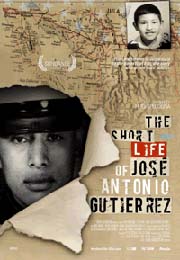 Sent by Pedro Olivares
 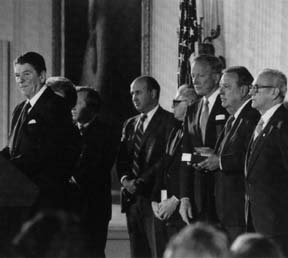 It was hard to keep
silent, and harder still in a Senate office
where staff gets notified in advance of such news. The news inevitably
did leak out to my colleagues who were as thrilled as I. They gave me
advice on clothing and people to visit while I was in D.C.
It was hard to keep
silent, and harder still in a Senate office
where staff gets notified in advance of such news. The news inevitably
did leak out to my colleagues who were as thrilled as I. They gave me
advice on clothing and people to visit while I was in D.C. 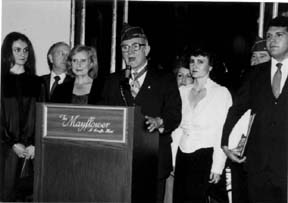 The Presentation of the Presidential Medal of Freedom was first.
The recipients were lined up behind the President. Mrs. Reagan stood
to the side of the President and shook the hand of each recipient. The
medal was made of gold and the name of the recipient was inscribed on
the back of the medal. The medal was suspended from a blue ribbon with
a white border. Included were smaller medals for lapels for the
recipient to wear as the situation demanded.
The Presentation of the Presidential Medal of Freedom was first.
The recipients were lined up behind the President. Mrs. Reagan stood
to the side of the President and shook the hand of each recipient. The
medal was made of gold and the name of the recipient was inscribed on
the back of the medal. The medal was suspended from a blue ribbon with
a white border. Included were smaller medals for lapels for the
recipient to wear as the situation demanded.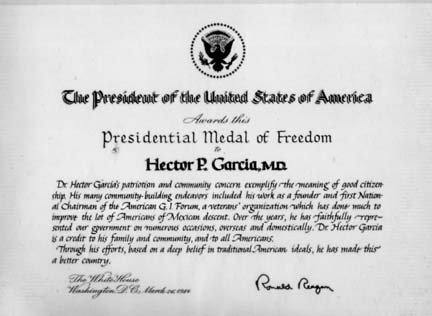
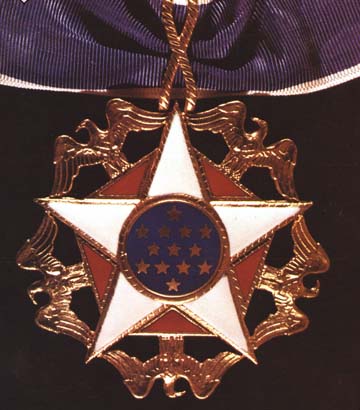 American to receive the Presidential Medal of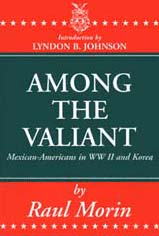
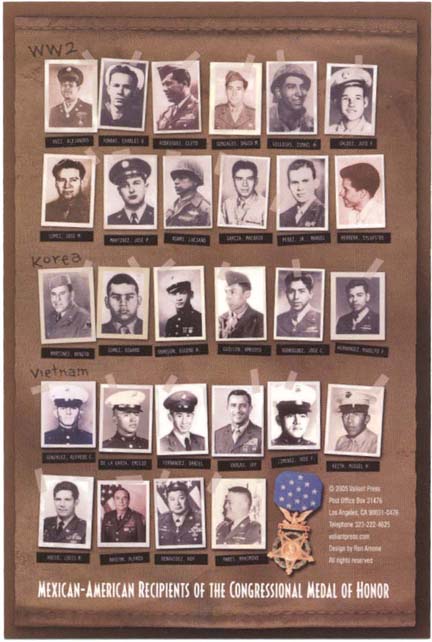
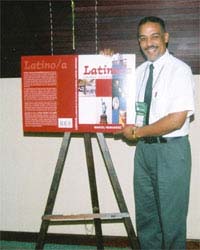
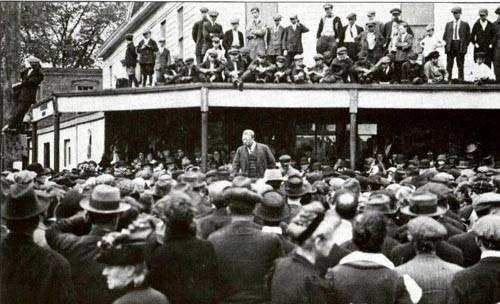
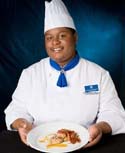

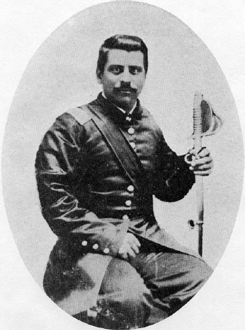 "I am poor and my
only inheritance is my honor"
"I am poor and my
only inheritance is my honor"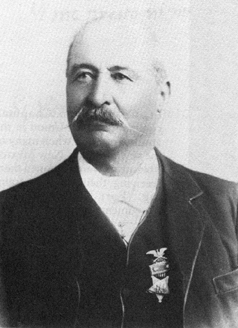
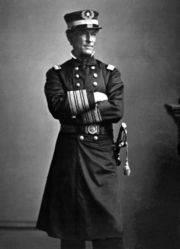
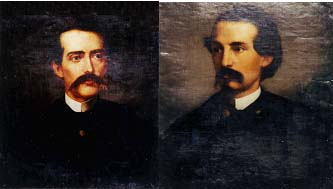
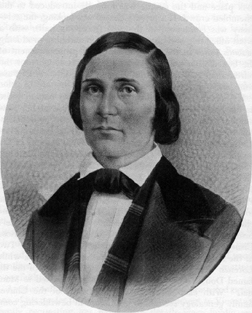 Lieutenant
Manuel Antonio Cháves 2nd
Regiment, New Mexico, was known as "El Leoncito" (the little
Leon) for his small stature; he had courage and was a brave soldier.
He was a one of the Volunteers from New Mexico. He fought with his
militia at the Union defeat of Valverde, then at the Battle of
Glorieta Pass destroying the Confederate supply train, which forced
Confederates to retreat. (Photo
Courtesy of Museum of New Mexico).
Lieutenant
Manuel Antonio Cháves 2nd
Regiment, New Mexico, was known as "El Leoncito" (the little
Leon) for his small stature; he had courage and was a brave soldier.
He was a one of the Volunteers from New Mexico. He fought with his
militia at the Union defeat of Valverde, then at the Battle of
Glorieta Pass destroying the Confederate supply train, which forced
Confederates to retreat. (Photo
Courtesy of Museum of New Mexico).
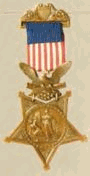 Corporal
Joseph H. de Castro was born in
Boston, Massachusetts; he was the flag bearer for Company I, 19th
Massachusetts Volunteer Infantry. On the third day before of the
Battle of Gettysburg Joseph H. de Castro is credited for capturing the
flag of the 19th Virginia Regiment. For this act and for
the bravery of his regiment’s attack in the battle of "Pickett’s
Charge" he was awarded the Congressional Medal of Honor on July
3, 1863. He would later marry Rosalia Rodriguez (her father was born
in the Spanish territory of the Canary Islands.)
Corporal
Joseph H. de Castro was born in
Boston, Massachusetts; he was the flag bearer for Company I, 19th
Massachusetts Volunteer Infantry. On the third day before of the
Battle of Gettysburg Joseph H. de Castro is credited for capturing the
flag of the 19th Virginia Regiment. For this act and for
the bravery of his regiment’s attack in the battle of "Pickett’s
Charge" he was awarded the Congressional Medal of Honor on July
3, 1863. He would later marry Rosalia Rodriguez (her father was born
in the Spanish territory of the Canary Islands.)
 John
Ortega, an Acting Master’s Mate,
was a Spanish immigrant. He served as a seaman on board the U.S.S.
Saratoga during the South Atlantic Blockade by the Union Naval forces.
His actions resulted in him being the first Hispanic sailor to be
awarded the United States’ highest military decoration for valor in
combat. John Ortega received the award in Pennsylvania on December 31,
1864.
John
Ortega, an Acting Master’s Mate,
was a Spanish immigrant. He served as a seaman on board the U.S.S.
Saratoga during the South Atlantic Blockade by the Union Naval forces.
His actions resulted in him being the first Hispanic sailor to be
awarded the United States’ highest military decoration for valor in
combat. John Ortega received the award in Pennsylvania on December 31,
1864.



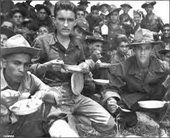
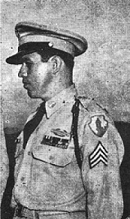
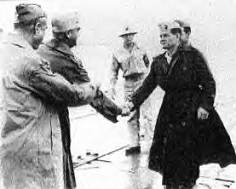
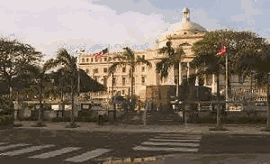
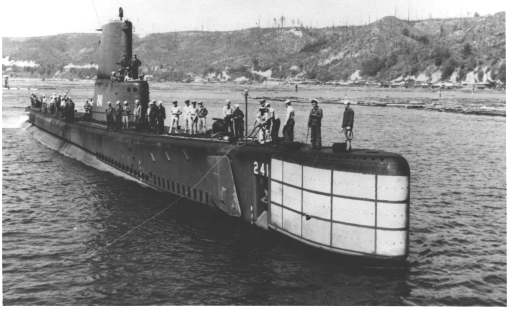
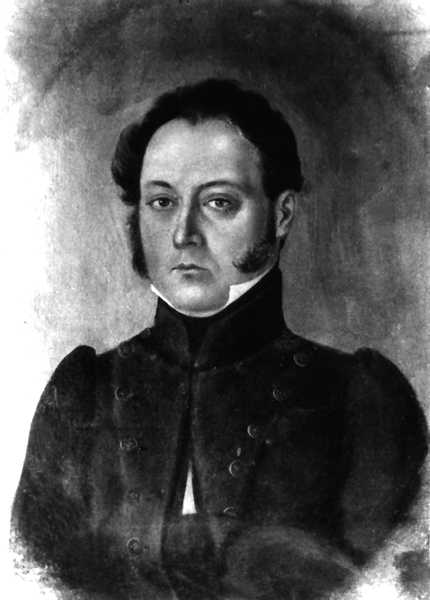
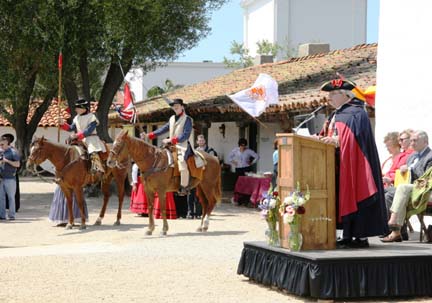
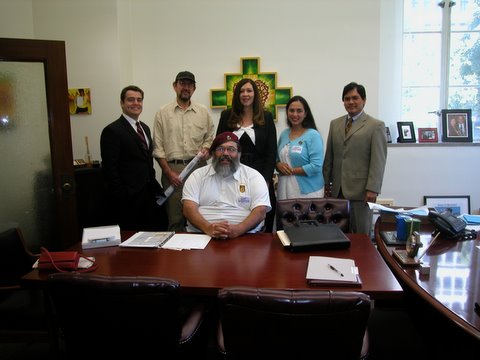
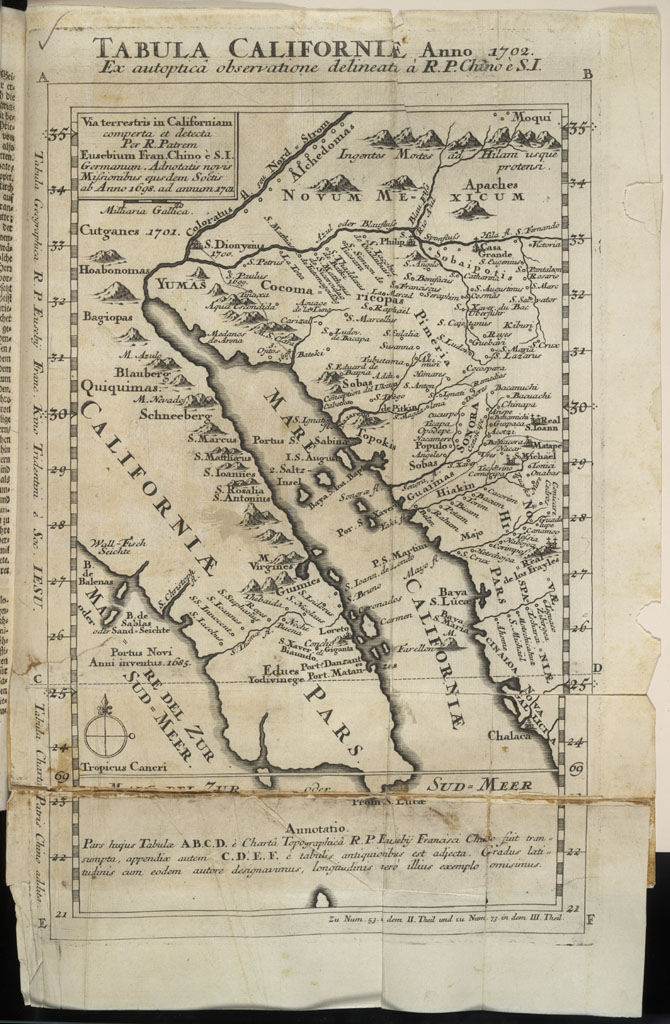


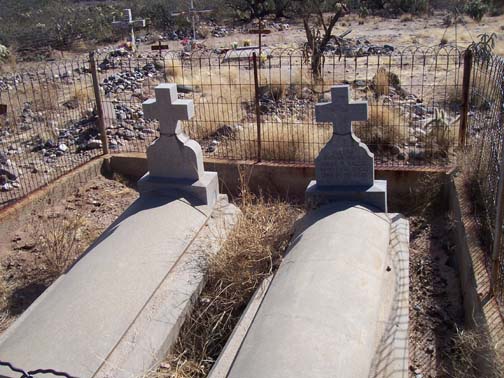
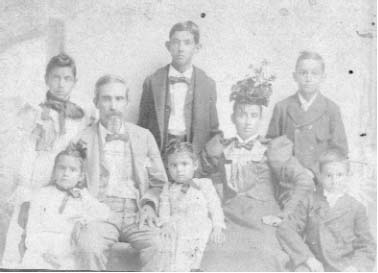

 Southern California; Ehud
Danoch, Consul General of Israel in Los Angeles; John Fisher,
President of the Jewish Federation; and Jill Newell, a former
Jerusalem Center Student.
Southern California; Ehud
Danoch, Consul General of Israel in Los Angeles; John Fisher,
President of the Jewish Federation; and Jill Newell, a former
Jerusalem Center Student. Dan is the Commander of Tejanos in Action. He writes that the
The
Dan is the Commander of Tejanos in Action. He writes that the
The 
 PHOTO
TEXT: GETTING BY: Luis Enamarado (left) and Lourdes Roche, both Cuban
employees of New York Bagel on Lee Drive, say they're too old to learn
English. A whiteboard in the kitchen gives them bilingual instructions
on how to make a sandwich.
PHOTO
TEXT: GETTING BY: Luis Enamarado (left) and Lourdes Roche, both Cuban
employees of New York Bagel on Lee Drive, say they're too old to learn
English. A whiteboard in the kitchen gives them bilingual instructions
on how to make a sandwich.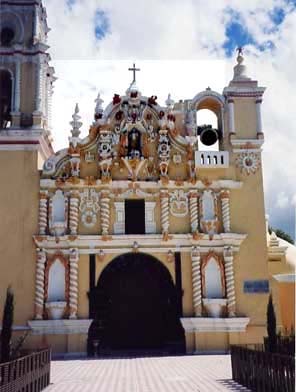
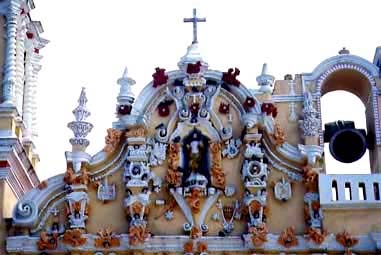
 This
extraordinarily ornate altarpiece, designed in full blown Mexican
Churrigueresque style, provides yet another surprise in this rural
community. Far more sophisticated in its intricate, layered forms
and masterful execution than the folk baroque facade, this
remarkable retablo indicates the work of an accomplished urban taller,
or workshop, probably in Puebla or even Mexico City. (color
pictures to follow)
This
extraordinarily ornate altarpiece, designed in full blown Mexican
Churrigueresque style, provides yet another surprise in this rural
community. Far more sophisticated in its intricate, layered forms
and masterful execution than the folk baroque facade, this
remarkable retablo indicates the work of an accomplished urban taller,
or workshop, probably in Puebla or even Mexico City. (color
pictures to follow)
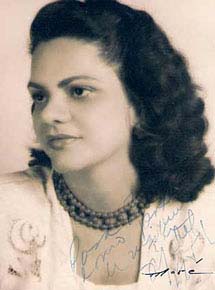 I of course know the "near story." That my father, Roger
was born in Cárdenas and my mother, Mabel, in Manzanillo, both
in Cuba, in the 1920s. That my middle brother and I were born in
Havana. That after Fidel Castro took power we fled to New Jersey in
1964 where another brother and my children were born. Back in Cuba I
was lucky enough to know all four of my grandparents. But many years
ago in very different places they too were babies in their parents'
laps. What were their lives like? Which of the tales I grew up hearing
are true? What else can be uncovered in forgotten archives in Cuba,
Spain and—perhaps—England and China? Answers to questions such as
these are what I set out to find years ago.
I of course know the "near story." That my father, Roger
was born in Cárdenas and my mother, Mabel, in Manzanillo, both
in Cuba, in the 1920s. That my middle brother and I were born in
Havana. That after Fidel Castro took power we fled to New Jersey in
1964 where another brother and my children were born. Back in Cuba I
was lucky enough to know all four of my grandparents. But many years
ago in very different places they too were babies in their parents'
laps. What were their lives like? Which of the tales I grew up hearing
are true? What else can be uncovered in forgotten archives in Cuba,
Spain and—perhaps—England and China? Answers to questions such as
these are what I set out to find years ago.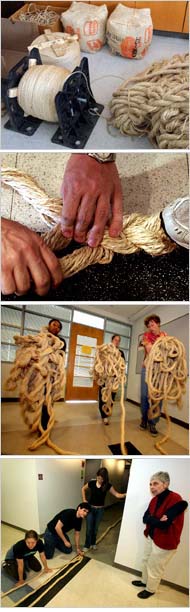 In
the M.I.T. class project, 14 students met two evenings a week and
occasional afternoons to braid the ropes for a Peruvian bridge replica
60 feet long and 2 feet wide. They were allowed one important shortcut:
some 50 miles of twine already prepared from sisal, a stronger fiber
than the materials used by the Inca.
In
the M.I.T. class project, 14 students met two evenings a week and
occasional afternoons to braid the ropes for a Peruvian bridge replica
60 feet long and 2 feet wide. They were allowed one important shortcut:
some 50 miles of twine already prepared from sisal, a stronger fiber
than the materials used by the Inca.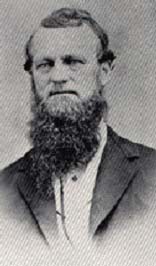
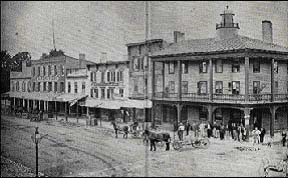
 clerk, Mr. Murray embraced the idea
after that a committee was formed to plan a day devoted honoring the
death. The people from the village made wreaths, crosses and bouquets
for each veteran’s grave. The village was decorated with flags at
half mast.
clerk, Mr. Murray embraced the idea
after that a committee was formed to plan a day devoted honoring the
death. The people from the village made wreaths, crosses and bouquets
for each veteran’s grave. The village was decorated with flags at
half mast. At the same time as Henry C. Welles was suggesting
to honoring Civil War soldiers who died during this war, retired Major
General John A. Logan planned a different ceremony, for the soldiers
who survived the Civil War. He went with the veterans to visit the
cemetery to decorate their fallen soldiers' graves with flags. In
retired Major General Logan’s proclamation of Declaration Day: he
declared: "The 30th of May:; 1868 is designated for
the purpose of strewing with flowers of otherwise decorating the
graves of comrades who died in defense of their country and during the
late rebellion, and whose bodies now lie in almost every city: village
and hamlet church yard in the land. In this observance no forms of
ceremony is prescribed but posts and comrades will in their own way
arrange such fitting services and testimonials of respect as
circumstances may permit."
At the same time as Henry C. Welles was suggesting
to honoring Civil War soldiers who died during this war, retired Major
General John A. Logan planned a different ceremony, for the soldiers
who survived the Civil War. He went with the veterans to visit the
cemetery to decorate their fallen soldiers' graves with flags. In
retired Major General Logan’s proclamation of Declaration Day: he
declared: "The 30th of May:; 1868 is designated for
the purpose of strewing with flowers of otherwise decorating the
graves of comrades who died in defense of their country and during the
late rebellion, and whose bodies now lie in almost every city: village
and hamlet church yard in the land. In this observance no forms of
ceremony is prescribed but posts and comrades will in their own way
arrange such fitting services and testimonials of respect as
circumstances may permit."