|
|
Somos Primos December
2007 Dedicated
to Hispanic Heritage and Diversity Issues |
|
|
Content
Areas United States . . 4 Feature: Equality in Education. . 13 National Issues. . 16 Action Item. . 20 Education. . 27 Bilingual Education. . 32 Culture. . 34 Business. . 37 Anti-Spanish Legends. . 43 Military & Law Enforcement Heroes. . 44 Patriots of American Revolution . . 57 Cuentos. . 61 Literature. . 66 Surname . . 77 Orange County,CA . . 82 Los Angeles,CA . . 86 California . . 96
|
Southwestern US . .
114 African-American . . 128 Indigenous . . 135 Sephardic . . 146 Texas . . 149 East of Mississippi . . 165 East Coast . . 165 Mexico . . 168 Caribbean/Cuba . . 198 Spain . . 201 International . . 205 History . . 210 Family History . . 217 Archaeology . . 222 Miscellaneous . . 223 Networking SHHAR 2008 Meetings Jan 19 . . Mar 22 . . May 24 . . Aug 23 End |
|
Letters to the Editor : |
|
|
Hi Mimi I just want to write to tell you how much I appreciate and enjoy your articles on the Somos Primos publication. Thanks again for sharing Somos Primos with
me.. R.Aragon raragon7@hotmail.com Hello, I came across your site by pure luck today. You can add me to an email list. There are thousands of Hispanic people that came from Texas so we may find connections to others. Thank You for creating such a fantastic forum/site for all of us who really and truly care. Roland Nunez Salazar sala.roland@yahoo.com Houston, Texas YOU ARE DOING A GREAT JOB! KEEPING GOING. RACIST MOTIVES ARE EXPOSED IN 2007! STAY AT IT! donmilligan@comcast.net Thank you for keeping me informed. I really appreciate you. philvasquez@hotmail.com |
Dear Mimi, You are doing a great job with this important monthly Hispanic issue and site. I am so impressed each time I access it, and can hardly wait for the next month's issue. I have attached for you an article/blog on some research that has been done on the Santanderos http://santanderos.blogspot.com /. It is a great site and probably needs imput or other connections that your readers might have. Thanks for the SomosPrimos! P Esparza phyls39@rgv.rr.com
|
|
As we travel life's paths, Without knowing who they are Discover your
heroes, |
| Somos Primos Staff: Mimi Lozano, Editor Mercy Bautista Olvera Bill Carmena Lila Guzman Granville Hough John Inclan Galal Kernahan J.V. Martinez Armando Montes Dorinda Moreno Michael Perez Ángel Custodio Rebollo Tony Santiago John P. Schmal Howard Shorr Ted Vincent Contributors to this issue: R.Aragon Dan Arrellano Richard Arroyo Dr. Armando Ayala Mercy Bautista Olvera Dr. Eric Beerman Eliud Bonilla John Burnett Roberto Calderon, Ph.D. Bill Carmena Alberto Casas Rafael Castellanos Patsy Castro Ludwig Bonnie Chapa Lynette Chapa Gus Chavez Rudy Cypser |
Boyd de Larios Felipe de Ortego y Gasca J.F. de La Tejas, Ph.D. Norm De Young Judy Dow (Abenaki) Manolo Escobar Phyliss Esparza Jeanne Farr McDonnell Noemi Figueroa Soulet Lorraine Frain Art Fuentes Teresa R. Funke Daisy Wanda Garcia Tony Garcia Rafael Jesús González Dahlia Guajardo Palacios Walter L. Herbeck Jr. Lorraine Hernandez Manuel Hernández-Carmona Granville Hough, Ph.D. John Inclan Ruth Kilday Maria Krueger Valerie James Jennie Lew Gilbert "Magu" Lujan Jeanie Low Richard J. Maher Adele Marcum Juan Marinez Letisia Marquez Don Milligan Eric Moreno Dorinda Moreno Frank Moreno Sifuentes Vickie Carrillo Norton Roland Nunez Salazar |
Rafael Ojeda Guillermo Padilla Origel José Pantoja John Pelka Jose M. Pena Edward Pohlert Joseph Puentes Manuel Quinones Jess Quintero Ángel Custodio Rebollo Crispin Rendon Harvey Reyes Rogelio Reyes, Ph.D. Maggie Rivas-Rodriguez, Ph.D. José León Robles De La Torre Alfonso Rodriguez Ramos Ben Romero Viola Sadler Tomas Saenz Rubén Sálaz M. Tony Santiago Richard G. Santos John Schmal Louis F. Serna Howard Shorr Beverly Slapin Monica Smith Ted Snyder Marie Songco-Torres Lupe Trujillo Fisher Ricardo Valverde Janete Vargas Phil Vasquez Margarita Velez Marco Villalobos Ted Vincent Marissa Warden IPagan7371 |
| SHHAR Board: Bea Armenta Dever, Gloria Cortinas Oliver, Steven Hernandez, Mimi Lozano Holtzman, Pat Lozano, Yolanda Magdaleno, Henry Marquez, Michael Perez, Crispin Rendon, Viola Rodriguez Sadler, John P. Schmal. |
|
Chepita's Tale by Wanda Garcia Silvestre Herrera, Glendale AZ war hero dies at 90 Richard Azurdia to Receive the Golden Cassette Award Two Hispanic Surnames Now Among The Top 10 Most Common In US The Rio Grande Rises Latino Workforce at Mid-Decade: UCLA Chicano Studies Research Center |
|
Front: Left to right, Daisy Wanda Garcia, Rep. Hugo Berlanga,
Frances Zepeta, Gov. Dolph Briscoe, Marianna Tinoco, Rosa Ena Gutierrez,
Jose Cano. Back row: Celestino Mendez, Unknown woman, Dr. Hector Garcia. |
|
CHEPITA’S TALE On June 4, 1976, my Papa (Dr. Hector P. Garcia) gave me an obscure book called "A Noose for Chipita," written by Vernon Smylie in 1970. Papa wanted me to read the book so we could discuss it. Smylie’s book documented a Mexican American’s experience during an era when there were no legal protections or due processes for us. Chepita’s tale takes place during the height of the Civil War in South Texas. During this era, more Mexican Americans were hanged than the total number of blacks hanged. Chepita was one of those statistics and earned the dubious distinction of being the last woman hanged legally in Texas. Chepita Rodriguez, an elderly Mexican American woman, lived near San Patricio de Hibernia in the 1830's. Chepita lived in the thicket near the Arkansas River and earned her living by offering lodging to travelers. On August 23, 1863, a traveler, John Savage, supposedly stayed the night. Savage had gold from the sale of horses to the Confederate army in his possession. Some days later, Dora Welder and two slaves went to the river to wash clothes. Dora saw a gunnysack in the river with an arm protruding. When the Welder ranch hands pulled the gunnysack out of the Aransas River, they found John Savages’ body stuffed in the gunnysack. Later they found the gold downstream. When the sheriff, William Means went to interview Chepita, he found blood on the front porch of Chepita’s hut. Means felt he had enough evidence to arrest Chepita and her retarded handy man Juan Silvera on suspicion of murder since he found Savages’ body close to the hut and the blood on the front porch. Sheriff Means kept Chepita chained to the wall under a lean to shed at the back of the courthouse during the duration of the trail and her execution. She did not have a change of clothes but wore the same clothes since the arrest. Some of the towns’ people took pity on Chepita and brought her food. The trial caused the prejudiced attitudes to surface in San Patricio and the surrounding counties. In South Texas, the majority regarded Mexican Americans as less than human and not as valuable as farm animals or slaves. Some South Texans were outraged about a Mexican American killing an Anglo and tried to lynch Chepita on two occasions. "The Ranchero" a Corpus Christi paper ran an editorial praising the judge and the jury for their verdict: "Mexicans should not have the same rights in this state as Americans. We are decidedly pleased with our neighbors in San Patricio." The trial lasted four days. Chepita was indicted, tried, convicted and sentenced to death during these four days. Chepita was executed one month later. The jurors empaneled in the Chepita Rodriguez trail were Owen Gaffney, Thomas Haley, E.S. Nash, John Henderson, James H. Toomey, James Gallagher, Cornelius McTiernan, George McCown, George Williams, J.E. Hendrickson, and Pat Hart. At the trial, Chepita pleaded not guilty. The jury found her guilty and recommended mercy due to her age and the circumstantial evidence. Despite the recommendation, Judge Benjamin Franklin Neil ordered her executed on November 13, 1863. In 1889, a fire destroyed most of the court records from Chepita’s trail. The surviving written accounts of the trail describe glaring discrepancies and irregularities in the proceedings. In Texas and other southwestern states, the courts systematically excluded Mexican Americans from jury service. Therefore, Chepita did not have trial by a jury of her peers. There was no jury panel for the grand jury or trial jury. The sheriff rounded up people off the streets for jury service. Four members of the trial jury were indicted for felonies, one for murder. The sheriff William Means who arrested Chepita served as the jury foreman. Conflicts of interest existed because the defense councils, the judge and prosecutor had convoluted business relationships. According to the records, Chepita responded in Spanish "No soy culpable," when questioned. Therefore, she may not have understood what was happening at the trial. No one could understand why Judge Neal was determined to hang Chepita. During this period, it was customary to continue capital cases including murder from term to term. Much later, these cases were finally disposed of under the following motion,
Then the court dismissed the defendant. The judge or the District Attorney never afforded this opportunity to Chepita Rodriguez. Judge Neal sentenced Chepita to death based on circumstantial evidence. The judge would not have given a death sentence had Chepita not been Mexican American. The hanging took place during a rainstorm on November 13, 1863. It was a horrible spectacle. The force of the hanging did not break Chepita’s neck since she was frail. Instead, she strangled to death for what was a long time. Finally, the hangman cut her down and placed her in the coffin. Jack McGowan, an eyewitness heard groans from the coffin as the hangman lowered it into the grave. The hangman buried her body in an unmarked grave close to the hanging tree. Many of the locals felt the hanging brought a curse on their town. One citizen was reputed to say, "Tis a black day for San Patricio. We have brought a curse upon our town." Chepita’ tale "shocked my father’s conscience." He felt outrage by the cruel treatment Chepita suffered at the hands of the law. In his opinion, the only form of redress was for the governor to pardon Chepita. I asked Papa what difference it made to Chepita if she received a pardon now. Papa replied that Chepita was not guilty and getting a pardon for her was the right thing to do. Papa began his advocacy work on behalf of Chepita in 1978. In typical Garcia fashion, Papa gathered a contingent of American G.I. Forum members. The members were Daisy Wanda Garcia (me), Rep. Hugo Berlanga, Frances Zepeda, Celestino Mendez, Marianna Tinoco, Rosa Ena Gutierrez, and Jose Cano. In addition, Papa recruited the help of his sister, Dr. Cleo Garcia. Papa believed in starting at the top. Therefore, we met with Governor Dolph Briscoe seeking a pardon for Chepita. The governor referred the matter to the attorney general who ruled there were no provisions in Texas for pardoning a dead person. Then, Papa approached the Texas legislators. Their mantra was the same. All we met with agreed that Chepita Rodriguez had not received a fair trial, but no one knew how to redress the wrong. These setbacks did not deter my father. His strategy was to bring visibility to the situation. Between my father and Dr. Cleo, the story got out. A community activist Mary Lou Cantu recalls Dr. Cleo speaking about Chepita at community events. By the time Dr. Hector and Dr. Cleo were finished, Chepita Rodriguez was the subject of two operas, a poem, books, newspaper articles and magazine accounts. Nine years later in 1985, the San Patricio County Attorney requested Texas Senator Carlos Truan to pass legislation that provided symbolic redress to Chepita Rodriguez. PURPOSE: To Provide a means of symbolic redress in the case of Chepita Rodriguez. Resolves that the 69th Legislature expresses its sympathy to the heirs and descendants of Chepita Rodriguez: that nothing in this resolution waives the State’s immunity from suit or creates a cause of action against the State, its agents or instrumentalities. I asked my father how he felt about the legislation. My father shook his head sadly and commented that the "symbolic redress" was not a pardon. In typical Garcia Style, Dr. Hector decided to conduct his own historical investigation of the Chepita Incident. On Sunday, July 30, 1989, Dr. Hector with Maria and Tomas Ramirez, Nicolas Medios an American G.I. Forum member from Mathis, TX, and Humberto Navarez, a photographer journeyed to San Patricio de Hibernia. Their purpose was to lay a historical marker on the site of the hanging, and have a mass said for the repose of Chepita’s soul. The group met with Angel and Rafaela Serna and Josefa Garcia, Serna’s mother the current owners of the tract where the hanging reportedly occurred. The land was located off Calle Nopal that ran for 3 miles and ended at the river. Serna pointed out two mesquite trees on the property certified over one hundred years old. Dr. Hector named them tree number 1 and tree number 2. Tree number 1 was a big tree with a trunk about two feet in diameter having branches that touched the ground. Apparently lightening had struck one side of tree number 1. According to the Serna family history, his parents and grandparents saw orbs of light on tree number 1. Tree number 2 was located in a cactus thicket. The diameter of the trunk was about 24 inches. Mr. Serna said his family dug trenches near tree number 2 and uncovered a makeshift grave. The grave contained human bones, hairs and a billfold. The grave was located about twenty feet from the trunk of the tree number 2. The county ordered Angel Serna to move his house because they wanted to sell Serna’s land to a developer. Nothing more transpired from Dr. Hector’s historical investigation according to Maria Ramirez and Amador Garcia. If Vernon Smylie had not documented the history, my father would have never learned about Chepita Rodriguez. Moreover, if my father and Dr. Cleo had not brought public awareness to the situation, Chepita never would have received the symbolic redress from the state of Texas. Perhaps now the spirit of Chepita Rodriguez can rest. The local legend is that Chepita wanders the banks of the Arkansas River every time a woman is sentenced to death. Sometimes, Chepita materializes with a noose still hanging around her neck. We will never know what actually happened on that August day in 1863, or whether the hanging brought a curse on the town of San Patricio de Hibernia, Texas. The natural law of cause and effect came into play though. Today, only a state marker denotes that the once thriving town of San Patricio de Hibernia existed. One year after the hanging, lightening struck the tree and the locals used the remains for firewood. A higher court judged those who convicted Chepita Rodriguez and those who allowed the execution to proceed. They are all equal now.
|
| Extract:
Silvestre Herrera, Glendale AZ war hero dies at 90 Brent Whiting, The Arizona Republic, Nov. 27, 2007  Silvestre Herrera, 90, a Mexico-born recipient of the Medal of Honor, died Monday at his Glendale home, authorities said. Silvestre Herrera, 90, a Mexico-born recipient of the Medal of Honor, died Monday at his Glendale home, authorities said.Herrera, the first Arizonan to win the award during World War II, also wore Mexico's highest honor for valor on the field of battle, making him the only person to earn both. In 1945, Herrera was awarded the Medal of Honor for saving his platoon from machine-gun fire near Mertzwiller, France, not far from the German border. The Army private first class with the 36th Infantry Division took out one emplacement, then charged through a minefield toward a second, losing both feet to explosions. The eight Germans manning the machine-gun nest threw down their weapons and surrendered. Despite risking his life, Herrera once said he didn't consider himself a particularly brave man. "I was one of the lucky ones, to live to be awarded the Medal of Honor," he said. In an interview two years ago, Herrera recalled the day he received the Medal of Honor from President Truman during a ceremony on the White House lawn.  "He told me he would rather be awarded the Medal of Honor than be president of the United States," Herrera said in an article that ran in The Arizona Republic. "That made me even more proud."
For his action, Herrera, who was born in Camargo, Chihuahua, also received Mexico's highest honor for valor, the Premier Merito Militar, which he wore with pride. After the war, he worked as an artisan, crafting leather, and lived a quiet, private life. But Hispanic veterans such as Herrera also found themselves locked out of public housing, swimming pools, classrooms and other public institutions when they came home, according to a 2005 documentary by Pete Dimas, a Phoenix College professor. Nonetheless, recognition eventually came to Herrera. In 1956, an elementary school was named after him at 1350 S. 11th St. in Phoenix. In 2002, the Army broke ground on the Silvestre S. Herrera U.S. Army Reserve Training Center, 6158 S. Avery St., in Mesa. Herrera was on hand in September 2004 for a ceremony to dedicate the $11 million facility. Bob Herrera, one of Herrera's seven children, described the gesture as outstanding. "Usually, they don't name a building or center for someone until they die," he said. "It's a living honor, and that's really super." Bob Herrera said his father never talked much about his World War II experiences. But the children knew there were stories when their father was invited to be grand marshal at Veterans Day parades. Gradually, over the years, the stories were told. In November 1992, Silvestre Herrera joined Roy Benevidez, a Green Beret who won the Medal of Honor for action in Vietnam, for a ceremony at Desert Horizon School, 8525 W. Osborn Road, in Phoenix. |
| Here is another link to his contributions: http://www.homeofheroes.com/.../profiles_herrera.html Sent by John Inclan, Dorina Moreno, Rafael Ojeda, Dan Arellano, Mercy Bautista Olvera
|
| RICHARD AZURDIA TO
RECEIVE THE GOLDEN CASSETTE AWARD
Richard Azurdia has been chosen as one of 3 recipients to receive the Golden Cassette Award for networking to provide bilingual volunteers for the Telephone Reader Program offer by the Braille Institute. The other 2 recipients are National Library Services Director Frank Kurt Cylke and Author Laura Simon. Richard Azurdia is an actor who in 2002 started an email server for actors, Richard Azurdia Network (RAN), which provides casting notices, festival info, screenings, classes and other services. Now he reaches over 4000 actors in the Los Angeles area. Through his networking group, he has been able to help The Braille Institute gain volunteers for the Telephone Reader Program. If you’re an actor who would like to be added to his network email to, RAzurdiaNetwork@yahoogroups.com. As an actor, Azurdia was most recently seen co-starring in Lionsgate’s critically acclaimed LADRON QUE ROBA A LADRON. You can also see him starring in AMERICA 101, now out on DVD. Other credits include the BBC’s mini-series DEEP SPACE, TNT’s WANTED, NBC’s mini-series KINGPIN, CHELSEA HANDLER SHOW, GENERAL HOSPITAL and work in over 40 theater productions with many acclaimed theater companies across Los Angeles. Next projects include co-starring in the sci-fi action thriller feature GB: 2525. Sent by Dorinda Moreno dorindamoreno@comcast.net
|
| Extract
from: Two Hispanic Surnames Now Among The Top 10 Most Common In US
Name Count, Garcias Are Catching Up to Joneses By SAM ROBERTS, New York Times, published: November 17, 2007 Step aside Moore and Taylor. Welcome Garcia and Rodriguez. Smith remains the most common surname in the United States, according to a new analysis released yesterday by the Census Bureau. But for the first time, two Hispanic surnames — Garcia and Rodriguez — are among the top 10 most common in the nation, and Martinez nearly edged out Wilson for 10th place. The number of Hispanics living in the United States grew by 58 percent in the 1990s to nearly 13 percent of the total population, and cracking the list of top 10 names suggests just how pervasively the Latino migration has permeated everyday American culture. Garcia moved to No. 8 in 2000, up from No. 18, and Rodriguez jumped to No. 9 from 22nd place. The number of Hispanic surnames among the top 25 doubled, to 6. Compiling the rankings is a cumbersome task, in part because of confidentiality and accuracy issues, according to the Census Bureau, and it is only the second time it has prepared such a list. While the historical record is sketchy, several demographers said it was probably the first time that any non-Anglo name was among the 10 most common in the nation. "It’s difficult to say, but it’s probably likely," said Robert A. Kominski, assistant chief of social characteristics for the census. Luis Padilla, 48, a banker who has lived in Miami since he arrived from Colombia 14 years ago, greeted the ascendance of Hispanic surnames enthusiastically. "It shows we’re getting stronger," Mr. Padilla said. "If there’s that many of us to outnumber the Anglo names, it’s a great thing." Reinaldo M. Valdes, a board member of the Miami-based Spanish American League Against Discrimination, said the milestone "gives the Hispanic community a standing within the social structure of the country." "People of Hispanic descent who hardly speak Spanish are more eager to take their Hispanic last names," he said. "Today, kids identify more with their roots than they did before." Demographers pointed to more than one factor in explaining the increase in Hispanic surnames. Generations ago, immigration officials sometimes arbitrarily Anglicized or simplified names when foreigners arrived from Europe. "The movie studios used to demand that their employees have standard Waspy names," said Justin Kaplan, an historian and co-author of "The Language of Names." "Now, look at Renée Zellweger," Mr. Kaplan said. And because recent Hispanic and Asian immigrants might consider themselves more identifiable by their physical characteristics than Europeans do, they are less likely to change their surnames, though they often choose Anglicized first names for their children. The latest surname count also signaled the growing number of Asians in America. The surname Lee ranked No. 22, with the number of Lees about equally divided between whites and Asians. Lee is a familiar name in China and Korea and in all its variations is described as the most common surname in the world. Altogether, the census found six million surnames in the United States. Among those, 151,000 were shared by a hundred or more Americans. Four million were held by only one person. "The names tell us that we’re a richly diverse culture," Mr. Kominski said. The Census Bureau’s analysis found that some surnames were especially associated with race and ethnicity. More than 96 percent of Yoders, Kruegers, Muellers, Kochs, Schwartzes, Schmitts and Novaks were white. Nearly 90 percent of the Washingtons were black, as were 75 percent of the Jeffersons, 66 percent of the Bookers, 54 percent of the Banks and 53 percent of the Mosleys. Sent by Howard Shorr howardshorr@msn.com |
The Rio Grande RisesBy DOUGLAS J. BESHAROV, Op-Ed Contributor, NYTimes.com, October 1, 2007 ACCORDING to a recent report from the Census Bureau, poverty fell from about 12.6 percent in 2005 to about 12.3 percent last year. That’s about 500,000 fewer people living in poverty, the first statistically significant decline since 2000. (In 2006, the poverty line was $20,614 for a family of four.) As usual, there was much commentary in the news media about poverty’s intractability: today’s poverty rate is hardly lower than it was in 1968, when it was about 12.8 percent. But a closer look at the experience of one group, Hispanics, tells a very different story. As a group, Hispanics are enjoying substantial economic progress. Their poverty rate has dropped by a third from its high 12 years ago, falling from 30.7 percent in 1994 to 20.6 percent in 2006. These numbers come from the Census Bureau’s Current Population Survey, widely used by pro- and anti-immigration groups alike as a reasonably reliable source of information about illegal as well as legal immigrants. They show that although Hispanics still have a long way to go to achieve the full promise of the American Dream, as a group they are clearly on the economic up escalator. In the past 30 years, the United States has experienced a tremendous amount of immigration, predominantly Hispanic. In 1975, a little more than 11 million Hispanics made up just over 5 percent of the population. Today’s nearly 45 million Hispanics are now about 15 percent of the country. This influx of Hispanics has resulted in a higher poverty rate in the United States, mainly because many immigrants are low-skilled workers and women with young children. If the proportion of Hispanics in the population in 2006 had been the same as it was in 1975, then the overall American poverty rate in 2006 would have been 7 percent lower (11.4 percent rather than 12.3 percent). That would be 2.4 million fewer people, all Hispanics, in poverty. This rough calculation leaves out the indirect impact that Hispanics have had on the job prospects and earnings of other low-skilled workers, especially African-Americans, probably keeping more of them in poverty. Economists argue about the size of this effect, but we see evidence of it all around us. Consider the Hispanic success in obtaining skilled, blue-collar jobs, as measured by the census category for precision production, craft and repair occupations. From 1994 to 2006, as the total number of these jobs grew, the percentage held by whites fell from 79 percent to 65 percent. The percentage held by blacks remained constant at about 8 percent, and the percentage held by Hispanics more than doubled, rising to 25 percent from 11 percent. As whites left these relatively well-paid jobs, Hispanics rather than blacks moved into them. Between 1994, the high point for Hispanic poverty, and 2006, the last year with comprehensive data, median Hispanic household income rose 20 percent, from about $31,500 a year in 2006 dollars to about $37,800 a year. The median income of Hispanic individuals rose 32 percent, to about $20,500 from about $15,500. These incomes do not make Hispanics wealthy, of course, but they did allow about 70 percent of them to send remittances home last year. According to the best estimate, the total sent was $45 billion — $4 billion more than the entire amount distributed to Americans by the Earned Income Tax Credit. One explanation for this economic progress is increased education. From 1994 to 2005, the percentage of 18- to 24-year-old Hispanics who graduated from high school or obtained a general equivalency diploma rose to about 66 percent from about 56 percent. About 25 percent are now enrolled in college, up from about 19 percent in 1994. Hispanics are moving rapidly into many management, professional and other white-collar occupations. Because of the large and continuing influx of usually low-skilled Hispanic immigrants, economists have expected the poverty rate among Hispanics to rise or at least to remain flat. Instead, it is falling. However one feels about immigration, the falling Hispanic poverty rate testifies to the ability of Hispanic immigrants to take advantage of the opportunities that they have found in this country. Douglas J. Besharov is a scholar at the American Enterprise Institute for Public Policy Research and a professor at the University of Maryland School of Public Policy. This is just one more reason why the
children of Hispanics.. legal and illegal should be given access to the
best education possible.. because given the opportunity of an education
and to learn English, in just a few years, they will become an important
sector of productive members of society, that will be needed to fill the
jobs vacated by a retiring boomer generation, becoming important tax
payers, and will continue to make our country the most prosperous nation
on earth. Euribe000 |
| The Latino Workforce at Mid-Decade UCLA Chicano Studies Research Center The Latino presence will be of increasing importance in coming years. Projections based on data collected by the U.S. Census Bureau indicate that Latinos will account for almost half of the population growth in the United States between 2000 and 2020. LOS ANGELES, California - The Latino workforce is increasingly critical to the vitality of the U.S. economy. Despite the importance of Latinos in the labor market, their economic contributions are limited by significant disadvantages. This research report provides an overview of Latino workers in the United States at mid-decade. The authors, Lisa Catanzarite and Lindsey Trimble, provide background information on labor force share and labor force participation, then delve into how Latinos are faring in the labor market by examining educational preparation, occupations, earnings, employment sectors, and unemployment. The report is intended to inform public discussion of Latino workforce incorporation and to guide policy interventions that will improve employment prospects for Latino workers. A copy of this CSRC Research Report is available at: http://www.chicano.ucla.edu/press/reports/current.asp Contact: Letisia Marquez, 310-206-3986 |
|
|
|
|
Being a resident of the city of Westminster, it was with great interest that I learned of the very important role that the city of Westminster played in the desegregation of public schools throughout the nation. This year marks 60years since the case of Mendez v. Westminster School District was resolved. Special events have been held all over the nation. The actual formal first issuance and unveiling of a U.S. Postal Stamp commemorating the history was held September 14th at the Gonzalo and Felicita Mendez Fundamental Intermediate School in Santa Ana. My friend Lupe Trujillo Fisher and I both attended the ground breaking of the Mendez school years ago and attended the unveiling in Santa Ana on the 14th. It was all very exciting. During the event in Santa Ana, Lupe and I
wondered aloud why we couldn't have an event like this in Westminster.
It seemed most appropriate. Our conversation was overheard by an
employee of the U.S. Postal Service. She gave the suggestion that we
look into the idea of having a second day issuance of the Mendez stamp.
She cautioned us that it was very unusual, but recommended that we speak
to the Postal Service administrators that were present from D.C..
because they could make a decision on the spot. We spoke to a
group that included David E. Failor, Executive Director of Stamp
Services, Darlene Yoerger and Darlene Suarez Casey from Washington, D.C.
and Richard Maher, Florinda M. Bailey, and Bob Lockovich
administrators in the area Post Office headquarters in Santa Ana. Lupe and I are both members of the Westminster
LULAC Council, 3017. We shared our feeling that the event should
be memorable for the children. Our goal was for the children to
understand the efforts that were made for them, a reason to value,
to cherish their education. We decided to schedule the week
before Thanksgiving, as a community-wide unifying event.
Invitations were sent to elected officers, community leaders, church
leaders, educators, and members of all the five families that were a
part of the case, the Mendez, Palomino,
Ramirez, Estrada, and Guzman families. The city of Westminster hosted the event in
their very beautiful and new, The Rose Center Theater. Tim
Nelson, Director of It was a wonderful, coordinated event, made
successful by the very kind support of the post office. The United
States Postal Service provided the invitations, printed the
program, and prepared the second day issuance cancellation. Lupe
put her creativity to work and designed a perfect cancellation. Richard
Maher, Public Affairs and Communications polished Lupe's design.
showing that the City of Westminster and Westminster School District
joined hands on November 15 in celebration of the very historical
event that took place in the City of Westminster 60 years ago. The
Mendez v Westminster decision set a precedent for the
desegregation of schools. |
Program participant: Sheree Coates, Officer-in-Charge, Westminster Post Office Lou Correa, State Senator William M. Habermehl, Orange County Superintendent of Schools Gonzalo Mendez, Jr. Son of Plaintiff Mistala Mendez-Mooney, Granddaughter of Plaintiff Sylvia Mendez, Daughter of the Plaintiff Janet Nguyen, Orange County Supervisor Sharon Nordheim, Westminster Superintendent of Schools Margie Rice, Mayor of the City of Westminster Jim Silva, Assemblyman Westminster City Council: Frank Fry and Tri Ta Westminster Board Members: David Bridgewater, Andrew Nguyen, Joanne Purcell Westminster Police Department Westminster School District Choir Warner Middle School Band |
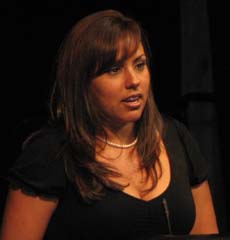 The
follow-up to the event is threefold: The
follow-up to the event is threefold: The poster behind the children singing was given by the US Postal Service to the Westminster School District. The District plans to rotate the poster from school to school. Somos Primos and the LULAC Westminster Council #3017 is providing a postcard size card with the stamp on one side and the history of the Mendez stamp on the other side for each child in the District. Arrangements are underway to produce a video of the event and include an interview with the artist of the Mendez stamp, Rafael Lopez. Mistala Mendez-Mooney, Granddaughter of Plaintiff |
|
|
| Assemblywoman Mary Salas of the 79th District has agreed to author legislation that would require
Mendez v.Westminster to be taught in California's schools. We still have a ways to go before the final language of the bill will be ready but in the meanwhile we have lots to do! We are officially launching the Million for Mendez letter writing campaign this week. I'll get get an address for folks to mail letters (preferably with Mendez stamps) supporting the Mendez legislation. The bill will be introduced on December 4, 2007. Not sure when the vote will take place yet but here we go!
This is what we have been working for! Information: http://democrats.assembly.ca.gov/members/a79/mainpage.aspx
|
|
Birthright
Citizenship
Information from Wikipedia . . . Book: Manifest Destinies: The Making of the Mexican American Race Find WWII Ancestors in Just-Opened Records Bilingual: National Park Service News Release |
| Birthright Citizenship Information from Wikipedia . . . Main article: Birthright citizenship in the United States of America Under current United States federal law [7] and most interpretations of the Fourteenth Amendment to the United States Constitution, which was ratified in 1868 to assure citizenship to freed slaves and their descendants, anyone born in the United States is a citizen. The majority of American-born tribal Indians continued to live legally within the borders of the nation as non-U.S. citizens until the Indian Citizenship Act of 1924 changed their status; but all other individuals born within the United States, except for children of foreign diplomats, have long been considered citizens regardless of the legal status or citizenship of their parents. Section 1 of the Fourteenth Amendment to the US Constitution states that: "All persons born or naturalized in the United States, and subject to the jurisdiction thereof, are citizens of the United States and of the State wherein they reside." This is sometimes referred to as the Citizenship Clause of the U.S. Constitution, though the meaning of the phrase "subject to the jurisdiction thereof" has been a debated issue.
|
| Book:
Manifest Destinies:
The Making of the Mexican American Race by Laura E. Gómez "Are Mexican Americans a racial or ethnic group? This is the important question Manifest Destinies asks and answers... [M]arvelous, dense, and richly researched." -Ramon A. Gutierrez, University of Chicago "Highlights the largely neglected history of multiracial populations that, throughout our nations history, have come together along the frontier. With her analysis of racial ideologies ...Gómez promises to make a valuable contribution to this literature." -Rachel Moran, author of Interracial Intimacy: The Regulation of Race and Romance "Anyone interested in understanding the historical experience of the largest ethnic group in the country will find Manifest Destinies both timely and of great interest. . . . Simply put, her work is first rate in every way." -Toms Almaguer, author of Racial Fault Lines: The Historical Origins of White Supremacy in California In both the historic record and the popular imagination, the story of nineteenth-century westward expansion in America has been characterized by notions of annexation rather than colonialism, of opening rather than conquering, and of settling unpopulated lands rather than displacing existing populations. Using the territory that is now New Mexico as a case study, Manifest Destinies traces the origins of Mexican Americans as a racial group in the United States, paying particular attention to shifting meanings of race and law in the nineteenth century. Laura E. Gómez explores the central paradox of Mexican American racial status as entailing the law's designation of Mexican Americans as "white" and their simultaneous social position as non-white in American society. She tells a neglected story of conflict, conquest, cooperation, and competition among Mexicans, Indians, and Euro-Americans, the regions three main populations who were the key architects and victims of the laws that dictated what ones race was and how people would be treated by the law according to ones race. Gómezs pathbreaking work - spanning the disciplines of law, history, and sociology - reveals how the construction of Mexicans as an American racial group proved central to the larger process of restructuring the American racial order from the Mexican War (1846-48) to the early twentieth century. The emphasis on white-over-black relations during this period has obscured the significant role played by the doctrine of Manifest Destiny and the colonization of northern Mexico in the racial subordination of black Americans. A native New Mexican, LAURA E. GÓMEZ is Professor of Law and American Studies at the University of New Mexico. She is the author of Misconceiving Mothers: Legislators, Prosecutors, and the Politics of Prenatal Drug Exposure. NYU Press, Champion of Great Ideas for 90 Years 838 Broadway, 3rd flr, New York, NY 10003-4812 288 p. | Hardcover: $35.00 Sent by Juan Marinez |
|
Thursday, October 25, 2007
|
||
|
National Park Service News Release |
||
|
(Washington, D.C.) -- A new Spanish language website launched by the National Park Service showcases the beauty and importance of America's wilderness areas. The interactive site, http://www.nature.nps.gov/views/index_ wilderness_sp.htm, explores wild places through activities, maps, information, videos, and interviews. It was developed in partnership with the Arthur Carhart National Wilderness Training Center and the University of Montana's Wilderness Institute. "This website will connect more people to the concept of wilderness," said Roger Rivera, Founding President of the National Hispanic Environmental Council. "Wilderness is important for science, for outdoor recreation, and for personal renewal. Wilderness areas are places where we can challenge ourselves, connect with the earth, enjoy the wild, and make memories with our families." The website provides details about the country's 702 designated wilderness areas and their significance to each of us. Visitors can learn about the land beyond the frontier; those rare, untamed places where one can leave civilization, reconnect with nature, and find healing and meaning. About 5% of the United States, roughly the same size as the state of California, has been preserved under the Wilderness Act of 1964. The website, a part of the "Views of National Parks" program, will allow people to take virtual tours of magnificent public lands including rain forests, swamps, glaciers, caves, deserts, and tundra and, hopefully, inspire personal visits to wilderness areas. The website was commissioned by the Interagency Wilderness Policy Council, consisting of representatives from the National Park Service, U.S. Forest Service, Bureau of Land Management, U.S. Fish & Wildlife Service, and U.S. Geological Survey. For more information: Kathy Kupper (202) 208-6843, en Español Isabel Benemelis (202)208-7975 Sent by Ruth Kilday Ruthkilday@aol.com Fact: Federal Wildlife Preserves generate $1.7 billion, $185 million in taxes. The national system encompasses 548 refuges and more than 96 million acres in all 50 states. For more on the National Wildlife Refuge System, see www.fws.gov/refuges . |
(Washington, D.C.) -- Un nuevo sitio de Internet en español lanzado por el Servicio Nacional de Parques presenta la belleza e importancia de las zonas en estado natural de Estados Unidos. El sitio interactivo, http://www.nature.nps.gov/views /index_wilderness_sp.htm, explora zonas naturales por medio de actividades, mapas, información, videos y entrevistas. Fue creado conjuntamente con el Arthur Carhart National Wilderness Training Center y el Wilderness Institute de la Universidad de Montana. "Este sitio de Internet conectará a más personas con el concepto de zonas naturales", dijo Roger Rivera, presidente y fundador del National Hispanic Environmental Council. "Las tierras naturales son importantes para las ciencias, la recreación al aire libre y la renovación personal. Las zonas naturales son lugares donde podemos asumir desafíos, estar en contacto con la Tierra, disfrutar la vida silvestre y crear recuerdos para nuestras familias". El sitio de Internet proporciona detalles sobre las 702 zonas naturales designadas del país y su significado para cada uno de nosotros. Los visitantes pueden aprender sobre las tierras más allá de lo conocido; aquellos lugares poco comunes y agrestes donde uno puede dejar atrás la civilización, reconectarse con la naturaleza, recobrar la salud y encontrarle significado a su existencia. Aproximadamente 5% de Estados Unidos o una extensión similar a la del estado de California ha sido conservada por medio de la Wilderness Act de 1964. Este sitio de Internet, un aspecto del programa "Views of National Parks", permitirá que las personas hagan giras virtuales de majestuosas tierras públicas que incluyen bosques lluviosos, pantanales, glaciares, cuevas, desiertos y tundra y, es de esperar, inspiren visitas personales a zonas naturales. El sitio de Internet fue encargado por el Interagency Wilderness Policy Council, que está compuesto por representantes del National Park Service, Servicio Forestal de Estados Unidos (U.S. Forest Service), Oficina de Administración de Tierras (Bureau of Land Management), Servicio de Pesca y Vida Silvestre de Estados Unidos (U.S. Fish & Wildlife Service) y el Servicio Geológico de los Estados Unidos (U.S. Geological Survey). |
|
| Action Items |
|
Marine
Sgt. Rafael Peralta, Hero
Nominated for Medal of Honor |
|
Hero Nominated for Medal of Honor BY Mercy Bautista-Olvera
Marine Sgt. Rafael Peralta was born on April 7, 1979 in Mexico City; he was the son of Rafael Peralta Sr. and Rosa Romero-Peralta; older brother to Icela, Karen and Ricardo. The family moved to Tijuana, Mexico, where Rafael attended elementary and junior high school. Eventually the family moved to San Diego, California where Rafael attended and graduated from Morse High School in San Diego, California in 1997. His father died in a job related accident in 2001. Rafael, a Mexican immigrant, enlisted in the Marine Corps the day he received his green card, his dream was to become a Marine. Rafael was proud to live in United States and to serve his adopted country. In his parent’s home, on his bedroom walls hung only three items – a copy of the United States Constitution, the Bill of Rights and his boot camp graduation certificate. Not many young adults take the time to read the Constitution and the Bill of Rights, or commemorate them, as Rafael had done. On November 2003, Peralta was assigned to the 1st battalion, 3rd Marine Regiment, 3rd Marine Division, III Marine Expeditionary Force, based at Marine Corps Base, in Kaneohe, Hawaii. After his term, he re-enlisted for four more years and eventually deployed to Iraq.
While he was away, he wrote to his family telling his brother and sisters to do well in school and care for each other. According to his sister Icela, he would tell his mom that there was a possibility that he might not come back. Marine Sgt. Peralta sent this last message to his brother Ricardo prior to his death.
|
|
Rafael on (right)
with soldier in Iraq |
|
|
That night Corporal Richard A. Mason, an infantryman with Headquarters platoon, told Lance Corporal T.J. Kaemmerer, "You’re still here, don’t forget that. Tell your kids, your grandkids, what Sergeant Peralta did for you and the other Marines today." |
|
|
SGT. Rafael Peralta, USMC
4/7/1979 – 11/15/204 "Our Loving Hero" |
|
Months later in a number of speeches, President Bush referred to Marine Sgt. Rafael Peralta’s heroism and sacrifice. Sgt. Rafael Peralta posthumously, received the Purple Heart Medal, and is in consideration for posthumously receiving the Congressional Medal of Honor. On April 11, 2006 Peralta's family was in Hawaii to accept the state's Medal of Honor. This special medal is awarded on behalf of the people of the state of Hawaii to an individual killed in action while serving our country as part of Operation Iraqi Freedom and Operation Enduring Freedom. On April 24, 2006, the San Diego Police Department granted Peralta’s wish, posthumously tapping him as an honorary member. After his service from the Marine Corps, Rafael had planned to be a member of the San Diego Police Department. "We would have hired him the second he came out of the Marine Corps." San Diego Police Chief William Lansdowne told the audience at the Bob Hope Theater at Miramar Marine Corps Air Station. Lansdowne presented Peralta’s mother with the same type of badge worn by the San Diego Police.
|
|
|
|
|
Detailed exploits of Peralta’s story as well as 42 other Hispanic Medal of Honor recipients can be found in Virgil Fernandez’, "Hispanic Military Heroes." Also "Home of the Brave Honoring the Unsung Heroes in the War on Terror," written by the former and late Secretary of Defense, Caspar W. Weinberger and Wynton C. Hall describes 19 of America's most decorated heroes in Iraq and Afghanistan, and Medal of Honor nominee, Marine Sgt. Rafael Peralta. On September 22, 2007, the Hansen Building in Camp Hansen, Okinawa, Japan was named in honor of Marine Sgt. Rafael Peralta. |
|
|
|
|
Marine Sgt. Rafael Peralta’s mother, Rosa Peralta, and her family flew from San Diego to Japan to attend the ceremony. Mrs. Peralta and General Richard C. Zilmer, the III Marine Expeditionary Force commanding General unveiled the placard and cut the ribbon on the building’s entrance, commemorating her son’s sacrifice. General Zilmer then said... "Today we honor the life, service and act of bravery of a man who personified our core values." He further stated, "We pay homage to his sacrifice by dedicating this building in his memory so that future generations of Marines and sailors will learn of Sgt. Peralta’s valor, and just as importantly, never forget his selfless deeds, on the battlefield."In December 2004, California Congressman Bob Filner
introduced legislation to award Sgt. Rafael Peralta, the Congressional
Medal of Honor, for sacrificing his life to save others. |
Medals awarded to Marine Sgt. Rafael Peralta:
|
|
Combat
Action Ribbon |
|
 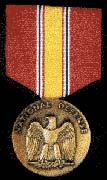 |
|
| Global War on Iraqi Campaign Sea Service Terrorism Observe Back Deployment Ribbon |
|
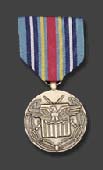

|
  |
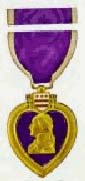 Purple Heart |
|
| Resources:
God’s Marines : www.godsmarines.comHistory Channel/The Act of Honor: www.historyenespanol.com (Videos, English and Spanish, History Channel, "Act of Honor" episode about Marine Sgt. Rafael Peralta) http://www.historyenespanol.com/espanol/elhonor/aoh_videos.jsp The Mudville Gazette : www.mudvillegazette.comhttp://en.wikipedia.org/wiki/Rafael_PeraltaWikepedia: http://en.wikipedia.org/wiki/Rafael_Peralta(Video) To read Kaemmerer's Dec. 2, 2004 account of Peralta's final moments, go to http://www.usmc.mil/marinelink/mcn2000.nsf/frontpagenews and enter "Rafael Peralta" in the search bar.Marines the Few the Proud, U.S. Marines in Japan: League of United American Citizens: http://www.lulac.org/advocacy/resolutions/2007/mi12.html
|
| Resolution CONGRESSIONAL MEDAL OF HONOR AWARD FOR MARINE SGT. RAFAEL PERALTA WHEREAS, Rafael Peralta, a Mexican-American who lived in San Diego, California, wanted to join the Marine Crops after graduating from high school in San Diego in 1997; and WHEREAS, Peralta was a Mexican citizen who had to wait until 2000 to receive his legal residency and become a U.S. citizen; and WHEREAS, Peralta joined the Marine Crops and was assigned to the Kaneohe’s 1st Battalion, 3rd Marines Regiment in November 2003, which arrived to Iraq in October 2004; and WHEREAS, the Kaneohe Marines’ mission was to clear the city of insurgents building by building, Peralta was hit several times in the upper torso and face at point-blank range by a fully automatic 7.62 mm weapon employed by three terrorists. Mortally wounded, he jumped into the already cleared adjoining room, giving the rest of the Marines a clear line of fire; and WHEREAS, fellow Marines battled the insurgents that shot Peralta, when a live grenade bounced into the room near the severely wounded Marine; and WHEREAS, Peralta reached out and pulled the grenade into his body protecting the lives of several fellow Kaneohe Marines; and WHEREAS, Peralta was a platoon scout in the Kaneohe unit, which meant he could have stayed back in safety while the squads of the 1st Platoon went into danger-filled streets. But Peralta was constantly asking to help; and WHEREAS, Peralta was killed on November 15, 2004, during the second battle of Fallujah. He was one of the 42 Marines and 2 Navy corpsmen assigned to the 1st Battalion who were killed in the unit’s first deployment to Iraq; and WHEREAS, Cpl. Richard A. Mason said to other Marines in recognition of Sgt. Peralta’s actions, "You’re still here, don’t forget that. Tell your kids, your grand kids, what Sgt. Peralta did for you and the other Marines today;" and WHEREAS, a spokesman for the Marine Base in Hawaii confirmed that the name of Peralta, 25, had been submitted for the Medal of Honor for saving the lives of four members of his platoon; NOW, THEREFORE, BE IT RESOLVED, that the United States Congress awards the Congressional Medal of Honor to Sgt. Rafael Peralta USMC for his heroic deeds beyond the call of duty with intrepidity. Approved this 14th day of July 2007. Rosa Rosales League of United American Citizens: http://www.lulac.org/advocacy/resolutions/2007/mi12.html Sent by Mercy Bautista-Olvera: scarlett_mbo@yahoo.com
|
|
When you are making out your Christmas card list this year, please include the following: A Recovering American soldier c/o Walter Reed Army Medical Center 6900 Georgia Avenue, NW Washington, D.C. 20307-5001 Sent by IPagan7371
|
|
Camarena U.S.
Postal Stamp Hello All, Please remember to pass on the web site address for the stamp proposal to everyone in your address book or anyone you meet. Here is the web site address www.camarenastamp.com I also created a petition for the stamp on www.PetitionOnLine.com Here is the direct link to it: http://www.PetitionOnline.com/kiki/petition.html Please sign it and forward it to everyone in your address book or if you have a web site will you please post it. Thank you so much for all your support. Maria Krueger
|
|
Defend the
Honor Website
It's taken us about 4 years and dozens of people to get it
together... and there will be some tweaking for the next several
months... but
check out our wonderful new website! Free DNA
testing kits |
| Education |
|
Harvard No Tuition for Low-Income Families The Latino Agenda in the 2008 Elections: Education by Manuel Hernández-Carmona Conference aims to preserve traditions Cesar Chavez Academy, Charter School |
Harvard No Tuition for Low-Income Families Harvard University announced over the weekend that from now on undergraduate students from low-income families will pay no tuition. In making the announcement, Harvard's president Lawrence H. Summers said, 'When only 10 percent of the students in elite higher education come from families in lower half of the income distribution, we are not doing enough. We are not doing enough in bringing elite higher education to the lower half of the income distribution.' If you know of a family earning less than $40,000 a year with an honor student graduating from high school soon, Harvard University wants to pay the tuition. The prestigious university recently announced that from now on undergraduate students from low-income families can go to Harvard for free...no tuition and no student loans! They offer reduced tuition if you earn between 40,000 and 60,000. To find out more about Harvard offering free tuition for families making less than $40,000 a year visit Harvard's financial aid website at: http://www.fao.fas.harvard.edu/; or call the school's financial aid office at (617) 495-1581.SEND TO SOMEONE WHETHER THEY CAN USE OR NOT. THEY JUST MIGHT KNOW SOMEONE WHO CAN! Sent by Margarita Velez mbvelez@elp.rr.com
|
The Latino Agenda in the 2008 Elections: Education By Manuel Hernández-Carmona There has been a lot of talk about the sudden and lasting impact of Latinos in the United States. They have become much more than a trend, phenomenon and a generations boom. The Latino social, financial, political and cultural growth has surpassed all predictions and continues to make a difference in all avenues, roads and pathways of the great American Nation. There are many Latino issues on top of the electoral table, but two are the most dominant today: immigration and education. But without a doubt, education will continue to be the core issue and a frontrunner in the discussion of ideas amongst the hopefuls on both sides of the political highway. Many would agree that this is a defining moment for the Latino population in the U.S. Los Angeles has its first Latino mayor in over a hundred years. This is a moment in the Latino community, politically, where the community is flourishing and blossoming. The Latino population is 40 million plus and growing by the minute. One out of every five children in the U.S. is now of Hispanic descent. Both major American political parties are scrambling to find strategies on how to approach and attract the so-called Latino vote. It truly is a time to step up, affront and act on behalf of the Latino children who are going to be the leaders of the community tomorrow. It is very difficult to measure the academic success of Latino children. According to the Pew Hispanic Center, "At every level of schooling educational outcomes differ among native born and immigrant Latinos and between Latinos and other racial and ethnic groups. Measuring those differences and the factors that produce them are critical to understanding the Latino future." At the same time and in the nick of time, these educational outcomes cannot be taken lightly and should encourage immediate intervention, pre-planned prevention and long-term academic planning. The highest high school dropout rate amongst minorities is
preventing Latinos to attain a higher education degree. According to
the U.S. Department of Labor, a college graduate will earn more over
a lifetime period than a high school graduate. According to recent
research done by Jay P. Greene, a senior fellow at The Manhattan
Institute, "The national graduation rate for the class of 1998
was 71%. For white students the rate was 78%, while it was 56% for
African-American students and 54% for Latino students."
|
||||||||||||||||||||||
Conference aims to preserve traditions Until a few years ago, when children in local classrooms learned about American Indians, they were taught about the culture and customs of tribes many states away. But the rich cultural heritage of the tribes living within their midst - of the San Manuel Band of Mission Indians and others - was left untouched as students studied the state's first peoples. "At the county's schools, we were learning about the Plains tribes, not local Indians," said Serrano/Cahuilla tribal member James Ramos, founder and project director of the California Indian Cultural Awareness Conference. The weeklong conference at Cal State San Bernardino, attended by hundreds of schoolchildren from San Bernardino City Unified and surrounding school districts, culminated Friday with the celebration of California Native American Day. The day, held on the fourth Friday in September, is not a holiday, insists Ramos, it is a day of education. All week, classrooms full of students came to the Cal State campus, whose Santos Manuel Student Union is named after Ramos' great-great-grandfather Santos Manuel, to meet tribal members and learn their crafts - from basketry and pottery to bird songs and storytelling.
On Friday, students from two elementary schools watched as members
of the Yurok band from Humboldt County performed a traditional
brush dance. On the reservation, the dance would be performed with
a real medicine woman, said Yurok member Joe James. The dance is
done as a healing ceremony for a sick child. And students in the
audience watched avidly as the Yuroks yipped and shook their gourd
rattles. "It is a real resource in the Inland Empire to have
the San Manuel tribe provide this outreach to all of our
students," said county Superintendent of Schools Herb
Fischer. Fischer was joined in honoring the tribal contributions
to the community and to society by state Superintendent of Public
Instruction Jack O'Connell, Rialto Councilman Joe Baca Jr.,
Assemblywoman Wilmer Amina Carter, Mayor Pat Morris and university
President Al Karnig. Formerly American Indian Day, the day was
established as an official state holiday in 1998 by a bill
authored by then-Assemblyman Joe Baca. "All of us, Indian and
non-Indian alike, need to understand the Native American
culture," Karnig said. No study of California history would
be complete without studying the first Californians, said
O'Connell, who himself had been a history major. California has
more than 100 federally recognized tribes - more than any state in
the nation, Ramos pointed out. And the state has the largest
American Indian population in the country. And yet, the history of
local peoples is often lost on the communities that surround them,
Ramos said. "A lot of people think the Indian people are
gone, or just on a reservation or in a museum," he said.
"But we're still here." In fact, Friday's celebration
"reaffirms that the California people that once were
forgotten are still here," Ramos said. "If we don't
teach people who we are - the techniques of basketry, for example
- who will?" he asked.
http://www.sbsun.
|
||||||||||||||||||||||
|
|
||||||||||||||||||||||
Principal Lawrence Hernandez is quick to correct anyone who tells him low-income parents do not care about their children's education. Pointing to his charter school as proof positive, he says, "The most powerful thing they've done is to have chosen an option for their kids." In fact, it was seeing "the urgency of parents who wanted something better for their children" that compelled Hernandez, his wife, Annette, and several community activists to create the Cesar Chavez Academy (CCA) six years ago as a public school choice for the largely rural and Latino community of Pueblo, Colo. "For the longest time," he explains, "the parents who had influence always got what was best for their kids, and sort of everybody else—which was the other 90 percent of people in the community—would hope that their children got a good education. But when we came along, what we really did was galvanize the entire community." By drawing on charter privileges that allow greater autonomy than traditional public schools in exchange for promised results, CCA offers students in pre-kindergarten through eighth grade a longer school day, smaller classes and a more rigorous curriculum requiring any assignment receiving a grade below 80 percent to be redone. According to the results from last year's state exam, its students in grades 3-8 outperformed others at both the district and state levels in reading, writing and math by an average of 25 percentage points. For the past three years, CCA—which was recently featured in a publication from the U.S. Department of Education spotlighting K-8 charter schools that have closed the achievement gap—has ranked in the top 8 percent of schools statewide based on overall academic performance. Attracted to the school's special features, Lynn Rodriguez was one of the first parents to enroll her children at CCA. She transferred all three of her sons, hoping the school's tutoring programs, in particular, would help shore up her oldest son's skills. Her expectations were exceeded. "[Compared to] what they were learning in their [traditional] public schools," she said, "at Cesar Chavez Academy ... it seemed to me they were getting their education two years ahead. All my boys have always said, 'They teach us to think at a higher level.'" Since the 2001 opening, enrollment at CCA has more than quadrupled, from 240 to 1,100 students, while 3,000 are on the waiting list. (Spaces are awarded by lottery.) A number of parents drive their children from as far as 30 miles away for one of the school's coveted seats. The principal's two youngest children attend the school as well as most of the staff's. To meet the rising demand, in 2004, Hernandez, along with a committee of parents and business and community leaders, also founded locally a college prep high school, which now has 500 students, and next fall will open another Cesar Chavez Academy in an area in Colorado Springs with similar demographics. While CCA was intended to serve Pueblo's low-income population—of which nearly one in three Latinos lives in poverty—now it is more common to see "in the same classroom a child of a doctor or lawyer sitting next to a child of a migrant farm worker," said Hernandez. "That's a powerful statement for the kind of choices parents are making for their kids." Based on the founders' philosophy that "schooling is most effective when it respects and reflects the history and culture of the children and families that it is intended to benefit," Latino traditions are celebrated throughout the school. Students take Spanish every day. After-school activities include playing in the "Mariachi Aguila" band, which recently placed second in an international competition. Adorning the walls is various artwork of an aguila, or eagle, the symbol of the Mexican-American civil rights movement led by the school's namesake, César Chávez. Raised in Pueblo in an economically disadvantaged neighborhood, Hernandez understands firsthand the challenges faced by many of the families his school serves. He was the first in his family to go to college (afterward earning his master's and doctorate degrees at Stanford University, and later teaching at Harvard's School of Education). While it was his mother who taught him to read and his father who secured a small scholarship to help pay tuition, he said he received little to no guidance from the school system. The experience gave him the impetus for developing a supportive school that helps make college possible for under-resourced children. In preparation for the academic rigors of higher education, CCA students do research papers as early as the fourth grade and are required to assemble a portfolio of their best work, complete a thesis project in history or science, and give a series of oral presentations as part of their graduation requirements. Keeping them on their toes, they also must deliver impromptu speeches and papers for what is respectively called "Stand and Deliver" and "Writing on Demand." Hernandez has been known to walk into a room without notice and announce a topic that students must immediately address. For those who want to take on greater challenges, CCA offers an honors curriculum for fifth- through eighth-graders that allows them to complete their high school freshman coursework, so by the time they graduate they can go directly into the 10th grade. Nancy Gordon, one of the school's founding teachers, said the high standards have been a lifesaver for many of the struggling students who arrive. "When the children come in so low, we don't just want to make a year's growth—we want to pull them up even further." CCA's academic program is designed to help ensure that no one fails. To help students exceed the 80-percent benchmark required for every assignment, teachers provide one-on-one tutoring after school as well as on Saturdays. Assessments are constantly administered to gauge student performance, providing data for teachers to customize instruction, develop individual student achievement plans, and, if necessary, enlist the assistance of the school's prevention specialist who will make home visits to build parent support. Furthermore, because the typical school day is from 7:20 a.m. to 6 p.m.—eight hours of classroom instruction followed by after-school enrichment activities in which all students must participate—more time is devoted to learning. With a longer school day, coupled with a small-class ratio of one teacher to 13 students, the staff is able to cover more material and give more individualized attention. Last year, to help maintain student-teacher connections, CCA was organized into three separate academies: pre-kindergarten through second grades; third through fifth grades; and middle school (sixth through eighth grades). The reorganization has provided a greater network of support, especially for new educators, says Candice Leland, who joined CCA last year. As part of teacher collaborative efforts, Leland meets with her fifth-grade writing team, her academy colleagues, and her teacher mentor. She also likes the idea that students see only two teachers a day through grade 3 and from thereon a teacher for every subject. "I really think that benefits the students because it allows the teacher to get really strong in one subject, and then the students get the best of everything." — By Nicole Ashby
|
||||||||||||||||||||||
| Bilingual Education |
|
Biding their tongues Latino characters increasingly featured on TV, and many speak Spanish La Opinión Is Country’s Fastest Growing Paper |
|
Visit latimes.com at http://www.latimes.com
|
|
Latino characters are increasingly featured on TV, and many speak Spanish (or at least try). By Maria Elena Fernandez Los Angeles Times Staff Writer, November 1 2007 Oye, have you noticed? All over the TV dial, se habla espanol. Si. Si. It's true. Many of your favorite TV characters are speaking in Spanish. Sometimes it's just a line of dialogue sprinkled in to add a dash of authenticity. Sometimes it's a full-blown conversation with or without subtitles. Sometimes it's even that (lazy? or is it naughty?) bicultural hybrid, Spanglish. The complete article can be viewed at: http://www.latimes.com/entertainment/news/tv/la-et-spanish1nov01,1,7368037.s tory?coll=la-headlines-entnews |
La
Opinión Is Country’s Fastest Growing Paper
Sent by Howard Shorr
|
| Culture |
|
Ulises Sanchez, New Release Christmas dinner . . . . la cena de Nochebuena Sacramento Area Artists to be honored Linda Vallejo to be included in UCLA Chicano Studies Research Center |
"ULISES SANCHEZ, NEW RELEASE"
For More Information, Contact Gato Loco Productions
|
Christmas dinner . . . . la cena de Nochebuena Most Latin American and Spanish families eat their Christmas dinner
on Christmas Eve, or Nochebuena, unlike families in the States or the
UK, who usually eat their Christmas dinner on Christmas Day el día de
Navidad. Traditional Latin American Christmas Eve celebrations also include
going to Midnight Mass, la Misa del Gallo, named after the gallo, the
rooster, that heralds the break of day.
|
| Sacramento Area Artists to be honored
The California College of the Arts (formerly known as the California College of Arts and Crafts) in Oakland celebrated its Alumni Reunion Weekend. Graduating artists, designers, architects and writers from the most recent times to 50 and 60 years ago are gathered in October to commemorate the 100th Anniversary of the School. The CCA is the largest regionally accredited, independent school of art and design in the western United States. Its long and prestigious history results from its honored faculty and the students that have gone on to effect the world of art and design in the United States. As part of the many festivities awards were presented to alumni who had distinguished themselves in the field of community arts. To that end, two Latino artists, graduates of CCA in the early ‘60’s who had made Sacramento their home base are among the honorees. José Montoya and Esteban Villa joined ten other artists in receiving this recognition from the school. Following their military duty, José and Esteban each took advantage of the G.I. Bill which provided funding support for they and hundreds of thousands of other veterans to attend college. José and Esteban met at CCA along with a small group of Chicanos who befriended each other at that campus, some also there through G.I. Bill support. This gathering resulted in conversations, friendships, serious analysis of their presence in a setting untypical for them normally, and long discussions on the nature of art. Following their graduation, José and Esteban went on to become compadres as well as art educators teaching art in public schools here in Northern California. They were also committed to make art that reflected their Chicano reality. By coincidence, these compadres were again reunited at CSU Sacramento in 1969. They became faculty members and had long careers there in art and art education. The campus became the base for their art activism extending well into the 1990’s when they retired. In that period of time, the Chicano Art Movement was born and flourished. José and Esteban were major contributors to that Movement. As happened with them in the late 1950’s at CCA, a similar event occurred at CSU, where a number of art students happened to attend there and would meet and gravitate to these two faculty activists. With their modeling and mentoring, José and Esteban and these young artists formed what would become the RCAF, the Royal Chicano Air Force. The RCAF, with José and Esteban at its leadership, would commit to community activism. It was the philosophy and the job of Chicano artists to contribute to the education, the health, the organization, the politics, and the artistic development of the Chicano community. They joined hands with others in the community to do these things with posters, murals, poetry events, cultural celebrations, theatre, danza, exhibitions, and music (as well as with just plain old political action). José and Esteban lent their skills, energy and time to the education of children, college age adults and senior citizens. They worked in colleges, neighborhood centers, prisons, senior centers and wherever community members gathered. Along with the other RCAF artists, they traveled throughout the United States working with others with the same dedication to bring about change. They redefined the role of the artist to be a part of the community rather than to be cloistered in a studio removed from the everyday lives of people. Other artists being honored include Audrey Brown, Jimi Evins, Gregory Gavin, Amana Harris, Amanda Herman, Ray Patlan, TaSin Sabir, Roy Scott, Wanda Scott-Broussard, and Hulleah Tsinhnahjinnie. Soure: juan carrillo [mailto:rcaf_artista@yahoo.com]
|
| Linda Vallejo to be included in UCLA Chicano Studies Research Center Artist Linda Vallejo was very recently interviewed for inclusion in the UCLA Chicano Studies Research Center "Chicano/Latino Arts of Los Angeles" Oral History Project. As a part of this prestigious project, Karen Mary Davalos, Associate Professor of Chicana/o Studies at Loyola Marymount University, conducted an extensive interview to discuss Ms. Vallejo's personal and family history, art process and development, work in the Chicano cultural arts and ceremonial community, and future artistic plans. "Conversations with Linda Vallejo" will highlight several stories from this series of interviews with Dr. Davalos. Linda Vallejo was born in Boyle Height, Los Angeles, and shortly after moved with her family to Germany. She attended elementary school in East Los Angeles and Sacramento, middle school in Montgomery, Alabama in the 1960s, and completed high school in Madrid, Spain. She received her BA from Whittler College, attended the University of Madrid, and completed an MFA at Cal State University, Long Beach. In the 1980s she studied Maya dance, participated in presentations and teachings in Native American and Chicano ceremonies, and has participated in traditional ceremony for over twenty-five years. Selected Exhibitions include Los Angeles Natural History Museum, Los Angeles Craft and Folk Art Museum, The Carnegie Art Museum, Armand Hammer Museum, Laguna Art Museum, Bronx Museum, Museum of Modern Art New York, San Antonio Museum, Mexico City Modem Art Museum, Patricia Correia Gallery, Metro Gallery, and Galeria Las Americas. Publications include ArtNews, Art Business News, Southwest Art, Los Angeles Times, Downtown LA News, Her-Ezine, Mujeres de Maiz, and Latin Style Magazine. The artist states, "My goal as an artist has been to consolidate multiple, international influences gained from a life of study and travel throughout Europe, the United States and Mexico." Karen Mary Davalos completed her Ph.D. in Cultural Anthropology at Yale University in 1993, and teaches in the Chicano/a Studies Department. Her work has been included in several anthologies and journals. Dr. Davalos own book, Exhibiting Mestizaje: Mexican (American) Museums in the Diaspora, maps political and aesthetic subjectivities in Mexican, Chicano, Mexican-American, and Mestizo art. She has served as the Managing Editor of Voces, the journal of Chicana/Latina Studies, Chair of Mujeres Activas en Letras y Cambio Social (MALCS), and currently serves on the Editorial Board of Aztlan: A Journal of Chicano Studies. Dr. Davalos is also the recipient of a fellowship from the Smithsonian Institution. Metro Gallery proudly presents "The Floating World," new works by Gina Stepaniuk and Linda Vallejo. A full color catalog is available with essays by Peter Clothier and Dr. Betty Ann Brown. Please RSVP for "Conversations with Linda Vallejo" at 323-663-2787. Sent by Dorinda Moreno |
| Business |
|
Rockies not shy courting Latino connection Immigrant gardeners provide seed money for college scholarships More immigrants choosing Europe over United States |
Rockies not shy courting Latino connection From co-owner to players, the franchise is aiming to build bridges. By Nancy Lofholm, The Denver Post, 10/29/07 GRAND JUNCTION - Home runs and curveballs may have overshadowed border fences and green cards as the Serie Mundial put a new spotlight on Colorado's fastest-growing population segment. |
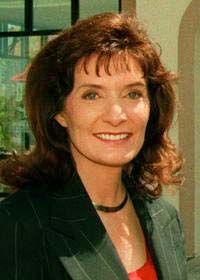 With a Latina co-owner of the Rockies - the first in Major League Baseball - and 14 Latino players, including several credited with key roles in propelling the Rockies to the World Series, fans across the ethnic divide have taken to cheering on their team in unison. With a Latina co-owner of the Rockies - the first in Major League Baseball - and 14 Latino players, including several credited with key roles in propelling the Rockies to the World Series, fans across the ethnic divide have taken to cheering on their team in unison. With a Latina co-owner of the Rockies - the first in Major League Baseball - and 14 Latino players, including several credited with key roles in propelling the Rockies to the World Series, fans across the ethnic divide have taken to cheering on their team in unison. As Rockies co-owner Linda Alvarado puts it, baseball evens out the disparities that can plague those of different races and ethnicities, on and off the diamond. |
"You have a level playing field in baseball. Everybody gets three strikes and four balls," she said. That's why some disadvantaged Latino youngsters were invited to accompany Alvarado at a home World Series game. "I hope to open their eyes to more than a sport," Alvarado said. "I want to show them how to get into the big leagues." And that's part of the reason the Rockies have been courting the Latino demographic in a concerted way. For the past five years, each September at Coors Field has been celebrated as Hispanic Heritage Month. The ball club recognizes one person with an adult leadership award and a number of students in a youth essay contest. For the adult award, the eight to 11 finalists are lined up on the field at a game, and their contributions are listed. This year, Fidel Ortega, a Commerce City police officer who works with at-risk youths, won the honor. This season's essayists wrote about their heroes after their teachers presented a Rockies-generated lesson plan based on baseball great Roberto Clemente. Each participating elementary and middle school sent its top three essays, and a Rockies committee picked winners from each grade. These Latino recognition programs have been so successful that Rockies senior director of advertising and marketing Jill Roberts said they are being used as a template for a Black History Month recognition and eventually for events tied to other ethnic groups. Demographic is important but this is the season - and the series - that put the focus on the Latino players. The Rockies' 40-man roster has Latino players from Mexico, the Dominican Republic and Venezuela, thanks to a Rockies academy in the Dominican Republican that nurtures promising young ballplayers from Latin America. "Many Latinos get a sense of pride any time you see someone with a Hispanic surname doing something of note," said Rich Baca, a Grand Junction staff member for Rep. John Salazar. "It's a wonderful thing http://www.denverpost.com/portlet/article/html/imageDisplay.jsp? contentItemRelationshipId=1704638http://www.denverpost.com/ portlet/article/html/imageDisplay.jsp?contentItemRelationshipId=1704638 Robert and Linda Alvarado, who bought 52 pizza huts in New Mexico, and now own 130 Taco Bells, Pizza Huts and KFCs. (Post / John Prieto)the Rockies have so many Latino players." "I like the Mexicans," said Victor Garcia, a recent Mexican immigrant and waiter at a Mexican restaurant in Fruita. He said he had never paid much attention to baseball before but was trying, between serving margaritas, to keep track of a game on a TV mounted next to a religious shrine over the bar at Fiesta Guadalajara. |
Immigrant gardeners provide seed money for college scholarships Tyche Hendricks, Chronicle Staff Writer http://www.sfgate.com/cgi-bin/article.cgi?f=/c/a/2007/10/15/MNKOSNTR4.DTL Catalino Tapia came to the United States at age 20 with $6 in his pocket. He worked hard, as a baker and a machine operator, and eventually started his own gardening business. He and his wife bought a home in Redwood City and raised their two sons, putting the eldest through college. Though he never studied beyond sixth grade, Tapia was so inspired to see his son, Noel, graduate from Boalt Hall School of Law at UC Berkeley that he decided to help other young Peninsula people make it to college. Now 63, the Mexican immigrant is giving back to the country he says has given him so much. With legal help from his son, Tapia established a nonprofit corporation, the Bay Area Gardeners Foundation, and recruited a dozen other immigrant gardeners to join the board. This year, the foundation gave out nine scholarships of $1,500, almost double what it distributed in 2006, its first year. With his callused hands and burly shoulders, the Michoacán native does not fit the typical image of a philanthropist. When Tapia approached the Silicon Valley Community Foundation for a grant to help strengthen the fledgling organization's capacity, he was told the agency had never seen a foundation started by gardeners before. "Well," he replied, "We'll be the first." When most people think of a philanthropist, they are likely to think of a society matron or millionaire business mogul, said Manuel Santamaría, a program manager at the community foundation. "In fact, taking tamales to the church potluck or reading in the classroom - all those little acts are philanthropic," said Santamaría. "Philanthropy means love of humankind. We've got to spin a much better view of what immigrants are contributing. ... And Catalino is taking it to a different level." Tapia expresses a vision - of passing along the prosperity he has earned, drawing community members together for a shared goal and being accountable for the well-being of the next generation - that is eminently philanthropic. "I believe the education of our young people isn't just the responsibility of their parents, especially in the Latino community where some parents work two or three jobs," he said. "It's our obligation as community leaders, because young people sometimes wander without guidance." Many immigrant parents arrive with little schooling and don't always understand the importance of college, he said, but children who get an education can contribute much more to this country than those who don't. One beneficiary, Gloria Escobar, 19, figured out early that college would be the key to her success. Her parents, educated as far as middle school in Mexico, were supportive but could offer little advice or financing. So Escobar, who lives at home in Redwood City, followed her sister to community college in San Mateo County. But the architecture classes she sought weren't available there. A scholarship from the gardener's fund allowed her to enroll as well at City College of San Francisco - and cover the cost of the commute - where she is earning architecture credits that she hopes will help her transfer one day to Cal Poly or UC Berkeley. "This was the first scholarship I've gotten," said Escobar. "It's something that would benefit a lot of kids. I know a lot of people in college who want to transfer, but they can't afford to." At Cañada College, just over the hill from Tapia's home, most students, like Escobar, juggle their studies with part-time or full-time jobs, said President Tom Mohr. Even a modest scholarship can allow a student to spend fewer hours working and devote more time to studying, perhaps taking 12 units a semester instead of six, he said. The Gardeners Foundation is a wonderful example for the students, Mohr said. "It's extraordinary to see a body of people who are struggling to make it in America also struggling for other people's children. ... Is that not grasping the American dream?" Tapia is pleased to have a burbling fountain, a grandfather clock and a view of the bay from his Redwood City ranch house, but material comfort has never been enough to satisfy him. So over the years he and his wife, Margarita, have been involved with holiday food drives, neighborhood park cleanups, the North Fair Oaks Community Festival and now the scholarship fund. Sitting at his dining room table, he tried to describe what prompted him to start the scholarship fund. He sprang up and walked into the den, where Noel's three diplomas are hung on the wall in great gilt frames: a B.A., an M.A. and a J.D. "When he got his law degree, I was floating in the clouds," Tapia said. Suddenly his eyes brimmed with tears. "The more I thought about it, the more I wanted to do something. I got this idea that I could help other students go to college." The gardeners raise money for the scholarship fund by hosting dinners and requesting donations from local businesses and their gardening clients. When it came to writing thank you notes, though, Tapia was self-conscious of his blocky grade-school penmanship, so he recruited neighborhood teenagers to help him. San Mateo resident Valerie Constant, who has employed Tapia as her gardener for five years, said she and her husband now make annual contributions not only to Stanford, their alma mater, but the Gardeners Foundation. "We've given to Catalino ... because we think it's such a fabulous thing he's done," she said. "I wish more people knew about it." Another gardening client and scholarship donor is so excited about the fund, he's planning a cocktail party to invite his wealthy friends to donate. The Gardener's Foundation is not the only source of private scholarships for Peninsula teens. The Silicon Valley Community Foundation administers several, as does the Chicana Latina Foundation in Burlingame. Then there are the big, competitive grants like the Gates Millennium Scholars and the Dell Scholars programs. The Gardeners Foundation is one of the few, however, that doesn't ask whether a student is a legal resident. And that's a blessing for many immigrant students whose parents brought them to the United States illegally. Tapia enthused about one such student, the daughter of a janitor and a hotel maid, who is attending Mills College with help from the foundation, among other scholarships. "She has such intelligence and a tremendous desire to succeed," he said. "I think one day, I hope it happens, this country will open opportunities for students like that." In Washington, Senate Democrats hope for a renewed debate later this fall on the DREAM Act, a long-stalled bill that would offer legal residence to undocumented students who grew up in the United States and are bound for college or the military. Closer to home, a bill dubbed the California Dream Act would have made some state financial aid available to undocumented college students, but Gov. Arnold Schwarzenegger vetoed it Saturday. For Latino high school students, the main group Tapia's fledgling foundation has reached so far, the need is great for financial help with college. Only 13 percent of U.S.-born Latino adults in California have a bachelor's degree, according to the nonpartisan Public Policy Institute of California. For immigrant Latinos, the figure is 5 percent. Alberto Urieta, an 18-year-old from East Palo Alto, was born in the United States. His father, an electrician, died in an industrial accident when Urieta was 12. His mother works two jobs, at a day-care and a Red Lobster restaurant. Though frequent moves forced Urieta to switch schools several times, he managed to keep his grades up, and last month he started his first quarter at UC Santa Cruz, where he hopes to major in molecular biology. "I guess I've got my father's ambition, because he came to this country and he got his high school education. I want to better myself just like he did," he said. "To receive a scholarship is so much help because the books are so expensive, but also it gives us a feeling that we're not alone; that someone wants us to make our dreams a reality." That's what Tapia had in mind when he started the foundation from his dining room table. So far the Gardeners Foundation has only publicized its scholarships through schools and community colleges in San Mateo County, but it is open to low-income students around the Bay Area, Tapia said. Applicants must have a GPA of 2.5 or better and commit to doing 20 hours of community service annually, he said. "It's a little seed we're planting," he said. "And it will eventually grow a garden of students, and it will flower and bear fruit." For more information on the Bay Area Gardeners Foundation: catalinotapia@sbcglobal.netBay Area Gardeners Foundation, P.O. Box 3446, Redwood City, CA 94064 Phone: (650) 670-2566 Dorinda Moreno
|
|
A growing percentage of the billions of dollars Central America receives from émigrés abroad is coming from Europe, illustrating a dramatic new shift in migration away from the United States, a new study released Tuesday shows. An IDB survey of 3,403 Central Americans showed 81 percent of the remittances they got came from the United States, down from 96 percent just four years ago. The shift underscores the immigration boom in Spain, which in 2005 legalized some 800,000 undocumented immigrants. The shift is most dramatic in Honduras, where 16 percent of those surveyed said their remittances came from Europe, according to the study, which was presented on the concluding day of the 41st Annual Assembly of the Latin American Federation of Banks in Miami. ''Many immigrants are now going to Spain, Portugal and Italy, where they treat them much better, don't abuse them and treat them with more respect,'' said pollster Sergio Bendixen, who conducted the survey for the IDB. ''One of the things we have seen in our study is the United States is losing the battle in attracting Latin Americans to the United States,'' Bendixen said. Sooner or later, the United States will suffer the consequences of a deficit of low-skilled labor, he said. ''It could be that lettuce will become more expensive than caviar,'' Bendixen added. While experts said the shift is significant, its effect on the U.S. economy is difficult to determine. If more remittances are coming from Europe, presumably more low-skilled workers are headed there as well, experts said. ''If you are pro-growth for the U.S. economy, you must be pro-immigration, because we need the workers,'' said Donald F. Terry, of the Inter-American Development Bank. Remittance expert Manuel Orozco of the Inter-American Dialogue think tank in Washington said sample surveys often over-represent new trends, and that it's unlikely that only 81 percent of Central America's remittances are coming from the United States. ''I think the survey reflects a shift in the trend,'' he said. ``I think people are increasingly going other places, and, on top of that, people here feel less confident sending money.'' Other key findings of the study: • In 2003, people said they received remittances about every two months; now it's every month. • In Guatemala and El Salvador, remittances have almost doubled in the past four years, while in Honduras, they have tripled. • With $4 billion in remittances sent each year, Guatemala leads Central America in the amount of money pouring in from abroad. • The average amount sent each month is $240, with El Salvador leading the pack at $300 a month. • Four million Central Americans receive remittances: 58 percent of them women, and 55 percent between the ages of 18 and 34. • Although 56 percent of the people surveyed picked up their money at a bank, most do not have accounts there, showing the banking industry is letting a key business market slip away. The poll surveyed 3,403 people from July 16 to Sept. 4 this year, and has a margin of error of plus or minus two percent. Sent by Howard Shorr
|
|
Anti-Spanish Legends |
| PBS The Last Conquistador |
PBS is supposedly going to air The Last Conquistador created by one John Valadez, a New Yorker. Some of us previewed the program on Saturday and were astonished by its basic approach. It starts off with Spanish war dogs being set on Indians then it goes to the drawings of Spaniards cutting off Indian feet. Then it goes on to the Houser statue and its creation for El Paso. But the show is mostly devoted to a handful of Acoma Indians who are against Oñate with tinges of Hispanophobia in general. While there are many Hispanic groups in the country, no group was exempt from the general tone of denigrating Hispanic people When we in the New Mexican Hispanic Culture Preservation League got involved with the filming we were assured it would be a fair representation. It isn't. It has to do mostly with the views of a few militants, basically from Acoma Pueblo, which are based on "Tree of Hate" history. Everything is related to "foot cutting" and genocide of Acoma Indians. Apparently these individuals have been nurtured on BLACK LEGEND history that one finds in most publications and university classrooms. Their constant complaint is that ONATE WAS A HITLER and shouldn't be honored. The only way that this gets aired is that most people have no particular knowledge of New Mexico or Southwest history. While most adults might be able to handle themselves in a confrontation, youngsters in school will not be able to handle this assault on Hispanos, their history and culture. This program, if it gets into the schools, will certainly cause the loss of what little self-esteem Hispanic students might have left. I don't know when this powerful film will be aired by PBS. Ken Burns left us out of WW II but our entire Spanish history and heritage has been denigrated beyond belief by Valadez and his THE LAST CONQUISTADOR. If I had the money, I would file a class action defamation suit against Valadez and PBS if it airs the show. By all means, see it so you can begin to understand how horrible Hispanic people have been. Then ask about the founding of Jamestown, Va., and where are the Indians who used to live there? These things are never brought up. Rubén Sálaz M. Bios on both the artists does not indicate any historic scholarship. It appears to be another case of Ken Burns, artists presenting the world with their specific perspective. . http://www.thelastconquistador.com/lastconquistador/thefilmmakers.html
|
| Military and Law Enforcement Heroes |
|
Hispanic Medal of Honor
recipients, Part 10 |
|
Army and Navy (Marine Corps) Medals of Honor Hispanic Medal of Honor recipients Part 10 By Tony (The Marine) Santiago This is the tenth part of the Hispanic Medal of Honor series which consists of the short biographies of Vietnam War recipients Euripides Rubio*, Hector Santiago-Colon* , Elmelindo Rodrigues Smith* and Jay R. Vargas Jr. In this, the tenth part of the Hispanic Medal of Honor series you will read of the heroic acts of two Puerto Ricans, recipients Capt. Euripides Rubio and Sp4c Hector Santiago-Colon. It is a sad reality that these two men, like all the other Puerto Ricans who have given their lives for the United States were American citizens who were not allowed to vote for the President of the United States whose actions sent them to combat in the first place. Some things are just not right. You will also read about a Marine of Mexican descent who survived the war and retired with the rank of Colonel. Finally, you will read about a Hispanic whose heritage was unknown, a case similar to David B. Barkley. During my research for various articles, I have uncovered the Hispanic heritage of many of our military heroes whose names and surnames are of non-Hispanic origin, but who are no less Hispanic then any of who do have Hispanic surnames. We must always remember that Hundreds of families of non-Hispanic origin moved to Latin American during the mid 19th Century, fleeing from the economic and political changes occurring in Europe. These families from Germany, France, Italy, Ireland etc. not only made positive contributions to our "Latin" culture, but most intermarried with the locals. We mustn’t forget the many of our people have also immigrated to the United States and in many cases have intermarried with non-Hispanics, yet their off springs are considered Hispanics. Therefore, you can imagine how proud I felt when I found out that heroes such as Brigadier General Mihiel "Mike" Gilormini, Rear Admiral George E. "Rico" Mayer, Colonel Virgil Rasmuss Miller , Rear Admiral Frederick Lois Riefkohl and Captain Humbert Roque "Rocky" Versace are believe it or not are Hispanics mixed with non-Hispanic heritage. Which brings me to discuss the case of one of our heroes of Hispanic descent , S/Sgt. Elmelindo Rodrigues Smith who has a non-Hispanic second surname. Rodrigues Smith’s case is similar to World War I Medal of Honor recipient Pvt. David B. Barkley whose Hispanic roots were unknown until it was discovered that the "B." in his name stood for "Benes" which was his mothers surname proving his Hispanic heritage. In 1899, Puerto Rico's sugar industry was devastated by two hurricanes. The devastation was such that as a result there was a world wide shortage in sugar and a huge demand for the product from Hawaii. Hawaiian sugar plantation owners began to recruit the jobless, but experienced laborers in Puerto Rico, especially from the southwestern region of the island where the surnames of Rodriguez and Rodrigues are common (similar to the variations of Gonzalez and Gonzales). According to the State of Hawaii Data Book 1982, by the year 1910, there were 4,890 Puerto Ricans living in Hawaii, among them John Rodrigues from Ponce, Puerto Rico who was Elmelindo Rodrigues Smith’s ancestor. Rodrigues is a common surname in Wahiawa, Hawaii and it is a common practice to use the surnames of both parents as is the custom in most Hispanic cultures. During the 1960’s the term Hispanic did not exist and when you joined the Armed Forces of the United States, it would be a common practice for us "Hispanics" to use only one surname (the second one) and classify ourselves as "Caucasian" in our applications, hence: Elmelindo Rodrigues Smith’s name appeared as "Name: Elmelindo R. Smith" and his "Race: Caucasian" in his military records making it difficult to discover his Hispanic heritage until now. Therefore, when we talk about our heroes let us always remember and include Rodrigues Smith who, despite the fact that his surname is non-Hispanic, was just as much a Hispanic as Medal of Honor recipients David B. Barkley, Lucian Adams, Miguel Keith, Louis R. Rocco and Humbert Roque Versace who were Hispanics with non-Hispanic surnames. Note: "*" after a name indicates that
the person was awarded the Medal of Honor posthumously.
Captain Euripides Rubio (March 1, 1938 – November 8, 1966), born in Ponce, Puerto Rico, was a United States Army captain who was posthumously awarded the United States' highest military decoration for valor — the Medal of Honor for actions on November 8, 1966 during the Vietnam War. Rubio was a member of the U.S. Army, H&H Co., 1st Battalion, 28th Infantry, 1st Infantry Division, RVN. Action in Vietnam: On November 8, 1966 at Tay Ninh Province in the Republic of Vietnam, Captain Rubio's company came under attack from the North Vietnamese Army; leaving the safety of his post, Rubio received two serious wounds as he braved the intense enemy fire to distribute ammunition, re-establish positions and render aid to the wounded. Despite his pain, he assumed command when a rifle company commander was medically evacuated. He was then wounded a third time as he tried to move amongst his men to encourage them to fight with renewed effort. While aiding the evacuation of wounded personnel, he noted that a U.S. smoke grenade, which was intended to mark the Viet Cong's position for an air strike, had fallen dangerously close to friendly lines — he ran to move the grenade, but was immediately struck to his knees by enemy fire. Despite his wounds, Rubio managed to collect the grenade and run through enemy fire to within 20 meters of the enemy position and throw the by-then already smoking grenade into the enemy before he fell for the final time. Using the now-repositioned grenade as a marker, friendly air strikes were directed to destroy the hostile positions. Captain Rubio's singularly heroic act turned the tide of the battle, and for his extaordinary leadership and valor, he was posthumously awarded the Medal of Honor. His remains were buried in Puerto Rico National Cemetery in the city of Bayamón, Puerto Rico. Medal of Honor citation: RUBIO, EURIPIDES Rank and organization: Captain, U.S.
Army, Headquarters and Headquarters Company, 1st Battalion, 28th
Infantry,1st Infantry Division, RVN. Citation: Military decorations awarded: Badges: In memory:
Hector Santiago-Colon* By: Tony (The Marine) Santiago
Specialist Fourth Class Hector Santiago-Colon (December 20, 1942 – June 28, 1968) born in Salinas, Puerto Rico, is one of five Puerto Ricans who have been posthumously presented with the Medal of Honor, the highest military decoration awarded by the United States. His actions on 28 June 1968 during the Vietnam War saved the lives of his fellow comrades. Action in Vietnam Santiago-Colon was in the U.S. Army, Company B, 5th Battalion, 7th Cavalry, 1st Cavalry Division. On June 28, 1968, at Quang Tri Province, in the Republic of Vietnam, an enemy (North Vietnamese) soldier lobbed a hand grenade into Santiago-Colon's foxhole. Realizing that there was no time to throw out the grenade, he tucked it in to his stomach and turning away from his comrades, absorbed the full impact of the blast, sacrificing his life to save his fellow soldiers from certain death. Santiago-Colon was posthumously awarded the Medal of Honor for conspicuous gallantry and intrepidity in action at the risk of his own life above and beyond the call of duty. The award was present to his family in a ceremony at the White House by President Richard M. Nixon on April 7, 1970. His remains are buried in the city of Salinas, Puerto Rico. Medal of Honor citation: SANTIAGO-COLON, HECTOR Rank and organization: Specialist
Fourth Class, U.S. Army, Company B, 5th Battalion, 7th Cavalry, 1st
Cavalry Division (Airmobile). Citation: Military decorations awarded: Badges: In memory: On July 1975, The Puerto Rican National Guard renamed their base "Camp Salinas", which is located close to Santiago-Colon's birth town, with the name "Camp Santiago" in his honor. He was the second Puerto Rican to be so honored. The first Puerto Rican who has a base named after him is Marine PFC Fernando Luis Garcia, who was the first Puerto Rican Medal of Honor recipient. The base is "Camp Garcia" located in the island municipality of Vieques. Santiago-Colon's name on the Vietnam Veterans Memorial is located at Panel 54W Line 013. Santiago-Colon's name is also inscribed in "El Monumento de la Recordacion" (Monument of Remembrance), dedicated to Puerto Rico's fallen soldiers and situated in front of the Capitol Building in San Juan, Puerto Rico.
Elmelindo Rodrigues Smith* By: Tony (The Marine) Santiago
Staff Sergeant Elmelindo Rodrigues Smith (July 27, 1935-February 16, 1967) born in Wahiawa, Hawaii, was a United States Army soldier, of Hispanic-Asian descent, who was posthumously awarded the Medal of Honor for his actions in the Vietnam War. Despite being severely wounded, Smith inspired his men to beat back an enemy assault. Early years During his stay in Okinawa, he met a Hawaiian born WAC by the name of Jane and soon they were married. They established their home in a military post in Tacoma, Washington and had two daughters. Vietnam War On February 16, 1967, Sergeant Rodrigues Smith was leading his platoon in a reconnaissance patrol, when suddenly it came under attack. NVA forces attacked the patrol with machinegun, mortar and rocket fire. Despite the fact that he was wounded, he coordinated a counterattack by positioning his men and distributing ammunition. He was struck by a rocket, but continued to expose himself in order to direct his men's fire upon the approaching enemy. Even though he perished from his wounds, his actions resulted in the defeat of the enemy. For his actions, he was recommended for the Medal of Honor. The family received the medal from the hands of Secretary of the Army Stanley R. Resor because President Lyndon B. Johnson was ill at the time. However, after the ceremony, which was held at the White House, the family which included his widow Jane and two daughters, Kathleen 10 and Pamela 6, were taken to President Johnson's bedroom. Medal of Honor citation: SMITH, ELMELINDO RODRIGUES Rank and organization: Platoon
Sergeant (then S/Sgt.), U.S. Army, 1st Platoon, Company C, 2d Battalion,
8th Infantry, 4th Infantry Division. Citation:
Postscript S/Sgt. Elmelindo Rodrigues Smith's remains were buried with full military honors in the National Memorial Cemetery of the Pacific located in Honolulu, Hawaii. His name is inscribed in the Vietnam War Memorial located in Washington, D.C. in Panel 15E - Row 051. Awards and Recognitions: Foreign unit decorations: Jay R. Vargas By: ERcheck
Colonel Jay R. Vargas, USMC (retired) (born 1938) is a Medal of Honor recipient for his actions during the Vietnam War. He is one of four brothers who has served in the United States Armed Forces in time of war. Like Colonel Vargas each of his brothers are decorated veterans — Angelo, Iwo Jima, World War II; Frank, Okinawa, World War II; and Joseph, Korean War. In honor of his mother, Vargas had her name engraved on his Medal of Honor. Biography Jay Vargas was born on July 29, 1938 in Winslow, Arizona and attended high school there, where he was an outstanding athlete, achieving All-State recognition in two sports. Attending Arizona State on an academic and athletic scholarship, he graduated in 1962 with a B.S. Degree in Education. He completed his Master of Arts Degree with "Honors" at the U.S. International University, San Diego, California. After completing The Basic School at Marine Corps Base Quantico, Virginia, in June 1963, he was assigned to the 1st Battalion, 5th Marines, 1st Marine Division. He is also a graduate of the Amphibious Warfare School, the Command and Staff College, Quantico, Virginia, and the National War College, Washington, D.C. Colonel Vargas has served successfully as a Weapons and Rifle Platoon Commander; Rifle Company Executive Officer; three times as a Rifle Company Commander (two of which were in combat); S-3 Operations Officer; Recruit Depot Series Commander; Instructor, Staff Planning School, LFTCPAC; Headquarters Company Commander, 3rd Marine Division; Commanding Officer and Executive Officer, 3rd Reconnaissance Battalion, 3rd Marine Division; Aide-de-Camp to the Deputy Commanding General, Fleet Marine Force, Pacific; Marine Officer Instructor, NROTC Unit, University of New Mexico; Head, Operations Branch, Headquarters Marine Corps, Washington D.C.; and as the Assistant Chief of Staff, G-4, 1st Marine Amphibious Force. For his actions at Dai Do, Republic of Vietnam in 1968, Major Vargas was awarded the Medal of Honor by President Richard M. Nixon in a ceremony at the White House in May 1970. Medal of Honor citation: MAJOR JAY R.
VARGAS
After over thirty years of service in the Marine Corps, Colonel Vargas retired in from the Marine Corps in 1992. Retirement After retirement, Vargas served as the Secretary of the California Department of Veterans Affairs from 1993 to 1998. On July 9, 2001, Colonel Vargas was appointed to the position of Regional Veterans Liaison for the Department of Veterans Affairs (VA) by the Secretary of Veterans Affairs, Anthony J. Principi. Honors: Colonel Vargas is one of a few recipients in the United States to be awarded the American Academy of Achievement’s "Golden Plate Award" presented to national leaders in all professional fields. He has also received the National Collegiate Athletic Association’s Commemorative Plaque presented by the United States Collegiate Athletic Directors and Coaches, in Houston, Texas, for excelling in collegiate athletics and having made a significant contribution to his country.
_______________________________________________________________________________ To all of you< I would like to wish you a "Merry Christmas" and a "Happy New Year" . To those who do not believe in "Christmas", I would like to wish you a "Happy Holidays" I hope that you all are enjoying this series. In next months issue (Next Year) of "Somos Primos" you will learn about Humbert Roque Versace* and Maximo Yabes* , plus I will talk about three other Hispanic heroes whom I believe deserve the Medal of Honor.
|
|
When in England at a fairly large conference, Colin Powell was asked by the Archbishop of Canterbury if our plans for Iraq were just an example of 'empire building' by George Bush. He answered by saying, 'Over the years, the United States has sent many of its fine young men and women into great peril to fight for freedom beyond our borders. The only amount of land we have ever asked for in return is enough to bury those that did not return.'
It became very quiet in the room.
************************************************************ Then there was a conference in France where a number of international engineers were taking part, including French and American. During a break one of the French engineers came back into the room saying 'Have you heard the latest dumb stunt Bush has done? He has sent an aircraft carrier to Indonesia to help the tsunami victims. What does he intend to do, bomb them?'
A Boeing engineer stood up and replied quietly: 'Our carriers have
three hospitals on board that can treat several hundred people; they
are nuclear powered and can supply emergency electrical power to shore
facilities; they have three cafeterias with the capacity to feed 3,000
people three meals a day, they can produce several thousand gallons of
fresh water from sea water each day, and they carry half a dozen
helicopters for use in transporting victims and injured to and from
their flight deck.. We have eleven such ships; how many does
France have?'
Once again, dead silence.
************************************************************* A U.S. Navy Admiral was attending a naval conference that included Admirals from the U.S., English, Canadian, Australian and French Navies. At a cocktail reception, he found himself standing with a large group of Officers that included personnel from most of those countries. Everyone was chatting away in English as they sipped their drinks but a French admiral suddenly complained that, whereas Europeans learn many languages, Americans learn only English.' He then asked, 'Why is it that we always have to speak English in these conferences rather than speaking French?' Without hesitating, the American Admiral replied 'Maybe it's because the Brits, Canadians, Aussies and Americans arranged it so you wouldn't have to speak German.
You could have heard a pin drop
Sent by Janete Vargas magnaguagno@gmail.com
|
|
Patriots of the American Revolution |
| Pensacola Galvez Conference, 7 May
1981 Acto Homenaje a Bernardo de Galvez Spanish Patriots of Peru During the American Revolution |
|
Photo taken during the Pensacola Galvez Conference, 7 May 1981.
Dr. Eric Beerman delivered a paper on Solano and the Spanish Navy at
the Battle of Pensacola. |
|
Hello, Here is a link to photos of the "Acto Homenaje a Bernardo de Galvez" in Washington DC, Oct 29th 2007. The Spanish Embassy and Military Attache honored General Bernardo de Galvez memory and contributions to the American Revolution. Members of the Spanish Louisiana Regiment were part of the ceremony's Honor Guard. http://www.agredwas.org/BernardoGalvez/Bernardo.htm Saludos, Eliud Bonilla ebonilla@gmu.edu |
|
SPANISH PATRIOTS OF PERU
DURING THE AMERICAN REVOLUTION |
| Doing My Part Tamale Day: An Appreciation of My Ethnic Background Thanksgiving memories: An innocent question Los Cuentos de Kiko |
|
Remember
Wake
--"A Book Club Must."
This is the true story of the American men taken prisoner on Wake
Island and the women they left behind. Dancing
in Combat Boots: and Other Stories of American Women in WWII -"Poignant
and Inspiring." Teresa
R. Funke |
|
By Marissa Warden I awaken to the clattering of pots and pans and the gentle lull of classical Mexican guitar while a spicy aroma tickles my nose arousing my memory. As I make my way down stairs I am welcomed by the sight of my dad, already on the phone with his sister, confirming the tamale recipe and chopping onions. He’s been preparing food all morning; there are bowls of peppers and spices lining the counter, highlighted by a mountain of cornhusks waiting to be cleaned. This image is so familiar and comforting, and I know exactly how it will play out. It’s tamale day. My dad is Mexican, so on Thanksgiving weekend we make tamales as a family. It’s our family ritual. When I was little, I didn’t appreciate the fact that I was Mexican, I was embarrassed by it, and I never really wanted to participate in any of the traditional customs. I loved my dad, and his family, but I was content to consider myself an American, I didn’t feel defined or influenced by my ancestors and their ways. I was always very stubborn and independent and felt I could build my own life without any ties to the past. But I’ve grown since then, and I’ve come to embrace and accept my ethnicity, for I now realize that in knowing about my background I can only grow as a person, instead of being limited by my self-induced segregation. Through cooking with my dad, I think I was able to come to terms with my ethnicity as well as gain a better understanding of my dad and where he comes from. Cooking for him is a very personal thing, cathartic even. It’s our time to bond, especially on tamale day, because making tamales has a certain cultural significance that seems to underscore the Mexican tradition he hopes to share with me. When we make tamales, my dad becomes excessively Mexican. It’s as if he has another personality that only comes out when he talks about his parents. He glows with joy, as he recalls events from his childhood. I’ve heard countless stories about his parents and the trials they faced during the Mexican Revolution. I never met my grandparents because they both died before I was born, so all I have of them is my dad’s memories. He paints these pictures of my grandmother as a strong independent woman, and the most amazing cook. He tells me I remind him of her. Tamales were never my favorite food. However, since they were an important family tradition, I decided that it was important for me to learn how to make them so that eventually I could pass this ritual on to my children someday. Making tamales every year is not unique to my family; it’s a traditional Mexican custom to make tamales to be eaten on Christmas Eve. Knowing that our ritual is something bigger than just my family creates a feeling of inclusion and a sense of cultural unity. My aunts in California gather together every year to make many tamales to be shared among the family. I know my dad wishes he could be there with them, but since we live in Minnesota, that’s not possible. This is why it is so important to him that we have our own tamale tradition. In recent years we’ve added a new member to our tamale family. Our friend Anne also enjoys making tamales, but like us, she also lives far away from her family. I like that Anne joins us each year, it reminds me that other people also enjoy tradition as a celebration of their ancestral culture. My dad uses the recipe he learned from his mother as a boy. We even send to California for the chilies to create the perfect sauce. The dried chilies are roasted so that they produce a strong, almost choking smell that takes over the entire house. But it’s not the process of making the tamales which makes the event special, rather, it’s the family involvement as we gather together to share in one another’s company. As my dad tells his stories and dances and makes a big fuss over doing it all just right, my mom and I spread the sticky masa on the cornhusks. I usually do it wrong and my dad insists on helping me. The meat is my grandmother’s secret recipe and the heart of the tamales, my dad slaves over it all day and then carefully layers the spicy meat onto the masa-covered cornhusks before they are rolled and then finally steamed to perfection. While the tamales steam, and my dad makes the beans and rice, my mom reads the book "Too Many Tamales" to my brothers and me. It was a ritual we started when we were very young, but even though we are now too old for children books, she still reads it for sentimental reasons. As I listen to the story, I recall images and feelings from my youth. I remember cuddling up to my mom, her voice calming and delicate, as she told the tale of a young girl who tried on her mother’s wedding ring while she was making Christmas tamales. I remember how I laughed when the girl thought she lost the ring in the mess of masa, and then went on to eat all of the tamales with her cousins in search of the ring, only to find that her mother had discovered the ring before the tamales were cooked. I remember feeling so small and safe listening to the hum of my mom’s voice, believing I would never grow up, but of course I did. And now, I think about the future, there will come a time when I will be too old to listen to my mom read the story, then what? Will our ritual be lost? Will the joy of my childhood be found only in the memories? I hope not. One day, I would like to pass on the tamale tradition to my children, so that they might learn about their culture and grow like I did. I want them to hear the stories of my grandmother and eat her tamales and listen to me read them the book Too Many Tamales. I want to share with them the experiences I had as a young girl, and give them a tie back to their ancestors through the simple task of making tamales. When the tamales are finally done, we all sit down as a family and eat our delicious reward. The flavors meld together forming the perfect combination of spicy meat and salty masa. With each bite I think of everything that went into making the tamales. I think of all the things I’ve learned over the years, about how to make the masa the perfect consistency and how to carefully peel the chilies. And then I think of my grandmother; she comes to life in my imagination. I watch my dad’s memories play out like a movie: she’s in her small kitchen, her long dark hair is pulled back into a bun at the nape of her neck and she is kneading dough for tortillas. A dusting of flour covers the counter as she manipulates the dough with her graceful fingers, creating perfectly round tortillas. And then another image of her younger self permeates my mind. She is working the fields, bending over in the hot sun to pick ripened strawberries. My grandmother is beautiful in spite of her circumstances and she is not bitter. Born into wealth and privilege, my grandmother’s life turned upside down during the Mexican Revolution and she was forced into migrant work just to survive. Her life was nothing short of inspiring. More images flash by and a sense of longing overcomes me. With every memory I feel closer to my grandmother and thus closer to my Mexican heritage. How could I be embarrassed by or apathetic towards my culture after understanding the hardships my grandmother overcame? Through her actions she became for me a symbol of empowerment, pride, determination, and most importantly a symbol of my culture. The more I learned about my grandmother, the more I grew to appreciate my Mexican heritage for I realized that in rejecting my culture I was rejecting my family. We cook, we eat, we laugh, we experience, remember and honor our culture as we make tamales as a family. This ritual is given meaning by the memories made, and time shared together. And it is strengthened by the fact that we are not alone in this tradition, my family and I are only a few among many Mexicans who make tamales every year to celebrate Christmas. About the Author: Marissa Warden, of North Mankato, Minnesota, is a first-year student at Creighton University in Omaha, Nebraska. She is currently studying English and Political Science. Marissa has a very diverse ancestry, with ancestors from Valle de Santiago and Dolores Hidalgo, Guanajuato; Hostotipaquillo, Jalisco; Girst, Luxembourg; and the Rhine Valley of Germany. The paternal grandmother that Marissa speaks of is Victoria Ledesma,
who was born on Dec. 23, 1908 in Valle de Santiago, Guanajuato, the
daughter of Juan Tiburcio Ledesma and Victoria Rea. Victoria died on
October 1, 1966 in Los Angeles, twenty-two years before Marissa was
born.
|
| Thanksgiving
memories: An innocent question When my brother, Joseph, was four, we were invited to spend Thanksgiving with an aunt and uncle and many cousins. Shortly after our arrival, a neighbor arrived, carrying a baby, wrapped in a multicolored blanket. Oohs and ahhs followed the bundle as it was passed around the living room from person to person. Everyone got a turn, even me. "Do you want to see the baby?" I asked Joseph. He nodded shyly and clung to my leg while I showed him the bundle. A few minutes later, I took my brother outside to play while the women prepared food and the men played poker. We were playing catch when my cousin, David, yelled, "Come inside. Grandpa's going to say grace." We pushed our way into the dining room and stood in near silence as my aunt carried the brown turkey on a large platter. Oohs and ahhs followed the steaming fowl as it was passed around for all to see. It was placed on the table next to my uncle, who bowed his head to pray. Out of the moment of silence that precedes prayer, Joseph's innocent voice spoke: "Why are we going to eat the baby?" Ben Romero, Fresno Appeared in the Fresno Bee, 11/22/07 Ben is the author of a series of short, humorous, life-stories, Chicken Chisme and Chistes. |
Here is the the latest batch of : Los Cuentos de Kiko http://nuestrafamiliaunida.com/podcast/oral_history.html#kiko I'm so happy to introduce Frank Moreno Sifuentes to the Nuestra Familia Unida podcast community. In this series of Oral History Cuentos expect to hear about one family, but the experiences are those of an immigrant nation. Frank Moreno Sifuentes, 74. Born in Austin, Texas when its opulation was only 38,000 (now around l,000,000!) In l950 joined the U.S. Navy during the Korean War. After getting out fell in love with Sarah Diaz; and married in Compton, CA. We had three daughters and three sons; and now have 11 grandchildren and two great grandchildren. Both of us had careers in human services. After retiring on Social Security we became resident managers for low-income Seniors in l997 and now live at the Patrician Apts. and administer a 87 unit complex. Graduated from UCLA 1962 in History & Spanish. Got a Certificate in Youth Counseling at Arizona State University. Was deeply involved in the Chicano Social Movement 1965 to the present. Have been writing essays, stories, letters, resolutions, press releases since l964. The last 10 years worked as Public Relations & Resource Development for Health Education and Children's Services. ===> "Chicano Mythology 101" by Frank Moreno Sifuentes http://www.archive.org/download/KikoSifuentes/ChicanoMythology10\1.mp3 ===> "Elena Cortez De Luna" by Frank Moreno Sifuentes http://www.archive.org/download/KikoSifuentes/ElenaCortezDeLuna.\mp3 ===> "Hijo De Frank Menendez" by Frank Moreno Sifuentes http://www.archive.org/download/KikoSifuentes/HijoDeFrankMenende\z.mp3 ===> "Juanita Y Jose Montoya" by Frank Moreno Sifuente http://www.archive.org/download/KikoSifuentes/JuanitaYJoseMontoy\a.mp3 ===> "La Muerte - Worst Accident 1" by Frank Moreno Sifuentes http://www.archive.org/download/KikoSifuentes/LaMuerte_WorstAcci\dent.mp3 ===> "La Muerte - Worst Accident 2" by Frank Moreno Sifuentes http://www.archive.org/download/KikoSifuentes/LaMuerte_WorstAcci\dent2.mp3 ===> "Mama Grande Juanita 3" by Frank Moreno Sifuentes http://www.archive.org/download/KikoSifuentes/MamaGrandeJuanita3\.mp3 ===> "Poker Passion 1" by Frank Moreno Sifuentes http://www.archive.org/download/KikoSifuentes/PokerPassion01.mp3\ ===> "Poker Passion 2" by Frank Moreno Sifuentes http://www.archive.org/download/KikoSifuentes/PokerPassion02.mp3\ ===> "Poker Passion 3" by Frank Moreno Sifuentes http://www.archive.org/download/KikoSifuentes/PokerPassion03.mp3\ ===> "Poker Passion 4" by Frank Moreno Sifuentes http://www.archive.org/download/KikoSifuentes/PokerPassion04.mp3\ ===> "Poker Passion 5 - Refujiado" by Frank Moreno Sifuentes http://www.archive.org/download/KikoSifuentes/PokerPassion05_Ref\ujiado.mp3 ===> "Poker Passion 6 - Final" by Frank Moreno Sifuentes http://www.archive.org/download/KikoSifuentes/PokerPassion06_Fin\al.mp3 ===> "Sonny Moreno Death - Conclusion" by Frank Moreno Sifuentes http://www.archive.org/download/KikoSifuentes/SonnyMorenoDeath_C\onclusion.mp3
|
|
Bilingual: |
|
MONJA Y CASADA: VIRGEN Y MARTIR: HISTORIA DE LOS TIEMPOS DE LA INQUISICION by Vicente Riva Palacio, 1868 translation by Ted Vincent |
MONJA Y CASADA, VIRGEN Y MARTIR: HISTORIA DE LOS TIEMPOS DE LA INQUISICION Por Vicente Riva Palacio, 1868 |
|
Below is the first of three chapters in which one of the novel’s lead characters, Teodoro , relates events of his life to his good friend, El Bachelor, a.k.a. "Martin Garatuza, " That name is the title of the second volume of this saga. In 1935 both novels were made into feature films in Mexico, and both were later serialized on the radio. The sequel novel became a telenovela in 1986. The novel “Monja y Casada” is now in its 17th Edition. |
|
|
Chapter XIII, The Story of the Slave My mother, senor, was a slave of the house of don Jose de Abalabide, Spanish merchant who had one of the better general stores one could find on the Plaza Principal. My father, a slave in the same house, had served many years for don Jose and had died a few days before my birth, the consequence of a fall from a horse. My father, senor, the same as my mother, were of royal blood. I tell you this because it explains some of the events of my life that I will give you shortly. My master had no family and lived alone with me and my mother. He was an quite honorable man, good Christian and cared for the poor, although, I have to tell the truth, he had much attachment to the riches that he managed to hoard, living his life economically. As he had no close friends, and had lived many years with his slave, my mother, senor Abalabide doted upon me with much care as I was growing. And as I helped with the chores around the house, my master became more interested in me, and in the nights, after the shop was closed, he amused himself, after counting his rosary, by teaching me to read and write. I reached my 20th year and my master was very content with me, and in turn I devoted myself forcefully to my work and aided him in all tasks. My master could have lived a lavish life, but instead hid his money, putting it away carefully in a place that no one knew. Close to the shop of senor Abalabide was another, that of don Manuel de la Sosa. Either because it was less well known, or not as old, that shop had very few sales, in that almost all the customers came to the one of my master. This caused such despair to don Manuel that he almost never passed in front of the house of don Jose de Abalabide without throwing an insult; but since my master was a man of many years, and of just disposition, he never made the demand for justice. My mother became unable to continue working, and my master decided to buy a slave woman cook he knew, who had a light mulatta who played the role of rascal. The mother was named Clara, and the muchacha Luisa. Luisa was very young, but very graceful. She had been treated quite badly in the house of her former master and was emaciated and sick when she arrived at the home of don Jose. At first I treated Luisa with indifference, then she began to put on weight and act robust, and make herself beautiful, and in short order I was crazy in love with her. The situation led us to enter into romantic relations, and I was about to ask my master for permission to unite with her, when an incident made me hesitate. I had began to observe that Luisa walked more happily and more composed than was her custom, and that she began to show herself in a window that was visible from the home of don Manuel. Deliriously as I was in love with her this caused me much sorrow. She noticed and asked me the cause, laughing at my anguish. “Don’t be an jerk, Teodoro,” she told me, “I don’t want anything but your contentment; all these happenings will make us happier, no need to know more, you’ll see”. I was satisfied with this and decided to make no more complaints and returned to the pleased state that was my custom, and I finally decided to speak with my master. Then one night, as I slept in my usual spot in the back room of the shop, feeling it was a more quiet place, I sensed a noise from inside the house. I arose, without igniting the light and I entered and remained still, evaluating. It seemed the sound came from the room with the window facing the house of don Manuel, and the noise was more perceptible as I approached and entered the room to see to my surprise a woman at the window talking with someone outside. I could have listened without giving them notice of my presence, but the light of the moon penetrated the room and made me recognize Luisa. And in a furious blind rage I hurled myself at her. Luisa, seeing me, gave a shout and the man with whom she was talking fled. “Traitor!” I yelled at her. “Who are you deceiving me with?” Luisa flew at me with the fury of a lion. “And what gives you the right to reprimand me?”she shouted, “Are you my master? Are you my husband? “What guile! Haven’t you said that you wanted me?” “I wanted you, but I can’t say I love you, and I don’t want to be a slave.. A free man loves me, and he wants to buy me and give me my freedom so that I can be his. You can not do this for me. You would leave me a slave, and my children slaves. I don’t want my children to be slaves as were my parents Upon consideration, Luisa had reason. “But did you ever love me, Luisa? “Yes, I loved you. But it is more convenient that I love the one who can give me freedom. Could you give it to me? If you could do it, I will be yours.” I understood the force with which Luisa spoke to me and I almost wept as I replied. “I could not.” “Well, then, if you are as fond of me as you say, don’t deny me that which you can not give.” I could not respond, and I withdrew , silent, a flaming dagger in my heart. I was a slave, and I could not offer any woman that I loved more than my life, that of slavery... Luisa had made me understand the horror of my situation. What to do? There was no alternative but to lose her for ever, and see her in the arms of another. Then the most profound sadness seized my heart and I was almost disabled. Luisa, in spite of all, loved me. But her heart was not good. One day, perhaps having pity on me, she said, “Teodoro, don’t you have a plan for us? Because I can’t stop entirely wanting you.” “What plan?” I asked, “What remedy is there for a slave?” “If you were rich, we could go together far away and live together in a little house, loving one another deeply, caring for our little children.” “But where could I get you this money? “The master is quite rich.” “But he will give us nothing.” “Voluntarily, that’s for sure... But there are other methods”. ‘Luisa!” “Don’t get yourself upset. Think about it. He sleeps alone, his resistance will be impossible. Why is he our master, being the weakest person? With what he has, we will be very happy, think of it.” “No Luisa. For God’s sake, don’t tempt me.” “Luisa didn’t answer me, but I could not sleep for the rest of the night. I would dream of rivers of gold and silver, but mixed with blood; and I would see my master dead from a dagger; afterward I would see myself at the side of Luisa, mine now, and we were not slaves... Finally, I’m not sure how many more thoughts came, what is certain is that I passed the most agitated night in my life. I awoke the next morning and dispensed with the visions. Luisa was each day more beautiful, and managed to provoke my passions in those many ways that she had, in her passing by, the lack of care, the exposure of a well turned leg, lowering her clothing off of her shoulders as if exhausted by fatigue, when she knew that I spied her, she would sing with passion, so that I could hear her ballads and amorous and provocative laments. A moral decline in my soul twisted me into a truly dangerous excitement, that she, in her infernal astuteness knew how to keep alive and give it direction at her convenience, making me unable to solicit from even the slightest favor, forgetting the scene that I had created, asking on my knees for a kiss on her hands, passion drowned in ardor. But Luisa remained inflexible, and to all she answered. “Do you want to be free and rich? I don’t give kisses to cowards.” One night, as I tossed about in my bed, unable to sleep, or to forget Luisa for a moment, I sensed the rubbing of a garment in the doorway and a clear light faintly lit the back room where I slept. I settled in the bed, believing I was dreaming then shook myself. Luisa came toward me, with a candle in her hand, half nude, scarcely covering her beautiful breasts with a shawl that at each movement of her arms fell and she had to replace it. Her black and curly hair dropped over her nude arms, lightening her eyes with an unaccustomed fire. She came to my bed, and sitting, she took one of my hands. “Teodoro,” she said, “Do you truly love me? “Yes,” I answered, “I love you so much that I feel more each day that my reason has gone, that you have made me crazy.” “Well, then, why don’t you want the happiness that I offer you?” “Luisa, because what you propose it is a horrible crime.” “Am I not beautiful enough to you for you to take me for this price?” she asked, uncovering her breasts. She drew her head near and our mouths united. Luisa’s lips burned against me; and I passed my hand over the skin of her chest, smooth as velvet. I felt faint and hugged her slender waist. “Teodoro,” she said, withdrawing, “I will not be yours while you are not free and rich. I was a virgin when you met me, and this will be your reward.” “I will do what you ask,” I answered, quickly beginning to dress. “And I do love you, I love you so, Teodoro, brave, decisive, ” and she came to me and put on my lips the most lascivious kiss that could hardly have ever been devised in the love and desire of a woman. I was dressed. “Look for a weapon,”she told me, “Don Jose sleeps, and it is barely midnight, by breakfast we will be far away.” “And your mother?” I asked, ready for action. “She will follow us, or don Jose,” she answered. I paused in horror. “You hesitate, my love?” she asked, embracing me, putting one of her bare feet upon my foot also bare. The feel of her foot, her arms, her chest that ignited fire, returned me to heated passion and I kissed Luisa, and preceded to search the shop for a weapon to carry out the crime. Luisa touched my arm and led me toward the bedroom of my master. My hand with the weapon trembled, but I was blinded and crazed by this woman, so beautiful, so seductive, so provocative, showering upon me glimpses of her spells, squeezing my hand, communicating through it the fire of her diabolic elation. I stopped as I arrived at the door of the bedroom where my master slept tranquilly. “Go ahead,” Luisa intoned to me sweetly, raising herself up on her toes in order to give me a kiss, “Enter.” I reached for the door handle, and was about to open it, when there came three vigorous knocks at the front door of the shop. Luisa and I were motionless, without daring take a breath, not knowing who could possibly make these dreadful knocks. A few seconds later the knocks came again, with the same order as before but with more force. At this, Luisa returned to her room, and I entered the shop. “Who goes there?” I asked, struggling to control my emotions and to clear my voice that was betraying the scene that had just taken place. “Open for the Inquisition, open for the Sacred Office,” a cavernous voice called to me from outside. So great was my surprise that I let the knife that I had not put back in its place fall from my hand. The man from the Sacred Tribunal froze my blood. He arrived at the moment I was about to commit a crime, and I thought God must have sent him to punish my intention, and that my face exposed my thoughts. “Open for the Inquisition. Open for the Sacred Office.” Turning away I ran rapidly to the room of my master, who had awoken and was proceeding to dress himself. “What’s happening, Teodoro?” he asked. “Senor, Senor, the Sacred Office!” “The Sacred Office!, he exclaimed jumping to his feet. “Yes, Senor, Yes Senor.” Standing, he reached for the light. We opened the shop and saw a commissioner of the Inquisition, and behind eight or ten officers each cloaked in hoods, carrying various lanterns, and busing themselves with removing the stones that formed the pavement in front of the doorway. I gave a call to my master, who held back while he determined what was happening. They lifted a few stones and scraped a little in the earth, and my master gave a frightened shout; pulled from under the stones and the earth in the doorway was a large bronze Sacred Christ, which had been precisely under where customers entered. “Don Jose de Abalabide?” said the commissioner of the Sacred Office in solemn voice. “It is I,” said my master, trembling. “You are under arrest by order of the Inquisition.” My master was placed under guard of two assistants, and the others entered to investigate the house. I was brought along. In a corner of my master’s room another great Christ was found, this one of wood. It had the marks of blows, and whips of iron wire nearby, all thrown about, with the Christ having a dirty face as if spit upon. In the rest of the house, nothing, but I noted with surprise that only Clara was there. Luisa had disappeared. A trustee was in charge of all in the name of the Inquisition had the assistants put seals of the Sacred Office in all doors and windows, and boxes and cupboards of my master. Clara and I were taken to prison. Luisa was in my thoughts, and I was very worried. As we left, I came close to Clara and sliding beside her came this exchange, “And Luisa?” “Don’t know,” she responded. I gave a bow, and followed the officers. |
Capitulo XIII La historia del esclavo Mi madre, señor, era esclava de la casa de don José de Abalabide, comerciante español que tenia una de las mejores tiendas mestizas que se hallan en la Plaza Principal. Mi padre, esclavo también de la misma casa, había servido muchos anos a don José y había muerto pocos días antes de mi nacimiento a consecuencia de una caída de caballo. Mi padre, señor, lo mismo que mi madre, eran de sangre real; os hago esta advertencia, porque esto explica algunos acontecimientos de mi vida, que oiréis más adelante. Mi amo no tenía familia y vivía solo conmigo y con mi madre: era hombre muy honrado, buen cristiano y caritativo con los pobres, aunque, si he de decir verdad, tenía mucho apego a las riquezas y procuraba atesorarlas, viviendo con sobrado economía. Como no frecuentaba amistad ninguna y hacia largos anos que mi madre era esclava suya, el señor, Abalabide me profesaba gran cariño, y así, conforme fuí creciendo y ayudaba en los quehaceres de la casa, mi amo se fué interesando más por mi, y en las noches, cuando ya la tienda estaba cerrada, se entretenía, después de rezar el rosario, en enseñarme a leer y a escribir. Llegue así a cumplir veinte años y mi amo estaba muy contento de mí, era yo fuerte para el trabajo, y le ayudaba en todo. Mi amo debía ser rico, pero no sabíamos donde tenía su dinero, porque lo ocultaba cuidadosamente. Cerca de la tienda del señor Abalabide había otra de uno que se decía don Manuel de la Sosa, y que, por motivo sin duda de ser menor conocido, o menos antiguo, tenia muy pocas ventas, pues casi todos los marchantes se iban a la de mi amo; causábale esto a don Manuel tanto despecho, que casi nunca pasaba por delante de la casa de don José de Abalabide sin dirigirle algunas injuria; pero como este era ya hombre de edad y de buen juicio, nunca quiso tomar la demanda. Mi madre comenzaba ya a ser inútil para el trabajo, y mi amo se decidió a comprar a un conocido suyo una esclava cocinera, la cual tenía una hija mulatita que servía de galopina. Llamábase Clara la madre y la muchacha Luisa. Luisa era muy joven, pero muy agraciada; en la casa de sus antiguos amos la trataban muy mal, y estaba demacrada y aun enferma cuando llegó a la casa de don José. Al principio traté a Luisa con indiferencia, pero después comenzó a engordar y robustecerse, y se puso tan bonita, que a poco me enamoré locamente de ella. El continuo trato nos hizo entrar en relaciones amorosas, y ya iba a pedir licencia a mi amo para unirme con ella, cuando un incidente me hizo vacilar. Comencé a observar que Luisa andaba más alegre y más compuesta que de costumbre, y que se asomaba frecuentemente a una ventana desde donde se divisaba la casa de don Manuel. Amaba yo a la muchacha con delirio y empecé a entristecerme: ella lo noto y me preguntó la causa riéndose de mis celos. - No seas tonto, Teodoro, me dio, no deseo sino que estés contento; todo esto es cosa que nos hará más felices; no quieras saber nada, y ya verás. Me tranquilicé un tanto y no volví a darle quejas; me puse alegre como de costumbre, y determiné por fin hablarle a mi amo. Dormía yo en la trastienda con objeto de estar más al cuidado: una noche me pareció oir ruido por el interior de la casa; me levanté sin encender luz y entré quedamente por las piezas,. Conforme iba aproximándome al aposento cuya ventana daba a la casa de don Manuel, iba siendo mas perceptible el rumor, hasta que penetrando en él ví asomada una mujer a la ventana hablando con alguien que estaba por la parte de afuera. Debía haber escuchado sin que notasen mi presencia; pero la luz de la luna que penetraba en el aposento me hizo reconocer a Luisa; la cólera y los celos me cegaron, y me arrojé sobre ella. Luisa, al verme, lanzó un grito, y el hombre con quien hablaba, huyó. A! Traidora! la dije: con que así me engañabas? Luisa se desprendió de mí, furiosa como una leona. Y qué derecho tienes para reconvenirme? Me dijo, Eras mi amo? Eras ya mi marido? Infame! No me habías dicho que me querías? Te quería, pero yo no te amo ni quiero ser esclava; un hombre libre me ama, me va á comprar y á darme la libertad para que yo sea suya; tú no harás esto por mi, me dejaras esclava y mis hijos serán esclavos, y yo no quiero que mis hijos sean también esclavos como mis padres. En el fondo, Luisa tenía razón. Pero nunca me has amado, Luisa? Si, te he amado; pero me conviene más amar al que me da la libertad. )Me la puedes dar tú? Si así lo haces, seré tuya. Comprendí toda la fuerza de lo que me decía Luisa, y casi llorando contesté: No puedo. Pues, entonces, si me quieres, como dices, no me quites lo que no puedes darme. No tuve qué replicar: callé, y me retiré con un puñal de fuego en mi corazón. Era esclavo, y no podía ofrecer a aquella mujer a quien amaba mas que a mi vida, sino la esclavitud; no podía legar a mis hijos sino la esclavitudY Luisa me había hecho comprender lo espantoso de mi situación. Qué hacer? No tenia más remedio que perderla para siempre, y verla en brazos de otro. Entonces la tristeza más profunda se apoderó de mi alma, y casi enfermé. Luisa, a pesar de todo, me amaba; pero su corazón no era bueno. Un día, teniendo quizás lástima de mí, me dijo. Teodoro, no tendría esto remedio? Porque yo no puedo enteramente dejar de quererte. ?Y qué remedio? Le dije, Qué remedio hay para un esclavo? Si fueras rico y nos pudiéramos ir muy lejos a vivir los dos solos en nuestra casita, queriéndonos mucho, cuidando a nuestros hijitos Pero de dónde tomaría yo ese dinero? El amo es muy rico. Pero nada nos dará. Por su voluntad ya lo creoY pero hay otros mediosY !Luisa! No, no te alarmes, piénsalo: él duerme solo; le sería imposible resistir. )Por qué ha de ser nuestro amo siendo el más débil? Con lo que él tiene, podemos ser muy felices: piénsalo. ! No Luisa, por Dios, no me tientes! Luisa no me contestó, pero yo en toda la noche no pude dormir; soñaba ríos de oro y de plata, pero mezclados con sangre, y veía a mi amo muerto de una puñalada; después me veía al lado de Luisa, mía ya, no éramos ya esclavosY En fin, no sé cuántas cosas más; lo cierto es que pasé la noche más agitada de mi vida. Me levanté y la luz del día disipó aquellas visiones. Luisa estaba cada día más bella, y procuraba provocar mi pasión de cuantas maneras podía; ya descubriendo al pasar, y como por descuido, el nacimiento de su bien torneada pierna, ya desprendiendo de sus hombros el traje como agobiada por la fatiga, cuando conocía que yo la espiaba; ya cantando con pasión, de modo que pudiese oírla, coplas y endechas amorosas y provocativas. Al decaimiento moral de mi alma sucedió una excitación verdaderamente peligrosa, que ella con astucia infernal sabía mantener viva y darle la dirección que le convenía; jamás había vuelto a alcanzar de ella favor de ninguna clase; olvidando la escena que yo mismo había presenciado, le pedía de rodillas besar una de sus manos, la pasión ahogó los celos; pero Luisa se mostraba inflexible, y a todo me contestaba: Quiero ser libre y rica: yo no me dejo besar de un cobarde. Una noche me agitaba inquieto en mi cama, sin poder dormir, sin olvidar un momento a Luisa, cuando sentí el roce de un vestido en la puerta y una claridad escasa alumbró la trastienda en que dormía; me senté en la cama creyendo que sonaba y me estremecí: Luisa se acercaba con un candil en la mano, media desnuda, cubierto apenas su hermosísimo seno con una manta que a cada movimiento de sus brazos caía y que ella volvía a levantar. Su negro y rizado pelo se esparcía por sus hombros desnudos; brillaban sus ojos con desacostumbrado fuego. Luegó hasta mi lecho y se sentó tomando una de mis manos. Teodoro, me dijo, )es verdad que me amas? Si, le contesté; te amo tanto, que estoy sintiendo cada día que mi razón se va, que me vuelvo loco. Pues, entonces, )Por qué no quieres la felicidad que te ofrezco? Luisa, porque es un crimen horrible lo que me propones. No te parezco bastante hermosa para obtenerme por ese precio? Dijo descubriéndose el seno. Atrae su cabeza y nuestras bocas se unieron; los labios de Luisa me abrasaron; pasé una mano por la piel suave y aterciopelada de su pecho, sentí un vértigo y abracé su delgado talle. Teodoro, me dijo retirándose, no seré tuya mientras no seamos libres y ricos; virgen me encontrarás, y ésta será tu recompensa. Haré lo que me mandes, contesté, comenzando a vestirme precipitadamente Así te quiero, así, Teodoro: valiente, decidido; y se acercó a mí y puso en mis labios el beso más lascivo que pudo haber inventado nunca el amor y el deseo de una mujer. Estaba yo vestido. Busca un arma, me dijo; don José duerme, es apenas media noche; cuando amanezca, estaremos muy lejos. Y tu madre? Le pregunte decidido ya a todo. Nos seguirá a nosotros, ó a don José, me contentó. Quedé horrorizado, y dudé. Vacilas, amor mío? me preguntó abrazándome, y poniendo uno de sus pies desnudos sobre uno de los míos, desnudo también. Al sentir aquel pie, aquellos brazos, aquel pecho que despedían fuego, volví a encenderme; besé a Luisa y busque en la tienda un arma para consumar el crimen. Luisa me toco de un mano y me condujo al aposento de mi amo. Temblaba mi mano con el arma, pero aquella mujer tan hermosa, tan seductora, tan provocativa, dejándome entrever tantos encantos, oprimiendo mi mano, comunicándome por allí el fuego de su diabólica exaltación, me cegaba, me enloquecía. Al llegar a la puerta del aposento en que dormía tranquilamente mi amo, me detuve. Anda, me dijo Luisa dulcemente, levantándose sobre la punta de los pies, apoyando su cuerpo sobre el mío para darme un beso, anda. Pues la mano en el pestillo, iba a abrir, cuando en la puerta de la tienda sonaron acompasadamente tres golpes vigorosamente aplicados. Luisa y yo quedamos inmóviles, sin atrevernos a respirar; no sé qué había de pavoroso en aquellos golpes. Transcurrieron así algunos instantes y los golpes volvieron a repetirse tan acompasados como la vez primera, pero aplicados con más fuerza. Entonces Luisa se deslizó a su aposento y yo volví a la tienda. Quién va? Pregunté, procurando dominar la emoción que hacía vacilar mi voz embargada por la escena que acababa de tener lugar. Abrid a la Inquisición, abrid al Santo Oficio, me contestó desde afuera una voz cavernosa. Tan grande fué mi sorpresa, que dejé caer el cuchillo que llevaba aún en la mano, y que no me había acordado de poner en su lugar. Al nombre del Santo Tribunal heló mi sangre; llegaba en el momento en que iba yo a cometer un crimen; me parecía que Dios lo enviaba para castigar mi intención, que en el rostro iban a conocer mis
pensamientos. Inmóvil permanecía, como clavado en tierra, cuando aquella voz repitió desde
afuera: |
|
CONTEXT In Teodoro’s continued account he is freed from prison and saves a woman and child on a runaway carriage. The family is impressed and deals with authorities to let Teodore be their house slave. His new master has clandestine influences and gets the curious Teodoro into the dungeon of the Inquisition to talk with his dying old master, who reveals that his treasure is in a basement of the home next to the shop. Alababide was innocent of the blasphemy of the Christ statutes, which were placed by Luisa to please don Manuel who hated the old master. Teodoro goes at night to retrieve the riches in the boarded home and finds inside 30 blacks planning a revolt for their freedom. Teodoro, at first reluctant, joins, and thanks to his royal blood takes a prominent role in the plans. But the revolt is betrayed by Luisa. There follows in the story the lynching of the 33 Negros. Whereas Riva Palacio makes the plot a real one in “Monja y Casada,” he wrote in his short story (SOMOS PRIMOS November 07) that it was not known if there actually were plans or they were only the invention of authorities. Riva Palacio also takes this latter view in his description of the horrible incident in his encyclopedia “Mexico a traves de los Siglos.” But evidence published in recent decades by Colin Palmer and others points to an actual plot for a slave revolt. The data includes overheard comment by two slave women about a coming rebellion. Curiously, in "Monja y Casada" overly talkative slave women help expose the plot. Did Riva Palacio have the evidence and chose to not use it in his other tellings of the affair? It was the Mexico City council that authorized the lynching, and it is a theme in Riva Palacio's colonial history that as bad as were the rulers from Madrid toward their Mexican subjects, "all those times when the councils governed New Spain, were notable for tyrannical and cruel proceedings." Could Riva Palacio have decided to force a point by making the plot a concoction of the council? What could be more cruel than a mass hanging of innocents? Teodoro was going to be the 34th Negro but is pardoned. Later, he and Martin expose and publicly ruin Luisa, however, not before she ruins other people and has additional steamy love scenes. In the sequel novel, sometimes called Volume 2 of Monja y Casada, Teodoro and Martin find loves and marriage, but this being a melodrama, happiness in interrupted when their wives are arrested. Martin is shown to be a descendant of Aztec Emperor Cuauhtemoc and of a Jewish woman. A dramatic sequence in the novel is the 1624 mass riots against the hated Viceroy Gelves, with literary license taken to include the novel’s lead characters.. Toward the novel’s climax the main villain of the book is dispatched to the other world by Teodoro. The relationship in the two novels between Teodoro and Martin can be considered, in some respects, a precursor of the 20th Century “buddy movies” that feature a black and white team in which the former has street smarts and the latter (white, or mostly white in this case) has social standing. |
|
|
|
|
|
Grand Rapids Community College
The Saenz family originated in South Texas, specifically in Duval
County and Alice, Texas. Several members of the Saenz family were
present to receive the award and an oral presentation by Edward Sosa
(College Advancement). The script used by Mr. Sosa was prepared with
information provided by sons, Tomas and Roberto Saenz. The Beginning
New Opportunity Samuel and Santos were determined, strong and visionaries, they wanted more for their family and were willing to sacrifice to achieve it, so in 1946 they headed "al Norte" – north, to work in the sugar beet fields of Michigan, and in an area bordering with the state of Ohio.
From Farm to Factory
The Results
The Glue
The Saenz Family truly exemplifies the life and legacy of Cesar Chavez, humble beginnings, hard work, service to others and dedication. "Our experience as migrant workers" taught us to work as a family and for the family; we were taught that doing honest work no matter how hard, would prepare us for what may lie ahead of us" we are proud of our migrant humble beginnings" said Roberto. Samuel and Santos were risk takers, not afraid of adversity and looked straight in the eyes of the future. Giving their children love, faith, values, an education and drive to succeed, they all knew that when you put your mind to it "Si se puede"! Submitted by Tomas Saenz
|
|
Fiesta
Navidad, Mariachi Los Camperos, December 20th Dec 8th: United Mexican American Veterans Association Christmas Party Fourth Annual Olive Street Reunion |
|
|
|
Saturday, December 8, 2007, from 12 noon to 3 p.m. American Legion Hall, Post 132 The event features a guest speaker, Mexican food lunch, veteran and
community photo display, 50/50 raffle, music, fun activities and gifts
for the children. Donation: Adult $10 Child
$5 Reservations are needed.
|
|
|
||
|
For
the fourth year, Sigler Park, in the City of Westminster California, was
filled with the sounds of adults and children talking, laughing and
enjoying themselves. They gathered for the Fourth Annual Olive Street
Reunion on Saturday the 29th of September 2007. The
reunion has grown since its inception as news of its success has spread.
The reunion was established primarily to gather and preserve the
Hispanic history of our great grandparents, grandparents and parents.
Many were considered pioneers settling in and around Olive Street. Some
worked the fields near bye or worked in the neighboring cities as the
street was transformed into a predominantly Hispanic neighborhood. The
settlers had a mixed bag of ancestors: Mexican, Puerto Rican,
Portuguese, Spanish etc. but they had one thing in common. They were on
an expedition to find a place to call home. They wanted a better life
for themselves and their children. Young
and old had wonderful time sharing thoughts and memories of what
Westminster used to be and has become. New acquaintances were formed
with promises of staying in touch. They remembered relatives and friends
who had passed away and relished time with old friends. Old photos and
keepsakes were lovingly and carefully displayed. Each was treasured and
a part of Westminsters history. This
year the Long Distance winner was from England with a close second from
Connecticut. We broke bread together and enjoyed the warmth of the event
and the beautiful weather. Over 250 people participated in the event. We
hope to have a bigger and better event next year. The
Olive Street Committee would like to express their thanks to all that
participated and made this years reunion a success, to those who brought
their favorite delicious dishes to share, to the hard working red
shirt committee members, to Las Tapatias Folklorico and to those who
brought their photos and keepsakes to share with one and all. Here
are some photos of the event. Hope you enjoy them!
|
||
|
|
|
|
|
|
|
|
|
|
|
|
|
|
|
|
|
The Philharmonic Society tradition continues with the return of
Fiesta Navidad "…a standing ovation…" – Los Angeles Times
The mariachi musical tradition of Nati Cano and Mariachi Los Camperos is among the finest in the world. The whole family will enjoy the musical journey beginning with dances from colonial Mexico and mariachi music from the states of Puebla, Tabasco, Oaxaca and Chipas, followed with a fiesta in Jalisco, where the mariachi began. The evening will include a sing-along of traditional favorites such as "Feliz Navidad," and "Jingle Bells." Returning since their appearance with Luciana Souza in Dia de la Raza last season, Nati Cano and Mariachi Los Camperos has both mirrored and shaped the history of mariachi music and quickly emerged as a major driving force of the mariachi music tradition in the United States. Both a traditionalist and a visionary, Nati Cano has both mirrored and shaped the history of mariachi music. His career took him first to nearby Guadalajara, Mexico’s second largest city, and then further away to Los Angeles, one of the most populous and influential cities of "greater Mexico." In Los Angeles, he and the group he founded and directed nearly 44 years ago, Los Camperos, emerged as a major driving force of the mariachi music tradition in the United States, and to a certain extent, in Mexico as well. Mariachi Los Camperos de Nati Cano has existed for more than 44 years and is noted for demanding musical arrangements that highlight the individual skills and voices of the players. The ensemble employs the finest musicians from Mexico and the United States and has performed for audiences throughout the United States and Canada. WHEN: Thursday, December 20, 2007, at
7:30pm
|
|
Exhibit: Honoring Veterans and Fallen Soldiers of the San Fernando Valley My Ancestors By Victoria Carrillo Norton |
|
|
|
|
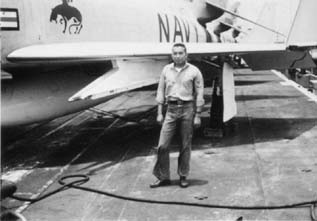 Hi Mimi, I worked with Richard Arroyo and his family gathering
information, photos and setting up the displays. It truly was a
labor of love. We started working on this project about three months
ago. Richard and his wife Ruth work full time jobs as I do.
Richard's daughters Jenni and Erica are full time college students.
We also had people that would walk in to bring photos and want to
help.
Hi Mimi, I worked with Richard Arroyo and his family gathering
information, photos and setting up the displays. It truly was a
labor of love. We started working on this project about three months
ago. Richard and his wife Ruth work full time jobs as I do.
Richard's daughters Jenni and Erica are full time college students.
We also had people that would walk in to bring photos and want to
help.About every 90 days we change exhibits. The previous one was on the Miss San Fernando's past and present. We chose topics that we believe are of local interest to our community. Richard Arroyo and I Paul Arroyo are Historical Commissioners for the City of San Fernando. Vickie Norton |
|
Joe Govea, WWII Veteran standing next to
his medals. Joe was seriously wounded in the Battle of the
Bulge. He is most proud of being a rifleman in the Army and
training with David M. Gonzales.
|
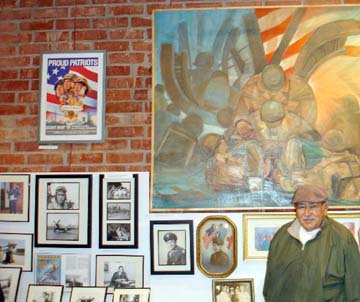 San
Fernando Museum San
Fernando Museum of Art and History 519 S. Brand Blvd. San Fernando, CA Exhibit: Honoring Veterans and Fallen Soldiers of the San Fernando Valley, will run until the end of January. Photos and memorabilia feature many of the men from San Fernando
and Pacoima areas. On display are David M. Gonzales' ( Medal of Honor)
photos and news articles among others. We have historic pictures of
local men (Lyon brothers) from WWI stationed at Camp Kearny, San Diego
to current photos. We also have paintings by Frank A. Martinez, Sergio
Hernandez and Ignacio Gomez in our
gallery.
Artist Frank A. Martinez |
|
|
|
|
Albert is my father and served with
his twin brother Julian on the same ship.
Photo on the right: 1945, Albert and Julian Carrillo on the USS LST 588 with Tronnie Carter. |
|
|
Recently, local twins Albert and Julian
Carrillo met with former shipmate Tronnie Carter of Canoga Park.
Albert and Julian are two of the few living twins that served
their country in WWII still living in the San Fernando area.
They both currently reside in Mission Hills.
They were born on April 18, 1927 on the corner of San Fernando
Mission Blvd. and Hewitt Street in San Fernando.
Their parents were Cornelio Carrillo and Micaela Reyes. With
their parent’s blessings, Albert and Julian just 17 yrs. old and
still attending San Fernando High School joined the Navy.
They served on the same ship LST 588 along with Tronnie Carter,
transporting Japanese prisoners to China in 1946.
Even though they were half way around the
world from home, their parents found comfort in them serving together.
Brothers serving on the same ship were very rare, especially
after the death of the five Sullivan brothers’ in WWII. After
the war, Albert and Julian graduated from San Fernando High School.
They opened Carrillo’s Barber Shop on Kalisher Street, later
moving to San Fernando Mission Blvd.
Together they served the community for over 50 years.
Even though they are over 80 years old, they see each other or
talk on the phone every day.
|
|
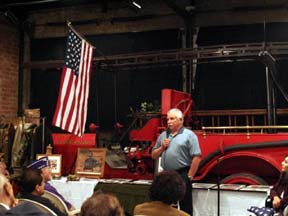
|
David Gonzales, Jr. shares family stories, personal feelings and pride in being the son of a Medal of Honor Recipient, David Gonzales. |
|
|
|
|
|
|
|
My Ancestors By Victoria Carrillo Norton I have always known that my family had early roots in California, but I did not realize the rich history I have inherited from my ancestors. My ancestors were not born privileged or wealthy. They were born with the desire to make a better life for their families, with this desire came the courage to leave their homes for a better future. These common people and all the others that braved the unknown are the true pioneers of Alta California/ California. Upon the death of my great aunt Estella Lyon Maas at 96 yrs old, I became interested in the family records she had kept. She was born in San Fernando, California on Feb. 05, 1907 and died in August 2003. After her death, I started to read the records and realized the gift that was waiting for me to open. She left behind a great foundation for me to continue my research. I have also discovered that she was one of the early members of "Los Californianos", being member 177. "Los Californianos" is an organization whose members have ancestral lineage to a Hispanic person or persons who arrived in Alta California between 1769 and 1848. I will start with my maternal side. My mother, Alice Lyon Carrillo was born February 27, 1926 in San Fernando, California. Her father, Edward Dolores Lyon (Estella’s brother) was also born in the city of San Fernando, California on April 09, 1897. His father, Henry Lyon was born on a rancho in the Cahuenga Pass, April 16, 1858. He was baptized Jose Enrique Lyon, April 20, 1858 at the Plaza Church in Los Angeles. His father was Cyrus Lyon born November 20, 1831 in Machias, Maine. The Lyon family dates back to the 1640’s in America. Cyrus and twin brother Sanford Lyon sailed from Boston around Cape Horn on the ship "Oxnard" in 1849 to California. They obtained employment as clerks in the mercantile store of Alexander and Mellus, a prominent firm in the pueblo of Los Angeles. Francis Mellus and his brother, Henry were first cousins to the Lyon twins. In 1855 Sanford and Cyrus Lyon bought Wiley’s Station located in the Newhall Pass, Ca. This stage depot became known as Lyon’s Station, the first American establishment in the area. The station grew from a small eating establishment and rest stop that catered to the Butterfield Overland stages to a large frame building that housed a store, post office, stage depot, and tavern. Present day Eternal Valley Cemetery occupies the same location in Newhall, California. Part of Pico Canyon was renamed Lyons Avenue after the Lyon brothers. While Sanford Lyon was content on settling down and running the business at the depot, Cyrus Lyon stayed mainly in Los Angeles. With all the lawlessness in the pueblo of Los Angeles, a strong law enforcement group was needed to keep order. The Los Angeles Rangers were appointed by Don Ignacio del Valle, the mayor of Los Angeles to put a stop to the disorder. Cyrus Lyon at 21 yrs old was appointed a captain under Horace Bell and was one of their most efficient rangers. Cyrus Lyon also followed first cousin Francis Mellus and partner David Alexander’s lead in becoming one of the first Americans to own property in the San Fernando Valley and Los Angeles. During the 1850’s he owned property in Rancho Cahuenga, Rancho Los Feliz, and Rancho Providencia. It was during this time that Cyrus became the father of Jose Enrique "Henry" Lyon. Henry’s mother was Nicolasa Triunfo who was descended from the Basilio Rosas family, one of the original eleven families that settled the Pueblo of Los Angeles in 1781. Nicolasa Triunfo was the daughter of Jose Miguel Triunfo who was an ex-San Fernando Mission Indian born around 1810. He had been granted Rancho Cahuenga by Mexican Governor Manuel Micheltorena in 1843 for services performed at the Mission. He traded this property with Francisco and Pedro Lopez a few years later for Rancho Tujunga. Francisco Lopez is the same individual that discovered gold in Placerita Canyon in 1842. Jose Miguel Triunfo was one of the few Indians that were able to obtain and keep property. His wife, Maria Rafaela (Canedo) Arriola was a "Gente de Razon", that being a member of the established Christian community. Miguel and wife Rafaela can be found in the 1850 census of Los Angeles. Jose Miguel Triunfo, wife Maria Rafaela and two sons were also gift deeded 200 acres from another ex-San Fernando Mission Indian Samuel in 1851. This property was located Northwest of the San Fernando Mission. Jose Miguel had planted an orchard with pears, oranges and pomegranates. After Jose Miguel’s death, Maria Rafaela and sons sold the property to Maria de Los Angeles Feliz de Burrows. She later sold 25.92 acres to Geronimo Lopez and the rest to C.R. Rinaldi. Geronimo Lopez established Lopez Station on this same property. Eventually, the site of the Lopez Station was acquired by the city of Los Angeles. In 1913, the city built the San Fernando Reservoir on the location. It is now known as Van Norman Reservoir. Rafaela (Canedo) Arriola’s parents were Maria Rita Canedo and Juan Vasquez. Juan Vasquez was a soldier from the Compania de Mazatlan. He died at the Presidio in San Diego in 1822. Maria Rita Canedo was the daughter of Severiana Josefa Rosas and Juan Ygnacio Canedo. Juan Ygnacio Canedo was a soldier from Culiacan, Sinaloa, Mexico. He served at the Presidio in Loreto, Baja California between 1773-1783. Soldiers from the Presidio of Loreto assisted the Spanish army in fighting the British along the Gulf Coast during the American Revolution. Severiana Josefa Rosas’ father was Jose Carlos Rosas, son of original Pobladores Jose Antonio Basilio Rosas and wife Maria Manuela Calistra Hernandez. Basilio Rosas and Maria Manuela Hernandez brought seven children with them on the long six months journey from Sinoloa, Mexico in 1781. Their youngest child was 2 years old. The Rosas family comprised one-fifth of the original settlers of the pueblo of Los Angeles. Basilio Rosas was the oldest of the Pobladores. He was a mason by trade and I’m sure he was very well needed. Severiana Josefa’s mother was Maria Dolores a Gabrieleno Indian from the nearby village of Yangna. (Present day site of City Hall, Los Angeles.) My maternal grandfather’s mother was Emelia Vega. She was born March 21, 1870 and was baptized April 05, 1870 at the Plaza Church, Los Angeles. Her mother was Librada Estrada de Manzo. Librada Estrada came to California as a very young child about 1834 with her parents, Juan Antonio Estrada and Maria Gertrudis Valencia. They were from San Miguel de Horcasitas, Sonora, Mexico. Emelia’s father Timeteo Vega was born and baptized at Mission San Gabriel in 1834. Timeteo Vega’s parents Victoriano Vega and Maria Magdelena Calderon came to Alta California in 1834 with the Hijar and Padres Colony. Victoriano Vega was born August 29, 1809 in the port of Vera Cruz, Mexico. He was baptized Juan Bautista Jose Manuel Esparza August 31, 1809 in Asuncion, Distrito Federal, Mexico. His parents were Jose Tomas Esparza and Maria Encarnacion Hernandes. Jose Tomas Esparza was captain of the militia in Puebla and was killed in an action of war in 1810. Juan Bautista Esparza used the name Victoriano Vega starting from the time he was 12 yrs old. Victoriano Vega and Maria Magdelena Calderon sailed on the ship "Natalia" from San Blas arriving at San Diego in August 1834. The company of colonist they traveled with included Don Jose Maria Higar, Don Juan Bandini, Don Augustin Olvera and other important people of the time. Victoriano Vega and Magdalena Calderon can be found in the 1836 Census of the pueblo of Los Angeles. Victoriano’s occupation at the time was Tavern Keeper. Fortunately, I have an English translation of Victoriano Vegas Memoir taken by one of Hubert H. Bancroft’s agents (Thomas Savage) at San Gabriel in 1877. "Vida Californiana" is a most informative and colorful account of what it was like being a Mexican soldier in the early days before statehood. My maternal grandmother Victoria Real was born in Sonora, Mexico, November 22, 1905. Her father Eduardo Real was born on April 13,1871 in Santa Barbara, California and was baptized April 22, 1871. His wife Victoria Sanchez died when my grandmother was an infant. Victoria Sanchez’s parents were Francisco Sanchez and Refugio Sepulveda from Magdalena, Sonora. Even though I have not been able to find out who Refugio Sepulveda’s parents were, I know that her mother’s Mitochondrial DNA is Haplogroup A. Haplogroup A is common among the people of Siberia, the Eskimos of Alaska, the Canadian Indians, the Navajos, the Apaches in the Southwest and the Aztecs of Central and Southern Mexico. Essentially, I can be certain that her first mother was from one of these groups. I am extremely proud to be named after both my grandmother and her mother. After the death of his wife Victoria Sanchez, Eduardo Real took his children to live with his sister (Tia Luchita). Tia Luchita was baptized Maria de la Luz Josefa Guadalupe Real May 19, 1878 at the Chapel of Camulos, California. Tia Luchitas godparents were Don Ignacio del Valle and wife, Dona Isabel Varela. Eduardo/Edward Real later died working the mines in Sonora. Edward Real’s parents were Jose Ynes Real and Maria Ignacia Duran. They can be found in the 1880 census of Saticoy, Ventura with several children. Jose Ynes Real was baptized Jan 21, 1841 at Nuestra Senora del Rosario Rayon, Sonora. Jose Ynes Real and other members of the Real family came to California in the 1860’s. They found work at Rancho Camulos, working for the del Valle Family. They also forged lasting friendships with members of the del Valle family. Jose Ynes Real was buried in the del Valle family cemetery at Camulos in 1920. That same day, the priest went to the del Valle chapel to baptize Jose’s youngest granddaughter. Her name is Carmen Guadalupe Grijalva Gaitan. Cousin "Lupe" still tells of her baptismal story whenever she visits Rancho Camulos. She grew up in the Grijalva household next to the Ruiz family. Tia Luchita had married Gabriel Ruiz by this time. The Grijalva and Ruiz family can be found in the 1920 census of Piru, Ventura, California. Tia Luchita was the only mother my grandmother knew. When my mother took my grandmother Victoria Real Lyon to visit her, she would take me along. Tia Luchita was blind by this time. I was a very young child, but can remember Tia Luchita touching my face and feeling my arms. It amazes me to think how one generation can touch another without us even knowing it. My father Albert Reyes Carrillo was born April 18, 1927 in San Fernando, California. His mother was Micaela Reyes born May 08, 1904 in Chihuahua, Mexico. Her parents were Julia Araiza and Julian Reyes. Julian was born June 9, 1869 Zacatecas, Mexico. Julian Reyes parents were Juan Reyes and Donaciana Orosco (originally from Aquascalientes), from Villa de Guadalupe, Zacatecas, Mexico. Julia Araiza’s parents were Bartolo Araiza and Modesta Santos. They were from Vetagrande, Zacatecas, Mexico. Julian Reyes and wife Julia came to the United States in the 1890’s. The Atchison, Topeka and Santa Fe Railroad employed Julian Reyes. His wife, Julia and children traveled with him while he worked. Their children were born in Mexico, New Mexico, and Kansas. After Julian Reyes and Julia’s early death, the Reyes children are found living in Duncan, Arizona with Julia’s mother, Modesta Santos. She is listed as head of household in the 1920 census of Greenlee County, Duncan, Arizona with her daughter’s children. My grandmother, Micaela Reyes came to Los Angeles, California in the early 1920’s with older brother Manuel Reyes after Modesta Santos death. She married my grandfather, Cornelio Flores Carrillo August 1926 at the Plaza Church in Los Angeles, California. Micaela Reyes Carrillo was a devout Catholic. She had a great love for God and her family. My paternal grandfather Cornelio Carrillo came to California in 1913. He along with two brothers, a sister, and mother settled in San Fernando in the early 1920’s. The Carrillo family home in San Fernando was built in 1924 and is still owned by my aunt Maria Carrillo. The Carrillo family had left Ocotlan, Jalisco because of the Mexican Revolution. The Carrillo family left deep roots in the town of Cuitzeo, Ocotlan, Mexico. My grandfather was proud of the oral history his family brought with them. He told his children the Carrillo’s lived in Ocotlan since it’s founding around 1531. Cornelio Carrillo was baptized Candelario Carrillo February 03, 1896. He was born February 02, 1896 in the Estancia de Cuitzeo. I have been able to follow Cornelio Carrillo’s lineage back six more generations in the Archivos de la Parroquia Ocotlan, Jalisco, Mexico. Cornelio’s father was Eduardo Carrillo and his mother was Petra Flores. Five generations before Eduardo Carrillo were Christoval Carrillo and wife, Maria de los Castellanos. Christoval Carrillo was born about 1700 and Maria de los Castellanos in 1704 at Ocotlan, Jalisco, Mexico. Upon further research, I hope to follow the family back a couple more hundred years. Cornelio Carrillo lived to be almost 102 years old. I am extremely proud of my ancestry. I can only hope one of my children or grandchildren will take an interest in the family history that will be available to them. The greatest gift I can give them is the knowledge that the blood that runs through their veins is what "Los Angeles" and the rest of California was made from. From our Poblador ancestor, Basilio Rosas to our Americano lawman, Cyrus Lyon to our Indigenous ancestors, Maria Dolores and Jose Miguel Triunfo to our many other Spanish/Mexican ancestors who left their homes for a better life.
|
|
|
Bibliography
for 'My Ancestors" Major
Horace Bell, Reminiscences of a Ranger (Santa Barbara: Wallace,
Hebberd, 1927). Information of land ownership derived from Los Angeles County Recorders Office, Norwalk, Ca. Cyrus Lyon can be found in the 1850’s owning property in the San Fernando Valley and Los Angeles. Jose Miguel Triunfo can be found in the 1840’s to 1850’s owning various pieces of property in the San Fernando Valley. Victoriano
Vega, “Vida Californiana”, San Gabriel, Ca. 1877 One
final note: Additional
Genealogical information derived from:
|
|
History the San
José Pueblo Papers
Elk Grove Veterans Day Parade honors Mexican-American War Veterans Immigration debate: 70 percent of Mexicans in California are U.S. citizens Latino Warrior Exhibit Book: Testimonios- Early California through the eyes of a Woman A-Files at San Bruno Juana Briones Foundation Action Requested - SF Presidio Historical Center Proposal Book: Rancho Santiago de Santa Ana: The Grijalva, Yorba, Peralta, and Sepulveda Families by Diann Marsh |
|
History San José Pueblo Papers November 1, 2007 by Marilyn Guida Background on the Pueblo Papers: The San José Pueblo Papers are the earliest municipal documents from the first civil settlement in the State of California – El Pueblo de San José de Guadalupe, now the City of San José. As such, the San José Pueblo Papers are a gold mine of history and a wealth of information on the original life of the town of El Pueblo de San José de Guadalupe. The papers have been owned by the City of San José since its incorporation in 1850 and date to the period 1781 to 1854. During the Depression a partial translation of the Pueblo Papers was done as a Works Project Administration project. There was an early index made of the papers at this time but, as a result of José and Patsy’s work, was found to be incomplete. Clyde Arbuckle, the first San José museum director, arranged to have the Pueblo Papers and other municipal documents transferred to the Statehouse Museum at the Santa Clara County Fairgrounds in the 1950s. Also in the 1950s the papers were microfilmed and a photocopy was made from which an abstracted index was created. The approximately 6,000 pages were moved in the 1970s to the San José Historical Museum in Kelley Park along with other historical artifacts and documents. The original papers were housed in acid free folders and boxes and were kept in the Archives vault. In 2007 the papers were relocated to a state of the art archival facility operated by History San José at the San José City Service Yard. There are Pueblo Papers in the Archive which had been separated from the main body of documents over time. Archivists are still are finding these Pueblo Papers mixed with the San José court records because the Pueblo Papers were taken into court for proof in legal cases. The Pueblo Papers precede the San José court records that are currently being organized and properly archived at History San José. José Pantoja came to the United States in 1950 from Jalisco, Mexico; he worked as a laborer by day and took classes at night. Eventually he became a journeyman carpenter and spent much of his career at San José State University until his retirement in 1991. His hunger for knowledge and interest in an ancestor who was a map maker who took part in Spanish explorations of Alta California led him to study genealogy and paleography (the study of old documents) and attend courses and conferences offered through the Mormon Church in Salt Lake City. He became a member of the Hispanic Genealogical and Historical Society in San José and a valued volunteer and teacher at the LDS San José Family History Center and at History San José. He will be celebrating his 80th birthday with his family and friends in November of 2007. Patsy Ludwig was born and raised in Watsonville, California, attended Watsonville High School and San José City College. The family story told by her grandparents led to her interest in genealogy, which led to learning how to read and write Spanish and eventually to learning paleography. Patsy was a founder of the Hispanic Genealogical and Historical Society in San José and a supervisor, teacher, and expert genealogist for LDS San José Family History Center for 14 years where she met José Pantoja in about 1991. She has authored three books on genealogy. The work of José Pantoja and Patsy Ludwig on the San Jose Pueblo Papers: While at the LDS San José Family History Center, José met Monte Duran, the former San José Historical Museum Events Coordinator. Mr. Duran felt that José’s research and Spanish language skills were just what was needed for the Pueblo Papers project which was planned by Leslie Masunaga, former Archivist of the San José Historical Museum. Although these papers had nothing to do with the Spanish exploration period that José was interested in, he decided to become involved. José invited Patsy Ludwig to look at the Pueblo Papers and, with his passion for preservation, convinced Patsy that they needed to do this work. He realized that this would be a specialized job that he and Patsy were qualified for because not many people knew how to read the hand-written Spanish of 19th Century Alta California, a language with specific regionalisms, indigenous terminology and abbreviations of the New World. When José and Patsy started working with the Pueblo Papers they found the original papers were not organized in any way and the microfilms of the papers were also unorganized, blurry and not in chronological order nor in a consistent position on the page. Their first effort of about ten years was to arrange the papers in chronological order. This required that José read copies each document to determine in general the topic of the document and the date. José made trips to Mexico where he researched sources that helped him with the translations. Other helpful sources were found through the Mormon Church. José traveled to the Archivo de las Indias in Seville, Spain for six months to search for missing documents on the early settlement of San José and sent back to History San José 1200 pages of photocopies of these documents which he indexed. One of the documents he found was the first census of the Pueblo of San José which had been missing. After the initial organizing of the papers, José began translating complete documents. After he had translated about 200 documents they decided, with the new Archivist Paula Jabloner, that an annotated index should be created before any more complete documents were translated. An annotated index allows researchers to identify the specific documents of interest and from there, full translation of the document could be done. José wrote out the translations for the annotated index in contemporary Spanish and Patsy translated the contemporary Spanish to English. Points to be included in a Commendation from San José City Council Member Sam Liccardo to José Pantoja and Patsy Castro Ludwig for their work organizing and translating the San José Pueblo Papers, the earliest municipal documents of El Pueblo de San José de Guadalupe. Phase I - José and Patsy
Phase II
Estimate of time contributed: José Pantoja: In all José estimates that his volunteer effort at the museum took place twice a week for three hours a day over a period of fourteen years, plus time at home and trips to Mexico and Spain. There is still much more work to be done. Patsy Castro Ludwig: Patsy estimates she volunteered 4-5 hours a week for eight years at the museum to enter the handwritten index of the Pueblo Papers into computer documents, plus time at home. This work was not completed when she left. Others who provided help: John Ramos prepared a hand written annotated index of the post-statehood (1846 to about 1856) Pueblo Papers which were in English. Under the direction of Professors Rose Marie Beebe (Modern Languages) and Robert M. Senkewicz (History) of Santa Clara University, students in three advanced Spanish translation courses produced transcriptions and translations of twenty two documents which covered the year 1809. These were published by Santa Clara University in 1998 as "A Year in the Life of a Spanish Colonial Pueblo: San José de Guadalupe in 1809 – Official Correspondence." A second set of 65 documents covering the Mexican period from 1822-1825 have been translated and will be published in 2008. Elena Robles assisted José in translating from Spanish to English documents from Mexico on the individual settlers of the Pueblo of San José. This was in preparation for a book on San José’s founders which would document details of their lives from the towns of their origin in Mexico. This work is unfinished. Future Work Remaining in the History San José Archive (from Jim Reed): Complete the indexing of documents Translation of selected documents from 19th Century Alta California Spanish to Modern Spanish to English Transcription of documents into machine readable Spanish and English Estimated cost $1.5 million Future Work Remaining in the History San José Archive (from Patsy Ludwig_:
|
|
This
year the Elk Grove Veterans Day Parade Committee Honors the
Mexican-American War Veterans with Grand Marshal - Sergeant Major
Richard Martinez representing all Mexican-American War Veterans. Born
in Del Rio, Texas on September 11, 1931, a 15-year-old Richard Martinez
climbed aboard a farm labor truck for the seven-day trip to San Jose,
California, where he would make his life for the next 48 years before
coming to Sacramento. Now, 76, Sgt. Major Martinez and his
wife of 60 years, Trinidad, live in the Lemon Hill area. Sergeant
Major Richard Martinez has served in Korea, Vietnam, and Desert Storm; a
distinction at 59 ½, that made him the oldest reservist called to
active duty. His decorations include Expert Infantry Badge,
Infantry Shoulder Cord, Soldier’s Medal, Good Conduct Medal, Korean
Service Medal, Armed Forces Expeditionary Medal, and a Presidential Unit
Citation to name a few. Sgt. Major Martinez served his
country for 41 years until he retired recently. Of
his greatest honors, Sgt. Major has been an Honorary Member of the
Congressional Medal of Honor Society since 1988. He has escorted
disabled recipients of the Medal of Honor to biannual conventions, and
has met the last 10 living Mexican-American recipients. As
we honor the Mexican-American War Veterans, keep in mind that best
estimates indicate that during W W II, more than 500,000 Hispanics
served in the armed forces from 1941 to 1946, most of them were
Mexican-American. They served in the Army, Army Air Corps,
Navy, Marines, Coast Guard, and the Merchant Marine. They were
pilots, navigators, bombardiers, gunners, etc. But
this is not news. Hispanics have been part of the fighting for
freedom since the American Revolution; they were at New Orleans in the
War of 1812, the Civil War, and with Teddy Roosevelt.
Mexican-Americans have served in the Armed Forces of this country in
overwhelming numbers. They are on duty in Iraq and Afghanistan
right now. How
many of us has ever had the honor to read - simply read -
a congressional citation of an award for the Medal of Honor?
Take just a few minutes for this one - The President of the United States, in the name of the Congress, takes
pleasure in
Rank and organization: Staff Sergeant, US Army, 30th
Infantry, 3rd
Infantry Division
|
|
|
The immigration debate: 70 percent of Mexicans in California are U.S.
citizens By Javier Erik Olvera and Mike Swift, San Jose Mercury News, Article Launched: 11/05/2007
For the first time in the most current wave of immigration, U.S.
Census Bureau figures show that 70 percent of California's Mexican
population are U.S. citizens, blunting widespread belief the state is
overrun by illegal immigrants.
The findings are part of new data that casts a spotlight on a steady
demographic transition between 2000 and 2006, with the state leading
the nation in the number of Mexican immigrants gaining citizenship.
Nationally, the U.S. Office of Immigration Statistics estimates about
11.6 million illegal immigrants in the country as of January 2006,
with about 6.6 million of that total being from Mexico. The Census
Bureau says there are 11.5 million Mexican immigrants in the United
States.
The figures show Mexican-American citizenship in California increased
by 3 percentage points from 67 percent in 2000 to 70 percent at the
end of 2006.
They also show that roughly half of the 460,766 Mexican immigrants who
became naturalized citizens nationwide between 2000 and 2006 were in
California. Al Camarillo, a Stanford University historian who studies Chicano history and the scattering of Mexican immigrants across the country, said the decision to have children in the U.S. is a way for illegal immigrants to begin the process of assimilation. "They realize that we're not going back, that we've been here for a long time, our children are growing up here and we're going to stay here - those kinds of calculations have gone on in the minds of Mexican-Americans for generations. At some point they make a decision, sometimes unconsciously, 'We're here, this is where our children are going to be raised and this is where we're going to remain.' " On the other hand, many see the large number of births to illegal immigrants as a serious concern. Based on birth rates for the overall foreign-born population, the Federation for American Immigration Reform, a group that supports curbs on immigration, says there are between 287,000 and 363,000 births to illegal immigrants in the U.S. each year. Those children, FAIR says, have a significant impact on hospitals, schools and other institutions, and constitute a major, but unknown, cost to taxpayers. "It's as though we make our immigration policy in a vacuum," said Ira Mehlman, a spokesman for FAIR. Those births have "ramifications for schools, for health care institutions and all sorts of things, and those things need to be considered in terms of formulating immigration policies." Even in Los Angeles County, long a haven for illegal Mexican immigrants, new census data shows that the growth in that population has stopped dead this decade, as the legal and illegal immigrant stream has transferred to other parts of the U.S. California's share of the U.S. total of all Mexican immigrants is dropping, declining from 42 percent of the nation's total in 2000 to 36 percent in 2006, an analysis of census data by the Mercury News shows.
The picture is very different in other areas of the country, with
several pockets beginning to feel the ripple effects of illegal
Mexican immigration and fueling division over immigration reform.
While Mehlman, of FAIR, agrees California may represent the future of
immigration for the rest of the country, he predicts that future is
not necessarily an attractive one.
Los Angeles is a particularly divided place, he said, between troubled
public schools and affluent private ones, between affluent whites and
the Latino workers who cross town each day to tend their gardens and
clean their homes.
|
|
|
Latino Warrior Exhibit November 16, 2007 [Exhibit runs through Dec. 13 in the Library] By: PHILIP K. IRELAND - Staff Writer OCEANSIDE -- Latino men and women have served with distinction in every American military conflict since the Revolutionary War, according to photographic exhibition that opened this week at Mira Costa College. "Latino Warrior: An American Hero" officially opened Thursday in the library of the college's Oceanside campus at 1 Barnard Drive and will run through the end of November. In a special presentation tonight, exhibit creator Gregg Nevarez of San Marcos will show a 23-minute documentary called "The Spirit of the Latino Warrior," followed by a question-and-answer session in the college's Little Theater and a reception in the library. |
|

|
Gregg Nevarez holds the title panel
of an exhibit being assembled at Mira Costa College in Oceanside Tueday
honoring Latino people who have served in the U.S. military. The panel
featues a photo taken in 1944 of Nevarez' father, who served in World
War II. BILL WECHTER Staff Photo Order a copy of this photo |
|
The collection of photographs and text, displayed on 25 panels in the library lobby, details the sacrifices, challenges and values of Latino servicemen and women throughout America's 231-year military history, Nevarez said Tuesday. Each panel features some Latino or group of Latinos who made a contribution in each conflict since the American Revolution. For example, one panel tells the story of a group of Cuban women who collected jewelry and cash to buy supplies for George Washington's faltering siege of Yorktown in 1781. Washington was able to maintain the siege, at least in part due to the influx of Cuban cash, causing British General Lord Cornwallis to surrender. The victory was a turning point in the war and contributed to the British surrender in the Treaty of Paris two years later. Another panel describes Loreta Valasquez, a Latina who masqueraded during the Civil War as a male Confederate soldier named Harry T. Buford. As "Buford," Valasquez fed information to Union troops. The panel that leads the exhibit features Nevarez's father, Army Cpl. Santos Nevarez. The World War II veteran served in Okinawa as a driver for one of Gen. Douglas MacArthur's ranking officers. The exhibit attracted the attention of MiraCosta students and faculty Wednesday, the day after Nevarez and his crew installed in it in the red-tiled library lobby. "What caught my eye was the information they had about Latinos being in the wars," MiraCosta student Rocelia Mendez said, noting that she was surprised to learn about the long history of Latinos in American military service. "It makes me feel good about my people -- and not just my people but (Latinos from) other countries too -- having the heart to do something that was American," she said. Some of the photographs, which have been digitized and enlarged for the exhibit, are more than 100 years old. Nevarez launched the exhibit in the central California town of Guadalupe on Sept. 1. It will travel across the United States for the next several months, he said. So far, requests for showings have come from colleges and universities in Florida, Texas and Washington D.C, Nevarez said. Nevarez said the roots of the exhibit began with the death of his father in 1991. While seeking Internet information about his father's military service three years ago, Nevarez was struck by the breadth of interesting facts and stories about Latinos in military service since 1776, he said. He began collecting data that now forms the core of the exhibit. With the help of many people, including a Chumash Indian elder who inspired the project's name when he called Nevarez's father a "warrior," Nevarez began piecing the exhibit together. One of his challenges, he said, was to decide what would be a part of the exhibit and what to leave out. The three-year process has been part intellectual, part spiritual and part "personal quest," said Nevarez. He has undergone nine heart surgeries in the three years he's been working on the project. The project and his struggles with health inspired personal questions about his own mortality and forced him to deal with issues regarding his father, he said. To learn more about the traveling exhibit and the Latino Warrior Foundation, visit www.latinowarrior.com or call (760) 510-9472. Contact Philip K. Ireland at (760) 901-4043 or online at pireland@nctimes.com .
|
|
|
Testimonios-Early California through the eyes of a woman-1815-1848. Comment on back cover by Kevin Starr, professor of history, University of Southern California; "Testimonios is a pioneering work of scholarship and critical interpretation by two of the finest Hispanicists active in early California studies. It is also a deeply moving act of liberation in which thirteen woman are called forth from the tomb of neglected history so that they might at long last speak to us of their lives and times and the California they helped bring into being." The 13 woman listed in the book are: Isadora Filomena,Rosalia Vallejo,Dorotea Valdez,Maria Antonia Rodriguez,Teresa de la Guerra,Josefa Carrillo,Catarina Avila,Eulalie Perez,Juana Machado,Felipa Osuna, Apolinaria Lorenzana,Augustias de la Guerra,Maria Inocenta Pico. |
|
| Dear
A-File Supporters, We did it. Take a bow. Here is the latest update on the A-Files at San Bruno,CA. October 16, 2007: USCIS and NARA are working together towards transferring A-Files at its facility in San Bruno to NARA for preservation as a historical collection. It will be a multi-year project with the USCIS assuming the estimated $3 million cost. Sometime this year, there are plans to conduct a pilot program with 5% of the case files for testing before they launch the full project. This information is from NARA and was confirmed by Congressman Tom Lantos' office. We thank Congressman Lantos and his office for the update and all the years of dedication to work on making this news a reality. Thank you for being there when we began in June, 1998 when the National Archives and Records Administration (NARA) announced that it planned to close regional branches and to consolidate those collections to Lee's Summit, Missouri. As a result, there was nationwide patron feedback and ended in NARA changing it's decision. As an community we rallied together on that issue and for preserving the A-Files by: the internet, received media coverage, website created, meeting with our legislative representatives, meeting USCIS and NARA officials, educating others and letter campaigns as we continued to ask the question : WHEN ? Sona Communications Coordinators Jennie Lew Jeanie Low |
|
Juana Briones Foundation Dear Jeanne, It is with sincere appreciation to you, and all the Board Members
of the Juana Briones Foundation who have been passionate and diligent
in their efforts to save the Briones House from demolition. Today, the
house is still standing--and it truly represents Early California's
past, and a great pioneer woman, Juana Briones de Miranda.
Many thanks to PAST for taking on this enormous challenge--a win
win for sure. Take care, Lorri PAST Heritage has allocated $5,000 that will be used to match any donations that come in before the end of the year for the cause. Write Briones match on the For line of your check, make the check out to PAST, and mail to PAST at P.O. Box 308 Palo Alto 94302 Susan Kirk, whose family owned the house for several generations, Boyd de Larios who got the process going to hire an attorney to help save the house, and I, who worked on tours of the house and served on the board of the Juana Briones Heritage Foundation at one time, went to speak at PAST's board meeting early this month, and after we left they voted to donate to encourage more public participation in raising the attorney fees and considering the future of the house. PAST will also be featuring the house in its next newsletter. Clark and Kathy Akatiff are the main workers on the dedication ceremony of the California state historic marker in Juana's honor, to be held at 3:30, Thursday, November 1, in Esther Clark Park on Old Adobe Road in Palo Alto, which is on a small part of the 4,400-acre ranch Juana purchased in 1844, and down the street from her house. We do not yet have a date for the court case concerning the house, but I am copying here a paragraph from a recent letter from Attorney Susan Brandt-Hawley to PAST: "I am confident that we can win this case, which will require the City to prepare an Environmental Impact Report before considering the issuance of a demolition permit. The EIR will also look at alternatives to demolition that could allow the house to be rehabilitated other than demolished. The process also gives us time to pursue a creative solution, looking for a public-interest use for the property and monies to buy it." Jeanne Farr McDonnell Contributions are needed to finance the lawsuit stopping the demolition of the Juana Briones House in Palo Alto. The plaintiffs, Friends of the Briones House, arranged for PAST (Palo Alto Stanford Heritage), a 501(c)(3) non-profit organization, to accept donations which will be tax-deductible to the donor. PAST has pledged to match contributions to a total of $5,000 made before Dec 31, 2007, in addition to the $4000 that PAST previously contributed to start the suit. We need to raise an additional $10,000. The address is PAST, Box 308, Palo Alto 94302. Be sure to write 'Briones' on the 'For' line of your check. If you are donating through your employer who makes matching contributions, and require other than a post office box, the PAST address is 351 Homer Avenue, Palo Alto, CA 94301. Further developments can be accessed by selecting “Juana Briones House” http://www.pastheritage.org/links.htm Sent Boyd de Larios
|
|
|
Action Requested - SF Presidio Historical Center Proposal Concerned citizens are asked to support a proposed history museum at the SF Presidio by writing letters before December 15, 2007. The proposal includes recognition of the Hispanic history and influence on our state, nation, and world. The SF Presidio is a National Historic Park and a National Historic Landmark District. After the decommissioning of the San Francisco Presidio and the exit of the Sixth Army, ending 220 years of military and cultural history, the Presidio was converted to a National Park under the management of the Presidio Trust. The Presidio Historical Association’s website states, "No museum or significant visitors' center for explaining Presidio history has existed for the past ten years of Presidio Trust and National Park Service management. Where is that museum?" The PHA website at http://www.presidioassociation.org further comments, "Our role is to prevent excesses from the commercialization of the Presidio that damage the historical integrity of this precious historical site. That challenge faces us today!"Projects already in process for the Main Post include landscaping the Main Parade with grass, a 3 story, 120 room hotel (for which a developer has been selected), a Disney Family Museum, a "Center Against Violence", and a new proposal for a 100,000 square foot museum housing a contemporary art collection. The PHA made a counter-proposal on Nov 9 to the contemporary art museum. The PHA’s proposal for a history center is now available in a PDF file (8.8 MB) on the website. More detail is expected to be added in the coming days. The Presidio Trust is preparing an Environmental Impact Statement (EIS) on an amendment to the original Presidio Trust Management Plan (PTMP) allowing these projects in the Main Post area. Letters about the negative impact of non-history related development and land use of the National Historic District should be addressed to: John Pelka, Compliance Manager Letters of comment on the choice between a
contemporary art museum and an explanatory historical center in the
heart of the SF Presidio should be sent to:
|
|
|
Book: Rancho Santiago de Santa Ana The Grijalva, Yorba, Peralta, and Sepulveda Families by Diann Marsh, from Santa Ana, An Illustrated History, ©1994 Heritage Publishing. Excerpt used with permission. RANCHO SANTIAGO DE SANTA ANA The only Spanish land grant that lies entirely in what is now Orange County, the Rancho Santiago de Santa Ana, became the location of the city of Santa Ana. The rancho was the home of two of the oldest families in California, the Yorbas and the Peraltas. Consisting of 62,516 acres, the rancho extended along the east bank of the Santa Ana River from the mountains to the sea. It is said to have been the only true Spanish land grant on the western plain at the foot of Saddleback Mountain, because the rights to the other grants were made during the California's Mexican Period. Settled early enough to provide homes for the third and fourth generations of the Yorbas and the Peraltas, it was eventually the location of at least 33 historic adobes. C. E. Roberts (W.P.A. Adobe project, 1936) considered it to be one of the very best examples of the California rancho. The name is derived from two camp sites of the famed Portola expedition which passed through Orange County in July of 1769 on its way toward Monterey. Santiago stands for Saint James the Greater who was an apostle and the brother of St. John. July 29th is Saint James' Day. Santa Ana was named for Saint Anne, the mother of the Virgin Mary. Saint Anne's Day is on July 26. The rancho was known by various names before the American Commission decided on its official name in 1868. The petition of Yorba was for the "Paraje de Santiago", which meant Santiago Place. Sometimes the rancho was called just "Santiago" or Santa Ana de Santiago. The Rancho Santiago de Santa Ana stretched northerly for 25 miles, from the ocean to the mountains. Its western boundary followed the southeast bank of the Santa Ana River. The property was bow-shaped, being two and a half miles wide at the ocean end and six and a half miles wide in the middle. The land comes to a rounded point on the north end. Located midway along the southern border of the Rancho Santiago de Santa Ana, Red Hill is the point where three famous ranchos come together. From the top of Red Hill you can see lands that once belonged to the Rancho Santiago de Santa Ana, the Rancho San Joaquin, and the Rancho Lomas De Santiago. JUAN PABLO GRIJALVA An adventuresome soldier from Sonora, Nueva Espania ("New Spain"), Juan Pablo Grijalva, and his son-in-law, Jose Antonio Yorba, are thought to have grazed cattle in the Santiago Creek area in the 1790s. (Before Mexico was established in 1820-21, Sonora was part of the Spanish territory called Nueva Espania. The Sonora area is now part of Mexico.) Grijalva is considered to have been in this area as early as 1784. He lived with his family in San Diego, but he is known to have built a house on the banks of the creek in 1796. It was probably used as a base for the Grijalva and Yorba cattle operation in what is now northern Orange County. In 1801 he filed a petition in San Diego, requesting a title to the land. His request read: "The distance I ask is from the banks of the Santa Ana River toward Santiago, that portion which is along the high road embracing an extension of a little more than a league. The stream being above, from the highway to the house will be about a league and a half; from there to the mountains about three leagues; and toward the south I ask as far as Ranas (Cerritos de las Ranas) which will be about a league and a half." Grijalva did not get title to the land in his lifetime but he did get grazing rights in 1801. A map filed with the claim shows three houses on the land located in what is now Olive, West Orange and in the El Modena-Villa Park area. The latter adobe is said to have been the adobe of Juan Pablo Grijalva and is considered to have been the first house constructed in the Santa Ana Valley. The foundation stones of the adobe can still be seen at Hoyt Hill, north of El Modena, above Santiago Creek. It is not thought that Grijalva actually lived full time in the adobe, since it is believed that he lived primarily in San Diego. Born in Sonora, Mexico in 1742, he enlisted in the army in 1763 and became a career soldier. He died in San Diego in 1806, four years before Rancho Santiago de Santa Ana was granted to his son-in-law, Yorba and Jose's cousin, Peralta. JOSE ANTONIO YORBA AND JUAN PABLO PERALTA Also with Portola in that important expedition of 1769, was a young corporal named Jose Antonio Yorba. He married Maria Josefa Grijalva in San Francisco on May 17, 1782. Their first three children were born in the Monterey area while Jose Antonio was in the army. In 1789 the family moved to San Diego after he had been assigned to the presidio there. Eleven more children were born to the family between 1789 and 1810. Juan Antonio retired from the army in 1797 and, with his father in-law, Juan Pablo Grijalva, he began grazing cattle on the land that was to become Rancho Santiago de Santa Ana. When Jose Antonio Yorba, along with his nephew, Juan Pablo Peralta, applied for their land grant they were required to get permission from Grijalva's widow, Maria Josefa. On July 1,1810, Governor Figueroa granted the 62,516 acres to Jose Antonio Yorba and Juan Pablo Peralta. JUAN PABLO PERALTA Again, we have the relationships between the first families of California intertwined like a giant wisteria vine. Juan Pablo's father, Gabriel Peralta, married Maria del Carmen Grijalva in San Francisco in 1784. Juan Pablo, born on October 27, 1785, was named after his maternal grandfather, the aforementioned Juan Pablo Grijalva. A few years after Juan Pablo Peralta married Ana Gertrudes Arce on August 24,. 1804, he brought his young family to the Santa Ana Valley, settling along the south side of the Santa Ana River. The small settlement he built on a rise above the river was called Santa Ana Arriba. He and his uncle, Jose Antonio Yorba, were the first to construct an irrigation system using the water of the Santa Ana River. Although the Peralta family had gardens, vineyards, and fruit orchards for their own use, most of their income came from cattle raising. The Yorba and Peralta families, along with the Indians, dwelt upon the lands and did not seem to mind the communal ownership. There were four informal divisions of the huge rancho. The Peraltas occupied the upper canyon while the Yorbas lived near Burruel Point at the mouth of Santiago Creek. Some of the Indians lived in the area of Upper Santiago Creek. The Mission, along with the Indians attached to it, occupied the coastal mesas. The small clusters of adobes were surrounded by gardens, vineyards and sections of tilled fields. Adobe walls were built and live willow brush fences planted to keep out the wild livestock that roamed the area. BERNARDO ANTONIO YORBA Don Bernardo Antonio Yorba is remembered most for his huge adobe he built in Santa Ana Canyon. It was said to have been one of the finest adobe homes in California. Bernardo, the third son of Jose Antonio Yorba I, was born August 4, 1801. He helped to develop the Rancho Santiago de Santa Ana, but in 1834 received a grant of his own further up the Santa Ana Canyon, where he built a large adobe house. He named his ranch Rancho San Juan Cajon de Santa Ana and his new house San Antonio, after his favorite saint. The 13,328-acre grant contained some truly beautiful land. When traveling the Riverside Freeway through Santa Ana Canyon, look to the north to see the meandering Santa Ana River, the trees along the valley floor, and the hills and canyons which rise to the north. This was once Don Bernardo's land. The spacious two-story adobe housed not only the large Yorba family but also many retainers. Estimates of its size range from 50 to over 100 rooms. Approximately 20 of these rooms were occupied by artisans and tradesmen who worked at the rancho. There were, at one time: four woolcombers; two tanners; one butter-cheeseman who supervised the milking of 50 to 60 cows each day; one harness maker; two shoemakers; one jeweler; one plasterer; one carpenter; one major- domo; two errand boys; one sheep herder; one cook; one baker; two washerwomen; one woman who did the ironing; four seamstresses; one dressmaker; two gardeners; a schoolmaster and a man to make the wine. Also, there were more than 100 "lesser" employees. Some of these persons lived at the ranch, while most of the Indian workers lived in a nearly village of their own. There were two orchards and some plots planted to wheat. It took an average of 10 steers a month to supply the needs of the people who lived on the ranch. The vineyards and crops were irrigated by water from ditches dug from the Santa Ana river. Bernardo Antonio Yorba married Maria de Jesus Alvarado, the daughter of Xavier Alvarado of San Diego, on April 16, 1823. In the five years between her marriage and her death, Maria gave birth to one son and three daughters. A year after Maria de Jesus died, Bernardo married 15-year-old Felipa Dominguez, daughter of Juana and Mariano Dominguez. As Bernardo expanded his home and his rancho thrived, the family grew by 12 more children. Sadly, Felipa died after having given birth to her twelfth child, Filepe, on September 8, 1851. The next year Don Bernardo took Andrea Elizalde as his third wife. The marriage was conducted by proxy and the 22-year-old bride was 29 years younger than her new husband. He remained at his rancho while a friend traveled to Los Angeles to take the marriage vows at the Plaza Church. Andrea, who was the daughter of Juana and Nicolas Elizalde, and Don Bernardo had four sons, Francis, Bernardo, Xavier, and Gregorio. In 1858, at the age of 57, Don Bernardo died, leaving behind a large and prosperous rancho, including approximately 37,000 acres of land and over $100,000 in assets. Eighteen years later, in 1875, his widow sold the square league she and her children had inherited for $3 an acre to John Bixby. Of the 20 children born to Don Bernardo and his three wives, most survived into adulthood, got married, and had families of their own. There were hundreds of descendants of Don Bernardo. His influence was felt throughout Southern California. ADOBES SPRINKLE THE SANTA ANA VALLEY C.E. Roberts, in the 1936 W.P.A. volume entitled Adobes, divides the adobe on the Rancho Santiago de Santa Ana compounds into seven groups: 1. Grijalva Adobe 2. Olive or Old Santa Ana Group (7 buildings) 3. Peralta Group (9 buildings) 4. Fletcher Group (3 buildings) Represented by the T. D. Mott or Fletcher Adobe 5. Jose Antonio Yorba II Group (4 buildings) Represented by the Rodriguez Adobe 6. West Santa Ana Group (5 buildings) Jose Sepulveda (El Refugio) 7. Old Fairview Group (3 buildings) Gabe Allen Adobe Much of the information about the adobes and the families that lived in them is lost in time. The actual location and physical appearance of many of the adobes is probably the biggest problem to solve because as each family decided where to settle, they simply picked a spot on the 62,516 acres of the Rancho Santiago de Santa Ana not already occupied by one of their relatives and built their house and corrals. Probably the most interesting rancho was El Refugio, whose most well-known occupant was Jose Andres Sepulveda. The Bates Adobe, located north of Seventeenth and Bristol, has added significance because it was also the site of an Indian village. The Julian Chavez Adobe, of which we know very little, is shown on the map as being west of the Santa Ana River, and north of First Street, at approximately Fifth Street. The Rodriguez Adobe is important because it was located at a ford of the Santa Ana River and at the convergence of the important trails in the Santa Ana Valley. EL REFUGIO: THE WEST SANTA ANA HOME OF DOMINGO YORBA AND JOSE ANDRES SEPULVEDA Some of the most dramatic and exciting events of the rancho days happened at El Refugio, in what is now West Santa Ana. For those who picture the Santa Ana Valley as lifeless and deserted until William Spurgeon purchased the land for his new town in 1869, the legacy left by the Spanish ranchero owners comes as a surprise. Domingo de Ia Resurrecci6n Yorba, born in March 1826, inherited El Refugio from his father, Jose Antonio Yorba II, after his death on January 19, 1849. Five years later, in 1854, Domingo sold his house and his interest in the Rancho Santiago de Santa Ana to Jose Andres Sepulveda. the owner of Rancho San Joaquin. Terry Stephenson, in Shadows of Old Saddleback says "The Sepulveda ranch house, called El Refugio...was the gathering place for many a fiesta, many a rodeo, and many a fandango." Jose Andres Sepulveda, who was living on the Rancho Bolsa de San Joaquin by 1836, seemed to leap from one adventure to another. He had a home in downtown Los Angeles, in addition to homes on the San Joaquin (which became the Irvine Ranch) and, after 1854, at El Refugio. Saddleback Ancestors notes that Jose Andres became famous for the extravagance of his fiestas and the excellence of his race horses. Money from his productive ranch properties flowed into his hands but flowed out again almost as quickly, thanks to his penchant for gambling and unrivaled hospitality. The eldest son among the 12 children of Don Francisco Sepulveda and his wife, Ramona Serrano, Jose Andres Sepulveda spent a great deal of time in Los Angeles, where he was involved politically for several years. By 1851 he was the owner of 102,000 acres of land in Los Angeles County, including his holdings in what is now Orange County. He became very prosperous as a result of the increased need for cattle during the gold rush days. Don Jose's greatest love was horses and horse racing. He owned hundreds of horses and loved to ride. The race between an Australian mare, Black Swan, and Pico's stallion, Sarco, will go down in history as one of the most legendary races of Southern California. Held on March 1, 1852, the race inspired much excitement among early California residents and, according to Thomas D. Mott, almost everyone living between San Luis Obispo and San Diego attended. Black Swan won the nine-mile-long race, which took place in Los Angeles, by 75 yards. Robert Glass Cleland notes in The Irvine Ranch that "the wagers included twenty-five thousand dollars in cash,...five hundred calves, and five hundred sheep." After the race Don Jose bought Black Swan and took her to San Joaquin. Within a year the mare stepped on a nail, contracted lockjaw, and died. Referring to Sepulveda's purchase of El Refugio, Cleland reports in The Irvine Ranch that "...In 1854 Jose Sepulveda paid Domingo Yorba, one of the largest claimants (to the Rancho Santiago de Santa Ana) $6,000 in cash, 100 heifers, 50 steers, and 50 fillies for his share of land and livestock...Domingo Yorba and his wife thus conveyed to Jose Sepulveda 'the land of the Rancho Santa Ana where they, the grantees, at present live to where the River of the said Rancho of Santa Ana runs, including the houses, corrals, and fences to them belonging." By the time Jose Andres and Francisca moved to the adobe at El Refugio, they were the parents of at least 14 children, ranging in age from three to 27 years of age. THE END OF AN ERA Life was not all fun and games for Don Jose. He had to spend considerable time and money proving his land claims before the courts. He went into debt, borrowing money at huge interest rates. The floods of 1861-62 were followed by the drought of 1863-64. The scorched hills and valleys of the Santa Ana Valley were covered with the corpses and bones of thousands of cattle. Even the great swamp, Cienega de las Ranas, was dry. As a result of these circumstances Don Jose was unable to keep up the payments on his mortgage. He sold his vast holdings on the Rancho San Joaquin to James Irvine, Llewellyn Bixby and Thomas Flint. He kept the 1,000-acre El Refugio, however, spending time there with his horses and his memories. A fire in 1871 partially destroyed the old adobe home. In 1873 he gave El Refugio to his family and moved to Caborca, Sonora, Mexico. He died there on April 17, 1875. In 1876 Mort Hubbard tore down the last remnants of the great El Refugio adobe. There appear to be no existing photographs of El Refugio. It has been described as el-shaped and quite pretentious. E.P. Stafford recalls, in the W. P. A. book, Pioneer Tales, that the Sepulveda family "lived in one of the adobe houses located about a quarter of a mile east of Bristol Street and about the same distance south of First Street. The main living room was on the north. There was an annex extending to the south which was used first for help and then as a storeroom and a harness and saddle room, and at last a room for horses." The 1,000 acres upon which El Refugio sat was located west of Bristol and south of First Street; however, historians disagree as to the actual location of the adobe compound. Some accounts place the house at First and Sullivan streets while others claim the adobe and its compound were at Artesia and Myrtle streets. Artesia is now South Raitt. Three old streets upon which several pre-l900 houses survive are Daisy Avenue, Franklin Street, and Artesia (now Raitt) Street. A 1913 map shows them all ending at Myrtle Street. The adobe was supposed to have been on the south side of Myrtle. On the other hand, the southeast corner of First and Sullivan is the location of a General Electric pumping plant which could have been the site of the prolific spring shown on the early map. |
|
MARCELINO SERNA: A MEXICAN-AMERICAN HERO By John P. Schmal (© 2007)
Coming to the United States According to his own account, Marcelino Serna was born in a mining camp outside of the city of Chihuahua in the State of Chihuahua, on April 26, 1896. At the age of 17, he crossed the Texas-Chihuahua border as an undocumented immigrant. For a few months he worked in El Paso, but like many other young Mexican men, he sought employment with the railroads, which represented the main arteries of transportation in the early part of the Twentieth Century. Source of photos: Employment with the railroads usually led migrant laborers to points throughout the United States and Marcelino first worked with a maintenance crew along the Santa Fe Railroad and eventually joined a Kansas railroad maintenance crew working along the Union Pacific Railroad at about the same time that the United States joined World War I in 1917. But much of the work available to Mexican laborers was seasonal and they usually drifted from one job to another and from one industry to another in the course of a year. Eventually, Marcelino Serna moved on to Colorado to find employment with other laborers in the sugar beet industry. Later in the year, federal officials in Denver picked up a group of young Mexicans, including Marcelino, while they were playing billiards in a pool hall. The "feds" wanted to check to see if the men had registered for the draft. In 1978, Marcelino told Ramon Villalobos of the El Paso Times that "they held me in jail for several days, but not locked in a cell. After four days of waiting for my draft classification, I told them to forget it – that I wanted to volunteer." Enlistment and Training So, to avoid deportation, Marcelino enlisted. The draft board approved his request and sent him to Fort Morgan, Colorado for processing. After passing his physical, Marcelino officially joined the service on October 9, 1917 and was then sent to Camp Funston, Kansas, for basic training. In an interview with Bill Birch of the El Paso Times in 1962, Marcelino said that "I spoke little English at that time. In fact in my outfit, some 67 of us were unable to speak much English. We had one man in the outfit who could speak both Spanish and English and he was pretty busy keeping us informed of what was going on." After only three weeks of training, the 20-year-old Serna was shipped to Liverpool, England. During the 17-day journey to England, Serna continued to learn English in the hopes of being able to communicate better with his fellow soldiers. His comrades nicknamed him "Chief." Private Serna was assigned to Company B, 355th Infantry of the 89th Division, also known as the Midwest Division because most of the soldiers hailed from Kansas, Colorado, Utah, South Dakota, New Mexico and Arizona. This division was destined to see some of the heaviest action and bloodiest battles in World War I and its actions have been well chronicled in several works. Entering the War Zone When Serna arrived in France, his captain called him to his quarters and asked him if he wanted a discharge. When Serna asked him why, the captain "told me he had a letter from Washington authorizing my release." Serna, however, refused to accept the discharge. "I told the captain I wanted to stay with my buddies, and he told me it would be OK." This decision opened the door to several months of battlefield experiences that would not end until the Armistice was signed ending the war on November 11, 1918. By the time the war had ended, Marcelino Serna had seen action in some of the most dangerous actions of the war, including the following campaigns:
In one of many battlefield actions, Serna told Bill Birch that "one morning, in heavy brush and during a heavy rain in Belgium, my platoon was trying to move forward." However, he continued, "a German machine gun pinned us down and about 12 of our men were killed. At my request the lieutenant let me go forward alone and in my own way." Marcelino "jumped up and ran about 10 yards and then hit the dirt." He repeated this action several times, even as enemy fire hit his helmet twice. Finally, "when I got close enough, I threw four grenades into the nest. Eight Germans came out with their hands up. Another six were in the nest – dead. I held my prisoners until help arrived." In the St. Mihiel Offensive, George H. English’s History of the 89th Division (page 104) credited the five-foot, six-inch Serna with the single-handed capture of twenty-four Germans. In his 1963 interview with Bill Birch, Marcelino described the event in detail. After a battle of 45 minutes, he recalled, "They came out with their hands up. I captured 24 and about 16 were killed in the action. I herded them into a tight group with a .45 automatic in one hand and a Luger, which I had picked up, in the other. After a few minutes I was able to fire an SOS flare and my buddies came to help me." On November 7, 1918, after months of combat, in which Marcelino successfully avoided injury and death, he was shot in both legs by a German sniper, mere days before the Armistice was signed. In his 1978 El Paso Times interview with Ramon Villalobos, Serna said that, after this injury, he spent several months in a military hospital in France recovering from wounds. While he was there, Gen. John J. Pershing, Commander-in-Chief of the American Expeditionary Forces, pinned the Distinguished Service Cross on him. This was the second highest American combat award. And, Marcelino added, a few days later, Field Marshal Foch, Supreme Commander of the Allied troops, awarded him with the French Croix de Guerre for bravery. Recognized by Four Nations for Bravery In all, Marcelino Serna was decorated nine times by four nations for his bravery and efficiency in battle. His extraordinary heroism in four major engagement won recognition from both the United States and three of its allies. He earned the following medals:
After his recovery, Serna spent some time with the occupation forces in Germany before his discharge and return to the United States. In May 1919, he was discharged at Camp Bowie, Texas, and took up residence in El Paso. Young Marcelino quickly became recognized as a hero of World War I. According to the El Paso Times (1955), sixty-nine El Pasoans paid the supreme sacrifice in World War I, but those who had survived were embraced as favorite sons and, in the post-war period, the El Paso Herald periodically informed the world of Marcelino Serna and how his life was going. Proudly the newspaper reported that "few El Pasoans have a war record that equals Serna’s." Post-War Life in El Paso Soon after Marcelino settled in El Paso, the El Paso Herald reported on June 7, 1919 that Serna was "looking for a job." But soon after that, Marcelino was invited to participate in a presentation in which he was awarded three of his citations. A 1970 article in the El Paso Herald-Post reported that Marcelino was awarded the medals at Ft. Bliss on August 30, 1919. In attendance were Texas Governor William P. Hobby and Major General Robert L. Howze, the commander of the El Paso Military District. In 1922, the El Paso Herald reported that Marcelino was employed with the El Paso City Water Works as a truck driver. He would keep this job for the next 11 years. On February 29, 1924, Marcelino Serna became a U.S. citizen and soon married and settled down. In the 1930 census, 33-year-old Marcelino Serna was tallied along with his Mexican-born wife, Simona, as a resident of 3127 E. San Antonio Street in El Paso’s Justice Precinct 101. Marcelino and Simona had a young daughter, Gloria, but also shared their household with Marcelino’s sister-in-law, Maria Jimenez, and her three children. In this census, Marcelino had given 1914 as his date of immigration to the U.S. and stated that he was a naturalized citizen. Between 1930 and 1937, Marcelino and Simona had three more children, Caroline, Julliette and Ester. During this time, the Quartermaster Department also hired Marcelino as a plumber with the civil service at nearby Ft. Bliss. In 1940, as the Second World War crept closer to America’s shores, the El Paso Herald reported that 45-year-old Marcelino Serna "lives quietly in South El Paso, works daily on a WPA project at Ft. Bliss. Thoughts of war had been tucked away in a remote corner of his memory – until America’s draft brought them back." After the United States joined World War II, Marcelino was invited to appear in Liberty Hall where El Paso veterans’ organizations honored the first group of 28 youths accepted for the draft in El Paso. In later years, Marcelino took up a new job as a plumber at the William Beaumont Hospital before his retirement in 1961. In 1962, the El Paso Times reported that Marcelino had retired to take "up the growing of roses and other flowers" as a hobby. Serna’s flower garden, however, came to an end when his home and those of his neighbors were removed to make way for the Chamizal Highway. He then took up a new residence on Buena Vista Street and continued to enjoy gardening as his hobby. In 1970, the El Paso Herald-Post reported
that Marcelino suffered a stroke, which left one arm partially
paralyzed. However, the decorated veteran continued to enjoy his
landscaping endeavors and family activities. For many years, Marcelino
Serna was an honored participant in El Paso’s Veteran's Day parades.
In 1973, the El Paso reported that the Marcos V. Armijo VFW Post 2753
honored Marcelino at his home with a 40-year pin for continuous
membership. On February 29, 1992, Private Marcelino Serna died at the
age of 95. Seeking Recognition Although Marcelino was a great hero to the people of El Paso, many friends and family members were concerned that the rest of the country did not recognize his bravery and courage. In 2004, his daughter, Gloria, told Erica Molina of the El Paso Times that Marcelino "never received the Medal of Honor, and the reason they gave was he wasn’t a U.S. citizen at that time." Several people did, however, express an interest in his story. In 1978, Marcelino told Ramon Villalobos of the El Paso Times that "several years ago, a man came to see me about writing a book about my war experiences. We talked for two days, but the man never came back." Three years after Marcelino’s death, the Honorable Ronald D. Coleman introduced legislation before the Texas House of Representatives, as a tribute to the late Marcelino Serna (H.R. January 17, 1995). In that legislation, Coleman requested that Serna be awarded the Medal of Honor posthumously, which he clearly deserved. In his statement, Coleman explained that although other countries had awarded him their highest honors, the U.S. had not, citing "that he was a buck private, and because he was not a citizen of this country at the time, or because he could not speak English well…" Years later, at the 80th Texas
Legislature, Representative Juan Manuel Escobar, a highly-decorated
Vietnam veteran, introduced House Concurrent Resolution 200,
memorializing Congress to reopen consideration of posthumously awarding
Marcelino Serna the Medal of Honor. In addition, El Paso resident
Roberto Lerma started his own campaign to get Marcelino the Medal of
Honor, explaining that "I always thought it was unjust for the
government to do what it did. It’s time to honor America’s heroes
– all of the Americans." Marcelino’s grandson, Lucio Serna,
added his voice: "He never asked for anything and he never back
down from anything. It’s just something I think he deserves." "Decorated Hero In El Paso – He, Too, Looking For a Job," El Paso Herald, June 7, 1919. "El Paso’s Top Decorated WWI Hero To Be Honored By VFW Post," El Paso Times, February 3, 1970, page 1B. "El Paso – Then And Now: Where Are Boys Who Went Away to World War I?," El Paso Times, November 6, 1955, pg. 5B. English, George H., History of the 89th Division, U.S.A. From Its Organization in 1917, Through its Operations in the World War, The Occupation of Germany and Until Demobilization in 1919 (Denver, Colorado: The War Society of the 89th Division, 1920). Gomez, Elena, "Marcelino Serna Became World War I Hero," Borderlands. Online: http://www.epcc.edu/nwlibrary/borderlands/23/marcelino%20serna.htmMolina, Erica, "WWI Vet’s Loved Ones Try to Get Him Medal," El Paso Times, May 31, 2004, Page B1. "Most Decorated Soldier in El Paso: Hero of World War I Rides in Parade," El Paso Herald-Post, November 11, 1970, page B1, Column 3. Serna, Louis, "Sernas of the World," Online: <http://sernasoftheworld.blogspot.com/> "Vet With Nine Medals Guest At Draft Party," El Paso Herald, November 15, 1940. Villalobos, Ramon, "Feats of El Paso’s WWI Hero Won Medals But No Movie," The El Paso Times, September 24, 1978, page 11-B. And Special Thanks Sara Puentes of the Periodicals Department of the El Paso Library for her assistance in obtaining these newspaper articles. About the Author John Schmal is the coauthor of "The Indigenous Roots of a Mexican-American Family" (available as item M2469 through Heritage Books at http://heritagebooks.com). Recently, he also published "The Journey to Latino Political Representation" (available as item S4114) about the struggle for Tejano and Californio representation from 1848 to 2004.
|
||
|
80R15354 JLZ-D By: Escobar H.C.R. No. 200 TEXAS HOUSE CONCURRENT RESOLUTION WHEREAS, The Medal of Honor is the nation's highest decoration for valor in combat awarded to members of the United States armed forces; generally presented to recipients by the president of the United States on congress's behalf, it is often called the Congressional Medal of Honor; and WHEREAS, First authorized in 1861 for U.S. Navy and Marine Corps personnel and for U.S. Army soldiers the following year, Medals of Honor are awarded sparingly and bestowed only on those individuals performing documented acts of gallant heroism against an enemy force; and WHEREAS, Since congress authorized the award, 70 Medals of Honor have been accredited to the State of Texas, yet other Texans have similarly distinguished themselves by acts of courageous gallantry in combat no less deserving of such recognition; one such individual is Marcelino Serna, a native of Mexico whose unflinching and selfless bravery and acts of uncommon valor on the battlefields of World War I made him one of Texas' most decorated heroes; and WHEREAS, Born in the Mexican state of Chihuahua in 1896, he came to the United States as a young man in search of a better life, working various jobs in Texas, Kansas, and Colorado; and WHEREAS, In 1917, Mr. Serna was working in Colorado when the United States, unable to remain neutral any longer while war raged in Europe, declared war on Germany; later that year, federal officials in Denver, Colorado, gathered a group of men and held them until their draft status could be verified; and WHEREAS, Included in this group, Mr. Serna chose not to wait for such verification and instead volunteered for service in the U.S. Army; after only three weeks of training, 20-year-old Private Serna was shipped to England, where he was assigned to the 355th infantry of the 89th Division, a unit that was to see action in some of the most arduous campaigns of the war; and WHEREAS, By the time the unit arrived in France, Private Serna's status as a noncitizen had come to light, and he was consequently offered a discharge from the army; given the opportunity to return home, Private Serna refused the discharge, choosing to stay with his unit as it began its advance toward the Meuse River and Argonne Forest in northeastern France; and WHEREAS, At St. Mihiel, Private Serna's unit was moving through thick brush when a German machine gunner opened fire, killing 12 American soldiers; with his lieutenant's permission, Private Serna, a scout, continued forward, dodging machine-gun fire until he reached the gunner's left flank; and WHEREAS, Having come through a hail of bullets unscathed, despite being hit twice in the helmet, Private Serna got close enough to lob four grenades into the machine-gun nest, killing six enemy soldiers and taking into custody the eight survivors, who quickly surrendered to the lone American soldier; and WHEREAS, This encounter was followed shortly by an even more astounding feat when, during his second scouting mission in the Meuse-Argonne campaign, Private Serna captured 24 German soldiers with his Enfield rifle and grenades, an episode that began when he spied a sniper walking on a trench bank; and WHEREAS, Although the sniper was about 200 yards away, Private Serna shot and wounded him, then followed the wounded German's trail into a trench, where he discovered several more enemy soldiers; opening fire, Private Serna killed three of the enemy and scattered the others in that initial burst; and WHEREAS, Frequently changing positions, Private Serna fooled the enemy into thinking they were under fire from several Americans, keeping up the ruse until he was close enough to lob three grenades into the German dugout; in about 45 minutes of furious action, Private Serna managed to kill 26 German soldiers and capture another 24, whom he held captive by himself until his unit arrived; and WHEREAS, Enduring several months of combat action largely unharmed, Private Serna was shot in both legs by a sniper four days before the Armistice; while he was convalescing in an army hospital in France, General John J. Pershing, commander-in-chief of the American Expeditionary Forces, decorated Private Serna with the Distinguished Service Cross, the second highest American combat medal; and WHEREAS, Private Serna also received two French Croix de Guerre with Palm medals, the French Medaille Militaire, the French Commemorative Medal, the British Medal of Honor, the Italian Cross of Merit, the WWI Victory Medal with five stars, the Victory Medal with three campaign bars, the St. Mihiel Medal, the Verdun Medal, and two Purple Hearts; and WHEREAS, Discharged from the army in 1919, Marcelino Serna settled in El Paso, where he became a U.S. citizen, entered the civil service, and lived out his retirement years until his death in 1992; although he lived the most ordinary of lives after the war, Mr. Serna was, for a brief moment in time, an extraordinary hero whose remarkable feats of bravery under fire elevated him into the pantheon of American heroes; and WHEREAS, In 1993, Texas Congressman Ronald D. Coleman introduced a measure in the 103rd Congress to waive certain statutory time limits on awarding the Medal of Honor and thus bestow on Marcelino Serna the proper recognition he so richly deserves; unfortunately, the measure did not receive a proper hearing, thereby denying the legacy of Mr. Serna its proper place in history; now, therefore, be it RESOLVED, That the 80th Legislature of the State of Texas hereby respectfully urge the Congress of the United States to reopen consideration of this case to posthumously award the Medal of Honor to World War I hero Marcelino Serna; and, be it further RESOLVED, That the Texas secretary of state forward official copies of this resolution to the president of the United States, to the speaker of the house of representatives and the president of the senate of the United States Congress, and to all the members of the Texas delegation to the congress with the request that this resolution be officially entered in the Congressional Record as a memorial to the Congress of the United States of America. |
||
Greetings and Happy Holidays from Louis Serna..! Yes, it's almost that time again..! As you may recall from earlier emails we exchanged, I have written several books about people, places, and events in northern New Mexico. In 2005, I wrote, "The Sernas of the World, a Family History", which is a complete history of the Sernas of NM, Spain, and other places in Europe, and our origins in the Middle East and in Celtic Ireland. The book is $45.00 and contains a vast genealogy of Sernas, our family history, coats of arms, interviews with other Sernas around the world, over 50 pictures and much more. It is the most comprehensive source of information on Sernas that exists today. The book is also available i n Spanish. Christmas is coming soon …! In order for everyone to have a copy of my book, or to give a copy to friends and family for Christmas, I have produced an E-Book version of the Serna book in PDF format, available on a CD or as an attachment on the internet for only $20.00.If you would like a copy, just email me back and I'll send it out
to you.To order, send check or money order to: I can be reached in Albuquerque at: 505-291-0261 or at:
sernabook@comcast.net.
|
||
|
"THE HEARTS PATH; BORDER ART AND
ARTIFACTS FROM THE MIGRANT TRAIL"
Art and Beauty as Mediators of Truth Partial proceeds from "The Heart’s Path" benefit Humane Borders, The Samaritans of Tucson, Sahuarita & Green Valley, No More Deaths, BorderLinks, Derechos Humanos, Micro-loans for family businesses south of the border, & Border Arts Development. EXHIBIT STATEMENT: "The Heart’s Path; Border Art and Artifacts from the Migrant Trail" A vital cultural convergence and an ethic of care, truth and justice can be seen threaded through the work of contemporary visual artists living and working in Southern Arizona near the U.S./Mexico border; a visual Spanglish of Anglo-American and Mexican-American artists who are actively exploring what it means to live and work on the border. The artists are cultural change agents following in the path of art and cultural workers of the 1960’s and 70’s. Many collaborate on works of art that engender the spirit of community. Some of the artists are self taught ‘outsider’ artists and their work is intuitive and personal, most often informed by direct experience. Many meet border crossers face to face on a regular basis as they ride horseback or hike in the desert, some volunteer with faith based NGO’s that provide humanitarian aid to migrants crossing the desert, and others may have close friends or family members that are undocumented. A higher calling can be seen in their work, a spiritual dimension inherent in this area where the death of people migrating though the deserts is a common occurrence. Through their art, they hope to inform and inspire the larger culture to "see" a common humanity in all its complexity. This is art that cuts through the heated polemics surrounding the issue of immigration. A number of the artists incorporate personal items found in the desert, objects left behind by border crossers, into mixed media installations that have a profound and visceral impact on the viewer. This regional border art focuses on matters of the heart, family and grace and has the effect of touching the viewer to the core, regardless of his or her political persuasions. The artists present artifacts of migration; lost personal narratives, to the general public as votive offerings. Drawings by children documenting their journeys through the desert, and embroidered cloths sewn with inscriptions that read like prayer transcend all temporal and cultural boundaries. El Ojito, an alternative gallery and performance space located near the University of Arizona campus in downtown Tucson, is pleased to host "The Heart’s Path" and give voice to local artists in the community. ABOUT THE ARTISTS: Painter Tanya Alvarez’s large canvases are saturated in color and backed by ornate codices reminiscent of the ancient manuscripts of her ancestors and artisans of the Mayan and Azteca/Tolteca tribes. "My inspiration comes from the stories of strength, struggle and my resilient Mexican-American cultura," says the artist. In one powerful adaptation of an original male native version by Yolanda Lopez, "Uncle Sam" is a Tonantzin woman who confronts the audience. "Who is the real illegal immigrant, pilgrim!" leaps off the canvas. Multi-media Artist Elizabeth Burden focuses on the reality of race. "It is that simple and that complicated," she says. An extension of her first career in broadcast journalism, her Border Art installations utilize traditional & non-traditional media: painting, sculpture, video, web, & other art forms. Tucson born illustrator, E. M Conteras complex and layered pen and ink drawings can take up to 200 hours to create and abound with local and national political figures, immigration activists and current events. His latest, "Allegory of the Migrants," based on the "Loteria," a popular Mexican game of chance, cartoons the high-risk, roll of the dice situation migrants crossing the desert find themselves in, the specter of death right around the corner. Arivaca Sculptor Antonia Gallegos was the model and principal collaborator in Las Madres Project. Her miniature bas-reliefs symbolize faith and hope for family reunification and a world without borders. Arivaca artist Karl W. Hoffman took time off from his gallery work to complete a two-year black and white photographic documentary of life on the last American frontier as it vanishes before us. His project has been nominated for numerous awards in photojournalism both nationally and internationally. He packs a camera while riding horseback from his ranch to the desert. Inspired by this work, Karl has also created sculpture and jewelry to capture the deep feelings and emotion of border life. Amado Sculptor Valarie James, creator of Las Madres Project, a memorial sculpture installation at PCC’s East Campus brings the "Heirlooms in the Sand’ Collection and the "Windows Series" box assemblages to El Ojito. Both pieces are based on findings recovered from the desert near her studio. Documentary Photographer Michael Hyatt describes his new book "Migrant Artifacts – Magic and Loss in the Sonoran Desert" as, in part, "A contemporary story, a manifestation of a global crisis forcing millions of poor people to cross borders without legal documentation." Hyatt’s intimate photos are often taken while hiking with Humane Borders, the Samaritans, and No More Deaths. Installation artist Pancho Medina has been a political activist since 1972. After a decade of involvement in Chicano Political Theatre, Medina sees his work as "Rasquacho;" personal theatre productions made from junk, recycled materials, & "whatever he has on hand." Rasquacho, a term often used to denigrate the poor, has been righteously reclaimed by the artist in "La Calavera Mobile," a 6 ft. long carriage made from wood and bamboo with 4 bicycle wheels and steering wheel driven by a calavera (skull), carrying a sculpture of a deceased young woman in full dress, replete with flowers, lights and an audio track. Mixed media artist Deborah McCullough, also Las Madres Project artist-collaborator, deals exclusively with the issues of migration, separation and death along the U.S.-Mexico border. Many of her pieces incorporate items she has found along the trails she walks while volunteering with the Samaritan Patrol. Professor Alfred J Quiroz is a painter and sculptor who teaches at the UA Art Department. He is known for the giant aluminum Milagros gracing the border wall between Nogales, Sonora and Nogales, U.S.; part of "Paseo de Humanidad;" a trans-border collaboration with two other artists from Mexico. Valarie divinaarts@earthlink.net |
||
|
|
||
|
A program seeks to designate parts of Arizona as National Heritage Areas By Tim Hull, Weekly : Currents : Historic Detours, November 8, 2007 The San Xavier del Bac Mission would be part of the proposed Santa Cruz Valley National Heritage Area. To capitalize on the public's fascination with cultures, Fred Harvey hired as guides attractive, educated young women who knew their history, anthropology, ethnology and art. He then packed intrepid tourists who could pay--in 1936--about $45 per person into tough but comfortable limousines with a mess of gourmet box lunches, and drove them in style from the depot deep into Indian Country. These trips were famously called "Indian Detours"--three days of adventure and exoticism billed, according to surviving pamphlets, as "the most distinctive motor cruise service in the world ... off the beaten path in the Great Southwest." Indeed, identity is the key concept of the heritage-area philosophy. The idea is to, in effect, brand a landscape, and to do so by first quantifying and then connecting a particular region's "stories." A federal designation realized by an act of Congress, a National Heritage Area is eligible for up to $1 million per year in federal matching funds for historic restoration, interpretation and marketing. The federal overlay does not affect private-property rights, and individuals within a Heritage Area can opt out if they so choose. For a long time, the Heritage Area phenomenon was confined to the East, South and Midwest. Of the 37 active Heritage Areas in the nation, only four are in the West, and only one, the Yuma Crossing Heritage Area along the Lower Colorado, is in Arizona. This may be about to change: Late last month, the U.S. House of Representatives passed the Celebrating America's Heritage Act, legislation that would create several new heritage areas, including the local Santa Cruz Valley National Heritage Area. Running from Marana to the border and encompassing about 3,300 square miles, the area would celebrate, preserve and interpret the various cultures and histories that have grown along the now mostly dry Santa Cruz River over the last, say, 1,200 years--from the Hohokam to the Spanish; from the O'odham to the Gadsden Purchase. The Senate is considering the bill. The concept "is growing in the West," said Eleanor Mahoney, program assistant with the National Parks Department's National Heritage Area program. "More and more communities are seeing this as a way to conserve cultural and natural resources." In 2006 alone, three new heritage areas sprung up in the West--in Nevada, Utah and New Mexico. The Utah area, the National Mormon Pioneer Heritage Area, links dozens of rural communities in Southern Utah according to their shared Latter-day Saint traditions, creating a marketing and economic development template that brings in dollars from tourists interested in one of the most fascinating stories in the West, while at the same time assuring that those stories won't be forgotten. "One feeds off the other," explained Vanessa Bechtol, programs manager with the Santa Cruz Valley Heritage Alliance, the nonprofit pushing for the local heritage area. "It's a way to stimulate economic growth while also preserving this area's traditions; in part, it's about balancing the two: By preserving these cultural traditions, natural landscapes and cultural sites, we are creating an authentic experience that will draw people." Not everybody agrees that the heritage area concept is wholly innocuous. With the recent vote in Congress, private-property think tanks peppered the Internet with worries that a federal overlay on land that includes private property, no matter how easy-going, will turn all ugly and land-hungry--an historically Western stance that is today conservative dogma. While the rules governing heritage areas make it clear that the designation has no effect on private property, and a 2004 Government Accountability Office report confirmed this, opponents of the idea point to a recent controversy involving the Yuma Crossing National Heritage Area as proof that the program isn't as passive as it claims to be. After the bill to create the Yuma Heritage Area passed in 2000, the Yuma County Farm Bureau sent out a letter to its members warning them that their private property could be under threat. That mobilized the area's farmers with fear, and hundreds chose to vociferously opt out of the designation. A few years later, Rep. Raul Grijalva--the same lawmaker responsible for introducing the recent legislation--got a bill through Congress that limited the boundaries of the Yuma Heritage Area, apparently mollifying the critics, but not before the heritage-area concept got a bit of bad press. So far, the proposed Santa Cruz Valley National Heritage Area has no organized opposition, and some of its organizers are looking into creating another heritage area in Arizona that would bring the whole idea of heritage tourism full circle. Bill Doelle, president of the Center for Desert Archeology and a Santa Cruz Valley Heritage Alliance board member, said that his group is working on getting the entire drainage area of the Little Colorado River, in northeastern Arizona, designated as a heritage area--from the railroad towns along Route 66 and the Santa Fe line, through the Painted Desert and the Petrified Forest, up to Hopi and Navajoland. That is, of course, the same exotic outback region where Fred Harvey used to run his Indian Detours. "So many folks that live here are newcomers," Doelle said. "Heritage areas serve a huge role in educating the citizenry and trying to help people gain a sense a place." Copyright C 1995-2007 | Site Design by DesertNet Sent by Monica Smith |
||
|
Hacienda Corona de Guevavi Father Kino discovered this area in 1691 and established his first
mission in the Continental U.S. here. The mission site is now in ruins.
In the early 1700s, Juan Bautista de Anza (Sr.) introduced cattle at
Guevavi, making this the oldest cattle ranch in Arizona. The ranch was
homesteaded in 1915 and eventually became one of the largest and most
influential cattle ranches in Southern Arizona. The name of the bed
and breakfast honors Salvador Corona who was a famous Mexican
bullfighter and muralist. During the 1940s and 1950s, Corona painted
the courtyard walls with scenes of Mexican peasants. Later the ranch
became a Hollywood hideaway when its owner, Ralph Wingfield, lent some
of his cattle for the filming of the John Wayne classic, "Red
River." John Wayne became close friends with Ralph Wingfield and
spent time at the ranch. Currently the ranch is owned by Phil and Wendy
Stover and operates as a bed and breakfast.
|
||
The Bath Riots: Indignity Along the Mexican Border by John BurnettFor decades, U.S. health authorities used noxious, often toxic chemicals to delouse Mexicans seeking to cross the border into the United States. A new book tells the story of what happened when a 17-year-old Mexican maid refused to take a gasoline bath and convinced 30 other trolley passengers in 1917 to do the same. The maid, Carmelita Torres, crossed every day from Juarez to El Paso to clean American homes. The gasoline bath was noxious, but effective at killing lice, which carry typhus, says David Dorado Romo, an El Paso, Texas, author whose new book is called Ringside Seat to a Revolution. Before being allowed to cross, Mexicans had to bathe, strip nude for an inspection, undergo the lice treatment, and have their clothes treated in a steam dryer. When Torres and the others resisted the humiliating procedure, onlookers began protesting, sparking what became known as the Bath Riots. The Mexican housekeepers who revolted had good cause to be upset. Inside a brick disinfectant building under the bridge, health personnel had been secretly photographing women in the nude and posting the snapshots in a local cantina. A year earlier, a group of prisoners in the El Paso jail died in a fire while being deloused with gasoline. U.S. and Mexican troops eventually quelled the riot, and young Torres was arrested. Though she's been compared to Rosa Parks, Torres' protest had little effect, Romo says. The baths and fumigations (DDT and other insecticides were later used) continued for decades, long after the Mexican typhus scare ended. The practice was finally discontinued as health authorities realized the chemicals were dangerous. More information, go to: http://www.npr.org/templates/story/story.php?storyId=5176177&sc=emaf
|
|
African By Legacy, Mexican By Birth The Tango A Language, Not Quite Spanish, With African Echoes African-American and Indigenous Cross-Cultural Marriages |
|
African By Legacy, Mexican By Birth RETHINK MEXICAN. RETHINK AMERICA.
(Los Angeles, CA) Questioning ethnicity,
nation, and continental identity has been an objective of African By
Legacy, Mexican By Birth since its inception in 2002. Now the
history of a shared success at self-liberation is told through the
narrative and portraiture-centered catalogue, African By Legacy,
Mexican By Birth.
The first color example of its kind, the exhibition catalogue for African By Legacy, Mexican By Birth includes essays by curators and cultural figures from the Afro Latino community and an exclusive interview with long time organizer on behalf of Mexico's African descendants, Padre Glyn Jemott. The book provides both new-comers and veterans to the subject a sense of the contemporary Afro descendant consciousness within Mexico. The narrative thread of a common, pan-American history shapes changing notions as to what comprises our global community. Over the past 5 years, photographer Ayana Vellissia Jackson and writer/filmmaker Marco Villalobos have internationally toured multimedia work focusing on Afro descendant participation in the forming of a democratic western hemisphere. Their continued efforts encourage honest dialogue regarding the pluri-ethnicity at the heart of our Americas. African By Legacy, Mexican By Birth www.youtube.com/MarcoVillalobos 510.717.9384 Sent by marco.villalobos@gmail.com
|
|
The Tango by Hamara Holt The word tango appeared much earlier than the dance. It first appeared outside Argentina, in one of the Canary Islands (Isla de Hierro) and in other parts of America with the meaning of "gathering of blacks to dance to drum music; also the name the Africans gave the drum itself". The dictionary of the Spanish Royal Academy of Letters, 1899 edition, defines Tango as "Fiesta and dance of Negroes or "gente del pueblo" (those that belong to lower socio-economical class) in America"; also a second meaning: "Music for that dance". Here one has to remember that to the Spanish world, America is the whole continent - not just the USA; in this case it refers to the Spanish part of America, excluding USA and Canada. It seems that the African origin of the word Tango is accepted by they largest number of erudite investigators. Ricardo Rodriguez reviewed the languages spoken by the slaves brought to Argentina ... tribes from the Congo, the Gulf of Guinea and Southern Sudan. Tango means "closed space," "circle," "any private space to which one must ask permission to enter". The slave traders called Tango the places where black slaves where kept, in Africa as well as in America. The place where slaves where sold also received that name. In summary, the most probable origin of the word tango is: closed space where negroes gather to dance; later on the dance itself. They say that the word tango is older than the dance itself and that by 1803 it would appear in the Real Academia Española dictionary as a variant of tángano, a bone or rock used to play the game bearing the same name. But by 1889, the institution ruling over the Spanish language would include a second entry for the word "tango" as a "popular celebration and dancing of black people in America". However, almost 100 years had to pass for the dictionary to define tango as a "world-wide known Argentinian dance for two people who join in movement, based on a binary 2/4 beat". Other scholars of this musical expression argue that the term derives from the African tongues that arrived in the River Plate along with the slaves and which would mean "closed space". The word tango may also have a Portuguese origin and may have been introduced in the new continent through an Afro-Portuguese Creole dialect. When comparing tango and tambo, Blas Matamoro asserts that these two terms are onomatopeyic of the tam-tam or candombe used in African dances. Even more, in the bozal dialect, the expression was "tocá tango" or "tocá tambó" (play the drum) to start the dance. The slaves' meeting space, both in Africa and America, was called tango. And Buenos Aires gave that name to the houses in the suburbs where, in the early XIX century, the African would meet to dance and forget their condition for a while. Origins of Argentine Tango: The exact origins of tango*both the dance and the word itself*are lost in myth and an unrecorded history. The generally accepted theory is that in the mid-1800s, African slaves were brought to Argentina and began to influence the local culture. The word "tango" may be straightforwardly African in origin, meaning "closed place" or "reserved ground." Or it may derive from Portuguese (and from the Latin verb tanguere, to touch) and was picked up by Africans on the slave ships. Whatever its origin, the word "tango" acquired the standard meaning of the place where African slaves and free blacks gathered to dance. Argentina was undergoing a massive immigration during the later part of the 1800s and early 1900s. In 1869, Buenos Aires had a population of 180,000. By 1914, its population was 1.5 million. The intermixing of African, Spanish, Italian, British, Polish, Russian and native-born Argentines resulted in a melting pot of cultures, and each borrowed dance and music from one another. Traditional polkas, waltzes and mazurkas were mixed with the popular habanera from Cuba and the candombe rhythms from Africa. Most immigrants were single men hoping to earn their fortunes in this newly expanding country. They were typically poor and desperate, hoping to make enough money to return to Europe or bring their families to Argentina. The evolution of tango reflects their profound sense of loss and longing for the people and places they left behind. Most likely the tango was born in African-Argentine dance venues attended by compadritos, young men, mostly native born and poor, who liked to dress in slouch hats, loosely tied neckerchiefs and high-heeled boots with knives tucked casually into their belts. The compadritos took the tango back to the Corrales Viejos*the slaughterhouse district of Buenos Aires*and introduced it in various low-life establishments where dancing took place: bars, dance halls and brothels. It was here that the African rhythms met the Argentine milonga music (a fast-paced polka) and soon new steps were invented and took hold. Although high society looked down upon the activities in the barrios, well-heeled sons of the porteño oligarchy were not averse to slumming. Eventually, everyone found out about the tango and, by the beginning of the twentieth century, the tango as both a dance and as an embryonic form of popular music had established a firm foothold in the fast-expanding city of its birth. It soon spread to provincial towns of Argentina and across the River Plate to Montevideo, the capital of Uruguay, where it became as much a part of the urban culture as in Buenos Aires. The worldwide spread of the tango came in the early 1900s when wealthy sons of Argentine society families made their way to Paris and introduced the tango into a society eager for innovation and not entirely averse to the risqué nature of the dance or dancing with young, wealthy Latin men. By 1913, the tango had become an international phenomenon in Paris, London and New York. There were tango teas, tango train excursions and even tango colors*most notably orange. The Argentine elite who had shunned the tango were now forced into accepting it with national pride. The tango spread worldwide throughout the 1920s and 1930s. The dance appeared in movies and tango singers traveled the world. By the 1930s, the Golden Age of Argentina was beginning. The country became one of the ten richest nations in the world and music, poetry and culture flourished. The tango came to be a fundamental expression of Argentine culture, and the Golden Age lasted through the 1940s and 1950s. Tango's fortunes have always been tied to economic conditions and this was very true in the 1950s. During this time, as political repression developed, lyrics reflected political feelings until they started to be banned as subversive. The dance and its music went underground as large dance venues were closed and large gatherings in general were prohibited. The tango survived in smaller, unpublicized venues and in the hearts of the people. The necessity of going underground combined with the eventual invasion of rock and roll sent the tango into decline until the mid-1980s when the stage show Tango Argentino opened in Paris. Once again Paris was ground zero for igniting tango excitement worldwide. The show toured the world and stimulated a revival in Europe, North America and Japan that we are part of today. Sent by Dorinda Moreno |
|
A Language, Not Quite Spanish, With African Echoes http://www.nytimes.com/2007/10/18/world/americas/18colombia.html?_r=1&oref=slogin By Simon Romero SAN BASILIO DE PALENQUE, Colombia — The residents of this village, founded centuries ago by runaway slaves in the jungle of northern Colombia, eke out their survival from plots of manioc. Pigs wander through dirt roads. The occasional soldier on patrol peeks into houses made of straw, mud and cow dung. On the surface it resembles any other impoverished Colombian village. But when adults here speak with one another, their language draws inspiration from as far away as the Congo River Basin in Africa. This peculiar speech has astonished linguists since they began studying it several decades ago. The language is known up and down Colombia’s Caribbean coast as Palenquero and here simply as "lengua" — tongue. Theories about its origins vary, but one thing is certain: it survived for centuries in this small community, which is now struggling to keep it from perishing. Today, fewer than half of the community’s 3,000 residents actively speak Palenquero, though many children and young adults can understand it and pronounce some phrases. "Palenge a senda tielan ngombe ri nduse i betuaya," Sebastián Salgado, 37, a teacher at the public school here, said before a classroom of teenage students on a recent Tuesday morning. (The sentence roughly translates as, "Palenque is the land of cattle, sweets and basic staples.") Palenquero is thought to be the only Spanish-based Creole language in Latin America. But its grammar is so different that Spanish speakers can understand almost nothing of it. Its closest relative may be Papiamento, spoken on the Caribbean islands of Aruba, Bonaire and Curaçao, which draws largely from Portuguese, Spanish and Dutch, linguists say. It is spoken only in this village and a handful of neighborhoods in cities where workers have migrated. The survival of Palenquero points to the extraordinary resilience of San Basilio de Palenque, part of whose very name — Palenque — is the Spanish word for a fortified village of runaway slaves. Different from dozens of other palenques that were vanquished, this community has successfully fended off threats to its existence to this day. Colonial references to its origins are scarce, but historians say that San Basilio de Palenque was probably settled sometime after revolts led by Benkos Biohó, a 17th-century African resistance leader who organized guerrilla attacks on the nearby port of Cartagena with fighters armed with stolen blunderbusses. And while English-, French- and Dutch-based Creole languages are found in the Caribbean, the survival of one in the interior of Colombia has led some scholars to theorize that Palenquero may be the last remnant of a Spanish-based lingua franca once used widely by slaves throughout Latin America. Palenquero was strongly influenced by the Kikongo language of Congo and Angola, and by Portuguese, the language of traders who brought African slaves to Cartagena in the 17th century. Kikongo-derived words like ngombe (cattle) and ngubá (peanut) remain in use here today. Advocates for keeping Palenquero alive face an uphill struggle. The isolation that once shielded the language from the outside world has come to an end. Once three days by mule to the coast, the journey to Cartagena now takes two hours by bus on a bumpy dirt road. Electricity arrived in the 1970s as a government gift in recognition of Antonio Cervantes, better known as Kid Pambelé, a Colombian world boxing titleholder who was born here. With electricity came radio and television. The schoolhouse, named in honor of Biohó, has an Internet connection now. But Palenqueros, as the community’s residents call themselves, say the biggest threat to their language’s survival comes from direct contact with outsiders. Many here have had to venture to nearby banana plantations or cities for work, and then found themselves ostracized because of the way they spoke. "We were subject to scorn because of our tongue," said Concepción Hernández Navarro, 72, who survives by farming yams, peanuts and corn. Only two of Ms. Hernández’s eight children live here; five are in Cartagena and one moved as far away as Caracas, drawn by Venezuela’s oil boom. "We have always been poor here," she said in an interview in front of her modest house, "but our poverty has grown worse." If there is one blessing to this impoverishment, it may be that Colombia’s long internal war has largely been fought over spoils in other places, allowing teachers here to toil uninterrupted at reviving Palenquero since classes were introduced in the late 1980s. Undaunted by the prospect of Palenquero’s disappearing after centuries of use, Rutsely Simarra Obeso, a linguist who was born here and lives in Cartagena, is compiling a lexicon. Others are assembling a dictionary of Palenquero to be used in the school. The defenders of Palenquero view their struggle as a continuation of other battles. "Our ancestors survived capture in Africa, the passage by ship to Cartagena and were strong enough to escape and live on their own for centuries," said Mr. Salgado, the schoolteacher. "We are the strongest of the strongest," he continued. "No matter what happens, our language will live on within us." Urraqmen Peshu Sent by Dorinda Moreno dorindamoreno@comcast.net John Inclan fromgalveston@yahoo.com |
|
African-American
and Indigenous Cross-Cultural Marriages From the beginning of U. S. history, American Native populations and Africans had a historical relationship of both cooperation and confrontation. Europeans first enslaved Indians, introducing Africans to the Americas shortly after. Nicolas de Ovando, Governor of Hispaniola first mentioned African and Indian interaction in a report, circa 1503. Indians who escaped generally knew the surrounding areas, avoided capture, and returned to help free enslaved Africans. Europeans feared an 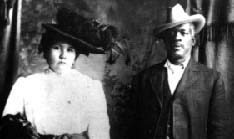 Indian/African
alliance. The first slave rebellion occurred in Hispaniola in 1522,
while the first on future United States soil (North Carolina) occurred
in 1526. Both rebellions were organized and executed by coalitions
of Africans and Indians. Indian/African
alliance. The first slave rebellion occurred in Hispaniola in 1522,
while the first on future United States soil (North Carolina) occurred
in 1526. Both rebellions were organized and executed by coalitions
of Africans and Indians.Kitty Cloud and John Taylor married in 1907 Europeans feared communities of escaped Africans, known as Maroons or quilombos in frontier areas. The largest of these communities, the "Republic of Palmores," originated in the 1600s, and at its peak had a population of approximately 11,000. This community composed primarily of Africans but including Indians, contained three villages, spiritual gather places, shops, and operated under its own legal system. Its army repelled European military attacks until 1694. White reaction to such communities was extreme despite their limited numbers. Europeans sought to keep the two peoples separated and, if possible, mutually hostile. They taught Africans to fight Indians and bribed Indians to hunt escaped Africans, promising lucrative rewards. Indians who captured escaped Africans received 35 deerskins in Virginia or three blankets and a musket in the Carolinas. Further sowing division, Whites introduced African slavery into the Five Civilized Nations in the United States. The U. S. government ended slavery among Indians by 1776. From pre-Revolutionary times to the Civil War, the government negotiated treaties with Indian tribes that included promises by the Indians to return escaped slaves. However, while harboring many slaves, they returned none. The most powerful African-Indian alliance linked escaped Africans who had settled in Florida, and Seminoles (a word that means "runaway"), who were fleeing the Creek federation. The Africans taught the Indians rice cultivation, and the groups formed an agricultural and military alliance. In 1816, a U. S. soldier reported that prosperous plantations existed for fifty miles along the banks of the Apalachicola River. The African-Seminole forces repeatedly repelled U. S. slaveholders' posses and the U. S. Army. The Second Seminole War resulted in 1,600 dead and cost over $40 million. The purchase of Florida from Spain was the U. S. government's attempt to eliminate it as a refuge for runaways. Before the Civil War, many Native American nations on the eastern seaboard of the United States became biracial communities. African-Americans were well represented in the Trail of Tears. By 1860, the Five Civilized Nations in the Indian Territory consisted of 18 percent African Americans. The Seminoles appointed six Black Seminoles members of its governing council. After the Civil War, the Buffalo Soldiers, six regiments of African American U. S. Army troops, helped to end Indian resistance to U. S. control after the Civil War. The most significant African-Native American was John Horse, a Black Seminole Chief who was a master marksman and diplomat in Florida and Oklahoma and by the time of the Civil War, the Black Seminole Chief in Mexico and Texas. Horse negotiated a treaty with the U. S. government in 1870. On July 4th of that year, when his Seminole nation crossed into Texas, it was a historic moment: an African people had arrived together as a nation on this soil, under the command of their ruling monarch, Chief John Horse. Today, many African Americans can trace their ancestry in part to an Indian tribe.
Reference:
African American and Native American History Princeton Public Library 65 Witherspoon Street Princeton, NJ 08542 609-924-9529 source: blacktel4justice@aol.com Sent by Dorinda Moreno |
|
History of Las Posadas |
History of Las Posadas The mighty civilizations of the Mayas, Toltecs, Chichimecas, and, finally, the Aztecs ruled Mexico in their turn. Spanish explorers discovered this strange new world in the 16th century. In 1519, Hernan Cortez led an expeditionary army. Sixteen years later, Mexico became a Spanish colony, which it remained until 1821. With the Spanish soldiers came, Catholic missionaries, bringing their Christian faith to the pagan land. By a strange coincidence, the Aztecs celebrated the birth of their god Huitzilopochtli during the last days of December, around the winter solstice, at about the same time as Christmas. According to legend, Huitzilopochtli's mother, Coatlicue, was struck by a plumed ball of feathers while she was sweeping the steps of the temple, and in due course gave birth to the new god. Her other sons refused to believe the story of the supernatural conception and decided to kill her, but Huitzilopochtli appeared, armed with a fire serpent, and destroyed his scheming brothers. The festival celebrating Huizilopochtli's birth was the most important one of the Aztec year. It began at midnight and continued through the following day, with much singing, dancing, and speechmaking. The Indians paraded under elaborate arches of roses, wearing their fine st attire adorned with brightly tinted plumes. Special foods were prepared, including small idols made of corn paste and cactus honey, and huge bonfires in courtyards and on the flat roofs of the houses lit up the sky for miles around. The missionaries, noting the similarities between their own commemoration of the birth of Christ and the Aztecs' December observances, found it a relatively simple matter to substitute a new faith for the old. The ancient god of war with his cruel tradition of blood sacrifices was replaced by a gentle one of love and hope, represented by a tiny babe, the Christ Child. The first Christmas in old Mexico was celebrated in 1538 by Fray Pedro de Gante. He invited all the Indians for twenty leagues around Mexico City to attend, and they came in droves, some by land, others by water. Even the sick managed to come, carried in hammocks. The Indians loved the new feast day, and adopted it wholeheart edly, adding their own colorful touches of flowers and feathers. So many assembled for the Christmas Masses that they spilled over into the courtyard of the church and caused such a jam that those in front were in danger of being smothered. Those outside followed the ritual just as attentively as the ones indoors, however, and one padre later related that the natives would not miss a midnight Mass for anything in the world. The numbers of enthusiastic new churchgoers continued to grow over the years. In 1587, Fray Diego de Soria, prior of the Convent of San Agustn Acolman, tried to alleviate the overcrowded situation. He asked the Pope in Rome for permission to hold the Christmas Masses out-of-doors in the church courtyard. It was given, and the services - held from December 16th to the 24th - were called Misas de Aquinaldo. Many of Mexico's present-day Christmas traditions were originally introduced during the col onial era as a means of teaching Christian morals and the Bible to the Indians. The posadas, a nine-night series of processions reenacting Joseph and Mary's journey to Bethlehem, began in this way. Medieval European passion plays were adapted by the missionaries for the natives, and sometimes even translated into Nahuatl, the Aztec language. These developed into the Christmas dramas called pastorelas. The 16th-century priests also brought the custom of smashing a gaily decorated pot called the piata to the New World, using it as a finale to the Christmas Masses. Religious paintings and sculpture brought to Mexico in the 1500's very often portrayed scenes of the Nativity and other Biblical events. The Indians greatly admired these works and eventually began to create their own interpretations of the old scenes. The Virgin Mary's face took on a darker hue; bone structure - and dress - became more and more Indian in appearance. The custom of erecting a Christmas manger scene, called a nacimiento, was probably not introduced in the New World until a bit later, in the 1700's. In any case, the small nacimiento figures, originally European in feature and dress, quickly developed their own native characteristics, too. In time, many of the rites once held in the churches moved to people's homes and into the public squares. By the middle of the 1600's, images and paintings of the Virgin Mary or the Three Kings could be seen in the windows of almost every house during the holiday season. Lights shone from every window, and balconies were illuminated with candles, protected from the wind by glass bells. Some homeowners erected magnificent altars in front of their houses and hung gorgeous rugs and tapestries from the balconies. The rosary was recited aloud in the streets. People met and mingled in the main squares, enjoying the decorations and visiting busy m arket stalls. The Indians' habit of enlivening the solemn Spanish religious observances with their own gregarious practices occasionally dismayed the priests. In 1796, the Archbishop of Mexico complained that there was so much noise during the Aquinaldo Masses - including whistles, rattles, and tambourines - and so much munching on fruit and sweets, that all respect for the holy observances themselves was being lost. Even worse, in later years all sorts of nonreligious songs began to sneak into the Christmas Masses. During the colonial era, Mexico was ruled by viceroys, or governors appointed by the king. The day before Christmas the viceroy, accompanied by his court, would make the rounds of prisons and free prisoners convicted of minor offenses. The vicereine, his wife, would feed and clothe groups of impoverished children. Lavish parties were given in the vice-regal palace, attended by all the upper-class society folk, w ith parlor games (card games were strictly forbidden), music, and refreshments. All of these persons of distinction also visited the cathedral to hear lengthy sermons; a proper sermon in those days could easily last an hour, and often began with the Creation, to make sure that everything important was vocered. One custom of the early 19th century resembled Halloween trick-or-treating. In the days preceding Christmas, bands of children carrying a small manger scene would roam the streets, stopping at every house or shop to sing and ask for treats. The pleas were ingeniously pathetic: "My mule got lost and I am heartbroken, because she was carrying a gift for the Christ child." Only hearts of iron would refuse to contribute to another gift for newborn babeor perhaps the besieged householder or shopkeeper merely wished to prevent mischievous pranks. In the adult version of this custom, the lamplighter, street cleaner, water carrie r, garbage man, or postman would come around with little printed cards offering good wishes for the coming year. In return, they would receive a Christmas gift. This custom, like so many others dating back to colonial times, still continues today in many parts of Mexico. Sent by Walter L. Herbeck Jr. wlherbeck@sbcglobal.net |
|
| "Way of the Warrior." This documentary examines the visceral nature of war and the bravery of American Indian veterans who served in the U.S. military during the wars of the 20th century, and explores the paradox of these veterans who chose to fight for a country that considered them outside the American mainstream. Their stories are told through the prism of what it means to be
"ogichidaa," or one who protects and follows the ways of the warrior. Sent by Juan Marinez |
|
|
|
|
The President of the United States having determined to hold a conference with the Six Nations of Indians for the purpose of removing from their minds all causes of complaint, and establishing a firm and permanent friendship with them; and Timothy Pickering being appointed sole agent for that purpose; and the agent having met and conferred with the sachems and warriors of the Six Nations in general council: Now, in order to accomplish the good design of this conference, the parties have agreed on the following articles, which, when ratified by the President, with the advice and consent of the Senate of the United States, shall be binding on them and the Six Nations.... |
|
Peace and friendship are hereby firmly established, and shall be perpetual, between the United States and the Six Nations. ARTICLE 2.The United States acknowledge the lands reserved to the Oneida, Onondaga, and Cayuga Nations in their respective treaties with the State of New York, and called their reservations, to be their property; and the United States will never claim the same, nor disturb them, or either of the Six Nations, nor their Indian friends, residing thereon, and united with them in the free use and enjoyment thereof; but the said reservations shall remain theirs, until they choose to sell the same to the people of the United States, who have the right to purchase. ARTICLE 3. The land of the Seneca Nation is bounded as follows: beginning on Lake Ontario, at the northwest corner of the land they sold to Oliver Phelps; the line runs westerly along the lake, as far as Oyongwongyeh Creek, at Johnson's Landing Place, about four miles eastward, from the fort of Niagara; then southerly, up that creek to its main fork, continuing the same straight course, to that river; (this line, from the mouth of Oyongwongyeh Creek, to the river Niagara, above Fort Schlosser, being the eastern boundry of a strip of land, extending from the same line to Niagara River, which the Seneca Nation ceded to the King of Great Britain, at the treaty held about thirty years ago, with Sir William Johnson;) then the line runs along the Niagara River to Lake Erie, to the northwest corner of a triangular piece of land, which the United States conveyed to the State of Pennsylvania, as by the President's patent, dated the third day of March, 1792; then due south to the northern boundary of that State; then due east to the southwest corner of the land sold by the Seneca Nation to Oliver Phelps; and then north and northerly, along Phelps' line, to the place of beginning, on the Lake Ontario. Now, the United States acknowledge all the land within the aforementioned boundaries, to be the property of the Seneca Nation; and the United States will never claim the same, nor disturb the Seneca Nation, nor any of the Six Nations, or of their Indian friends residing thereon, and united with them, in the free use and enjoyment thereof; but it shall remain theirs, until they choose to sell the same, to the people of the United States, who have the right to purchase. ARTICLE 4.The United States have thus described and acknowledged what lands belong to the Oneidas, Onondagas, Cayugas and Senecas, and engaged never to claim the same, not disturb them, or any of the Six Nations, or their Indian friends residing thereon, and united with them, in the free use and enjoyment thereof; now, the Six Nations, and each of them, hereby engage that they will never claim any other lands, within the boundaries of the United States, nor ever disturb the people of the United States in the free use and enjoyment thereof. ARTICLE 5.The Seneca Nation, all others of the Six Nations concurring cede to the United States the right of making a wagon road from Fort Schlosser to Lake Erie, as far south as Buffalo Creek; and the people of the United States shall have the free and undisturbed use of this road for the purposes of traveling and transportation. And the Six Nations and each of them, will forever allow to the people of the United States, a free passage through their lands, and the free use of the harbors and rivers adjoining and within their respective tracts of land, for the passing and securing of vessels and boats, and liberty to land their cargoes, where necessary, for their safety. ARTICLE 6.In consideration of the peace and friendship hereby established, and of the engagements entered into by the Six Nations; and because the United States desire, with humanity and kindness, to contribute to their comfortable support; and to render the peace and friendship hereby established strong and perpetual, the United States now deliver to the Six Nations, and the Indians of the other nations residing among them, a quantity of goods, of the value of ten thousand dollars. And for the same considerations, and with a view to promote the future welfare of the Six Nations, and of their Indian friends aforesaid, the United States will add the sum of three thousand dollars to the one thousand five hundred dollars heretofore allowed to them by an article ratified by the President, on the twenty-third day of April, 1792, making in the whole four thousand five hundred dollars; which shall be expended yearly, forever, in purchasing clothing, domestic animals, implements of husbandry, and other utensils, suited to their circumstances, and in compensating useful artificers, who shall reside with or near them, and be employed for their benefit. The immediate application of the whole annual allowance now stipulated, to be made by the superintendent, appointed by the President, for the affairs of the Six Nations, and their Indian friends aforesaid. ARTICLE 7.Lest the firm peace and friendship now established should be interrupted by the misconduct of individuals, the United States and the Six Nations agree, that for injuries done by individuals, on either side, no private revenge or retaliation shall take place; but, instead thereof, complaint shall be made by the party injured, to the other; by the Six Nations or any of them, to the President of the United States, or the superintendent by him appointed; and by the superintendent, or other person appointed by the President, to the principal chiefs of the Six Nations, or of the Nation to which the offender belongs; and such prudent measures shall then be pursued, as shall be necessary to preserve or peace and friendship unbroken, until the Legislature (or Great Council) of the United States shall make other equitable provision for that purpose. NOTE:It is clearly understood by the parties to this treaty, that the annuity, stipulated in the sixth article, is to be applied to the benefit of such of the Six Nations, and of their Indian friends united with them, as aforesaid, as do or shall reside within the boundaries of the United States; for the United States do not interfere with nations, tribes or families of Indians, elsewhere resident. IN WITNESS WHEREOF, the said Timothy Pickering, and the sachems and war chiefs of the said Six Nations, have hereunto set their hands and seals. Done at Canandaigua, in the State of New York, in the eleventh day of November, in the year one thousand seven hundred and ninety-four. TIMOTHY PICKERING |
|
| (Signed by fifty-nine Sachems and 14 War Chiefs of the Six
Nations.) Witnesses: Israel Chapin, Wm. Shepard Jun'r, James Smedley,John Wickham,Augustus Porter, James H. Garnsey, Wm. Ewing, Israel Chapin, Jun'r. Interpreters: Horatio Jones, Joseph Smith, Jasper Parrish, Henry Abeele. CANANDAIGUA, NEW YORK - NOVEMBER 11, 1797 Source: Glen Welker Sent by Dorinda Moreno |
|
The Return of Native Americans as Immigrants New America Media, Commentary, Louis E.V. Nevaer, Posted: Oct 24, 2007 The United States is seeing a resurgence of Native Americans in the form of immigrants who are descendents of North America’s indigenous populations. As Native Americans, they are terrifying precisely because they have a moral claim to cross the borders imposed on their lands, writes NAM contributor Louis E.V. Nevaer. As the immigration debate rages throughout the nation, the lingering, but unspoken, fear is that illegal immigration from Mexico heralds the return of the Native American. "The persistent inflow of Hispanic immigrants threatens to divide the United States into two peoples, two cultures, and two languages," Samuel Huntington famously argued in Foreign Affairs magazine in March 2004, unleashing a firestorm of protests among U.S. Hispanics and Latinos. "Unlike past immigrant groups, Mexicans and other Latinos have not assimilated into mainstream U.S. culture, forming instead their own political and linguistic enclaves — from Los Angeles to Miami — and rejecting the Anglo-Protestant values that built the American dream." In fact, almost all Mexican immigrants are descendents of North America’s indigenous peoples. As Native Americans, they are terrifying precisely because they have a moral claim to migrate throughout the nation-states imposed on their lands. This vilification of immigrants differs from the same sentiment of earlier generations. Previously, Americans debated and settled immigration issues through legislation: the Alien and Sedition Acts of 1798 to keep French and Irish Catholics out, the anti-Papist sentiment that fueled Nativism in the 19th century aimed at Italian, Irish and German immigrants, the xenophobia that culminated in the Chinese Exclusion Act of 1882, and the "Gentlemen’s Agreement" of 1907 aimed at the Japanese. In "The Clash of Civilizations and the Remaking of World Order," Huntington argued that the Mexican state was complementary to the American one, both heirs of Europe and the Enlightenment. This suggests that the cultural conflict he fears is between Western versus Native American. He is correct. Native Americans are indifferent to the Western values used to obliterate them, and he recognizes the moral authority with which they challenge the very concept of the nation-state. To refuse entry to immigrants from across the oceans, from Europe or Asia, is one thing; to stand against the internal movements of Native American people, Americans find unsettling. They can’t forget that efforts to transplant and expand European civilization in the New World have been the driving force behind the settling of the West in the 19th century and the exclusion of Native Americans from the mainstream of society in the 20th. It almost worked: There are no Manhattans on the island of Manhattan, no Coast Miwok in San Francisco. "The only good Injun is a dead Injun," is a line in a Hollywood Western that sums up the nation’s attitude during the 19th century, and it is true that Native Americans were massacred, subjected to forced migrations and deliberately infected with contagious diseases so as to reduce their numbers. It is also true that during the last century, the establishment of reservations created marginalized communities where alcoholism, substance abuse and unemployment demoralized Native Americans into early graves. Now, peoples rendered almost irrelevant to American society are thriving in such large numbers that they are once again on the move across the continent. The return of the Native American began in earnest in the 1980s, during the Sanctuary Movement in California. Suddenly, people apprehended at the borders spoke neither English nor Spanish. Isa Gucciardi, who managed a translation company in San Francisco, reported getting calls from the Immigration and Naturalization Service (INS), as it was called then, with requests for interpreters who spoke "Indian" languages from southern Mexico and Central America. "We had to double the rate, since it was so difficult to find anyone who spoke English and Tzotzil Maya," she said. Despite their best efforts to wipe them out, at the start of the 21st century, Zapotec, Mixtec, Maya and scores of other indigenous peoples have returned. They are working in our restaurants, stocking shelves in our stores, building houses and doing our landscaping. They are taking care of our kids while we’re at the office, and giving birth to more Native Americans in our hospitals. They are fueling the economic expansion, contributing to a society that looks upon them with disdain. Yet in the second half of 20th century, it was Europeans who looked on Americans with disdain. Walt Whitman celebrated America being one people out of many – "Of every hue and caste am I" – but to the Europeans, hyphenated Americans are mongrels and half-breeds: Irish-Americans, African-Americans, Italian-Americans, Anglo-Americans. The realization that Native Americans are crossing the borders that crossed them is alarming even Jesse Jackson. Interviewed on CNN’s "Lou Dobbs Tonight," he complained that the workers streaming into New Orleans were "outside workers," since he could not bring himself to say "Native Americans from Latin America." My office in New York is in the Citigroup Center where the only Native American used to be the "Manna-Hata" Indian on the seal stenciled on the flag of the City of New York, standing next to an early Dutch colonist. Not anymore. Now when I go to the lobby and downstairs into the subway concourse that connects the Uptown Number 6 train with the E and V subways, there are Maya women, wearing their traditional textiles. Their babies strapped on their backs in shawls, with a blanket made of blue basket, they lay out before them for sale probably the last thing that is actually made in New York City: pirated DVDs of Hollywood movies. Having rid ourselves of the Manna-Hata people, we import Native Americans from Mexico. Given this demographic trend, it’s only a matter of time before we hear, "Press three to continue in Zapotec." Related Article: Alcatraz Sunrise Ceremony Celebrates UN adoption of the Declaration on the Rights of Indigenous Peoples Sent by Juan Marinez marinez@anr.msu.edu and Dorinda Moreno
|
|
|
Archie "Grey Owl" Belaney 1888 - 1938 Ecology Hall of Fame . A Brief Biography by George Kuc "The wilderness should now no longer be considered as a playground for vandals, or a rich treasure trove to be ruthlessly exploited for the personal gain of the few," to be grabbed off by whoever happens to get there first. Man should enter the woods with the awe of one who steps within the portals of some vast and ancient edifice of wondrous architecture." Such was written in 1936 in "Tales of an Empty Cabin" one of a handful of best-selling nature-adventure-conservation books by a self-described half-breed Indian named Grey Owl. Such books were also written by a full-blooded Englishman named Archie Belaney. Both men addressed issues such as the treatment of native peoples, the fur trade, vivisection, trophy hunting, and even child labor: "I found some difficulty in believing that it could be true and still cannot quite grasp why a law should be necessary to put a stop to it." These very same books, in fact, were written by both men, for they were one and the same man. To comprehend this, one must have an understanding of how one person's childhood dreams came true. Archie Belaney (1888-1938) was born in Hastings, England. He was raised by neither parents, for his father, George Belaney, was exiled from the family for his misadventures and relationships, and his mother, Katherine Cox, was too young and didn't have the means to raise Archie. It was ultimately decided that he was to be raised by his two aunts: Miss Ada and Miss Carrie. It was under their care that he received the formal education of British boys as well as learning to play the piano. But it was also while under their care that this British boy started to develop an Indian soul, largely through his extensive readings from the library of books and magazines of the stories of Buffalo Bill and other adventurers of the wild as well as the stories of native peoples and the wilderness in general. Archie also collected drawings as well as living specimens of reptiles, insects, and animals much to his aunts dismay. As Archie read more, his dream became more of a true desire to immerse himself in the Indian world and become one with them. He even prepared for this by going without food or drink for a day or more; he slept on the hard floor of his room, and he even crept into the garden at night to sleep outdoors. Part of his motivation was that, from what he was learning as a teenager, he loathed office work. Archie had a genuine fear of being trapped by civilization, and so he had a constant urge to assimilate himself into the world of nature. It was this urge that made his decision at age 18 to leave his aunts and leave the Liverpool docks, to head for the Canadian northland in 1906. Archie soon ended up in Ontario and hooked up with Bill Guppy to learn to be a guide and earn his grub. It was while working as a guide that he came into contact with the Bear Island Indians, the Ojibways. Already keeping his hair long, and his skin darkened by the sun, Archie, the urge pushing him on, passed himself off as a half-breed. He soon successfully established what would be a lasting relationship with these native peoples. They taught Archie their language and lore and how to trap and be a woodsman. The Ojibways also gave Archie the name he would be better known as: Grey Owl. To better assimilate himself in the native world, and explain his blue eyes, he would tell strangers that his father was a Scotsman and his mother was of a certain band of the Apache tribe of New Mexico, and that he himself was born in Hermosillo, Mexico. As he went out to work on his own, Grey Owl, as he became widely known, developed a reputation over the years as a foul-mouthed blasphemer, a daredevil, and an expert knife thrower with, on occasion, gentlemanly manners. One time a young girl accused a local man of attempted rape; Grey Owl cornered the man against a door and was boxing him in with the knives he was throwing at him; the man moved, one of the knives cut him, and Grey Owl then had to leave town for a warrant was issued for his arrest for the attempted murder of the accused rapist; even self-described half-breeds didn't have their share of rights. It wasn't long after his acceptance with the Ojibways that Grey Owl married an Indian woman, Angele; he worked for the Canadian Forest Service as a Fire Ranger during much of this marriage, and had children with Angele. But during what was called at that time the Great War (WWI), Grey Owl enlisted in the 13th Montreal Battalion and was shipped to battle in France. He served as a sniper until he had to be discharged after suffering a wound to his wrist, losing a toe, and being mustard gassed. He was sent with the other injured soldiers of the British Empire to England. Archie was back in England. Combined with his sometimes long tours-of-duty alone with the Forest Service as well as his time served in the war, it has been four years since he last saw Angele. Perhaps, like his father, it was something in the Belaney blood, a weakness for women that will show throughout his life, but, regardless of excuse, Archie became a bigamist when he fell for and married Connie Holmes, a childhood sweetheart. It was a short but passionate affair, however, for Connie had no intention of leaving England and joining Archie to go back to the wilderness that was calling him. When Grey Owl came back he took up one of his old trades as a trapper. He became disillusioned as he saw how trapping changed from a means to make a living to a way of getting-rich-quick with no respect for the unwritten laws of native peoples and established trappers concerning preserving the animal populations to ensure future game. With newcomers coming in droves, trapping became lawless and indiscriminate. With little game to hunt, Grey Owl had to rejoin the Fire Service where he also saw firsthand the increasing destruction of forests by technology. During this time, however, he mostly grinned and bore it- until he met a certain girl. She was an Iroquois girl, only 19 when she met Grey Owl who was 36. Her name was Anahareo, but her nickname was Pony. She was brought up in the modern ways, so she developed an immediate attraction to this 6' 2" older, wild, adventuresome person whom she believed represented her traditional roots. The two of them had a very passionate relationship that lasted for years; Grey Owl even once saved Pony's life when she broke through the thin lake ice one cold winters day. Although Pony was fond of Grey Owl, she grew disgusted of his means of living which was primarily trapping. Grey Owl, not knowing how else to supplement his income, resisted her pleas to quit trapping until one of his traps killed the mother of two beaver kittens. The trap was lost in the river along with the mother beaver, so Grey Owl and Pony adopted the two beaver kittens, and soon thereafter Grey Owl quit the trapping trade and turned to protecting animals. Beaver were, at that time, on the verge of extinction, with beaver dams abandoned throughout Canada as they were hunted for their fur. Grey Owl started a conservation project with these two, and later two additional, beavers. He brought them along with him and gave local lectures at society clubs and with tourists and talked about the beavers and the wild. These people gladly paid money to see and hear an "Indian" speak so articulately and masterfully about lands they never ventured in. To better support himself and Pony, he also wrote numerous articles for magazines such as Country Life and Forest&Outdoors about the wilderness. This gave rise to a demand for his books, of which he wrote a half dozen of them; these were written not only to tell stories about his adventures in the wilderness, but also to cast light upon the exploitations of the countryside, the humiliations of the Indians so often accorded them, and the senseless cruelty and slaughter of the forest inhabitants. These books were bestsellers in Canada, Europe and the United States. His growing fame as an "Indian" speaker of the natural world got the attention of the Canadian National Parks Service which approached Grey Owl and agreed to appoint him as a naturalist and Park Warden of one of Canada's national parks. He and Pony and the beavers finally settled at Prince Albert National Park. He was already being referred to as "An Indian Thoreau in Canada" by the London Times. With the help of the National Parks he made some short films of himself, Pony, and especially the beavers; these films were to be the centerpiece of his upcoming lecture tours - as the demand from the public abroad to know more about the wild grew so too did Grey Owl's desire to teach people the importance of preserving it. Grey Owl's first tour landed him in London in 1935 which was three years after Pony had their daughter, Dawn. Wishing to stress the beauty of nature's simplicity, Grey Owl would begin his lectures, in full Indian garb, by saying "You are tired with years of civilization. I come to offer you - what? A single green leaf." He would then go into various stories about the wild, and narrate his films as they were shown on a huge screen. He was so popular in England that he did over 200 lectures in four months and addressed 250,000 people about the beauty and significance of the wild. His second lecture tour, in 1937, was an even bigger success and included Europe and the United States. At this time he was with a new wife, called Silver Moon, after Pony left to go prospecting for gold on her own, she having her own sense of adventure. His American tour included stops at Columbia University and Harvard. He did 140 lectures between October and mid December. The highlight of this tour was when he spoke at Buckingham Palace before the King of England and the entire royal court to stress the need to conserve the wilderness. This second tour, however, took its toll on Grey Owl's health. His lungs, already weakened by the mustard gas, became weaker still with the various climates at the places he went- his stamina strained by the long, intense schedule. By the time he got back to his lodge in Canada, he was very weak; he soon developed a temperature, fell into a coma, and died on April 13, 1938 at age 50 of what was ruled "exhaustion". The following day a reporter, who knew of Grey Owl's past but held the story, had it finally published in the next days paper. Both Grey Owl and Archie Belaney were one and the same, and both were now gone. Pony tried to carry on her former husbands work, but many people lost sight of the message in shock of being deceived by the messenger. World War II also demanded attention. Nevertheless, Archie "Grey Owl" Belaney's work helped preserve the Canadian wilderness, increased the awareness of conservation on two continents, and made possible for there to be fewer abandoned beaver dams along the rivers. This blog entry was sent by boricuawarrior@yahoo.com through the Multiply web site. Received and shared by Dorinda Moreno |
|
Thanksgiving 2007 |
Día de Gracias 2007
|
| Preparing to
celebrate Thanksgiving, I include you in my blessings. My favorite
U.S. holiday (for we must always be thankful for blessings), it is
clothed in history and myth. If in 1621 "Tisquantum" (Tis SKWAN tum) or "Squanto" (SKWAN toe) of the Pokanokit Wampanoag nation, who had been to England fifteen years before the "Pilgrims" came to America, helped the ill-provided colonists, it was because generosity and aid to strangers was an institution of the Wampanoag culture and if he celebrated thanksgiving with Miles Standish and the colonists of Plymouth Plantation it was because the Algonkian tribes held six thanks-giving festivals during the year (that one being their 5th one of the year.) And they brought most of the food, including four wild turkeys, for the feasting. But it seems that, as William B. Newell, a Penobscot Indian and former chairman of the Anthropology department at the University of Connecticut, says, the first officially declared Thanksgiving Day by the Governor of the then Massachusetts Bay Colony was the day following the slaughtering of a Pequot village of 700 men, women, and children, who were celebrating their annual Green Corn Dance, in June 1637 executed under the command of one John Underhill and documented by William Branford. And Gerald Murphy cites a proclamation of such a
holiday recorded in Charlestown, Massachusetts, thirty-nine years
later, June 20, 1676, that refers to the indigenous peoples of this
land as "the Enemy" in "the present Warr with
the Heathen Natives of this land." And the governing council
of Charlestown, Massachusetts set June 29 to thank the god of the
Puritan "pilgrims" for "giving us especially of late
with many of our Confederates many signal Advantages against them
[the indigenous people]," thankful "when our Enemies are
in any measure disappointed or destroyed." (see attachment
for original proclamation.) This year, as I have done almost every year since
1969 or 70, I hope to begin the day at sunrise with an American Indian
ceremony at the gathering of the tribes on the island of Alcatraz to
remind ourselves of the history of this land - and rededicate
ourselves to changing its course for the better. In the midst of this pain, we give thanks for the gifts of life and the sustenance of the great Mother the Earth. And for each other, and all our relations the other animals, the plants, the stones. We give thanks for the gifts of the spirit mindful that in our gratitude we must also raise our voices in the name of justice and peace mindful that gratitude for that which we enjoy at the expense and suffering of our brothers and sisters is unacceptable.
|
Preparándome
para celebrar el Día de gracias, los incluyo a ustedes en mis
bendiciones. Es mi fiesta estadounidense favorita (pues siempre
debemos estar agradecidos por las bendiciones) a pesar de su historia
dudosa. De hecho la primera proclamación de tal fiesta registrada en
Charlestown, Massachusetts, el 20 de junio 1676, se refiere a la gente
indígena de esta tierra solamente como "el Enemigo"
en "la guerra presente con los nativos idólatras de esta
tierra." El concilio regidor de Charlestown, Massachusetts
fijó el 29 de junio para dar gracias al dios de los "peregrinos"
Puritanos por "darnos en especial recientemente con nuestros
confederados muchas notables ventajas contra ellos [los indios
americanos]" agradecidos "cuando nuestros Enemigos son en
cualquier modo frustrados o destruidos." [Véase el adjunto.] Pues parece que, como dice William B. Newell, un indio penobscot y pasado presidente del departamento de antropología en la Universidad de Connecticut, todo Día de gracias por los siguiente cien años fueron en honor del masacre de un pueblo pequot de 700 hombres, mujeres, niños, que celebraban su Baile del maíz tierno anual en junio de 1637, ejecutado bajo órdenes de un tal John Underhill y documentado por William Branford. Si en 1621 "Tiscuántum" o "Escuanto" de la nación Pokanokit Uampanoag quien había ido a la Inglaterra quince años antes de que los "Peregrinos" llegaran a America ayudó a los colonistas mal preparados era porque la generosidad y el auxilio a extranjeros era una institución cultural de la cultura Uampanoag y si celebró "Día de gracias" con Miles Standish y los colonos de la finca de Plymouth era porque las tribus Algonkian celebraban seis fiestas de gracias durante el año (esa siendo la quinta del año.) Y fueron ellos los indios quienes trajeron la mayor parte de la comida, inclusive cuatro guajolotes silvestres, para el banquete. Por primera vez se hizo fiesta nacional declarada tal por George Washington en 1789 para el 26 de noviembre. Abraham Lincoln revivió la costumbre en 1863, y el Congreso declaró que la fiesta se celebrara el cuarto jueves de noviembre en 1941. Y así lo es. Este año, como lo he hecho casi cada año desde 1969 o 70, empezaré el día al amanecer con una ceremonia indígena americana en la reunión de las tribus en la isla de Alcatraz para recordarnos de la historia de esta tierra - y dedicarnos de nuevo a cambiar su curso para mejor. Luego en la tarde, festejaré con amigos en gracias por las bendiciones de la vida. Será un día de celebración cuyo regocijo será estropeado por reconocimiento de la nación bajo un gobierno belicoso intento a destruir la Tierra. Irak es una herida en el corazón y los gritos de hombres, mujeres, criaturas asesinadas a la vez que lees estas palabras deben entremeterse en nuestras oraciones de gracias. El gobierno (nosotros si lo toleramos) no sólo hace guerra injustamente, ilegalmente, justificándose con mentiras y fraude sino también ha violado la Constitución y la Lista de Derechos tal que nuestros derechos y libertades civiles ya no son garantizadas. Concentra los bienes de la nación en manos de los ricos y poderosos, y la mayor parte de nuestros ciudadanos celebrarán este día con menos bienes, menos seguridad, menos libertad, más ignorancia que hace seis años. Y la lucha por nuestra democracia sigue. En medio de esta pena damos gracias por los dones de la vida y el sustento de la gran Madre Tierra. Y por uno al otro, y por toda nuestra parentela los otros animales, las plantas, las piedras. Damos gracias por los dones del espíritu conscientes de que en nuestra gratitud también debemos alzar nuestras voces en el nombre de la justicia y la paz conscientes de que la gratitud por lo que gozamos a costo y sufrir de nuestros hermanos y hermanas no es aceptable. bendiciones - Jesús González 2007
|
Rafael Jesús González |
|
Jewish group bands with Latinos against discrimination Oldest synagogue in Americas draws tourists to Brazil |
|
At the Washington meeting, workshops focused on everything from
effective lobbying and letter-writing to the power of personal
relationships to a point-by-point presentation on advocating on Capitol
Hill.
In North Texas, some immigrant leaders praised the AJC effort. For years, some have discussed the merits of U.S. Latinos acting as a
lobby on Mexican issues, just as U.S. Jews have done on behalf of
Israel. And for nearly as many years, Mexico's halting march toward democracy
impeded such moves because Mexican-Americans wanted little association
with the often-corrupt ruling party of Mexico.
But that political party rules no longer. And the current crackdown
against Mexicans living illegally in the U.S. has served to galvanize
many members of the community. Sent by Howard Shorr howardshorr@msn.com
|
|
Oldest synagogue in Americas
draws tourists to Brazil
By Raymond Colitt RECIFE (Reuters) - Flanked by bustling cafes in downtown Recife on Brazil's northeastern coast is a little-known treasure of Jewish history in the New World -- the oldest synagogue in the Americas. Sephardic Jews built the two-story Kahal Zur Israel Synagogue before 1641 -- most likely in 1636 -- when they enjoyed religious freedom under the Dutch, who ruled part of the northeast region from 1630 to 1654 to control sugar production. The Mikve Israel Congregation in Curacao, a Dutch Antilles island in the Carribean, was considered by some to have been the first congregation in the Americas. But it was founded only in 1651, also by Sephardic Jews from Holland. In the world's largest Catholic nation, whose best known icon is the Christ the Redeemer statue in Rio de Janeiro, the Recife synagogue became an important symbol of the Jewish heritage in Brazil. Based on old maps, archeological excavations uncovered the remnants of the synagogue, including the original Mikvah -- a bath for religious ceremonies -- under six layers of floors. The restored synagogue reopened in December 2001. Since then it has become one of the main stops on the city's tourist circuit and its archives attract scores of Brazilian and foreign historians. Their studies are gradually unveiling the prominent role Jews had in early Brazilian society. "It challenges the stereotypical view that Brazilian culture is based on a tripod of Portuguese, (native) Indians and Africans," said Tania Kaufman, head of the Jewish Historical Archive in Recife, the capital of Pernambuco state. "We now know Jews were a fundamental part of Brazil's cultural melting pot." Historical records in Brazil and Amsterdam show Jews helped build the sugar industry, roads, bridges, and a basic sewage system in the northeast. Many also made money by trading slaves. At its height in 1645, the Jewish community in Recife counted 1,630 members, the same number as in the thriving Jewish community of Amsterdam, according to Dutch historian Franz Leonard Schalkwijk. "The economic dominance of the Jews prompted various protests (from Catholics and Protestants)," wrote Schalkwijk in his book "Church and State in Dutch Brazil." When Dutch rule ended in 1654, Jews were expelled, killed or forced to go into hiding under the Roman Catholic Inquisition. One group from Recife defied storms and pirates to reach what is today New York, where they founded the first Jewish congregation in North America, called Shearith Israel, "the remnants of Israel." An exhibition entitled "Pernambuco, Brazil - a gateway to New York" stirred much interest at the U.S. Center for Jewish History in 2004-05, recalls Kaufman. The restored synagogue and renewed interest in the legacy of their ancestors is reinforcing the identity of Recife's Jewish community, which has dwindled by more than half to 300 families from two decades ago as many left for bigger cities. In 2005, Recife received from Israel its first permanent Rabbi since 1654. There are four synagogues in Recife but many Jews choose to celebrate their weddings and Bar Mitzvahs in the Kahal zur Israel because of its symbolism. "It's an enormous source of pride," said Ivan Kelner, president of the Israelite Federation of Pernambuco state. The synagogue is also at the center of a broader cultural renaissance. In November of every year, a Jewish festival offering dance, cinema, and food, from Gefilte fish to fluden, attracts around 20,000 visitors. "The synagogue is a symbol of the revival of Jewish culture, it has galvanized our community," said Denys Sznejder, a choreagrapher who heads a Jewish folkloric dance group in Recife. (Editing by Vicki Allen)
© 2007 Reuters
|
|
A WWII Story That Needs To Be
Told and Remembered by Gus Chavez Dear Reyes Extended Family . . . From the Streets of Laredo to Omaha Beach by Richard G. Santos, as shared by Francisco "Pancho" Vega A Tejano Son of Texas Santanderos Blog La Voz de Culebra Park: Emma Tenayuca Tejas Conjunto Hall of Fame Awards Descendents of Don Juan Bautista Elguezebal, Governor of Texas 1797 - 1805, Compiled by John D. Inclan Adina de Zavala Celebration March 2008 Meeting Planned by Texas State Historical Association |
|
|
|
|
| The
September 23, 2007, airing of Ken Burns and PBS "THE WAR"
seven episode 15 hour documentary of World War II failed to recognize
the valiant participation and experience of Mexican Americans and
Latinos. The omission of Mexican American and Latino patriots from our
nation’s memory and recorded history as presented by Ken Burns in his
documentary of what took place before, during and after World War II is
shocking and reprehensible.
Like the message heard around the world when the Japanese attacked Pearl Harbor on Sunday, December 7, 1941, then President Franklin D. Roosevelt proclaimed it "a date which will live in infamy." The date of the airing of Ken Burns "THE WAR," Sunday, September 23, 2007, is to Latinos and Latinas the equivalent of what President Roosevelt said when our country declared war on Japan. The Latino and Latina war against Ken Burns and PBS "THE WAR" continues to be fought across our nation and will not stop until the contributions and experiences of our Latino and Latina World War II patriots are recognized and honored. In memory of our Latino and Latina World War II veterans, I, Augustine (Gus) Silvas Chavez, a native of Sonora, Texas, a U. S. Navy veteran, retired San Diego State University administrator and Co-founder of the Defend The Honor Campaign* have compiled a listing of eighty-one of Sonora, Texas WWII veterans who served in support of freedom and democracy. Several of Sonora’s patriots served and made the ultimate sacrifice for our nation. They are Agustin Silvas, David Rameriz and Isidro Virgin. Two of Sonora’s brave warriors were captured
and became German Prisoners of War. They are Leova Urias and Ramon
Gutierrez (El Sancudo). Leova Urias was a German P.O.W. in Stalag XII A
in Limburg, Germany. Ramon Gutierrez was born in Del Rio, Texas but
raised in Sonora where he was drafted and went on to serve with
distinction. He escaped from the Germans and temporarily fought with the
Russians. A memorial in his honor was erected in the San Felipe
community in Del Rio. A Del Rio News – Herald story reported "For
all of his dedicated service, Gutierrez received many decorations
including two Silver Stars, three Bronze Service Stars, a Purple Heart,
an American Defense Service Metal, WWII Victory Medal and a Bronze
Arrowhead, among others. Gutierrez has also been awarded, by the Russian
government, an Order of the Patriotic War 2nd Class, Order
Otetiestvennoi Voiny, for his personal bravery, staunchness and
courage." The following is a list of WWII patriots who represented our small town of Sonora, Texas. I am certain that the same level of representation can be found in similar Mexican American and Latino communities throughout the country. Sonora’s finest Mexican American WWII warriors were:
|
| Victoriano
Arteaga Pablo Avila Pat Brown Enrique Cardona Dagoberto Chavez Michael Chavez Alonzo Cook Tomas Favela Oscar Galindo Alejandro Gonzalez Rafael Gonzalez "Chano" Alonzo Hernandez Pablo Rodriguez Pedro Virgin |
Roberto (Beto)
Avila Placido Bautista Daniel Carranza "el coyote" Pablo Cardona Gilbert Chavez Pedro Chavez Nick Duran Claudio Flores Alejandro Garcia Eugene Gonzalez Pilo Gomez Jesus Hernandez "chuy tulles" Santos Hernandez "cacaro" Joe Longoria Cesario Martinez "challo" Jose Munoz Alfredo Perez "Fero" Jesus Ramos "el mocho" |
Elias Avila Alfred Bermea Cecilio Cardona Luis Castro "la galleta" Juan Chavez Severo Chavez "Seve" Nicolas Esquivel Ramon Flores Jacinto Garza "chinto" Luciano Gonzalez Ramon Gutierrez "el sancudo" German POW Juan Hernandez Lupe Jimenez "el chato" Santos Lopez Lazaro Martinez "Big Boy" Luis Munoz Salome Perez "el sorillo" Willie Ramos Jose Rodriguez Willie Romero
|
 All
of these WWII soldiers served honorably and returned to Sonora, Texas
where they resumed their lives with their families working in the Texas
Highway Department, local ranches and businesses, opened their own small
businesses, trasquila (sheep/goat shearers), truck drivers, construction
and other forms of manual labor. Many of these veterans did not finish
high school and none received a university education. In some instances,
several took advantaged of the G.I. Bill benefits and received technical
training in proprietary schools in the region.
All
of these WWII soldiers served honorably and returned to Sonora, Texas
where they resumed their lives with their families working in the Texas
Highway Department, local ranches and businesses, opened their own small
businesses, trasquila (sheep/goat shearers), truck drivers, construction
and other forms of manual labor. Many of these veterans did not finish
high school and none received a university education. In some instances,
several took advantaged of the G.I. Bill benefits and received technical
training in proprietary schools in the region.
Unfortunately, the open and later found to be illegal segregation in Sonora, affected the lives and families of generations of Mexican Americans. The scars and pain of that experience continue to be felt by many who suffered the injustices of Sonora’s segregation policies. Thanks to the voices and commitment of our Mexican American/Chicano WWII veterans that advocated and demanded equal justice and civil rights for all in Sonora, we now have a much vibrant and tolerant community. The Mexican American /Chicano men and women of the WWII generation opened the doors of opportunity to their sons, daughters, nieces, nephews and countless others who have emerged to become the lawyers, doctors, dentists, teachers, professors, accountants, architects, media reporters and leaders in many other professions. They have also become policy makers and elected officials holding office in our local, state and national government. Much has changed since the elimination of official segregation in our small town. The changes, without question, have been good for everyone who chooses to raise their family in this community. New arrivals to Sonora need to know of our history and contributions to society, especially the role we played in WWII. It is up to the leaders of today, working with the older generations of the past, to insure that our past is remembered while at the same time move forward into the future knowing that we are all Americans. To this end, it is important for us as Mexican Americans/Chicanos and Latinos to properly record our own history. This is especially true when the record is written on how we served our country in WWII, Korea, Vietnam, Desert Storm and other wars. Our failure to record our history will allow individuals and organizations like Ken Burns and PBS to take "artistic license" and continue omitting us from our nation’s history. To this very day, Ken Burns continues to deny or acknowledge our direct presence and valiant participation in WWII. There are many stories that remain to be told and written about Mexican American/Chicano communities and individuals like those in Sonora, Texas. It is my hope that what I have written motivate others, especially young students, to write about their own WWII family and community experience. A special thank you to the following individuals who assisted in remembering and recording the names of Sonora’s Mexican American/Chicano World War II veterans. They are Juanita Silvas Chavez, Toribvio Chavez, Maria Dimas Chavez, Elida Castro, Teodoro (Lolo) Chavez, Anita and Leova Urias, Lydia Ramon, Alfred Bermea, Juan Carlos Gonzalez and Dr. Alma Sanchez Perez. Written by Agustin (Gus) Silvas Chavez (SHS class of 1962) October 26, 2007 * The Defend The Honor Campaign was founded in
January 2007 to inform and educate the public about the exclusion of the
Latino experience in Ken Burns and PBS 15 hour WWII documentary. Members
of the DTH Campaign included representation from a majority of Latino
and Latina national, state, and local organizations as well as over nine
thousand individuals throughout the nation. Dr. Maggie Rivas-Rodriguez,
Journalism Professor at the University of Texas at Austin, is the
co-founder of the DTH Campaign. See the DTH website at:www.defendthehonor.org
Also see: the U.S. Latino & Latina WWII Oral History
Project at http://utopia.utexas.edu/explore/latino/ |
|
November 14, 2007 Mimi, The way the article that I wrote about my home town of Sonora, Texas took on a whole new meaning on Veterans Day. Someone at city hall made a number of copies of the article and they were passed out at the ceremony in front of the court house. Not only that but it was openly read for all in attendance to hear. This V-Day is a big deal in my little southwest Texas town. This was the first time in the town's history that all of the Latino WWII veterans were recognized by name. My 84 year old mom was thrilled because she was one of the elders that helped me compile the list of names in the article, more important, the name of her only brother, Agustin Silvas, killed in action and whom I am named after was read aloud. We have so many stories like mine that still need to be told. Gus |
|
November 16, 2007
Mimi,
The sheep shearing (trasquila) photo is special because when I was 14
& 15 years old I was a llanero, the person who rolls up the wool
and picks it up after it is sheared off the sheep. We used to go
from my little town of Sonora all the way up to the southeast corner
of Montana (Hammond, Broadus) to shear thousands of sheep in the month
of June. I rode to & from in the back of a big truck with all of
the bedding, food and equipment. I guess you could say that I
was a migrant worker at that time.
Reflecting back, I thank my mom for sending me to work because she
would say, "para que sepan que es el trabajo duro y no se salgan
de la escuela." She sure was right because it was hard
work. Thanks to the Defend The Honor experience I have started
writing about my life and the story about being a llanero is one of
the chapters.
Chicanos/Mexicans from Texas were the primary owners of small companies and workers in this special and vital industry. Interesting times back then. I suspect a number of the sheep shearers were WWII veterans . Thanks, Gus
|
|
Dear Reyes extended family, We should apply Gus Chavez's example to our own town of Miami, Arizona, and begin an archive of Chicana/o participation in the wars of the U.S. If Ramon and Bob are willing, we could start recording brother Ruben's story with a tape recorder) then move on to other veterans of U.S. wars in Miami. See http://www.riograndeguardian.com/columns_story.asp?story_no=6) Que les parece, rogelio rreyes@mail.sdsu.edu
|
|
By Richard G. Santos Although a San Antonio native, Francisco "Pancho" Vega was residing at Laredo during the devastating flood of 1932. The family returned to San Antonio where he attended Central Catholic High School and served in the ROTC. Because he could type 117 words per minute, upon graduating Pancho Vega was awarded a scholarship to attend a business school. Now skip forward two years to Sunday December 7, 1941 when the Japanese Imperial Navy attacked Pearl Harbor. An uncle from Monterrey, Nuevo Leon speaking with 19 year old Panchito on the phone, reminded his nephew that "your country is being attacked. So report and offer your services". Like all other shocked and irate U.S. citizens, early Monday December 8, 1941 - the morning following the attack on Pearl Harbor - U.S. born Francisco Miguel Vega attempted to volunteer for military service. He distinctly remembers being told "we are not accepting Mexicans at this time". Although PBS National documentary producer Ken Burns has practically uttered the same phrase in his so-called educational series on World War II, Pancho’s story as he went from San Antonio to the streets of Laredo, Omaha Beach, the Battle of the Bulge and Grand Rapids, Michigan merits being told. Because the Axis Powers were wining the war on all theatres (Europe,
Africa, Pacific, Burma and upon the seas), a full page advertisement
appeared in the San Antonio papers calling for volunteers. Vega
immediately volunteered and was inducted in October 1942. He was first
posted at San Antonio’s Fort Sam Houston. He was transferred across
town to Kelly Field Air Corps Base. Because of his ROTC background, Vega
was immediately appointed a drill instructor. He was assigned 200 men
under four flight sergeants who he had to train asap. In January 1943
Vega chose to attend JAG School at the university at Baton Rouge. Having
completed the Army Administration course, he was assigned to the base at
Altus, Oklahoma and attended the Army Specialized Training Program in
engineering at what is now Oklahoma A&M University at Stillwater.
After completing that course he was sent to Bradley University at
Peoria, Illinois. Upon graduation he was assigned to Jefferson barrack,
Missouri pending a designated tour of duty. Due to bad intelligence and stronger defending forces than expected, the best laid invasion plans went awry. D-Day became the deadliest single day of World War II as the U.S. suffered over 3000 casualties during the landing. Moreover, of the 2,400 tons of munitions and equipment destined for Omaha Beach only 100 tons had made it ashore. The rest were underwater along with hundreds of tanks, artillery pieces, trucks, medical supplies and landing boats. Barely hanging on upon the shore, Francisco "Pancho" Vega was among the survivors fighting inch by inch as the U. S. Army along with some displaced British forces barely moved one and half miles inland instead of the projected 5 miles. By day’s end Omaha Beach had been secured and within two days the Mulberry amphibious docks had been placed and additional personnel, equipment and munitions were brought ashore. The invasion of Europe and the end of the German Third Reich had begun. The allied forces moved steadily through Belgium and France to the
German border. Hitler had already informed his General Staff that a loss
of territory on the Eastern Front though not acceptable would not mean
defeat of the German nation. On the other hand, he noted loss of
territory on the Western Front would be catastrophic. In total radio
silence to guarantee absolute secrecy, Hitler ordered a counter-invasion
against the allies. Relying on excellent intelligence, the Nazis decided
to attack the allies at their weakest point. Inexperienced, untried and
miscellaneous U.S. Army units were stationed at the Ardennes Forest more
or less sitting out the military actions around them. Battalion Personnel Sergeant Major Francisco Miguel Vega volunteered to leave the safety of SHAEF Headquarters at Chantilly, France in order to retrieve and/or destroy valuable mobile communications equipment and personnel. Driving a jeep into the lion’s den, Vega was able to complete his mission and assist other GIs heading away or heading toward the battle front. The township of Bastogne where seven roads crisscrossed the Belgium Front became a prime German target and a must defend position for the U.S. Army. Consequently 101st Airborne Acting Command Brigadier General Anthony McAuliff best captured the U.S. Army’s resolve when the Germans asked him to surrender. He replied "Nuts" but the German courier translated it as "Go To Hell". The U.S. Army’s lines of communication that Vega and others kept open were soon buzzing as the encircled but determined troops became known as "the fighting bastards of Bastogne" and an inspiration to all fighting men. The weather improved on December 23rd and with the Allied Air Command and General George Patton’s armored Division on the ground, the Germans were defeated and the campaign officially ended January 25, 1945. The unsung communications men such as Francisco Miguel Vega who played a major role in the Battle of the Bulge would be overshadowed but not forgotten. Vega went on to participate in the Rhineland, Central Europe and Northern France Campaigns. The highly decorated World War II veteran is among the half million
Hispanics who served during the conflict. They survived, shed their
blood or sacrificed their life in all Theatres of Operations and in all
branches of the U.S. Armed Forces. Although told at the beginning of
World War II that "Mexicans need not apply" and again made to
feel the same by documentary producer Ken Burns and PBS National, we
most humbly and sincerely say Muchisimas Gracias to
Don Francisco Miguel Vega and all veterans of all wars and
military conflicts regardless of gender, ethnic, racial and religious
background. End ……………………….. end ………………. End
………………… end
|
|
A Tejano Son of Texas In 2002, Texas Tejano.com completed its extensive research on the subject of Tejano pioneers. We began our publishing efforts in order to educate the public on the tremendous contributions that Tejanos (Texas' first pioneers) had on the development of the state. These efforts led us to the publication of our 'A Tejano Son of Texas' collection of publications; this is a series of books, booklets and posters. We have also produced a Documentary and a world-class Traveling Exhibit. These items are available at our online store and at bookstores, universities, cultural institutes, museums and other educational entities around the state. We believe that our publications and products are vibrant, educational and worthy of the legacies of their subjects. Not only is this the first-ever offered collection of works on the subject of Texas Tejanos, but each has been reviewed for scholarship, content and material by several noted figures from across the state. We are very proud and excited to offer these products to the world and hope that you will join us in fulfilling our mission. Check it out: http://www.texastejano.com/Webpages.asp?wpid=2 Sent by Gilbert "Magu" Lujan 909-984-5238
|
|
SANTANDEROS http://santanderos.blogspot.com/" SANTANDEROS researching Spanish and Mexican Land Grants in South Texas Mission: To locate, research, assist, and document the families of the Original Land Grantees of South Texas and their descendants. Compilers: Margie Esparza, Roman Esparza, Phyliss Esparza, P.G. Cavazos, Irene Balli Silva, Dr. Alonzo Cavazos and Santos V Canales. Congratulations to the compilers of this website: Sent by Phyliss Esparza |
|
LA VOZ DE CULEBRA PARK By Art Fuentes, San Antonio Tejaztlan (10/15/07) EMMA TENAYUCA Emma Tenayuca was born in San Antonio, Texas on December 21, 1916. Emma lived with her grandparents to ease the burden on her family of eleven children. San Antonio native Emma Tenayuca was a pioneering activist involved with issues that resemble those of modern times: disparity of rich and poor, and substandard wages and working conditions of laborers and migrant workers.In her formative years Tenayuca followed election politics of the U.S. and Mexico. She became a labor activist before graduating from high school. She was arrested at age 16 when she joined the picket line of workers on strike against the Finck Cigar Company of San Antonio in 1933. She attended Brackenridge high school, and after graduating in 1934, obtained a job as an elevator operator. Emma's first knowledge of the struggles of working people came from visits as a young child to the Plaza del Zacate, a place where socialists and anarchists would come to speak and work with families with grievances. Emma joined the labor movement when she was 16 and read about strikes at the Finck Cigar Company. She joined the picket line, and was arrested. By 1937 Emma had become general secretary for ten chapters of the Workers Alliance in San Antonio. During the Depression most of the pecan shelling for the nation was done in San Antonio. Although the pecan industry had been formerly mechanized, hand labor became cheaper during this time period. Workers were paid about six cents per pound of pecans. Tuberculosis rates were high in San Antonio because of the fine dust in the air from the pecans. There were other dangers in the work, and adequate rest room and cleaning facilities were few. When in January of 1938 the wages for pecan shellers were cut in half, about 12,000 workers decided to strike. Emma was asked to be the strike representative. The strike lasted for several months. From six to eight thousand workers, mostly women, joined the strike. Intimidation was used to keep other workers from joining in the work stoppage. Strikers were tear gassed several times, and police were deployed to prevent the strike from being effective. Influenced by the causes of the Mexican Revolution, and Texas gubernatorial candidate Ma Ferguson's position against the Ku Klux Klan, Tenayuca's work for labor issues and civil rights predated Cesar Chavez and the Civil Rights movement. She founded two International Ladies' Garment Workers Unions, and organized strikes against San Antonio's large pecan shelling industry. On August 25th, 1939, Emma Tenayuca was scheduled to speak at a small meeting of the Communist Party at the Municipal Auditorium. Mayor Maury Maverick had granted the auditorium meeting permit. She founded two International Ladies' Garment Workers Unions, and organized strikes against San Antonio's large pecan shelling industry. Tenayuca worked as an organizer and activist for the Workers Alliance of America and Women's League for Peace and Freedom. She lobbied the mayor of San Antonio to improve relief distribution for unemployed workers during the Great Depression. In 1937 she organized protests of the beating of migrants by US Border Patrol agents. Like many artists and activists (including Frida Kahlo and Woody Guthrie) who were concerned about poor workers as industries grew powerful, Tenayuca joined the Communist Party in 1937. She was scheduled to speak at a meeting of the Communist Party in 1939, when organized opposition rioted at San Antonio's Municipal Auditorium. She received death threats and was blacklisted in San Antonio. She briefly relocated to Houston before moving to San Francisco, California to pursue a degree in education. As Emma tried to hold the meeting, an estimated 5,000 people stormed the auditorium, "huntin' Communists." Men, bricks, and rocks were trucked in for the attack, and several people were hurt. Police managed to get Emma to safety, but she was hounded by death threats long after the riot. Throughout her life, Tenayuca was a vocal advocate for free speech and workers' rights, and a critic of many government policies. She was a dedicated student of political issues and processes. She expressed her belief in greater economic equality for citizens over expensive government relief programs. In 1987, she told Jerry Poyo, with the Institute for Texan Cultures
Oral History Program, "What started out as an organization for
equal wages turned into a mass movement against starvation, for a
minimum-wage law, and it changed the character of West Side San
Antonio." December 21, 1916Emma Tenayuca is born in San Antonio, Texas Dorinda Moreno
|
|
Tejas Conjunto Hall of Fame Awards In October, the Texas Conjunto Hall of Fame conducted its 7th Induction Ceremony at the Knights of Columbus Hall in San Benito, Texas. The winning inductees Ramiro Cavazos of Los Donneños, Gilberto Garcia of Los Dos Gilbertos, Chano Cadena, Armando Marroquin of Ideal Records and the first female inductee, Beatriz Llamas. Every year we honor and pay tribute to all these conjunto music pioneers, says Rey Avila, president and co-founder of the organization. We have inducted a total of 33 musicians or pioneers of the music in the last six years. This years honorees include accordionists, bajistas, vocalists, a founder of a record label, and the first woman to be inducted into the hall of fame. They span the geographic range of land and culture from northern Mexico, the Rio Grande Valley, the Coastal Bend and San Antonio. Together these five inductees present a panoramic picture of what regional accordion music is about life in south Texas and northern Mexico. The Texas Conjunto Hall of Fame and Museum documents, archives and permanently displays the history of conjunto regional music. Beatriz Llamas is heralded as La Paloma del Norte. Ms. Llamas career speaks of strong dedication to music and family values. Her distinctive cry from the soul voice and style of singing led her to begin singing professionally at the age of 15 and touring internationally. She is remembered for her long-lasting collaboration with Conjunto Bernal, and holds the distinction of being the first Mexico-Tejana to perform at New Yorks Madison Square Garden. With his partner, the late Mario Montes, Ramiro Cavazos formed one of the most distinguished Texas duets in the field of conjunto Norteño. Joining forces in Donna, Texas, they formed Los Donneños with Cavazos on bajo sexto and Montes on accordion. For over 50 years they made the sound of their native Nuevo Leon a permanent part of Texas music history, touring on both sides of the border and filming with the popular Mexican comedian, El Piporro. El Conjunto de Chano Cadena, fronted by its namesake, has followed Mexican-Americans all over Texas, New Mexico, Colorado and Florida, following the all-too-common migrant farm worker circuit. Mr. Cadena began playing in the ranches surrounding Alice, Texas where he kicked off his recording career with the legendary Ideal Records. Mr. Cadena has dedicated more than 50 years to his south Texas music. Also a migrant worker, Gilberto Garcia discovered his passion for the accordion at a very young age. He learned to play when he was eight, and in his teens he partnered with bajista Gilberto Lopez to form the popular Los Dos Gilbertos. Mr. Lopez fell ill after 20 years of playing together and Garcia continued the conjunto with Ruben Garza on bajo sexto. Today they are a solid staple band - a favorite for dancing in the Rio Grande Valley and beyond. Musicians need records to promote their music, and when there was a lack of "race record" production during World War II, Armando Marroquin filled the gap by establishing Ideal Records. Owning a jukebox route in around Alice, Texas, Marroquin began recording his wife, Carmen of the sister duet Carmen y Laura, in his kitchen table. He partnered with Paco Betancourt of San Benito to produce and distribute the records. Together they formed a pioneering record label for conjunto music. For information about the activities of the Texas Conjunto group, please contact Rey Avila, Texas Conjunto Hall of Fame & Museum at: (956) 245-1666 reyavila@sbcglobal.net Sent by Roberto Calderon
|
|
The Descendents of
Don Juan Bautista Elguezebal
Governor of Texas 1797 - 1805
Compiled by John D. Inclan
|
|
Generation No. 1
1. GOVERNOR
JUAN-BAUTISTA1
ELGUEZEBAL1
was born 1741, and died 05 Oct 1805 in San Antonio, Bexar County, Texas.
He married MARIA-GETRUDIS
XIMENEZ.
Notes for GOVERNOR
JUAN-BAUTISTA
ELGUEZEBAL:
From August 1797 to his death, he served as Governor of Texas
He and his wife had four sons.
Handbook of Texas - Online.
Children of JUAN-BAUTISTA
ELGUEZEBAL
and MARIA-GETRUDIS
XIMENEZ
are:
i. JOSE-MARIA2
ELGUEZEBAL-XIMENEZ, b. Santa Rosa de Lima, Melchor Muzquiz, Coahuila,
Mexico; m. IGNACIA MENDIOLA-SANCHEZ,
20 Jun 1805, San Agustin, Laredo, Webb County, Texas; b. Laredo,
Webb County, Texas.
2. ii. CAPTAIN
JUAN-JOSE
ELGUEZEBAL-XIMENEZ,
b. 1781, San Antonio, Bexar County, Texas; d. 1840, Matamoros,
Tamalipas, Mexico.
3. iii. MANUEL
ELGUEZEBAL-XIMENEZ.
Generation No. 2
2. CAPTAIN
JUAN-JOSE2
ELGUEZEBAL-XIMENEZ
(JUAN-BAUTISTA1
ELGUEZEBAL)1
was born 1781 in San Antonio, Bexar County, Texas, and died 1840 in
Matamoros, Tamalipas, Mexico. He married MARIA-DE-JESUS
DE-LA-GARZA,
daughter of PEDRO-NOLACO
CARRASCO
and MARIA-IGNACIA
DE-LA-GARZA-FALCON.
Notes for CAPTAIN
JUAN-JOSE
ELGUEZEBAL-XIMENEZ:
On August 30, 1834, he was appointed Governor ad Interim of
Texas.
On March 12, 1835, he resigned his post.
Children of JUAN-JOSE
ELGUEZEBAL-XIMENEZ
and MARIA-DE-JESUS
DE-LA-GARZA
are:
i. MARIA-CONSENCION3
ELGUEZEBAL-DE-LA-GARZA2,
b. 18 Apr 1826, Santa Rosa de Lima, Melchor Masquiz, Coahuila,
Mexico.
ii. JOSE-DE-JESUS
ELGUEZEBAL-DE-LA-GARZA3,
b. 09 Mar 1830, Santa Rosa de Lima, Melchor Muzquiz, Coahuila,
Mexico.
3. MANUEL2
ELGUEZEBAL-XIMENEZ
(JUAN-BAUTISTA1
ELGUEZEBAL)
He married JOSEFA
CARRASCO-DE-LA-GARZA,
daughter of PEDRO-NOLACO
CARRASCO
and MARIA-IGNACIA
DE-LA-GARZA-FALCON.
Child of MANUEL
ELGUEZEBAL-XIMENEZ
and JOSEFA
CARRASCO-DE-LA-GARZA
is:
i. MARIA-DEL-ROSARIO3
ELGUEZEBAL-CARASCO4,
b. 03 Jun 1820, Santa Rosa de Lima, Melchor Masquiz, Coahuila,
Mexico.
Endnotes
1. Handbook of Texas Online.
2. Baptisms of Santa Rosa de Lima Church, Melchor Musquiz,
Coahuila, 1805 - 1830. A Publication of Los Bexarenos Genealogical
Society of San Antonio, Tex, Page 125, #935..
3. Baptism of Santa Rosa de Lime Church, Melchor Musquiz,
Coahuila, 1850 - 1830, Compiled by Jesse Rodriguez, Page 157, #1181...
4. Baptisms of Santa Rosa de Lima Church, Melchor Musquiz,
Coahuila, 1805 - 1830. A Publication of Los Bexarenos Genealogical
Society of San Antonio, Tex, Page 98, #723..
|
|
Adina De Zavala Celebration
The 3rd Annual Birthday Celebration in Honor of Adina De Zavala Ceremony to honor legendary Tejana Conservationist was held on November 28th, on her birthday.  Adina De Zavala was the granddaughter of Lorenzo de Zavala, the first Vice President of Texas and was one of the state's premier preservationists. In 2005, the Friends of Adina De Zavala were formed in an attempt to keep this great woman's memory alive and to further add respect and honor to her and her family's rich, Tejano legacy in Texas and they are inviting the public to honor her again on her birthday this year on Wednesday, Nov. 28, 2007. Adina De Zavala was the granddaughter of Lorenzo de Zavala, the first Vice President of Texas and was one of the state's premier preservationists. In 2005, the Friends of Adina De Zavala were formed in an attempt to keep this great woman's memory alive and to further add respect and honor to her and her family's rich, Tejano legacy in Texas and they are inviting the public to honor her again on her birthday this year on Wednesday, Nov. 28, 2007. This year, the Friends have been invited by the Daughters of the Republic of Texas to hold this special event at the Alamo (300 Alamo Plaza, 210-225-1391). Festivities will be from 5:30-7:30pm, for a special ceremony in her honor sponsored by the Friends, Paso de la Conquista, Texas Tejano.com and Daughters of the Republic of Texas. Adina was a true heroine to the San Antonio community, says Rudi Rodriguez of the Friends of Adina De Zavala and Texas Tejano.com. "Her efforts helped preserve our Tejano and Texan heritage. She descended from one of the legendary Tejano families in Texas and was a true pioneer. Food and refreshments will be served beginning at 6:00pm and guest speakers will begin at 6:15pm. They will discuss the life and legacy of Adina De Zavala, which should never be forgotten. We are very pleased that the de Zavala birthday commemoration is taking place at the Alamo, says DRT Alamo Committee Chairman Dianne MacDiarmid. Adina was instrumental in ensuring that this Shrine would be made available for generations to come. A special "interview" will also be held (voiced by former DRT Chairman Virginia Van Cleave) and copies of original letters and documents of Adina's that are part of her collection at the University of Incarnate Word will be handed out to all attendees. The event will conclude with the singing of "Happy Birthday" and the presentation of the Birthday Cake. "We are honored to keep Adina De Zavala's name and memory alive. She was the "first lady of preservation" in San Antonio, if not in all of Texas, says Maclovio Perez of the Friends of Adina De Zavala. She dedicated her entire life to preserving our past and the least we can do is gather once a year and celebrate her life and contributions." This event is free and open to the public. For more information, please visit www.TexasTejano.com or contact Eric Moreno at 210.673.3584 |
|
Sent by Roberto Calderon beto@unt.edu
|
|
El Camino Real de los Tejas National Historic Trail Association http://www.nps.gov/elte/parkmgmt/partners.htm For an Application for Membership to join El Camino Real de los Tejas NHT Association contact: Mary Waters, RSI - Texas State University Phone: 512-245-7551 Email: waters@txstate.edu
|
| Georgia Death Certificates Now Viewable Online |
Georgia Death Certificates Now Viewable Online Some 275,000 certificates from 1919 to 1927 linked with index and images FamilySearch and the Georgia Archives announced today that Georgia's death index from 1919 to 1927 can be accessed for free online. This free database will open doors to additional information for people with Georgia ties. http://www.ldsmag.com/churchupdate/071018georgia.html
|
|
Descendents of John Stille
|
|
Descendents of John Stille
Generation No. 1
1. JOHN1
STILLE
He married MARIA
WAGNER.
Child of JOHN
STILLE
and MARIA
WAGNER
is:
2. i. DOCTOR
ALFRED2
STILLE,
b. 13 Oct 1813, Philadelphia, Pennsylvania; d. 24 Sep 1900,
Philadelphia, Pennsylvania.
Generation No. 2
2. DOCTOR
ALFRED2
STILLE
(JOHN1)
was born 13 Oct 1813 in Philadelphia, Pennsylvania, and died 24 Sep 1900
in Philadelphia, Pennsylvania. He married (1) CAROLINE-CHRISTINA
BARNETT
1841. She was born in Boston, Massachusetts, and died 1899 in
Philadelphia, Pennsylvania. He married (2) KATHERINE
BLACKISTON
1899.
Child of ALFRED
STILLE
and CAROLINE-CHRISTINA
BARNETT
is:
3. i. DOCTOR
HENRY-MANDEVILLE3
STILLE,
b. 1843, Philadelphia, Pennsylvania; d. San Antonio, Bexar County,
Texas.
Generation No. 3
3. DOCTOR
HENRY-MANDEVILLE3
STILLE
(ALFRED2,
JOHN1)
was born 1843 in Philadelphia, Pennsylvania, and died in San Antonio,
Bexar County, Texas. He married MARIA-LUISA
DE-LA-GARZA-DE-LA-PENA
13 Apr 1872 in San Agustin, Laredo, Webb County, Texas, daughter of JOSE-JACINTO
DE-LA-GARZA-FLORES
and MARIA-JUANA-ONOFLE
DE-LA-PENA-ANCIRA.
She was baptized 13 Oct 1852 in San Pedro Catholic Church,
Villadama, Nuevo Leon, Mexico, and died in San Antonio, Bexar County,
Texas.
Notes for DOCTOR
HENRY-MANDEVILLE
STILLE:
An
American doctor, he practice medicine in Monclova, Coahuila,
Mexico.
Children of HENRY-MANDEVILLE
STILLE
and MARIA-LUISA
DE-LA-GARZA-DE-LA-PENA
are:
i. LUISA4
STILLE,
b. 1887, Laredo, Webb County, Texas; d. Monclova, Coahuila, Mexico.
ii. MARIA
STILLE,
b. 1887, Laredo, Webb County, Texas.
iii. LOUIS-CARDENAS
STILLE, b. Laredo, Webb County, Texas.
|
| HONORING A
LEGEND, DR. ANTONIA PANTOJA Writer, Director, and Producer, Lillian Jiménez, proudly presented Dr. Pantoja’s life, from her girlhood in San Juan, to her community organizing in New York City and San Diego, to her social and political activism (retirement) in the foothills of El Yunque, Puerto Rico. The film screening was done in New York City at Lerner Hall. It is a wonderful work that reminds us to never forget one of our greatest heroes. The Latino Educational Media Center for the completion of the documentary on Dr. Pantoja’s life. Please support this project in honor of this legendary Latina in honoring Dr. Antonia Pantoja, Social Work ’54, a pioneer in education, social work, feminism, and civil rights. The founder of ASPIRA, the Puerto Rican Forum, Boricua College Dr. Pantoja demonstrated the true value of leadership in our community: the ability to create profound change in all that she touched with her kind hands. Sent by Alfonso Rodriguez Ramos alfonso2r@hotmail.com |
| CURE-NY and the NYS Coalition for Rehabilitation and
Reentry Dear Mimi: It is sad to see so many Hispanic sons and daughters now filling the prisons of New York State. Inadequate legal defense, oppressive and discriminatory drug laws, inadequate job training, inadequate addiction treatment, and little help in the transition back into society, all take their toll. A NYS Coalition of 33 organizations, advocating for reform of the NYS criminal justice system, have come together to formulate a common platform for reform. This amounts to a plan for liberation of tens of thousands of men and women who now and in the future can be enmeshed in life-defeating systems. An announcement of this Coalition, its platform, and plan, are attached. It points to complete information on the internet web. Please examine this attachment, and consider distributing it further. Contact me if you need further information. Rudy Cypser CURE-NY and the NYS Coalition for Rehabilitation and Reentry (a) A summary of that 12-part Platform, and links to their full text are on http://www.bestweb.net/~cureny/Co_platform.htm (b) A Petition carrying endorsements of that platform is at (c) Sample letters for each plank of the platform can be found via http://www.bestweb.net/~cureny/Co_plea.htm (d) A printable (pdf) copy of the Coalition Brochure is at http://www.bestweb.net/~cureny/Co_brochure.pdf
|
| On November 8th, 2007, the
Hispanic War Veterans Association held a special event at the Arlington Cemetery. Hispanic gravesites were visited, led by HWVA Historian & Senior Advisor, Col. Jim Carr, USAR. At 10 am the Tourmobile took a tour of the Hispanic Fallen Heroes gravesites. Col. Carr arranged that a ROSE be place at each of the visited gravesites. The group exited it the Tourmobile at each site and took a few minutes speaking about each Heroes that was being honored. The following sites were chosen to be visited. 36 4608 Felix Longoria 7A 145 Louis Gonzaga Mendez, Jr. MG 108 Humbert Roque Versace Rough Riders Memorial - Maximillano Luna The "Borinqueneers' plaque in Section 21 on Lawton Avenue 5227 Carlos Alvarez De La Meza 2 4736 3&4 Henry Gabriel Sanchez 60 2962 Bernardo Carlos Ortiz 60 8647 Maria Ines Ortiz For more information contact Jess Quintero 202-439-8028 jaq1000@verizon.net |
|
The Slaves
of Monterrey, Nuevo Leon, Mexico |
|
Featuring the slaves Maria Nicolasa, By Crispin Rendon, Dahlia Guajardo Palacios and Tony Garcia We start this month where we left off last month with the 1760 last will and testament of General Jose Lorenzo de Solar Hoyos and Piedra. General Jose Lorenzo was the last known owner of the slave Miguel Gracia (last month’s featured slave) and even though Miguel was not named in the will there was a blanket provision that the rest of his slaves, if there was enough money left after providing for everything else in the will that those slaves would be freed. We ended last month thinking Miguel might be freed in his twilight years. This month we feature some other slaves encountered in the same will. The will provides for Nicolasa and Cipriano to be granted freedom "for the love whereupon they have served me". To Maria Nicolasa he leaves 100 pesos "so that with it they can find a new life". He also leaves a half size lot to built a hut "with the condition that it can not be sold, but that they and their children live there". He requested that the rest of the slaves "are taken care of with love and charity and that if they will be sold, only at a moderate price, having had them for some time I would like them to be freed by their mother or another person who can free them". He commands that if to fulfill his will it is not necessary to sell the slaves, "I give them freedom... I caution them to all remember to entrust God and that they also remember to commit to the Holy Mother to whom he orders devotion in his house as has been observed, to say every night the holy rosary, that is my will". In summation Nicolasa and Cipriano are parents who will be granted freedom, some cash and a place to live. Their unnamed children may or may not be freed and if not they will be priced so that hopefully their mother can buy their freedom. This is the only occurrence of the slave Cipriano in the protocolos. There is one document of a slave named Maria Nicolasa Trinidad in 1723 but she did not belong to General Hoyos. The search was expanded to include marriages in Monterrey in the hope that Nicolasa and Cipriano could be found there. The excellent book "Matrimonios en la Catedral de Monterrey 1667-1781" by Jose Francisco Garza Carrillo has extracted marriages and states whether either of the party was enslaved. Find a table of the slaves married in Monterrey at the end of this article. Unable to locate Nicolasa and family prior to the will of General Hoyos the search was expanded to the period after the will. On January 1, 1771 "Maria Nicolasa, slave of the General Jose Lorenzo de Hoyos, deceased, 47 years" appears in a document. Armed with a birth date of 1724, a search for Nicolasa was conducted of the online IGI baptisms at www.familysearch.org for the years 1723, 1724 and 1725 using batch number C601491. The search yielded zilch. A broader search for Maria Nicolasa Trinidad yielded a baptism in 1716. The time span of eight years between the slave Maria Nicolasa and the slave Maria Nicolasa Trinidad is good evidence that they are not one and the same person. Could General Hoyos who was born in Spain have brought Nicolasa with him to Monterrey? No that could not be because Jose Lorenzo Hoyos appears in the Monterrey records in Feb. 21, 1720 four years before Nicolasa is born. Continuing our searched we are dismayed to discover that Nicolasa has two enslaved daughters and some enslaved grandchildren. We thought her children would have been freed. Our focus has been on the slaves of Monterrey not their owners but the two are so tightly intertwined that we will have to deal with both to explain what happened.General Hoyos had a secret grandson, born out of wedlock, an illegitimate grandson. The General claims in his will that his daughter died without succession. That claim was a lie. The General refused to recognize the child and left nothing to him. He lavishly distributes his estate, sending money back to Spain for a church altar, 500 pesos each to his brother Felipe and sister Maria Buena Ventura, hundreds of masses (an attempt to buy clemency for souls) he provides for his wife, daughter and himself. He even leaves 50 pesos to shamefaced poor men. The distribution goes on and on. He leaves his slave Nicolasa 100 pesos, gives her and her spouse freedom and a place to live and knowing that he wants the estate completely distributed, grants freedom to the other slaves only if there is any part of the estate remaining. However, eleven years after the General dies and his will is administered, on January 1, 1771, an investigation is requested by Francisco Ortiz de Oteo y de Hoyos, (well-known before by the last name of Zambrano). In order to verify that he is the grandson of the General Jose Lorenzo de Hoyos y Solar, the illegitimate son of Doña Maria Ignacia de Hoyos, and of Jose Ortiz de Oteo, born before they married. Maria Nicolasa, slave of the General Jose Lorenzo de Hoyos, deceased, 47 years is one of many a witnesses. Francisco Ortiz de Oteo y de Hoyos dies in 1782 eleven years after his claim. That is when we discover that he owned the children and grandchildren of Nicolasa. When his estate is settled, Manuel de Sada buys Maria Guadalupe, the daughter of Nicolasa and Maria Guadalupe’s three children. Alvino Trevino buys Josefa another daughter of Nicolasa. The day after Josefa is sold, her golden brown daughter Maria Manuela age about nine is sold to Maria Josefa Garcia. The last record we could find for this family was dated seven years later as Josefa daughter of Nicolasa is reunited with her sister when Alvino Trevino sells her to Manuel de Sada. From the records we are able to determine that Nicolasa born 1724 and Cipriano had two children Josefa, golden brown, born 1747 and Maria Guadalupe, golden brown, born 1752. Josefa had one child named Maria Manuela, golden brown, born 1774. Maria Guadalupe had three children, Maria Manuela, white, born 1773, Jose, dark-skinned, born 1776 and Maria Josefa born 1781. The grandchildren would have been middle aged when Mexico abolished slavery in 1829. We are including our translation of the protocolos documents used in this investigation but encourage the reader if they can to read the Spanish version found on the CD entitled "Protocolos del Archivo Histórico de Monterrey Nuevo León México Versión, La Sociedad Genealogica de Norte Mexico, http://www.genealogia.org.mx.MONTERREY 26/Aug/1760 Volume: 16. File: 1. Folio: 156
no. 61, Will of the General Jose Lorenzo de Solar Hoyos and Piedra,
citizen of this City, legitimate son of Don Santiago de Hoyos and Doña
Antonia de Solar Rador, citizens who were from the settlement of Loredo
"capital of the four seas Cantabrico, and Archbishopric of Burgos,
kingdom of Castile, of where I am from and my parents glory be there
also". Declares to have communicated to Don Alejandro de Uro Y
Campa, "things concerning the unloading of my conscience".
Arranges to be buried in the parish of this City shrouded in the habit
of San Francisco. Declares that he was married with Doña Manuela
Ignacia de Eca Y Muzquiz (says "of Ca Y Muzquiz) Guajardo,
deceased. Children: Jose Lorenzo, "who died at age of nine
months", and Doña Maria Ignacia, "whom I married to Don Jose
Ortiz de Oteo, who is deceased...Doña Maria Ignacia died without
succession and during my life I attended her with all my love being she
was my only daughter, only my death will make my soul feel better";
thus like the earth that protect their titles and the cattle, cash
account etc. Declares also to be the goods of his wife, by testamentary
disposition. Executor: Alejandro de Uro Y Campa, Francisco Antonio de
Uro Y Campa and Jose Ignacio de Treviño. Declares that the remaining
goods be applied for the good of his soul, those of their parents and
his daughter. Arranges that after his death, asks for license so that in
the church of San Francisco of this City, has an altar built and
"to place an image of the very miraculous Very Holy Christ de
Burgos, leaves an additional thousand pesos, positions in safe property
to pay 5 1/2 annual interest" annually sings to his divine Majesty
a mass on Friday before Dolores ", with vespers and sermon. If not
admitted by the province of San Francisco of Zacatecas, arranges that it
be asked for it to be erected in the parish of Salinas. He leaves 100
masses, "for all the souls of those who he has dealt with or
contracted with and his servants". He leaves 300 masses for his
soul and those of his wife and daughter. He arranges for 500 pesos sent
to each one of his siblings, Felipe and Maria Buena Ventura de Hoyos,
married in the villa de Laredo (sic. by Loredo) arranges on his death
that freedom be given to Cipriano and Maria Nicolasa, his slaves,
"for the love whereupon they have served me". To Maria
Nicolasa he leaves 100 pesos "so that with it they can find a new
life". He also leaves half a lot to built a hut "or another
modest place where she can live, with the condition that it can not be
sold, but that they and their children live there". He leaves Maria
Quinteria Hernandez, the other half of the lot, to build a hut for
herself, with one hundred pesos, with the same condition" for
having served me and my wife alike and remaining in our company".
Arranges that the day of his burial 50 pesos are distributed "to
the shamefaced poor men, two pesos each one". Requests that the
rest of the slaves "are taken care of with love and charity and
that if they will be sold, only at a moderate price, having had them for
some time I would like them to be freed by their mother or another
person who can free them". Commands that if to fulfill his will it
is not necessary to sell the slaves, "I give them freedom... I
caution them to all remember to entrust God and that they also remember
to commit to the Holy Mother to whom he orders devotion in his house as
has been observed, to say every night the holy rosary, that is my
will". Before the General Antonio de Urresti, "Greater Bailiff
of Holy Office and his Notary, Sergeant Mayor of the Military services
of this Kingdom and Lieutenant Governor and Commander in chief ".
Witnesses, Antonio Marco de Cossio, Juan Ignacio Berridi, Jose Salvador
Lozano, Pedro Arguinarena and Bartolome de la Serna. In attendance,
Pedro Quiros Y Sanchez and Andres de Goicochea. Monterrey, October 16, 1782, Jose Joaquin de Mier
Noriega, republican citizen of this city, as a testament executor of the
deceased Francisco Ortiz de Oteo y Hoyos, heir of Don Jose Lorenzo de
Hoyos; representing Dona Ignacia de Hoyos, his mother, by the definitive
declaration and judgment of the Royal High Court of Mexico, sells to
Manuel de Sada, city councilman, accountant for minors and executorships
of this city, a female mulatto slave, by the name of Maria Guadalupe,
golden brown colored, age 30 years old more or less, daughter of
Nicolasa, a slave that also belonged to Jose Lorenzo de Hoyos for 140
pesos. The sale includes three children of Maria Guadalupe: Maria
Manuela, 9 years old, colored white, for 80 pesos; Jose, dark-skinned
colored, 6 years old for 60 pesos and Maria Josefa one year old for 50
pesos. They sell for a total 330 pesos. The slaves do not suffer from
heart disease, gout nor have they had any accident that may impede the
service of their fate and destiny. They have not been subjects of any
pledges or any debts whatsoever. Before Colonel Don Vicente Gonzalez de
Santianes, Governor and Commander General. Witnesses, Manuel de la
Concha, Juan Lozano and Pedro de Llano. Assisting were Juan Manuel de
Vargas and Jose Huerta. Monterrey, October 26, 1782, Jose Joaquin de Mier Noriega, as testamentary executor of Francisco Ortiz de Oteo, heir of Jose Lorenzo de Hoyos, By the definitive declaration and judgment pronounced by the Royal high court of Mexico sells to Doña Maria Josefa Garcia, citizen of Valle de Santa Catarina, "a young female mulatto slave, named Maria Manuela, daughter of Josefa, slave who belonged to the above mentioned de Hoyes; who is the daughter of Nicolasa, slave who also belonged to de Hoyes ". She is golden brown colored, eight to nine years of age, and she is "free of any accident that may impede the service of her fate and destiny". For 80 pesos in reales. Before Colonel Don Vicente Gonzalez de Santianes, Governor and Commander-in-chief. Witnesses, Manuel de la Concha, Juan Lozano and Pedro de Sorreguieta. In attendance, Jose Domingo Castañeda and Juan Manuel de Vargas.Monterrey, June 8, 1789, Albino Treviño, citizen of Valle de Santa Catarina sells to Manuel de Sada, city councilman, accountant of minors in this Kingdom, an female mulatto slave named Josefa, that belongs by purchase to Jose Joaquin de Mier Noriega. The slave is "of golden brown colored, age 42 years more or less... and is free of any accident that may impede the service of her fate and destiny." For 140 pesos. Before Bernardo Ussel y Guimbarda, Judge of the second vote. Witnesses, Cayetano Fernandez de Tijerina, Bartolo de la Serna and Luis de la Serna. In attendance, Antonio Ramos y Domingo de Urresti. Because the salesman did not know how to sign his name, Jose Antonio Garza Falcon signed for him.
|
||||||||||||||||||||||||||||||||||||||||||||||||||||||||||||||||||||||||||||||||||||||||||||||||||||||||||||||||||||||||
|
By John P. Schmal (© 2007) Immigration to Mexico From the early Sixteenth Century to the end of the Nineteenth Century, Mexico saw a continuous surge of immigrants from Spain. But several other countries – most notably Portugal, Italy, Germany, France, the Philippines and China – also contributed a steady stream of immigrants to various parts of Mexico through the centuries. Immigration from North America and other parts of Latin America and the Caribbean has also been healthy over the long haul. Extranjeros in Mexico’s 1895 Census According to the 1895 Mexican census, the countries with the largest number of natives living in Mexico were:
The total number of extranjeros living in Mexico numbered 56,355 in 1895. In contrast, the number of people five years of age and older who spoke foreign languages amounted to only 23,916 persons. Of course, those individuals who were born in Spain and Guatemala and spoke Spanish did not speak a foreign language. Therefore the five most widely spoken foreign languages were:
During the reign of Porfirio Díaz (1876-1910), foreigners were invited to Mexico to serve as skilled professionals in a number of industries, including the railroad and mining industries. This policy guaranteed a steady stream of immigrant who entered Mexico, some of whom stayed and raised families. Extranjeros in 1900 The total number of extranjeros living in Mexico increased from 56,355 in 1895 to 67,674 in 1900. Although Spain remained the largest contributor of natives to Mexico, United States moved into second place as the country of birth for Mexican residents. The most represented countries were: 1. Spain
(16,280 natives)
|
|
Extranjeros in 1910 In 1910, the total number of extranjeros living in Mexico almost doubled to 117,108 persons. Although the largest number of natives continued to be from the Spain, Guatemala and the United States, natives of China increased almost fourfold from 2,660 in 1900 to 13,203 in 1910. The countries most represented by extranjeros in Mexico’s 1910 census were: |
In the 1910 census, 56,491 persons five years of age and older spoke some foreign language. The most widely spoken foreign language was English (with 24,480 English speakers), followed by Chinese (12,972 speakers), French (4,729), German (4,132) and Arabic (3,545). Extranjeros in 1921 Mexico experienced a violent revolution that caused widespread death, destruction and migration from 1910 to 1920. By the time the next census was taken in 1921, more than a million Mexicans had been killed and internal migration had displaced millions more. In 1921, the number of extranjeros dropped from 117,108 in 1910 to 101,312. The countries with the largest representation were:
As a general rule, many of the foreign populations decreased during the revolution as many people fled the country to escape the turmoil. The number of persons speaking foreign languages also dropped from 56,4391 in 1910 to 47,989 in 1921. The six most widely spoken foreign languages were:
Extranjeros in 1930 The number of extranjeros in Mexico increased from 101,312 in 1921 to 159,844 in 1930. The most represented countries were:
Arabic countries saw significant increases with several native populations well represented in the Mexican census: Saudi Arabia (4,435 natives), Lebanon (3,963) and Syria (5,159). However, speakers of foreign languages declined significantly from 47,989 to 8,223. The three most widely spoken languages were: English (5,134 speakers), Chinese (1,008) and German (503). The decline in foreign languages may have been due to a reluctance of individuals to admit that they spoke foreign languages, as well as assimilation of second-generation of Mexicans. Extranjeros in 1940 The total number of extranjeros in Mexico dropped dramatically from 159,844 in 1930 to 67,548 in 1940. As the older generation of immigrants died out, the Mexican-born children of the foreign-born individuals took their place as natives of Mexico, not a foreign country. The five countries with the largest representation in Mexico during this census year were:
Natives of Arab countries continued to make up a significant portion of the foreign natives: Lebanon (2,454 natives), Saudi Arabia (1,070) and Syria (1,041). Significant numbers of natives from the United Kingdom, Germany, Japan and the Soviet Union were also represented among the extranjeros. During this census, the number of people who spoke foreign languages also dropped from 8,223 in 1930 to 6,465 in 1940. German was the most widely spoken foreign language (with 5,111 speakers), followed by English (1,159 speakers). It is likely that many people tallied in the census simply did not admit that they spoke foreign languages. It is also possible that many of the 14,923 natives from Canada and the U.S. may actually have been the children of Mexican immigrants who returned to Mexico with their children during the repatriation of the 1930’s and in the aftermath of a devastating world-wide economic depression. Extranjeros in 1950 Between 1940 and 1950, the number of foreign-born residents in Mexico increased significantly from 67,548 to 106,015. The largest number of immigrants that had entered Mexico during the last decade came from the United States and Spain. For the first time, United States had the largest representation. The most widely represented countries were:
Other countries represented in significant numbers were France, Germany, Italy, Cuba, Japan, Lebanon and Poland. Speakers of foreign languages also increased dramatically from 6,465 in 1940 to 100,830 in 1950. The five most widely spoken languages correlated to some extent with the influx of natives:
Although the influx of English speakers correlated with the increase of immigrants from Canada, the United Kingdom and the U.S., the number of German speakers (9,383) did not seem to match the number of German-born Mexicans (1,811), indicating possibly that second-generation German-Mexicans may have retained their German language skills. There seemed to be a similar phenomenon with French (5,975 French speakers compared to 1,088 French natives in Mexico). Chinese, on the other hand, seemed to correlate well between the two classifications. Extranjeros in 1960 Between 1950 and 1960, the number of foreign-born in Mexico more than doubled from 106,015 to 223,468. The United States had the largest number of natives, followed at a great distance by Spain, Guatemala and Germany, as indicated below:
Between 1950 and 1960, the number of persons speaking foreign languages also increased from 100,830 to 147,827. English speakers were the largest group (103,154), followed by French, German, Arabic, Japanese and Polish. Spanish-speakers from Spain, Guatemala and other Latin American countries, of course, would not be included as speakers of foreign languages and, as such, did not figure in the calculations for speakers of foreign languages. Between 1960 and 1970, the number of foreign-born in Mexico dropped for the first time from 223,468 to 192,208. The number of U.S.-born natives barely decreased from 97,902 to 97,248 while the number of Spanish immigrants dropped significantly from 49,637 to 31,038. Below is a tally of the extranjeros in Mexico at the time of the 1970 census:
One of the most notable increases took place among natives from a variety of Latin American countries. Immigration from 13 Latin American countries accounted for 24,561 foreign-born individuals in the 1970 census. Although a variety of reasons for this immigration may have instigated this enhanced movement, the flight of refuges from Castro’s Cuba probably played a role in placing Cuban-born nationals in fifth place. Extranjeros in 1980 Between 1970 and 1980, the number of foreign-born in Mexico increased from 192,208 to 268,900. Once again, natives from the United States made up the largest segment with 157,080 persons, followed by Spain (32,240). However, natives from 13 Latin American countries totaled 33,981 and made up 12.6% of all the foreign-born residents. The countries most represented by the extranjeros in the 1980 census were:
Extranjeros in 2000 At the time of the 2000 census, 492,617 extranjeros lived in Mexico. A total of 343,591 extranjeros were born in the United States, representing 69.75% of the entire immigrant population. The countries most represented by the extranjeros in the 2000 census were: 1. United States (343,591 natives) Immigrants from both the United States and the rest of the Americas constituted 87.5% of all extranjeros living in Mexico in 2000. However, Canada, France and Germany also continued to contribute several thousand of their natives to Mexico’s resident population. If current trends continue in the Twenty-First Century, it is likely that immigration from both the United States and Latin America will continue to constitute the largest number of extranjeros residing in Mexico. © 2007, John P. Schmal. All rights reserved. Sources: Departamento de la Estadística Nacional, "Annuario de 1930" (Tacubaya, D.F., Mexico, 1932), Secretaria de la Economia Nacional, Direccion General de Estadistica, "Annuario Estadistico de los Estados Unidos Mexicano" (1938-1972) Instituto Nacional de Estadística Geografía e Informática (INEGI), Censo de Poblacion y Vivienda de los Estados Unidos Mexicanos" (1980-2000).
|
|
Personajes de la
historia Don Andrés Eppen Ascerbomn, fundador de la ciudad de Torreón.
"También a principios de su mandato se puede leer en mi libro Cien Años de Presidentes Municipales en Torreón, 1893-1993, editado en 1993, página 87, le tocó vivir la pena que sufría la ciudad de Torreón, con el fallecimiento de su fundador don Andrés Eppen Ascerbornn el 13 de febrero de 1909, a los 61 años de edad, y no obstante los esfuerzos de su amigo y médico el Dr. Fisher. Su féretro fue conducido a la cripta familiar que construyó en San Antonio del Coyote que todavía era de su propiedad. Su acta de defunción fue firmada por el juez del Registro Civil don Antonio Santos Coy, que fue el primer presidente municipal provisional de Torreón cuando fue elevada a la categoría de Villa en 1893". "Durante el mandato de don Juan Eugenio Cárdenas Breceda, fungieron como gobernadores el Lic. don Miguel Cárdenas hasta el 16 de agosto de 1909 y de esa fecha hasta el 31 de diciembre fue el Lic. don Praxedis de la Peña y Flores. Por cierto, que al subir al poder el nuevo gobernador, nombró como jefe político de Torreón al Lic. don Luis García de Letona, que sustituyó a don Juan Castillón". Una de las haciendas de Jimulco, propiedad de don Amador Cárdenas, lleva actualmente el nombre de su hijo don Juan Eugenio. Aunque contendió para reelegirse como presidente municipal (los periodos eran de un año, y podían reelegirse indefinidamente, como lo hizo don Luis M. Navarro, siete veces), las circunstancias políticas del Estado y nacionales, hicieron que triunfara el Dr. don Leopoldo Escobar quien no pudo tomar posesión del cargo el primero de enero, porque sufrió la fractura de una pierna, y continuó Cárdenas febrero de 1910, desempeñando el cargo interinamente por esos dos meses, y a partir del primero de marzo ya se hizo cargo de la presidencia municipal el Dr. Escobar.
Ahora me referiré al doctor don Leopoldo Escobar, originario de Durango y radicado en Torreón, contendió por la Presidencia Municipal en contra del que estaba en el poder don Juan Eugenio Cárdenas Breceda, que pretendía reelegirse, pero en la contienda resultó vencedor el doctor Escobar, que no pudo tomar posesión del cargo el primero de enero de 1910, debido a que se rompió una pierna en un accidente, y Cárdenas continuó, interinamente, durante dos meses más y el primero de marzo ya pudo tomar posesión de la presidencia el doctor Escobar. Doctor don Leopoldo Escobar, octavo Presidente Municipal de Torreón, Coahuila, del uno de marzo al 31 de octubre de 1819 y deluno de enero al 15 de mayo de 1911. A este nuevo Ayuntamiento tocaría celebrar las fiestas del Centenario de la Independencia de México, como ahora está haciéndolo Torreón como ciudad. Pero veamos algo de historia: El Lic. García de Letona que desempeñaba el cargo de jefe político de Torreón, tuvo dificultades con el gobernador, lo que desembocó en que desapareció la jefatura política. Pero veamos los preparativos para la celebración del Centenario de la Independencia de México. "Como era el año de la celebración del primer centenario de la Independencia de México –dice Guerra– y el Lic. García de Letona había dejado de ser el jefe político, se le rogó que continuara dentro del comité de festejos, ya que su capacidad y entusiasmo eran de gran utilidad para el brillo de los actos a celebrarse. El doctor Escobar, Presidente Municipal, puso todo su empeño para lograr el mejor lucimiento en tan importantes fechas. Pero simultáneamente se le infiltraron en el movimiento de celebraciones, los antirreeleccionistas (recuérdese que Escobar era porfirista) Profr. don Manuel N. Oviedo (jerezano), don Orestes Pereyra, don Hilario Carrillo y otros que aprovechaban las circunstancias para hacer su labor en contra del gobierno del general Díaz, o sea, una lucha entre liberales y conservadores y el doctor Escobar pertenecía a los últimos". "Llegó el día de la ceremonia del grito, y estrenando el Casino de La Laguna recientemente terminado, desde el balcón central el Presidente Municipal doctor don Leopoldo Escobar, empuñando la bandera nacional, con voz sonora vitoreó a los héroes de la patria y a México, y al vitor oficial respondió el pueblo (congregado en la plaza 2 de Abril) viva Madero, viva México. "Acto seguido, después del discurso oficial, en el kiosko de la Plaza de Armas (2 de Abril), se improvisó una tribuna popular donde varias gentes tomaban la palabra para gritar vivas a Madero, incitándose a la rebelión contra las autoridades porfiristas. Luego arengó a las multitudes, el joven Eugenio Aguirre Benavides, que enardeció los ánimos y por varias horas permaneció el frenesí popular, gritando algunos mueran por los chinos, que según ellos eran gentes con ingresos con el manejo de las hortalizas y los comercios". "El presidente municipal dio órdenes de aprehender a don Eugenio Aguirre Benavides, lo que no se logró de inmediato por haberse ausentado, pero poco después lo encontró la policía y lo aprehendió, haciéndole el Dr. Escobar una dura reprimenda y poco después lo soltó, pero esto sólo sirvió para enardecer más los ánimos y la conspiración se hiciera más fuerte". (De mi libro Cien Años de Presidentes Municipales en Torreón, Coah. 1893-1993). Al abandonar las fuerzas federales del general don Emiliano Lojero la ciudad de Torreón, Coah., en la madrugada del 15 de mayo de 1911, fue tomada por las fuerzas revolucionarias, entre las que se encontraban los jefes, como Jesús Agustín Castro, Sixto Ugalde, Gregorio García, Orestes Pereyra, Benjamín Argumedo y don Emilio Madero, de la División del Norte, y con ello, desaparecía el mando municipal del Dr. Leopoldo Escobar.
El profesor don Manuel N. Oviedo, jerezano, fue el primer presidente municipal de Torreón, Coahuila, emandado de la Revolución Maderista. Los revolucionarios embriagados por el triunfo de tan importante acción que hizo caer la más grande ciudad lagunera, se dieron al saqueo y destrozos de muebles y archivos de las oficinas gubernamentales. Para detener tantos desórdenes sin una cabeza que pusiera orden, los jefes que dominaron la plaza convocaron a una junta y en ella se acordó nombrar como jefe de la revolución en la plaza a don Emilio Madero, por ser el más respetado, debido al parentesco de hermano de don Francisco I. Madero, quedando convertido en general y jefe de la Segunda División del Norte. El día 21 de mayo de 1911 se firmaron los tratados de Ciudad Juárez, Chih., donde se reunieron en el edificio de la aduana fronteriza, los señores Francisco S. Carvajal, representante del gobierno del general Porfirio Díaz, don Francisco Vázquez Gómez, don Francisco Madero señor, y el Lic. don José Ma. Pino Suárez, como representantes los tres últimos de la revolución, para tratar el modo de hacer cesar las hostilidades en todo el territorio nacional. Por su parte, el presidente Díaz ofreció formalmente renunciar al poder, como lo hizo. Fungía como presidente municipal de Torreón el señor don Miguel Robledo, que estuvo en el poder de los finales de mayo al 20 de junio de 1911, desconociendo quién lo nombró, tal vez fue don Emilio Madero, como jefe de las fuerzas de la ciudad, para despachar los asuntos más urgentes, mientras se determinaba la designación del profesor don Manuel N. Oviedo, por órdenes de don Francisco I. Madero, como el primer presidente municipal nombrado por la revolución triunfante. El día 21 de junio de 1911, se reunieron en la presidencia municipal de Torreón los ciudadanos General don Emilio Madero, jefe de la Segunda División del Norte, los coroneles Orestes Pereyra y Martín Triana, el mator Juan Cortada, el capitán primero Sebastián Carranza, capitanes segundos, Manuel S. Reyes, Emilio P. Navarrete, Antonio Tijerina, Vicente Guillén, Adeodato Viveros y otros, con objeto de dar posesión, por instrucciones del señor don Francisco I. Madero, al profesor don Manuel N. Oviedo, como presidente municipal de Torreón. A principios del mes de octubre,
el señor Madero que tenía la ciudad por cárcel, en San Luis Potosí,
la abandonó secretamente y se dirigió a los Estados Unidos de
Norteamérica, desde donde envió instrucciones secretas a sus
partidarios de toda la República, que encabezaban en clubes sus amigos
íntimos. En Torreón, el profesor don Manuel N. Oviedo recibió un
sobre con instrucciones y una copia del Plan de San Luis Potosí fechado
el cinco de octubre de 1910. De inmediato convocó a una junta, a la que
entre otros, asistieron Orestes Pereyra y sus dos hijos, Mariano López
Ortiz y Alfonso Barrera Zambrano. Allí el profesor Oviedo, emocionado
por las circunstancias, les leyó el "Manifiesto a la Nación (de
Madero)". Datos en mi libro Cien Años de Presidentes Municipales
en Torreón, Coah., 1893-1993.
|
|
Historia de Juanchorrey y Tepetongo , Zacatecas. Jose Leon Robles joseleonrobles@hotmail.com
Estimado paisano y amigo de Juanchorrey y Tepetongo, Zacs. |
|
Por Guillermo Padilla
Origel |
|
Debido a diversas causas o situaciones entre ellas la segunda revolución industrial de 1880 a 1915 , originó el ingreso a México de varios extranjeros que se asentaron y nos legaron sus conocimientos y formas de trabajo, y al encontrar un desarrollo laboral y social se quedaron en nuestro país, para así dejarnos su talento su arraigo y por ende su sucesión familiar. Como muestra en nuestra patria chica , la industriosa León de los Aldama, Guanajuato, me permito enumerar algunas Genealogías de familias destacadas que aún perduran en nuestra progresista ciudad : BESSONART I.-Don Santiago Bessonart, originario de Suraide, bajos pirineos, (Francia), nace por 1770, se casa con Doña Carlone Elizabide y fue su hijo entre otros: II.-Don Martín Bessonart Elizabide, nacido en Suraide, Bajos Pirineos, (Francia), por 1815, funda en León, fabrica de hilados y tejidos en las calles de Aquiles Serdán y Melchor Ocampo, murió el 11 de noviembre de 1848 en León, Gto. Y se casó con Doña Julia Heyser Green, nacida en México el 4 de agosto de 1818, hija legítima de Don Gregorio Heyser , nacido en Estados Unidos y de Doña Sara Green , nacida en Inglaterra y muertos ámbos en México, y fueron sus hijos de Don Martín y de Doña Julia, nacidos en León, Gto.: III.-Doña Concepción Bessonart Heyser, soltera III.-Doña Sara Bessonart Heyser, nacida el 17 de marzo de 1895, en León, casada con Don Daniel Montes de Oca Salinas, sin sucesión. III.-Doña Julia
Bessonart Heyser, casada con
Don Alfonso Martínez Encúnegui, y fueron sus hijos a su vez: III.-Don Martín
Bessonart Heyser, nacido en
León, el 22 de octubre de 1891, y casado en León, el 19 de septiembre
de 1919, con Doña María de Jesús Obregón Torres, nacida en León el
20 de abril de 1895, hija legítima de Don Carlos Obregón Martín del
Campo y de Doña Mariana Torres Lomelin, y fueron sus hijos de Don
Martín y de Doña María de Jesús: Fuentes:
I.-Don Charles
Braniff,
nacido por 1798, en Staten Island, New York, (Estados Unidos) de origen
Inglés, casado con Ana Woods, y fue su hijo: III.-Don Oscar Braniff
y Ricard, nacido en 1876, en
Staten Island, New York, llega a México por 1898, se establece en la
hacienda de Jalpa de Canovas, estado de Gto., y en la ciudad de León, y
se casa por 1903 con Doña Guadalupe Canovas y Portillo, hija de Don
Manuel Canovas y de su segunda esposa Doña Octaviana Portillo y Martín
del Campo, dedicado don Oscar a la agricultura, tienen dos hijos: Fuentes: CHAUVET I.-Don Sarasino Chauvet, originario de Barcelonnette, bajos Alpes, (Francia), se casa con Doña Agustina Aubert y fue su hijo entre otros: II.-Don Augusto Chauvet
Aubert, Barcelonnette, bajos Alpes, (Francia),
llegó a México por 1880, radicó primero en San Francisco del Rincón, Gto.
Y luego en León, Gto., cuya actividad era fabrica de Mezclilla, casado con
Doña Ernestina Beraud Desdier, hija de Don Luis Beraud y de Doña Clorinda
Desdier, y fueron sus hijos de Don Augusto y Doña Ernestina, todos nacidos en
León: Fuentes:
I.-Don Francisco de la Portilla Martínez, originario del Puerto de Santa María, Jaén, (España), nació en 1873, se casa en León, con Doña Julia Torres Fernández, viuda de José Maria Trullás y fueron sus hijos todos nacidos en León, Gto.: 1.-Don Francisco de la
Portilla Torres, casado con Doña Elena Hurme de nacionalidad Inglesa. Fuentes:
I.-Don Antonio Francisco Ezquerra Sosén, nace por 1763 en Zuera, Zaragoza (España), se casa el 25 de octubre de 1788 con Doña Manuela de Soler y fue su hijo: II.-Don Antonio Ezquerra Soler, nace por 1790 en Zuera, Zaragoza, y se casó por 1814 con Doña Eustacia Fuertes y fue su hijo entre otros: III.-Don Antonio Ezquerra Fuertes, nace por 1818, en Zuera, Zaragoza, y se casó por 1844 con Doña Mariana Ortiz y fue su hijo entre otros: IV.-Don Aniceto Ezquerra
Ortiz, nace por 1853, en Zuera,
Zaragoza, en ese tiempo provincia de Burgos, (España) y se casó por 1876 con
Doña Rogelia Palacio Gil, llegan a México por 1888 y se establecen en León,
Gto., desarrollando industria de la curtiduría innovando la piel en charol y
fueron sus hijos nacidos la mayor en España y los demás en León: Fuentes: FOX I.-Don José L. Fox Flath,
nace por 1868 en la ciudad de Ciincinnati, (Estados Unidos), llega en 1898 a
la ciudad de Irapuato, donde tenía un negocio de alquiler de coches de
tracción animal, se casó con Doña Helena Pont, originaria de Lagos, viuda
de un sr. Jones, con la cual procrearon 4 hijos, siendo su hijo varón : Fuentes:
GAY I.-Don Augusto Gay, originario de Rivelar, bajos Alpes , (Francia), se casa con Doña Magdalena Barbier y fue su hijo entre otros: II.-Don Clemente Gay
Barbier,
originario de Rivelar, bajos Alpes, (Francia) y vecino de León, en 1870,
radicado en la calle Lagos no. 50 (hoy Valverde y Téllez) se casa con Doña
Leonor Aranda Martínez, hija de Don Enrique O. Aranda y Doña Josefa
Martínez y fueron sus hijos de Don Clemente y de Doña Leonor: Fuentes: GIOVANNINI I.-Don Giovanni de Giovannini, nació en Galp, altos Alpes (Francia) de ascendencia Italiana, casado con Doña Carolina Aghina y fue su hijo entre otros: II.-Don Giovanni de Giovannini Aghina, nacido en Galp, altos Alpes, casado con Doña María Bertoli, y fue su hijo entre otros: III.-Don Segundo Giovannini
Bertoli, nace por 1883, en Galp,
bajos Alpes, llegó por 1910 a León, estableció la Droguería Francesa y las
Fabricas de Francia, murió en 1979 y se casó en primeras nupcias con Doña
Ana Newton Riebling, y fueron sus hijos: Fuentes: HÖRNER I.-Don Justino Hörner,
nacido en Hamburgo, por 1860 (Alemania), proveniente de Estados Unidos, llega
a León por 1887, invitado por Don Herman Federico Pöhls Voight, para ayuda e
los negocios de varios comercios e importadoras de las cuales llegan a formar
sociedad en la firma "Hörner y Pöhls"de compra venta de pianos, se
casa en 1892 con su hija de Don Herman Federico por 1890 y fue Doña Elena
Pöhls y Pérez y fueron sus hijos a su vez: II.-Doña Clara Hörner Pöhls, casada con Don Pedro Escudero, y fue su hijo: Don Guillermo Escudero Hörner, murió joven. II.-Don
Carlos Enrique Hörner Pöhls, nace en 1892, en San Pedro Coahuila, y se casa
en León, en 1916, con Doña Elena Torres Pico, hija de Don Agustín Torres
Anaya y de Doña y María del Refugio Pico, originaria de Zamora, y fueron sus
hijos de Don Carlos Enrique y de Doña Elena, todos nacidos en León: Fuentes:
ISUSI I.-Don José Isusi, nace por 1845, originario de Gordejuela, provincia de Vizcaya, (España), se casó con Doña Sebastiana Velasco , dedicado a la agricultura, y fue su hijo entre otros: II.-Don José Isusi Velasco,
nace por 1873 agricultor, radicado en León por la calle de Reforma, y se
casó con Doña Andrea Modesta Alcalá Carrillo, hija de Don José Alcalá y
de Doña Modesta Carrillo, y fueron sus hijos de Don José y de Doña Andrea
Modesta, nacidos en León:| Fuentes: III.-Don Emilio James
Caire,
originario de Saint Flavy, bajos Alpes, (Barcelonnette) nacido el 1 de abril
de 1878, muerto en León el 10 de septiembre de 1958 y se casa en primeras
nupcias el 19 de noviembre de 1915 en León, con Doña María Dolores Torres
Márquez, llegó a León por 1899 socio de "Las fabricas de Francia"
y fundador de la fabrica de Hilados y Tejidos denominada "Lourdes" y
fueron sus hijos : Fuentes:
UNQUERA II.-Don José Junquera
Fernández, nace por 1885, en Jijón
, Asturias (España), llegó a León por 1910, fundador de la empresa de ropa
denominada "La Asturiana", muere en 1931 y se casa el 16 de enero de
1919 con Doña Enriqueta Villanueva, y fueron sus hijos entre otros: II.-Don Ángel Junquera
Fernández, Nace en Jijón, Asturias,
(España) casado con Doña Casilda Díaz, con sucesión radicados en la ciudad
de México.
I.-Don Valentín Kilian, originario de Bavaria, (Alemania), nace por 1830 y se casó con Doña Apolonia Schmidt, y fue su hijo entre otros: II.-Don Jacobo Kilian Schmidt
, nacido en Bavaria ,(Alemania), por 1868, llegó a León por 1887, se
establece en el barrio del Coecillo donde funda una fabrica de cerveza, se
casa en León el 23 de julio de 1910 con una dama de nacionalidad Alemana
también y fue Doña Lina Glossner Glossner, hija de Don Leonardo y de Doña
Magdalena, y fueron sus hijos de Don Jacobo y de Doña Lina todos nacidos en
León : Fuentes:
LEYARISTI II.-Don José Leyaristi
Aguirrebeña, nació por 1886 en la
provincia de Guipúzcoa, (España) llega a León a principios de 1900 y se
dedica principalmente al comercio de Talabartería denominado "La gran
barata", se casa con Doña Manuela Bolinaga, hija de Don Canuto Bolinaga
y de Doña María Zavaleta y fueron sus hijas de Don José y de Doña Manuela
, nacidas en León : Fuentes:
I.-Don Manuel Madrazo de
Trueba, nace por 1801, natural de
Lavestara, Vizcaya (España), se casa con Doña María Gómez de la Secada y
García Malabear y fueron sus hijos entre otros: Doña Mercedes, nacida en
1907, casada con Don Luis Torres Padilla, hijo de Don Luis y Doña Mercedes, y
fueron sus hijos: Don Luis, Don Manuel, Don Pedro, Don Alfonso, Doña
Mercedes, Doña Luz María, Doña Josefina, Doña Martha, Doña Carmen y Doña
María Eugenia Torres Madrazo. 1.-Don Ignacio Madrazo y García Granados, nacido en León, por 1877, muerto en 1908, casado con Doña Virginia Manrique Valdivia, hija de Don Santiago Manrique Chávez y de Doña Josefa Valdivia y fue su hijo entre otros: 2.-Don Ignacio Madrazo
Manrique, nace en 1904, y se casa en
1933, con Doña Asunción Valdivia Verdad, hija de Don Gonzalo y Doña María
Dolores, muere Doña Asunción en 1997 y fueron sus hijos de Don Ignacio y de
Doña Asunción : Fuentes: MARTÍN I.-Don Francisco Martín, nace por 1860, originario de Valmaceda, Vizcaya, (España), casado con Doña Bárbara Unamuno y fue su hijo entre otros: II.-Don José Martín Unamuno,
nace el 18 de agosto de 1886, en
Valmaceda, Viscaya, (España), llega a la ciudad de México donde se dedicó
al comercio de compra venta de Sombreros y rebozos luego se establece en León
por el año de 1903, y se de dedicó a la representación de las suelas "Euzkadi"
y fabrica de calzado "Chupiro" y se casa en segundas nupcias en el
año de 1919 con Doña María Teresa Riegas Carrera, que murió el 4 de
febrero de 1978, hija de Don Gregorio y de Doña Luisa y fueron sus hijos de
Don José y de Doña María Teresa: Fuentes:
PÖHLS II.-Don Herman Federico
Pöhls Voight, nacido en Hamburgo, (Alemania)
en 1836, llega a León por 1850, comerciante en varias etapas de las firmas:
"Pöhls y Goerne", en casas de Bancos, casas de música, iniciador
del cultivo de las fresas en Irapuato, socio de las firmas "Pöhls y
Guedea", almacen de ropa, asi como "Bitrolff y Pöhls" y "Hörner
y Pöhls" venta de pianos, etc., se casa en primeras nupcias con Doña
Dolores Chousal y Centeno, en San Miguel de Allende el 29 de agosto de 1852 y
tuvieron una hija Doña Clara Pohls de Stiegler, luego Don Herman ya viudo, se
casa en segundas nupcias con Doña Valeriana Pérez Chousal en la ciudad de
México el 7 de agosto de 1856 y él testó en León el 26 de septiembre de
1910 y fueron sus hijos de esta segunda unión : 10.-Don Adolfo Pöhls Pérez,
casado con Doña Victoria Manrique Valdivia, hija de Don Santiago y de Doña
Josefa y fueron sus hijos de Don Adolfo y de Doña Victoria: Fuentes:
I.-Don Pedro Pons, nace por 1850, originario de bajos Alpes , Barcelonnette, (Francia), se casó con Doña Magdalena Barales y fue su hijo entre otros: II.-Don José Pons Barales,
nace por 1870 en bajos Alpes, Barcelonnette, (Francia), llega a Pozos, Gto. en
1888, en compañía de su hermano Luis, para incurrir en el comercio de
textiles denominado "Pons Caire y Compañía" y ahí es donde
contrae matrimonio el 20 de mayo de 1896 con Doña Otilia Ponce Medina, hija
de Don Juan de Dios Ponce y Doña Marta Medina, originarios de Zacatecas, Don
José y su esposa , se establecen en León como comerciantes y compran la
"Drogueria Francesa" y la tienda departamental: "las Fábricas
de Francia", a don Segundo Giovannini, y tuvieron varios hijos : Fuentes:
ROGENHÖFER II.-Doña Frida, Don Carlos, Doña Paulina Rogenhöfer Frodiman y II.-Don Otto Rogenhöfer Frodiman, nacido por 1867 en Ofenbach, Baviera (Alemania) llega a León por 1890 y se dedica como técnico de maquinaria para la fabricación de sombreros, docencia y luego introduce aves de Alemania y otras actividades, se casó en León con Doña Josefina Gama García, hija de Don Juan Loreto Gama y de Doña Josefina García y fueron sus hijos de Don Otto y de Doña Josefina: 1.-Doña Josefina Rogenhöfer Gama, casada con Don Enrique Martín Sánchez, sin sucesión 2.-Don Otto Rogenhöfer Gama, casado con Doña María Elena García Villavicencio, sin sucesión. 3.-Doña Alicia Rogenhöfer
Gama, nace en 1908 y se casa con Don
Felipe Portugal Villalobos, hijo de Don Decoroso Portugal Romero y de Doña
Guadalupe Villalobos Torres y fueron sus hijos de Don Felipe y de Doña
Alicia: 4.-Don Carlos Rogenhöfer
Gama, casado en primeras nupcias con
Doña Jovita Durán Moreno y fueron sus hijos: Don Carlos Rogenhöfer Gama,
se casó en segundas nupcias con Doña Lucrecia Fernández y fueron sus hijos: Fuentes: URTAZA I.-Don Paulino de Urtaza, nació por 1802, en Ermun, Vizcaya (España), y se casa con Doña María de Jesús Ajuria, y fue su hijo entre otros: II.-Don Domingo Urtaza Ajuria, nace por 1833 en Ermun, Vizcaya, (España), llega a México por 1860, dedicado a la ganadería y agricultura, se casa en San Diego de Alejandría, Jalisco, el 9 de enero de 1865 con Doña María Guadalupe López Cos y León, hija de Don Florentino López y de Doña Guadalupe Cos y León, luego se establece en la ciudad de León, y fueron sus hijos entre otros: II.-Don Francisco Urtaza López, nacido en 1870 en León, casado con Doña Cleotilde Madrazo, y fue a su vez su hijo Octavio nacido en León en 1897 II.-Don
Pascual Urtaza López, nacido por 1866 en León, dueño de varias tierras
en la comunidad de "Duarte" y la hacienda de "San Nicolás",
se casó con Doña Elodia Gutiérrez de Velasco y Arcocha, hija de Don Eusebio
y de Doña Ignacia, y fueron sus hijos de Don Pascual y de Doña Elodia: III.-Doña Laura Urtaza Gutiérrez de Velasco, casada con Don Augusto Portillo (él en segundas nupcias ), con sucesión III.-Doña Aurora Urtaza
Gutiérrez de Velasco, casada con Don
Augusto Portillo (él en primeras nupcias ), con sucesión III.-Doña Enriqueta Urtaza y
Gutiérrez de Velasco, casada con Don
Salvador Obregón Torres el 26 de septiembre de 1913, y fueron sus hijos: III.-Don Guillermo Urtaza
Gutiérrez de Velasco, nació el 12
de agosto de 1895, en León, heredó varias propiedades entre ellas la
hacienda de "San Nicolás", de la cual donó una parte para hacer el
panteón del mismo nombre y se casó el 25 de febrero de 1922 , con Doña Ana
Teresa Cabrera Torres, hija de Don Manuel y de Doña Antonia y fueron sus
hijos de Don Guillermo y de Doña Ana Teresa, todos nacidos en León: Fuentes:
|
|
The Borinqueneers Documentary S: Segundo viaje de Colón: Descubrimiento de Puerto Rico Canary Islanders Abroad |
THE BORINQUENEERS documentary film about the history of the all-Puerto Rican 65th Infantry Regiment has had extensive exposure throughout the United States. A one-hour version was broadcast PBS in major cities including New York City; Trenton, NJ; Boston, MA; Hartford, CT; Los Angeles, San Francisco, CA; Chicago, IL; Orlando, Miami, Tampa & W. Palm Beach, FL; San Antonio, Austin, Dallas, TX; Cincinnati, OH; Durham, NH; Pittsburgh, PA; Detroit, MI; Atlanta, GA; Indianapolis, IN; Albuquerque, NM and many other cities. The Armed Forces Network also aired it on October 7th and 14th to more than 850,000 troops overseas and on Navy ships. They will continue to air it periodically for the next five years. And local screenings of the long version of the film have taken place all over the country, beginning with a very successful world premiere at the Newark Museum in New Jersey on July 13th. More than 350 guests attended the screening which was sponsored by Verizon, PSE&G, Prudential Financial, AARP New Jersey, Rums of Puerto Rico, Puerto Rico Federal Affairs Administration, NJN, and the Newark Museum Latino Cinema Committee as a fundraiser for the New Jersey Hispanic Research and Information Center (NJHRIC) at the Newark Public Library. Other screenings have taken place in the Bronx, NY, Paterson, NJ, Hartford, CT, Worcester, MA, Chicago, IL, San Antonio and Dallas, TX and Washington, DC. Upcoming screenings will be taking place in New York, Orlando, FL; Killeen/Fort Hood and Houston, TX. The Spanish version of THE BORINQUENEERS was broadcast Sunday, November 11th at 5pm on Puerto Rico’s PBS station, TU TV (Channels 6 & 3). Additionally, regional screenings were also organized throughout the island. Sent by documentary producer Noemi Figueroa Soulet |
|
Segundo viaje de Colón: Descubrimiento de
Puerto Rico La nueva expedición parte de Cádiz el día 25 de septiembre de 1493. La flota está compuesta de 17 embarcaciones y 1500 hombres. La primera islita que descubren en este viaje pertenece a las Antillas Menores y le ponen el nombre de Dominica. Pasan a otras pequeñas islas del mismo grupo y finalmente a una isla mayor que los naturales llaman Boriquén o Borinquen; la descubren el 19 de noviembre de 1493. Esta isla es la nuestra, es Puerto Rico, a la que Colón pone por nombre San Juan Bautista. De San Juan Bautista parten los exploradores rumbo a La Española, de allí a Cuba y más tarde, desviándose hacia el sur, descubren la isla de Jamaica. Esta vez parte de Sanlúcar de Barrameda y va a tocar las costas de la América del Sur. Cuando vuelve a La Española encuentra discrepancias entre los hombres que han quedado al mando de don Diego de Arana. Se han producido muchas quejas y hasta un motín que decide al rey a mandar a Francisco de Bobadilla para que realice una investigación; Bobadilla no es un juez imparcial y envía a Colón para España en calidad de prisionero. A continuación documento historico sobre el descubrimiento de Puerto Rico, fuente: Cayetano Coll y Toste: Boletín Histórico de Puerto Rico. (San Juan, Puerto Rico, Tip. Cantero, Fernández y Co., 1917). Tomo IV. Págs. 108-110. Mandado por Alfonso Rodriguez Ramos alfonso2r@hotmail.com |
Canary Islanders Abroad (portion of an essay) The frequent emigration of Canary Islanders over the past four centuries resulted in numerous transplanted Canarian communities throughout North and South America. Linguistic traces of Canary Island Spanish continue to persist in the Caribbean, particularly in the Dominican Republic, Cuba, Puerto Rico, and Venezuela. During the course of the 18th century, Spain sent large numbers of settlers from the Canary Islands to hold the line against French incursions at the western edge of the Spanish colony of Santo Domingo. The significant proportion of Canary Islanders in rural western regions and also in the capital city may account for some of the features of Dominican Spanish, particularly the use of non-inverted questions. Golibart (1976) believes that vocalization of syllable-final /s/ and /r/ (e.g. mujer > mujei, carta > caita, algo > aigo) in the northern Cibao region of the Dominican Republic is of Canary Island origin, although this pronunciation is very rare in contemporary Canary Spanish. Megenney (1990a: 80f.) hints at an African origin for the same pronunciation. Few other areas of Latin America have ever manifested this phenomenon. Puerto Rican jíbaro speech of the 19th century apparently had this trait, now absent in all Puerto Rican dialects (Alvarez Nazario 1990: 80f.). Vocalization of liquids was also prevalent among the negros curros of 19th century Cuba, free blacks living in Havana who adopted a distinctive manner of speaking (Bachiller y Morales 1883, Ortiz 1986), more related to Andalusian than to Afro-Hispanic patterns. It is thus possible that vocalization of liquids was once more common in many Spanish-speaking regions, being now reduced to a few small areas. Granda (1991) believes that liquid vocalization is due primarily to sociolinguistic marginality, rather than to substrate influences. In Cuba, immigration from Spain was especially heavy in the second half of the 19th century, particularly from Galicia/Asturias and the Canary Islands. Canarian immigration peaked in the first decades of the 20th century, and was responsible for a not inconsiderable amount of linguistic transfer between the two territories. So concentrated was Spanish immigration that Cubans began to refer to all Spaniards from the Peninsula as gallegos `Galicians,' and to the Canary Islanders as isleños `islanders.' Alvarez Nazario (1972) gives an overview of the Canary Island influence on Puerto Rican Spanish. Sent by Bill Carmena
|
|
S:
INQUISICION
Y EL PECADO por Ángel Custodio Rebollo |
|
Estoy preparando un trabajo sobre un onubense que sospecho fue familiar de la Inquisición y para ello estoy leyendo e investigando mucho sobre la gran mancha de la Iglesia Católica y por la que se cometieron tantos crímenes y arbitrariedades, que aún hoy, aunque el tiempo ha pasado, los cristianos hemos de sentir vergüenza por ello. Entonces, el concepto pecado era diferente al actual y como muestra veamos lo que se lee en los diferentes expedientes sobre el pecado del sexo, que siempre ha sido el pecado mas discutido. Por ejemplo, si un hombre y una mujer yacían juntos dependía del estado civil para ser pecado, porque si la mujer era soltera, algunos no lo consideraban falta, pero si estaba casada y con quien lo hacía no era su marido, era adulterio y estaba penado. Si la mujer ejercía la prostitución, no se consideraba pecado porque mediaba el pago que se efectuaba por la prestación del servicio. Uno de los mayores problemas que encontraron los misioneros que fueron a evangelizar en América, fue que los nativos estaban acostumbrados a formar familia con mas de una mujer, algo que los europeos consideraban bigamia y por lo que mas de una fue quemada en la hoguera. El problema se acentuó cuando los españoles que estaban aquí casados, al llegar al Nuevo Mundo empezaron a convivir con las indias y fruto de esta convivencia nacieron muchos hijos. Hubo inquisidores que no toleraban nada y otros que nada mas iban a engrosar sus bolsillos y pasaban de puntillas sobre los problemas, dictando a veces sentencias muy dispares por un mismo concepto. Ángel Custodio Rebollo PUBLICADO
EN ODIEL INFORMACION, DE HUELVA,
|
|
Editor: This is a fun cultural experience. The video has the music of "Un antiguo pasodoble espanol cantado por Manolo Escobar" but the video itself is very fast-moving with visuals both dated and modern presented in a variety of cuts, blends, overlays, etc. Sent by Alfonso Rodriguez Ramos alfonso2r@hotmail.com Enjoy. http://www.musica.com/video.asp?video=1070
|
|
EL CABO DE LOS PINZONES (I) Bernal Díaz del Castillo, en su Historia verdadera de la conquista de la Nueva España, se muestra convencido, como la mayoría de los conquistadores, de que Méjico había sido descubierto por primera vez durante la expedición de Francisco Hernández de Córdoba: «Buscamos tres pilotos, que el más principal y el que regía nuestra Armada se decía Antón de Alaminos, natural de Palos, y el otro se decía Camacho de Triana, y el otro piloto se llamaba Joan Alvarez el Manquillo, natural de Huelva....En ocho días del mes de febrero de mil y quinientos y diez y siete salimos de la Habana, del puerto de Axaruco,....Navegamos a nuestra ventura hasta donde se pone el sol....Pasados veinte e un día que habíamos salido del puerto, vimos tierra....la cual tierra "jamás se había descubierto ni se había tenido noticia della hasta entonces"....Pusimos por nombre aquella tierra Punta Catoche....Seguimos la costa adelante descubriendo hacia do se pone el sol»; a los quince días llegaron a unos poblados situados en una región que los indios llamaban Campeche y «los caciques nos señalaron con las manos que si veníamos de donde sale el sol, y decían, castilan, castilan....»; acompañaron a los caciques hasta sus templos y vieron que, «en otra parte de los idolos tenían unos como a manera de señales de cruces, y todo pintado, de lo cual nos admiramos como cosa nunca vista ni oída». El ataque de los indios en Potonchan (Champotón), en el que murieron más de cincuenta españoles, forzó la vuelta a Cuba, donde falleció Hernández de Córdoba a consecuencia de las graves heridas recibidas. Entre los españoles existía el convencimiento de que los escuadrones indios estaban dirigidos por el palermo Gonzalo Guerrero. Los indios capturados que llevaron a la isla dijeron al gobernador, Diego de Velázquez, que su tierra se llamaba Yucatán. Diego de Velázquez organizó una nueva armada al mando de su pariente Juan de Grijalva, dando el mando de los navíos nuevamente a «Antón de Alaminos, Camacho de Triana, Joan Alvarez el Manquillo y otro que se decía Sopuesta, natural de Moguer». El propósito de la expedición era rescatar todo el oro y la plata que fuese posible y si se estimaba conveniente poblar, que se poblase. Las naves siguieron el derrotero de Hernández de Córdoba, pero continuando adelante llegando a un río llamado Tabasco que bautizaron con el nombre del río de Grijalba en honor del que creían su descubridor; allí rescataron bastante oro, pero los indios les decían que donde realmente abundaba era más al oeste, en «México», nombre que oían por primera vez; siguiendo estas indicaciones navegaron hacia aquellas regiones llegando hasta los poblados que más tarde se llamaron San Juan de Ulúa y Veracruz. Considerando que era un buen lugar para poblar, Grijalba envió a Cuba a Pedro de Alvarado para pedir refuerzos. Cuando el gobernador vio las joyas y el oro que le presentaron, inmediatamente organizó una expedición al mando de Hernán Cortés, con once navíos y los pilotos ya conocidos entre los que no podía faltar Antón de Alaminos. Cortés en su «Primera Carta de Relación» al emperador revela, casi de rondón, los hechos que aclaran las circunstancias verdaderas que fueron causa y origen del descubrimiento de aquellas tierras: «Y alzando velas, se fue y prosiguió su viaje hasta llegar a la tierra que Francisco Fernández de Córdoba había descubierto, y llegados allí anduvieron por la costa de ella del sur hacia el poniente hasta llegar a una bahía a la cual el dicho capitán Grijalba y piloto mayor Antón de Alaminos pusieron por nombre Bahía de la Asunción, que según opinión de pilotos, está muy cerca de Las Veras, que es la tierra que Vicente Yáñez Pinzón descubrió y apuntó». * En este párrafo se pone de manifiesto que el primer descubridor de las costas de Yucatán fue Vicente Yáñez Pinzón durante la expedición que con Juan Díaz de Solís se organizó para la búsqueda de un paso hacia la mar del Sur (Pacifico), que permitiera abrir la ruta de la Especiería, estableciéndose que debía buscarse «a la parte del norte hacia occidente», es decir, al norte de las tierras descubiertas por el Almirante (Capitulaciones de 23 de Marzo de 1508). En las Probanzas de los Pleitos Colombinos, en el apartado
sobre los descubrimientos hechos en Tierra Firme (Darién, Paria,
Urabá. Veragua, etc.), en el punto IX se preguntaba «si saben que
Vicente Yáñez é Juan de Solís fueron a descubrir por mandado de Su
Alteza y descubrieron delante de la dicha tierra de Veragua todo lo
que hasta hoy está descubierto, en lo cual el dicho Almirante no
tocó ni descubrió costa alguna». Las declaraciones de los testigos
coinciden totalmente en que se descubrieron tierras más allá de las
descubiertas por Colón (Diego Cabezudo, Bartolomé Roldán, Diego
Fernández Colmenero, Antón García, etc.), e incluso algunos, como
Andrés de Morales, Nicolás Pérez, Antón García y Alonso de Ojeda,
testificaron haber visto las cartas de marear que los citados pilotos
dibujaron de los mares que navegaron y de las tierras que exploraron. |
|
Los llamados Pleitos Colombinos, inexplicablemente consentidos por Fernando el Católico, se basaban en reclamar los derechos, privilegios y mercedes que podían corresponder a los herederos de Cristóbal Colón, el primer Almirante, de acuerdo con lo acordado en las Capitulaciones de Santa Fe, el 17 de Abril de 1492, y que, según los litigantes, se establecían en un 55’80 % de las ganancias obtenidas en las «Indias descubiertas y por descubrir». Uno de los argumentos más debatidos en los Pleitos y arduamente defendidos por don Diego Colón y su hermanastro don Hernando, se fundamentaba en que los descubrimientos de Pinzón y Díaz de Solís en Tierra Firme ya habían sido hechos por su padre, principalmente, en el cuarto y último viaje. Don Hernando Colón argüía que Pedro de Ledesma había reconocido que habían navegado por aquellas regiones ya descubiertas, pero ocultaba que el piloto le había manifestado que siguieron adelante hacia el norte y oeste de dichos territorios. Pedro de Ledesma había participado, a bordo del navío Vizcaíno, en el último viaje de Colón y sabía muy bien hasta donde habían llegado en aquella ocasión. Llamado a testificar en las Probanzas de Sevilla, en Febrero de 1513, «Pedro de Ledesma declara: queste testigo fue en compañía de Vicente Añez é Juan de Solís por mandado de Su Alteza, é visto quel dicho Vicente Añez é Juan de Solís descubrieron delante de la tierra de Veragua á una parte á la vía del norte todo lo que fasta hoy está ganado, desde la isla de Gualasa fasta el norte, é que en estas tierras se llaman Chavañin e Pintigua, é allegaron por la vía del norte fasta veinte é tres grados é medio, é que en esto no anduvo el dicho don Cristóbal Colón ni lo descubrió ni lo vido». El testimonio del piloto nos indica que la expedición Pinzón-Solís bojeó la peninsula de Yucatán y recorrieron las costas de Campeche y Tabasco, superando el norte del Panuco, si tenemos en cuenta que Veracruz, fundada por Cortés el 22 de Abril de 1519, se encuentra en la latitud 19º-12, y Tampico en la 22º-18’. En la Relación que Pinzón entregó a la Casa de Contratación de Sevilla, informa que desde la isla de Gualasa navegó al oeste descubriendo una gran ensenada que nombró Bahía de la Navidad, continuando hacia el norte. Bartolomé de las Casas, en su Historia de las Indias, dice que «por todo esto parece que sin duda descubrieron entonces mucha parte del reino de Yucatán». En el célebre mapa de Pedro Mártir D’Anglería, que se atribuye a Andrés de Morales, el último punto señalado de Tierra Firme son las islas Gualasa, pero se sigue dibujando la costa hacia el norte que es la que se supone navegaron Pinzón y Solís, y donde en los corrillos de mareantes y cartógrafos de Sevilla situaban el Cabo de los Pinzones. Si algunas dudas persisten, creemos que quedan disipadas en la «Licencia» que el rey Fernando otorga a don Diego Colón, el 10 de Diciembre de 1512, «para poblar Veragua y todo lo otro que por su persona descubrió el almirante don Cristóbal Colón, é para poblar lo que descubrieron Biçente Yañez Pinzón y Juan Díaz de Solís».* El 22 de Marzo de 1508 el rey concede a Pinzón el título de «Piloto Real» y un día después, el 23, se firman las Capitulaciones de Burgos, en las que se omite, para no alarmar al rey de Portugal, que el objetivo del viaje es hallar un paso que comunique el mar del Norte con el mar del Sur y, en consecuencia, el camino expedito que conduzca a las islas de la Especiería. Solís y Pinzón, tras pasar una temporada con sus familias en Lepe y en Palos, embarcan en las carabelas Magdalena y San Benito, zarpando de Sanlúcar de Barrameda el 29 de Junio de 1508, llevando a bordo una dotación entre 60 y 70 hombres. Se discute si antes de dirigirse al destino convenido, Vicente Yáñez bojeó Cuba demostrando su insularidad que, hasta el momento, sólo era intuida y Juan de la Cosa había pintado como isla en su mapa de 1500; pero algunos historiadores se inclinan a que esta circunnavegación se realizó entre finales de 1505 o principios de 1506, a raíz de recibir, en Marzo de 1505, el nombramiento real de «Capitán é Corregidor de la isla de San Juan de Puerto Rico». De todos es conocido el mal fin de este viaje que el rey sancionó
con la prisión de Juan Díaz de Solís: a Vicente Yáñez ni tocarlo;
es una cuestión que merece un estudio profundo de la siempre
magnánima y favorecedora actitud de don Fernando con el marino
palermo, capitán de la carabela Niña que, con su hermano
Martín Alonso fueron con Colón a descubrir el Nuevo Mundo; que fue
el primero que cruzó la linea equinocial y descubrió el Brasil y el
río Marañón (Amazonas); que en 1501 fue armado caballero en
Granada; que fue el primero que disipó las dudas sobre si Cuba era
isla o tierra firme; que fue el primer Capitán Corregidor de la isla
de Puerto Rico; que fue con Juan de la Cosa y Solís el primer Piloto
Real, y que fue el primer descubridor de Méjico y el primer español
que tuvo contactos con los mejicanos. Según su amigo Fernández de
Oviedo, Vicente Yáñez Pinzón murió en Sevilla en 1514. Mandado por
Ángel Custodio Rebollo |
 De contraportada: El libro de la Dra. Marta Casaús constituye un aporte importantísimo a las investigaciones de la formación histórica de los grupos dominantes en el mundo subdesarrollado y de sus orientaciones político-ideológicas. Toma como área de estudio Guatemala; rastrea a lo largo de su historia la formación de los grupos dominantes a partir de sus redes de parentesco; identifica sus bases económicas en los distintos momentos de su evolución y las modalidades de vinculación con el poder político colonial y postcolonial hasta llegar a nuestros días. La reconstrucción histórica de los grupos dominantes es el punto de partida para la identificación de la ideología política y del orbe cultural de dichos grupos; hoy, por lo tanto, la autora avanza mucho más que quienes la precedieron en este terreno de estudio. La descripción histórica es aquí el comienzo de la investigación de la cultura política de los grupos notables de Guatemala, con atención especial a la cuestión étnica. No sólo nos dice quiénes son "los que mandan": también nos dice qué piensan. Esta obra de Marta Casaús representa, por consiguiente, un valor de primer orden para el sociólogo y el politólogo; para las investigaciones sobre el desarrollo y para el análisis de políticas. De contraportada: El libro de la Dra. Marta Casaús constituye un aporte importantísimo a las investigaciones de la formación histórica de los grupos dominantes en el mundo subdesarrollado y de sus orientaciones político-ideológicas. Toma como área de estudio Guatemala; rastrea a lo largo de su historia la formación de los grupos dominantes a partir de sus redes de parentesco; identifica sus bases económicas en los distintos momentos de su evolución y las modalidades de vinculación con el poder político colonial y postcolonial hasta llegar a nuestros días. La reconstrucción histórica de los grupos dominantes es el punto de partida para la identificación de la ideología política y del orbe cultural de dichos grupos; hoy, por lo tanto, la autora avanza mucho más que quienes la precedieron en este terreno de estudio. La descripción histórica es aquí el comienzo de la investigación de la cultura política de los grupos notables de Guatemala, con atención especial a la cuestión étnica. No sólo nos dice quiénes son "los que mandan": también nos dice qué piensan. Esta obra de Marta Casaús representa, por consiguiente, un valor de primer orden para el sociólogo y el politólogo; para las investigaciones sobre el desarrollo y para el análisis de políticas.Carlos M. Vilas Contenido: Capítulo I. Introducción al estudio de las redes familiares como estructuras de poder de larga duración en Centroamérica / 1. La historia de la familia dentro de la historiografía / 2. Marco conceptual de las redes familiares como estructuras de poder de larga duración en Centroamérica / 3. Las reglas de oro de la pervivencia de las redes familiares en Centroamérica Capítulo II. La formación y desarrollo de las redes familiares oligárquicas, 1524 a 1988 principales entronques de la oligarquía guatemalteca / 1. Antecedentes desde la perspectiva de la historia de las familias en la época colonial / Período colonial / 2. El surgimiento de las principales redes familiares / El control familiar del Cabildo en el siglo XVII / La inmigración vasca de los siglos XVII y XVIII Capítulo III. Las principales redes familiares de la oligarquía guatemalteca de 1700 hasta nuestros días / 1. La familia Aycinena y sus principales entronques / Conclusiones / 2. La familia Arzú / Conclusiones / 3. La familia Urruela / Conclusiones / 4. La familia Díaz Durán Conclusiones / 5. La irrupción del mestizo y del extranjero en la élite de poder / La irrupción del mestizo / La incorporación del extranjero al bloque del poder / 6. La familia Skinner Klee. La incorporación de los alemanes al bloque hegemónico / La familia Klee Ubico La familia Dorión Klee / Conclusiones / 7. La familia Castillo (siglos XVI-XXI) / La familia Castillo Estrada / Surgimiento y desarrollo de la Cervecería Centroamericana (las ramas Castillo Lara y Castillo Azmitia) / La articulación de la red familiar en el bloque hegemónico / Conclusiones Capítulo IV. Pensamiento y práctica racista en la oligarquía guatemalteca / 1. Elementos metodológicos / Caracterización de la población estudiada / Criterios de elección de las familias / Criterios de selección del tipo de muestra / Criterios de selección del entrevistado / 2. Resultado de los datos e interpretación de la encuesta / Identidad y racismo / El estereotipo del indio en la visión de la clase dominante guatemalteca / Familia y racismo / Historia y racismo / Economía y racismo / Cultura y racismo / Integración, ladinización y exterminio Conclusiones / 1. Conclusiones sobre la génesis y estructura de la clase dominante guatemalteca / 2. Conclusiones en cuanto a expresiones y manifestaciones racistas de la élite de poder / Conclusiones generales / Conclusiones que se derivan de la encuesta Anexos / Bibliografía / Índice de nombres. Marta Elena Casaús Arzú Es Doctora en Ciencias Políticas y Sociología. Es profesora titular de Historia de América en la Universidad Autónoma de Madrid. Ha sido investigadora principal en múltiples proyectos relacionados con el desarrollo intelectual centroamericano. Entre sus publicaciones más recientes están: La metamorfosis del racismo en Guatemala (Guatemala: Cholsamaj, 2002), Historia intelectual de Guatemala (Guatemala: USAC-CEUR/UAM), Desarrollo y diversidad cultural en Guatemala (Guatemala: Cholsamaj, 2000), Las redes intelectuales centroamericanas: un siglo de imaginarios nacionales (1820-1920) (Guatemala: F&G Editores, 2005). Sent by Dorinda Moreno |
|
Una mezcla de razas y patrias Montones de linajes, estirpes y nacionalidades se conjugan en Caracas Por Javier Brassesco, EL UNIVERSAL http://204.228.236.10/RealMedia/ads/click_lx.ads/www.eluniversal. com/ccs/283346223/Middle1/default/empty.gif/63383166393134333437313463306130 Blancos, mulatos, mestizos, negros, indios, y también italianos, españoles, árabes, chinos (mejor lo dejamos en etcétera)... se pasean por las calles de una Caracas que es hoy, a 515 años de la llegada de Cristóbal Colón a América, una argamasa de diferentes razas y nacionalidades. Venezuela es el país con la mayor mezcla racial en América, como recuerda el sociólogo Carlos Raúl Hernández, y su capital no podía escapar a esta característica. Pero hay un detalle: la distribución racial en Caracas es distinta al resto del país. En el estudio llamado Los grupos de raza subjetiva en Venezuela, el sociólogo Roberto Briceño León intentó ponerle cifras a estas diferencias en la composición racial de Caracas, algo que no se hacía desde mediados del siglo XIX, pues cuando se abolió la esclavitud, se abolieron también los estudios de raza: "Desde el primero en 1871 hasta el último en 2001, en los censos de población nunca se indagó sobre la composición racial de los venezolanos. Si todos éramos mezclados y una pregunta sobre la raza era ya una construcción racista, ¿por qué preguntarlo?". En su trabajo, Briceño encontró que en Caracas la población de raza blanca es bastante mayor al resto del país: 43,5% contra 25,3%. Los mestizos o trigueños representan 36% (30% en Venezuela), los mulatos 18% (contra 36,3%), los negros 2,1% (4,8%) y otros grupos étnicos 0,5% (en el resto del país sólo los indígenas son 2,21%). Esto (la mayor presencia de gente de raza blanca en la capital) se debe a varios motivos: la mano de obra esclava nunca se concentró en la capital, en Caracas estaban los dueños de la tierra (tradicionalmente blancos), la inmigración canaria del siglo XIX tuvo su asiento en la capital, y Caracas ha sido la mayor receptora de las otras oleadas de inmigrantes europeos en la época de la posguerra. Miles de italianos, españoles y portugueses (sobre todo de la región de Madeira) hicieron de Caracas su hogar entre 1945 y 1960, y aquí encontraron una esperanza de futuro que sus países le negaban. Poco después la capital venezolana acogió a los inmigrantes chinos que escapaban de la Revolución Cultural (1966-1969) y luego a quienes desde el Cono Sur huían de feroces dictaduras: argentinos, uruguayos y chilenos, que a su vez eran en gran medida descendientes de blancos europeos. Modelo de integración Para Hernández, el hecho de que Caracas, y Venezuela, desde luego, presente tal mezcla de razas es en gran parte producto de la Guerra Federal (1859-1863), que acabó con la oligarquía, cosa que no sucedió en Colombia, Perú o Brasil, en donde los blancos se mezclaron en menor medida con el resto de la población. Por eso aquí ocurrió un mestizaje "asombroso, incluso comparándolo con otros países de América Latina: "Gracias a ese fenómeno no tenemos el problema de Bolivia o Paraguay, en donde grandes sectores de la población son indígenas no integrados y cuya incorporación productiva a la sociedad es un reto para sus gobiernos". Y cree también que gracias a este mestizaje nunca ha existido un racismo institucionalizado: "Todos los pueblos son racistas, como han demostrado los antropólogos, pues el ser humano siempre desconfía de lo que es diferente, pero lo importante es que aquí no ha existido racismo en las instituciones". En la misma onda, Briceño habla en su obra Venezuela, clases sociales e individuos de un "racismo vergonzante" en nuestra sociedad: aunque puede haber racismo, a la gente le da vergüenza admitirlo porque es un valor negativo. "El llanero dice: no me trate así que no soy indio. De eso se infiere que el indio está por debajo del llanero, pero son construcciones inconscientes, pues cuando tratas de confrontar estas expresiones te das cuenta de que en realidad no fueron emitidas con una intención racista". Para el historiador Elías Pino Iturrieta, el mestizaje ha provocado que hoy la identidad venezolana no sea exclusiva de ningún grupo racial y que nuestra sensibilidad colectiva no tenga ataduras en ese sentido. Hernández afirma que Venezuela y Caracas son hoy un modelo de integración para el mundo, y que eso se debe a una larga historia de convivencia racial. ¿Exclusión étnica? "Eso es un invento reciente, otra tontería reciente. Cómo va a existir segregación o exclusión en un país en donde todos tenemos componentes de varios grupos étnicos". |
|
Jornadas "Archivos para todos", Bilbao, 8 y 9 de noviembre de 2007 Adjunto remitimos la información sobre las Jornadas "Archivos para todos. El proyecto de digitalización y difusión de los Archivos Históricos Diocesanos : debate y perspectivas de futuro", organizadas por los archivos diocesanos de Bilbao, Donosti y Vitoria, e Irargi - Centro de Patrimonio Documental de Euskadi, y que se celebrarán los días 8 y 9 de noviembre de 2007 en Bilbao, en el Palacio Euskalduna. Para más información, jornadas2007@aheb-beha,org (Secretaría Técnica de las Jornadas 2007) Para inscripciones, comercialbilbao@viajeseci.es Un saludo, Cristina Castillo y Elena Cortaza Secretaría Tecnica de las Jornadas 2007 bilbaolersundi@viajeseci.es
|
|
Canary Islands Videos on U-Tube by Amazon Films http://www.youtube.com/profile_videos?user=AmazonasFilms&p=r These were produced by Amazon Films from Spain . Sent by Bill Carmena JCarm1724@aol.com
|
| “Angostura1819”
In
reference to a comment or question brought to the attention of our
Bolivarian Circle of Los Ángeles “Ezequiél Zamora (BCLAEZ)”
by Dorinda Moreno regarding the title that carries our email address
of “Angostura1819,” I would like to respond to
her and to those who are curious about the name of this title. First,
I am a Bolivarian Venezuelan, founder and coordinator of the BCLAEZ,
and second I have always admired our liberator Simón Bolivar and I
chose this title of “Angostura1819” to our email address in
honor to the Congress of Angostura summoned by the Liberator Simon
Bolivar which took
place in Angostura
(today Ciudad Bolivar), Venezuela from February
15, 1819
to July
31, 1821,
during the wars of Independence of Colombia and Venezuela. Although
those people [North Americans], so lacking in many respects, are
unique in the history of mankind, it is a marvel, I repeat, that so
weak and complicated a government as the federal system has managed
to govern them in the difficult and trying circumstances of their
past. But, regardless of the effectiveness of this form of
government with respect to North America, I must say that it has
never for a moment entered my mind to compare the position and
character of two states as dissimilar as the English-American and
the Spanish-American. Would it not be most difficult to apply to The British executive power possesses all the authority properly appertaining to a sovereign, but he is surrounded by a triple line of dams, barriers, and stockades. He is the head of government, but his ministers and subordinates rely more upon law than upon his authority, as they are personally responsible; and not even decrees of royal authority can exempt them from this responsibility. The executive is commander in chief of the army and navy; he makes peace and declares war; but Parliament annually determines what sums are to be paid to these military forces. While
the courts and judges are dependent on the executive power, the laws
originate in and are made by Parliament. Give A republican magistrate is an individual set apart from society, charged with checking the impulse of the people toward license and the propensity of judges and administrators toward abuse of the laws. He is directly subject to the legislative body, the senate, and the people: he is the one man who resists the combined pressure of the opinions, interests, and passions of the social state and who, as Carnot states, does little more than struggle constantly with the urge to dominate and the desire to escape domination. This weakness can only be corrected by a strongly rooted force. It should be strongly proportioned to meet the resistance which the executive must expect from the legislature, from the judiciary, and from the people of a republic. Unless the executive has easy access to all the administrative resources, fixed by a just distribution of powers, he inevitably becomes a nonentity or abuses his authority. By this I mean that the result will be the death of the government, whose heirs are anarchy, usurpation, and tyranny. . . Therefore, let the entire system of government be strengthened, and let the balance of power be drawn up in such a manner that it will be permanent and incapable of decay because of its own tenuity. Precisely,
because no form of government is so weak as the democratic,
its framework must be firmer, and its institutions must be studied
to determine their degree of stability...unless this is done, we
will have to reckon with an ungovernable, tumultuous, and anarchic
society, not with a social order where happiness, peace, and justice
prevail.”
|
|
|
|
Deconstructing the Myths of “The First Thanksgiving” Thanksgiving in America by Felipe de Ortego y Gasca, Nov 1991 |
Deconstructing the Myths of “The First Thanksgiving” by Judy Dow (Abenaki) and Beverly Slapin http://www.oyate.org/resources/shortthanks.html What is it about the story of “The First Thanksgiving” that makes it essential to be taught in virtually every grade from preschool through high school? What is it about the story that is so seductive? Why has it become an annual elementary school tradition to hold Thanksgiving pageants, with young children dressing up in paper-bag costumes and feather-duster headdresses and marching around the schoolyard? Why is it seen as necessary for fake “pilgrims” and fake “Indians” (portrayed by real children, many of whom are Indian) to sit down every year to a fake feast, acting out fake scenarios and reciting fake dialogue about friendship? And why do teachers all over the country continue (for the most part, unknowingly) to perpetuate this myth year after year after year? Is it because as Americans we have a deep need to believe that the soil we live on and the country on which it is based was founded on integrity and cooperation? This belief would help contradict any feelings of guilt that could haunt us when we look at our role in more recent history in dealing with other indigenous peoples in other countries. If we dare to give up the “myth” we may have to take responsibility for our actions both concerning indigenous peoples of this land as well as those brought to this land in violation of everything that makes us human. The realization of these truths untold might crumble the foundation of what many believe is a true democracy. As good people, can we be strong enough to learn the truths of our collective past? Can we learn from our mistakes? This would be our hope. We offer these myths and facts to assist students, parents and teachers in thinking critically about this holiday, and deconstructing what we have been taught about the history of this continent and the world. (Note: We have based our “fact” sections in large part on the research, both published and unpublished, that Abenaki scholar Margaret M. Bruchac developed in collaboration with the Wampanoag Indian Program at Plimoth Plantation. We thank Marge for her generosity. We thank Doris Seale and Lakota Harden for their support.) Myth #1: “The First Thanksgiving” occurred in 1621. Fact: No one knows when the “first” thanksgiving occurred. People have been giving thanks for as long as people have existed. Indigenous nations all over the world have celebrations of the harvest that come from very old traditions; for Native peoples, thanksgiving comes not once a year, but every day, for all the gifts of life. To refer to the harvest feast of 1621 as “The First Thanksgiving” disappears Indian peoples in the eyes of non-Native children. Myth #2: The people who came across the ocean on the Mayflower were called Pilgrims. Fact: The Plimoth settlers did not refer to themselves as “Pilgrims.” Pilgrims are people who travel for religious reasons, such as Muslims who make a pilgrimage to Mecca. Most of those who arrived here from England were religious dissidents who had broken away from the Church of England. They called themselves “Saints”; others called them “Separatists.” Some of the settlers were “Puritans,” dissidents but not separatists who wanted to “purify” the Church. It wasn’t until around the time of the American Revolution that the name “Pilgrims” came to be associated with the Plimoth settlers, and the “Pilgrims” became the symbol of American morality and Christian faith, fortitude, and family. (1) Myth #3: The colonists came seeking freedom of religion in a new land. Fact: The colonists were not just innocent refugees from religious persecution. By 1620, hundreds of Native people had already been to England and back, most as captives; so the Plimoth colonists knew full well that the land they were settling on was inhabited. Nevertheless, their belief system taught them that any land that was “unimproved” was “wild” and theirs for the taking; that the people who lived there were roving heathens with no right to the land. Both the Separatists and Puritans were rigid fundamentalists who came here fully intending to take the land away from its Native inhabitants and establish a new nation, their “Holy Kingdom.” The Plimoth colonists were never concerned with “freedom of religion” for anyone but themselves. (2) Myth #4: When the “Pilgrims” landed, they first stepped foot on “Plymouth Rock.” Fact: When the colonists landed, they sought out a sandy inlet in which to beach the little shallop that carried them from the Mayflower to the mainland. This shallop would have been smashed to smithereens had they docked at a rock, especially a Rock. Although the Plimoth settlers built their homes just up the hill from the Rock, William Bradford in Mourt’s Relation: A Journal of the Pilgrims at Plymouth, does not even mention the Rock; writing only that they “unshipped our shallop and drew her on land.” (3) The actual “rock” is a slab of Dedham granodiorite placed there by a receding glacier some 20,000 years ago. It was first referred to in a town surveying record in 1715, almost 100 years after the landing. Since then, the Rock has been moved, cracked in two, pasted together, carved up, chipped apart by tourists, cracked again, and now rests as a memorial to something that never happened. (4) It’s quite possible that the myth about the “Pilgrims” landing on a “Rock” originated as a reference to the New Testament of the Christian bible, in which Jesus says to Peter, “And I say also unto thee, Thou art Peter, and upon this rock I will build my Church and the Gates of Hell shall not prevail against it.” (Matthew 16:18) The appeal to these scriptures gives credence to the sanctity of colonization and the divine destiny of the dominant culture. Although the colonists were not dominant then, they behaved as though they were. Myth #5: The Pilgrims found corn. Fact: Just a few days after landing, a party of about 16 settlers led by Captain Myles Standish followed a Nauset trail and came upon an iron kettle and a cache of Indian corn buried in the sand. They made off with the corn and returned a few days later with reinforcements. This larger group “found” a larger store of corn, about ten bushels, and took it. They also “found” several graves, and, according to Mourt’s Relation, “brought sundry of the prettiest things away” from a child’s grave and then covered up the corpse. They also “found” two Indian dwellings and “some of the best things we took away with us.” (5) There is no record that restitution was ever made for the stolen corn, and the Wampanoag did not soon forget the colonists’ ransacking of Indian graves. (6) Myth #6: Samoset appeared out of nowhere, and along with Squanto became friends with the Pilgrims. Squanto helped the Pilgrims survive and joined them at “The First Thanksgiving.” Fact: Samoset, an eastern Abenaki chief, was the first to contact the Plimoth colonists. He was investigating the settlement to gather information and report to Massasoit, the head sachem in the Wampanoag territory. In his hand, Samoset carried two arrows: one blunt and one pointed. The question to the settlers was: are you friend or foe? Samoset brought Tisquantum (Squanto), one of the few survivors of the original Wampanoag village of Pawtuxet, to meet the English and keep an eye on them. Tisquantum had been taken captive by English captains several years earlier, and both he and Samoset spoke English. Tisquantum agreed to live among the colonists and serve as a translator. Massasoit also sent Hobbamock and his family to live near the colony to keep an eye on the settlement and also to watch Tisquantum, whom Massasoit did not trust. The Wampanoag oral tradition says that Massasoit ordered Tisquantum killed after he tried to stir up the English against the Wampanoag. Massasoit himself lost face after his years of dealing with the English only led to warfare and land grabs. Tisquantum is viewed by Wampanoag people as a traitor, for his scheming against other Native people for his own gain. Massasoit is viewed as a wise and generous leader whose affection for the English may have led him to be too tolerant of their ways. (7) Myth #7: The Pilgrims invited the Indians to celebrate the First Thanksgiving. Fact: According to oral accounts from the Wampanoag people, when the Native people nearby first heard the gunshots of the hunting colonists, they thought that the colonists were preparing for war and that Massasoit needed to be informed. When Massasoit showed up with 90 men and no women or children, it can be assumed that he was being cautious. When he saw there was a party going on, his men then went out and brought back five deer and lots of turkeys. (8) In addition, both the Wampanoag and the English settlers were long familiar with harvest celebrations. Long before the Europeans set foot on these shores, Native peoples gave thanks every day for all the gifts of life, and held thanksgiving celebrations and giveaways at certain times of the year. The Europeans also had days of thanksgiving, marked by religious services. So the coming together of two peoples to share food and company was not entirely a foreign thing for either. But the visit that by all accounts lasted three days was most likely one of a series of political meetings to discuss and secure a military alliance. Neither side totally trusted the other: The Europeans considered the Wampanoag soulless heathens and instruments of the devil, and the Wampanoag had seen the Europeans steal their seed corn and rob their graves. In any event, neither the Wampanoag nor the Europeans referred to this feast/meeting as “Thanksgiving.” (9) Myth #8: The Pilgrims provided the food for their Indian friends. Fact: It is known that when Massasoit showed up with 90 men and saw there was a party going on, they then went out and brought back five deer and lots of turkeys. Though the details of this event have become clouded in secular mythology, judging by the inability of the settlers to provide for themselves at this time and Edward Winslow’s letter of 1622 (10), it is most likely that Massasoit and his people provided most of the food for this “historic” meal. (11) Myth #9: The Pilgrims and Indians feasted on turkey, potatoes, berries, cranberry sauce, pumpkin pie, and popcorn. Fact: Both written and oral evidence show that what was actually consumed at the harvest festival in 1621 included venison (since Massasoit and his people brought five deer), wild fowl, and quite possibly nasaump—dried corn pounded and boiled into a thick porridge, and pompion—cooked, mashed pumpkin. Among the other food that would have been available, fresh fruits such as plums, grapes, berries and melons would have been out of season. It would have been too cold to dig for clams or fish for eels or small fish. There were no boats to fish for lobsters in rough water that was about 60 fathoms deep. There was not enough of the barley crop to make a batch of beer, nor was there a wheat crop. Potatoes and sweet potatoes didn’t get from the south up to New England until the 18th century, nor did sweet corn. Cranberries would have been too tart to eat without sugar to sweeten them, and that’s probably why they wouldn’t have had pumpkin pie, either. Since the corn of the time could not be successfully popped, there was no popcorn. (12) Myth #10: The Pilgrims and Indians became great friends. Fact: A mere generation later, the balance of power had shifted so enormously and the theft of land by the European settlers had become so egregious that the Wampanoag were forced into battle. In 1637, English soldiers massacred some 700 Pequot men, women and children at Mystic Fort, burning many of them alive in their homes and shooting those who fled. The colony of Connecticut and Massachusetts Bay Colony observed a day of thanksgiving commemorating the massacre. By 1675, there were some 50,000 colonists in the place they had named “New England.” That year, Metacom, a son of Massasoit, one of the first whose generosity had saved the lives of the starving settlers, led a rebellion against them. By the end of the conflict known as “King Philip’s War,” most of the Indian peoples of the Northeast region had been either completely wiped out, sold into slavery, or had fled for safety into Canada. Shortly after Metacom’s death, Plimoth Colony declared a day of thanksgiving for the English victory over the Indians. (13) Myth #11: Thanksgiving is a happy time. Fact: For many Indian people, “Thanksgiving” is a time of mourning, of remembering how a gift of generosity was rewarded by theft of land and seed corn, extermination of many from disease and gun, and near total destruction of many more from forced assimilation. As currently celebrated in this country, “Thanksgiving” is a bitter reminder of 500 years of betrayal returned for friendship. Notes (1) Correspondence with Abenaki scholar Margaret M. Bruchac. See also Plimoth Plantation, “A Key to Historical and Museum Terms,” www.plimoth.org/education/field_trips/ft-terms.htm; “Who Were the Pilgrims?” www.plimoth.org/library/whowere.htm. (2) See Note 1. (3) See William Bradford’s Mourt’s Relation: A Journal of the Pilgrims at Plymouth, p. 19. (4) Conversation with Douglas Frink, Archaeology Consulting Team, Inc. See also Plimoth Plantation, “The Adventures of Plimoth Rock,” http://www.plimoth.org/library/plymrock.htm. (5) See William Bradford’s Mourt’s Relation: A Journal of the Pilgrims at Plymouth, p. 28. (6) See “The Saints Come Sailing In,” in Dorothy W. Davids and Ruth A. Gudinas, “Thanksgiving: A New Perspective (and its Implications in the Classroom)” in Thanksgiving: A Native Perspective, pp. 70-71. (7) Correspondence with Margaret M. Bruchac about the relationship Samoset, Tisquantum, Hobbamock, and Massasoit. See also Margaret M. Bruchac and Catherine O’Neill Grace, 1621: A New Look at Thanksgiving. (8) See Margaret M. Bruchac and Catherine O’Neill Grace, ibid. (9) For a description of how the European settlers regarded the Wampanoag, as well as evidence of their theft of seed corn and funerary objects, see Mourt’s Relation. See also Margaret M. Bruchac and Catherine O’Neill Grace, ibid. (10) See Edward Winslow, Good Newes from New England: A True Relation of Things Very Remarkable at the Plantation of Plimoth in New England. (11) See Duane Champagne, Native America: Portrait of the Peoples. Detroit: Visible Ink (1994), pp. 81-82; and Chuck Larsen, op. cit., p. 51. (12) See Plimoth Plantation, “No Popcorn!,” http://www.plimoth.org/library/thanksgiving/nopopc.htm, and “A First Thanksgiving Dinner for Today,” http://www.plimoth.org/library/thanksgiving/afirst.htm. See also Margaret M. Bruchac and Catherine O’Neill Grace, op. cit. (13) See “King Philip Cries Out for Revenge,” pp. 43-45; and “There Are Many Thanksgiving Stories to Tell,” pp. 49-52, in Thanksgiving: A Native Perspective. See also Margaret M. Bruchac and Catherine O’Neill Grace, op. cit. Sent by Juan Marinez marinez@anr.msu.edu |
THANKSGIVING IN AMERICA From The National Hispanic Reporter, Nov 1991. By Felipe de Ortego y Gasca In most enterprises, moments of thanksgiving take place for safe arrival or deliverance. The story about the first Thanksgiving in America credits the Pilgrims at the Massachusetts Bay Colony celebrating their safe arrival at the Atlantic frontier of the "new world." That band of Pilgrims set sail from Plymouth, England on September 15, 1620, on the Mayflower with 103 religious dissenters on board. Their original destination was the Virginia colony, but they put to at Cape Cod on November 19, and set foot on Plymouth rock (Massachusetts) on December 21 (December 11, Old Style). It is recorded that these Pilgrims came to America to escape religious persecution in England; they actually came to practice Puritanism, a religious fundamentalism of intolerance that eliminated parliamentary government in England between 1649 and 1660. The Pilgrims who came to America were not just simple religious conservatives persecuted by the King and the Church of England for their unorthodox beliefs. They were political revolutionaries who meant to overthrow the English monarchy and did in 1649. Noble as their victory was, Puritan tyranny simply replaced royal tyranny. But in 1620, the Pilgrims at Plymouth Colony were outcasts who could not fit into English mainstream society. They regarded their Wampanoag Indian benefactors as their enemy, as noted in the Plymouth Thanksgiving sermon of 1623 by Mather the Elder. In that sermon, Mather the Elder gave special thanks to God for the devastating plague of smallpox that destroyed the majority of the Wampanoag Indians. He praised God for eliminating "chiefly young men and children, the very seeds of increase, thus clearing the forests to make way for a better growth." To the Pilgrims, the Indians were heathens and, therefore, instruments of the Devil. Squanto, the only educated Wampanoag among the Indians, was regarded as merely an instrument of God set in the wilderness to provide for the survival of the Chosen Elect--the Pilgrims. Records are not very clear about when the Pilgrims celebrated that first Thanksgiving. And stories about that first Pilgrim thanksgiving have been embroidered with touches of Indian charity helping those Pilgrims through their first rough winter in America. But at that first Thanksgiving at Plymouth Plantation in 1621, the pilgrim friendship was feigned and the peace offered tenuous. A generation later when the population shift favored the whites, Puritans slaughtered Indians genocidally in the conflict that has come to be known as King Philip’s War, after which King Philip of the Indians was beheaded and the Wampanoags sold into slavery. So much for the myth of harmony about that first Thanksgiving. The myth of that first Thanksgiving actually came into being during the 19th century when the national goal of assimilation emerged as a way to homogenize a diversity of people into a unified nation through a common national (albeit mythical) history. But the Pilgrim Thanksgiving of 1621 was not the first thanksgiving in America. In 1513, Juan Ponce de Leon proclaimed thanksgiving when his crew put ashore on what is now St. Augustine, Florida. In his account of the */Conquest of Mexico/*, Bernal Diaz notes a moment of thanksgiving in 1519 joined by Cortez and his men for safe passage to what is now Veracruz, Mexico. A story of thanksgiving is told about Panfilo de Narvaez and his expedition to Florida in 1526. Another story of thanksgiving is told about Coronado and his men, taking place on the banks of the Rio Grande near present-day San Elizario, Texas, in 1540. And on September 8, 1565, Don Pedro Menendez declared a day of thanks before beginning construction of St. Augustine, Florida. Stories of thanksgiving abound. Mention is made here and there in American history about a national day of thanksgiving. On October 3, 1863, for example, Abraham Lincoln proclaimed a day of thanksgiving. And in 1905, Theodore Roosevelt issued a proclamation declaring November 2 as a day of thanksgiving, not Thanks-giving Day. Thanksgiving Day did not actually become a national holiday until December 26, 1941, with House Joint Resolution 41 (77th Congress, 1st Session) declaring the 4th Thursday in November as Thanksgiving Day. Thanksgiving is a day all Americans commemorate. But Thanksgiving is not a proprietary holiday. The Pilgrims didn’t invent it. Nor did the Spaniards. But when we think of the first thanksgiving we need to look at the forgotten (some would say "neglected") pages of American history. For the history of the United States during the period when its lands were Spanish is as much a part of American history as is the history of the period when its lands were English. More importantly, perhaps, is to remember that as a national holiday, Thanksgiving Day is of recent origin, belonging to the children of the 20th century. It’s time to re-commemorate Thanksgiving Day as a day of hope for the American children of the 21st century. Dr. Ortego is Scholar in Residence and Professor of Communications and Information Studies at Texas Woman’s University in Denton. He is also Publisher and Editor-in-Chief of /The National Hispanic Reporter/. Copyright © 1991 by the author. All rights reserved. Source: Philip D. Ortego ortegop@WNMU.EDU Sent by Gilbert Magu Lujan |
|
Historic Land
Ownership and Reference Maps, 1591-2000 Searching for Cemetery Records for Veterans Video for reading Spanish Parish Records online at Roots TV (in English) Keeping a Journal for Posterity and Self Ancestry.com launches new DNA testing service--DNA Ancestry A twist on words! Sharing via Ancestry Family History "How to" Online Videos |
Historic Land Ownership and Reference Maps, 1591-2000 Imagine being able to supplement your records with full-color, beautifully detailed and historically accurate maps. With over 40,000 maps and more on the way, we’ve got the largest collection of U.S. land ownership maps online. Effectively illustrate where your ancestors lived, where they may have traveled or emigrated and some of the sights and places that mattered to them. Some even contain the names of land owners. Add a new dimension to your research and explore in a completely new way. Search Historic Land Ownership and Reference Maps, 1591-2000
|
| Searching
for Cemetery Records for Veterans Not only does the VA keep the names of those veterans buried in our National Cemeteries, but in any community cemetery as long as the VA delivered a VA marker. The web site below gives instructions on how to find them both in English and in Spanish. http://gravelocator.cem.va.gov/j2ee/servlet/NGL_v1 Sent by Rafael Ojeda Video for reading Spanish Parish Records online at Roots TV (in English)
|
|
Keeping a Journal for Posterity and Self Every day there are stories to tell, goals to achieve, and thoughts to be recorded. Journals help you to do these things and so much more. Many people understand that journaling is a process to connect the past to the future. But writing for posterity and keeping a family history are not the only reasons to journal. In fact, they're not even the most important reasons. Keeping a journal, above anything else, benefits the journal keeper. Journaling provides a safe place to express ideas, dreams, challenges, successes and failures. There are journals for goal setting, tracking weight loss, or even tracking progress when training for an athletic event. Journaling is really a process of discovery that anyone can benefit from. http://www.journalanywhere.com/story.php?ID=1
|
| Ancestry.com
launches new DNA testing service--DNA Ancestry
This week Ancestry.com launched a new service called DNA Ancestry. This new service may be of interest to your organization’s members and in your newsletter, journal or other member publications. Available at http://dna.ancestry.com, DNA Ancestry combines the precision of DNA testing with Ancestry.com’s collection of 5 billion names in historical records and our online community of 15 million users. It’s an unprecedented combination in online family history.DNA — Another Family History Tool
Individuals who have already received DNA test results though other testing services can easily, and for free, add their results to DNA Ancestry’s database, where they can compare their results with individuals tested through DNA Ancestry. Attached, please find our press release announcing the launch of DNA Ancestry. You can visit http://tgn.mediaroom.com/file.php/250/DNA+Ancestry+Media+Kit.pdf to download a copy of our DNA Ancestry media kit, which offers more information about our testing services, DNA database and future features of DNA Ancestry. You are welcome to reproduce these media documents. If you have any questions, please feel free to contact me with the e-mail or phone number given below.Sincerely, Adele Marcum
|
| A twist on words! Judy Wallman, a professional genealogical researcher, discovered that Hillary Clinton's great-great uncle, Remus Rodham, was hanged for horse stealing and train robbery in Montana in 1889. The only known photograph of Remus shows him standing on the gallows. On the back of the picture is this inscription: 'Remus Rodham; horse thief, sent to Montana Territorial Prison 1885, escaped 1887, robbed the Montana Flyer six times. Caught by Pinkerton detectives, convicted and hanged in 1889. Judy e-mailed Hillary Clinton for comments. Hillary's staff of professional image adjusters sent back the following biographical sketch: 'Remus Rodham was a famous cowboy in the Montana Territory. His business empire grew to include acquisition of valuable equestrian assets and intimate dealings with the Montana railroad. Beginning in 1883, he devoted several years of his life to service at a government facility, finally taking leave to resume his dealings with the railroad. In 1887, he was a key player in a vital investigation run by the renowned Pinkerton Detective Agency. In 1889, Remus passed away during an important civic function held in his honor when the platform upon which he was standing collapsed. Editor: This was sent by my cousin, Lynette Chapa who assures me that this is correct information. Family facts and history is obviously subject to personal comment. |
|
Sharing via Ancestry.com
As disappointed as I am in the lack of an emphasis on
Mexico in Ancestry.com, I am still utilizing the site.
In fact, I think we can add substantially to the
database, and maybe tilt it a little bit in our
direction. Genealogia-Mexico@googlegroups.com |
|
Family History "How to" Online Videos http://www.masteringfamilyhistory.com/ Mastering Family History is a free website (no log in required) that contains e-learning videos on computer programs and websites that are useful in building a family history. The videos are designed for persons who want to learn how to prepare and maintain family history or genealogical information. You can view the videos through your internet connection (streaming video) or you can download the video to your computer. To view the video over the internet click on the "View Video" immediated under the description .of the video. To download click on "Download Video". (To view the videos as streaming video you must have a high speed internet connection and your computer must have a sound card. It may take up to 10 seconds before for the video start in you browser window) . See the currently available videos listed below. Other video will be added in the future.ew FamilySearch Indexing (13) - Introduction into the LDS churches project of transcribing and indexing microfilmed record to make them computer searchable and how individuals can volunteer to participate in the project. View Video Download Video Beta newFamilySearch® (15 minutes) - Reviewing of features and benefits of thenewFamilySearchwebsite which is being developed by the Church of Jesus Christ of Latter Day Saints. View video Download VideoIntroduction to Family History (19 Minutes) Overview of the family history computer programs and websites and how to beginning building your family history. (Revised 25 Aug 2007) View Video Download Video Genealogy Computer Programs - There are several computer programs that can be used to record vital information about an individual and then group the individual into families and pedigrees.New Personal Ancestral File version 5.2.18 (30 minutes) Instruction on how to obtain and use PAF to record genealogical information such as names, birth and death information in the PAF computer program. This program is a free computer program. View Video Download Video Compiled Genealogies Compiled Genealogies - Introduction(5 minutes) Overview of compiled genealogies. What they are and how they can be used to find information about your familyView Video Download Video (9 minutes) Searching and viewing compiled genealogies in the Pedigree Resource File View Video Download Video Ancestral File(15 Minutes) Searching and viewing compiled genealogies in the Ancestral File View Video Download Video OneWorldTree(10 Minutes) Searching and viewing compiled genealogies in the OneWorldTree portion of Ancestry.com. View Video Download Video Internet Genealogies(6 Minutes) Searching and viewing compiled genealogies post to the internet. View Video Download Video Genealogical Research Ancestry.com(18 Minutes) How to use the ancestry.com website to find genealogical information from the more than 3,000 databases they have, and how to use Census records to find a person's ancestors. View Video Download Video Documenting Research Findings(15 Minutes) How to document research findings. View Video Download Video PRFmagnet® - Five videos on using PRFmagnet to view family information in the Pedigree Resource File and to export or download family information from the Pedigree Resource File to a home or local computer. Part 1 (7 Minutes) - General information about the Pedigree Resource File. Part 2 (7 Minutes) – Searching and viewing information in the Pedigree Resource File Part 3 (5 Minutes) – Exporting or downloading family information. Part 4 (7 Minutes) – Creating a blank or empty PAF File Part 5 (6 Minutes) – Importing family information into a PAF file U.S. Cities Galore® (12 minutes) - Using U.S. Cities Galore® to look up the current county of any U.S City and then how to paste this information into a PAF file. Ancestral File (15 minutes) - Searching and viewing compiled genealogies in FamilySearch.org - Ancestral File. OneWorldTree (12 minutes) - Searching and viewing compiled genealogies in OneWorldTree Downloadable
|
|
Chocolate began as beer-like brew
3,100 years ago |
|
Chocolate began as beer-like brew 3,100 years ago By Will DunhamMon Nov 12, 6:26 PM ET The chocolate enjoyed around the world today had its origins at least 3,100 years ago in Central America not as the sweet treat people now crave but as a celebratory beer-like beverage and status symbol, scientists said on Monday. Cacao (pronounced cah-COW) seeds were used to make ceremonial beverages consumed by elites of the Aztecs and other civilizations, while also being used as a form of currency. Researchers identified residue of a chemical compound that comes exclusively from the cacao plant -- the source of chocolate -- in pottery vessels dating from about 1100 BC in Puerto Escondido, Honduras. This pushed back by at least 500 years the earliest documented use of cacao, an important luxury commodity in Mesoamerica before European arrived and now is the basis of the modern chocolate industry. The Spanish colonizers were smitten with a chocolate beverage made from cacao seeds served in the palace of the emperor. However, this was not the form in which cacao had its beginnings. "The earliest cacao beverages consumed at Puerto Escondido were likely produced by fermenting the sweet pulp surrounding the seeds," the scientists wrote in the journal Proceedings of the National Academy of Sciences. One of the researchers, anthropologist John Henderson of Cornell University in Ithaca, New York, said cacao beverages were being concocted far earlier than previously believed -- and it was a beer-like drink that started the chocolate craze. The cacao brew consumed at the village of perhaps 200 to 300 people may have evolved into the chocolate beverage known from later in Mesoamerican history not by design but as "an accidental byproduct of some brewing," Henderson said. The chocolate enjoyed by later Mesoamerican civilizations like the Maya and Aztecs was made from ground cacao seeds with added seasonings, producing a spicy, frothy drink. The Spanish brought cacao back to Europe in the 16th century. Many innovations occurred in the ensuing centuries, including the advent of solid chocolate treats. The scientists used chemical analysis of residues extracted from pottery vessels from the Honduran site to determine that cacao had been used. The style of the 10 small, elegant serving vessels suggests the cacao brew was served at important ceremonies perhaps to celebrate weddings and births, the scientists said. Henderson said the first use of cacao may be earlier still by perhaps a couple of centuries. He said the scientists intend to test earlier pottery from the region for chemical proof. (Editing by Julie Steenhuysen and Bill
Trott)
|
|
To be Remembered is Payment Enough |
| The embers glowed softly, and in their dim light, I gazed round the room and I cherished the sight. My wife was asleep, her head on my chest, My daughter beside me, angelic in rest. Outside the snow fell, a blanket of white, Transforming the yard to a winter delight. The sparkling lights in the tree I believe, Completed the magic that was Christmas Eve. My eyelids were heavy, my breathing was deep, Secure and surrounded by love I would sleep. In perfect contentment, or so it would seem, So I slumbered, perhaps I started to dream. The sound wasn't loud, and it wasn't too near, But I opened my eyes when it tickled my ear. Perhaps just a cough, I didn't quite know, Then the sure sound of footsteps outside in the snow. My soul gave a tremble, I struggled to hear, And I crept to the door just to see who was near. Standing out in the cold and the dark of the night, A lone figure stood, his face weary and tight. A soldier, I puzzled, some twenty years old, Perhaps a Marine, huddled here in the cold. Alone in the dark, he looked up and smiled, Standing watch over me, and my wife and my child. "What are you doing?" I asked without fear, "Come in this moment, it's freezing out here! Put down your pack, brush the snow from your sleeve, You should be at home on a cold Christmas Eve!" For barely a moment I saw his eyes shift, Away from the cold and the snow blown in drifts.. To the window that danced with a warm fire's light Then he sighed and he said "Its really all right, I'm out here by choice. I'm here every night." "It's my duty to stand at the front of the line, That separates you from the darkest of times. No one had to ask or beg or implore me, I'm proud to stand here like my fathers before me. My Gramps died at ' Pearl on a day in December," Then he sighed, "That's a Christmas that 'Gram always remembers." My dad stood his watch in the jungles of ' Nam And now it is my turn and so, here I am. I've not seen my own son in more than a while, But my wife sends me pictures, he's sure got her smile. Then he bent and he carefully pulled from his bag, The red, white, and blue... an American flag. I can live through the cold and the being alone, Away from my family, my house and my home. I can stand at my post through the rain and the sleet, I can sleep in a foxhole with little to eat. I can carry the weight of killing another, Or lay down my life with my sister and brother.. Who stand at the front against any and all, To ensure for all time that this flag will not fall." "So go back inside," he said, "harbor no fright, Your family is waiting and I'll be all right." "But isn't there something I can do, at the least, "Give you money," I asked, "or prepare you a feast? It seems all too little for all that you've done, For being away from your wife and your son." Then his eye welled a tear that held no regret, "Just tell us you love us, and never forget. To fight for our rights back at home while we're gone, To stand your own watch, no matter how long. For when we come home, either standing or dead, To know you remember we fought and we bled. Is payment enough, and with that we will trust, That we mattered to you as you mattered to us." Thank you to Dr. Armando Ayala and the many others that sent this poem, each asking that it be shared.
|
12/30/2009 04:49 PM
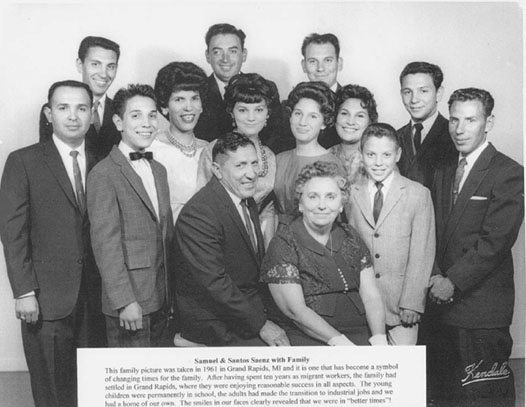
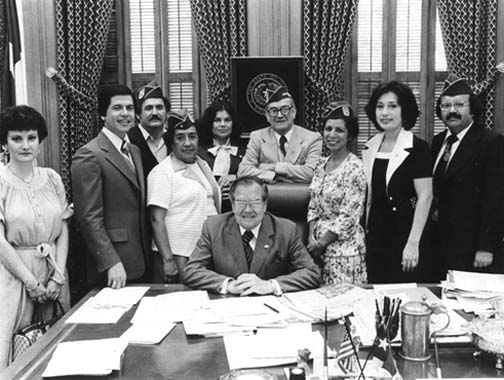
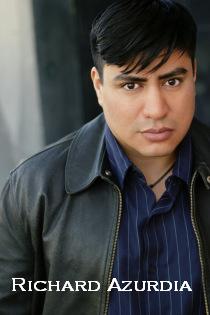 On October 18, 2007, actor Richard Azurdia received the Golden
Cassette Award, the humanitarian award given by the nationally
recognized Braille Institute Library Services at the Main Los Angeles
Library.
On October 18, 2007, actor Richard Azurdia received the Golden
Cassette Award, the humanitarian award given by the nationally
recognized Braille Institute Library Services at the Main Los Angeles
Library.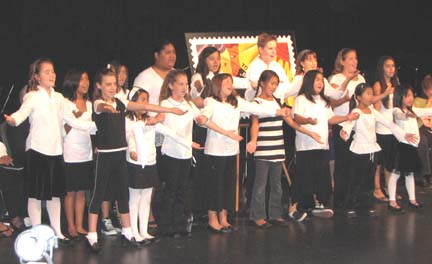
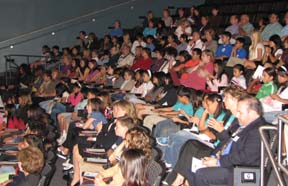 We
were fortunate to get full and the complete support of Mayor Margie
Rice, her City Council, and the Superintendent of the Westminster School
District, Dr. Sharon Nordheim.
We
were fortunate to get full and the complete support of Mayor Margie
Rice, her City Council, and the Superintendent of the Westminster School
District, Dr. Sharon Nordheim. 
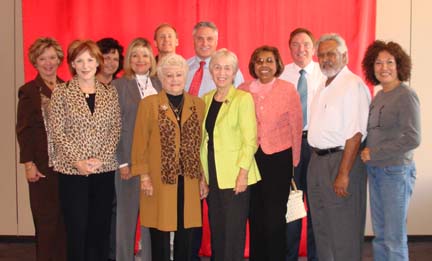
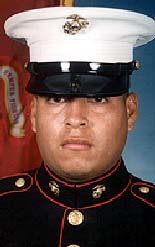
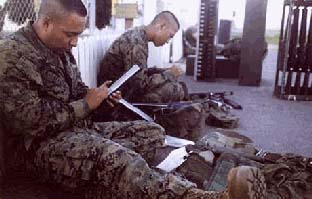
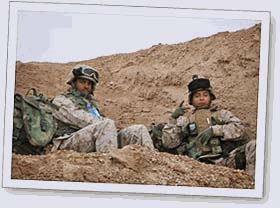
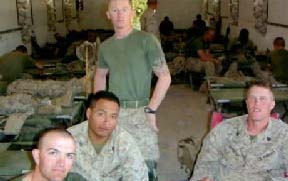
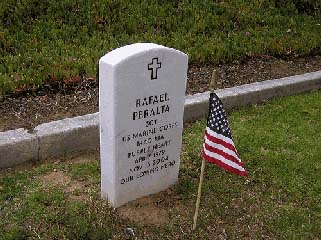
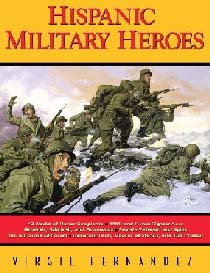
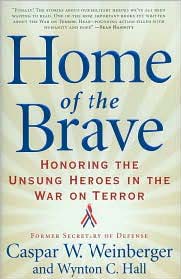
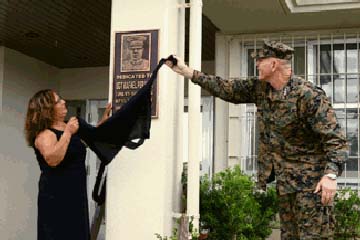




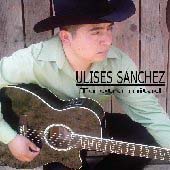 Hollywood,CA.
- The pop and nortena music joined together again to create the
single, "Your Other Half", the new musical release of
Ulises Sanchez. The young singer is recently conquering hearts
internationally with his songs and humble sympathy. The new song is
now available throughout the digital market worldwide under the
label of www.gatolocomusic.com . Ulises Sanchez will be touring all
around the world promoting the single, "Your Other Half",
a song of his own inspiration where he expresses the most talked
about feeling in life, love. The music industry has opened its doors
the tremendous success of this great artist, "Ulises
Sanchez". Listen to "Your Other Half" on
www.gatolocomusic.com
Hollywood,CA.
- The pop and nortena music joined together again to create the
single, "Your Other Half", the new musical release of
Ulises Sanchez. The young singer is recently conquering hearts
internationally with his songs and humble sympathy. The new song is
now available throughout the digital market worldwide under the
label of www.gatolocomusic.com . Ulises Sanchez will be touring all
around the world promoting the single, "Your Other Half",
a song of his own inspiration where he expresses the most talked
about feeling in life, love. The music industry has opened its doors
the tremendous success of this great artist, "Ulises
Sanchez". Listen to "Your Other Half" on
www.gatolocomusic.com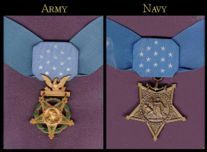
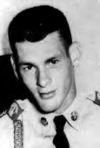
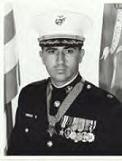
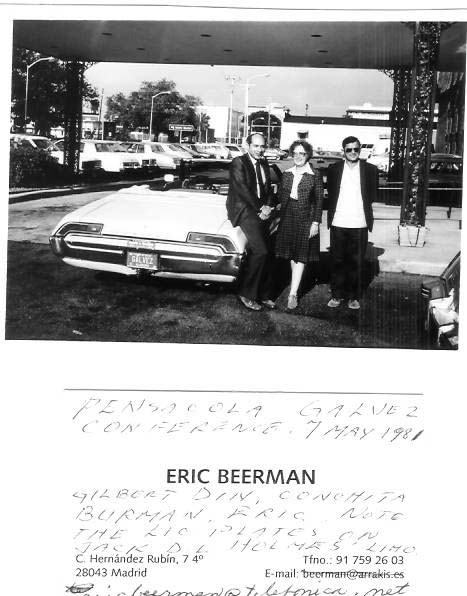
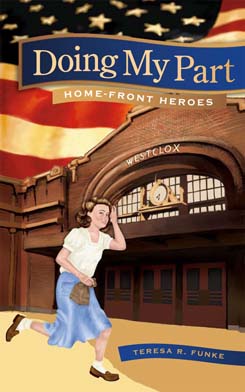 Doing
My Part
Doing
My Part 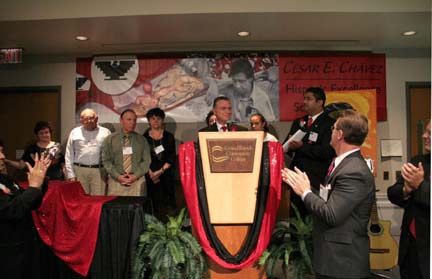
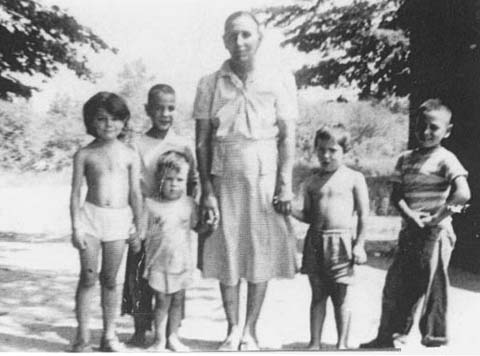
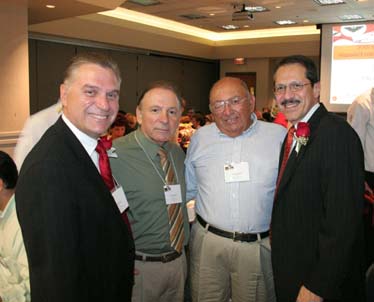
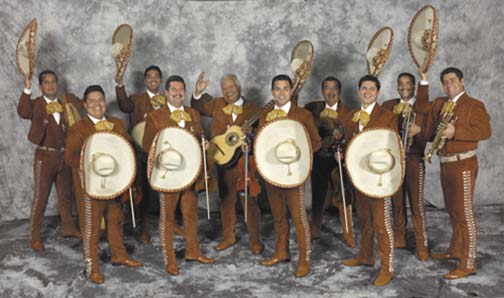
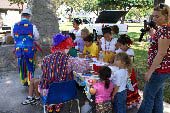
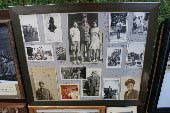
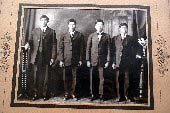
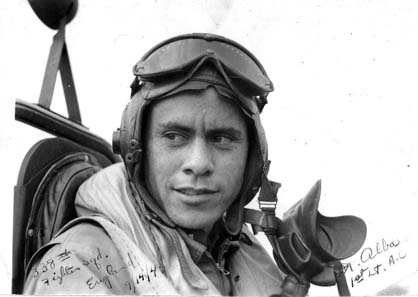
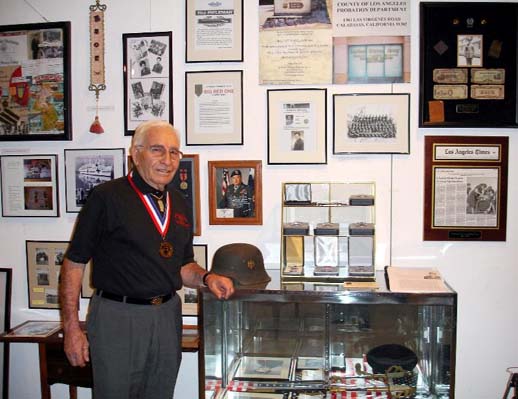
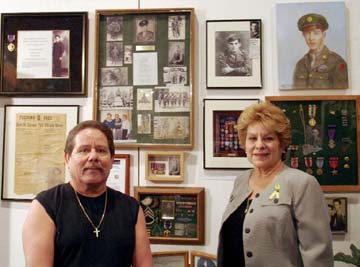
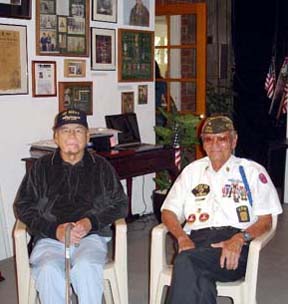
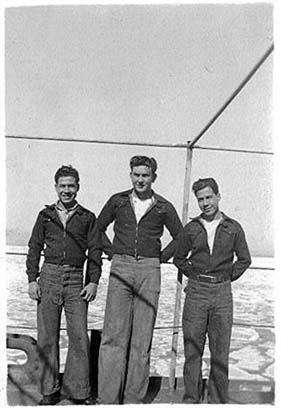
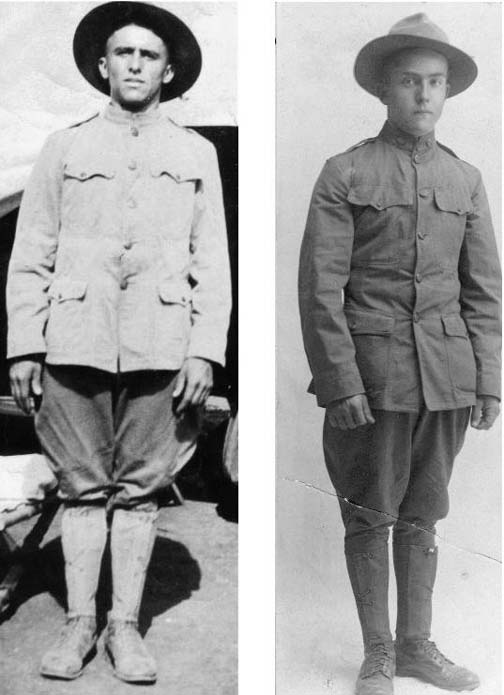
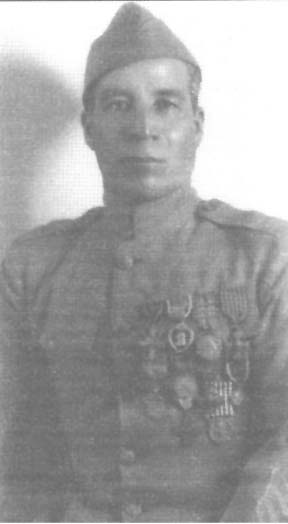 El
Paso, Texas, has had as many wartime heroes as any other city in the
United States. And, in the aftermath of war, the citizens of this border
town pay homage to those heroes – both dead and alive – with great
enthusiasm. Ironically, the man who is probably El Paso’s most popular
soldier is not a native son, but a son of the Mexican State of
Chihuahua. Although he was not a native son and he originally joined the
army from Colorado, he became El Paso’s adopted son and one of its
most revered wartime heroes.
El
Paso, Texas, has had as many wartime heroes as any other city in the
United States. And, in the aftermath of war, the citizens of this border
town pay homage to those heroes – both dead and alive – with great
enthusiasm. Ironically, the man who is probably El Paso’s most popular
soldier is not a native son, but a son of the Mexican State of
Chihuahua. Although he was not a native son and he originally joined the
army from Colorado, he became El Paso’s adopted son and one of its
most revered wartime heroes.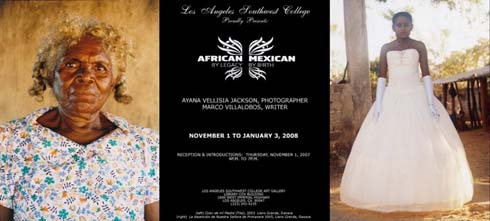
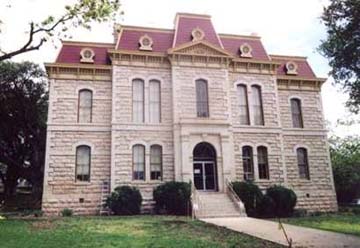
 These proud patriots who put themselves in harm’s
way returned to communities like Sonora where segregation of schools,
housing and public services was the norm and not the exception. In
Sonora, thirty years after the end of WWII, public schools and the
municipal swimming pool were finally integrated in the early nineteen
seventies and the "Mexican" school L.W. Elliot School was
officially closed.
These proud patriots who put themselves in harm’s
way returned to communities like Sonora where segregation of schools,
housing and public services was the norm and not the exception. In
Sonora, thirty years after the end of WWII, public schools and the
municipal swimming pool were finally integrated in the early nineteen
seventies and the "Mexican" school L.W. Elliot School was
officially closed. Dentro
de los acontecimientos que sucedieron en la etapa de la administración
municipal de don Juan Eugenio Cárdenas Breceda, fue uno que llenó de
luto a los habitantes de la nueva ciudad al perder uno de sus fundadores.
Veamos ahora algo de las obras de la administración: "...se
dedicó a continuar lo empezado por su antecesor como la construcción
del Hospital Civil, de la Escuela Benito Juárez, que fueron inauguradas.
Además, se le dio atención a los servicios públicos y a la
preparación de las celebraciones del Centenario de la Independencia que
se celebrarían al siguiente año, sin contar con los movimientos
políticos y la efervescencia del nacimiento de la Revolución Mexicana
que proponía una renovación de Poderes Nacionales con caras nuevas en
Palacio Nacional y con la tolvanera que levantó el libro La Sucesión
Presidencial escrito por don Francisco Ygnacio Madero González.
Dentro
de los acontecimientos que sucedieron en la etapa de la administración
municipal de don Juan Eugenio Cárdenas Breceda, fue uno que llenó de
luto a los habitantes de la nueva ciudad al perder uno de sus fundadores.
Veamos ahora algo de las obras de la administración: "...se
dedicó a continuar lo empezado por su antecesor como la construcción
del Hospital Civil, de la Escuela Benito Juárez, que fueron inauguradas.
Además, se le dio atención a los servicios públicos y a la
preparación de las celebraciones del Centenario de la Independencia que
se celebrarían al siguiente año, sin contar con los movimientos
políticos y la efervescencia del nacimiento de la Revolución Mexicana
que proponía una renovación de Poderes Nacionales con caras nuevas en
Palacio Nacional y con la tolvanera que levantó el libro La Sucesión
Presidencial escrito por don Francisco Ygnacio Madero González.
