|
| ||

|
TACO STAND IN JAPAN |
|
|
Somos Primos May 2006 Dedicated to
Hispanic Heritage and Diversity Issues |
|
| ||
|
|
TACO STAND IN JAPAN |
|
| Content Areas United States . . . 4 Anti-Spanish Legends . . . 38 Military and Law Inforcement Heroes . . . 47 Spanish Sons of the American Revolution. . . 57 Surname. . . 69 Cuentos . . . 72 Orange County, CA . . . 81 Los Angeles, CA . . . 92 California . . . 97 Northwestern United States . . . 107 Southwestern United States . . 110. Black . . . 113 Indigenous . . . 116 |
Sephardic
. . . 122 Texas . . . 130 East of the Mississippi . . . 146 Mexico . . . 152 Caribbean/Cuba . . . 175 Spain . . . 179 International . . . 181 History . . . 187 Family History . . . 191 Archaeology . . . 193 Miscellaneous . . . 195 Calendar Networking Meetings May 27 <click SHHAR quarterly info END |
|
Letters to editor, kind congratulations for selection as a state Woman of the Year |
| MIMI: Very happy to see you're finally recognized by the State of
California--you more than earned it twice over--next the-World! Thanks for including the article I sent--all parents needs to know where their Children stand --academically! Willis Papillion willis35@earthlink.net Dearest Mimi, |
Hi Mimi, Just opened up the Somos Primos and had to e-mail you right away and tell you how happy I was when I seen that you
had received 2006 Women of the year. You sure do deserve this award. Ida Pacheco Gonzales Igonz4ever@aol.com Congratulations on this Mimi: It makes you realize that all that hard work, editing, traveling, coordinating, and compiling are really worth it, even in spite of occasional complaint here or there. You have a lot to be proud of. It's quite an accomplishment and well deserved: John Schmal JohnnyPJ@aol.com Mi mas sincera y cordial enhorabuena por haber sido designada como "MUJER DEL AÑO".De verdad Mimi, me ha dado mucha alegría esa primera fotografia que ilustra el Somos Primos de Abril. Ademas quiero agradecerte que me incluyas como "reporter and contributor" en la caratula de la revista. Sabes que desde el primer momento lo hago con verdadera ilusión y me gusta mucho colaborar contigo y ayudarte, aunque sea en una insignificante parte, en esa gran labor que tu desarrollas al frente de la publicación de "Somos Primos", que mejora cada mes.Adelante y ya sabes que aquí me tienes a tu disposicion. Un beso, Angel Custodio Rebollo. custodiorebollo@terra.es |
|
|
| Somos
Primos Staff: Mimi Lozano, Editor Luke Holtzman, Assistant Reporters/columnists: Johanna De Soto Lila Guzman Granville Hough Galal Kernahan Alex Loya J.V. Martinez Armando Montes Michael Perez Ángel Custodio Rebollo John P. Schmal Howard Shorr Contributors to this issue: jnbfarias@sbcglobal.net Alfred A. Aburto Jr Jody Agius Fredrick Aguirre Ruben Alvarez Sylvia Anderle Juliann Andreen John Arvizu Dr. Armando Ayala, Ph.D. Dan Arellano Mary T. Ayers Eva Booher Luis Brandtner Jaime Cader Irma Cantu Bill Carmena Oscar Cisneros Jr. Robin Collins, Ph.D. |
Maria Cortez Jack Cowan Johanna De Soto José L.G. de Paz Paul Espinosa William Estrada Mercy Bautista-Olvera Patsy M. Fletcher Richard Francaviglia Mario Garcia Gloria Golden Ida Pacheco Gonzales Robert Gonzalez Lila Guzman, Ph.D. Lorraine Hernandez Manuel Hernandez Zeke Hernandez Carlos Martín Herrera de la Garza Grandville Hough, Ph.D. John Inclan Roy Kim Nellie Kaniski Galal Kernahan Roxana Leiva Carlos López Dzur Alex Loya Micheal Lozano Jan Mallet Ophelia Marquez, Cris Metz Dorinda Moreno Eric Moreno Miguel Angel Munoz Borrego |
Skip Newfield III Rafael Ojeda Willis Papillion Richard Perry Joseph Puentes Débora Quinn Rudy A.Ramirez Rupa Ranganathan Angel Custodio Rebollo. Wanda Reyes José Robles de la Torre Lorraine Ruiz de Frain Viola R. Sadler John P. Schmal Laura Shane Howard Shorr Ralph Serrano Frank Sifuentes Barry Starr Bob Smith Paul Trejo Alfredo Valentin Janete Vargas Ricardo Valverde Carlos B. Vega, Ph.D. Margarita Velez Cris Villaseñor, Victor Walsh, Ph.D. Douglas Westfall Tom Yanul Carlos Yturralde Tanya Zabalegui Marie Zaret Elvira Zavala-Patton |
| SHHAR Board: Bea Armenta Dever, Gloria Cortinas Oliver, Steven Hernandez, Mimi Lozano Holtzman, Pat Lozano, Yolanda Magdaleno, Henry Marquez, Yolanda Ochoa Hussey, Michael Perez, Crispin Rendon, Viola Rodriguez Sadler, John P. Schmal |
| National
issues National Latino Museum, introduced in the Senate, March 29, 2006 Cinco de Mayo *Special Edition* April 5, 2006 Census Bureau Facts Immigration Data: With thanks to John P. Schmal In 2005 . . 16 Million enter on Visa Waver Program Leading Countries of Visa Overstays Legal Immigration to US Still Declining: 2003 Mexican Immigration (1936-2003) June 30, 1921: Mexican Agricultural Laborers Urban Institute Immigration Policy U.S. urged to apologize for 1930s deportations Documentary: Betrayal & Violations: Mexican Repatriation of the 1930's California and the American Dream, PBS 4-part documentary series Education Wrangling over Mexican textbooks The Value Question in the Education of Latinos Culture Preparing to Celebrate Hispanic Heritage Month 2006 "Hispanic Americans: Our Rich Culture Contributing to America's Future." Latintronica: Mix and match of beats Where does Mole come from? Tortillas find a growing place at the table How To Turn 15: "Quince Girl"and "Celebrate". Business Marketing to U.s. Hispanics & Latin America Gloria Molina: A Day in the Life of the Woman of the Year 4th Annual Hispanic Business: Woman of the Year Awards, Caesars Banks Accommodating Hispanics Making American Money at Home in Mexico N.Y. Leads Boom in Hispanic Business Study Shows Increase in Hispanic Entrepreneurship |
National issues | |||||||||||||||||||||||||||||||||||||||
Commission to Study the Potential Creation of a National Museum of the American Latino Community Act of 2006 (Introduced in Senate) S 2475 IS 109th CONGRESS, 2d Session S. 2475 To establish the Commission to Study the Potential Creation of a National Museum of the American Latino Community, to develop a plan of action for the establishment and maintenance of a National Museum of the American Latino Community in Washington, DC, and for other purposes. IN THE SENATE OF THE UNITED STATES March 29, 2006 Mr. SALAZAR (for himself, Mr. MARTINEZ, Mr. HATCH, Mr. BINGAMAN, Mrs. HUTCHISON, and Mr. MENENDEZ) introduced the following bill; which was read twice and referred to the Committee on Energy and Natural Resources. Sent by Juliann Andreen Juliann_Andreen@hatch.senate.gov A BILL To establish the Commission to Study the Potential Creation of a National Museum of the American Latino Community, to develop a plan of action for the establishment and maintenance of a National Museum of the American Latino Community in Washington, DC, and for other purposes. Be it enacted by the Senate and House of Representatives of the United States of America in Congress assembled, SECTION 1. SHORT TITLE. This Act may be cited as the `Commission to Study the Potential Creation of a National Museum of the American Latino Community Act of 2006'. SEC. 2. ESTABLISHMENT OF COMMISSION. (a) In General- There is established the Commission to Study the Potential Creation of a National Museum of the American Latino Community (referred to in this Act as the `Commission'). (b) Membership- The Commission shall consist of 23 members appointed not later than 6 months after the date of the enactment of this Act as follows: (1) The President shall appoint 7 voting members. (2) The Speaker of the House of Representatives, the minority leader of the House of Representatives, the majority leader of the Senate, and the minority leader of the Senate shall each appoint 3 voting members. (3) In addition to the members appointed under paragraph (2), the Speaker of the House of Representatives, the minority leader of the House of Representatives, the majority leader of the Senate, and the minority leader of the Senate shall each appoint 1 nonvoting member. (c) Qualifications- Members of the Commission shall be chosen from among individuals, or representatives of institutions or entities, who possess either-- (1) a demonstrated commitment to the research, study, or promotion of American Latino life, art, history, political or economic status, or culture, together with-- (A) expertise in museum administration; (B) expertise in fundraising for nonprofit or cultural institutions; (C) experience in the study and teaching of Latino culture and history at the postsecondary level; (D) experience in studying the issue of the Smithsonian Institution's representation of American Latino art, life, history, and culture; or (E) extensive experience in public or elected service; or (2) experience in the administration of, or the planning for the establishment of, museums devoted to the study and promotion of the role of ethnic, racial, or cultural groups in American history. SEC. 3. FUNCTIONS OF THE COMMISSION. (a) Plan of Action for Establishment and Maintenance of Museum - The Commission shall submit a report to the President and Congress containing its recommendations with respect to a plan of action for the establishment and maintenance of a National Museum of the American Latino Community in Washington, DC (referred to in this Act as the `Museum' ). (b) Fundraising Plan- The Commission shall develop a fundraising plan for supporting the creation and maintenance of the Museum through contributions by the American people, and a separate plan on fundraising by the American Latino community. (c) Report on Issues- The Commission shall examine (in consultation with the Secretary of the Smithsonian Institution), and submit a report to the President and Congress on, the following issues: (1) The availability and cost of collections to be acquired and housed in the Museum . (2) The impact of the Museum on regional Hispanic- and Latino -related museums. (3) Possible locations for the Museum in Washington, DC and its environs, to be considered in consultation with the National Capital Planning Commission and the Commission of Fine Arts. (4) Whether the Museum should be located within the Smithsonian Institution. (5) The governance and organizational structure from which the Museum should operate. (6) How to engage the American Latino community in the development and design of the Museum . (d) Legislation to Carry Out Plan of Action- Based on the recommendations contained in the report submitted under subsection (a) and the report submitted under subsection (c), the Commission shall submit for consideration to the Committee on Transportation and Infrastructure of the House of Representatives, the Committee on House Administration of the House of Representatives, the Committee on Resources of the House of Representatives, the Committee on Energy and Natural Resources of the Senate, and the Committees on Appropriations of the House of Representatives and the Senate recommendations for a legislative plan of action to create and construct the Museum . (e) National Conference- In carrying out its functions under this section, the Commission shall convene a national conference on the Museum , comprised of individuals committed to the advancement of American Latino life, art, history, and culture, not later than 9 months after the date of enactment of this Act. SEC. 4. ADMINISTRATIVE PROVISIONS. (a) Facilities and Support of Secretary of the Interior- The Secretary of the Interior shall provide the administrative services, facilities, and funds necessary for the performance of the Commission's functions. (b) Compensation- Each member of the Commission who is not an officer or employee of the Federal Government may receive compensation for each day on which the member is engaged in the work of the Commission, at a daily rate to be determined by the Secretary of the Interior. (c) Travel Expenses- Each member of the Commission shall receive travel expenses, including per diem in lieu of subsistence, in accordance with applicable provisions under subchapter I of chapter 57 of title 5, United States Code. SEC. 5. DEADLINE FOR SUBMISSION OF REPORTS; TERMINATION. (a) Deadline- The Commission shall submit final versions of the reports, plans, and recommendations required under section 3 not later than 18 months after the date of enactment of this Act. (b) Termination- The Commission shall terminate not later than 30 days after submitting the final versions of reports, plans, and recommendations pursuant to subsection (a). SEC. 6. AUTHORIZATION OF APPROPRIATIONS. There are authorized to be appropriated for carrying out the activities of the Commission $2,100,000 for fiscal year 2007 and $1,100,000 for fiscal year 2008. [[ Please go to Orange County file for a sample resolution that agencies and organizations can use in support of Senate Bill S. 2475 and House Bill 2134. ]] | |||||||||||||||||||||||||||||||||||||||
|
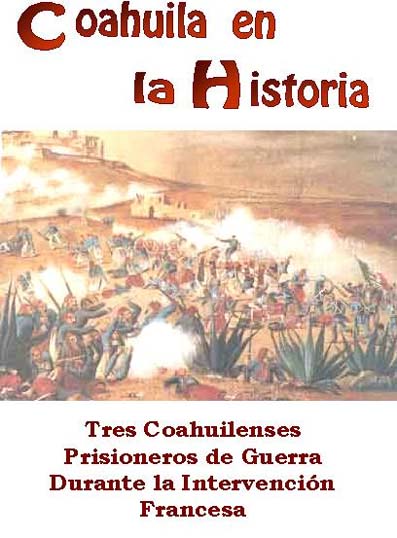
May 5, 1862, marks the Mexican army’s victory over the French invaders at
the Battle of Puebla. |
|||||||||||||||||||||||||||||||||||||||
|
Immigration Data National Foundation for American Policy http://www.nfap.net/ |
|||||||||||||||||||||||||||||||||||||||
| Visa Waiver Countries 16 million people entered the US legally in 2005 from "Visa waiver countries". Of the illegal immigrants in this country, 4-6 million (about half) are "visa overstayers," foreign nationals who entered the U.S. legally and never went home. Abraham Mahshie, OC Register, April 5, '06 [[Editor: It is not clear if a
person entering from a visa waiver countries
does not leave, how he is counted when overstaying. Is is that specific
year or each year of overstay?.]] | |||||||||||||||||||||||||||||||||||||||
These countries are not required to have a visa when entering the United States. : | |||||||||||||||||||||||||||||||||||||||
| Andorra, Australia, Austria, Belgium, Brunei, Denmark, Finland, France, Germany, Iceland, Ireland, Italy, Japan, Liechtenstein, Luxembourg, Monaco, Netherlands, New Zealand, Norway, Portugal, San Marino, Singapore, Slovenia, Spain, Sweden, Switzerland, United Kingdom | |||||||||||||||||||||||||||||||||||||||
| Example of Country VISA Overstays cases in one year Fiscal Year of 2001: Iran, Iraq, Libya, Pakistan, Saudi Arabia, Sudan, Syria, Yemen, Afghanistan, Algeria, Bahrain, Bangladesh, Egypt, Eritrea, Indonesia, Jordan, Kuwait, Lebanon, Morocco, North Korea, Oman, Qatar, Somalia, Tunisia, and United Arab Emirates. These countries had 123,000 total “overstay cases” (all modes of arrival) in fiscal year 2001. 49,000 overstay from Iran, Iraq, Libya, Pakistan, Saudi Arabia, Sudan, Syria, and Yemen. Source: John P. Schmal JohnnyPJ@aol.com [[Editor: It is not clear if a person who is a Visa Overstay or from a Visa waiver country and does not leave, how is he/she counted when overstaying? If by the fiscal year, we could assume that the yearly overstays or visa waiver visitors would amount for even a larger number of illegals. ]] More information: www.uscis.gov
| |||||||||||||||||||||||||||||||||||||||
|
| |||||||||||||||||||||||||||||||||||||||
| Legal
Immigration to United States Still Declining Sent by John Schmal New data released by the Department of Homeland Security show that in FY 2003: § Legal immigration fell by 34 percent § The number of people in the US who were able to adjust their status to legal permanent residence dropped 50 percent, explaining much of the overall decline § The level of newly arriving legal permanent residents remained relatively steady § Refugee admissions rebounded slightly from the 25-year low following 9/11 § The level of temporary visitors continued at 15 percent below pre-9/11 levels § Naturalizations decreased by 19 percent Permanent Immigration: The number of people granted legal permanent residence in the United States in FY 2003 dropped 34 percent to just under 706,000. This included 358,000 new arrivals and 347,000 persons who adjusted their status. Mexican nationals were among those most affected by the slowdown in adjustments of status, with their numbers declining by 47.2 percent. Fewer than 116,000 Mexicans became legal permanent residents in FY 2003, compared to over 219,000 in FY 2002. According to the new figures, Mexican nationals accounted for 16.4 percent of legal immigrants in FY 2003. They had represented 20.6 percent in the previous fiscal year. Over half of all new legal immigrants arrived from just 10 countries. The 10 countries of origin were Mexico (116,000), India (50,000), the Philippines (45,000), China (41,000), El Salvador (28,000), the Dominican Republic (26,000), Vietnam (22,000), Colombia (15,000), Guatemala (14,000), and Russia (14,000). The last three countries were newcomers to the top 10 list in 2003, while Cuba, Bosnia-Herzegovina, and Ukraine fell out of the top 10. Six states remain key destinations for many new legal immigrants: Sixty-three percent of immigrants live in six states – California, New York, Texas, Florida, New Jersey, and Illinois. There was a slight decline in the percentage of immigrants heading to California, Texas, and Florida, with increases for other states. Temporary admissions from certain countries declined sharply: Between 2002 and 2003, admissions from Asian Islamic countries and African Islamic countries dropped by an average of 10 percent, after having dropped nearly 36 percent one year earlier. Between 2001 and 2003, for instance, admissions from Jordan fell nearly 40 percent and Malaysia nearly 46 percent, while admissions from Saudi Arabia plummeted by nearly 76 percent and Somalia 71 percent. Other parts of the world were affected as well. Non-immigrant admissions from Brazil fell to 497,000 in FY 2003, down from 576,000 in 2002 (a 13.8 percent decline) and 734,000 in 2001 (a 21.5 percent decline). Reductions occurred across many temporary admissions categories, including foreign students (625,000 in FY 2003) and temporary workers and trainees (650,000 in FY 2003). The number of foreign students has not yet recovered to pre-9/11 levels of nearly 699,000 and declined another 3.3 percent from the previous year (646,000 in 2002.) Certain temporary worker categories also continue to experience visible declines three years after 9/11. In FY 2003, there were 14,000 H-2A temporary agricultural workers (about half as many as two years earlier), and there were only 59,000 TN workers (holders of NAFTA visas for professionals), compared to 74,000 in 2002 and 95,000 in 2001, a two-year decline of 37.7 percent. Forty-two percent of the 463,000 people who naturalized in FY 2003 were born in Asia, while 28 percent were born in North America. The single largest country of origin for newly naturalized US citizens in FY 2003 was Mexico, with 56,000. Other key countries of origin this past year were India (30,000), the Philippines (29,000), Vietnam (26,000), China (24,000), South Korea (16,000), the Dominican Republic (13,000), Jamaica (11,000), Iran (11,000), and Poland (9,000). Nearly half of all naturalizations in 2003 were of nationals from these 10 countries. |
|||||||||||||||||||||||||||||||||||||||
|
By John P. Schmal In the year 1936, 141,265 aliens were naturalized as American
citizens.
Of this number,
The coming of war to Europe during 1939 to 1940 led to increased immigration from European nations and it was these aliens who were most likely to seek naturalization. In 1940, the nations contributing the most naturalizations were:
By 1940, the number of Mexicans who were naturalized rose slightly to 2,669, or 1.13% of all naturalizations. In contrast, a large number of Mexicans had registered as aliens. In response to the threat of war, the United States had launched the Alien Registration Program in July of 1940. Pursuant to the Alien Registration Act of that year, every alien resident in the United States had to register at their local Post Office while aliens entering the country registered as they applied for admission. Alien Registration requirements applied to all aliens over the age of fourteen, regardless of nationality and regardless of immigration status. As of December 31, 1940, 423,519 aliens from Mexico were registered under the Alien Registration Act. Below is a table indicating the number of Mexicans who were naturalized
in each year from
In 1950, the number of Mexicans seeking American citizenship remained relatively small, making up only 3.5% of all naturalizations. However, among all the contributing nations, Mexico was in seventh place as the native land of persons who were naturalized in that year:
During the following decade, Mexican naturalizations increased significantly. Part of this increase may have been the result of the Bracero Program, which brought many Mexicans into the country as guest workers. Some Braceros eventually became citizens. Another factor in increased naturalizations may have been the Border Patrol’s "Operation Wetback," which had commenced in June 1954. It is possible that some Mexican nationals became citizens as a means of avoiding deportation. A table illustrating the Mexican naturalizations from 1951 to 1960 follows:
By 1960, the annual number of Mexicans receiving naturalization had more than doubled from a decade earlier. In that year, the countries that contributed the most naturalized citizens to the U.S. were:
From 1962 to 1970, the naturalization of Mexican nationals fluctuated between 5,000 and 7,000, after dropping significantly from 1961 and 1962. The following table illustrates the naturalizations of Mexicans from 1961 to 1970:
In 1970, the number of Mexicans who received naturalization was 6,195. In that year, the countries that contributed the most naturalized citizens to the U.S. were:
During the 1970s and 1980s, Mexican naturalizations began a steady
increase,
The devaluation of the Mexican peso in 1982 and the Immigration Reform and Control Act Amnesty of 1986 played a significant role in the dramatic rise in Mexican naturalizations that started in 1982. At this point, there was a very noticeable shift in the countries contributing new citizens to the U.S. Fewer Europeans were arriving in the U.S. and seeking naturalization, while large numbers of immigrants from Latin America, the Caribbean, and Asia were seeking citizenship. In 1987, the countries contributing the largest numbers of immigrants were:
During the 1990s, Mexican naturalizations increased even more dramatically, in large part because of the 1994 financial crisis in Mexico and the reaction to Proposition 187 in California. In addition, many of the people who were granted amnesty during the 1980s were now fulfilling their final requirements for citizenship, leading to a steep increase of naturalization petitions in 1996.
In 2000, the countries contributing the largest numbers of immigrants
were: The following table illustrates Mexican immigration in 2001, 2002 and 2003, but also provides the total number of Mexican nationals who were naturalized from 1936 to 2003. With the increased pace of naturalizations in the later decades, Mexican aliens seeking citizenship had come to represent more than one-tenth of all immigrants.
|
| June 30,
1921: Mexican Agricultural Laborers At an early stage of the war it became apparent that in certain parts of the country there was a serious shortage of agricultural laborers essential to the production of foodstuffs and cotton. Strictly as a matter of war policy, and by virtue of the authority of the ninth proviso to section 3 of the general immigration act, it was determined to waive certain provisions of the immigration requirements and admit, temporarily and conditionally, a limited number of such laborers from Mexico. Authority for the admission of this class of aliens was terminated on March 2, 1921, and the importers were called upon to return to Mexico all such aliens then in their employ. The return movement is still under way, extensions having been granted by the department, upon application, in certain especially meritorious cases. The total number of aliens admitted under the department's exceptions during the years 1917 to 1921, inclusive, was 72, 862. Of this number, 34,922 have returned to Mexico; 414 died, 494 were examined for permanent residence, found eligible for admission under the immigration laws, paid head tax, and were admitted; 21,400 deserted their employment and disappeared; and, so far as can be ascertained, 15,632 are still in the employ of the original importers. Source: U.S. Department of Labor: Bureau of Immigration, Annual Report of the Commissioner General of Immigration to the Secretary of Labor, Fiscal Year Ended June 30, 1921 (Washington: Government Printing Office, 1921), p. 7. | |
|
Urban Institute Immigration Policyhttp://www.urban.org/immigrants/policy.cfm?&page=1 Dear Mimi: FYI: Some good talking points and resources when our Latinos needs expert data to speak on the Immigrants' issues. Just like having your own social scientists working for you. I use the UI when testifying at our state legislature or county councils. Rafael Ojeda rsnojeda@aol.com
| |
|
|
U.S. urged to apologize |
|
His father and oldest sister were farming sugar beets in the fields of Hamilton, Mont., and his mother was cooking tortillas when 6-year-old Ignacio Piña saw plainclothes authorities burst into his home. "They came in with guns and told us to get out," recalls Piña, 81, a retired railroad worker in Bakersfield, Calif., of the 1931 raid. "They didn't let us take anything," not even a trunk that held birth certificates proving that he and his five siblings were U.S.-born citizens. | |
The family was thrown into a jail for 10 days before being sent by train to Mexico. Piña says he spent 16 years of "pure hell" there before acquiring papers of his Utah birth and returning to the USA. The deportation of Piña's family tells an almost-forgotten story of a 1930s anti-immigrant campaign. Tens of thousands, and possibly more than 400,000, Mexicans and Mexican-Americans were pressured — through raids and job denials — to leave the USA during the Depression, according to a USA TODAY review of documents and interviews with historians and deportees. |
|
|
Pina, then 6, at right front row, and siblings lived in Montana before they were deported http://www.usatoday.com/news/nation/2006-04-04-1930s-deportees-cover_x.htm?POE=click-refer By Wendy Koch, USA TODAY Sent by Rafael Ojeda rsnojeda@aol.com who writes "The same thing happen after WWII for many Latinos." Many, mostly children, were U.S. citizens. Related story: Some stories hard to get in history books. If their tales seem incredible, a newspaper analysis of the history textbooks used most in U.S. middle and high schools may explain why little has been written about the exodus, often called "the repatriation." That may soon change. As the U.S. Senate prepares to vote on bills that would either help illegal workers become legal residents or boost enforcement of U.S. immigration laws, an effort to address deportations that happened 70 years ago has gained traction:• On Thursday, Rep. Hilda Solis, D-Calif., plans to introduce a bill in the U.S. House that calls for a commission to study the "deportation and coerced emigration" of U.S. citizens and legal residents. The panel would also recommend remedies that could include reparations. "An apology should be made," she says. Co-sponsor Rep. Luis Gutierrez, D-Ill., says history may repeat itself. He says a new House bill that makes being an illegal immigrant a felony could prompt a "massive deportation of U.S. citizens," many of them U.S.-born children leaving with their parents. "We have safeguards to ensure people aren't deported who shouldn't be," says Jeff Lungren, GOP spokesman for the House Judiciary Committee, adding the new House bill retains those safeguards.• In January, California became the first state to enact a bill that apologizes to Latino families for the 1930s civil rights violations. It declined to approve the sort of reparations the U.S. Congress provided in 1988 for Japanese-Americans interned during World War II. Democratic state Sen. Joe Dunn, a self-described "Irish white guy from Minnesota" who sponsored the state bill, is now pushing a measure to require students be taught about the 1930s emigration. He says as many as 2 million people of Mexican ancestry were coerced into leaving, 60% of them U.S. citizens. • In October, a group of deportees and their relatives, known as los repatriados, will host a conference in Detroit on the topic. Organizer Helen Herrada, whose father was deported, has conducted 100 oral histories and produced a documentary. She says many sent to Mexico felt "humiliated" and didn't want to talk about it. "They just don't want it to happen again." No precise figures exist on how many of those deported in the 1930s were illegal immigrants. Since many of those harassed left on their own, and their journeys were not officially recorded, there are also no exact figures on the total number who
departed. At least 345,839 people went to Mexico from 1930 to 1935, with 1931 as the peak year, says a 1936 dispatch from the U.S. Consulate General in Mexico City. "It was a racial removal program," says Mae Ngai, an immigration history expert at the University of Chicago, adding people of Mexican ancestry were
targeted. However, Americans in the 1930s were "really hurting," says Otis Graham, history professor emeritus at the University of California, Santa Barbara. One in four workers were unemployed and many families hungry. Deporting illegal residents was not an "outrageous idea," Graham says. "Don't lose the context." Change came in 1929, as the stock market and U.S. economy crashed. That year, U.S. officials tightened visa rules, reducing legal immigration from Mexico to a trickle. They also discussed what to do with those already in the
USA. "The government undertook a program that coerced people to leave," says Layla Razavi, policy analyst for the Mexican American Legal Defense and Education Fund (MALDEF). "It was really a hostile environment." She says federal officials in the Hoover administration, like local-level officials, made no distinction between people of Mexican ancestry who were in the USA legally and those who
weren't.
| |
| Documentary:
BETRAYAL AND VIOLATIONS: Mexican Repatriation of the 1930's Sent by Nellie Kaniski nkaniski@earthlink.net
CLASSIFIED FILMS is searching for survivors and their children to interview for a feature length documentary film known as BETRAYAL &VIOLATIONS: MEXICAN REPATRIATION OF THE 1930's. This film deals with the sensitive subject matter of forced deportation and relocation of Mexicans, American citizens of Mexican descent, and their children during the early 1930's when anti-Mexican Hysteria was at an all time high, as the Great Depression engulfed the entire United States. If you or someone you know are survivors or victims of this tragic episode in American history please contact us by mail, phone (714) 546-5980 or email classifiedfilms3@yahoo.com Please make all inquiries to: GERARDO BRICENO, P.O. Box2006, Santa Ana, CA. 92707-0006 Our Mission: Our aim is to produce a documentary, the first to have ever been produced to address and question the aspects of repatriation by making BETRAYAL AND VIOLATIONS: MEXICAN REPATRIATION OF THE 1930'S, widely available to the general public, in particularly for educational purposes. We will consider this project a success when this largely unknown and long overlooked tragic episode in American History is covered extensively in the academic field.
|
|
|
| Education |
| Orange
County Register Feb. 25 2006 Wrangling over Mexican textbooks Another cultural disconnect
Many say they are bored. Many don't understand the value
of education. Many have dysfunctional families, lack parental stimulation
in what education means, have religious and value system conflicts,
language problems, learning disabilities, test anxieties, media
distractions that easily fill the artistic and intellectual voids. Can
these be fixed?
Stick to state standards If the Mexican government is astute enough to lobby for
a "handout" then why hasn't it had the moxie and money to set up
Saturday schools en masse? Acknowledge the generosity Instead of acknowledging the generosity of these
donations, Avila shows true American spirit by arguing hat the history of
Mexico and its government don't matter.
I agree that students should learn about the U.S. government, but why does
this have to come at the expense of students getting the opportunity to
learn beyond one county's government or history?
|
| The Value Question in the Education of Latinos By Manuel Hernandez, mannyh32@yahoo.com Within the American core value system, education ranks extremely high. While I grew up in a close knit Puerto Rican family in the legendary Sleepy Hollow, New York, in the late 1960’s and early 1970’s, my teachers imparted education as the most important value in American society. But when my family moved back to their homeland, the Island of Puerto Rico, in 1974, I immediately felt the shift in value system. As a pre-adolescent in the sixth grade at an elementary school in Luquillo, Puerto Rico, I wanted to excel in school, but classmates and teachers alike described my attitude as shameful and egotistic. Even my best friend nicknamed me “soberbia” (excessive pride). It was not that education was not valued, but family, friendship and religion were above the value of an education. It was not until at the age of fifteen, I went back to New York City and worked in an umbrella factory from 9:00 am to 5:00 pm and witnessed the day to day physical and emotional abuses that my fellow laborers experienced that I convinced myself that an education was the key to a higher quality of living. For hundreds of thousands of Latino families that migrate to the United States, there are other values that do not necessarily substitute education but undermine its position in the value scale of the education of Latinos. There is a lot of talk about the potential of Latinos in America. From the world of politics to the world of music and entertainment, Latinos have become groundbreakers, frontrunners and pioneers. But education must move up the scale of values to further upgrade economic development and social mobility. The overwhelming impact of the Latino family (“familia”) and its constituents is without reasonable doubt one of the most important values in the American Latino family. When it is time to decide whether to leave family behind for a college education or register in a school out of town or out of state with a better reputation in the field, there is much more than finances and scholarships to consider. There is no doubt that we are gaining ground. According to an article by Matthew Pinzur from the Miami Herald, in Miami, advanced placement scores for Latinos are higher than ever. Miami-Dade had the largest number of Latino students passing the test recently. This is good news, and I applaud every local and national effort in the improvement of the academic enhancement of our children, but we must refocus and redesign a vision in education and transform education into our most powerful value. Why not take advantage of those who have done exactly that and present them as role models to those five million Latino children who are in American schools today? We do not have to reinvent the past to make a dent in our children’s values, but we need to act now, tomorrow may be too late. Only then will we guarantee the legacy not only as the largest minority in the United States, but also as a people that redefined the education of our children and generations to come. |
| Culture | |
Preparing to Celebrate Hispanic Heritage Month 2006 Hola, We don't have the 2006 presidential proclamation yet but at least two web sites state that the theme for this year is: "Hispanic Americans: Our Rich Culture Contributing to America's Future." I'm copying the chair of the National Council to confirm this statement. Alfredo Valentin alfredo_valentin@hud.gov http://www.va.gov/dmeeo/calendar/hhm.htm http://www.fedcivilrights.org/www.fedcivilrights.org/Themes.html Posters: http://www.rodenter.com/hispanic.html http://www.diversityresources.com/posters/Hispanic.9.0.0.1.htm http://www.diversitystore.com/index.cfm?fuseaction=product.display&Product_ID=745 Below some more info. http://www.census.gov/Press-Release/www/releases/archives/facts_for_features_specia l_editions/005338.html | |
Latintronica: Mix and match of beats By Cary Darling, Knight Ridder Newspapers Electronic and Latin music would seem to reside at polar ends of the music spectrum. Yet a wave of electroLatin music - dubbed Latintronica in some quarters - is bridging the yawning divide. With roots in Mexico, Argentina, Brazil and Spain, pioneering Latintronica artists are merging the rhythms of their home-lands with the music of global club culture. The results are often a savvy and soulful marriage of two musical worlds. |
|
|
| |
| While hardly aimed at the pop mainstream, Latintronica is getting wider exposure. Re-leased recently was
"Mejico Maxico," the debut from Mex-ico City's Mexican Institute of Sound, and
this week came "The Million Colour Revolution," the first U.S. album from Barcelona's the Pinker Tones. Even Herb Alpert, the L.A. trumpeter who hit it big in the '60s with his brassy La-tin-pop blend, is getting in on the act. "Rewhipped," an elec-tronica remix of his classic "Whipped Cream & Other Delights" disc by the likes of Thievery Corporation and Medeski Martin & Wood, also landed in stores Tuesday. This follows on the heels of crossover success in the past couple of years for Brazilian singer Bebel Gilberto, whose album of 21st-century bossa nova and samba, "Tanto Tempo," has sold 1 million copies worldwide, and Baja California's Nortec Collective, whose tech-Mex mix has pro-vided a sinuous soundtrack for commercials from Volvo, Dell and Nissan, among others. Well before movie-goers had heard of Gustavo Santaolalla for his "Brokeback Mountain" score, he'd landed dance-club credibility with his Bajofondo Tango Club, a project bringing techno and Argentine tango together. "I find it fascinating that the language of electronica - the artificial beats, the minor keys, the liquid texture of the keyboards - combines really beautifully with Latin music says Ernesto Lechrier, an L.A.-based writer whose book about Latin alternative music, "Rock en Espanol," will be published in June. "The end result is that it's still very much Latin because it has two elements; the exuberance -the magical realism and the reckless appetite for life that most Latin music has - and (the) melancholy feel that de-fines all Latin music. It's permanently infatuated with its own melancholy mood, and that translates really well with electronica." | |
| WHERE DOES MOLE COME FROM? http://www.ramekins.com/mole/wheremole.html Sent by Johanna De Soto There are many stories about the historical origins of Mole. They almost all agree that Mole was born between 1680 and 1688 in one of the convents in the Mexican city, Puebla de los Ángeles. The most frequently told story is that Sor Andrea, sister superior of the Santa Rosa Convent, created the dish to honor the Archbishop for having a convent built for her order. Another spin suggests she was honoring the Viceroy, Don Tomás Antonio de la Cerda y Aragón. She wanted to create the perfect dish, trying to blend the ingredients of the New World with those of the old. Another tale puts the spoon in the able hands of Fray Pascual, who had the task of creating a banquet honoring the Viceroy, Don Juan de Palafox y Mendoza. The Fray was picking up after his untidy assistants and put a loose collection of spices on a tray when the wind blew the window open and the odd mix of spices was windswept into the dish of Casuelas he was preparing. Whoever had the first bite of Mole, he or she had the first mouthwatering taste of the deep, dark, thick sauce with the robust chile base...and heaven was born! Today, there are two focal points for Mexican Mole: 1) Puebla and 2) Oaxaca, though Veracruz is famous for "Mole Verde" (with Tomatillos and NO nuts or seeds), Guerrero features "Mole Verde" (with ground pumpkinseeds), Mexico City and Guadalajara play host to "Manchamanteles de Cerdo y Pollo" (simple Red Mole with Meat, Fowl and Fruit). Only Oaxaca boasts their exalted Seven Moles, which we will explore here later. | |
| The Orange County Register Feb
14, 2006 Tortillas find a growing place at the table By Laura Wides-Munoz The Associated Press As a sign of the times, the American Tortilla Industry Association moved its head quarters last month form Texas to the nations capital to better flex its lobbying muscle on issues such as healthy labeling for the whole grain and low-fat varieties, as well as support for small businesses, which still make up a significant part of the industry. "It's been an incredible explosion," said association head Roberto Quinones. "It's mostly been a U.S. phenomenon, but even countries such as England and Malaysia are calling us, asking for ways to improve production." Corn and flour tortillas are about neck and neck in sales overall, but flour tortillas outsell corn in U.S. supermarkets two-to-one, and their sales are on the rise, according to a recent study by the research firm ACNielsen. Flour tortillas got a big boost when the industry began using the more ethnic neutral term "rap," Jacobs said. "People think of tortillas and they think of tacos or burritos. There's more acceptance of putting international ingredients in a wrap, like a Caesar salad, " he explained. The Popularity of the tortilla is growing internationally in part because it's seen as an American food. Discovery Foods President Brian Ridgeway, who heads the largest tortilla maker in England, expressly pitches the U.S. connection. | |
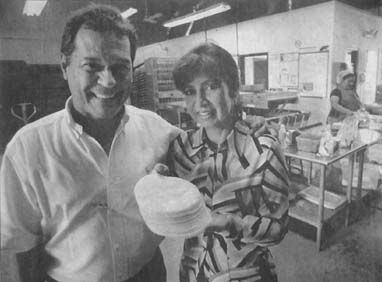 |
Garage Sale: Marta Ballesteros and her husband,
Alberto Piedrahita, began a tortilla business out of their garage more
then a decade ago after immigrating form Colombia to Miami-Dade County in
Florida. today, their company sell about 31 million tortillas a year to supermarkets
and restaurants through south Florida. The company churns out more then 300 million tortillas a year,
boasts the tag line "The True Taste of the Americans." |
The Orange County Register March 7, 2006 How To Turn 15 : "Quince Girl"and "Celebrate"  Brides have their own magazines to look through for ideas. So why not a magazine that targets Hispanic girls who will be celebrating their quinceaneras, 15th-birthday coming-of-age ceremonies? "Quince Girl" hit newsstands March 1, aiming to be a comprehensive resource for the estimated 400,000 Hispanic girls who turn 15 - quince in Spanish - every year. For their qinceaneras, girls typically dress as elaborately as bride. The events often incorporate a religious ceremony and a wedding reception-style party afterward. The magazine includes fashion spreads on the latest dress styles, beauty secrets, articles on Hispanic traditions, and timelines for planning a quinceanera. -Theresa Walker, The Register Another magazine will be coming out soon targeting the same audience, "Celebrate". It will be a FREE West Texas Resource "Celebration" Guide. In addition to assistance in planning, every month local girls will have the opportunity to compete for the cover page if they are having a quiñce or a sweet sixteen they just have to write in to the magazine with why they feel they should be on the cover, they should include any accomplishments that they have made and any community events or committees that they have participated in. There will be one winner who will have her picture on the cover and her event covered with pictures of the event on the inside of the magazine along with a feature story including her and her family. All other contestants will have their picture located on the inside of the magazine with a brief profile, in essence, there will be no losers and everyone gets to be in the magazine. Celebrate information sent by Dorinda Moreno dorindamoreno@comcast.net
| |
| Business |
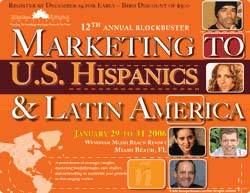 Multicultural Pathways-Spring 2006 Volume- Headlines from Miami event Strategic Research Institute, Providing the knowledge and expert networks you need. We are delighted to share with you another knowledge tool to help you accelerate your pace in the fast-growing U.S. Hispanic and Latin American marketing space. The fourth volume of our Multicultural Pathways newsletter fills you in on "key moments of truth" from the blockbuster 12th Annual Marketing to U.S. Hispanics & Latin America conference that concluded in Miami Beach, end of January this year. Click on the link below and feel free to forward it to your colleagues and industry partners who might find it useful to learn what Toyota, Wells Fargo, X-Box, Microsoft, Disney and some Latino marketing legends have to say on the new trends and success factors in an unstoppable market: http://www.srideas.com/multicultural/issue4/index.cfm Do call me at 1-212-967-0095 ext. 252 or e-mail me atrranganathan@srinstitute.com if you would like to discuss any additional themes or topics for our upcoming events. Saludos! Rupa Ranganathan Ethnic Strategist and Senior Vice President RupaRanganathansri@sri.sriconferences.com |
 Gloria
Molina: A Day in the Life of the Woman of the Year Gloria
Molina: A Day in the Life of the Woman of the Yearby Joel Russell April 2006, Hispanic Business Magazine As an economic engine, Los Angeles County looms larger than a lot of sovereign nations. It has a population of 10.2 million people, of which 44.6 percent are Hispanic. In 2004, it had a local GDP of $400 billion, an employee pool of nearly 4 million workers, and a transportation system with more than 7 million registered trucks and cars, according to the Los Angeles County Economic Development Corp. It is the largest manufacturing center in the United States and the biggest port for international trade. It also ranks as the largest Hispanic market in the nation. Advertisers spent more than $584 million to reach Los Angeles Hispanics last year (see "Media Markets," December 2005 issue). In terms of affluence, "Hispanic households in Los Angeles have slightly higher income" than Hispanics elsewhere – 8.5 percent of them with incomes above $100,000 according to the HispanTelligence® report "The U.S. Hispanic Economy in Transition: Facts, Figures, and Trends." Hispanic Progress Personified: Gloria Molina personifies the progress Hispanics have achieved in Southern California. Her rise from Chicana activist to chair of the Los Angeles County Board of Supervisors in 2005 (a position that rotates annually among the supervisors) parallels the growth of Hispanic influence and affluence throughout the Southwest. That explains, in part, why she is winner of the 2006 Hispanic Business magazine Woman of the Year award. The other part of the explanation is Ms. Molina's high-intensity management responsibility. The county's budget for 2005-06 totals $19.88 billion. As board chair and supervisor of L.A. County's huge First District, Ms. Molina has focused both on how that money is spent – and working the angles on how to secure more. She considers her biggest victory of the past two years the allocation of half a billion dollars in federal funding for a six-mile extension of the L.A. County Light Rail system to her constituents in East Los Angeles. The coup, which also produces many thousands of area jobs through 2009, became reality in late December 2005 as Ms. Molina officiated at the tunnel dig kickoff: A crowning moment of her term as chair. "We've been working on it for 15 years, but now we're building it!" she exults. "Eastside residents are some of the most transit-dependent in all of L.A. County. The extension will connect them to the rest of the county's light rail network." Another major victory came last November with the election of Antonio Villaraigosa as mayor of Los Angeles. Although Ms. Molina doesn't take credit for the win, her support and example certainly helped. "That's part of the leadership responsibility I have," she says. "We all have worked for so many years to see Latinos in these positions of power." In fact, it was Ms. Molina's 1991 election as the first Hispanic woman on the Los Angeles Board of Supervisors that marked a nationally visible step forward in the region's Hispanic political empowerment. Her district, with its 60-plus cities and communities, including a good portion of the city of Los Angeles, and its downtown area, is 74.9 percent Hispanic, according to 2000 Census figures. "She represents the major change in demographics in Los Angeles – namely, the growing Latino population," says Martin Saiz, professor of political science at California State University in Northridge. "Any politician at the elected level in Los Angeles County is a significant national politician, almost by default. This is the largest county in the country in terms of population. That alone gives her prominence. There are not many people in the country who have that kind of constituency." A "Very Powerful Board": "Her getting elected as supervisor was almost as big as Antonio [Villaraigosa] becoming mayor – bigger, in terms of power," says Henry Lozano, the former chief of staff to Congressmen Edward Roybal and Xavier Becerra. "There are only five [supervisors] in L.A. County, and those people have power," says Mr. Lozano, who first met Ms. Molina when she was a high school student. "Some would say they have legislative, executive, and quasi-judicial powers. So that's just a very powerful board." Raised in Pico Rivera, a heavily Hispanic suburb east of Los Angeles, Ms. Molina studied at East Los Angeles College and Rio Hondo College in Whittier, California. She began her political career in the 1970s with the Chicano movement, and worked both at the White House and for the San Francisco Department of Health and Human Services. She returned to Los Angeles and was elected first to the California State Assembly in 1982 and then to the Los Angeles City Council in 1987 before running for supervisor. Mr. Lozano recalls a meeting in the early 1980s at an East L.A. restaurant, where about eight local Hispanic political players tried to choose a candidate for state assembly. "We threw out names, and someone said, 'Why not get a woman to run? Why not Gloria?' " he says. Fiscal Fighter: As a campaigner, Ms. Molina works hard and "articulates very well," according to Mr. Lozano, but she has a reputation for turning issues into a fight. One time at a political event Mr. Lozano said he heard criticism that she was too negative, and Ms. Molina's husband Ron Martinez responded: "Right after this election, we're going to send her to charm school." But she won that election – and every one since. Ms. Molina has advocated for fiscal responsibility by ending "pension spiking" (inflating salaries to determine pension benefits) to save the county nearly $100 million. On the spending side, she advocates funding for parks, healthcare, and schools. "Education is by far the most significant issue for Latinos," she says. "In many public schools, we're not a minority anymore, we're the majority. But the quality has dropped due to inattention from the federal government in funding." Contracting Hound: In economic development, her office conducts constant outreach to encourage contracting with local government and transportation projects. She also works to bring large companies to the inner city. Recently, she supported the construction of La Alameda Shopping Center, a $59 million project in Walnut Park that will bring big-name stores to the neighborhood. "It's a matter of synergy," she says. "You need small businesses, but you also need national retailers to anchor these shopping centers. We work to facilitate that." At the national level, Ms. Molina helped coordinate the Democratic National Convention in 2000, and served as vice-chair of the Democratic National Committee until 2004. She maintains her roots by serving on the board of the Mexican American Legal Defense and Educational Fund. Mr. Saiz at Cal State Northridge calls her a "significant player on the national scene" who has gathered power by staying 14 years on the county board. "There weren't people doing what I did, so I had to learn along the way," says Ms. Molina about her journey to prominence. "My advice to other Latinas is to prepare for everything and roll with the punches. It was never easy, but there's great satisfaction in leadership." |
|
4th Annual Hispanic Business WOMAN OF THE YEAR AWARDS CAESARS PALACE Las Vegas, Nevada, Thursday May 4, 2006 Join Gloria Molina and the Nations Elite Hispanic Women for the WOY Awards Gala! The Hispanic Business Woman of the Year Awards honor the accomplishments of successful Hispanic women throughout the nation who have made a significant impact in the realms of business, government, and academia. This year´s WOY winner and finalists are: GLORIA MOLINA, 2005 Chair of the Los Angeles County Board of Supervisors ANTONIA COELLO NOVELLO, New York State Commissioner of Health MIRIAM RIVERA, Vice-President and Deputy General Counsel at Google. ANNE MARIE ESTEVEZ, Partner at Morgan, Lewis & Bockius PATRICIA MADRID, Attorney General for the State of New Mexico PATT ROMERO CRONIN, IBM´s Vice-President of Global Business Transformation REGISTER NOW at www.hbevents.com/woy/register OR CALL 800.205.9459. Information, visit www.hbevents.com/WOY Maria@hbevents.com Hispanic Business Inc. 425 Pine Ave, Santa Barbara, CA 93117 |
| Banks Accommodating Hispanics KANSAS CITY, Kan. (AP) March 16, 2006 - One of Maria Carrillo's clients said thieves jumped him on payday because they knew he'd leave the check-cashing business with his pockets full of bills. |
| Making American Money at Home in Mexico,
Ample Jobs in Tourism Lure Workers to Cancun, Far From U.S. Border and Debate on Immigration By Manuel Roig-Franzia, Washington Post Foreign Service, April 3, 2006; A10 Sent by Jan Mallet fjmallet@verizon.net CANCUN, Mexico -- There was a time when Jose Luis Luevano could envision making real money -- feeding-the-family, paying-the-rent money -- only in El Norte, or the United States. Every nine months or so, he stuffed a backpack at his home in San Luis Potosi, a sooty industrial town at the northern rim of Mexico's high central plateau, and went north. He liked the cash he earned when he slipped illegally across the border. But he hated the journey. And he hated being away from his family more. Then, six years ago, someone told him about Cancun. Real money could be found there, too, they said. American money without having to go to the United States. He never went to El Norte again. Luevano, 30, a taxi driver who also operates a small catering business here, is still a migrant, but a migrant of another sort. While President Bush met last week with his Mexican counterpart, Vicente Fox, in this seaside resort, tens of thousands of Mexican migrants drawn here by the promise of a steady paycheck drove the cabs, served the tropical drinks and managed the front desks. These workers are simultaneously dependent on the United States, for the tourists who make this place a huge economic engine, and independent from their richer northern neighbor, because they don't feel the need to leave their country to make a living. "Why would I want to go to the U.S.? To die in the desert?" said Alejandro Corrato Orozco, a security guard with mutton-chop sideburns at the Grand Oasis Hotel, who spends his days pacifying drunken U.S. college students. "Mexico -- Cancun -- is a land of riches. I like these Americans, but I don't want to live in their country." Cancun is a place where attitudes toward the United States are far different, and far milder, than in the anxious border towns that form the dominant image of Mexico during this time of immigration controversies. News of U.S. immigration battles -- followed in screaming-headline detail in other parts of Mexico, particularly in border towns and the capital, Mexico City -- barely registers. Corrato and Luevano, like many of their co-workers, had not noticed that the U.S. Senate was debating an immigration bill last week, a development that their countrymen in border towns such as Mexicali and Nogales tracked obsessively. In many ways, Cancun is the great dream of Mexico, one of the few places in the country where there are enough decently paying jobs that few contemplate risking an illegal gambit into the United States. For three decades, this city and the Mayan Riviera towns to the south have been a magnet for workers throughout Mexico, now employing more than 200,000 people, many of whom opt to come here rather than go to the United States. Few get wealthy working in Cancun's tourism industry, but the jobs usually provide money for a respectable standard of living in a region where the cost of housing, food and services is low. And workers come without the danger of deportation faced by those who illegally enter the United States. Fox declared recently that the United States would someday "beg" Mexico for workers, and his ministers point to places such as Cancun to support that argument. "We don't want to go there, to the U.S.," said Gabriela Rodriguez, the secretary of tourism for the state of Quintana Roo, which includes Cancun and the Mayan Riviera towns. "We want the U.S. to come here. Here, it's the reverse." That reverse perspective was obvious from the moment Bush arrived in Cancun. Heavily armed police officers lined the roads, mindful that hundreds of thousands of Latinos rallied last week in Los Angeles, Phoenix and other U.S. cities. But there were almost no protesters to hold back, just a ragtag cluster of a couple of dozen bandana-wearing men and a few tourists banging drums in downtown Cancun. Juan Lopez Hernandez, an accountant with heavy-lidded eyes, barely looked up as the protesters clattered past the canopied shoeshine stand outside Cancun city hall where he was waiting to have his loafers spruced. "Look, we respect the United States," said Lopez, who left the Mexican state of Tabasco eight years ago to work in Cancun. "We are good neighbors." Cancun's gaudy strip of high-rise hotels -- some in the shape of pyramids and built on a road named for the Mayan feathered serpent god, Kukulcan -- is the invention of promoters of tourism in Mexico's late-1960s government. The city was a sleepy fishing village until the government audaciously built a major airport and began cutting deals with hoteliers. In 1974, the first of the big hotels opened in the city, starting a building frenzy that has led to 27,000 hotel rooms here and another 25,000 in the towns to the south. The area generates $4.8 billion a year in revenue, accounting for one-third of the country's second-largest industry. The region's importance was demonstrated by the hyper-speed government response to the devastation wrought in October by Hurricane Wilma, which smashed hotel windows, shredded palapas -- the area's distinctive thatch-roofed cabanas -- and punched holes in roofs. A public-private partnership ensured workers they would receive at least minimum wage while the hotels were repaired, although they lost substantial income from tips. None was fired, tourism officials said. Now nearly 18,000 of Cancun's 27,000 hotel rooms are operating, and work crews swarm at more than a dozen hotels that have yet to reopen. Luevano makes more money here, much to his surprise, than he did hammering nails in Houston suburbs. Between his taxi business and his catering shop, he takes home $1,000 a week, almost double what he made in the United States. At his home in Puerto Moreles, south of Cancun, the children and grandchildren of American and Canadian neighbors -- many of them retirees lured by the low cost of living -- are always stopping by because they love his wife's quesadillas. The grown-ups, he said, seldom talk of guest-worker proposals or border patrol agents. "It just doesn't interest us," Luevano said. "If you want to work every day here, if you want to work seven days a week, and work overtime, you can do it. There is more than enough work." There's a saying in Cancun that anyone under 30 here surely came from someplace else. Even Rodriguez, the secretary of tourism, moved here from another part of Mexico. Her friends and neighbors don't dream of leaving Mexico. They dream of staying. Rodriguez has dreams, too: more big hotels, stretching across thousands of miles of spectacular, undeveloped Mexican coastline. "A curative," she called it, for Mexico's ills. As she talked, her eyes glowing, buses let off loads of young Mexican men and women outside the hotels on Kukulcan Avenue. They all had backpacks. In other places that would be a sure sign of migrants headed to El Norte. Here, they are college students from the university in downtown Cancun, transported across a swamp to the hotel zone, where they train for careers in the hospitality industry and where foreigners fill their pockets with pesos. They grew up in Michoacan and Villahermosa and Chiapas. But they have come to Cancun to stay. |
| N.Y. Leads Boom in Hispanic Business Hispanic-owned businesses are opening three times faster than the national average -- and New York's Hispanic entrepreneurs are leading the way, government figures show. Hispanics owned 1.6 million American businesses in 2002, 31 percent more than in 1997. Spanish TV Grows Nearly 17% in 2005 Advertising revenues for Spanish-language television grew 16.9 percent in 2005, according to preliminary figures from Nielsen Monitor-Plus. Spanish-language TV ranked second in percentage growth behind Internet advertising. Growth of Hispanic-Owned Businesses Triples the National Average The number of Hispanic-owned businesses grew 31 percent between 1997 and 2002 - three times the national average for all businesses - according to a new report, 2002 Survey of Business Owners: Hispanic-Owned Firms, released by the U.S. Census Bureau. Inside the House: Hispanics Subgroups Differ by Age More than 20 percent of Cubans are 65 or older, while a scant 4 percent of Mexicans are in that age bracket. On the other hand, 37 percent of Mexicans and 31 percent of Puerto Ricans are younger than 18. The Fast Growing Hispanic Youth Market While the U.S. median age continues to rise, from 35.3 years in 2000, the median age of Hispanics remains the lowest of all groups. Demographers predict faster growth among young Hispanics than among other young ethnic groups for the next decade. |
|
Study Shows Increase in Hispanic Entrepreneurship By Krissah Williams and Cecilia Kang Washington Post Staff Writers, Tuesday, March 21, 2006 Sent by Howard Shorr howardshorr@msn.com Hispanics are opening businesses at a rate that is three times faster than the national average, according to a report released today by the U.S. Census Bureau. There are nearly 1.6 million Hispanic-owned firms in the country and they generated $222 billion in revenue. Nearly one-fourth of those companies opened between 1997 and 2002. The last time Census counted in 1997, there were 1.1 million Hispanic-owned businesses and they had revenue of $186 billion. Growth has been even faster in the Washington region, which is now home to several bustling enclaves of Hispanic-owned business and tens of thousands of entrepreneurs. But that growth has taken place outside of the District, where the number of businesses owned by Latinos grew by only nine to 2,162. Companies instead have been following the region's Latinos to the suburbs. Montgomery County was the most popular location in Maryland for Hispanic entrepreneurs, with almost half of the state's Latino-businesses located there. That county alone is home to 7,405 businesses owned by Latinos, up from 5,669 in 1997. It is nearly matched by Fairfax County, which is home to 7,302 such firms, up from 4,960 in 1997. Many of those companies have been started by immigrants who arrived more than one decade ago looking for jobs, said Michel Zajur, president of the Virginia Hispanic Chamber of Commerce. Those earlier immigrants worked long hours, saved their earnings and are now starting a new economic phase for the Hispanic community: business ownership. "It shows that Hispanics are pursuing the American dream," Zajur said. "When you come here as an immigrant, you are taking a chance and that is what starting a business is all about." Jose Merino reflects that trend. Without socks or a dollar in his pocket, the native of El Salvador began to work his first hour in the United States, shoveling snow off the sidewalks in front of businesses in Alexandria. For years, Merino and his family struggled, toiling at maintenance jobs and stashing away as much money as they could each month to open their own business. Two decades later, with the help of his wife, children and brother, Merino opened his first restaurant. Today he owns three restaurants in Alexandria, Woodbridge and Falls Church with a staff of 60. "I never dreamed I could have this much," Merino said. "It was very difficult, but it can be done. That's the message I hope others will hear." Most Hispanic businesses are small. Nationally, only 12 percent have paid employees. Many of those businesses face obstacles, the largest of which is the language barrier, said Daniel Flores, president of the Greater Washington Ibero American Chamber of Commerce, the region's oldest Hispanic business group. "A lot of the Hispanic businesses are lost in the process, and many times they don't know who to go to," Flores said. His group has begun hosting business development workshops in Alexandria, where there are more than 1,000 Hispanic-owned businesses. Soon they plan to do the same in Fairfax and Montgomery. When there was little help from banks and business organizations that traditionally aid small businesses, Hispanics turned to family and friends for financial help, Zajur said. "The family is an important part of Hispanic culture," Zajur said. "Children are raised to help parents and brothers and sisters help each other. It's embedded in the culture, and you see that in many of the small businesses here." The report is part of the bureau's Economic Census, which surveys more than 2.4 million businesses. Data outlining changes in the number of black-owned and Asian-owned businesses will be released later this year. |
|
The
Anti-Spanish Black Legend by Luis Brandtner |
The
Anti-Spanish Black Legend PART ONE: The Black Legend as Kitsch - An Anglo-Saxon ethno-religious ideology PART TWO - Support for the Black Legend - A socio- and psychopathological obsession PART THREE - Effects of the Black Legend - An albatross around the Anglo-Saxon neck PART FOUR - End of the Black Legend - Religious versus secular crusades PART FIVE - An Emerging pro-Spanish White Legend -Green grow the rushes... "Those who fail to learn the lessons of history are destined to repeat them." -- George Santayana, American philosopher
"But: What is
the history of European civilization? Who are we, this nation? What do
we represent? What do we represent, in the world today?" --
Lyndon H. LaRouche, Jr., self-proclaimed "American"
philosopher/statesman/historian/economist
PART ONE: The Black Legend as Kitsch - An Anglo-Saxon ethno-religious ideology A black legend is a negative depiction, a depiction which ignores and suppresses true facts and employs lies and half truths. The anti-Spanish Black Legend can be understood in many ways: as kitsch, as social dynamic, as (bad) history, as ideology, as belief system, as religion, as hoax, as sophistry, as pathology, as propaganda, etc., etc.
To answer LaRouche's
question one needs to address the racist American Anglo-Saxon
collective ethno-religious psychopathology associated with the founding
"American" imperial intention, so-called Manifest
Destiny, a socio-pathology, revealed from the beginning
by the misappropriation and misuse of the word "American"
which on July 4, 1776 had a different meaning worldwide and in all
European languages, countries and cultures, a usage which included
initially and principally Spanish and Portuguese America. I place
quotes around the word American when I use it in the American
Anglo-Saxon "green-grow" sense.
An alter ego is 1) another self; another aspect of oneself or 2) a bosom friend; a close companion. The American Anglo-Saxon socio- and psychopathology appropriates the Spanish Empire (Spain, Spanish America, Spaniards and Spanish Americans) as alter ego going back to pre-Independence colonial times and then subsequently under ideological cover of the "American" Declaration of Independence and its Constitution for the united States of America, and after 1823 internationally under cover of the satanically-inspired Monroe Doctrine. Professor María DeGuzmán elaborates on the concept of the Spanish Empire as alter ego/imago to the American Anglo-Saxon Empire in her book "Spain’s Long Shadow: The Black Legend, Off-Whiteness and Anglo-American Empire". A review of her book is found at http://www.upress.umn.edu/Books/D/deguzman_spains.html. From the introduction to her book: Figures of Spain have been central to the dominant fictions of "American" exceptionalism, revolution, manifest destiny, and birth/rebirth; to Anglo-America's articulation of its empire as anti-empire (the "good" empire that is not one); and to its fears of racial contamination and hybridity.... I use the the term "figure" to mean historical personages as well as image and rhetorical device. In a February 17, 2006 internet article "What Connects the Dots?" at http://www.larouchepub.com/lar/2006/3307connect_dots.html the three words, Spain, Spanish and Hispanic, appear collectively a dozen or more times, mostly in a negative non-context. These non-contextual references to Spain are prima facie evidence of an unhealthy obsession with Spain and the Spanish people. The author ignores the fact that the direct and immediate cultural roots of the 15th-century European Italian-centered Renaissance are in Spain's first Golden Age: 13th-century Spain during the convivencia reign of the two Spanish kings, Ferdinand the Saint and Alphonse the Learned, father and son, of Castile and Leon. LaRouche is not unique in his promotion of the Black Legend Hoax and its associated sophistries. The principle ideologue of the "American" Revolution, "founding father" Benjamin Franklin, was a self-identified Hispanist (or Hispanicist) with imperial ambitions targeting New Spain (now Mexico) as early as 1767. Before Benjamin Franklin, there was Franklin's mentor, Cotton Mather of the Massachusetts Bay Colony, a publicly acknowledged Hispanist, who published the first Spanish-language books in colonial Anglo-Saxon America. An obsessive/compulsive love/hate relationship with all things Spanish has characterized "American" literature, historiography, psychology and politics ever since. <to be continued
|
|
Revisiting history More Teachers Exploring the Adverse Effects of California's Missions on
Indians... By Stephen Magagniniñ Sacramento Bee, 02/20/2004 Sent by Howard Shorr howardsho@msn.com The two sides of Father Junipero Serra took center stage last week at Del Paso Manor Elementary School in the Arden area, where 30 kids performed a musical titled "California Missions - and More!" A pint-sized Father Serra declared, "I'm just a humble Franciscan friar doing the best service I can," then sang cheerfully, "grain is rising, so civilizing." But the Serra character was followed by a mournful chorus of California Indians left homeless when the missions were sold off after Mexico gained its freedom from Spain in 1821. "Where do we go? You gave us shoes and taught us how to plow/But all the land belongs to you now," they moaned in a minor key. "What do we do? We've lost the skills to hunt and to track/Too late to learn too late to turn back." Serra - who started the system of 21 California missions along El Camino Real ("The King's Highway") from San Diego to Sonoma built between 1769 and 1823 - looms large in California history. Schools, streets and parks bear his name. A larger-than-life statue of Serra perches piously in Capitol Park. A 20-foot concrete-and-steel sculpture of Serra - a finger pointing out the path to heavenly enlightenment - sits off Interstate 280 ("Father Junipero Serra Highway") near Hillsborough. But while Serra remains a candidate for sainthood - Pope John Paul II beatified the priest in 1988 - a growing number of elementary school teachers are gingerly exploring the devastating effect Serra's beloved missions had on tens of thousands of California Indians who gave their lives and freedom to build and maintain them. Each year in California, elementary school students, typically fourth- graders, take up the role of the missions as they study the state's history. Though fourth-grade textbooks have changed little in the last 30 years, the emergence of California Indians as a political and economic force has generated new respect for Indian sovereignty and a less-sanitized view of California's mission history. Judy Dronberger, whose students performed "California Missions - and More!", said that when she first began teaching six years ago, she taught strictly by the book sanctioned by the state Department of Education, which "led kids to the point where Father Serra was doing only what was right, he was basically a good guy. It really doesn't question him." Now, Dronberger and other teachers are using plays, videos, extra readings and field trips to missions so that kids can decide for themselves whether Serra was a saint or a sinner. Dronberger's students - like many teachers - were divided on Serra's sanctity. Jacob Cannon, the 8-year-old who played Serra, said that what h appened to the Indians "was cruel and shouldn't have been done, but it wasn't his fault." Jacob's classmate, Brooke Carroll, was less forgiving: "Trying to make (Indians) into Christians was a good idea, but not making them into slaves. He tricked people into thinking he was a good guy, but in the end they found out he was sort of mean." Before long, even Serra's image as a well-meaning missionary who wanted to "civilize" native Californians may fade into history. Edward Castillo, chairman of the Native American studies department at Sonoma State University, has received a state grant to revamp California's public school curriculum to address Indian sovereignty and more fully explore the impact of missions on indigenous people. "We want to put the Indian back in mission history, not just as victims, but as active participants," he said. "They had rebellions, they poisoned priests, they occupied some missions and burned others to the ground." Castillo, a California Indian from the Cahuilla and LuiseÒo nations, said his ancestors were enslaved at several missions. "My grandparents called it the 'slave church,' " he said. His book on the impact of California's missions, "Indians, Franciscans and Spanish Colonization," paints a picture of genocide. "About 70,000 Indians died at California missions from 1769 to 1837, most from measles, mumps and chickenpox, and there's not a single headstone for any one of them," Castillo said. "The average life span was 12. As they were dying, the fathers were saying, 'You're dying because you're pagan.' I really question where this information came from. Measles, mumps and chickenpox was brought it the 1600s. Plagues and various flu epidemics were brought when the ships from all over the world started to land here in California. The missionaries, however, kept meticulous records of those who died and why, and Castillo said he helped raise $32,000 to erect a wall in 1998 at the Sonoma mission listing the names of almost 700 Indians who died there. "We put an asterisk next to the children's names," he said. So where does he get the numbers. If meticulous records were kept . . how do we go from 700 to 70,000?? Serra was more quixotic than demonic, Castillo said. "He really thought he could take these Indians and transform them into a perfect society under the careful tutelage and strict discipline of the missionaries. The missions were only supposed to last 10 years, then be turned over to the Indians, but the Indians kept dying off." Castillo, a former public school teacher, doesn't think fourth- graders need all the gory details, such as how soldiers and some priests raped indian women. "But you can teach that some of the mission soldiers were cruel to the Indians and stole their wives, and that some priests were good and tried to help the Indians," he said. Castillo and Cindy LaMarr, president of the National Indian Education Association, said it's up to individual teachers to give the Indian perspective on California's missions. Jennifer Stampfli, a teacher at Frontier Elementary School in Rio Linda, said that she wasn't satisfied with the standard fourth-grade textbook, "Oh California!" So Stampfli got her Parent Teacher Association to buy her students "California Studies Weekly," a newspaper that gives a more detailed history of the mission era, including an account of 600 Kumeyaay Indians who revolted at Mission San Diego de Alcala in 1775, burning it to the ground. "I realize I can speak the truth," said Stampfli, 27. " I don't have to tell what's exactly in the textbooks." Serra is treated more charitably at Holy Family, a Catholic elementary school in Citrus Heights. "Father Serra is presented as a wonderful human being acting in accordance with his conscience," said Vice Principal Stephanie Jones. "He believed the native people needed to be disciplined and enlightened and - just as they've been taught about slavery - the children are taught that this was thought to be perfectly correct. We've come a long way since then." Jones said Serra has a legitimate shot at sainthood. "He brought Spanish architecture to California, he brought art, he brought education in a limited form to the Indians, he taught them basic European agriculture, and he brought Christianity and Catholicism to California, which exerted positive forces and still do," she said. But Jones said her students also are taught that Indians were mistreated and stripped of their culture. "The teaching of history has changed as we have become a more educated and sensitive society," she said. "When I was a child ... in San Francisco public schools in the 1940s - Father Serra was presented as an absolute savior to the 'heathens.' " Jones is happy today's kids get a less saccharine view of Serra. Her fourth-graders now have a choice: They can make a model of a mission, an Indian settlement or a California ranchero. "They're usually Styrofoam," she said. "Things have improved since we had a classroom filled with ants from the sugar cube missions the kids used to make in the 1970s and 1980s." Father Junipero Serra (1713-1784) Father Junipero Serra grew up in on the Spanish island of Mallorca. He was educated by the Franciscans and was ordained at age 24. Serra taught philosophy at a university for a dozen years before choosing to be a New World missionary in 1749. One theory is that he left Spain because he feared the Inquisition would punish him for having a Jewish grandfather. He landed in Vera Cruz, Mexico, then walked 260 miles to Mexico City, a trek that left him disabled for life. After Serra spent 20 years in Mexico, the king of Spain sent him to New California where on July 16, 1769, he founded San Diego de Alcala, the first of 21 missions on the El Camino Real. The missions included presidios, or fortresses, occupied by Spanish soldiers. |
|
Students at Locke High School Working Together to Learn Their History Sent by Howard Shorr howardshorr@msn.com Community For Change Students working together to learn about their history By LPoeta | latinola.com, 3.5.2006 I have a student organization at Locke High School called L.O.U.D.(Latino Organization Unifying Diversities). This organization was started by me and my friends as a means of learning our history. We had taken AP U.S. and A.P.World History but had learned little about ourselves. We set to gain a comprehension of our roots. Obstacles were placed in our way. In the beginning it was our name - Latinos Taking Action, "too revolutionary" - then it became the sponsor problem (no teacher wanted to start another cultural organization with a student leading the way). Then it became the Talley problem (the teacher in charge of student organizations) which simply saw our organization as possibly becoming an organization which would make the African American population at school feel as a minority. I talked to all the school administrators, one day, at one of their meetings. I came to them as a last resort because I felt that we would never be able to go against the Talley problem. I spoke to them in a small room, suffocation in the air and a feeling of entrapment filled me. I had spoken to students at auditorium performances but never to people of power, especially in a small room. I spoke the best I could possibly do and gave them a thorough presentation of my information which me and my friends had found and had begun to process. They accepted my organization and then the problems continued. My organization was originally composed of 30+ students but as time passed it became less, because of one contributing factor: Laziness for education. They gave me false hope but when I told some that we were going to post poster they simply gave up. I learned some just wanted something on their college application and that, personally, was a slap in the face. People who I respected and held in high esteem became simple aquaintances which I still spoke to but not as frequently. I gave up some of my time to start this for them but they failed to give me time. I simply kept my head up and continued the progression. The posters all have to be checked by Talley, each one of them. She checks for cleanliness and accuracy. My information was valid but she did not want to post some because they were "not clean". We cleaned them and posted them and then idiots ripped them. I remember some were ripped down just minutes after I posted them. Why? I simply don't know what to blame except the culture that we live in. We stand at 15 members strong; half senior, half junior give or take one. We have posted up about 70+ posters done by hand which only 10-15 still remain posted due to hate-filled minds. But it has all been given by loving hearts. Now the community has been brought to our attention. I talked to coordinators at a local community center in Watts called WLCAC (Watts Labor Community Action Commitee) which is headed by Mr. Watkins. He gave a speech at my school which I saw as an opportunity to bring up one particular proposition which has been on my hidden agenda for some time: To make L.O.U.D community wide. I started my organization as a crusader to connect the Latino and African American cultures. I started it with an intention in making our neighborhood feel safe and prosperous without the feeling of insecurity and negativity which follows us until we get home. I wanted to enlighten my neighborhood on what our ancestors suffered for us to get to this point, so Mr. Watkins and I set up a meeting to begin a booklet. The booklet is composed of the combined history of the African American and Latino cultures. It is broken up into four time periods: Domination, Subjugation, Revolution and Comprehension. Each will have its group of members and computer to help them research (WLCAC needs more computers for any possible contributors out there). We will research each piece of information and have 4 possible resources to back it up. We want to bring forth the most thorough and exact booklet, seen through the student's eyes, that will make it possible for every individual to see our history in basic facts and figures. We need teachers, writers and anyone who can help raise awareness of what we are doing, to help us gain more students to help to make this booklet as a means of connecting the African American and Latino youth of my (our) neighborhood(s). All we need is unity to end unfounded hatred and we need to learn our history to bring forth the end of self hatred. I was born and raised in South Central Los Angeles. Both of my parents are immigrants from Michoacan and I am currently finishing high school. Contact me at rodriguezrs1988@aol.com |
|
The
Spanish Impact
on the Forging of
The United States.
What History Failed to Tell Us. By Carlos B. Vega © 2005 by Carlos B. Vega.
(Unedited manuscript) Introduction: "If Spain had not existed 400 years ago the United States would not exist today." Charles F. Lummis In writing this book we have embarked on a very arduous and ambitious mission. In essence, what we have set out to do is to challenge conventional history as it pertains to the role Spain and other Hispanic countries played in the making of the United States. The fact is that the vast majority of historians have simply squeezed out of their accounts most of the great deeds achieved by Spain in North America. Consequently, we, as a nation, know very little about the true historical facts, perhaps as little as two per cent of the whole truth. The rest, or the other ninety-eight per cent, has remained entombed until now in the catacombs of history. These words from the eminent American historian Charles F. Lummis should enlighten most readers on this historical injustice perpetrated on Spain. This is what he had to say over 100 years ago: It is because I believe that every other young American loves fair play and admires heroism as much as I do, that this book has been written. That we have not given justice to the Spanish pioneers is simply because we have been misled. They made a record unparalleled; but our text- books have not recognized that fact, though they no longer dare dispute it. Now, thanks to the New School of American History, we are coming to the truth,-- a truth which every manly America will be glad to know. In this country of free and brave men, race-prejudice, the most ignorant of all human ignorances, must die out. We must respect manhood more than nationality, and admire it for its own sake wherever found,-- and it is found everywhere. The deeds that hold the world up are not of any one blood. We may be born anywhere,-- that is a mere accident; but to the heroes we must grow by means which are not accidents nor provincialisms, but the birthright and glory of humanity. We love manhood; and the Spanish pioneering of the Americas was the largest and longest and most marvelous fact of manhood in all history. It was not possible for a Saxon boy to learn that truth in my boyhood; it is enormously difficult, if possible, now. The hopelessness of trying to get from any or all English text-books a just picture of the Spanish hero in the New World made me resolve that no other young American lover of heroism and justice shall need to grope so long in the dark as I had to…1 As if echoing Mr. Lummis' opinion, American historian Charles Gibson wrote: "Spain in America is a substantial subject. In space, time, and complexity, it is a more substantial subject than England in America, and it carries the additional difficulty, for English- speaking students, that it is alien and easily misconstrued. Though impressive advances have been made, Spanish America still lags behind equivalent fields of historical investigation. In certain of its topics, the overtones are such that one can hardly make any comment without sounding biased. Our ignorance of other topics is abysmal.2 And the much-respected American historian Samuel Eliot Morison, in comparing the Spanish enterprise in America with England and other European nations, stated: By 1600, Spain had conquered almost the whole of coastal South America except Brazil, and much of the interior as well, down to the River Plate. Thus, foundations had been laid for every one of the twenty republics of Central and South America, excepting the Argentine. No other conquest like this has there been in the annals of the human race. In one generation the Spaniards acquired more new territory than Rome conquered in five centuries. Genghis Khan swept over a greater area but left only destruction in his wake; the Spaniards organized and administered all that they conquered, brought in the arts and letters of Europe, and converted millions to their faith. Our forebears in Virginia and New England, the pathfinders of the Great West, and the French pioneers of Canada, were indeed stout fellows, but their exploits scarcely compare with those of brown-robed Spanish friars and armored conquistadors who hacked their way through solid jungles, across endless plains, and over snowy passes of the Andes, to fulfill dreams of glory and conversion; and for whom reality proved ever greater than the dream.3 Have most historians been afraid of telling the truth and if so why? The United States has always trumpeted its Anglo Saxon ancestry as paramount for achieving its great political and economic success, from the time of the landing of the Mayflower through today. Those Anglo Saxon immigrants and their descendants forged the nation and made it bloomed. While they were toiling in that majestic endeavor, a band of interlopers encroached upon the uncharted territory either searching for gold or trading furs with the natives. Those Anglo Saxon immigrants were the nation's builders, the true pioneers, statesmen, patriots, philosophers, cavaliers, in short, the patriarchs of the motherland. The others, well, they were merely unscrupulous adventurers lured by fame, glory and, of course, gold. Ultimately they were driven out and the 'true Americans' seized control of the continent and a great new nation emerged. This is history in reverse, a fundamentally distorted interpretation of the true historical facts as the reader will ascertain in reading this book. For many years the so-called historians, the "Herodotus" of modern times, have been exalting this fallacy which the nation has ultimately accepted as fact. Consequently, the United States has long regarded non-Anglo Saxons immigrants as extrinsic to true North Americanism and treated them with contempt. Basically, we have set out to achieve three main objectives: one, to bring forth the major contribution that Spain and other Hispanic countries, namely Mexico, have made to the forging of the United States, not only to a portion of it but to the nation as a whole; two, to set the record straight about the Spanish enterprise in the Americas and her victimization by rival nations; three, to instill in all who may read the present book a deeper sense of pride and appreciation toward this nation's Hispanic heritage. True, the nation has Anglo Saxon roots of which we should feel very proud. True also that our nation has Hispanic roots of which we should feel equally proud. Neither one should be above the other for they are both as crucial to the nation's heritage. All of the other roots, French, German, Dutch, Swedish, Irish, Italians, although very important also, are not and cannot put at the same level of the other two. In conclusion, the heritage of the United States is predominantly Anglo and Hispanic and to a much lesser degree all the others. We have also endeavored to uplift the spirits of Hispanics, to make them feel welcomed and at home here for this is their land also. They and others must remember that before there was a United States there was a Santo Domingo, a Cuba, a México, and a Perú, and that much before others arrived here Western civilization had made its triumphant entry into the future United States through México. It must also be remembered that before they said "Good morning!" we said "¡Buenos días!," for Spanish was spoken here one hundred years before English (or any other European language.) When the first wave of North American adventurers (here the name does fit) crossed the waters of the Mississippi toward the west in the 19 century, what they found were not barren lands but a region in full bloom, so attractive in fact that they tried to keep it for themselves, which they ultimately did. That was back then. Today, the proud descendants of those first North American pioneers, the new Hispanic Americans, continue to help advance the nation. And, in another fifty years, the future of the United States may very well hinge on their continued hard work and support. And who knows, maybe one day, in a hundred years henceforth, the roles will reverse and we will again say "¡Buenos días!" instead of "Good morning!" 1
A Call to Reason Thus, after 500 years in America, Spain finally departed both exhausted and economically bankrupt and bearing the burden of an unjust world. Historian Salvador de Madariaga was indeed right when he said that Spain bled to death in America. Her only consolation, perhaps her only recompense, was the belated realization that she had contributed like none other to the creation of a new civilization. An America without Spain? Possible. Today’s America without Spain? Impossible. Europe, all of Europe, but especially England, France, and Holland owe a big apology to Spain for inflicting so much harm on her both in words and deeds for so long, and for conspiring to re-write history in their favor. And the United States must recognize the immense gratitude it owes to Spain, Mexico, and other Hispanic countries, for having contributed so notably to its history and to being what it is today. In the 18th century the United States was just a little piece of land, hardly noticeable on a world map. One hundred years later it turned into a sprawling superpower commanding an entire continent, two oceans, a gulf, and a sea. Similarly, in the 17 century, Europe was a cluster of tiny kingdoms politically and economically bankrupt. A century later the winds of fortune suddenly swept across the ancient lands and turned them into mighty empires. We now know how and why it happened on both counts.
On the other hand, Hispanics here, there, everywhere, should stop
whining, put their house in order and take hold of their lives, looking
ahead to claiming their place in the sun which has long been waiting for
them. |
| Camp Pendleton Marine,
Cpl. Carlos Gomez-Perez
receives Silver Star Latin Death Rate in Viet War Cited Jack Gomez, Orange County's first Hispanic mayor, Placentia Veteran Army Reserve Sgt. Regina Reali, 25, Fresno; Killed in Explosion in Iraq Sgt. Marcelino Ronald Corniel Wedding Plans Replaced by Funeral Robert M. Martinez Sr. Austin's most decorated Police Officer A Tale of Six Boys |
 Camp Pendleton Marine receives Silver Star Camp Pendleton Marine receives Silver Star On day he receives medal, former Marine speaks of fallen comrade. By Michael Coronado, The Orange County Register, April 13, 2006 http://www.ocregister.com/ocregister/news/atoz/article_1098705.php Cpl. Carlos Gomez-Perez today was presented the Sliver Star by Marine Maj. Gen. Richard F. Natonski, commanding general of the 1st Marine Division at Camp Pendleton. Gomez-Perez received the award for bravery during heavy enemy fire while serving as a fire-team leader in Fallujah, Iraq. Natonski said Perez was not in uniform because he was medically discharged after the wounds he received. Photo: Ygnacio Nanetti The Silver Star is the third-highest medal awarded for gallantry in action against enemy forces, behind the Medal of Honor and the Distinguished Service Cross (Army) and the Navy Cross (Navy and Marines). The Silver Star was enacted into law in 1942. The Silver Star is the third-highest medal awarded for gallantry in action against enemy forces, behind the Medal of Honor and the Distinguished Service Cross (Army) and the Navy Cross (Navy and Marines). The Silver Star was enacted into law in 1942. Notable Silver Star recipients. • Chesty Puller • Oliver North • Wesley Clark • John McCain • Douglas MacArthur |
|
CAMP PENDLETON – The armor-piercing round ripped through the right shoulder of then-Lance Cpl. Carlos Gomez-Perez, leaving a fist-sized hole.
Maybe it was the adrenaline, but the stocky, young Marine felt no pain during the April 2004 firefight. One floor below him, as Iraqi insurgents fired relentlessly, Gomez-Perez could hear his fellow Marines shouting. The El Cajon resident propped up his M-16 and pulled the trigger despite his bloodied chest, his thick, wide frame keeping his shoulder intact. He lobbed a grenade with his good arm. Beside him, Marine Lance Cpl. Aaron Austin, 21, wounded by gunfire, was losing his fight for life. Below him, the shouting continued. "All I heard was screaming and screaming," Gomez-Perez said. Gomez-Perez decided he would die before he would be taken prisoner and made a bold move to lead his fellow Marines, several wounded, against their attackers. His actions that day would earn him the Silver Star for heroism in battle, awarded at a ceremony Wednesday. Gomez-Perez was challenged in life at an early age. When he was 9, he ran across the I-805 Freeway in San Diego County with his mother and two sisters in tow, crossing illegally into the country – a journey that started in Mexico City. By 12 he started working to earn money for the family. His mother, Blanca Gomez, a custodian, said that on their journey north the family waded across a channel filled with water using plastic trash bags to stay dry. "That was a very sad day because we were uncertain of what would happen," she said. That was 15 years ago. On Wednesday, Gomez watched a formation of Marines pay honor to her son, a fire team leader for Company E with the 2nd Battalion, 1st Marine Regiment, and listened to a general describe how a country is thankful for her boy. "We have a true hero here," Maj. Gen. Richard Natonski told Blanca Gomez – now a legal resident – and the rest of his family. Gomez-Perez became a U.S. citizen in 2004. Now, discharged from the Marines, he says his shoulder still hurts and finding work is difficult. At the ceremony Wednesday at the seaside base, Gomez-Perez wore a Texas flag in his coat pocket, a tribute to Austin, who died that day from his wounds despite being revived twice, Gomez-Perez said. "It runs through my head every day," said Gomez-Perez, who is indifferent about receiving the award. "I really don't know what it means." Instead, he remembers the day, the fighting, the wounded and his actions. "What could I have done differently?" he said he asks himself. "Austin - he's the one who died because I couldn't save him." |
| Latin
Death Rate in Viet War Cited Sent by Ophelia Marquez, an old newspaper clipping. Mexican-Americans from California died in the Vietnam war last year at more than twice their ratio in the general population, Rep. George E. Brown Jr. (D-Calif.) reported in Washington Sunday. The congressman said he counted 349 Spanish surnames among the 1,809 Californians listed as killed in Vietnam - about 19% compared with 9% of Mexican or Spanish descendants in the total California population in the 1960 census. For Los Angeles County, Brown said, there were 132 Spanish surnames on
the Vietnam death list totaling 623 -21%
compared with a 1960 Latin population of less than 10% |
Jack Gomez, Placentia vet fought to end segregation Orange County's first Hispanic mayor By Robin Hinch The Orange County Register, January 30, 2006 Jack Gomez didn't set out to be a crusader. In his heart of hearts, he was a gentle family man. But he knew what was right. And what wasn't. And when he saw what he felt was discrimination against his fellow Mexican-Americans, he just had to stand up and set things straight. So with little more than an elementary school education he joined the League of United Latin American Citizens, ran for City Council and became Orange County's first Hispanic mayor. Jack was 87 when he died Jan. 28 of pneumonia. Born in Los Angeles, the oldest of 12 children, Jack grew up in Placentia during financially hard times. He left school in about sixth grade to pick crops to help his family. Some of his siblings were young when their father died, and Jack became the one they all turned to - even later, In adulthood. At age 24 he was drafted into the Army and served three years in the Philippines. When he was discharged, he and other veterans met in an empty garage, with a single light bulb dangling from the ceiling, to discuss getting the Placentia school system de-segregated. Mexican-American children in those days were forced to attend separate, often substandard, schools. Jack ran for the school board and lost. But his campaign message about segregation came through loud and clear. The segregated schools began closing in the late 1940s, and Mexican-American children were allowed to attend school with white children. Jack made his living first in a shoe store, then as a counselor for the Orange County Housing Authority. After the death of his first wife, Sarah, he married Adelaine, known in the family as Aunt Skip, in 1978. In 1962, Jack won a seat on the Placentia City Council - a seat he would retain for the next 16 years. He served as mayor in 1968 and before he left the council in 1978, the local community center had been named after him in honor of all his contributions. He wasn't an especially aggressive person. But he was true to his beliefs - and persistent. He was also smart. Many family photos show Jack in his black-rimmed glasses reading a newspaper on the couch or at the kitchen table. He kept abreast of what was going on in the world, the state and in his community. An active member of LULAC, he overcame his innate shyness to lead meetings, spearhead election campaigns and even debated college professors on the issues facing Mexican-Americans. People couldn't believe he had had se little formal education. Short, with dark complexion and sharp suits, Jack seemed to stay one step ahead of others - in dress, thought and even in cars. If most people were driving Fords, he was driving a Buick. People looked up to Jack. He spoke Spanish and English eloquently. He offered wise counsel on everything from marital problems to city. is-sues; and worked with immigrants on obtaining resident status and citizenship. He also helped them with their income tax returns, dedicated to keeping them within the law. His many family members, who all lived within blocks of each other, were among his strongest allies at election time, manning phones all over town to remind voters to "get out and vote, and please vote for Jack Gomez." And he looked forward every year to Thanksgiving, when the whole family - about 55 of them - gathered at his brother Joe's. About seven years ago, Jack had a major stroke, which left him unable
to talk. He whiled away the last years of his life watching sports on TV
and enjoying family gatherings. And he held fast to his sense of humor.
One day, after three speech-less years, he looked at his brother Joe
and announced, with a hint of a grin, "You're getting
old." It was the last time he spoke. |
Army Reserve Sgt. Regina Reali, 25, Fresno; Killed in Explosion in Iraq Sent By Dr. Grandville Hough Extract From: Los Angeles Times January 15, 2006  Sgt.
Regina Reali died Dec. 23 of injuries suffered when her Humvee was struck
by an improvised explosive device near Baghdad, less than a week after her
25th birthday. Sgt.
Regina Reali died Dec. 23 of injuries suffered when her Humvee was struck
by an improvised explosive device near Baghdad, less than a week after her
25th birthday. Reali, who was born in Denari in Stanislas County, grew up in Fresno. Reali's father told the Merced Sun-Star that is daughter joined the Army Reserve in July 2000 in part to follow the footsteps of her older brother, Paul, who was in the Navy. "She was a good, bright young woman," he said. "She was good enough to serve and do her duty." Reali is survived by her father, Richard, of Atwater, Calif.; and her brother, Paul, of San Diego. U.S. Army  Richard Riali, left, father Army Reserve Sgt. Regina Reali, and her Brother, Paul, release white doves into the air during graveside services for he at Belmont Memorial Park in Fresno. The civil affairs specialist as scheduled to return home in April. Crig Kohlruss Fresno Bee |
For Guardsman, Wedding Plans Replaced by Funeral By: Michael Fnnegan And Jean Merl Times Staff Writers Sent By Dr. Grandville Hough Extract From: Los Angeles Times January 15, 2006  Sgt.
Marcelino Ronald Corniel, 23, of the California National Guard was killed
in a mortar attack in Baghdad The attack also wounded three others in his
Fullerton-based unit of the Army National Guard - Alpha Company of the 1st
Battalion, 184th Infantry Regiment. Sgt.
Marcelino Ronald Corniel, 23, of the California National Guard was killed
in a mortar attack in Baghdad The attack also wounded three others in his
Fullerton-based unit of the Army National Guard - Alpha Company of the 1st
Battalion, 184th Infantry Regiment. When he graduated form high school in 2000, Corniel enlisted in the Marine Corps. In four years with the 2nd Battalion, 7th Marines, he served in Iraq, Spain, Japan and Guantanamo Bay, Cuba. Early in the Iraq war, his unit was assigned to secure oil wells, his grandmother said. Soon after being honorably discharged, Corniel signed up as a recruiter for the National guard and volunteered to go back to Iraq. Spc. Ronnie Gan, who, like Corniel, also had served in the Marines, said is comrade was a skilled and dedicate military man. "He was a soldier breed," Gan said. "That's what he was going to be in life. if he had to die, he wanted it to be while fighting for his county."  Elaine Lopez, left, the mother of Sgt. Marcelino Ronald "Ronnie" Corniel, his fiancee, Claudia Calderon, Cener, and his grandmother, Gerri Vigil, grieve at services for the 23-year-old California National Guardsman and Marine Corps Veteran. Francine Orr Los Angeles Times |
|
|
|
|
Robert Martinez Sr. didn't rely on police procedure alone. Martinez listened to his instinct and used body language as his guide during his 30-year career with the Austin Police Department. "He was like a surgeon," Assistant Police Chief Rudy Landeros said. "He would surgically cut through a person's story until he got down to the facts. It was a work of art the way he would interview these people. He didn't miss a detail. A lot of times, he would catch a discrepancy that a rookie officer would miss, and a lot of times, that detail would give us a confession." Martinez, considered the most decorated officer in the Austin Police Department's history and one of the most decorated peace officers in Texas, died of cancer Tuesday at his home in Manor. He was 62. "I think any police officer would tell you that there's something special about Robert," said state Rep. Terry Keel, R-Austin, a former Travis County assistant district attorney. "He became a legendary lawman, and there's very few people in law enforcement that you can say that about as a literal fact." 'The Legend' Martinez, who was widely known as "the Legend," gave up an $800-a-month job as an assistant supervisor at a grocery store to work at the Austin Police Department in 1967, where he earned $390 a month. His wife, Mary Ann Martinez, went back to work as a teacher to help the family make ends meet. He had a walking beat in East Austin for a year and worked on the Austin area organized crime unit, on the Hispanic Crimes Unit, at the Montopolis neighborhood center and in gang prevention. He earned at least 20 medals, including two lifesaving medals, a presidential citation and more than 550 personal commendation letters from residents. He was also featured on the nationally syndicated show "Top Cops" with then-partner Mark Gil and was featured in a book published by the Police Executive Research Forum, "Tribute: A Day on the Beat with America's Finest." The book credits Martinez with working with Interpol and Mexican authorities -- who were viewed as usually uncooperative -- to extradite 15 people suspected in Texas deaths. Martinez's most high-profile case involved Robert Joseph Zani, who was convicted and sentenced to 99 years in prison for the 1967 murder of George Vizard. Martinez and partner Paul Ruiz worked on the case for a year. "He was not a product of technology," said GiI, who is now retired. "He didn't have a Ph. D. or a master's degree or a bachelor's degree, but he had an abundance of street smarts and common sense. He worked circles around those who depend on technology and higher education." Martinez realized early on that he could best do his job as a patrol officer in East Austin. "He showed to myself and a lot of other officers that you work where you belong," said Austin officer Todd Myers, who met Martinez in 1984. Martinez, born and raised in East Austin, walked from house to house and from business to business, getting to know the people he helped as much as the people he helped put in prison. His lists of contacts was so complete that he often could talk to suspects about going fishing with their fathers or about the births of their siblings, Myers said. Often, people would COme to him after a crime was committed and lead him to the suspects. His approach worked as well with criminals as it did with victims, many of whom shunned police because of their status as illegal immigrants. Some victims would bake him cakes or invite him over for dinner. Martinez would sometimes give them the money in his pockets. "He loved weak people, people who couldn't defend themselves," Myers said. "He always felt like he was put on Earth by God to defend them. He would go after the robbers with a passion, and that made it hard on the robbers."
Robert M. Martinez Sr. Family-Placed Obituary |
| A Tale of Six Boys Sent by jnbfarias@sbcglobal.net 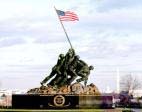 Each year I am hired to go to Washington, DC, with the eighth grade class from Clinton, WI. where I grew up, to videotape their trip. I greatly enjoy visiting our nation's capitol, and each year I take some special memories back with me. This fall's trip was especially memorable.
On the last night of our trip, we stopped at the Iwo Jima memorial This memorial is the largest bronze statue in the world and depicts one of the most famous photographs in history -- that of the six brave soldiers raising the American Flag at the top of a rocky hill on the island of Iwo Jima, Japan, during WW II. Over one hundred students and chaperones piled off the buses and headed towards the memorial. I noticed a solitary figure at the base of the statue, and as I got closer he asked, "Where are you guys from?" I told him that we were from Wisconsin "Hey, I'm a cheese head, too! Come gather around, Cheese heads, and I will tell you a story." (James Bradley just happened to be in Washington, DC, to speak at the memorial the following day. He was there that night to say good night to his dad, who has since passed away. He was just about to leave when he saw the buses pull up. I videotaped him as he spoke to us, and received his permission to share what he said from my videotape. It is one thing to tour the incredible monuments filled with history in Washington, D.C., but it is quite another to get the kind of insight we received that night.) When all had gathered around, he reverently began to speak. (Here are his words that night.) "My name is James Bradley and I'm from Antigo, Wisconsin. My dad is on that statue, and I just wrote a book called "Flags of Our Fathers" which is #5 on the New York Times Best Seller list right now. It is the story of the six boys you see behind me. "Six boys raised the flag. The first guy putting the pole in the ground is Harlon Block. Harlon was an all-state football player. He enlisted in the Marine Corps with all the senior members of his football team. They were off to play another type of game A game called "War." But it didn't turn out to be a game. Harlon, at the age of 21, died with his intestines in his hands. I don't say that to gross you out, I say that because there are people who stand in front of this statue and talk about the glory of war. You guys need to know that most of the boys in Iwo Jima were 17, 18, and 19 years old. (He pointed to the statue) "You see this next guy? That's Rene Gagnon from New Hampshire If you took Rene's helmet off at the moment this photo was taken and looked in the webbing of that helmet, you would find a photograph... a photograph of his girlfriend. Rene put that in there for protection because he was scared. He was 18 years old. Boys won the battle of Iwo Jima. Boys. Not old men. "The next guy here, the third guy in this tableau, was Sergeant Mike Strank. Mike is my hero. He was the hero of all these guys. They called him the "old man" because he was so old. He was already 24. When Mike would motivate his boys in training camp, he didn't say, 'Let's go kill some Japanese' or 'Let's die for our country.' He knew he was talking to little boys. Instead he would say, 'You do what I say, and I'll get you home to your mothers.' "The last guy on this side of the statue is Ira Hayes, a Pima Indian from Arizona. Ira Hayes walked off Iwo Jima. He went into the White House with my dad. President Truman told him, 'You're a hero.' He told reporters, 'How can I feel like a hero when 250 of my buddies hit the island with me and only 27 of us walked off alive?' So you take your class at school, 250 of you spending a year together having fun, doing everything together. Then all 250 of you hit the beach, but only 27 of your classmates walk off alive. That was Ira Hayes. He had images of horror in his mind. Ira Hayes died dead drunk, face down at the age of 32 .. ten years after this picture was taken. "The next guy, going around the statue, is Franklin Sousley from Hilltop, Kentucky. A fun-lovin' hillbilly boy. His best friend, who is now 70, told me, 'Yeah, you know, we took two cows up on the porch of the Hilltop General Store. Then we strung wire across the stairs so the cows couldn't get down. Then we fed them Epsom salts. Those cows crapped all night. Yes, he was a fun-lovin' hillbilly boy. Franklin died on Iwo Jima at the age of 19. When the telegram came to tell his mother that he was dead, it went to the Hilltop General Store. A barefoot boy ran that telegram up to his mother's farm. The neighbors could hear her scream all night and into the morning. The neighbors lived a quarter of a mile away. "The next guy, as we continue to go around the statue, is my dad, John Bradley from Antigo, Wisconsin, where I was raised. My dad lived until 1994, but he would never give interviews When Walter Cronkite's producers, or the New York Times would call, we were trained as little kids to say, 'No, I'm sorry, sir, my dad's not here. He is in Canada fishing. No, there is no phone there, sir. No, we don't know when he is coming back.' My dad never fished or even went to Canada. Usually, he was sitting there right at the table eating his Campbell's soup. But we had to tell the press that he was out fishing. He didn't want to talk to the press. "You see, my dad didn't see himself as a hero. Everyone thinks these guys are heroes, 'cause they are in a photo and on a monument. My dad knew better. He was a medic. John Bradley from Wisconsin was a caregiver. In Iwo Jima he probably held over 200 boys as they died. And when boys died in Iwo Jima, they writhed and screamed in pain. "When I was a little boy, my third grade teacher told me that my dad was a hero. When I went home and told my dad that, he looked at me and said, 'I want you always to remember that the heroes of Iwo Jima are the guys who did not come back. Did NOT come back.'" "So that's the story about six nice young boys. Three died on Iwo Jima, and three came back as national heroes. Overall, 7,000 boys died on Iwo Jima in the worst battle in the history of the Marine Corps. My voice is giving out, so I will end here. Thank you for your time." Suddenly, the monument wasn't just a big old piece of metal with a flag sticking out of the top. It came to life before our eyes with the heartfelt words of a son who did indeed have a father who was a hero. Maybe not a hero for the reasons most people would believe, but a hero nonetheless. We need to remember that God created this vast and glorious world for us to live in, freely, but also at great sacrifice. Let us never forget from the Revolutionary War to the current War on Terrorism and all the wars in-between that sacrifice was made for our freedom. Remember to pray praises for this great country of ours and also pray for those still in murderous unrest around the world. STOP and thank God for being alive and being free at someone else's sacrifice. God Bless You and God Bless America. REMINDER: Everyday that you can wake up free, it's going to be a great day. |
| Spanish Sons of the American Revolution |
| Texas Connection to the American
Revolution, TCARA Mexicans, Indians and the Sons of the American Revolution by Paul Trejo Patriot Ancestors Form Cuba (Part 5, continued, N-R) by Granville Hough What became of the Gálvez Family? <click |
|
Jack Cowan aka George Washington speaks to Bulverde Creek
School April 24th, one of his
frequent visits to Texas classrooms. President of the Texas
Connection to the American Revolution, TCARA, Cowan wants to make U.S.
history real and meaningful. |
|
|
MEXICANS, INDIANS AND THE SONS OF THE AMERICAN REVOLUTION A couple of years ago, my son Les called all excited. He had seen a notice in a local history publication that indicated that all male descendants of the Spanish Bluecoat Manuel Butron were eligible to become members of that old and staid body called Sons of the American Revolution (SAR). I was quite skeptical, but then my son proved to be correct. The Summer, 1998, Volume 9, Number 3 issue of Somos Primos arrived, and sure enough, there on pages 18 and 19 were a list of 225 Spanish Bluecoats that manned the Spanish forts in Canada during the time period 1779-1783. These forts were located in Vancouver, and at a village called Nootka on the West side of Vancouver Island. Much later, Nootka became the town of Port Alberni, named after Pedro Alberni, the most prominent Spanish Bluecoat in California history. The justification for this SAR eligibility was that Spanish Bluecoats were fighting the British in Canada, at the same time that the American were fighting the British for their independence on the Atlantic Seaboard. Therefore, the male descendants of these Bluecoats were eligible for membership in SAR. With the above information in hand, I approached members of the local Monterey SAR chapter to obtain the necessary forms and to inquire as to the procedures to join their group. Now most of these gentlemen were all retired naval officers, and we were all members of the same service organizations, and friends of long standing. Instead of being greeted with warm welcome, their response was lots of laughs and the comment, " You are a great pal Paul, but "We don’t let Mexicans and Indians into our organization !!" They had not yet received any official notice of this Bluecoat eligibility from the National SAR Organization, and hence were very skeptical. With that, I promptly contacted Granville W. Hough, of the South Coast
SAR Chapter. He mailed me the proper application materials, and lineage forms. I n
due time I was admitted to SAR. My National Number is 153086, and my State
Number is 7052. You must join both organizations. A review of how this all came about is perhaps appropriate: During this 1779-1783 time period, the Spanish Crown was very concerned about the inroads made by the Russians in Alaska, at Fort Ross in Northern California, and the British in Canada. The establishment of Spanish forts in Canada was viewed as a deterrent to further encroachment of the British in Canada. The Spanish Bluecoats were the soldiers detailed to man those forts. When in California, these Bluecoats were also the main source of protection for the mission padres against the hostile Indians. Typically, a mission guard consisted of a corporal and four or five privates. All mission guards were furnished from the Escolta de Monterey (Squadron of Monterey). The Spanish Bluecoats were members of what was originally and elite
group of mounted cavalry. However, in California and Mexico, they also
fought as foot soldiers. In the beginning, they were recruited mainly from
the province of Catalonia, in Spain. As a group they went through several
name changes, but eventually became known as the Company of Volunteers of
Catalonia. Initially, most Bluecoats came from upper middle class
families. The "Volunteers" were rather a snooty group, they
disdaining personal armor, wore fancy breeches and blue coats, from which
they derived their name, Spanish Bluecoats. My ancestor, Manual Butron was a Spanish Bluecoat. He served in the personal guard for Father Junipero Serra , until Serra’s death on August 27, 1784. In many of the early baptisms conducted by Serra at Monterey, Butron is listed as the sponsor. Butron also served as a cook for his unit, and as a gardener at Camel Mission. In1772, Serra left Monterey, and traveled to Mexico City. Manuel Butron remained behind at Carmel Mission. In a letter to Father Fermin Palou, then at Carmel, he wrote a postscript, " Please tell Butron that I received his letter, that I ask his prayers, that I have no time for more, and that he knows how much I miss him." With Serra’s assistance, Military Governor Pedro Fages, in 1773 granted the first private land grant in Alta California to Manuel Butron and his Indian wife Margarita Dominguez. This was a small plot of land at the mouth of the Carmel River near the Carmel Mission. It was 140 varas in size (About 462 square feet, or a plot of about 21.5 feet by 21.5 feet.). On his death, Serra had requested that his "Tio" be buried near him. Accordingly, on Butron’s death eight years later, he was buried on the Holy side of the sanctuary about half way to the alter. As one enters the church of the Carmel Mission, there is a memorial plaque inside the door in the floor, on the left side of the entry way. The marker states," IN MEMORY ---- MANUEL BUTRON----- DIED JANUARY 4, 1793---- CORPORAL OF THE MISSION GUARD." After Serra’s death, and until his retirement, Manual Burton is to be found in other mission guards, but most often at Mission San Juan Bautista.
|
| PATRIOT
ANCESTORS FROM CUBA (Part 5, continued, N - R) Prepared by Granville W. Hough to assist descendants who are interested in joining the National Society, Sons of the American Revolution. References are explained in former editions of Somos Primos. Based on references seen, those with an asterisk had qualifying service. Others may have qualifying service, but it would have to be found by the descendant. Granville Hough may be reached at gwhough@oakapple.net . Lorenzo Naranjo. Sgt, Militia of Cuatro Villas, 1797. Legajo 7263:VII:49. Nicolás Naranjo. Sgt, Inf of Havana, 1799. Legajo 7264:XVI:88. *Diego Joseph Navarro García de Valladares (1708 Higuera, Andalucia – 1784 Madrid). Caughey:149, Cummins:208, Captain General of Cuba and Louisiana at Havana, 1777-1781. Abbey:58, Letters from the King and from Rendon, 1780. *Martin Navarro (1722 Cataluña - ), entered service 1738, Adjutant Major, grad Capt, Havana Cav, 1787. Civil governor of New Orleans, 1779. Intendant, Army in Louisiana, 1780. Legajo 7263:X:11, Adjutant, grad Col, Mil of Cav, Havana, 1797. *Francisco Xavier de Navas. M:115:App G, 2d Engr and Quartermaster at Mobile, 1780, recommended for promotion to Col. Caughey:191, Spanish officer at 4 May 1781 Junta on Pensacola. Ch1:21, Lt Col, Engineers on war packet boat San Pio in Feb 1781. *Joseph Manuel de Navas. A3:XII:2, Presbyter, c 1782. *Francisco Navia (1735 - ), entered service 1752, Lt, 1st Comp, Cuba Blancos, Cuba y Bayamo, 1787 and 1799, Legajo 7264:XI:13. Manuel Antonio Navia. Legajo7262:XXIII:15, Sgt, Matanzas Dragoons, 1793. *Victorio de Navia y Ballet (1723 Turin – 1795 Madrid). Beerman:295, Caughey:188, Spanish Commandant ( Lt Gen) of the Army of Operations at 11 Aug 1780 Junta in Havana. Tides:214, General in 1780. MP:7, 9, 10. His wife was María del Carmen Velásquez del Yerro, whom he md in 1784. José Manuel Neira. SubLt, Militia of Cuatro Villas, 1799, Legajo 7264:X:25. Miguel Neira. Legajo 7261:XV:42, Sgt, Mil of Cuarto Villas, 1791. *José Nevares (1761 - ), entered service 1778, 1st Sgt, Inf Blancos of Havana, 1787. Legajo 7261:XIX:86. *Felipe de Neve. MP:256n182, Comandante, Provincias Internas, 1783.Cuba:70, ltr to Miró from Neve in Arispe, Mexico, in 1783. Neve left no descendants. *Downham Newton. Lewis:116, 121, 133, pilot for the Spanish fleet in the Expedition to the Bahamas, 1782. *William/Jeremiah Newton. Lewis:116, 121, 133, pilot for the Spanish fleet in the Expedition to the Bahamas, 1782. Antonio José Niebla. Sgt, Militia of Cuatro Villas, 1795. Legajo 7262:V:48. José Rafael Niebla. Sgt, Militia of Cuatro Villas, 1799. Legajo 7264:X:54. Antonio de las Nieves. BR:565, Arty soldier from Cuba, bur 8 Oct 1801, SJO. *??? Ninstec. Mob:667, Capt, frigate Western Norland, hospital ship, Pensacola, 1781. *Cristóbal de Nis of Havana, Cuba. Chávez:225, in 1781 lender of money to the French navy. Antonio Nogales. A3:XI:13, mentioned, c 1781. Lorenzo Joaquín de Noguera. Lt, 1799, Inf of Havana, Legajo 7264:XVI:40. *Pedro Nolasco de Flores of Havana. FD3:212, soldier, and wife Sebastiana Vicenta de Torres of Santo Domingo had ch during war years. *Juan Antonio Noquera (1759 - ), entered service in 1782, Cadet of 4th Comp in Bayamo Blancos, Inf Mil of Cuba y Bayamo, 1787. *Manuel Noriega (1752 Castilla la Nueva - ), entered service 1769, at Gibraltar in 1779, in the Expedition to America, 1780, in the Providence Expedition, 1782, 1st Sgt, Havana Cav, 1787, married. Legajo 7264, XII:56. *Sebastian de Noroña (1754 Havana - ), entered service in 1774, SubLt in 1781, in 1786 in 4th Comp Dragoons of America, single. Legajo 7265:II:180, Capt, 1809, Dragoons of America. *Francisco Notario. HamV:365, priest at Mobile, 1783. José de Nova. Sgt, Inf Militia of Havana, 1799. Legajo 7264:XIII:37. *Manuel de Novas (1740 - ), entered service 1762, Capt, 1788, Corps of Arty, Havana, Legajo 7259:IV:8. *Francisco Ignacio de Nresberrta. Klotz:35fn20, involved in the cases of three Spanish vessels captured by American privateers and taken into Boston. Miguel de la Nuez. Sgt, Inf of Havana, 1799. Legajo 7264:XVI:73. *Eduardo Nugent. JDLH:239, explored Red River for Gov. O'Reilly. Irish:223, Capt at Pensacola. RM8:404, Spanish Army Colonel of the Hibernia Regt. Active in Cuba, West and East Florida, 1783. Petrie:216, Capt in Hibernia Regt in East Florida, 1784. Antonio Núñez. Cadet, Inf of Havana, 1799. Legajo 7264:XVI:96. Braulio Núñez. Legajo 7261:XVIII:107, Distinguished Soldier, Cav Mil of Havana, 1791. *Jose Ignacio Núñez (1742 Havana - ), Lt in 1781, Lt and Adjutant Major, Havana Regt, 1786, married. Legajo 7264:I:2, Comandante, Plana Mayor Santiago de Cuba, 1800. Manuel Núñez. Legajo 7261:VII:77, Distinguished Soldier, Cav Mil of Havana, 1792. *Narcisso Núñez (1739 - ), entered service 1758. Legajo 7264:XII:18, Lt, Cav Mil of Havana, 1787 and 1799. *Joaquín Oballe (1759 - ), entered service 1771, Lt Havana Arty, 1788. *Pedro Obregón. M:446, App C, Lt, Sr Grade, packet boat San Pio, at Mobile, 1780. Mob:446, frigate Capt, Pensacola convoy, 1780. *Antonio O’Carol. Beerman:182, Capt of frigate, Nassau operation, 1782. Manuel Ochoa, Sgt of Grenadiers, Inf Militia of Havana, 1799. Legajo 7264:XIII:93. *Pedro Juan de Ochoa (1755 - ), entered service 1776, 1st Sgt, Havana Cav, 1787. Lt, 1799, Mil Cav of Havana, Legajo 7264:XII:24. *Domingo de Ocio (1733 - ), entered service 1754, Lt, 1787 and 1789, Cav of Havana, Legajo 7260:X:27. *James O’Fallon. Lewis:103, 136, Surgeon for the South Carolina during the 1782 Expedition to the Bahamas. *José Ricardo O'Farrill (1749 - 1842). K:119-121, 190, Capt, graduate Lt Col, 1784, Vol Cav Regt of Cuba. Legajo 7264:XII:2. *Juan O'Farrill y Arriola (1729 - 1779). K:119-121, 190, Col, Havana Cav Regt, 1779. He and wife Luisa María Herrera y Chacón had at least 7 ch, nearly all involved with the Cuban military. Juan José O’Farrill. SubLt, Militia Cav of Havana, 1799. Legajo 7264:XII:35. *Juan Manuel O'Farrill (1754 - 1825), entered service in 1766, Lt in 1778, Capt Agregado, Dragoons of America, 1786. K:133-134, 190, Lt Col, Matanzas Dragoons, and planter, 1792. Legajo 7264:VII:2, Lt Col, 1799. *Bernardo Ogaban. MP:95, Spanish prisoner on the French cartel ship which landed at Trinidad, along with Saavedra in 1781. *Bartolomé Ogristiny (1745 - ), entered service 1763, 1st Sgt, Inf Vets of Havana, 1788 and 1792. Legajo 7261:XI:56. James O'Kelly. Cummins 15, reported to Gov. Unzaga of Louisiana on conditions of West Florida, 1770. *José Olazaval of Havana. Chávez:225, in 1781 lender of money to French navy. *Geronimo Olibi (1741 - ), entered service 1772, Sgt, 2d Comp, Dragoons of America, 1788. *Balthasar de Oliva (1742 - ), entered service 1762, 2d Sgt, Havana Cav in 1787 and probably in 1799. Legajo 7264:XII:47. Francisco de Oliva. Distinguished Soldier, 1793. Legajo 7262:XX:100. *Ginés de Oliva (1743 Almasarron - ), SubLt in 1778, Lt, Havana Regt, 1788, married. Capt of Grenadiers, 1799, Inf of Cuba:Legajo 7264:XVII:18. Diego Olivares. SubLt, Inf of Havana, 1799. Legajo XVI:66. *José Olivera (1753 - ), entered service 1768, Cadet, Inf Blancos, Havana, 1787. SubLt, 1793, Mil Inf of Havana, Legajo 7262:XXI:70. Luis de Olivera y Tory. Cadet, Inf of Cuba, 1792. Legajo 7261:XII:58. *Jerónimo Olivi (1741 Puerto Santa María - ), soldier and Cpl in 1772, Sgt, 3rd Comp, Dragoons of America, 1786, single. Sgt, 1790, Squadron of Dragoons of America, Legajo 7260:III:20. *José Oller. Cummins:126, Cuban cargo master, 1778, working for Robert Morris and Juan de Miralles to move supplies to the American Revolutionists. *Joseph Olmedo. A3:XI:62, Cpl, c 1781. *Pedro del Olmo (1740 - ), entered service 1756, Adjutant, 1787 and 1792, Plana Mayor del Bn, Pardos, Havana, Legajo 7261:I:3. *Domingo Oñoro (1757 Havana - ), SubLt in 1781 and 1786, Havana Regt, single. Lt, 1797, Inf of Havana, Legajo 7263:XIV:33. *Francisco Oñoro (1766 Havana - ), Cadet in 1781 and 1786, Havana Regt, single. Lt, 1799, Inf of Havana, Legajo 7264:XVI:36. *Francisco Oñoro (1730 Ciudad Rodrigo - ), Lt Col, grad, 1781, Capt, grad Lt Col, 1786, Havana Regt, widowed. Lt Col, 1800, Estado Mayor of San Cristóbal of Havana, Legajo 7264:III:2. José María Oñoro. SubLt, Cav Militia of Havana, 1799. Legajo 7264:XII:45. Martin de Oñoro. Cadet, Inf of Havana, 1786. Legajo 7259:XII:92. *Juan Federico Opendal. A3:XI:47, soldier, c 1781. Fray Lorenzo Ordoñez. Chaplain, Havana Regt, 1786. *Conde de Oreylly. Col, 1799, agregado, Inf of Cuba, Legajo 7264:XVII:5. Antonio de Oria. Lt, 1799, Mil Dragoons of Matanzas, Legajo 7264:VII:26. Gabriel O’Rian. Cadet, 1799, Inf of Cuba, Legajo 7264:XVII:91. *Gabriel O’Rian. Capt, 1790, Inf of Cuba. Legajo 7264:XVII:19. *Antonio Oriega. R80I:346, Capt of the Spanish naval vessel Santa Rosalia in 1780. José de Orta. Distinguished Soldier, Cav Militia of Havana, 1793. Legajo 7262:XX:79. Rafael de Orta. Distinguished Soldier, Cav Militia of Havana, 1793. Legajo 7262:XX:94. Tomás de Orta. Cadet, Inf Militia of Havana, 1799. Legajo 7264:XIII:121. Francisco Ortega. Sgt, Inf of Havana, 1799. Legajo 7264:XVI:74. Joseph Ortega. A3:XIII:43, 44, mentioned, c 1783. Miguel Ortega. Sgt, Inf of Havana, 1799. Legajo 7264:XVI:86. Juan de Oteiza/Oteyza (1757 Castilla - ), 2d Sgt in Navarra Regt in 1781 at Pensacola and in Guarico, 1st Sgt Agregado, Havana Regt, 1786, single. Pedro Ortigas. Lt, 1799, Mil Inf de Puerto Princípe, Legajo 7264:XIV:13. Francisco Ortiz. Sgt, Militia of Cuatro Villas, 1799. Legajo 7264:X:43. José Rafael Ortiz. SubLt, Comp. of Cav Militia at Trinidad, 1797. Legajo 7263:XVI:3. *Miguel Ortiz de Zarate. Capt, 1799, Inf of Havana, Legajo 7264:XVI:6. *Sebastián Oruño (1739 - ), entered service 1758, Adjutant, Pardos of Havana, 1787. Lt, 1800, Staff of San Cristóbal, Havana, Legajo 7264:III:9. Juan Bautista de Oseguera. A3:XI:8, mentioned c 1781. *Juan de Oteiza ( 1757 Castilla - ), at Pensacola and on Guarico, 2d Sgt in Navarra in 1781, 1st Sgt Agregado, Havana Regt, 1786, single, Adjutant Major, Militia Inf of Havana, 1809, Legajo 7265:I:91. *??? Ourissa. RQ:21, intendente-general, 1781. *Joaquín Ovalle. Capt, 1796, Corps of Arty at Havana, Legajo 7263:XXI:6. *Ignacio Pablo. Lt, 1791, Comp Mil Cav, Trinidad, Legajo 7261:XXIII:2. Gil José Pacot. Lt, Inf of Cuba, 1799. Legajo 7264:XVII:40. *Matías Padura (1736 - ), entered service 1752, Lt, 1787 and 1793, Mil Cav of Havana, Legajo 7262:XX:20. Francisco Pajón. FD6:65-66, he and wife Josefa María Almonte had ch during war years. *Manuel Palacios (1746 - ), entered service 1768, SubLt, Havana Cav, 1787. *Antonío Palemino/Palomino (1752 - ), entered service 1766, Lt Inf Vets of Havana, 1788. Ch1:23, SubLt, Regt of Havana, aboard the Cayman, Feb 1781. *Miguel Palermo. Capt, Bn Militia of Cuatro Villas, 1799. Legajo 7264:X:9. *Pablo/Paulis Palmero. Mob:591, Capt, sloop Galvez, at Mobile, 1780. Cristóbal Palomino. Cadet, Inf of Cuba, 1797. Legajo 7263:XV:k98. *Gabriel Palomino (1764 Havana - ), Cadet in 1782 and 1786, PortaGuion in 1788, 1st Comp, Dragoons of America, single. Legajo 7264:XV:19, Lt, Escuadrón Dragoons of America, 1799. *Jose Palomino. K:187, SubLt, age 42 in 1792, in Cuban militia. Capt, 1799, Inf Militia of Havana. Legajo 7264:XIII:13. Nicolás Palomino. Cdet, Inf of Cuba, 1799. Legajo 7264:XVII:97. José Panadero. Sgt, Squadron of Dragoons of America, 1793. Legajo 7262:XXVI:25. *Francisco Mateo de Pando (1758 Santander - ), entered service 1781, Capt of militia, 1781, Inf of Lima, Capt, Agregado, Havana Regt, 1786, single. Legajo 7261:XII:6, Capt, Inf of Cuba, 1792. *José Antonio Pantaleon (1736 - ), entered service 1758. SubLt, 1787 and 1791, Mil Cav of Havana, Legajo 7261:XVIII:41. *Juan Paredes (1759 - ), entered service 1776. Adjutant Garzón, 1787, Garzón, 1797, Plana Mayor Bn Morenos, Havana, Legajo 7263:VI:7. José Pargo. Legajo 7262:XX:74, Distinguished Soldier, Cav Mil of Havana, 1793. Juan José Pargo. Distinguished Soldier Cav Militia of Havana, 1793. Legajo 7262:XX:74. Antonio Parreño. Chaplain, Inf Militia of Havana, 1792. Legajo 7261:VI:50. Antonio Parreño. Cadet, Inf of Cuba, 1799. Legajo :XVII:120. *Bernardo Parreño (1745 - ), entered service 1766, Capt, Inf Vets of Havana, 1788. Sgt Major, Inf Militia of Havana, 1799. Legajo 7264:XIII:2. José Parreño. Sgt, Cav Militia of Havana, 1799. Legajo 7264:XII:73. *Fray José Tomás Parreño (1743 Havana - ), entered army service as a Chaplain in 1771, Plana Mayor, Dragoons of America in 1786, single. Legajo 7264:XV:4, Chaplain, Dragoons of America, 1799, Juan Manuel Parreño. Cadet, Inf of Havana, 1799. Legajo 7264:XVI:122. Julian Parreño. Cadet, Inf of Havana, 1799. Legajo 7264:XVI:122 bis. Teodoro Parrodi. Adjutant, Bn Morenos of Havana, Legajo 7264:VII:10. *Antonio Pascuál. Mob:256, received letter from Governor Ezpeleta, 1780. Mob:448, head of transport boat in 1780 Pensacola convoy. José Pastor. Sgt, Comp Inf of Cataluña in Havana, 1794. Legajo 7262:XI:21. *Juan Patrón of Havana. Chávez:225, in 1781 lender of money to the French navy. Juan José Patron. SubLt, Cav Militia of Havana, 1799. Legajo 7264:XII:36. José Ignacio Pazos. Sgt, Bn Militia of Cuatro Villas, 1799. Legajo 7264:X:49. *Juan Pbonet. Appeals Case 95, pilot in Nov 1782 for the Spanish San Antonio. José Antonio Pecora. Sgt, Bn Inf Militia of Cuba y Bayamo, 1799. Legajo 7264:XI:23. Francisco Pedrazo. FD6:275, Capt of Infantry in Regiment of America, mentioned in a letter of 1789, but significance not known. *José Pellicer (1748 Palma - ), at Gibraltar, Pensacola, and Providence, Sgt, Havana Inf, 1788, single. Legajo 7262:XI:16, Sgt, Catalonian Company in Havana, 1794. *Dionisio de la Peña (1752 - ), entered service 1777, SubLt, Havana Cav, 1787 and 1799. Legajo 7264:XII:43. *Ignacio Peñalver y Calvo (1744 Havana - ), Capt of Fragata in 1781, Lt Col Agregado in 1783, Lt Col, and Plana Mayor, Havana Regt, 1786. Tanner:xxvi, Lt. Col, and new Comandante at St Augustine, 1784. MP:100, Treasurer of the Army. Legajo 7261:XI:4, Lt Col, 1792. Chávez:225n, it appears that this is Ignacio Peñalver y Cárdenas of Havana, 1782 accountant for the Cuban loan to the French Navy. *José María Peñalver. Legajo 7261:XI:18, Capt, Havana Inf, 1792. MP:235, 243-47, son of Ignacio, who accompanied Saavedra to Mexico. Fray Luís Peñalver y Cárdenas. Tanner:164, LM2:preface, Bishop of Havana and later of Louisiana. *Acadio de la Pera. Sgt Major, Bn Mil, Cuatros Villas, 1793. Legajo 7262:XVII:1. Arcadio de la Pera. Cadet, Bn Inf Militia of Puerto Príncipe, 1799. Legajo 7264:XIV:39. Ignacio Antonio de la Pera. Cadet, Bn Inf Militia of Puerto Príncipe, 1799. Legajo 7264:XIV:40. Ignacio José de la Pera. Cadet, Bn Inf Militia of Cuatro Villas, 1793. Legajo 7262:XVII:62. Pedro de la Pera. SubLt, Bn Inf Militia of Puerto Prñncipe, 1799. Legajo 7264:XIV:29. *Pedro Peraza of Havana. Chávez:225, in 1781 lender of money to the French navy. Francisco Esteban Perdomo. Sgt, Militia Dragoons of Matanzas, 1799. Legajo 7264:VII:32. *Rafael Perdomo. Appeals Case 95, notary public taking testimony in the 1783 MA case of Pere Debade vs San Antonio. *José Perea (1731 Canary Islands - ), entered service 1757. PortaEstandante, Havana Cav, 1787, SubLt, 1792, Cav of Havana, Legajo 7261:VII:41. *Josef Perea. Mob:446, naval Captain, warship San Juan Nepomuceno, Pensacola convoy, 1780. *Cosme Peregun. M:350, Capt, brig galley San Antonio de Padua in May 1782 invasion of Nassau. José Pereira. Garzón, 1799, Plana Mayor del Bn de Pardos, Havana. Legajo 7264:V:9. Francisco Perera. Portaguiín, 1799, Dragoons of Matanzas, Legajo 7264:VII:5. Agustín Pérez. Sgt, Inf Militia of Havana, 1791. Legajo 7261:XIX:99. Andrés Pérez. Sgt, Inf of Havana, 1799. Legajo 7264:XVI:82. Antonio Pérez. FD6:190, distinguished volunteer in 1st Comp of Santiago, had 4 years of service in 1788. *Antonio Pérez Falcon (1737 - ), entered service 1760, Lt, Havana Cav, 1787. Lt, 1795, Mil Cav of Havana, Legajo 7262:VIII:13. Bartolomé Pérez de Prados. SubLt, Militia of Cuatro Villas, 1799. Legajo 7264:X:28. *Benancio Pérez (1753 - ), entered service 1768, SubLt, Blancos of Havana, 1787, Legajo::::::::::::::::::????/. *Benito Pérez (1730 - ), entered service 1748, SubLt, 1787 and 1791, Mil Cav of Havana, Legajo 7261:XVIII:30. *Buenaventura Périz/Pérez (1755 Florida - ), entered service 1773, 1st Sgt, Havana Cav, 1787, Legajo????????. Buenaventura Pérez Barquero, Lt, 1799, Mil of Cuatro Villas, Legajo 7264:X:16. *Cayetano Pérez. Lt, 1795, Adjutant, Staff of San Cristóbal, Havana, Legajo 7262:I:8. Esteban Pérez y Justiniani. Cadet, Bn of Militia at Cuatro Villas, 1799. Legajo 7264:X:64. *Francisco Pérez. A3:XII:6, soldier, c 1782. *Francisco Pérez (1764 Havana - ), Campaigns of Mobile and Pensacola, 1780-81, SubLt, 1790, Lt, Inf Puebla, 1800, Havana, married, Legajo 7277:VI:37. Francisco José Pérez. Cadet, Inf Militia of Cuba y Bayamo, 1799. Legajo 7264:XI:34. Francisco Pérez Ganuza. Cadet, Inf Militia of Havana, 1797. Legajo 7263:XI:54. *Isidro Pérez. Ch1:11, soldier of the 1st ???, arr in Havana, Mar 1779. A2:IX:16, soldier, c 1779. *Jacinto Pérez (1770 - ), entered service 1782, Cadet, Inf Blancos of Havana, 1787. SubLt, 1793, Mil Inf, Havana, Legajo 7262:XXI:72. *José Pérez (1759 Andalucia - ). Soldier and Cpl 1776-1788, Inf del Rey, at Pensacola in 1781 and Guarico, 1783, 1st Sgt, Inf Puebla, 1800, Havana, Legajo 7277:VI:58. *Joseph Antonio Pérez (1751 - ), entered service 1775, Adjutant Garzon, Pardos of Cuba y Bayamo, 1787. Staff in 1799, Legajo 7264:IX:6. *José Francisco Pérez de Corcho. Capt, 1799, Mil of Cuatro Villas, Legajo 7264:X:7. *José Manuel Pérez de Alejos. Capt, 1795, Mil, Cuatro Villas, Legajo 7262:V:7. José Mariano Pérez. Cadet, Bn Militia of Cuatro Villas, Legajo 7264:X:67. *José Nicolás Pérez (1743 - ), entered service 1764, Capt, 7th Comp in Cuba Blancos, Mil of Cuba y Bayamo, 1787. Capt, 1799, Bn Inf of Cuba & Bayamo, Legajo 7264:XI:10. *Juan Pérez (1757 - ), entered service 1773, Cadet, Inf Blancos of Havana, 1787. SubLt in 1795, Legajo 7262:IX:75. Juan Ambrosio Pérez. Cadet, Bn Inf Militia of Cuba y Bayamo, 1799. Legajo 7264:XI:30. *Juan Bautista Pérez Alejos. Capt, 1799, Mil, Cuatro Villas, Legajo 7264:X:6. Juan Evangelista Pérez. Cadet, Bn of Militia at Cuatro Villas, 1799. Legajo 7264:X:66. *Juan Pérez de Guzman. Capt, 1799, Mil Inf, Havana, Legajo 7264:XIII:69. Jusdo Pérez Barroso. Distinguished Soldier, Cav Militia of Havana, 1793. Legajo 7262:XX:97. *Luís Pérez. Ch1:9, Capt of Nuestra Señora del Carmen, Havana to LA, Mar 1779. *Manuel Pérez (1732 - ), entered service 1755, Adjutant of the Morenos, 1787. Legajo 7264:VIII:3, Capt, Bn of Morenos of Havana, 1799. Manuel María Pérez. SubLt, Inf of Cuba, 1799. Legajo 7264:XVII:66. Manuel Pérez Justiniani. Cadet, Inf Militia of Havana, 1799. Legajo 7264:XIII:125. Miguel Antonio Pérez. Sgt, Bn Militia of Cuatro Villas, 1799. Legajo 7264:X:52. *Pablo Pérez. K:122-123, Capt, 1792, Militia of Cuatro Villas, Cuba. *Pablo Pérez Justiniani. Col, 1799, Bn Mil of Cuatro Villas, Legajo 7264:X:1. Pedro Tomás Pérez Alejos. Sgt, Militia of Cuatro Villas, 1799. Legajo 7264:X:50. *Ramón Perez de Alderette. Capt, Grad, 1797, Mil Inf, Havana, Legajo 7263:XI:12. *Sebastián Pérez de Morales. Capt, 1799, Bn Mil, Cuatro Villas, Legajo 7264:X:11. Tomás Honorio Pérez de Morales. Cadet, Bn Militia of Cuatro Villas, 1799. Legajo 7264:X:58. Venancio Pérez. SubLt, 1787, Mil Inf, Havana, Legajo 7259:V:43. *Vicente Pérez Justiniani (1741 - ), entered service, 1762, Capt, Inf Blancos of Havana, 1787. K:188, Capt, age 68 in 1809. Legajo 7265:I:82, Capt/LtCol, 1809. FD5:60, this may be SubLt Vicente Pérez, of the real de San Carlos, acting as padrino in 1784. *José Perily. Lt, Militia of Inf of Puerto Príncipe, 1791. Legajo 7262:XX:17. *Buenaventura Peris. Sgt, Cav Militia of Havana, 1789. Legajo 7259:VI:63. This is probably the same person as Buenaventura Periz, SubLt, Inf of Cuba, 1799, Legajo 7264:XVII:58. *??? Peynado. Mob:667, Capt, packetboat, San Juan Bautista, Pensacola, 1781. José Piedrahita. Cadet, Inf of Cuba, 1792. Legajo 7261:XII:59. Juan Pierra. Legajo 7264:XVII:48, Lt, Cuban Inf Regt, 1799. Juan Manuel del Pilar. Distinguished Soldier, Cav Militia of Havana, 1793. Legajo 7262:XX:86. Domingo Piña. SubLt, Inf Militia of Puerto Príncipe, 1799. Legajo 7264:XIV:25. *José Piñeiro (1741 Vigo, Galicia - ), entered service 1755, Sgt in 1764, Portaguion and SubLt, Dragoons of America, 1786 and 1788, married.SubLt, 1794, Squadron, Dragoons of America, Legajo 7262:XII:13. *Enrique del Pino (1751 - ), entered service 1767, 2d Sgt, Fusiliers, Inf Blancos of Havana, 1787. In 1809 Capt, Inf Militia of Havana, Legajo 7265:I:88. *Felipe Pinto. A3:XI:61, soldier, c 1781. Francisco del Pino. Sgt, Militia Dragoons of Matanzas, 1793. Legajo 7262:XXIV:13. *José Remigio Pita (1749 - ), entered service 1772, Capt, Blancos of Havana, 1787. K:185, 186, SubLt, age 32, 1781, in Cuban militia. Legajo 7265:I:6, Capt in 1809. *Pedro Plana. A3:XII:56, Lt, c 1781. Manuel Antonio Plaza. Sgt, Militia Dragoons of Matanzas, 1799. Legajo 7264:VII:17. *Leandro Poblaciones. Capt, Corps of Arty at Havana, 1788. Legajo 7259:IV:3. *José Polo. Soldier and Cpl, 1776-1789, in Havana and Guarico operations in 1782, SubLt of Bandera, San Carlos de Perote, Regt Corona New Spain, 1800, single, Legajo 7277:III:64. *Josef Francisco Polo. Ch1:8, arrived with wife from LA Regt to Havana, Nov 1779. Woods:245, soldier grenadier, and Angela Francisca Regalado, bap ch in 1779. *Juan Polo (1768 - ), entered service 1782, Cadet, Inf Blancos of Havana, 1787. Legajo 7260:IX:89, SubLt, Inf Mil of Havana, 1789. Rafael Polo. Cadet, Inf Militia of Havana, 1793. Legajo 7262:XXI:115. *José Ponce de León (1746 - ), entered service 1760, SubLt, Havana Cav, 1787. *José Manuel Ponce. Capt, Cav Militia of Havana, 1799. Legajo 7264:XII:13. *Lucas José Ponce. Capt, 1799, Bn Mil, Cuatro Villas, Legajo 7264:X:5. Manuel Ponce de Leon. ND10:412, 414, Naval Notary, Havana, Cuba, 1777. Manuel Ponce de León. Legajo 7259:VI:52, Standard Bearer for Cav Mil of Havana, 1789. *Pedro Ponce de León. Legajo 7261:XII:84, Lt, Cuban Inf, 1792. *Francisco de Porras (1740 - ), entered service 1763, Adjutant, Pardos, 1787. Adjutant, Plana Mayor, 1799, Bn Pardos of Havana, Legajo 7264:V:3. Juan Portal. Sgt, Inf of Havana, 1791. Legajo 7261:XXV:67. *José Portillo. Capt, Staff of San Cristóbal, Havana, Legajo 7264:III:4. Santiago Portuondo. Cadet, Inf Militia of Cuba y Bayamo, 1799. Legajo 7264:XI:28. *Francisco Potau (1729 Tarragona, Cataluña - ), entered service 1745, Legajo 7259:V:3, Sgt Major/Col, Inf Mil of Havana, 1787, married. *Manuel Poveda (1734 - ), entered service, 1750, SubLt, 5th Comp, in Cuba, Blancos of Cuba y Bayamo, 1787. Legajo 7262:VII:24, SubLt, Inf Mil of Cuba y Bayamo, 1795. *Ignacio del Pozo (1743 - ), entered service 1763, 2nd Sgt of Grenadiers, Inf Blancos of Havana, 1787.. Capt, 1800, Mil Inf of Havana, Legajo 7265:I:86. *Juan de Prada. Mob:198, Capt General of Cuba, 1780. Manuel Prado. Lt, Inf Militia of Puerto Príncipe, 1799. Legajo 7264:XIV:15. *Nicolás Prados. Lt, 1791, Mil Dragoons of Matanzas, Legajo 7261:XIII:6. Pedro de Prados. Sgt, Bn Militia of Cuatro Villas, 1795. Legajo 7262:V:49. *Pedro Antonio de Prados. Capt, 1795, Bn Mil of Cuatro Villas, Legajo 7262:V:6. *Eduardo Pralmon. Appeals Case 95, mariner in Nov 1782 on Spanish San Antonio. Juan de Presno y Aguilar. Cadet, Inf of Cuba, 1799. Legajo 7264:XVII:100. Roberto Prieto. Sgt, Cav Militia of Havana, 1799. Legajo 7264:XII:70. *Francisco Pruna. Mob:277, M:349, Capt, frigate El Carmen, Mobile, 1780, and also Capt, galley or letter Ángel de la Guarda, Mobile, 1781, and in the invasion of Nassau in May 1782.. *Isideo Puch. M:349, Capt brigantine San Juan in May 1782 invasion of Nassau. *Ramón Puch (1738 Cataluña - ), entered service 1755, Lt 1787 and 1789, Mil Cav, Havana, Legajo 7260:X:20. *Fernando de la Puente (1746 Algeziras - ), entered service 1763, 1st Sgt in 1780 and 1786, Havana Regt, married. Lt, 1799, Inf of Cuba, Legajo 7264:XVII:43. *Francisco Puente. A2:IX:45, soldier, c 1779. Ch1:12, soldier, arr Havana, June 1779, Pareza de María. *Juan Elegio de la Puente. Wright:67, 68, Chávez:71-74, 102, 122, observer of the American military for the Captain-General of Cuba, and of the British Military in East Florida. His death is shown as 1781. (It seems likely that this was a brother of the above, and that the activities of the two may be confused.) *Juan Elipio de la Puente (1754 - ), entered service in 1786, probably with prior service as he was a Lt, Inf Vets of Havana, 1788. Legajo 7264:III:14, Lt, Staff, San Cristóbal, Havana, 1800. Ignacio Puentes. Surgeon, 1799, Plana Mayor del Bn de Pardos, Havana, Legajo 7264:V:12. Fernando Puga. Sgt, Inf of Havana, 1799. Legajo 7264:XVI:79. *Félix Puig. Ch1:16, Capt, Jul 1779, Nuestra Señora del Rosario.Francisco Puig. A2:IX:72, 75, mentioned 1779. Francisco Pujales. Sgt, 2nd of Grenadiers, Inf Militia of Havana, 1799. Legajo 7264:XII:111. *Juan Puldas. M:350, Capt, schooner galley N. S. de los Remedios in May 1782 invasion of Nassau. Francisco Pulgaron. Cadet, Inf Militia of Havana, 1799. Legajo 7264:XIII:120. Rodrigo Pupo. Sgt, Independent Companies of Cav under Cuba, 1791. Legajo 7261:XXVIII:14. *José de Quadra (1754 - ), entered service in 1770, SubLt, Havana Cav, 1787. Manuel de Queralta. Cadet, Inf of Havana, 1799. Legajo 7264:XVI:100. Cayetano Quesada. SubLt, Inf Militia of Puerto Príncipe, 1799. Legajo 7264:XIV:27. Ignacio Quesada. SubLt, Inf Militia of Puerto Príncipe, 1799. Legajo 7264:XIV:28. *Juan Nepumuceno de Quesada. MP:356n244, 266, 372, at Guarico in 1782 with the Spanish forces, later in 1790 – 95, Governor of East Florida. *Mateo Quesada (1741 Ciudad Canaria - ), 1st Sgt, Aug 1783 and in 1786, Havana Regt, single. Legajo 7259:XII:79. *Pedro Quesada. Legajo 7264:XIV:6, Capt, Inf Mil, Puerto Príncipe, 1799. José Quijada. Sgt, Cav Militia of Havana, 1797. Legajo 7263:X:53. *Lorenzo Quintana of Havana. Chávez:225, in 1781 lender of money to the French navy. *Manuel Quintanilla of Havana. Chávez:225, 1781 lender of money for the French navy. *Benito Quintero (1741 - ), entered service 1759, 1st Sgt, 5th Cuba Comp, Mil Blancos of Cuba y Bayamo, 1787 and 1793. Legajo 7262:XIX:34. José Quiñones. Cadet, Inf of Havana, 1791. Legajo 7261:XXV:85. Hilario Quiroga. Cadet, Inf of Havana, 1799. Legajo 7264:XVI:101. *Antonio Raffelin (1730 Paris, France - ), Col in 1781, Col and Plana Maior, Dragoons of America, 1786, married. Legajo 7259:III:1, Col Esquadrón of America, 1788. Cummings:8, 69-72, Spanish trade representative in St. Domingue before Spain entered the war. *Bernardo Ramírez. Col grad, Staff, San Cristóbal, Havana, 1797, Legajo 7263:II:1. Hilario Ramirez Estenos. Cadet, Inf of Havana, 1799. Legajo 7264:XVI:118. José Ramírez. Sgt, 1791, Mil de las Cuatro Villas, Legajo 7261:XV:47. José Luis Ramirez. Cadet, Inf Militia of Havana, 1799. Legajo 7264:XIII:126. Juan Ramirez. Sgt, Cav Militia of Havana, 1799. Legajo 7264:XII:78. *Francisco Ramos (1743 - ), entered service 1767, SubLt, grad Lt, Carbineers, Mil of Cav, Havana, 1787, Legajo 7264:XII:40. José Ramos. Distinguished Soldier, Cav Militia of Havana, 1793. Legajo 7262:XX:104. Juan Ramos. Sgt, Militia of Havana, 1795. Legajo 7262:IX:97. *Tomás Ramos (1745 - ), entered service, 1763. Sgt, 1788 and 1791, Squadron, Dragoons of America, Legajo 7261:XXII:21. *Agustín Ranz (1746 Villa Altienza - ), 1st Sgt in 1782 and 1786, Havana Regt, single. Legajo 7261:XI:116, Sgt, Inf of Havana, 1792. *??? Ravanel. MP:151, Captain of the Andromaque in the landing at Pensacola, April, 1781. *Marquis de Real Proclamatión. RM7:496-497, merchant in Havana, probably doing business with Robert Morris, 1782. Vicente del Real. Sgt, Militia Inf of Puerto Príncipe, 1799. Legajo 7264:XIV:32. *Antonio José de Betís y Castro, Renteria & Espinosa, Marqués del Real Socorro/ dil Socorro. RM7:113, Col, Havana militia, member of Havana City Council, doing business with Robert Morris in 1781, Brigadier, 1799 and 1809, Mil Inf of Havana, Legajo 7265:I:8. *F. Rebas. M:349, Capt, brigantine San Rafael in May 1782 invasion of Nassau. *Antonio Regas (1734 Gerona - ), Lt in 1769, Capt, Havana Regt, 1788, single. Legajo 7264:VI:2, Lt Col, Inf Comp of Cataluña in Havana, 1799. *Miguel Regayferos. Legajo 7263:II:18, Lt, retired of San Cristóbal, Havana, 1797. Juan Regis de Castro Palomino. SubLt, Inf of Cuba, 1799. Legajo 7264:XVII:64. Cayetaño de Reina. Legajo 7263:XXII:12, Lt, Arty Corps of Havana, 1796. *Juan de los Remedios (1740 - ), entered service 1759, Capt, Havana Arty, 1788. Ch1:8, artillery SubLt, Havana to LA, Sep 1779. H:253, Ensign, NO Artillery Mil, 1780. M:115:App G, recommended for promotion after Mobile, 1780. Legajo 7261:XXVII:6, Capt, 1791. Manuel Remón, entered service with this unit in 1786 as a Captain, probably with prior service with some other unit, Legajo 7263:XXII:6, Capt, Havana Inf, 1796. Francisco Remon Ibarra. SubLt, Comp of Cav, Urban, of Cuba y Bayamo, 1797. Legajo 7263:XVIII:8. *Pedro Repeto. Capt, 1800, Staff, San Cristóbal, Havana, Legajo 7264:III:3. *José Repilado (1747 Florida - ), SubLt in 1775, Lt, Havana Regt in 1786, married. Capt, 1799, Inf of Havana, Legajo 7264:XVI:16. Salvador Reus. Sgt, Militia Cav of Havana, 1799. Legajo 7264:XII:64. José Revollo. Sgt, Inf of Havana, 1799. Legajo 7264:XVI:78. *Manuel del Rey, Lt, 1792, Bn Mil, Cuatro Villas, Legajo 7261:IV:17. *Agustín de los Reyes (1729 Canary Islands - ), entered service in 1746, SubLt, grad Lt, Mil Cav of Havana, 1787, Legajo 7260:X:30. *Enrique Reyes (1745 - ), entered service, 1760. Capt, 1787 and 1795, Mil of Havana, Legajo 7262:IX:58. *Francisco Reyes (1741 - ), entered service 1758, Lt, 1787 and 1795, Mil Inf of Havana, Legajo 7261:VI:65. José Reyes. Cadet, Independent Comp from Cataluña in Havana, 1799. Legajo 7264:VI:18. Juan Reyes. Cadet, Independent Comp from Cataluña in Havana, 1799. Legajo 7264:VI:17. *Rafael de los Reyes (1741 - ), entered service 1756, Lt, Blancos of Havana, 1787, Capt, 1800, Staff of San Cristóbal, Havana, Legajo 7264:II:5. *Sebastián Ribero. Ch1:19, unm CI recruit who joined Matanza Dragoons in Havana, Aug 1779. *Francisco Richard. A3:XII:5, soldier, c 1782. *Ramón Riglos (1727 Aragon - ), entered service 1748, Lt, 1787 and 1797, Mil Cav, Havana, Legajo 7263:X:13. Sylvester Rincon. Sgt 1st cl, Inf of Havana, 1797. Legajo 7263:XIV:71. José del Rio. Sgt 1st Cl, Bn of Militia of Cuatro Villas, 1799. Legajo 7264:X:35. José del Rio. SubLt, Inf of Havana, 1799. Legajo 7264:XVI:47. *Tomás del Río. Mob:667, Capt, frigate Nuestra Señora de la Merced, Pensacola, 1781. Pedro Ripa. Sgt 1st Cl, Inf of Cuba, 1799. Legajo 7264:XVII:79. Pedro Vicente Risel. SubLt, Corps of Arty of Havana, 1796. Legajo 7263:XXII:13. *Vicente Risel (1732 - ), entered service 1752, Comandant, Havana Artillery, 1788. *Segismundo Riumbau. Mob:546, fusilero wounded at the Village, 1781. *Benito Rivera (1765 Havana - ), Cadet in 1781 in America under Bernardo de Gálvez, Cadet, Havana Regt, 1786, single. Legajo 7259:II:84, Cadet, Inf of Havana, 1788. Bernardo Rivera. Cadet, Inf of Cuba, 1796. Legajo 7260:II:73. Francisco Rivera. SubLt, Inf of Cuba, 1799. Legajo 7264:XVII:60. *Juan Rivera. Capt grad, 1797, Staff of San Cristóbal, Havana, Legajo 7263:II:8. Juan Jose Rivera. Distinguished Soldier, Cav Militia of Havana, 1793. Legajo 7262:XX:99. Juan Rivero. Sgt, 1792, Dragoons of America, Legajo 7261:X:26. *Rafael Rivero (1757 - ), entered service 1775, 2d Sgt, Havana Cav, 1787. Sgt, 1789, Mil Cav of Havana, Legajo 7260:X:66. José Joaquin Rizo. Sgt, Militia of Cuatro Villas, 1793. Legajo 7262:XVII:36. *José Robira. Mob:19, Capt, packetboat, San Magin, for Mobile, 1780. Julián Roblejo. Sgt, Inf Militia of Cuba, 1799. Legajo 7264:Xi:48. Felipe Robles. Sgt, 1789, Squadron, Dragoons of America, Legajo 7260:VII:24. *Luís Roca. Lt Col, 1800, Staff of San Cristóbal, Havana, 7264:II:8. *Onofre Roch. A3:XIII:37, Capt, c 1783. *Andrés Roche. Mob:598, owner, launch El Rayo, used at Mobile. *??? Rodríquez. Mob:667, Capt, brig San José y las Animas, Pensacola, 1781. Diego Rodríquez. Lt, 1799, Bn Mil Inf Puerto Príncipe, Legajo 7264:VIV:18. Francisco Rodríquez. Sgt, Inf Bn, Militia of Cuba y Bayamo, 1799. Legajo 7264:XI:49. *Hipolito Rodríquez. A2:XI:24, 26, 1st Cpl, c 1781. *José Rodríguez (1741 - ), entered service 1766, 2d Sgt, Inf Blancos of Havana, 1787. Sgt Inf Militia of Havana, 1795, Legajo 7262:IX:96. Probably Sgt, Inf of Havana, 1799, Legajo 7264:XVI:76. José Rodríguez. Sgt, Inf of Cuba, 1797. Legajo 7263:XV:72. *José Rodriguez Lanza (1760 - ), entered service in 1775, in American operations under Dons Navia and Gálvez, 1780-83, Lt, 1787 and 1799, Mil Cav, Havana, Legajo 7264:XII:19. José Francisco Rodríquez. Chaplain, 1799, Bn Mil, Cuatro Villas, Legajo 7264:X:72. Juan Rodríguez. Sgt, Inf of Havana, 1799. Legajo 7264:XVI:72. Lorenzo Rodríquez. Chaplain, 1795, Mil Inf of Cuba & Bayamo, Legajo 7262:VII:6. *Manuel Rodríquez (1753 Mexico - ), entered service in 1770, 2d Sgt in 1776, at Mobile and Pensacola and Isla Delfina, 1st Sgt, Havana Regt, 1786 and 1788, married. Lt of Grenadiers, 1799, Inf of Cuba, Legajo 7264:XVII:32. Beerman:119. Manuel Rodríguez. SubLt, Inf of Havana, 1799. Legajo 7264:XVI:46. *Melchor Rodríquez. C&C:92, Capt, schooner, Nuestra Señora de la Concepción, at Pensacola, 1781. Simón Rodríquez. Lt, 1799, Mil Dragoons of Matanzas, Legajo 7264:VII;12. Diego Roguel. Surgeon, Militia of Cuatro Villas, 1797. Legajo 7263:VIII:73. *Isidro Roig. Mob:548, Sgt, Light Infantry, at Mobile, 1781. C&C:101, wounded at the Village. Domingo de Rojas. Sgt, Militia of Cuatro Villas, 1799. Legajo 7264:X:44. José Antonio de Rojas. Cadet, Militia of Cuatro Villas, 1795:, Legajo 7262:V:61. Manuel Antonio de Rojas. Sgt, Militia of Cuatro Villas, 1799. Legajo 7264:X:45. Manuel Rojo. Sgt, Inf Militia of Havana, 1799. Legajo 7264:XIII:104. *Agustín Román. A2:VIII:7, 18, Capt, c 1778. A2:IX:10, Capt, c 1779. Francisco Romero. Sgt, Militia of Cuatro Villas, 1795. Legajo 7262:V:50. *José Romero (1743 - ), entered service 1761, 1st Sgt, Havana Cav, 1787. José Romero. Sgt, Inf Militia of Havana, 1795. Legajo 7262:IX:100. José Romero, Lt, 1799, Mil of Havana, Legajo 7264:XII:23. Juan Manuel Romero. Distinguished Soldier, Cav Militia of Havana, 1793. Legajo 7262:XX:93. *Tomás Romero. Adjutant 1798, Plana Mayor de Santiago, Cuba, Legajo 7264:XVIII:2. Juan Rondau. A2:IX:55, Capt, c 1779. Luis Roque. Sgt, Militia Dragoons of Matanzas, 1799. Legajo 7264:VI:33. *Pedro Roque de Escobal. Capt, 1799, Mil de Dragones de Matanzas, Legajo 7264:VII:23. *Josef Ros. Mob:611, Capt, pingue, San Vicente Ferrer, Mobile, 1781. M:349, Capt, letter St Nicente Ferrer in May 1782 invasion of Nassau, probably the same vessel. Carlos de la Rosa. Distinguished Soldier, Cav Militia of Havana, 1793. Legajo 7262:XX:77. Francisco de la Rosa. Distinguished Soldier, Cav Militia of Havana, 1793. Legajo 7262:XX:83. José de la Rosa. Distinguished Soldier, Cav Militia of Havana, 1793. Legajo 7262:XX:84. Luis de la Rosa y Bermudez. Cadet, Inf of Havana, 1792. Legajo 7261:XI:87. *Pedro de la Rosa. Mob:465, Capt, saetía, San Francisco de Paula, at Mobile, 1780. *Juan Rosales. Mob:19, C&C:92, Capt, coaster Nuestra Señora de Regla, for Mobile, 1780. *Cristóbal Rosell. Mob:18, galley San Cayetano, for Mobile, 1780. *Julián Rotuli. Lt, grad Capt, 1799, Mil Inf, Puerto Príncipe, Legajo 7264:XIV:12. *Ignacio Royo (1748 Havana - ), entered service, 1768, SubLt in 1777, Lt, Havana Regt, 1786 and 1788, single. Capt, 1797, Inf of Havana, Legajo 7263:XIV:20. *Antonio Roz (1743 - ), entered service 1761, 1st Sgt of Grenadiers, Cuba Blancos, Cuba y Bayamo Mil, 1787. Lt, 1799, Mil Inf, Cuba & Bayamo, Legajo 7264:XI:14. *Antonio Rubio. Col, Inf Militia of Puerto Príncipe, 1793. Legajo 7262:XXVII:2. Martin Rubio. Cadet, Inf of Havana, 1799. Legajo 7264:XVI:91. Pedro Rubio. SubLt, Staff, San Cristóbal, Havana, 1800. Legajo 7264:III:18. Antonio José Ruiz. Sgt, Militia Dragoons of Matanzas, 1799. Legajo 7264:VII:31. Bernardino Ruiz. SubLt, Inf Militia of Havana, 1799. Legajo 7264:XIII:81. Ignacio Ruiz de Azpeitia. Sgt, Inf of Havana, 1799. Legajo 7264:XVI:81. Jorge Ruiz Castro palomino. Cadet, Inf of Havana, 1792. Legajo 7261:XI;86. *José Ruiz. Sgt, Squadron of Dragoons of America, 1786. Legajo 7259:XIII:23. José Ruiz. Cadet, Inf of Havana, 1797. Legajo 7263:XIV:101. *Juan Ruyz/Ruiz (1738 - ), entered service 1769, 1st Sgt, Inf Blancos of Havana, 1787. Juan Ruiz. SubLt, Staff of Bn of Pardos of Havana, 1799. Legajo 7264:V:8. Marcelino Ruiz. Sgt, Cav Militia of Havana, 1799. Legajo 7264:XII:68. *Romualdo Ruíz (1750 - ), entered service 1763, Ayudante Garzon, Morenos, 1787. Lt, 1799, Plana Mayor Bn Morenos, Havana, Legajo 7264:VIII:4. *Francisco Rustán. Mob:214, caulker working on ships at Mobile, 1780. (to be continued).
|
|
SURNAME: ALMANZA/ALMANSA |
|
Almanza/Almansa click Cano muchos apellidos del noreste de México y el sur de Tejas por Carlos Martín Herrera de la Garza click Mendoza su conexión con la famosa Doña Marina, "la Malinche" por José L.G. de Paz |
|
Eva Almanza |
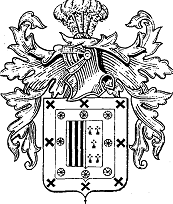 |
|
|
Almanza/Almansa My mother, Eva Almanza, was born in Pinal County, Arizona on Nov. 8, 1930. My father, Rodolfo Loya, was born in El Paso County, Texas Oct. 10, 1919, My father passed down to me the oral tradition that all the Loya of Texas and Chihuahua are the descendants of three brothers and their families who migrated from Spain in the undetermined past. Although they actually started off in France, they came through Spain so that this tradition concurs with the historical and trace evidence. |
| Despite the "Al" prefix in my mother’s
surname, and the consequent assumption that it is a Spanish Mozarabic
surname, Garcia-Carraffa’s exhaustive "Enciclopedia Heraldica y
Genealogica" (Heraldic and Genealogical Encyclopedia) concludes
of the surname Almanza "Es imposible elucidar su origen etnico y
etimologico" , It is impossible to elucidate its ethnic and
etymological origin, and it does not ascribe any meaning to it. The reason
it says this is because the surname Almanza comes from the hamlet of
Almanza which is located in the province of Leon in Northern Spain, well
above the Duero River and the Cantabric Mountains, beyond Muslim
influence, since the Arabs who invaded Spain never penetrated beyond that
point. On the other hand, Italian clans migrated to Leon during the 11th
and 12th centuries, mostly from Tuscany, specifically welcomed
by the Alphonsine Kings, who appear in the genealogy of Almanza, and
specifically avoiding the Muslim occupied land. The surname Almanza,
therefore, is more than likely a simple modification of the Italian
surname Amanza, also spelled Amantia, and its variant Lamanza, also
spelled Lamantia, meaning "beloved woman", itself an aphoretic
variant of the Italian Manza, meaning "cow". Both surnames are
from Tuscany, the same Italian province from where the Italian clans
emigrated to Leon. The Castle of Almanza is located in Southern Spain,
with a foundation that dates to Roman days, its architecture is clearly
Christian rather than Muslim, much like a "Disney" castle. For
these reasons the Castle of Almanza was probably a Christian enclave in
the South named after Italian Spaniards from the northern hamlet who
penetrated Muslim territory. The surname "Almanzar" is Spanish
Mozarabic, meaning "looking place". Because of the reasons just
mentioned Almanza and Almanzar are not variants of the same name. Also
present in what would be the United States since colonial days, the oral
tradition in my mother’s family says her family founded some towns in
Southeast Colorado during the Spanish colonial period.
By Alex Loya |
| Mas del apellido del libro: Blasones
y Apellidos por Fernando Muñoz Altea
Almansa o Almanza, es un mismo apellido y tiene su'' origen de un Caballero de la casa de Valderrábano, Señor de la villa de Almansa, en la provincia de León, asegurando los más veraces historiadores que este linaje está emparentadol con los soberanos de aquel Reino. Más tarde, pasaron a otrosj lugares de la Peninsula Ibérica, fundando nuevos solares en Castilla la Vieja, Andalucía y Valencia. Don Diego de Soto y Aguilar, en su segundo tomo de "Casas solariegas", menciona a don Juan de Almansa, famoso justador, de quien se dijo: "Lanza por lanza, la de Juan de Almansa". Las armas de este apellido se organizan así: ESCUDO PARTIDO: 1o. EN PLATA, TRES BASTONES DE SABLE; 2o, EN EL MISMO CAMPO, CINCO ARMINGS DE SABLE, PUESTOS EN SOTUER. BORDURA DE GULES CON OCHO ASPAS DE ORO, Y UNA SEGUNDA BORDURA DE PLATA CON OCHO RUEDAS DE SABLE (Por Valderrabano). Por emparentar con los Enríquez, este blasón fue modificado posteriormente. El Emperador Carlos V, por su Real Cedula expedida en Monzón el 5 de diciembre de 1533, creó Marqués de Alcañices a don Francisco Enriquez de Almansa, hijo de don Juan Enriquez y de dona Constanza de Almansa, nieto matemo del famoso Caballero don Diego de Almansa, Señor del estado de Alcañices, y tataranieto de don Gómez Pérez de Valderrábano, agraciado con dicho Señorio por don Juan II de Castilla el 8 de septiembre de 1409, poseedor también de los de Távera, Mombuey y Ayóo. Don Alvaro Enríquez de Almansa Vega y Borja, VII Marqués de Alcañices. Comendador de dos Barrios en la Orden de Santiago, Gobemador de las galeras de Nápoles, General de la Caballeria de aquel Reino, Montero y Cazador Mayor de Felipe IV, obtuvo de este monarca la Grandeza de Espa ña de primera clase el 10 de mayo de 1640. En 1544, don Felipe III de Portugal, otorgo la dignidad de Conde de Villaflor, a don Luis Enriquez de Almansa y Borja, Mayordomo Mayor del Rey, Caballero de la Orden de Calatrava y Comendador de Cabeza del Buey, Badajoz, en ella, hijo del II Marques de Alcañices. El Rey Felipe III de España, concedio el 9 de septiembre de 1614, el Marquesado de Valderrábano a don Francisco Enríquez de Almansa, Manrique de Ulloa y Pimentel, Conde y consorte de Nieva, Mayordomo del Rey y de doña Margarita de Austria, Gentilhombre de Boca que habia sido de Felipe II, Comendador de Piedrabuena en la Orden de Alcántara y nieto de los primeros Marqueses de Alcañices. Don Carlos III, agració a don Miguel de Almansa y Uriarte, Franco, Solis y Pérez Jaramillo, con el Vizcondado del Castillo de Almansa, en 24 de julio de 1773, por haber donado a la Corona el Castillo de San Felipe de Almeria, del que era Alcaide perpetuo. Don Martin Enríquez de Almansa, de la casa citada, ocupó el cargo de Virrey de la Nueva España de 1568 a 1580. La nobleza de sangre de los Almansa, fue probada en repetidas ocasiones ante las Ordenes Militares de Santiago, Calatrava y Alcántara, y en las Salas de Hijosdalgo de las Reales Chancillerias de Valladolid y Granada, asi como ante el Ayuntamiento de la ciudad de Sevilla donde se les devolvió el impuesto de la "Blanca de la Came", como reconocimiento a , su ilustre calidad. El año 1600, figura en la insaculación de la "Conselleria del Sanch Menor", don Jaime de Almansa, juntamente con otros nobles de la ciudad de Alicante. Ante el Santo Oficio de Mexico, justificó su "limpieza de sangre", don Alonso de Almanza Falcón, vecino y Regidor de la Villa de Celaya, en 1628, originario de Cazalla, en "villa Sevilla. Don José Mariano Almanza, nacido en Mexico en la
segunda mitad del siglo XVIII, fue Consejero de Hacienda y de la Regencia
en lo que duró el cautiverio de Femando VII, asi como Consejero de
Estado por la America Septentrional; fundador del Consulado en el Puerto
de Veracruz, es considerado como uno de los primeros periodistas mexicanos.
Antes, también desempeño los cargos de Alferez Real y Regidor de
Veracruz, en 1805. |
| En Mexico: Lic.Fernando Muñoz Altea Apartado Postal 44-202 C.P. 03101 Mexico, D.F. Fax: (015) 5534-1096 fmaltea@yahoo.com |
Resto del mundo: Armando Montes POB 11232 El Paso, TX 79995 Fax: (915) 585-1873 blasones@mail.com |
| Micheal Lozano Embarks on a Journey of Self-Discovery Grandmother Felipa Lozano Villareal: The Lozano Family ties El Paso Writer to Participate in James Olmos Latino Book Festival Texas Cameo Memories, Mario Garcia, Alfred A. Aburto Jr. Cinco de Mayo Memories by Frank Sifuentes |
|
| |
Mike Lozano has a 30 year record of directing community service organizations. He began his career working as an Executive with the Boy Scouts of America in 1976 before taking the position of Recreation Director in his hometown of Hammond, Indiana. Lozano has been Executive Director of YMCA’s, Boys and Girls Clubs, Boys’ and Girls’ Camps, and Crossroads for Kids. Lozano is a graduate of Indiana University. He is a recognized historian specializing in American History. He has two children Michael and Leigh and lives in Plympton, Massachusetts with his wife Kathy. Mike can be contacted at beaglelozano@hotmail.com . | |
|
Micheal Lozano Embarks on a Journey of Self-Discovery
|
| I was inspired by the
anniversary of the American explorers Lewis and Clark. In 1804 Captains
William Clark and Meriwether Lewis set off from the St. Louis area on a
journey called the Corps of Discovery. Its goal was to explore the
uncharted territory west of the Mississippi river that would become the
United States. Americans have always been enticed by the West and drawn to
exploring the other side of the mountain, where they could find new
valleys covered with greener grass. So I decided to embark on my own
expedition of discovery. My goal was to explore all 50 states, and in the
journey, discover my ancestors to find out what part they played in
settling the new world. I hoped to draw on the lessons learned by these,
and other, great explorers in our Nation’s history. I wanted to find out
what could help me in my quest to find meaning and purpose in my life.
Little did I know what great and exciting moments would be awaiting me.
Lewis and Clark planned to go across the American West bound for the
Pacific Ocean. They set off on their journey in the spring of 1804. Two
hundred years later, in the spring of 2004, I was now following my own
expedition.
The original Corps of Discovery was made up of 44 explorers who traveled by keel boat and pirogue along the course of the Missouri river. A keel boat was about 45 feet long with a cabin, a sail and a flat bottom. A pirogue was an open, long, rowboat-type craft. I would be traveling on interstate highways in my pickup truck with a bed cap. In the early 1800s land ownership of the North American continent was being disputed by Spain, Great Britain, France, Russia and the United States. When the United States acquired the vast Louisiana territory in 1803 from France, President Thomas Jefferson decided to explore and improve the new lands. The President wanted the Lewis and Clark expedition to find the source of the Missouri River, and possibly, a water route to the Pacific Ocean. One interesting participant in the expedition was a Newfoundland dog named Seaman. His value to the explorers is well documented in many historical accounts of the journey. I would have my dog Dudley go with me. In fact, Dudley would be my only companion. My journey would be much more extensive than the original expedition. My journey would take me to all 50 states. I planned to travel from Boston to Monterrey, Mexico. I then would travel through the Southwest before heading back to New England and then to Canada and back through the Midwest to pick up the Lewis and Clark trail through the western states and on to Oregon and the Pacific Ocean. I finally would head back across the entire United States and back to Boston and the Atlantic Ocean. My expedition would be a total of 23,000 miles compared with the original Lewis and Clark total of 8,000 miles. Every explorer is prepared for their challenges by their upbringing, that is, personal values, education, leadership skills and vocational abilities. As I prepared to take on my expedition of discovery, it was important for me to take stock of the personal traits that would contribute to the successful completion of my upcoming challenge. In the spring of 2004, I felt uninspired by my career. I had been working in non-profit youth organizations for 30 years. Often, petty politics, shady fundraising and personal agendas detracted from the real mission of these organizations—and this frustrated me. I felt myself falling into a deep mistrust of organization authorities. Knowing that I was tearing myself down from the inside out, I decided to jump off this career track. I resigned my job as executive director of a recognized youth organization to find a new cause that I could believe in. I had grown up in the 60’s and 70’s. It was a time of mistrust in our government. The Kennedy’s and Martin Luther King had been assassinated. Everyday, the disastrous Vietnam War was in the news. The Vice-President and President had resigned. Students were protesting everything from Vietnam to the exploitation of migrant farm workers. There were race riots on the streets of America’s cities. Corporate America was pumping away with little regard for our environment. As a young man, I desperately searched for an anchor in this sea of chaos and lies. Now, as an adult, I was coping with my own questions of personal direction. I was wrestling with disillusionment in my work life and the direction our country was taking. The war on terror now included pre-emptive wars. We were now in a war based on fabricated lies. Politicians constantly tried to pit one group against the other - abortion against pro-life, creative design against evolutionists, Christian right against left wing liberals, blacks against whites, everybody here legally against illegal aliens. I needed to find myself. I needed to lift myself out of the confusion and chaos of my personal life. I needed to embark on a journey of discovery to find a path that would renew and inspire me.
|
|
Grandmother Felipa Lozano Villareal: The Lozano Family ties Oscar Cisneros Jr. from Phoenix, Arizona has begun research on Felipa Lozano Villareal. Using photos, he has gathered much useful research information, dates, ages, Texas locations, relationships, etc. To contact Oscar, email: oscaroke@cox.net | |
|
Felipa Lozano Villareal |
December 25, 1967 |
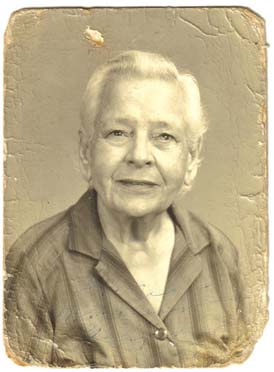
|
|
|
|
|
 |
Above is the text behind to the photo on the left. World War II Marine, Alfonso Lozano. Lucita, mother of Fidela stands in the foreground. Included is information about the death of Lucita's first husband who was killed in World War I, as well mention of an uncle whose body was also sent back to the states for burial. Grandmother Lucita died at the age of 86. |
|
My Grandmother Felipa Lozano Villareal said that her Mother
Luisita would hit her upturned left hand and hit her left wrist with her right hand (kinda like a Karate chop) and say "Yo soy Cherokee" When she was asked why she would say that she would always reply, "because my Mother couldn't run fast enough" of course this was said in Spanish. My Grandmother Felipa was fair skinned while my Tio Geronimo had dark complexion, his Brother Zaragosa was Moreno and Tio Luis was fair skinned. My Tia Locha (Eloisa) also had a dark complexion. | |
| Tio Jerry (Geronimo)
was what everyone called him was known throughout the city of Harlingen and San Benito, Tio Zaragosa was called Tio Joe.
Tio Luis passed on first , then Granny Felipa, Tia Locha & then Tio Jerry at 95, My Tio Joe was the last of the Lozanos to pass he was well into his 90's. He never had any Children with his first wife
"Nacha" and she would blame him that it was his fault, after she died he re-married and had a daughter who is now in her early or mid-twenties. Tio Joe's wife and Daughter live in Harlingen , Texas |
|
El Paso Writer to Participate in Edward James Olmos Latino Book Festival Margarita Velez, El Paso author will participate in the 4th Annual Edwrd James Olmos Latino Book and Family Festival to be held on the Central Campus of Houston Community College in Houston, TX on Saturday and Sunday, May 6th & May 7th from noon to 6 PM. Margarita Velez and other Chicken Soup for the Latino Soul contributors will perform readings and participate in a panel discussion on "What Latinos Need to Know to Get Published." Joining her will be Marilu Delgado Travis of Houston, Esther Bonilla Read of Corpus Christi, Maria Luisa Salcines and Olga Valle Herr of McAllen and Rogelio Gomez of Lake Hills. Velez' story "Prayers, Potatoes and a Twister" appears in Chicken Soup for the Latino Soul book which was released in August 2005. Latino Soul is the first book in the popular Chicken Soup series to showcase Latino/a talent, as well as highlight the Latino Culture and experience. Latino Soul co-authored by Jack Canfield, Mark Victor Hansen and Susan Sanchez-Casal is an anthology of inspirational stories and poems written in English and appeals to both Hispanic and non Hispanic readers. "I look forward to the Edward James Olmos Latino Book and Family Festival and want to share my experience with aspiring Latino writers," Velez said. Event organizer, Tony Diaz, a talented author in his own right is the weekly radio host of "Nuestra Palabra: Latino/a Writers having Their Say." Margarita was one of four Texas writers interviewed on the program. For information on the Edward James Olmos Latino Book and Family Festival, visit: www.nuestrapalabra.org. Margarita Velez 915/637-5796 mbvelez@elp.rr.com |
| Texas
Cameo Memories Mario Garcia sancudobaboso@hotmail.com
|
|
CINCO DE MAYO LORE FROM EAST AUSTIN, TEXAS 1939-50
Part 1 of a 3 part story. |
|
May
27: SHHAR Quarterly Meeting: 20th
anniversary, 3 special speakers
The Staples NLBWA-OC Latina Center's Ribbon Cutting |
|
|
|
|
|
|
Cris Metz, a Getty Scholar will be speaking on the foods and their
preparation in the kitchen of the early southwest. Rancho Los Cerritos in
Long Beach was the site of focus. Her presentation will be a sharing
of her the findings at and will include extensive collection of
photographs. Doug Westfall author/publisher has written and/or published many history books. Ranchos of Orange County, published in 2003 was written by the well known genealogist/historian Virginia L. Carpenter. For a catalog of Special books, go to www.SpecialBooks.com Barry Starr and Dr. Robin Collins are expanding their Heritage Museum Center, located in Madrea, California. Their sharing will emphasize the important role that the Spanish horses played in the development of the Southwest, with a special focus on California's history. www.HeritageDiscoveryCenter.com
| |
|
" THE SPANISH CRUCE HORSE AKA SBBA Registry: "Wilbur-Cruce" | |
|
|
In 1990 a herd of seventy-seven wild horses was
discovered on a privately owned ranch in Arizona and subsequently donated
to the American Minor Breeds Conservancy. Their blood-line was found to be
genetically pure and directly related to their Spanish Colonial ancestors
brought from Spain in the late 1600’s by a Jesuit priest and missionary.
The following is an historical overview of this unique
breed; its ancestry, uses, qualities, relationships to man and their
importance in our cultural heritage. Source of Photo: www.horseweb.com |
|
The Cruce horses are one of a very small handful (five would be very optimistic estimate) of strains of horses derived from Spanish colonial days that persist as purely (or as nearly as can be determined) Spanish to the present day. Most other strains have long been absorbed into the Quarter Horse breed (with draft and Thoroughbred influence) or have undergone extinction. They are the only known "rancher" strain of pure Spanish horses that persist in the southwest. The Cruce horses are of great interest because they are a nonferal strain. The only other strains of Spanish horses that persist to this day are the feral strains in certain isolated areas (Kiger and Cerbat BLM herds currently, although examples of pure horses of other populations now extinct or contaminated are present in owned, managed herds), and the Choctaw Cherokee strains, which originated in the Southwest. To this very short list can be added the Belsky and Romero/McKinely strains, but neither of these can claim the historic isolation that the Cruce horses have had, and both are of somewhat doubtful purity as to Spanish ancestry. The Cruce horses, as a nonferal strain, are therefore ultimately truly unique. Visual examination of the Cruce herd also conclusively substantiates that the herd’s history is very likely accurate. The horses are remarkably uniform, and of a very pronounced Spanish phenotype. In some instances this is an extremely Spanish typed, such as is rare in other Spanish strains persisting in North America. This type is illustrated in paintings of Spanish horses during the colonial period, and it was a pleasant though great surprise to see it persisting to this day. The horses varied over a very narrow range from this extreme type to a more moderate type that is more common in other North American strains and Iberian strains today. The need to conserve this herd is great, since they do represent an extremely unique genetic resource. The Food and Agriculture Organization of the United Nations has become interested in rare breed conservation over the last fifteen years, and their interest in horses is limited to those breeds that are uninfluenced by the Arabian and the Thoroughbred. The reason they have limited their interest and energy to horses without such influence in the incredible scarcity of such populations worldwide. The Cruce horses fit in this category very securely, and are therefore of great interest and importance not only in North American, but also in the worldwide efforts to conserve genetically unique populations of livestock. The American Minor Breed Conversancy is very interested in this population. It must be emphasized that this interest if very great in the case of the Cruce horses, and very limited with regard to most other horse types. For example, the AMBC has no interest in the conservation of western feral populations except for the few (two) of purely Spanish phenotype. The Cruce population is a most significant discovery of a type of horse thought to be gone forever.'' Please call Robin Collins at 559-868-8681, or visit our web site under the Equine section at www.heritagediscoverycenter.com Or send your tax-deductible donation to: The Heritage Discovery Center 40222 Millstream Lane, Madera, CA 93638
| |
 |
SHHAR/SomosPrimos Speaker's Bureau |
|
In addition to How-To Start Family History Research, Board members will also speaks on:
Viola Sadler
Mimi Lozano
|
|
|
NATIONAL LATINA BUSINESS WOMEN ASSOCIATION |
|
|
|
|
|
|
|
| Special guests included Santa Ana Councilman Jose Solorio, Santa Ana Councilwomen Claudia Alvarez, as well as Kelley Jimenez, District Representative for Assemblywoman Lynn Daucher. Attendees benefited greatly from the ceremony by networking with other members and also by experiencing first-hand the services that "The Staples NLBWA-OC Latina Center" will offer to the community. Attendees also enjoyed delicious appetizers, prepared by Country Garden Caterers, and cocktails, donated by Straub Distributing, while touring the new facilities. |
|
|
|
|
Thanks to the strength and persistence of the NLBWA-OC board members and our loyal members, we have reached another important milestone! "The Staples NLBWA-OC Latina Center" will become a critical resource for our members and the community. "The Staples NLBWA-OC Latina Center" will allow the NLBWA-OC to further advance our mission to empower Latinas in the competitive world of entrepreneurship by providing a place to gain valuable knowledge and tools to cultivate a successful business. |
. |
|
|
|
Members and guests networking with each other, enjoying cocktails donated by Straub Distributing. |
|
 |
|
|
Many distinguished guests in attendance including: Anaheim Chamber of Commerce Chairman, Mike Adams, LA chapter membership chair Vicki Intriago, ABAOC board member Sarah Gunther; NLBWA-OC's legal counsel Francisca Gonzalez-Baxa, and NLBWA-OC marketing Chair Tanya Zabalegui. To learn more about the organization, its programs and upcoming events, please visit our website at www.nlbwa-oc.com, or call the office at 714.724.7782. |
|
The play is based on collected research and oral histories of Mexican Americans of Orange County. Read by the Cast of The Mexican
OC. Collaboratively Written by: Cristina Nava, Apolonio Morales, Elizabeth
Sekeresh, Heather Enriquez, and Sara Guerrero, who is the project
director. Ricardo Valverde RValverde@ochca.com |
Ruben Alvarez with Stayconnected reviews
the play The "Mexican" OC . RUN, don't walk to see this play! I went to the reading last weekend and really enjoyed it and so will you. Breath of Fire Theater Company presents the premier of The “Mexican” OC an original play in two acts, Begriming April 28, at Santa Ana’s El Centro Cultural de Mexico at 8:00 p.m. The “Mexican” OC is a funny and poignant collection of stories based on oral histories and archival research that seek to entertain, educate and eliminate the stereotypes of Orange County’s Mexican community. Pocha real estate agent, Debi Murillo and Chicana crossing guard, Yolanda Gomez guide you through everything from Orange County’s first felon, to segregation, to La Habra’s first Latina Mayor, and much more. The performances free of charge. Donations welcomed, reservations are really necessary. El Centro Cultural de Mexico is located at 310 W. 5th Street, Santa Ana, CA 92701. For information (714) 785-0764 e-mail: BreathOfFireTheater@yahoo.com Remaining MAY SHOWTIMES: Thursday, May 4th @ 8pm Friday, May 5th @ 8pm Saturday, May 6th @ 8pm [[ Editor: I was very moved. Well done script and performers. Highly recommend attending.]] |
*The project is a under the CALIFORNIA STORY FUND, one of the components of California Stories, the California Council for the Humanities' statewide initiative that seeks to strengthen  California communities through story-based public humanities projects. Through $5,000 matching grants awarded quarterly through a competitive process, the California Story Fund supports public humanities programs that will bring to light compelling stories from California's diverse communities and provide opportunities for collection reflection and discussion.
Following the reading, the audience is encouraged to ask questions. Information on the project also is available at
www.themexicanoc.org
California communities through story-based public humanities projects. Through $5,000 matching grants awarded quarterly through a competitive process, the California Story Fund supports public humanities programs that will bring to light compelling stories from California's diverse communities and provide opportunities for collection reflection and discussion.
Following the reading, the audience is encouraged to ask questions. Information on the project also is available at
www.themexicanoc.org
| |
|
LULAC Orange County
District #1
held its 56th Annual District Convention | |
|
Zeke Hernandez, President of the Santa Ana Council. receives a special award from Cris Villaseñor, LULAC Orange County District 1 Director. The Santa Ana Council #147 was formed in 1946, the first in the county. The award was In appreciation for Zeke's six years of information sent via his LULAC 147Infornet, Apples and Oranges con Pico de Gallo. |
Editor: As a member of Westminster Council, #3017, I attended as a delegate. It was my first experience, and I thoroughly enjoyed the day. It was an inspiration to hear of the life time dedication of many in attendance, who had given many, many years in trying to improve the community life of Hispanics. Alex Maldonado brought in an original copy of a 1955 newspaper, published by LULAC Orange County District 1. Laminated for protection, it is displayed behind him in the photo. Alex's name was among those who put the issue together. I was quite impressed. |
| ||
|
|
The keynote speaker, was
Orange County Supervisor, Lou Correa. He brought a Board of
Supervisor proclamation of appreciation to LULAC Orange County
District #1's for its history of contributions to the community.
Supervisor Correa pointed out that the Board consists of 4 Republicans and
himself, a Democrat. Also, that although Orange County became a county March 11, 1889, Correa was the first Hispanic, elected by the citizens (not appointed) to the Board of Supervisors. | ||
|
| |||
| Awards were given in
recognition of outstanding service to the community. From left to
right: Adriana Bermudez, Susie Flores, Nellie Diaz, Benny Diaz, Sandra Bermudez, and Gil Flores. | |||
|
|
|
|
|
|
Whereas,
the story of the Hispanic contribution to the formation and development
of the United States has not be told . Therefore be it resolved, that LULAC support and promote H.R. 2134 for the establishment of a National Museum of the American Latino community. Submitted
by Mimi Lozano to the Westminster LULAC Council #3017, with the approval
of: |
| Human Relations Events From: iliana@ochumanrelations.org May 6th - Soka University's 5th Annual International Festival - 10:30 a.m. to 5:30 p.m. in Aliso Viejo, For more information go to www.soka.edu May 11th - Sikh Open House at the Buena Park Gurudwara, California Sikh Council, 7:00 p.m. |
| Saturday
April 29th, Reception for the opening of an exhibit of the works of noted Chicano Artist, Malaquias Montoya, founder of the Chicano art movement Mr. and Mrs. Malaquias and Lezlie Montoya will be honored at the Delhi Center in Santa Ana 505 E.Central Ave. Santa Ana, CA 92707 Please RSVP on-line or e-mail Roy.Kim@uci.edu 5:00 PM - Art Exhibition, 6:00 PM - Reception, 7:00 PM - Presentation by Mr. Montoya 25 pieces of artwork are available for viewing: from April 12 through May 12, 2006 Monday -Thursday 9:00 am to 5:00 pm, Friday 9:00 am - 7:00 pm Saturdays - 9:00 am to 12 noon and Sunday 8:30 am - 12:00 Noon |
| Book:
Viva Baseball!! Exhibit: April 23
to June 9th Mexican-American Baseball in LA From the Barrios to the Big Leagues May 15: El Pueblo de Los Angeles Historical Summer Internship May 16: Legends of the Land, Provocative People in Poetic Places May 22: Inmigración y las nuevas propuestas de ley. June 3: Talamantes- Farias Family Reunion July 22: Nueva Galicia Genealogical Society to meet in Los Angeles Seek city, national recognition for 1840s Whittier home historically unique Latin Death Rate in Viet War Cited |
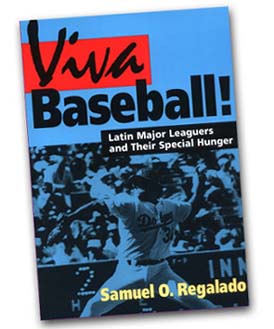 Viva Baseball author brought 'Fernando and Beyond' to Cal State L.A. Sent by Ricardo Valverde RValverde@ochca.com LOS ANGELES - A free public lecture by Samuel Regalado, author of Viva Baseball was given at California State University, Los Angeles on April 23rd. The talk to coincide with "Mexican- American Baseball in Los Angeles: From the Barrios to the Big Leagues," an exhibit on display at Cal State L.A.'s John F. Kennedy Memorial Library through June 9. During the 1950s and '60s in the Mexican-American communities, baseball was, among other things, a way of connecting to American society, said
Regalado. "Baseball was the common American language everyone understood," he said. Working for California since 1947: The 175-acre hilltop campus of California State University, Los Angeles is at the heart of a major metropolitan city, just five miles from Los Angeles' civic and cultural center. More than 20,000 students and 185,000 alumni-with a wide variety of interests, ages and backgrounds--reflect the city's dynamic mix of populations. Six colleges offer nationally recognized science, arts, business, criminal justice, engineering, nursing, education and humanities programs, among others, led by an award-winning faculty.
www.calstatela.edu. |
|
El Pueblo de Los
Angeles Historical Monument Duration: June 19 to August 25,2006 Hours Per Week: 40
hours (8 hours each day) Interns will receive training in the
conservation, care, and accessioning of artifacts and archival materials
and collections management. Interns also will participate in ongoing
community-oriented projects and activities, such as the Oral History
Project and historical research. The Getty Grant Program will host the
interns at four events which will be held at various cultural sites during
the grant period. | |
| More information, Call: (213) 485-8437 William Estrada, Curator (213)485-8238 bill.estrada@lacity.org The El Pueblo Park Association and El Pueblo de Los Angeles Historical Monument are currently seeking two qualified undergraduate students for a Multicultural Summer Internship funded by the Getty Grant Program. El Pueblo Monument is the birthplace of Los Angeles and home to world famous Olvera Street.
|
More information, Call: (213) 485-8432 Marianna Gatto, Curator (213)485-8238 mariann.gatto@lacity.org The Historic Italian Hall Foundation is currently seeking one qualified undergraduate student for a Multicultural Summer Internship funded by the Getty Grant Program. The Foundation is dedicated to the restoration of the Historic Italian Hall located at El Pueblo de Los Angeles Historical Monument for its adaptive reuse as the first Italian American Museum in Los Angeles. |
| May
16: Legends of the Land, Provocative People in Poetic Places Free Chautauqua series, open to the public, free parking Sent by Bob Smith Regriffith6828@aol.com Men and woman settled the Santa Monica Mountains through Spanish grazing concessions, Mexican land grants, and homesteads. They shaped the region we enjoy today. Using primary source materials, newspaper archives, maps, and photos, Ruth Kilday traces individual efforts to own and maintain land. Meet Ysabel Maria Yorba who owned 30,000 acres of wild and inaccessible land while she fought, until her death, the Mexican government, the Catholic Church, the U.S. Land Commission, surveyors, and a number of deceitful American lawyers to hold her property at Rancho Guadalasca, now Point Mugu State Park and the new Cal State Channel Island University. Hear the media's reporting of a "crazy man," "a lunatic" who raised bees for honey, secluded himself in a woodland cabin, and armed himself against trespassers, both man and beast. His land is now a wildlife corridor. Meet the stylish post office auditor, a single woman homesteader whose court testimony helped open west Mulholland Highway and Roosevelt Highway (now Pacific Coast Highway). Her land stands in the shadow of Boney Ridge and is a national natural reserve. Ruth Kilday's professional experience focuses on land conservation in California. She has worked for the National Park Service, the Santa Monica Mountains Conservancy, and the Mountains Recreation and Conservation Authority. She was executive director of the Mountains Conservancy Foundation (MCF); she serves on the boards of the MCF and the Malibu Lagoon Museum. Ms. Kilday heads up Taylor Kilday & Associates, a public relations company. The lecture will be held at Temescal Gateway Park, Pacific Palisades on Tuesday, May 16th, 7:30 p.m. Information: 310-454-1395, ext. 106, or visit http://www.lamountains.com Location: 15601 Sunset Boulevard, Pacific Palisades 90272 Directions: Take the Santa Monica Freeway (10) to Pacific Coast Highway continue west on PCH to Pacific Palisades. Turn right (north) on Temescal Canyon Road and continue for a mile, crossing Sunset Boulevard and entering the park. The Temescal lecture hall is the rear wing of the main building, Ruth Kilday, Taylor Kilday & Associates 40 Mockingbird Court, Oak Park, CA 91377 818-991-1546 |
|
Inmigración y las nuevas propuestas de ley. Una plática en español sobre el impacto de las nuevas propuestas de ley de inmigración en la comunidad Latina. Por Gloria Curiel el lunes, 22 de mayo, A las 7p.m. Biblioteca Fairview, 2101 Ocean Park Blvd. Santa Monica 310-450-0443 Sent by Sylvia Anderle Sylvia.Anderle@SMGOV.NET |
June 3, 2006 Early California Settlers of Rancho La Ballona to have a 2nd Annual Talamantes- Farias Family Reunion on We will meet in remembrance of our Ancestors, who were Land-grant owners with the Machados. The Rancho La Ballona bordered, Los Angeles, Cheviot Hills, Inglewood, Santa Monica and Westwood. Cities included in the Rancho were, West Los Angeles, Culver City, Palms, Playa del Rey, and Venice. Luis Felipe Talamantes Family, who were half owners of the La Ballona Rancho, received their share finally in 1839 but had been using the land long before that with permission. Some of Felipe's offspring still live on Rancho land and are gathering for a Picnic. We are proud of our Heritage and want to share that, by coming together as a family to show our appreciation to these Ancestors. I often wonder what they would think, if they saw what has happened to this area since then? They worked hard to establish the City of Los Angeles and surrounding cities. Felipe Talamantes was in Los Angeles in 1783, he later brought his wife Ilfonzo Avila and lived in the Pueblo there, running his cattle on the La Ballona land that was later given to him. Picnic, 11 am to 4 pm at the Chevron Park in el Segundo. Bring your own
picnic lunch and a desert to share. No beer and wine is allowed, nor class
objects. Please sign in at the registration table when you first
arrive. For more information, contact Eva Booher. 310-451-3216 |
|
Nueva Galicia Genealogical Society Dear Mimi, We are a group of genealogists who live in the Sacramento and Bay Area. The members of this group are researching ancestry in the States of Jalisco, Zacatecas, and Aguascalientes. We meet quarterly and hold workshop type meetings. We usually meet in the Sacramento area, but also plan to meet in the Bay Area or Central California. Our next meeting is scheduled for July 29th at 11:00 am at the Raley's Event Center, 2400 Sand Creek Road, Brentwood, CA. Anyone interested in joining our group should contact me (Maria Cortez) at nena001@surewest.net as soon as possible. Space is limited for this next meeting due to the size of the room. (916) 743-0479 |
| Seek city, national recognition for
1840s Whittier home historically unique By Debbie Pfeiffer Trunnell Staff Writer Sent by Eva Booher on April 8. EVABOOHER@aol.com WHITTIER - When Tim Miguel was a boy growing up in Whittier, the white clapboard cottage with the wide porch on Pasadena Street was simply his grandma's house. But after researching his family tree, he has come to believe it is one of the oldest houses in the Whittier area, built in the 1840s in unincorporated Los Nietos by his great-great-great uncle Bernardino Guirado. In 1905, Guirado's nephew, Reginaldo Poyorena - Miguel's great-grandfather - moved the house to Whittier and moved into it with his wife Nora, Miguel said. Now he just needs to convince everyone else. Miguel is seeking to have the home at 12502 Pasadena St. placed on the Local Official Register of Historic Resources. So far, however, he hasn't received much support from the Whittier Historical Society or City Hall, he said. "All I keep hearing is they need proof. But my feeling is they don't want to detract from the Bailey House," he said. "Heck, my family was here watching the Baileys arrive in their wagons." The Bailey House on Camilla Street was built by Jacob Gerkens in 1868-1869 and was lived in by Whittier's first Quaker settlers, Jonathan and Rebecca Bailey, between 1887 and 1894, according to the Whittier Historical Society. It is the oldest recorded building in the city, according to the society. City and Whittier Historical Society officials said acknowledging Miguel's claim of an even older structure has nothing to do with the Bailey House. Officials said they have simply asked Miguel to prove the home is of historical significance. "Right now, I don't have anything that tells me that the house is what he tells me it is, other than his genealogy," said Don Dooley, the city's planning services manager. The process of proving historical authenticity involves an architectural historian certify that a building is of 1840s vintage and retains its original wood, windows and other features, Dooley said. Miquel's grandmother's house has not been designated by the city's Historical Resources Commission as eligible for designation as a historical site on the register, she added. There is currently 32 historic residences in Whittier on the local register. Myra Hilliard, executive director of the Museum, which is operated by the Historical Society, said, officials there have also been approached by Miquel, but it is up to the city to decide if a home is historical, she added. "We have an archival room where you can make appointments to do the research, but we don't have the power to declare something historical," she said. Miguel, a makeup artist who divides his time between Whittier and Glendale, said he is considering asking officials from the state's Office of Historic Preservation to examine the house. "I feel this has been ignored for too many years and it is important to set history straight," he said. Miguel said his research into his family tree shows that his great-great-great uncle Guirado built the house in the 1840s to live in while he worked at the Pioneer Store, a general store in Los Nietos. The Pioneer Store became a convenient stop-in place for supplies for people traveling north along a path that ran from the Pacific Ocean to Workman Mill in Whittier.When his wife died, he moved to another home and the house sat vacant until Guirado sold it to his nephew Reginaldo Poyorena and his wife Nora for $200. The couple then moved the home to Whittier in 1905 because they wanted it in a nicer location than behind a store, said Miguel. It has remained in the family through generations ever since, said Miguel. His great-grandmother Nora Poyorena lived in it when he was a youngster, and his mother Gloria Anita Poyorena Miguel was raised in it. Poyorena family members still live in the home and in neighboring houses on Pasadena Street. "What I know now is that this is an old house that generations of my family grew up in, and I don't want it to get passed over," said Miguel. What I know now is that is an old house that generations of my family grew up in, and I don't want it it get passed over" said Miquel. (Eva suggests, if you would like to help, contact Tim Poyorena at timmiquel@sbcglobal.net) |
| Casa de Bandini
Restoration Project. . . letters of support needed Historic Preservation of Villa d Branciforte . . letters of support needed Cypress Street School, last of 15 Segregated "Mexican Schools" May 6,7,13 :The Ramona Pageant, in its 83rd year May 12: Inland Empire Minority Business Enterprise Center Kindercaminata California Department of Education History Documents California Libraries Catalog Early California Wills Early California Population Project The Heritage Discovery Center, Madera, California Luso-American Education Foundation June 3: Talamantes- Farias Family Reunion , click for information |
I am writing now asking interested readers to write letters of support in behalf of the Casa de Bandini restoration project. You can address your letter to Susan Hildreth, State Librarian, Thank you ever so much for your interest in and support of this worthwhile endeavor. What follows is a brief history of this historic building during the Mexican and U.S. transition periods in the 19th century. The Casa de Bandini is one of the most historically significant buildings in Southern California. Currently it is listed as California Historical Landmark (#72, 1932) and as a contributor to the park on the National Register of Historic Places (1971). The Casa de Bandini is a priceless historical resource. Originally built in 1829, its history spans 175 years. It was the hub of social and political activities in Old Town San Diego during Mexican rule. It served as the headquarters of Commodore Robert F. Stockton during U.S. military occupation in 1846. After the Civil War, it became one of Southern California’s most important hotel-stage stops. Over the many years, in spite of many alterations, the grand old building retains a most distinctive architectural character. There are few historic buildings remaining in the state that rival its scale as representative of a nineteenth-century commercial building that combined Mexican adobe and American wood-framing construction techniques. And its design—a Mexican era adobe on the ground floor and a wood-frame American addition on the second—is perhaps an apt symbol of Old Town San Diego’s history during the nineteenth century. | |
| HISTORIC
PRESERVATION OF VILLA DE
BRANCIFORTE
Descendents are battling for protection of historical site in Santa Cruz as well. Lorraine Ruiz de Frain requests letters of support. Please read her heart-felt plea. Dear Mayor Cynthia Matthews, Herewith is my letter regarding The Villa de Branciforte: April 18, 2006 City Council of Santa Cruz c/o Mike Ferry - Planning Commission 809 Center Street, Room 206 Santa Cruz, CA 95060 Dear Santa Cruz City Council Members: Subject: Historic Preservation of Villa de Branciforte - Santa Cruz Please be advised that I am in opposition to the Declaration of Negative Mitigation for Case #05-135, APN 009-212-32 for the development of the property at 175 Belvedere Terrace. We implore you to require a thorough archaeological investigation of this site before excavation and building. The location is next to an important adobe in one of the three original Spanish / Mexican secular settlements in California. Native American and Spanish / Mexican artifacts have already been found on this property. My personal heritage is rooted at Villa de Branciforte during the time of Marcos Joseph Briones, Comisionado at Branciforte, and his wife, Isidora Tapia y Hernandez, and their children, c. 1811. New Spain's plan was to establish a third pueblo (after El Pueblo de San Jose, and El Pueblo de Los Angeles) to colonize Alta California. So, this plan was indeed carried out, and The Villa de Branciforte was established as the third pueblo in Alta California in the late 1700's--it really existed, and there were real people living there. What a wonderful world this would be if we honored our ancestors by preserving their unique way of life and heritage for us, the present, and for our children, the future. We, as a society, have accomplished great explorations of our solar system, the Moon, Mars, and the other planets. My recommendation is that we continue to explore new places in the Universe, but, first, and foremost, let's start with what we have and value here on Planet Earth, our home. The Villa de Branciforte is surely worthy of historical preservation in this great State of California. Let's keep our heritage alive. You can do it. This is an opportunity for Santa Cruz to make an outstanding contribution to the history of California. Sincerely, (Mrs.) Lorraine Ruiz de Frain lorrilocks@earthlink.net Descendants - Briones - Tapia - de Patron - Hernandez Quijada - Armenta - Vasquez - Ramirez - Moreno - Garcia - Ruiz - Villa - Real - Tolano - Gradillas - Romero ---------------------------------------------------------------------------------------------------- Patsy Fletcher emphasized throughout the afternoon how
very important community interest and involvement is in the preservation
of historical sites. She said, the government looks to support
-
| |
|
THE RAMONA PAGEANT,
in its 83rd year "The Ramona Pageant" is the oldest, longest-running outdoor drama in the United States and is California's official outdoor play. Sent by Dorinda Moreno dorindamoreno@comcast.net Sal Camarillo wrote:
Ramona. It's the name of more than a dozen streets in the Inland Valley. Schools, venues and a city bare her name. But Ramona is so much more than a name. She embodies the spirit of strong, passionate women of Mexican descent who lived, loved and died struggling to settle the Inland Valley. |
|
| May 12, 2006, the Inland Empire Minority Business Enterprise Center (Inland Empire-MBEC), operated by CHARO Community Development Corporation, will host its 2nd Annual Celebration of Minorities in Business exposition and awards ceremony at the Riverside Convention Center. This event will feature a business expo, educational breakout sessions followed by an awards luncheon recognizing some of the most successful minority entrepreneurs in the region. The Inland Empire-MBEC’s mission is to assist minority entrepreneurs gain access to capital, access to markets and access to innovative educational programs.The Inland Empire-MBEC is committed to providing the highest standard of service and to designing leading solutions for the economic advancement of minority businesses. To learn more about CHARO-Inland Empire-MBEC and its programs or to attend the event contact CHARO-Vice President, Lisa Rios at 951-320-7020 or visit our website at www.inlandempire-mbdc.comThe Inland Empire MBEC serves Imperial, Orange, Riverside, San Bernardino and San Diego counties. |
Kindercaminata Galal Kernahan galal@lworld.net Today, Mel and I looked in on the Santa Ana College KINDERCAMINATA. . .more than 1,000 five-year-olds. KINDERCAMINATA began in 1994 on that same campus. A few of the 1994 participants, who chanted SI, SE PUEDE! are now joining the "Dora Patrol." Dora, as I'm sure you know, is the explorer on Spanish-language kid TV. Every kindergartner knows what she says after each remarkable exploit: LO HICIMOS! So members of what I have dubbed the Dora Patrol are those that visited college twelve years ago, who said they'd be back, and now are showing up. Their motto has to be LO HICIMOS! (and there should be more each year from now on.) Lately, I have been working on encouraging awareness of the 24th California DAY OF THE TEACHER. I wrote the legislation that established it in 1982. It is the second Tuesday in May. This year: May 10, 2006. California State University, Fullerton, in collaboration with LOS AMIGOS, is sending a specail DAY OF THE TEACHER greeting to every Orange County school. The card features the California Schoolhouse where the State of California and California Public Education began in 1849-- Colton Hall in Monterey, where our Original Constitution was written, including provisions setting up the school system. GALAL |
| California Department of Education History Documents
(With all kinds of expertise in the world, there must be a niche for "Website Reviewing." Here's what an example of that specialty might look
like, sent by Galal Kernahan.)
|
|
|
Each public library in the state now has a subscription to FirstSearch, the search engine to WorldCat and the California Libraries Catalog. First Search is the tool that looks for books and other library materials (videos, audio, maps) by author, title, format, publisher, and many other search terms. You can Search the Catalogs of all California's public libraries, plus the holdings of all participating academic, government, public, special, and school libraries. http://www.calcat.org/index.html |
| The libraries of California have been sharing cataloging records, books and other library materials through interlibrary loan for many years. Using central storage and software available through OCLC, libraries have been able to copy catalog cards and share digital records. This central storage of data has become the basis of WordCat, a “union list” or database showing the holding of many libraries throughout the world. In 2005, the California State Library announced a new project that provides every California public library access to WorldCat, and gathers the data from the libraries of all California libraries into a sub-group known as the “California Libraries Catalog”. A federal grant allows every public library access to both of these databases and provides each library the ability to update their holdings with OCLC. |
|
A full description on how to search in Yahoo and Google is described on this OCLC site How the Open WorldCat program works: http://www.oclc.org/worldcat/open/how/default.htm Look at some cool ways to use WorldCat and Calcat. This file requires Word PowerPoint software to run:
|
Early California Wills One of them covers Santa Clara County. Part of these transcriptions includes some early Spanish wills (1850s). They start on page 6-22 and some of the names include Pacheco, Soto, Fernandez, Castro, Peralta, Chaboya, Alviso, Higuera, etc. http://www.sfgenealogy.com/tag/9-calwills/index.htm#volume6 All TAG pages are searchable from the California Spanish page at: http://www.sfgenealogy.com/spanish/ Sent by ron@sfgenealogy.com |
| Early California Population Project Mary Triplett Ayers M3Ayers@aol.com Steven W. Hackel, Associate Professor of history at Oregon State University spoke at the CMSA Conference on the Early California Population Project. This is a database of mission and Los Angeles Plaza Church baptisms, marriages, and burials. |
|
The Heritage Discovery Center, Madera, California The horses looked as if they had just walked out of the Past" In 1519, Hernando Cortez landed in Vera Cruz, Mexico, with ten stallions and six mares. These Spanish horses would become the foundation of the great Mission and Rancho herds of the New World. The superior quality and versatility of these Spanish horses made them sought after by Royal Stud farms throughout the world. This is the race that became the ancestor to all indigenous breeds of the Americas. In 1885, Dr Ruben Wilbur purchased 26 horses from Father Francisco Kino's historic Rancho Delores in Sonora, Mexico, to stock his homestead ranch near Arivaca, Arizona. Through three successive family generations, spanning more than 120 years, the Wilbur--Cruce Spanish horses were kept in genetic isolation on the ranch. "The Spanish Colonial Cruce horses are a most significant discovery of a type of horse thought to be gone forever" In 1990, the riparian portion of the Wilbur-Cruce ranch was sold to the Nature Conservancy. Due to the horse's genetic importance, Dr. Wilbur's granddaughter, Eva-Antonia Wilbur-Cruce, donated the direct descendants of the original herd to the American Livestock Breeds Conservancy. The Conservancy confirmed that these horses were pure and direct descendants of the original Spanish horses brought to the New World. The ALBC asked Robin Collins, then President of the California Hooved Animal Humane Society, and noted animal behaviorist and horse trainer, to administrate and oversee the preservation of the largest portion of the remaining breeding stock. Ms. Collins continues to sustain, nurture, and preserve the rare genetics of these endangered Spanish horses through the Heritage Discovery Center, a California, 501-(c)3 non-profit organization. "The life of the Spanish horse, for the past 3,000
years, has been bound up with the history of civilization" These horses link us intrinsically with a heritage we
all share. Your help is needed to continue to perpetuate this rare and
precious living legacy. With your contribution and support, you have the
opportunity to actively help preserve this integral part of America's
history.
|
|
Luso-American Education Foundation Held its XXX Annual Conference on Education and Culture of Culture, Music, Poetry, Literature, Language, History, Genealogy and Portuguese Gastronomy, March 31st and April 1 at Tulare Union High School. The conference was attended by visiting dignitaries from the Azores and mainland Portugal. For information about the activities of LAEF, please call: Dennis Borges 686-4761 or Nilza Bettencourt 686-8751. Milu Sena at LAEF 925-828-4884 Sequoia Genealogical Society, Inc. March 2006 Volume 33, Issue 1 |
| Basketball unites Seattle's Hispanic community
Genealogy Radio Show Available On-line |
| Basketball unites Seattle's Hispanic community
by Robert McClure, Liga Latina leaps into the season -- and the public spotlight Seattle Post-Intelligencer (April 3, 2006) Sent by Howard Shorr howardshorr@msn.com The Sunday talk shows crackled with arguments over a new immigration crackdown, and the morning paper carried a story on handing out more green cards. So you might think that undocumented Hispanic people gathered Sunday afternoon in Seattle would be full of speculation about their future in this country. But they were focused on something that seemed, at least for the moment, much more important: basketball. For the janitors and cooks and construction workers who kicked off another season of Seattle's Liga Latina de Basketball, it was a chance to renew friendships from the old country, check up on fellow immigrants, get tips on finding work and just hang with folks who would accept them. They lined up for tamales and sucked down the sweet, hot, corn-and-milk drink Mexicans call champurrado. They watched a ribbon cutting and dancers and, eventually, basketball. It was, in other words, all about basketball -- but also about much more than basketball. It was about community. Sunday's was the first league opener publicized by organizers. "We want to show people that we exist," said league co-founder Francisco Quiroz, 26, before the opening ceremonies. "This is actually one of the ways we want Americans and other cultures to know about us. "We're trying to do something good for the community." Quiroz and his co-founder, brother Eduardo, 28, came from a village in Mexico's state of Oaxaca so poor it had no soccer field. Instead, they played basketball, a version of which originated with the Aztecs who inhabited that land hundreds of years ago. There were three places in the Oaxacan town where people came together: the school, the church and the basketball court. So when the Quiroz brothers arrived in Seattle, they got together with friends for basketball. But something seemed ... missing. They organized their league. And then one day, they showed up at the offices of El Centro de la Raza in Beacon Hill. "These young guys want to talk to you about basketball," the receptionist told Roberto Maestas, the executive director of the social-service agency. That intrigued me," Maestas recalled Sunday. "I was busier than hell, but I said, sure, show them in." He had himself grown up dirt-poor in New Mexico -- playing lots of basketball. Maestas soon showed up at the league's playing spot at a covered -- but cracked -- open-air concrete court in an industrial strip near downtown. "It just amazed me. It was colder than hell, and it was raining," Maestas recalled. "But there was a spirit of family." Maestas, who helped the league get an indoor gym for its fall tournament, recited a quote at the opening ceremonies Sunday from his old colleague, labor organizer Cesar Chavez: "When good people get together, good things will happen." Also addressing the crowd of about 200 Sunday was Flor Alarcon, a geriatric mental-health counselor by profession who volunteers as the league's secretary. "This is the No. 1 best way for the prevention of teen pregnancy, violence, gangs, sexually transmitted diseases, the use of alcohol and drugs," she said. "The best way to prevent that is sports, and for families to be a role model for the kids." The league's slogan is, "Families united in the spirit of sports." To those who criticize undocumented workers for coming to this country, Alarcon has an answer: "Are they aware of the history of this country? The people who did the really hard labor in the past were whites -- they came in waves. And African Americans came as slaves." Likewise, she said of those in attendance Sunday: "They are here. Many are undocumented, but the majority are hard-working people. ... We need to feed our families. We need to survive." Supporters of the league said they are proud of the teams and wanted to show them off. "It's important to recognize we're here, playing by the rules and enjoying life," said Ed Davila, a South King County physician. "It's really about family." The league's 24 teams are drawn mostly from Mexican immigrants, although players also hail from El Salvador, Costa Rica, Nicaragua, Chile and Cuba. "It is a social, cultural, economic and political event -- and recreation," Maestas said. As for the basketball itself, it looks a lot like plain old American basketball, although it's played under slightly different rules that require players to display more restraint, and makes allowance for players to dribble slightly less without getting called for carrying. For some reason, it's a remarkably quiet version of the game. But it's like American basketball and football and other sports in one respect. "Everybody thinks the referees are wrong," Maestas said. |
|
Genealogy Radio Show Available On-line I have been for several months now enjoying a genealogy orientated radio show here in Utah on AM820. The show is called "Relatively Speaking" with Irene Johnson as the host. If your genealogy minded you can also enjoy this radio show live from anywhere in the world. It's simple you just need an internet connection to join Irene's faithful listeners each Sunday from 4-6pm Mountain Standard Time. Just click onto the following link: http://www.utaham820.com/, that takes you to the site home page. It's just a step away to click on the " On-Air Now - Click here to listen". That link will launch your Real One Player so you can receive the radio streaming over the internet. The real treat about this radio show is it's entertaining host Irene Johnson. If you ever watched the popular PBS genealogical series "Ancestors" you will recognize her "British/Australian" accent. Irene was employed at the Family History Library in Salt Lake City from 1986 to 2001 and participated in the making of "Ancestors". There is a nice bio on Irene on the radio's website that makes for a good read. You will become attached to her after just listening to one radio show. So if you've got a hungering to listen to some good genealogy speak tune into "Relatively Speaking". Irene has the best family history experts both locally and from across the country on her weekly shows. The best part of that is you can call into the show and ask any questions you like of the experts. You can call toll free from anywhere in the world 1-888-362-1820. So that's free family history help just a phone call away. So remember to tune in Sundays 4-6pm MST http://www.utaham820.com/ and then give Irene a call. Tell them Renee sent you! Sent by Lorraine Hernandez Lmherdz@msn.com
http://rzamor1.livejournal.com/2006/03/18/ |
|
|
Map of Sonora in 1752 Sent by John Arvizu hot_ss@yahoo.com Here is a map showing the area where the Arvizu clan settled in the 1600s after migrating from Spain. It is also the area from which the Arvizu family left when they migrated to California in the late 1700s and early 1800s. I thought you might find it interesting. |
BOOK: Arizona State Genealogical Society (ASGS) announces publication of a new book -- Arizona Genealogical and Historical Research Guide: Early Sources for Southern Arizona Including Cochise, Pima, Pinal, and Santa Cruz counties. Written, compiled, and edited by Barbara Baldwin Salyer and Jean Powell Banowit with research done by many members of ASGS. A description and ordering information are available on the society's website: http://www.rootsweb.com/~asgs/ RootsWeb Review, 5 April 2006, Vol. 9, No. 14 |
|
Center for Basque Studies Newsletter Fall 2005 Number 72 By Kathryn Etcheverria, Interim Basque Librarian The Basque Library is pleased to offer its complete version of the Basque Database, now available at a new redirected URL, http://basquedb.unr.edu. For those who book marked the location previously, please change the URL to the new one. The Basque Database provides multilingual access to Basque studies books, articles, chapters, dissertations, films and other materials written or produced after 1994. Over 2,300 articles (27%) are available in open-access full-text format through the database. Twenty-six "core journals" (fifteen with full text) are indexed completely while other journals are indexed selectively. The subject emphases are Basque history, language, and culture. Search screens and help screens are provided in English, Spanish, and Basque languages, and many of the records are enhanced with English-language keywords. Searches can be limited for precision, and search results can be marked, saved, e-mailed, and exported in various formats. The two-year database development project, funded with a grant from the National Endowment for the Humanities, continues the work of jon Bilbao (1914-1994), "The Father of Basque Bibliography." His comprehensive fifteen- volume Eusko-Bibliographia, covering publications written by or about Basques through 1980, contains a half million citations. With a team of bibliographers, Bilbao continued indexing Basque works until his death in 1994. Although his later work was not published in book form, it has been made available online through the Eusko Bibliographia database at http://bibliotecaforal.bizkaia . net:81. produced by the Biblioteca Foral, the Regional Library of Bizkaia in the Basque Country. Older records from the printed bibliographies are being added to that database. The Basque Database of the University of Nevada, Reno updates the previous works, and will continue to be updated to include current citations and full text of articles from the core journals and other materials that are not indexed elsewhere. If you are aware of publications produced since 1994 that do not appear in the Basque Database, please e-mail publication information to Donnelyn Curtis at dcurtis@unr.edu. or Kathryn Etcheverria at Kathryne@unr.edu. |
| "Tiempo de
Revoluciones" Catalog of the Protocoles Archivo Historico Municipal de Parral (1766-1821) This work is a volunteer effort by local historian Roberto Baca & the Hispanic Heritage Project. This catalog will be followed by two more volumes that will cover the colonial period of (1632-1821). All proceeds from its sale will be used to continue to provide research assistance to this project and to aid to the ongoing efforts of the archive itself. Catalog Soft-cover with 220 pages, has spiral binding Price $28.00 includes shipping. CA residents add sales tax of $1.90. Order from: Hispanic Heritage Project 1400 Oak Hill Drive #811 Escondido, CA 92027 760-420-6955 cyturralde@cox.net |
Spanish Enlistment Papers 1770-1816 Filiaciones Español by Evelyn Lujan Baca New Mexico Genealogical Society http://www.nmgs.org/filiciones.htm Sent by Johanna De Soto The information includes Mother, Date enlisted, literate, age, origin, occupation, hair, beard, brows/eyes, complexion, nose, other (scars, moles, etc.) Reel/frame Interesting details, plus genealogical clues. |
| CSUF
Administrator Honored by 100 Black Men of Orange County Colorado Genealogists, Unearth Roots of 5,000 Blacks New Hampshire African Burial Ground Stirs Emotions |
| The Orange County Register Saturday, Feb.
4, 2006 CSUF administrator Chuck Moore Honored by 100 Black Men of Orange Co  Feb 4th Chuck Moore was honored. He received an award for community service in education by the 100 Black Men of Orange County recognizing him for something that he says he just does naturally. "To get an award for doing stuff that you life doing? It is a surprise. I do it because I love doing, it," said Moore, and administrator at Cal State Fullerton. Recognizing the need for support systems for black youth, Moore in 1991 volunteered to help set up and teach at Saturday Academy programs. The classes for kids and their parents focus on black history and culture. Orange County has two academies. Now he working with a parents groups to establish programs in Riverside and San Bernardino counties. Those academies will include a strong college-prep component and train parents to run their own nonprofit organizations focused on getting kids to college, he said. "We're just trying to get black folks to teach themselves and make sure education is valued as much as we value other pursuits." |
|
More than 5,000 previously un-researched burial records of blacks who lived and died in the area in the late 1800s have been cataloged by a local genealogy group. Researchers hope the data will paint a more complete picture of the black community at the time, as well as provide clues of lineage for blacks nationwide. It took a year for a half-dozen members of the Black Genealogy Search Group of Denver to review more than 86,000 burial cards dating from 1876 and kept in file cabinets in the cemetery's administrative office in Denver. Information from index cards identifying individuals as "Colored, Negro, Black or African-American" -including name, age, residence, employment and next of kin - was converted to a single database. The group also is working with the Fail-mount Heritage Foundation to make the information available online. |
New Hampshire African Burial Ground Stirs Emotions By Beverly Wang, Associated Press Writer Sat Apr 1, 2006 http://news.yahoo.com/s/ap/20060401/ap_on_sc/apn_african_burial_ground PORTSMOUTH, N.H. - Amateur historian Valerie Cunningham was sure she knew what lay buried beneath Chestnut Street. Forty years of combing through old documents for clues about this small seaport's black history told her what physical evidence did not — that a few blocks from the trendy downtown shops, buried and all but forgotten below the brick and asphalt of Chestnut Street, lay the remains of Portsmouth's earliest black inhabitants, freed and enslaved. "You can park on it, if you've got a quarter," said Cunningham, who co-authored "Black Portsmouth: Three Centuries of African-American Heritage" with Mark Sammons. The evidence included 19th century newspaper clippings that said workmen laying pipe had "disturbed numerous remains of negroes" and a map in Charles Brewster's "Rambles about Portsmouth," published in 1859. The map showed the "Negro Burial Ground" at the foot of Chestnut Street, then Prison Lane, in 1705. Six years ago, the nonprofit Portsmouth Black Heritage Trail, of which Cunningham is president, placed a marker near the site. But the location was too imprecise to justify tearing up the street. Without burial records, the search for more information stalled. Then, on Oct. 7, 2003, contractors repairing a sewer line hit a pine coffin. Cunningham got the news at work at the University of New Hampshire. "I don't even have the words to describe it, I could not believe it," she recalls. In the following days archaeologists identified 13 sets of remains, removing eight that were damaged by sewer runoff. Some of the coffins were stacked, leading researchers to estimate that as many as 200 bodies could be buried in the block-long space. Further testing confirmed their African heritage; forensic analyses revealed they endured heavy labor and died young. "There isn't any one bit of information that says, 'OK, this is definitely a slave.' But putting it all together, it kind of gives us really strong evidence that it couldn't be anything but that," said Ellen Marlatt, a senior researcher with Independent Archaeological Consulting LLC, which excavated and studied the remains. New Englanders typically owned fewer slaves per family than in the South, and dead slaves usually were buried in unmarked graves on their owners' property. Over time, nearly all the sites disappeared. (One local exception is on land now owned by Christ Episcopal Church.) Marlatt said that is why Chestnut Street is so important. "This is the only example of an 18th-century African burial ground, like a centrally located African burial ground, in New England," she said. Two larger burial grounds for slaves and free blacks also were discovered by construction workers in recent years. One found in New York City in 1991 was recently made a national monument. In Brazil, efforts are under way to preserve a huge burial ground discovered in Rio de Janeiro in the mid-1990s. The Portsmouth discovery raises many unanswered questions. Aside from the coffins and a single shroud pin, no artifacts have been found. Researchers say the chances of locating any living relatives are slim. They also were unable to determine how anyone died. The discovery has been an uncomfortable reminder not only of slavery in Portsmouth, but of more recent racism, or at least callousness. The excavations showed the 19th century workmen not only "disturbed" the graves, but punched pipes through at least two coffins. Cunningham said race may not have been the reason, or the only reason. "People now refer to it as a shameful event that the cemetery, the burial ground, was lost all these years. It was unmarked and unknown and it had been built over," she said. "We know that it happened all the time. Not only to black people but to any poor people during the period." Histories show that slaves were bought and sold throughout the 1700s at Portsmouth's taverns and docks. Captured Africans were brought to Portsmouth by sea captains with names now associated with historic events, buildings and even a town — names such as Rindge, Odiorne, Morse and Wentworth. By 1773, records show there were 674 slaves in New Hampshire. The largest group, 160, was in Portsmouth. "One of the results of this discovery and the investigation and so forth is to bring to the forefront issues of slavery in New Hampshire. It was here, it was real, and it's a reminder to us," said Richard Boisvert, state archaeologist. "I think at a certain point in time people were happy to forget that it existed, because they were frankly embarrassed by it." Now that it's been rediscovered, this burial ground won't be forgotten again. Plans are not final yet, but the city intends to close Chestnut Street to traffic and create a memorial park there. "We wanted to do something to make amends for the oversight of those people 250 to 300 years ago, who left us with an unresolved reputation for having been a slave-trading city, having used slaves and buried them without any burial stones or any respect to some degree," said City Councilor John Hynes, chairman of a committee planning the memorial. |
|
Their Right To Speak: Women's Activism in the Indian and Slave Debates "Rethinking Malinche" Podcast Eva Rehner: Pala tribal Elder once challenged state power Archaeologists Launch Large Dig in Virginia Tracing Your Indigenous Roots in México by John P. Schmal |
On Wednesday, April 19, the National Archives in Washington, D.C. held a book lecture on: Their Right To Speak: Women's Activism in the Indian and Slave Debates Alisse Portnoy spoke on her groundbreaking study Their Right to Speak, which reveals how European American women made their voices heard in 19th-century policy debates. When Portnoy recovered petitions from the early 1830s sent by nearly 1,500 women to Congress to protest the forced removal of Native Americans in the South, she found the first instance of women's national, collective political activism in American history. Portnoy is assistant professor of English Language and Literature and faculty associate in the Program in American Culture, University of Michigan. Questions? Call 202-357-5000 or email public.program@nara.gov . |
| RETHINKING MALINCHE" Podcast The Nuestra Familia Unida podcast* project is very happy to present new information in the "Mujer" section: "Rethinking Malinche" by Dr. Frances Karttunen Malinche is always associated with a traitorous person. I think we should step back and consider the circumstances and situation in which she found herself. "Rethinking Malinche" by Frances Karttunen from Indian Women of Early Mexico, edited by Susan Schroeder, Stephanie Wood, and Robert Haskett. Copyright © 1997 by the University of Oklahoma Press, All rights reserved. This audio file has been created by permission of the Publisher for podcasting from the NuestraFamiliaUnida.com website only and is permitted for non-commercial, personal listening, only. Please listen to other audio podcasts on the NuestraFamiliaUnida.com site in the following categories: Mujer, Coyote, American Revolution, Interviews, Archaeology, History, Genealogia, Poetry/Cuentos, Música, Comida Also consider joining the planning committee for this Podcast Project: http://groups.yahoo.com/group/podhi/ more info: NFU@JosephPuentes.com *Podcasting is simply putting audio files on the internet. The audio can then be listened to directly, downloaded to your computer, or received automatically via subscription. |
| Eva
Rehner: Pala tribal Elder once challenged state power http://www.kumeyaay.com/news/news_detail.html?id=3724 Sent by Dorinda Moreno dorindamoreno@comcast.net
Known for speaking her mind, Pala tribal elder Eva Linton Rehner ultimately lost a legal battle that took her to the U.S. Supreme Court. But she will be remembered for standing up, as an American Indian, to the powerful state of California. |
Archaeologists Launch Large Dig in Virginia http://news.yahoo.com/s/ap/20060401/ap_on_sc/archaeological_dig Sent by John Inclan fromgalveston@yahoo.com
Archaeologists are expected to begin searching thousands of acres on the Middle Peninsula this summer for Indian artifacts, marking one of the biggest investigations of its kind in Virginia history. |
|
|
Because I volunteer as a Mexican genealogical consultant at the Los Angeles Family History Center a few days out of each month, many people have asked me for assistance in tracing their indigenous roots in México. For three hundred years, México was blessed with an exceptional record-keeping system. For the most part, Spanish padres in the small Mexican parishes were very diligent in recording the lives of their parishioners. In many parts of México, expedientes de bautismos, matrimonios y defunciones provide family history researchers with interesting details about the lives and origins of their ancestors that cannot be found in most other countries. It is possible for people to trace their indigenous roots in México, but it may involve a little bit of work and creative thinking. Depending upon which state your family came from, you may have great success or you may have very limited success. Your success depends upon several inter-related factors. Racial classifications: Up until 1821, most Spanish priests recorded the racial classifications of the persons they baptized and married. The Spanish racial order included a large variety of categories that included español (White), mestiso, mulato, indio, coyote and lobo. Although this method of categorization was, in our present-day eyes, a very racist and degrading system, it does offer the researcher and family historian some insight into their own ethnic makeup. After 1821, the racial classifications were made illegal. Assimilation and Mestizaje: If a person is trying to determine the name of the Indian tribe from which they descend, they may be disappointed. The assimilation and mestizaje of the Mexican people started early in the Sixteenth Century and continued at various levels for the next three hundred years of colonial México. In many parts of México, Indians lost their tribal identity early on. And intermarriage among various indigenous groups was common, thus obscuring one's descent from a particular ethnic group. When the Spaniards arrived in some areas, a social transformation took place. The Spaniards, with their superior military tactics, easily overwhelmed the tribes that resisted them. The loss of life from disease or war caused a social chaos among some indigenous groups. But in some areas, the indigenous peoples accepted the Spaniards and a peaceful process of assimilation resulted. The processes that took place differed from one region to another, but the effect was the same for the majority of México's native peoples. The existing social structures disintegrated and blended into more dominant Indian groups or assimilated into the central Hispanic culture. The pre-Hispanic cultural link that had been handed down from parents to their children was severed. A new religion, Christianity, replaced the old religions. And two languages - Spanish and Náhuatl - became the primary languages of the subdued tribes, who essentially evolved into what we now know as the Mexican people. Because converted Indians were now God-fearing Christians, they no longer felt pride in or reverence for their old cultures. So, after being Christianized and Hispanicized, many indigenous people assumed Christian given names and Spanish surnames. To help with the social and religious transformation, the Spanish authorities brought peaceful sedentary Christianized Indians from other parts of México into the region. These so-called "civilized" Indians were given the task of helping their Indian brethren to adapt to the new Christian way of life under Spanish tutelage. These Indian groups - the Tlaxcalans, the Mexica, Otomí, and the Purépecha, among others - had all undergone the same experience several decades earlier. The result of this social and cultural transformation is that many people probably are descended from many kinds of Indian tribal groups. A person from Sain Alto in Zacatecas, for example, may be descended from the Zacatecos Indians who were indigenous to the area, but may also be descended from Otomí, Tlaxcalan and Mexica Indians who settled in the area during the Sixteenth and Seventeenth Centuries. The Generic Classification " Indio / India ": Because of the "lost identity" of so many indigenous people, most parish priests employed the generic terms " indio" or "india" to describe the persons being baptized or getting married in their parish books. The following excerpt from a 1773 document in Lagos de Moreno, Jalisco – translated into English – describes the marriage of two Indians: "In the Parish of Lagos on the 10th of July 1773, having read the marriage banns in solemn Mass on three holy days, on the 13th, 20th, and 24th of June, as required by the Holy Council of Trent, I, Father Miguel Días asked for the consent of JOSE DIONICIO DELGADO, Indian, originally from and a resident of this parish in the post of Quarenta, legitimate son of Leon Delgado and Josefa Ramires, and RITA QUITERIA DE LARA, Indian, originally from and a resident of this parish in Sabinda, legitimate daughter of Carlos Antonio de Lara, and of Maria Valades, and having expressed mutual consent, I married them..." Note that the José Dionicio Delgado and his bride Rita Quiteria de Lara are both called Indians, without reference to a specific tribe. This was a widespread practice through many parts of México, where the Indians simply assumed or were given surnames. It is worth noting that surnames such as de la Cruz and de los Reyes were frequently given to Indian peasants by their parish priests. There is no better example of the generic use of "indio " than the baptism of the famous son of Oaxaca: Benito Juárez: "In the Parish Church of Santo Tomas Ixtlan, on the 22nd of March of the year of 1806, I, Father Mariano Cortabarria, assisted by Vicar Antonio Puche, baptized solemnly BENITO PABLO, son of Marcelino Juárez and Brigida Garcia, Indians of the village of San Pablo Guelatao, belonging to this main district; his paternal grandparents are Pedro Juárez and Justa Lopez; the maternal grandparents: Pablo Garcia and Maria Garcia; the godmother was Apolonia Garcia, an Indian and the wife of Francisco Garcia, and whom I advised of her obligation and spiritual parentage, and in witness thereof we signed the present act." [Source: Pere Foix, Juárez (México, D.F.: Editorial Trillas, 1949), p. 23.] We know that Benito Juárez was a Zapotec Indian, but because he was born into a Christian Mexican family, his parents were simply given the generic classification of "indios" in the church recording of his baptism. Ethnic Classifications: In some states, such as Sonora, Chihuahua, or Coahuila, church records occasionally reference a specific kind of Indian tribe. In Ciudad de Chihuahua, marriages between "indios de Tarahumara" and "indios de Yaqui" are commonly found in Eighteenth Century records. Such marriages took place because Yaqui laborers from Sonora and Tarahumaras from southern Chihuahua came in significant numbers to the ciudad looking for employment. As an example, the following marriage took place in 1751: "On the 12st of May of 1751, Father José Ruis de Mexa, having resided over everything that is right, and finding no impediments to marriage resulting, married in the face of the church, BALTHASAR, a Yaqui Indian from the Pueblo of Saguaripa, with MARIA ROSALIA of the Pueblo of Torimp…" As you can see by this document, the two people being married do not have surnames. Eventually, all Mexicans would adopt surnames, but in the 1600s and 1700s, some native inhabitants lacked surnames. This poses a major stumbling block to researching indigenous roots. Useful Tools: However, some tools are available to assist researchers in analyzing ancestral records. The International Genealogical Index (IGI) for México contains almost 30 million extracts for México. The IGI and other associate databases can be accessed at the following website: http://www.familysearch.org/Eng/Search/frameset_search.asp Indigenous Identity:Regardless of the amount of mestizaje and cultural assimilation that may have taken place since the Sixteenth Century, the indigenous identity of the Mexican people was preserved well into the Twentieth Century. In the 1921 census, 4,179,449 persons claimed to be "indígena pura." These pure indigenous individuals represented 29.16% of the Mexican Republic's total population. Even more people, however, recognized the duality of their ethnic identity. In the same census, 8,504,561 Mexican citizens classified themselves as "indígena mezclada con blanca," representing 59.33% of the nation's population. The population who acknowledged that they were "blanca," amounted to only 9.8% of the population. Expectations in Research: Tracing indigenous roots in México can be a rewarding and exciting experience, but the most important factor in tracing your family tree is to accept whatever results you find. When a person has fixed expectations, they are likely to be disappointed. In my own research over the last 16 years, I have found that every Mexican family has a blend of both Spanish and Indian roots. |
| Carlos
Maximiliano Casaus A Man of Accomplishment and Kindness: David Rabacoff Judeo-Espagnol At Auschwitz Why the world hates the Jews, and what we can do to respond |
|
Carlos Maximiliano Casaus
|
| The Sephardi report Fall 2005 Vol. 2 No. 1 David Rabacoff: Volunteer Extraordinaire A Man of Accomplishment and Kindness  When you meet David Ribacoff, you are immediately enveloped by his warmth
and graciousness and his genuine sense of caring and con-cern for others.
Whomever he meets, young or old, of whatever background or nationality,
whether a momentary acquaintance or a future colleague, will invariably
receive his signature greeting - a huge, welcoming smile and a couple of
questions that are designed to establish an immediate and genuine
connection.
When you meet David Ribacoff, you are immediately enveloped by his warmth
and graciousness and his genuine sense of caring and con-cern for others.
Whomever he meets, young or old, of whatever background or nationality,
whether a momentary acquaintance or a future colleague, will invariably
receive his signature greeting - a huge, welcoming smile and a couple of
questions that are designed to establish an immediate and genuine
connection.Only after spending time with David do you begin to learn about his rich life history and many accomplishments. Born in Bukhara, Russia, he was one of 8 children in a traditional Sephardic family. To escape oppression, he and his family left Bukhara and its unrest in 1928 to seek refuge in Egypt. Unfortunately, following the Suez Canal police affair in November, 1956, David with his wife Lizette and their 9-month old son Eli were obliged to move once more. This time they immigrated to Brazil. His wanderings finally came to an end, when he, his wife, and their two children arrived in New York in 1963. David worked for Exxon International as a marine sales engineer for many years. His facility with languages- he speaks eight- can be partially explained by the many different countries where he has lived. Not only is David extraordinary for his varied life experiences and many accomplishments, but perhaps, most remarkably, are his achievements in the realm of he sed (kindness). Having been an immigrant himself, who underwent the tumultuous resettling process on numerous occasions, he extends himself by pro-viding help and friendship to newly arrived Bukarian immigrants in their quest to find housing, employment and educational opportunities. Towards that end, he founded the Natan Yacaubov Educational Fund in Queens. David was recognized for his efforts by the City of New York, and in 2002 designated as the "New American from the Soviet Union of the Year." David is also currently a member of the world board of director of the Sephardic Educational Center in Jerusalem, and was previously president of Congregation Tifereth Israel in Queens, a testimony to his commitment to the community and to perpetuating Sephardic heritage and traditions. Closer to home, however, David Ribacoff is one of the American Sephardi Federation's most valuable Board members. We at ASF appreciate enormously David's endless support and involvement in our work. He is a valuable participant at board meetings, gently making helpful suggestions and offering to carry them through himself. He can always be counted on to know of someone or something that will enhance an ASF event and generously gives of himself to ASF projects. Most recently, he has been pivotal in arranging visits of foreign dignitaries to the American Sephardi Federation at the Center for Jewish History. These dignitaries included the consul general of Egypt, Mahmoud Allam, and His Excellency Ahmed Aboul Gheit, permanent representative of Egypt to the United Nations, who was recently appointed foreign minister of Egypt. This kind of success in bringing people together is not surprising for a man who has spent so much time building bridges. Indeed, given his commitment to Sephardic causes, his generous nature and endearing personality, it is no wonder that everyone at the American Sephardi Federation has a special place for him in their hearts. Fang Lan Siao, office manager at ASF, captures the essence of David, when she notes, "He always helps everyone. It doesn't matter who the person is or where he or she comes from. It is his natural inclination, and it is unimaginable that he would ever turn anyone away." And that is precisely what makes him a treasured member of the ASF community. |
| The Sephardi report Fall 2005 Vol. 2 No.
1 Judeo-Espagnol At Auschwitz  Up
until the year 2000, the memorial of Auschwitz-Birkenau had 20
plaques in English and the native languages of the victims. There was no
plaque in homage to the Sephardic victims whose mother tongue was
Judeo-Spanish. Once again, they had been forgotten. Up
until the year 2000, the memorial of Auschwitz-Birkenau had 20
plaques in English and the native languages of the victims. There was no
plaque in homage to the Sephardic victims whose mother tongue was
Judeo-Spanish. Once again, they had been forgotten.On a trip back to this place of misery, 55 years later, Prof. Haim-Vidal Sephiha (Universite Paris-Sorbonne Chair Emeritus in Judeo-Spanish) who had been deported from Belgium, was dismayed when he noticed the absence of the mother language of about 120,000 victims. Together with his former student, Dr. Michel Azaria, he founded an association authorized by French law, Judeo-Espagnol A Auschwitz (JEAA) to petition Professor Haim-Vidal Sephiha, against this injustice. JEAA qualifies for charitable President of the JEAA and contribution deductions in the US. After a powerful Michel Azaria international campaign that took place over a period of nearly two years, and intense negotiations with the Polish Authorities, a plaque in Judeo-Spanish was finally unveiled at the Memorial in march 2003 during a ceremony presided over by Madam Simone Veil the highly respected president of the Fondation pour la Memoire de la Shoah (FMS). Krakow US General Consul Siria Lopez made a moving speech at the ceremony which was attended by several diplomats and high representatives of the Polish government. The second largest delegation of Sephardis in attendance came from the US and included two outstanding leaders of our community, Stella Levi who was deported from Rhodes and Rachel Bortnick, both honorary members of JEAA. In conjunction with this historic occasion, JEAA published a booklet in English/Judeo-Spanish and French/Judeo-Spanish entitled "The Judeo-Spanish People, Itineraries of a Community". The booklet received sponsorship from prestigious organizations such as FMS, the French governmental department of Veteran Affairs (DMPA), the Museo Djudio de Salonik, UNESCO, Maurice Amado Foundation and others. More than 8,500 copies (Judeo-Spanish with English or French text) have been distributed world-wide including to Greece, USA, Israel, Argentina, and Turkey. The American Sephardi Federation is proud to have been selected as one of the two main US recipients of copies of the booklet for distribution on this side of the Atlantic. For additional information or a copy of this wonderful publication, please contact Dr. Michel Azaria at michel@sepharadshoah.org or The American Sephardi Federation with Sephardic House at 212-294-8350. |
Why the world hates the Jews, and what we can do to respond. *As heard from Rabbi Leib Kelemen, based on an essay by Rabbi Yerucham Levovitz, of blessed memory. Published: Sunday, November 16, 2003 http://www.aish.com/ Sent by Dr. Armando Ayala DrChili@webtv.net Also recommended by Dr. Ayala http://www.jewishworldreview.com/wein/wein_joy_freedom.php3?printer_friendly Rising anti-Semitism is a hot topic. This month the subject was blazoned across the covers of such disparate magazines as U.S. News and World Report, Tikkun, Commentary, and Foreign Policy. A recent poll in which 59% of Europeans labeled Israel as the primary threat to world peace and a subsequent Italian poll in which 17% thought Israel should cease to exist and 22% declared that Jewish Italian are "not real Italians," has set off an alarm -- and a host of attempts to explain the source of "the world's longest hatred." After all, anti-Semitism is more paradoxical than an Escher staircase. As the seminar "Why the Jews?" so aptly points out: Jews are hated for being a lazy and inferior race - but also for dominating the economy and taking over the world. Jews are hated for being capitalist exploiters - but also for being socialists and communists. Jews are hated for their Chosen People mentality - but also for their cringing inferiority complex. To that we must add the newest flavor of anti-Semitism: Jews were hated for 2,000 years because they didn't have their own state; now they're hated because they do. Natan Sharansky, writing an epic-length article in Commentary, traces the transmogrifications of anti-Semitism from ancient Rome to modern anti-Zionism. His theory for the root of anti-Semitism is that it is the result of Jewish rejectionism of the prevailing religion/morality/mores of the surrounding society. He quotes the Roman historian Tacitus: "Among the Jews, all things are profane that we hold sacred; on the other hand, they regard as permissible what seems to us immoral... The rest of the world they confront with the hatred reserved for enemies. They will not feed or intermarry with gentiles... They have introduced circumcision to show that they are different from others... It is a crime among them to kill any newly born infant." And what of Jews who whole-heartedly embraced the prevailing ethos? After all, German Jewry in the century preceding the Holocaust was the most assimilated Jewish community in history (until the present American Jewish community). Before the passage of the Nuremburg laws, forbidding Jews to co-habit with Aryans, the intermarriage rate was 42%. Conversion to Christianity was also widespread, with cultural luminaries such as Heinrich Heine, Felix Mendelssohn, and Gustav Mahler the most prominent examples. This did not, however, prevent the Nazis from burning Heine's books and gassing his descendents. Mr. Sharansky explains the phenomenon of targeting non-rejectionist Jews: "The modern Jew was seen as being born into a Jewish nation or race whose collective values were deeply embedded in the very fabric of his being. Assimilation, with or without conversion to the majority faith, might succeed in masking this bedrock taint; it could not expunge it. "The point is more profound than Mr. Sharansky may realize. What is so "embedded in the very fabric of his being" that a Jew can be sniffed out by anti-Semites even when he looks, dresses, and acts indistinguishably from non-Jews? What is this "bedrock" essence that cannot be expunged, denied, or eradicated even by conversion? Judaism would say: the Jewish soul. THE CHEMISTRY OF THE SOUL The Jewish soul, which is really a cell of the collective soul of the Jewish people, is eternal and immutable. Once someone acquires a Jewish soul, either by inheritance from one's mother or by halachic conversion, one can no more renounce one's Jewish soul than one can renounce one's DNA. Souls are not generic. The Jewish soul, like the soul of every nation, has its own specific properties, some of which are compassion, altruism, and shame (the source of Jewish guilt!). The Talmud goes so far as to say that if you see a Jew devoid of compassion, you can legitimately doubt that he's a Jewish
soul. One of the properties of the Jewish soul is that it cannot bond with any other type of soul. This is why intermarriage is ultimately a denial of one's essence. Marriage is a union of souls, not just bodies and hearts. A Jewish soul cannot unite with a non-Jewish soul any more than a helium atom can bond with any other atom. Not because helium is clannish or racist or snobbish -- or any worse than a hydrogen atom, but because chemical inertness is simply one of its essential properties.
|
| The Importance of Improving Texas History Education Austin's La Peña exhibit of paintings by Esperanza Mendez Angel of Goliad Descendants Laying of the Wreath Ceremonies Texas Historical Foundation Honors Preservationists 26th Annual Tejano Music Awards Recognizes the Best in Tejano Music The Family and Friendship Ties of the Original Texans |
|
Fronteras Fall
2005 Vol. 14 No. 2
|
|
|
April 7th was the opening of Austin's La Peña exhibit of paintings by Esperanza Mendez. The central themes of her work are based on her personal life, observations, and experiences as a deaf Mexican-American. Esperanza Mendnez was born in Mission, Texas and is one of thirteen children of a migrant family that traveled many northern Mexican states looking for work. Esperanza's love of art began at the age of five. Drawing became a means of communication during family or social gatherings. However, with such a large family, paper and pencil were scarce. Her first formal art lessons were taken at Howard College/Southwest College for the Deaf in Big Spring, Texas where she earned an Associates Degree in Art in 1986. She continued to take some art classes at Austin Community College and Dougherty Art Center. Esperanza has studied art as a hobby for the last fifteen years. She has experimented with different mediums and techniques. After finishing more than 100 oil paintings and drawings in her small living room, her hobby is becoming very serious. Her style focuses on the Mexican and migrant culture of the southwest and embraces vivid colors and patterns of Native American cultures. The underlying subject of her artwork also explores the struggle of self-identity as a woman. Her work has become an expressive means of telling her story. La Peña www.lapena-austin.org 227 Congress Ave. Austin, TX 78701 (512) 477-6007 |
|
Angel of Goliad Descendants Laying of the Wreath Ceremonies |
|
|
The Angel of Goliad Descendants Laying of the Wreath ceremonies were held in Goliad Texas on Sunday, March 26,2006 according to Rudy A.Ramirez of Palestine, Texas, President of the AOGDHP (Angel of Goliad Descendants Historical Preservation). Ramirez, a 4th Direct Descendant of Angel said ,this is our 4th year to participate in the laying of a wreath at Fannin Monument for Col.James W. Fannin Jr. and several hundreds of his men that were executed on Palm Sunday March 27,1836. This year we also included in our program our 1st annual laying of a wreath at a life size statue of Francisca Alvarez (Angel of Goilad) which is close to the Fannin Monument. We will also make this an annual event. The wreath at the Angel’s site was to honor our ancestor, soldiers that were killed on both sides and the civilians who lost their lives that were causalities of war. Ramirez said,the Hon.Goliad County Judge Harold F.Gleinser and Hon.Mayor of Goliad William J.Schaefer spoke to the gathering and said, they will do everything they can to promote and educate the public on the humanitarian actions of what this woman did and the men she saved . Elisa Garza a 6th Direct Descendant daughter of Robert and Nora Garza of Kingsville,Texas did the honors of laying the wreath at Fannin Monument. Gilbert R.Alvarez a 4th Direct Descendant of Plano,Texas laided the wreath at the Angel’s statue. In conclusion Ramirez said, our organization is growing slowly. We now are a non-profit 501c3 organization. We also want to thank the tax-deductible donations that we have received to keep the heritage of the Angel of Goliad alive. We have several projects in the planning stages. One is a park at the site of the statue, a scholarship for students studying Texas history and a marker for the life size statue. Our mission is to research and preserve the memory of this incredible lady. This woman who intervened to save the lives of many Texas prisoners of war during the Texas Revolution, helped some to escape, and gave assistance to numerous others. Please go to the following websites for more information on Francisca
Alvarez the Angel of Goliad: www.angelogoliadhp.com and
www.presidiolabahia.org
Rudy A.Ramirez rudyram@dctexas.net |
|
Sent by Eric Moreno ericmoreno@hotmail.com AUSTIN, TEXAS --The spotlight will be on the work of historical preservationists across the state when the Texas Historical Foundation presents its annual awards during the 2006 Preservation Conference in Galveston on April 20. The Castroville Conservation Society will receive the Mary Moody Northen Award, recognizing outstanding achievement in historical preservation of a local nonprofit organization. CCS was a driving force behind efforts in Castroville that helped save and re-open a historic Catholic school in the community. The small town of 3,000 inhabitants has also celebrated its Alsatian heritage annually for more than 100 years through St. Louis Day festivities. These efforts, among others, helped earn Castroville the coveted National Trust designation as a Preserve America community. James E. Bruseth and Toni S. Turner, of Austin, will be given the Deolece Parmelee Award recognizing outstanding historical preservation research. The couple will receive the award for the research and publication of From a Watery Grave: The Discovery and Excavation of La Salle’s Shipwreck, La Belle. Bruseth, director of the Archeological Division of the Texas Historical Commission, was chief investigator on the 1996 marine archeological project, and his wife, writer Toni Turner, helped to tell and illustrate the story of the discovery, excavation, and preservation of the 1686 shipwreck. Ragan Gennusa, of Dripping Springs, was selected as the John Ben Shepperd Jr. Award recipient for outstanding achievement in historical preservation for an individual craftsman. Genussa, the 1985-86 State Artist of Texas, is a popular wildlife and western artist whose work is collected nationwide. As art director of the Texas Parks & Wildlife Department in the late ‘60s and early ‘70s, Gennusa designed and produced the agency’s first white-wing dove stamp. Dr. Patrick Foley, of Azle, is the winner of THF’s Journalistic Achievement Award. This honor is presented in recognition of Foley’s 16 years of editorial work with Catholic Southwest, a journal of research and writing on the Catholic experience in Texas and the Southwest. Foley, former president of the Texas Catholic Historical Society, has also written many books, articles, and manuscripts about Catholic history. Finally, the Foundation will honor the City of Gonzales, through the efforts of the Gonzales County Historical Commission, as the winner of the first-ever Lone Star City Award. The award is given in recognition of the many preservation efforts that have taken place in Gonzales over the years. Among its accomplishments, the GCHC has written and produced a play about the town’s early history and conceived of a flag-flying program at a downtown square that honors the 41 men from Gonzales who fought and died at the Alamo. THF Awards Committee Co-Chairs Rudi Rodriguez, of San Antonio, Kelly Rushing, of Houston, who also serves as board president, will emcee the program and make the presentations to the recipients. One of the premiere historical preservation groups in the state, the Texas Historical Foundation has been promoting conservation and preservation since 1954. The Foundation endeavors to preserve Texas history by administering a grants program to assist worthwhile projects across the state and publishing an award-winning quarterly magazine that includes articles about preservation activities and programs in the fields of archaeology, architecture, technology, and history. Sent March 23, 2006 For more information, Rudi Rodriguez, 210-673-3584 or Gene Krane, 512-441-1297
|
|
Author and historian, Dan Arellano sent the information that he was nominated for the prestigious annual award presented by the Texas Historical Foundation for his book, "Tejano Roots, a Family Legend". It was nominated for the Deolece Parmelee award for achivement in preservation through historical research and also for an award of merit. Congratulations to Dan. Somos Primos hopes to hear more on
this. |
|
26th Annual Tejano Music Awards Show Recognizes the Best in Tejano Music San Antonio, TX--(HISPANIC PR WIRE)--March 23, 2006--Texas Talent Musicians Association (TTMA), producers of the annual Tejano Music Awards, recently held the 26th Annual Tejano Music Awards on Saturday, March 18, 2006 at the Kickapoo Lucky Eagle Casino in Eagle Pass, Texas. A Red Carpet Reception featuring numerous Tejano Artists and Bands initiated the evening’s festivities. This year’s Tejano Music Awards were again hosted by Tejano music sensation and Eagle Pass native, Gary Hobbs. Other co-hosts included radio celebrities, Stephanie Lynn and Patty Lopez. Winners of the various Awards included, Jimmy Gonzalez y Grupo Mazz for Song of the Year “Corazon De Fiero”, Male Vocalist of the Year, Jay Perez; Female Vocalist of the Year, Shelly Lares; Male Entertainer of the Year, Jay Perez; Female Entertainer of the Year, Shelly Lares; Album of the Year-Tejano, “Mejor Que Nunca” Jimmy Gonzalez y Grupo Mazz; Album of the Year - Conjunto Traditional, “El Zurdo de Oro”, Michael Salgado; Album of the Year - Conjunto Progressive, “Milagro”, La Tropa F; Album of the Year - Urban Tejano, “Prisoner of the Honky Tonk”, Vida; Crossover Song of the Year, “Hey Boy”, Las 3 Divas - comprised of Stephanie Montiel, Elida Reyna and Shelly Lares; Vocal Duo of the Year - Jimmy Gonzalez &KC Zavala – Jimmy Gonzalez y Grupo Mazz; Most Promising Band, La Fuerza and Show band of the Year, GrupoVida. Awards Show performers included Jay Perez, Stephanie Montiel, Los Texmaniacs, AT Boyz, The Latin Breed featuring Adalberto, Gary Hobbs, DJ Kane, Jimmy Gonzalez y Grupo Mazz, Rebecca Valadez, Avizzo with Augustine Ramirez and Laurita. The special Lifetime Achievement Award was presented to the Royal Jesters. The Royal Jesters dominated the 1960’s and 1970’s with numerous English language pop and Tejano hits. The group was represented by two of its original members, Oscar Lawson and Henry Hernandez. Per Oscar Lawson, “Receiving this award is something we highly cherish as it validates our years of work and represents the music that we love.” Added Mr. Lawson, “It was always our pleasure to perform in front of our fans because we always enjoyed what we were doing.” According to Mr. Robert Arellano, Chairman of TTMA, “The 26th Annual Awards Show was one of the most exciting and entertaining shows. It was a reflection of the incredible talent that exists today in this music genre and that lives strongly in the hearts of Tejano Music lovers everywhere throughout the United States.” Added Arellano, “The Tejano Music Awards continue to serve as the only forum by which Tejano artists and the music are recognized and is why TTMA is committed to serving the Tejano music industry.” Earlier that day, a Tejano Artist Autograph session was held at Mall de las Aguilas and was attended by hundreds of Tejano fans. The 2006 Tejano Music Awards Fan Fair was held the previous weekend in San Antonio and played host to over ninety bands on five stages attended by over one-hundred thousand fans which broke all previous attendance records. Sponsors for this year’s Awards events included The Kickapoo Lucky Eagle Casino, The City of Eagle Pass, Diet Pepsi, Ancira Automotive Group, IBC Bank, Mall de las Aguilas, Gibson Guitars, Hermes Music, Hispanic PR Wire, Cinemark Theaters, La Prensa San Antonio, Telemundo San Antonio, and BNet Internet Radio. The Awards were broadcast live via BNet Internet Radio to thousands of military personnel serving in Iraq, Afghanistan, the Philippines and other countries around the world. Texas Talent Musicians Association (TTMA) is a non-profit organization whose purpose is to promote professional excellence; a better understanding and greater appreciation for Tejano music; and to provide a public forum for songwriters, performers and musicians in order to recognize their artistic efforts and achievements through the annual Tejano Music Awards and related events. They can be reached at 210-222-8862 or via their website at http://www.tejanomusicawards.com CONTACT: Wanda Reyes, 210-827-344 |
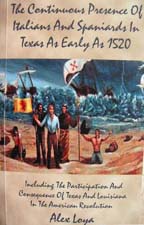 |
The Continuous Presence of Italians and
Spaniards "The Anglo and Spaniard Texians: Bitter Enemies By Alex Loya |
|
When one reads commonly written and distributed Texas history and about the general understanding of who the original Texans were, among whom the Loya are found, one is invariably given the idea that the original Texans became American only because they were defeated in a war against the United States in which the U.S. invaded the land and the original Texans were dispossessed of their land as a spoil of war. This belief is perpetuated by writers who, for whatever reason, hammer and hammer this idea until the original Texans feel like they were defeated and became foreigners in their own land. It seems almost as if some people actually have an interest and an agenda in keeping the original Texans and their descendants alienated from the mainstream of American society. When one begins to really study Texas history in depth, and the documents written by the original Texans who were actually there, a totally different picture begins to surface. Certainly, there were abuses and crimes perpetrated against the original Spaniard Texians by Anglo-American settlers, like the massacre of 9 original Texans by one "Mustang" Grey for the purpose of stealing some tobacco, or the killing of another old Spaniard Texas aristocrat by an Anglo-American who stole his horses claiming it was his reward for fighting in the Mexican War. But to focus on these incidents perpetrated by thugs and to then paint a picture as if this was the kind of relationship that existed between the Anglo-American settlers and the old Spaniard families of Texas, is really to paint a false picture of that relationship. If that had been the situation, then Antonio Navarro would have had no one to write his Historical Comentaries to, seeing that while he acknowledged there were those who were "heartless and egoists" who couldn’t care less, he wrote for the "humanitarian and cultured" among the Anglo-American Texians to learn about the sacrifices the Spaniard Texians had made in 1813 to purchase the freedom they now all enjoyed (Antonio Navarro, San Antonio Ledger, 1857-1858, Commentaries of Historical Interest, first of three installments). Certainly, Old Spaniard families who had been given land grants in Texas by the King of Spain did loose much of their real estate, but contrary to what is commonly believed, however, they did not lose the land as a spoil of war, and they were not the only ones to experience this kind of abuse. The same thing happened in Louisiana with land grants given by the King of Spain to Louisiana pioneers. Even as I write this, a dear lady who attends the church I pastor in South Louisiana, Mrs. Muriel Buras, is involved in the courts in a dispute over 2700 acres of land her family owns in Plaquemines Parish, just south of New Orleans. Mrs. Buras was born on March 29, 1928. Her father was already involved in the dispute over the land before she was born. Mrs. Buras showed me a title to the land that dates to 1835 in which the United States government recognized the claim her ancestor, Hubert Buras, had over the land. Hubert Buras’ father, Juan Pedro Buras (Burat), had been given a land grant by the King of Spain in the year 1793, according to documents in Ms. Muriel Buras’ possession, during Louisiana’s Spanish Period, and the U.S. Government recognized that claim. That Hubert Buras had to put a claim before the government for the government to recognize is an indication that in the transition of power from Spain to France to the United States, which occurred within a period of 20 days between November 30 and December 20 1803, the land that had been granted to his family by the King of Spain had been lost in the shuffle. After the U.S. Government recognized their claim to the land,
Plaquemines Parish remained largely uninhabited. Consequently, at some
point, a man without scruples by the name of Andrew Hodge, began to survey
the Buras’ family land grant and to sell the property, which was not
his, to people who began to settle in the land. People who paid Hodge for
land that was not his soon began to also sell and lease the land to
others. The same thing happened in Texas. The vast land grants that the King of Spain had given to the early Spaniard settlers were lost by the families who owned them, not as a spoil of war, since the original Tejano Texians who remained in Texas actually fought for Texas, but in the shuffle of governments. Like it happened with the Buras land grant in Louisiana, the land grants were so vast and uninhabited, new settlers began to move in on their land grants, including some without scruples, and so they lost their property. Besides this, we need to remember that many among the Spaniard Texians had lost their property having had it confiscated by the King of Spain back in 1813 and had never been able to get it back, and many did not have a title to the land on paper. Because of this, Antonio Navarro and many Texians were angry at the Mexicans because after the Republic of Mexico was born, their government did nothing to give the property back to those Tejano Texians who had lost it to the King of Spain (Antonio Navarro, Historical Commentaries of San Antonio de Bexar by an Eye Witness, San Antonio Ledger, 1 December 1853, the Western Texan). Through the years, writers without scruples have turned this consequence of circumstance to make many among the original Texians feel humiliated and unable to fully embrace this American nation and its culture even years after the fact. Although for some reason many writers exacerbate this feeling of alienation many original Texians have by hammering the instances of abuse and discrimination which actually occurred, and which always occur when different cultures meet, whether in the plains of Texas or the Italian and Irish neighborhoods of New York, the reality of the relationship between Anglo-American settlers and the old Spaniard families of Texas, was much warmer, friendlier and closer than is generally assumed. In fact, although many among the descendants of the original Tejanos feel the Anglo-Americans singled out their ancestors for discrimination, the fact is that their experience was not any different than the experience of the Italian and Irish and just about every other group of immigrants to the United States. What is different is the way the Italians and the Irish and others reacted to the discrimination they suffered as opposed to how many among the original Spaniard Texans did. Many among the descendants of original Tejanos and others who are involved in preserving Texas "history", are really involved in preserving the bad blood that existed in instances like the ones I mentioned. When in conversation I have mentioned things such as what I will continue to discuss in this chapter, invariably they come back with "yeah, but so and so was lynched by a mob of Anglos for a crime he didn’t commit just because he was a Tejano" or "yeah but, the Anglos wouldn’t allow the Tejanos in their restaurants" or "yeah but, the Tejanos had more problems than the Anglos did collecting their pensions" or "the Anglo’s would call the Tejanos names and regard them as inferior" and so on and so forth. While it is true that things like these happened, it is false to imply that all Anglos treated all Tejanos in such a way. Secondly, as I just mentioned, contrary to what many think, the original Tejanos were not uniquely marked for this kind of discrimination, although many of their descendants keep the anger and resentment alive as if those incidents had happened only to them and today. Italian immigrants were considered by many to be lazy and stupid. According to the Italian American Presentation, during the 1870’s Italians were depicted as lawless thugs and certain types of criminality were reported as being "inherent in the Italian race". And this even though statistics showed the Italians were less prone to crime. The Italians were so discriminated in school that many children left school rather than to deal with the obstacles imposed by the "Anglo-Protestant establishment". The Italian worker was worthless to some, blatantly paid less, fined and imprisoned on the smallest offense. Italian families were targeted in the 1920’s during the "Red Scare" and many were illegally arrested and deported. In the 1940’s Italian Americans were not allowed to speak Italian, to travel or to leave their houses after certain times of the evening. At the turn of the century, Italian Americans and immigrants were said to be "apelike" and an inferior stock, immoral and drunk. In New York City newspapers referred to the Italians as "a herd of steerage slime" (Joan Rapcinzky, The Italian American Experience in America 1870-1920, Yale New Haven Techer’s Institute) and called them "wop" "guinea" and "dago", which I have been called. Nicolla Colella writes in his "Southern Italian Immigration", that Southern Italians and Greeks were considered the least desireable nationalities, while Northern Italians were desireable. This is to be noted in the present discussion because the good number of Tejano Texians of Italian origin find their roots in Northern Italy. But the discrimination against Italian Americans did not stop at insults, in 1891 in New Orleans, my hometown that is full of Italians; unknown individuals murdered the chief of police. People blamed the Italians because the chief of police had been investigating the Mafia. To make a long story short, 11 innocent Italian American men were arrested, acquitted… and lynched to death by a mob of 5000 New Orleanians. Nicola Sacco and Bartolomeo Vanzetti were executed for a murder that could not be pinned on them, despite numerous witnesses who testified that they had seen them elsewhere when the crime was committed. Many believe they were executed more because they were Italian than for any evidence found that incriminated them. This kind of discrimination was not limited to the "undesirable nationalities" as the Greeks, Italians or Tejanos. Although the Irish immigrants had an advantage over the Italians, the Greeks and the Spaniard Texans in that they could speak English, the Irish were regarded as inferior to the Anglo-Americans (Dan O. Irish Immigration). The Irish were seen as lazy, stupid and dirty and were blamed for the economic problems and for the moral decline of America (The Irish-American Experience; Irish-American Prejudice During the 19th Century). The Irish were paid less for the same work, and signs in places of employment would say "Irish need not apply" and hotels and restaurants would carry signs saying, "No Irish permitted in this establishment" (The Irish American Historical Society).
The Irish and the Italians responded to the terrible discrimination
they suffered by adapting to and adopting the American mainstream culture
while maintaining their own identity. And although they preserve their
history, they decidedly do not focus on, dwell on, memorialize and keep
alive and in the forefront the terrible discrimination they suffered. They
have long forgiven and forgotten and moved on. Consequently, the Irish and
the Italians are now fully assimilated into the American mainstream, they
are just Americans who know their heritage. On the other hand, for over a
century and a half many among the original Tejanos still feel like
foreigners in their own land. For over a century, rather than learning
English like the Italians and getting rid of their accents like the Irish,
many, the majority of the original Tejano Texians have embraced the
foreign identity of the Mexicans, which is not theirs, and have chosen to
memorialize and always keep on the forefront the instances of discord and
discrimination. The many writers of history and their societies who have
shamelessly ignored the testimony of the Spaniard Texans regarding their
own "Spaniardness", electing instead to perpetuate, by ignoring
the context, the myth of the "Mexican Texan" and who have
relentlessly kept alive the memory of the instances of abuse while
forgetting the instances of love and kinship, have kept many of the
original Tejanos in a state of foreign identity and deep resentment. To
keep the memory of these unfortunate incidents alive, to the point where
historical societies, historical markers and historical internet sites and
tidbits memorialize these incidents while almost completely ignoring the
good things and relationships that happened and existed between the
Anglo-American and Tejano Texians is to not write history, rather, it is
to preserve bad blood, resentment and anger. God forgives our sins and casts them into the sea of forgetfulness when
we confess and receive Jesus as our Lord and Savior, and so we move on
with Him in a relationship of love and spiritual peace and intimacy. As a
people, the Irish and the Italians have forgiven and forgotten the insults
and the lower wages, and even the lynchings, and so they have moved on
with the Americans as the Americans that they are. Unfortunately, many
among the original Tejanos have not, and some of them and others work to
keep the insults, the lynchings and the lower wages alive as if they
happened today while forgetting the many good things, causing many to
remain bitter and alienated. It should be the other way around, they
should forgive and forget the bad blood, and they should remember, keep
alive, memorialize and celebrate the friendship and the love and the
kinship that existed, and the blood that was shed together for the birth
and formation of this great American nation. Well, I hope my book is a
start. As I mentioned before, the relationship between the original Spaniard Texians and the Anglo-Americans was much closer, friendlier and much warmer than many care to notice and remember. When James Bowie moved to Texas from Kentucky in the year 1830, for example, he developed a warm friendship with Lt. Governor J.M. Verramendi. Soon, their friendship became closer when Bowie asked J.M. Verramendi for the hand of his daughter, Ursula Verramendi, in marriage. Lt. Governor Verramendi granted Bowie’s request and, by all accounts, Bowie and his new bride had a good marriage, complete with love letters. When Ursula died on September 27, 1833 as the first victim of a cholera epidemic, James Bowie, the hero of the Alamo, mourned the loss of his Spaniard Texan wife for a long time. The 9 Spaniard Texians who were massacred by "Mustang" Grey
that I mentioned before were the friends of Don Ysidro Benavides, and this
is one incident that is touted as an example of the awful relationship
between Anglo-Americans and Spaniard Texians, and how the former
discriminated and hated the latter. Yet, Ysidro Benavides’ three
daughters, Juanita, Maria Antonia and Martianita married Captain James
Cummings (Cummings, by the way, is my wife’s maiden surname and my
children’s heritage as well), Reverend W.M. Sheely, a Methodist
preacher, and Mr. Warren Sheely respectively. To remember and tout the one
tragic incident while forgetting the three lifetime relationships that
produced descendants for generations is to write revisionist history and
it is a terrible disservice to all Texans and to the United States. According to James P. Newcomb, who published the invaluable memoirs of Captain Antonio Menchaca, in the Passing Show, San Antonio Texas, in weekly installments from June 22 to July 27, 1907, which we will briefly study, when Sam Houston was governor of Texas his first inquiry of visitors would be, "How is my old friend, Captain Menchaca, getting along?". Juan Seguin was a good friend of Sam Houston, as his father Erasmo Seguin had been a friend of Stephen Austin. When one begins to study the life and relationships of these Spaniard Texan Founding Fathers, it becomes clearly evident that not only were the new Anglo-American Texians and the old Spaniard Texians getting along fine and developing warm friendships and marriages, but they worked together as Founding Fathers of the Republic of Texas. Juan Miguel Aldrete signed the Goliad Declaration of Independence, as did Manuel Carbajal, and he was a good and trusted friend of Phillip Dimmit. When Judge Jose Maria Rodriguez wrote in his "Memoirs of Early Texas" published in 1913, "Col. Travis… was very popular and was well liked by everyone", he just plainly stated that all the Spaniard Texians, in general, and the new Anglo-American Texians were all getting along just fine, despite the abuses that occurred. What Judge Rodriguez was doing was to focus on the friendship, kinship and love, rather than on the thugeries of a few so as to foster unity and assimilation, rather than enmity and alienation as many history writers today do. Jose Antonio Navarro just plainly taught in the history of Texas he wrote for posterity that the abuse and discrimination perpetrated against the Spaniard Texans was not and should not be remembered as the general relationship that existed between the two groups:
Navarro explains it all; original Tejano Texians were being
dispossessed of their land by Anglos to be sure, and although it is in
that part of his statement that "historians" focus on today, he
clearly actually said that it was "some of them among us", not
all. It is crucially important that we notice this statement because as
one who was there and very concerned for the loss of land many original
Tejano Texians were suffering, Navarro clearly said, in his writings which
he wrote with the intent of giving information for historians of the
future, that it was "some" indignant individuals among the
Anglos who were doing that, not all. It was in this same context that
Navarro wrote for the humanitarian, cultured and respectful among the
Anglo Texans, whom he called "our Americans", to learn of the
sacrifices the original Spaniard Texians had endured for the freedom they
now all enjoyed. Notice as well how Navarro said in this statement that
when the Tejano Texians had fought and shed their blood for freedom back
in 1813, they had done so for "the liberty we now
vaingloriously boast". Although the boast of liberty was
vainglorious because "some" among the Anglos were trying to
uproot the original Tejanos, the point is that the Spaniard Texians had
fought fifty years ago for the liberty they all had "now".
The question is: when was "now"? Well, that was 1857.
Cleary, then, Navarro taught that when the original Spaniard Tejanos had
fought for freedom back in 1813, it was with the goal of becoming part of
the United States, a thing that he plainly states when in the paragraph
before this one he writes the Spaniard Texians had then fought "that
they may be placed alongside the most free and fortunate nations of all
mankind- such as the nation with the flag of stars." (Jose
Antonio Navarro, Commentaries of Historical Interest, San Antonio Ledger,
December 12, 1857, McDonald & Matovina, p.63). But that is a subject
for another chapter. While Navarro clearly wrote for posterity to know that those who
committed the abuses and uprooted the Spaniard Texians were "some
of them among us", he made sure through out his writings to
communicate that the Anglo-Americans were the Spaniard Texians’ brave
and valiant compatriots and that the United States of America was "
a great, powerful and appreciative Republic" (Navarro, Historical
Commentaries of San Antonio de Bexar by an Eyewitness, Western Texan, San
Antonio, December 1, 1853, McDonald & Matovina, p. 58). Appreciative
of the Tejano Texians. While Navarro, Menchaca and Rodriguez were all
aware of the instances of abuse, they recognized it was thugs and not the
majority of Anglo-Americans and they did not focus and dwell on it.
Rather, like the Italians and the Irish, they focused on the kinship,
friendship and patriot love between them. Original Tejanos today would do
well to do the same thing, but preservers of bad blood make it very
difficult for them. But perhaps the most graphic description of the warmth of the relationship and the depth of commitment to each other and to the cause of Texas is the exchange between Antonio Menchaca and James Bowie, as recorded in Antonio Menchaca’s "Memoirs", on the eve of the Texas Revolution on December 20, 1835:
This depth of friendship and commitment is reminiscent of the depth of
commitment expressed by Ruth to her mother in law Naomi, in the Book of
Ruth in the Bible. Naomi told Ruth she was free to go because her son,
Ruth’s husband, had died, Ruth replied,
| |||||
|
| |||||
Captain Gregorio Garcia was the commander of Company "D’, Texas Frontier Forces, mustered at San Elizario, Texas. If a picture paints a thousand words, this picture eloquently tells us that the original Spaniard and Anglo Texans were being perfectly assimilated, working together as brothers for the benefit of Texas and the United States. Posing as equals, simply as Texans and Americans, nobody in this picture appears to be sitting "in the back of the bus". |
| A Group of
Galveztown Descendants What Became of the Gálvez Family? Louisiana Secretary of State Website: Vital Statistics and much more Humid City, New Orleans Online Video A Brief History of Louisiana, Under 10 Flags Visitors from the Canary Islands Recommended sites by Bill Carmena |
|
|
| "Old Spanish town at junction of Amite River and Bayou Manchac. Settled by Anglo-Americans, 1776-78, seeking Spanish refuge from American Revolution, and by Canary Islanders. Named for spanish Governor Bernardo de Galvez. Town was abandoned by 1810." Sent by Bill Carmena JCarm1724@aol.com |
|
|
What Became of the Gálvez Family? I recently received an email from a gentleman in Baton Rouge. In passing, he mentioned that he worked in the Gálvez Building, named for Don Bernardo de Gálvez. Louisiana is strewn with remnants of Don Bernardo’s stay in Louisiana, from buildings bearing his name to East and West Feliciana Parishes, named for his wife. In the second half of the 1700s, the Gálvez family held incredible power. Don Bernardo’s uncle (José) was one of the most powerful men in Spain. Matías, Don Bernardo’s father, was a general in the Spanish Army. An uncle raised the illegitimate daughter of someone very important and very powerful. (I’ll leave the speculation to you, for no one knows for sure who sired her. Who was more important and more powerful than the Gálvez family in the late 18th century?) So where is the Gálvez family now? What became of Don Bernardo’s descendants? When Don Bernardo de Gálvez arrived in New Orleans in 1776, he was unmarried. By the time he left New Orleans, he had acquired a wife, step-daughter, a daughter and a son. He would have one final child that, sadly, he would not live to see. Guadalupe would be born six weeks after his death in Mexico. Don Bernardo’s son Miguel never married. He died when he was about forty years old. Like his father and grandfather, he served in the Spanish army. However, his mother was French creole and when Napoleon invaded Spain in 1808, he became afrancesado (a French sympathizer). He was not alone. Many Spaniards became jurados, taking an oath of loyalty to the new king, King Joseph the First (and the last). To many, King Joseph was “affectionately” referred to as Pepe Botellas (Joey Bottles) because of his fondness for the spirits. When King Joseph was forced to leave Spain in 1813, many afrancesados went with him. Don Bernardo’s son wound up on the losing side of the Spanish War of Independence (also known as the Peninsular War). After the Battle of Pensacola in 1781, Don Bernardo became the first Count of Gálvez. The second count was Miguel de Gálvez y Saint Maxent. Matilde de Gálvez (Don Bernardo’s first daughter) became the third to acquire the title (Countess of Gálvez.) She was married to Raimundo, Prince of Canosa. Their daughter, Paolina Capece Minutolo de Gálvez became the fourth Countess. She married Franceso del Bazo (Baux) and their son, Ernesto del Bazo Capece Minutolo de Gálvez became the fifth to get the “count” title. He married Lady Dorothy Walpole. Then, the Spanish government said “enough is enough.” It took out the title for “these foreign people.” Don Bernardo’s current descendant is Marta Gálvez-Cañero. It is sad to make a school visit and ask the children the following question, only to get blank stares: A city in Texas is named for a Spanish hero of the American Revolution. I then prompt them with: The hero’s name is Don Bernardo de Gálvez. Which city was named for him? (On a good day, a child will then blurt out Galveston. Fifth graders have heard of George Washington, Thomas Jefferson, Benjamin Franklin, and the Marquis de la Fayette. But ask about Gálvez and the room falls silent. What a pity. His name should be on every school child’s tongue. Lila Guzman, Ph.D. 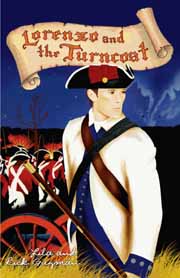 http://www.lilaguzman.com KICHI IN JUNGLE JEOPARDY (Blooming Tree Press) LORENZO AND THE TURNCOAT (Arte Publico Press) New book in the Lorezno series authored by Lila and her husband Rick Guzman. Categories: Young Adult ISBN: 1558854711 Price: $9.95 Bind: Trade Paperback Published: May 31, 2006 Pages: 192 Critique and more information. http://www.arte.uh.edu/view_book.aspx?isbn=1558854711
|

|
BIRTH
CERTIFICATES — Act 1277 of the Legislature, in July 1999, provides
for issuance of birth certificates at the parish level by clerks of court.
Check to see if your parish clerk participates in this program. |
| Humid
City, New Orleans Online Video http://humidcity.blogspot.com/2006/04/kalypsos-new-orleans.html Sent by Skip Newfield III, who writes: This is a 12 minute video by a ten year old girl who goes by the handle of Kalypso. It is a wonderful view of both the positive community aspects of carnival and also the sheer destruction and devastation of our home city. This is one special ten year old. She has done a better job than many of the "journalists," from the mass media. Must be due to the triune graces of honesty, innocence and lack of profit motive. |
| Article:
A Brief History of Louisiana,
Under 10 Flags http://www.sec.state.la.us/around/brief/brief-2.htm The flags are depicted on the website. 1519 Alonso Alvarez de Pineda led an expedition along the northern shore of the Gulf of Mexico and discovered the mouth of a great river which may have been the Mississippi. 1542 The Spanish adventurer Hernando de Soto died on the shores of the Mississippi River near present-day Memphis while exploring the southeastern United States. Each year the Mississippi, an Ojibwa Indian word meaning "big river" carries 400,000,000 tons of sediment into the Gulf of Mexico and discharges more water than all European rivers combined. 1682 The French explorer Sieur de La Salle, the first to descend the Mississippi to its mouth, took possession "of the country known as Louisiana," and named it for the reigning monarch of France, Louis XIV. 1714 Louis Juchereau de St. Denis founded Fort St. Jean Baptiste, present-day Natchitoches, the first permanent settlement in Louisiana. 1717-31 Louisiana experienced a surge of growth and development as a colony of the Company of the West and, after 1719, its successor the Company of the Indies. The Company of the West was an elaborate colonization scheme of the Scotsman John Law, endorsed by the French government, which wreaked havoc on the entire economy of France. 1718 Sieur de Bienville began building New Orleans as a company town for the Company of the West. By 1721 New Orleans had a population of more than 370 people, including 147 male colonists, 65 female colonists, 38 children, 28 servants, 73 slaves and 21 Indians. 1762 By the secret Treaty of Fontainebleau, France ceded its unprofitable and remote territories west of the Mississippi and the Isle of Orleans to Spain. It was 23 months later before the colonists in Louisiana learned they were no longer French subjects. Voltaire lamented the loss of Louisiana, saying that he could not conceive how Frenchmen could abandon "the most beautiful climate of the earth, from which one may have tobacco, silk, indigo, a thousand useful products." The average annual winter temperature for the state is 50.7 degrees, for the summer it is 82 degrees. Average annual rainfall is 55.45 inches. 1763 By the Peace of Paris Great Britain acquired from France its Louisiana territory east of the Mississippi and north of the Isle of Orleans. Spain ceded to Britain its territories of East and West Florida. Baton Rouge was fortified by the British and called New Richmond. 1788 The first Saint Louis church, completed in 1727, was destroyed by the fire of 1788 which destroyed four-fifths of New 0rleans. When the city and church were rebuilt the architecture was, of Spanish rather than French style. In 1793, Louisiana and the two Floridas were formed into a new diocese and their headquarters was moved from Havana, Cuba to New Orleans. One year later, St. Louis church was dedicated as a cathedral. It underwent extensive renovations in 1850 and 1881. 1769 Spanish Governor Alejandro O'Reilly finally established firm control of Louisiana for Spain. O'Reilly divided the province into 12 administrative districts called posts and 22 ecclesiastical parishes. The system of posts died with the end of Spanish rule, but parishes ultimately persisted as the primary county-level administrative unit under territorial and state governments. 1779 War broke out between Spain and Britain; Spanish Governor Bernardo de Galvez conducted a surprise attack on the British fort at Baton Rouge and captured the outpost. As a result of this victory, the West Florida Parishes were returned to Spanish rule. 1791 Refugee players from Santo Domingo presented in New Orleans the first professional theatrical production in Louisiana. 1800 Spain officially returned the Louisiana territory West of the Mississippi to France by the secret Treaty of San Ildefonso to avoid the continued deficits the colony caused and the growing possibility that Spain might have to fight the restless Americans to retain control of the lands. (France did not actually take control until November 1803.) 1803 The United States purchased from Napoleon the territory of Louisiana for $15,000,000. Upon concluding the purchase Robert Livingston, America's Minister to France, said of the transfer, "We have lived long, but this is the noblest work of our whole lives ... From this day the United States will take their place among the powers of the first rank ... The instruments which we have just signed will cause no tears to be shed; they prepare ages of happiness for innumerable generations of human creatures." 1804 William Charles Cole Claiborne was appointed governor of the Territory of Orleans, which the area of present-day Louisiana was called. Before then he was governor of Mississippi Territory and the lone representative in Congress of Tennessee. Claiborne was selected as one of the commissioners to receive the Louisiana Territory from France in 1803. In 1812 Claiborne was elected the state's first governor, a position he held until 1816 when he was elected to the U.S. Senate. He died in 1817. 1805 The first Protestant church in Louisiana, an Episcopal church, was established in New Orleans. 1808 The first public schools in the state were established in Pointe Coupee Parish. 1810 The American citizens of Spain's West Florida territory, who had dramatically increased in number, took control of the Spanish government there and declared the territory a republic. The republic comprised the area of present-day Louisiana known as the Florida Parishes. 1812 Louisiana formally became the 18th state to join the union. William Charles Cole Claiborne was elected its first governor. The New Orleans, the first steamboat to navigate the Mississippi, arrived at New Orleans from Pittsburgh beginning the golden era of the steamboat. 1815 Andrew Jackson defeated the British at the Battle of New Orleans and saved control of the lower Mississippi for the United States. The British troops numbered about 8,000 to Jackson's 4,000 defenders. |
| Canary Islands Band Entertains at St. Bernard Unified
School March 23 , 2006, By: Steve Cannizaro http://www.sbpg.net/cannizaro032306.html Sent by Bill Carmena JCarm1724@aol.com [[The Fiesta took place March 25 &26 at the site of the governmental buildings at 8201 W. Judge Perez Drive in Chalmette. Ongoing activities included foods and entertainment.]] | |
 |
Jacinto Gonzalez, holding the guitar, who is director of Los Artesanos de Ingenio band from the Canary Islands, speaks with Mario Amescua, a Spanish teacher at St. Bernard Unified School, during the group’s appearance at the school on Thursday. In his regular job, Jacinto Gonzalez works in a concrete factory in the Canary Islands. |
But as the 18-year veteran director of the string music band Los Artesanos de Ingenio – or Artisans of Ingenio, one of the larger cities in the Canary Islands that are located off the coast of Morocco - Gonzalez has a creative outlet that helps keep alive the music traditions of his people. The 30-40 member group arrived in Chalmette on Wednesday night and will be here through the Los Islenos Festival on Saturday and Sunday, where they will entertain both days, playing an uplifting brand of music that invites listeners to get up and dance. The festival is being held behind the St. Bernard Parnard government complex in Chalmette. Settlers from the Canary Islands, a Spanish province, first came to St. Bernard in the 17770s and the festival celebrates the culture of the Islands. Many of St. Bernard’s surnames today are traceable to the Canary Islands settlers. Gonzales said he believes the music his group plays is important to his people’s culture. “This is a wonderful way to pass on the traditional music of our ancestors’’ and is a good hobby for the youth who perform in the band, said Gonzales, spaking through Mario Amescua, a Spanish teacher at the Unified School who interpreted for him. Gonzales’ brother, Domingo Gonzales, is mayor of Ingenio on Gran Canaria Island, which has a sister city relationship with St. Bernard Parish. The mayor, who visited St. Bernard in August 2005, leaving just three weeks before Hurricane Katrina, arranged for the band to play at the Los Islenos Festival for the first time, said Bill Hyland, St. Bernard Parish historian. “It’s part of the ongoing sister city relationship,’’ Hyland said of the band’s visit. | |
| Los Artesanos, which is 26 years old, has played in Italy and France as well as the United States, Gonzales said. He said he enjoyed the performance at the Unified School, which included playing before high school students in the gym and later playing in a theater to a smaller group of Spanish class students, who danced happily with band members when asked to join in. Gonzales also said he hopes a student exchange program that had been planned before the hurricane between St. Bernard students and Ingenio youngsters will still happen in the near future. |
 Members of Los Artesanos de Ingenio perform in a theater at the St. Bernard Unified School |
| ©Copyright 2005 St. Bernard
Parish Government. For more information feel free to Contact Us | |
| Recommended
sites by Bill Carmena http://acadian-cajun.com/canary.htm History of the Cajuns Canary Island Settlers of Louisiana http://www.nps.gov/arpo/colbert/contents.htm Interpreting the Colbert Raid II, Arkansas Post and the Revolutionary War http://www.patriotresource.com/history/westfla/overview.html The Patriot Resource: History - American Revolutionary Era (1775-1781) Relations between Spain and America Before and During the Revolution Something new on the CIDHS website. http://nti.educa.rcanaria.es/culturacanaria/f_documentales/fuentes_documentales.htm In Spanish but covers a lot of information . http://nti.educa.rcanaria.es/culturacanaria/emigracion/La_emigracion_canaria.htm http://www.tamu.edu/ccbn/dewitt/menchacamem.htm For Biographies, Search Handbook of Texas Online MEMOIRS by Antonio Menchaca, Yanaguana Society, San Antonio, 1937 | |
| Santa Ana
Zegache: a folk baroque gem in Oaxaca S: May 12-14: Primera Conferencia Binacional de Historia Familiar Good Cause Book Sale: Microfilming Project Stereographic negatives by Alfredo Saldivar provoke a quest for Facts Records of Colonial Tlalpujahua, Michoacán, Mexico S: Fundación de la Aduana interior de Torreón New Books: Naturalizations of Mexican-Americans, Extracts, Vol. 1,2, 3 S: Hubo Otros Mendoza S: Genealogía del apellido Cano en el noreste de México y sur de Texas S: 3 Coahuilenses Prisioneros, durante Guerra Intervencion Francesa |
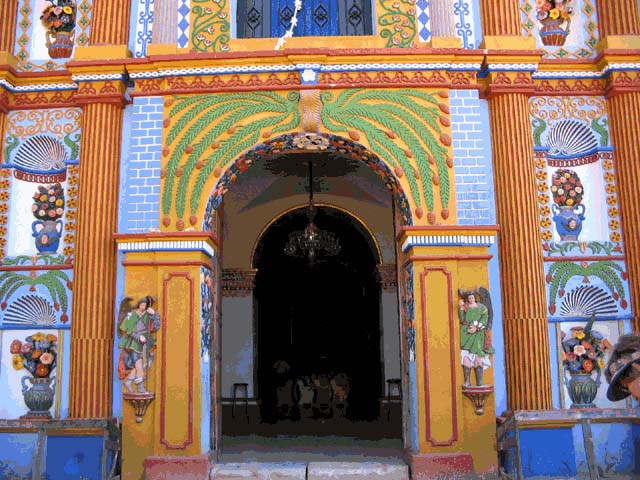 | |
Santa Ana Zegache: a folk baroque gem in Oaxaca http://www.colonial-mexico.com/Oaxaca/zegache.html Sent by Webmaster, Richard Perry rperry@mail.west.net This spectacular church in Oaxaca is another example for the restoration work carried out by the Fundacion Cultural Rodolfo Morales. In the early1990s Rodolfo Morales, the internationally known Oaxacan painter, returned to his native valley, just south of the city of Oaxaca. In the last decade, until his death in 2001, he devoted much of his income and resources to the conservation and restoration of historic buildings in the area with the help of the architect Esteban San Juan. These included the churches of Santo Domingo Ocotlan, and especially the 17th century village church of Santa Ana Zegache nearby. The results are evident, a delight to the eye and a major contribution to the local cultural revival. The "earthquake baroque" church front is designed in the classic Oaxacan manner, its prominent retablo facade sandwiched between squat but massive towers designed to resist the frequent temblors that afflict the region. The facade has recently been repainted in bright, contrasting colors that emphasize its main features: tiers of shell niches housing religious statuary framed by prominent, fluted columns. The striking exterior of Santa Ana Zegache is only exceeded by its beautiful interior, whose meticulously restored nave is a treasure house of painted baroque decoration, gilded altarpieces and carved stonework. | |
| Walls, windows, archways, pendentives and friezes are decorated with floral and figural images, many elaborately framed by
rocaille, strapwork, foliage and scrolls in a refined palette of reds, greens and earth colors, generally more muted than the bold hues of the facade. Although some are incomplete, several gilded baroque retablos line both sides of the nave, reminiscent of Yanhuitlan and the nearby painted church of Tlacochahuaya, to which Santa Ana Zegache bears a close resemblance. Baroque motifs extend to some of the stonework in the church, notably a sinuous font embraced by an archangel |
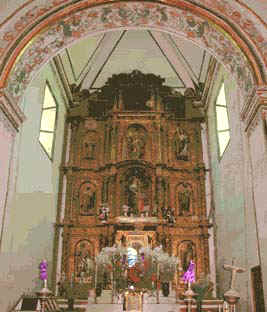 |
|
Sedes:Hosted by Adjunto invitacion a nuestra reunion de Historia Familiar. Comparta esta
invitacion. |
|
Good Cause Book Sale: Microfilming Project Joseph Puentes makas@nc.rr.com sends this notice from Susana Leniski. Primo: I just talked on the phone with Samuel Sanchez Garcia. He told me that his group (Sociedad Genealogica del Norte de Mexico) is trying to collect funds for a microfilming project for the North of Mexico. For that reason, they reached an agreement with PORRUA EDITORES to sell previously out-of-print books, or limited edition history books on their website. The books appear in their website: http://www.genealogia.org.mx/home/default.asp All of them are very interesting for a genealogist. They are history books for all Mexico. The prices are 20 dollars each book. They are selling several items on their website, but he told me that if you really want to help to buy books because a 100% of the money collected from the sale of these history books goes to the microfilming project. They will let us know when their goal has been met. Some of the books are for example: 1. Historia de las divisiones territoriales de Mexico 2. Historia de los Indios de la Nueva Espana 3. Historia Antigua de Mexico If these books are of interest then a double benefit of historical information and making more information available in the future is served. |
|
|
| Aside from not being able to learn anything in particular about him, I am also now deeply interested in learning the particulars about a family - a matriarch in particular - who in a few photos is shown at her home which is located adjacent to the old parliament structure that became the Monumento de la Revolucion. The views I believe were made about 1930. The notation by the photographer is simply " C.Miramon Casa". Of course that sparks the obvious question, is this woman related somehow to former Mexican President Miguel Miramon in some way ? Old money, aristocrat, location of home.. It seems worth pursuing. Now I don't know how your publications, websites, can help, but thought I would at least proffer the question. Another surname associated is Baños Garcia.. I have begun putting up web-pages in attempts to answer some of these questions though it is not necessarily seen by many people since they would have to be searching for certain words and names to find it.. though I think the story would be interesting to many if they actually saw it. I enclose the address of the first page, each of which has links to next. There are only five pages so far. It is at: http://hometown.aol.com/tyanult/saldivar1index.html Any thoughts you might have would be appreciated. Kindest regards, Tom Yanul, Chicago tyanul@aol.com
|
| Records of Colonial
Tlalpujahua Michoacán, Mexico (C0867) 1562-1903, bulk 1720-[1830s] A Finding Aid Prepared by Heather A. Shannon and Karla J. VecchiaManuscripts Division, Department of Rare Books and Special Collections Princeton University Library, 1999, 2002
|
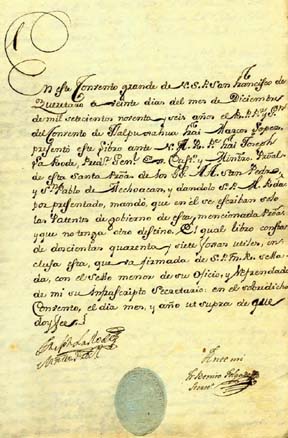 |
| Introduction The Records of Colonial Tlalpujahua (Michoacán, Mexico) consists of papers pertaining to the Convento de Nuestra Señora de Guadalupe, as well as miscellaneous papers that document matrimonial and criminal legal cases, land transactions in Tlalpujahua and Toluca, and genealogical information compiled by Austacio Rulfo. Additional papers to the collection include accounts, religious petitions, assorted documents, and correspondence, many pertaining to the Benavides family. Range of Collection Dates: 1562-1903 Range of Collection Bulk Dates: 1720-[1830s] Size: 3.54 linear feet (9 archival boxes) Language: The primary language of the collection is Spanish. Provenance: The department purchased part of the collection from a dealer in October 1999, and the remainder in July 2002. Photocopying, literary rights, and citation: Single photocopies may be made for research purposes. No further photoduplication of copies of material in the collection can be made when Princeton University Library does not own the original. Permission to publish material from the collection must be requested from the Associate University Librarian for Rare Books and Special Collections. The library has no information on the status of literary rights in the collection and researchers are responsible for determining any questions of copyright. Citations should be as follows: Records of Colonial Tlalpujahua (Michoacán, Mexico), Box #. Used by permission of the Princeton University Library. Historical Background This collection is comprised of records that document the social and ecclesiastical history of colonial Tlalpujahua (Tlalpuxagua), a town located in the northeast part of what is today Michoacán, Mexico, and its environs. Tlalpuxagua was a jurisdiction within Spain's northernmost viceroyalty of New Spain the Indies. After silver mines were discovered in the vicinity in 1558, Tlalpujahua became a secondary mining center, and as a result the municipality gained its first alcalde mayor of the newly-established Real de Minas de Tlalpuxagua. A considerable indigenous population lived in the region surrounding the town and mines. The ecclesiastical documents pertain to the Convento de Nuestra Señora de Guadalupe, a Franciscan monastery built in Tlalpujahua in 1703. It fell within the Franciscan province of San Pedro y San Pablo de Michoacán (established 1565), whose boundaries overlapped with Diocese of Michoacán. While Franciscans arrived in New Spain as early as 1523, the friars were not active in the jurisdiction of Tlalpuxagua until just after 1538, when a monastery-parish was founded in San Pedro y San Pablo Cinapécuaro. There was a resident diocesan curate at San Pedro y San Pablo Cinapécuaro by 1565. Franciscan activities increased at the end of the seventeenth and beginning of the eighteenth centuries, when mining activity increased in the area. In June 1686 a Third Order Secular of St. Francis was established under the guidance of the friars and, in February 1703, a hospital and the Convento de Nuestra Señora de Guadalupe were founded.(1) 1. See Peter Gerhard, A Guide to the Historical Geography of New Spain (London: Cambridge University Press, 1972), Carlos Herrejón Pereda, Tlalpujahua (Morelia, Mexico: Gobierno del Estado de Michoacán, 1980), and Esperanza Ramírez Romero, Catálogo de monumentos y sitios de Tlalpujahua (Mexico: Gobierno del Estado de Michoacán and Universidad Michoacana de San Nicolás de Hidalgo, 1985). Collection Description Scope Note: Consists of papers of the Convento de Nuestra Señora de Guadalupe, a Franciscan monastery established in 1703. There are various administrative documents (libros de patentes and libro de inventorio) that date from 1724 to 1849; account ledgers (libros de cargo y descargo) that date from 1719 to 1839; and a significant number of ledgers (a libro de institucion, a libro de determinaciones y constituciones, and several libros de asientos de recepciones y profesiones) belonging to the Third Order Secular of St. Francis that date from 1686 to 1832. There are also miscellaneous ledgers from Tlalpujahua and Toluca that contain information regarding various land transactions and title transfers, last will and testaments, and a ledger regarding a general store (casa de comercio). Moreover, one ledger was used to record legal proceedings during the mid-1740s in matrimonial and criminal cases in Tlalpujahua. In addition, there are papers that belonged to Austacio Rulfo (1820-1903) that trace the genealogies of the Rayón and Rulfo families, relatives of independence leader Ignacio López Rayón. Furthermore, there are additional papers that include account ledgers and accounting documents (receipts, inventories, appraisals, and expenses) (1599-1901); religious petitions (1722-1882); documents relating to estates, houses, land, livestock, and other topics (1660-1898); and correspondence (1774-1901). While the majority of these documents pertain to the Benavides family, some relate to the Third Order Secular of St. Francis, and others to the Rayón and Rulfo families. Arrangement: The collection has been arranged in the following series: I. Papers of the Convento de Nuestra Señora de Guadalupe, Tlalpujahua, Michoacán, Mexico. Franciscan Province of San Pedro and San Pablo of Michoacán-A. Administrative Documents, B. Account Ledgers, C. Third Order Secular of St. Francis; II. Miscellaneous Papers, Tlalpujahua and Toluca; III. Additional Papers-A. Accounts, B. Religious Petitions, C. Other Documents, D. Correspondence. Added Entries: The following added entries have been assigned to this collection to highlight significant sources (other than the main entry), subjects, and forms of the collection's materials. Where possible Library of Congress Subjects Headings have been used, and the forms of names reflect international cataloging standards. As a result, all of these entries may be searched in the Department's database (MASC), in the Library's online catalog, and the public card catalog to find other related material. Subject Headings (in uppercase) / Form Headings (in upper and lower case): Account books--Mexico--18th century Account books--Mexico--19th century BENAVIDES FAMILY Benavides, José María--Correspondence CATHOLIC CHURCH--MEXICO--17TH CENTURY CATHOLIC CHURCH--MEXICO--18TH CENTURY CATHOLIC CHURCH--MEXICO--19TH CENTURY Confraternities--Latin America--Mexico--Manuscripts CONVENTO DE NUESTRA SENORA DE GUADALUPE Correspondence, Mexican Court records--Mexico--18th century CRIMINAL PROCEDURES--MEXICO--18TH CENTURY Franciscan manuscripts--Mexico--17th century Franciscan manuscripts--Mexico--18th century Franciscan manuscripts--Mexico--19th century FRANCISCAN MONASTERIES--MEXICO--ADMINISTRATION--17th CENTURY FRANCISCAN MONASTERIES--MEXICO--ADMINISTRATION--18th CENTURY FRANCISCAN MONASTERIES--MEXICO--ADMINISTRATION--19th CENTURY FRANCISCAN PROVINCE OF SAN PEDRO Y SAN PABLO Rayón Family--Genealogy Rulfo Family--Genealogy General stores--Mexico--18th century--Account books General stores--Mexico--19th century--Account books INHERITANCE AND SUCCESSION--MEXICO--19TH CENTURY Land titles--Mexico--17th century Land titles--Mexico--18th century Land titles--Mexico--19th century LAND TITLES--REGISTRATION AND TRANSFER--MEXICO--17TH CENTURY LAND TITLES--REGISTRATION AND TRANSFER--MEXICO--18TH CENTURY LAND TITLES--REGISTRATION AND TRANSFER--MEXICO--19TH CENTURY Manuscripts, Mexican MATRIMONIAL ACTION--MEXICO--18TH CENTURY MEXICO--CHURCH HISTORY--17TH CENTURY MEXICO--CHURCH HISTORY--18TH CENTURY MEXICO--CHURCH HISTORY--19TH CENTURY MEXICO--HISTORY--SPANISH COLONY, 1540-1810 MEXICO--HISTORY--19TH CENTURY Michoacán, Mexico--History--Sources Third Order Secular of St. Francis--History--Sources Toluca, Mexico--History--Sources WIDOW'S ALLOWANCE--MEXICO--19TH CENTURY Wills--Mexico--19th century | |
Fundación de la Aduana interior de
Torreón
|
| Books:
Naturalizations of Mexican-Americans: Extracts, Vol. 1,2, and 3 Three volumes of Mexican-American extractions, Vol. 1, 2, and 3, are almost ready to come out. Go to www.heritagebooks.com Under Vol. 3, you can see the cover, which has the colors of the Mexican flag. Naturalizations of Mexican Americans: Extracts, Volume 1 - John P. Schmal. Volume 1 in this series contains a unique and detailed collection of extracts from 311 naturalization documents filed by Mexican immigrants between 1860 and 1950. The applicants came from several states in Mexico, and entered the United States through Texas, Arizona, and California. Extracts from these documents yield important details such as date and place of birth, last foreign residence, names of spouse and children, date and place of marriage, and more. Naturalization records also reveal the port of entry and the location of the district court where the documents were filed, which can direct the researcher to additional records of genealogical interest. Generally, but with some exceptions, the naturalization process produced three key documents: the declaration of intent to become a citizen, the petition for naturalization, and the certificate of naturalization. In the case of non-citizens, alien registration forms were filed, many of which can be as detailed as the naturalization documents. Information from all of these documents has been extracted for this series. The introduction also provides helpful research advice, relevant websites, and statistics on the book's contents. As Mexican immigrants assimilated into American culture, sometimes the genealogical information that linked them to their ancestral homeland became lost. This collection will help many Mexican Americans restore that link.. 2006, 5½x8½, paper, index, 352 pp. $34.00 S3800 ISBN: 078843800X Price: $34.00 Naturalizations of Mexican Americans: Extracts, Vol 2 Price: $37.50, 371 naturalization records Naturalizations of Mexican Americans: Extracts, Vol 3 Code: S4113, Price: $34.00 |
|
Hubo
otros Mendoza Una rama menos conocida de los Mendoza, y de origen incierto, aparece al final de la Edad Media en la ciudad de Baeza (provincia de Jaen, al norte de Granada). Un miembro de esta familia emigraría a México y emparentó con la famosa Doña Marina, "la Malinche".
|
|
El primer personaje conocido de la rama jienense de los Mendoza es un Ruy Lopez de Mendoza que, ya después de su conquista a los musulmanes, aparece en Ubeda como alcaide en 1373. Su hijo Luis López de Mendoza fue (entre otros cargos) corregidor en la cercana Baeza y testó en 1429. Por casamiento esta rama serían los señores de Torrequebradilla (localidad al sur de Ubeda y Baeza, tambien en Jaen). No se puede saber si el alcaide Ruy pudiera descender o no del el almirante Ruy Lopez de Mendoza que estuviera en la conquista de Baeza en 1227. Hay que indicar que el apellido Mendoza podía deberse a descender de los señores de Mendoza, pero también simplemente por descender de una persona nacida en Mendoza o que hubiera emigrado desde Mendoza. Juan Hurtado de Mendoza y Novoa (tercer señor de Torrequebradilla , señor de Torralba y regidor de Jaen en 1488) estuvo casado en 1470 con Isabel de Lucas y tuvo como hija segunda a Francisca López de Mendoza y Lucas. Francisca caso con Pedro Díaz de Quesada, séptimo señor de Garciez y Santo Tomé, de los que proceden los condes de Garciez. El origen de los Díaz de Quesada se remontaba a los familiares del arzobispo de Toledo Gonzalo Diaz Palomeque. Aunque naturales de Baeza, Francisca y su marido Pedro residieron en la Granada recien conquistada, donde sus "primos" (por aquel entonces esta palabra significaba simplemente "familiar") los marqueses de Mondéjar gobernaban y dónde el segundo marqués fuera presidente del Consejo de Indias y su hermano Antonio el primer virrey de México. Asi consta en el Catálogo de Pasajeros a Indias de 1535, cuando su hijo segundo Luis de Quesada y López de Mendoza (nacido en Baeza) pasó de Granada a México acompañando al mencionado primer virrey Antonio de Mendoza. Antes de pasar a México, Luis sirvió a Carlos V en su coronación y en el cerco de Florencia, pidiéndole permiso para pasar a Indias. Luis se casó con María Xaramillo en 1542, pues en los documentos aparece que María tenía en esa fecha diez y seis años y estaba recien casada. María era una ilustre mestiza hija de la famosísisima Mallinalli Tenepal o sea Doña Marina "la Malinche" y de Juan Xaramillo, con quien Cortés la casó al poco de conquistar la ciudad de México, y a quienes dio de regalo de bodas la encomienda de Xilotepec. Luis acompaño al virrey en la lucha y represión de la "rebelión del Mixtón" en 1541 y gustaba de usar el apellido López de Mendoza por motivos obvios de importancia. Por cierto, María y Pedro iniciaron un pleito contra Juan Xaramillo (viudo de "la Malinche" y casado con Beatriz de Andrada) por la herencia de Xilotepec, y militaron en bandos opuestos, ellos en el del virrey y Xaramillo en el de Cortés. En dicho pleito Hernán Cortés se presentó como testigo de Xaramillo y declaró: "Que el Virrey Antonio de Mendoza habia forzado a María para que se casara con su sobrino, encontra de su voluntad y la de su padre", Cortés declaró que Quesada con ayuda de los sirvientes del Virrey, habia escalado las paredes de la casa de Xaramillo y habia raptado a María". Hay que entender que el término "sobrino" se entendía en el sentido amplio de entonces, y no en el actual de "sobrino carnal" o "sobrino segundo". María Xaramillo y Luis de Quesada y López de Mendoza tuvieron un hijo, Pedro de Quesada Xaramillo, que nació en Nueva España, fue militar en las fronteras chichimecas y encomendero en Xilotepec. Hizo una relación de méritos y servicios en 1581. Se casó con Melchora de Puga y Múñiz,hija del Oidor nacido en Granada Vasco de Puga y de Francisca Múñiz. Su hijo Alonso de Quesada y Puga, alférez real nacido en México, fue el primero en establecerse en los altos de Jalisco en el siglo XVI, y se casó en 1582 con Juana Bautista Hernández de Arellano y Hurtado de Mendoza. Su descendencia formaría parte de la clase dominante en estas tierras, haciendo sonar repetidamente el apellido compuesto "Quesada y Hurtado de Mendoza" o "Quesada y Mendoza". Juana era hija de Toribio Hernández de Arellano y de Isabel Hurtado de Mendoza. No sabemos a ciencia cierta nada del origen de esta Isabel. Por lo explicado, es curioso saber que los Mendoza, los Quesada, los
Hernández de Arellano y la propia Doña Marina son los antepasados de
gran parte de las familias criollas dominantes en los antiguos Altos de
Jalisco. Bibliografía: "Diccionario Heráldico y Genalógico de Apellidos Españoles e Hispanoamericanos", items Quesada y Mendoza, por Alberto y Arturo García Carraffa. Sus mas de ochenta tomos fueron editados a lo largo de los años cincuenta. Investigaciones realizadas por Don Rodolfo Humberto Hernandez Chavez, arquitecto y Cronista (dsde 1993) del Municipio de Encarnación de Díaz Jalisco en la República Mexicana. Don Rodolfo conoce toda la descendencia, sus ocupaciones y sus cargos. Creada por José L.G. de Paz / depaz@uam.es
/ Versión de 18 de Enero de 2003.
|
Genealogía del apellido Cano en el noreste de México y sur de Texas por Carlos Martín Herrera de la Garza herrera1951@hotmail.com cherrera@uat.edu.mx 1.- Cristóbal Javier Cano nació en Cadereyta Jiménez, Nuevo León el 25 de diciembre de 1706 y murió en Reynosa, Tamaulipas. Se casó en Cadereyta, N.L el 25 de agosto de 1726 con Ana Maria García Salinas y Martínez Guajardo quien nació en Monterrey, N.L en 1720 hija del capitán Francisco García Salinas y de María Gertrudis Martínez Guajardo y Gutiérrez de Castro. Los abuelos paternos de Ana Maria García Salinas y Martínez Guajardo fueron Juan García Salinas y Luisa de Benavides Martínez Guajardo Los abuelos maternos de Ana Maria García Salinas fueron Joseph Martínez Guajardo de la Garza y doña Margarita Gertrudis Gutiérrez de Castro. Cristóbal Javier Cano y Ana Maria García residían en El Pilón, Nuevo León y algunos de sus hijos se fueron al nuevo poblado de Reynosa en donde están enlistados por el censo de población del 9 de julio de 1757. Ana Maria García Salinas casó en segundas nupcias el 24 de mayo de 1735 en Monterrey, N.L. con Miguel Eusebio Chapa Benavides, hijo de José Nicolás Chapa Treviño y de María Inés Báez de Benavides y Flores; con quien Ana María procreó a José Miguel quien nació en Camargo, Tamaulipas en 1736, y a José Nicolás Chapa García quien nació alrededor de 1742. Ana Maria García Salinas celebró un tercer matrimonio en Monterrey, N.L. el 12 de abril de 1747 con José Bartolomé de Treviño Leal hijo de Joseph de Treviño y Maya y de María Josefa Leal de León Treviño Leal; con quien Ana María procreó a María Rosalía, Jospe Antonio, José Eusebio, Nicolás, Miguel, María Josefa, Joseph Lorenzo, María Teresa, Bartolomé, e Isabel María Treviño García. 1.1.- Rosa Teresa Cano García murió en Reynosa, Tamaulipas, se casó con Juan Alejandro de la Vega Sánchez quien murió en Reynosa, Tamaulipas. Juan Alejandro de la Vega y su familia están enlistados en el censo de población para Reynosa, Tam. del 9 de julio de 1757. 1.2.- Luisa Catarina Cano García nació alrededor de 1730 y murió en Reynosa, Tam. Se casó en Cadereyta de Jiménez, Nuevo León el 2 de febrero de 1745 con Francisco Javier de León de la Peña quien nació por 1727 en Cadereyta, N.L. y murió en Reynosa, Tamaulipas, hijo de Antonio de León y de Simona Quintanilla.Francisco Javier de León de la Peña y su familia están enlistados en los censos de población para Reynosa, Tam del 16 de junio de 1750 y el del 9 de julio de 1757. 1.2.1.- María de León Cano nació alrededor de 1747. 1.3.- Pedro José Miguel Cano García nació en 1734 y murió en Reynosa, Tamaulipas; se casó con María Cándida Ramírez quien murió en Reynosa, Tamaulipas. En el año de 1767 Pedro Miguel Cano García solicitó a la Real Corona Española una propiedad de tierra, y recibió la porción # 45 en Reynosa, Tamaulipas. Pedro José Miguel Cano y su familia están enlistados en el censo de población para Reynosa, Tam. del 9 de julio de 1757. 1.3.1.- María Guadalupe Cano Ramírez nació en Reynosa, Tamaulipas y se casó con (A) Bernardino de León quien murió alrededor de 1815; María Guadalupe se casó en segundas nupcias en Matamoros, Tamaulipas el 26 de mayo de 1816 con (B) José Pascual de Ávila Rincón . 1.3.2.- José Miguel Cano Ramírez nació en Reynosa, Tam. y se casó el 4 de agosto de 1781 en Reynosa con María Guadalupe Sosa Ochoa quien nació en Salinas Victoria, N.L. el 18 de abril de 1763. 1.4.-María Magdalena Cano García nació en 1736. 1.5.- Cristóbal Cano García nació en 1740. 1.6.- Joseph Cano García nació en 1741. 1.7.- María Eugenia Cano García nació en 1743. 1.8.- Antonio Margil Cano García nació en Cadereyta, N.L. en 1746 y murió en Reynosa, Tam en 1811; se casó en Reynosa, Tam. por 1766 con Maria Isabel Flores y Ábrego quien nació por 1747 y murió en Reynosa, Tam. hija de Pedro Flores y de Maria Ábrego. Antonio Margil solicitó a la Real Corona Española una propiedad de tierra, y recibió la porción # 44 en Reynosa, Tamaulipas. 1.8.1.- José Rafael Cano Flores se casó con (A) Maria Leonarda de la Fuente quien murió en 1815; José Rafael se casó con (B) Cipriana de la Garza José Rafael se fue a vivir a Burgos posiblemente antes del año 1804 y no mas tarde del 1815. 1.8.1.1.- José Irineo Cano de la Fuente nació en 1806 y se casó en Burgos, Tamaulipas en octubre de 1834 con (A) Maria Dolores (Feliciana) Solís Treviño quien nació en 1817 y murió en 1854, hija de José Victoriano Solís y de Gertrudis Treviño; José Irineo casó en segundas nupcias con una mujer llamada María Inés _________ . Los padres de Maria Dolores Solís Treviño también se casaron en la iglesia de Nuestra Señora de Loreto en Burgos; José Victoriano Solís había nacido en Cerralvo, Nuevo León; vivió en China, Nuevo León y murió a los 37 años de edad; Gertrudis Treviño había nacido en Burgos y era hija de José Ignacio Treviño y de Maria Ignacia Barrera. 1.8.1.1.1.- Cornelio Cano Solís se casó con Rosa Cano 1.8.1.1.1.1.- Irineo Cano Cano nació en 1883. 1.8.1.1.1.2.- Nicolasa Cano Cano se casó con Herculano Palacios. 1.8.1.1.1.3.- Clara Cano Cano (no se casó) 1.8.1.1.1.4.- Inés Cano Cano (no se casó) 1.8.1.1.2.- Gervacio Cano Solís nació en 1838 y murió en 1902; se casó con Maria Rita Treviño (Zuñiga ) quien nació en 1843 y murió en 1909. 1.8.1.1.2.1.- Dolores Cano Treviño nació en 1884 con su primo hermano Gervacio Cano Polanco quien nació en 1881 y murió en 1966 hijo de Jesús Cano Solís y de Micaela Polanco Gervacio Cano Polanco tuvo un segundo matrimonio con Micaela Salazar quien nació en 1897 y murió en 1972; con quien procreó a Manuela, Juana, José, Víctor, Amado, Aurora, Eleuterio, y Hermelinda Cano Salazar 1.8.1.1.2.1.1.- Guadalupe Cano Cano nació en 1904 y murió en 1994; se casó con Felipa González quien nació en 1904 y murió en 1994 ( nacieron y murieron en el mismo año) 1.8.1.1.2.1.1.1.- Dolores Cano González 1.8.1.1.2.1.2.- Maria Rita Cano Cano nació en 1905 y murió en 1990; se casó con Jesús González quien nació en 1912 y murió en 1992. 1.8.1.1.2.1.2.1.- Berenice González Cano nació en 1935 y se casó con Eugene Busch quien nació en 1938. 1.8.1.1.2.1.3.- Micaela Cano Cano nació en 1907 y murió en 2000; se casó con Tomás Longoria quien nació en 1894 y murió en 1953. 1.8.1.1.2.2.- Librado Cano Treviño nació en 1857 y murió en 1857. 1.8.1.1.2.3.- Emilia Cano Treviño nació en 1864 y se casó con Vicente Cano quien nació en 1864 1.8.1.1.2.3.1.- Vicente Cano Cano nació en 1888. 1.8.1.1.2.4.- Genovevo Cano Treviño nació en 1866 y murió en 1869. 1.8.1.1.2.5.- Alcaria Cano Treviño se casó con Carlos Flores. 1.8.1.1.2.6.- Micaela Cano Treviño se casó con Antonio de la Garza Treviño 1.8.1.1.2.7.- Manuel Cano Treviño se casó con Juana Flores 1.8.1.1.2.8.- Raymundo Cano Treviño se casó con Mariana Treviño quien nació en Burgos, Tamaulipas por 1875 hija de Francisco Treviño 1.8.1.1.2.8.1.- Leonor Cano Treviño (abuela paterna de Mercedes Marquesa) 1.8.1.1.2.9.- Gumersindo Cano Treviño 1.8.1.1.3.- Feliciana Cano Solís nació en 1839 y murió en 1879; se casó con Concepción García 1.8.1.1.4.- Jesús Cano Solís nació en 1847 y murió en 1906; se casó con (A) Micaela Polanco (Moreno) quien nació en 1854 y murió en 1888. Jesús Cano se casó en segundas nupcias con (B) Nieves González quien nació en 1865. 1.8.1.1.4.1.- José Ángel Cano Polanco (no se casó) 1.8.1.1.4.2.- Estanislao Cano Polanco se casó con Nicolasa Borrego 1.8.1.1.4.3.- Guadalupe Cano Polanco se casó con Rafael Treviño 1.8.1.1.4.4.- Remigia Cano Polanco 1.8.1.1.4.5.- Santos Cano Polanco 1.8.1.1.4.6.- Virginia Cano Polanco 1.8.1.1.4.7.- Alfredo Cano Polanco nació en 1872 y murió en 1873. 1.8.1.1.4.8.- Maria Carmita Cano Polanco nació en 1877 y murió en 1879. 1.8.1.1.4.9.- Gervacio Cano Polanco nació en Burgos, Tam. el 19 de junio de 1881 y murió en 1966; se casó en 1903 con su prima hermana (A) Dolores Cano Treviño quien nació en 1884, hija de Gervacio Cano Solís y de Maria Rita Trevino; Gervacio Cano Polanco casó en segundas nupcias con (B) Micaela Salazar quien nació en 1897 y murió en 1972. Por el año de 1915 Gervacio y su esposa Dolores Cano iban camino a Monterrey para que Dolores fuera consultada por un doctor ya que sufría de fuertes dolencias, pero murió en el trayecto; se dijo que su enfermedad era por un tumor muy grande. Gervacio ha de haberse casado con Micaela Salazar por 1920 y ese mismo año se fue a Estados Unidos tratando huir del caos político que se vivía en México y buscando un futuro promisorio para su familia; así, se estableció En el Valle del Río Grande, en el rancho “El Naranjo” del condado de Cameron, Texas. 1.8.1.1.4.9.1.- Guadalupe Cano Cano nació en 1904 y murió en 1994; se casó con Felipa González quien nació en 1904 y murió en 1994 ( nacieron y murieron en el mismo año) 1.8.1.1.4.9.1.1.- Dolores Cano González 1.8.1.1.4.9.2.- Maria Rita Cano Cano nació en 1905 y murió en 1990; se casó con Jesús González quien nació en 1912 y murió en 1992. 1.8.1.1.4.9.2.1.- Berenice González Cano nació en 1935 y se casó con Eugene Busch quien nació en 1938. 1.8.1.1.4.9.3.- Micaela Cano Cano nació en 1907 y murió en 2000; se casó con Tomás Longoria quien nació en 1894 y murió en 1953. 1.8.1.1.4.9.4.- Manuela Cano Salazar se casó con Pilar Villarreal. 1.8.1.1.4.9.5.- Juana Cano Salazar nació en 1922 y se casó con Alfredo Vuittonet quien nació en 1914. 1.8.1.1.4.9.5.1.- Juana Vuittonet Cano nació en 1939 y se casó con José Guadalupe de la Garza quien nació en 1936 y murió en 1989. 1.8.1.1.4.9.5.1.1.- Nélida de la Garza Vuittonet nació en 1956 y se casó con Richard Lee Roy Renaud quien nació en 1954. 1.8.1.1.4.9.5.1.2.- José Guadalupe de la Garza Vuittonet nació en 1957 y murió en 1988 1.8.1.1.4.9.5.1.3.- Alfredo de la Garza Vuittonet nació en 1959 y murió en 1992. 1.8.1.1.4.9.5.1.4.- René de la Garza Vuittonet nació en 1969.- 1.8.1.1.4.9.5.1.5.- Ricardo de la Garza Vuittonet nació en 1971. - 1.8.1.1.4.9.5.1.6.- Noelia de la Garza Vuittonet nació en 1974 y se casó con Roberto Rodríguez quien nació en 1976. 1.8.1.1.4.9.6.- José Cano Salazar nació en 1926 y murió en 1953. 1.8.1.1.4.9.7.- Víctor Cano Salazar nació en 1929 y se casó con Lucia González quien nació en 1932. 1.8.1.1.4.9.7.1.- Enedelia Cano Gonzáles nació en 1951 y se casó con Armando Juárez quien nació en 1948. 1.8.1.1.4.9.7.2.- Melba Cano Gonzáles nació en 1954 y se casó con Eugenio Sauceda Guerrero quien nació en 1951. 1.8.1.1.4.9.7.3.- Norma Cano Gonzáles nació en 1956 y se casó con Jesús Antonio Valdez quien nació en 1957. 1.8.1.1.4.9.8.- Amado Cano Salazar nació en 1930 y se casó con Guadalupe Bañuelos. 1.8.1.1.4.9.8.1.- José Cano Bañuelos 1.8.1.1.4.9.8.2.- Amado Cano Bañuelos. 1.8.1.1.4.9.8.3.- Lucila Cano Bañuelos 1.8.1.1.4.9.8.4.- Gloria Cano Bañuelos 1.8.1.1.4.9.8.5.- Nora Linda Cano Bañuelos 1.8.1.1.4.9.9.- Aurora Cano Salazar nació en 1932 y se casó con Antonio García quien nació en 1933. 1.8.1.1.4.9.10.- Eleuterio Cano Salazar nació en 1934 y se casó con Rosa Maria Ortiz quien nació en 1945. 1.8.1.1.4.9.10.1.- Jorge Gervacio Cano Ortiz nació en 1967 y se casó con Margaret Vela quien nació en 1971. 1.8.1.1.4.9.10.2.- Eduardo Cano Ortiz nació en 1965. 1.8.1.1.4.9.10.3.- Eleuterio Cano Ortiz nació en 1969. 1.8.1.1.4.9.10.4.- Fanny Cano Ortiz nació en 1972. 1.8.1.1.4.9.10.5.- Jesús Cano Ortiz nació en 1977 y se casó con Isabel Pérez. 1.8.1.1.4.9.11.- Hermelinda Cano Salazar nació en 1936 y se casó con Rogelio Arce quien nació en 1938 1.8.1.1.4.10.- Feliciana Cano Polanco se casó con Juan Bautista de la Garza Gutiérrez hijo de Gil de la Garza González y de Dolores Gutiérrez Robles. Los abuelos paternos de Juan Bautista de la Garza Gutiérrez eran Miguel de la Garza y Margarita González. ( de Burgos, Tamaulipas) 1.8.1.1.4.10.1.- Esther de la Garza Cano se casó con Carlos de la Garza Flores. 1.8.1.1.4.10.1.1.- Julia de la Garza de la Garza (tienen un minisuper en 7 y 8 boulevar que se llama “la pasadita” 1.8.1.1.4.10.1.2.- Oralia de la Garza de la Garza 1.8.1.1.4.10.1.3.- Jesús de la Garza de la Garza (vive en Linares) 1.8.1.1.4.10.1.4.- Oscar de la Garza de la Garza 1.8.1.1.4.10.1.5.- Carlos de la Garza de la Garza (vive en Linares) 1.8.1.1.4.10.1.6.- Herman de la Garza de la Garza (trabaja en hacienda mpio de Hidalgo, Tam.) 1.8.1.1.4.10.1.7.- Jorge de la Garza de la Garza (trabaja en transportes Barreda) 1.8.1.1.4.10.1.8.- Ernestina de la Garza de la Garza (vive en Victoria, Tam.) 1.8.1.1.4.10.1.9.- Marina de la Garza de la Garza 1.8.1.1.4.10.1.10.- Miguel de la Garza de la Garza 1.8.1.1.4.10.2.- Elías de la Garza Cano se casó con Trinidad Cienfuegos 1.8.1.1.4.10.2.1.- Elías de la Garza Cienfuegos 1.8.1.1.4.10.2.2.- Lombardo de la Garza Cienfuegos (vive en Vallehermoso, Tam.) 1.8.1.1.4.10.2.3.- Leonel de la Garza Cienfuegos (vive Vallehermoso) 1.8.1.1.4.10.2.4.-Américo de la Garza Cienfuegos 1.8.1.1.4.10.2.5.- Sergio de la Garza Cienfuegos 1.8.1.1.4.10.2.6.- María Gudalupe de la Garza Cienfuegos 1.8.1.1.4.10.2.7.- Trinidad de la Garza Cienfuegos 1.8.1.1.4.10.2.8.- Ricardo de la Garza Cienfuegos ( vive en Vallehermoso) 1.8.1.1.4.10.2.9.- Arnoldo de la Garza Cienfuegos 1.8.1.1.4.10.3.- Gustavo de la Garza Cano se casó con Dolores Adame 1.8.1.1.4.10.3.1.- Maria Elena de la Garza Adame 1.8.1.1.4.10.3.2.- Rigoberto de la Garza Adame 1.8.1.1.4.10.3.3.- Juan de la Garza Adame 1.8.1.1.4.10.3.4.- Ruth de la Garza Adame 1.8.1.1.4.10.3.5.- Rosalinda de la Garza Adame 1.8.1.1.4.10.3.6.- Dolores de la Garza Adame 1.8.1.1.4.10.3.7.- Hugo de la Garza Adame 1.8.1.1.4.10.3.8.- Rafael de la Garza Adame 1.8.1.1.4.10.3.9.- Gustavo de la Garza Adame 1.8.1.1.4.10.3.10.- Jaime de la Garza Adame 1.8.1.1.4.10.4.- Juan José de la Garza Cano se casó con Esperanza Cienfuegos 1.8.1.1.4.10.4.1.- Alma Dora de la Garza Cienfuegos 1.8.1.1.4.10.4.2.- Norma de la Garza Cienfuegos 1.8.1.1.4.10.4.3.- Briselda de la Garza Cienfuegos (vive en Reynosa) 1.8.1.1.4.10.4.4.- José Antonio de la Garza Cienfuegos 1.8.1.1.4.10.4.5.- Elodina de la Garza Cienfuegos 1.8.1.1.4.10.4.6.- Juan Ángel de la Garza Cienfuegos 1.8.1.1.4.10.4.7.- Luis Lauro de la Garza Cienfuegos 1.8.1.1.4.10.5.- Elodina de la Garza Cano se casó con Lorenzo de la Garza Flores 1.8.1.1.4.10.5.1.- Briselda de la Garza de la Garza 1.8.1.1.4.10.5.2.- Humberto de la Garza de la Garza (vive en Vallehermoso, Tam.) 1.8.1.1.4.10.5.3.-Raùl de la Garza de la Garza 1.8.1.1.4.10.5.4.- Graciela de la Garza de la Garza (vive en Vallermoso) 1.8.1.1.4.10.5.5.- Hilda de la Garza de la Garza 1.8.1.1.4.10.5.6.- Álvaro de la Garza de la Garza 1.8.1.1.4.10.5.7.- Lindolfo de la Garza de la Garza (vive en Vallehermoso) 1.8.1.1.4.10.6.- Lucila de la Garza Cano se casó con Guillermo García Rodríguez 1.8.1.1.4.10.6.1.- Esther Margarita García de la Garza 1.8.1.1.4.10.6.2.- Rosalba García de la Garza 1.8.1.1.4.10.6.3.- Guillermo García de la Garza (vive en Matamoros) 1.8.1.1.4.10.6.4.- Lucila García de la Garza (vive en Ramos Arispe, Coahuila) 1.8.1.1.4.10.6.5.- Ramiro Segundo García de la Garza (vive Guadalupe N.L.) 1.8.1.1.4.10.6.6.- Gloria Ernestina García de la Garza (vive en Matamoros) 1.8.1.1.4.10.6.7.- Miguel Ángel García de la Garza (falleció siendo niño) 1.8.1.1.4.10.6.8.- Dora Perla García de la Garza se casó con Zeferino Maya Molar 1.8.1.1.4.10.7.- Ernestina de la Garza Cano 1.8.1.1.4.11.- Tomás Cano González se casó con Senorina Charles 1.8.1.1.4.12.- Casimiro Cano González nació en 1891 (fue asesinado junto a Lucio Blanco en 1913 en Matamoros, Tamaulipas). 1.8.1.1.4.13.- José Cano González murió a los 13 años de edad 1.8.1.1.4.14.- Micaela Cano González 1.8.1.1.4.15.- Josefa Cano González nació en 1896 y se casó con Marcelo Ramírez 1.8.1.1.4.16.- Maria Cano González se casó con Pánfilo Treviño. 1.8.1.1.4.17.- Guadalupe Cano González se casó con Fidel Gurión 1.8.1.1.5.- Maria Inés Cano Solís nació en 1853 y murió en 1919. 1.8.1.1.6.- Félix Cano Solís nació en 1854 y murió en 1925; se casó con (A) Barbarita Gonzáles quien nació en 1859 y murió en 1889; Félix Cano casó en segundas nupcias con (B) Adela Treviño quien nació en 1865. 1.8.1.1.6.1.- Irineo Cano Gonzáles nació en 1881. 1.8.1.1.6.2.- Maria Elvira Cano Gonzáles nació en 1884 y murió siendo joven. 1.8.1.1.6.3.- Remigia Cano González se casó con Arnulfo Garza Cano 1.8.1.1.6.3.1.- Arnulfo Garza Cano se casó con su prima hermana Araceli Balli Cano hija de Vicente Balli y de Rosenda Cano. 1.8.1.1.6.3.2.- Generoso Garza Cano 1.8.1.1.6.3.3.- Aurelia Garza Cano se casó con Ramón Treviño 1.8.1.1.6.3.4.- Guadalupe Garza Cano se casó con Javier Adame 1.8.1.1.6.4.- Rosenda Cano se casó con Vicente Balli 1.8.1.1.6.4.1.- Alfredo Balli Cano se casó con Rosa Treviño 1.8.1.1.6.4.2.- Araceli Balli Cano se casó con (A) José Pérez y tuvo un segundo matrimonio con su primo hermano (B) Arnulfo Garza Cano hijo de Arnulfo Garza Cano y de Remigia Cano González. 1.8.1.1.6.4.3.- Emilio Balli Cano se casó con Matiana Treviño. 1.8.1.1.6.5.- Gilberto Cano se casó con Cayetana Galván 1.8.1.1.6.5.1.- Isabel Cano Galván se casó con Gustavo Treviño Flores 1.8.1.1.6.5.2.- Leonor Cano Galván se casó con José Camarillo 1.8.1.1.6.5.3.- Carlota Cano Galván se casó con Tomás Garza 1.8.1.1.6.5.4.- Eva Cano Galván se casó con Esteban Cavazos 1.8.1.1.6.5.5.- Gilberto Cano Galván se casó con ____ Guillén 1.8.1.1.6.5.6.- Gregorio Cano Galván se casó con Dolores Treviño 1.8.1.1.6.5.7.- Juana Cano Galván se casó con Hernán González 1.8.1.1.6.5.8.- Baldemar Cano Galván 1.8.1.1.6.5.9.- Julia Cano Galván se casó con Pedro Cano 1.8.1.1.6.5.10.- Alejandro Cano Galván se casó con Guadalupe Morales 1.8.1.1.6.5.11.- Rutilia Cano Galván 1.8.1.1.6.6.- Genaro Cano se casó con Gertrudis Treviño 1.8.1.1.6.6.1.- Israel Cano Treviño se casó con Rosa Hernández 1.8.1.1.6.6.2.- María Cano Treviño (no se casó) 1.8.1.1.6.6.3.- Briselda Cano Treviño se casó con Amado Martínez 1.8.1.1.6.6.4.- Genaro Cano Treviño se casó con María Antonia Benavides 1.8.1.1.6.6.5.- Ninfa Cano Treviño se casó con (A) Carlos Gracia y tuvo segundas nupcias con (B) Héctor Salinas 1.8.1.1.6.6.6.- Rogelio Cano Treviño se casó con Ninfa Cantú 1.8.1.1.6.7.- José Cano se casó con Luisa Adame 1.8.1.1.6.7.1.- Rebeca Cano Adame 1.8.1.1.6.7.2.- Belia Cano Adame se casó con Pedro Montelongo Cepeda hijo de Ernesto Montelongo Soria y de Julia Cepeda García. 1.8.1.1.6.7.2.1.- Silvia Luisa Montelongo Cano se casó con José Calanda Pérez 1.8.1.1.6.7.2.1.1.- José Calanda Montelongo 1.8.1.1.6.7.2.1.2.- Pedro Luís Calanda Montelongo 1.8.1.1.6.7.2.1.3.- Gustavo Calanda Montelongo 1.8.1.1.6.7.2.1.4.- Gerardo Calanda Montelongo 1.8.1.1.6.7.2.1.5.- Ernesto Calanda Montelongo 1.8.1.1.6.7.3.- María Luisa Cano Adame se casó con Fernando Rodríguez 1.8.1.1.6.7.3.1.- Fernando Rodríguez Cano 1.8.1.1.6.7.3.2.- Arnoldo Rodríguez Cano 1.8.1.1.6.7.3.3.- René Rodríguez Cano 1.8.1.1.6.7.3.4.- Nora Rodríguez Cano 1.8.1.1.6.7.4.- Ernestina Cano Adame se casó con ________ Saavedra 1.8.1.1.6.7.4.1.- Antonio Saavedra Cano se casó con Cleotilde Bello Villegas hija de Jorge Bello López y de Cleotilde Villegas Maples. Los abuelos paternos de Cleotilde Bello Villegas fueron Alberto Bello Santana y Esther López Molina; los abuelos maternos de Cleotilde Bello Villegas fueron Andrés Villegas Miente y Matilde Maples Arce. 1.8.1.1.6.7.4.1.1.- José Antonio Saavedra Bello 1.8.1.1.6.7.4.1.2.- Cleotilde Mayela Saavedra Bello se casó con Eliud Villarreal Nelson 1.8.1.1.6.7.4.1.2.1.- Cleotilde Mayela Villarreal Saavedra 1.8.1.1.6.7.5.- Salvador Cano Adame se casó con Amalia Garza-Linares y Narro de la Fuente hija de Armando Garza- Linares Bocanegra y de Amalia Narro de la Fuente (de Viesca Coahuila). El Abuelo Paterno de Amalia Garza Linares fue Francisco Garza-Linares Bocanegra 1.8.1.1.6.7.5.1.- Salvador Cano Garza se casó con Sara Miriam González González 1.8.1.1.6.7.5.1.1.- Salvador Cano González 1.8.1.1.6.7.5.1.2.- Sara Miriam Cano González se casó con Gerardo Rafael Gómez Morteo 1.8.1.1.6.7.5.1.2.1.- Andrea Lizzeth Gómez Cano 1.8.1.1.6.7.5.1.2.2.- Alejandra Larissa Gómez Cano 1.8.1.1.6.7.5.1.3.- Blanca Amalia Cano González 1.8.1.1.6.7.5.1.4.- José Ramón Cano González 1.8.1.1.6.7.5.2.- Armando Cano Garza se casó con Patricia Pastor Paz 1.8.1.1.6.7.5.2.1.- Lucrecia Cano Pastor 1.8.1.1.6.7.5.2.2.- Cordelia Cano Pastor 1.8.1.1.6.7.5.2.3.- Carlene Cano Pastor 1.8.1.1.6.7.5.3.- Alma Luz Cano Garza se casó con Baldemar Tamez González 1.8.1.1.6.7.5.3.1.- Alma Luz Tamez Cano 1.8.1.1.6.7.5.3.2.- Axel Baldemar Tamez Cano 1.8.1.1.6.7.5.3.3.- Alma Angélica Tamez Cano 1.8.1.1.6.7.5.4.- Blanca Amalia Cano Garza se casó con Leopoldo Bello López hijo de Alberto Bello Santana y de Esther López Molina. 1.8.1.1.6.7.5.4.1.- Sergio Leopoldo Bello Cano 1.8.1.1.6.7.5.4.2.- Carlos Gerardo Bello Cano 1.8.1.1.6.7.5.5.- Zaida Cano Garza se casó con Herminio Fernández Anaya 1.8.1.1.6.7.5.5.1.- Fabricio Fernández Cano 1.8.1.1.6.7.5.5.2.- Zaida Lucía Fernández Cano 1.8.1.1.6.7.5.6.- Lesbia Cano Garza se casó con José Guadalupe Treviño 1.8.1.1.6.7.5.6.1.- Paulina Treviño Cano 1.8.1.1.6.7.5.6.2.- José Alejandro Treviño Cano 1.8.1.1.6.7.5.7.- Josué Cano Garza murió el 28 de junio de 1975 1.8.1.1.6.7.5.8.- Olaff Cano Garza se casó con Leticia Elena García Barrón hija de Gonzalo Rafael García Domínguez y de María Barrón y Tijerina. 1.8.1.1.6.7.5.9.- Othon Cano Garza se casó con María Teresa Quiroga Ramírez hija de Eduardo Quiroga Gracia (de Nacozari, Sonora) y de Emma Ramírez Rivera (de Reynosa Tamaulipas) 1.8.1.1.6.7.5.9.1.- Mauricio Cano Quiroga 1.8.1.1.6.7.5.9.2.- Alejandro Cano Quiroga 1.8.1.1.6.7.6.- Roberto Cano Adame se casó con (A) Guadalupe Silva; tuvo segundas nupcias con (B) Guadalupe Garza ( de Estación Cruz, Tam.); celebró un tercer matrimonio con (C)_____ Lumbreras y, su cuarto enlace fue con (D) X ______- 1.8.1.1.6.7.6.1.- Roberto Cano Silva 1.8.1.1.6.7.6.2.- Judith Cano Silva 1.8.1.1.6.7.6.3.- José Luís Cano Silva 1.8.1.1.6.7.6.4.- Félix Cano Silva 1.8.1.1.6.7.6.5.- Juan José Cano Garza 1.8.1.1.6.7.6.6.- Fanny Cano Garza se casó con ______ Balboa 1.8.1.1.6.7.7.- Jaime Cano Adame se casó con (A) Mimi Pérez Collado y tuvo segundas nupcias con (B) Alicia Martínez 1.8.1.1.6.7.7.1.- Jaime Cano Pérez 1.8.1.1.6.7.7.2.- Carmen Cano Pérez 1.8.1.1.6.7.7.3.- Luisa Cano Pérez 1.8.1.1.6.7.7.4.- Rebeca Cano Martínez 1.8.1.1.6.7.7.5.- Yolanda Cano Martínez 1.8.1.1.6.7.7.6.- José Cano Martínez 1.8.1.1.6.7.7.7.- ___________ Cano Martínez 1.8.1.1.6.7.8.- Yolanda Cano Adame se casó con Bob Robertson 1.8.1.1.6.7.8.1.- Jim Robertson Cano 1.8.1.1.6.7.8.2.- Jeanny Robertson Cano 1.8.1.1.6.7.8.3.- Peggy Robertson Cano 1.8.1.1.6.8.- José Abraham Cano nació en 1889 y se casó con Antonia Adame 1.8.1.1.6.8.1.- Juventino Cano Adame 1.8.1.1.6.8.2.- Aurelia Cano Adame 1.8.1.1.6.8.3.- Raúl Cano Adame 1.8.1.1.6.8.4.- Alfonso Cano Adame 1.8.1.1.6.8.5.- Lilia Cano Adame 1.8.1.1.6.8.6.- María de Jesús Cano Adame 1.8.1.1.6.8.7.- Cruz Cano Adame 1.8.1.1.6.9.- Raymundo Cano se casó con Gregoria Garza 1.8.1.1.6.9.1.- Blanca Cano Garza se casó con Félix_______ 1.8.1.1.6.9.2.- Raymundo Cano Garza 1.8.1.1.7.- José Sotero Cano (hijo de María Inés) nació en 1859 1.8.1.1.8.- Florencio Cano 1.8.1.1.9.- Ramón Cano 1.8.1.1.10.- Rafaela Cano se casó con _________ Mancha 1.8.1.1.11.- Librada Cano (no se casó) 1.8.2.- María Leonor Cano Flores se casó con José María Hinojosa. 1.8.3.- María Antonia Gertrudis Cano Flores nació en Reynosa, Tamaulipas en 1775 y murió en 1806 en Reynosa, Tam. Se casó en Camargo, Tamaulipas el 4 de noviembre de 1798 con Ireneo Longoria Villarreal quien nació por 1770 en Reynosa, Tamaulipas y murió el 9 de mayo de 1841 en Matamoros, Tam. hijo de Juan Miguel Longoria Cano y de Adriana Villarreal de los Santos. Los abuelos paternos de Irineo Longoria Villarreal fueron Juan Longoria Aldape y Maria Salomé Cano Pérez Los bisabuelos paternos de Irineo Longoria fueron Joseph Longoria, casado con Gerónima Aldape y Juan Antonio Miguel Cano casado con Maria Gertrudis Perez. Irineo Longoria Villarreal casó en segundas nupcias con Maria Inéz Cavazos con quien procreó a Juan Miguel, José Maria, José Carlos, José Matías, y a José Valentín Longoria Cavazos 1.8.3.1.- Margarita Longoria Cano. 1.8.3.2.- Isabel Longoria Cano se casó en Matamoros, Tam. el 25 de enero de 1825 con Vicente Díaz de la Garza. 1.8.3.3.- José Andrés Longoria Cano nació en 1808 y se casó en Matamoros, Tam el 28 de julio de 1828 con María Crisanta de los Santos Olguín Ramírez quien nació en 1792. 1.8.3.3.1.- José Francisco Longoria Olguín 1.8.3.3.2.- María Dionicia Longoria Olguín 1.8.3.3.3.- María Antonia Gertrudis Longoria Olguín 1.8.3.3.4.- Felicitas Longoria Olguín nació en 1846. 1.8.3.3.5.- Gabino Longoria Olguín 1.8.3.3.6.- Manuel Longoria Olguín 1.8.3.4.- Maria Antonia Margila Longoria Cano nació en Matamoros, Tam. por 1795 y murió en Matamoros, Tam. Se casó en Matamoros, Tam. el 7 de enero de 1818 con José Ramón Cisneros Salinas quien nació en Camargo, Tamaulipas por 1802 y murió el 29 de marzo de 1830 en Matamoros, Tam hijo de Juan Nepomuceno Cisneros Guajardo y de María Teresa de Jesús Salinas Villarreal. 1.8.3.4.1.- María Petra Cisneros Longoria nació en Matamoros, Tamaulipas el 2 de febrero de 1819 y se casó en Matamoros, Tam. el 3 de septiembre de 1832 con Juan Nepomuceno Guerra Chapa quien nació en Matamoros, Tam. el 4 de julio de 1812. 1.8.3.4.2.- Felipe Cisneros Longoria nació en Matamoros, Tam. el 29 de mayo de 1820 y se casó en Matamoros Tam. el 25 de mayo de 1840 con María Luisa Cisneros. 1.8.3.4.3.- Ventura Cisneros Longoria nació por 1826 en Matamoros, Tam. 1.8.3.4.4.- Leandro Cisneros Longoria nació el 28 de marzo de 1828 en Matamoros. 1.8.3.4.5.- Antonio Cisneros Longoria nació por 1829 y se casó en Matamoros, Tam. el 29 de octubre de 1848 con María Rosalía Hinojosa Salinas. 1.8.3.4.6.- Félix Cisneros Longoria nació en Matamoros, Tam. en 1829 y murió en Matamoros, Tamaulipas; se casó en Matamoros, Tam. el 2 de marzo de 1847 con María Cesaria Gómez Chapa quien nació en Matamoros, Tam. en 1831 hija de Brigido Gómez y de María Francisca Chapa Cavazos. 1.8.3.4.6.1.- Eduardo Cisneros Gómez nació el 15 de marzo de 1853 en Matamoros. 1.8.3.4.6.2.- Maria de los Santos Cisneros Gómez nació el 13 de diciembre de 1856 en Matamoros, Tam. 1.8.3.4.6.3.- María Guadalupe Cisneros Gómez nació el 4 de noviembre de 1859 en Matamoros, Tamaulipas. 1.8.3.4.6.4.- Margila Cisneros Gómez nació por 1865 en Matamoros, Tamaulipas y murió en Matamoros, Tam. se casó el 22 de diciembre de 1885 en el condado de Cameron en Texas con Isidoro Longoria Cisneros quien nació en Matamoros, Tam. el 3 de octubre de 1857 y murió en Matamoros, Tam. el 24 de junio de 1904 hijo de José Alejandro Longoria Chapa y de Refugio Cisneros Pérez. 1.8.3.4.6.4.1.- José Longoria Cisneros nació el 30 de mayo de 1885 en el condado de Cameron, Tx y murió en Matamoros, Tam. el 29 de enero de 1950. 1.8.3.4.6.4.2.- Manuela Longoria Cisneros se casó con Seferino Lartigue. 1.8.3.4.6.4.3.- Santiago Longoria Cisneros murió en 1918 en Matamoros, Tam. y se casó con Clara Longoria. 1.8.3.4.6.4.4.- Clara Longoria Cisneros murió en la ciudad de México en 1973. 1.8.3.4.6.4.5.- Eduvigues Longoria Cisneros nació el 17 de octubre de 1881 en el condado de Cameron, Tx y murió el 24 de junio de 1962 en Tamaulipas; se casó con Sebastián Godoy. 1.8.3.4.6.4.6.- Guadalupe Longoria Cisneros nació en 1890 en el condado de Cameron, Texas y murió en 1961; se casó con Ulises Vidal. 1.8.3.4.6.4.7.- Refugia Longoria Cisneros nació en 1891 y murió el 17 de noviembre de 1918; se casó con Manuel Treviño. 1.8.3.4.6.4.8.- Francisco Longoria Cisneros nació el 4 de octubre de 1894 en el condado de Cameron, Tx. y murió el 26 de enero de 1946 en la ciudad de México; se casó el 12 de junio de 1936 en Dolores Hidalgo, Guanajuato con Rosario Carrión Navarro. 1.8.3.4.6.4.8.1.- Francisco Alejandro Longoria Carrión nació el 26 de julio de 1937 y se casó con Charlene D. Boden. 1.8.3.4.6.4.8.2.- Santiago Longoria Carrión nació el 11 de junio de 1939. 1.8.3.4.6.4.8.3.- Maria Margarita Longoria Carrión nació el 22 de abril de 1940. 1.8.3.4.6.4.8.4.- Berta Alicia Longoria Carrión nació el 10 de diciembre de 1945. 1.8.3.4.6.5.- Carolina Cisneros Gómez nació por 1870. 1.8.3.5.- Gregorio Longoria Cano nació en Reynosa, Tam. por 1796 y murió en Matamoros, Tam el 12 de diciembre de 1870; se casó en Matamoros, Tam.el 26 de julio de 1826 con (A) Maria Ignacia de la Garza Longoria quien nació en Matamoros, Tam. por 1812 hija de José de la Garza y de Leonarda Longoria García. Gregorio Longoria se casó en segundas nupcias el 25 de junio de 1828 con (B) Josefa Hinojosa; y tuvo un tercer matrimonio con ( C ) Jacoba Fernández quien nació en 1847 y murió en 1925. 1.8.3.5.1.- Teodora Longoria de la Garza se casó con Francisco Fuentes. 1.8.3.5.1.1.- Ursula Fuentes Longoria se casó con Francisco Schereck 1.8.3.5.1.2.- Ignacia Fuentes Longoria 1.8.3.5.2.- Bernarda Longoria de la Garza se casó con Joaquín Bárcenas. 1.8.3.5.2.1.- Maria Barcenas Longoria se casó con José Cisneros. 1.8.3.5.2.2.- Joaquín Barcenas Longoria 1.8.3.5.3.- Isabel Longoria de la Garza se casó con Rafael Quintero. 1.8.3.5.4.- Gregoria Longoria de la Garza se casó con Francisco Fuentes Farias. 1.8.3.5.5.- José Maria Longoria de la Garza 1.8.3.5.6.- Maria Guadalupe Longoria Fernández nació en 1864. 1.8.3.5.7.- Guadalupe Longoria Fernández se casó con (A) Altagracia y casó en segundas nupcias con (B) Secundina Álvarez. 1.8.3.5.8.- Dolores Longoria Fernández se casó con Romualdo García. 1.8.3.5.9.- José Gregorio Longoria Fernández nació en 1870 y murió en 1912; se casó con Josefina Turner quien nació en 1879 y murió en 1946. 1.8.3.5.9.1.- Elio Longoria Turner nació en 1901 y murió en 1981; se casó con Concepción González quien nació en 1907 y murió en 1946. 1.8.3.5.9.2.- Adelaida Longoria Turner se casó con Jorge Cantú. 1.8.3.6.- María Luisa Longoria Cano nació el 19 de octubre de 1800 en Reynosa, Tamaulipas y se casó el 13 de octubre de 1823 en Matamoros, Tam. con José Guadalupe López López quien nació en Matamoros, Tam. hijo de José López y de Anastacia López. 1.8.3.6.1.- Luis López Longoria se casó con Feliciana Mendoza. 1.8.3.6.1.1.- José Maria López Mendoza. 1.8.3.6.1.2.- Antonio López Mendoza. 1.8.3.6.1.3.- Tiburcio López Mendoza. 1.8.3.6.1.4.- Viviana López Mendoza. 1.8.3.6.1.5.- Andrea López Mendoza. 1.8.3.6.1.6.-Maria Luisa López Mendoza. 1.8.3.6.2.- Eulogia López Longoria nació por 1829 en Matamoros, Tamaulipas y se casó con Juan Cantú. 1.8.3.6.2.1.- María de Jesús Cantú López se casó con Teofilo de la Garza 1.8.3.6.2.2.- Ignacia Cantú López se casó con Praxedis de la Garza quien nació en 1916. 1.8.3.6.2.3.-Josefa Cantú López nació en 1908 y se casó con Anastacio de la Garza. 1.8.3.6.2.4.- San Juana Cantú López se casó con Andrés Valdez. 1.8.3.6.2.5.- Isabel Cantú López se casó con Antonia Torres. 1.8.3.6.2.6.- Francisca Cantú López nació en noviembre de 1848 y murió en Brownsville, Tx. el 18 de febrero de 1911; se casó con Lázaro Solís Rivas quien nació en febrero de 1840 y murió el 1 de diciembre de 1904. 1.8.3.6.2.7.- Maria Antonia Cantú López se casó con Simón Torres. 1.8.3.6.2.8.- Crisanto Cantú López se casó con Nicolasa Villarreal. 1.8.3.6.2.9.- Eliseo Cantú López. 1.8.3.7.- María Paula Longoria Cano nació por 1800 en Reynosa, Tamaulipas y se casó por 1816 con Aniceto Longoria Solís hijo de Francisco Longoria de la Garza y de Narcisa Solís. 1.8.3.7.1.- Ignacio Longoria Longoria nació por 1822 en Matamoros, Tamaulipas y se casó en Matamoros, Tamaulipas el 21 de octubre de 1862 con (A) Mogona Galván; Ignacio Longoria se casó en segundas nupcias por 1881 en Matamoros, Tam. con (B) Juana Ramírez. 1.8.3.7.1.1.- María del Pilar Longoria Ramírez nació en Matamoros, Tamaulipas el 1 de julio de 1883. 1.8.3.8.- Maria Petra Longoria Cano nació el 3 de julio de 1804 y murió en 1844; se casó en Matamoros, Tam. el 19 de octubre de 1821 con Rafael Pérez. 1.8.3.9.- María San Juana Longoria Cano nació en Reynosa, Tam. en 1810 y murió en 1854; se casó en Matamoros, Tam. el 30 de septiembre de 1833 con Juan José Hinojosa Longoria quien nació en Reynosa, Tam. en 1803. 1.8.3.9.1.- Antonio Hinojosa Longoria. 1.8.3.9.2.- Francisca Hinojosa Longoria se casó con Justo Salinas. 1.8.3.9.3.- Felipa Hinojosa Longoria se casó con Pedro Salinas. 1.8.3.9.4.- Maria Juana Hinojosa Longoria nació el 28 de agosto de 1840 en Reynosa, Tamaulipas, 1.8.3.9.5.- Feliciana Hinojosa Longoria se casó con Máximo Treviño. 1.8.3.9.6.- Paula Hinojosa Longoria nació en 1850 y se casó con Paula Hinojosa. 1.8.4.- Maria Seferina Cano Flores nació en Reynosa, Tam. por 1781 y se casó con Antonio Hernández. 1.8.5.- Juan Nepomuceno Cano Flores nació en Reynosa, Tam. por 1782 y se casó con Antonia de los Santos. 1.8.6.- Joseph Damacio Cano Flores nació en Reynosa, Tam. por 1783 y se casó con Luisa de la Garza. 1.8.7.- María Paula Cano Flores nació en Reynosa, Tam. por 1792 y se casó el 8 de enero de 1807 en Reynosa, Tam. con Aniceto Longoria Villarreal quien nació por 1772. 1.8.7.1.- Jose Manuel Longoria Cano nació el 1 de enero de 1810. 1.8.7.2.- Francisco Longoria Cano nació por 1818 y murió el 13 de octubre de 1904; se casó en Matamoros, Tam. el 6 de enero de 1846 con Maria Leocadia Longoria García quien nació el 14 de diciembre de 1824 hija de José Maria Longoria y Florentina García. 1.8.7.2.1.- Manuel Longoria Longoria nació el 20 de mayo de 1844. 1.8.7.2.2.- Maria Josefa Longoria Longoria nació el 20 de marzo de 1851. 1.8.7.3.- Maria Rita Longoria Cano nació el 10 de diciembre de 1820 y se casó con Pablo Barrera. 1.8.7.4.- Ignacio Longoria Cano nació en 1824 y se casó en Matamoros, Tam el 8 de marzo de 1843 con con (A) Maria Homobona Ramírez. Ignacio Longoria casó en segundas nupcias con Maria de la Luz Laurel. 1.8.7.4.1.- Vicente Longoria Ramírez nació el 2 de marzo de 1848. 1.8.7.4.2.- Manuel Longoria Ramírez nació el 1 de octubre de 1850. 1.8.7.5.- Antonio Longoria Cano nació por 1826 y se casó con Ramona Martínez. 1.9.- María Antonia Gertrudis Cano García nació en Cadereyta, Nuevo León por 1746 y se casó en Reynosa, Tamaulipas por 1765 con José Miguel de la Garza Galván quien nació en Monterrey, N.L. por 1725. José Miguel de la Garza Galván y su familia están enlistados en el censo de población de Reynosa de fecha 9 de julio de 1757. 1.10.- Eugenio Cano García nació en 1757 y murió en Reynosa, Tamaulipas; se casó con María Ignacia Rafaela Zamora quien nació en 1760 y murió en Reynosa. 1.10.1.- José María Cano Zamora nació en 1788 y murió en Reynosa, Tamaulipas; se casó el 13 de noviembre de 1808 con (A) Guadalupe Pérez Guajardo quien nació en 1790 y murió en Reynosa, Tam. hija de José Santiago Pérez y de Beatriz Guajardo. José María Cano casó en segundas nupcias con (B) Josefa Guzmán Cantú hija de Bernardino Guzmán y de Gertrudis Cantú. 1.10.1.1.- Andrés Ildefonso Cano Pérez 1.10.1.2.- Antonio Cano Pérez nació en Reynosa, Tam. el 14 de junio de 1811 y murió en el rancho “Tampacuas” en Mercedes, condado de Hidalgo, Tx. el 12 de febrero de 1877. Antonio Cano se casó en Reynosa, Tam. el 18 de abril de 1836 con Mauricia Fernández Loya quien nació en Reynosa, Tam. en 1814 y murió en el rancho “Tampacuas” en 1906, hija de Mauricio Fernández y de María Seferina Loya.1.10.1.2.1.- Guillermo Cano Fernández nació en Mercedes, Tx el 10 de febrero de 1837 y murió en el rancho “Tampacuas” en Mercedes, Tx. el 6 de octubre de 1913; se casó en Mercedes, Tx. el 10 de junio de 1866 con Santos Treviño quien nació en 1854 y murió en Mercedes, Tx, el 8 de febrero de 1930. 1.10.1.2.1.1.- Rafael Cano Treviño nació en 1868. 1.10.1.2.1.2.- Marco Cano Treviño nació en 1870. 1.10.1.2.1.3.- Lorenza Cano Treviño nació en 1871. 1.10.1.2.1.4.- Gregorio Cano Treviño nació en 1872. 1.10.1.2.1.5.- Francisca Cano Treviño nació en 1875. 1.10.1.2.1.6.- Juan Cano Treviño nació en 1876. 1.10.1.2.1.7.- Rufino Cano Treviño nació en 1878. 1.10.1.2.1.8.- Praxedis Cano Treviño nació en 1879. 1.10.1.2.1.9.- Tomás Cano Treviño nació en Mercedes, Tx. el 21 de diciembre de 1880 y murió en Mercedes, Tx. el 2 de abil de 1959; se casó en Mercedes, Tx.el 15 de mayo de 1918 con (A) Refugio Flores quien nació el 28 de mayo de 1901 y murió en 1924; Tomás Cano casó en segundas nupcias el 30 de abril de 1924 con Petra de la Garza Treviño quien nació en Texas el 21 de mayo de 1901. 1.10.1.2.2.- María Sostenes Cano Fernández nació en y se casó en el condado de Hidalgo, Tx, el 28 de julio de 1879 con Florencio Sáenz quien nació en 1837. 1.10.1.2.3.- Félix Cano Fernández murió en el rancho “Tampacuas” y se casó con Higinia Cantú Cantú quien nació en 1842 y murió en el rancho “Tampacuas” hija de José Cantú y de Guadalupe Cantú. 1.10.1.2.3.1.- Gregoria Cano Cantú nació en 1868. 1.10.1.2.3.2.- Antonio Cano Cantú nació en 1870. 1.10.1.2.3.3.- Gregorio Cano Cantú nació en 1871 y se casó con Rosalía López Ballí hija de Francisco López y de Refugia Ballí Ruvalcaba. Los abuelos maternos de Rosalía eran Antonio Ballí Cavazos y Manuela Ruvalcaba Galván. 1.10.1.2.3.4.- Natividad Cano Cantú nació en 1872. 1.10.1.2.3.5.- Guadalupe Cano Cantú nació el 12 de diciembre de 1874 en el rancho “Tampacuas” y murió el 8 de abril de 1951; se casó el 31 de enero de 1898 con Librada López Ballí, quien nació el 26 de diciembre de 1877 y murió el 20 de febrero de 1957, hija de Francisco López y de Refugia Balli Ruvalcaba. Los abuelos maternos de Rosalía eran Antonio Ballí Cavazos y Manuela Ruvalcaba Galván. 1.10.1.2.3.6.- Susana Cano Cantú nació en 1877 en el rancho “Tampacuas” 1.10.1.2.3.7.- Magdalena Cano Cantú nació en 1878 en el rancho “Tampacuas”. 1.10.1.2.4.- Rudecinda Cano Fernández nació en 1853. 1.10.1.2.5.- Susana Cano Fernandez. 1.10.1.2.6.- Mauricia Cano Fernández. 1.10.1.3.- Maria Antonia Cano nació en 1824. 1.10.1.4.- María de Jesús Cano se casó en 1852 con Carlos Castañeda. 1.10.1.5.- Maria del Rosario Cano nació en 1833. 1.10.1.6.- Maria Salomé Cano nació en 1837 1.10.1.7.- José Eugenio Cano Guzmán nació en 1838 y murió en el rancho “Tampacuas”, Mercedes, Tx. se casó con María de Jesús González quien nació en 1847 y murio en en el rancho “Tampacuas”, Mercedes, Tx. 1.10.1.7.1.- Senona Cano González nació en 1860 y se casó con Rafael Cavazos quien nació en 1856. 1.10.1.7.2.- Pantaleón Cano González nació en 1862. 1.10.1.7.3.- Alfonso Cano González nació en 1863. 1.10.1.7.4.- Marcelino Cano González nació en 1867. 1.10.1.7.5.- Aniceto Cano González nació en 1869. 1.10.1.7.6.- Rosalío Cano González nació en 1871. 1.10.1.7.7.- Matiana Cano González nació en 1874. 1.10.1.7.8.- Isidora Cano González nació en 1875. 1.10.1.7.9.- Nazaria Cano González nació en1879. |
|
|
| El corazón del
monstruo About Carlos López Dzur Officials and Employees of the City of San Juan de Puerto Rico (1897 The Cuban Genealogy Club Patriot Ancestors form Cuba (Part 5, continued, N - R) |
 Hello Mimi: The Outskirtpress, Inc., a publishing company in Denver, Colorado, recently presented to readers market a new book of mine, «El corazón del
monstruo» (360 pages). I is an interesting colorary of my previous book,
«Comevacas y Tiznaos: Las Partidas Sediciosas en El Pepino de 1898», because there are in the new book some
short stories about people and institutions of those times (1898). Characters
are real and anecdotes that I offer was taken and recorded as my oral history research activity. There are a lot of historical
allusions to «comevacas and tizna(d)os rebellion», the USA military intervention in the town in 1898, the Capitán Pedro Arocena y
Ozores, the last Spanish Mayor of SS del Pepino in 1898, Manuel Rodríguez
Cabrero, and people from lower classes and the high oligarchy at the beginning of the
postfini secular regime under USA flag. People who are interested in «Tipos
Pintorescos» of San Sebastián Puerto Rico will enjoy the book for sure!
Hello Mimi: The Outskirtpress, Inc., a publishing company in Denver, Colorado, recently presented to readers market a new book of mine, «El corazón del
monstruo» (360 pages). I is an interesting colorary of my previous book,
«Comevacas y Tiznaos: Las Partidas Sediciosas en El Pepino de 1898», because there are in the new book some
short stories about people and institutions of those times (1898). Characters
are real and anecdotes that I offer was taken and recorded as my oral history research activity. There are a lot of historical
allusions to «comevacas and tizna(d)os rebellion», the USA military intervention in the town in 1898, the Capitán Pedro Arocena y
Ozores, the last Spanish Mayor of SS del Pepino in 1898, Manuel Rodríguez
Cabrero, and people from lower classes and the high oligarchy at the beginning of the
postfini secular regime under USA flag. People who are interested in «Tipos
Pintorescos» of San Sebastián Puerto Rico will enjoy the book for sure!
| |
|
This book is about the urgency, centrality, and reach of human feeling. I regard feeling as the very stuff of which art is made... Human feeling connects us. Works of literature and art can be the bridge. A scream goes through the house. Pain, hurt, feeling, can be shared: Arnold Weinstein Estampas y anecdotario existencial http://espanol.geocities.com/baudelaire1998/corazonmonstruo.html El título El corazón del monstruo alude a una frase del Apóstol Cubano de la Libertad José Martí cuando comentara la codicia político-expansionista del Aguila del Norte, la explotación económica y las modalidades de alienación obrera y humana que presenció en New York. «Conozco el monstruo porque he vivido en sus entrañas». Carlos López Dzur, a través de 40 cuentos, nos describe ese monstruo externa e íntimamente y lo contrapone a la bondad posible, aún remanente entre sus víctimas. Lo ubica en momentos subjetivos y en instituciones, donde la lucha y la esperanza forcejean en aras de sobrevivirse. | |
|
Indice 1. Consejos kantianos para El Flaco 2. La tertulia de La Central 3. Cheo el Oso 4. El masoncito arrastra'o 5. El tentador 6. El regreso 7. Marco el Loco 8. La vellonera y la verja 9. La carta de Dominga 10. Peleítas mongas 11. Mantillita 12. El Loro Guillé 13. El derrumbamiento 13. Tal hijo, tal madre 15. La maldición de Tahuantinsuyo 16. El joven que hablaba solo 17. Crucito el feo 18. El exhibicionista 19. El gran concurso 20. Kim, clin clin |
21. El señor Alvarez 22. La meada 23. El filósofo machista 24. El deseo del reo 25. Análisis de mundo 26. La coleguita 27. Hugo Chávez y el combate 28. El poeta y el chistoso 29. Fulano de Tal 30. Evaristo y la Trevi 31. Telenovelita de Cristina sobre el Rey de la Viagra 32. Jesse el Pelón 33. Apartamentos prestados 34. Las goteras 35. $365 a la mano 36. El desalojado 37. La bruja de la torre 39. El motín 40. El perro habló Notas y comentarios |
|
Your readers can check on: http://outskirtspress.com/cgi/webpage.cgi?ISBN=1598003135 http://outskirtspress.com/cgi/salessheet.cgi?ISBN=1598003135 5.5 x 8.5 Paperback ISBN: 1598003135 $14.95, Pg. 360 Carlos López Dzur / Correo Email: baudelaire1998@yahoo.com | |
|
About
Carlos López Dzur Carlos López Dzur, «poeta de la exuberancia», dice el Dr. Yván Silén. Como cuentista, en la Generación del '70, López Dzur «retoma la altura de la mejor tradisión puertoriqeña que conosimos asta Luis Rafael Sánchez», alegó el crítico Joserramón Meléndes en 1980; Néstor Barreto, otro poeta de su generación, valora en el afuerismo de López Dzur, creador en la Diáspora y en el clandestinaje intelectual, las dotes del «mistagogo» y el «nosólogo ». En la frontera mexico-americana (donde reside), Carlos ha sido considerado un «máster, chaka y perrón como méiker del mapoe y el tocuen» y uno de los pioneros en compartir su literatura en la teta de vidrio (Lic. Héktor Humbert Martínez). | |
| Libro Destaca un Aspecto Violento de 1898
en la Ruralia de San Sebastian de Puerto Rico From: meillon4usa@hotmail.com «Comevacas y tizna(d)os» (5.5 x 8.5 paperback, 284 páginas) reconstruye, por la vía de la historia documental y oral, el escenario social de una rebelión campesina ocurrida en el pueblo de San Sebastián del Pepino en 1898, misma que fue secuela directa de la Invasión Norteamericana y las consecuencias económicas originadas y agravadas por la Guerra Hispano Americana. López Dzur nos da una pintura de la influencia que dejara el movimiento anarcosindical y libertario peninsular y las injusticias y desigualdades inherentes a un régimen colonial, cuyo liderazgo local aún representó los intereses del caciquismo conservador. Contiene fotos, extensa bibliografía y apéndices, que bosquejan la historia de este pueblo puertorriqueños, los eventos de mayor trascendencia e impacto y lo ocurrido, desde antes de la Guerra Hispanoamericana hasta el final del periodo de quemas de haciendas, viviendas, robos, ultrajes y asesinatos, que se extendieran de 1898 a 1906. Carlos López Dzur es un historiador, poeta y narrador, graduado en las universidades de Puerto Rico (UPR), San Diego State University y Montana State. Es candidato al PhD en Filosofía Contemporánea en UC, Irvine, y autor de más de una docena de libros poéticos y de ficción. Este es uno de los trabajos de la serie en preparación «Trece monografías sobre historia pepiniana». Recomendamos el libro que pronto estará a la venta en librerías puertorriqueñas. Su libro acaba de ser publicado por Outkirts Press, Inc. de Parker, Colorado, y puede adquirirse en: href="http://www.outskirtspress.com/cgi/webpage.cgi?ISBN=1598001612">Comevac as y Tiznaos http://www.outskirtspress.com/cgi/webpage.cgi?ISBN=1598001612 © Outskirts Press, Inc. 10940 S. Parker Rd. - 515 Parker, Colorado 80134 (888) OP-BOOKS info@outskirtspress.com |
| Officials and Employees of the City of San Juan de Puerto Rico (1897 For more information, go to http://www.tribalpages.com/tribes/geneluxe Dear Mimi: Thanks for the latest edition of Somos Primos. The list of names sent by Paul Newfield III is a transcription of a book by Dona Estela Cifre de Loubriel. The listing appears at the PRHGS with the book identified with separate links by country. This transcription also appears at another website dedicated to the Quirindongo surname. Dona Estela is considered the mother of Puerto Rican genealogy with several books to her name that are the bibles of Puerto Rican genealogists. Kind regards, Ralph Serrano RalphHSerrano@aol.com |
The Cuban Genealogy Club Hi, I have been reading your newsletter for a while now. You do an excellent job! I find it very informative even though I have Cuban ancestry and there is not that much about Cuba out there. It is wonderful to see you publish information on Cuba. I noticed that you mentioned the journal that my genealogy association publishes. We thought it might be useful for your members to have our website in case they wanted to find out more about the club and the journal. The piece does not explain where you can find the journal. I am listing the information below in case you wish to use it. It might be helpful also to add some other sites that are dedicated to Cuban genealogy and resources in one of your newsletter articles. Extensive collection of Cuban materials including genealogy resources at the University of Miami libraries in South Florida under special collections called the Cuban Heritage Collection: http://www.library.miami.edu/umcuban/cuban.html The website for Cuban genealogy, The Cuban Genealogy Center, hosted by Ed Elizondo: http://www.cubagenweb.org/ The Cuban Genealogy Club (publishes the CGC Journal): Thank you, Marie Zaret, From: mzaret@bellsouth.net Vice President and Proud Founding Member Cuban Genealogy Club of Miami, FL www.cubangenclub.org |
| Málaga en
Flamenco
festival Piloto Juan de la Feria by Ángel Custodio Rebollo Encinasola Ángel Custodio Rebollo |
 Ángel Cañete with some of the gems from his collection |
As part of the "Málaga en Flamenco" festival, it will be possible to see a magnificent collection of guitars belonging to the Cañete family in different parts of this Andalusian province. They are 35 guitars that illustrate the history and evolution of the guitar over the last four centuries. The Cañete family, which has settled in Antequera (Málaga), is one of the ones which is most enthusiastic about the guitar. So much so, that they have their own guitar collection. Looking at them, one can run through the history of the guitar over the last four centuries. A small sample of this collection, composed by thirty-five instruments, will travel around the province of Málaga in the next months. |
| They will be exhibited in the Casa Museo de Los Colartes (Antequera) – from 19 September to 6 October- and in the Centro Cultural Provincial in Málaga –starting on 6 October. Apart from helping to learn about their history and evolution, the guitars make it possible to perceive the differences between the different schools, like the ones belonging to the primitive school of José Martínez or Los Lorca, luthiers from Málaga, the Granadan school of Agustín Caro or Antonio Torres' Almerian one. Ángel Cañete, the owner of this artistic legacy that he inherited from his father, has guitars in his collection that belonged to guitar greats like Andrés Segovia, Niño Ricardo, Pilar López, or the first professional guitar that Manolo Sanlúcar ever had. Ángel Cañete describes this exhibition as a review of thousands of anecdotes and and lifetime experiences, "because, since I was a child, my father used to give me guitars as presents, and then I have been restoring ancient ones, collecting new ones and researching this subject." At the same time, the exhibition makes it possible to know about the developments that are still outstanding, as the guitar has been evolving, "although there is still a revolution to come, with the inclusion of women as tocaoras (flamenco guitarists)". Calendar of the exhibition "Four Centuries of guitar. The Cañete family collection" "Casa Museo Los Colartes". Antequera (Málaga) Sept-Oct Centro Cultural Provincial (Málaga) Starting October http://www.esflamenco.com/scripts/news/ennews.asp?frmIdPagina=424 | |
PILOTO JUAN DE LA FERIA Era piloto de una de las naos del general Juan de Pujadas y Gamboa, y como estando en Veracruz se sintió gravemente enfermo quiso hacer testamento y en el declaraba que era natural de Lepe (Huelva) hijo de Daniel Comba e Isabel Delgado. Pidió que cuando llegara la hora de su muerte lo enterraran en el Convento de San Francisco y en días sucesivos al de su sepelio, que lo sería con misa cantada y responso, se oficiarían 75 rezadas en la Iglesia Mayor. Estuvo casado en Lepe dos veces, la primera con Isabel Ramírez, con la que tuvo tres hijos; Francisco de la Feria que vivía con él en Veracruz, Ana de la Feria, casada en Lepe con Alonso de Estrada, e Isabel de la Feria, que permanecía soltera. El día de su matrimonio le había entregado a su hija Ana 3000 ducados, con lo que quedaba pagada la legitima de su madre y lo que pudiera corresponderle de sus bienes. Las segundas nupcias las contrajo con Maria Gudino, también de Lepe y que aportó como dote 2000 ducados en fincas que estaban decayendo por falta de cultivo. También declaraba que de su primera mujer había recibido 19 fanegas de tierra en el sitio de Santa Maria, 13 en el de Caballero y una viña con higueras en La Cruz Blanca. Y de Maria Gudino, además de los 2000 ducados, dichos anteriormente, un molino con tres piedras, 5 fanegas para sembrar en el camino de Ayamonte, 2 colmenas en el sitio del Pilar, 3 esclavos (llamados Juan, Pedro y Maria), una casa de labor con su noria y alberca y otra casa en la calle Santa Maria de Gracia en la que vivía durante sus estancias en Lepe. Era dueño igualmente de varios bueyes y mulos para el laboreo de la tierra. Tenía 100 marcos de plata labrada, una cadena de oro de 200 castellanos y otra de 40. La primera se la adjudicaba a Juana Gudino, para compensarla de los 4000 reales que le prometió el día de su boda. El mismo día de su muerte se le concedería libertad a la esclava Maria, entregándole además de regalo todas las tierras que recibió en testamento de su primera esposa y rogando a su segunda esposa que la favoreciera en cuanto fuera posible. A su criada Catalina le concedía 2 fanegas de tierra que compró durante su segundo matrimonio en el sitio de Las Moreras, además de una cama y 30 ducados. A Isabel la mejoraba de acuerdo con la voluntad de su madre en 400 ducados. Ángel Custodio Rebollo custodiorebollo@terra.es | |
|
Es
uno de esos pueblos pequeños, 2500 habitantes, que tenemos en la
provincia de Huelva y que se encuentra situado en la zona norte de la
provincia, tierra adentro y limitando con Portugal. Aunque es zona que
no tiene mar y se encuentra lejos de él, por lo que había pocos
marineros, en proporción,
fueron muchos los naturales de Encinasola que emprendieron la aventura
americana y al repasar el catalogo de Pasajeros a Indias, entre otros
encontramos a los siguientes; FRANCISCO
FLORES, hijo de Juan Flores y Maria Alonso, que marcho el 19 de octubre
de 1510. DIEGO PEREZ, hijo de Esteban Pérez y de Leonor Rodríguez, y RUY GONZALEZ, hijo de Esteban Rodríguez y de Maria Esteban, que marcharon el 20 de agosto de 1515. MARTÍN
DOMÍNGUEZ GORJÓN, que partió el 21 de enero de 1517. ALONSO
GARCIA, hijo de Alonso García y de Leonor Rodríguez., que marchó en
junio de 1527. JUAN
RODRÍGUEZ, soltero, hijo de Simón Rodríguez y de Isabel Pérez, que
fue a Puerto Rico el 18 de abril de 1564. LAZARO
DELGADO, también soltero, hijo de Alonso Delgado y Maria Vázquez,
que fue a Puerto Rico el 26 de abril de 1564 y que llevaba como
criado a JUAN DE TORRES, natural de Encinasola, hijo de Juan de Flores y
de Isabel Vázquez. PEDRO
HIDALGO, hijo de Cristóbal Hidalgo y de Beatriz González con
JERONIMA DE GAMAZA, natural de Ronda, hija de Bartolomé Arias y
de Maria González, y sus hijos BARTOLOMÉ, MARIA y LEONOR, que
partieron el 26 de junio de 1578 para Nueva España. ANDRES
BOZA, clérigo, hijo de Andrés Bravo y de Inés García, que el 16 de
enero de 1592 fue para Perú y que llevaba como criado a SEBASTIÁN
PEREZ, también de Encinasola, hijo de Pedro Esteban e Isabel Hernández. Todos
eran vecinos y naturales de Encinasola, que actualmente pertenece a la
provincia de Huelva, pero que en aquellas fechas era correspondían a
Sevilla y quién sabe si alguno de ellos puede
ser uno de sus ancestros.
Ángel Custodio Rebollo Ángel Custodio Rebollo custodiorebollo@terra.es
| |
|
My Trip to Central America
by Jaime Cader |
|
My Trip to Central America
by Jaime Cader |
|
|
I went to Central America specifically to find information on my ancestors and relatives. Although for many years I have had the books (the Papeles Históricos by Miguel Angel Gallardo) that were published by my grandfather's first cousin, it was only recently that I noticed one of the volume's information on General José María Cañas, a
hero in Central America's war (1856-1857) against William Walker. As I read more thoroughly the page about Cañas, I realized that he was my distant relative since he was a cousin of my great great grandfather -Dr. Manuel Gallardo, whom I wrote about for the March 2004 issue of Somos Primos. Although Cañas was born in El Salvador, he led Costa Rican and other Central American troops in the war, and he lived in Costa Rica. According to Volume 3 (the second part) of the Papeles Históricos mentioned previously, it says on page 479: "El General José María Cañas es después de su cuñado Juan Rafael Mora el Militar que mas se distinguió en la Guerra Nacional centroamericana contra Walker y sus filibusteros. Es tambien, el máximo obsequio que El Salvador le ha hecho a su hermana República de Costa Rica." Before leaving for Costa Rica, I purchased a book on that country by the Lonely Planet publishers. That book proved to be invaluable, -it is unfortunate however, that the Mora y Cañas Museum is not listed in it. I found out about that museum as I was at the airport ready to leave Costa Rica. I was told that that museum has some items that belonged to Cañas. There are several interesting places to visit in San Jose, Costa Rica. I discovered that from the hostel where I stayed at -Kap's Place, I could walk to the Parque Nacional, to the Parque España, and to the downtown area where the Teatro Nacional and the cathedral are located. Kap's Place is one of the hotels/hostels recommended in the Lonely Planet book. Many Americans and Europeans stay there and it has friendly personnel. | |
|
As I had a specific purpose for going to Costa Rica, I did not make an effort to travel to different parts of the country. One day however, I did travel by bus to the city of Puntarenas on the Pacific coast in order to take photographs of the Cañas monument there . Everyday there are several buses that travel between San Jose and Puntarenas. It is about a two and a half hour drive. | |
|
|
|
| Bust, General Jose Maria Cañas, San Jose,
CR Beach in Puntarenas, Costa Rica. | |
|
While in Puntarenas, I entered a small cafeteria to ask what kind of beverages they had. The woman there, upon hearing that I speak Spanish with a different accent, answered me VERY slowly saying "Te-ne-mos ju-go de ta-mar-indo..." So I told her that I understand Spanish very well, it is just that I am not a Costa Rican. She seemed to have gotten embarrassed after hearing my response. During my last day in Costa Rica, as luck would have it, I was given the phone number of a great granddaughter of Cañas that lives in San Jose, the capital city. It was only unfortunate that I obtained it a few hours before my flight out of the country. Therefore from the airport I called this descendant. From that conversation I got the impression that she is sociable and interested in learning about her Salvadoran relatives. We exchanged e-mail addresses and have sent each other messages. | |
|
|
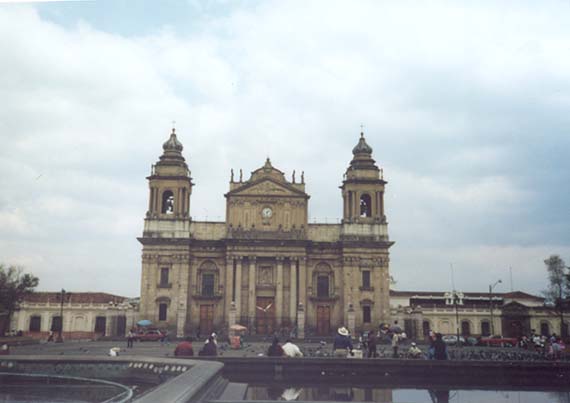 |
| Cathedral in Guatemala City, Guatemala, and an interesting building in Guatemala City.
| |
| Continuing with my Central American travels, I next went to Guatemala for a few days in order to further find out more about Cañas' origins. In at least three published books, it is stated that Cañas was the son of a Guatemalan Roman Catholic priest who signed his name as Jose Marcelo Aviles. According to Catholic Church documents in Guatemala, the following statements/information is given about Aviles, the father of Cañas: From the "Declaracóin de doña Juana Lopez del Pinal": "En la Nueva Guatemala en dicho día mes y año yo el Notario en virtud de lo mandado en el Decreto de este escrito recibí juramento de doña Juana Lopez de Pinal, natural de la Antigua Guatemala y vecina de esta ciudad su estado casada con don Gabriel Rodriguez y lo hizo por Dios nuestro señor y una señal de su santa cruz según forma de derecho... cuyo cargo ofreció decir verdad en lo que supiere y se le preguntare y siendo examinados al tenor del mismo escrito antecedente dijo: que conoce al que le presenta don Jose Marcelo Aviles desde su nacimiento por ser sobrino suyo, hijo legítimo de su hermana doña Vicenta Lopez y don Francisco Aviles, que le consta haberse conferido a este el sacramento de la confirmación en la Antigua Guatemala en las que generalmente celebró el Ilustrísimo Señor Don Pedro Cortés y Larraz en la iglesia de los remedios en el año de setenta y tres, antes de su ruina, siendo dicho don Jose Marcelo mayor de un año de edad y que le sirvió de Madrina en dicho acto la que responde por lo que lo reconoce por su ahijado. Y que esta es la verdad por el juramento que hecho tiene en que se afirmó y ratificó leídole ésta su declaración expresó ser mayor de cuarenta años de edad y lo firmó de que doy fe. Juana Lopez del Pinal Ante mi Juan Santa Cruz" [Signo Notario público] His baptismal record states: "Yo el Licenciado don Benito Monzon, cura Rector del Sagrario de esta Santa Iglesia Metropolitana certifico en debida forma que en uno de los libros de la administración de mi cargo en el que se sientan las partidas de Bautismos de la gente española a fojas 95 se haya la del tenor siguiente: En el año del señor de mil setecientos y setenta y dos en veinte y un días del mes de enero el Br. Don Cleto Ordoñez, Clérigo Presbítero con licencia del Sr. Cura Semanero, hice los exorcismos, puse el santo óleo y crisma y bautizó solemnemente a un infante que nació a diez y seis de dicho mes y año a quien puso por nombre Marcelo Jose Francisco, hijo legítimo de don Francisco Aviles, sargento de la compañía de Dragones y de doña Vicenta Lopez del Pinal fue su padrino el licenciado don Cristobal Ortiz de Aviles, y para que conste lo firmó. Cleto Jose Ordoñez. Concuerda con su original a que me remito y la saque de requerimiento de la parte. Y para que conste doy este certificado en la Nueva Guatemala, en treinta de septiembre de mil setecientos noventa y cuatro años. Licenciado Benito Monzon" The original baptismal record has don Francisco Aviles as don Francisco Abiles and the godfather's name is spelled don Xptobal Ortiz de Abiles. This is found in Libro No. 5, 1742-1772, bautismos de españoles, folio # 95. | |
| I would also like to mention that similar to don Francisco Aviles, I have another ancestor
that served in the Escuadrón de Dragones in the same region. That ancestor was Pedro Campo Arpa, the father of Rafael Campo, president of El Salvador during Central America's war against William Walker. I want to give special thanks to the staff of the "Arhivo Histórico" of the "Aquidiócesis de Guatemala" for all their assistance. |
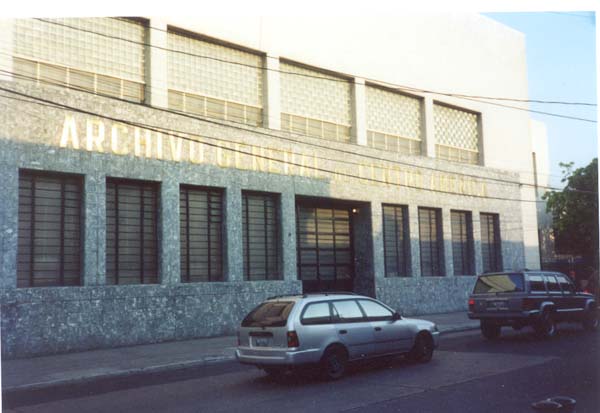 |
|
| |
 |
UNO CON ELLOS, UNO CON EL MUNDO Del libro de próxima publicación: Poder y Gracia - Una Aventura en la Vida Despierta. Del autor irlandés, Mick Quinn. |
Hola, me llamo Débora y vivo al sur de Galicia, en una población llamada Tomiño que se encuentra prácticamente en la frontera con Portugal. Vivo aquí con mi marido Mick Quinn. Mick es irlandés aunque también tiene nacionalidad americana, y nos conocimos aquí cuando él decidió acabar con su vida en Nueva York, llena de negocios y dinero pero vacía de contenido. Fue miembro fundador de multitud de negocios millonarios que resultaron un gran éxito, y era propietario de uno de las empresas situadas en las torres gemelas cuando los trágicos sucesos del once de septiembre ocurrieron. Incluso el "The New York Times" estuvo una vez interesado en una de sus aventuras empresariales. Ésta es su biografía.: http://www.mickquinn.com/spanish_spiritual_writer_page.htm Mick ahora está más interesado en otros campos de la vida como la felicidad, las relaciones en las que evitemos cualquier tipo de sufrimiento innecesario a los demás y como tenemos que empezar a plantearnos nuestras vidas y lo que hacemos con ellas si queremos vivirlas plenamente. Para ello está escribiendo un libro, "Poder y Gracia", así como dando clases en Tui, Burgos, Barcelona, Portugal, Irlanda y Estados Unidos. Yo trabajo con él en las traducciones tanto de la página web, como del libro, y en las clases cuando son en España. Mick está dedicando toda su vida y sus energías a este trabajo que ama. Desde que se levanta hasta la noche, incluso sábados y domingos, ya que como él mismo dice: "No tengo elección". Y yo como la persona más cercana a él, he de decir que su trabajo funciona realmente, puedo decir que se puede ser féliz si aprendes a saber lo que es realmente importante en la vida, qué es lo que tiene valor. Éste es su trabajo. http://www.mickquinn.com/ y ésta la parte en español: http://www.mickquinn.com/spanish_sections.htm Les envío esta pequeña historia porque pensé que podrían estar interesados en esta nueva travesía emprendida por mi marido hace dos años cuando decidió darle un vuelco a su vida y como consecuencia a la mía y a la de todos los que le quieran escuchar y que es ahora el motor de nuestras vidas. Muchas gracias por su atención y su tiempo, y con nuestros mejores deseos: Débora y Mick. Mi teléfono de contacto es 0034 630 247 206. "Alguien dijo una vez que el mundo es un pañuelo y es verdad. Sólo tenemos que sentarnos en la puerta de cualquier vecindario del mundo y podremos ver pasar en no demasiado tiempo alguna persona de características diferentes a las predominantes en el lugar, lo que significa primero, que nuestra raza, cultura, creencia o color no era tan especial como creíamos y que si eliminamos todas esas distinciones superficiales nos convertimos básicamente en lo mismo: consciencia pura. A veces vivimos en un microcosmos, nacemos, crecemos, nos casamos, trabajamos y criamos a la próxima generación en exactamente las mismas condiciones en las que nosotros lo hicimos antes, y no sólo eso sino que pretendemos que nuestros hijos hagan precisamente lo mismo. Sabemos que hay vida fuera de nuestra propia "comunidad" y decimos que la respetamos, pero ellos son diferentes, no son como nosotros, y decidimos que no hay nada como nuestra casa, llena de muros y tétricos laberintos pero, en la que "estamos a salvo". Ésta es la historia de dos personas que se encontraron en el medio de esa tierra de nadie existente entre "comunidades". Esa tierra en la que se junta todo tipo de gente extraña que de alguna manera quiere escapar de su propia comunidad porque ha descubierto que hay algo que falta allí, que no está completa. Es la tierra en la que se reúnen los buscadores del Santo Grial. A veces en medio de los buscadores aparecen aquéllos que sin decirlo ya conocen la verdadera naturaleza del Grial. Visten como los buscadores, actúan como ellos, pero si miras fijamente a sus ojos descubres que tras ellos se esconde un tipo de sabiduría que nunca antes habías conocido, que nunca hubieras siquiera imaginado que podría existir." Para mas informacion sobre esta obra: http://www.mickquinn.com/spanish_sections.htm |
|
BIBLIOTECAS Quando
chegaram os primeiros descobridores à América eram muito poucos os que
sabiam ler e escrever, pela que a importância de cada qual se media muito
pelos livros de que eram portadores ou tinham nos seus domicilios.
Para
fazernos uma ideia, quando D. Pedro de Mendoza (Primerio Adiantado no Rio
de la Plata e fundador de Buenos Aires), chegou ao seu destino levava na
sua equipagem “sete livros médios guarnecidos de couro preto e um livro
de Erasmo, tamben guarnecido de couro, un Petrarca, um livro pequeño
dourado que dis nele Virgílio e um livro que diz Bridia, guarnecido em
pergaminho” Por
isso a biblioteca que chegou a possuir o Bispo de Buenos Aires D. Manuel
Azamor y Ramirez, que à sua morte em 1796, doou ao Cabido para que se
criasse uma Biblioteca Pública de Buenos Aires e que depois se converteu
na Biblioteca Nacional da Republica Argentina. Até
aqui repetiu-se o que aconteceu na fundaçâo de muitas cidades no Novo
Mundo, mas esta da capital da Argentina, tem para os habitantes de Huelva
um detalhe muito especial, já que D. Manuel Azamor y Ramírez, era
natural daquela provincia andaluza, pois havía nacido em Villablanca a 22
de outubro de 1733 e foi Sagrado Bispo de Buenos Aires a 15 de Outubro de
1786 com 53 anos de idade, havendo morrido dez anos depois. Foi D. Manuel Azamor y Ramírez quem concluiu e inaugurou em 1791 a Catedral de Buenos Aires que, desde 1547, ano em que foi criada pelo Papa Paulo III a Diocese do Rio de la Plata havía conhecido múltiplas intençôes de edificaçâo, primeiro en madeira e em pouco tempo sofría derrubes, sendo necesario edificá-la de novo, o que aconteceu por quatro vezes. O ultimo período durou 38 anos, desde 1753 a 1791. Esta Catedral, que todavía conheceu novas obras en 1822, foi declarada monumento histórico nacional da República Argentina a 21 de Maio de 1942.
|
|
SIMÂO DE
ALCAZABA Y SOTOMAYOR Publicado en “Folha do Domingo”, de Faro (Portugal) el 7 de abril de 2006 Nasceu en 1470 en Portugal, ainda que tenha iniciado a sua carreira na Marinha Espanhola, no tempo do Imperador Carlos V, pelo que foi criticado e recusado na sua patria. Em 1534 muda-se para Sevilha para organizar a esquadra que o levará a zona do Estreito de Magalhâes, já que o Rei o havia nomeado Adelantado da nova provincia de Nova Leâo (Nueva León). A 21 de Setembro de 1534, no comando de dois velhos barcos, “Madre de Dios” e “San Pedro” e com cerca de 2509 homens, partiram de Sanlucar de Barrameda, cegando nos fins do ano ao Sul do Continente Americano. Entre os componentes desta expediçâo iam; Alonso Fernández de Villamarin, Nuno Alvarez, Gonzalo Rabelo e Gonzalo de la Vega, de Orense; Florencio de la Colmenara, del Valle de Ojeda; Alejo Garcia, de Paradinas; Ochoa de Meñate, de Munguía; Juan Canhada, de Cuenca; Antonio Sanches, de Carrión de los Condes; Martín de Chaoz, de Calahorra; Juan de Sarabia, de Arnedo; Juan Rodríguez, de Sevilha; Jerónimo de Fonseca, de Aiamonte e Francisco de Medina, Dionisio de Monroy e Andrés de Toro, de Medina del Campo. A 9 de março de 1535 Simâo de Alcazaba escolheu o local para construir a sua cidade e desenho o traçado da fortaleza, instalando solenemente um toldo e fundando a primeira povoaçâo da Patagónia e futura capital daquele Estado. Nesse mesmo dia partiu uma expediçâo para o interior e depois de vinte dias de marcha con muitas dificultades, dois marinheiros, chamados Arias e Sotelo, sublevaram-se e apresaram Rodrigo Isla e Juan de Mori, que comandavam a expediçâo. Quando regreseram à costa, os sublevados assasinaram Simâo de Alcazaba, que se encontrava a bordo da sua nau. Depois da perda de mais de 80 vidas, Isla e Mori conseguiam impor-se e mandaram degolar Arias e Sotelo, enquantoRodrigo Martinez, piloto da nau “San Pedro”, Nuno Alvarez e Alejo Garcia, foram abandonados à sua sorte por terem participado na revolta. Os dois barcos fizeram-se ao mas e a “Madre de Dios” naufragou, mas o “San Pedro” logrou alcançar a Baía de Todos os Santos. Ángel Custodio Rebollo Barroso |
| The
Republic of Hawaii is organized into a U.S. territory America's founders Recognized the Giver of liberty as Almighty God |
|
Smithsonian January 2006 |
| America's founders did not intend for there to be a separation of God and state, as shown by the fact that all 50 states acknowledge God in their state constitutions: Alabama 1901, Preamble. We the people of the State of Alabama, invoking the favor and guidance of Almighty God, do ordain and establish the following Constitution. Alaska 1956, Preamble. We, the people of Alaska, grateful to God and to those who founded our nation and pioneered this great land. Arizona 1911, Preamble. We, the people of the State of Arizona, grateful to Almighty God for our liberties, do ordain this Constitution... Arkansas 1874, Preamble. We, the people of the State of Arkansas, grateful to Almighty God for the privilege of choosing our own form of government... California 1879, Preamble. We, the People of the State of California, grateful to Almighty God for our freedom. Colorado 1876, Preamble. We, the people of Colorado, with profound reverence for the Supreme Ruler of Universe. Connecticut 1818, Preamble. The People of Connecticut, acknowledging with gratitude the good Providence of God in permitting them to enjoy. Delaware 1897, Preamble. Through Divine Goodness all men have, by nature, the rights of worshipping and serving their Creator according to the dictates of their consciences. Florida 1885, Preamble. We, the people of the State of Florida, grateful to Almighty God for our constitutional liberty, establish this Constitution... Georgia 1777, Preamble. We, the people of Georgia, relying upon protection and guidance of Almighty God, do ordain and establish this Constitution... Hawaii 1959, Preamble. We, the people of Hawaii, Grateful for Divine Guidance .. establish this Constitution. Idaho 1889, Preamble. We, the people of the State of Idaho, grateful to Almighty God for our freedom, to secure its blessings. Illinois 1870, Preamble. We, the people of the State of Illinois, grateful to Almighty God for the civil, political and religious liberty which He hath so long permitted us to enjoy and looking to Him for a blessing on our endeavors. Indiana 1851, Preamble. We, the People of the State of Indiana, grateful to Almighty God for the free exercise of the right to chose our form of government. Iowa 1857, Preamble. We, the People of the State of Iowa, grateful to the Supreme Being for the blessings hitherto enjoyed, and feeling our dependence on Him for a continuation of these blessings establish this Constitution. Kansas 1859, Preamble. We, the people of Kansas, grateful to Almighty God for our civil and religious privileges establish this Constitution. Kentucky 1891, Preamble. We, the people of the Commonwealth are grateful to Almighty God for the civil, political and religious liberties... Louisiana 1921, Preamble. We, the people of the State of Louisiana, grateful to Almighty God for the civil, political and religious liberties we enjoy. Maine 1820, Preamble. We the People of Maine acknowledging with grateful hearts the goodness of_the Sovereign Ruler of the Universe in affording us an opportunity ... and imploring His aid and direction. Maryland 1776, Preamble. We, the people of the state of Maryland, grateful to Almighty God for our civil and religious liberty... Massachusetts 1780, Preamble. We...the people of Massachusetts, acknowledging with grateful hearts, the goodness of the Great Legislator of the Universe ... in the course of His Providence, an opportunity and devoutly imploring His direction .. Michigan 1908, Preamble. We, the people of the State of Michigan, grateful to Almighty God for the blessings of freedom establish this Constitution. Minnesota, 1857, Preamble. We, the people of the State of Minnesota, grateful to God for our civil and religious liberty, and desiring to perpetuate its blessings: Mississippi 1890, Preamble. We, the people of Mississippi in convention assembled, grateful to Almighty God, and invoking His blessing on our work. Missouri 1845, Preamble. We, the people of Missouri, with profound reverence for the Supreme Ruler of the Universe, and grateful for His goodness .. establish this Constitution .. Montana 1889, Preamble. We, the people of Montana, grateful to Almighty God for the blessings of liberty establish this Constitution ... Nebraska 1875, Preamble. We, the people, grateful to Almighty God for our freedom .. establish this Constitution. Nevada 1864, Preamble. We the people of the State of Nevada, grateful to Almighty God for our freedom establish this Constitution ... New Hampshire 1792, Part I. Art. I. Sec. V. Every individual has a natural and unalienable right to worship God according to the dictates of his own conscience. New Jersey 1844, Preamble. We, the people of the State of New Jersey, grateful to Almighty God for civil and religious liberty which He hath so long permitted us to enjoy, and looking to Him for a blessing on our endeavors. New Mexico 1911, Preamble. We, the People of New Mexico, grateful to Almighty God for the blessings of liberty New York 1846, Preamble. We, the people of the State of New York, grateful to Almighty God for our freedom, in order to secure its blessings. North Carolina 1868, Preamble. We the people of the State of North Carolina, grateful to Almighty God, the Sovereign Ruler of Nations, for our civil, political, and religious liberties, and acknowledging our dependence upon Him for the continuance of those . North Dakota 1889, Preamble. We, the people of North Dakota, grateful to Almighty God for the blessings of civil and religious liberty, do ordain... Ohio 1852, Preamble. We the people of the state of Ohio, grateful to Almighty God for our freedom, to secure its blessings and to promote our common Oklahoma 1907, Preamble. Invoking the guidance of Almighty God, in order to secure and perpetuate the blessings of liberty ... establish this .. Oregon 1857, Bill of Rights, Article I. Section 2. All men shall be secure in the Natural right, to worship Almighty God according to the dictates of their consciences.. Pennsylvania 1776, Preamble. We, the people of Pennsylvania, grateful to Almighty God for the blessings of civil and religious liberty, and humbly invoking His guidance Rhode Island 1842, Preamble. We the People of the State of Rhode Island grateful to Almighty God for the civil and religious liberty which He hath so long permitted us to enjoy, and looking to Him for a blessing South Carolina, 1778, Preamble. We, the people of he State of South Carolina grateful to God for our liberties, do ordain and establish this Constitution. South Dakota 1889, Preamble. We, the people of South Dakota, grateful to Almighty God for our civil and religious liberties ... Tennessee 1796, Art. XI.III. That all men have a natural and indefeasible right to worship Almighty God according to the dictates of their conscience... Texas 1845, Preamble. We the People of the Republic of Texas, acknowledging, with gratitude, the grace and beneficence of God. Utah 1896, Preamble. Grateful to Almighty God for life and liberty, we establish this Constitution. Vermont 1777, Preamble. Whereas all government ought to .. enable the individuals who compose it to enjoy their natural rights, and other blessings which the Author of Existence has bestowed on man .. Virginia 1776, Bill of Rights, XVI ... Religion, or the Duty which we owe our Creator .. can be directed only by Reason .. and that it is the mutual duty of all to practice Christian Forbearance, Love and Charity towards each other . Washington 1889, Preamble. We the People of the State of Washington, grateful to the Supreme Ruler of the Universe for our liberties, do ordain this Constitution West Virginia 1872, Preamble. Since through Divine Providence we enjoy the blessings of civil, political and religious liberty, we, the people of West Virginia reaffirm our faith in and constant reliance upon God ... Wisconsin 1848, Preamble. We, the people of Wisconsin, grateful to Almighty God for our freedom, domestic tranquility Wyoming 1890, Preamble. We, the people of the State of Wyoming, grateful to God for our civil, political, and religious liberties .. establish this Constitution. After reviewing acknowledgments of God from all 50 state constitutions, one is faced with the historical fact that the United States of America was established in full recognition and gratitude to a higher power, the Creator, Almighty God, Supreme Ruler, Great Legislator of the Universe, giver of liberty. Sent by Bill Camera JCarm1724@aol.com
|
|
Finding Records of Your Ancestors, Mexico, 1859 to Present Fee-for-service records program List of Genealogy and History Podcasts Recommended Webpages: Internments and Personal Historians |
|
Finding Records of Your Ancestors, Mexico, 1859 to Present New Guide for Mexican Family History: Simplifies and Assists Research for Mexico http://www.familysearch.org/Eng/Home/News/Press/Finding_Records-Mexico_36581-002.pdf Sent by Elvira Zavala-Patton elviraz@elpasonet.net The research guide, Finding Records of
Your Ancestors, Mexico, 1859 to Present features easy-to-follow,
step- by-step instructions,
colorful graphics and tear-out worksheets. This is the newest
addition to a series of popular publications. A free copy can be viewed or
downloaded below. |
|
Fee-for-service records program Hello All, I invite your attention to a Proposed Rule published today in the Federal Register by US Citizenship and Immigration Services. This proposed rule proposes the establishment of a fee-for-service records program designed to meet the demand of genealogists for searches of and copies of agency records. I encourage you to read the rule and to submit any and all comments, questions, and suggestions. Instructions for submission are found in the document, and may also be posted at http://www.regulations.gov/fdmspublic/component/main. The citation is: U.S. CITIZENSHIP AND IMMIGRATION SERVICES PROPOSED RULES Immigration: Genealogy Program; genealogical and historical records service; establishment, E6-05947 [DHS Doc. No. USCIS-2005-0062] Please be sure to direct your questions and comments as directed, and NOT to me. Thanks, Marian L. Smith, Historian, USCIS History Office and Library |
| LIST OF GENEALOGY &
HISTORY PODCASTS ... Sent by Janete Vargas magnaguagno@gmail.com There is a growing list of genealogy and history podcasts out there. You don't need an iPod to listen, just your computer with access to the internet and the speakers turned on. If you want to automatically receive each podcast, its as easy as downloading a free iTunes software (for Mac and Windows) from http://www.itunes.com and subscribe (they're free!) to some of the podcasts available at this time. Once you have iTunes on your computer (for MAC or Windows) you merely need to subscribe to the podcast's feed by opening iTunes and: . clicking ADVANCED . selecting SUBSCRIBE TO PODCAST . then copy/paste the following mRSS code for the desired podcast (from the listing below) clicking the OK button (Admittedly there is other podcast software out there, but iTunes seems the quickest download, which may be an issue for folks on dial-up.) CODES FOR SUBSCRIBING to these free podcasts to insert in your podcast software such as iTunes. The mRSS codes for some informative podcast feeds are as follows: DearMYRTLE's Family History Hour (new podcast every Tuesday night) http://www.ourmedia.org/mediarss/user/33644 Genealogy Guys Podcast (new podcast every Sunday night) http://www.genealogyguys.com/rss History According to Bob http://www.summahistorica.com/podcast/rss.xml HistoryPodcast http://feeds.feedburner.com/HistoryPodcast1 Nuestra Familia Unida (new podcast periodically) http://nuestrafamiliaunida.com/rss.xml Port of Entry http://rss.mac.com/ms5/iWeb/POE/PortofEntryHome/rss.xml Sparkletack http://www.sparkletack.com/rss Talking History http://talkinghistory.oah.org/podcast-2006.xml YOU ONLY HAVE TO ENTER THE CODE ONCE. From whenever you are on the internet, when you open iTunes, click the update button to automatically see what new podcasts have been added recently by any of these three podcast groups! Its easy, and you may listen to the podcasts as many times as you wish 24/7. I sure hope more folks get into producing these genealogy and history .mp3 audio files. What a wonderful learning tool! If you'd like to learn more about the producers of these podcasts see their websites: DearMYRTLE's Family History Hour Podcast http://www.DearMYRTLE.com Genealogy Guys Podcast http://www.genealogyguys.com History According to Bob http://www.summahistorica.com HistoryPodcast http://historypodcast.blogspot.com Military History Podcast http://www.militaryhistorypodcast.blogspot.com Nuestra Familia Unida http://nuestrafamiliaunida.com Port of Entry http://web.mac.com/ms5/iWeb/POE/PortofEntryHome/PortofEntryHome.html Sparkletack (History of San Francisco) http://sparkletack.com Talking History http://talkinghistory.oah.org |
| Interments
http://www.interment.net/Default.htm Sent by John Inclan fromgalveston@yahoo.com Personal Historians www.personalhistorians.org Sent by laurisolsen@yahoo.com |
| Ancient
1,500-year Pyramid Discovered in Mexico Under an Easter ritual, an ancient pyramid Archaeologists Launch Large Dig in Virginia <click |
|
Ancient Pyramid Discovered in Mexico
|
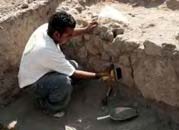 Under an Easter ritual, an ancient pyramid Under an Easter ritual, an ancient pyramidby Monica Campbell, The Christian Science Monitor, Apr 14, 06 Sent by Sent by John Inclan Reuters Photo: Archaeology worker Cesar Valentino works on a ruins of old pre-Hispanic pyramid in Iztapalapa, Mexico... For now, archeologists are erecting a periphery fence. After Easter, they'll launch a public education campaign in the nearby neighborhoods, focusing on the pyramid and the area's pre-Columbian roots.Next, archeologists will lobby the community for more far-reaching and permanent conservation measures, perhaps keeping next year's Good Friday attendees from ascending the hill. However, this would keep pilgrims from fully experiencing the visceral struggle of the actor who must haul his 40-pound cross up the hill.In exchange for the restrictions, the scientists would develop a tourism project on the hill that could provide a more stable, year-round income for local residents. The site would probably draw mostly Mexicans and some intrepid foreigners willing to brave this rough part of town."Now that we know this pyramid exists, we can't have the same attitude toward this space as before," says Sánchez, who works at Mexico's National Institute of Anthropology and History. "This site can provide new pieces to a puzzling part of Mexico's history. It must be recognized that something else stood here before."Until now, past research concluded that no major Teotihuacán settlements existed beyond the ancient city that houses the Pyramid of the Sun and Moon. Also, the newly discovered pyramid, abandoned when the Teotihuacán culture fell around 800 A.D., was apparently refortified by the legendary Toltec civilization, predecessors of the Aztecs. The dig may offer critical clues to a 2,000-year-old Teotihuacán culture that left little trace of its origin, language, or rulers. The discovery's grandeur intrigues local residents. But tension may rise among some residents if archeologists push for the area's conservation. Squatter shacks, along with more established houses, sprawl over the pyramid site. Rumors of relocating homes are circulating. "It's incredible to think that something so old and huge is beneath my living room floor," says Alberto Anaya, a mechanic who lives only yards from the pyramid site. "I still don't believe it. But does that mean I have to give up my home?" Meantime, Mr. Anaya depends on the Easter Week rituals for extra cash. He and his neighbor, Francisco Javier Balois, sell ice to visitors. Sales were already brisk as buses transported tourists wanting a look at the preritual preparations. "It'll be nonstop business," says Mr. Balois. |
|
Black and White
(Under age 40? You won't understand.) |
|
You could hardly see for all the snow, Spread the rabbit ears as far as they go. Pull a chair up to the TV set, "Good Night, David. Good Night, Chet." Depending on the channel you tuned, You got Rob and Laura - or Ward and June. It felt so good. It felt so right. Life looked better in black and white. I Love Lucy, The Real McCoys, Dennis the Menace, the Cleaver boys, Rawhide, Gunsmoke, Wagon Train, Superman, Jimmy and Lois Lane. Father Knows Best, Patty Duke, Rin Tin Tin and Lassie too, Donna Reed on Thursday night! -- Life looked better in black and white. I want to go back to black and white. Everything always turned out right. Simple people, simple lives. Good guys always won the fights. Now nothing is the way it seems, In living color on the TV screen. Too many murders, too many fights, I want to go back to black and white. In God they trusted, alone in bed, they slept, A promise made was a promise kept. They never cussed or broke their vows. They'd never make the network now. But if I could, I'd rather be In a TV town in '53. It felt so good. It felt so right. Life looked better in black and white. I'd trade all the channels on the satellite, If I could just turn back the clock tonight To when everybody knew wrong from right. Life was better in black and white! |
12/30/2009 04:49 PM


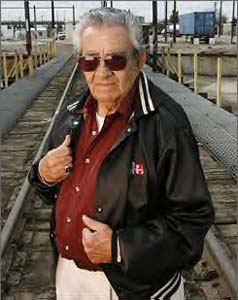
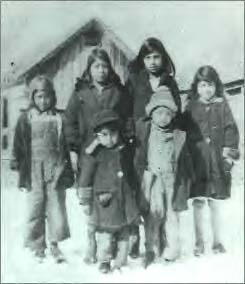
 California’s “Lost” Tribes (Broadcast: April 13)
 The Price of Renewal (Broadcast: April 20)
 The New Los Angeles (Broadcast: April 27)
  Ripe for Change (Broadcast: May 4)
  These
cultural disconnects can be very subtle in early childhood educational
experiences, but; they grow to be big problems when students reach high
school.
These
cultural disconnects can be very subtle in early childhood educational
experiences, but; they grow to be big problems when students reach high
school.
.jpg)
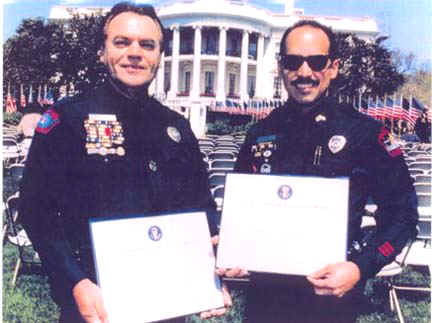
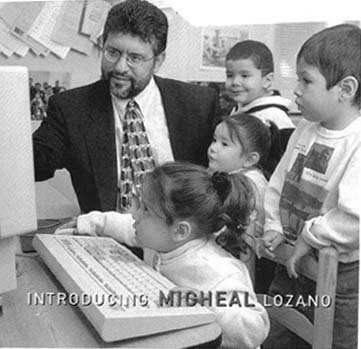

 On March 23rd, the National Latina Business Women Association of Orange County proudly celebrated the grand opening of their office, "The Staples NLBWA-OC Latina Center," with a ribbon cutting ceremony and reception. Many thanks to the support of Staples, other corporate sponsors and our members! The office space is located inside the Orange County Hispanic Chamber of Commerce at 888 W. Santa Ana Blvd. Suite 150 in the City of Santa Ana. Office hours are 10:00am - 2:00 pm, Monday through Friday.
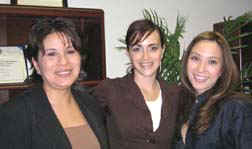 With more than 75 attendees present, we had a full
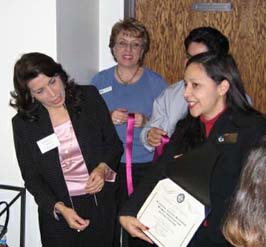
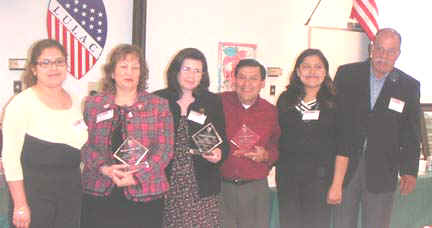
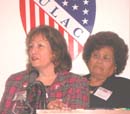
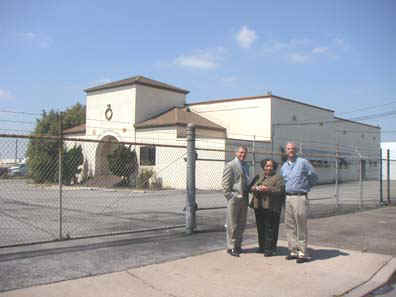

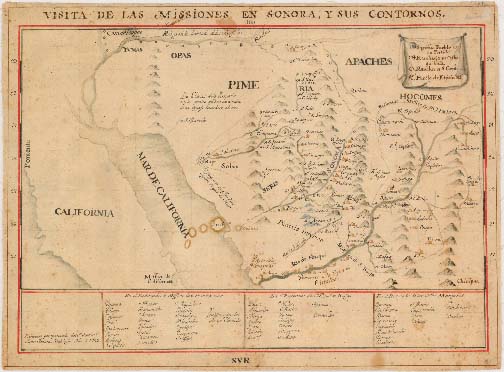
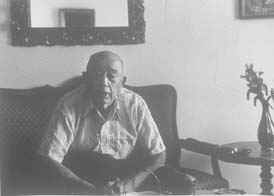 My father selected me as "The Rememberer" to pass on the oral
history of his family. All my information is from my father.
Great-Grandmother wouldn't talk about it. Father's family has been in New
Mexico since 1635.
My father selected me as "The Rememberer" to pass on the oral
history of his family. All my information is from my father.
Great-Grandmother wouldn't talk about it. Father's family has been in New
Mexico since 1635.