|
Somos Primos January 2006 Dedicated to
Hispanic Heritage and Diversity Issues |
|
Society of Hispanic Historical and Ancestral
Research
Celebrating |
|
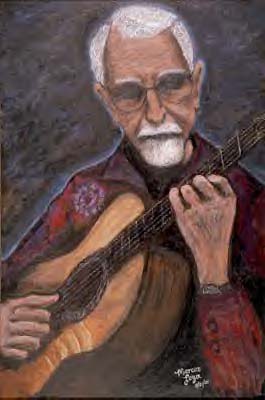
In times past, rapport between young and old yielded more harmony and less tension. This was so because family lived close. Respect for the old came out of the young. We have lost the connection between old and young, so generations lack for hope. It's time to bridge the gap between the two; Humanity can grow with life and hope, and foster future generations trust. (L.A. Conference) Ms Lorna V. Neysmith (c)
|
| Content Areas United States . . 3 Anti-Spanish Legends . . 29 Military Heroes and Research . . 38 Spanish Sons of the American Revolution . . 39 Surname . . 45 Cuentos . . 46 Orange County, CA . . 58 Los Angeles, CA . . 58 California . . 73 Northwestern United States . . 74 Southwestern United States . . 76 Indigenous . . 81 Black . . 89 Sephardic . . 96 |
Texas . . 99 East of the Mississippi . . 108 East Coast . . 113 Mexico . . 127 Caribbean/Cuba . . 158 Spain . . 161 International . . 165 History . . 169 Family History . . 170 Archaeology . . 178 Calendar Networking Meetings END . . 190 |
|
Letters to the Editor : |
| I wanted to email you to congratulate you on a great website that is extremely resourceful to us
Latinos in the US. The content of your webpage is extremely powerful in the sense that it allows
Latinos to express themselves in terms of cultural tradition and the implications that come about with being latino in this country. Camilo Ferranti Papiti@aol.com § Mimi, Happy Holidays! Hopefully you are having a great Christmas and that all continues to be well. This is just a note to thank you for the great and valuable work that you do and to tell you how much you are appreciated. All the best, Diane Sears bsi-international@earthlink.net BSI International, Inc. Post Office Box 3885 Philadelphia, PA 19146-0185 www.bsi-international.com |
One word Mimi,
You do excellent work. Merry Christmas to you and
your family.
From deep down in dry South Texas. J.D. Villarreal juandv@granderiver.net § By the way, great information in the Somos Primos website!!!! Thank you, Joe Levario Longoria joe.longoria@CenturyTel.com § Hello from Texas, I loved your webpage and the wonderful history that you have posted. DORA PPECHE@stx.rr.com § Thank you for your 'Somo Primos newsletters' they are a much welcomed monthly. Happy New Year!!!! Kern taktag@gmail.com Grace to you and peace from God our Father and Jesus Christ Eph 1:2 |
| Somos Primos
Staff: Mimi Lozano, Editor Luke Holtzman, Assistant Reporters/columnists: Johanna De Soto Galal Kernahan Granville Hough, Ph.D. Alex Loya, Th.D., M.Div. John P. Schmal Howard Shorr Michael Stevens Perez Armando Montes Contributors: DORA PPECHE@stx.rr.com Kern taktag@gmail.com Juan Pablo Alvarez John H. Arvizu Mary Ayers Manuel Berriozabal Maria Antonietta Berriozabal Jaime Cader Bill Carmena Jack V Cowan Graciela Cruz López Logan Davis Johanna De Soto Zeen Eate |
Edna Yolanda Elizondo Gonzalez Luis Elizondo Armando M Escobar Olmedo Bob Smith Camilo Ferranti R.J. Ferro Val Gibbons Gloria Golden Carlos Ray Gonzales Lorraine Hermandez Esther Herold Elsa Herbeck Carlos Martín Herrera de la Garza Lorraine Hernandez Zeke Hernandez Kathy Hughart Aury Lor Holtzman, M.D. Granville Hough, Ph.D. John Inclan Brian Kalahan Nellie Kaniski Galal Kernahan Cindy LoBuglio Irma Nelda Longoria Cavazos Joe Levario Longoria Carlos Lopez Dzur Alex Loya, Th.D., M.Div. Juan Martinez J. V. Martinez Armando Montes |
Dorinda Moreno Emma Moreno George G. Morgan Lorna V. Neysmith Paul Newfield III Jose M. Pena Ángel Custodio Rebollo Anita Rivas Medellin Leticia Robles Francisco Rodriguez Ben Romero Sonia M. Rosa M.A. Jan Rus Ruben Sálaz Joseph Salazar Gilbert M. Sandate Patti Sapone Diane Sears Christine Senteno Howard Shorr Frank Sifuentes Mira Smithwick Sylvia Trujillo Ricardo Valderde Janete Vargas Connie Vasquez J.D. Villarreal Gabriel Villuendas Ted Vincent |
| SHHAR Board: Bea Armenta Dever, Steven
Hernandez, Mimi Lozano Holtzman, Pat Lozano, Henry Marquez, Yolanda
Ochoa Hussey, Michael Perez, Crispin Rendon, Viola Rodriguez Sadler, John
P. Schmal, Warm Welcome to new Board member: Yolanda Magdaleno.
|
| Hispanics in
Federal Service Panel held at the National Archives Latino Experts Call for Congressional Hearings: Federal Employment Gap Commission Calls: Reducing Number of Minority Youths Tried as Adults Enrique "Kiki" Camarena, DEA Agent Maya Christina Gonzales, Artist Américo Paredes, Folklorist, educator, author, novelist Along Those Lines, Musical Genealogy J. Richard Tapia, Harley-Davidson dealer "Mexican Illegal
Aliens: A Mexican American Perspective" Collegians Get By Despite
Illegal Status |
|
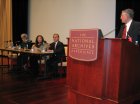
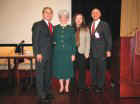
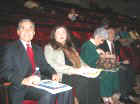
A panel presentation by
J. V. Martinez, Emma Moreno, Gilbert M. Sandate and National Archives and Records Administration, held December 14, 2005
McGowan Theater, |
||
|
|
|
|
|
Gilbert M. Sandate, Director, Office of Workforce Diversity for the Library of Congress |
||
|
A general overview of the history of Hispanic employment in the U.S. Federal Government continues to be a history of extremes. The more substantive beginning of Hispanic employment in the federal service began at the conclusion of World War II, which was a watershed period when U.S. Hispanics discovered they were more part of the nation’s population than ever before. This realization brought their attention to legal statutes that accorded rights about which they were previously aware and rights not actively pursued as a group. The distance between the
central federal government offices and the Hispanic population
concentrated in the From 1965 on, the federal service workforce continued to grow in step with the nation’s increasing presence-economically, politically, and militarily-both domestic and international. Limited access to federal employment opportunities and the increasing size of government led to a deficit in the representation of Hispanics in the federal service. This condition began to be increasingly recognized among Hispanic activists from among the limited number of Hispanics in the federal service at the time. It is no coincidence that this recognition came at a time when the Civil Rights Movement reached a high mark. Hispanic government employees became aware that their community was not being justifiably represented in the federal workforce. This awareness was obvious in relation to the Hispanic presence in the Military, and in proportion to the federal services being provided the community justly due as citizens, taxpayers and by their dedication to national security. Notably absent in the delivery of federal services were Spanish-speaking government employees. This prompted Hispanic activists to challenge the government’s effectiveness in providing needed services to the community. While the methods used to compensate for these deficiencies varied through the ensuing decades, the deficit in Hispanic employment that appeared early on is yet to be eliminated. The increase in the U.S. Hispanic population continues to outstrip the rate at which Hispanics are being employed in the federal service further exacerbating the problem. It has become clear that conducting business as usual in federal hiring practices will not suffice. Being that federal employees are part of the executive branch of government and that each administration occupying the White House has ultimate control of federal hiring practices, White House attempts to rectify the situation by issuing executive orders and making well-meaning pronouncements, “photo-ops” in the vernacular, have had little success. Considering the rapid
non-stop growth of the Hispanic population in the Attempts to account for
this population using other labels turned in to a counterproductive census
quagmire. While meaningful
sensitivities exist in the government’s non-use of sub-group labels, it
appears that combining them all under the one label has allowed some
progress to be made without judging here that the labeling will lead to
the rightful increase of Hispanic representation in the federal service
will occur in the near future. The National Archives and
Restoration Agency (NARA) sponsored session will place this history in
perspective and, while it may be too much to hope for, the airing out of
this issue may lend to increased realization of the correction action now
called for.
| ||
|
Certified Federal Employment and Career Management who writes: Great Presentation! Congratulations for taking the lead and re-energizing "Nuestro Movimiento." More information: mimilozano@aol.com | ||
|
By Christine Senteno A panel of experts addressing the dearth of Latinos in federal government jobs
offered several recommendations to close the under-representation gap at a Dec. 13 presentation at the National Archives in Washington, D.C. |
|
Commission Calls for Reducing Number of Minority Youths Tried as Adults; Symposium
Cites Negative Impact
http://releases.usnewswire.com/GetRelease.asp?id=56366 "There is growing evidence that a large number of youths with diagnosable serious emotional disturbances are being diverted to the criminal justice system," said Dr. Christopher, whose Health Policy Institute sponsored the symposium. "It's crucial that we address the root causes of the social problems, such as the lack of adequate mental and physical health treatment, that are contributing factors in a large number of youths who are taken into the criminal justice system."
"The school system is becoming the pipeline for the prisons," said
Dr.Grantham. "Take for example my district, one of the schools we had 700 students to enter into high school and only 299 graduated. What are the remaining students doing? After they drop out, they have no skills; therefore, they may end up in the prison system... We're suspending and expelling students' everyday for fighting. That's not the solution; we must keep them in school. If we kick them out, it just gives them idol time to get in trouble." |
|
Enrique
"Kiki"
Camarena, DEA Agent
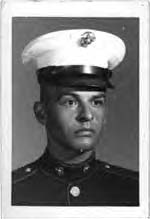
article suggested by: Brian Kalahan bkalahan@adelphia.net http://www.nfp.org/main/body/kikiaward.html Enrique Camarena never asked to be a hero.In 1985, when DEA agent Kiki Camarena was murdered by drug dealers in Mexico, they ended his life but not his dream. Here is Kiki's story. Growing up in a dirt-floored house in Mexico, Enrique Camarena wanted to make a difference. When he was little, he begged his mother for a toy gun. "I need a gun," he said, "because I'm going to be a policeman when I grow up." At nine, Kiki moved with his family to the U.S. to pick fruit. After excelling in high school, Kiki faced a critical turning point. His friends were headed for trouble, and he had to decide whether he wanted to follow them into a life of crime and drugs. The deeply engrained desire to make a difference won out, and Kiki opted to stay straight, working his way through college and earning a degree in criminal justice. Following stints in the Marines and the police force, Kiki joined the DEA. It was the best way he knew to stop drugs and to help people he cared about. His mother, concerned about dangers inherent in his job, tried to talk him out of it. "I can't not do this," he told her. "I'm only one person, but I want to make a difference." In early 1985, the DEA sent Kiki to work undercover in Mexico. For weeks he lived among the drug cartel, gathering information and evidence. He was ready to wrap up his assignment when his identity was discovered. He was kidnapped and tortured to death. To honor his memory, and to show that they would continue his fight against illegal drugs, friends and neighbors wore red badges of satin. Then parents who had come together in local coalitions to fight the drug problem took Kiki as their model, embracing his belief that one person can make a difference, and adopting his symbol--the red ribbon--as their own. From this grassroots beginning grew National Family
Partnership, a network of community groups united under one mission: to
promote healthy, drug-free youth through prevention and education.
|
|
Maya Christina Gonzales: My Own Room/Mi
Propio Cuartito |
Américo Paredes, 1915-1999 Folklorist, educator, author, novelist "To the memory of my father, who rode a raid or two with Catarino Garza; and to all those old men who sat around on summer-nights, in the days when there was a chaparral, smoking their cornhusk cigarettes and talking in low, gentle voices about violent things; while I listened." — Paredes' dedication to With His Pistol in His Hand Acclaimed Mexican American Folklorist Americo Paredes was a folklore scholar known for his collections and translations of the folklore and ballads of Mexico and the Mexican American border region. His celebrated 1958 book, With His Pistol in His Hand: A Border Ballad and Its Hero, described the legend of Gregorio Cortez, a Mexican American ranch hand who shot a Texas sheriff and then became a hero as he eluded capture. Paredes heard the story, which ended tragically, sung as a ballad in small towns along the Rio Grande. "Borders and ballads seem to go together, and their heroes are all cast in the same mold," he wrote. Throughout his long career, he challenged some of the stereotypical views of life in the borderlands of Texas and Mexico. By learning the songs and the lore of the region, he "set in motion a revolutionary approach to writing about the way things and people had been in early Texas," according to a statement released by the Office of Public Affairs at the University of Texas at Austin upon his death in 1999. "In doing so, he helped to shape a positive cultural identity among Mexican-Americans and influenced a whole new generation of Texas scholars." Praise for Literary Works Paredes was "renowned as an ethnographer, literary critic and social historian," according to Ramon Saldivar in the foreword to Paredes's fiction collection The Hammon and the Beans and Other Stories (1994). Similarly, Richard M. Dorson described him as "the outstanding scholar of border folklore" in the introduction to Paredes's Folktales of Mexico (1970): "He is the thorough folklorist, equally at home in the field, the library, and the archives," Dorson wrote. "No one is more uniquely qualified to present the folktales of Mexico." Paredes developed Chicano and folklore studies at the University of Texas at Austin, where he was professor of English and anthropology for over 30 years. A prolific writer, he was editor of the Journal of American Folklore from 1969 to 1973. Between Two Worlds Paredes was born to Justo and Clotilde Paredes in Brownsville, Texas, on 3 September 1915. He was raised between two worlds — a phrase which became the title of his 1990 book of poetry — on the Texas-Mexican border with its rich mixture of languages and cultures. In Folktales of Mexico, Paredes wrote that he spent childhood summers in northern Mexico, listening to storytellers. Aspiring to be a poet and fiction writer, he studied at Brownsville Junior College from 1934 to 1936, then worked as a journalist at the Brownsville Herald and Pan American Airways. He traveled to Japan with the U.S. Army in 1944 and 1945. As political editor for Stars and Stripes, he covered part of the post-World War II war crimes trials in Japan, according to notes in The Hammon and the Beans. Develops Folklore and Chicano Studies. Paredes had a long and distinguished academic career. In 1951, he received his bachelor's degree in English and philosophy, summa cum laude, from the University of Texas at Austin. He earned a master's in 1953 and his doctorate in 1956, both in English (folklore) and Spanish. He then taught at the university, rising to professor of English in 1965 and professor of anthropology in 1966, and serving on the folklore program faculty. He was later named the Ashbel Smith Professor of English and Anthropology and the Anderson Centennial Professor. After retirement, Paredes became Professor Emeritus of English and Anthropology. Professional Accomplishments In 1957, Paredes organized the Folklore Archives at the University of Texas and served as archivist. He founded the university's Mexican American Studies Program in 1972, and directed the Center for Intercultural Studies in Folklore and Oral History. Beyond the university, Paredes, who published frequently in professional journals, was president of the Texas Folklore Society in 1961-1962, and vice-president of the American Folklore Society in 1964-1965. He was also active in civil rights, bicultural education, and ethnic minority affairs for Texas and the university. Journeys to Lower Rio Grande A dedicated field researcher, Paredes traveled the Lower Rio Grande border, collecting corridos (Mexican American ballads) and folktales from farmers, ranchers, folksingers, and others. Many of his tapes are housed in the Folklore Library at the University of Texas at Austin. His doctoral thesis, "With His Pistol in His Hand" — which was made into a public television film — is considered a classic study of the border ballad. "It illuminates the folk psychology of the Mexican border folk," according to The Centennial Index: One Hundred Years of the Journal of American Folklore. "It also indicates how folklore sources can contribute to historical knowledge." Nature of Mexican Folklore In Folktales of Mexico, Paredes wrote that folklore in Mexico and the United States is a blend of "imported, indigenous and American-historical traditions," molded by a combination of "colonization, the westward movement, Negro slavery, immigration, regionalism, the rhetoric of democracy, and the technology of the mass media." Animal folktales, like "The Ram in the Chile Patch" and "Perez the Mouse," are among the stories he collected for the book. "Folktales of wonder and adventure still are told in Mexican villages and towns with all the old embellishments," he observed. Collecting Songs, Celebrating a People Paredes's 1976 book, A Texas-Mexican Cancionero: Folksongs of the Lower Border, was "among the first folksong volumes to emphasize Mexican rather than Spanish heritage," John O. West noted in Mexican-American Folklore. Paredes collected the words and music of 66 folksongs from the Texas-Mexican border, and added his own historical information and interpretation of each one. "The total reveals a scholar with an impressive command of border folksong," West claimed. In addition, the book was deemed appropriate for both scholars and general readers. Cultural Advocate Paredes was not only a scholar, but a cultural advocate who cared deeply about the history and people of his region. In the dedication to "With His Pistol in His Hand," Paredes wrote: "To the memory of my father, who rode a raid or two with Catarino Garza; and to all those old men who sat around on summer-nights, in the days when there was a chaparral, smoking their cornhusk cigarettes and talking in low, gentle voices about violent things; while I listened." Later Works Paredes worked well into his 70s. Folklore and Culture of the Texas-American Border appeared in 1992. His efforts at fiction and poetry came to fruition with the publication of a novel, George Washington Gomez (1990), and a poetry collection, Between Two Worlds (1991). "These imaginary works address the predicaments of contemporary Chicano/a cultural politics, identity formation, and social transformation," Saldivar stated. Paredes's short-story collection, The Hammon and the Beans, published in 1994 but mostly written in the 1930s and 1940s, vividly describes the Brownsville of his youth, where Mexican Americans struggled against poverty, prejudice, and loss of cultural identity. Family Life Paredes married Consuelo Silva in 1939. After the marriage ended, he wed Amelia Sidzu Naeamine in 1948. Paredes dedicated some of his many books to his four children, Julia, Americo, Jr. Alan, and Vicente. In 1989, Paredes was honored by the National Endowment for the Humanities with the Charles Frankel Prize for his lifelong contributions to the humanities. The government of Mexico in 1990 awarded him the Order of the Aztec Eagle, the highest award to non-citizens for preserving Mexican culture. Paredes died at the age of 83 in 1999. Article: http://www.gale.com/free_resources/chh/bio/ Photo http://www.library.ucla.edu/libraries/url/urlexhibits/archives /images/paredes/paredes.jpg |
| Along
Those Lines . . .
"MUSICAL GENEALOGY," by George G. Morgan ===================================================================== Music, like photographs and art, reflect the times and culture in a given place. They add context and content to the understanding of our ancestors. George Gershwin once said, "True music must repeat the thought and inspirations of the people and the time. My people are Americans and my time is today." Music has always been an important part of my life. My musical tastes include classical music and opera, through early 20th century popular music, male and female vocalists of the 1920s to the 1960s, big band music, some country and blues music, a healthy dollop of jazz, as well as rock and easy listening music from the 1960s to the present. You know what they say: variety is the spice of life! I began thinking this past week about what an integral part of life music and song have been for people across the many generations. It reflects the history and culture of an area and of each era. It also is an important component of so many of our life events. Since so many people are interested in heritage albums, scrap booking, and preparing multimedia family history presentations, it would be interesting to select appropriate music to include that fits the time, the event, and even the people and places you might include. With that idea in mind, I thought that in "Along Those Lines . . ." this week I'd share a list of songs that might well have related to the lives and times of our ancestors, and even to specific genealogical record types. You may have other and better examples you can name, but enjoy the irony that genealogical events (and/or record types) and popular music can be combined in this way. NAME THAT TUNE! --- BIRTH --- MARRIAGE Moving forward in time, Jo Stafford's 1947 hit, "The Serenade of the Bells," tells the story of a miraculous occurrence in which church bells that were thought inoperable began to ring and a young couple were allowed to marry. "Going to the Chapel" (1964) by the Dixie Cups says, "Going to the chapel and we're gonna get married." In 1971, Paul Stookey of the folk group, Peter, Paul, and Mary, recorded "The Wedding Song" and it has been used at countless weddings ever since. --- DIVORCE --- DEATH Here, too, I'd be very careful about what to use for a family history presentation, even if a particular aunt or in-law did act like the Wicked Witch of the West. Perhaps Frederic Chopin's "Funeral March" (1837) or the "Adagio in G Minor" by Tomaso Albinoni would be a more tasteful choice. --- WILLS AND PROBATE --- CEMETERIES --- IMMIGRATION --- MILITARY Other songs are representative of patriotism and/or the battle experience. "Yankee Doodle" dates from the American Revolutionary War era. Songs such as "The Battle Hymn of the Republic," "Tenting on the Old Campground," and "When Johnny Comes Marching Home Again" are just two of the enduring standards associated with the American Civil War. George M. Cohan's World War I classic "Over There," (1917) was recorded multiple times in the space of less than a year by such stars as Enrico Caruso, Nora Bayes, and Billy Murray. And in 1966, SSgt. Barry Sadler of the U.S. Army Special Forces scored a huge hit recording on the Billboard charts for eleven weeks with "The Ballad of the Green Berets." --- TRAVELING MUSIC The introduction of the automobile spurred other songs such as "In My Merry Oldsmobile" (1905), "See the USA in your Chevrolet" (1956), "Little Deuce Coupe" by the Beach Boys in 1963, and any number of other car- and truck-related songs. "I've Been Working on the Railroad" (1936) and a Johnny Mercer song, "On the Atchinson, Topeka, and the Santa Fe," introduced by Judy Garland in the MGM film, "The Harvey Girls," are just three of the great railroading songs. THE LAST REFRAIN Placing our ancestors' lives into context involves more than just determining a geographical location and time period. We must strive to understand the influences of other people and events on them, their participation in those events, and the minute details of their everyday lives. Music is a treasured form of personal and artistic expression that has existed since very ancient times. It was all around our ancestors just as it is around us. Regardless of the type of music and the venue, it certainly is an integral part of our ancestors' experience and ours. As you contemplate your ancestors' lives, consider the music of their times and their possible musical tastes. Incorporating period music into your family history, multi-media production will add a great deal to the vintage flavor of the presentation and will help bring their experiences back to life. Happy Listening! George Visit George's Web site
at http://ahaseminars.com/atl
|
|
J. Richard Tapia, Harley-Davidson dealer Article by Keith Rosenblum http://www.hispanicbusiness.com/news/newsbyid.asp?id=26984 J. Richard Tapia owns and operates four Harley-Davidson dealerships in California and Nevada, employing 60. He is one of the company's 650 U.S. dealership owners, who collectively sold 375,000 of the pricey bikes in 2004, at least 12,700 of them to Hispanic buyers. These dealers operate in a market niche that has become largely synonymous with Anglo baby boomers. However, Mr. Tapia describes a younger, affluent, Hispanic buyer demographic that just might help sustain the Harley market as the baby boom market peaks. Mr. Tapia, a Los Angeles native whose parents emigrated from Mexico, holds bachelor's and master's degrees from Golden Gate University in San Francisco, and at age 46 has accumulated a slew of businessman-of-the-year distinctions. Though he does not reveal specific financial data, Mr. Tapia says his Carson City, Nevada dealership and its Lake Tahoe satellite (called an "SRL," or secondary retail location) sell about 300 Harleys per year. His other dealership, Yosemite Harley-Davidson, in Merced, California, and its Golden Valley satellite store in Los Banos, sell about 250. He bought the Merced dealership first, in 1998, and opened the fourth location, Los Banos, in 2004. He says he was bitten by the Harley bug after riding with friends who owned various brands. Already a General Motors-certified master technician with experience as an expert witness on "lemon laws" (consumer protection laws obligating manufacturers or sellers to repair, replace, or refund the price of motor vehicles Hispanic Business, Inc. 425 Pine Avenue Santa Barbara, CA 93117 Trend: Firms are turning to museums to hold special events. Hoping to wake up the traditional workplace party, many corporations are booking space of Orange County museums showcasing everything from art to authors to anchors. Orange County Register, 12-12-05 |
“Mexican Illegal Aliens: A Mexican American Perspective” by Rafael D. Canul, Ph.D. Sent by Nellie Kaniski nkaniski@earthlink.net writes: Photo From: http://www.ochealthinfo.com/2004summit/video/canul.gif Professor Canul, in this substantial, well-documented and impressive socio-political and economic analysis, focuses on the difficult and challenging motives and experiences for Mexicans illegals who have settled in the U.S. since 1920’s. He provides a unique Mexican American perspective on this controversial issue of illegal immigration. Furthermore, he concludes with a forceful argument that, despite rising nativism ignited by illegal immigrants, illegal immigrants are indispensable for many sectors of the U.S. economy. The lack of American political will to address in an orderly manner the issue of foreign workers has victimized the weakest link of dynamic and highly profitable economic process: the Mexican illegal aliens. Dr. Canul provides an ample historical background of how the federal government has attempted to deal with, and how it has failed to stem the tide of illegal migration. He also addresses within a historical context the reactions of Americans to the various waves of immigration from the rise of the anti-foreign Nativists, the restrictive immigration laws and quotas of the 1920’s; through the World War II era, the Bracero Program, the Amnesty declared by Reagan to the present concerns with War on Terror. This excellent work is an effective tool for increasing multicultural awareness and should be an effective teaching guide for social sciences and humanities This book provides the first comprehensive, Mexican American historical perspective of the Mexican illegal immigration to the United States during the last 50 years and how this history impacts on current Mexican Americans political articulation. |
| Abstract: Study: Immigration grows, reaching record numbers by Haya El Nasser and Kathy Kiely, USA TODAY, Dec 12, 2005 Sent by Howard Shorr howardshorr@msn.com A total of 7.9 million immigrants have come to the USA since 2000, making the first half of this decade the highest period of immigration in U.S. history despite tougher scrutiny after 9/11, figures released Monday show. Almost half, or 3.7 million, entered illegally, according to an analysis of Census data by the Center for Immigration Studies, a Washington, D.C., group that advocates controlling the flow of legal and illegal immigrants. The nation's immigrant population hit a record 35.2 million in March 2005, 2 1/2 times the number at the peak of the last great immigration wave of 1910, says Steven Camarota, author of the report. Immigrants make up 12.1% of the U.S. population, compared with 14.7% in 1910. |
| Extract: Picking
a Battle Over Shortage of Farmworkers As some winter crops may be left to rot, farm advocates lobby for immigration reform. By Jerry Hirsch, Times Staff Writer, December 5, 2005 Sent by Ricardo Valderde RValverde@ochca.com The farmers who grow most of the nation's winter vegetable crop say they won't have enough workers - legal or otherwise - to harvest all the produce when the season hits high gear next month. Growers in the winter farm belt that stretches east from California's arid Imperial Valley to Yuma County in Arizona will fill barely half the 50,000 field hand positions needed to gather the region's tons of ripening produce, according to Western Growers, a trade group whose members account for 90% of the nation's winter lettuce, broccoli, cauliflower and other vegetables. "Come January, we could see lettuce rotting in the fields because there will be no one to pick it," said Jon Vessey, who farms 8,000 acres near El Centro. The effect on consumers, who rarely pay attention to the source of their produce, is negligible so far. But Tom Nassif, chief executive of Irvine-based Western Growers, said the squeeze threatened the continued availability of American-grown winter produce and the U.S. jobs of packers, farm equipment providers and industry suppliers. The field hand shortage, also seen during other harvests this year, underscores the need for comprehensive immigration reform that includes an "effective" guest worker program that gives foreign citizens permission to work in the U.S. agriculture industry, Nassif said. "Our crops are going to be harvested by a foreign workforce either here or somewhere else," Nassif said. "So are we going to export all the other jobs affiliated with farming just because we aren't willing to have a guest worker program?" "Our industry has always been honest about the fact that we have so many illegal workers," Nassif said. "What we want is a mechanism to have a legal workforce." Disagreements over undocumented workers have divided Arizona's two GOP senators. Sen. Jon Kyl wants to require those here illegally to return to their home countries before applying for participation in a guest worker program while Sen. John McCain has sided with farming interests and would allow undocumented workers who participate in a guest worker program to stay in the United States and apply for permanent residency or citizenship after paying fines and satisfying other requirements. Some farmers are raising what they pay to well above the minimum wage that most of these jobs once brought. Vessey said he had increased his base pay and his piece-work rate to $10 to $12 an hour, about the starting wage for construction workers. Elsewhere, farmers are offering bonuses of $50 a day for each full week worked, Nassif said. And in the California portion of the winter growing region, farmworker wages can approach $15 an hour depending on how quickly individuals harvest. Many get health and other benefits through corporate employers or a program operated by Western Growers. But farmers say other market forces limit how high they can raise wages and still stay in business. Foreign competition and the supermarket industry consolidation are leaving growers with fewer buyers and less leverage over what they can charge. "People will do a lot of things before they work on the farm," said Bart Fisher, who has 2,000 acres of winter vegetables near Blythe, Calif. "It is hard work and unattractive to most people." Vessey recently was looking for workers to weed and thin his fields. He posted openings for 300 temporary workers at the state Employment Development Office in Calexico. "One person showed up and lasted half a day," Vessey said. And this was in the heart of Imperial County, which has a jobless rate of 17.6%, or 11,400 people, according to the agency. It's not just individual farmers who are having trouble finding workers. Dole Food Co., which with annual revenue of $5.3 billion is among the world's largest producers of fresh fruit and vegetables, is worried that it might not have enough people to gather the 4,000 acres of lettuce it grows in Arizona's Yuma County, Spot labor shortages last year kept the company from harvesting all of its crop, said Eric Schwartz, president of Dole Fresh Vegetables in Salinas, Calif. Concerned that the situation has worsened in the last year, Dole has spent "several hundred thousand dollars" leasing and refurbishing a decades-old work camp in Yuma County where it hopes to house 285 guest workers, Schwartz said. The move allows Dole to meet the requirements of the government's current H2A immigration visa program, which requires that employers house and feed the people they bring in. "We've got to have labor to get our produce out of the fields," Schwartz said. Dole, which has 5,000 farm positions, still expects to run as many as 500 jobs short. Schwartz said a confluence of trends had contributed to the shortage, which also hindered the summer and fall harvests of grapes and other crops in the San Joaquin Valley this year, although less severely. Much of Dole's workforce in Yuma County and the field hands for nearby farms commute from Mexico each day. "There are a lot of hassles at the border," Schwartz said. "It can take two hours to get across, and then they work hard for a full day and have another two-hour trip. It just discourages a lot of people." In prior years, groups of farm workers would travel throughout California and the West, following the harvest from crop to crop. But now they stay in one region and pick up other forms of casual work at the end of the growing season. They aren't willing to travel as much, especially to border areas where more patrols have increased the chance that they could be caught and deported, growers say. These trends are only going to get worse, farmers say, and that's why they are pushing for a guest worker program even though it is politically unpopular. "I get a lot of hate mail," said Nassif, who was a deputy assistant secretary of State and ambassador to Morocco during the Reagan administration. "People call me a traitor." But, he asks, what can be more patriotic than assuring "America with home-grown food?" |
| Extract: Most Mexican Immigrants in New Study Gave Up Jobs to Take Their Chances in
U.S. By Nina Bernstein, New York Times Published: December 7, 2005 Sent by Howard Shorr howardshorr@msn.com and Win Holtzman A report about the work lives of recent Mexican immigrants in seven cities across the United States suggests that they typically traded jobs in Mexico for the prospect of work here, despite serious bouts of unemployment, job instability and poor wages. The report, released Tuesday by the Pew Hispanic Center, was based on surveys of nearly 5,000 Mexicans, most of them here illegally. Those surveyed were seeking identity documents at Mexican consulates in New York, Atlanta and Raleigh, N.C., where recent arrivals have gravitated toward construction, hotel and restaurant jobs, and in Dallas, Chicago, Los Angeles, and Fresno, Calif., where they have been more likely to work in agriculture and manufacturing. Unlike the stereotype of jobless Mexicans heading north, most of the immigrants had been employed in Mexico, the report found. Once in the United States, they soon found that their illegal status was no barrier to being hired here. And though the jobs they landed, typically with help from relatives, were often unstable and their median earnings only $300 a week, that was enough to keep drawing newcomers because wages here far exceeded those in Mexico. The survey found that the most recent to arrive were more likely to have worked in construction or commerce, rather than agriculture, in Mexico. Only 5 percent had been unemployed there; they were "drawn not from the fringes, but from the heart of Mexico's labor force," the report said. "These are workers with no safety net," Mr. Kochhar said. "The long-run implication is a generation of workers without health or pension benefits, without any meaningful asset accumulation." On the other hand, Mr. Kochhar and Roberto Suro, director of the Pew Hispanic Center, said the flexibility of this work force was a boon to certain industries like home construction, an important part of the nation's economic growth since the last recession. Among respondents to the survey, those who settled in Atlanta and Dallas were the best off, with 56 percent in each city receiving a weekly wage higher than the $300-a-week median. The worst off were in Fresno, where more than half of the survey respondents worked in agriculture and 60 percent reported earning less than $300 a week. The lowest wages were reported by women, people who spoke little or no English, and those without identification. To some scholars of immigration, the report underlines the lack of incentives for employers to turn to a guest worker program like the one proposed by President Bush because their needs are met cheaply by illegal workers - and all without paperwork or long-term commitment. "You can't plausibly argue that immigrant-dominated sectors have a labor shortage," said Robert Courtney Smith, a sociologist and author of "Mexican New York: Transnational Lives of New Immigrants." Instead, he said, the report and evidence of falling wages among Mexican immigrants over time point to an oversupply of vulnerable workers competing with each other. The migration is part of a historic restructuring of the Mexican economy comparable to America's industrial revolution, said Kathleen Newland, director of the Migration Policy Institute, a research organization based in Washington. The institute released its own report on Tuesday, arguing that border enforcement efforts have failed. Workplace enforcement, which has been neglected, would be a crucial part of making a guest worker program successful. For now, Mexicans keep arriving illegally. |
| Collegians Get By Despite Illegal Status Graduates of the school of hard knocks share tips for stretching dollars with other students who, like them, can't get financial aid. By Sam Quinones, Times Staff Writer, December 11, 2005 Sent by Ricardo Valverde RValverde@ochca.com In the life of an undocumented immigrant college student, finding creative ways to save money can be a job in itself, Luis Perez said Saturday at a conference to assist students like himself. While attending UCLA and unable to get financial aid because of his immigration status, Perez went to all the student club meetings he could find because they served free food. An immigrant from Guadalajara, Mexico, who grew up in Pacoima, he went to Asian American club meetings. He observed Ramadan with the Muslim Student Assn., fasting all day, then eating at night. He often slept in the library and showered in the school's gym before finally renting a three-bedroom Westwood apartment with six other men. He checked out textbooks from the L.A. public library and kept them for the semester, preferring to pay the $20 late fee rather than the $500 it would have cost to buy the books. The daily challenges to get through college "make you stronger," said Perez, 24, who graduated in June with a political science degree and wants to attend law school next fall. "We're forced to be creative. If you have a necessity, you'll find a way to work it out." On Saturday, Perez was among those who helped organize a conference at Cal State Dominguez Hills to advise undocumented immigrant college students and their parents on how to pay for school. In 2001, illegal immigrants like Perez were first allowed to attend state colleges and universities while paying in-state tuition, provided they had completed three years of high school in California. But federal law prohibits them from receiving government financial aid. So four years after the law's passage, paying for school is one of the biggest obstacles facing this new class of college students. Those at the conference were told that money to pay for college can come in unorthodox ways. Laura Barrerra, who was an aide to then-Assemblyman Marco Firebaugh, the legislator who sponsored the state law in 2001, said she knows of some high schools that have taken donations from businesses and funneled the money directly to graduating seniors who are undocumented so they could pay for college. She urged them to seek scholarships from businesses. "You create your own opportunities," Barrerra said. Undocumented students described dividing their lives between normal college student activities and striving to survive in ways that break the law. Those who could afford cars told of being careful to avoid driving recklessly, lest a police officer stop them and ask to see a driver's license they can't obtain. Concentrating on studies can be hard under such conditions, they said. "One day you could have a good job and classes are going well. The next day, you're fired and you're like, 'OK, how do I pay for next semester?' " said Carolina Cuoto, an illegal immigrant college student in her senior year at Cal State Dominguez Hills studying psychology and philosophy. Cuoto, 24, said she was paid in cash for jobs at cleaners and a jewelry store, then obtained a phony Social Security number and founds jobs at a supermarket and a Chuck E. Cheese's restaurant. One day at the supermarket, her boss said he had good news and bad news: She was getting a promotion and a raise, he said. At the same time, her employers had discovered that she had a phony Social Security number, and if she couldn't fix the problem she'd be fired, which happened a few days later. Cesar Perez, 24, no relation to Luis Perez, is an illegal immigrant studying at Dominguez Hills to be a teacher. To find work, he said, he had to buy a phony work permit on Alvarado Street near downtown L.A. "Most of our decisions are based on our status," said Luis Perez, who opted not to finish a minor in ethnic studies because it would have required two more classes and he wanted to get his degree quickly. Now, it's unclear whether he will be deported to Mexico or admitted to law school. On Sept. 16 - Mexican Independence Day - government officials notified him and his parents that they would be deported. The government had discovered their illegal status when they applied for residency, Perez said. He had been studying for his law school entrance exam by reading a prep book in the UCLA bookstore for hours every day to avoid paying for it. He has taken the law school entrance exam anyway and is waiting for his test scores and for word from the federal government. He's applying to law schools in the meantime, especially those, such as UCLA and New York University, that offer full scholarships. "Deportation is the one thing we can't control," he said, "so the best thing we can do is put it on the back burner" and not think about it. Besides, he's not worried, now that he's got his degree. "They're not going to take away my brain if I get deported," he says. "I'm taking my degree with me." |
| Abstract: Lawyers fight gender gap By Jane M. Von Bergen Inquirer Staff Writer, Oct. 25, 2005 jvonbergen@phillynews.com. http://www.philly.com/mld/inquirer/business/12988473.htm?source=rss&channel=inquirer_business Sent by Dorinda Moreno dorindamoreno@comcast.net Candace Centeno and Carolyn DiGiovanni were two of about 70 lawyers who gathered for a session titled "Reversing the Gender Gap in Law Firms: Why It's in Both the Law Firms' and Lawyers' Economic Interest and How to Make It Happen." The impetus for the session came from statistics in a Pennsylvania Bar Association study that found that women hold less than 18 percent of partner positions, while filling 79 percent of the part-time lawyer positions. While most Philadelphia lawyers are men, more than half under the age of 35 are women. After that, women begin to leave the profession. Looking for less pressure, women are leaving law firms for jobs as corporate lawyers. Flexible policies help in recruiting, especially for younger lawyers. Technology makes work at home possible. Even though law firms still have a "face time" culture, that is changing for men and women as more senior partners become adept with technology. Centeno would like to be a part-time partner, with proportionate compensation. She has been with her firm for 12 years, eight of them part-time. She has tried cases, handled depositions, and been available at crunch time. "While I want to be a partner and I love my firm," said Centeno, whose husband is a partner in another law firm, "there is a sacrifice you have to make. You have to be willing to give that career ambition up." Contact staff writer Jane M. Von Bergen at 215-854-2769 or jvonbergen@phillynews.com |
| High School Student Suspended For Speaking Spanish Seny by Howard Shorr howardshorr@msn.com Spanish At School Translates to Suspension By T.R. Reid, Washington Post, December 9, 2005 Update: Superintendent Bobby Allen reversed the suspension within hours of learning about it and apologized toZach Rubio. OCRegister KANSAS CITY, Kan--Most of the time, 16-year-old Zach Rubio converses in clear, unaccented American teen-speak, a form of English in which the three most common words are "like," "whatever" and "totally." But Zach is also fluent in his dad's native language, Spanish -- and that's what got him suspended from school. "It was, like, totally not in the classroom," the high school junior said, recalling the infraction. "We were in the, like, hall or whatever, on restroom break. This kid I know, he's like, 'Me prestas un dolar?' ['Will you lend me a dollar?'] Well, he asked in Spanish; it just seemed natural to answer that way. So I'm like, 'No problema.' " But that conversation turned out to be a big problem for the staff at the Endeavor Alternative School, a small public high school in an ethnically mixed blue-collar neighborhood. A teacher who overheard the two boys sent Zach to the office, where Principal Jennifer Watts ordered him to call his father and leave the school. Watts, whom students describe as a disciplinarian, said she can't discuss the case. But in a written "discipline referral" explaining her decision to suspend Zach for 1 1/2 days, she noted: "This is not the first time we have [asked] Zach and others to not speak Spanish at school." Since then, the suspension of Zach Rubio has become the talk of the town in both English and Spanish newspapers and radio shows. The school district has officially rescinded his punishment and said that speaking a foreign language is not grounds for suspension. Meanwhile, the Rubio family has retained a lawyer, who says a civil rights lawsuit may be in the offing. The tension here surrounding that brief exchange in a high school hall reflects a broader national debate over the language Americans should speak amid a wave of Hispanic immigration. The National Council of La Raza, a Hispanic advocacy group, says that 20 percent of the U.S. school-age population is Latino. For half of those Latino students, the native language is Spanish. Conflicts are bursting out nationwide over bilingual education, "English-only" laws, Spanish-language publications and advertising, and other linguistic collisions. Language concerns have been a key aspect of the growing political movement to reduce immigration. "There's a lot of backlash against the increasing Hispanic population," said D.C. school board member Victor A. Reinoso. "We've seen some of it in the D.C. schools. You see it in some cities, where people complain that their tax money shouldn't be used to print public notices in Spanish. And there have been cases where schools want to ban foreign languages." Some advocates of an English-only policy in U.S. schools say that it is particularly important for students from immigrant families to use the nation's dominant language. California Gov. Arnold Schwarzenegger (R) made that point this summer when he vetoed a bill authorizing various academic subjects to be tested in Spanish in the state's public schools. "As an immigrant," the Austrian-born governor said, "I know the importance of mastering English as quickly and as comprehensively as possible." Hispanic groups generally agree with that, but they emphasize the value of a multilingual citizenry. "A fully bilingual young man like Zach Rubio should be considered an asset to the community," said Janet Murguia, national president of La Raza. Zach's father, Lorenzo Rubio, a native of Veracruz, Mexico, has lived in Kansas City for a quarter-century. Rubio, and is a U.S. citizen. "You can't just walk in and become a citizen," he said. "They make you take this government test. I studied for that test, and I learned that in America, they can't punish you unless you violate a written policy." "So I went to the principal and said, 'My son, he's not suspended for fighting, right? He's not suspended for disrespecting anyone. He's suspended for speaking Spanish in the hall?' So I asked her to show me the written policy about that. But they didn't have" one. Rubio then called the superintendent of the Turner Unified School District, which operates the school. The district immediately rescinded Zach's suspension, local media reported. For Zach's father, and for the Hispanic organizations that have expressed concern, the suspension is not a closed case. "Obviously they've violated his civil rights," said Chuck Chionuma, a lawyer in Kansas City, Mo., who is representing the Rubio family. "We're studying what form of legal redress will correct the situation." Said Rubio: "I'm mainly doing this for other Mexican families, where the legal status is kind of shaky and they are afraid to speak up. Punished for speaking Spanish? Somebody has to stand up and say: This is wrong." |
|
Extract: Businesses see gold in Latino ads by Esmeralda Bermudez, 503-221-4388; ebermudez@news.oregonian.com The Oregonian, December 11, 2005 Sent by Dorinda Moreno dorindamoreno@comcast.net Getting the message out in an unfamiliar but expanding Spanish-language market can be tricky Sunday. Marketing to Latinos may seem simple: Take a message, translate it and play it on Spanish television. But in translation, even the most plain-spoken slogans can get turned around. When "Got milk?" becomes "Tienes leche?" the mind-your-calcium message implies, "Are you lactating?" Yet, more and more companies -- large and small -- across the Portland area are setting aside their naiveté to put their image on the line for a community they know little about. Some businesses say they can't afford to ignore Spanish speakers, even though the market is still in its infancy. Census figures show Oregon's Latino population is about 360,000, while other estimates peg it as high as 600,000. Latinos' buying power in Oregon is $5 billion this year and growing at a rate advertisers find tempting. And this fall, the Portland Advertising Federation discussed Latino marketing for the first time in its 99-year history. More than 200 industry members gathered to hear the niche's dos and don'ts. Among them: Don't translate. Don't dub. Be cautious with accents. Show Latino faces. Avoid stereotypes. Owners of Spanish production companies in Portland say Spanish advertising has evolved during the past decade. Although production companies have a tough time luring big national names, locally the client base has shifted from mostly small Latino businesses to large Anglo companies. "People have done their best to ignore it or throw a bone at it, but now they're under pressure from clients," said Roy Larson, who runs Larson Northwest Hispanic Marketing, based in Waldport. According to Larson, Latinos in the greater Portland area in 2006 are expected to spend $210 million on cars, $480 million on groceries, $180 million on dining out and $90 million on apparel. Nationwide, the Latino advertising industry is growing four times faster than all other sectors, said the Association of Hispanic Advertising Agencies, a national group. Oregon's Latinos have the 20th- largest buying power in the country, and their buying power is growing at twice the rate of Oregon's general buying power. The growth has driven the half-dozen Latino and Anglo-run Spanish production companies in the area to try to prove how well they know Latinos. Some argue that only Latino producers can reach the market. "They're not bilingual or bicultural," said Ignacio Betancourt, referring to Anglo producers. The native of Mexico runs Spanish Media Productions, a business that's produced commercials for Fred Meyer, among others. "You have to contact someone who knows the culture. . . . Latinos are very picky and loyal." Anglo advertisers such as Mary Young of Latin Media Specialists disagree. Sitting in her Portland office, with Spanish music playing in the background, the Latino-focused advertiser says, "I've proven myself. I wouldn't be here otherwise." Young says she's learning Spanish, attends Latino events and relies on a hired crew of Latinos to judge ads' authenticity. The strategy has paid off for small-business owners such as Dr. Dustin Kollar of Allied Chiropractic in Hillsboro. Several times, the Scotland native has paid Betancourt of Spanish Media Productions to create Spanish television commercials. Kollar says the business they bring in comes in second after referrals. Eighty percent of clients are Latino, representing a wide range of backgrounds. "When we focus on hard laborers, we get more patients with sore backs," Kollar said. "When we focus on sports injuries, we get more soccer players. You really do reach that audience." |
| Extract: Red Cross Bolstering Minority Outreach By Jacqueline L. Salmon, Washington Post, December 5, 2005 From: howardshorr@msn.com The American Red Cross has launched an aggressive effort to reach out to racial and ethnic minorities and add more of them to the charity's vast network of volunteers, in response to criticism that it treated them callously during the Hurricane Katrina relief effort. Red Cross leaders say most problems were issues of perception and not cultural insensitivity -- and certainly not racism. In recent weeks, the organization has begun various initiatives to increase the diversity of the staff at its headquarters and 800 chapters and draw more minority volunteers. Its faith-based initiative is designed to recruit and train volunteers in religious organizations -- particularly churches with high concentrations of blacks, Hispanics and Asians, officials said. The charity, which has raised $1.68 billion from the American public to help victims of Katrina and Rita, is moving to sign up more churches to operate as shelters in future disasters. Last month, it signed an agreement with the Helping Hands Coalition, a Houston nonprofit organization representing 100 predominantly black churches and community groups. In the aftermath of the storms, minority evacuees said they encountered many problems in Red Cross shelters. Evacuees who spoke little or no English -- Hispanic and Asian immigrants along the Gulf Coast, as well as French-speaking members of the Houma United Nation tribe in Louisiana -- struggled to make themselves understood because there were so few translators. Nevertheless, the charity has launched a major outreach effort to organizations of various races and ethnic groups. To try to diffuse tensions, chief executive Marsha Evans and other Red Cross officials have held dozens of sometimes-tense meetings with members of Congress, religious and civil rights leaders and members of various minority groups. In late October, the Red Cross co-hosted an emotional meeting with more than 60 representatives of minority and faith-based groups at its headquarters in Washington to talk about the issues that arose after the Gulf Coast hurricanes. One major focus that emerged: The Red Cross urgently needs to diversify its 1 million-strong volunteer network, which is mostly white, said Pogue. According to the organization's most recent survey, 5 percent of its volunteers are black, 2 percent are Hispanic and 2 percent are of Asian origin. Recent data show that black people make up about 13 percent of the U.S. population, Hispanics about 14 percent and Asians about 4 percent. Disaster experts say that learning to more skillfully care for a multicultural population is crucial for the 125-year-old charity as it faces increasingly violent weather and the possibility that terrorist attacks could cause thousands to flee their homes. Minority communities are more vulnerable in disasters, said Brenda Phillips, a professor of emergency management at the Center for the Study of Disasters and Extreme Events at Oklahoma State University. They tend to live in areas more apt to be affected by natural disasters, she said, and low-income minority communities live in cheaper housing that is more likely to be damaged or destroyed. Language barriers and cultural isolation make it more difficult for some communities to seek and obtain government and private assistance. They don't have the financial resources to weather extended unemployment or homelessness. Relief workers who reflect the community or who are sensitive to racial and cultural issues can speed recovery and ease victims' trauma, Phillips said. "People use their cultural framework to make sense of what is going on around them," she added. As part of the effort to improve things, the Helping Hands Coalition has agreed to supply volunteers for Red Cross disaster preparedness training, work in shelters and other activities. Next month, the Red Cross plans to travel to a conference of African Methodist Episcopal churches in Alabama to train disaster volunteers. As the Red Cross prepares for next year's hurricane season, said Evans, the charity's chief executive, bringing more minorities into the organization as managers, donors and volunteers "is one of the top priorities." |
|
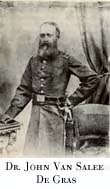
Home page for the Blurred Racial Lines of Famous Families http://www.pbs.org/wgbh/pages/frontline/shows/secret/famous/ Sent by John Inclan One of the early roots of the film "Secret Daughter" was FRONTLINE's research into the growing debate over racial classification and the social phenomenon commonly known as "passing." Mario deValdes y Cocom, an historian of the African diaspora, researched some of history's more interesting examples of mixed racial heritage. [[Check it out. You will be surprised.]] |
| Famous People with Black lineage http://www.pbs.org/wgbh/pages/frontline/shows/secret/famous/vansallees.html
|
|
Extract:
Spanish version of food pyramid released
by
J. Pat Carter / AP
Almost three of every four adult Hispanics in the U.S. are overweight Sent by Dorinda Moreno dorindamoreno@comcast.net MIAMI - Alarmed by the high rate of obesity among Hispanics, the U.S. Department of Agriculture released its first Spanish translation Wednesday of the food pyramid, the government's handy guide to good nutrition. "MiPiramide: Pasos Hacia Una Mejor Salud" is the counterpart to the USDA's "MyPyramid: Steps to a Healthier You." Among other things, "grains" have become "granos," and "meat and beans" are "carnes y frijoles" on the diagram of the major food groups. The nation's Hispanic population is booming, and almost three out of every four adult Hispanics in the U.S. are overweight, according to a 2002 report in the Journal of the American Medical Association. Two out of three U.S. adults overall are overweight. "Obesity has reached epidemic proportions in the United States, especially in children and adolescents. Those statistics are even more alarming among Latin populations," Roberto Salazar, administrator for the USDA's food and nutrition service, said in Spanish at a news conference. The government unveiled "MyPyramid" in April, overhauling the food pyramid first introduced in 1992. The 1992 pyramid had food groups arranged in horizontal layers, with the foods that should be eaten more frequently along the bottom. The newer pyramid has categories of foods represented vertically in a rainbow of colors, and a running figure scaling the pyramid to represent the importance of exercise. |
|
What's In A (Spanish) Name
by Christina Hoag, Miami Herald, Nov 20, 2005
Sent by Howard Shorr: howardshorr@msn.com What's in a (Spanish) name? A shot at being famous. Hispanics with non-Spanish names can find it challenging when trying to make it in media and entertainment. Ingrid Hoffmann's Teutonic name has always provoked queries about its origin ever since she was growing up in Colombia. But now that she's branding herself as a Miami-based Latin cooking and entertainment media maven, the attention has gotten more than a little irksome. 'I was doing a presentation for a major retailer and they said `is she really Latin?' People don't think I'm Latin enough because of my name!'' says an indignant Hoffmann. It's a far cry from the days when the likes of Ramón Estévez and Richard Valenzuela had to become Martin Sheen and Ritchie Valens, respectively, to make it in show biz. Now with the Hispanic population mushrooming and Spanish-language media drawing record audiences, it's hip to be Latino -- and even better if you have the Spanish name, either first or last, to prove it. But due to accidents of ancestry, some Hispanics like Hoffmann, whose grandfather emigrated from Germany to Colombia, have neither. And increasingly common in this country are the progeny of Hispanic mothers and non-Hispanic fathers who sometimes end up with a Hispanic identity that doesn't readily reveal itself on paper. ''In Latin America, people don't blink and just pronounce the name in Spanish,'' says Chuck Walker, Latin American history professor at the University of California at Davis. But in this country, being Hispanic often means conforming to a stereotypical name and look in both Spanish- and English-language entertainment spheres. As Hoffmann and others have found, it can be a trifle sticky in select careers where being Hispanic matters. Take Telemundo WSCV-TV 51 meteorologist John Morales. The son of an Irish-American father and Puerto Rican mother, he was born John Toohey and grew up in Puerto Rico. His name only became an issue when he moved to the U.S. mainland 14 years ago to work for Univisión. A condition of the job: ditch the ``Toohey.'' 'It wasn't a big deal. In Puerto Rico, I was `Toohey Morales' because they use both the father's last name and the mother's,'' says Morales, whose legal name remains Toohey. 'Toohey would've been harder for [Spanish-speaking] people here to understand. In Puerto Rico, they never could figure out how it was spelled. They spelled it `Tui,' or think it was 'Dewey.' '' Others who work in Spanish-language media admit non-Hispanic names can be challenging for their audiences, but say it's really about the person not the moniker. ''I don't feel anyone has to have a Spanish name, it goes much deeper than that,'' says personal finance guru Julie Stav, who was born Julieta Alfonso in Cuba. Years ago when she worked for PBS, people never dreamed that she was Hispanic. ''I would be asked if I needed a translator for Spanish,'' she says. Stav is her married name, which she chose to use for family reasons. And Julie? 'I hated it when [non-Hispanics] would call me `Joo-lieta' not ''Hoo-lieta','' recalls Stav, who does radio and TV shows and pens columns and books. 'So I became `Joo-lee' because in Cuba, that's what they would call me.'' Stav knows that her audience stumbles over that surname, which she pronounces in Spanish ''Estav.'' 'One lady asked me `is that like `estafa,' which means fraud in Spanish. I thought 'wow, here I am dealing with money and people think my name is `estafa!' '' she says. Names can be a factor in developing a career, said Raúl Mateu, senior vice president of William Morris Agency in Miami, which represents many Latin performers. ''Ultimately, it doesn't make a difference if the talent is really good,'' he says. 'There's great confusion in the general market about what is Hispanic. We have a lot of Hispanic talent with white skin and blond hair. They get sent out to casting calls and told `you're not Hispanic enough.' But if you focus only on the look or the name, you're going to fail.'' Singer-actor Carlos Ponce, who lives in Pinecrest and has a role on WB's Seventh Heaven, has the name, but not quite the look, which he admits has cost him a few ''Latin'' roles. ''I'm a little lighter than the stereotype. They simply want tall, dark and handsome,'' he says. His solution to underscore his Hispanicity: ''I thicken my accent even more,'' he laughs. Names are less important in offstage careers, but identity still matters. Coral Gables publicist Tadd Schwartz is quick to let people know that despite his name, he's half-Hispanic -- the son of a Cuban mother and Jewish American father. 'I've never viewed my name as my identity. I'm just as much `Soriano' as 'Schwartz,' '' Schwartz says, referring to his mother's maiden name and father's surname respectively. ``But when people find out I'm Cuban, they are surprised because I don't wear my culture on my sleeve.'' For Colombian Ingrid Hoffmann, many people have suggested she be known simply as ''Ingrid,'' but she refuses. "I have to be true to myself. I want to show the other side of the stereotype. We Hispanics come in different colors, faces and flavors.'' |
|
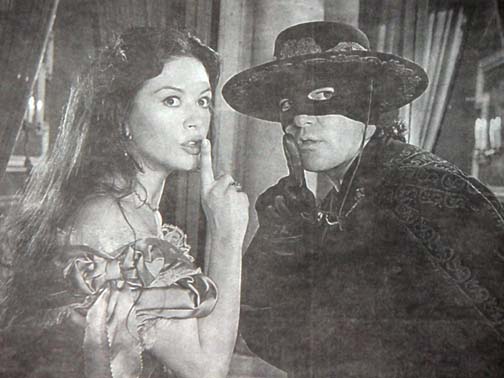
The Mask of Zorro |
Editor: I chanced to catch a segment of the The Mask of Zorro on TV. The movie came out in 1998. I was shocked with the monumental historical inaccuracies. The big scene shows Zorro fighting against the bad guy on top of a flimsy wooden structure which in the script was used as part of the mining apparatus for underground mining. However, since the storyline time period is prior to California statehood and I felt underground mining did not come into use until after California statehood, I asked Johanna De Soto and Cindy LoBuglio, California researchers, if they had ever come across underground mining prior to statehood. We three researched the topic and found no historical data showing underground mining prior to California statehood. I was pleased to be read two newspaper articles which strongly stated
the Zorro movies were quite historically inaccurate.
|
|
|
|
The Orange County Register Lots
of swashbuckling left to do The tagline for the masked don's latest adventure might read: "This time, he's dueling for democracy." And so we find Don Alejandro de la Vega (Antonio Banderas, playfully self-deprecating) slipping into his stylishly embroidered Zorro threads, liberating a stolen ballot box from the enemies of representative government during California's drive toward statehood in 1850. After a thrilling horse-drawn chase scene and some bruising bridge-top fisticuffs, de la Vega reveals that he's spent the past seven years "fighting for California's freedom," presumably from Mexico, or maybe from space aliens. It's hard to say. (Seven years is also the interval since Anthony Hopkins passed the Zorro mantle to Banderas in "The Mask of Zorro.") Alas, matters are not so progressive in the de la Vega household. Alejandro's headstrong; wife, Elena (Catherine Zeta-Jones), wants him to go in it the peasant-protecting business and spend more time with their plucky, impudent son (Adrian Alonso). Alejandro, like an aging NFL quarterback determined to grind out one more season, refuses. They separate, sending Elena into the embrace of a nefarious French wine lord (Rufus Sewell) who may or may not be planning evil, democracy- crippling subterfuge. "Mask of Zorro" director -Martin Campbell is back for this installment, and with him, an old pro's steady sense of pacing and spectacle. And the movie desperately needs it, because the script, by Alex Kurtzman and Roberta Orci ("The Island"), is a grand, paranoid farce of James Bond-style supervillains, ancient European cabals and a plot to arm the Confederate Army with futuristic weapons - get this - 11 years before there was a Confederate Army. The writers also demonstrate an irritating knack for crude political allusions, as when a pair of Homeland Security types complain how the gates of the country have been "thrown wide" to foreigners. But that's just nit-picking, isn't it? If Hollywood finds it more romantic and politically correct to foster the notion that California's statehood was the result of multicultural peasant masses rising up in democratic unison, and not part of a complex federal bargaining process designed to avert the Civil War, so be it. Just so long as its progressive vision includes some French guys to take the fall.
|